
1976 Volkswagen
Super Beetle Base
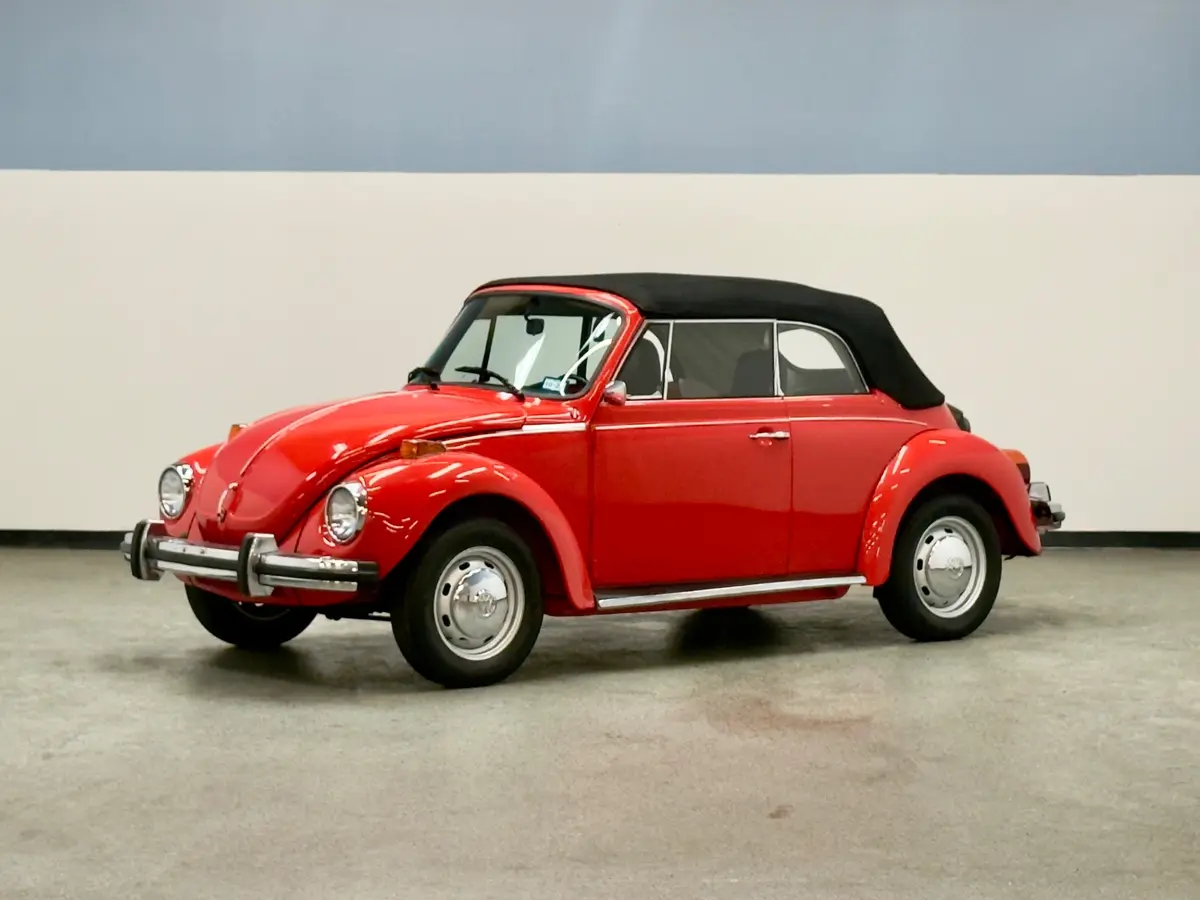
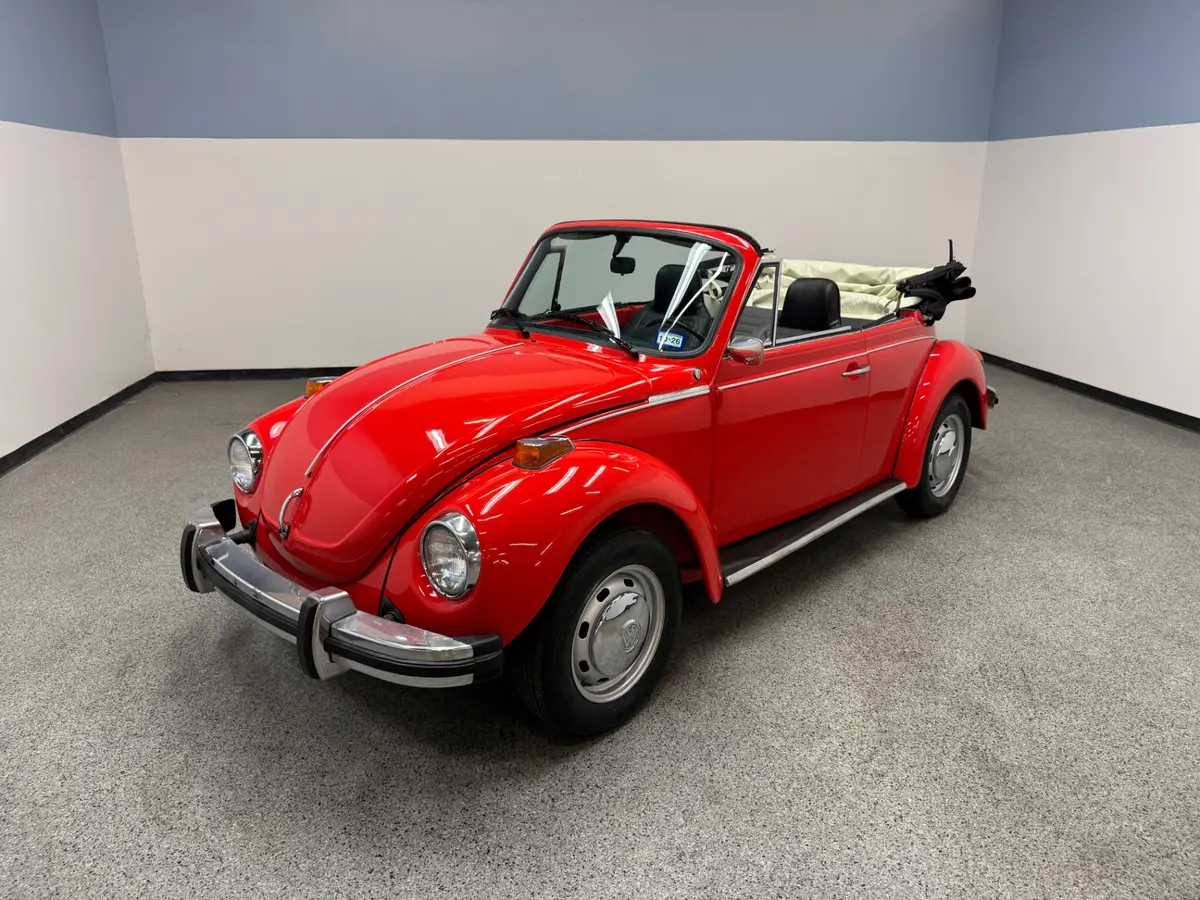
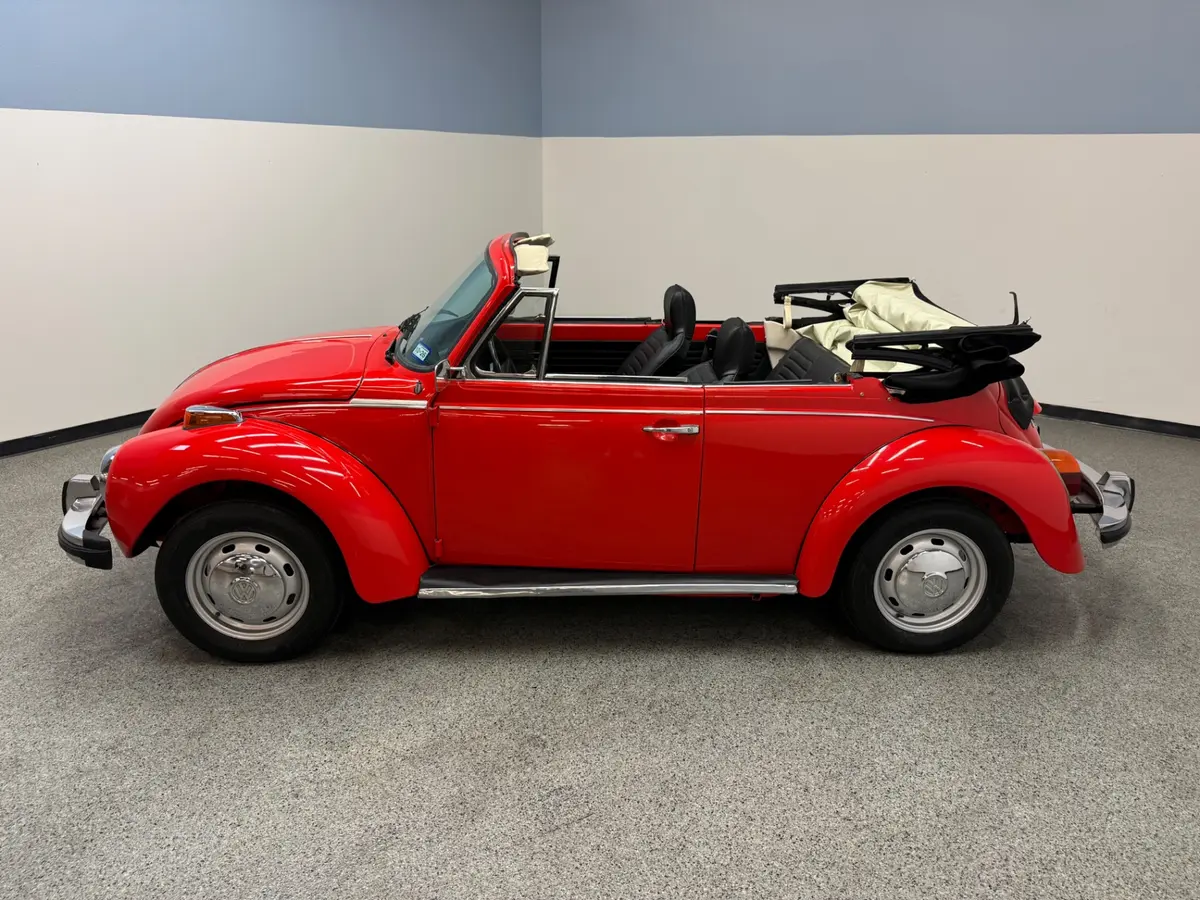
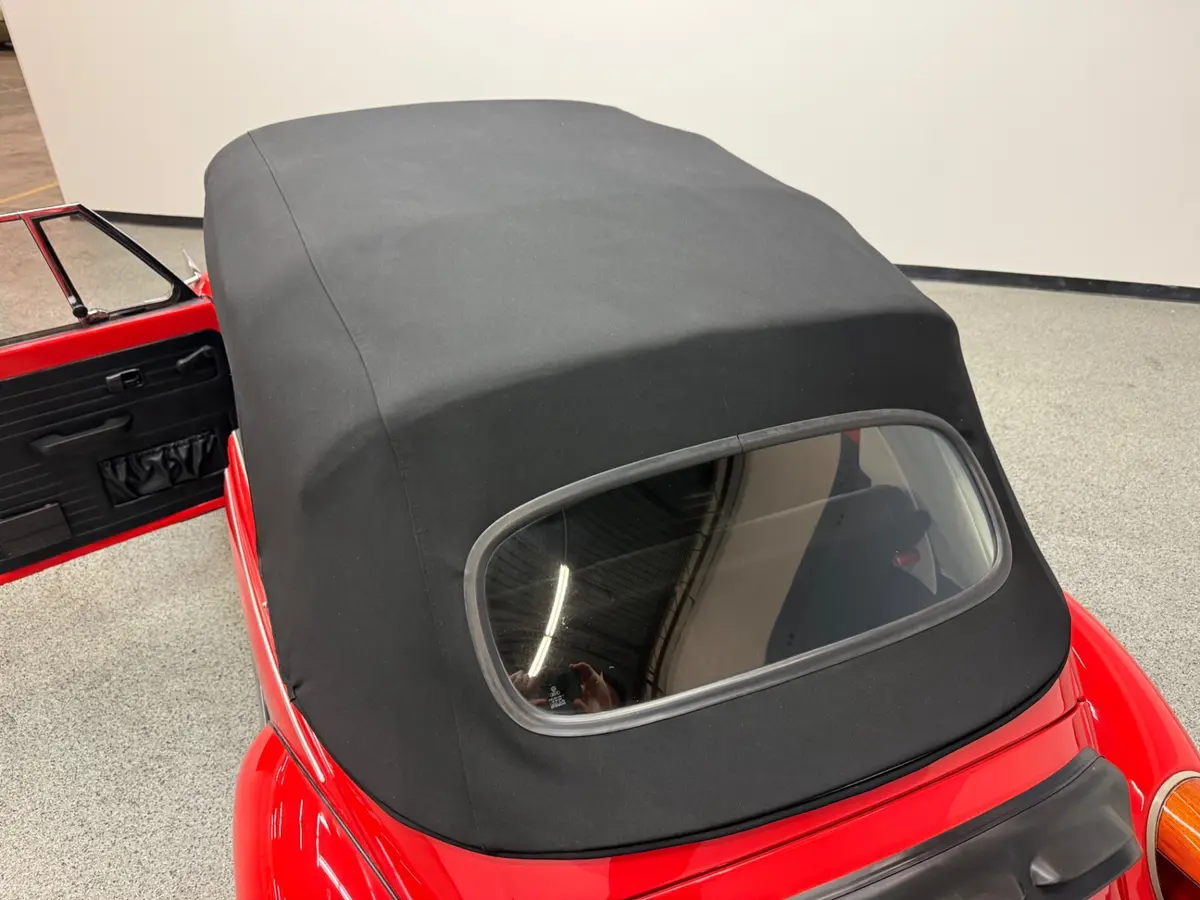
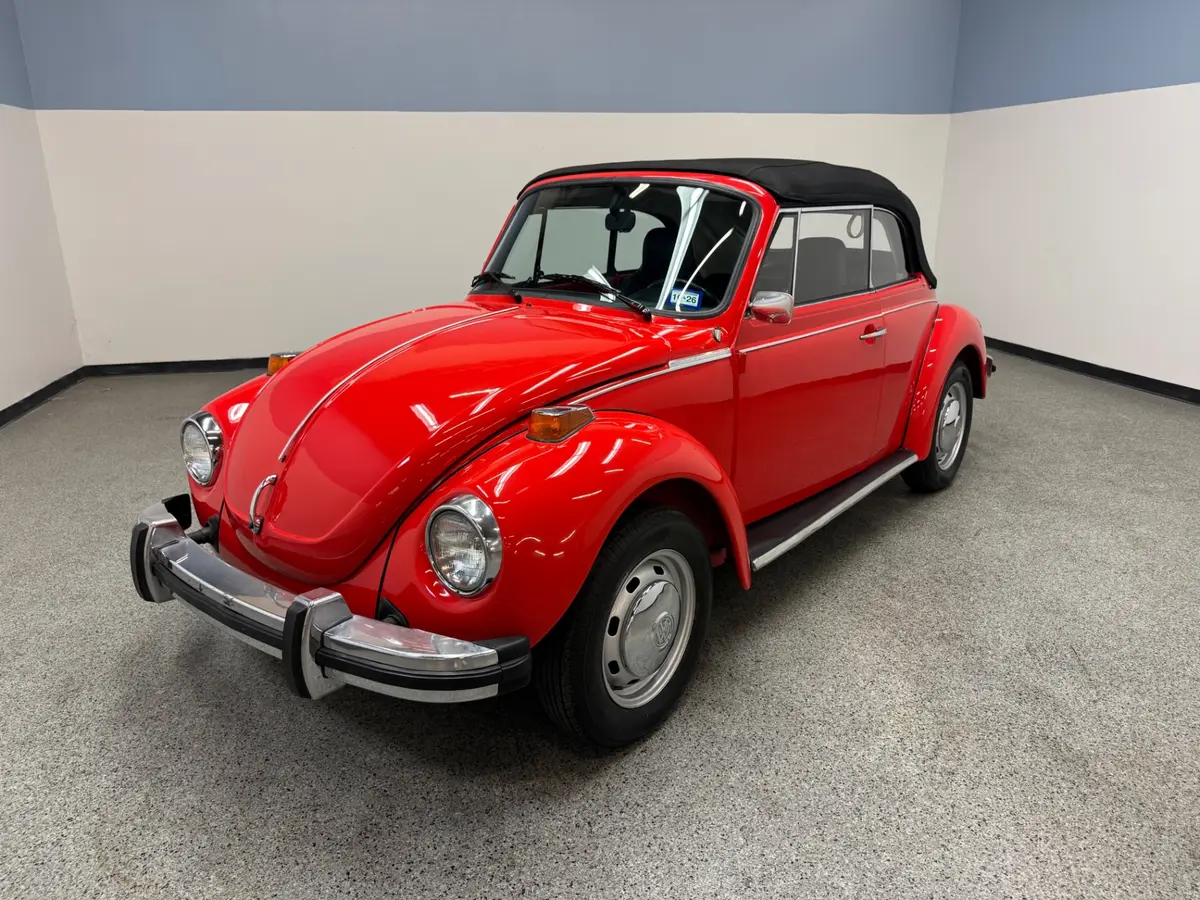
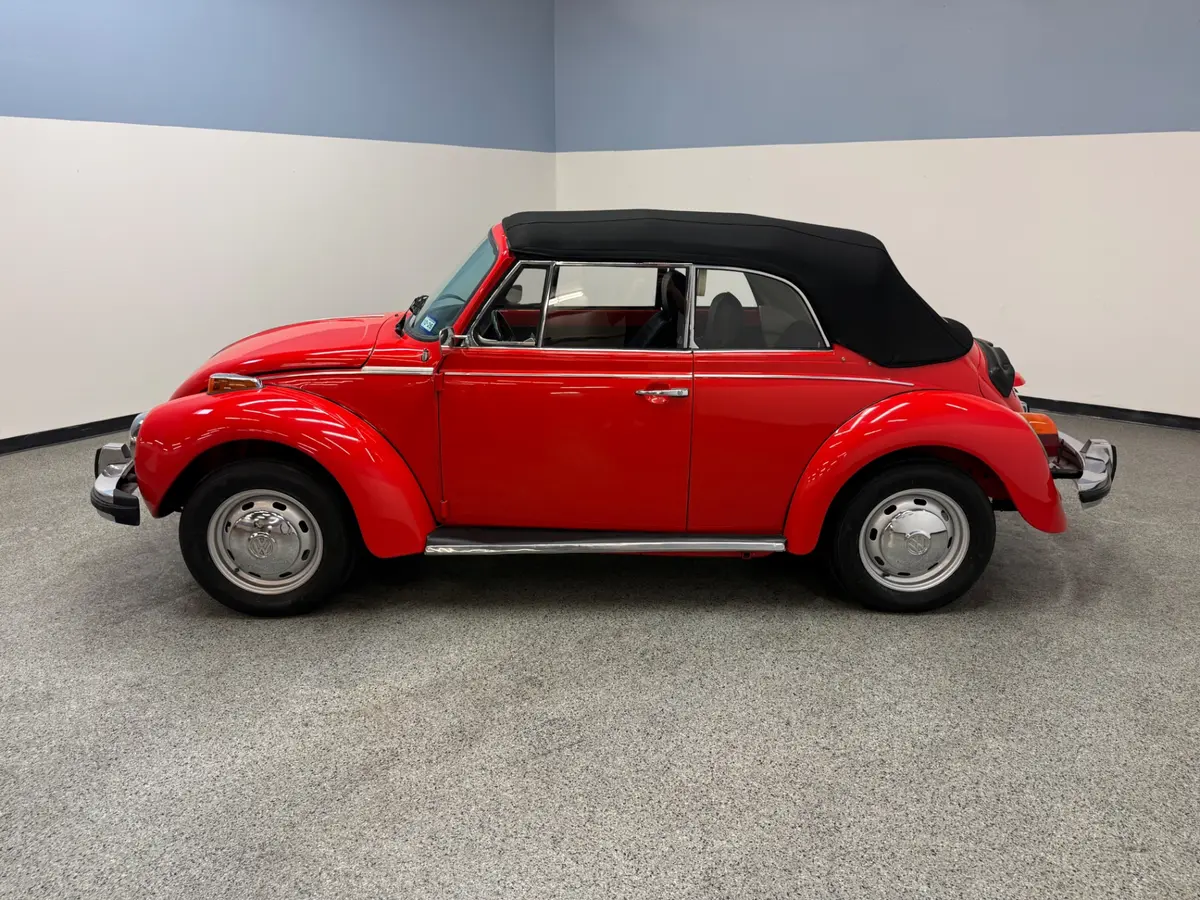
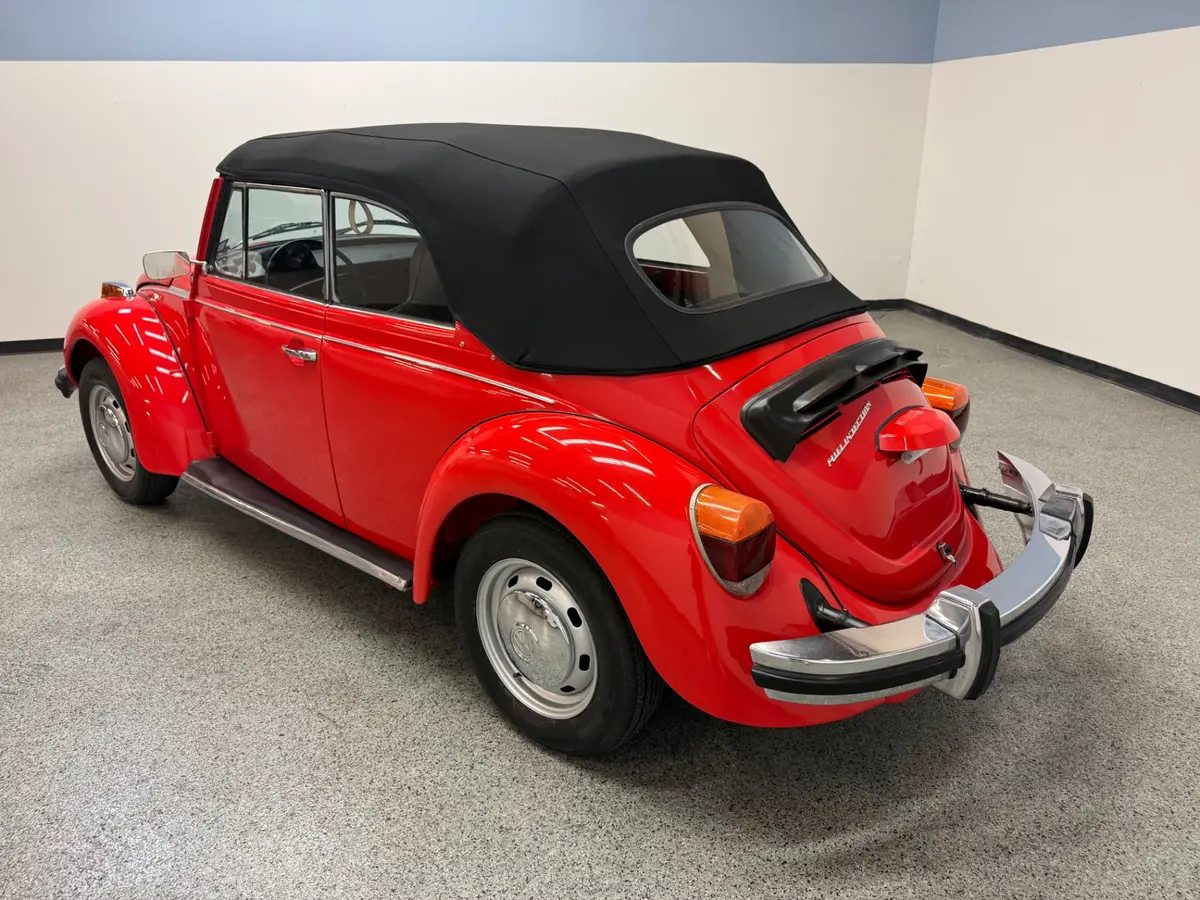
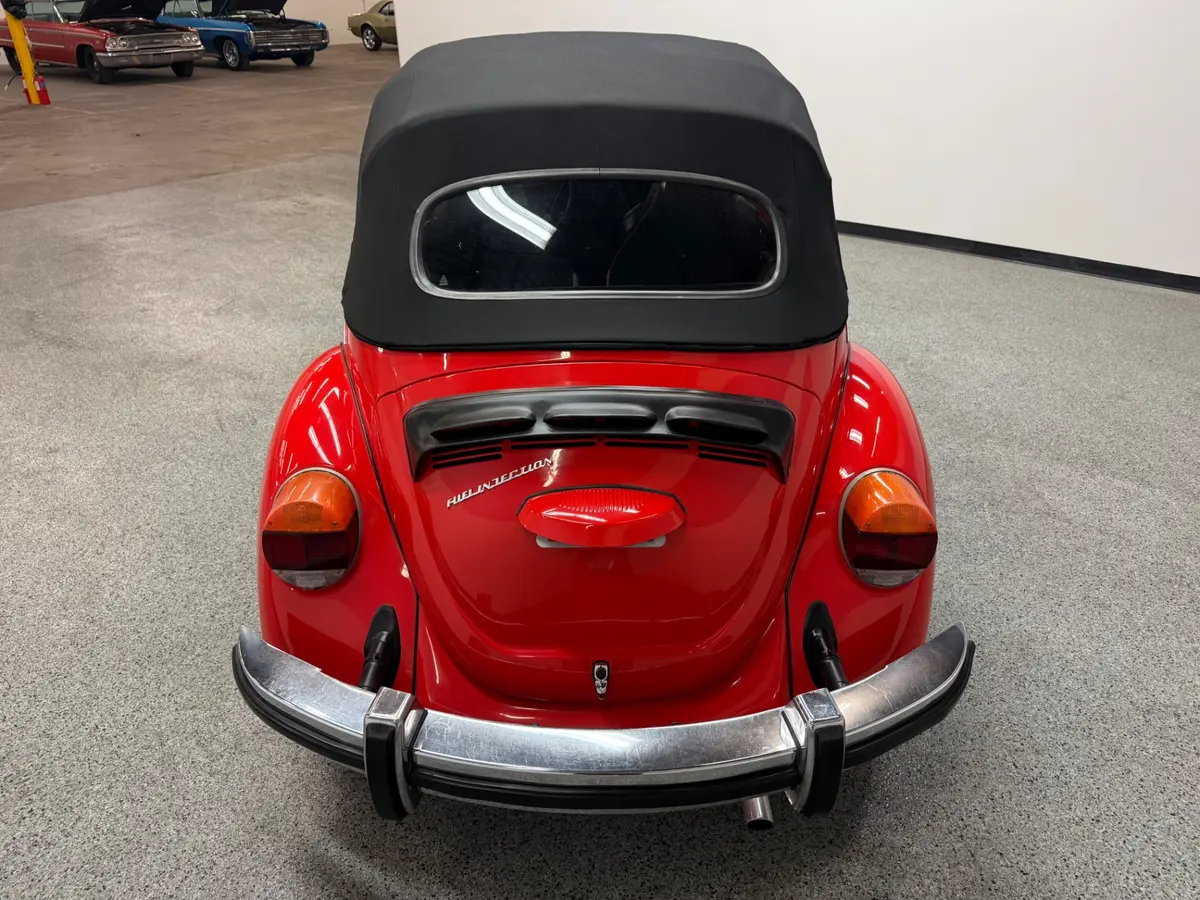
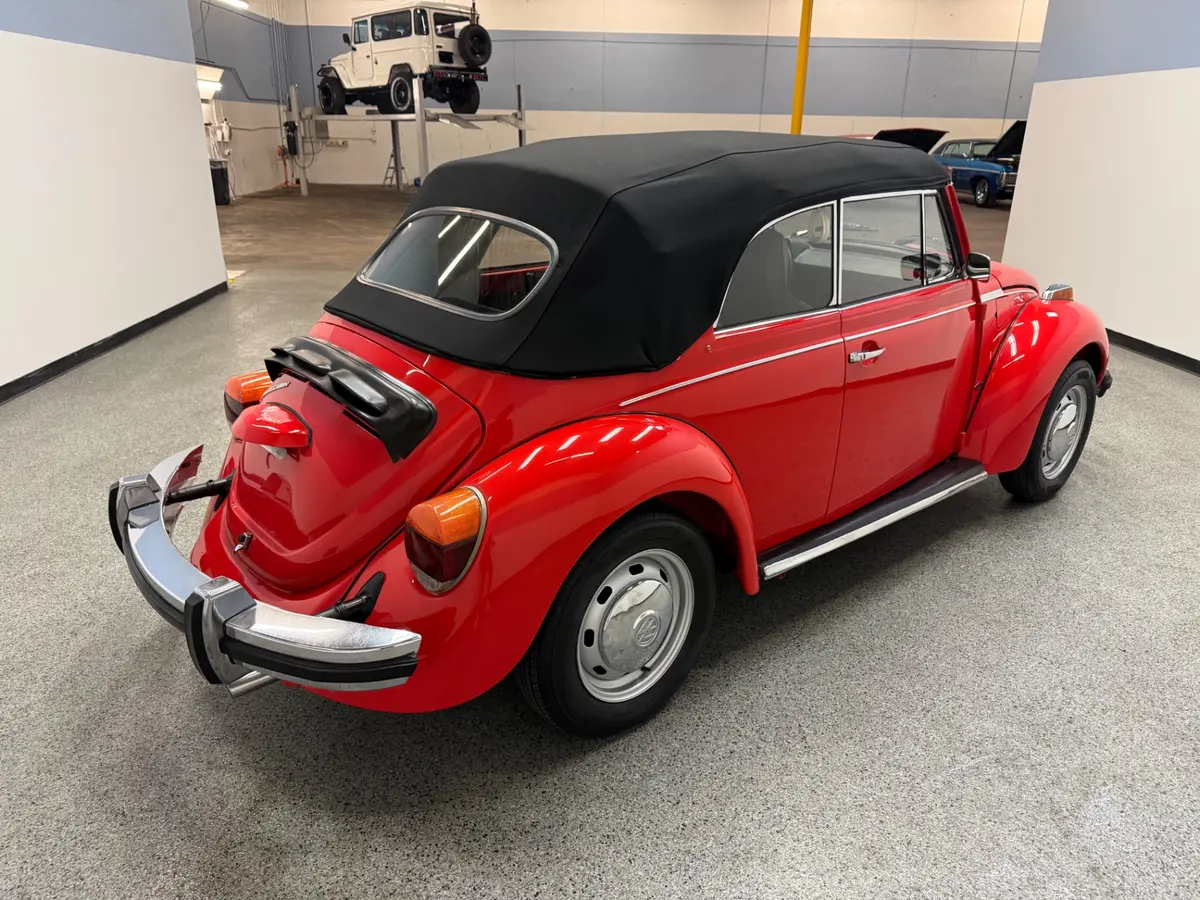
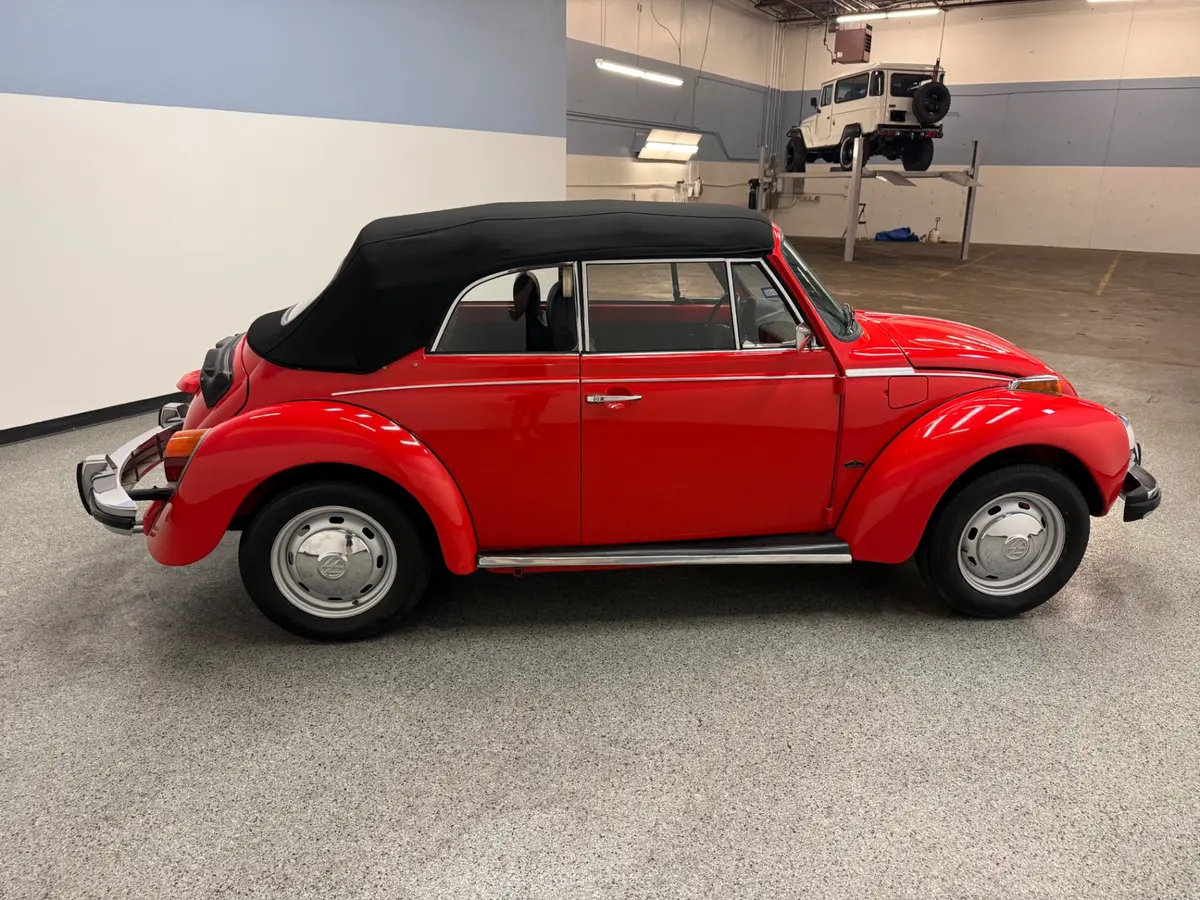
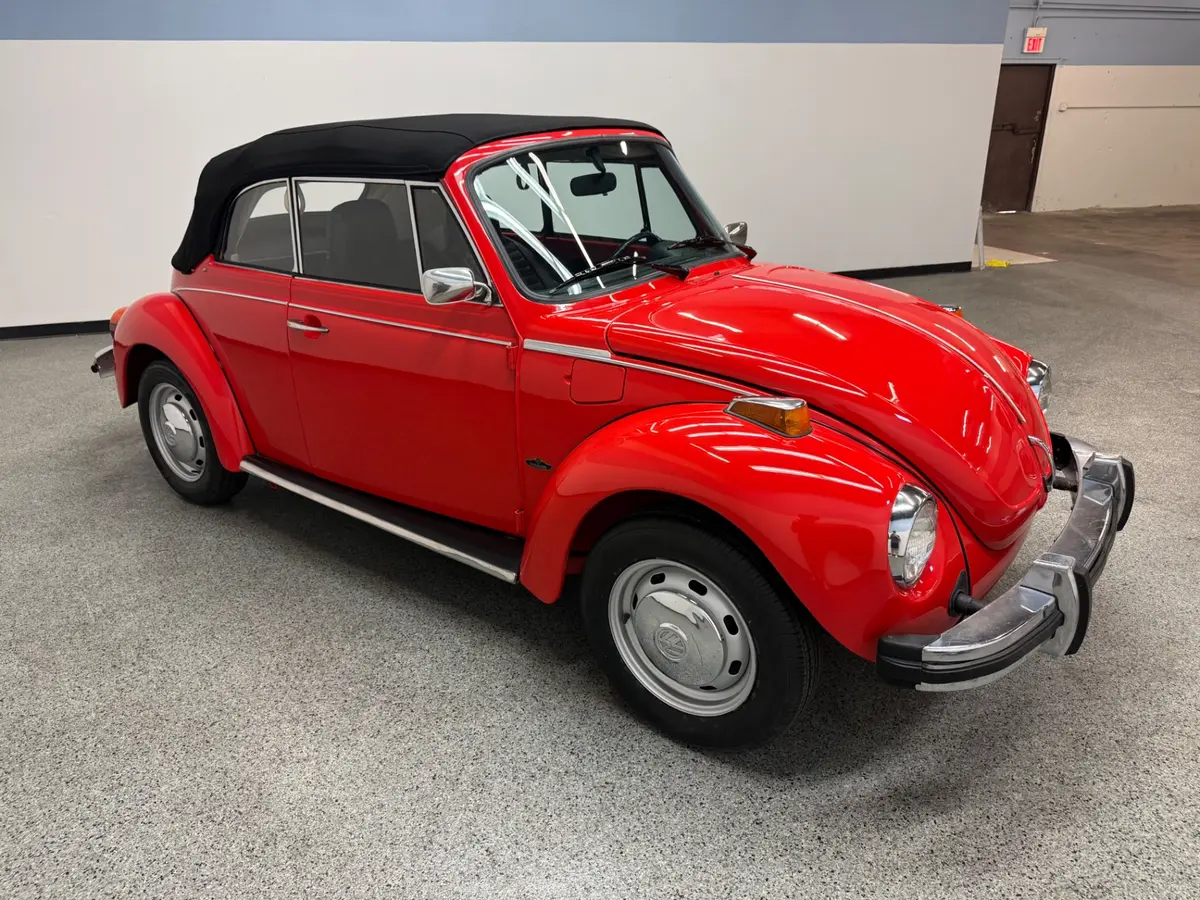
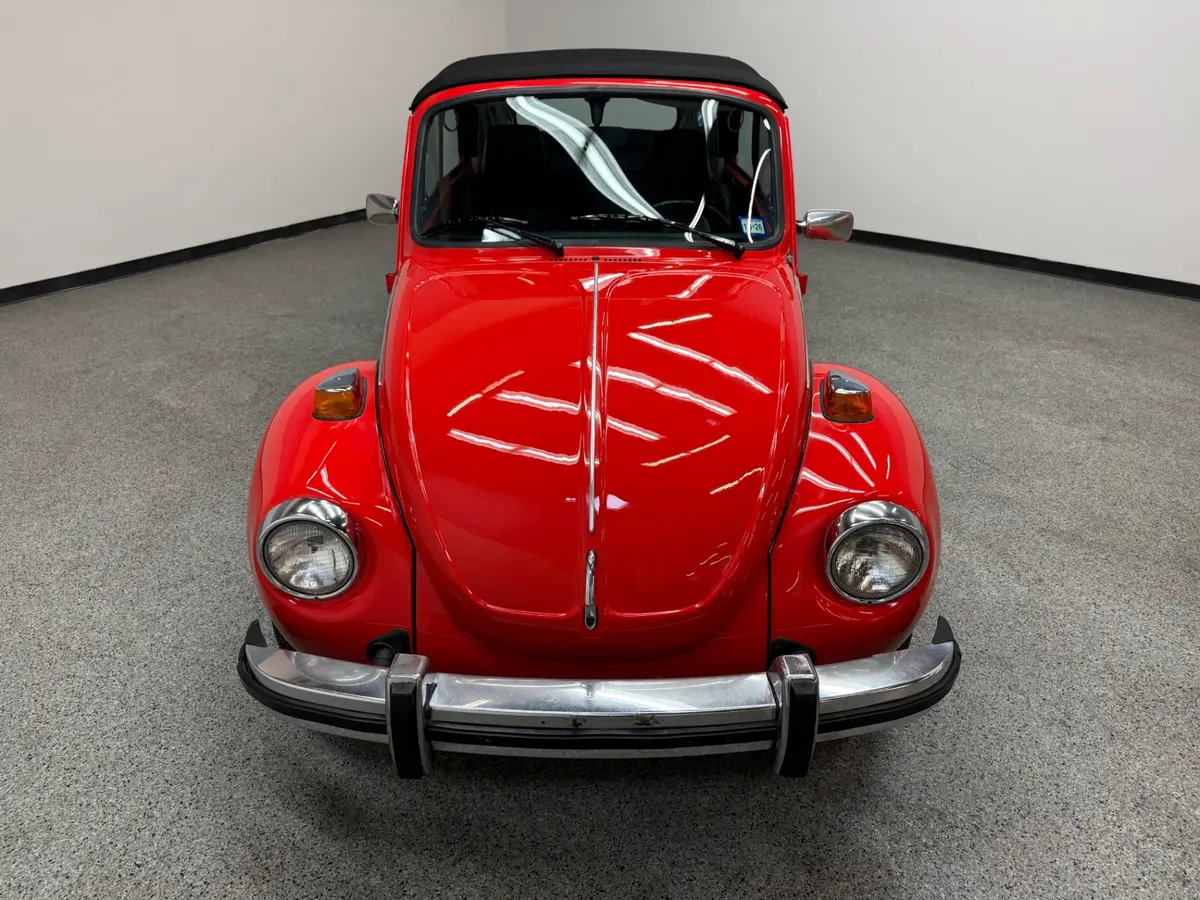
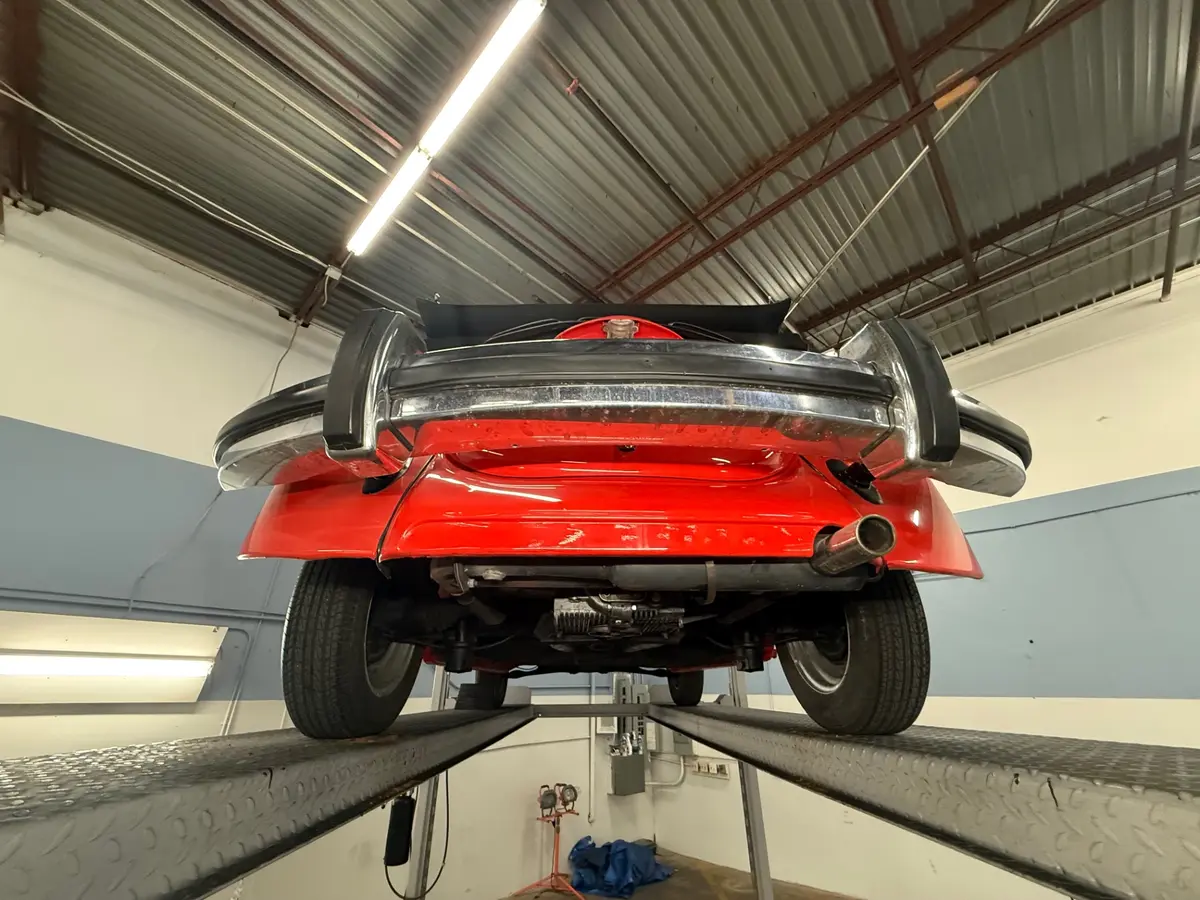
1976 Volkswagen Super Beetle Convertible — Karmann Cabrio in Red with Black Soft Top
Why This Car Is Special
The 1976 Volkswagen Super Beetle Convertible is one of the most collectible variants of the entire Beetle lineup, and for good reason. By 1976, Volkswagen had already ended production of the standard Beetle sedan in Germany, but the convertible — hand-built by coachbuilder Karmann in Osnabrück — was kept alive specifically for markets like the United States, where demand remained strong. That decision to continue the Karmann Cabrio while killing the hardtop actually makes the 1976 model year a meaningful one for collectors. These cars were never cheap to produce. Karmann reinforced the body to compensate for the loss of the roof structure, and the conversion process was labor-intensive enough that the convertible carried a significant price premium over the standard sedan when new.
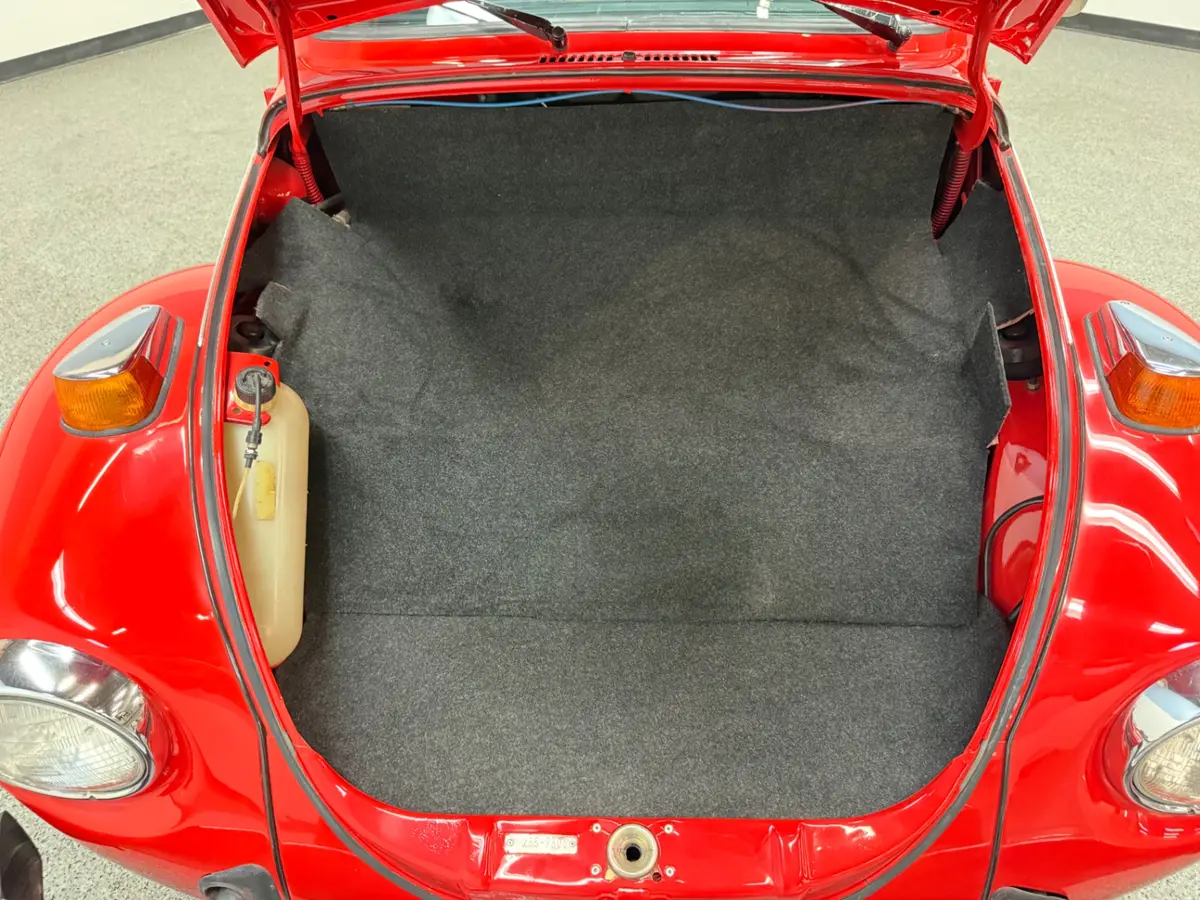
The Super Beetle designation itself is important context. Introduced in 1971, the Super Beetle — known internally as the Type 1302 and later the 1303 — differed from the standard Beetle in two key ways: it used MacPherson strut front suspension instead of the old kingpin-and-torsion-bar setup, and it featured a larger, more curved windshield that gave the front of the car a rounder, more modern profile. The curved windshield also expanded interior volume noticeably compared to the flat-glass standard Beetle. By 1976, Volkswagen had settled on the 1303-based platform for the Cabrio, which meant buyers got improved handling geometry and more front storage space along with the open-air body style.
Karmann had been building VW convertibles since 1949, and by the time this car rolled out of the Osnabrück plant, the company had decades of experience reinforcing the unibody and fitting convertible tops that held up well in real-world use. The result was a car with notably less cowl shake than most open-top vehicles of the era, a point VW's own marketing leaned on. The fact that Karmann continued producing the Beetle Cabrio all the way through 1980 — well after the Golf had taken over as VW's volume seller — speaks to how committed the market was to this specific body style.
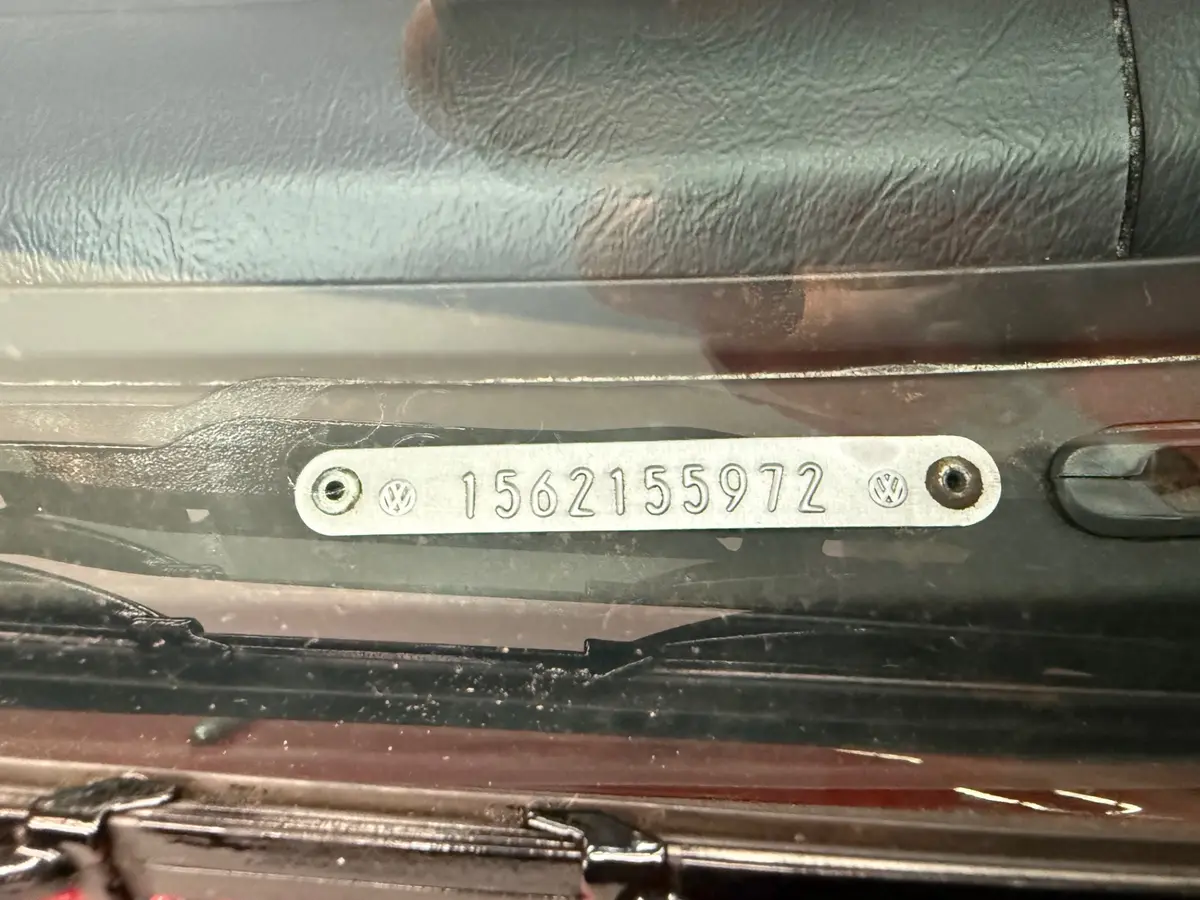
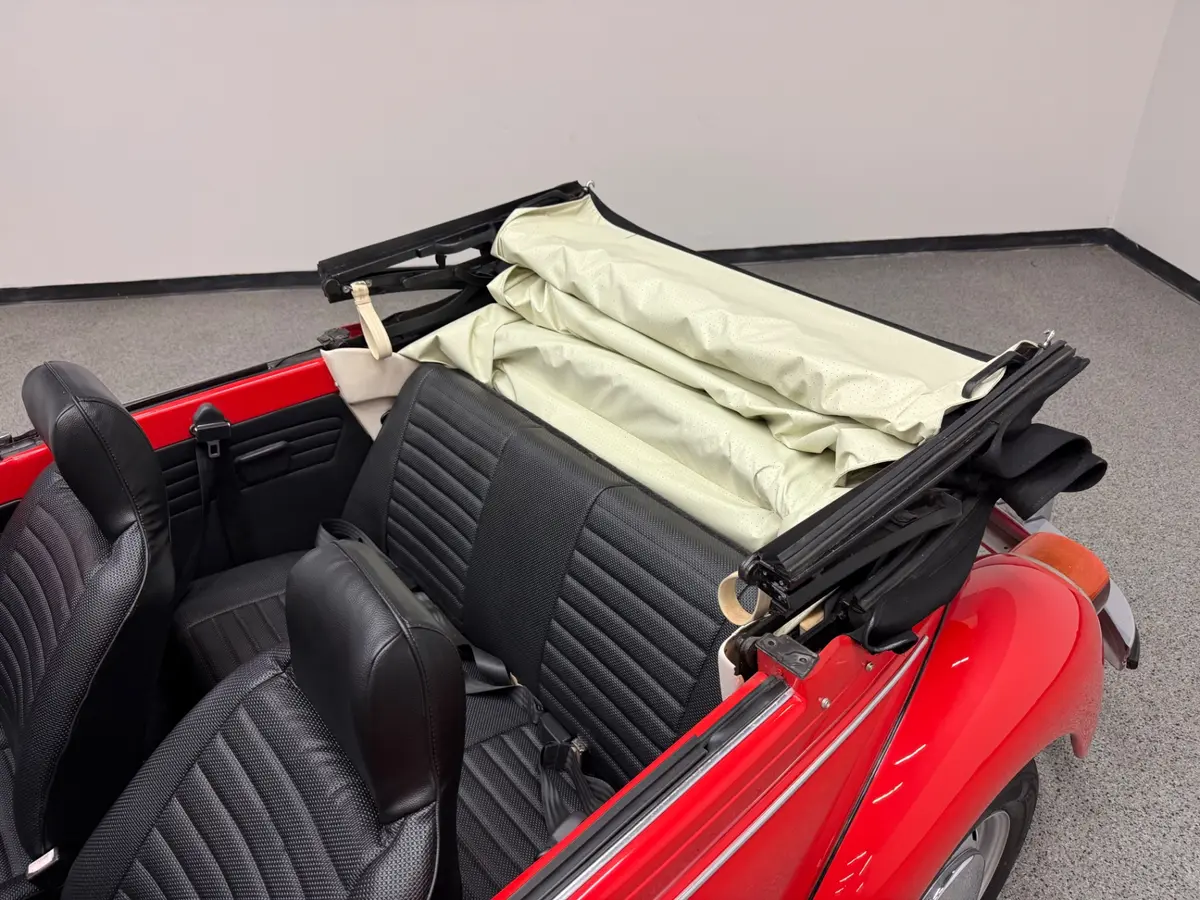
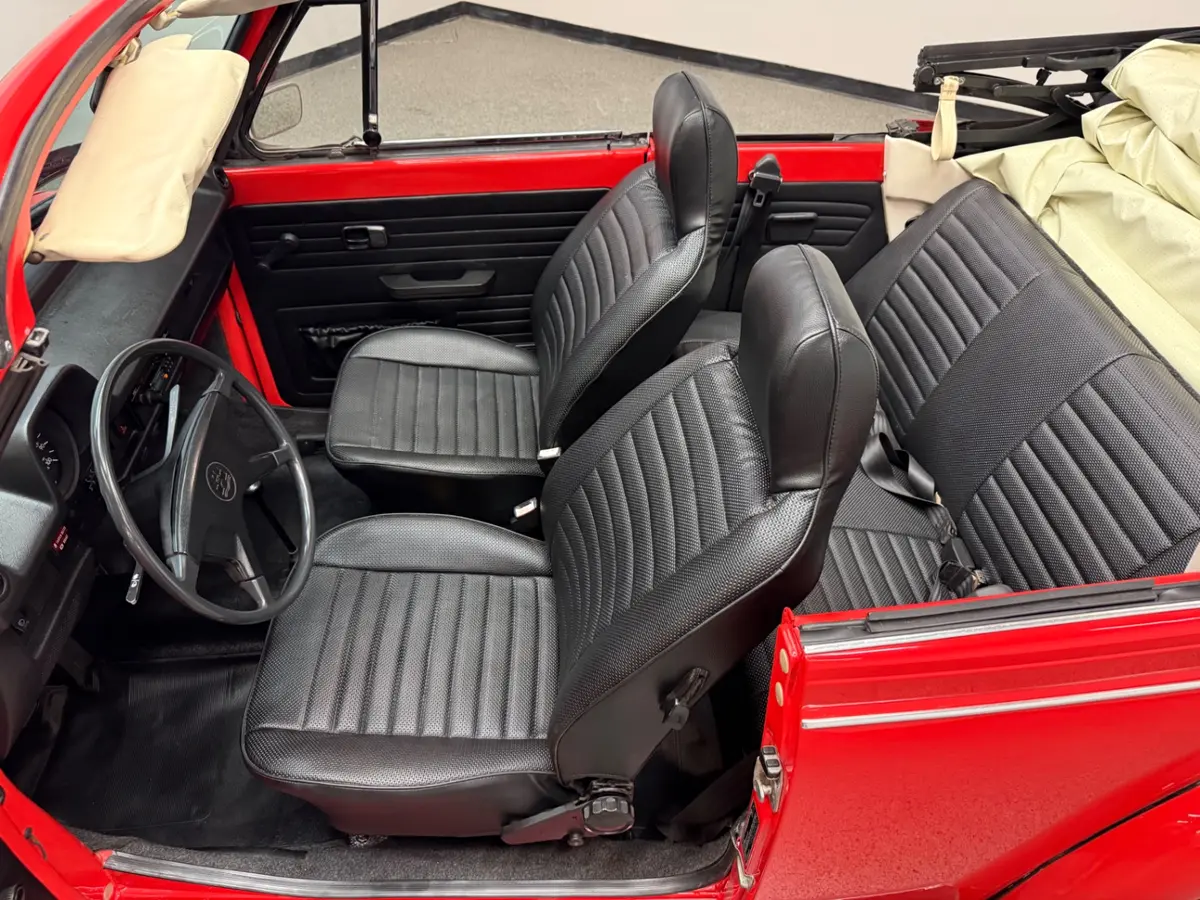
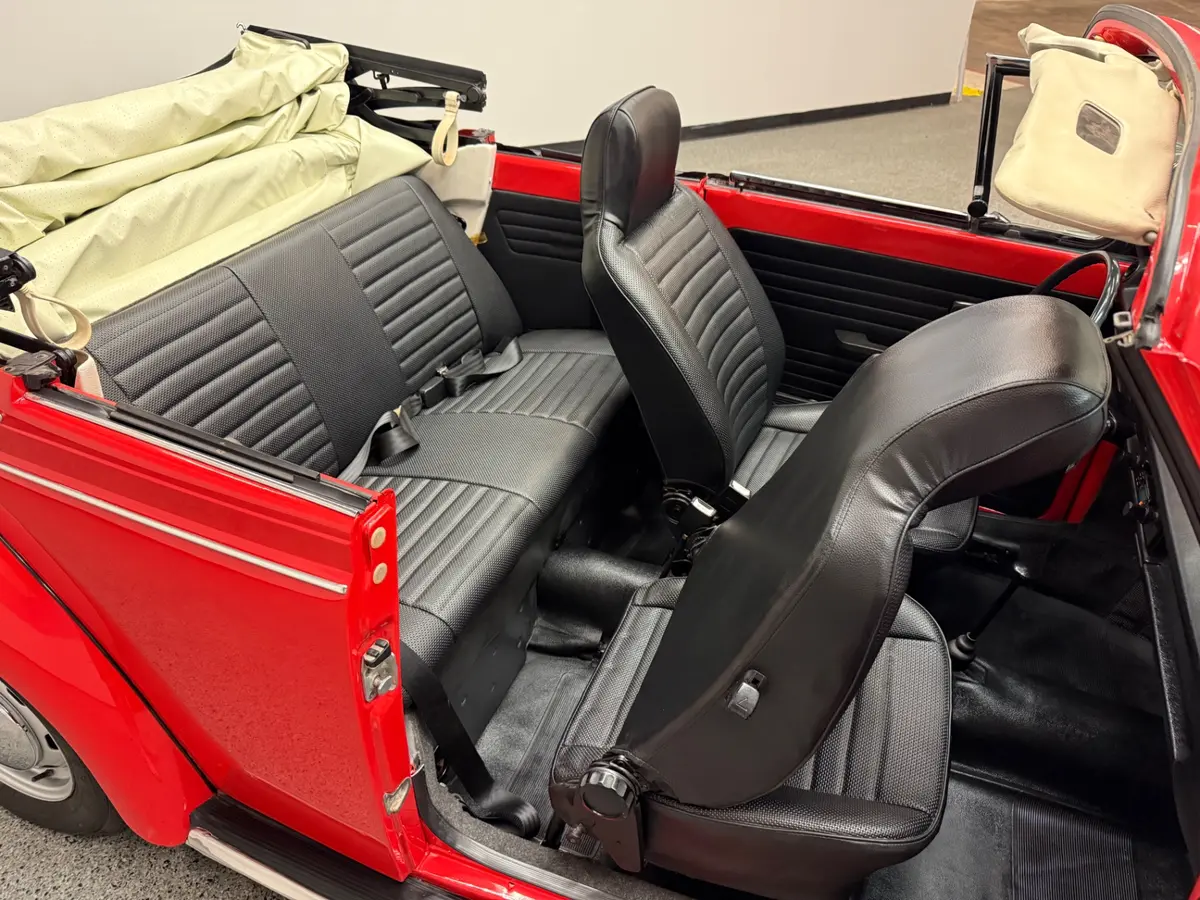
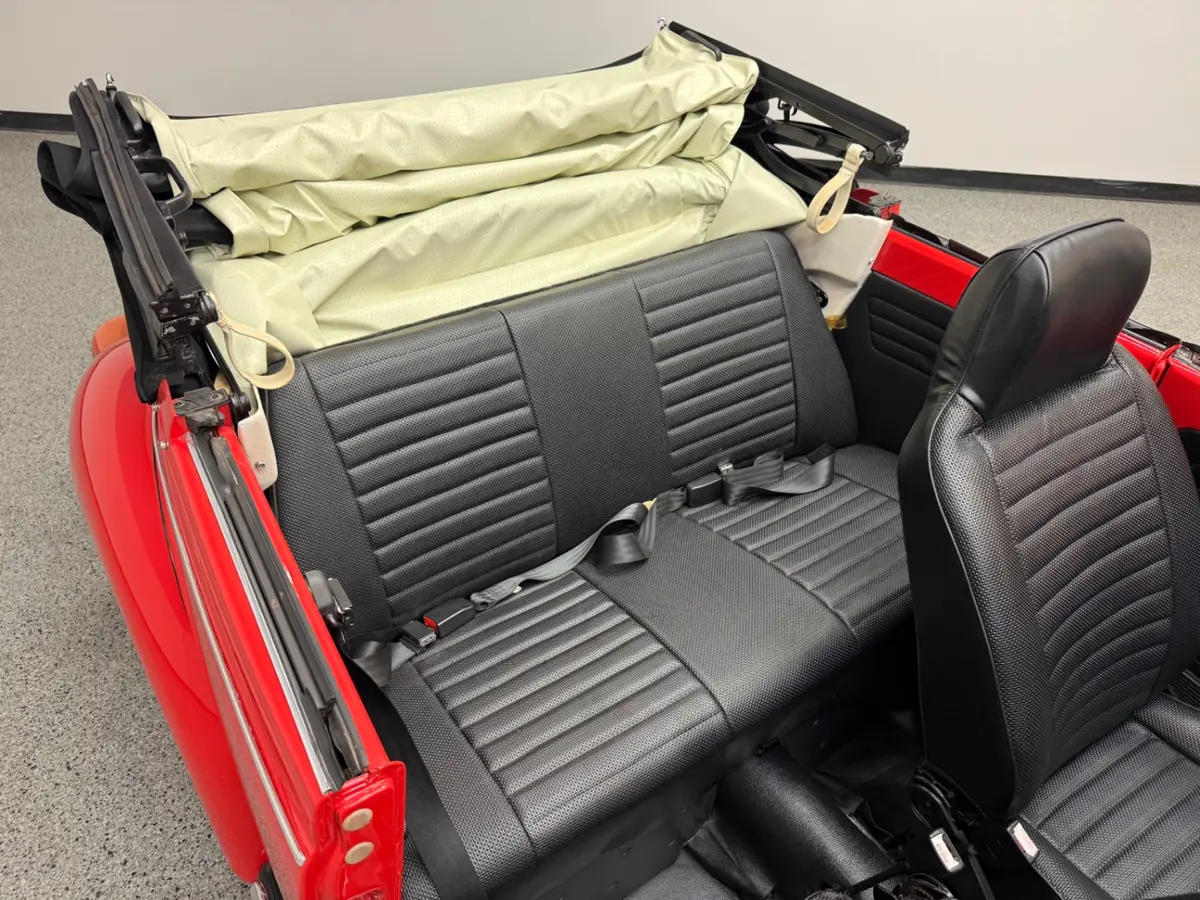
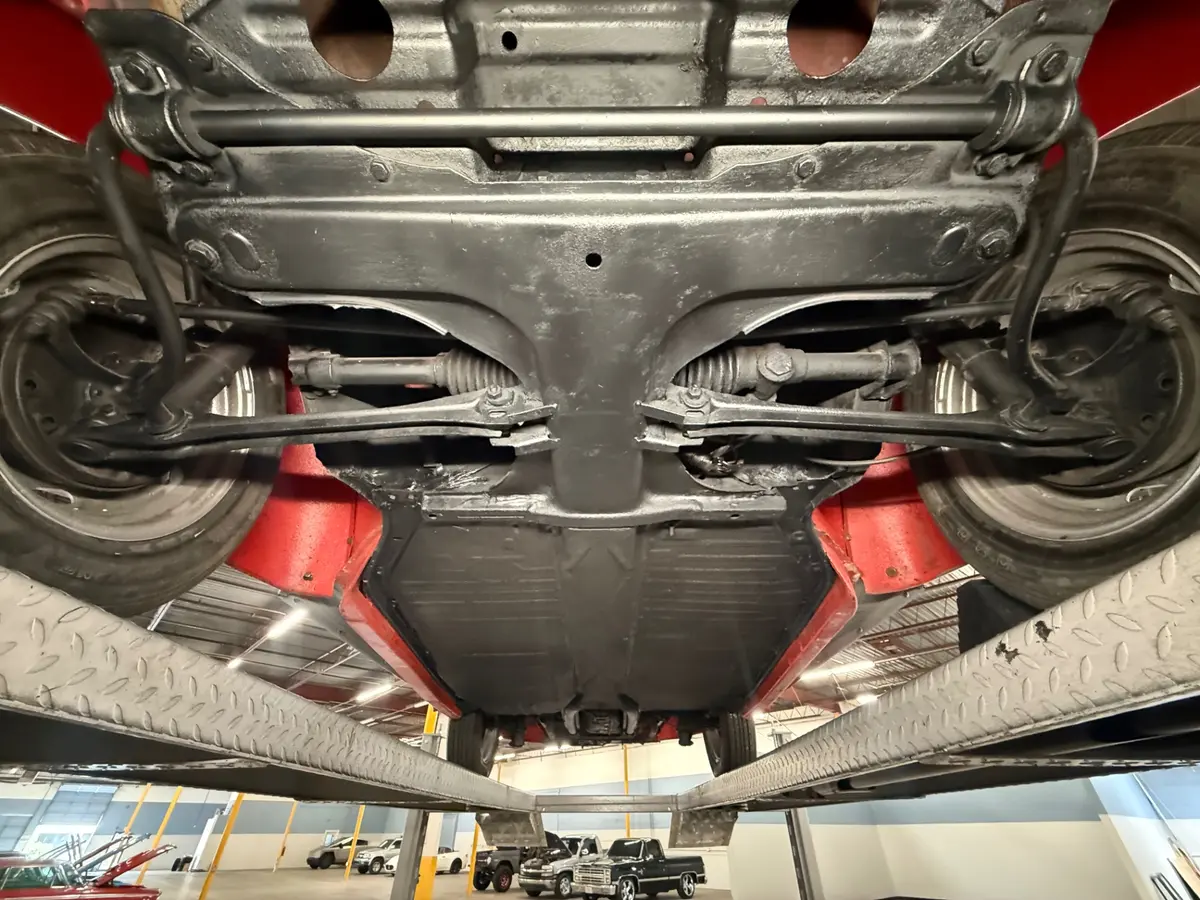
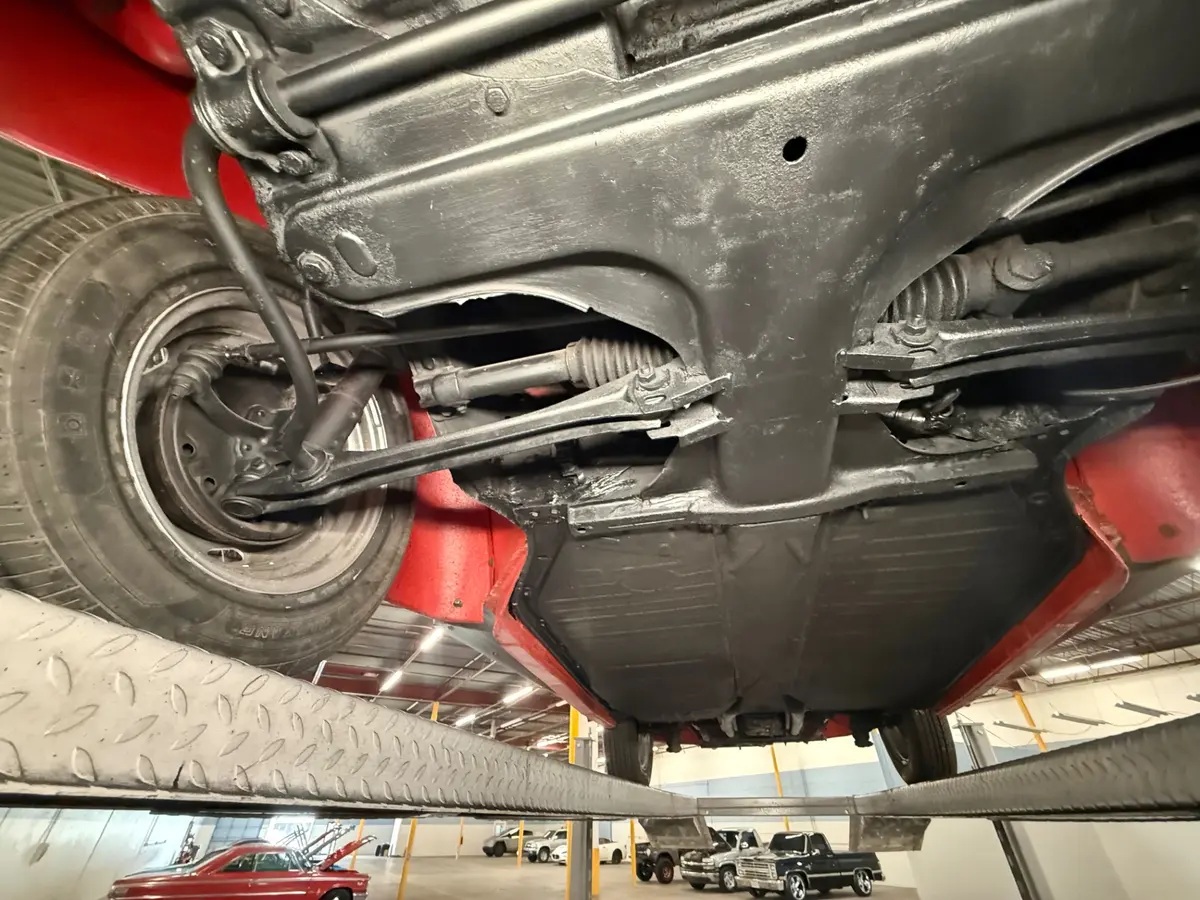
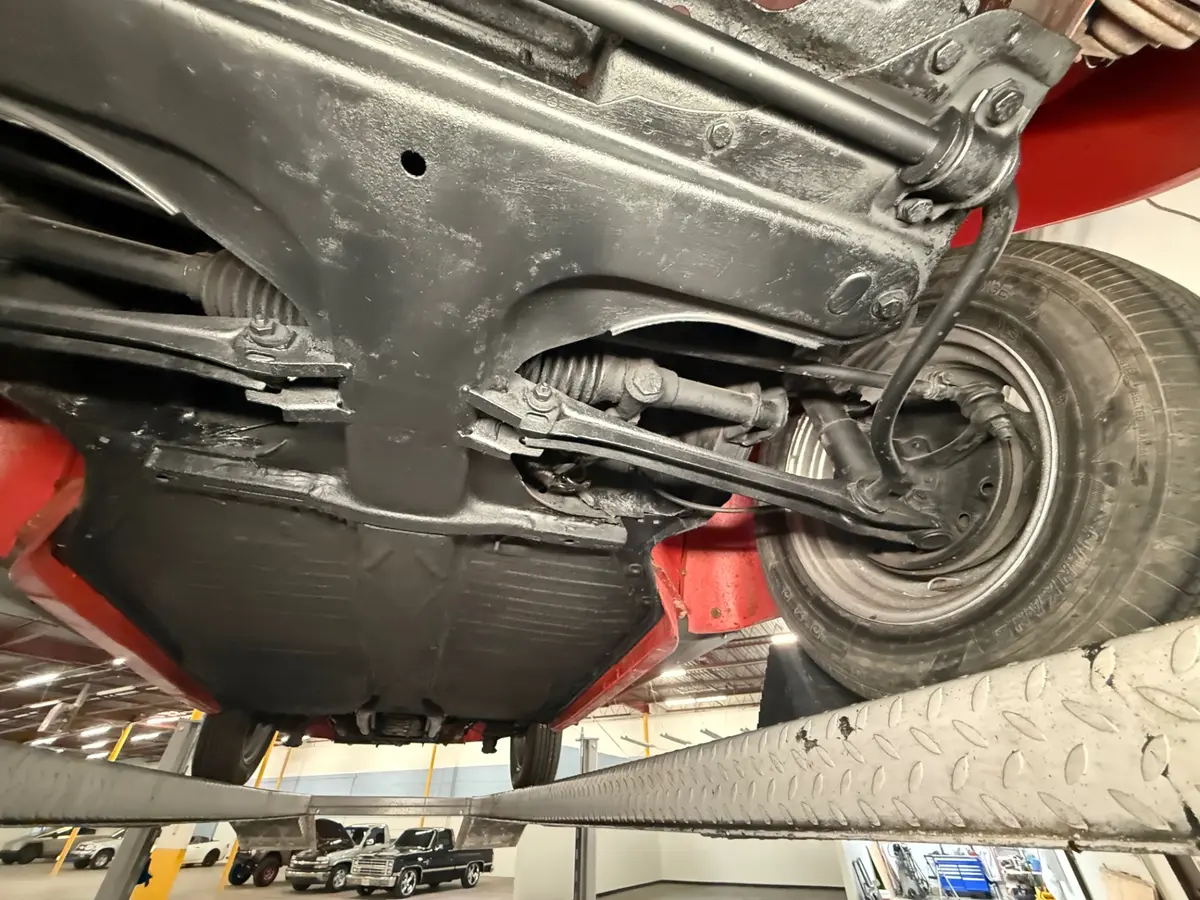
This particular example presents in red over a black leather interior, fitted with a black soft top and white convertible top liner. It is a genuine Karmann Cabrio, not a converted sedan, and the original VIN tag remains present. The undercarriage has been inspected and shows clean structure — which, for a nearly 50-year-old open-top car, is the single most important thing to verify.
Features List
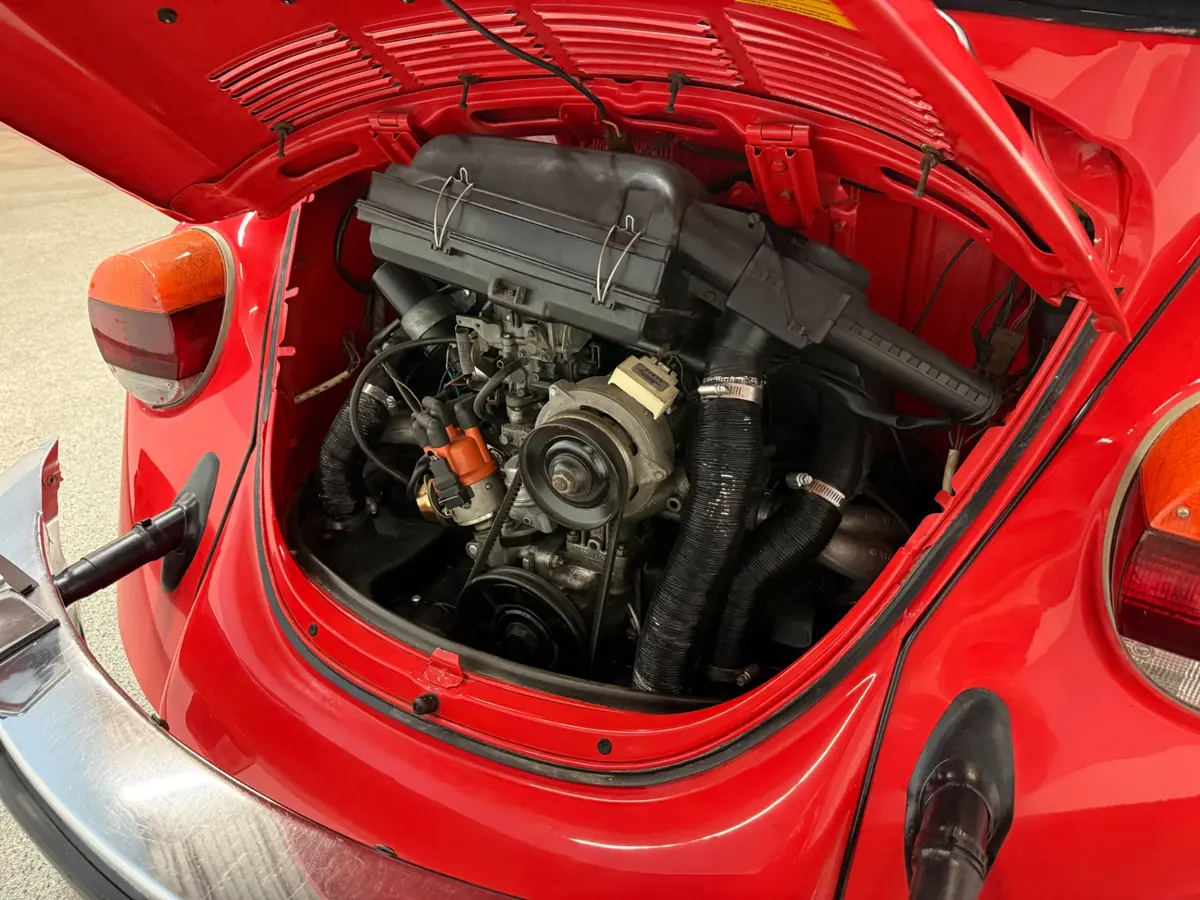
- 1.6L Flat-4 Air-Cooled Engine (1600cc)
- 4-Speed Manual Transmission
- Karmann Cabrio Convertible Body
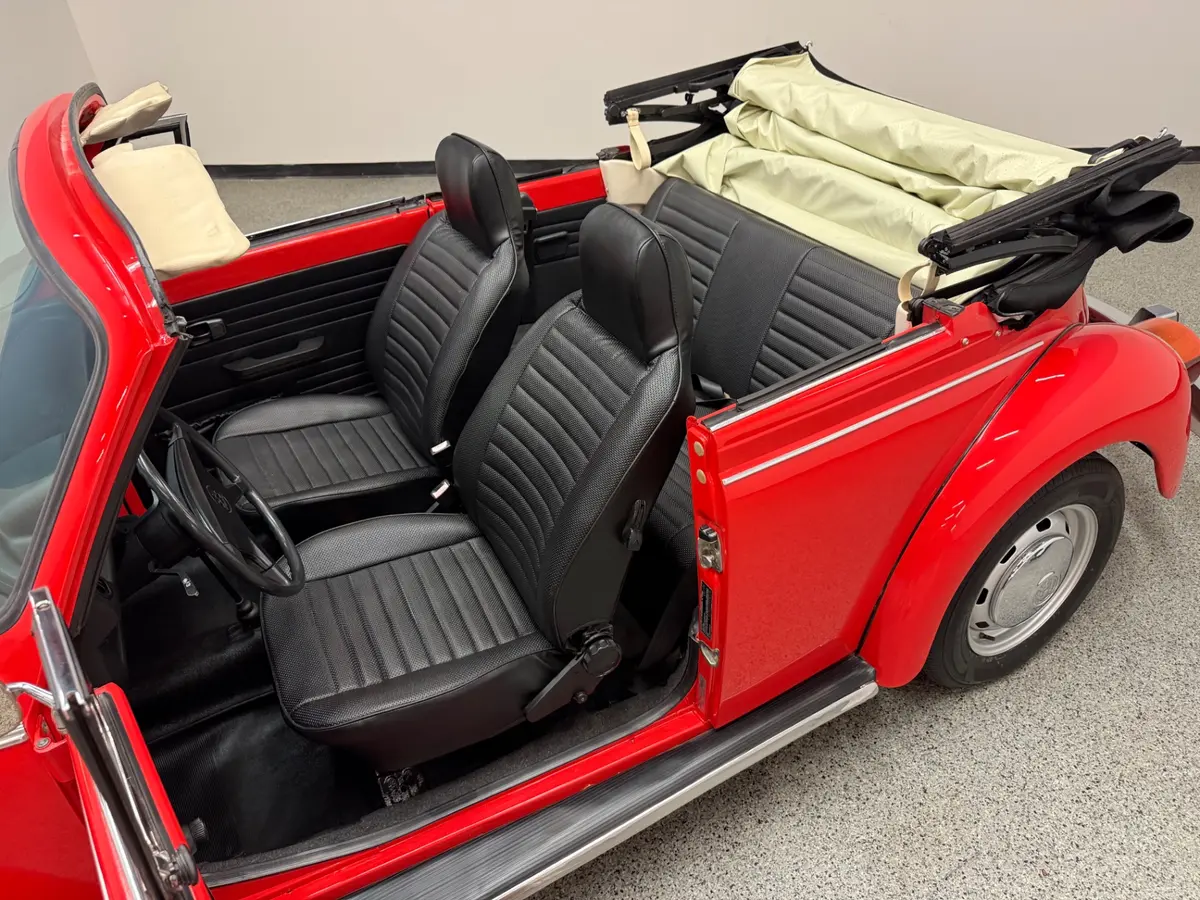
- Black Soft Top
- White Convertible Top Liner
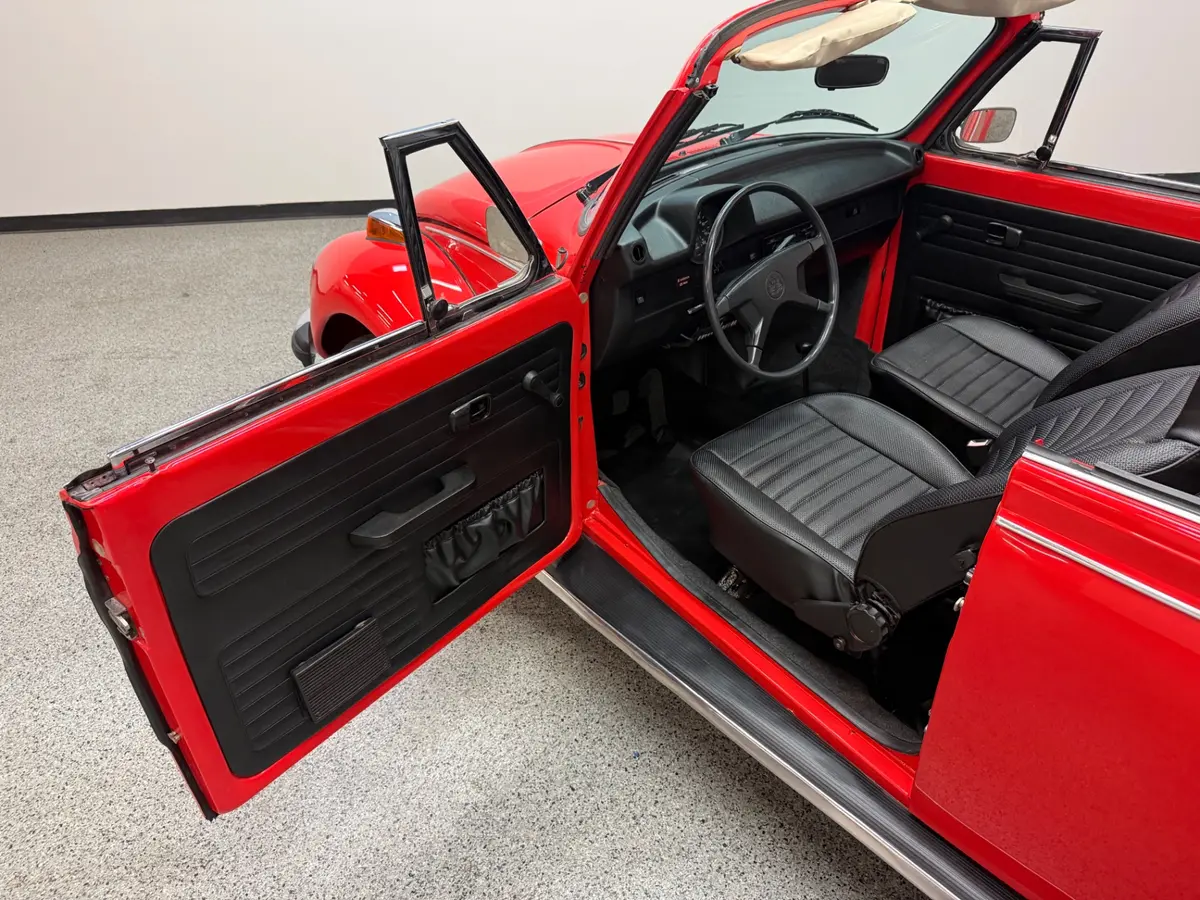
- Black Leather Bucket Seats
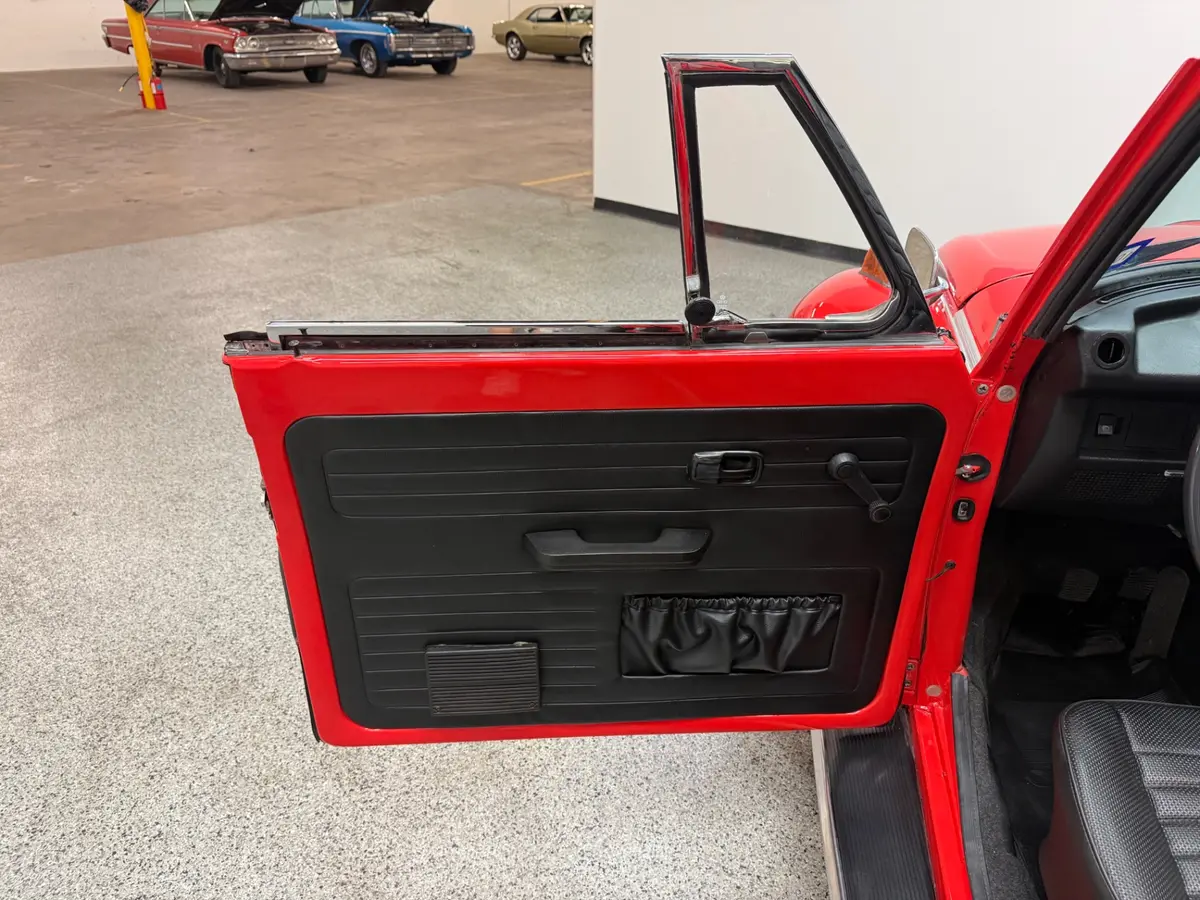
- Black Interior Door Panels
- VW Steel Wheels
- Chrome Bumpers (Front and Rear)
- Vent Windows
- Clean Undercarriage
- Original VIN Tag Present
Mechanical
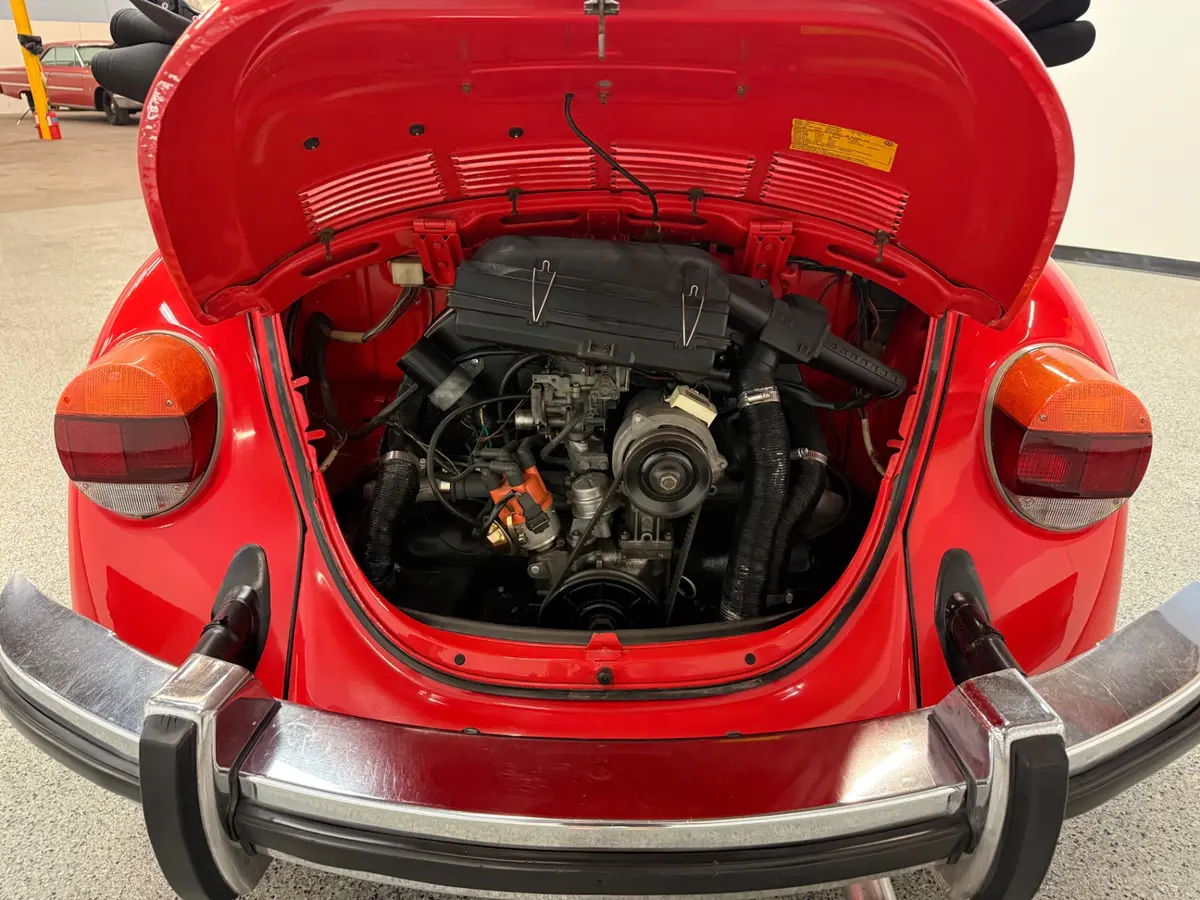
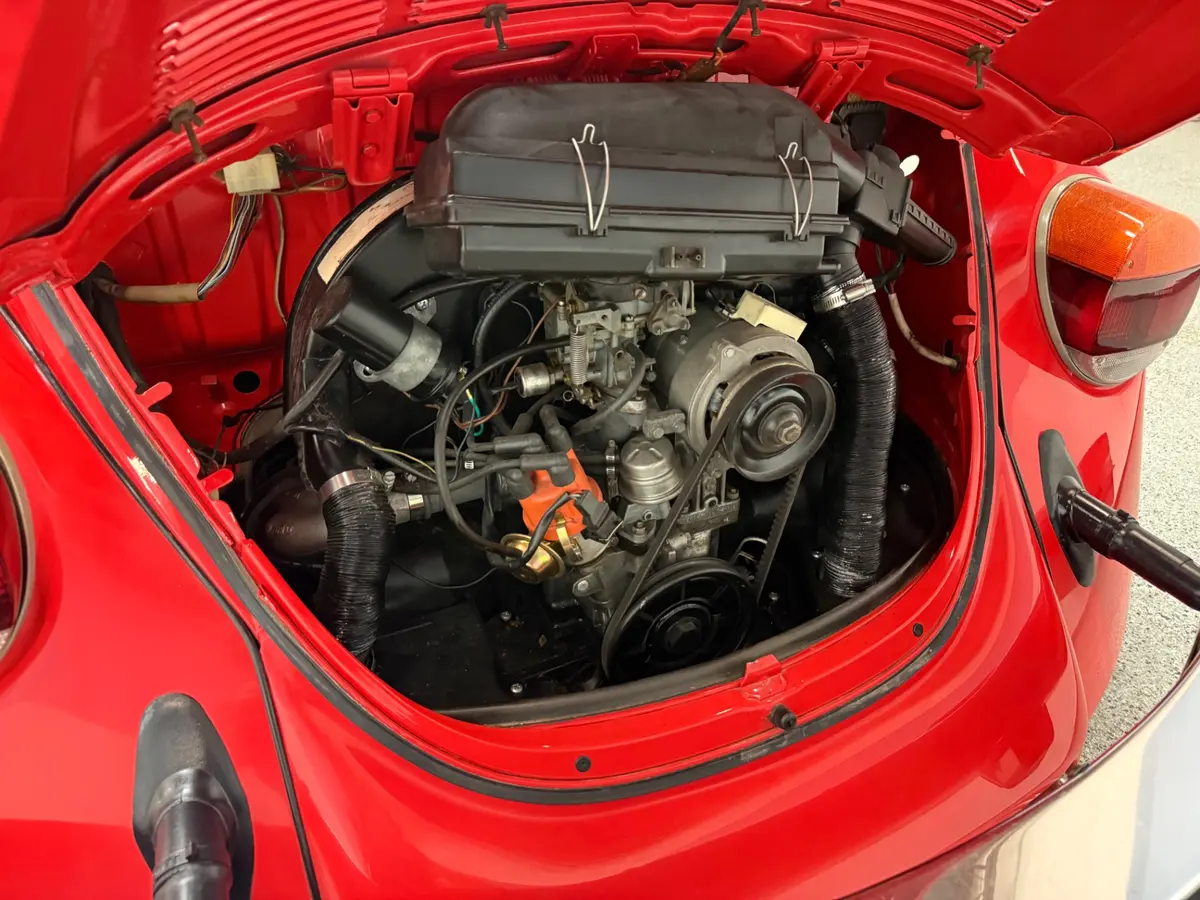
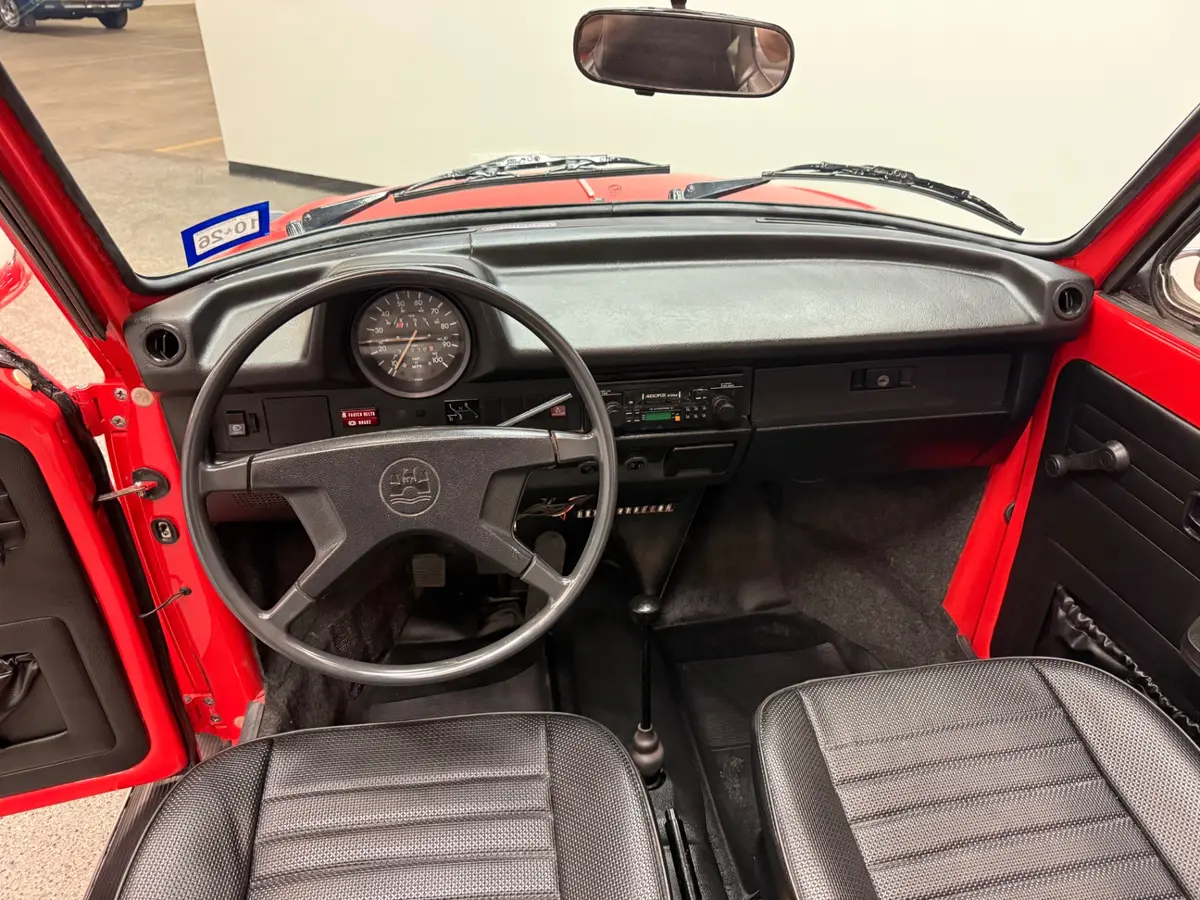
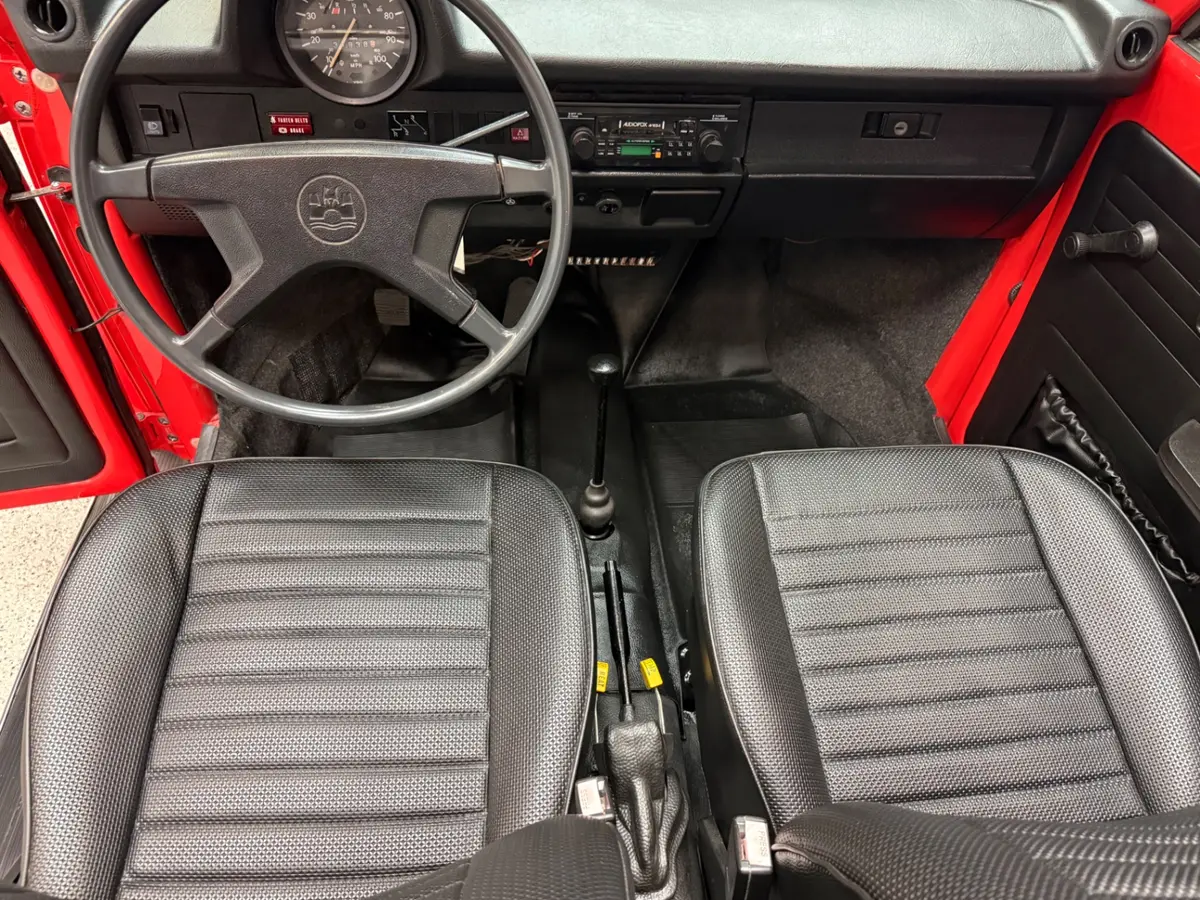
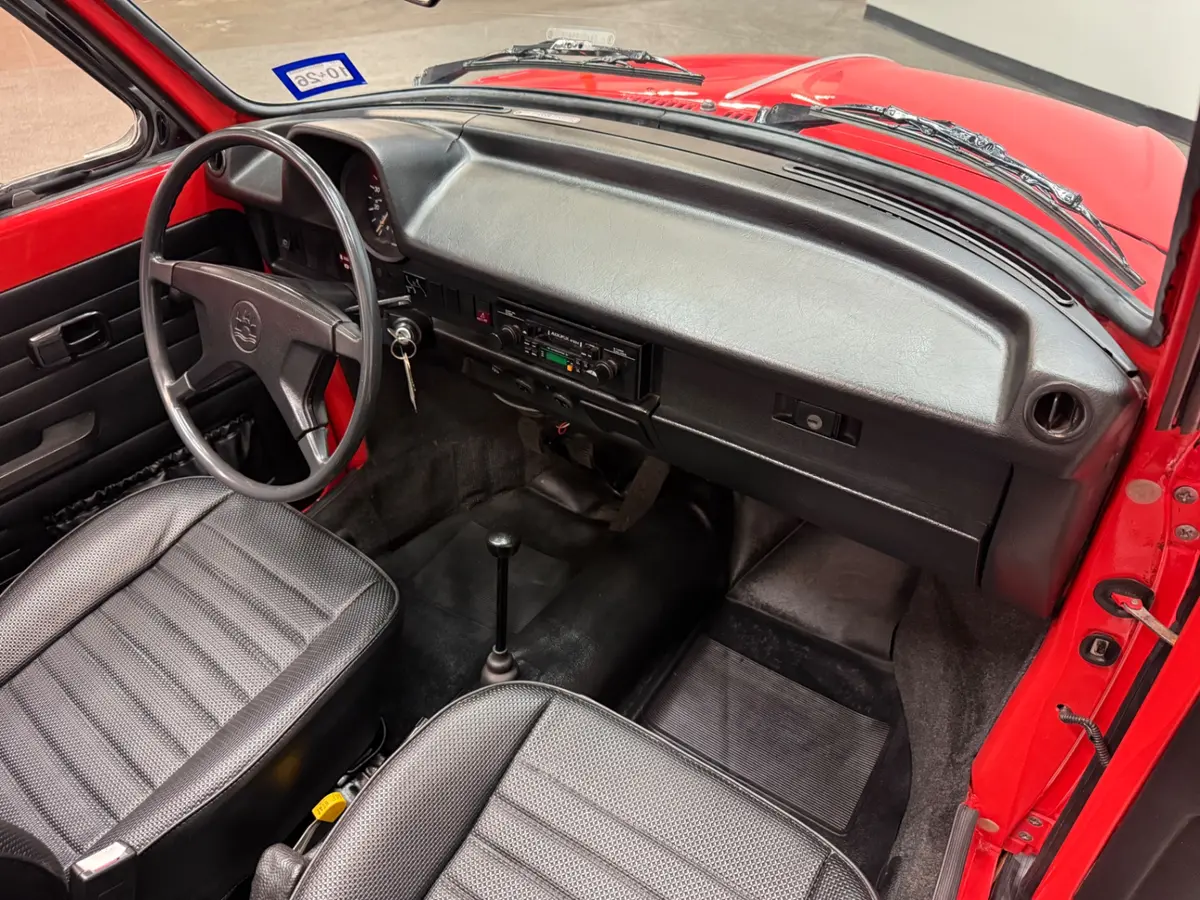
Power comes from the 1.6-liter air-cooled flat-four, displacing 1,584cc — the engine designation VW collectors commonly refer to as the 1600. By 1976, U.S.-market Beetles used fuel delivery and emissions equipment specific to federal and California regulations, but the core engine architecture was the same proven design that Volkswagen had been refining for decades. Air-cooled simplicity means no radiator, no coolant, no water pump, and no freeze-up concerns. The engine sits in the rear, driving the rear wheels through a 4-speed manual gearbox with the shifter mounted on the tunnel — a straightforward, well-understood drivetrain that any experienced VW mechanic can service without specialized tooling.
The Super Beetle's MacPherson strut front suspension gives it a noticeably different front-end feel compared to the older torsion-bar setup used on standard Beetles. Steering is more predictable, and the front wheels track better under load. Combined with the rear swing-axle independent suspension, the Super Beetle Convertible handles in a manner that rewards a driver who understands its characteristics — light, communicative, and honest about the limits of its rear-engine weight distribution.
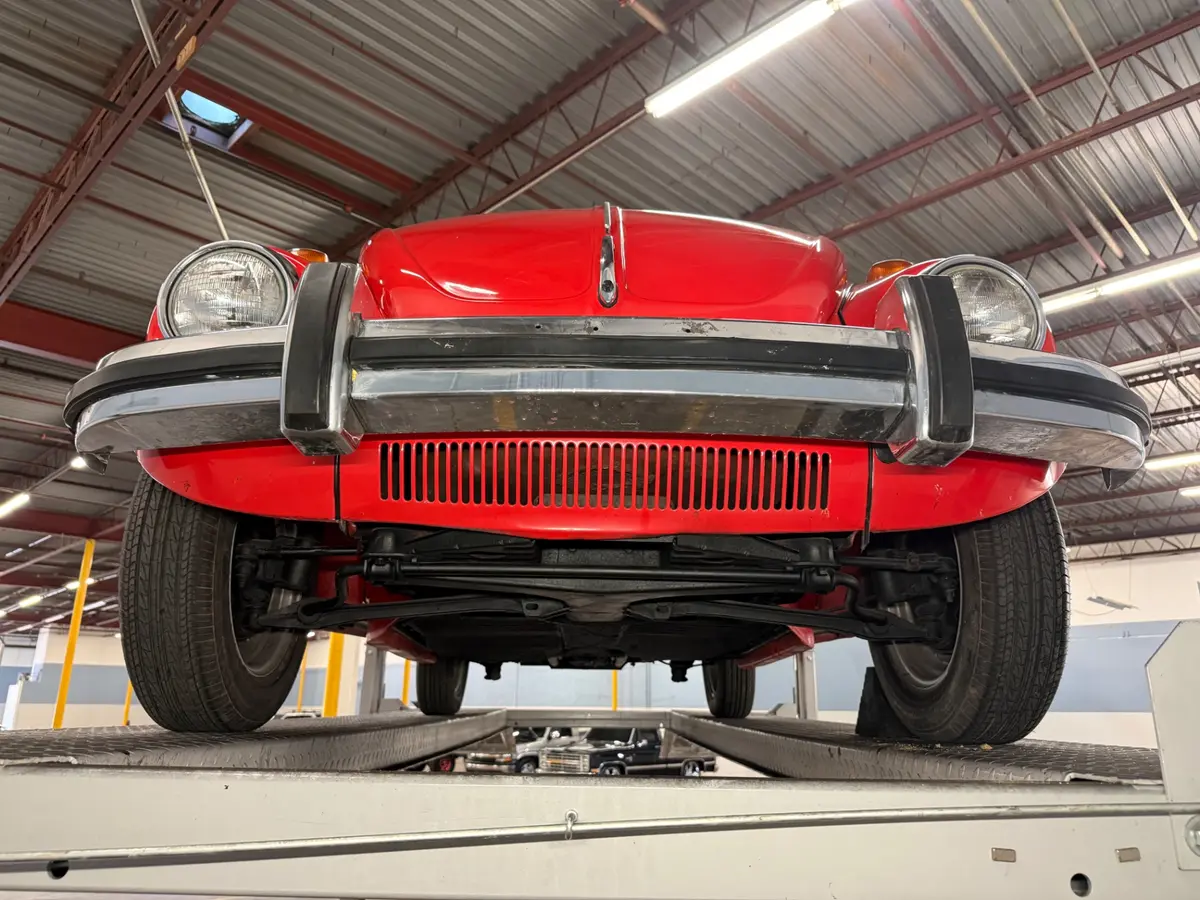
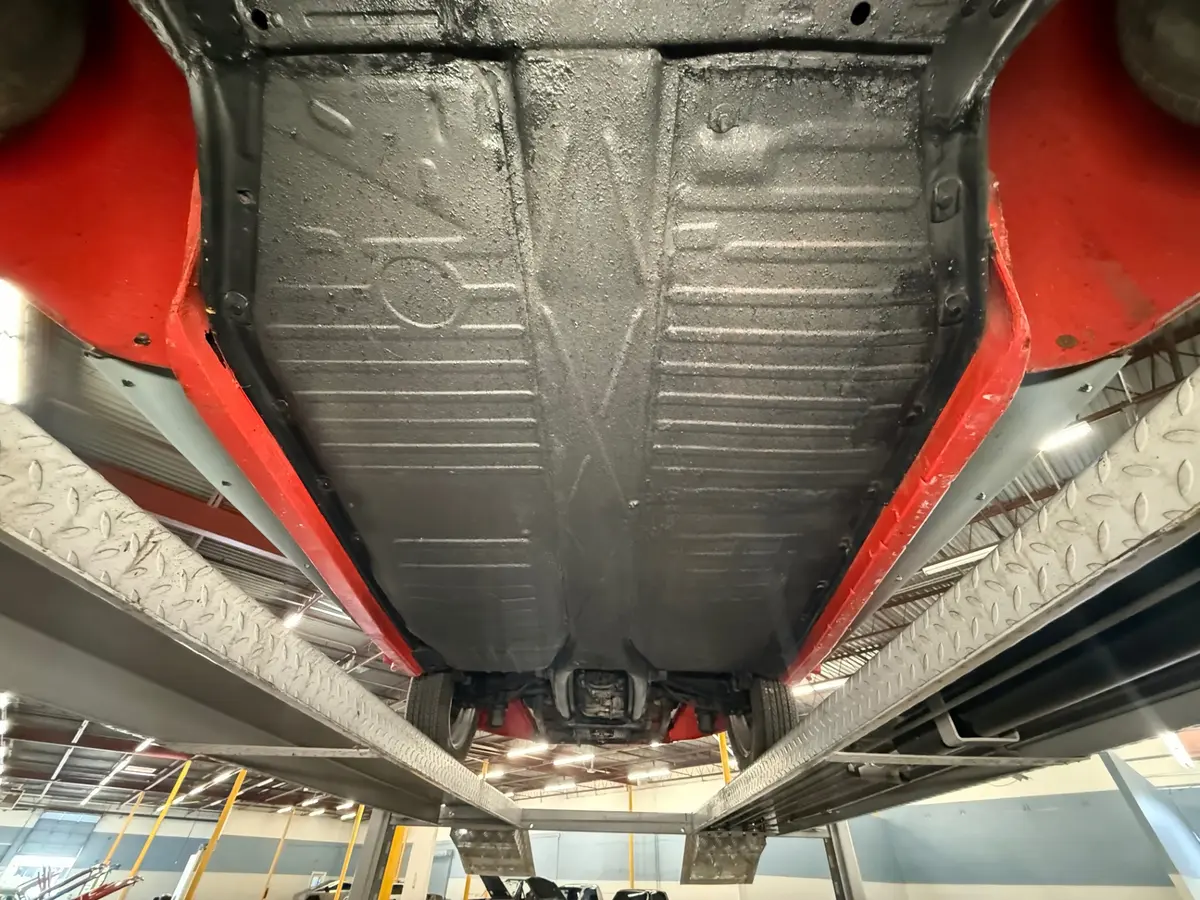
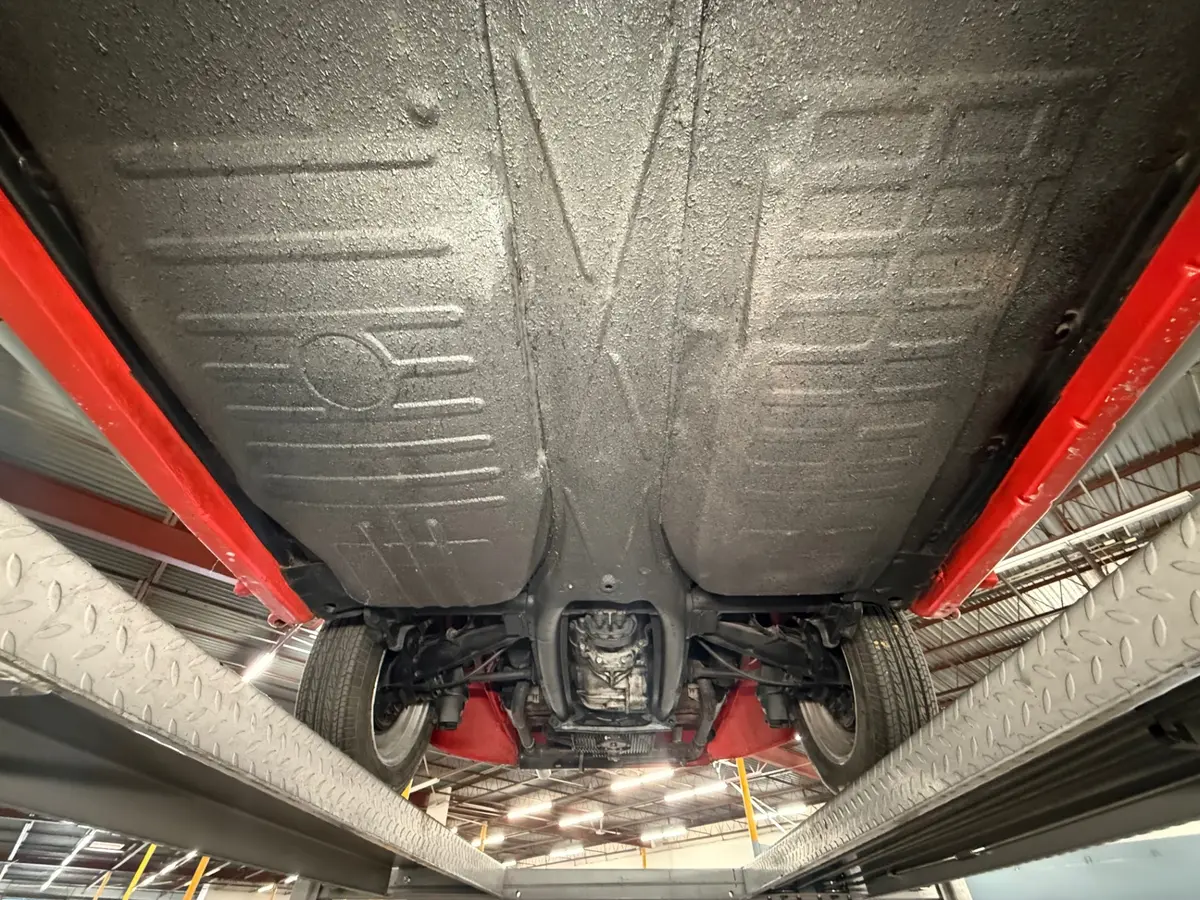
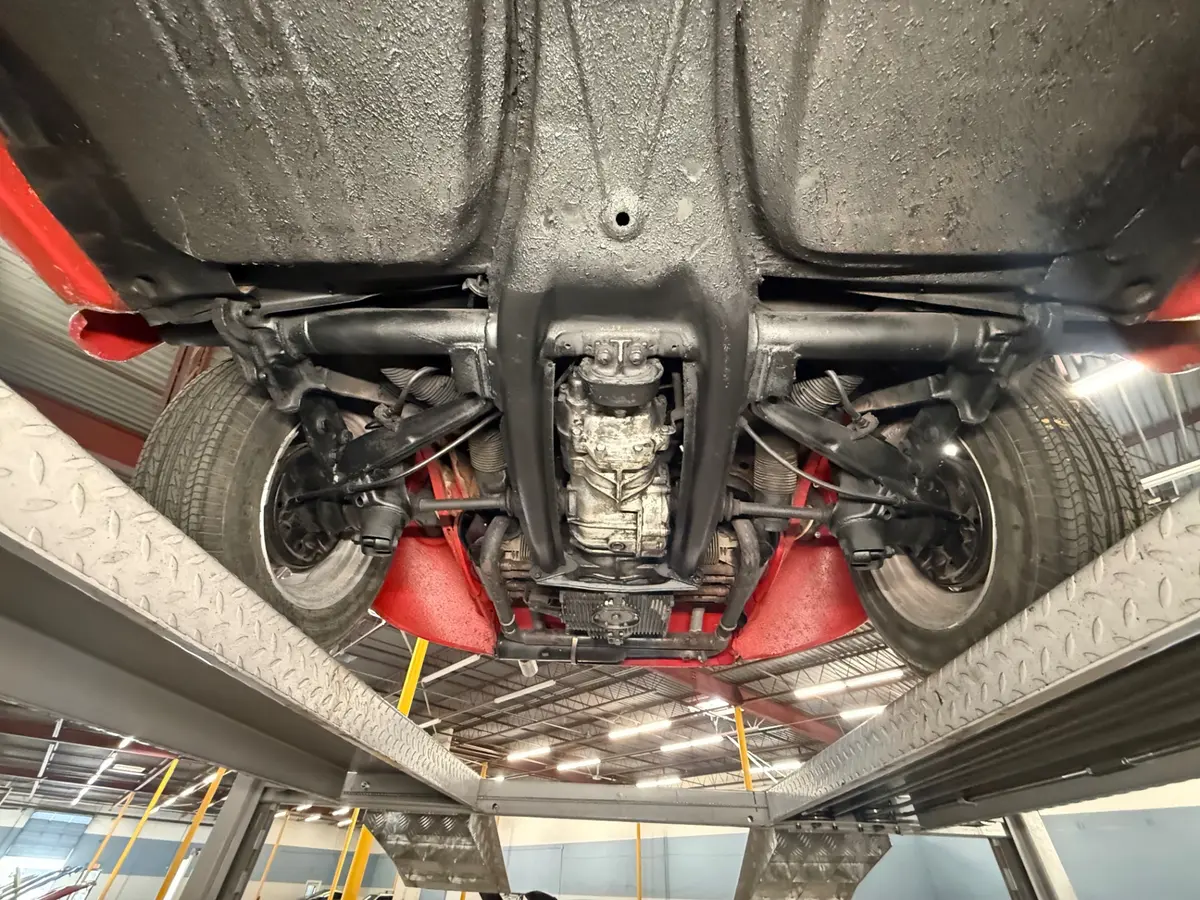
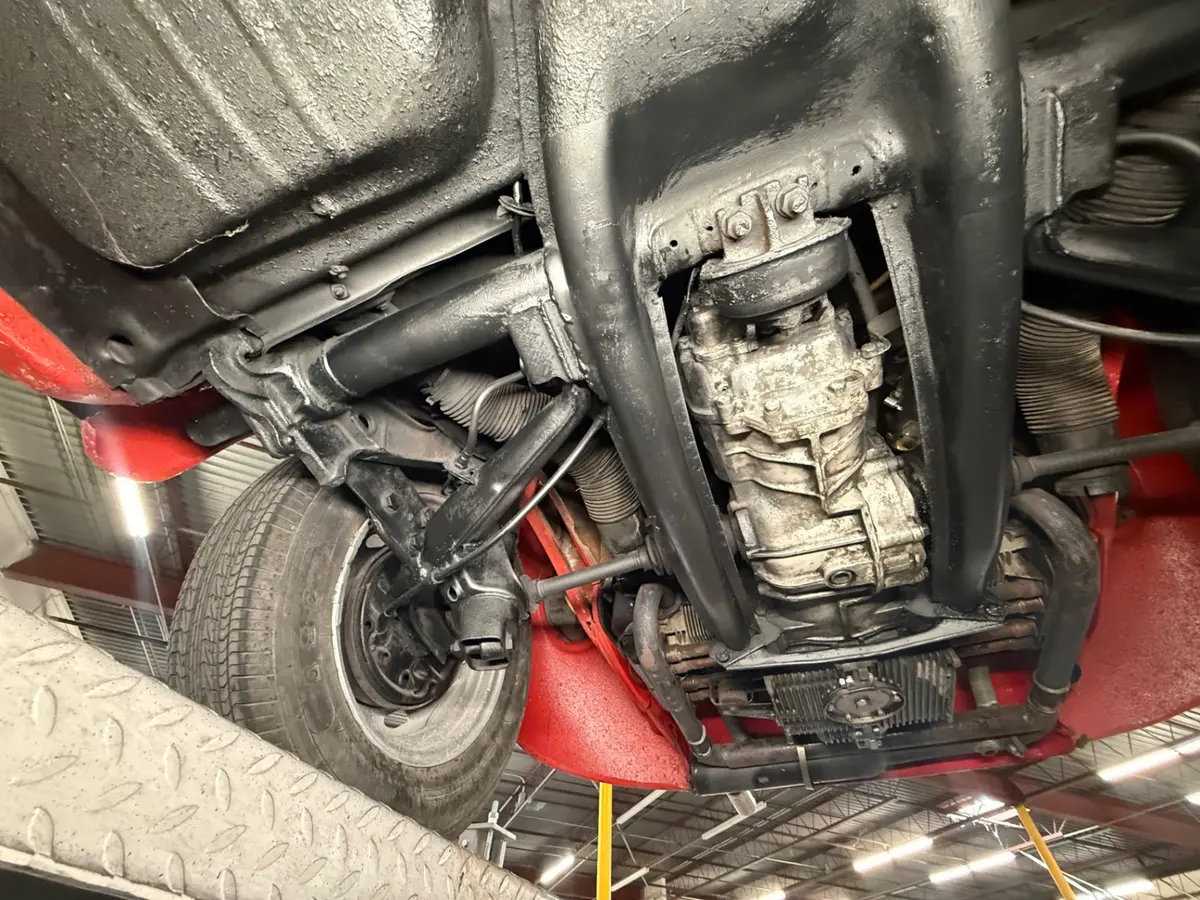
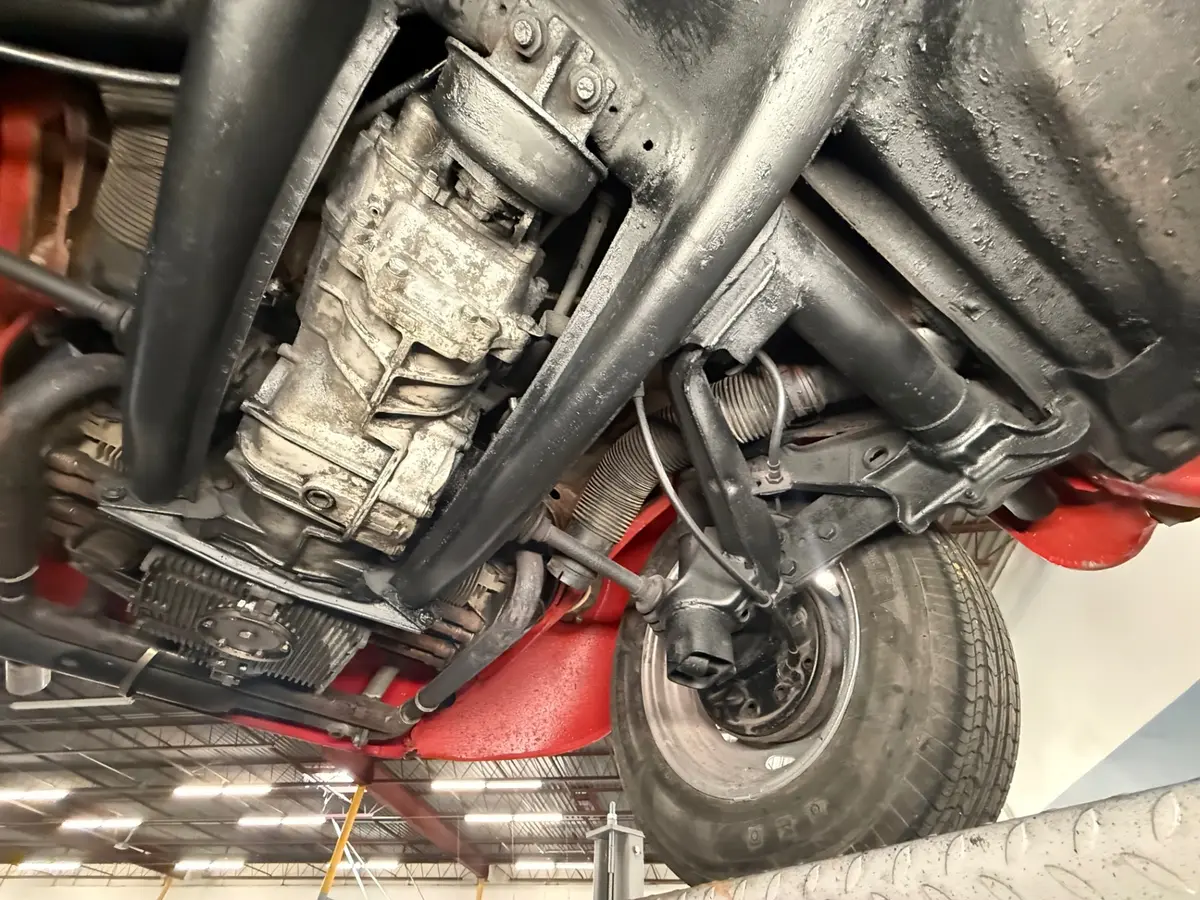
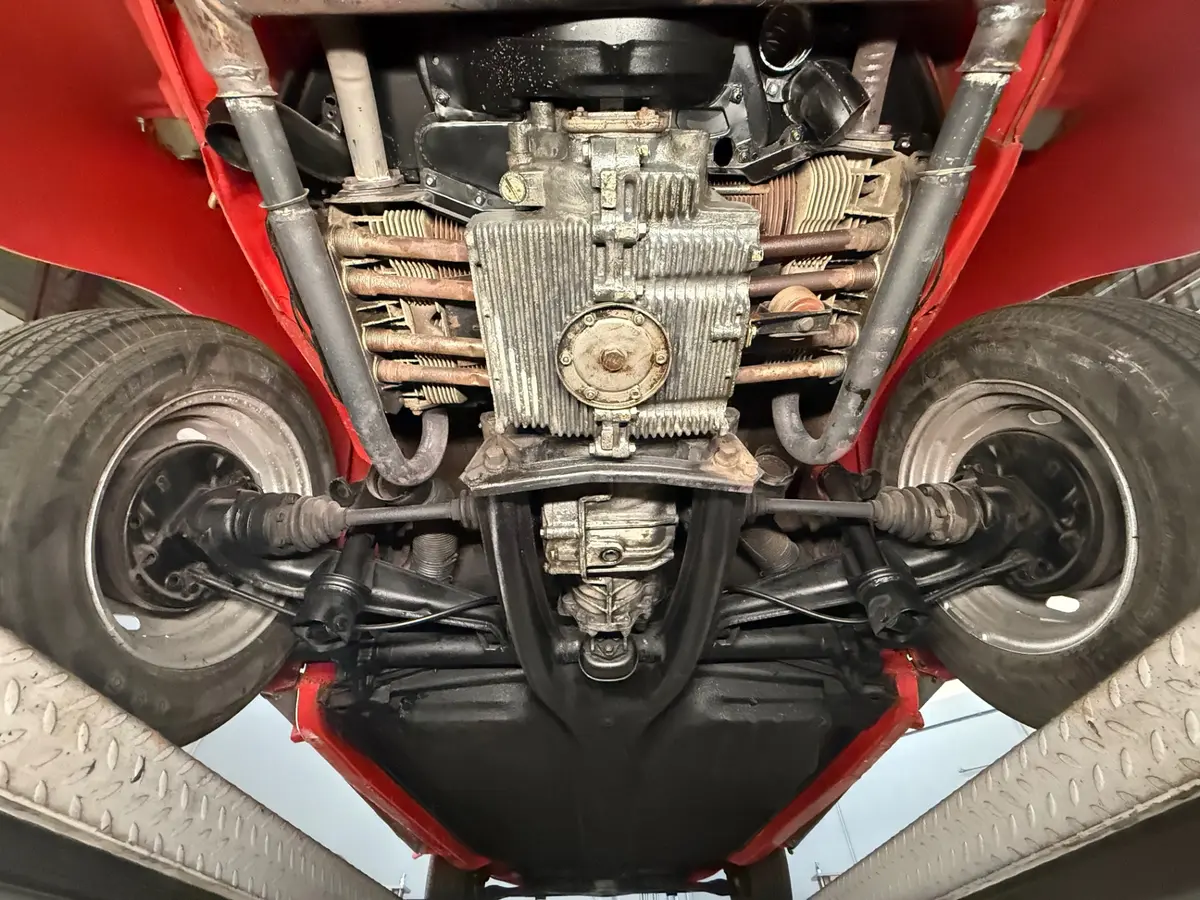
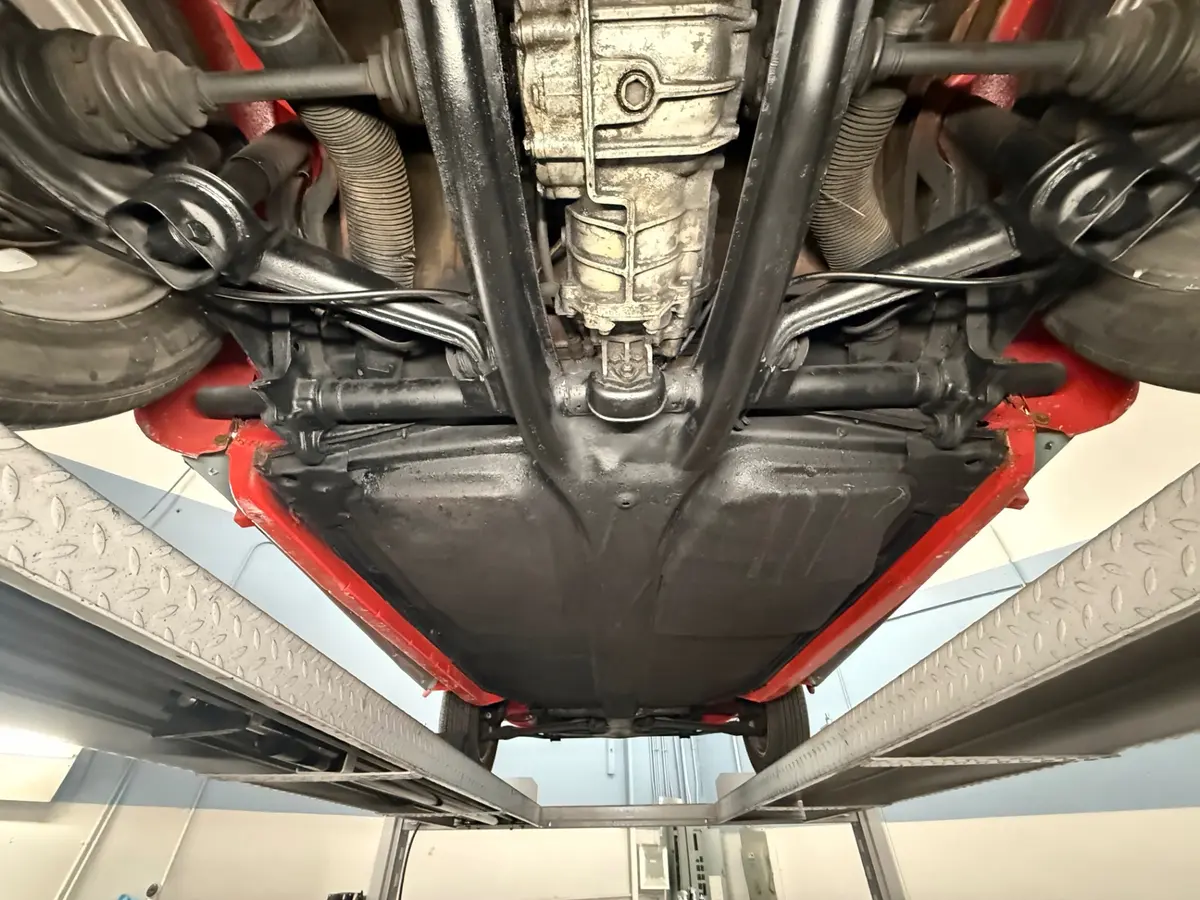
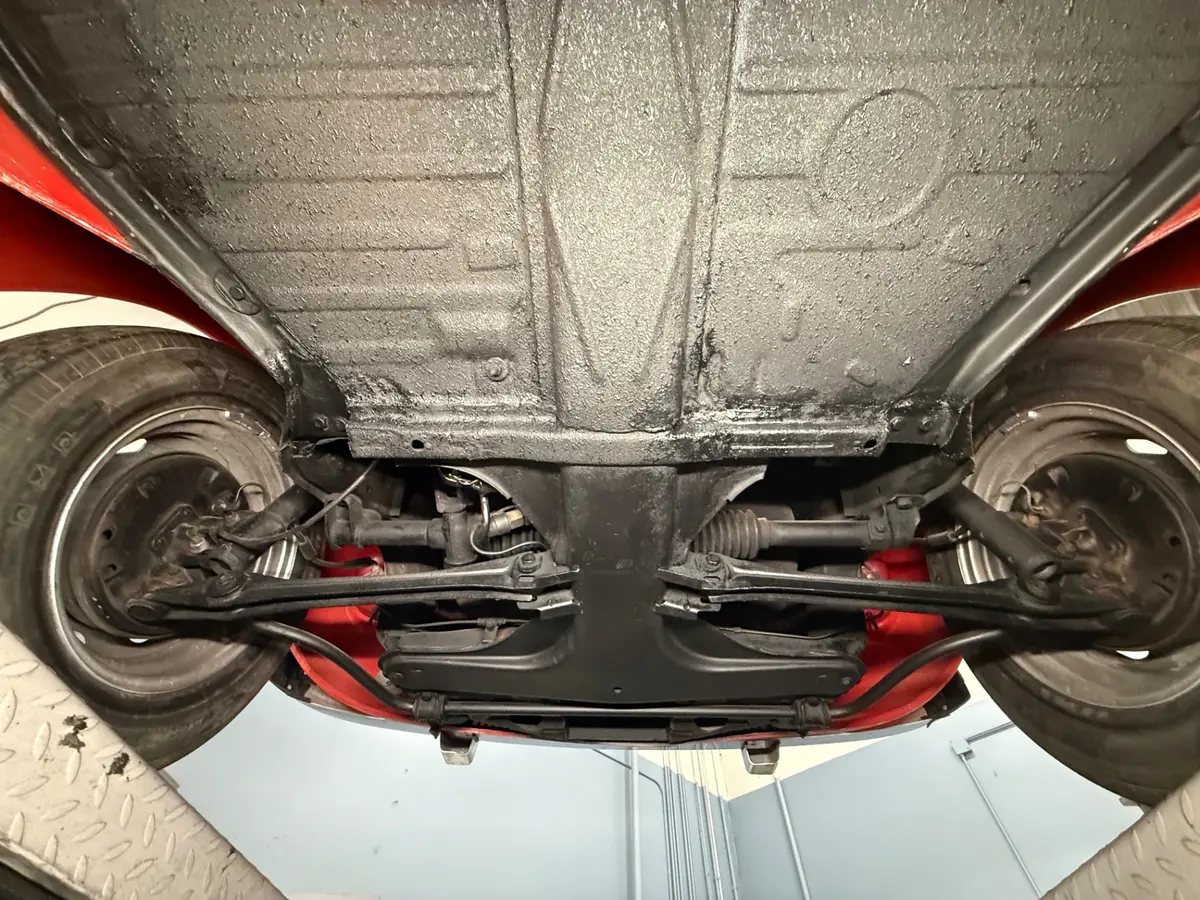
The undercarriage on this car has been raised and inspected. What you see underneath is clean structure, free of the heavy rust, patched floors, and compromised heater channels that disqualify so many air-cooled VWs of this vintage before you even open the door. For a Cabrio specifically, the floor pan and rocker areas take on even greater structural importance because they carry more of the chassis load in the absence of a fixed roof. A clean undercarriage on a 1976 Super Beetle Convertible is not a given — it is the first thing to confirm, and this car passes that test.
Interior
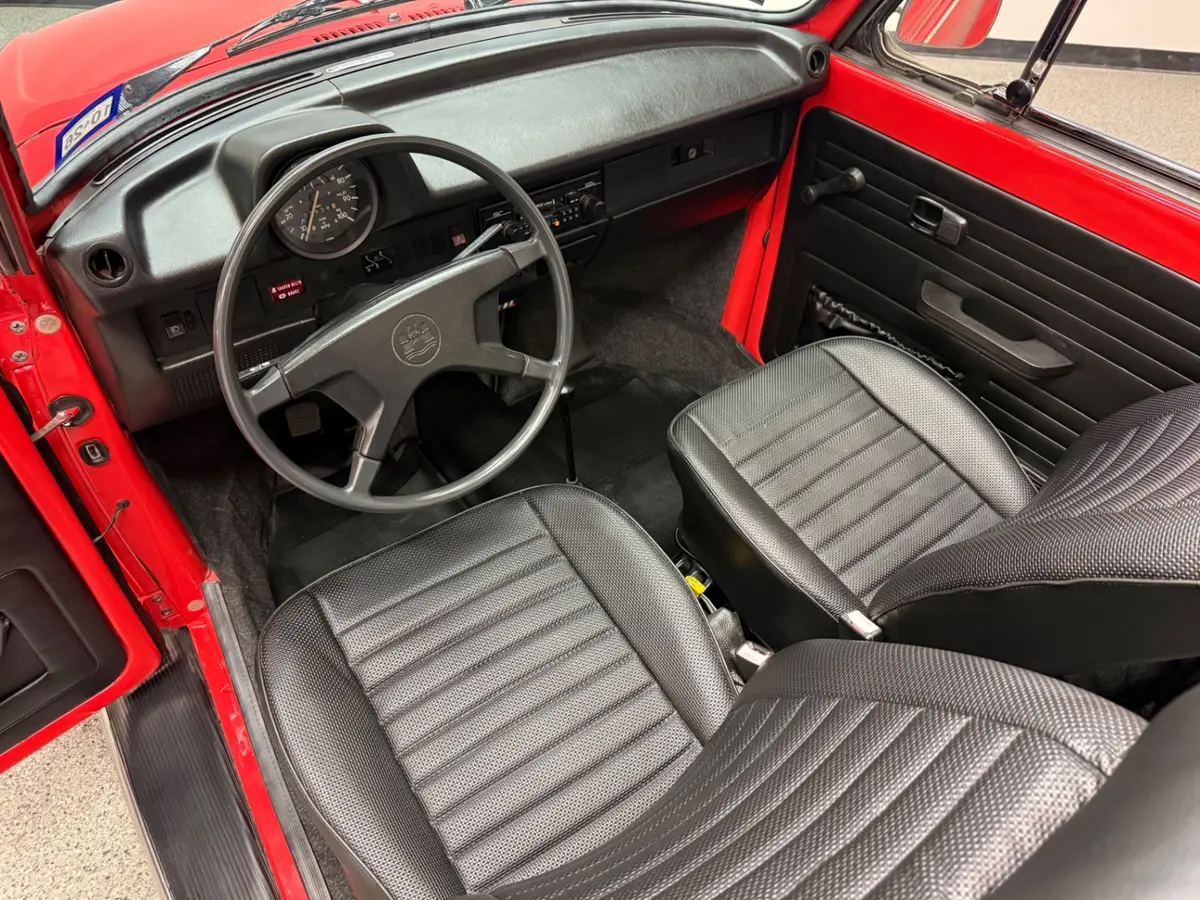
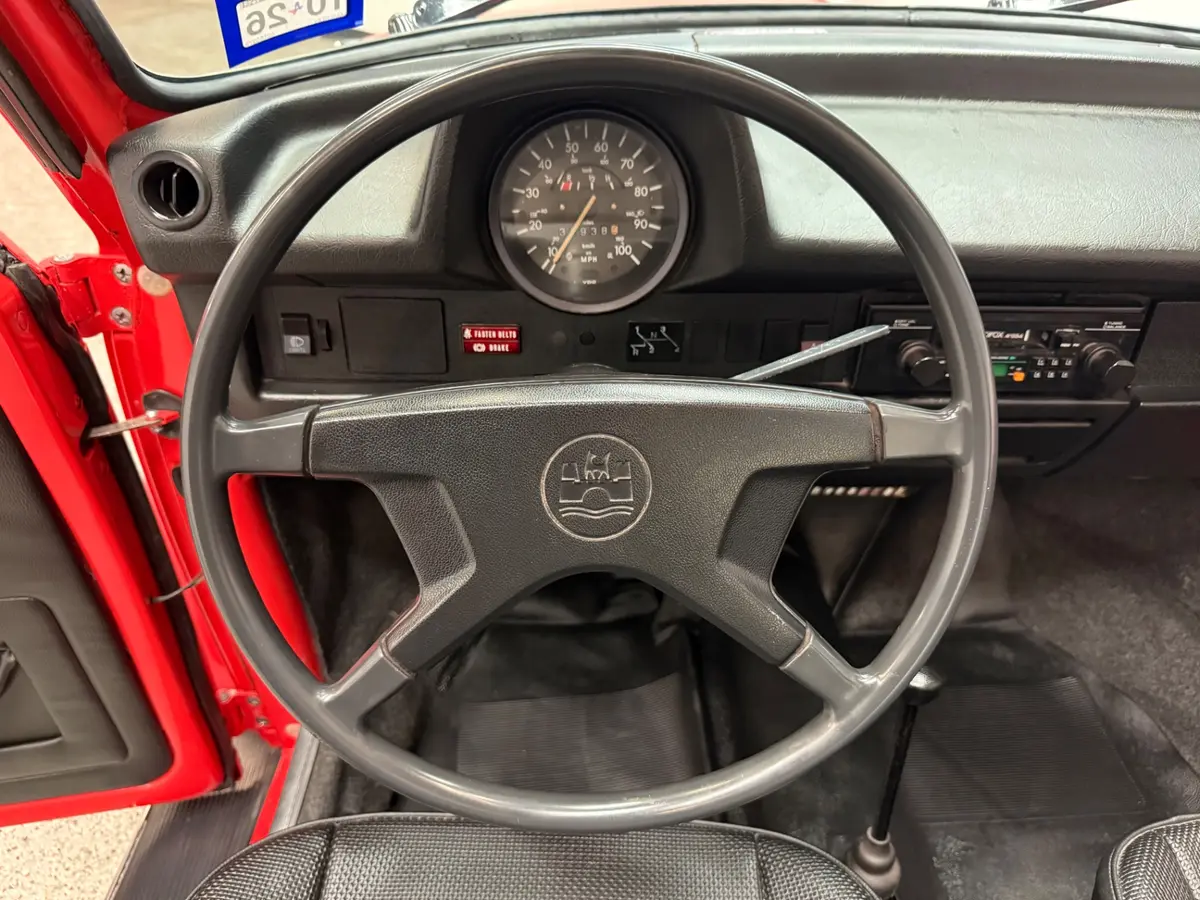
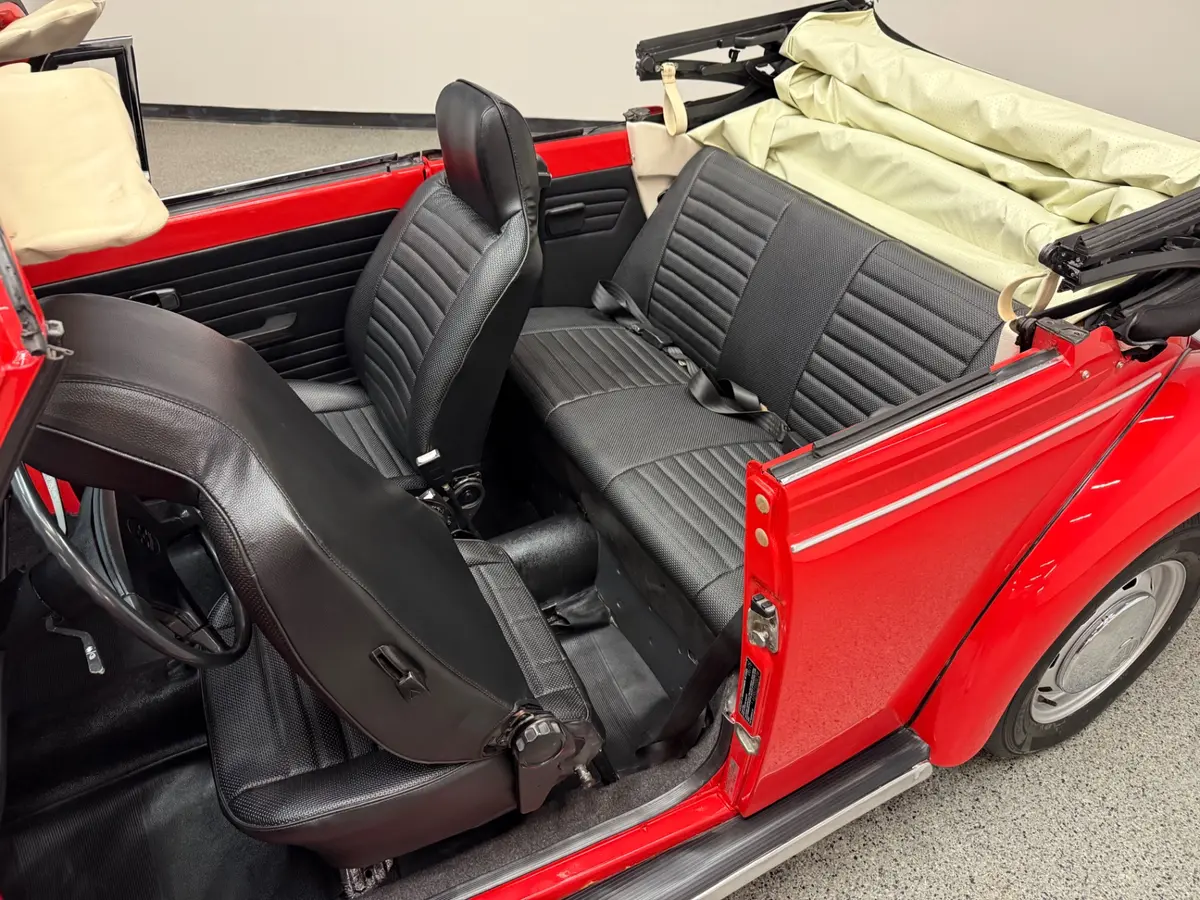
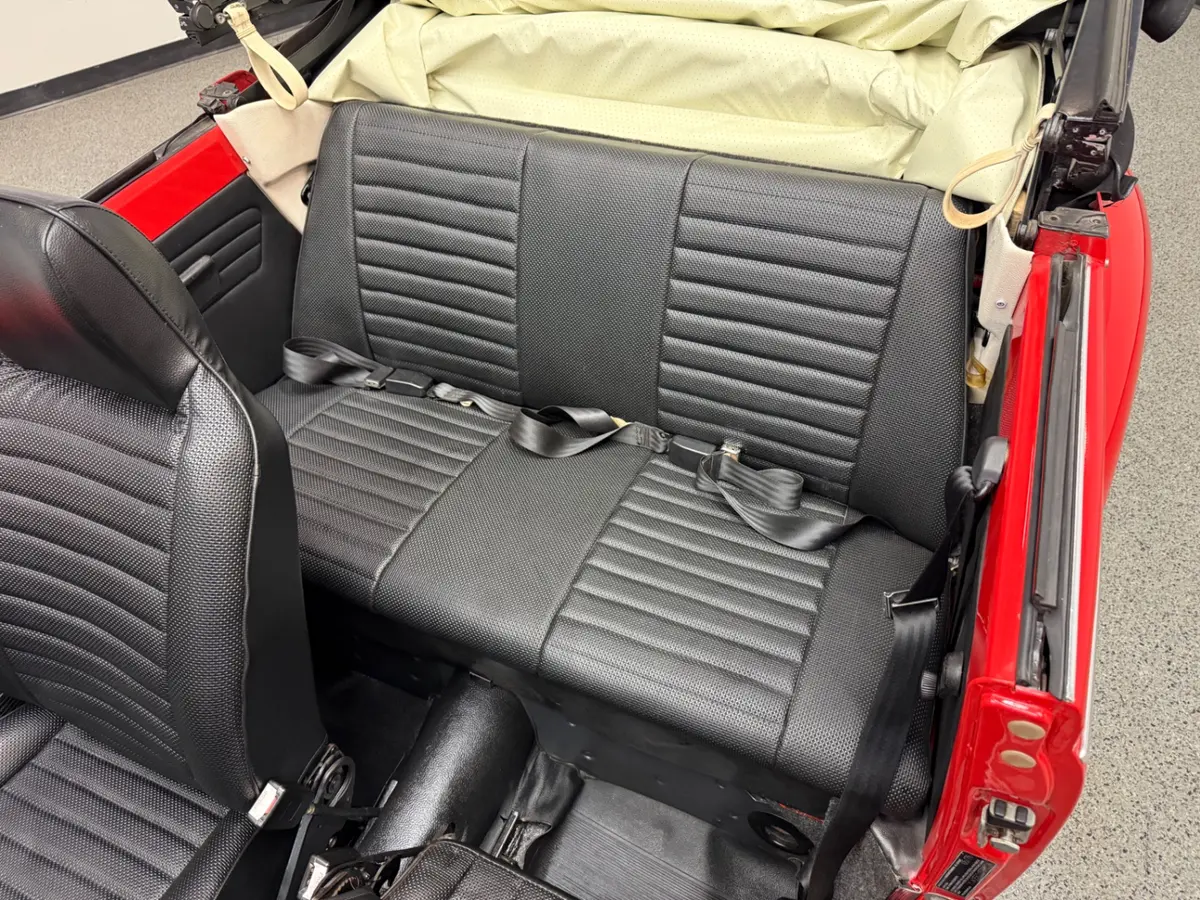
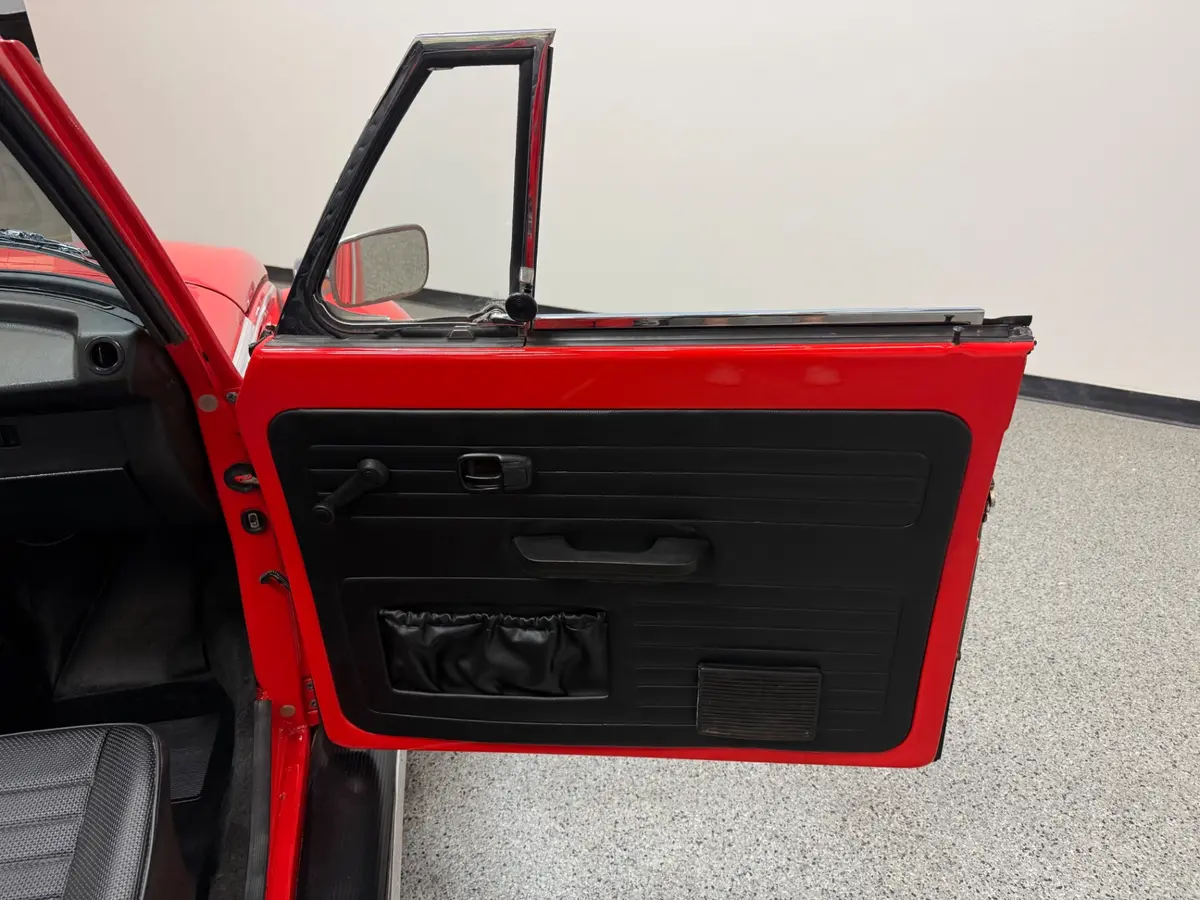
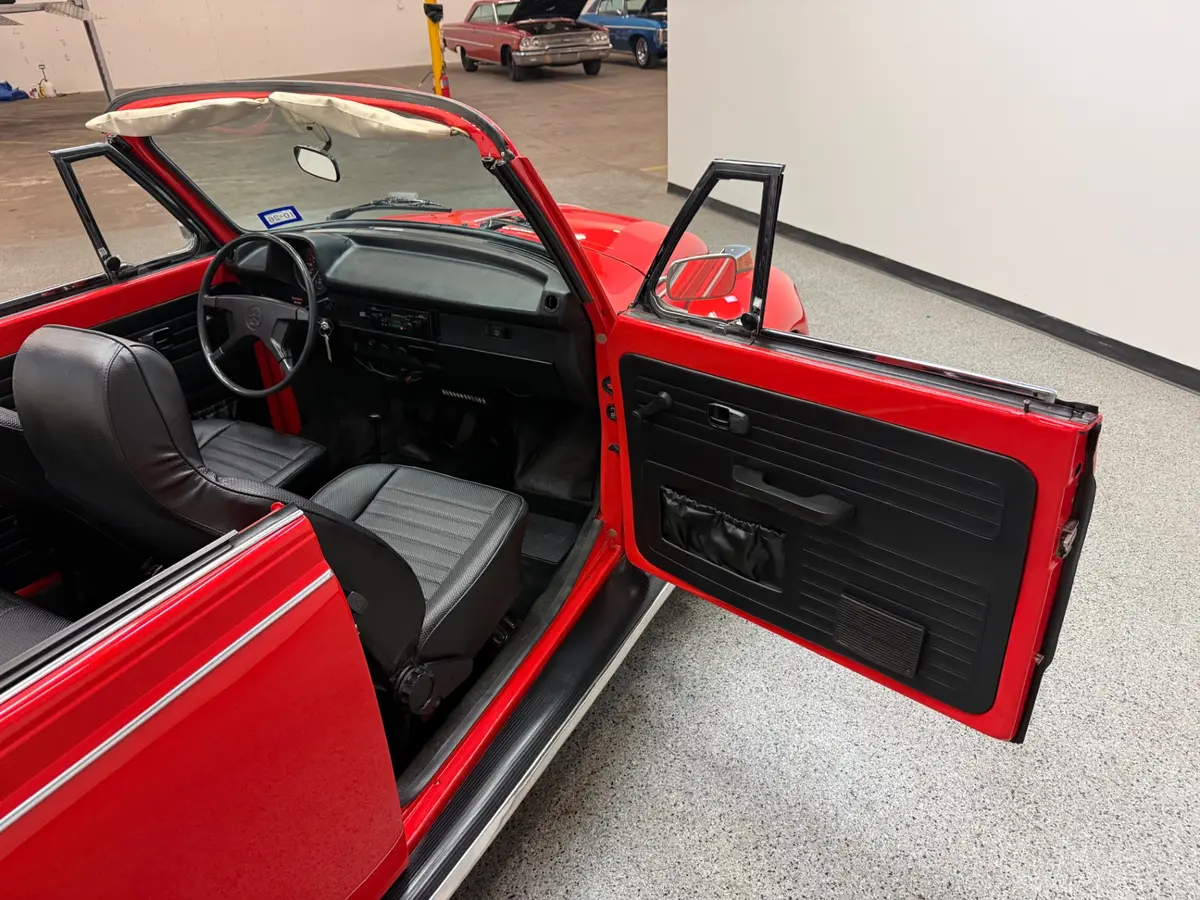
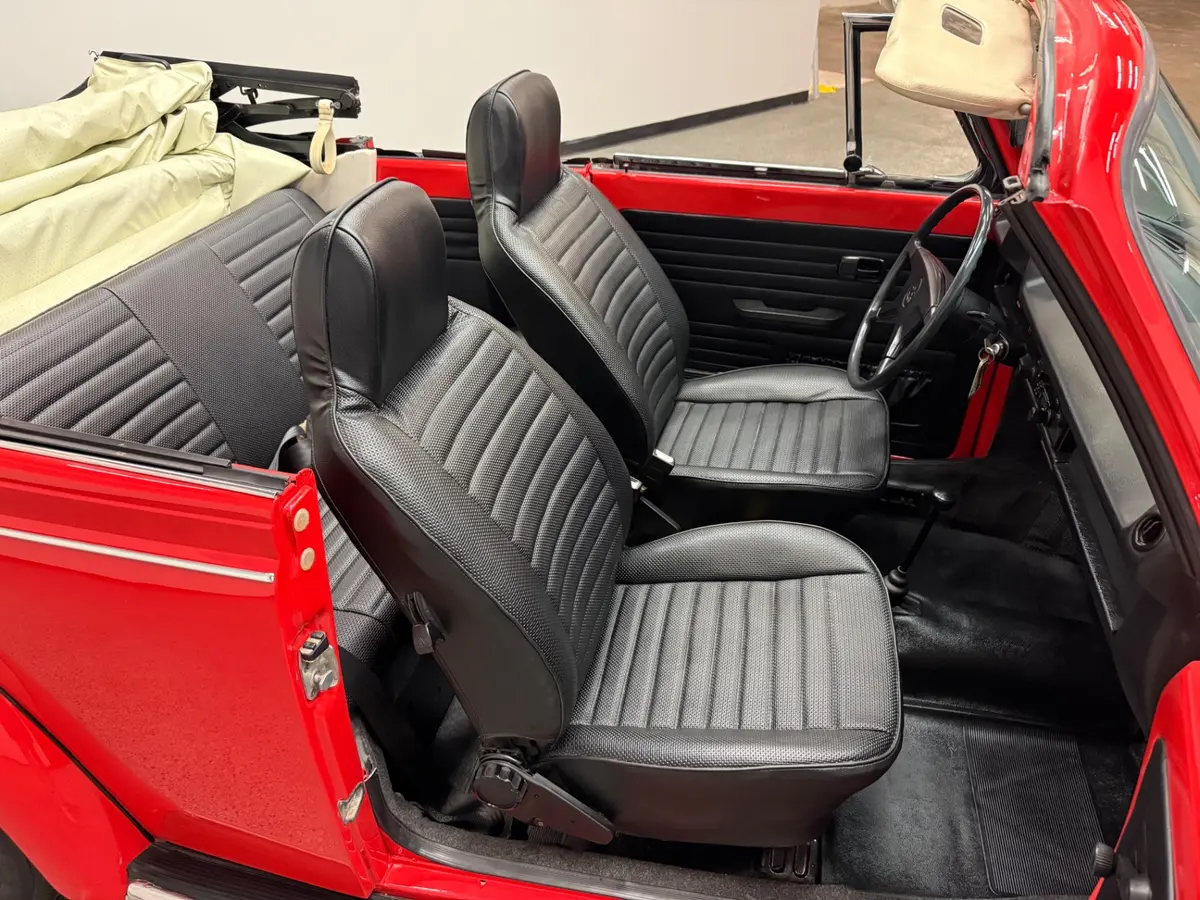
The interior is finished in black throughout, with leather bucket seats, black door panels, and a white convertible top liner that contrasts cleanly against the black outer soft top when the roof is raised. The bucket seat configuration was standard for the Cabrio and provides better lateral support than the bench seating found in some other VW models of the era.
Vent windows — the small pivoting triangular panes forward of the main door glass — were a practical feature that disappeared from most American cars by the late 1970s as air conditioning became standard equipment. On an open-top car like this, the vent windows serve a different purpose: they allow you to direct airflow into the cabin when the top is up and side windows are closed, useful on cooler days when you want ventilation without wind noise. The chrome trim framing the vent window on each door is visible and intact in the photographs.
The original VIN tag remains present in the car, which matters for documentation purposes and confirms the car's identity as it left the factory. For a 1976 VW, the VIN structure encodes the model year and body type, allowing verification that this is, in fact, a genuine Type 1303 Cabriolet rather than a post-market conversion.
Exterior
The red exterior is a period-correct color for the 1976 Super Beetle Convertible and photographs accurately against the black soft top and chrome bumpers. VW offered the Cabrio in a range of colors throughout its production run, and red over black is one of the cleaner combinations available in the lineup. The body panels show the rounded, full-fender profile specific to the Super Beetle — broader at the nose and more sculpted around the headlights compared to the flat-windshield standard Beetle.
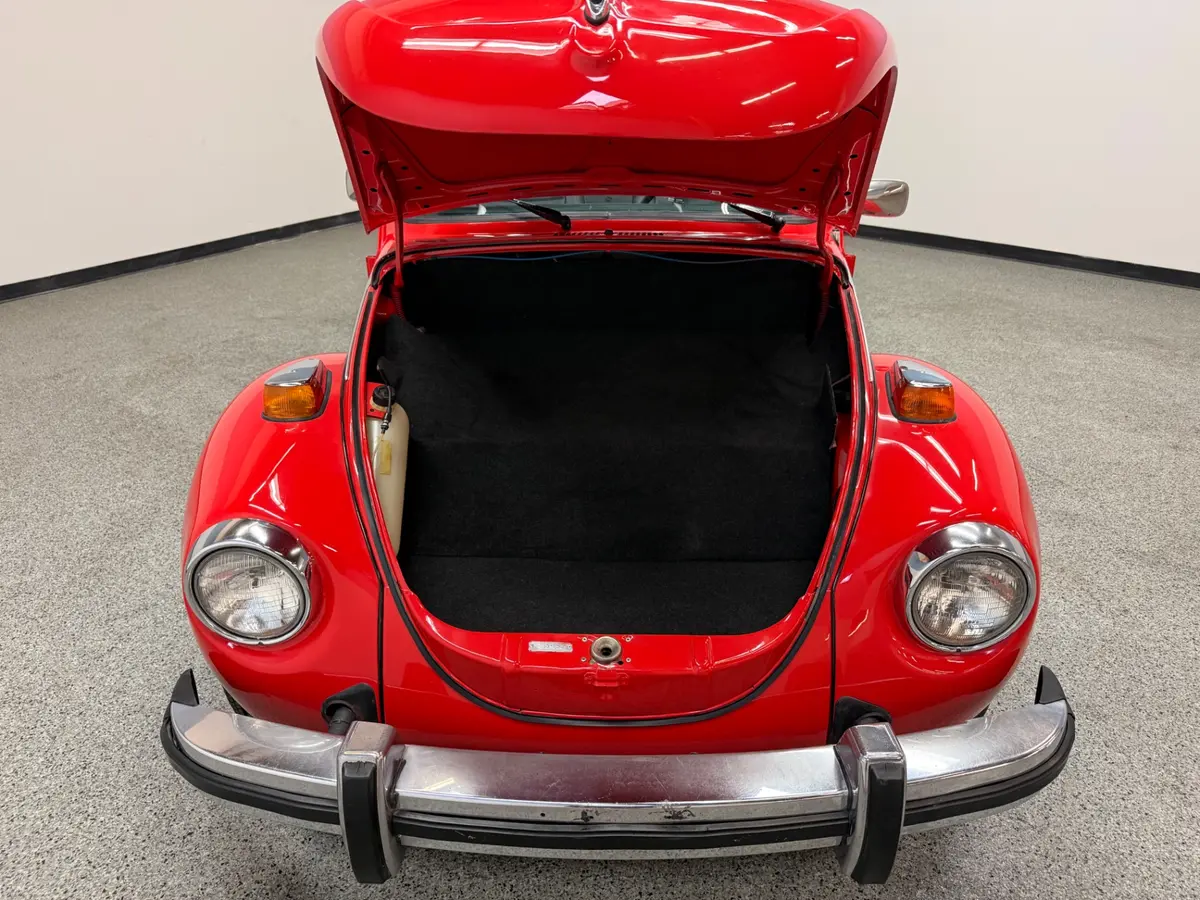
Chrome bumpers front and rear retain the overrider guards that were part of the 1976 specification. These are not the large rubber-clad impact bumpers VW adopted for U.S.-market cars in earlier years under federal bumper standards — the 1976 Cabrio used a design that balanced regulatory compliance with visual proportion. The bumpers on this car are presentable and functional.
VW steel wheels wear the period-correct hubcap design and are fitted with tires that match front to rear. The steel wheel is the correct factory item for this model, and on a car presented in this condition, the original wheel style reads correctly rather than as a compromise.
Conclusion
The 1976 Volkswagen Super Beetle Convertible occupies a specific and well-documented place in VW history — it is a hand-built Karmann Cabrio from the final years of the model's production run, on the superior Super Beetle platform, with open-top body engineering that Karmann had been refining for over two decades. Finding one in red over black leather, with a clean undercarriage, original VIN tag, and intact chrome, at any price point, requires patience. This car represents the combination of body style, condition, and documentation that makes a collectible air-cooled VW worth pursuing rather than settling for.
To schedule a viewing or ask questions, call Skyway Classics in Sarasota, Florida at 941-254-6608.
Disclaimer
Information found on the website is presented as given to us by the owner of the car, whether on consignment or from the owner we bought it from. Some Photos, materials for videos, descriptions and other information are provided by the consignor/seller and is deemed reliable, but Skyway Classics does not warranty or guarantee this information. Skyway Classics is not responsible for information that may incorrect or a publishing error. The decision to purchase should be based solely on the buyers personal inspection of the vehicle or by a professional inspection service prior to offer or purchase being made.
1976 Volkswagen Super Beetle Convertible — Karmann Cabrio in Red with Black Soft Top
Why This Car Is Special
The 1976 Volkswagen Super Beetle Convertible is one of the most collectible variants of the entire Beetle lineup, and for good reason. By 1976, Volkswagen had already ended production of the standard Beetle sedan in Germany, but the convertible — hand-built by coachbuilder Karmann in Osnabrück — was kept alive specifically for markets like the United States, where demand remained strong. That decision to continue the Karmann Cabrio while killing the hardtop actually makes the 1976 model year a meaningful one for collectors. These cars were never cheap to produce. Karmann reinforced the body to compensate for the loss of the roof structure, and the conversion process was labor-intensive enough that the convertible carried a significant price premium over the standard sedan when new.
The Super Beetle designation itself is important context. Introduced in 1971, the Super Beetle — known internally as the Type 1302 and later the 1303 — differed from the standard Beetle in two key ways: it used MacPherson strut front suspension instead of the old kingpin-and-torsion-bar setup, and it featured a larger, more curved windshield that gave the front of the car a rounder, more modern profile. The curved windshield also expanded interior volume noticeably compared to the flat-glass standard Beetle. By 1976, Volkswagen had settled on the 1303-based platform for the Cabrio, which meant buyers got improved handling geometry and more front storage space along with the open-air body style.
Karmann had been building VW convertibles since 1949, and by the time this car rolled out of the Osnabrück plant, the company had decades of experience reinforcing the unibody and fitting convertible tops that held up well in real-world use. The result was a car with notably less cowl shake than most open-top vehicles of the era, a point VW's own marketing leaned on. The fact that Karmann continued producing the Beetle Cabrio all the way through 1980 — well after the Golf had taken over as VW's volume seller — speaks to how committed the market was to this specific body style.
This particular example presents in red over a black leather interior, fitted with a black soft top and white convertible top liner. It is a genuine Karmann Cabrio, not a converted sedan, and the original VIN tag remains present. The undercarriage has been inspected and shows clean structure — which, for a nearly 50-year-old open-top car, is the single most important thing to verify.
Features List
- 1.6L Flat-4 Air-Cooled Engine (1600cc)
- 4-Speed Manual Transmission
- Karmann Cabrio Convertible Body
- Black Soft Top
- White Convertible Top Liner
- Black Leather Bucket Seats
- Black Interior Door Panels
- VW Steel Wheels
- Chrome Bumpers (Front and Rear)
- Vent Windows
- Clean Undercarriage
- Original VIN Tag Present
Mechanical
Power comes from the 1.6-liter air-cooled flat-four, displacing 1,584cc — the engine designation VW collectors commonly refer to as the 1600. By 1976, U.S.-market Beetles used fuel delivery and emissions equipment specific to federal and California regulations, but the core engine architecture was the same proven design that Volkswagen had been refining for decades. Air-cooled simplicity means no radiator, no coolant, no water pump, and no freeze-up concerns. The engine sits in the rear, driving the rear wheels through a 4-speed manual gearbox with the shifter mounted on the tunnel — a straightforward, well-understood drivetrain that any experienced VW mechanic can service without specialized tooling.
The Super Beetle's MacPherson strut front suspension gives it a noticeably different front-end feel compared to the older torsion-bar setup used on standard Beetles. Steering is more predictable, and the front wheels track better under load. Combined with the rear swing-axle independent suspension, the Super Beetle Convertible handles in a manner that rewards a driver who understands its characteristics — light, communicative, and honest about the limits of its rear-engine weight distribution.
The undercarriage on this car has been raised and inspected. What you see underneath is clean structure, free of the heavy rust, patched floors, and compromised heater channels that disqualify so many air-cooled VWs of this vintage before you even open the door. For a Cabrio specifically, the floor pan and rocker areas take on even greater structural importance because they carry more of the chassis load in the absence of a fixed roof. A clean undercarriage on a 1976 Super Beetle Convertible is not a given — it is the first thing to confirm, and this car passes that test.
Interior
The interior is finished in black throughout, with leather bucket seats, black door panels, and a white convertible top liner that contrasts cleanly against the black outer soft top when the roof is raised. The bucket seat configuration was standard for the Cabrio and provides better lateral support than the bench seating found in some other VW models of the era.
Vent windows — the small pivoting triangular panes forward of the main door glass — were a practical feature that disappeared from most American cars by the late 1970s as air conditioning became standard equipment. On an open-top car like this, the vent windows serve a different purpose: they allow you to direct airflow into the cabin when the top is up and side windows are closed, useful on cooler days when you want ventilation without wind noise. The chrome trim framing the vent window on each door is visible and intact in the photographs.
The original VIN tag remains present in the car, which matters for documentation purposes and confirms the car's identity as it left the factory. For a 1976 VW, the VIN structure encodes the model year and body type, allowing verification that this is, in fact, a genuine Type 1303 Cabriolet rather than a post-market conversion.
Exterior
The red exterior is a period-correct color for the 1976 Super Beetle Convertible and photographs accurately against the black soft top and chrome bumpers. VW offered the Cabrio in a range of colors throughout its production run, and red over black is one of the cleaner combinations available in the lineup. The body panels show the rounded, full-fender profile specific to the Super Beetle — broader at the nose and more sculpted around the headlights compared to the flat-windshield standard Beetle.
Chrome bumpers front and rear retain the overrider guards that were part of the 1976 specification. These are not the large rubber-clad impact bumpers VW adopted for U.S.-market cars in earlier years under federal bumper standards — the 1976 Cabrio used a design that balanced regulatory compliance with visual proportion. The bumpers on this car are presentable and functional.
VW steel wheels wear the period-correct hubcap design and are fitted with tires that match front to rear. The steel wheel is the correct factory item for this model, and on a car presented in this condition, the original wheel style reads correctly rather than as a compromise.
Conclusion
The 1976 Volkswagen Super Beetle Convertible occupies a specific and well-documented place in VW history — it is a hand-built Karmann Cabrio from the final years of the model's production run, on the superior Super Beetle platform, with open-top body engineering that Karmann had been refining for over two decades. Finding one in red over black leather, with a clean undercarriage, original VIN tag, and intact chrome, at any price point, requires patience. This car represents the combination of body style, condition, and documentation that makes a collectible air-cooled VW worth pursuing rather than settling for.
To schedule a viewing or ask questions, call Skyway Classics in Sarasota, Florida at 941-254-6608.
Disclaimer
Information found on the website is presented as given to us by the owner of the car, whether on consignment or from the owner we bought it from. Some Photos, materials for videos, descriptions and other information are provided by the consignor/seller and is deemed reliable, but Skyway Classics does not warranty or guarantee this information. Skyway Classics is not responsible for information that may incorrect or a publishing error. The decision to purchase should be based solely on the buyers personal inspection of the vehicle or by a professional inspection service prior to offer or purchase being made.
1976 Volkswagen
Super Beetle Base
Why Choose Skyway Classics?
Explore our curated inventory of classic and collector cars—thoughtfully selected, ready to drive, and supported by experts who make ownership simple.
Expert Curation
Every vehicle is hand-selected by our experts for quality, authenticity, and investment potential.
Fast Transactions
Streamlined buying and selling process with quick financing and immediate delivery options.
Only National Dealer With Classic Service & Repair
We’re the only national dealership that services and repairs the classics we sell—before and after the sale.
Nationwide Network
Access to our extensive network of collectors, restorers, and classic car enthusiasts nationwide.
Concierge Ownership Support
From financing and insurance to paperwork, shipping, and titling—we handle the details so you can enjoy the drive.
Passion-Driven Service
We're classic car enthusiasts first, providing personalized service with genuine passion for the hobby.