
1966 Chevrolet
Corvette Sting Ray
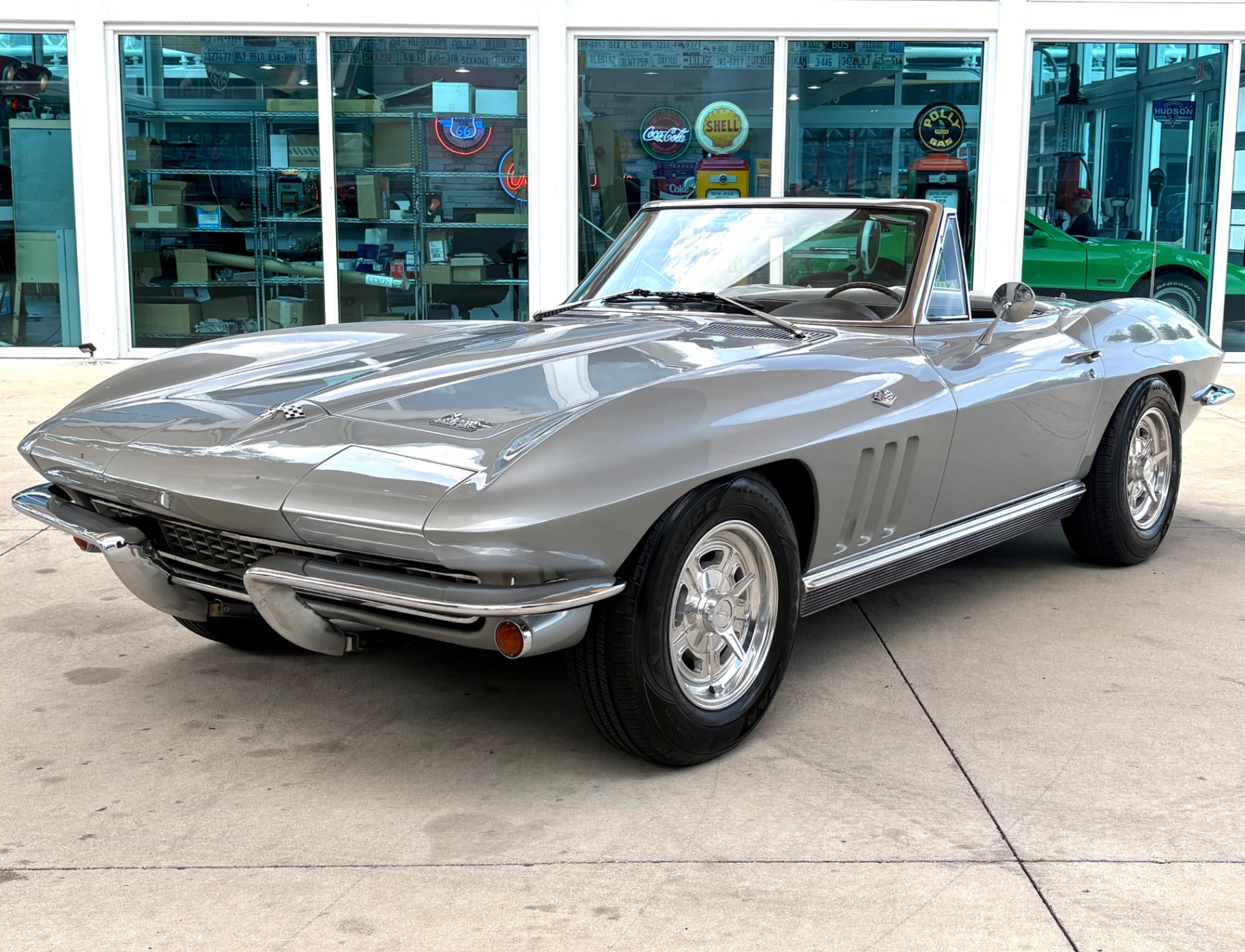
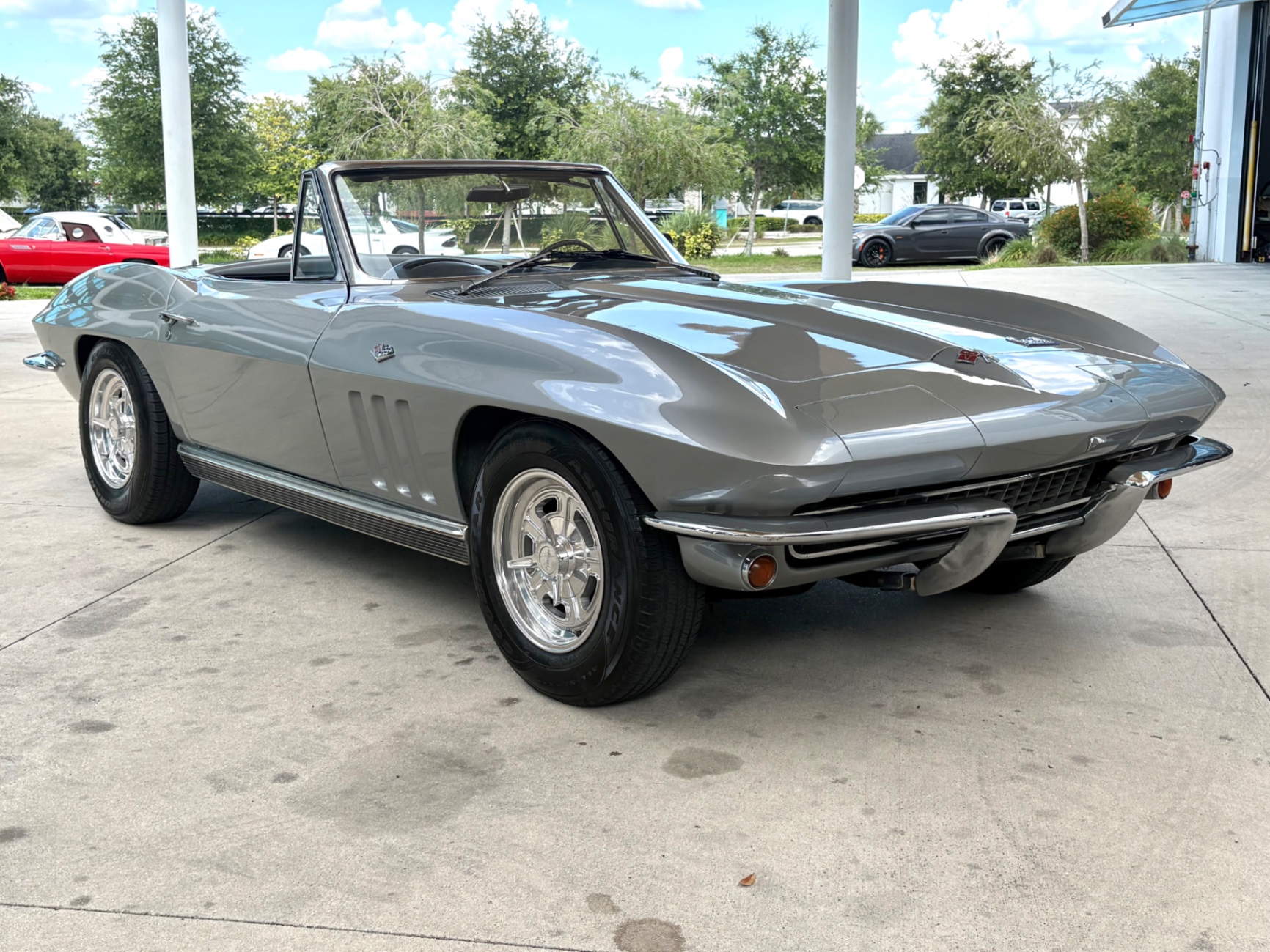
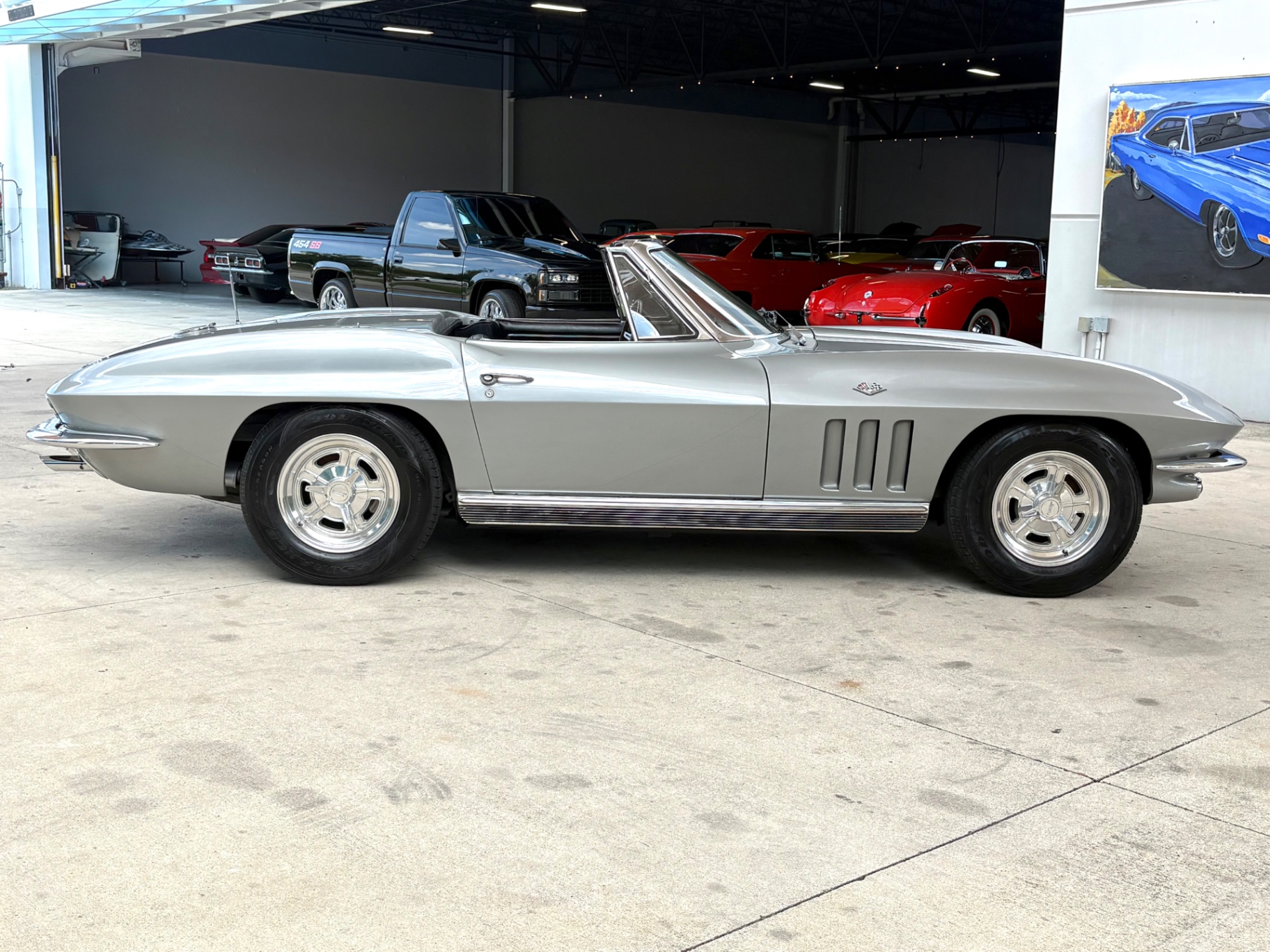
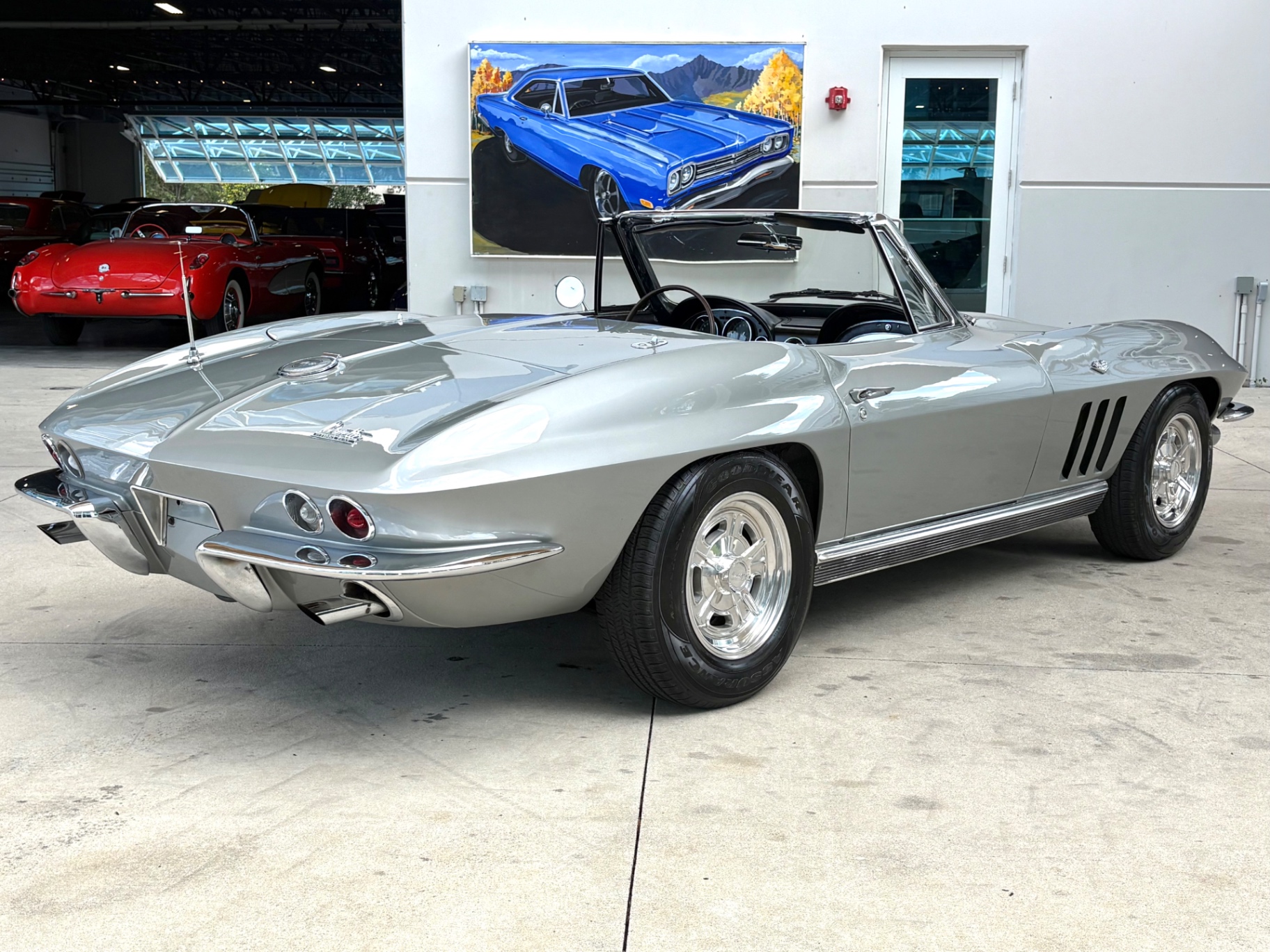
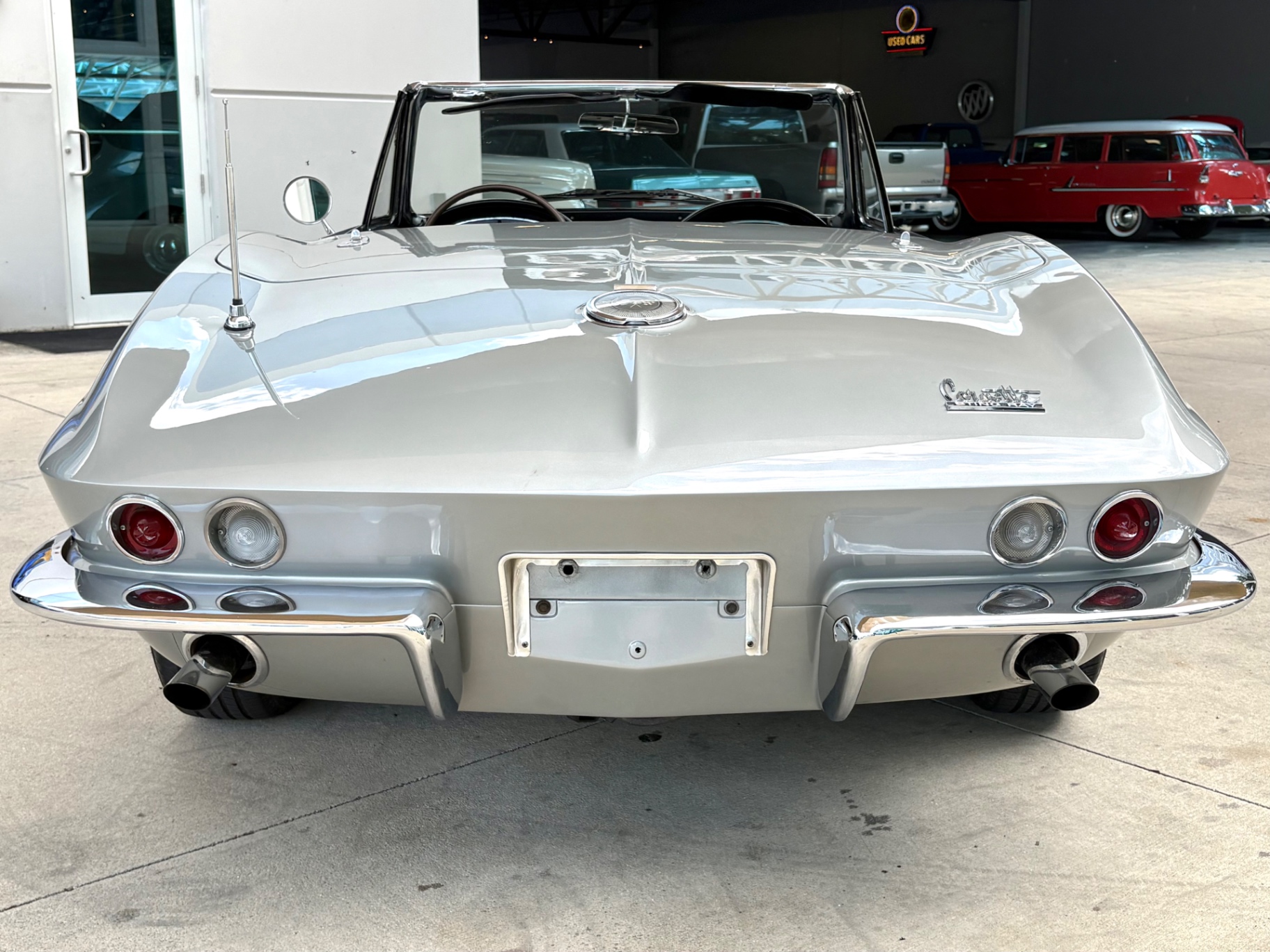
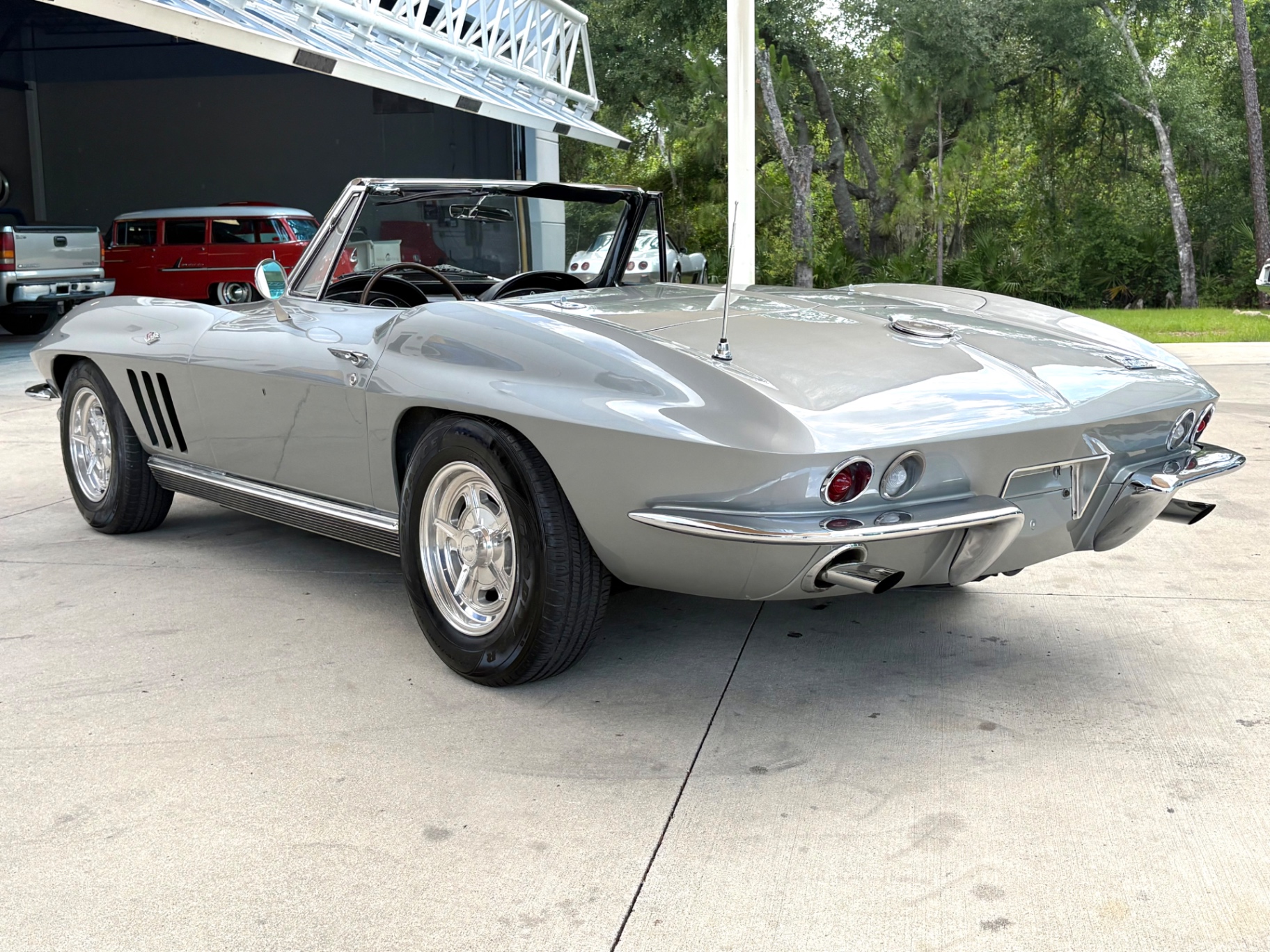
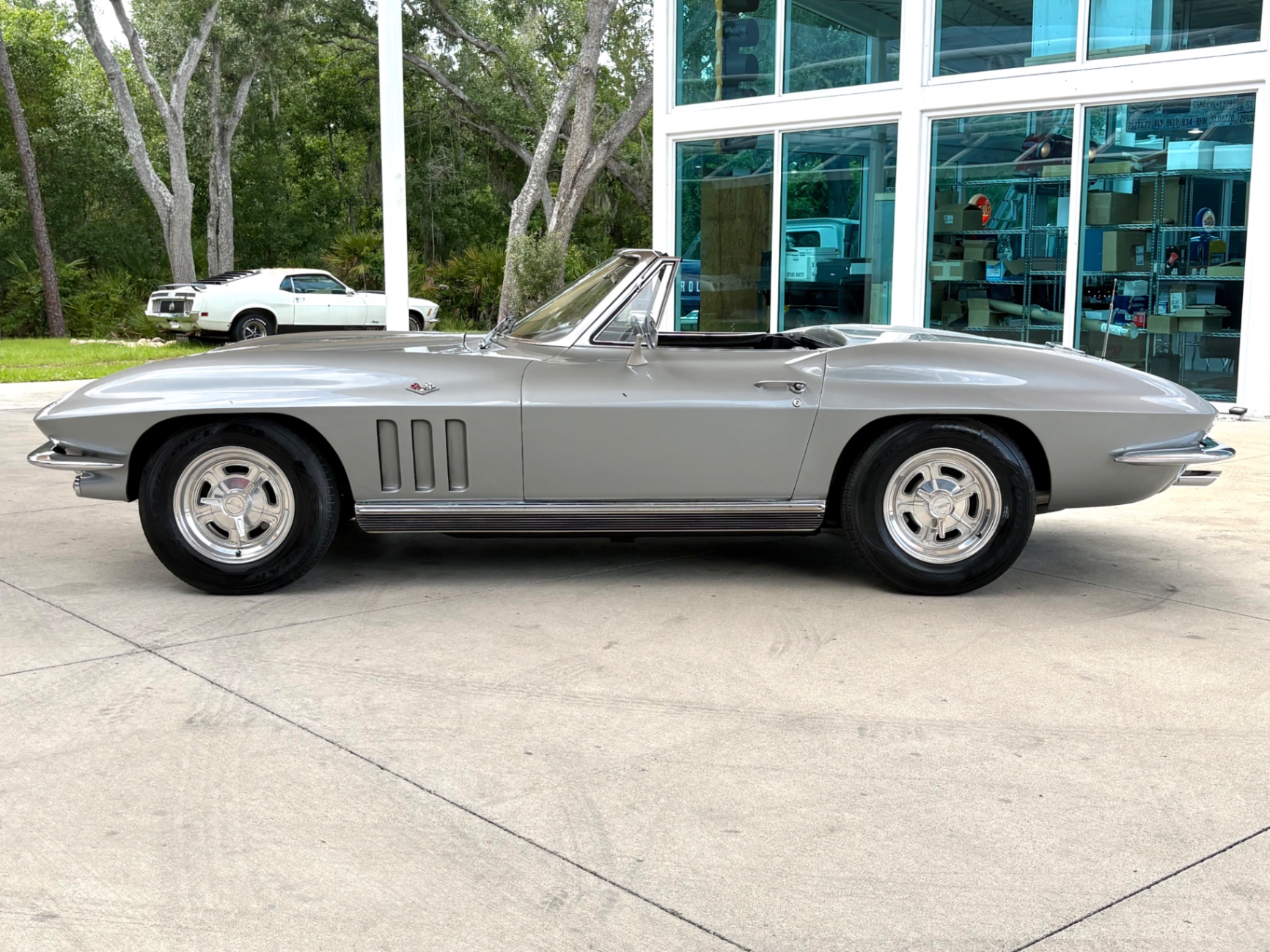
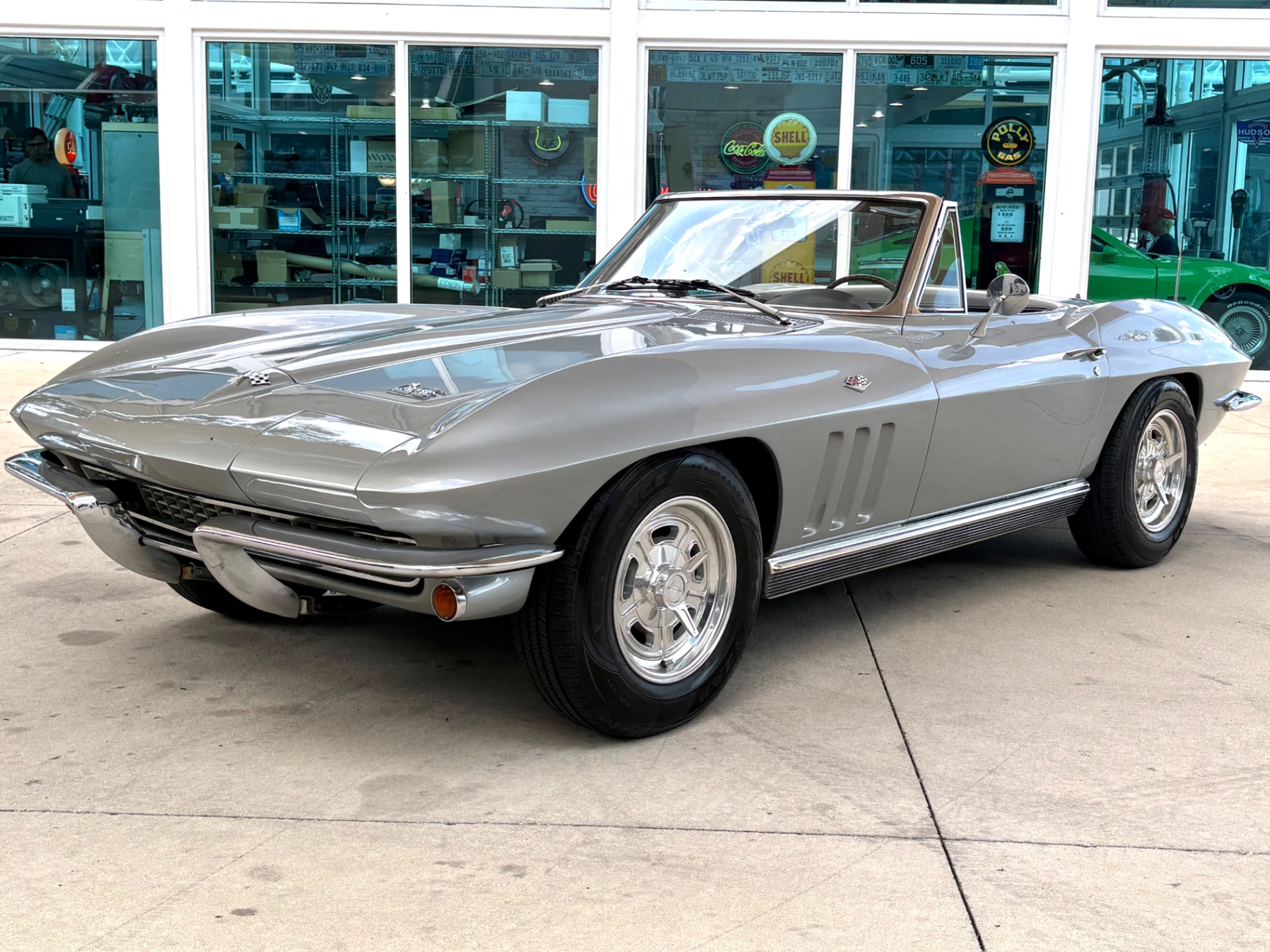
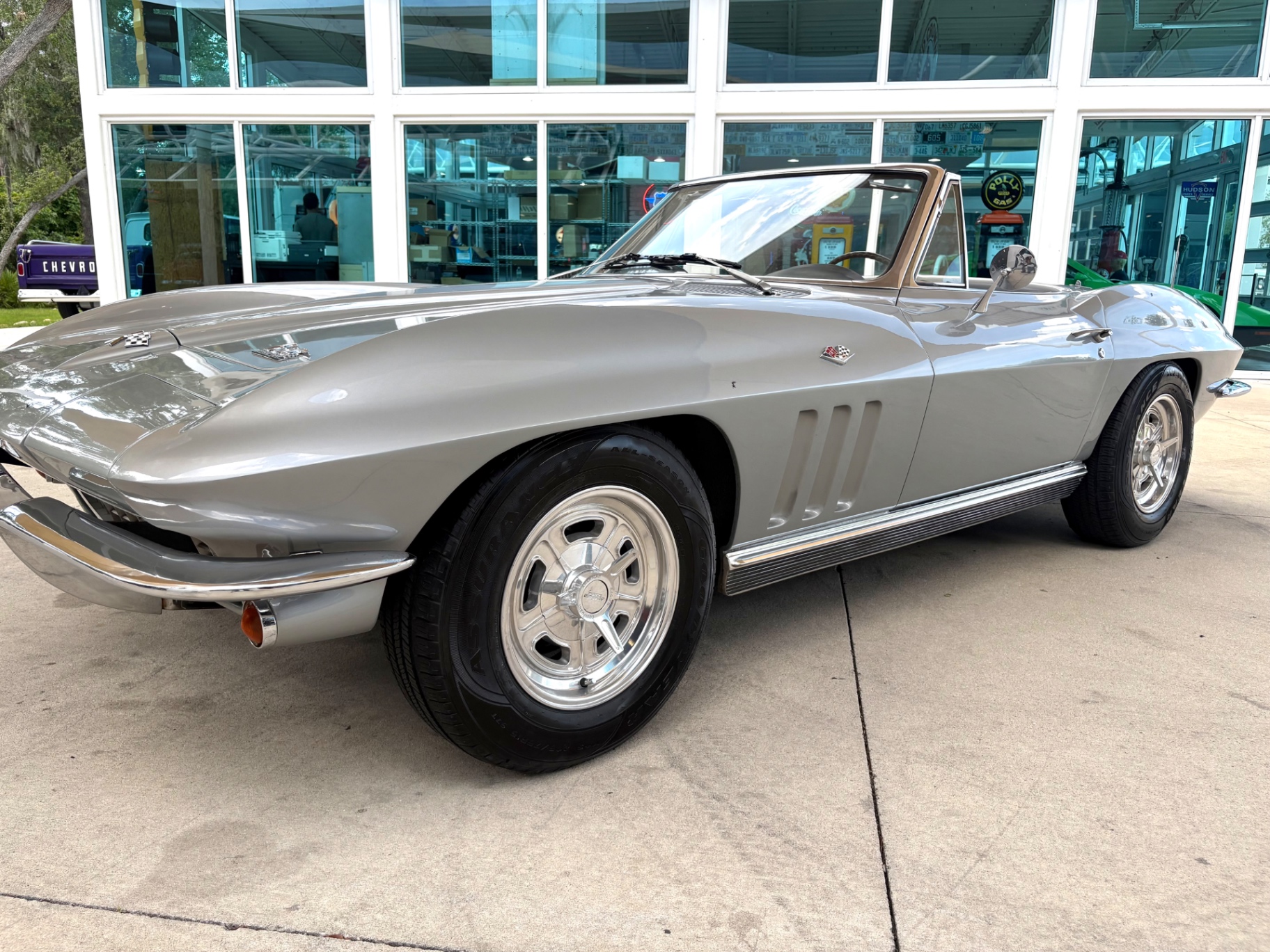
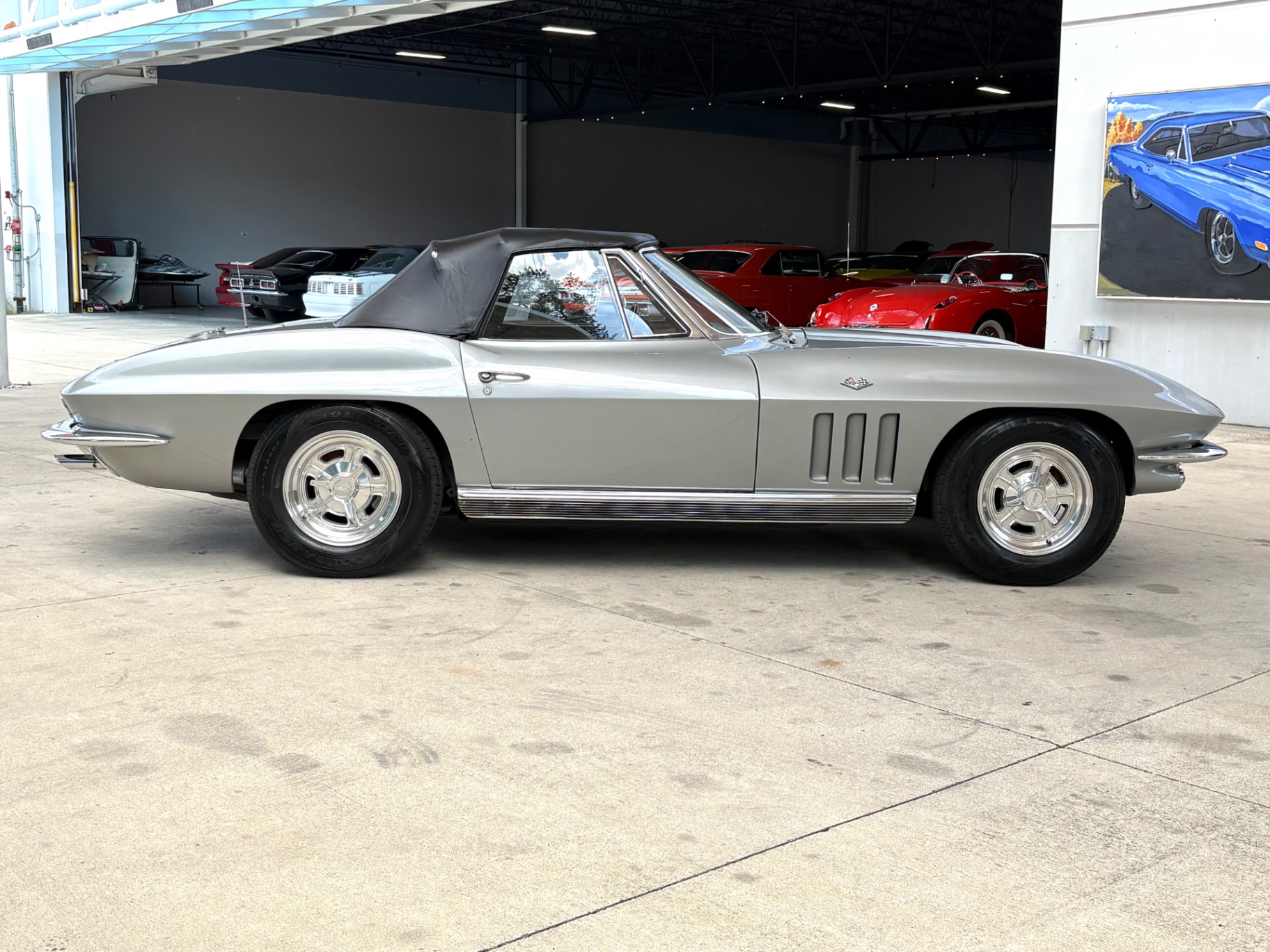
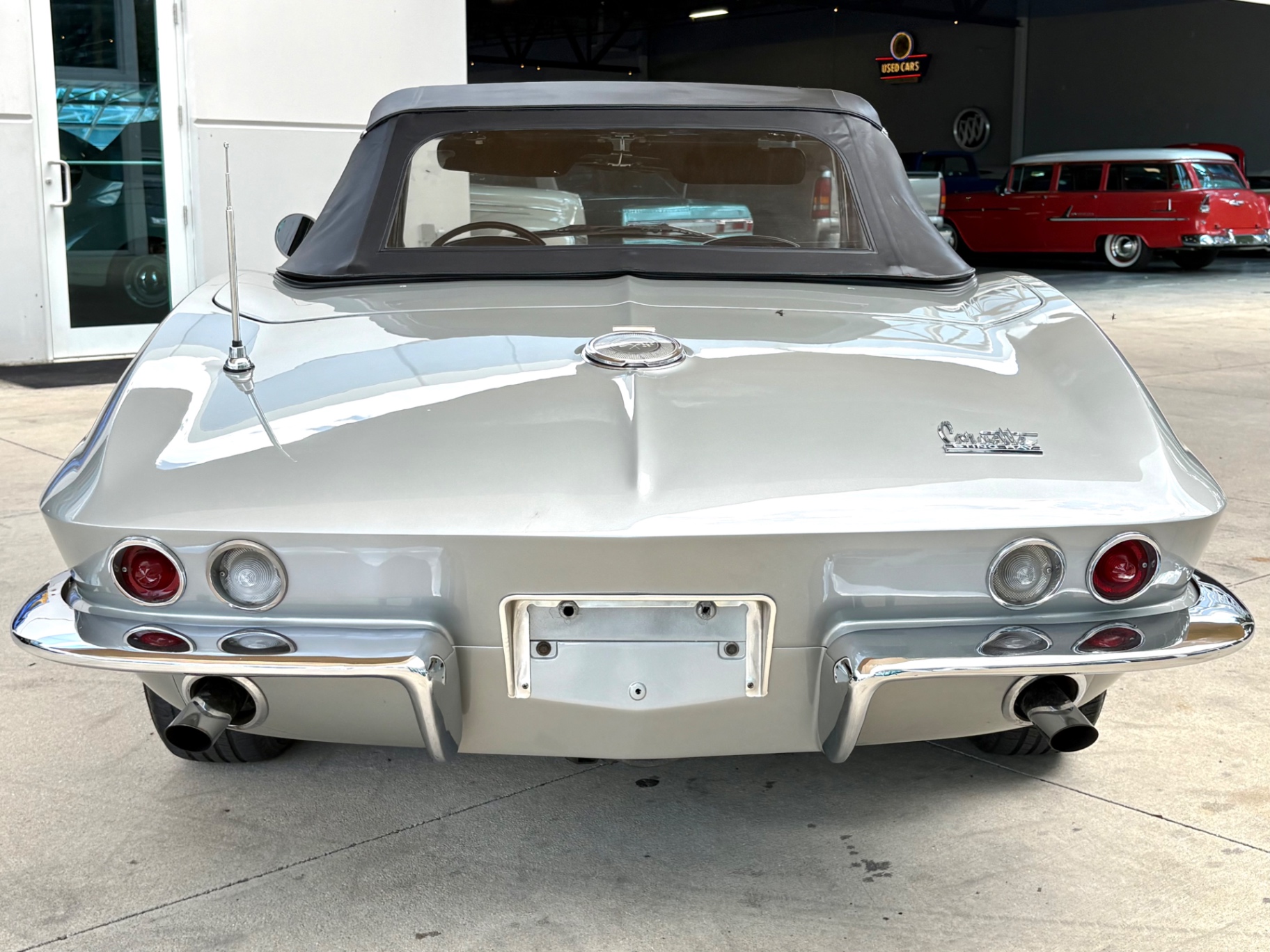
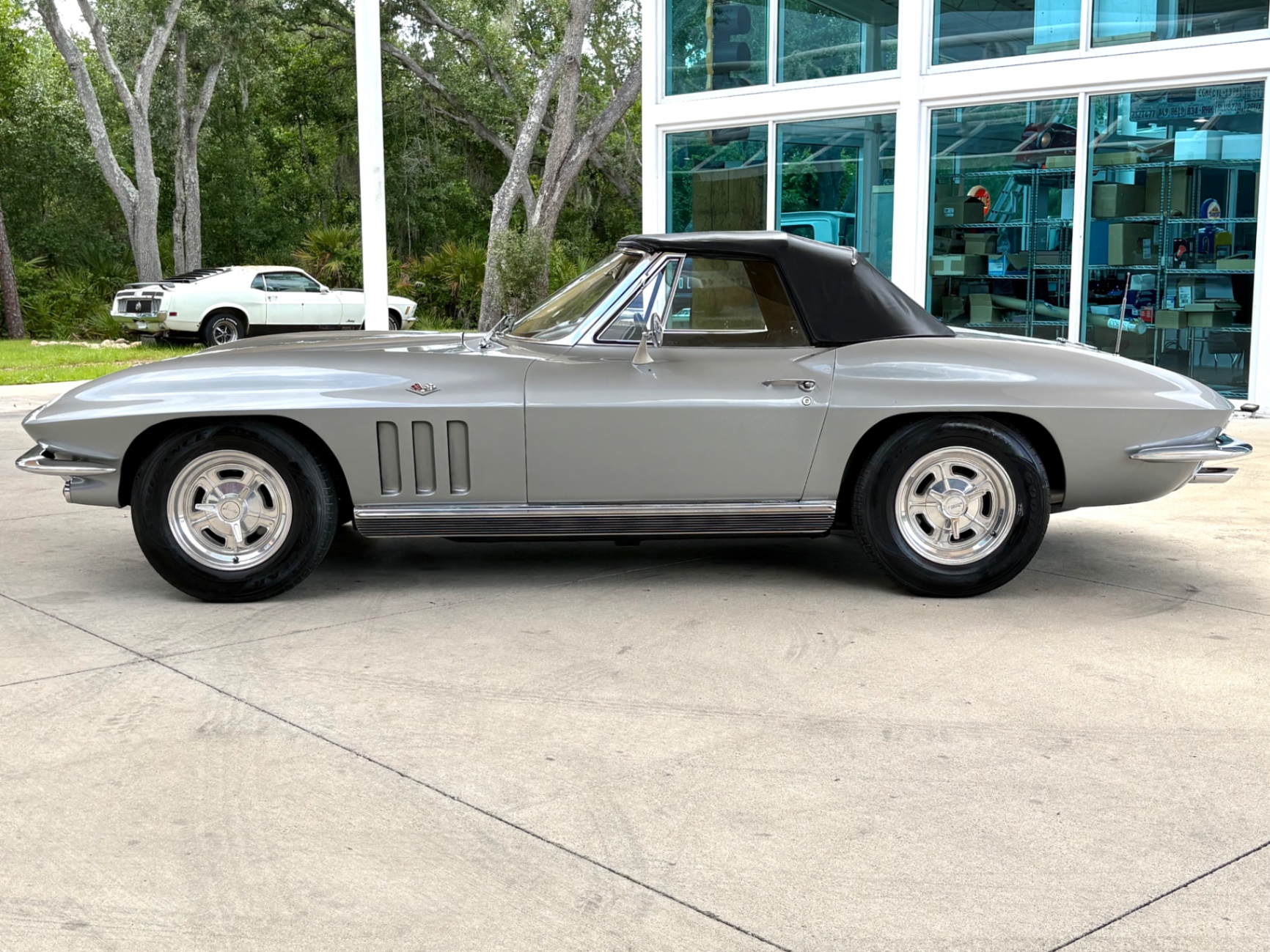
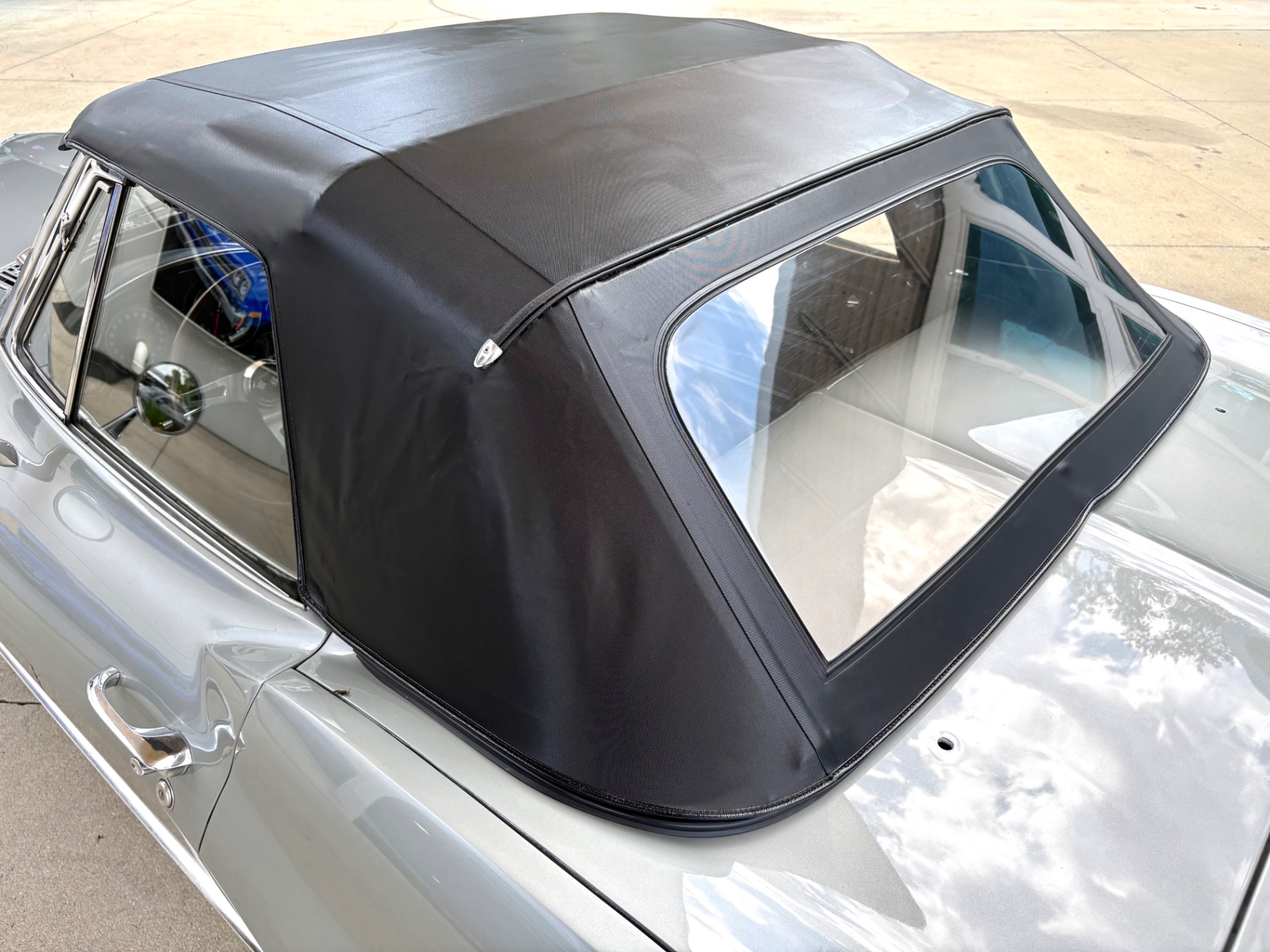
1966 Chevrolet Corvette Sting Ray Convertible — L79 327/350, 4-Speed, Silver over Black Leather
Why This Car Is Special
The 1966 Chevrolet Corvette Sting Ray is widely regarded as the high-water mark of the C2 generation, and for good reason. The second-generation Corvette ran from 1963 through 1967, and by 1966 Chevrolet had worked out the early production kinks while still offering the full menu of performance options that made this body style famous. The hidden headlights, the sculpted rear haunches, the aggressive side vents — all of it was carried over from Bill Mitchell's original design without the compromises that would come with the C3 in 1968.
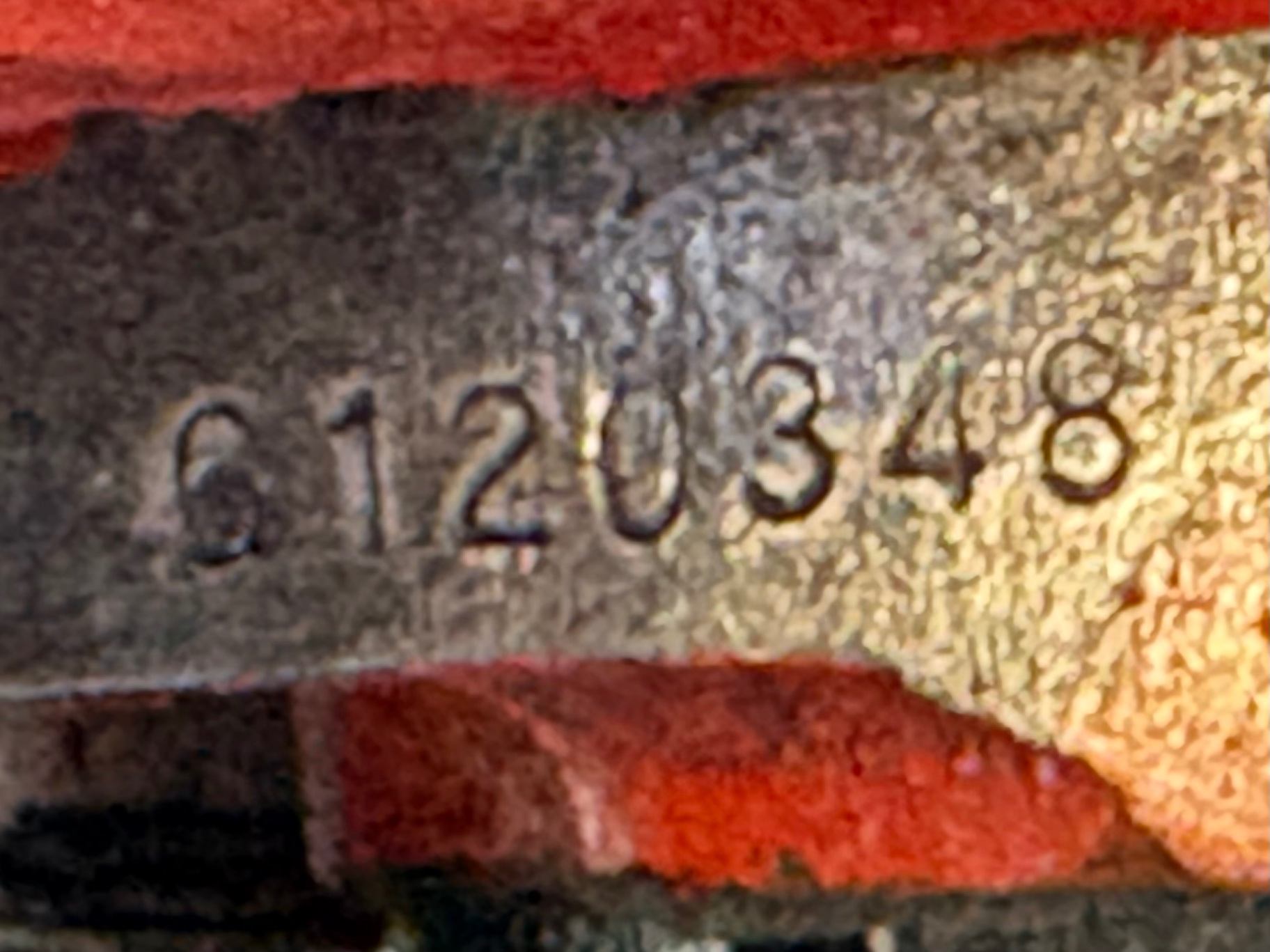
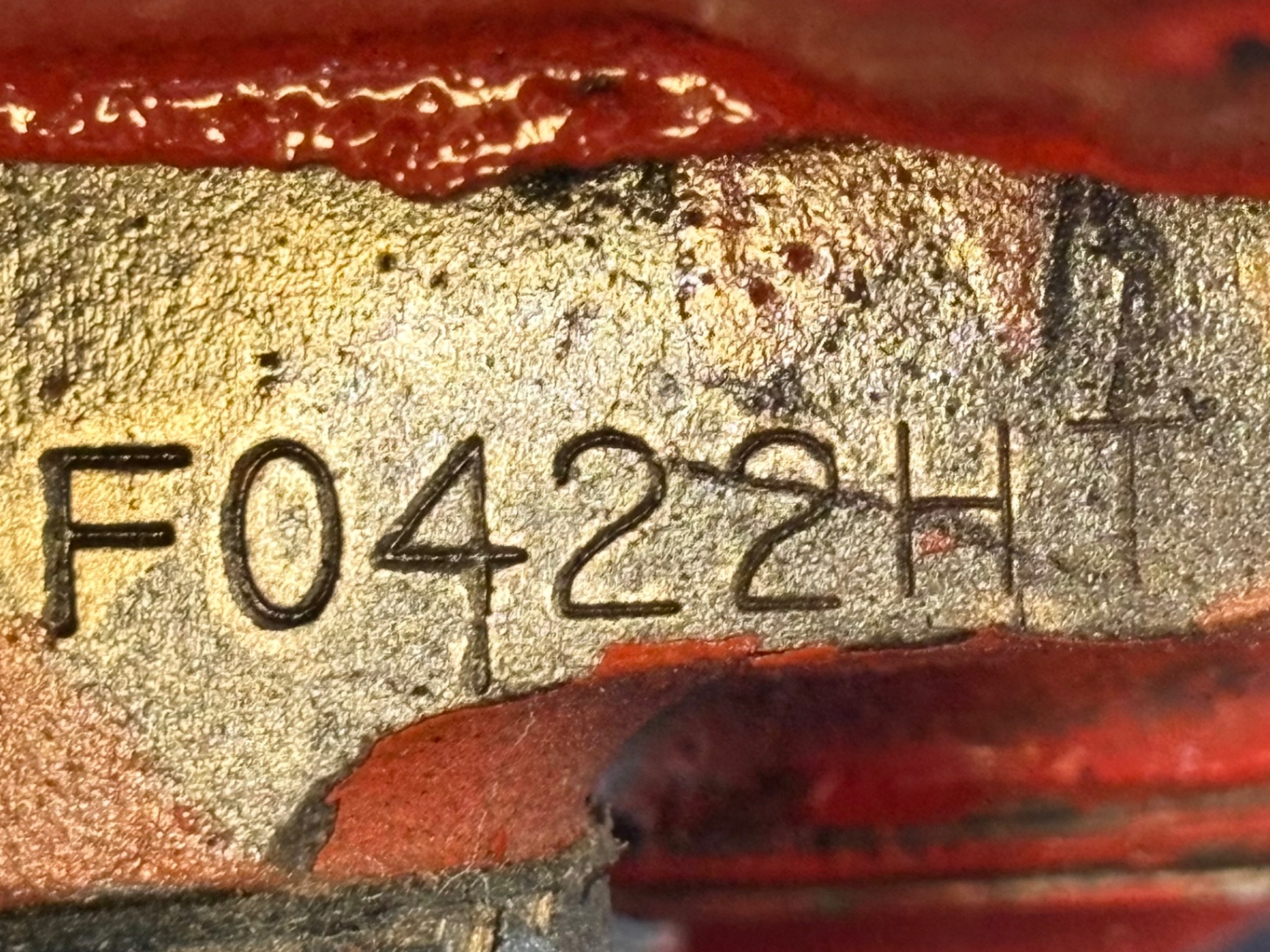
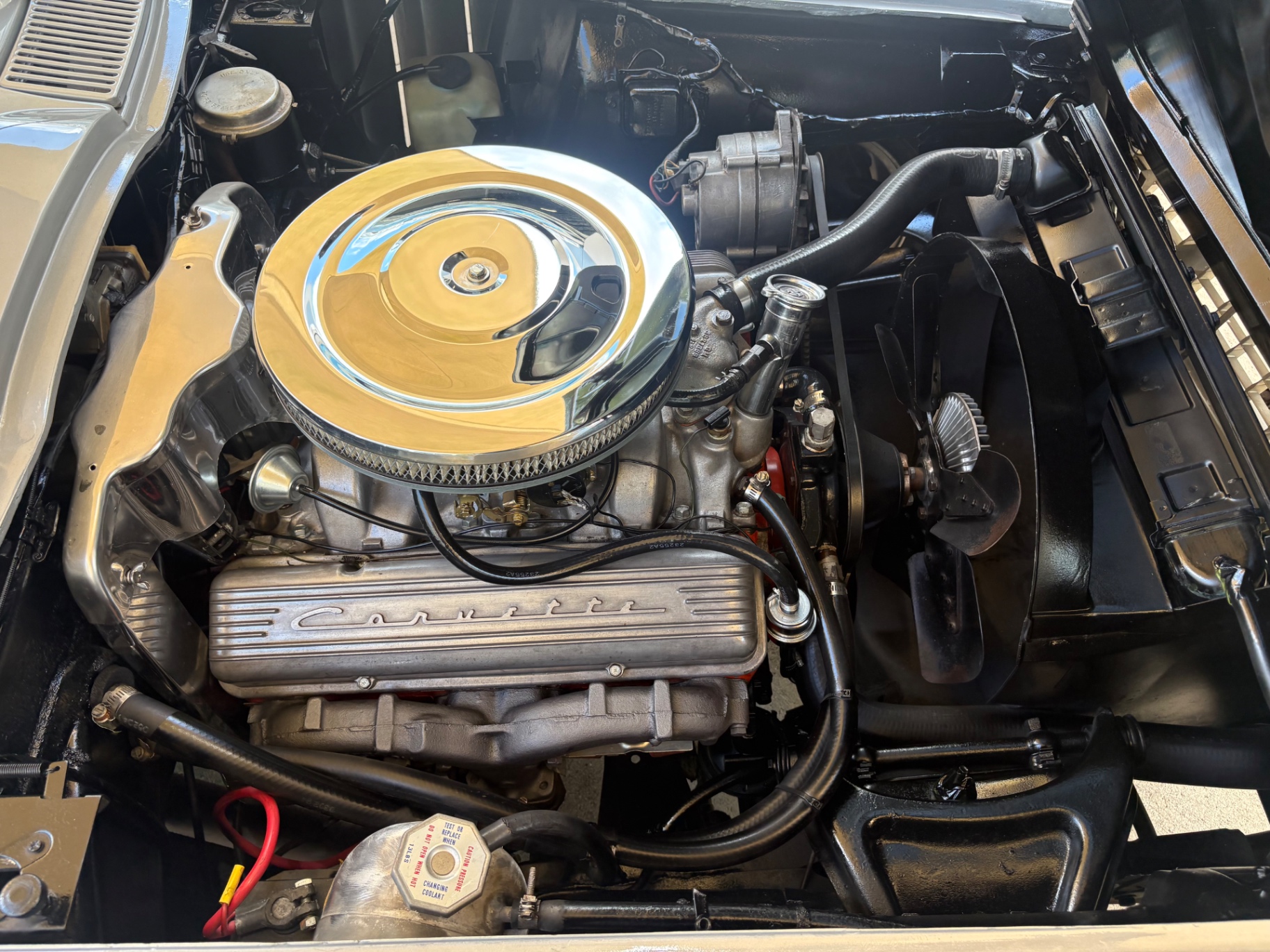
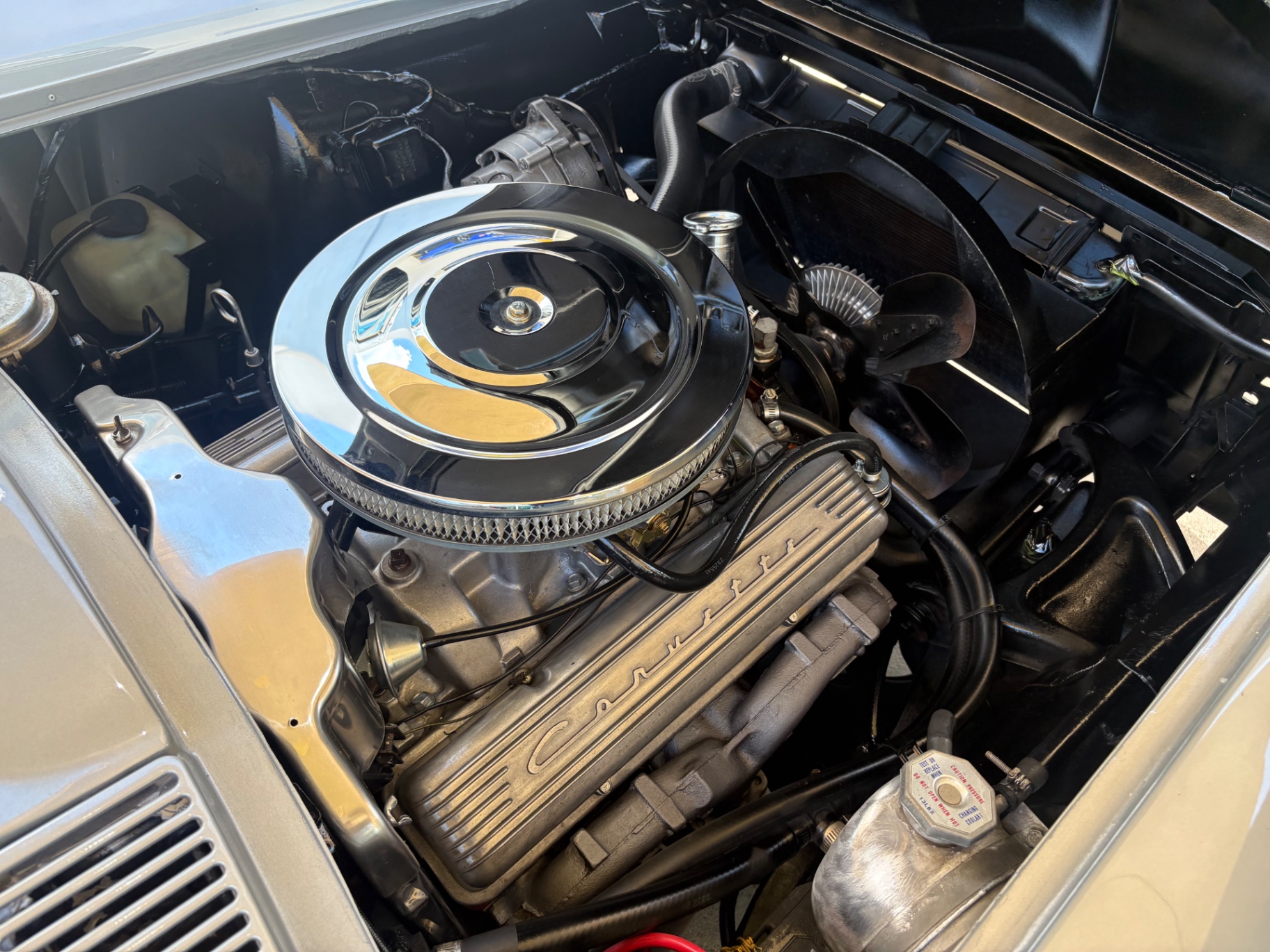
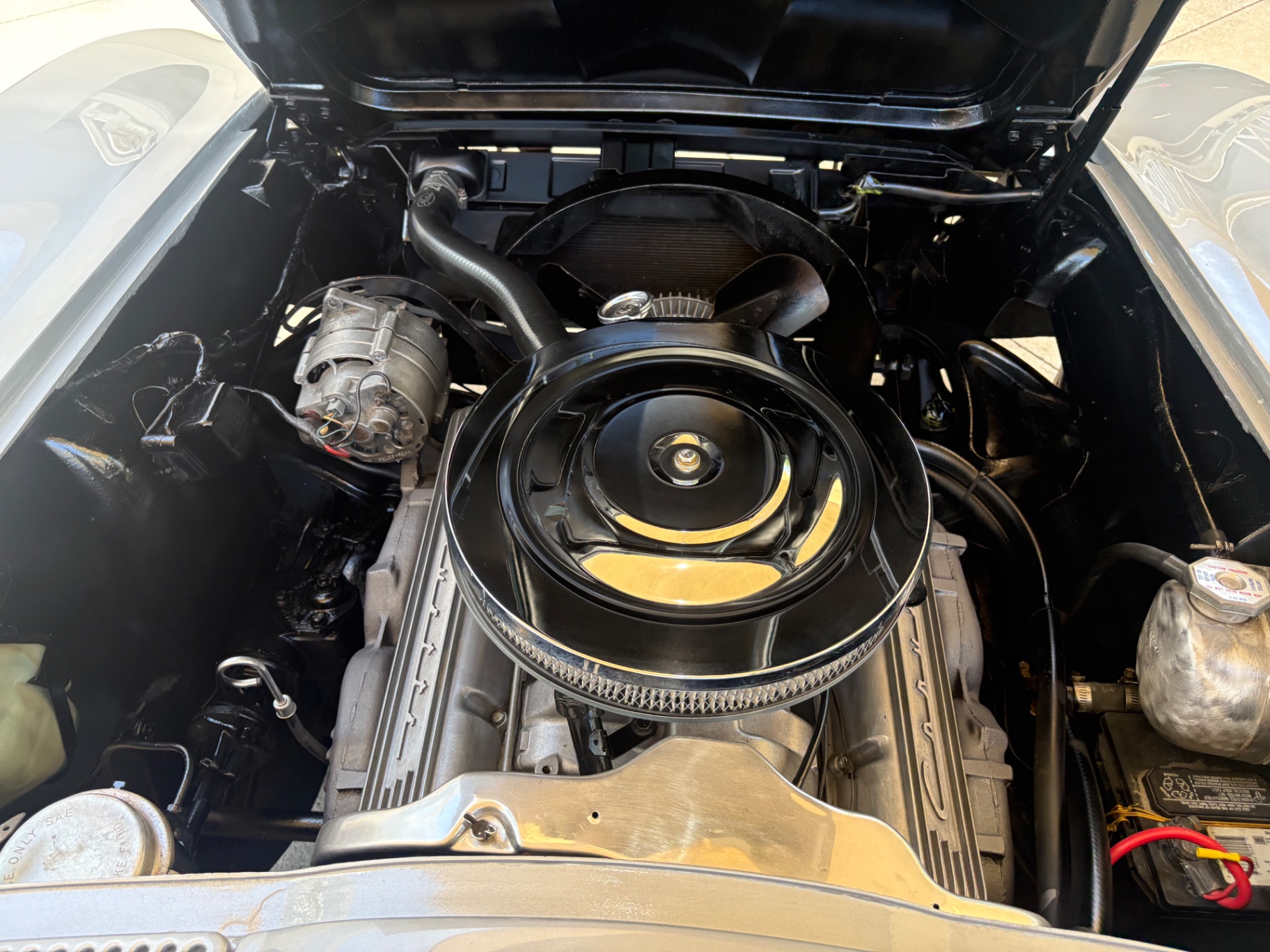
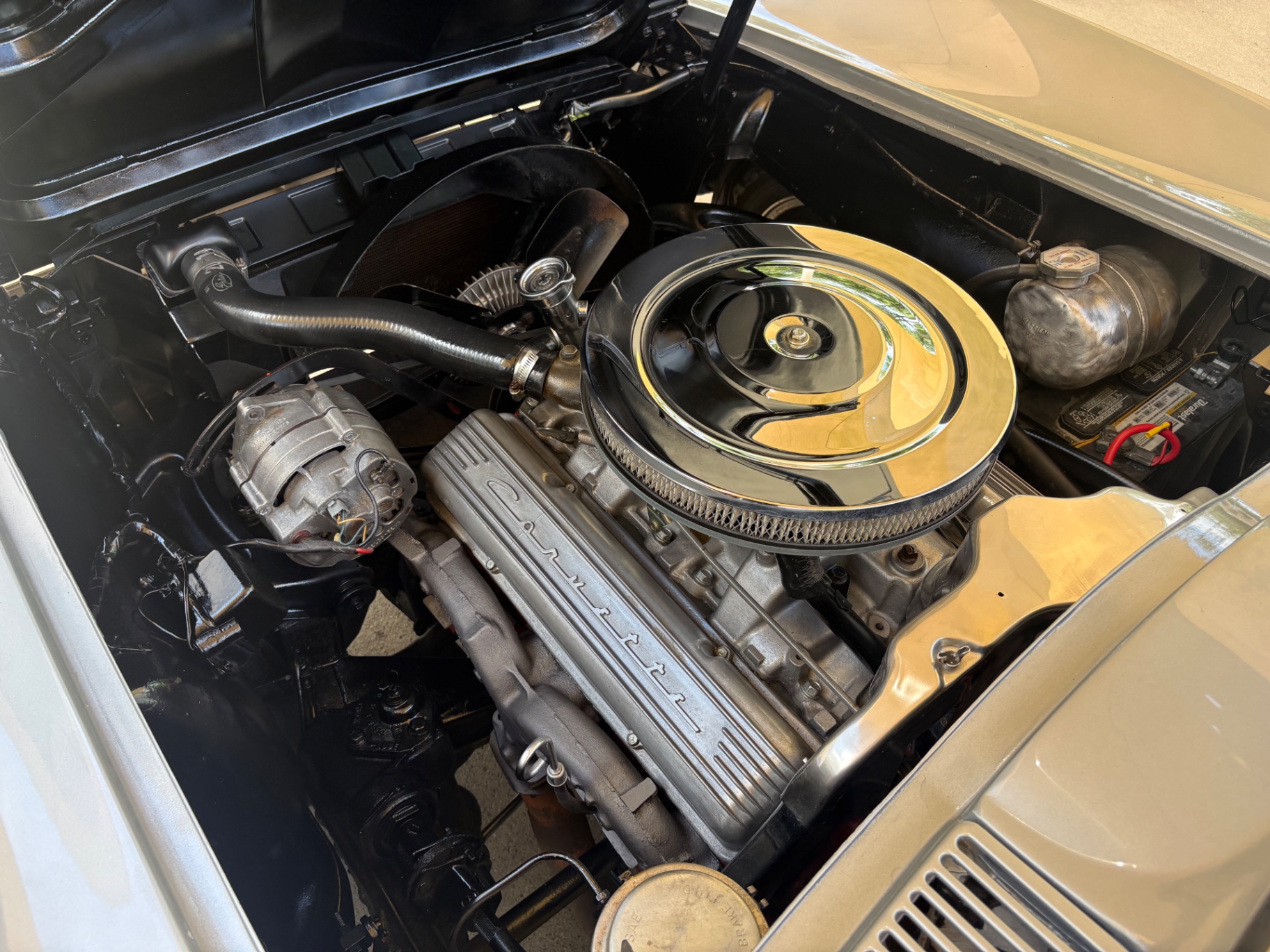
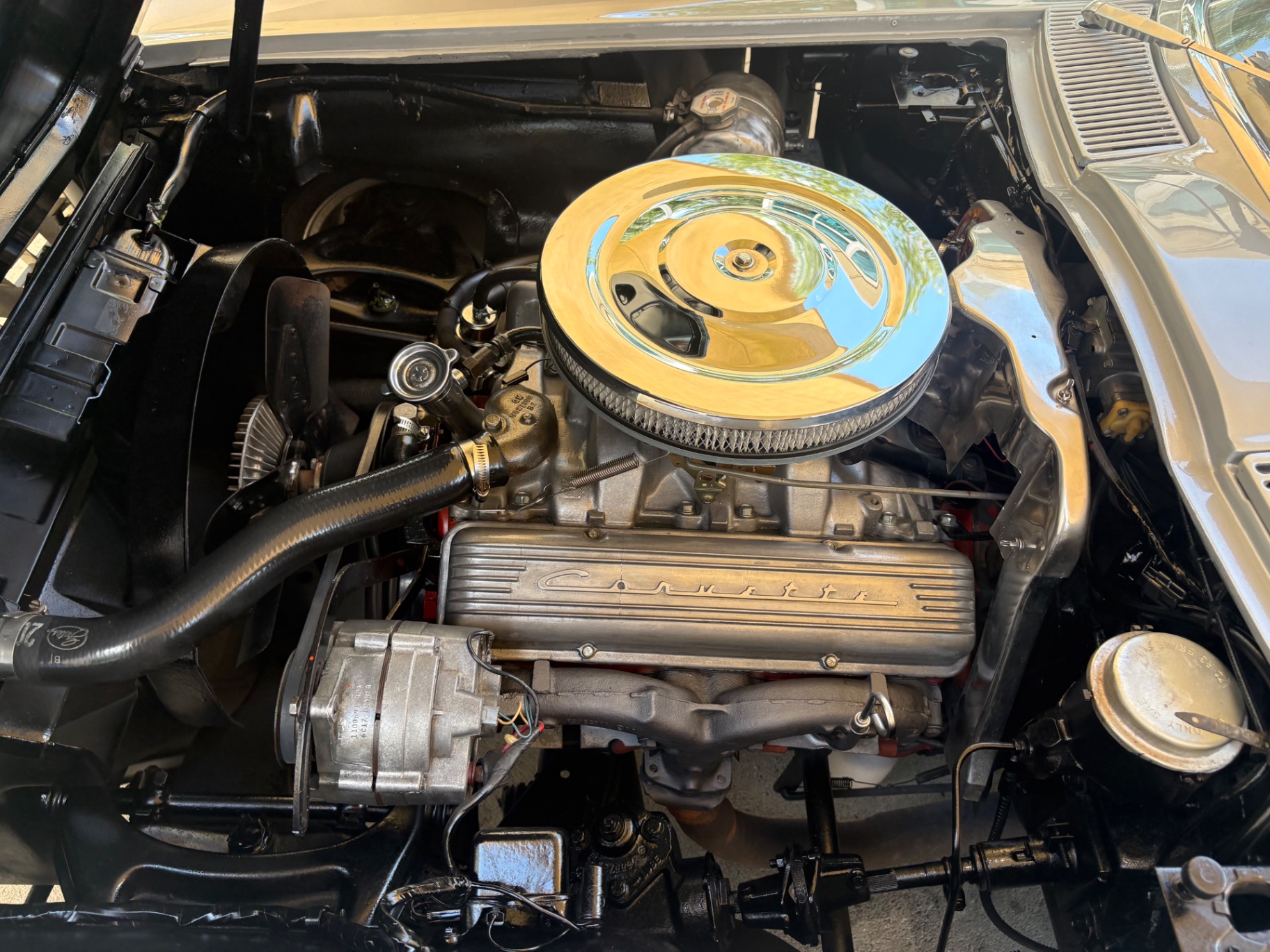
This particular car is a convertible equipped with the L79 engine option, which is one of the more desirable powerplant choices from that era. The L79 was a 327 cubic inch small-block rated at 350 horsepower, fed by a single four-barrel carburetor and breathing through a high-lift camshaft. Chevrolet positioned the L79 between the base 300-horsepower 327 and the more aggressive fuel-injected options, but in practice the L79 delivered strong mid-range torque and a broad power band that made it highly drivable on the street. Road testers of the era recorded 0-60 times in the mid-6-second range with the L79 and a close-ratio 4-speed, which was genuinely fast by any standard of the time.
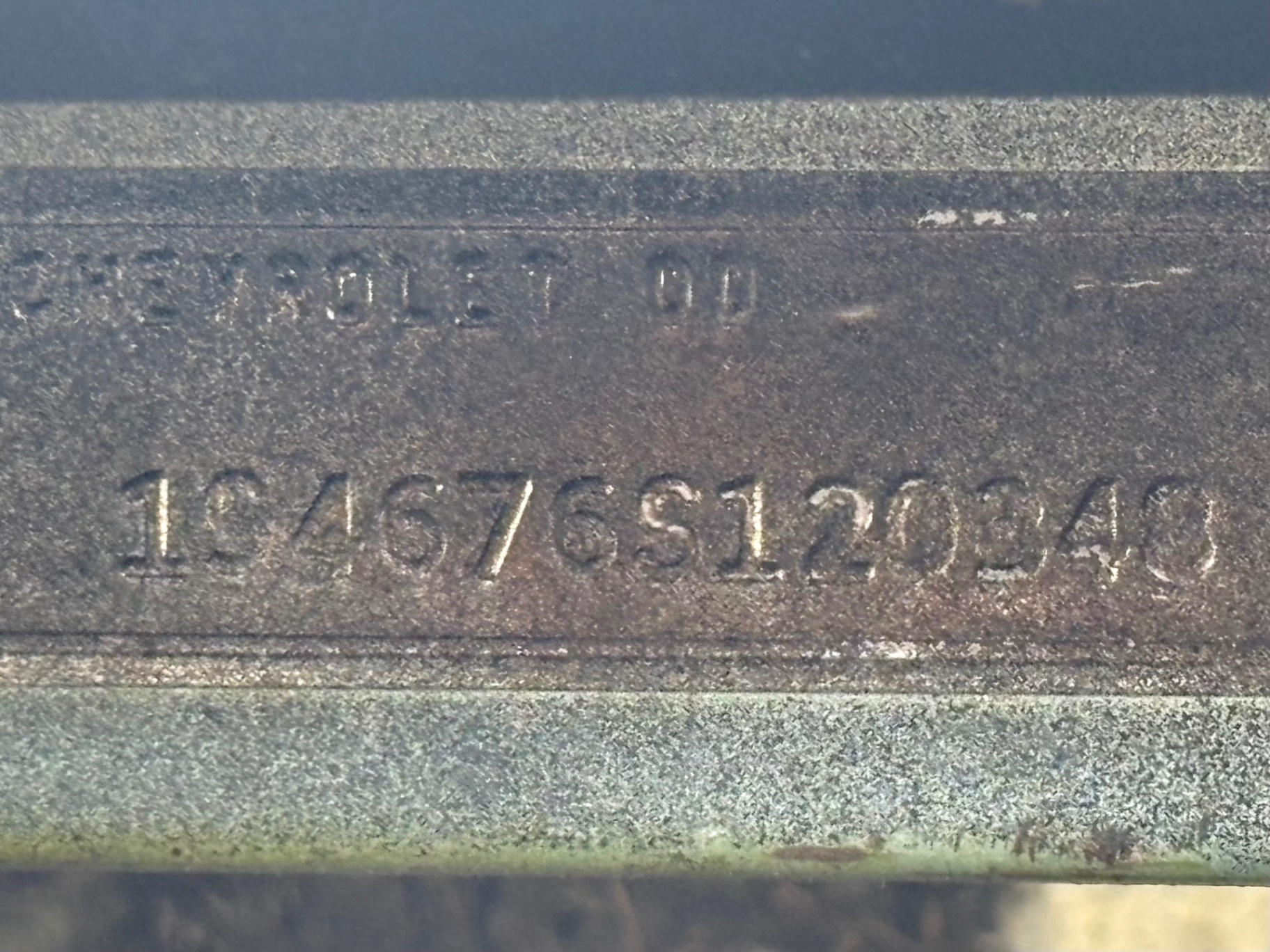
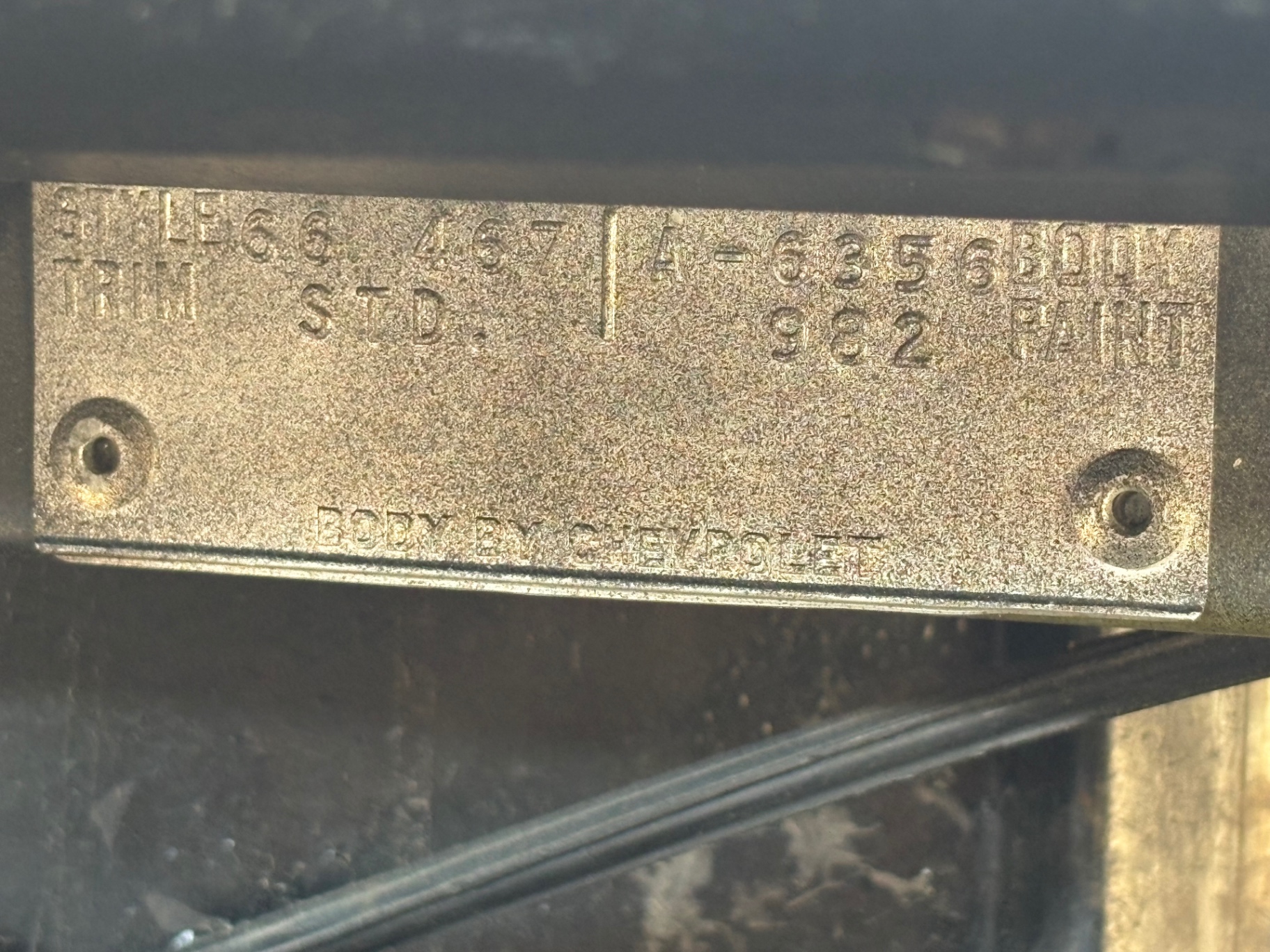
The VIN on this car confirms it is a 1966 model year Corvette convertible built at the St. Louis assembly plant — consistent with all Corvette production of that era, as St. Louis was the sole assembly facility for the Corvette until the Bowling Green plant opened in 1981.
Total 1966 Corvette production came in at 27,720 units, split between coupes and convertibles. Of that number, convertibles accounted for the majority of sales — buyers in 1966 still favored open-air motoring over the coupe. The L79 engine was a popular option, though not every Corvette left the factory with one, making this combination of convertible body and 350-horsepower small-block a legitimate performance specification from the factory.
Features List
- 327 cubic inch L79 V8, rated at 350 horsepower
- Muncie 4-speed manual transmission
- Four-wheel disc brakes
- Black convertible soft top
- American Racing wheels with knock-off centers
- Chrome bumpers front and rear
- Dual exhaust with chrome tips
- Corvette Sting Ray badges
- Wood rim steering wheel
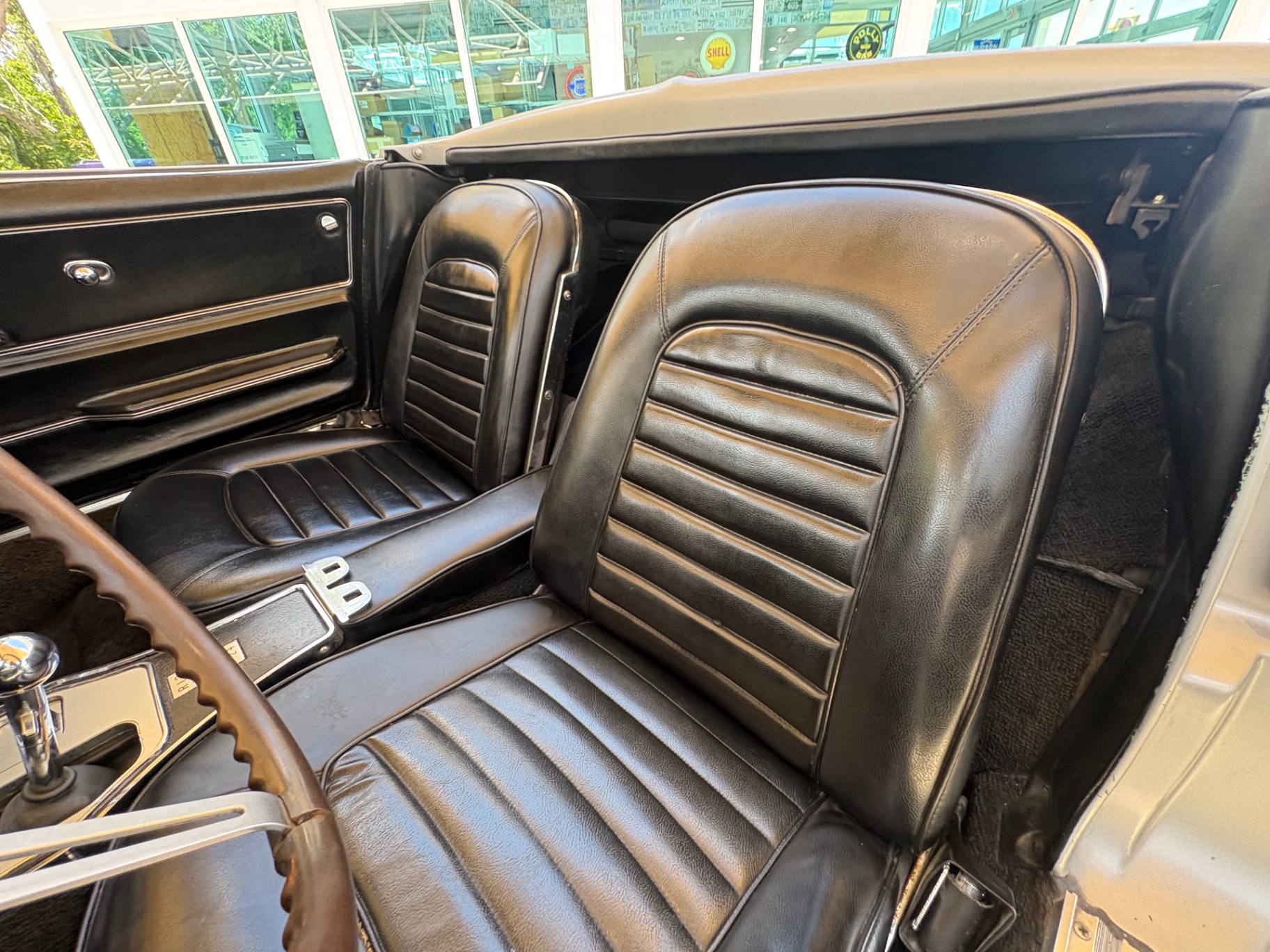
- Black leather bucket seats
- Center console with 4-speed shift pattern plate
- Tachometer equipped
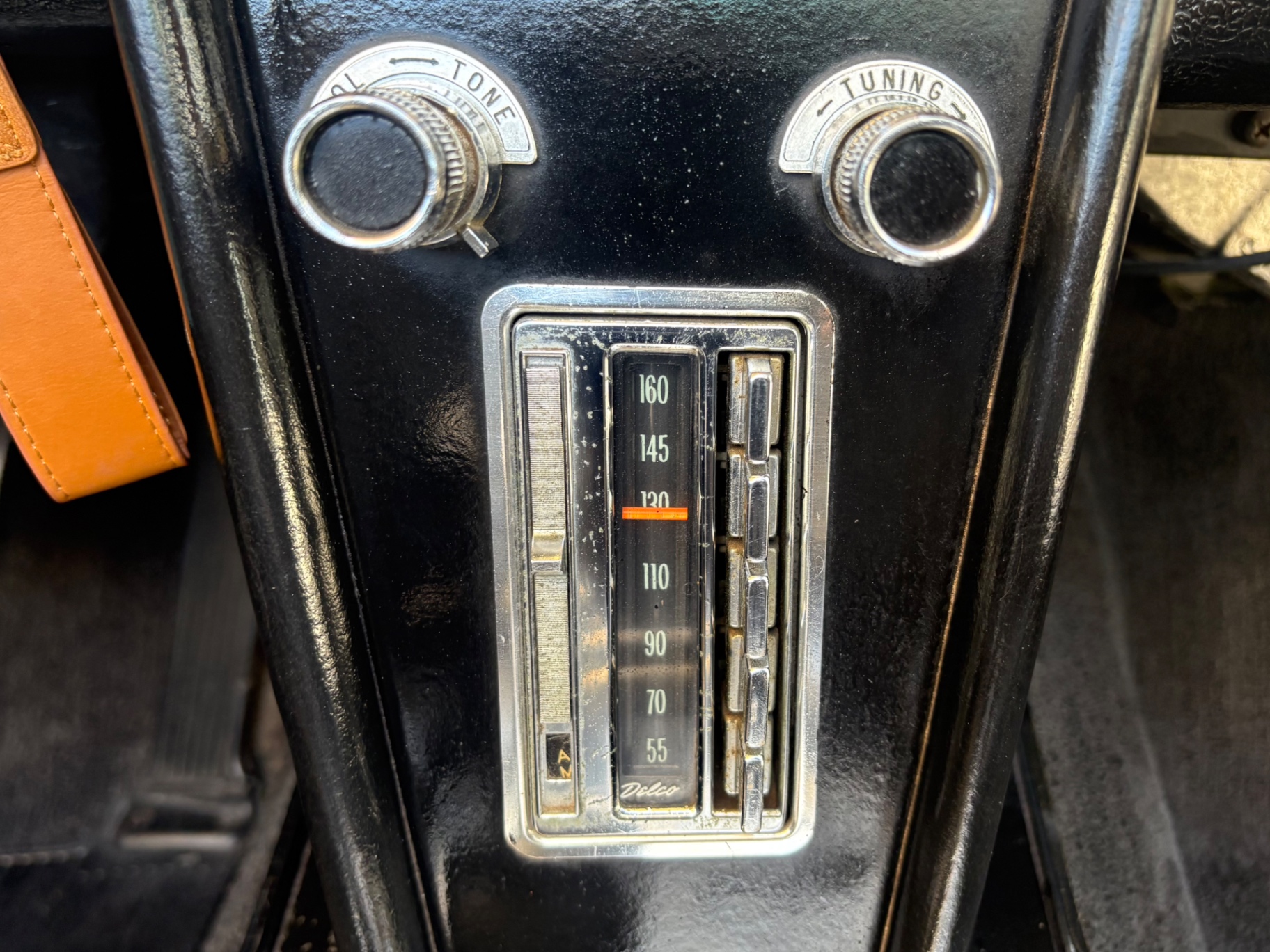
- Delco AM radio
- New exterior paint in Silver under warranty
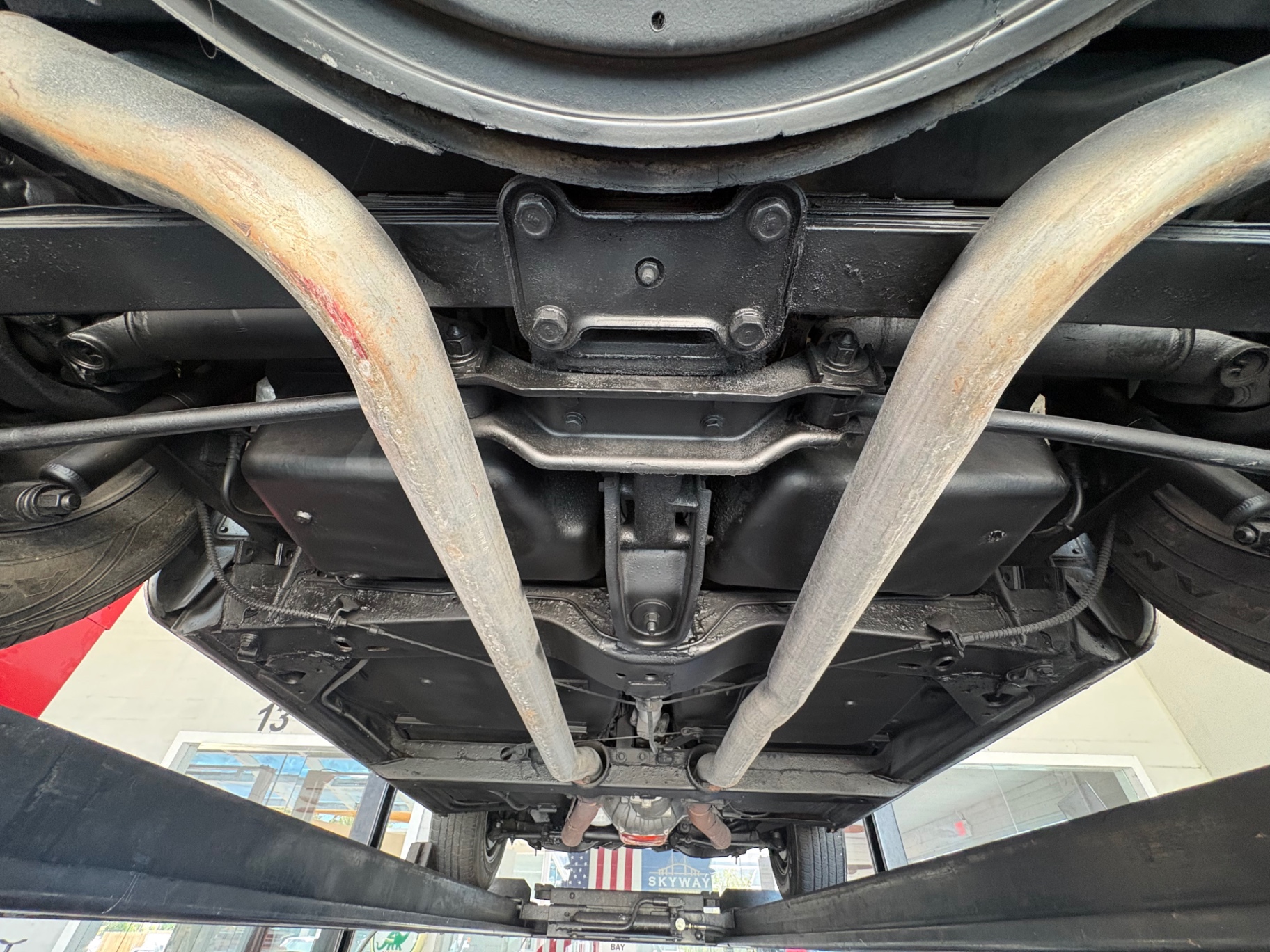
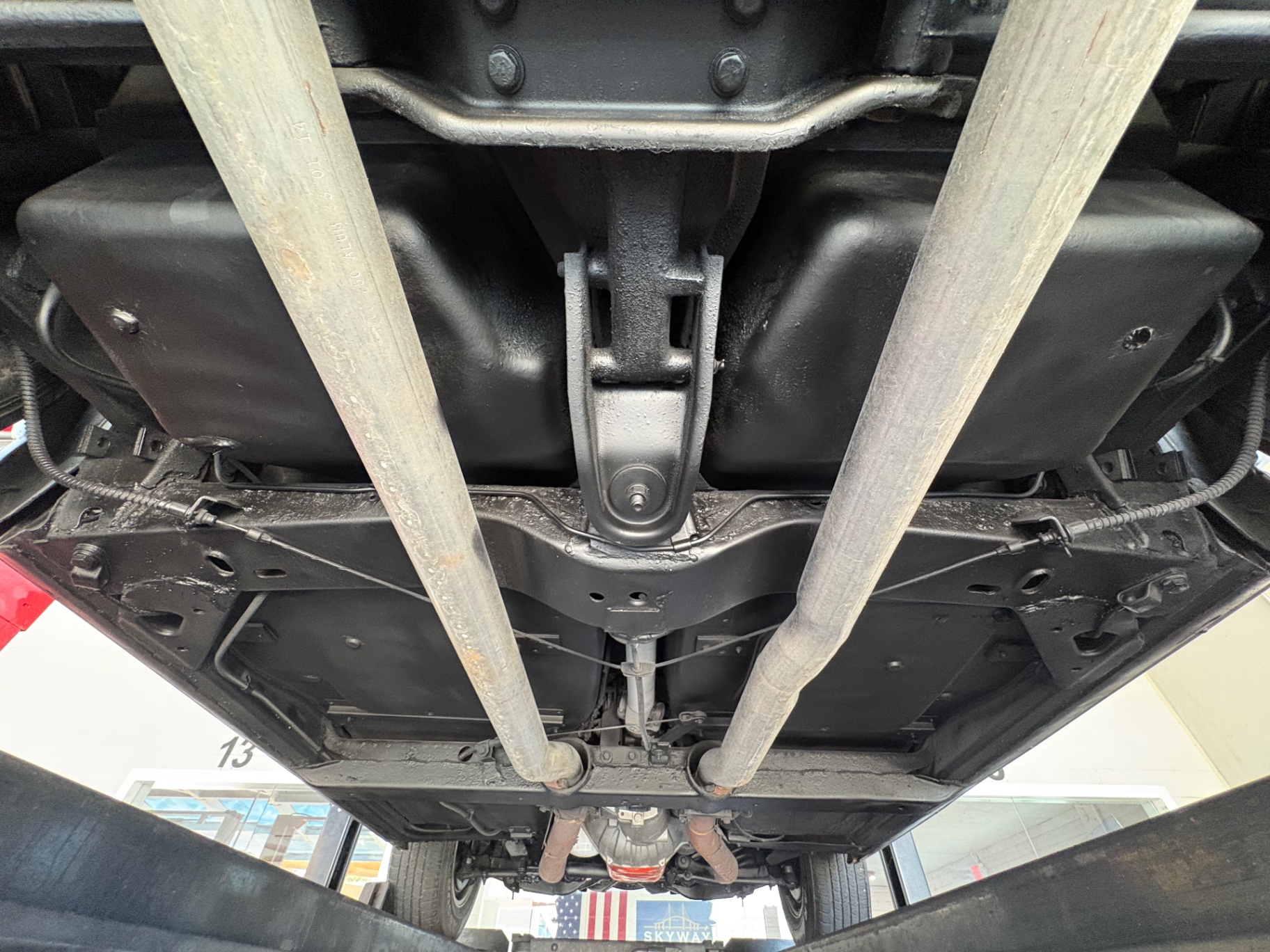
- Clean undercarriage
Mechanical
The L79 327/350 is one of the most respected small-block Chevrolet configurations ever offered in the Corvette. It used a high-compression cylinder head, a mechanical lifter camshaft with aggressive timing, and a Holley four-barrel carburetor on an aluminum intake manifold. The result was an engine that ran cleanly at street speeds while still pulling hard through the rev range. With a Muncie 4-speed manual gearbox behind it, this drivetrain combination rewards a driver who knows how to use the gearbox — short-shifting for mileage or winding it out for performance, the L79 has the flexibility to do both.
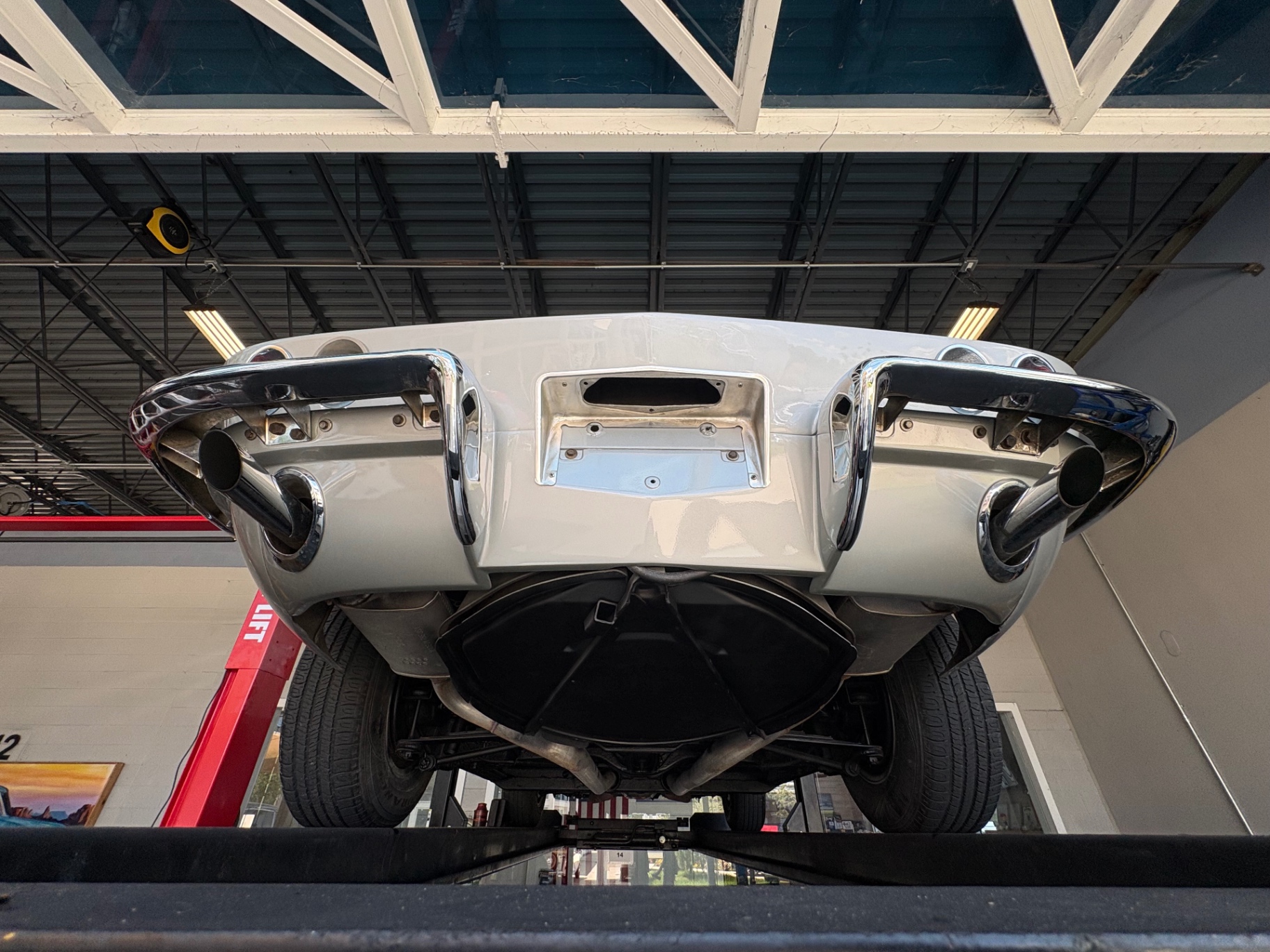
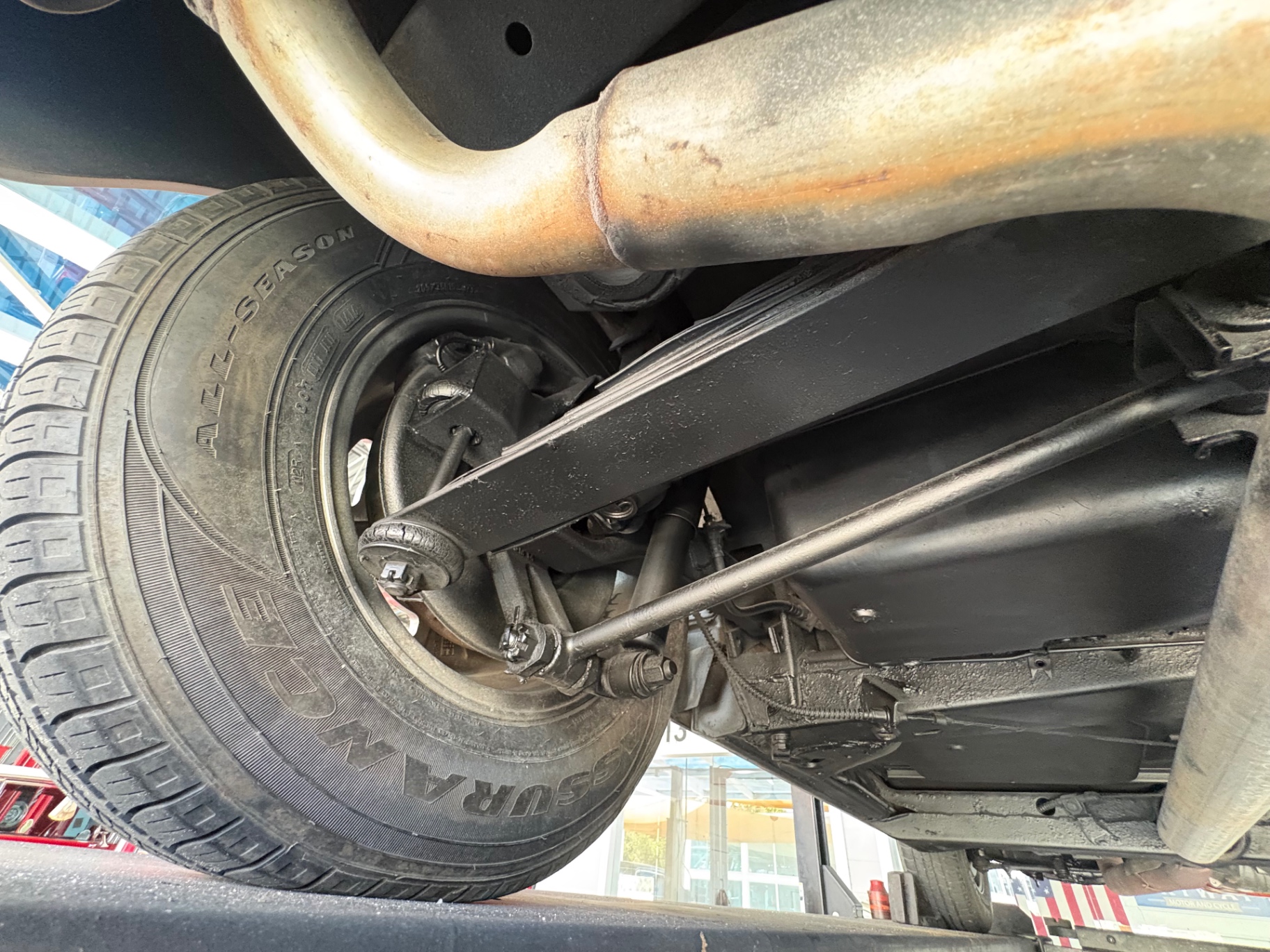
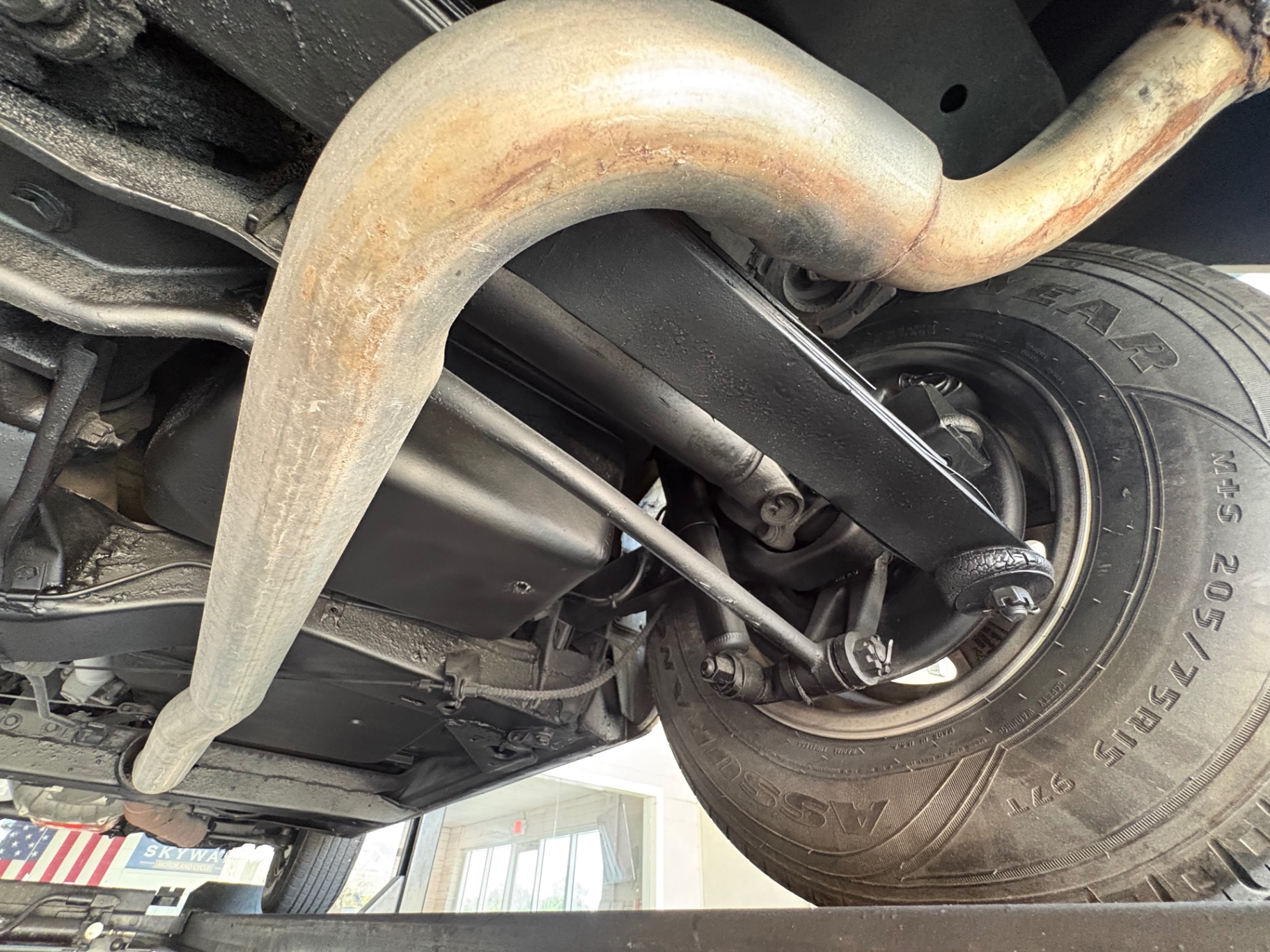
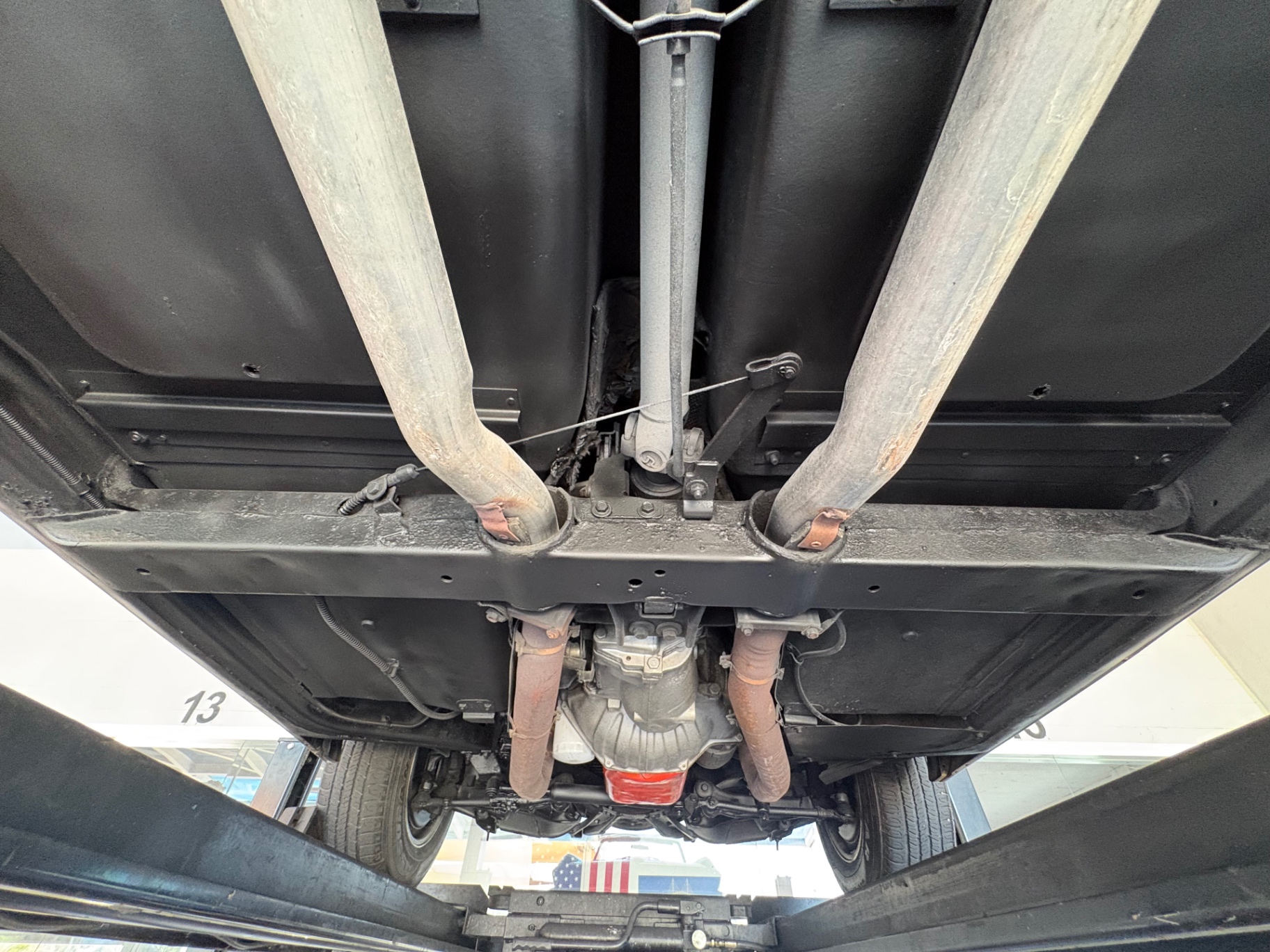
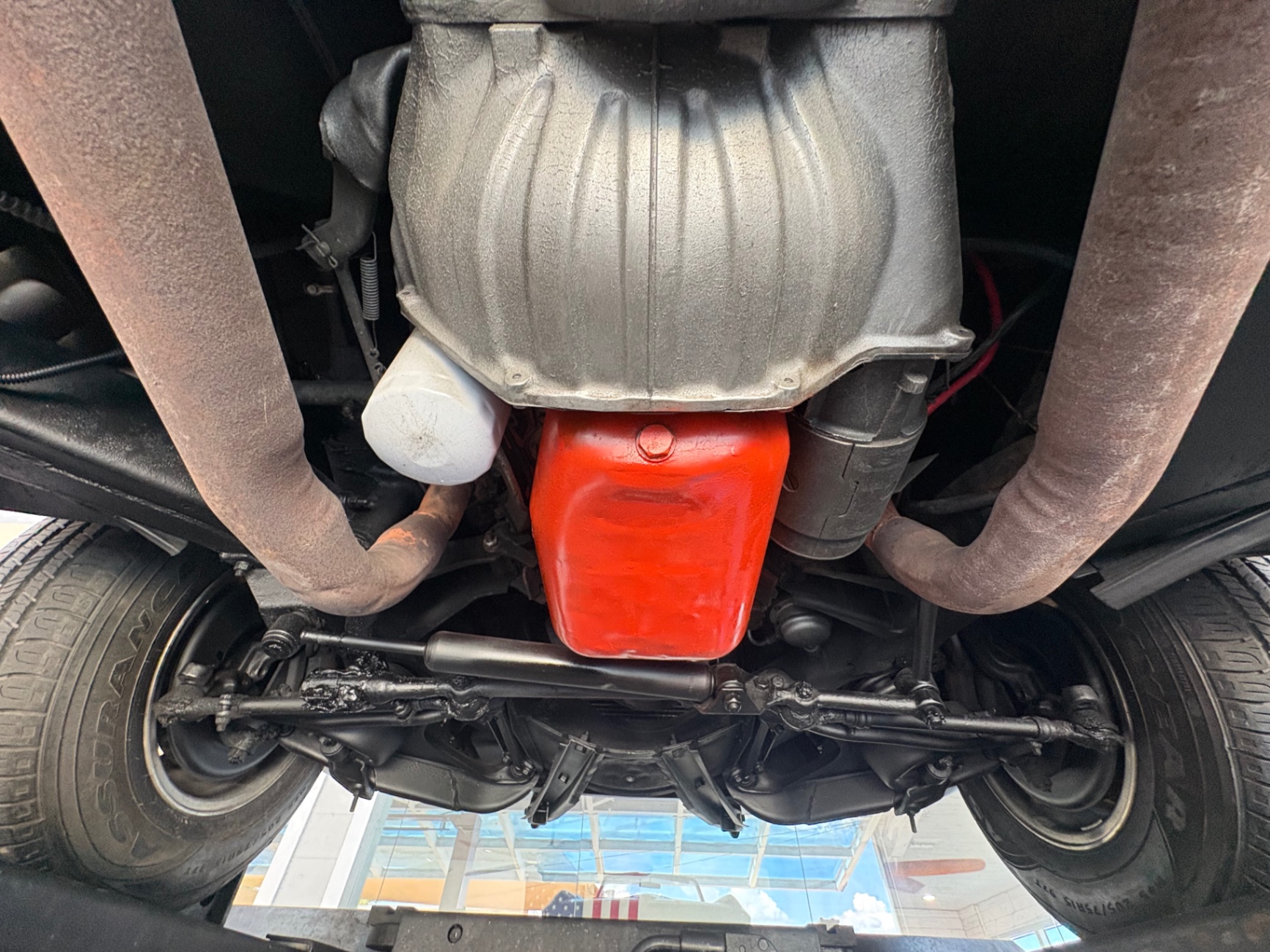
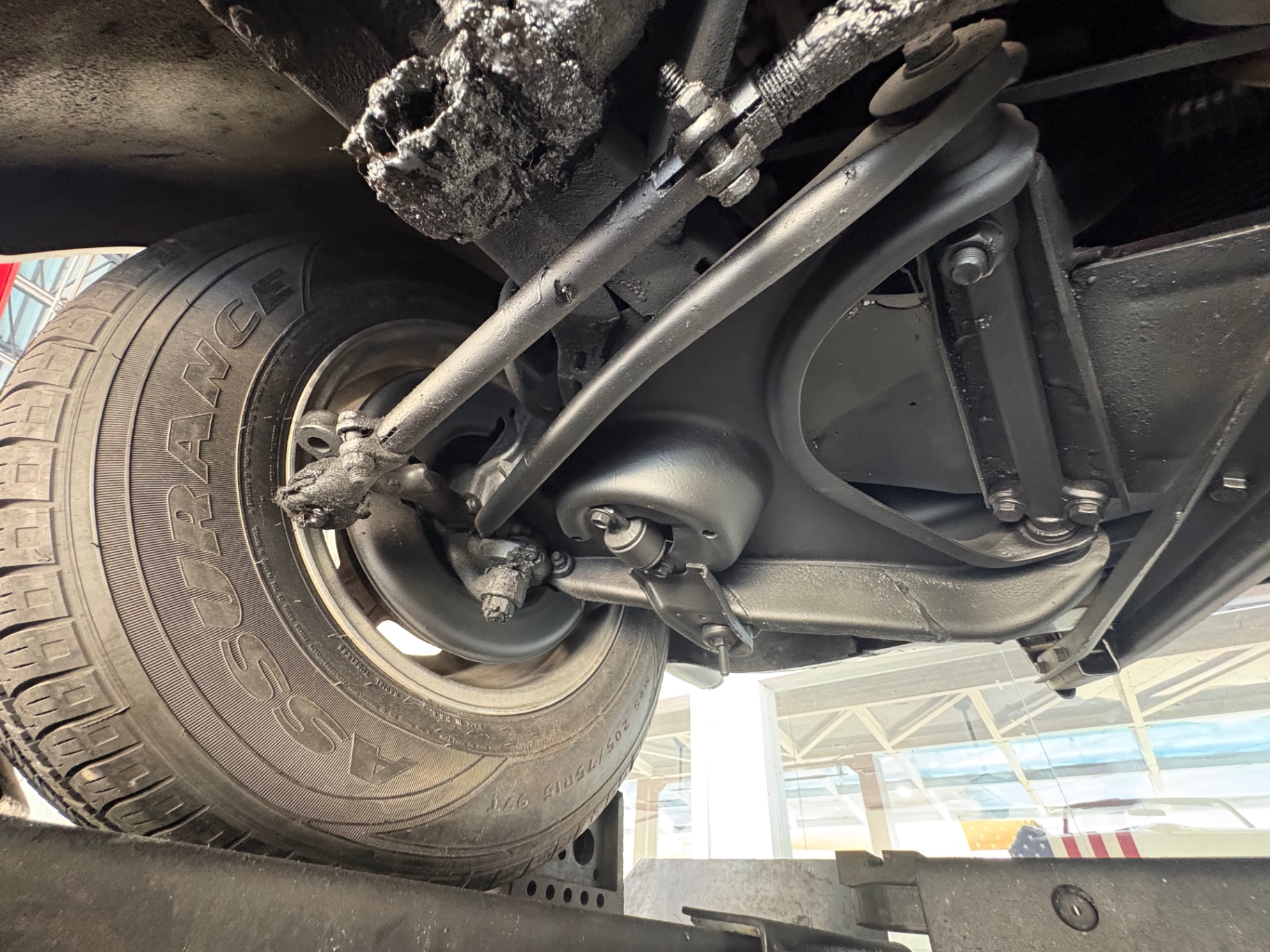
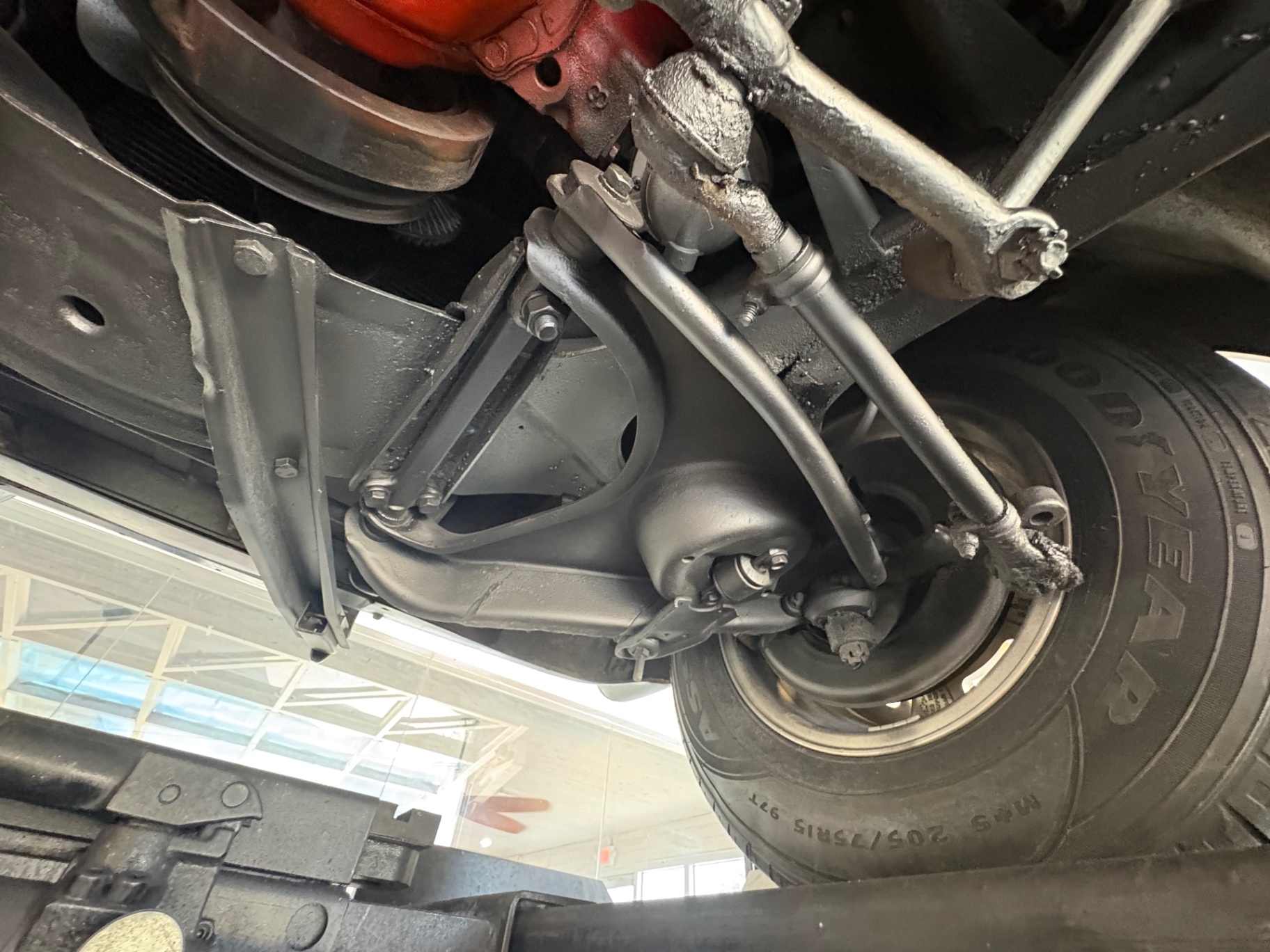
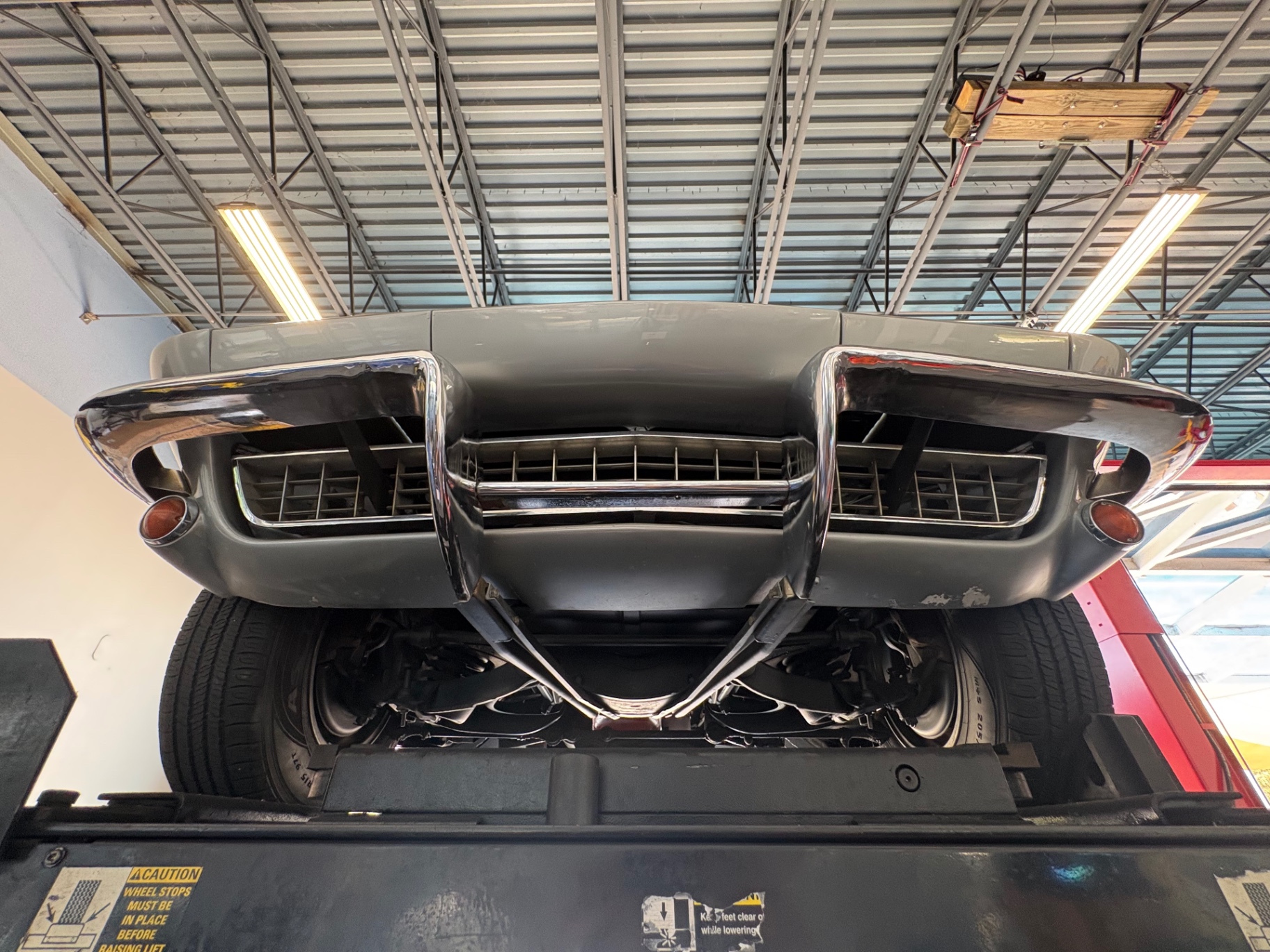
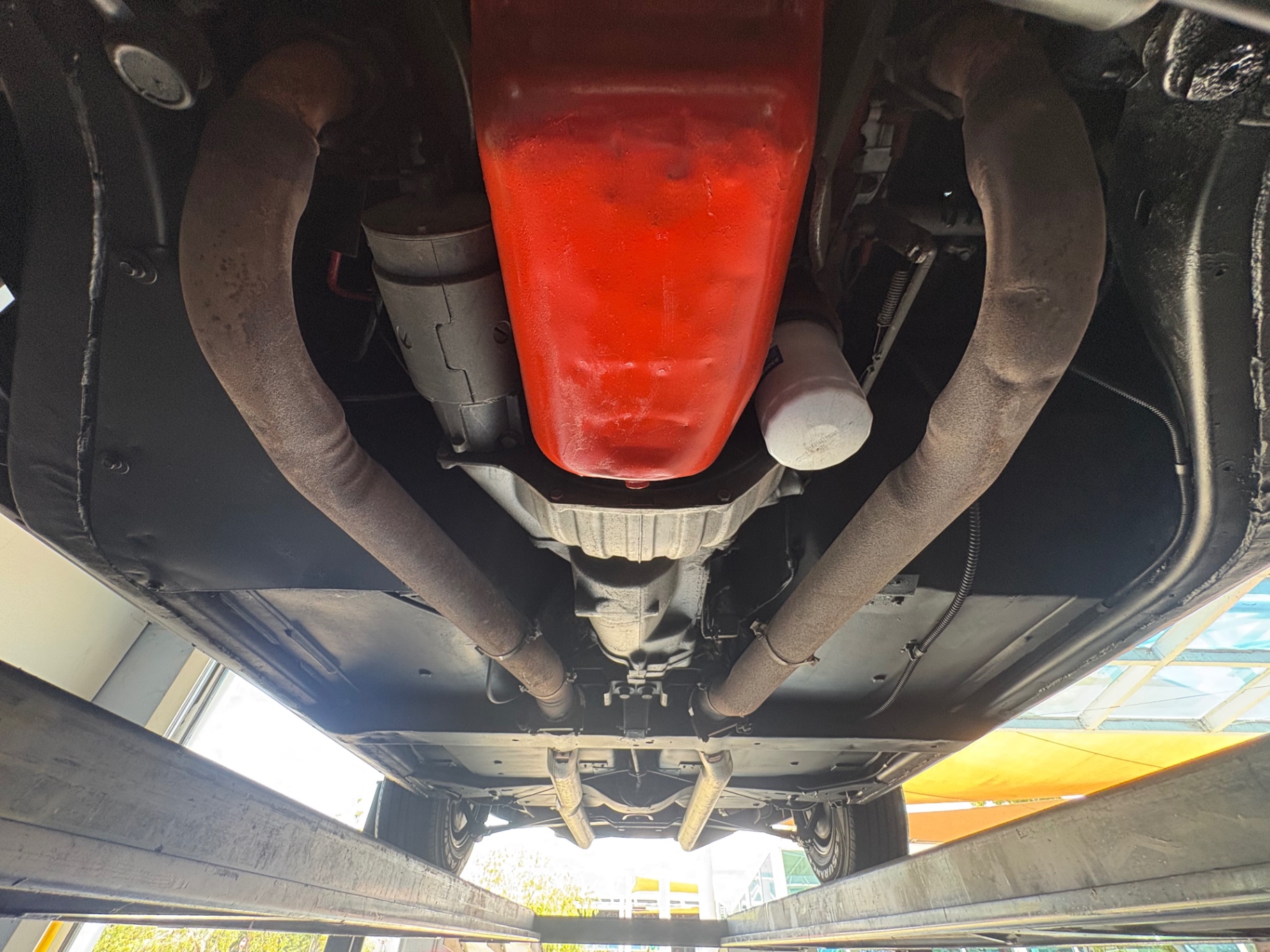
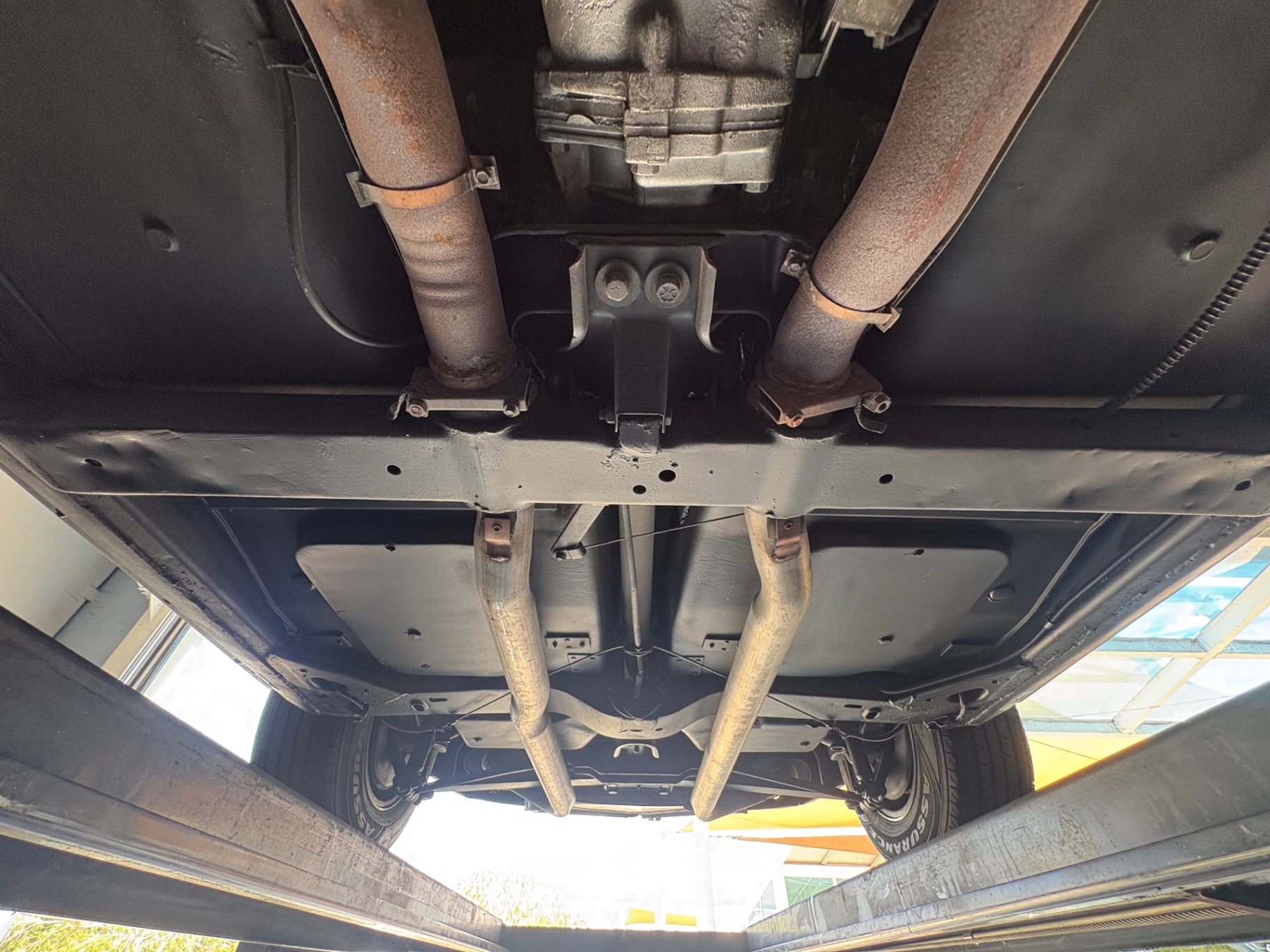
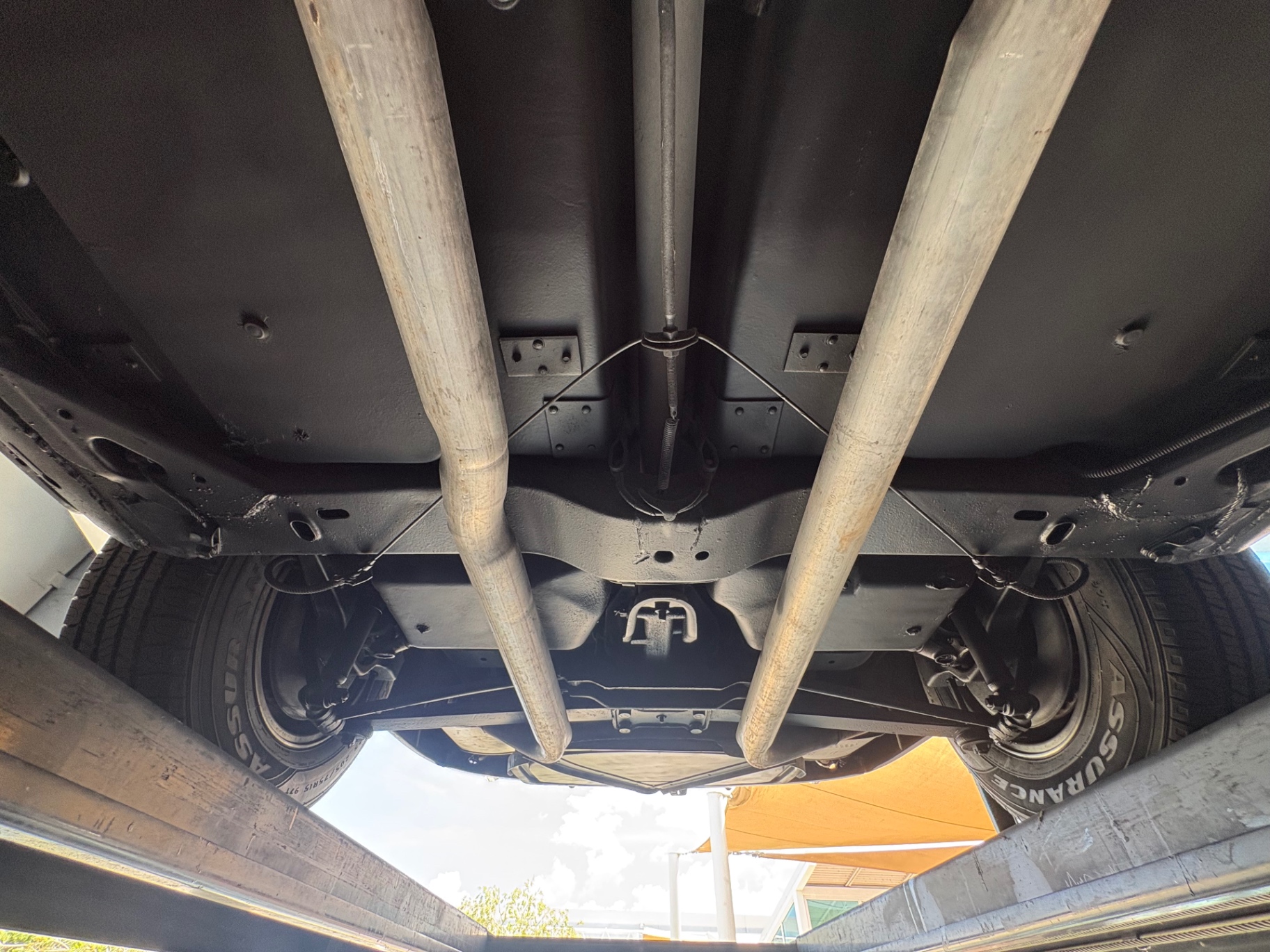
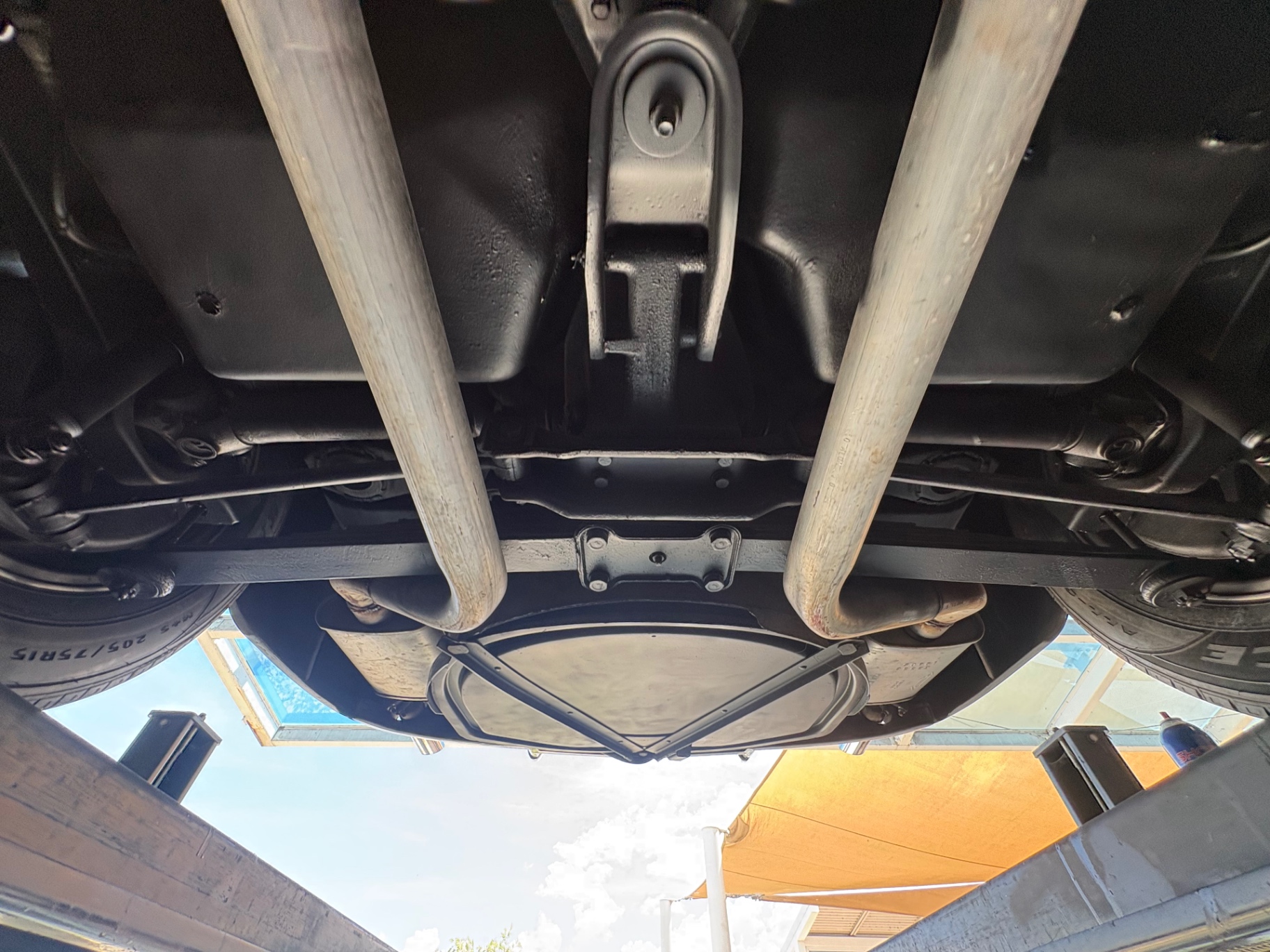
The undercarriage photos on this car tell an important story. The frame and floor are finished in black with no visible rust, rot, or patched sections. The independent rear suspension — a feature Corvette introduced in 1963 and a genuine engineering accomplishment for an American production car of that era — is intact and properly presented. The C2 Corvette used a three-link rear independent suspension with a transverse leaf spring and U-jointed halfshafts, which gave it substantially better handling than the solid-axle cars it replaced. Four-wheel disc brakes are fitted, which was a factory option on the 1966 Corvette and a meaningful upgrade over the drum setups found on lesser optioned cars.
The dual exhaust exits through chrome tips at the rear, and the exhaust routing under the car appears clean and properly supported. The engine bay shows the correct finned aluminum valve covers with the Corvette script, a presentation familiar to anyone who has spent time around these cars.
Interior
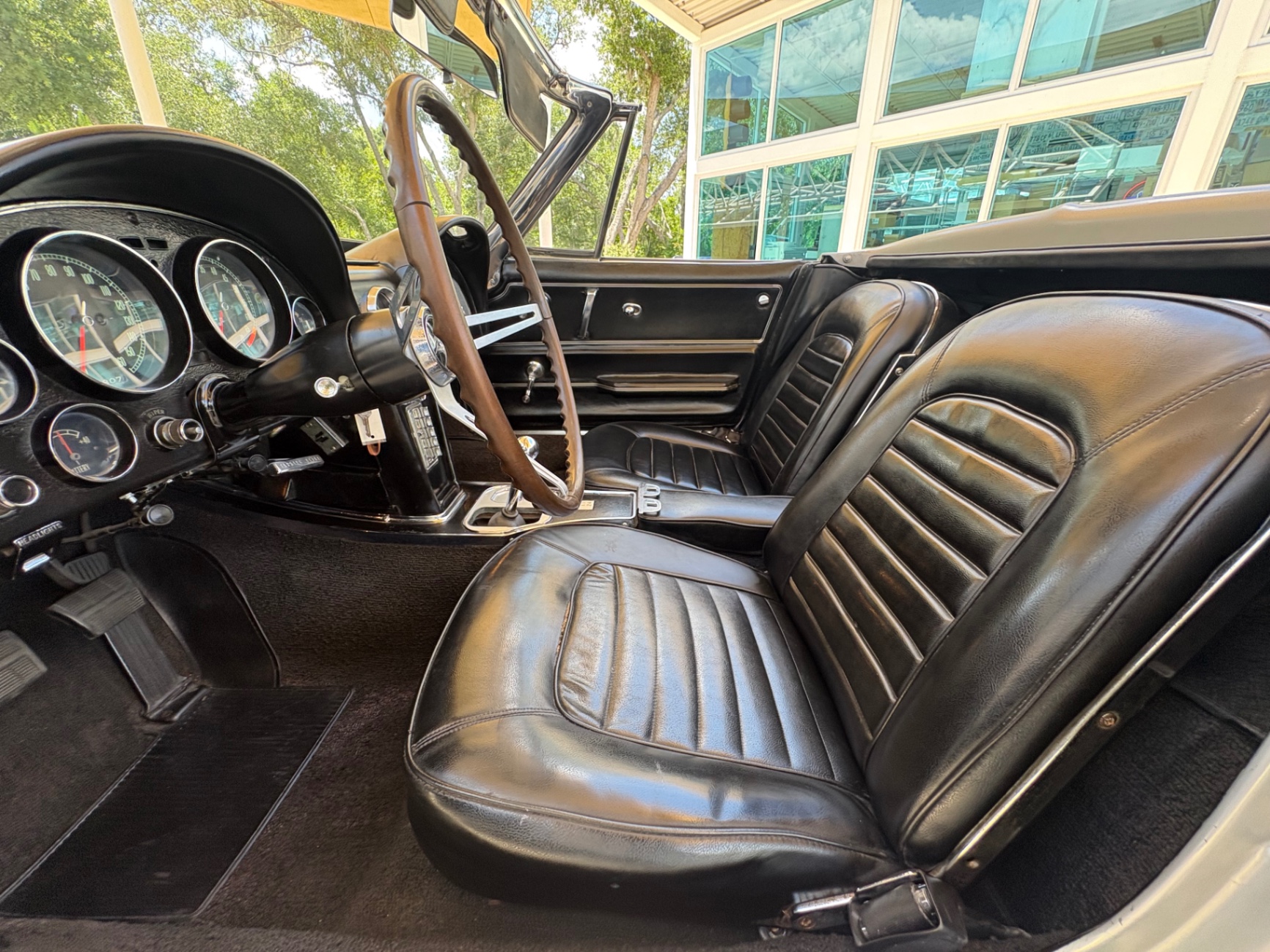
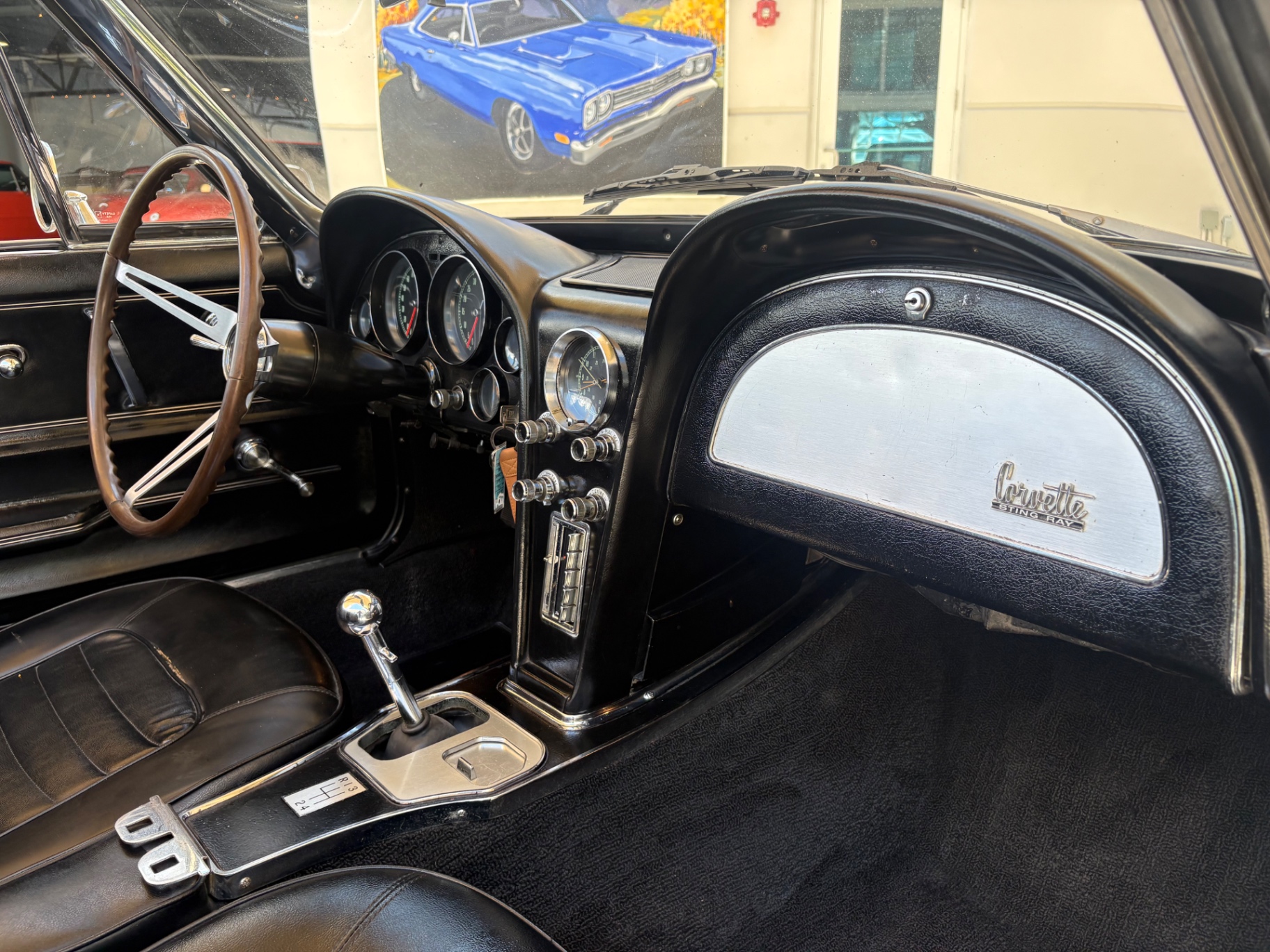
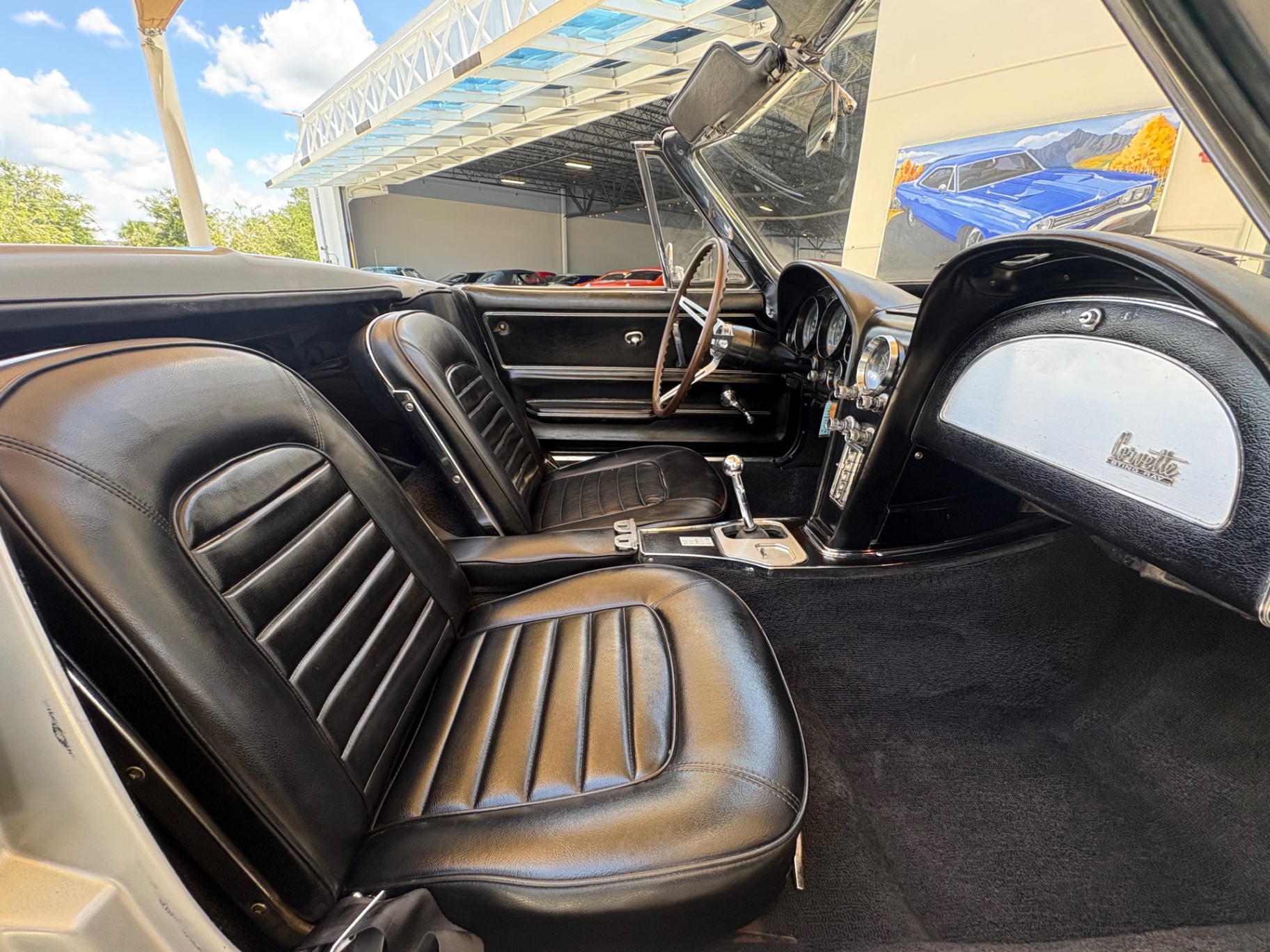
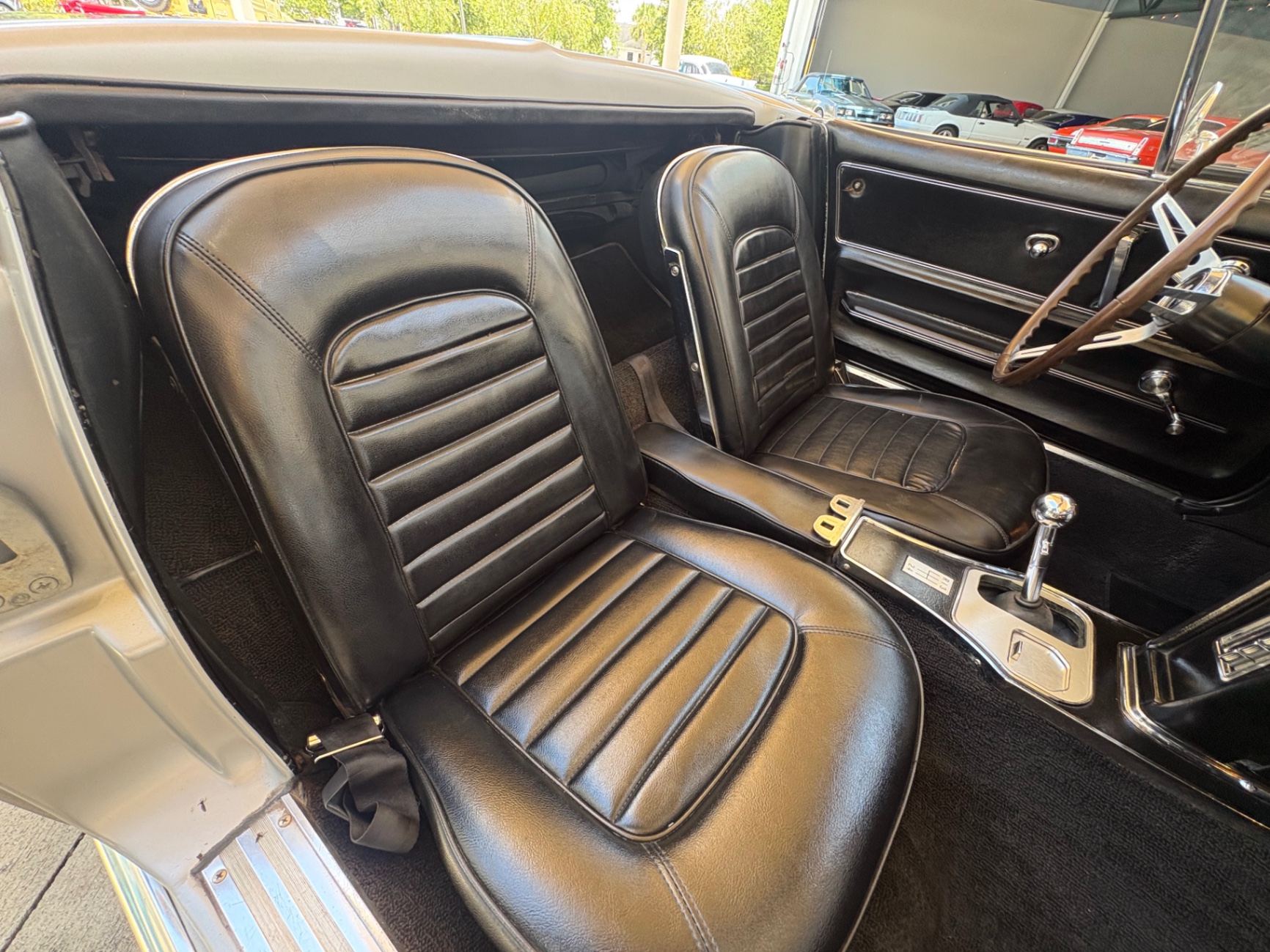
The cockpit of a 1966 Chevrolet Corvette Sting Ray is a driver-focused environment with no wasted space. This car has the black leather interior, which holds up better over time than vinyl and presents cleanly in photographs and in person. The bucket seats show the vertical ribbing pattern correct for the C2 generation, and the leather appears intact without cracking or significant wear visible in the photos.
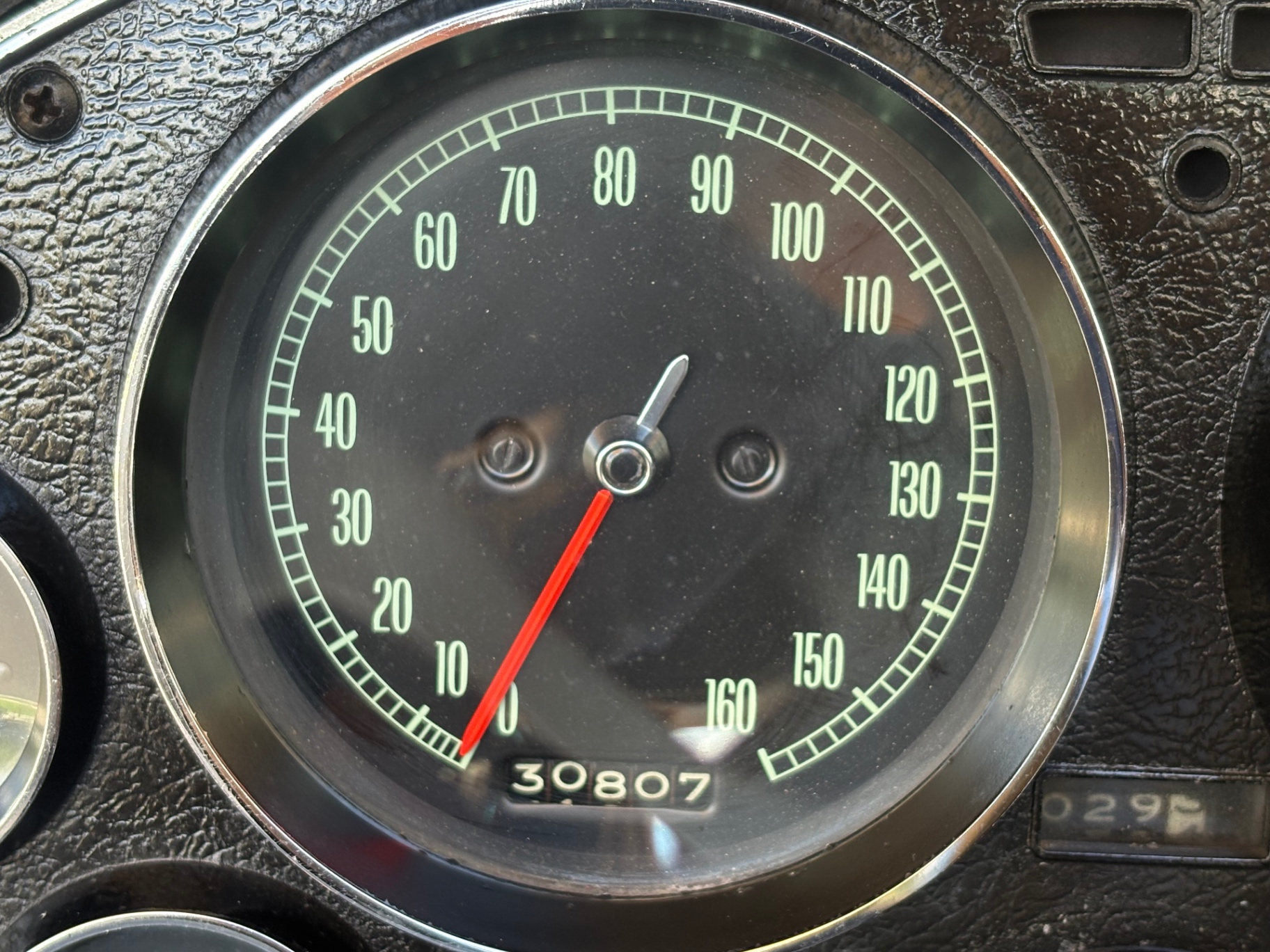
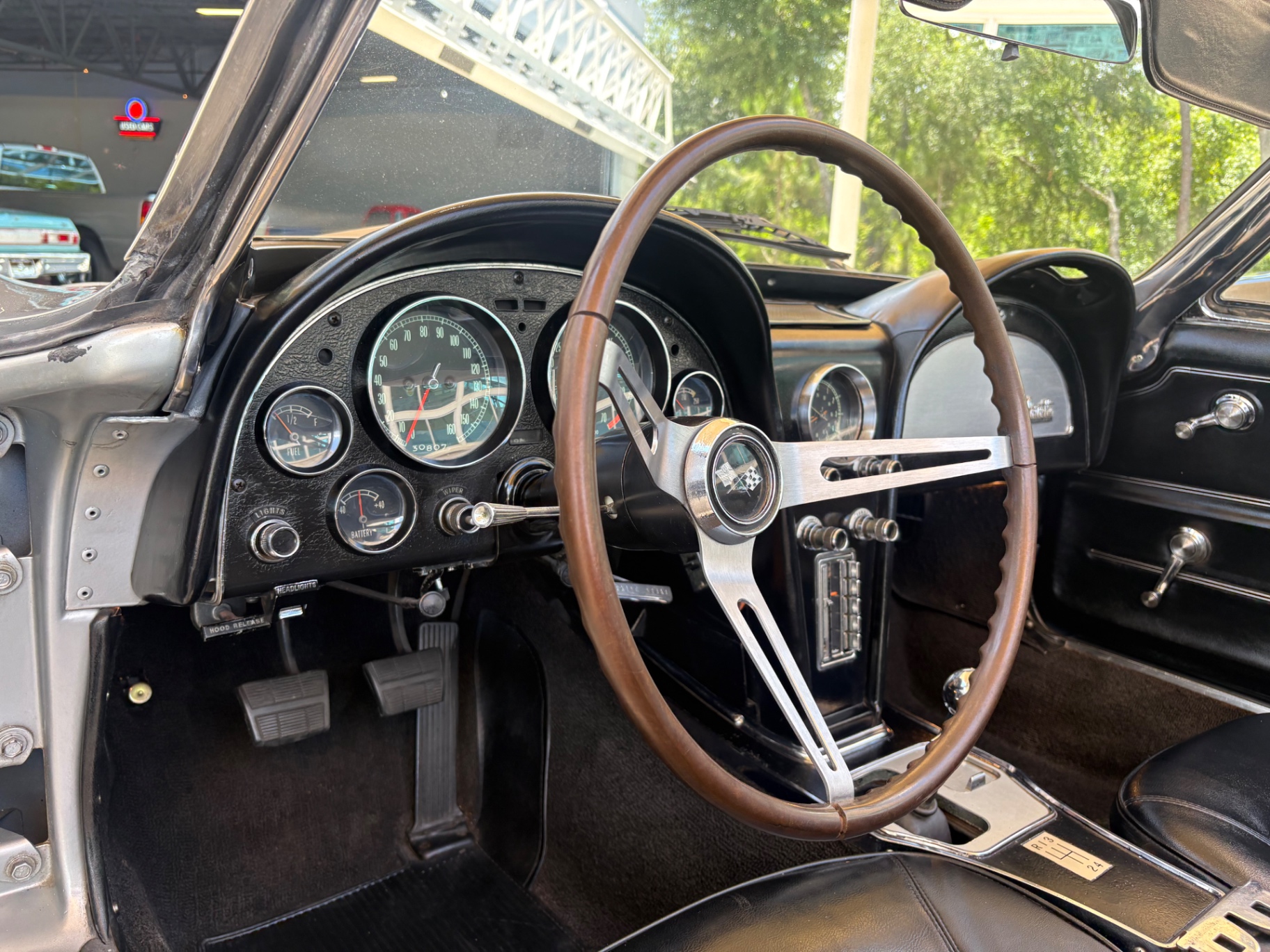
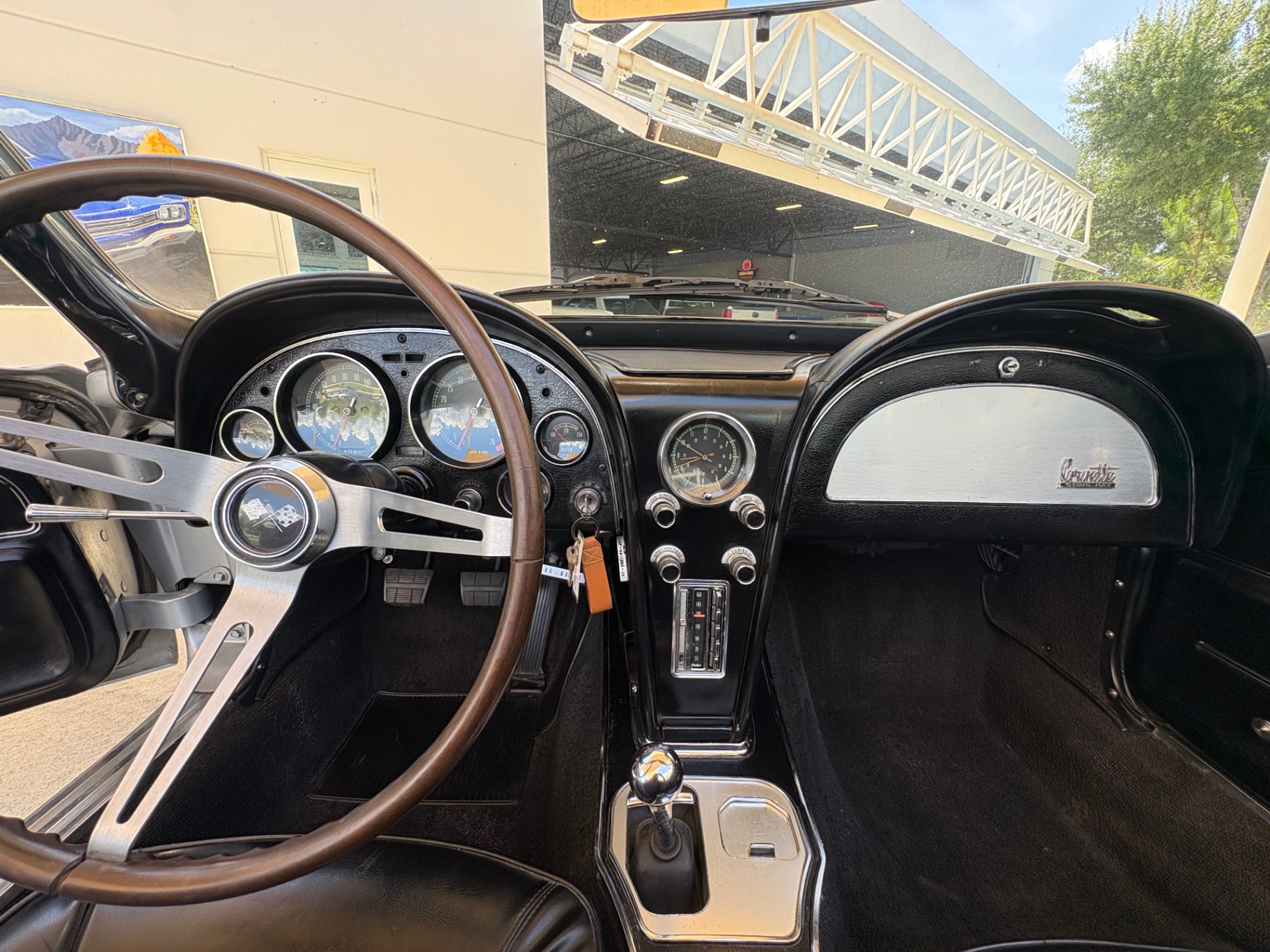
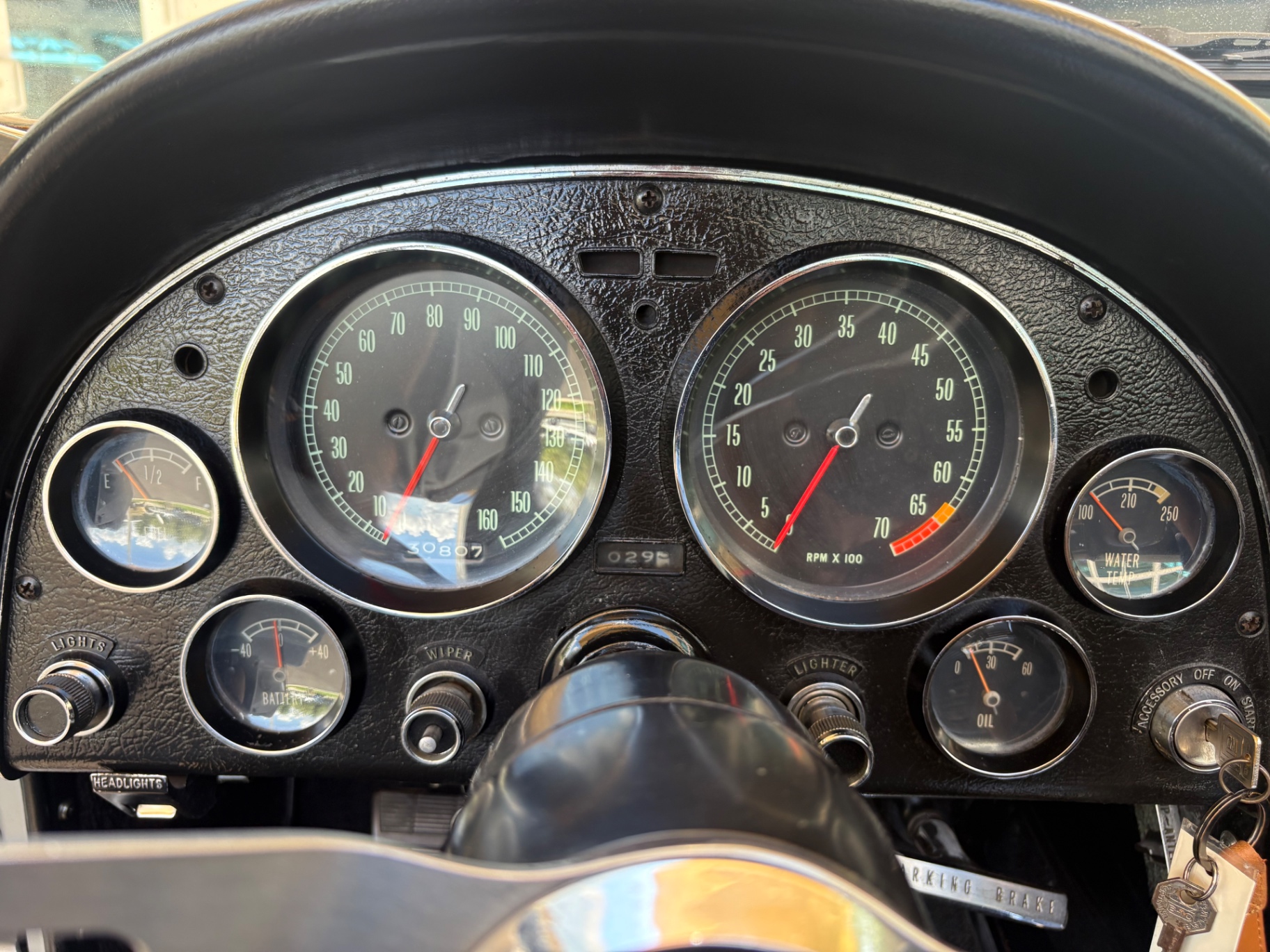
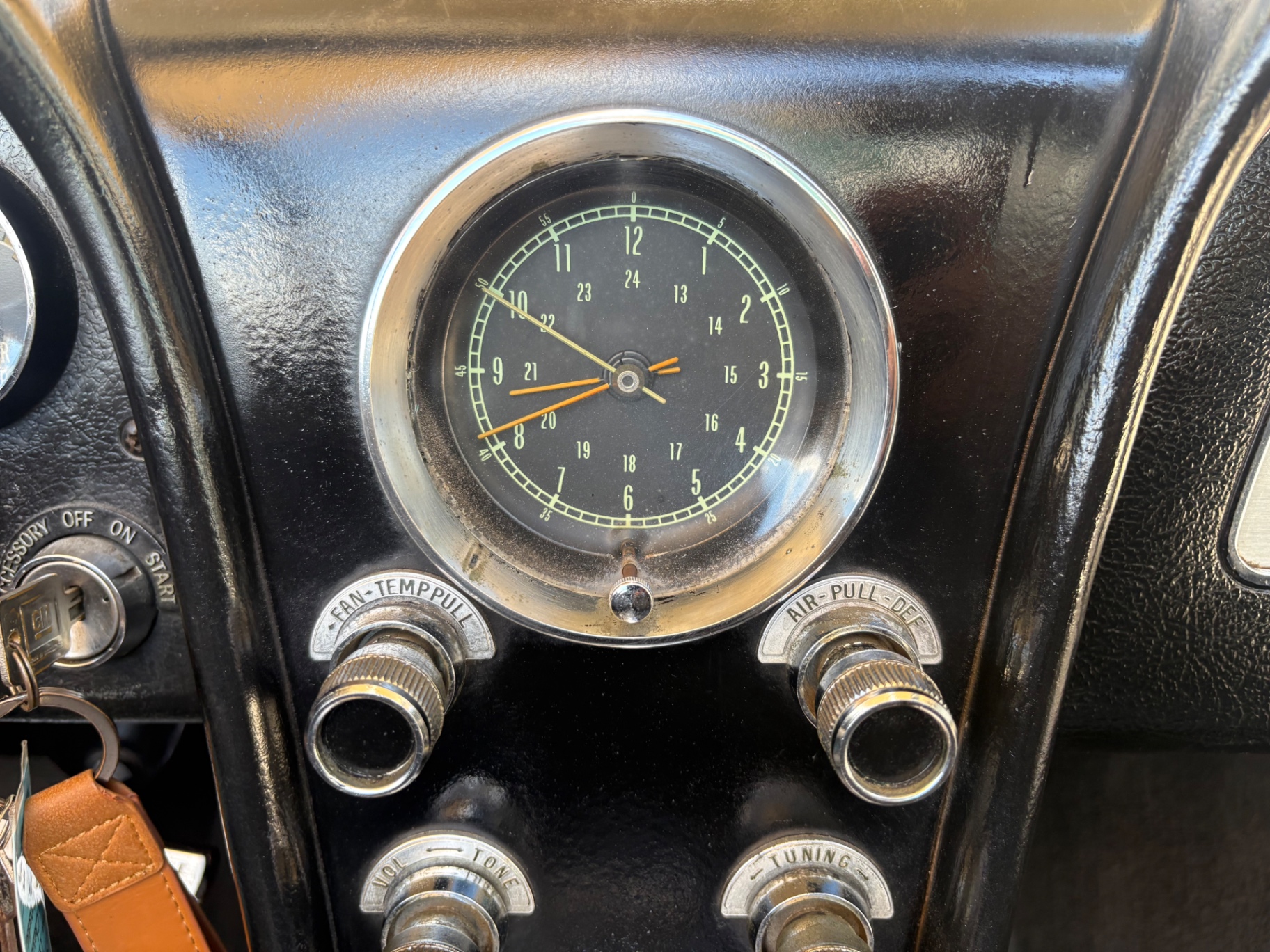
The dashboard is one of the most information-rich instrument panels of any American production car from 1966. The large central speedometer reads to 160 mph, with a matching tachometer positioned directly in the driver's sightline. Supporting gauges — fuel, water temperature, oil pressure, and battery — are arranged around the main cluster. Below the center stack sits an analog clock, and the Delco AM radio is mounted low in the console, consistent with factory placement. The radio face shows the correct period-correct vertical frequency display.
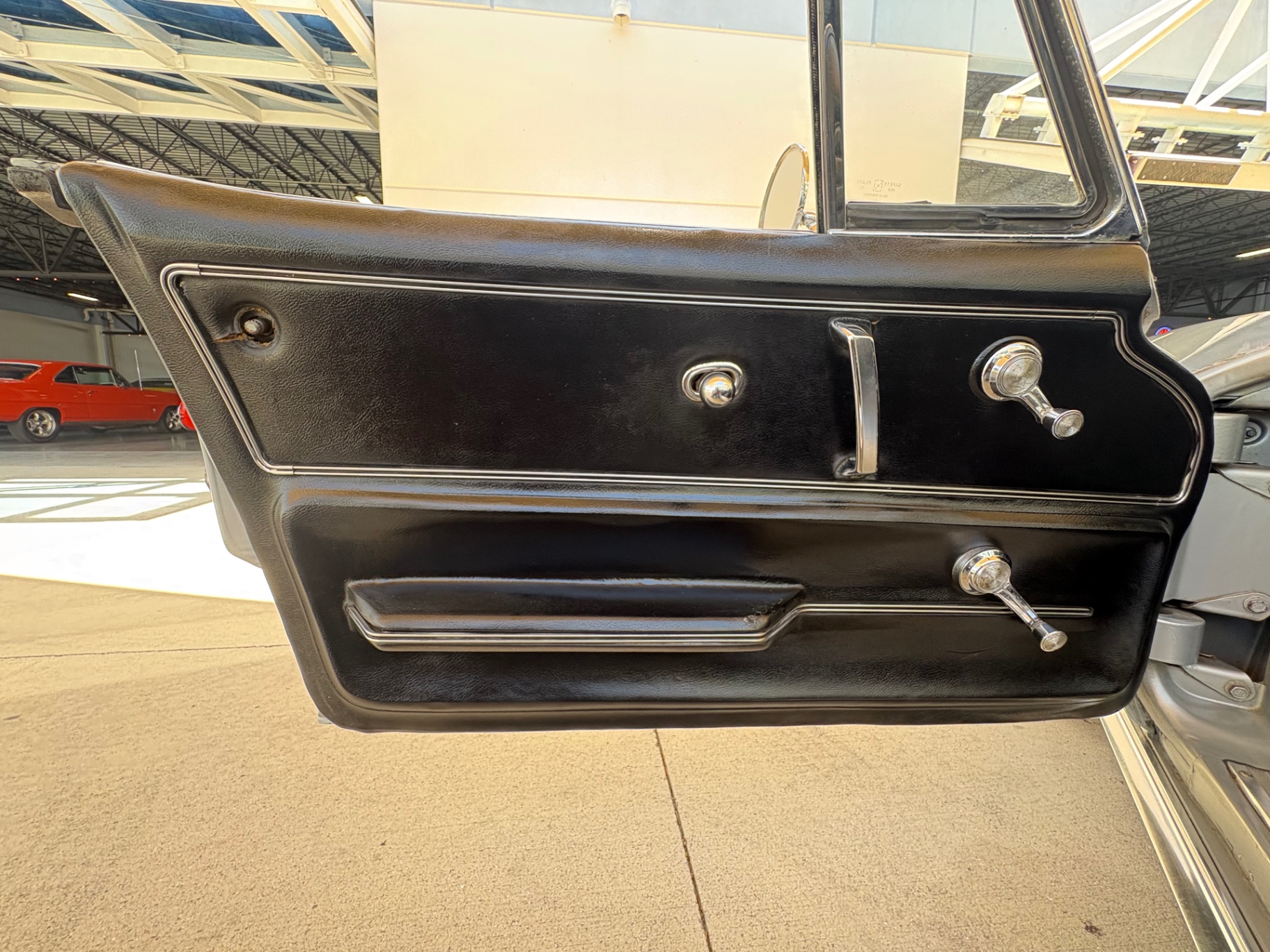
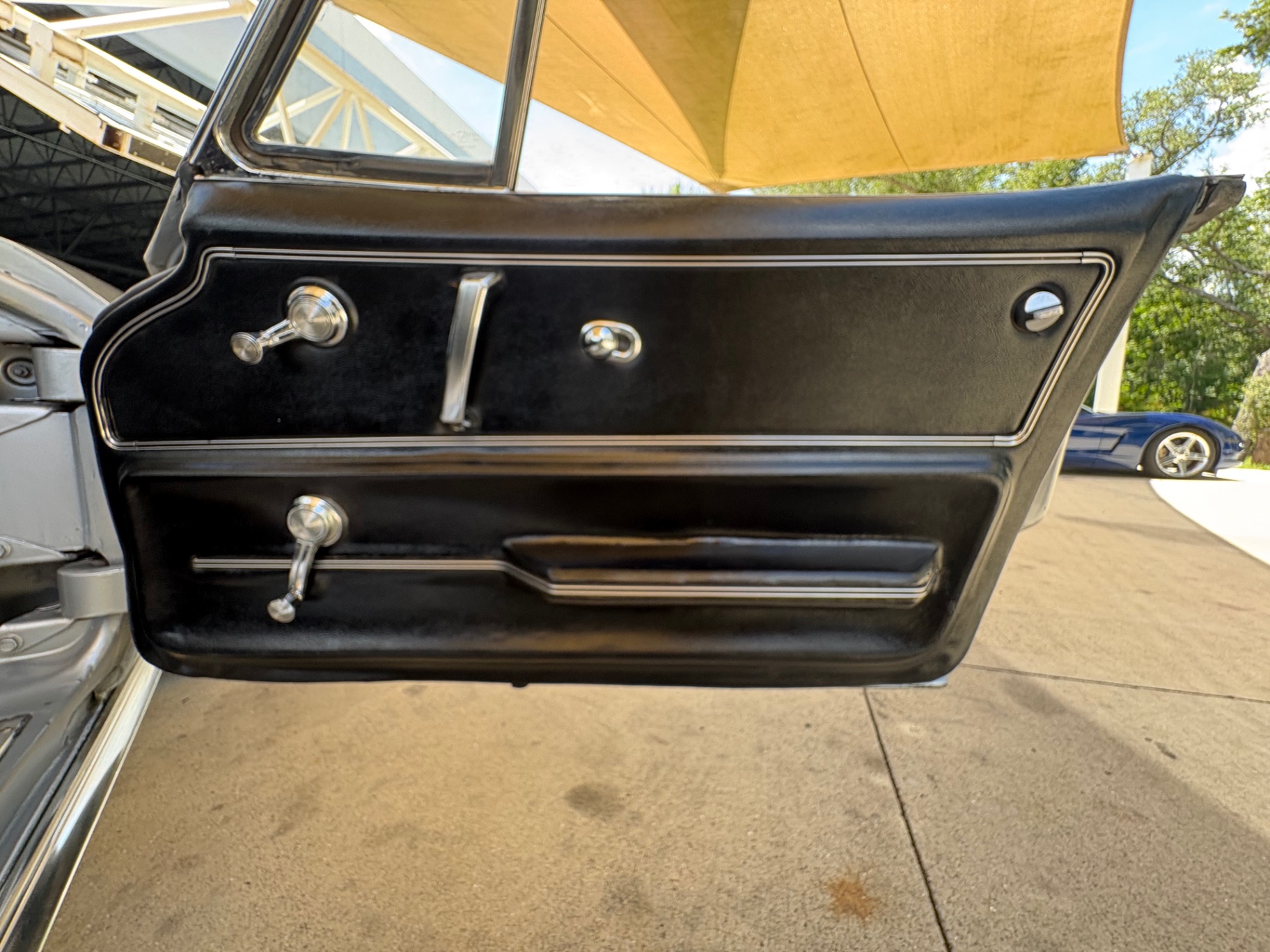
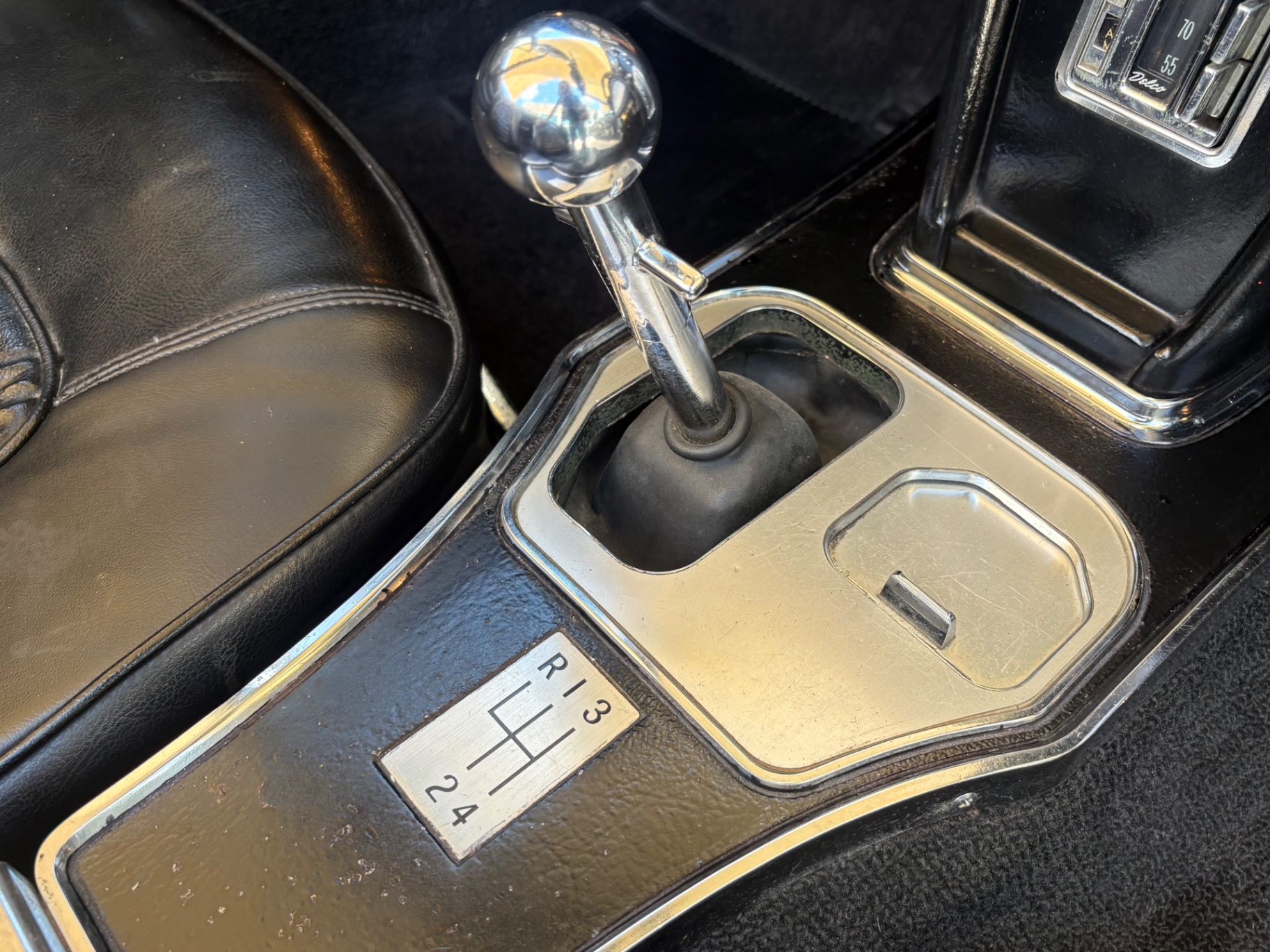
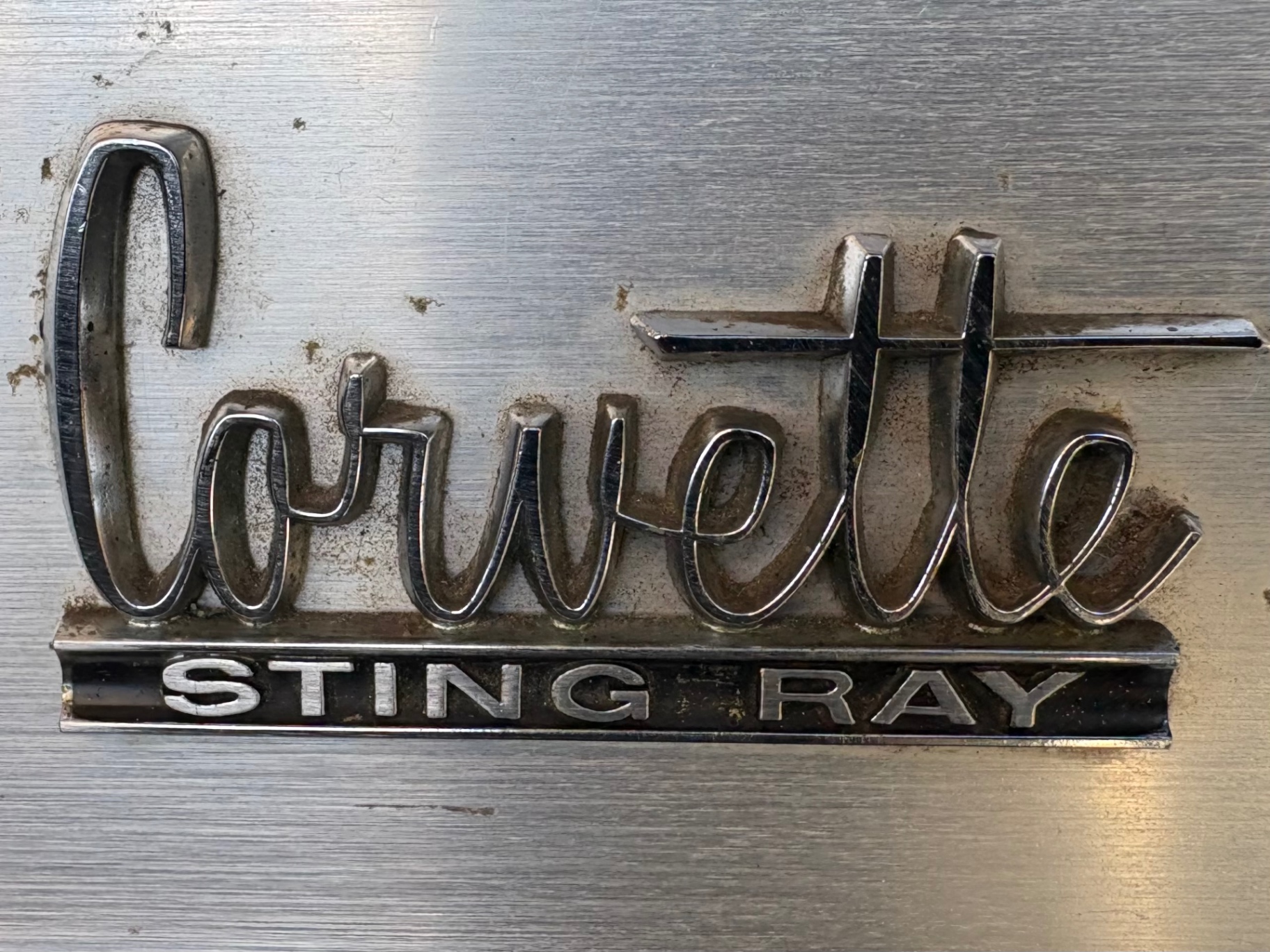
The wood rim steering wheel is correct for the period and is the option buyers chose when they wanted a sportier feel than the standard steering wheel offered. The center hub carries the correct crossed-flags Corvette emblem. The Muncie 4-speed shifter sits in the center console with the correct chrome ball top and a brushed aluminum shift pattern plate showing the four-speed gate. Door panels are black with the correct chrome handles and window cranks, all appearing intact. The passenger side of the dash carries the Corvette Sting Ray badge on the brushed aluminum glove compartment door — a detail that is correct and present on this car.
Exterior
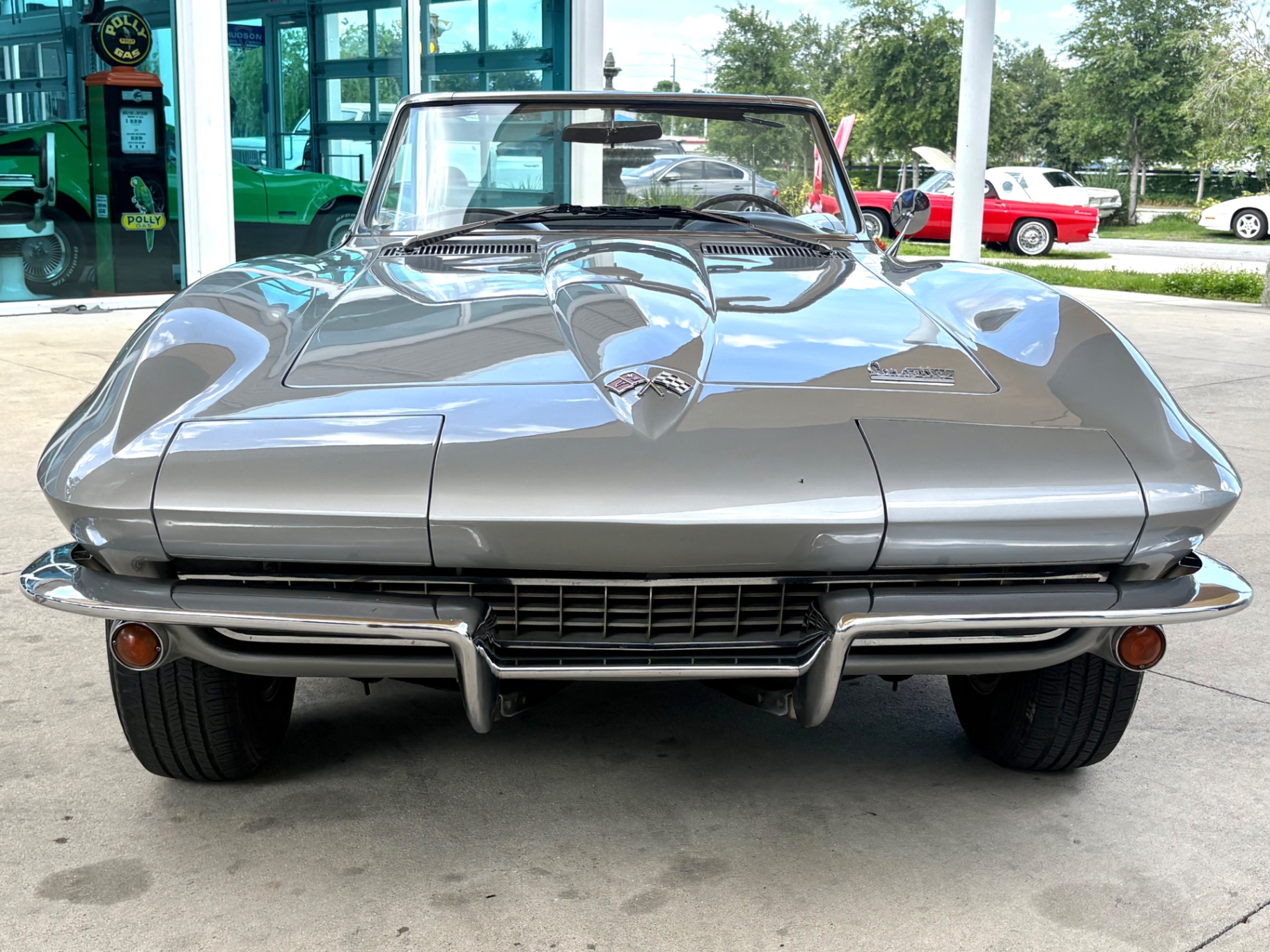
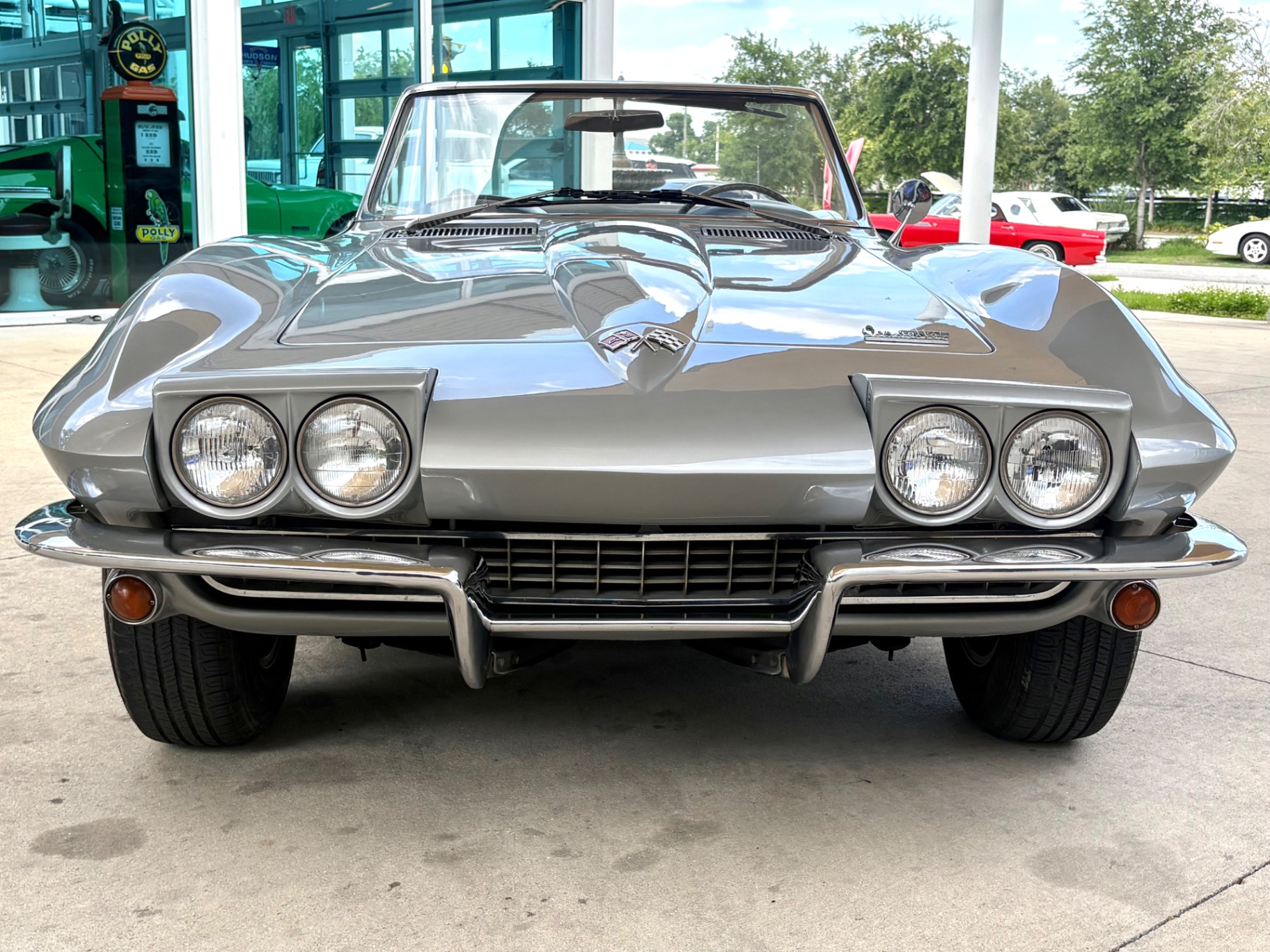
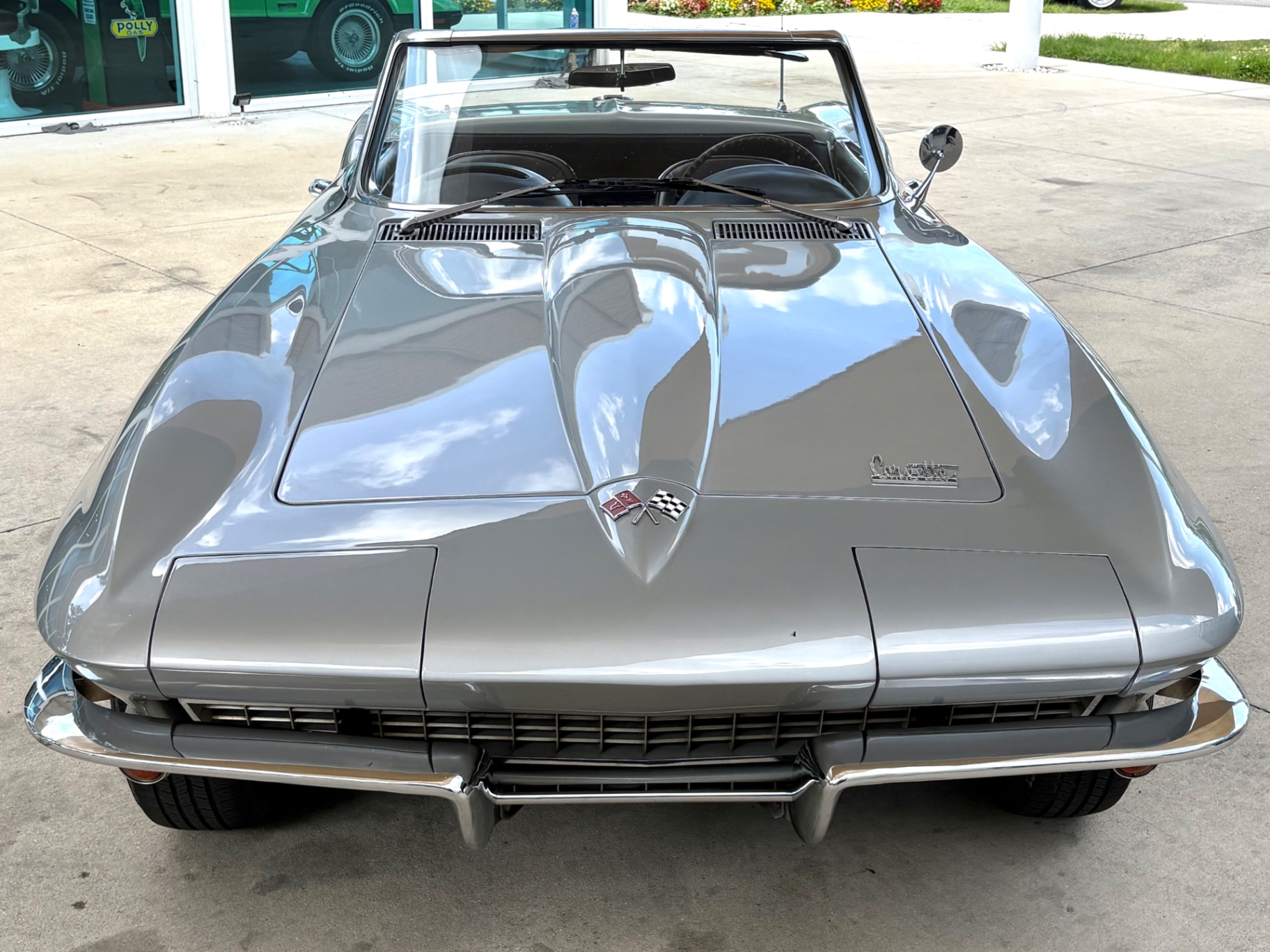
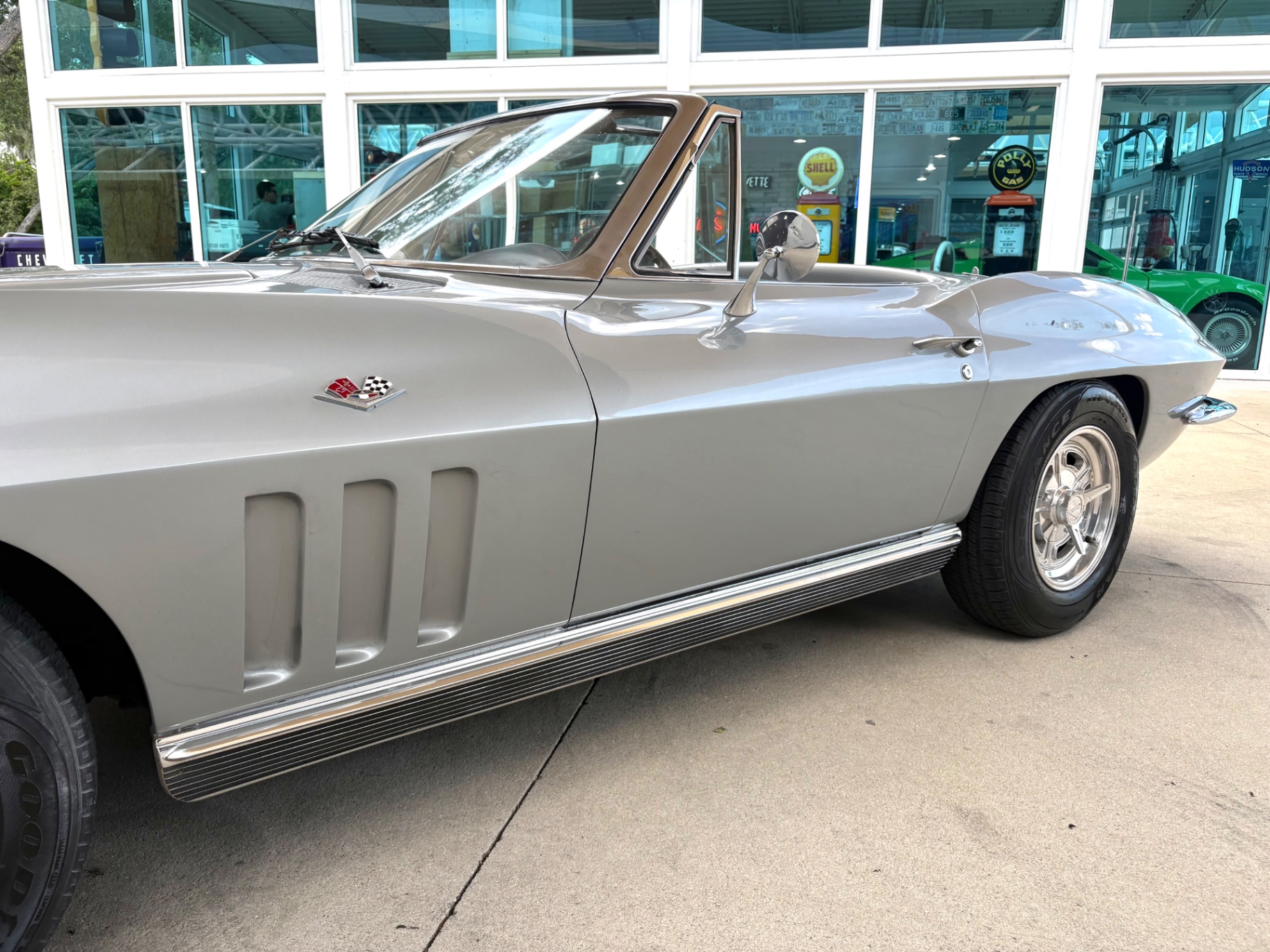
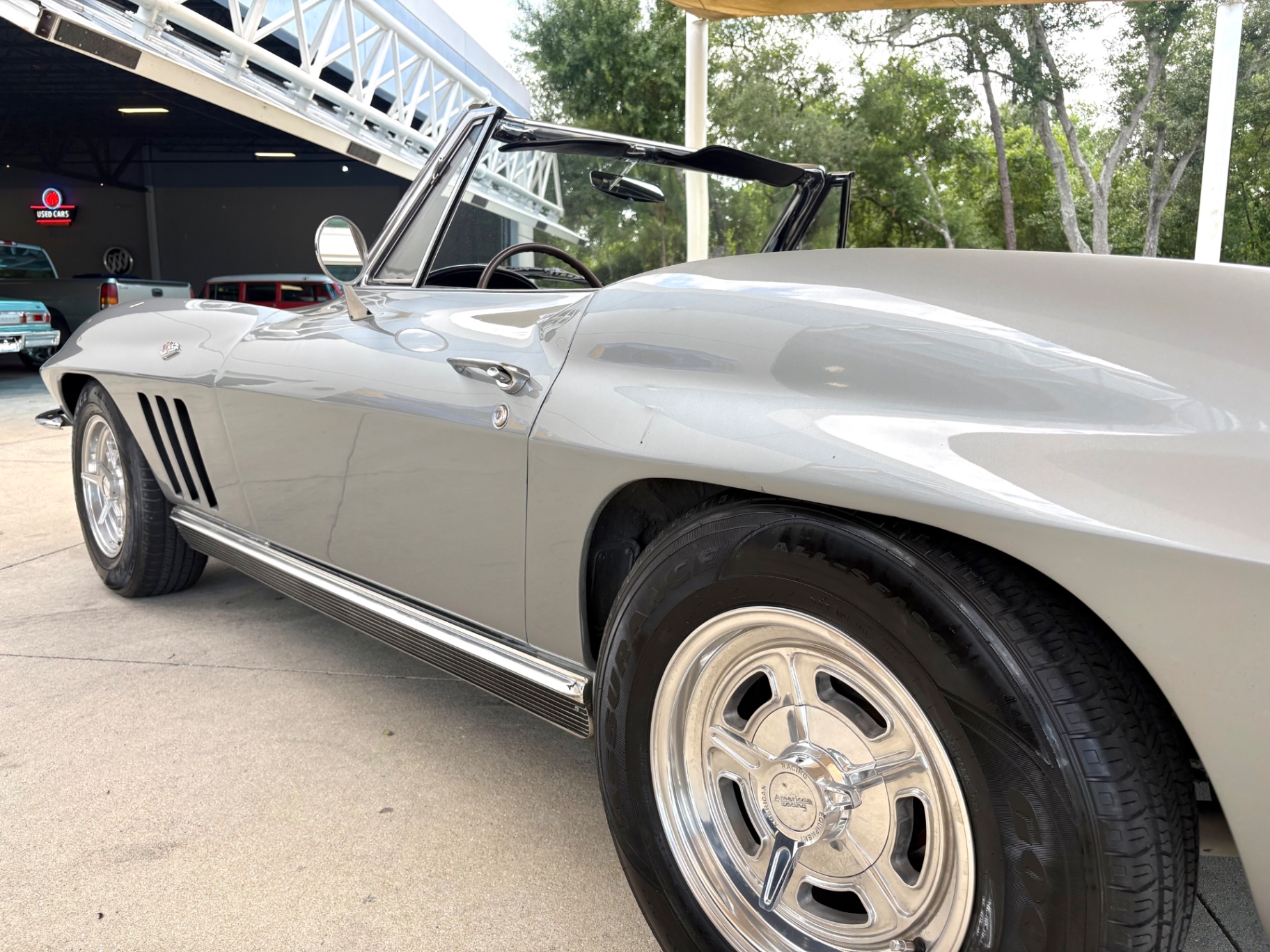
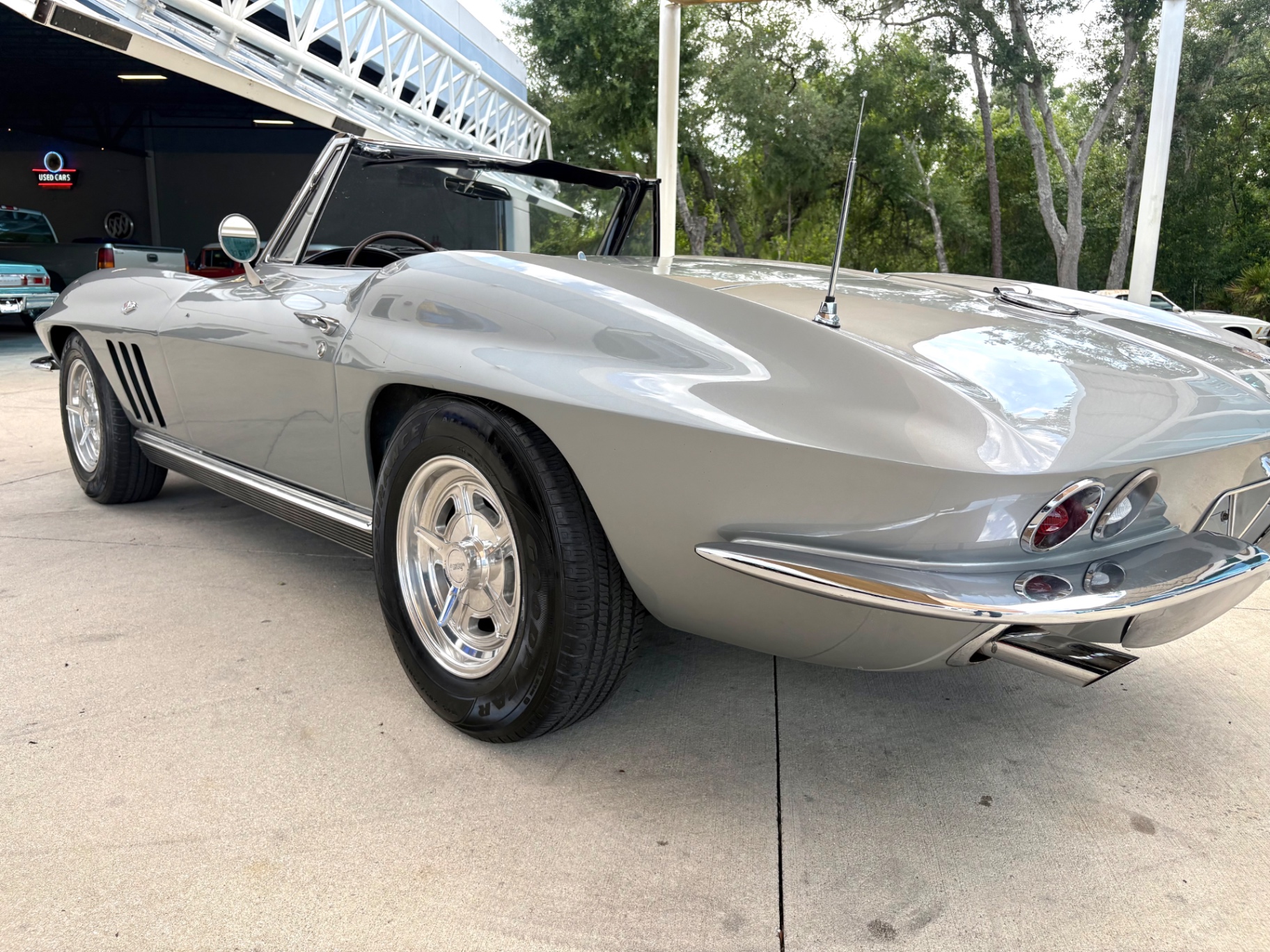
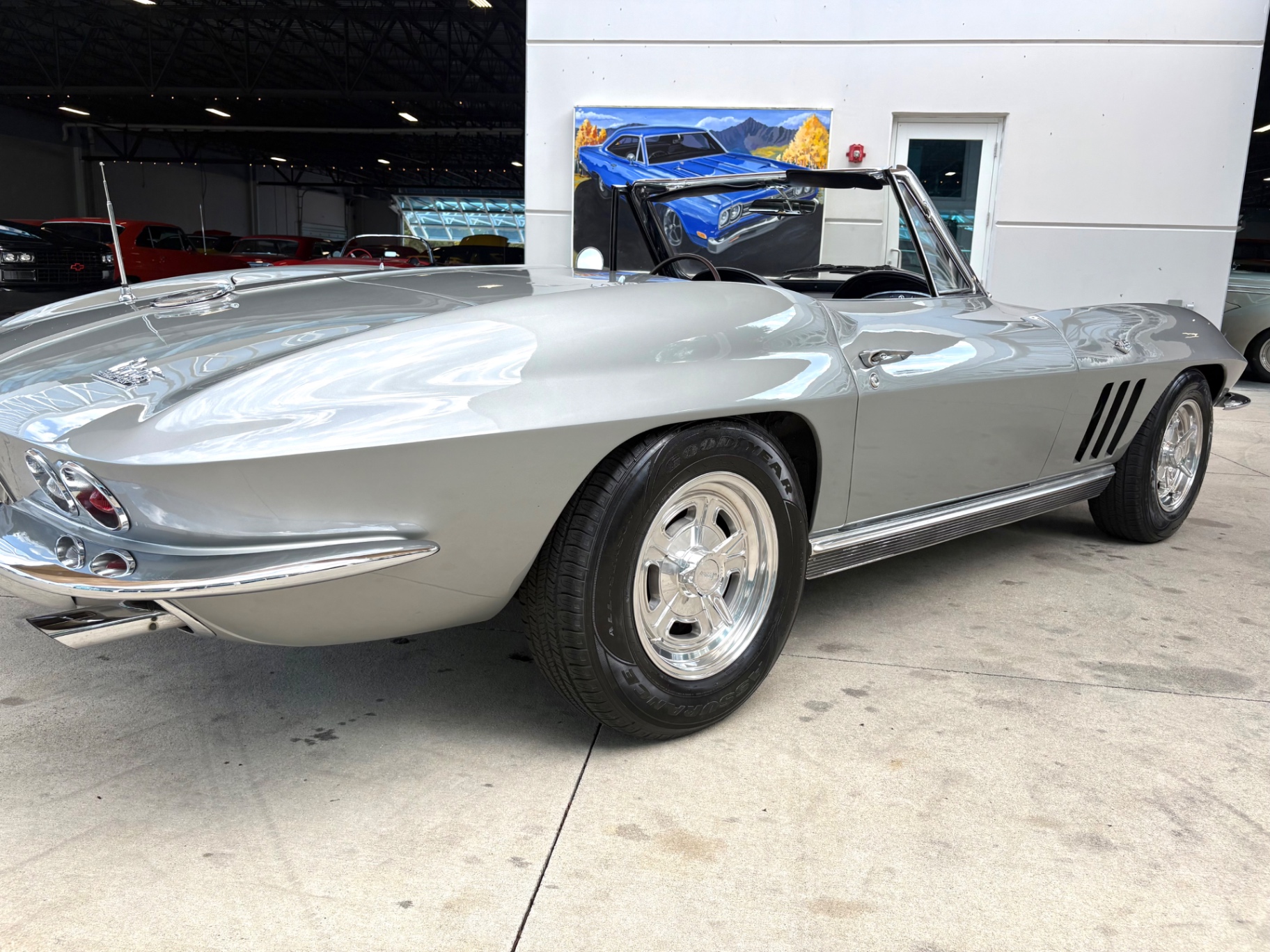
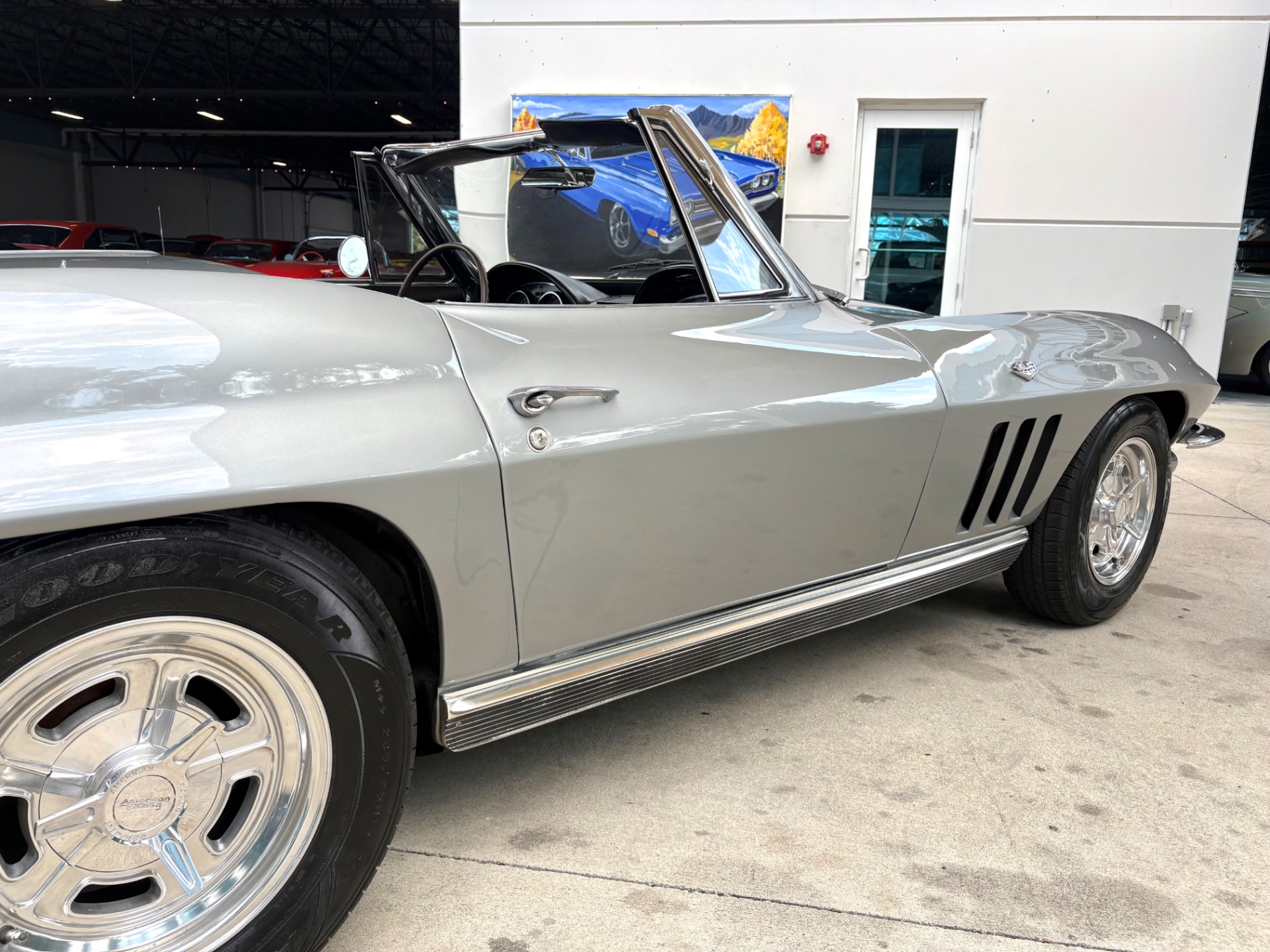
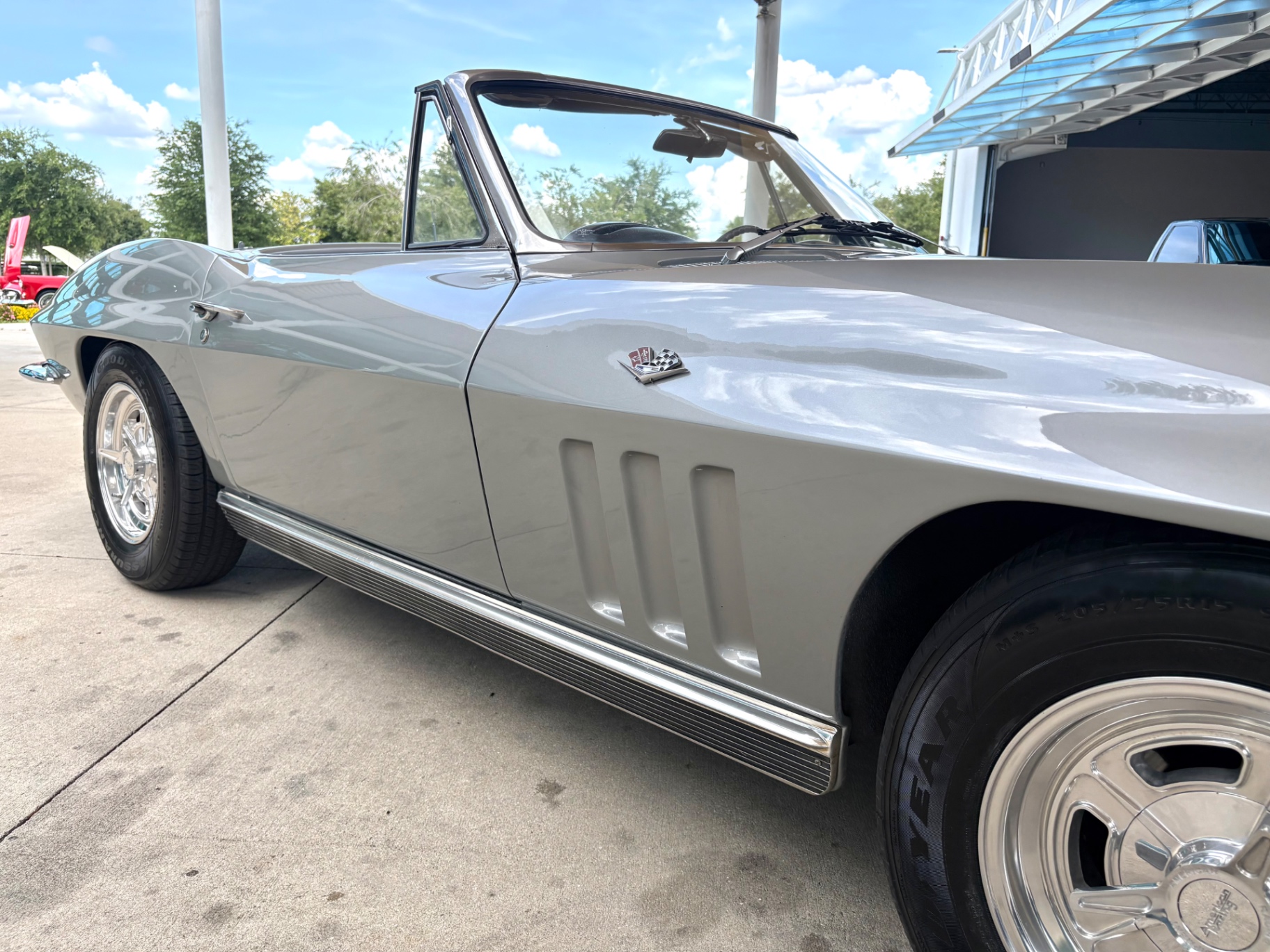
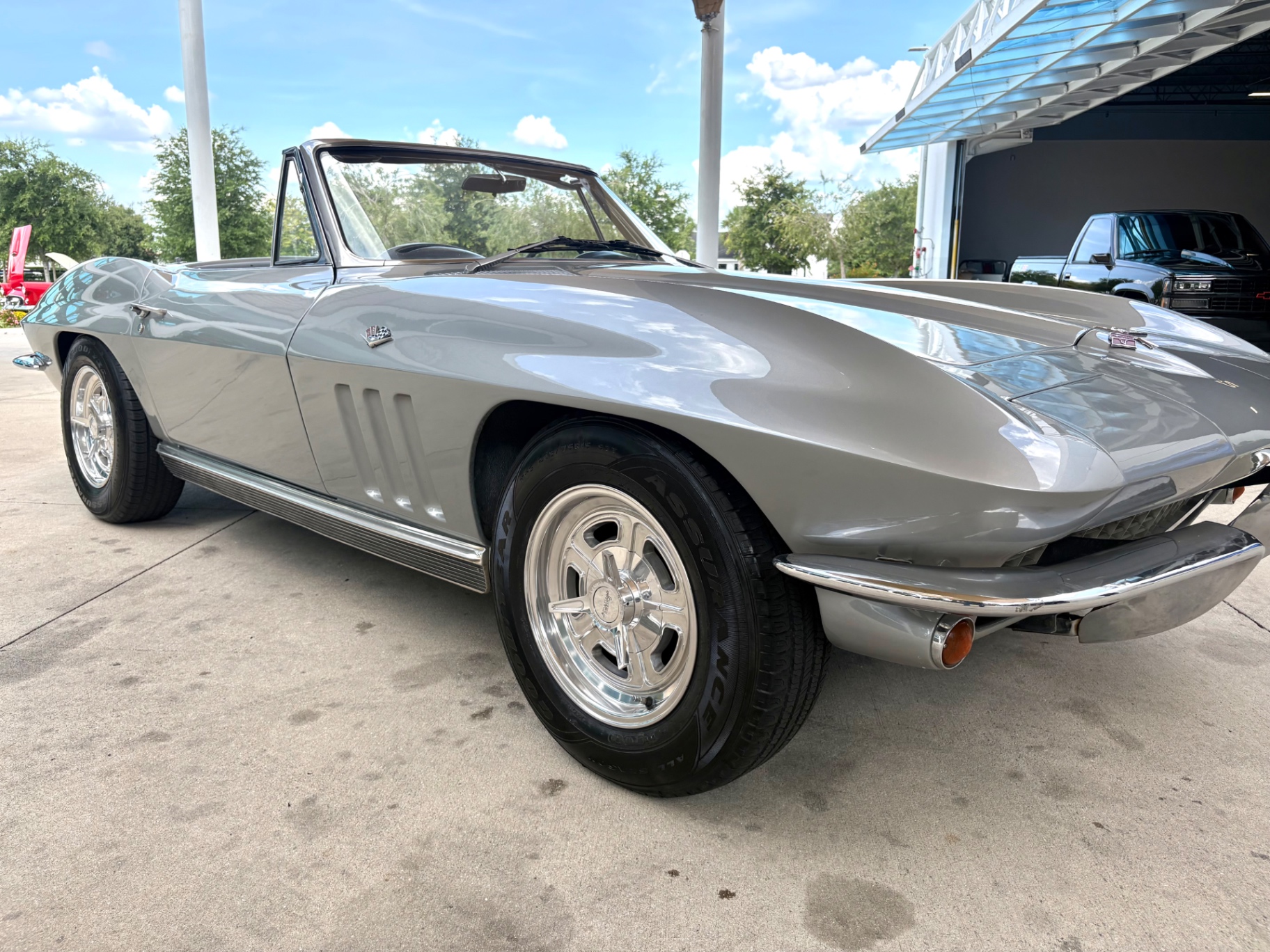
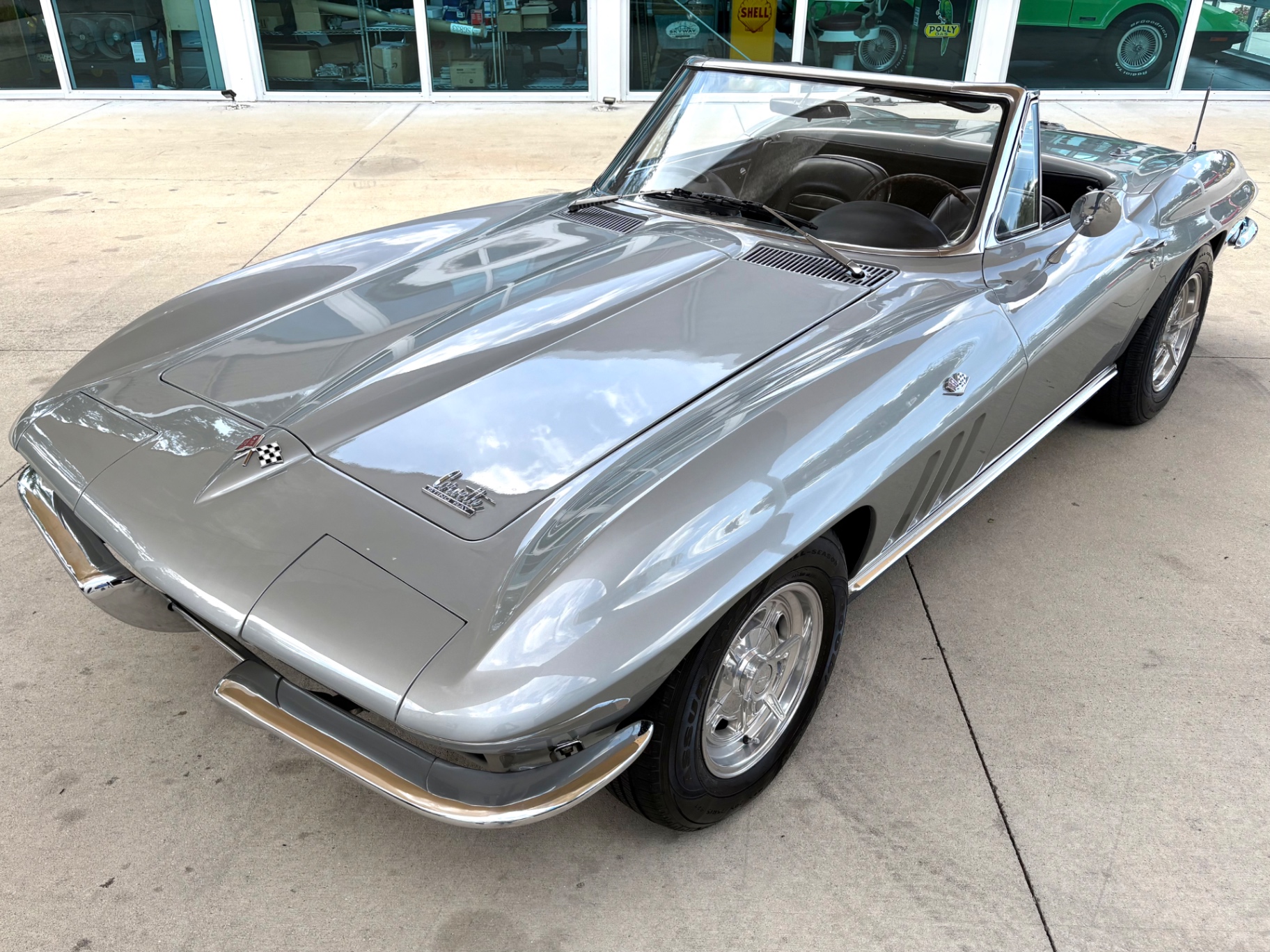
This 1966 Corvette Sting Ray convertible wears a new coat of silver paint, a color that suits the long horizontal lines of the C2 body particularly well. The fiberglass panels of the C2 Corvette do not rust, but they can show surface cracks and stress marks over time — a fresh paint job done correctly addresses those concerns and leaves the car ready to use or display. The chrome bumpers front and rear appear in solid condition, and the iconic hidden headlight doors and front grille are visible in the exterior photos.
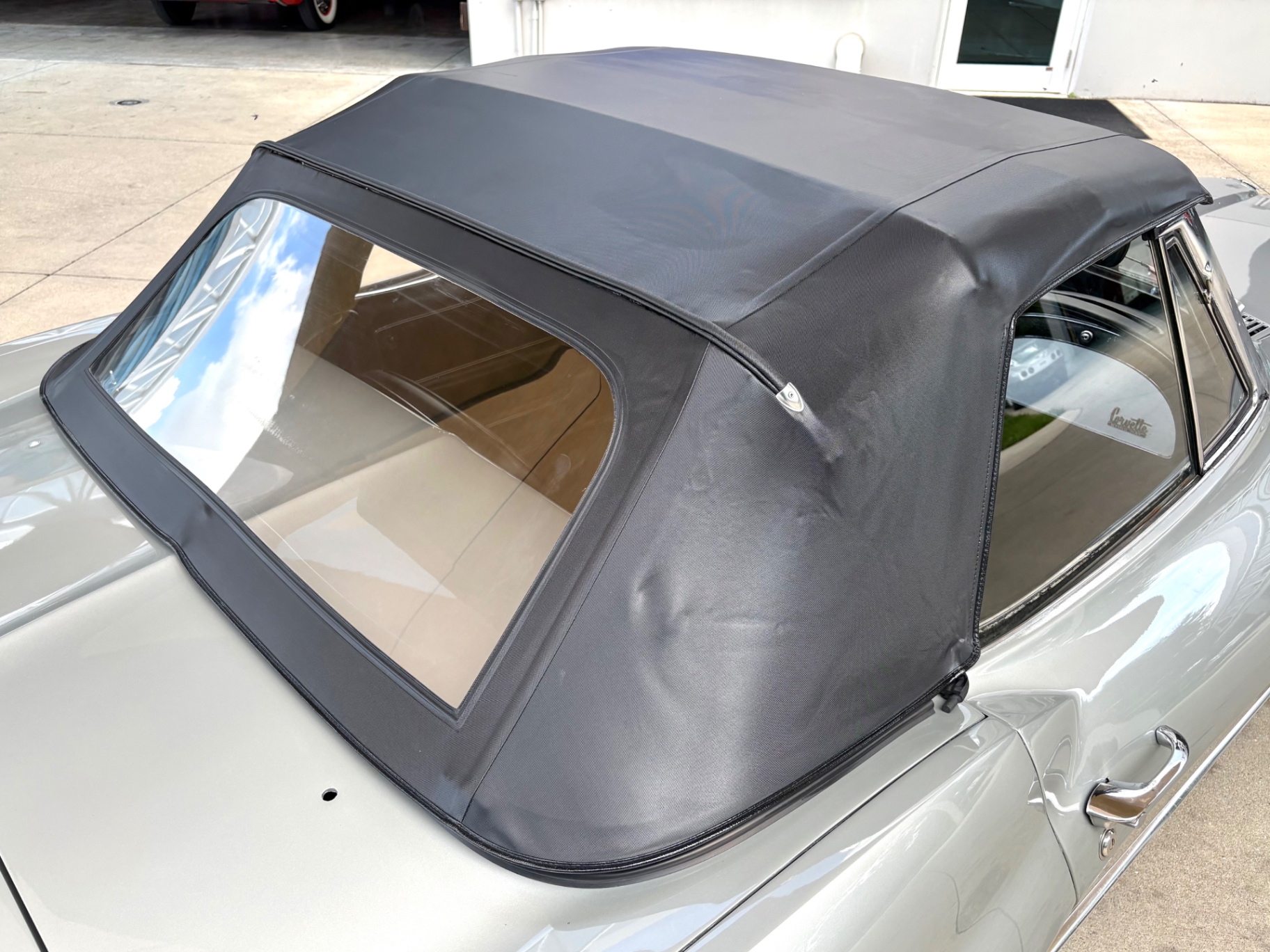
The side gill vents — functional on earlier C2s but non-functional on the 1966 — are present and correctly finished. The Corvette Sting Ray script badge at the rear is intact, though as seen in the close-up photo it carries the patina of an original badge rather than a reproduction, which some buyers will find appropriate. The convertible top is black, which pairs well with the silver body and black interior. It is a soft top, correct for the convertible body style.
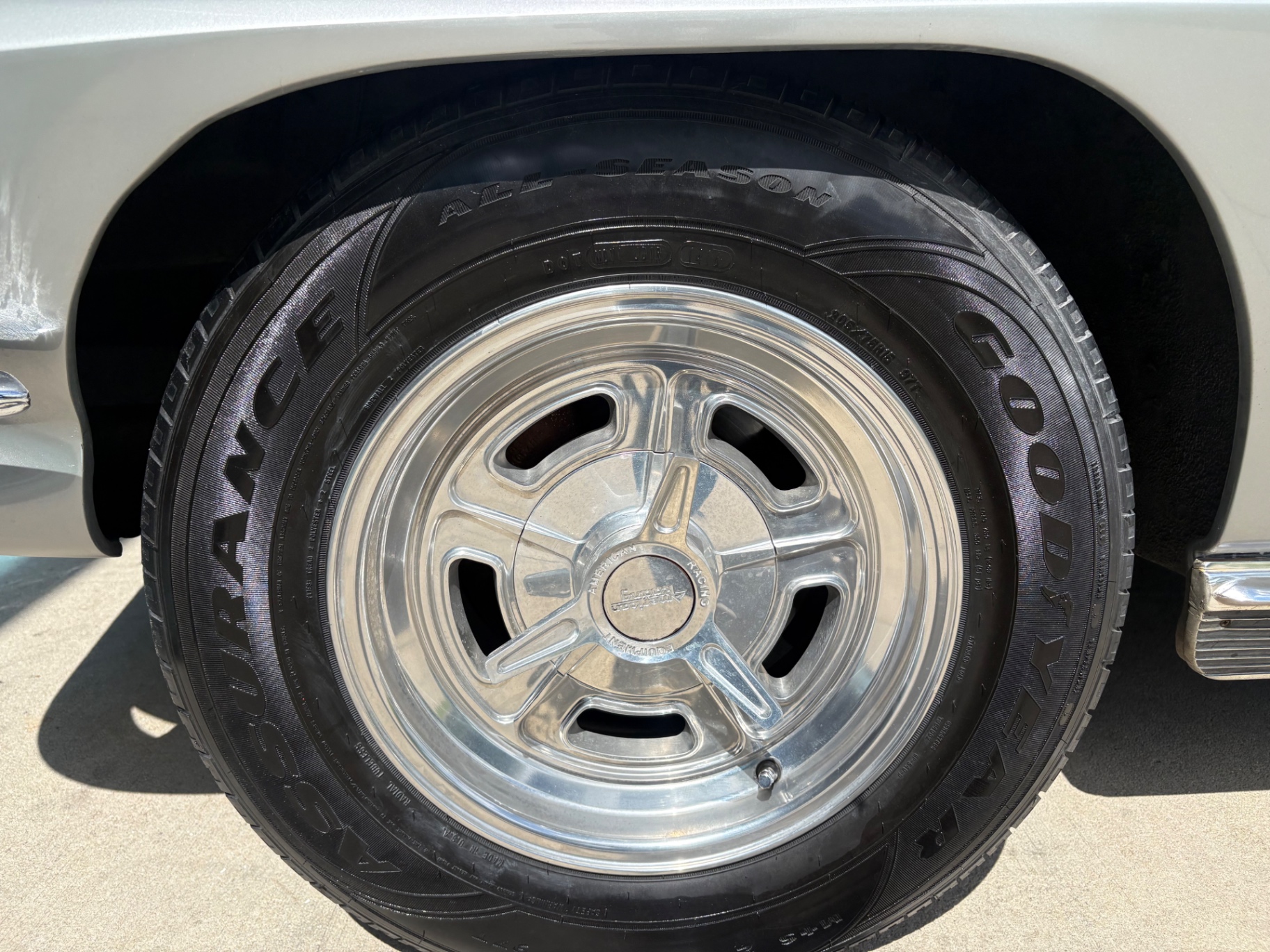
The wheels on this car are American Racing units with knock-off style centers, a period-correct aftermarket choice that references the knock-off spinner wheels that were factory-available on the 1963-1966 Corvette. They fill the wheel openings properly and match the overall aesthetic of the car. Chrome bumpers complete the exterior, front and rear, with both appearing in solid presentable condition.
Conclusion
The 1966 Chevrolet Corvette Sting Ray convertible with the L79 327/350 and a 4-speed manual is a combination that C2 enthusiasts specifically seek out. This body style — the last of the true second-generation Corvettes before the C3 arrived in 1968 — has held strong collector interest for decades, and the convertible body with four-wheel discs and the 350-horsepower engine represents one of the more complete specifications you can find in this generation. The undercarriage is clean, the drivetrain combination is correct and desirable, the interior is black leather, and the car presents well in silver with a black top.
If you are a serious buyer looking at 1966 Corvette Sting Ray convertibles, this car warrants a phone call and a trip to see it in person.
Contact Skyway Classics in Sarasota, Florida at 941-254-6608 to get more information or to schedule a time to inspect this 1966 Chevrolet Corvette Sting Ray in person.
Disclaimer
Information found on the website is presented as given to us by the owner of the car, whether on consignment or from the owner we bought it from. Some Photos, materials for videos, descriptions and other information are provided by the consignor/seller and is deemed reliable, but Skyway Classics does not warranty or guarantee this information. Skyway Classics is not responsible for information that may incorrect or a publishing error. The decision to purchase should be based solely on the buyers personal inspection of the vehicle or by a professional inspection service prior to offer or purchase being made.
1966 Chevrolet Corvette Sting Ray Convertible — L79 327/350, 4-Speed, Silver over Black Leather
Why This Car Is Special
The 1966 Chevrolet Corvette Sting Ray is widely regarded as the high-water mark of the C2 generation, and for good reason. The second-generation Corvette ran from 1963 through 1967, and by 1966 Chevrolet had worked out the early production kinks while still offering the full menu of performance options that made this body style famous. The hidden headlights, the sculpted rear haunches, the aggressive side vents — all of it was carried over from Bill Mitchell's original design without the compromises that would come with the C3 in 1968.
This particular car is a convertible equipped with the L79 engine option, which is one of the more desirable powerplant choices from that era. The L79 was a 327 cubic inch small-block rated at 350 horsepower, fed by a single four-barrel carburetor and breathing through a high-lift camshaft. Chevrolet positioned the L79 between the base 300-horsepower 327 and the more aggressive fuel-injected options, but in practice the L79 delivered strong mid-range torque and a broad power band that made it highly drivable on the street. Road testers of the era recorded 0-60 times in the mid-6-second range with the L79 and a close-ratio 4-speed, which was genuinely fast by any standard of the time.
The VIN on this car confirms it is a 1966 model year Corvette convertible built at the St. Louis assembly plant — consistent with all Corvette production of that era, as St. Louis was the sole assembly facility for the Corvette until the Bowling Green plant opened in 1981.
Total 1966 Corvette production came in at 27,720 units, split between coupes and convertibles. Of that number, convertibles accounted for the majority of sales — buyers in 1966 still favored open-air motoring over the coupe. The L79 engine was a popular option, though not every Corvette left the factory with one, making this combination of convertible body and 350-horsepower small-block a legitimate performance specification from the factory.
Features List
- 327 cubic inch L79 V8, rated at 350 horsepower
- Muncie 4-speed manual transmission
- Four-wheel disc brakes
- Black convertible soft top
- American Racing wheels with knock-off centers
- Chrome bumpers front and rear
- Dual exhaust with chrome tips
- Corvette Sting Ray badges
- Wood rim steering wheel
- Black leather bucket seats
- Center console with 4-speed shift pattern plate
- Tachometer equipped
- Delco AM radio
- New exterior paint in Silver under warranty
- Clean undercarriage
Mechanical
The L79 327/350 is one of the most respected small-block Chevrolet configurations ever offered in the Corvette. It used a high-compression cylinder head, a mechanical lifter camshaft with aggressive timing, and a Holley four-barrel carburetor on an aluminum intake manifold. The result was an engine that ran cleanly at street speeds while still pulling hard through the rev range. With a Muncie 4-speed manual gearbox behind it, this drivetrain combination rewards a driver who knows how to use the gearbox — short-shifting for mileage or winding it out for performance, the L79 has the flexibility to do both.
The undercarriage photos on this car tell an important story. The frame and floor are finished in black with no visible rust, rot, or patched sections. The independent rear suspension — a feature Corvette introduced in 1963 and a genuine engineering accomplishment for an American production car of that era — is intact and properly presented. The C2 Corvette used a three-link rear independent suspension with a transverse leaf spring and U-jointed halfshafts, which gave it substantially better handling than the solid-axle cars it replaced. Four-wheel disc brakes are fitted, which was a factory option on the 1966 Corvette and a meaningful upgrade over the drum setups found on lesser optioned cars.
The dual exhaust exits through chrome tips at the rear, and the exhaust routing under the car appears clean and properly supported. The engine bay shows the correct finned aluminum valve covers with the Corvette script, a presentation familiar to anyone who has spent time around these cars.
Interior
The cockpit of a 1966 Chevrolet Corvette Sting Ray is a driver-focused environment with no wasted space. This car has the black leather interior, which holds up better over time than vinyl and presents cleanly in photographs and in person. The bucket seats show the vertical ribbing pattern correct for the C2 generation, and the leather appears intact without cracking or significant wear visible in the photos.
The dashboard is one of the most information-rich instrument panels of any American production car from 1966. The large central speedometer reads to 160 mph, with a matching tachometer positioned directly in the driver's sightline. Supporting gauges — fuel, water temperature, oil pressure, and battery — are arranged around the main cluster. Below the center stack sits an analog clock, and the Delco AM radio is mounted low in the console, consistent with factory placement. The radio face shows the correct period-correct vertical frequency display.
The wood rim steering wheel is correct for the period and is the option buyers chose when they wanted a sportier feel than the standard steering wheel offered. The center hub carries the correct crossed-flags Corvette emblem. The Muncie 4-speed shifter sits in the center console with the correct chrome ball top and a brushed aluminum shift pattern plate showing the four-speed gate. Door panels are black with the correct chrome handles and window cranks, all appearing intact. The passenger side of the dash carries the Corvette Sting Ray badge on the brushed aluminum glove compartment door — a detail that is correct and present on this car.
Exterior
This 1966 Corvette Sting Ray convertible wears a new coat of silver paint, a color that suits the long horizontal lines of the C2 body particularly well. The fiberglass panels of the C2 Corvette do not rust, but they can show surface cracks and stress marks over time — a fresh paint job done correctly addresses those concerns and leaves the car ready to use or display. The chrome bumpers front and rear appear in solid condition, and the iconic hidden headlight doors and front grille are visible in the exterior photos.
The side gill vents — functional on earlier C2s but non-functional on the 1966 — are present and correctly finished. The Corvette Sting Ray script badge at the rear is intact, though as seen in the close-up photo it carries the patina of an original badge rather than a reproduction, which some buyers will find appropriate. The convertible top is black, which pairs well with the silver body and black interior. It is a soft top, correct for the convertible body style.
The wheels on this car are American Racing units with knock-off style centers, a period-correct aftermarket choice that references the knock-off spinner wheels that were factory-available on the 1963-1966 Corvette. They fill the wheel openings properly and match the overall aesthetic of the car. Chrome bumpers complete the exterior, front and rear, with both appearing in solid presentable condition.
Conclusion
The 1966 Chevrolet Corvette Sting Ray convertible with the L79 327/350 and a 4-speed manual is a combination that C2 enthusiasts specifically seek out. This body style — the last of the true second-generation Corvettes before the C3 arrived in 1968 — has held strong collector interest for decades, and the convertible body with four-wheel discs and the 350-horsepower engine represents one of the more complete specifications you can find in this generation. The undercarriage is clean, the drivetrain combination is correct and desirable, the interior is black leather, and the car presents well in silver with a black top.
If you are a serious buyer looking at 1966 Corvette Sting Ray convertibles, this car warrants a phone call and a trip to see it in person.
Contact Skyway Classics in Sarasota, Florida at 941-254-6608 to get more information or to schedule a time to inspect this 1966 Chevrolet Corvette Sting Ray in person.
Disclaimer
Information found on the website is presented as given to us by the owner of the car, whether on consignment or from the owner we bought it from. Some Photos, materials for videos, descriptions and other information are provided by the consignor/seller and is deemed reliable, but Skyway Classics does not warranty or guarantee this information. Skyway Classics is not responsible for information that may incorrect or a publishing error. The decision to purchase should be based solely on the buyers personal inspection of the vehicle or by a professional inspection service prior to offer or purchase being made.
1966 Chevrolet
Corvette Sting Ray
Why Choose Skyway Classics?
Explore our curated inventory of classic and collector cars—thoughtfully selected, ready to drive, and supported by experts who make ownership simple.
Expert Curation
Every vehicle is hand-selected by our experts for quality, authenticity, and investment potential.
Fast Transactions
Streamlined buying and selling process with quick financing and immediate delivery options.
Only National Dealer With Classic Service & Repair
We’re the only national dealership that services and repairs the classics we sell—before and after the sale.
Nationwide Network
Access to our extensive network of collectors, restorers, and classic car enthusiasts nationwide.
Concierge Ownership Support
From financing and insurance to paperwork, shipping, and titling—we handle the details so you can enjoy the drive.
Passion-Driven Service
We're classic car enthusiasts first, providing personalized service with genuine passion for the hobby.