
1955 Chevrolet
210 Base
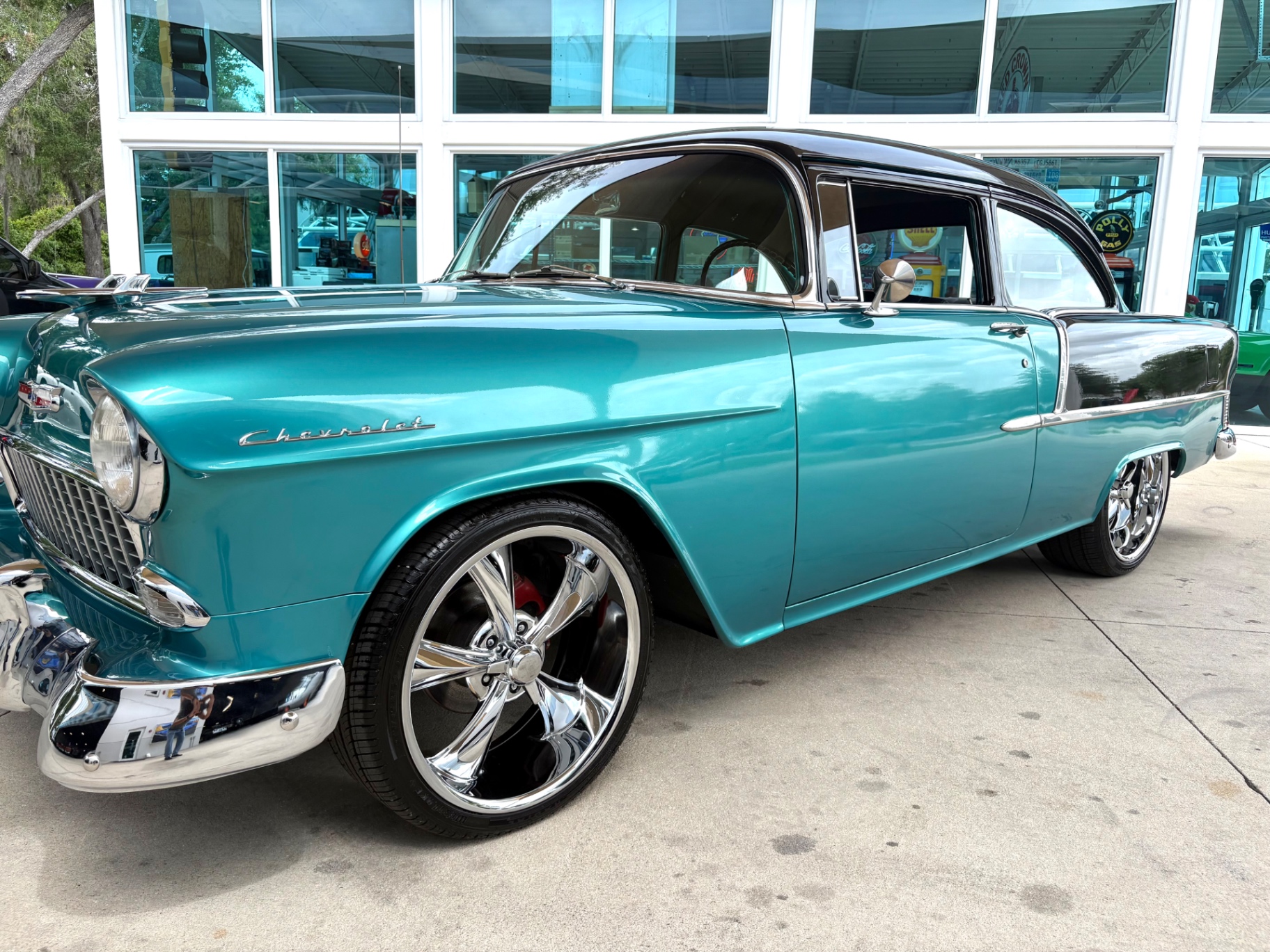
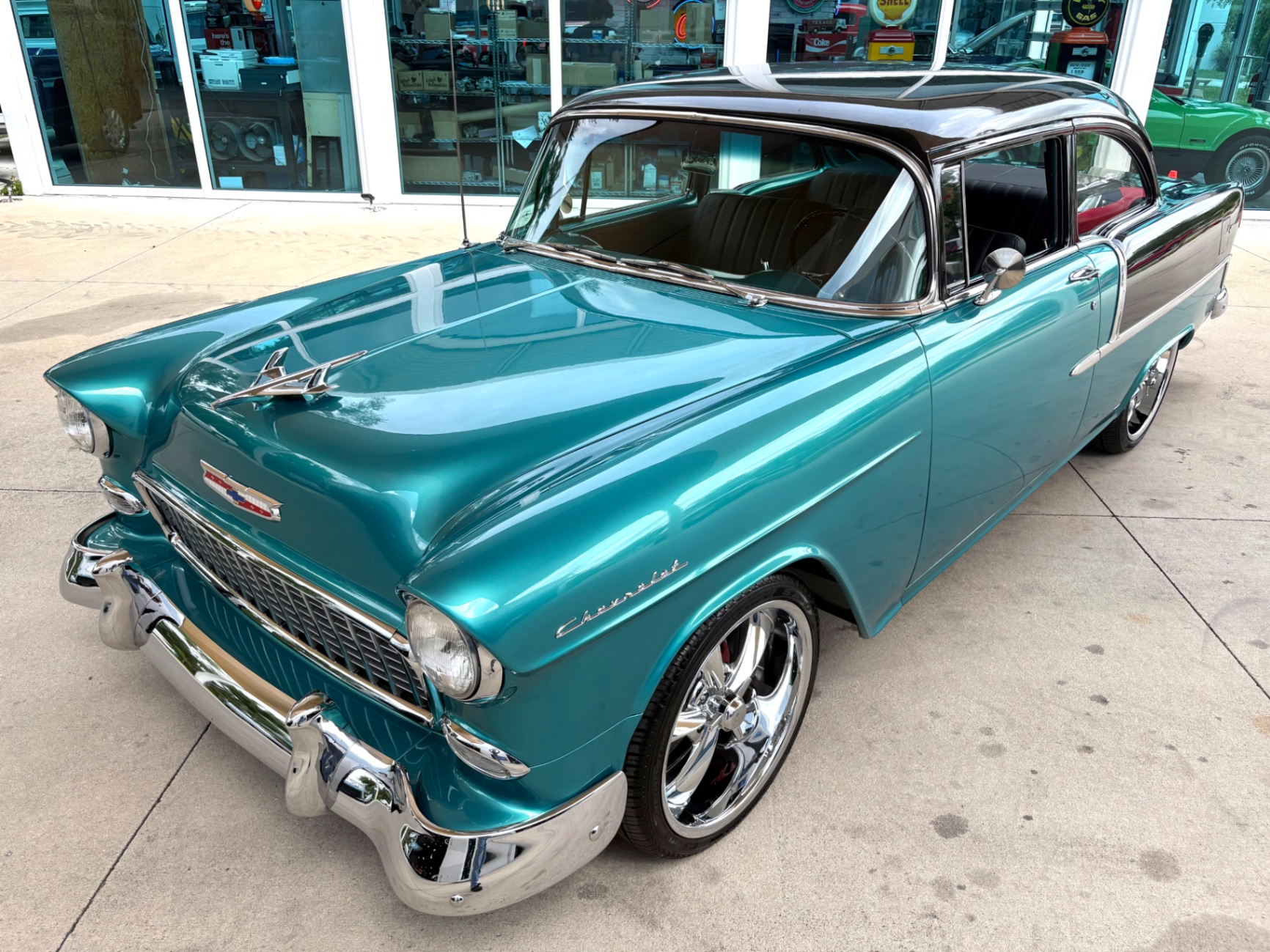

1955 Chevrolet 210 Two-Door Post — Restomod with 383 V8, Holley Sniper EFI, and 1,159 Miles Since Full Restoration
Why This Car Is Special
The 1955 Chevrolet 210 sits in an interesting position in automotive history. It was the middle child of the Tri-Five family — priced above the base 150 but below the Bel Air — yet it shared the same body, the same landmark small-block V8 option, and the same Ed Cole-designed chassis that made 1955 such a pivotal year for General Motors. The '55 Chevy was the car that proved American family transportation didn't have to be boring. With the introduction of the 265 cubic inch V8 that year, Chevrolet essentially rewrote what a mid-priced American car could do. The 210 in particular became the platform of choice for builders and hot rodders for decades precisely because it had all the bones of the Bel Air without the collector premium that sometimes gets in the way of actually driving the thing.
This specific 1955 Chevrolet 210 has been through a ground-up restoration with a strong restomod focus. The builder didn't chase a show trophy — they built something they intended to drive. Every major system on the car is new or freshly rebuilt, and with only 1,159 miles on the restoration, the work is essentially broken in but not worn. Over $85,000 was invested in getting this car to where it sits today, and the receipts show up in the details: PPG paint, a professional interior by M&M Interiors, CPP suspension components, a complete American AutoWire harness, and a 383 cubic inch stroker V8 topped with Holley Sniper electronic fuel injection. This is not a car that was cleaned up and flipped. It was rebuilt correctly, from the undercarriage up.
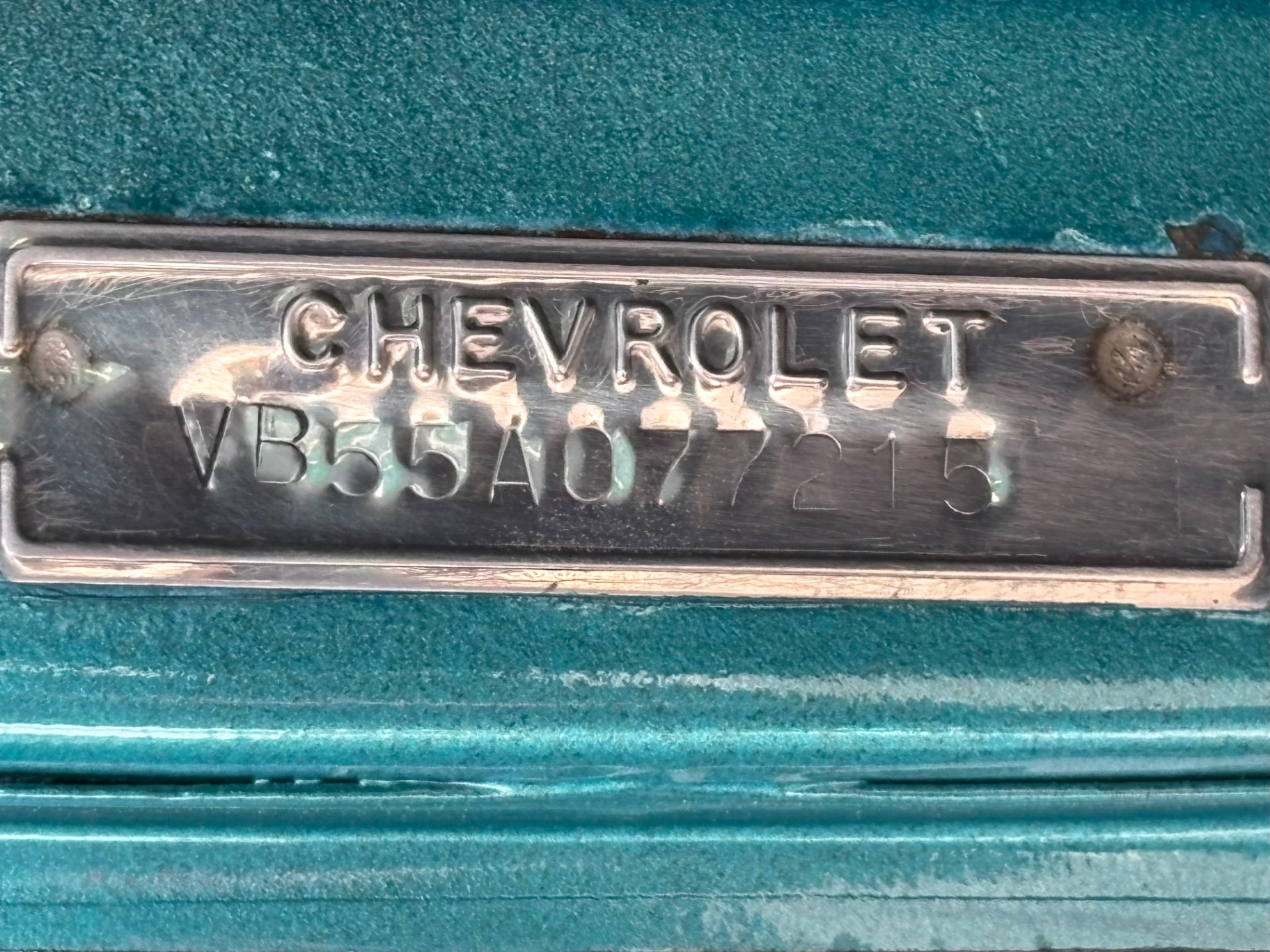
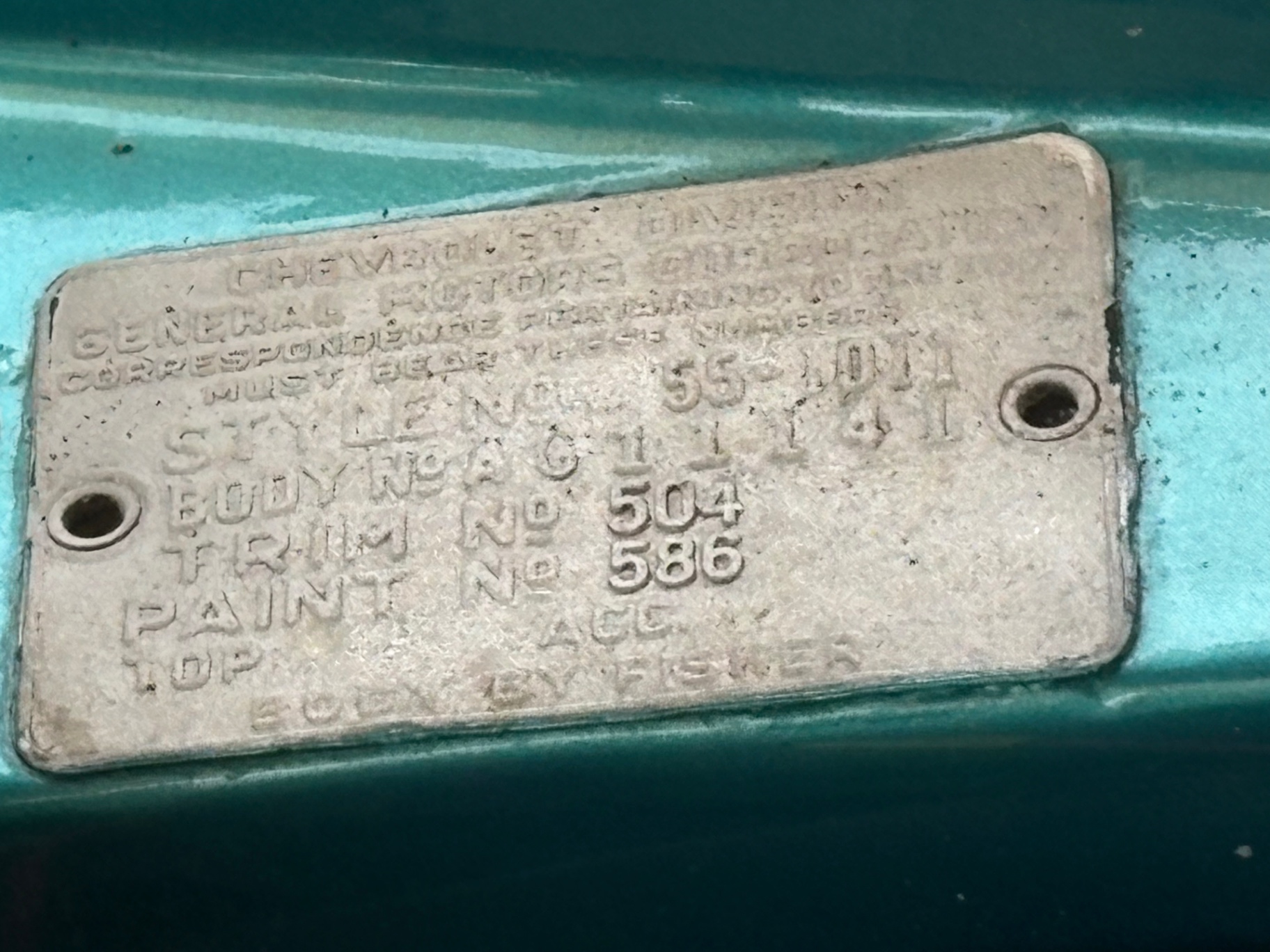
The VIN on this car decodes to a 1955 Chevrolet built in the Flint, Michigan assembly plant, confirming it as an early domestic production unit from the first full year of the Tri-Five generation.
Features List
383 cubic inch stroker V8 with 383 horsepower Holley Sniper electronic fuel injection with self-tuning closed-loop control Ceramic coated headers with Flowmaster mufflers and dual exhaust Chrome exhaust tips 700R4 four-speed automatic overdrive transmission CPP power steering CPP power disc brakes Aluminum radiator Vintage Air climate control system Dakota Digital gauge cluster with tachometer Ididit tilt steering column Impala steering wheel Custom interior by M&M Interiors — black vinyl with blue stitching Front bench seat Aftermarket stereo with power antenna Phone charger / USB New American AutoWire wiring harness 20-inch custom chrome wheels New tires PPG two-tone turquoise and black exterior paint New grille, glass, and chrome bumpers Clean undercarriage Only 1,159 miles since restoration Over $85,000 invested in restoration
Mechanical
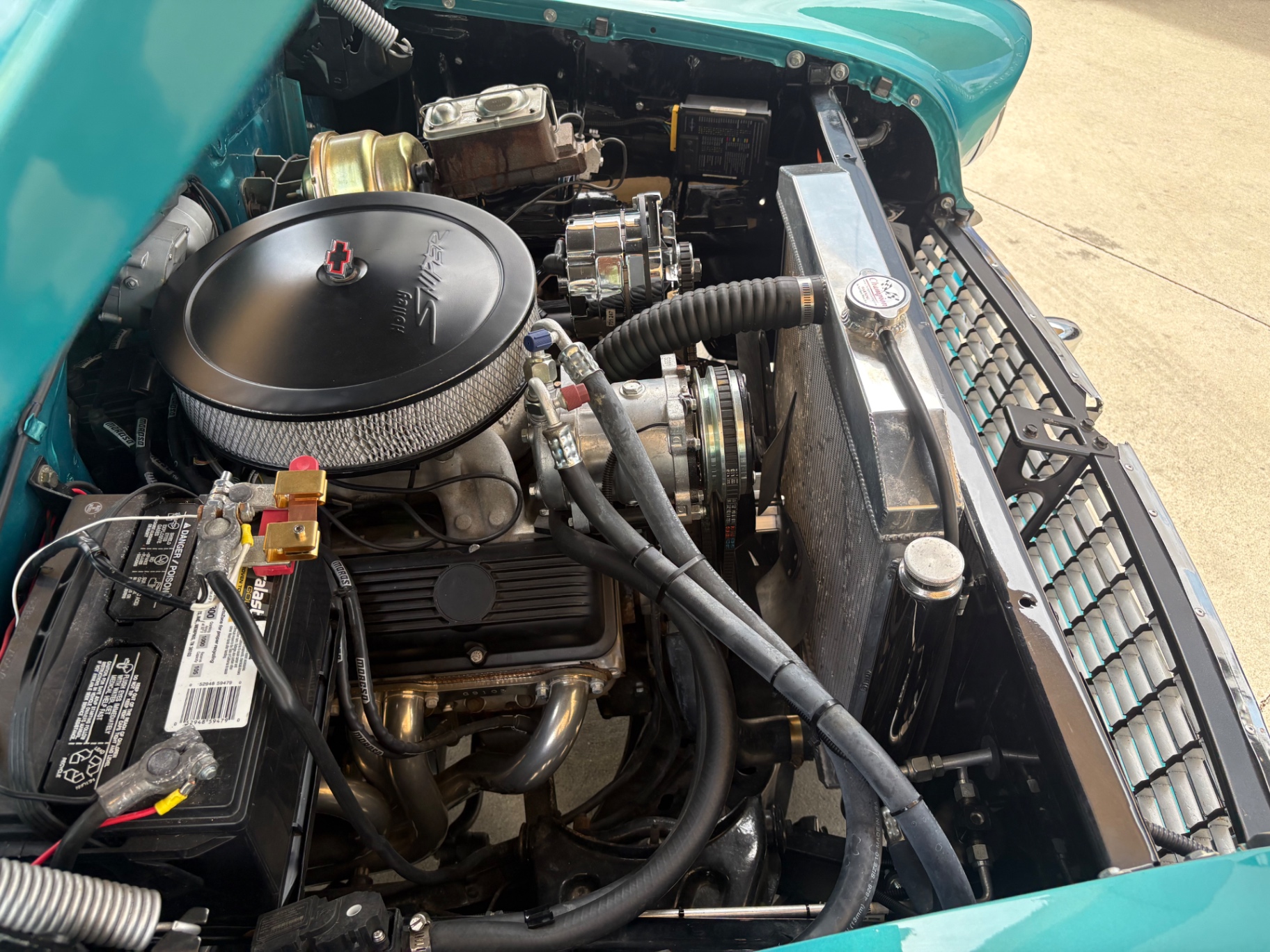
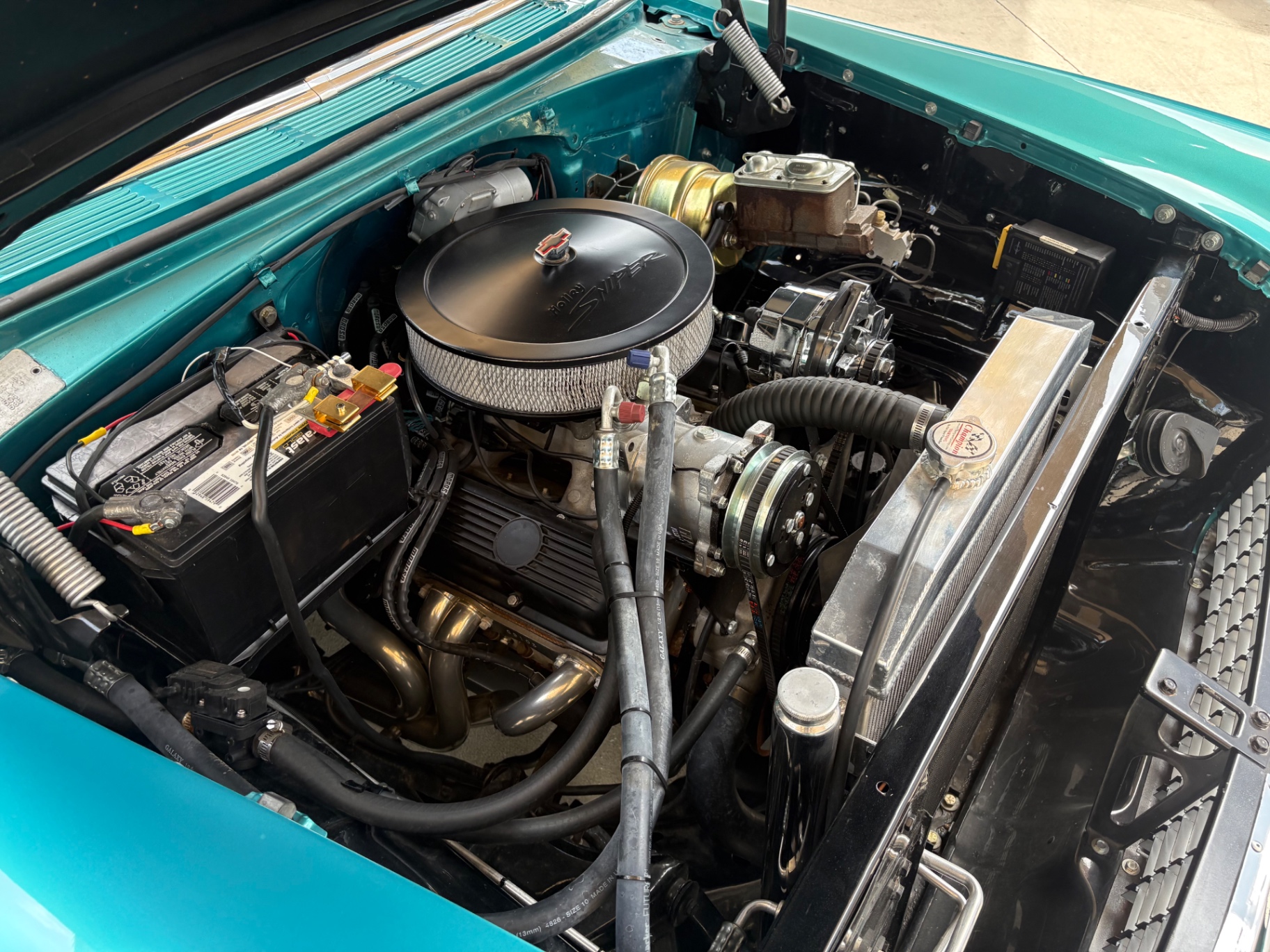
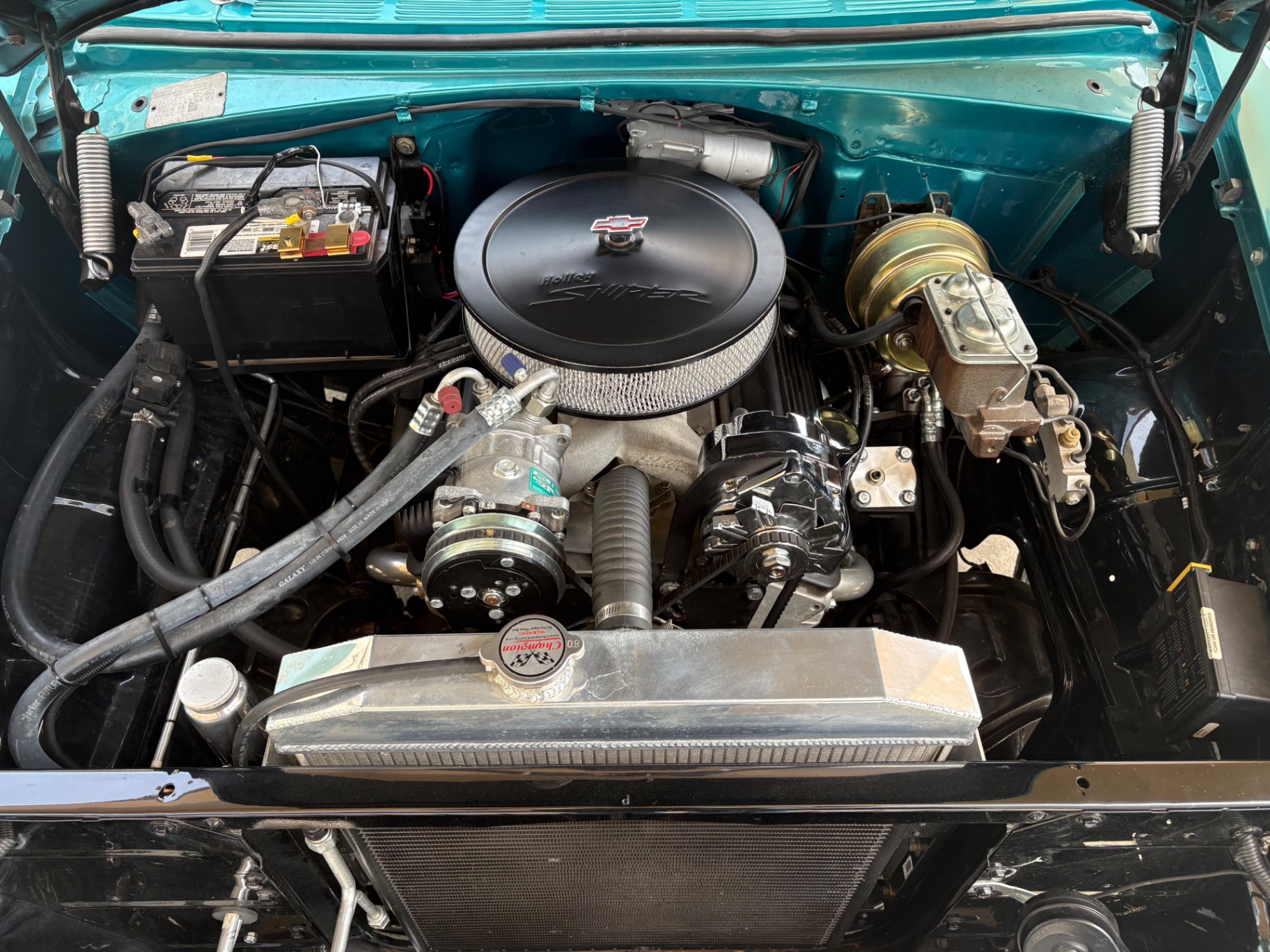
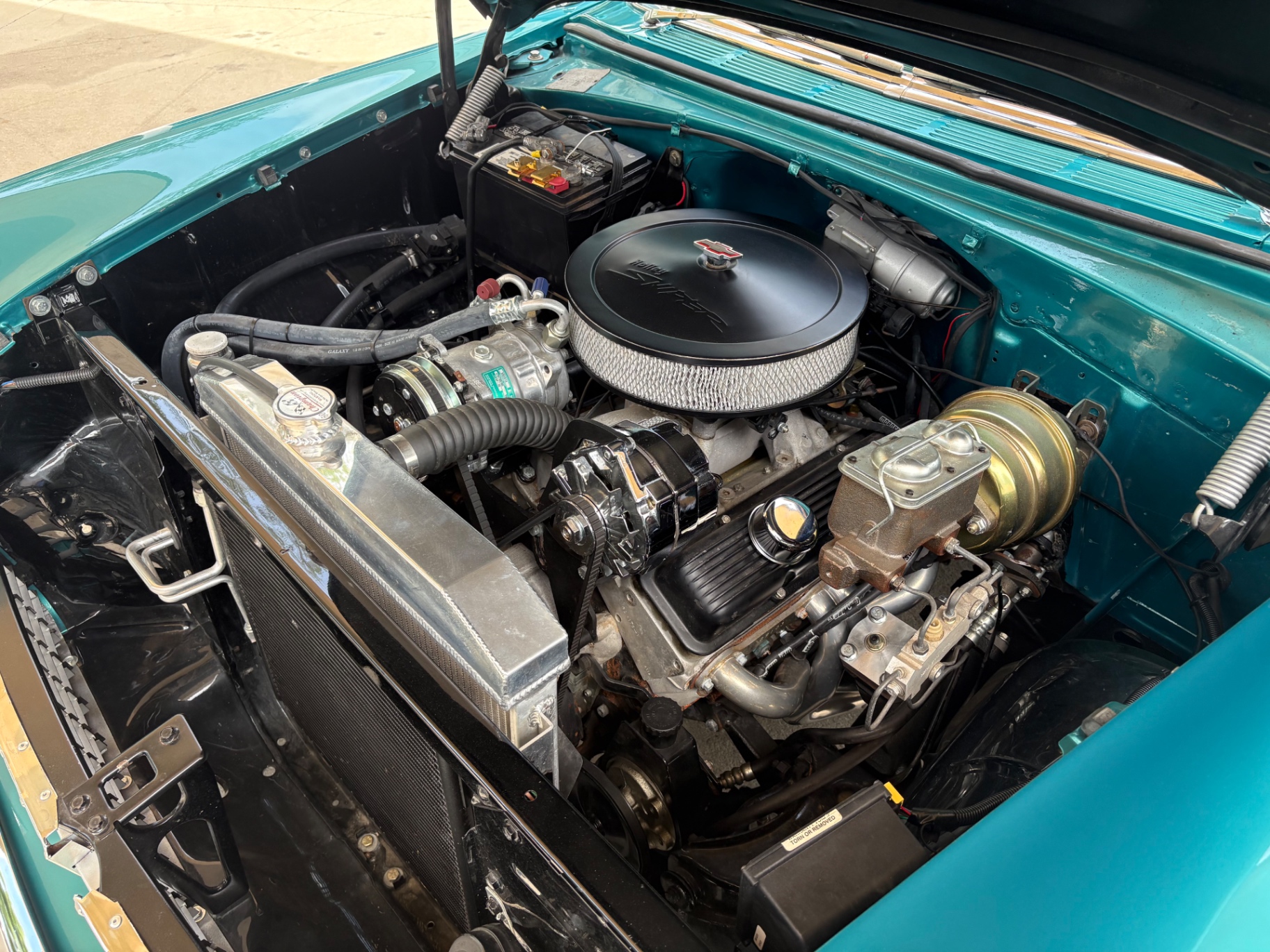
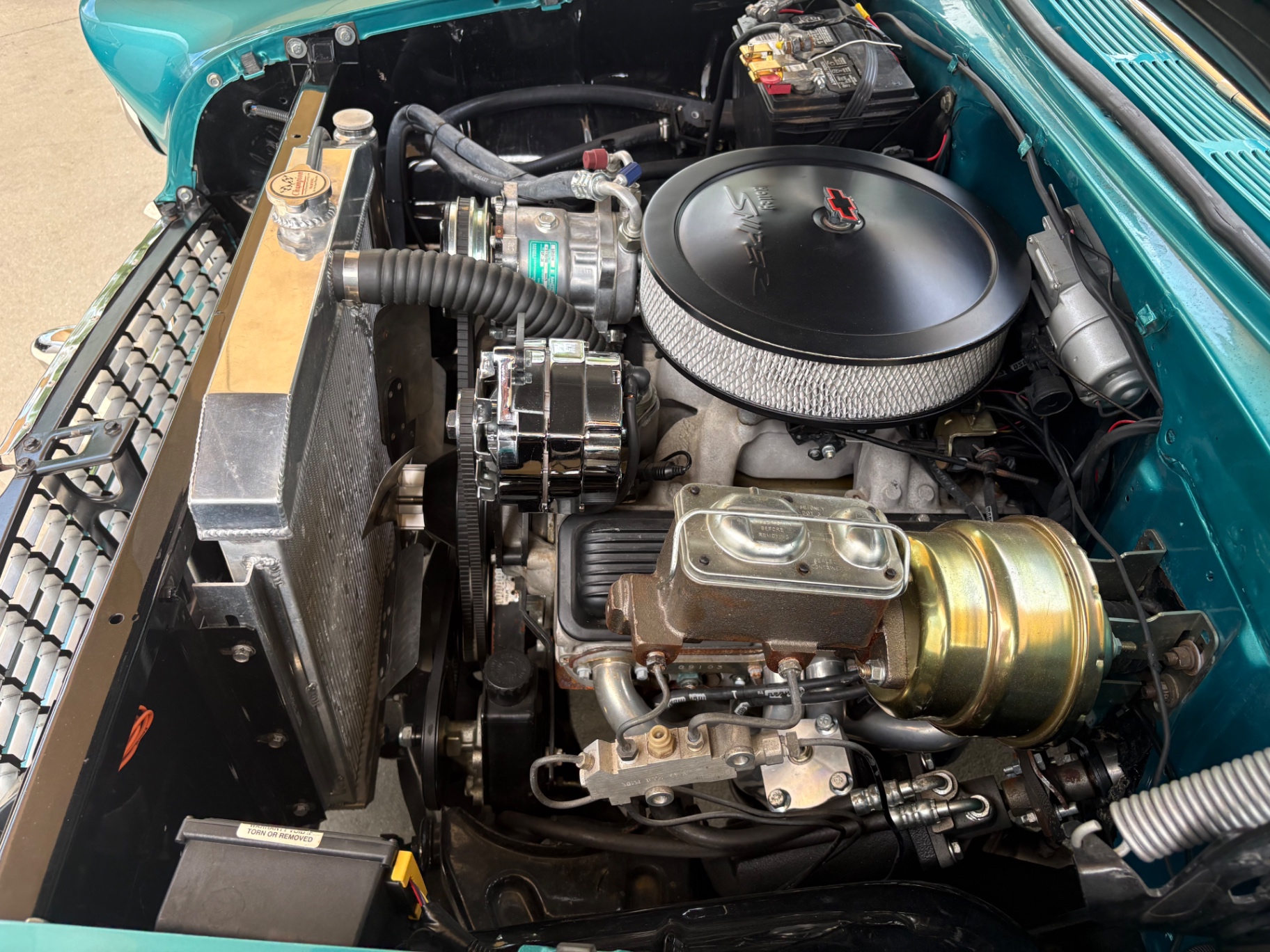
The engine in this 1955 Chevrolet 210 is a 383 cubic inch stroker V8 — a combination built by taking a 350 block and fitting it with a 400 crankshaft to achieve the larger displacement. Rated at 383 horsepower, it produces significantly more torque across a broader RPM range than the original 265 or even the later 283 that Chevrolet offered in the Tri-Five years. The heads are angle plug units, which improve combustion chamber efficiency and give better access for maintenance compared to straight plug configurations.
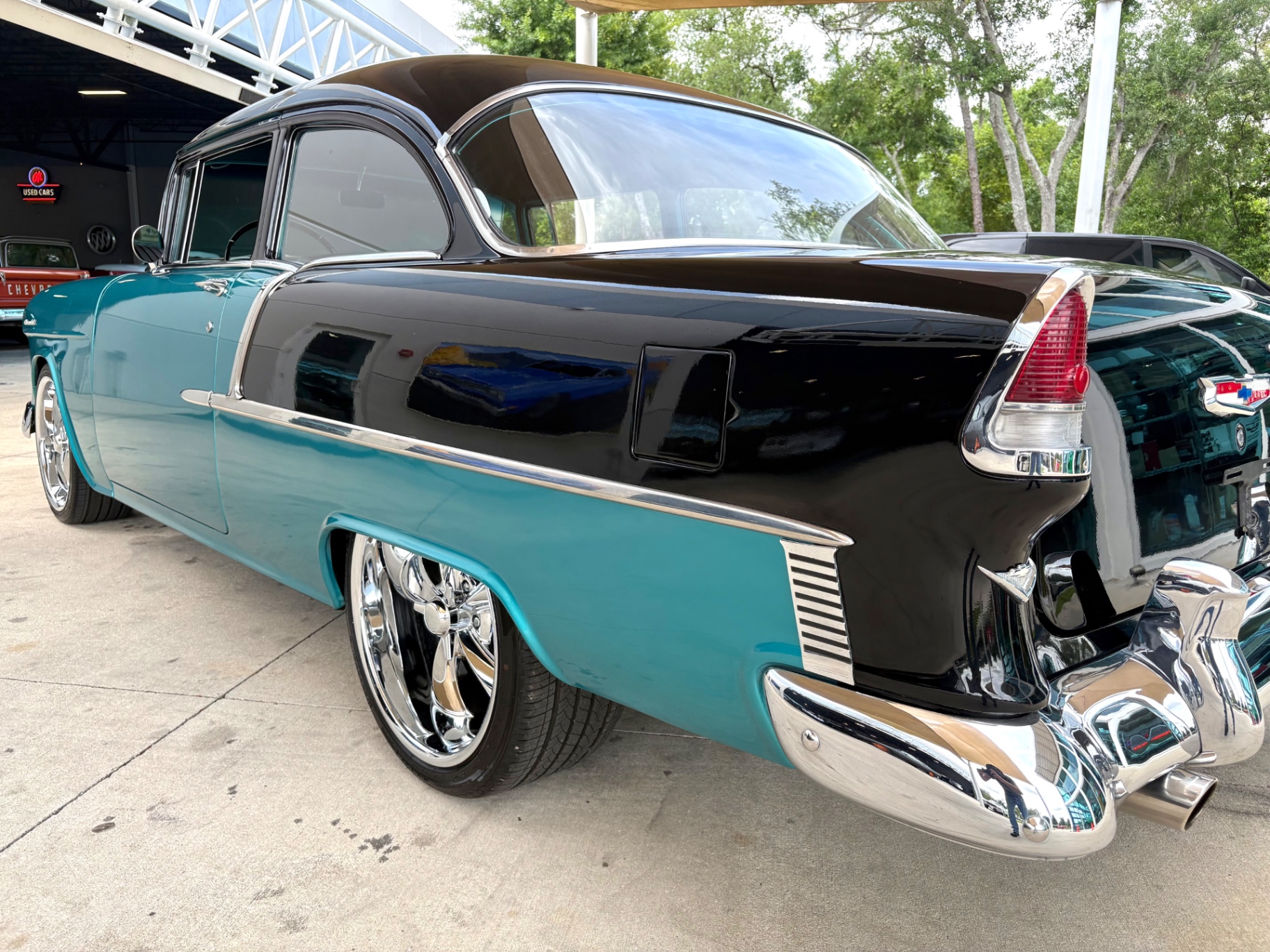
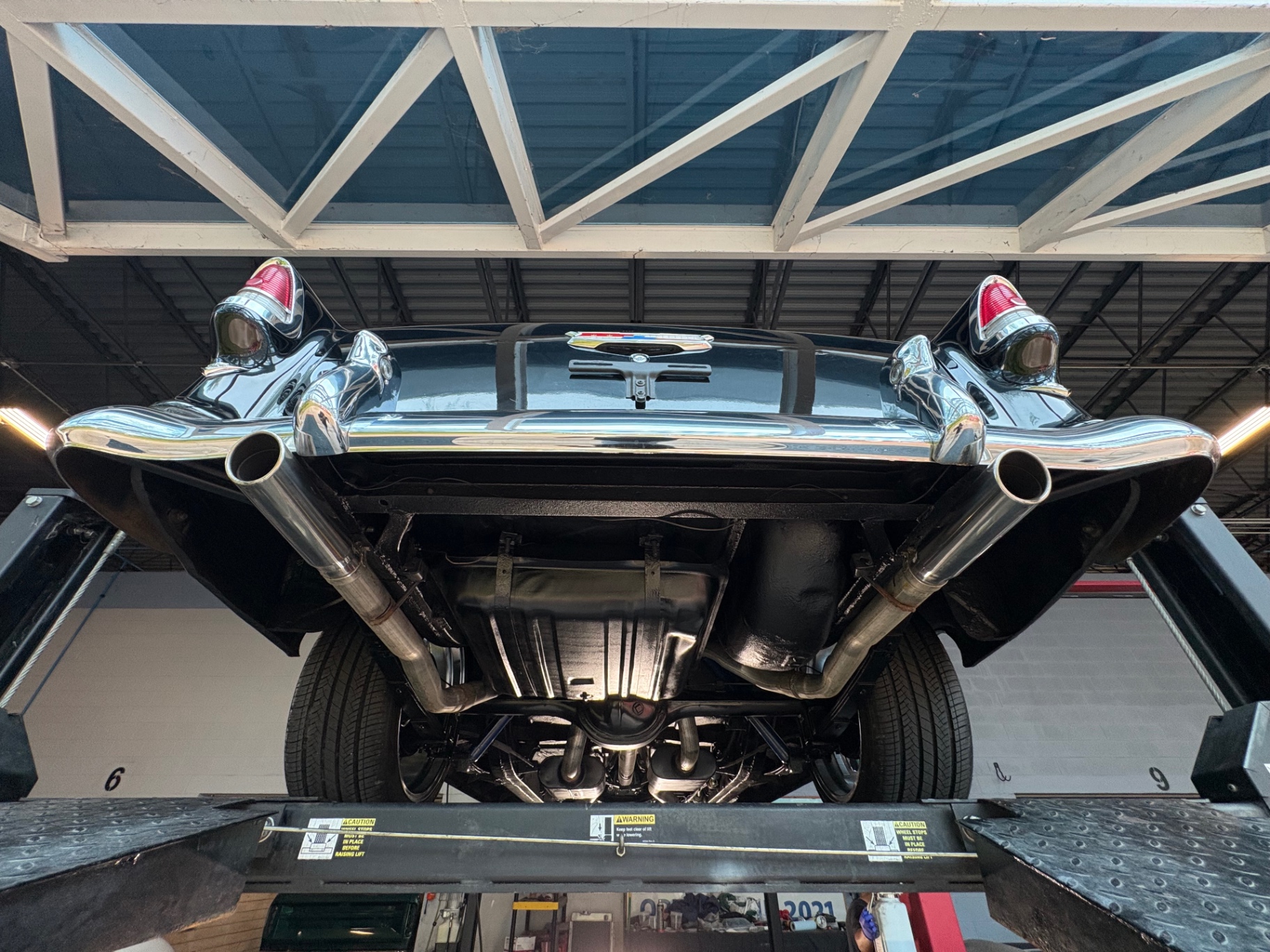
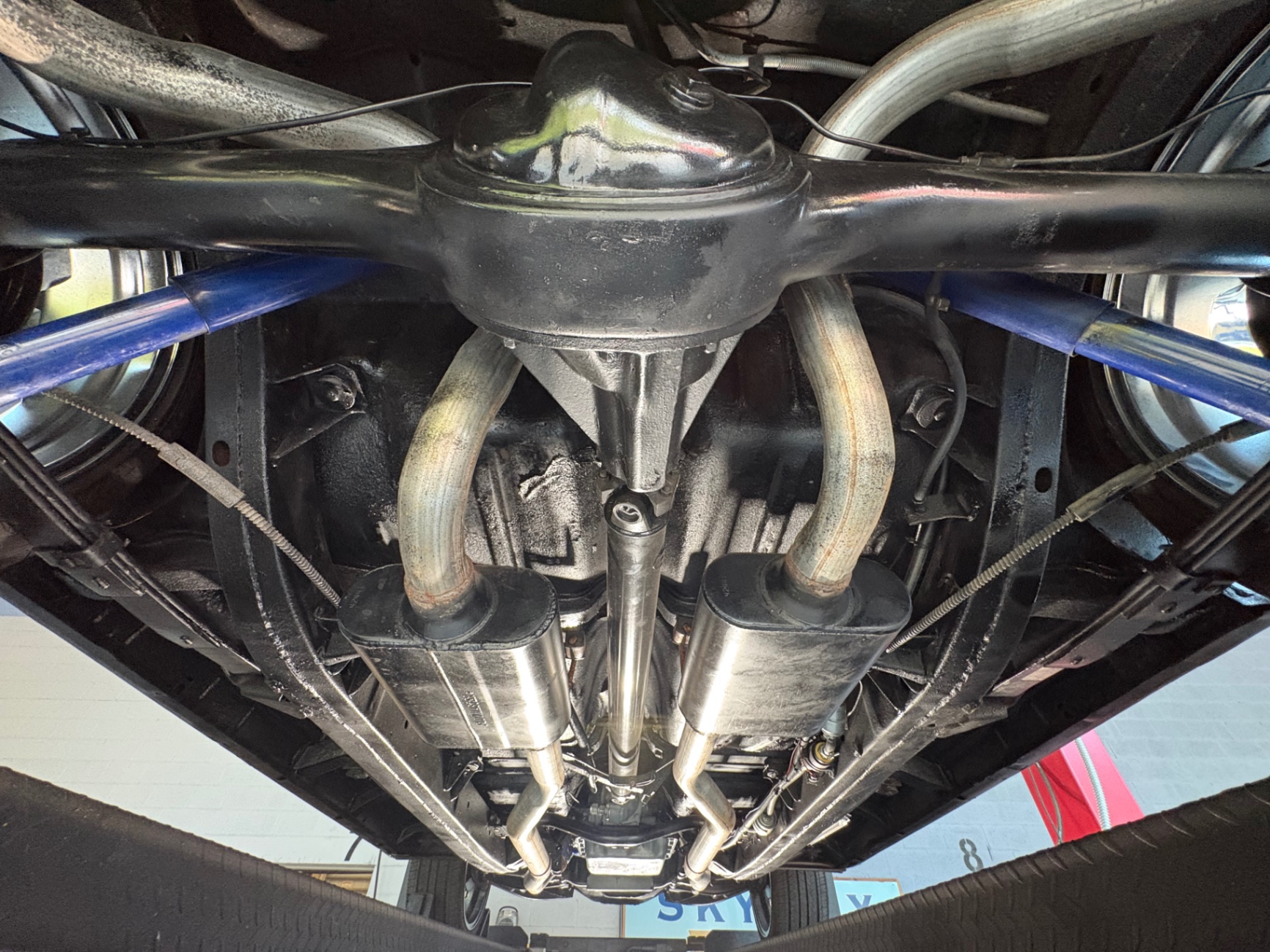
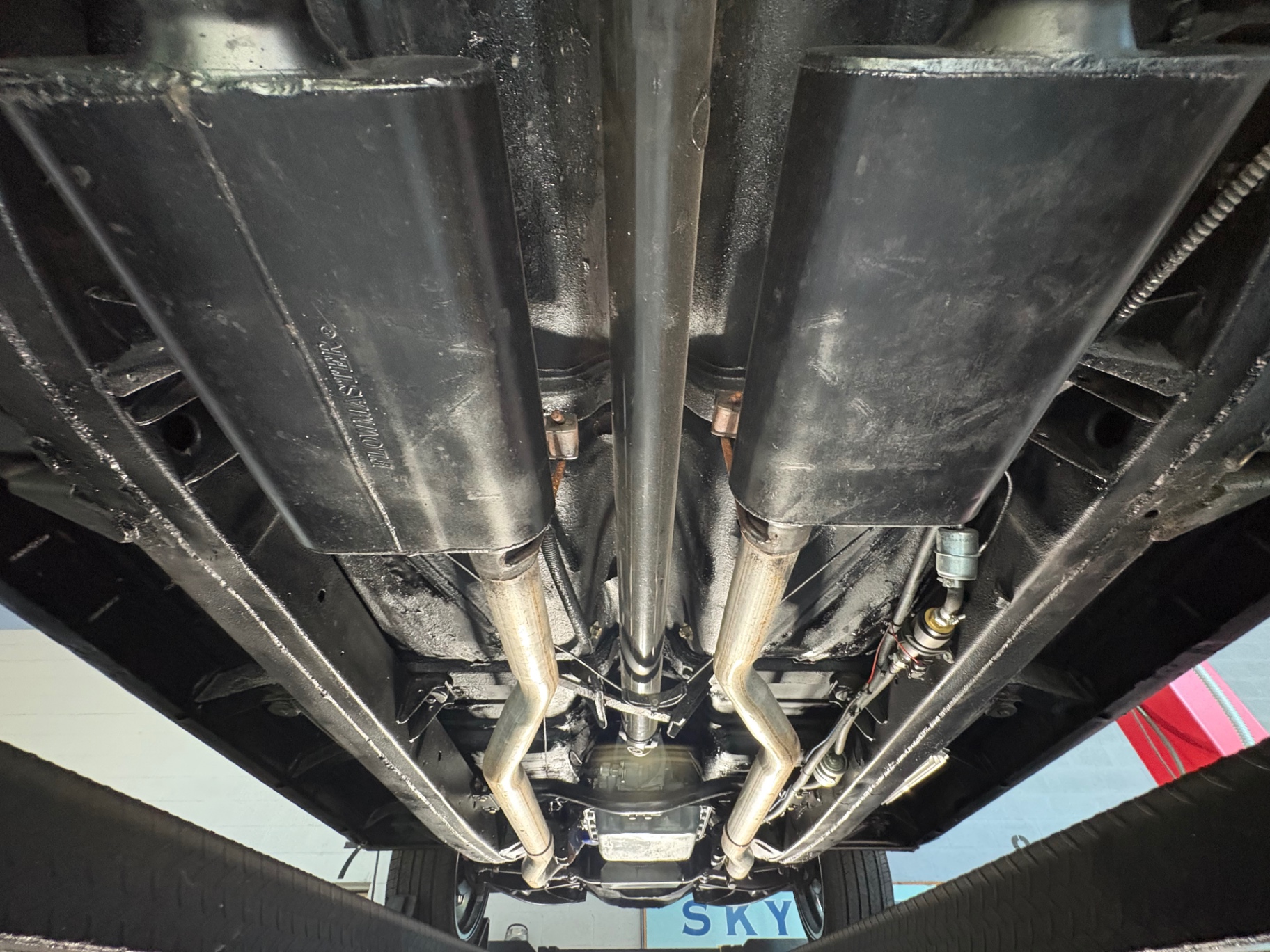
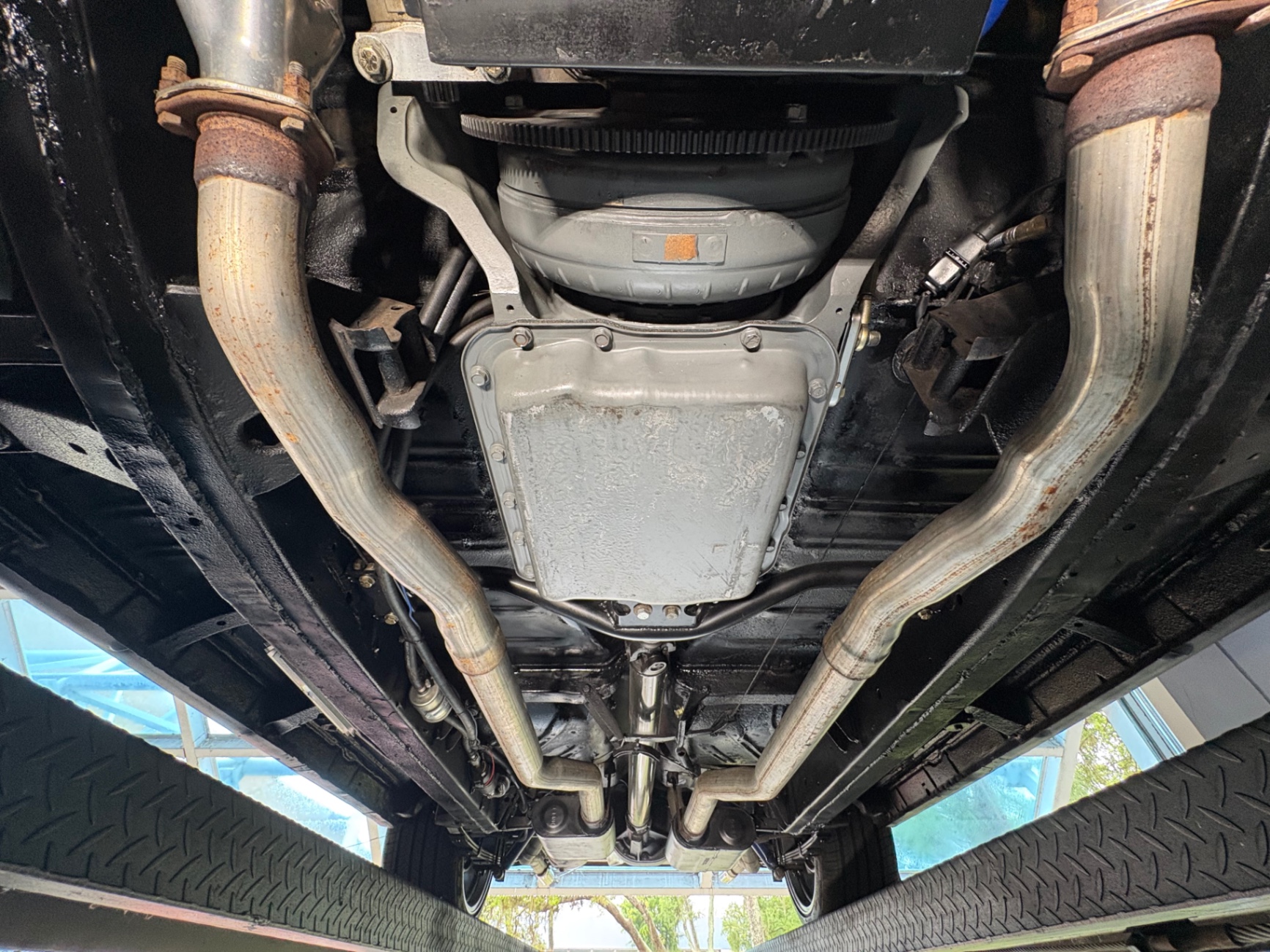
Fuel delivery is handled by a Holley Sniper EFI system, which replaces a carburetor with a throttle body unit that self-tunes using a wideband oxygen sensor and an internal ECU. The Sniper learns fuel maps on the fly and compensates for changes in temperature, altitude, and engine wear. What that means practically is easier cold starts, no stumbling on acceleration, and consistent fuel economy — all without giving up the look of a traditional intake setup under the hood. The ceramic coated headers help retain exhaust heat in the pipe rather than radiating it into the engine bay, which improves flow and reduces underhood temperatures. Flowmaster mufflers handle tone control on the dual exhaust, exiting through polished chrome tips at the rear.
Backing the engine is a 700R4 four-speed automatic overdrive transmission. This is an important upgrade for a car like this because the overdrive fourth gear drops engine RPM significantly at highway speeds compared to a non-overdrive three-speed. It makes the 1955 Chevrolet 210 a comfortable long-distance car, not just a show piece. The cooling system uses an aluminum radiator, which dissipates heat more efficiently than the original copper-brass unit and saves weight in the front of the car.
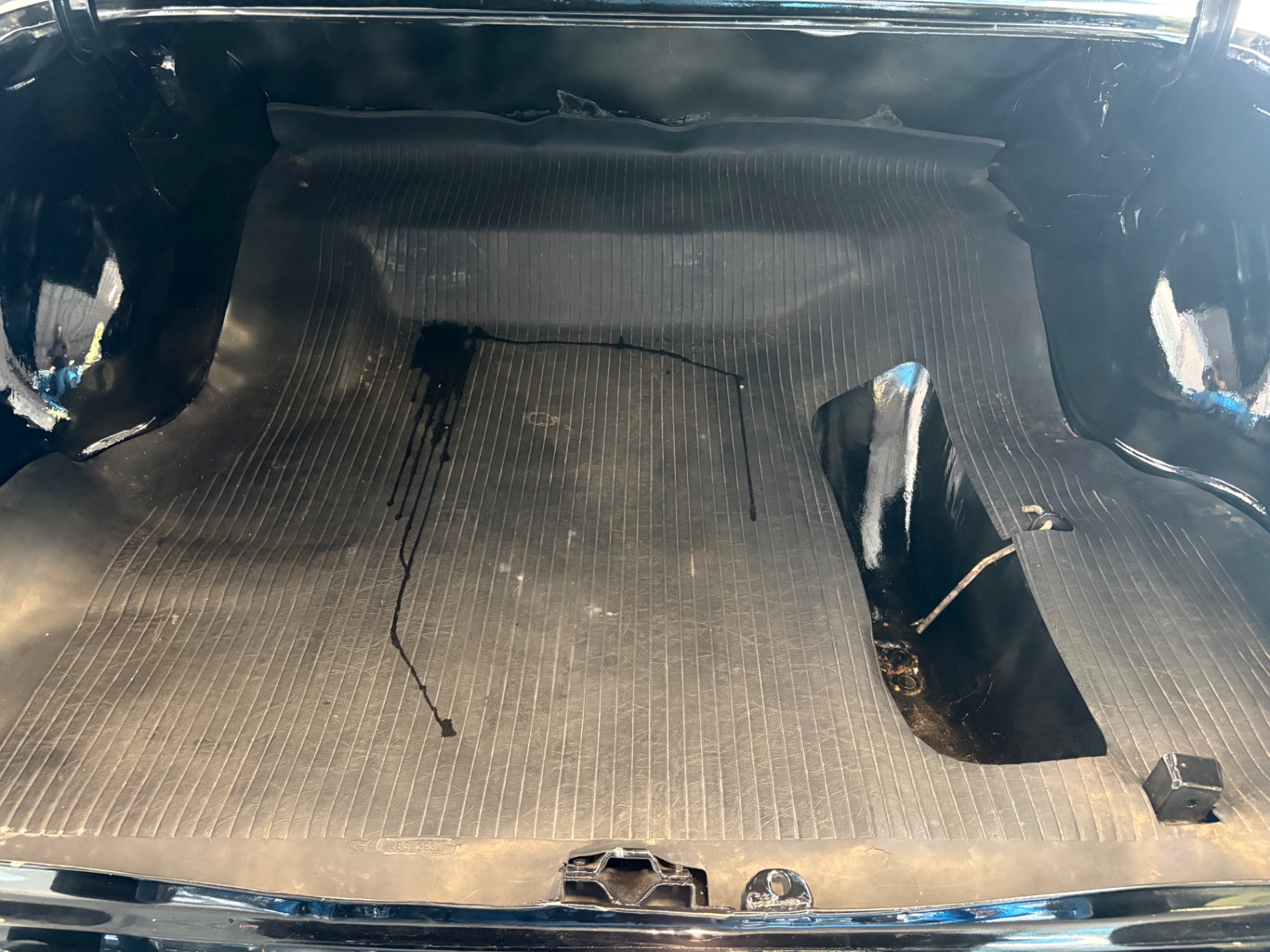
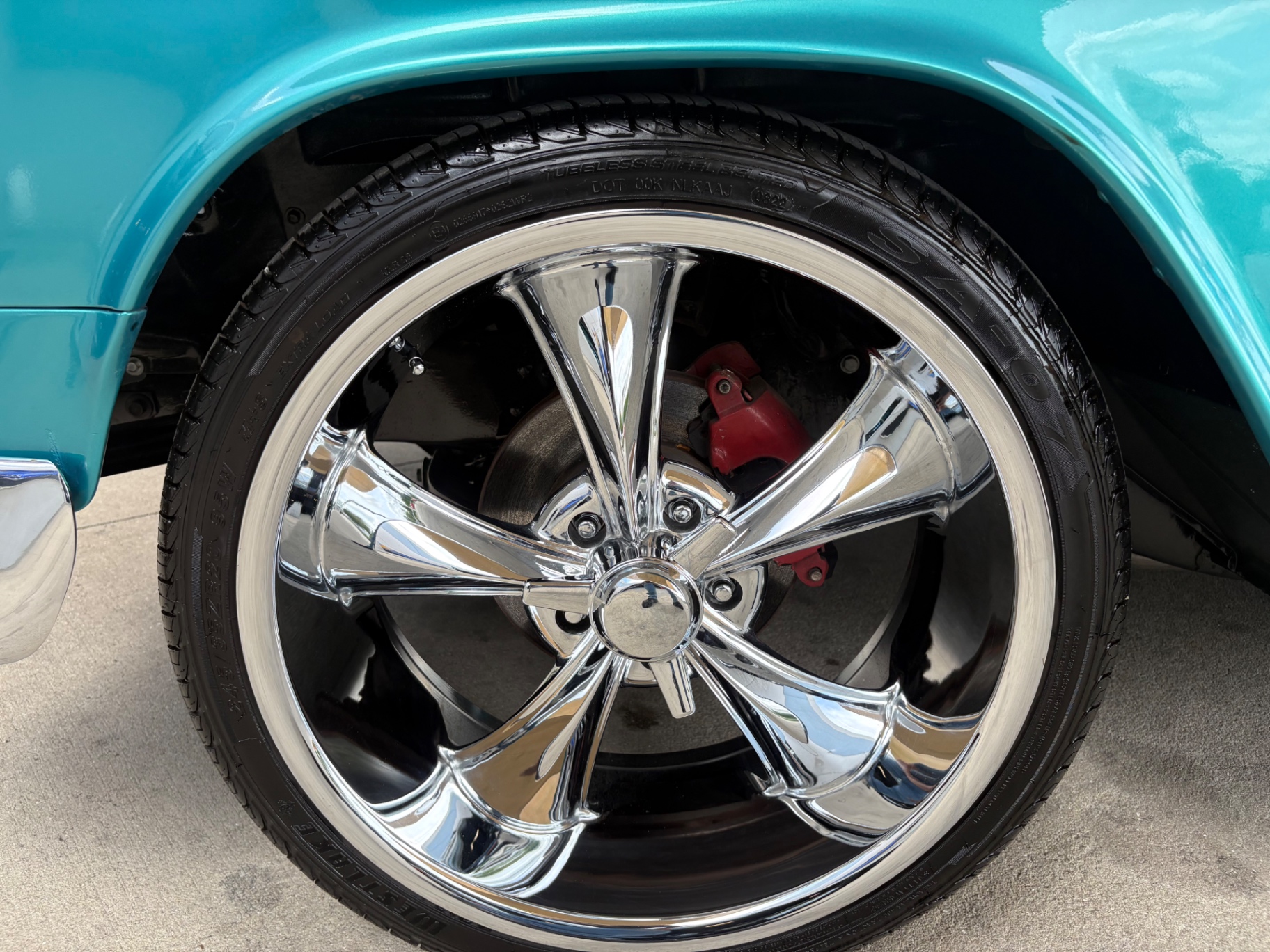
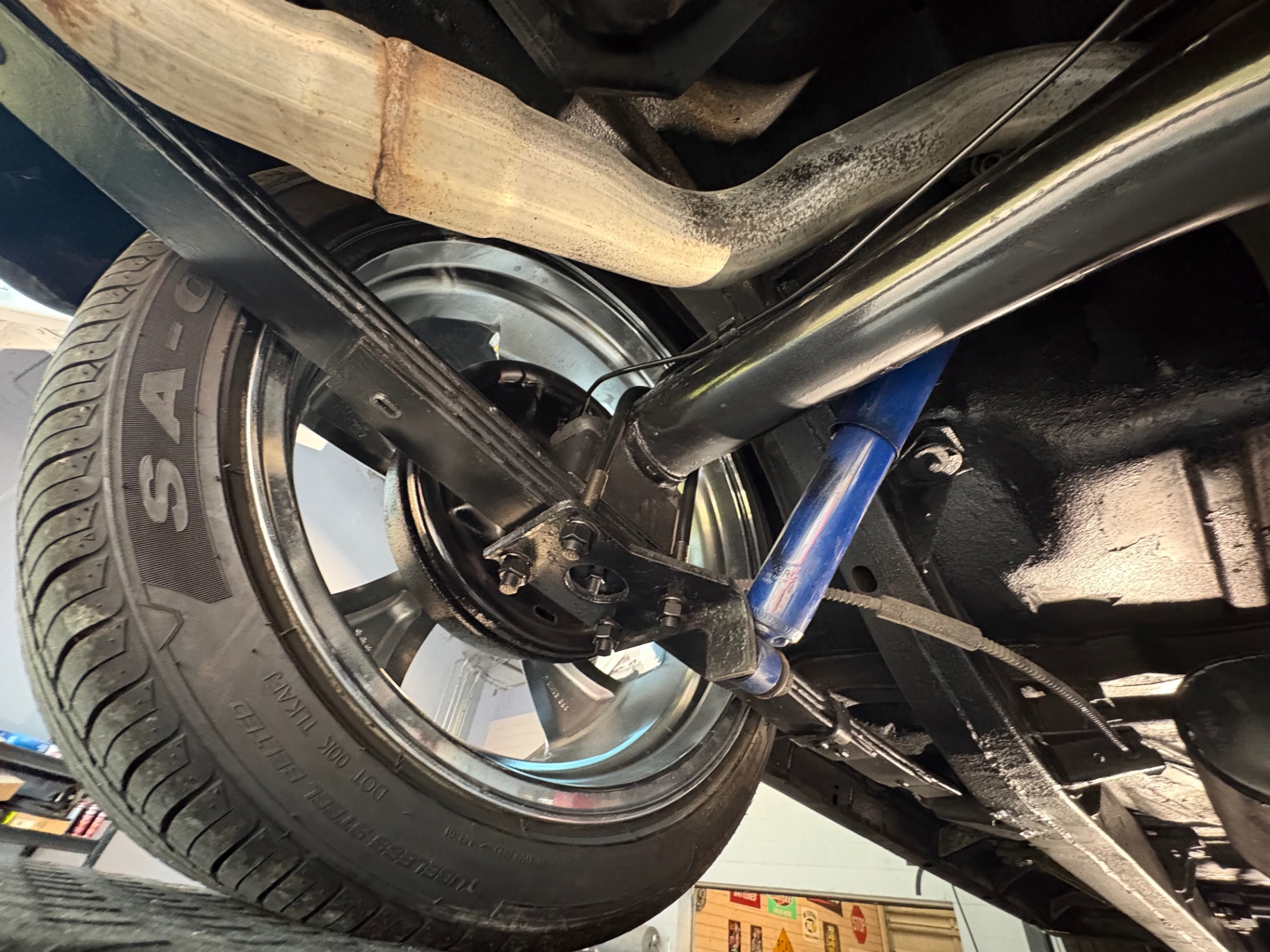
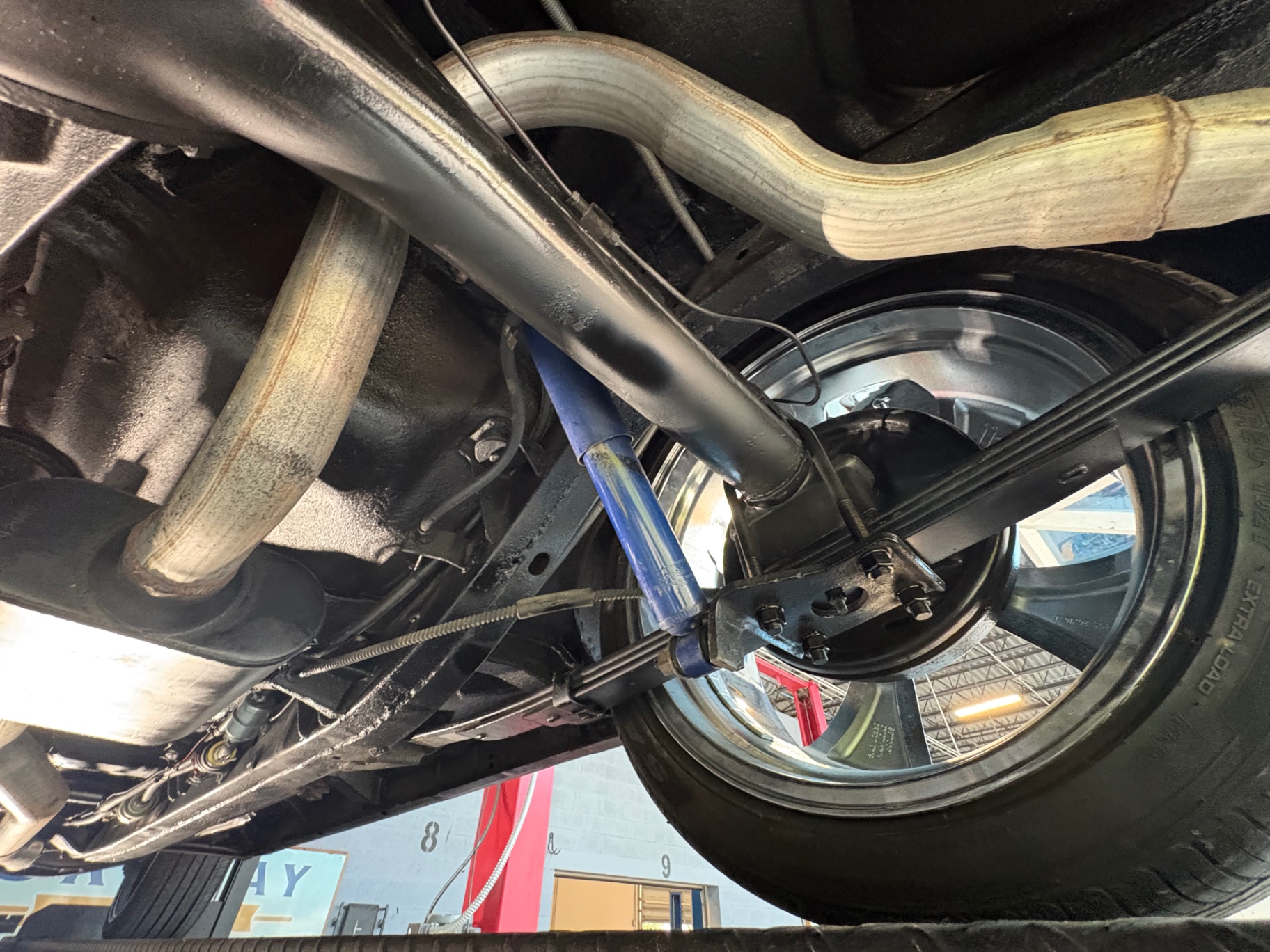
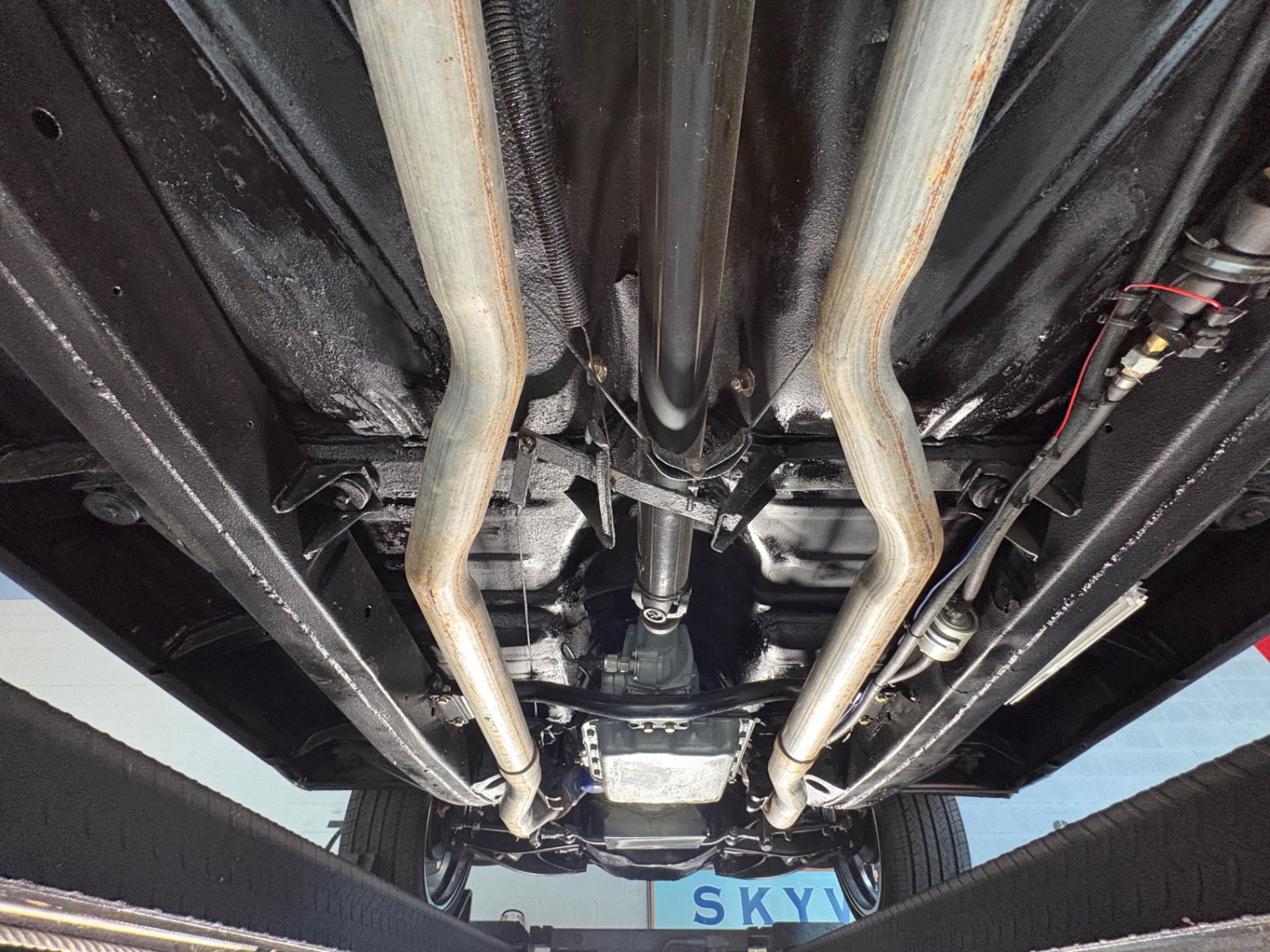
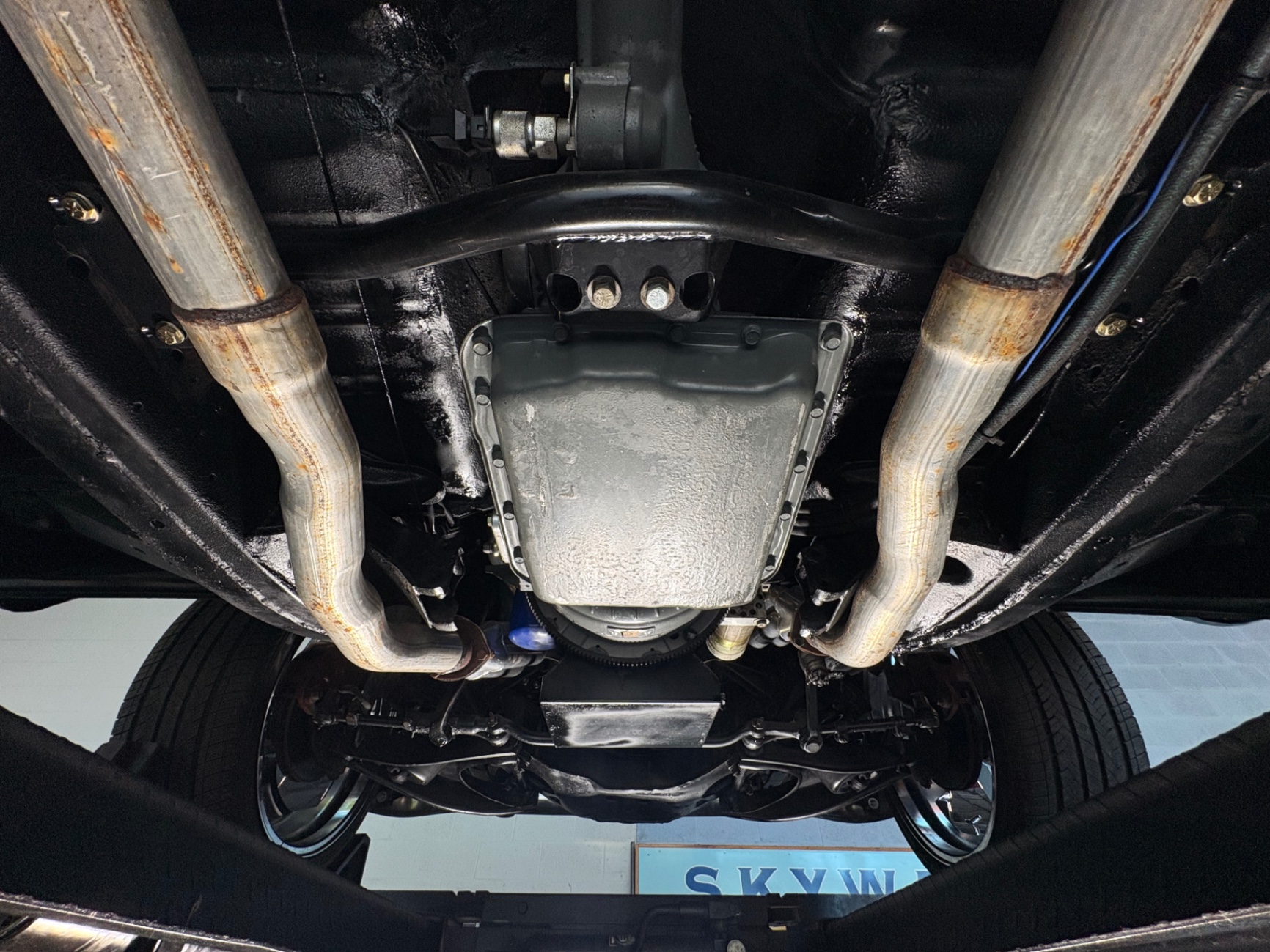
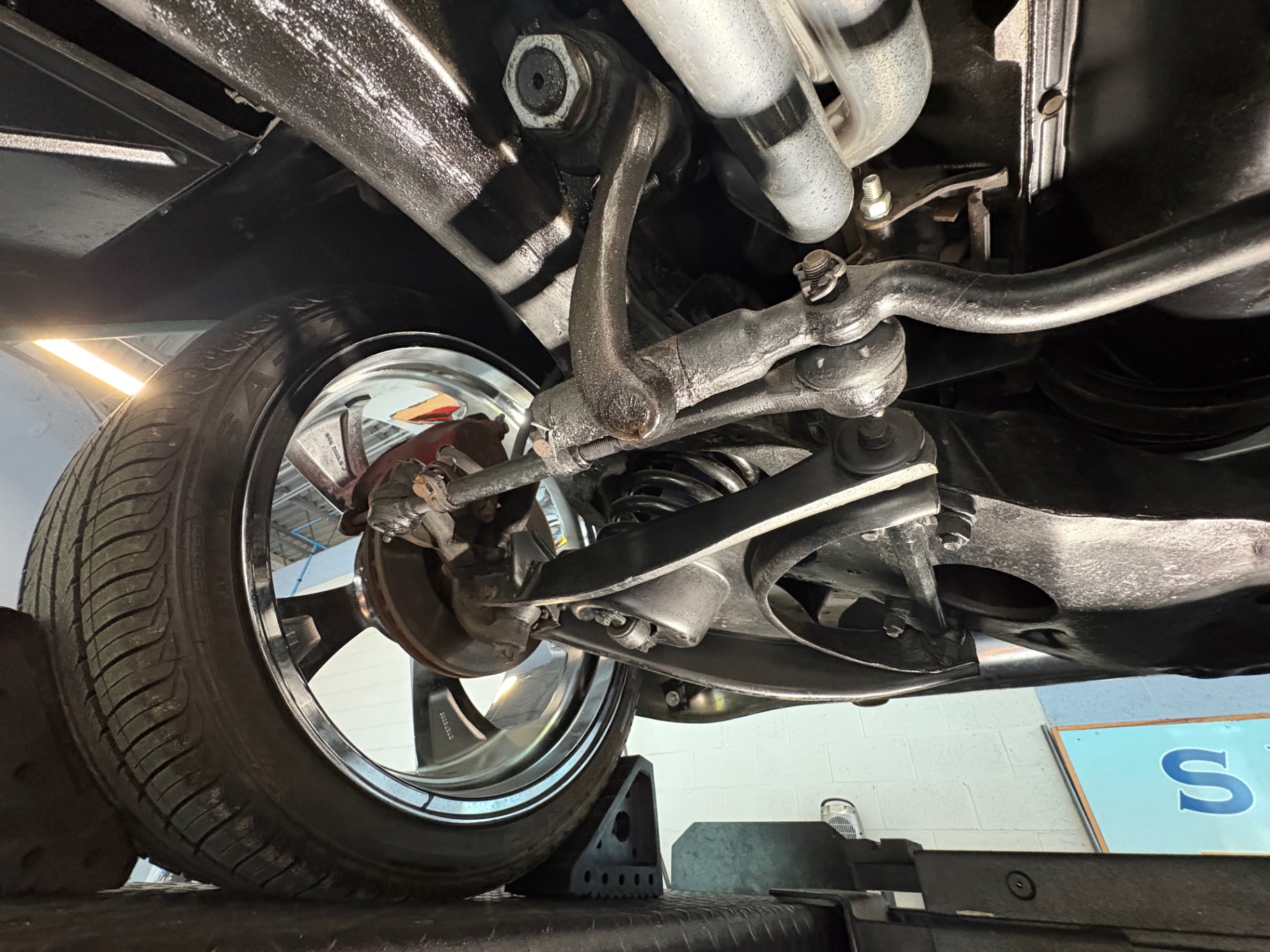
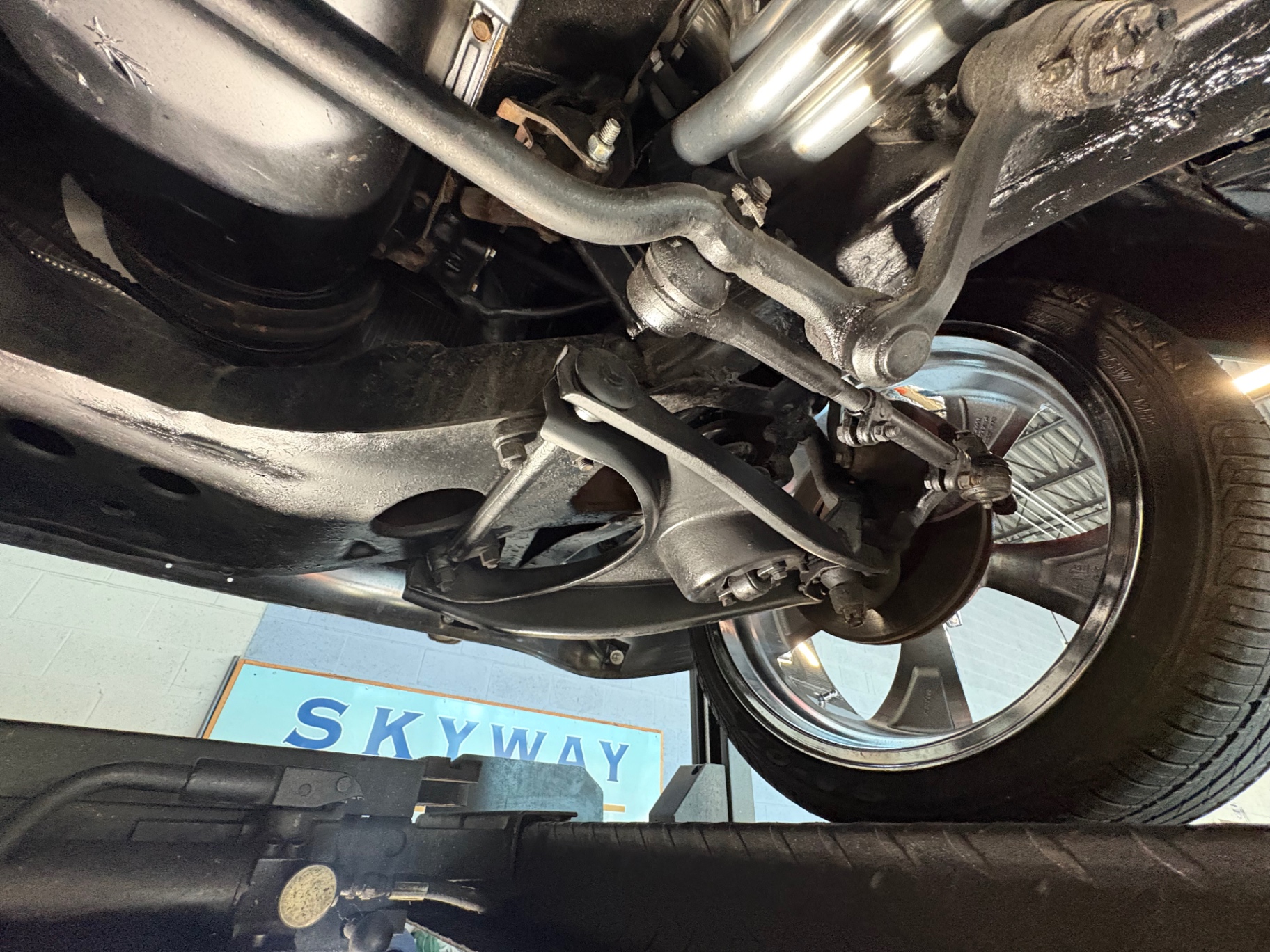
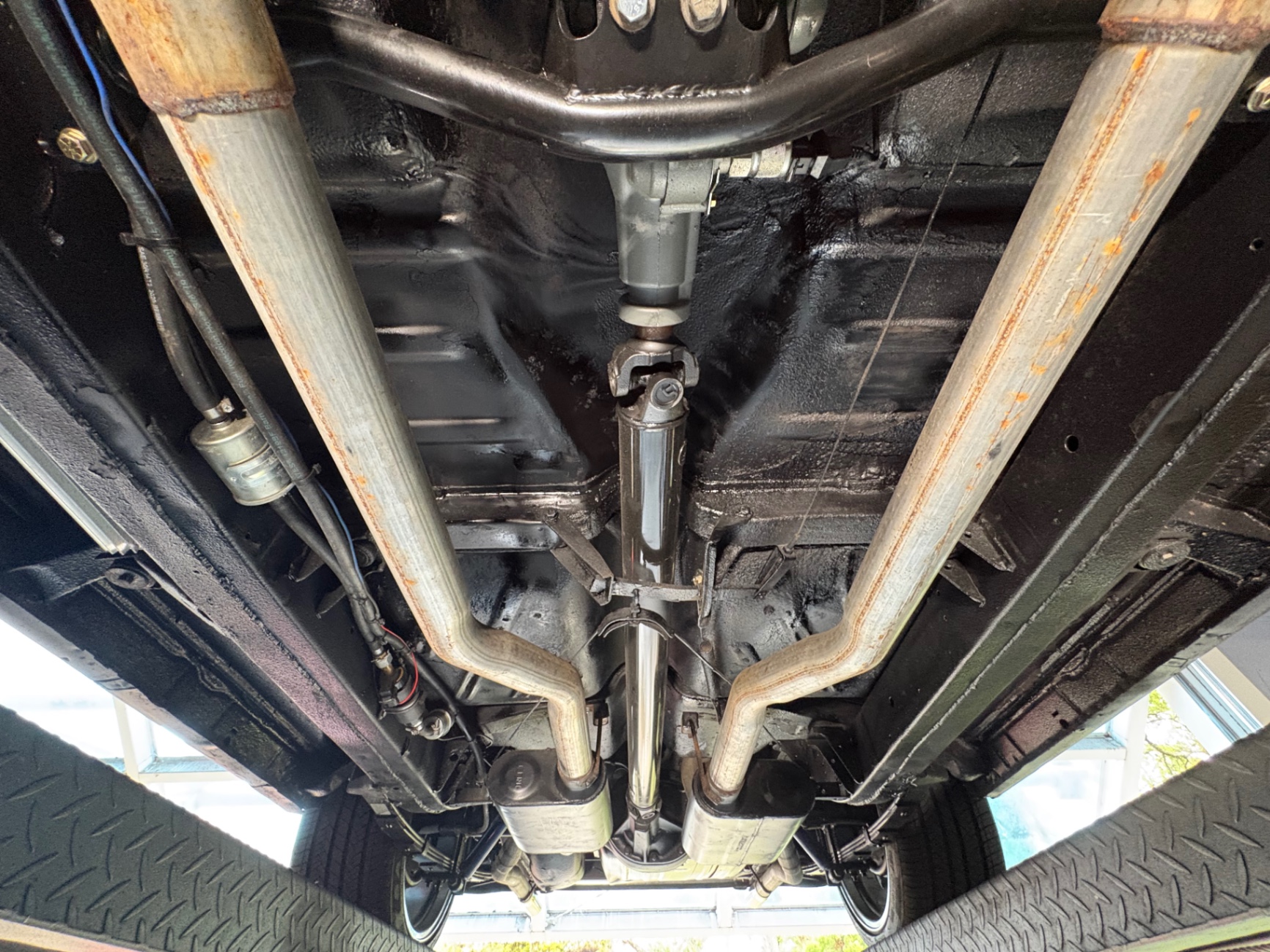
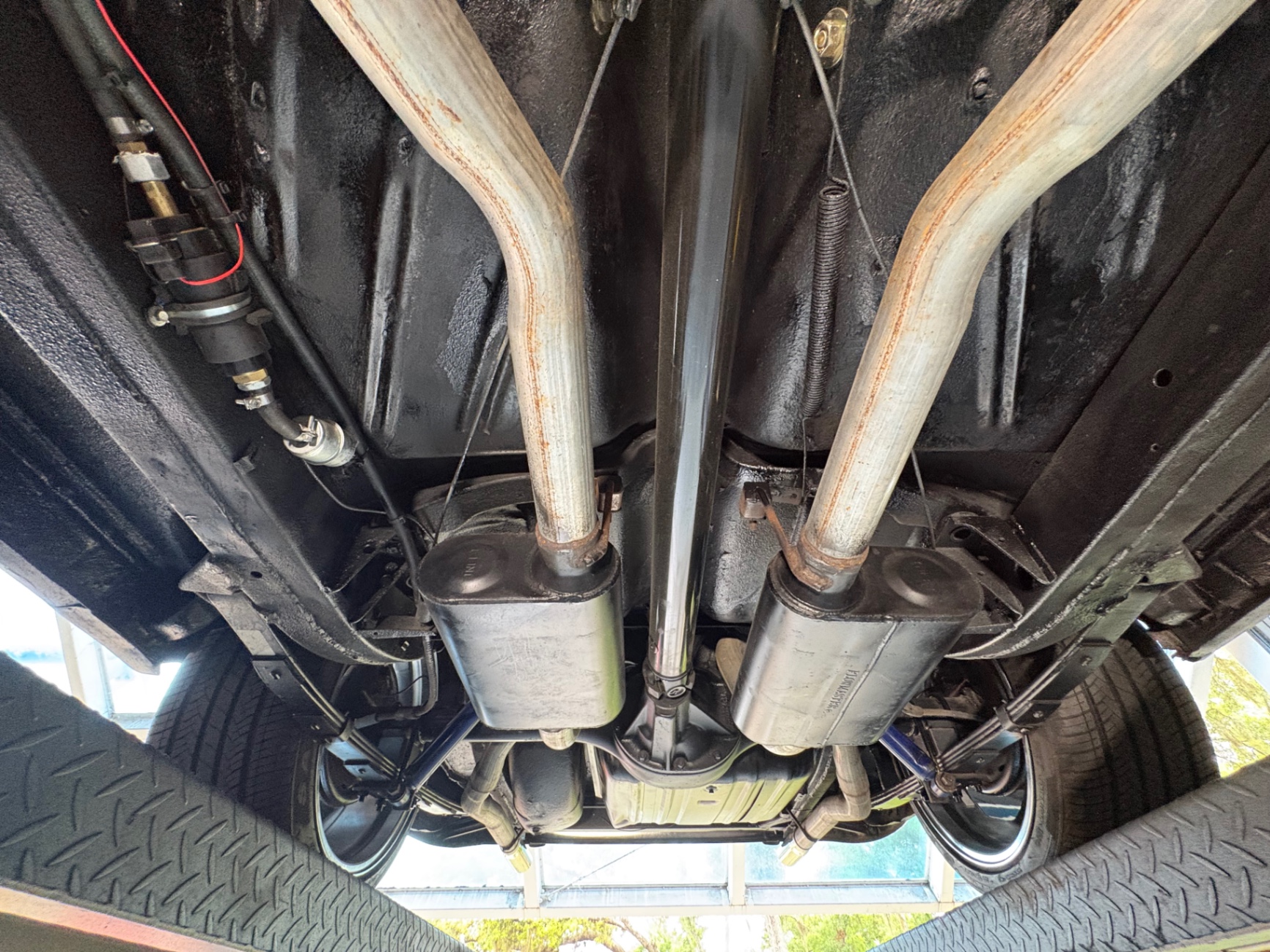
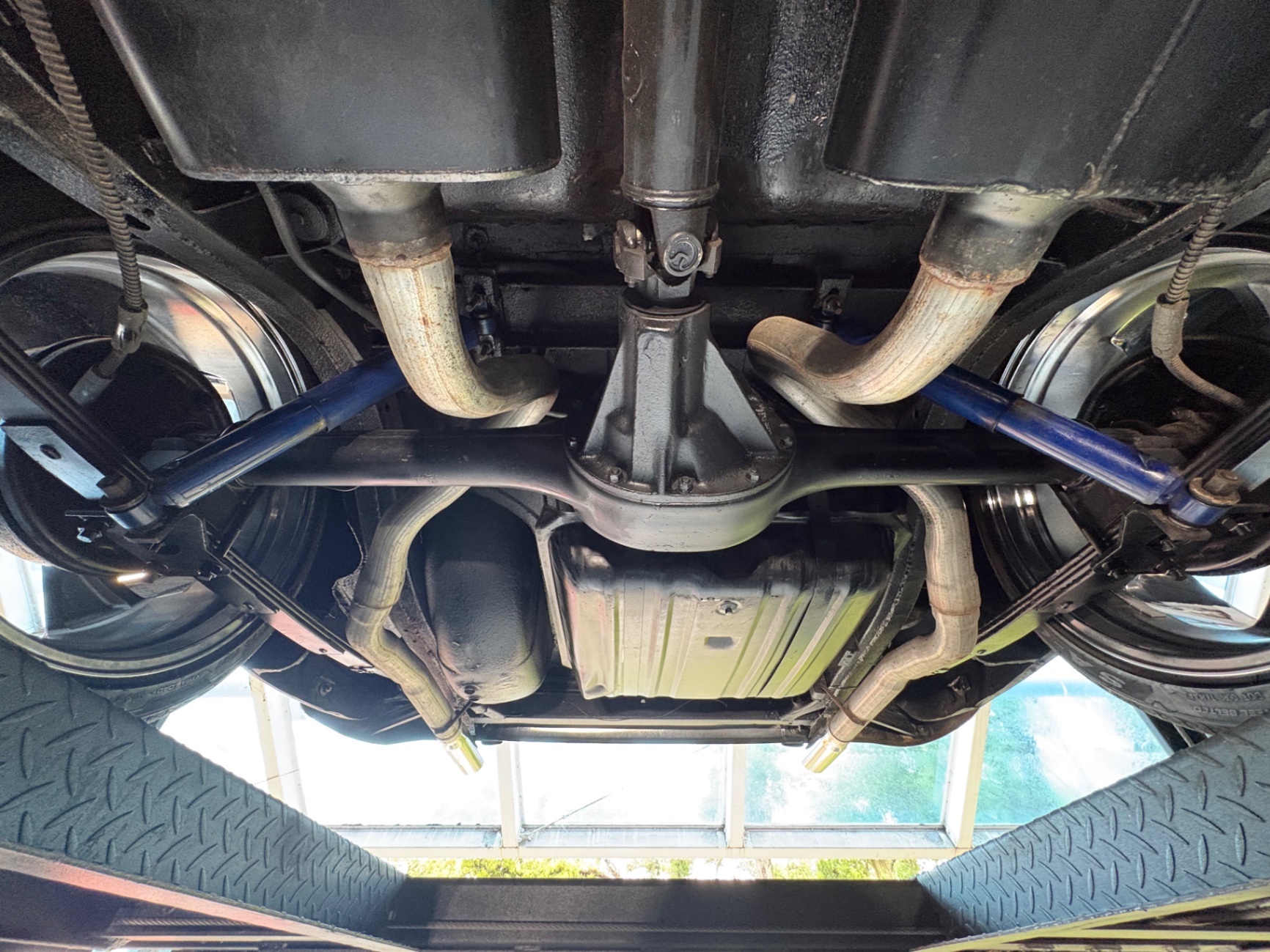
CPP — Classic Performance Products — supplied both the power steering and the power disc brake conversion. CPP is one of the more respected names in the Tri-Five aftermarket, and their components are engineered specifically for these cars rather than adapted from something else. The result is steering effort and brake feel that is predictably modern without requiring unusual modifications to the chassis. The undercarriage photos confirm what the build sheet claims — the framing and floor structure are solid and clean, with no visible rust or makeshift repairs.
Interior
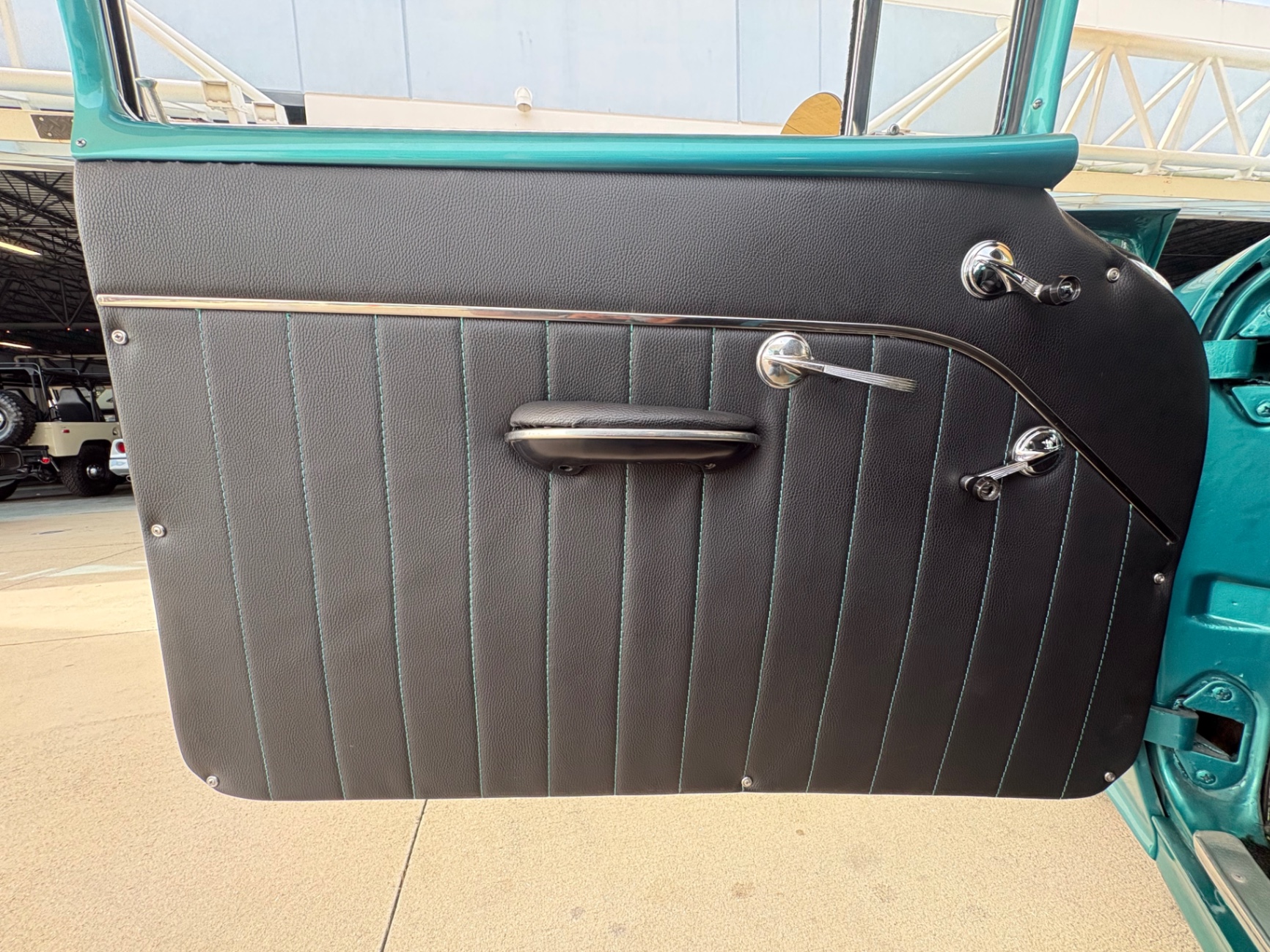
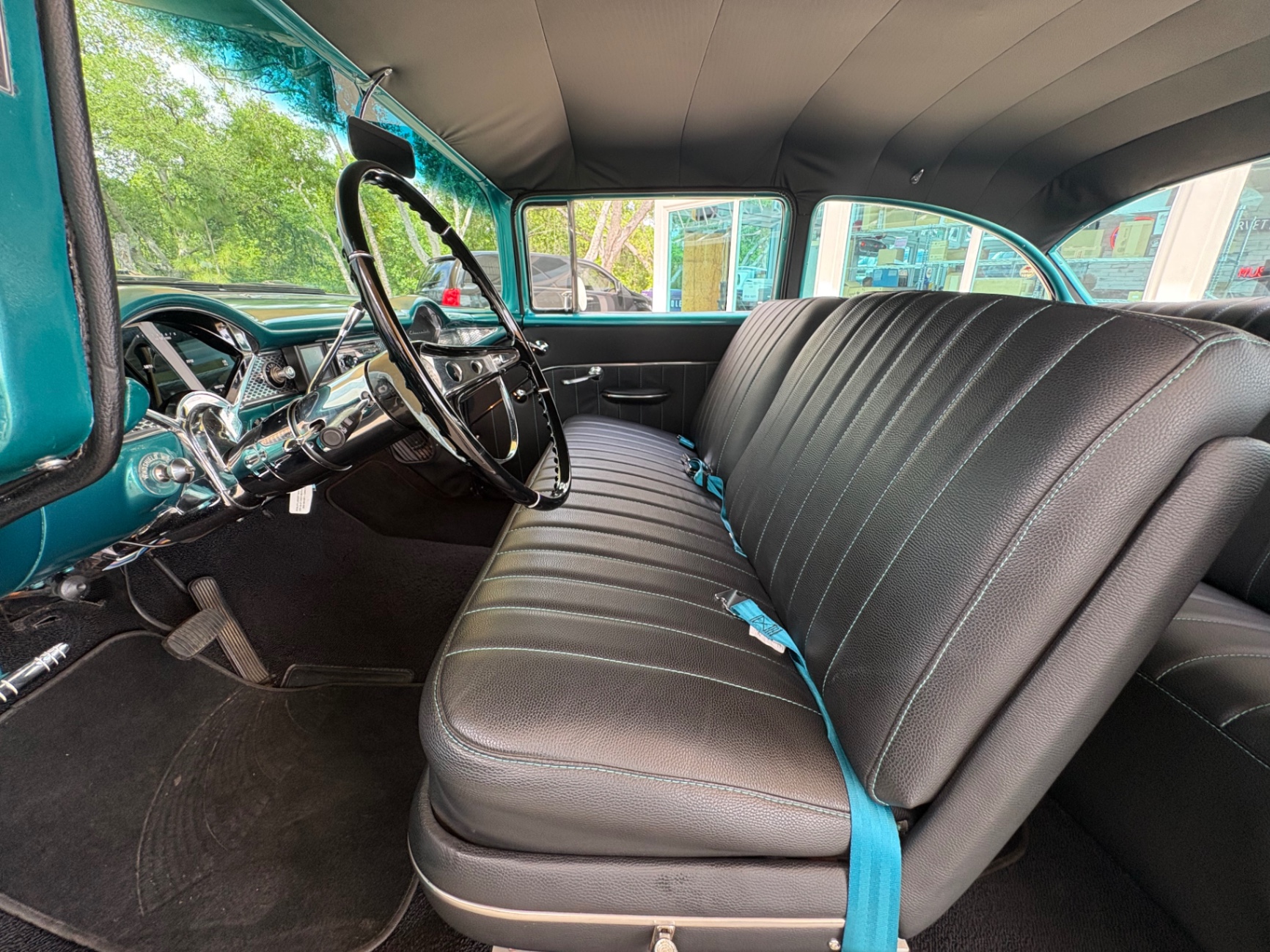
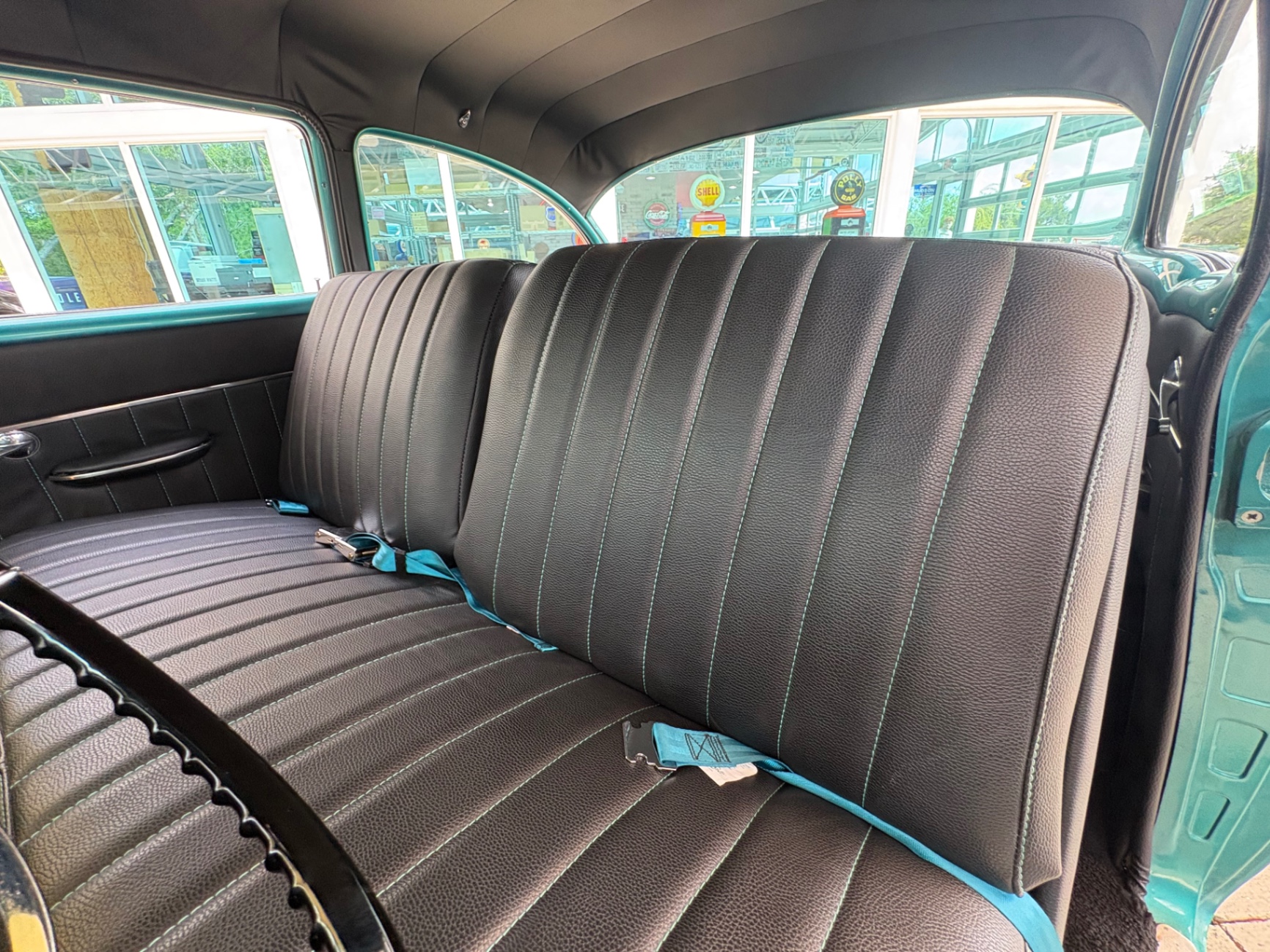
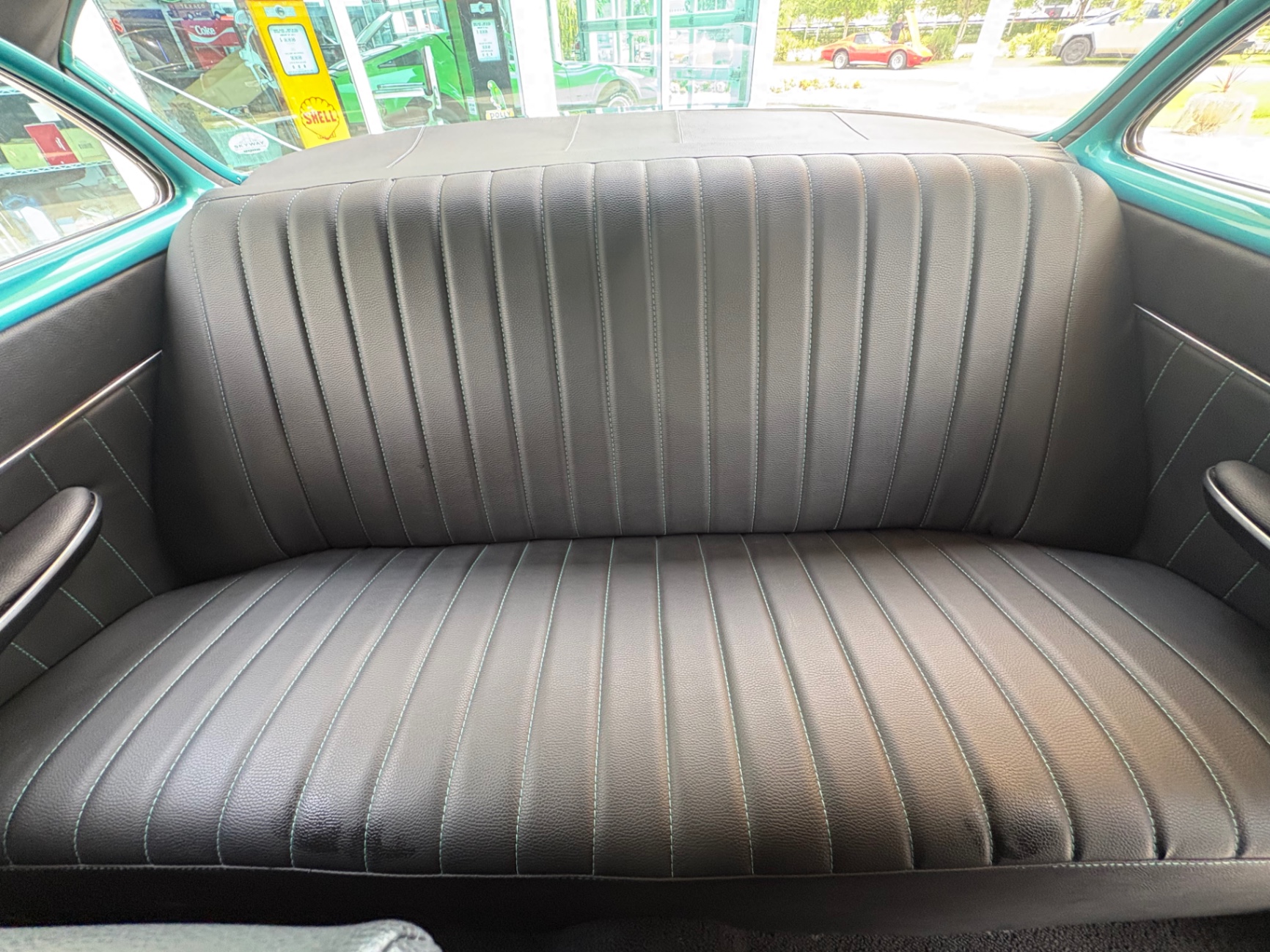
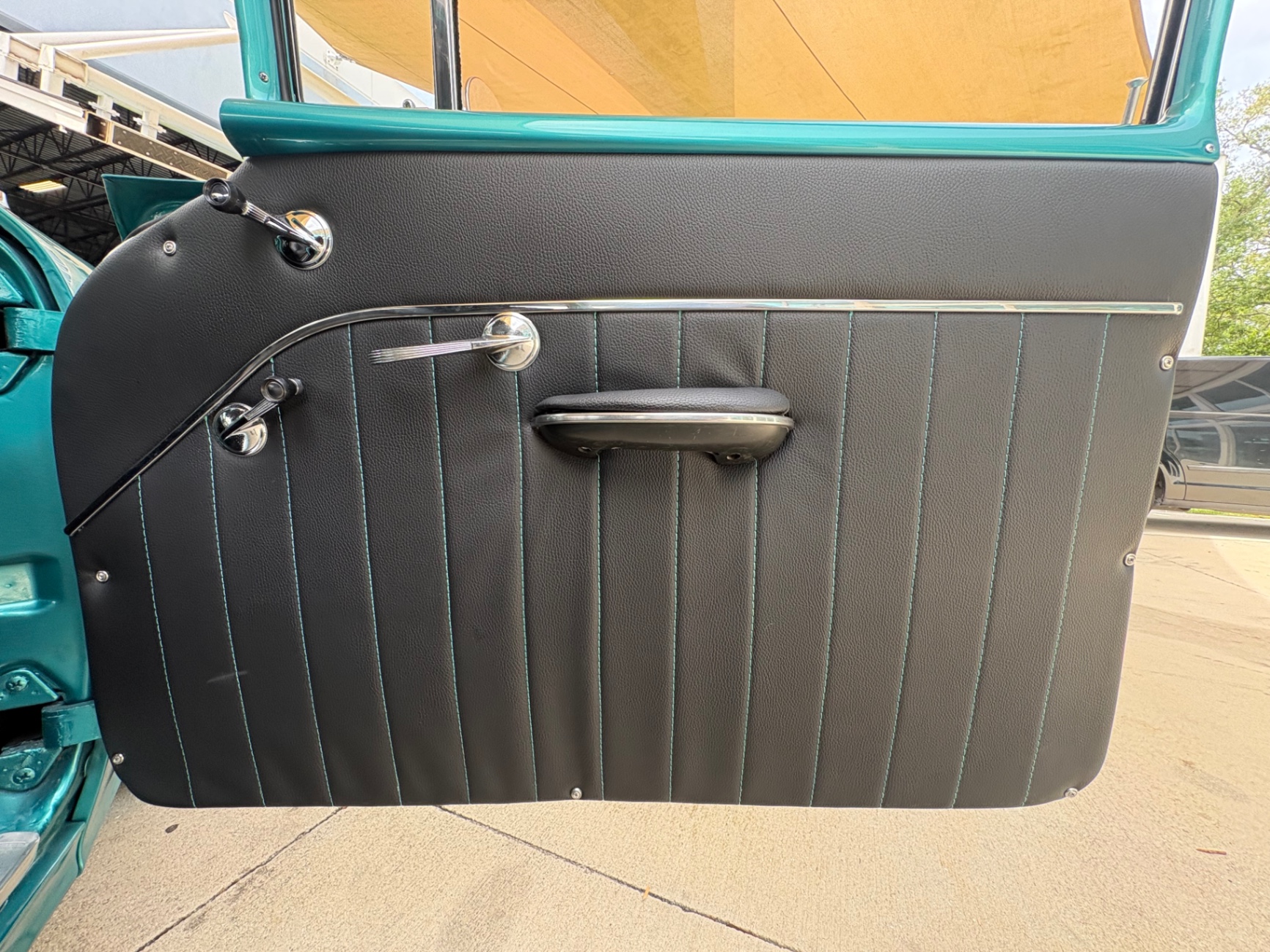
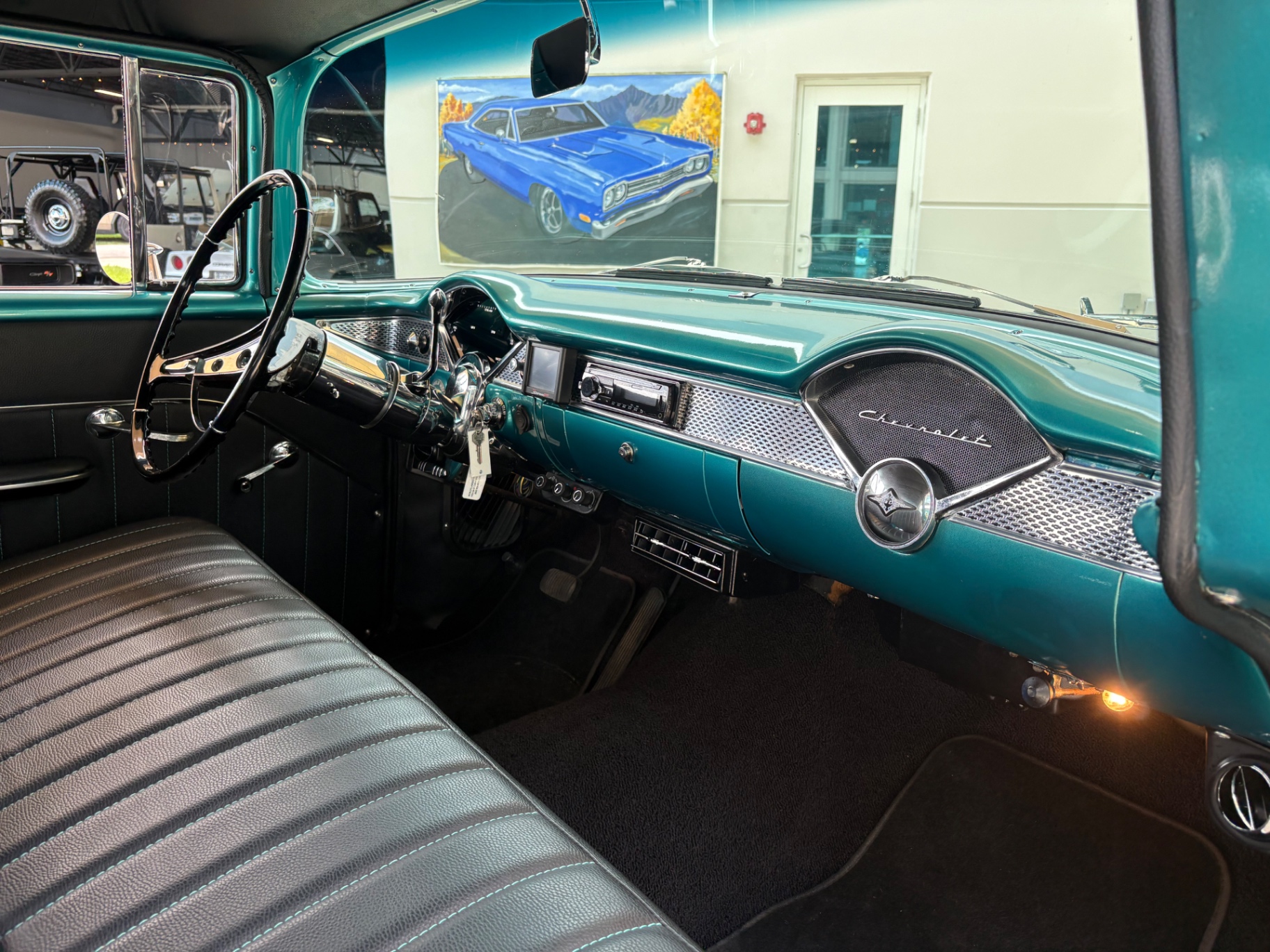
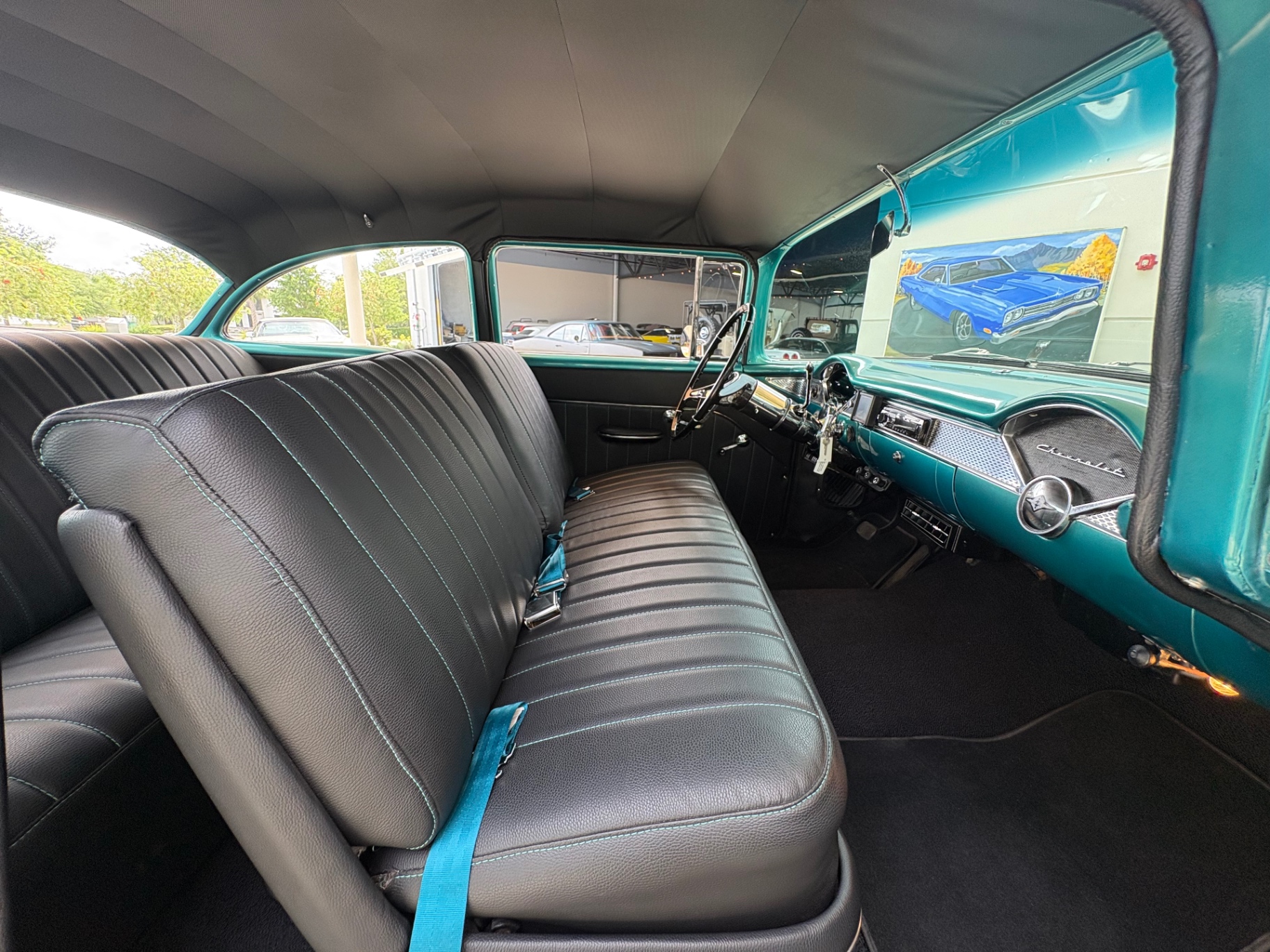
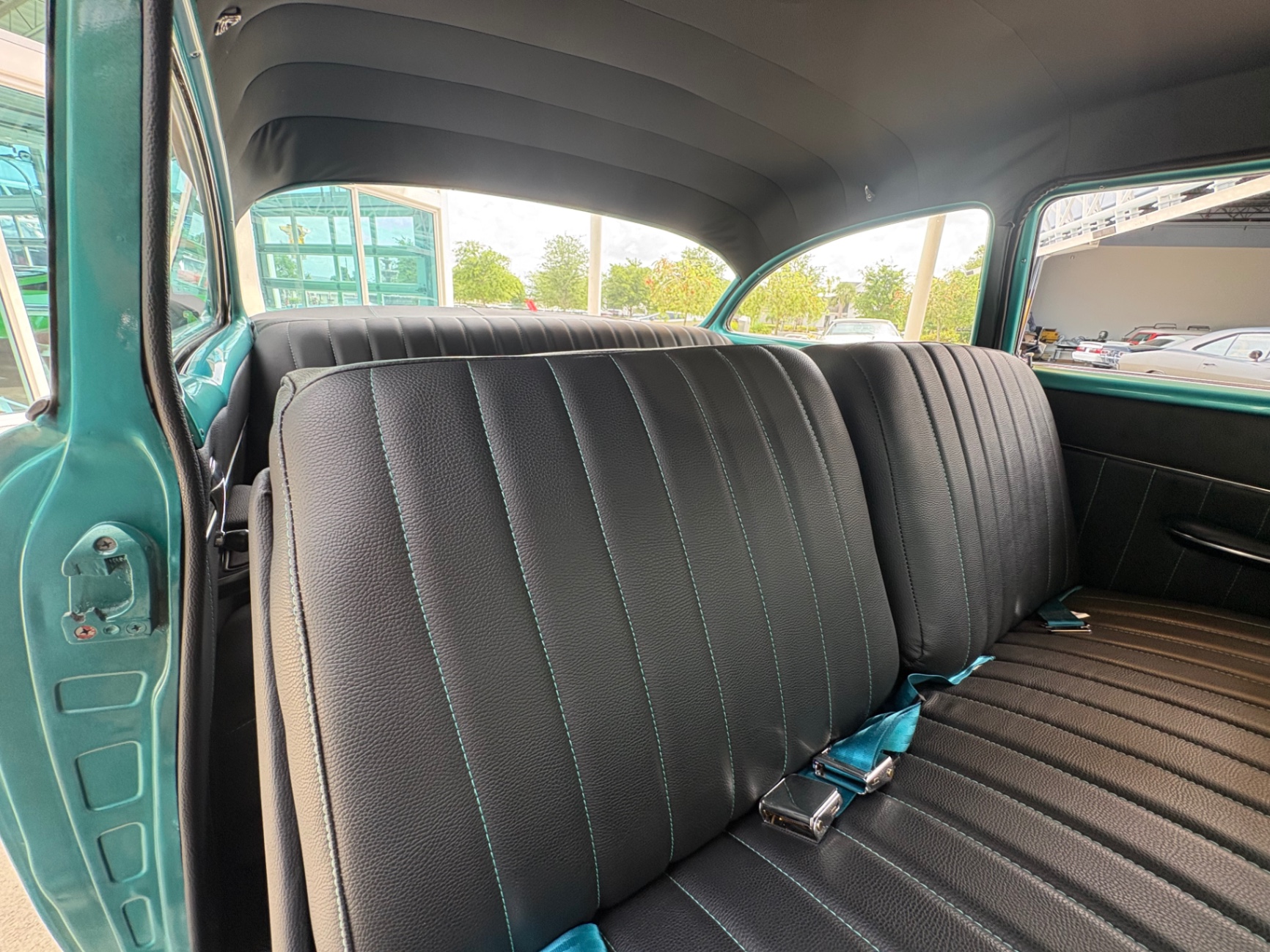
The interior of this 1955 Chevrolet 210 was completed by M&M Interiors using black vinyl throughout, with blue stitching as the accent detail that ties the cabin to the turquoise exterior. The front bench seat is correctly proportioned for the body and has been recovered to match the door panels and headliner. The vertical stitch pattern on the door panels is period-appropriate in style while being clearly custom in execution — you can see the quality of the work in the panel photos, where the stitching lines are consistent and the panel fit against the door structure is tight.
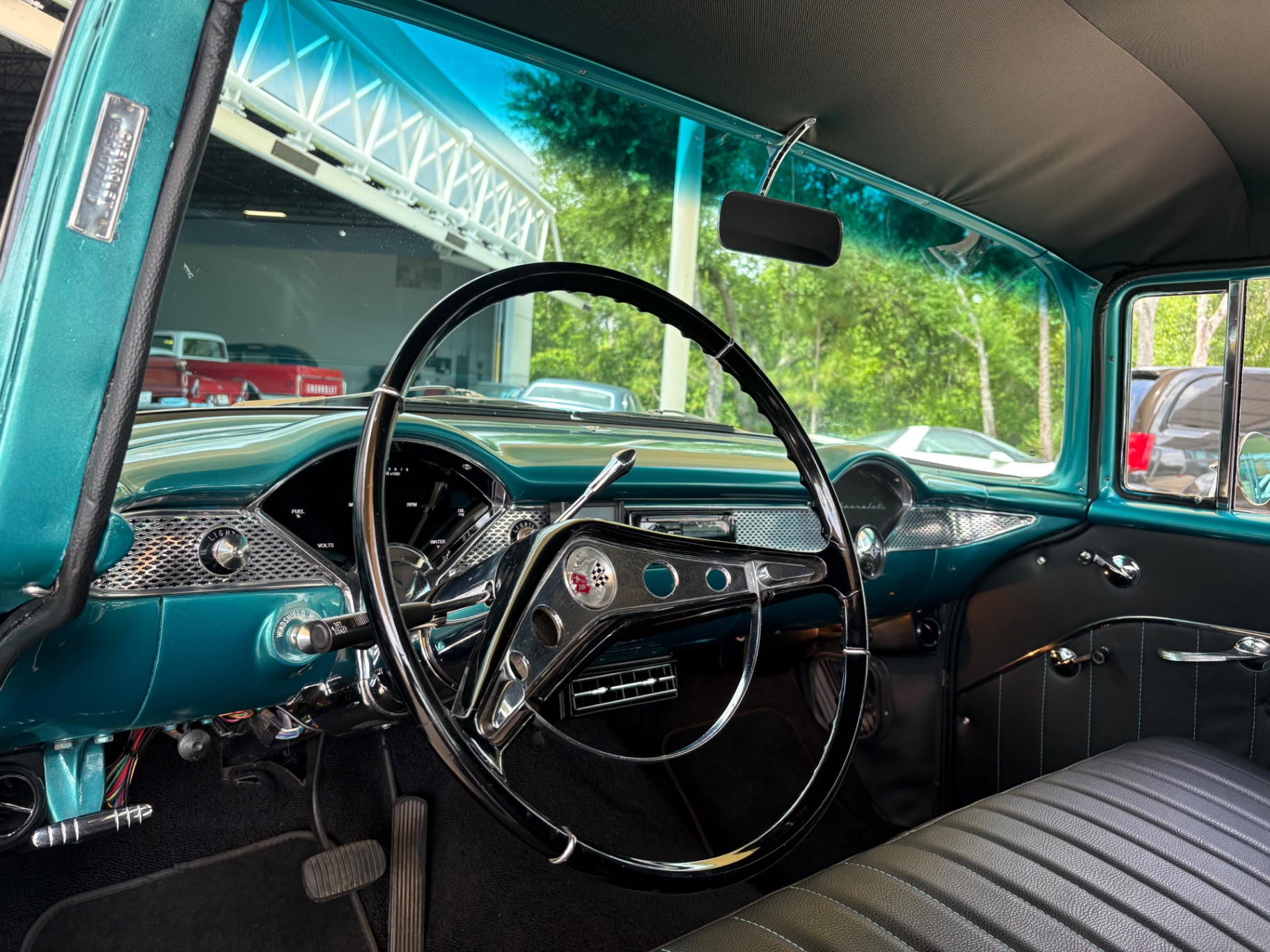
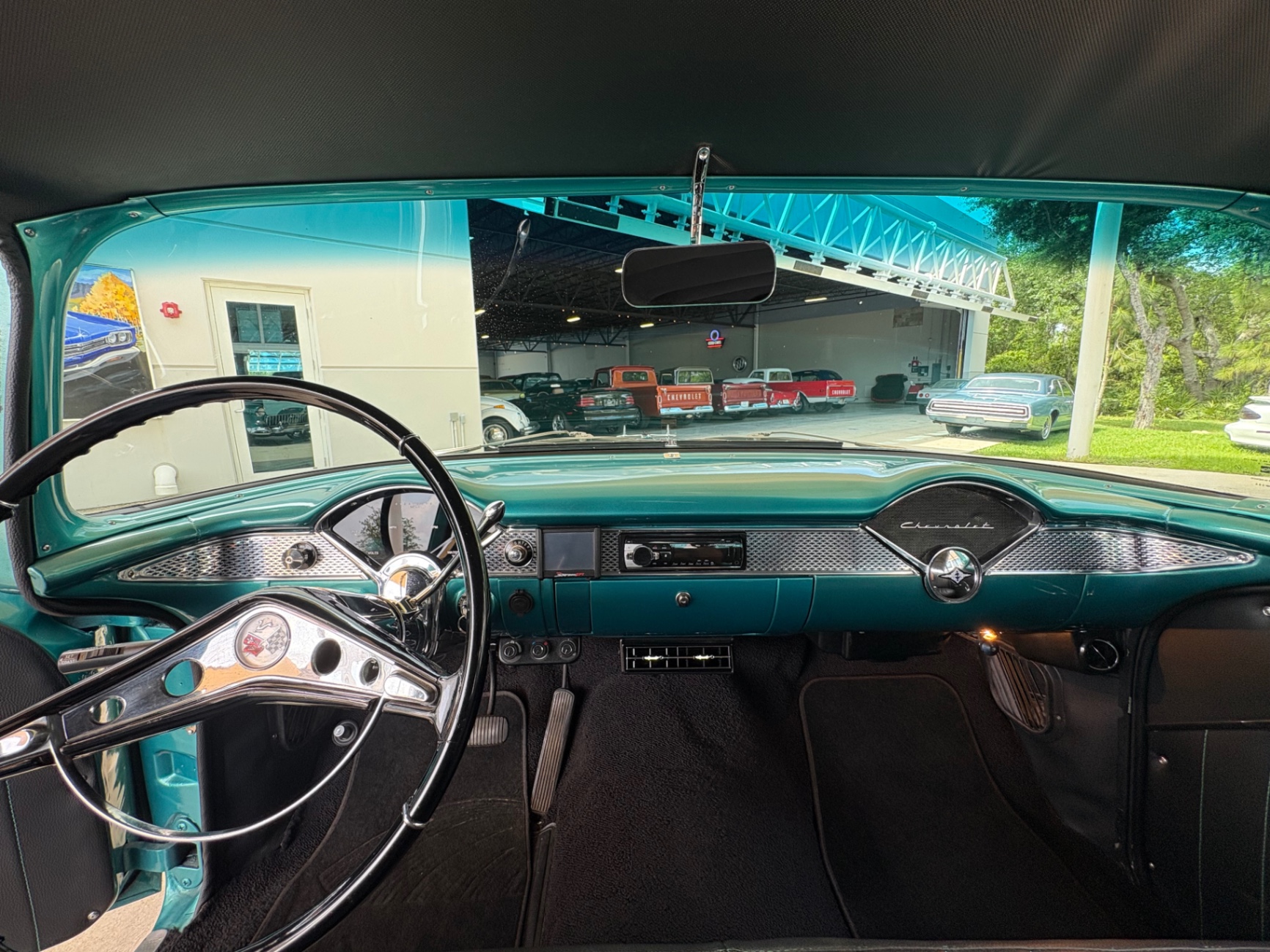
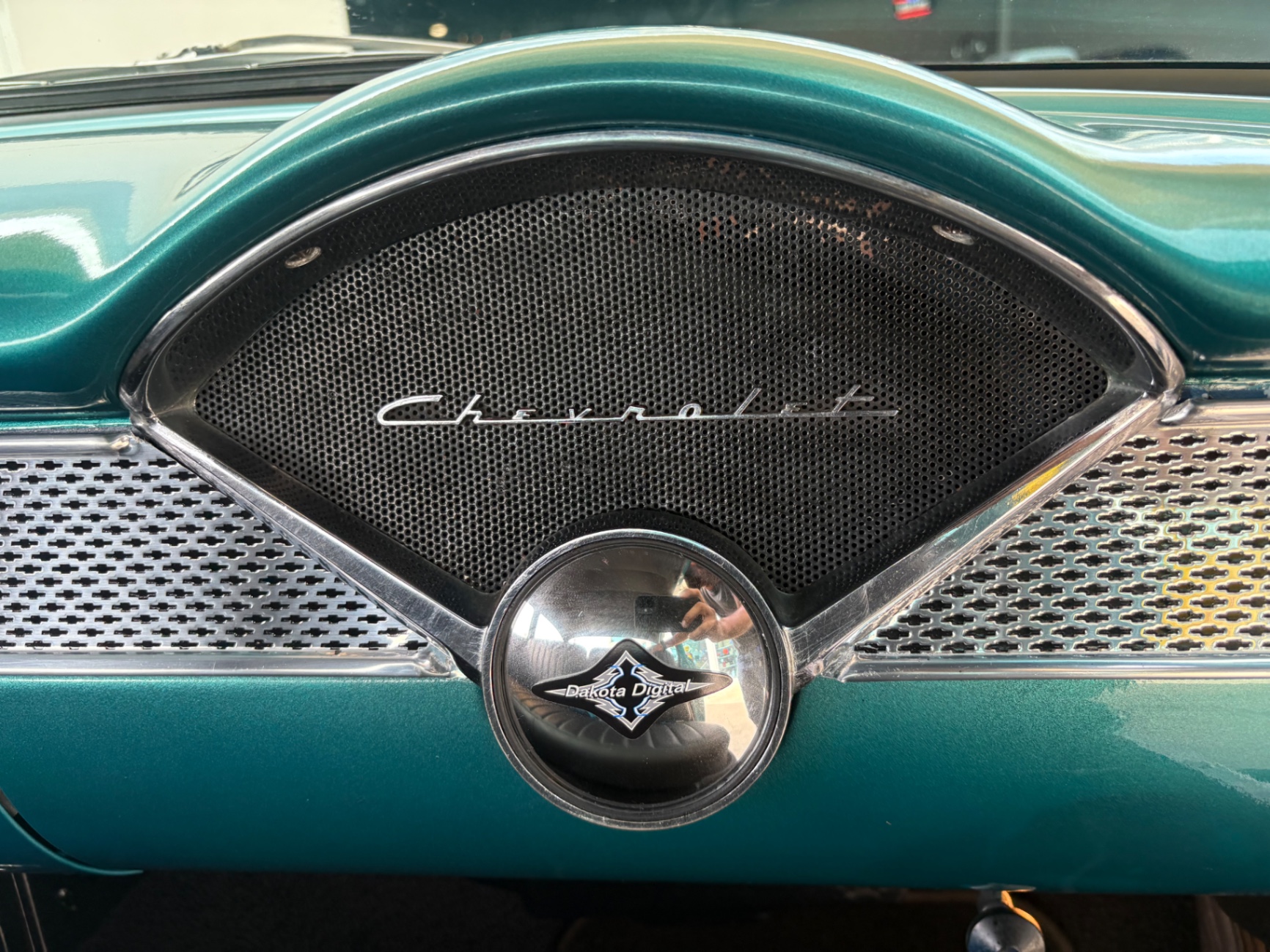
Instrumentation has been replaced with a Dakota Digital gauge cluster, which provides accurate readings for all primary functions — fuel, temperature, oil pressure, voltage — and integrates a tachometer. The original 1955 Chevrolet 210 came with a relatively sparse instrument panel, so this is a meaningful functional upgrade. The Ididit tilt column allows the driver to adjust the wheel angle, and the Impala steering wheel is a tasteful choice that fits the era without being a replica of the factory unit.
Vintage Air provides climate control, which is one of the most impactful comfort upgrades possible on a car this age. Vintage Air systems are fully engineered for specific applications and use modern refrigerants and components. The aftermarket stereo is paired with a power antenna and includes a phone charging port — practical features that don't require cutting into the dash or compromising the look of the restoration. A complete American AutoWire harness replaces the aging original wiring, which eliminates the fire risk and electrical gremlins that come with 70-year-old insulation and corroded terminals.
Exterior
The 1955 Chevrolet 210 was designed by a team that included Carl Renner and was influenced by early Ferrari shapes — the egg-crate grille, the two-tone color schemes, and the wraparound windshield all reflected what was happening in European sports car design at the time. Chevrolet applied those influences to a car that sold for a fraction of the price, and the result held up well enough that the Tri-Five body is still considered one of the best-proportioned American designs of the postwar era.
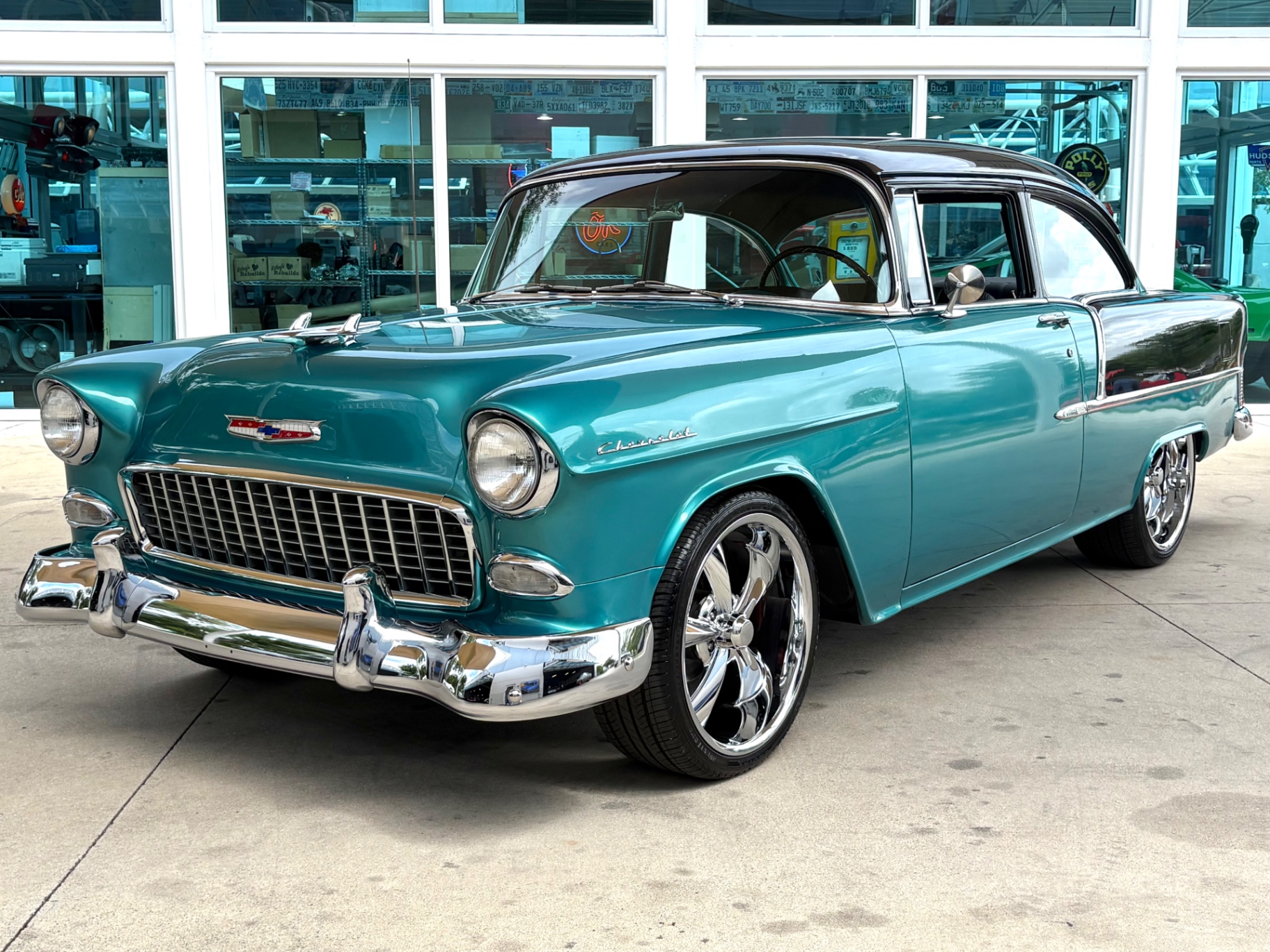
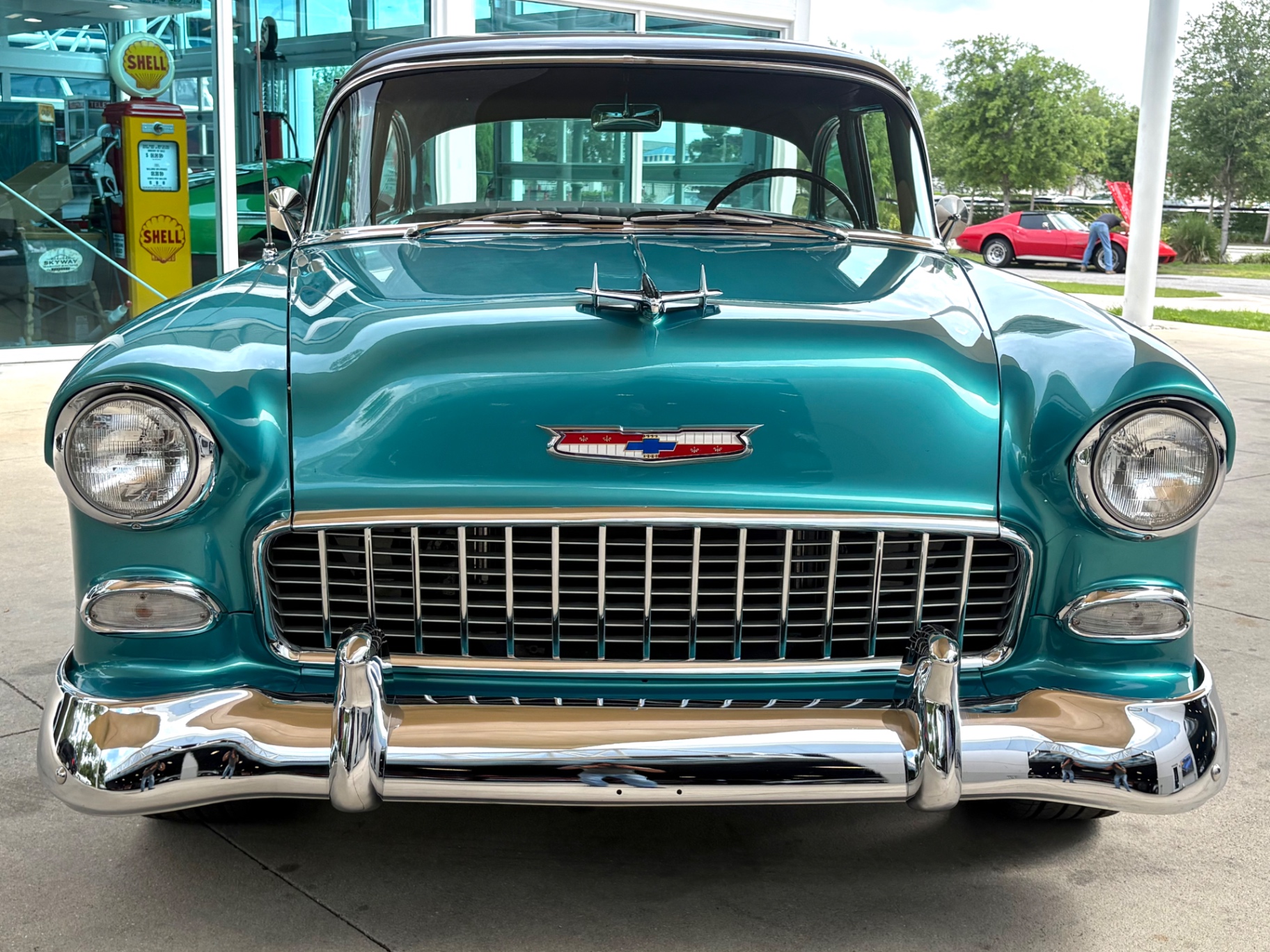
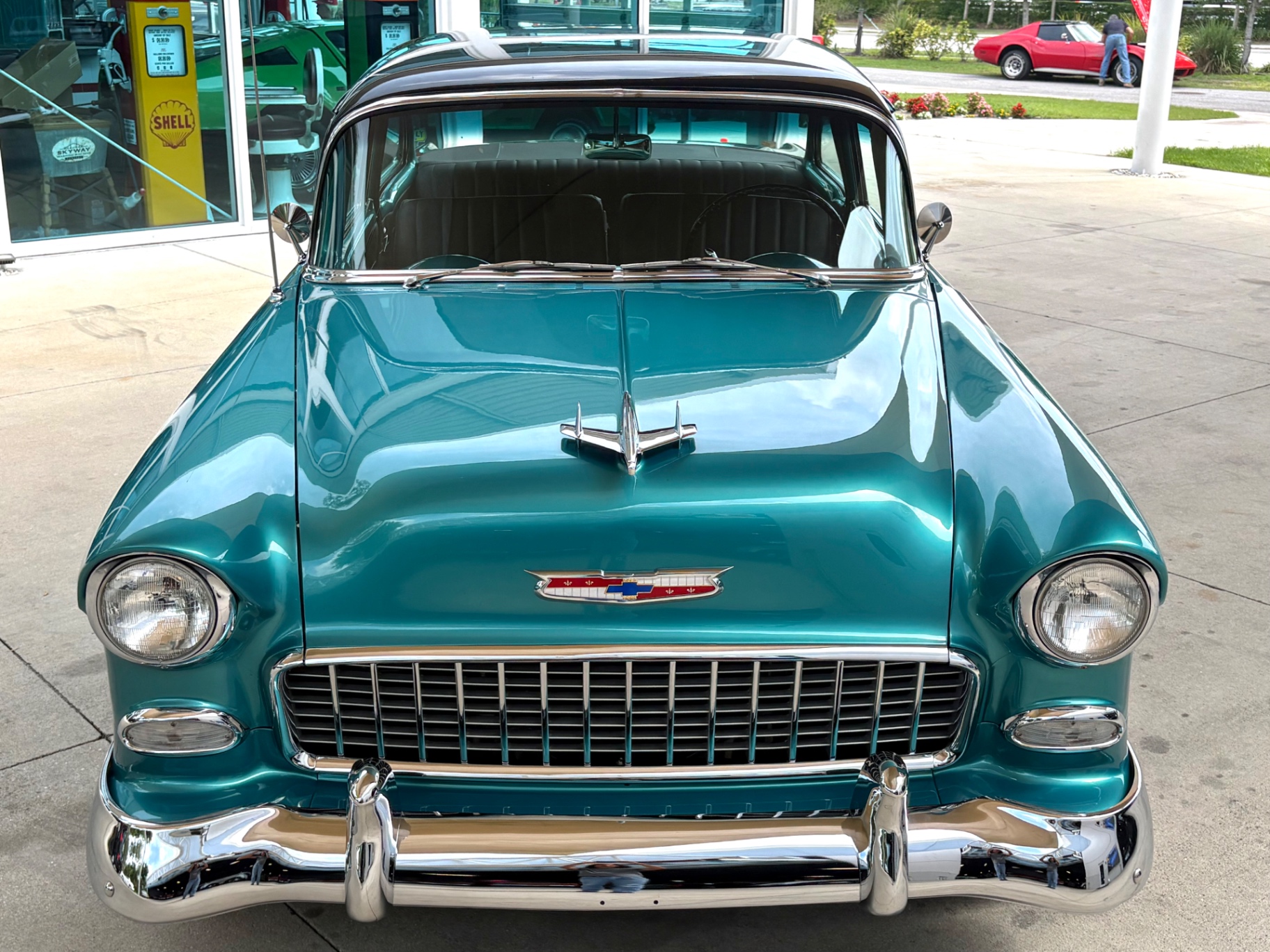
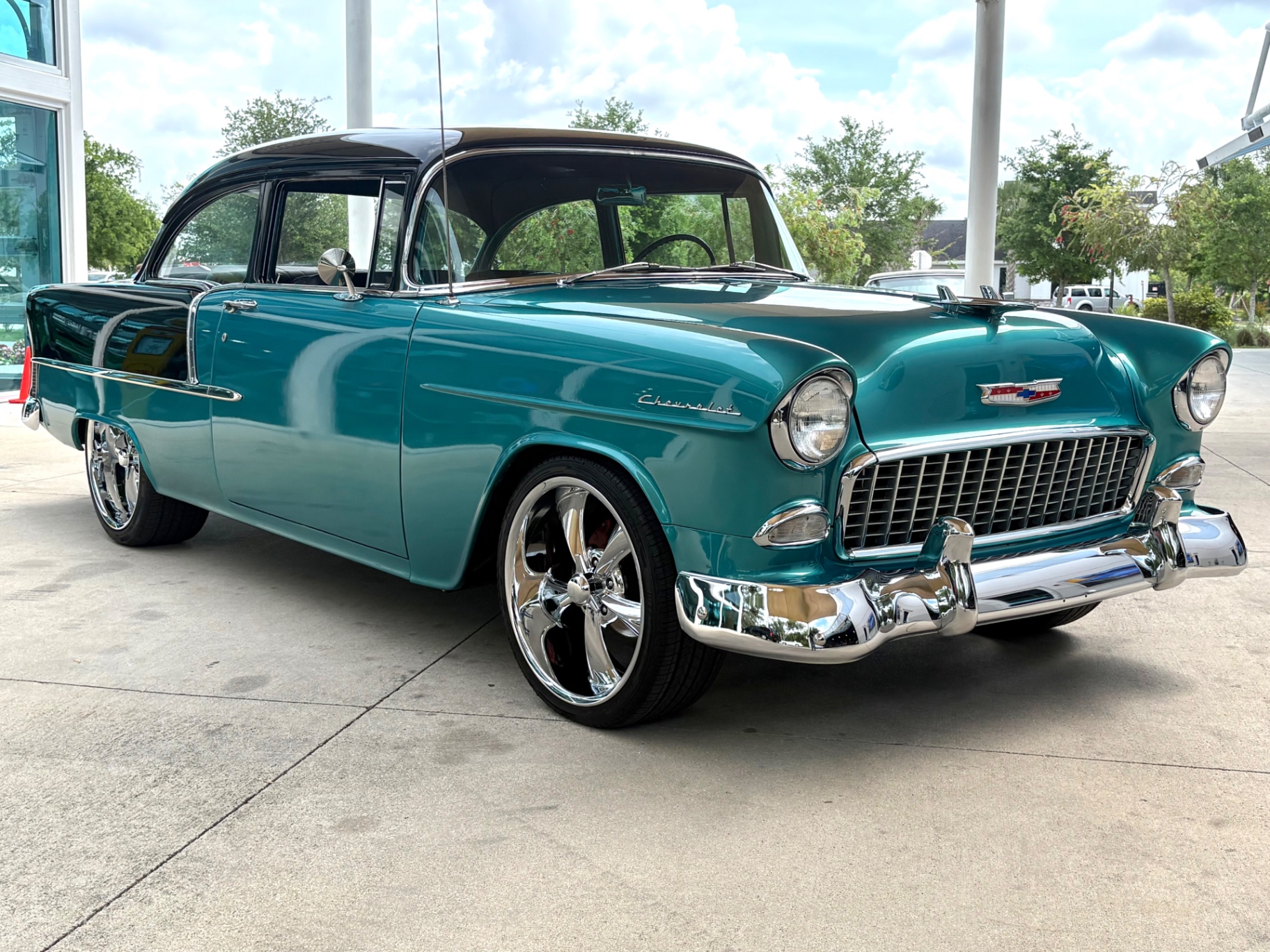
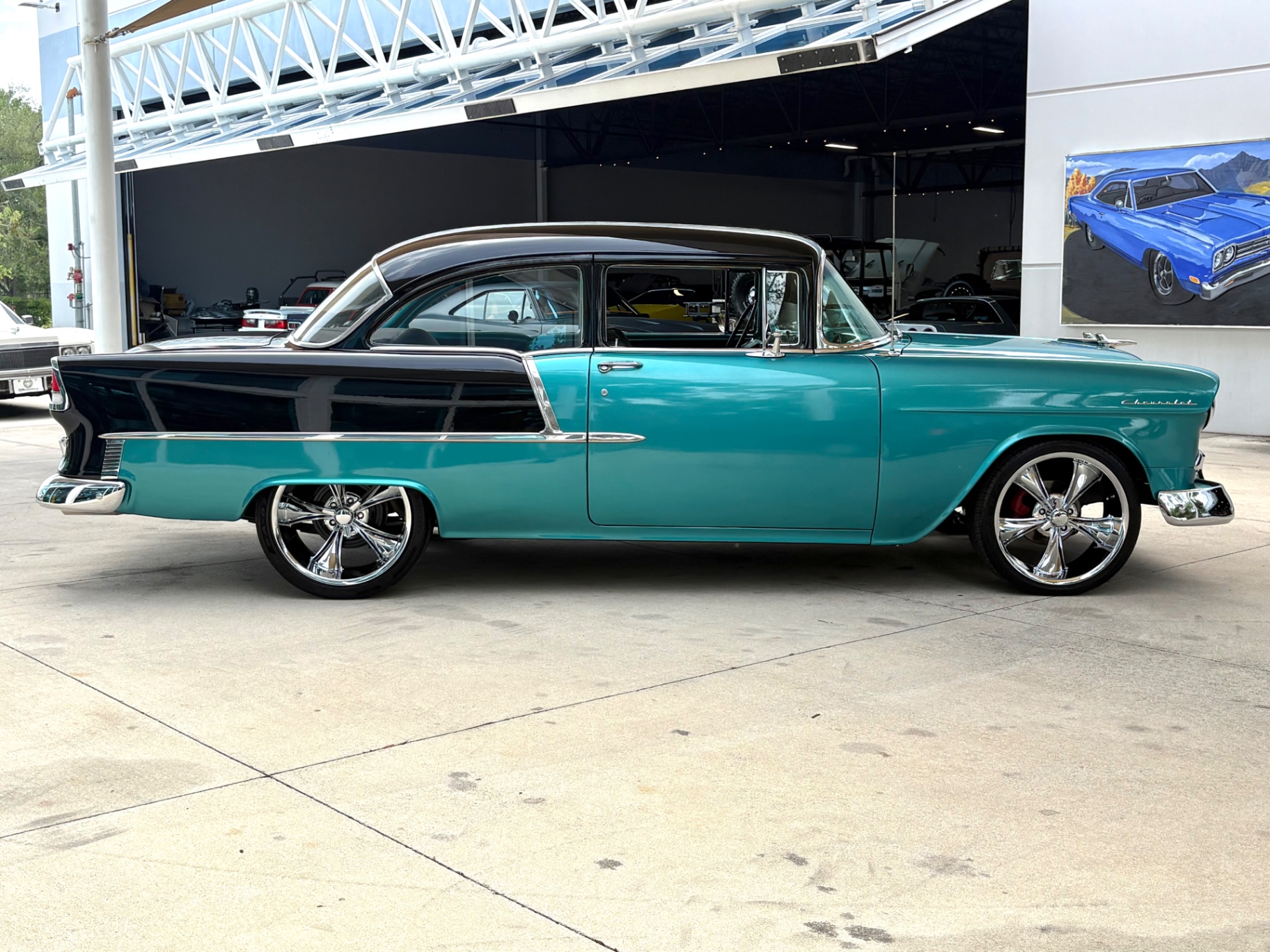
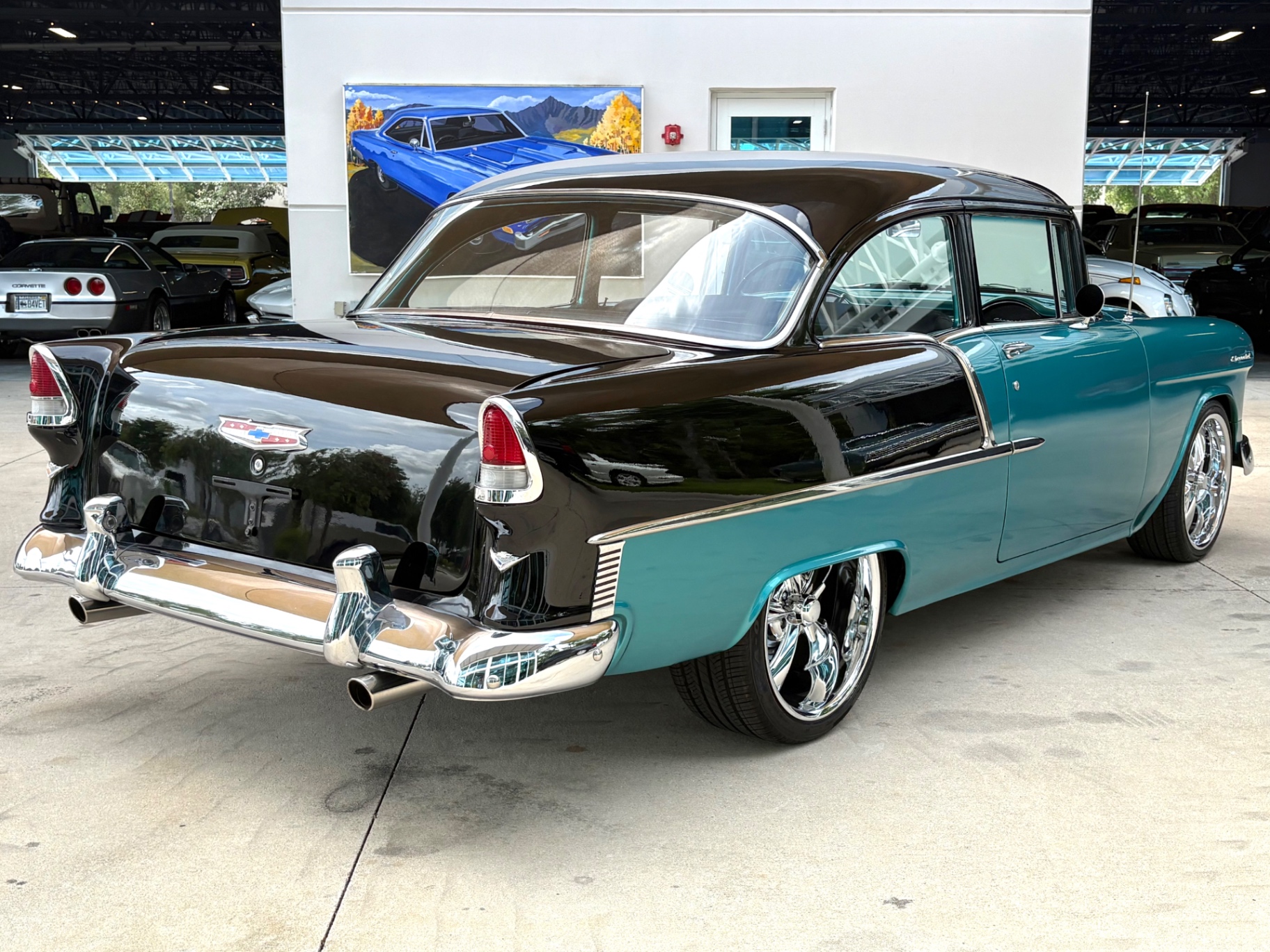
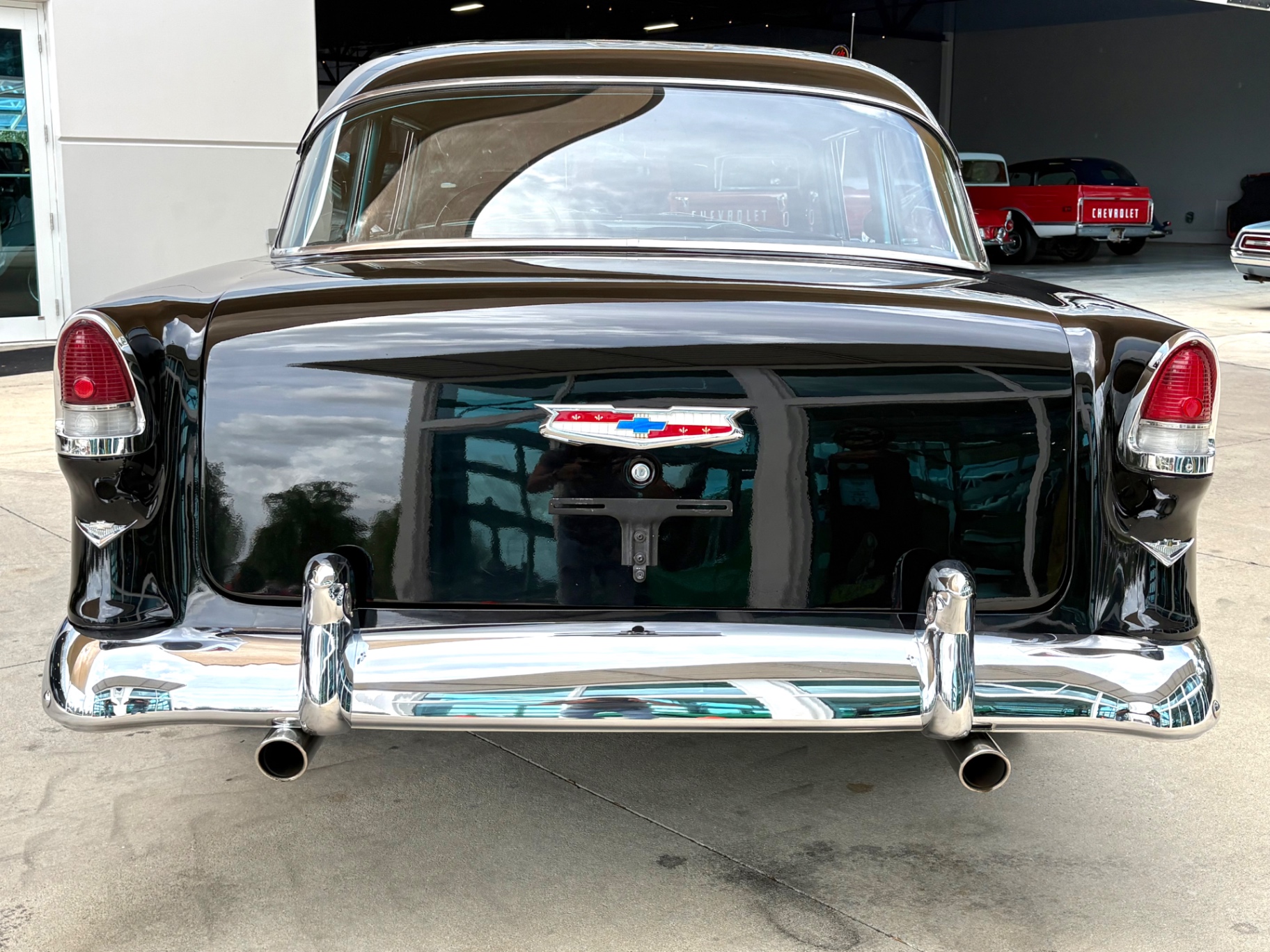
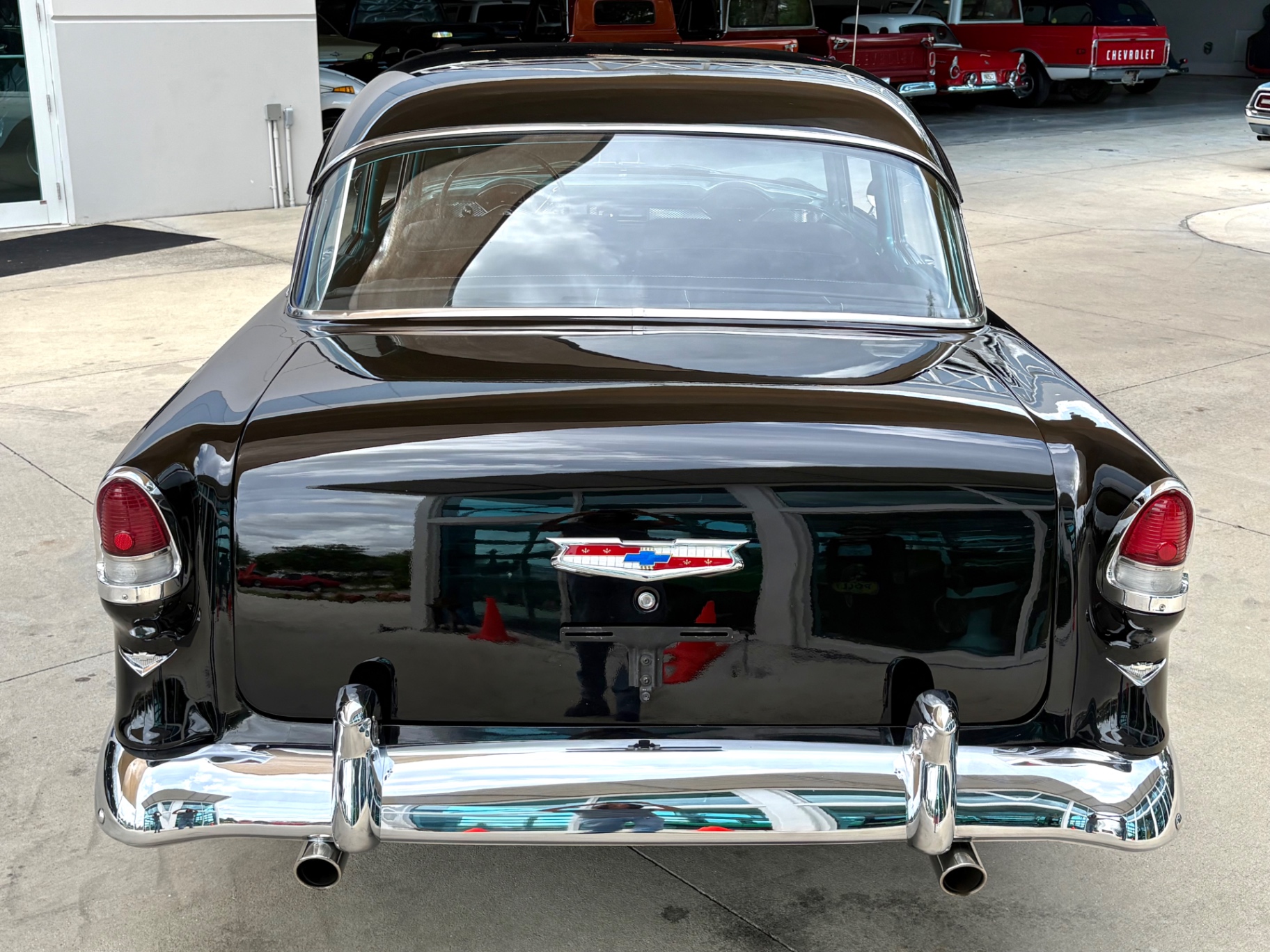
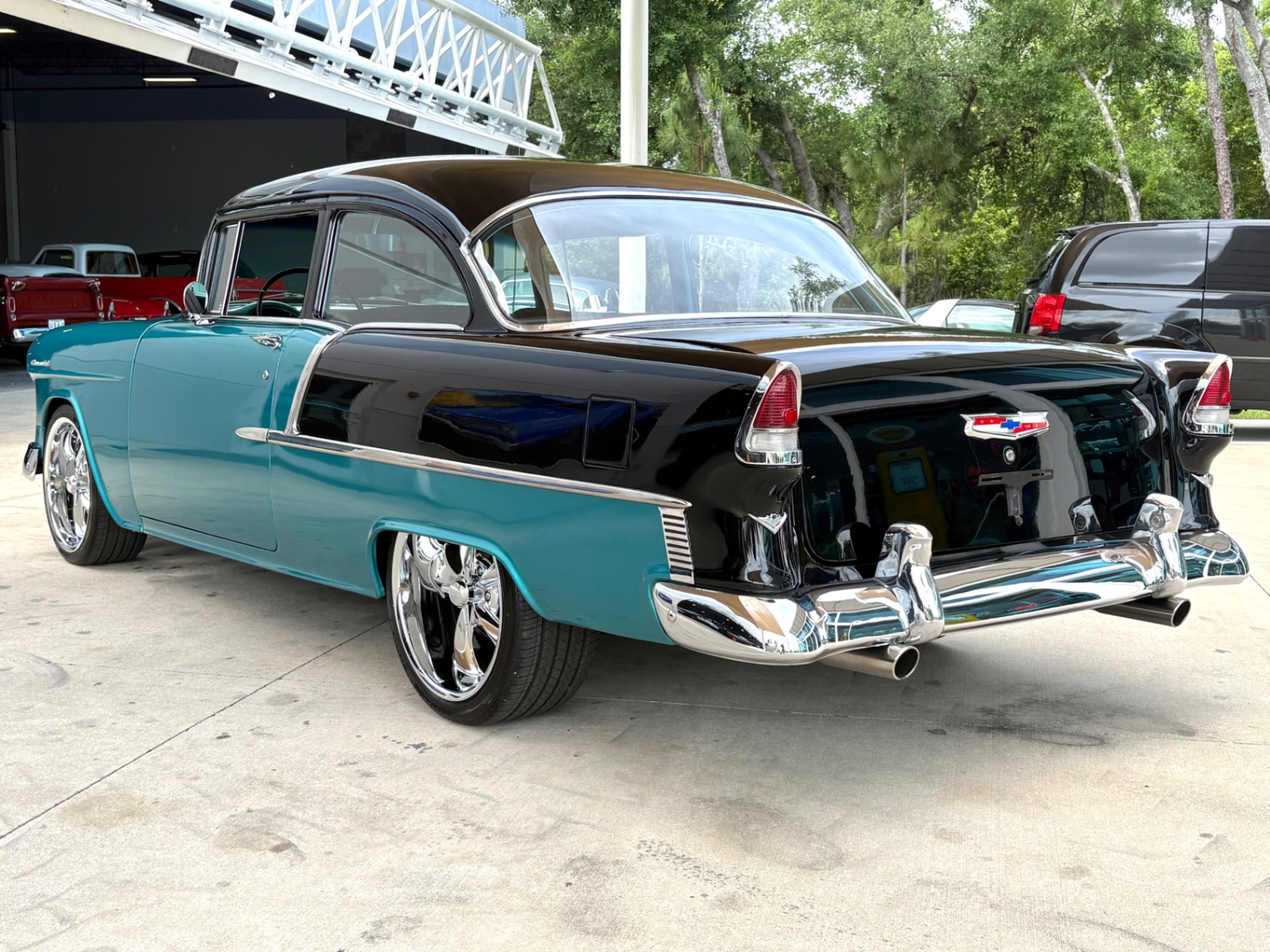
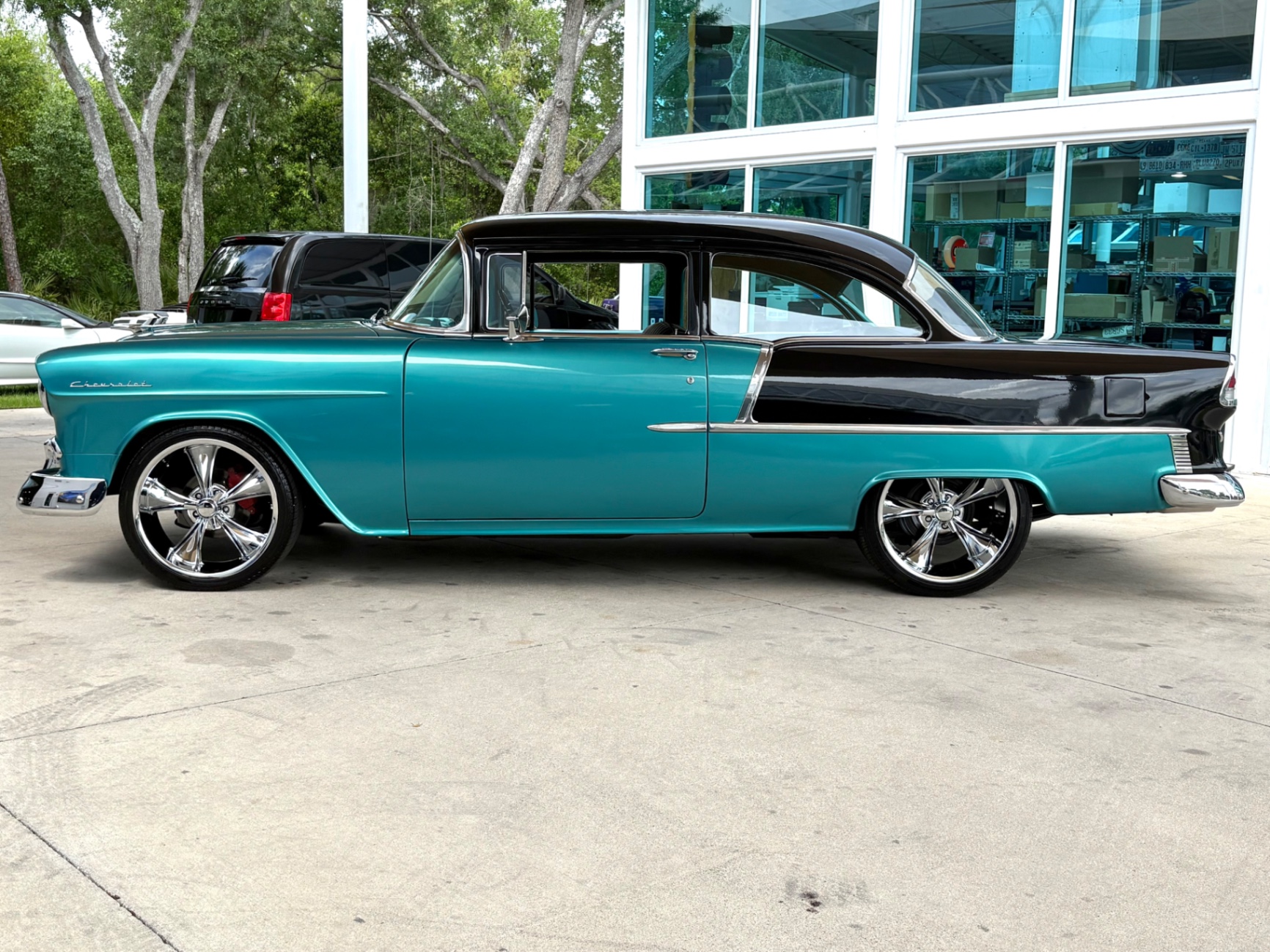
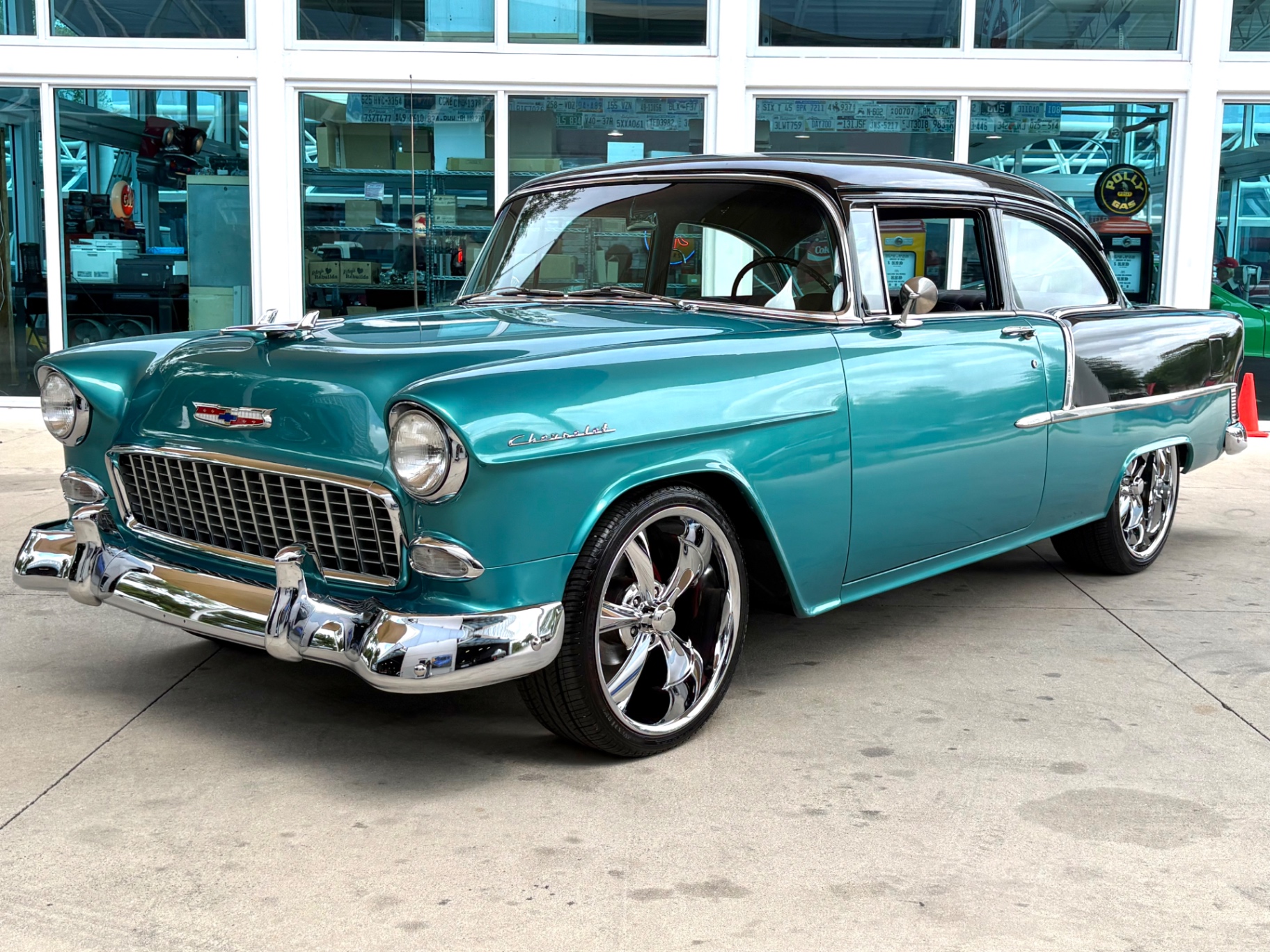
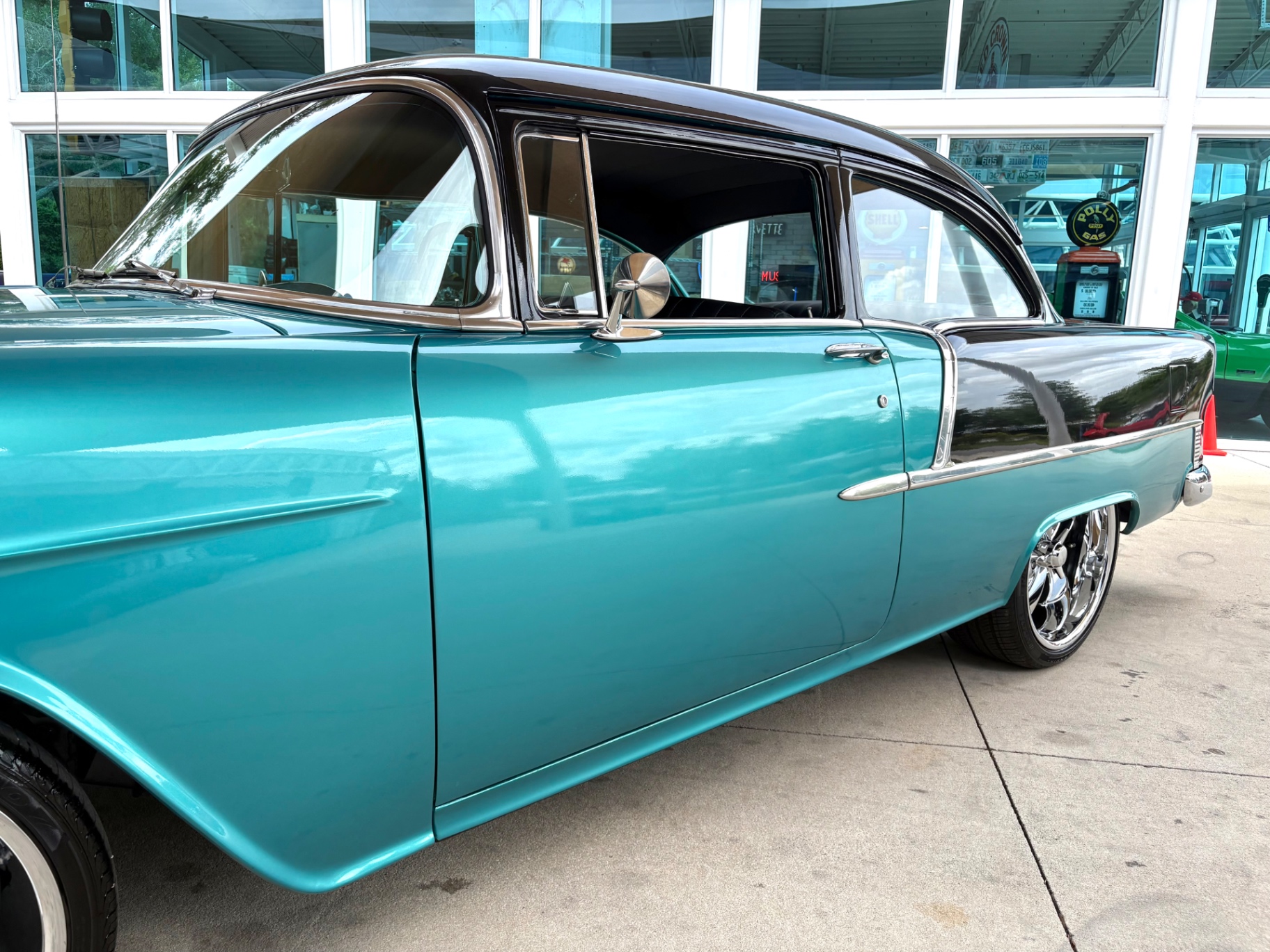
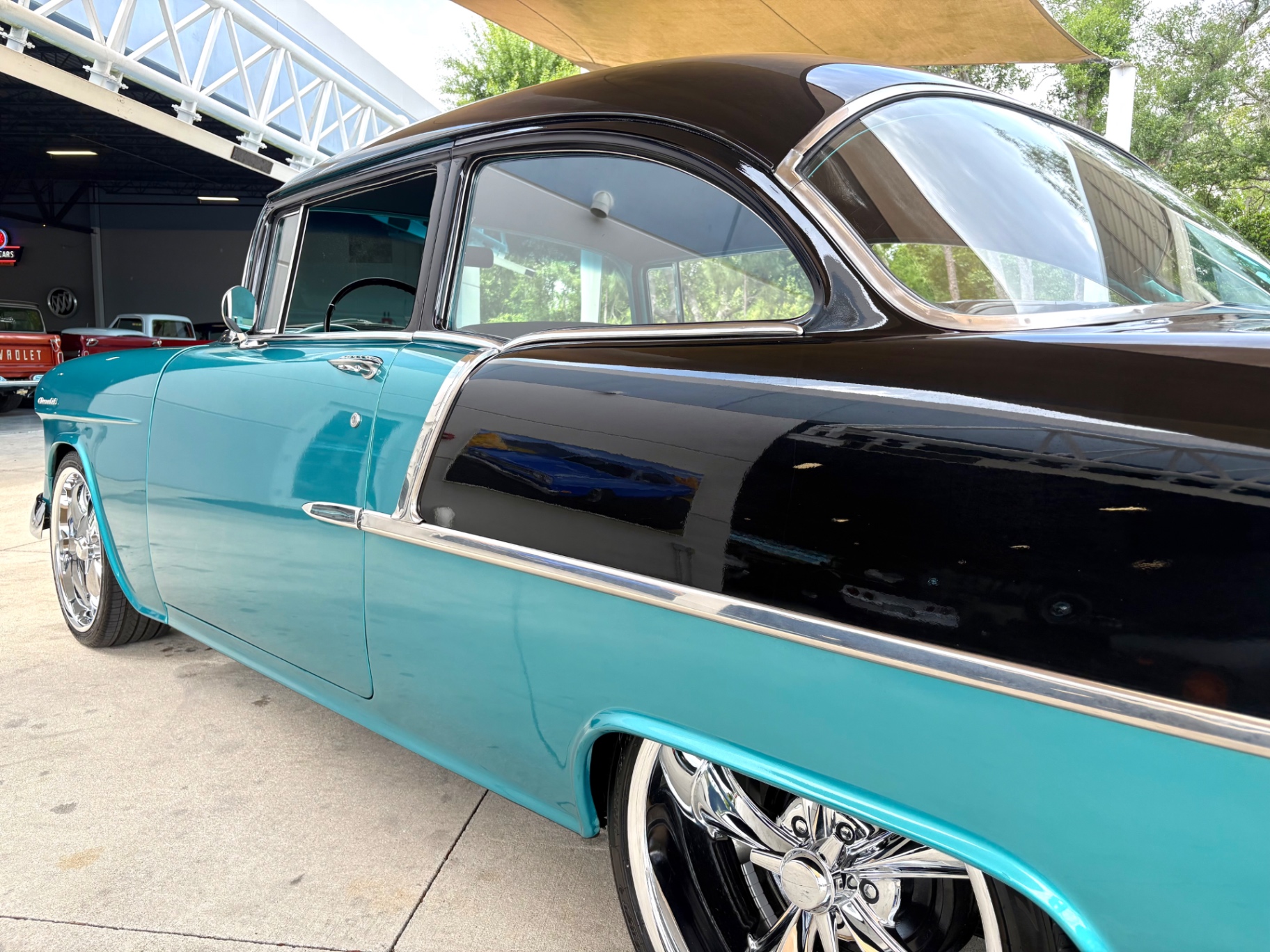
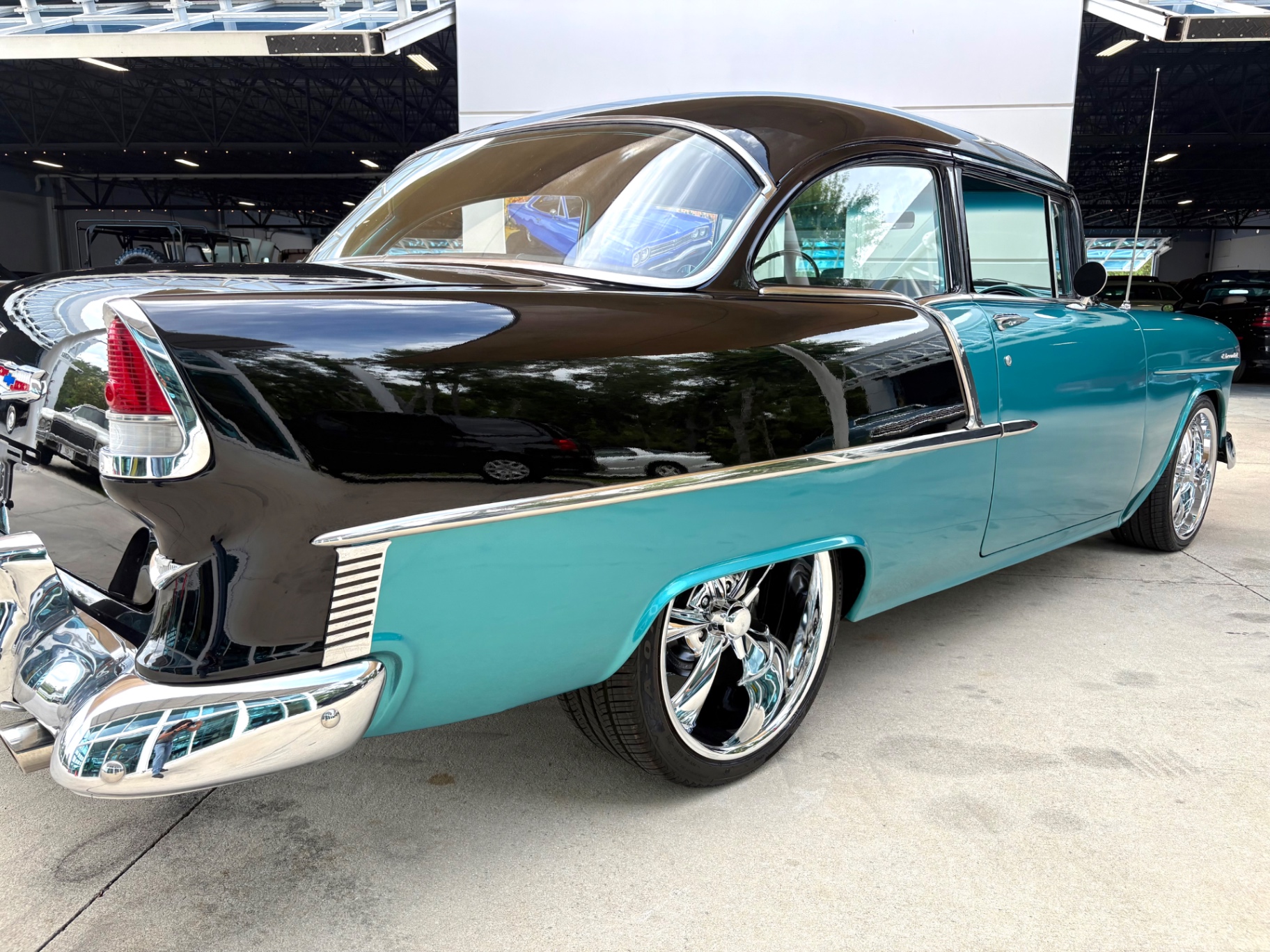
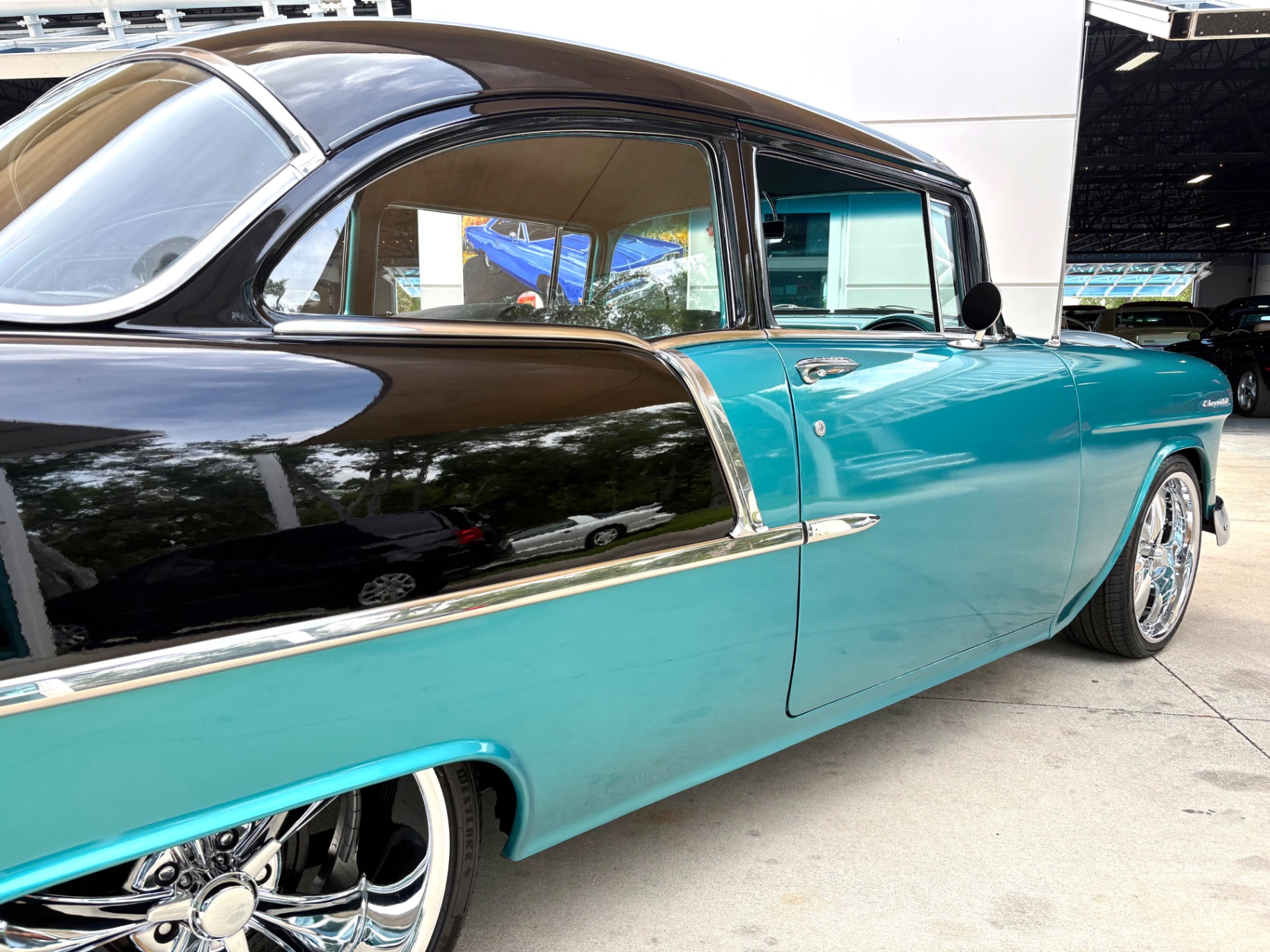
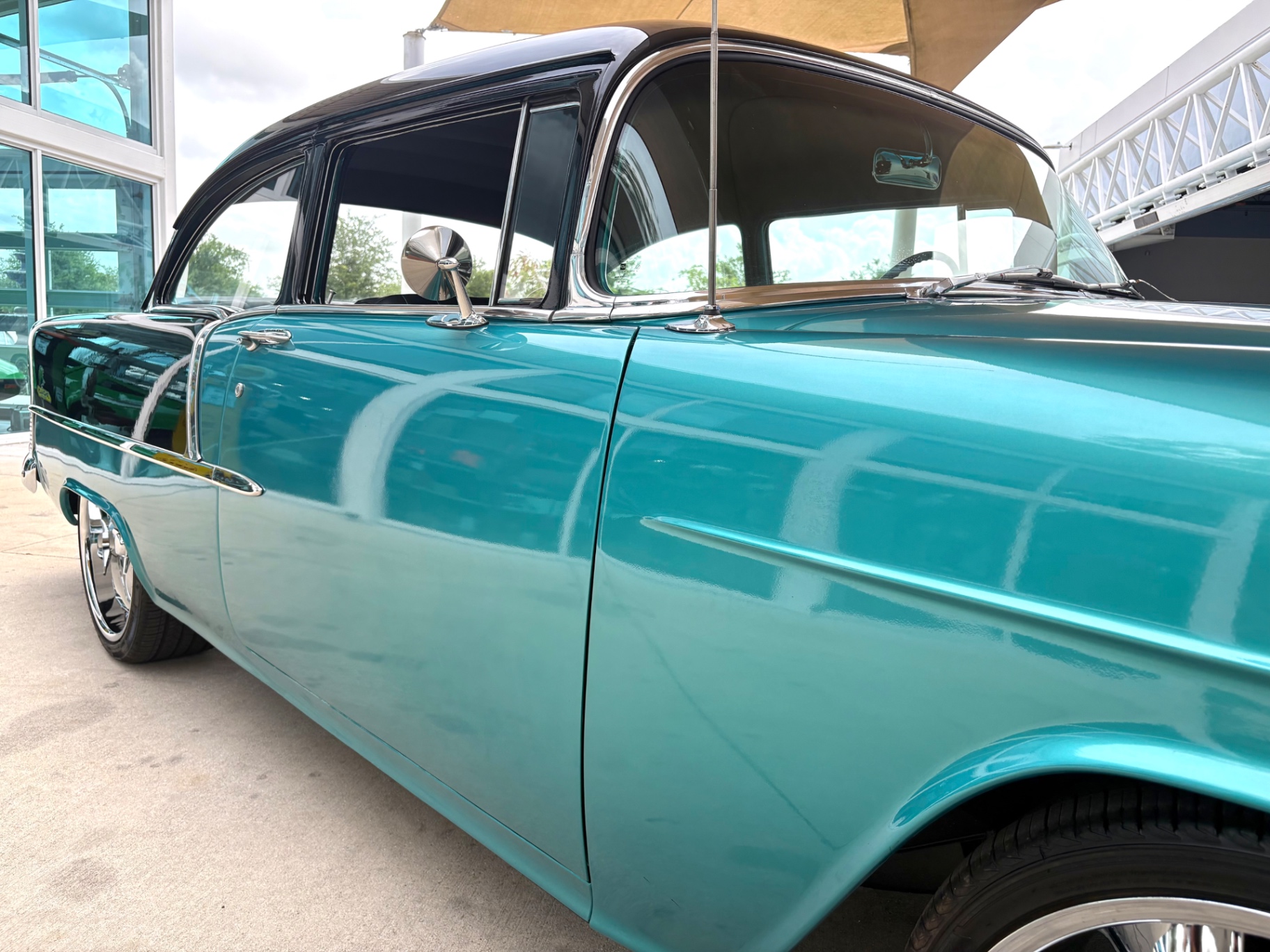
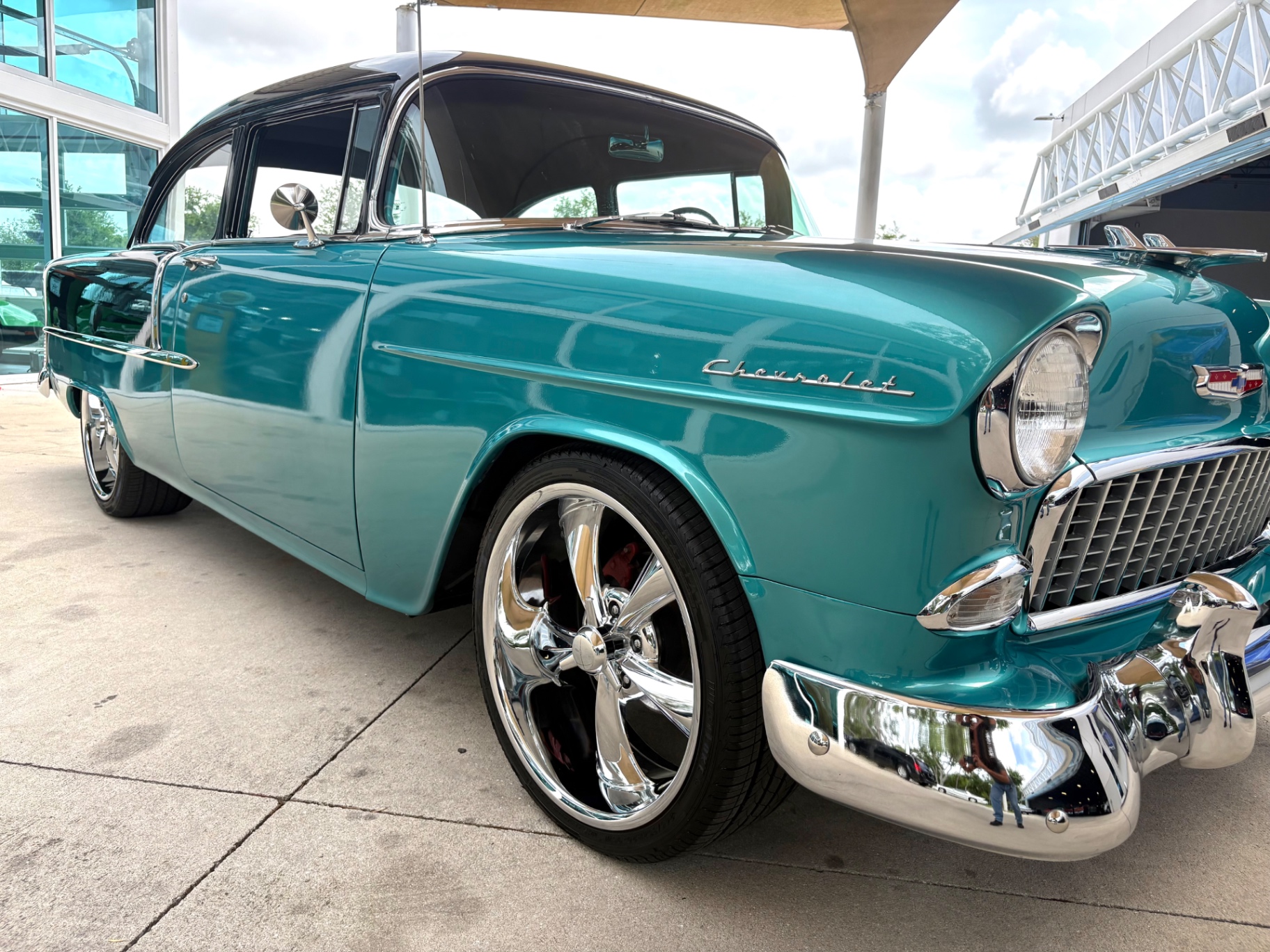
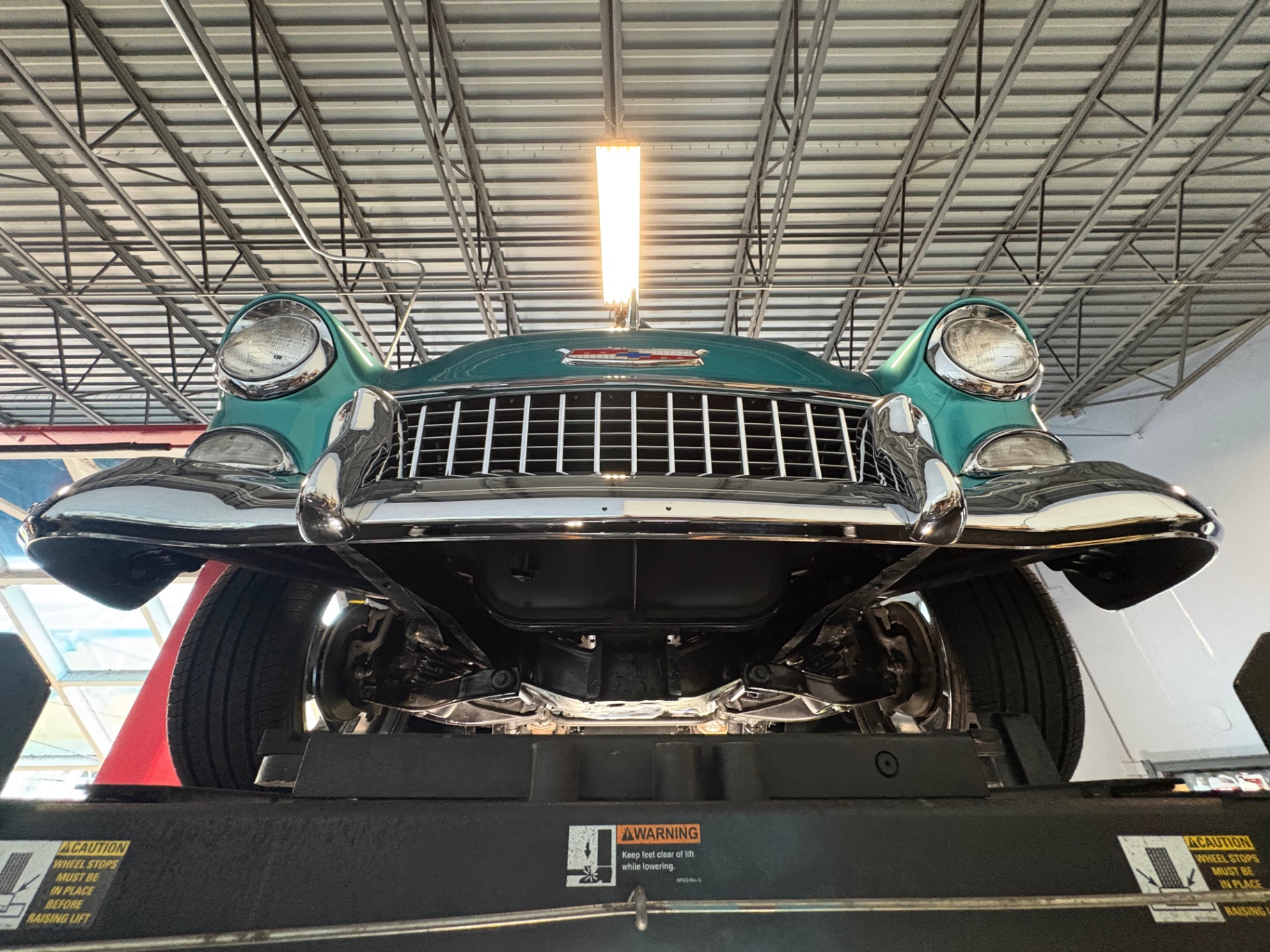
This car wears a two-tone turquoise and black combination applied in PPG paint — a professional-grade finish that shows the work of someone who understood color and panel prep. The turquoise occupies the lower body and hood while the black roof cap completes the contrast. The dividing line between the two colors runs cleanly across the beltline, which is where a two-tone on a 1955 Chevrolet 210 should sit to work properly with the body's natural character lines. New chrome bumpers, a new grille, and new glass were installed during the restoration, so the bright work is not aged or pitted. The 20-inch custom chrome wheels are a departure from period correctness — they're clearly a modern statement — but they fill the wheel openings in a way that works with the lowered stance of the car. The undercarriage is clean and finished, which confirms this was a thorough restoration rather than a surface refresh.
Conclusion
The 1955 Chevrolet 210 is one of those cars where the platform's fundamentals — the body design, the chassis geometry, the availability of quality aftermarket support — make it a logical foundation for exactly this kind of build. What you have here is a car that looks the part from twenty feet and then delivers on that promise when you open the door or lift the hood. The mechanical upgrades are thoughtful rather than extreme. The power steering, disc brakes, overdrive transmission, and EFI system make this a car you can actually use on a regular basis, not just trailer to shows. With only 1,159 miles on the restoration and over $85,000 invested, there is a substantial amount of work here that a buyer does not have to repeat.
To schedule a walk-around, ask questions, or make arrangements to see this 1955 Chevrolet 210 in person, call Skyway Classics in Sarasota, Florida at 941-254-6608.
Disclaimer Information found on the website is presented as given to us by the owner of the car, whether on consignment or from the owner we bought it from. Some Photos, materials for videos, descriptions and other information are provided by the consignor/seller and is deemed reliable, but Skyway Classics does not warranty or guarantee this information. Skyway Classics is not responsible for information that may incorrect or a publishing error. The decision to purchase should be based solely on the buyers personal inspection of the vehicle or by a professional inspection service prior to offer or purchase being made.
1955 Chevrolet 210 Two-Door Post — Restomod with 383 V8, Holley Sniper EFI, and 1,159 Miles Since Full Restoration
Why This Car Is Special
The 1955 Chevrolet 210 sits in an interesting position in automotive history. It was the middle child of the Tri-Five family — priced above the base 150 but below the Bel Air — yet it shared the same body, the same landmark small-block V8 option, and the same Ed Cole-designed chassis that made 1955 such a pivotal year for General Motors. The '55 Chevy was the car that proved American family transportation didn't have to be boring. With the introduction of the 265 cubic inch V8 that year, Chevrolet essentially rewrote what a mid-priced American car could do. The 210 in particular became the platform of choice for builders and hot rodders for decades precisely because it had all the bones of the Bel Air without the collector premium that sometimes gets in the way of actually driving the thing.
This specific 1955 Chevrolet 210 has been through a ground-up restoration with a strong restomod focus. The builder didn't chase a show trophy — they built something they intended to drive. Every major system on the car is new or freshly rebuilt, and with only 1,159 miles on the restoration, the work is essentially broken in but not worn. Over $85,000 was invested in getting this car to where it sits today, and the receipts show up in the details: PPG paint, a professional interior by M&M Interiors, CPP suspension components, a complete American AutoWire harness, and a 383 cubic inch stroker V8 topped with Holley Sniper electronic fuel injection. This is not a car that was cleaned up and flipped. It was rebuilt correctly, from the undercarriage up.
The VIN on this car decodes to a 1955 Chevrolet built in the Flint, Michigan assembly plant, confirming it as an early domestic production unit from the first full year of the Tri-Five generation.
Features List
383 cubic inch stroker V8 with 383 horsepower Holley Sniper electronic fuel injection with self-tuning closed-loop control Ceramic coated headers with Flowmaster mufflers and dual exhaust Chrome exhaust tips 700R4 four-speed automatic overdrive transmission CPP power steering CPP power disc brakes Aluminum radiator Vintage Air climate control system Dakota Digital gauge cluster with tachometer Ididit tilt steering column Impala steering wheel Custom interior by M&M Interiors — black vinyl with blue stitching Front bench seat Aftermarket stereo with power antenna Phone charger / USB New American AutoWire wiring harness 20-inch custom chrome wheels New tires PPG two-tone turquoise and black exterior paint New grille, glass, and chrome bumpers Clean undercarriage Only 1,159 miles since restoration Over $85,000 invested in restoration
Mechanical
The engine in this 1955 Chevrolet 210 is a 383 cubic inch stroker V8 — a combination built by taking a 350 block and fitting it with a 400 crankshaft to achieve the larger displacement. Rated at 383 horsepower, it produces significantly more torque across a broader RPM range than the original 265 or even the later 283 that Chevrolet offered in the Tri-Five years. The heads are angle plug units, which improve combustion chamber efficiency and give better access for maintenance compared to straight plug configurations.
Fuel delivery is handled by a Holley Sniper EFI system, which replaces a carburetor with a throttle body unit that self-tunes using a wideband oxygen sensor and an internal ECU. The Sniper learns fuel maps on the fly and compensates for changes in temperature, altitude, and engine wear. What that means practically is easier cold starts, no stumbling on acceleration, and consistent fuel economy — all without giving up the look of a traditional intake setup under the hood. The ceramic coated headers help retain exhaust heat in the pipe rather than radiating it into the engine bay, which improves flow and reduces underhood temperatures. Flowmaster mufflers handle tone control on the dual exhaust, exiting through polished chrome tips at the rear.
Backing the engine is a 700R4 four-speed automatic overdrive transmission. This is an important upgrade for a car like this because the overdrive fourth gear drops engine RPM significantly at highway speeds compared to a non-overdrive three-speed. It makes the 1955 Chevrolet 210 a comfortable long-distance car, not just a show piece. The cooling system uses an aluminum radiator, which dissipates heat more efficiently than the original copper-brass unit and saves weight in the front of the car.
CPP — Classic Performance Products — supplied both the power steering and the power disc brake conversion. CPP is one of the more respected names in the Tri-Five aftermarket, and their components are engineered specifically for these cars rather than adapted from something else. The result is steering effort and brake feel that is predictably modern without requiring unusual modifications to the chassis. The undercarriage photos confirm what the build sheet claims — the framing and floor structure are solid and clean, with no visible rust or makeshift repairs.
Interior
The interior of this 1955 Chevrolet 210 was completed by M&M Interiors using black vinyl throughout, with blue stitching as the accent detail that ties the cabin to the turquoise exterior. The front bench seat is correctly proportioned for the body and has been recovered to match the door panels and headliner. The vertical stitch pattern on the door panels is period-appropriate in style while being clearly custom in execution — you can see the quality of the work in the panel photos, where the stitching lines are consistent and the panel fit against the door structure is tight.
Instrumentation has been replaced with a Dakota Digital gauge cluster, which provides accurate readings for all primary functions — fuel, temperature, oil pressure, voltage — and integrates a tachometer. The original 1955 Chevrolet 210 came with a relatively sparse instrument panel, so this is a meaningful functional upgrade. The Ididit tilt column allows the driver to adjust the wheel angle, and the Impala steering wheel is a tasteful choice that fits the era without being a replica of the factory unit.
Vintage Air provides climate control, which is one of the most impactful comfort upgrades possible on a car this age. Vintage Air systems are fully engineered for specific applications and use modern refrigerants and components. The aftermarket stereo is paired with a power antenna and includes a phone charging port — practical features that don't require cutting into the dash or compromising the look of the restoration. A complete American AutoWire harness replaces the aging original wiring, which eliminates the fire risk and electrical gremlins that come with 70-year-old insulation and corroded terminals.
Exterior
The 1955 Chevrolet 210 was designed by a team that included Carl Renner and was influenced by early Ferrari shapes — the egg-crate grille, the two-tone color schemes, and the wraparound windshield all reflected what was happening in European sports car design at the time. Chevrolet applied those influences to a car that sold for a fraction of the price, and the result held up well enough that the Tri-Five body is still considered one of the best-proportioned American designs of the postwar era.
This car wears a two-tone turquoise and black combination applied in PPG paint — a professional-grade finish that shows the work of someone who understood color and panel prep. The turquoise occupies the lower body and hood while the black roof cap completes the contrast. The dividing line between the two colors runs cleanly across the beltline, which is where a two-tone on a 1955 Chevrolet 210 should sit to work properly with the body's natural character lines. New chrome bumpers, a new grille, and new glass were installed during the restoration, so the bright work is not aged or pitted. The 20-inch custom chrome wheels are a departure from period correctness — they're clearly a modern statement — but they fill the wheel openings in a way that works with the lowered stance of the car. The undercarriage is clean and finished, which confirms this was a thorough restoration rather than a surface refresh.
Conclusion
The 1955 Chevrolet 210 is one of those cars where the platform's fundamentals — the body design, the chassis geometry, the availability of quality aftermarket support — make it a logical foundation for exactly this kind of build. What you have here is a car that looks the part from twenty feet and then delivers on that promise when you open the door or lift the hood. The mechanical upgrades are thoughtful rather than extreme. The power steering, disc brakes, overdrive transmission, and EFI system make this a car you can actually use on a regular basis, not just trailer to shows. With only 1,159 miles on the restoration and over $85,000 invested, there is a substantial amount of work here that a buyer does not have to repeat.
To schedule a walk-around, ask questions, or make arrangements to see this 1955 Chevrolet 210 in person, call Skyway Classics in Sarasota, Florida at 941-254-6608.
Disclaimer Information found on the website is presented as given to us by the owner of the car, whether on consignment or from the owner we bought it from. Some Photos, materials for videos, descriptions and other information are provided by the consignor/seller and is deemed reliable, but Skyway Classics does not warranty or guarantee this information. Skyway Classics is not responsible for information that may incorrect or a publishing error. The decision to purchase should be based solely on the buyers personal inspection of the vehicle or by a professional inspection service prior to offer or purchase being made.
1955 Chevrolet
210 Base
Why Choose Skyway Classics?
Explore our curated inventory of classic and collector cars—thoughtfully selected, ready to drive, and supported by experts who make ownership simple.
Expert Curation
Every vehicle is hand-selected by our experts for quality, authenticity, and investment potential.
Fast Transactions
Streamlined buying and selling process with quick financing and immediate delivery options.
Only National Dealer With Classic Service & Repair
We’re the only national dealership that services and repairs the classics we sell—before and after the sale.
Nationwide Network
Access to our extensive network of collectors, restorers, and classic car enthusiasts nationwide.
Concierge Ownership Support
From financing and insurance to paperwork, shipping, and titling—we handle the details so you can enjoy the drive.
Passion-Driven Service
We're classic car enthusiasts first, providing personalized service with genuine passion for the hobby.