
1969 Chevrolet
Camaro RS Resto Mod
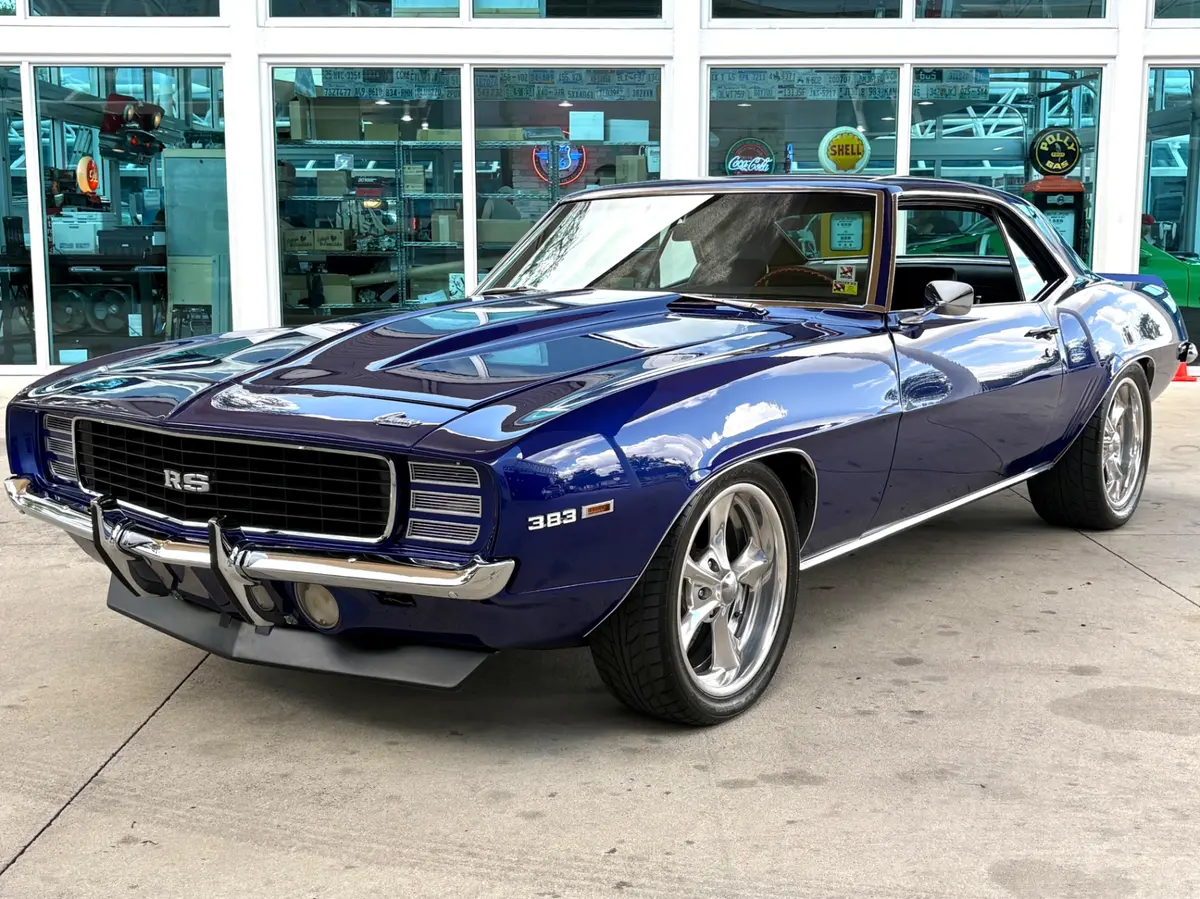
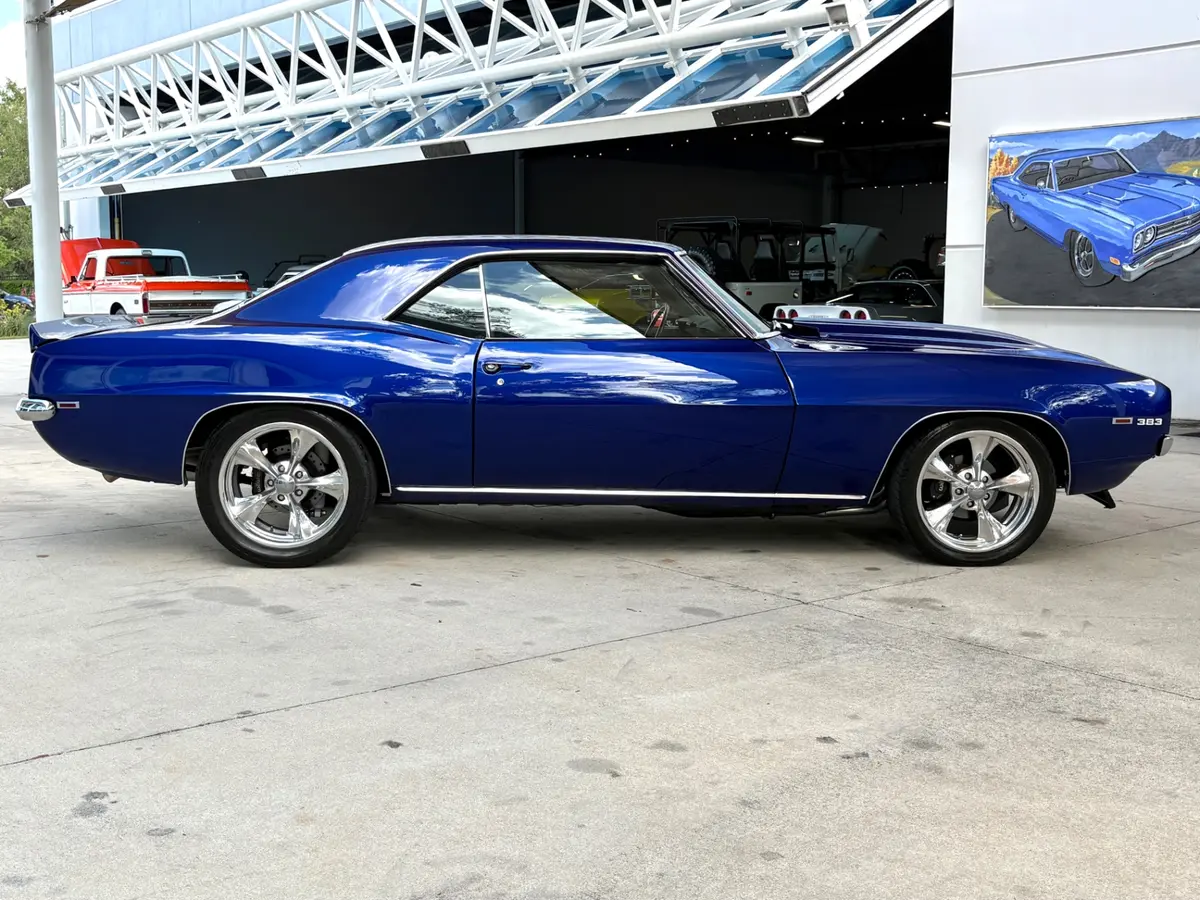
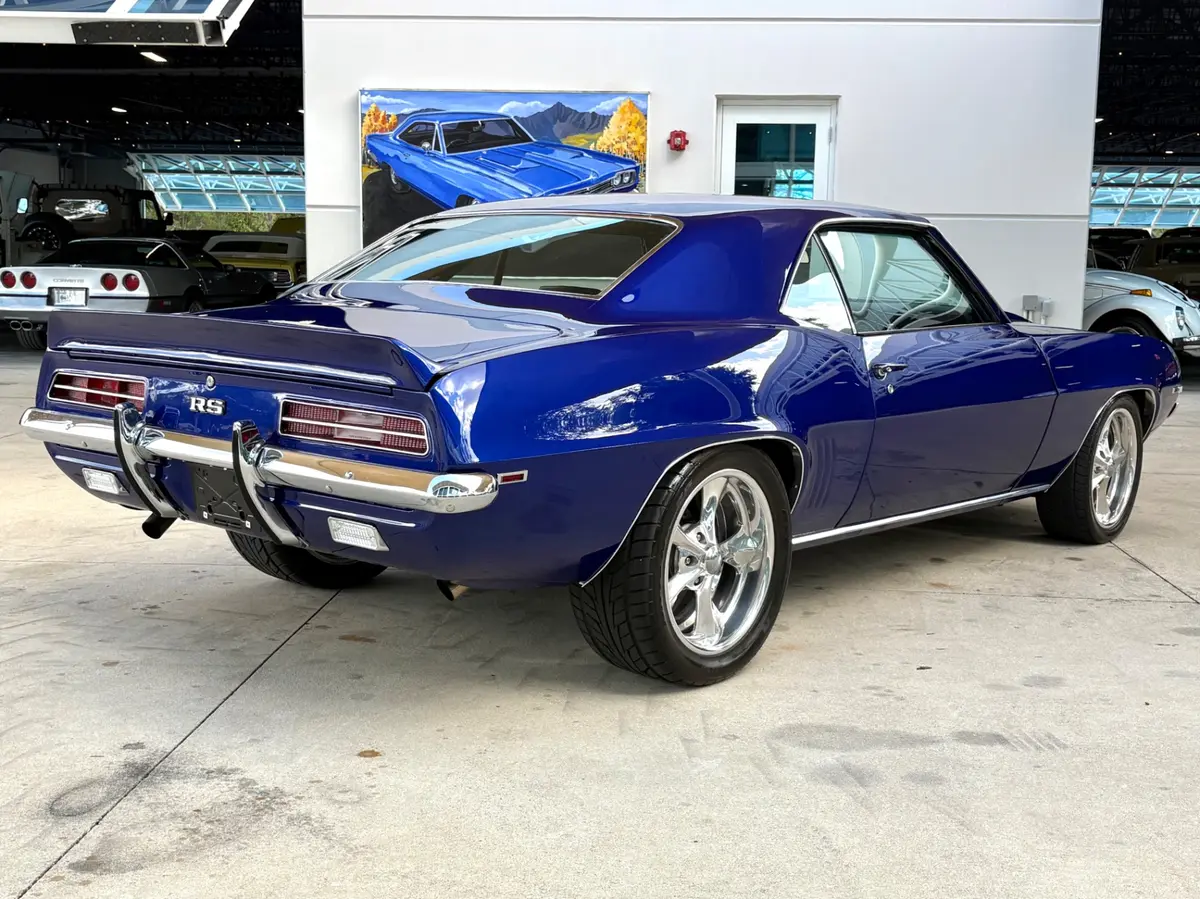
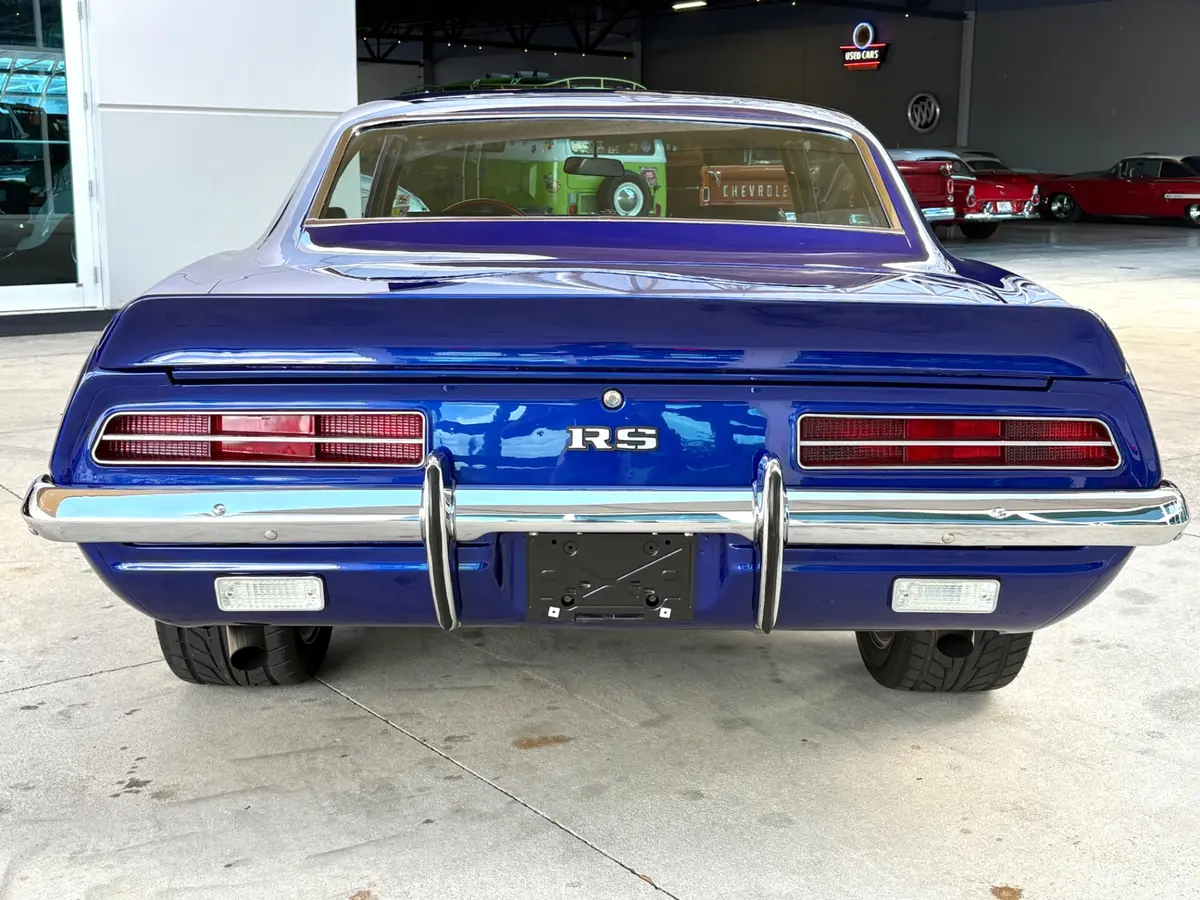
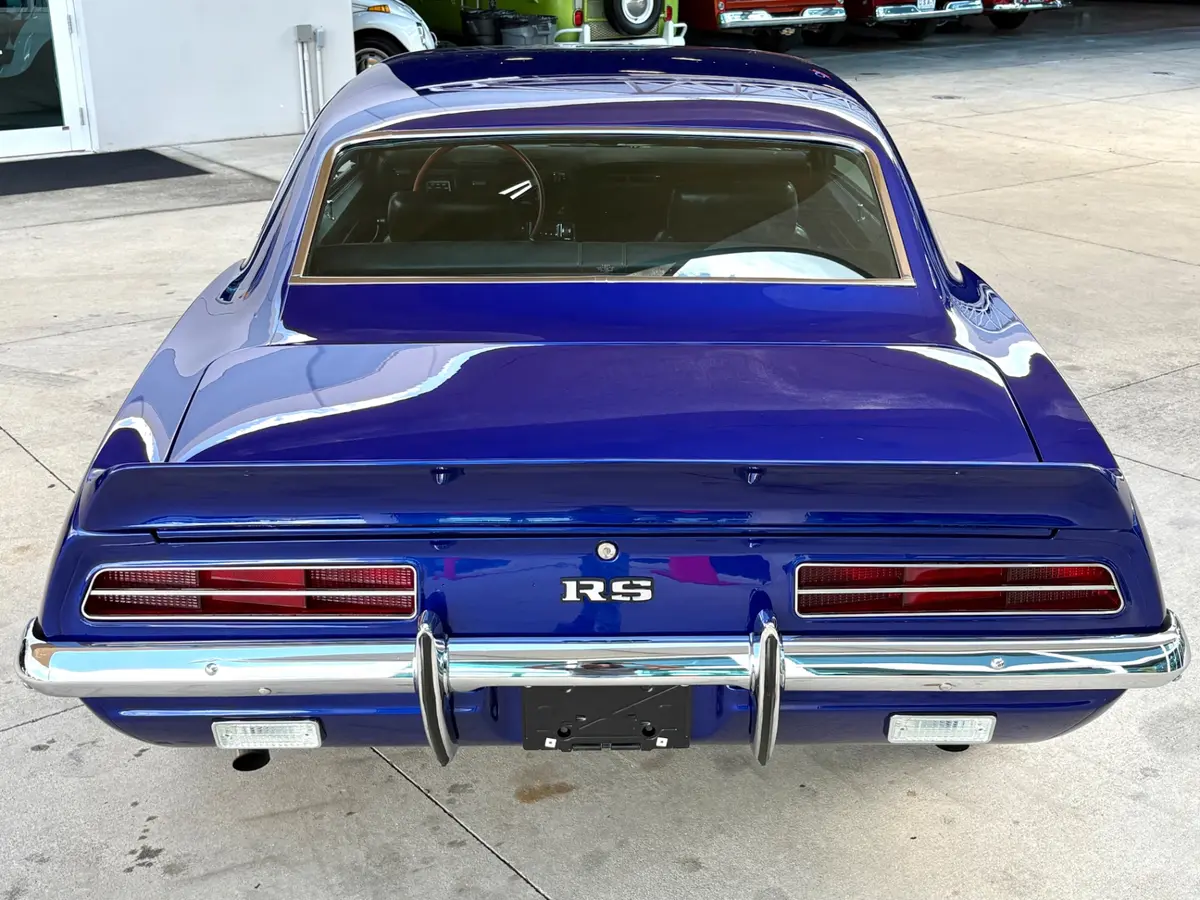
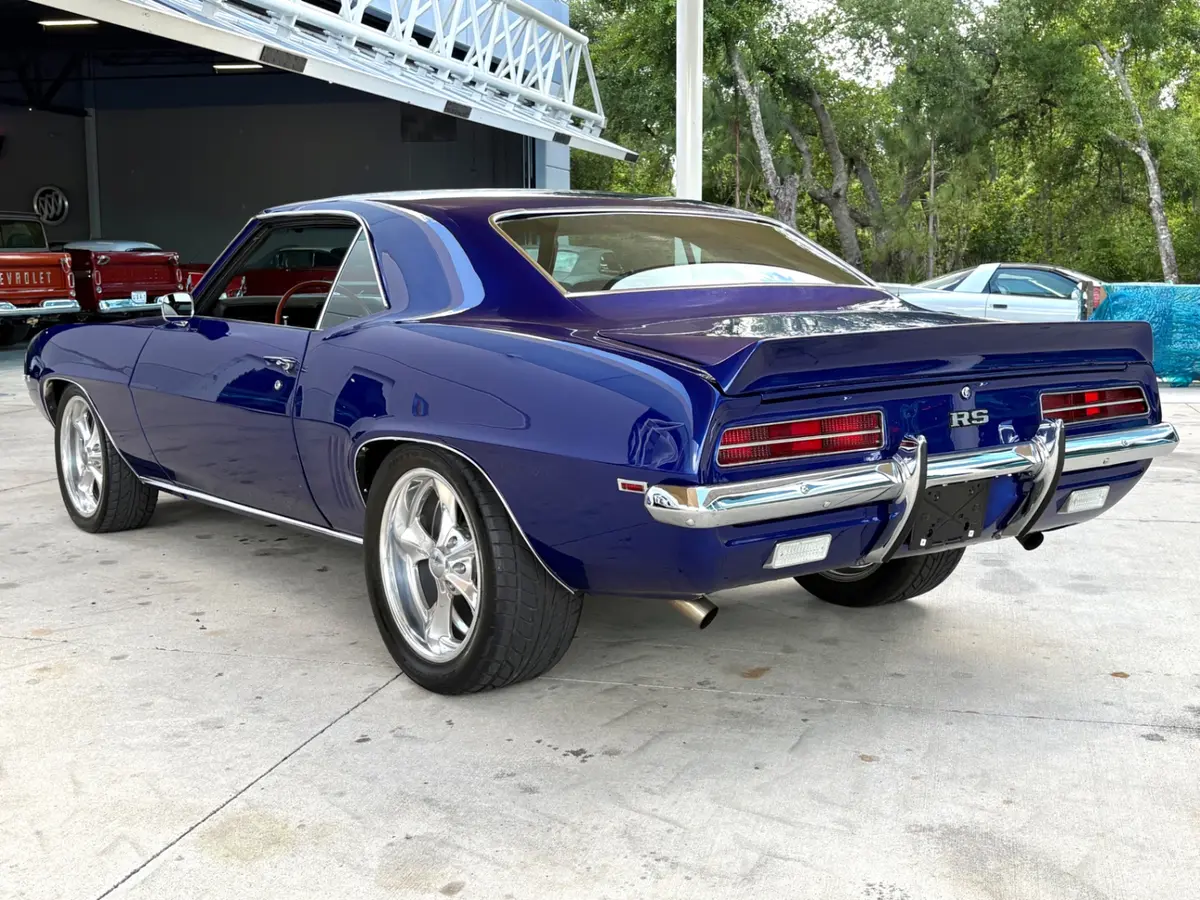
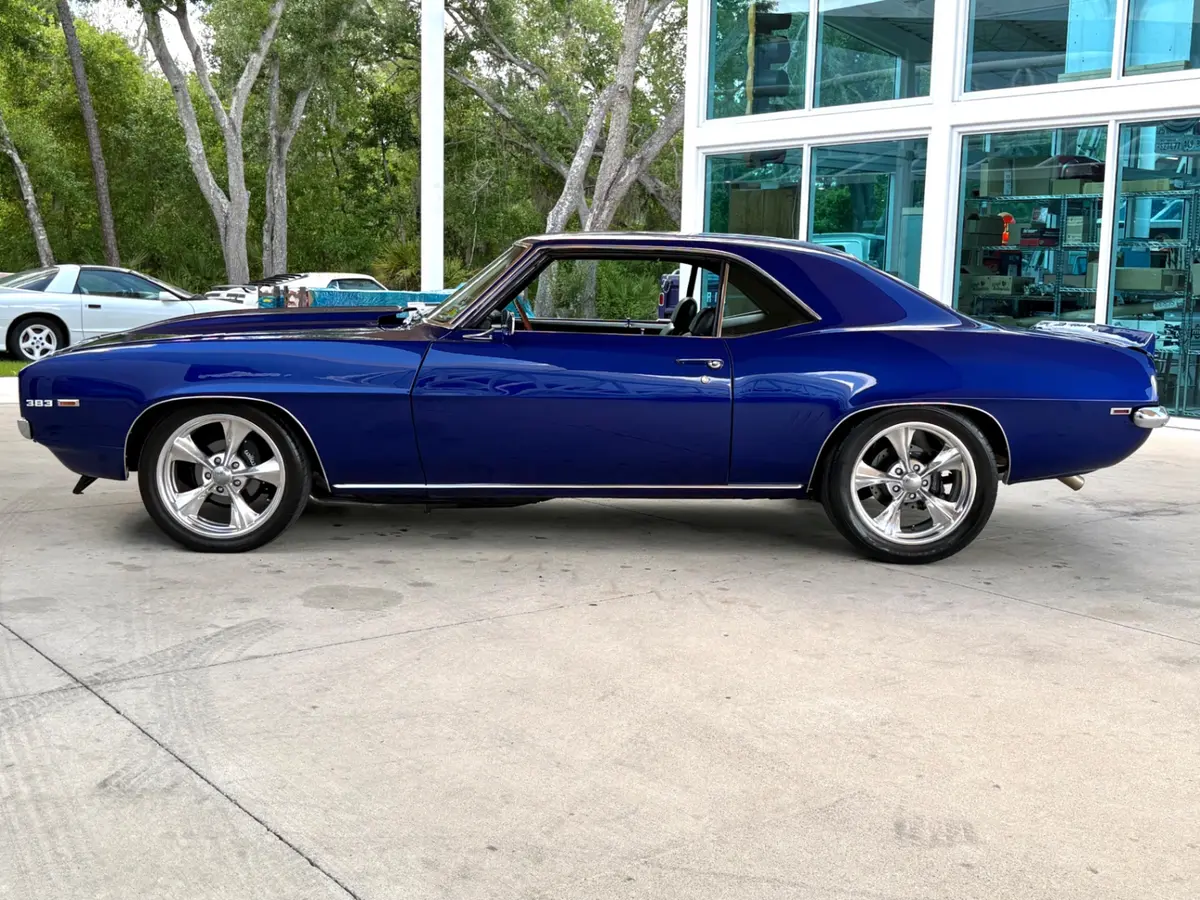
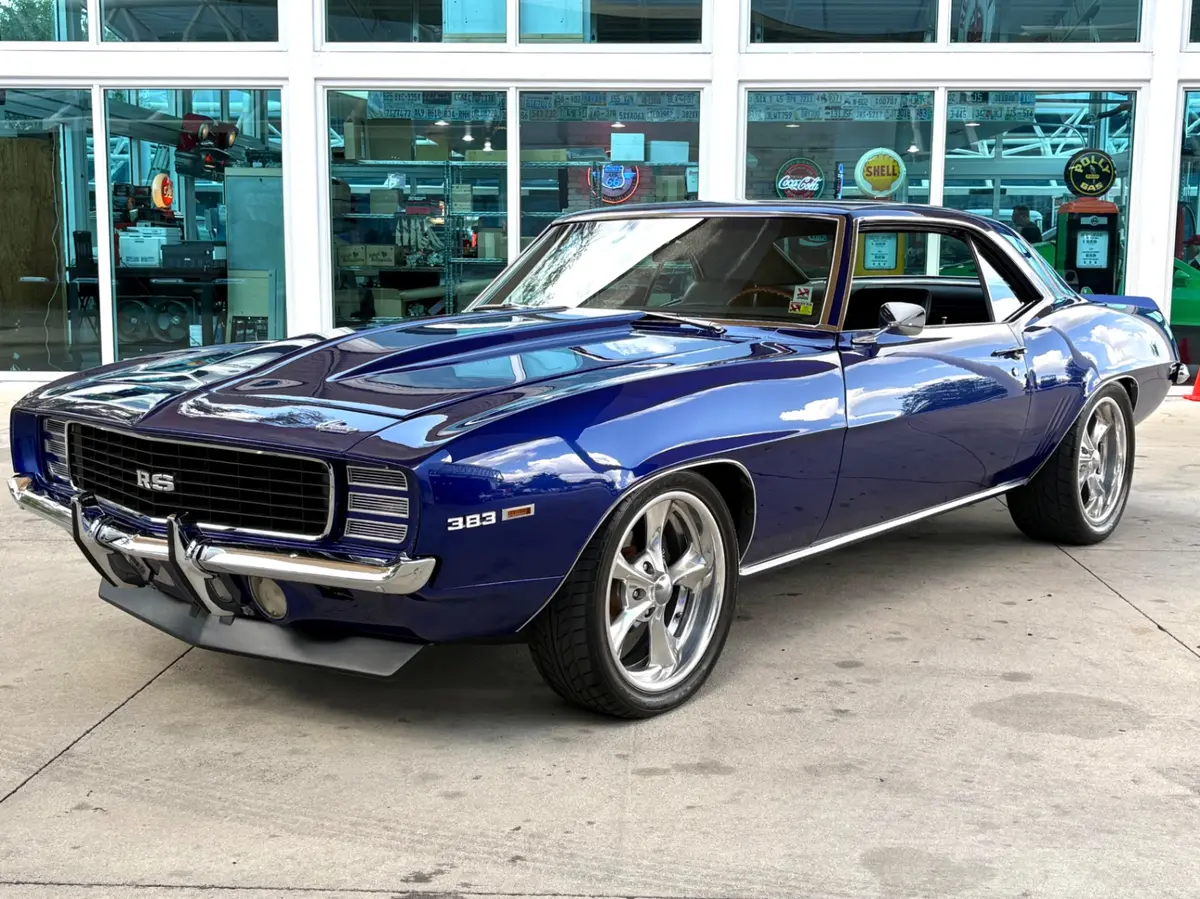
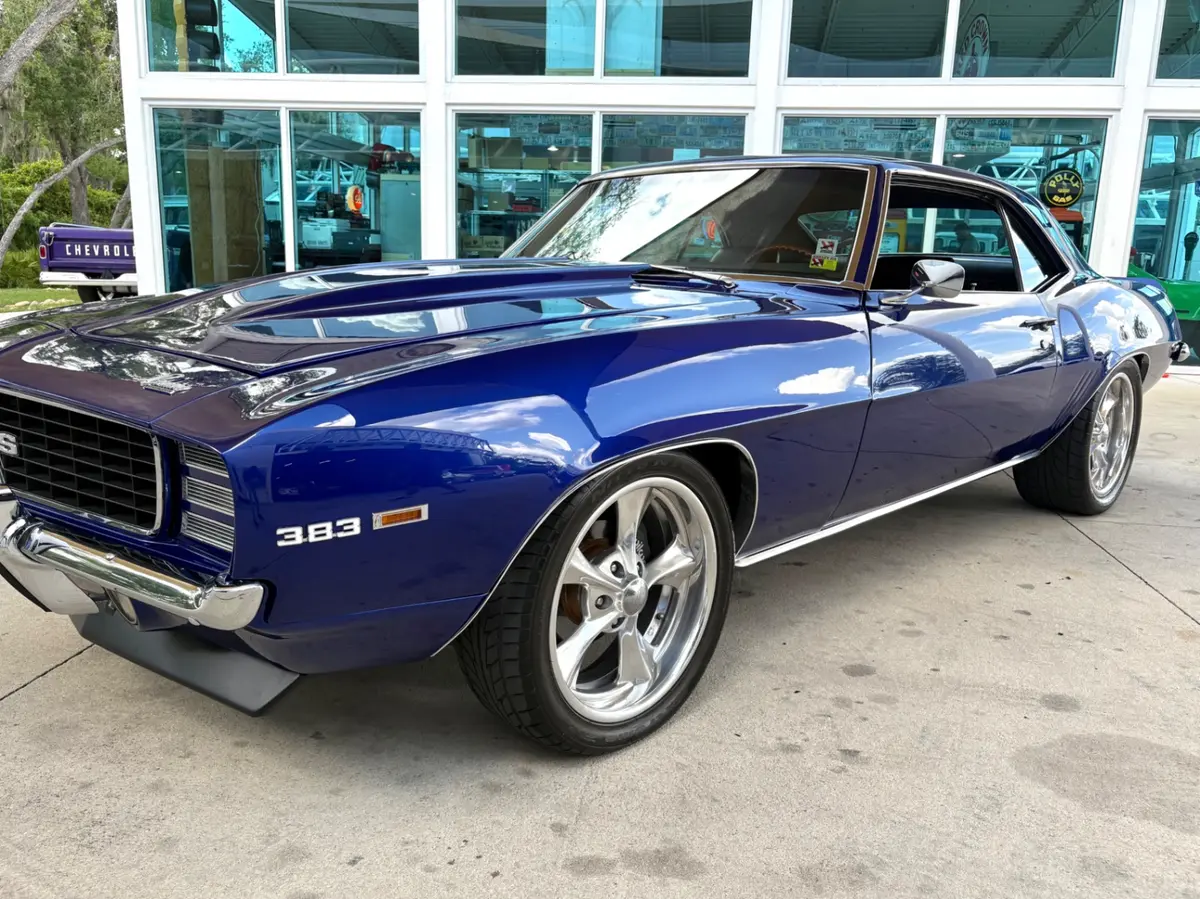
1969 Chevrolet Camaro RS — Frame-Off Resto-Mod, 383 Stroker, NSRA Award Winner
Why This Car Is Special
The 1969 Chevrolet Camaro is widely regarded as the high-water mark of the first-generation platform. Chevrolet redesigned the body that year with a longer nose, a more aggressive roofline, and sharper character lines — changes significant enough that many collectors treat the 1969 model as its own category rather than simply a continuation of the 1967–68 cars. Chevrolet produced just over 243,000 Camaros for 1969, and the RS (Rally Sport) package — identified in the VIN by the model designation — added the iconic hidden headlight system, specific RS badging, and a blacked-out grille treatment that gave the car a distinctly different face from the standard model. It was a pure appearance package, not a performance upgrade, which made it easy to combine with the SS or Z/28 hardware underneath. This particular 1969 Chevrolet Camaro RS has gone several steps beyond what any factory ever offered, built as a full rotisserie, frame-off resto-mod to a level that earned it NSRA recognition. The Pro Pick Prize at an NSRA event is not handed out casually — judges at that level are looking at fit, finish, engineering, and execution as a complete package. This car checked every box.
Features List
- 383 Stroker V8 with Holley Sniper EFI
- Hydraulic roller camshaft, roller lifters, and roller rockers
- 10:1 compression forged pistons
- Aluminum cylinder heads with Edelbrock intake manifold
- HEI ignition
- Chevrolet Orange paint on engine, valve covers, and air cleaner
- 700R4 4-speed automatic transmission with overdrive
- 3,500-stall torque converter
- Heavy-duty Fab 9-inch rear end
- 3-inch ceramic-coated exhaust with X-pipe and Magnaflow mufflers
- Beefed-up performance suspension with new front and rear shocks
- 4-wheel Wilwood disc brakes with drilled and slotted rotors
- Power steering and power brakes
- Staggered Billet Specialties wheels — 18x8 front, 18x9.5 rear (approximate stagger)
- Front: 225/45/18 Nitto radials — Rear: 285/40/18 Nitto radials
- Dark Blue Metallic modern basecoat/clearcoat finish
- Cowl induction hood and ducktail rear spoiler
- Detroit Speed electric hideaway headlights
- Blacked-out grille with oval fog lights and chin spoiler
- Chrome bumpers and brightwork
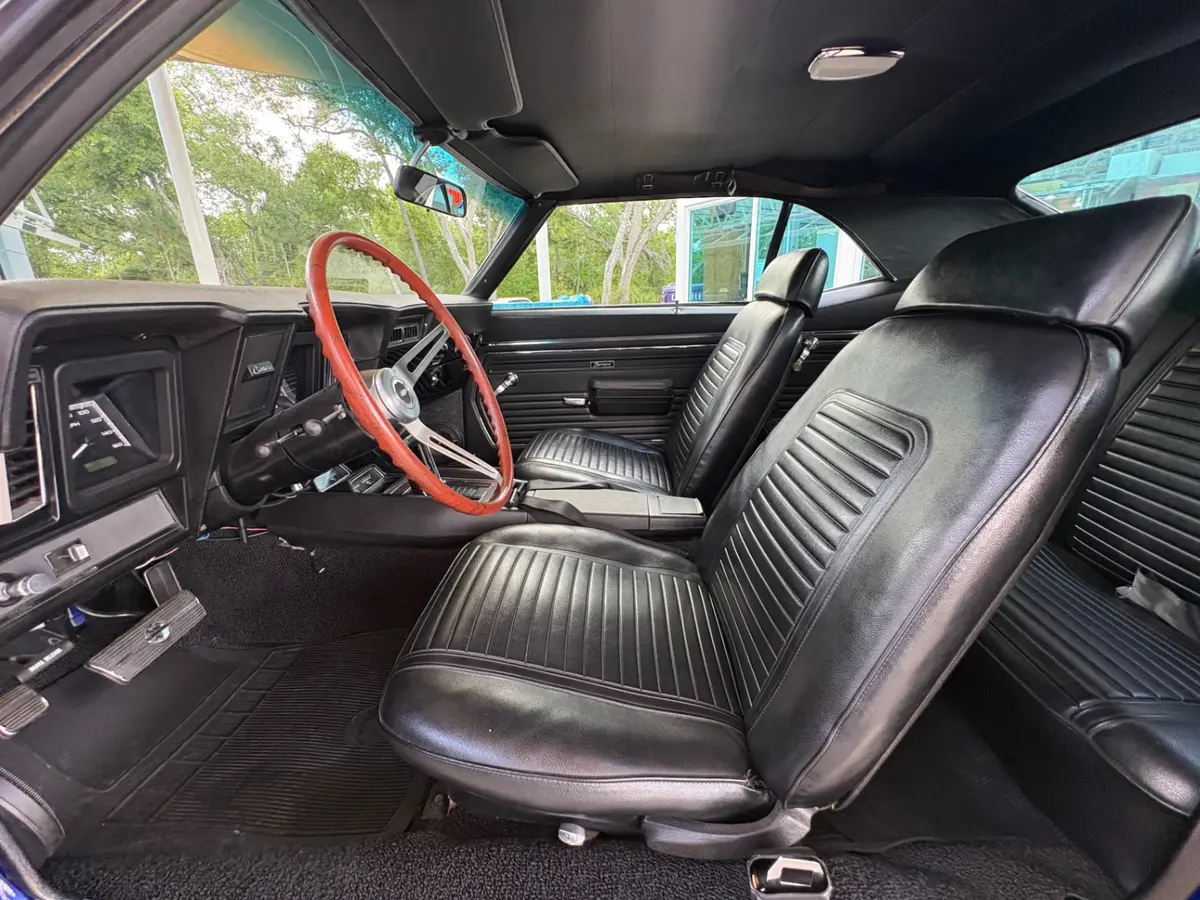
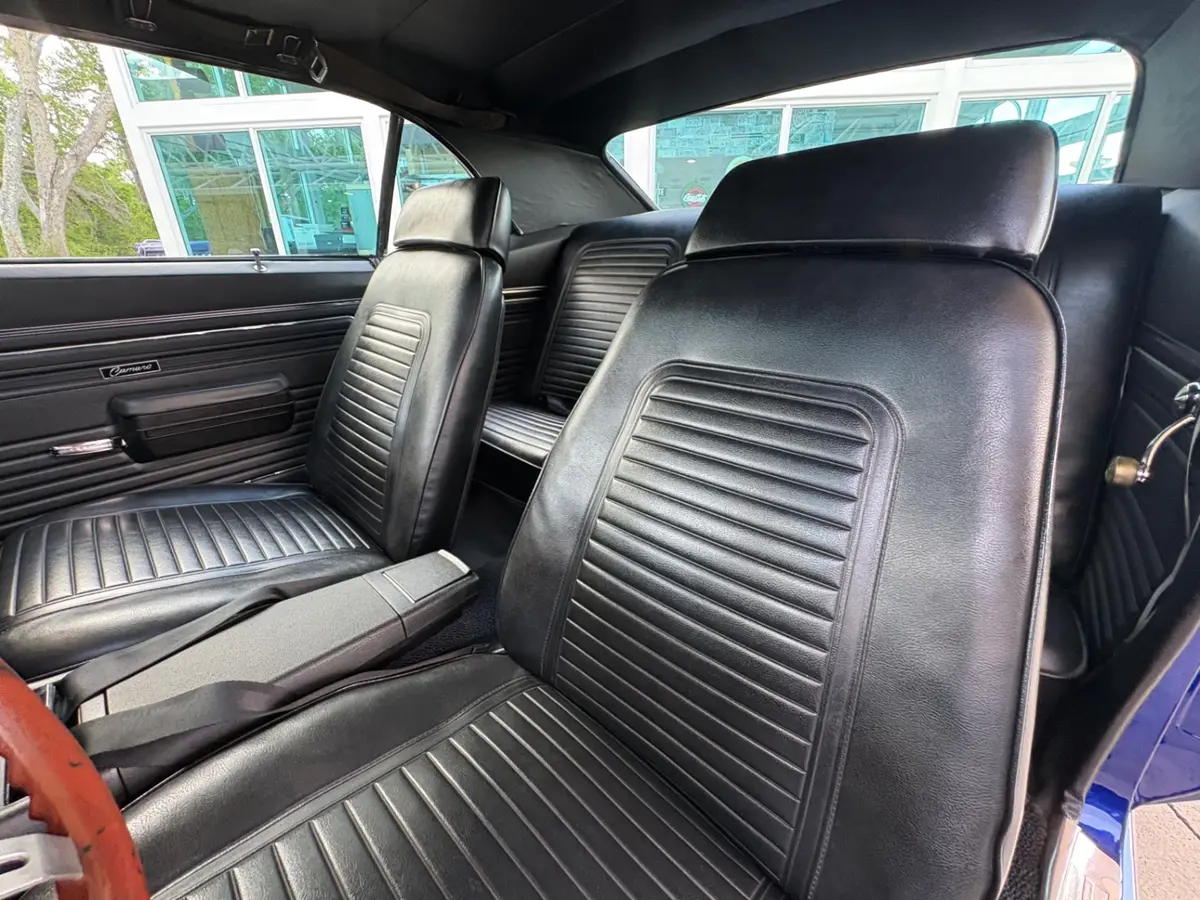
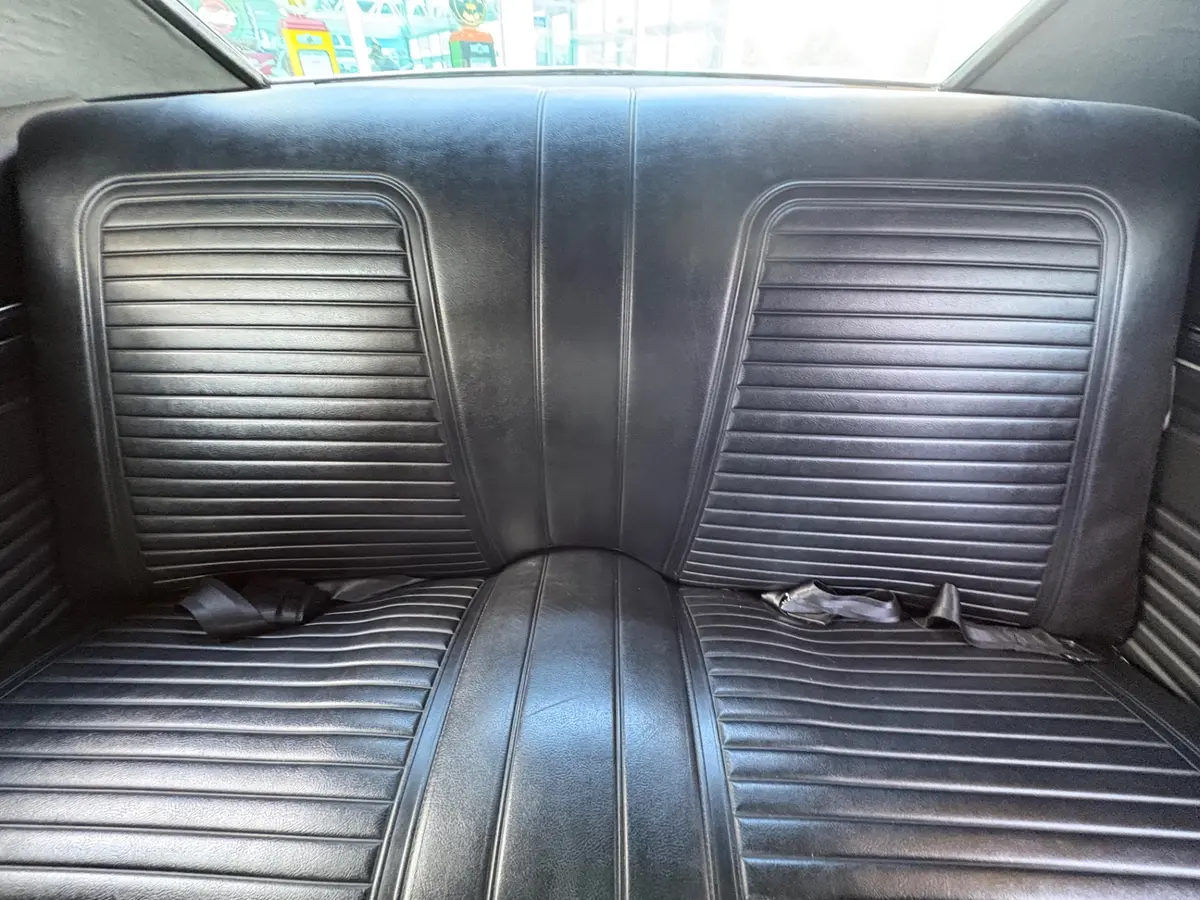
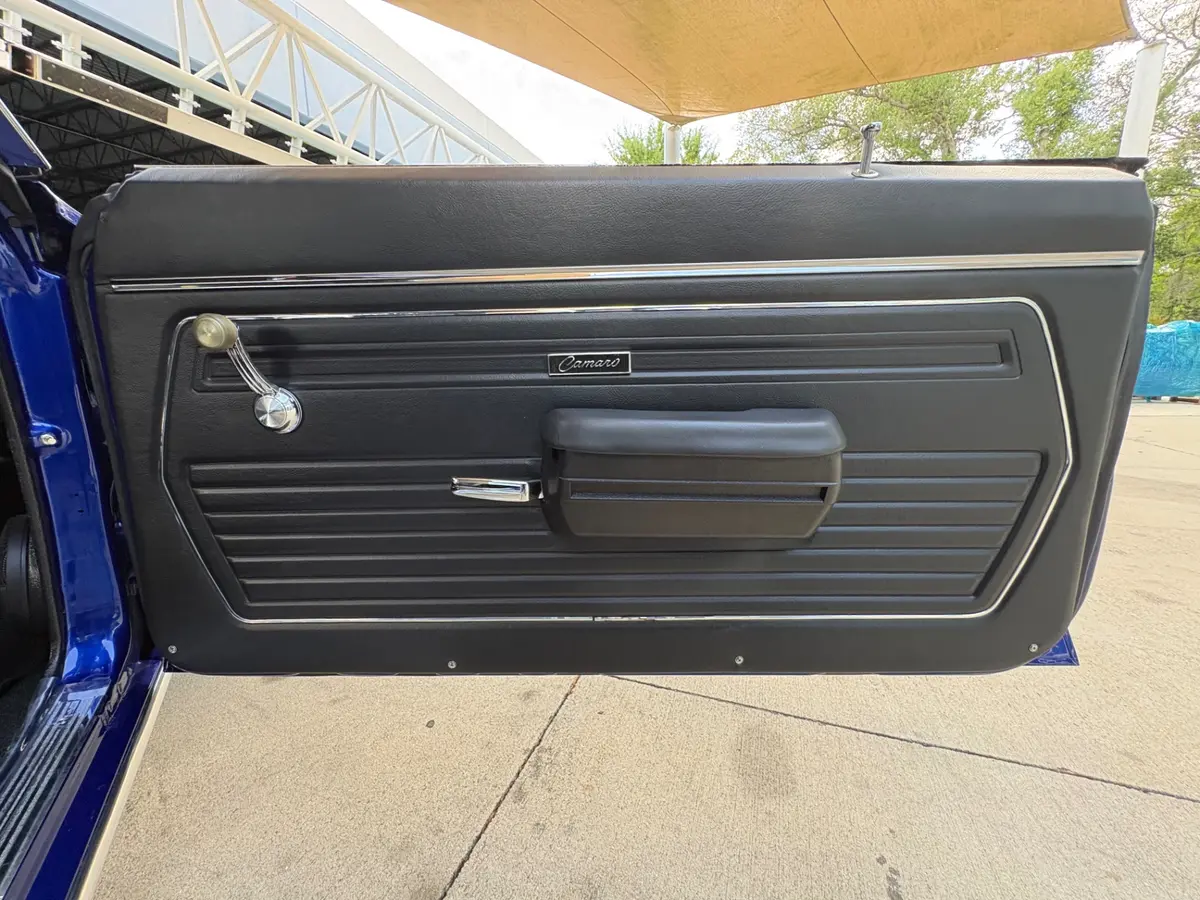
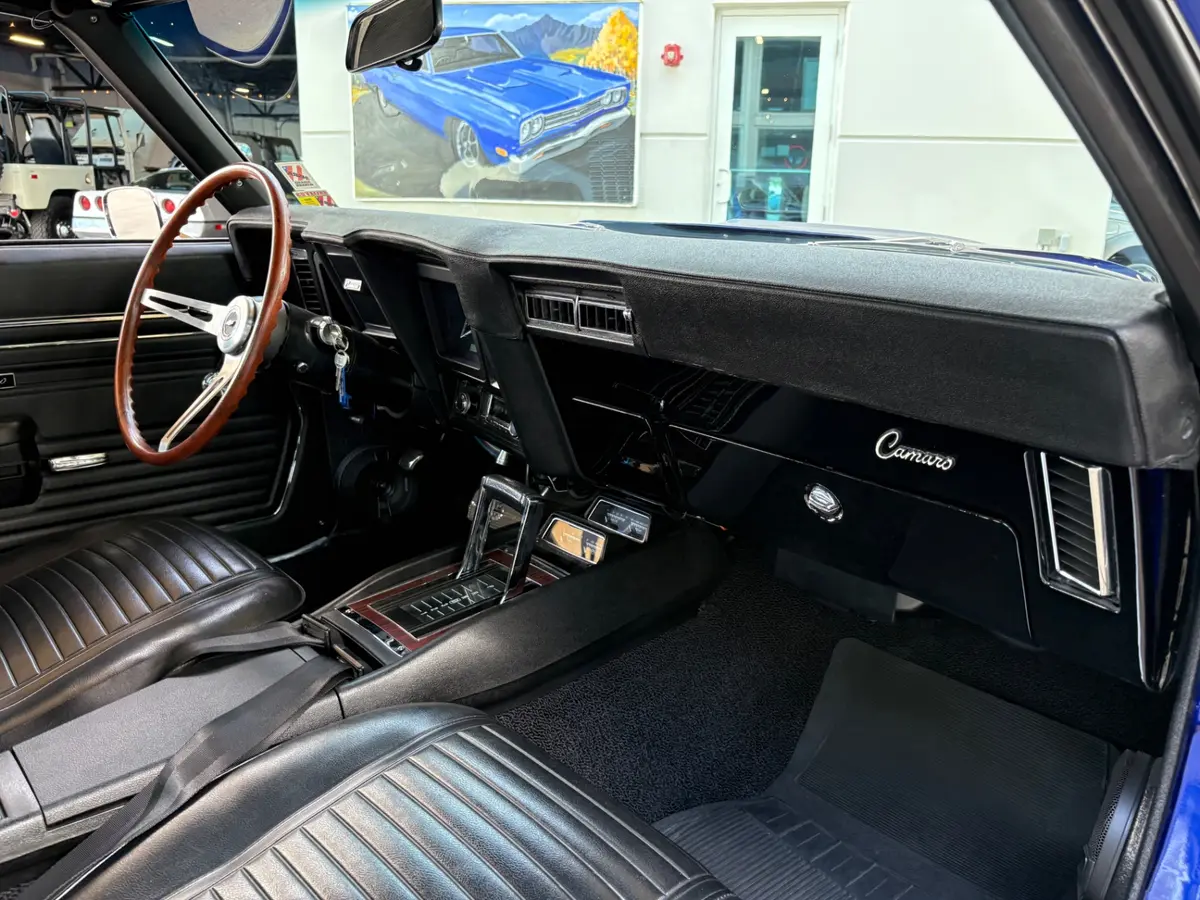
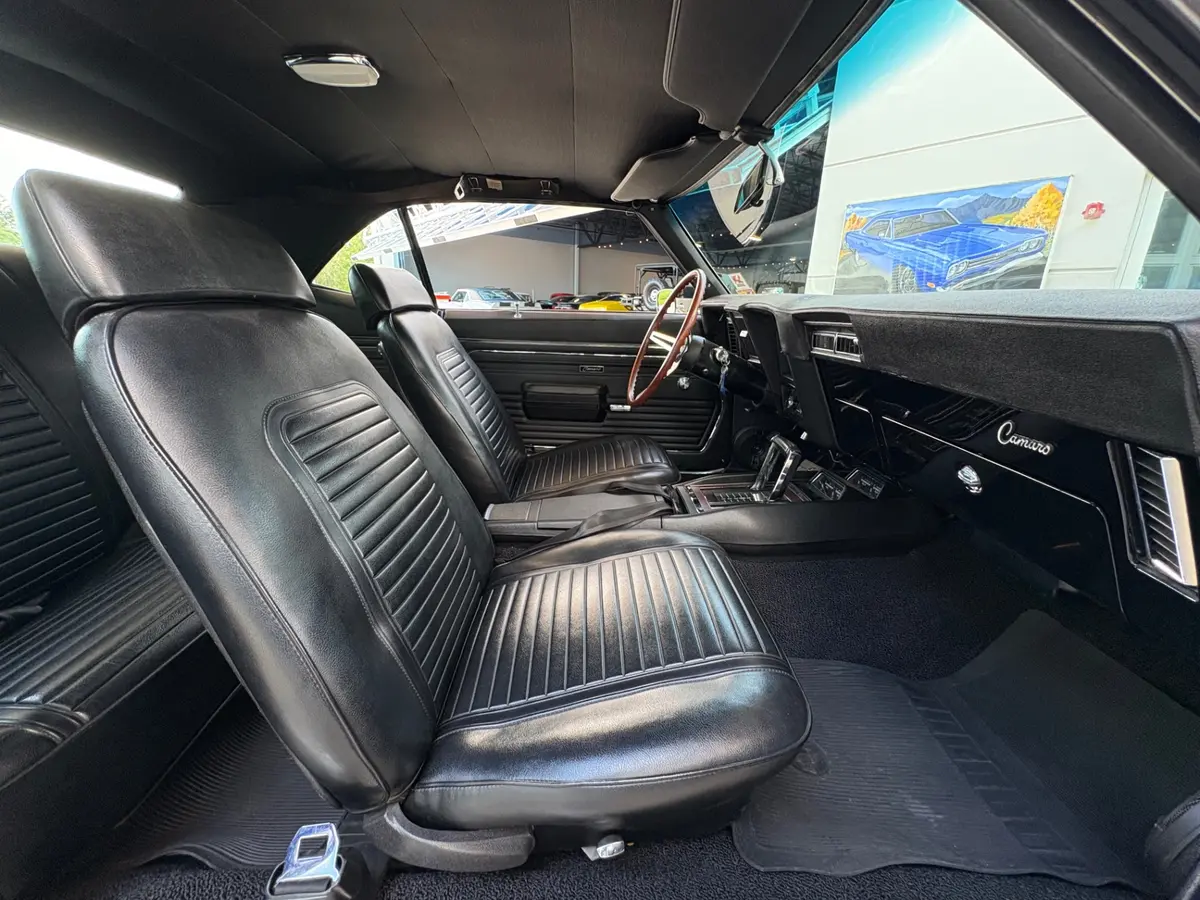
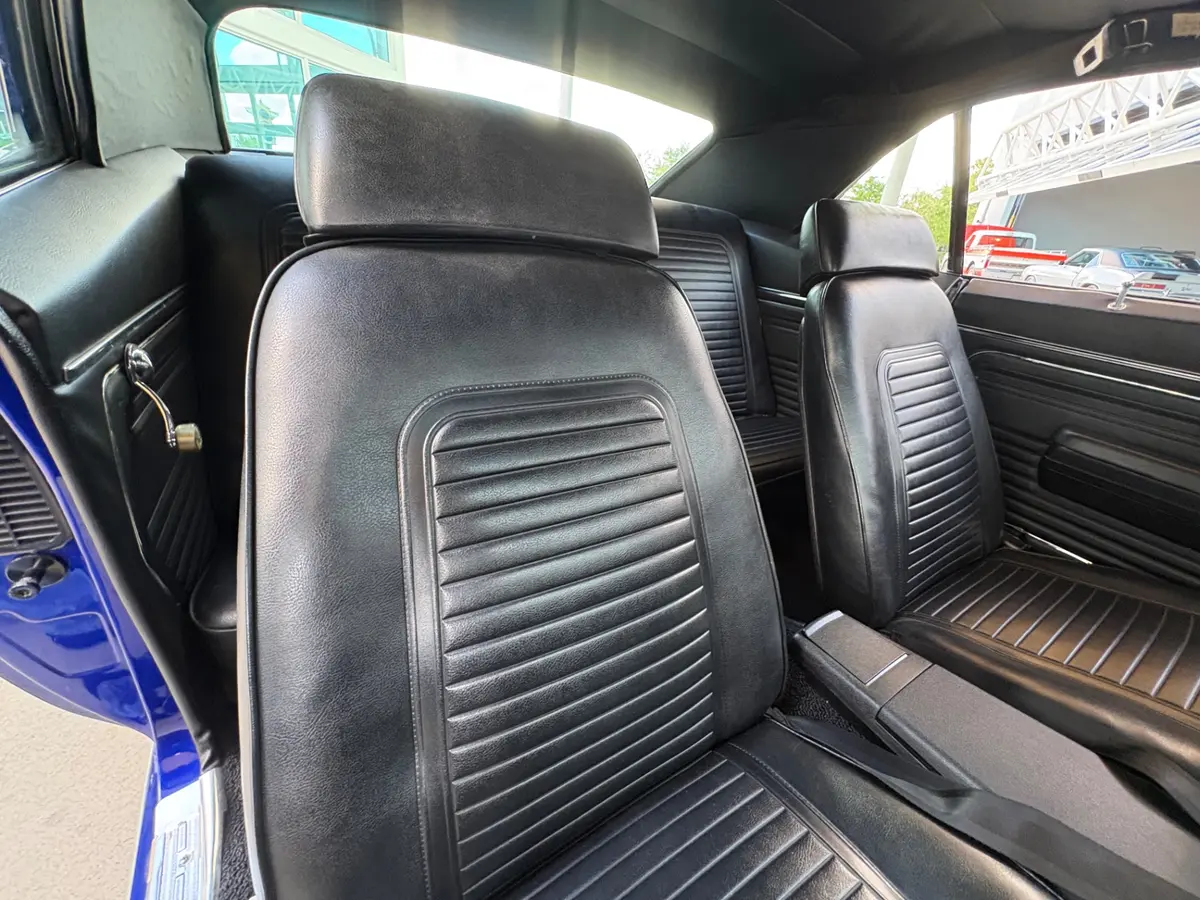
- Black vinyl high-back bucket seats with matching rear seat and door panels
- Dakota Digital gauges — main cluster and Rally-Pac
- Tilt steering column with 3-spoke wood-rimmed wheel
- Vintage Air air conditioning
- Bluetooth AM/FM/AUX stereo with upgraded speakers and Kicker subwoofer
- Factory-style center console with horseshoe shifter
- New stainless fuel tank, new fuel lines, and new brake lines throughout
- Full rotisserie, nut-and-bolt restoration
- NSRA Award Winner including Pro Pick Prize
Mechanical
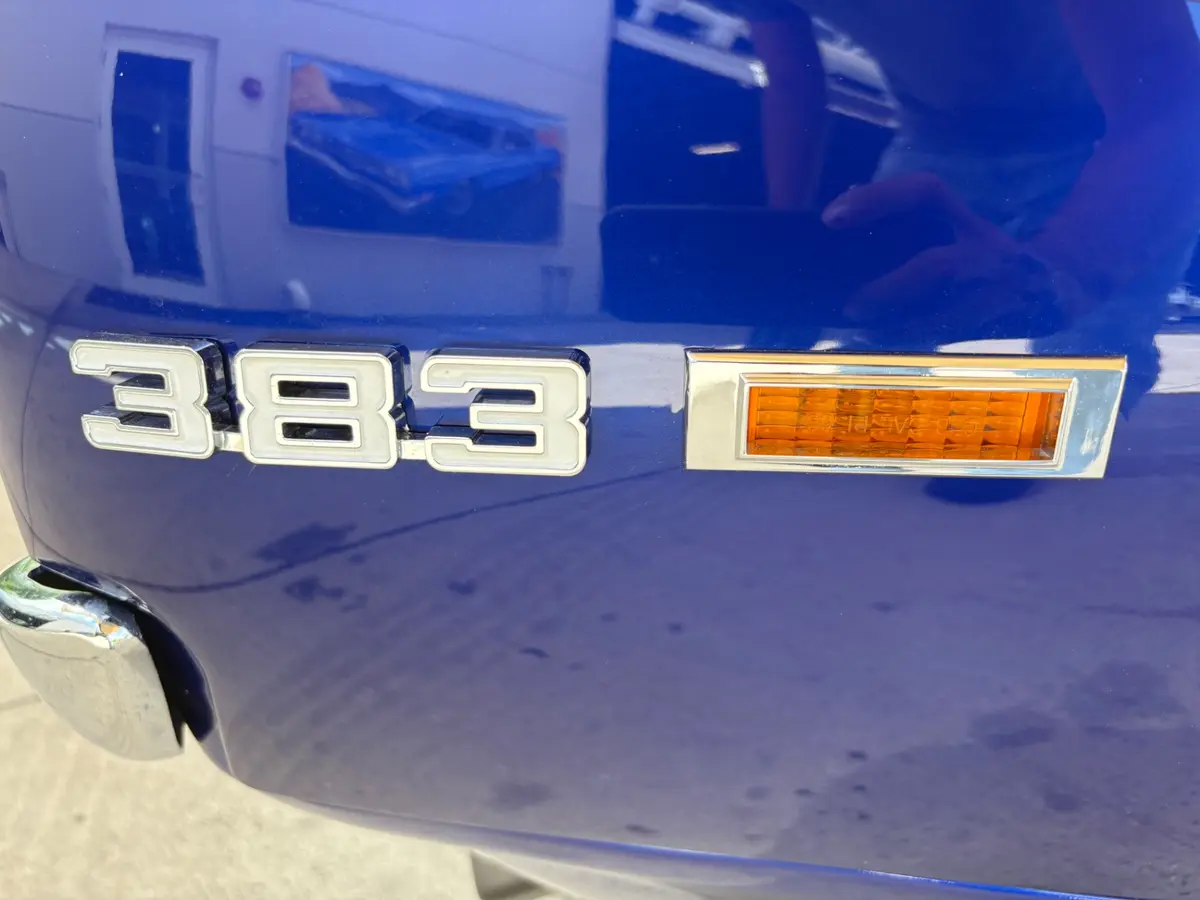
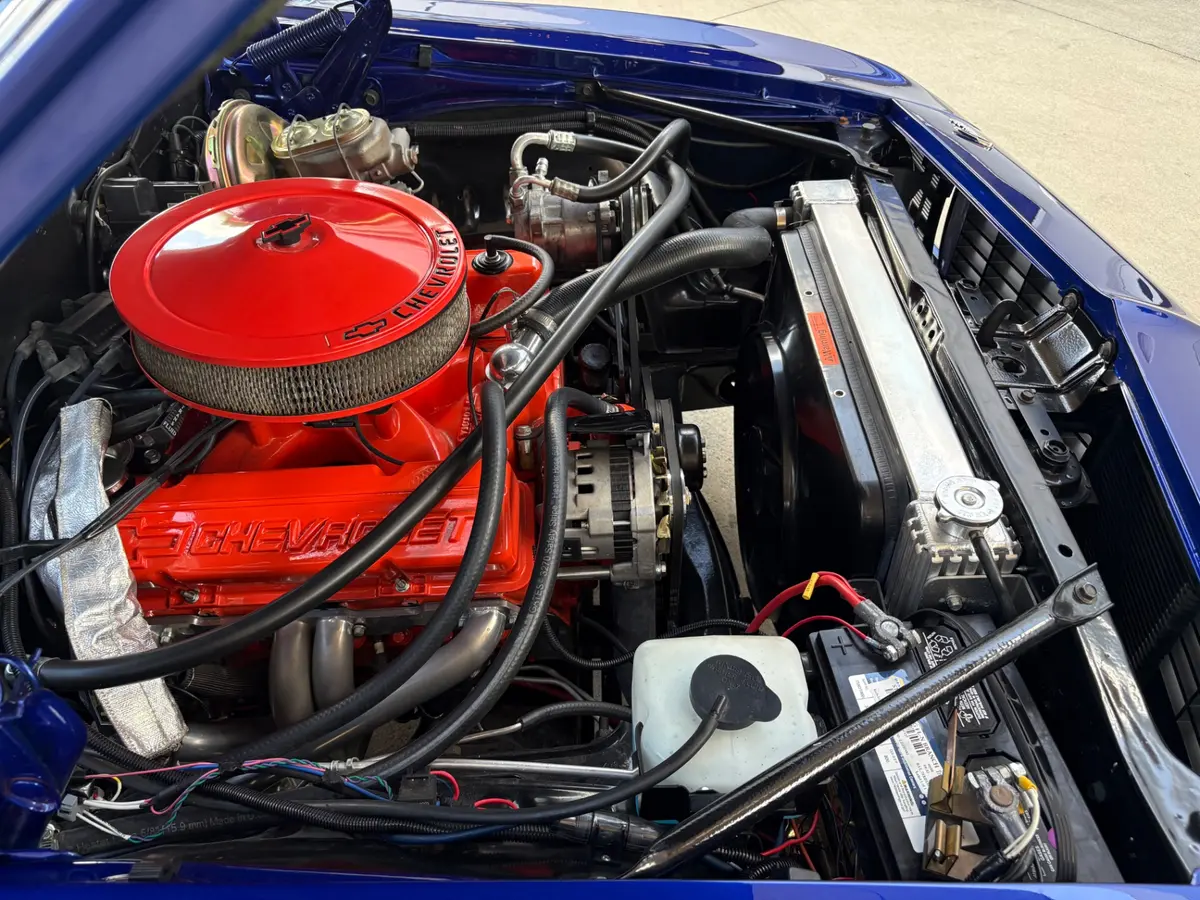
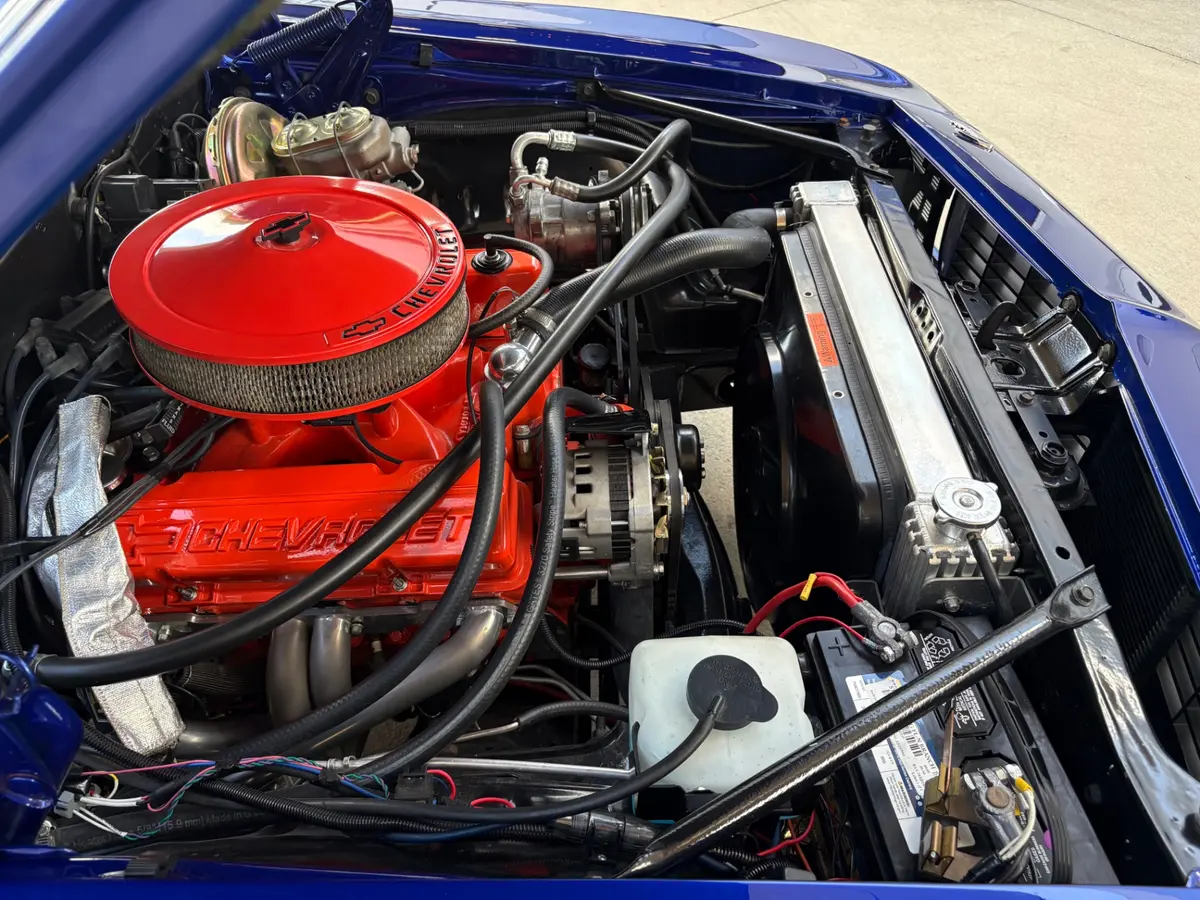
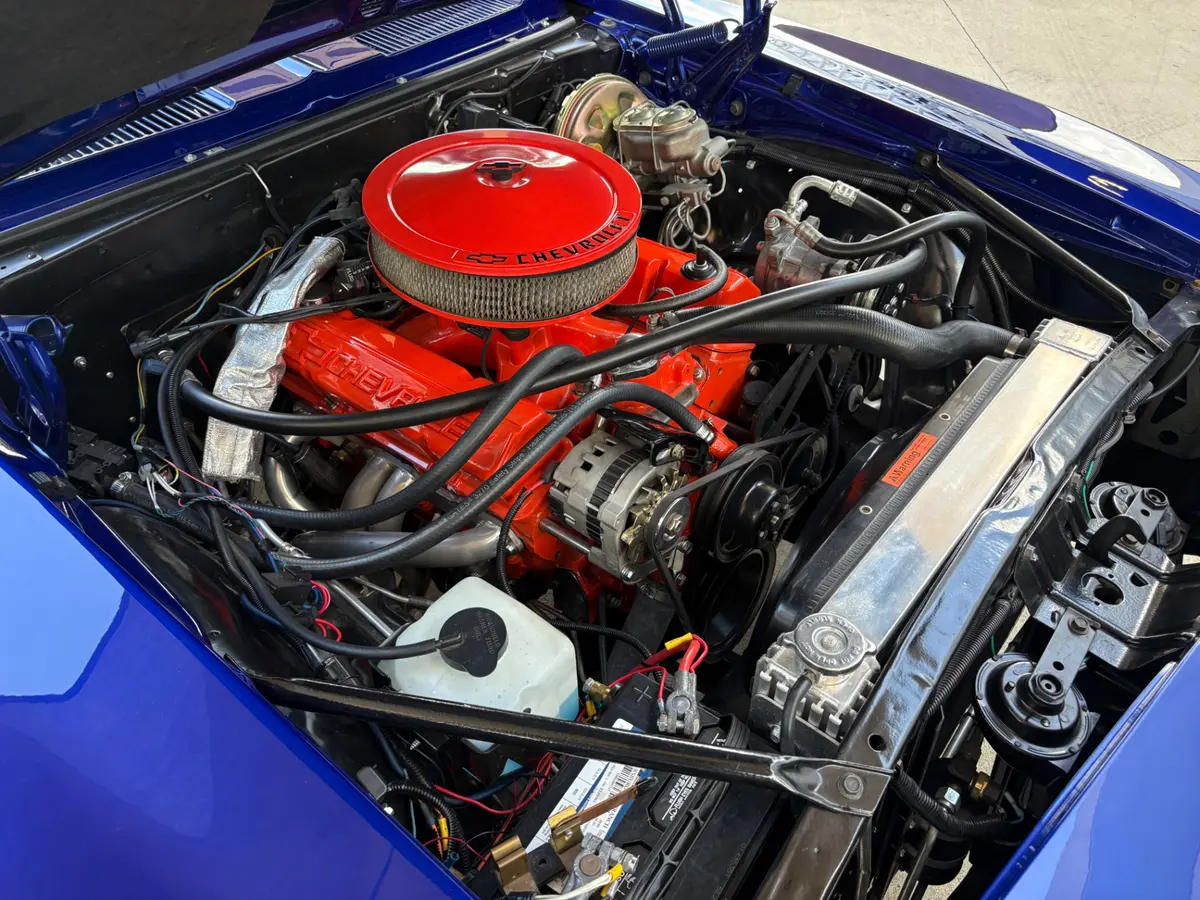
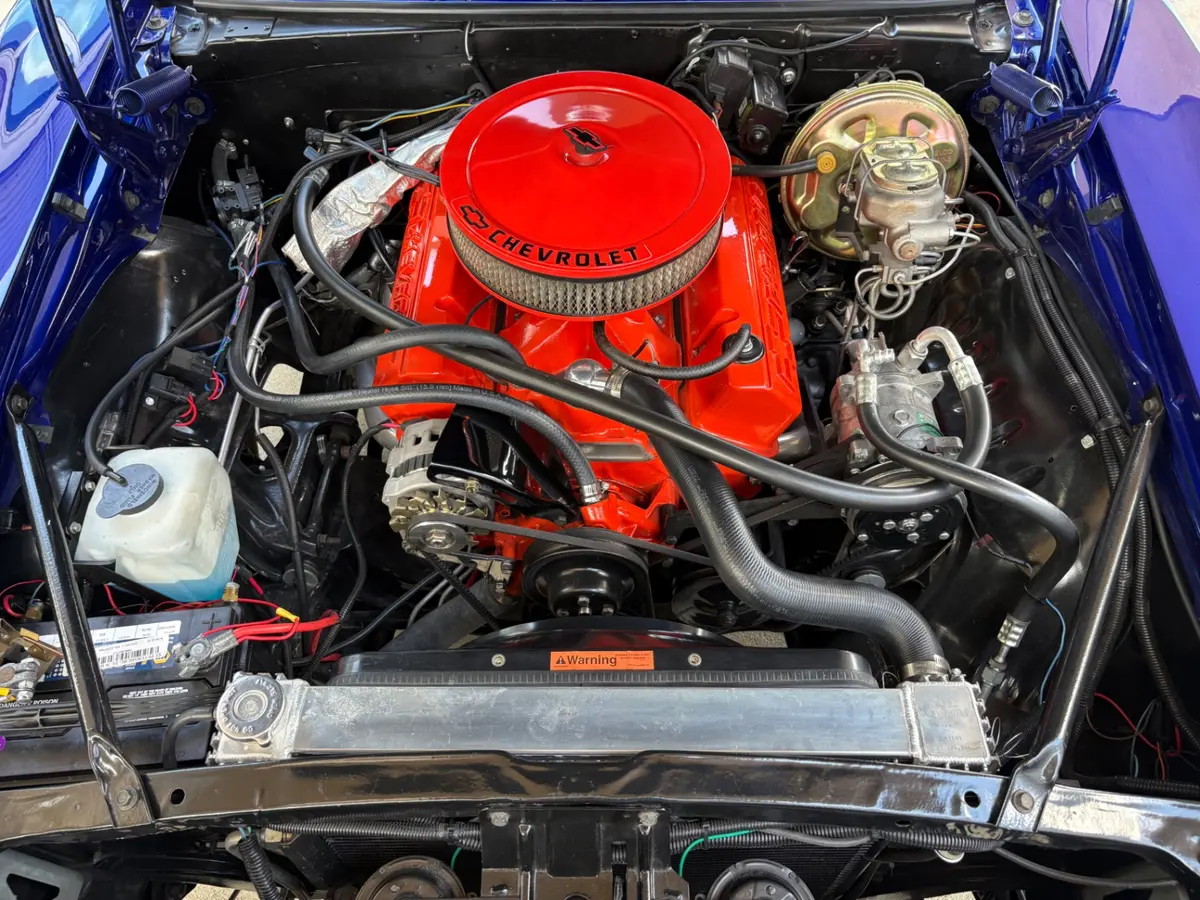
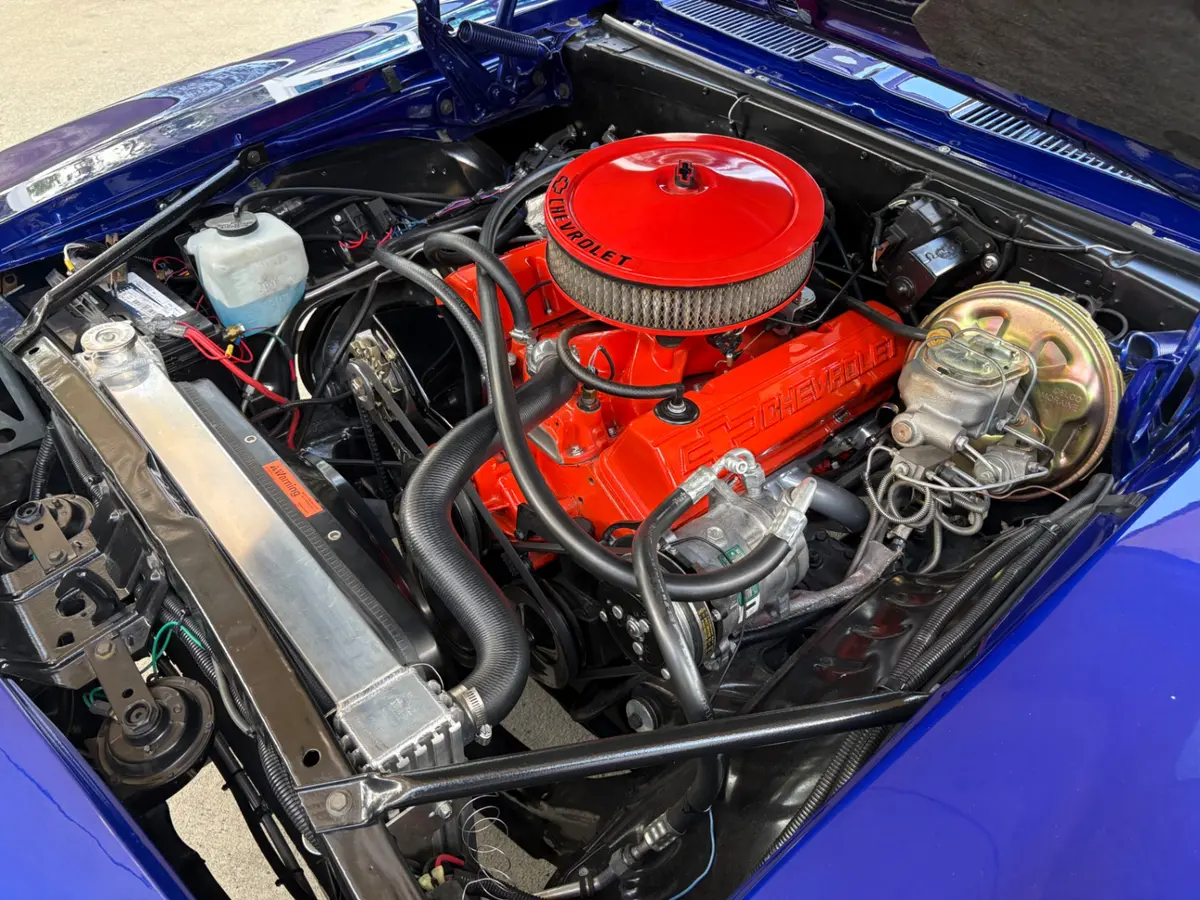
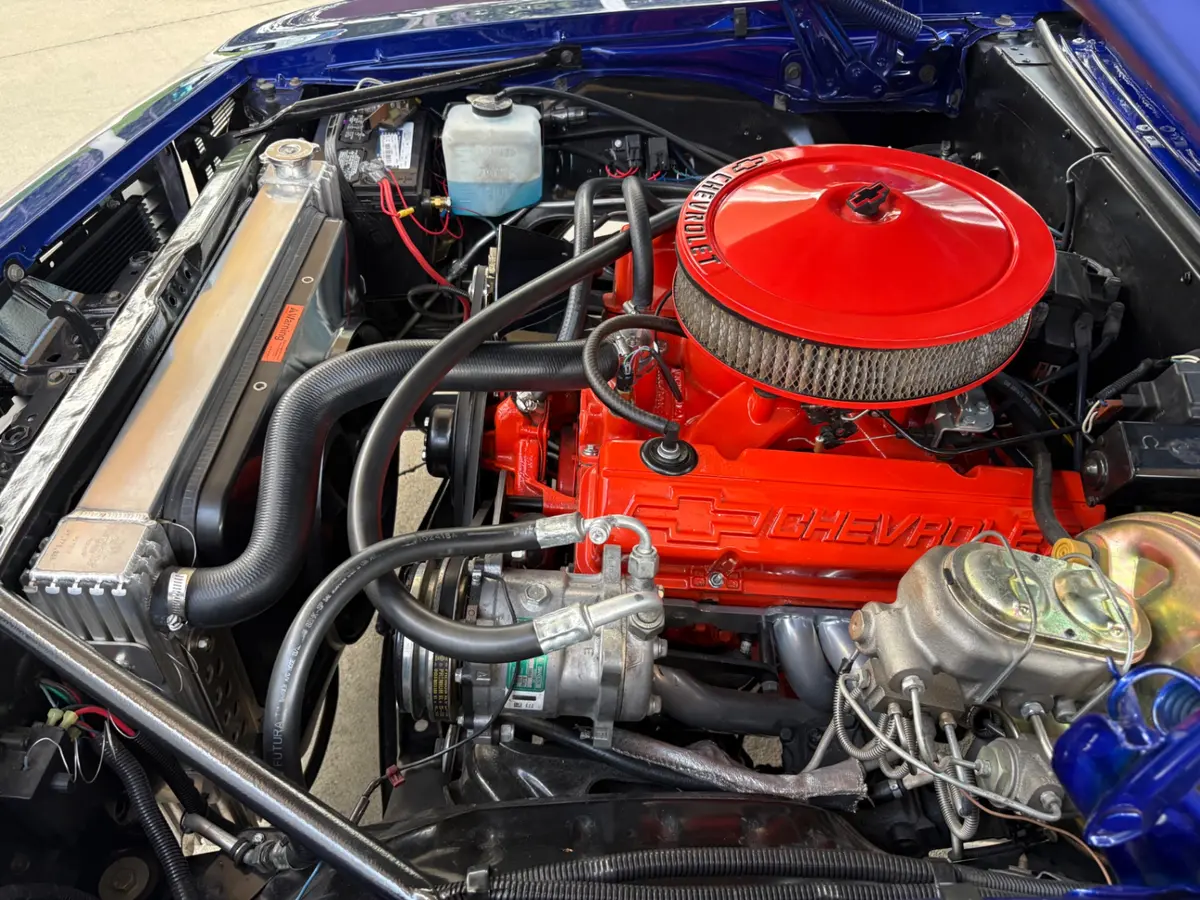
The engine in this 1969 Chevrolet Camaro RS is a 383 cubic inch stroker built on the small-block Chevrolet architecture. The stroker displacement is achieved by combining a 350 block with a 400 crankshaft, which increases stroke from 3.48 inches to 3.75 inches and brings total displacement to 383 cubic inches. The result is a small-block that breathes like a big-block — more torque, more usable power across a wider RPM range, and none of the weight or packaging compromises of a true big-block swap. The short-block uses forged pistons running a 10:1 compression ratio, which is a real-world performance spec, not a show number. The hydraulic roller camshaft, roller lifters, and roller rockers reduce internal friction significantly compared to a flat-tappet setup and allow for more aggressive cam profiles without the wear trade-offs.
Up top, aluminum cylinder heads keep weight down while improving heat dissipation, and the Edelbrock intake manifold feeds the Holley Sniper EFI system. The Sniper is a throttle-body fuel injection unit designed to look period-correct while delivering modern fuel management — closed-loop operation, self-tuning capability, and cold-start reliability that no carburetor can match. The HEI ignition completes a drivetrain package that starts and runs consistently, whether it is 35 degrees or 95 degrees outside.
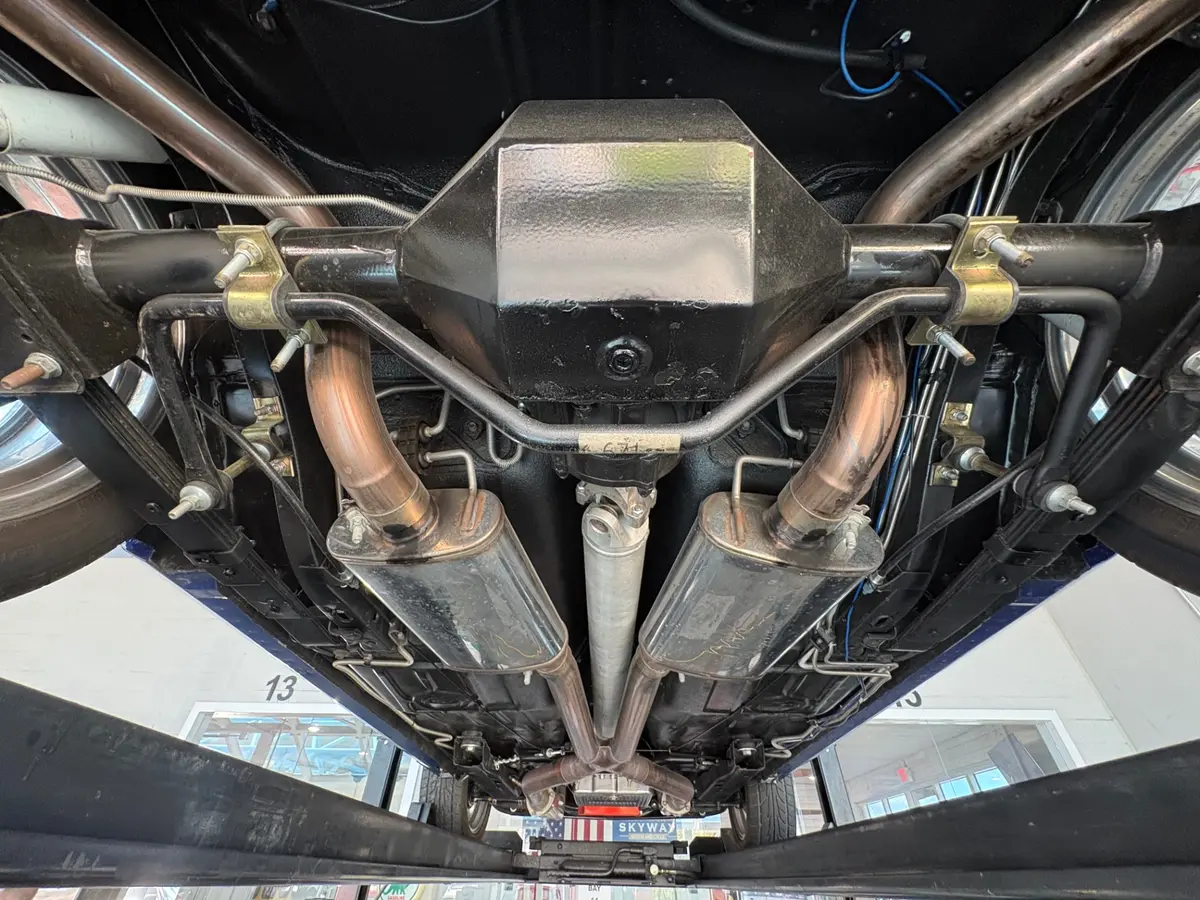
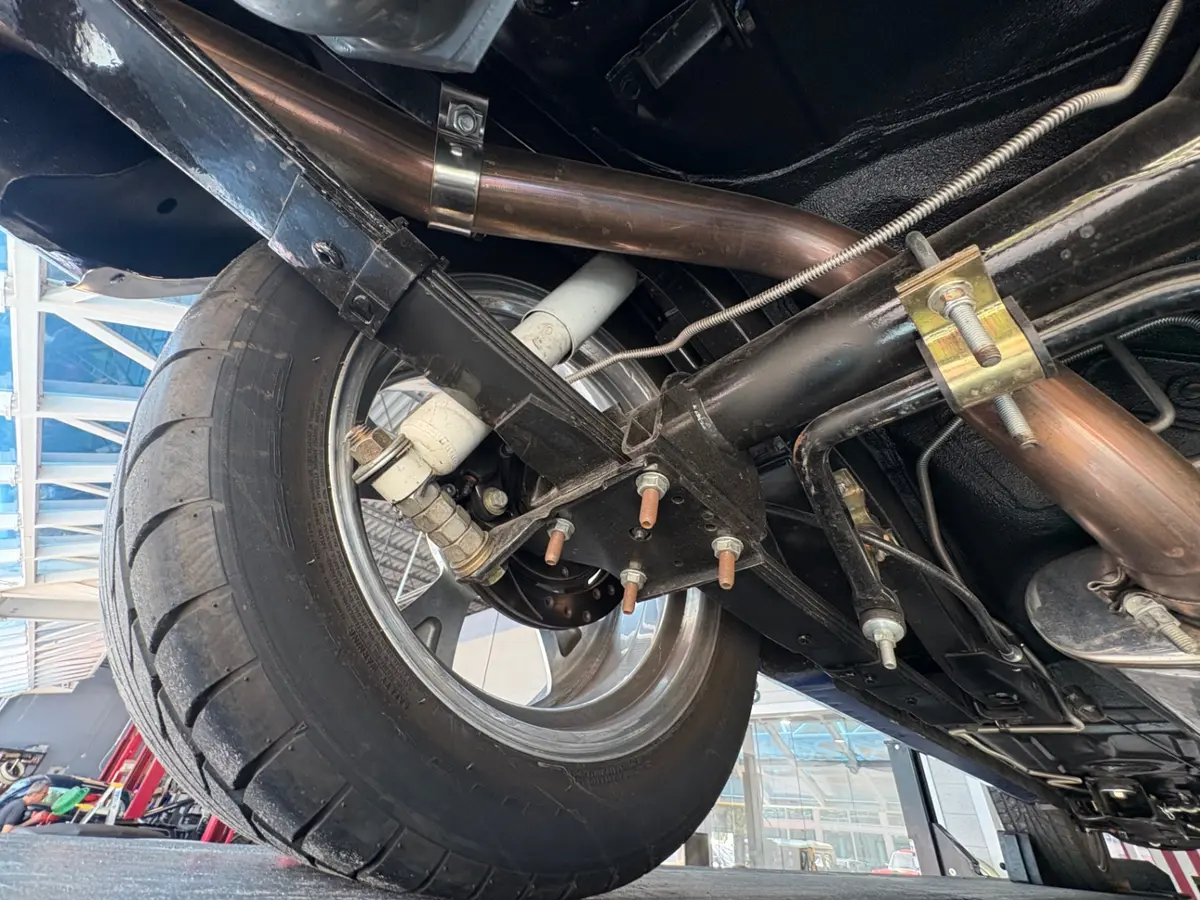
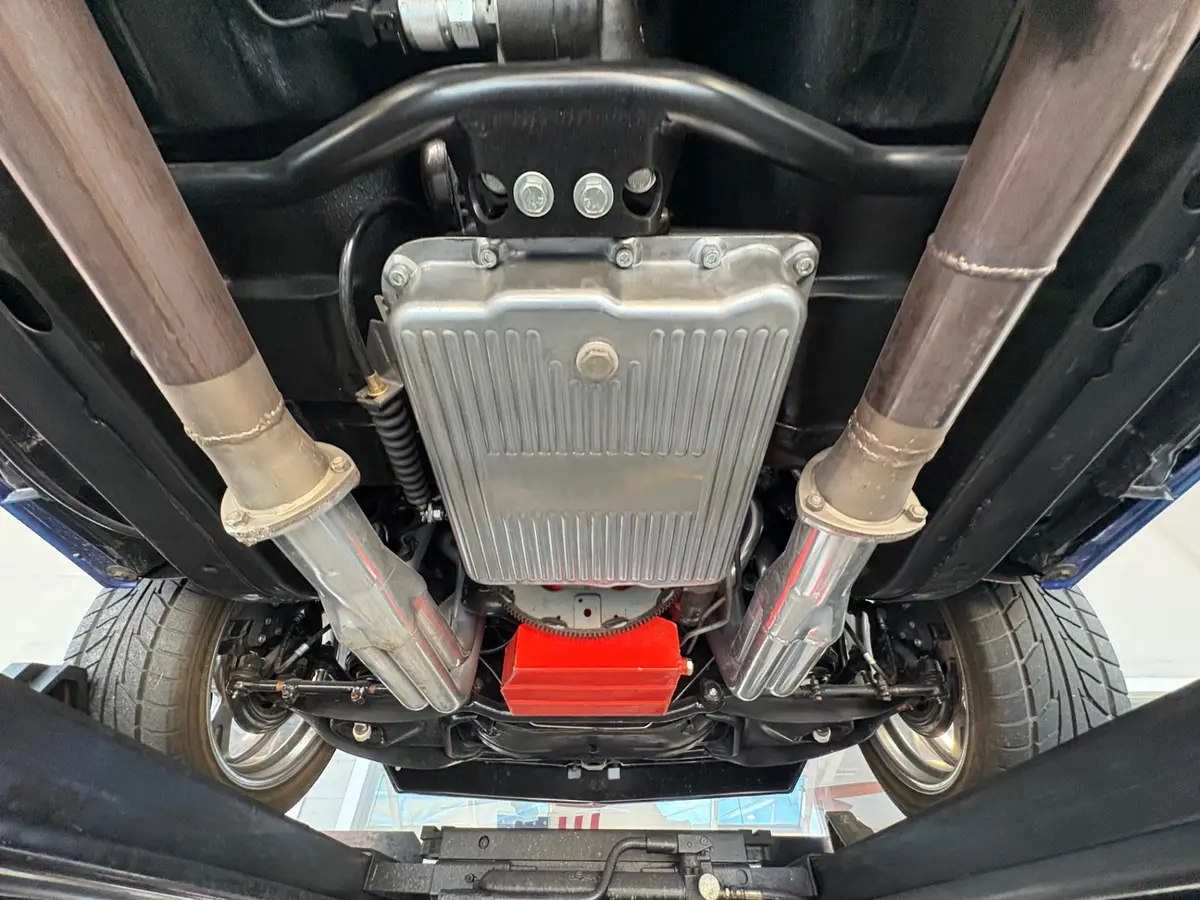
Behind the engine sits a 700R4 4-speed automatic transmission, which adds a genuine overdrive fourth gear — something no factory 1969 Camaro could offer. Highway cruising RPM drops considerably compared to a Turbo-Hydramatic 350 or 400, which means better fuel economy and far less engine stress on long drives. The 3,500-stall torque converter keeps the powerband where the stroker makes its power. Out back, a heavy-duty fabricated 9-inch rear end replaces the factory unit entirely. The Ford 9-inch design has been the standard in performance builds for decades because of its strength, its aftermarket support, and the ease of changing gear ratios.
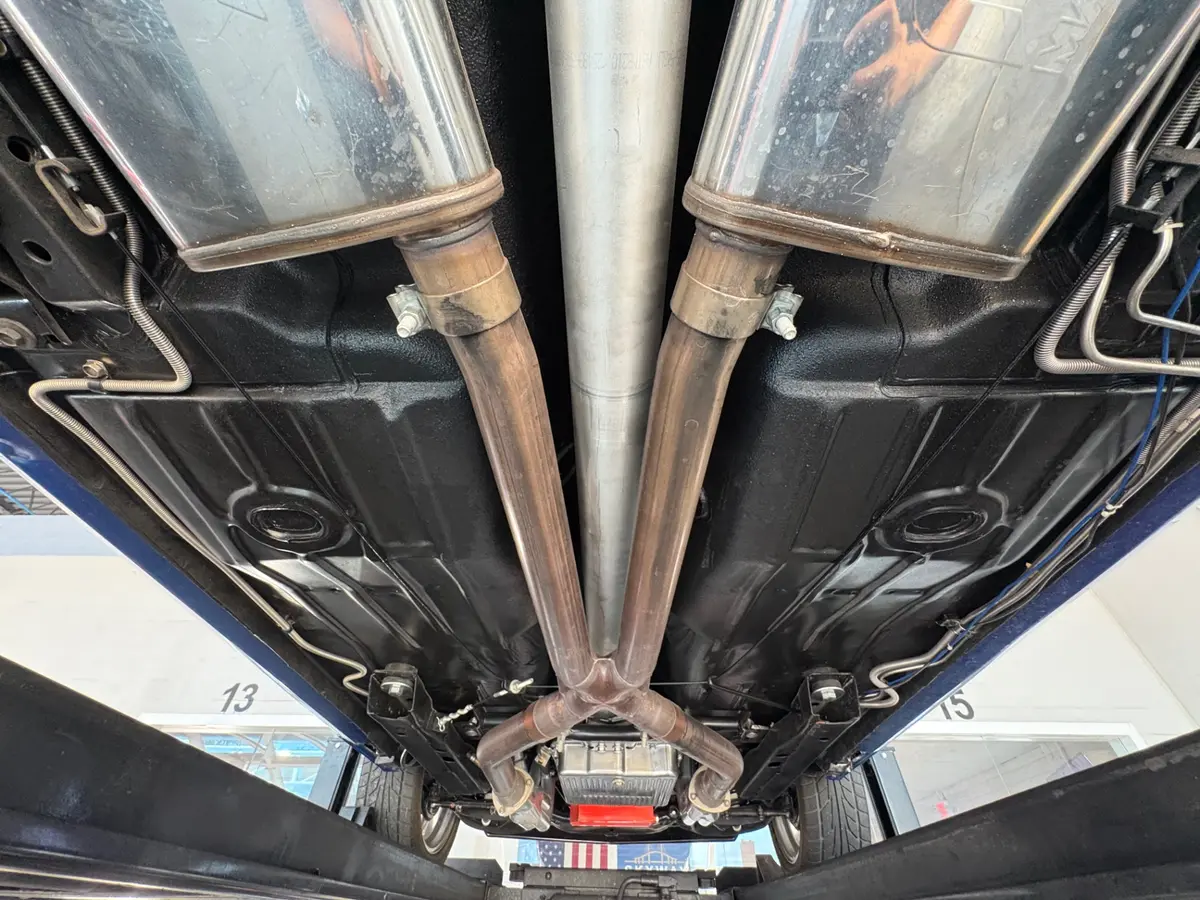
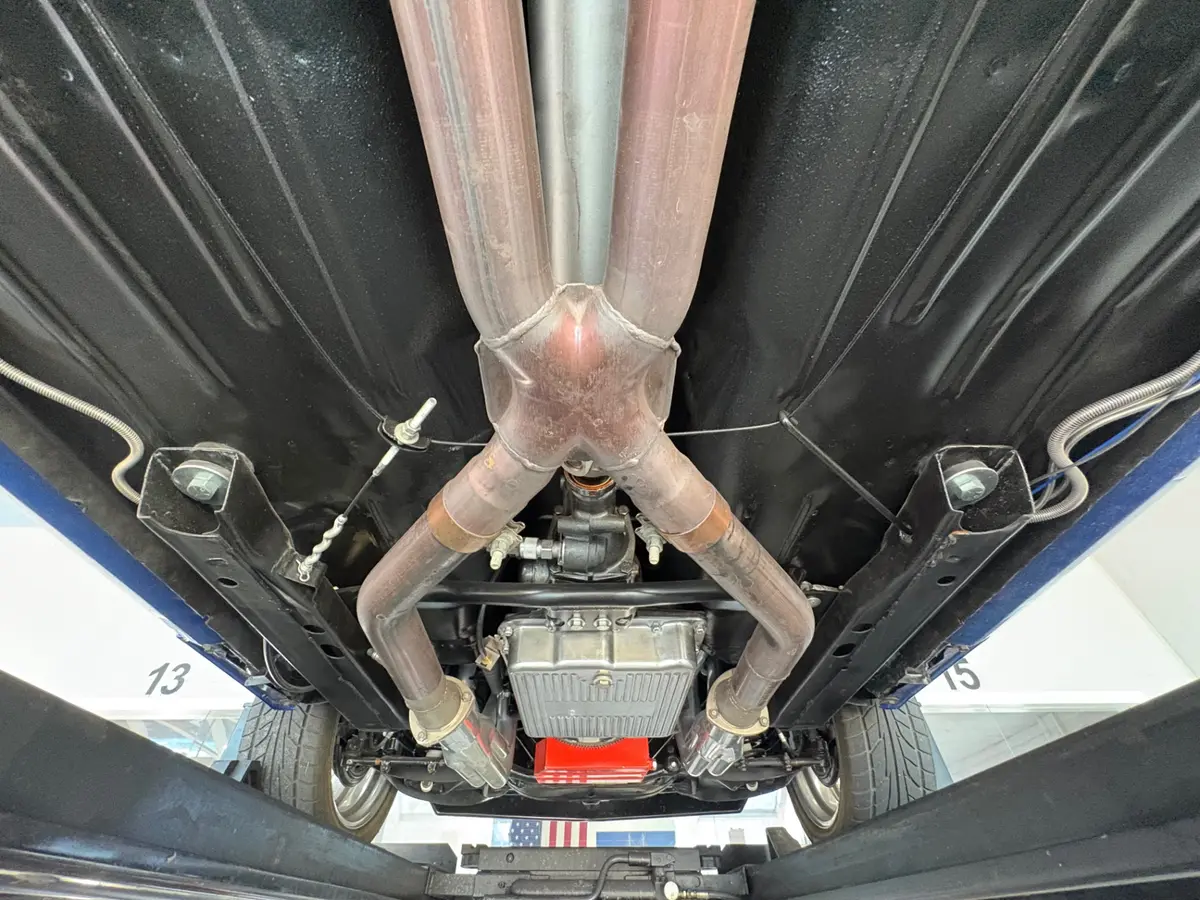
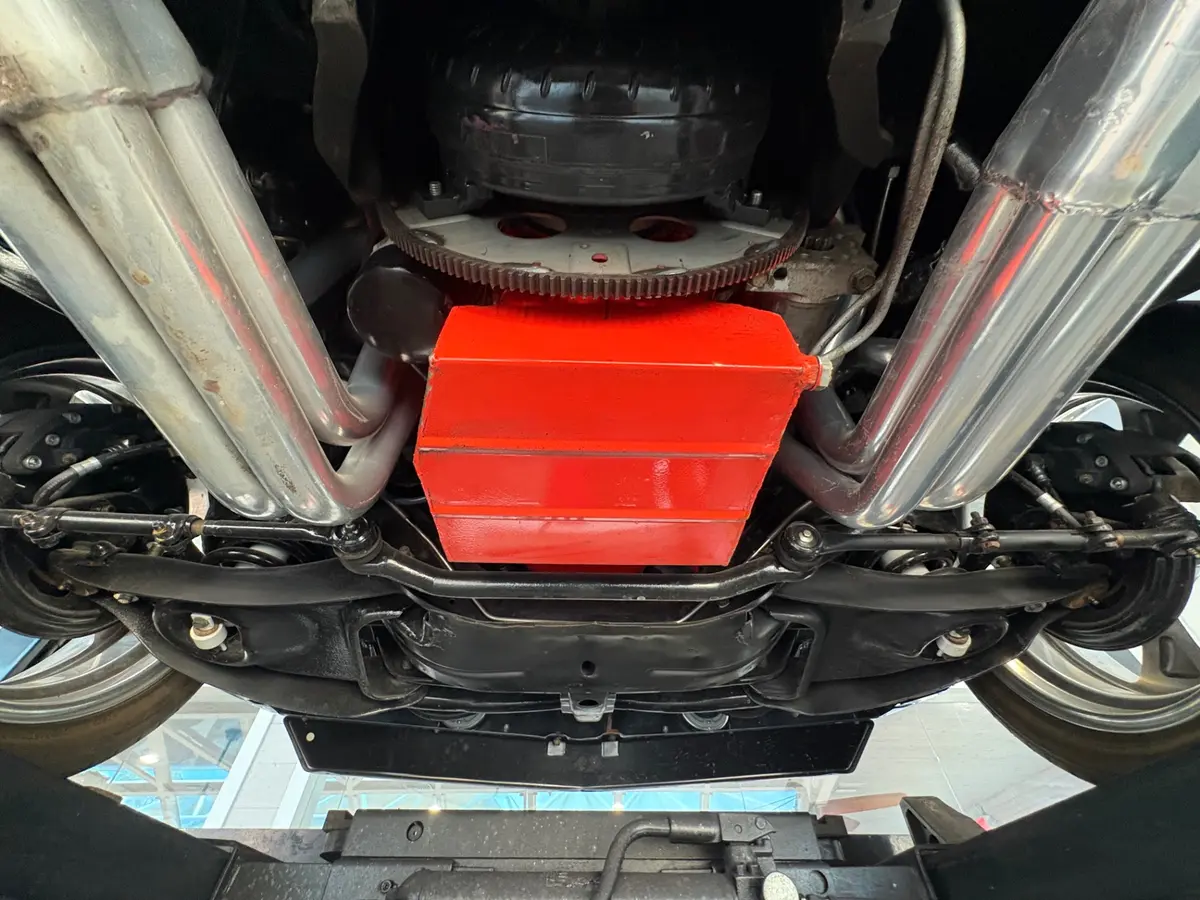
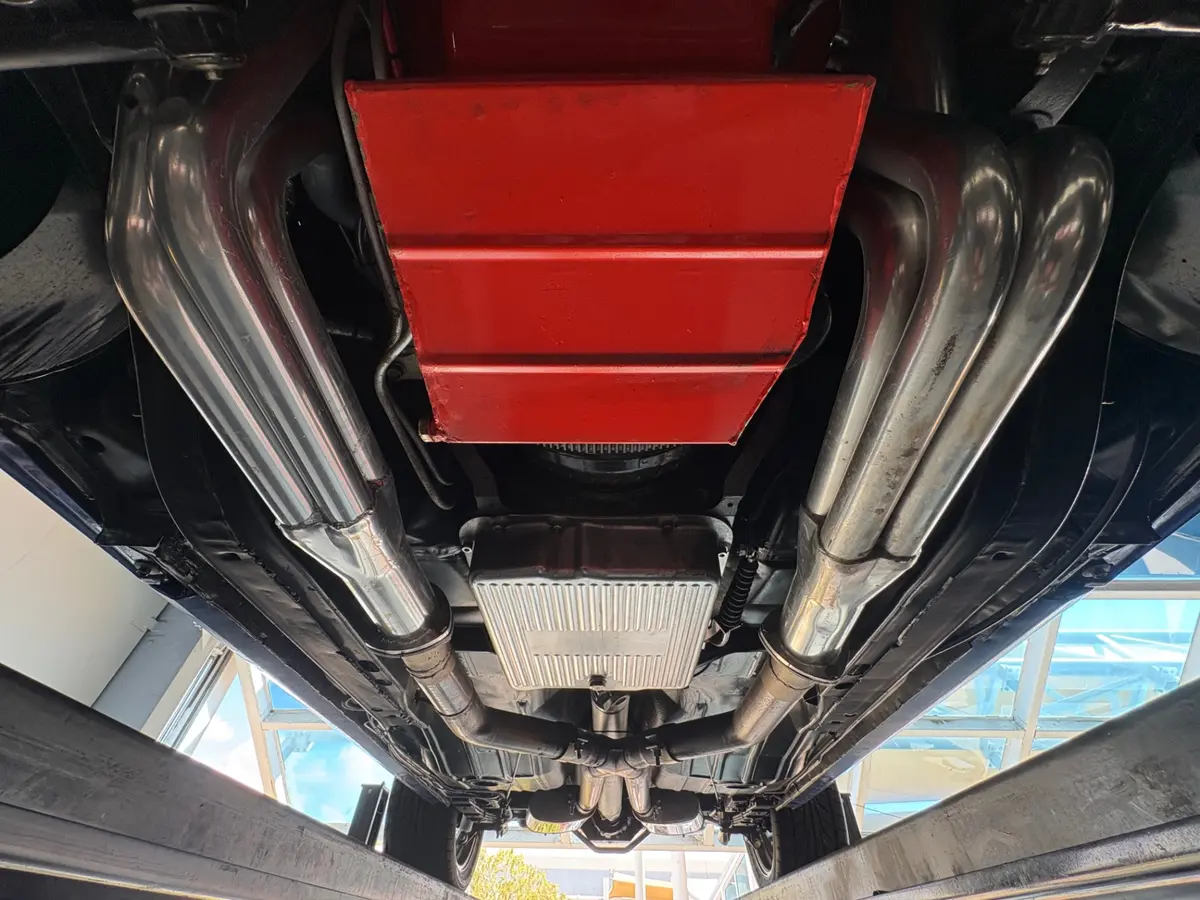
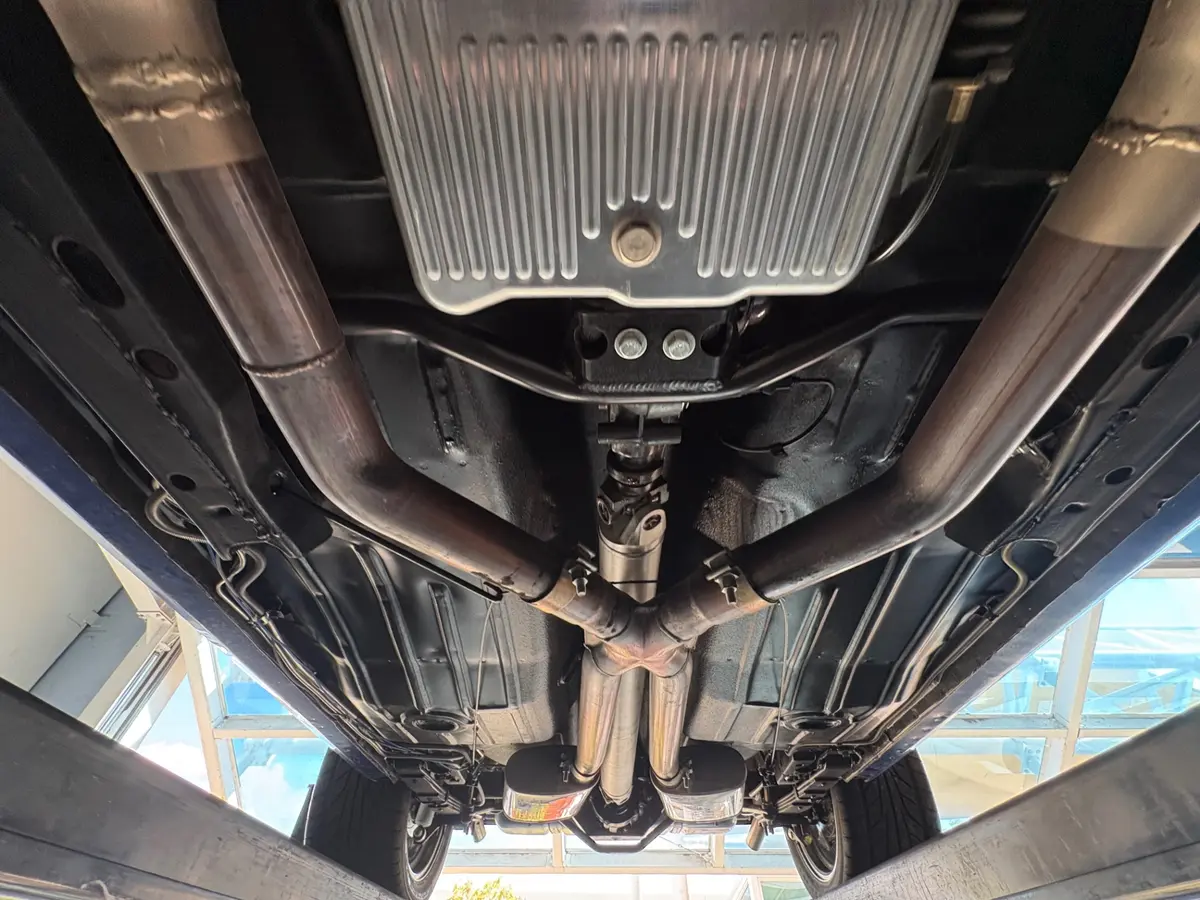
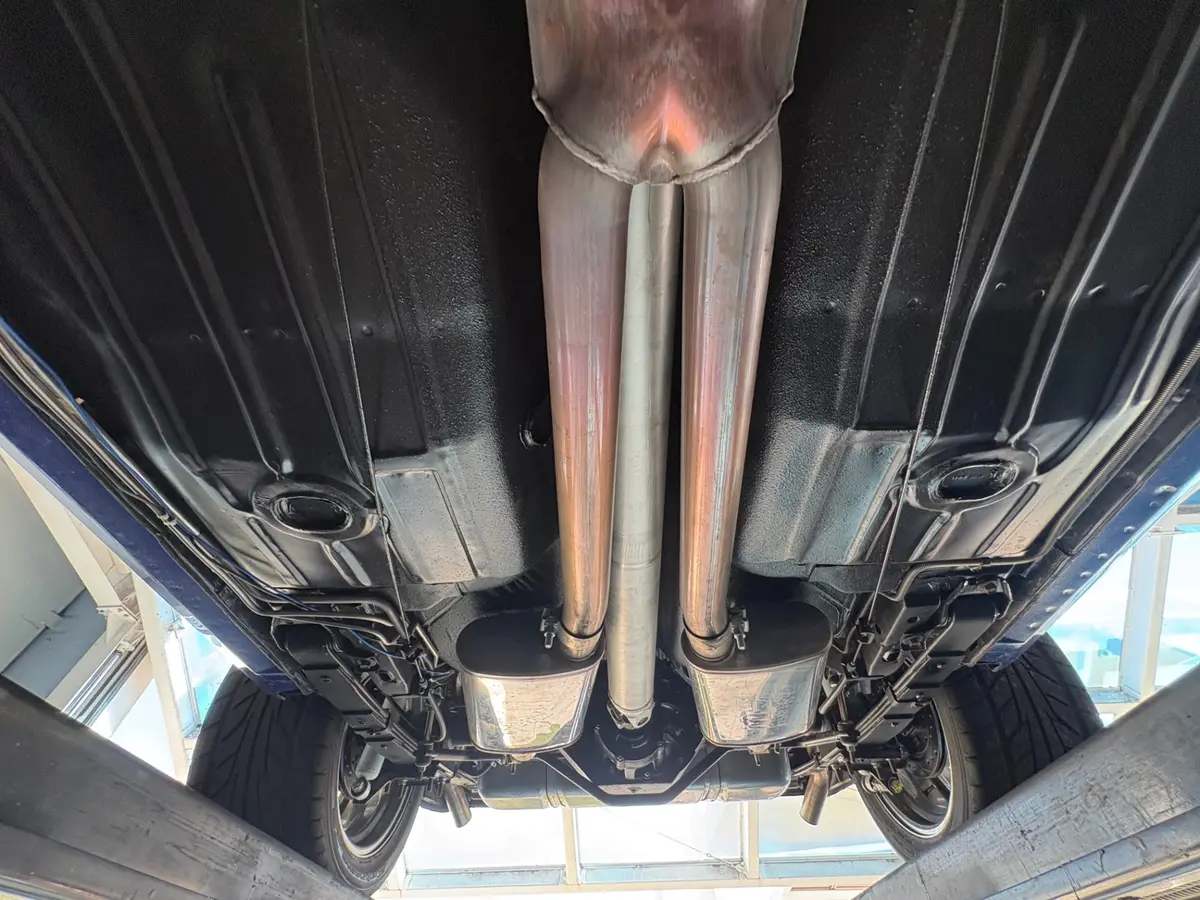
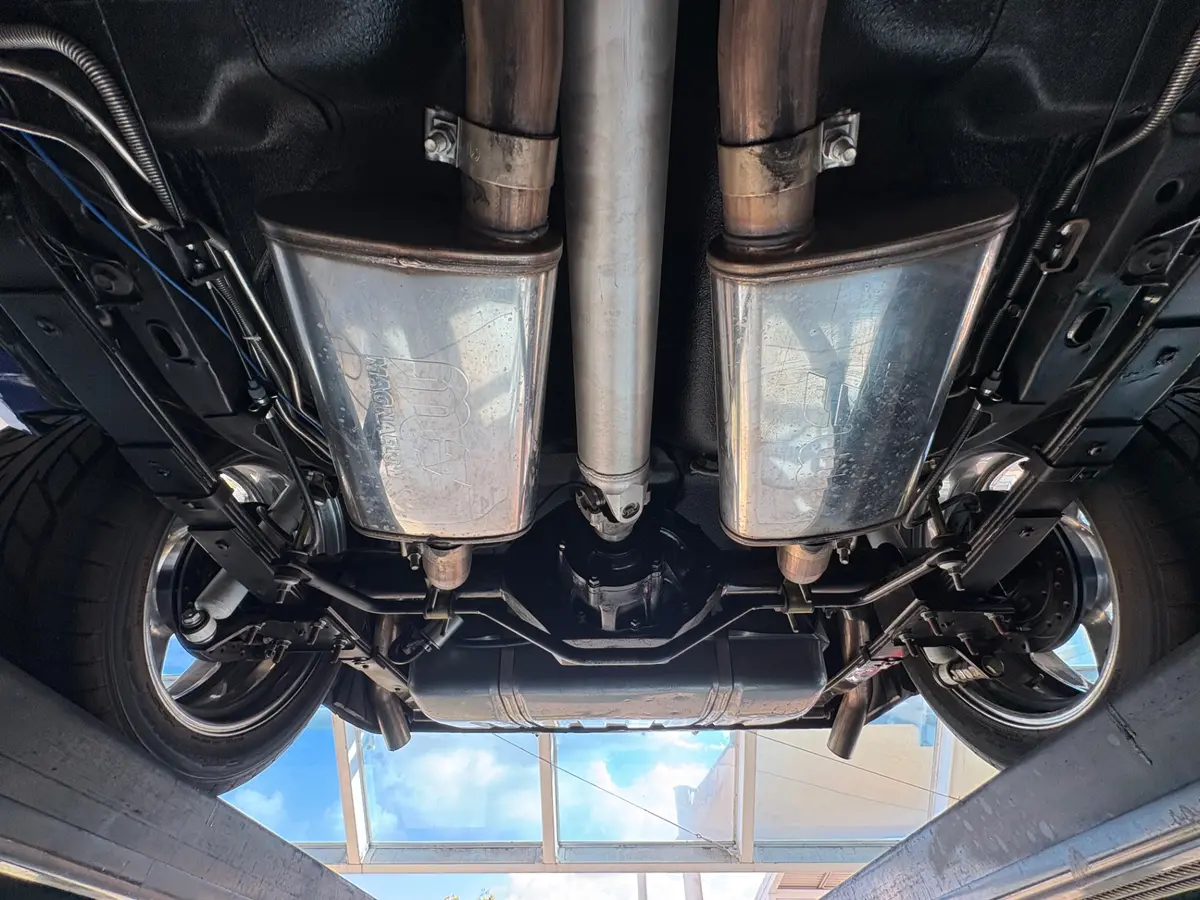
The exhaust system runs 3-inch ceramic-coated pipes from the headers back, joins through an X-pipe crossover — which balances exhaust pulses between cylinder banks and broadens the power curve — and exits through Magnaflow mufflers. The result is a system that flows well and sounds composed without being obnoxious.
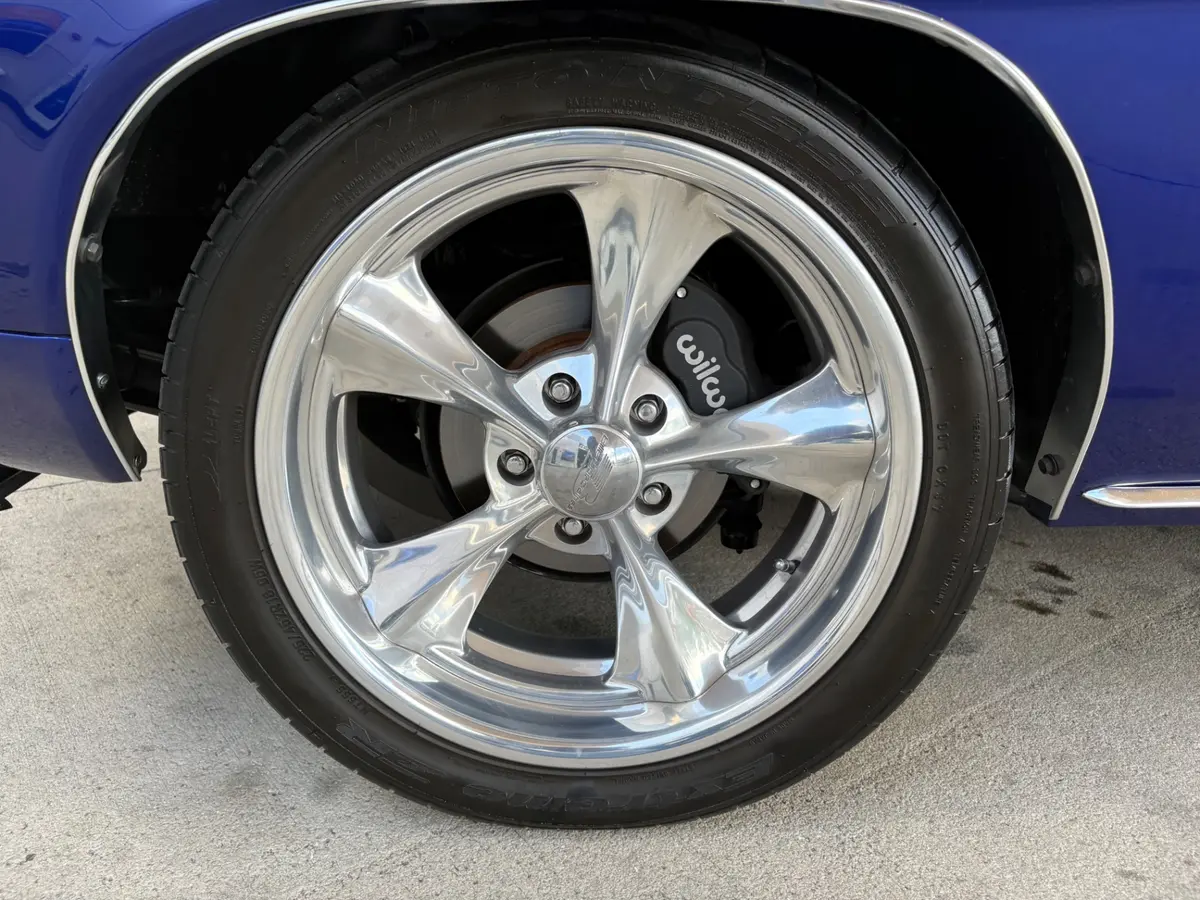
Stopping power comes from 4-wheel Wilwood disc brakes with drilled and slotted rotors. Wilwood is a motorsport-grade brake manufacturer whose components show up on everything from road race cars to high-end pro touring builds. The factory 1969 Camaro came with front discs as an option and drums in the rear as standard. Four-wheel disc conversion on a car like this is not optional — it is the correct choice given the power output.
Interior
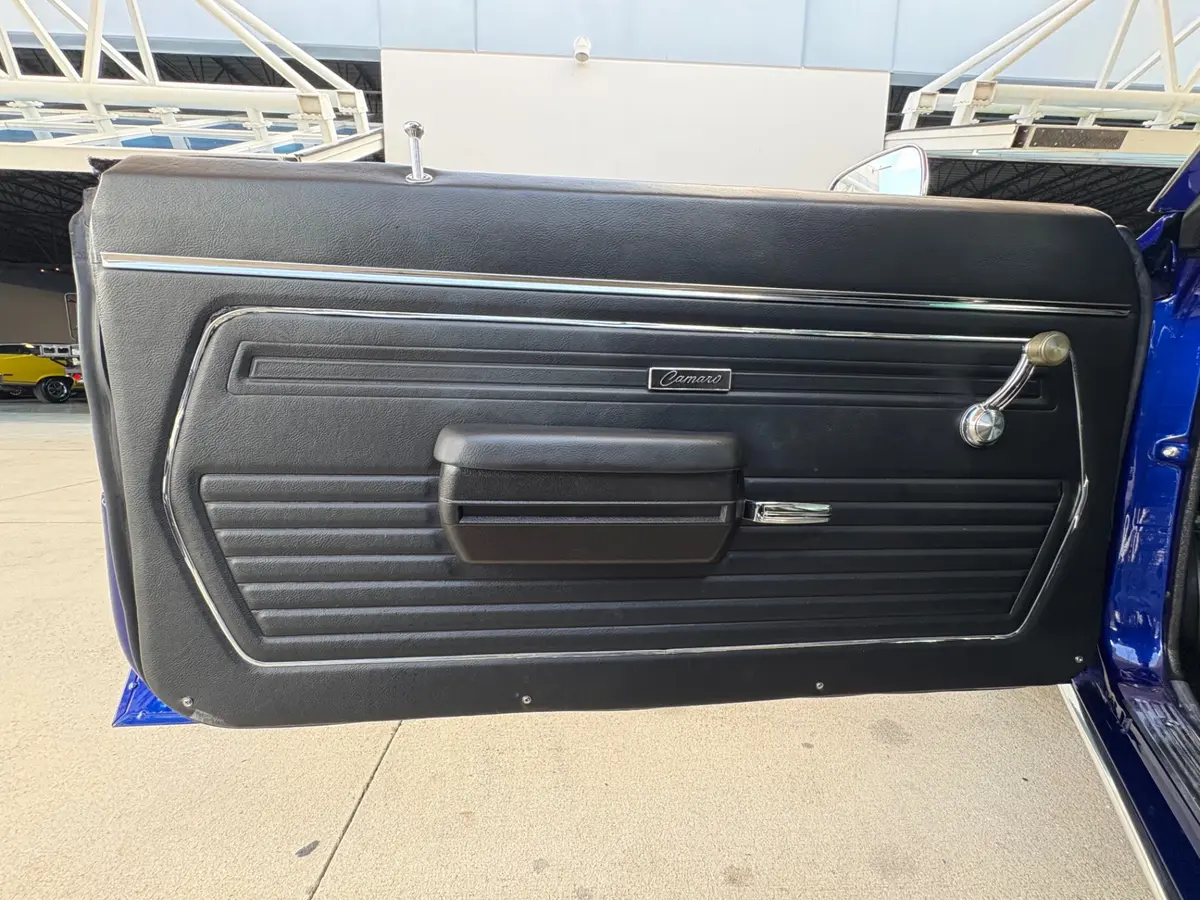
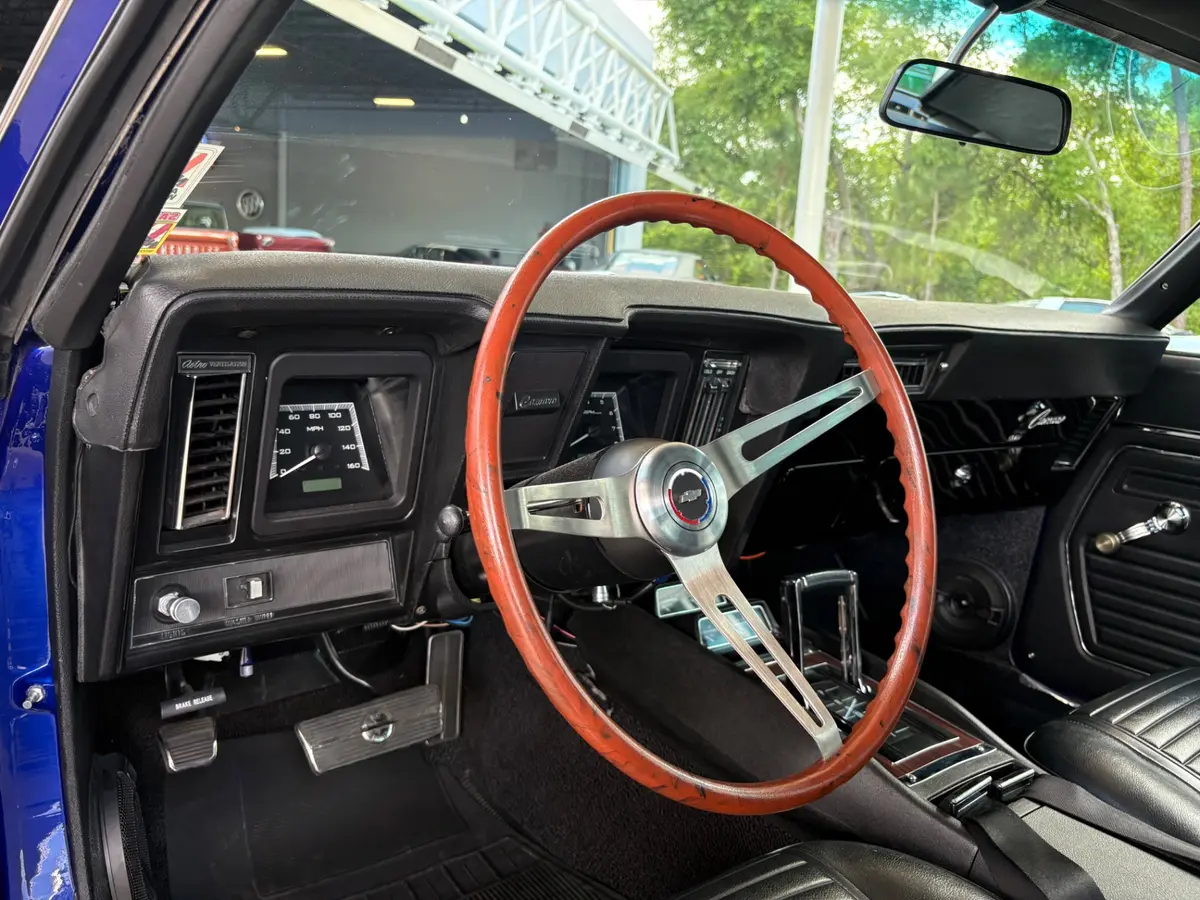
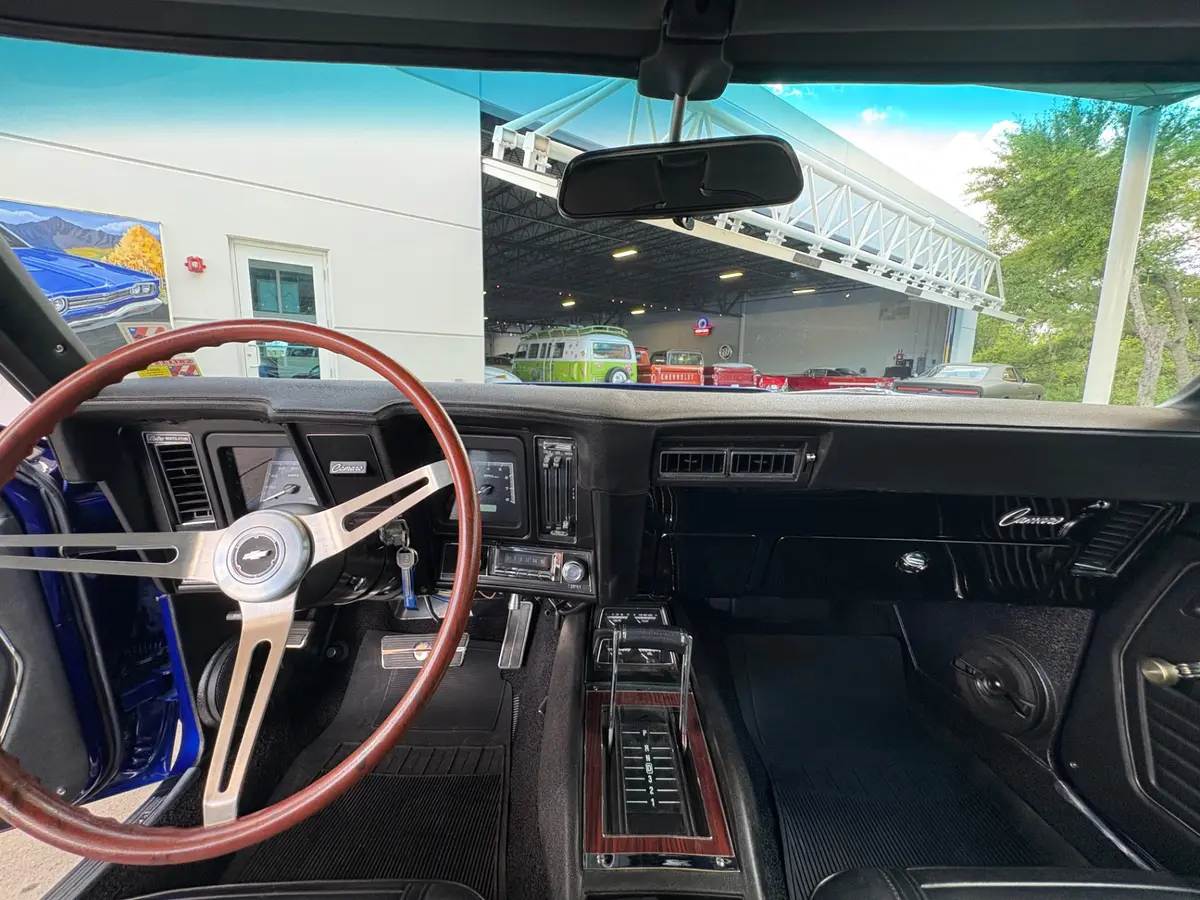
The interior of this 1969 Chevrolet Camaro RS is built around the factory RS/sport bucket seat layout, finished in black vinyl throughout. The high-back bucket seats, door panels, and rear seat are all matched, giving the cabin a consistent, purposeful appearance. The factory-style center console with a horseshoe shifter keeps the correct visual language of a late-1960s Camaro while housing the 700R4 shifter cleanly.
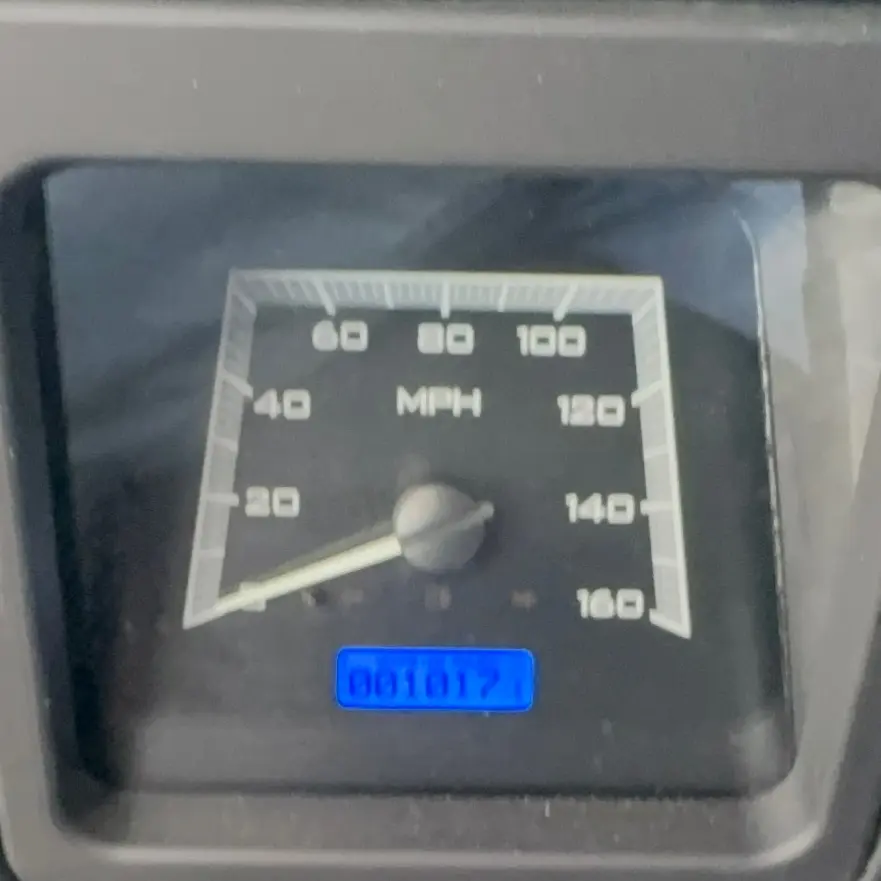
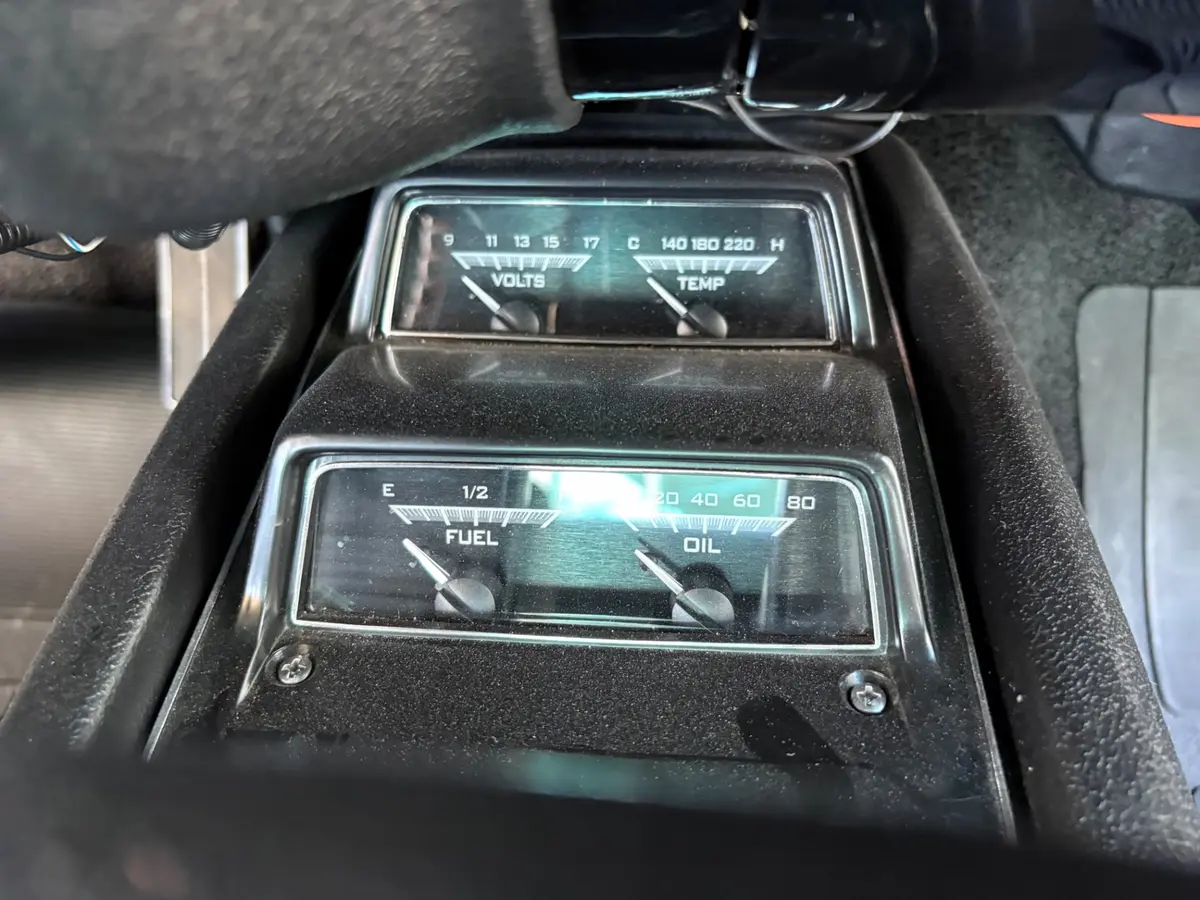
Instrumentation is handled by a Dakota Digital gauge cluster replacing the factory dash, along with a Dakota Digital Rally-Pac unit for the auxiliary gauges. Dakota Digital builds OEM-quality replacement gauge systems that retain a period look while offering programmable calibration, accurate sweep, and long-term reliability. You are reading actual oil pressure, water temperature, and voltage — not guesses from a 55-year-old sender.
The tilt steering column carries a 3-spoke wood-rimmed wheel that fits the era without looking like a parts-bin selection. Vintage Air handles climate control — a system specifically engineered for classic car installations that delivers real air conditioning capacity using modern refrigerant and components, routed through factory-appearing vents. The stereo is Bluetooth-capable with AM/FM/AUX inputs, upgraded speakers, and a Kicker subwoofer, all integrated without cutting up the dash or making a mess of the firewall.
Exterior
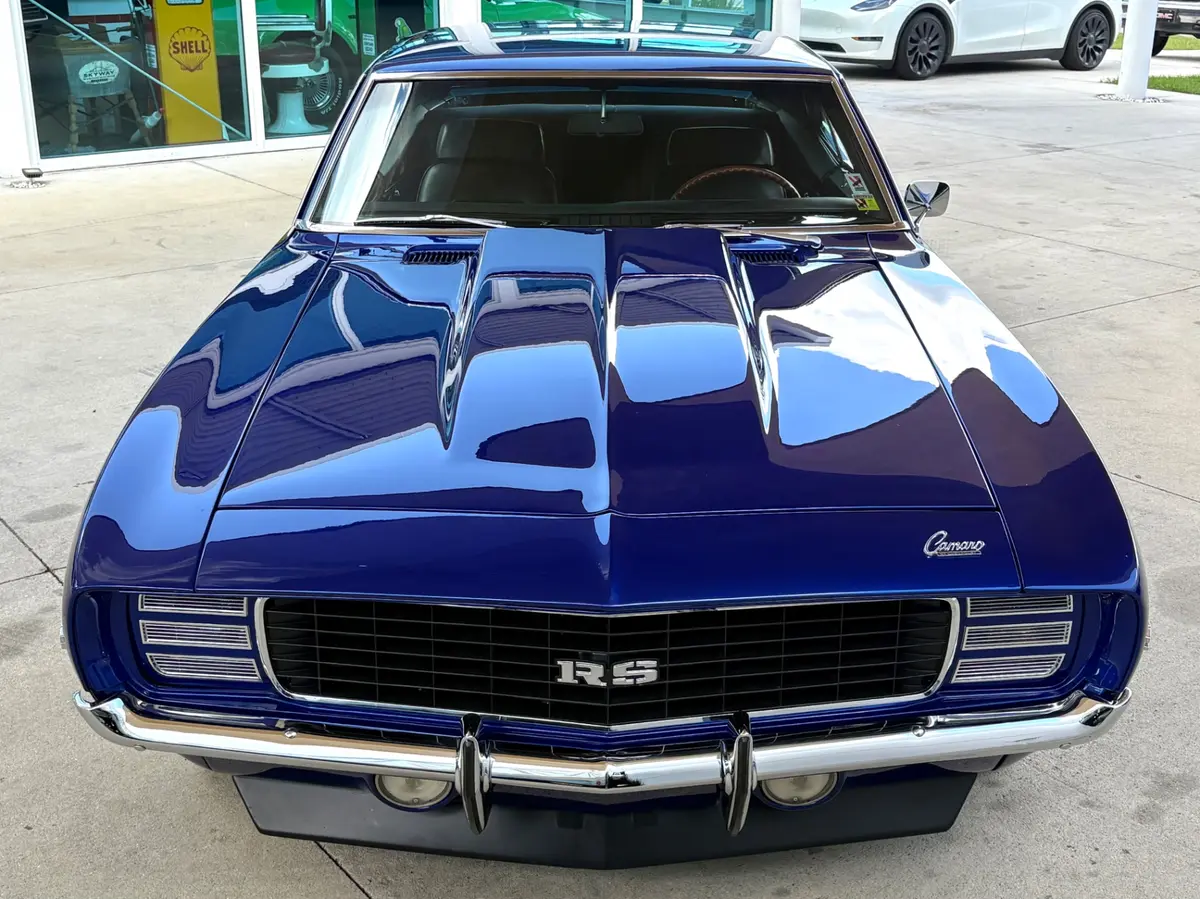
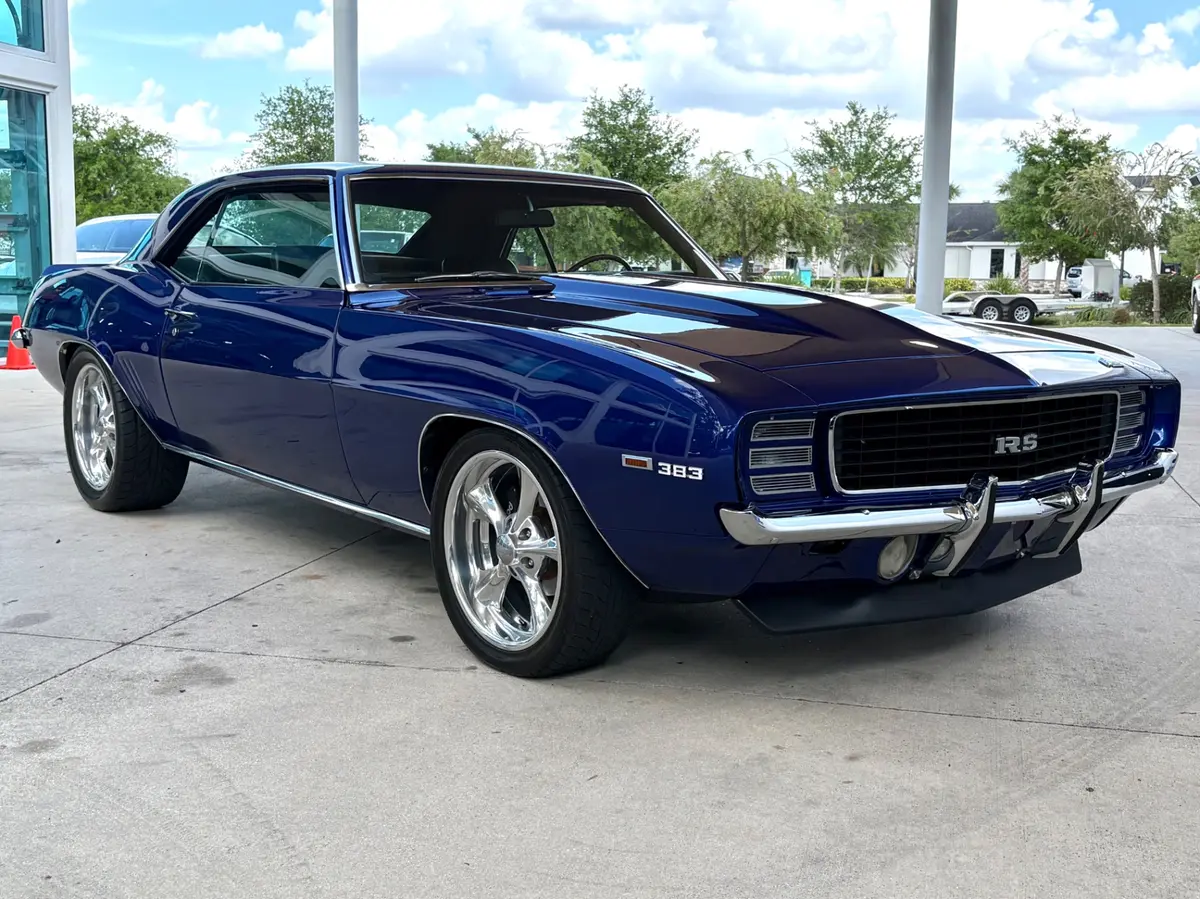
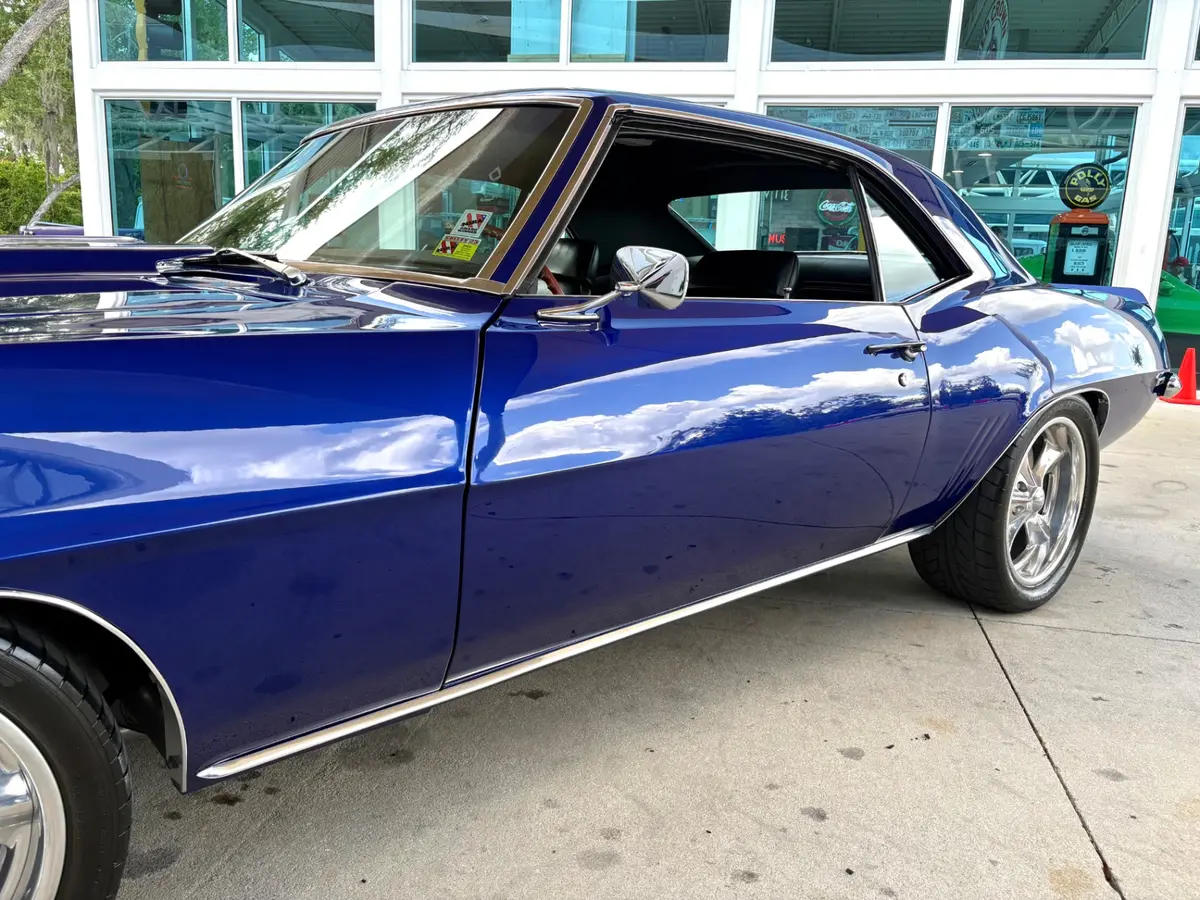
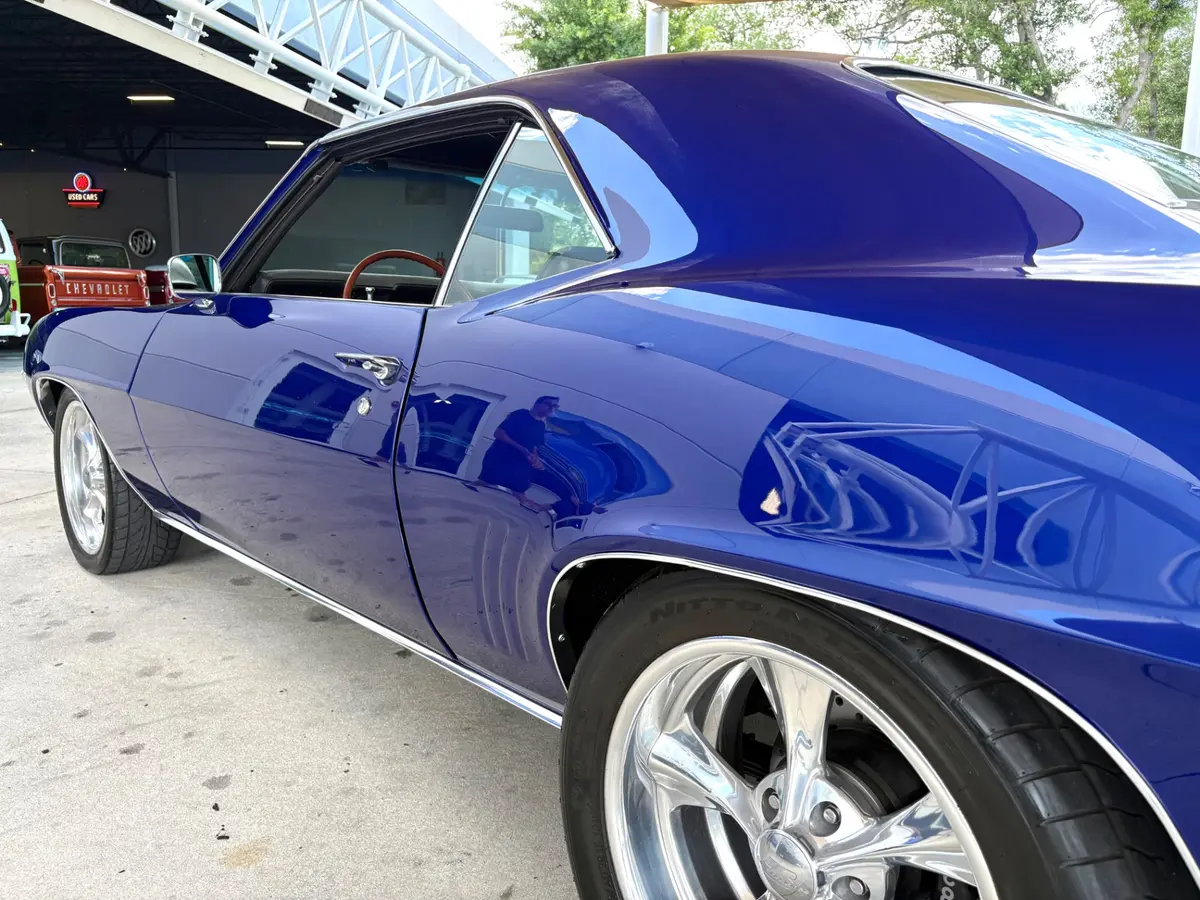
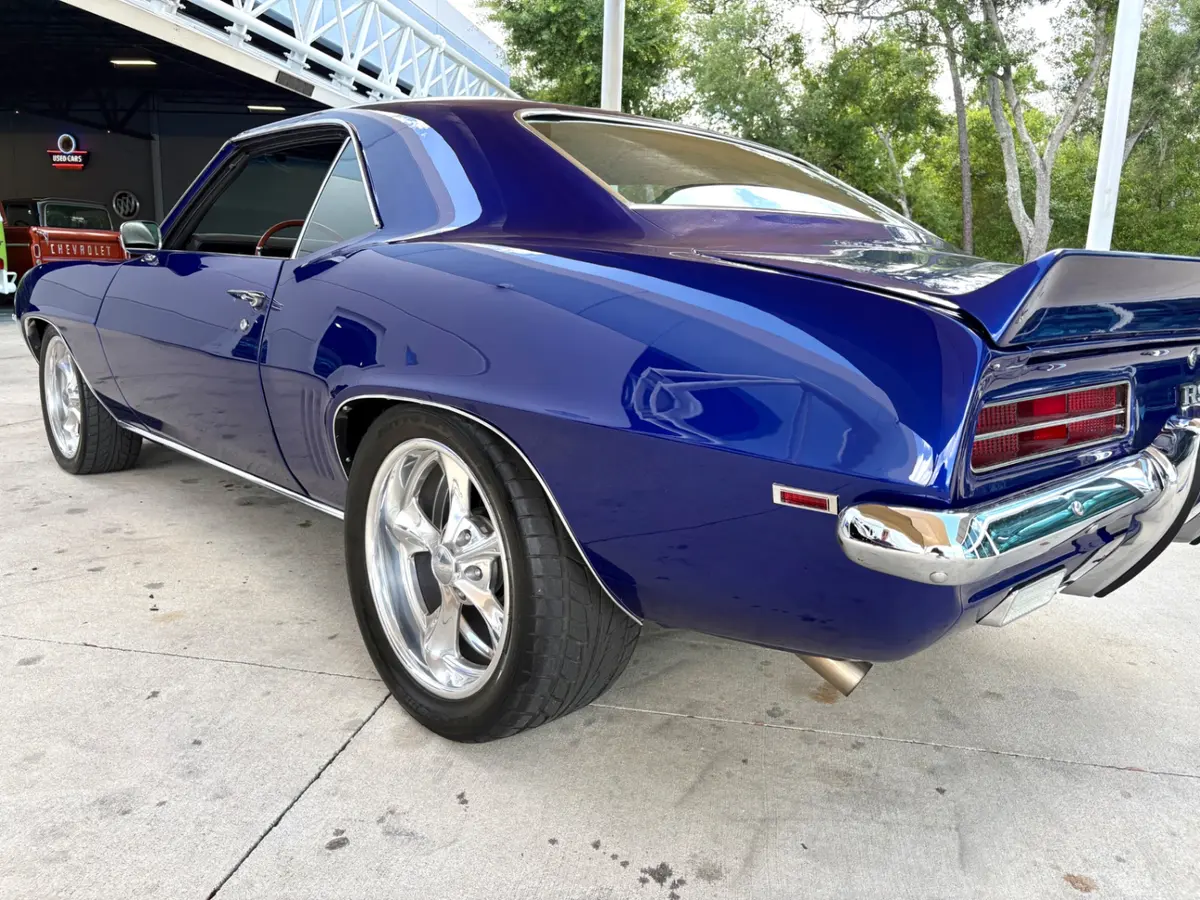
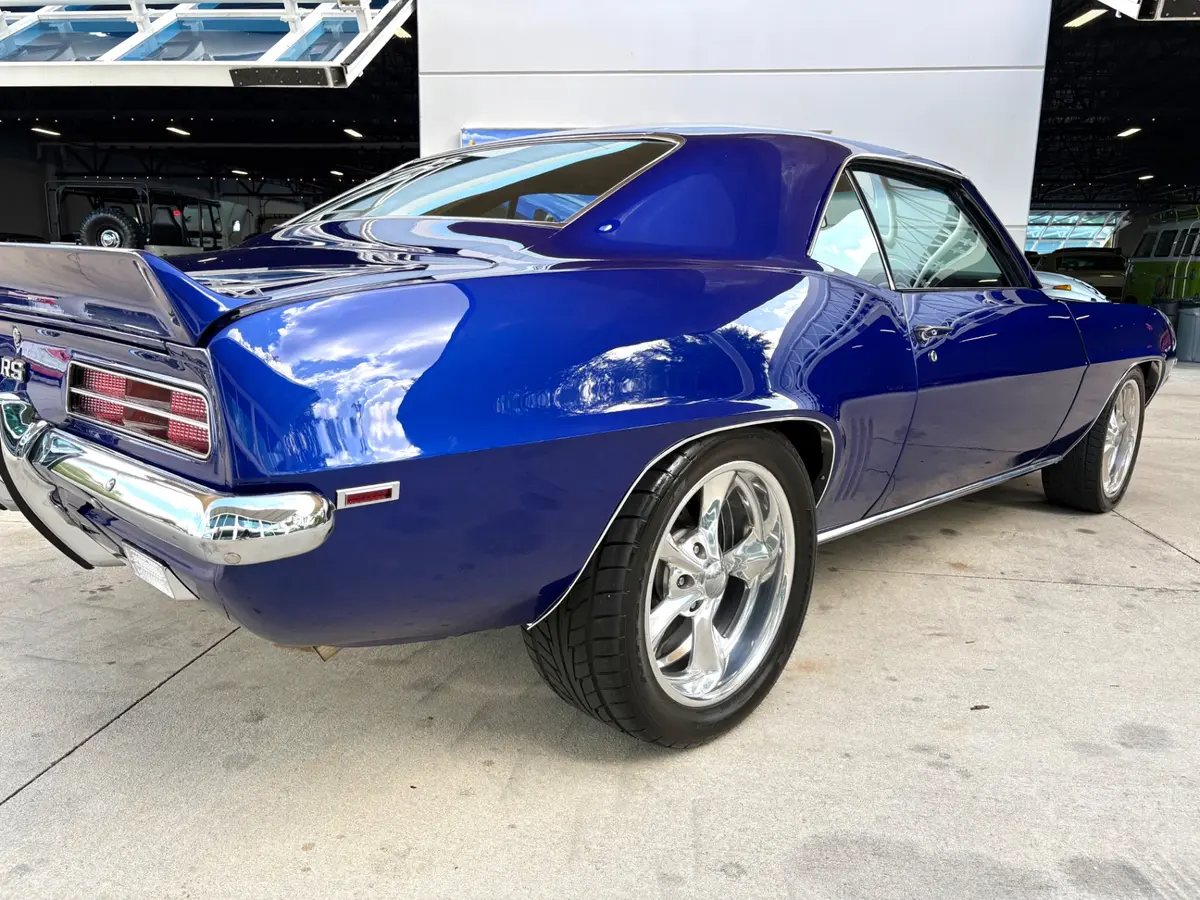
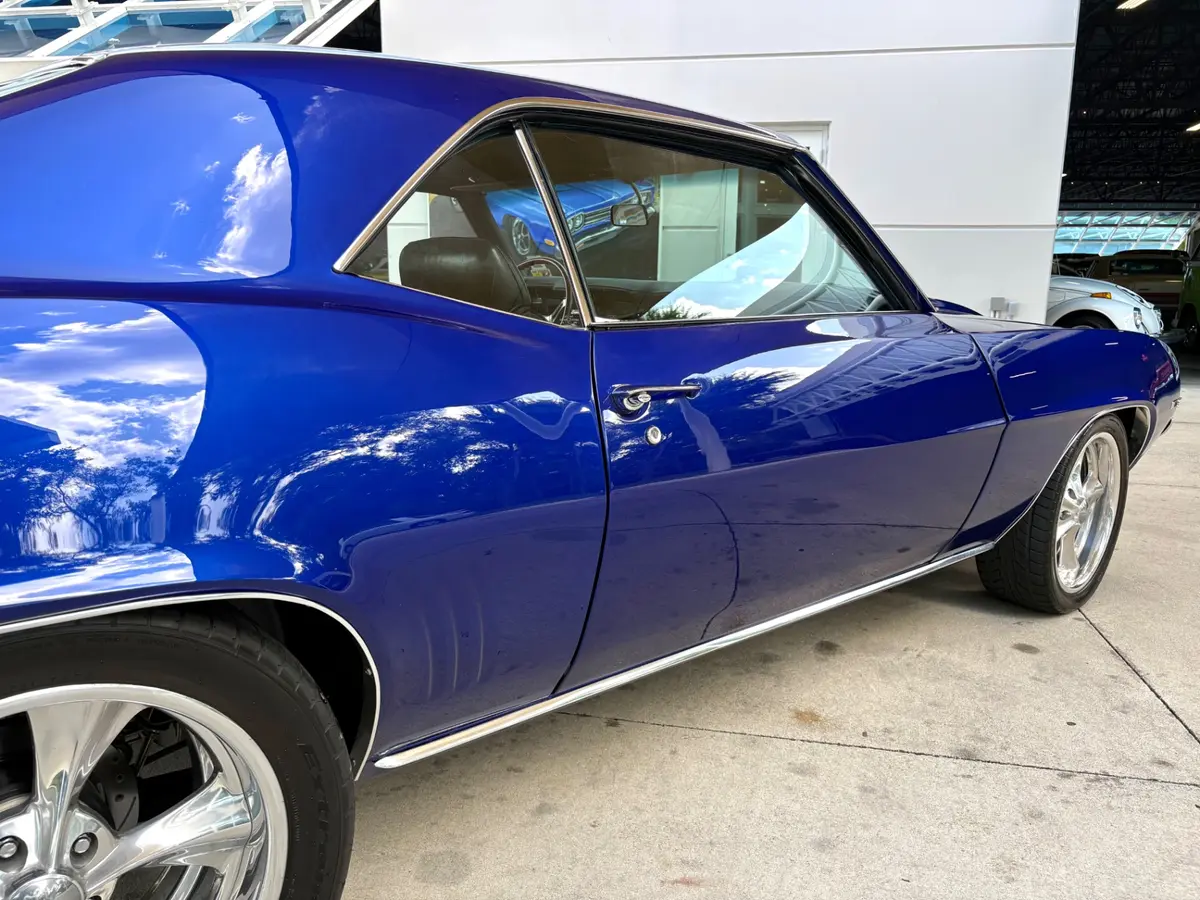
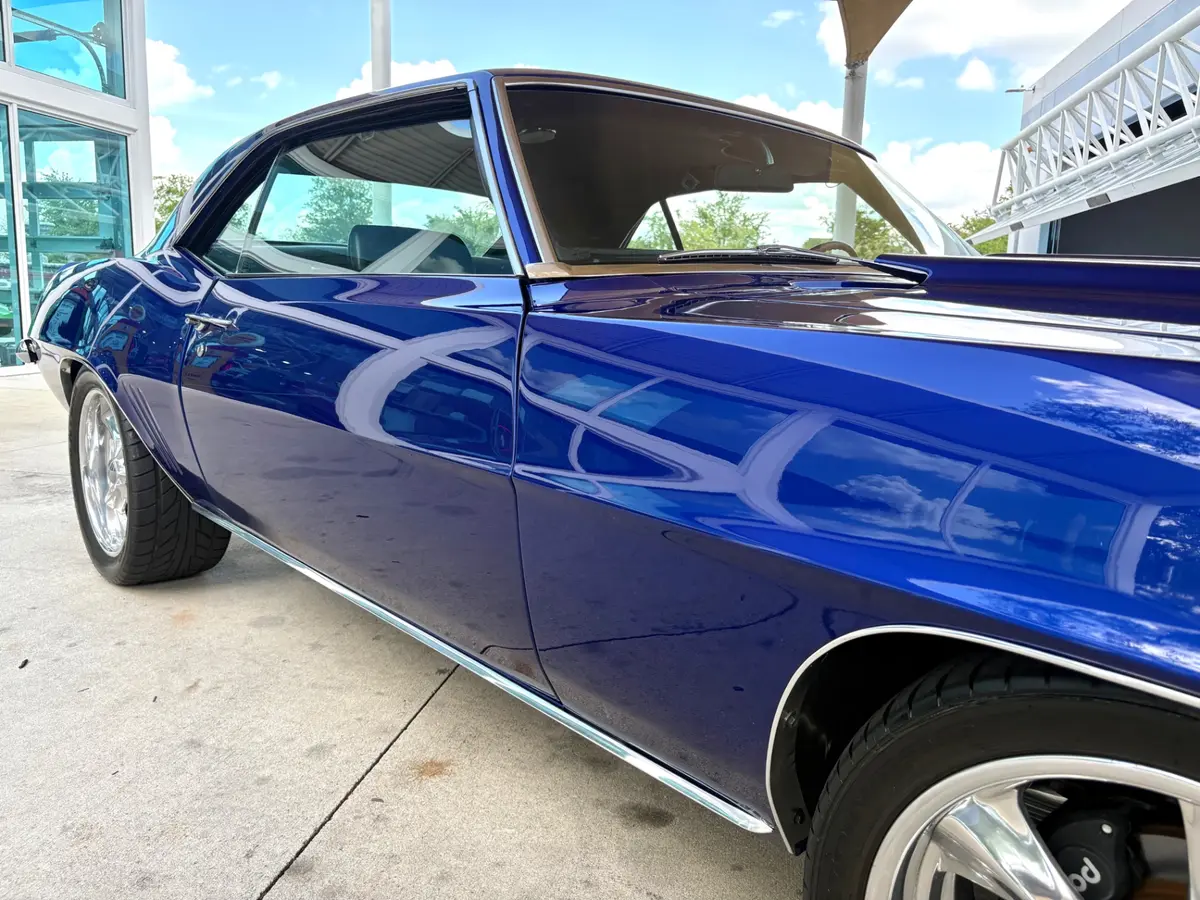
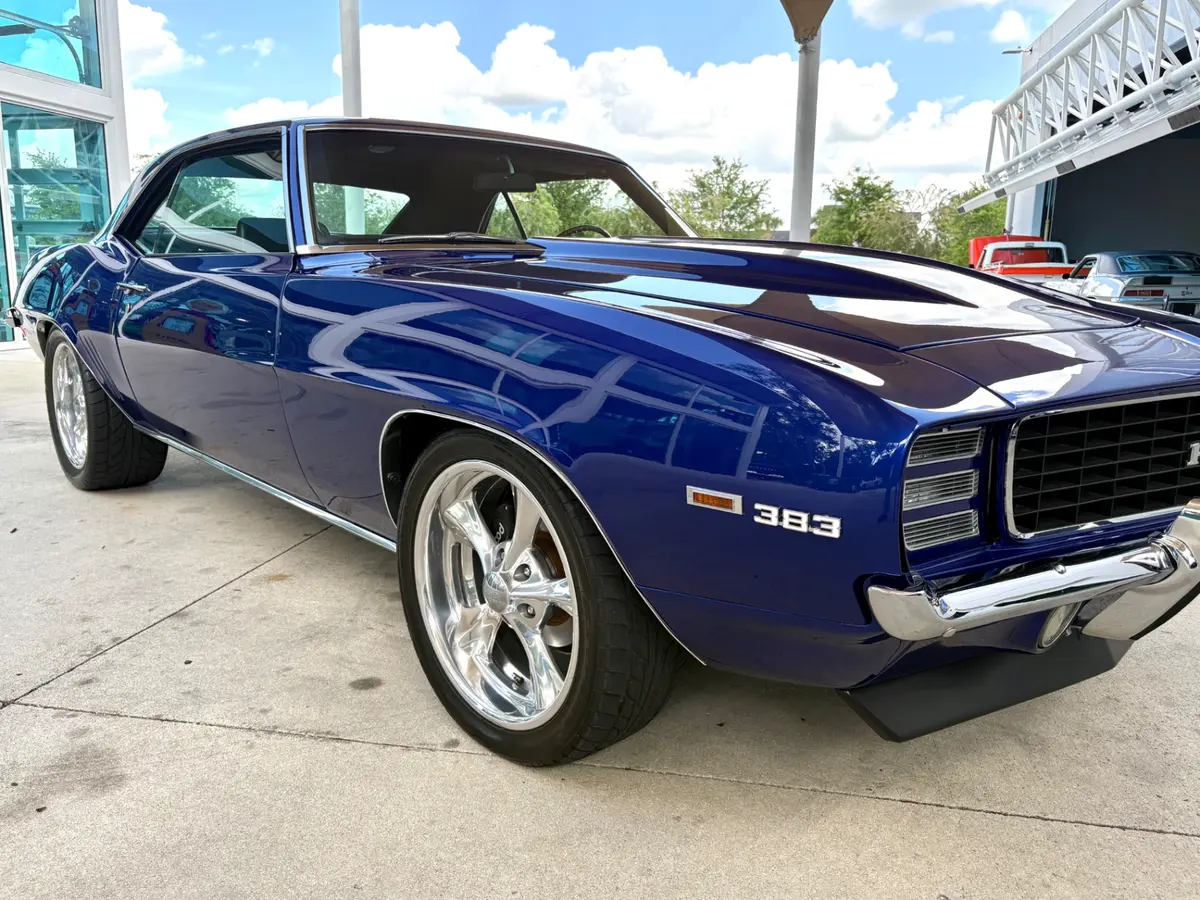
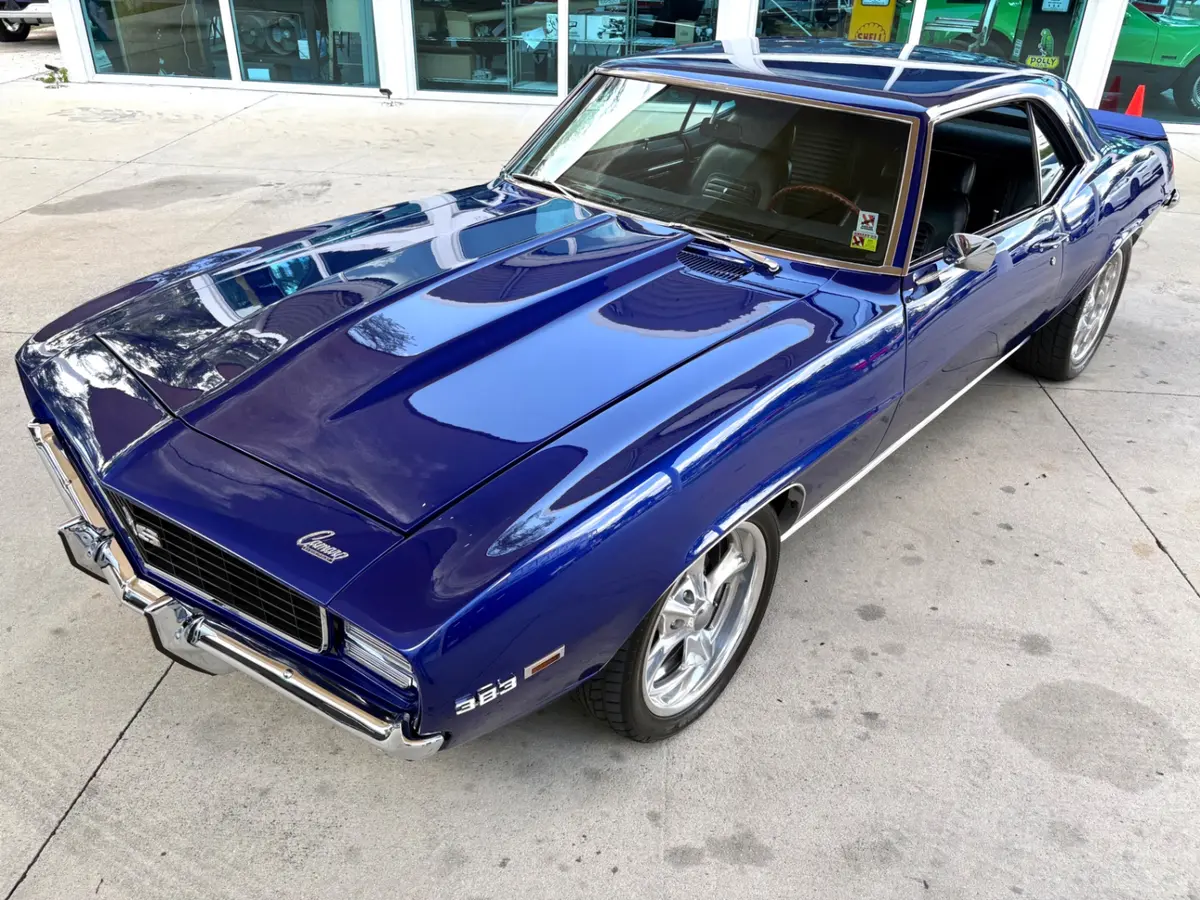
The body on this 1969 Chevrolet Camaro RS wears a deep Dark Blue Metallic finish applied in modern basecoat/clearcoat. There are no stripes, no decals, and no graphics — the body presents a completely clean surface that shows the sheetmetal lines and proportions of the 1969 design without interruption. The finish is show quality, applied over a rotisserie restoration that started with bare metal.
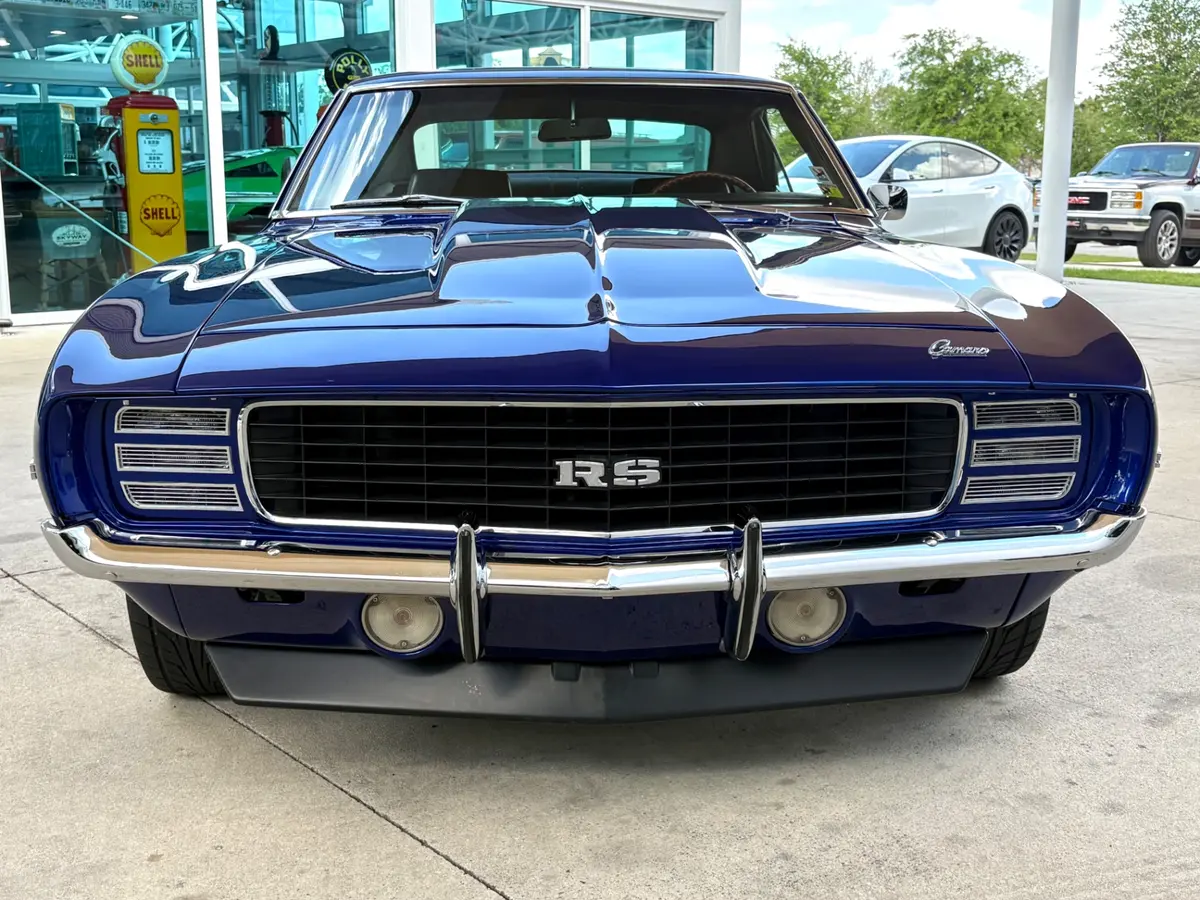
The cowl induction hood is a functional and visually correct upgrade for a performance-oriented 1969 Camaro — it draws cool air from the high-pressure zone at the base of the windshield and sits lower at the cowl than a traditional scoop, giving the car a purposeful but not overdone profile. The ducktail rear spoiler extends the rear deck and adds a period-correct competition look without being exaggerated.
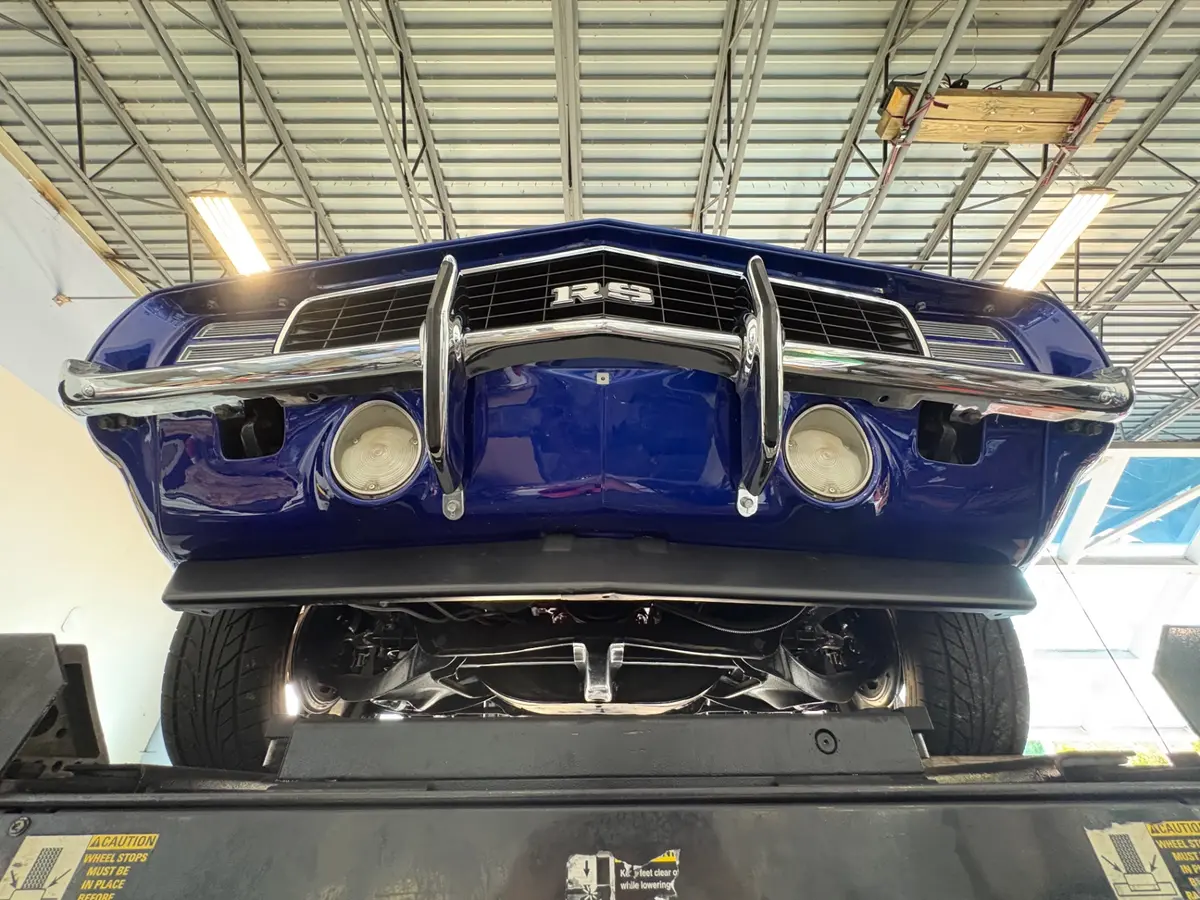
The RS package on the 1969 Camaro means hidden headlights, and this car uses Detroit Speed electric hideaway units rather than the vacuum-operated factory setup. The vacuum-operated originals were notorious for slow or incomplete operation, particularly with age. Detroit Speed's electric conversion retains the correct appearance while operating quickly and reliably. The grille is blacked out with oval fog lights and a chin spoiler below, maintaining the RS visual signature while giving the nose a more aggressive stance.
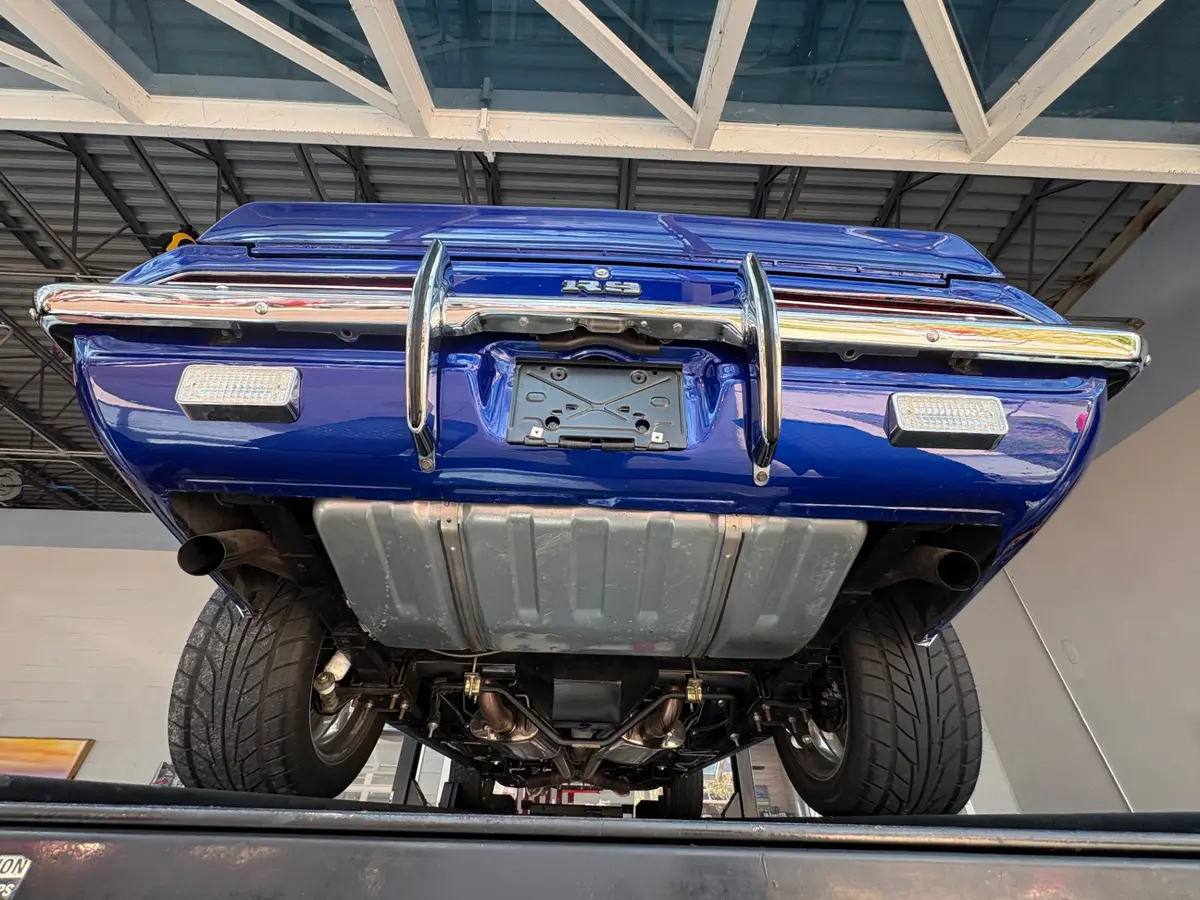
Chrome bumpers and brightwork are in excellent condition throughout. The staggered Billet Specialties wheels — wider in the rear to accommodate 285/40/18 Nitto radials — sit correctly in the wheel openings without excessive gap or interference. The stagger gives the car proper visual weight over the rear axle.
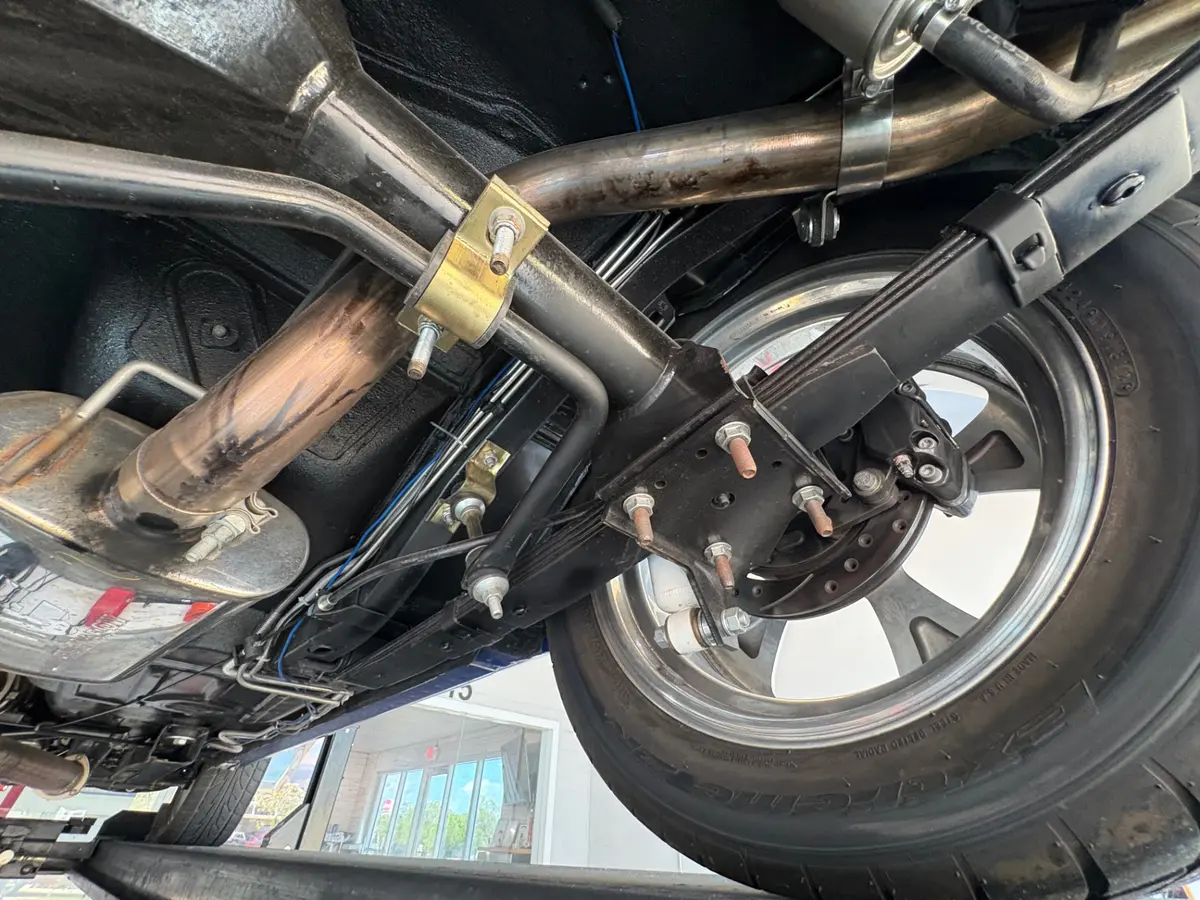
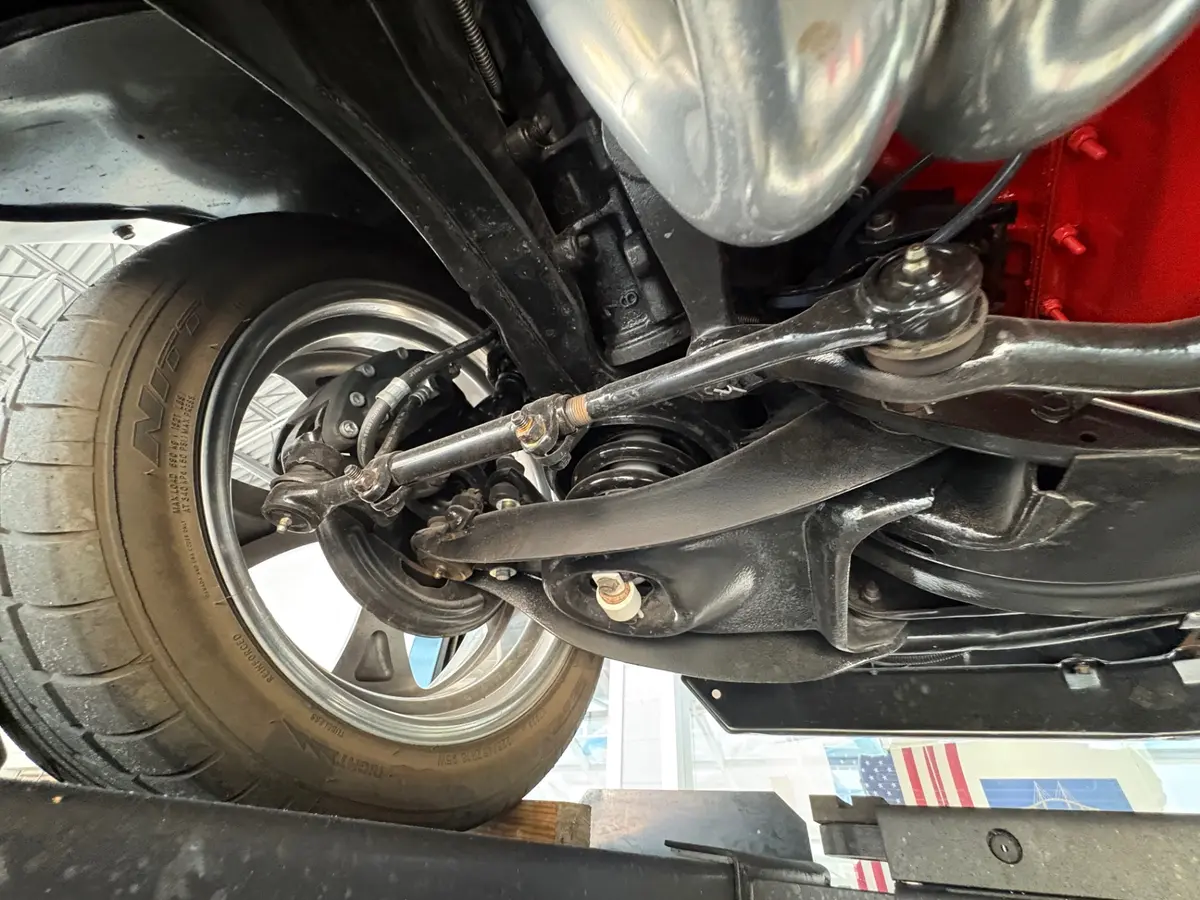
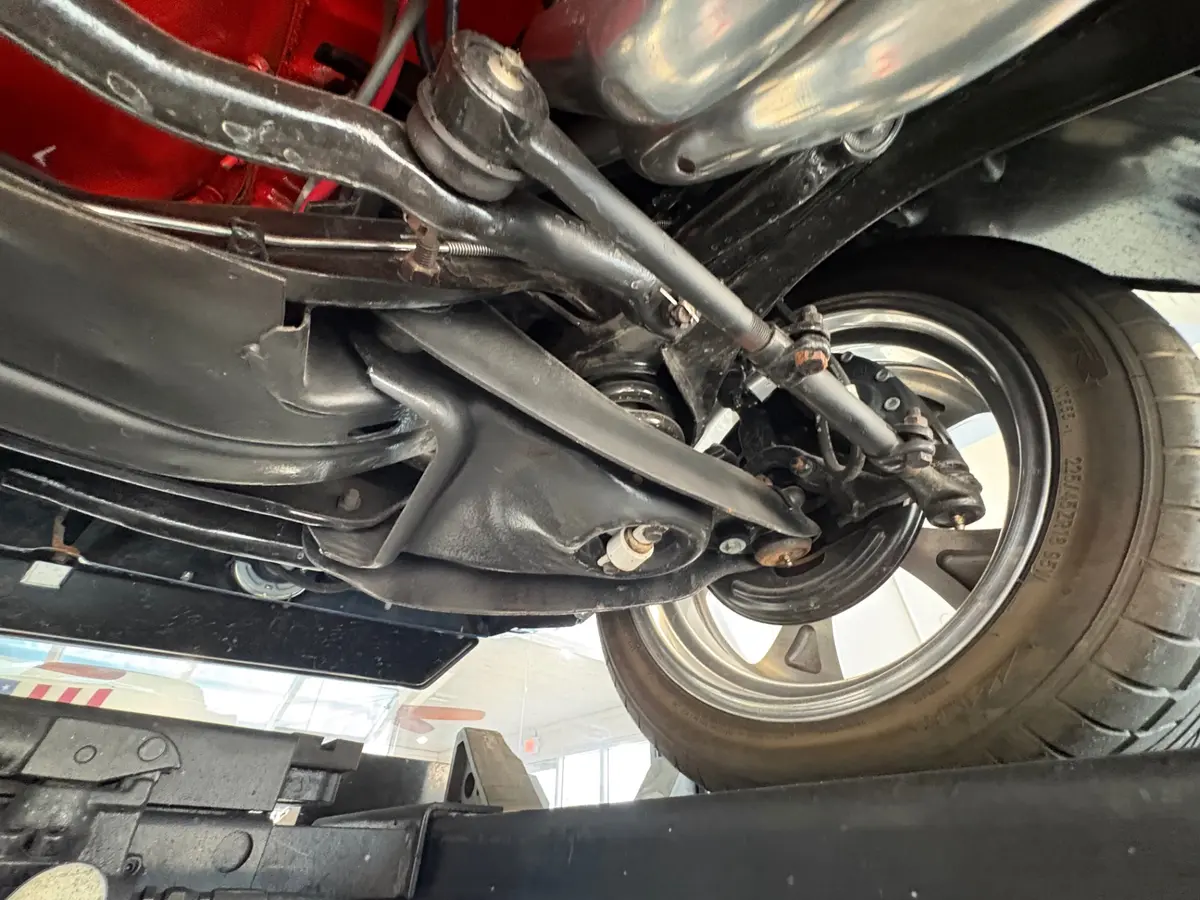
Underneath, the quality of the work matches what you see on top. New stainless fuel tank, new fuel lines, and new brake lines run clean and straight throughout. The undercarriage is as well-executed as the exterior, which is exactly what you should expect from a car that earned a Pro Pick award at an NSRA event.
Conclusion
A 1969 Chevrolet Camaro RS built to this standard is not a common find. The rotisserie restoration, the quality of the drivetrain components, the Wilwood brake upgrade, the Detroit Speed headlight conversion, and the award recognition all point to a build where the owner was not cutting corners or watching the budget. The NSRA Pro Pick Prize is an independent, third-party confirmations of what the build represents. This is a car you can show on Saturday and drive on Sunday with full confidence in everything underneath it.
To learn more about this 1969 Chevrolet Camaro RS or to schedule an in-person inspection, call Skyway Classics in Sarasota, Florida at 941-254-6608.
Disclaimer
Information found on the website is presented as given to us by the owner of the car, whether on consignment or from the owner we bought it from. Some Photos, materials for videos, descriptions and other information are provided by the consignor/seller and is deemed reliable, but Skyway Classics does not warranty or guarantee this information. Skyway Classics is not responsible for information that may incorrect or a publishing error. The decision to purchase should be based solely on the buyers personal inspection of the vehicle or by a professional inspection service prior to offer or purchase being made.
1969 Chevrolet Camaro RS — Frame-Off Resto-Mod, 383 Stroker, NSRA Award Winner
Why This Car Is Special
The 1969 Chevrolet Camaro is widely regarded as the high-water mark of the first-generation platform. Chevrolet redesigned the body that year with a longer nose, a more aggressive roofline, and sharper character lines — changes significant enough that many collectors treat the 1969 model as its own category rather than simply a continuation of the 1967–68 cars. Chevrolet produced just over 243,000 Camaros for 1969, and the RS (Rally Sport) package — identified in the VIN by the model designation — added the iconic hidden headlight system, specific RS badging, and a blacked-out grille treatment that gave the car a distinctly different face from the standard model. It was a pure appearance package, not a performance upgrade, which made it easy to combine with the SS or Z/28 hardware underneath. This particular 1969 Chevrolet Camaro RS has gone several steps beyond what any factory ever offered, built as a full rotisserie, frame-off resto-mod to a level that earned it NSRA recognition. The Pro Pick Prize at an NSRA event is not handed out casually — judges at that level are looking at fit, finish, engineering, and execution as a complete package. This car checked every box.
Features List
- 383 Stroker V8 with Holley Sniper EFI
- Hydraulic roller camshaft, roller lifters, and roller rockers
- 10:1 compression forged pistons
- Aluminum cylinder heads with Edelbrock intake manifold
- HEI ignition
- Chevrolet Orange paint on engine, valve covers, and air cleaner
- 700R4 4-speed automatic transmission with overdrive
- 3,500-stall torque converter
- Heavy-duty Fab 9-inch rear end
- 3-inch ceramic-coated exhaust with X-pipe and Magnaflow mufflers
- Beefed-up performance suspension with new front and rear shocks
- 4-wheel Wilwood disc brakes with drilled and slotted rotors
- Power steering and power brakes
- Staggered Billet Specialties wheels — 18x8 front, 18x9.5 rear (approximate stagger)
- Front: 225/45/18 Nitto radials — Rear: 285/40/18 Nitto radials
- Dark Blue Metallic modern basecoat/clearcoat finish
- Cowl induction hood and ducktail rear spoiler
- Detroit Speed electric hideaway headlights
- Blacked-out grille with oval fog lights and chin spoiler
- Chrome bumpers and brightwork
- Black vinyl high-back bucket seats with matching rear seat and door panels
- Dakota Digital gauges — main cluster and Rally-Pac
- Tilt steering column with 3-spoke wood-rimmed wheel
- Vintage Air air conditioning
- Bluetooth AM/FM/AUX stereo with upgraded speakers and Kicker subwoofer
- Factory-style center console with horseshoe shifter
- New stainless fuel tank, new fuel lines, and new brake lines throughout
- Full rotisserie, nut-and-bolt restoration
- NSRA Award Winner including Pro Pick Prize
Mechanical
The engine in this 1969 Chevrolet Camaro RS is a 383 cubic inch stroker built on the small-block Chevrolet architecture. The stroker displacement is achieved by combining a 350 block with a 400 crankshaft, which increases stroke from 3.48 inches to 3.75 inches and brings total displacement to 383 cubic inches. The result is a small-block that breathes like a big-block — more torque, more usable power across a wider RPM range, and none of the weight or packaging compromises of a true big-block swap. The short-block uses forged pistons running a 10:1 compression ratio, which is a real-world performance spec, not a show number. The hydraulic roller camshaft, roller lifters, and roller rockers reduce internal friction significantly compared to a flat-tappet setup and allow for more aggressive cam profiles without the wear trade-offs.
Up top, aluminum cylinder heads keep weight down while improving heat dissipation, and the Edelbrock intake manifold feeds the Holley Sniper EFI system. The Sniper is a throttle-body fuel injection unit designed to look period-correct while delivering modern fuel management — closed-loop operation, self-tuning capability, and cold-start reliability that no carburetor can match. The HEI ignition completes a drivetrain package that starts and runs consistently, whether it is 35 degrees or 95 degrees outside.
Behind the engine sits a 700R4 4-speed automatic transmission, which adds a genuine overdrive fourth gear — something no factory 1969 Camaro could offer. Highway cruising RPM drops considerably compared to a Turbo-Hydramatic 350 or 400, which means better fuel economy and far less engine stress on long drives. The 3,500-stall torque converter keeps the powerband where the stroker makes its power. Out back, a heavy-duty fabricated 9-inch rear end replaces the factory unit entirely. The Ford 9-inch design has been the standard in performance builds for decades because of its strength, its aftermarket support, and the ease of changing gear ratios.
The exhaust system runs 3-inch ceramic-coated pipes from the headers back, joins through an X-pipe crossover — which balances exhaust pulses between cylinder banks and broadens the power curve — and exits through Magnaflow mufflers. The result is a system that flows well and sounds composed without being obnoxious.
Stopping power comes from 4-wheel Wilwood disc brakes with drilled and slotted rotors. Wilwood is a motorsport-grade brake manufacturer whose components show up on everything from road race cars to high-end pro touring builds. The factory 1969 Camaro came with front discs as an option and drums in the rear as standard. Four-wheel disc conversion on a car like this is not optional — it is the correct choice given the power output.
Interior
The interior of this 1969 Chevrolet Camaro RS is built around the factory RS/sport bucket seat layout, finished in black vinyl throughout. The high-back bucket seats, door panels, and rear seat are all matched, giving the cabin a consistent, purposeful appearance. The factory-style center console with a horseshoe shifter keeps the correct visual language of a late-1960s Camaro while housing the 700R4 shifter cleanly.
Instrumentation is handled by a Dakota Digital gauge cluster replacing the factory dash, along with a Dakota Digital Rally-Pac unit for the auxiliary gauges. Dakota Digital builds OEM-quality replacement gauge systems that retain a period look while offering programmable calibration, accurate sweep, and long-term reliability. You are reading actual oil pressure, water temperature, and voltage — not guesses from a 55-year-old sender.
The tilt steering column carries a 3-spoke wood-rimmed wheel that fits the era without looking like a parts-bin selection. Vintage Air handles climate control — a system specifically engineered for classic car installations that delivers real air conditioning capacity using modern refrigerant and components, routed through factory-appearing vents. The stereo is Bluetooth-capable with AM/FM/AUX inputs, upgraded speakers, and a Kicker subwoofer, all integrated without cutting up the dash or making a mess of the firewall.
Exterior
The body on this 1969 Chevrolet Camaro RS wears a deep Dark Blue Metallic finish applied in modern basecoat/clearcoat. There are no stripes, no decals, and no graphics — the body presents a completely clean surface that shows the sheetmetal lines and proportions of the 1969 design without interruption. The finish is show quality, applied over a rotisserie restoration that started with bare metal.
The cowl induction hood is a functional and visually correct upgrade for a performance-oriented 1969 Camaro — it draws cool air from the high-pressure zone at the base of the windshield and sits lower at the cowl than a traditional scoop, giving the car a purposeful but not overdone profile. The ducktail rear spoiler extends the rear deck and adds a period-correct competition look without being exaggerated.
The RS package on the 1969 Camaro means hidden headlights, and this car uses Detroit Speed electric hideaway units rather than the vacuum-operated factory setup. The vacuum-operated originals were notorious for slow or incomplete operation, particularly with age. Detroit Speed's electric conversion retains the correct appearance while operating quickly and reliably. The grille is blacked out with oval fog lights and a chin spoiler below, maintaining the RS visual signature while giving the nose a more aggressive stance.
Chrome bumpers and brightwork are in excellent condition throughout. The staggered Billet Specialties wheels — wider in the rear to accommodate 285/40/18 Nitto radials — sit correctly in the wheel openings without excessive gap or interference. The stagger gives the car proper visual weight over the rear axle.
Underneath, the quality of the work matches what you see on top. New stainless fuel tank, new fuel lines, and new brake lines run clean and straight throughout. The undercarriage is as well-executed as the exterior, which is exactly what you should expect from a car that earned a Pro Pick award at an NSRA event.
Conclusion
A 1969 Chevrolet Camaro RS built to this standard is not a common find. The rotisserie restoration, the quality of the drivetrain components, the Wilwood brake upgrade, the Detroit Speed headlight conversion, and the award recognition all point to a build where the owner was not cutting corners or watching the budget. The NSRA Pro Pick Prize is an independent, third-party confirmations of what the build represents. This is a car you can show on Saturday and drive on Sunday with full confidence in everything underneath it.
To learn more about this 1969 Chevrolet Camaro RS or to schedule an in-person inspection, call Skyway Classics in Sarasota, Florida at 941-254-6608.
Disclaimer
Information found on the website is presented as given to us by the owner of the car, whether on consignment or from the owner we bought it from. Some Photos, materials for videos, descriptions and other information are provided by the consignor/seller and is deemed reliable, but Skyway Classics does not warranty or guarantee this information. Skyway Classics is not responsible for information that may incorrect or a publishing error. The decision to purchase should be based solely on the buyers personal inspection of the vehicle or by a professional inspection service prior to offer or purchase being made.
1969 Chevrolet
Camaro RS Resto Mod
Why Choose Skyway Classics?
Explore our curated inventory of classic and collector cars—thoughtfully selected, ready to drive, and supported by experts who make ownership simple.
Expert Curation
Every vehicle is hand-selected by our experts for quality, authenticity, and investment potential.
Fast Transactions
Streamlined buying and selling process with quick financing and immediate delivery options.
Only National Dealer With Classic Service & Repair
We’re the only national dealership that services and repairs the classics we sell—before and after the sale.
Nationwide Network
Access to our extensive network of collectors, restorers, and classic car enthusiasts nationwide.
Concierge Ownership Support
From financing and insurance to paperwork, shipping, and titling—we handle the details so you can enjoy the drive.
Passion-Driven Service
We're classic car enthusiasts first, providing personalized service with genuine passion for the hobby.