
1969 Chevrolet
Camaro Z/28
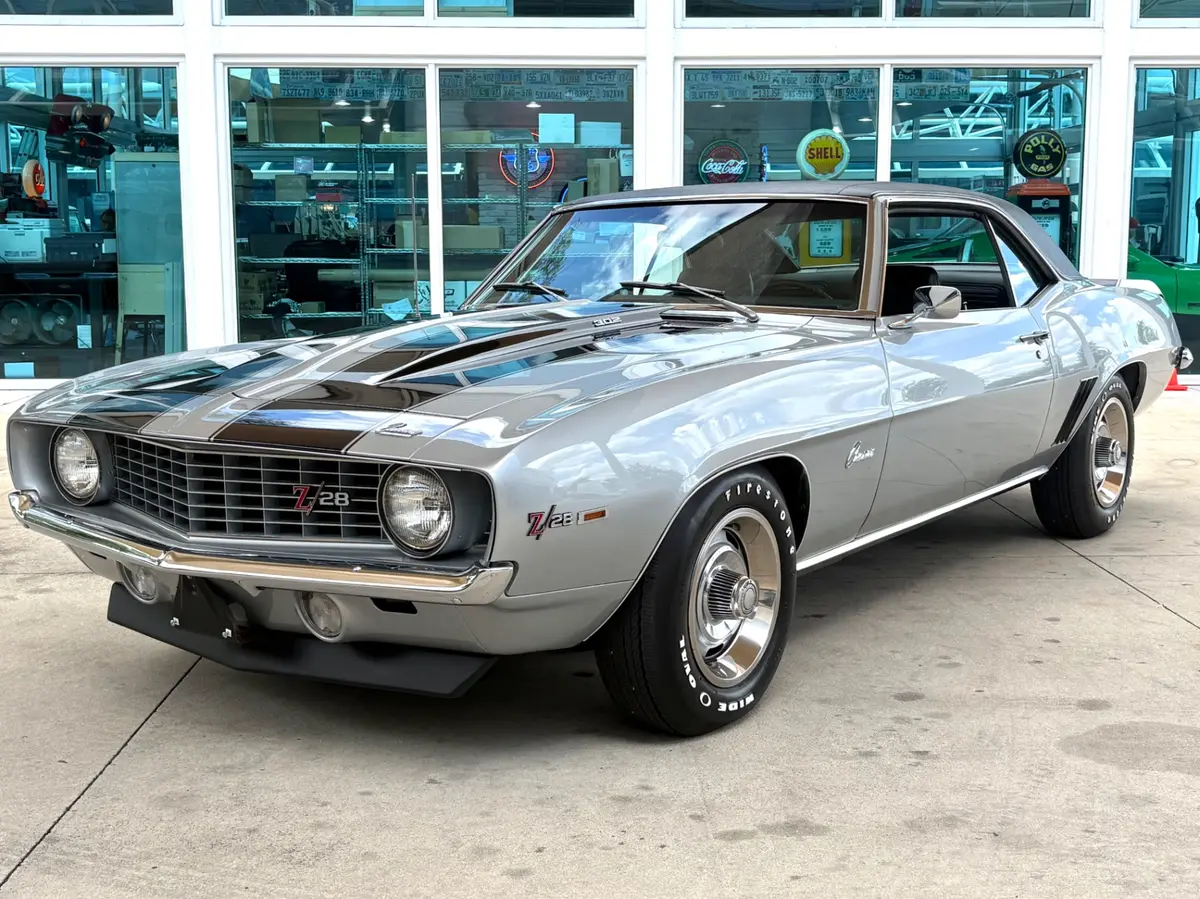
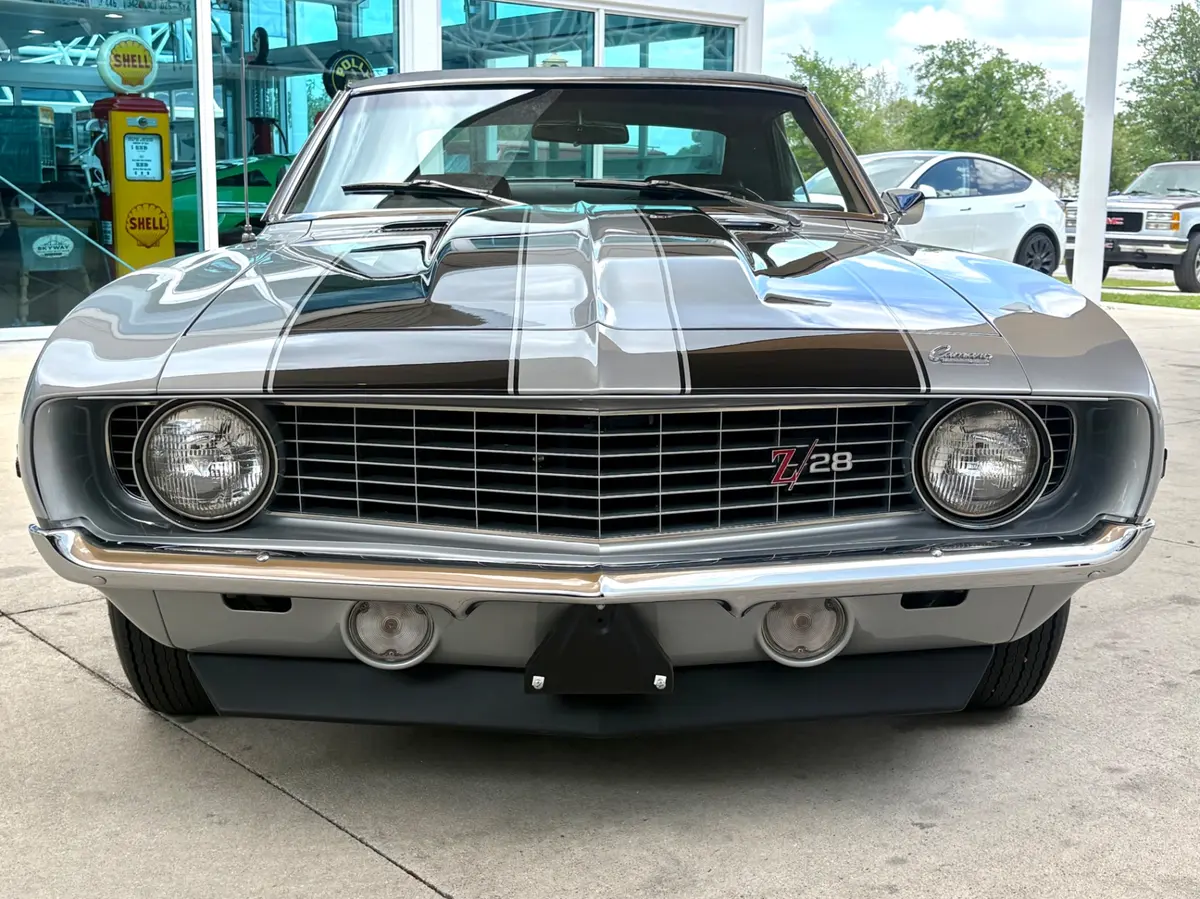
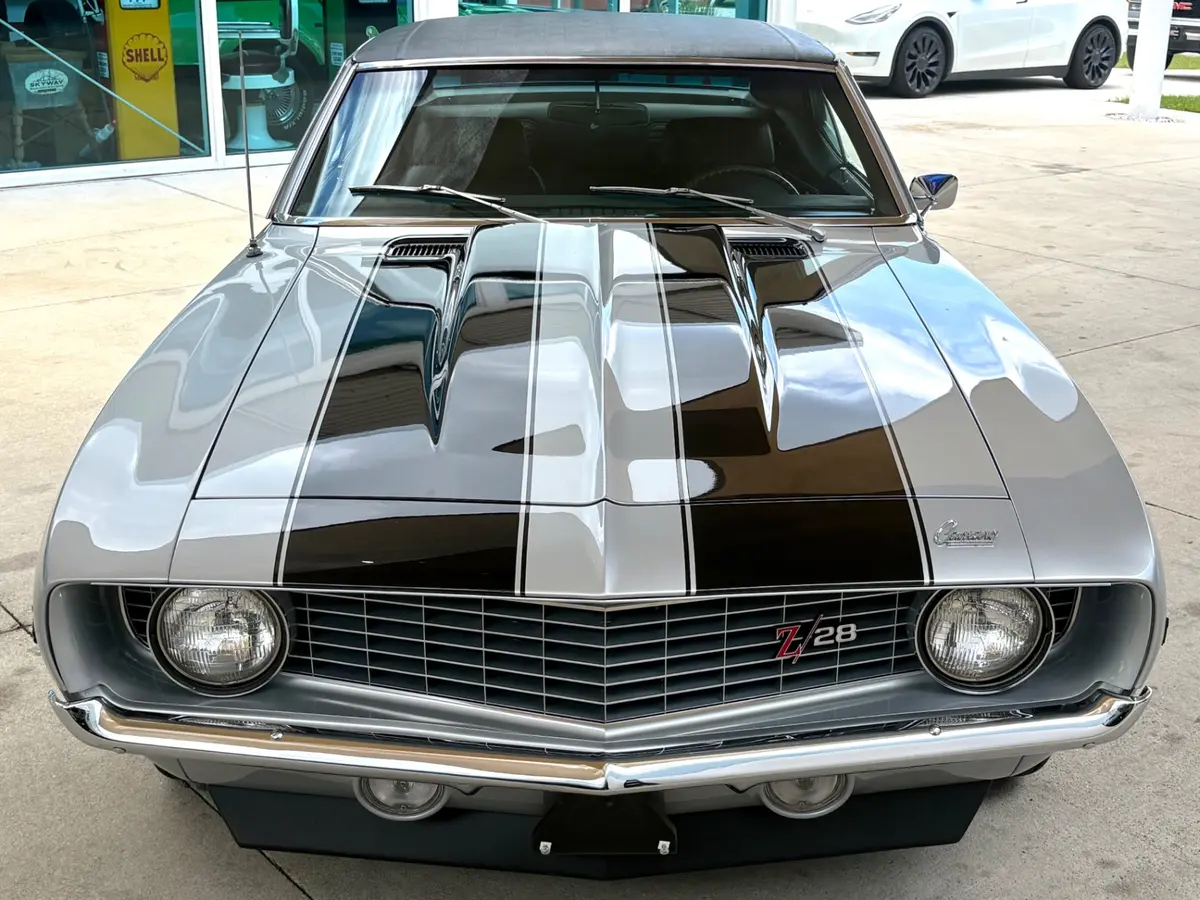
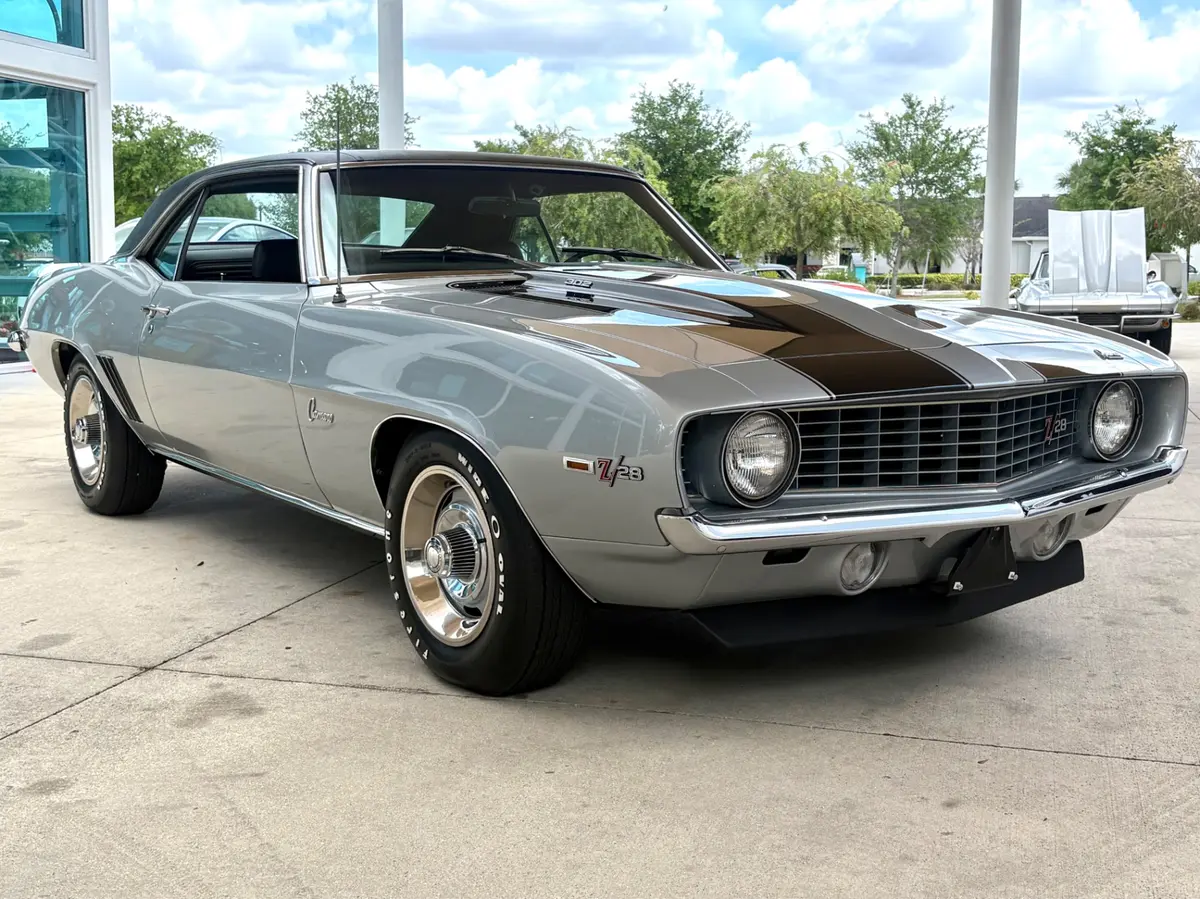
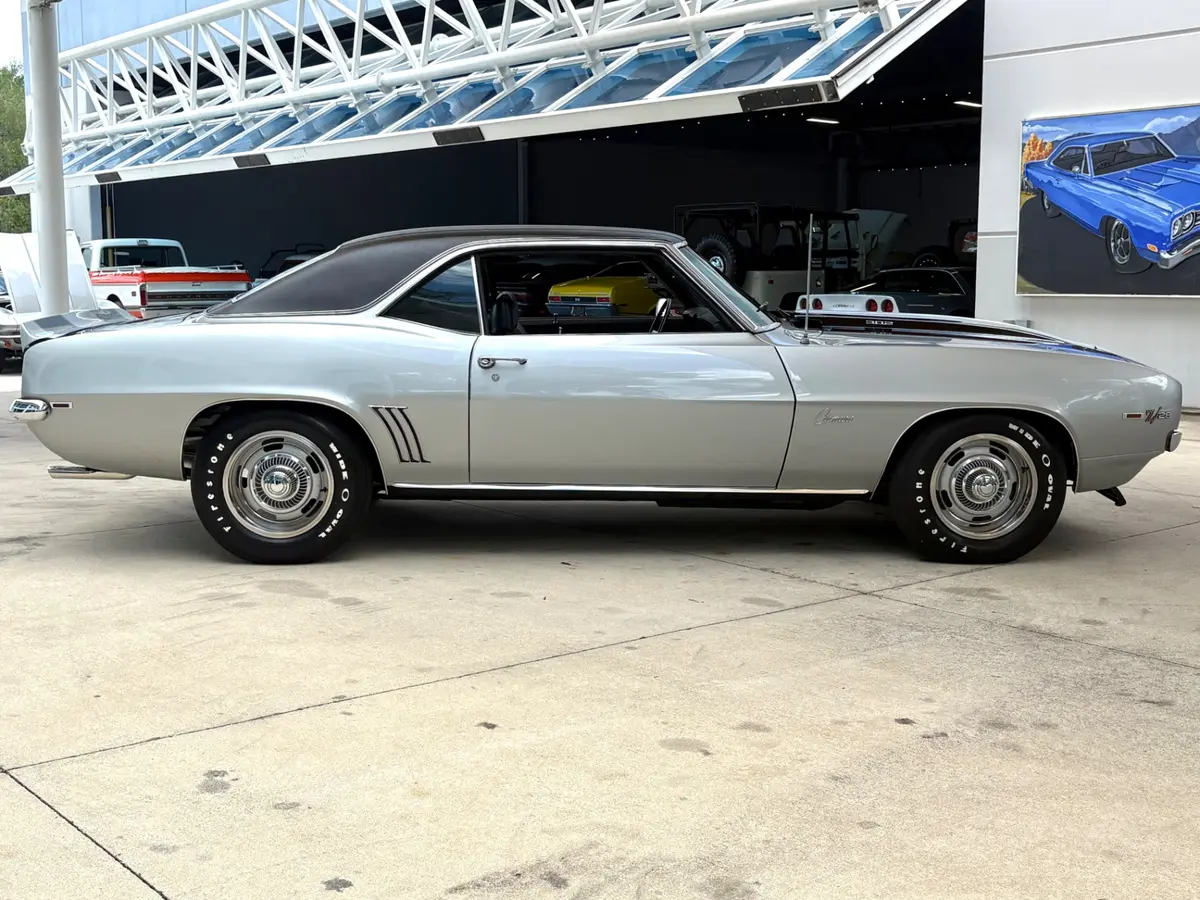
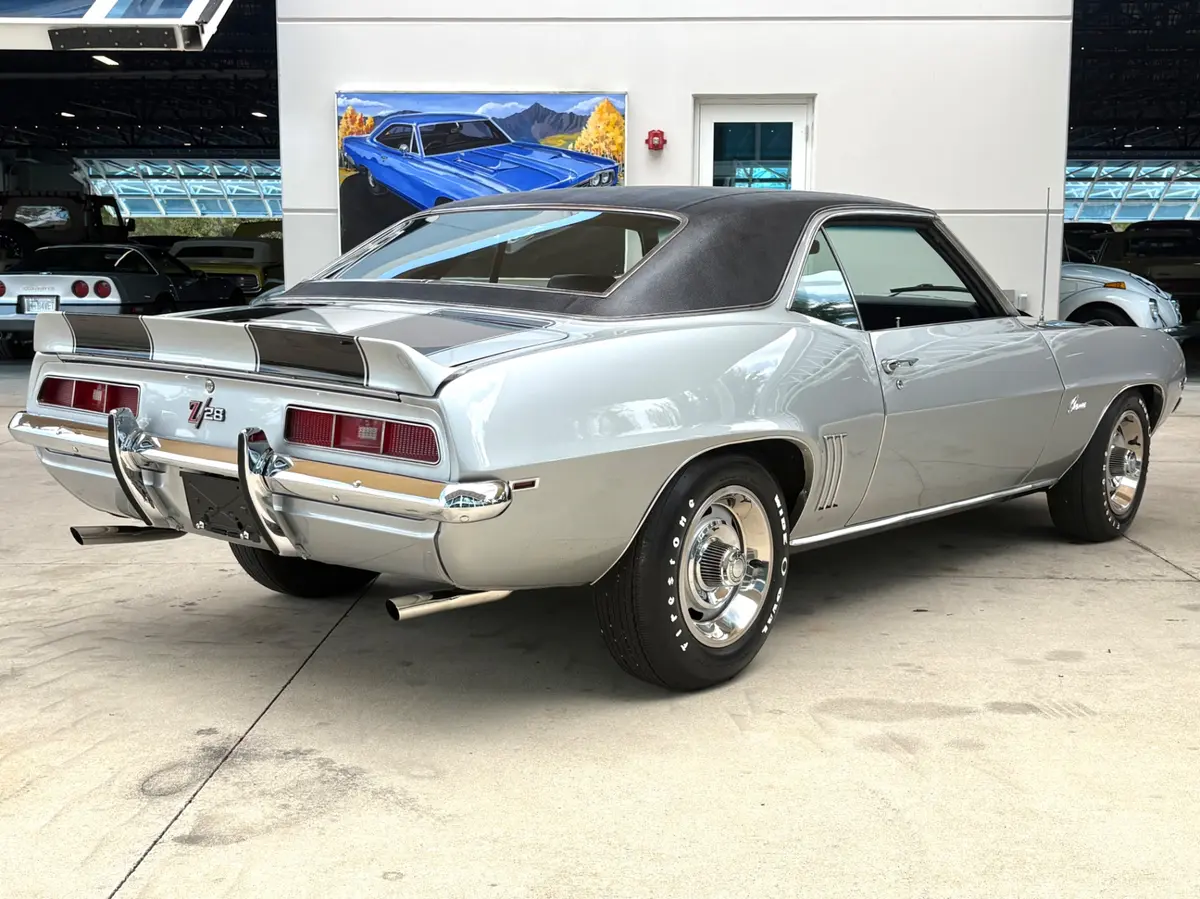
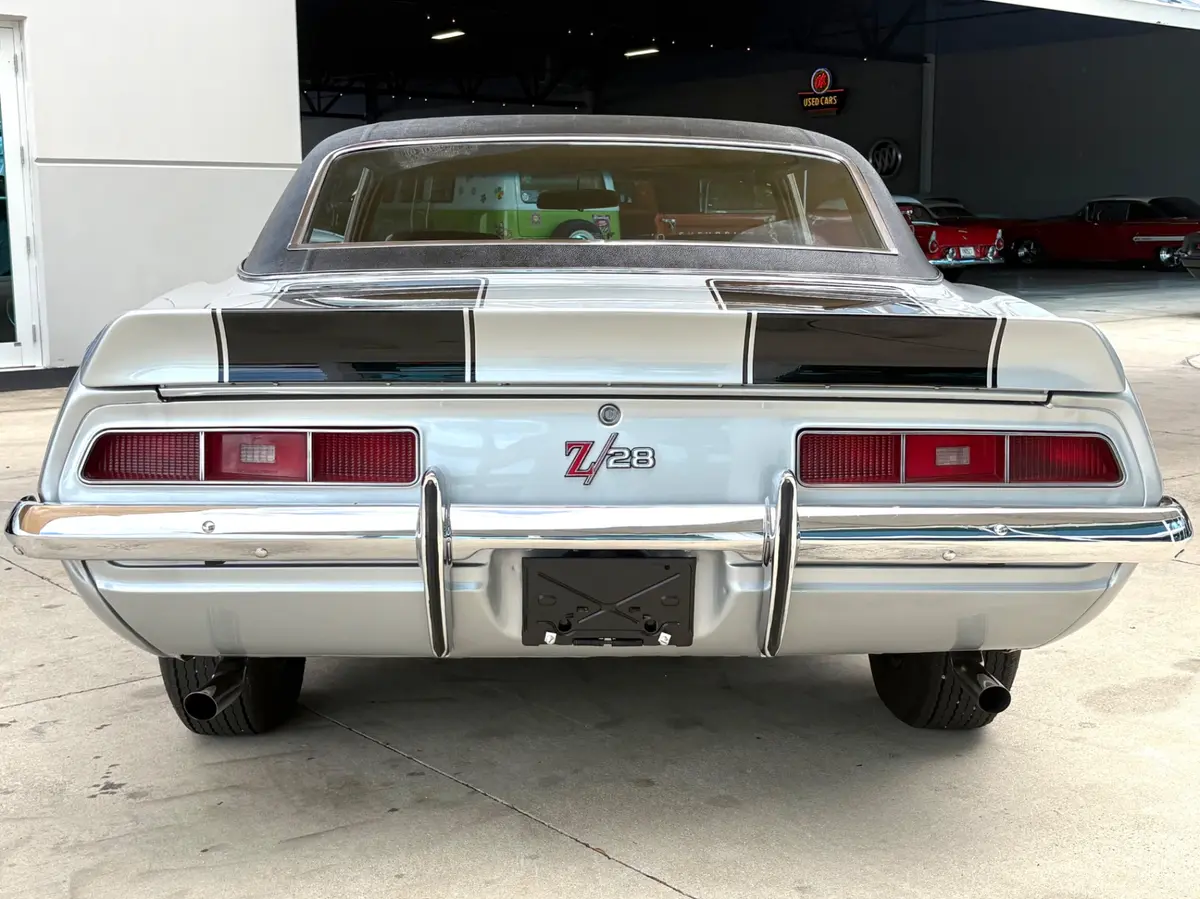
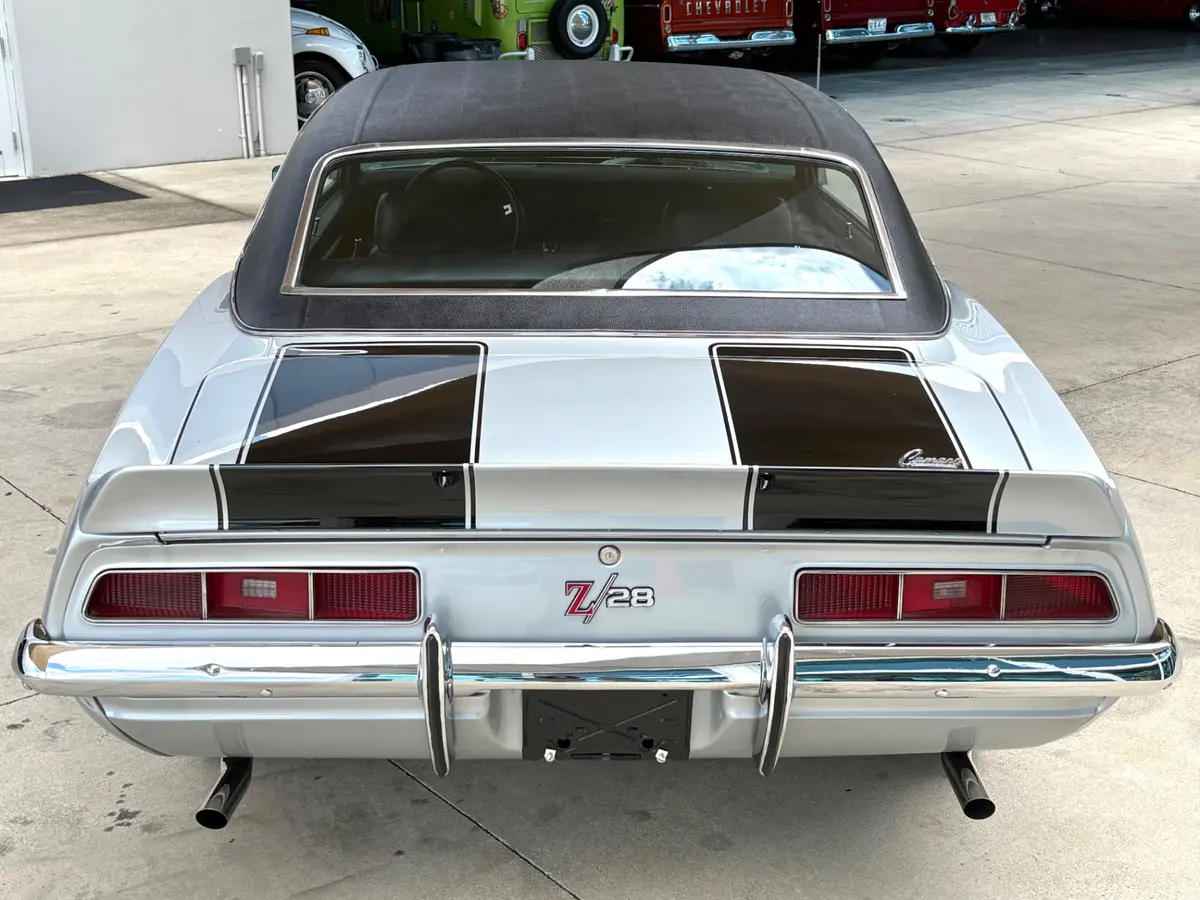
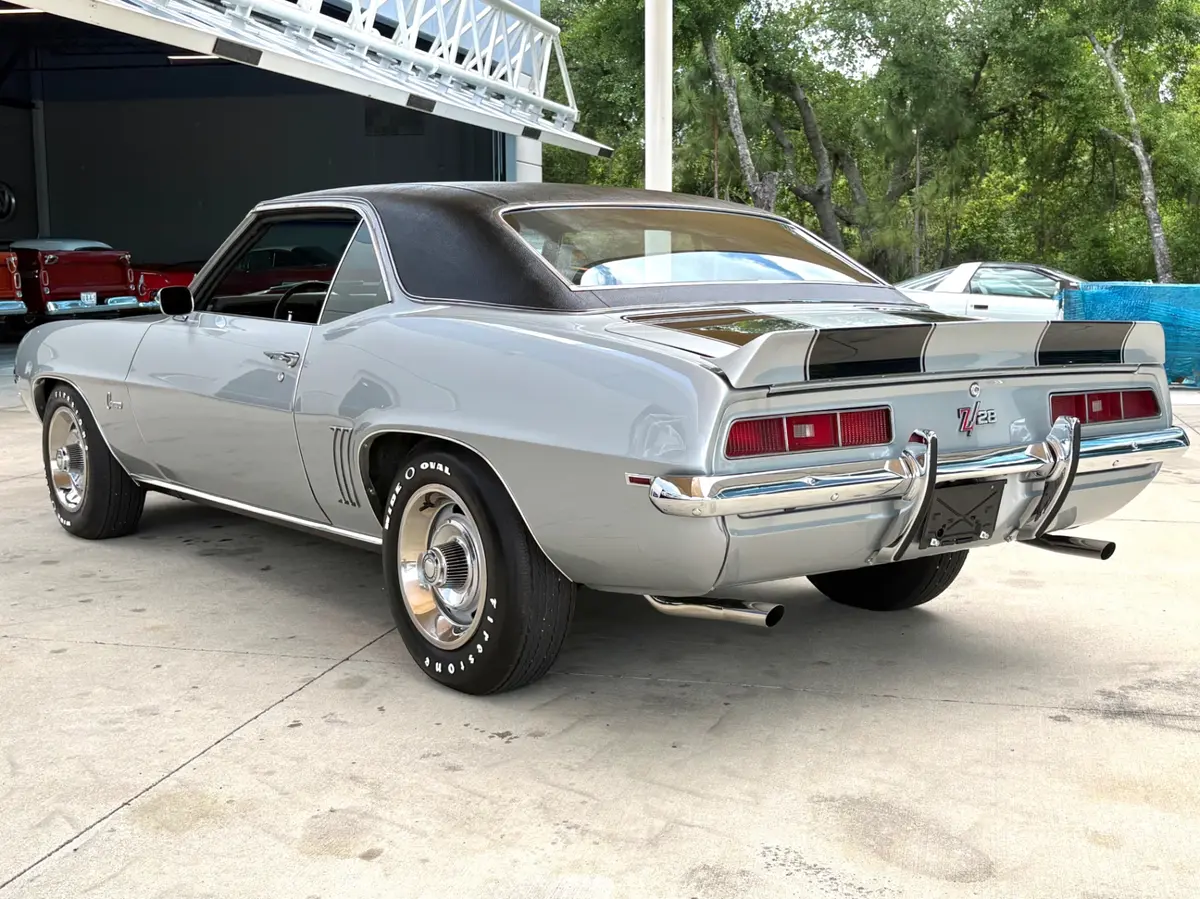
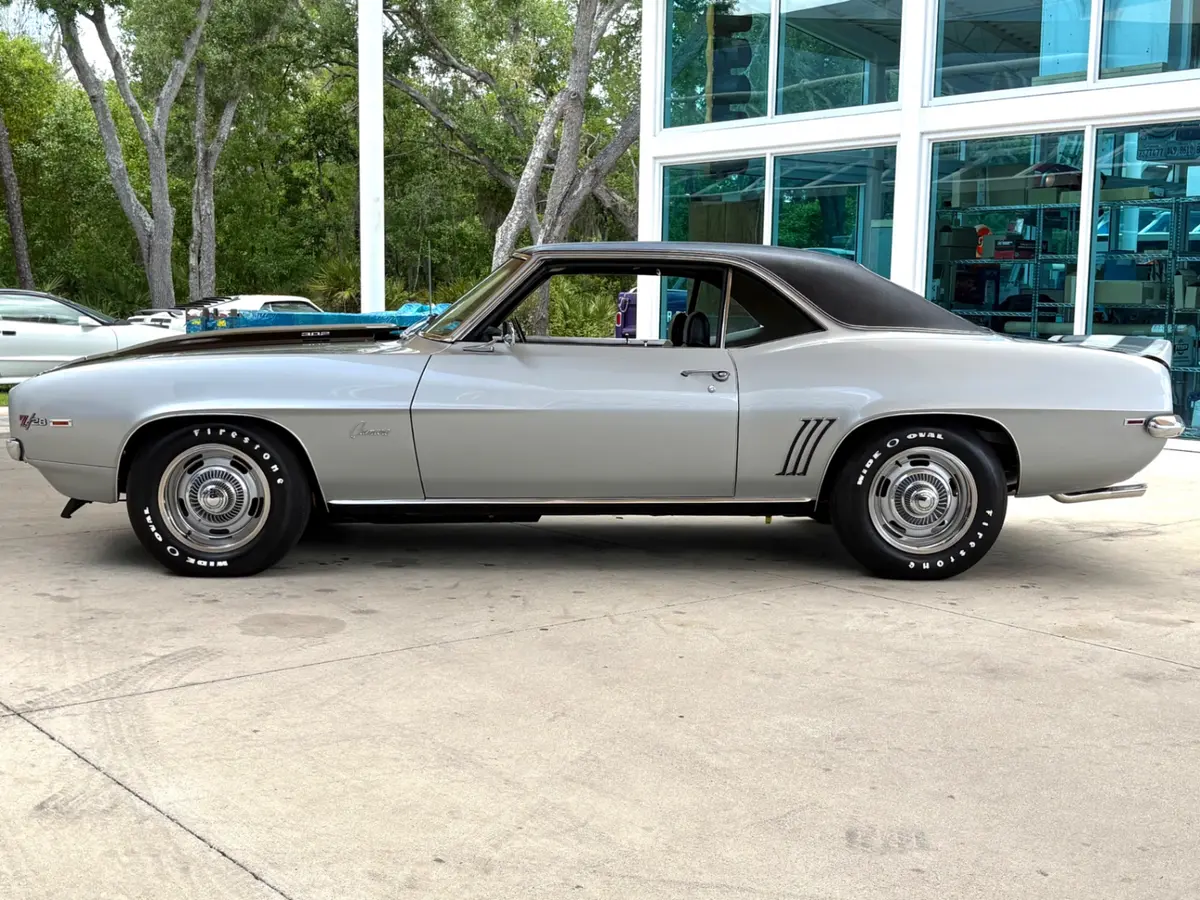
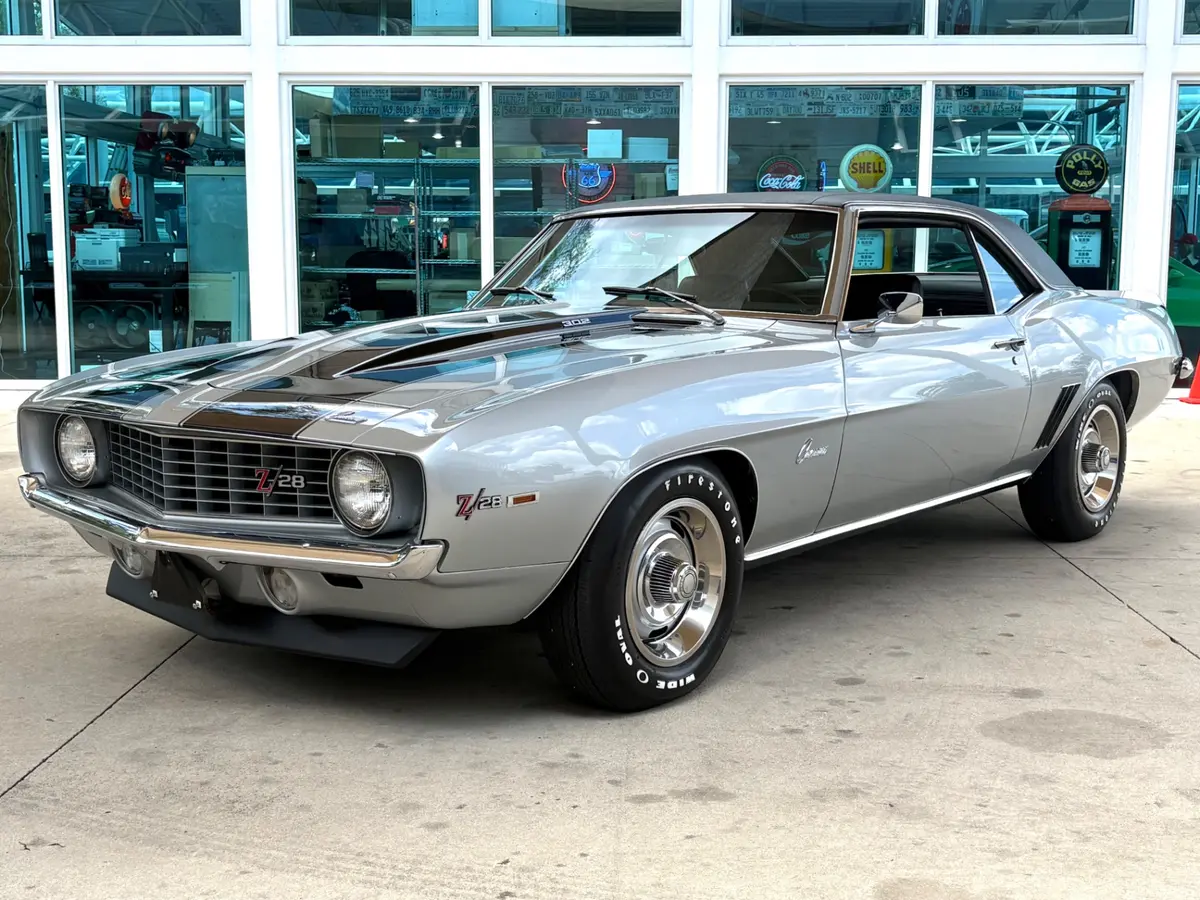
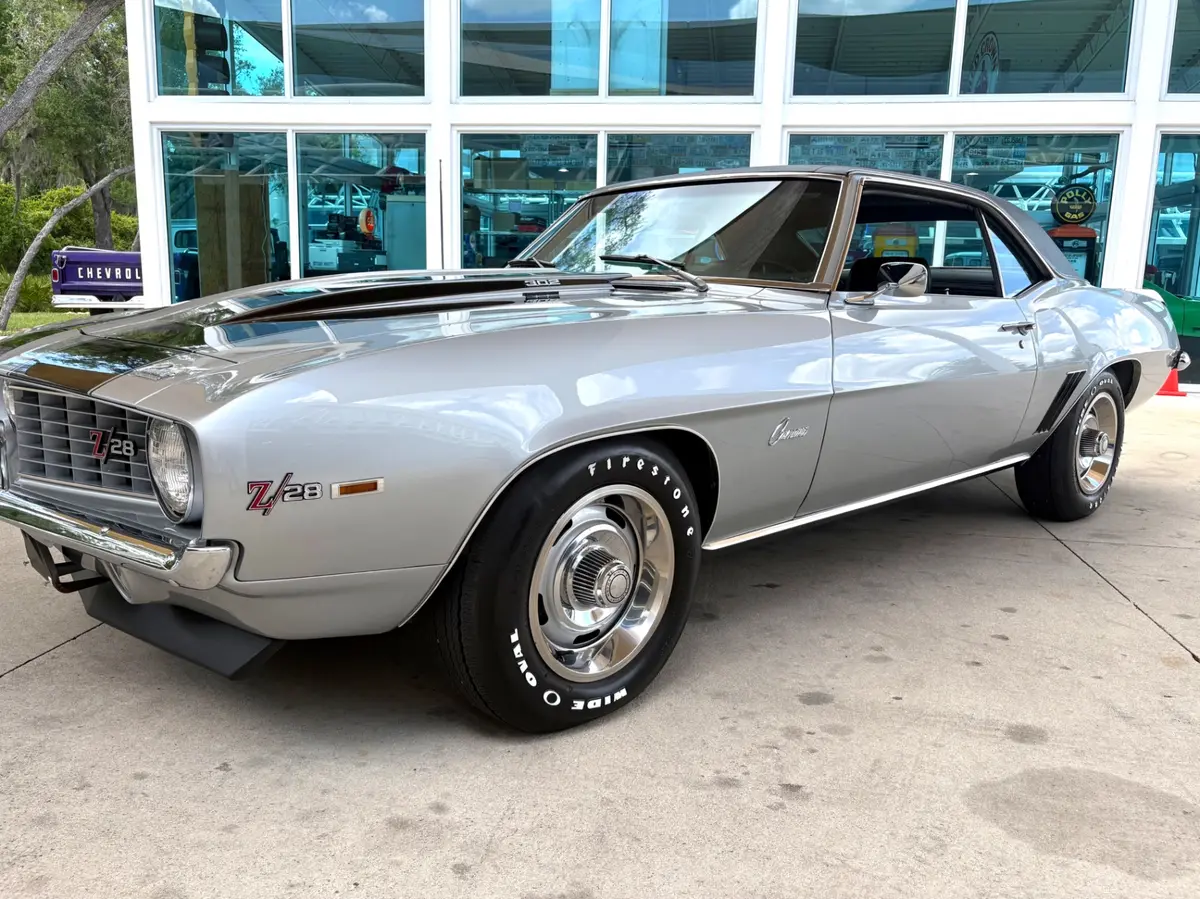
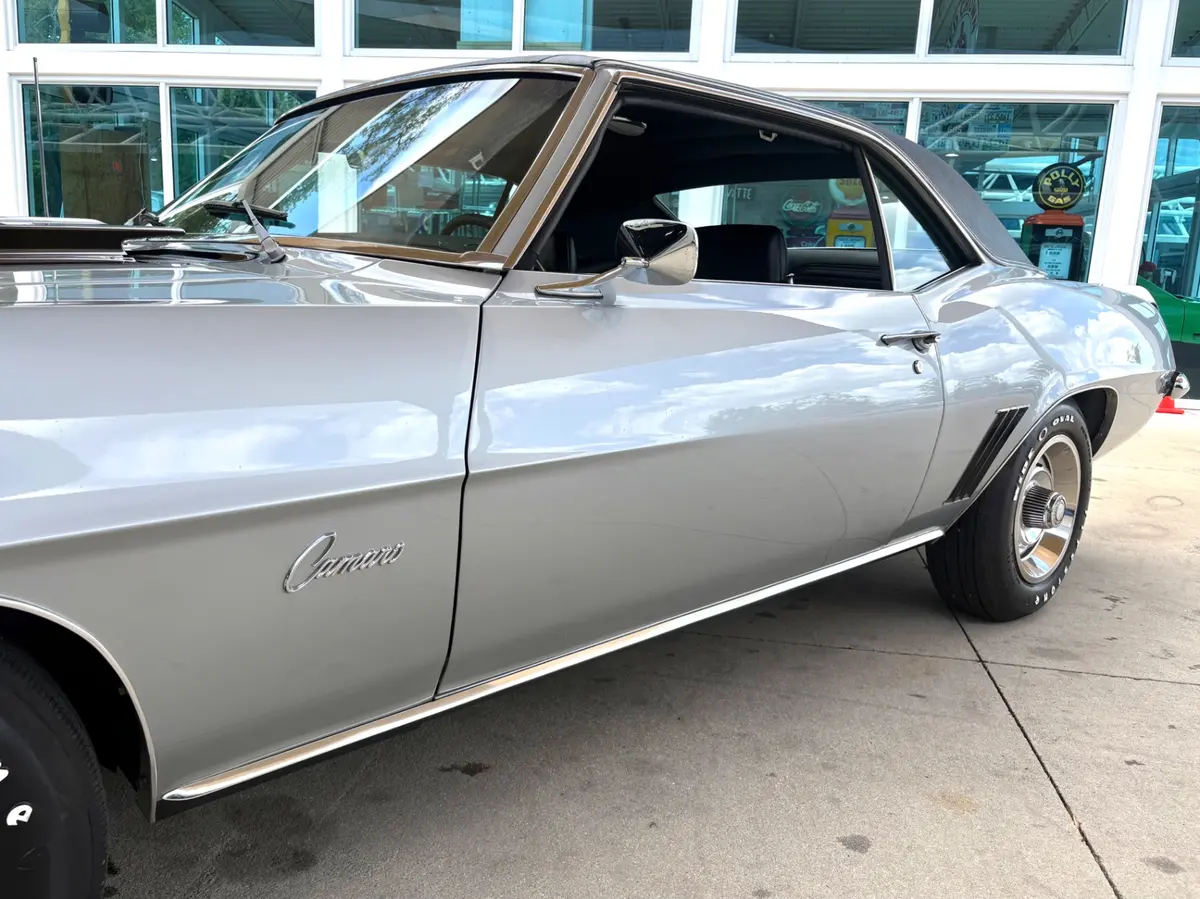
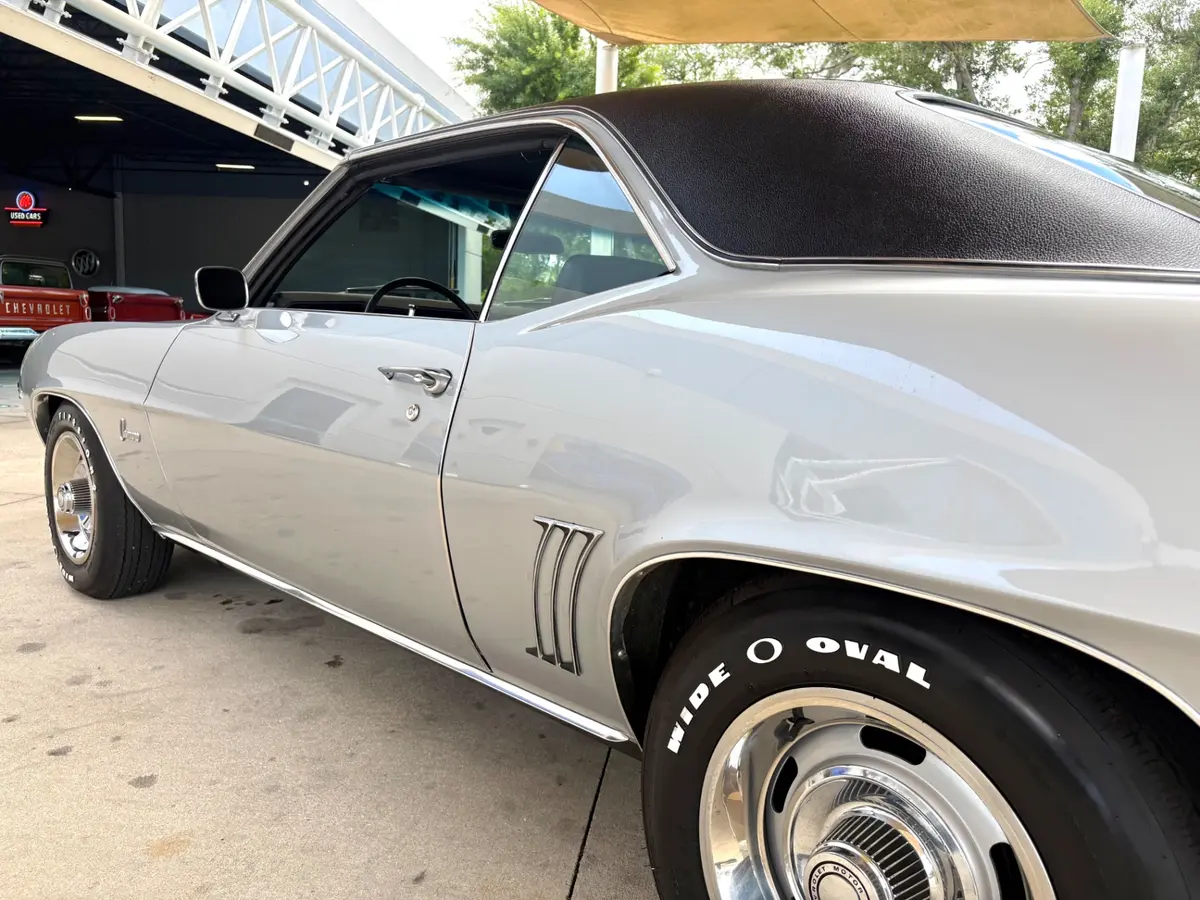
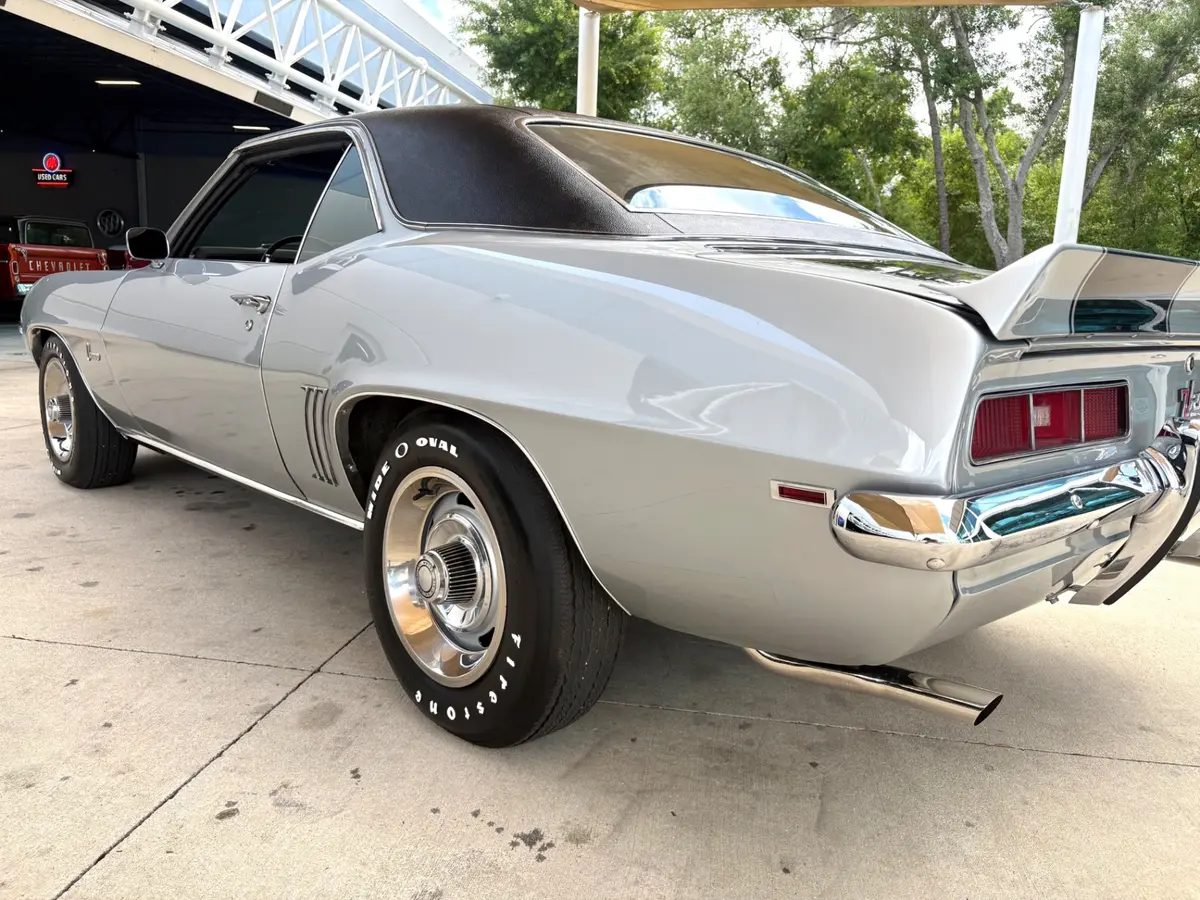
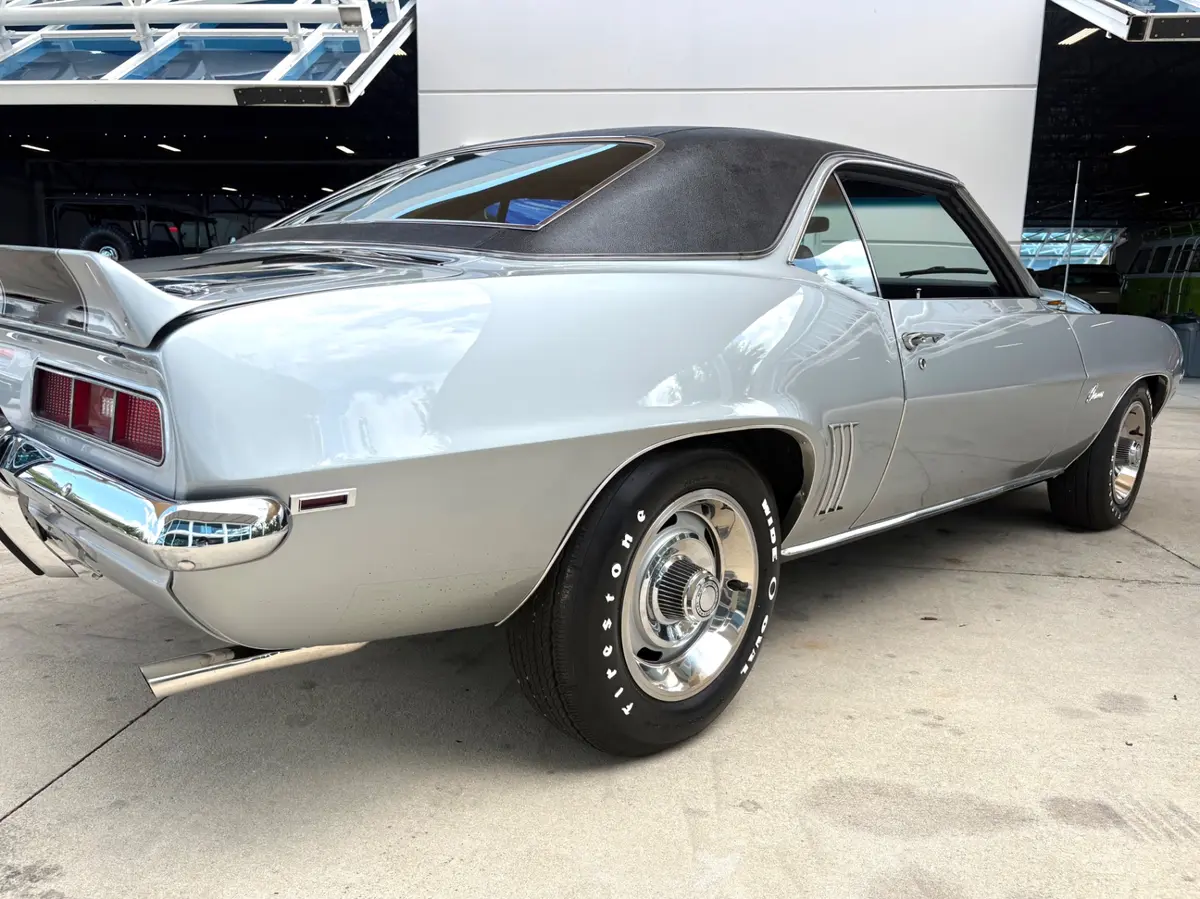
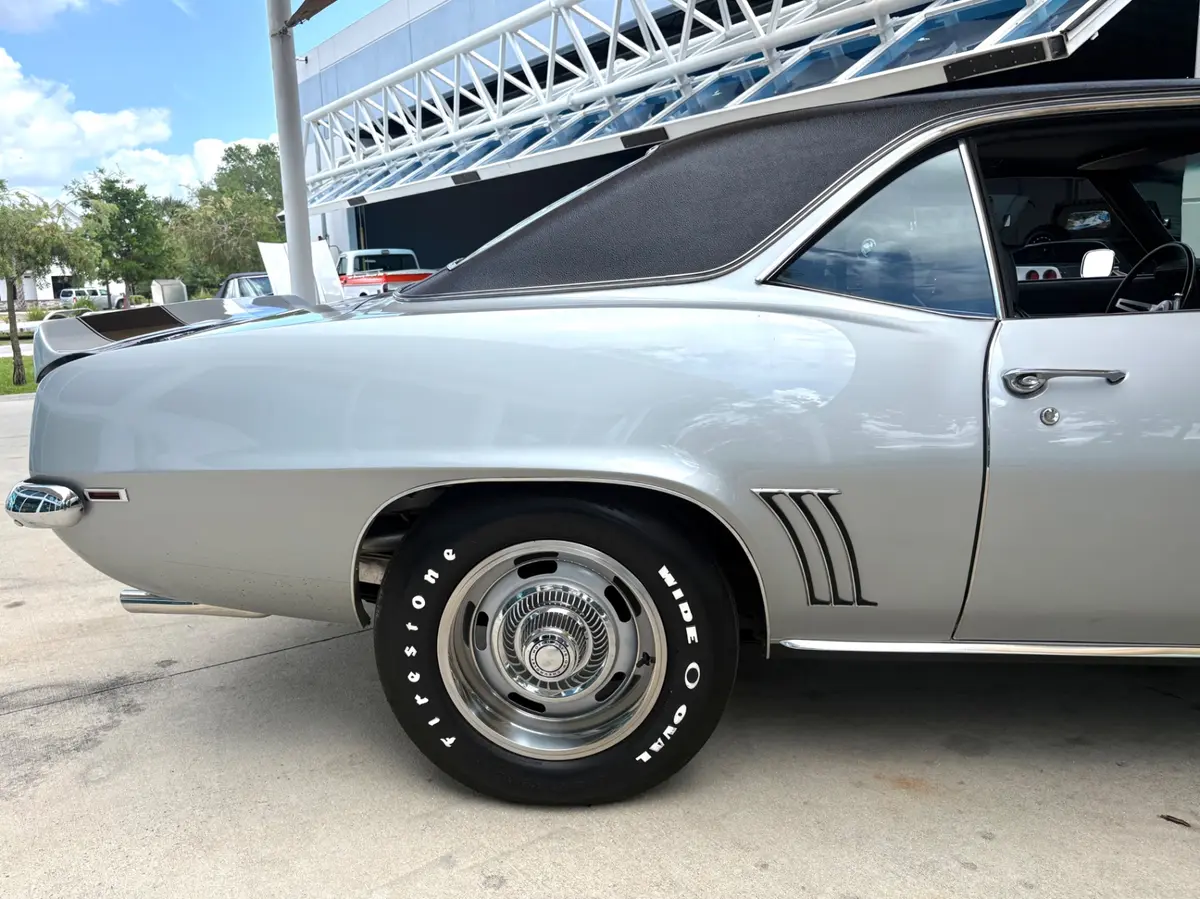
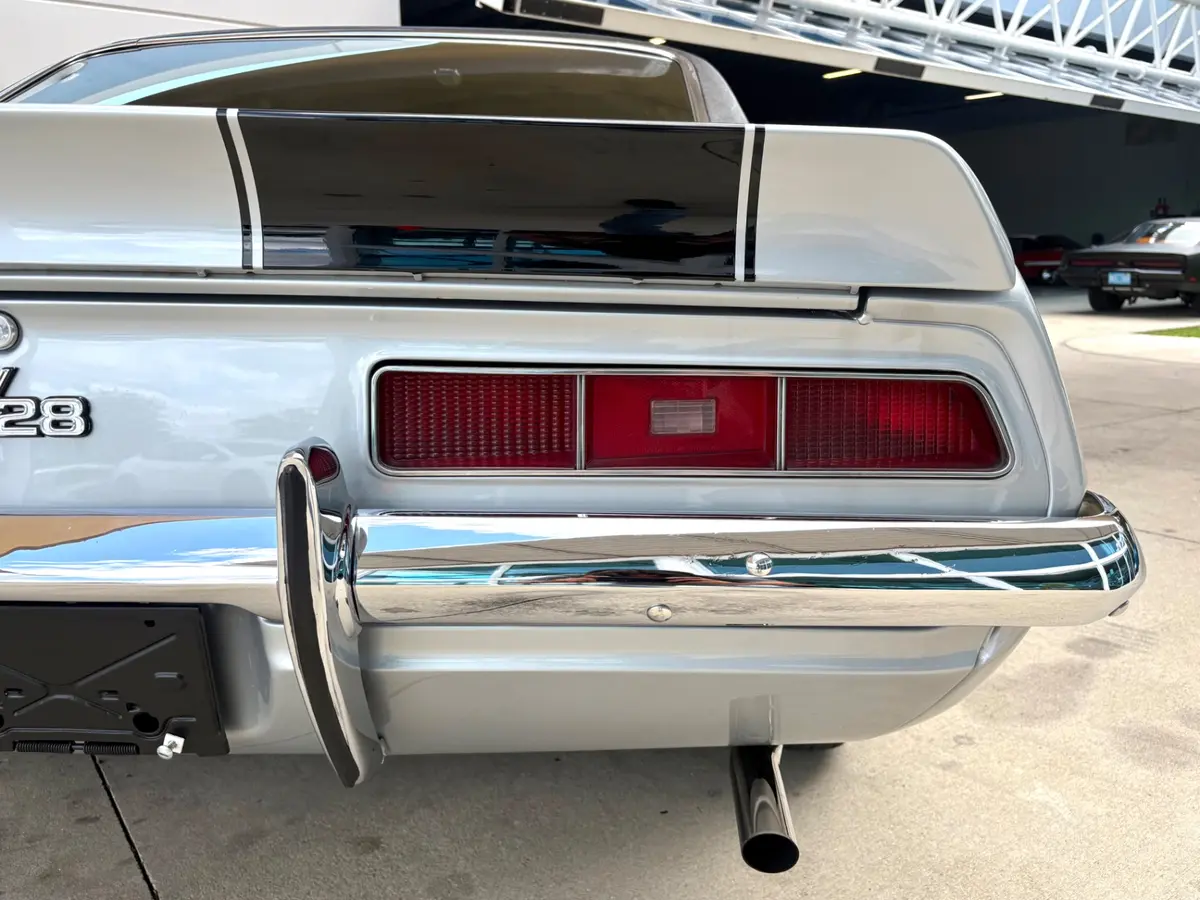
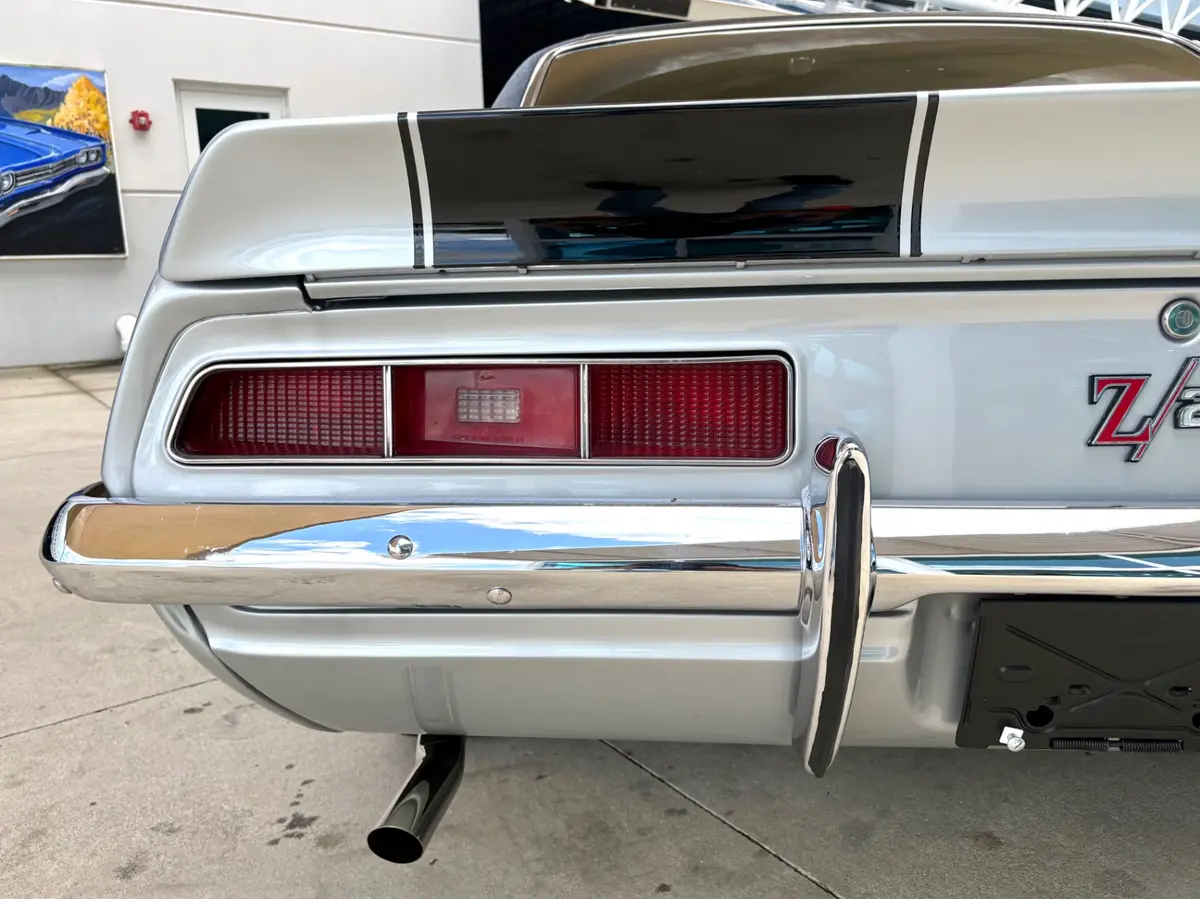
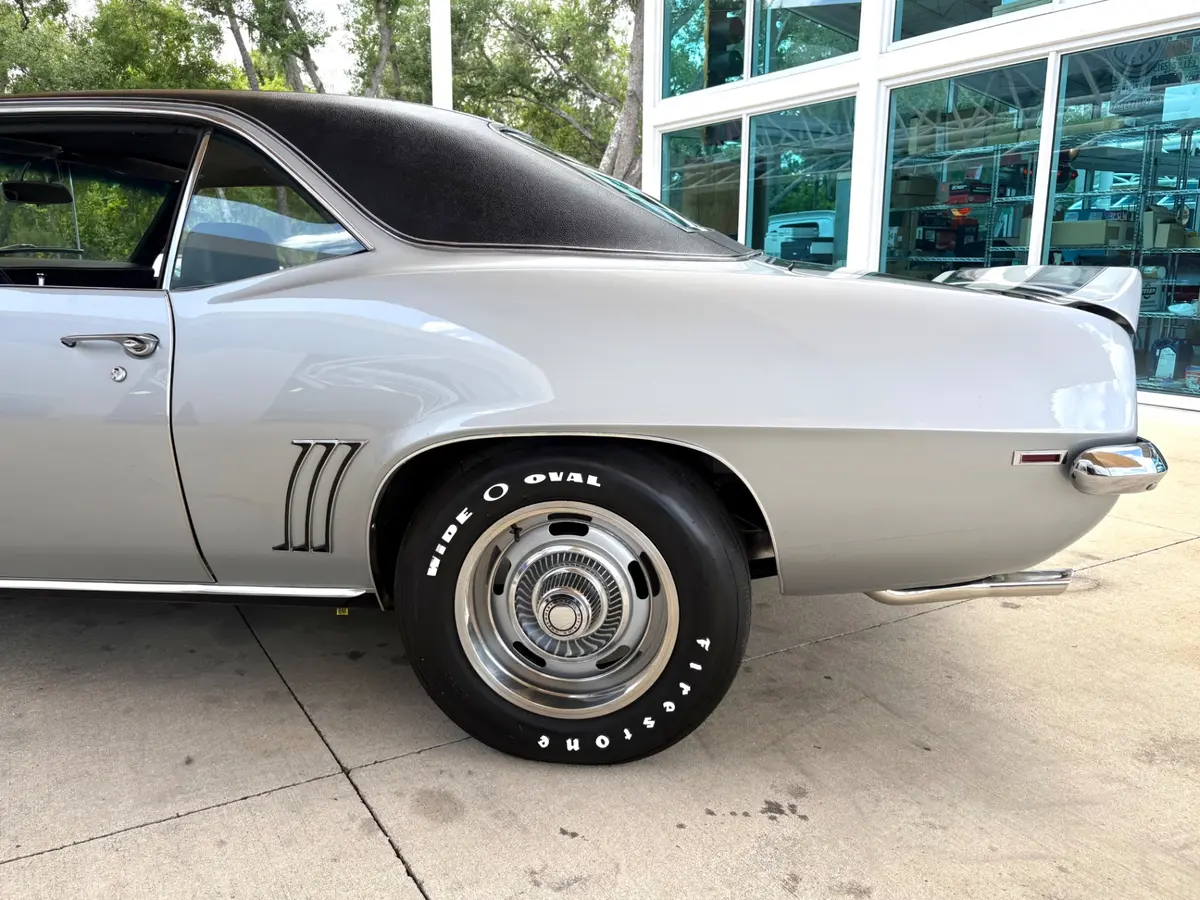
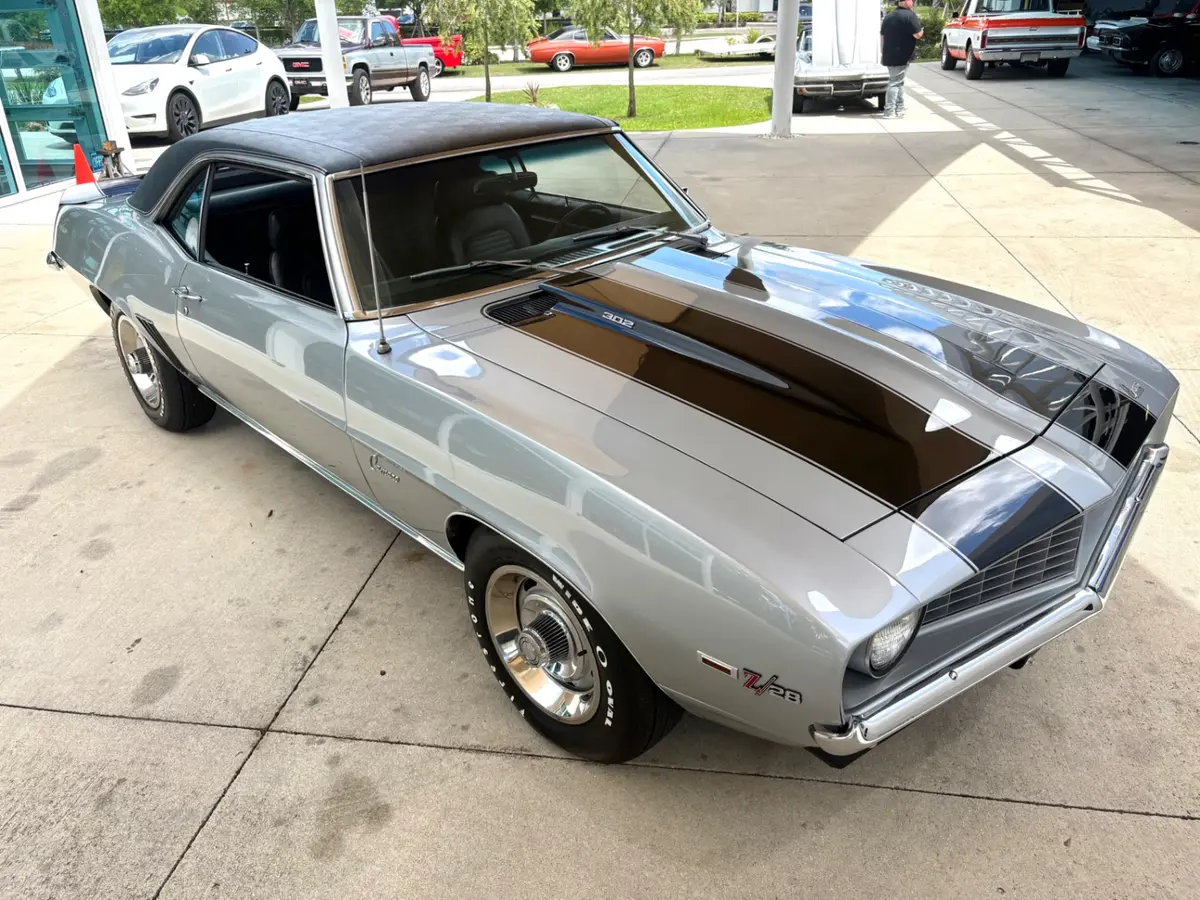
1969 Chevrolet Camaro Z/28 — DZ 302 V8, 4-Speed, F41 Suspension, Vinyl Top
Why This Car Is Special
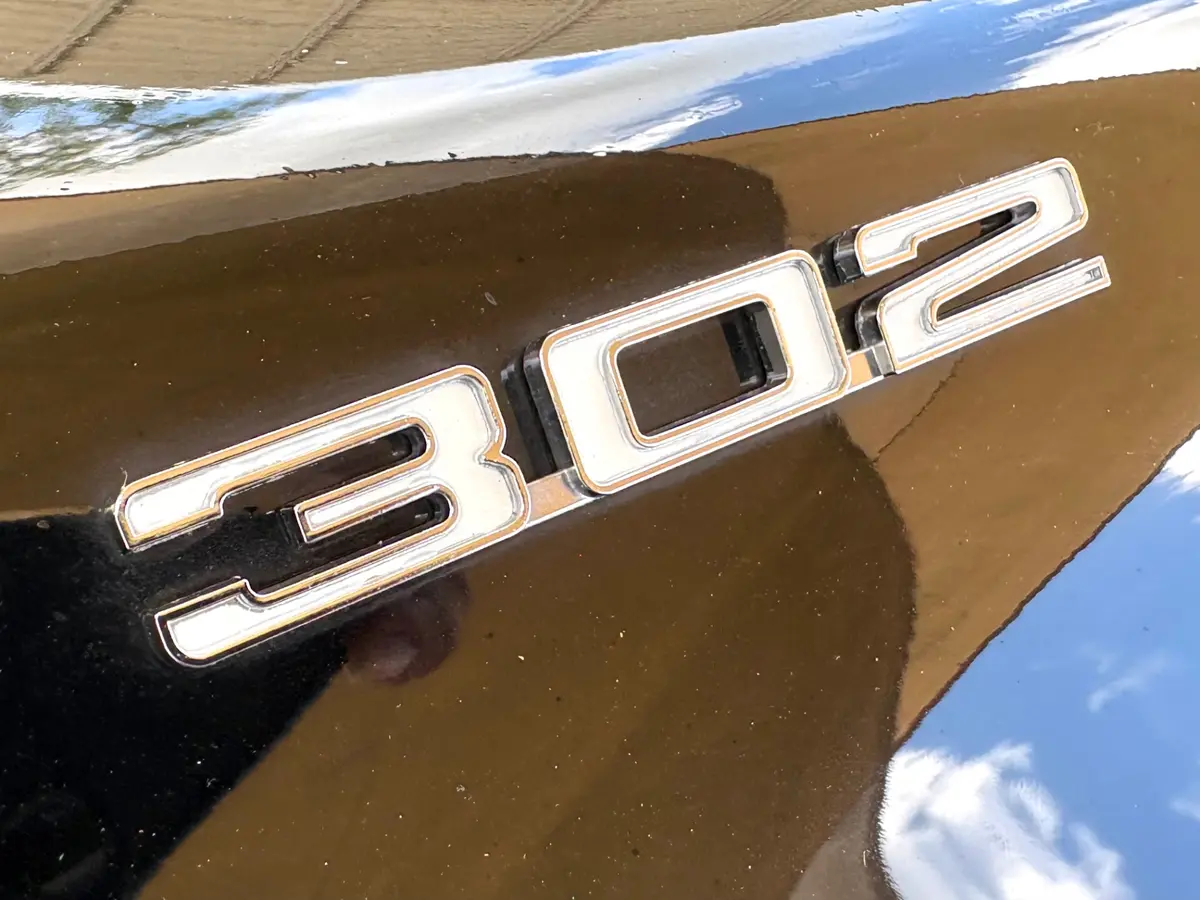
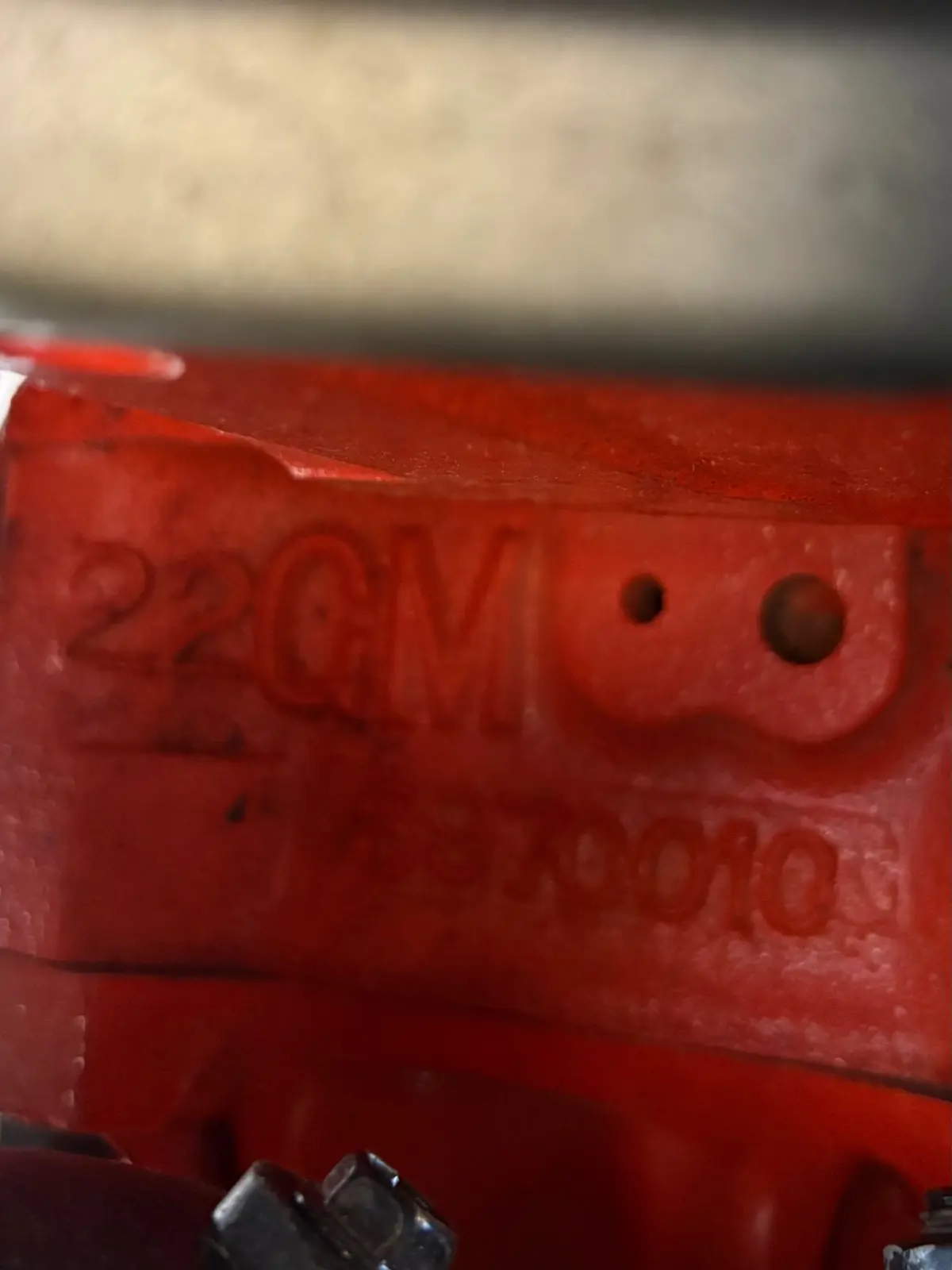
The 1969 Chevrolet Camaro Z/28 occupies a specific and well-earned position in American automotive history. It was not a street car that moonlighted on the track — it was a competition-bred machine that Chevrolet made street-legal to satisfy SCCA Trans-Am racing homologation rules. To compete in the under-5-liter displacement class, Chevy engineers combined a 283 block with a 327 crankshaft to arrive at exactly 302.4 cubic inches. That engine, designated the DZ 302, became the heart of every Z/28 sold during the first-generation Camaro run.
The Z/28 option was not advertised in Chevrolet's main sales literature in 1967 or 1968 — it was essentially a word-of-mouth package for buyers who already knew what they were looking for. By 1969, the Z/28 had earned enough of a reputation that Chevrolet leaned into it more openly, and production climbed to 20,302 units that year, compared to just 602 in 1967 and 7,199 in 1968. Even so, the 1969 Z/28 represented a small fraction of total Camaro output for the model year, which exceeded 243,000 units. The 1969 model year also holds the distinction of being the last of the first-generation body style, making it the most refined expression of that original design before the second-generation car arrived for 1970.
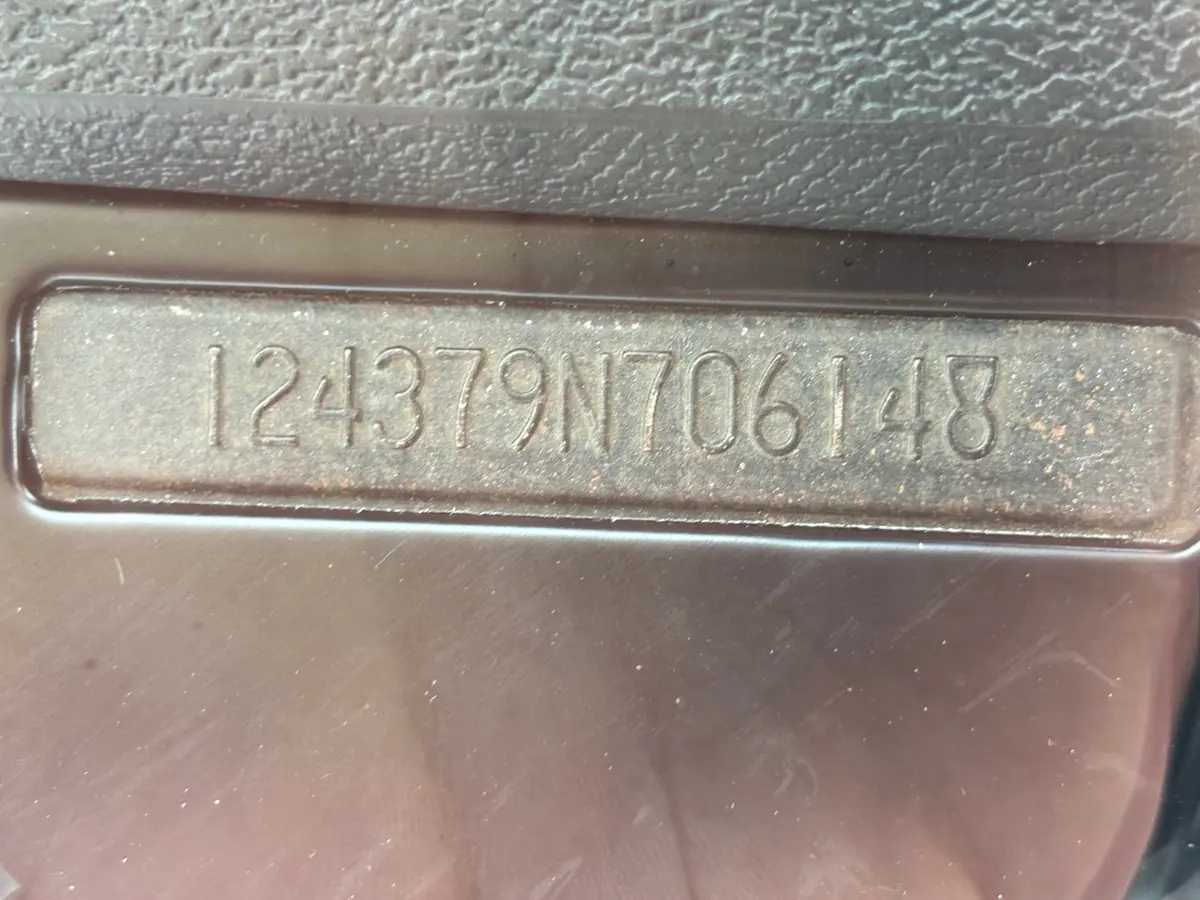
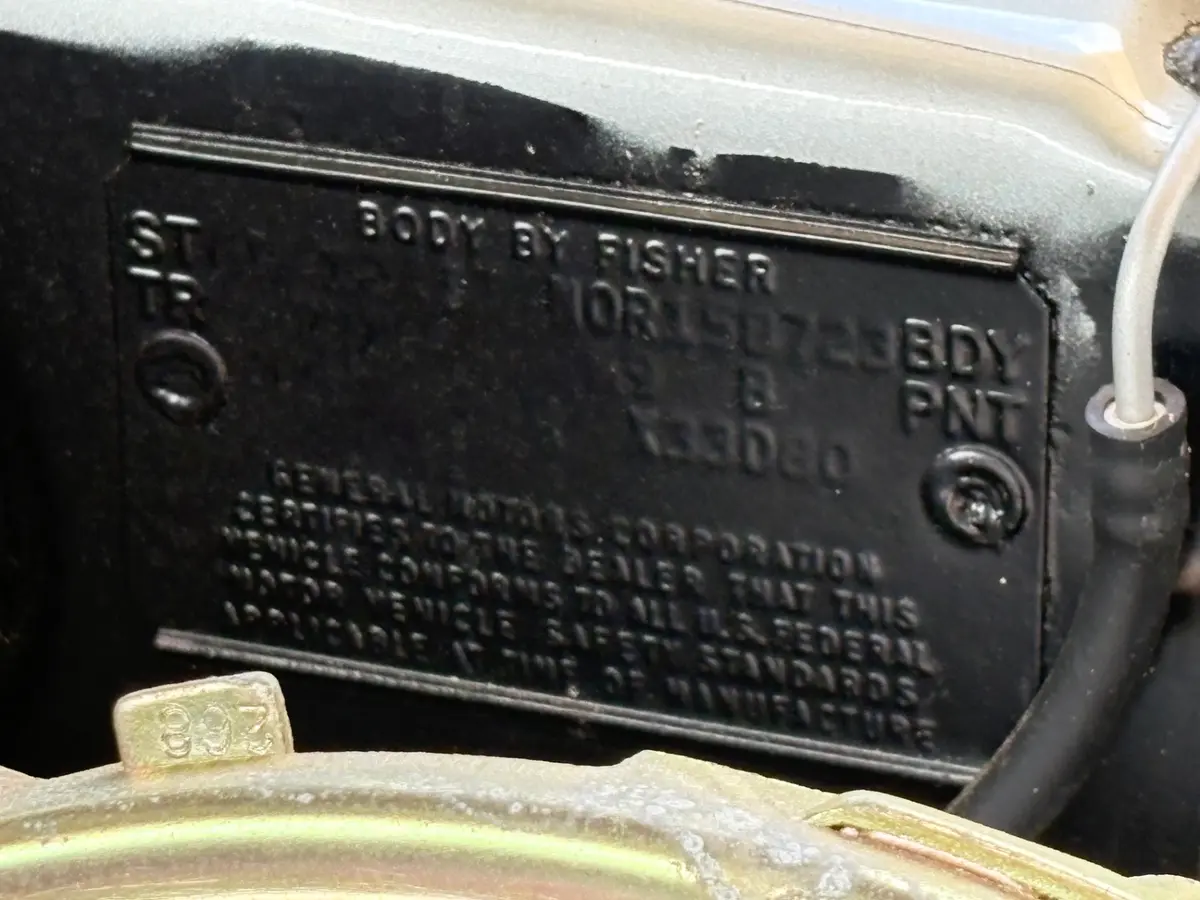
The VIN on this car decodes to a Norwood, Ohio assembly plant build — the "N" in the seventh position confirms that. Norwood was one of two plants that built the first-generation Camaro alongside Van Nuys, California, and it produced the majority of Z/28s during this era.
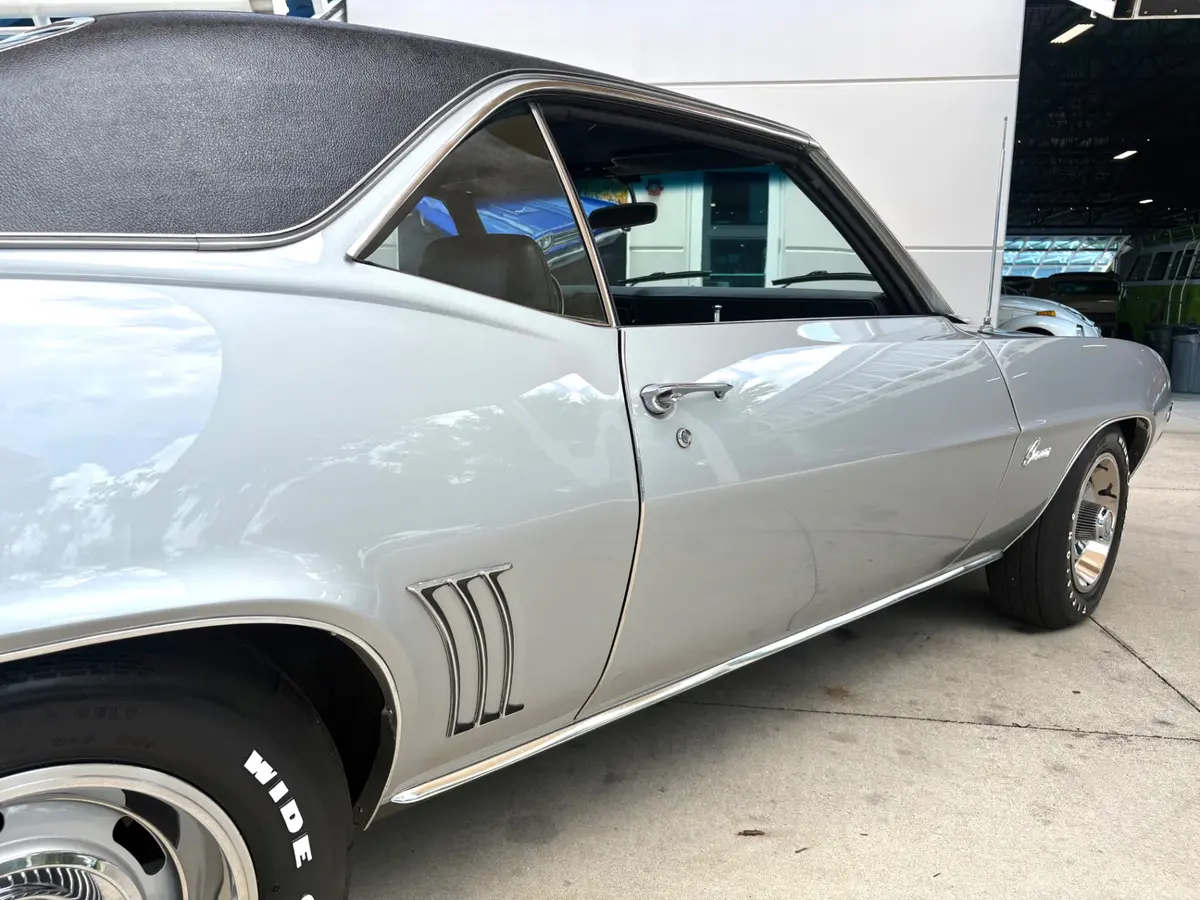
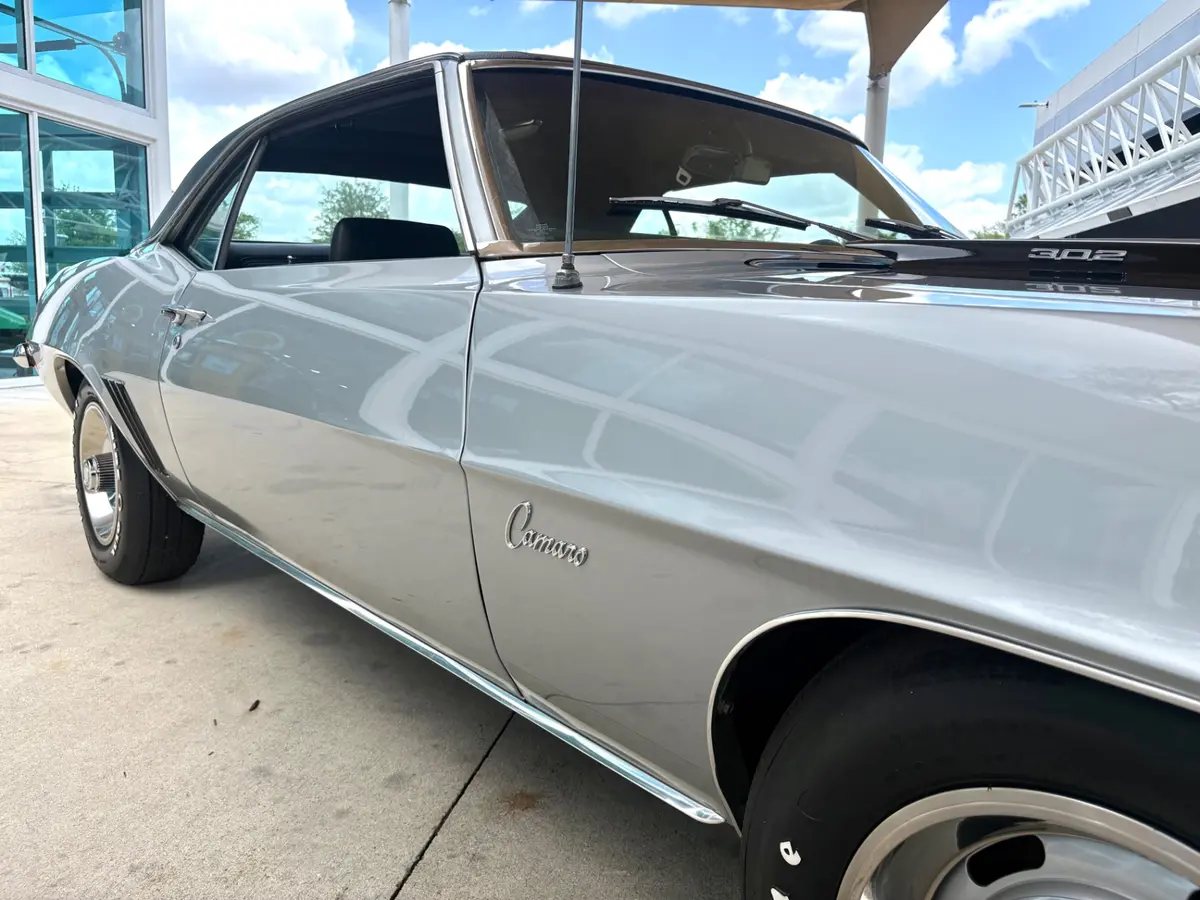
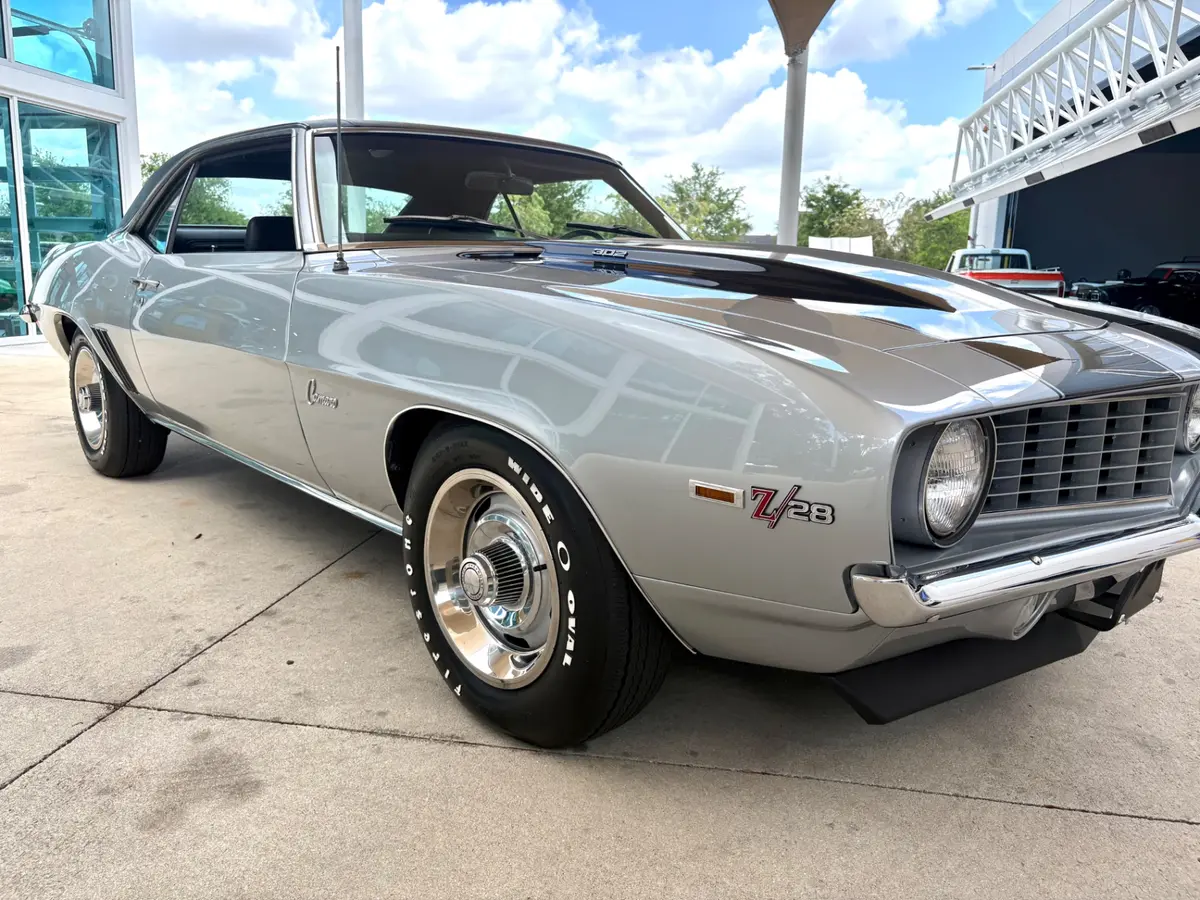
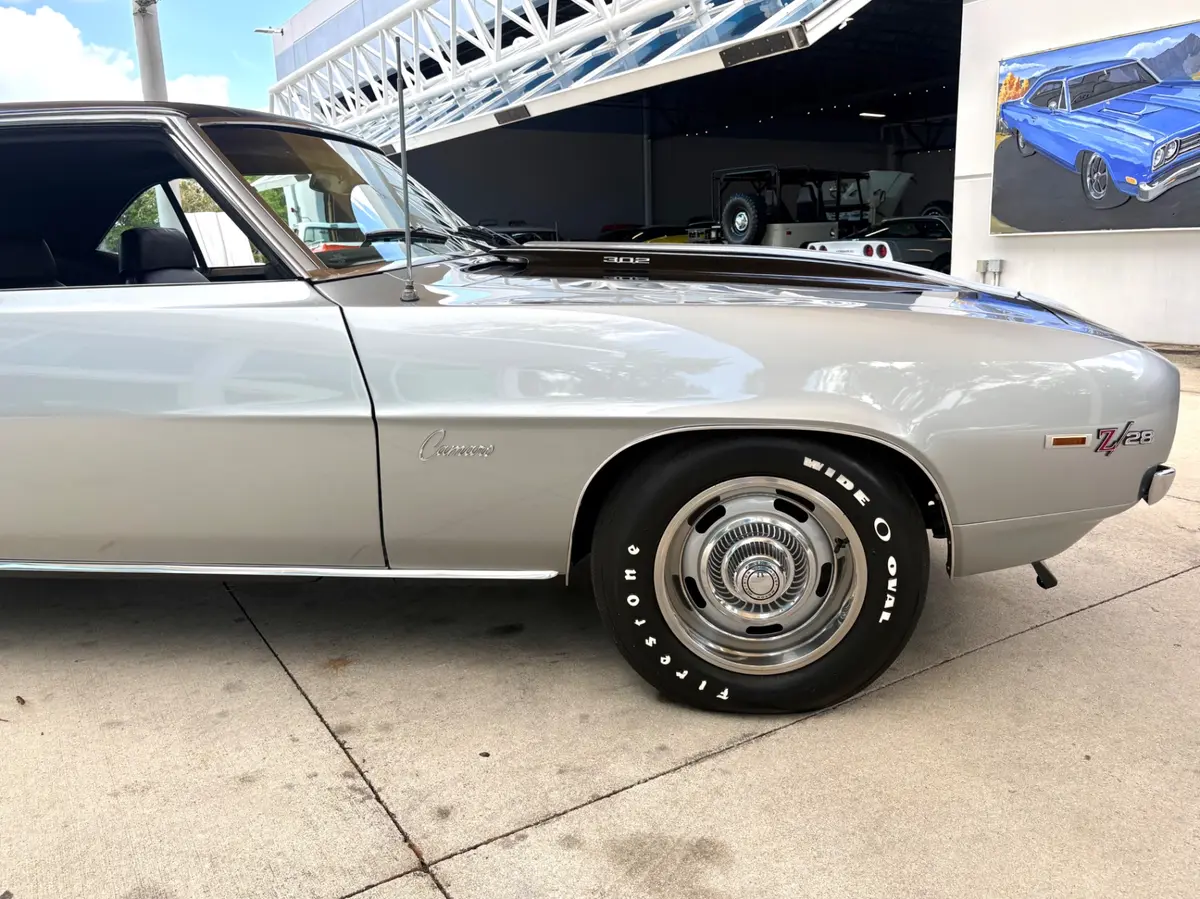
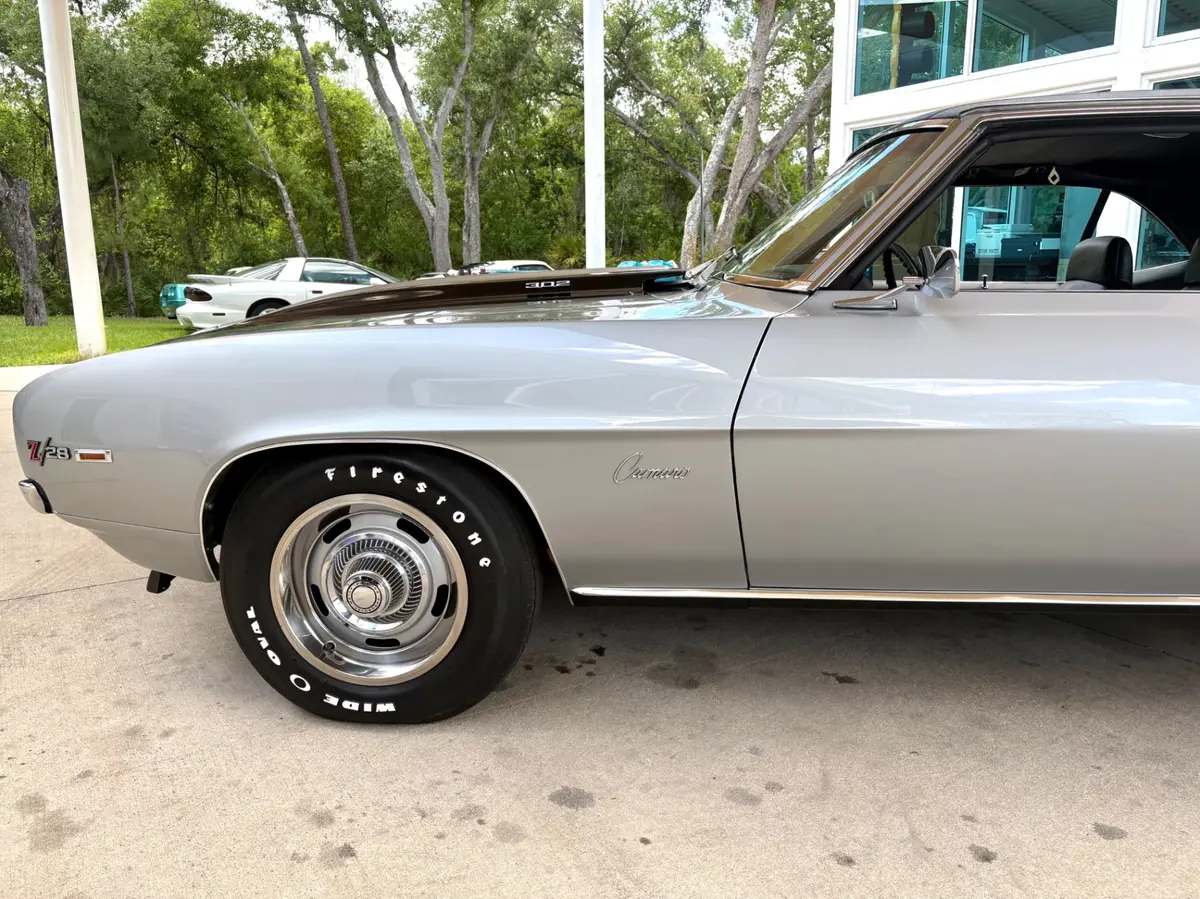
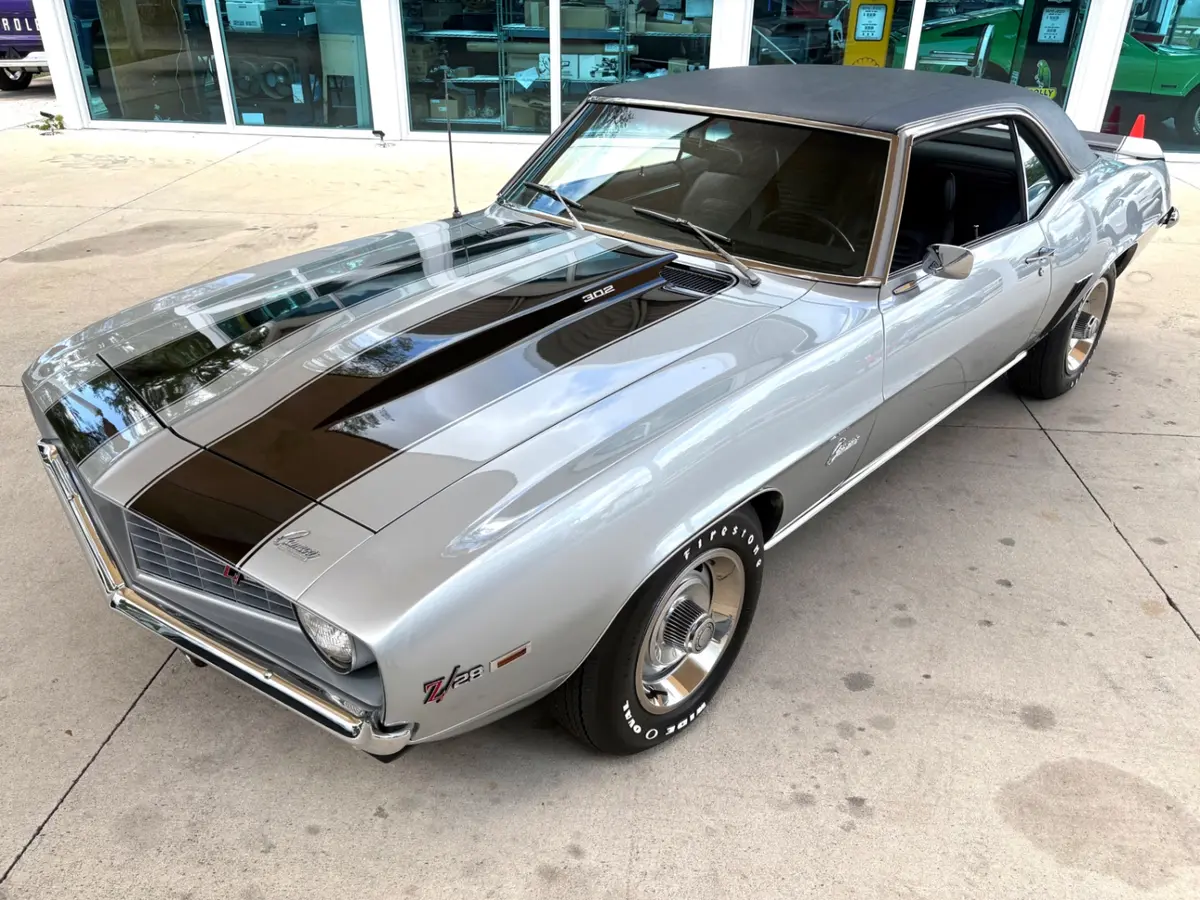
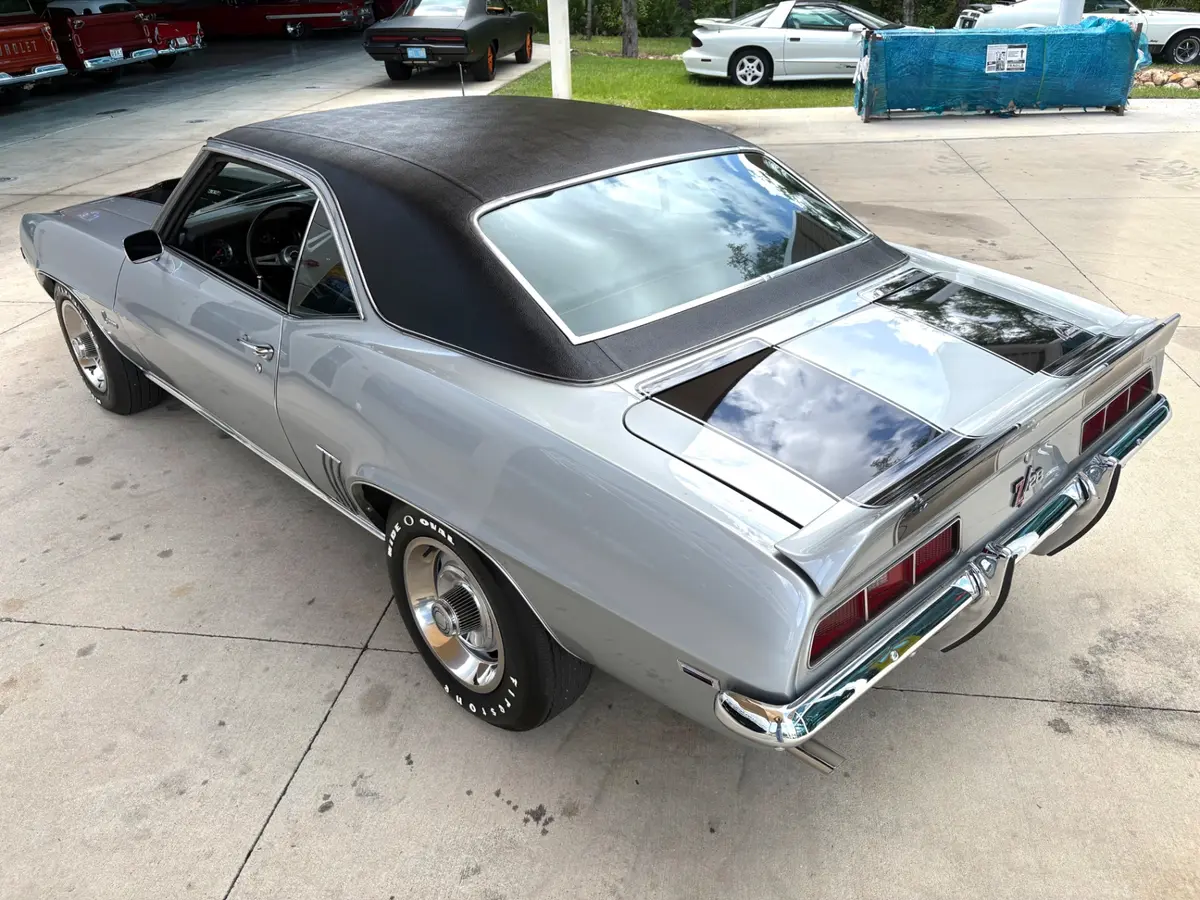
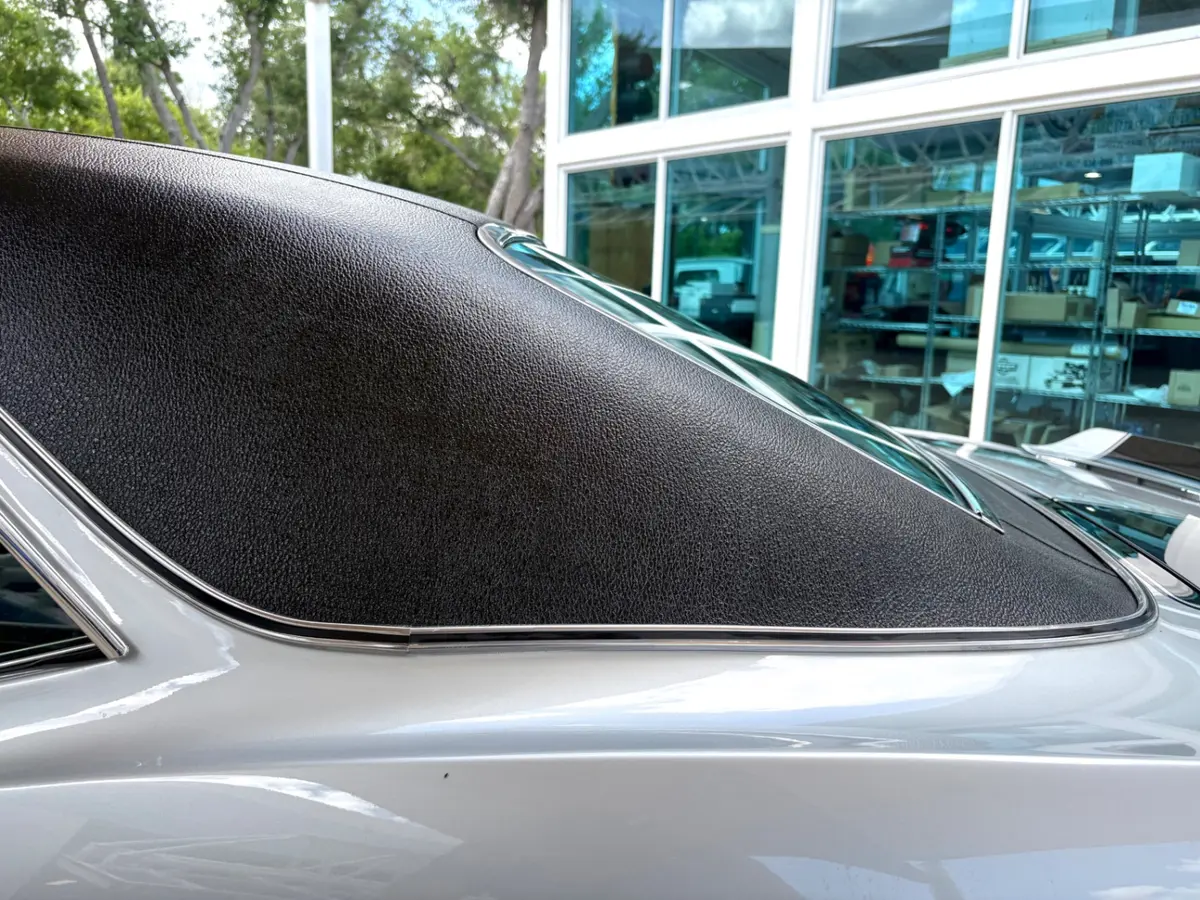
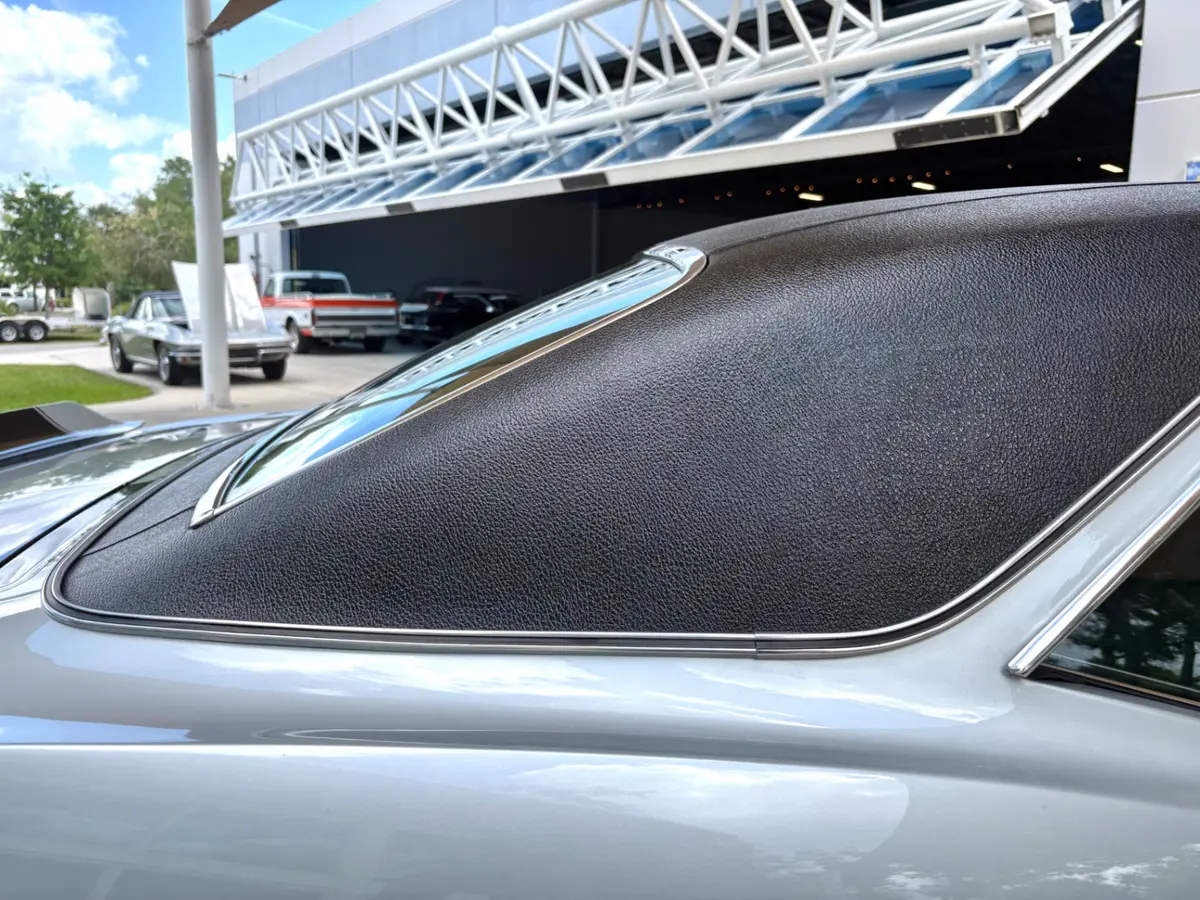
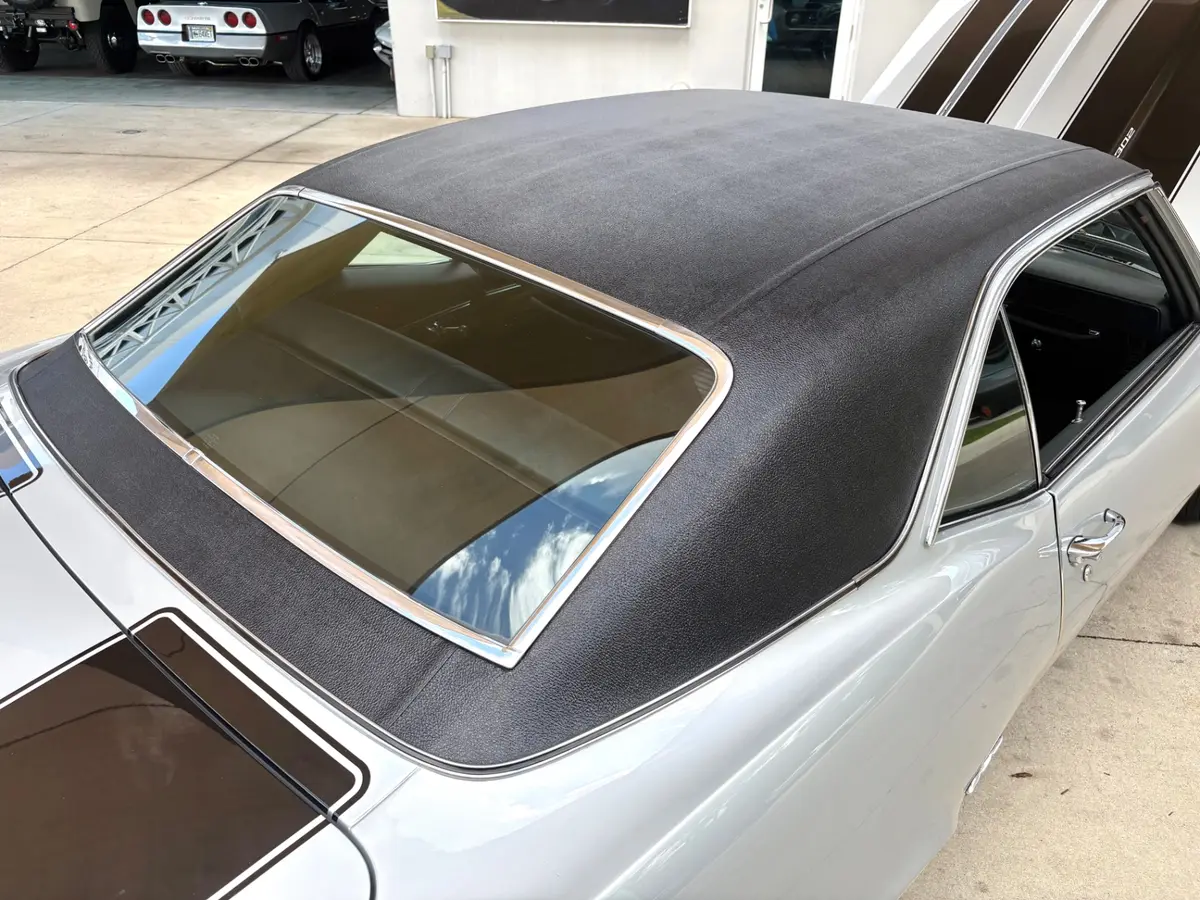
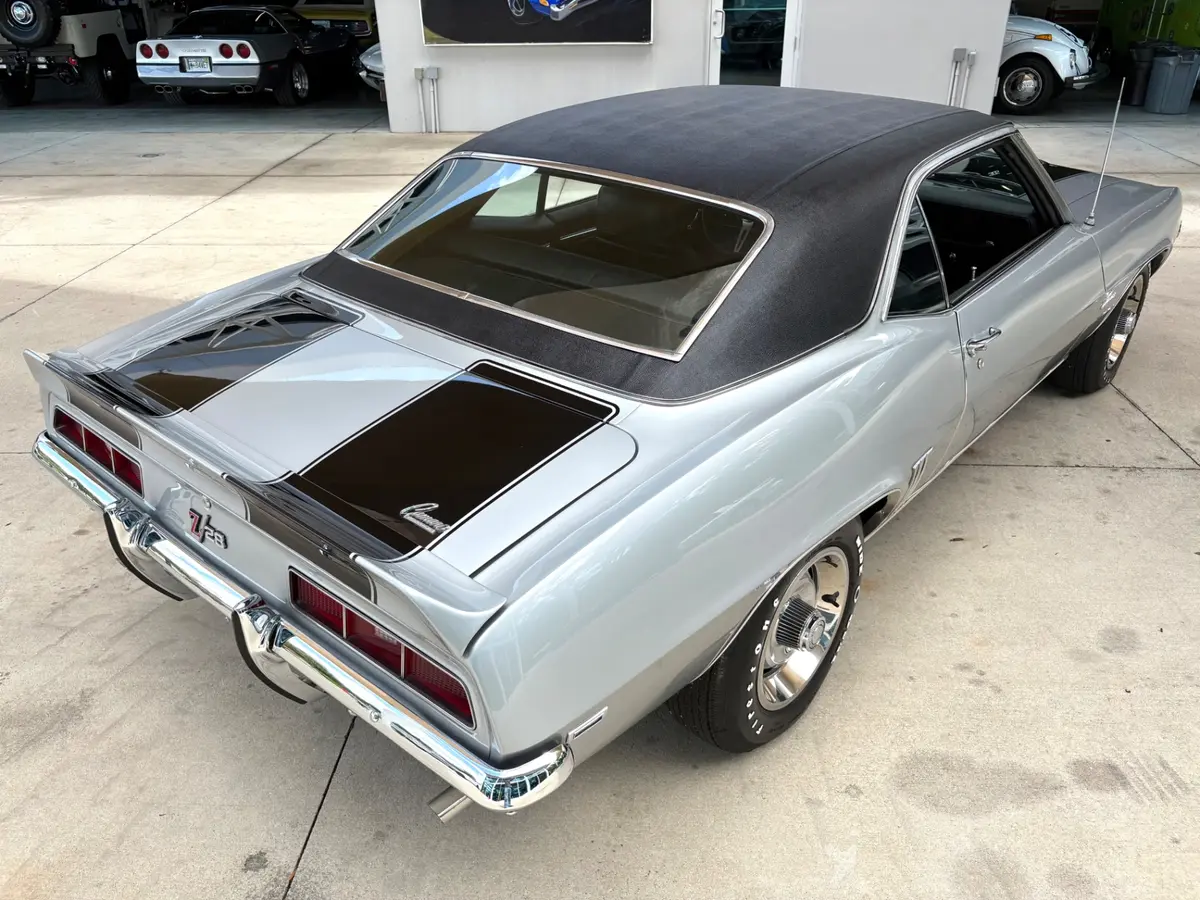
This particular 1969 Camaro Z/28 is presented in silver with black racing stripes, a black vinyl interior, and a black vinyl top — a combination that presents cleanly and reads correctly for the era. It carries the F41 performance suspension, the close-ratio 4-speed manual transmission, and the dual exhaust that were all standard Z/28 equipment. This is the configuration the car was meant to be in.
Features List
- DZ 302 5.0L V8 Engine
- 4-Speed Manual Transmission
- Z/28 Badge Package
- F41 Performance Suspension
- Dual Exhaust
- Black Racing Stripes
- Black Vinyl Top
- Center Console
- Sport Steering Wheel
- Astro Ventilation
- Wide Oval Tires
- Chrome Bumpers
- Clean Undercarriage
Mechanical
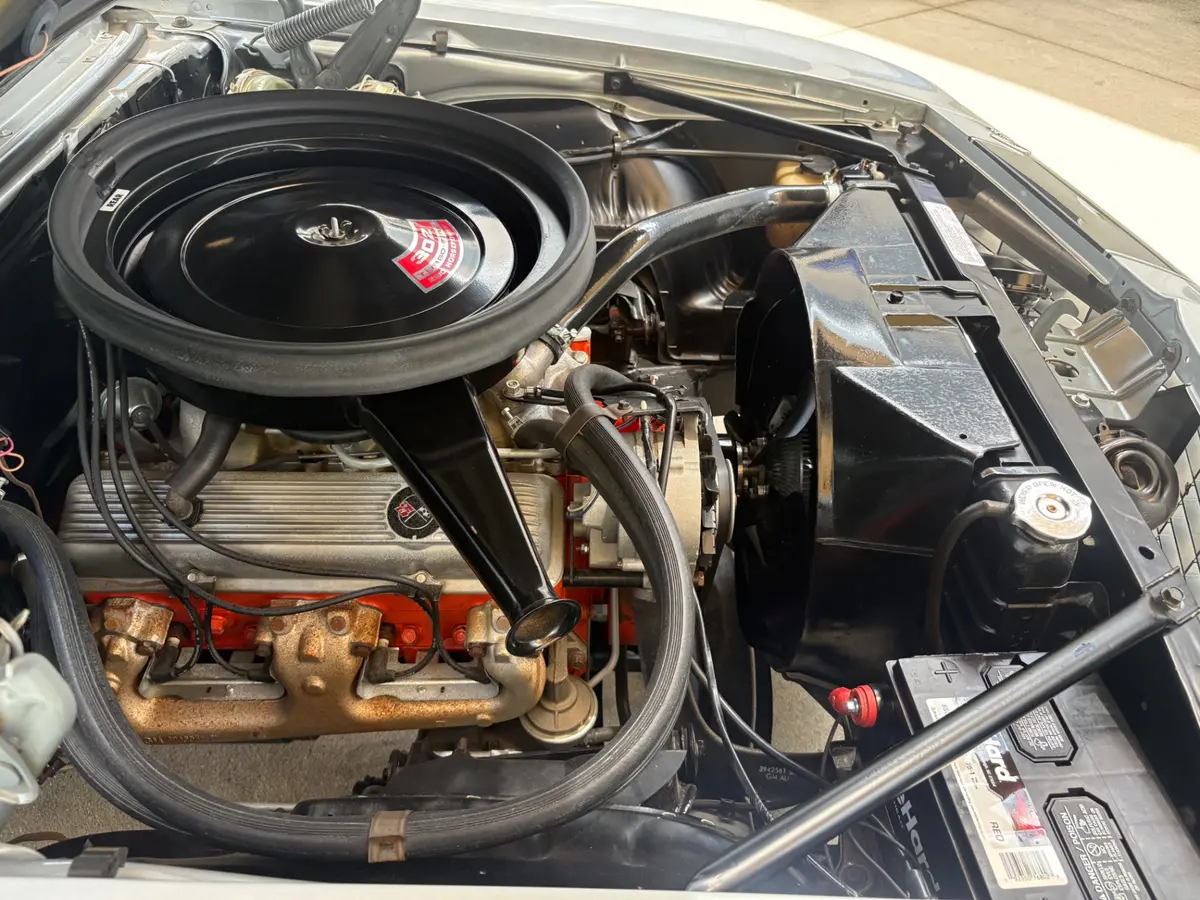
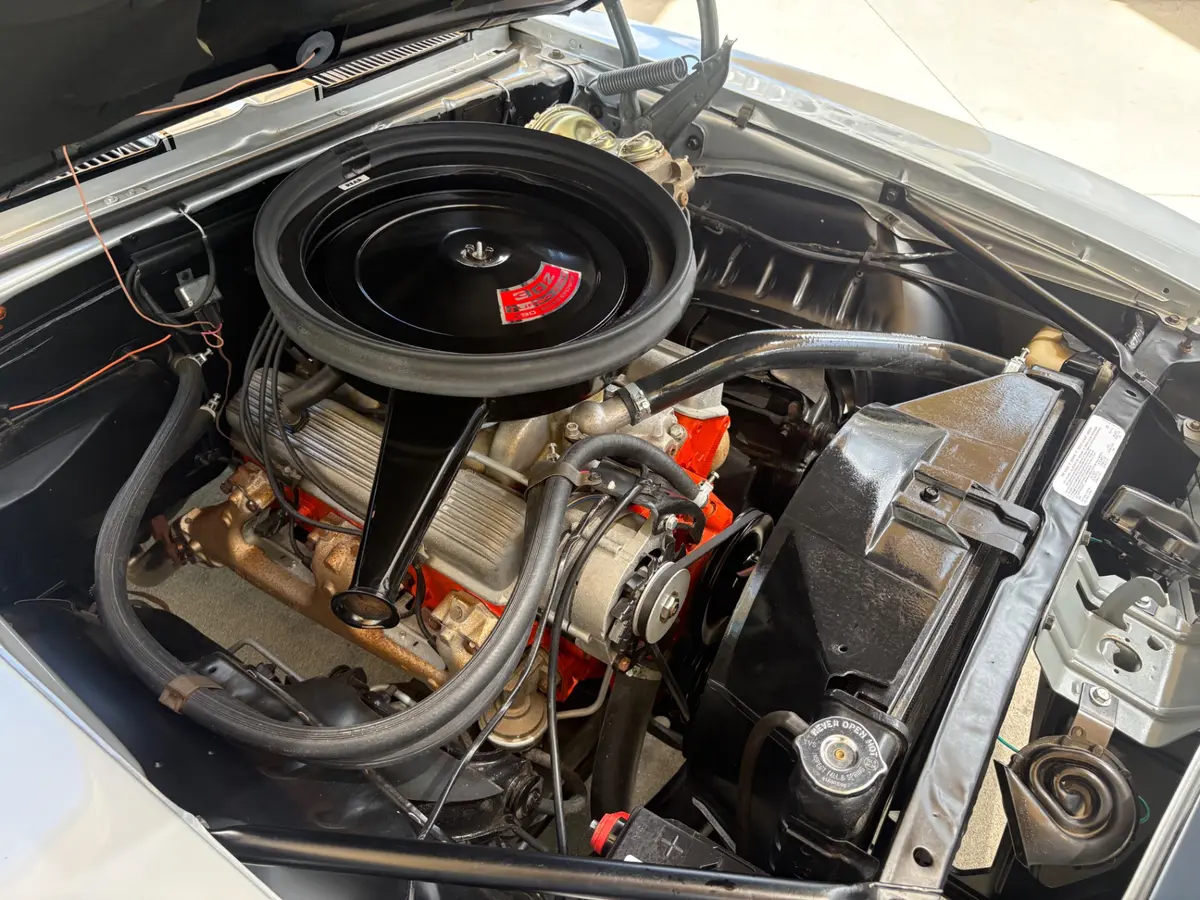
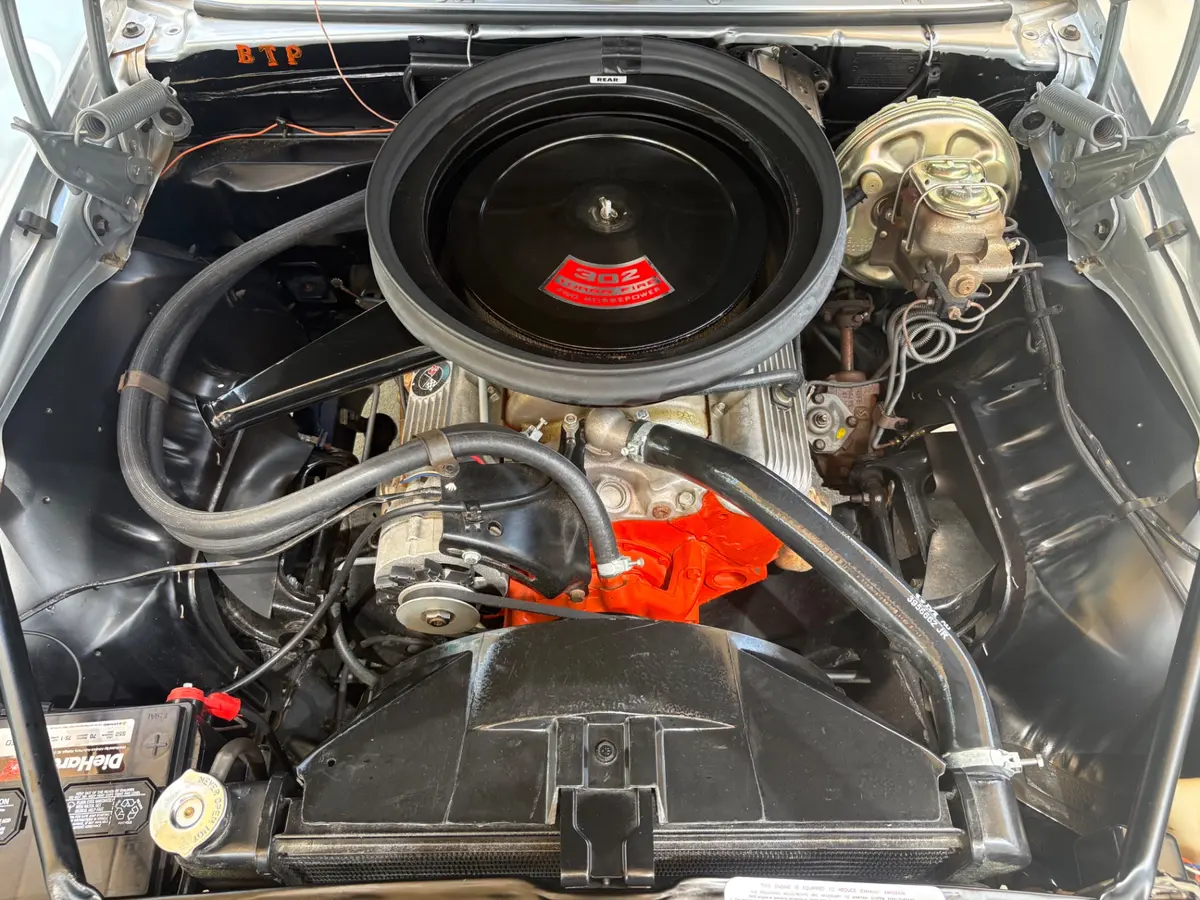
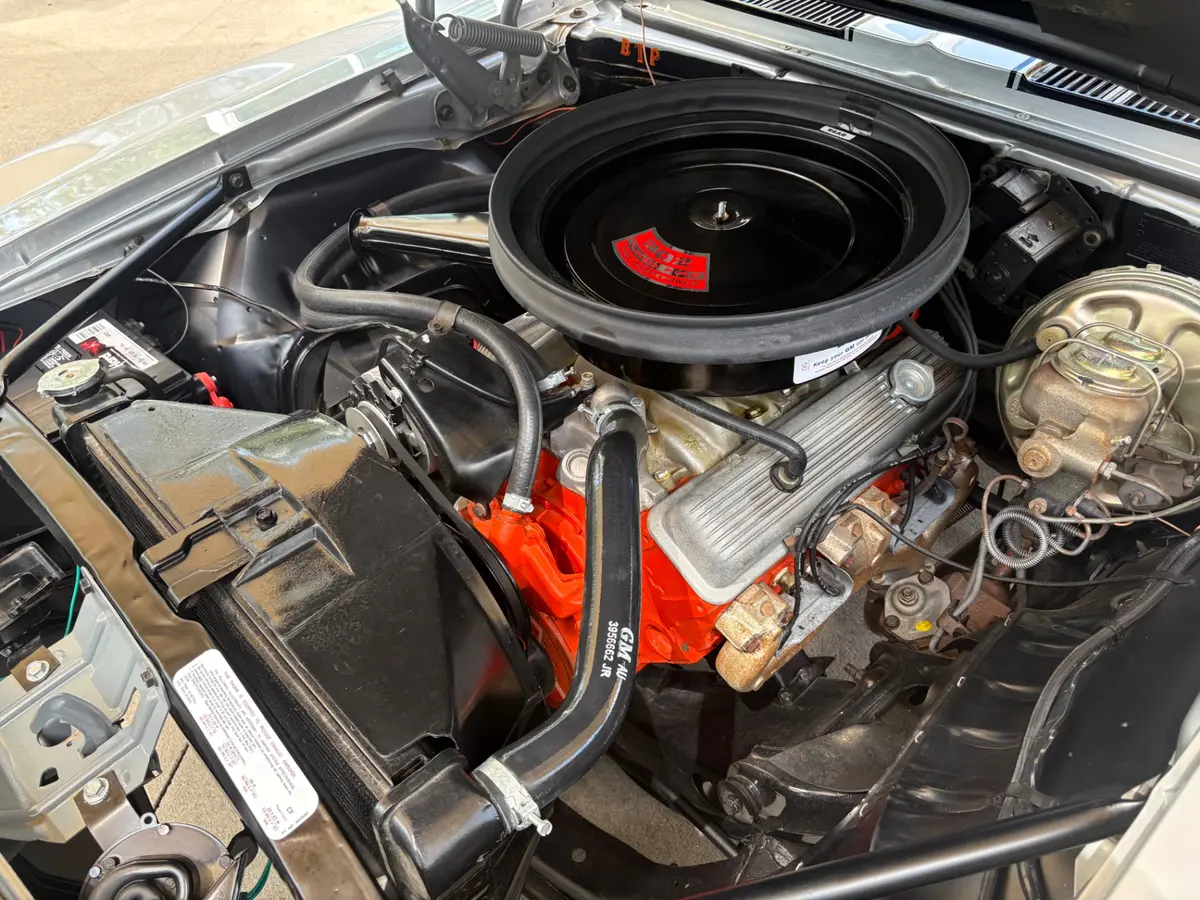
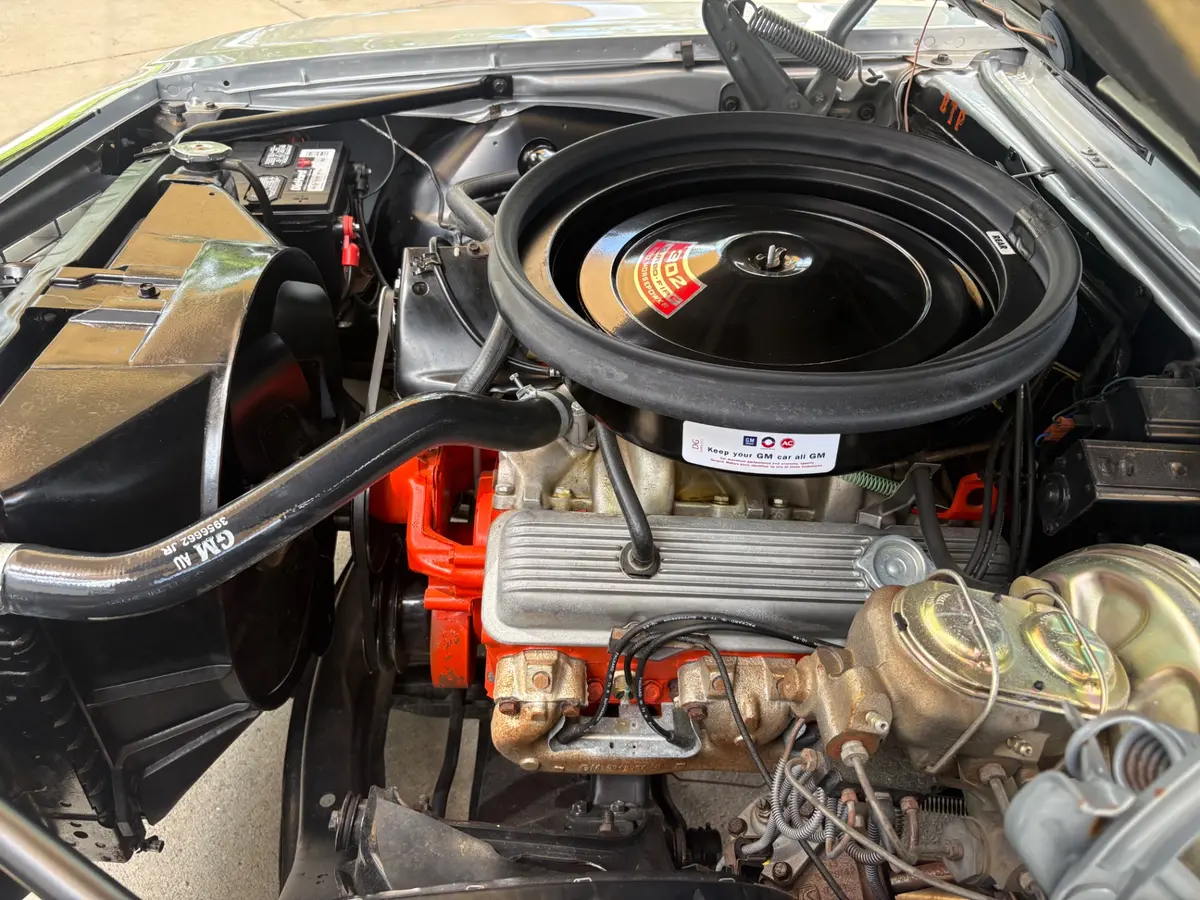
The DZ 302 V8 is the reason the Z/28 exists. Displacing 302 cubic inches, this engine was factory-rated at 290 horsepower, though that number was widely understood to be conservative — a common practice in the late 1960s as insurance rates and regulatory scrutiny climbed. The engine features solid lifters, a high-revving camshaft, and a 800-cfm Holley four-barrel carburetor sitting under a large open-element air cleaner. It was designed to make power above 4,000 rpm, which made it less docile than a big-block at low speeds but considerably more capable on a road course where the engine spent its time spinning near redline. The high-revving nature of the DZ 302 also made it a natural fit for the Trans-Am series, where Chevrolet-backed teams used this engine as the foundation for their race builds.
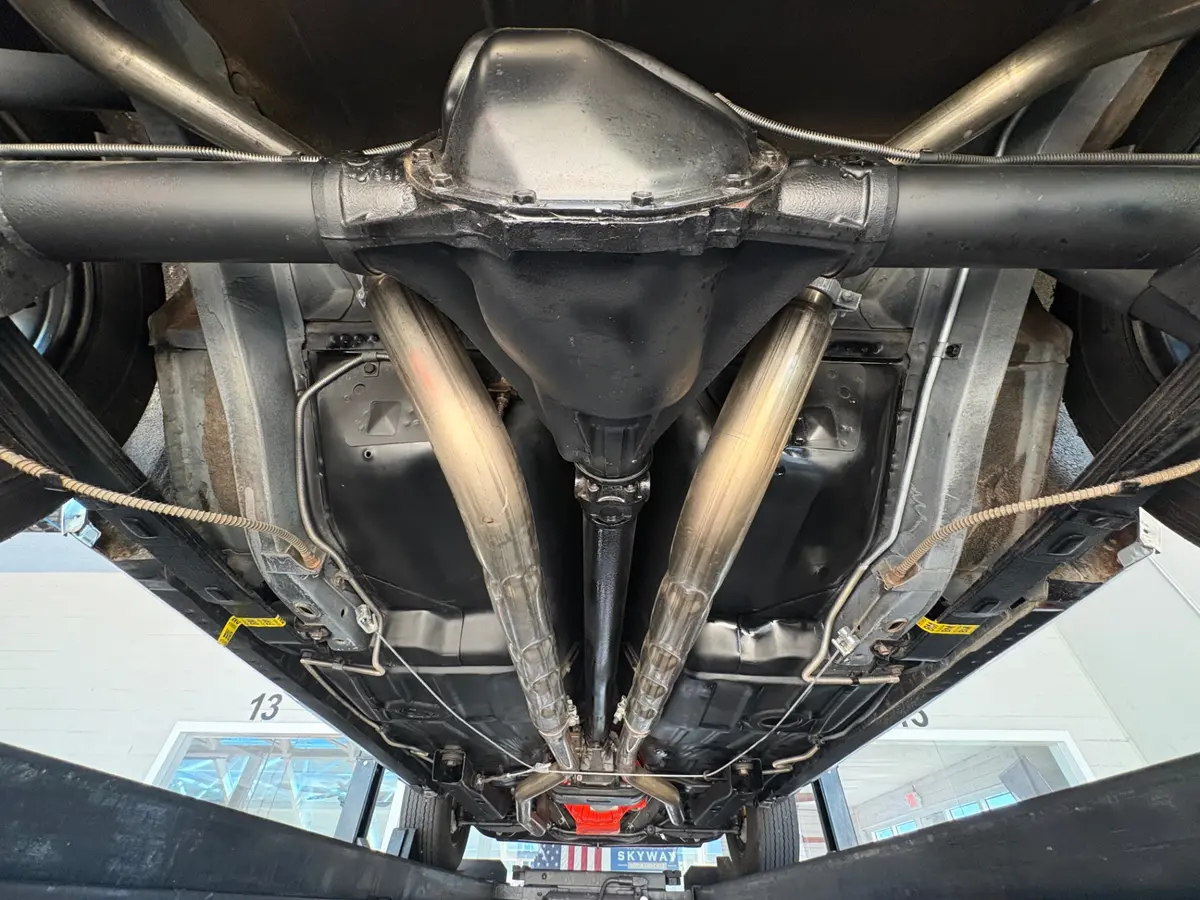
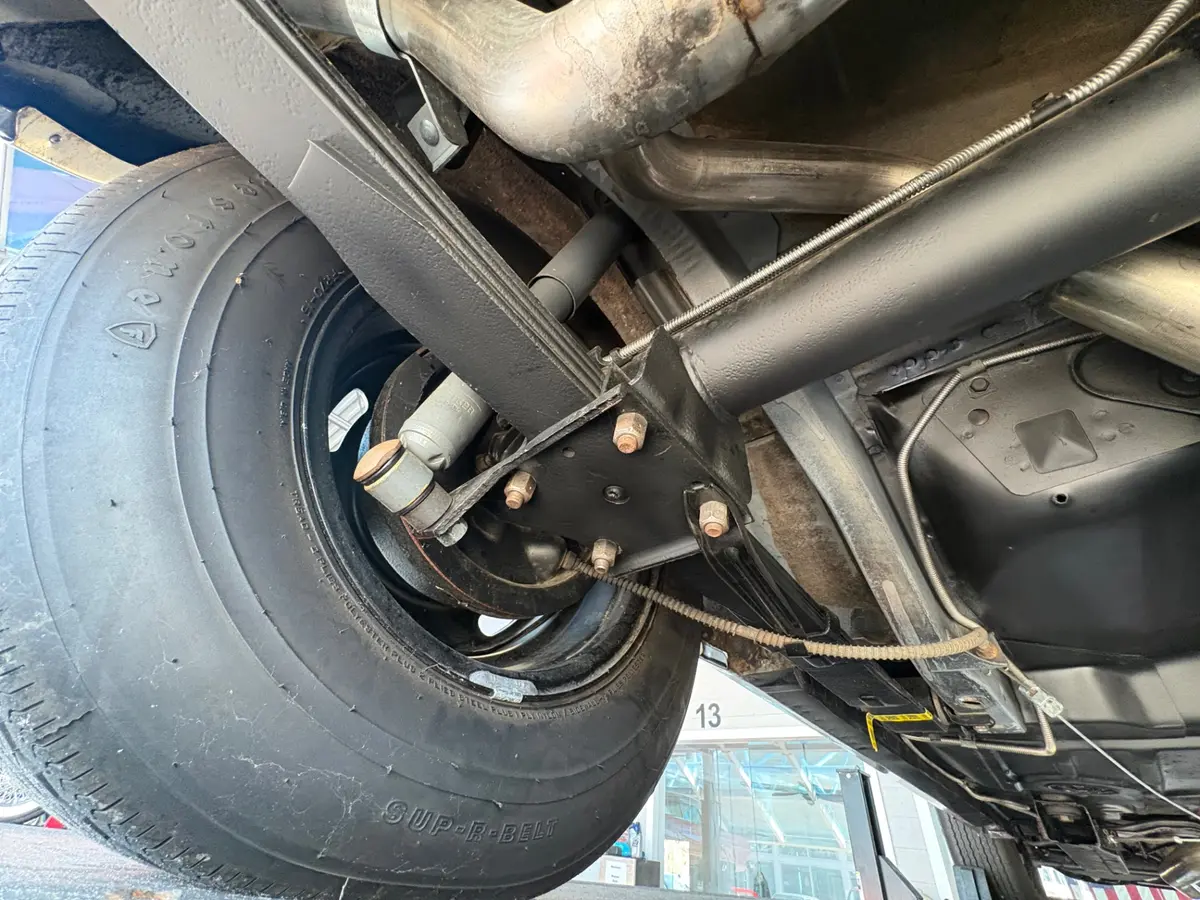
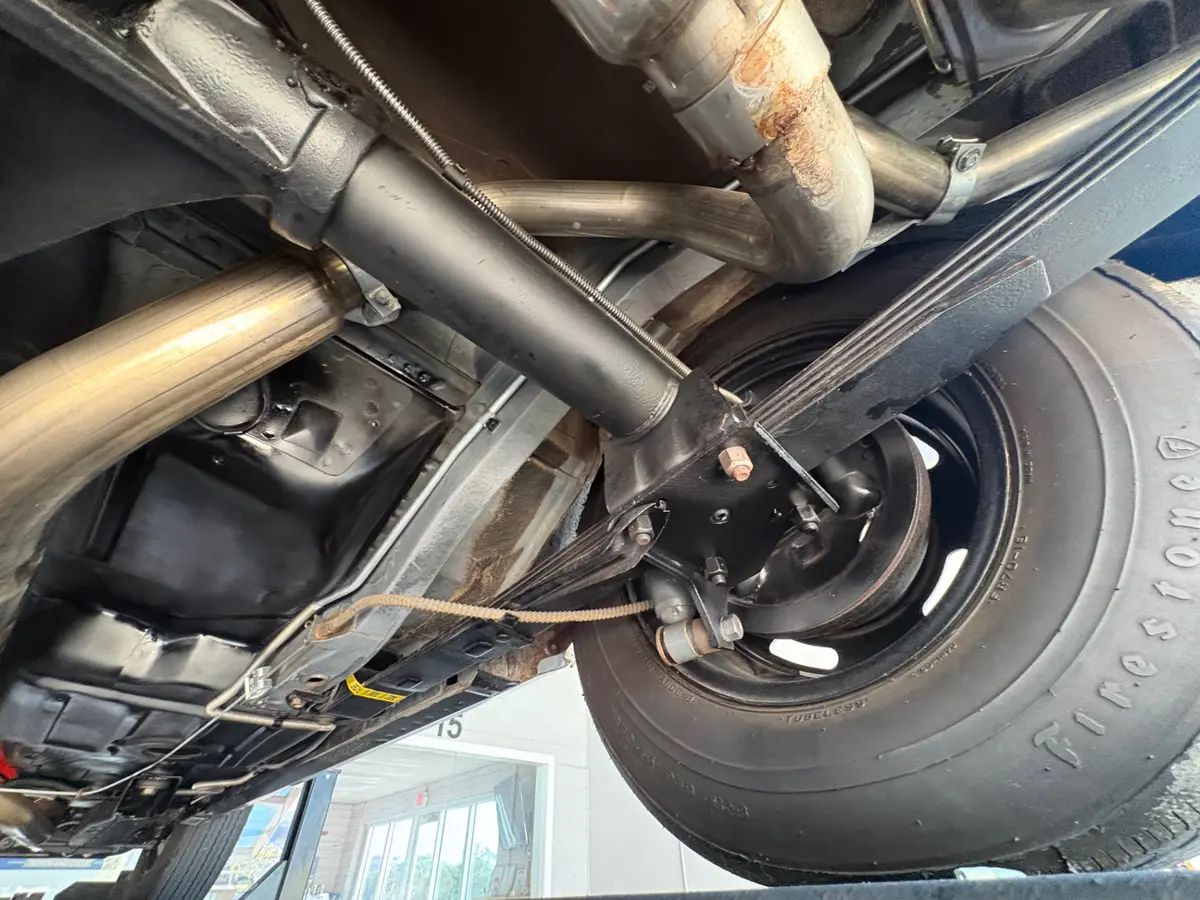
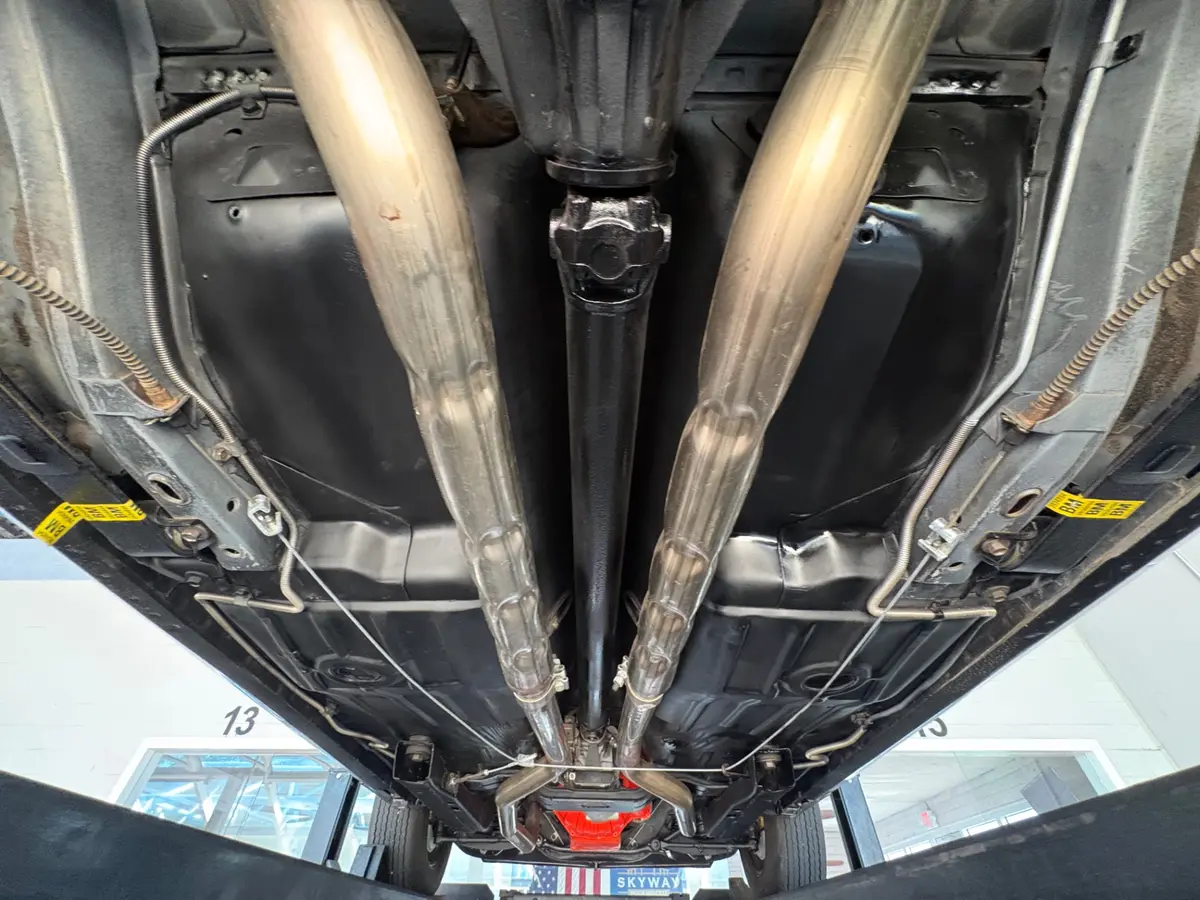
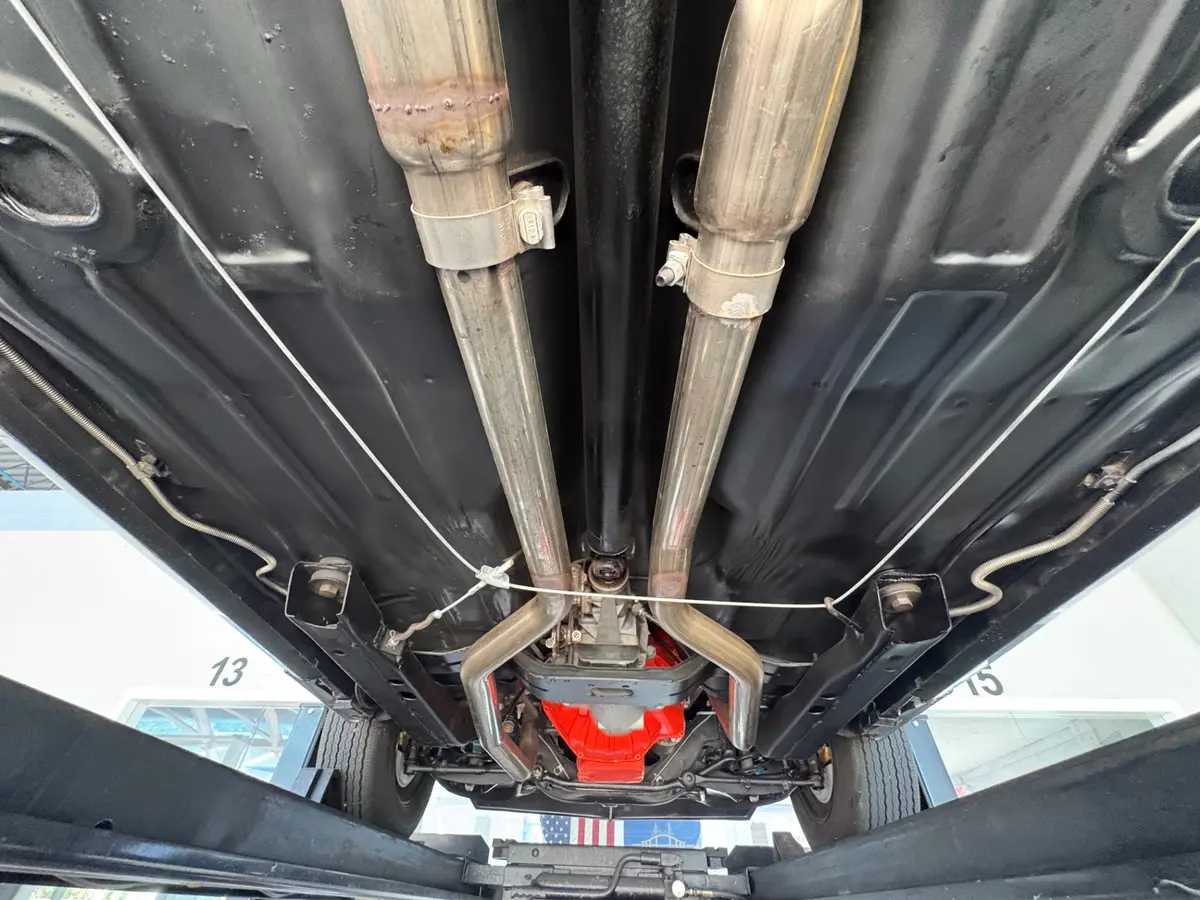
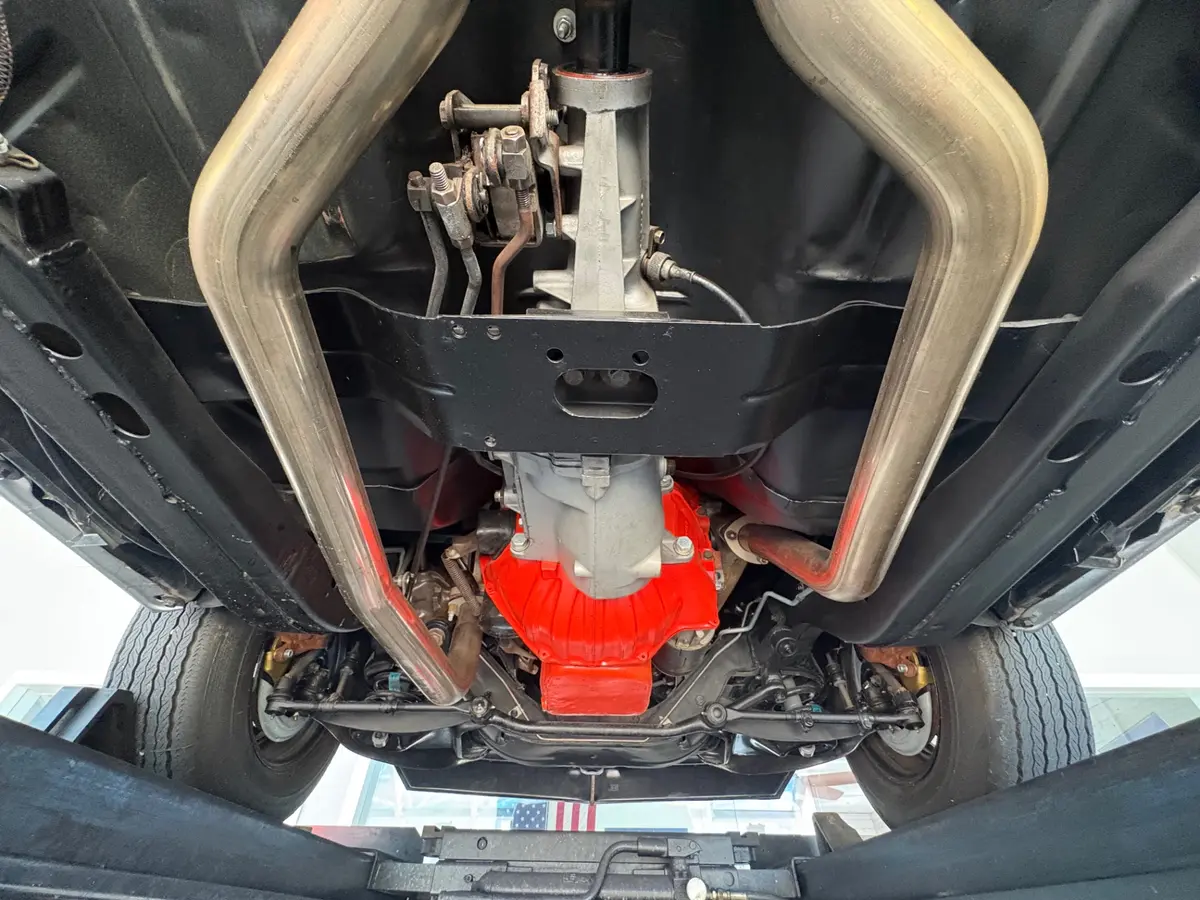
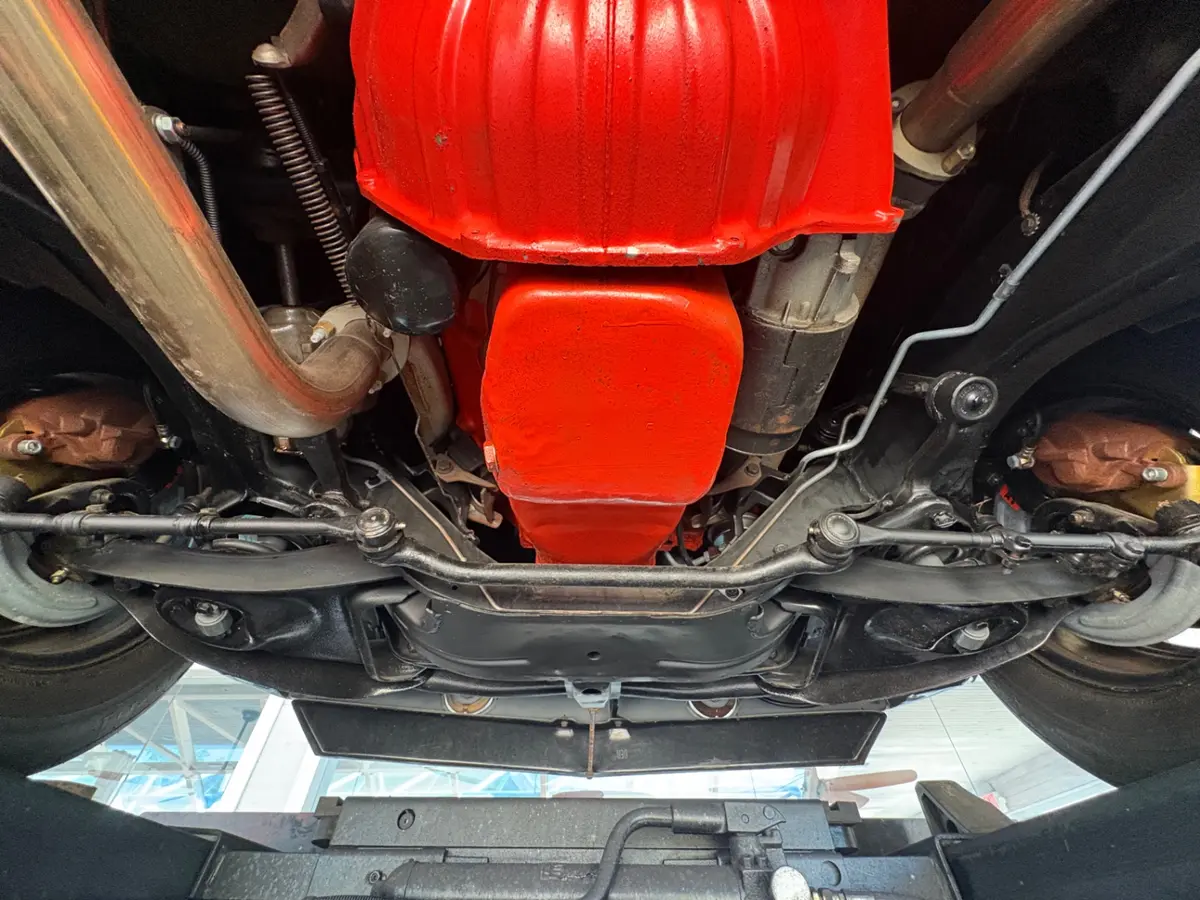
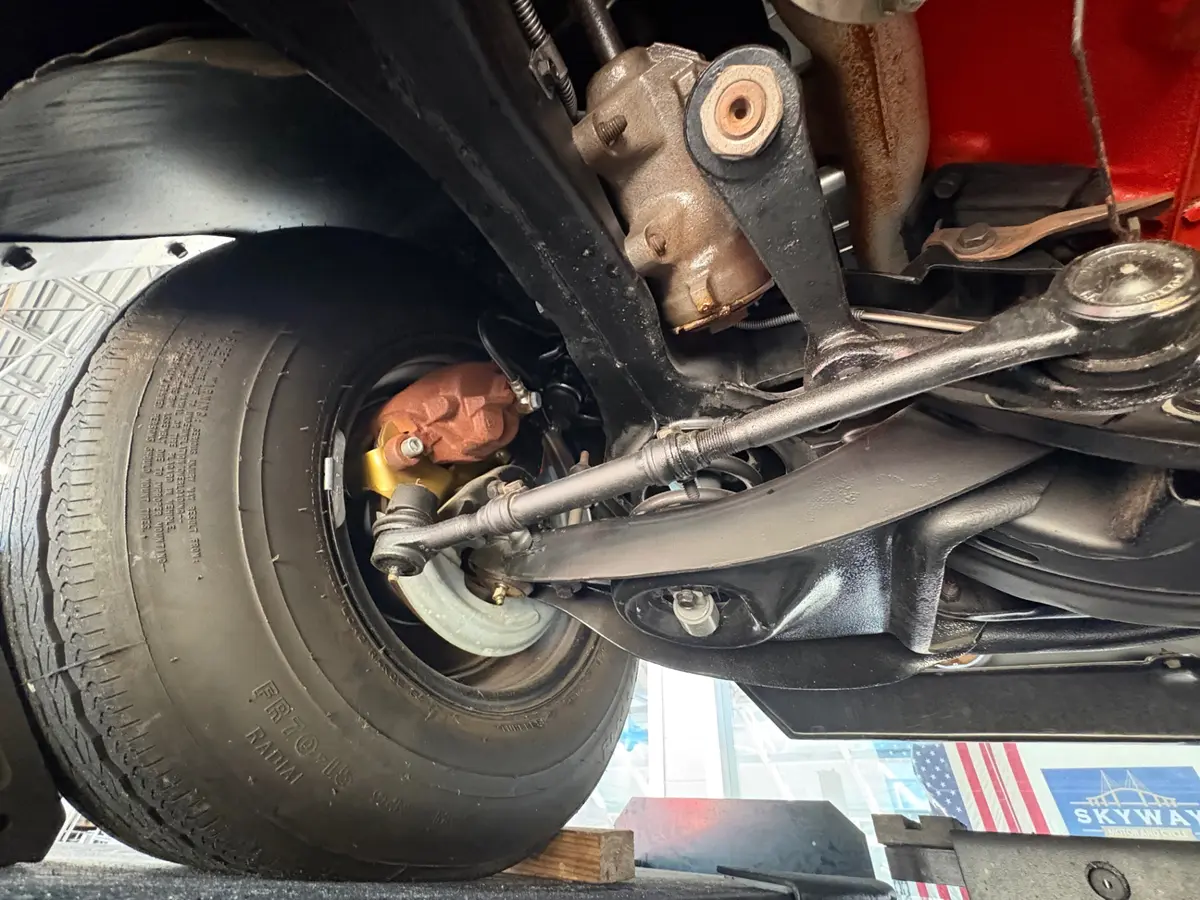
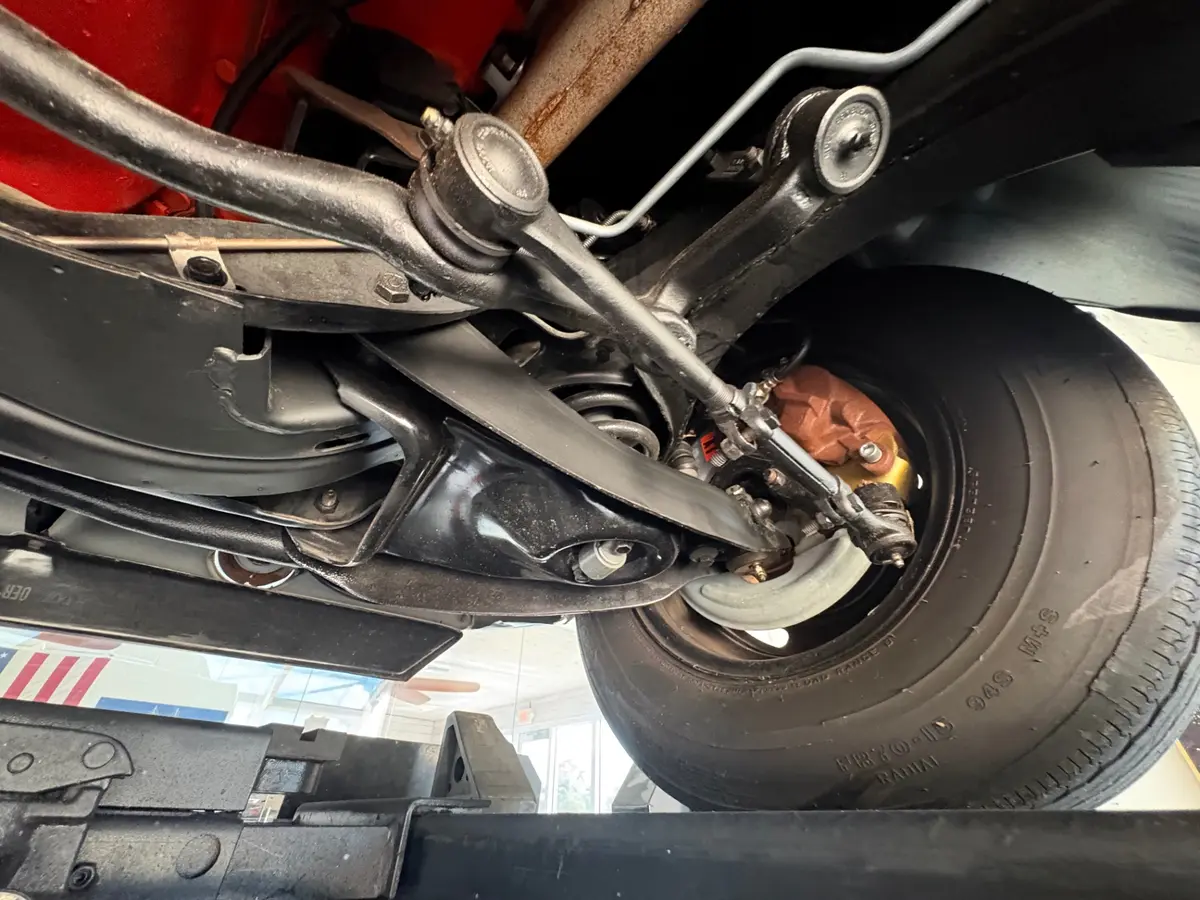
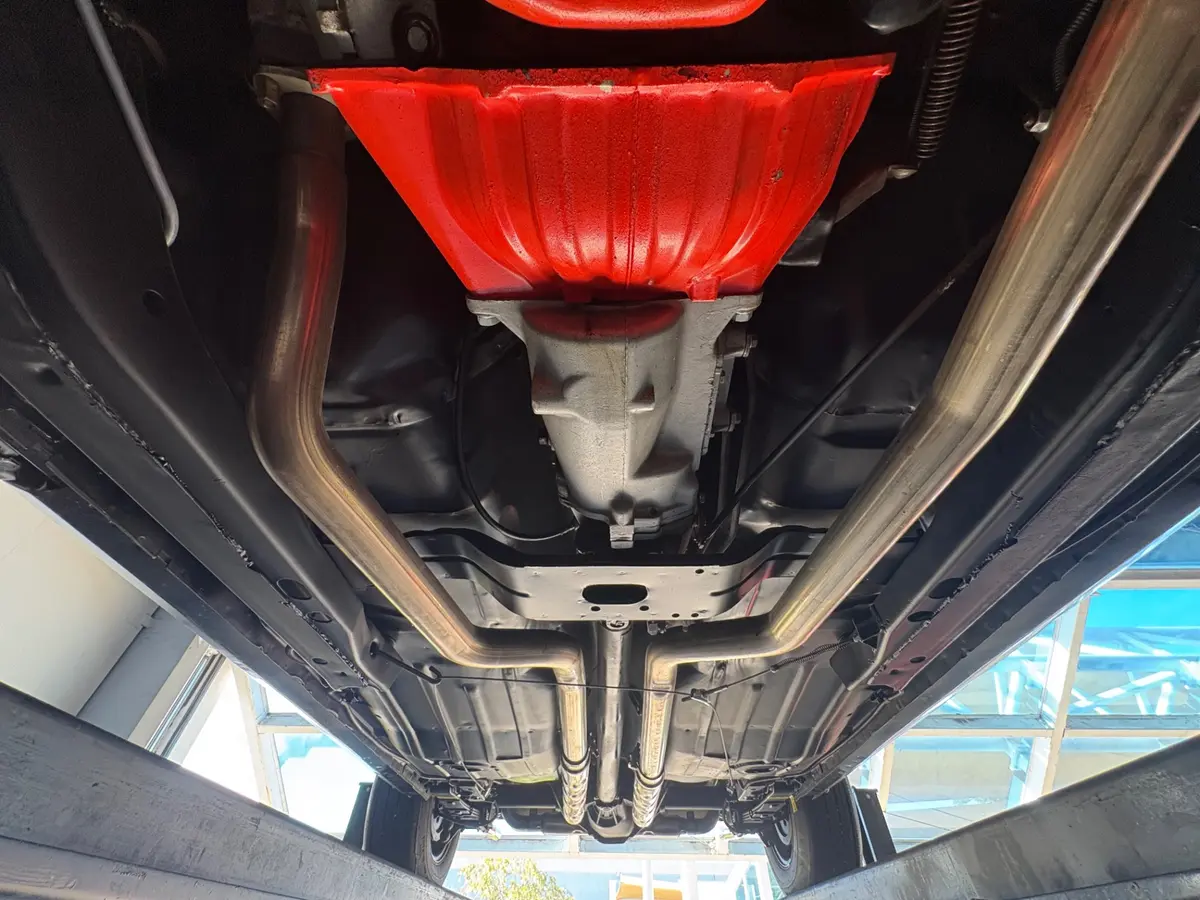
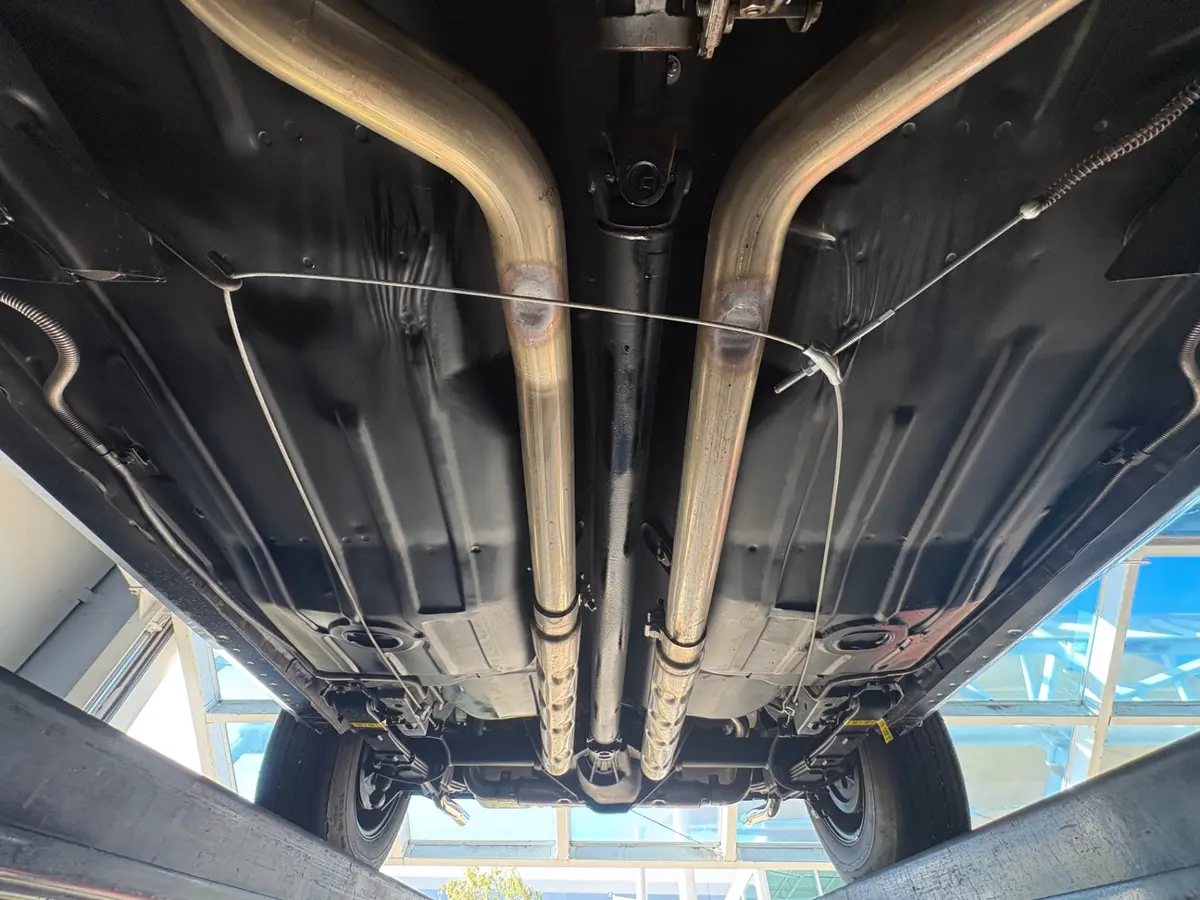
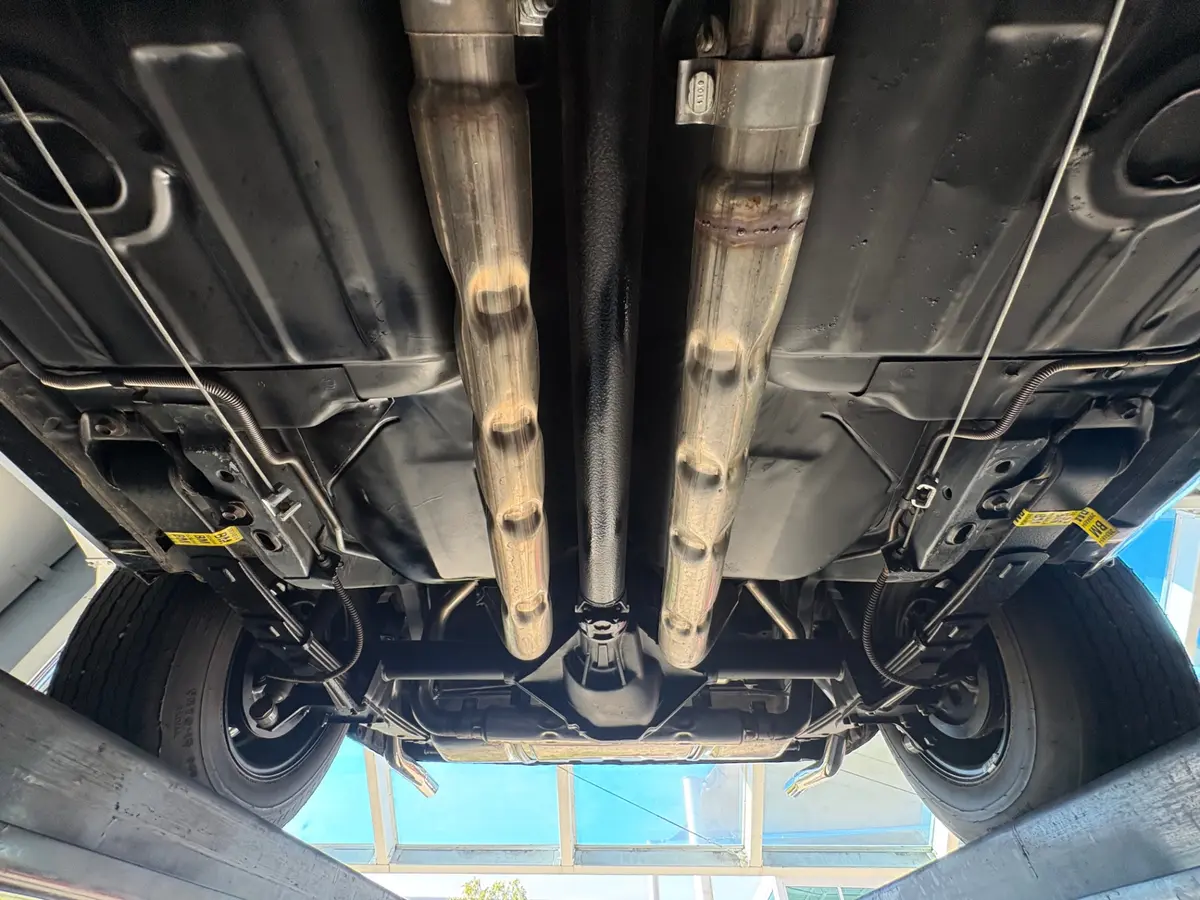
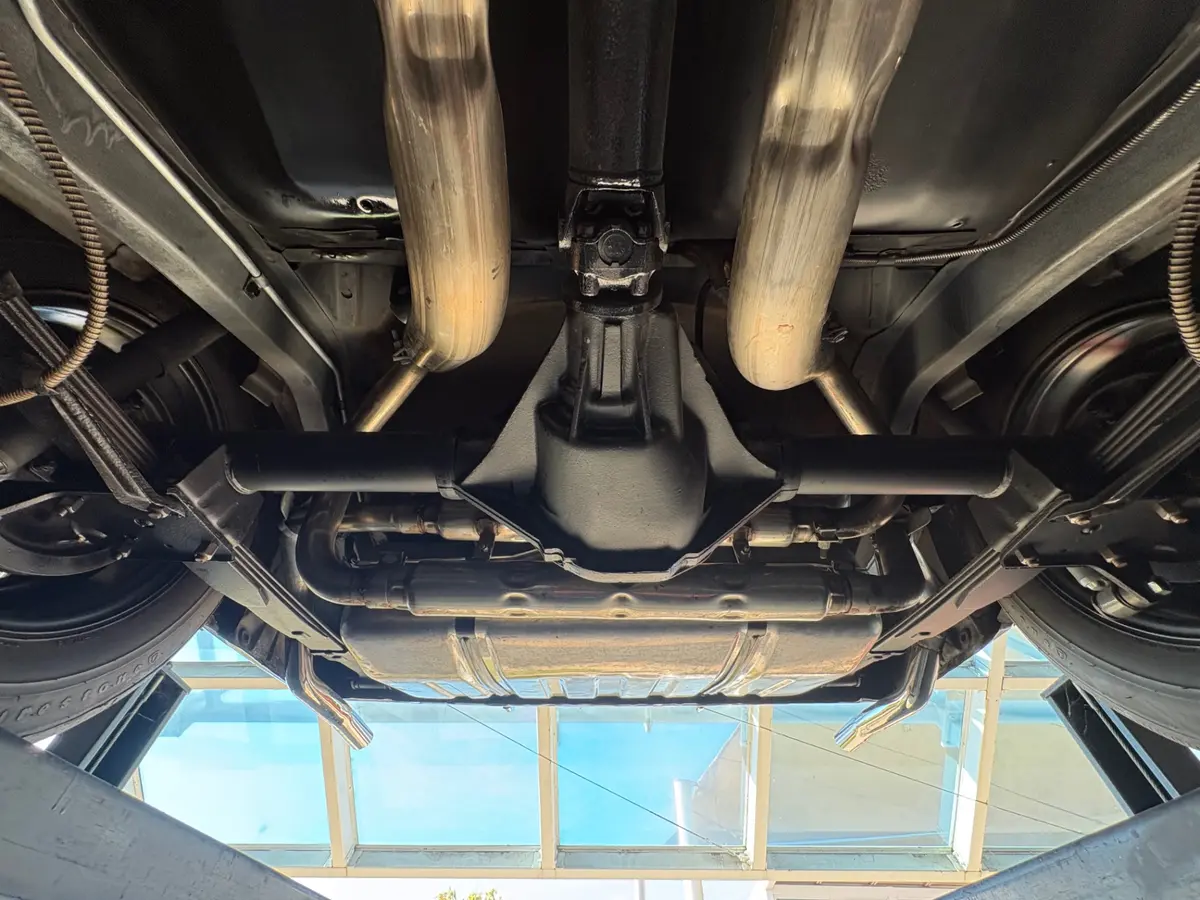
The 4-speed manual transmission is the correct pairing for this car. The Z/28 was not offered with an automatic in 1969 — if you wanted the Z/28 package, you took the manual. The close-ratio gearbox keeps the DZ 302 in its power band between shifts, which is exactly how this engine needs to be driven. The F41 suspension package — heavy-duty springs, stiffer shocks, and a front stabilizer bar — was standard Z/28 equipment and distinguishes this car's handling balance from a standard Camaro. It was tuned with road course performance in mind, not straight-line drag racing, which is part of what made the Z/28 distinct from the SS models that were chasing quarter-mile times. The dual exhaust exits cleanly at the rear, and the undercarriage photos on this car show solid, clean structure without the rust and patch work concerns that follow many survivors of this vintage.
Interior
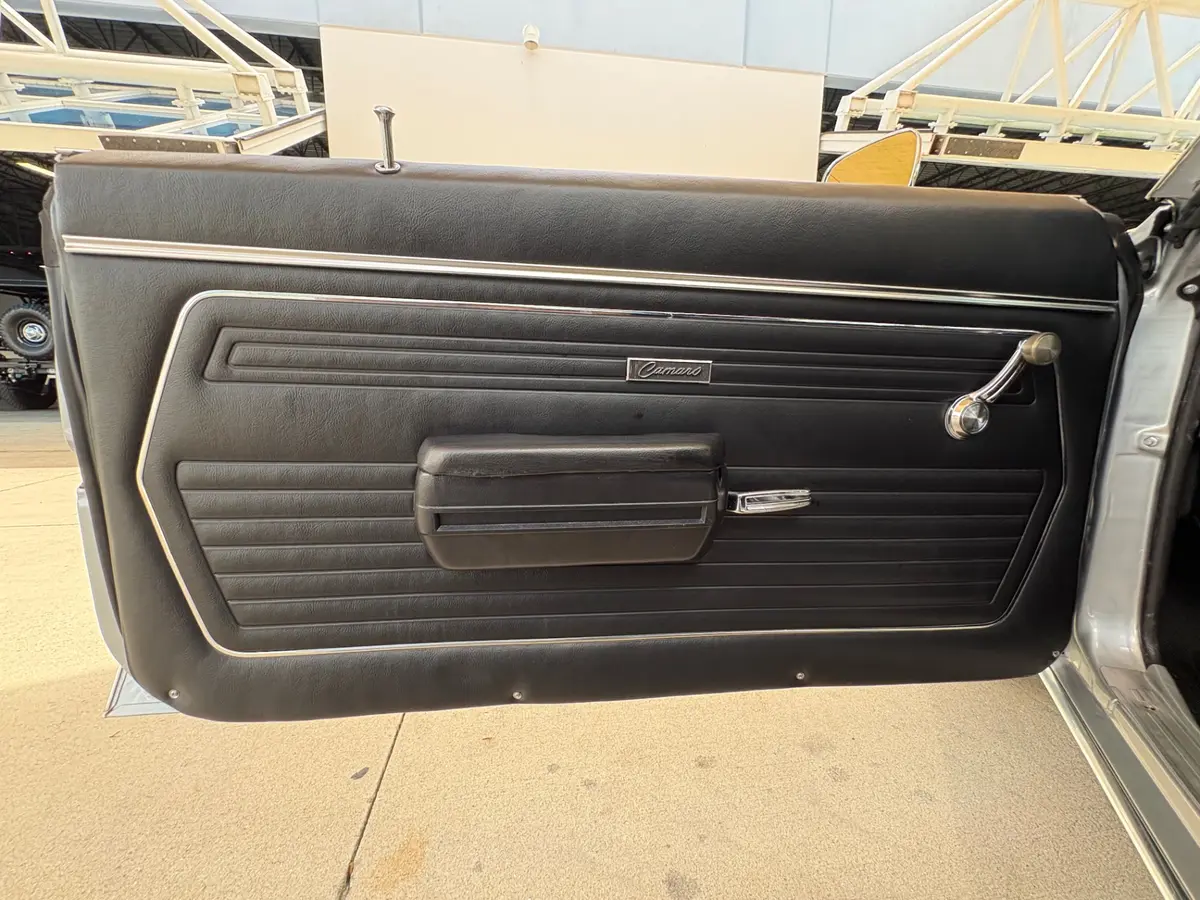
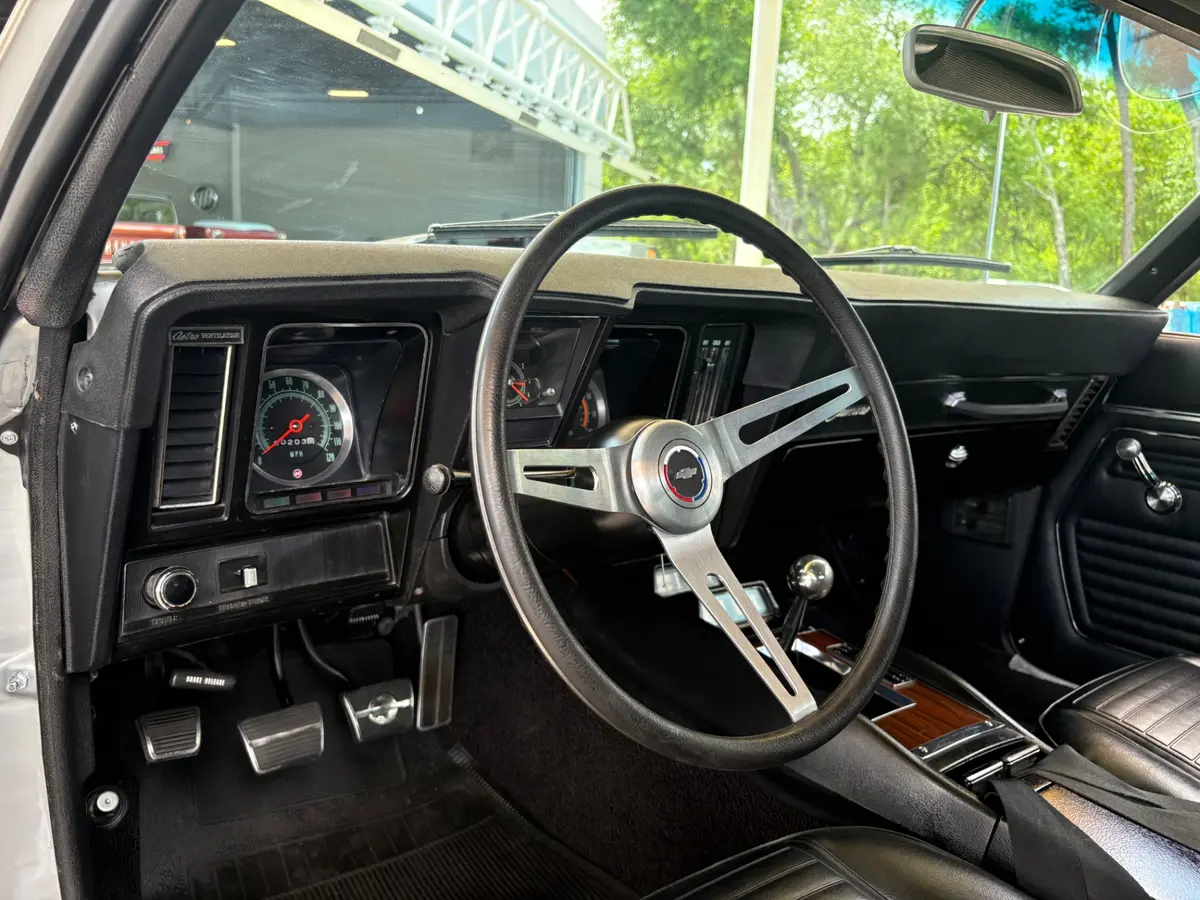
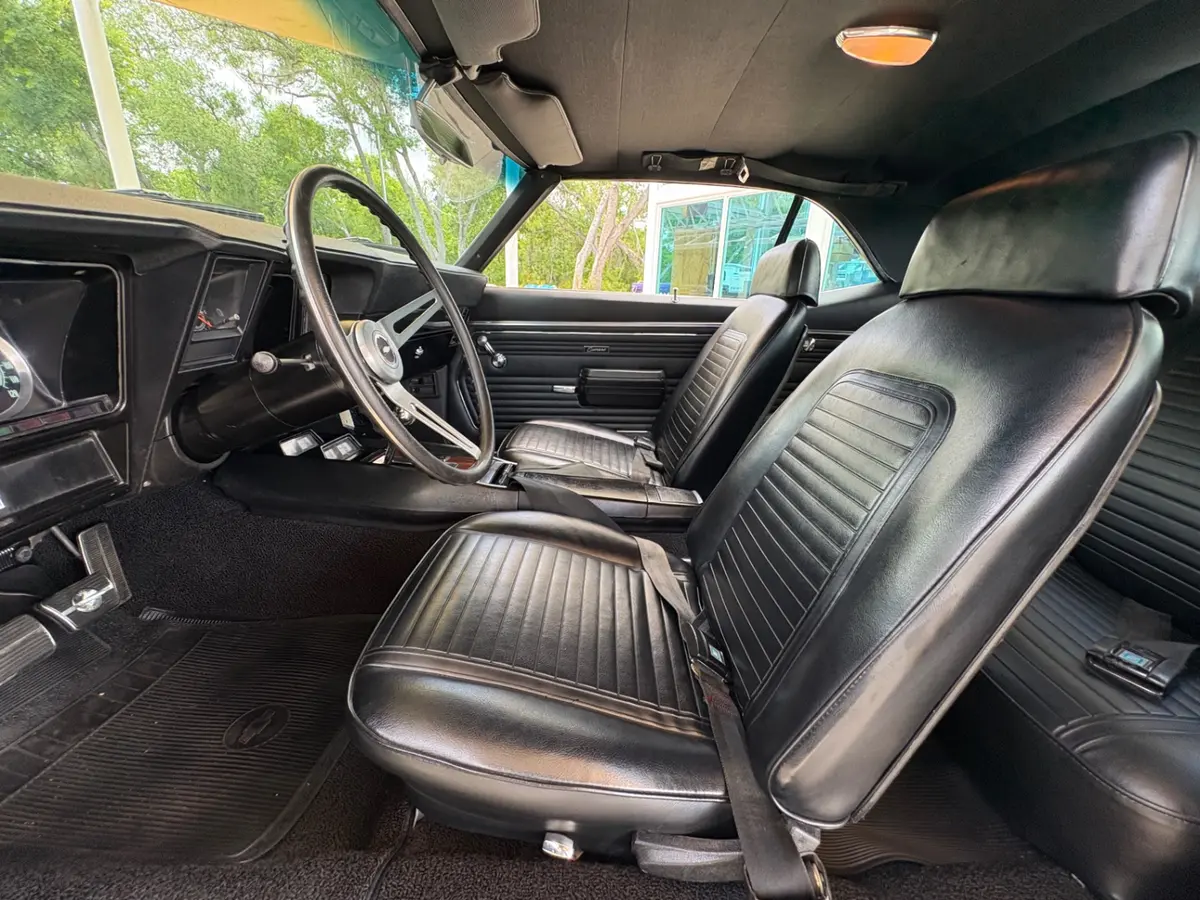
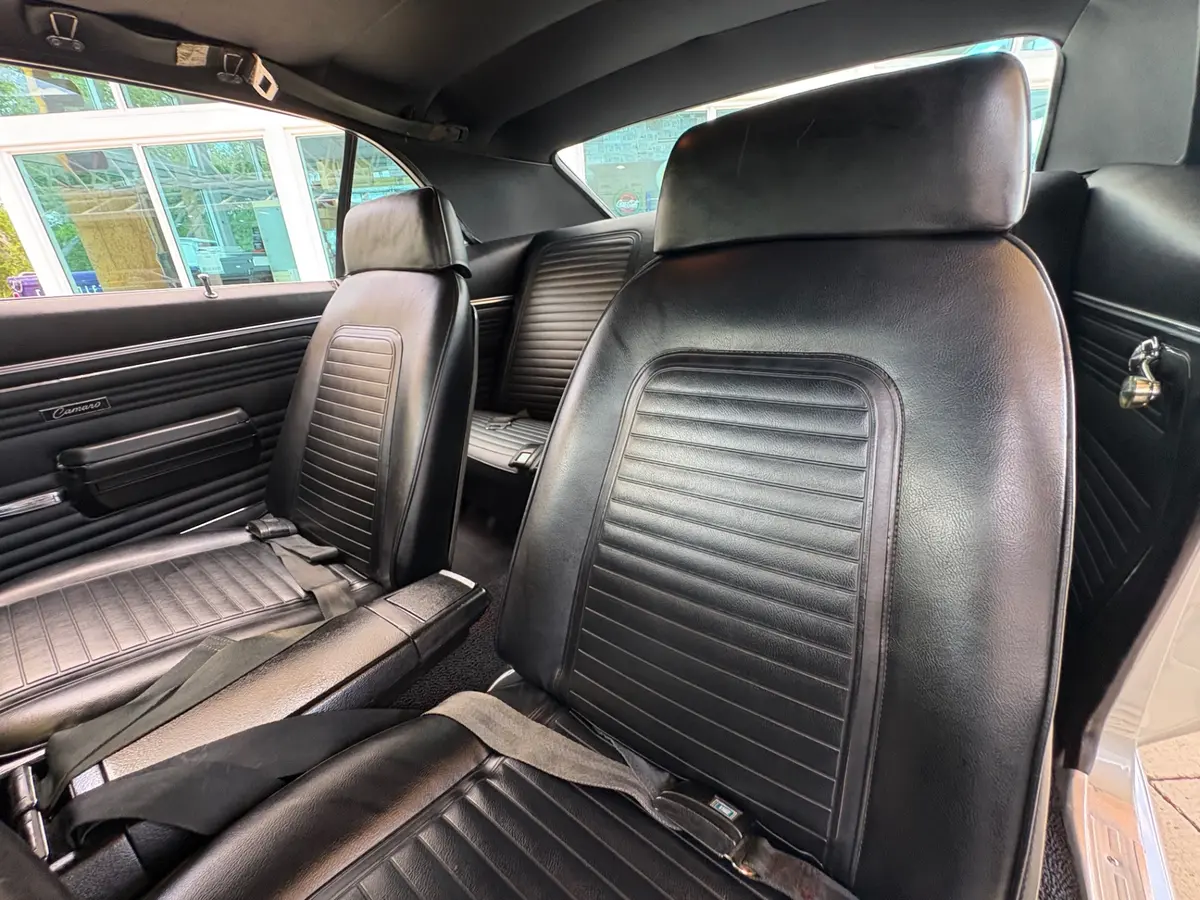
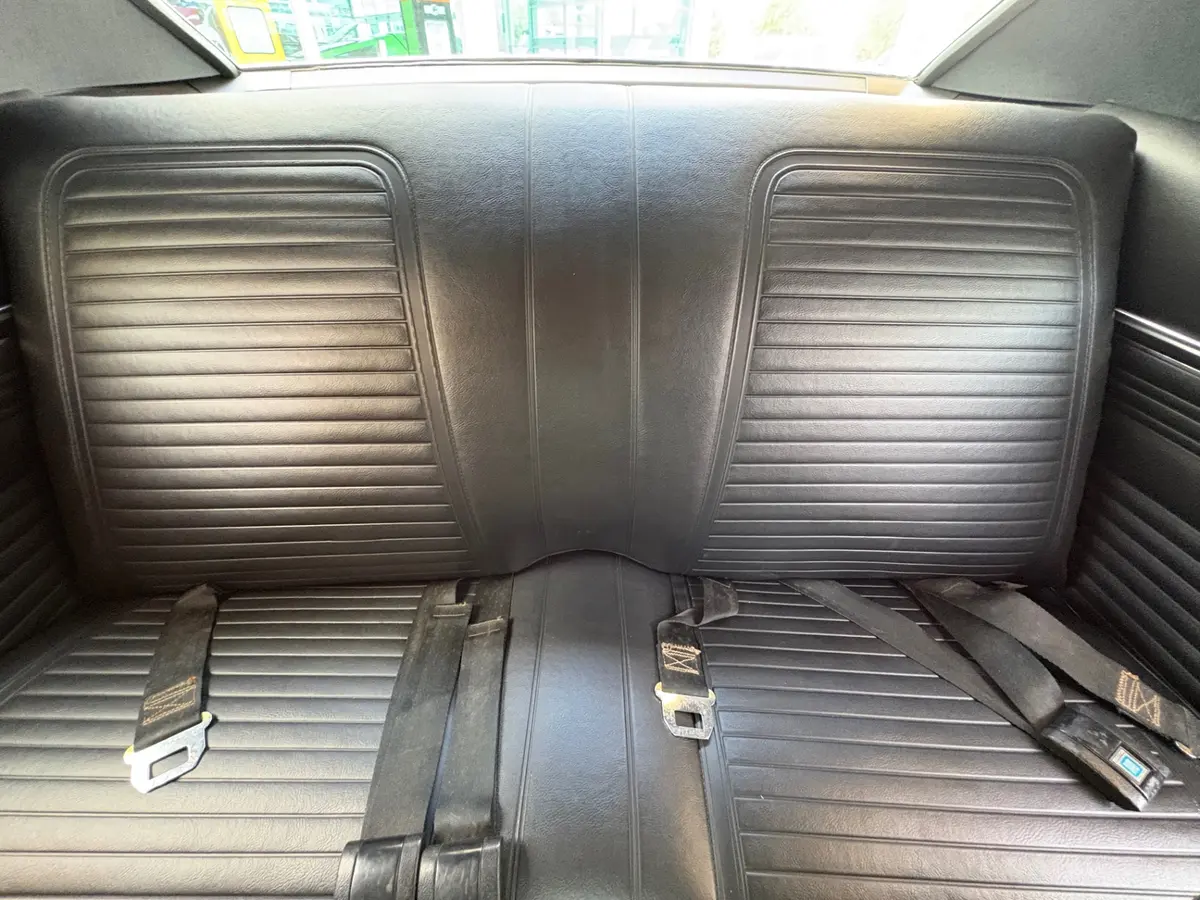
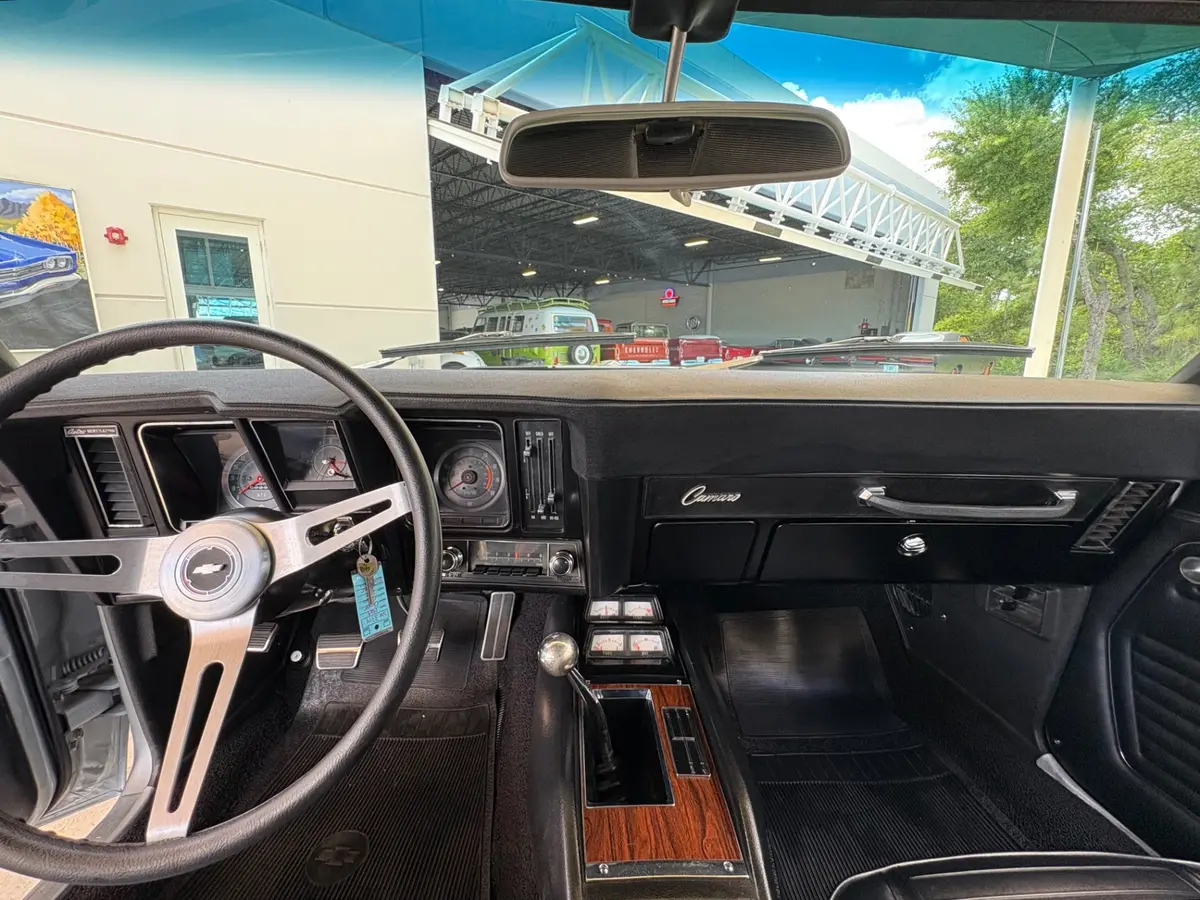
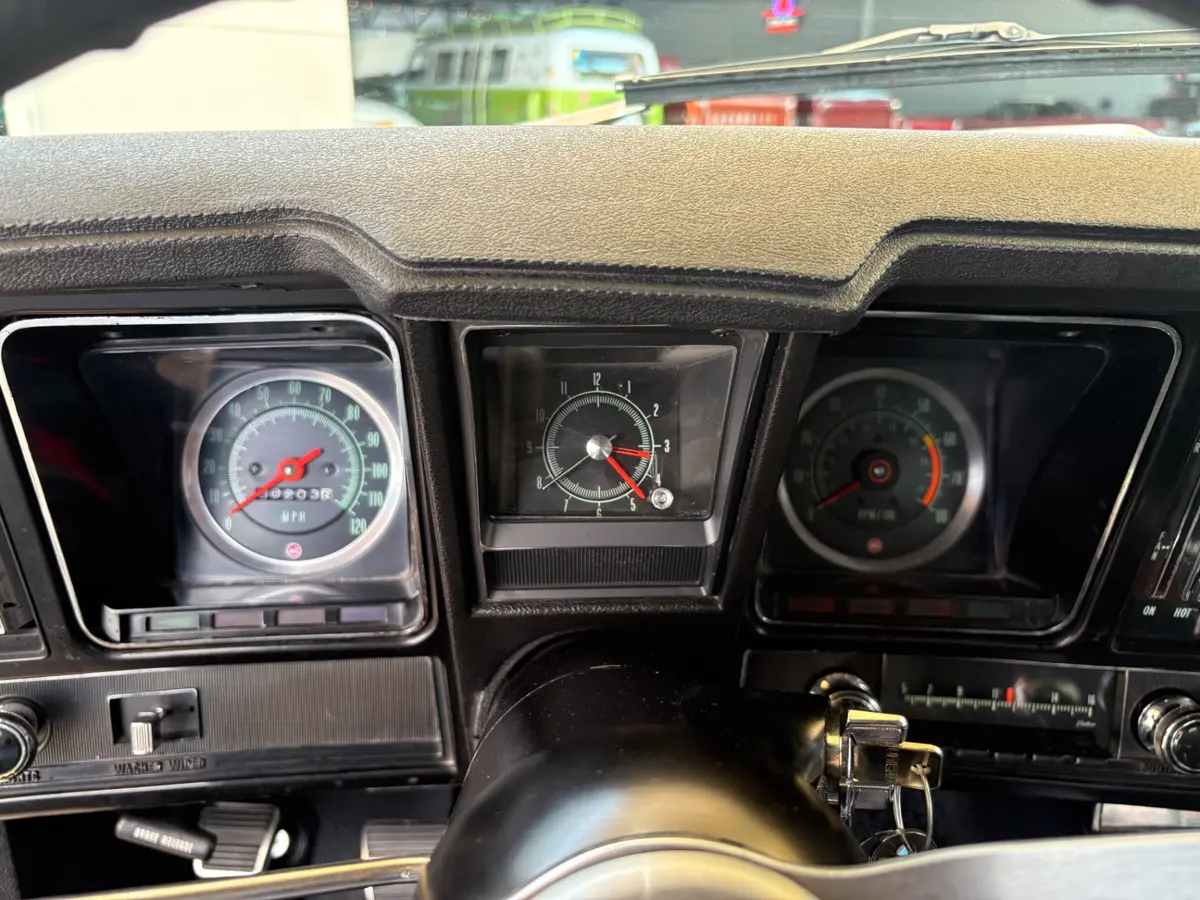
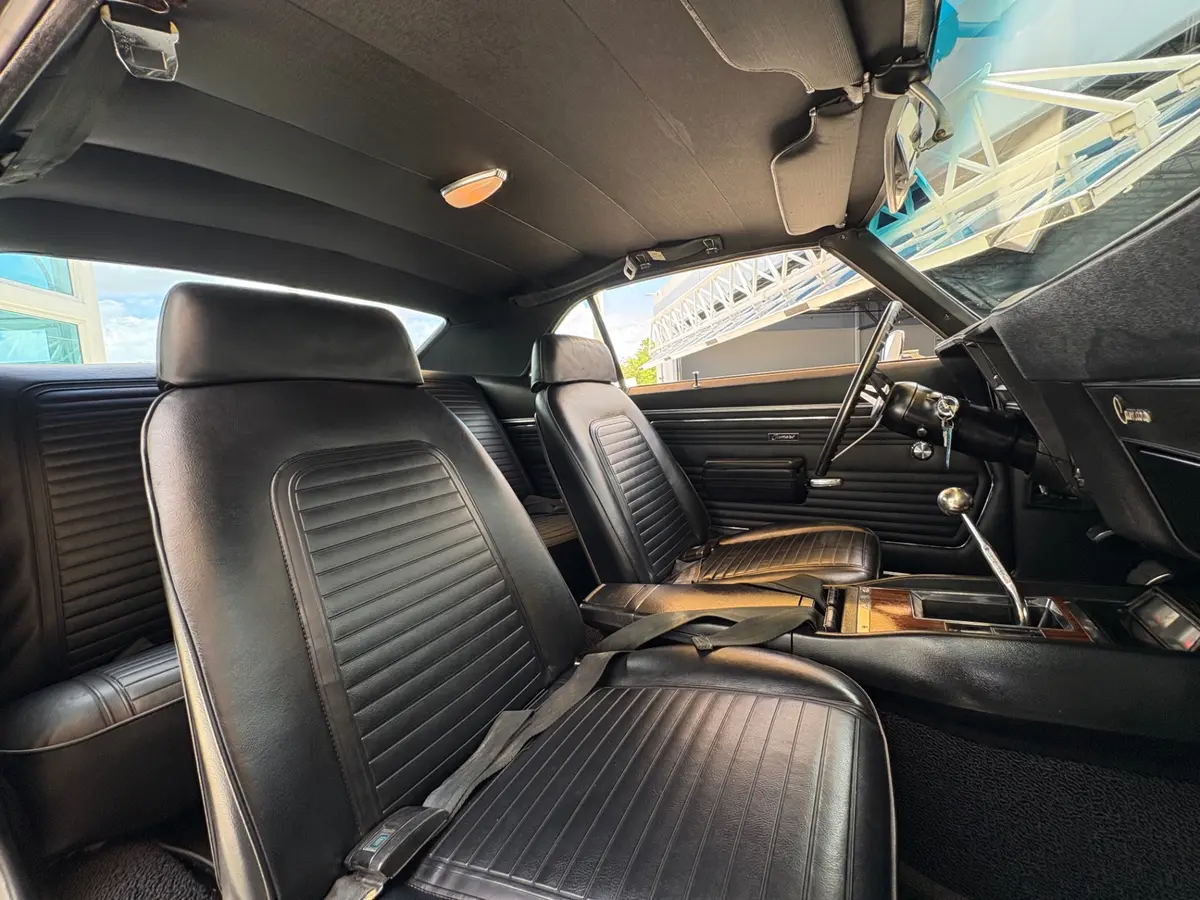
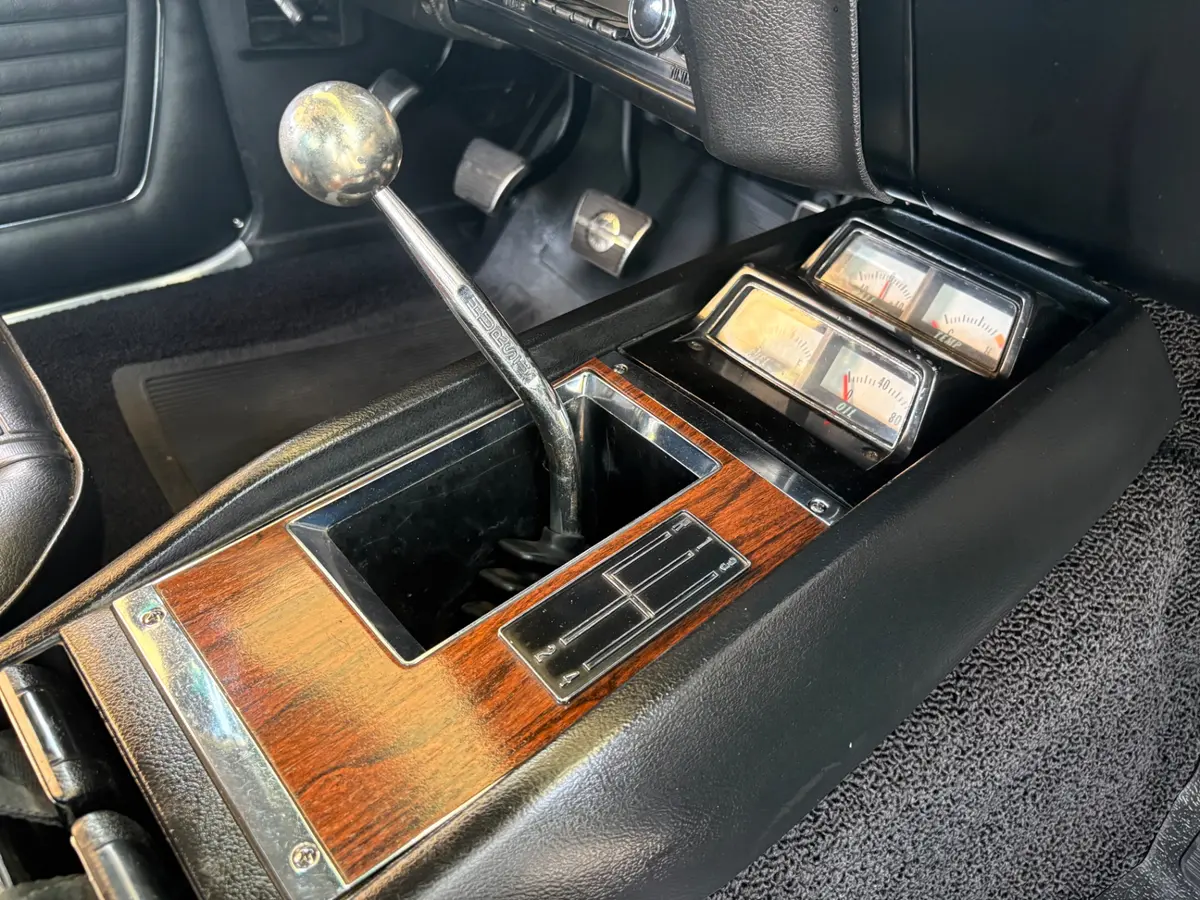
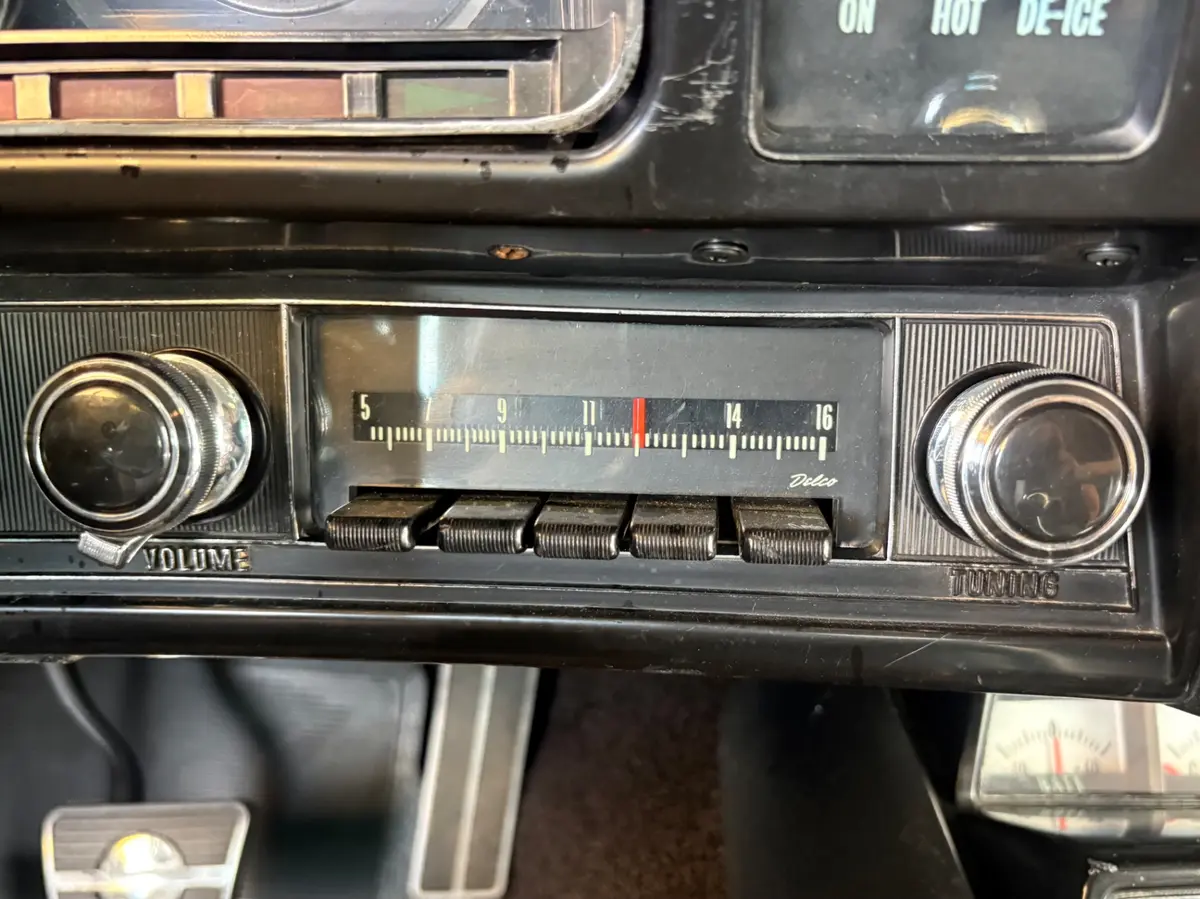
The black vinyl interior is correct for a 1969 Camaro Z/28 and has held up well. The Z/28 did not come with a heavily optioned cabin by default — the focus was weight and function, not luxury. What you do get here is the center console, which runs between the bucket seats and integrates cleanly with the 4-speed shifter. The sport steering wheel gives the driver a more direct feel than the standard wheel, and it keeps the cockpit oriented toward the person doing the driving rather than a passenger experience. The Astro Ventilation system — Chevrolet's flow-through ventilation design introduced on the 1968 Camaro — draws fresh air in through the cowl and exhausts it through vents in the rear pillars, reducing the need to crack a window at highway speed. Door panels are trimmed in black vinyl with a Camaro script badge and a chrome accent strip, keeping the interior consistent with the exterior color scheme. The overall presentation is clean and honest, with the character that comes from a well-kept original-style interior rather than an over-restored showroom replica.
Exterior
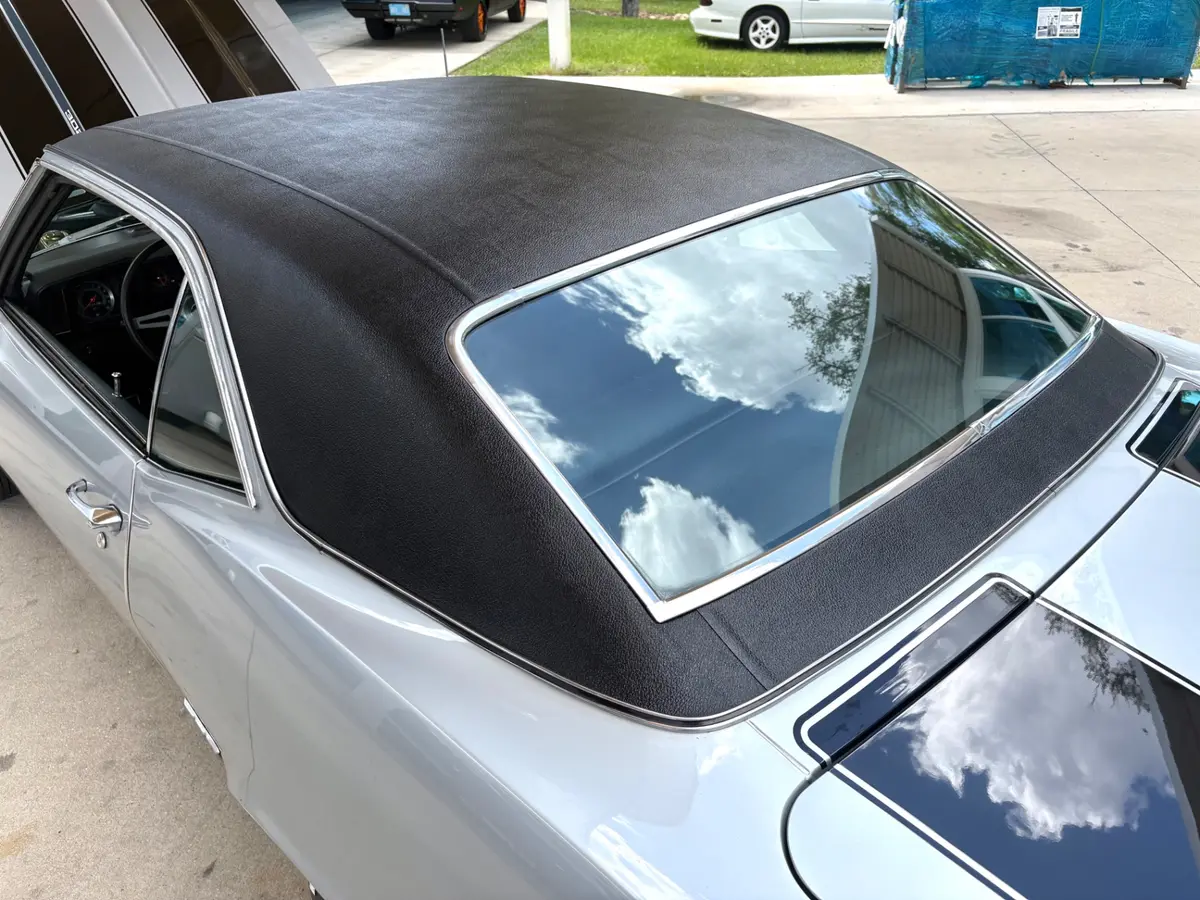
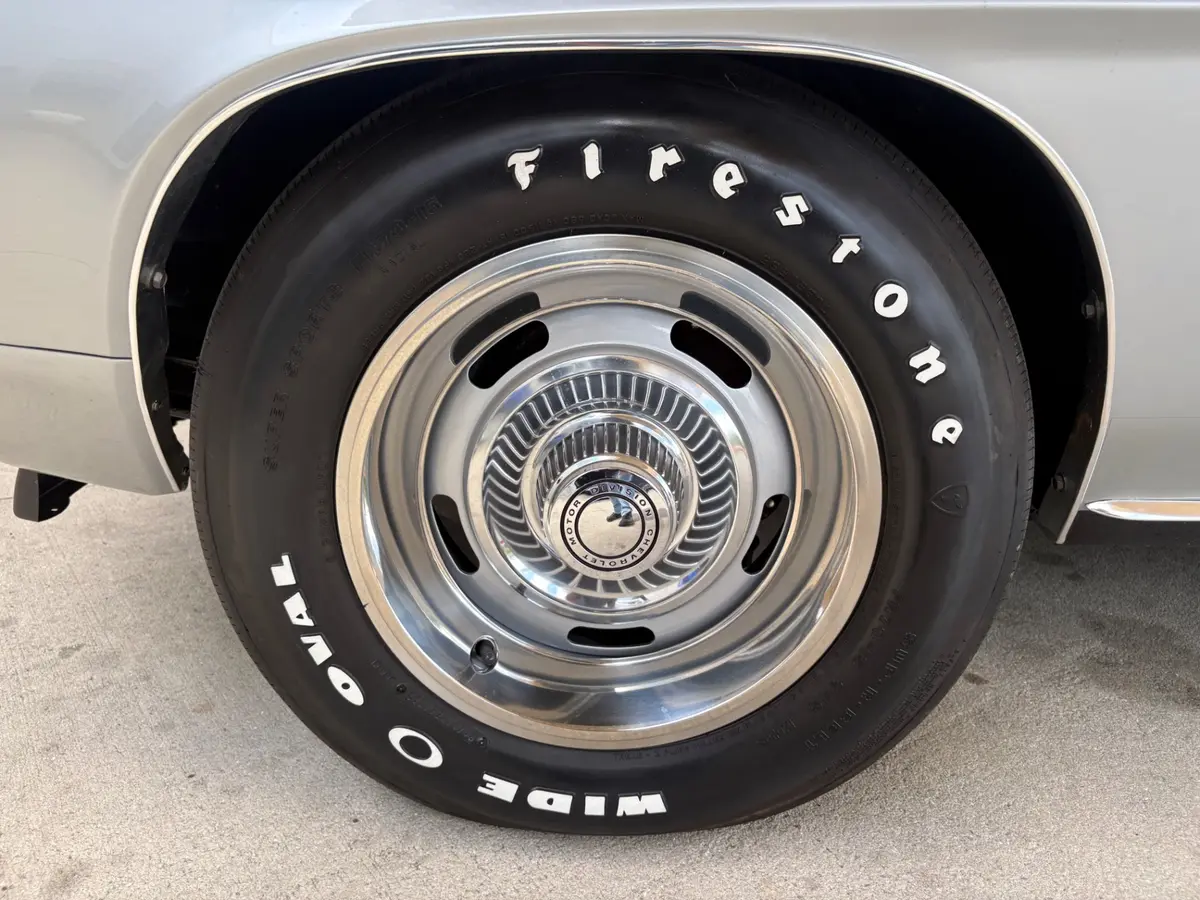
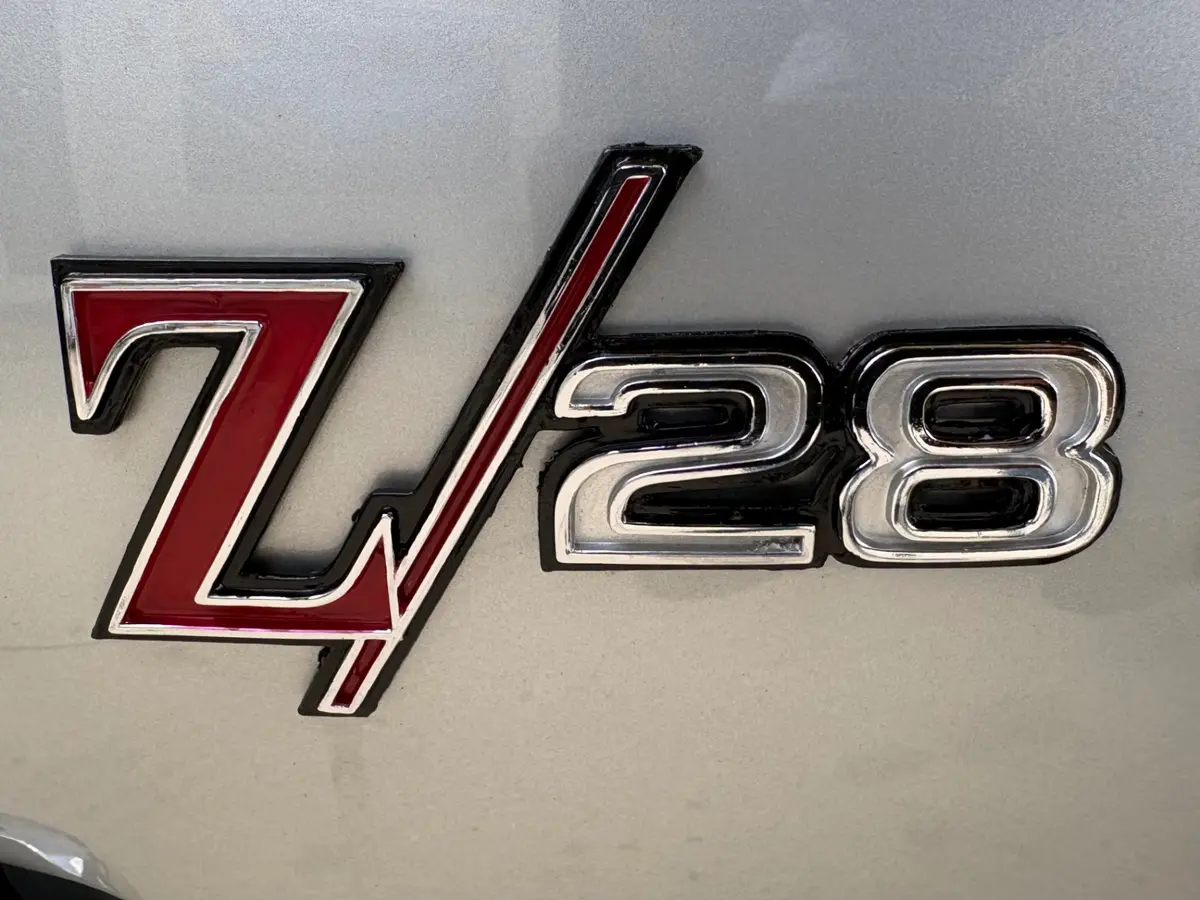
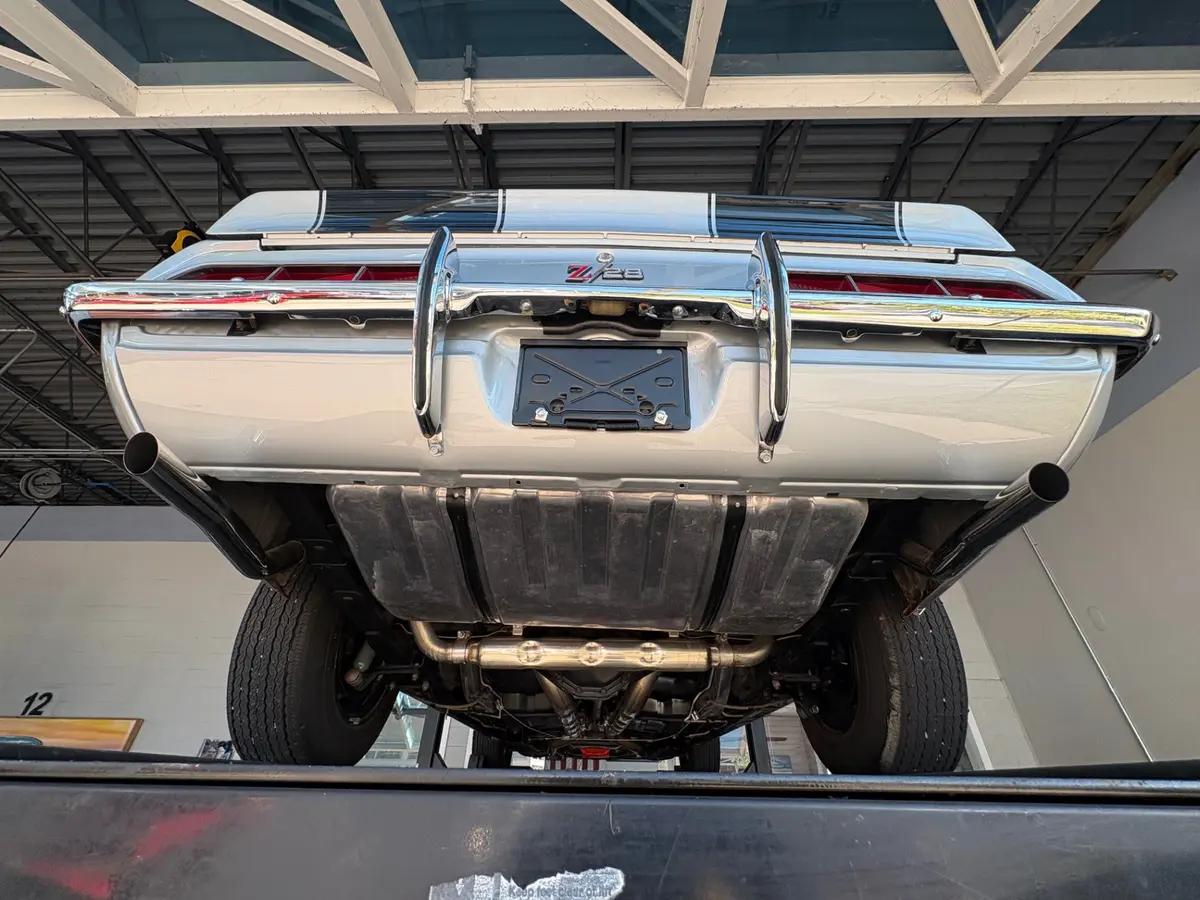
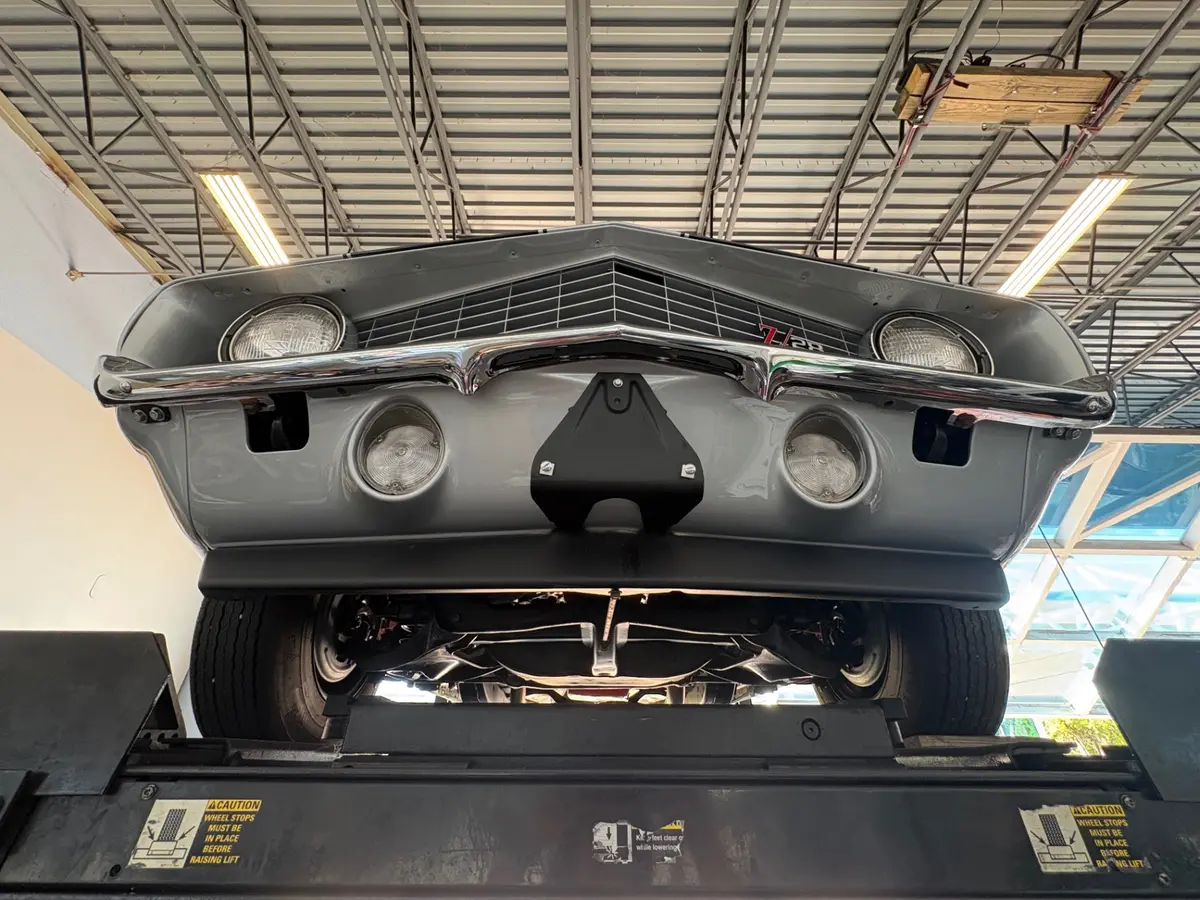
Silver with black racing stripes over a black vinyl top is a combination that works particularly well on the 1969 Camaro's body lines. The first-generation Camaro's styling, finalized under GM Design under the direction of Henry Haga's studio, gave the car a long hood and short rear deck proportion that was already well-suited to the twin racing stripes running from nose to tail. Those stripes were not decorative on the Z/28 — they were part of the standard package and serve as one of the visual identifiers that separate this car from a standard Sport Coupe or SS. The Z/28 front grille badge and rear decklid badge are present and correctly placed. The vinyl top adds a period-correct detail that was a popular option on late-1960s pony cars and complements the silver and black color scheme. Chrome bumpers front and rear are in good condition, and the wide oval tires fill the wheel openings correctly. The undercarriage, visible in the photos taken from the rear lift angle, shows clean structure with no visible rot, no patch panels, and exhaust routing that sits tight and neat. For a car of this age and value, what's underneath matters as much as what's on top, and this one holds up under that scrutiny.
Conclusion
The 1969 Chevrolet Camaro Z/28 is one of the most historically significant variants of the first-generation Camaro, and the 1969 model year represents the final and most sorted version of that body style. This specific car combines the correct DZ 302 engine, the mandatory 4-speed manual, the F41 suspension, and the full Z/28 badge package in a color combination that presents well and reads true to the era. The Norwood build, clean undercarriage, and honest interior make this a solid example of a car that is increasingly difficult to find in this condition. Whether you are adding to an existing collection or making your first serious acquisition in this segment, the 1969 Camaro Z/28 is a car with a documented place in motorsport history and a collector market that has consistently recognized that.
To schedule an inspection or ask specific questions about this 1969 Chevrolet Camaro Z/28, call Skyway Classics in Sarasota, Florida at 941-254-6608.
Disclaimer
Information found on the website is presented as given to us by the owner of the car, whether on consignment or from the owner we bought it from. Some Photos, materials for videos, descriptions and other information are provided by the consignor/seller and is deemed reliable, but Skyway Classics does not warranty or guarantee this information. Skyway Classics is not responsible for information that may incorrect or a publishing error. The decision to purchase should be based solely on the buyers personal inspection of the vehicle or by a professional inspection service prior to offer or purchase being made.
1969 Chevrolet Camaro Z/28 — DZ 302 V8, 4-Speed, F41 Suspension, Vinyl Top
Why This Car Is Special
The 1969 Chevrolet Camaro Z/28 occupies a specific and well-earned position in American automotive history. It was not a street car that moonlighted on the track — it was a competition-bred machine that Chevrolet made street-legal to satisfy SCCA Trans-Am racing homologation rules. To compete in the under-5-liter displacement class, Chevy engineers combined a 283 block with a 327 crankshaft to arrive at exactly 302.4 cubic inches. That engine, designated the DZ 302, became the heart of every Z/28 sold during the first-generation Camaro run.
The Z/28 option was not advertised in Chevrolet's main sales literature in 1967 or 1968 — it was essentially a word-of-mouth package for buyers who already knew what they were looking for. By 1969, the Z/28 had earned enough of a reputation that Chevrolet leaned into it more openly, and production climbed to 20,302 units that year, compared to just 602 in 1967 and 7,199 in 1968. Even so, the 1969 Z/28 represented a small fraction of total Camaro output for the model year, which exceeded 243,000 units. The 1969 model year also holds the distinction of being the last of the first-generation body style, making it the most refined expression of that original design before the second-generation car arrived for 1970.
The VIN on this car decodes to a Norwood, Ohio assembly plant build — the "N" in the seventh position confirms that. Norwood was one of two plants that built the first-generation Camaro alongside Van Nuys, California, and it produced the majority of Z/28s during this era.
This particular 1969 Camaro Z/28 is presented in silver with black racing stripes, a black vinyl interior, and a black vinyl top — a combination that presents cleanly and reads correctly for the era. It carries the F41 performance suspension, the close-ratio 4-speed manual transmission, and the dual exhaust that were all standard Z/28 equipment. This is the configuration the car was meant to be in.
Features List
- DZ 302 5.0L V8 Engine
- 4-Speed Manual Transmission
- Z/28 Badge Package
- F41 Performance Suspension
- Dual Exhaust
- Black Racing Stripes
- Black Vinyl Top
- Center Console
- Sport Steering Wheel
- Astro Ventilation
- Wide Oval Tires
- Chrome Bumpers
- Clean Undercarriage
Mechanical
The DZ 302 V8 is the reason the Z/28 exists. Displacing 302 cubic inches, this engine was factory-rated at 290 horsepower, though that number was widely understood to be conservative — a common practice in the late 1960s as insurance rates and regulatory scrutiny climbed. The engine features solid lifters, a high-revving camshaft, and a 800-cfm Holley four-barrel carburetor sitting under a large open-element air cleaner. It was designed to make power above 4,000 rpm, which made it less docile than a big-block at low speeds but considerably more capable on a road course where the engine spent its time spinning near redline. The high-revving nature of the DZ 302 also made it a natural fit for the Trans-Am series, where Chevrolet-backed teams used this engine as the foundation for their race builds.
The 4-speed manual transmission is the correct pairing for this car. The Z/28 was not offered with an automatic in 1969 — if you wanted the Z/28 package, you took the manual. The close-ratio gearbox keeps the DZ 302 in its power band between shifts, which is exactly how this engine needs to be driven. The F41 suspension package — heavy-duty springs, stiffer shocks, and a front stabilizer bar — was standard Z/28 equipment and distinguishes this car's handling balance from a standard Camaro. It was tuned with road course performance in mind, not straight-line drag racing, which is part of what made the Z/28 distinct from the SS models that were chasing quarter-mile times. The dual exhaust exits cleanly at the rear, and the undercarriage photos on this car show solid, clean structure without the rust and patch work concerns that follow many survivors of this vintage.
Interior
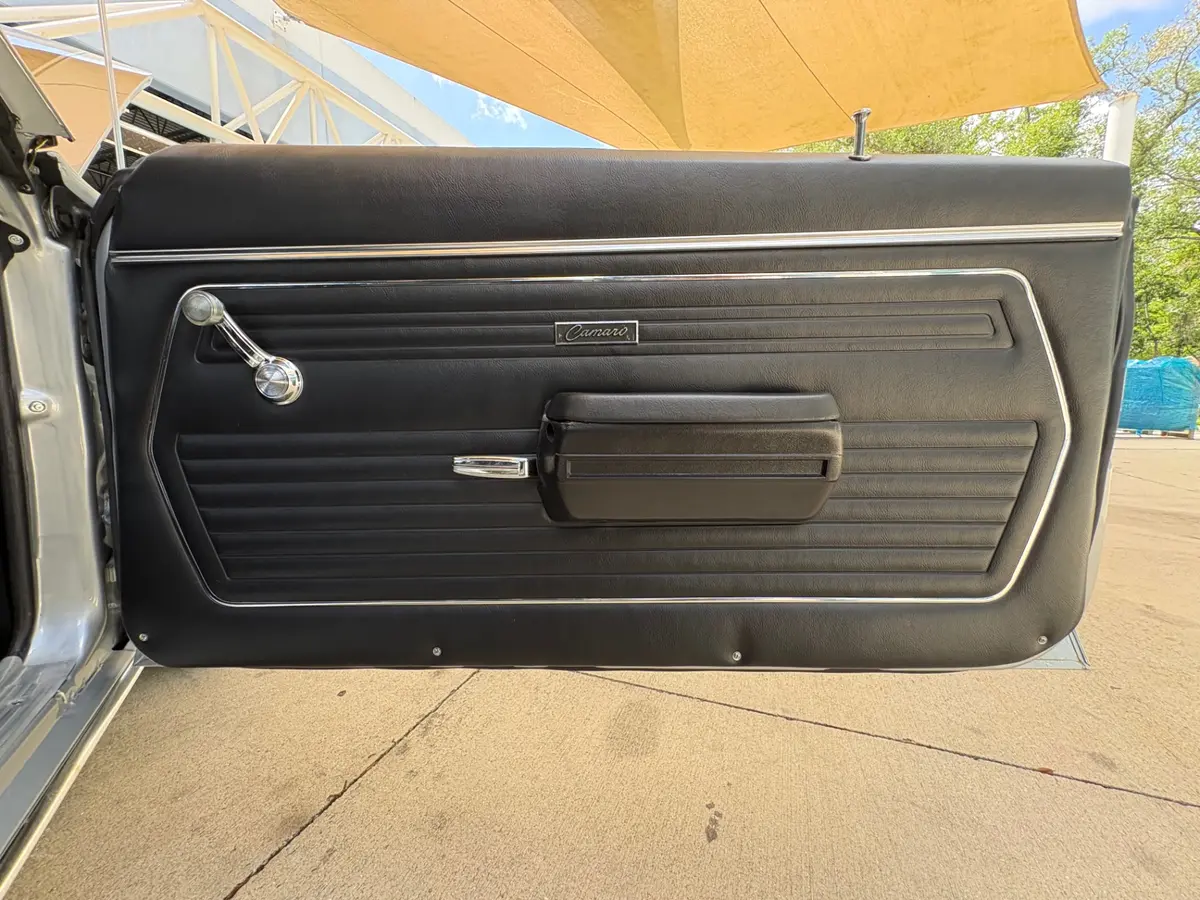
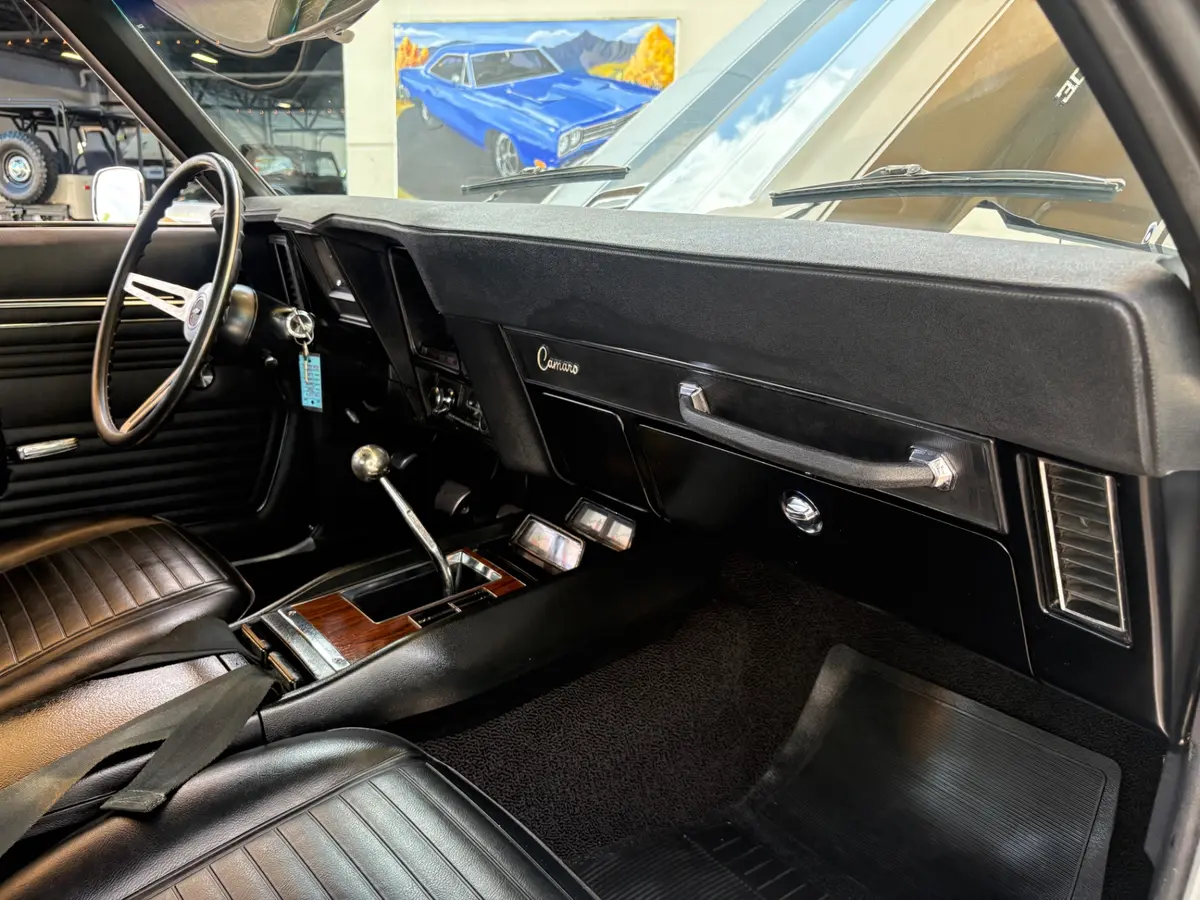
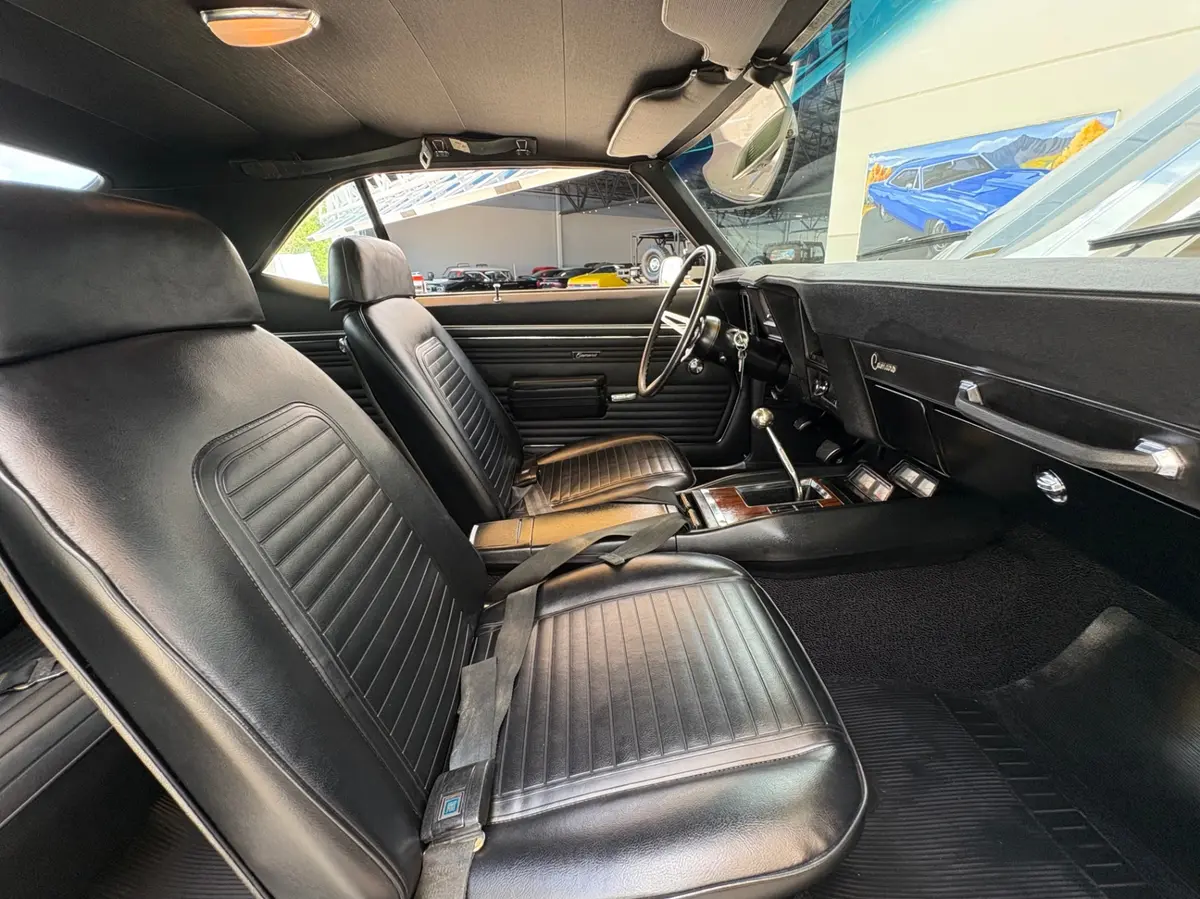
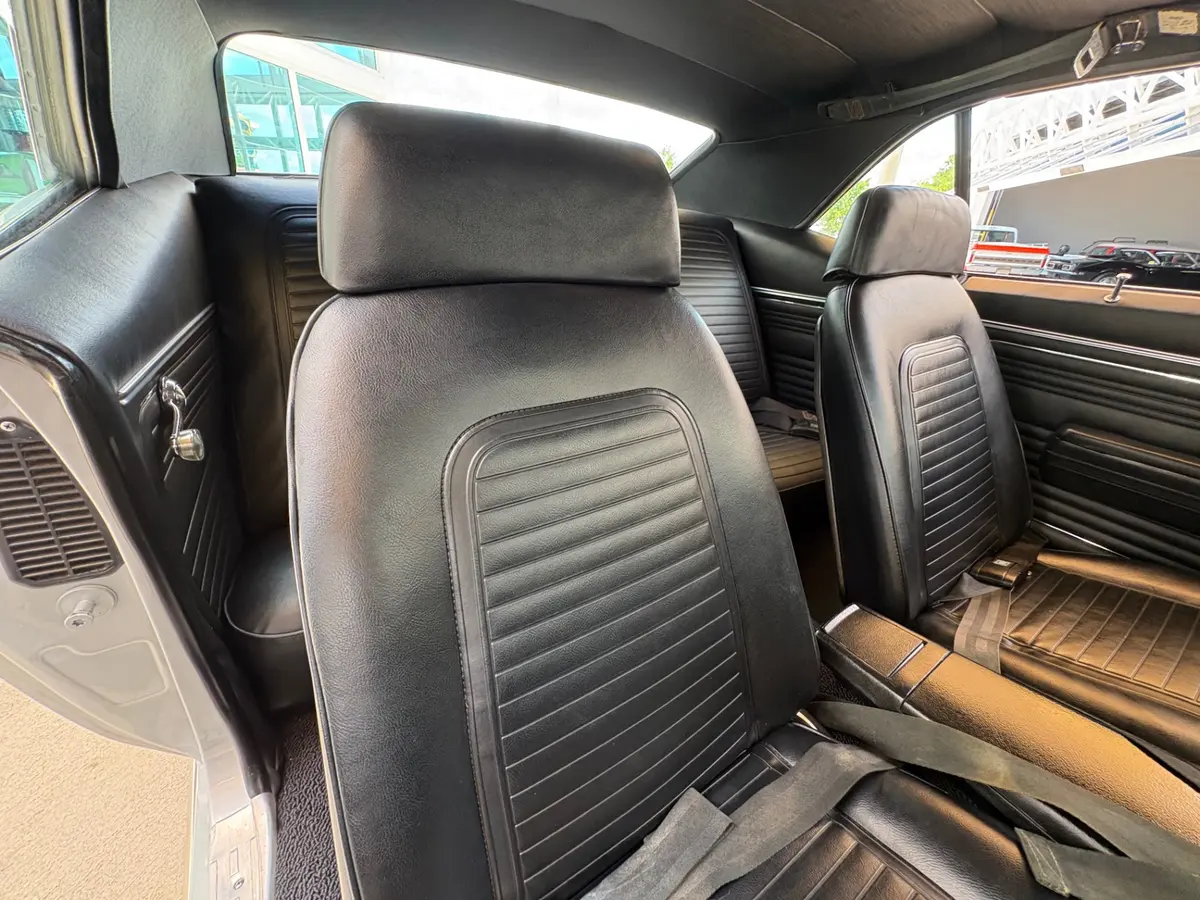
The black vinyl interior is correct for a 1969 Camaro Z/28 and has held up well. The Z/28 did not come with a heavily optioned cabin by default — the focus was weight and function, not luxury. What you do get here is the center console, which runs between the bucket seats and integrates cleanly with the 4-speed shifter. The sport steering wheel gives the driver a more direct feel than the standard wheel, and it keeps the cockpit oriented toward the person doing the driving rather than a passenger experience. The Astro Ventilation system — Chevrolet's flow-through ventilation design introduced on the 1968 Camaro — draws fresh air in through the cowl and exhausts it through vents in the rear pillars, reducing the need to crack a window at highway speed. Door panels are trimmed in black vinyl with a Camaro script badge and a chrome accent strip, keeping the interior consistent with the exterior color scheme. The overall presentation is clean and honest, with the character that comes from a well-kept original-style interior rather than an over-restored showroom replica.
Exterior
Silver with black racing stripes over a black vinyl top is a combination that works particularly well on the 1969 Camaro's body lines. The first-generation Camaro's styling, finalized under GM Design under the direction of Henry Haga's studio, gave the car a long hood and short rear deck proportion that was already well-suited to the twin racing stripes running from nose to tail. Those stripes were not decorative on the Z/28 — they were part of the standard package and serve as one of the visual identifiers that separate this car from a standard Sport Coupe or SS. The Z/28 front grille badge and rear decklid badge are present and correctly placed. The vinyl top adds a period-correct detail that was a popular option on late-1960s pony cars and complements the silver and black color scheme. Chrome bumpers front and rear are in good condition, and the wide oval tires fill the wheel openings correctly. The undercarriage, visible in the photos taken from the rear lift angle, shows clean structure with no visible rot, no patch panels, and exhaust routing that sits tight and neat. For a car of this age and value, what's underneath matters as much as what's on top, and this one holds up under that scrutiny.
Conclusion
The 1969 Chevrolet Camaro Z/28 is one of the most historically significant variants of the first-generation Camaro, and the 1969 model year represents the final and most sorted version of that body style. This specific car combines the correct DZ 302 engine, the mandatory 4-speed manual, the F41 suspension, and the full Z/28 badge package in a color combination that presents well and reads true to the era. The Norwood build, clean undercarriage, and honest interior make this a solid example of a car that is increasingly difficult to find in this condition. Whether you are adding to an existing collection or making your first serious acquisition in this segment, the 1969 Camaro Z/28 is a car with a documented place in motorsport history and a collector market that has consistently recognized that.
To schedule an inspection or ask specific questions about this 1969 Chevrolet Camaro Z/28, call Skyway Classics in Sarasota, Florida at 941-254-6608.
Disclaimer
Information found on the website is presented as given to us by the owner of the car, whether on consignment or from the owner we bought it from. Some Photos, materials for videos, descriptions and other information are provided by the consignor/seller and is deemed reliable, but Skyway Classics does not warranty or guarantee this information. Skyway Classics is not responsible for information that may incorrect or a publishing error. The decision to purchase should be based solely on the buyers personal inspection of the vehicle or by a professional inspection service prior to offer or purchase being made.
1969 Chevrolet
Camaro Z/28
Why Choose Skyway Classics?
Explore our curated inventory of classic and collector cars—thoughtfully selected, ready to drive, and supported by experts who make ownership simple.
Expert Curation
Every vehicle is hand-selected by our experts for quality, authenticity, and investment potential.
Fast Transactions
Streamlined buying and selling process with quick financing and immediate delivery options.
Only National Dealer With Classic Service & Repair
We’re the only national dealership that services and repairs the classics we sell—before and after the sale.
Nationwide Network
Access to our extensive network of collectors, restorers, and classic car enthusiasts nationwide.
Concierge Ownership Support
From financing and insurance to paperwork, shipping, and titling—we handle the details so you can enjoy the drive.
Passion-Driven Service
We're classic car enthusiasts first, providing personalized service with genuine passion for the hobby.