
1956 Studabaker
Power Hawk Custom
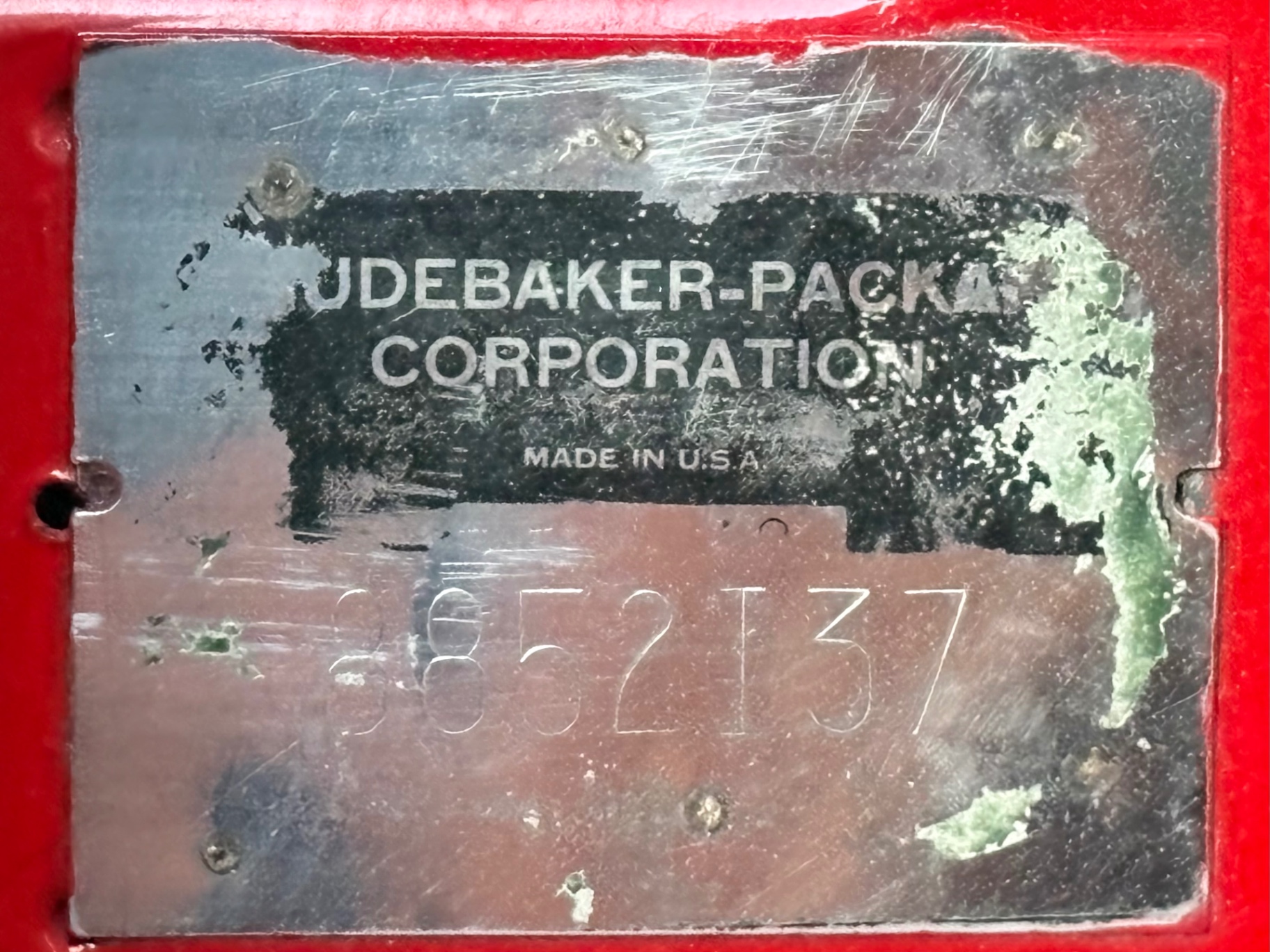
1956 Studebaker Power Hawk — Custom Pro-Street Build with 396 Big Block V8
Why This Car Is Special
The 1956 Studebaker Power Hawk sits at an interesting crossroads in American automotive history. Studebaker introduced the Hawk family for 1956 as a way to repackage the aging but genuinely attractive coupe body that designer Robert Bourke had created for the 1953 Starliner. Rather than retire it, Studebaker leaned into its sporty character and gave it a name to match. The Power Hawk was the entry point of that new lineup — a pillared coupe powered by a small-displacement V8 from the factory, offered at a price point that made it accessible while still carrying the visual drama of the longer, more expensive Hawks above it in the range. It shared its basic body with the Flight Hawk, Sky Hawk, and Golden Hawk, but stood apart as the no-frills performance coupe of the group.
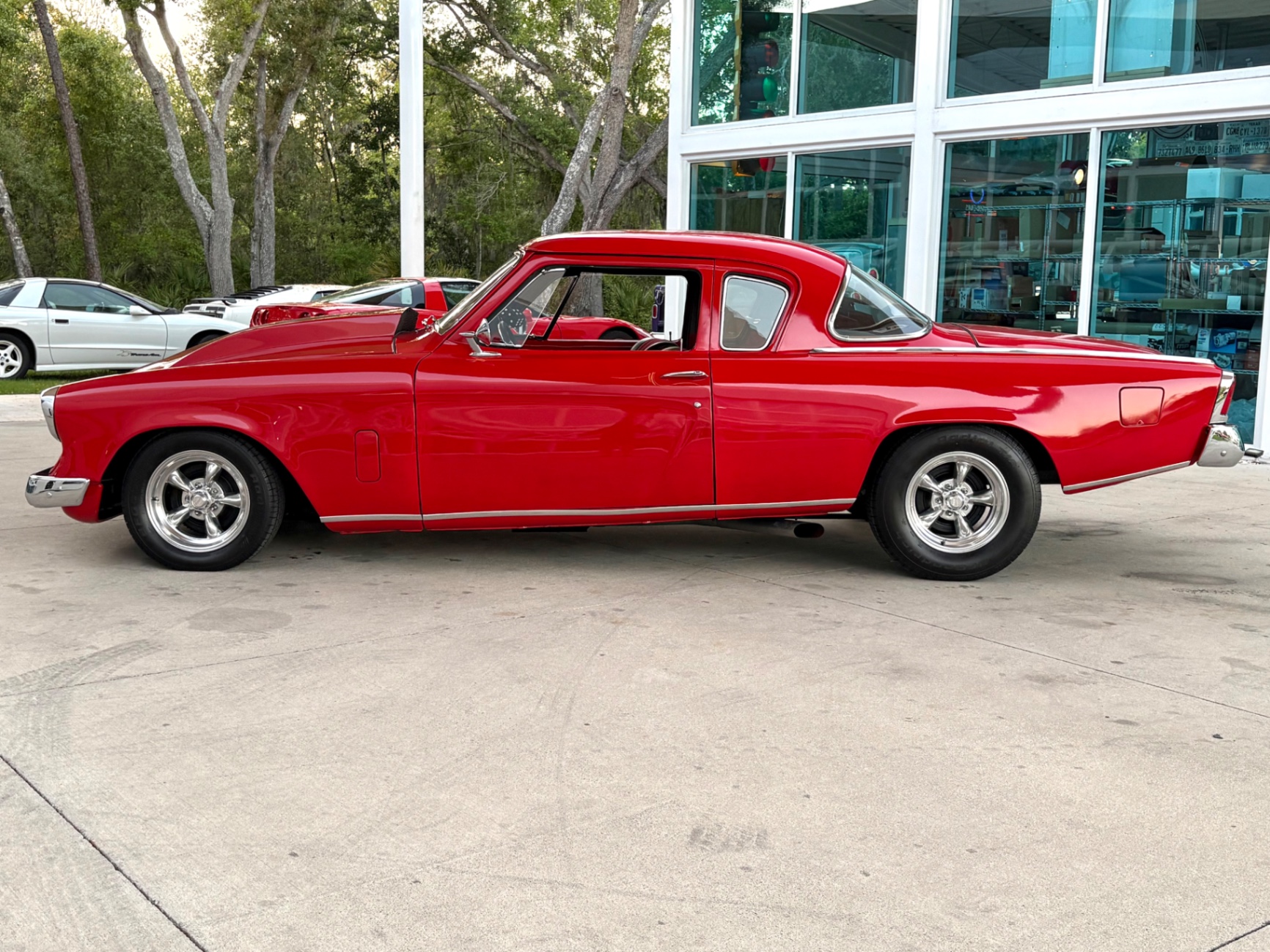
What makes the 1956 Studebaker Power Hawk particularly interesting today is the body itself. That long hood, the low roofline, and the tight, almost European-looking greenhouse were genuinely forward-thinking for a mid-decade American car. Studebaker was a South Bend, Indiana company punching well above its weight in the styling department, even as financial pressures mounted throughout the decade. The Power Hawk body carries proportions that age well — which is exactly why this one works so effectively as the foundation for a serious pro-street custom build.
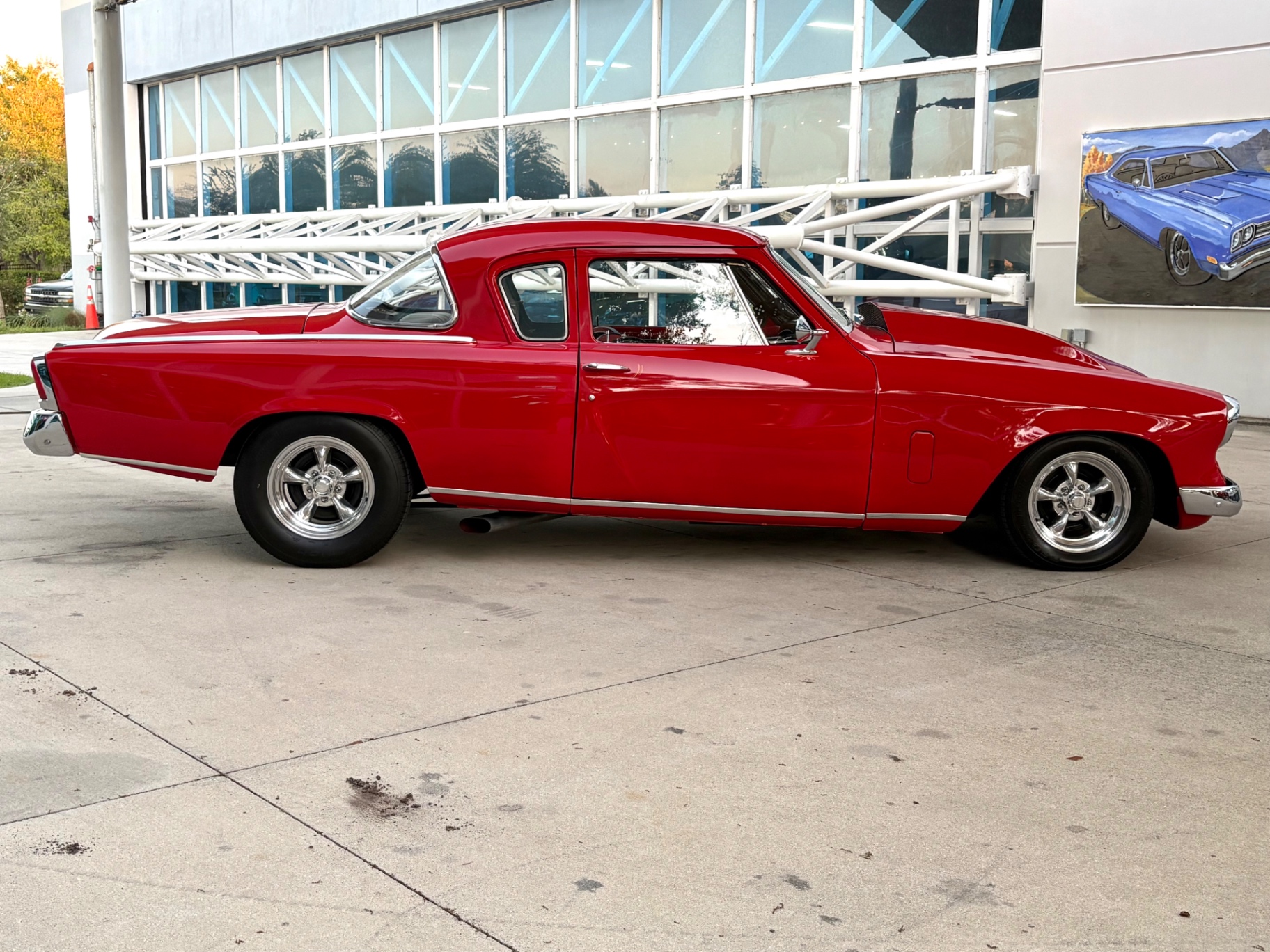
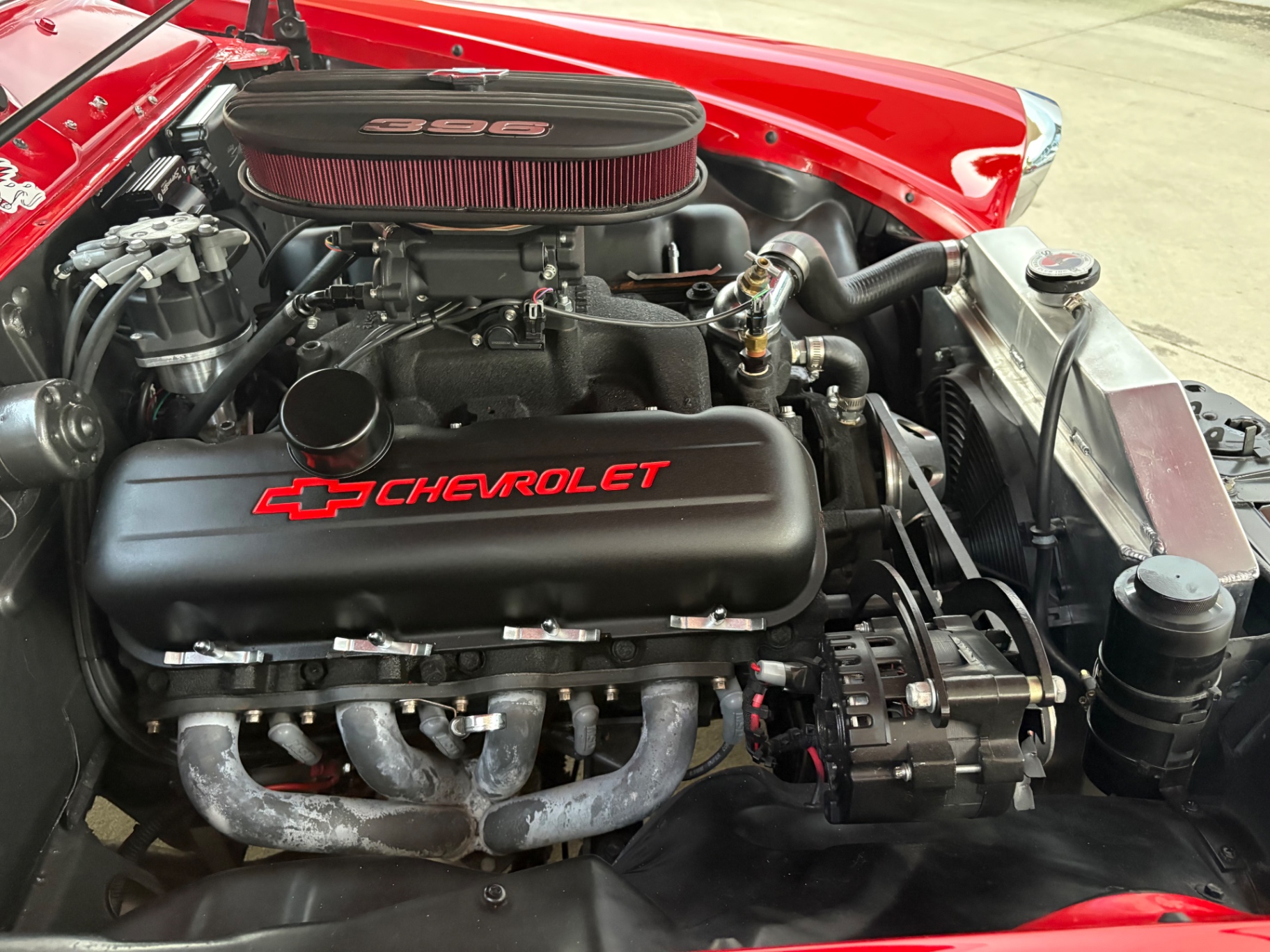
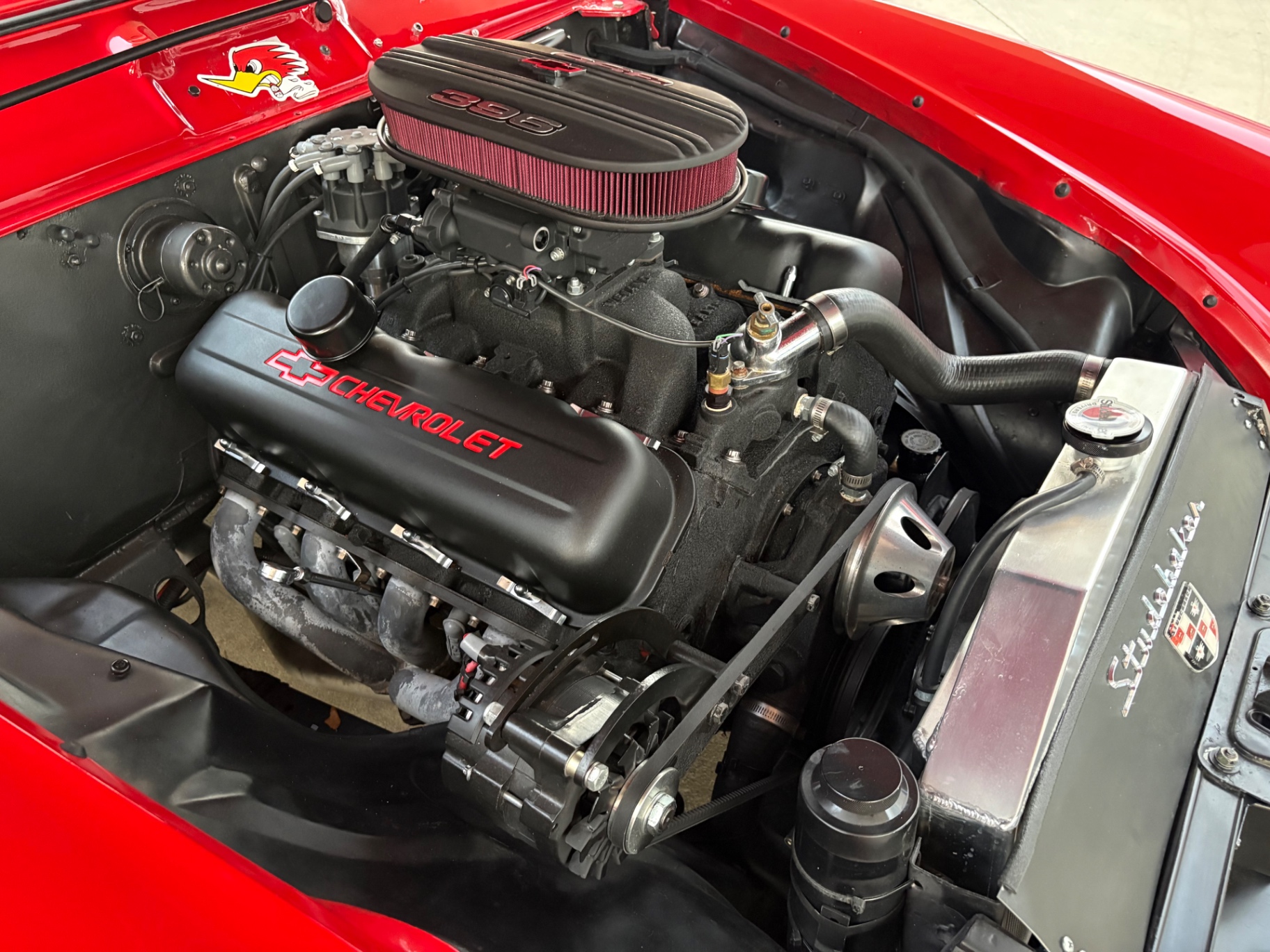
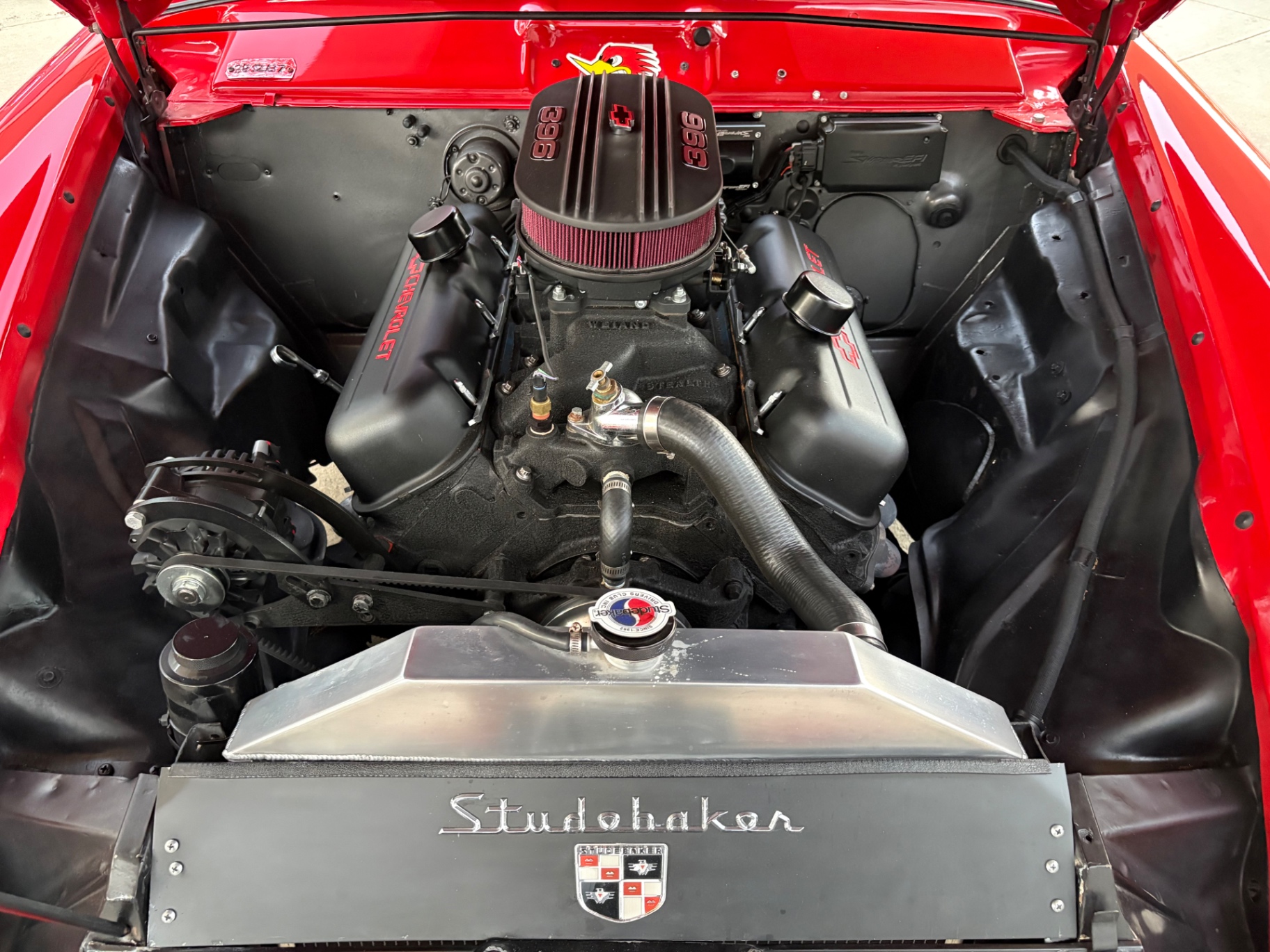
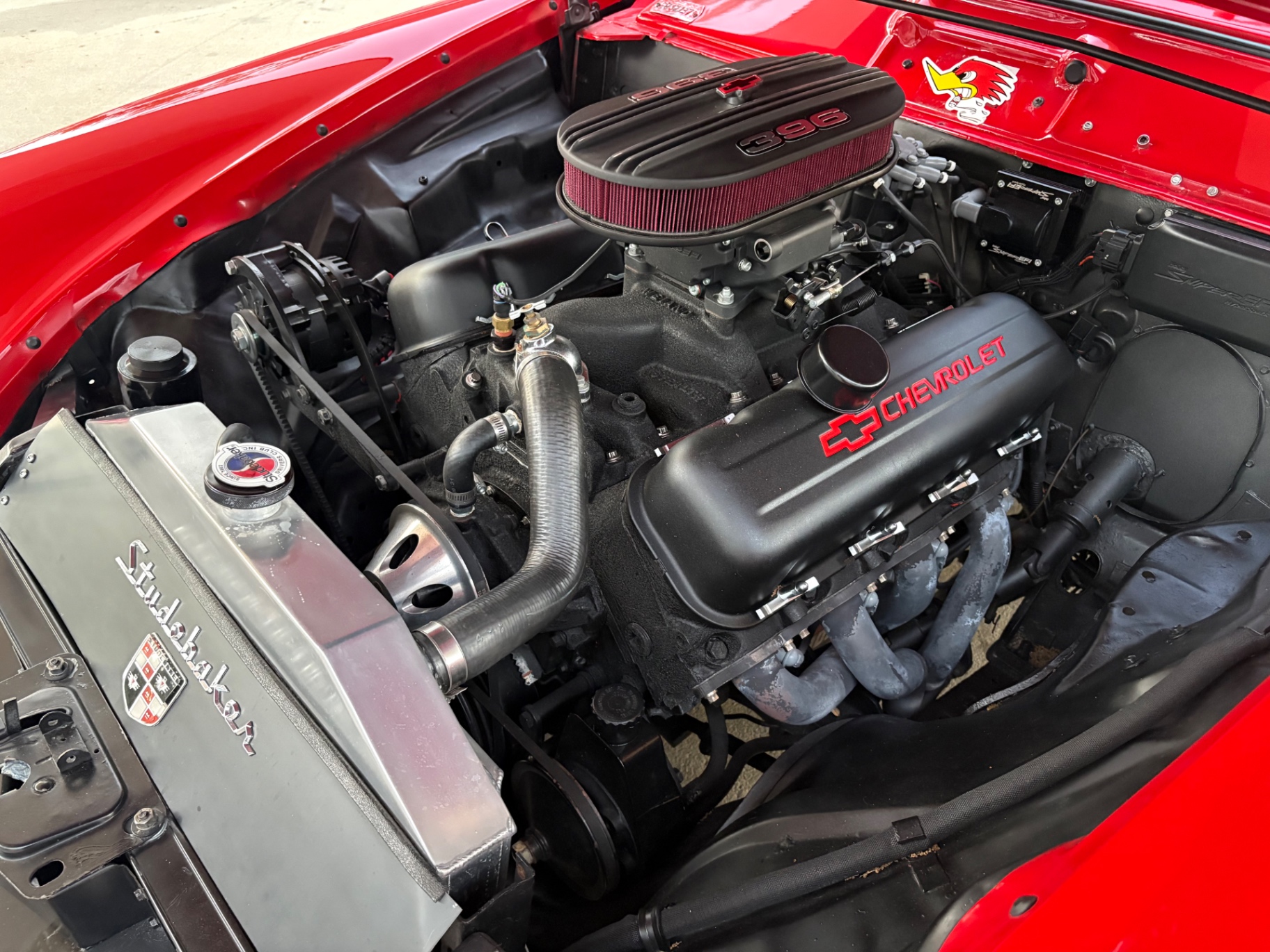
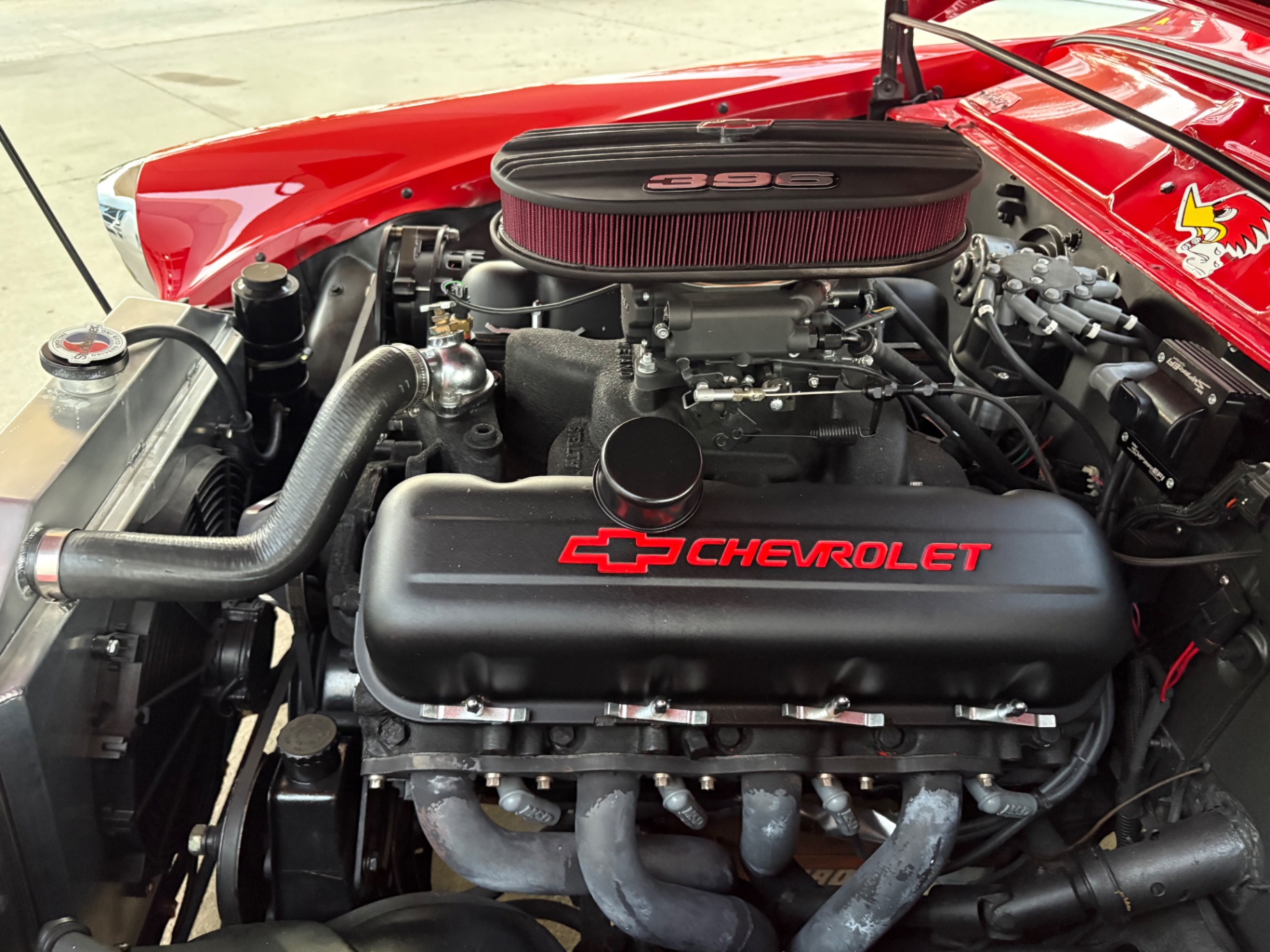
This particular 1956 Studebaker Power Hawk has been transformed into a purpose-built driver with real mechanical substance under that custom red paint. The factory drivetrain is long gone. In its place sits a Chevrolet 396 Big Block V8 mated to a 4-speed manual transmission, fed by a Holley Sniper EFI system and breathing through a cold air intake. Out back, a Ford 9-inch rear end handles the power delivery. The suspension has been updated with coilover units at the rear. Rack and pinion steering with power assist replaces the original recirculating ball setup. This is a car that was built to be driven, not parked on a trailer.
Features List
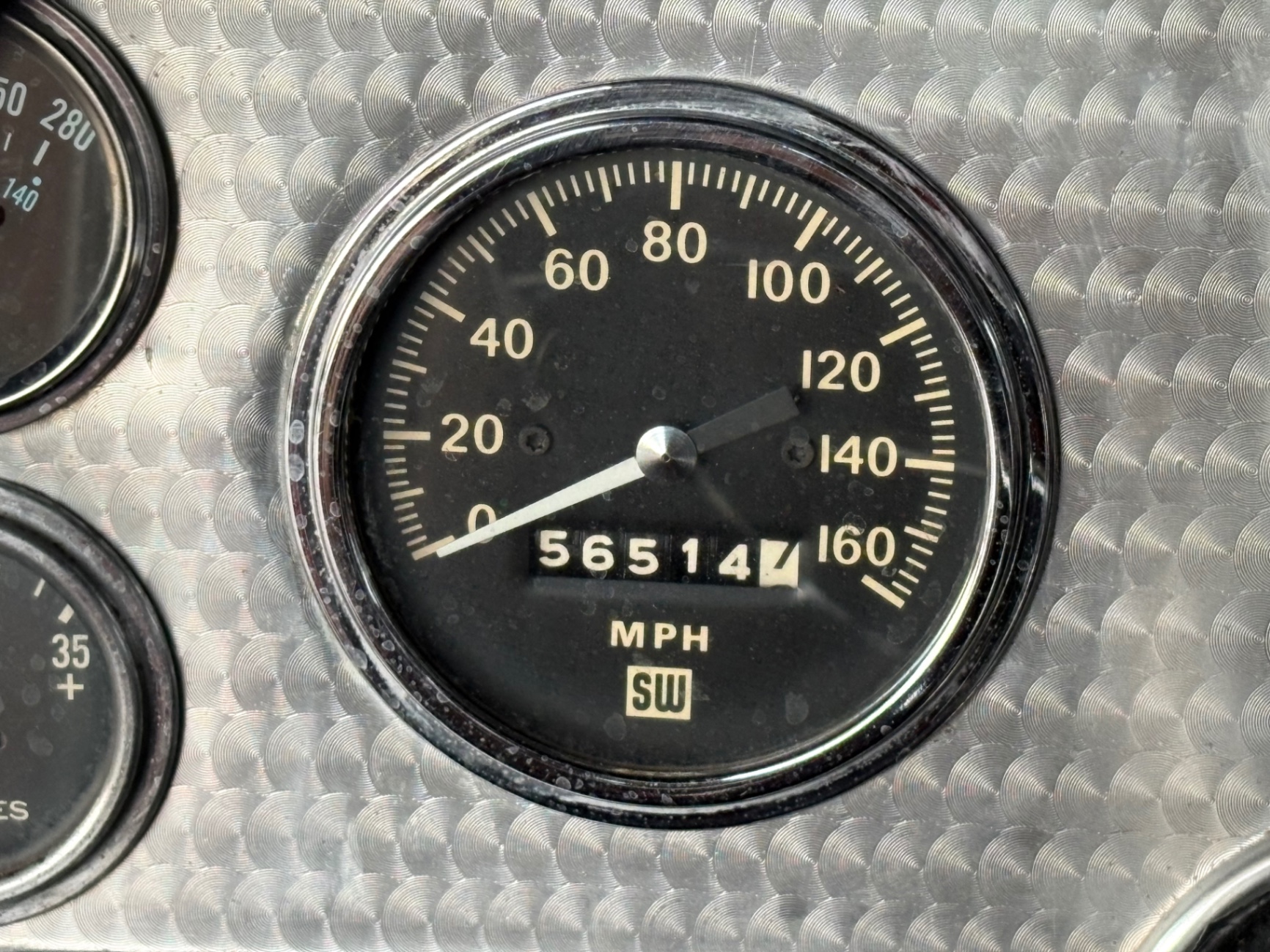
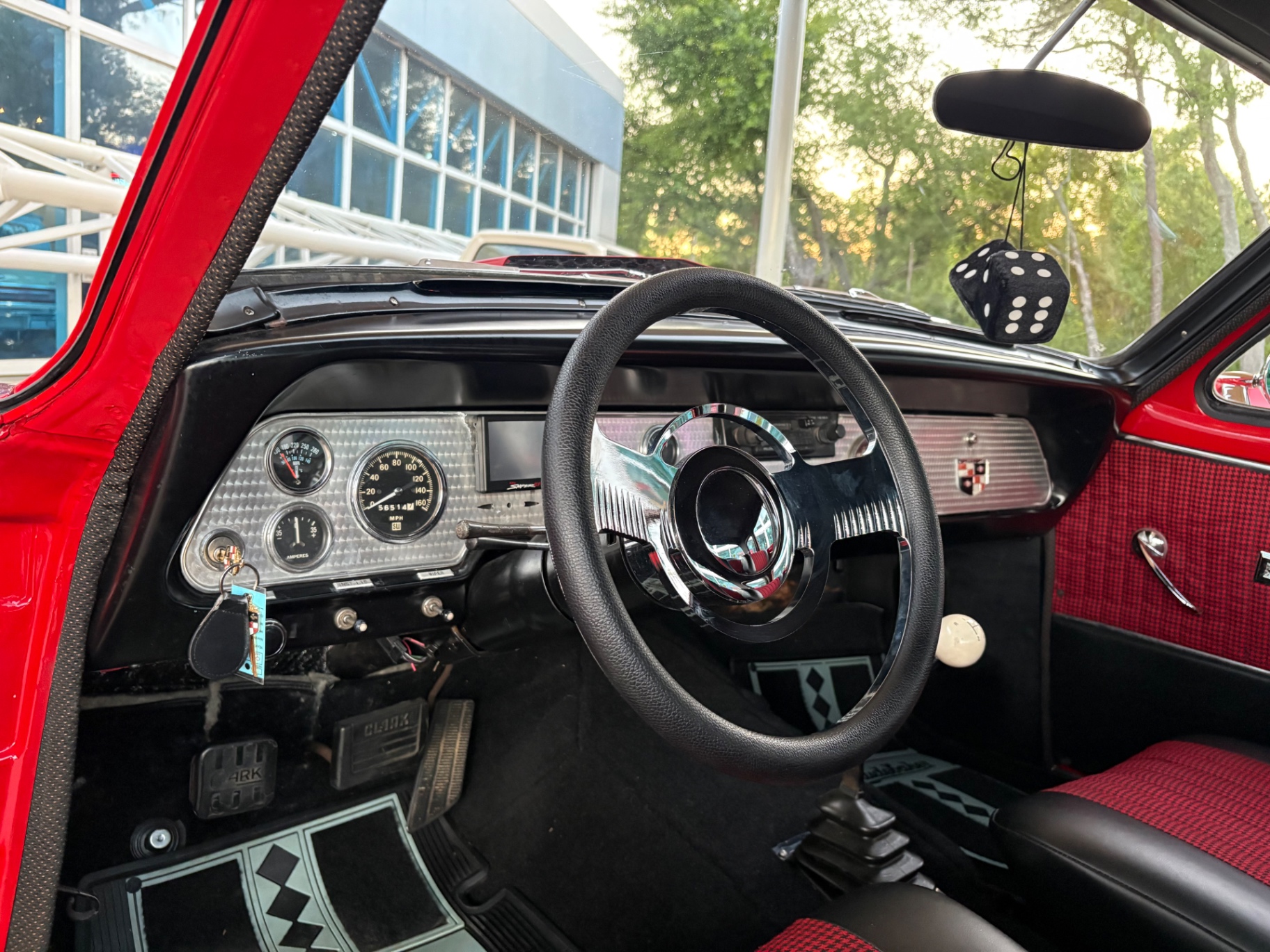
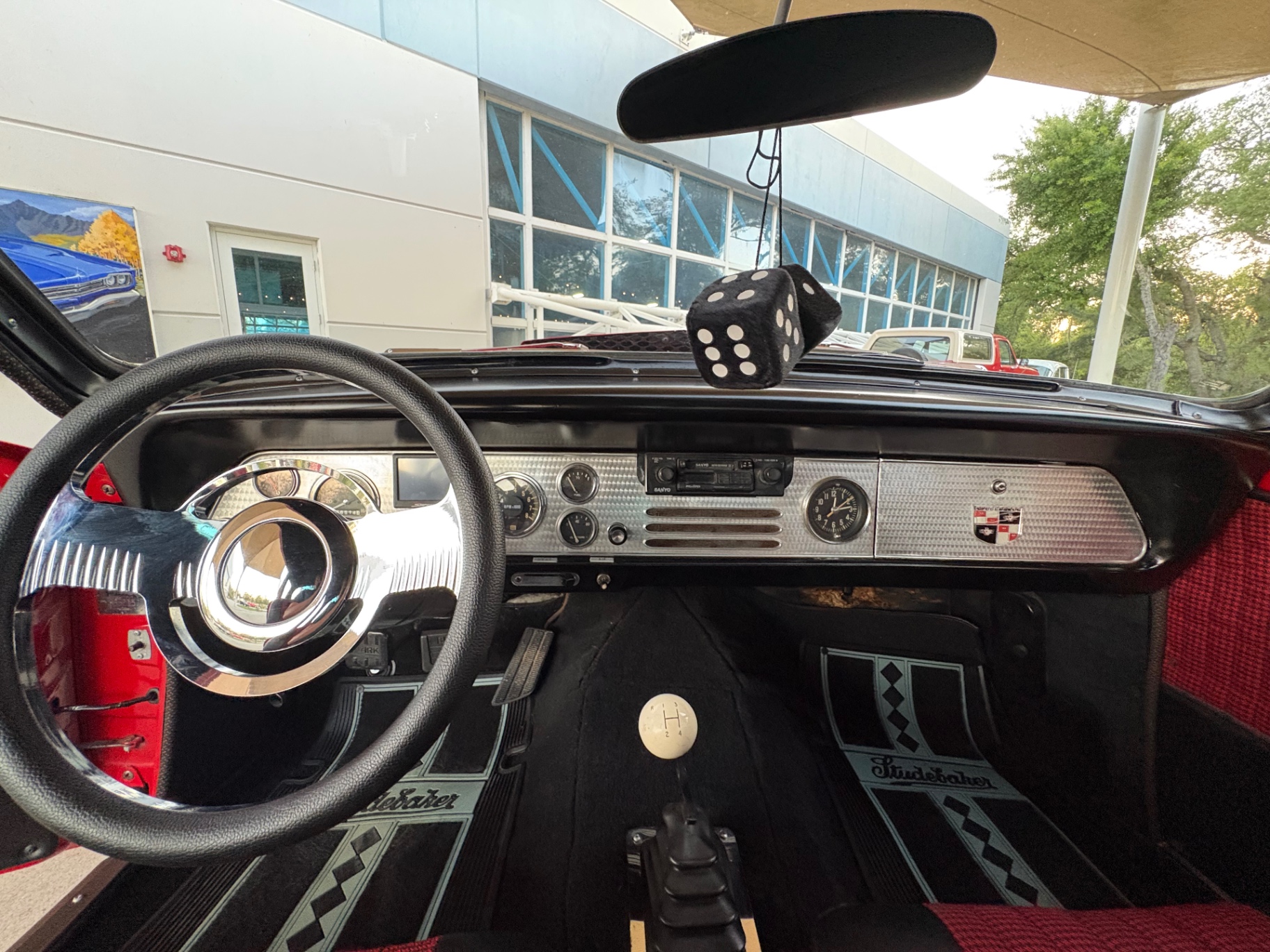
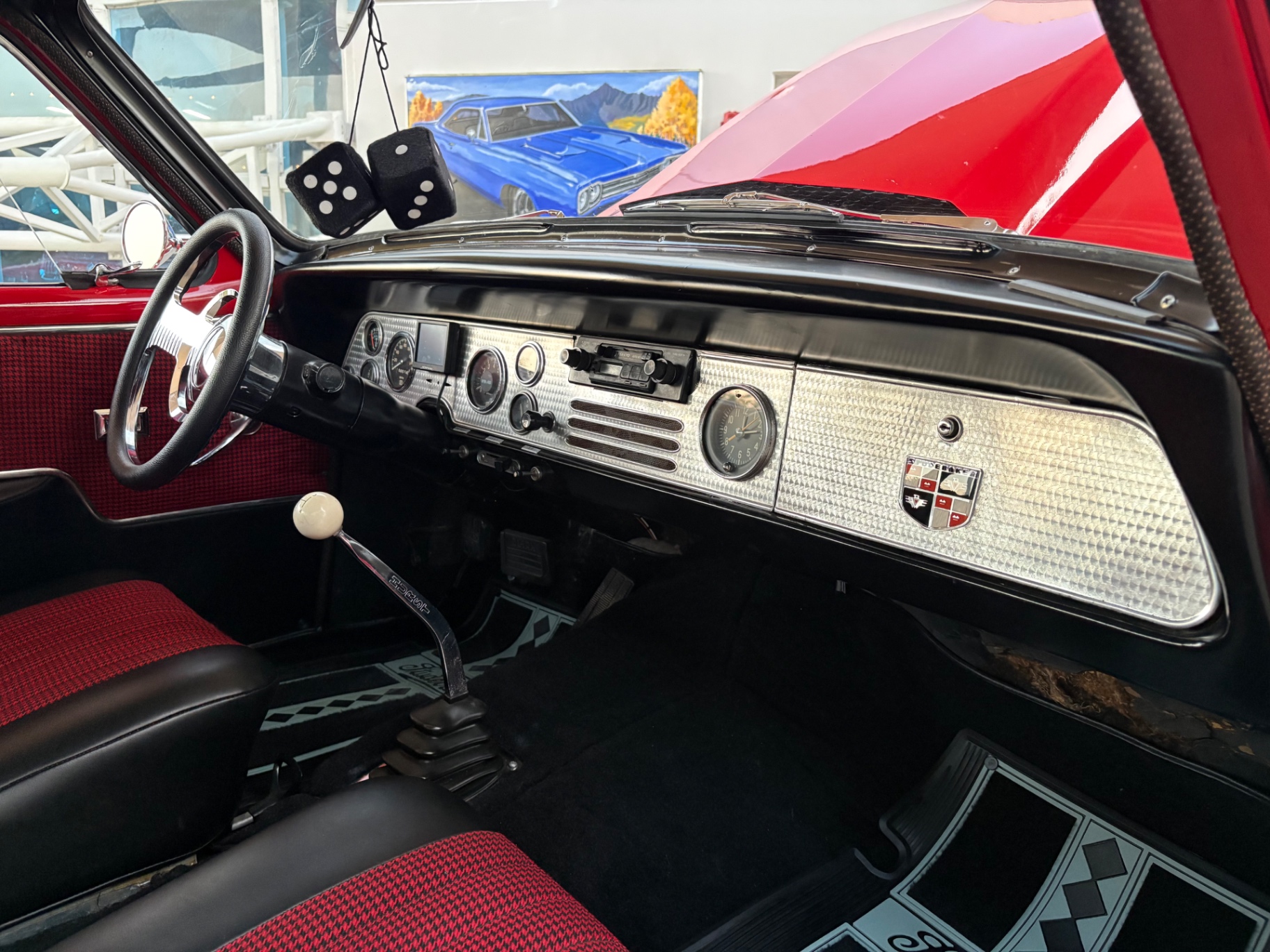
Engine: Chevrolet 396 Big Block V8 Induction: Holley Sniper Fuel Injection EFI system Intake: Cold air intake Transmission: 4-speed manual Rear end: Ford 9-inch Rear suspension: Coilover suspension Steering: Rack and pinion with power assist Steering wheel: Billet unit with tilt column Wheels: Polished Torque Thrust style wheels Tires: BF Goodrich Radial T/A Cooling: Aluminum radiator Exhaust: Dual exhaust Headlights: LED headlights Interior: Black vinyl with red and black houndstooth door panel inserts Gauges: Full custom gauge cluster with tachometer reading to 8,000 RPM and 160 MPH speedometer, all gauges functional, clock Windows: Power windows Exterior: Custom red paint with minor custom pin striping Bumpers: Chrome front and rear bumpers Rear trim: Chrome rear trim panel Mirrors: Dual exterior rear view mirrors Hood: Hood scoop Original items retained: Studebaker seat belts, Studebaker floor mats, Studebaker owner's manual
Mechanical
The heart of this 1956 Studebaker Power Hawk is a Chevrolet 396 cubic inch Big Block V8. The 396 was introduced by Chevrolet in 1965 and became one of the most recognized big block displacements in American performance history, known for strong low-end torque and a wide aftermarket support base that makes it straightforward to maintain and modify decades later. Swapping a proven Big Block Chevy into a 1950s Studebaker body is a well-established approach in the pro-street custom world — the engine support infrastructure simply does not exist for the original Studebaker powerplants the way it does for GM big blocks.
The Holley Sniper EFI system is a throttle-body electronic fuel injection unit that replaces a traditional carburetor while retaining a carbureted appearance under the hood. It provides improved cold-start behavior, better fuel metering across a range of operating temperatures, and eliminates the fuel management issues that plague carbureted classics in hot climates like Florida. Paired with the cold air intake, the engine is drawing cooler, denser air than a stock air cleaner setup would provide.
Behind the engine sits a 4-speed manual transmission, which keeps the driver directly involved in the power delivery. Out back, the Ford 9-inch rear end is the correct choice for a car making this level of power. The 9-inch earned its reputation in racing applications throughout the 1960s and 1970s because of its ring-and-pinion strength and the ease with which gear ratios and carrier assemblies can be swapped. It remains one of the most trusted rear end choices in street performance builds today.
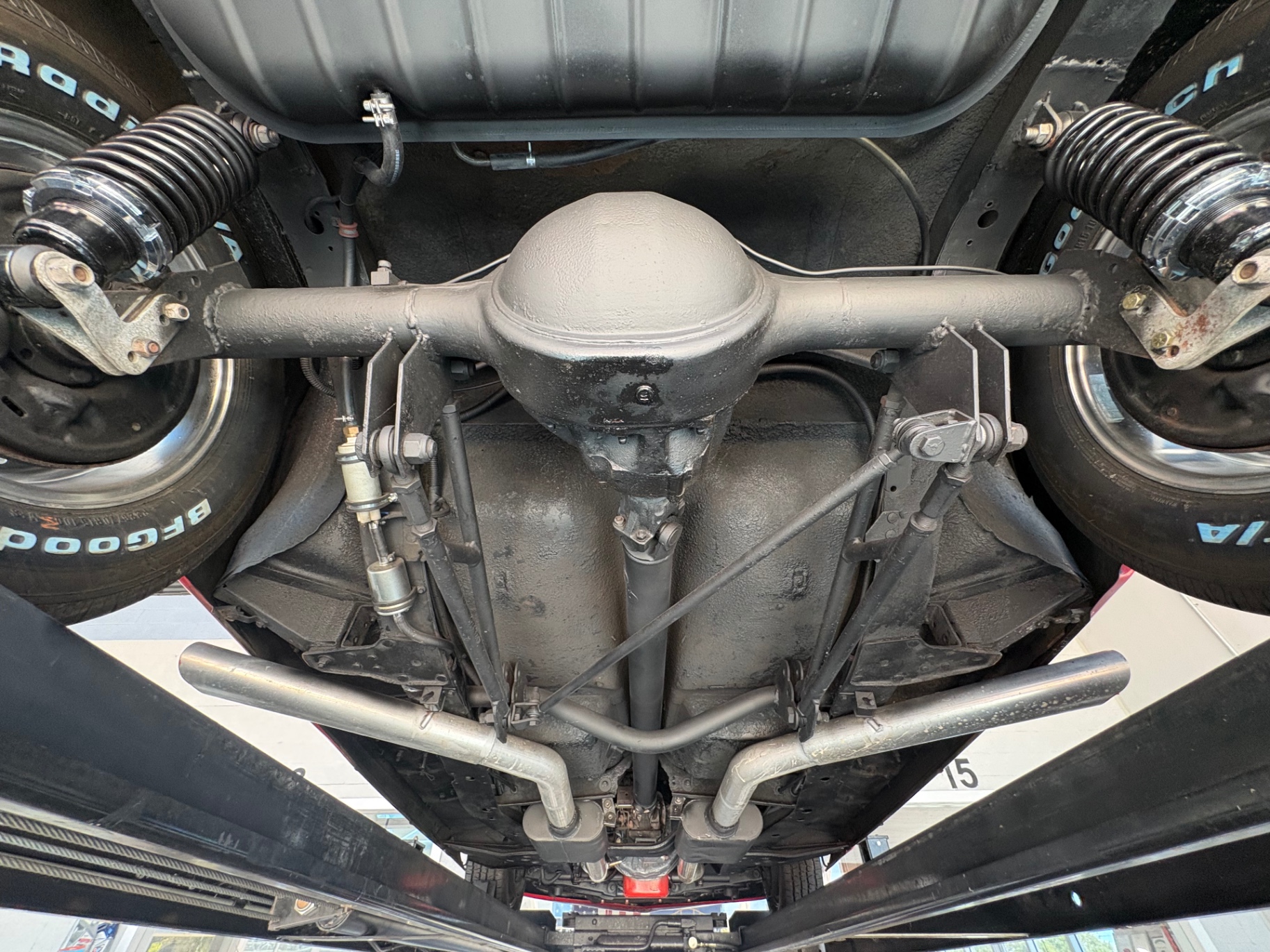
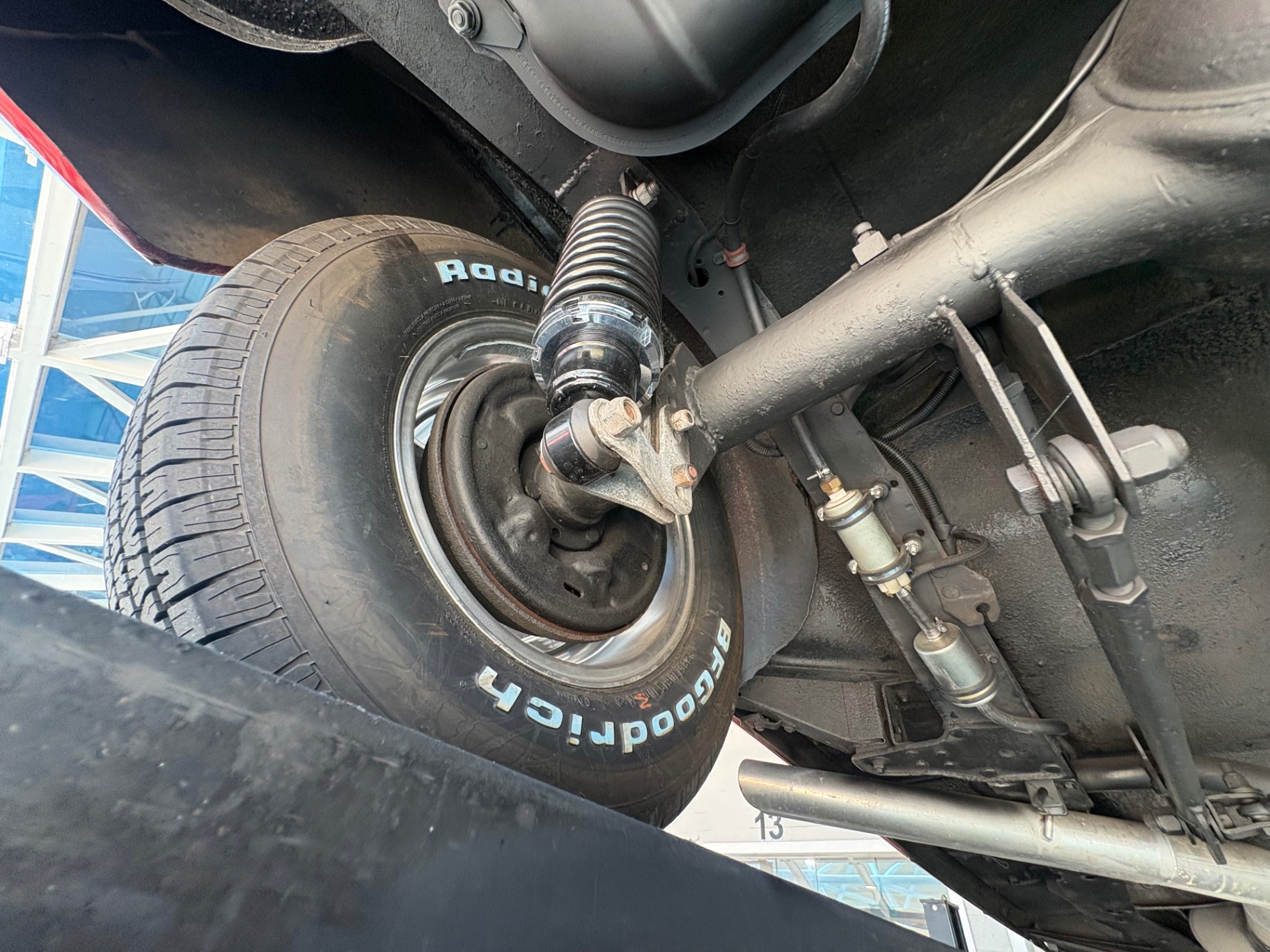
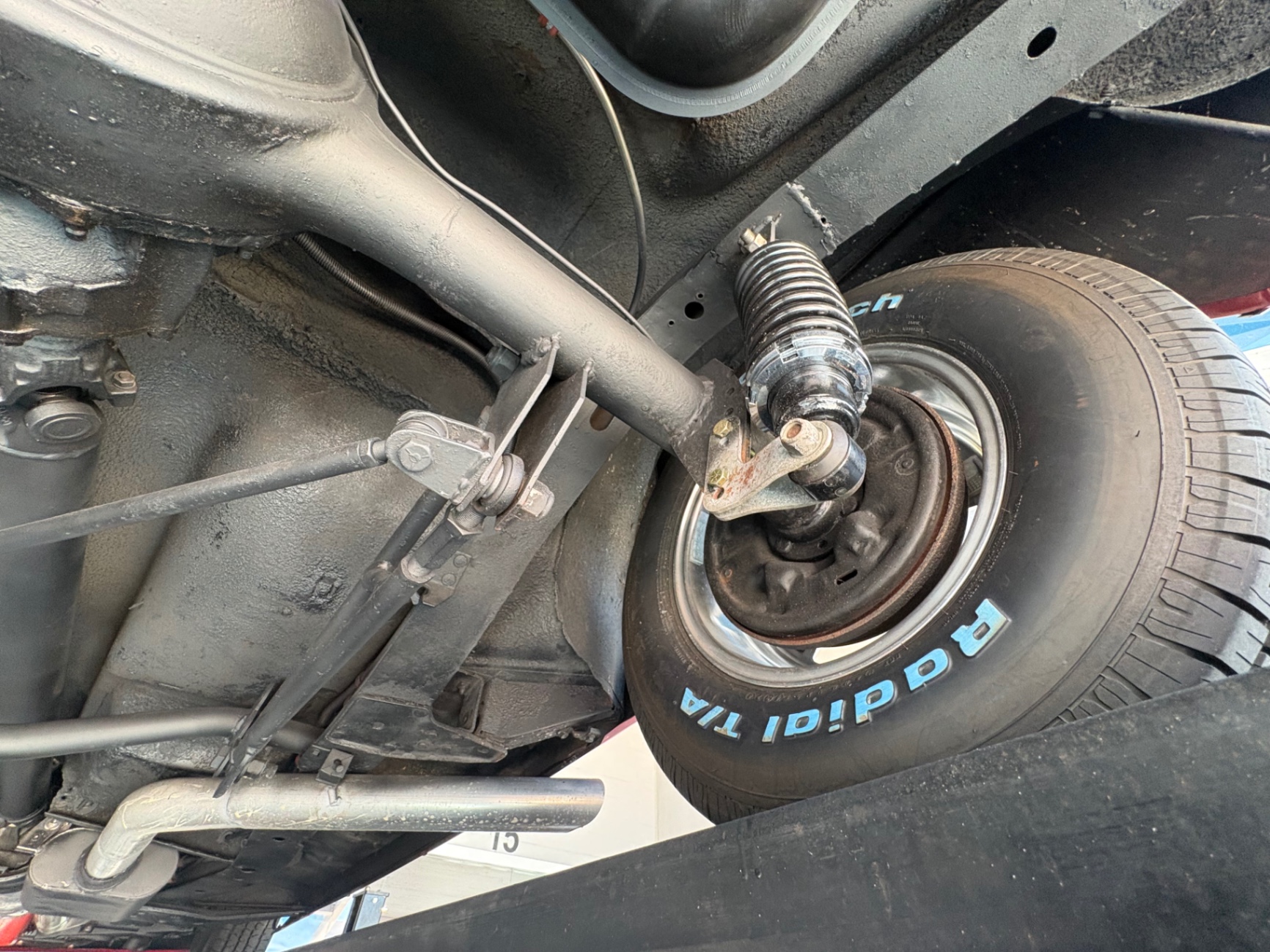
The rear coilover suspension upgrade replaces the original leaf spring setup and provides improved wheel control, better ride quality adjustment, and a more planted stance. The rack and pinion steering conversion with power assist modernizes the driving feel considerably compared to the original steering box, giving the driver more road feel and less vague on-center behavior. An aluminum radiator handles cooling duties, which is an appropriate upgrade for a Big Block engine operating in Florida heat.
Interior
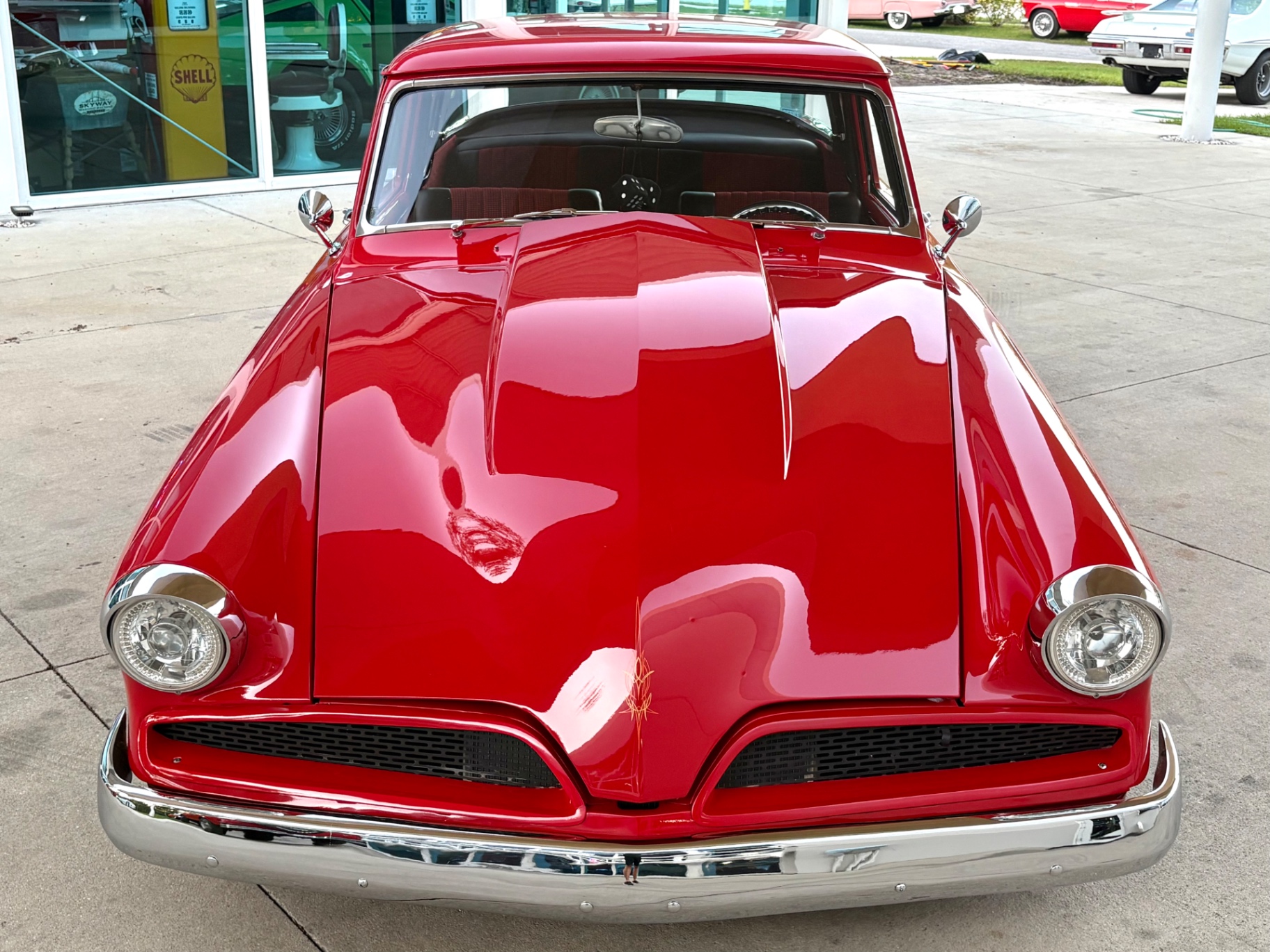
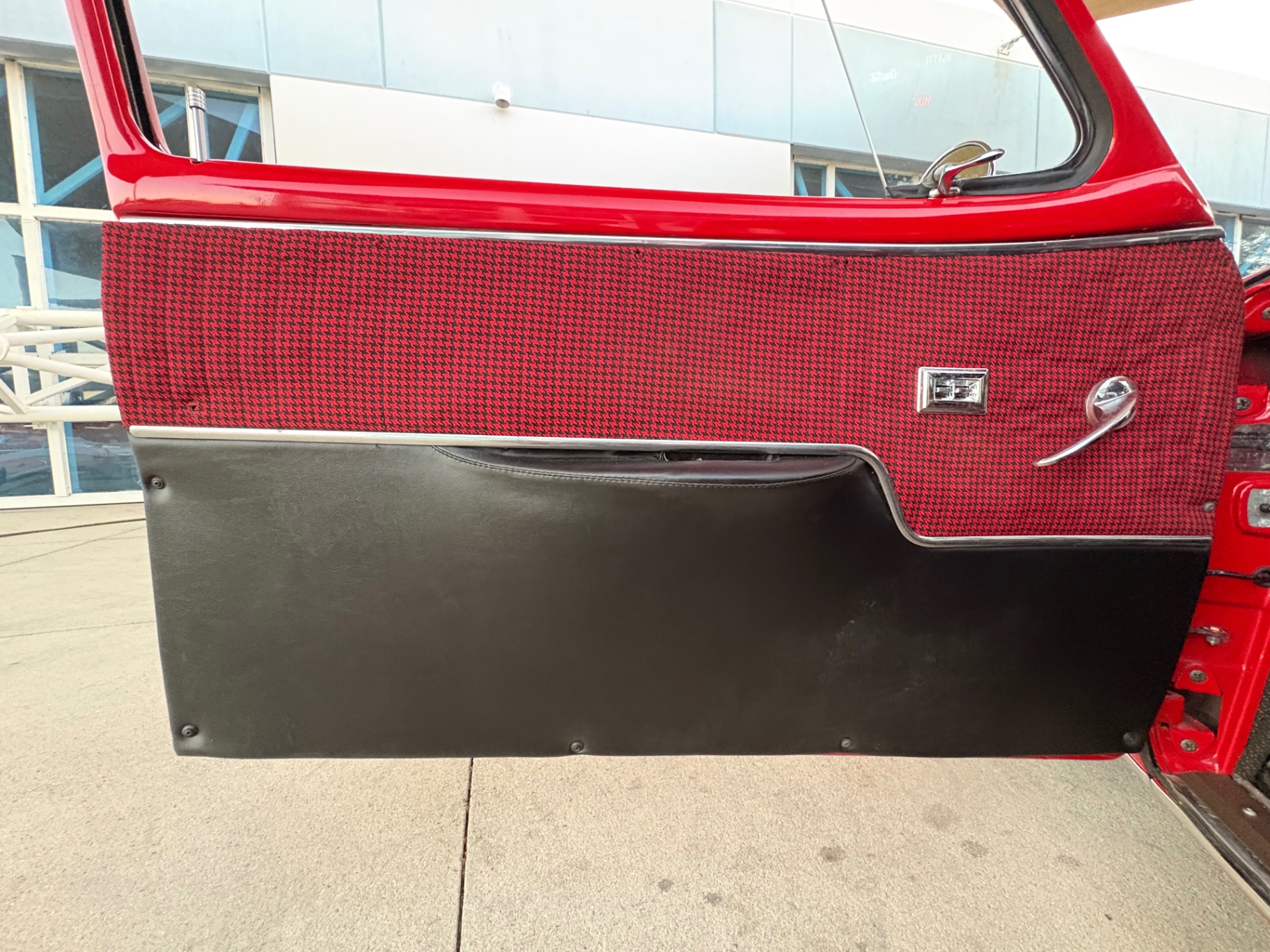
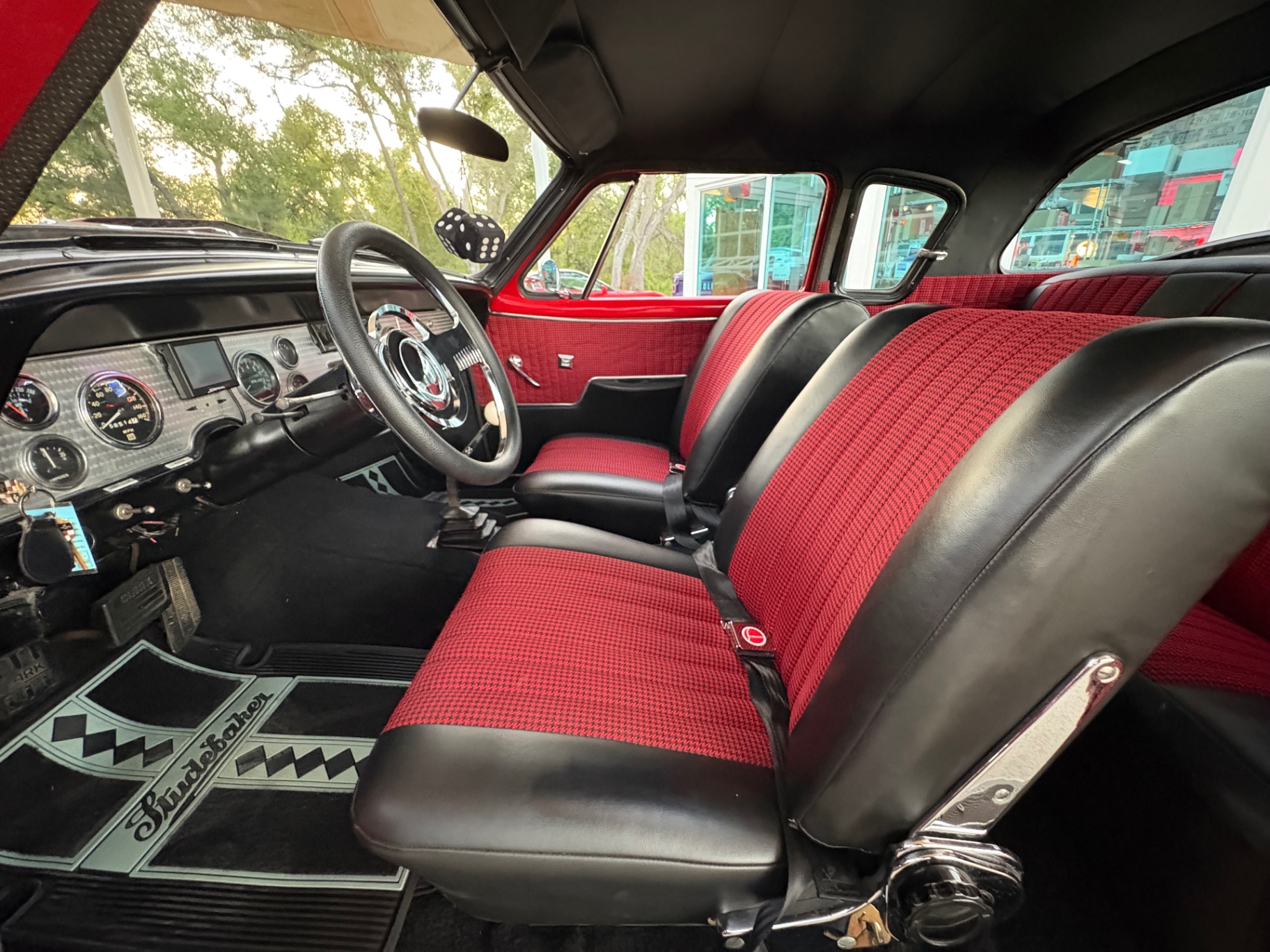
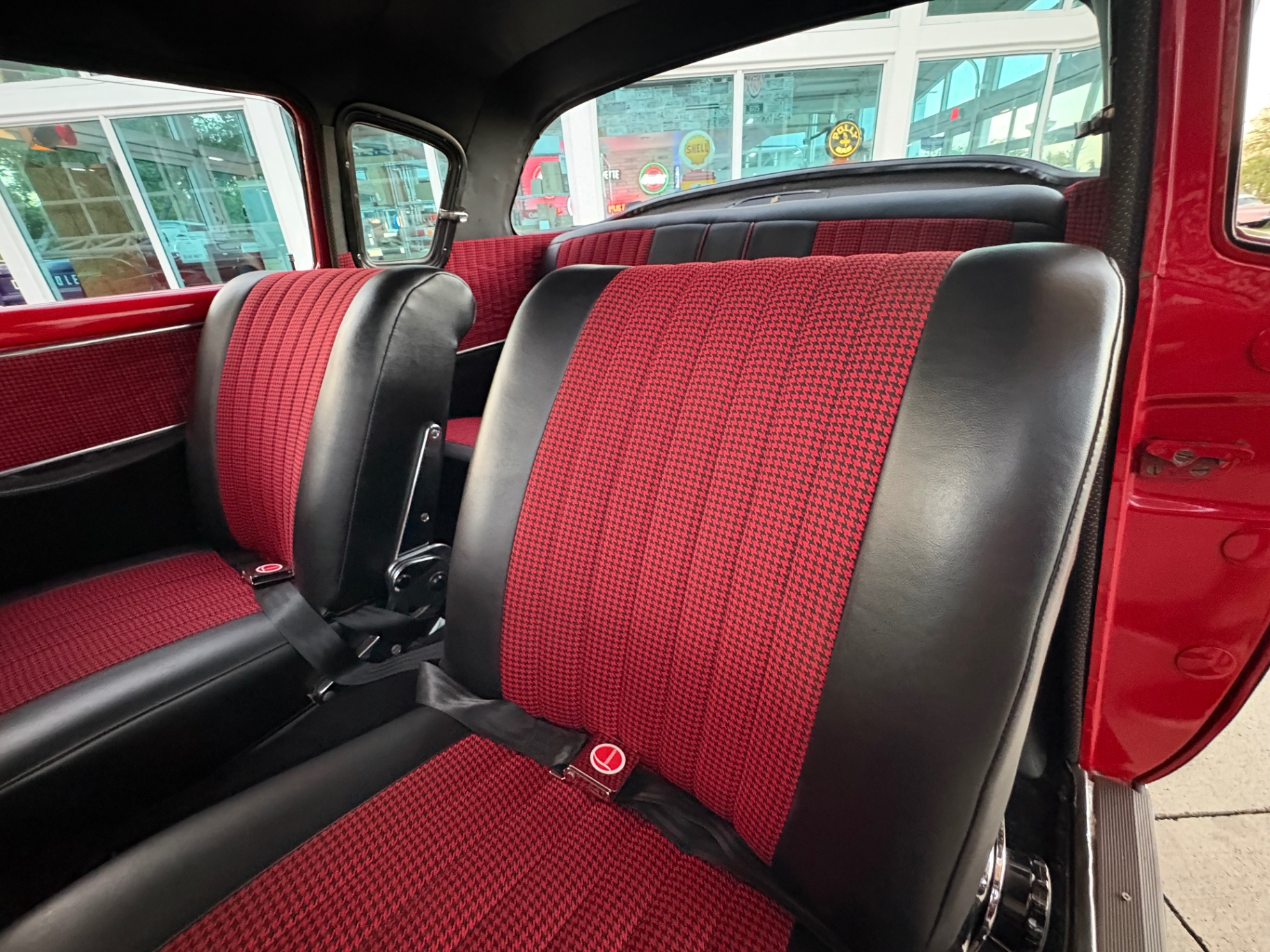
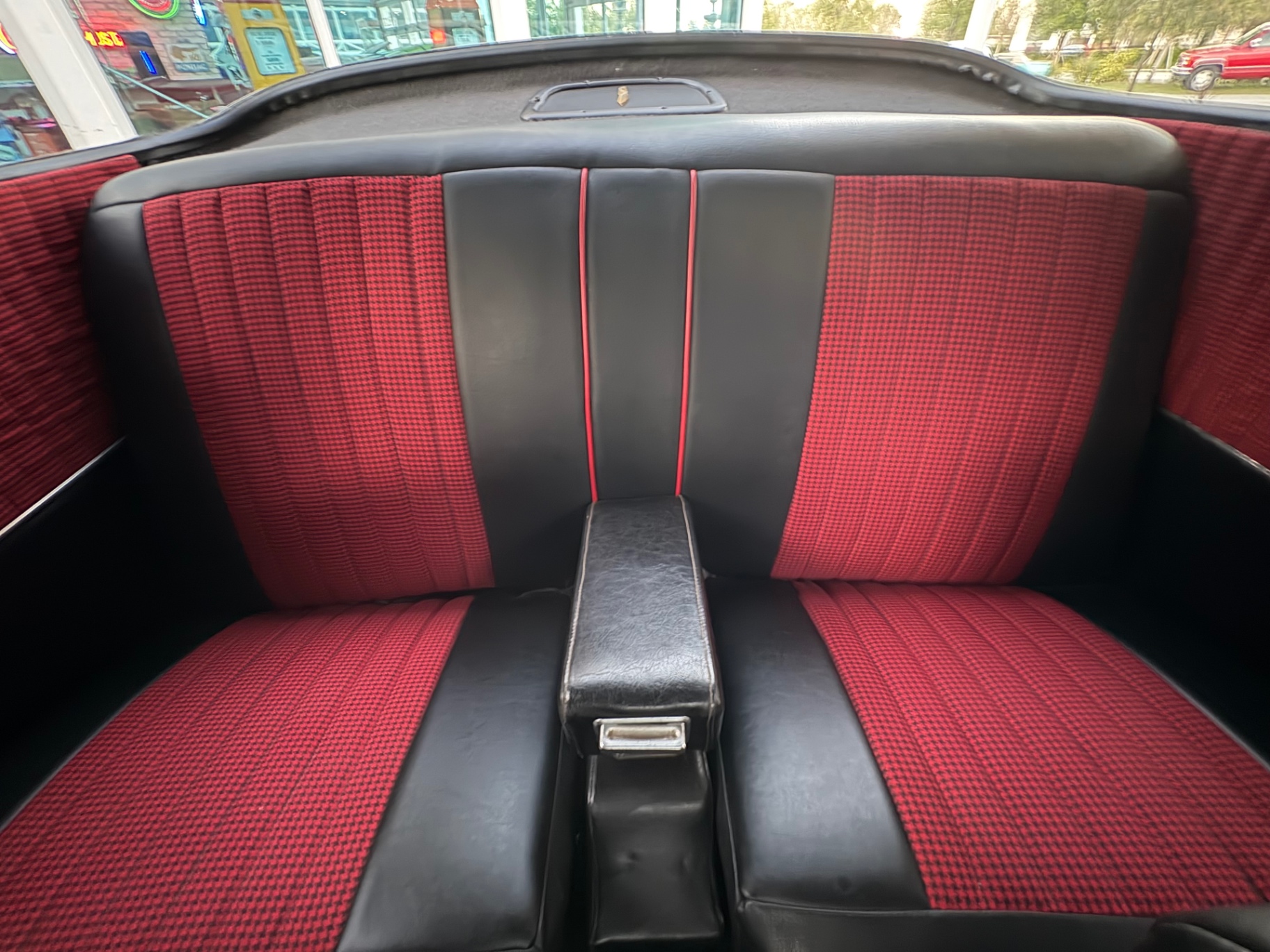
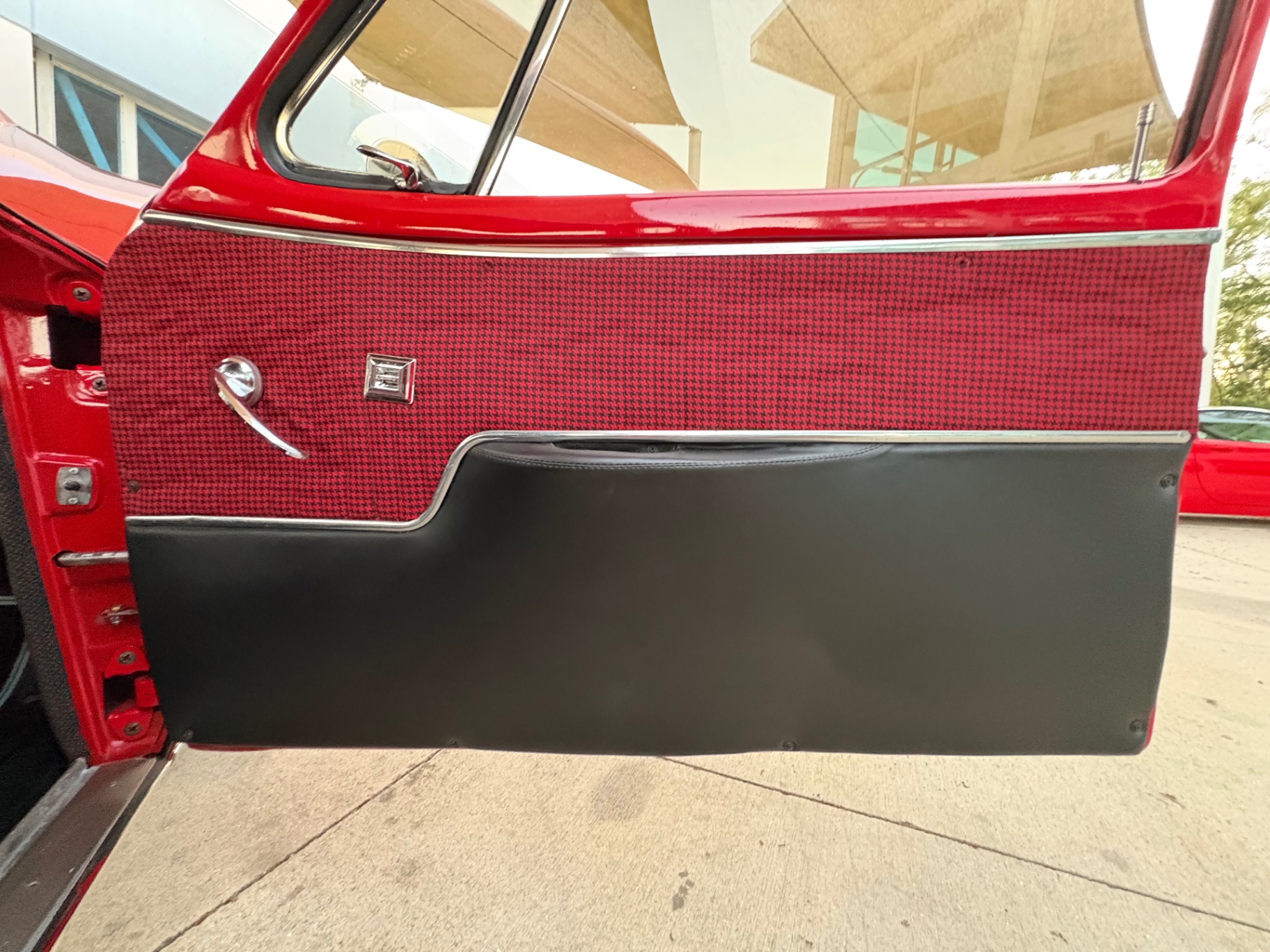
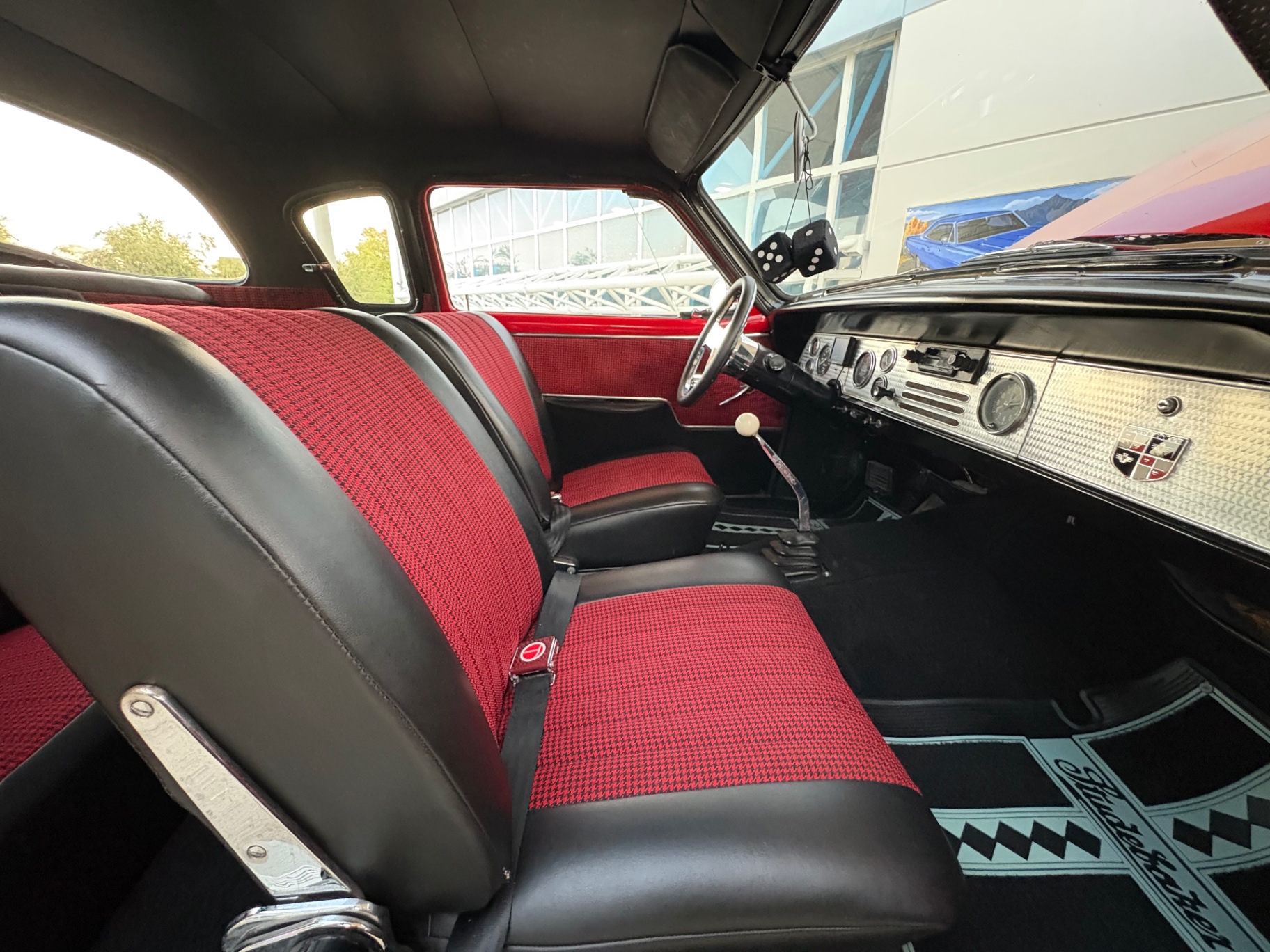
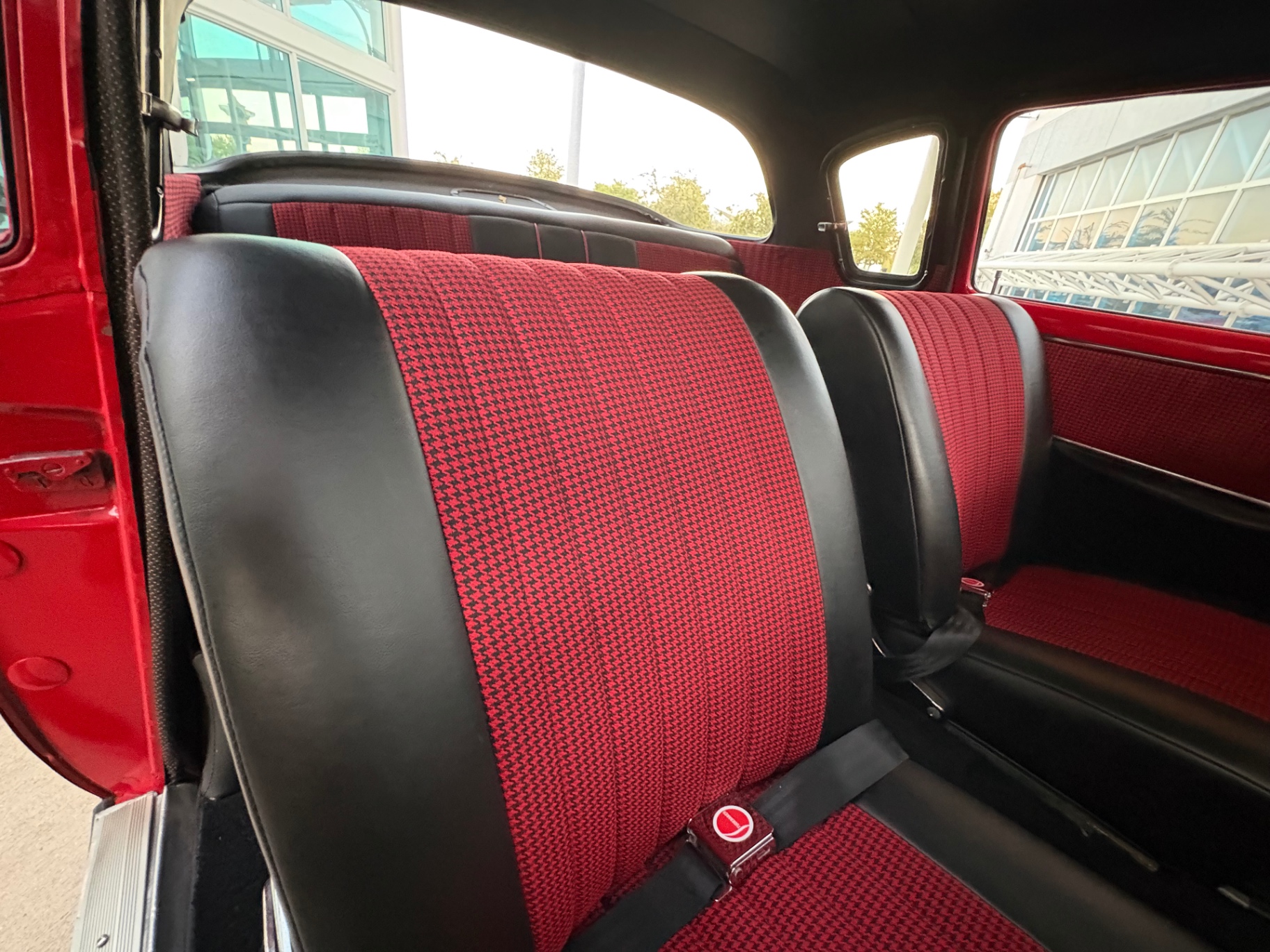
The interior of this 1956 Studebaker Power Hawk pairs black vinyl with red and black houndstooth fabric inserts on the door panels, tying the cabin visually to the exterior red paint. The houndstooth pattern carries real credibility in the classic car world — it was used extensively in period-correct American performance interiors and works here as a thoughtful design choice rather than an afterthought.
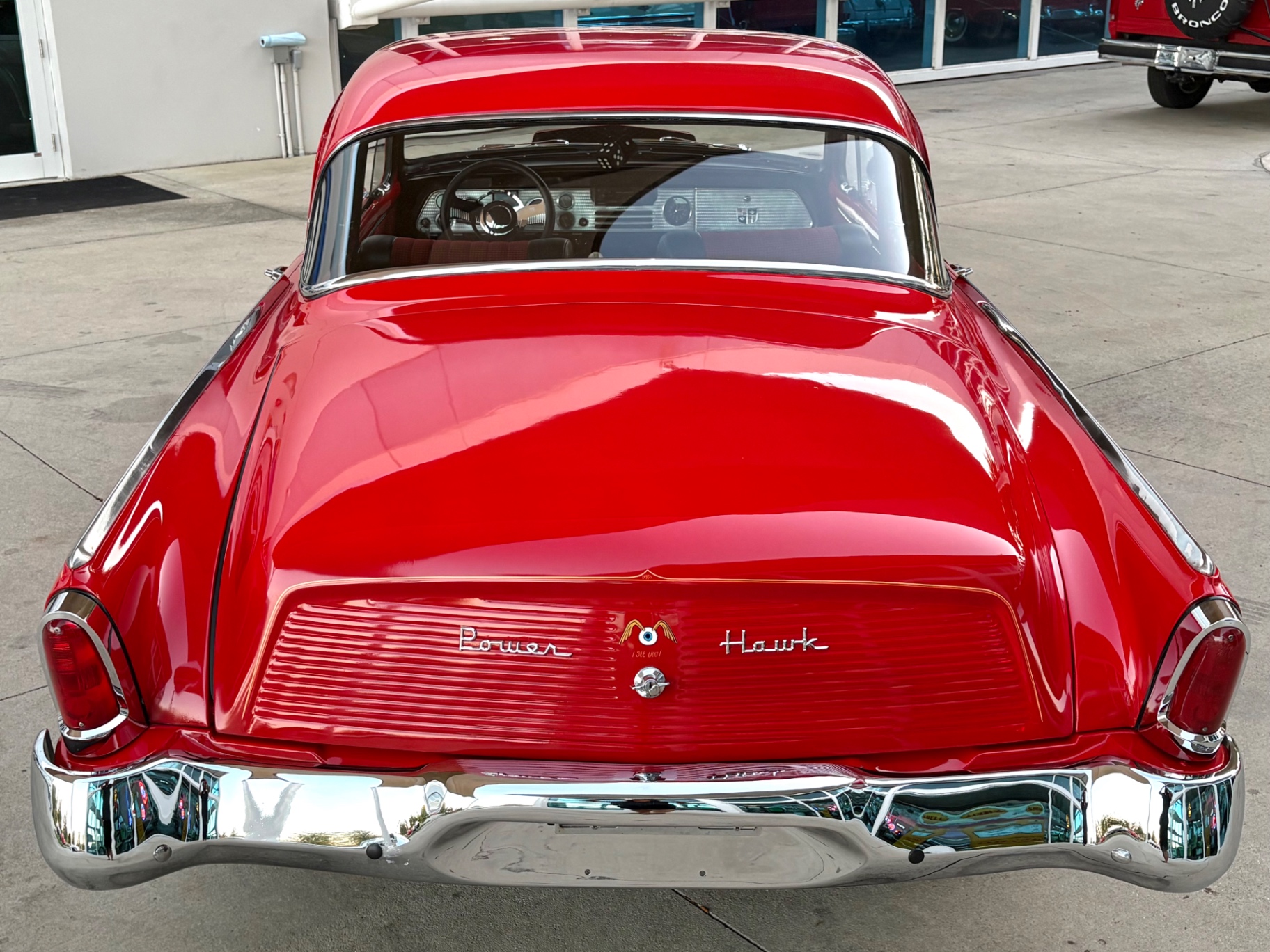
The custom gauge cluster gives the driver full instrumentation, including a tachometer with an 8,000 RPM redline sweep and a 160 MPH speedometer. Having accurate, functional gauges in a high-powered custom build is not a cosmetic detail — it is a practical necessity. A clock is also included in the cluster. The billet steering wheel sits on a tilt steering column, which makes ingress and egress easier in a car with a relatively low roofline. Power windows operate the door glass, a convenience feature that also preserves the clean look of the interior panels. The original Studebaker floor mats and seat belts have been retained, as has the factory owner's manual — small details that speak to the care taken with this build.
Exterior
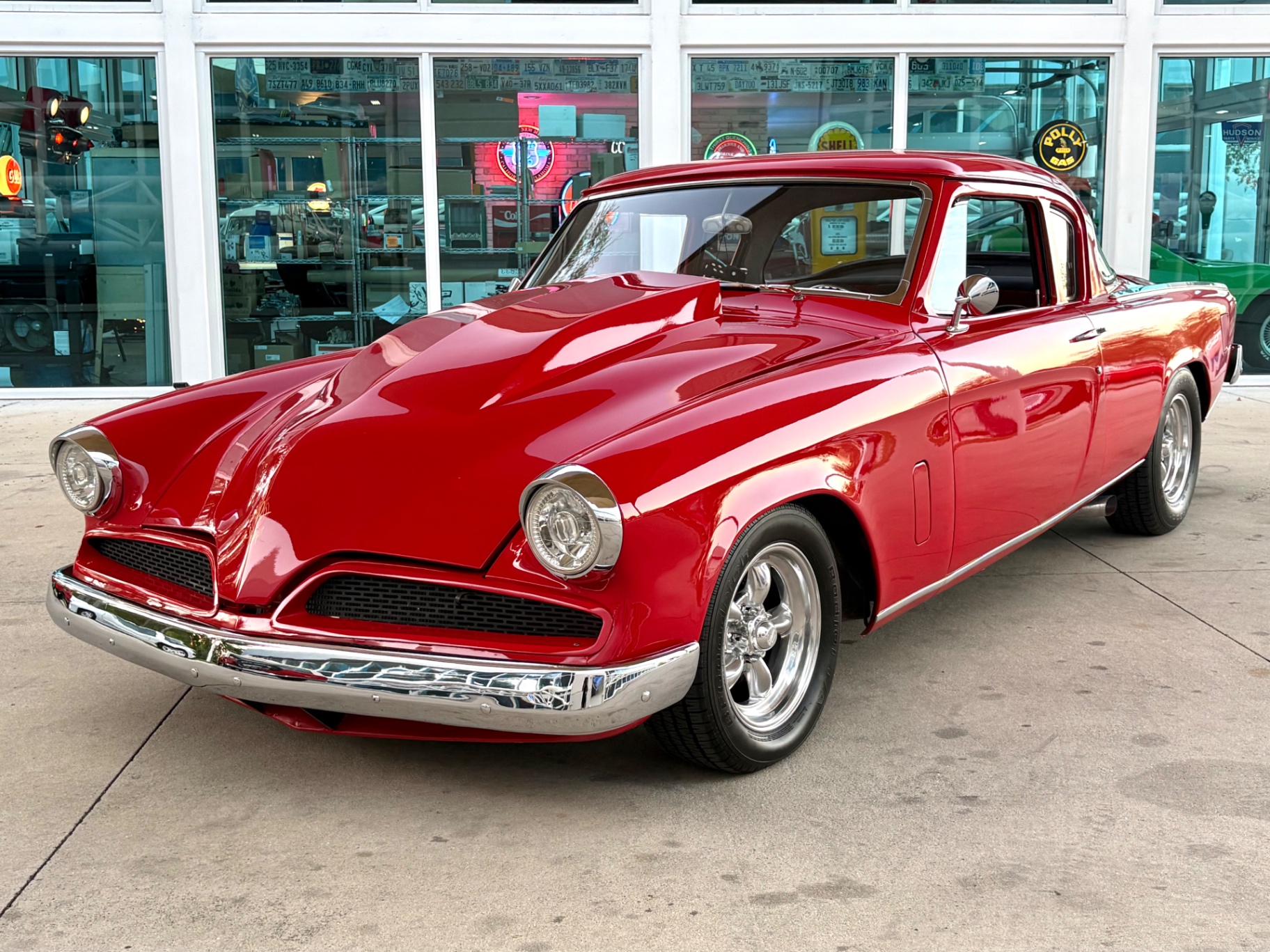
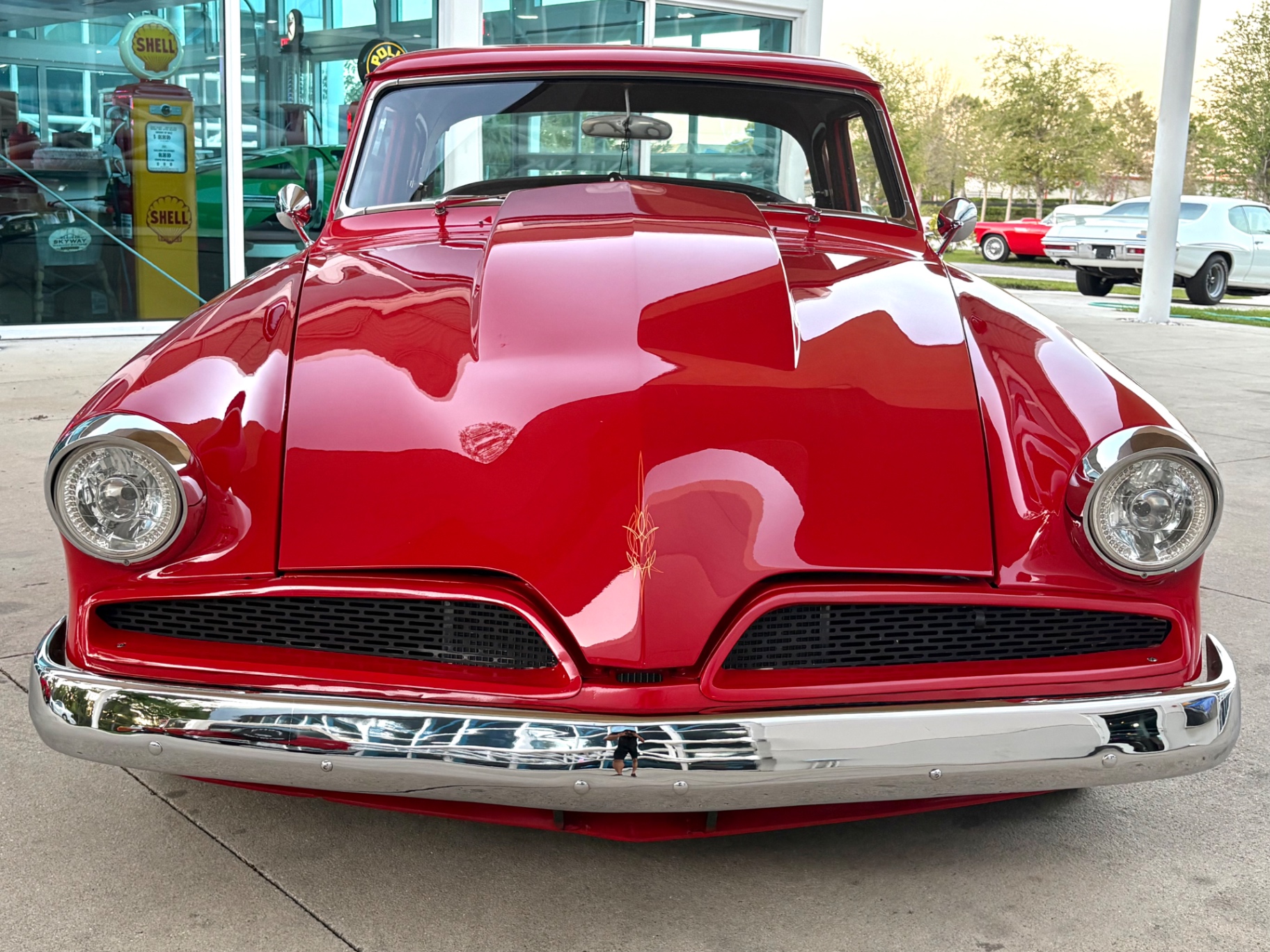
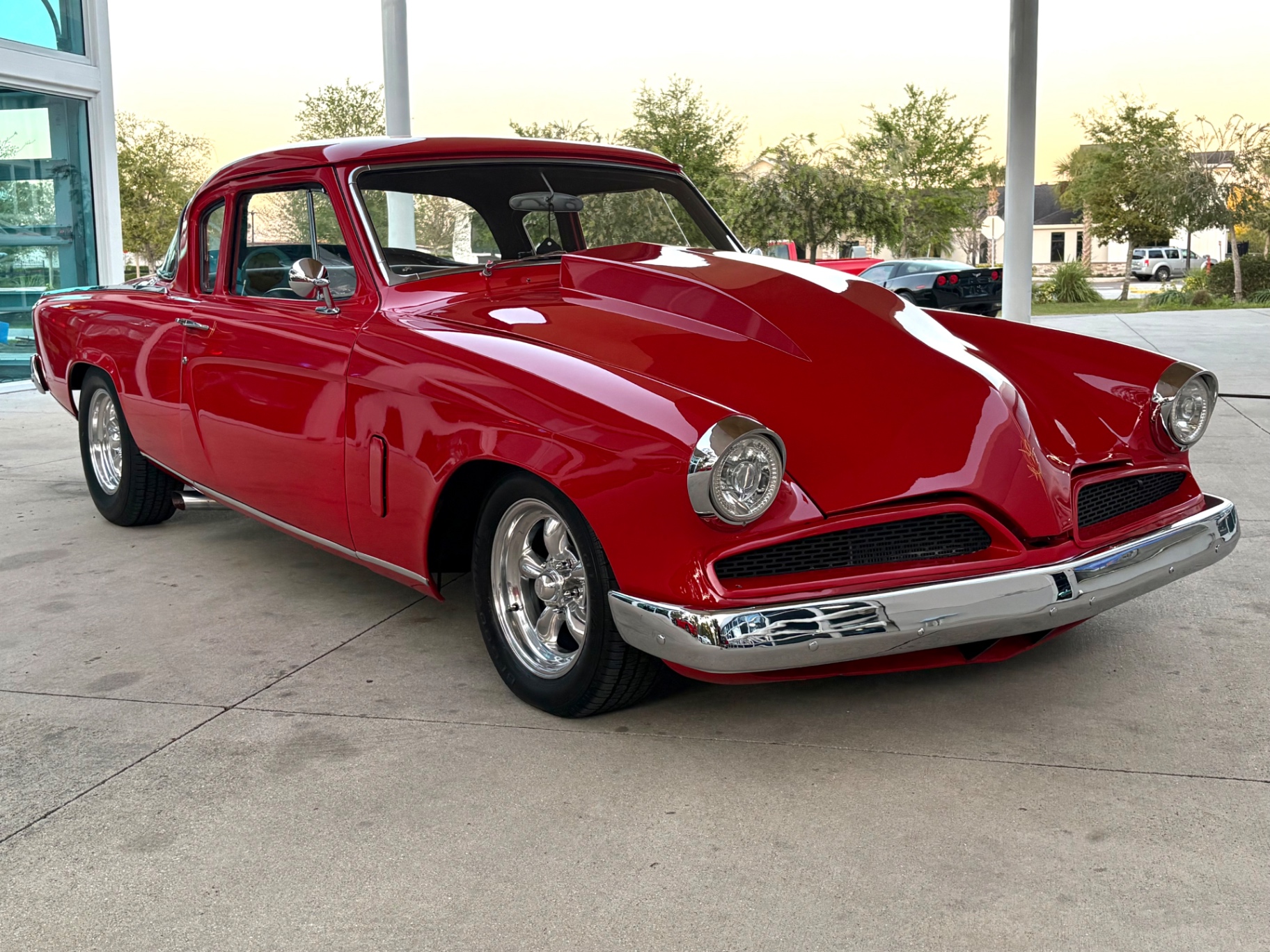
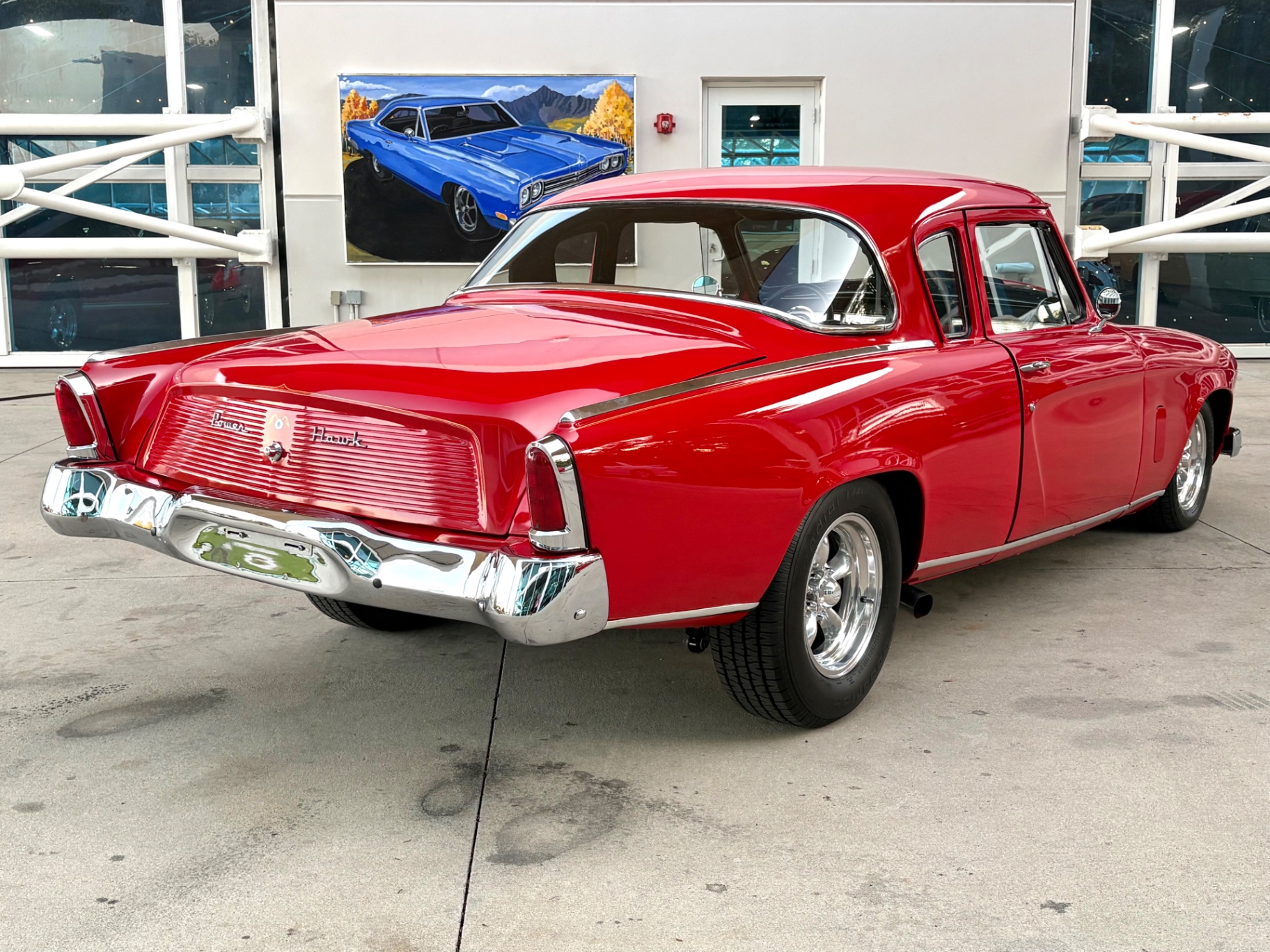
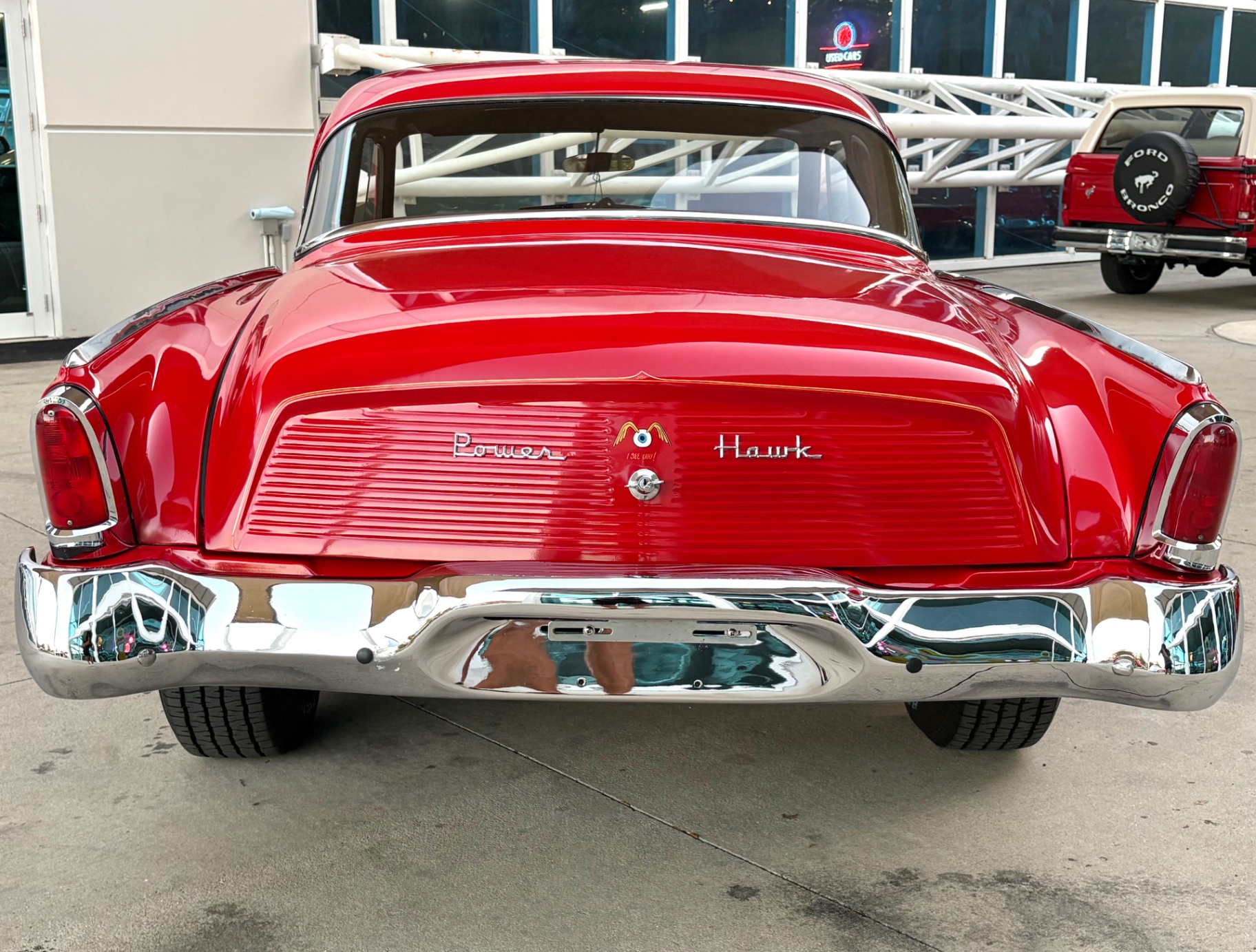
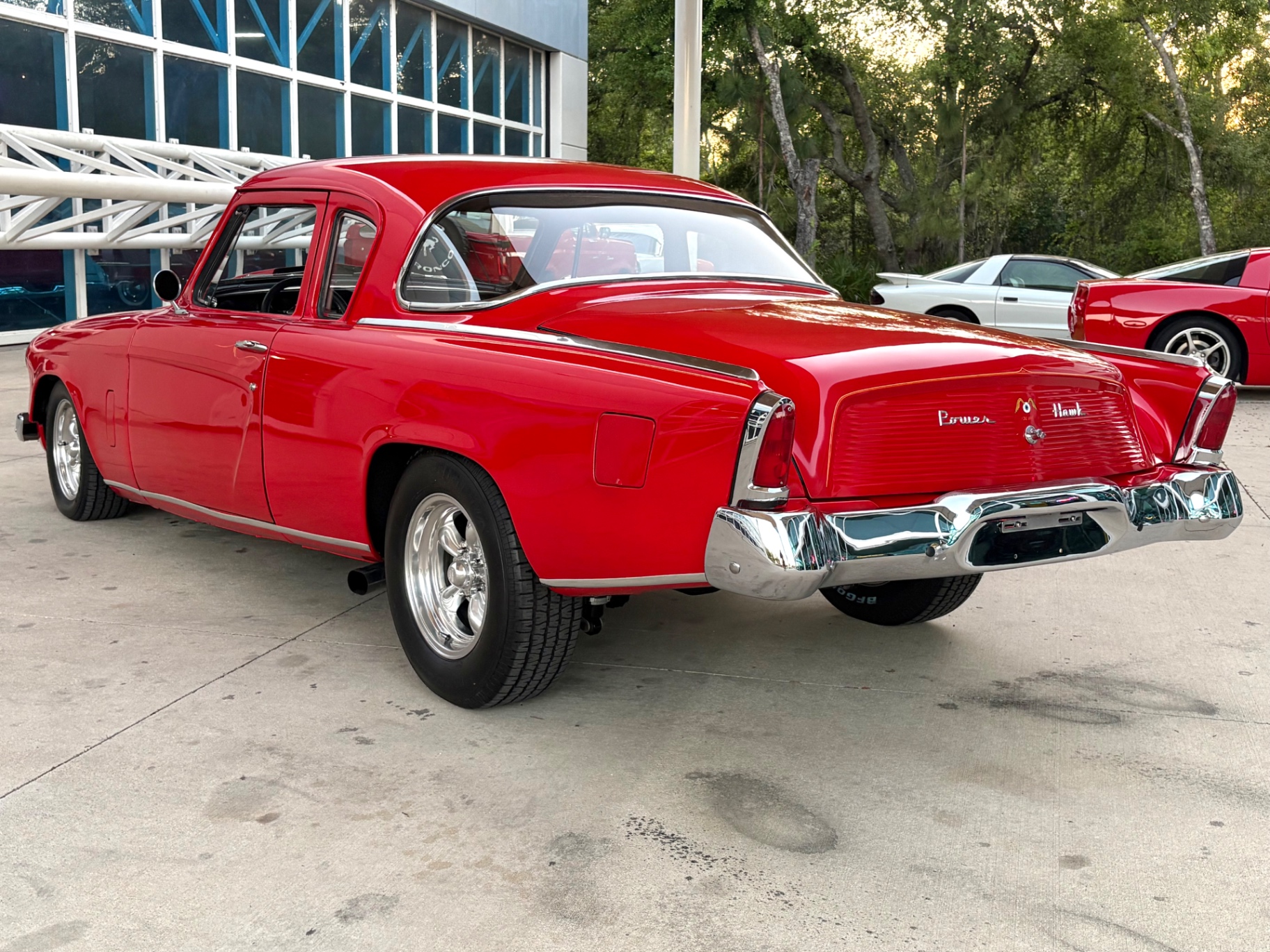
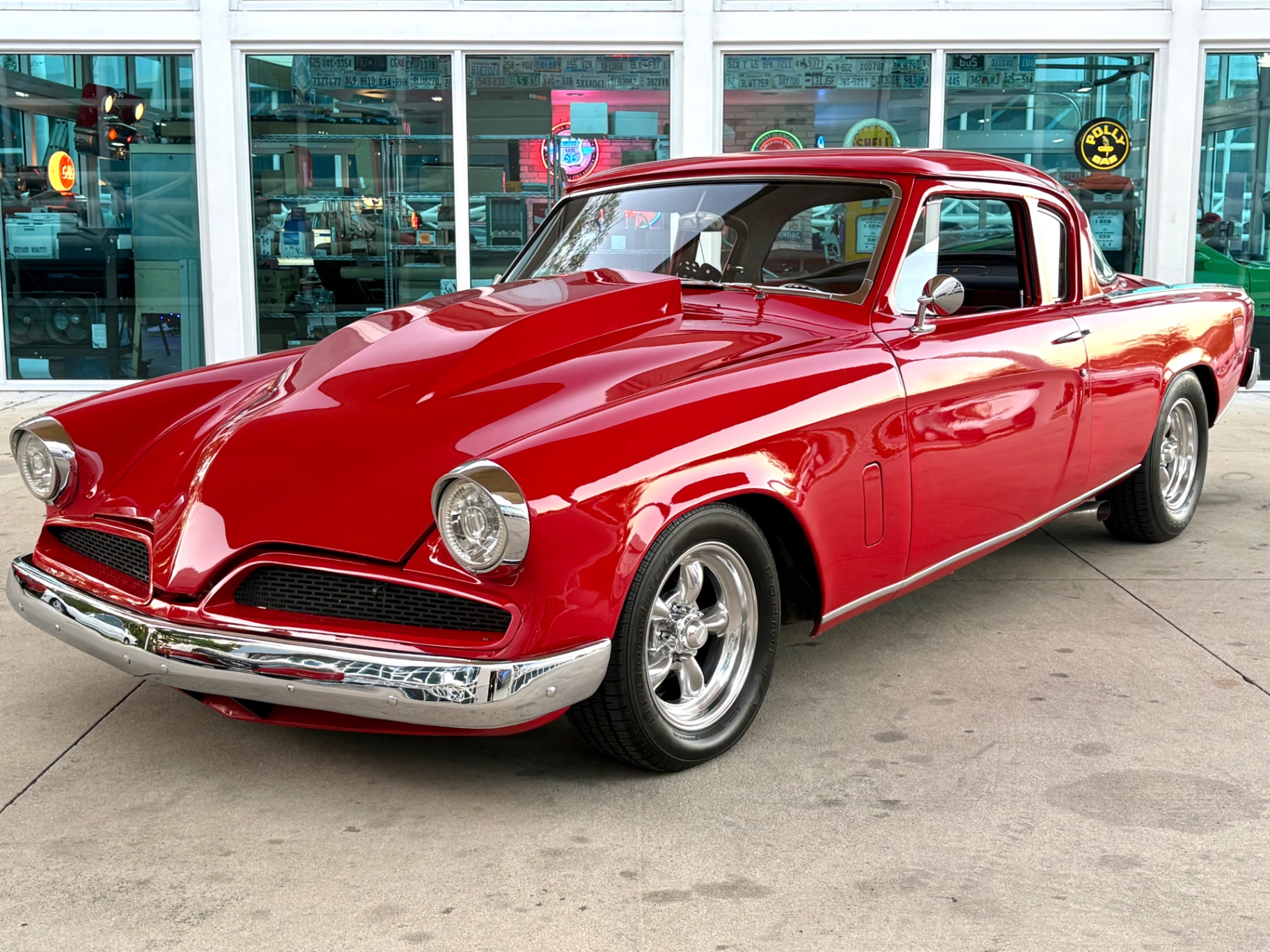
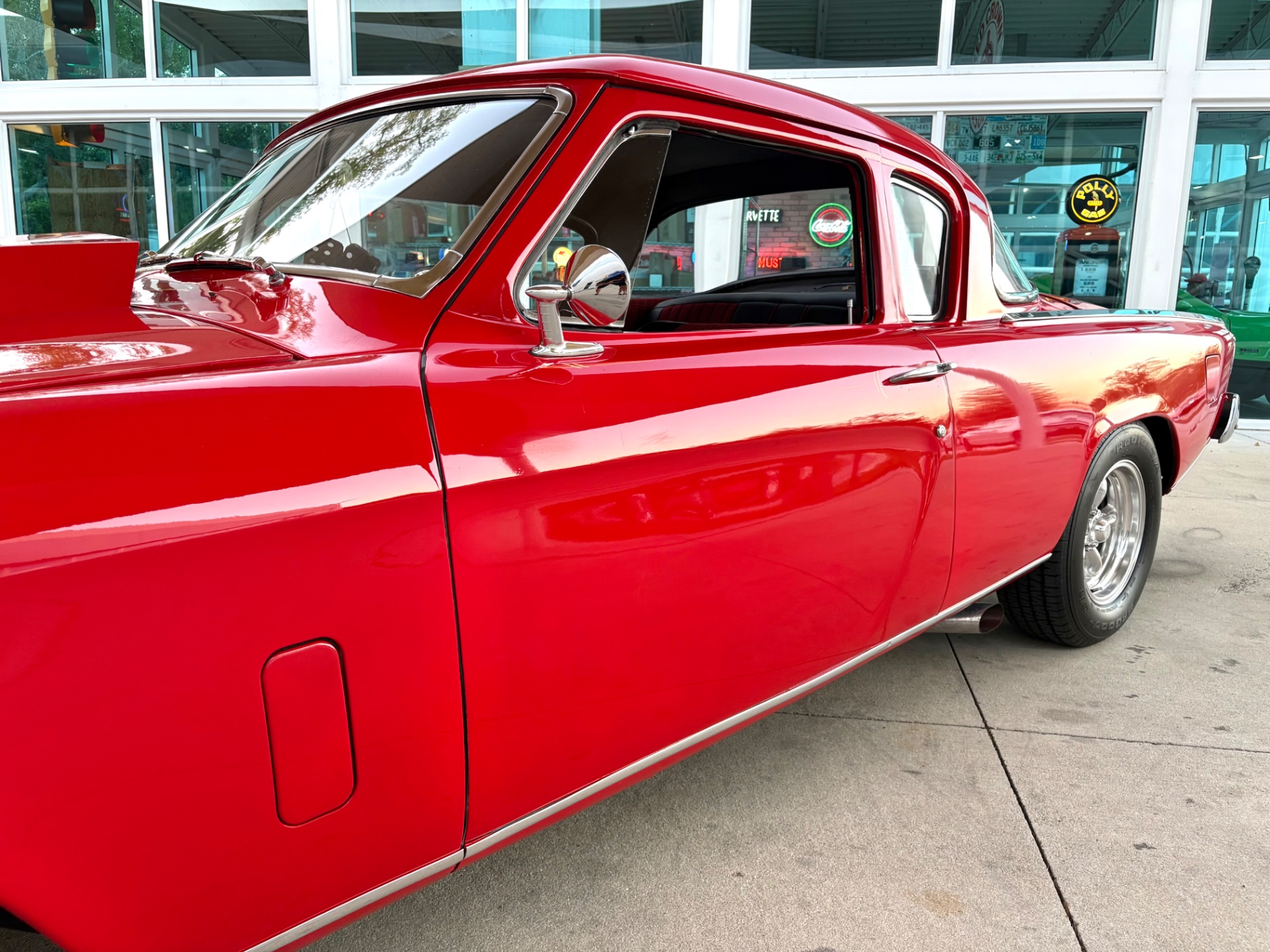
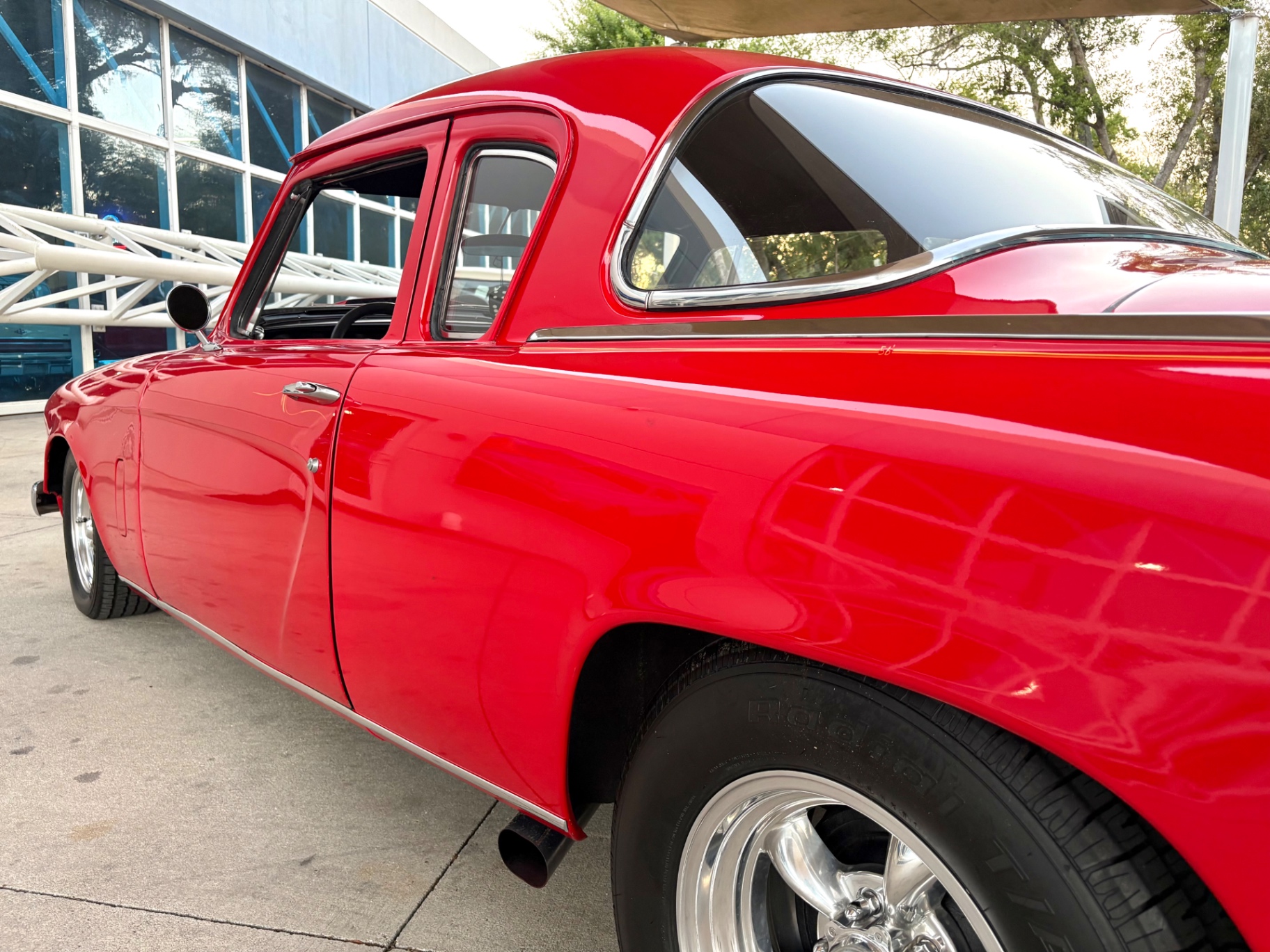
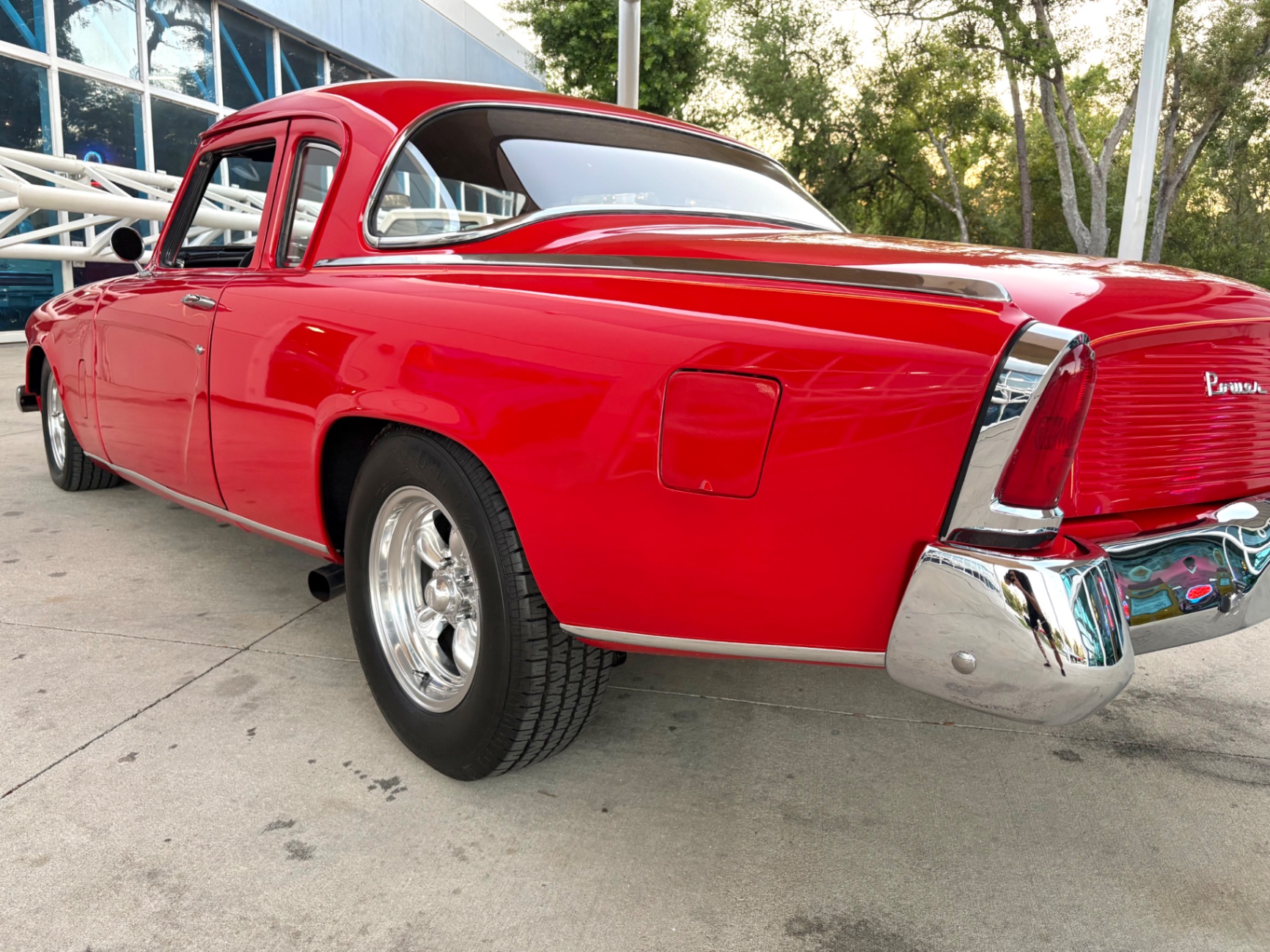
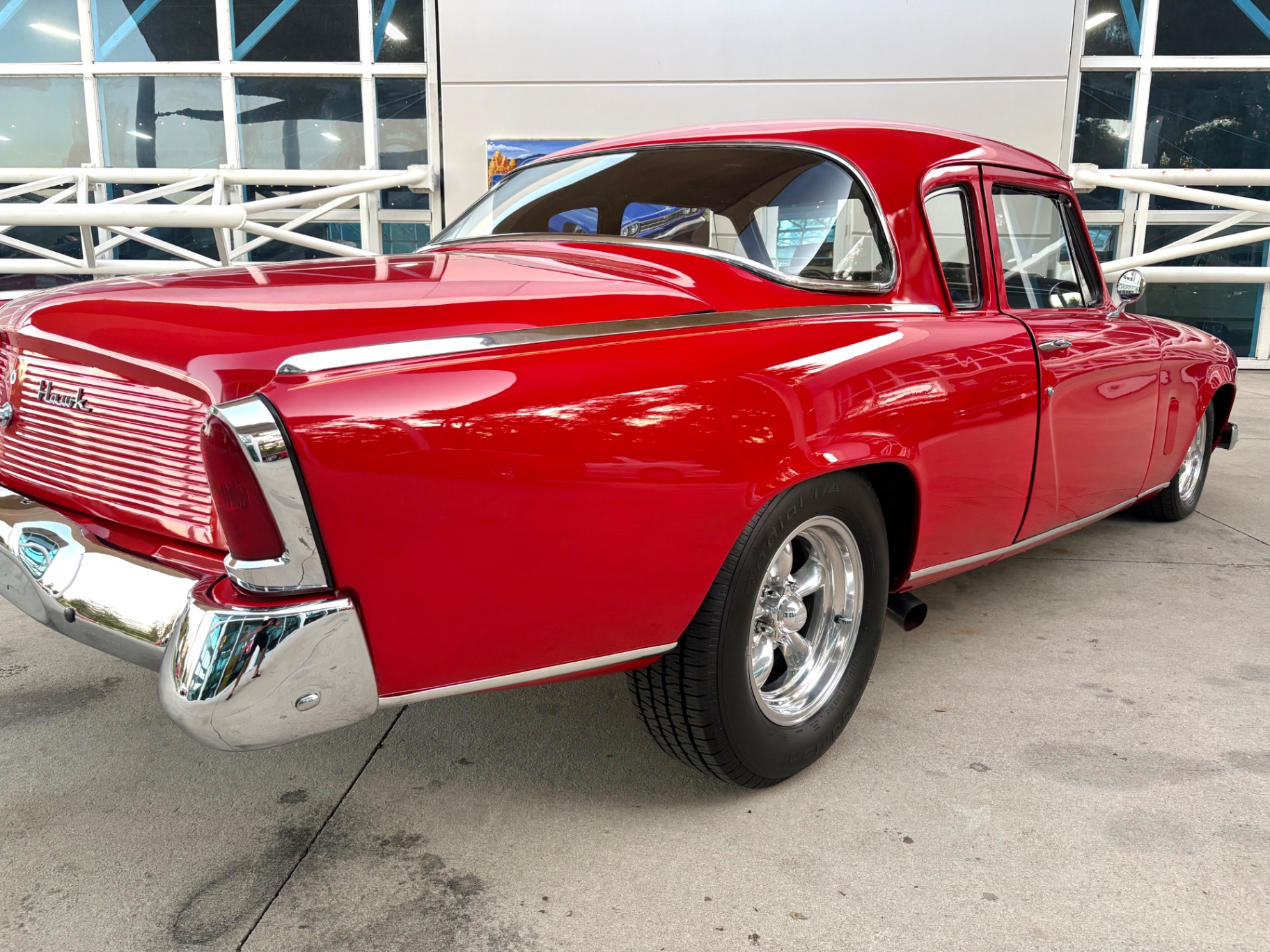
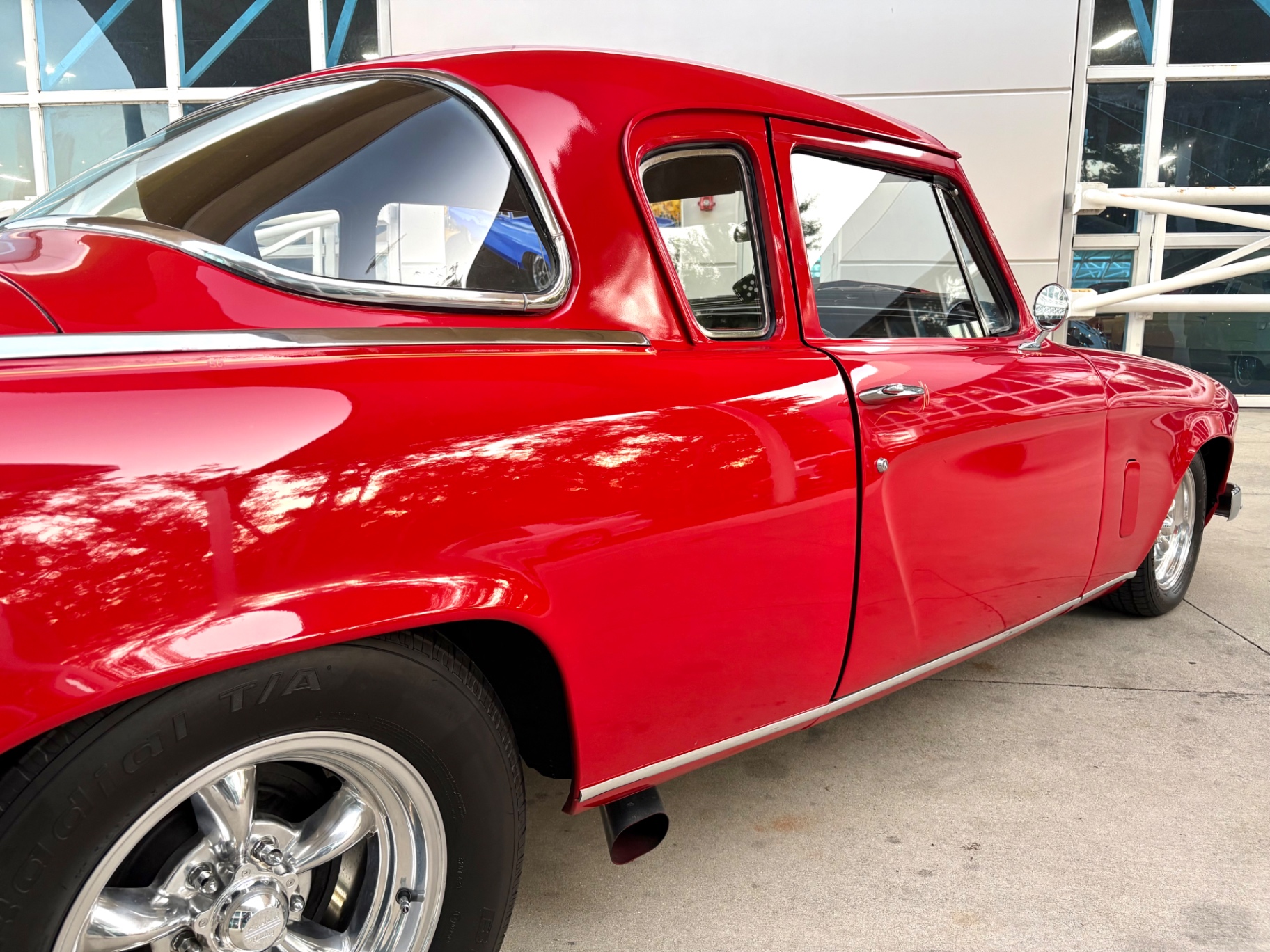
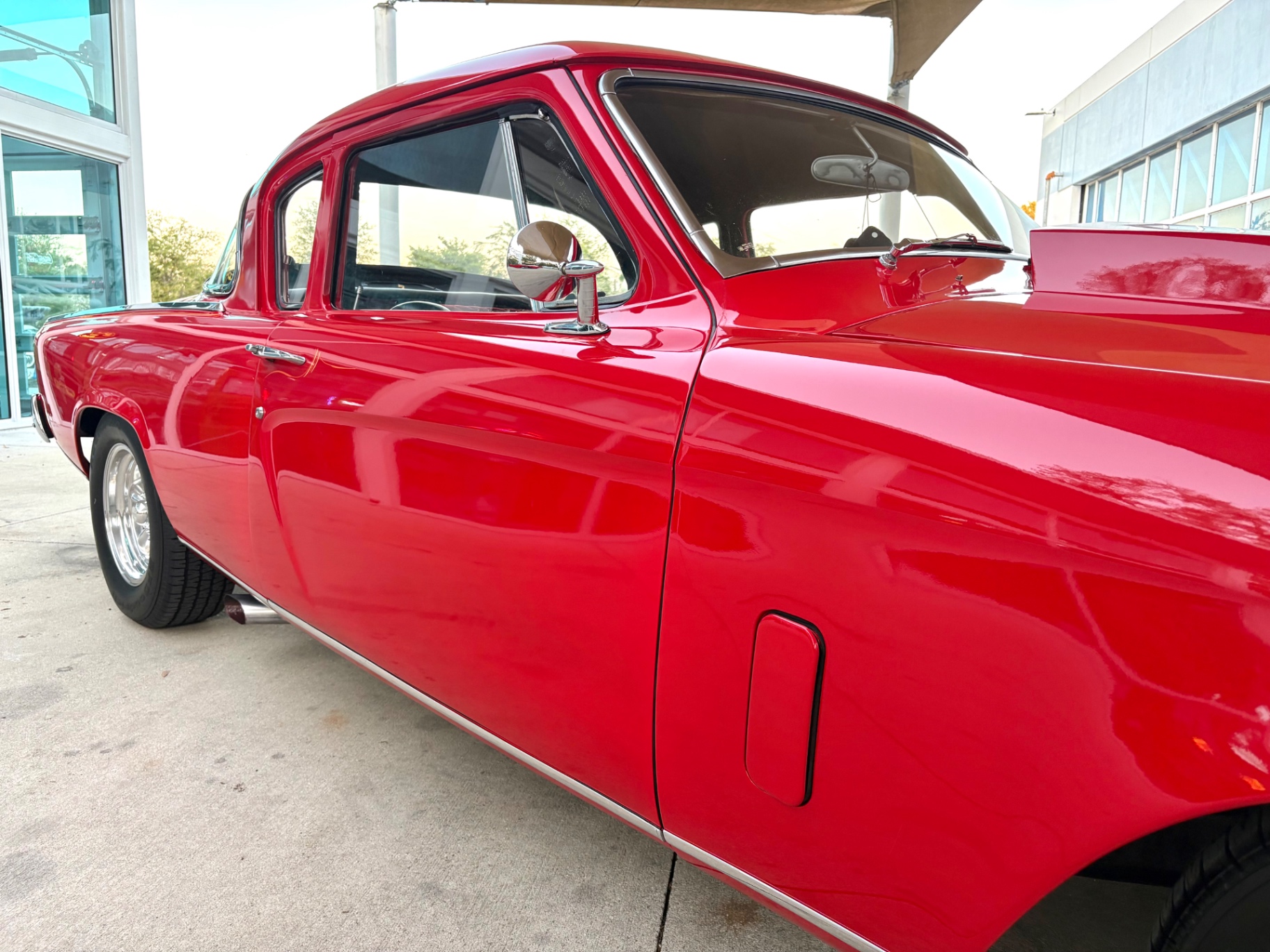
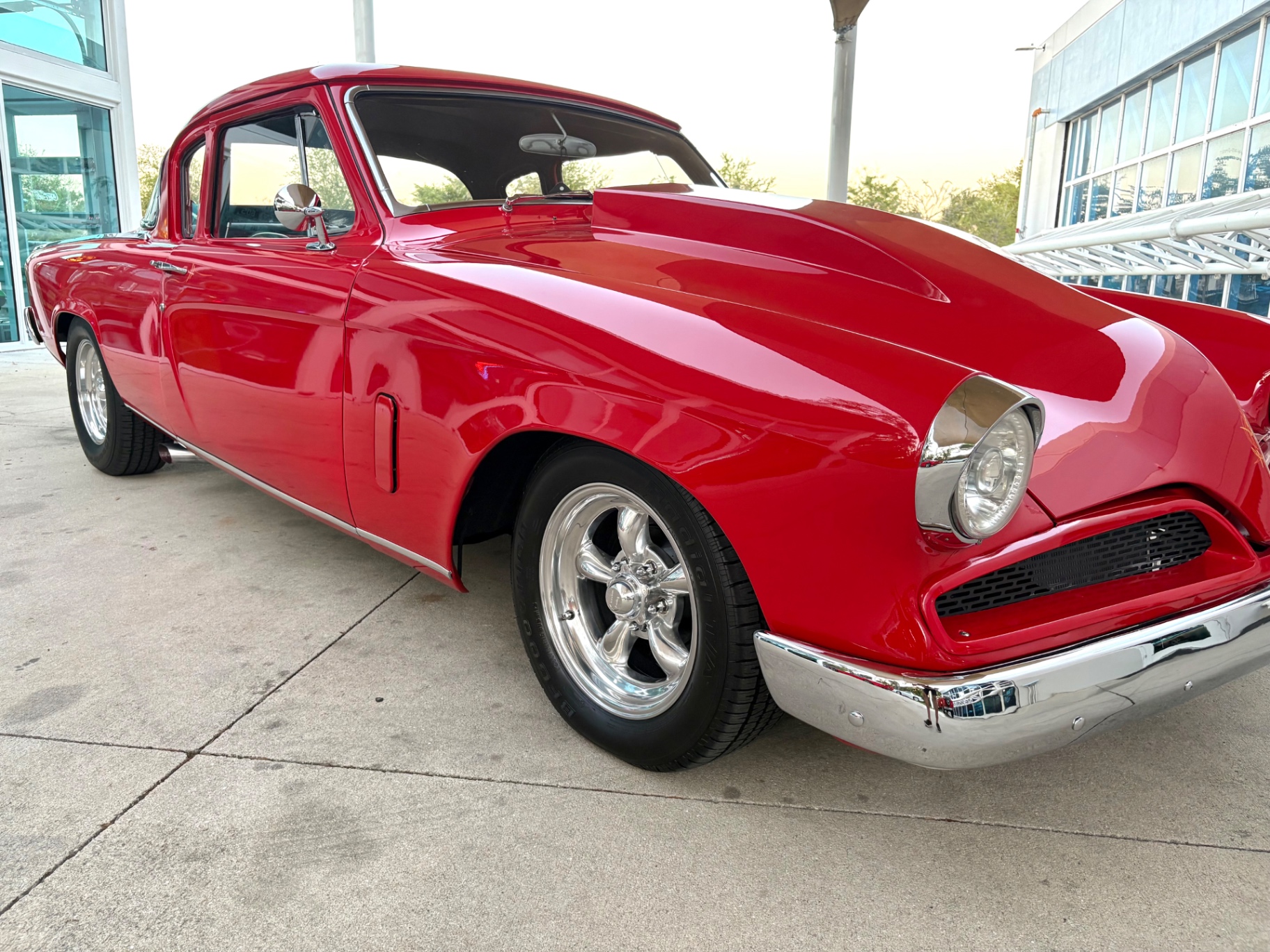
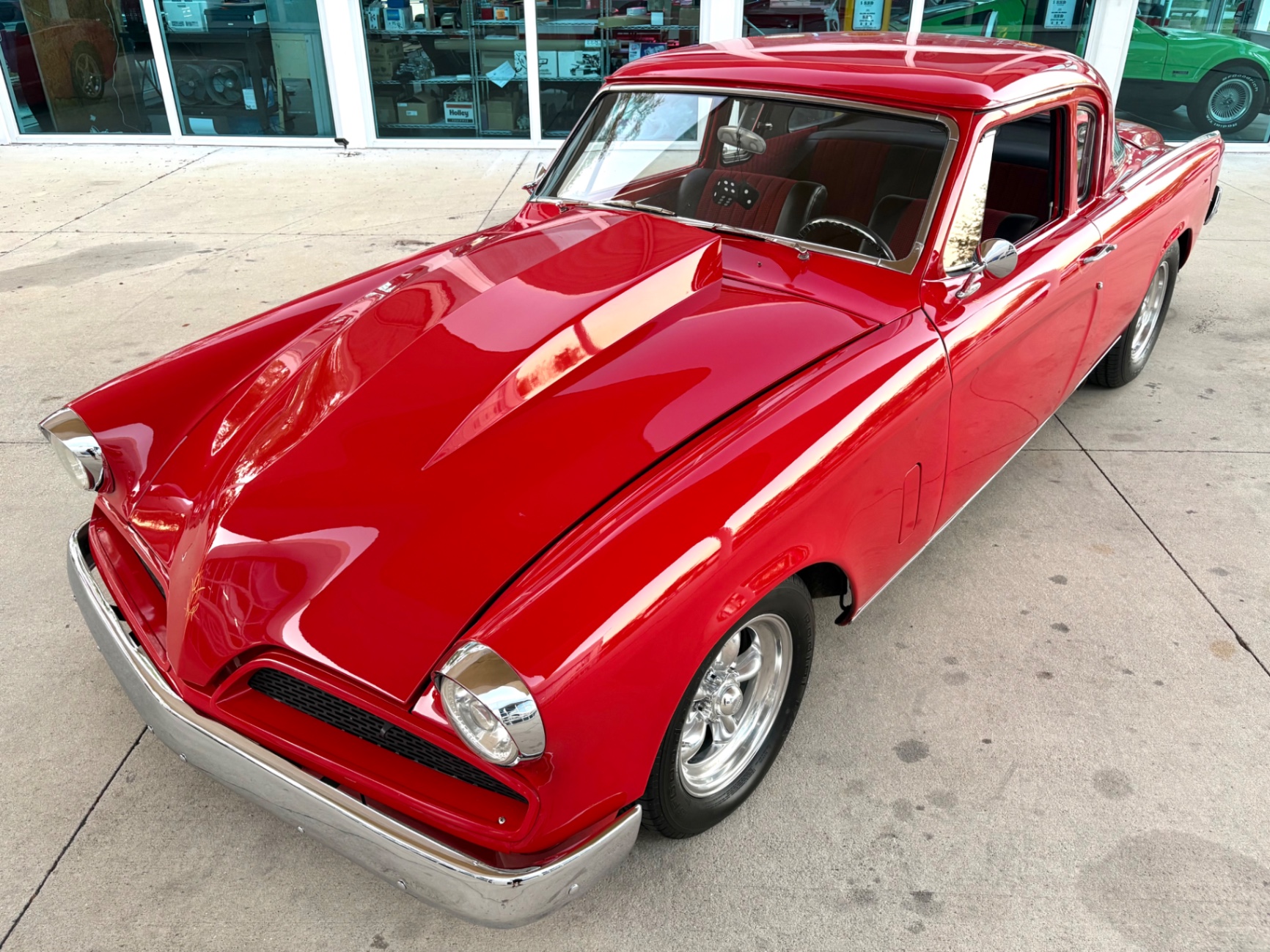
The 1956 Studebaker Power Hawk body wears custom red paint with minor pin striping that traces the body lines without overcomplicating the look. The design relies on the shape of the body to do the visual work, and the paint serves it well. Chrome bumpers front and rear are in good condition, and the chrome rear trim panel — a distinctive horizontal piece that spans the tail of the Power Hawk — has been polished and retained. It is one of the more recognizable design elements on the 1956 Hawk lineup and gives the tail end a purposeful, finished appearance.
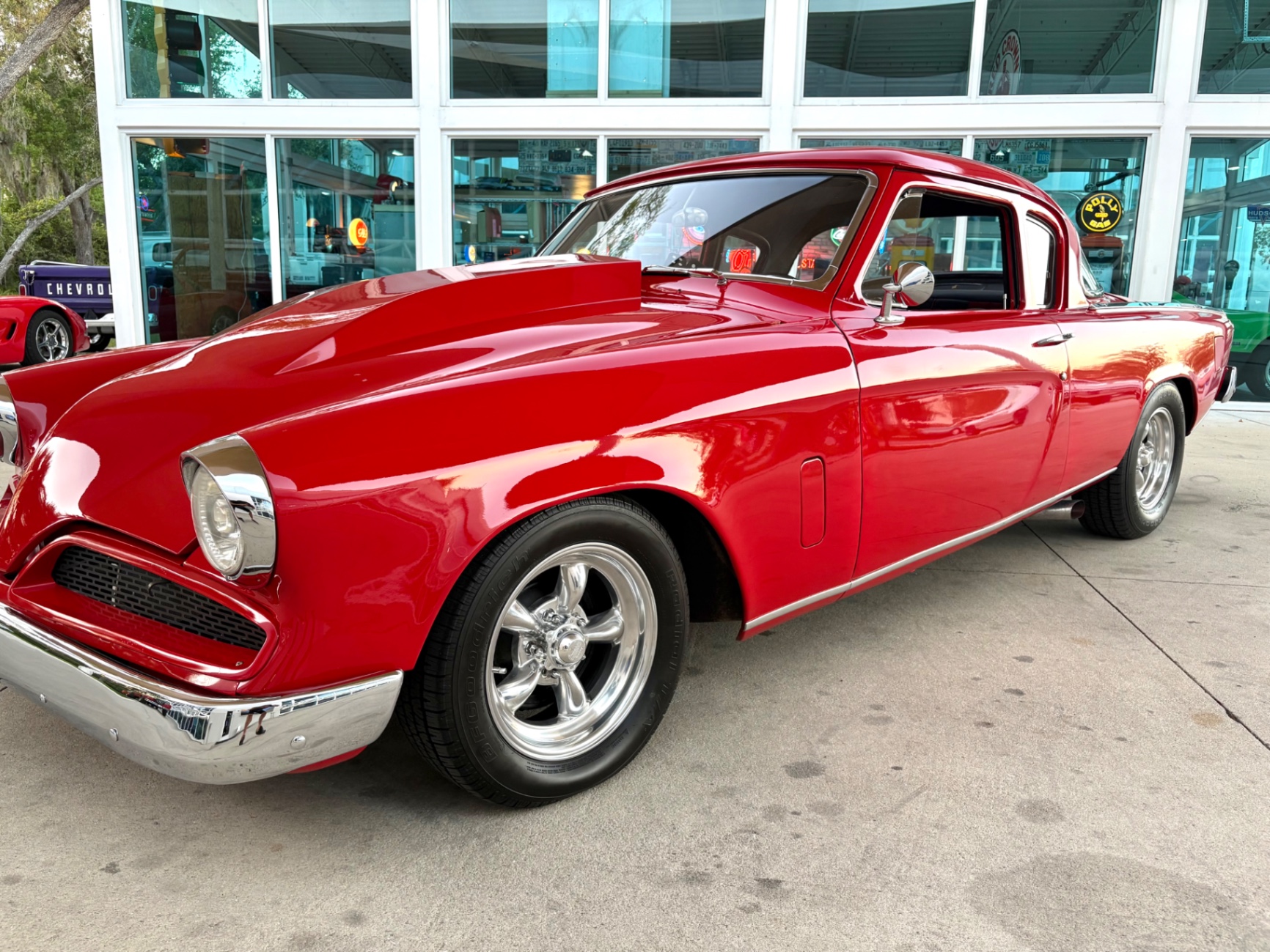
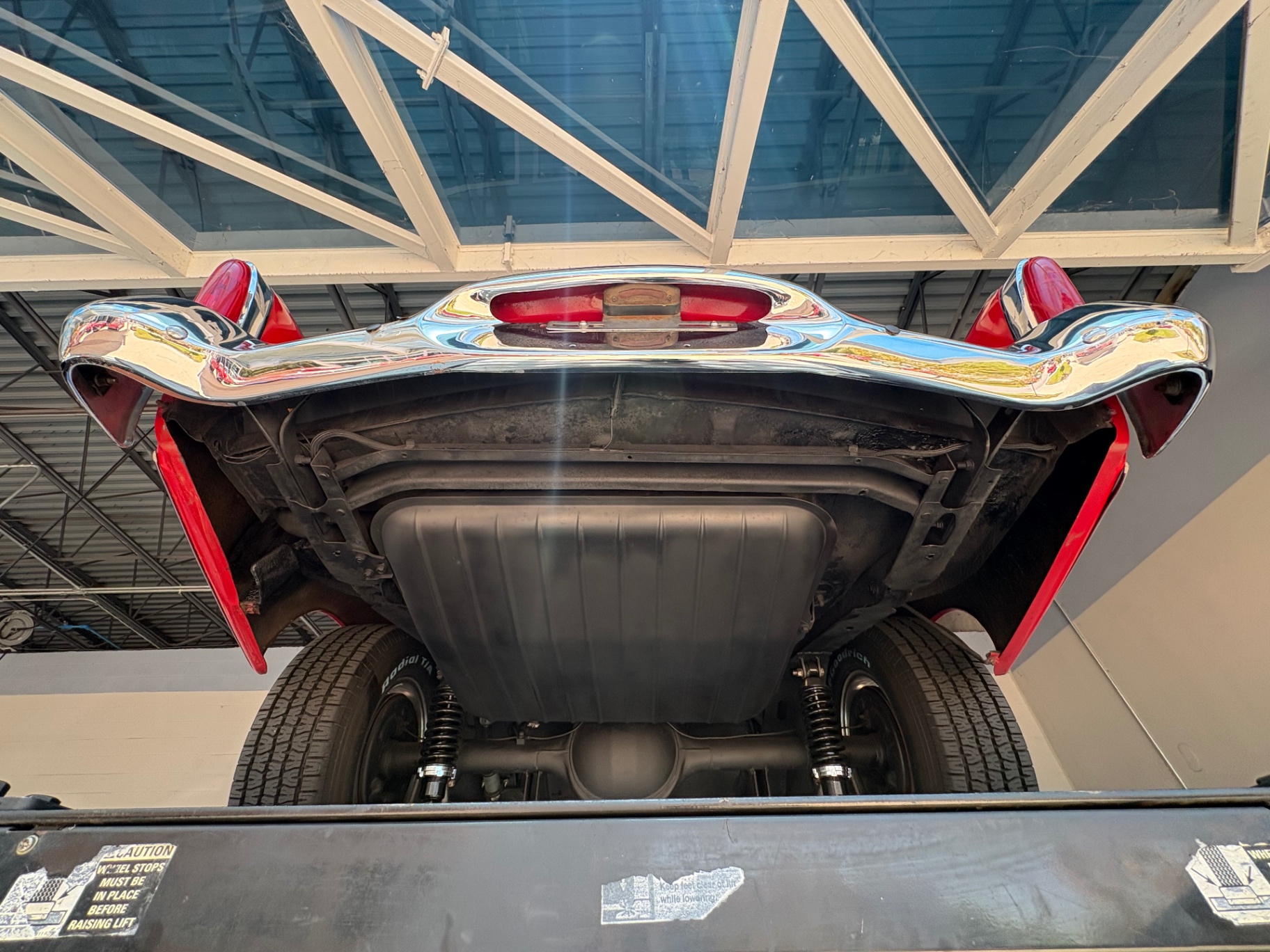
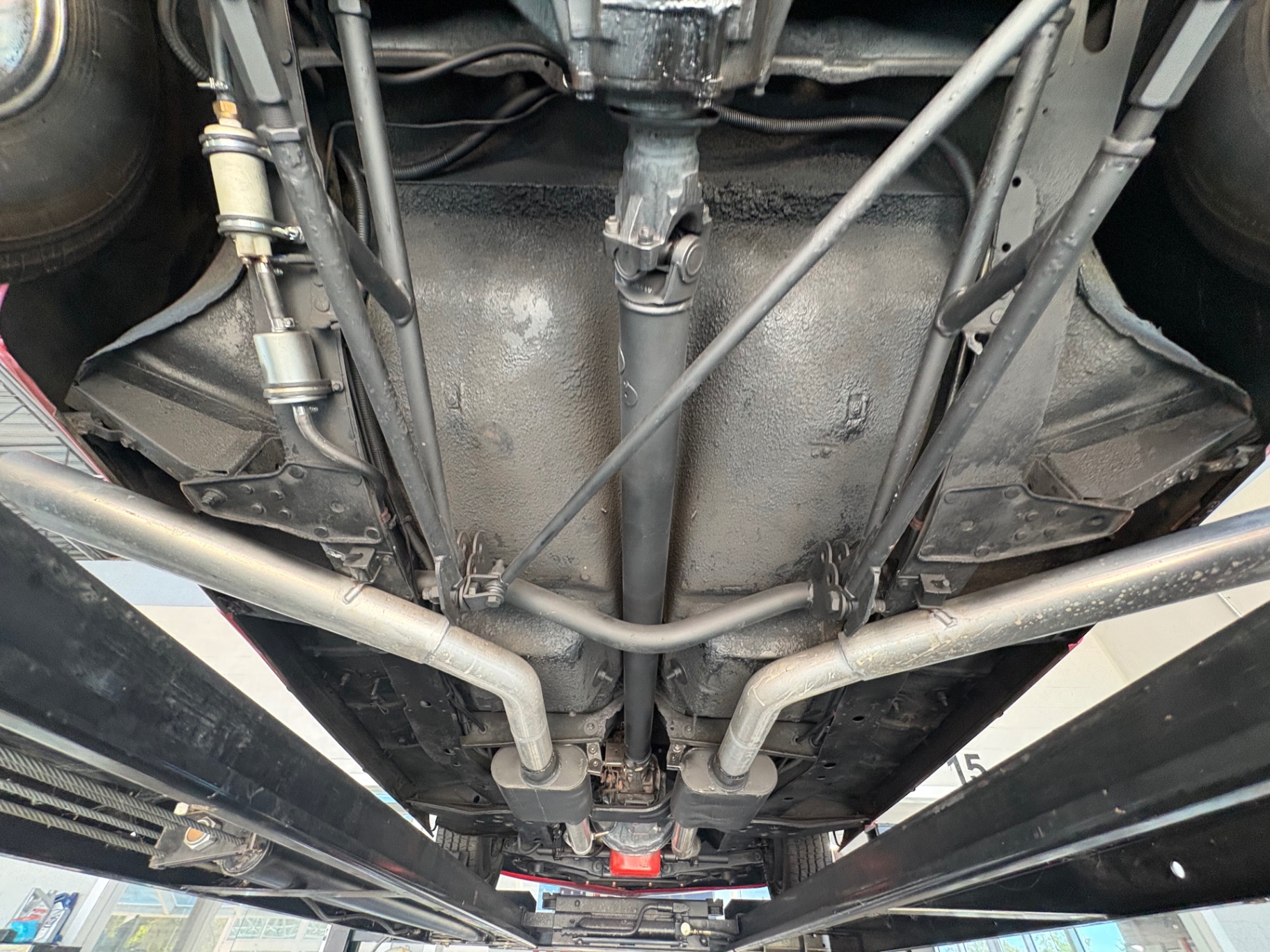
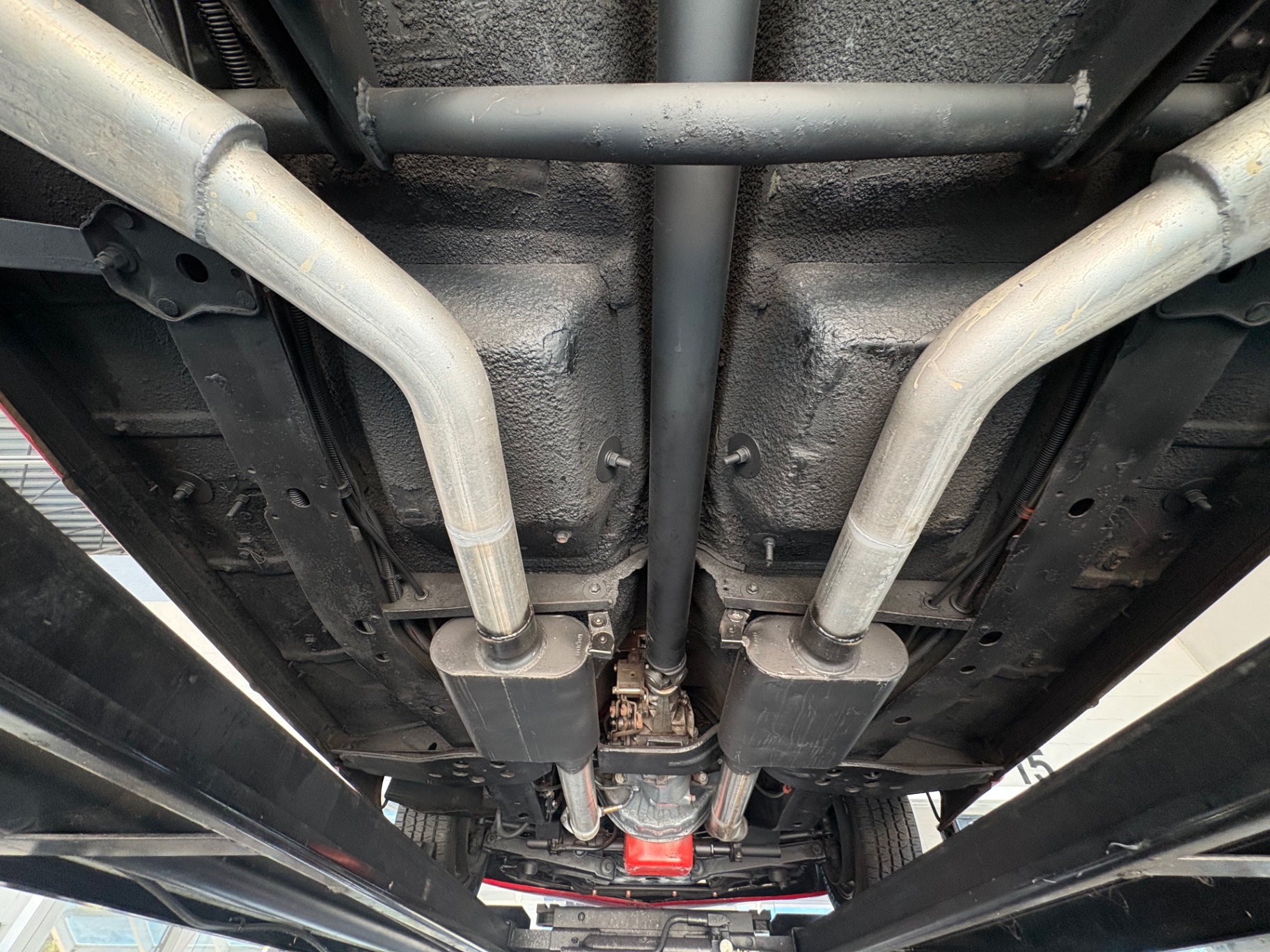
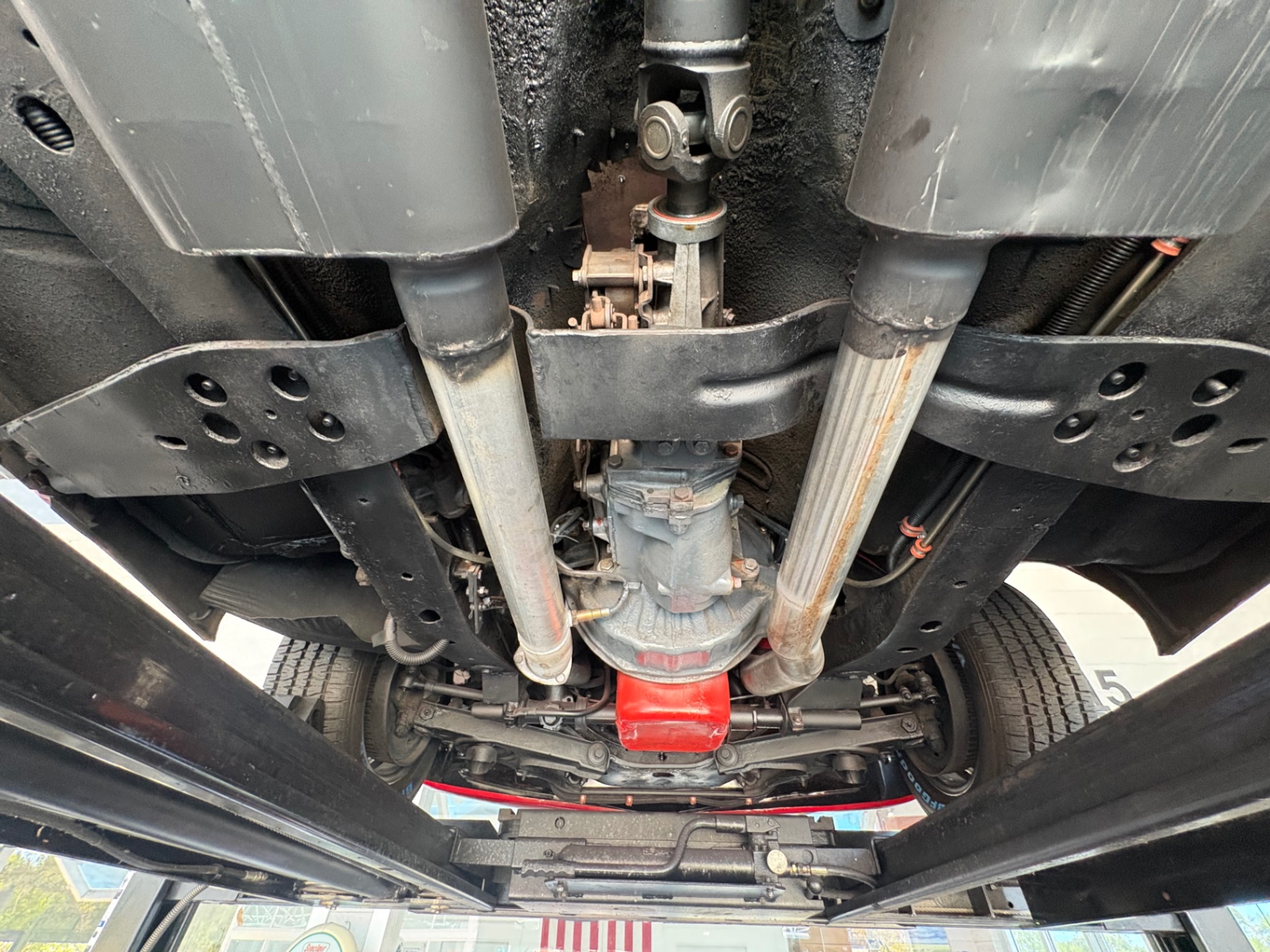
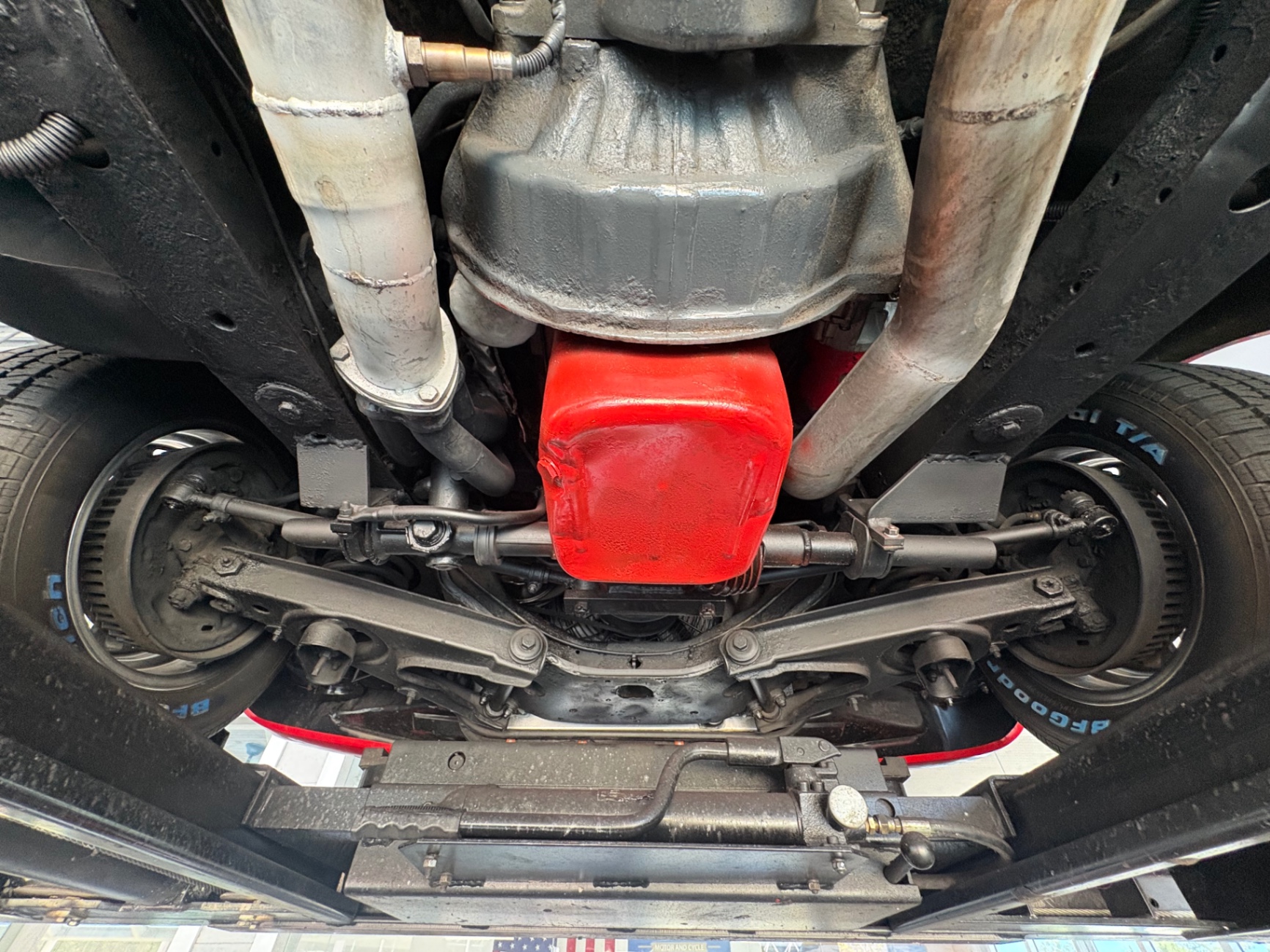
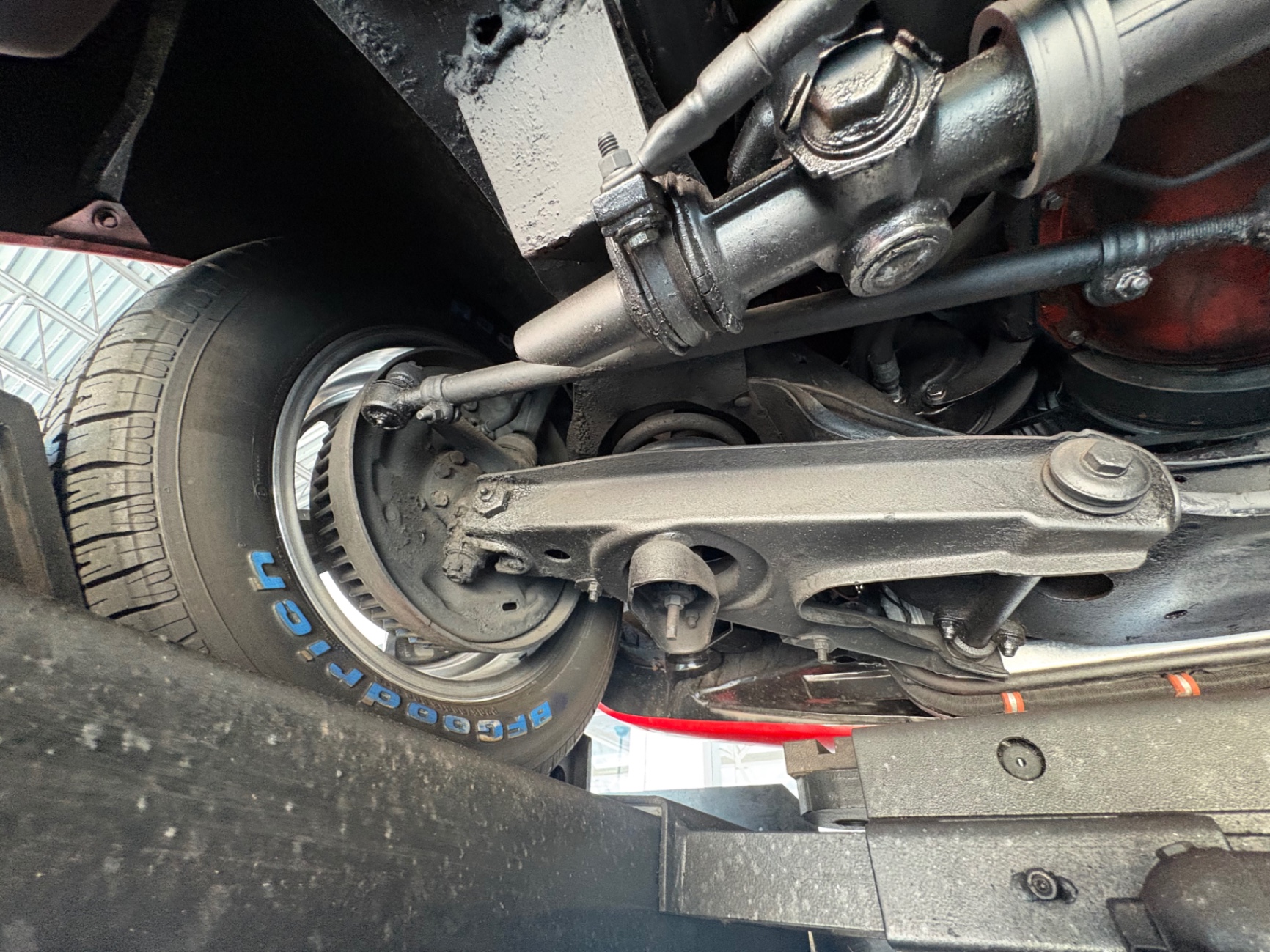
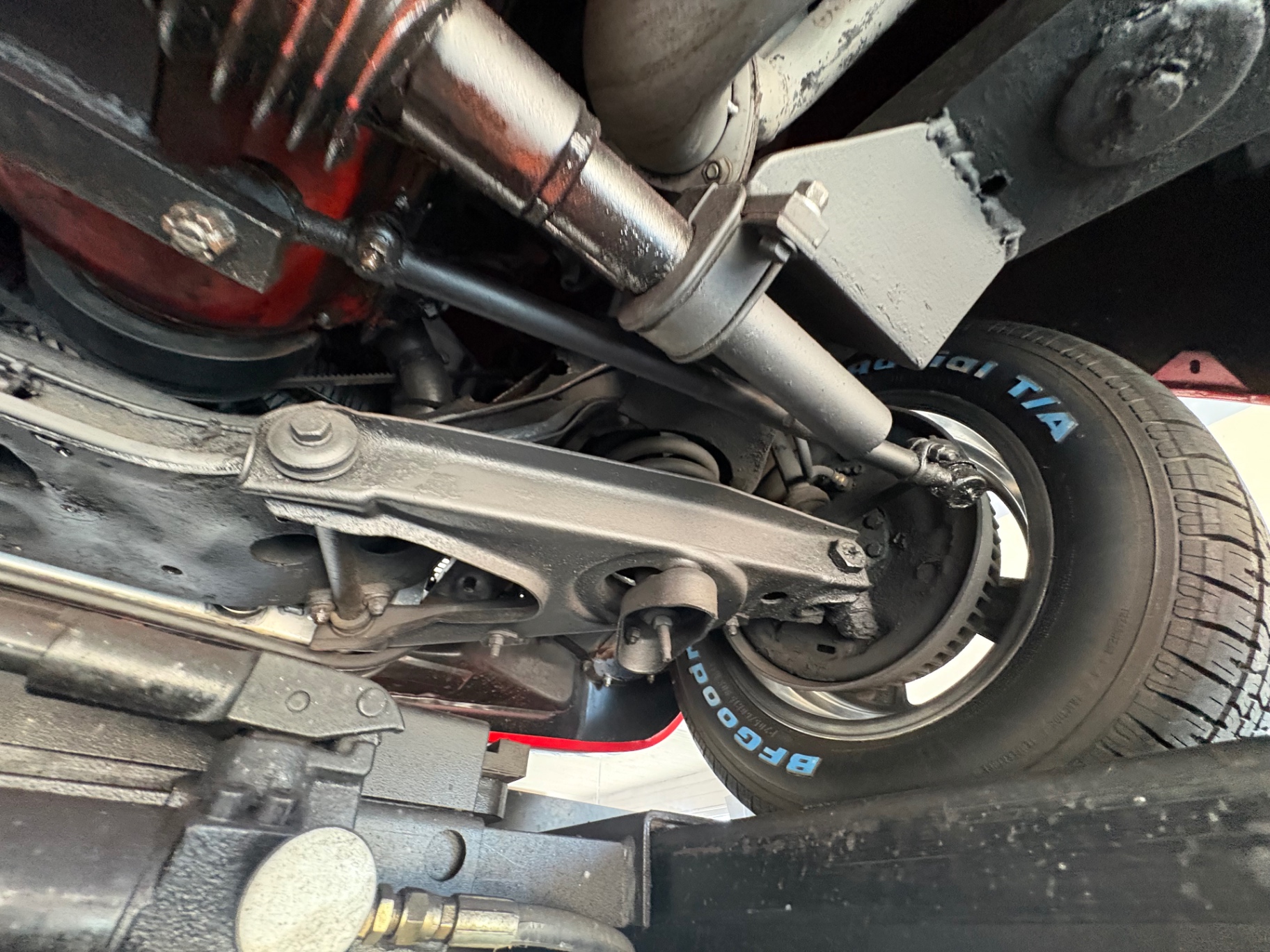
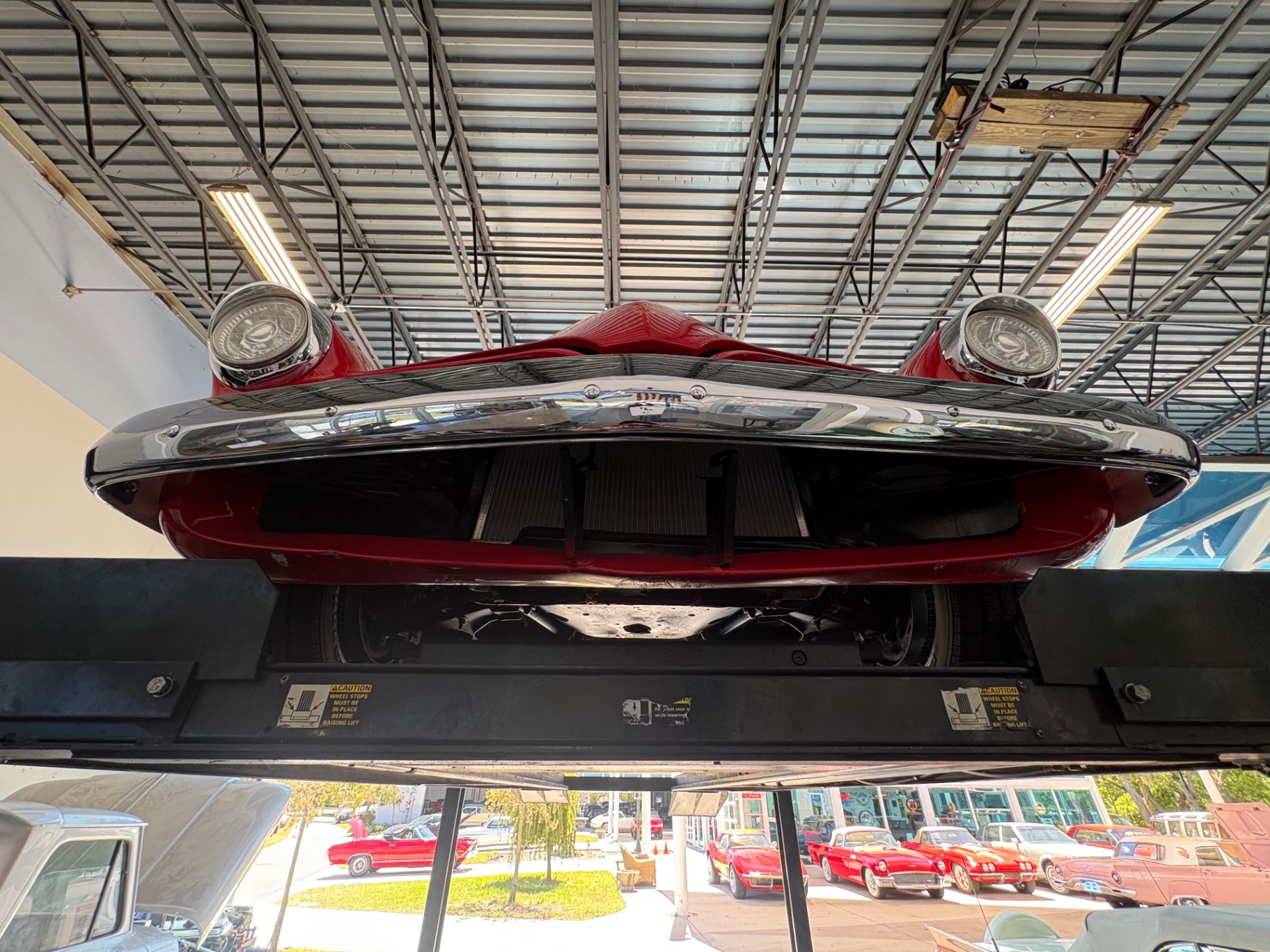
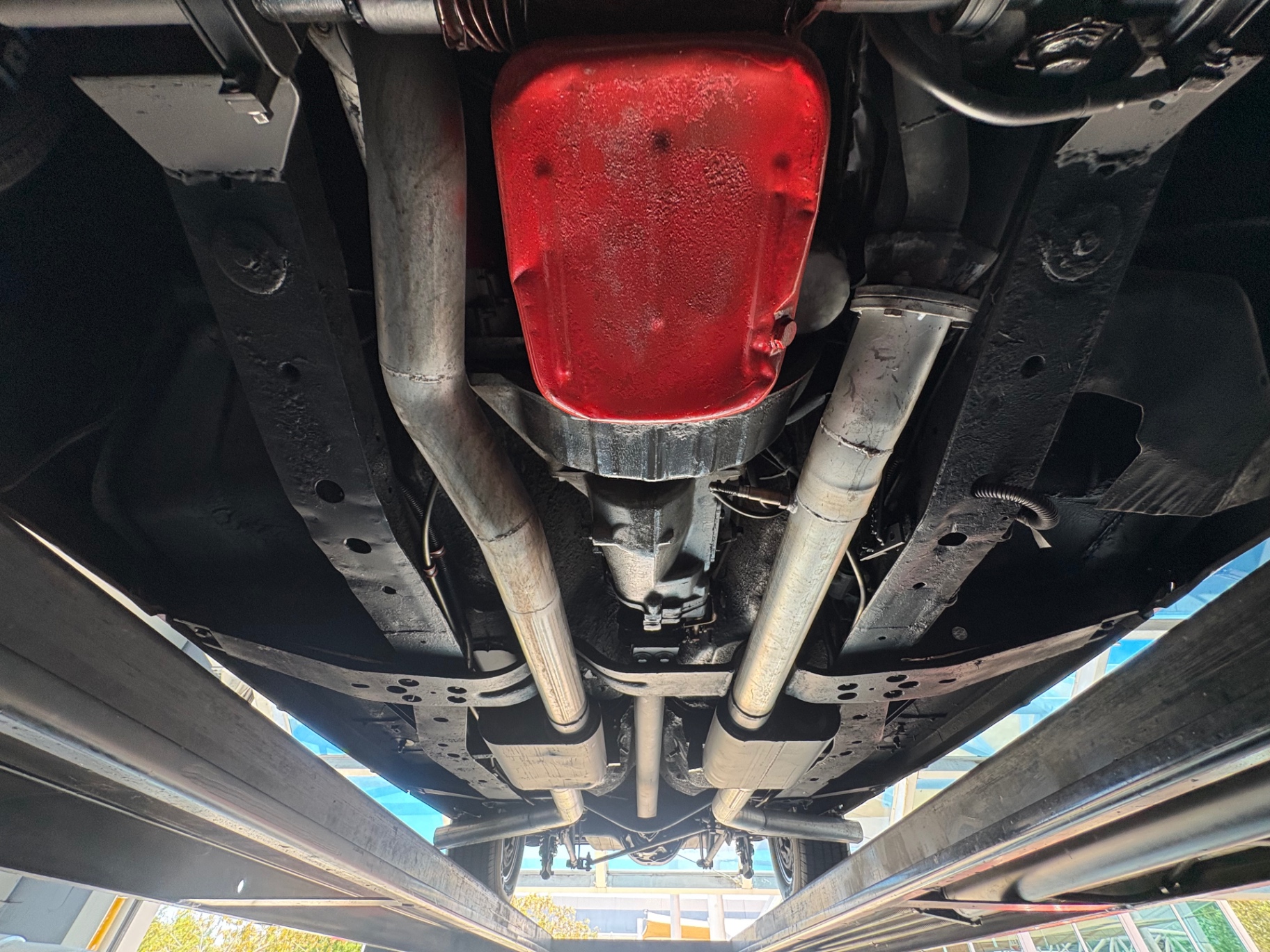
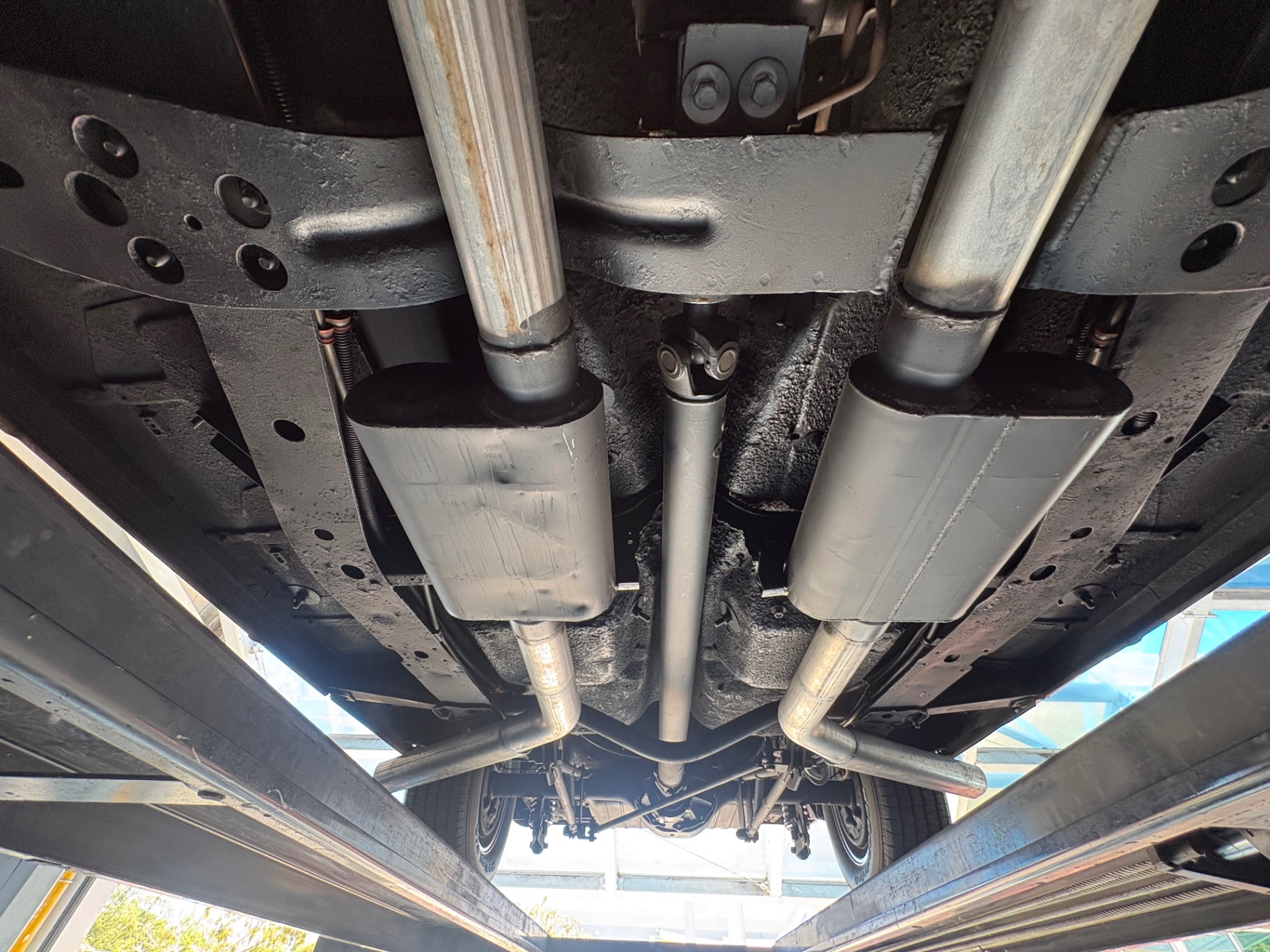
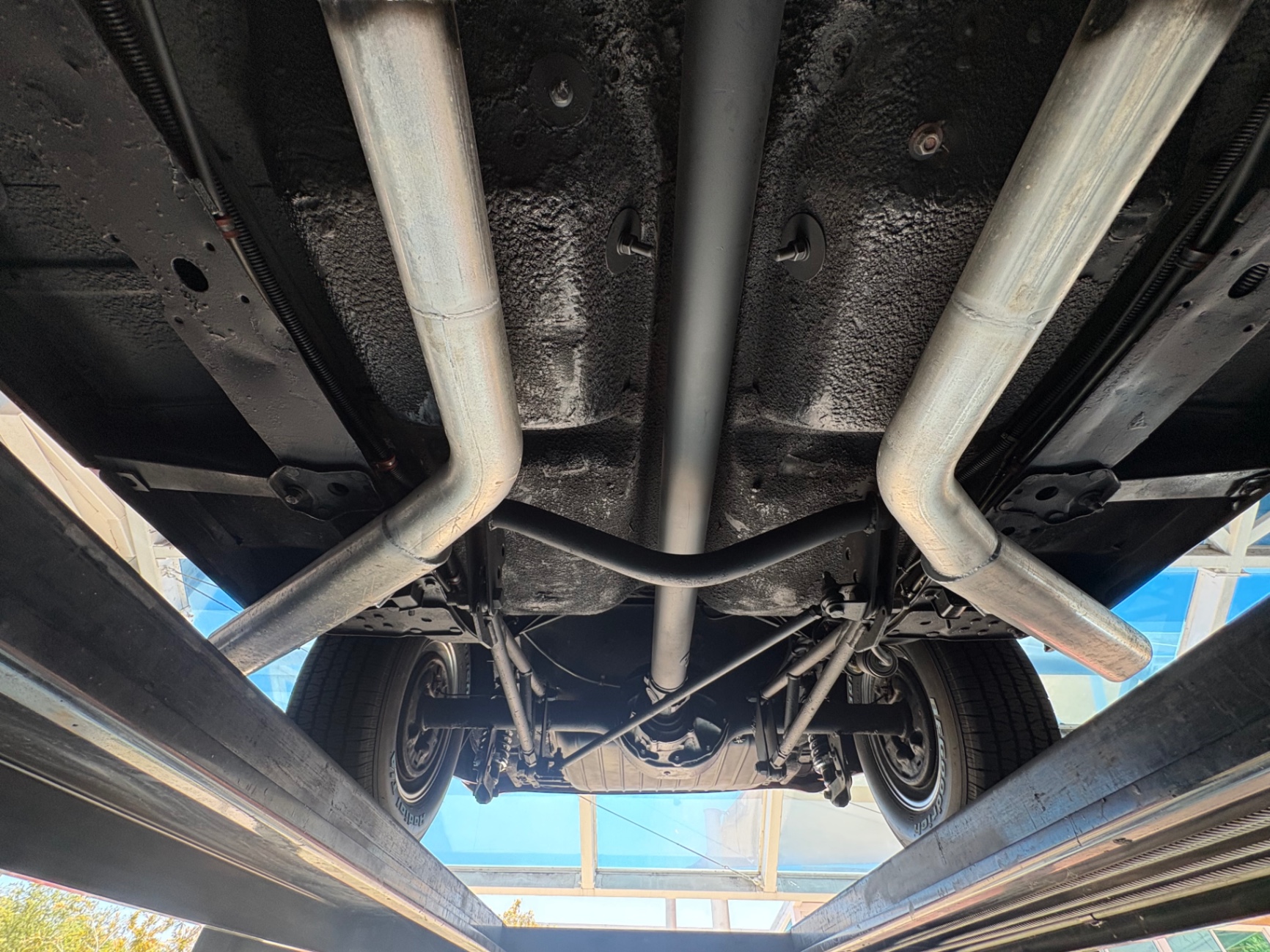
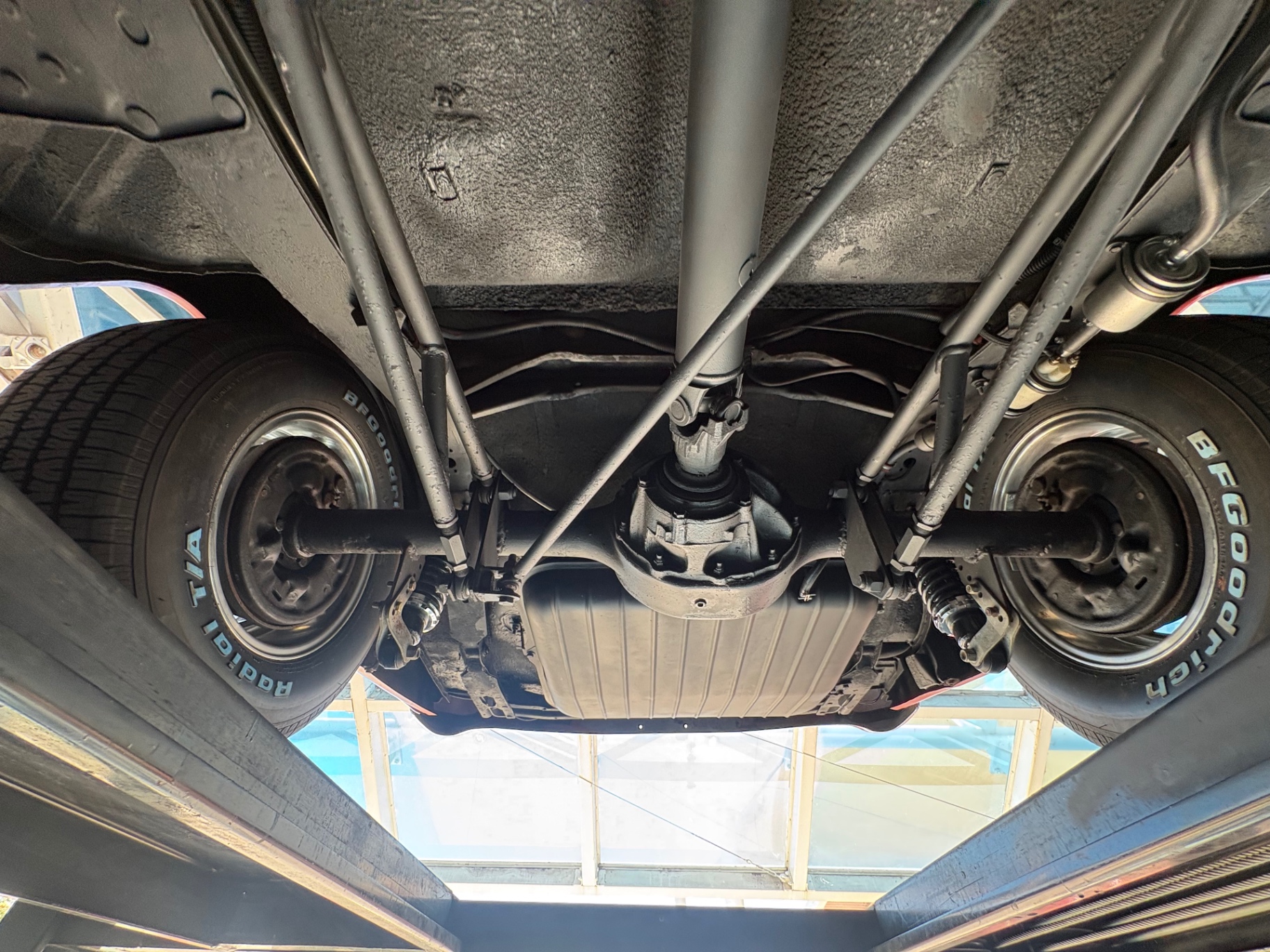
The hood scoop is a functional design addition appropriate to the build. LED headlights replace the original sealed beam units and provide significantly better illumination for night driving. Polished Torque Thrust style wheels are one of the most historically appropriate wheel choices for an American pro-street custom — the original Torque Thrust design dates to the early 1960s and has been associated with performance cars of this era ever since. They are wrapped in BF Goodrich Radial T/A tires, a tire with a long track record in the street performance market. Dual exterior mirrors are fitted on both sides. The underside, visible in the photos, shows a clean, well-finished build with the coilover units clearly visible at the rear axle.
Conclusion
The 1956 Studebaker Power Hawk is a rare starting point for a custom build. These cars are not common, the body style ages exceptionally well, and the combination of a genuine Big Block V8, Ford 9-inch rear, coilover suspension, rack and pinion steering, and Sniper EFI makes this a complete, drivable package rather than a project in need of further work. The builder kept meaningful original Studebaker details — the floor mats, seat belts, and owner's manual — while making every mechanical upgrade that a serious driver would want. The result is a 1956 Studebaker Power Hawk that honors the original body while being entirely honest about what it is: a pro-street custom built to drive.
To ask questions or schedule a time to see this 1956 Studebaker Power Hawk in person, call Skyway Classics at 941-254-6608.
Disclaimer Information found on the website is presented as given to us by the owner of the car, whether on consignment or from the owner we bought it from. Some Photos, materials for videos, descriptions and other information are provided by the consignor/seller and is deemed reliable, but Skyway Classics does not warranty or guarantee this information. Skyway Classics is not responsible for information that may incorrect or a publishing error. The decision to purchase should be based solely on the buyers personal inspection of the vehicle or by a professional inspection service prior to offer or purchase being made.
1956 Studebaker Power Hawk — Custom Pro-Street Build with 396 Big Block V8
Why This Car Is Special
The 1956 Studebaker Power Hawk sits at an interesting crossroads in American automotive history. Studebaker introduced the Hawk family for 1956 as a way to repackage the aging but genuinely attractive coupe body that designer Robert Bourke had created for the 1953 Starliner. Rather than retire it, Studebaker leaned into its sporty character and gave it a name to match. The Power Hawk was the entry point of that new lineup — a pillared coupe powered by a small-displacement V8 from the factory, offered at a price point that made it accessible while still carrying the visual drama of the longer, more expensive Hawks above it in the range. It shared its basic body with the Flight Hawk, Sky Hawk, and Golden Hawk, but stood apart as the no-frills performance coupe of the group.
What makes the 1956 Studebaker Power Hawk particularly interesting today is the body itself. That long hood, the low roofline, and the tight, almost European-looking greenhouse were genuinely forward-thinking for a mid-decade American car. Studebaker was a South Bend, Indiana company punching well above its weight in the styling department, even as financial pressures mounted throughout the decade. The Power Hawk body carries proportions that age well — which is exactly why this one works so effectively as the foundation for a serious pro-street custom build.
This particular 1956 Studebaker Power Hawk has been transformed into a purpose-built driver with real mechanical substance under that custom red paint. The factory drivetrain is long gone. In its place sits a Chevrolet 396 Big Block V8 mated to a 4-speed manual transmission, fed by a Holley Sniper EFI system and breathing through a cold air intake. Out back, a Ford 9-inch rear end handles the power delivery. The suspension has been updated with coilover units at the rear. Rack and pinion steering with power assist replaces the original recirculating ball setup. This is a car that was built to be driven, not parked on a trailer.
Features List
Engine: Chevrolet 396 Big Block V8 Induction: Holley Sniper Fuel Injection EFI system Intake: Cold air intake Transmission: 4-speed manual Rear end: Ford 9-inch Rear suspension: Coilover suspension Steering: Rack and pinion with power assist Steering wheel: Billet unit with tilt column Wheels: Polished Torque Thrust style wheels Tires: BF Goodrich Radial T/A Cooling: Aluminum radiator Exhaust: Dual exhaust Headlights: LED headlights Interior: Black vinyl with red and black houndstooth door panel inserts Gauges: Full custom gauge cluster with tachometer reading to 8,000 RPM and 160 MPH speedometer, all gauges functional, clock Windows: Power windows Exterior: Custom red paint with minor custom pin striping Bumpers: Chrome front and rear bumpers Rear trim: Chrome rear trim panel Mirrors: Dual exterior rear view mirrors Hood: Hood scoop Original items retained: Studebaker seat belts, Studebaker floor mats, Studebaker owner's manual
Mechanical
The heart of this 1956 Studebaker Power Hawk is a Chevrolet 396 cubic inch Big Block V8. The 396 was introduced by Chevrolet in 1965 and became one of the most recognized big block displacements in American performance history, known for strong low-end torque and a wide aftermarket support base that makes it straightforward to maintain and modify decades later. Swapping a proven Big Block Chevy into a 1950s Studebaker body is a well-established approach in the pro-street custom world — the engine support infrastructure simply does not exist for the original Studebaker powerplants the way it does for GM big blocks.
The Holley Sniper EFI system is a throttle-body electronic fuel injection unit that replaces a traditional carburetor while retaining a carbureted appearance under the hood. It provides improved cold-start behavior, better fuel metering across a range of operating temperatures, and eliminates the fuel management issues that plague carbureted classics in hot climates like Florida. Paired with the cold air intake, the engine is drawing cooler, denser air than a stock air cleaner setup would provide.
Behind the engine sits a 4-speed manual transmission, which keeps the driver directly involved in the power delivery. Out back, the Ford 9-inch rear end is the correct choice for a car making this level of power. The 9-inch earned its reputation in racing applications throughout the 1960s and 1970s because of its ring-and-pinion strength and the ease with which gear ratios and carrier assemblies can be swapped. It remains one of the most trusted rear end choices in street performance builds today.
The rear coilover suspension upgrade replaces the original leaf spring setup and provides improved wheel control, better ride quality adjustment, and a more planted stance. The rack and pinion steering conversion with power assist modernizes the driving feel considerably compared to the original steering box, giving the driver more road feel and less vague on-center behavior. An aluminum radiator handles cooling duties, which is an appropriate upgrade for a Big Block engine operating in Florida heat.
Interior
The interior of this 1956 Studebaker Power Hawk pairs black vinyl with red and black houndstooth fabric inserts on the door panels, tying the cabin visually to the exterior red paint. The houndstooth pattern carries real credibility in the classic car world — it was used extensively in period-correct American performance interiors and works here as a thoughtful design choice rather than an afterthought.
The custom gauge cluster gives the driver full instrumentation, including a tachometer with an 8,000 RPM redline sweep and a 160 MPH speedometer. Having accurate, functional gauges in a high-powered custom build is not a cosmetic detail — it is a practical necessity. A clock is also included in the cluster. The billet steering wheel sits on a tilt steering column, which makes ingress and egress easier in a car with a relatively low roofline. Power windows operate the door glass, a convenience feature that also preserves the clean look of the interior panels. The original Studebaker floor mats and seat belts have been retained, as has the factory owner's manual — small details that speak to the care taken with this build.
Exterior
The 1956 Studebaker Power Hawk body wears custom red paint with minor pin striping that traces the body lines without overcomplicating the look. The design relies on the shape of the body to do the visual work, and the paint serves it well. Chrome bumpers front and rear are in good condition, and the chrome rear trim panel — a distinctive horizontal piece that spans the tail of the Power Hawk — has been polished and retained. It is one of the more recognizable design elements on the 1956 Hawk lineup and gives the tail end a purposeful, finished appearance.
The hood scoop is a functional design addition appropriate to the build. LED headlights replace the original sealed beam units and provide significantly better illumination for night driving. Polished Torque Thrust style wheels are one of the most historically appropriate wheel choices for an American pro-street custom — the original Torque Thrust design dates to the early 1960s and has been associated with performance cars of this era ever since. They are wrapped in BF Goodrich Radial T/A tires, a tire with a long track record in the street performance market. Dual exterior mirrors are fitted on both sides. The underside, visible in the photos, shows a clean, well-finished build with the coilover units clearly visible at the rear axle.
Conclusion
The 1956 Studebaker Power Hawk is a rare starting point for a custom build. These cars are not common, the body style ages exceptionally well, and the combination of a genuine Big Block V8, Ford 9-inch rear, coilover suspension, rack and pinion steering, and Sniper EFI makes this a complete, drivable package rather than a project in need of further work. The builder kept meaningful original Studebaker details — the floor mats, seat belts, and owner's manual — while making every mechanical upgrade that a serious driver would want. The result is a 1956 Studebaker Power Hawk that honors the original body while being entirely honest about what it is: a pro-street custom built to drive.
To ask questions or schedule a time to see this 1956 Studebaker Power Hawk in person, call Skyway Classics at 941-254-6608.
Disclaimer Information found on the website is presented as given to us by the owner of the car, whether on consignment or from the owner we bought it from. Some Photos, materials for videos, descriptions and other information are provided by the consignor/seller and is deemed reliable, but Skyway Classics does not warranty or guarantee this information. Skyway Classics is not responsible for information that may incorrect or a publishing error. The decision to purchase should be based solely on the buyers personal inspection of the vehicle or by a professional inspection service prior to offer or purchase being made.
1956 Studabaker
Power Hawk Custom
Why Choose Skyway Classics?
Explore our curated inventory of classic and collector cars—thoughtfully selected, ready to drive, and supported by experts who make ownership simple.
Expert Curation
Every vehicle is hand-selected by our experts for quality, authenticity, and investment potential.
Fast Transactions
Streamlined buying and selling process with quick financing and immediate delivery options.
Only National Dealer With Classic Service & Repair
We’re the only national dealership that services and repairs the classics we sell—before and after the sale.
Nationwide Network
Access to our extensive network of collectors, restorers, and classic car enthusiasts nationwide.
Concierge Ownership Support
From financing and insurance to paperwork, shipping, and titling—we handle the details so you can enjoy the drive.
Passion-Driven Service
We're classic car enthusiasts first, providing personalized service with genuine passion for the hobby.