
1966 Ford
Mustang Base
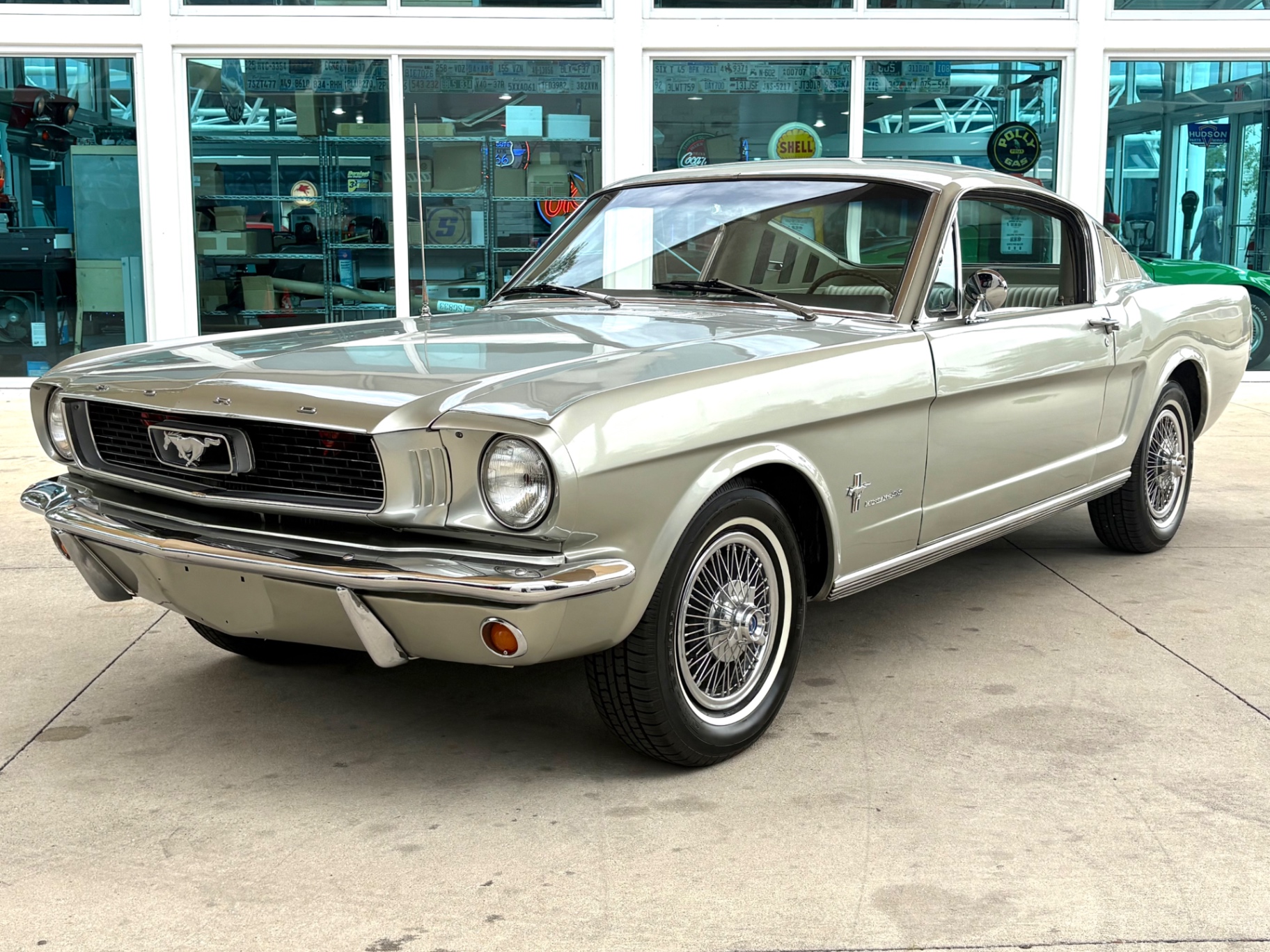
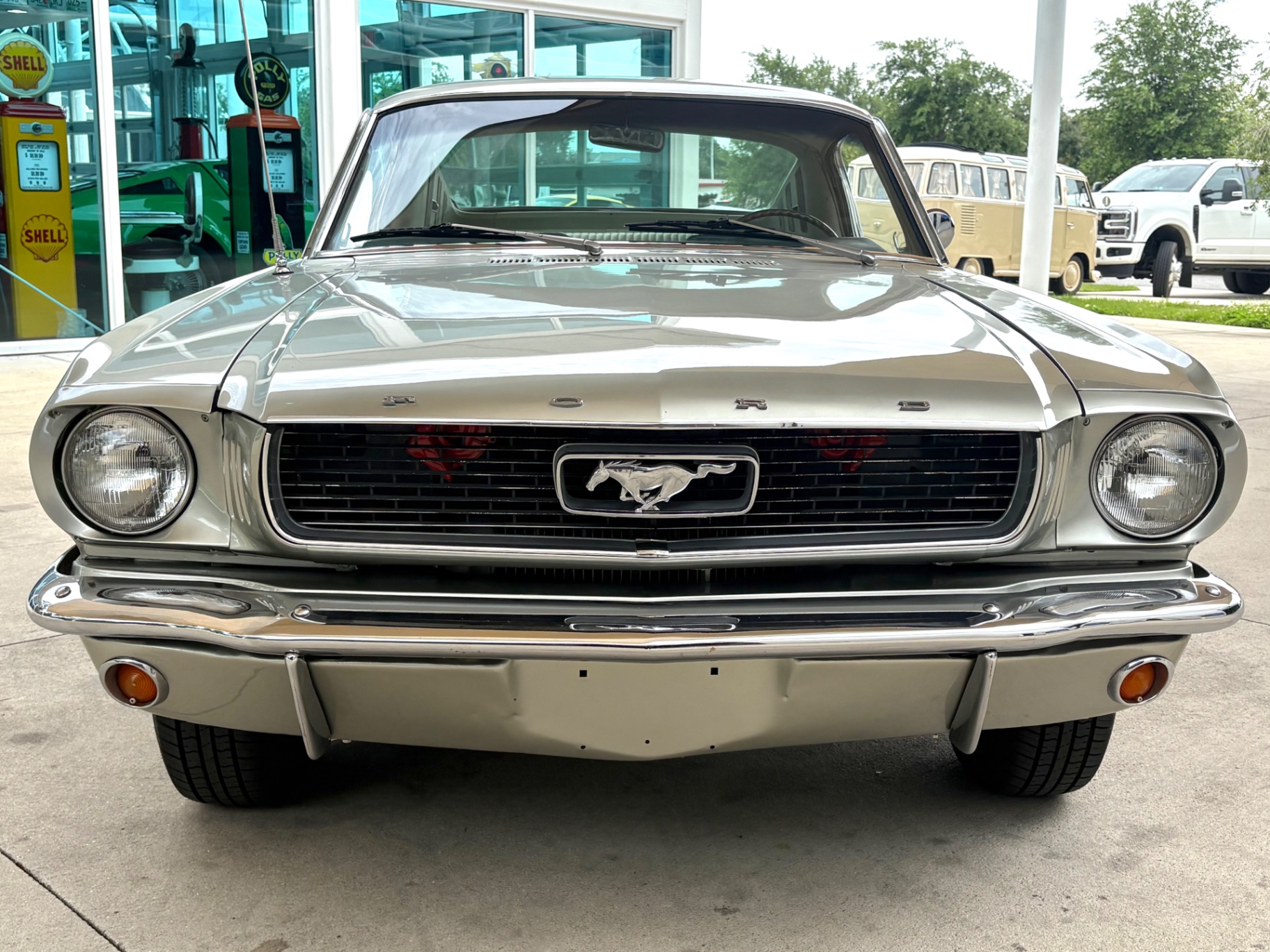
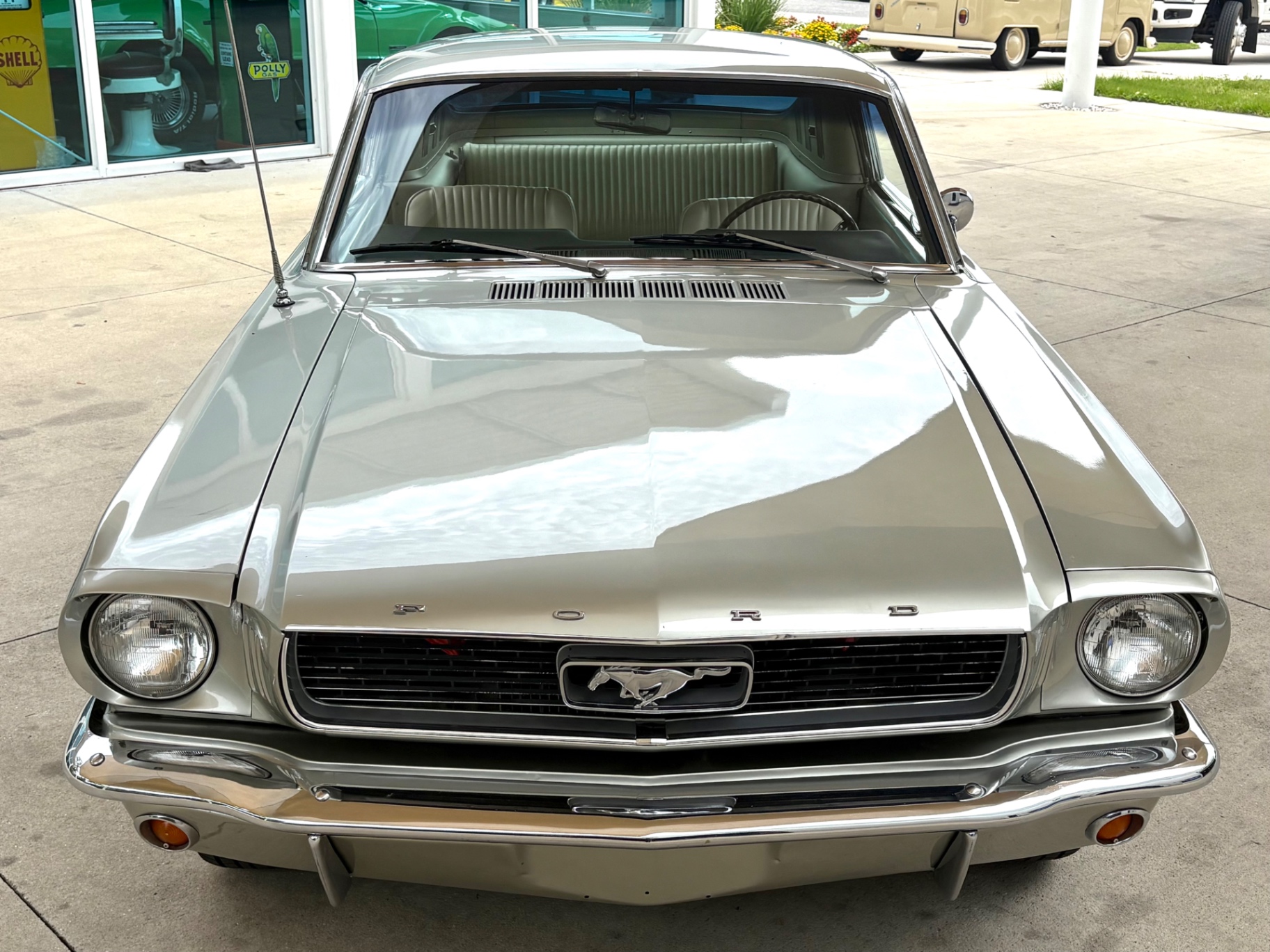
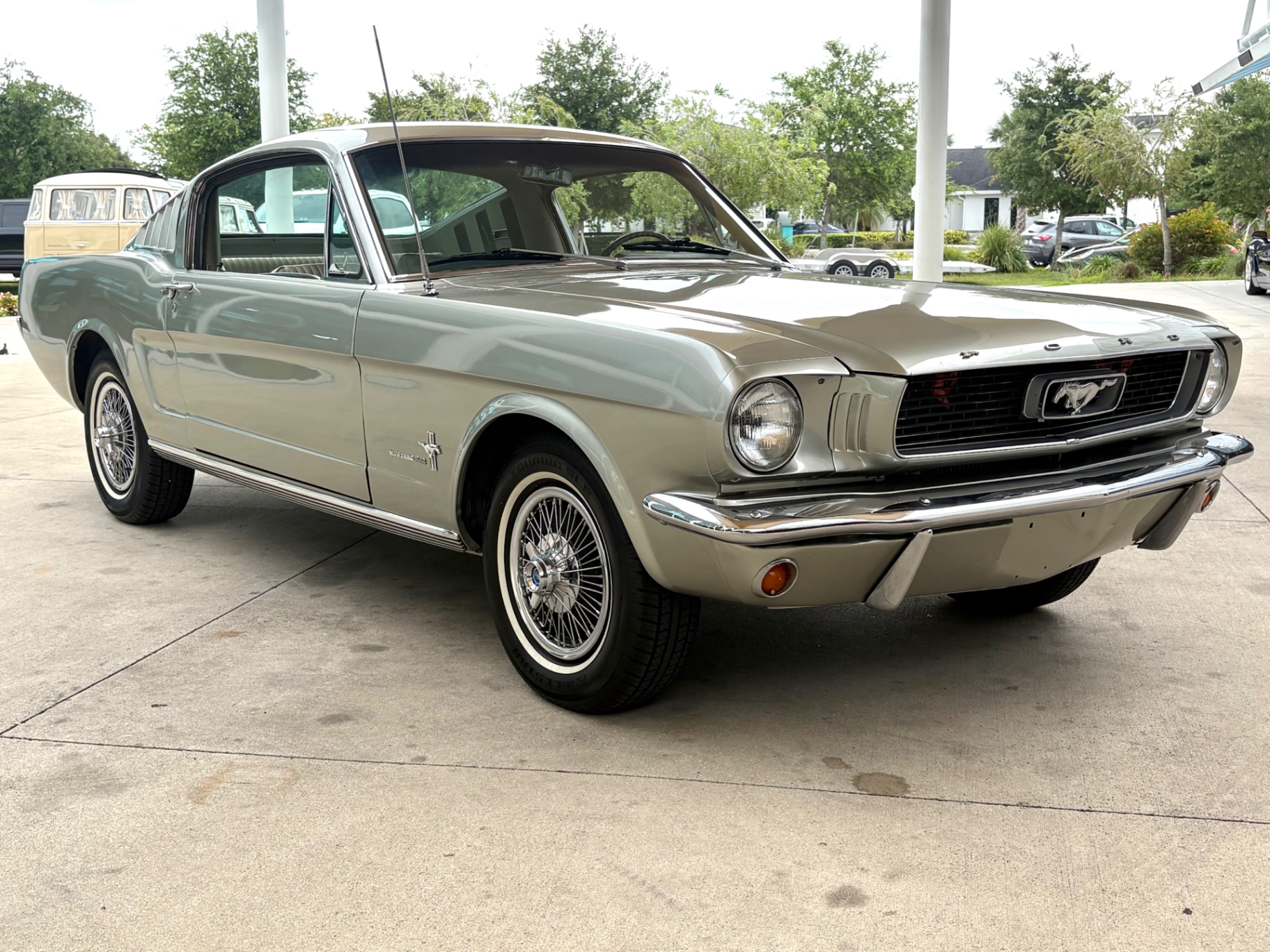
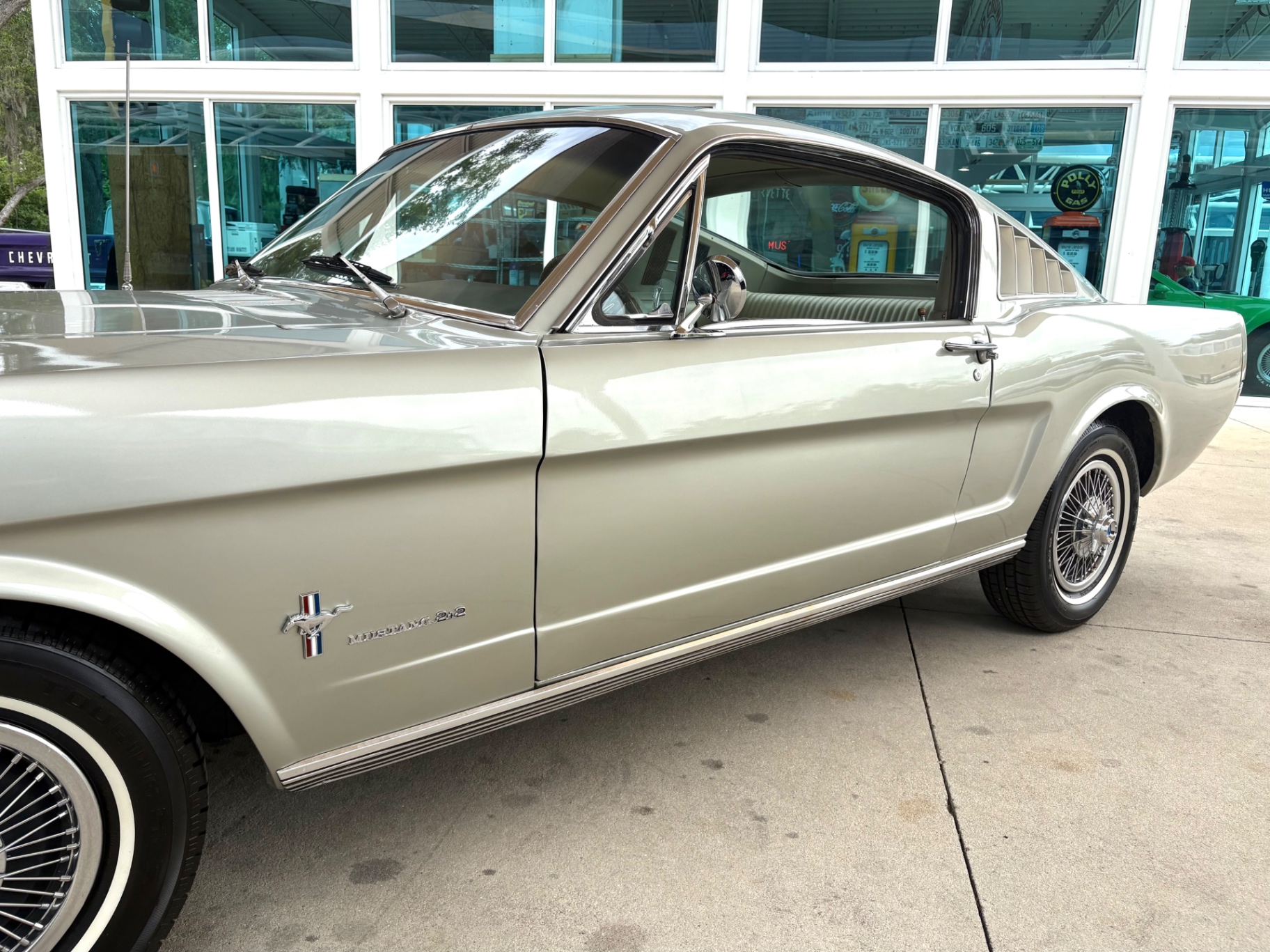
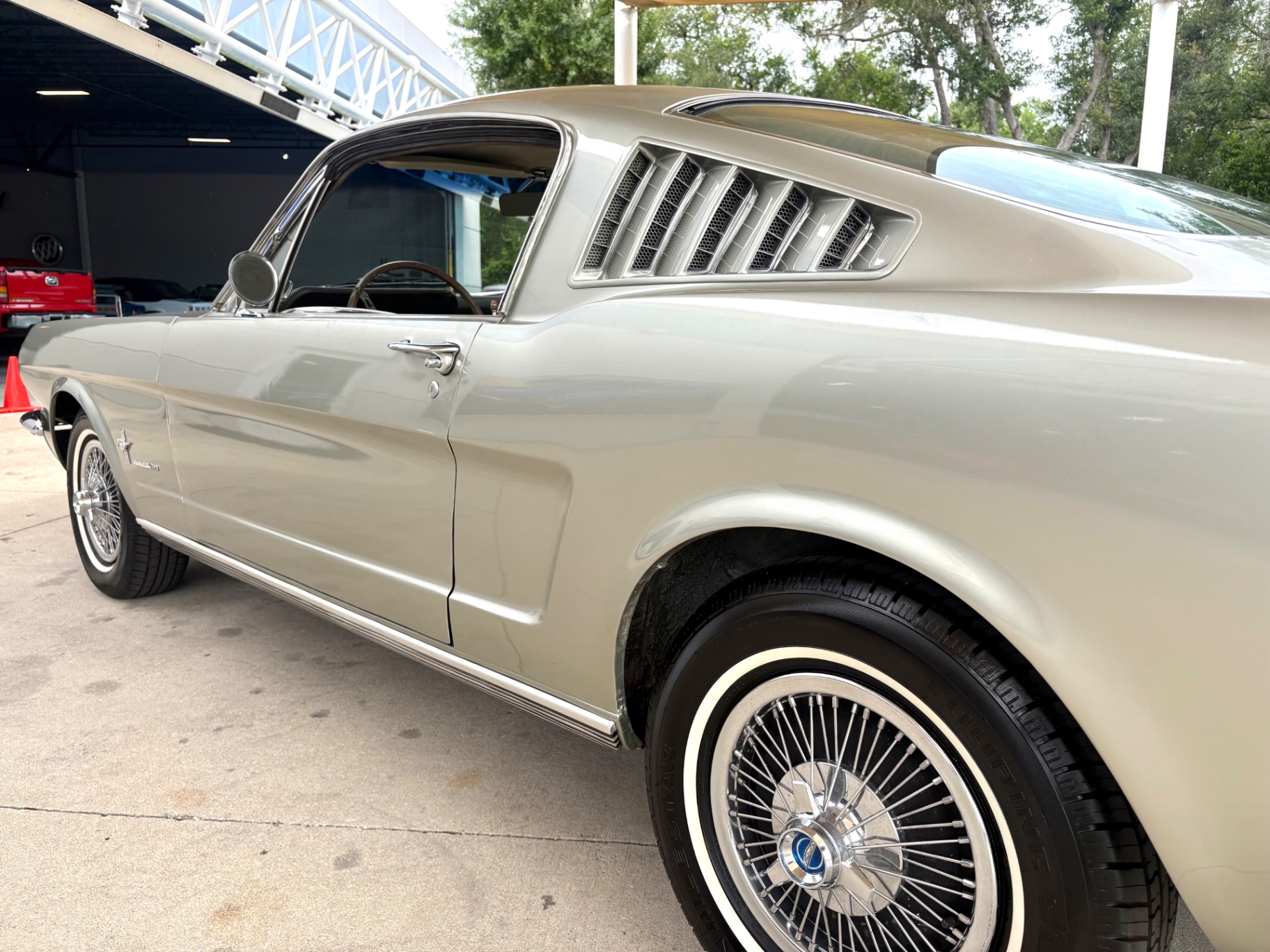
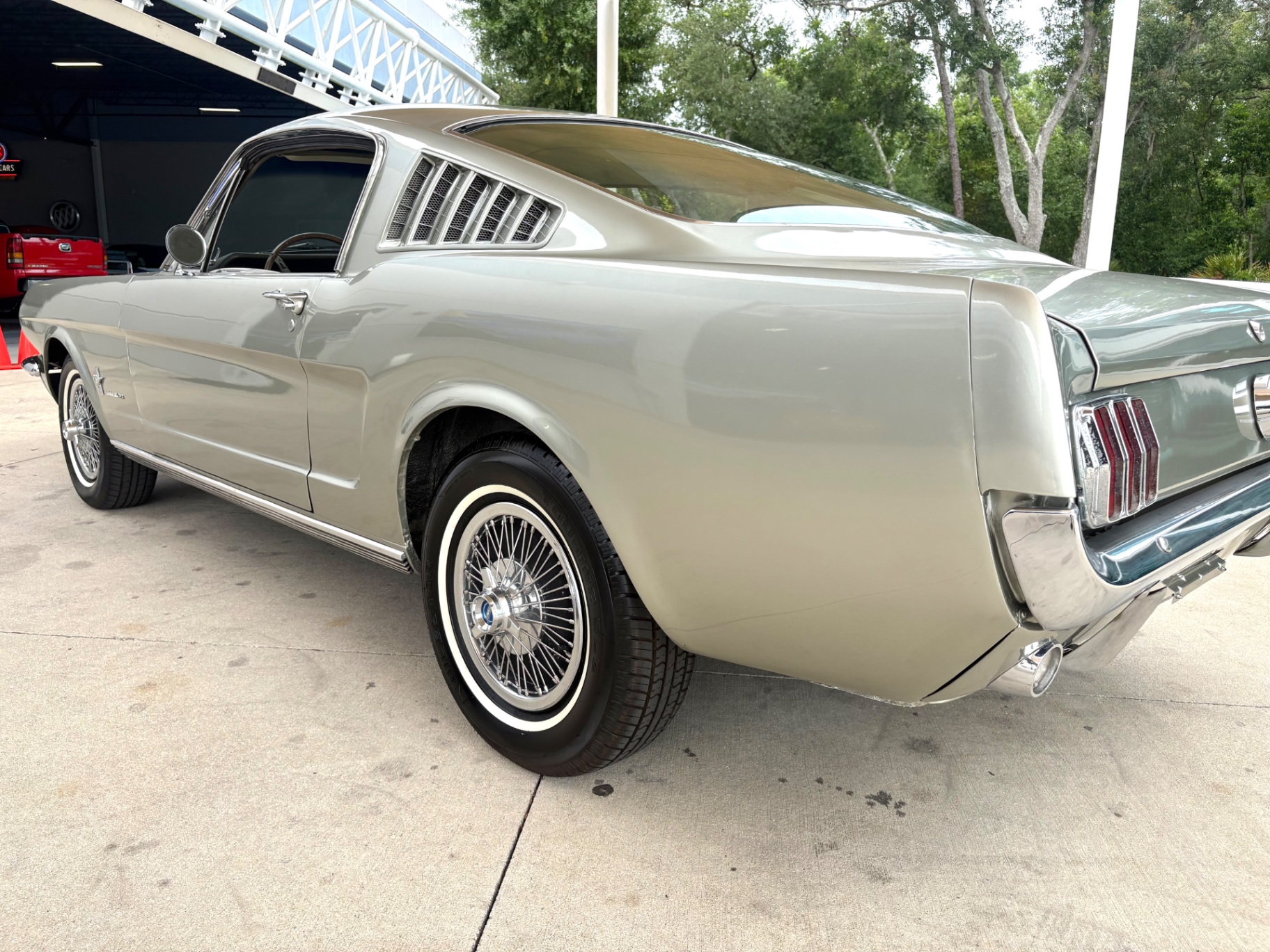
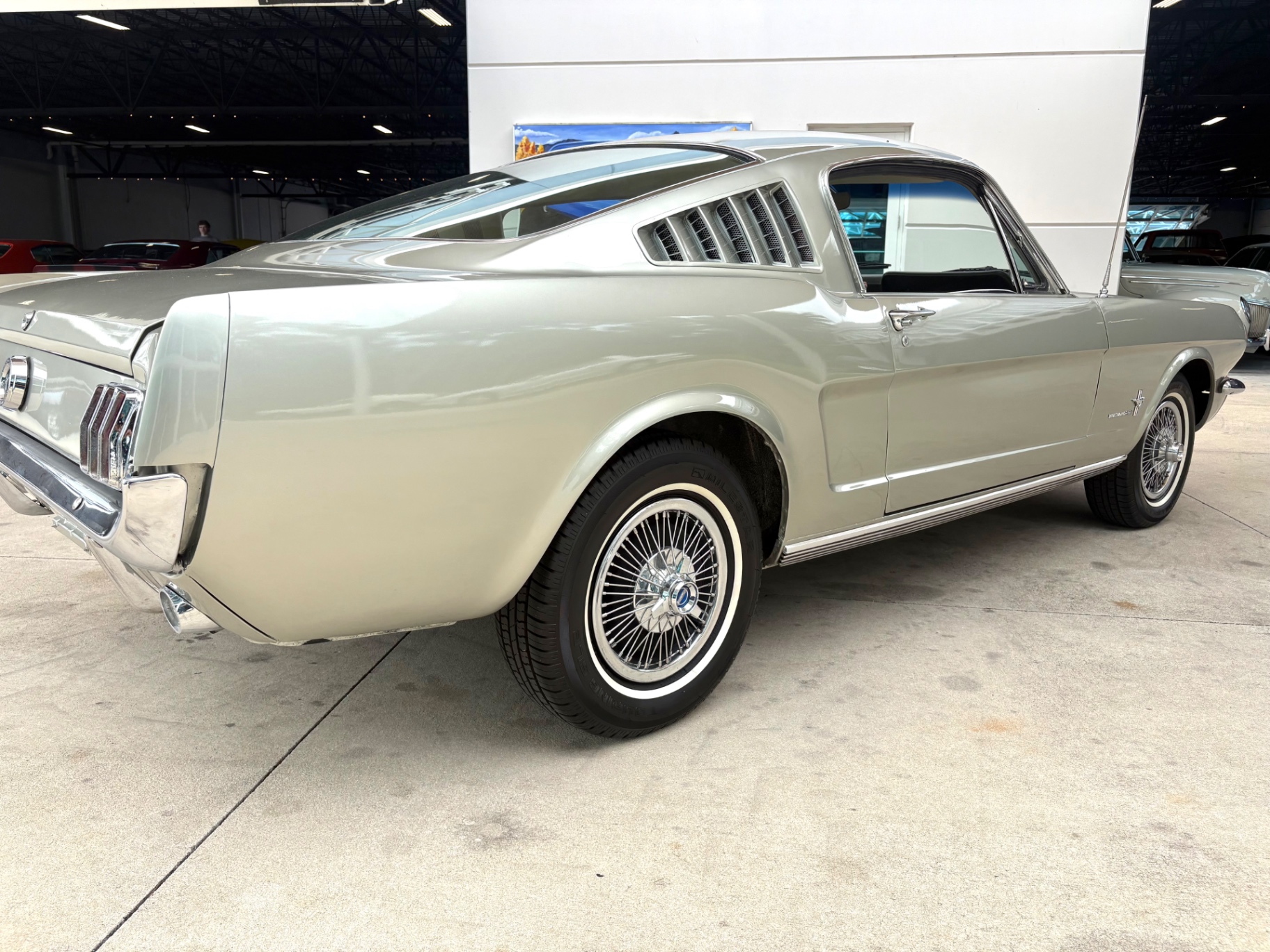
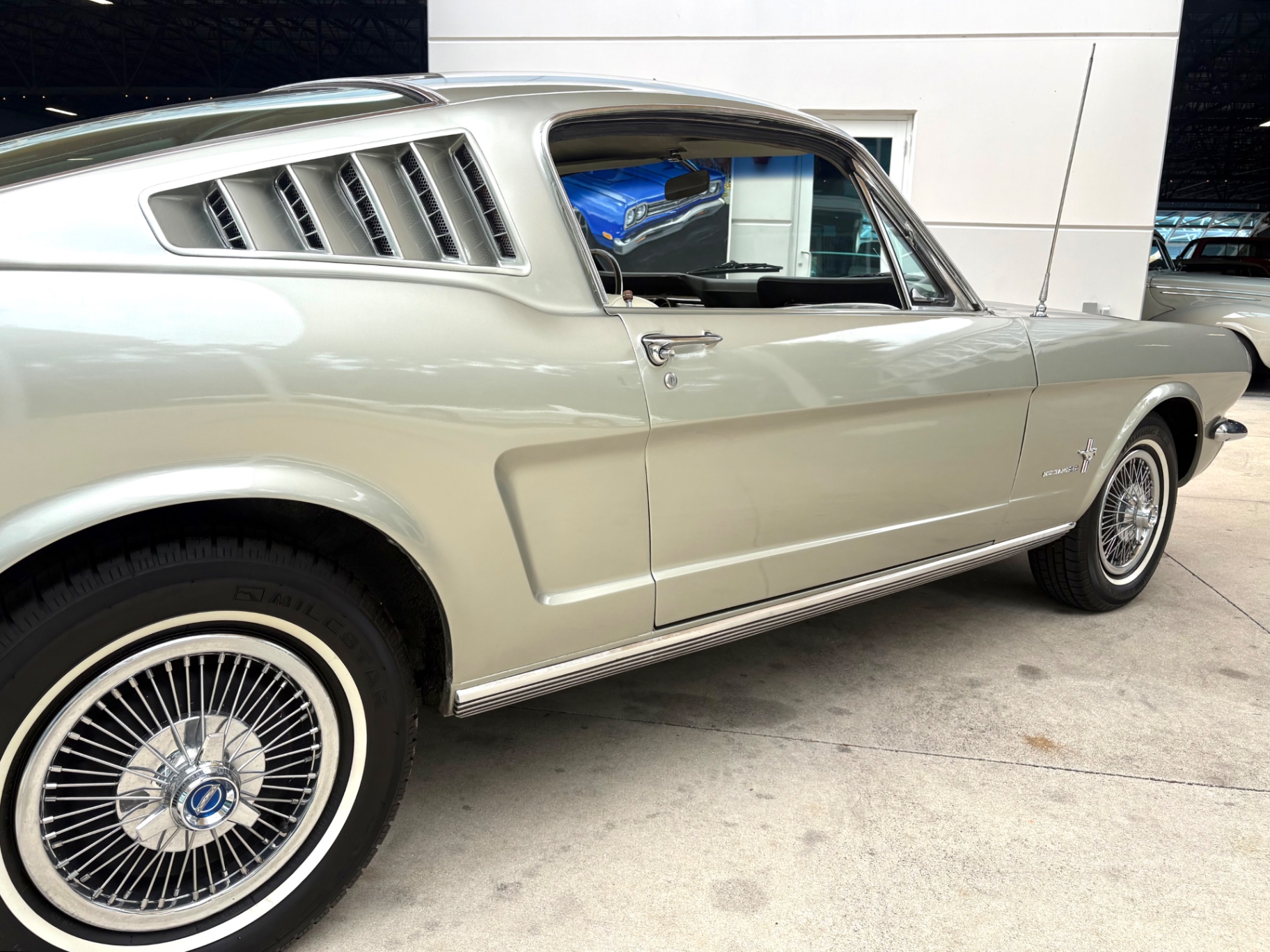
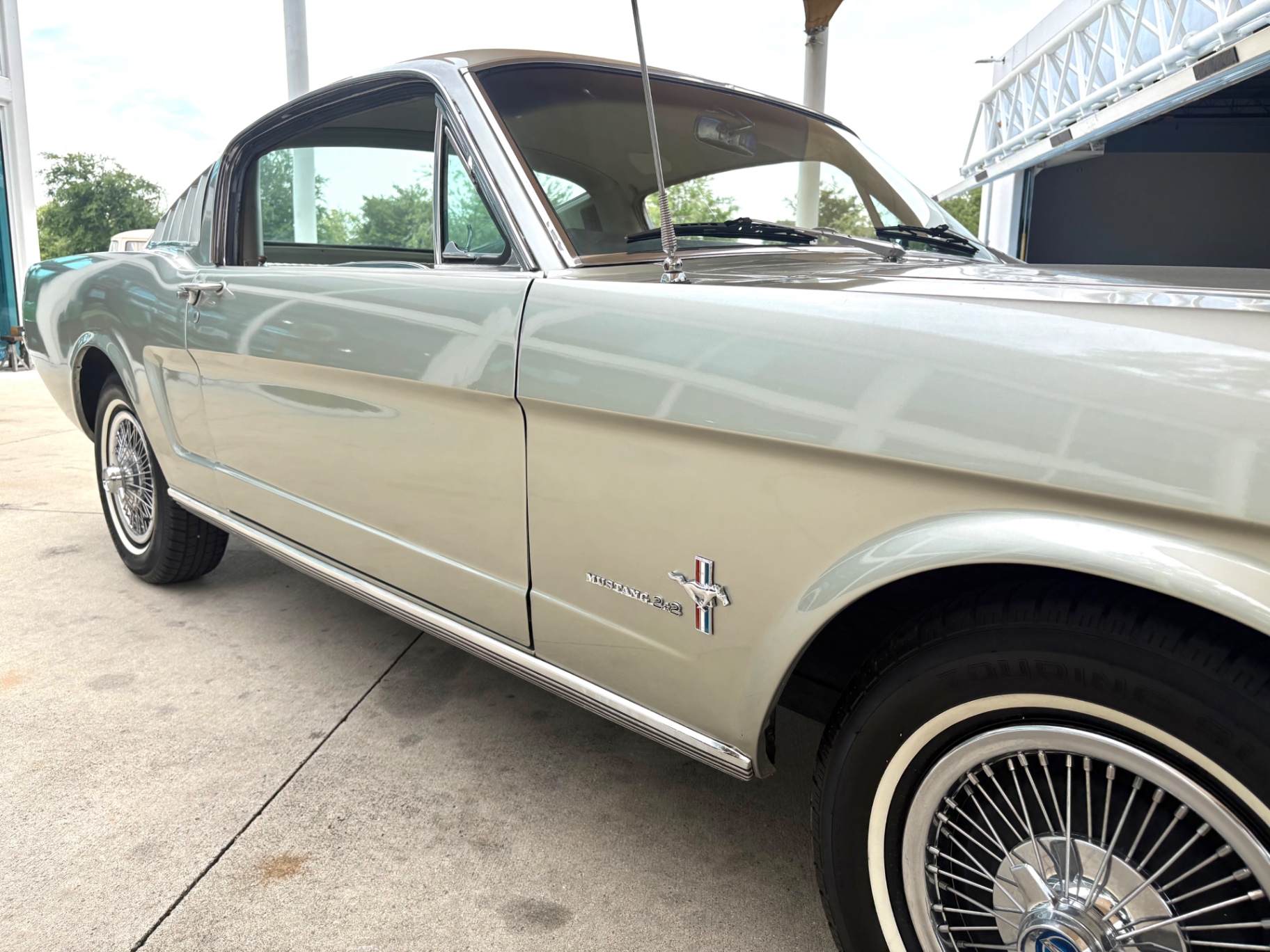
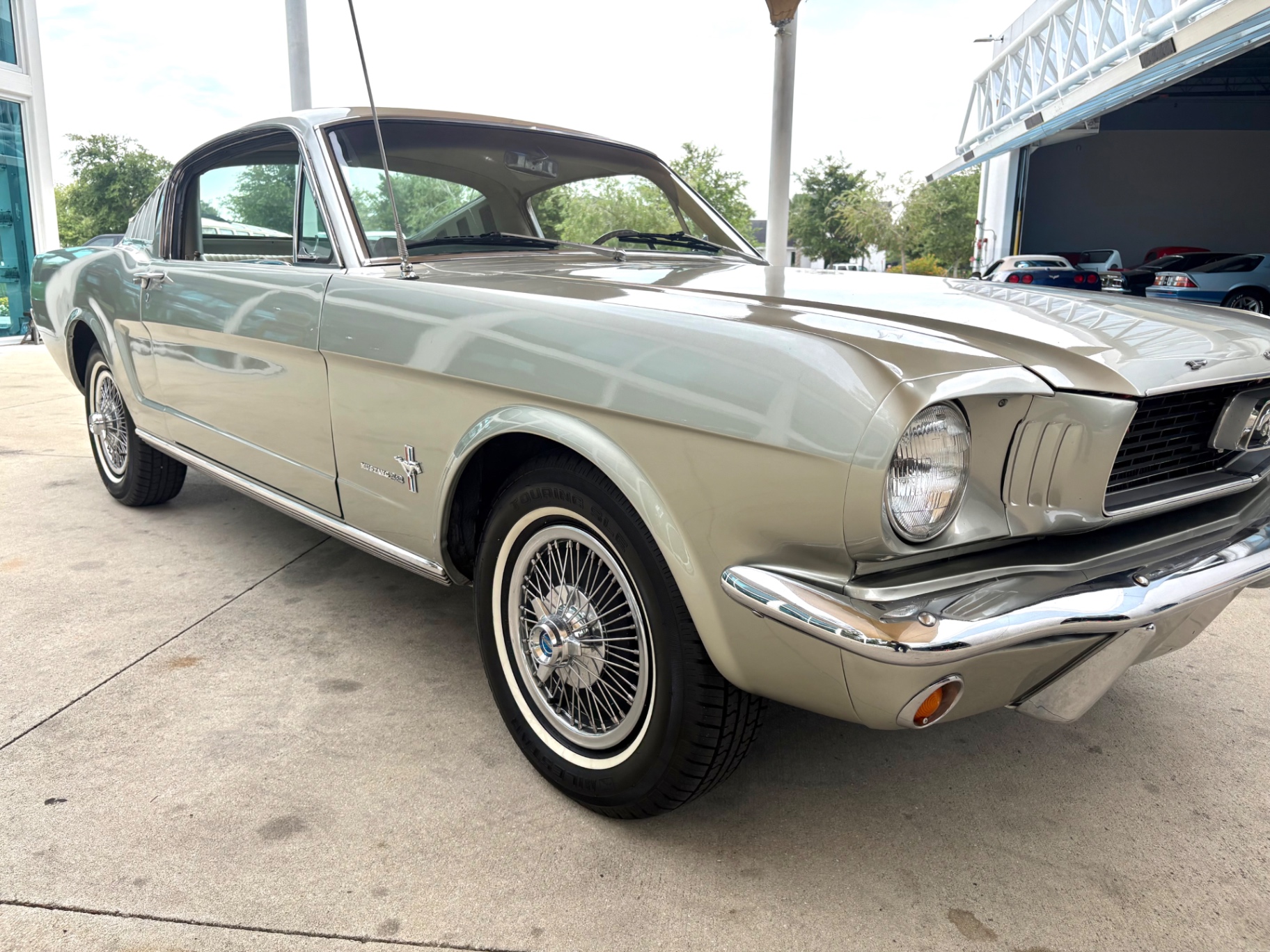
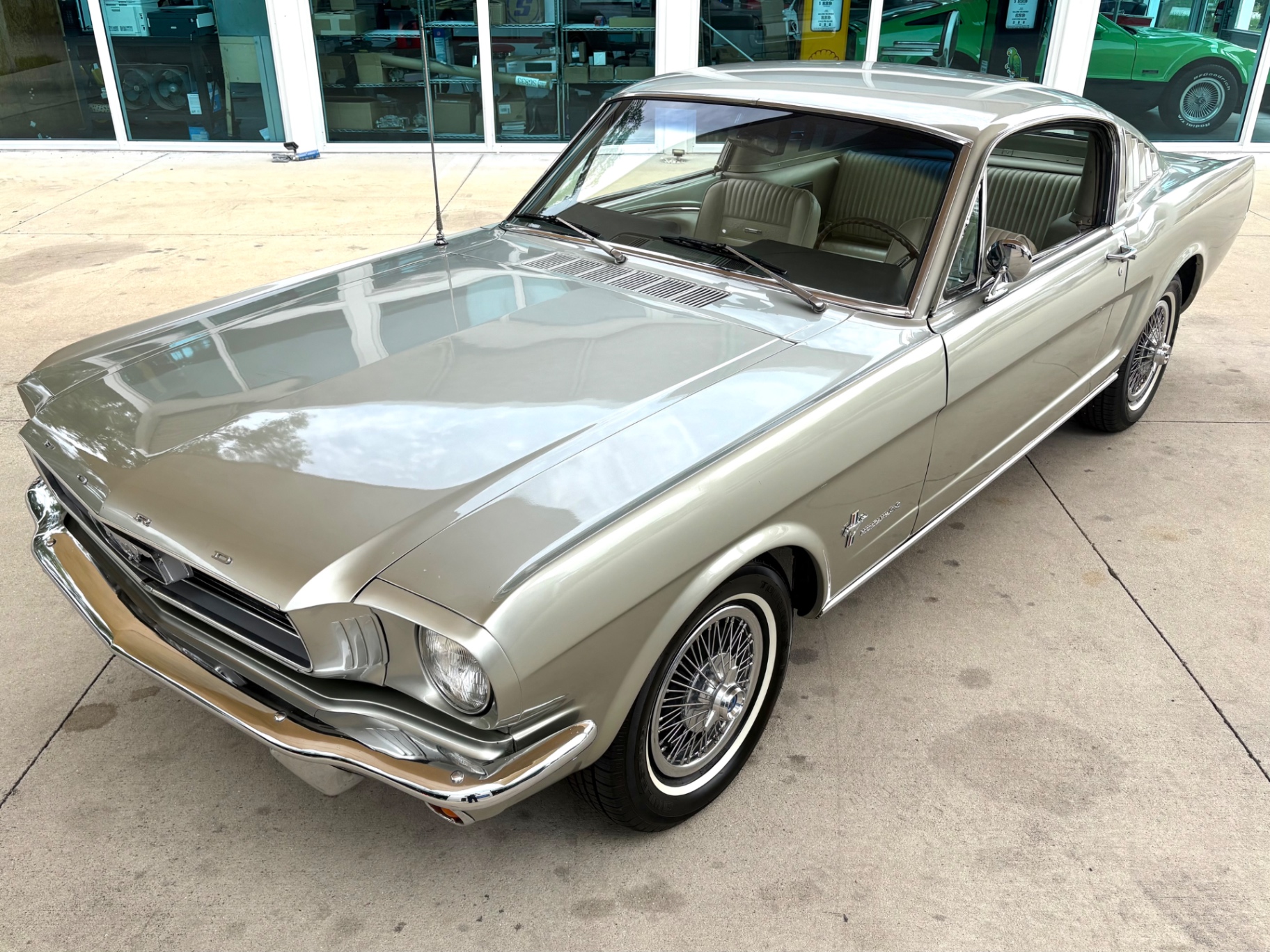
1966 Ford Mustang Fastback — Silver, 4-Speed, Inline Six with Period-Correct Detail Throughout
Why This Car Is Special
The 1966 Ford Mustang Fastback is one of the most recognizable shapes in American automotive history, and the fastback body style is where the design logic is most convincing. The long roofline sweeping into the rear deck gives the car a proportional completeness that the coupe and convertible simply do not have. Ford sold just over 499,000 Mustangs for the 1966 model year across all body styles, but the fastback — officially called the 2+2 — accounted for roughly 35,000 of those units, making it the least common of the three body styles that year. That scarcity is part of why fastbacks consistently command more attention in the collector market than their coupe counterparts.
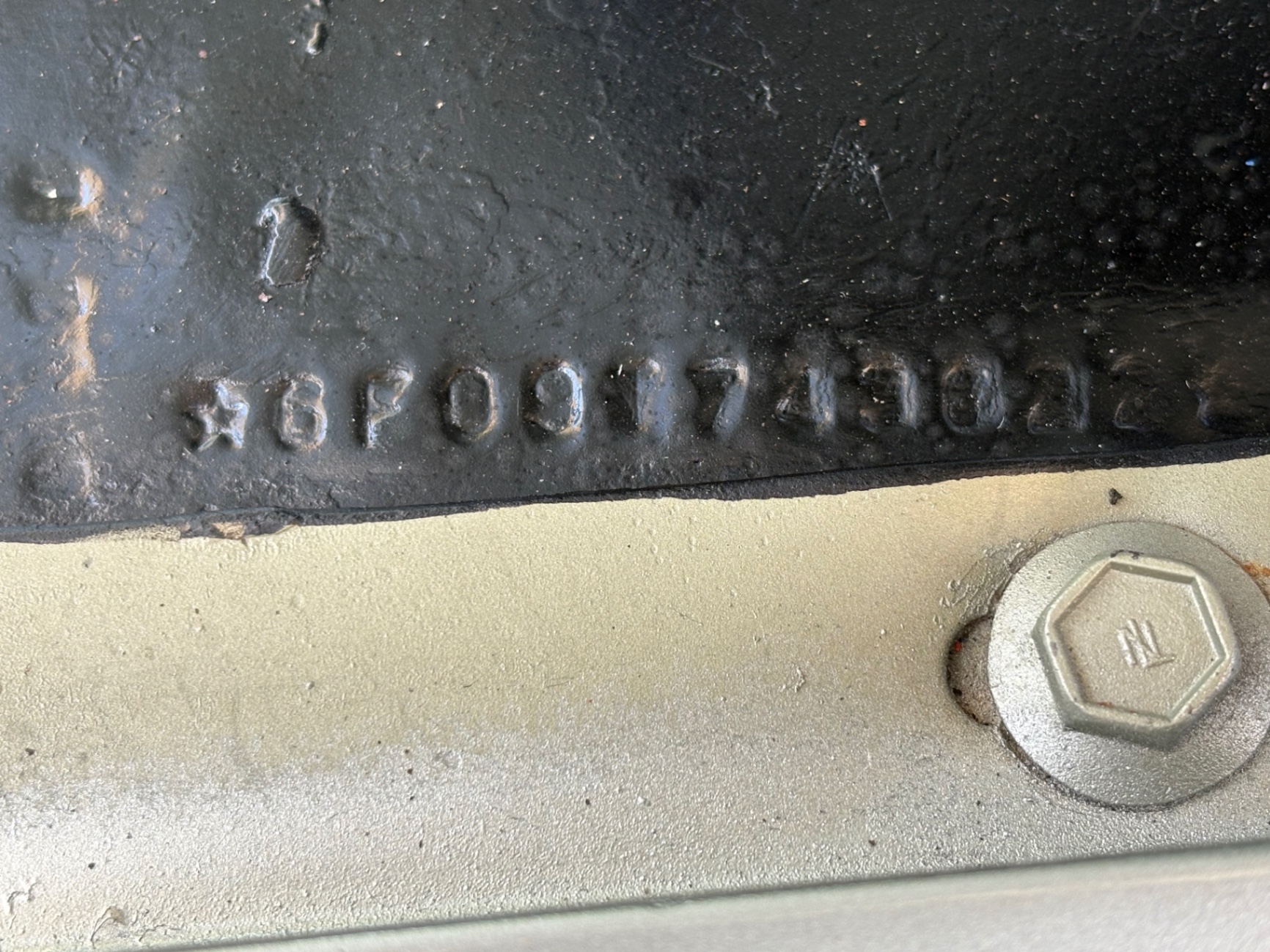
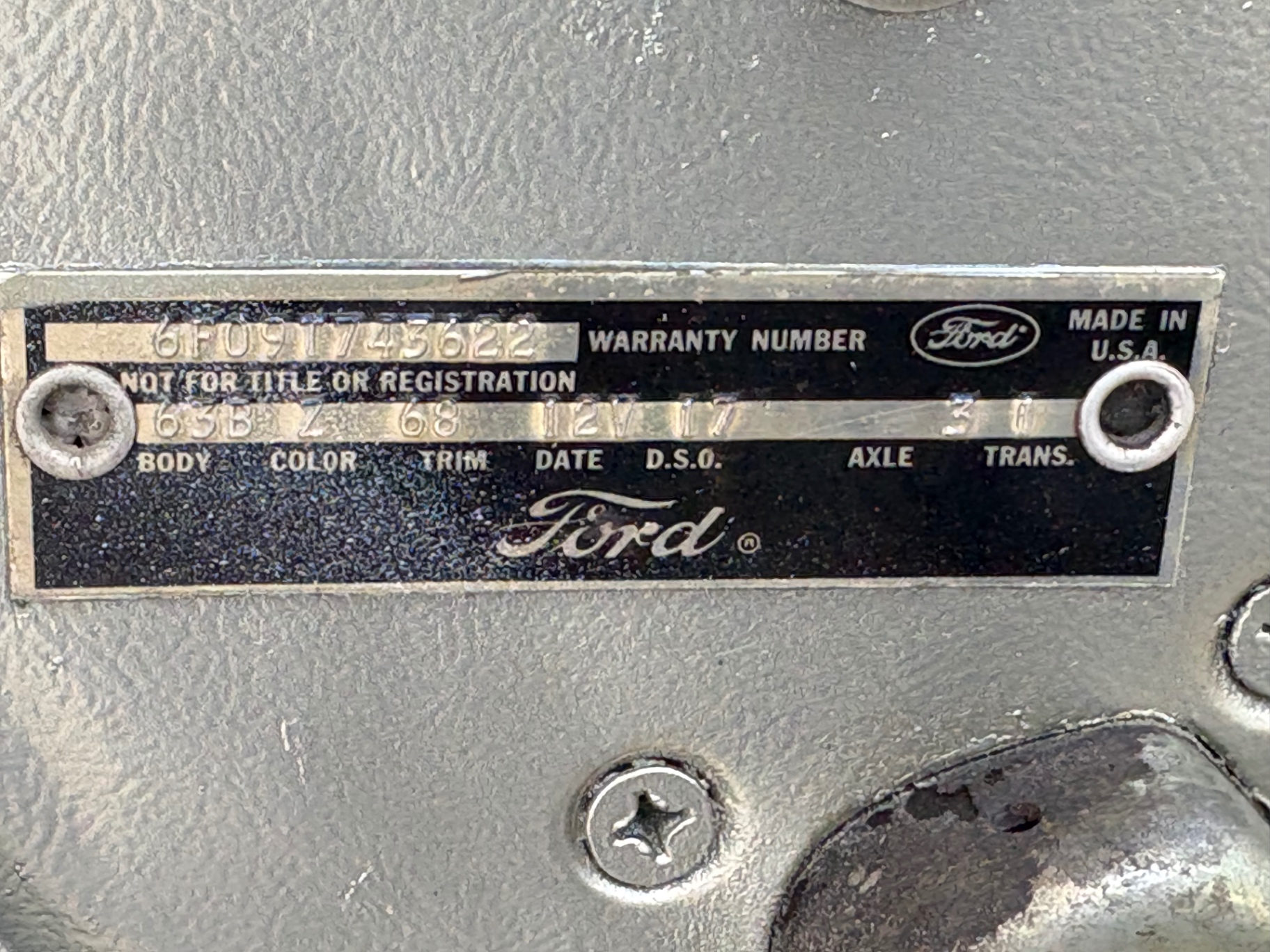
The VIN on this car decodes to a Dearborn, Michigan assembly plant build, a 1966 model year, the fastback body style, and a six-cylinder engine — all consistent with the specifications presented here. The "T" in the engine position of the VIN confirms the 200 cubic inch inline six, and the transmission code confirms the four-speed manual. That combination is a detail worth understanding, because it tells you something about how this car was originally configured and sold.
The 200 cubic inch inline six was Ford's standard engine for the 1966 Mustang. It produced 120 horsepower and was known for its durability and smooth power delivery. It is not a performance engine by the standards of the era's V8s, but it is a correct and honest engine for the car. Pairing it with a four-speed manual transmission was a deliberate choice — the buyer who originally specified this car wanted the engagement of a manual gearbox without stepping up to a V8. The result is a lighter, more balanced car that is genuinely pleasant to drive on public roads. Replacement parts for the 200 six remain widely available, and the engine's mechanical simplicity is an asset for anyone who plans to maintain the car themselves or on a budget.
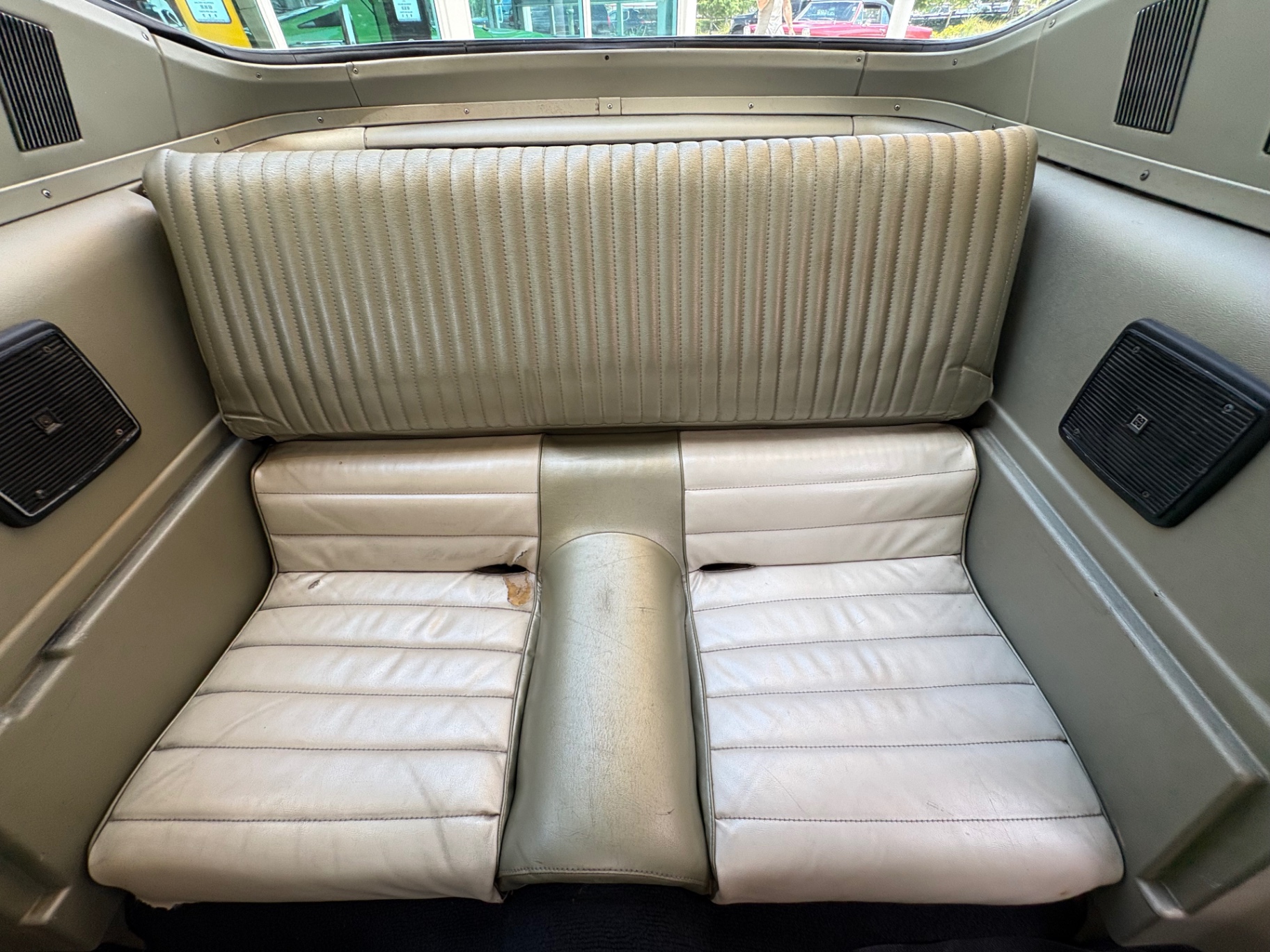
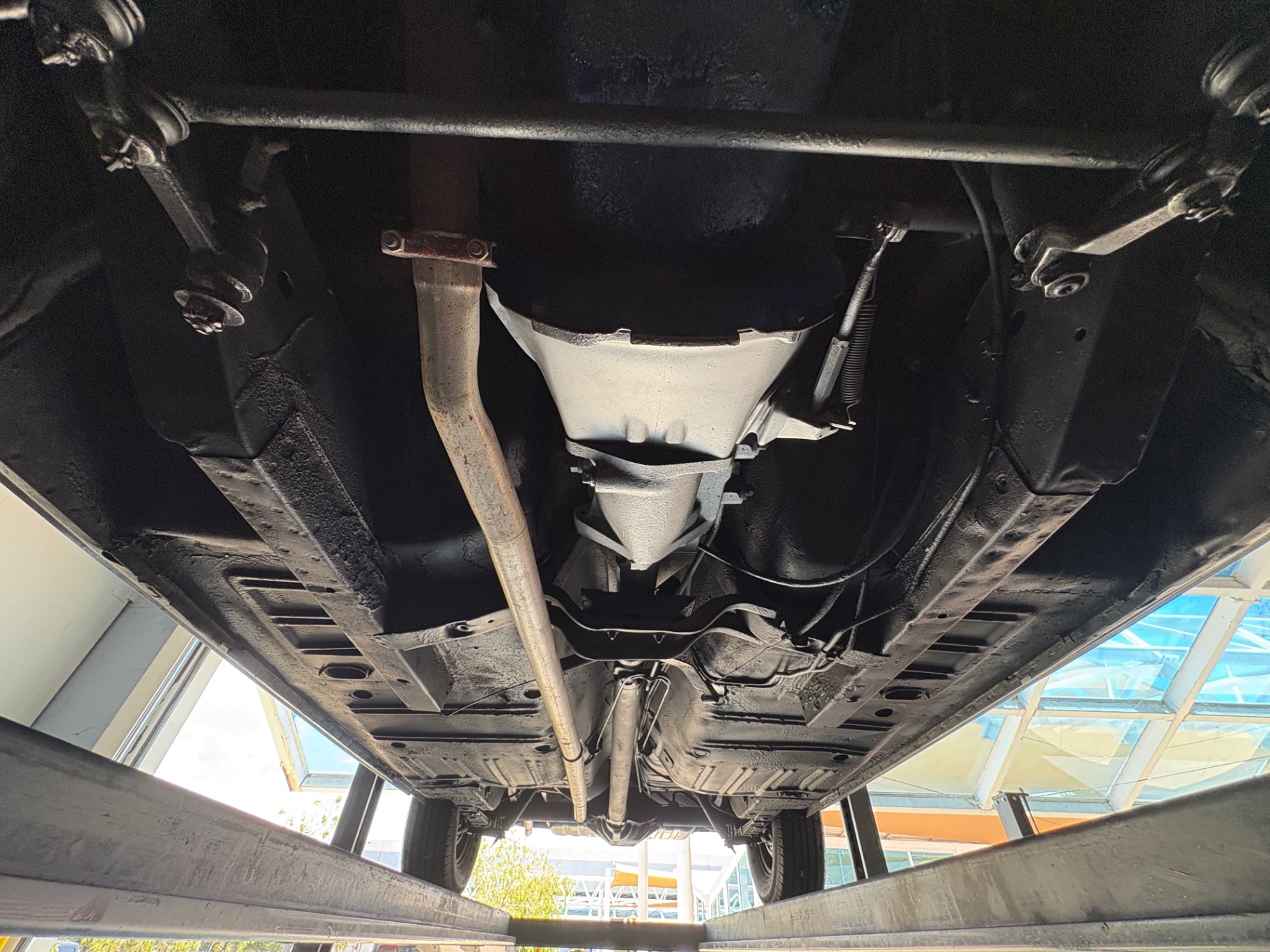
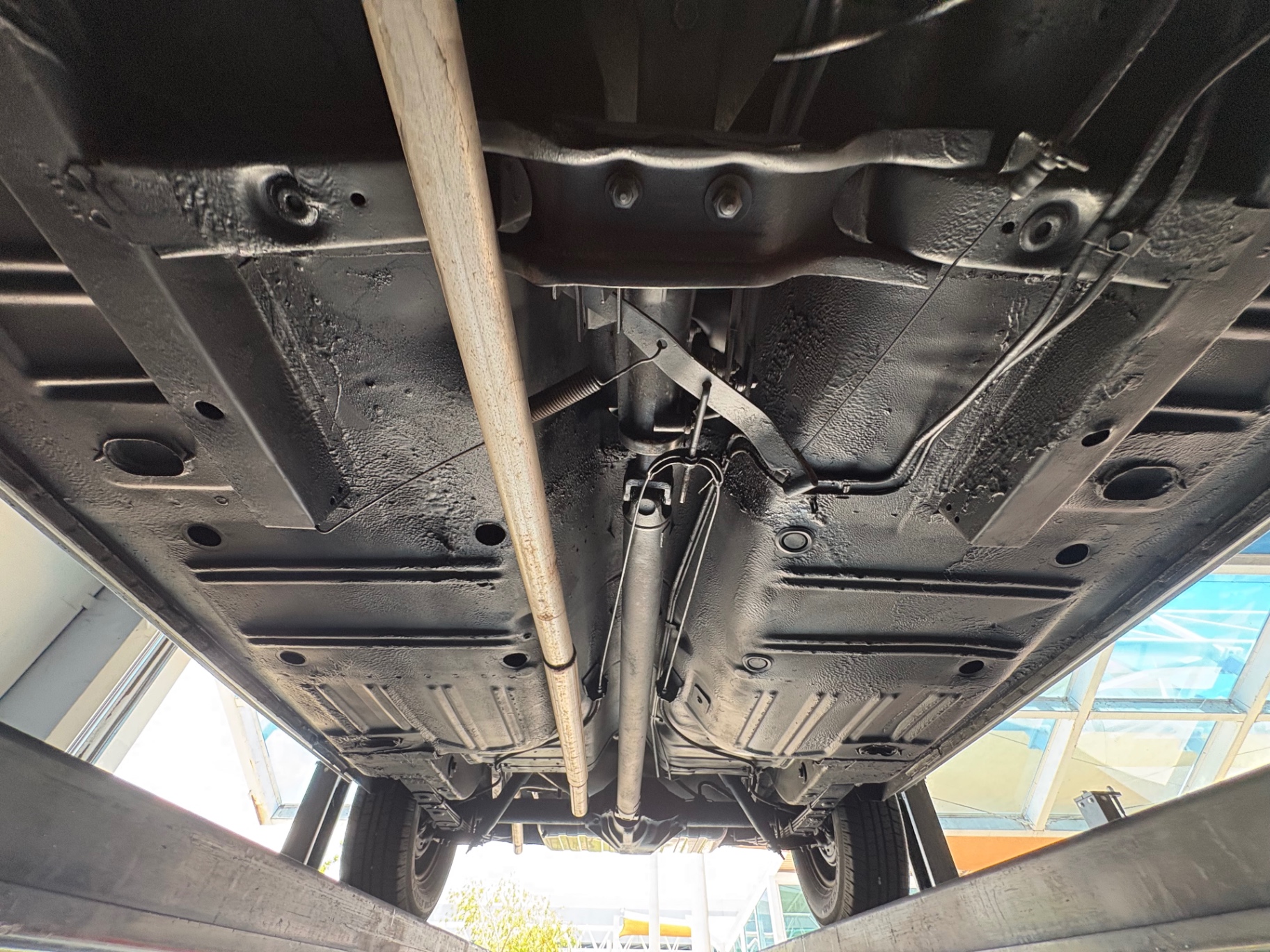
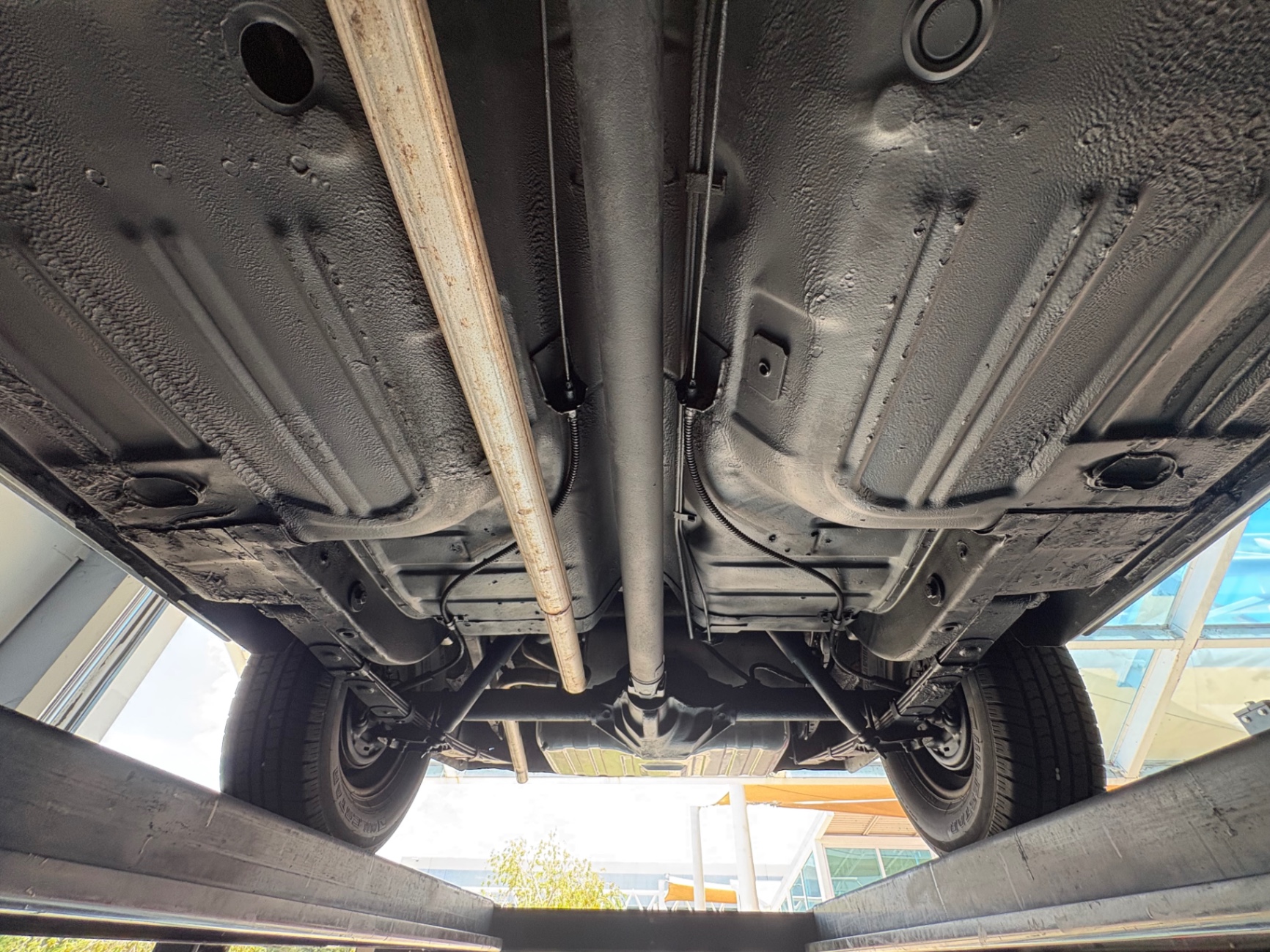
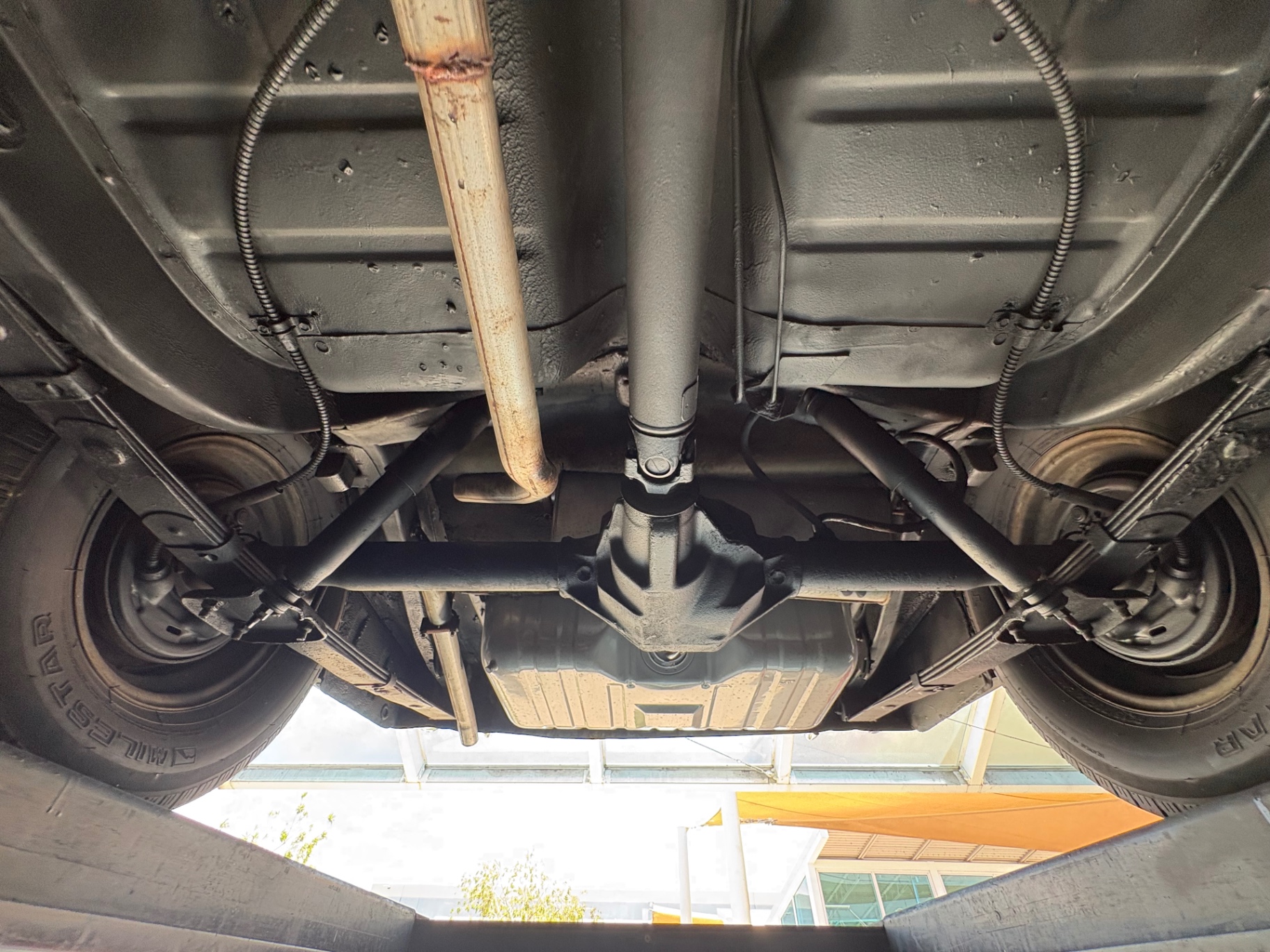
What sets this particular 1966 Ford Mustang Fastback apart is the overall presentation. The silver exterior over parchment vinyl interior is a combination that photographs well and holds up well in person. The car has been maintained and detailed to a standard that reflects care rather than neglect, and the undercarriage confirms the car's structural integrity. For buyers looking for a fastback that is ready to drive and show without a full restoration budget, this car sits in a practical and honest position.
Features
- 200 cubic inch inline six-cylinder engine
- 4-speed manual transmission
- Fastback (2+2) body style
- Silver exterior
- Parchment vinyl interior
- Console with floor shifter
- Wood-rim steering wheel
- Wire wheel covers
- Whitewall tires
- Chrome front and rear bumpers
- Door courtesy lights
- FoMoCo-branded engine bay components
- Clean undercarriage
Mechanical
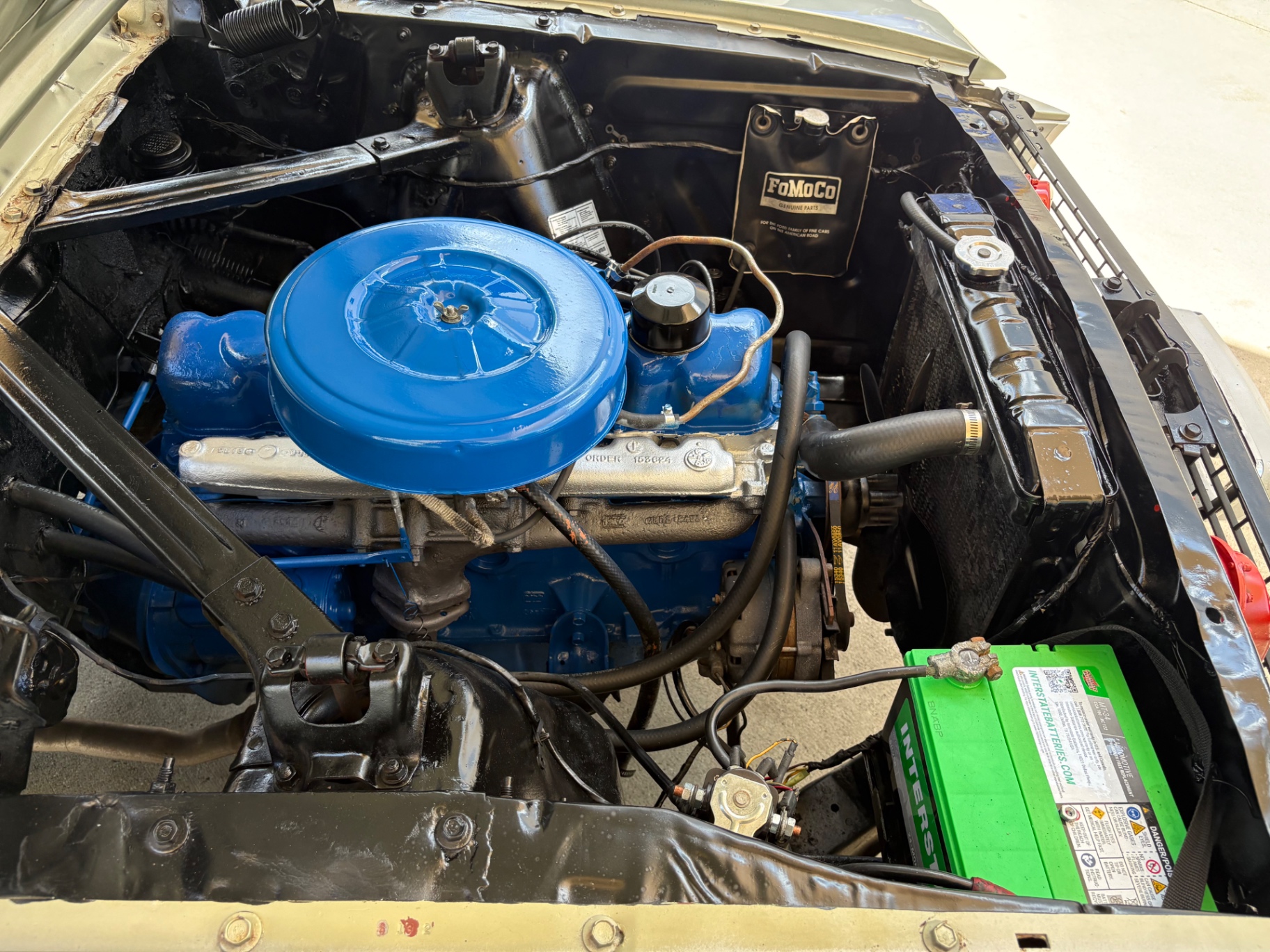
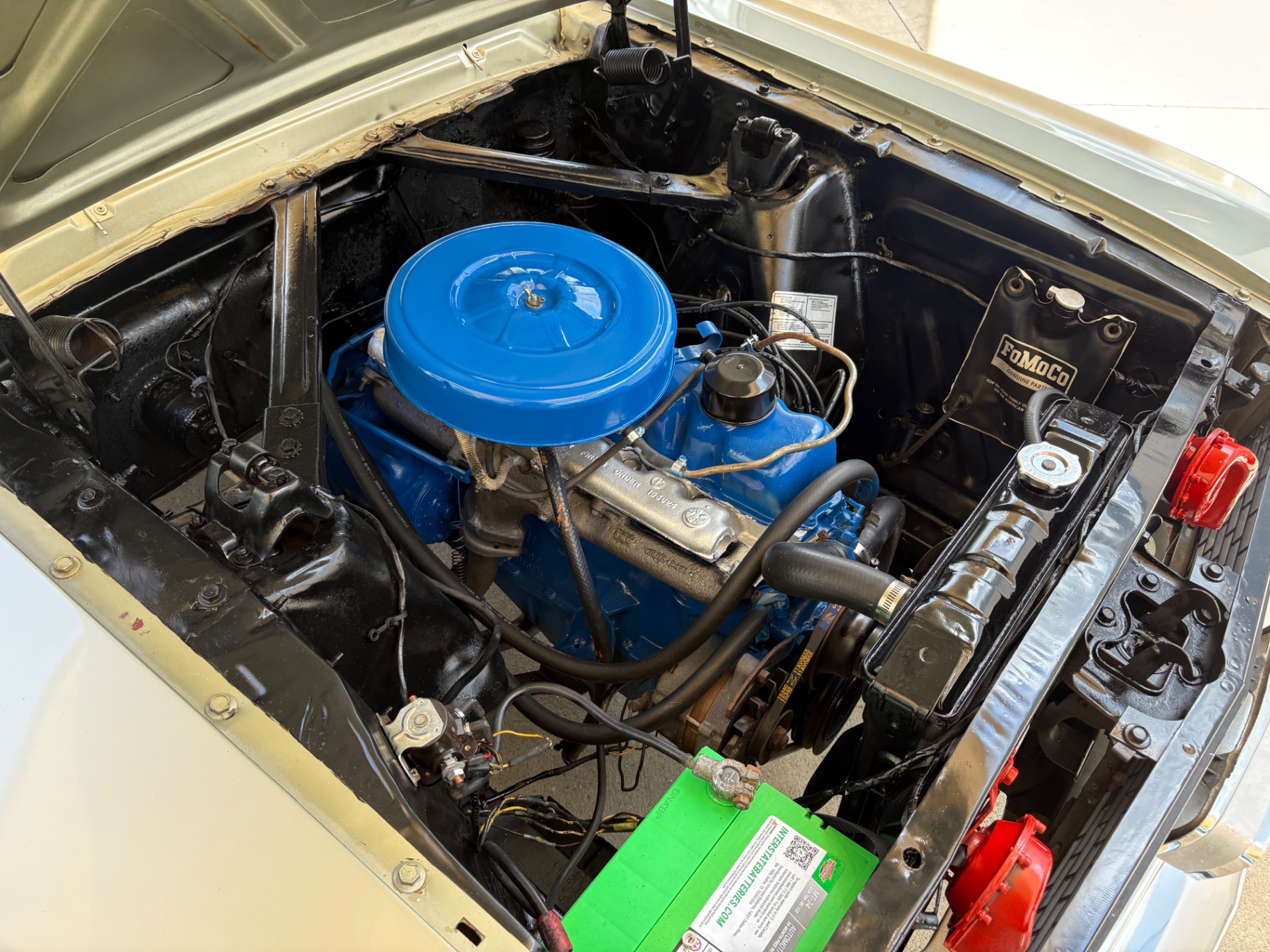
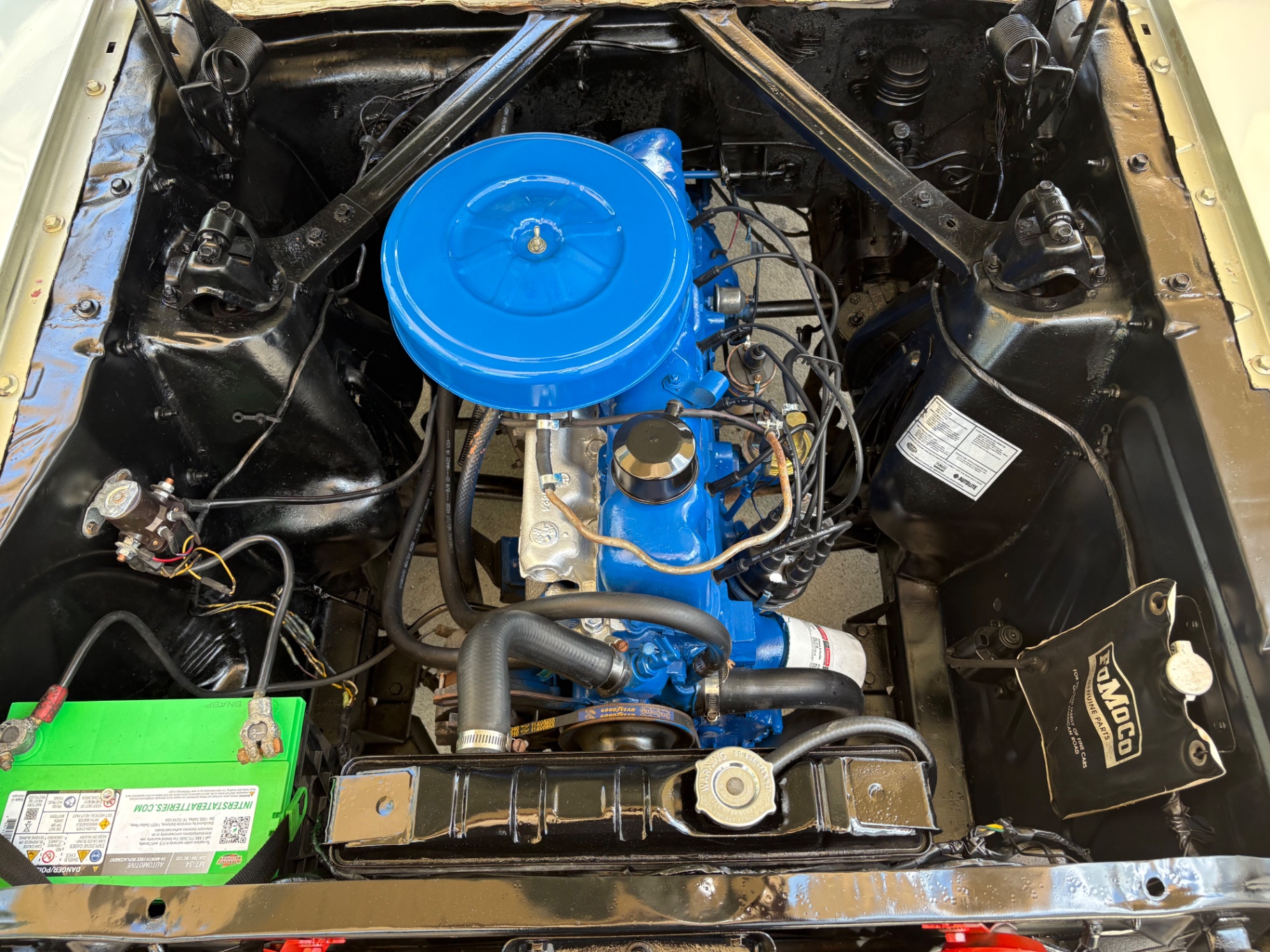
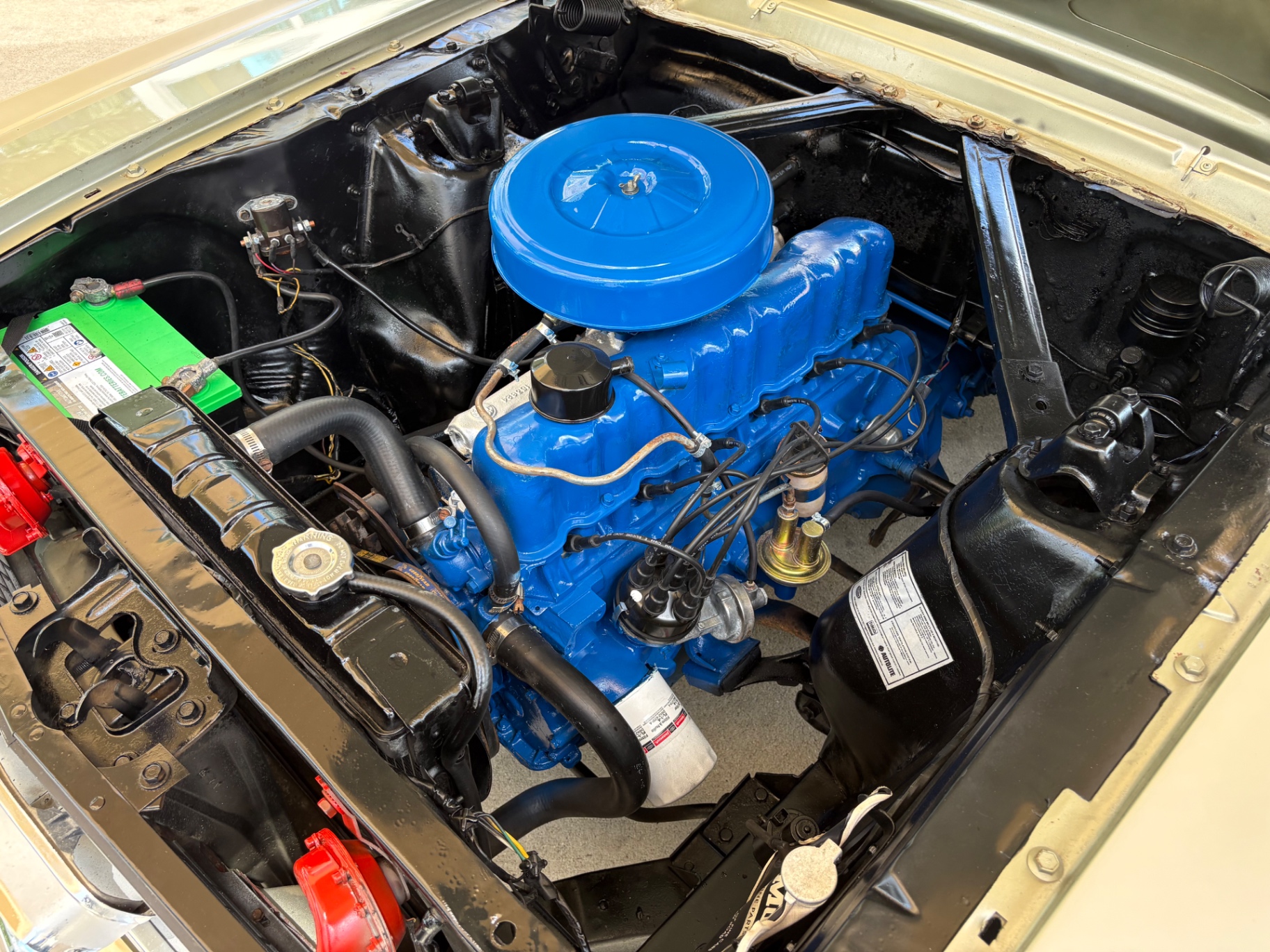
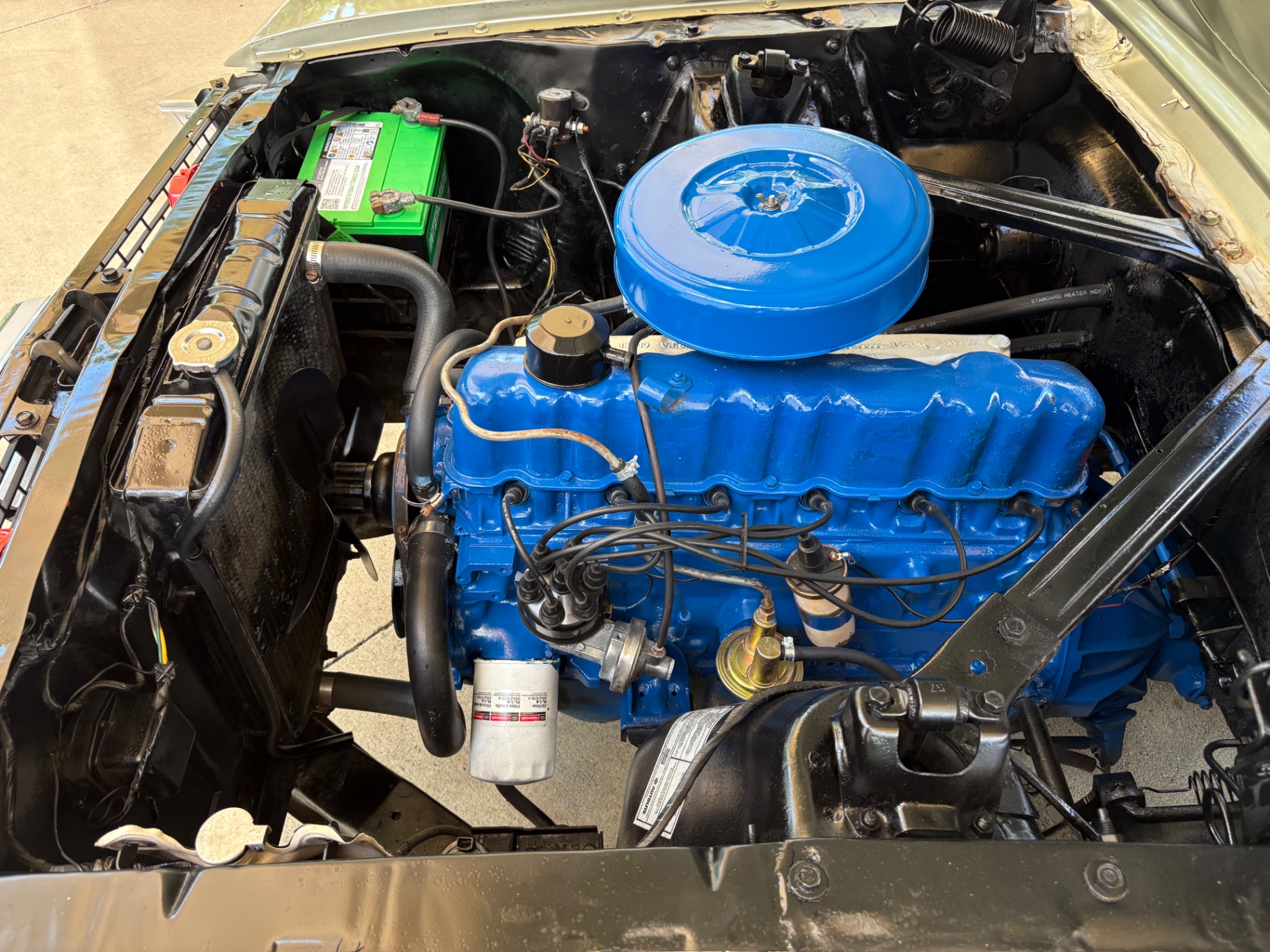
The 200 cubic inch inline six under this hood is the correct, numbers-matching engine for a Dearborn-built 1966 Ford Mustang Fastback of this VIN configuration. Ford introduced the 200 six for the Mustang in 1965 as a lengthened version of the earlier 170 cubic inch unit. It added a seventh main bearing journal compared to the older engine, which reduced vibration significantly and gave it a reputation for long service life. The engine is painted Ford Corporate Blue, which is the factory-correct color for this application, and the engine bay retains its FoMoCo-branded components — the kind of detail that matters to judges at concours events and to buyers who care about originality.
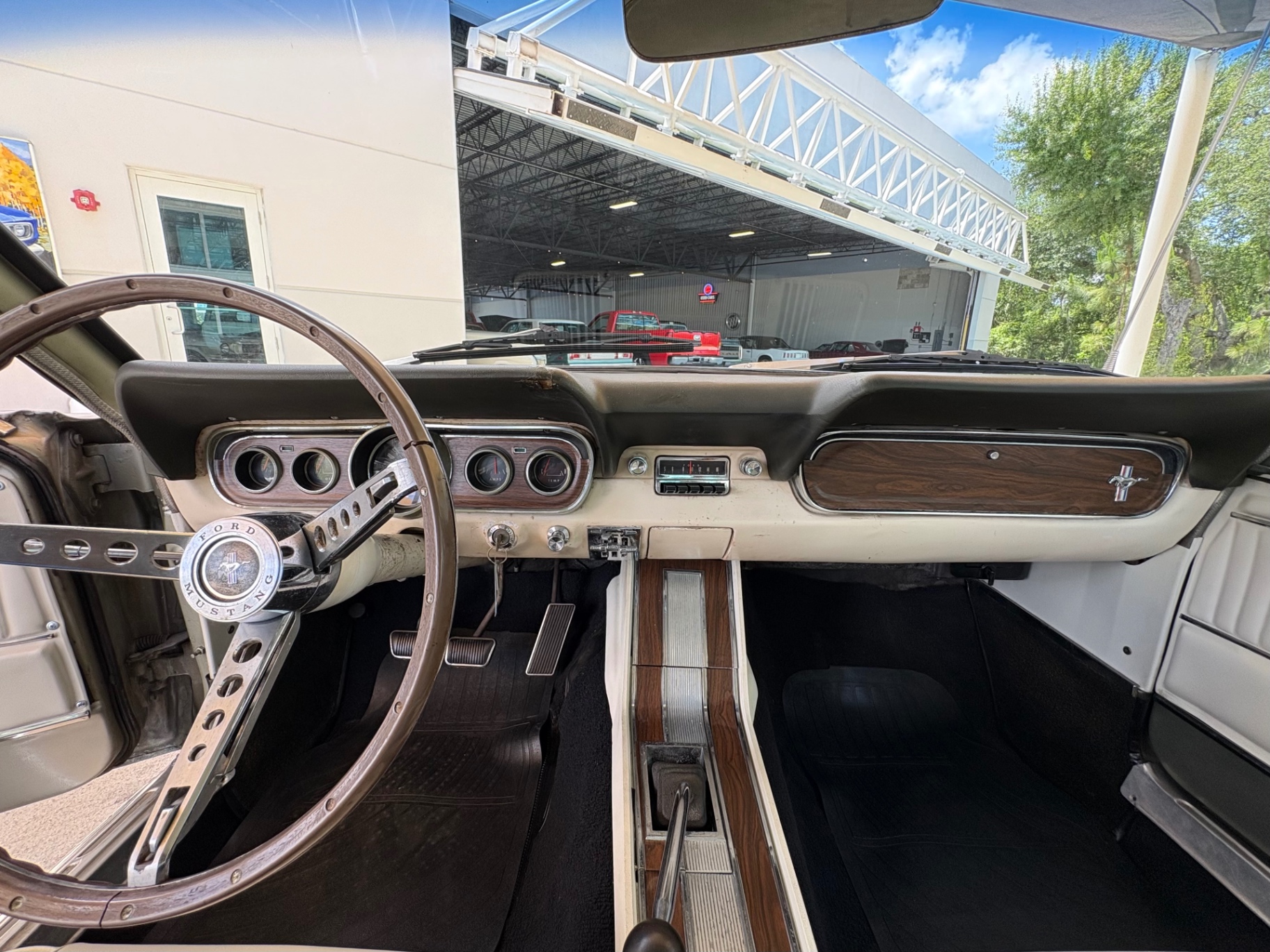
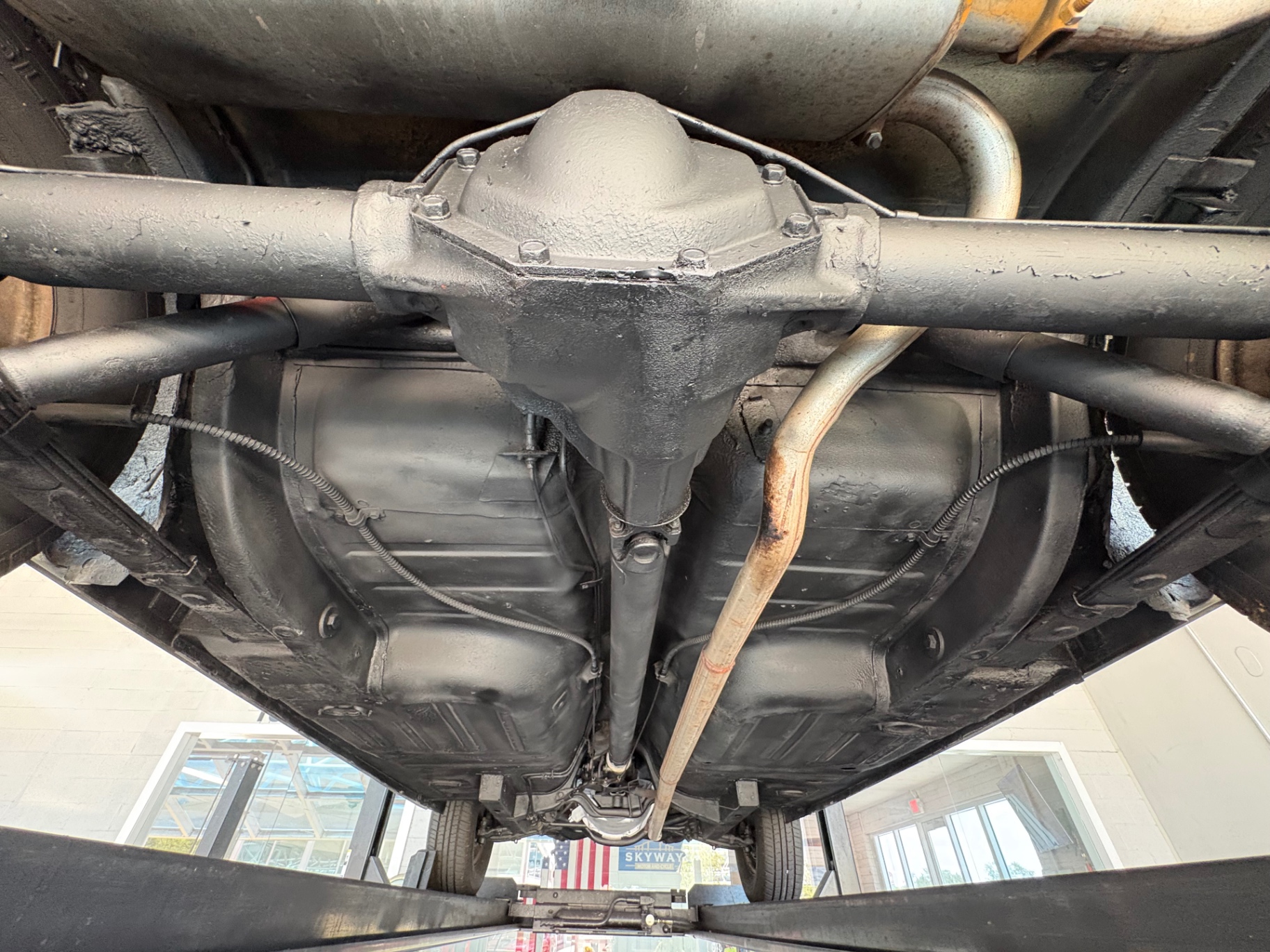
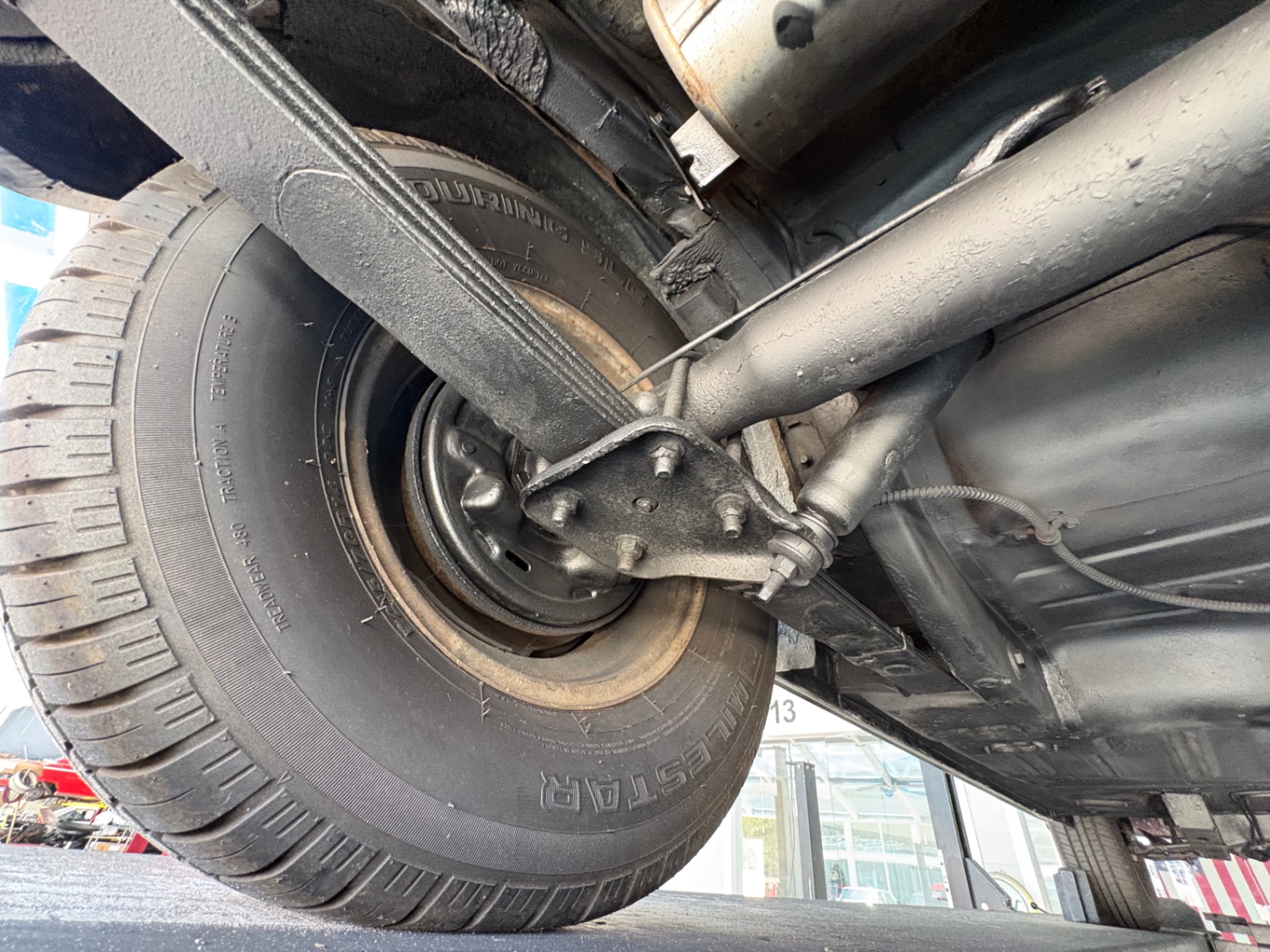
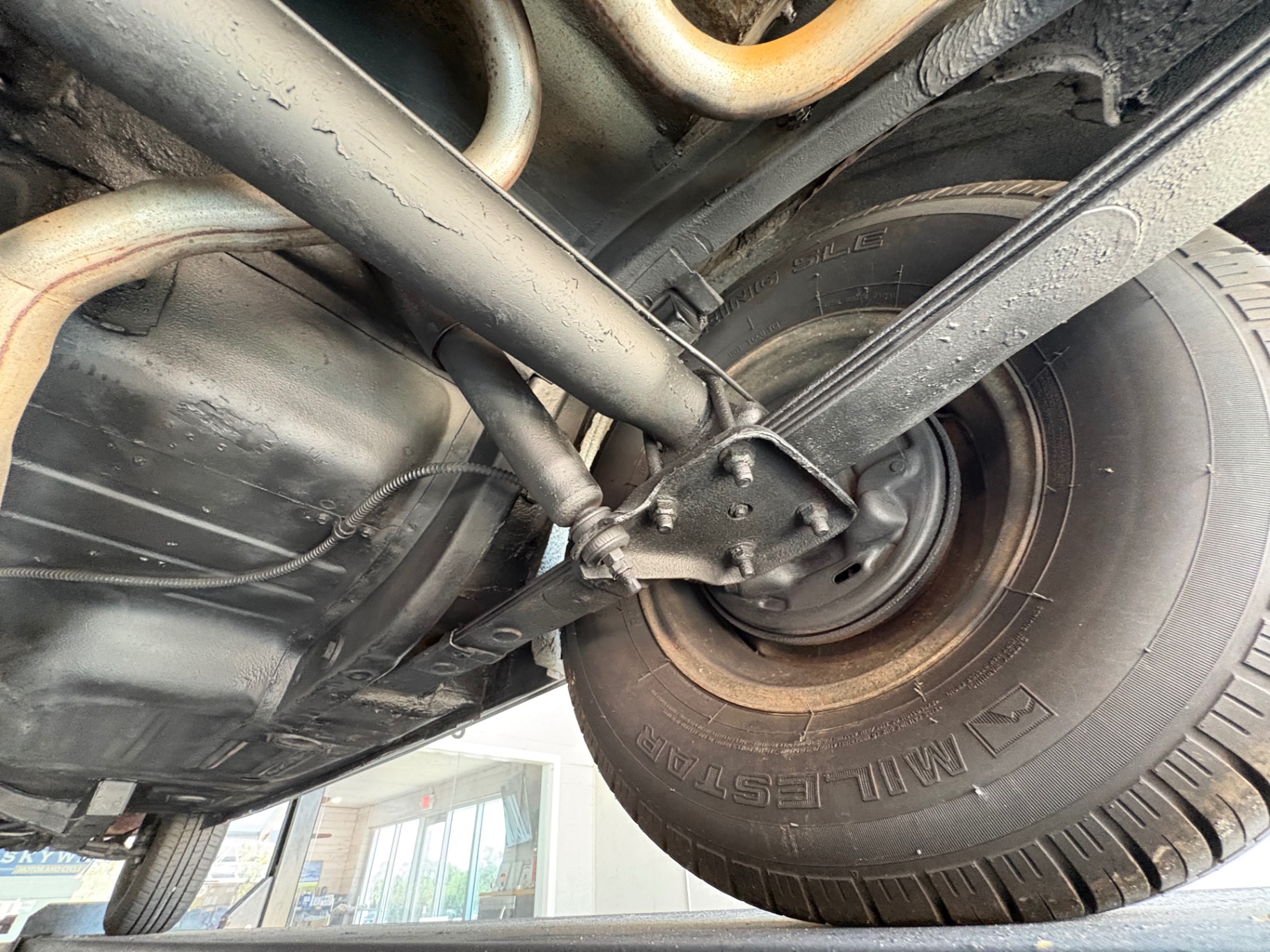
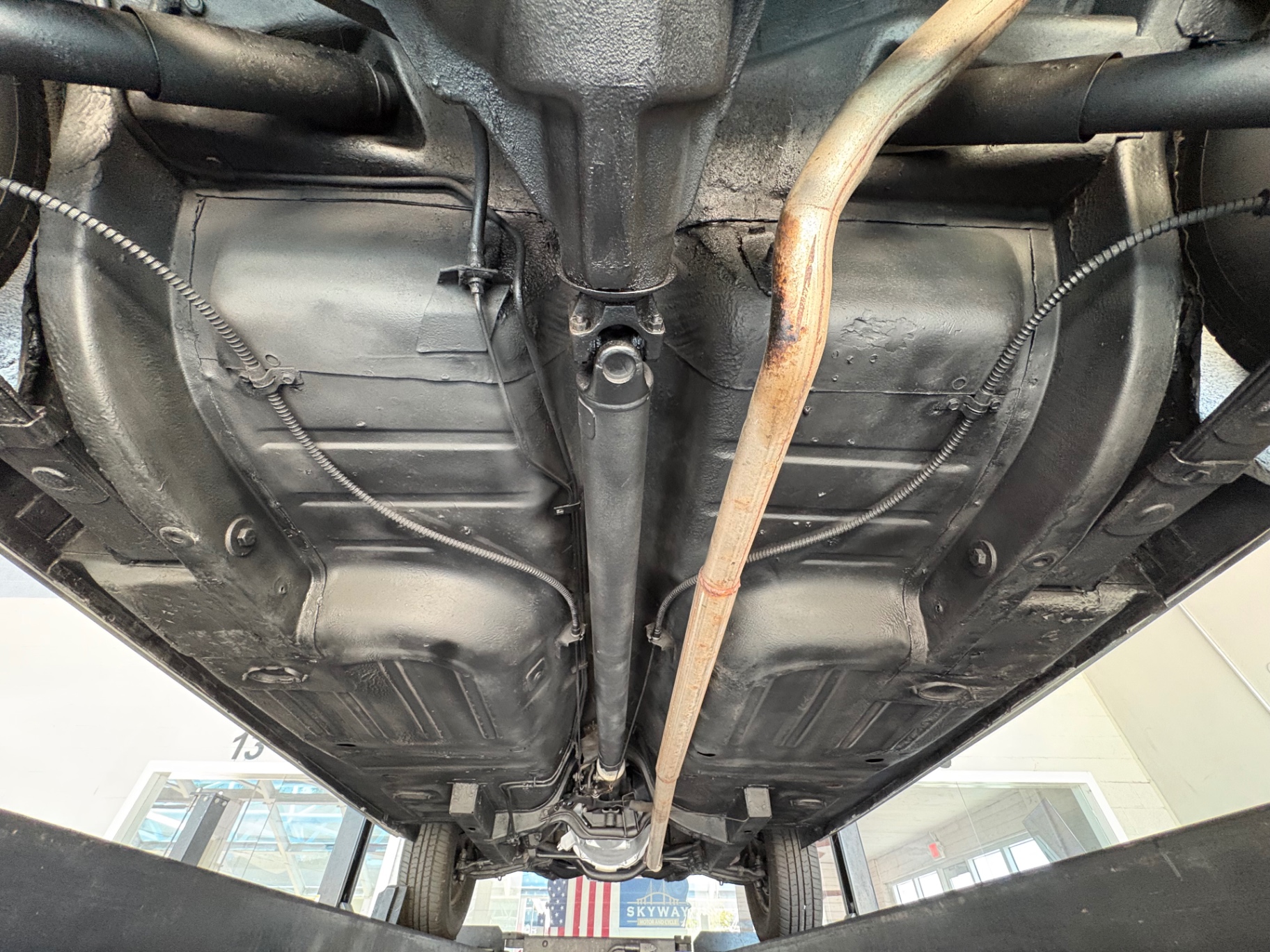
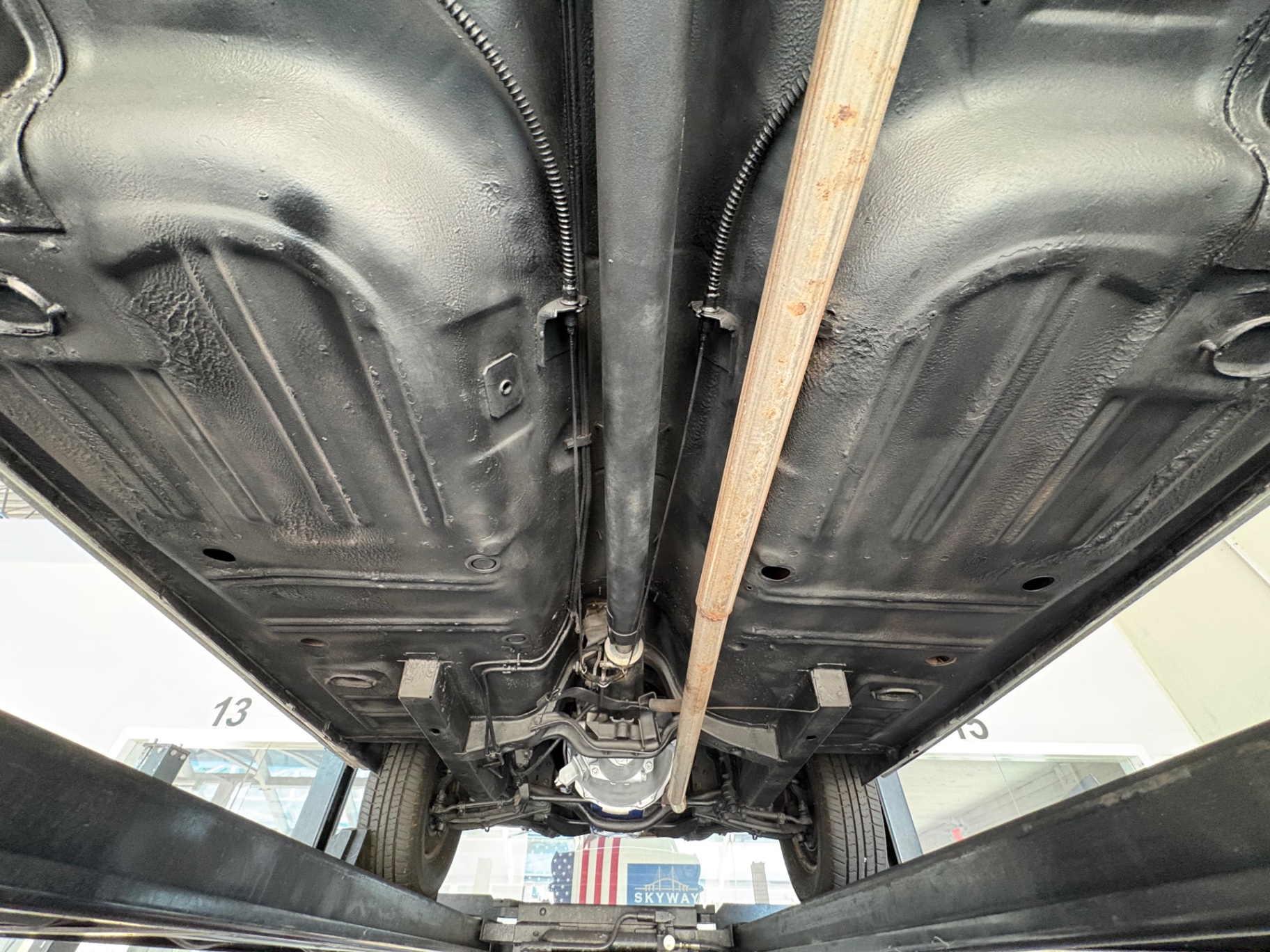
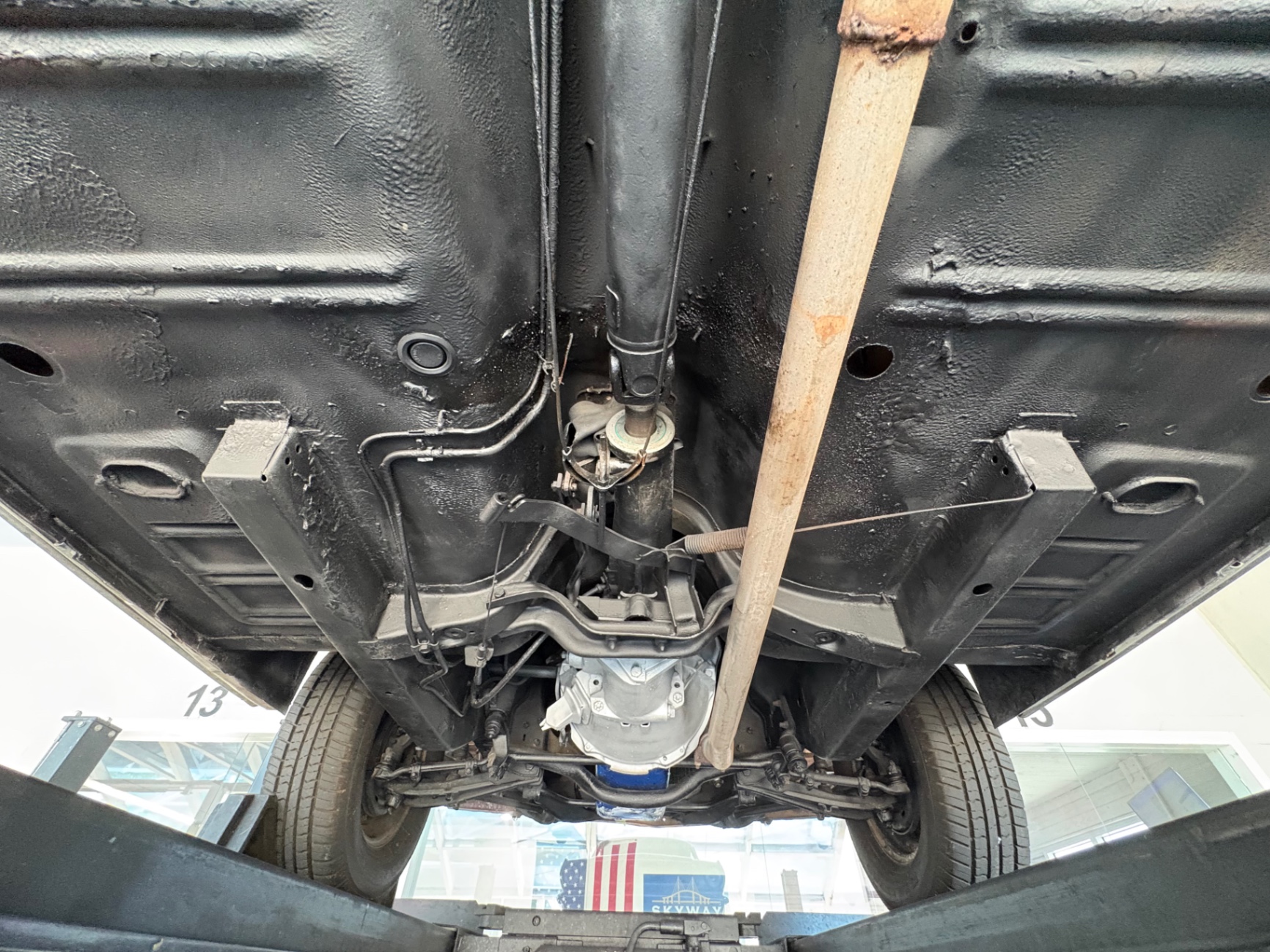
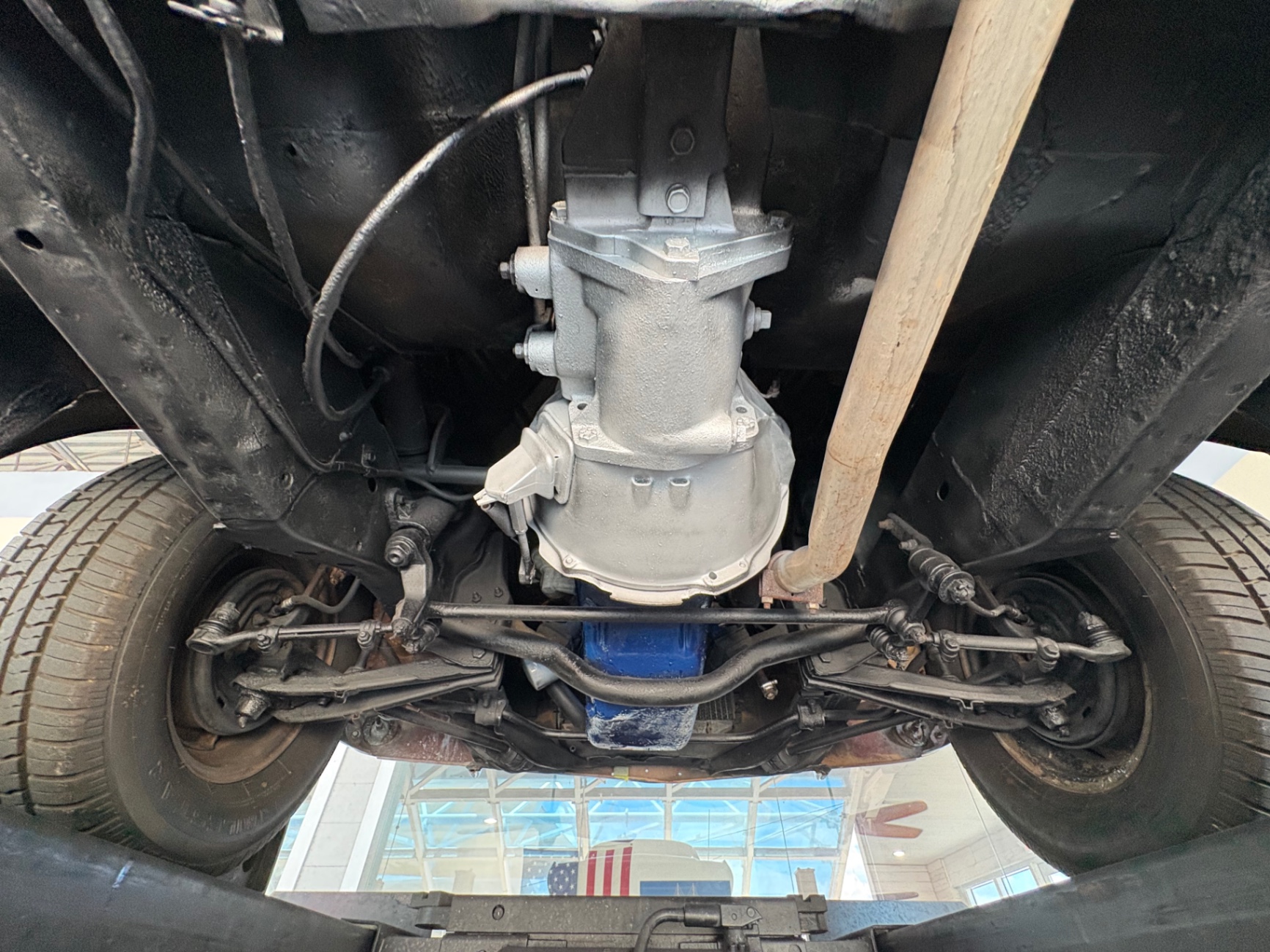
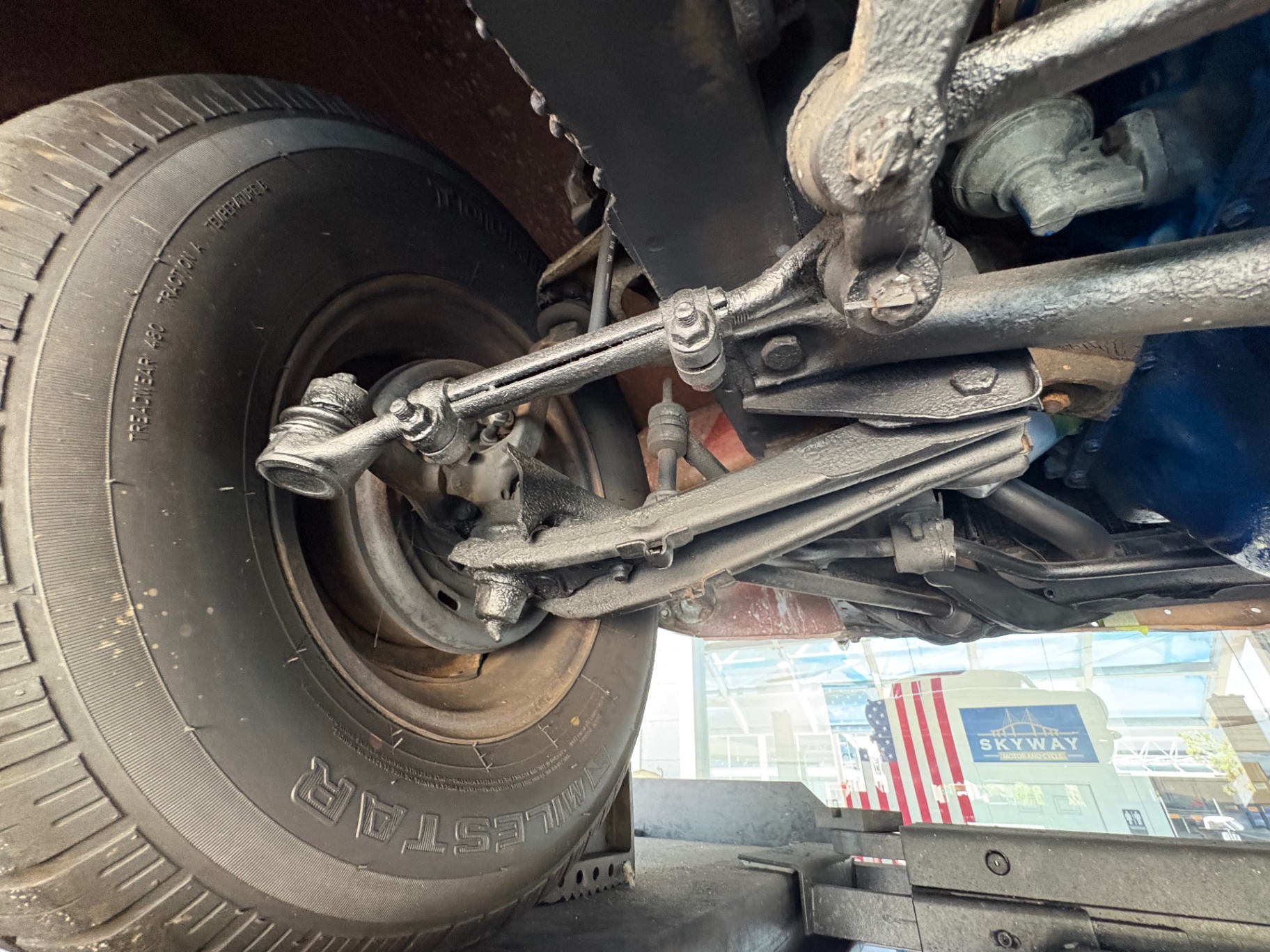
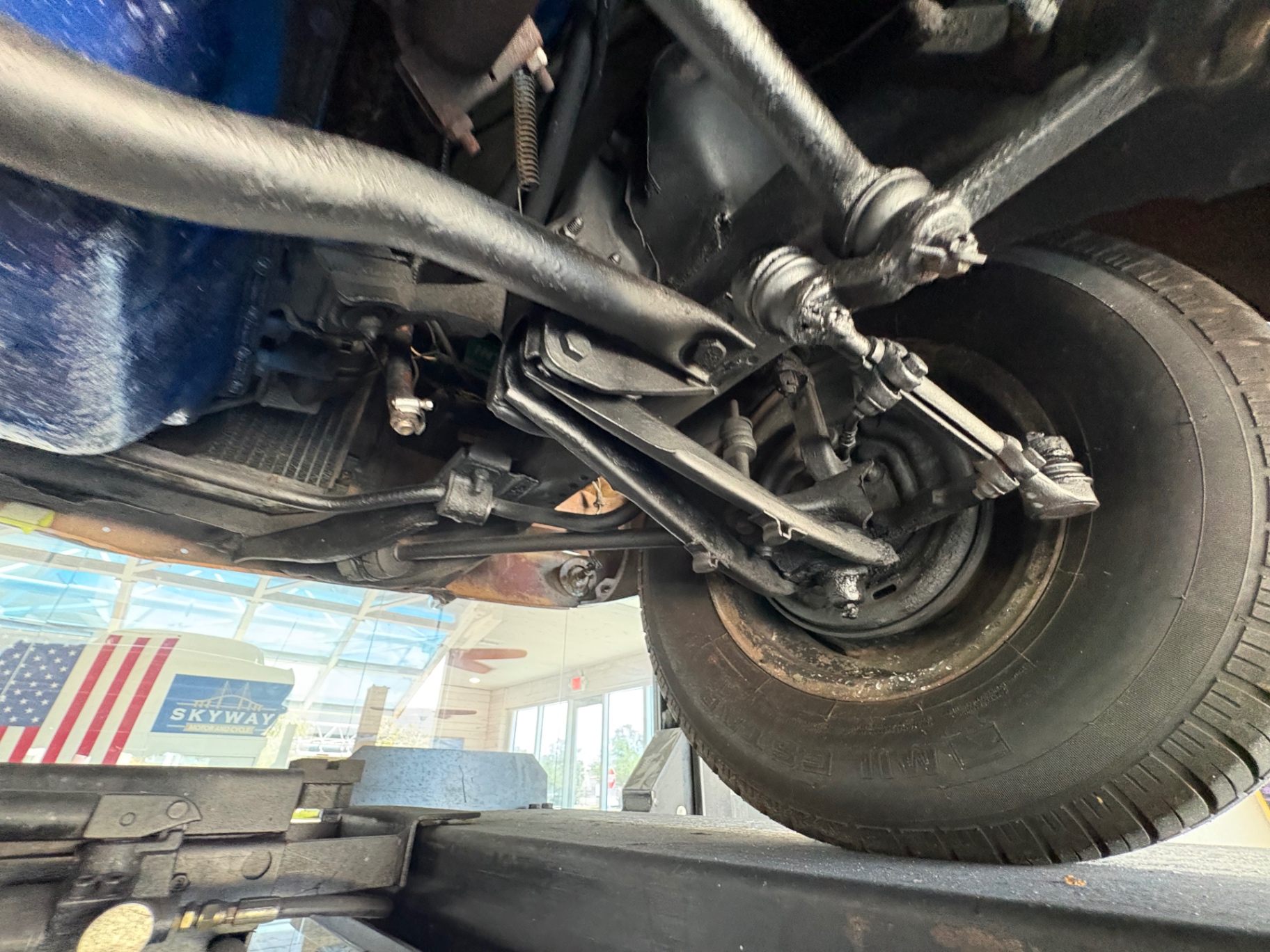
The four-speed manual transmission is a meaningful spec on a six-cylinder car. Most inline six Mustangs left the factory with an automatic or a three-speed manual. The four-speed was an extra-cost option, and selecting it on a six-cylinder suggests the original buyer prioritized the driving experience. The floor-mounted shifter connects to the console, giving the cockpit a purposeful layout that aligns with the fastback's sporting character. The undercarriage, visible in the photos, shows clean metal, no significant rust, and intact structural components — an important data point for any first-generation Mustang, which can suffer significant floor pan and frame rail deterioration in humid or northern climates. This car does not show those problems.
Interior
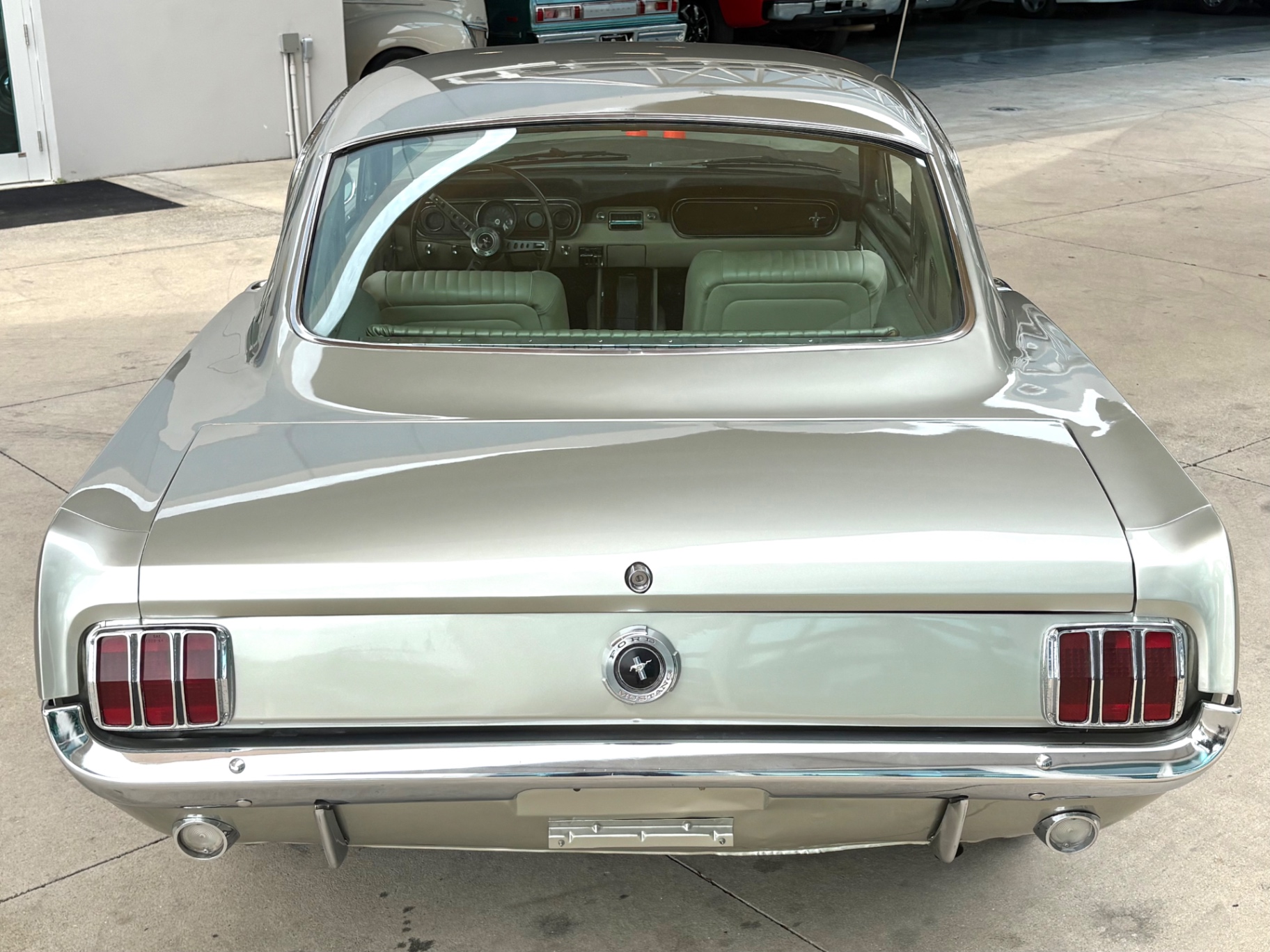
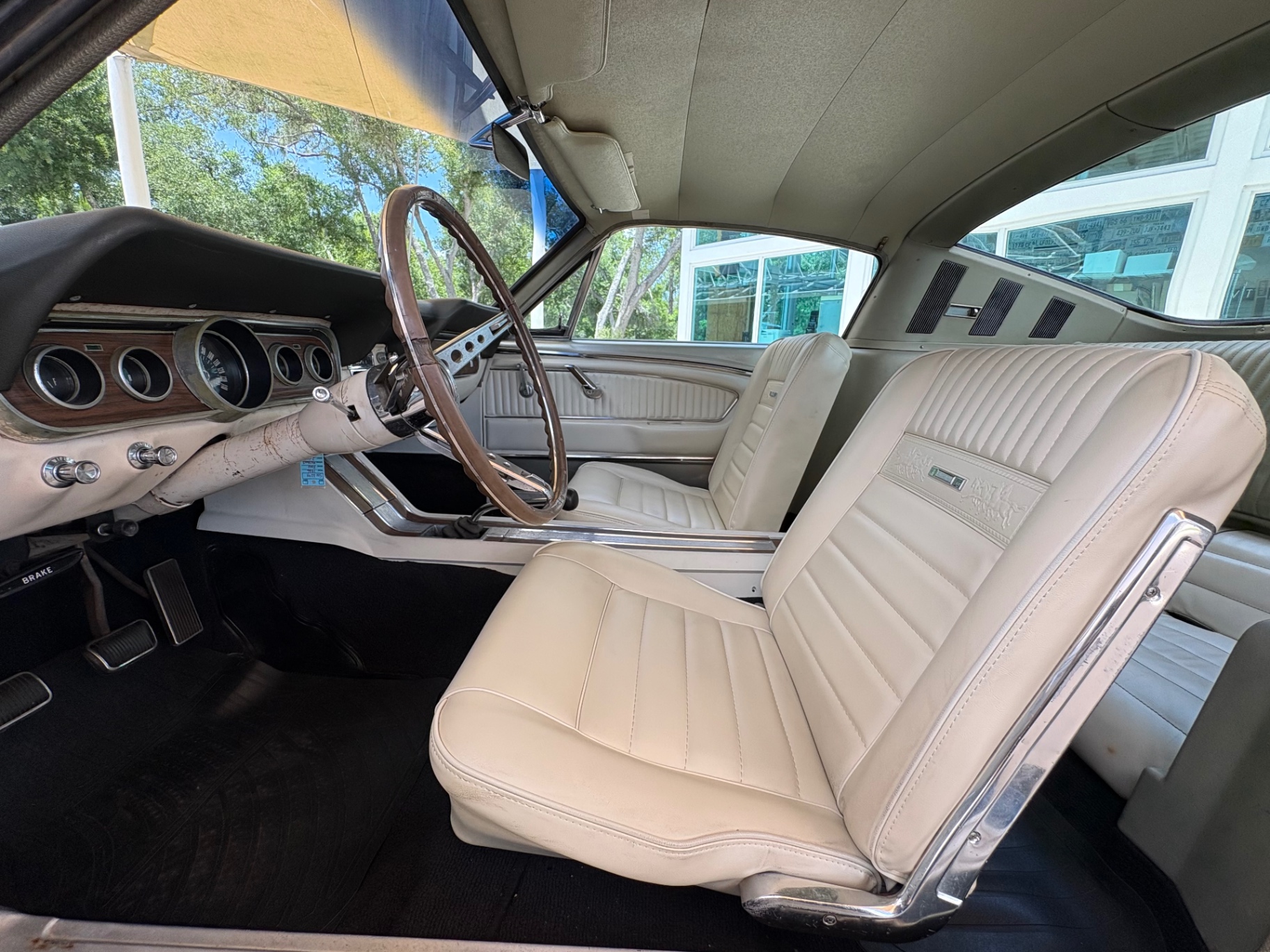
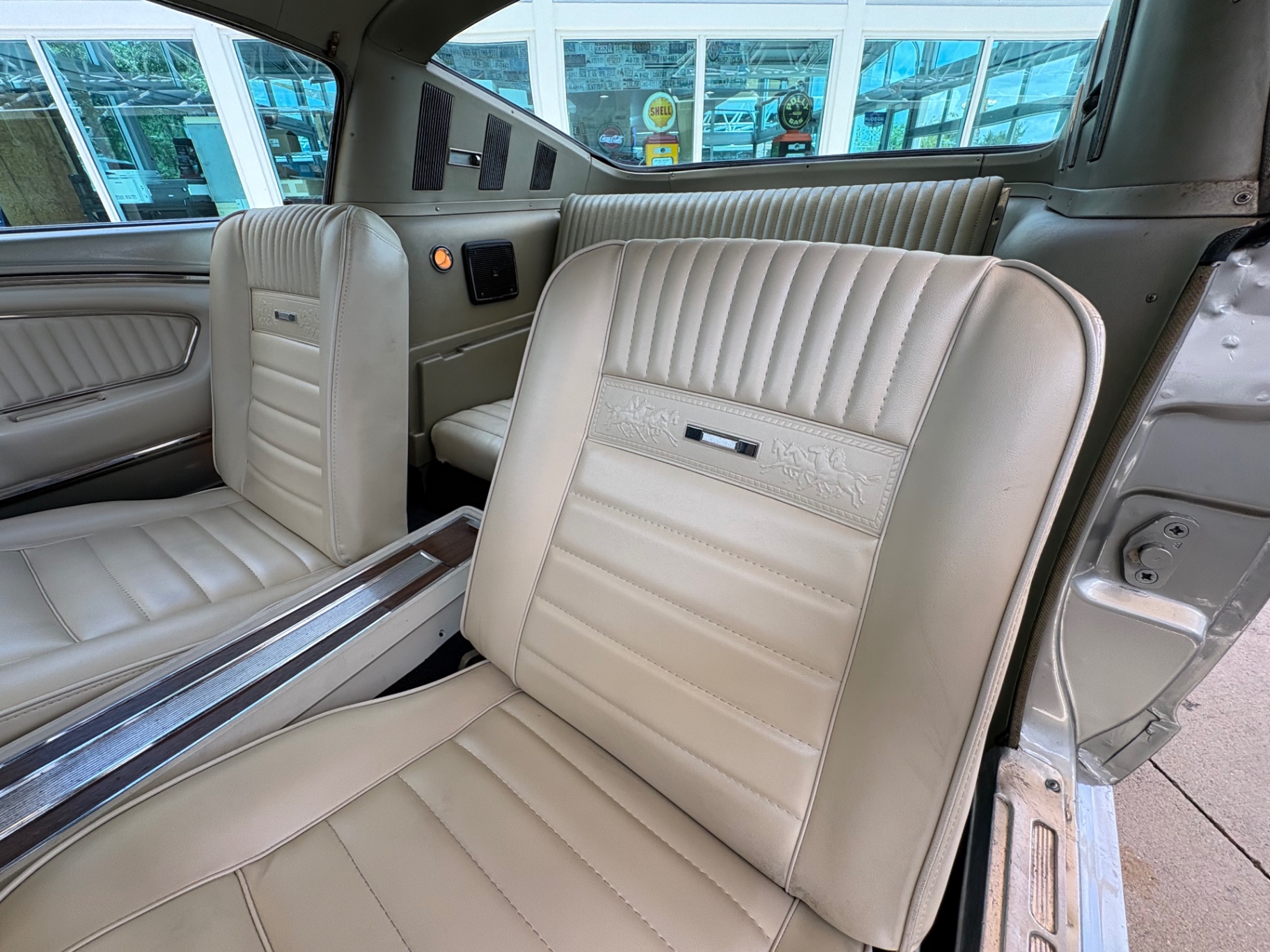
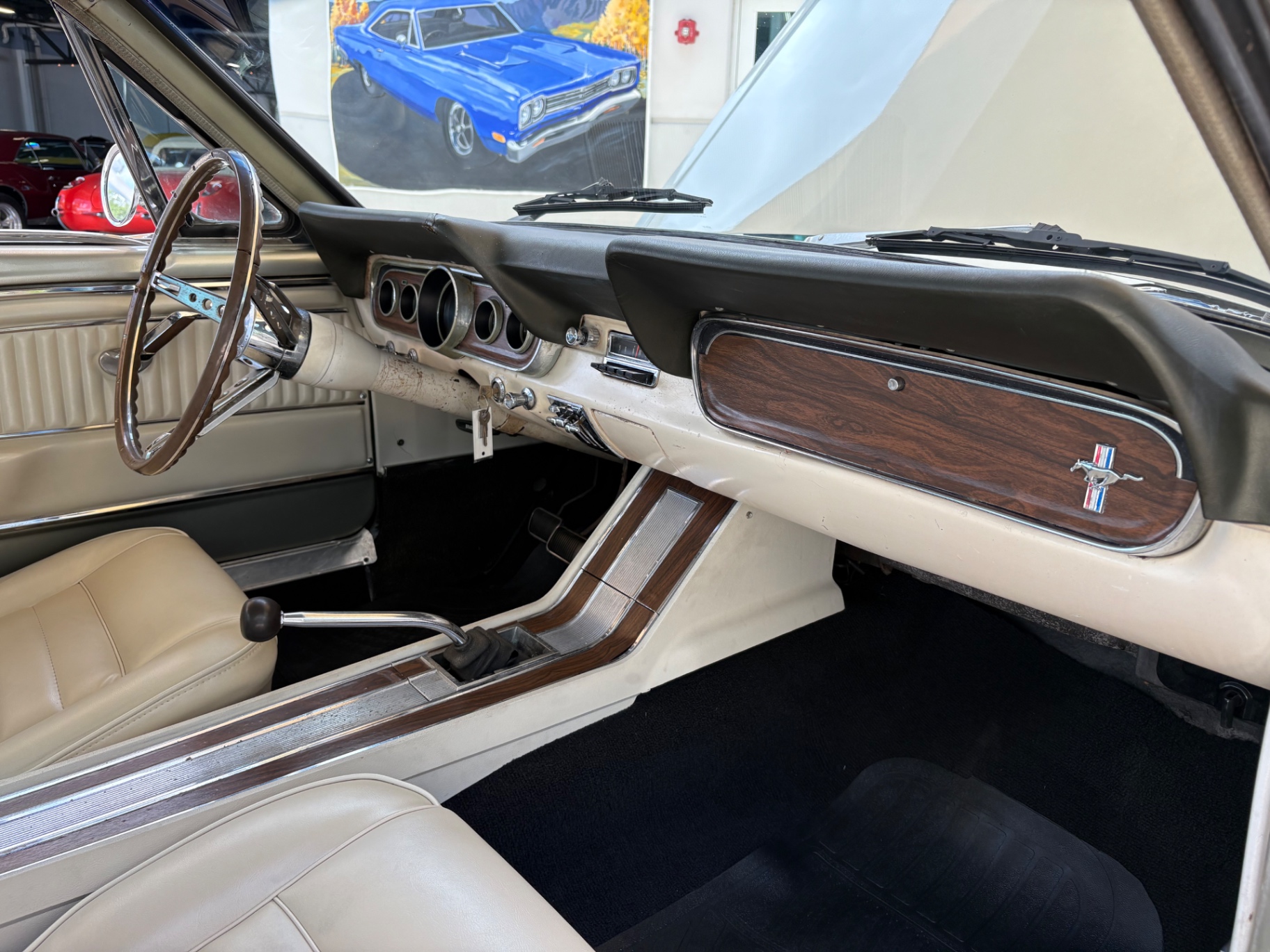
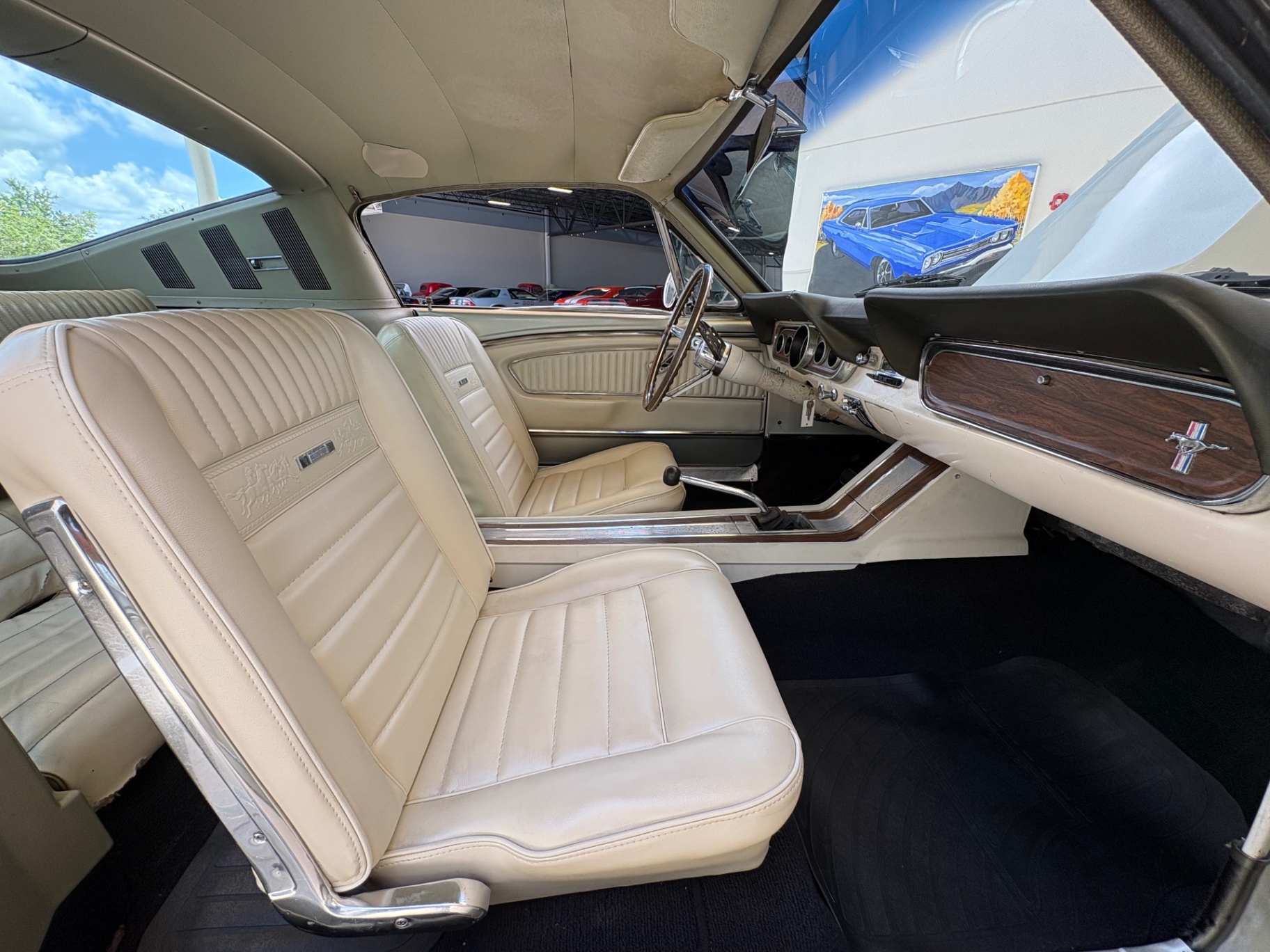
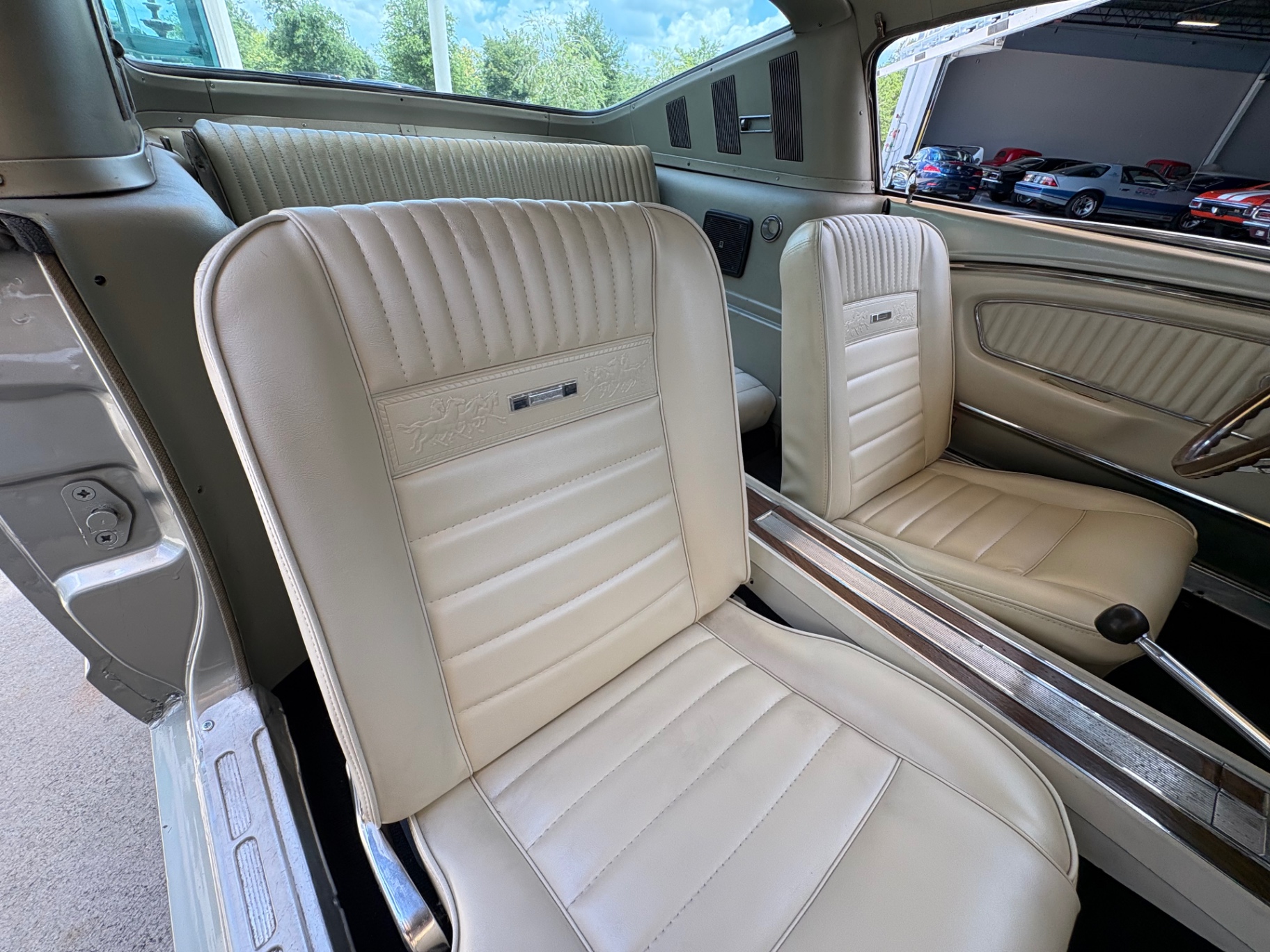
The parchment vinyl interior is original in specification and consistent with the silver exterior — Ford offered this pairing as a factory combination in 1966. The vinyl seat material has held up well, which is not unusual for cars kept out of prolonged sun exposure, but it is worth noting because replacement parchment interiors are available but expensive to execute correctly. The console runs the length of the floor between the bucket seats and integrates with the four-speed shifter in the way the factory intended. This is not a retrofitted console — it belongs here.
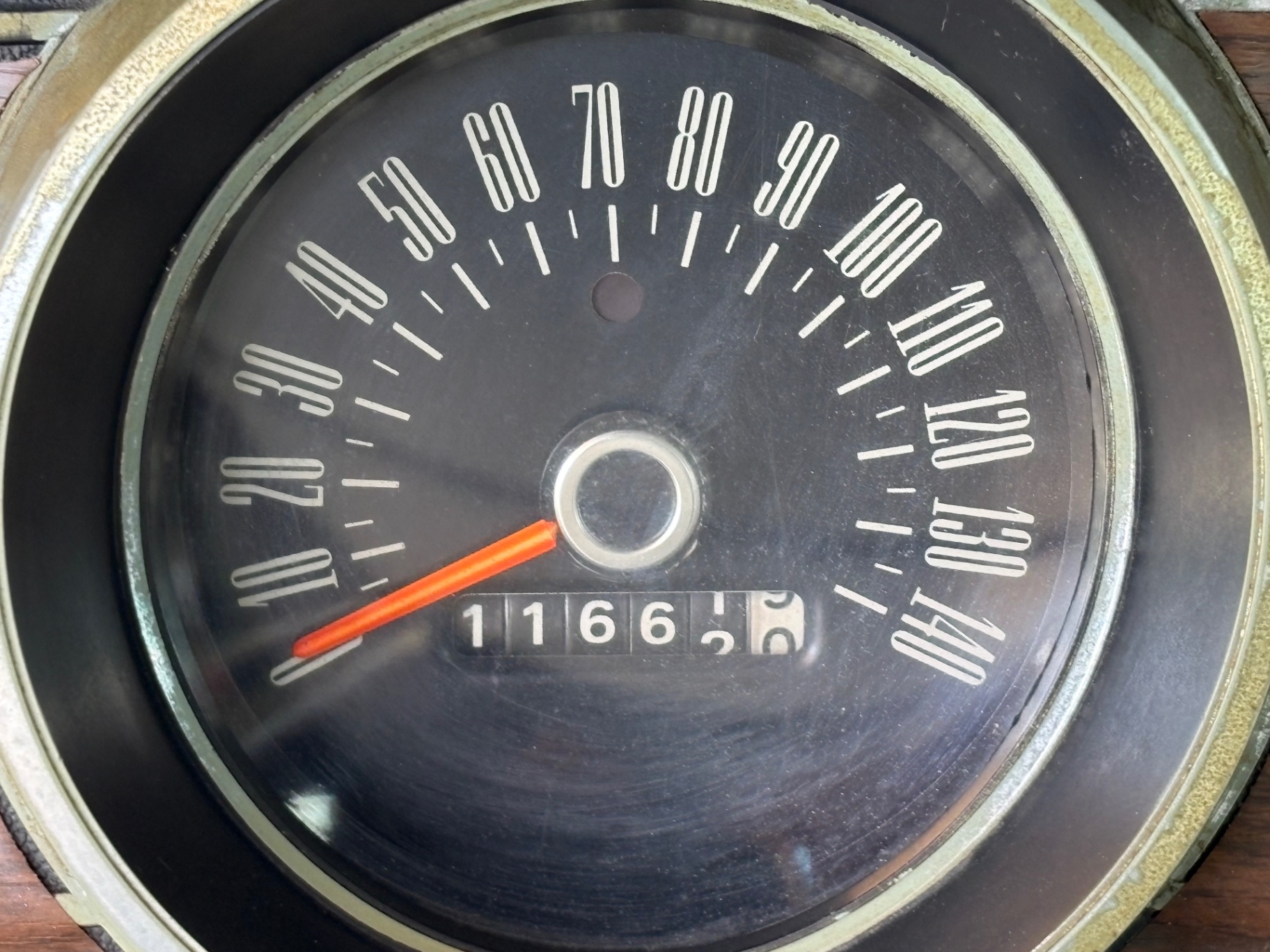
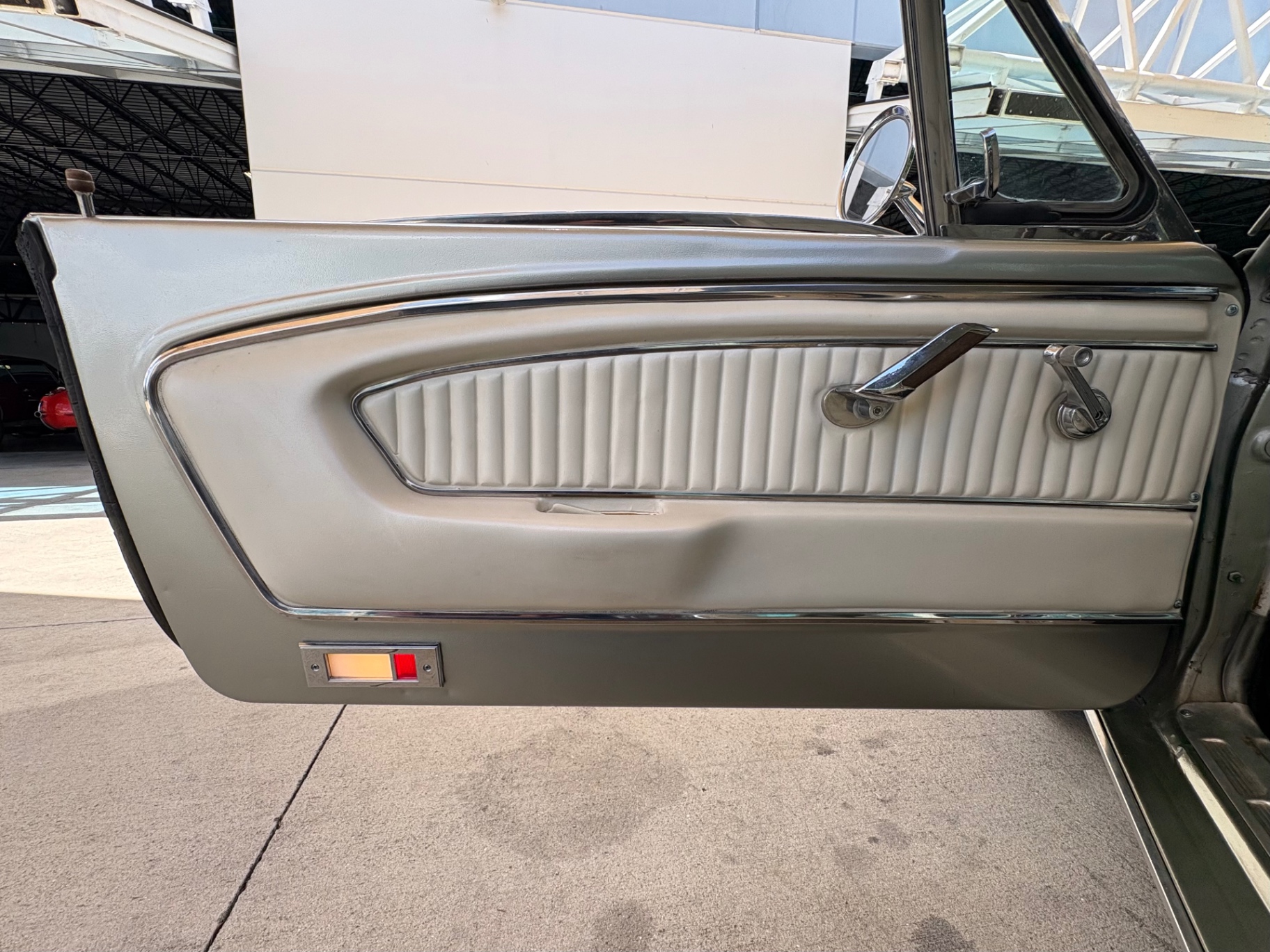
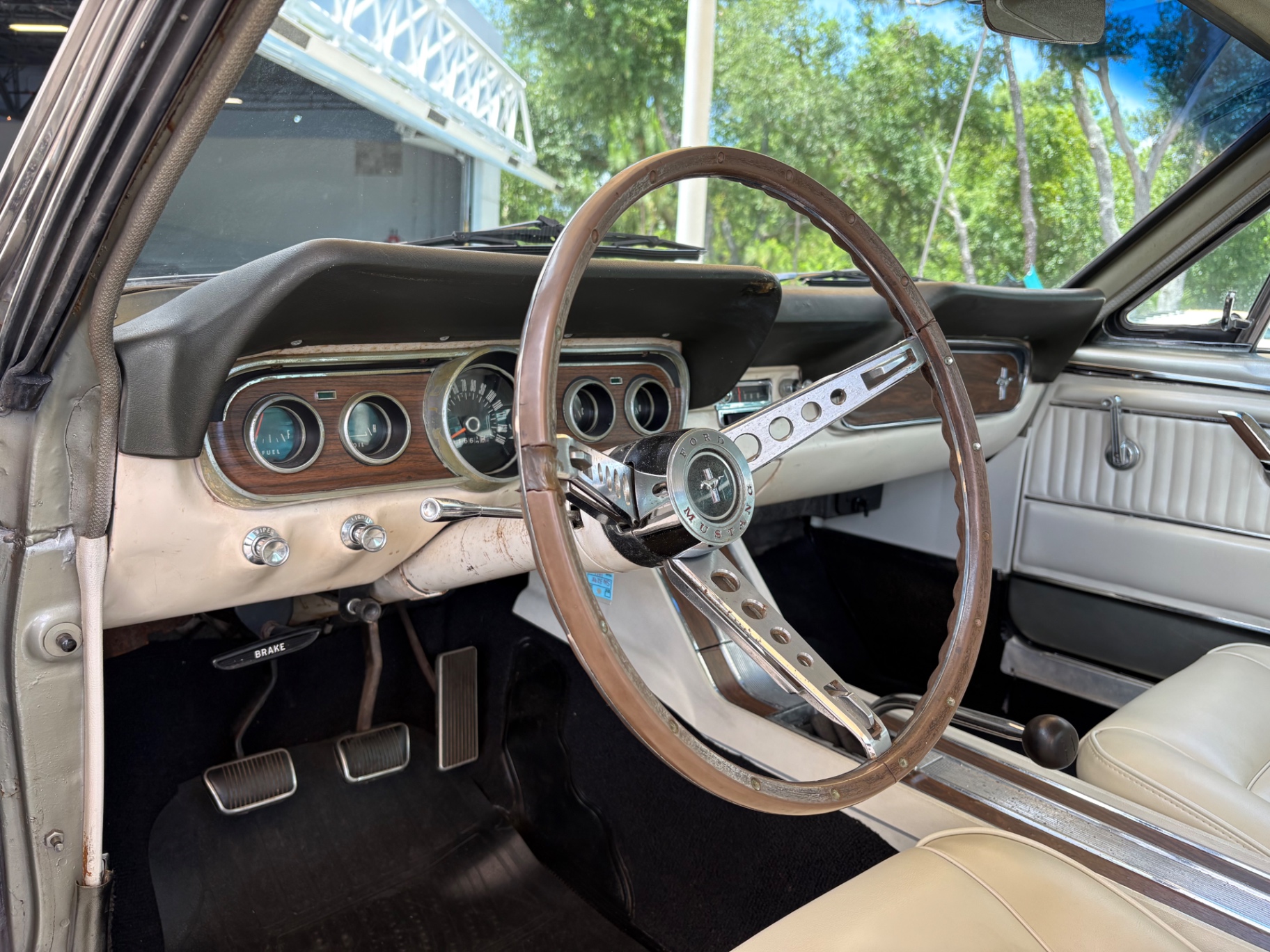
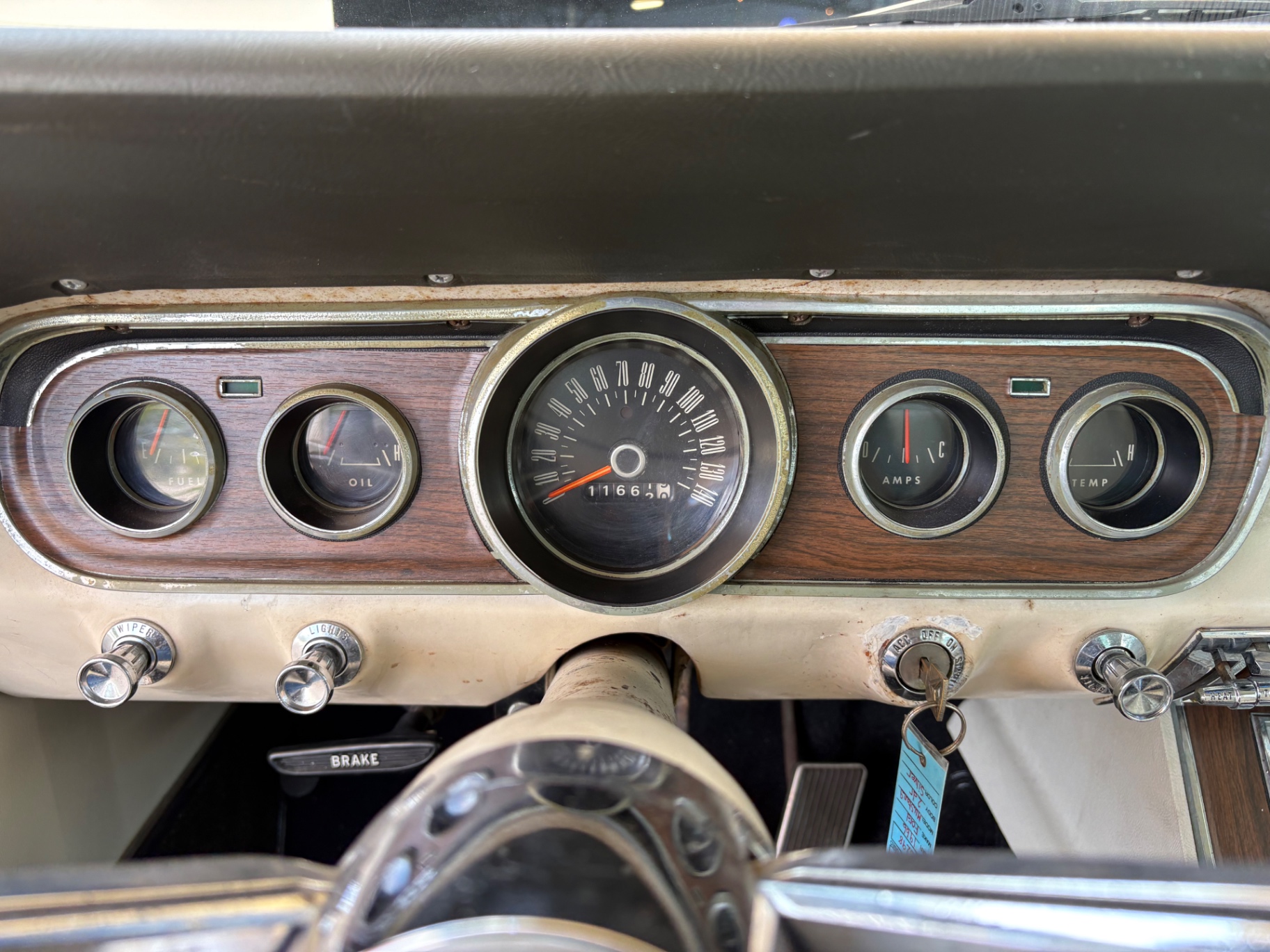
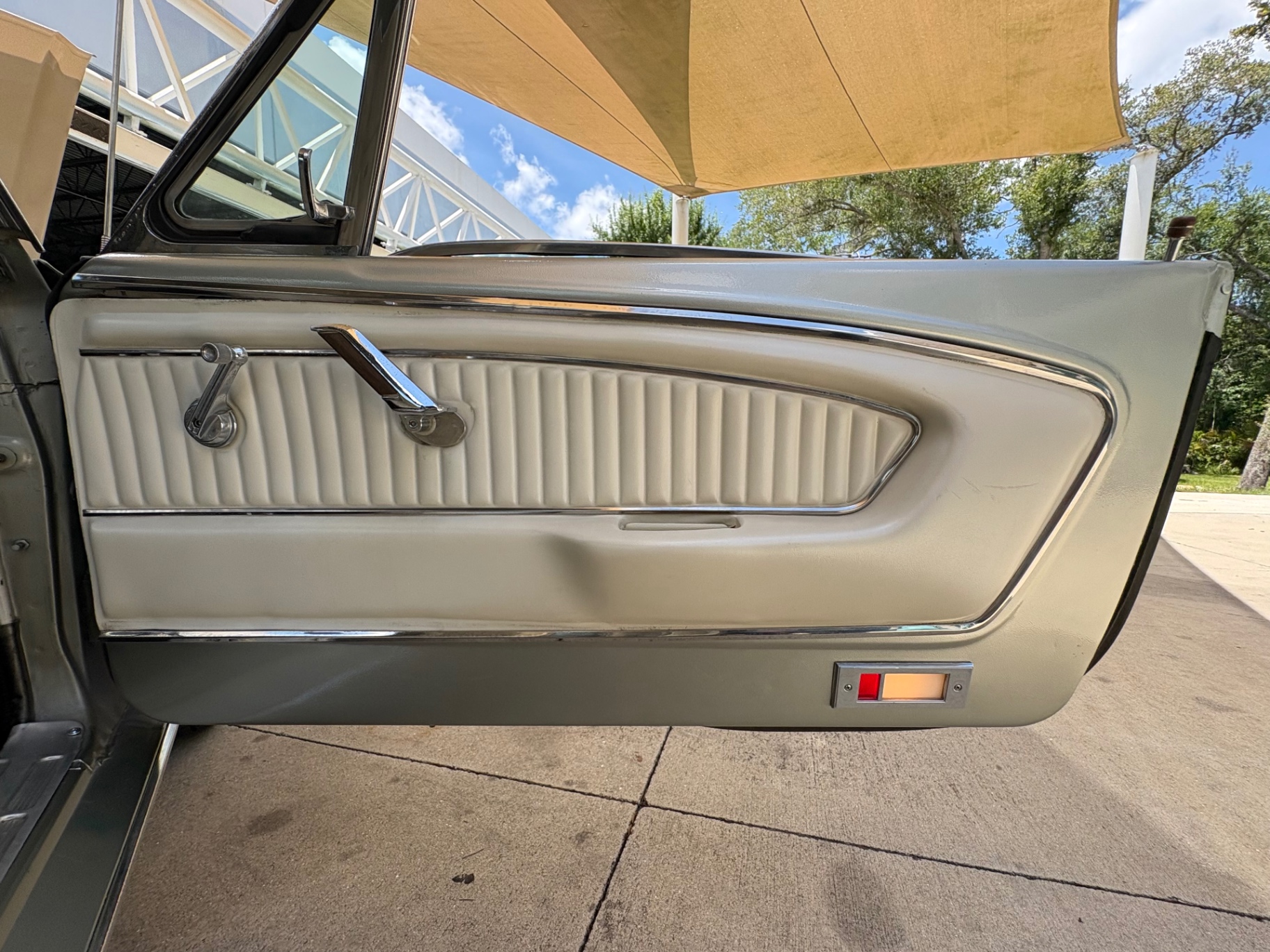
The wood-rim steering wheel is a factory optional accessory for the 1966 Mustang, sold through Ford's accessory catalog and often dealer-installed. It was a popular upgrade in the 1960s and fits the overall character of the car without looking out of place. The instrument cluster faces the driver directly in the Mustang's characteristic five-dial layout. Door courtesy lights, visible in the door panel photograph, are a small but telling detail — they indicate the car was optioned to a specific level of finish, and they still function as the photograph shows. The door panels themselves are clean, with the chrome trim intact and the ribbed parchment vinyl showing no tears or significant wear.
Exterior
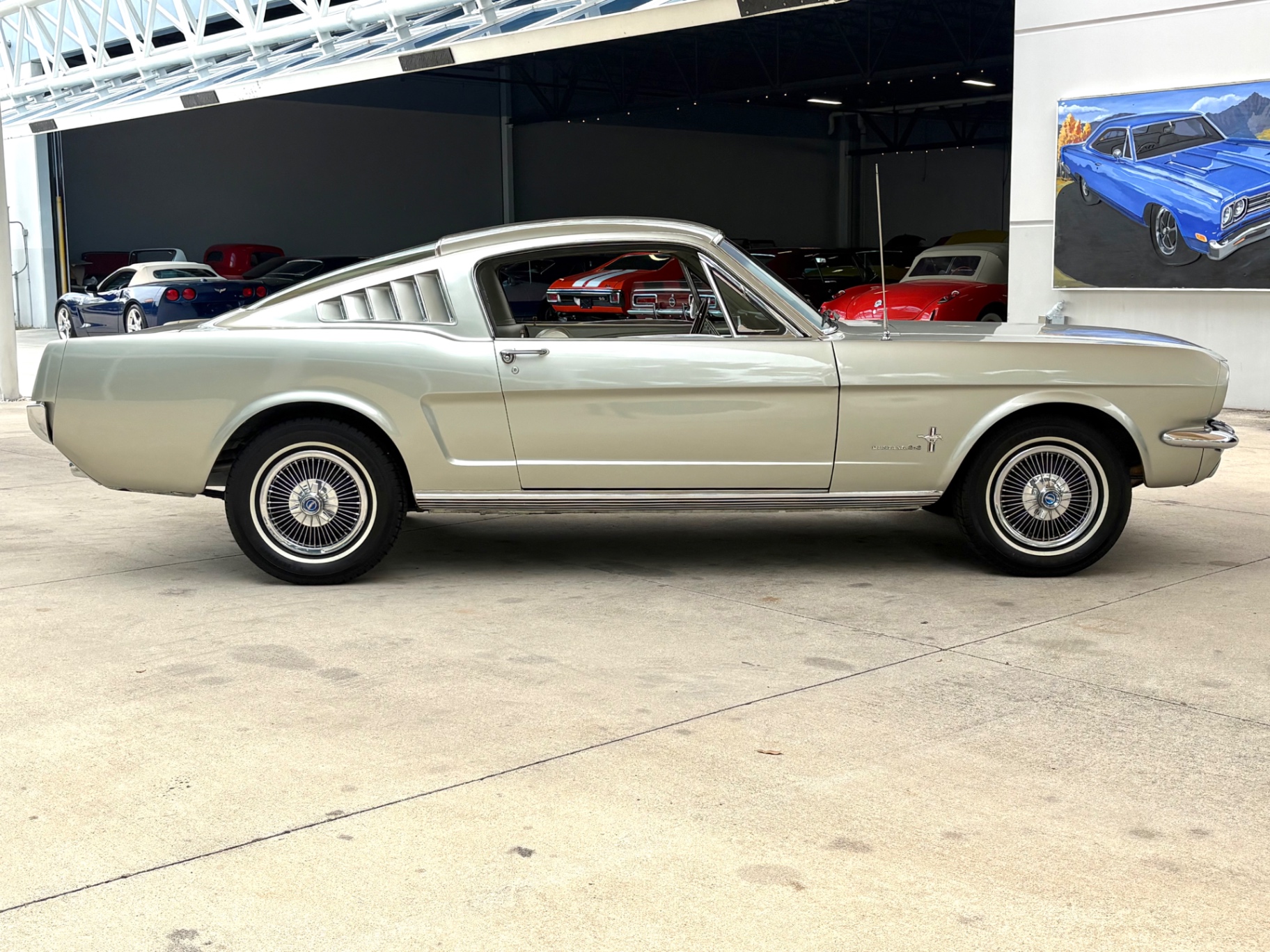
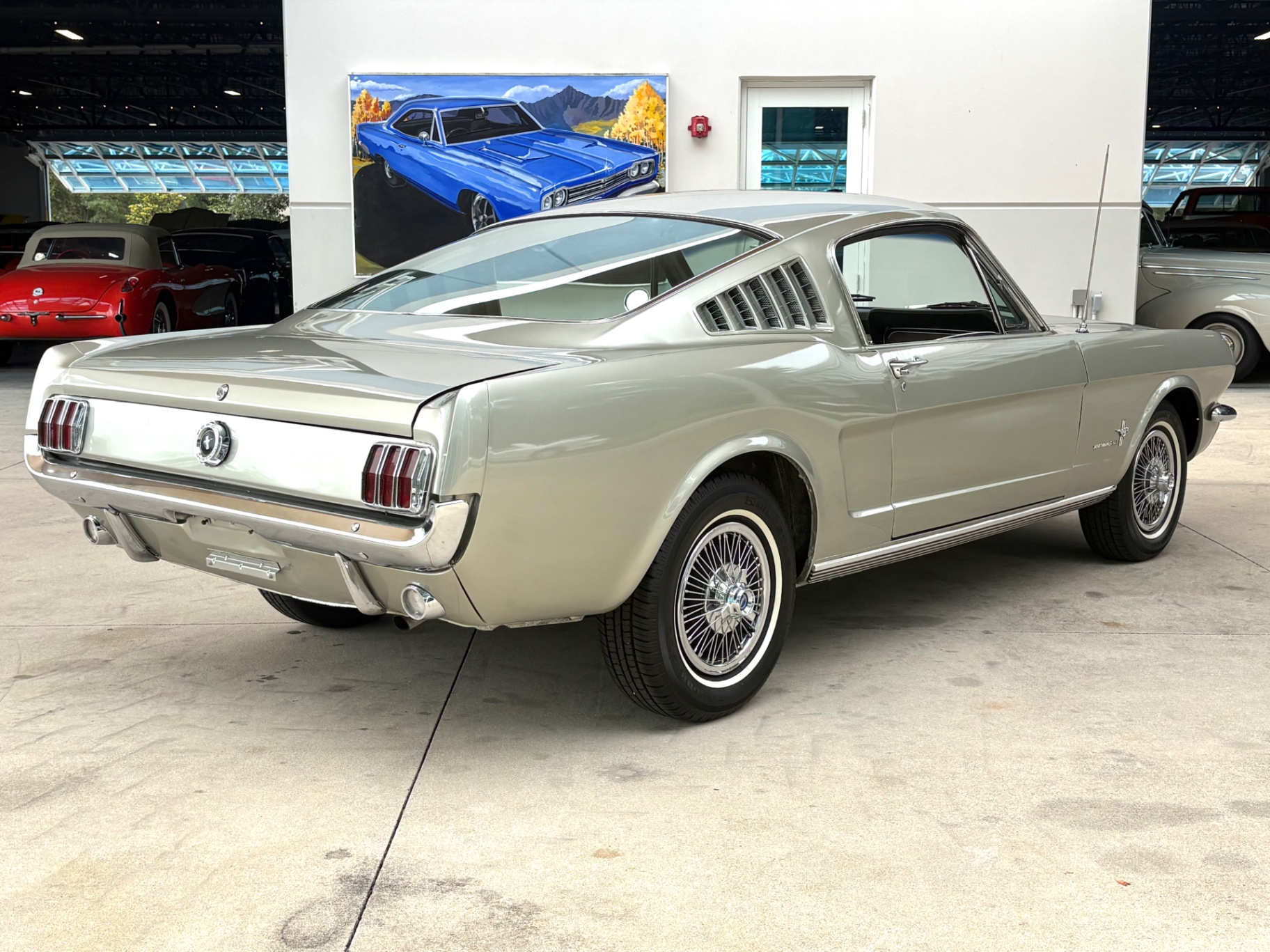
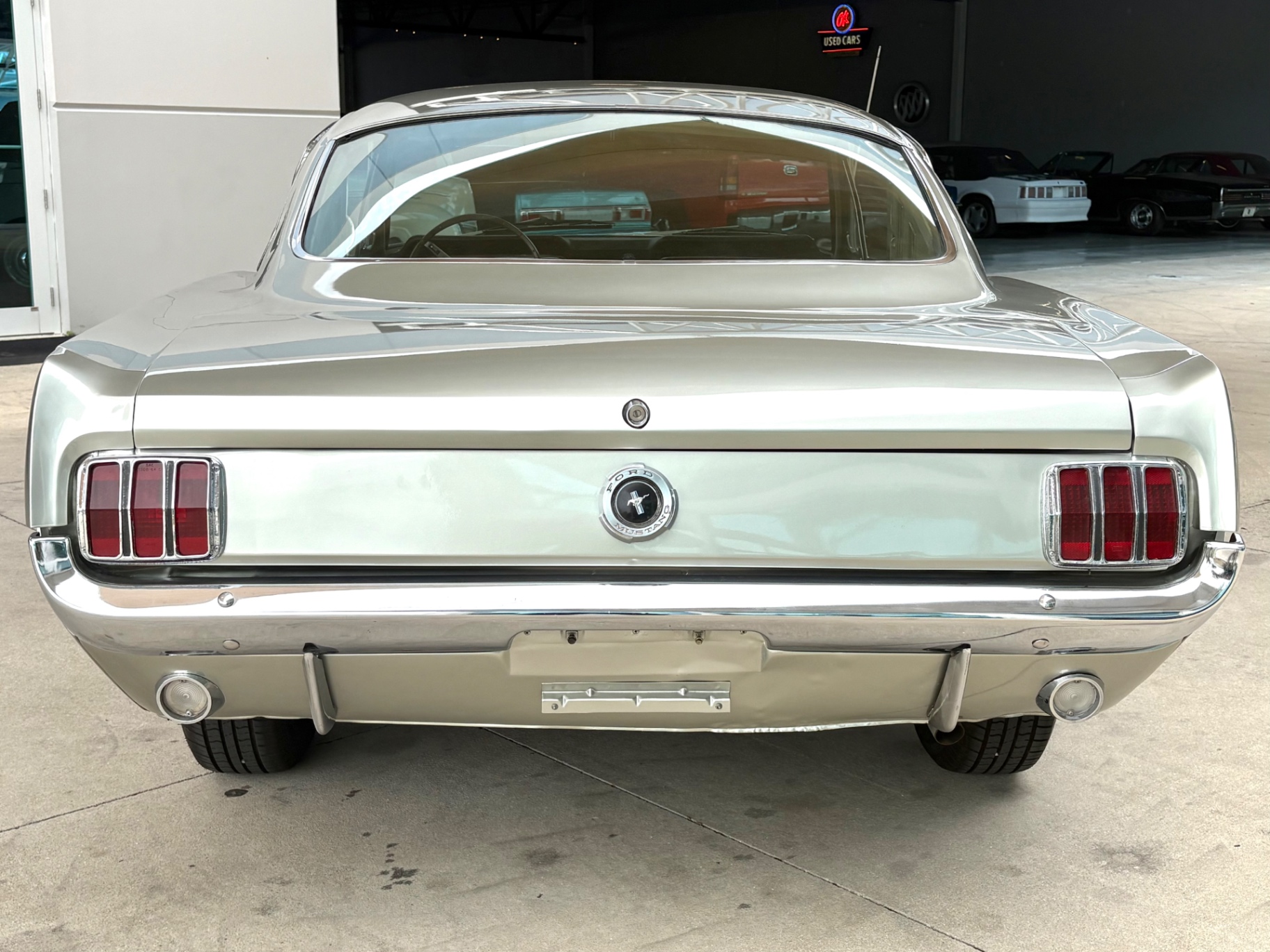
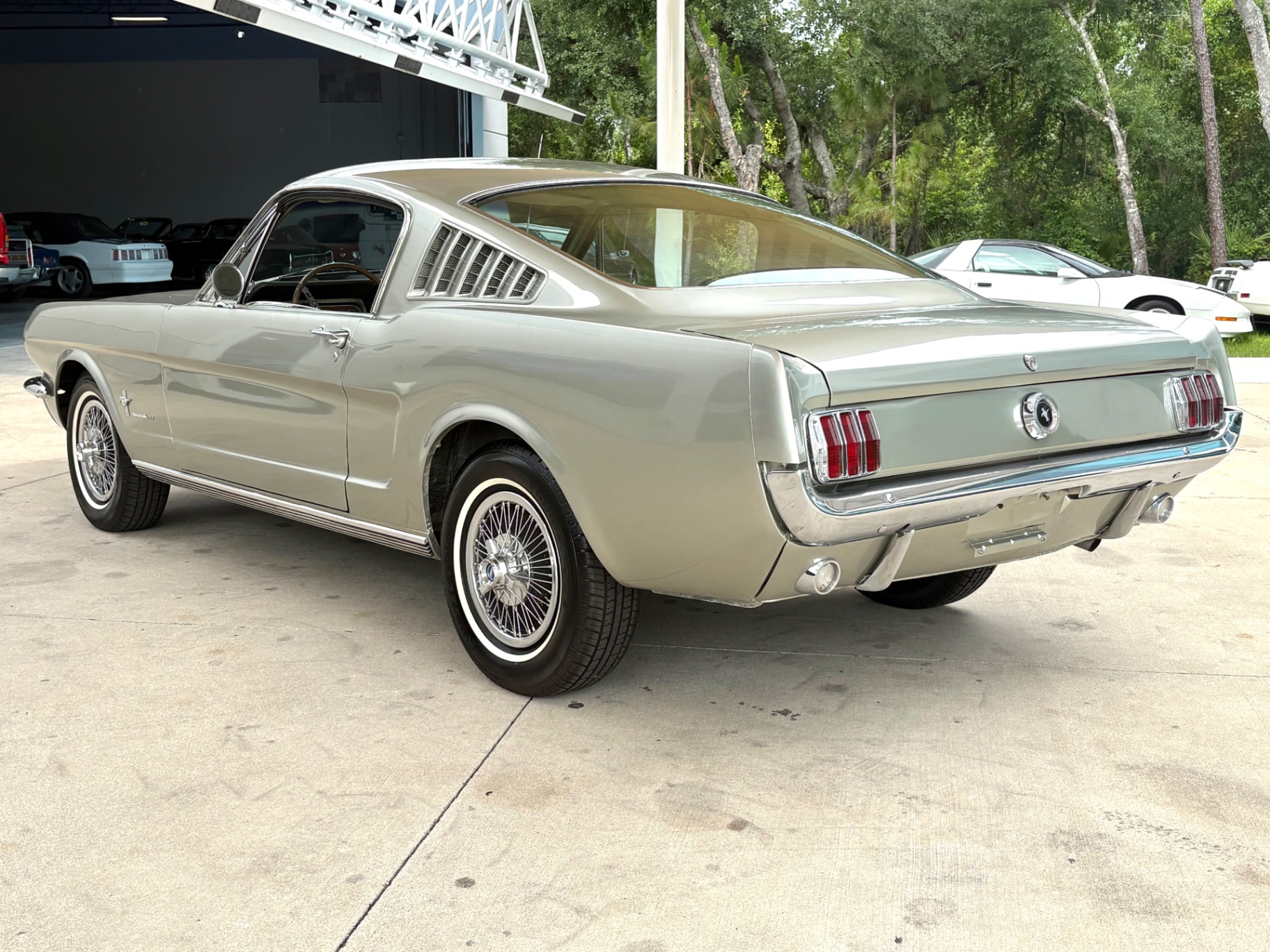
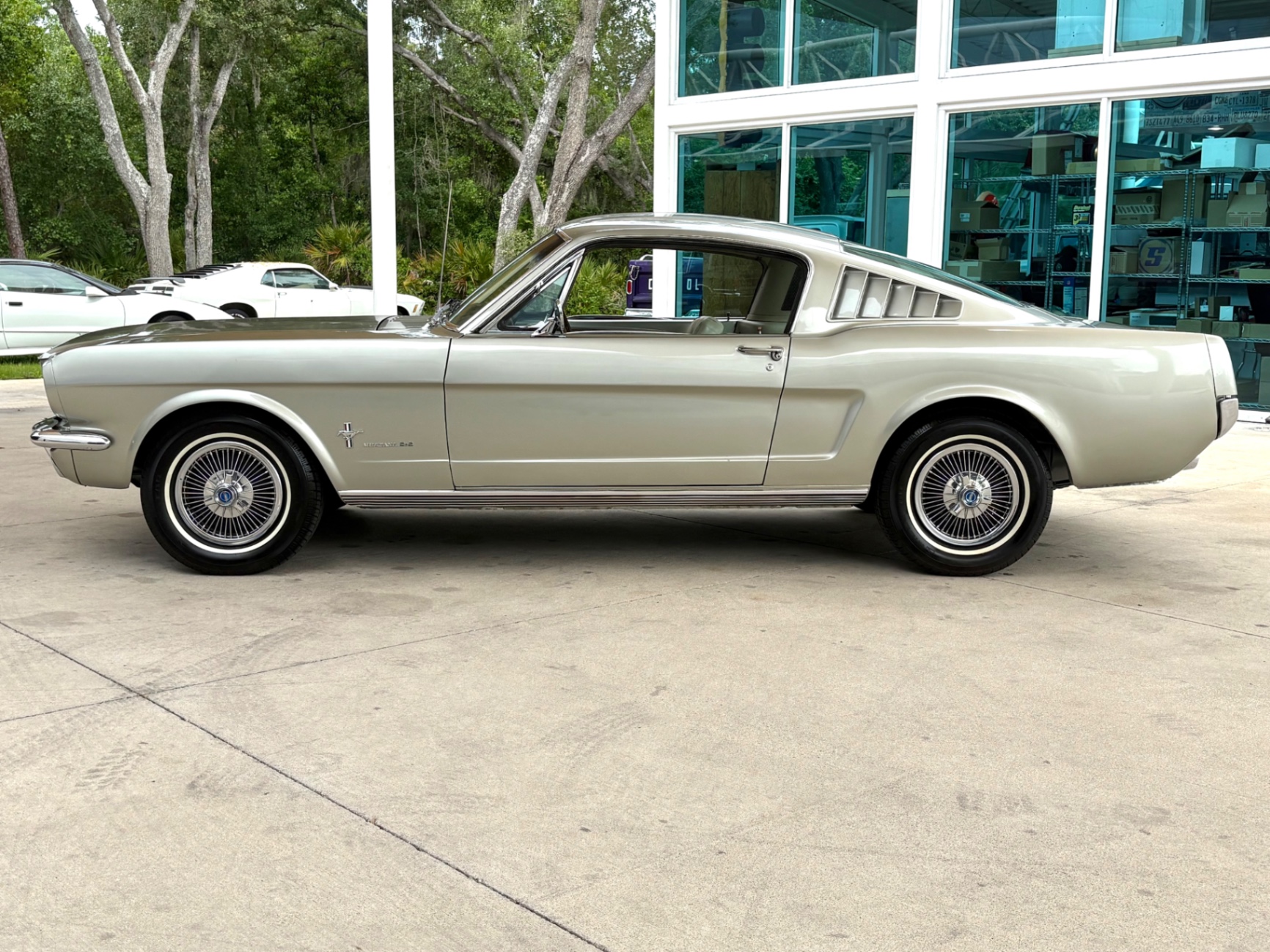
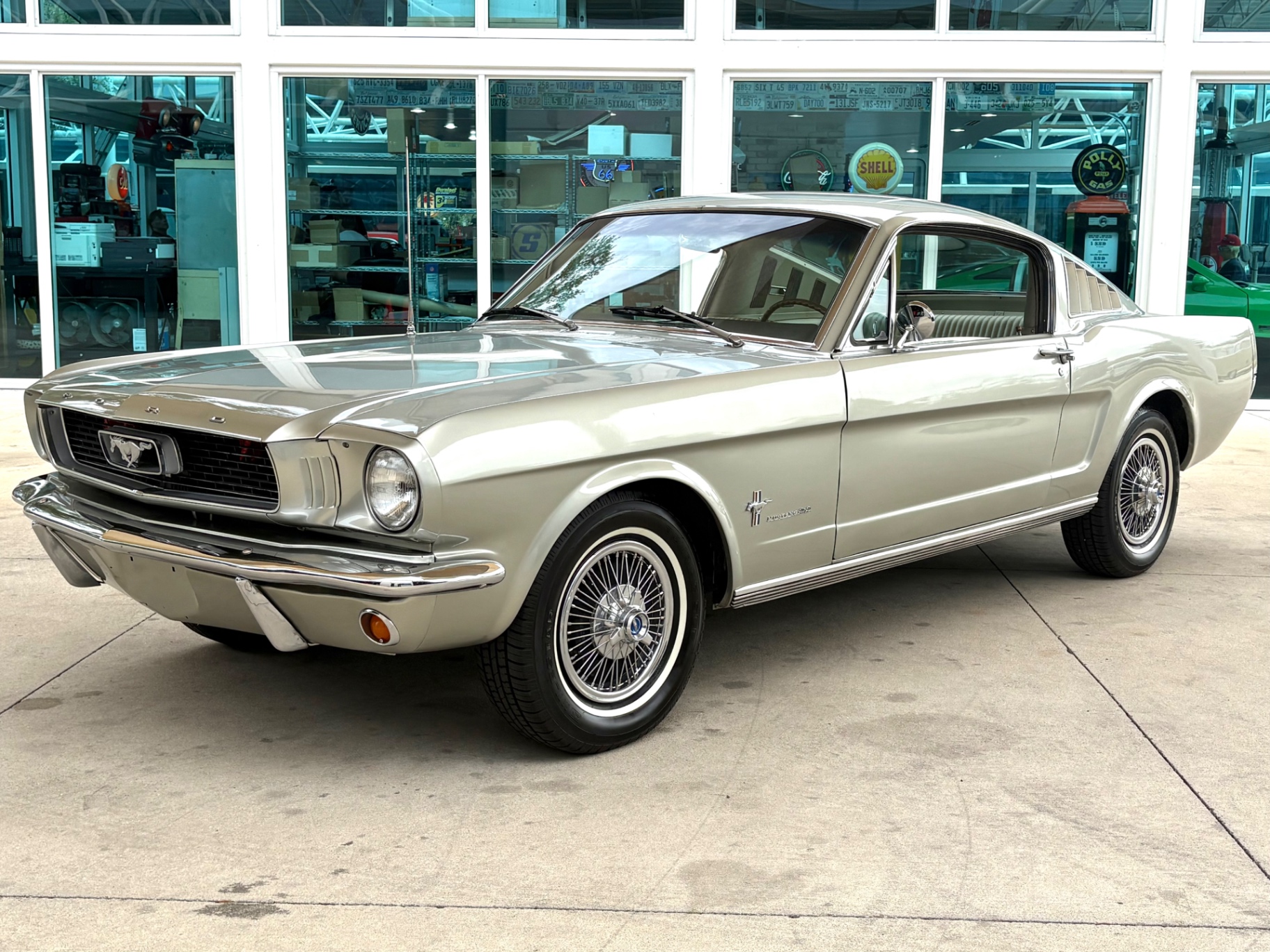
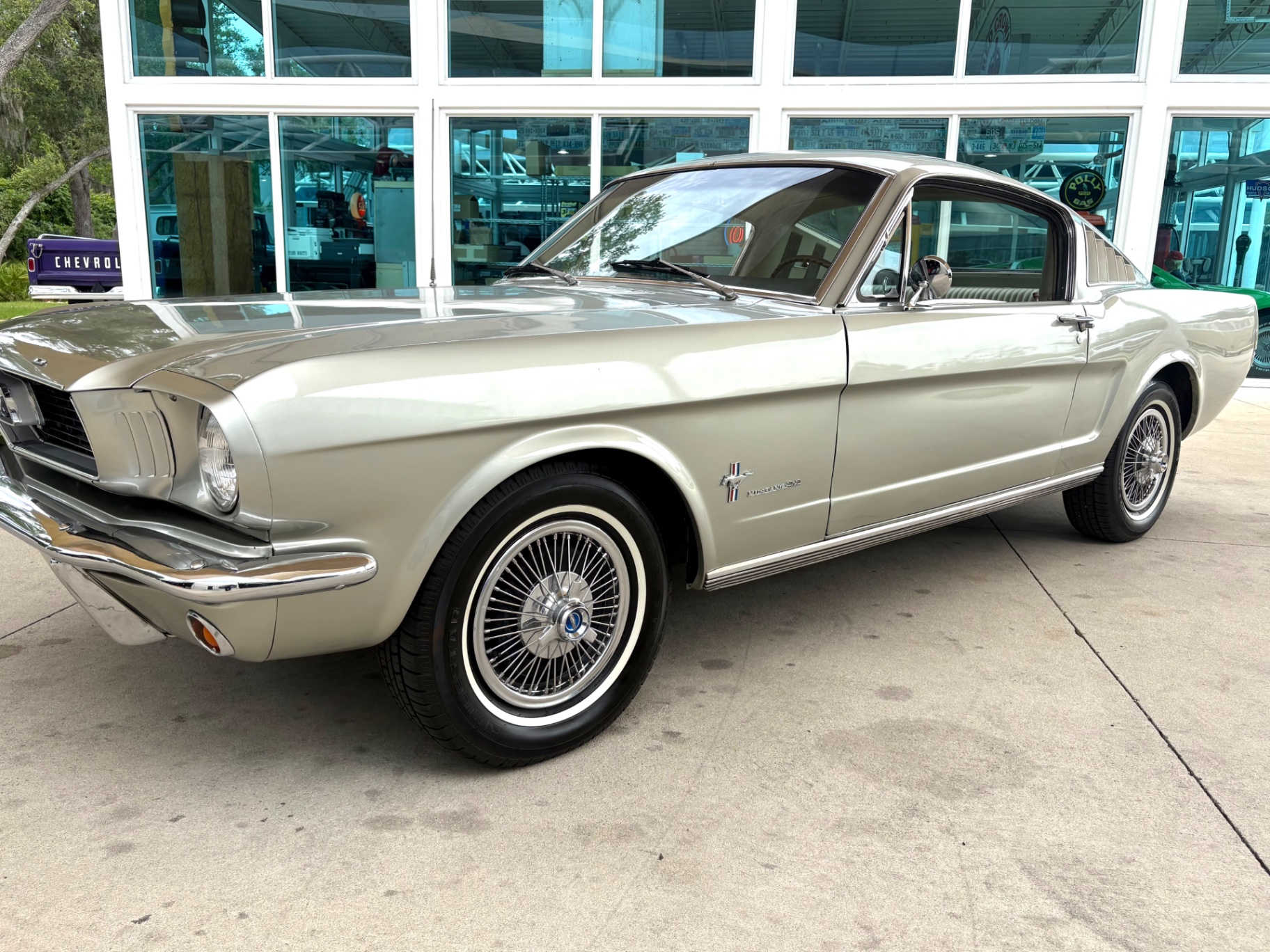
Silver on a 1966 Ford Mustang Fastback is a less common choice than the reds, blues, and blacks typically associated with the model, which makes it stand out in a field of first-generation Mustangs. The body sits straight, with the roofline, sail panels, and rear valance panel all in correct alignment. The chrome front and rear bumpers are in solid condition with good reflectivity — original chrome from this era that has not been re-plated can be difficult to source cleanly, so intact original bumpers are worth noting.
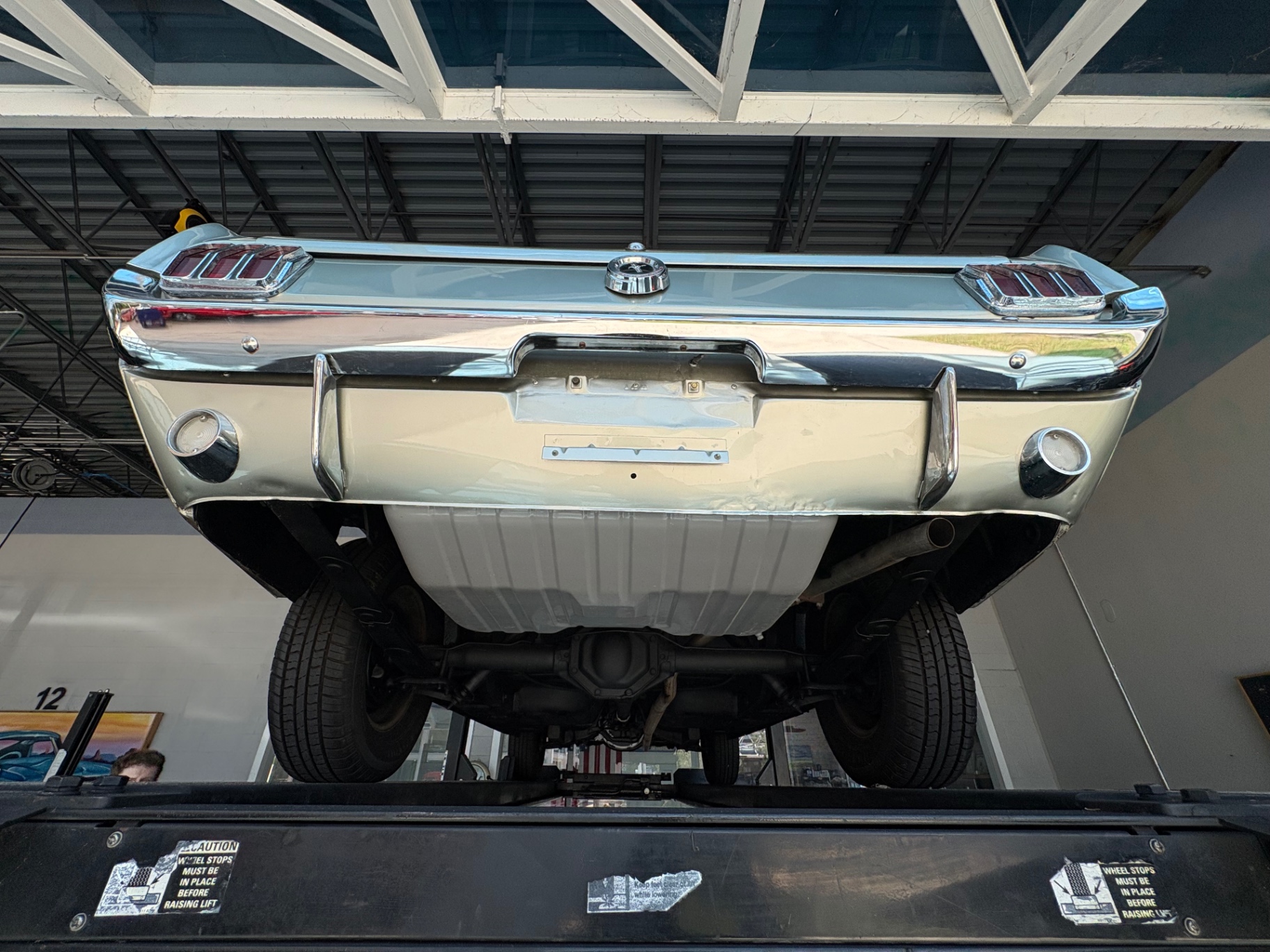
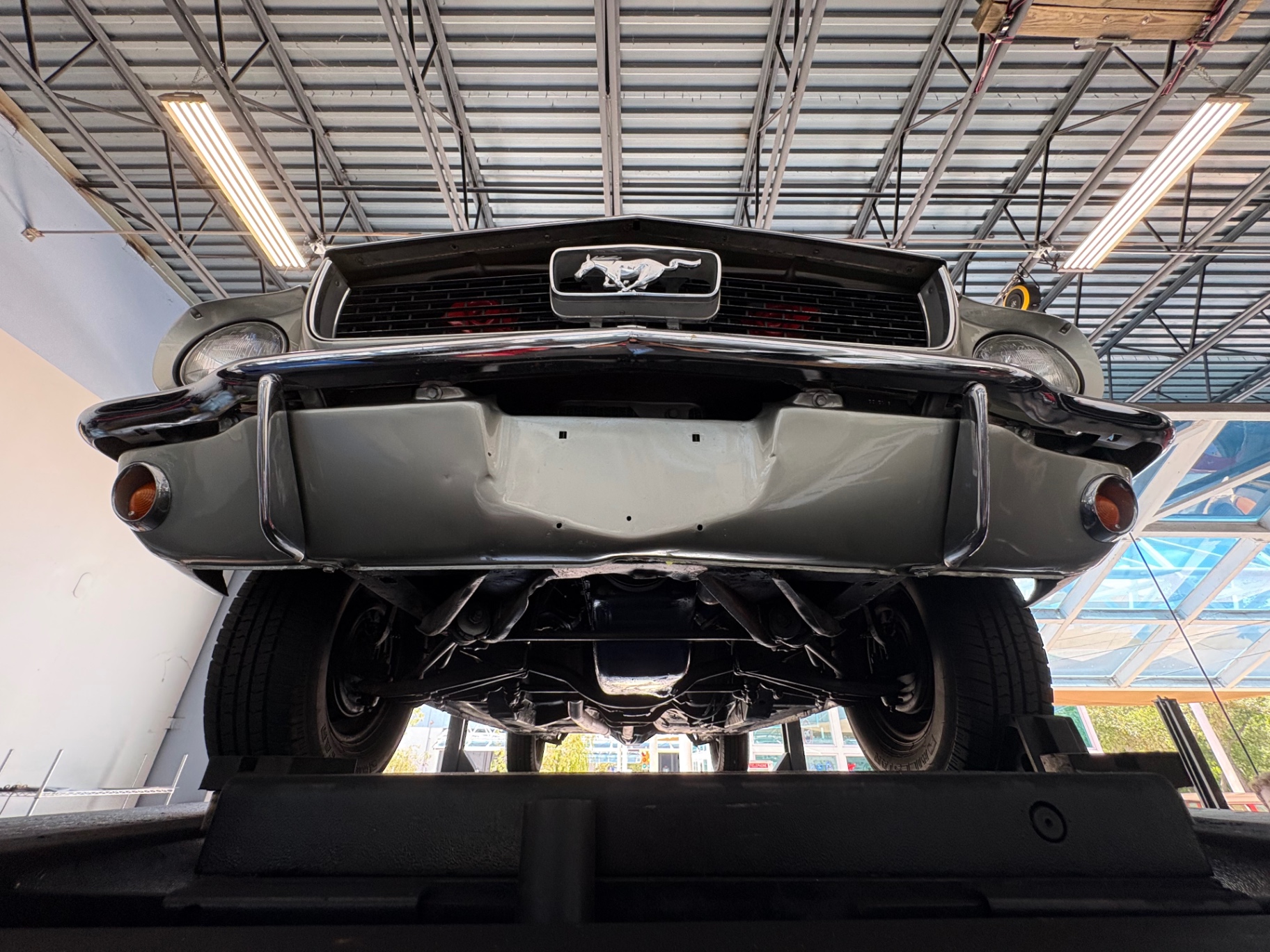
The wire wheel covers are the correct style for a 1966 Mustang and complement the whitewall tires in the way Ford's own promotional photography showed the car. These were popular factory-optional accessories and remain the right visual choice for this color and trim combination. The whitewall tires are appropriately narrow for the period — a detail that matters to anyone who has seen a classic Mustang fitted with modern wide rubber that fills the wheel wells incorrectly. The rear of the car, shown from below in the lift photos, confirms the clean undercarriage claim: the floor pans, rear frame rails, and axle housing are all in sound condition without the patching or surface rust that frequently appears on unrestored examples from this era.
Conclusion
The 1966 Ford Mustang Fastback has been one of the most consistently desirable body styles in the first-generation Mustang lineup since the collector market matured in the 1980s. This particular car earns its place in that category through correct specification, honest condition, and a combination of details — the four-speed manual, the FoMoCo engine bay, the intact chrome, the clean undercarriage — that are becoming harder to find together on a single car. It is not a high-horsepower numbers-matching GT, and it does not pretend to be. What it is is a well-preserved, correctly detailed 1966 Ford Mustang Fastback that can be driven, shown, or simply enjoyed without an immediate restoration commitment.
If you'd like to see this 1966 Ford Mustang Fastback in person or have questions about its history and condition, call Skyway Classics in Sarasota, Florida at 941-254-6608. We're happy to walk you through every detail.
Disclaimer
Information found on the website is presented as given to us by the owner of the car, whether on consignment or from the owner we bought it from. Some Photos, materials for videos, descriptions and other information are provided by the consignor/seller and is deemed reliable, but Skyway Classics does not warranty or guarantee this information. Skyway Classics is not responsible for information that may incorrect or a publishing error. The decision to purchase should be based solely on the buyers personal inspection of the vehicle or by a professional inspection service prior to offer or purchase being made.
1966 Ford Mustang Fastback — Silver, 4-Speed, Inline Six with Period-Correct Detail Throughout
Why This Car Is Special
The 1966 Ford Mustang Fastback is one of the most recognizable shapes in American automotive history, and the fastback body style is where the design logic is most convincing. The long roofline sweeping into the rear deck gives the car a proportional completeness that the coupe and convertible simply do not have. Ford sold just over 499,000 Mustangs for the 1966 model year across all body styles, but the fastback — officially called the 2+2 — accounted for roughly 35,000 of those units, making it the least common of the three body styles that year. That scarcity is part of why fastbacks consistently command more attention in the collector market than their coupe counterparts.
The VIN on this car decodes to a Dearborn, Michigan assembly plant build, a 1966 model year, the fastback body style, and a six-cylinder engine — all consistent with the specifications presented here. The "T" in the engine position of the VIN confirms the 200 cubic inch inline six, and the transmission code confirms the four-speed manual. That combination is a detail worth understanding, because it tells you something about how this car was originally configured and sold.
The 200 cubic inch inline six was Ford's standard engine for the 1966 Mustang. It produced 120 horsepower and was known for its durability and smooth power delivery. It is not a performance engine by the standards of the era's V8s, but it is a correct and honest engine for the car. Pairing it with a four-speed manual transmission was a deliberate choice — the buyer who originally specified this car wanted the engagement of a manual gearbox without stepping up to a V8. The result is a lighter, more balanced car that is genuinely pleasant to drive on public roads. Replacement parts for the 200 six remain widely available, and the engine's mechanical simplicity is an asset for anyone who plans to maintain the car themselves or on a budget.
What sets this particular 1966 Ford Mustang Fastback apart is the overall presentation. The silver exterior over parchment vinyl interior is a combination that photographs well and holds up well in person. The car has been maintained and detailed to a standard that reflects care rather than neglect, and the undercarriage confirms the car's structural integrity. For buyers looking for a fastback that is ready to drive and show without a full restoration budget, this car sits in a practical and honest position.
Features
- 200 cubic inch inline six-cylinder engine
- 4-speed manual transmission
- Fastback (2+2) body style
- Silver exterior
- Parchment vinyl interior
- Console with floor shifter
- Wood-rim steering wheel
- Wire wheel covers
- Whitewall tires
- Chrome front and rear bumpers
- Door courtesy lights
- FoMoCo-branded engine bay components
- Clean undercarriage
Mechanical
The 200 cubic inch inline six under this hood is the correct, numbers-matching engine for a Dearborn-built 1966 Ford Mustang Fastback of this VIN configuration. Ford introduced the 200 six for the Mustang in 1965 as a lengthened version of the earlier 170 cubic inch unit. It added a seventh main bearing journal compared to the older engine, which reduced vibration significantly and gave it a reputation for long service life. The engine is painted Ford Corporate Blue, which is the factory-correct color for this application, and the engine bay retains its FoMoCo-branded components — the kind of detail that matters to judges at concours events and to buyers who care about originality.
The four-speed manual transmission is a meaningful spec on a six-cylinder car. Most inline six Mustangs left the factory with an automatic or a three-speed manual. The four-speed was an extra-cost option, and selecting it on a six-cylinder suggests the original buyer prioritized the driving experience. The floor-mounted shifter connects to the console, giving the cockpit a purposeful layout that aligns with the fastback's sporting character. The undercarriage, visible in the photos, shows clean metal, no significant rust, and intact structural components — an important data point for any first-generation Mustang, which can suffer significant floor pan and frame rail deterioration in humid or northern climates. This car does not show those problems.
Interior
The parchment vinyl interior is original in specification and consistent with the silver exterior — Ford offered this pairing as a factory combination in 1966. The vinyl seat material has held up well, which is not unusual for cars kept out of prolonged sun exposure, but it is worth noting because replacement parchment interiors are available but expensive to execute correctly. The console runs the length of the floor between the bucket seats and integrates with the four-speed shifter in the way the factory intended. This is not a retrofitted console — it belongs here.
The wood-rim steering wheel is a factory optional accessory for the 1966 Mustang, sold through Ford's accessory catalog and often dealer-installed. It was a popular upgrade in the 1960s and fits the overall character of the car without looking out of place. The instrument cluster faces the driver directly in the Mustang's characteristic five-dial layout. Door courtesy lights, visible in the door panel photograph, are a small but telling detail — they indicate the car was optioned to a specific level of finish, and they still function as the photograph shows. The door panels themselves are clean, with the chrome trim intact and the ribbed parchment vinyl showing no tears or significant wear.
Exterior
Silver on a 1966 Ford Mustang Fastback is a less common choice than the reds, blues, and blacks typically associated with the model, which makes it stand out in a field of first-generation Mustangs. The body sits straight, with the roofline, sail panels, and rear valance panel all in correct alignment. The chrome front and rear bumpers are in solid condition with good reflectivity — original chrome from this era that has not been re-plated can be difficult to source cleanly, so intact original bumpers are worth noting.
The wire wheel covers are the correct style for a 1966 Mustang and complement the whitewall tires in the way Ford's own promotional photography showed the car. These were popular factory-optional accessories and remain the right visual choice for this color and trim combination. The whitewall tires are appropriately narrow for the period — a detail that matters to anyone who has seen a classic Mustang fitted with modern wide rubber that fills the wheel wells incorrectly. The rear of the car, shown from below in the lift photos, confirms the clean undercarriage claim: the floor pans, rear frame rails, and axle housing are all in sound condition without the patching or surface rust that frequently appears on unrestored examples from this era.
Conclusion
The 1966 Ford Mustang Fastback has been one of the most consistently desirable body styles in the first-generation Mustang lineup since the collector market matured in the 1980s. This particular car earns its place in that category through correct specification, honest condition, and a combination of details — the four-speed manual, the FoMoCo engine bay, the intact chrome, the clean undercarriage — that are becoming harder to find together on a single car. It is not a high-horsepower numbers-matching GT, and it does not pretend to be. What it is is a well-preserved, correctly detailed 1966 Ford Mustang Fastback that can be driven, shown, or simply enjoyed without an immediate restoration commitment.
If you'd like to see this 1966 Ford Mustang Fastback in person or have questions about its history and condition, call Skyway Classics in Sarasota, Florida at 941-254-6608. We're happy to walk you through every detail.
Disclaimer
Information found on the website is presented as given to us by the owner of the car, whether on consignment or from the owner we bought it from. Some Photos, materials for videos, descriptions and other information are provided by the consignor/seller and is deemed reliable, but Skyway Classics does not warranty or guarantee this information. Skyway Classics is not responsible for information that may incorrect or a publishing error. The decision to purchase should be based solely on the buyers personal inspection of the vehicle or by a professional inspection service prior to offer or purchase being made.
1966 Ford
Mustang Base
Why Choose Skyway Classics?
Explore our curated inventory of classic and collector cars—thoughtfully selected, ready to drive, and supported by experts who make ownership simple.
Expert Curation
Every vehicle is hand-selected by our experts for quality, authenticity, and investment potential.
Fast Transactions
Streamlined buying and selling process with quick financing and immediate delivery options.
Only National Dealer With Classic Service & Repair
We’re the only national dealership that services and repairs the classics we sell—before and after the sale.
Nationwide Network
Access to our extensive network of collectors, restorers, and classic car enthusiasts nationwide.
Concierge Ownership Support
From financing and insurance to paperwork, shipping, and titling—we handle the details so you can enjoy the drive.
Passion-Driven Service
We're classic car enthusiasts first, providing personalized service with genuine passion for the hobby.