
1967 Chevrolet
Corvette Sting Ray Convertible
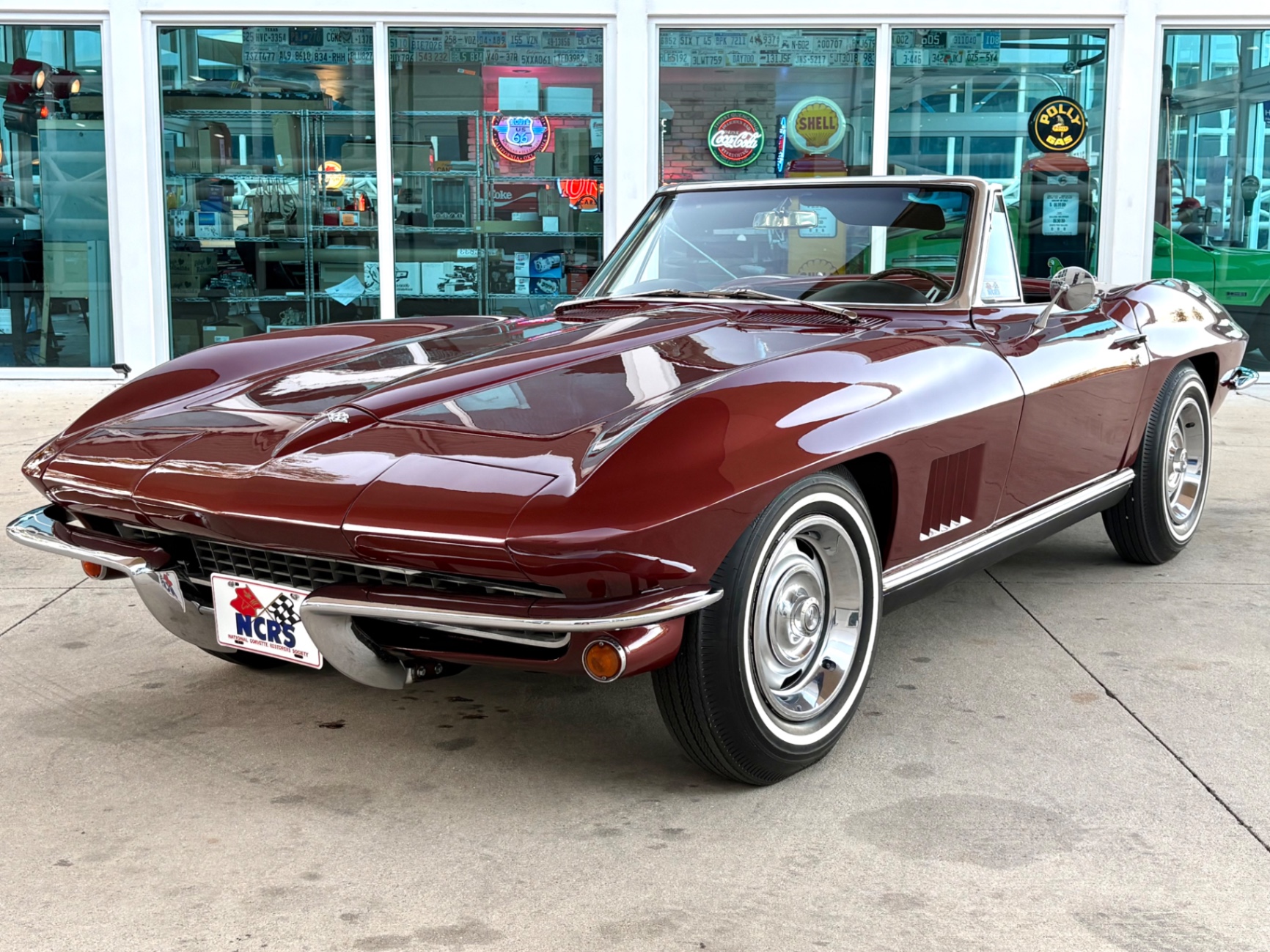
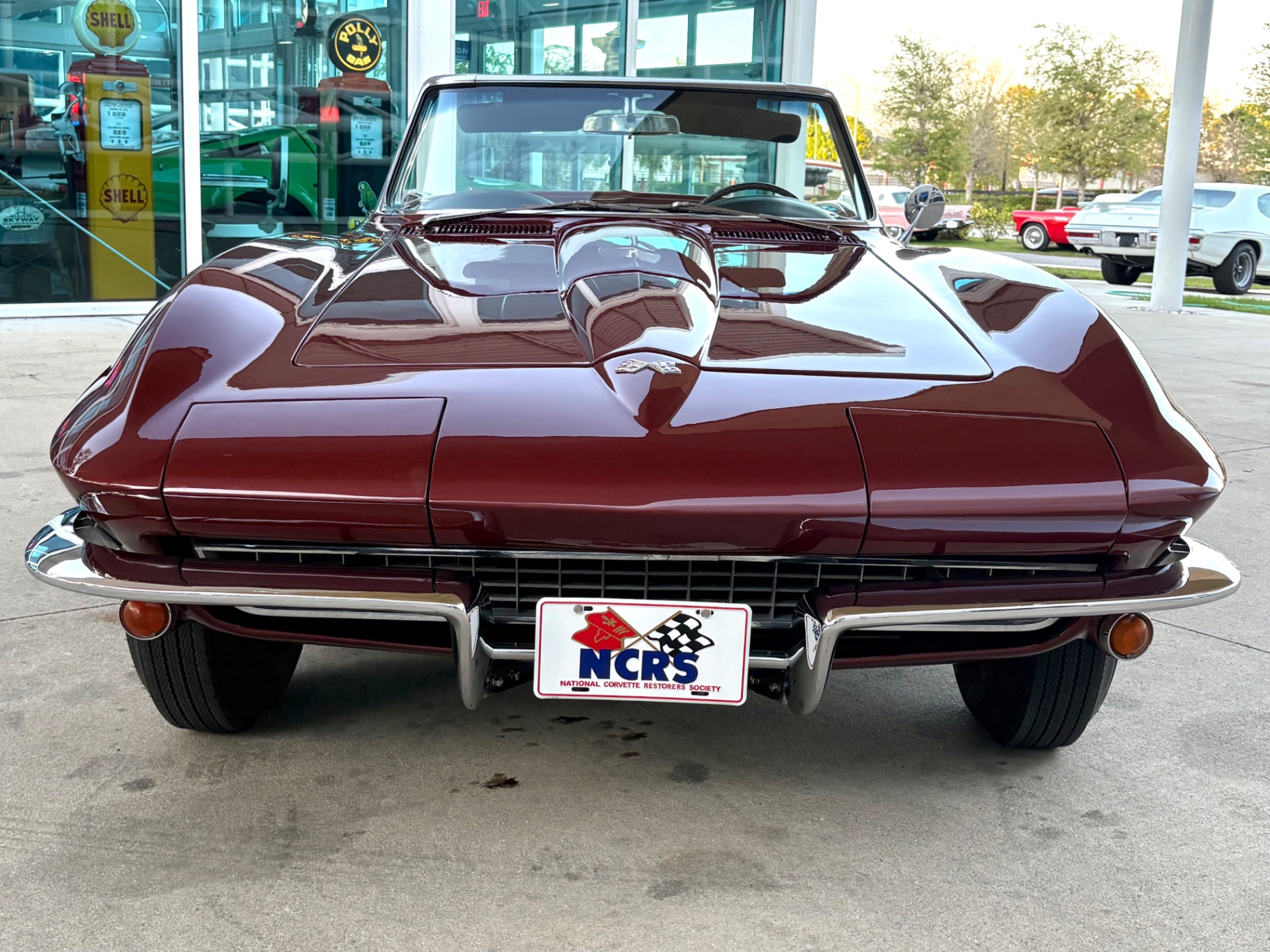
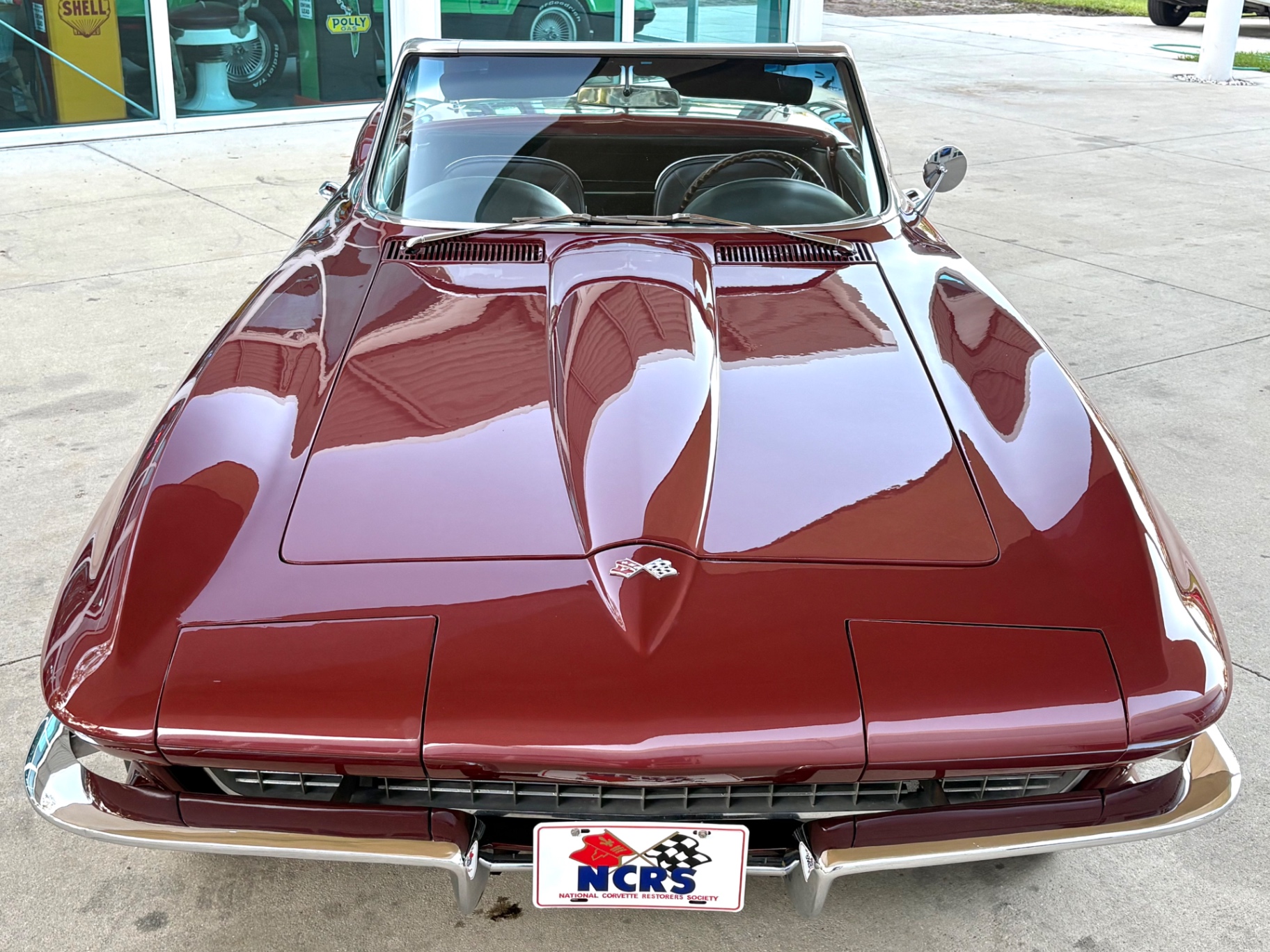
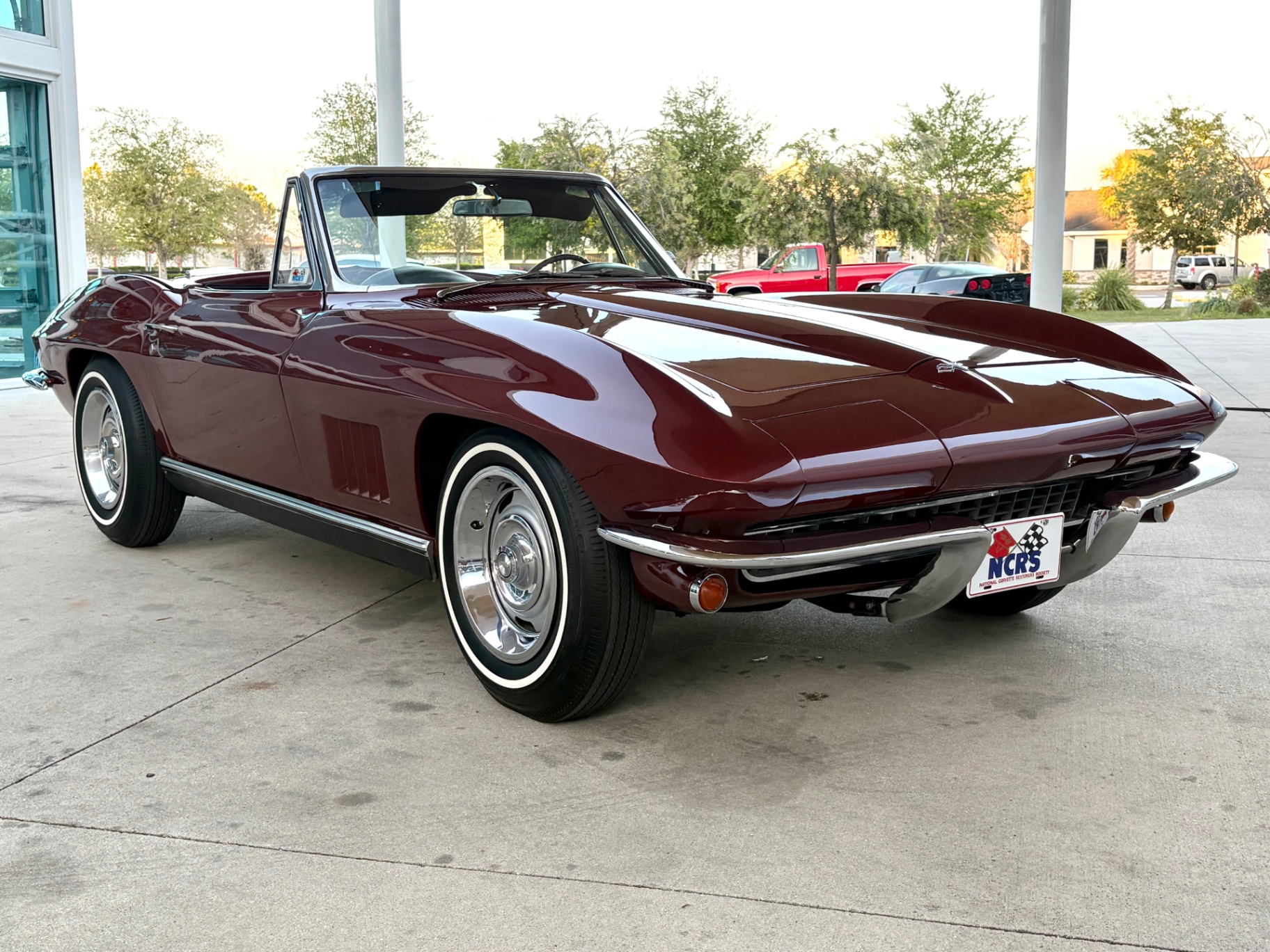
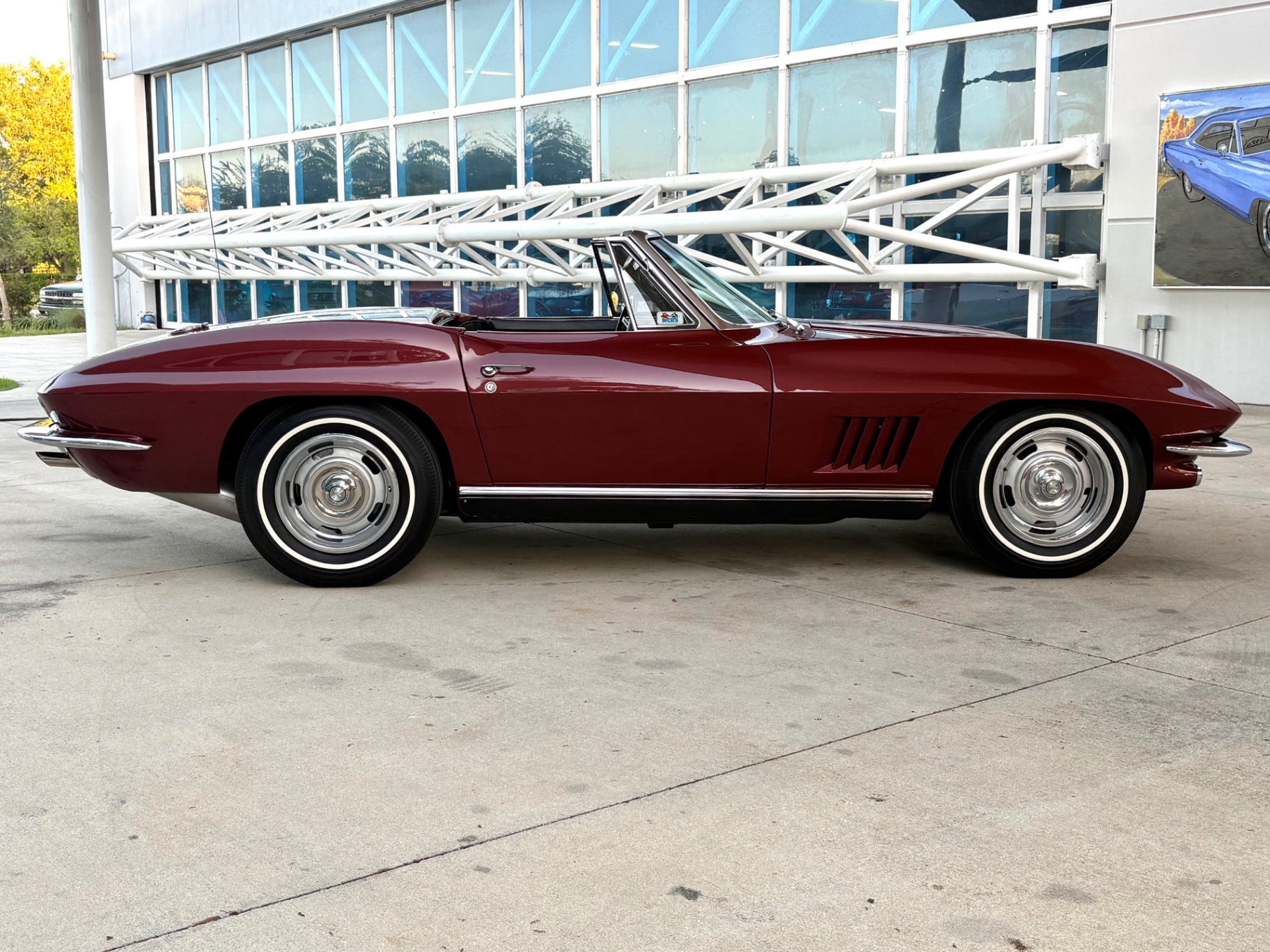
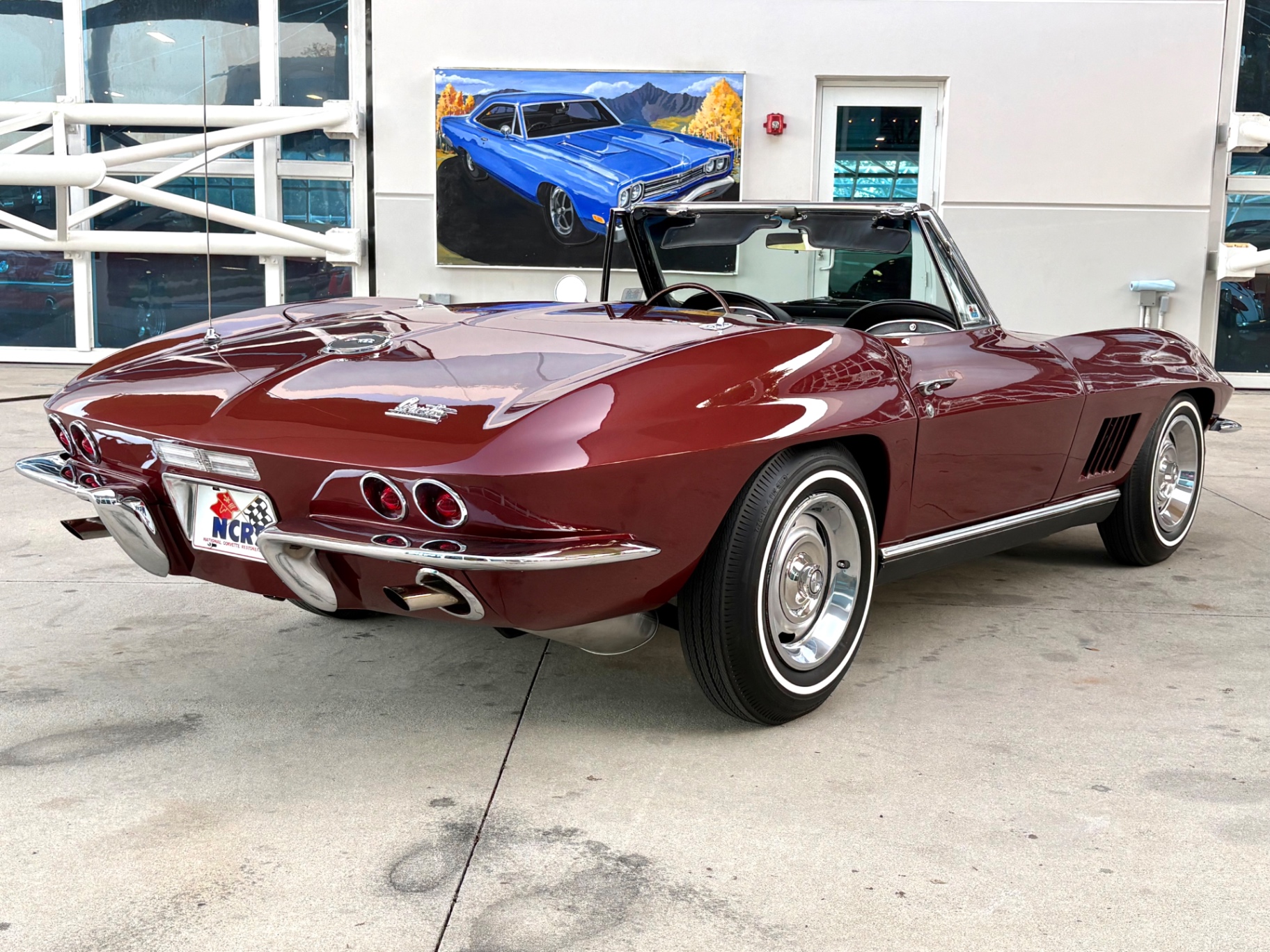
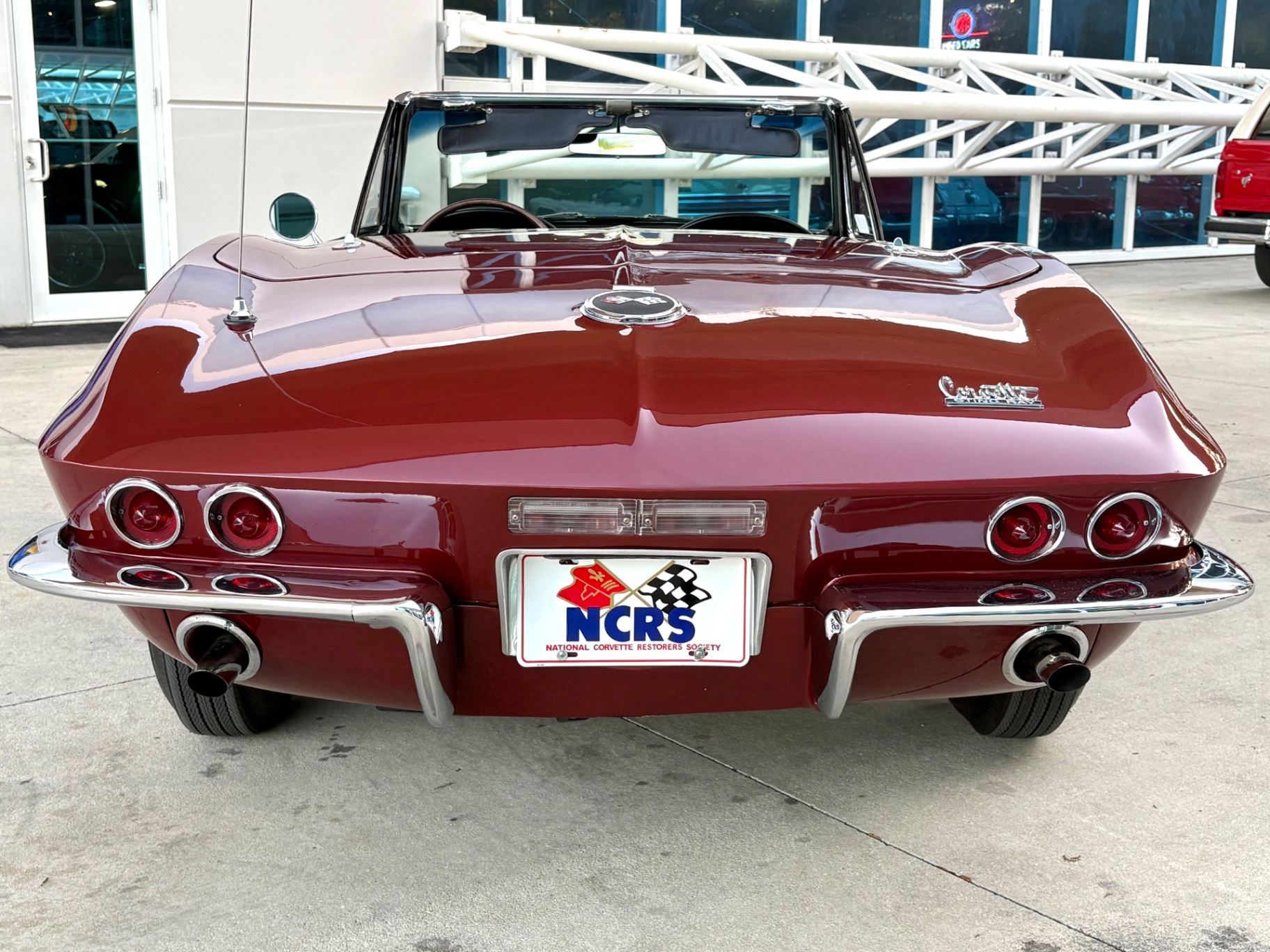
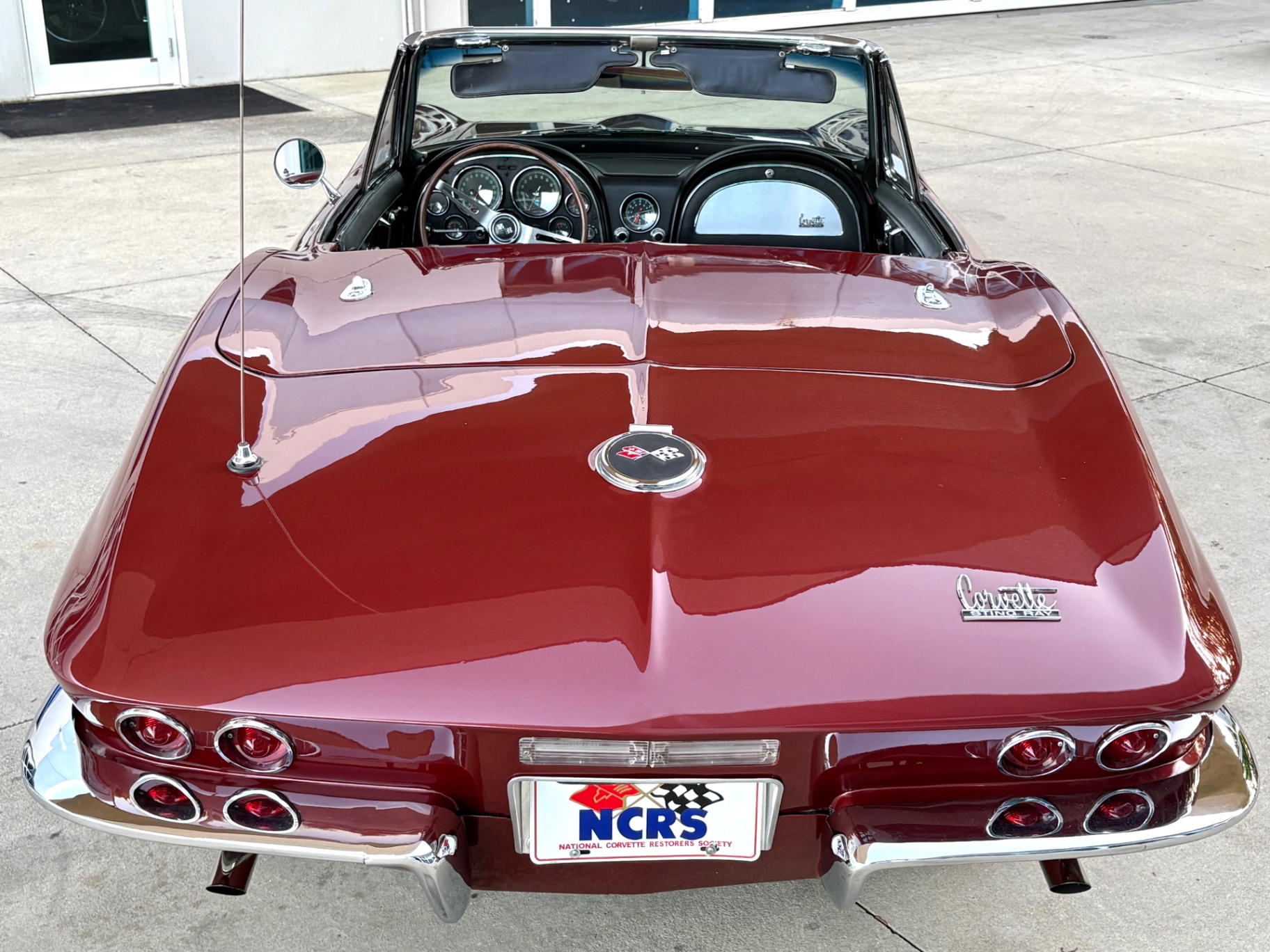
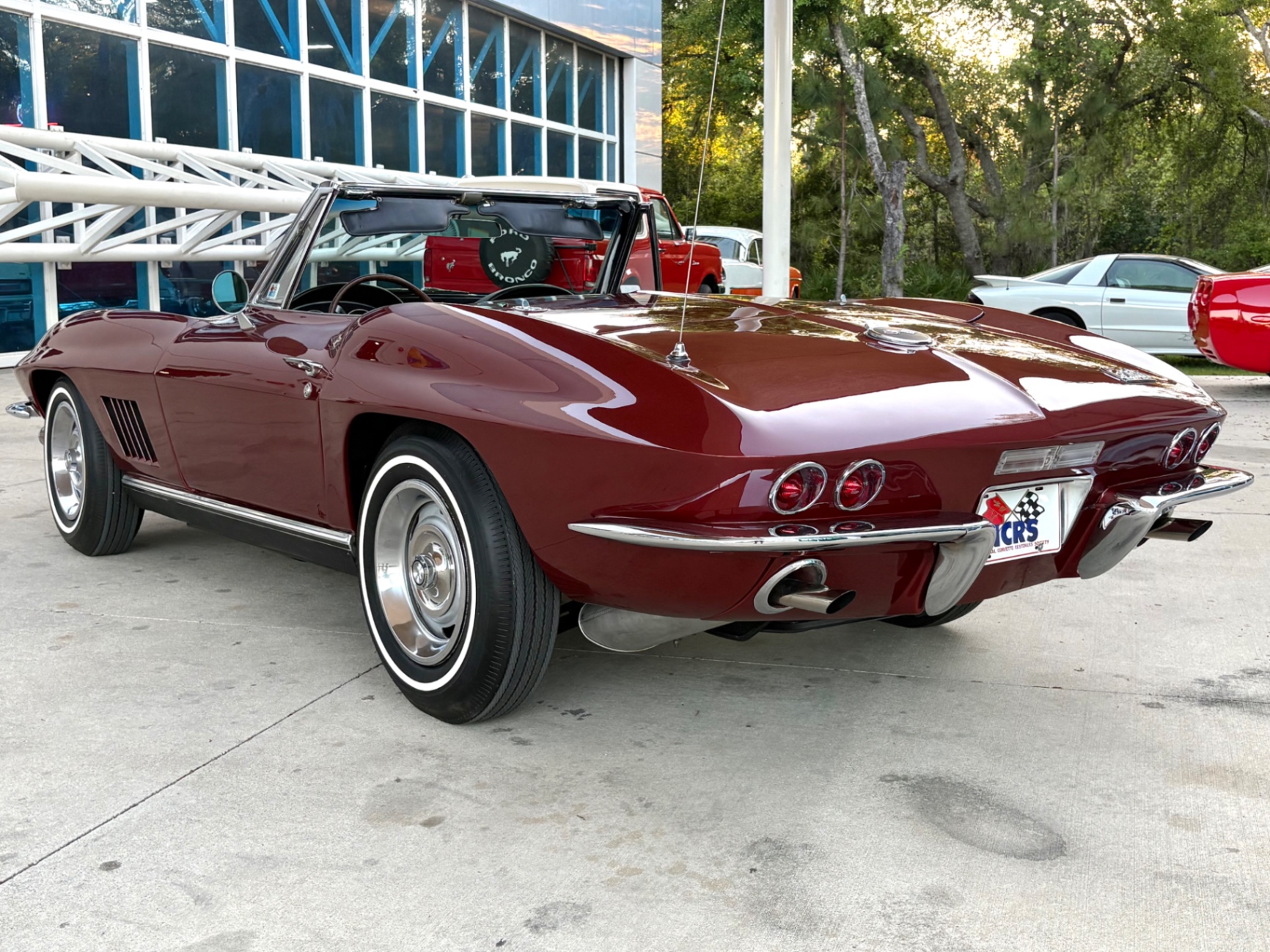
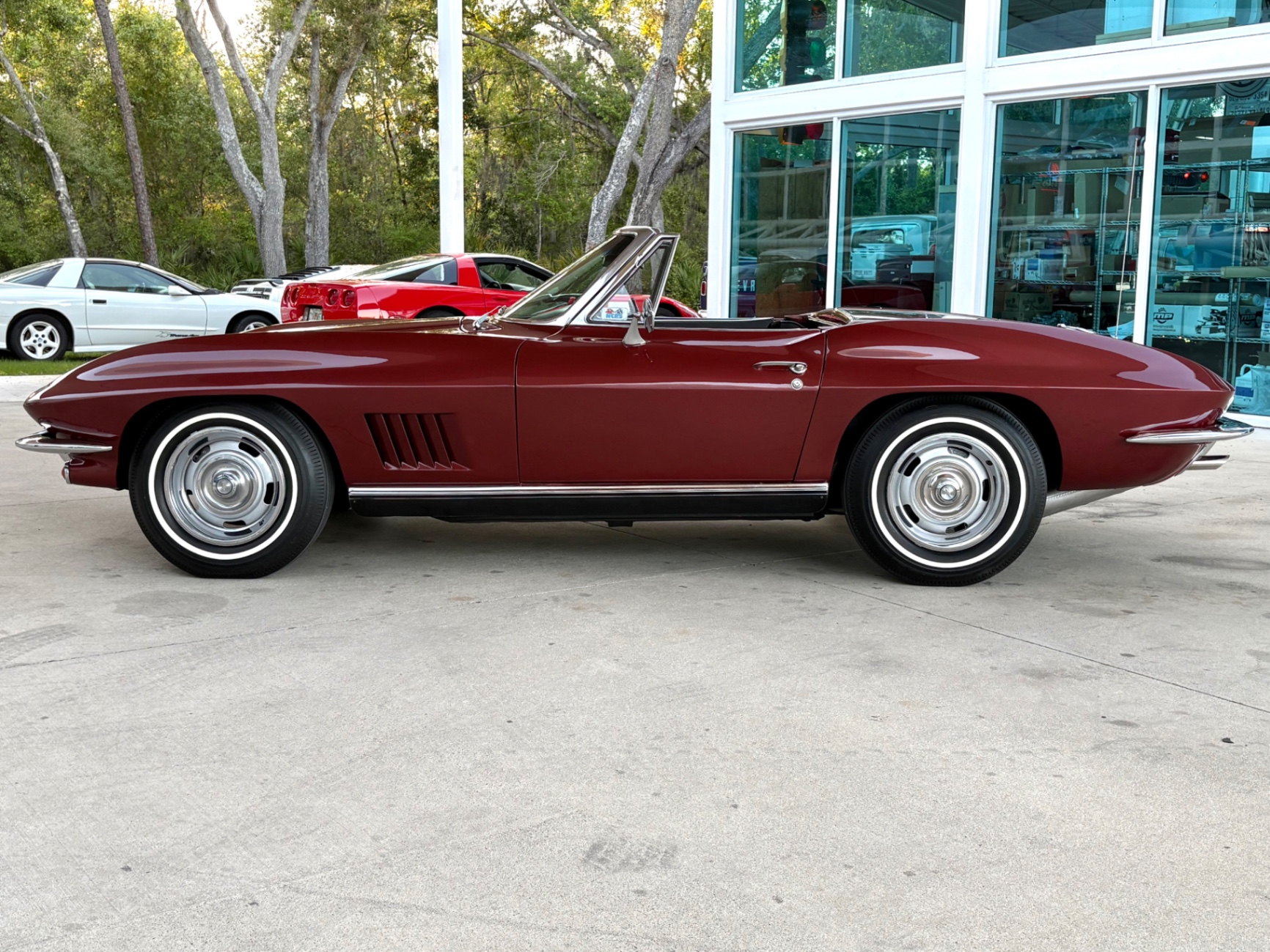
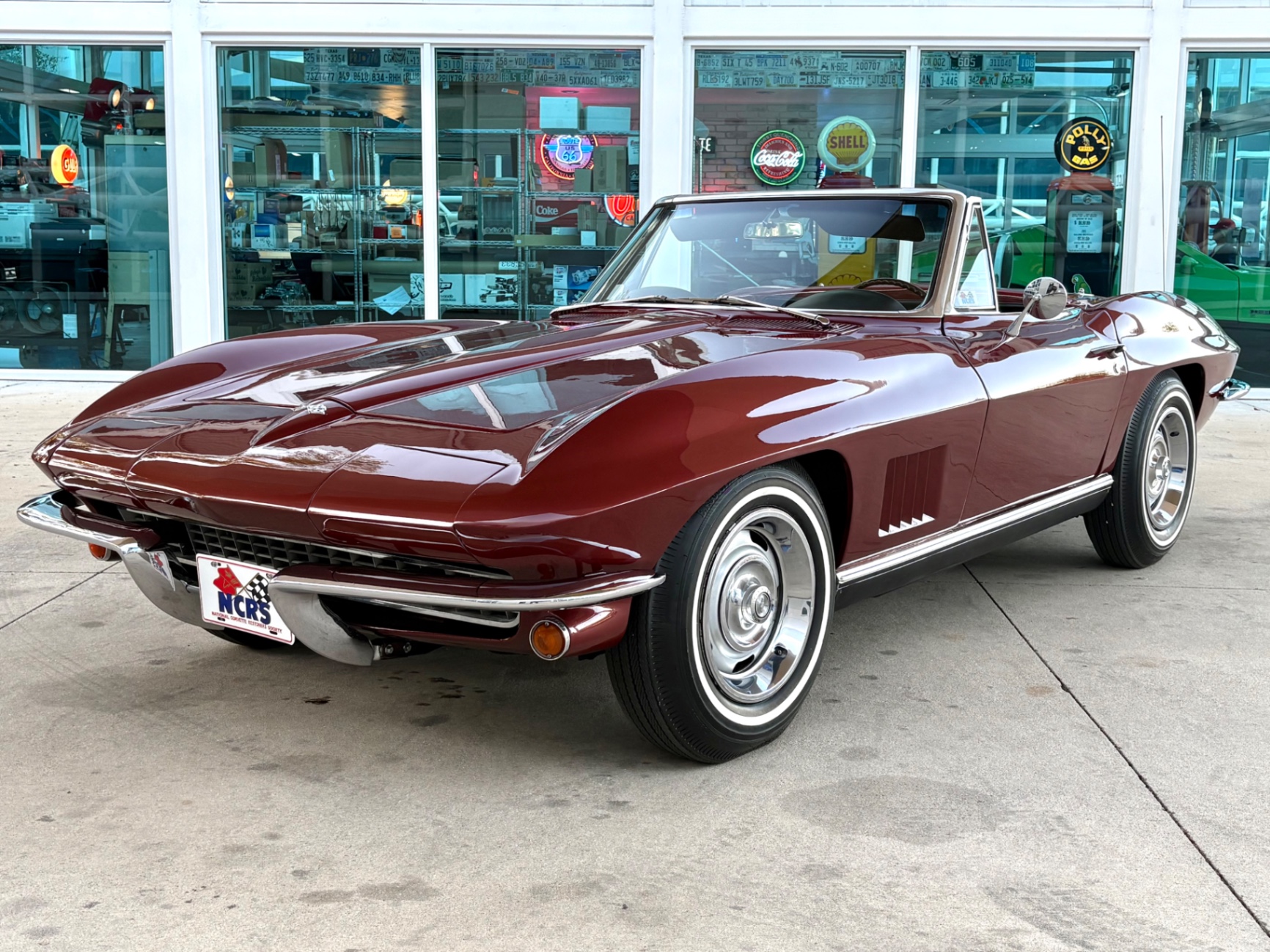
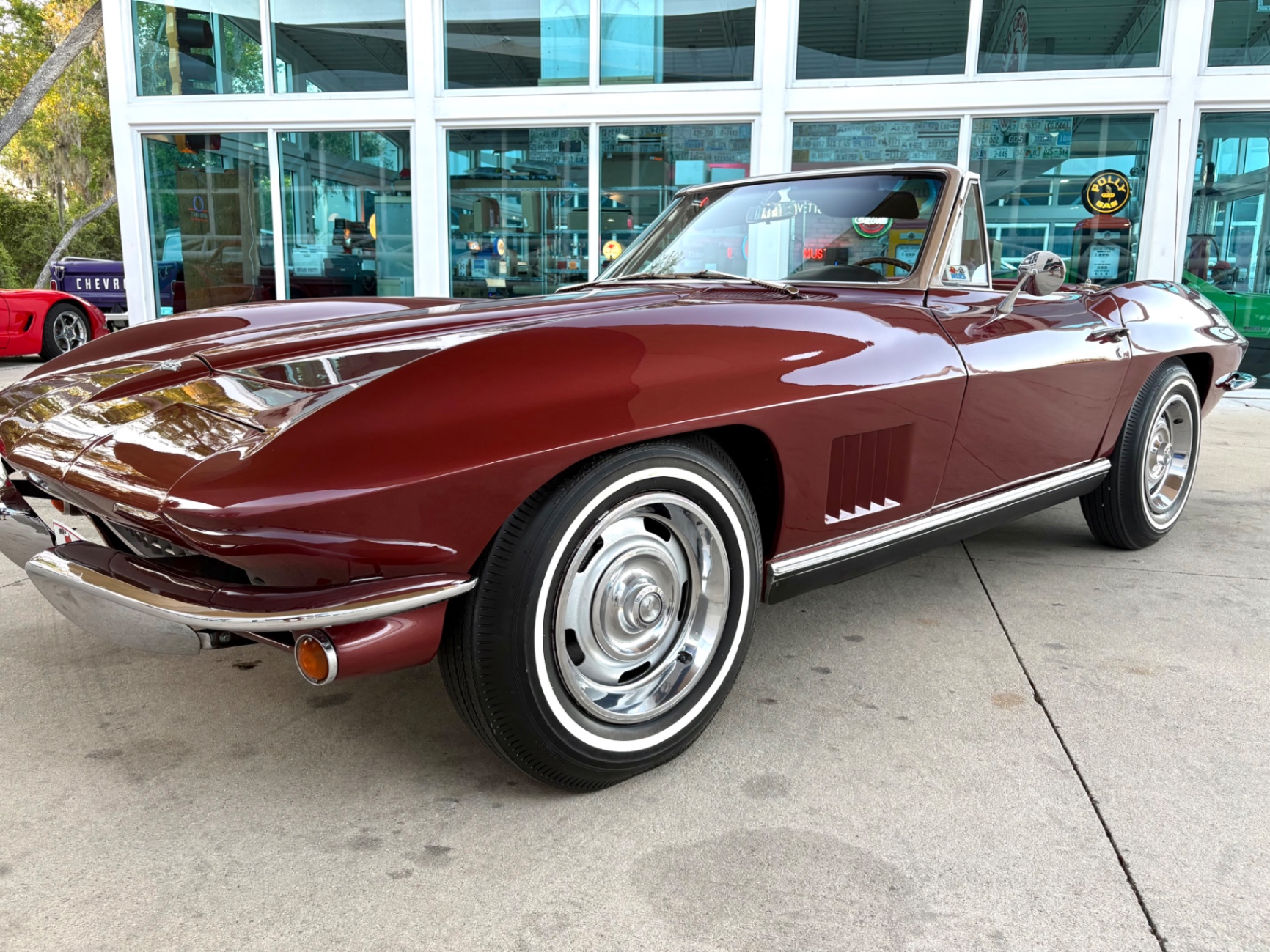
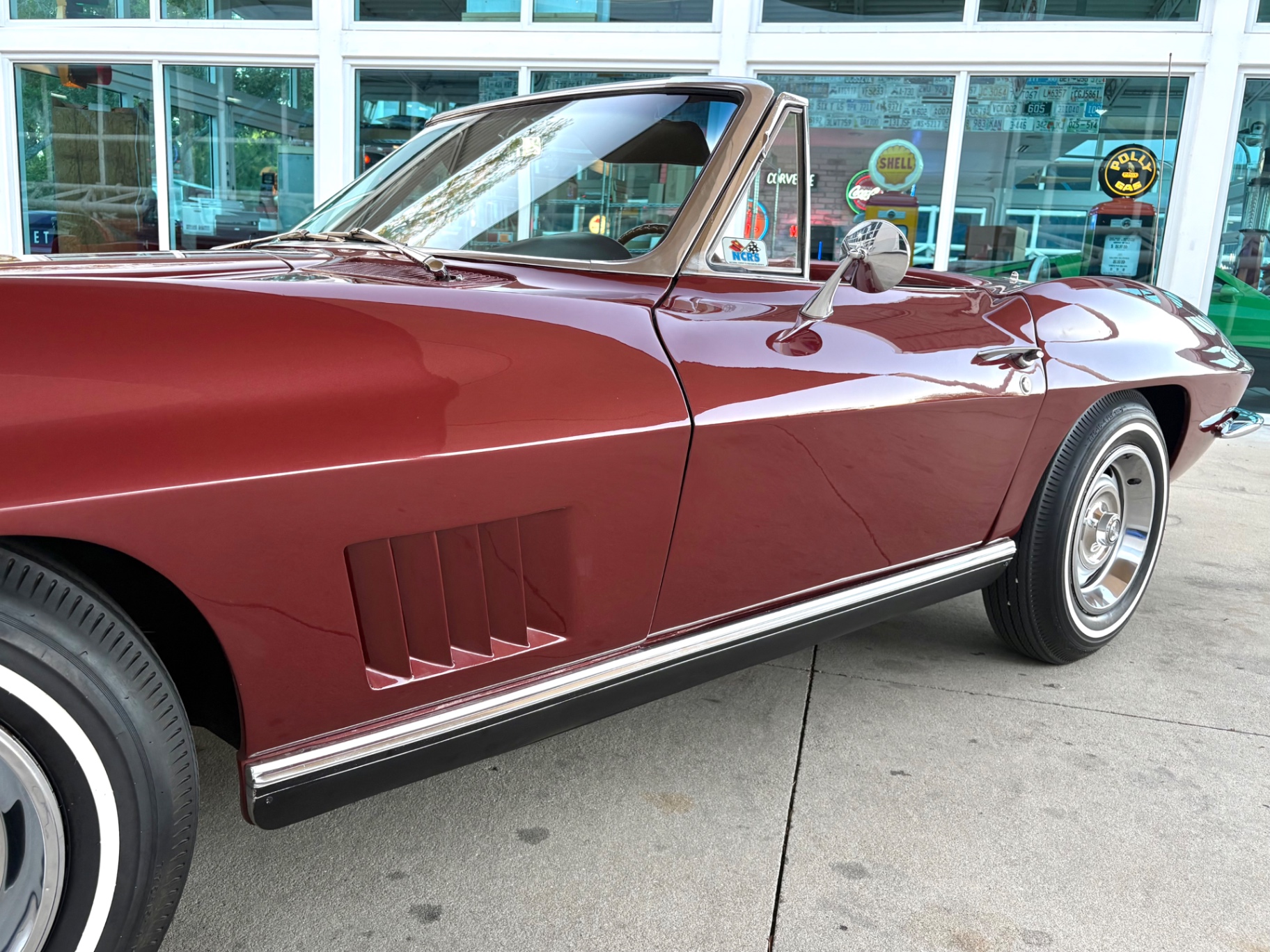
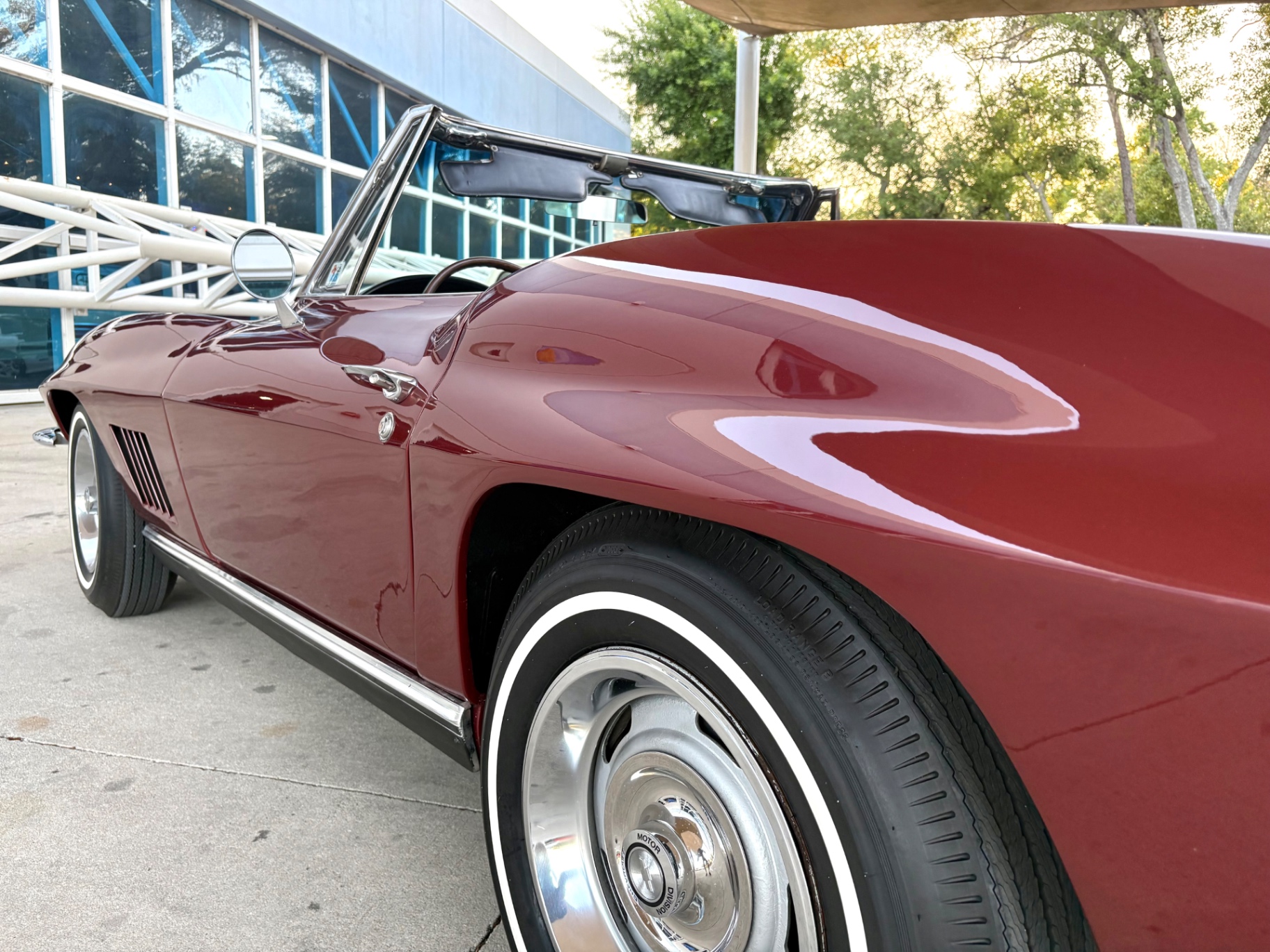
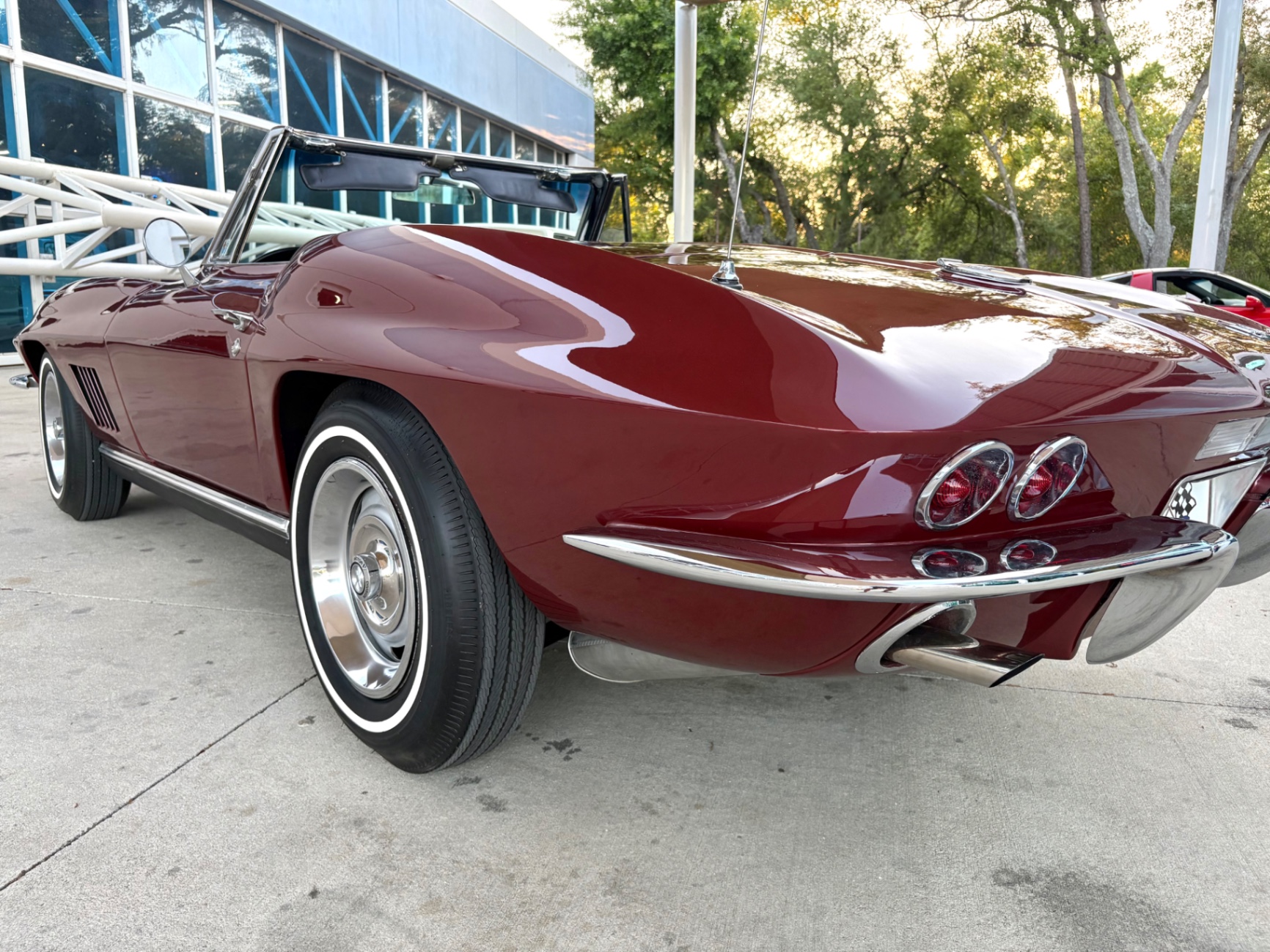
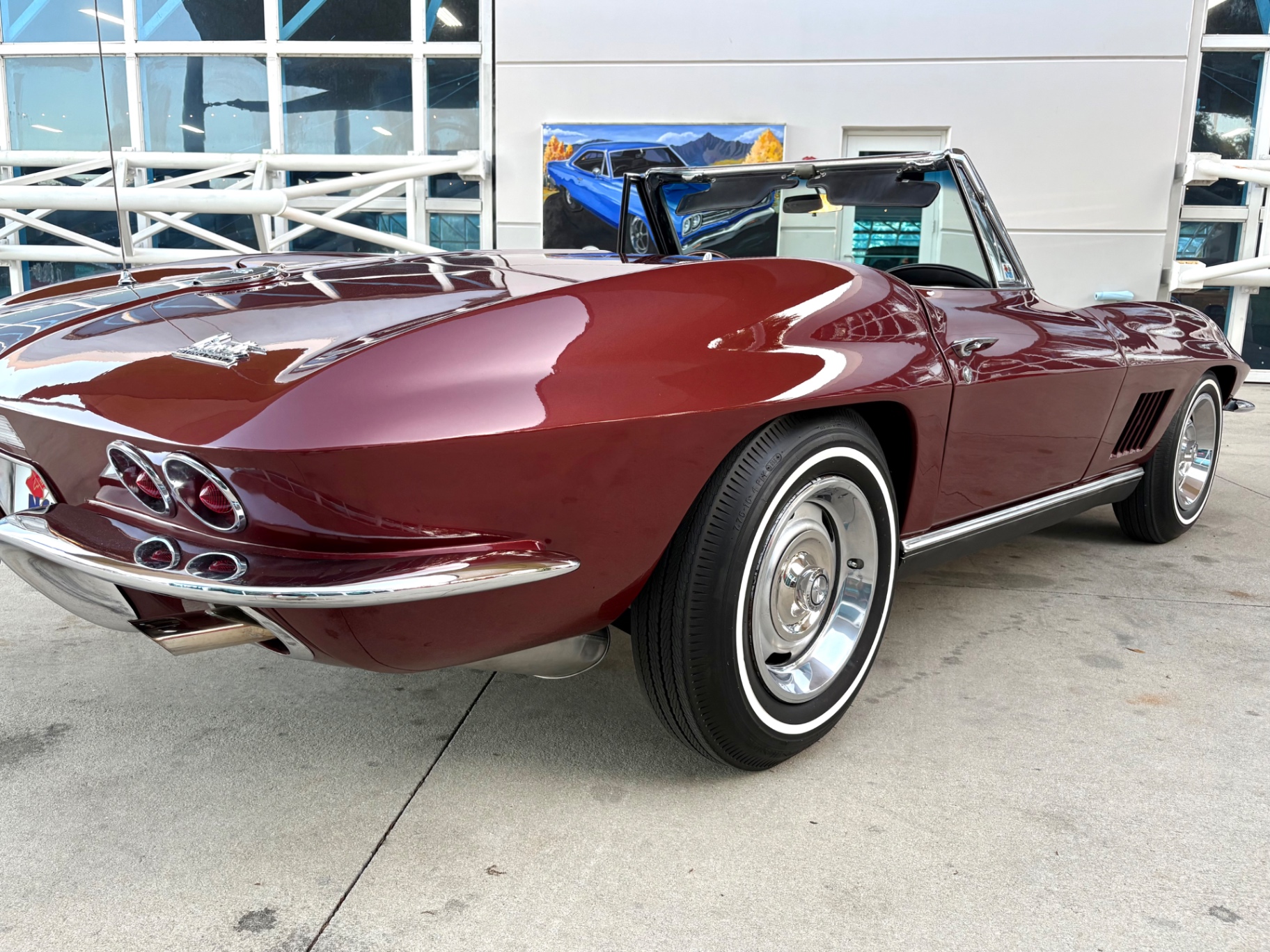
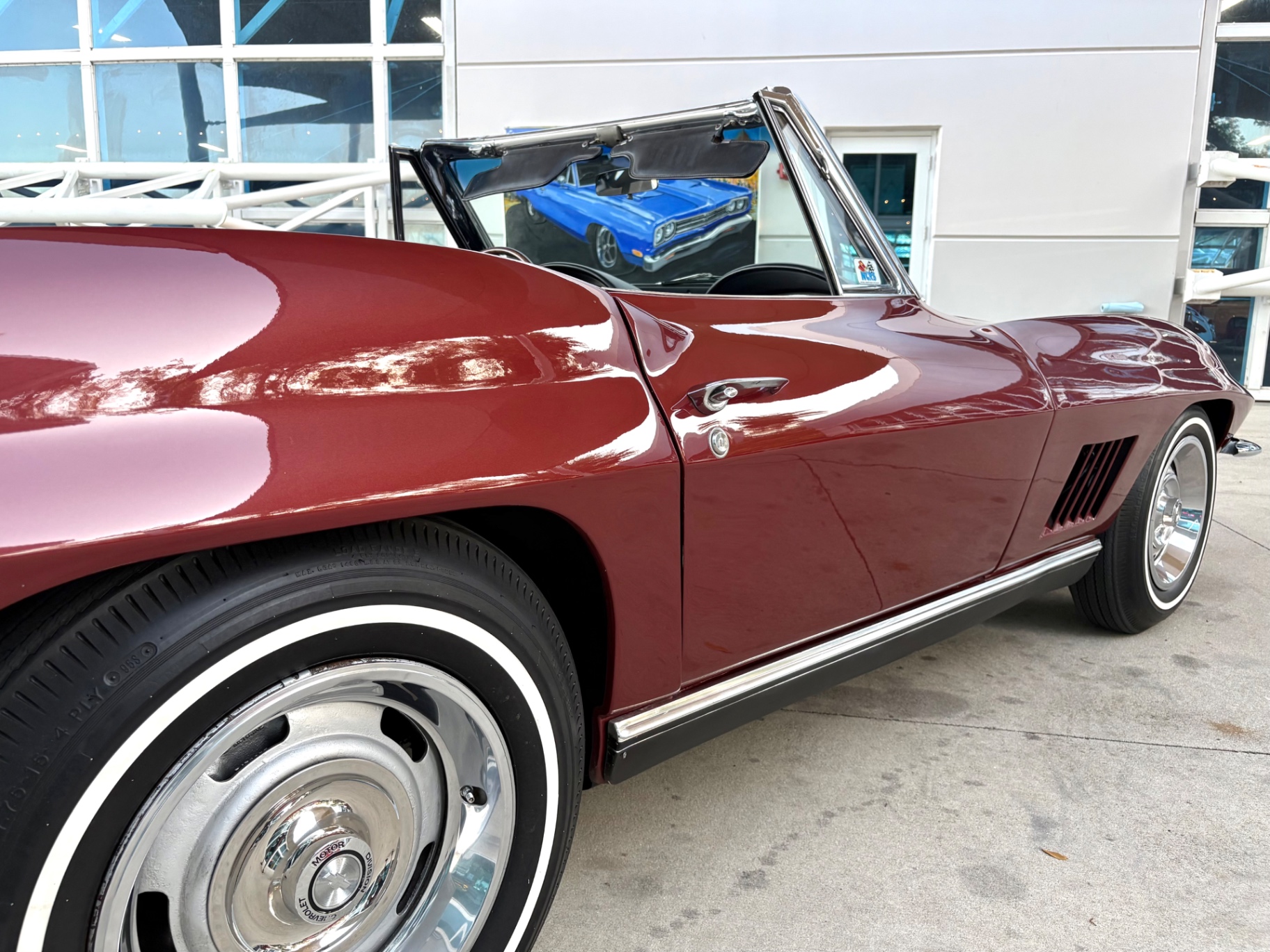
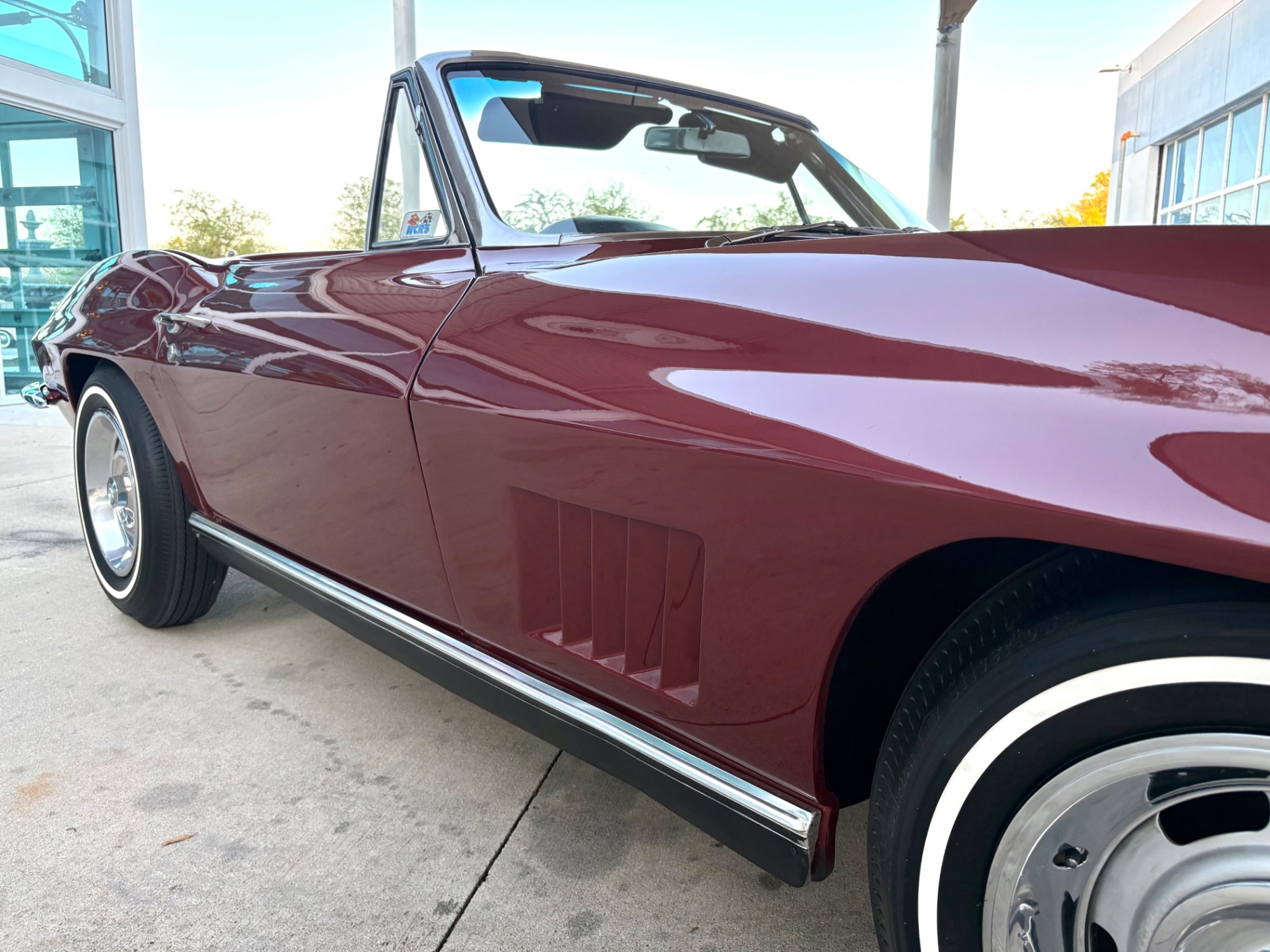
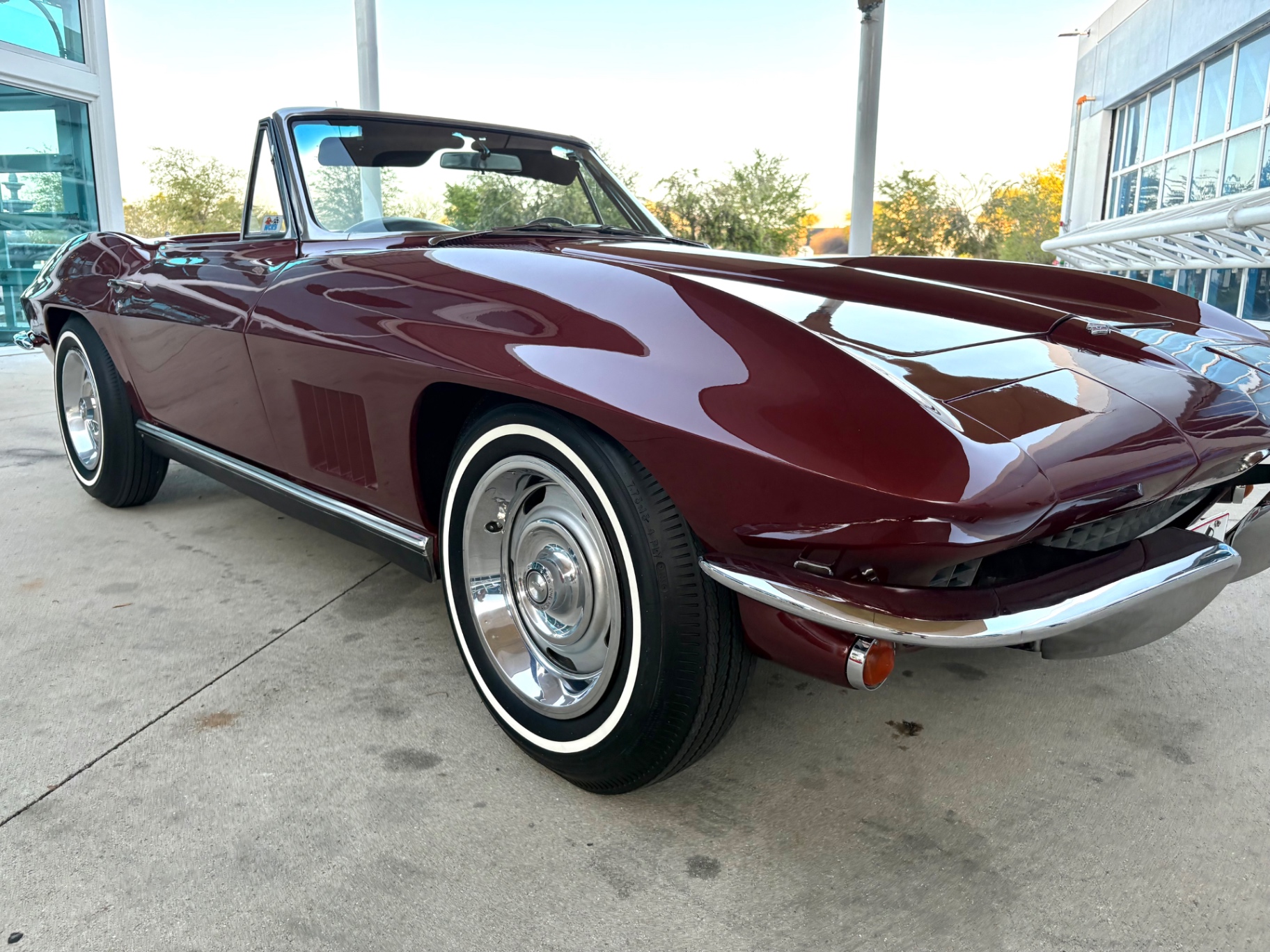
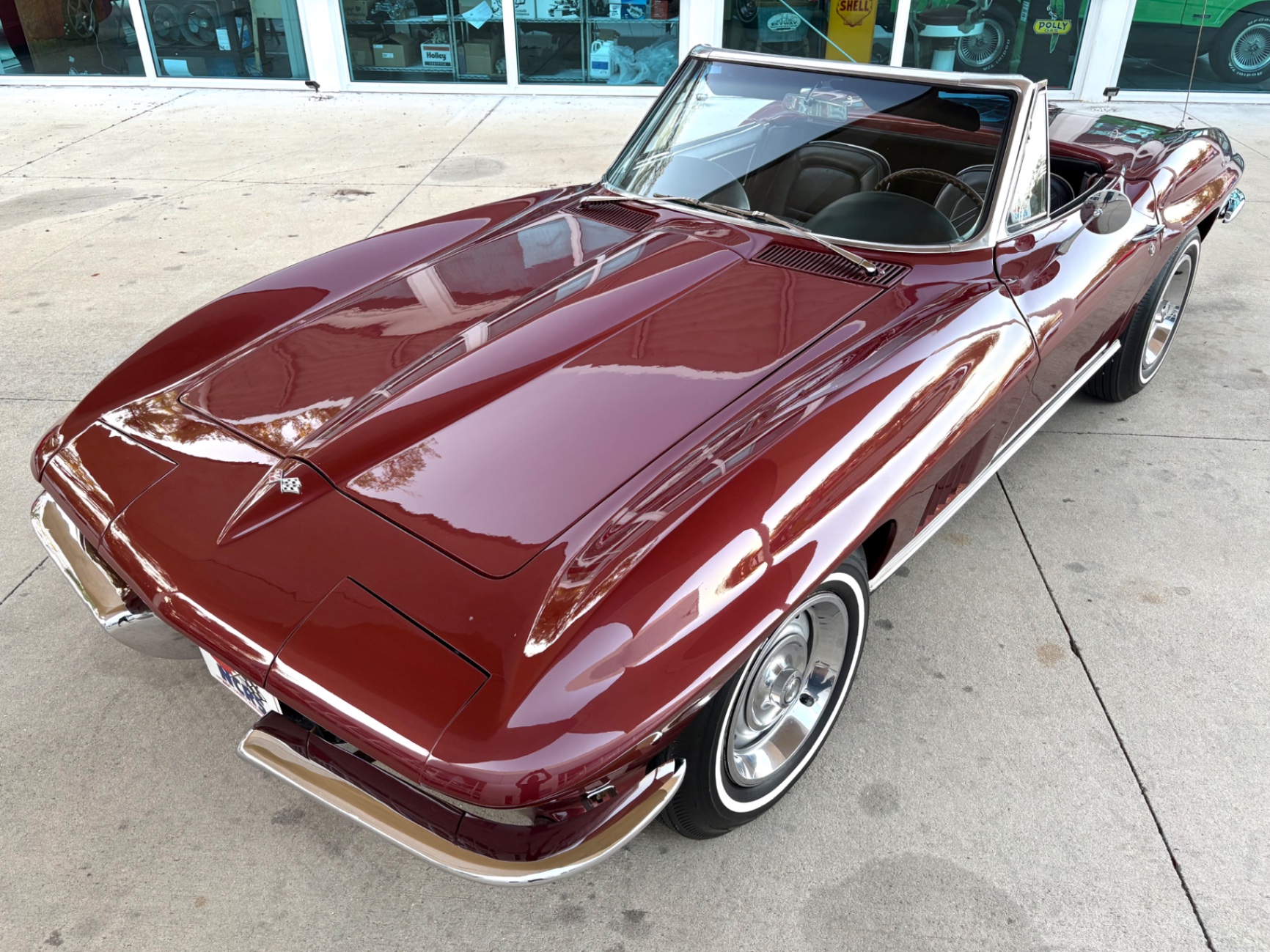
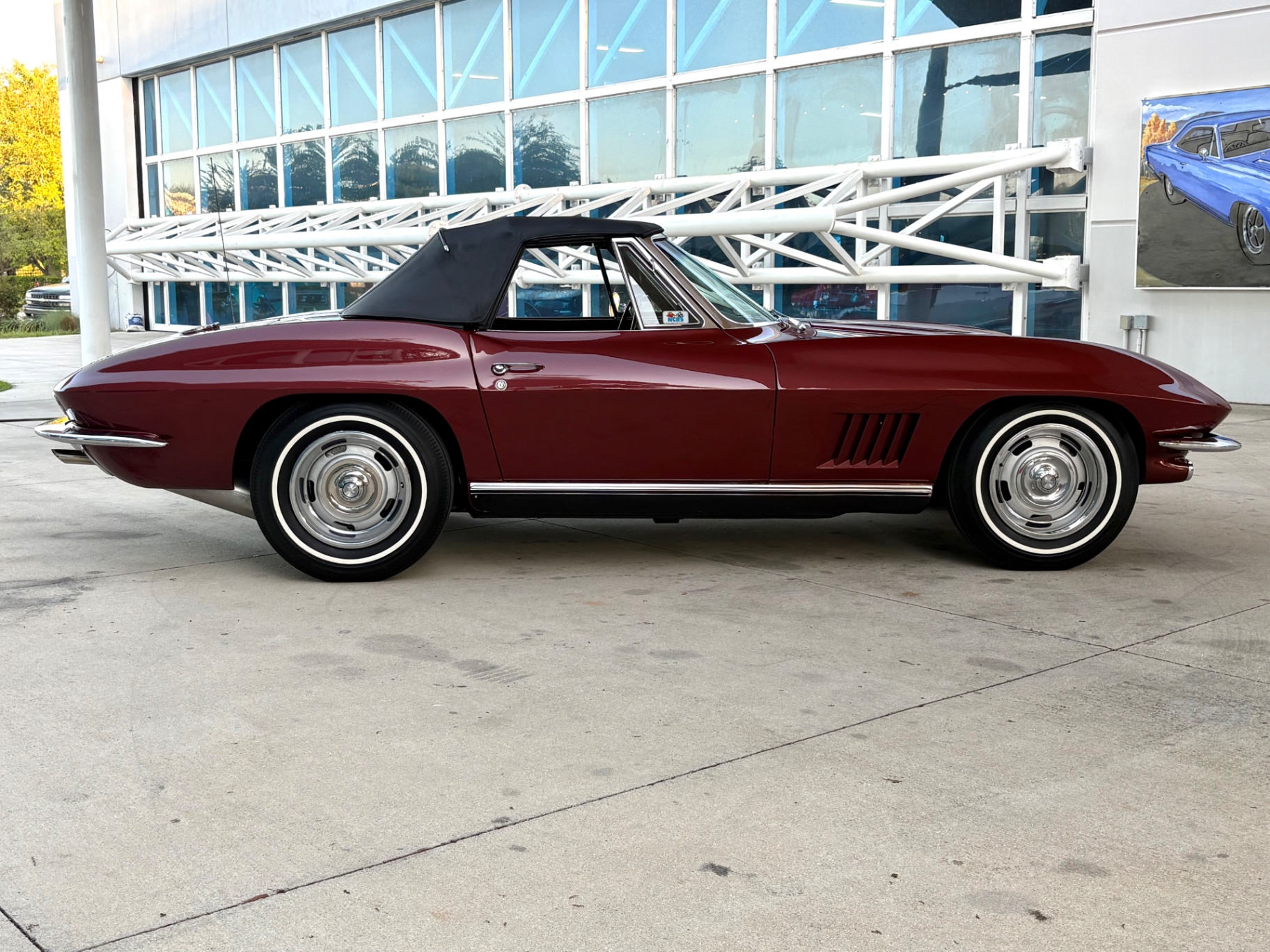
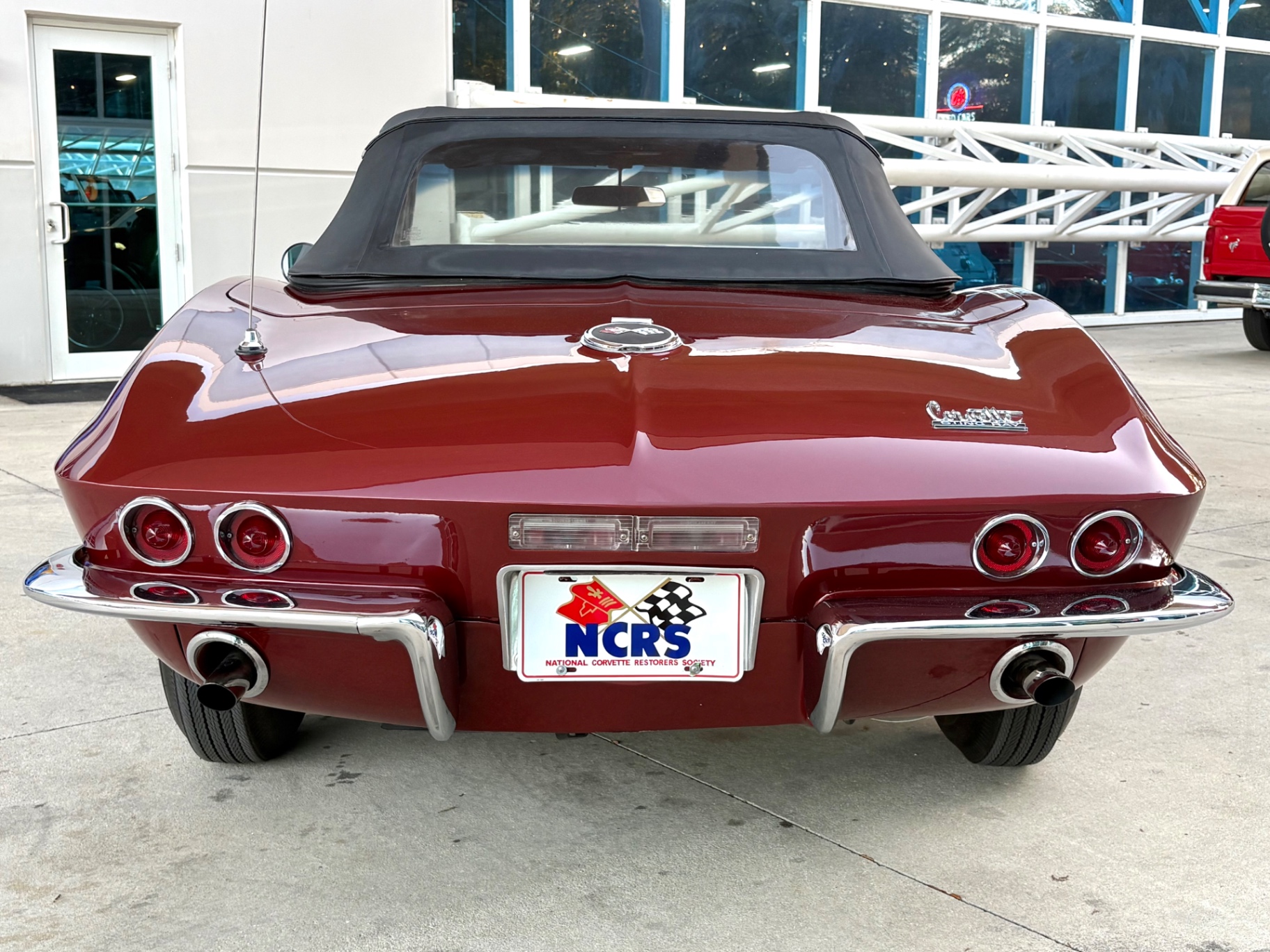
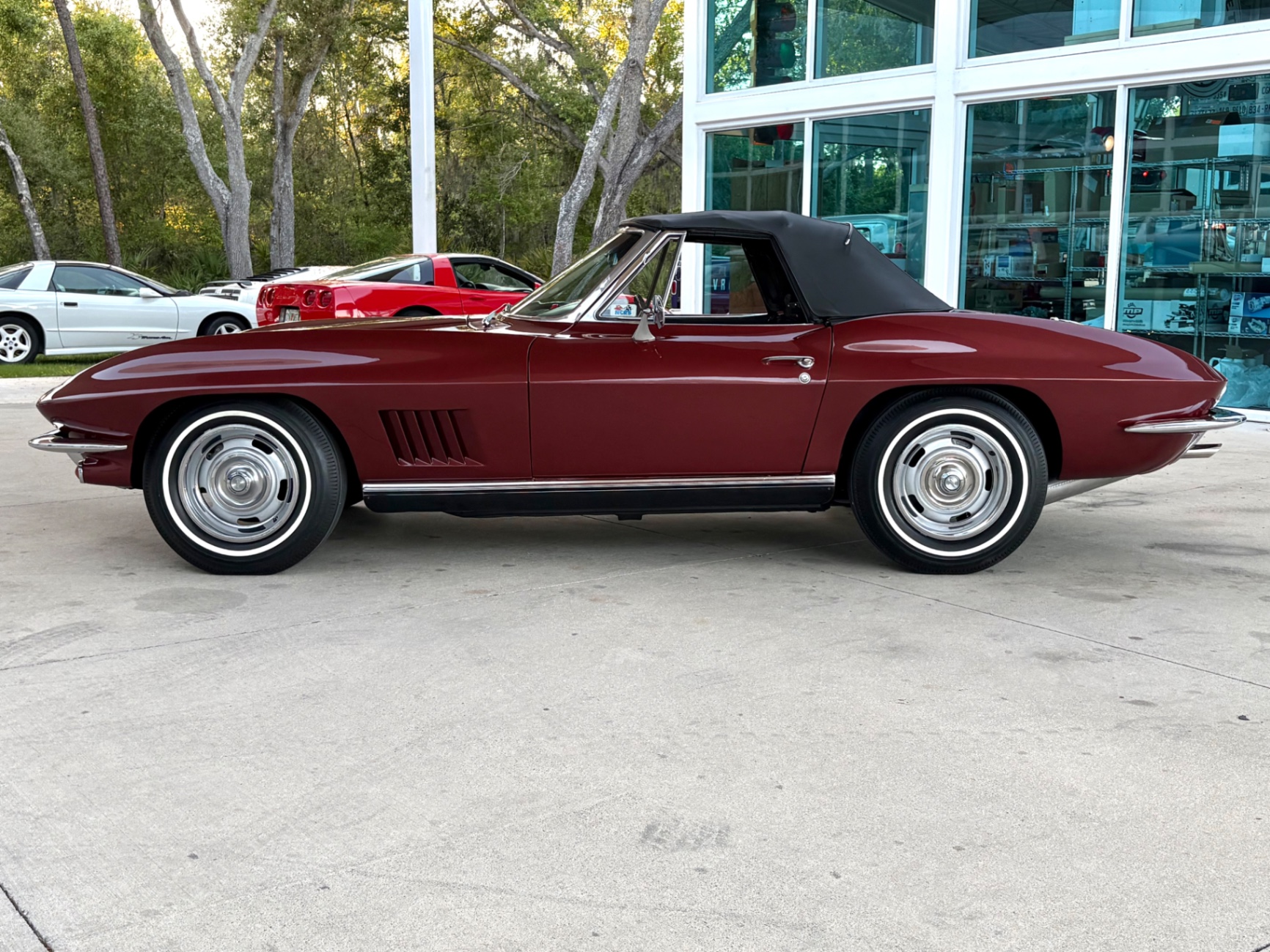
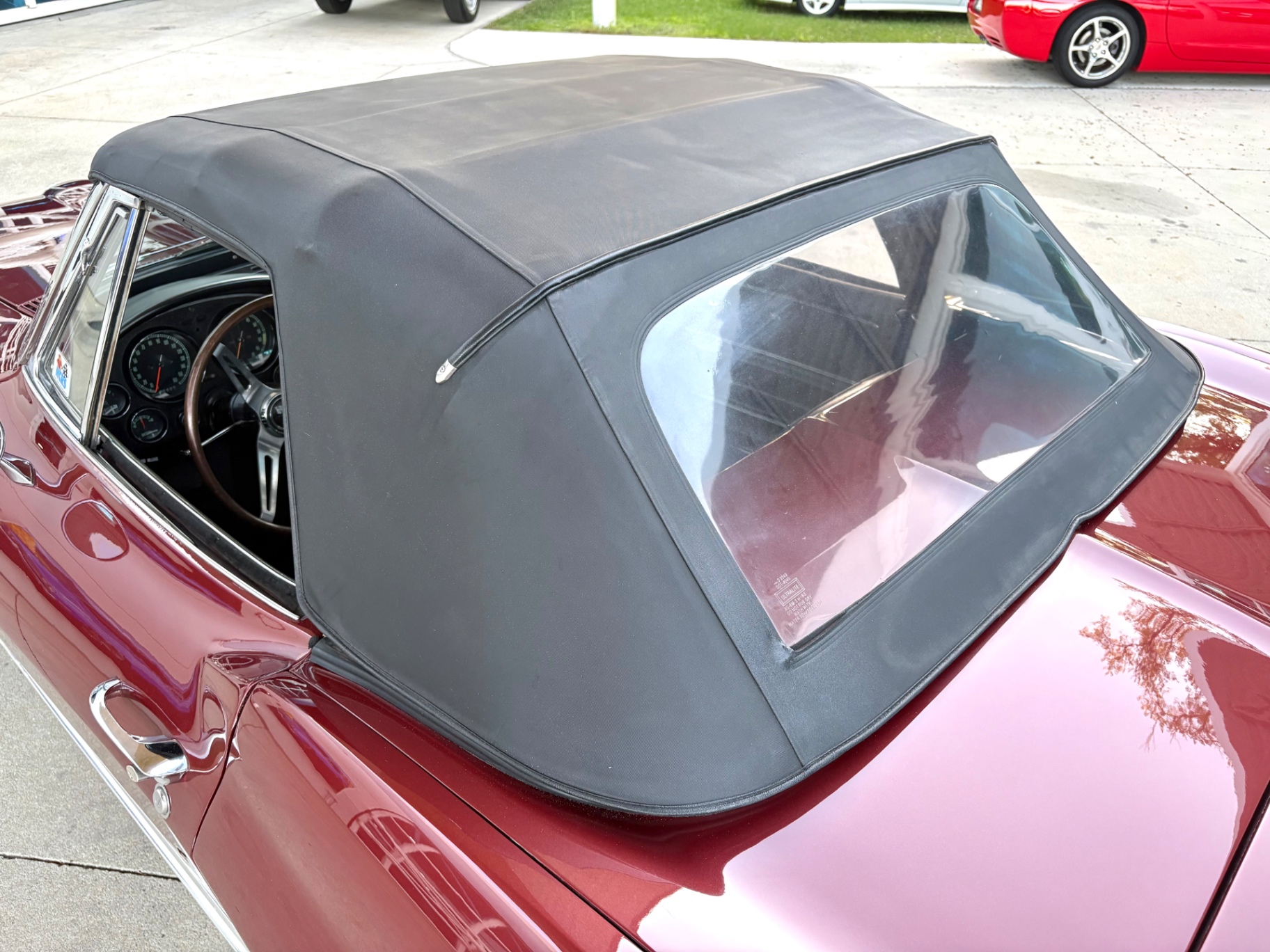
1967 Chevrolet Corvette Convertible — L79 327/350hp, 4-Speed, Marlboro Maroon
Why This Car Is Special
The 1967 Chevrolet Corvette is widely regarded as the finest expression of the C2 generation. It was the last year of the Sting Ray body style, and Chevrolet used that final model year to refine everything that had come before — cleaner trim, revised front fender vents, and a more purposeful interior layout. Among Corvette collectors, the 1967 model year carries a premium that has held for decades, and that reputation is not built on sentiment alone. It was the year Chevrolet offered the L88, the big-block 427s, and the L79 — each one a purpose-built performance option that reflected exactly what the Corvette was capable of in the late 1960s.
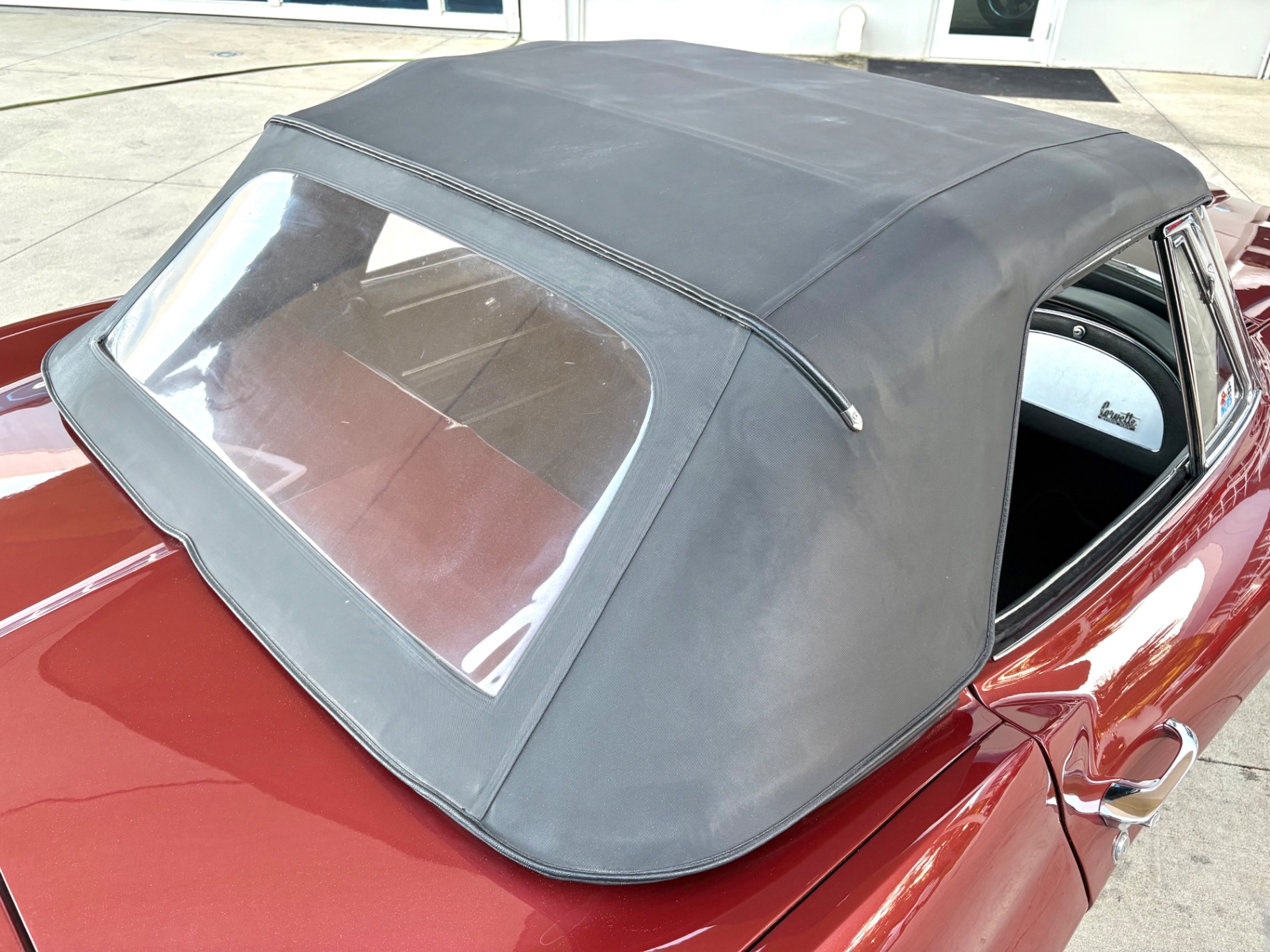
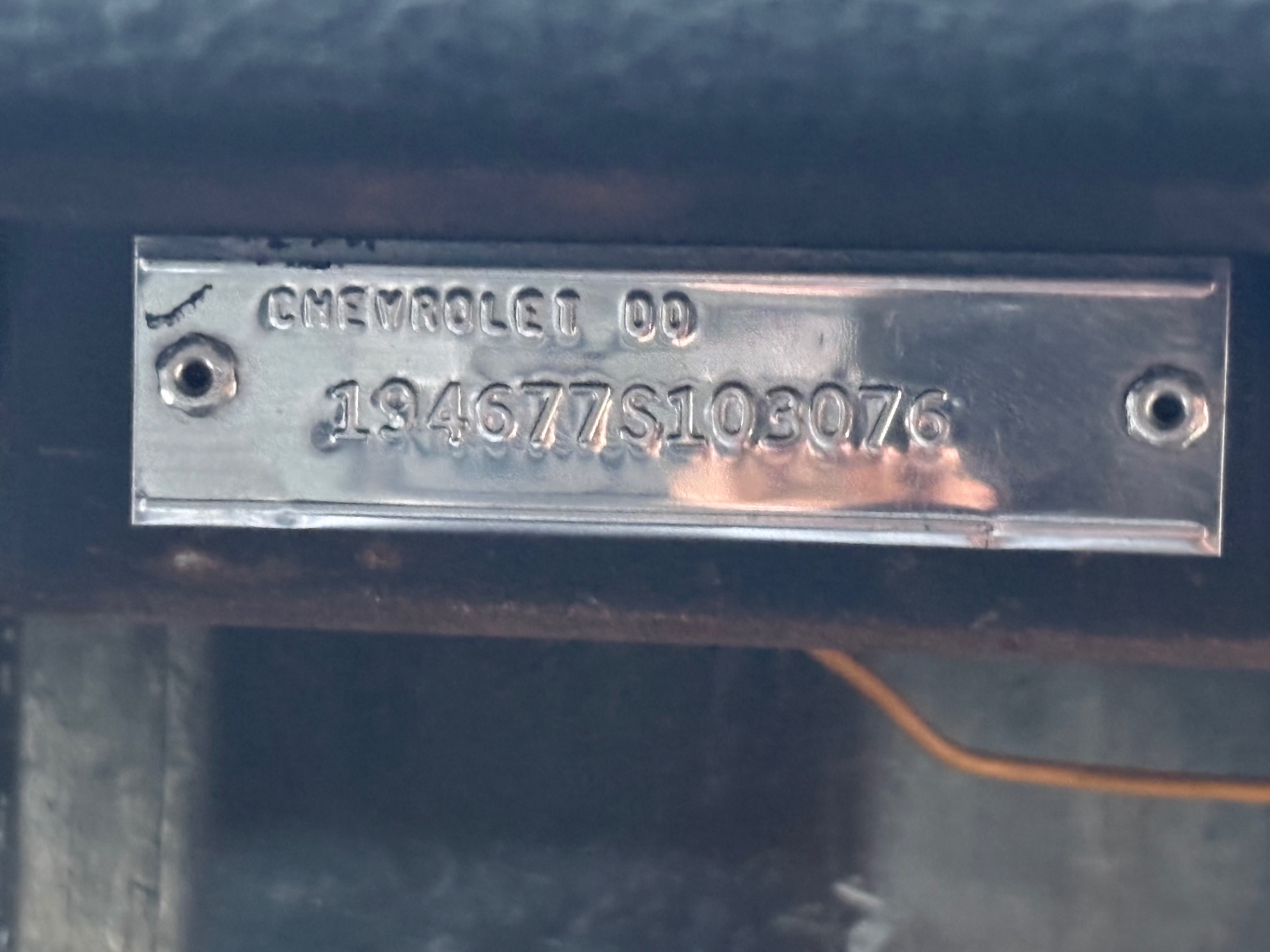
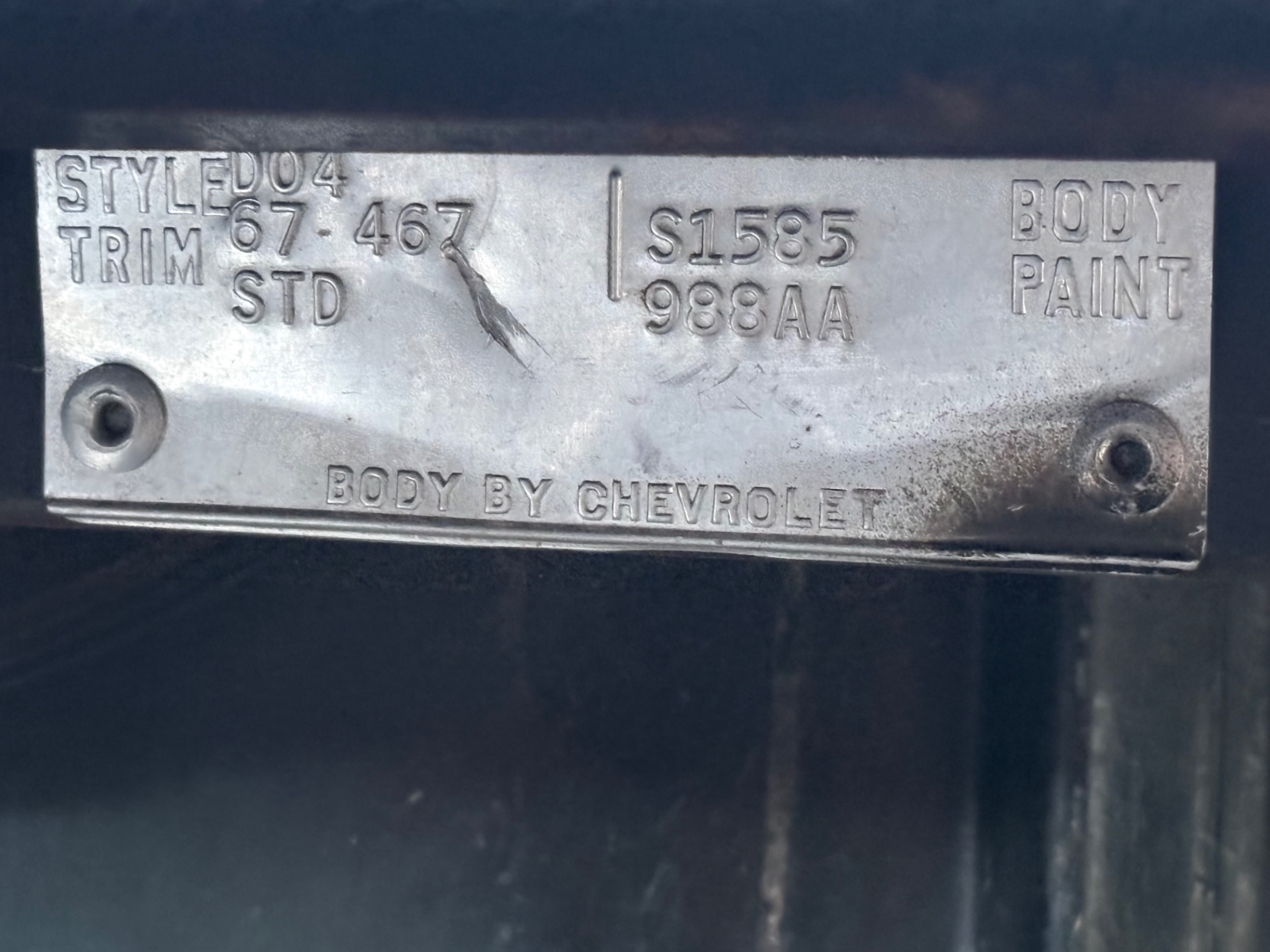
This particular 1967 Chevrolet Corvette Convertible is finished in Marlboro Maroon Metallic (factory paint code 988), one of the more distinctive and sought-after colors offered that year. Paired with a black convertible top and black vinyl interior, the color combination is factory correct and visually cohesive in a way that feels intentional rather than accidental. The VIN decodes to confirm this is a genuine Corvette convertible built at the St. Louis assembly plant, which was the sole production facility for Corvettes during this era.
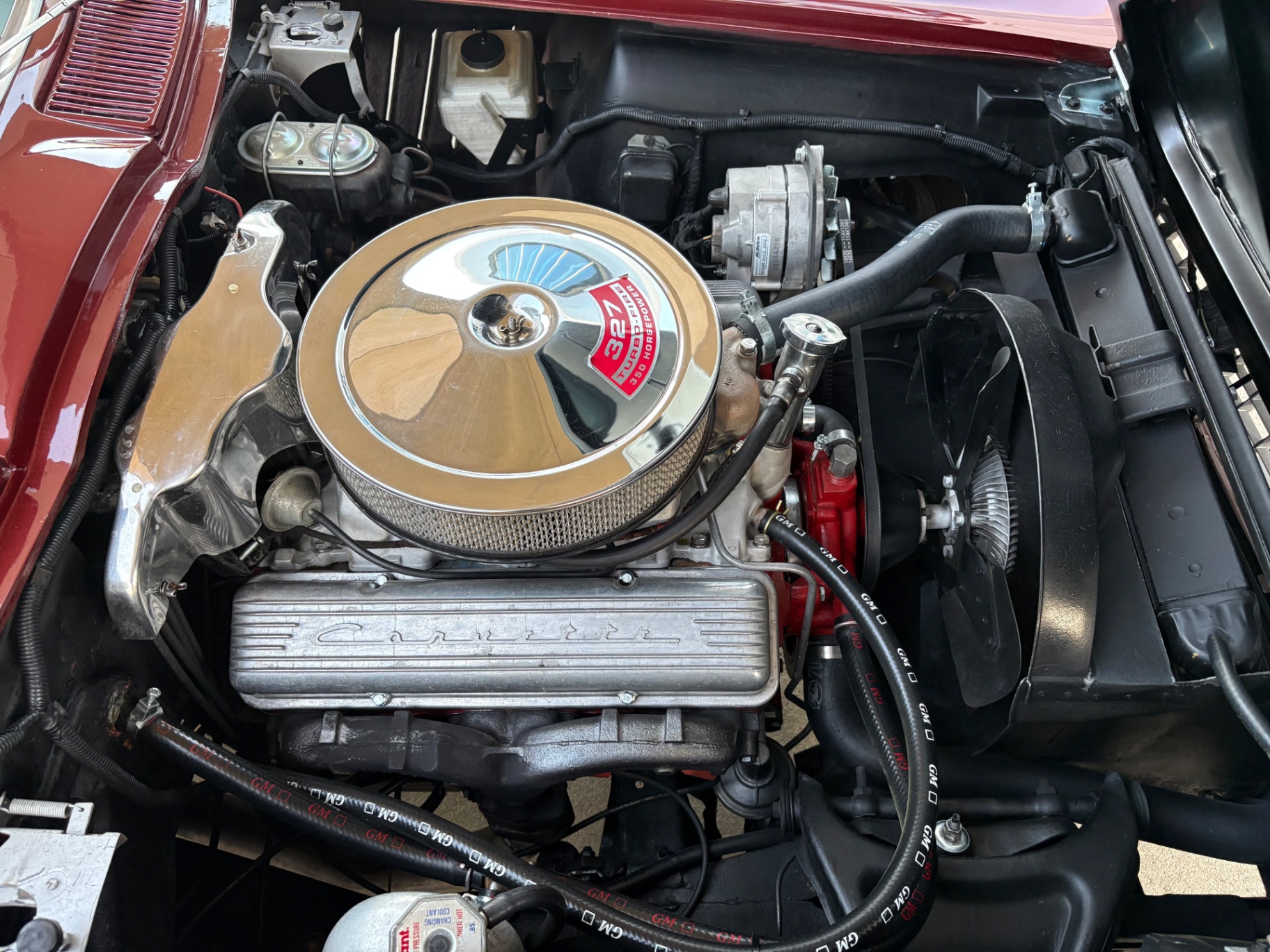
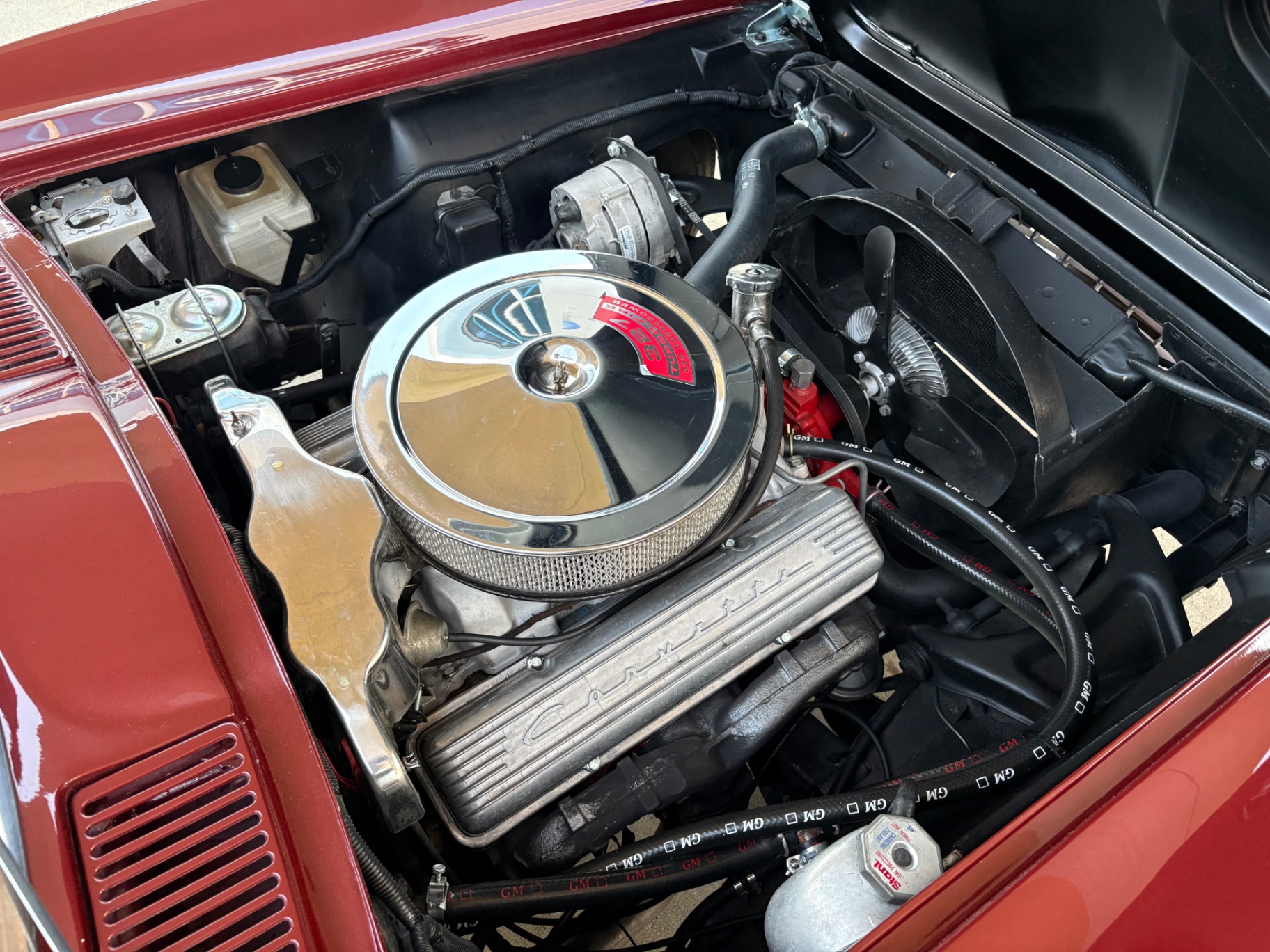
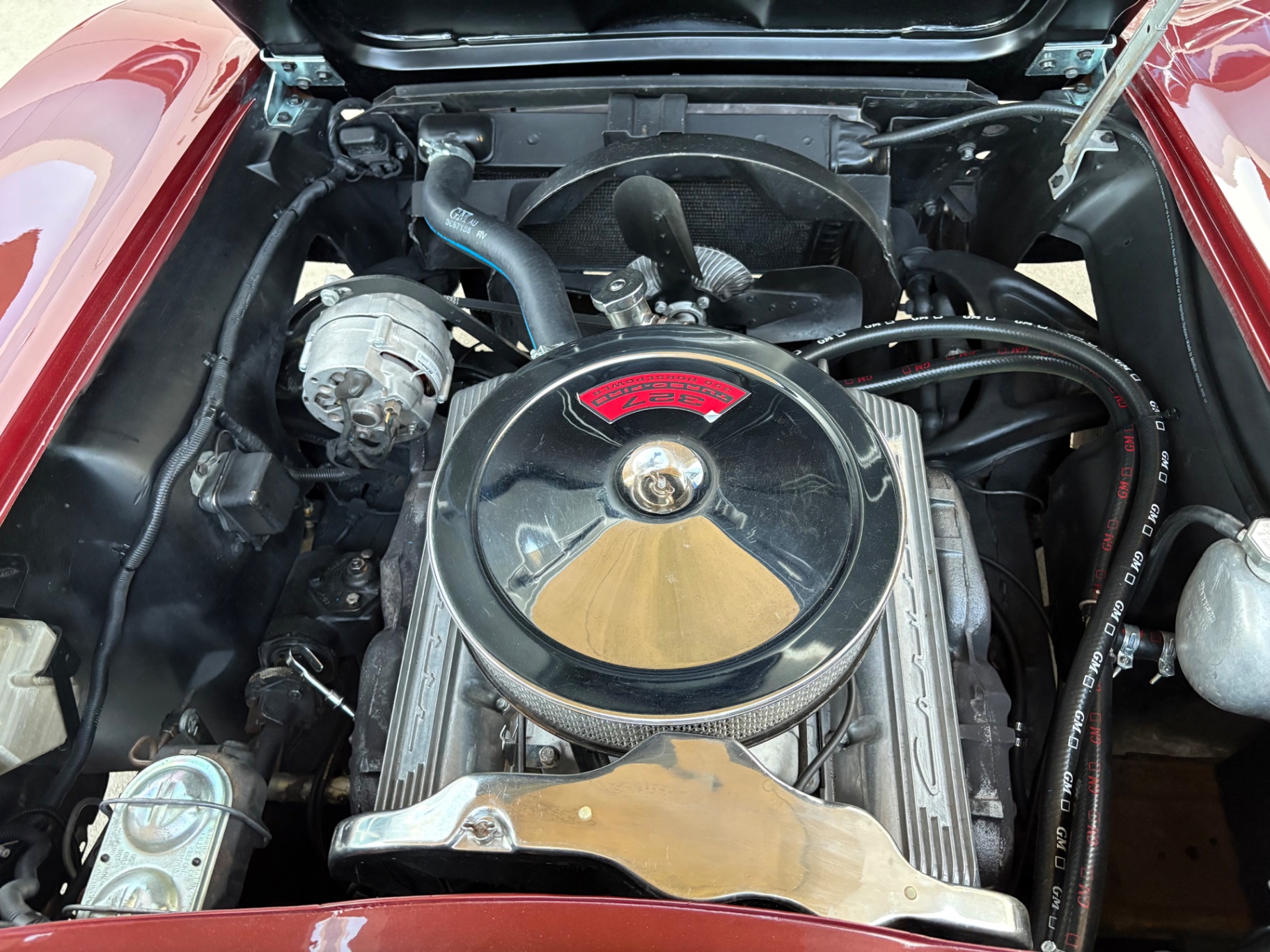
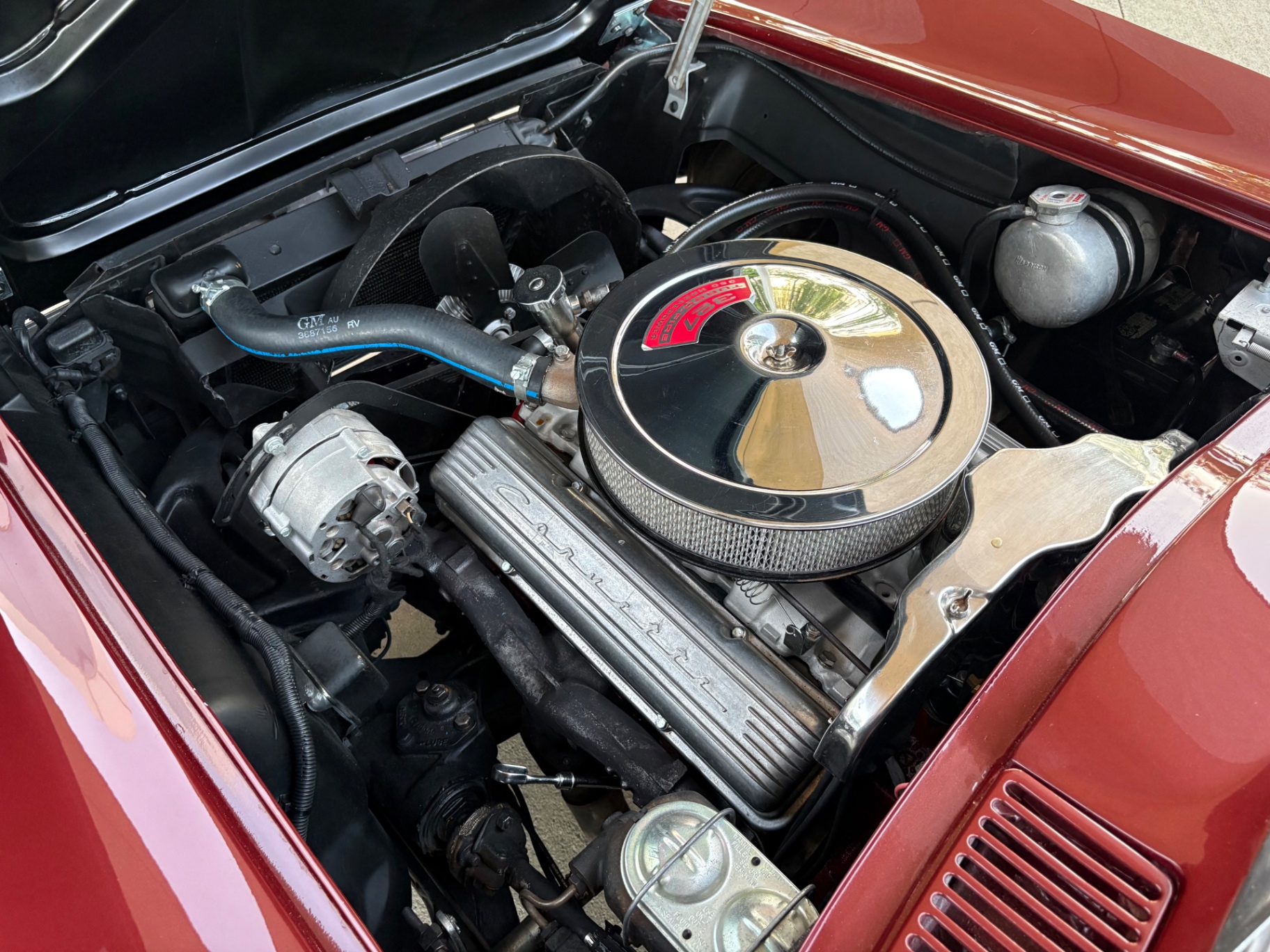
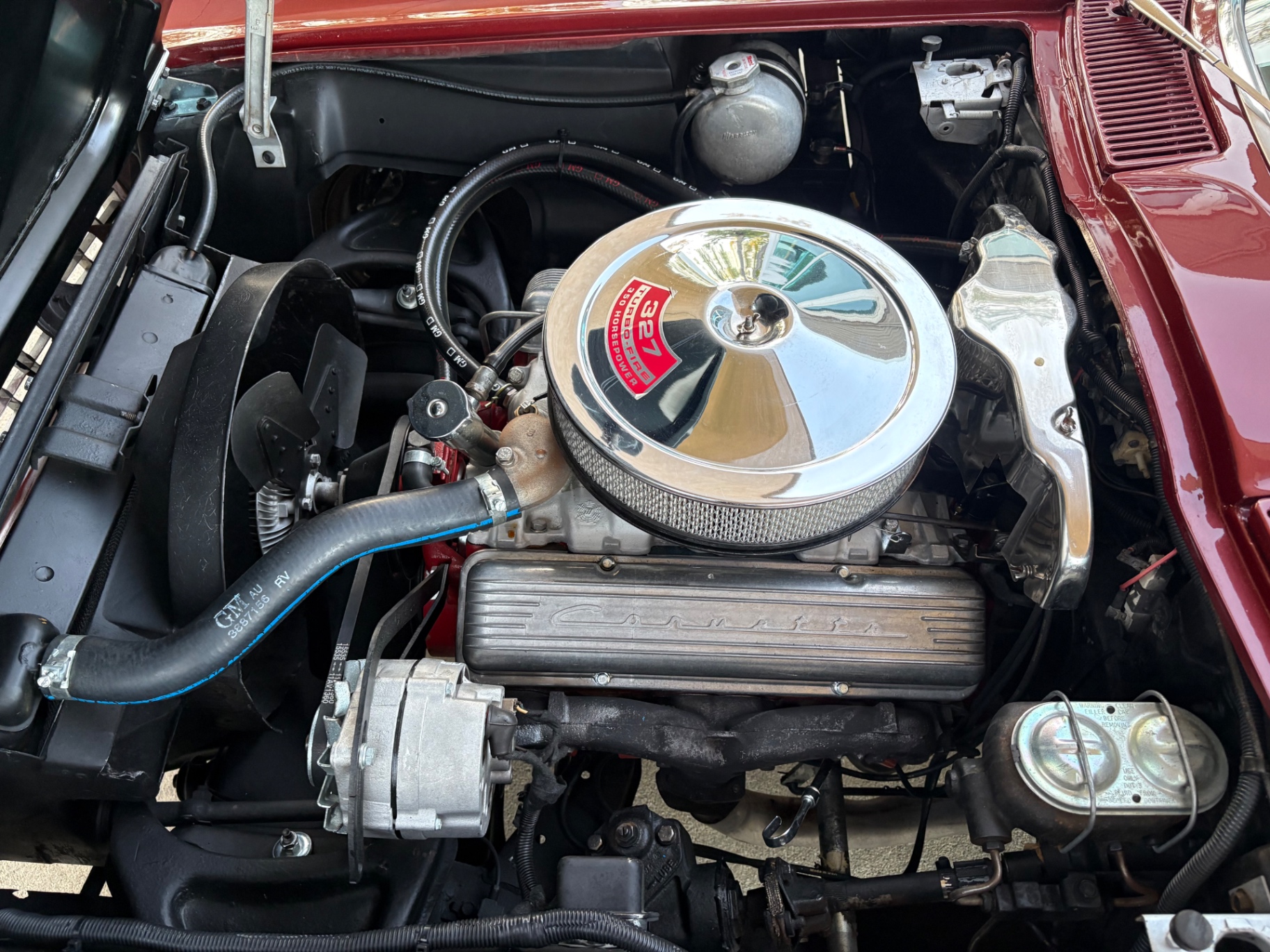
Under the hood sits the L79 — a 327 cubic inch small-block rated at 350 horsepower. That engine option is the reason this car occupies a specific place in the collector market. The L79 used an 11.0:1 compression ratio and a Holley four-barrel carburetor, producing more horsepower per cubic inch than most engines of its displacement in 1967. It was the top small-block option available that year, and it delivered a driving experience that the larger-displacement big-blocks simply could not replicate in terms of throttle response and rev character. The engine in this car carries date codes that are correct for the vehicle, which is a meaningful detail for judges and serious collectors alike.
Features
- L79 327ci 350hp V8, date code correct - 4-Speed Manual Transmission - Front Disc Brakes - Dual Exhaust - Full Gauge Cluster with Tachometer - Wood-Rim Steering Wheel - Center Console - Black Vinyl Interior - Black Convertible Top - Marlboro Maroon Metallic Exterior (paint code 988) - Whitewall Tires - Chrome Hubcaps - Chrome Bumpers
Mechanical
The L79 327 was introduced in 1965 and became one of the most respected small-block configurations Chevrolet ever produced. In the context of the 1967 Corvette, it sits above the base 300hp 327 and below the 427 big-block options, occupying a practical sweet spot for anyone who wants genuine performance without the weight penalty that comes with the larger engine. The high-compression small-block kept the car's front-to-rear balance closer to neutral, which makes a real difference when you're actually driving the car rather than looking at a spec sheet.
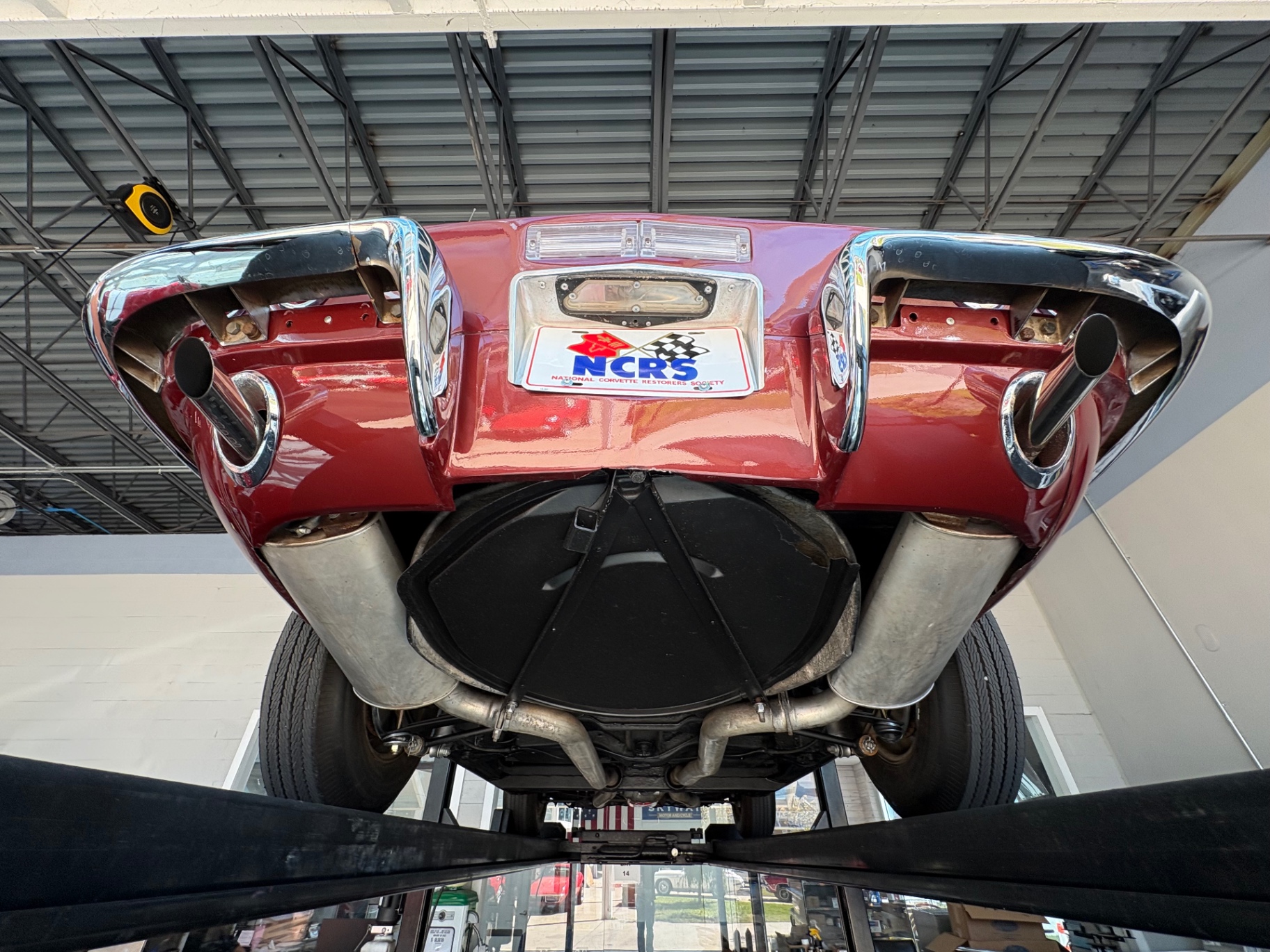
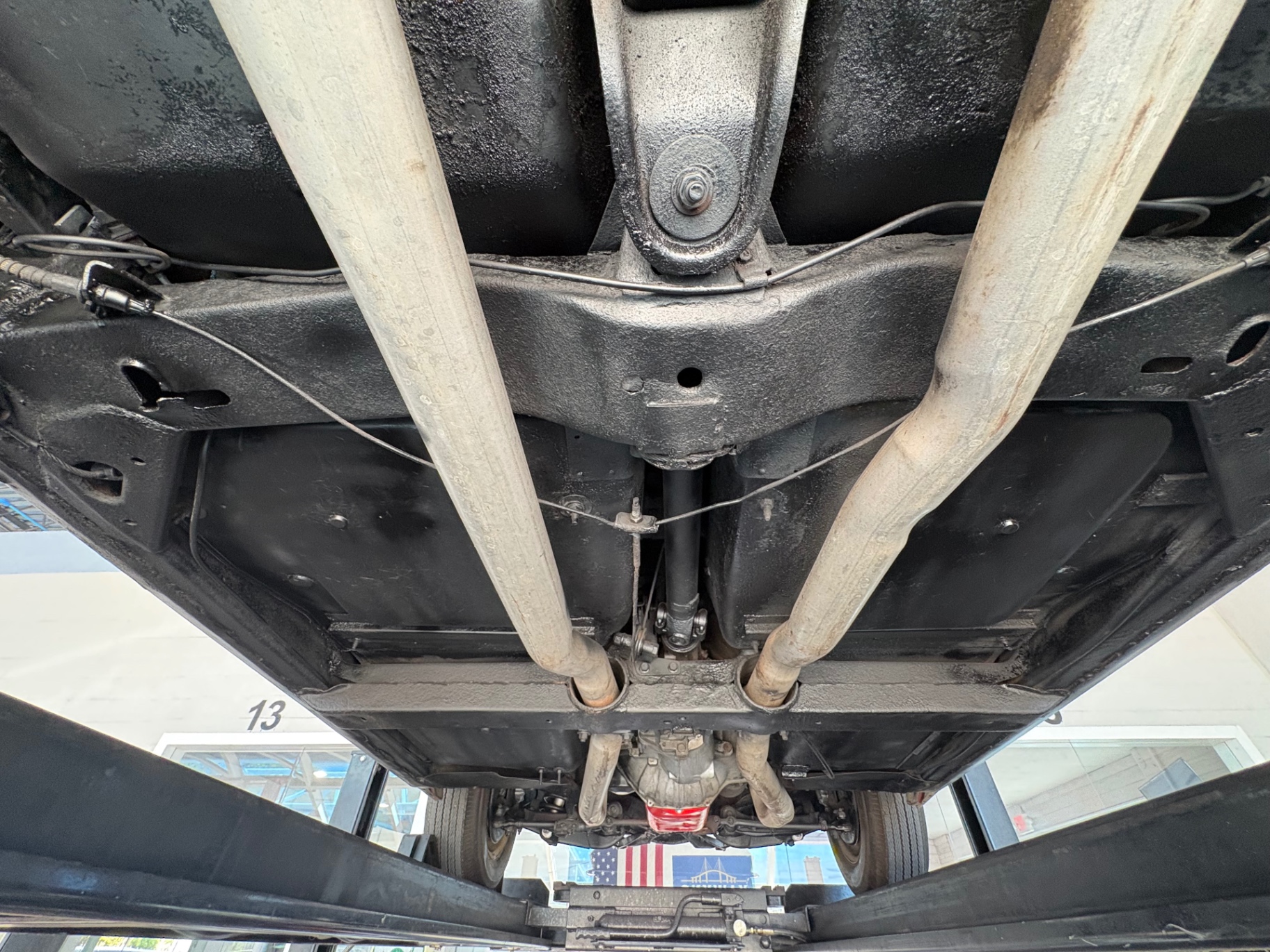
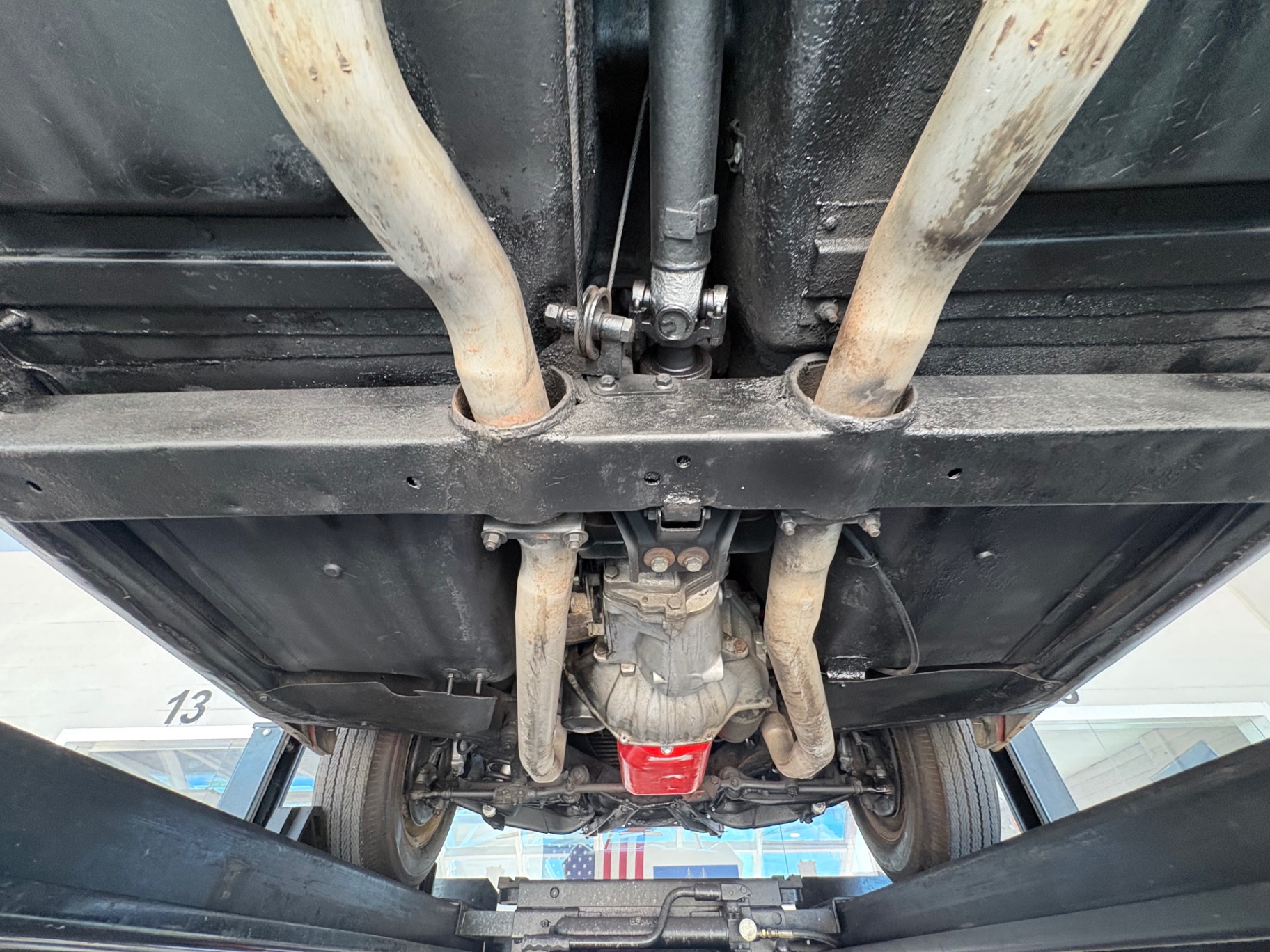
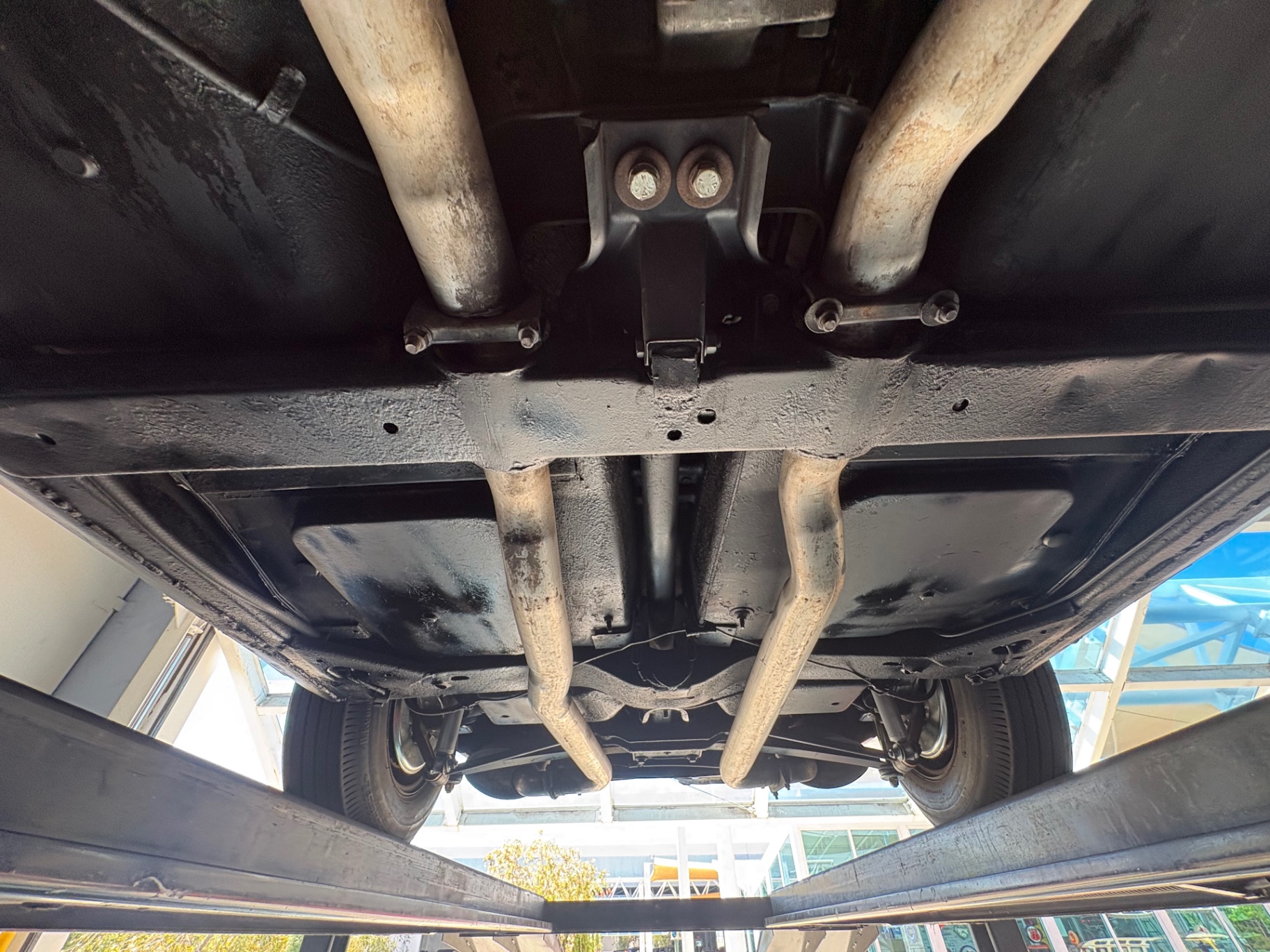
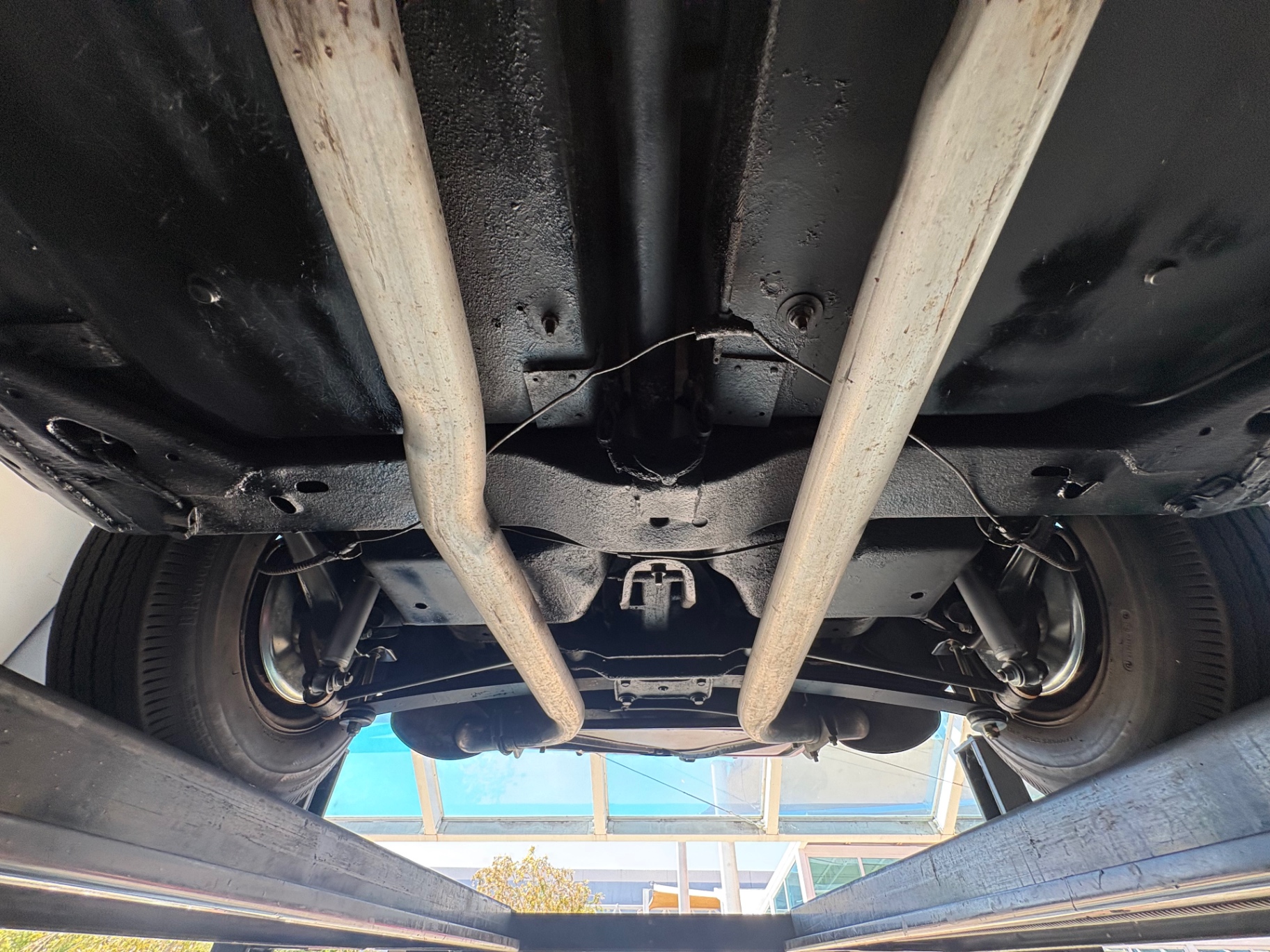
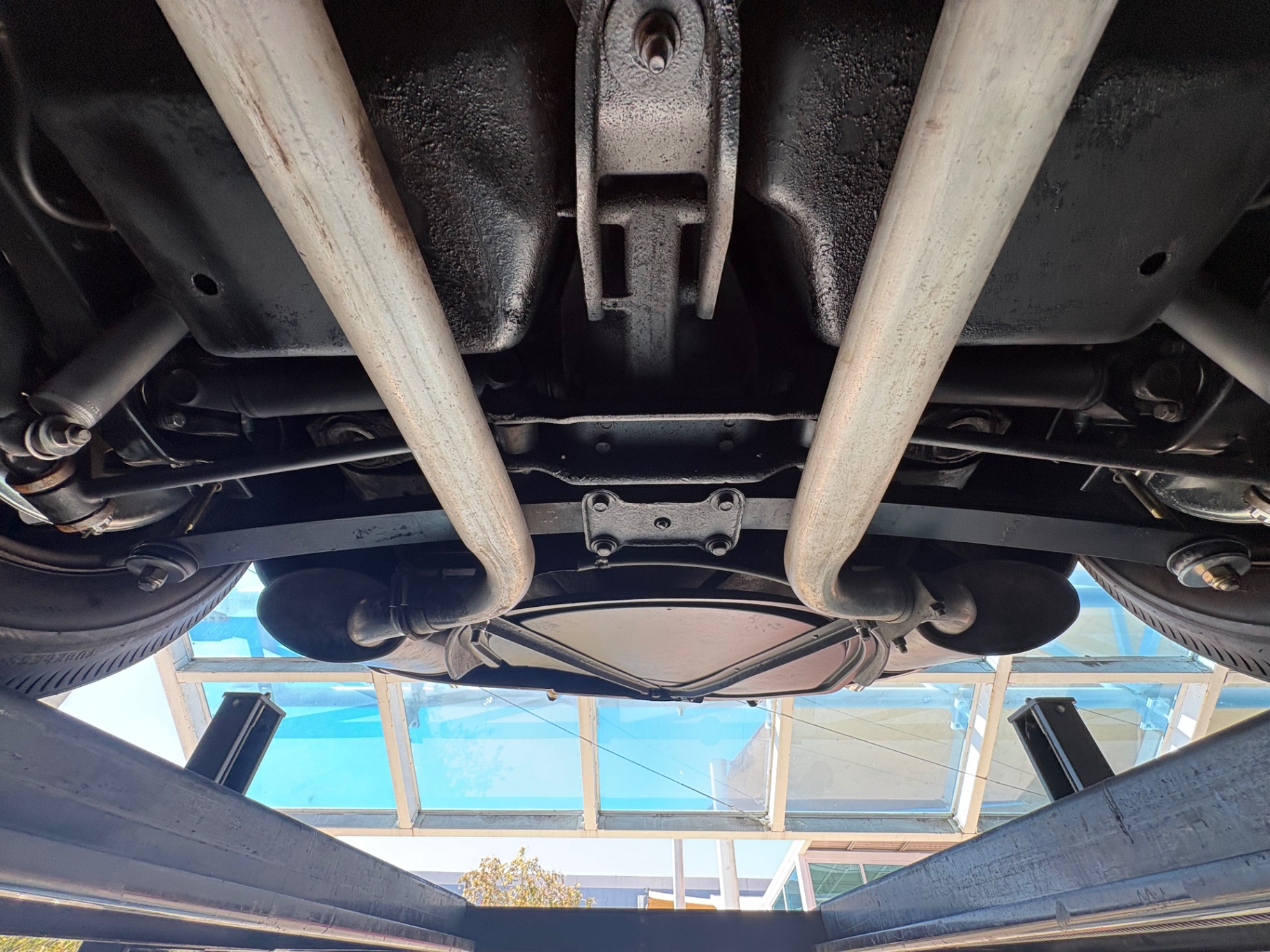
The 4-speed manual transmission was the correct pairing for this engine in period, and it remains the most engaging way to drive a car like this today. Front disc brakes were a factory option in 1967 and represent a significant functional upgrade over the four-wheel drum setup that came standard. Their presence here means the car stops with authority that matches its acceleration, which was not always a given on performance cars of this era. The dual exhaust exits through the iconic chrome quad outlets at the rear, a visual signature of the C2 Corvette that remains one of the most recognizable details in American automotive design.
Interior
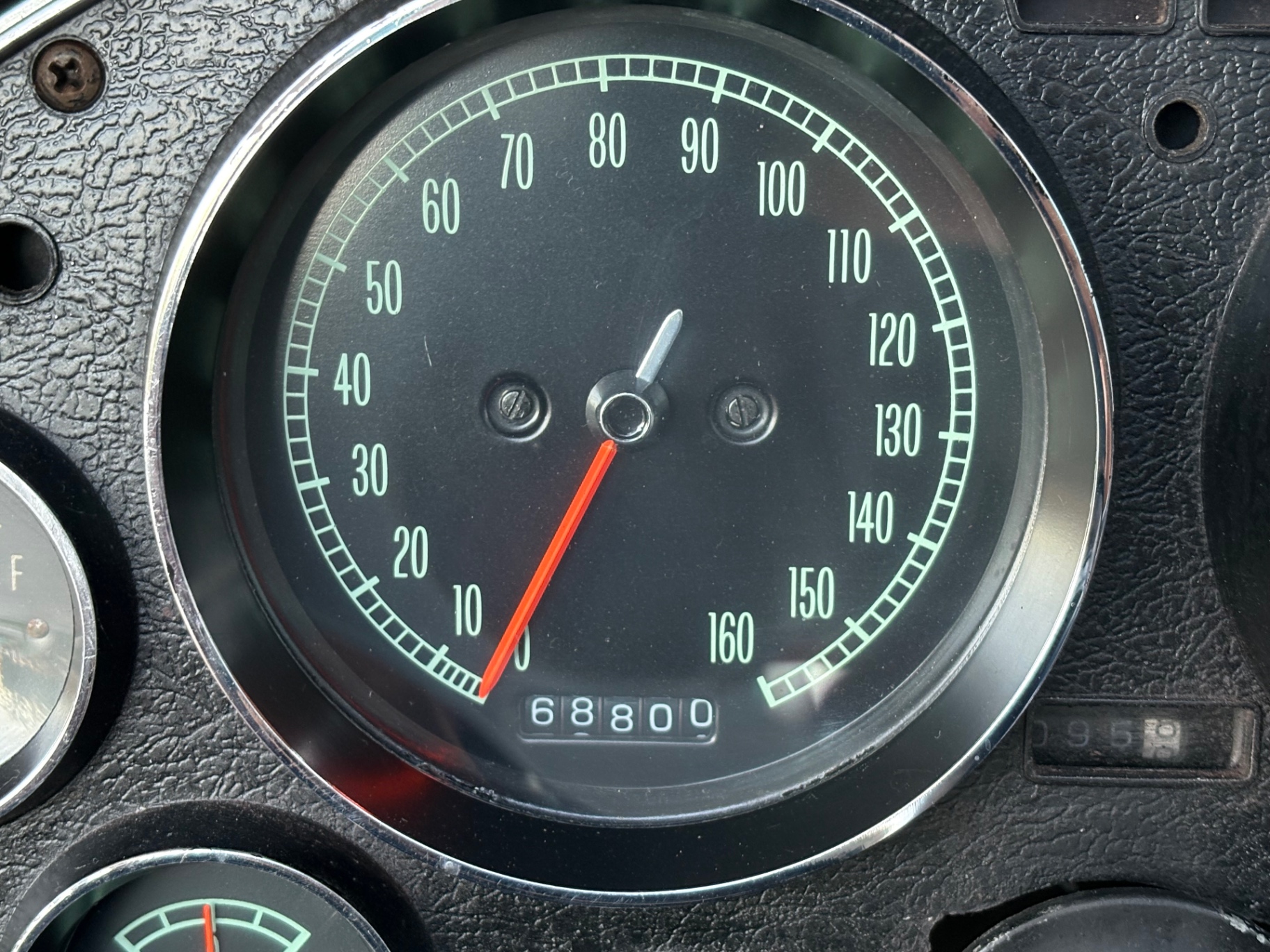
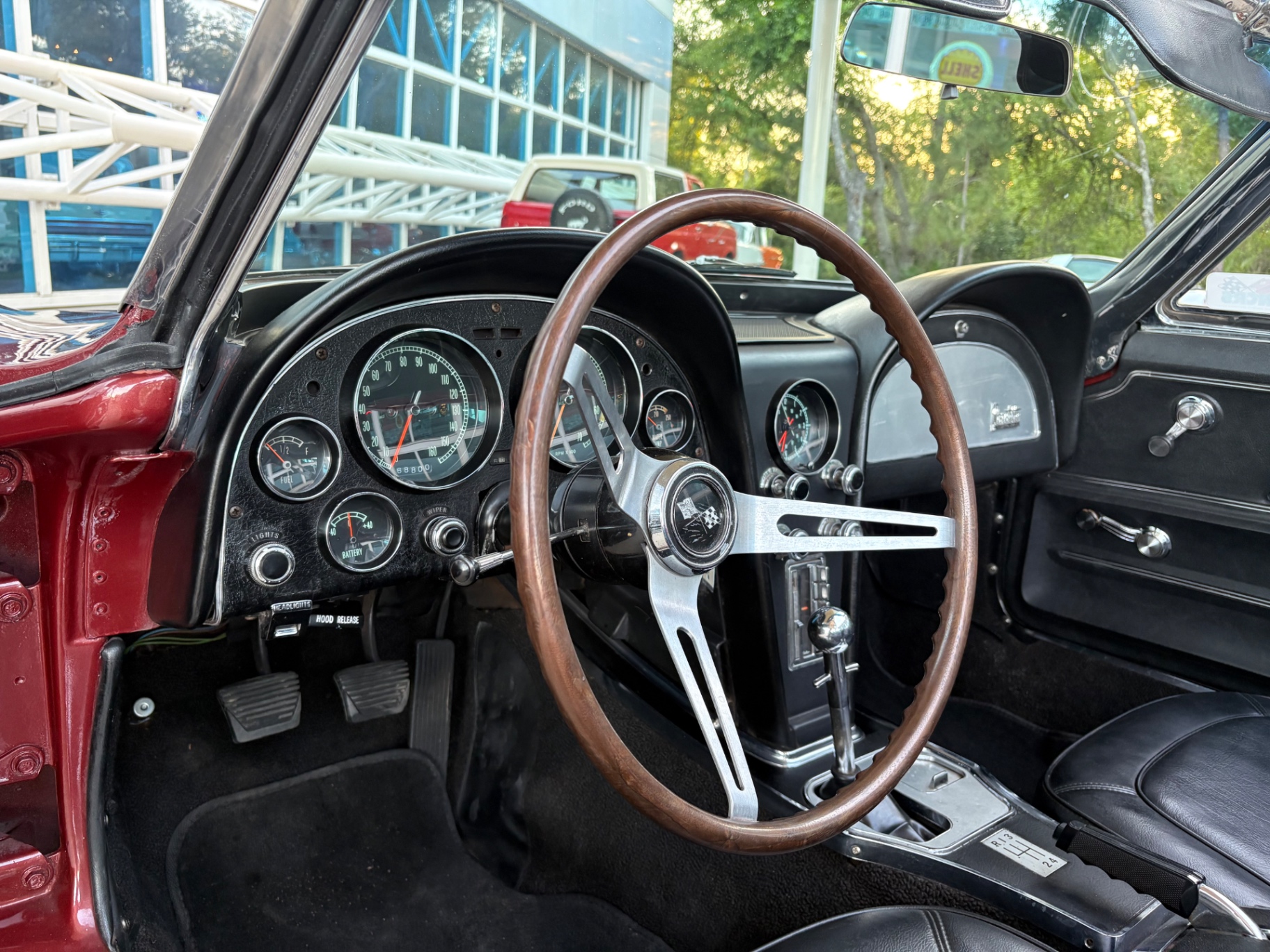
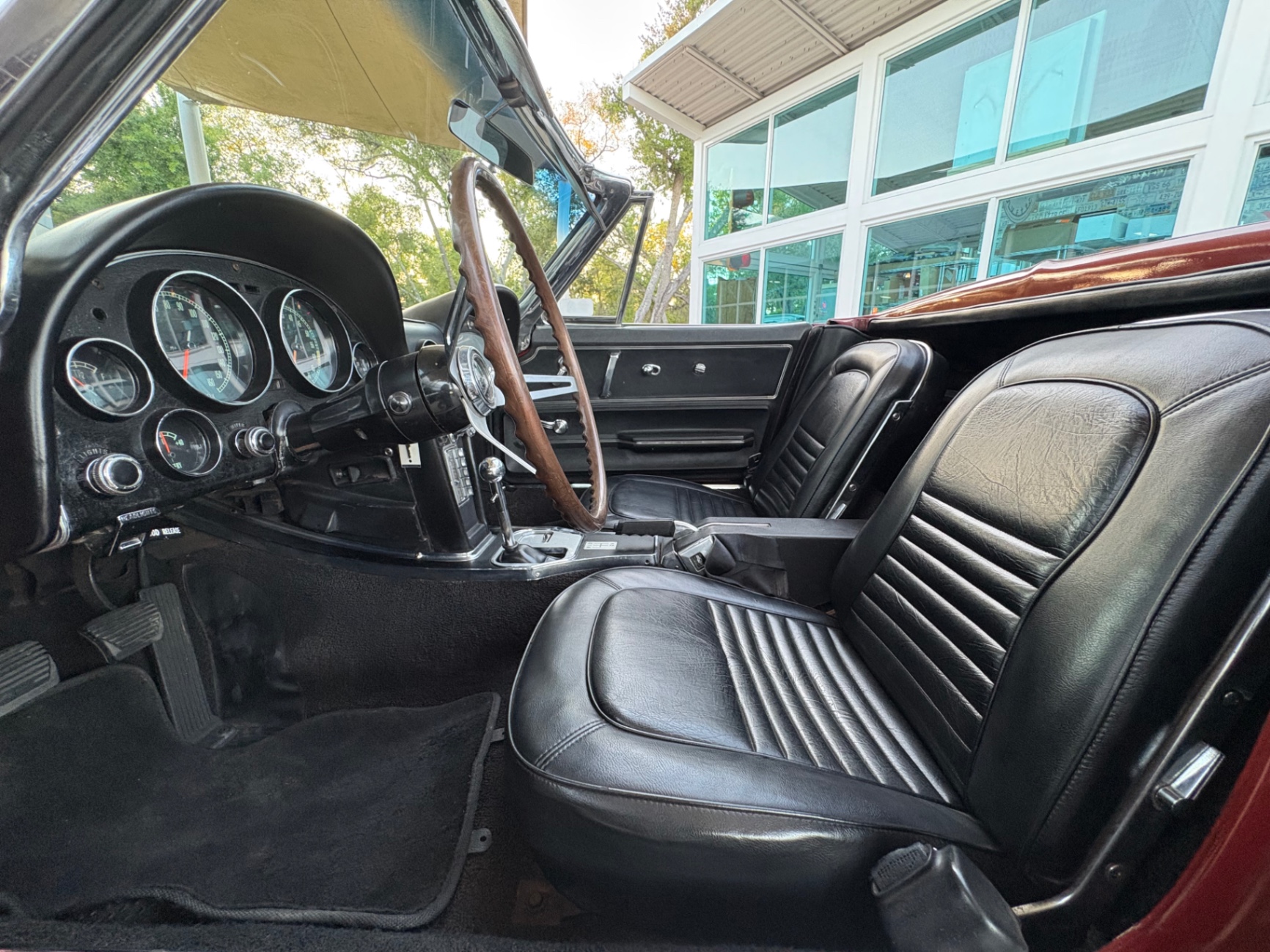
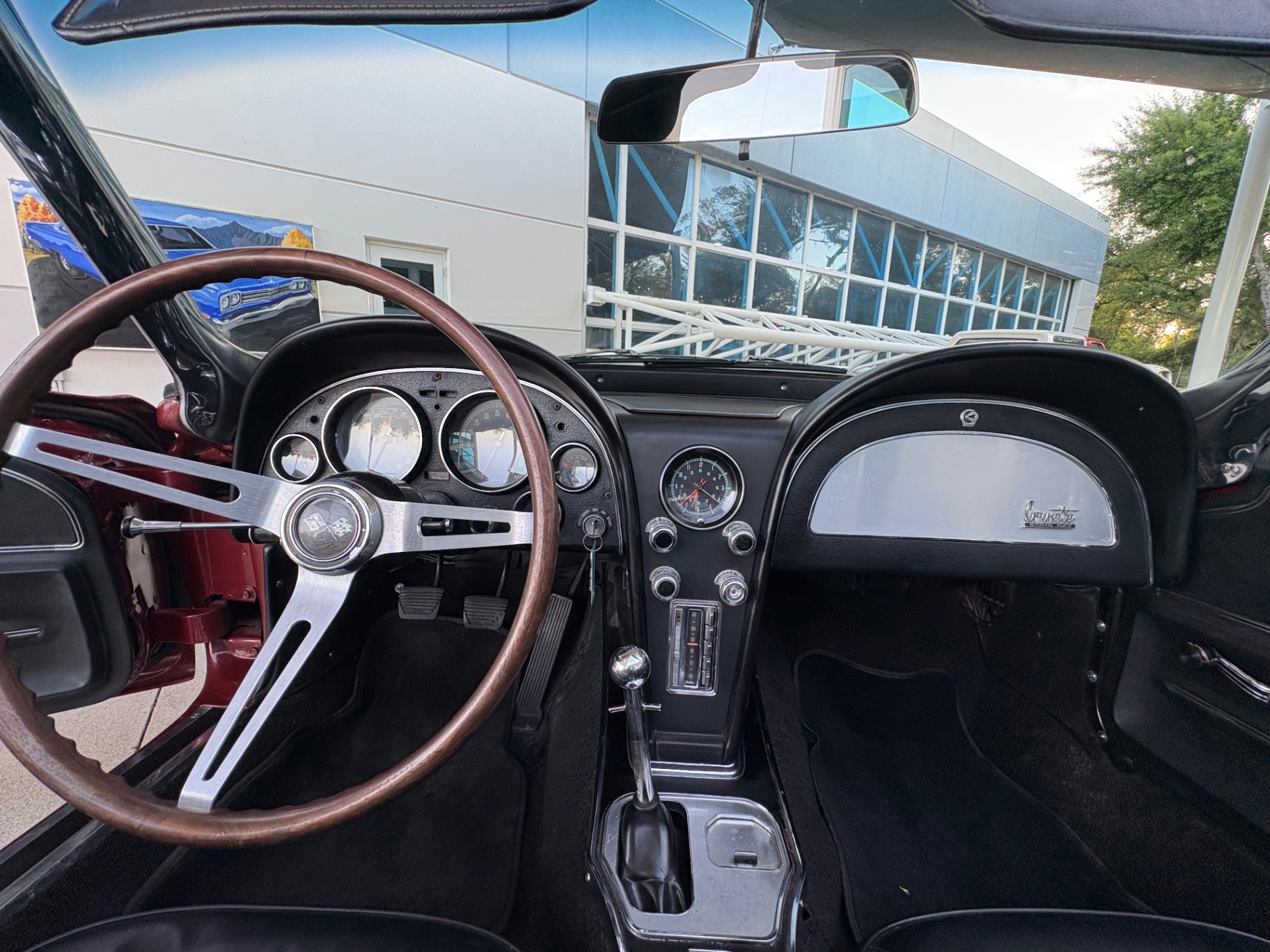
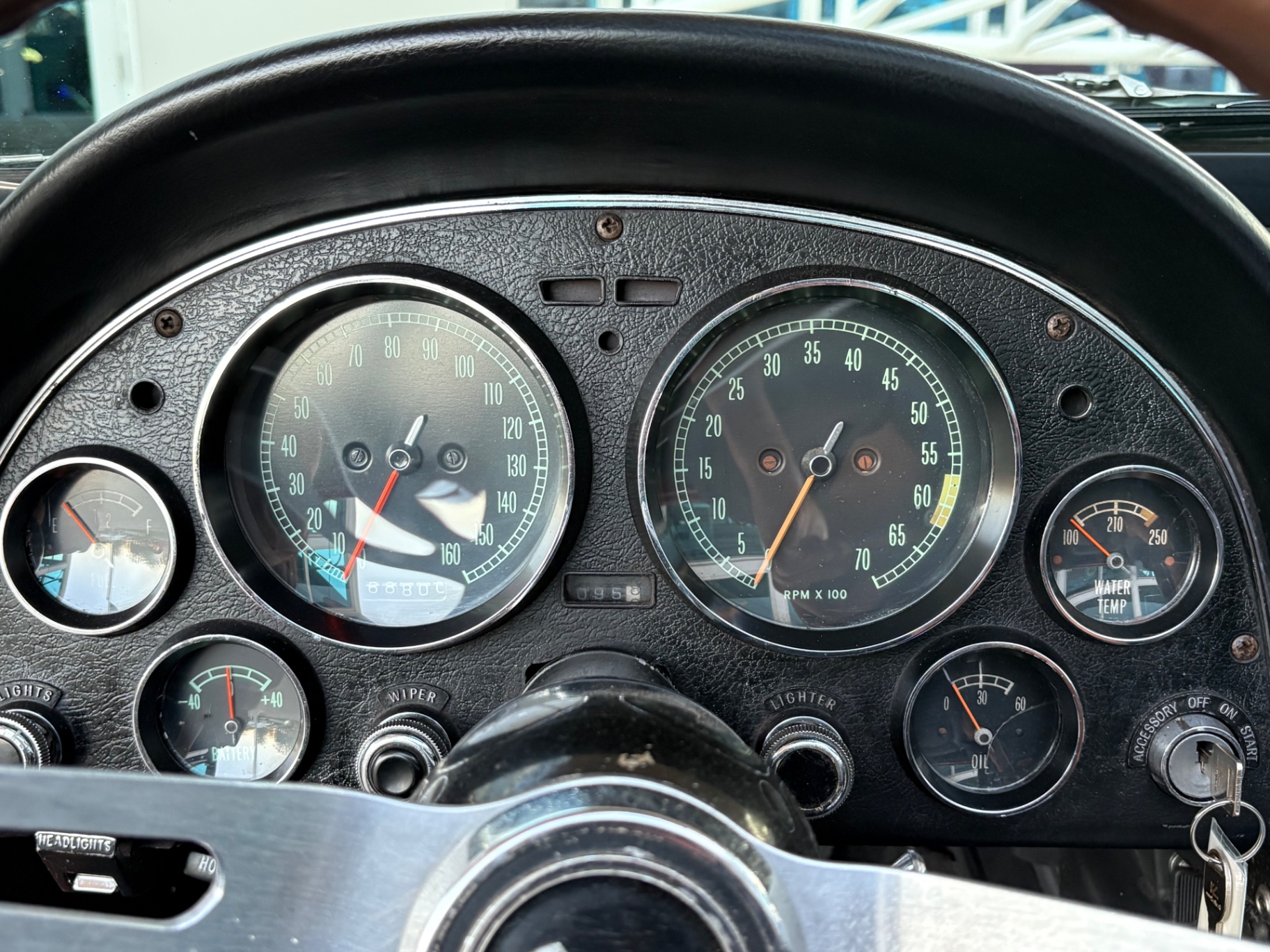
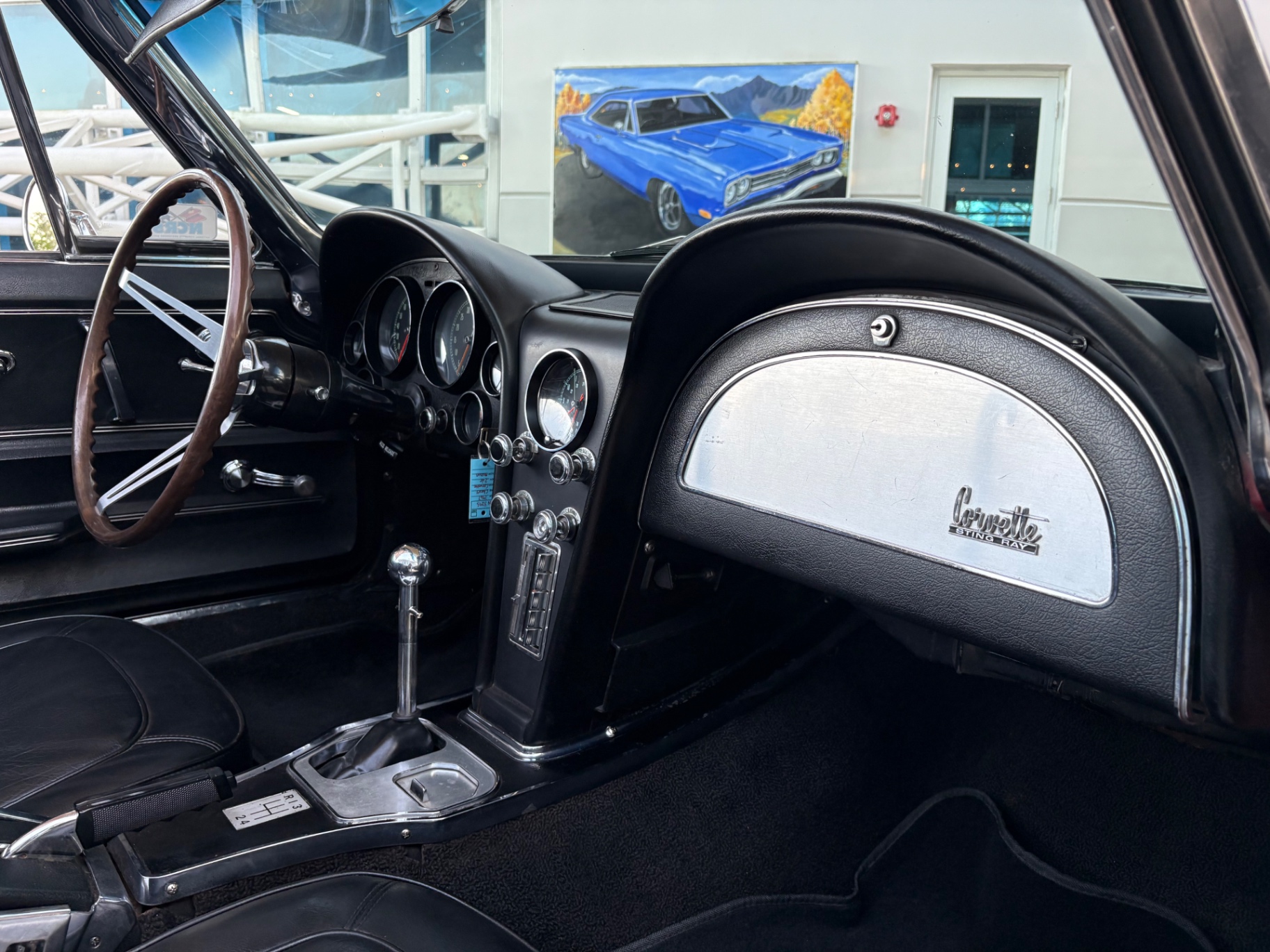
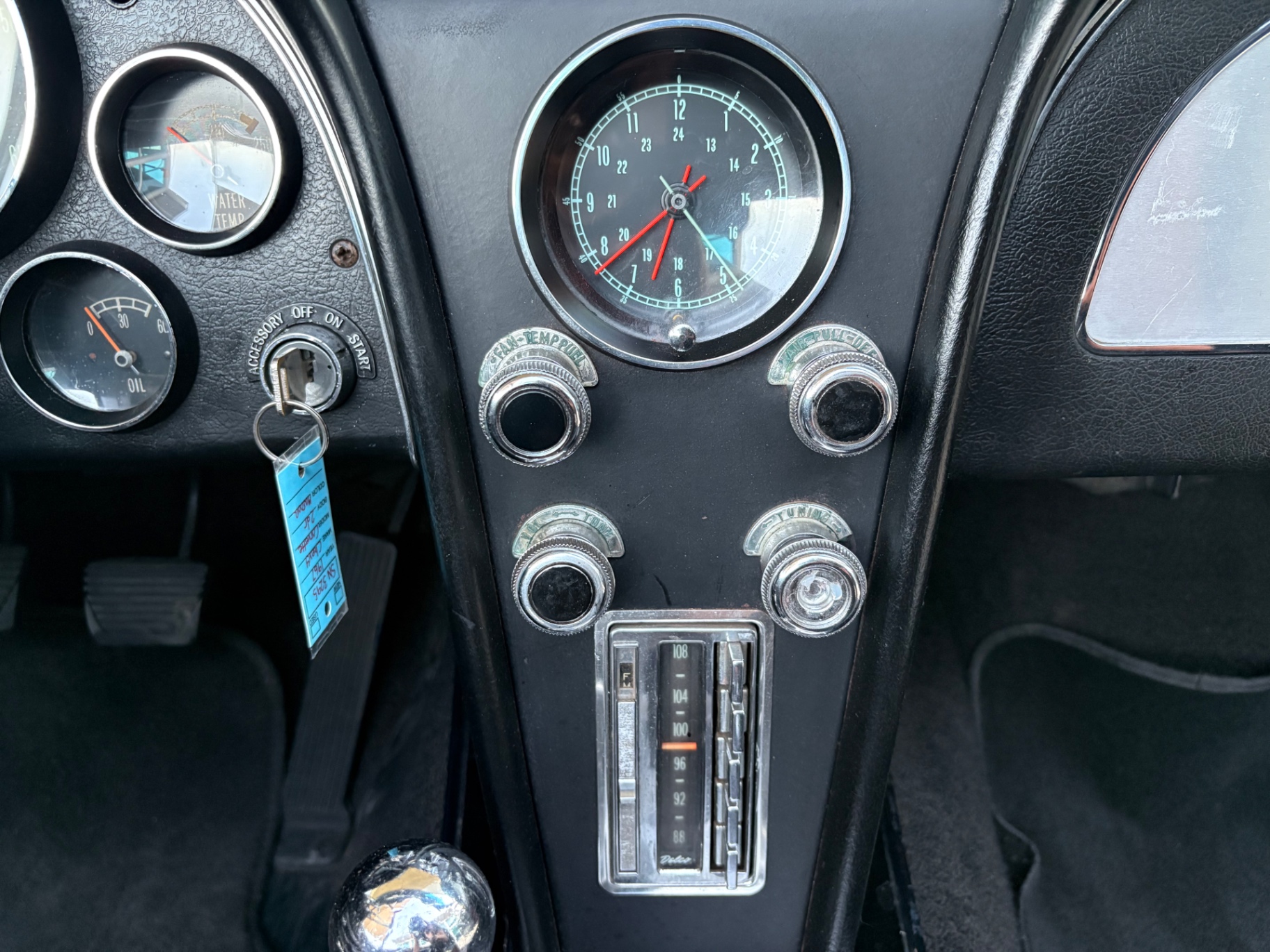
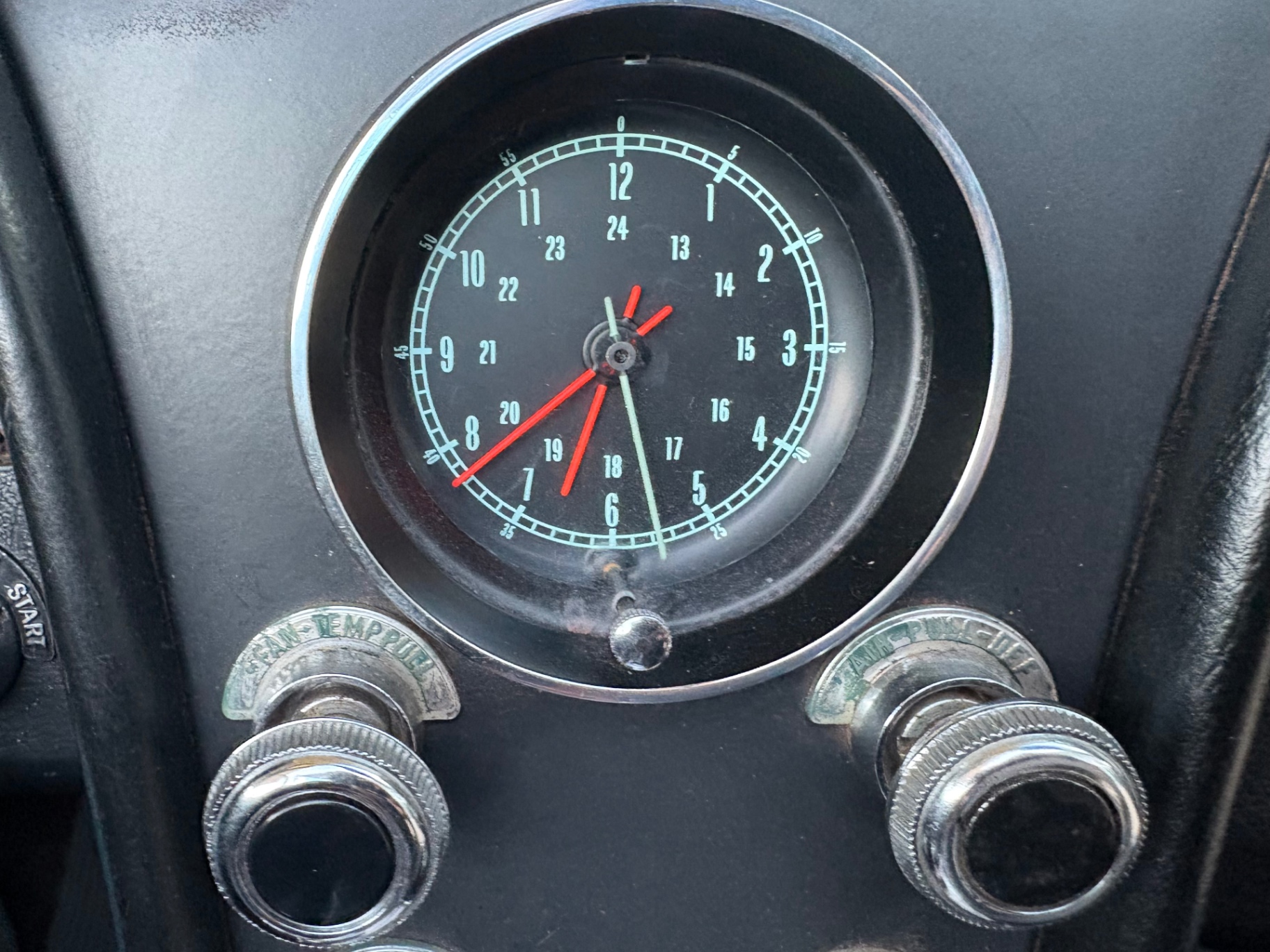
The 1967 Corvette interior was refined compared to earlier C2 years, with a cleaner instrument panel layout and better-organized controls. This car is equipped with the full gauge cluster and tachometer, which were the correct instrumentation choices for a performance-oriented build. The tachometer is mounted prominently in the driver's sightline, which tells you something about the priorities Chevrolet had in mind when they designed this cockpit.
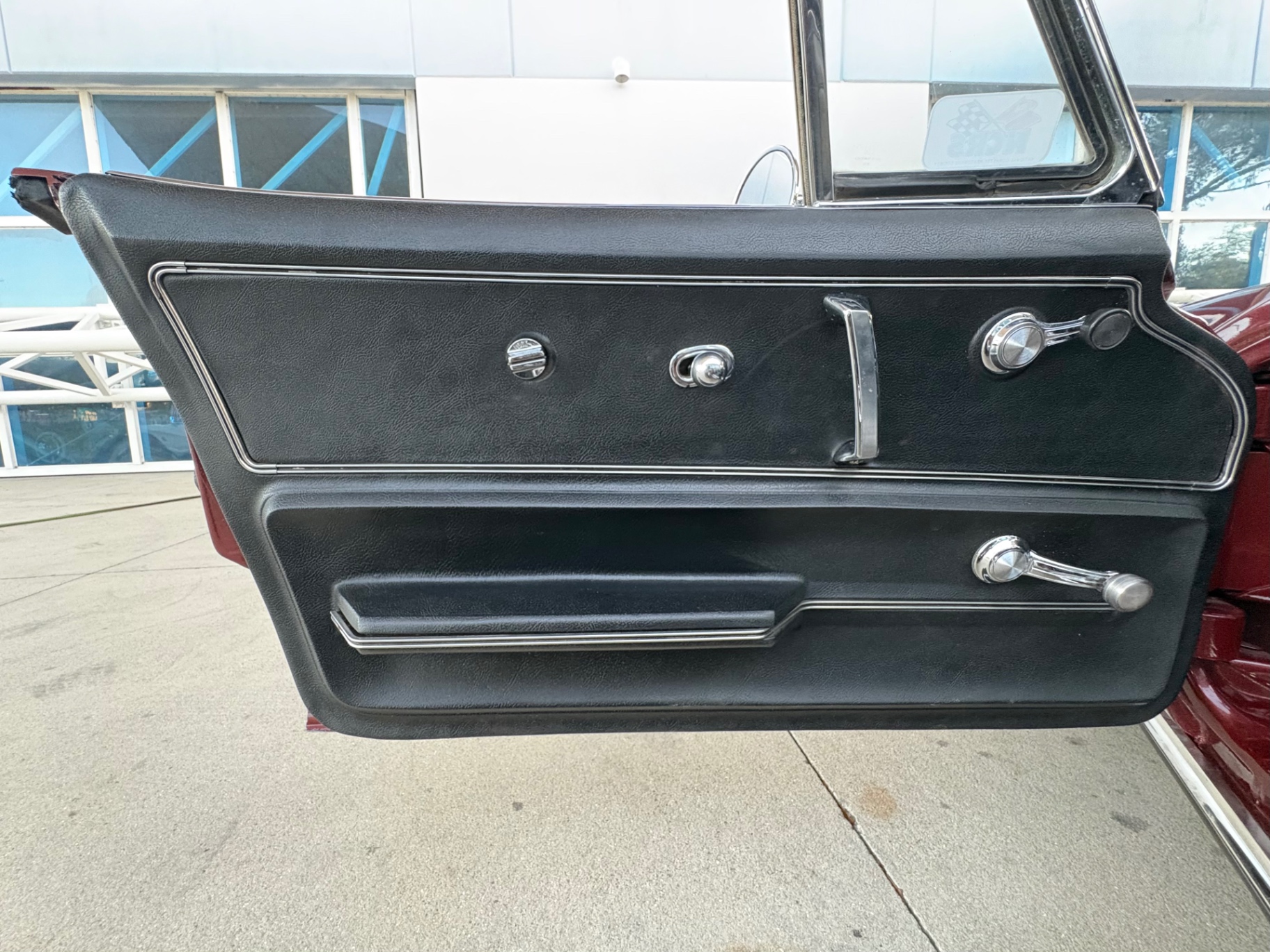
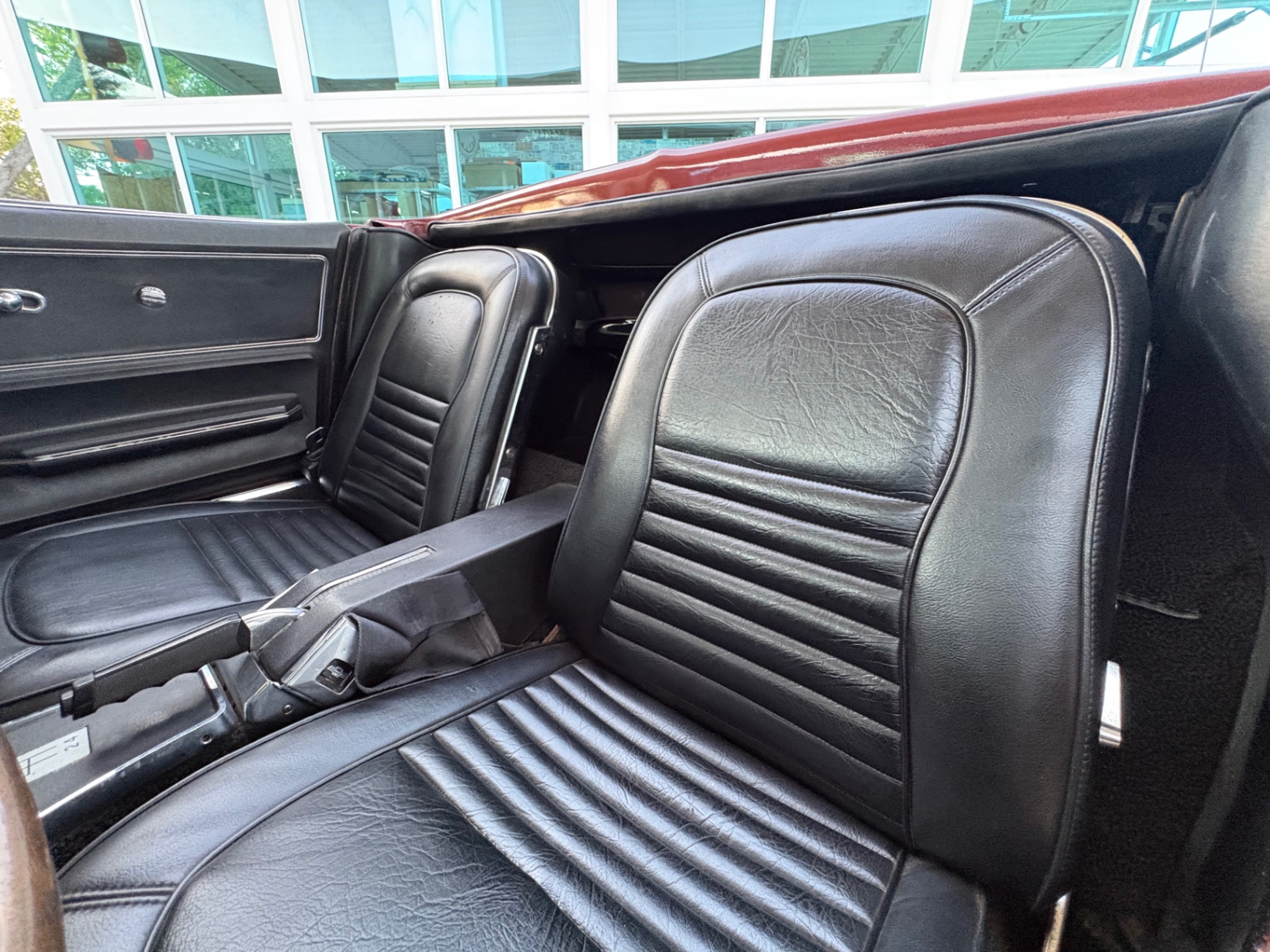
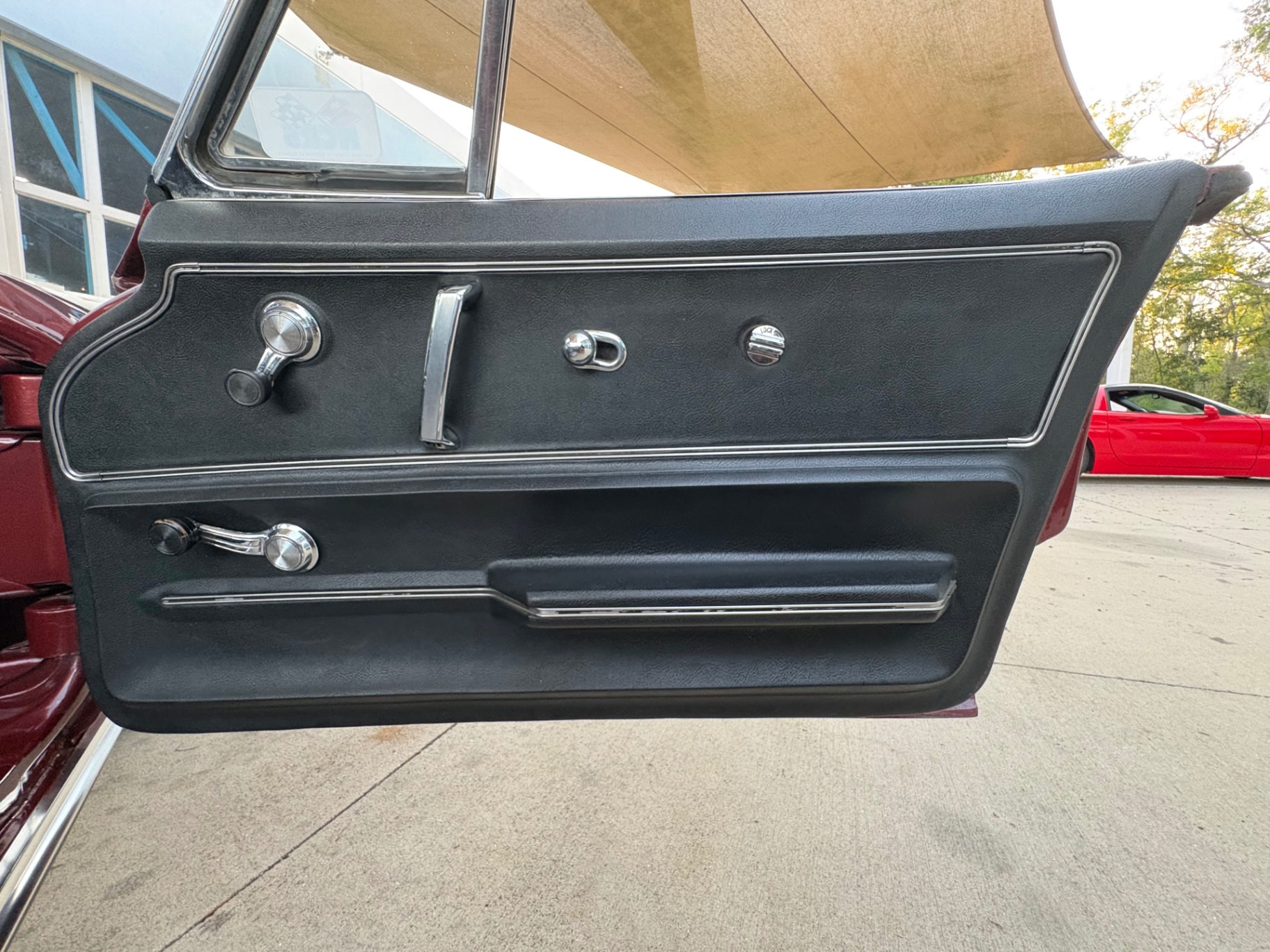
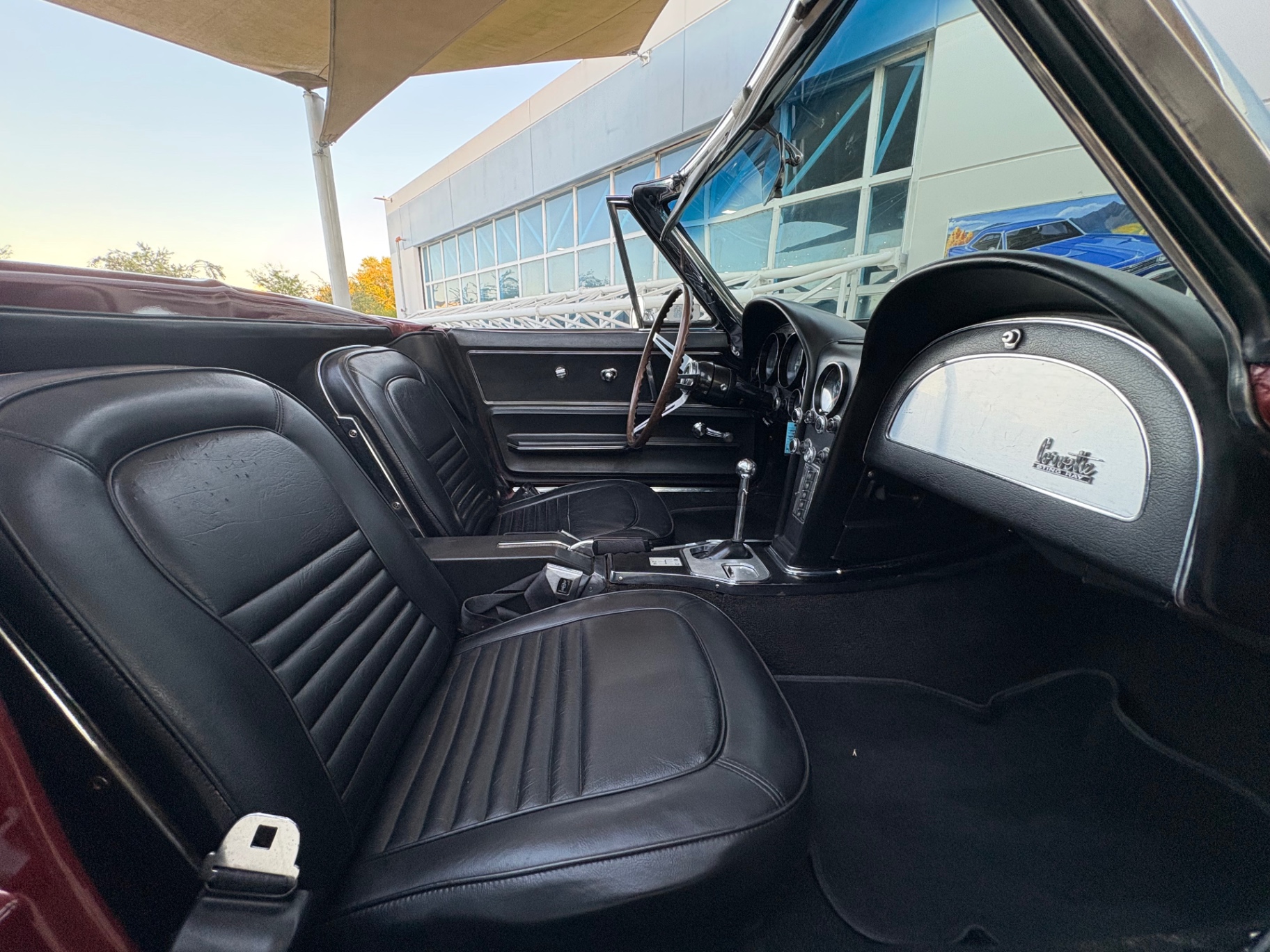
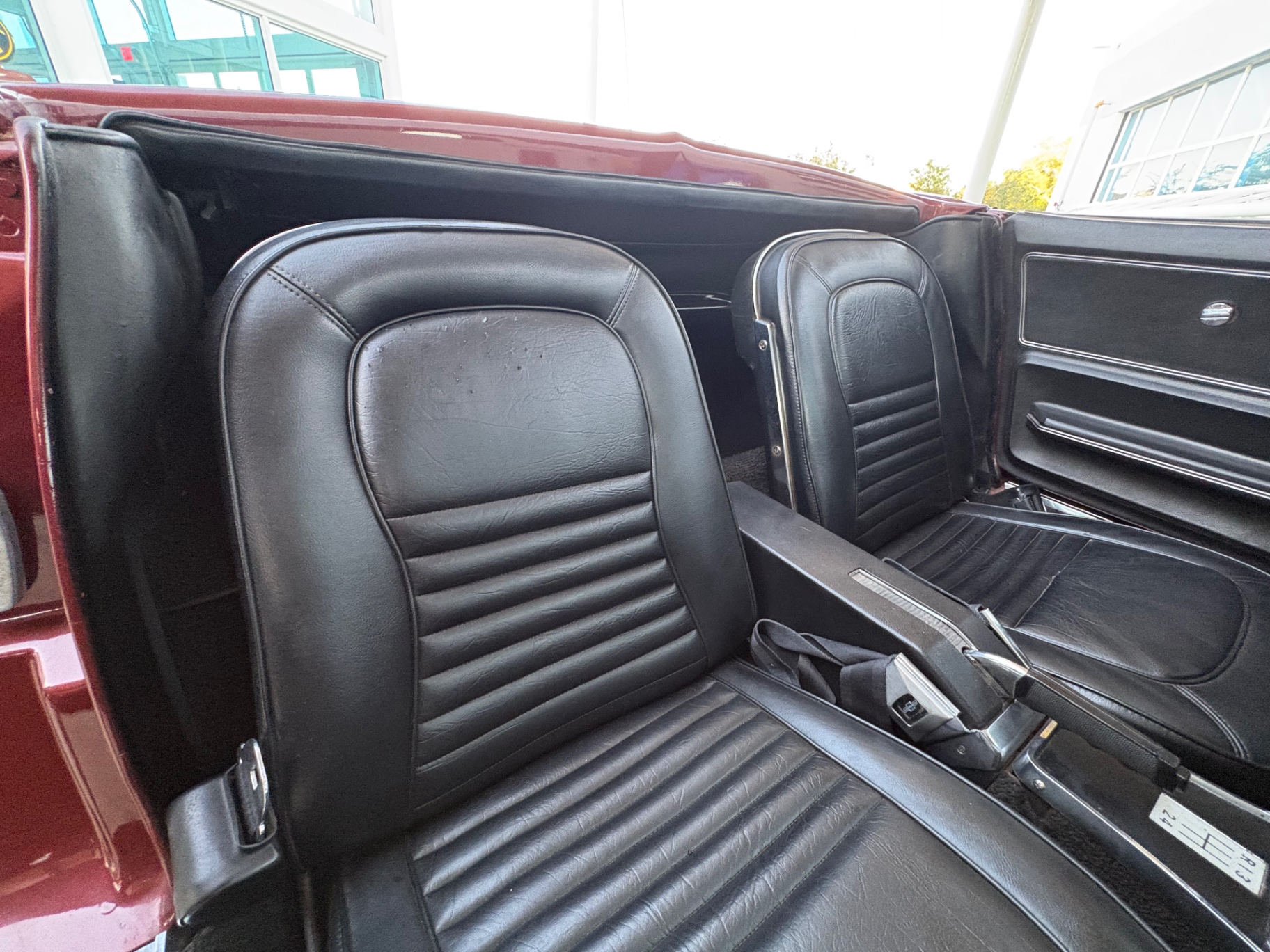
The wood-rim steering wheel was a popular factory option and gives the interior a period-correct feel that buyers at the time associated with European sports cars. The black vinyl upholstery throughout is consistent with the original specification for this car, and the center console integrates neatly into the cabin layout, providing a defined separation between driver and passenger in a way that reinforces the sporting intent of the interior. The black-on-maroon color pairing carries from the outside in, giving the car a cohesive character that feels considered rather than assembled from a options list.
Exterior
Marlboro Maroon Metallic was one of the colors that defined the late 1960s Corvette palette. Paint code 988 is a deep, complex color that shifts in tone depending on lighting conditions — it reads darker in shade and shows its metallic character in direct sunlight. It is not a common color by the numbers, which adds to its appeal among collectors who prefer something other than the expected red or white.
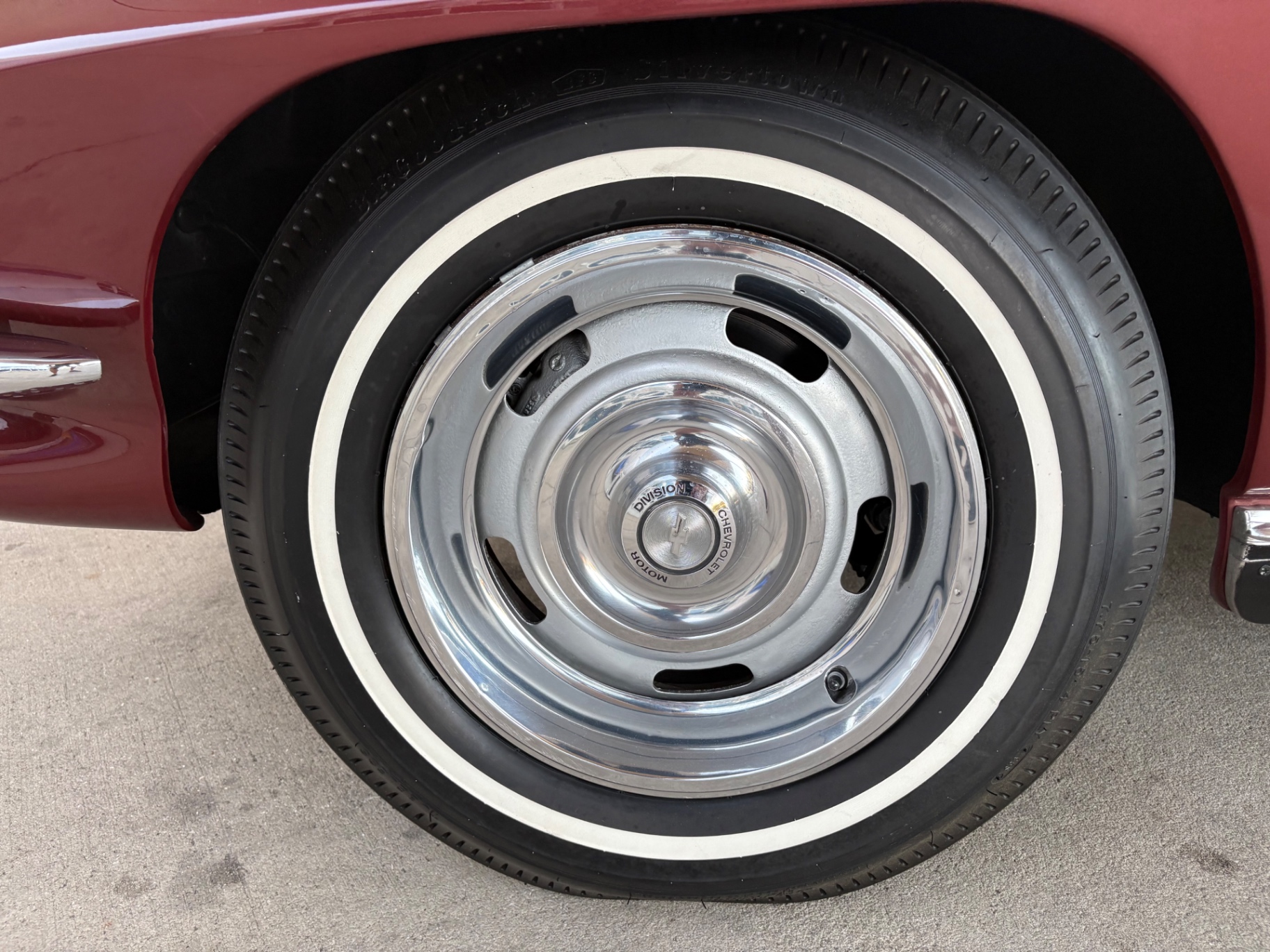
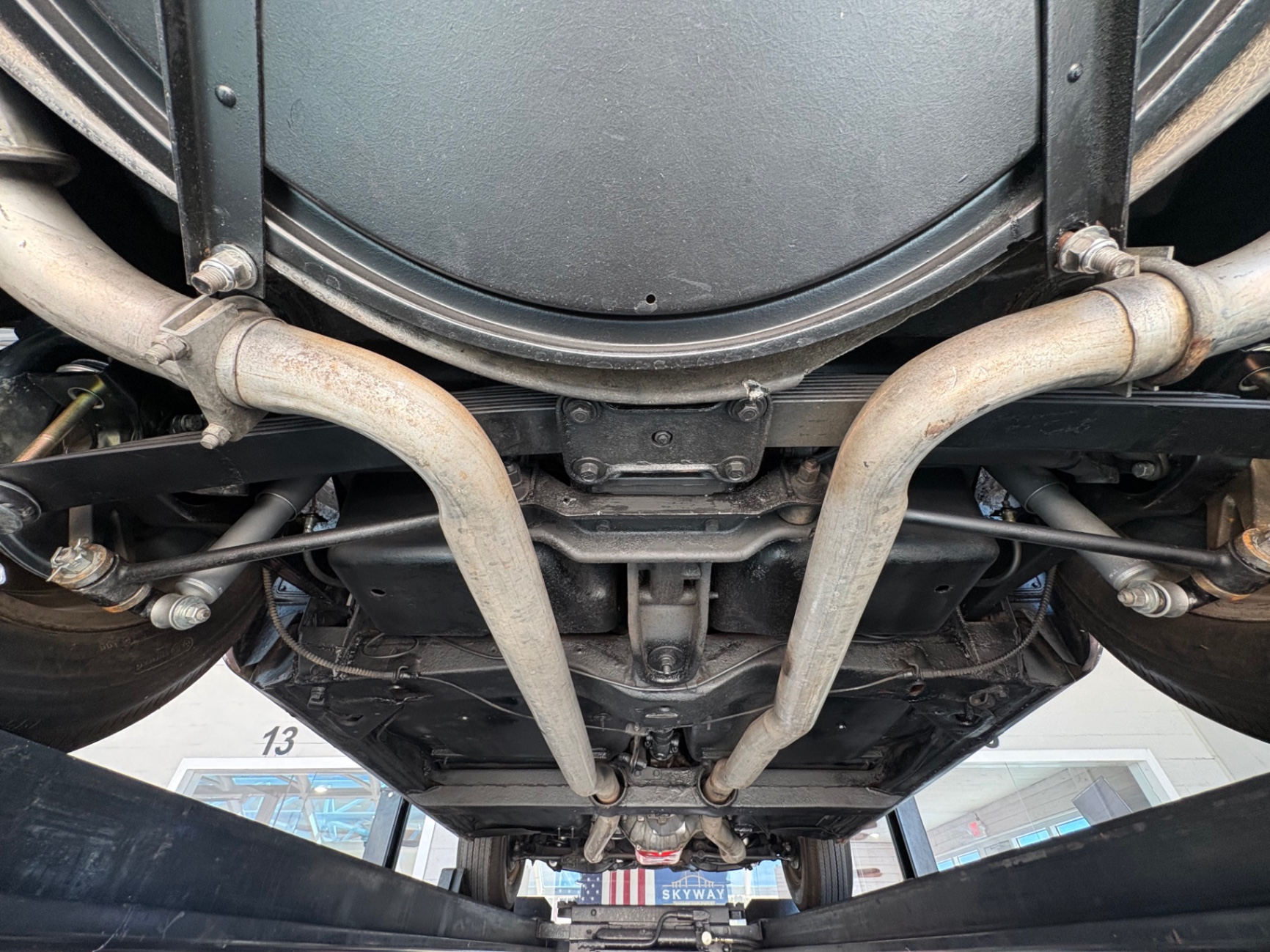
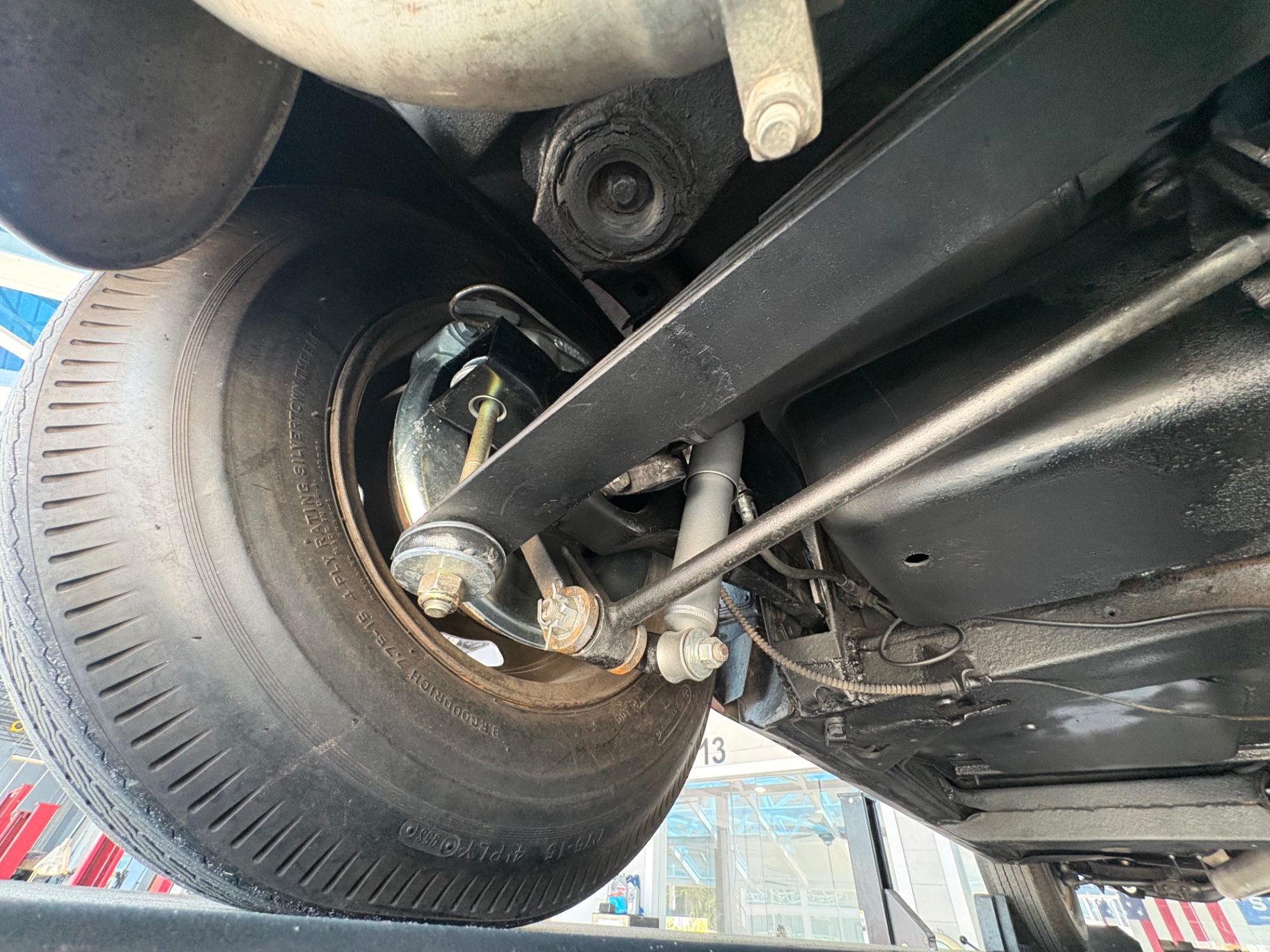
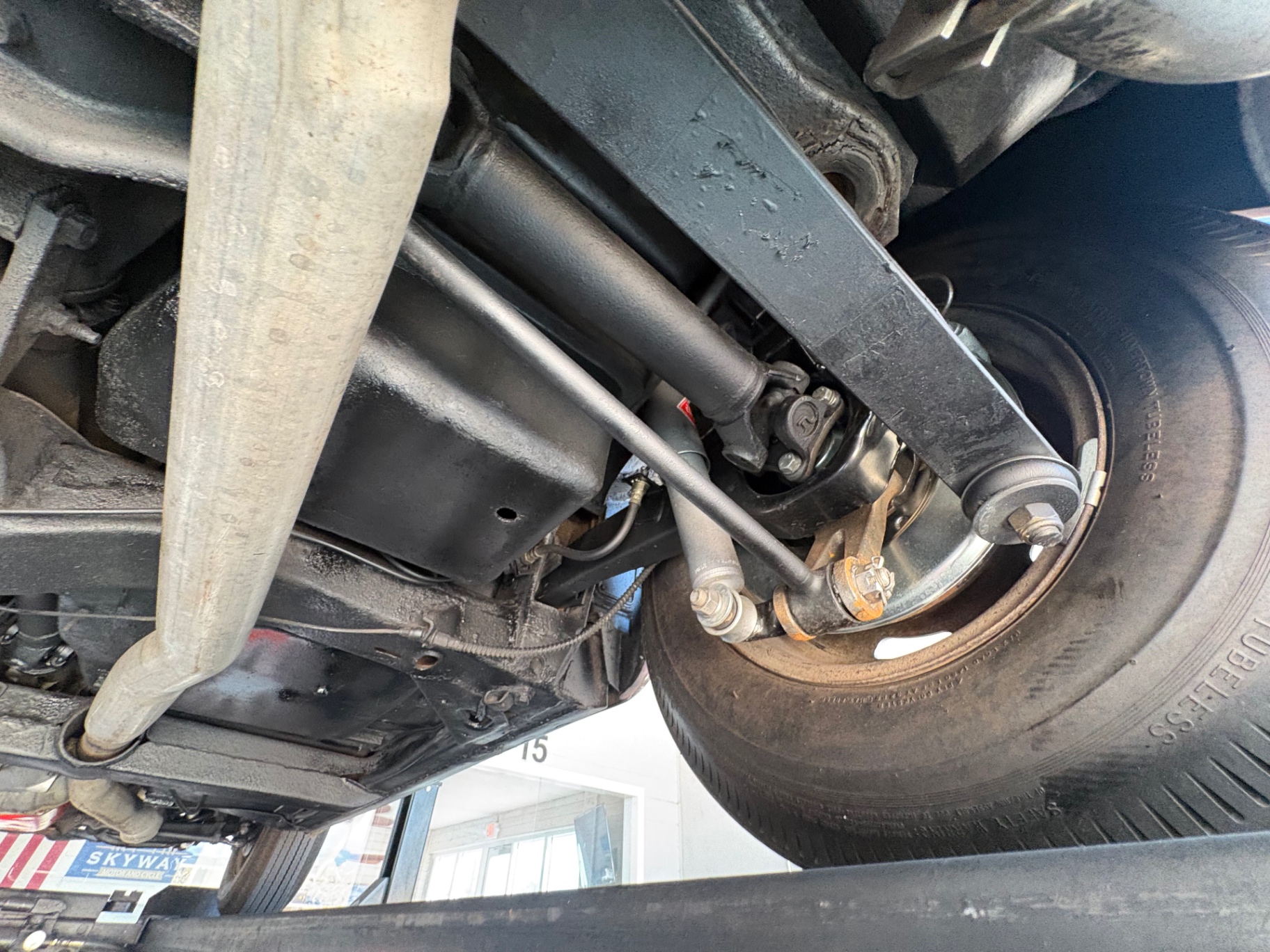
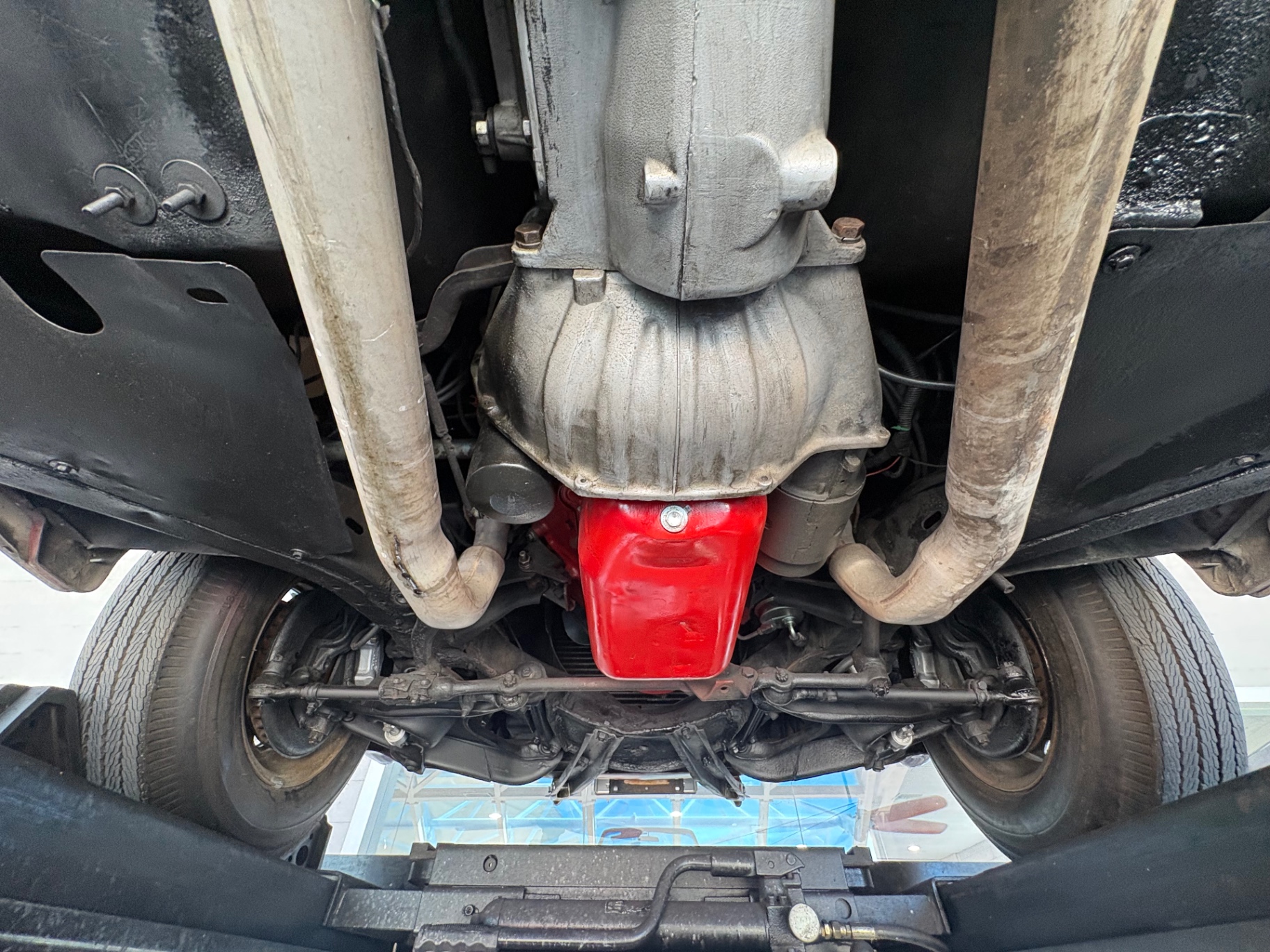
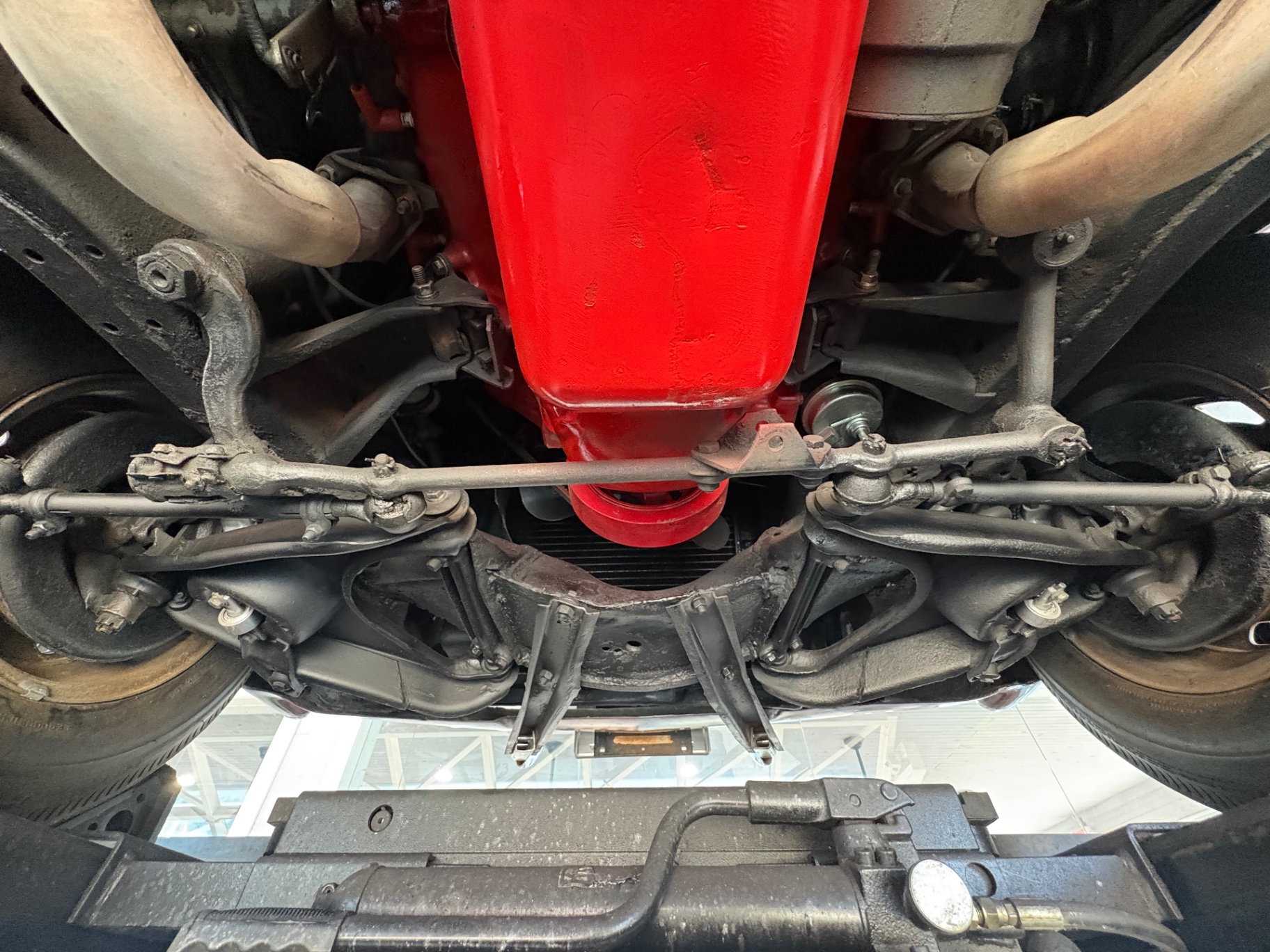
The chrome bumpers, both front and rear, are in keeping with the factory specification and maintain the clean, uncluttered appearance that made the 1967 Corvette a design high point for the C2 generation. The whitewall tires and chrome hubcaps are period-correct choices that place this car firmly in its era. The black convertible top completes the exterior profile and contrasts cleanly against the maroon body. The underbody photos show the dual exhaust routing and rear clip in honest condition — no cosmetic disguise, just the car as it is.
Conclusion
The 1967 Chevrolet Corvette Convertible with the L79 327/350 and 4-speed manual is a specific combination that collectors have recognized as desirable for a long time. The L79 was never the highest-horsepower option in the lineup, but it was arguably the most complete performance package available in a small-block Corvette — tractable enough to drive regularly, and quick enough to be taken seriously. Add a date-correct engine, a relatively rare factory color, and a black convertible top and interior, and you have a 1967 Corvette that holds up to scrutiny from any angle.
This is not a car that requires explanation or justification to someone who knows Corvettes. The combination speaks for itself.
To learn more about this 1967 Chevrolet Corvette Convertible, call Skyway Classics in Sarasota, Florida at 941-254-6608.
Disclaimer Information found on the website is presented as given to us by the owner of the car, whether on consignment or from the owner we bought it from. Some Photos, materials for videos, descriptions and other information are provided by the consignor/seller and is deemed reliable, but Skyway Classics does not warranty or guarantee this information. Skyway Classics is not responsible for information that may incorrect or a publishing error. The decision to purchase should be based solely on the buyers personal inspection of the vehicle or by a professional inspection service prior to offer or purchase being made.
1967 Chevrolet Corvette Convertible — L79 327/350hp, 4-Speed, Marlboro Maroon
Why This Car Is Special
The 1967 Chevrolet Corvette is widely regarded as the finest expression of the C2 generation. It was the last year of the Sting Ray body style, and Chevrolet used that final model year to refine everything that had come before — cleaner trim, revised front fender vents, and a more purposeful interior layout. Among Corvette collectors, the 1967 model year carries a premium that has held for decades, and that reputation is not built on sentiment alone. It was the year Chevrolet offered the L88, the big-block 427s, and the L79 — each one a purpose-built performance option that reflected exactly what the Corvette was capable of in the late 1960s.
This particular 1967 Chevrolet Corvette Convertible is finished in Marlboro Maroon Metallic (factory paint code 988), one of the more distinctive and sought-after colors offered that year. Paired with a black convertible top and black vinyl interior, the color combination is factory correct and visually cohesive in a way that feels intentional rather than accidental. The VIN decodes to confirm this is a genuine Corvette convertible built at the St. Louis assembly plant, which was the sole production facility for Corvettes during this era.
Under the hood sits the L79 — a 327 cubic inch small-block rated at 350 horsepower. That engine option is the reason this car occupies a specific place in the collector market. The L79 used an 11.0:1 compression ratio and a Holley four-barrel carburetor, producing more horsepower per cubic inch than most engines of its displacement in 1967. It was the top small-block option available that year, and it delivered a driving experience that the larger-displacement big-blocks simply could not replicate in terms of throttle response and rev character. The engine in this car carries date codes that are correct for the vehicle, which is a meaningful detail for judges and serious collectors alike.
Features
- L79 327ci 350hp V8, date code correct - 4-Speed Manual Transmission - Front Disc Brakes - Dual Exhaust - Full Gauge Cluster with Tachometer - Wood-Rim Steering Wheel - Center Console - Black Vinyl Interior - Black Convertible Top - Marlboro Maroon Metallic Exterior (paint code 988) - Whitewall Tires - Chrome Hubcaps - Chrome Bumpers
Mechanical
The L79 327 was introduced in 1965 and became one of the most respected small-block configurations Chevrolet ever produced. In the context of the 1967 Corvette, it sits above the base 300hp 327 and below the 427 big-block options, occupying a practical sweet spot for anyone who wants genuine performance without the weight penalty that comes with the larger engine. The high-compression small-block kept the car's front-to-rear balance closer to neutral, which makes a real difference when you're actually driving the car rather than looking at a spec sheet.
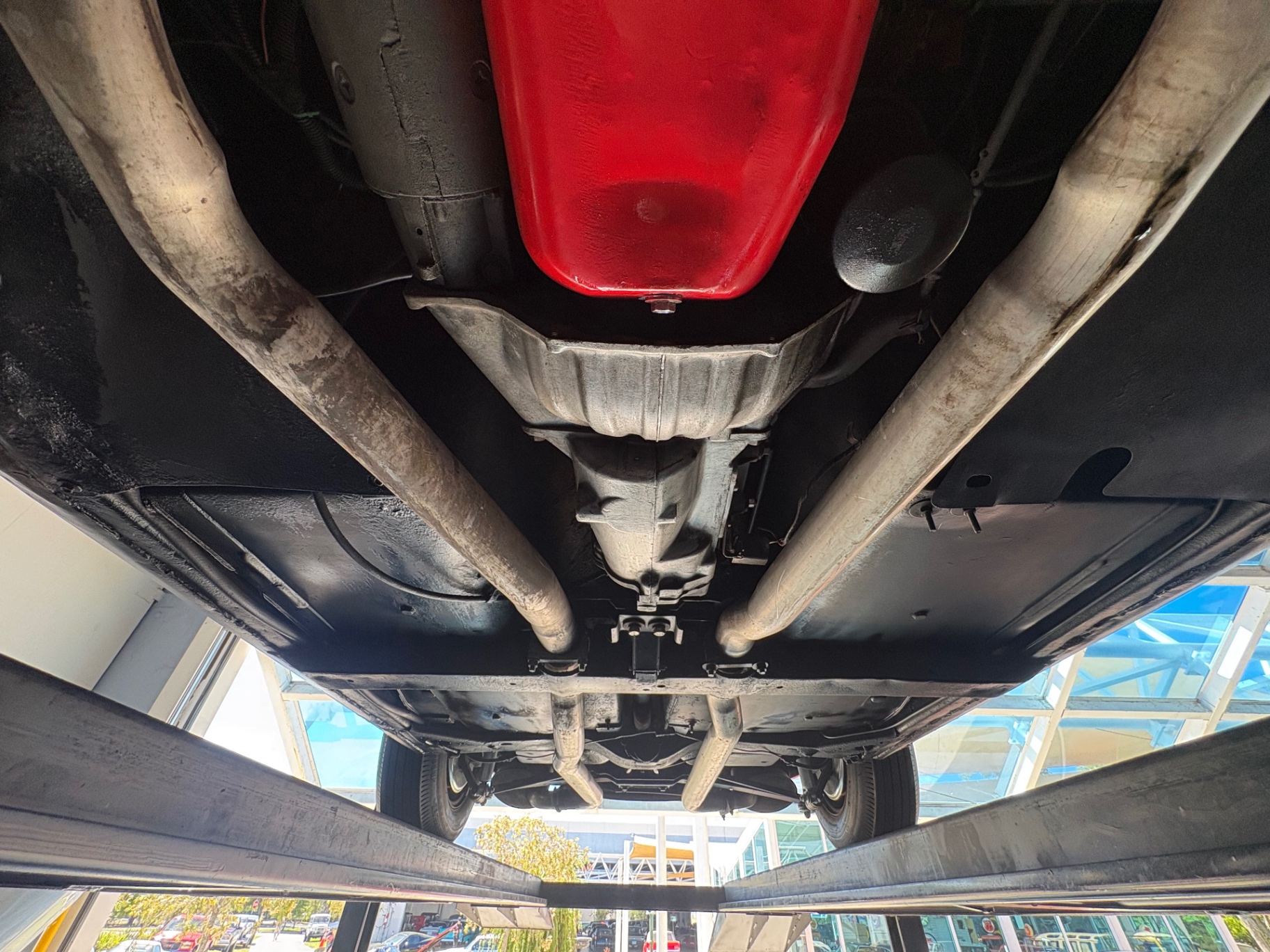
The 4-speed manual transmission was the correct pairing for this engine in period, and it remains the most engaging way to drive a car like this today. Front disc brakes were a factory option in 1967 and represent a significant functional upgrade over the four-wheel drum setup that came standard. Their presence here means the car stops with authority that matches its acceleration, which was not always a given on performance cars of this era. The dual exhaust exits through the iconic chrome quad outlets at the rear, a visual signature of the C2 Corvette that remains one of the most recognizable details in American automotive design.
Interior
The 1967 Corvette interior was refined compared to earlier C2 years, with a cleaner instrument panel layout and better-organized controls. This car is equipped with the full gauge cluster and tachometer, which were the correct instrumentation choices for a performance-oriented build. The tachometer is mounted prominently in the driver's sightline, which tells you something about the priorities Chevrolet had in mind when they designed this cockpit.
The wood-rim steering wheel was a popular factory option and gives the interior a period-correct feel that buyers at the time associated with European sports cars. The black vinyl upholstery throughout is consistent with the original specification for this car, and the center console integrates neatly into the cabin layout, providing a defined separation between driver and passenger in a way that reinforces the sporting intent of the interior. The black-on-maroon color pairing carries from the outside in, giving the car a cohesive character that feels considered rather than assembled from a options list.
Exterior
Marlboro Maroon Metallic was one of the colors that defined the late 1960s Corvette palette. Paint code 988 is a deep, complex color that shifts in tone depending on lighting conditions — it reads darker in shade and shows its metallic character in direct sunlight. It is not a common color by the numbers, which adds to its appeal among collectors who prefer something other than the expected red or white.
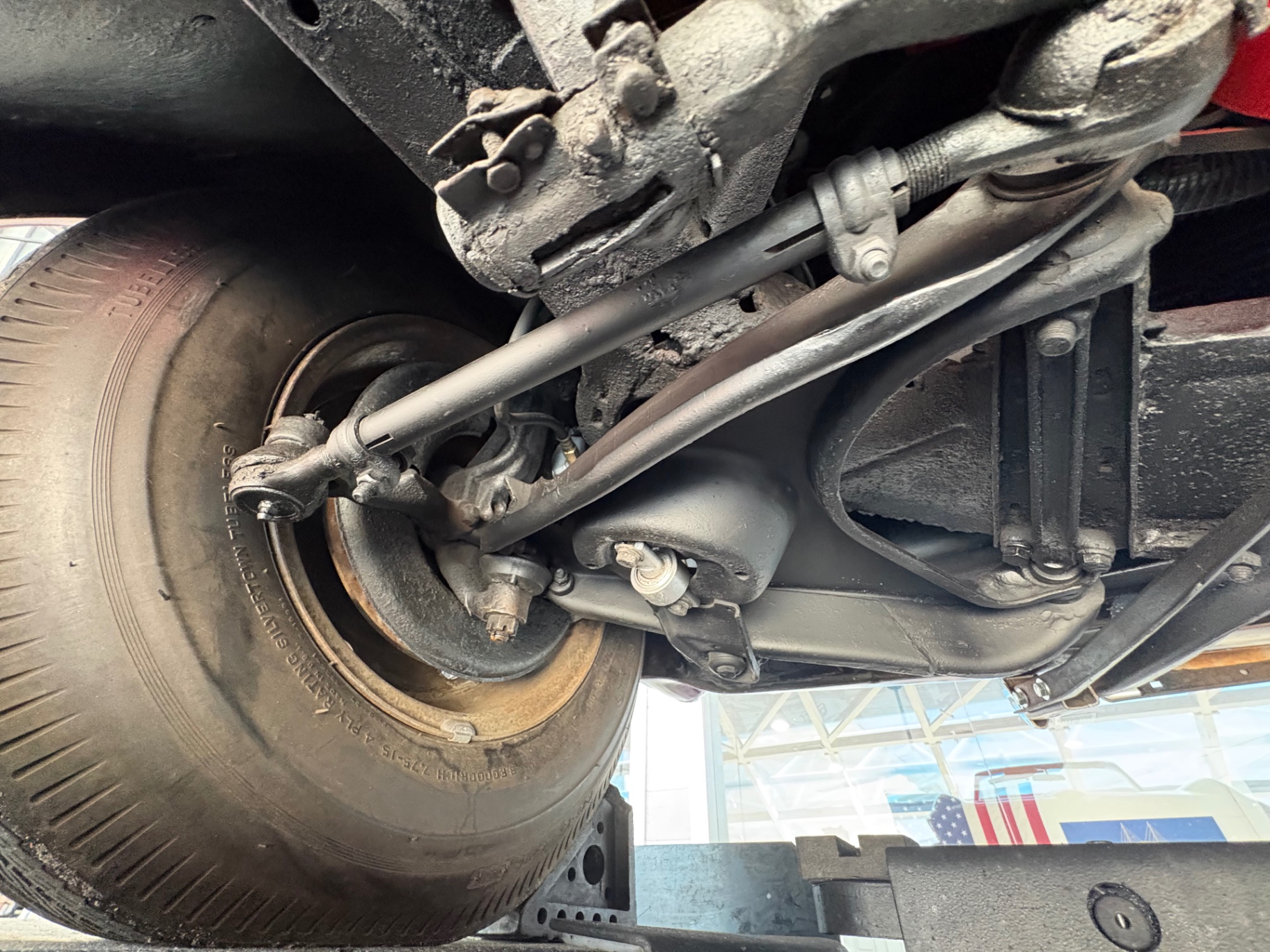
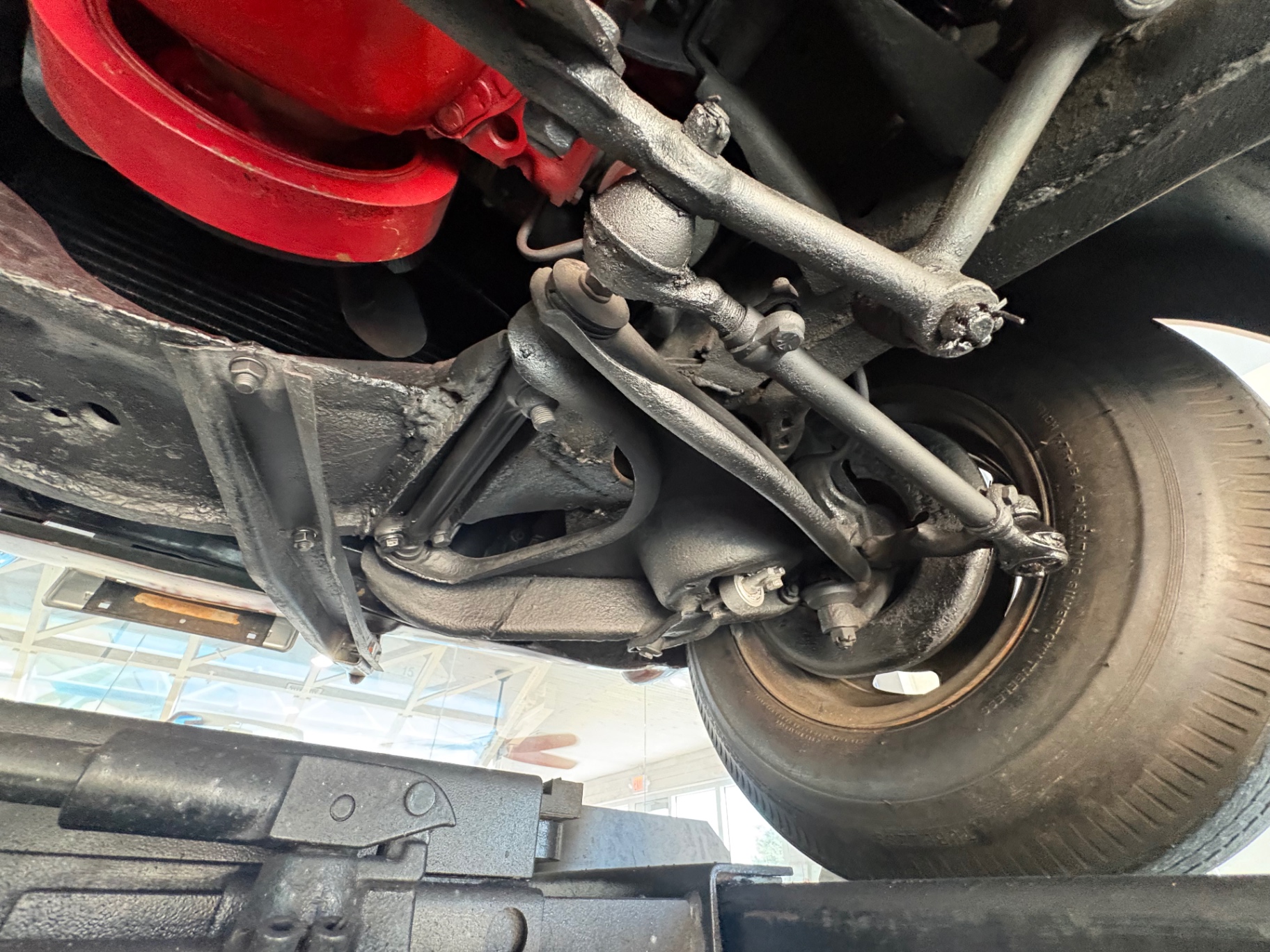
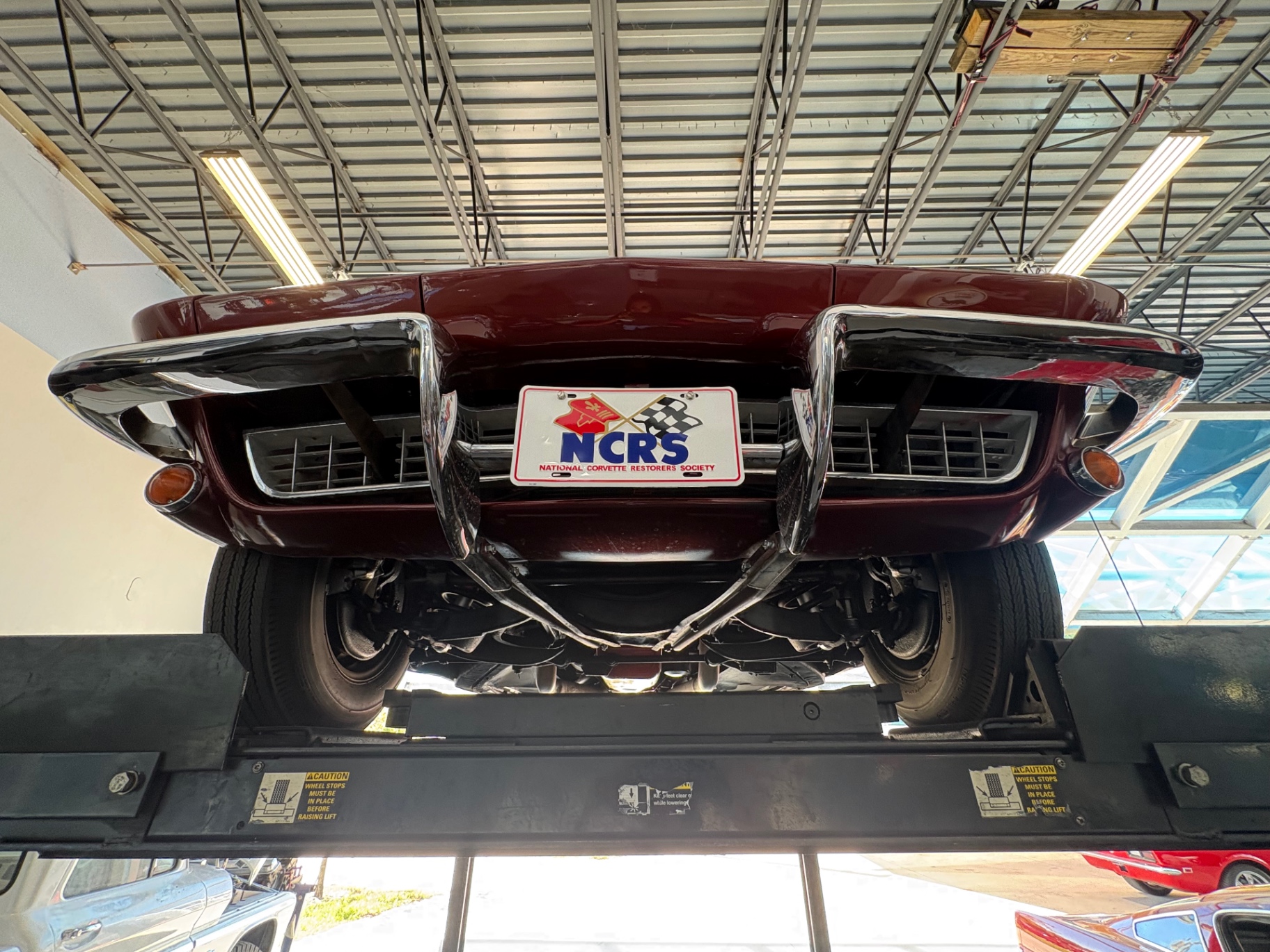
The chrome bumpers, both front and rear, are in keeping with the factory specification and maintain the clean, uncluttered appearance that made the 1967 Corvette a design high point for the C2 generation. The whitewall tires and chrome hubcaps are period-correct choices that place this car firmly in its era. The black convertible top completes the exterior profile and contrasts cleanly against the maroon body. The underbody photos show the dual exhaust routing and rear clip in honest condition — no cosmetic disguise, just the car as it is.
Conclusion
The 1967 Chevrolet Corvette Convertible with the L79 327/350 and 4-speed manual is a specific combination that collectors have recognized as desirable for a long time. The L79 was never the highest-horsepower option in the lineup, but it was arguably the most complete performance package available in a small-block Corvette — tractable enough to drive regularly, and quick enough to be taken seriously. Add a date-correct engine, a relatively rare factory color, and a black convertible top and interior, and you have a 1967 Corvette that holds up to scrutiny from any angle.
This is not a car that requires explanation or justification to someone who knows Corvettes. The combination speaks for itself.
To learn more about this 1967 Chevrolet Corvette Convertible, call Skyway Classics in Sarasota, Florida at 941-254-6608.
Disclaimer Information found on the website is presented as given to us by the owner of the car, whether on consignment or from the owner we bought it from. Some Photos, materials for videos, descriptions and other information are provided by the consignor/seller and is deemed reliable, but Skyway Classics does not warranty or guarantee this information. Skyway Classics is not responsible for information that may incorrect or a publishing error. The decision to purchase should be based solely on the buyers personal inspection of the vehicle or by a professional inspection service prior to offer or purchase being made.
1967 Chevrolet
Corvette Sting Ray Convertible
Why Choose Skyway Classics?
Explore our curated inventory of classic and collector cars—thoughtfully selected, ready to drive, and supported by experts who make ownership simple.
Expert Curation
Every vehicle is hand-selected by our experts for quality, authenticity, and investment potential.
Fast Transactions
Streamlined buying and selling process with quick financing and immediate delivery options.
Only National Dealer With Classic Service & Repair
We’re the only national dealership that services and repairs the classics we sell—before and after the sale.
Nationwide Network
Access to our extensive network of collectors, restorers, and classic car enthusiasts nationwide.
Concierge Ownership Support
From financing and insurance to paperwork, shipping, and titling—we handle the details so you can enjoy the drive.
Passion-Driven Service
We're classic car enthusiasts first, providing personalized service with genuine passion for the hobby.