
1955 Ford
Thunderbird Base
1955 Ford Thunderbird — 292 Y-Block V8, Dual Exhaust, Both Tops Included
Why This Car Is Special
The 1955 Ford Thunderbird was Ford's answer to the Chevrolet Corvette, but it took a different approach entirely. Where the Corvette was positioned as a pure sports car with a six-cylinder engine at launch, Ford built the Thunderbird around the idea of a "personal luxury" two-seater — a car with real V8 power, genuine comfort, and enough style to compete with anything on the road in 1955. Ford called it a "personal car" rather than a sports car, a distinction that turned out to be a smart one. The Thunderbird outsold the Corvette by a wide margin in its first year, with Ford producing 16,155 units for the 1955 model year compared to Chevrolet's 700 Corvettes.
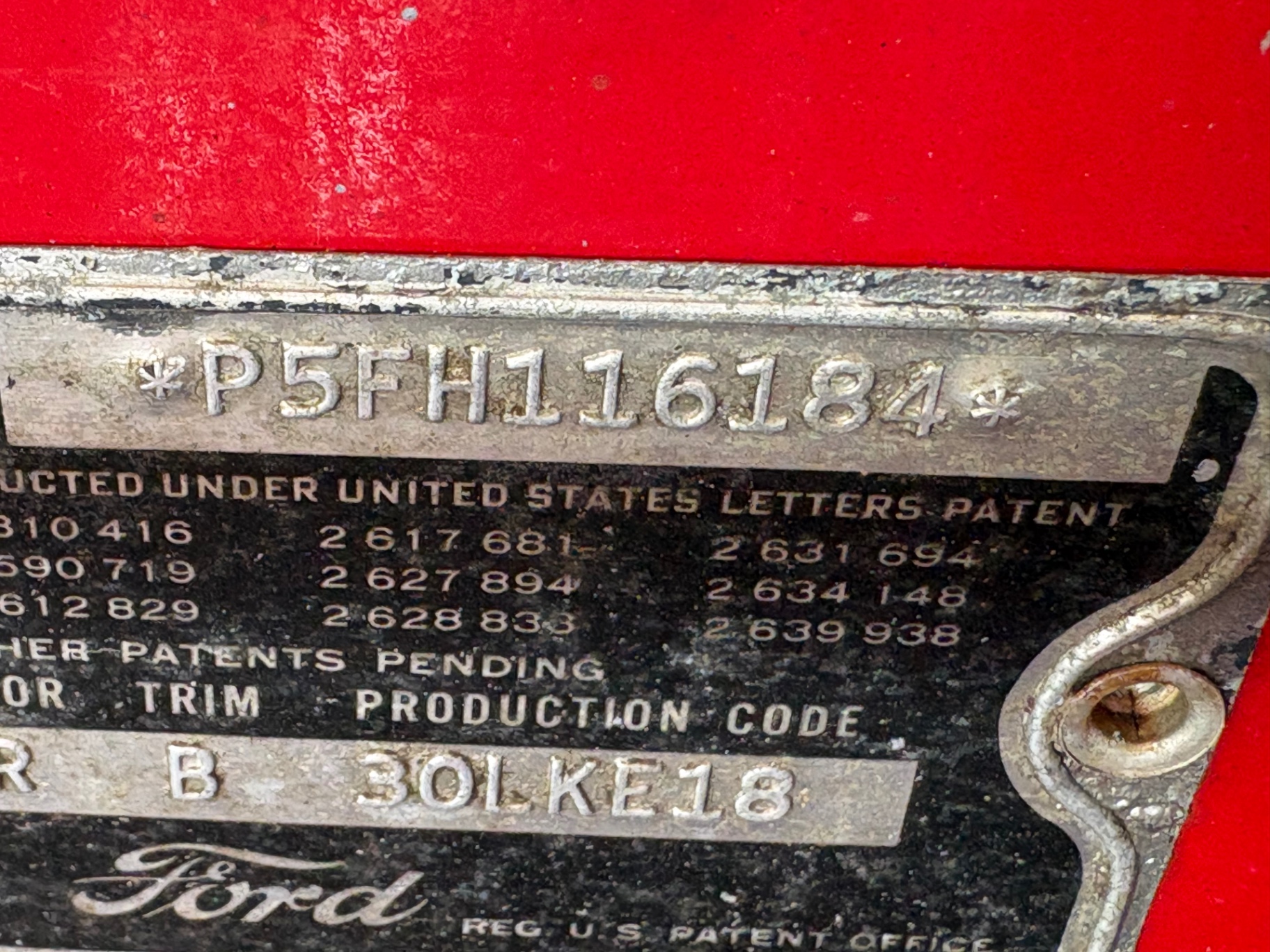
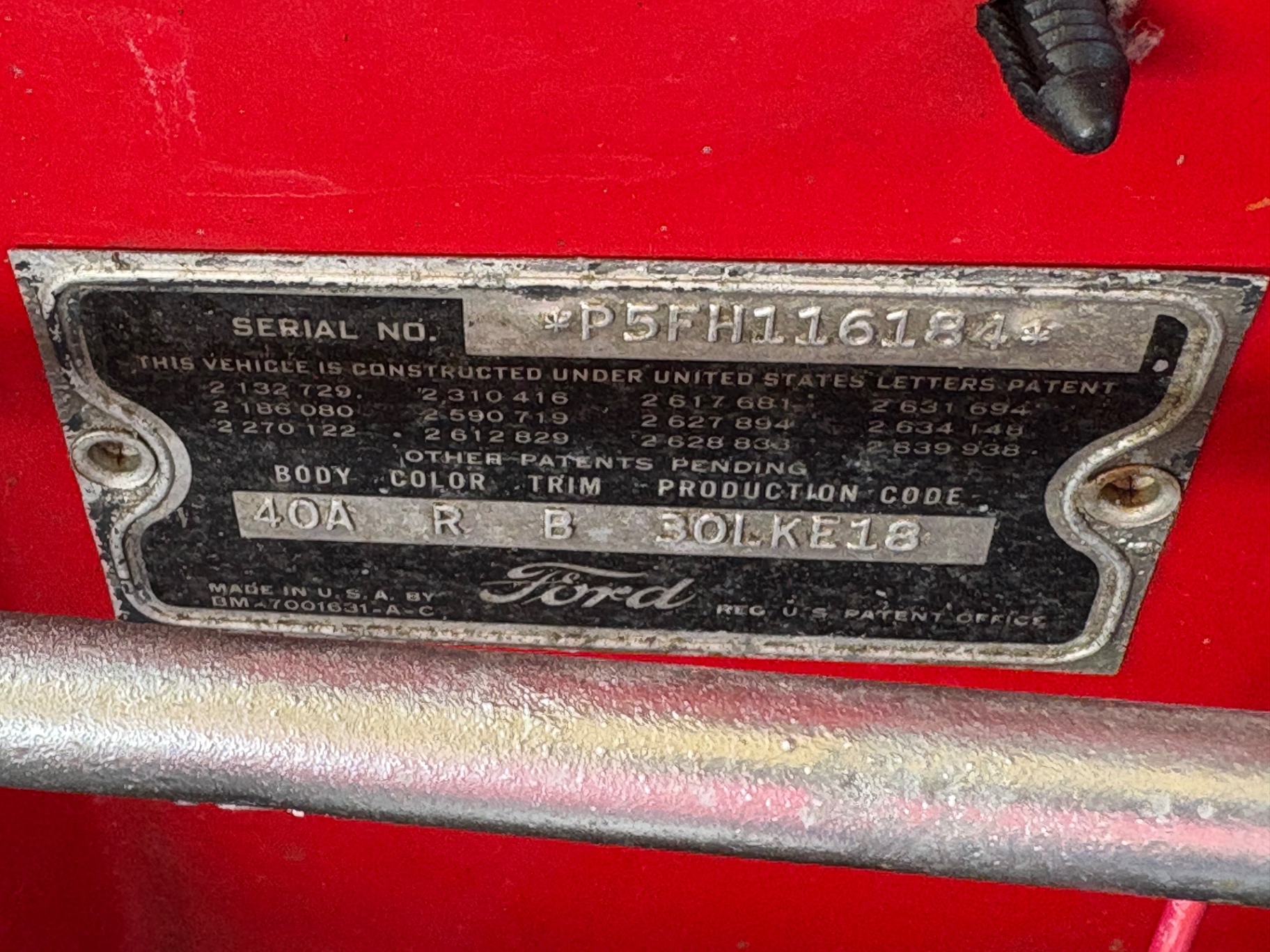
That first-year production number matters to collectors for a specific reason. The 1955 Thunderbird was the first of only three years in which the car was offered as a two-seat roadster. Ford moved to a four-seat body style in 1958, and the two-seat configuration was never brought back in the original generation. Among collectors and marque enthusiasts, the 1955, 1956, and 1957 models are grouped together as the "Baby Bird" or first-generation two-seaters, and the 1955 is the founding year of that lineage. The VIN on this car — beginning with P5FH — confirms it was assembled at Ford's Dearborn, Michigan plant during the 1955 model year, making it a genuine first-year example.
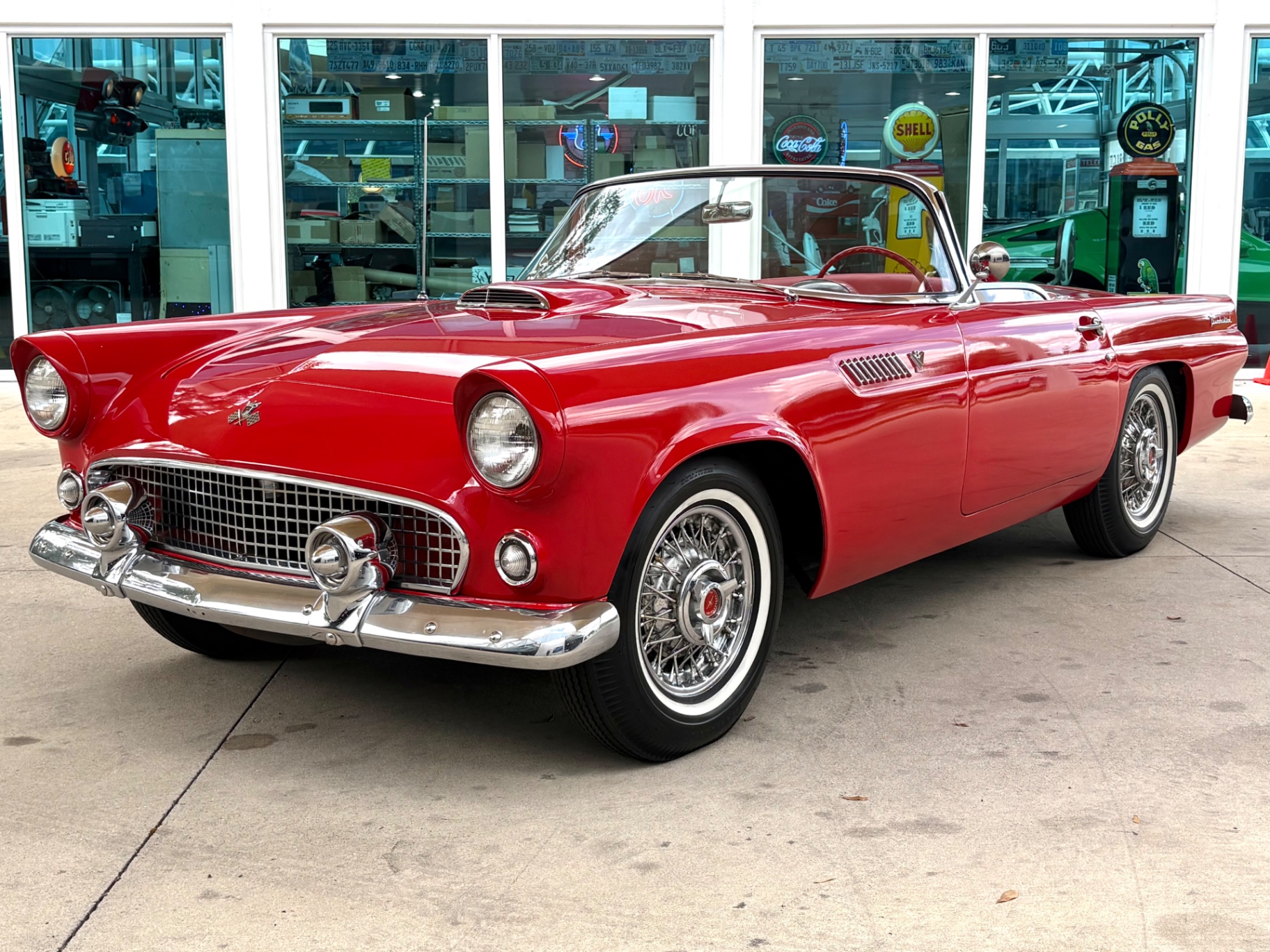
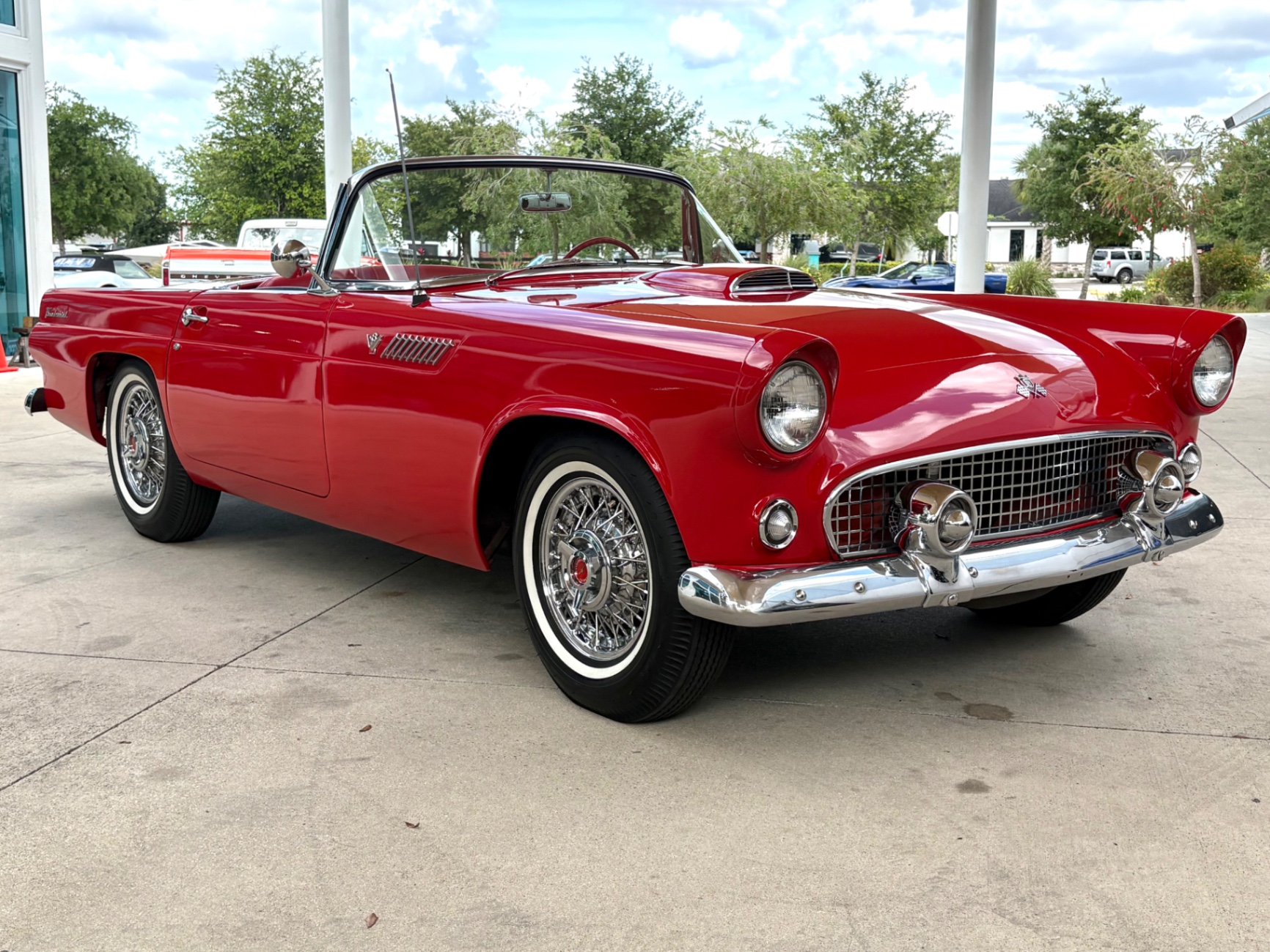
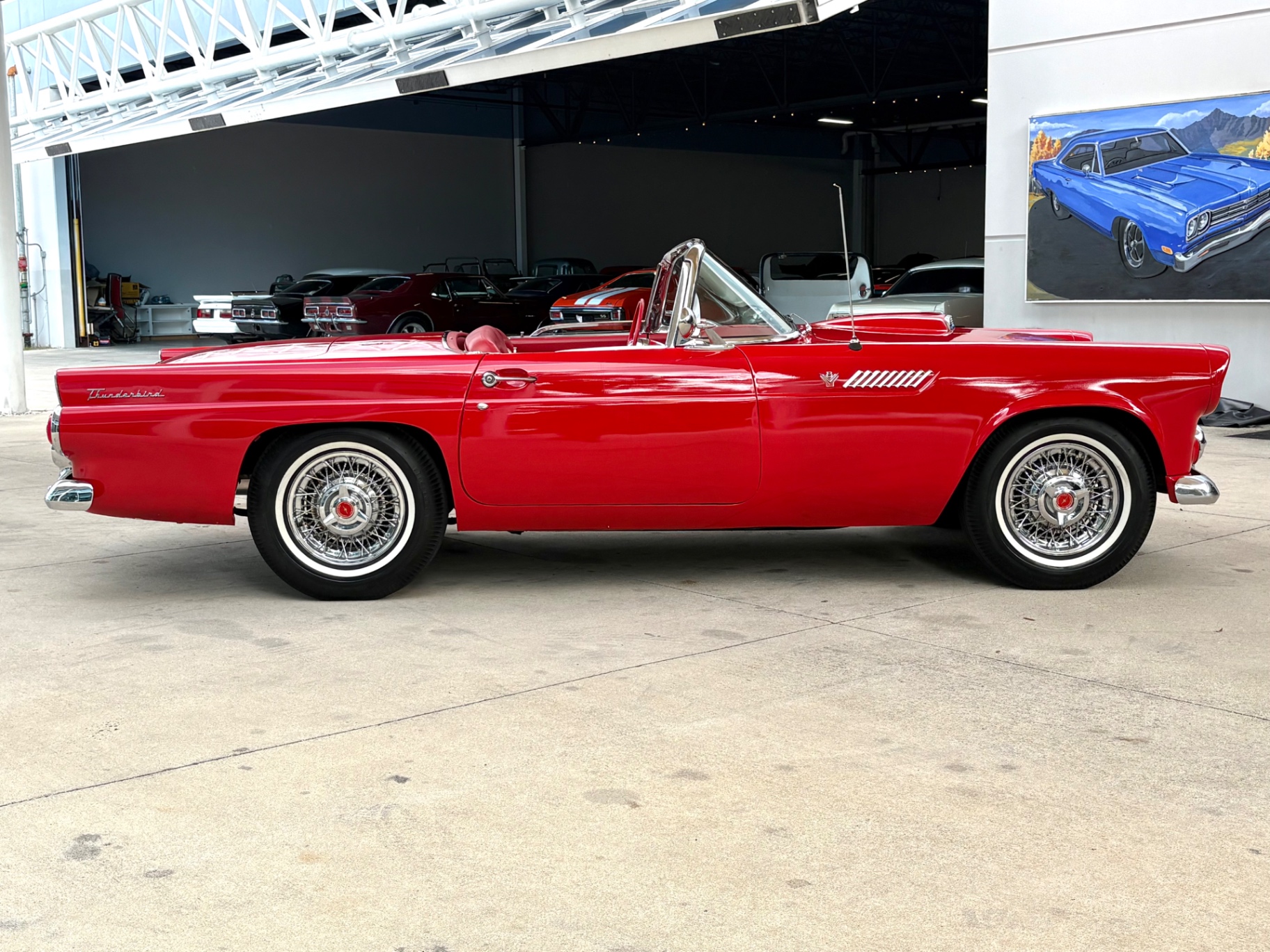
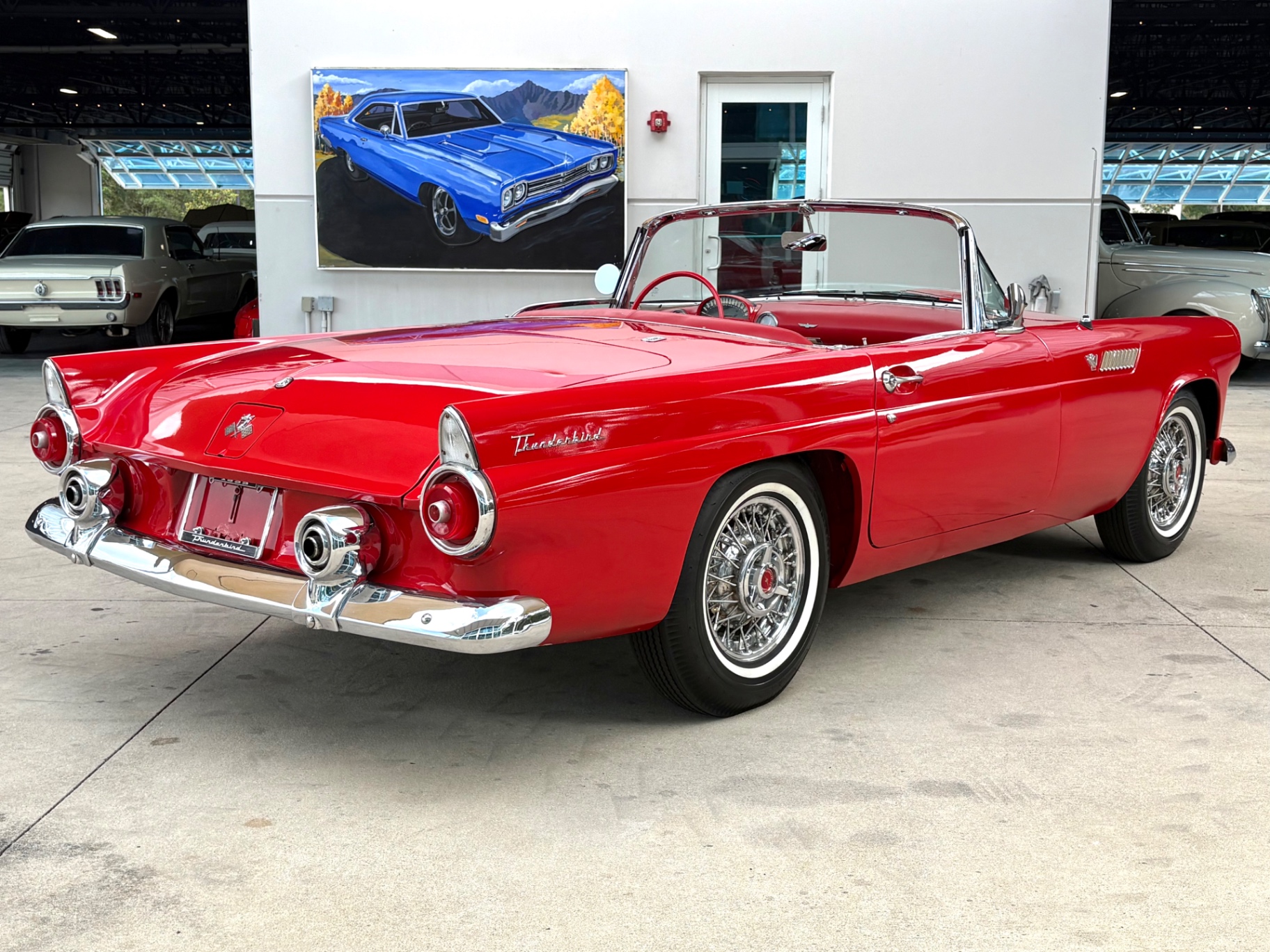
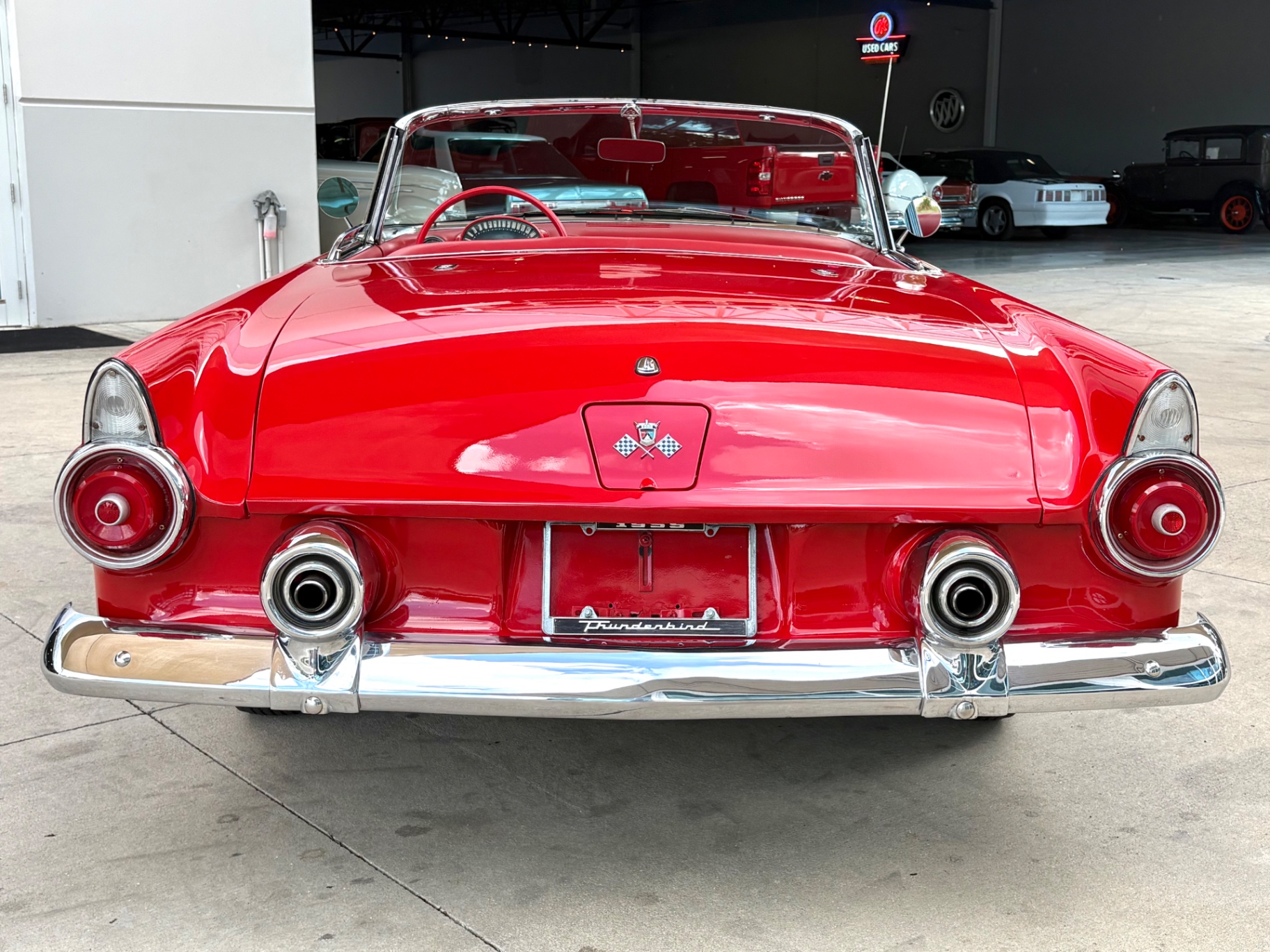
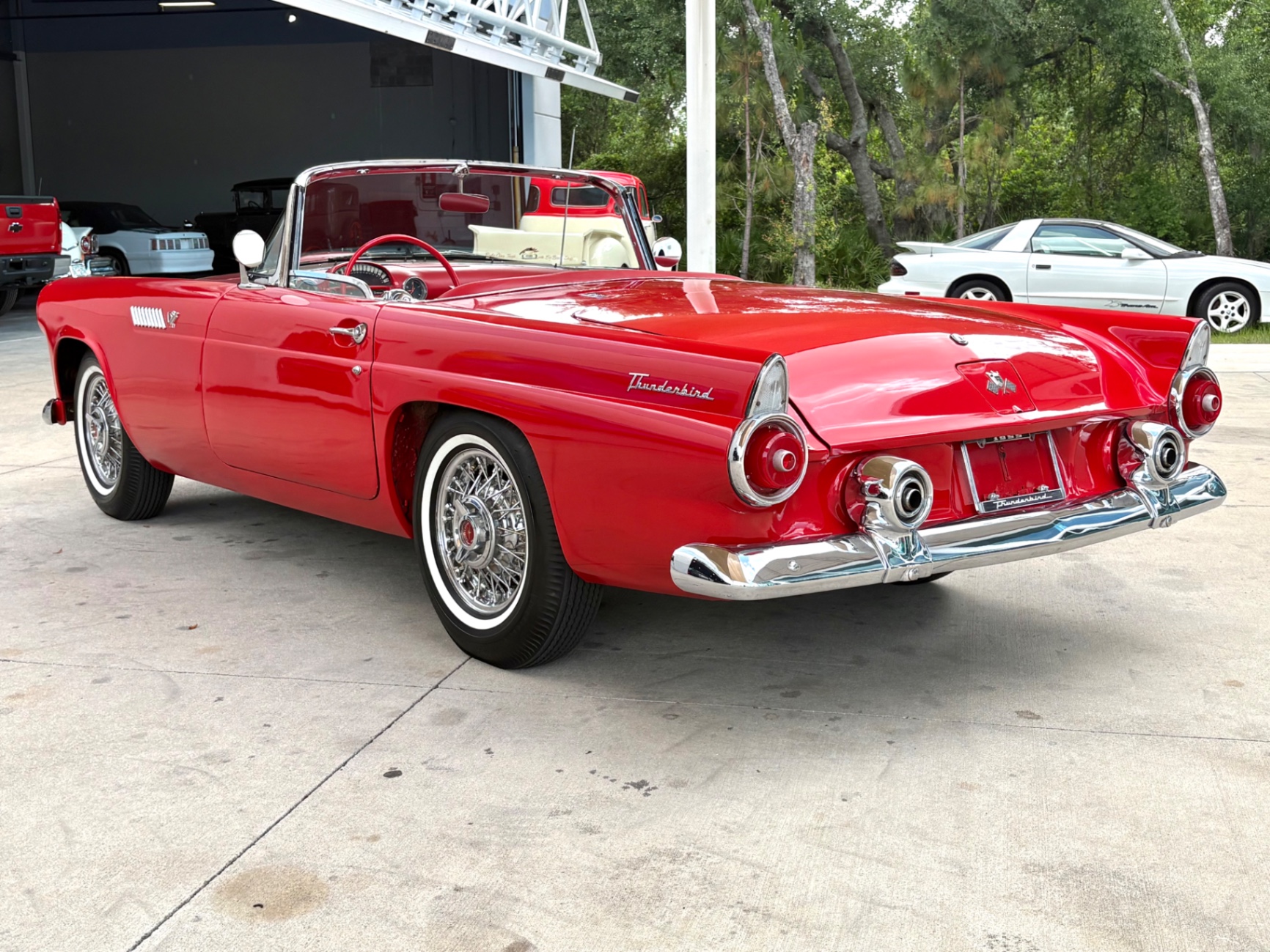
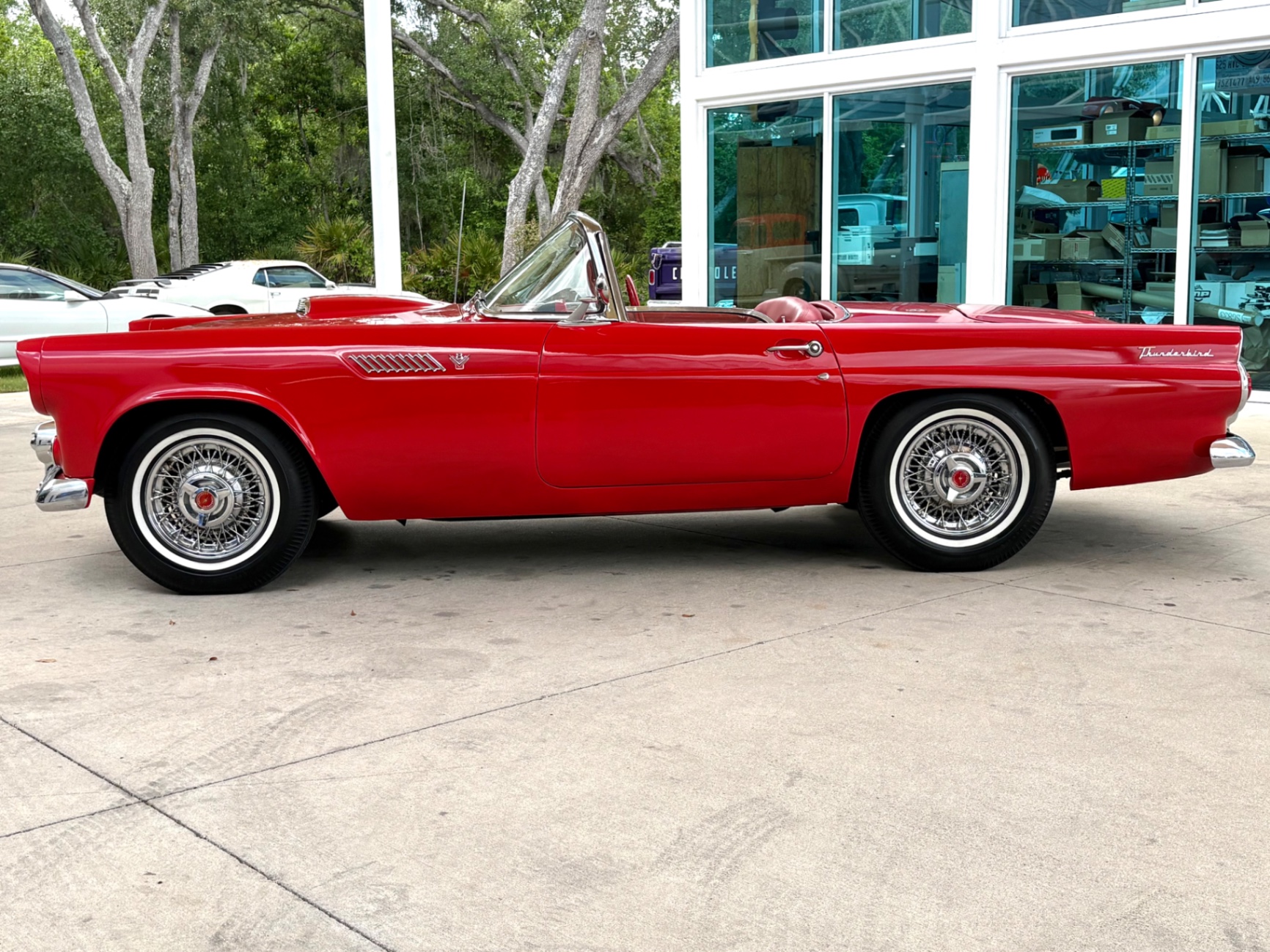
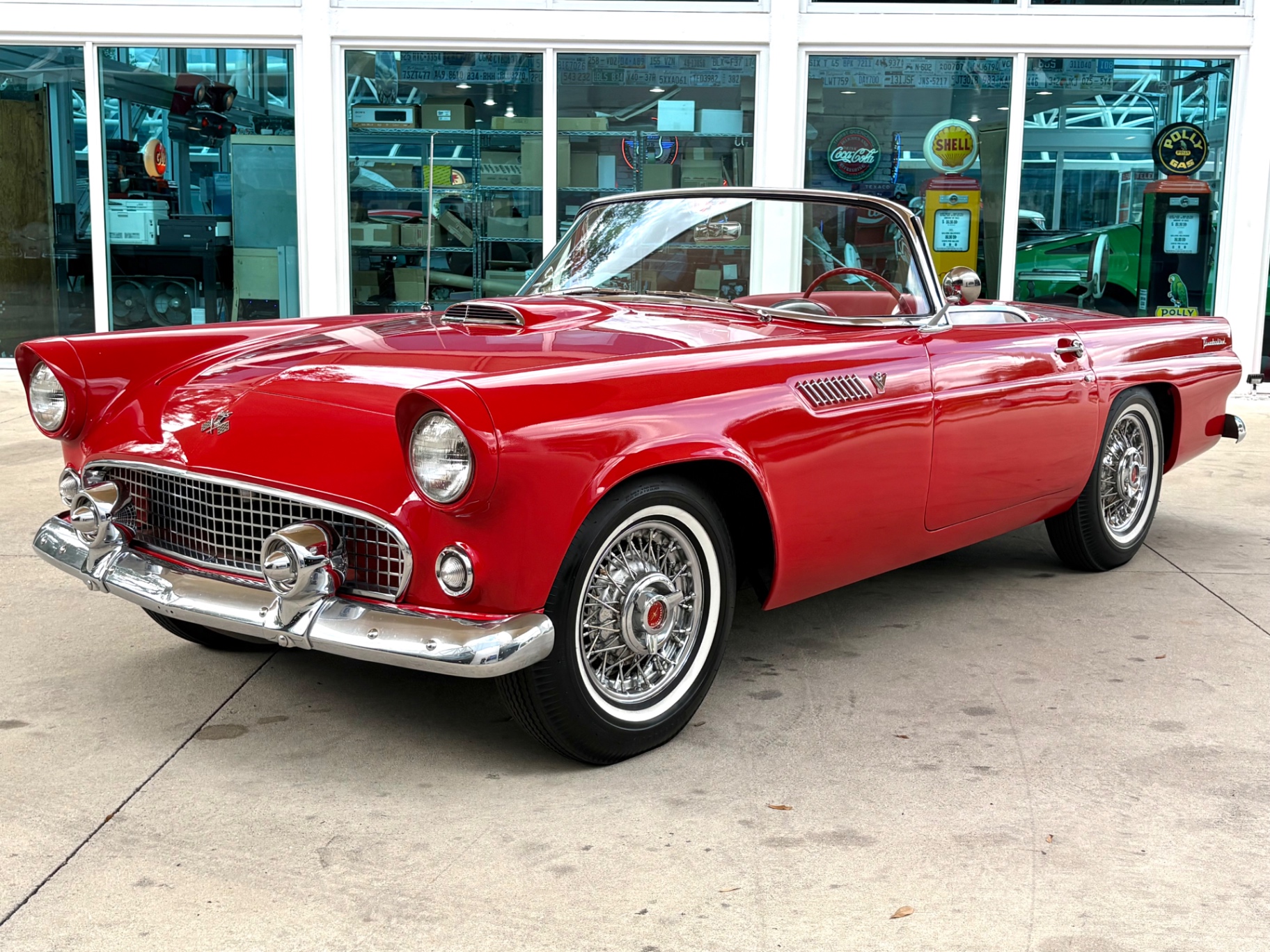
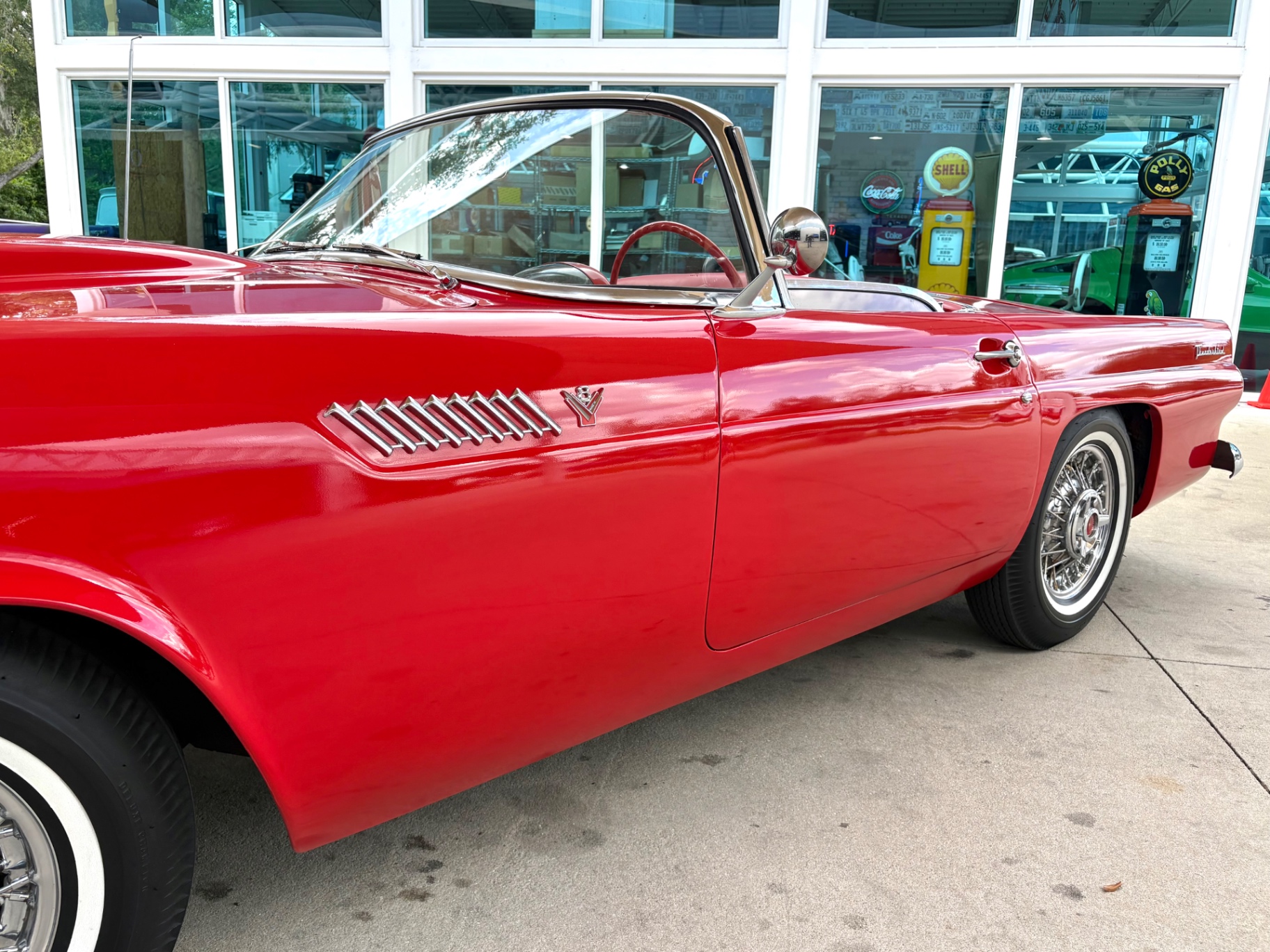
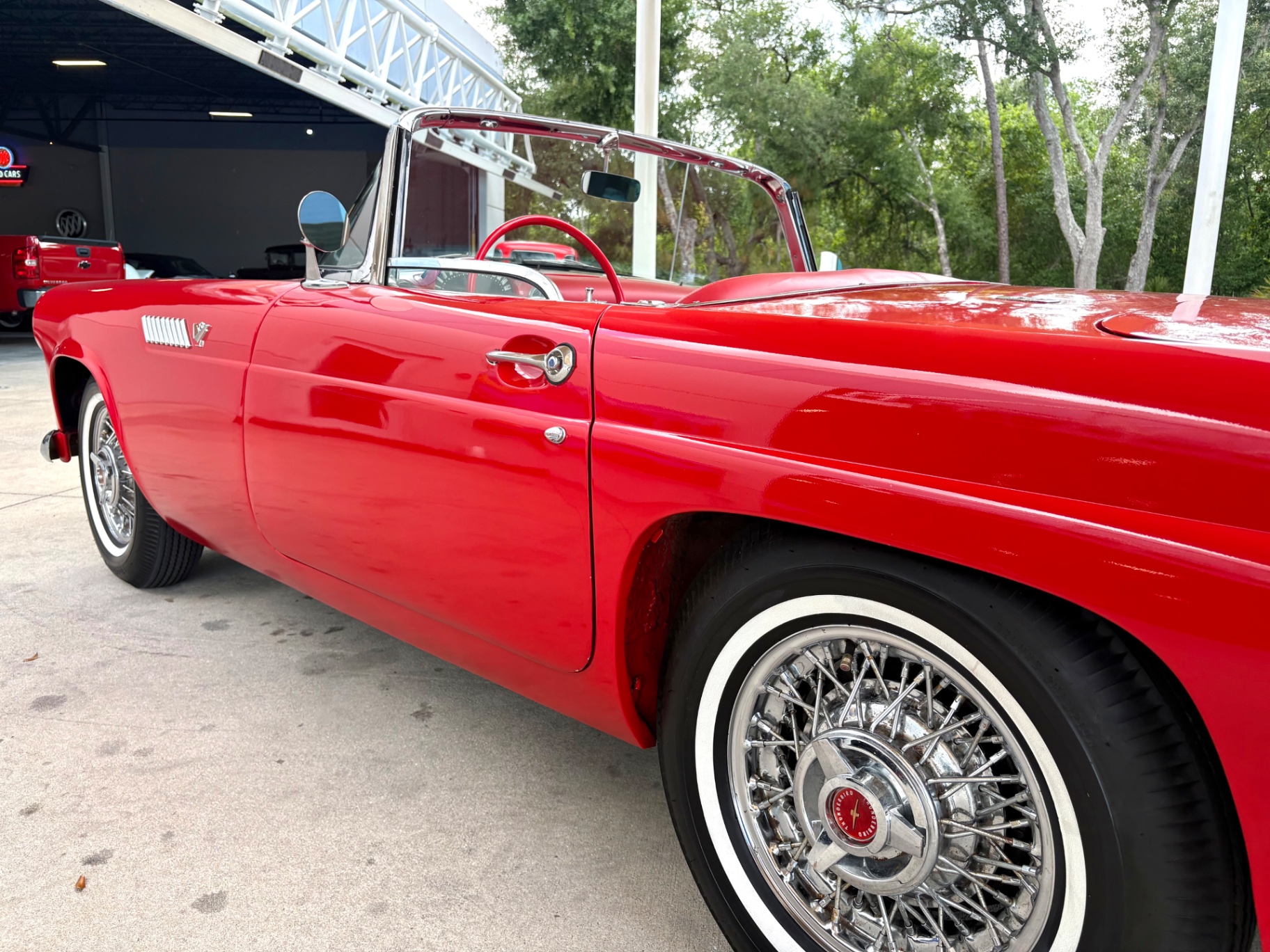
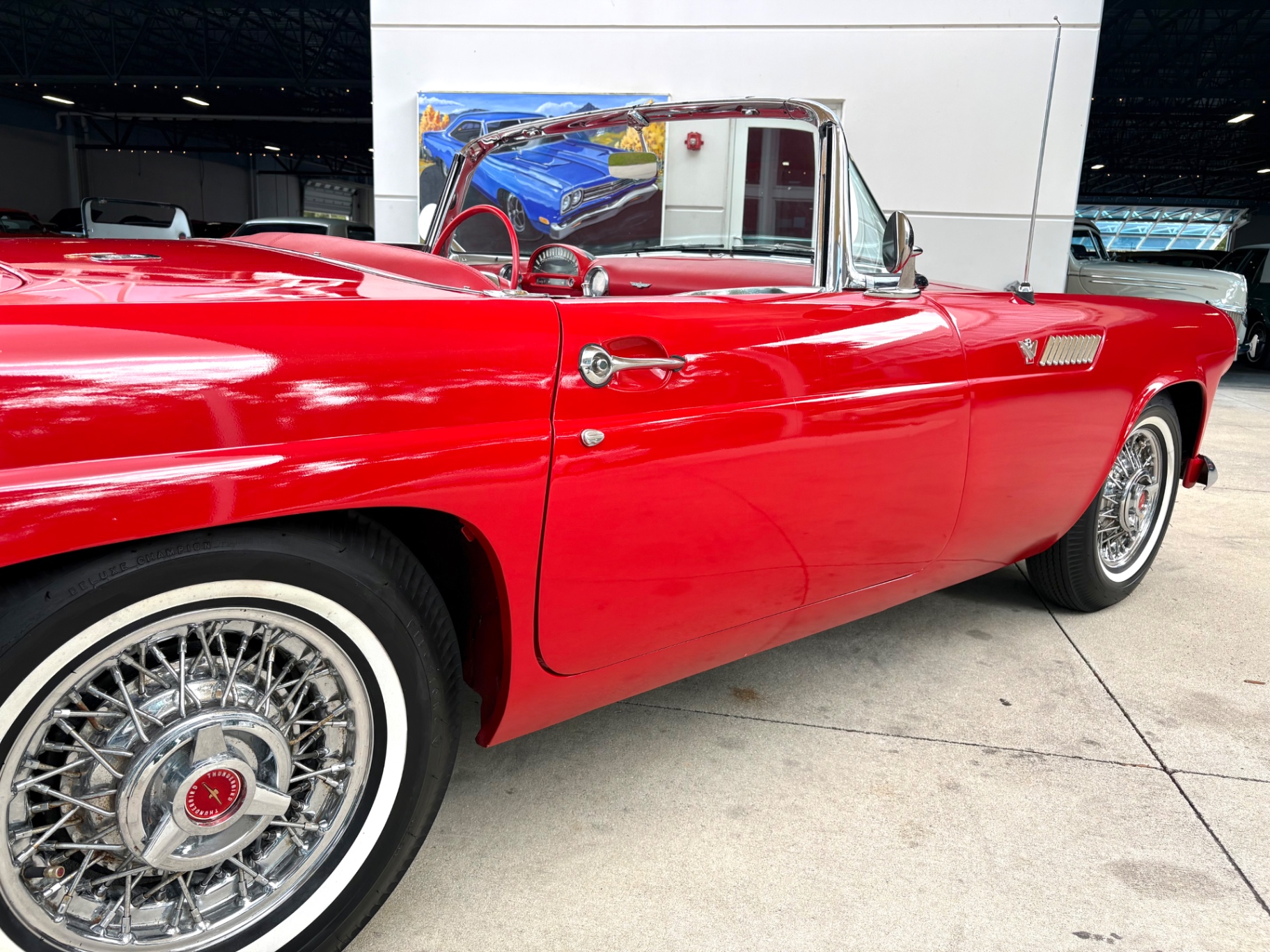
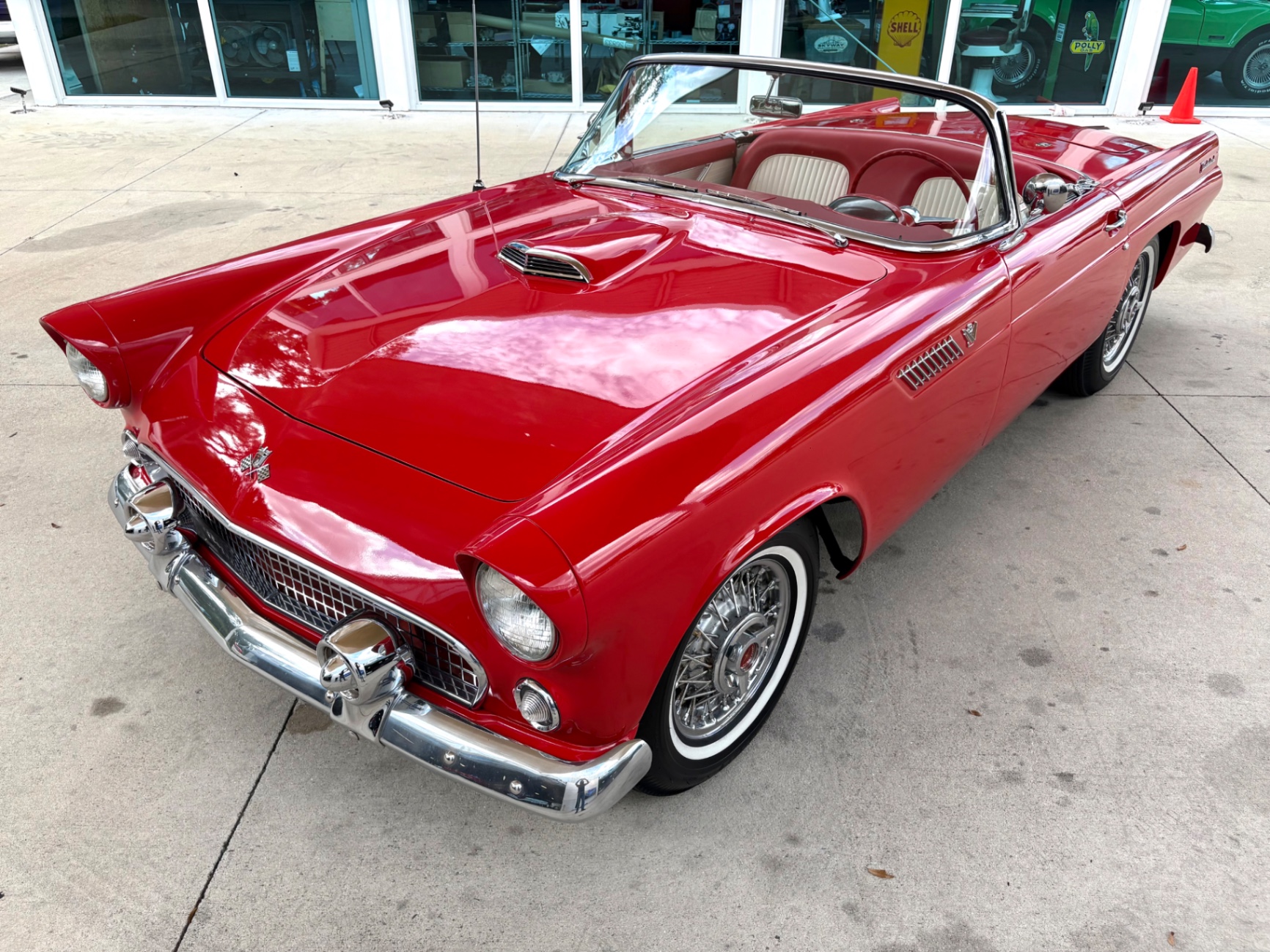
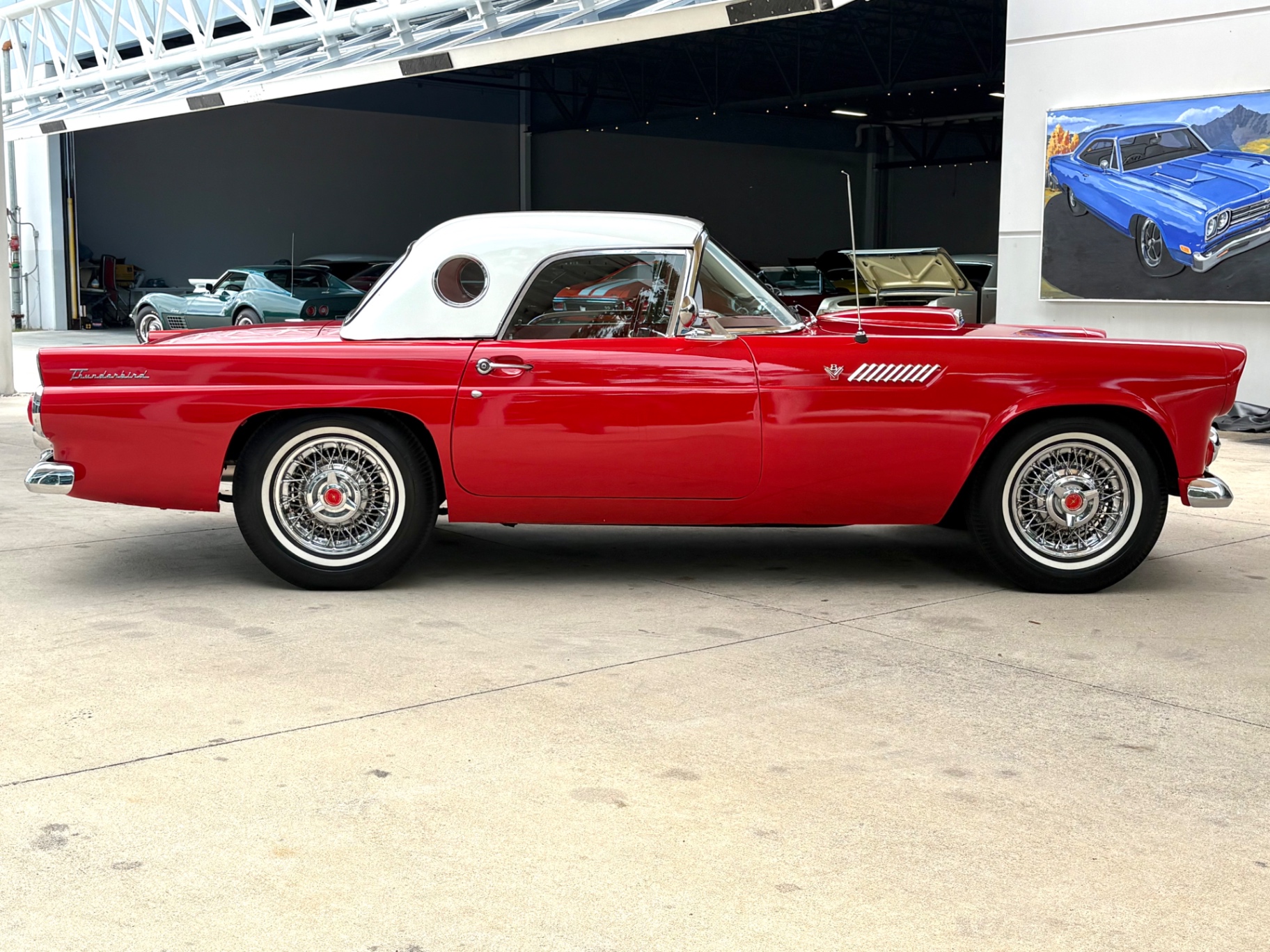
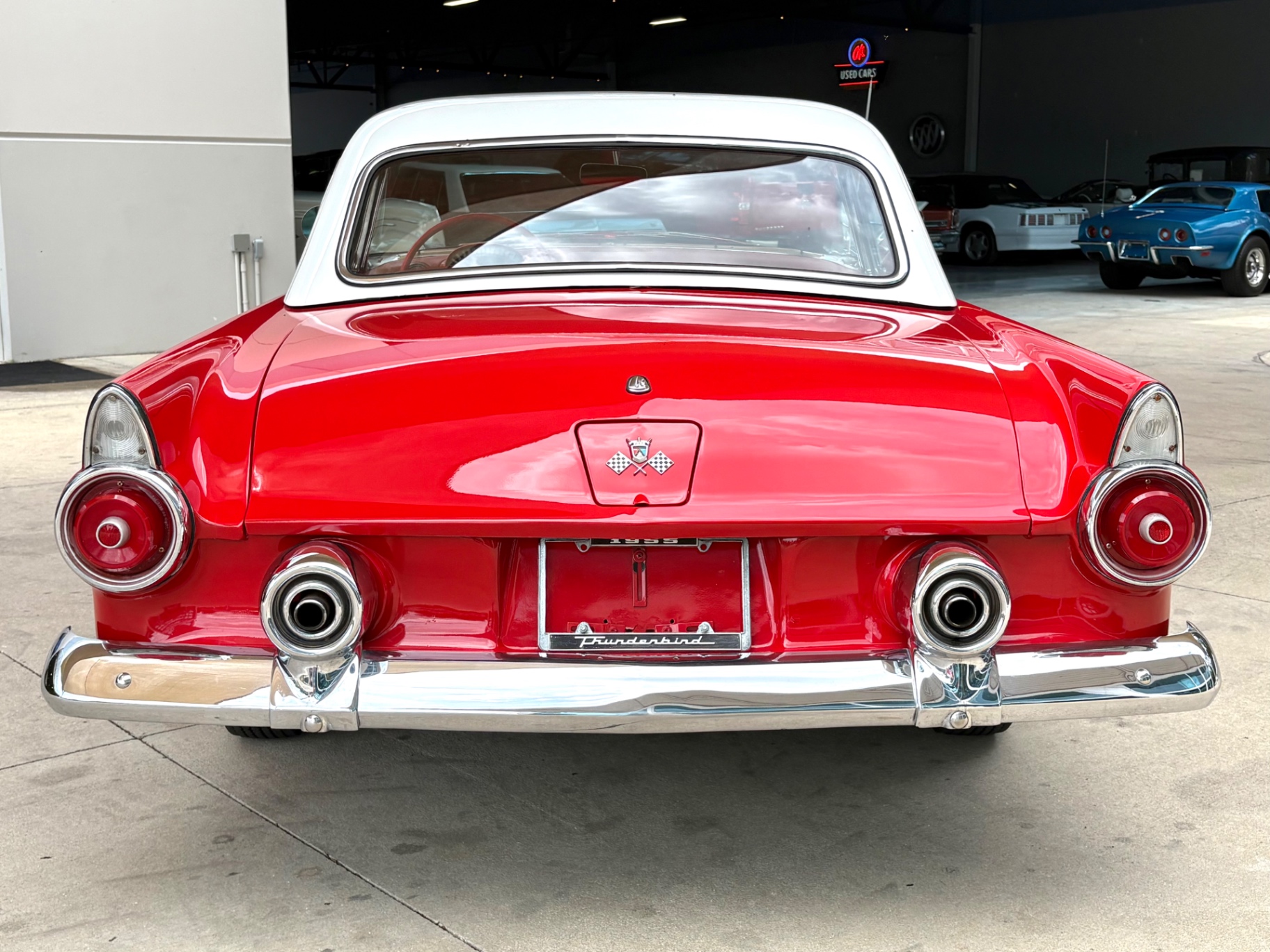
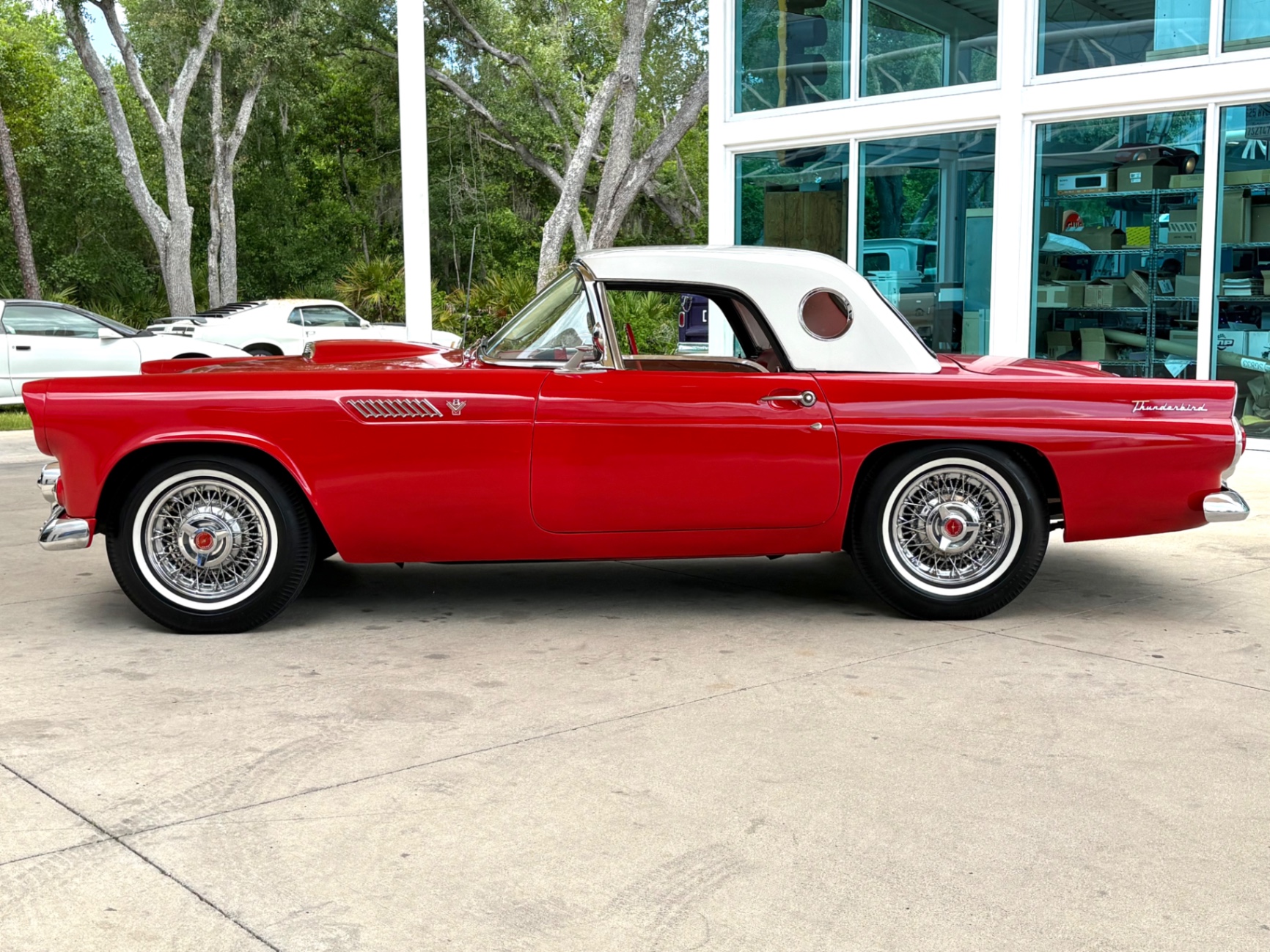
This particular 1955 Ford Thunderbird is finished in red over a red and white vinyl interior, a combination that puts the car's design in its best light. It carries the 292ci Y-Block V8, a 3-speed automatic transmission, and dual exhaust — and it comes with both the removable hardtop and the soft top convertible, which is the most complete configuration you can have on one of these cars.
Features List
- 292ci Y-Block V8 engine
- 3-Speed Automatic Transmission
- Dual Exhaust
- Removable Hardtop Included
- Soft Top Convertible
- Chrome Wire Wheels
- Whitewall Tires
- Tachometer Gauge
- AM Radio
- Thunderbird Valve Cover Badging
- V8 Door Badge
- Chrome Bumpers
- Drum Brakes
- Bucket Seat
- Clean Undercarriage
Mechanical
The 292ci Y-Block V8 was introduced by Ford in 1955 and represented a significant step forward from the earlier flathead V8 that had powered Ford products for decades. The Y-Block designation comes from the engine's skirt design, which extends below the crankshaft centerline in a Y-shape, giving the block added rigidity. In 1955 Thunderbird applications, the 292 was rated at 193 horsepower with the automatic transmission — a meaningful advantage over the Corvette's six-cylinder at the time. The engine is backed here by a 3-speed automatic, which on a 1955 Thunderbird would have been the Ford-O-Matic unit, a two-speed automatic marketed as a three-speed due to its torque converter function. It was one of the most popular options on these cars and a practical choice for everyday driving.
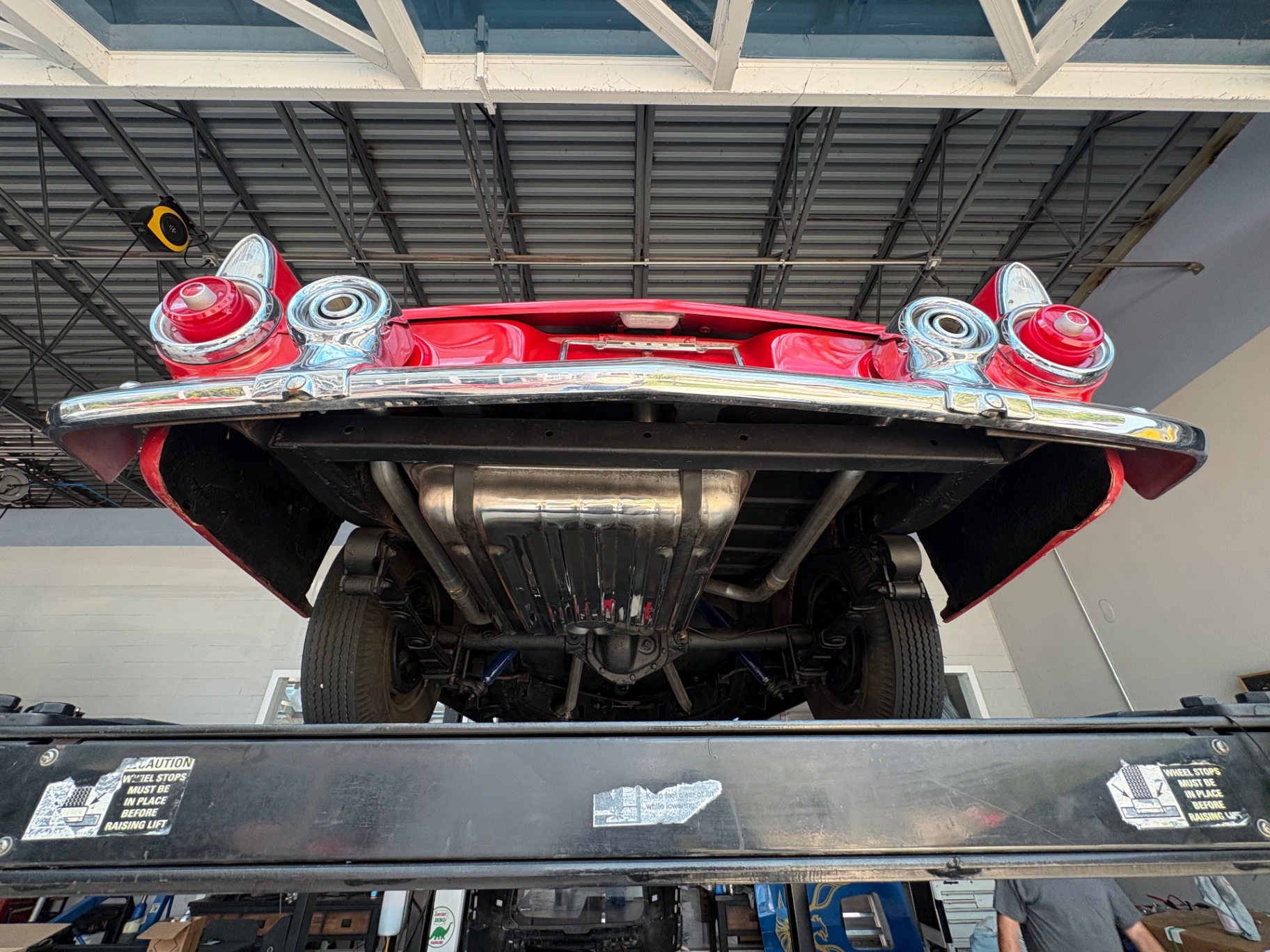
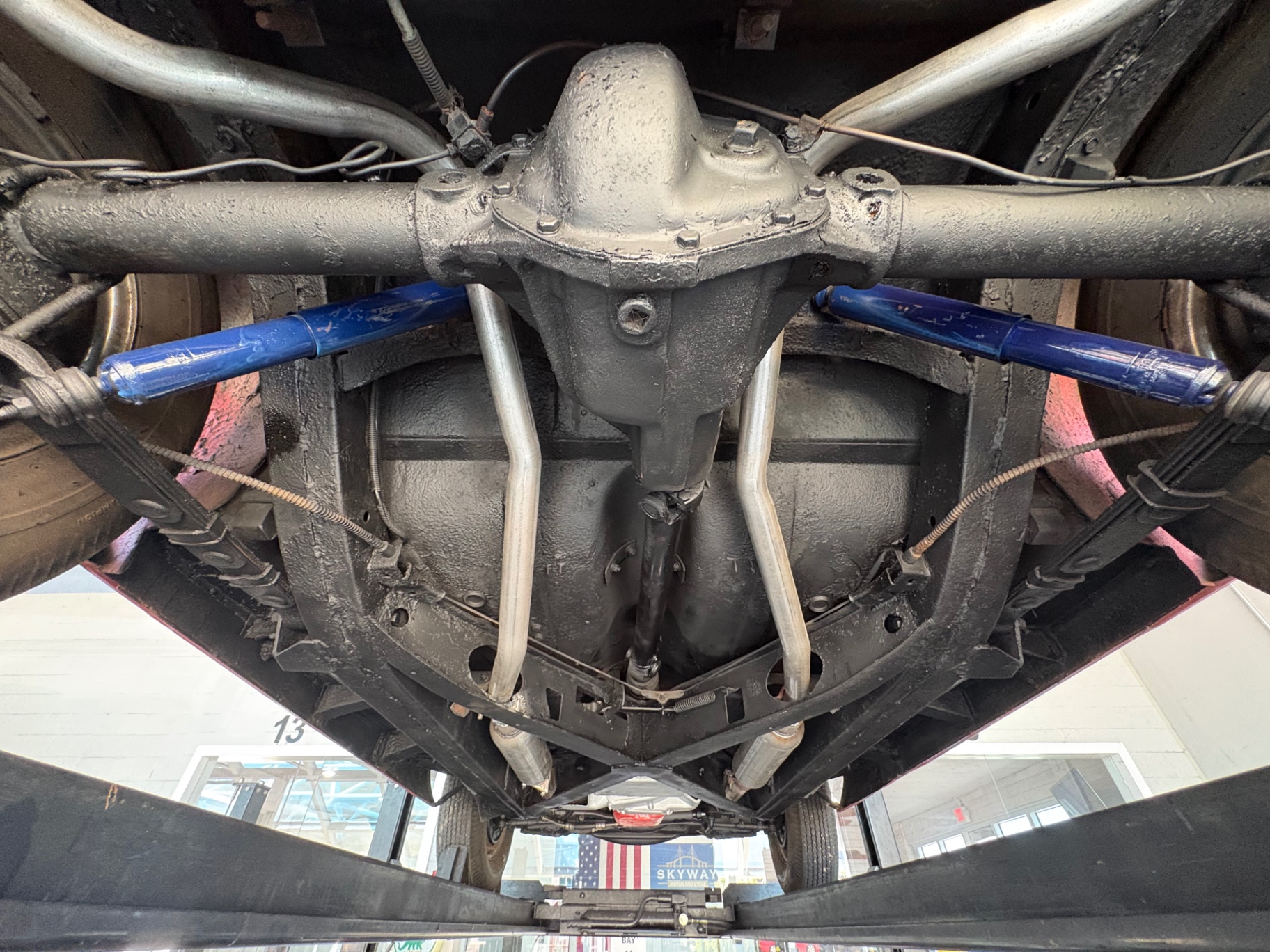
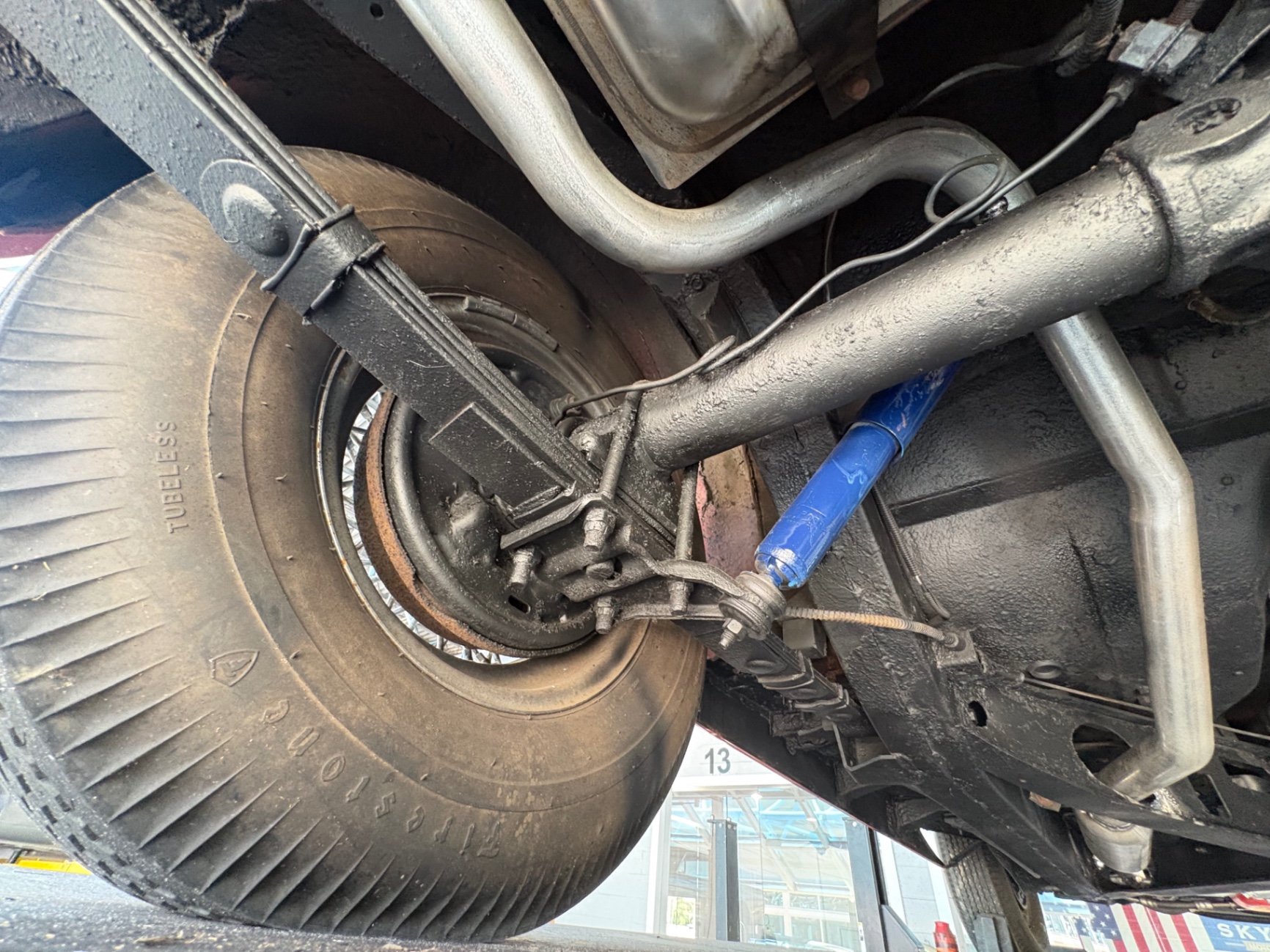
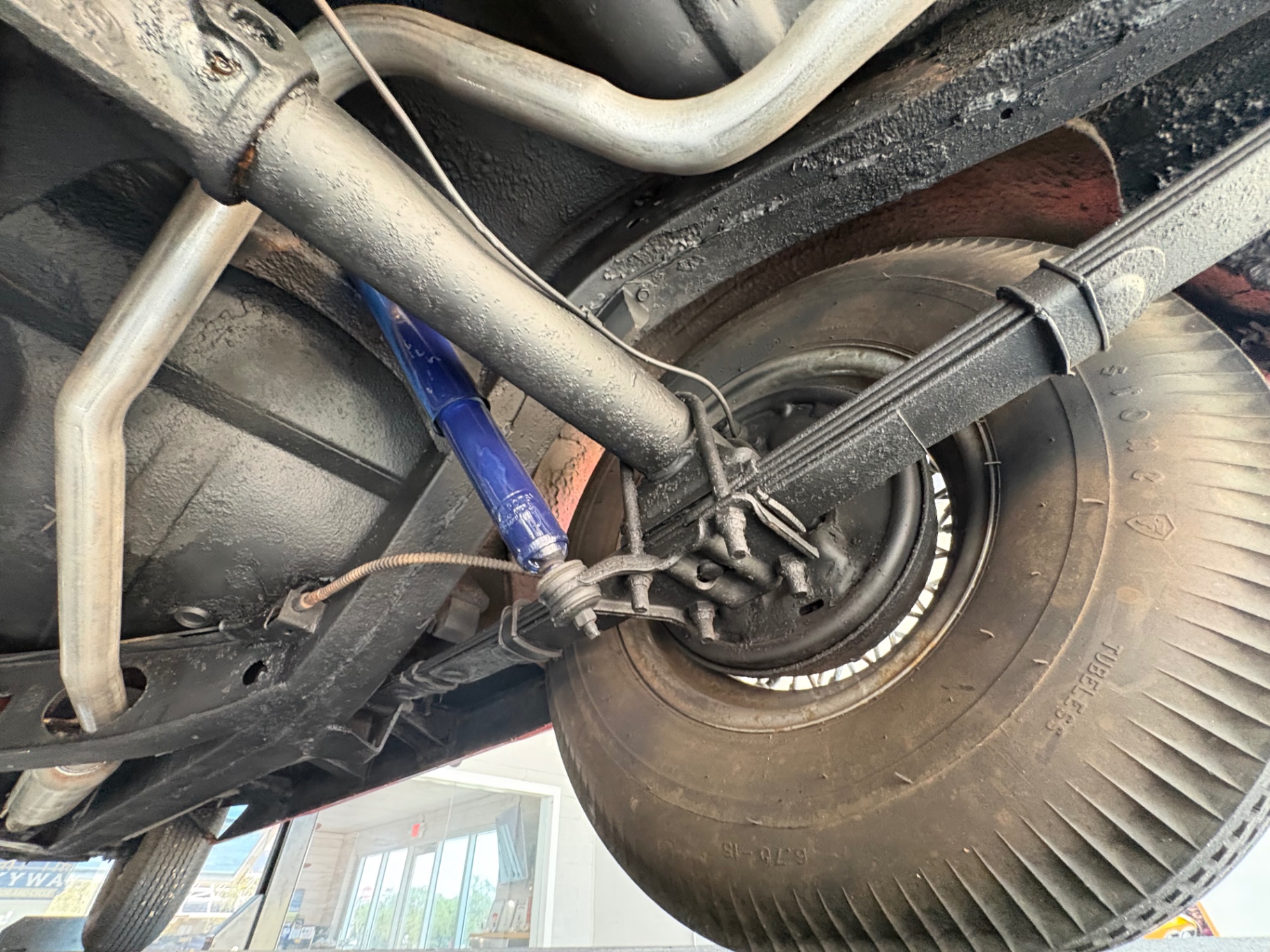
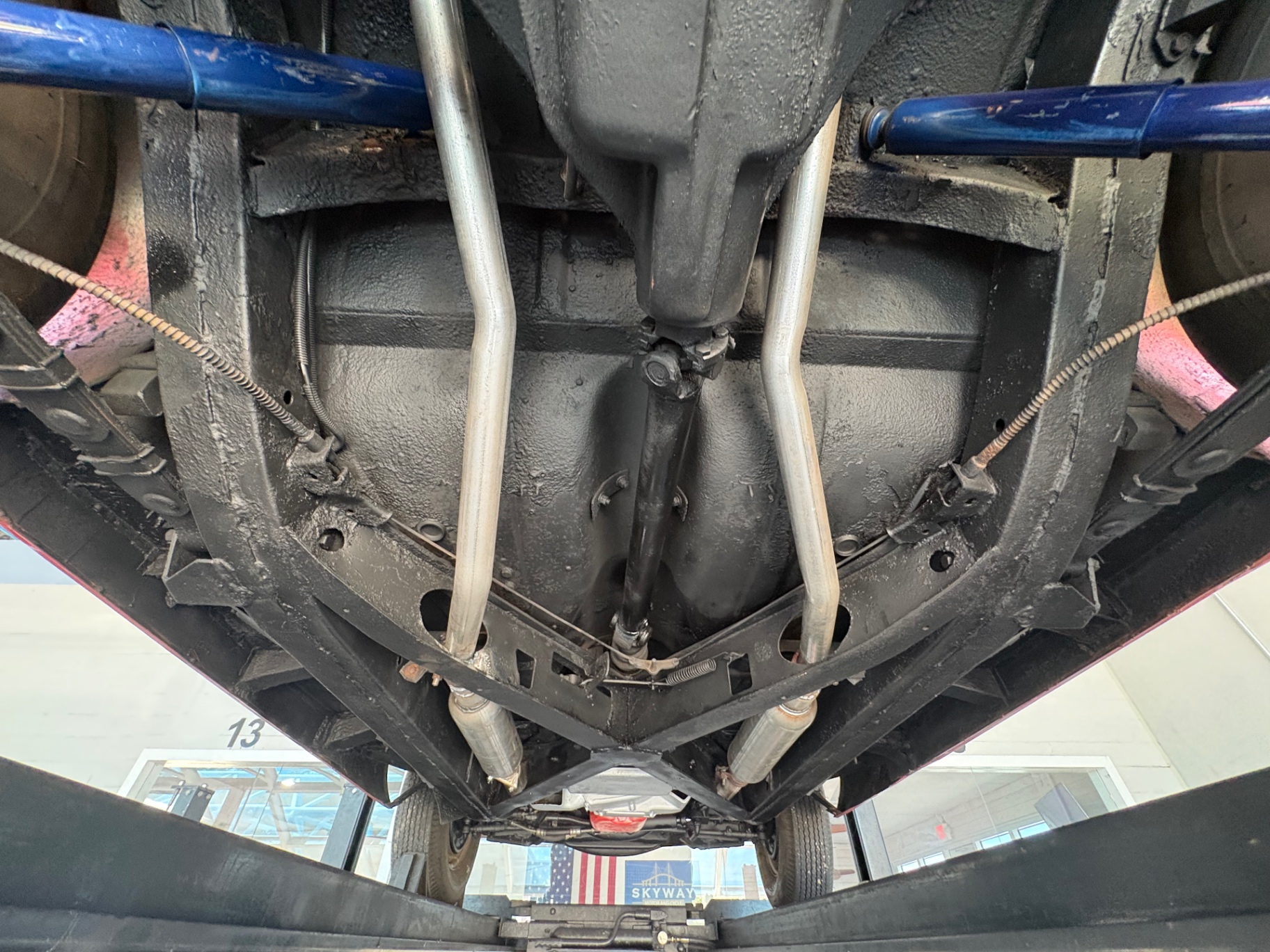
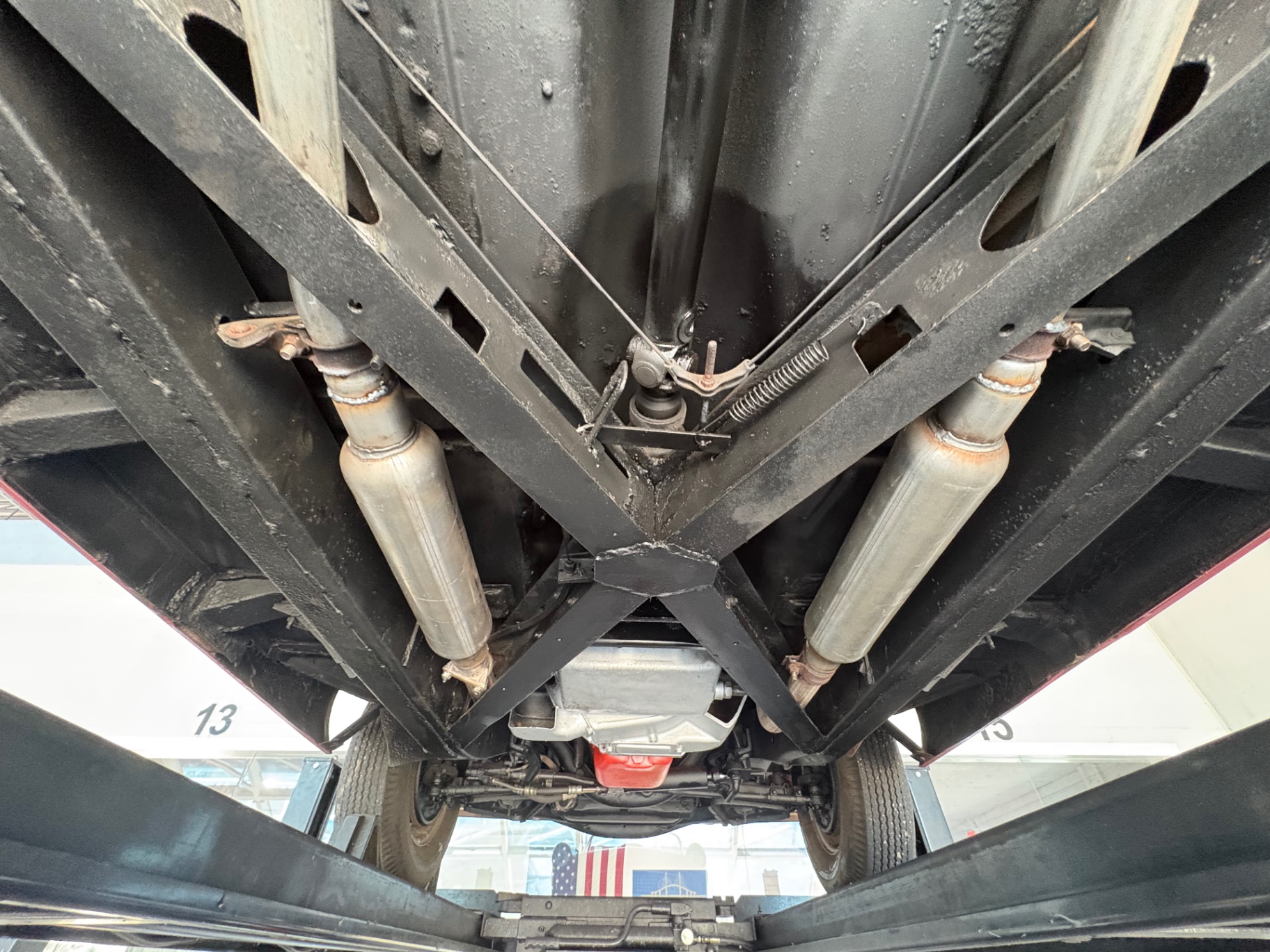
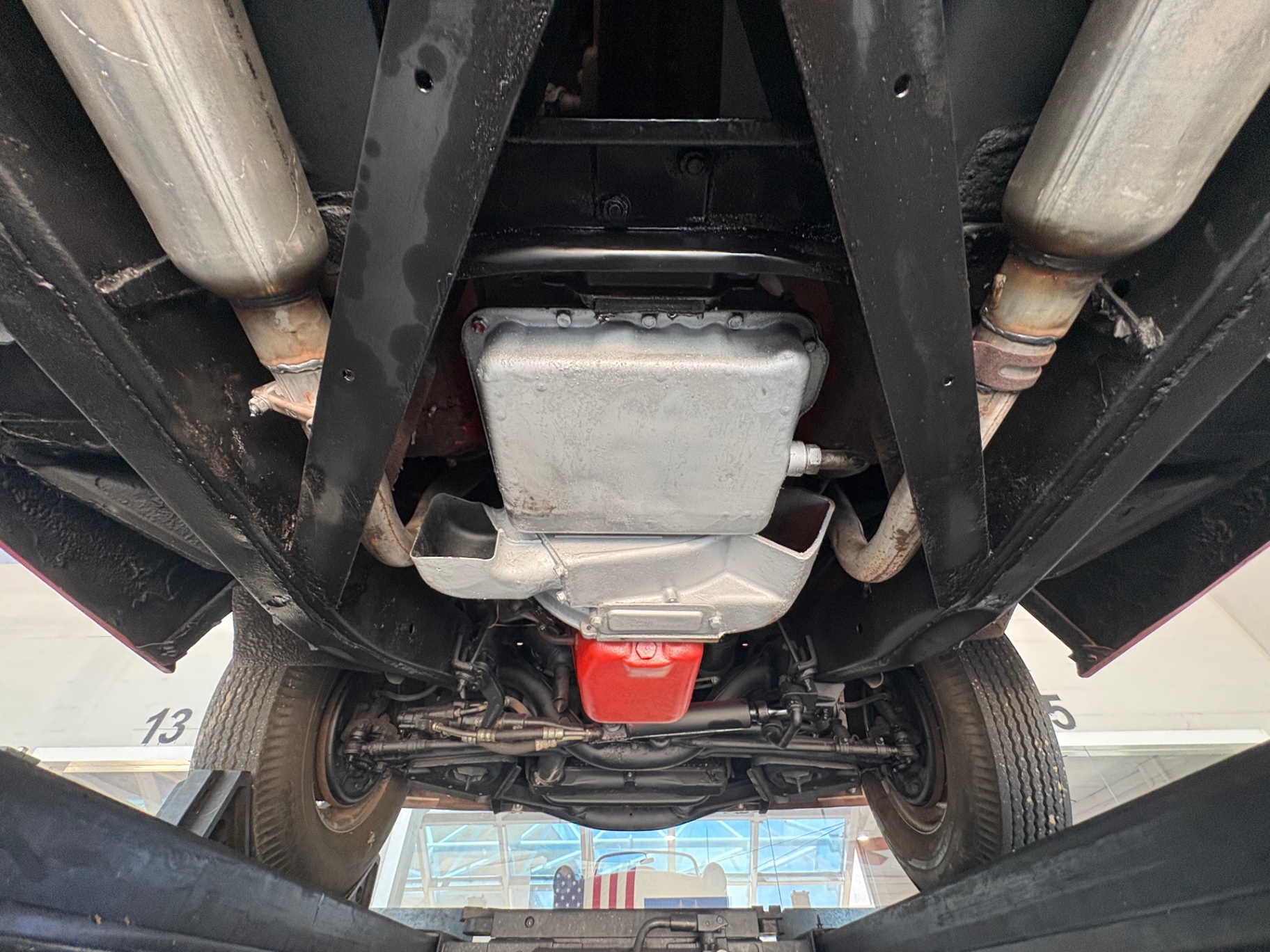
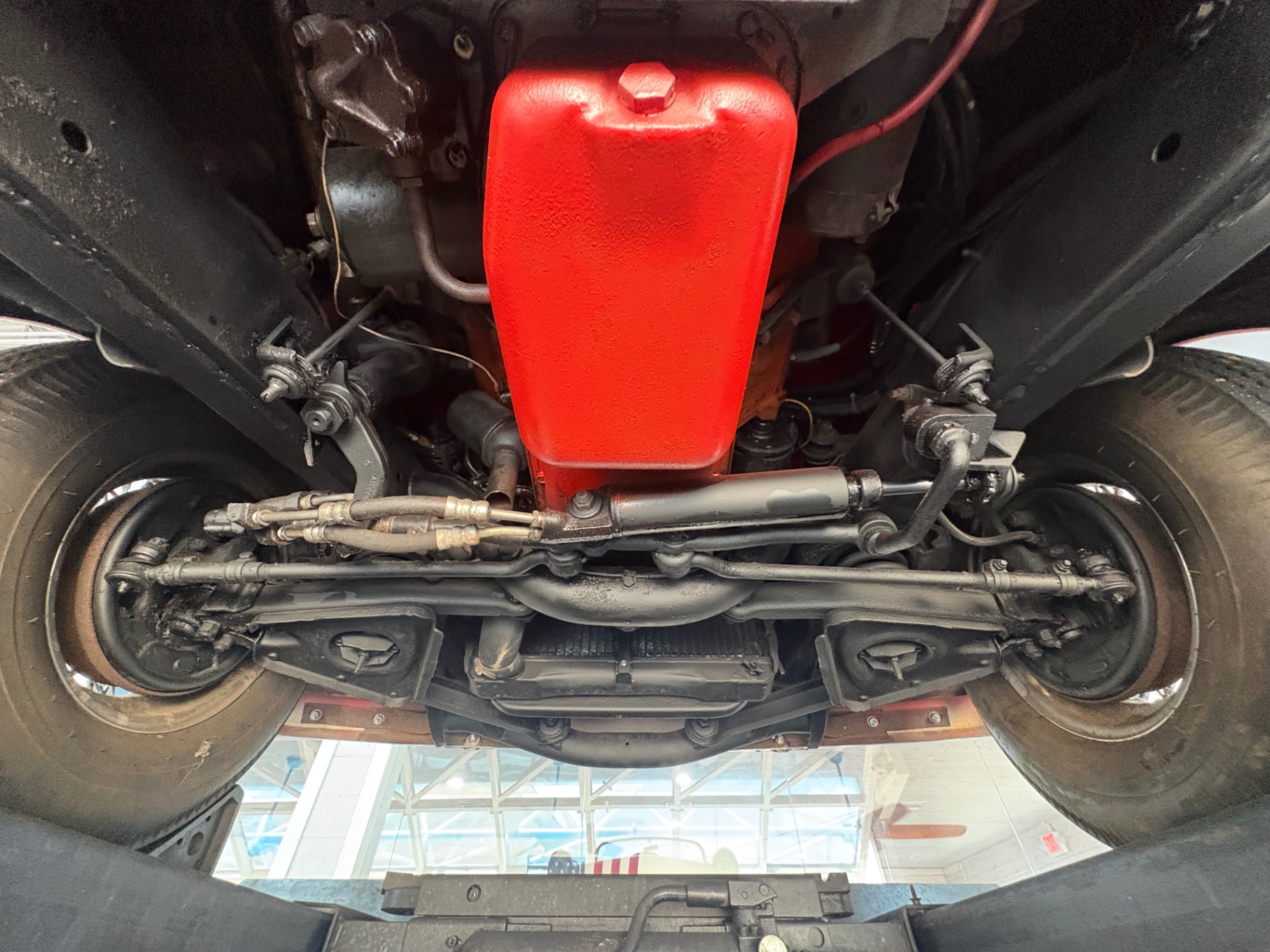
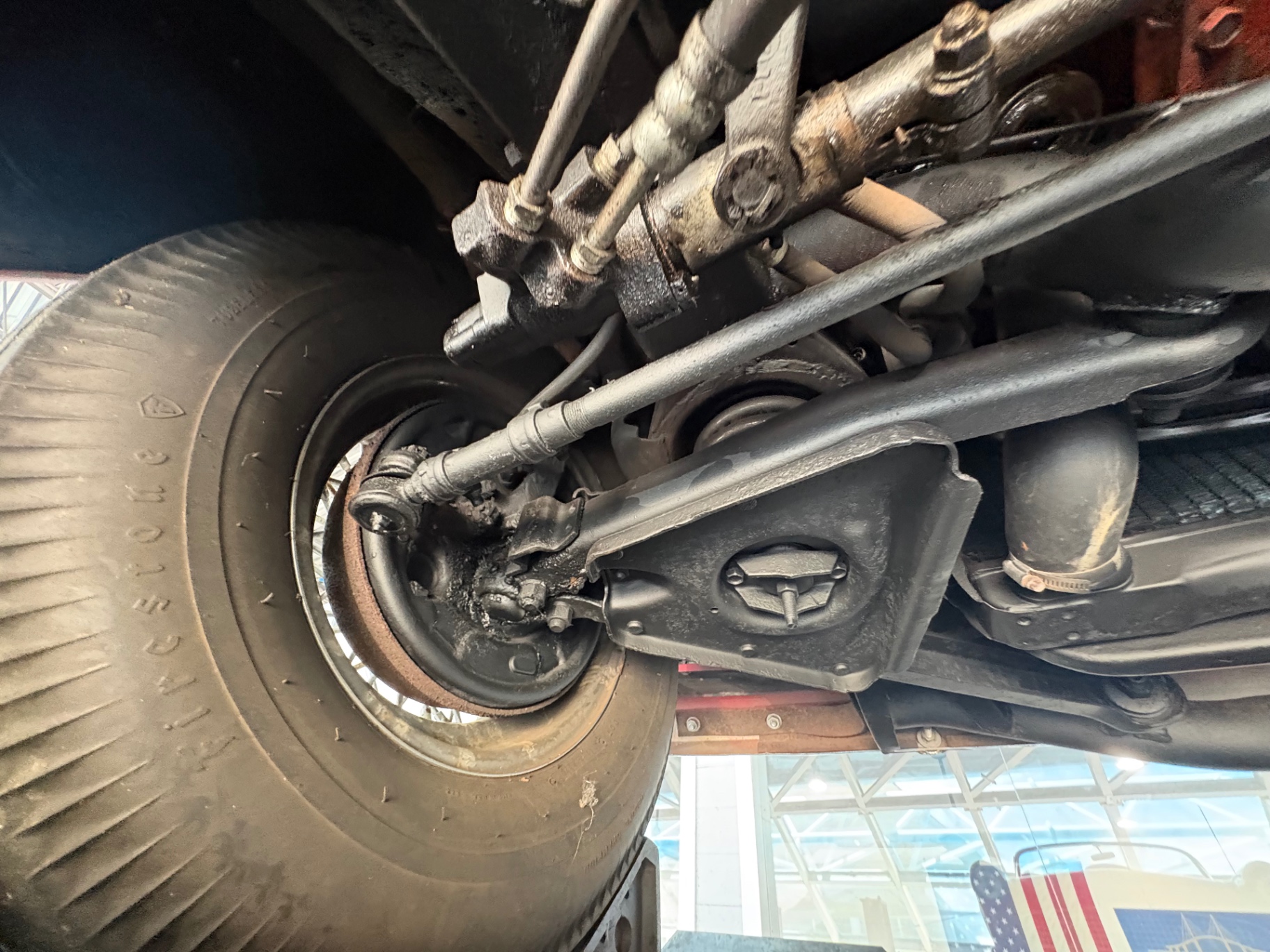
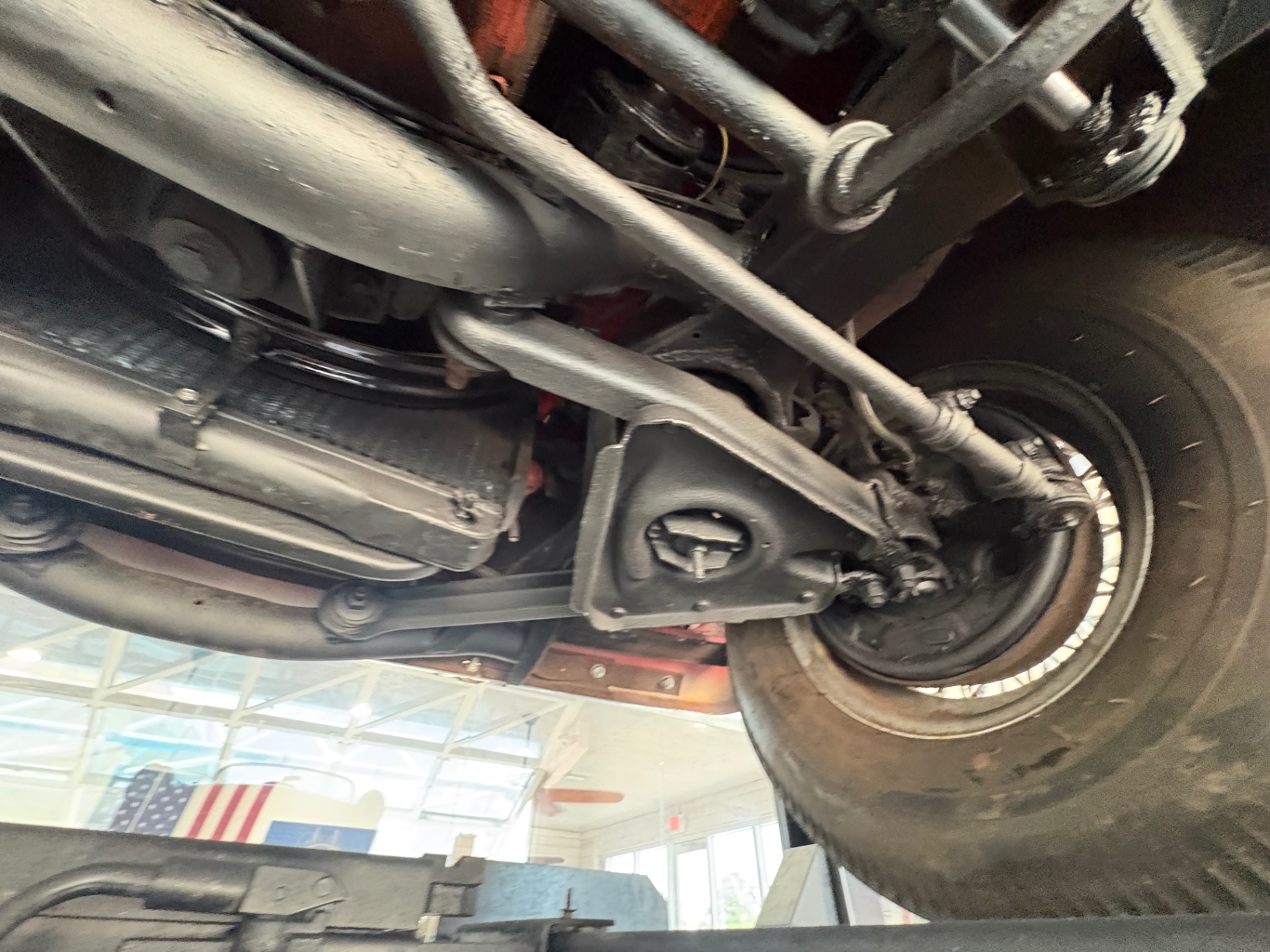
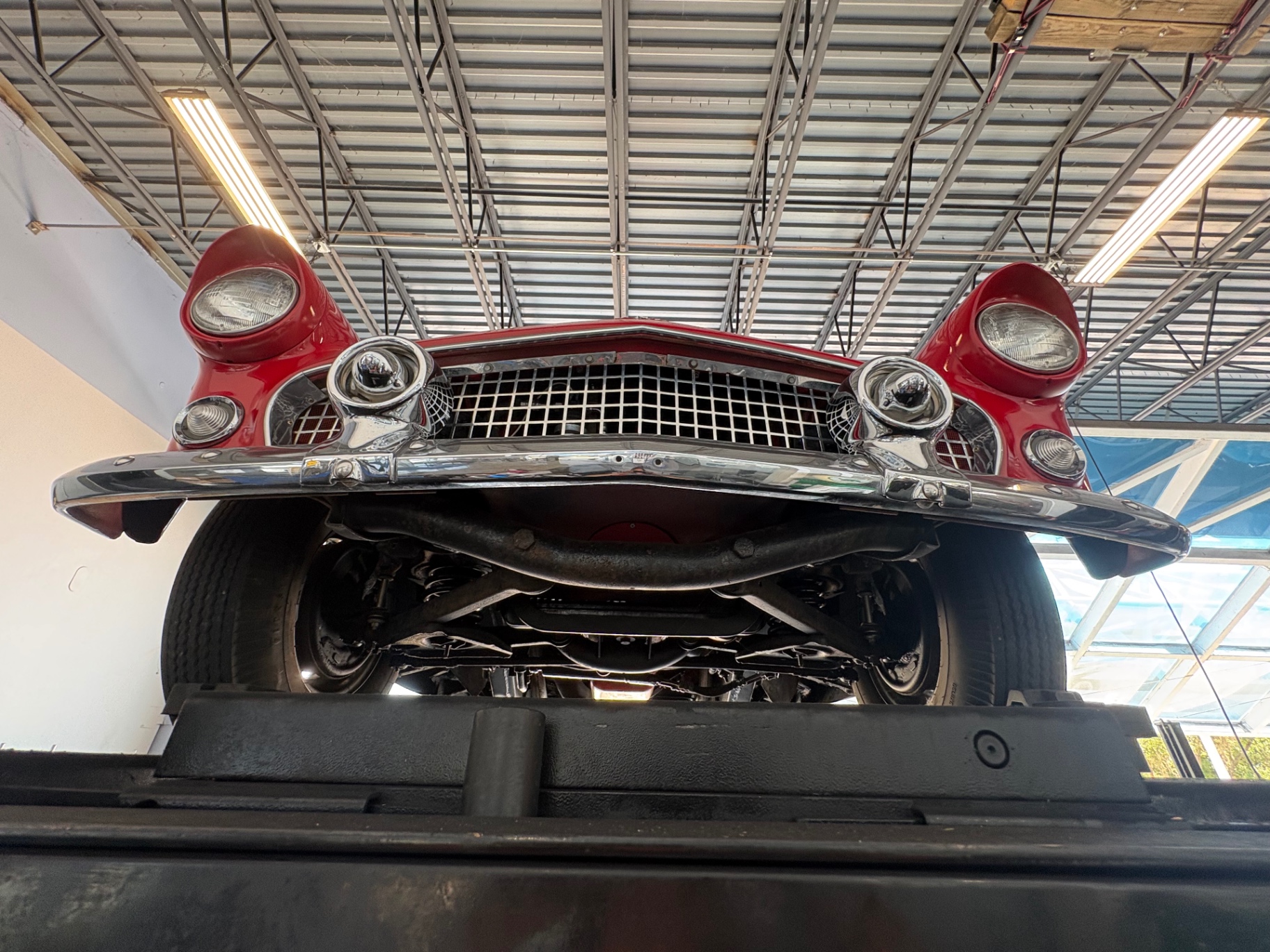
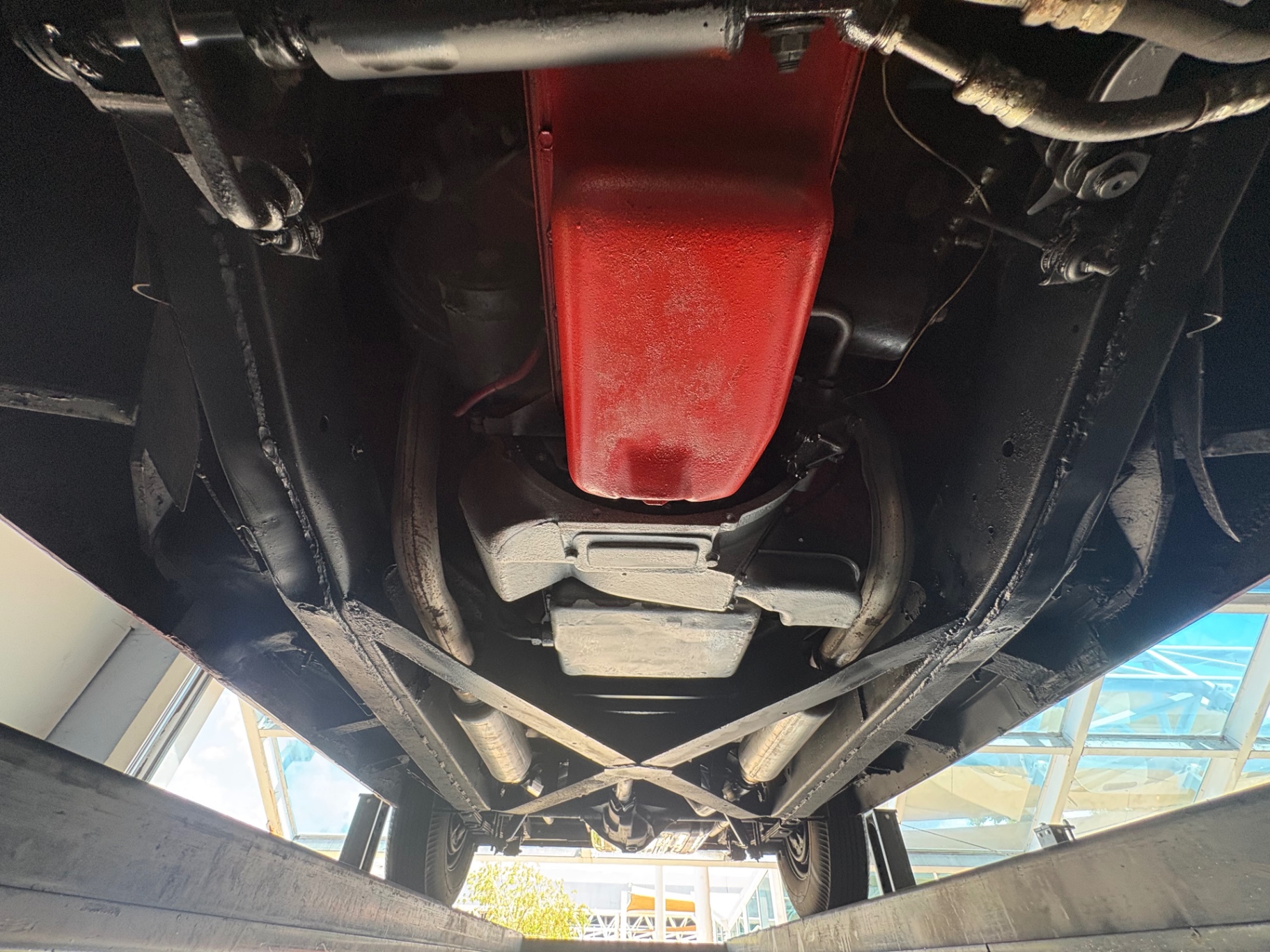
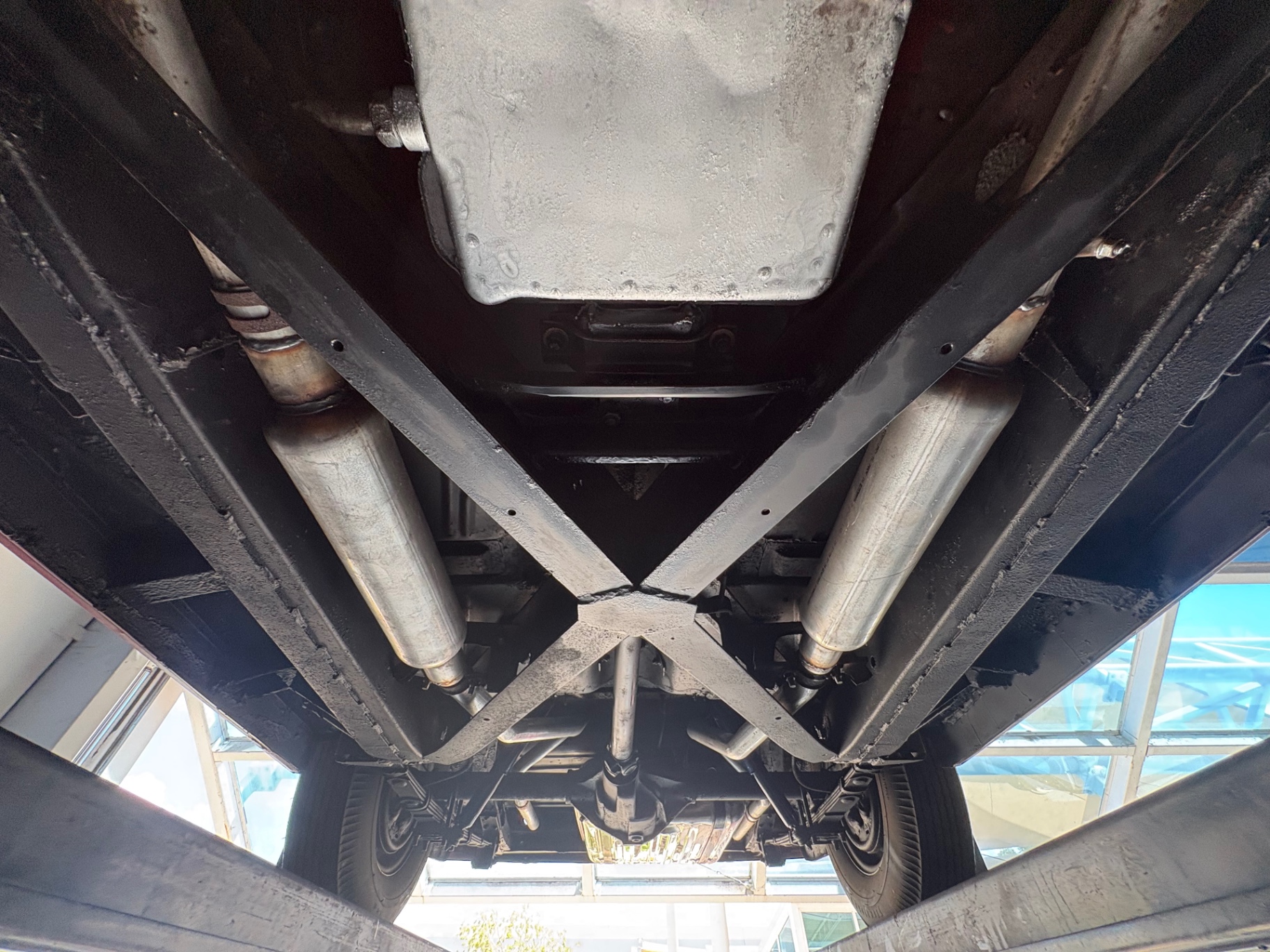
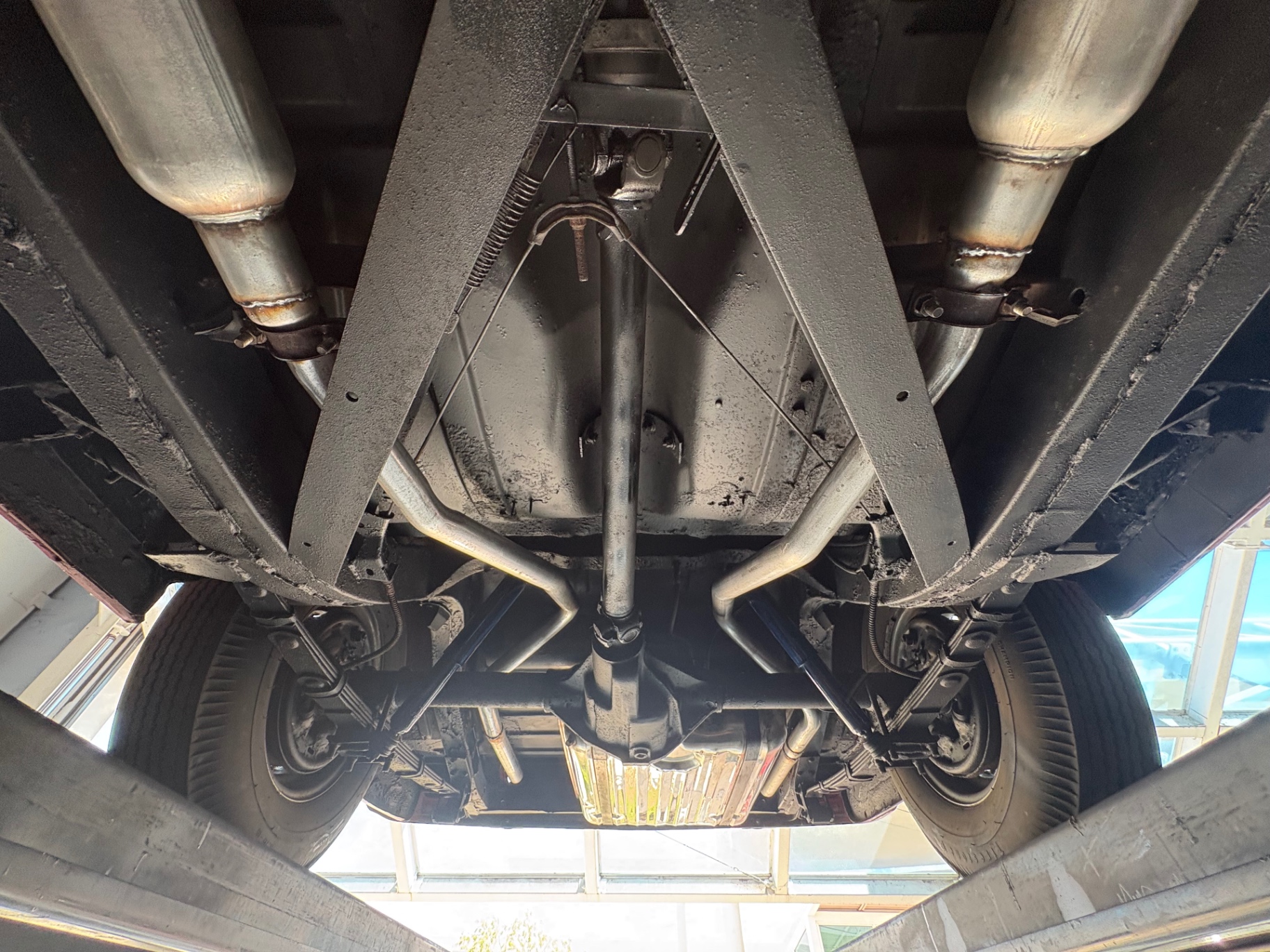
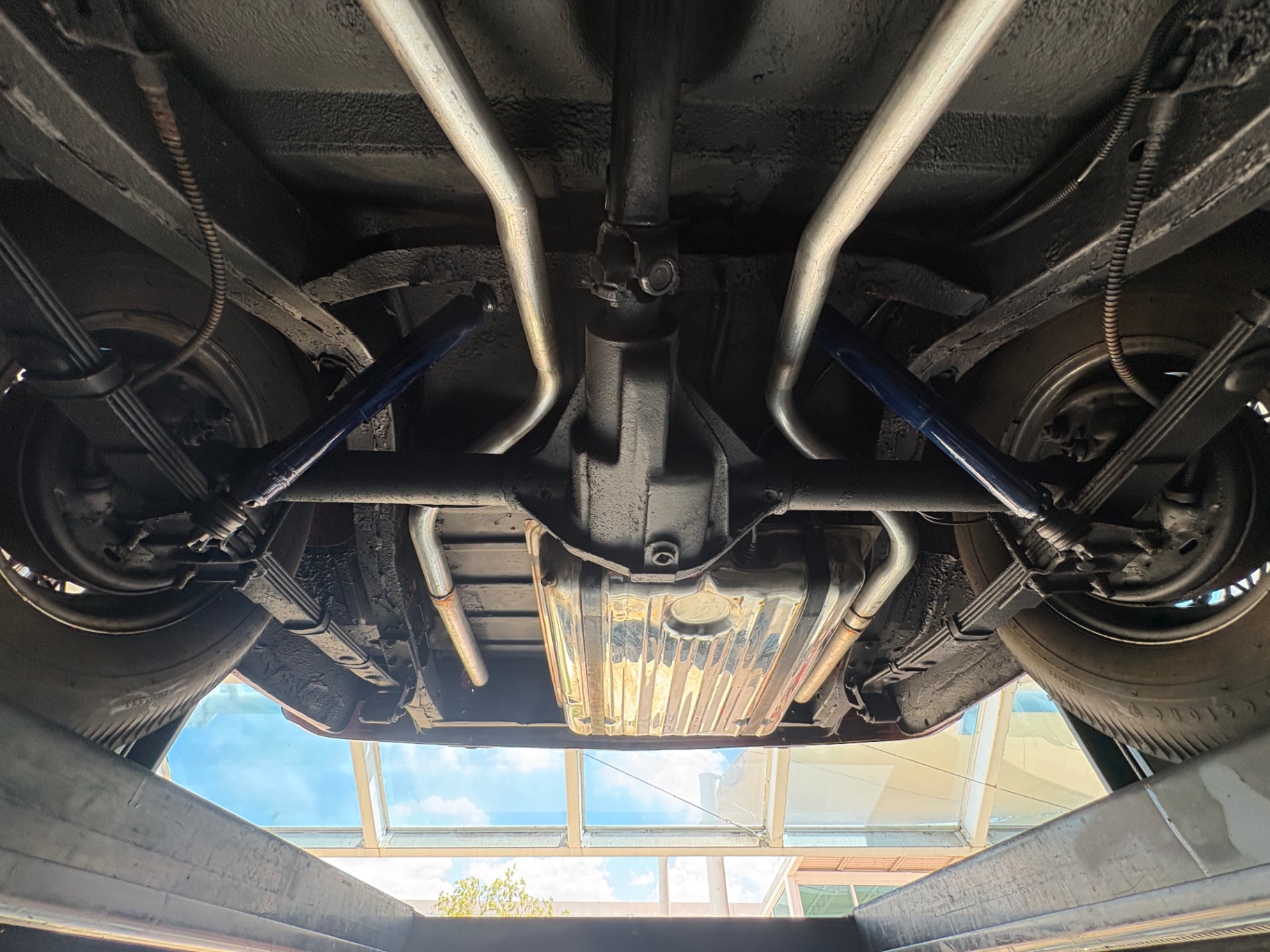
The dual exhaust setup is present and visible in the undercarriage photos, running cleanly beneath the car. The undercarriage itself shows solid, coated structure with no significant rot or damage visible — an important data point on a 70-year-old car. Drum brakes are correct and original to the specification for this year and model. The front suspension uses a conventional double-wishbone setup, while the rear uses a live axle on leaf springs. Both ends of the car appear intact and unmodified in the undercarriage shots, which is what you want to see on a first-generation Thunderbird that hasn't been heavily modified over the decades.
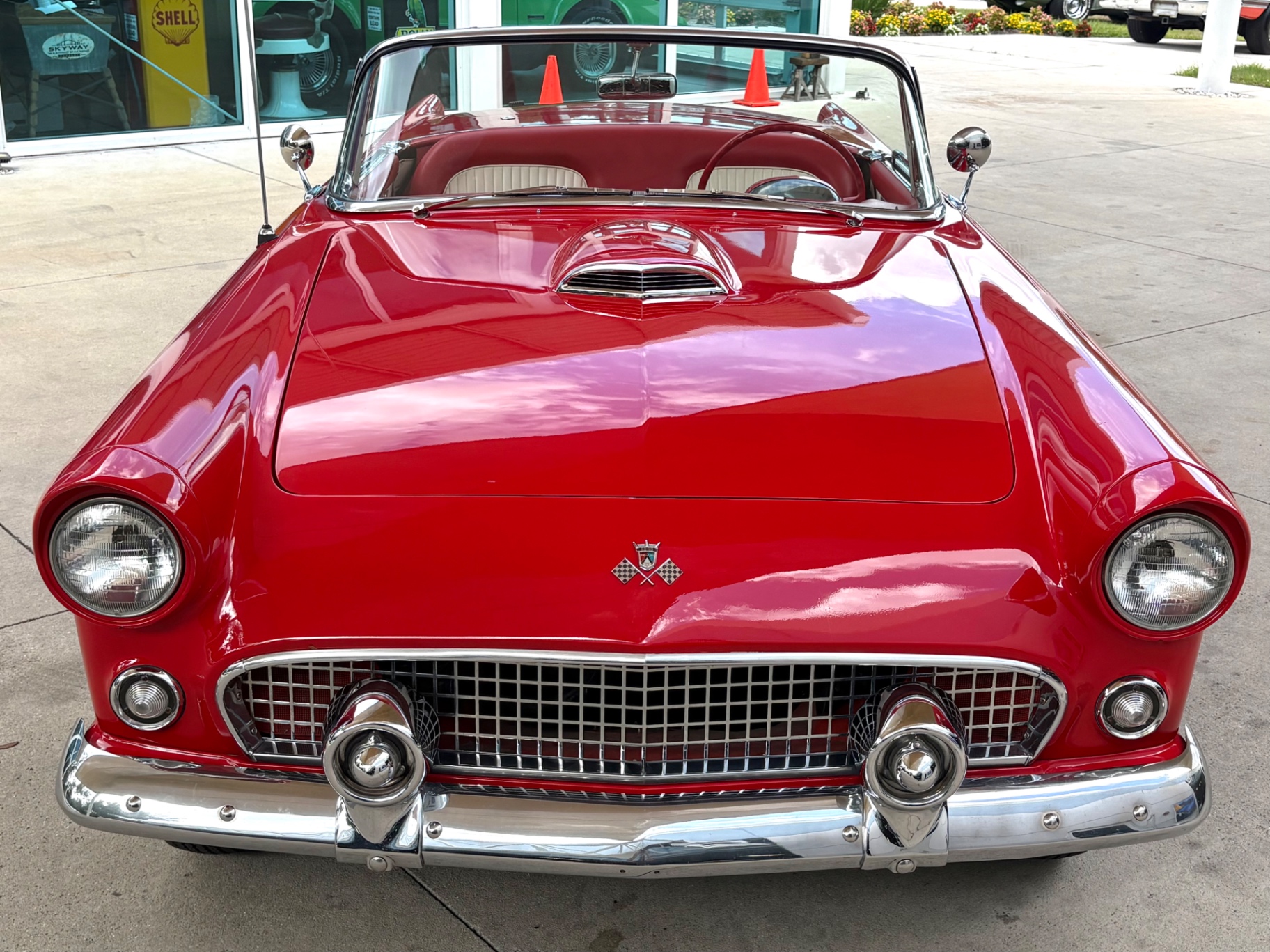
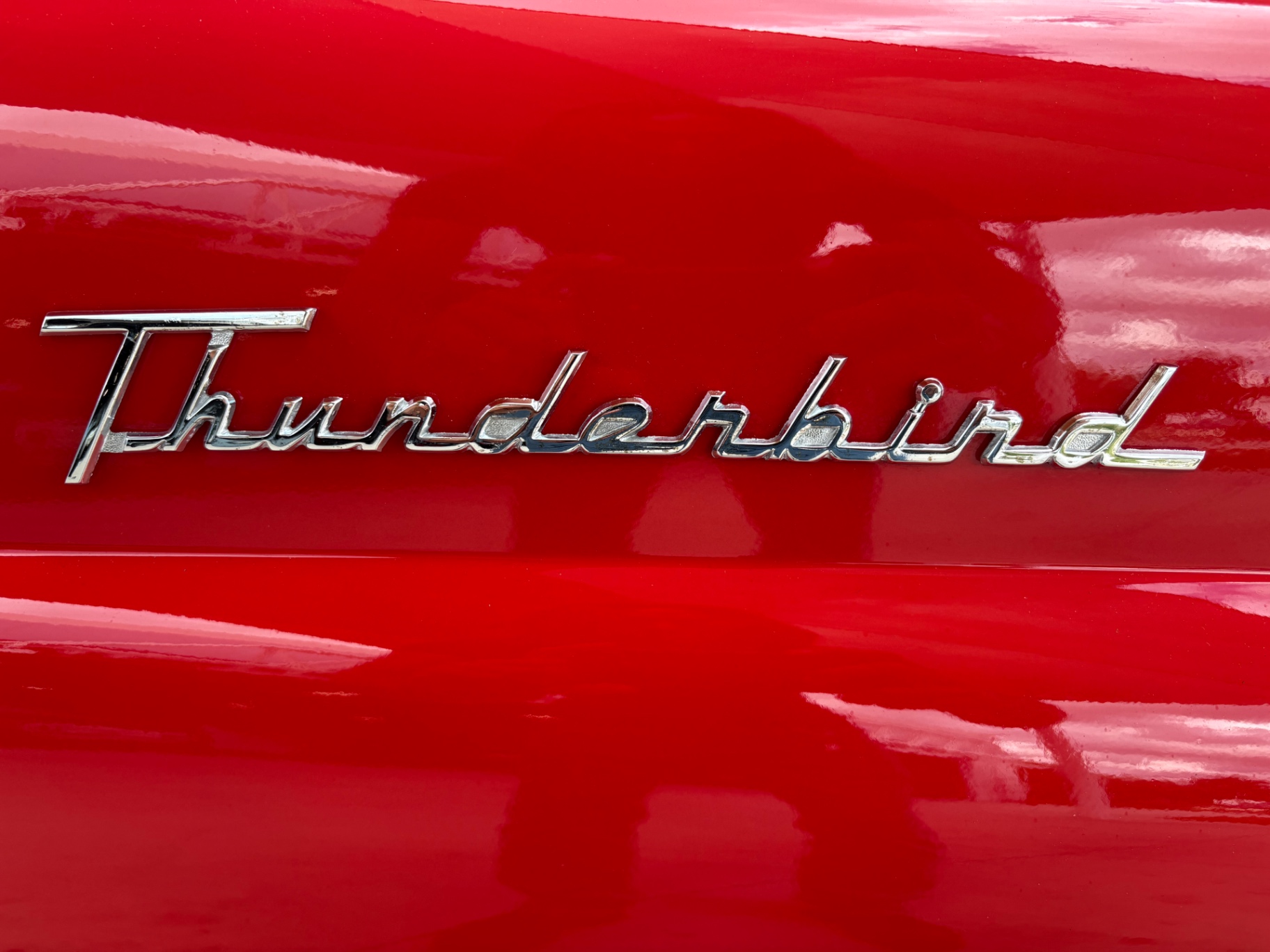
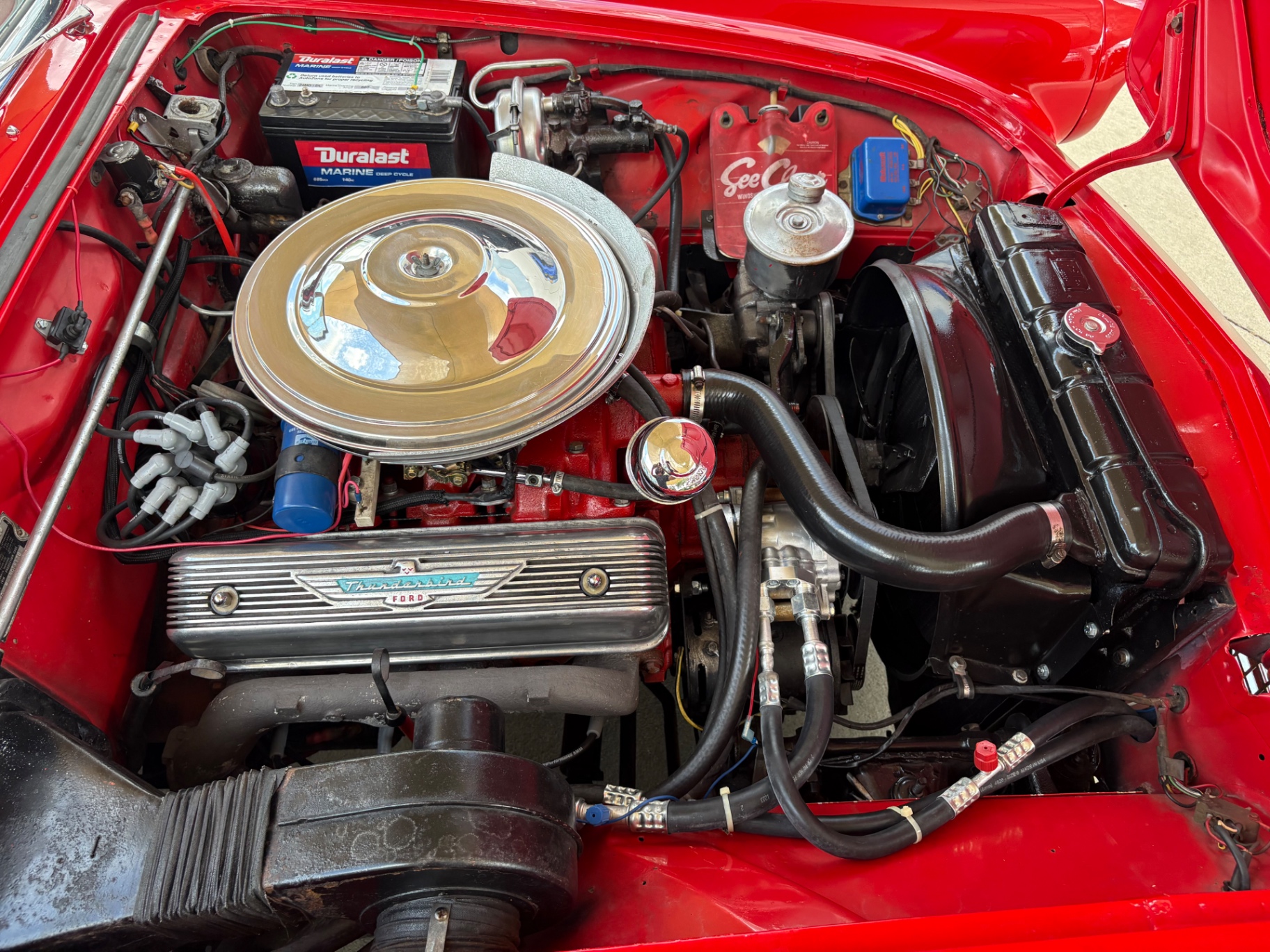
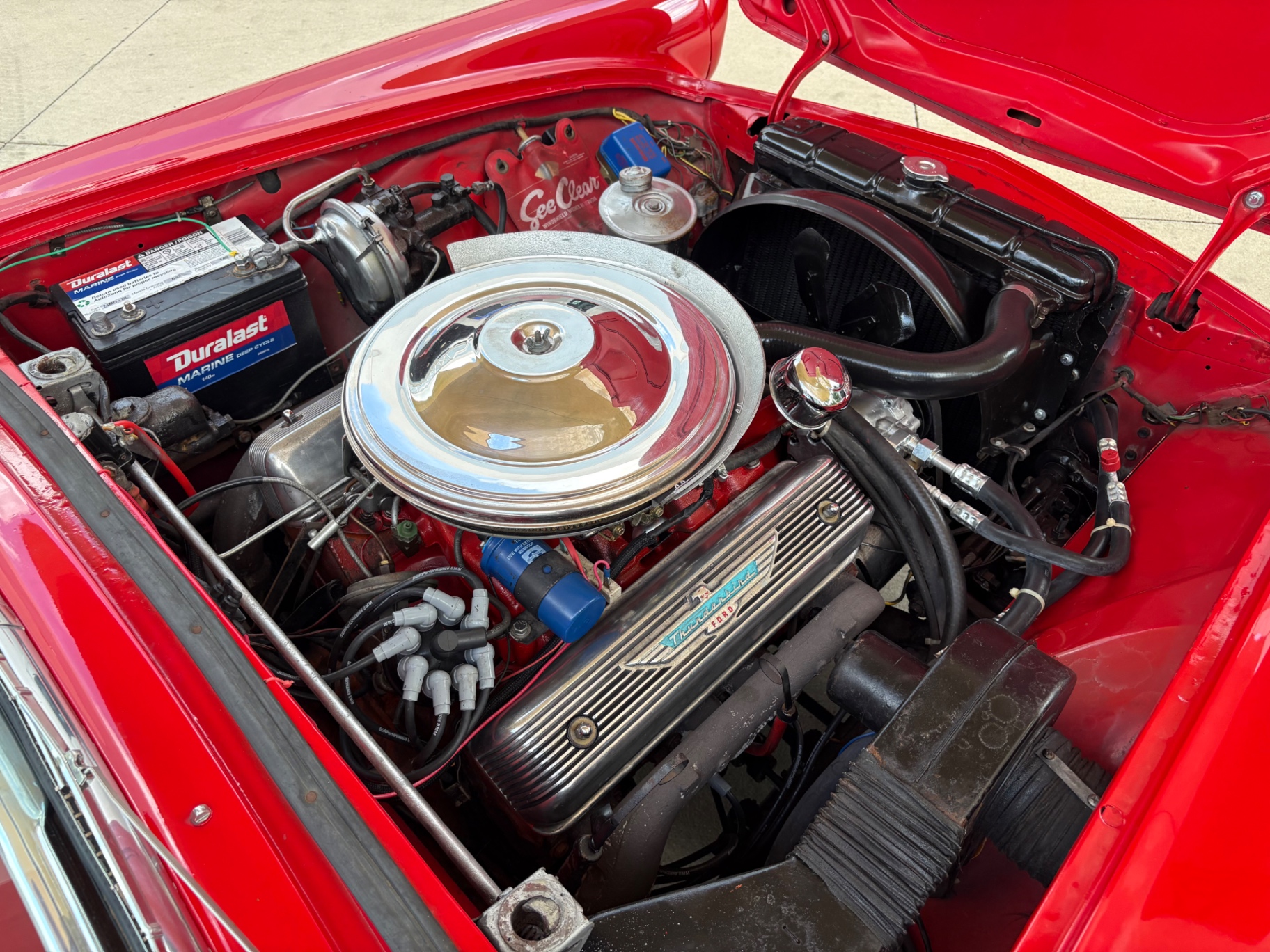
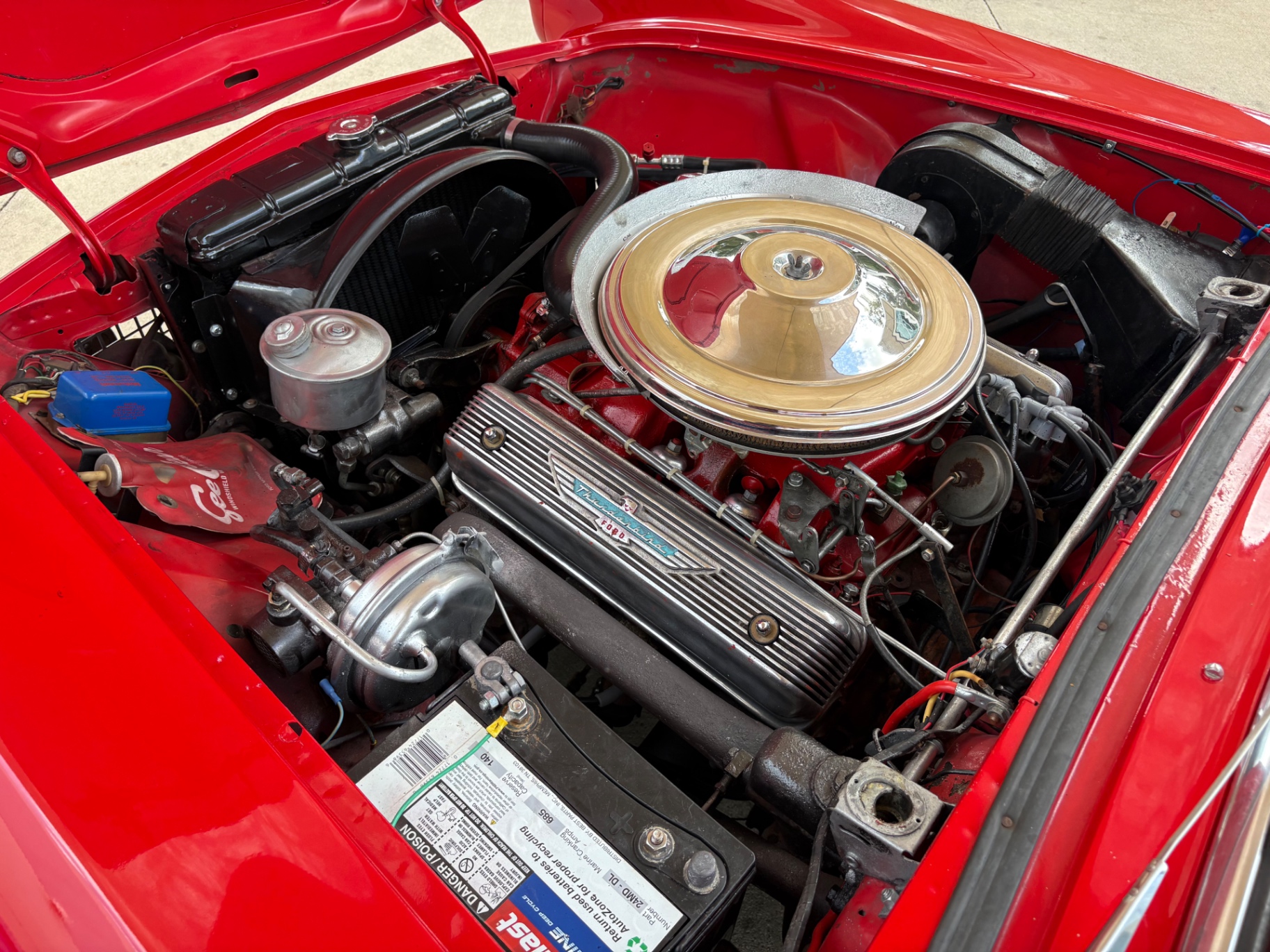
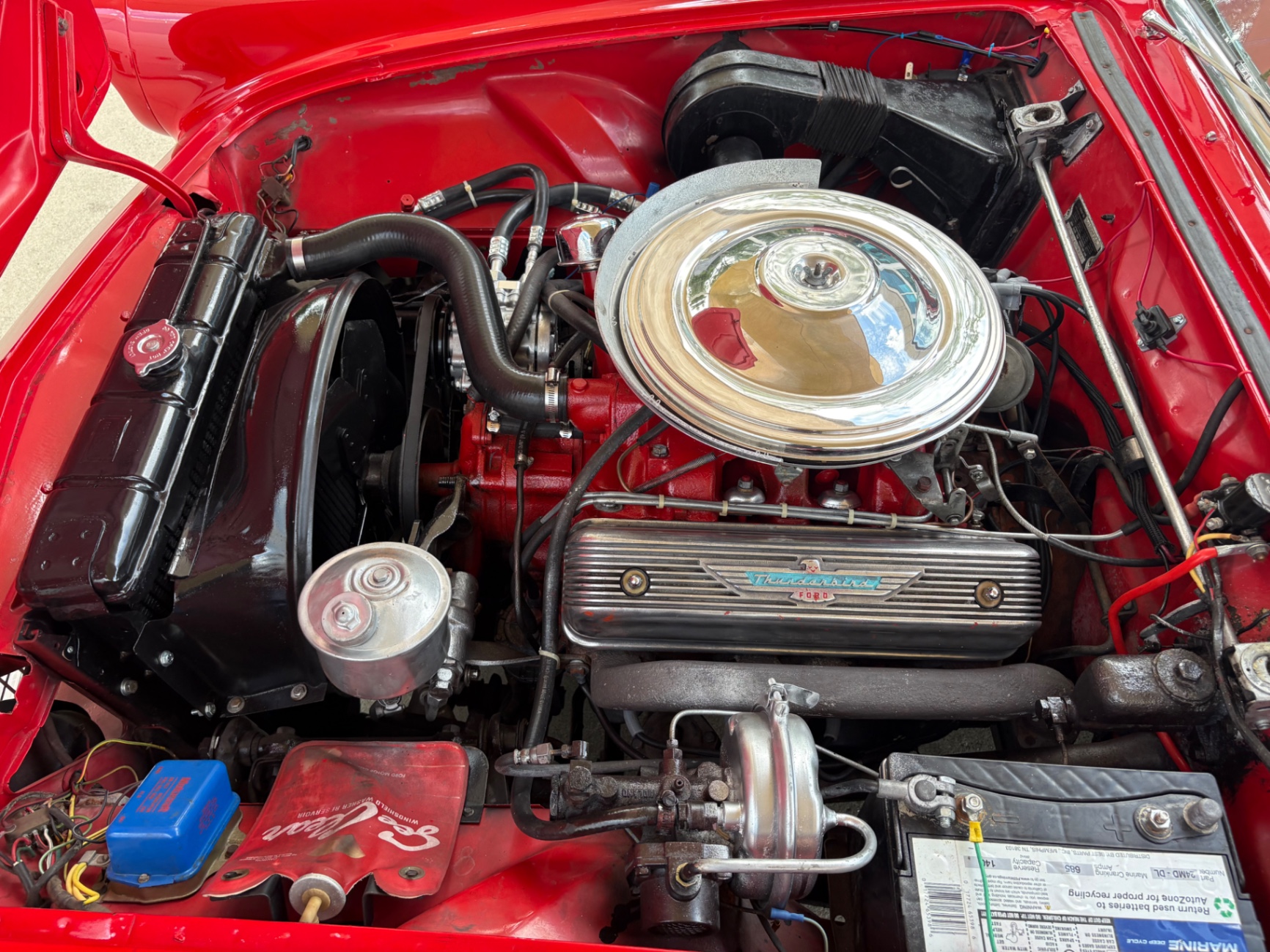
The Thunderbird-specific valve covers with their script badging are present and add a correct, period-correct look to the engine bay. The Y-Block's finned aluminum valve covers with the "Thunderbird Ford" script were a factory-fitted detail on these cars and are one of the recognizable engine bay features that Thunderbird collectors look for.
Interior
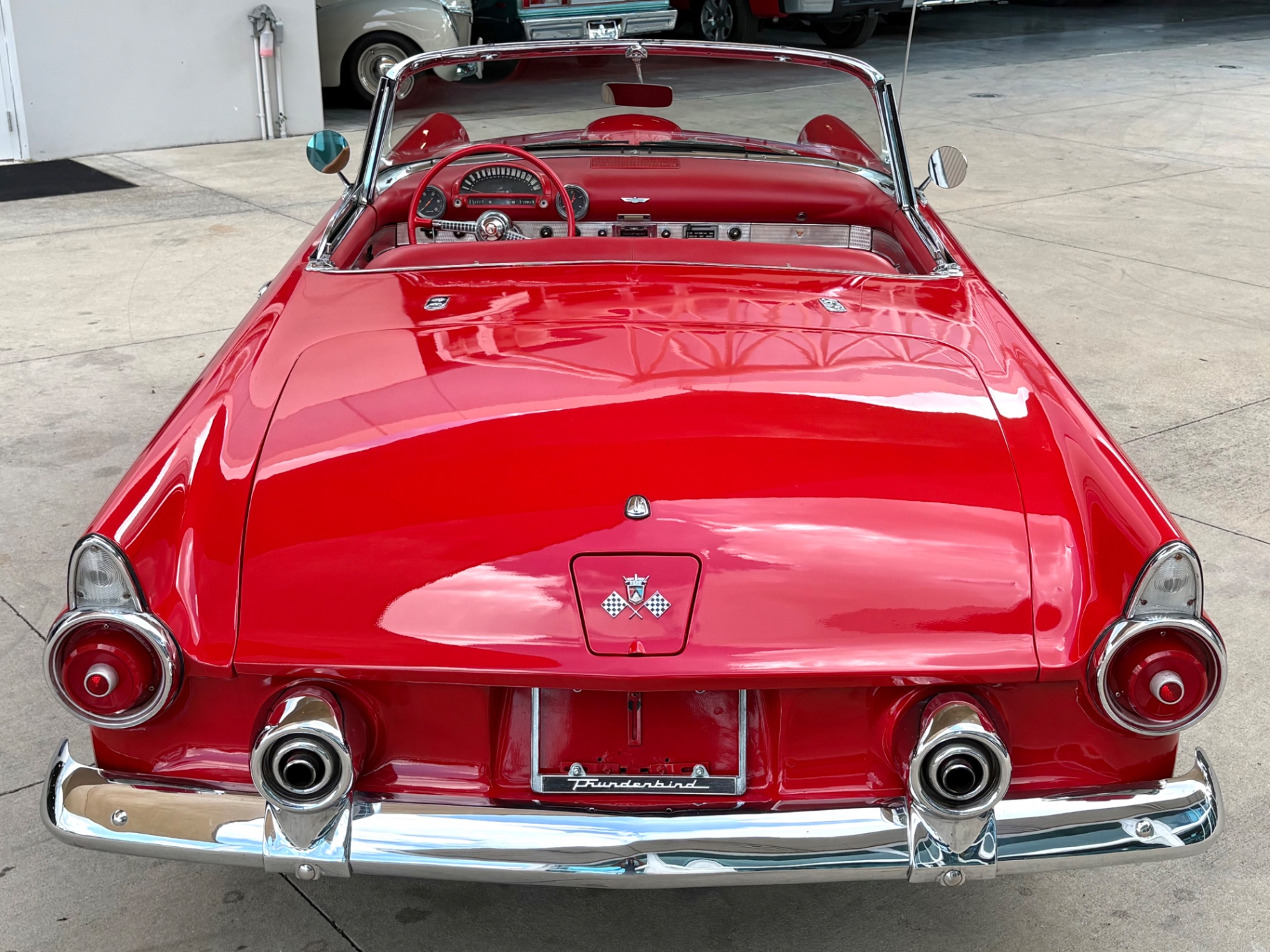
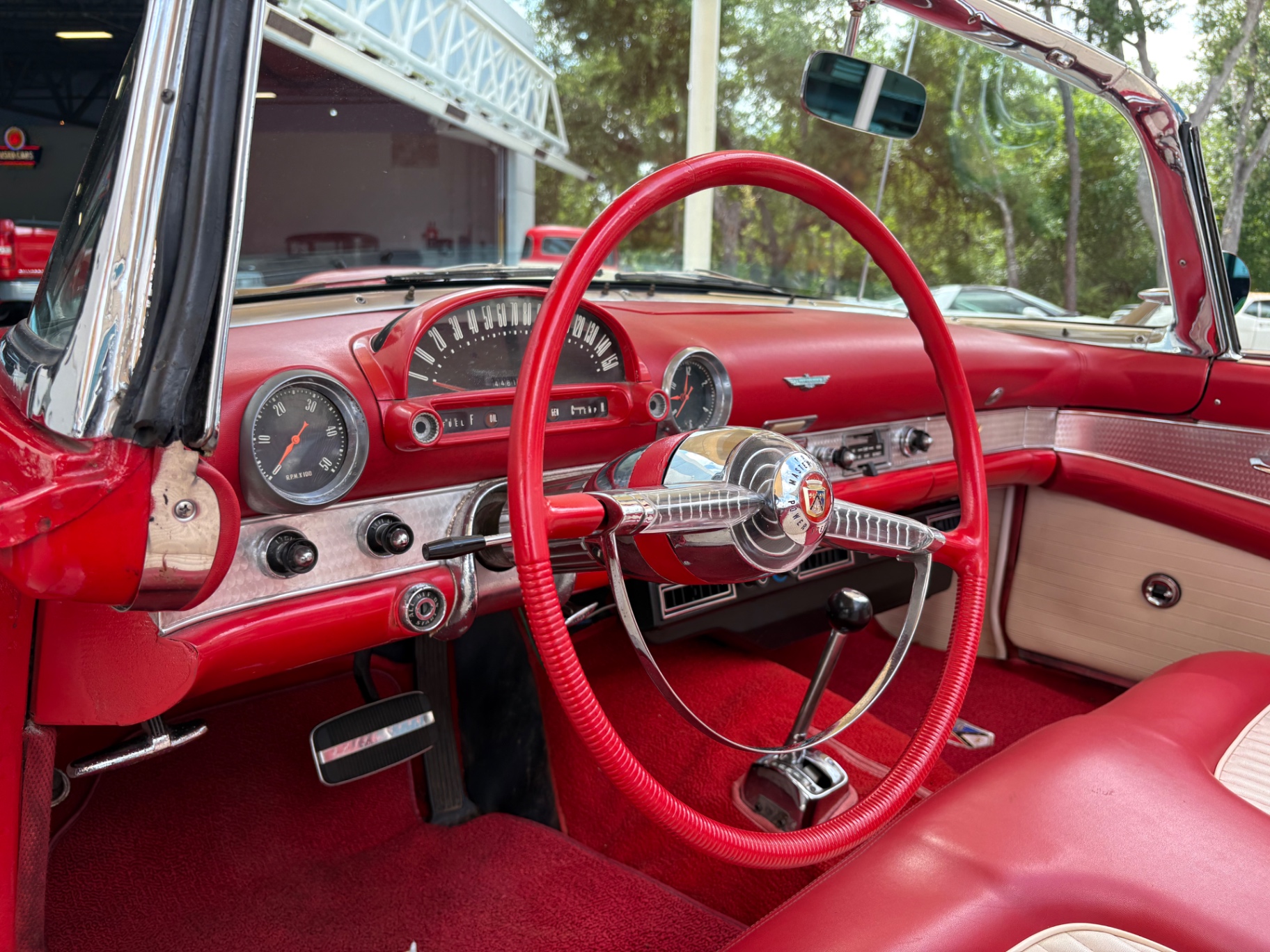
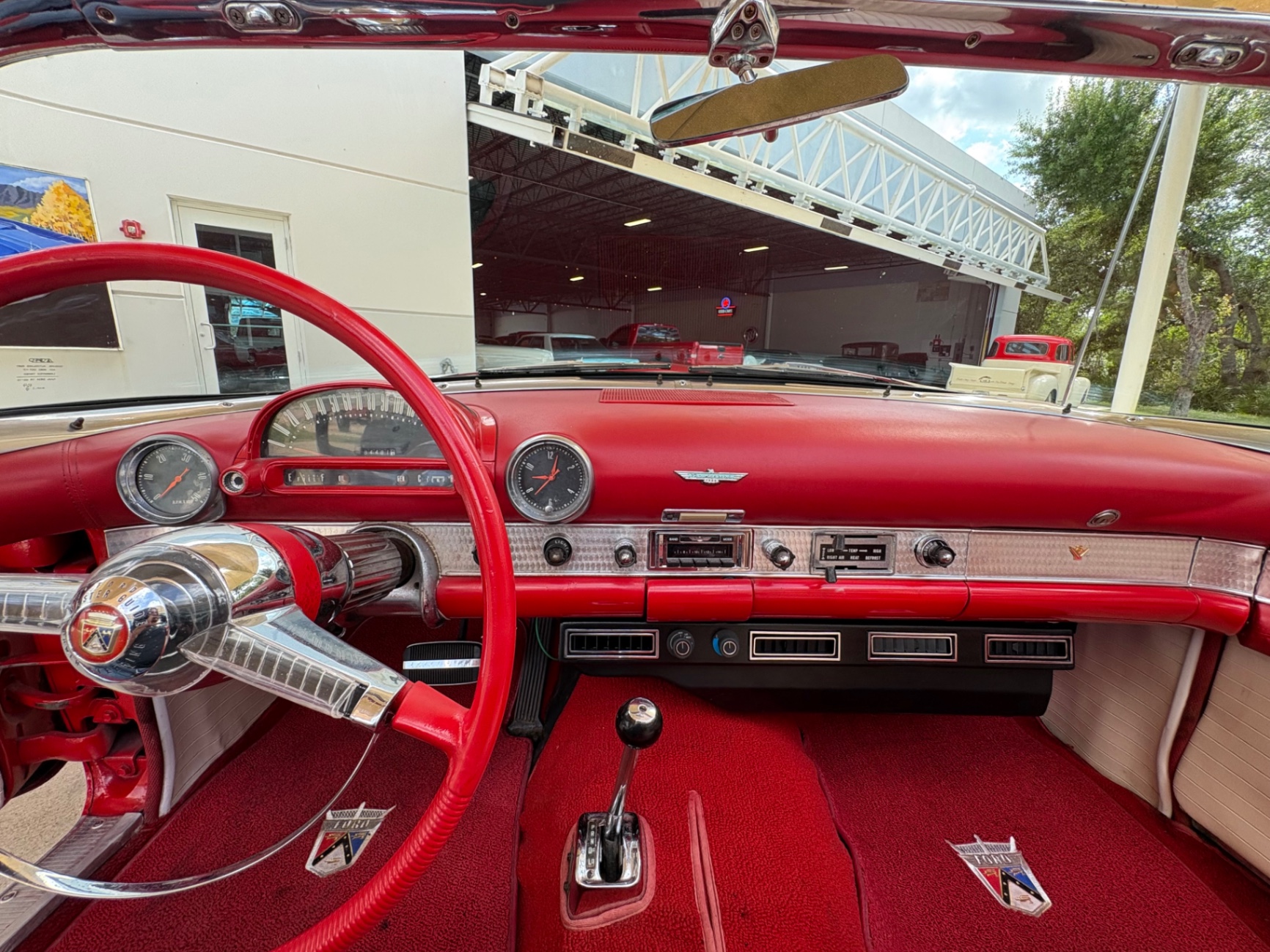
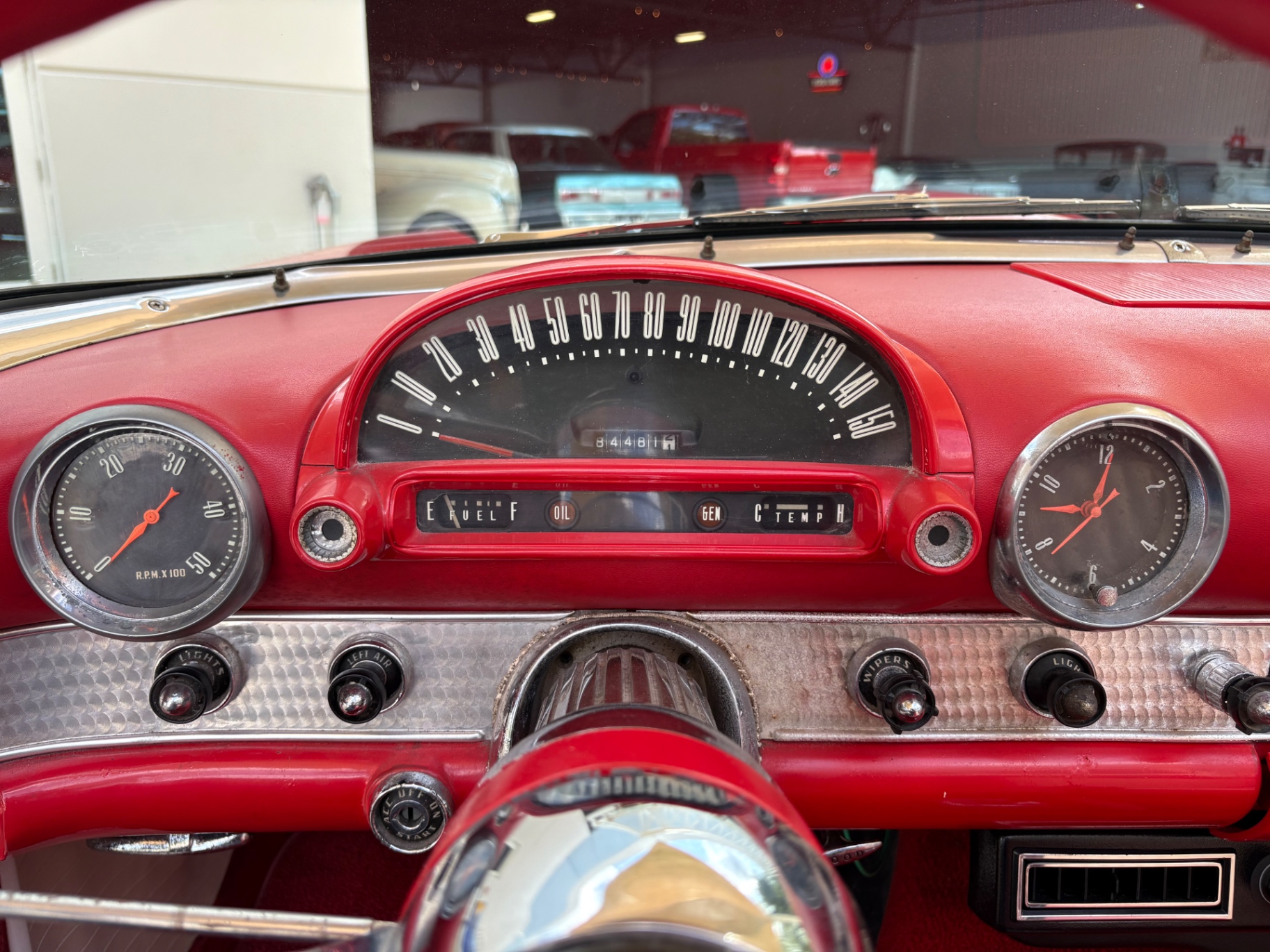
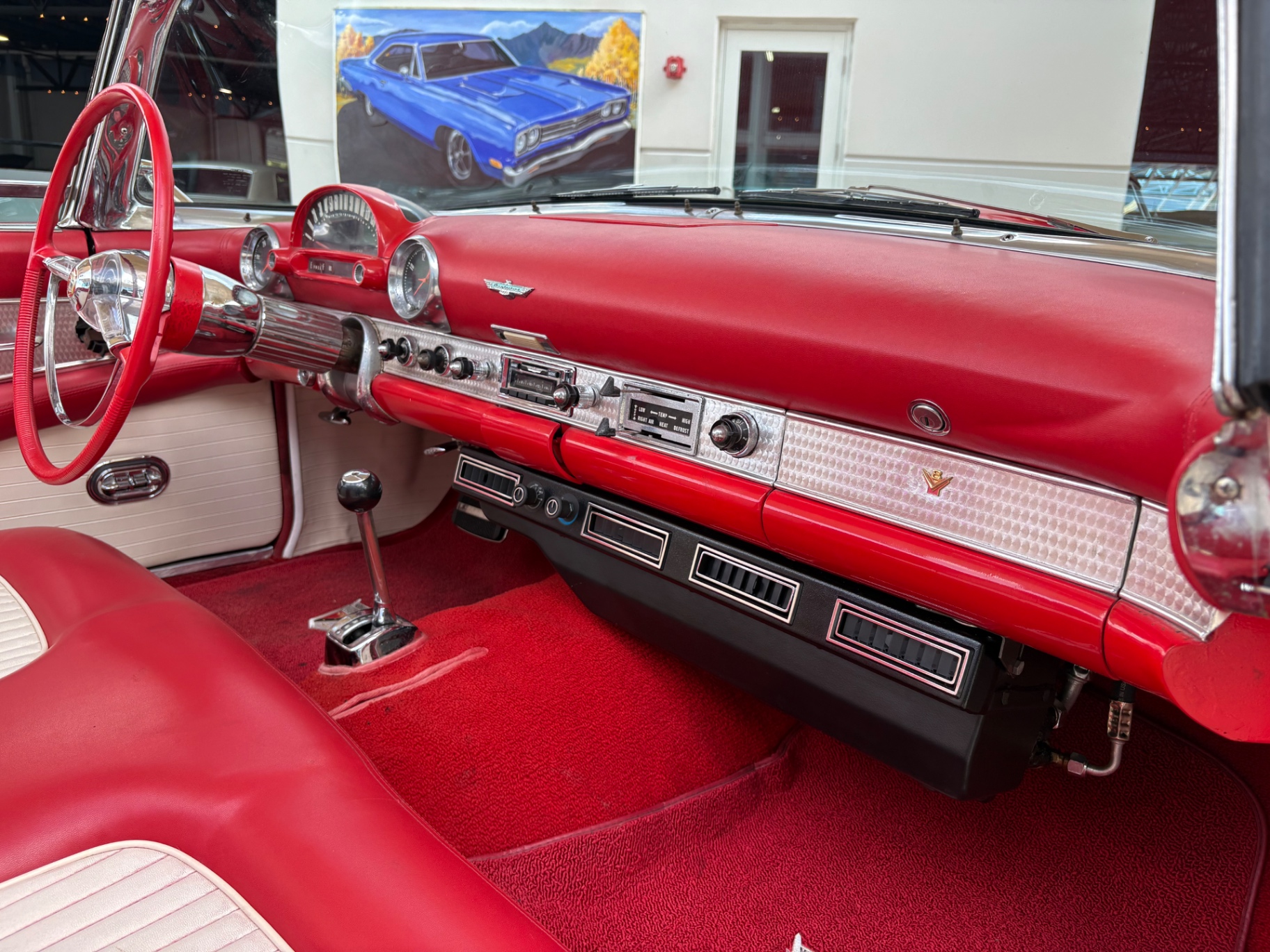
The 1955 Ford Thunderbird interior was designed with the driver's experience clearly in mind. The dashboard layout puts the instruments directly in front of the driver in a hooded cluster, with the speedometer reading to 150 mph — a nod to the car's performance aspirations. This car includes the optional tachometer, which appears as a separate round gauge mounted to the left of the main instrument cluster. The tachometer was a dealer-installed or factory accessory option on early Thunderbirds and is a detail that differentiates more complete, optioned examples.
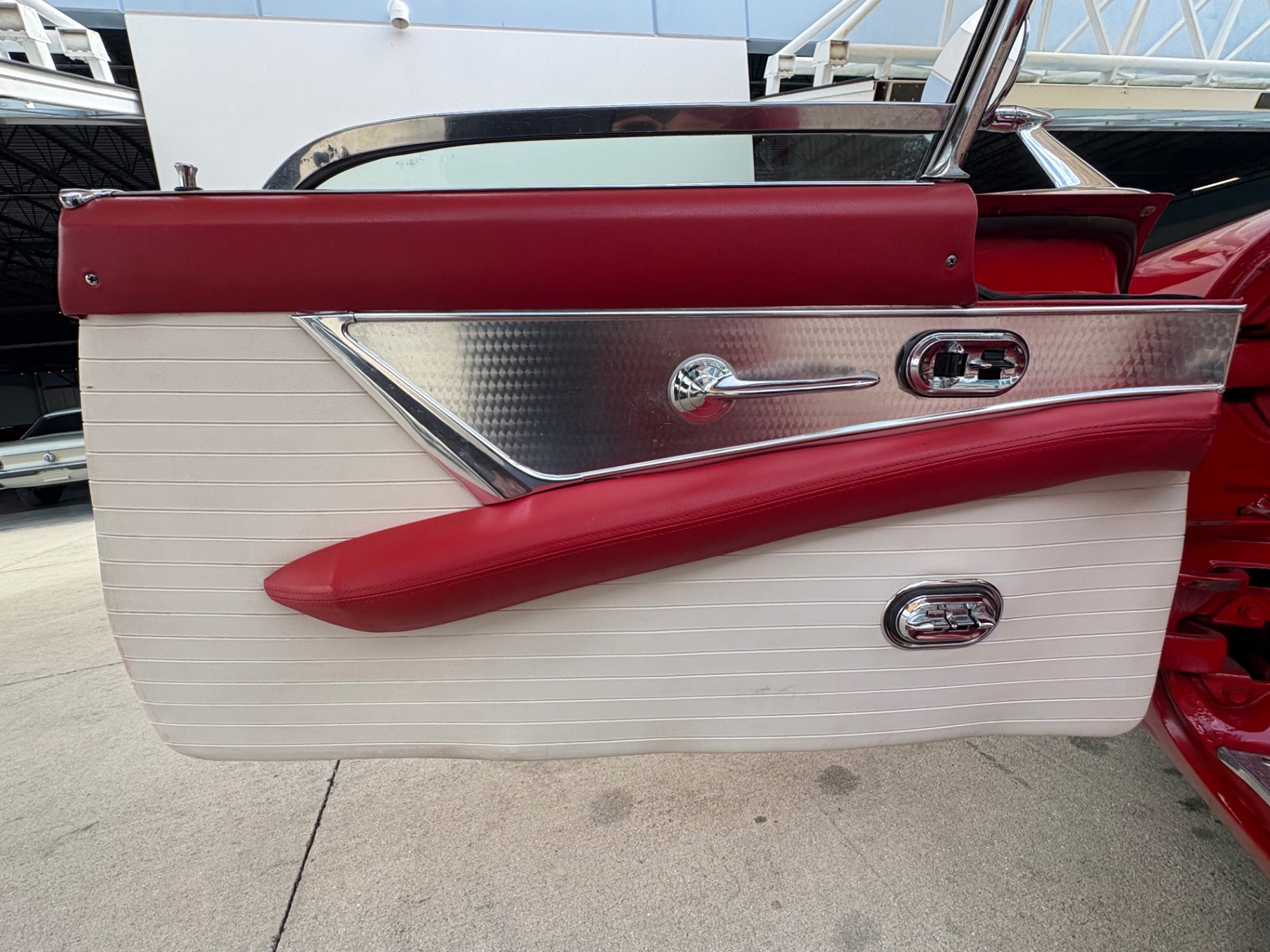
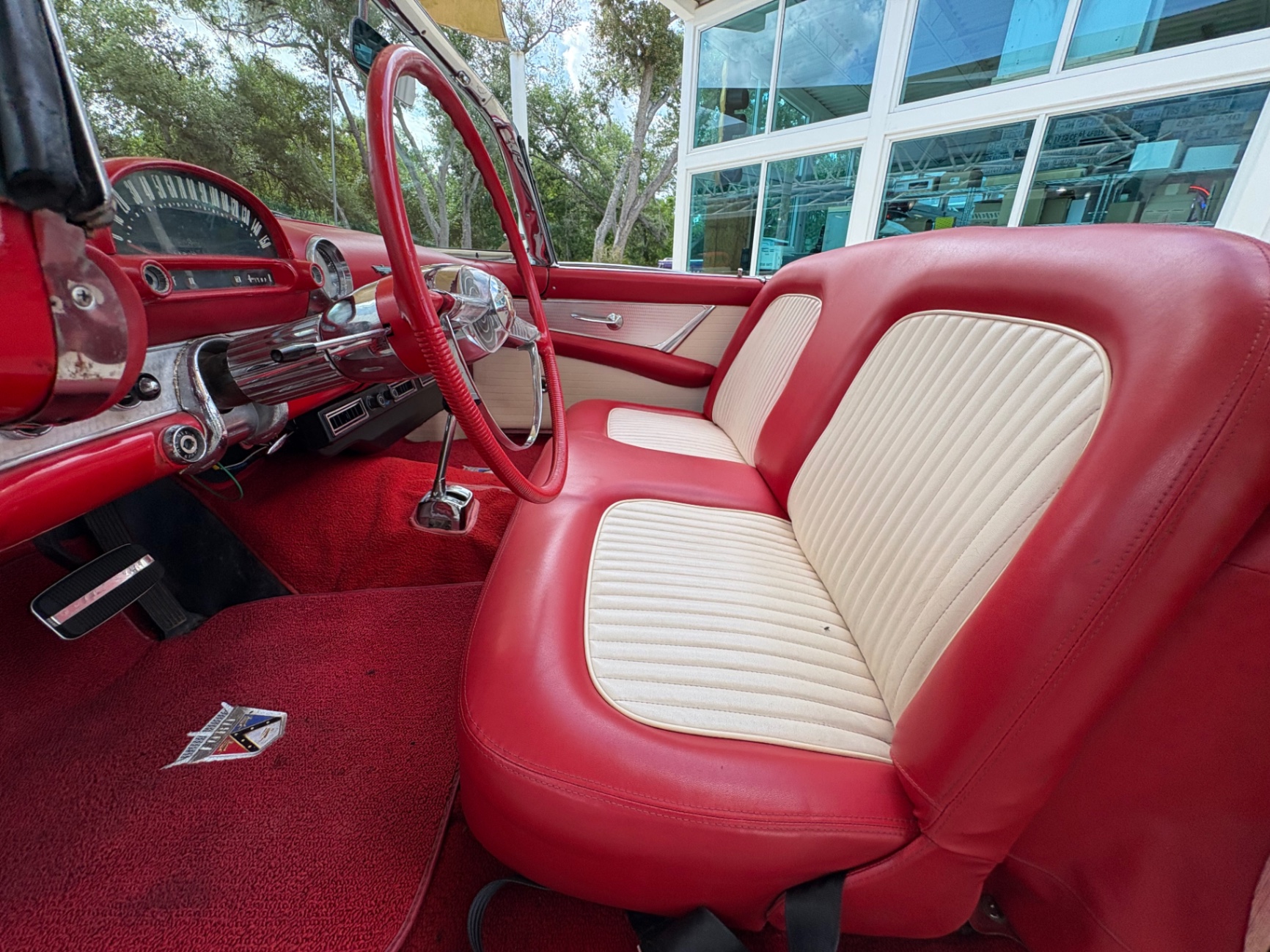
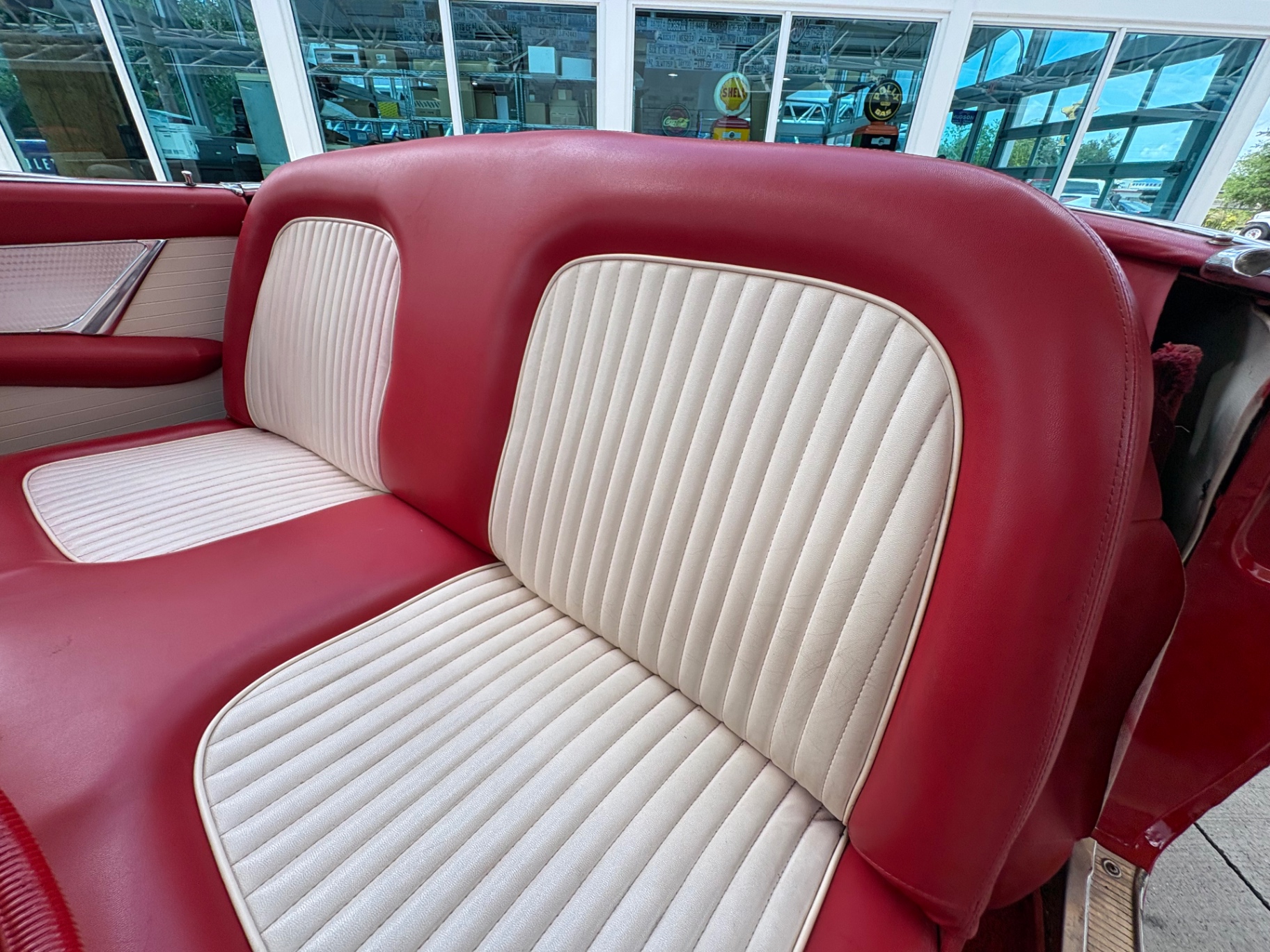
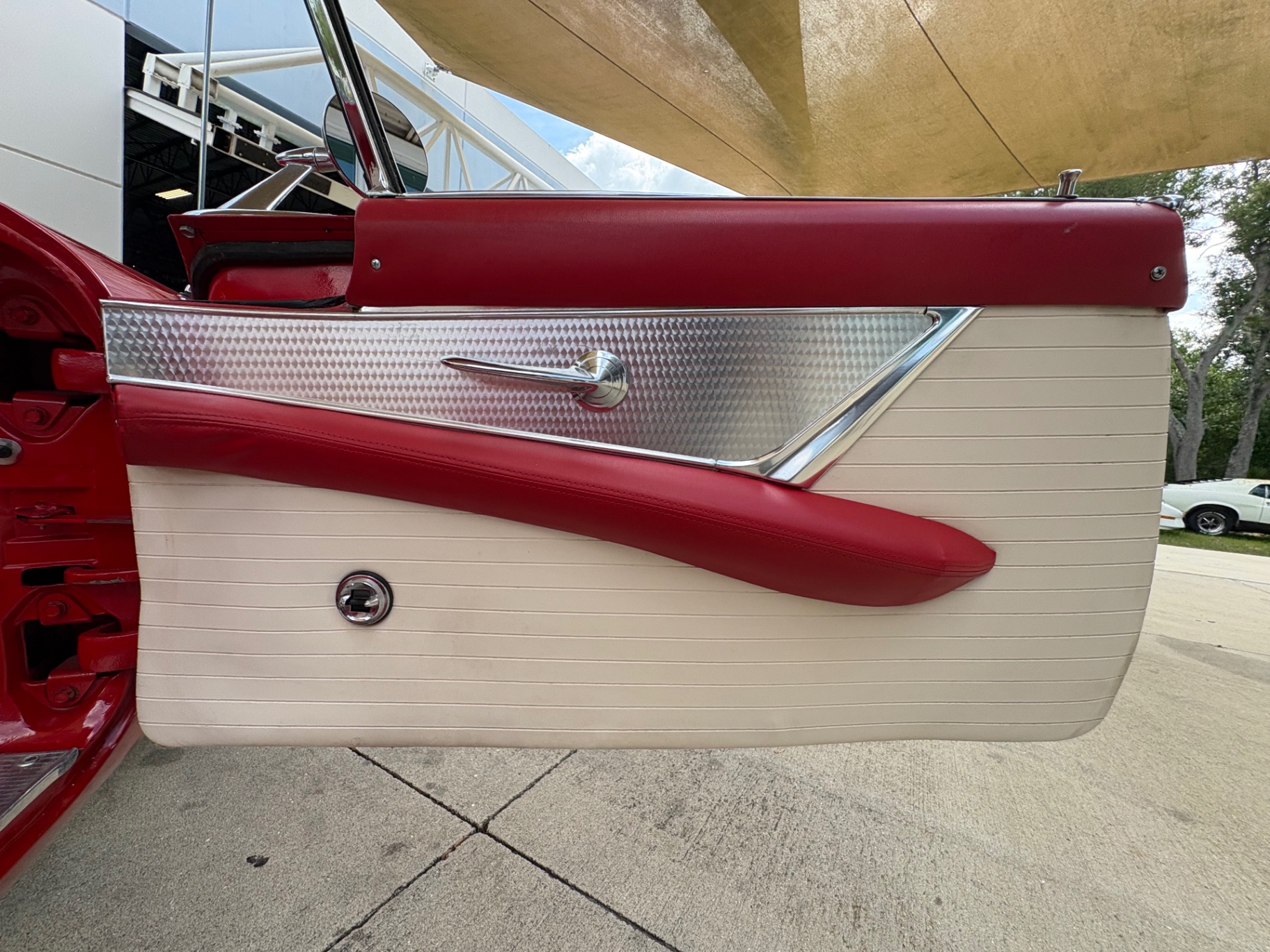
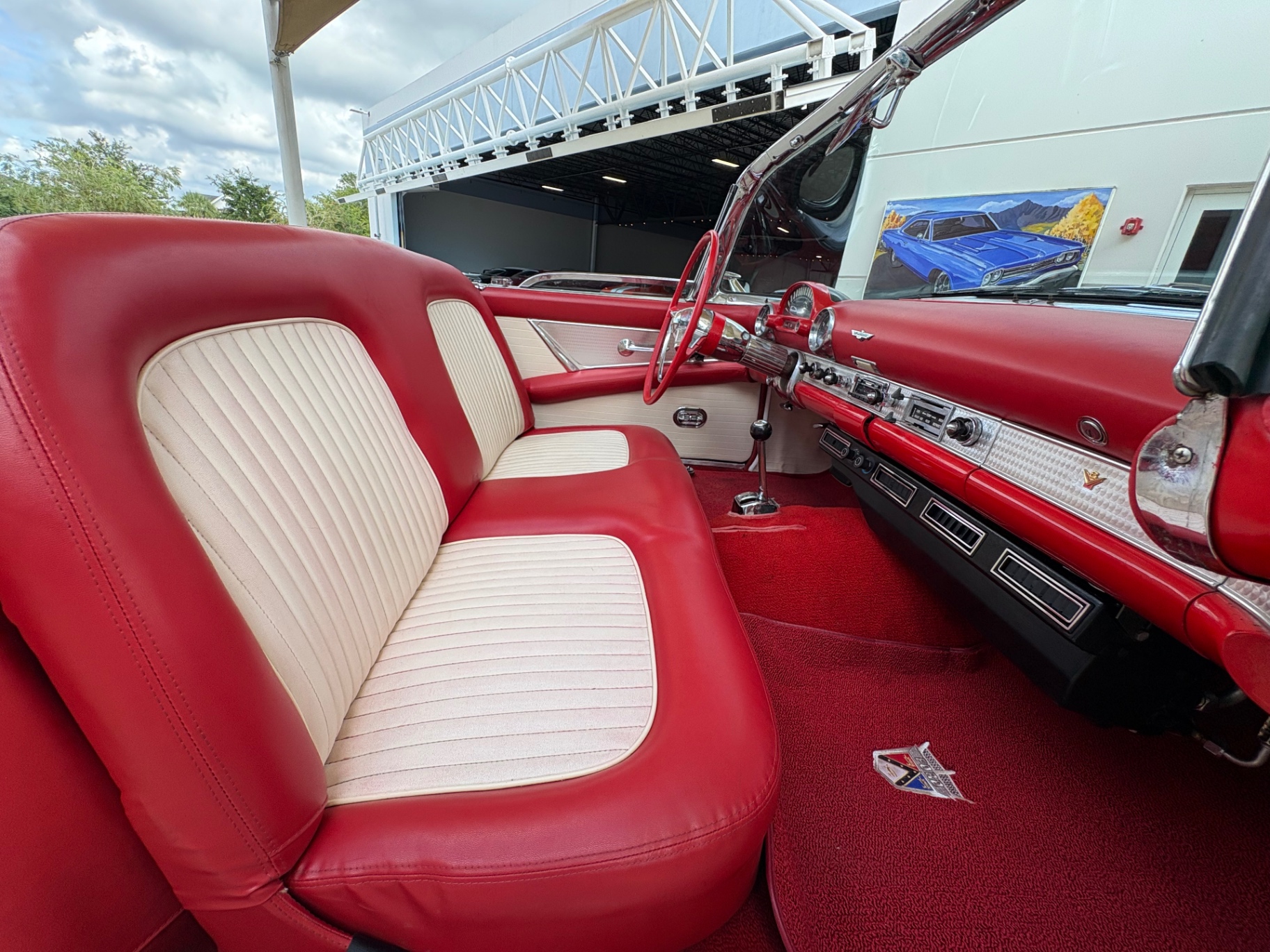
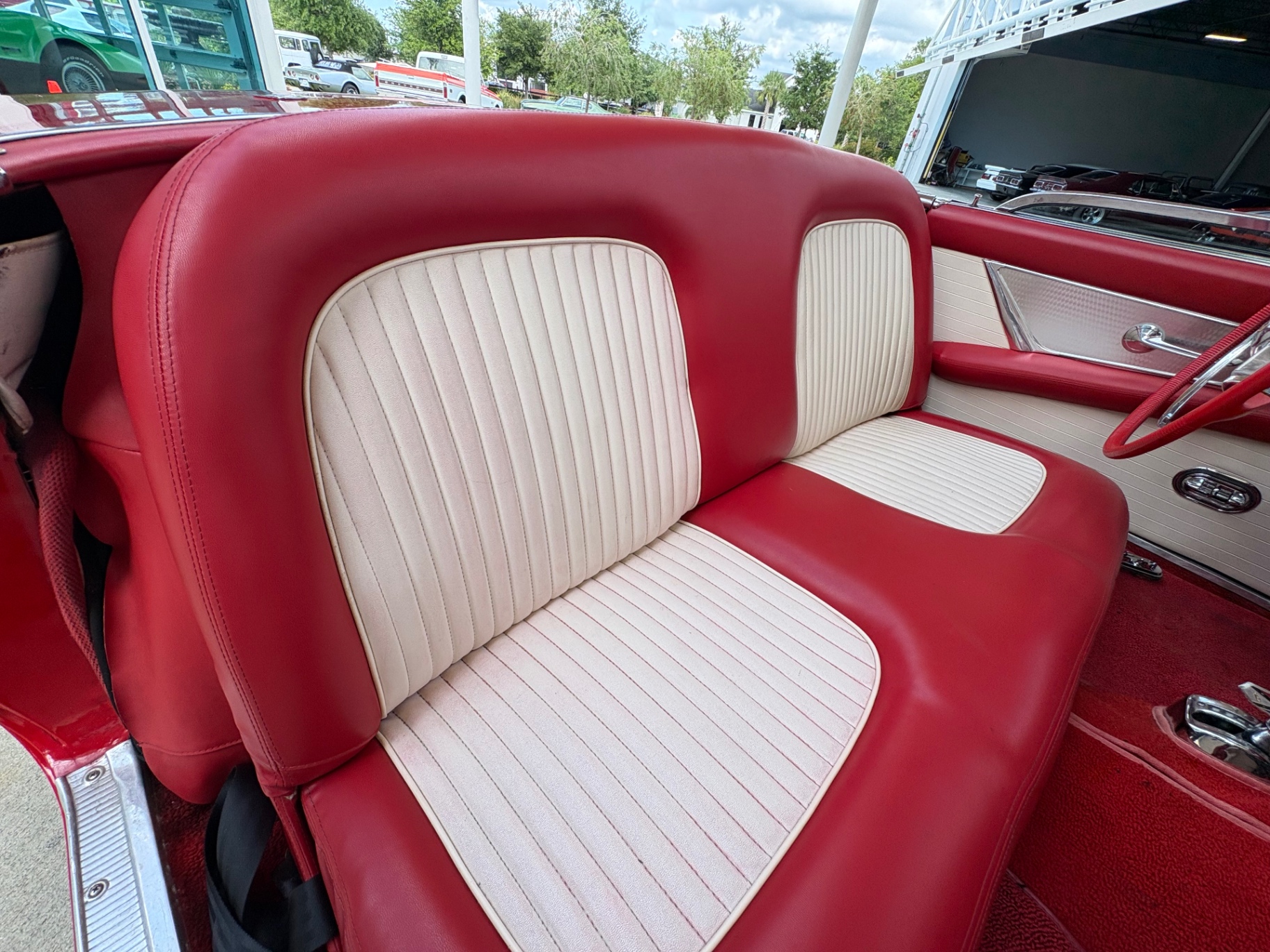
The red and white vinyl bucket seat is in solid condition based on the photos. The seat uses a two-tone pattern with cream ribbed inserts on red bolsters — a period-accurate combination that works well against the red dashboard and carpeting. The door panels carry the same two-tone theme, with white ribbed lower sections and a chrome-trimmed upper insert in a diamond or crosshatch pattern that was specific to the Thunderbird's interior design language. The red carpet throughout the cockpit is consistent and shows no major wear visible in the photos.
The AM radio is mounted in the center of the dashboard, flanked by the heater controls. The steering wheel is the correct red-rimmed unit with a chrome horn ring, a feature specific to the 1955 Thunderbird that ties the interior color scheme together neatly. The overall interior presents as a well-maintained, appropriately matched example of what a first-year Thunderbird cockpit should look like.
Exterior
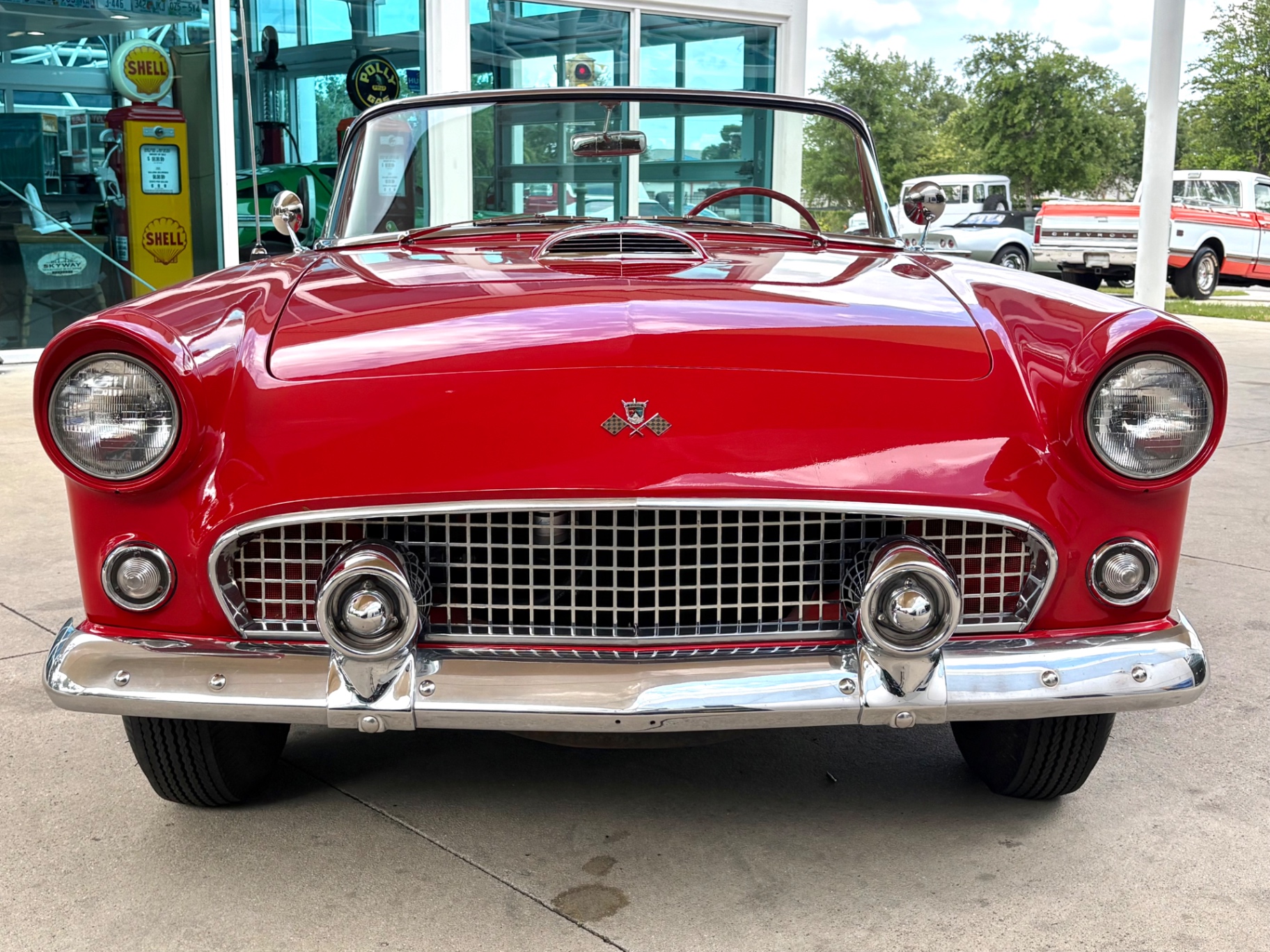
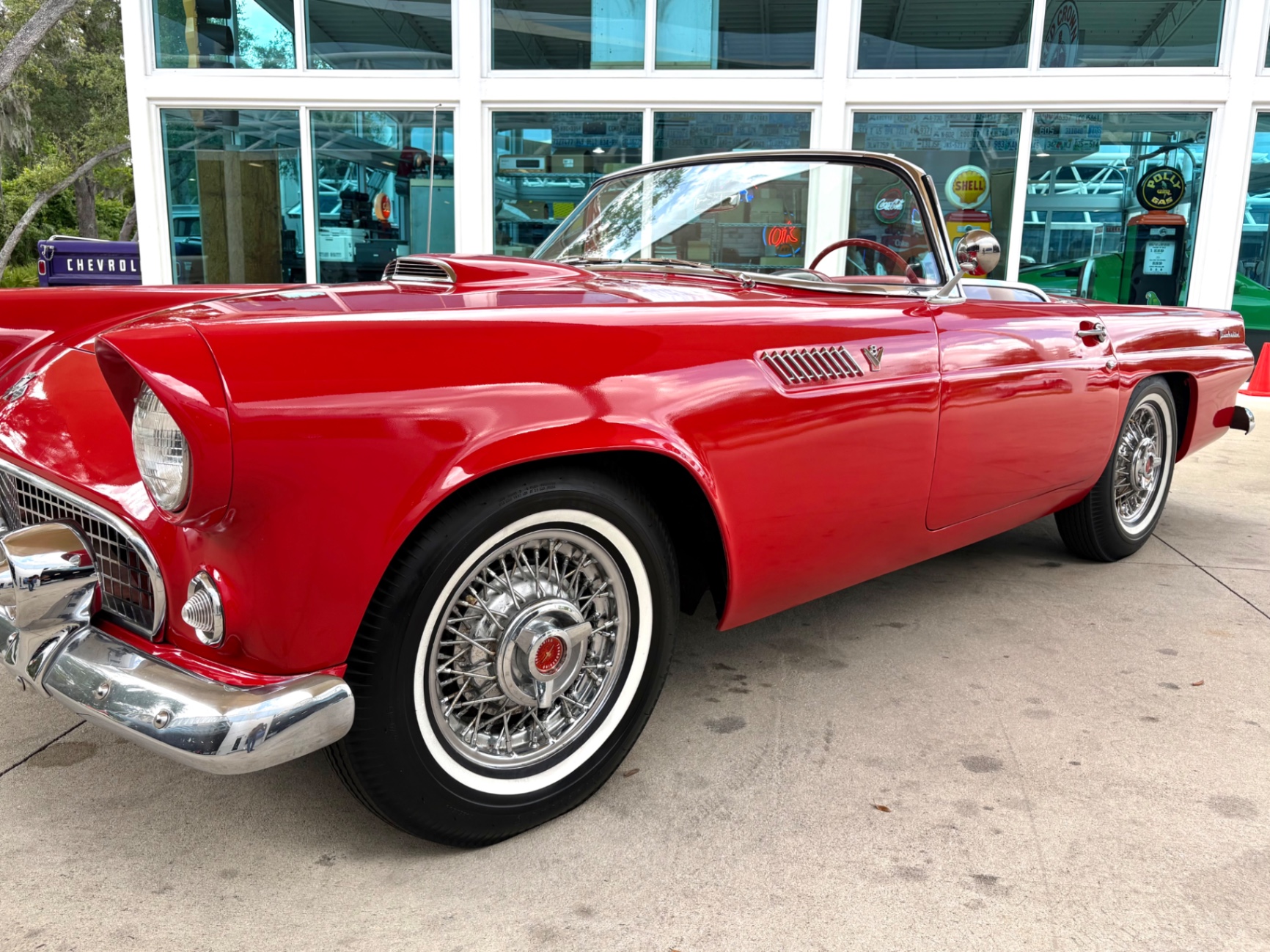
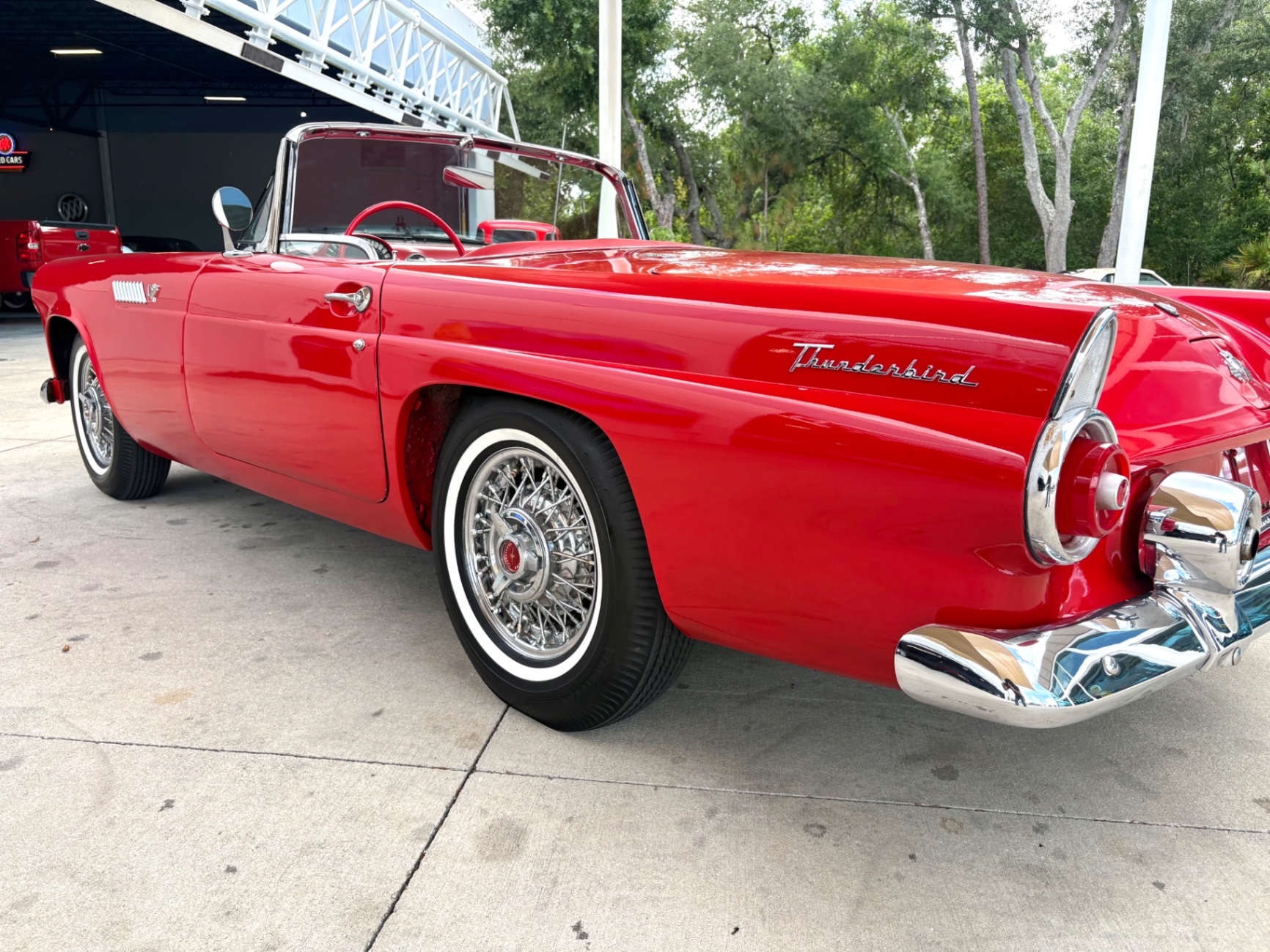
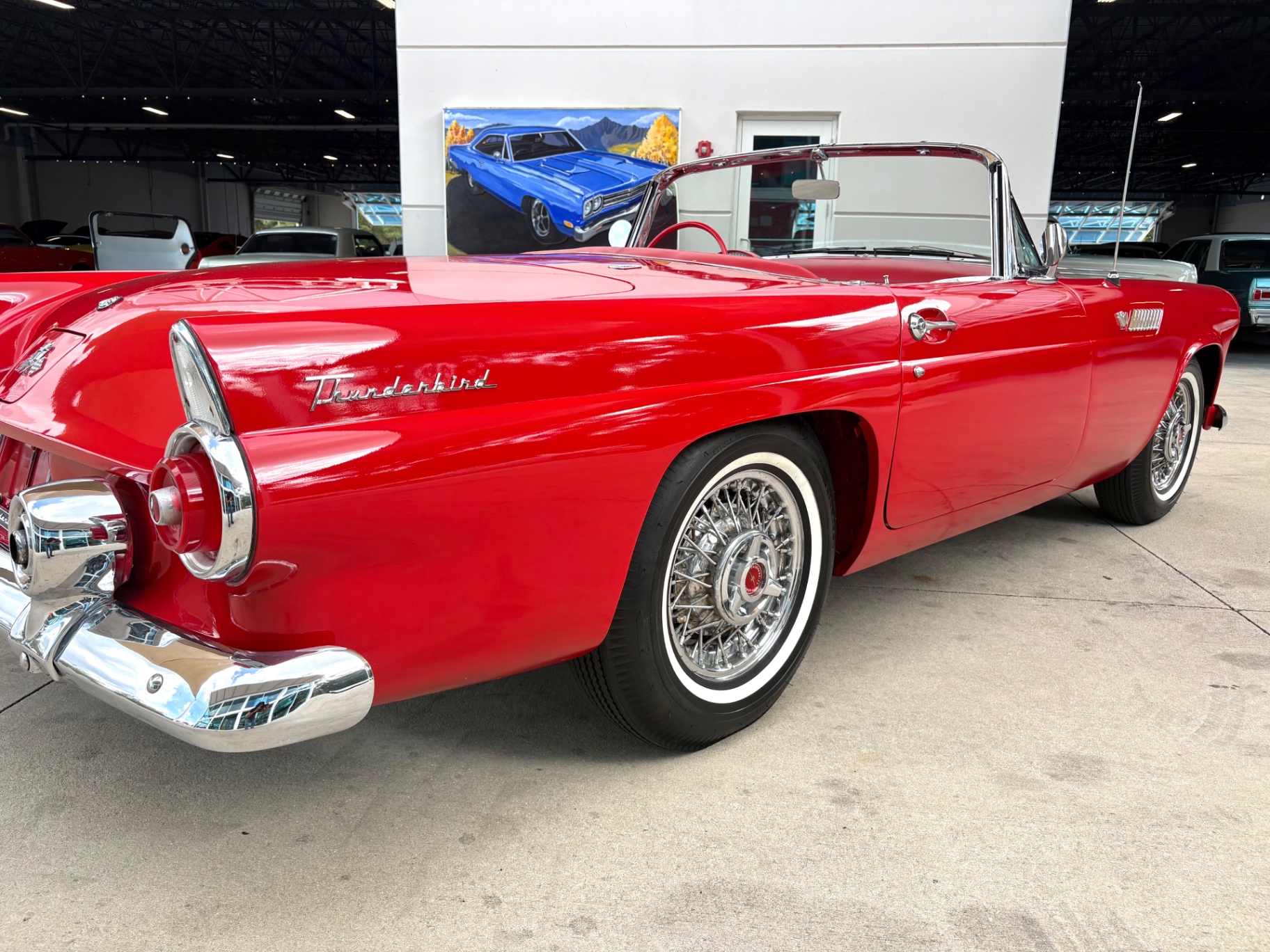
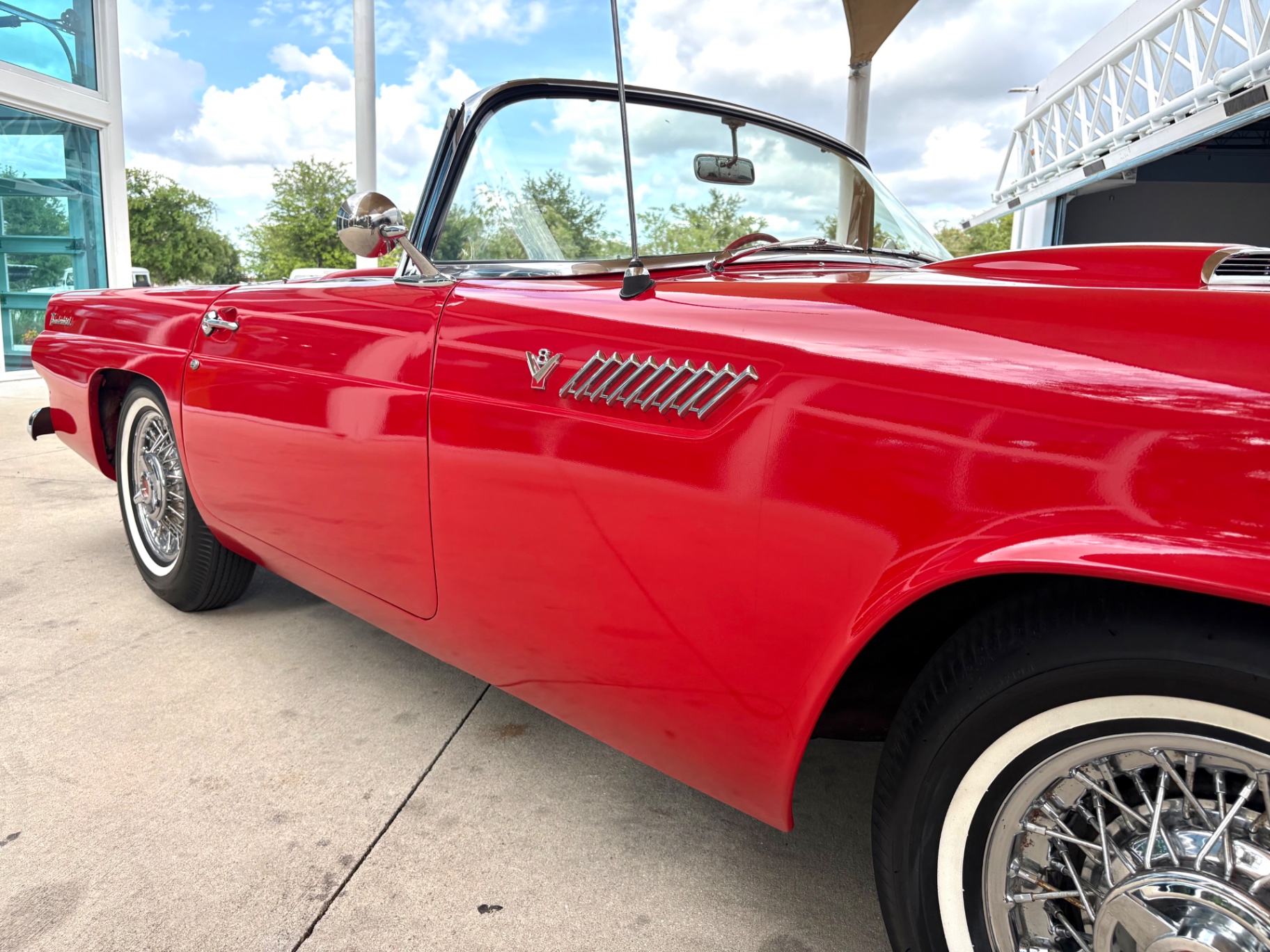
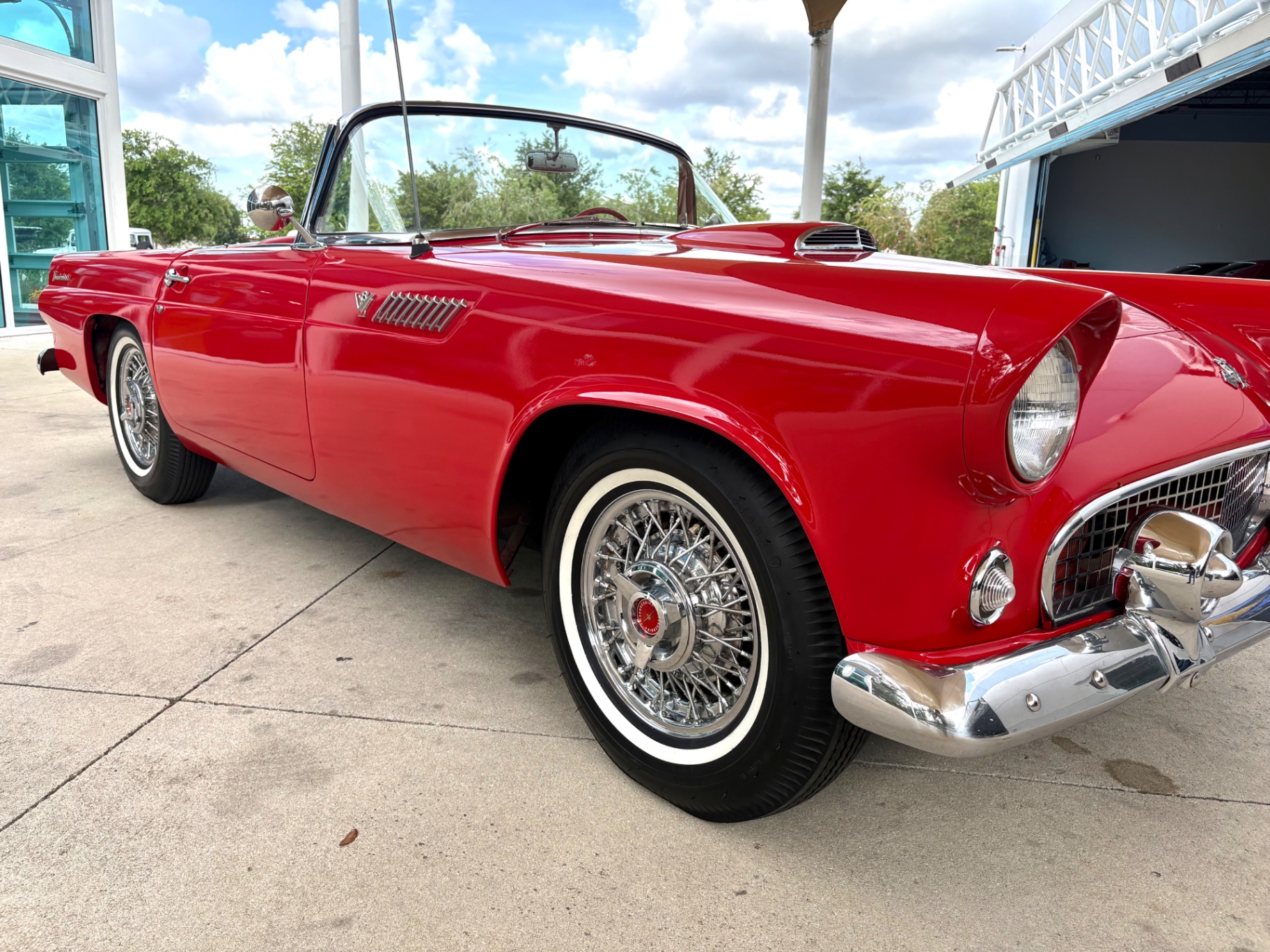
The red exterior on this 1955 Ford Thunderbird is a strong and correct color choice for the model. Red was one of the available factory colors for the first-year Thunderbird and remains among the most visually appropriate choices for the car's design. The body lines on the 1955 Thunderbird were drawn by Ford designer Frank Hershey and his team, with influences from aircraft design evident in the twin hood scoops, the fender-mounted exhaust vents, and the overall low, wide stance. At 175.3 inches in overall length, the 1955 Thunderbird is a compact car by any standard, and its proportions hold up exceptionally well.
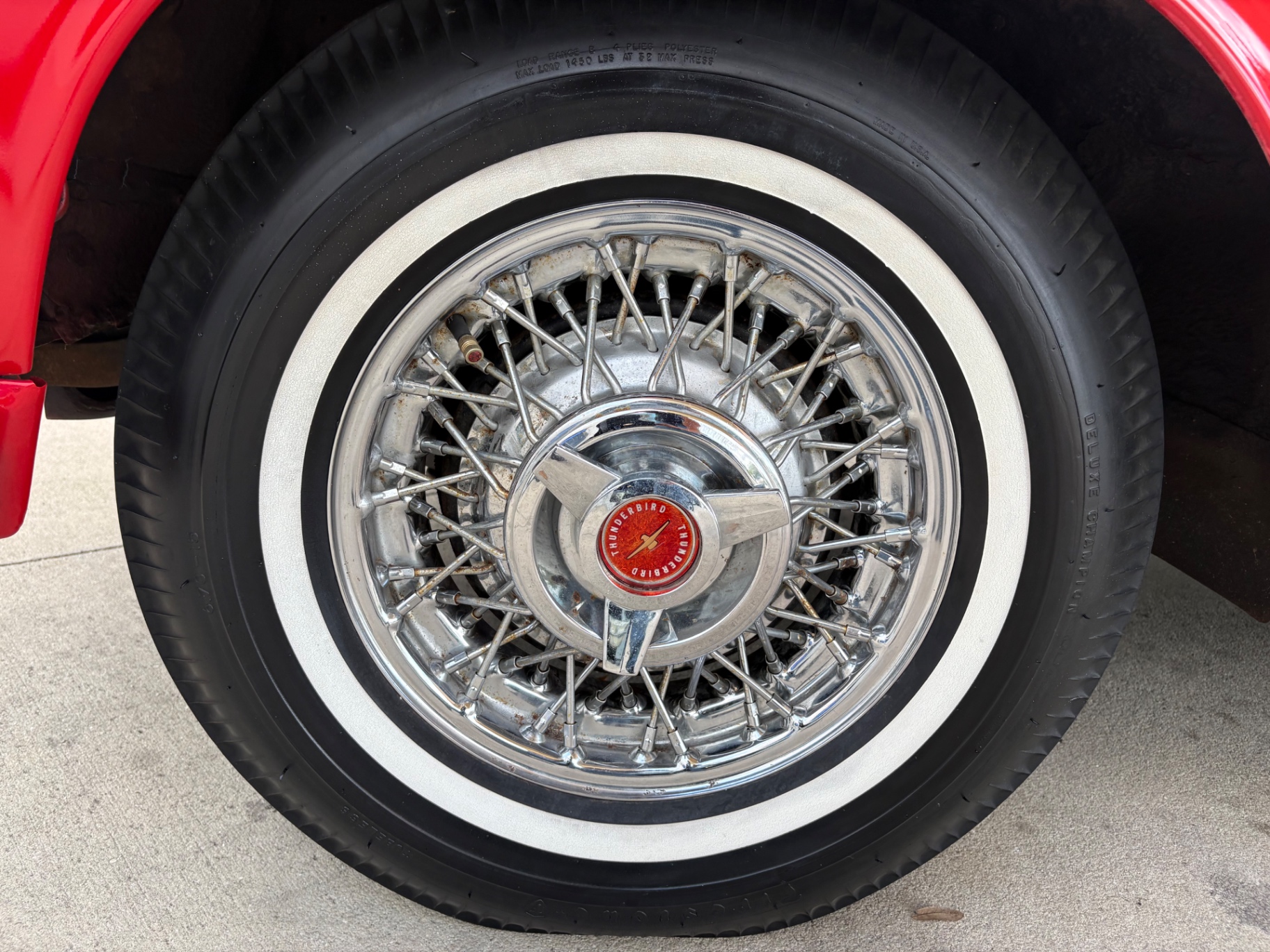
The chrome wire wheels are a period-correct accessory option and suit the car's styling without looking out of place. Wire wheels were available as a dealer-installed option on these cars and were often ordered by buyers who wanted the sporting look that the Thunderbird's design naturally suggested. The whitewall tires complete the look and are the correct tire style for a mid-1950s American car. Chrome bumpers front and rear are present and appear to be in good condition from the photos, with the front bumper's distinctive overrider pods clearly visible.
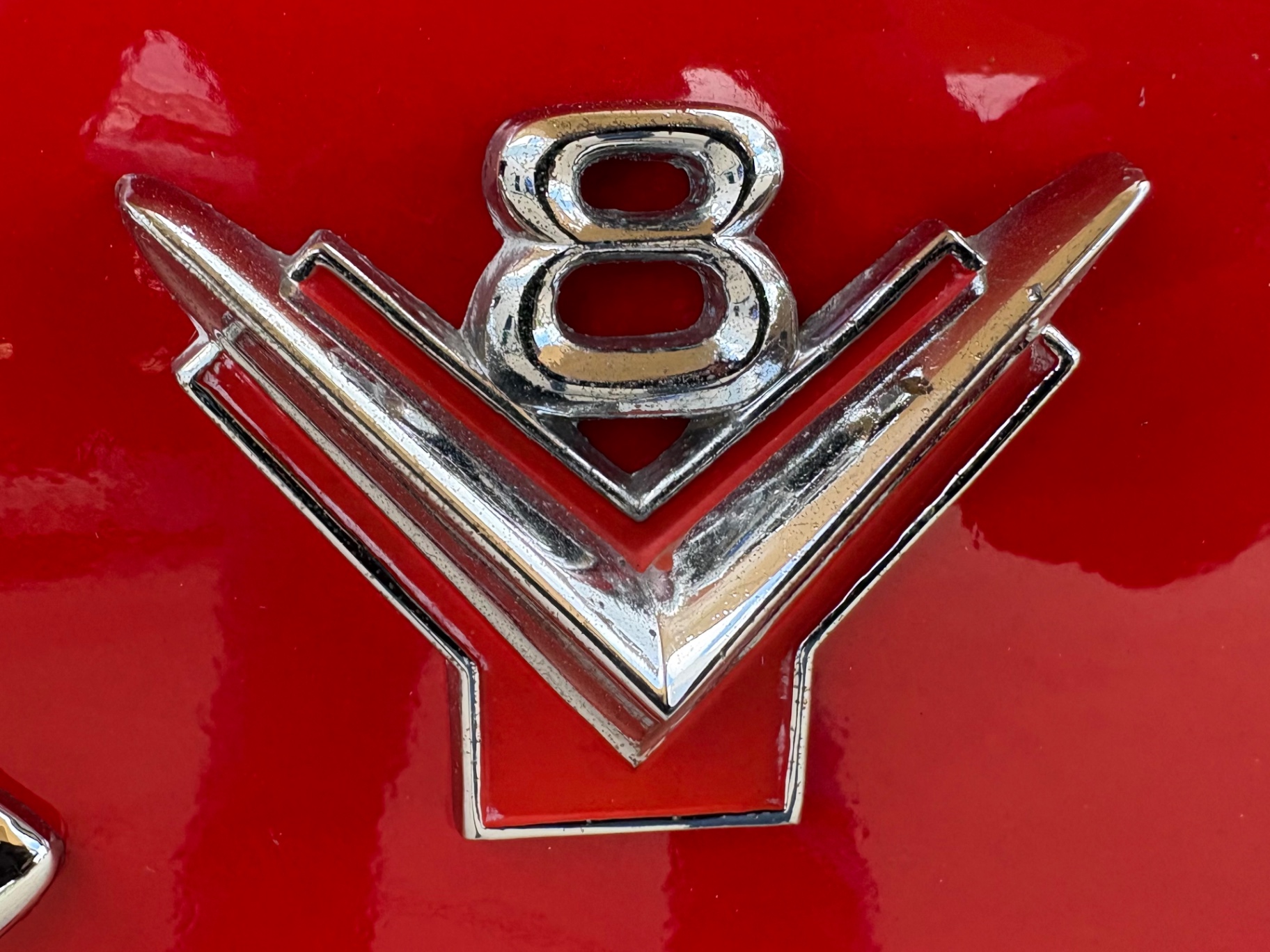
Both tops are included with this car, which significantly increases its versatility and value. The removable hardtop — with its distinctive porthole windows introduced on the 1956 model, though the 1955 used a solid rear window design — gives the car a coupe appearance for cooler weather or highway driving, while the soft top convertible allows open-air driving. Having both tops with a first-generation Thunderbird is the preferred configuration for collectors and show participants alike. The V8 door badge on the front fenders is a correct factory detail that identifies the engine beneath the hood.
Conclusion
The 1955 Ford Thunderbird occupies a specific and important position in American automotive history. It was the car that established Ford's two-seat personal luxury formula, outsold its competitor in its very first year, and set the design standard that influenced the brand's styling well into the following decade. A genuine first-year car with the 292 Y-Block V8, dual exhaust, both tops, chrome wire wheels, and a clean undercarriage is not a common find. Most of the survivors in this condition category have been absorbed into private collections or restoration projects. This example presents as a driver-quality car with the right options and the right color combination to be enjoyed and shown with confidence.
If you'd like more details, photos, or to schedule an in-person inspection, call Skyway Classics at 941-254-6608. We're located in Sarasota, Florida, and our team is available to answer any technical questions you have about this 1955 Ford Thunderbird.
Disclaimer
Information found on the website is presented as given to us by the owner of the car, whether on consignment or from the owner we bought it from. Some Photos, materials for videos, descriptions and other information are provided by the consignor/seller and is deemed reliable, but Skyway Classics does not warranty or guarantee this information. Skyway Classics is not responsible for information that may incorrect or a publishing error. The decision to purchase should be based solely on the buyers personal inspection of the vehicle or by a professional inspection service prior to offer or purchase being made.
1955 Ford Thunderbird — 292 Y-Block V8, Dual Exhaust, Both Tops Included
Why This Car Is Special
The 1955 Ford Thunderbird was Ford's answer to the Chevrolet Corvette, but it took a different approach entirely. Where the Corvette was positioned as a pure sports car with a six-cylinder engine at launch, Ford built the Thunderbird around the idea of a "personal luxury" two-seater — a car with real V8 power, genuine comfort, and enough style to compete with anything on the road in 1955. Ford called it a "personal car" rather than a sports car, a distinction that turned out to be a smart one. The Thunderbird outsold the Corvette by a wide margin in its first year, with Ford producing 16,155 units for the 1955 model year compared to Chevrolet's 700 Corvettes.
That first-year production number matters to collectors for a specific reason. The 1955 Thunderbird was the first of only three years in which the car was offered as a two-seat roadster. Ford moved to a four-seat body style in 1958, and the two-seat configuration was never brought back in the original generation. Among collectors and marque enthusiasts, the 1955, 1956, and 1957 models are grouped together as the "Baby Bird" or first-generation two-seaters, and the 1955 is the founding year of that lineage. The VIN on this car — beginning with P5FH — confirms it was assembled at Ford's Dearborn, Michigan plant during the 1955 model year, making it a genuine first-year example.
This particular 1955 Ford Thunderbird is finished in red over a red and white vinyl interior, a combination that puts the car's design in its best light. It carries the 292ci Y-Block V8, a 3-speed automatic transmission, and dual exhaust — and it comes with both the removable hardtop and the soft top convertible, which is the most complete configuration you can have on one of these cars.
Features List
- 292ci Y-Block V8 engine
- 3-Speed Automatic Transmission
- Dual Exhaust
- Removable Hardtop Included
- Soft Top Convertible
- Chrome Wire Wheels
- Whitewall Tires
- Tachometer Gauge
- AM Radio
- Thunderbird Valve Cover Badging
- V8 Door Badge
- Chrome Bumpers
- Drum Brakes
- Bucket Seat
- Clean Undercarriage
Mechanical
The 292ci Y-Block V8 was introduced by Ford in 1955 and represented a significant step forward from the earlier flathead V8 that had powered Ford products for decades. The Y-Block designation comes from the engine's skirt design, which extends below the crankshaft centerline in a Y-shape, giving the block added rigidity. In 1955 Thunderbird applications, the 292 was rated at 193 horsepower with the automatic transmission — a meaningful advantage over the Corvette's six-cylinder at the time. The engine is backed here by a 3-speed automatic, which on a 1955 Thunderbird would have been the Ford-O-Matic unit, a two-speed automatic marketed as a three-speed due to its torque converter function. It was one of the most popular options on these cars and a practical choice for everyday driving.
The dual exhaust setup is present and visible in the undercarriage photos, running cleanly beneath the car. The undercarriage itself shows solid, coated structure with no significant rot or damage visible — an important data point on a 70-year-old car. Drum brakes are correct and original to the specification for this year and model. The front suspension uses a conventional double-wishbone setup, while the rear uses a live axle on leaf springs. Both ends of the car appear intact and unmodified in the undercarriage shots, which is what you want to see on a first-generation Thunderbird that hasn't been heavily modified over the decades.
The Thunderbird-specific valve covers with their script badging are present and add a correct, period-correct look to the engine bay. The Y-Block's finned aluminum valve covers with the "Thunderbird Ford" script were a factory-fitted detail on these cars and are one of the recognizable engine bay features that Thunderbird collectors look for.
Interior
The 1955 Ford Thunderbird interior was designed with the driver's experience clearly in mind. The dashboard layout puts the instruments directly in front of the driver in a hooded cluster, with the speedometer reading to 150 mph — a nod to the car's performance aspirations. This car includes the optional tachometer, which appears as a separate round gauge mounted to the left of the main instrument cluster. The tachometer was a dealer-installed or factory accessory option on early Thunderbirds and is a detail that differentiates more complete, optioned examples.
The red and white vinyl bucket seat is in solid condition based on the photos. The seat uses a two-tone pattern with cream ribbed inserts on red bolsters — a period-accurate combination that works well against the red dashboard and carpeting. The door panels carry the same two-tone theme, with white ribbed lower sections and a chrome-trimmed upper insert in a diamond or crosshatch pattern that was specific to the Thunderbird's interior design language. The red carpet throughout the cockpit is consistent and shows no major wear visible in the photos.
The AM radio is mounted in the center of the dashboard, flanked by the heater controls. The steering wheel is the correct red-rimmed unit with a chrome horn ring, a feature specific to the 1955 Thunderbird that ties the interior color scheme together neatly. The overall interior presents as a well-maintained, appropriately matched example of what a first-year Thunderbird cockpit should look like.
Exterior
The red exterior on this 1955 Ford Thunderbird is a strong and correct color choice for the model. Red was one of the available factory colors for the first-year Thunderbird and remains among the most visually appropriate choices for the car's design. The body lines on the 1955 Thunderbird were drawn by Ford designer Frank Hershey and his team, with influences from aircraft design evident in the twin hood scoops, the fender-mounted exhaust vents, and the overall low, wide stance. At 175.3 inches in overall length, the 1955 Thunderbird is a compact car by any standard, and its proportions hold up exceptionally well.
The chrome wire wheels are a period-correct accessory option and suit the car's styling without looking out of place. Wire wheels were available as a dealer-installed option on these cars and were often ordered by buyers who wanted the sporting look that the Thunderbird's design naturally suggested. The whitewall tires complete the look and are the correct tire style for a mid-1950s American car. Chrome bumpers front and rear are present and appear to be in good condition from the photos, with the front bumper's distinctive overrider pods clearly visible.
Both tops are included with this car, which significantly increases its versatility and value. The removable hardtop — with its distinctive porthole windows introduced on the 1956 model, though the 1955 used a solid rear window design — gives the car a coupe appearance for cooler weather or highway driving, while the soft top convertible allows open-air driving. Having both tops with a first-generation Thunderbird is the preferred configuration for collectors and show participants alike. The V8 door badge on the front fenders is a correct factory detail that identifies the engine beneath the hood.
Conclusion
The 1955 Ford Thunderbird occupies a specific and important position in American automotive history. It was the car that established Ford's two-seat personal luxury formula, outsold its competitor in its very first year, and set the design standard that influenced the brand's styling well into the following decade. A genuine first-year car with the 292 Y-Block V8, dual exhaust, both tops, chrome wire wheels, and a clean undercarriage is not a common find. Most of the survivors in this condition category have been absorbed into private collections or restoration projects. This example presents as a driver-quality car with the right options and the right color combination to be enjoyed and shown with confidence.
If you'd like more details, photos, or to schedule an in-person inspection, call Skyway Classics at 941-254-6608. We're located in Sarasota, Florida, and our team is available to answer any technical questions you have about this 1955 Ford Thunderbird.
Disclaimer
Information found on the website is presented as given to us by the owner of the car, whether on consignment or from the owner we bought it from. Some Photos, materials for videos, descriptions and other information are provided by the consignor/seller and is deemed reliable, but Skyway Classics does not warranty or guarantee this information. Skyway Classics is not responsible for information that may incorrect or a publishing error. The decision to purchase should be based solely on the buyers personal inspection of the vehicle or by a professional inspection service prior to offer or purchase being made.
1955 Ford
Thunderbird Base
Why Choose Skyway Classics?
Explore our curated inventory of classic and collector cars—thoughtfully selected, ready to drive, and supported by experts who make ownership simple.
Expert Curation
Every vehicle is hand-selected by our experts for quality, authenticity, and investment potential.
Fast Transactions
Streamlined buying and selling process with quick financing and immediate delivery options.
Only National Dealer With Classic Service & Repair
We’re the only national dealership that services and repairs the classics we sell—before and after the sale.
Nationwide Network
Access to our extensive network of collectors, restorers, and classic car enthusiasts nationwide.
Concierge Ownership Support
From financing and insurance to paperwork, shipping, and titling—we handle the details so you can enjoy the drive.
Passion-Driven Service
We're classic car enthusiasts first, providing personalized service with genuine passion for the hobby.