
1939 Ford
Deluxe Convertible Sedan
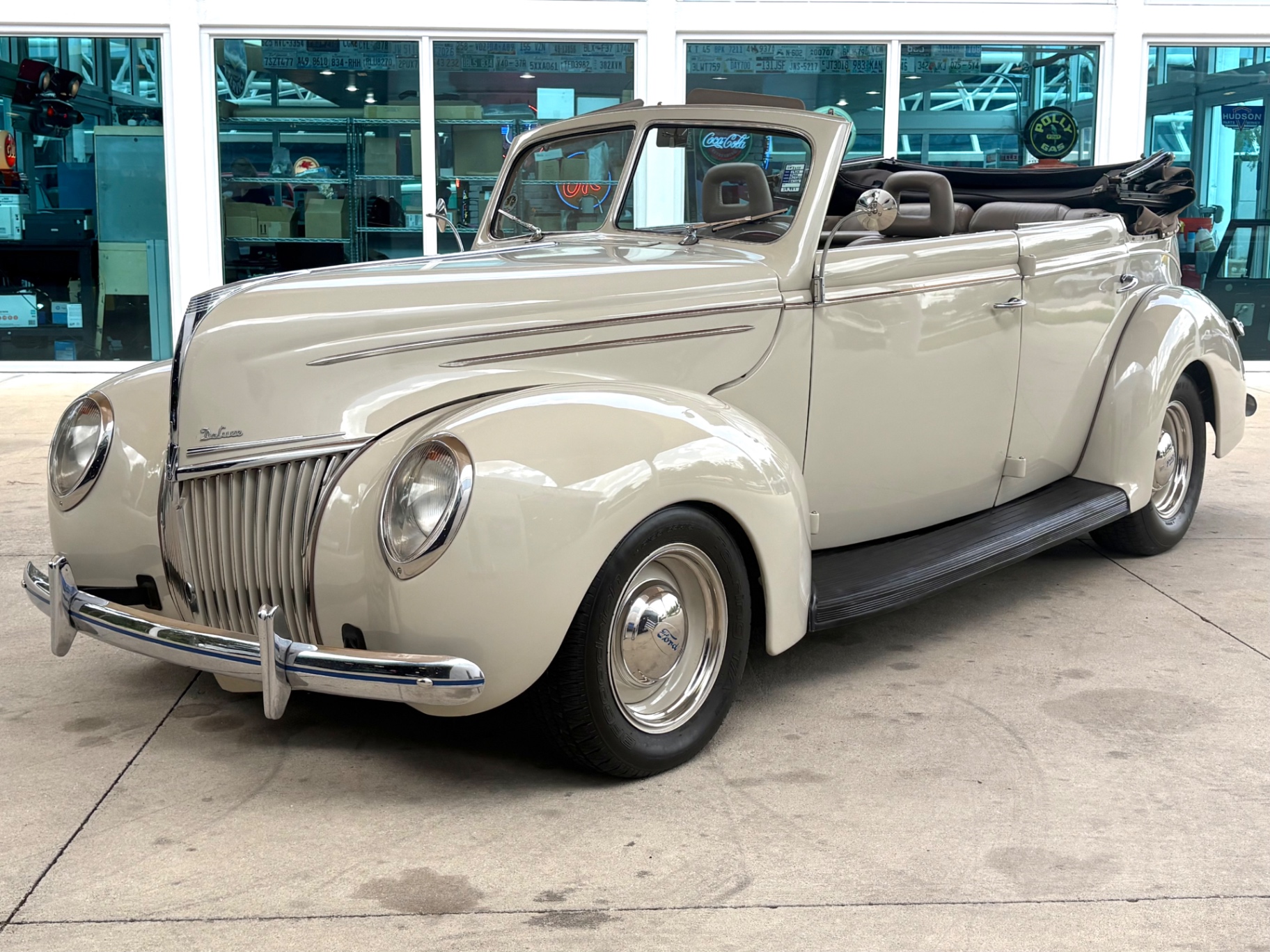
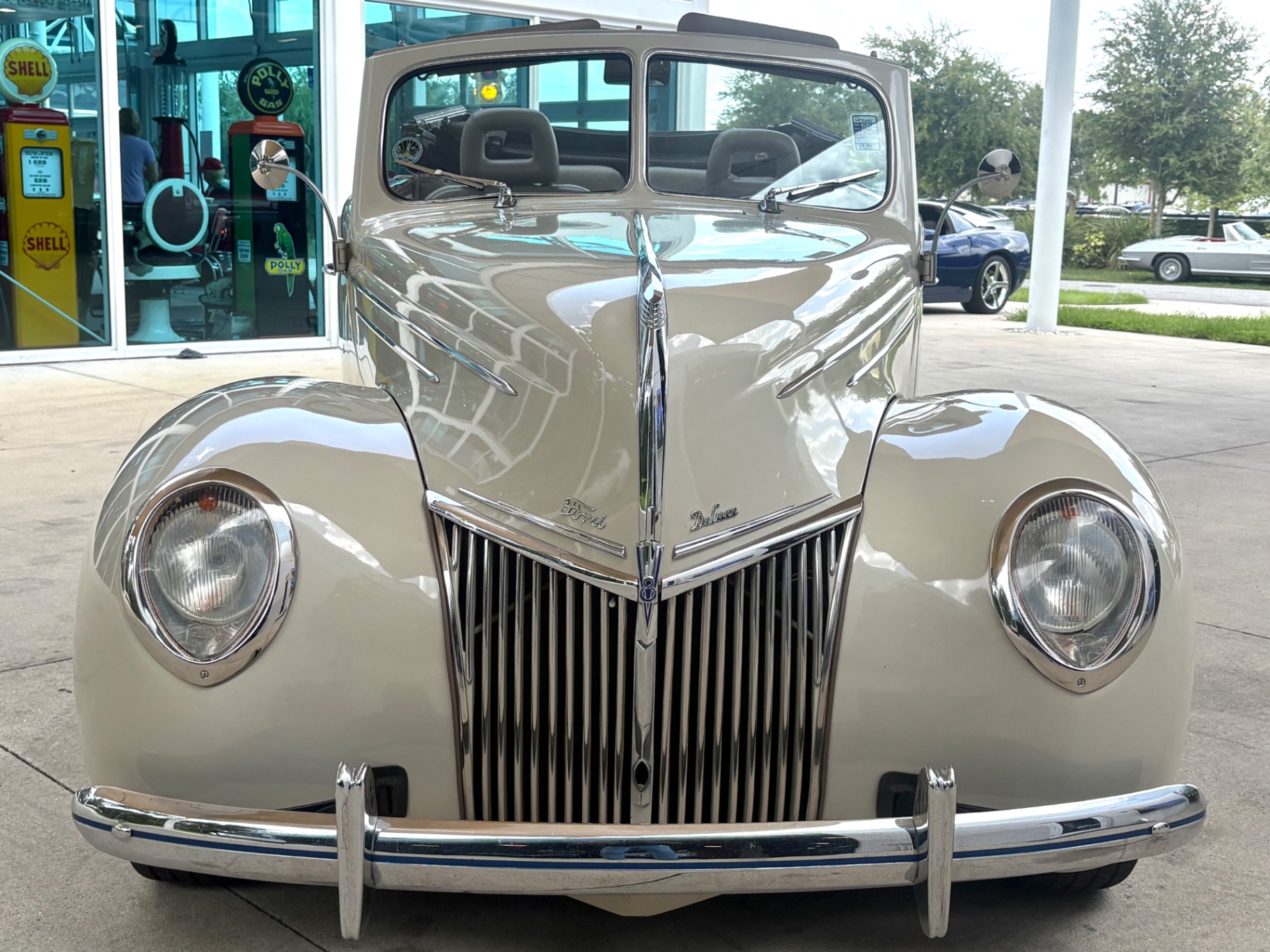
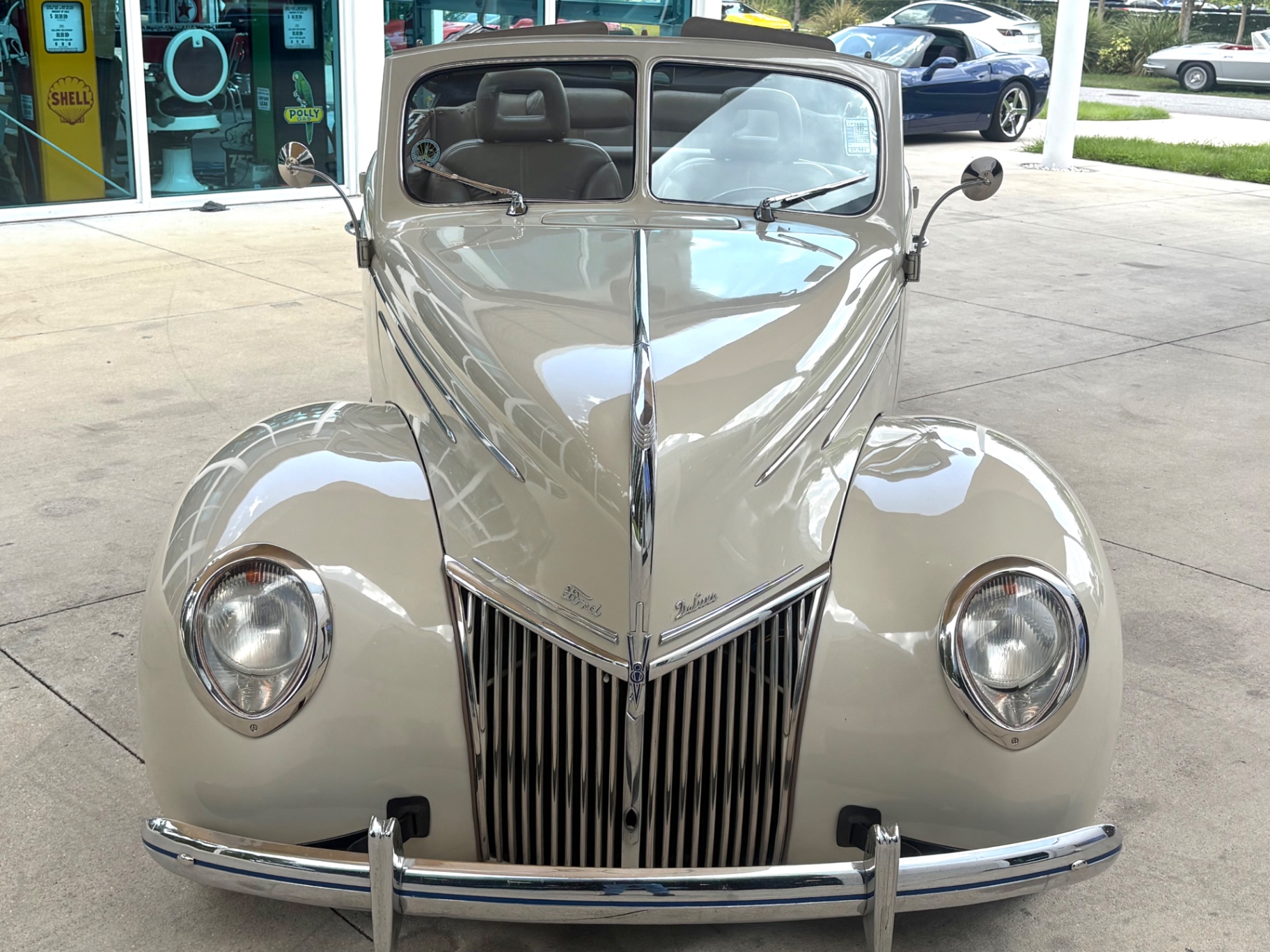
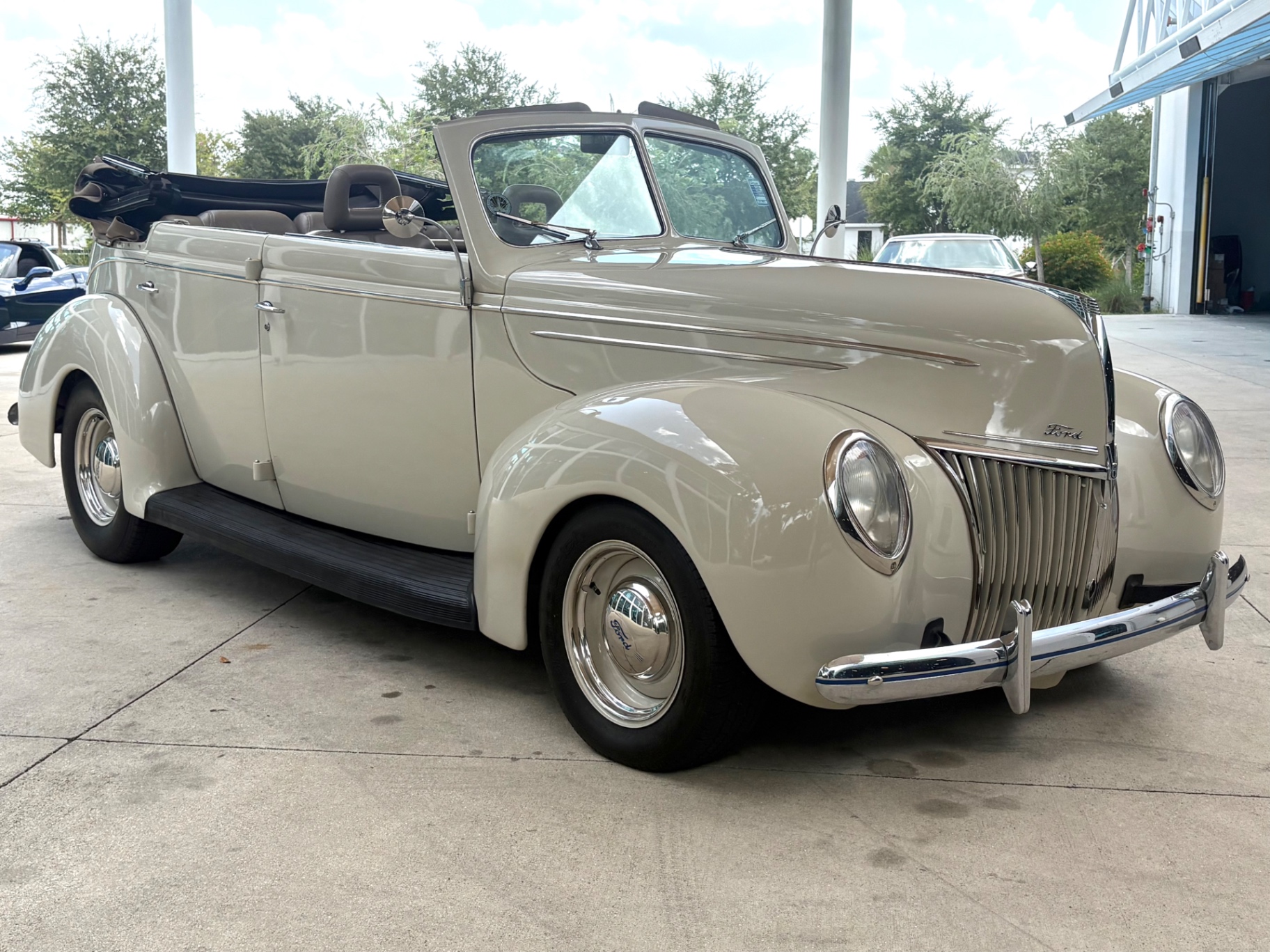
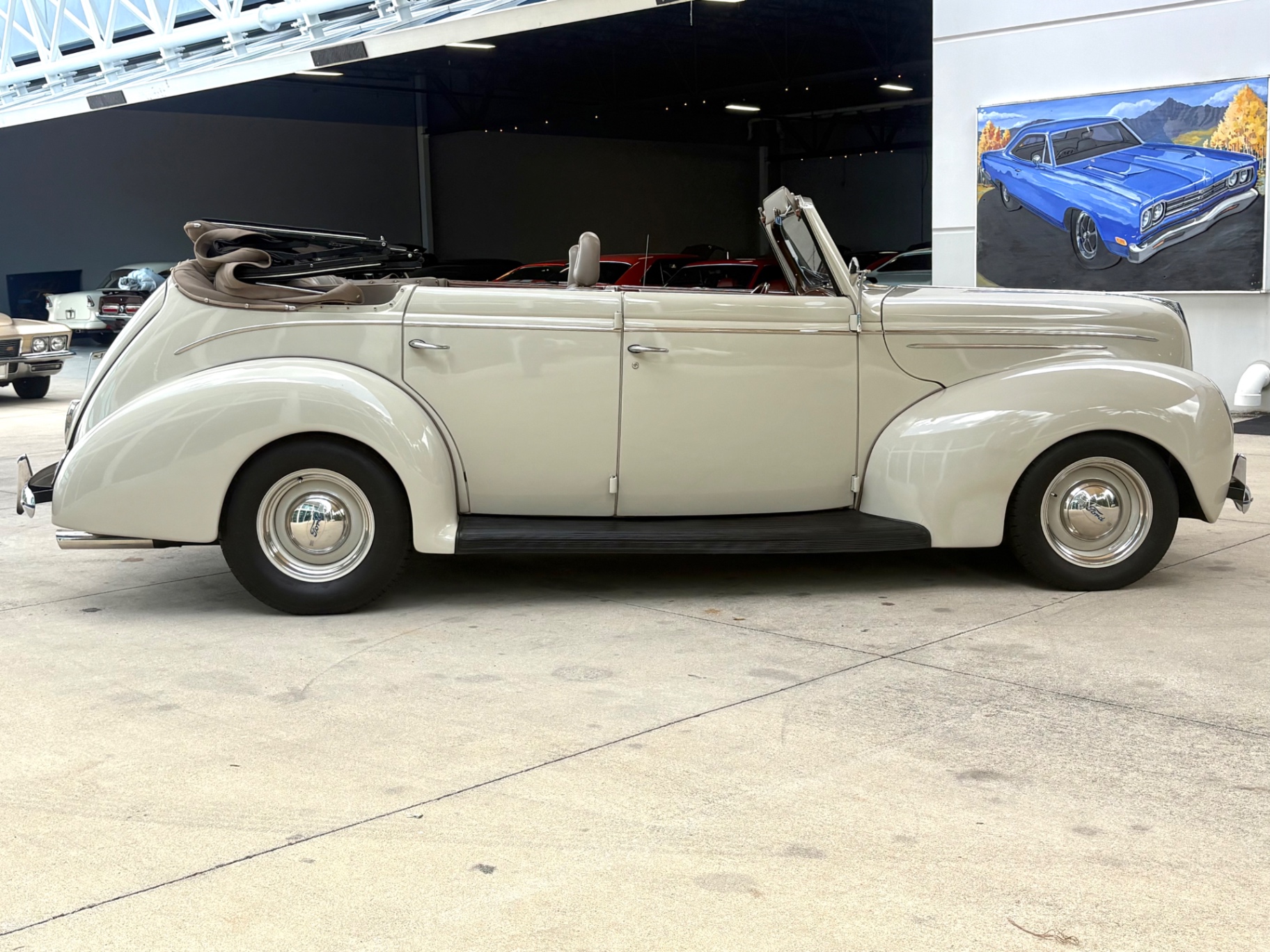
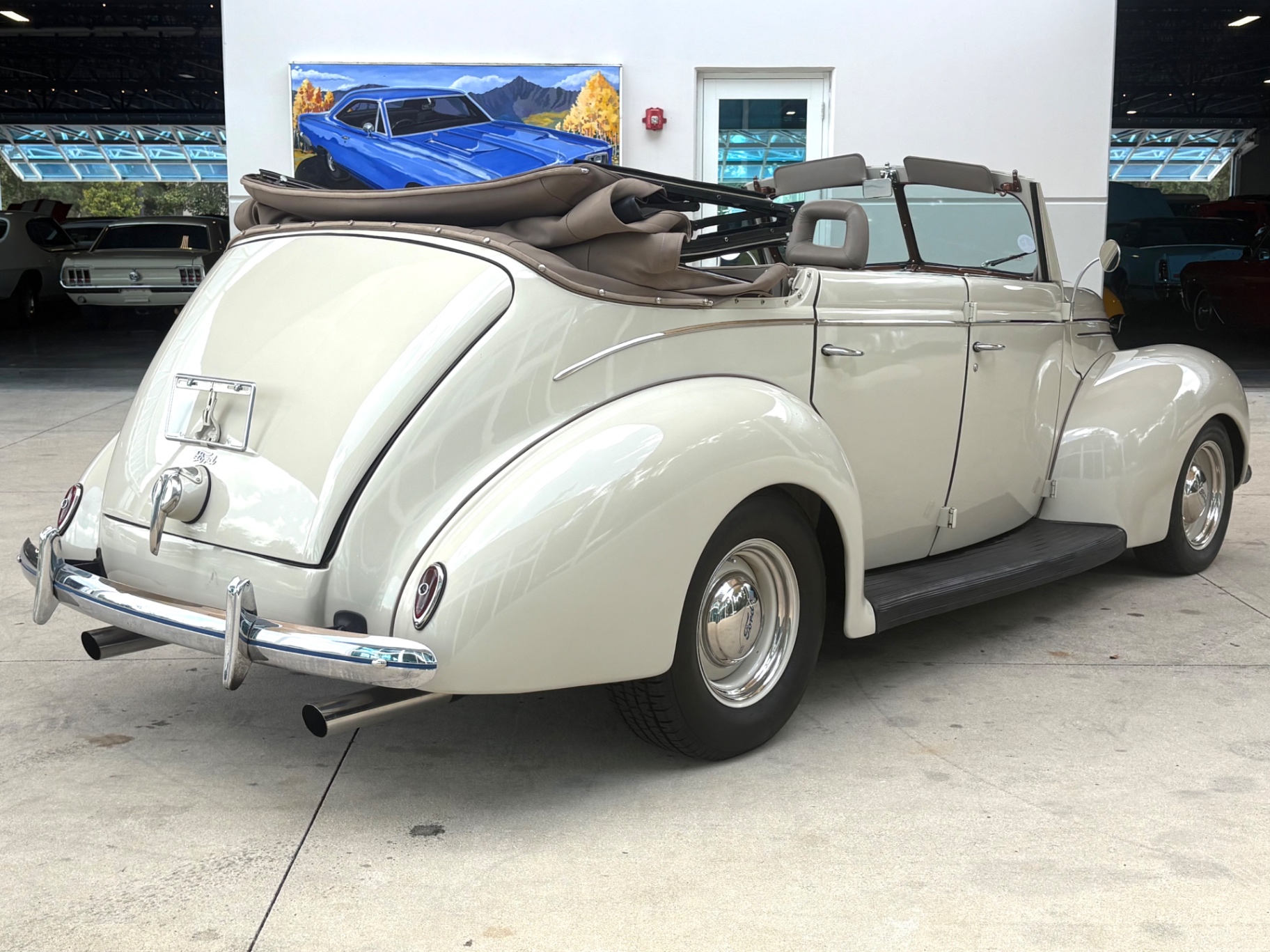
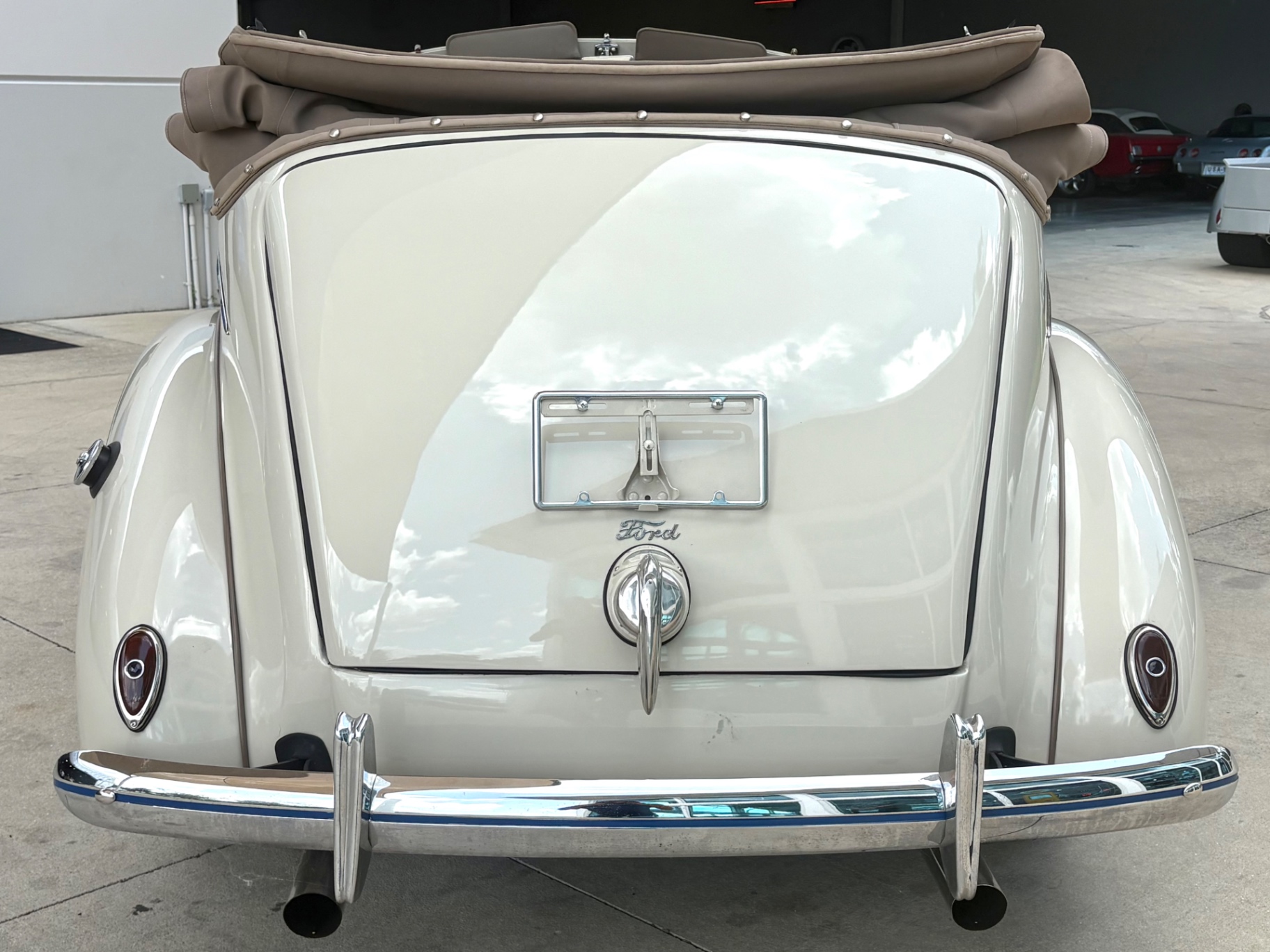
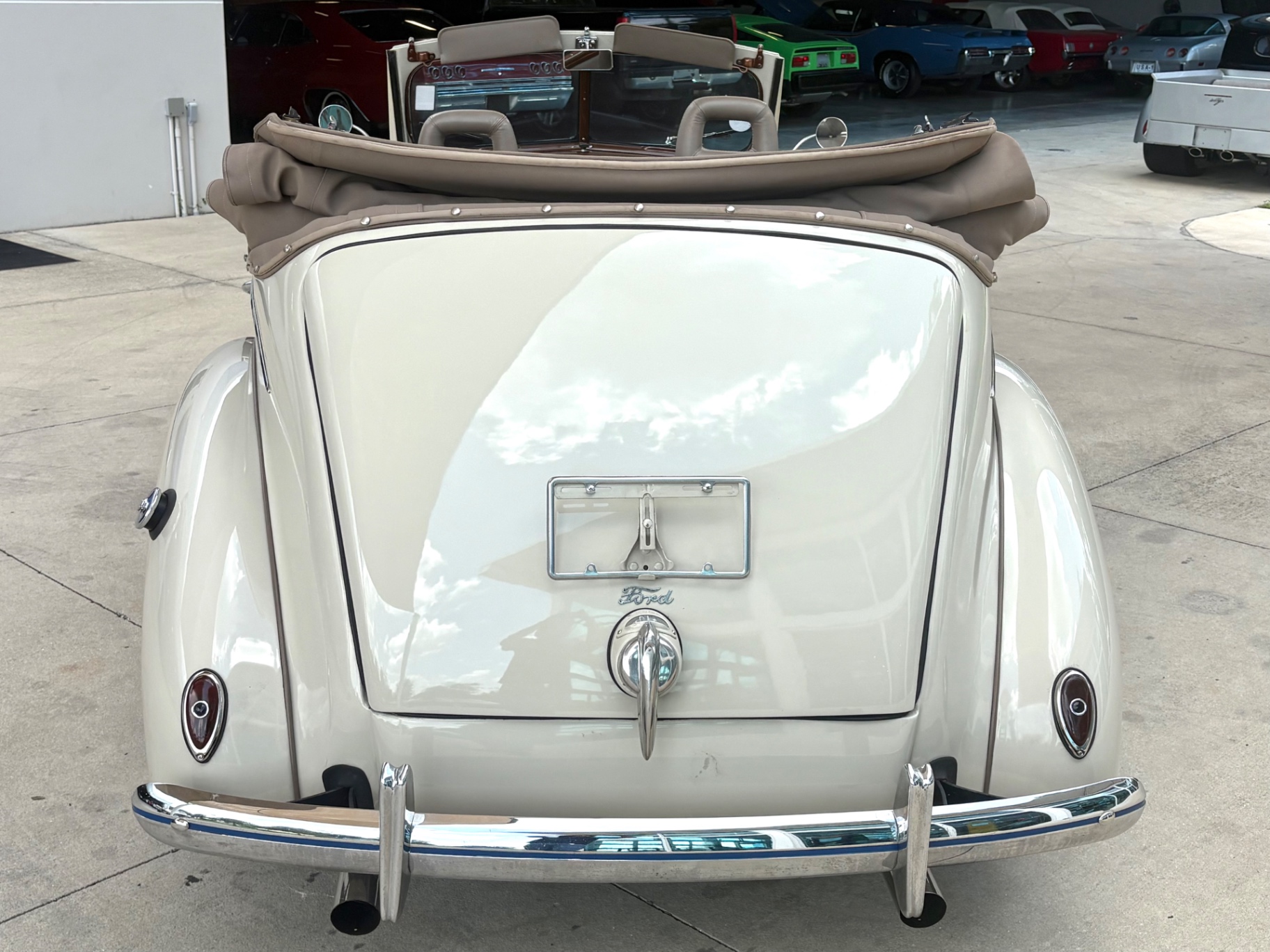
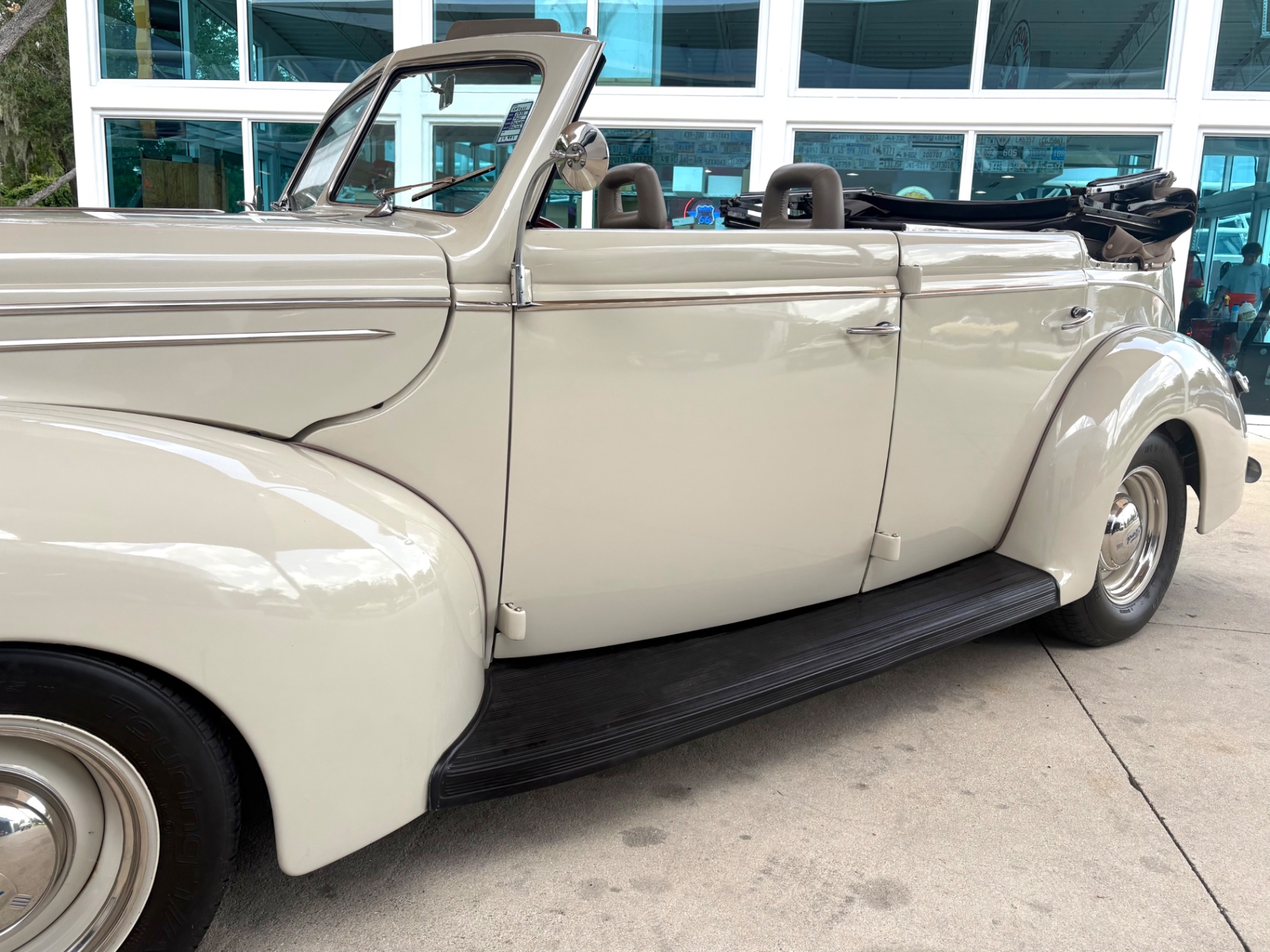
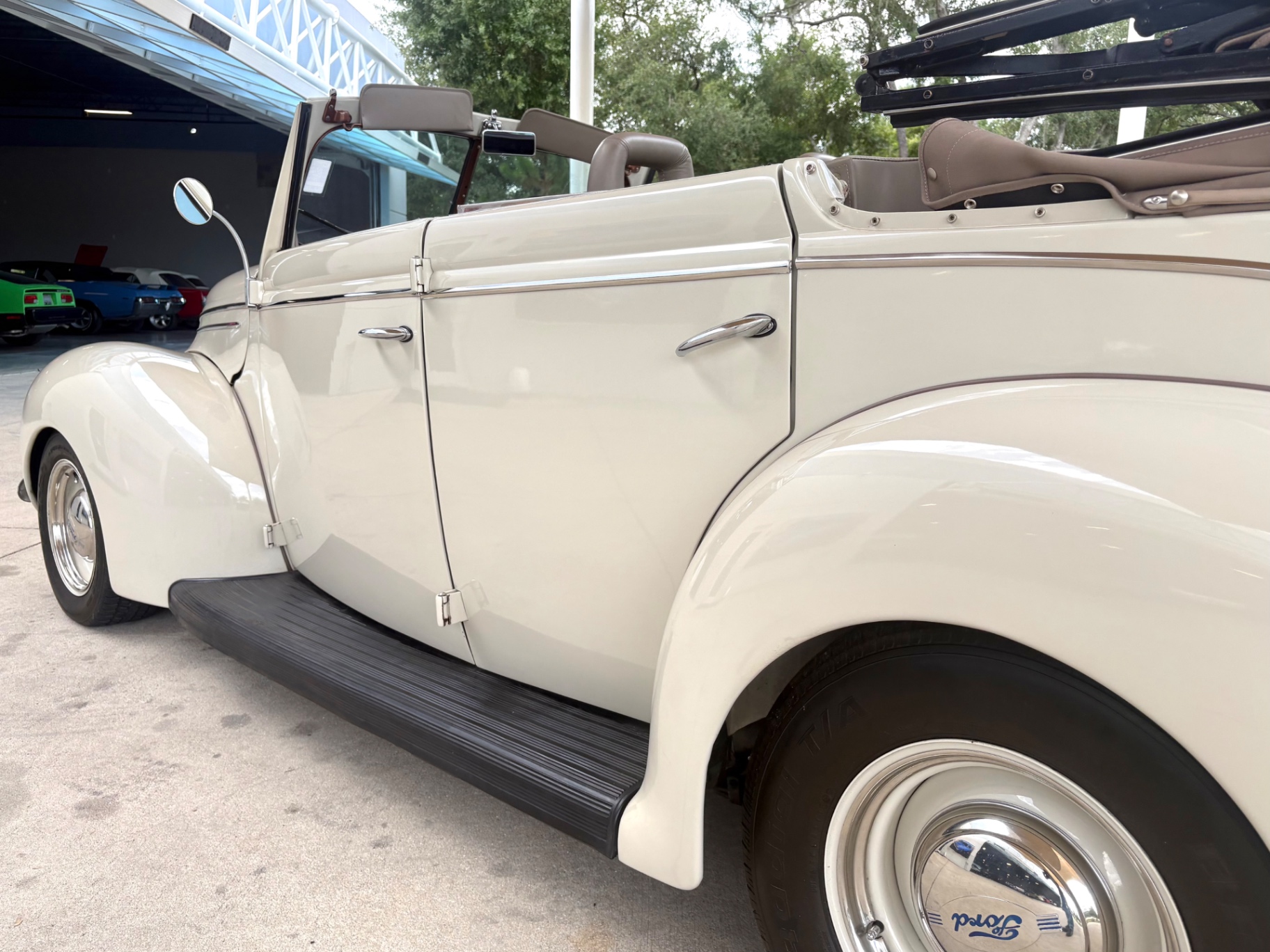
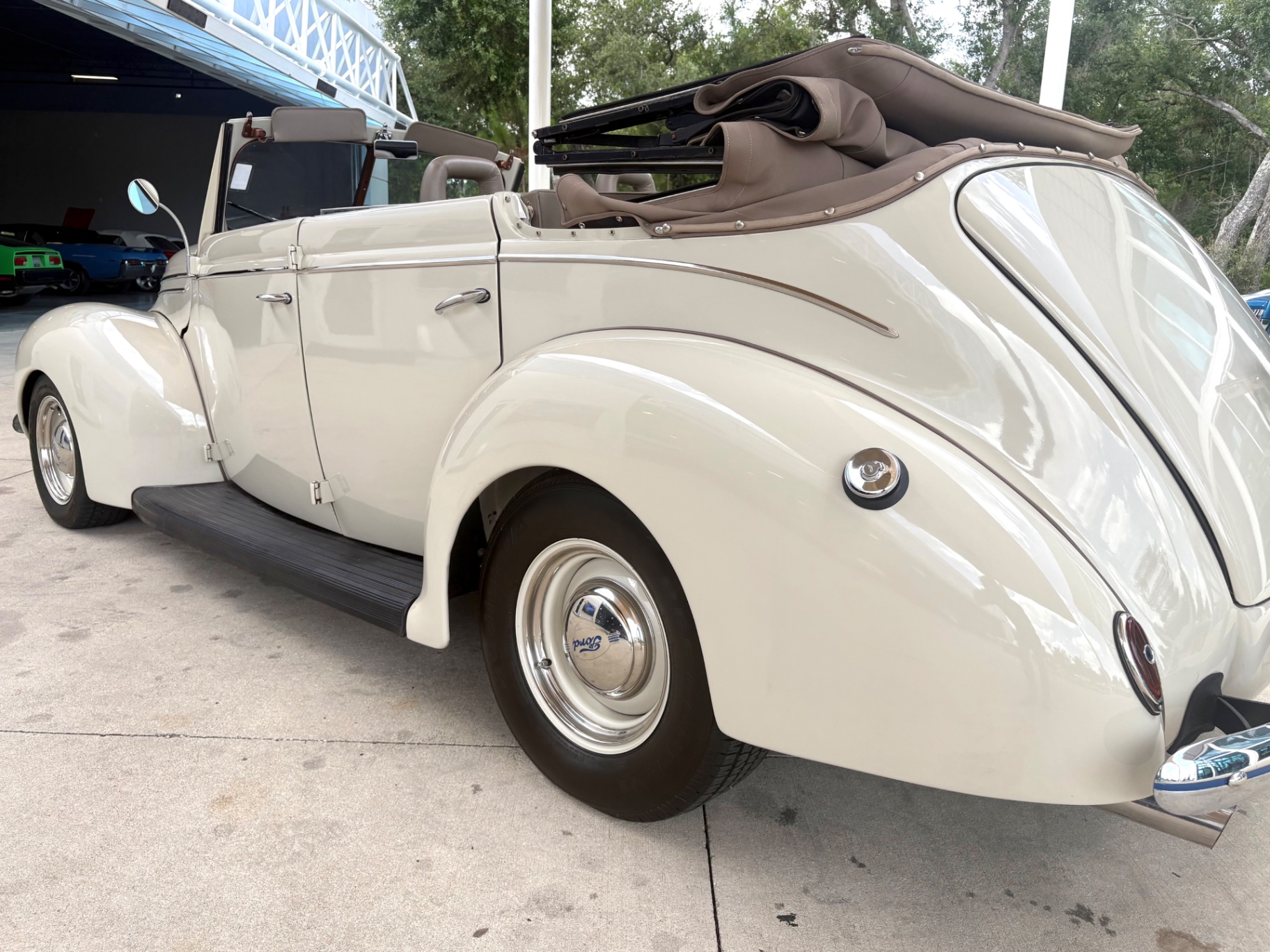
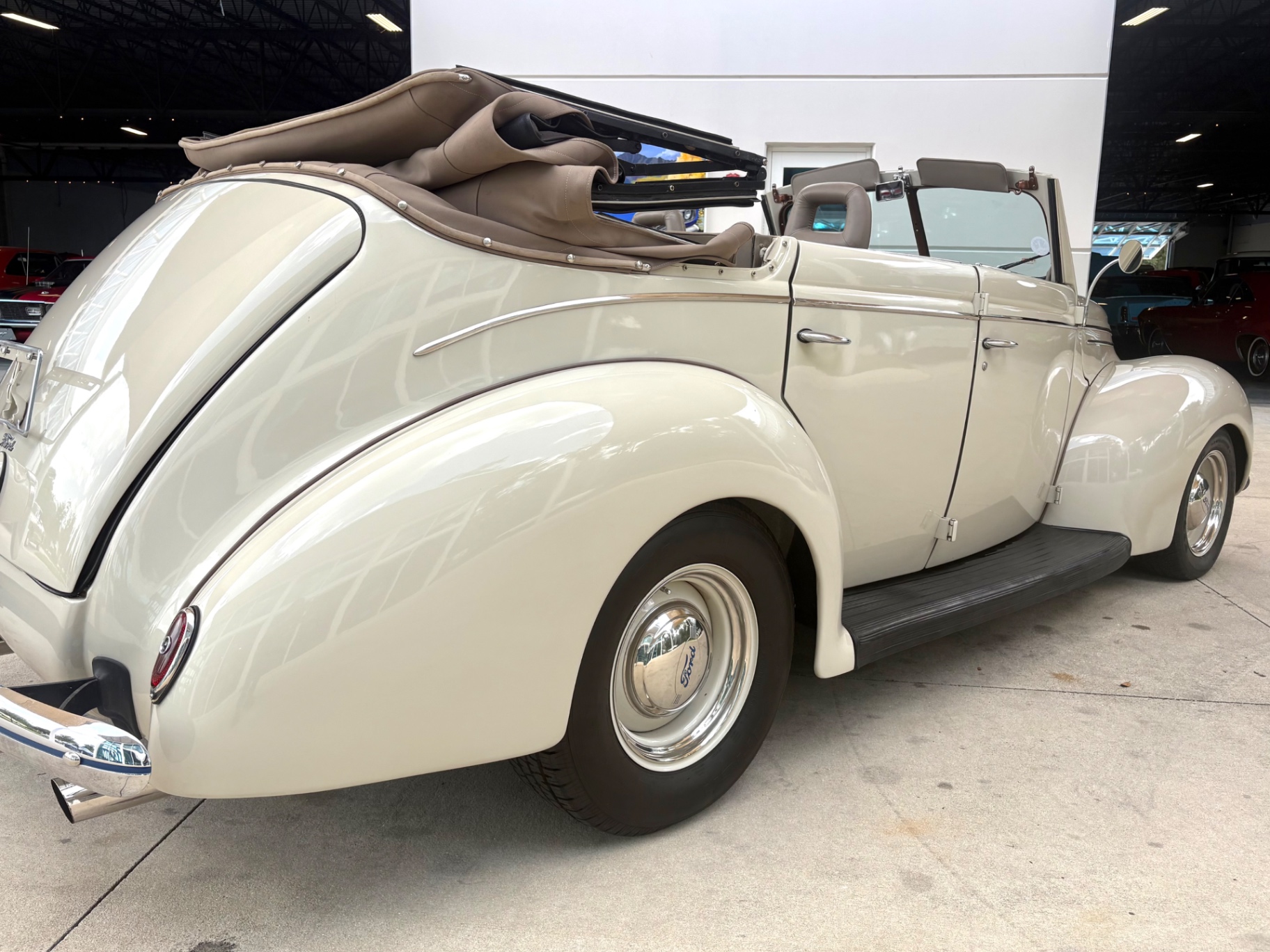
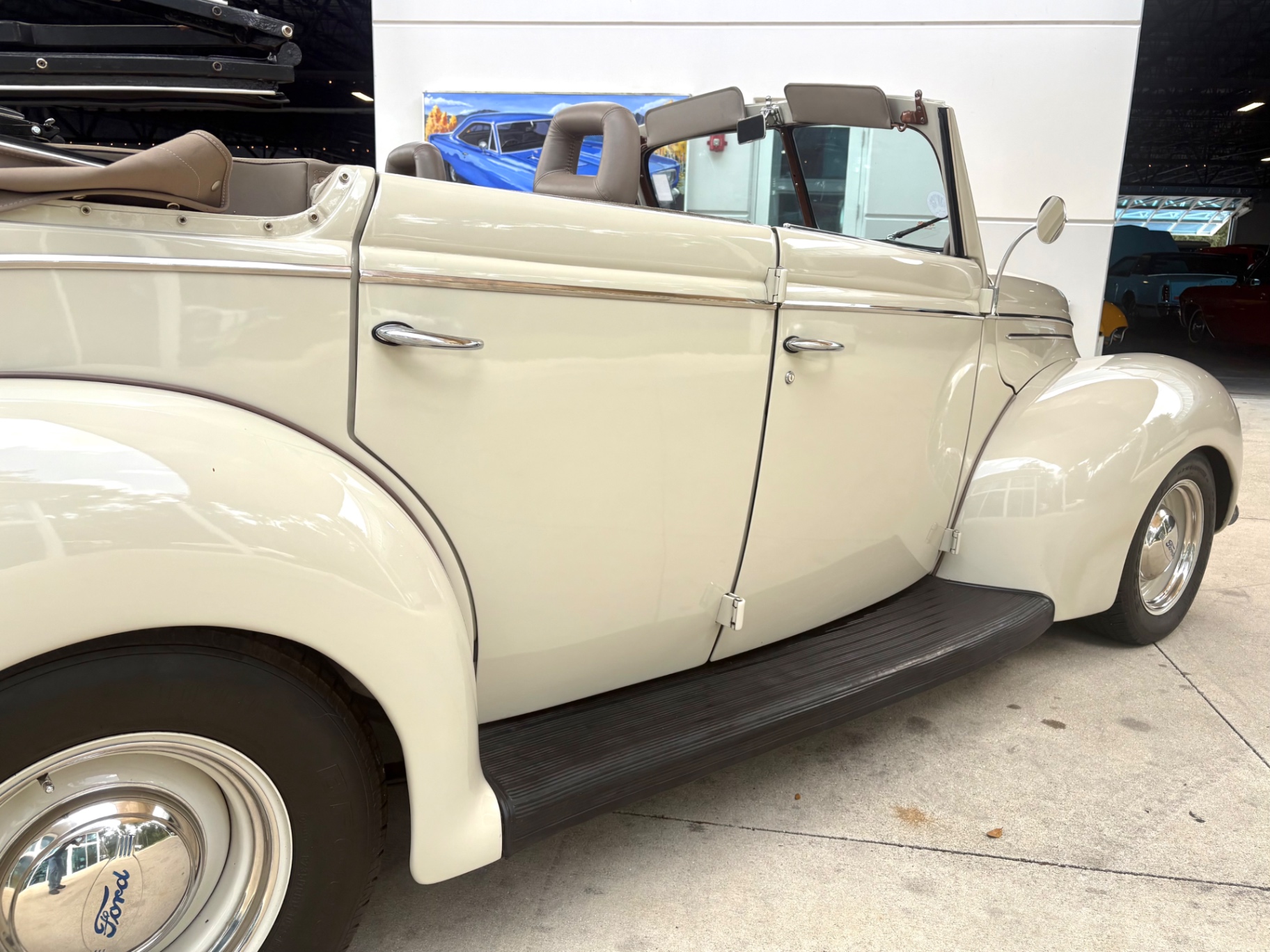
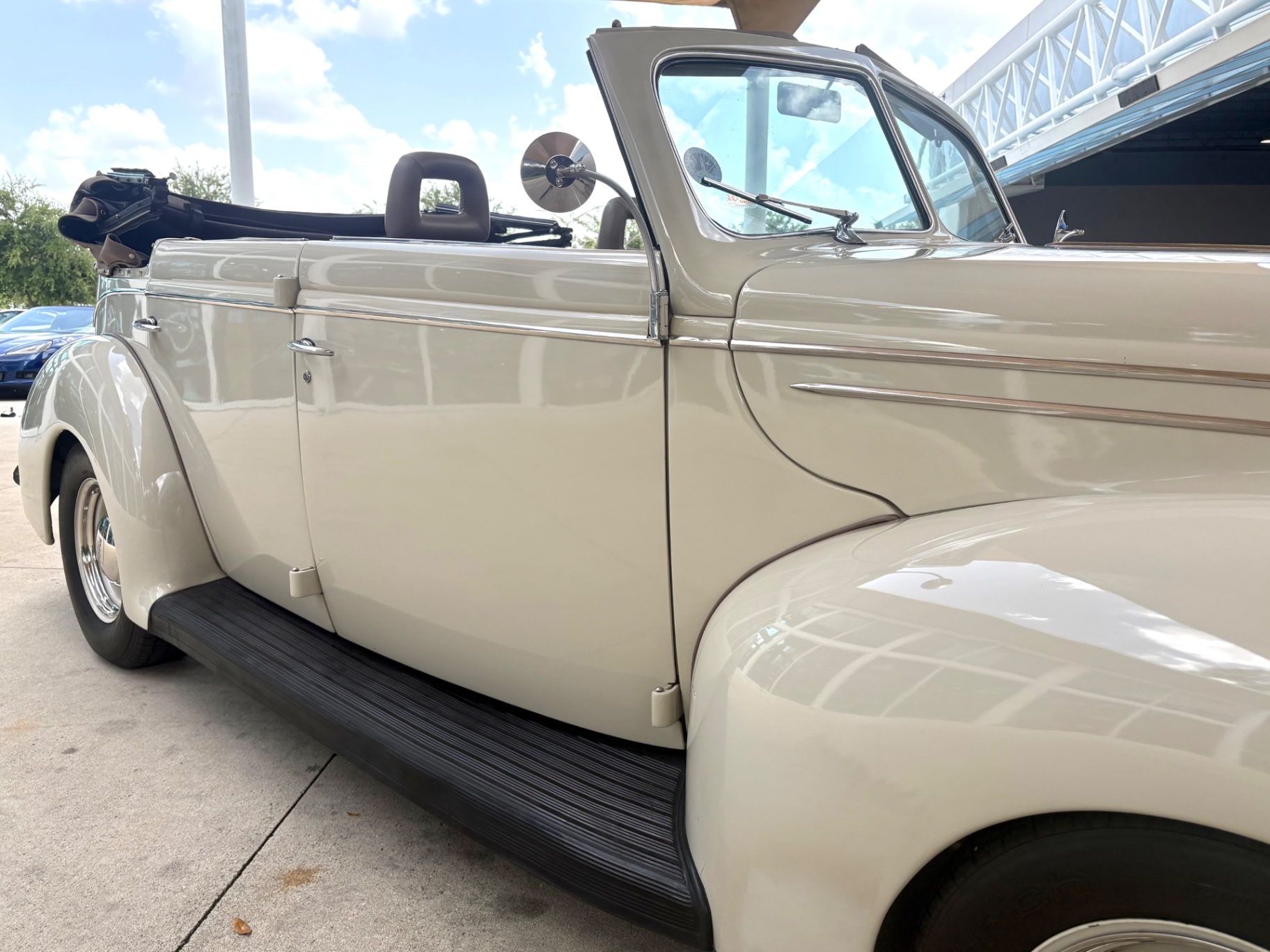
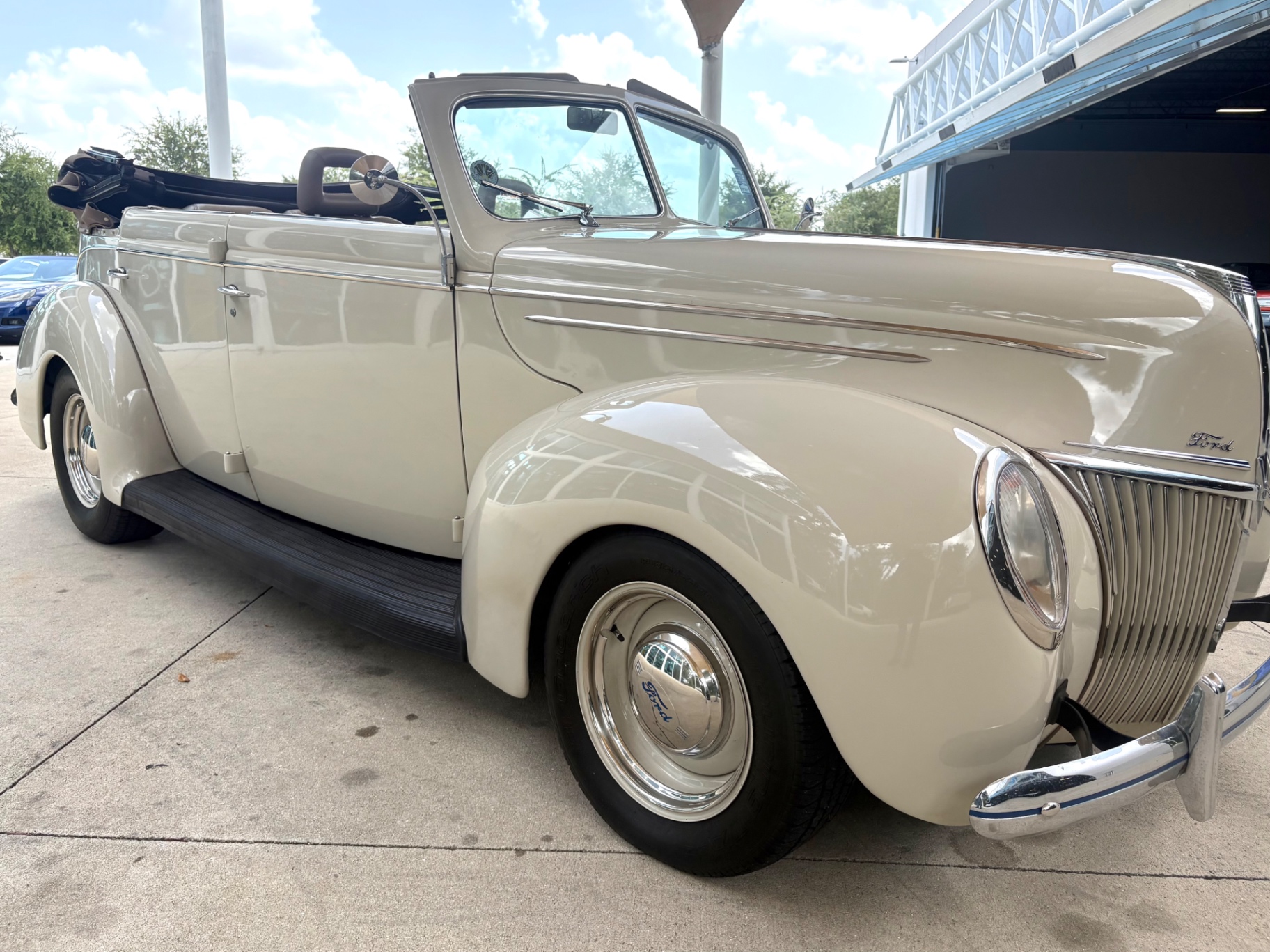
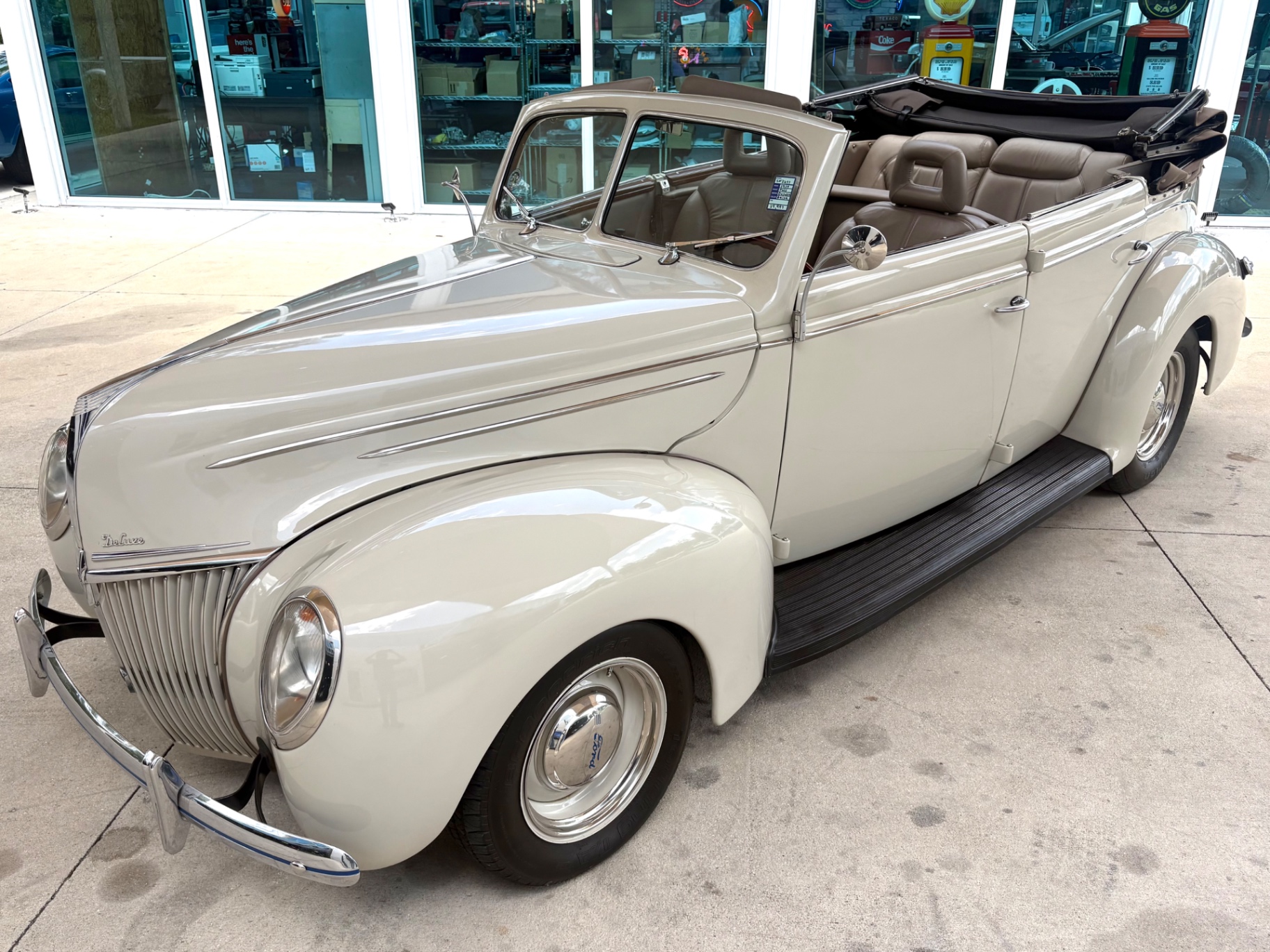
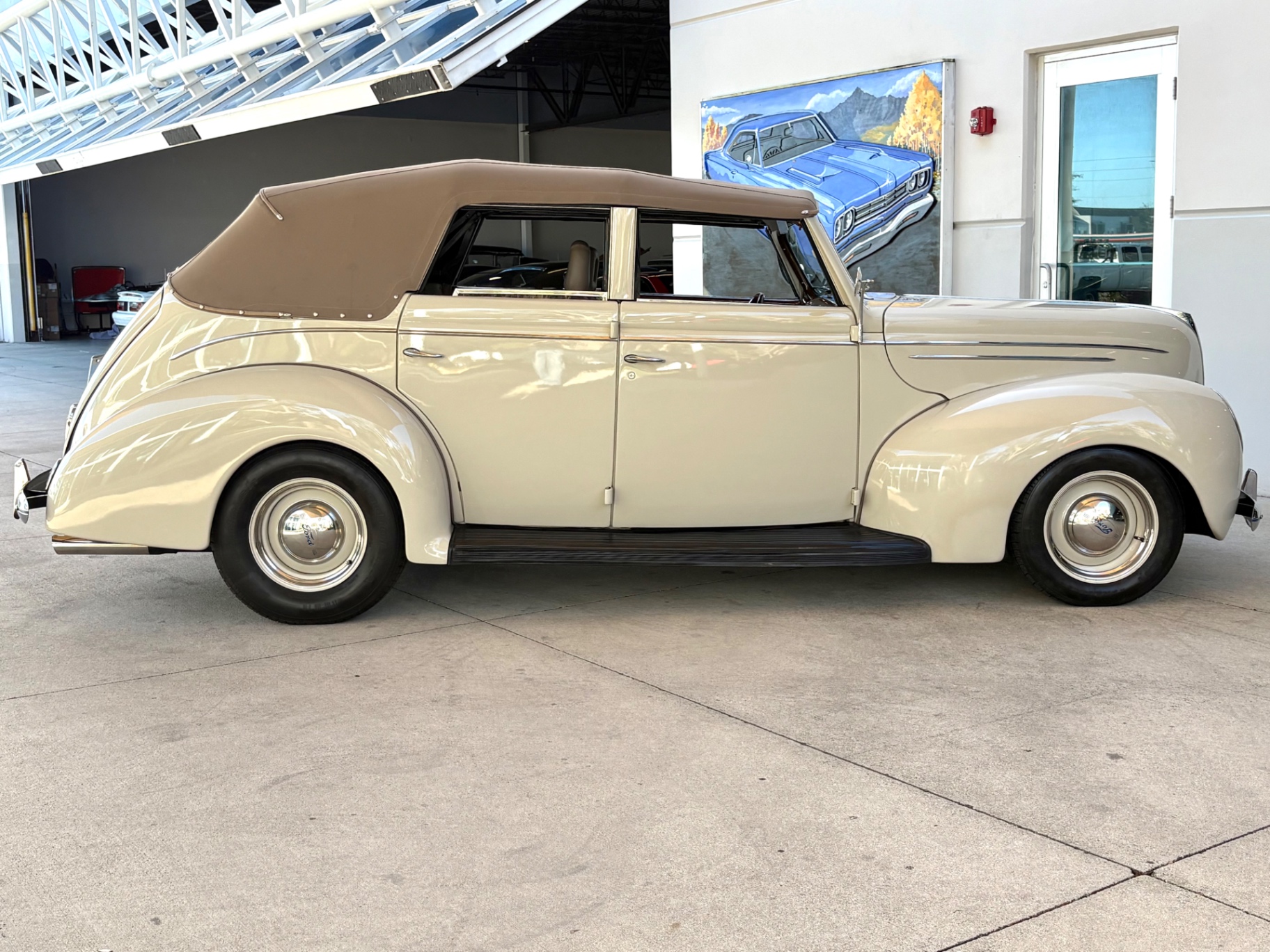
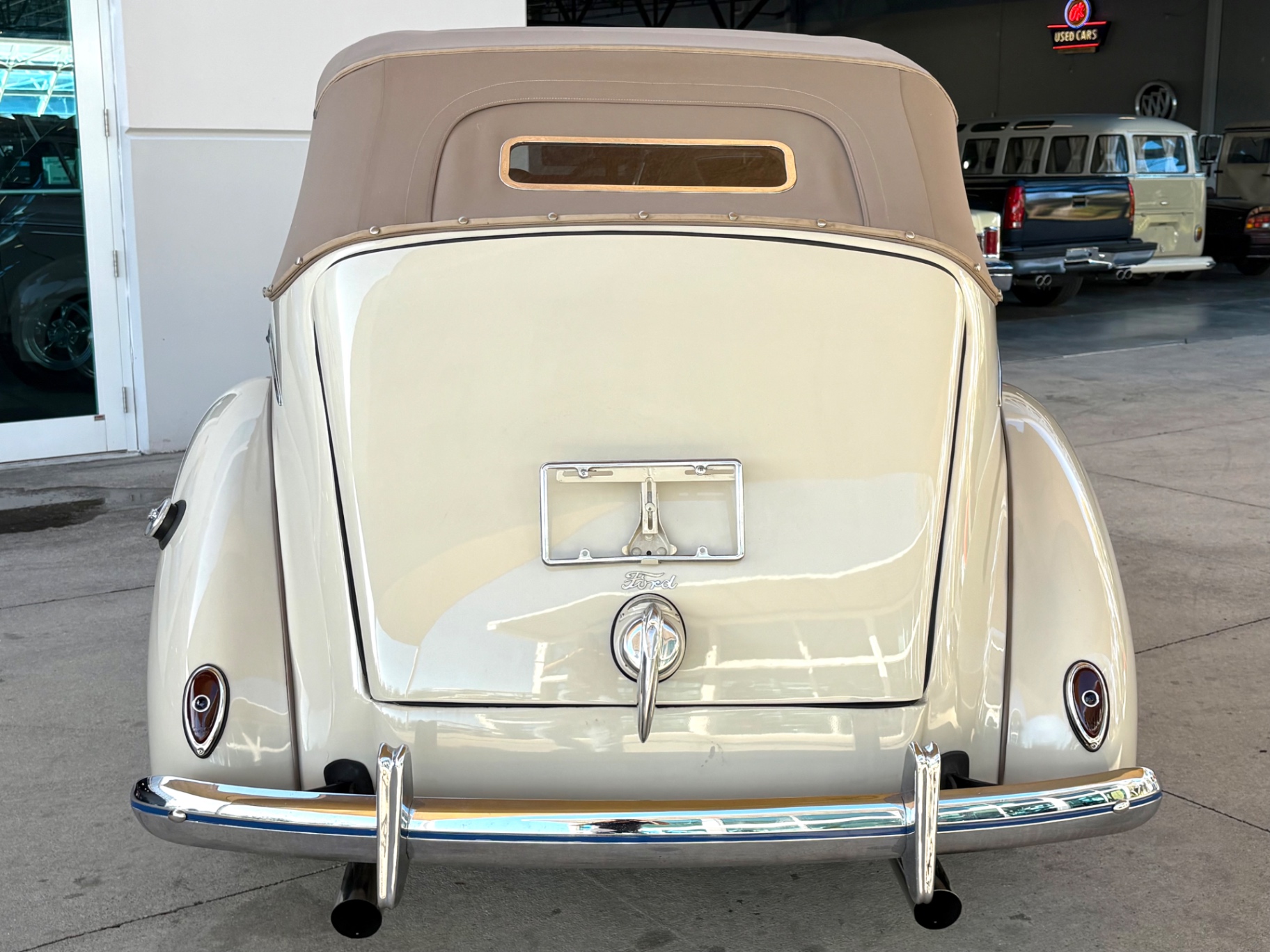
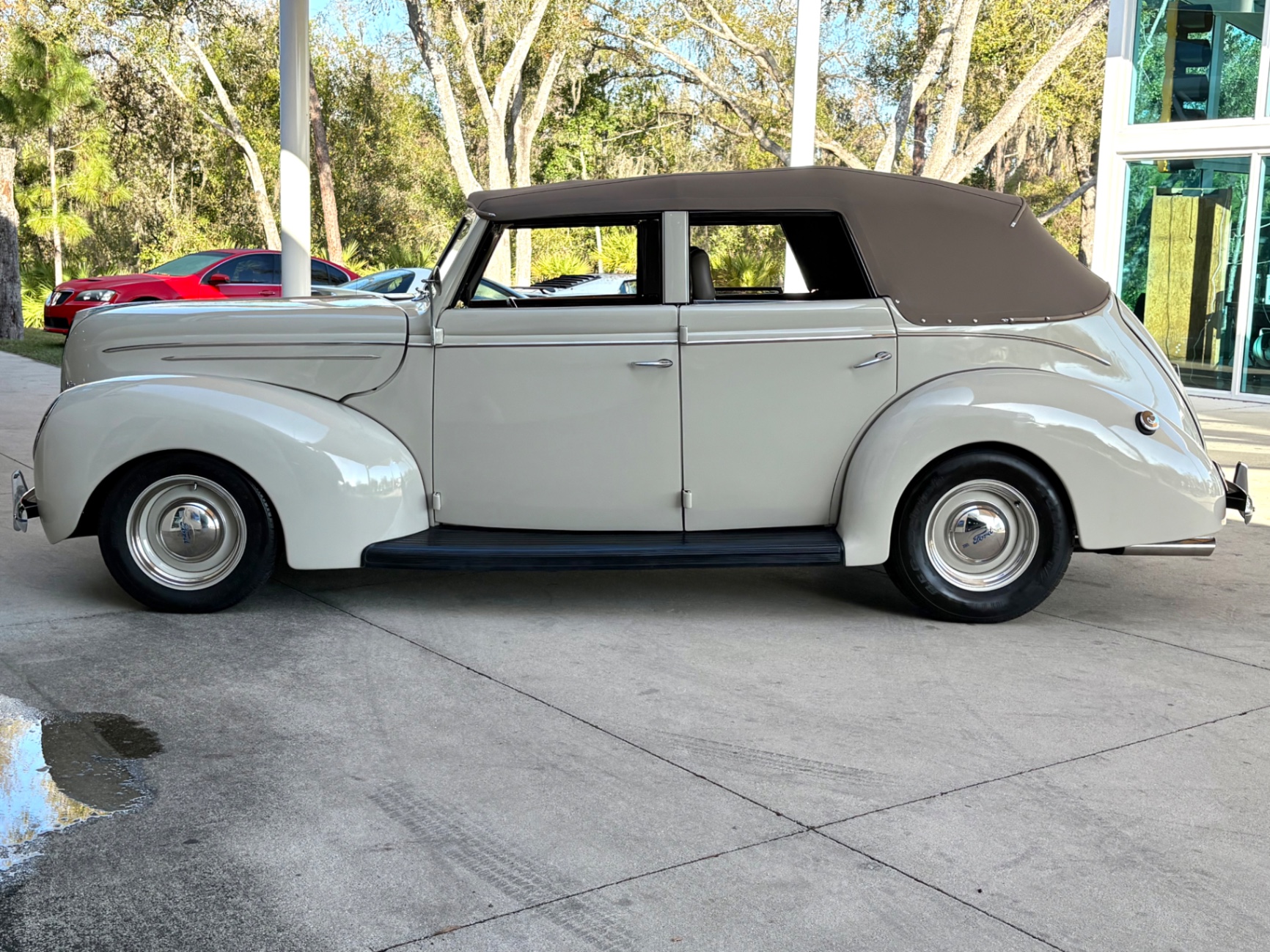
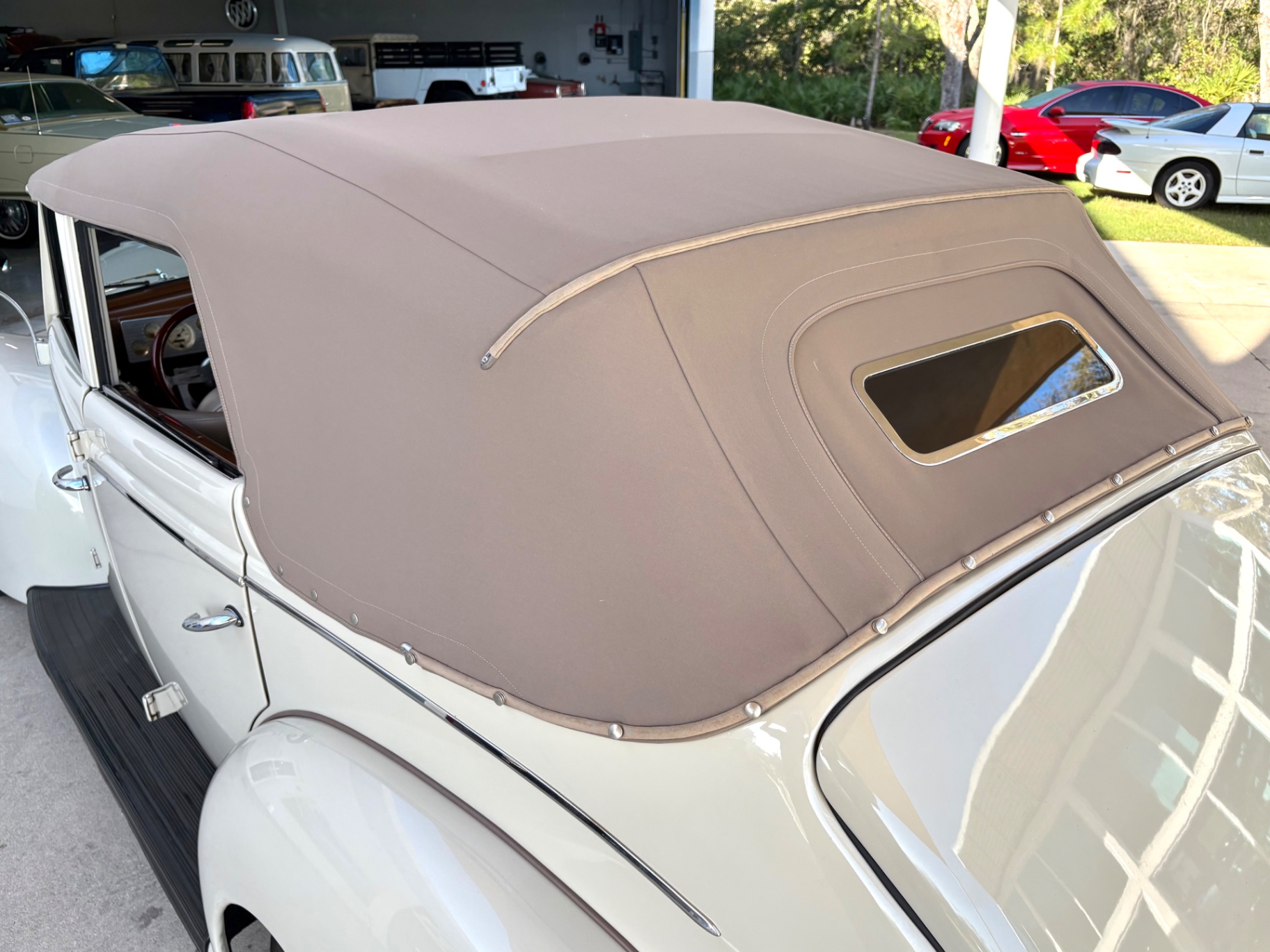
1939 Ford Deluxe Four-Door Convertible Sedan Street Rod — Boss 302 V8, Four Two-Barrel Carbs, Full Leather Interior
Why This Car Is Special
The 1939 Ford Deluxe was the last pre-war Ford to wear the classic styling that defined the late 1930s. Designed under the direction of Bob Gregorie, the 1939 Ford Deluxe carried a vertical bar grille, sweeping fenders, and a profile that remains one of the most recognizable silhouettes in American automotive history. Ford offered the Deluxe in a broad range of body styles that year, but the four-door convertible sedan was always among the rarest configurations. Unlike a standard convertible, the four-door convertible sedan retained a full set of doors and a rear-hinged back door on each side, giving passengers genuine access to the back seat without sacrificing the open-air experience. Production numbers for this body style were extremely limited even when new, and the passage of more than eight decades has made intact, steel-bodied examples genuinely scarce.
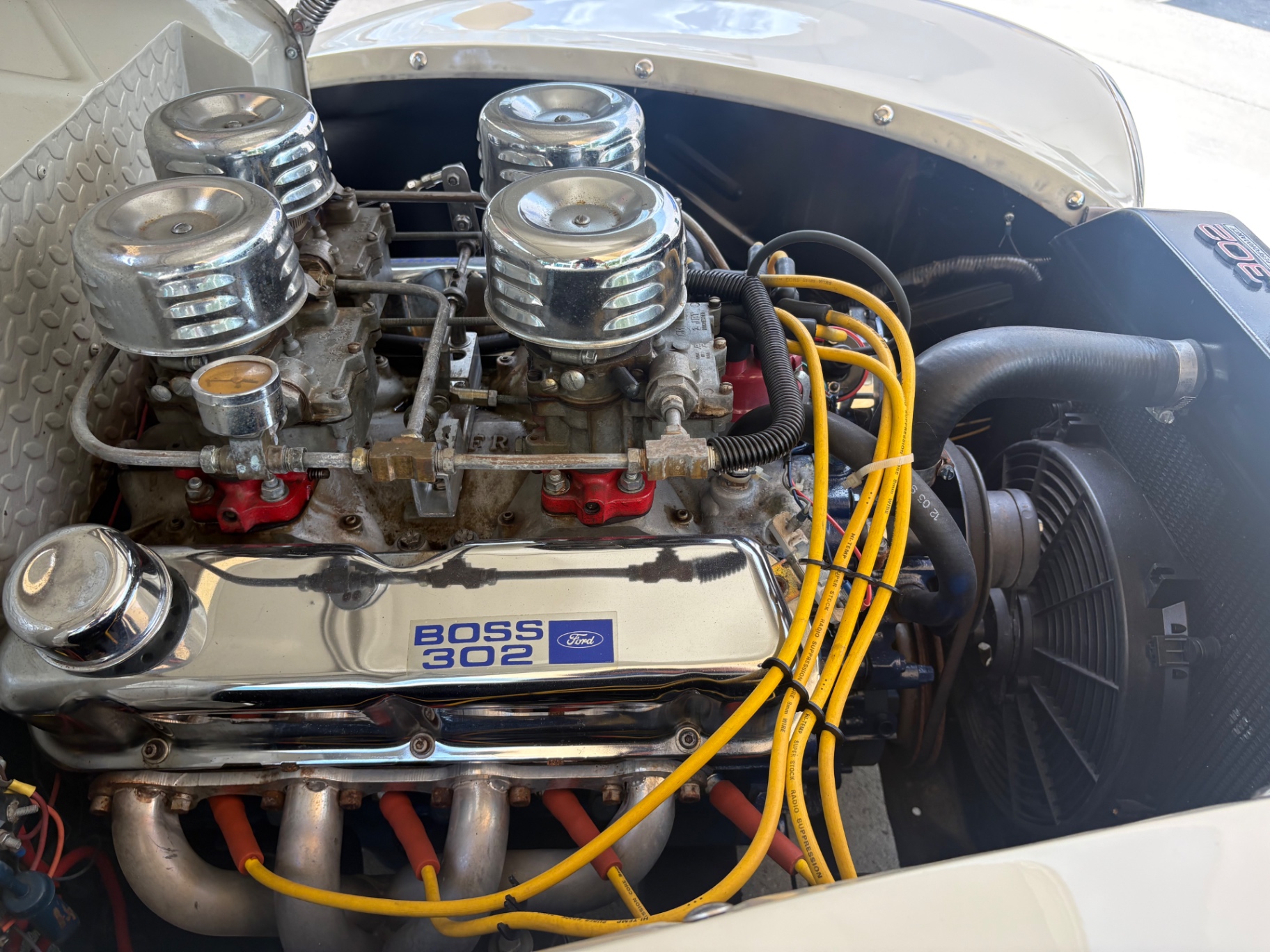
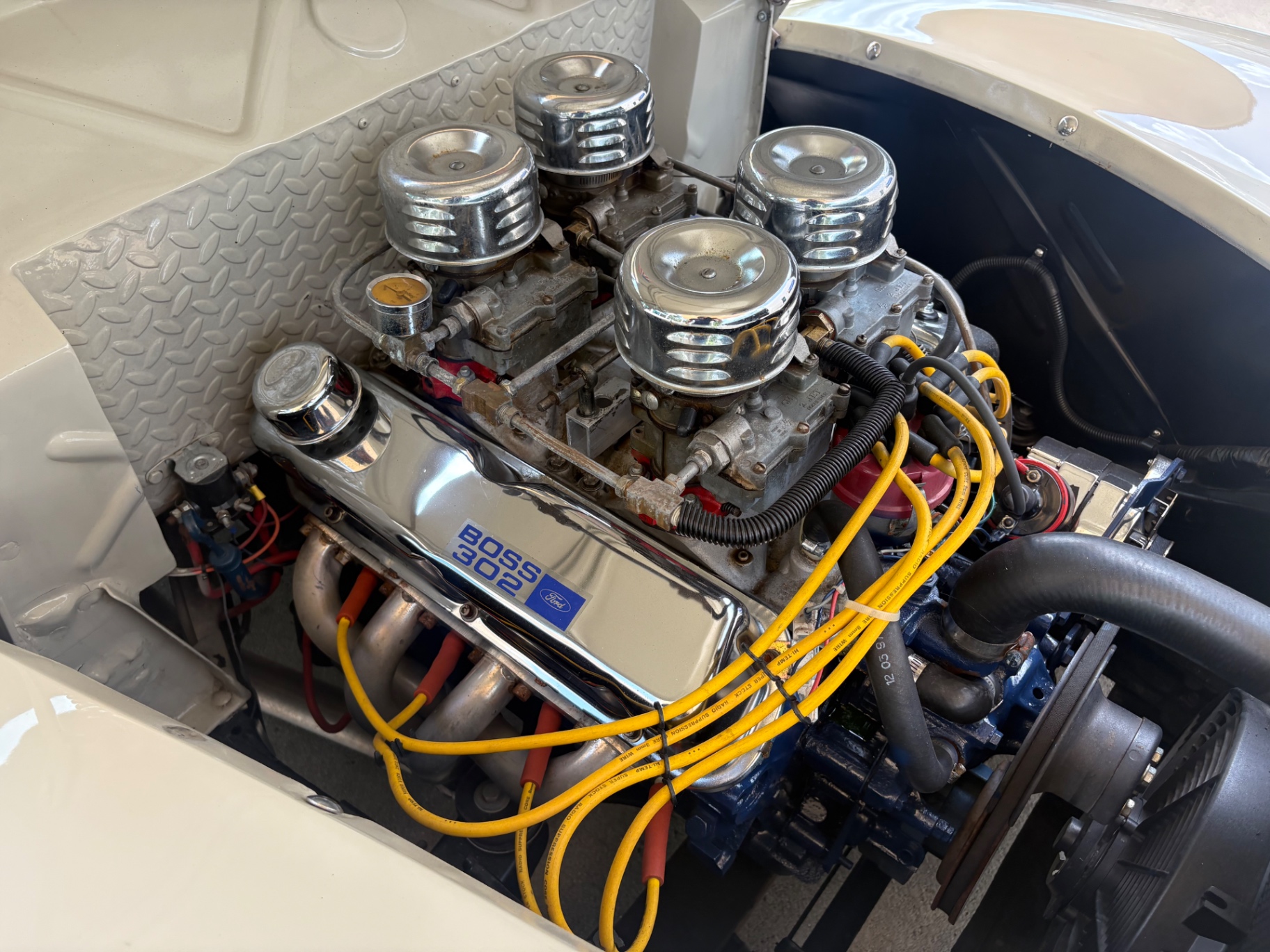
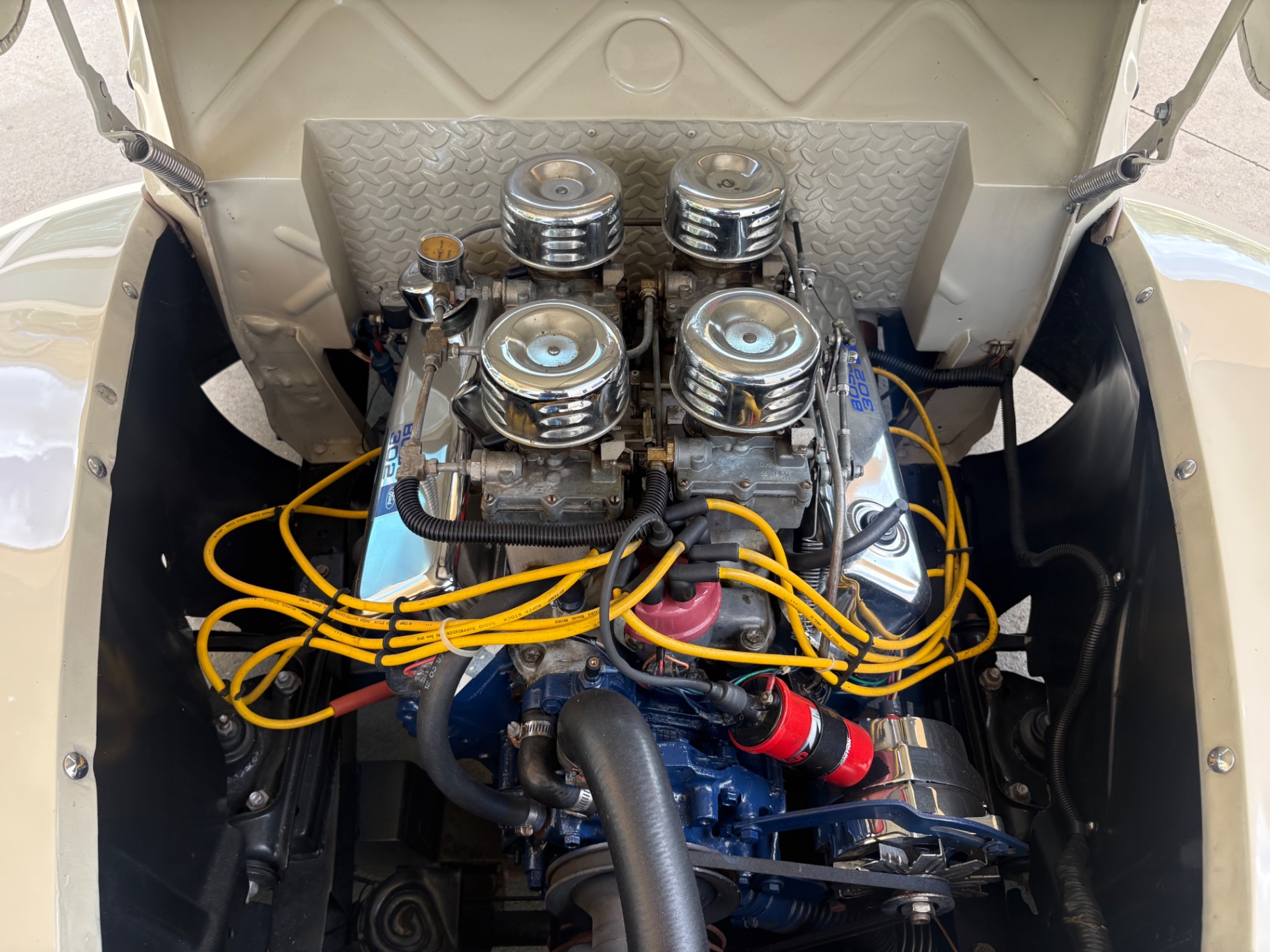
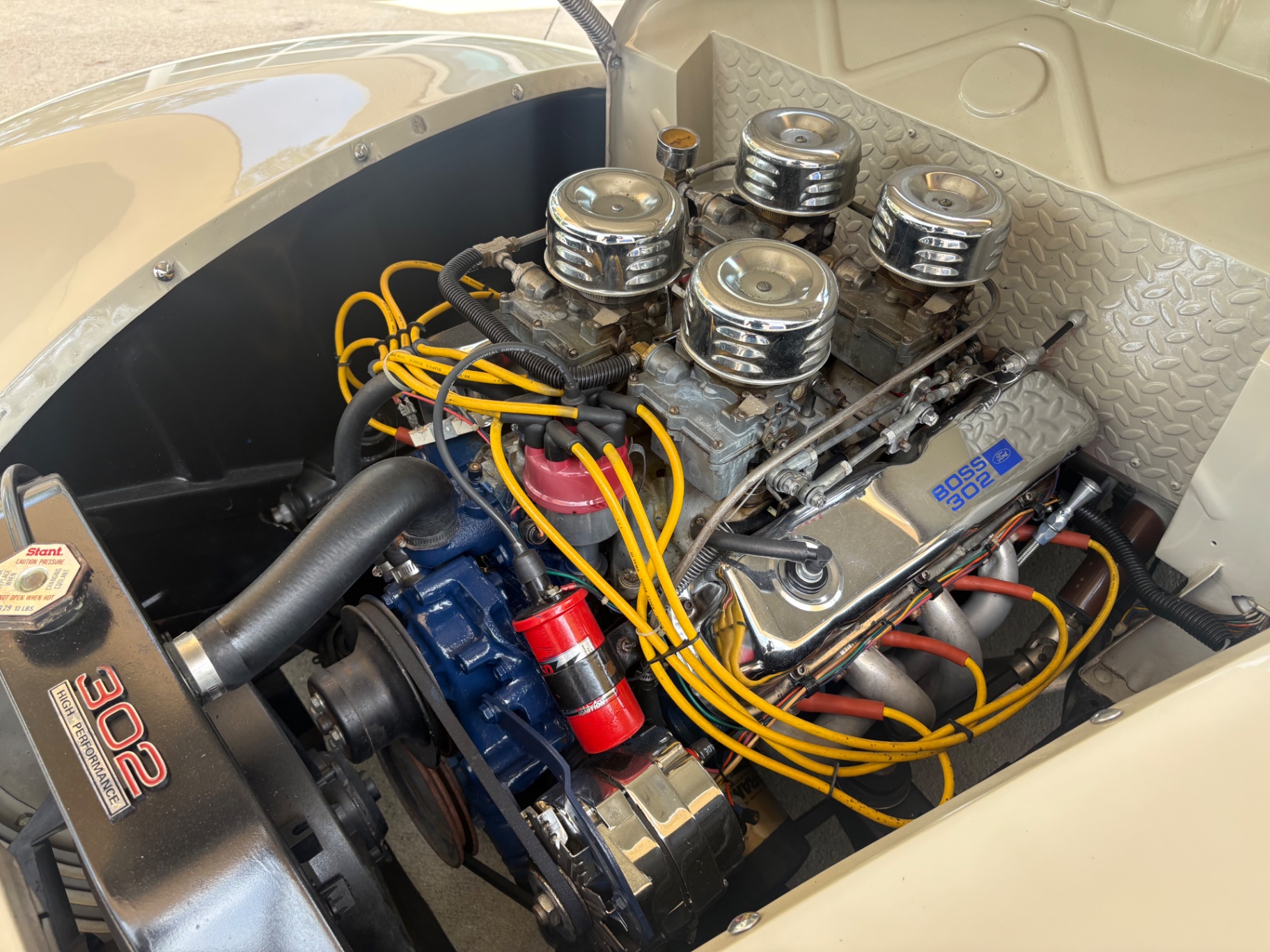
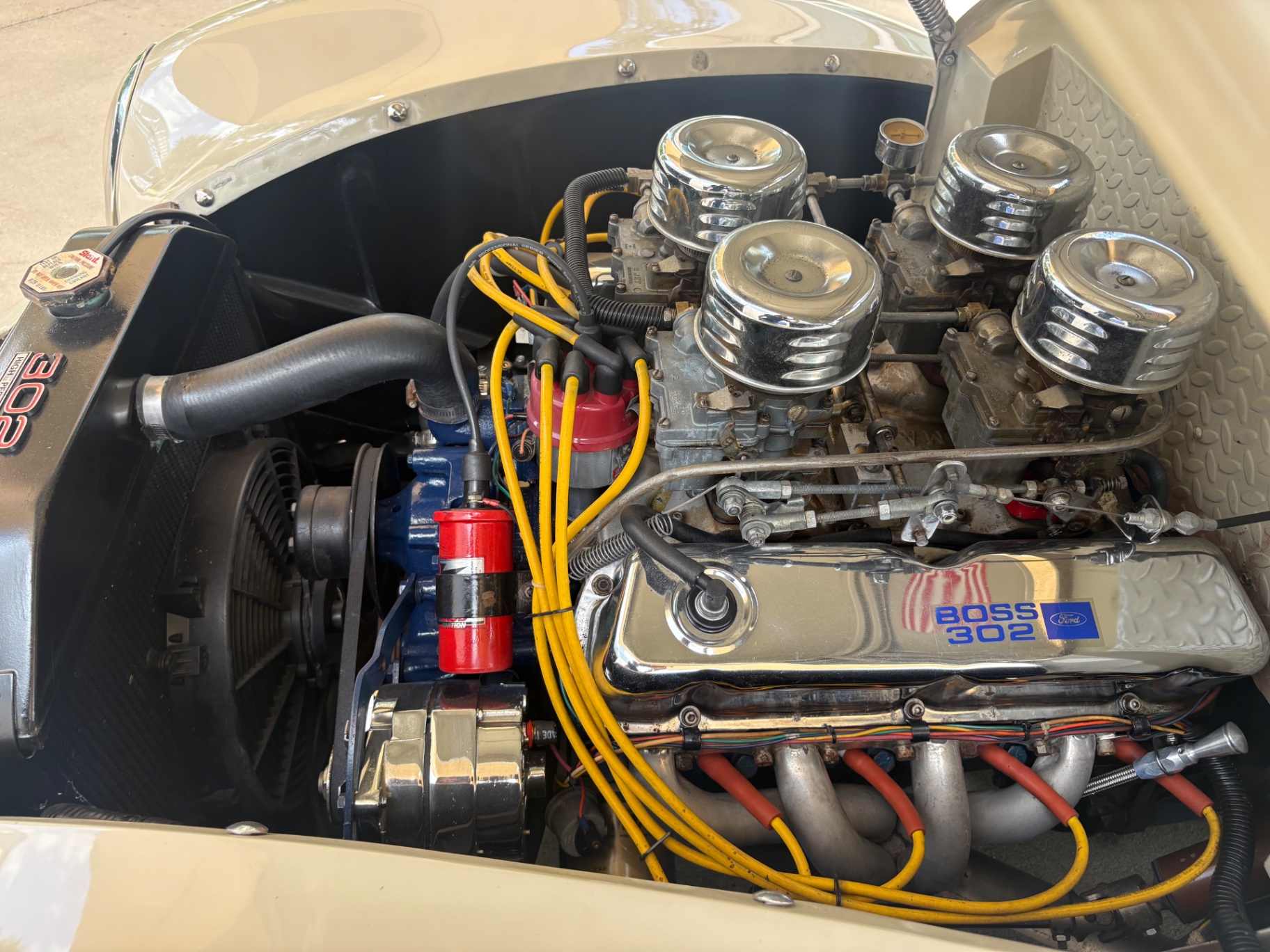
This particular 1939 Ford Deluxe takes the open-air four-door concept and builds on it in a direction that makes the car equally at home on a long cruise as it is at a show field. The builder chose a Boss 302 V8 crate engine as the heart of the build — a logical and historically appropriate choice, since the Boss 302 is a Ford engine through and through. Topped with four two-barrel carburetors, the intake setup is a serious nod to the tradition of multi-carb street and show engines that defined custom Ford builds for decades. The result under that cream-painted hood is a visual centerpiece as much as a powerplant. A complete American Auto wiring harness, electronic ignition, and a chrome alternator mean this is not a car that was given a modern engine and left with antique electrical infrastructure trying to keep up with it.
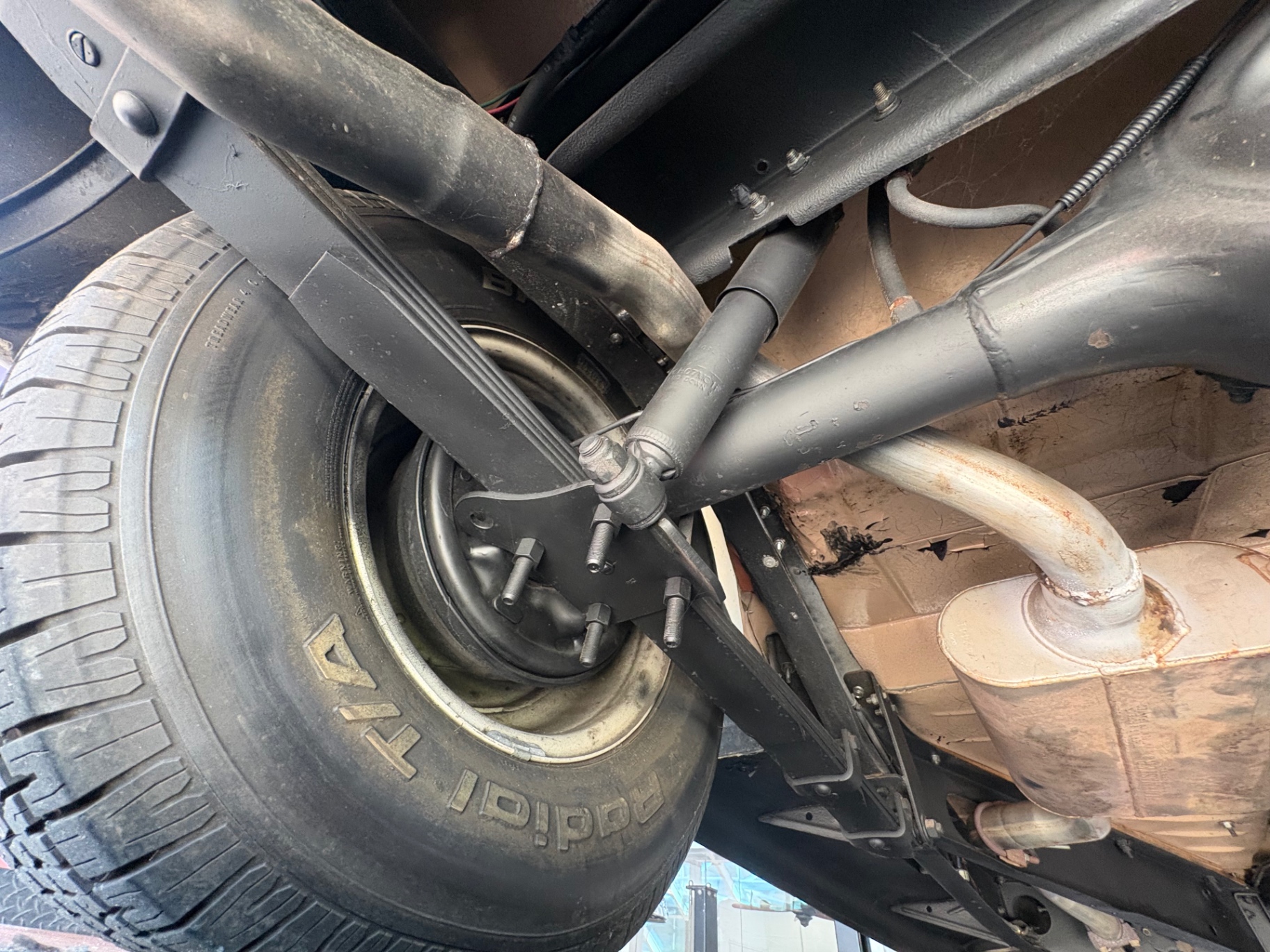
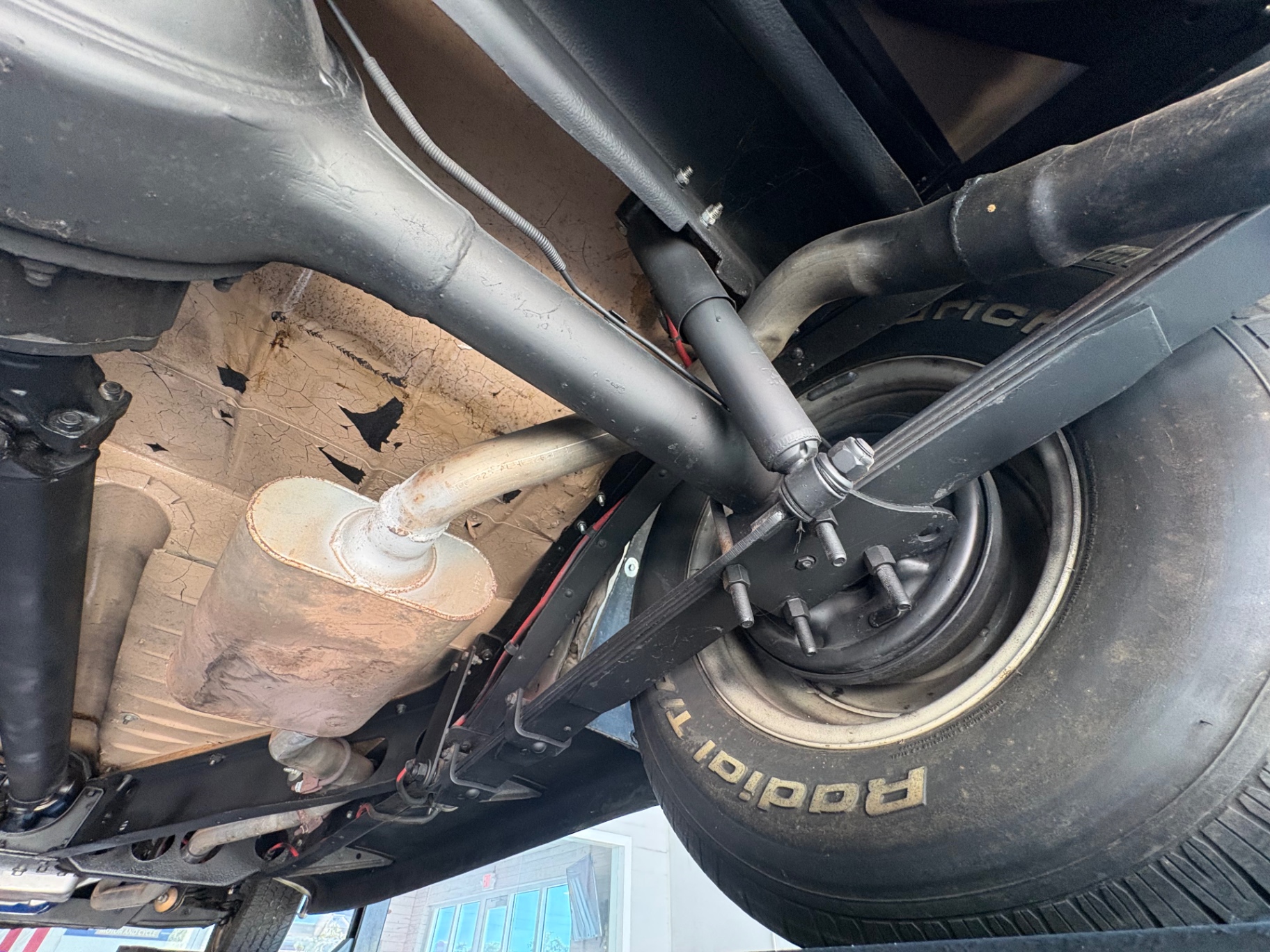
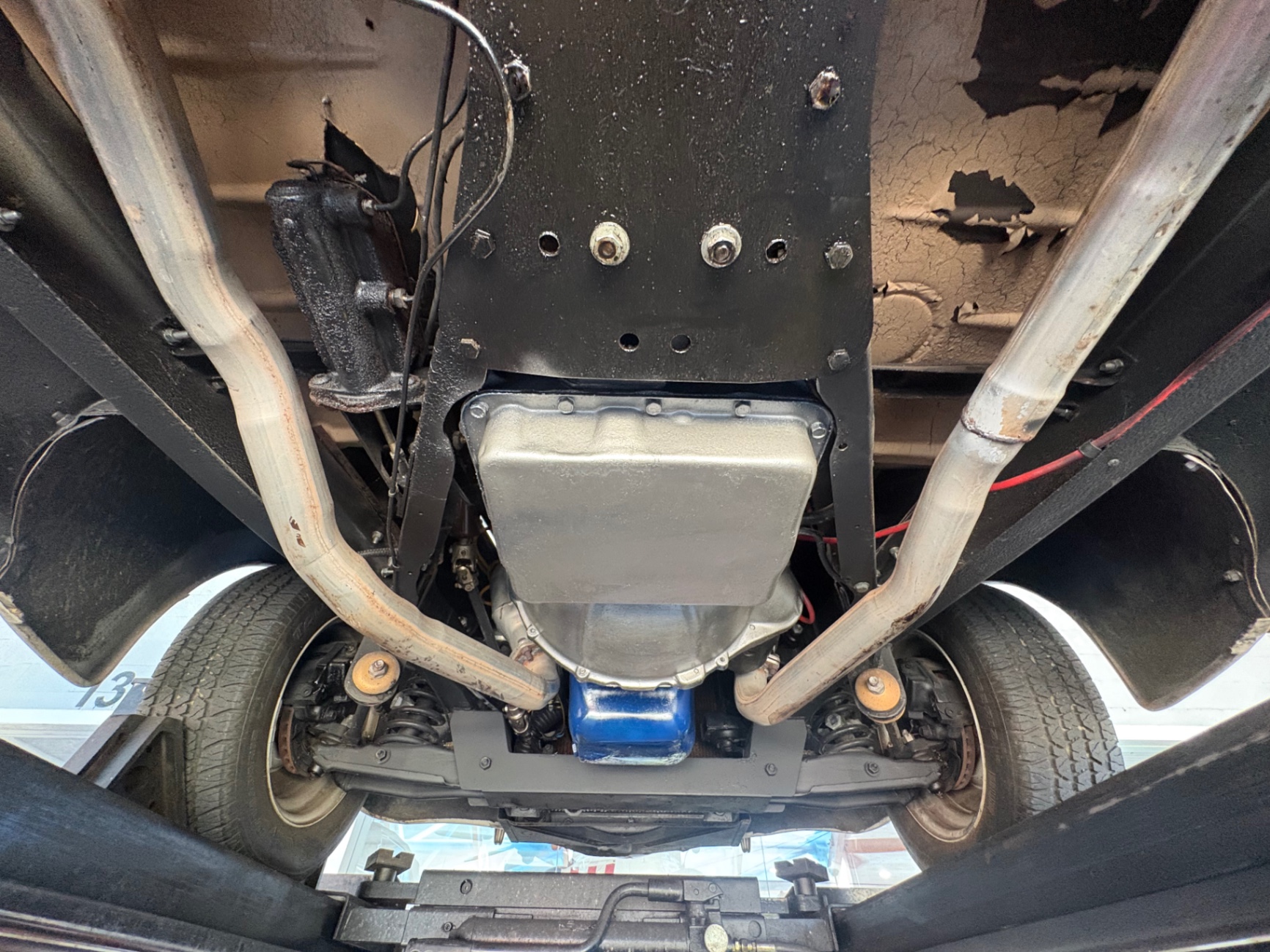
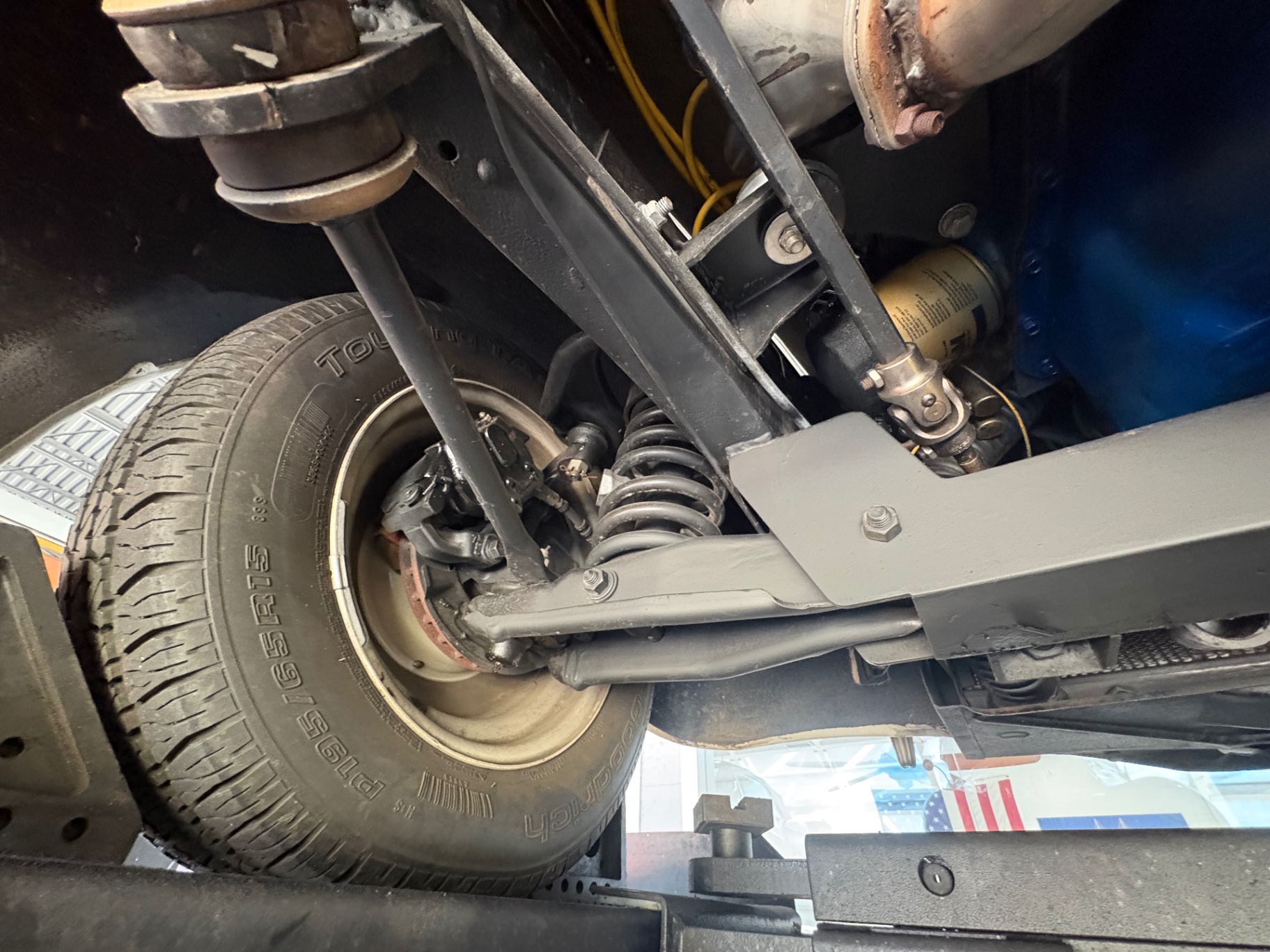
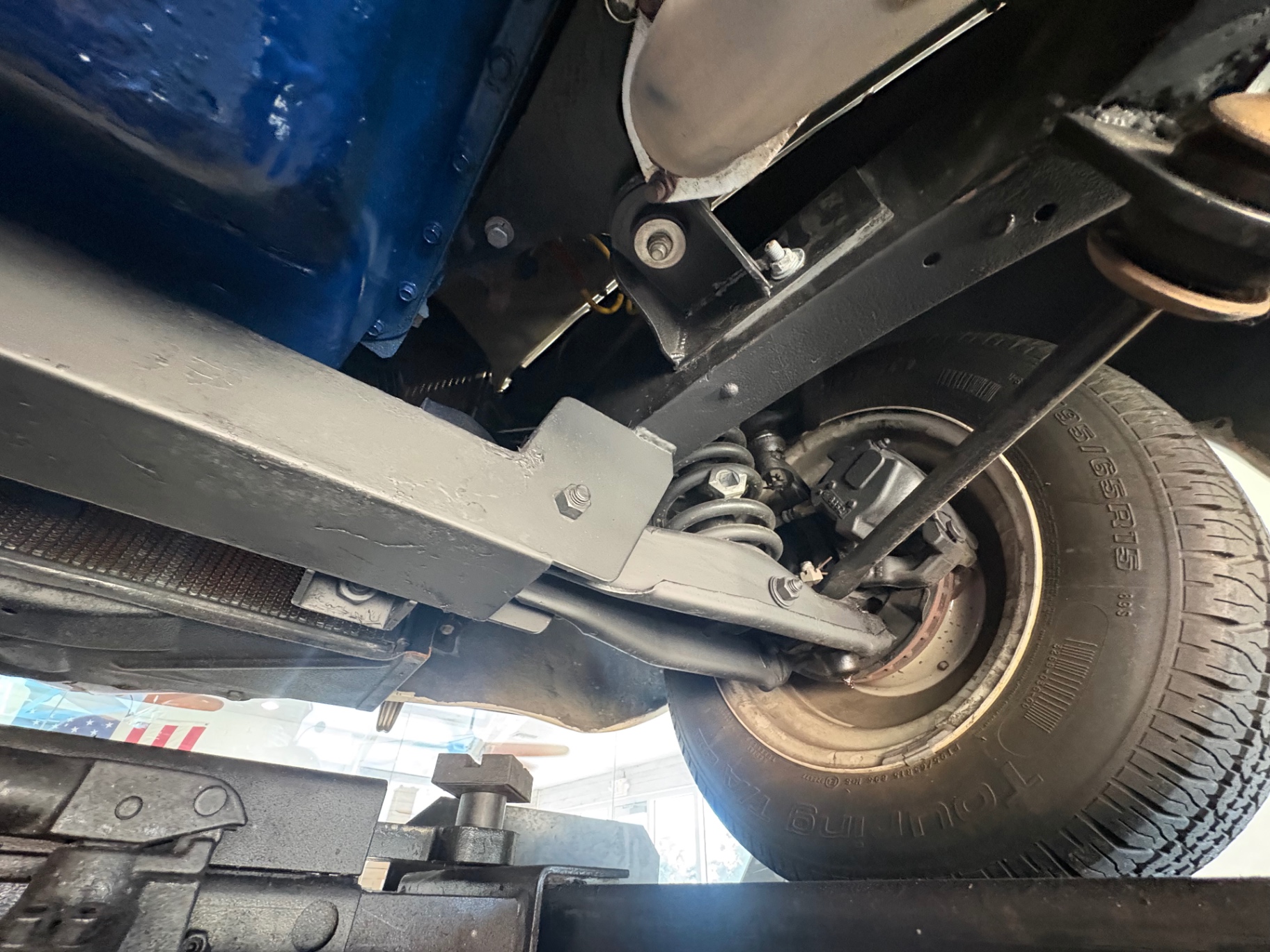
The chassis work is equally thorough. HEIDTS supplied the front end, which includes tubular A-arms, coil-over front suspension, and rack-and-pinion steering — a combination that addresses the handling limitations of the original transverse leaf front suspension while maintaining a period-correct stance. A Ford 9-inch rear end handles the power delivery out back, which is the correct choice for any serious street rod build. The 9-inch has been the default rear axle for custom Ford builds for more than sixty years because of its strength, the wide availability of gear sets and carriers, and its known rebuild path.
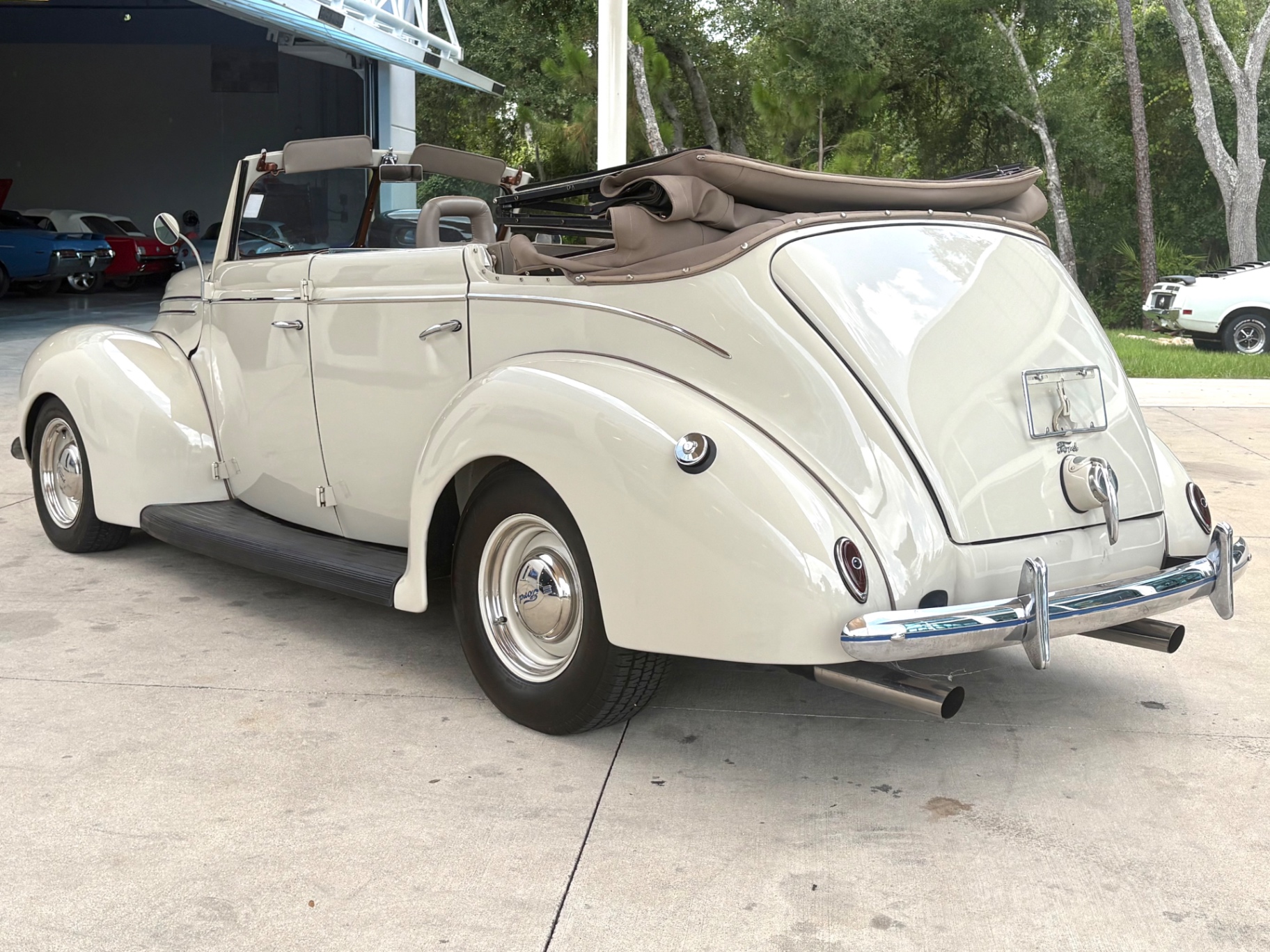
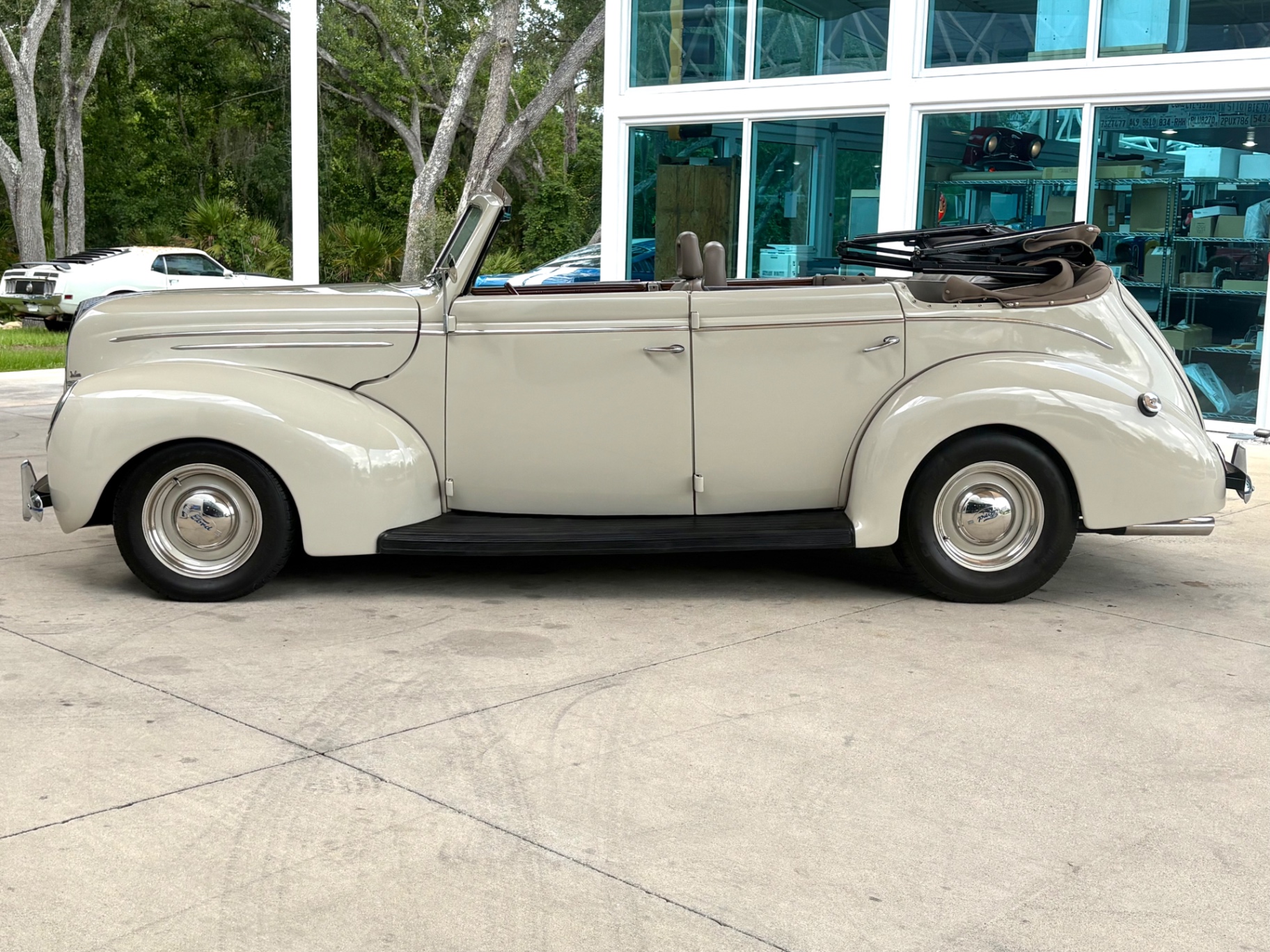
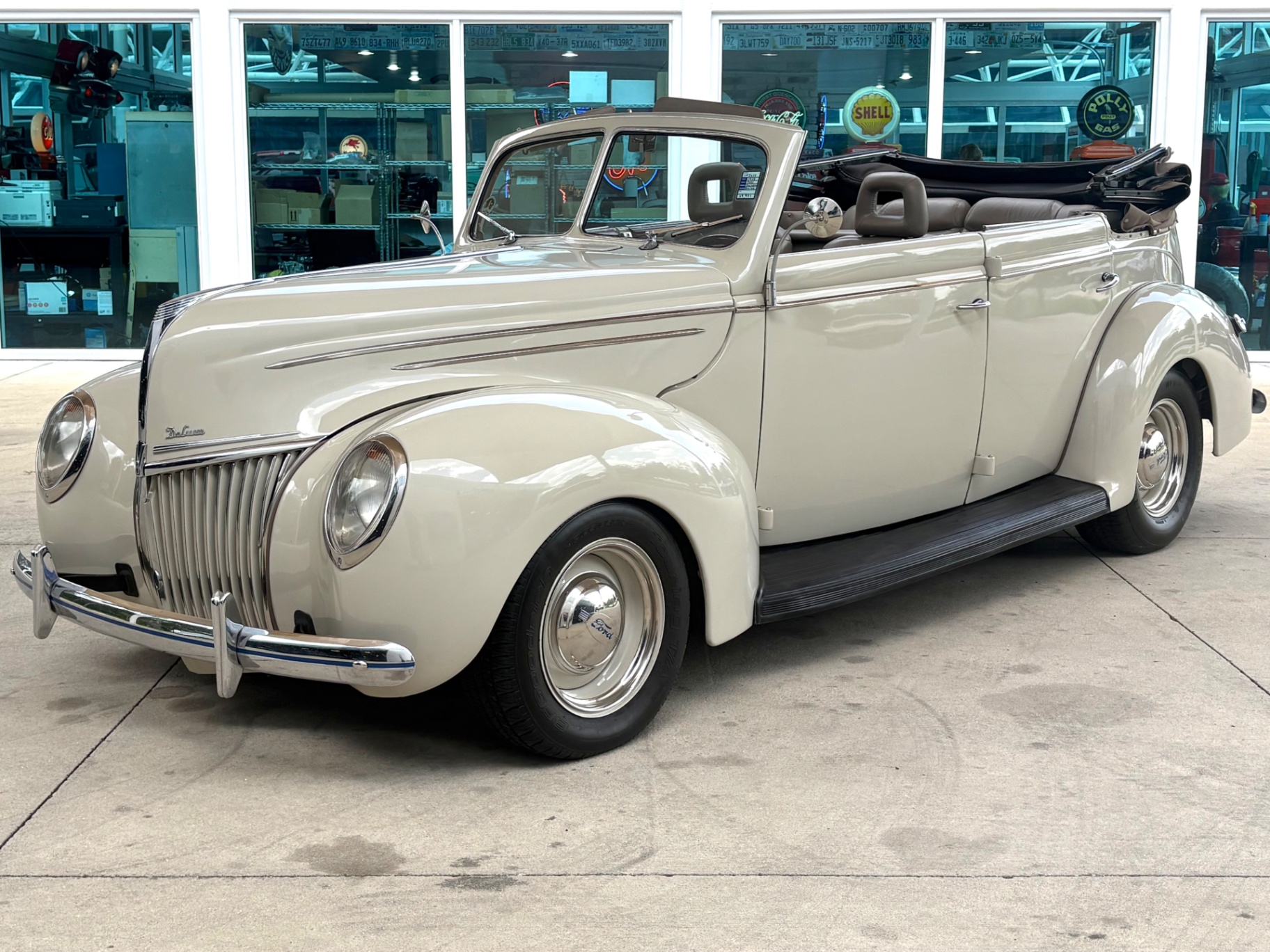
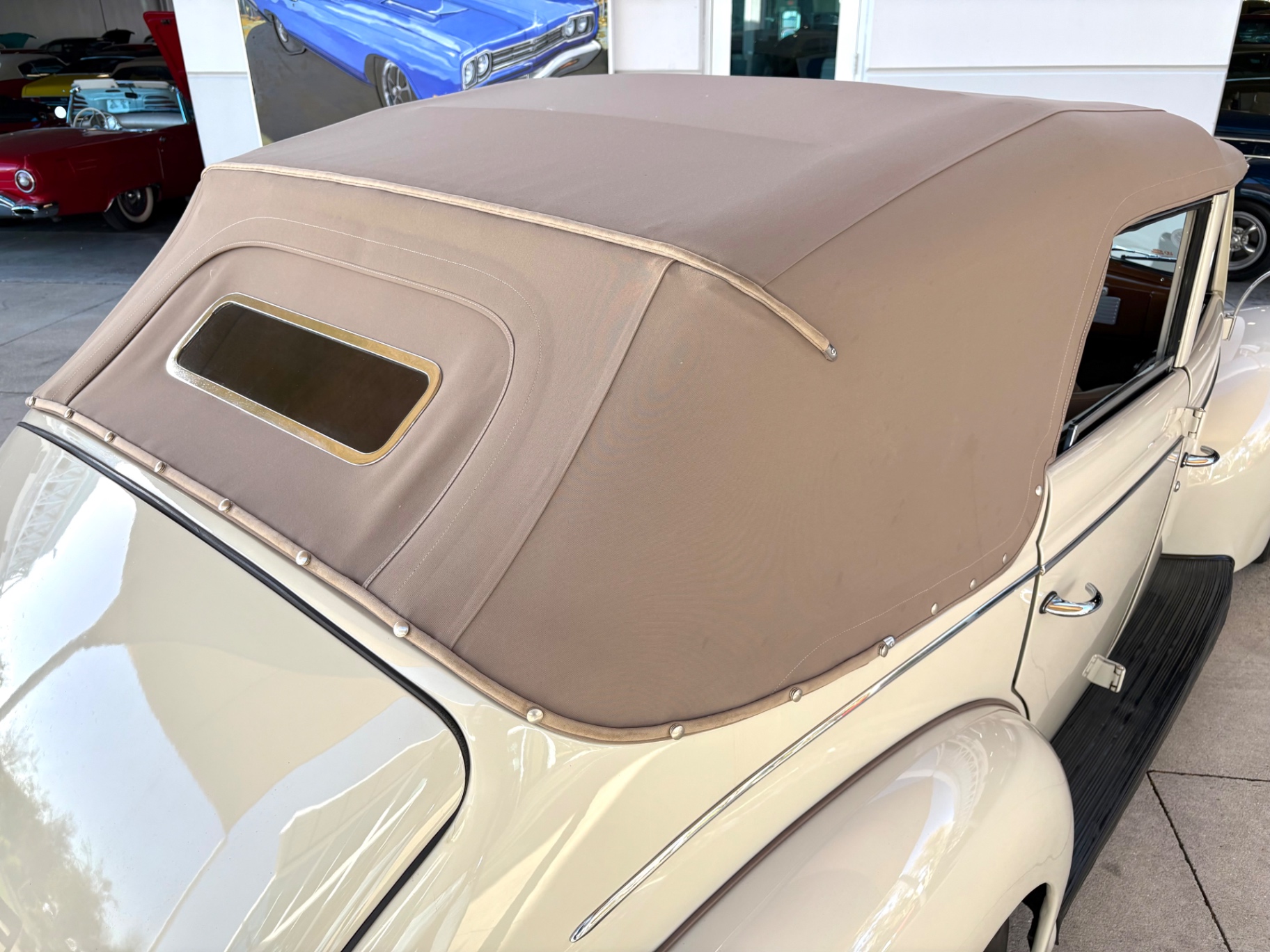
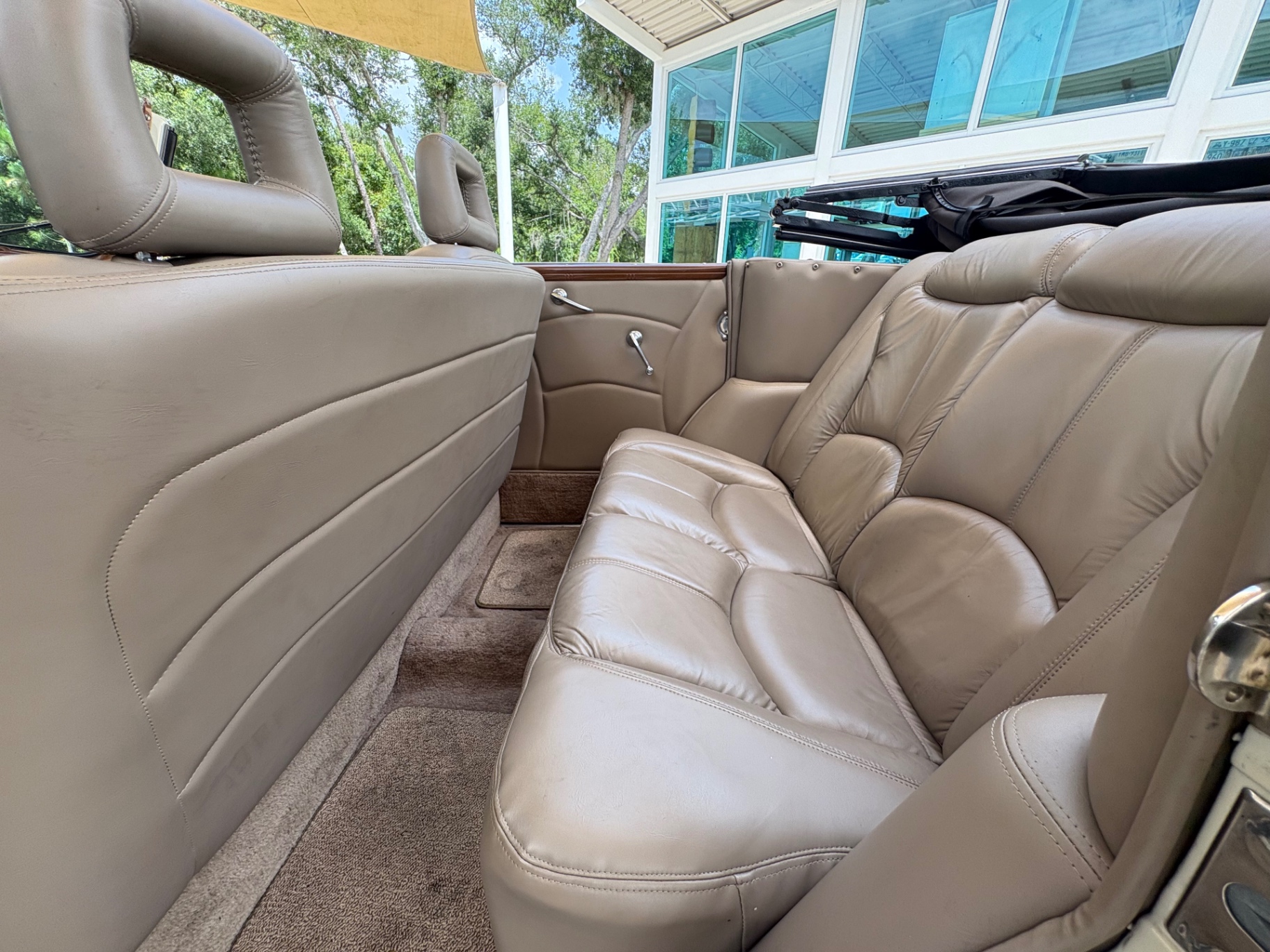
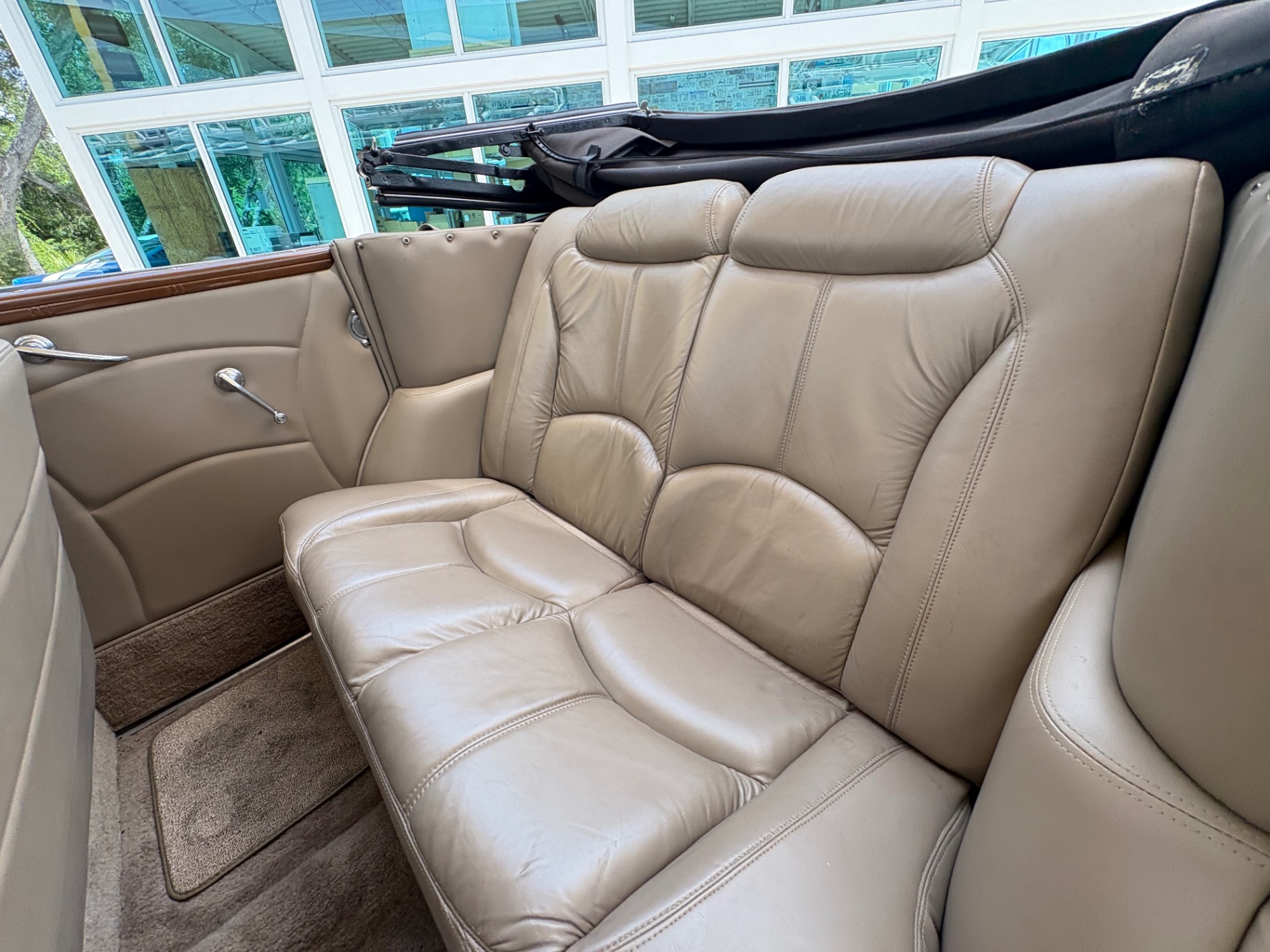
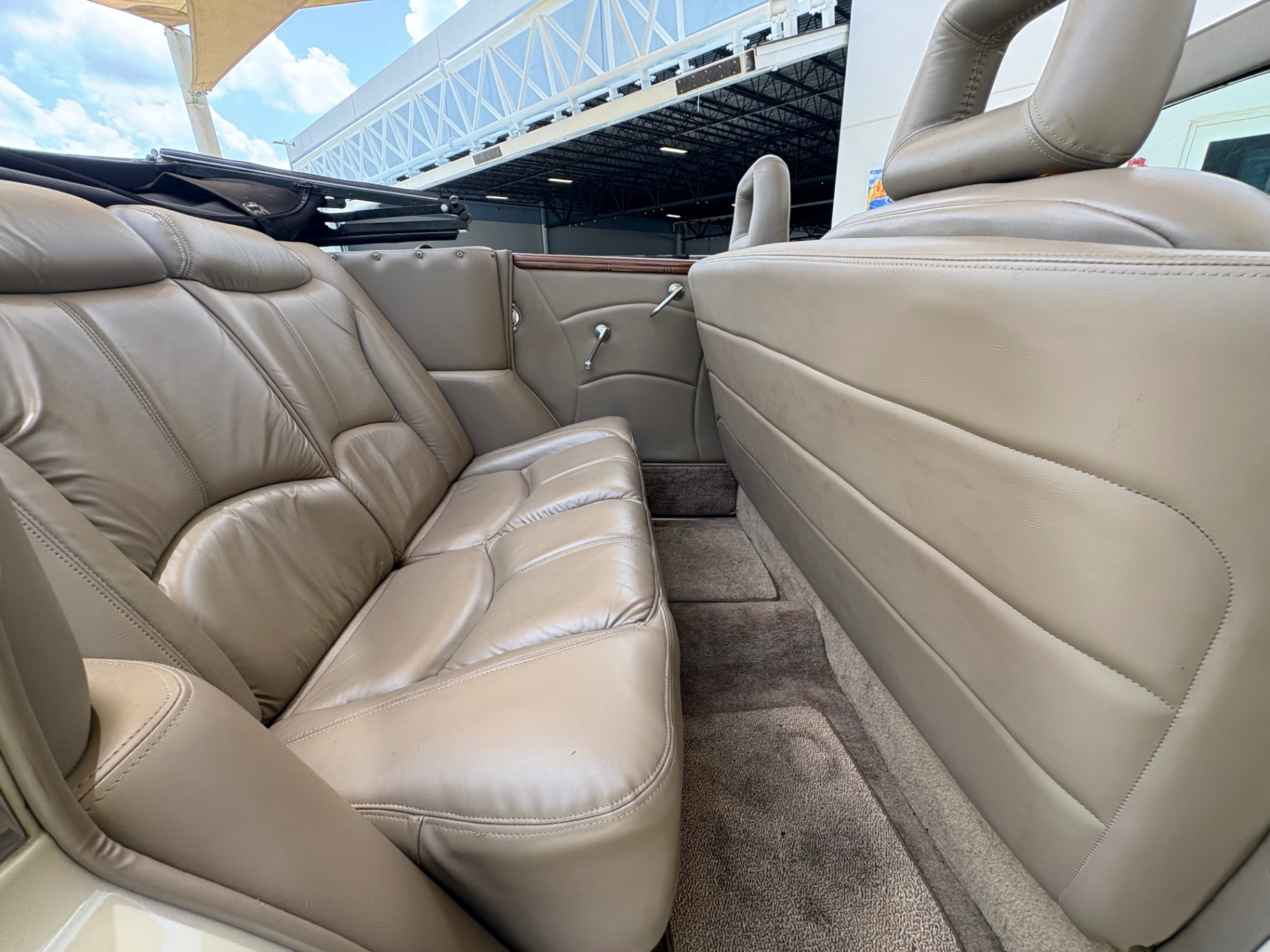
The finished car presents in cream over a tan full leather interior, with a HARTZ cloth convertible top and blue dot taillights that pay tribute to the accessory customizers were fitting to pre-war Fords as far back as the 1940s. This is a 1939 Ford Deluxe that drives the way it looks — with purpose, presence, and a long list of thoughtful decisions made by someone who understood both the car and the craft.
Features List
- Ford Boss 302 V8 crate engine
- Four two-barrel carburetors
- Automatic transmission
- HEIDTS front end with rack-and-pinion steering
- Tubular A-arms
- Coil-over front suspension
- 9-inch Ford rear end
- Front disc brakes
- Ceramic coated headers
- Dual exhaust with Flowmaster mufflers and Magnaflow exhaust tips
- Electric cooling fan
- Electronic ignition
- Chrome alternator
- American Auto wiring harness
- HARTZ cloth convertible top with leather convertible top boot
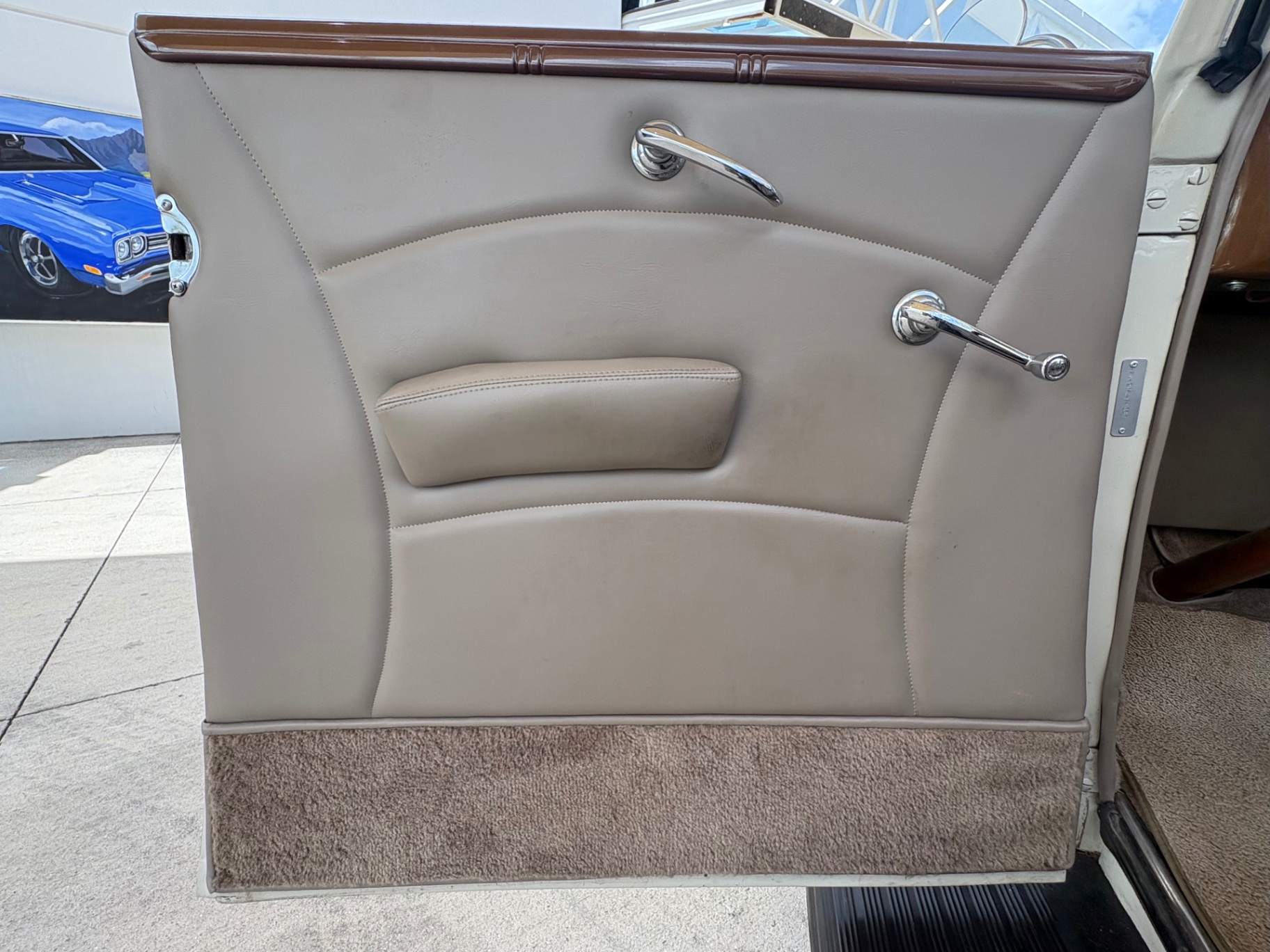
- Full leather interior in tan
- Power leather reclining front seats
- Leather rear bucket seats
- Headrests front and rear
- Seat belts front and rear
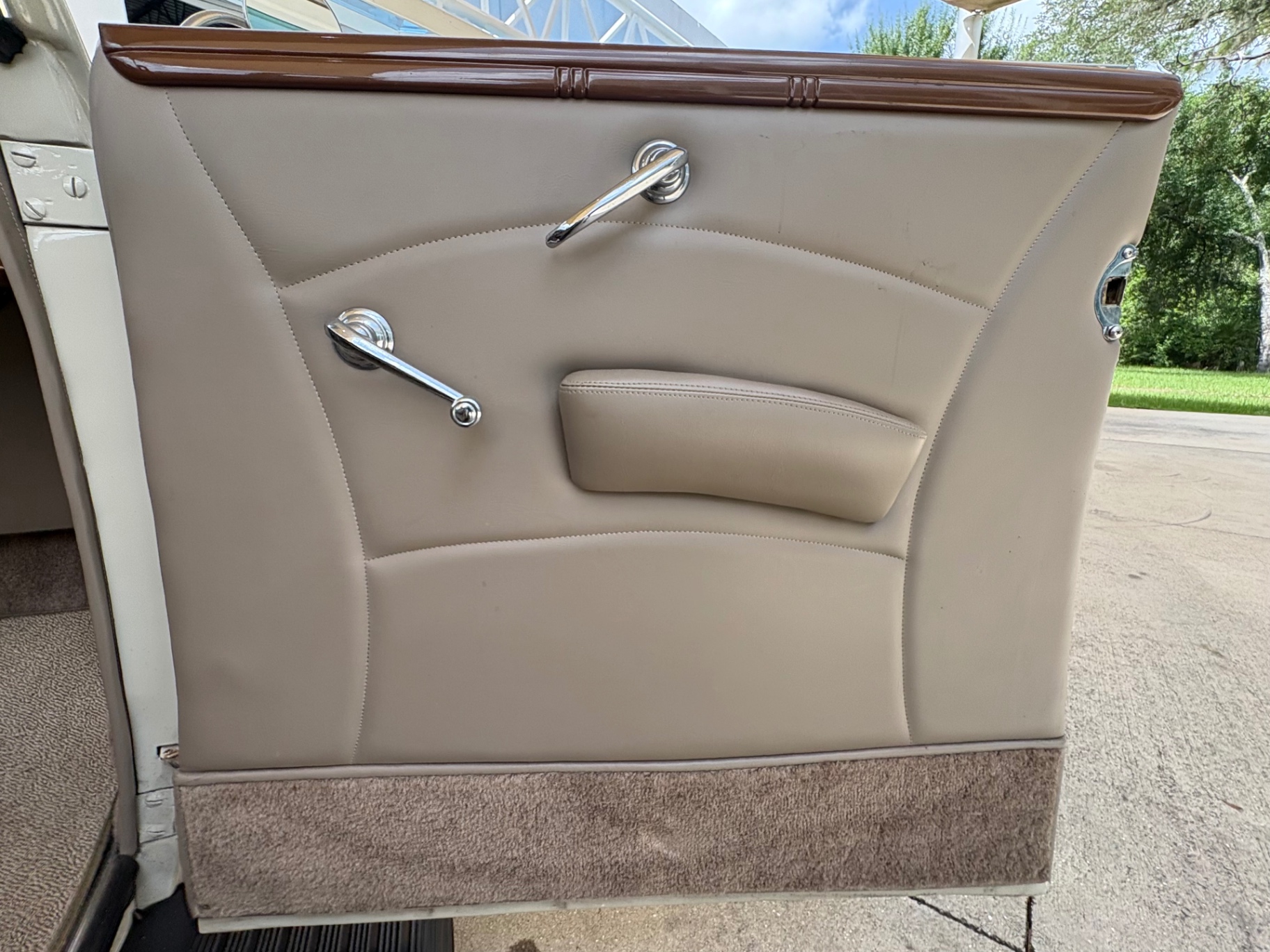
- Wood door cap trim
- Billet dash insert
- VDO 5-gauge instrument cluster
- VDO quartz clock
- Ididit tilt steering column
- Grant wooden steering wheel
- Lokar floor shifter
- Lokar dipsticks
- Billet gas and brake pedals
- Aftermarket CD stereo
- Leather trunk interior
- Leather battery cover
- Custom diamond-plate engine bay liner
- Custom embroidered floor mats
- Coker Smoothie wheels with Ford center caps
- Blue dot taillights
- Chrome exterior mirrors
- Running boards
- Rain gear electric wipers
- PPG base/clear paint in cream
Mechanical
The Boss 302 is one of Ford's more storied small-block V8s. Originally developed for the 1969 Mustang Boss 302 to meet Trans-Am racing homologation requirements, the engine was known for its high-revving character, free-flowing canted-valve cylinder heads, and strong top-end power. The crate version installed in this 1939 Ford Deluxe carries those same design roots into a platform where the engine's compact dimensions fit well and its Ford lineage makes sense. Topping it with four two-barrel carburetors is a setup with real history in hot rodding — multiple two-barrels on a common log intake deliver a wide throttle bore area while keeping individual carburetor size manageable, which improves throttle response across a broad RPM range compared to a single large four-barrel.
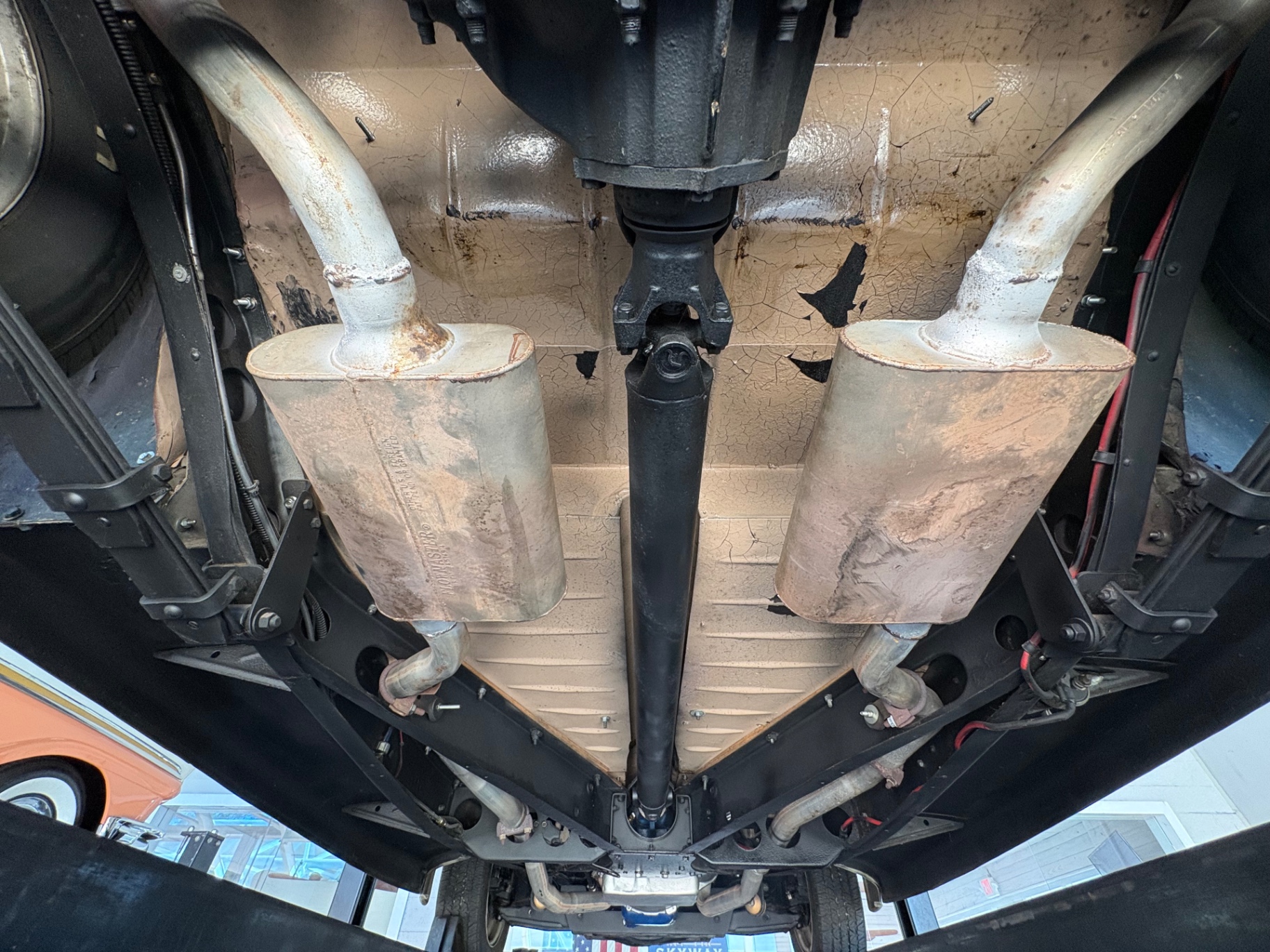
Ceramic-coated headers reduce under-hood heat while improving exhaust flow efficiency, and the dual exhaust system running Flowmaster mufflers with Magnaflow tips delivers a sound profile appropriate to the engine. The electric cooling fan eliminates the parasitic drag of a belt-driven fan and gives the engine more usable power while also improving cooling at idle — a meaningful upgrade on a car that may spend time in slow traffic at shows or cruise nights.
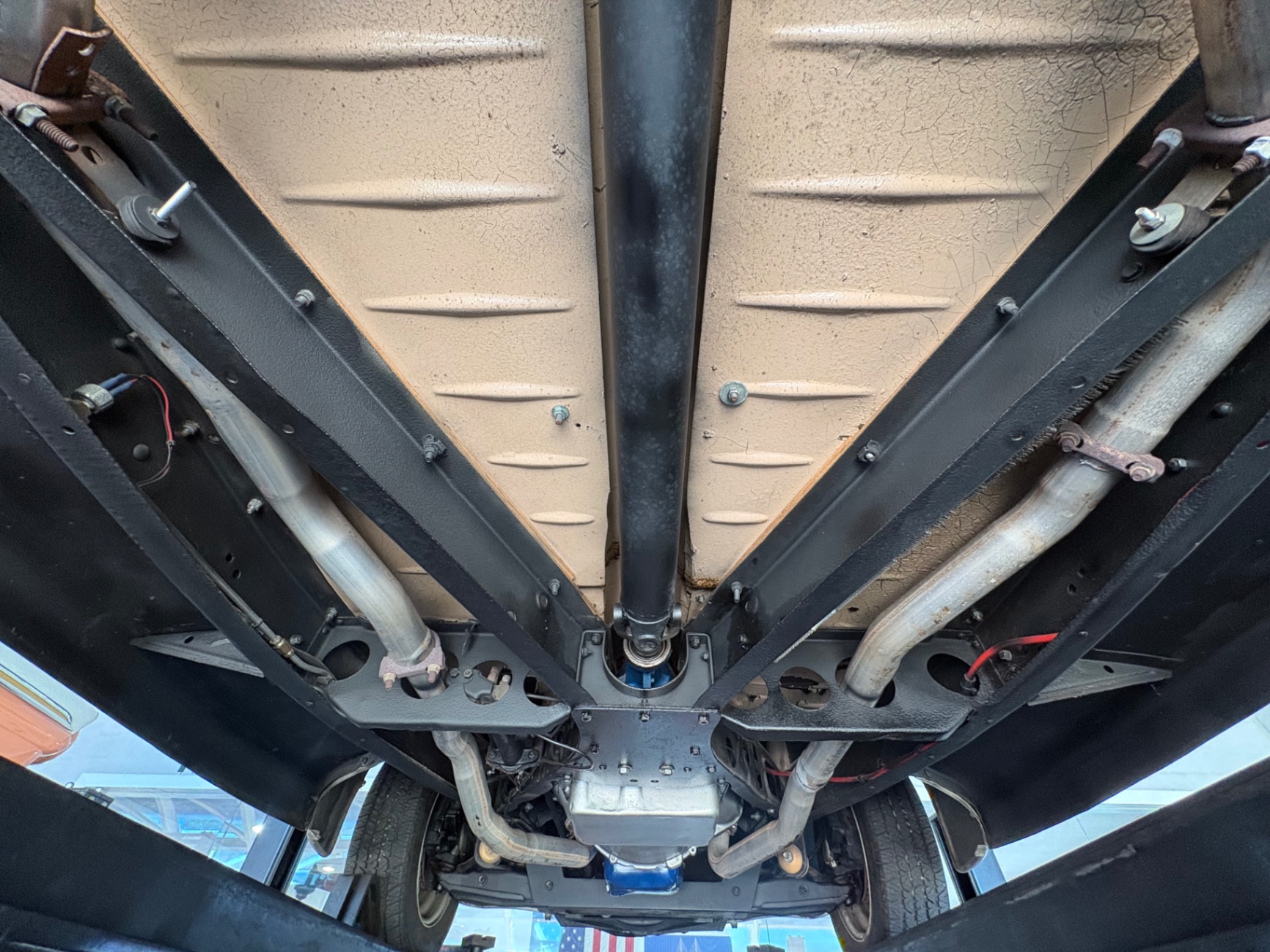
Up front, the HEIDTS suspension package replaces the original transverse leaf spring and kingpin assembly with tubular A-arms, coil-over shocks, and rack-and-pinion steering. This is a well-regarded street rod suspension solution that dramatically improves steering precision and reduces steering effort compared to the original worm-and-sector box that Ford used in 1939. Front disc brakes are fitted as well, which pairs appropriately with a Boss 302 producing significantly more power than the flathead V8 that left the factory in these cars. The Ford 9-inch out back is a proven, rebuildable unit that has been the benchmark rear axle in American street rods and performance cars since the 1950s.
Interior
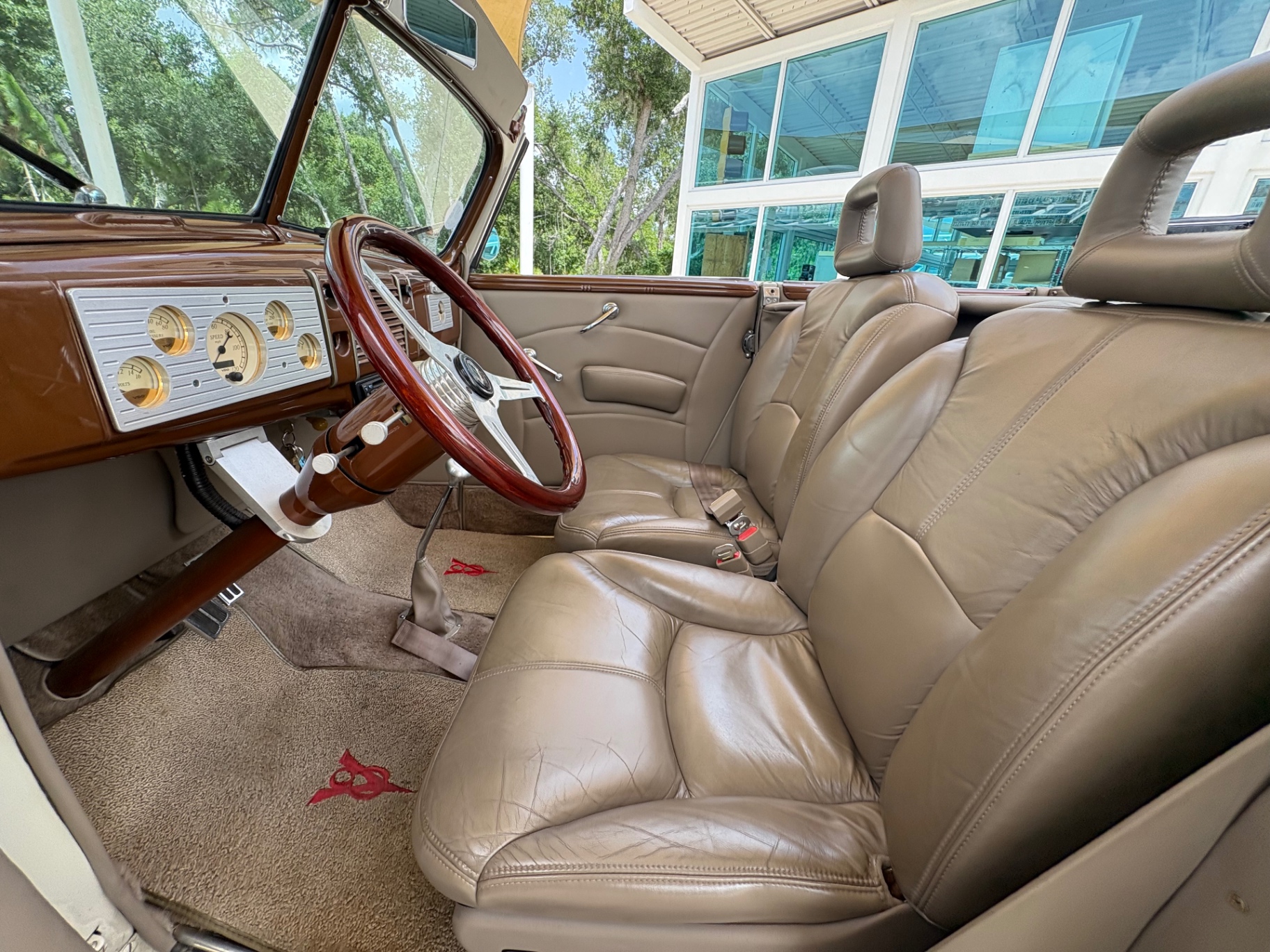
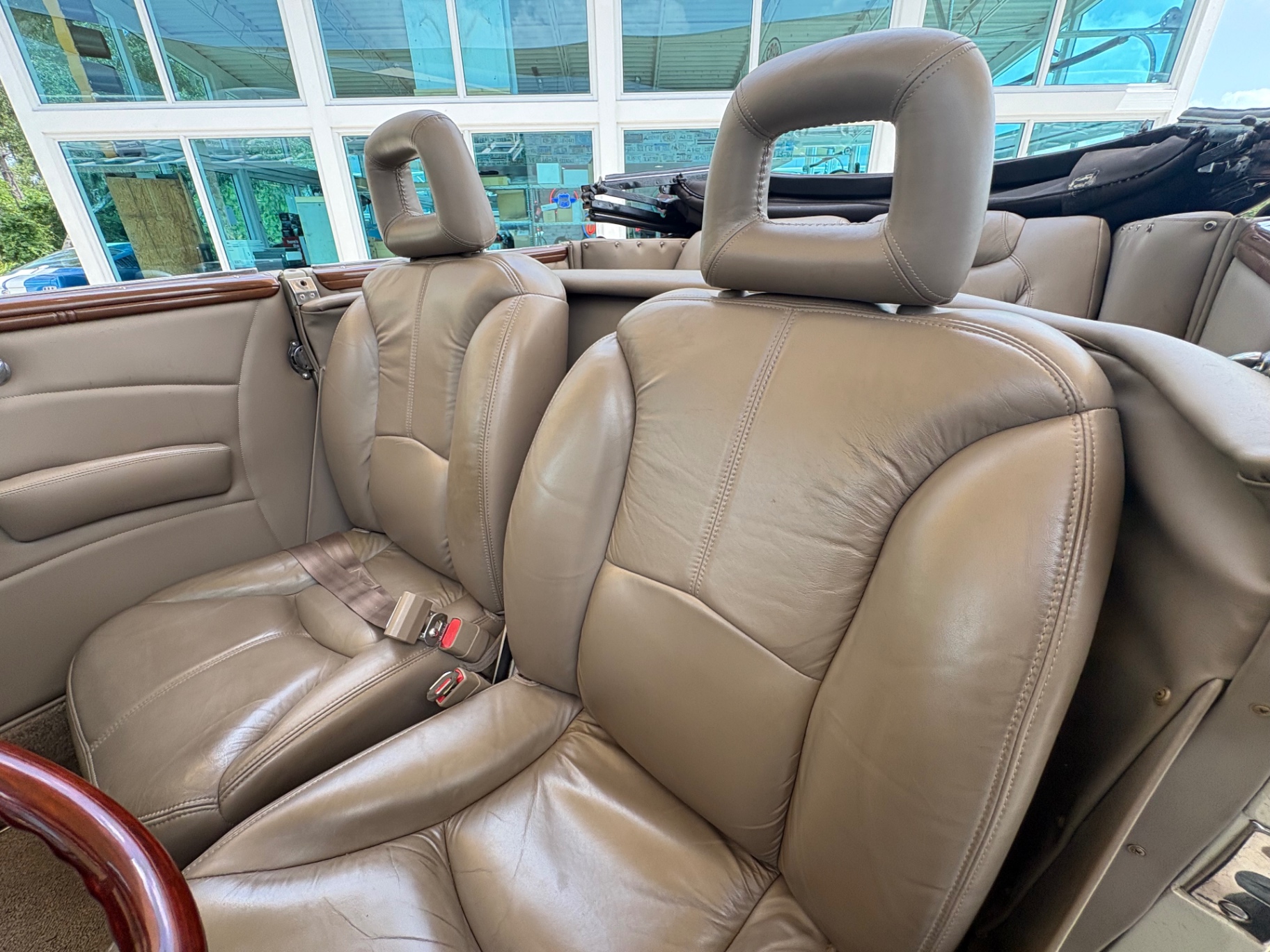
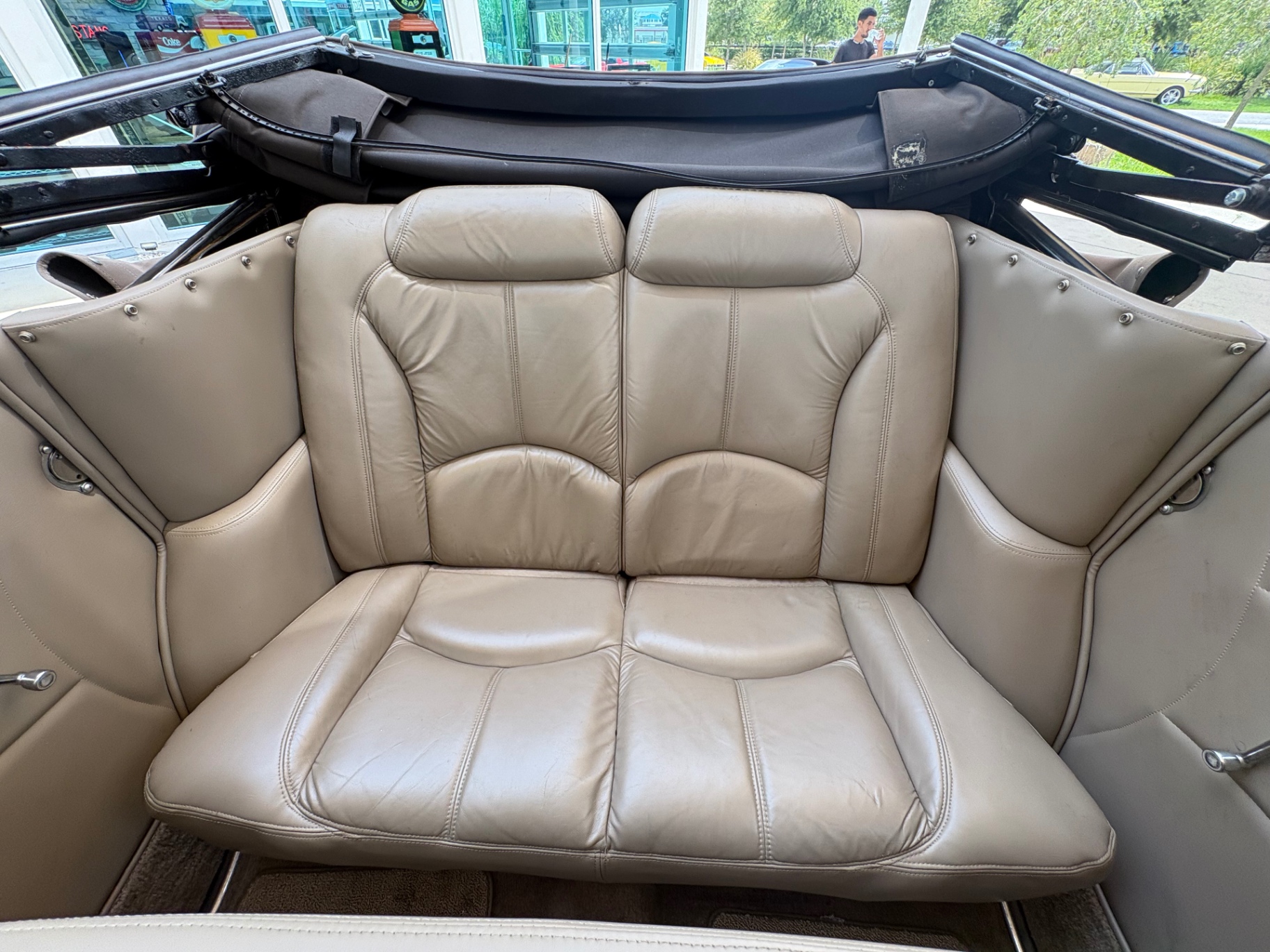
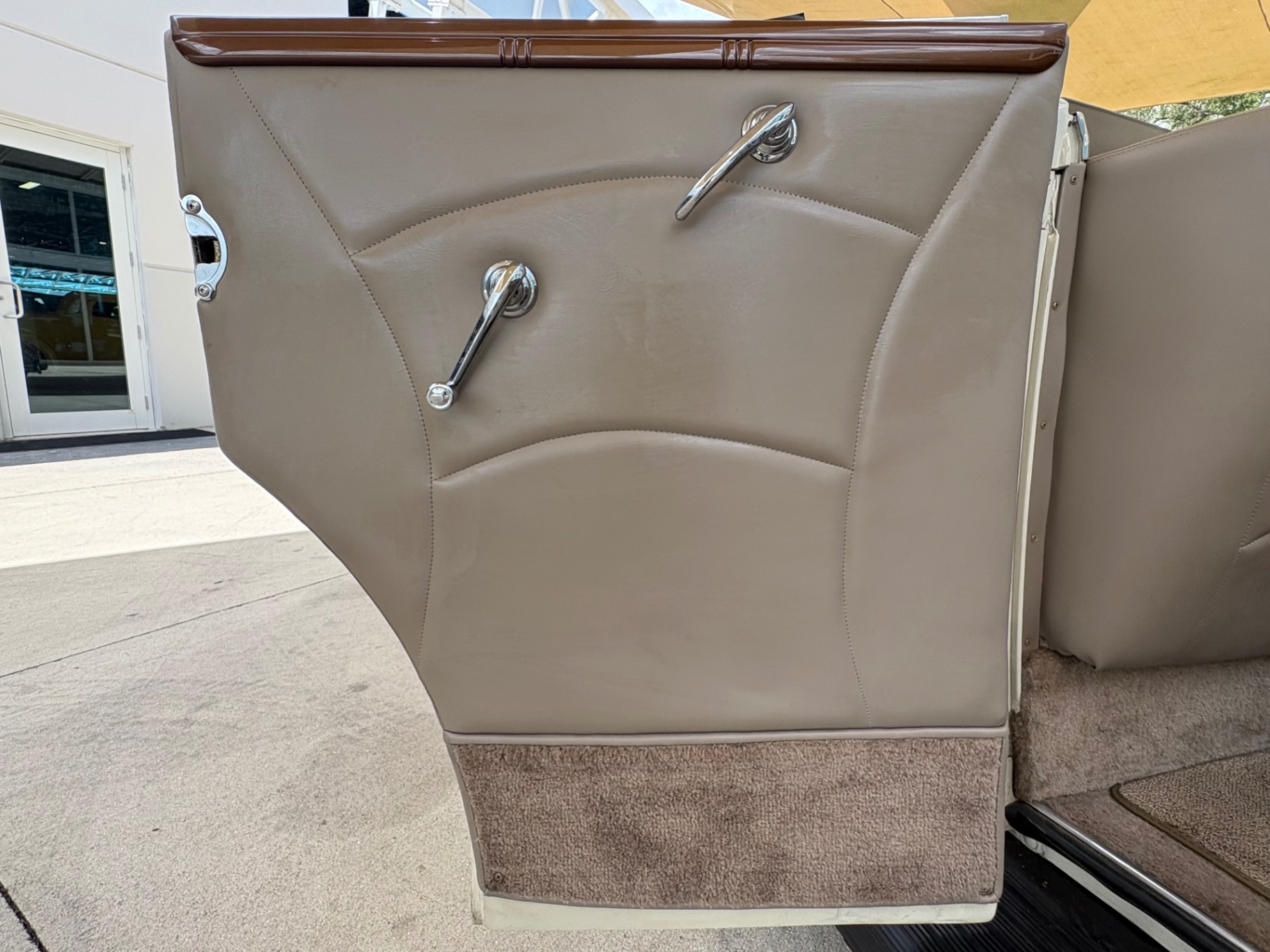
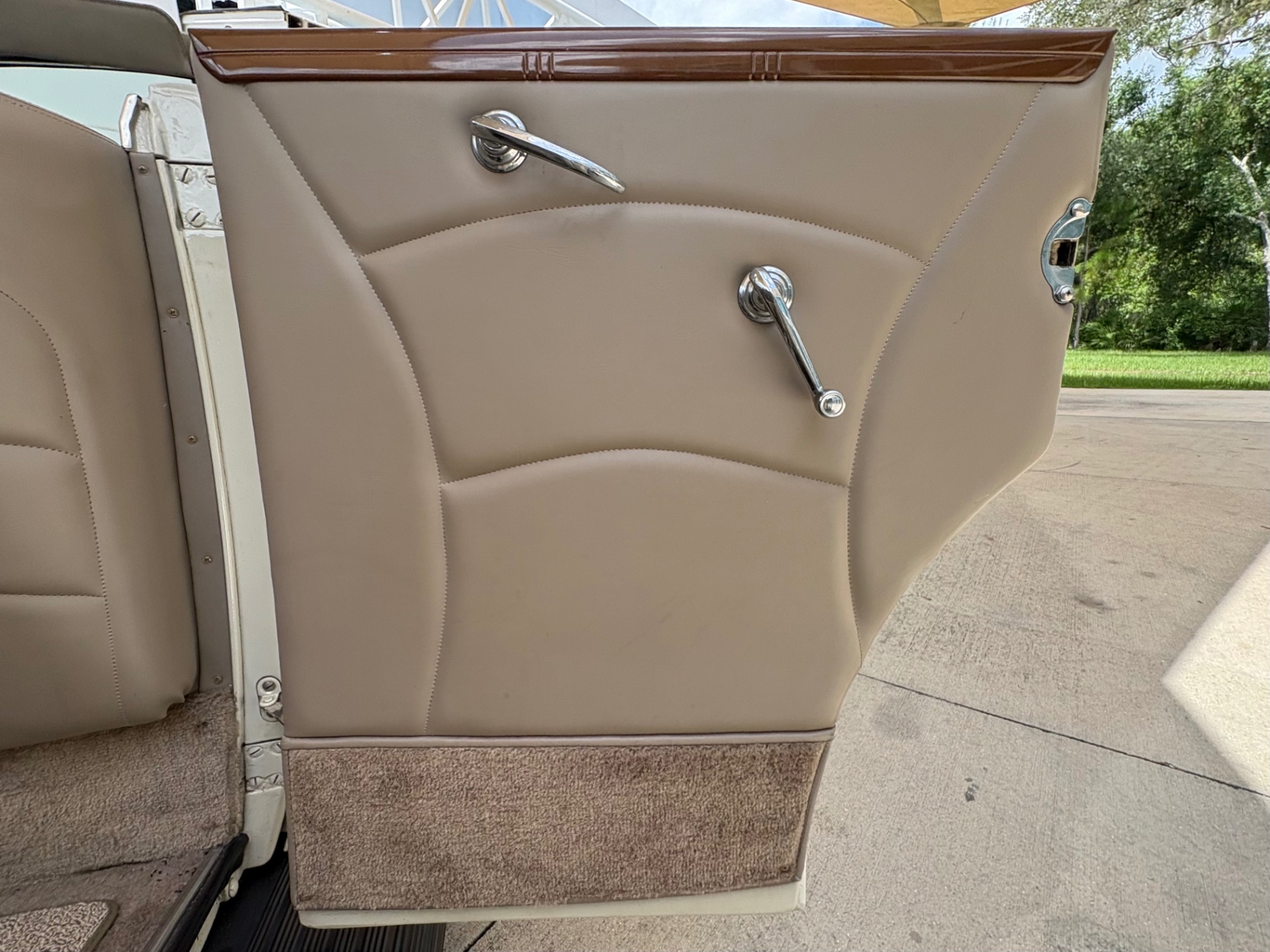
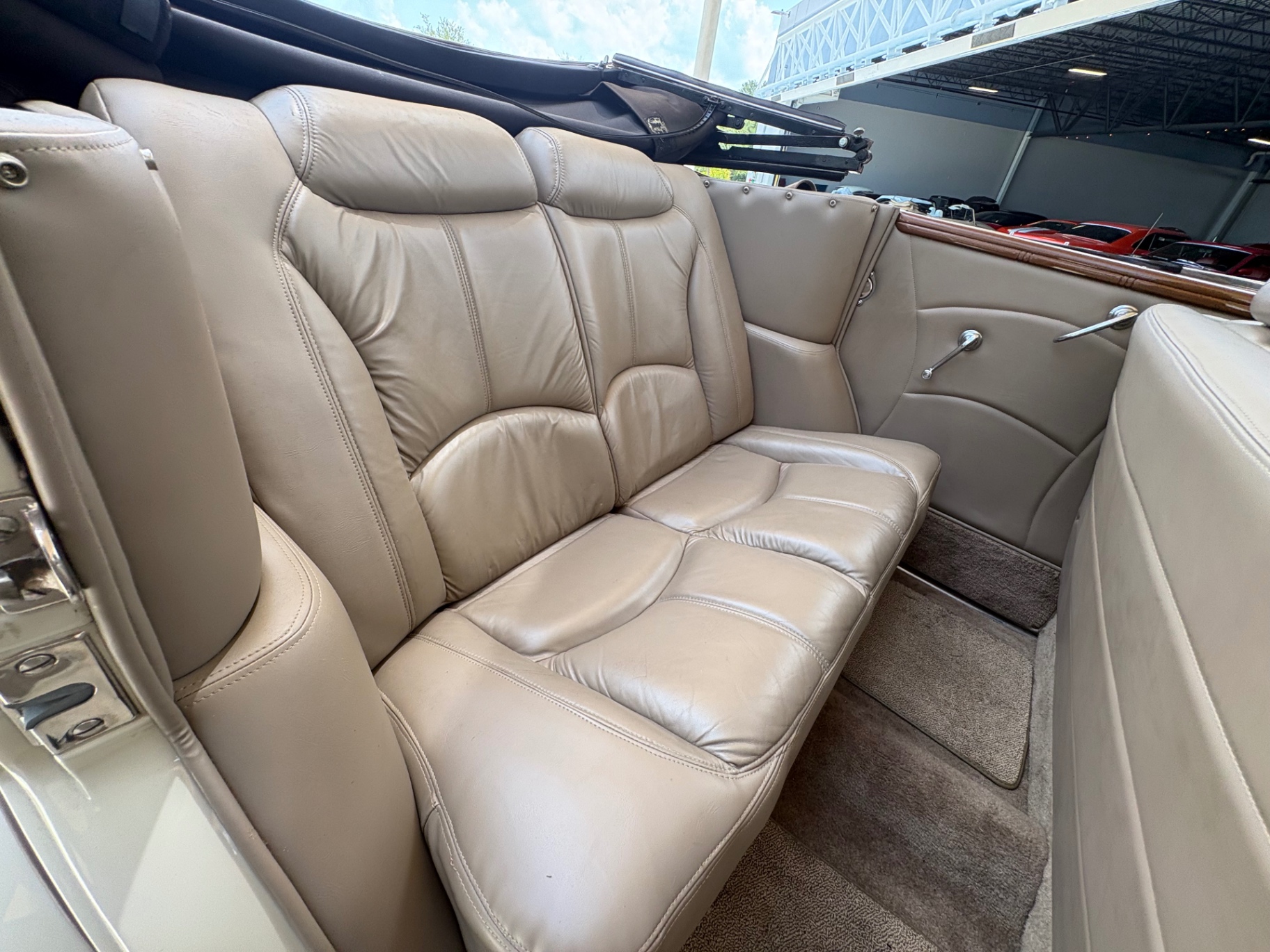
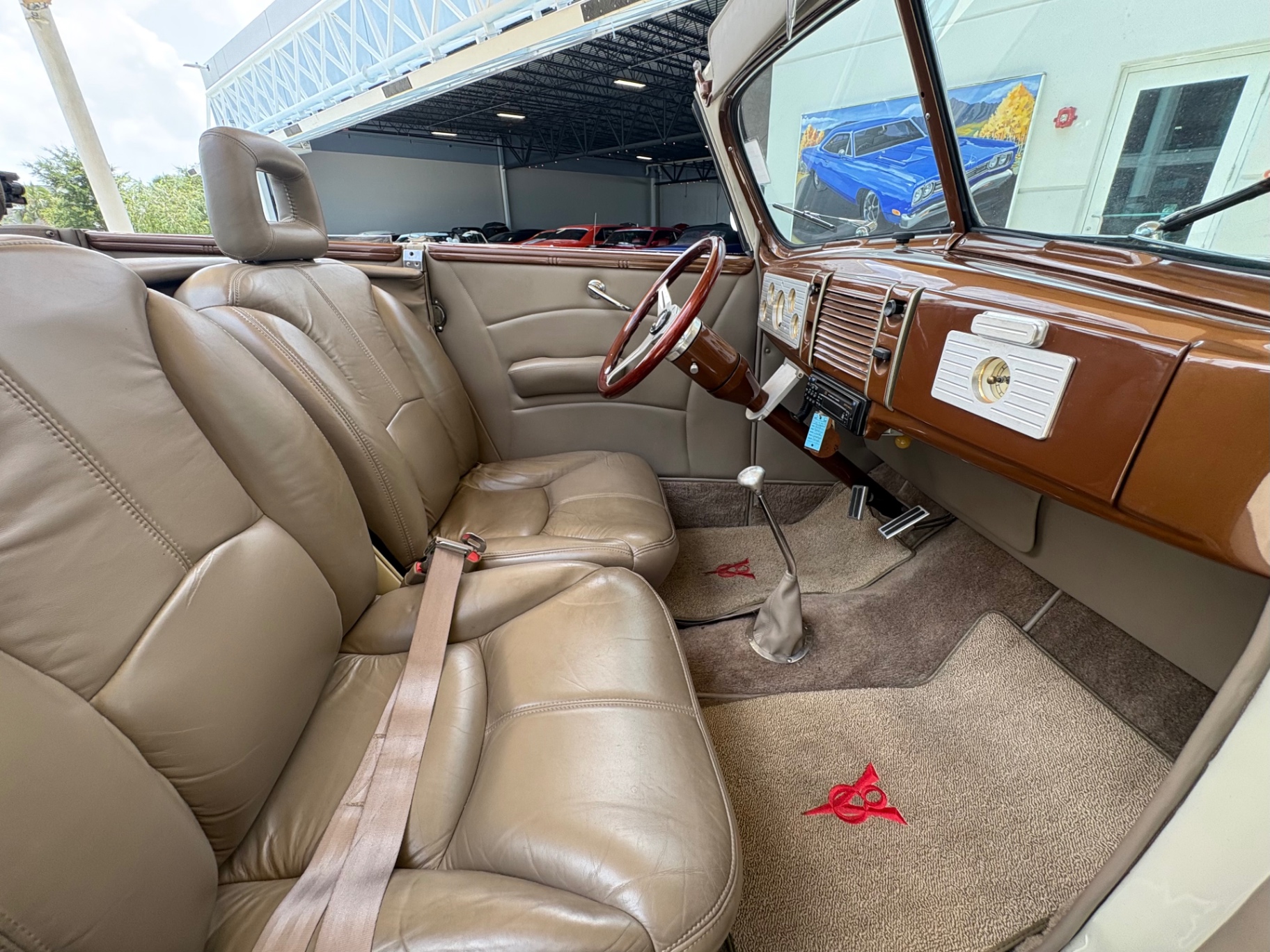
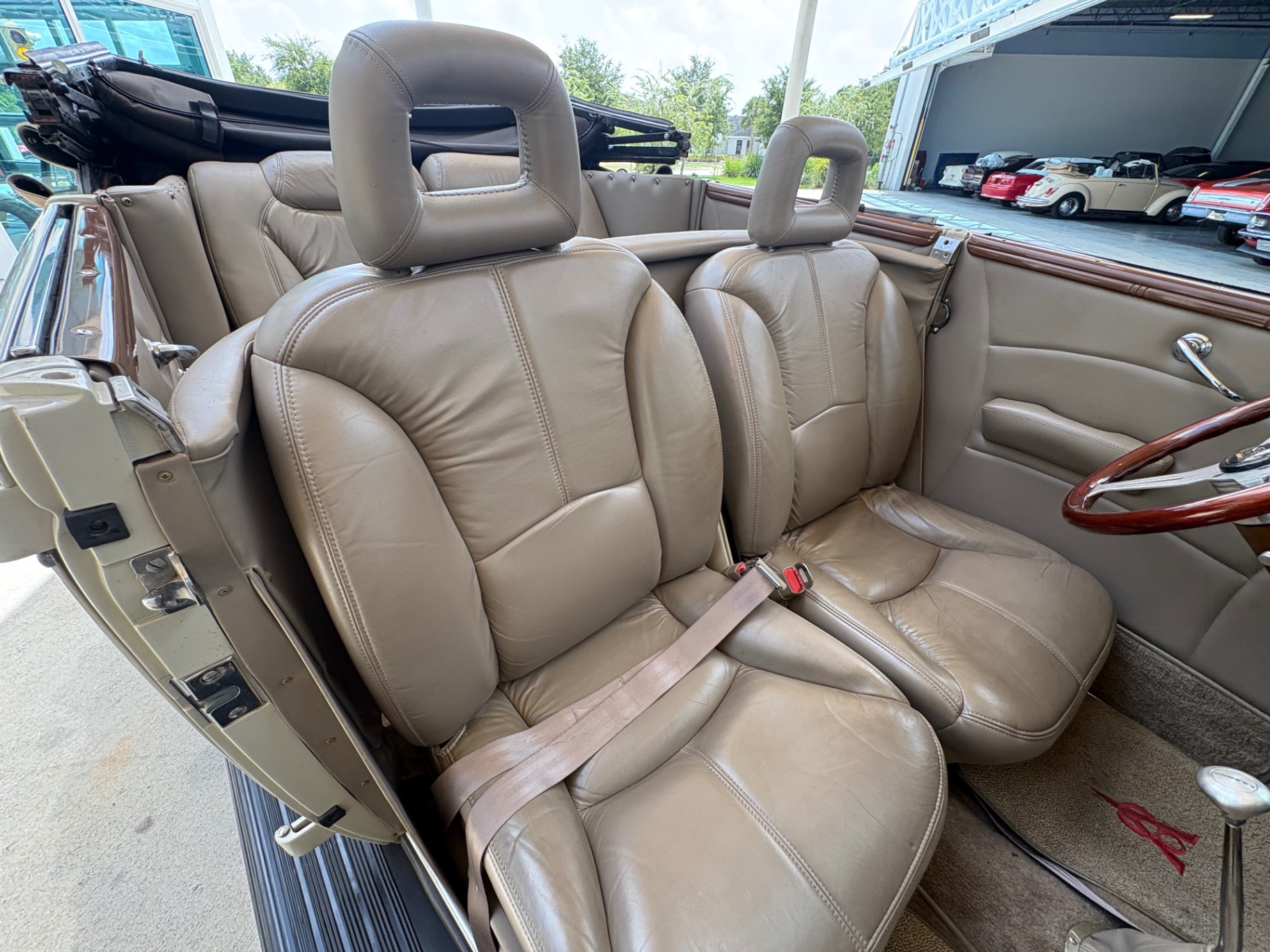
The interior of this 1939 Ford Deluxe was executed with a consistent material strategy — tan leather covers virtually every surface a passenger touches or sees. The front seats are power reclining leather buckets, and the rear seats are also leather buckets, which is a departure from the traditional bench layout and gives the rear compartment a more intentional, finished appearance. All four seating positions are equipped with headrests and seat belts, which is a detail that matters on a car built for actual driving rather than trailer transport.
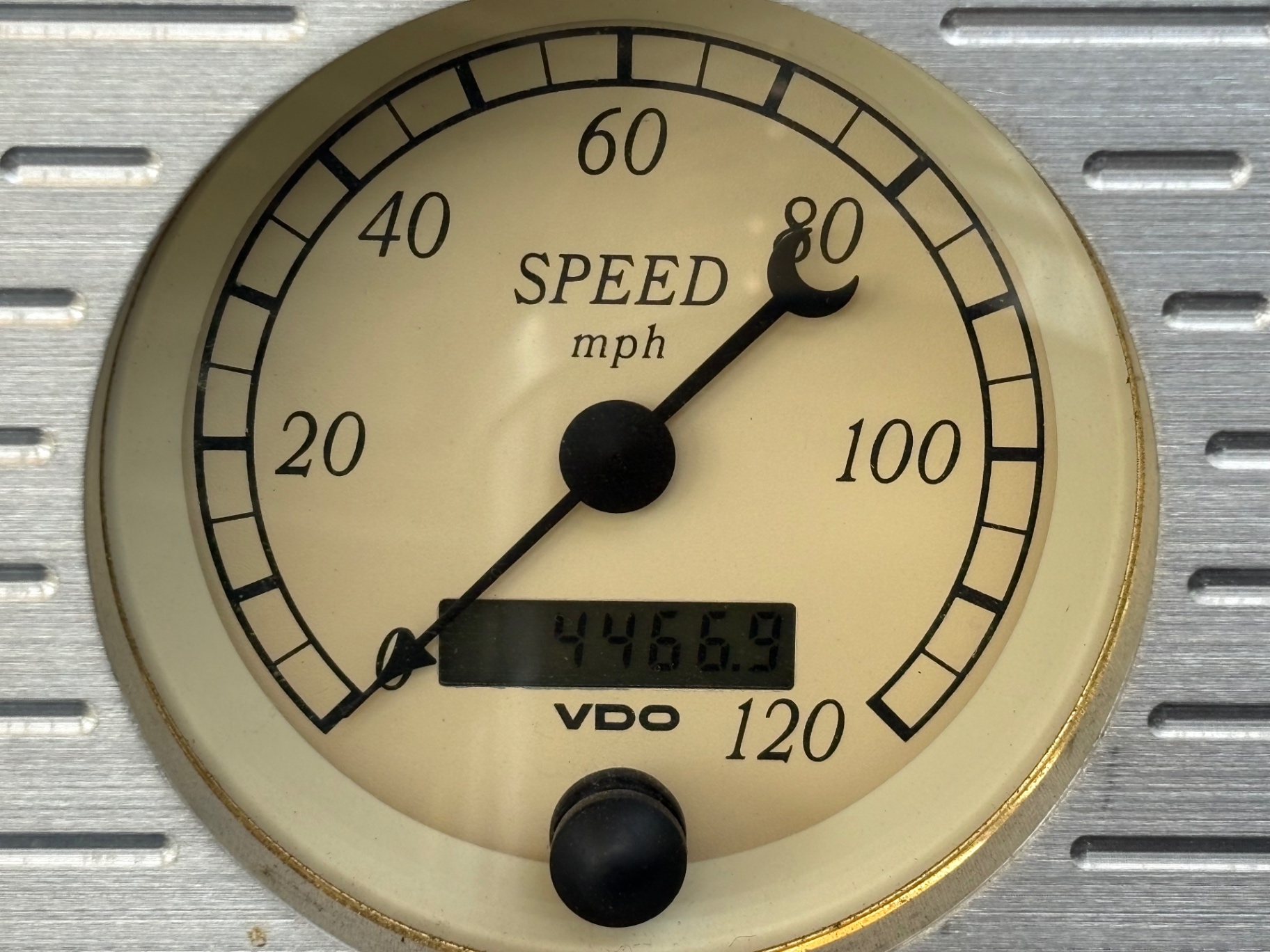
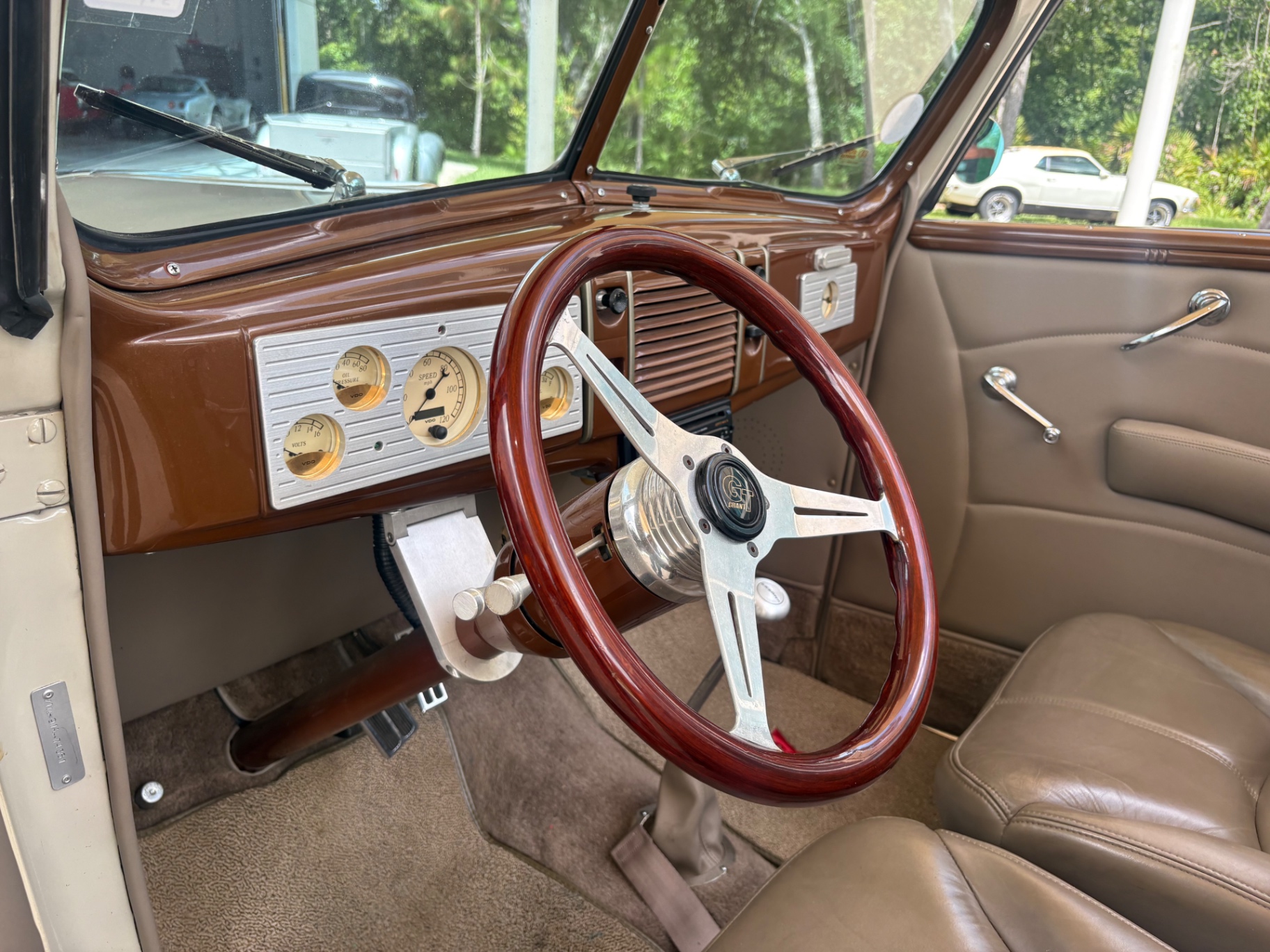
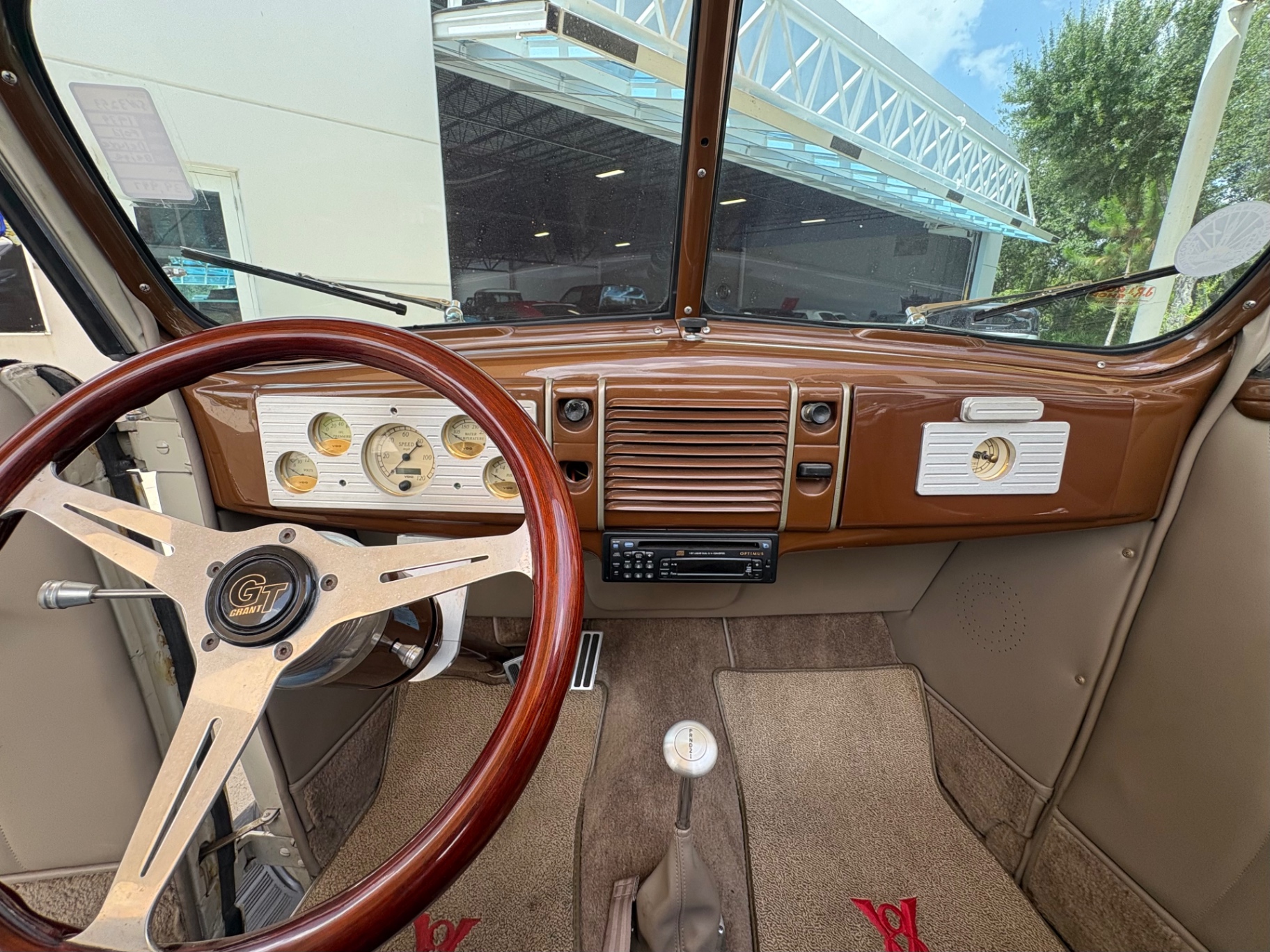
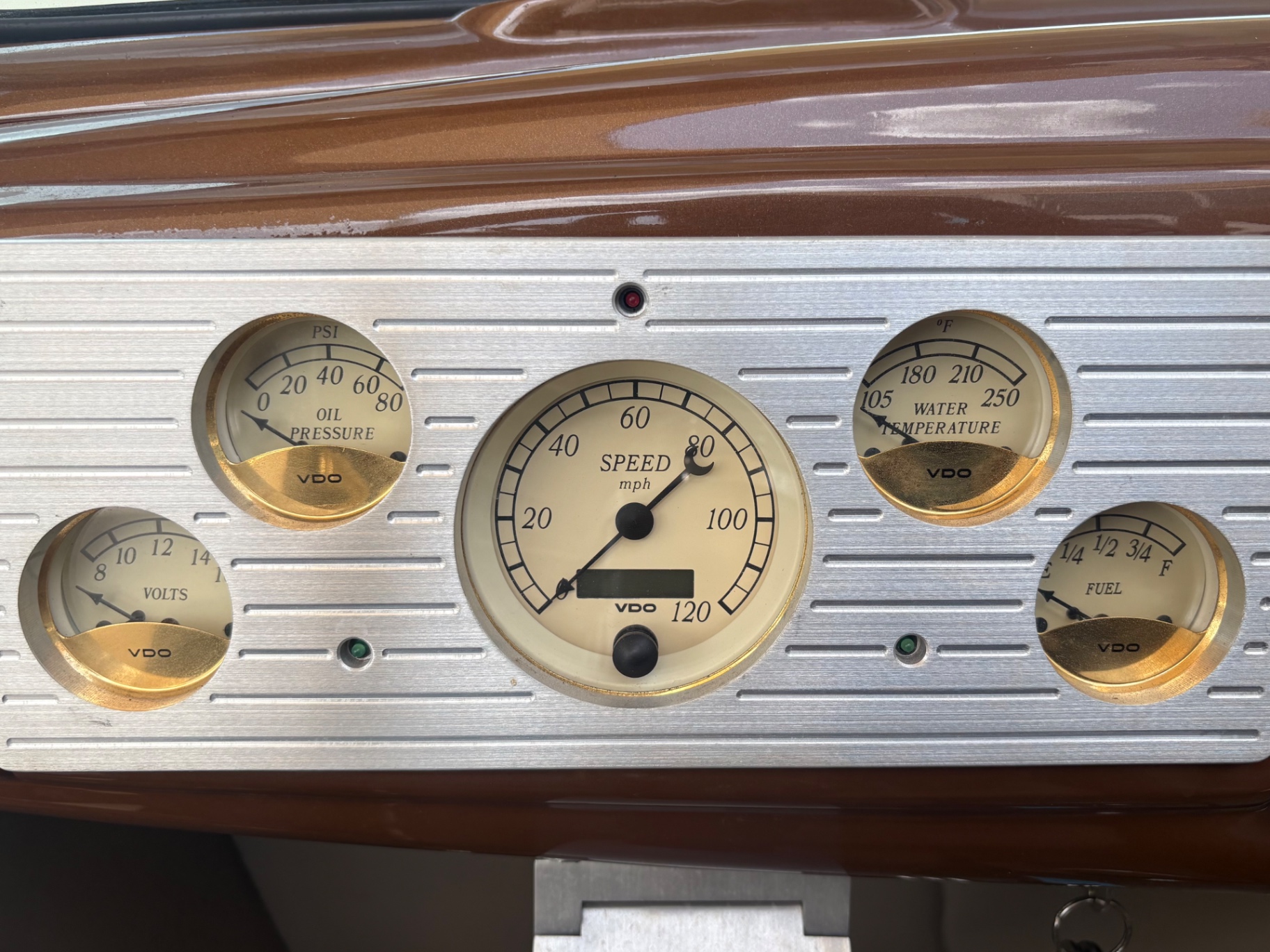
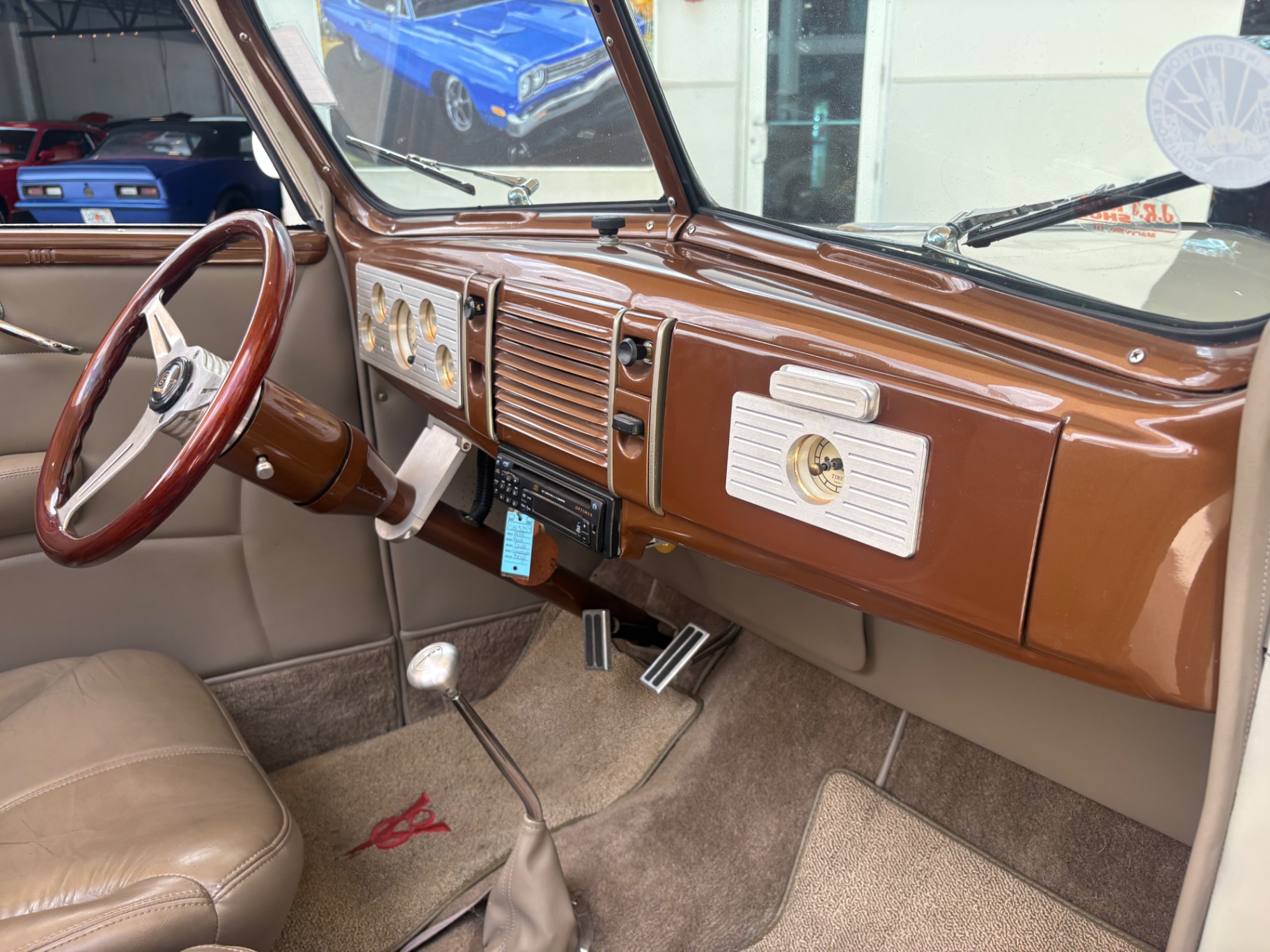
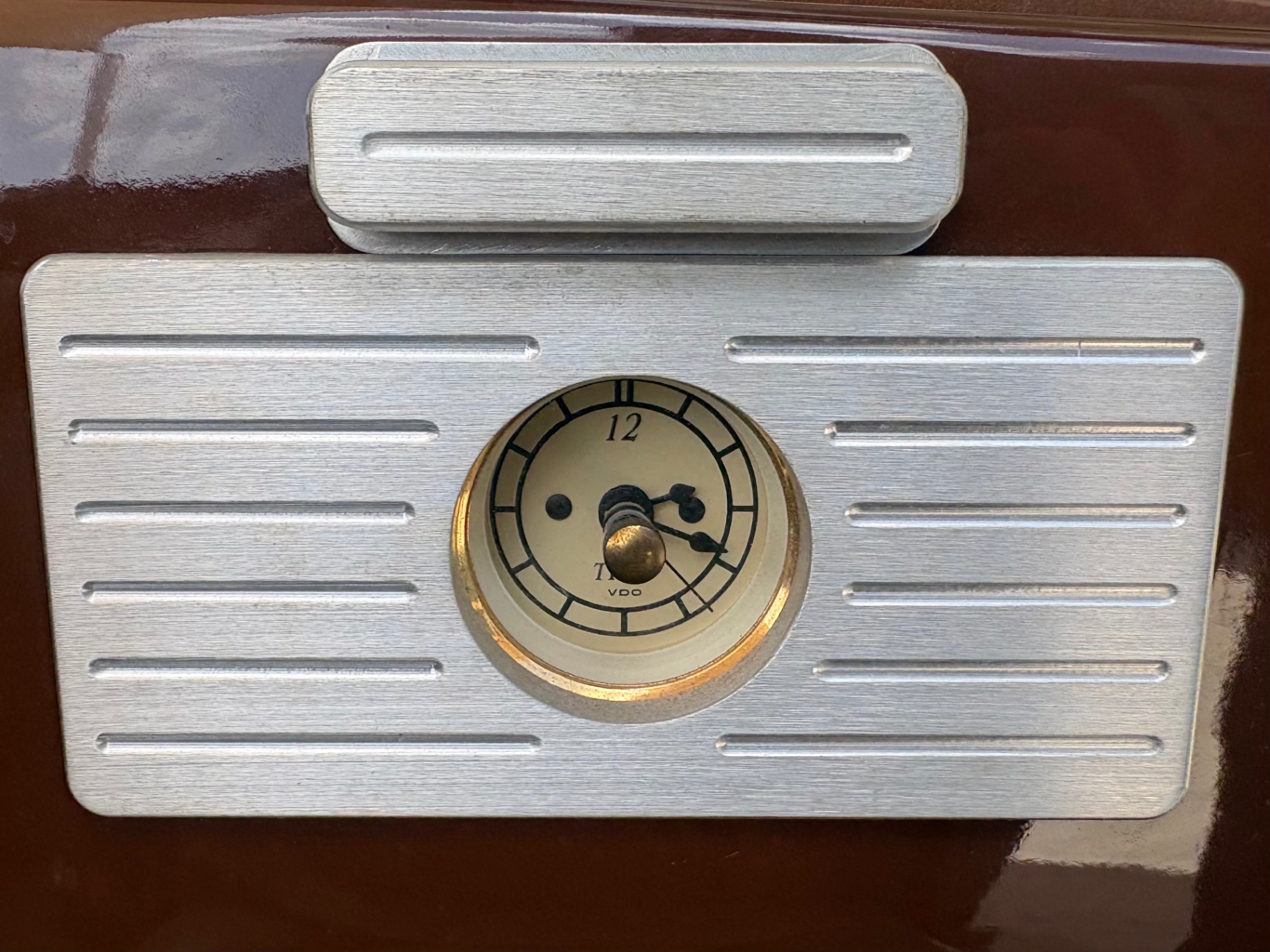
The dashboard carries a billet insert that provides a clean foundation for the VDO 5-gauge instrument cluster, which includes oil pressure, water temperature, volts, fuel level, and a central speedometer. The face design uses a cream and gold aesthetic that sits well against the warm brown of the painted dash without looking out of place in a pre-war body. A VDO quartz clock is mounted separately on the passenger side of the dash in a matching brushed aluminum panel — a period-appropriate touch that reinforces the interior's coherence.
The Ididit tilt steering column positions the Grant wooden steering wheel where the driver actually needs it, and the Lokar floor shifter controls the automatic transmission cleanly from the center of the floor. Billet gas and brake pedals carry the metal theme from the dash down to the footwell. The convertible top boot, trunk interior, and battery cover are all finished in leather to match the rest of the cabin, which reflects the level of thought that went into the build. An aftermarket CD stereo is integrated into the dash without disrupting the overall presentation.
Exterior
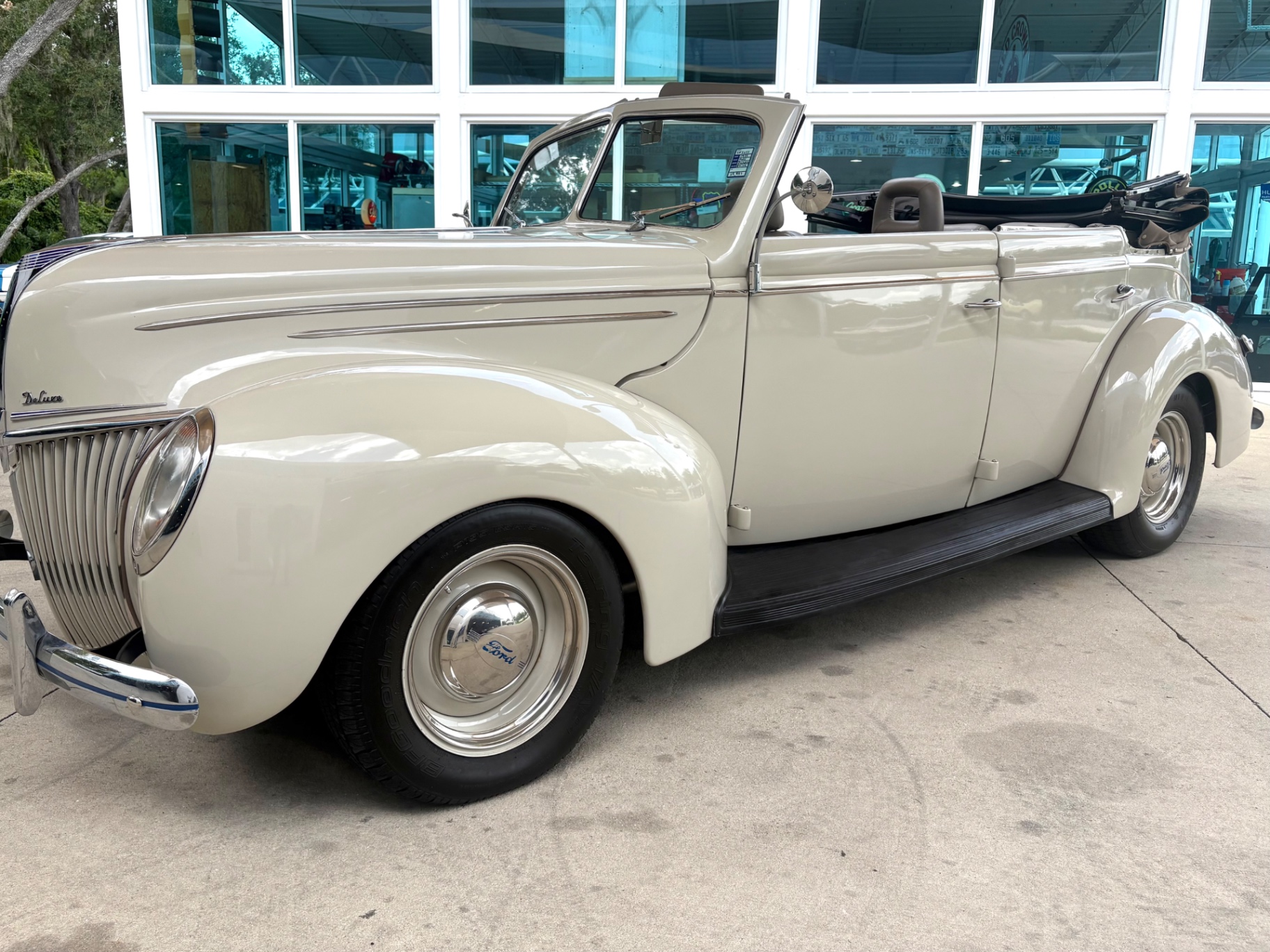
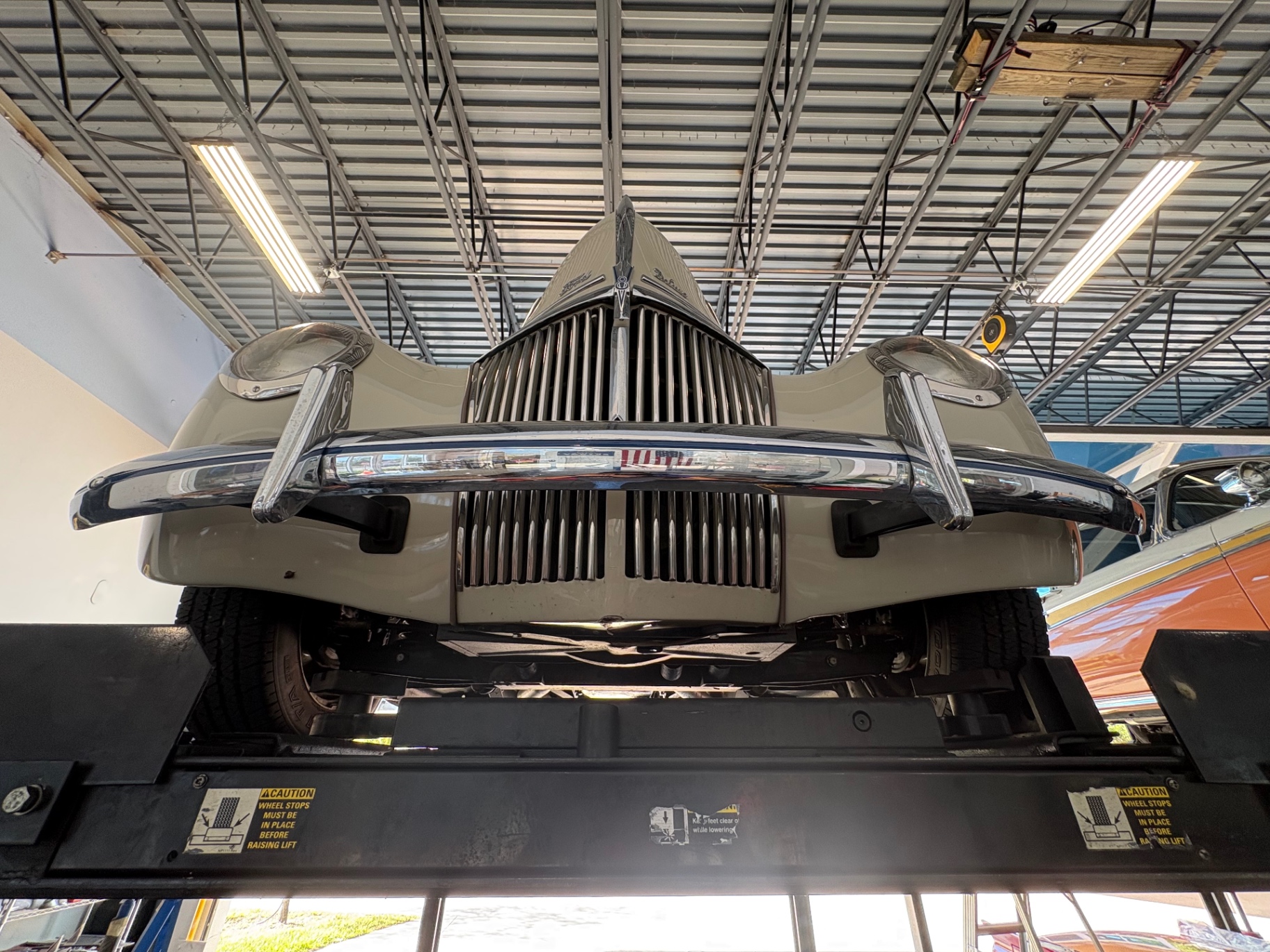
The cream PPG base/clear finish suits the rounded, pre-war body lines of the 1939 Ford Deluxe well. The color reads neutral enough to let the chrome and body shape do the work, and the PPG base/clear system means the finish has depth and durability beyond what single-stage paint can offer. The vertical bar grille and fender-mounted headlights that defined the 1939 Deluxe are intact, preserving the character of the original body.
Coker Smoothie wheels with Ford center caps are a classic street rod wheel choice that complements the pre-war body without competing with it. The smooth, unvented wheel face echoes the style of accessory wheels that appeared on California custom Fords in the 1940s and 1950s, and the Ford center cap ties the wheel back to the car's origins. Blue dot taillights sit in the original taillight housings — a detail that traces directly to the accessory catalogs of the postwar custom era, when glasspack mufflers and blue dot lenses were among the first modifications applied to cars exactly like this one.
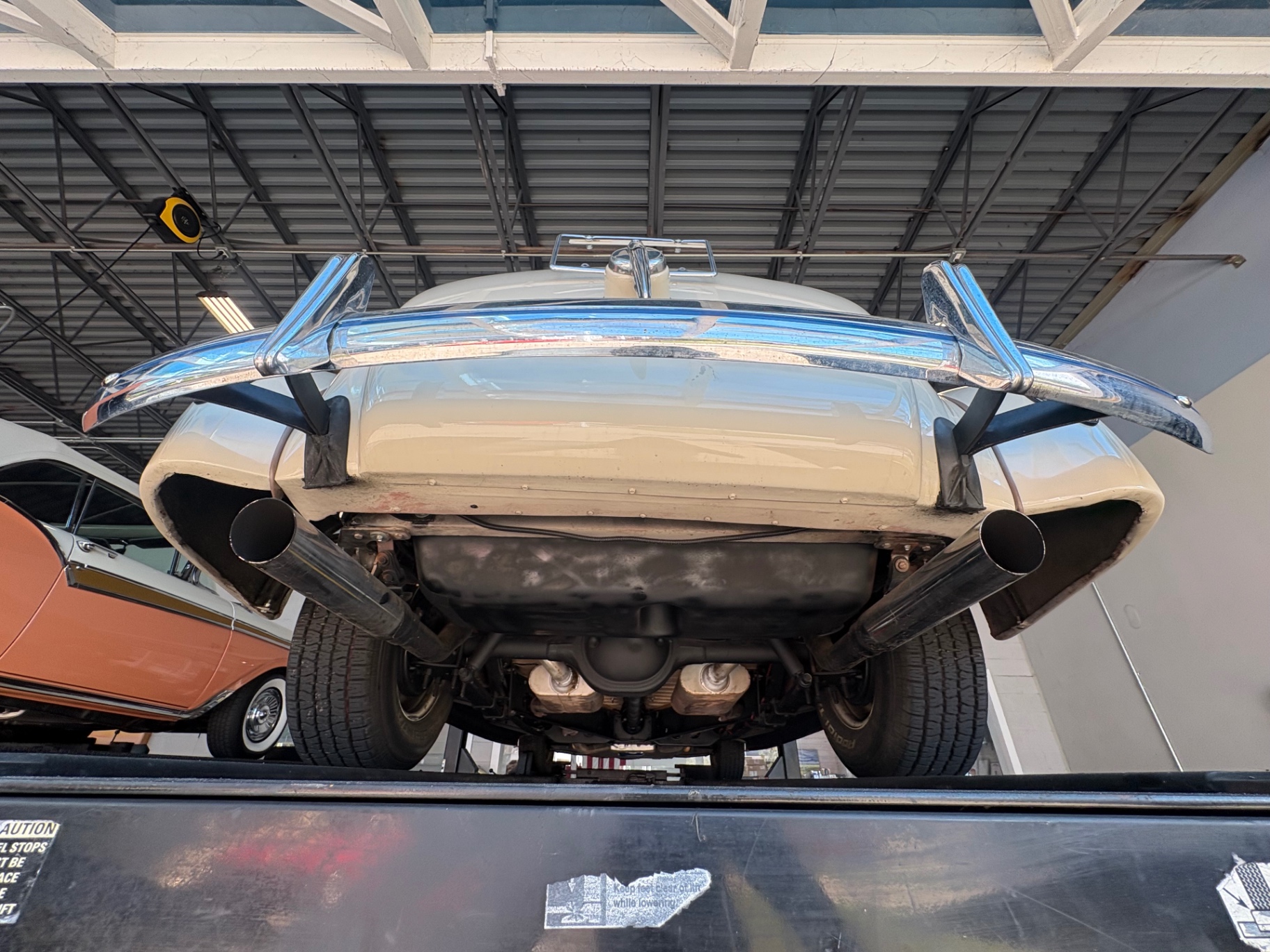
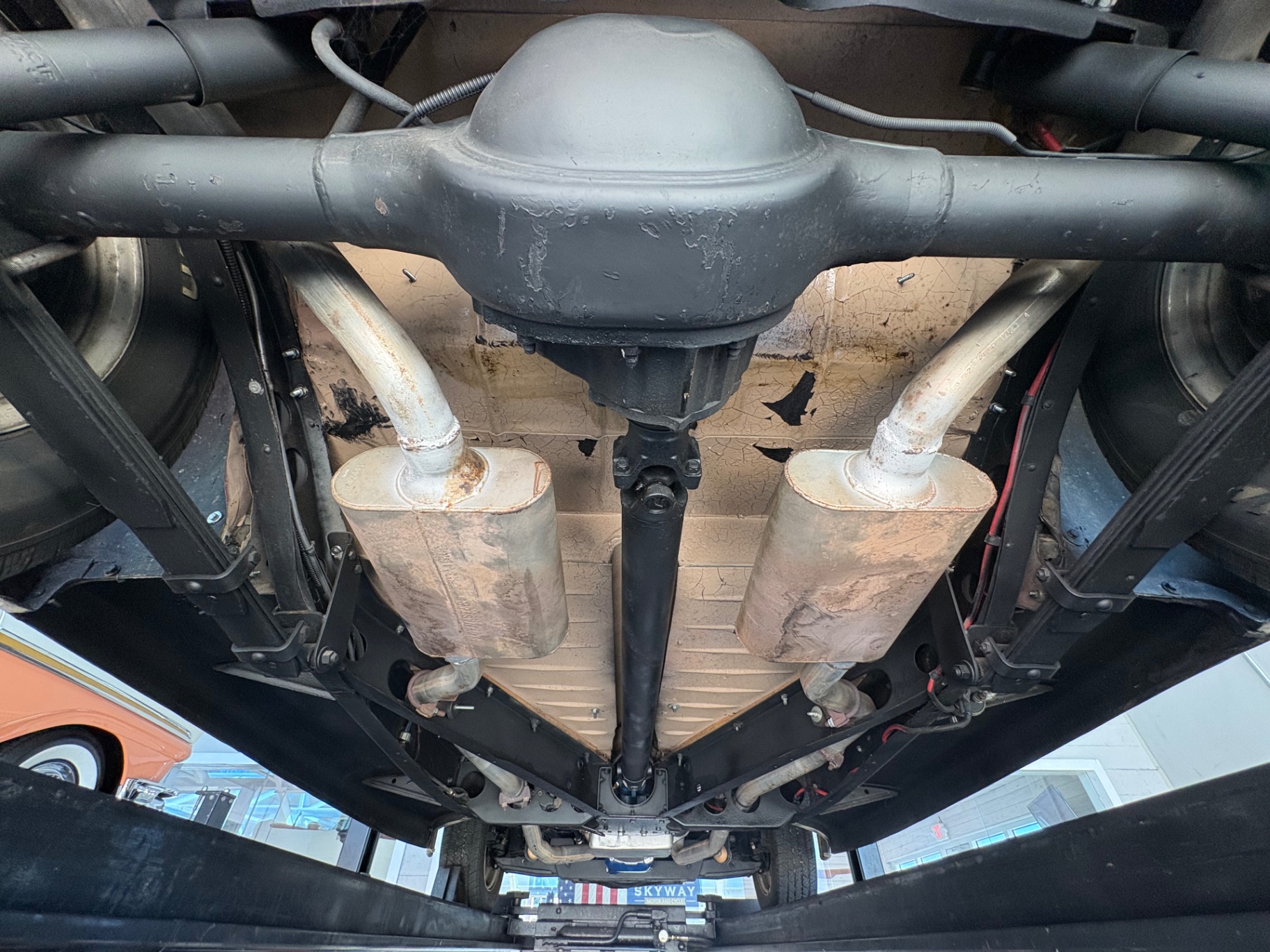
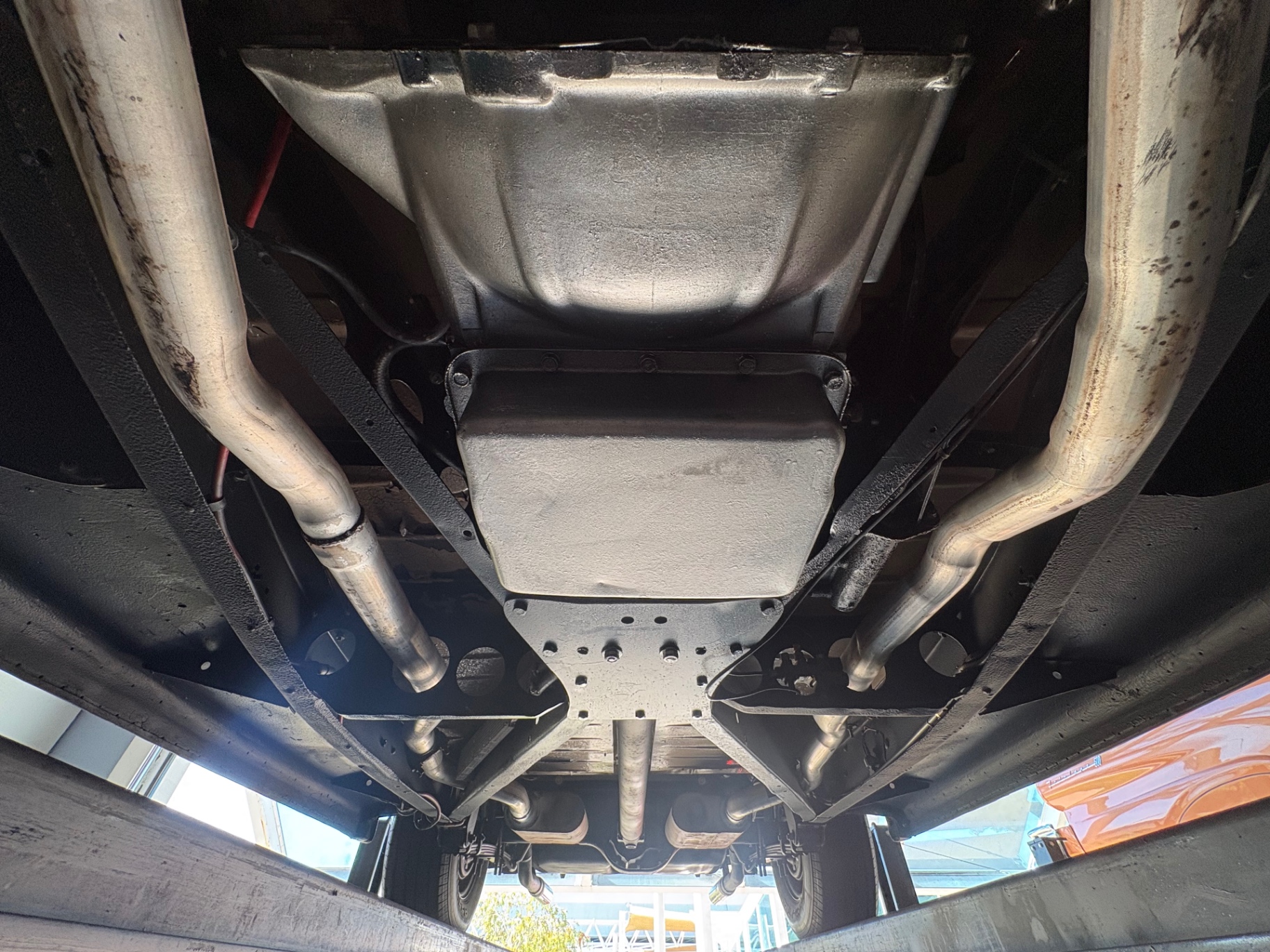
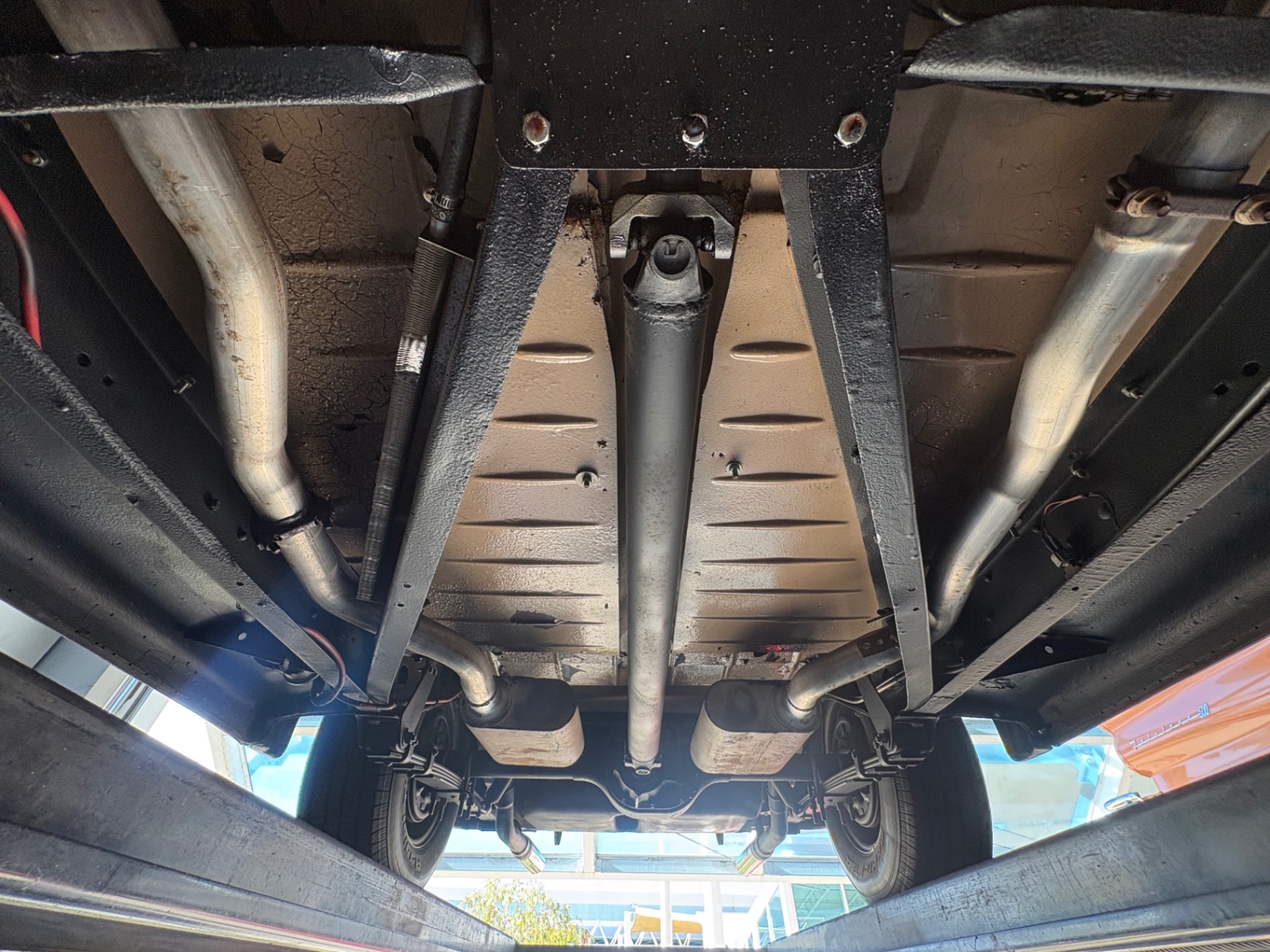
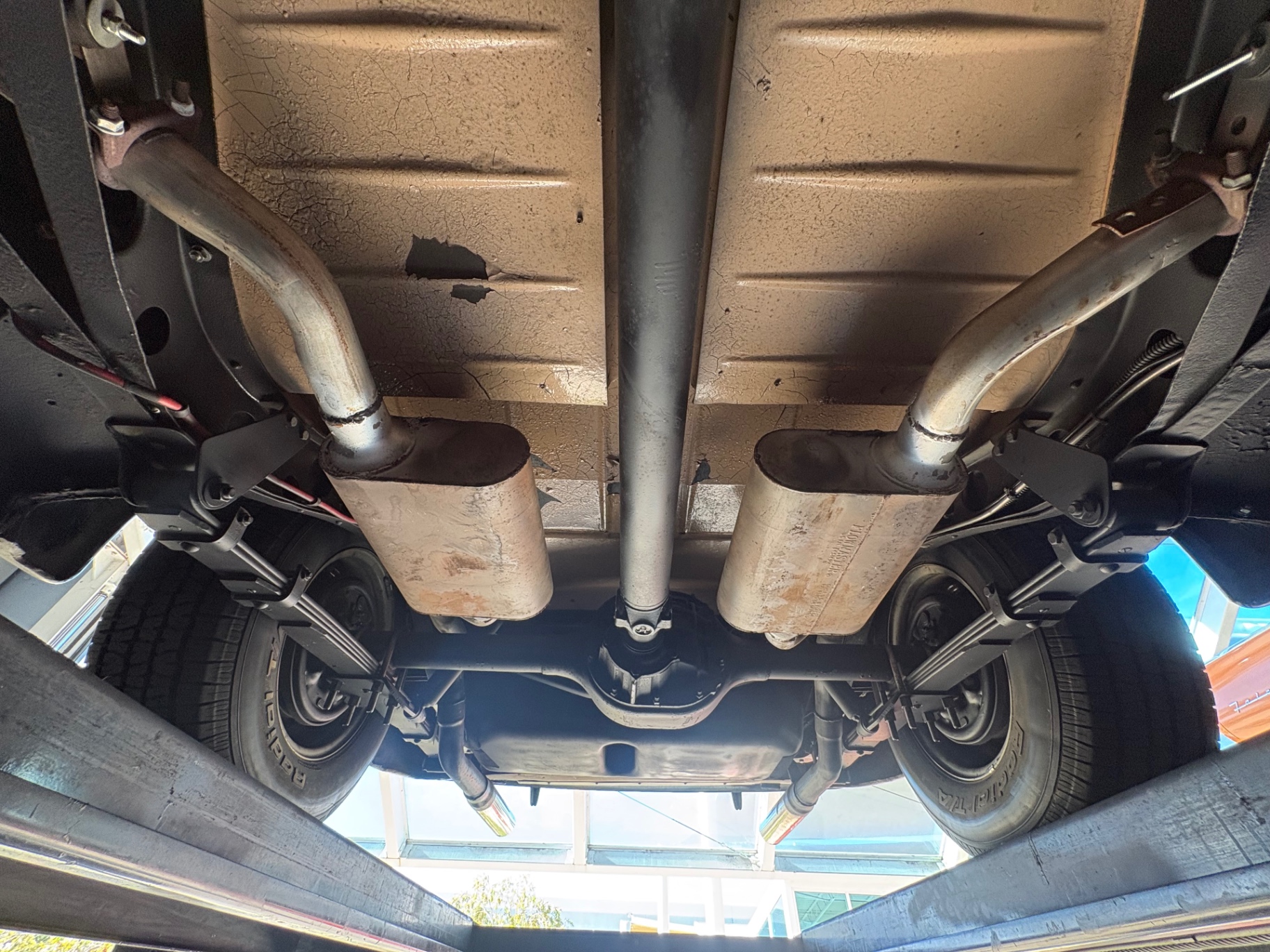
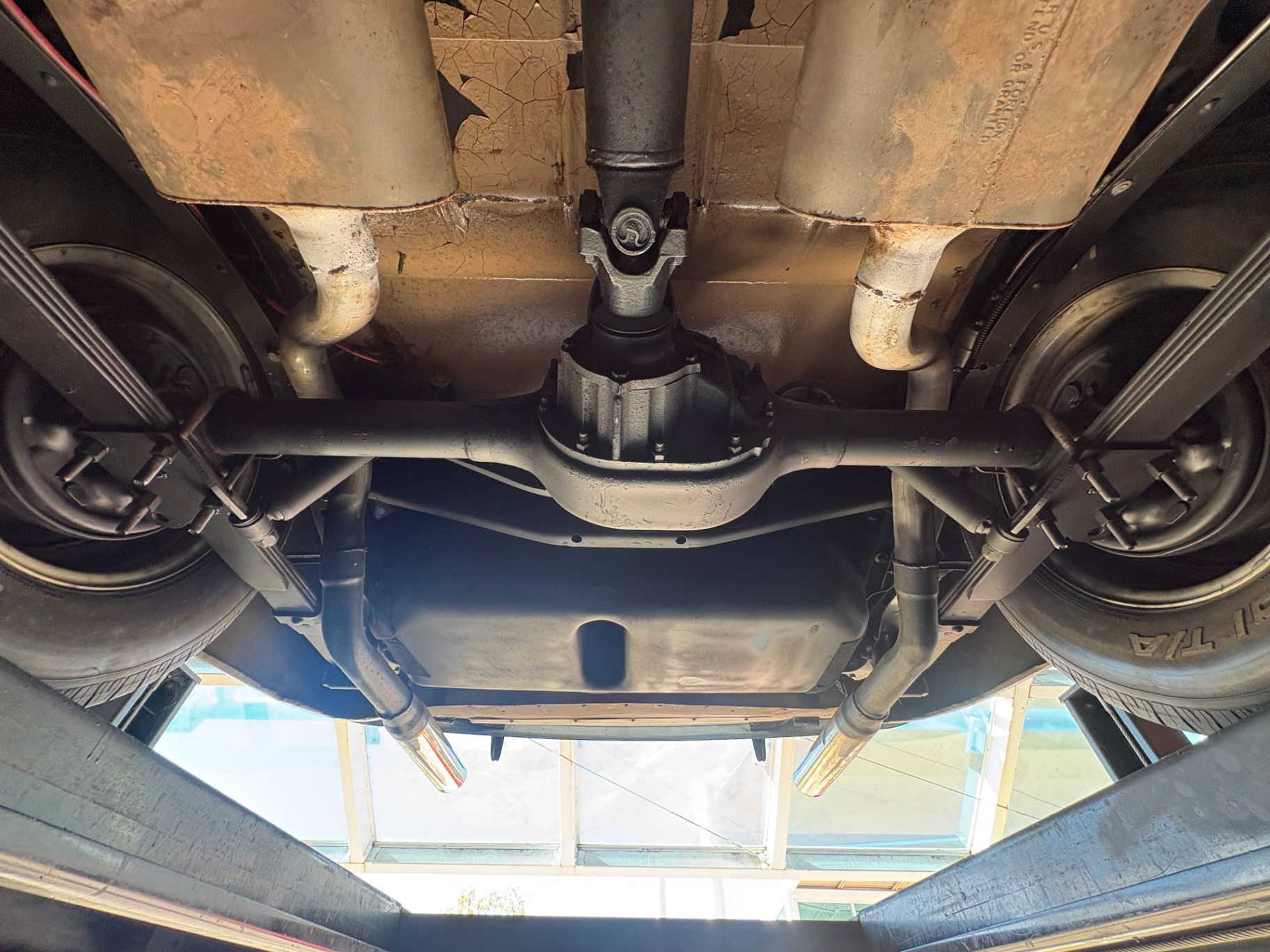
Running boards are retained, which matters on a four-door body with this roofline because rear passenger entry is easier with a step. Chrome exterior mirrors are fitted on both sides. The convertible top is a HARTZ cloth unit with a leather boot to cover the folded top when lowered. The underside of the car shows a clean frame with a black finish, the dual Flowmaster mufflers positioned symmetrically on either side of the driveshaft, and the Ford 9-inch centered at the rear — a chassis that holds up to inspection as well as the body above it.
Conclusion
A four-door convertible sedan in any year is a relatively uncommon body style, and a 1939 Ford Deluxe in that configuration with an all-steel body is genuinely difficult to find. This example adds a Boss 302 with four two-barrel carbs, a HEIDTS front suspension with rack-and-pinion steering, a Ford 9-inch rear, and a full tan leather interior to that already scarce starting point. The build decisions are consistent and thought-out — Ford engine in a Ford body, period-correct styling cues paired with modern drivability upgrades, and a leather interior that covers every surface without cutting corners on the less-visible ones. This is a 1939 Ford Deluxe built to be driven, shown, and appreciated by someone who knows what they are looking at.
To schedule a viewing or ask questions about this 1939 Ford Deluxe, call Skyway Classics in Sarasota, Florida at 941-254-6608.
Disclaimer
Information found on the website is presented as given to us by the owner of the car, whether on consignment or from the owner we bought it from. Some Photos, materials for videos, descriptions and other information are provided by the consignor/seller and is deemed reliable, but Skyway Classics does not warranty or guarantee this information. Skyway Classics is not responsible for information that may incorrect or a publishing error. The decision to purchase should be based solely on the buyers personal inspection of the vehicle or by a professional inspection service prior to offer or purchase being made.
1939 Ford Deluxe Four-Door Convertible Sedan Street Rod — Boss 302 V8, Four Two-Barrel Carbs, Full Leather Interior
Why This Car Is Special
The 1939 Ford Deluxe was the last pre-war Ford to wear the classic styling that defined the late 1930s. Designed under the direction of Bob Gregorie, the 1939 Ford Deluxe carried a vertical bar grille, sweeping fenders, and a profile that remains one of the most recognizable silhouettes in American automotive history. Ford offered the Deluxe in a broad range of body styles that year, but the four-door convertible sedan was always among the rarest configurations. Unlike a standard convertible, the four-door convertible sedan retained a full set of doors and a rear-hinged back door on each side, giving passengers genuine access to the back seat without sacrificing the open-air experience. Production numbers for this body style were extremely limited even when new, and the passage of more than eight decades has made intact, steel-bodied examples genuinely scarce.
This particular 1939 Ford Deluxe takes the open-air four-door concept and builds on it in a direction that makes the car equally at home on a long cruise as it is at a show field. The builder chose a Boss 302 V8 crate engine as the heart of the build — a logical and historically appropriate choice, since the Boss 302 is a Ford engine through and through. Topped with four two-barrel carburetors, the intake setup is a serious nod to the tradition of multi-carb street and show engines that defined custom Ford builds for decades. The result under that cream-painted hood is a visual centerpiece as much as a powerplant. A complete American Auto wiring harness, electronic ignition, and a chrome alternator mean this is not a car that was given a modern engine and left with antique electrical infrastructure trying to keep up with it.
The chassis work is equally thorough. HEIDTS supplied the front end, which includes tubular A-arms, coil-over front suspension, and rack-and-pinion steering — a combination that addresses the handling limitations of the original transverse leaf front suspension while maintaining a period-correct stance. A Ford 9-inch rear end handles the power delivery out back, which is the correct choice for any serious street rod build. The 9-inch has been the default rear axle for custom Ford builds for more than sixty years because of its strength, the wide availability of gear sets and carriers, and its known rebuild path.
The finished car presents in cream over a tan full leather interior, with a HARTZ cloth convertible top and blue dot taillights that pay tribute to the accessory customizers were fitting to pre-war Fords as far back as the 1940s. This is a 1939 Ford Deluxe that drives the way it looks — with purpose, presence, and a long list of thoughtful decisions made by someone who understood both the car and the craft.
Features List
- Ford Boss 302 V8 crate engine
- Four two-barrel carburetors
- Automatic transmission
- HEIDTS front end with rack-and-pinion steering
- Tubular A-arms
- Coil-over front suspension
- 9-inch Ford rear end
- Front disc brakes
- Ceramic coated headers
- Dual exhaust with Flowmaster mufflers and Magnaflow exhaust tips
- Electric cooling fan
- Electronic ignition
- Chrome alternator
- American Auto wiring harness
- HARTZ cloth convertible top with leather convertible top boot
- Full leather interior in tan
- Power leather reclining front seats
- Leather rear bucket seats
- Headrests front and rear
- Seat belts front and rear
- Wood door cap trim
- Billet dash insert
- VDO 5-gauge instrument cluster
- VDO quartz clock
- Ididit tilt steering column
- Grant wooden steering wheel
- Lokar floor shifter
- Lokar dipsticks
- Billet gas and brake pedals
- Aftermarket CD stereo
- Leather trunk interior
- Leather battery cover
- Custom diamond-plate engine bay liner
- Custom embroidered floor mats
- Coker Smoothie wheels with Ford center caps
- Blue dot taillights
- Chrome exterior mirrors
- Running boards
- Rain gear electric wipers
- PPG base/clear paint in cream
Mechanical
The Boss 302 is one of Ford's more storied small-block V8s. Originally developed for the 1969 Mustang Boss 302 to meet Trans-Am racing homologation requirements, the engine was known for its high-revving character, free-flowing canted-valve cylinder heads, and strong top-end power. The crate version installed in this 1939 Ford Deluxe carries those same design roots into a platform where the engine's compact dimensions fit well and its Ford lineage makes sense. Topping it with four two-barrel carburetors is a setup with real history in hot rodding — multiple two-barrels on a common log intake deliver a wide throttle bore area while keeping individual carburetor size manageable, which improves throttle response across a broad RPM range compared to a single large four-barrel.
Ceramic-coated headers reduce under-hood heat while improving exhaust flow efficiency, and the dual exhaust system running Flowmaster mufflers with Magnaflow tips delivers a sound profile appropriate to the engine. The electric cooling fan eliminates the parasitic drag of a belt-driven fan and gives the engine more usable power while also improving cooling at idle — a meaningful upgrade on a car that may spend time in slow traffic at shows or cruise nights.
Up front, the HEIDTS suspension package replaces the original transverse leaf spring and kingpin assembly with tubular A-arms, coil-over shocks, and rack-and-pinion steering. This is a well-regarded street rod suspension solution that dramatically improves steering precision and reduces steering effort compared to the original worm-and-sector box that Ford used in 1939. Front disc brakes are fitted as well, which pairs appropriately with a Boss 302 producing significantly more power than the flathead V8 that left the factory in these cars. The Ford 9-inch out back is a proven, rebuildable unit that has been the benchmark rear axle in American street rods and performance cars since the 1950s.
Interior
The interior of this 1939 Ford Deluxe was executed with a consistent material strategy — tan leather covers virtually every surface a passenger touches or sees. The front seats are power reclining leather buckets, and the rear seats are also leather buckets, which is a departure from the traditional bench layout and gives the rear compartment a more intentional, finished appearance. All four seating positions are equipped with headrests and seat belts, which is a detail that matters on a car built for actual driving rather than trailer transport.
The dashboard carries a billet insert that provides a clean foundation for the VDO 5-gauge instrument cluster, which includes oil pressure, water temperature, volts, fuel level, and a central speedometer. The face design uses a cream and gold aesthetic that sits well against the warm brown of the painted dash without looking out of place in a pre-war body. A VDO quartz clock is mounted separately on the passenger side of the dash in a matching brushed aluminum panel — a period-appropriate touch that reinforces the interior's coherence.
The Ididit tilt steering column positions the Grant wooden steering wheel where the driver actually needs it, and the Lokar floor shifter controls the automatic transmission cleanly from the center of the floor. Billet gas and brake pedals carry the metal theme from the dash down to the footwell. The convertible top boot, trunk interior, and battery cover are all finished in leather to match the rest of the cabin, which reflects the level of thought that went into the build. An aftermarket CD stereo is integrated into the dash without disrupting the overall presentation.
Exterior
The cream PPG base/clear finish suits the rounded, pre-war body lines of the 1939 Ford Deluxe well. The color reads neutral enough to let the chrome and body shape do the work, and the PPG base/clear system means the finish has depth and durability beyond what single-stage paint can offer. The vertical bar grille and fender-mounted headlights that defined the 1939 Deluxe are intact, preserving the character of the original body.
Coker Smoothie wheels with Ford center caps are a classic street rod wheel choice that complements the pre-war body without competing with it. The smooth, unvented wheel face echoes the style of accessory wheels that appeared on California custom Fords in the 1940s and 1950s, and the Ford center cap ties the wheel back to the car's origins. Blue dot taillights sit in the original taillight housings — a detail that traces directly to the accessory catalogs of the postwar custom era, when glasspack mufflers and blue dot lenses were among the first modifications applied to cars exactly like this one.
Running boards are retained, which matters on a four-door body with this roofline because rear passenger entry is easier with a step. Chrome exterior mirrors are fitted on both sides. The convertible top is a HARTZ cloth unit with a leather boot to cover the folded top when lowered. The underside of the car shows a clean frame with a black finish, the dual Flowmaster mufflers positioned symmetrically on either side of the driveshaft, and the Ford 9-inch centered at the rear — a chassis that holds up to inspection as well as the body above it.
Conclusion
A four-door convertible sedan in any year is a relatively uncommon body style, and a 1939 Ford Deluxe in that configuration with an all-steel body is genuinely difficult to find. This example adds a Boss 302 with four two-barrel carbs, a HEIDTS front suspension with rack-and-pinion steering, a Ford 9-inch rear, and a full tan leather interior to that already scarce starting point. The build decisions are consistent and thought-out — Ford engine in a Ford body, period-correct styling cues paired with modern drivability upgrades, and a leather interior that covers every surface without cutting corners on the less-visible ones. This is a 1939 Ford Deluxe built to be driven, shown, and appreciated by someone who knows what they are looking at.
To schedule a viewing or ask questions about this 1939 Ford Deluxe, call Skyway Classics in Sarasota, Florida at 941-254-6608.
Disclaimer
Information found on the website is presented as given to us by the owner of the car, whether on consignment or from the owner we bought it from. Some Photos, materials for videos, descriptions and other information are provided by the consignor/seller and is deemed reliable, but Skyway Classics does not warranty or guarantee this information. Skyway Classics is not responsible for information that may incorrect or a publishing error. The decision to purchase should be based solely on the buyers personal inspection of the vehicle or by a professional inspection service prior to offer or purchase being made.
1939 Ford
Deluxe Convertible Sedan
Why Choose Skyway Classics?
Explore our curated inventory of classic and collector cars—thoughtfully selected, ready to drive, and supported by experts who make ownership simple.
Expert Curation
Every vehicle is hand-selected by our experts for quality, authenticity, and investment potential.
Fast Transactions
Streamlined buying and selling process with quick financing and immediate delivery options.
Only National Dealer With Classic Service & Repair
We’re the only national dealership that services and repairs the classics we sell—before and after the sale.
Nationwide Network
Access to our extensive network of collectors, restorers, and classic car enthusiasts nationwide.
Concierge Ownership Support
From financing and insurance to paperwork, shipping, and titling—we handle the details so you can enjoy the drive.
Passion-Driven Service
We're classic car enthusiasts first, providing personalized service with genuine passion for the hobby.