
1936 Ford
Model 68 Deluxe
1936 Ford Model 68 DeLuxe Cabriolet — Rumble Seat, 302 V8, Full Restoration
Why This Car Is Special
The 1936 Ford Model 68 DeLuxe Cabriolet is one of the most visually distinctive body styles Ford produced during the prewar era. Ford designated its 1936 lineup as the Model 68, a reference to the engine series rather than a traditional model name. That year, Ford offered the cabriolet as part of the DeLuxe trim line — a two-door, open-top body style with a folding soft top, a front bench seat for two, and a rumble seat in the tail for additional passengers. The rumble seat configuration made the cabriolet a social car in its day, and it remains one of the most sought-after body styles among prewar Ford collectors.
The 1936 Ford was a significant styling step forward from the 1935 model. Designer Eugene "Bob" Gregorie, working under Edsel Ford, refined the body lines into something more aerodynamic and cohesive. The vertical bar grille, which debuted in 1935, was revised and given a more pronounced V-shape for 1936, and the headlamps were fully integrated into the fenders for the first time. These changes gave the 1936 Ford a much more modern appearance than its predecessors, and the design has aged well enough that it remains a crowd favorite at shows and on the street nearly ninety years later.
The cabriolet body style was produced in relatively small numbers compared to the Tudor and Fordor sedans that made up the bulk of Ford's volume. Surviving, drivable examples — especially those with rumble seats and DeLuxe trim — are genuinely scarce. This particular car has been fully restored and upgraded with a 302ci Ford small-block V8, a 5-speed manual transmission, independent front suspension, rack-and-pinion steering, and four-wheel disc brakes, making it a capable driver that retains the visual character of the original.
Features List
- 302ci Ford small-block V8
- 5-speed manual transmission with floor-mounted shifter
- Independent front suspension with coilover shocks
- Rack-and-pinion steering
- Four-wheel disc brakes
- Tilt steering column
- Air conditioning
- Folding black soft top with zip-out rear window
- Functional rumble seat
- Updated 12-volt electrical system
- Performance dual exhaust system
- Wood-grain dashboard and trim
- Red leather interior with tan piping
- Tan exterior paint, professional quality
- 16-inch steel artillery wheels with V8 hubcaps and beauty rings
- Wide whitewall tires on modern radial construction
- Chrome-plated vertical bar grille with hidden horns
- Teardrop-shaped integrated headlamps
- Detailed and painted undercarriage
- New glass throughout
Mechanical
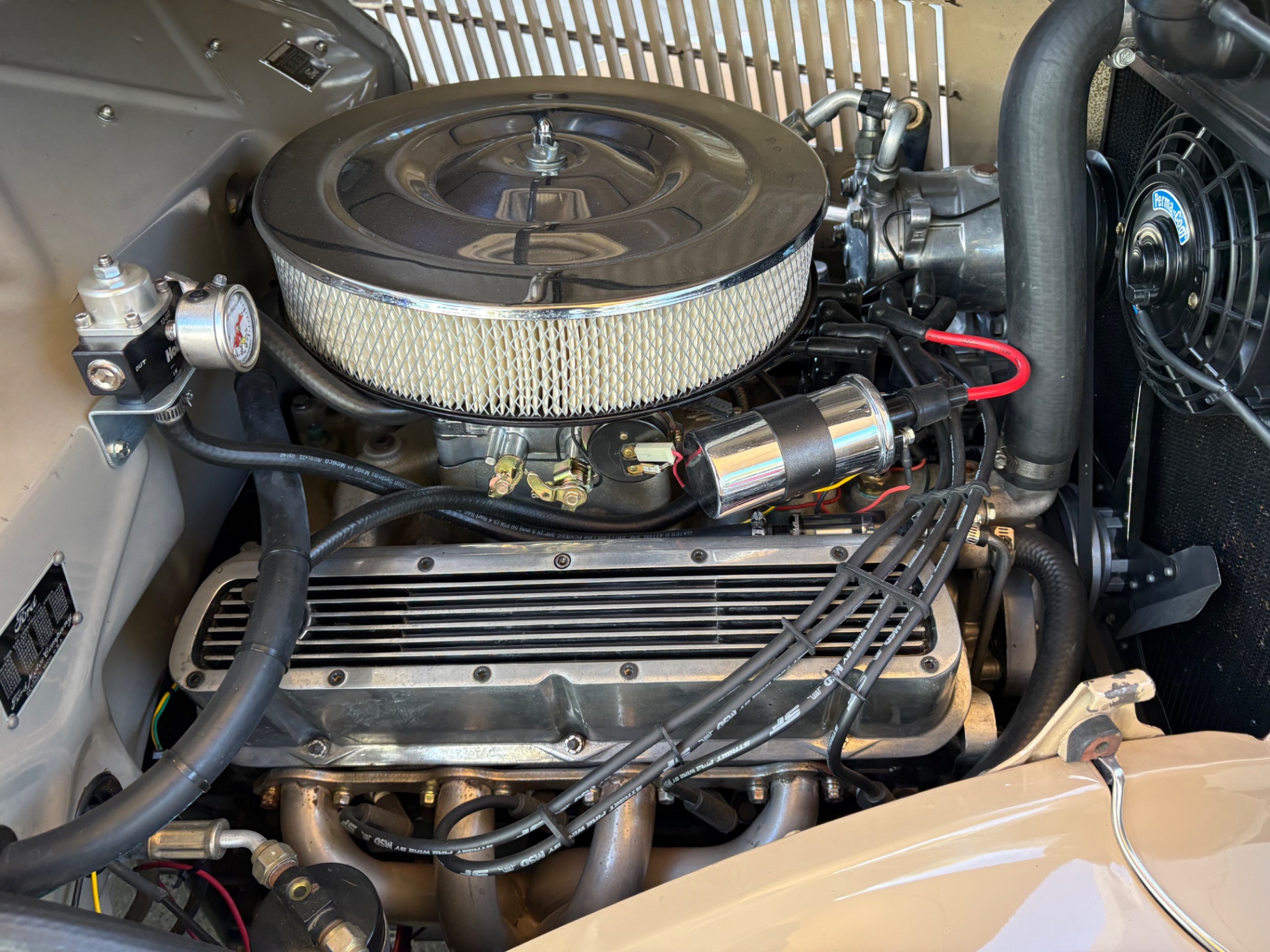
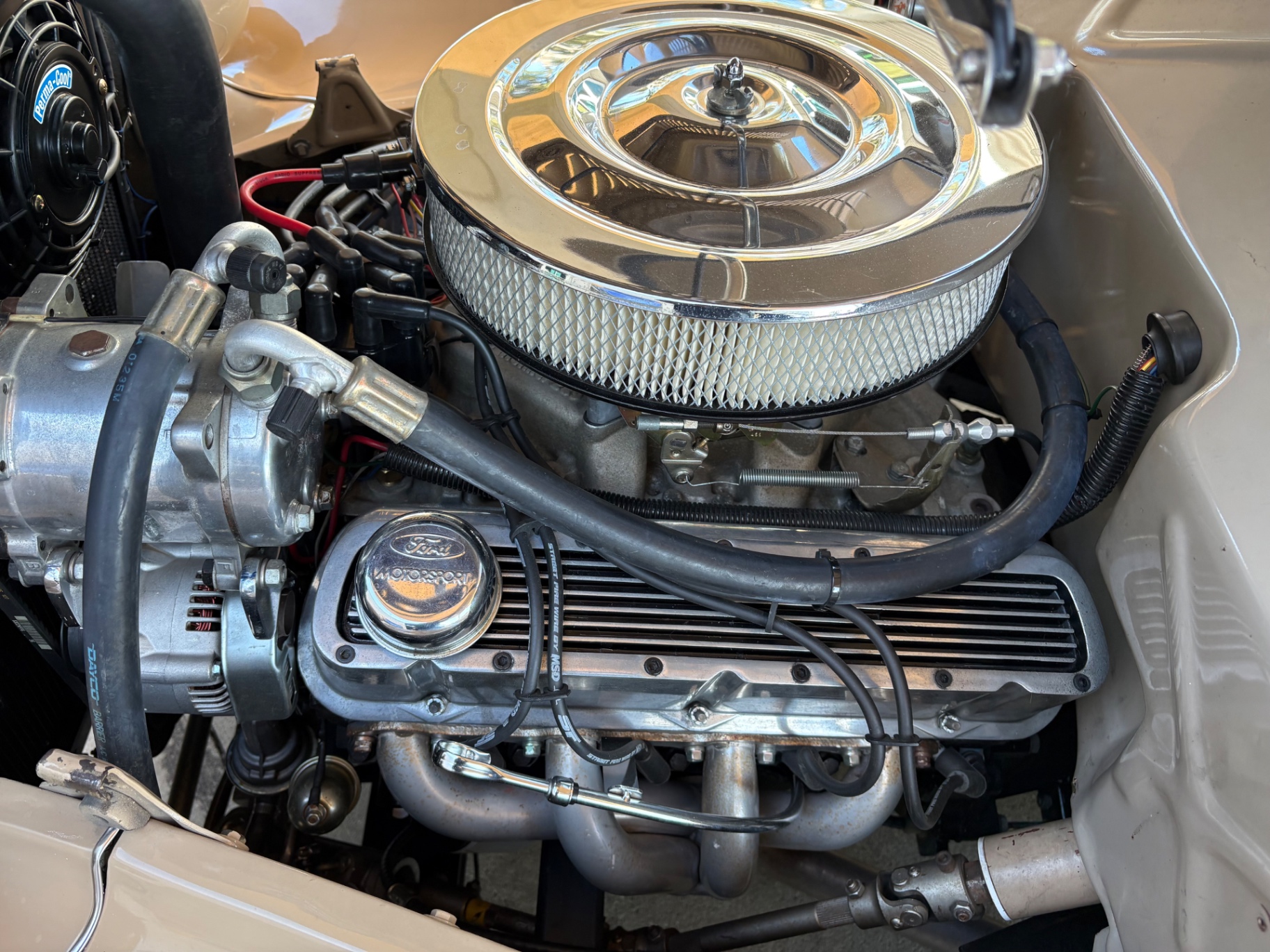
Under the hood sits a Ford 302ci small-block V8 — a sensible and historically appropriate engine choice for a prewar Ford build. The 302 shares its lineage with the Ford small-block family that traces back to the 1962 221ci unit, and by the time the 302 was fully developed it was one of the most proven small-block V8s in American automotive history. Running with a carburetor, performance exhaust headers, and an electric cooling fan visible in the engine bay photos, this engine is set up to run reliably in warm weather and stop-and-go driving conditions. The Ford Motorsport valve covers are a period-correct hot rod touch that fits the build style well.
The 5-speed manual transmission is paired with a floor-mounted shifter — visible in the interior photos as a chrome-topped unit rising from the tunnel. This gearbox gives the car usable highway gearing that the original three-speed Ford transmission never offered. The combination of the 302 and a 5-speed makes this a legitimate cross-country driver, not just a show car.
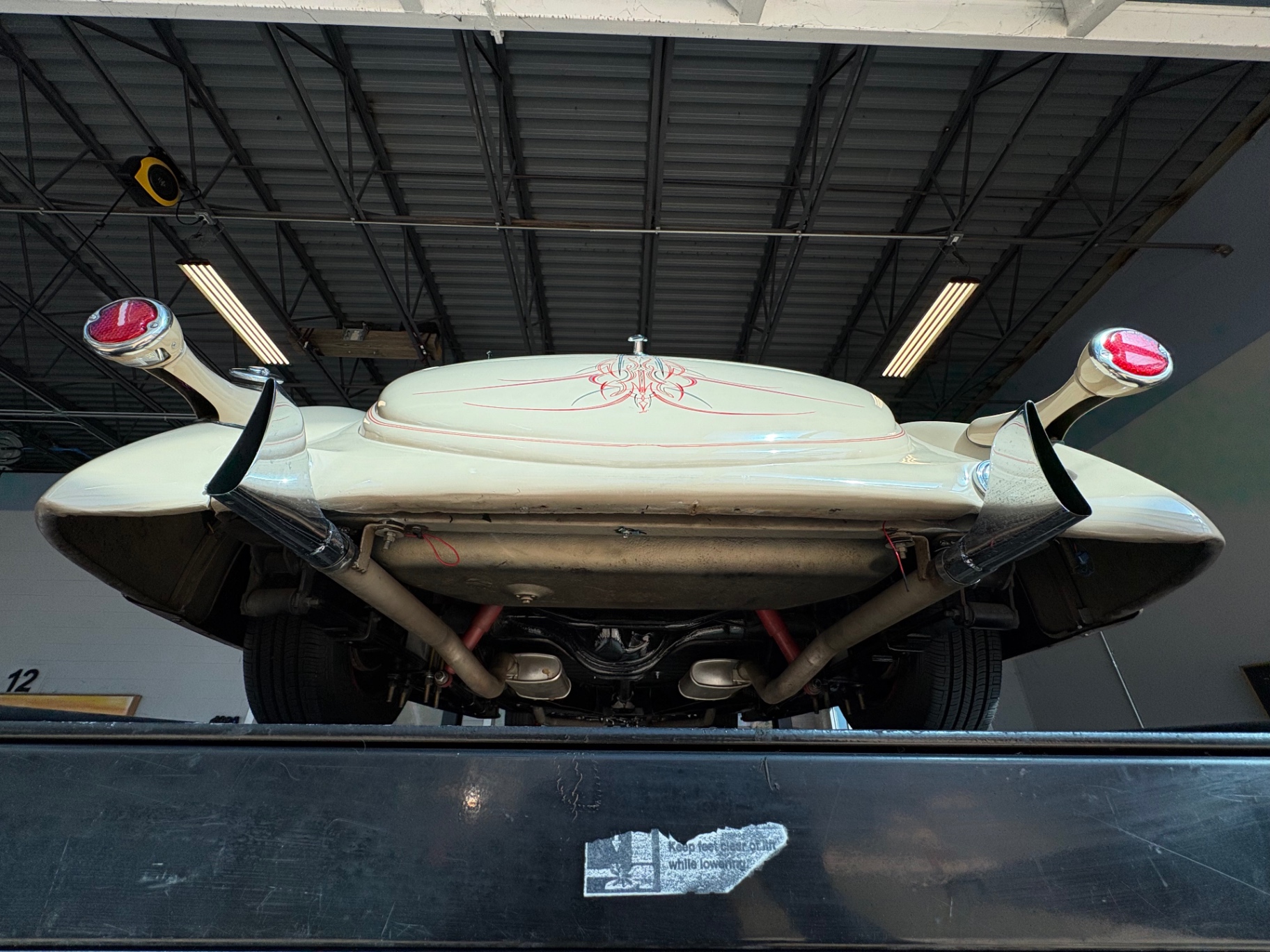
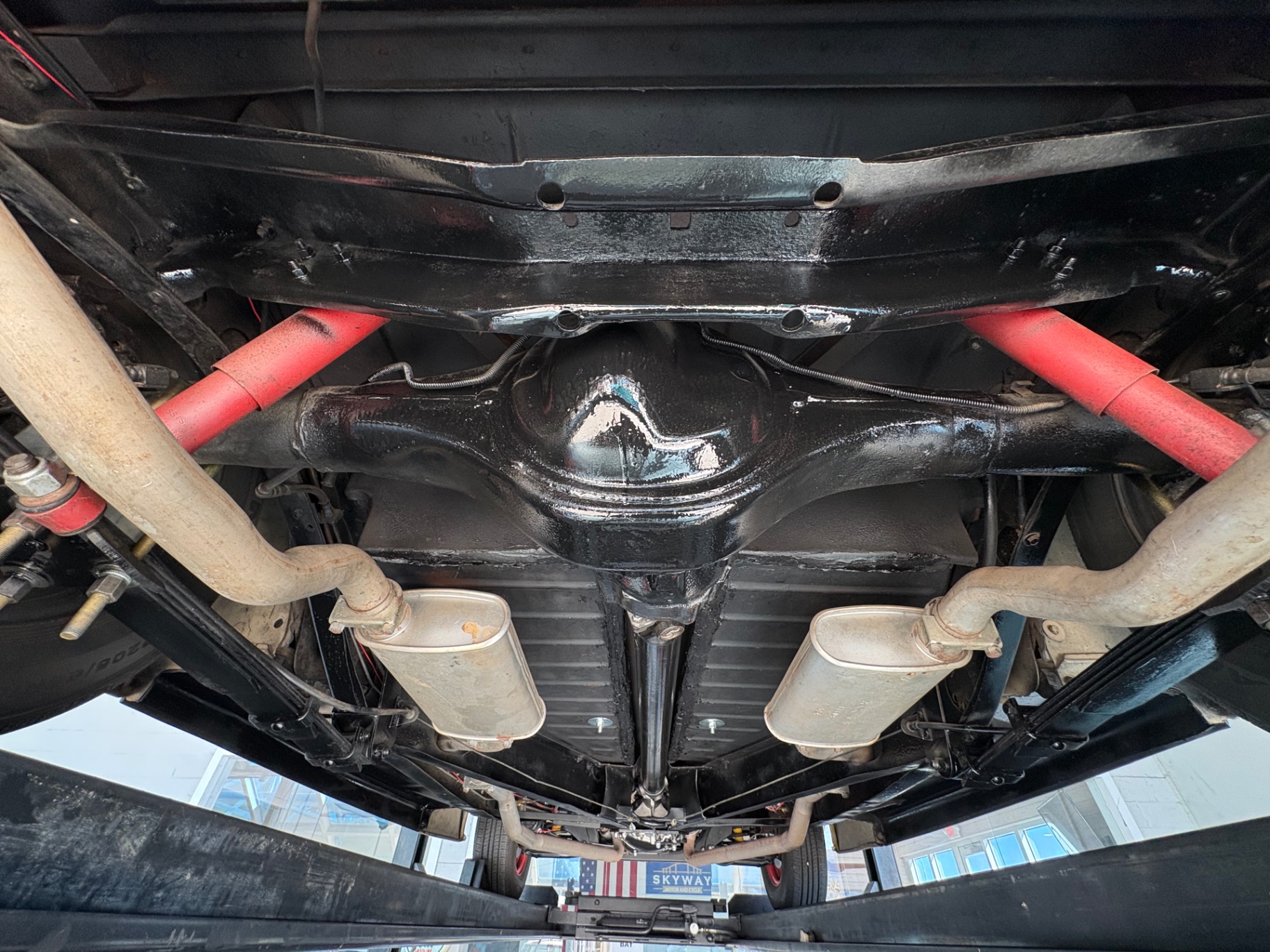
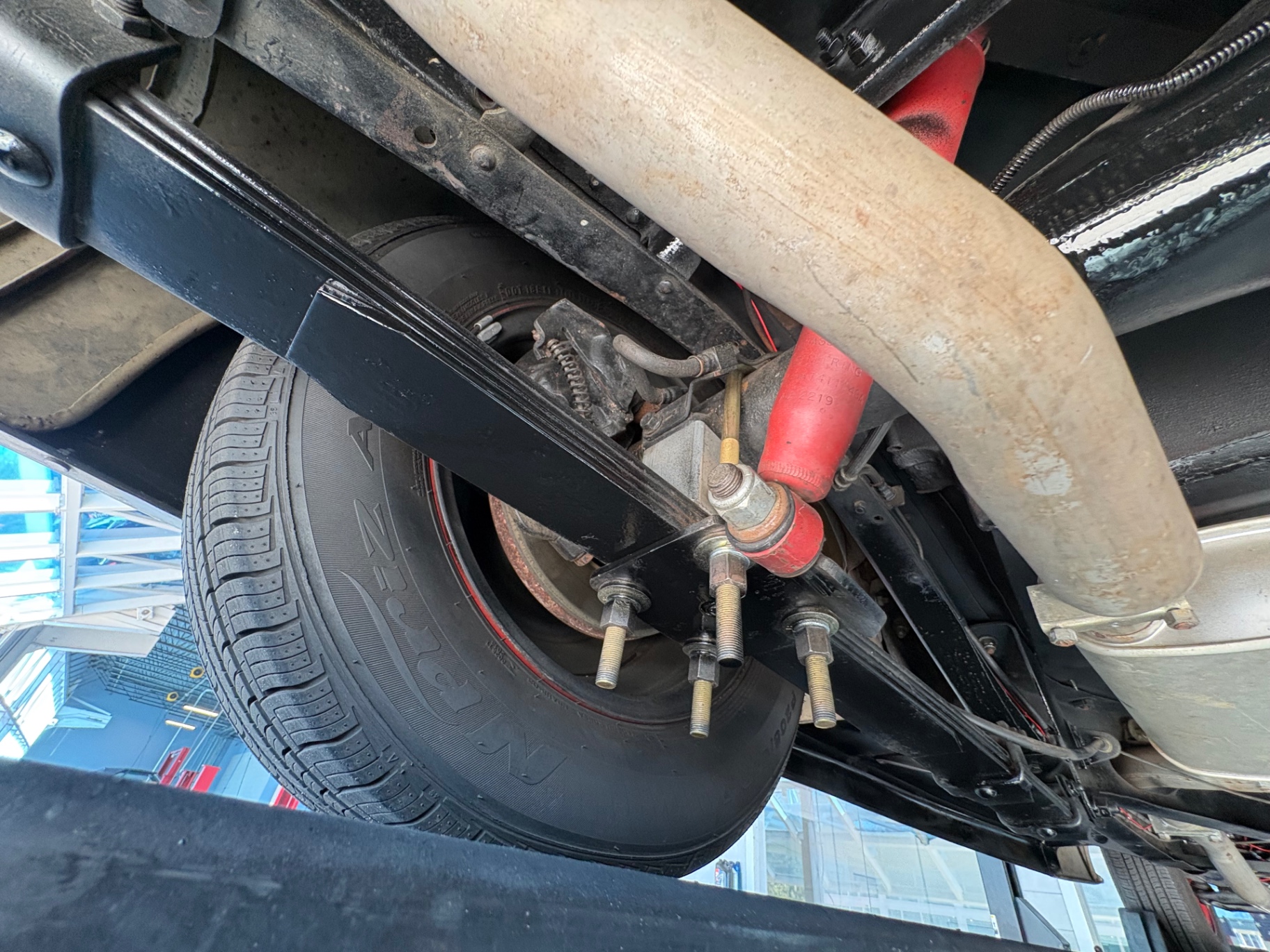
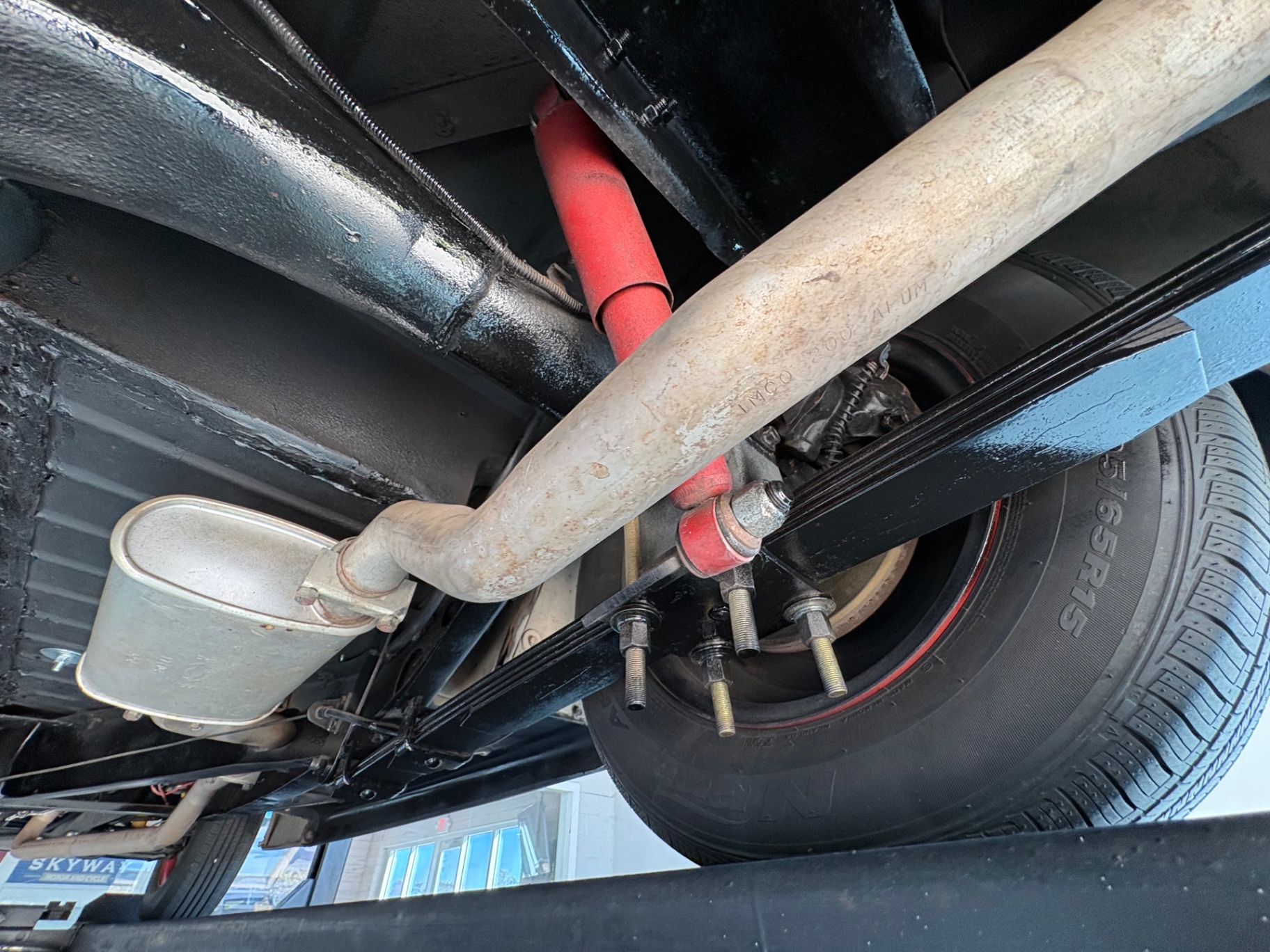
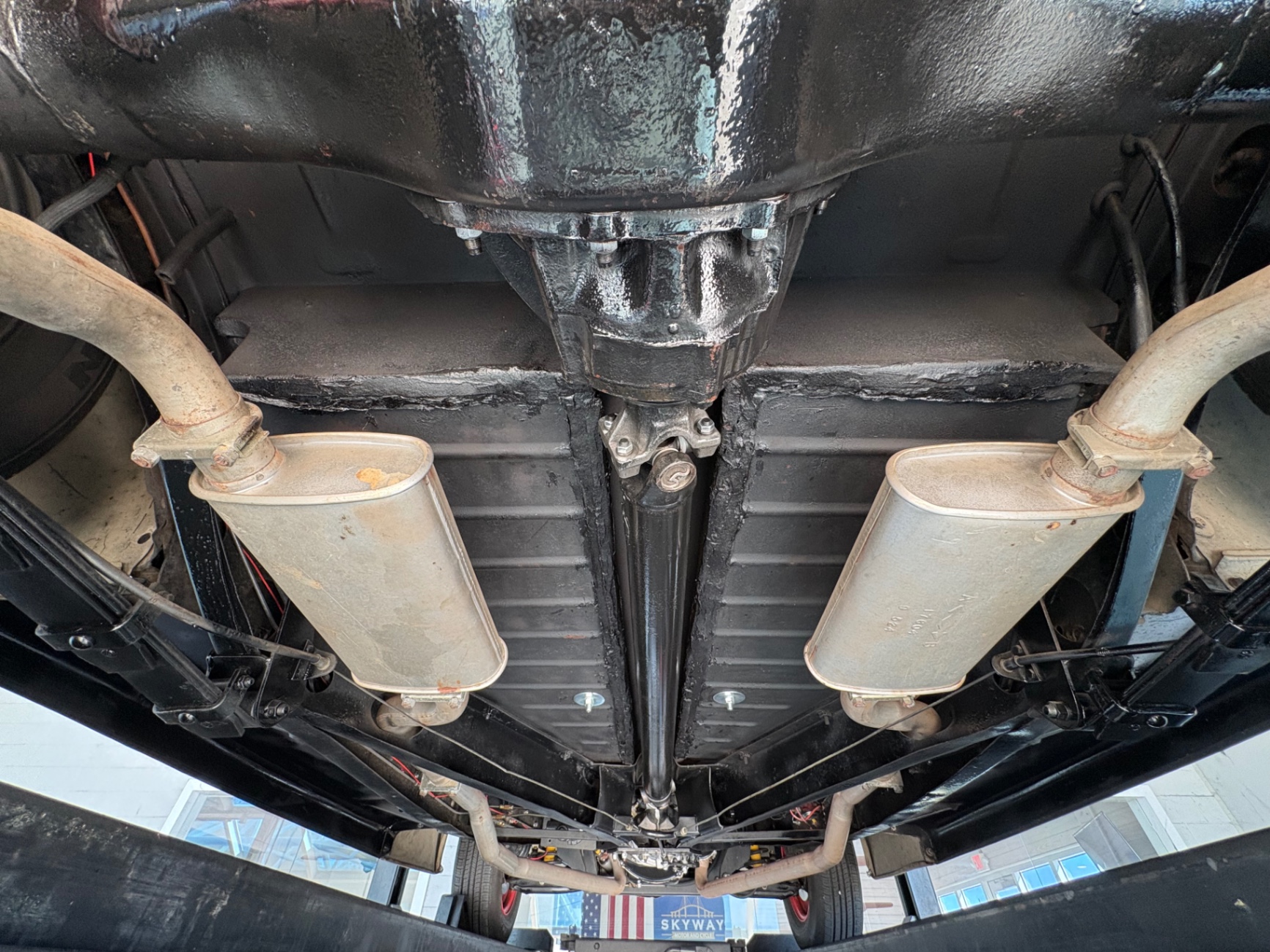
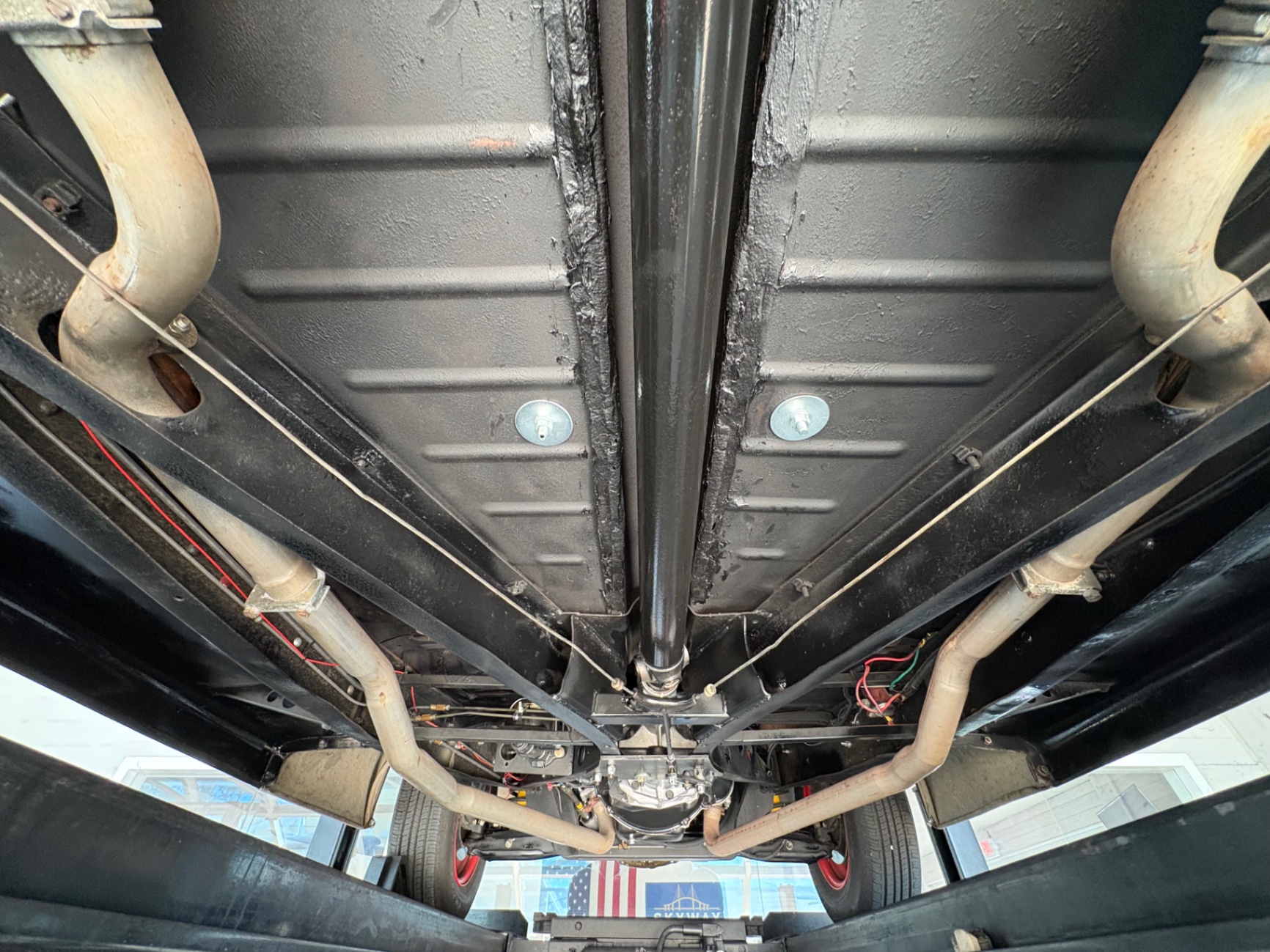
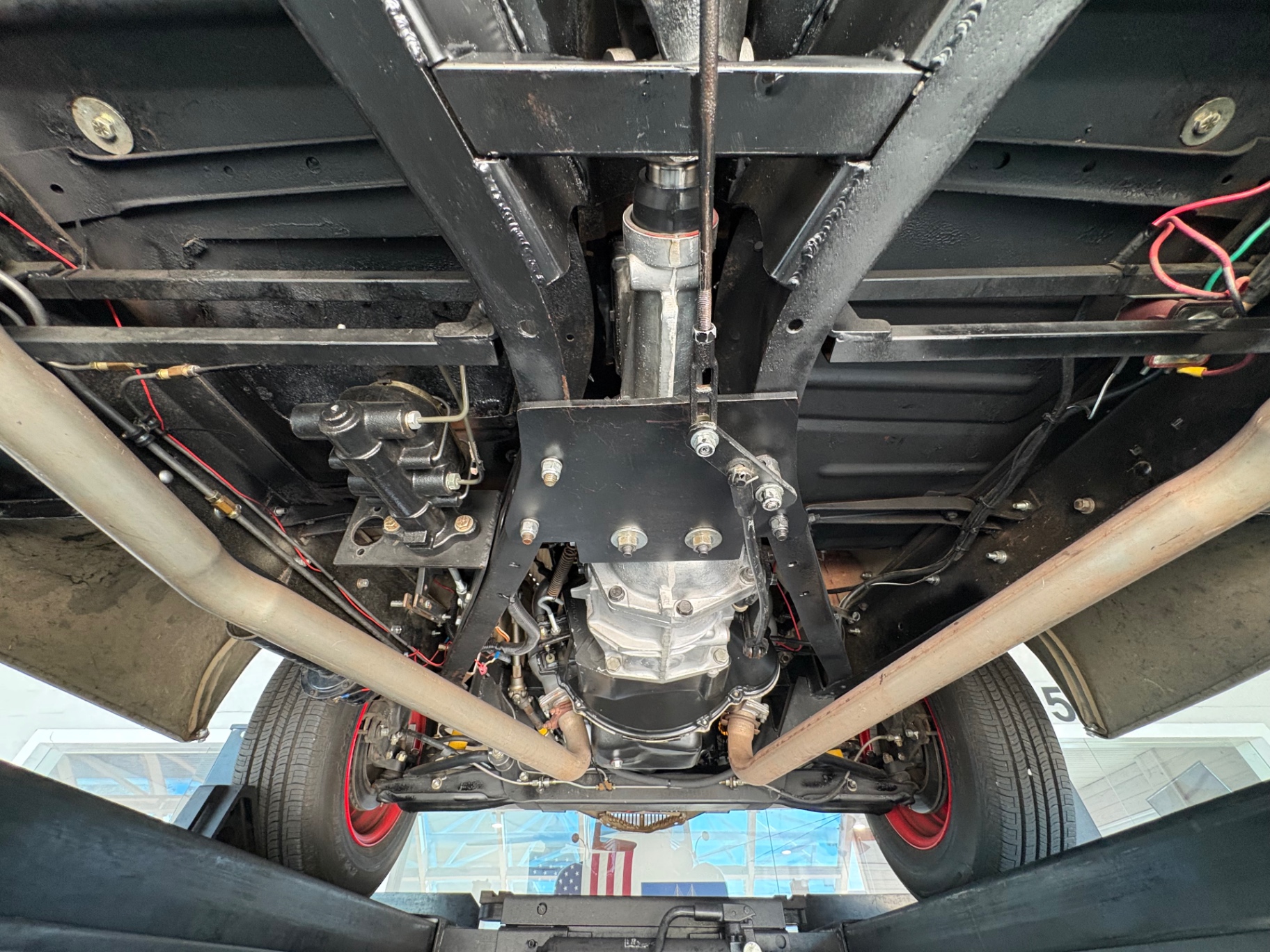
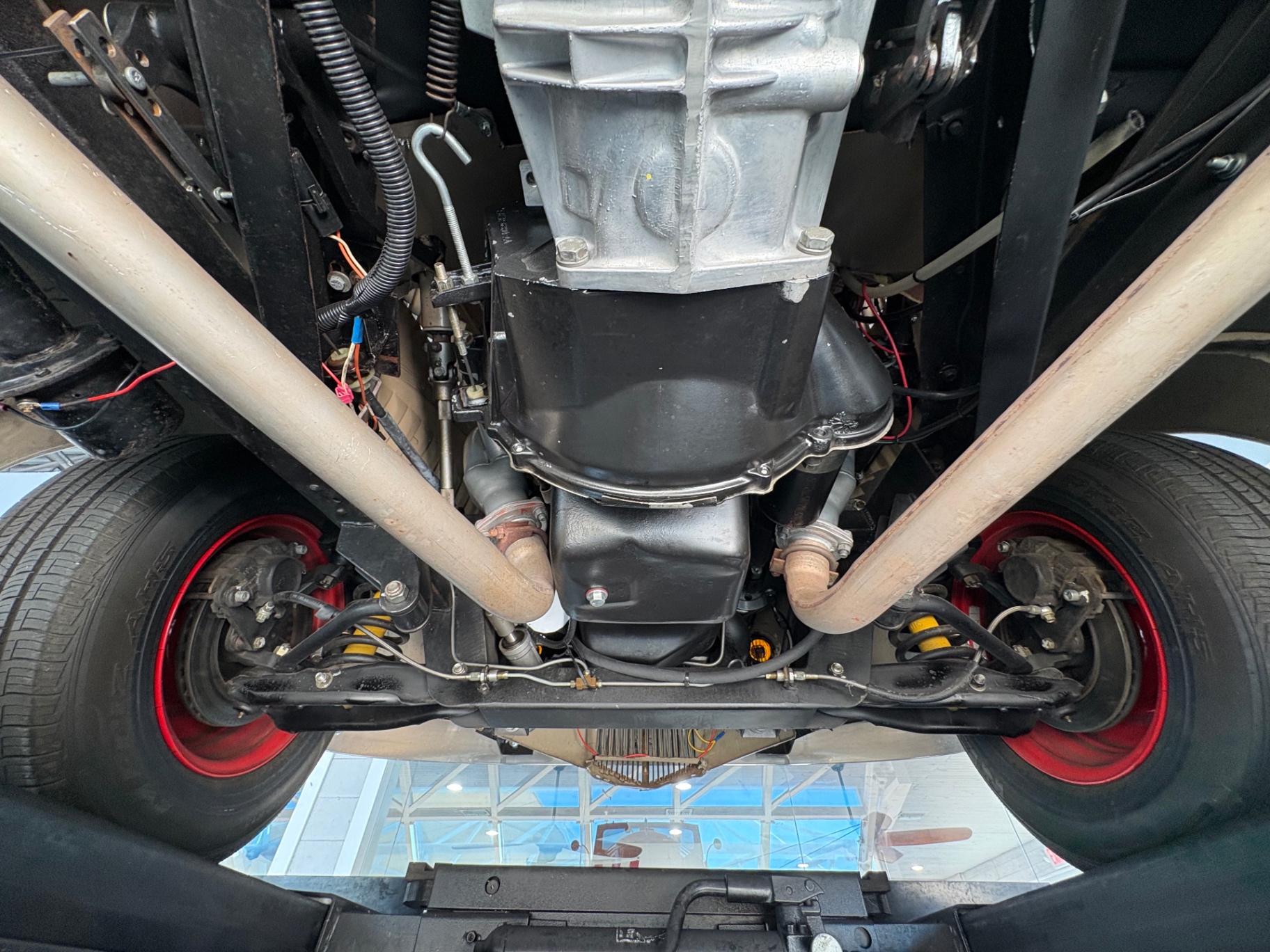
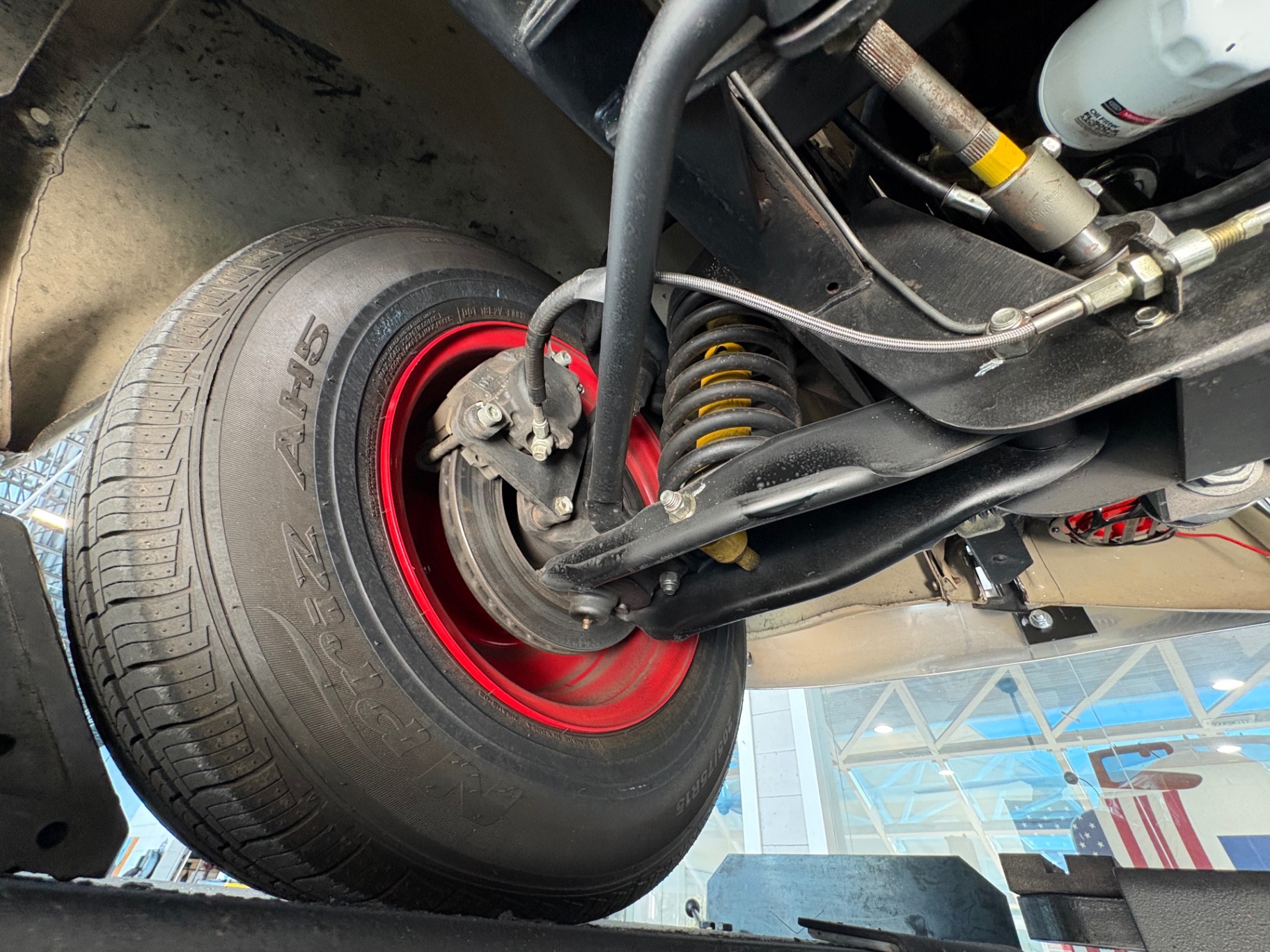
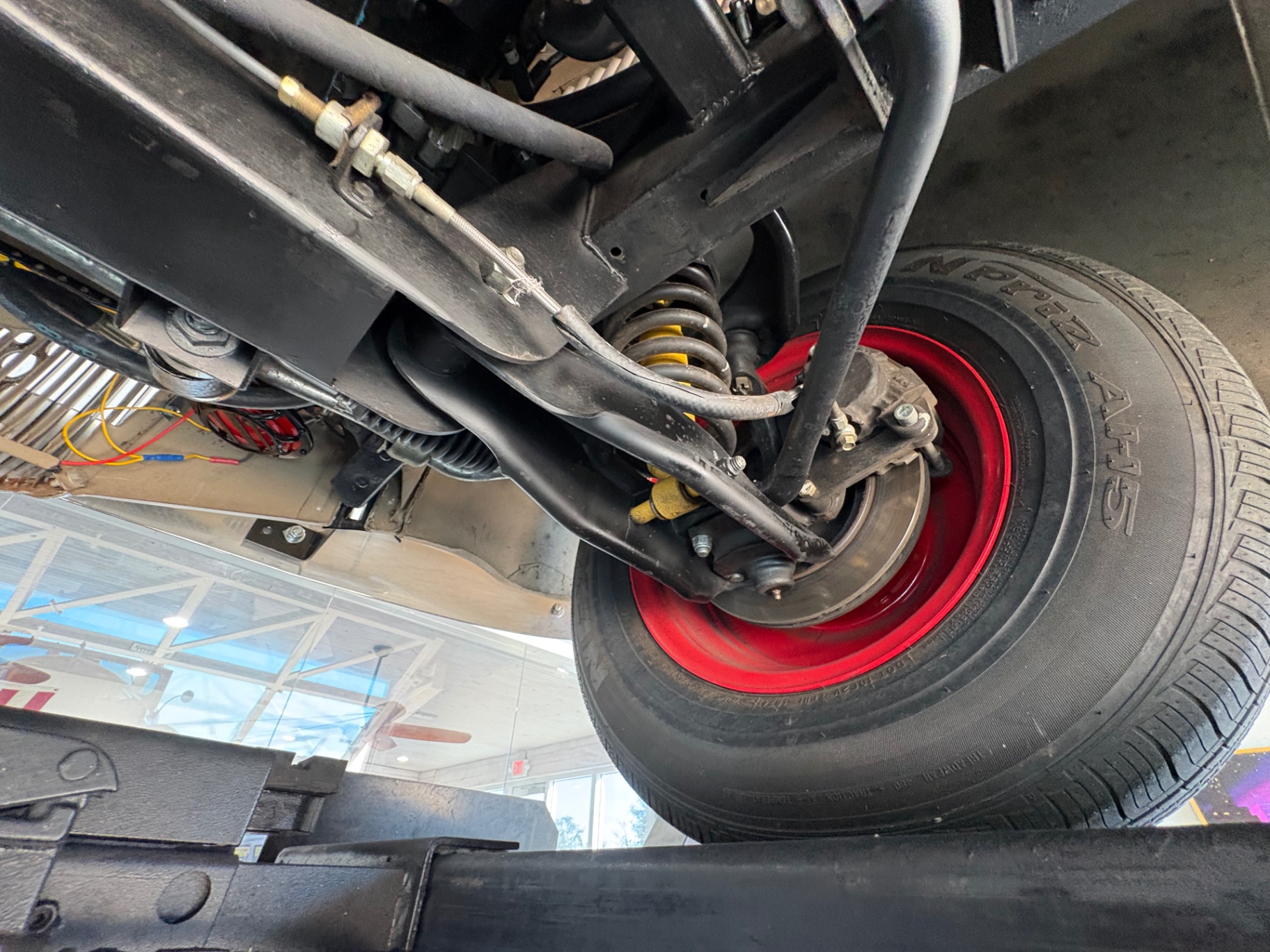
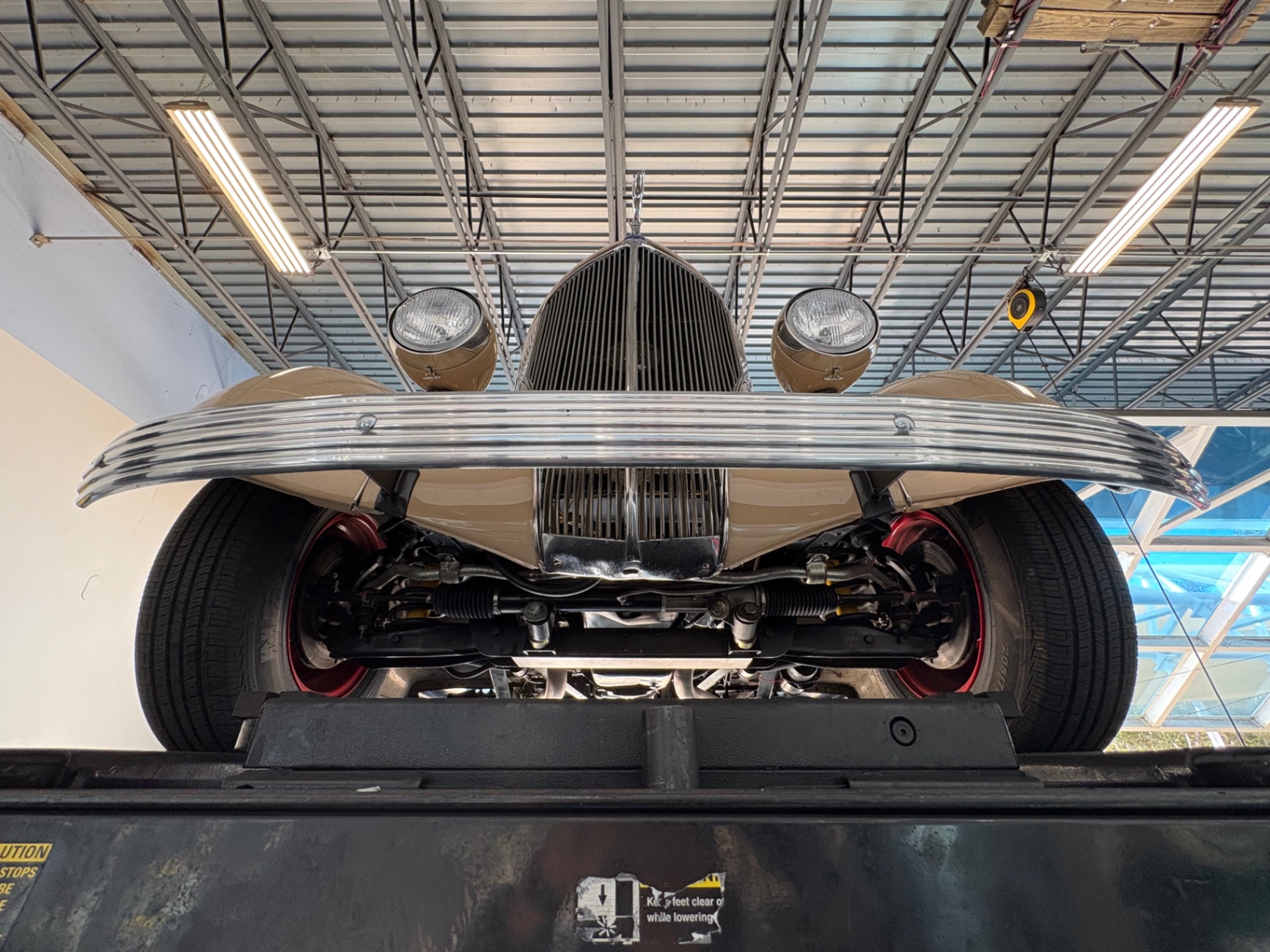
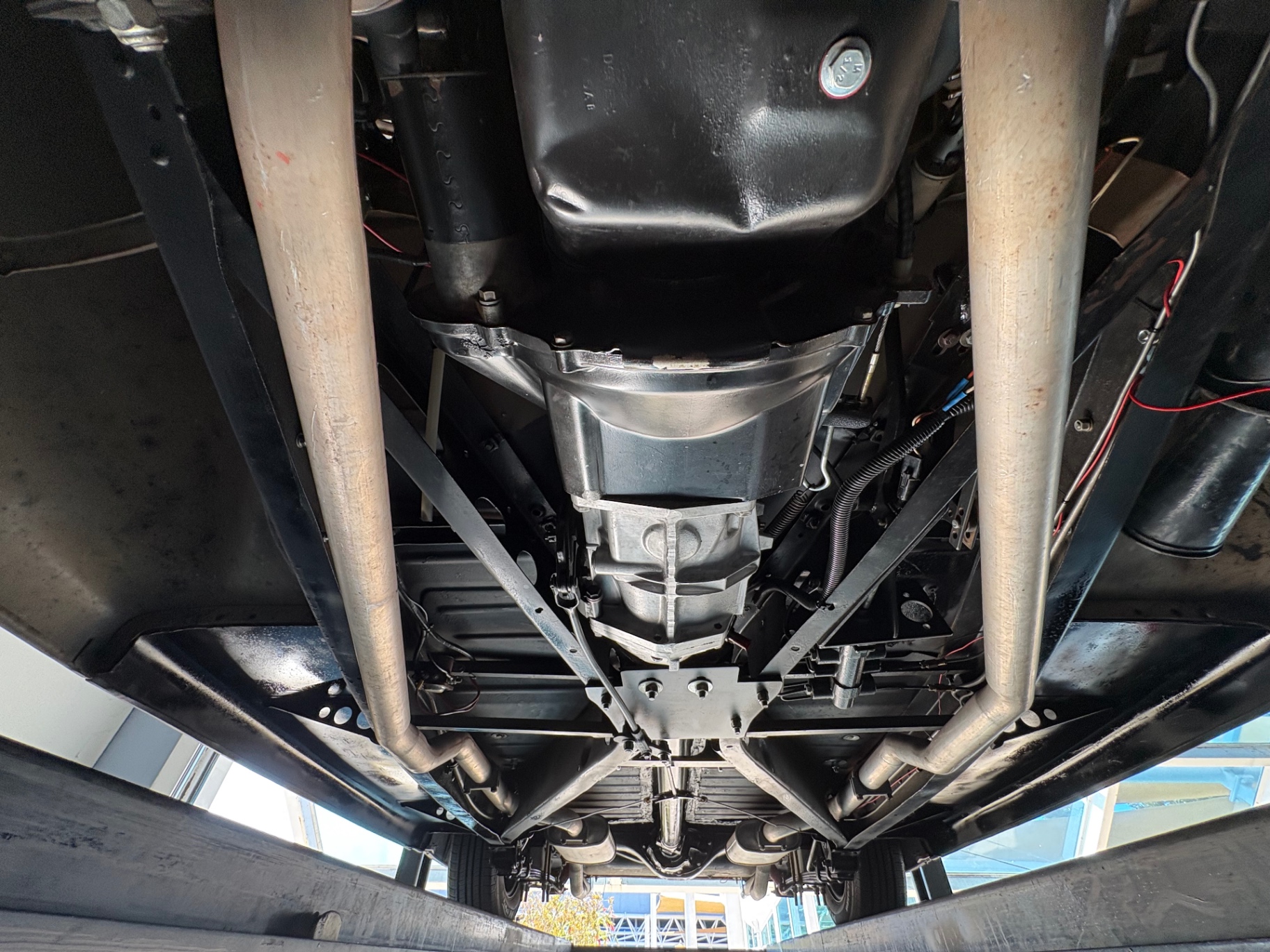
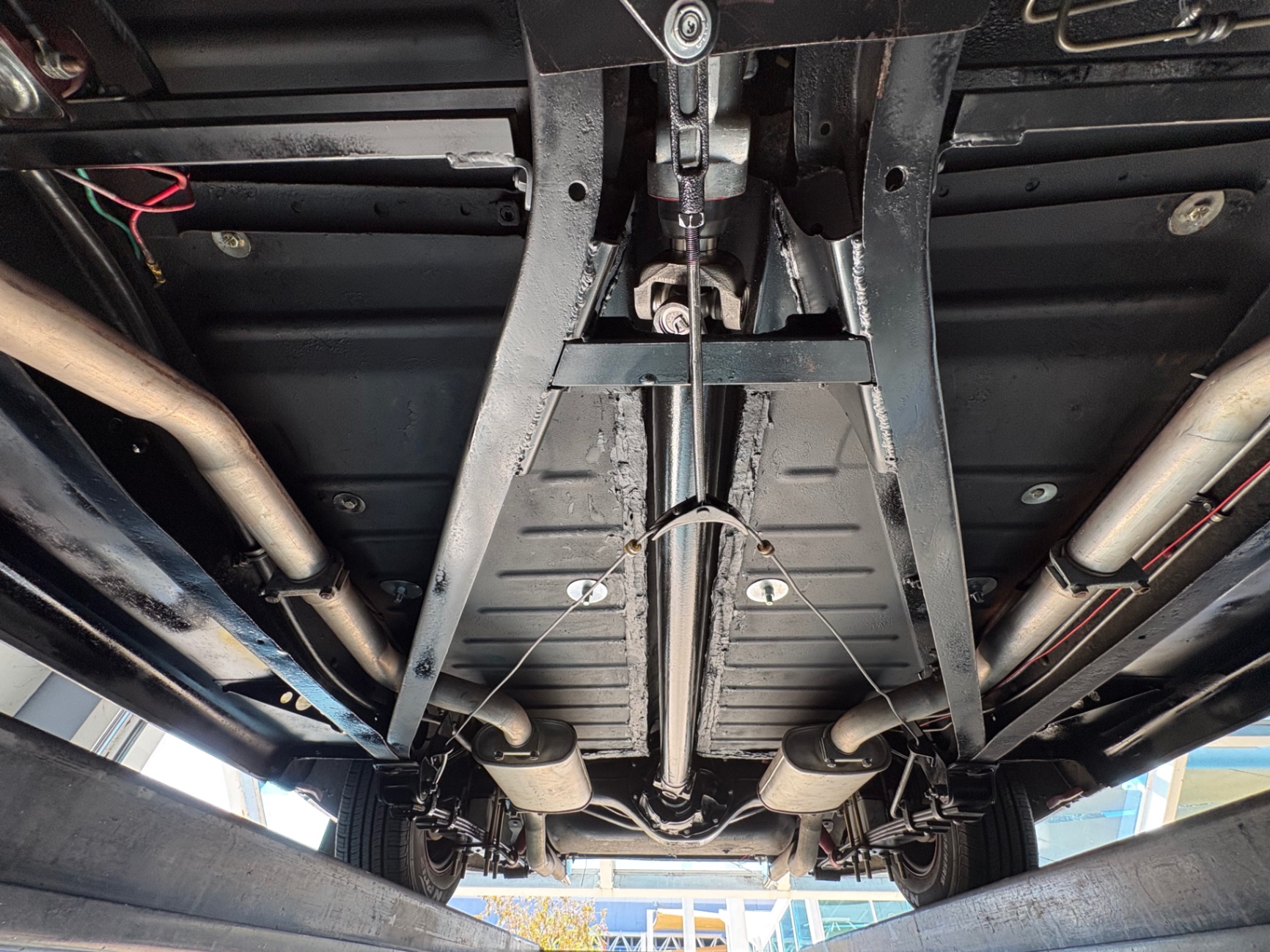
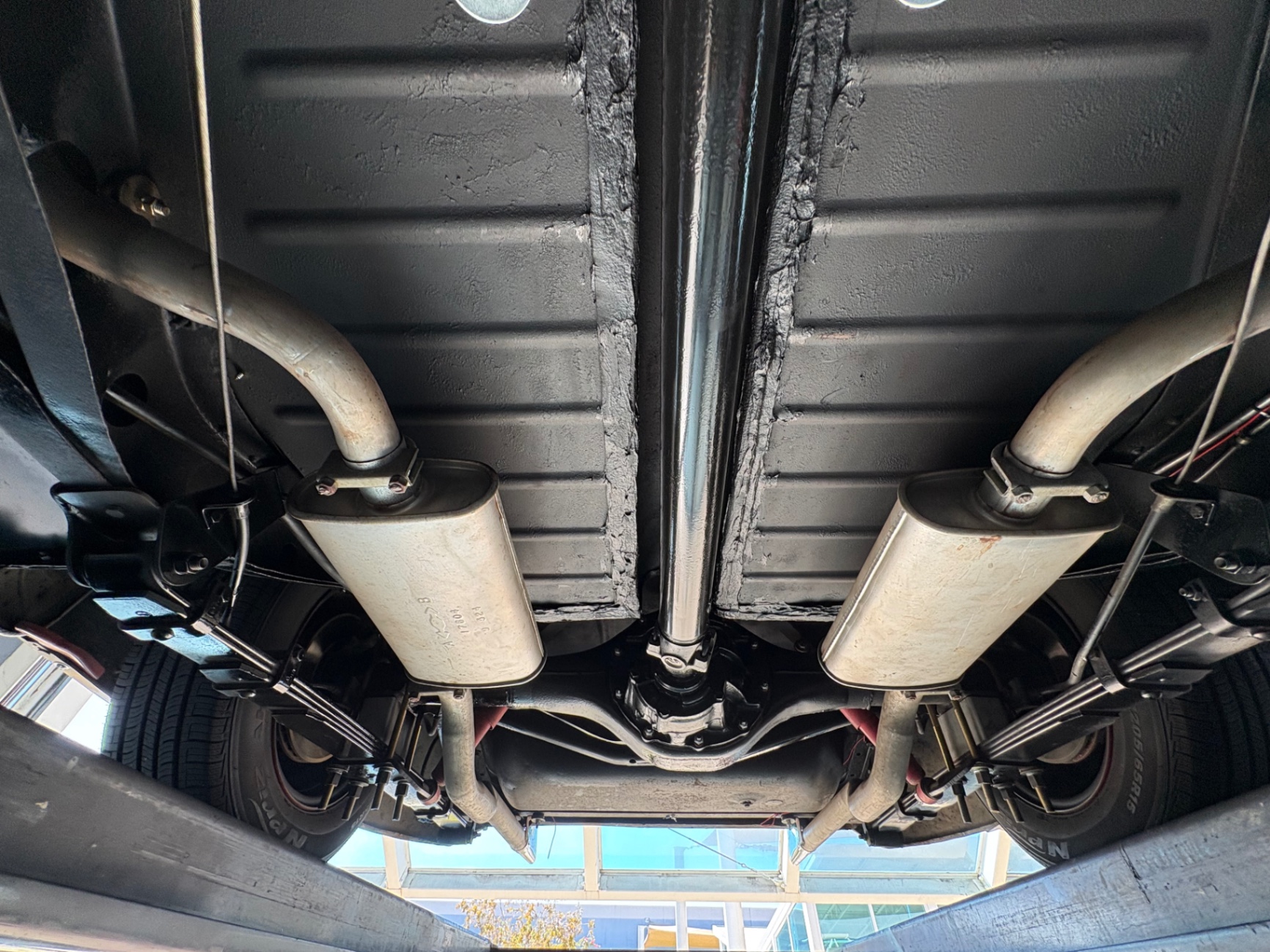
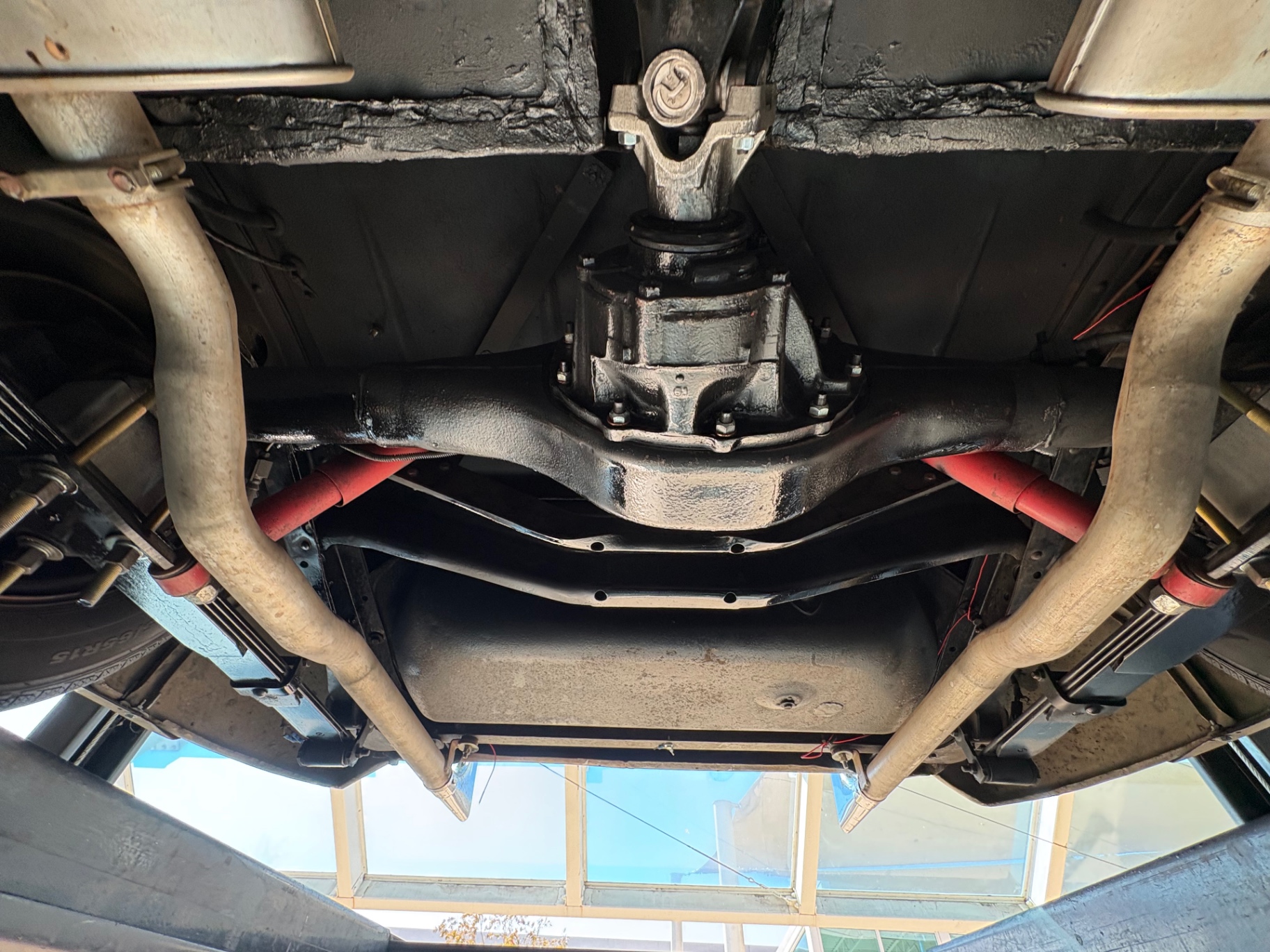
Underneath, the suspension has been fully updated. The front end uses an independent front suspension setup with coilover shocks — a significant improvement over the original solid front axle that came on the 1936 Ford. Rack-and-pinion steering replaces the original worm-and-sector unit, delivering much more direct feedback through the wheel. The disc brakes at all four corners are confirmed in the undercarriage photos, where the calipers and rotors are clearly visible on both the front and rear axles. The chassis has been painted black and is in clean, detailed condition throughout. The dual exhaust system runs the full length of the car and exits behind the rear wheels with dual mufflers visible from below.
The electrical system has been converted to a 12-volt architecture, which is standard practice on builds like this. The original 6-volt systems on prewar Fords are not compatible with modern accessories, lighting, or air conditioning, so the upgrade is a practical necessity rather than a shortcut.
Interior
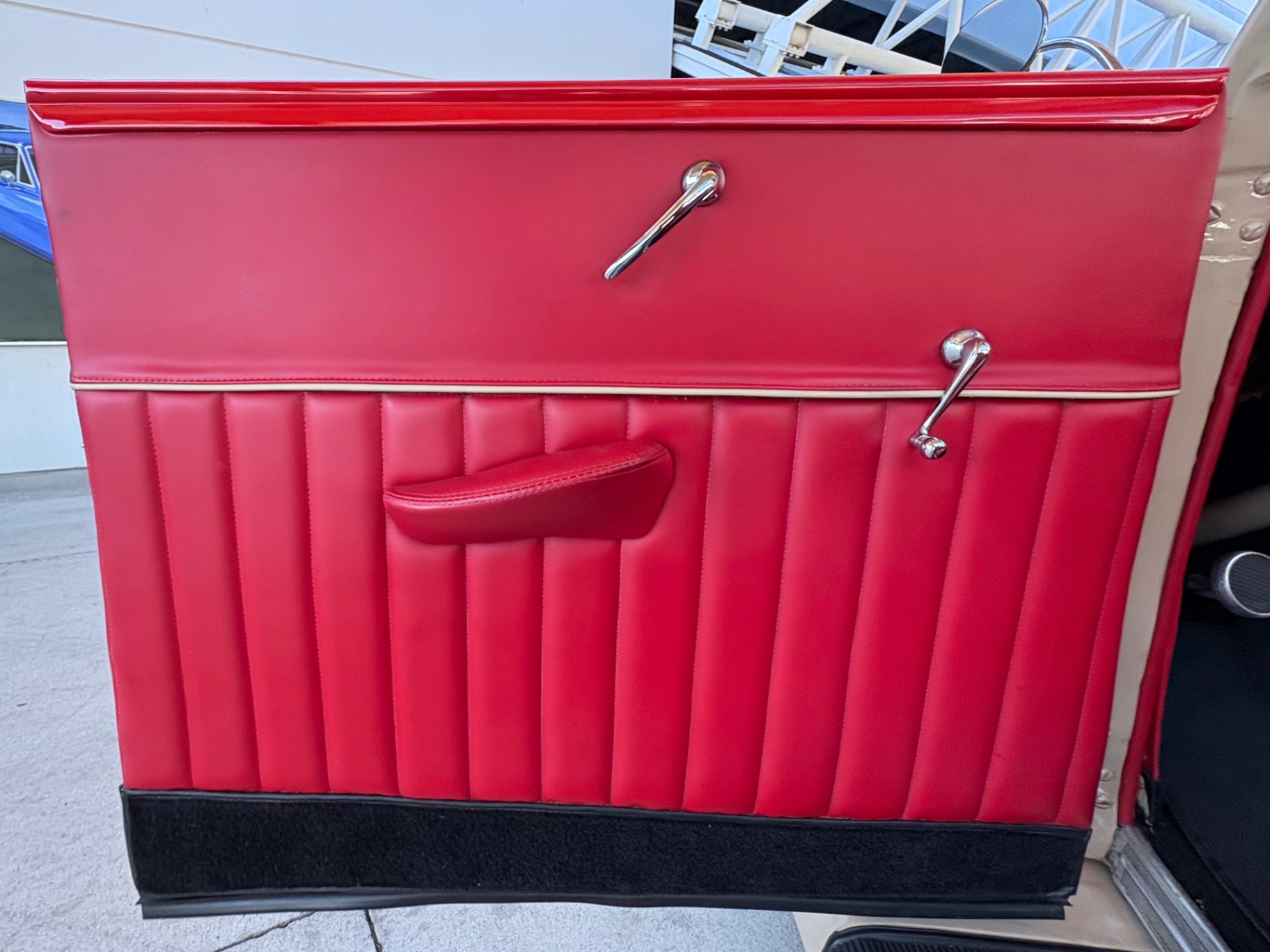
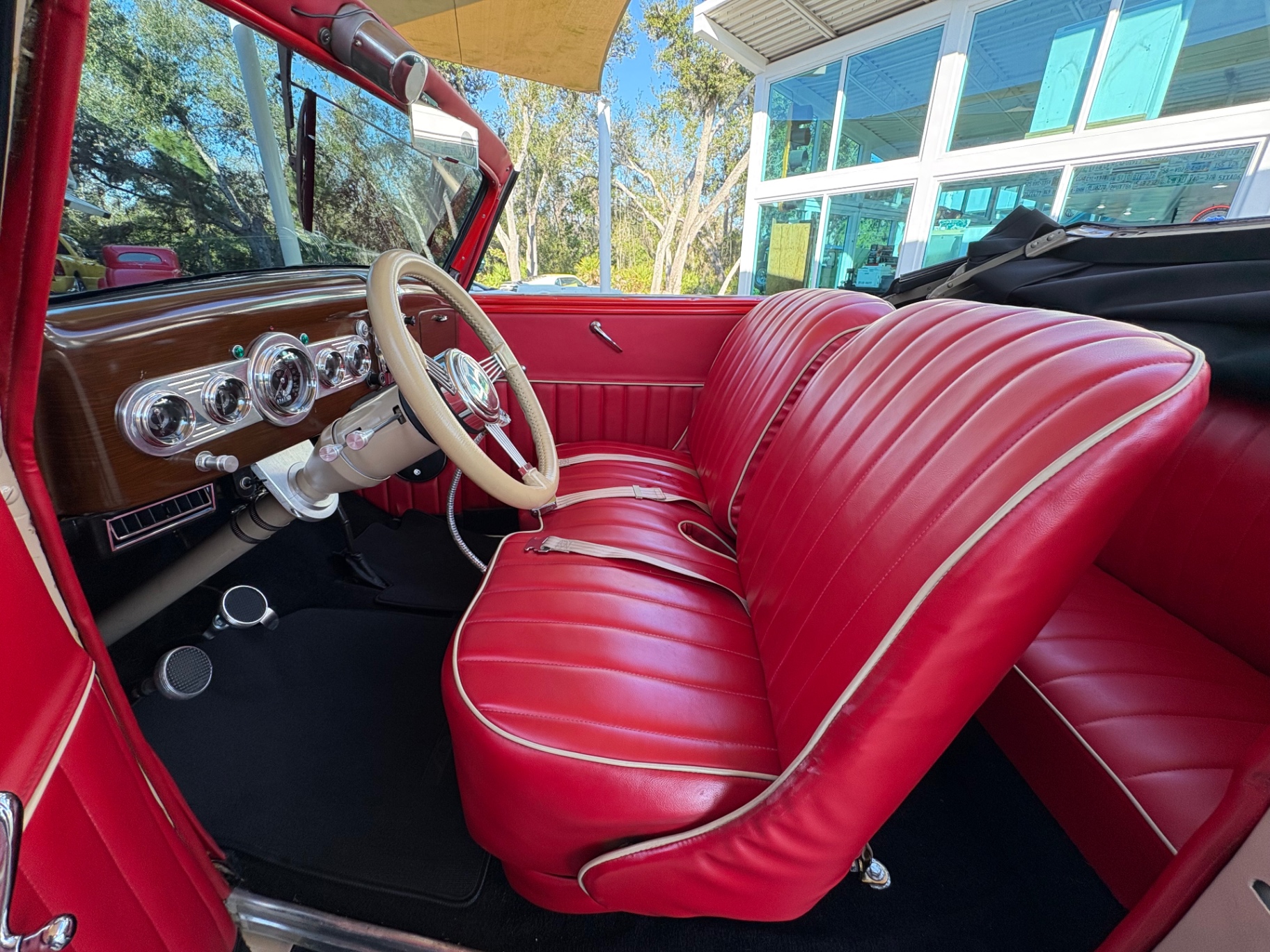
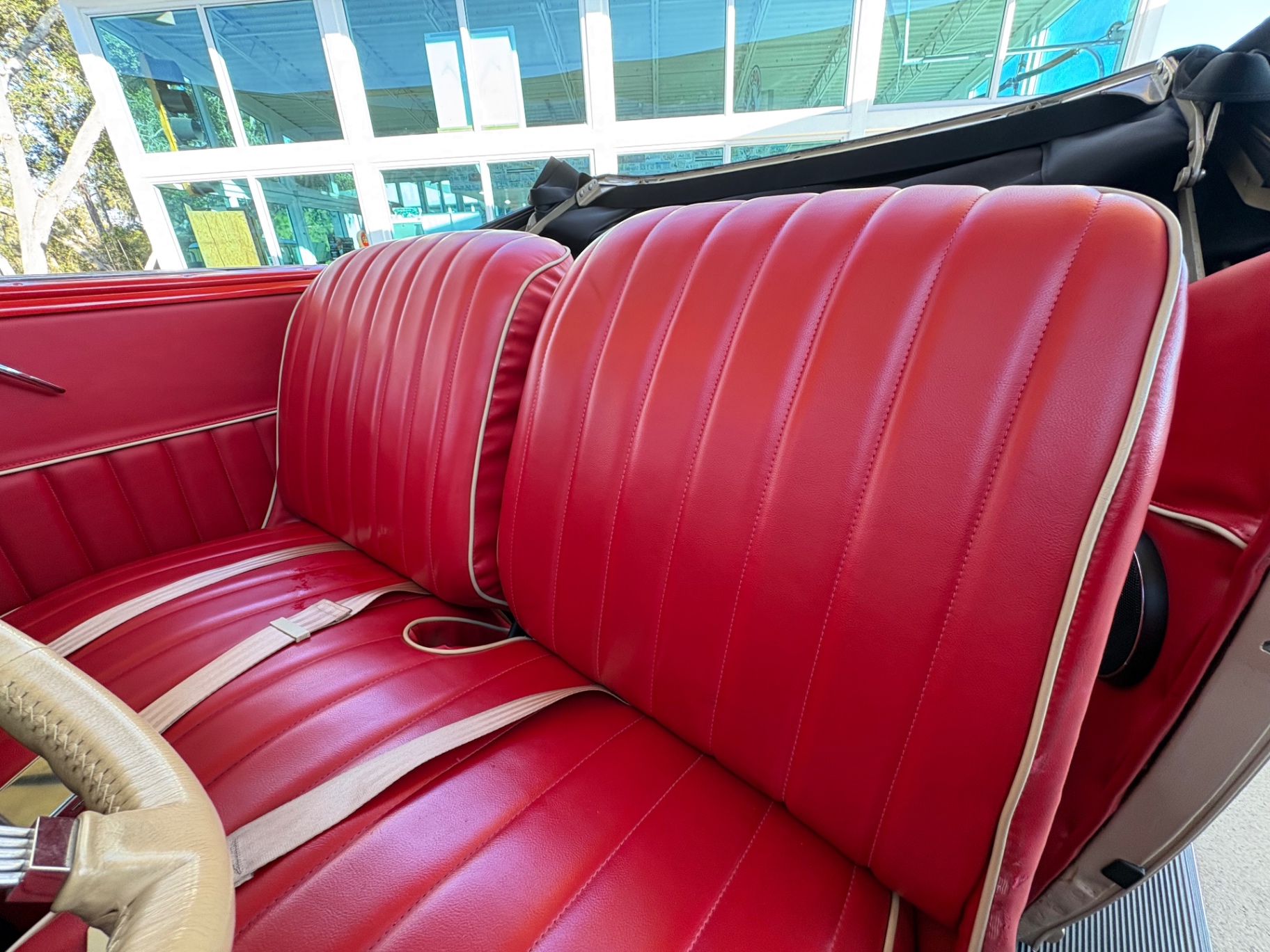
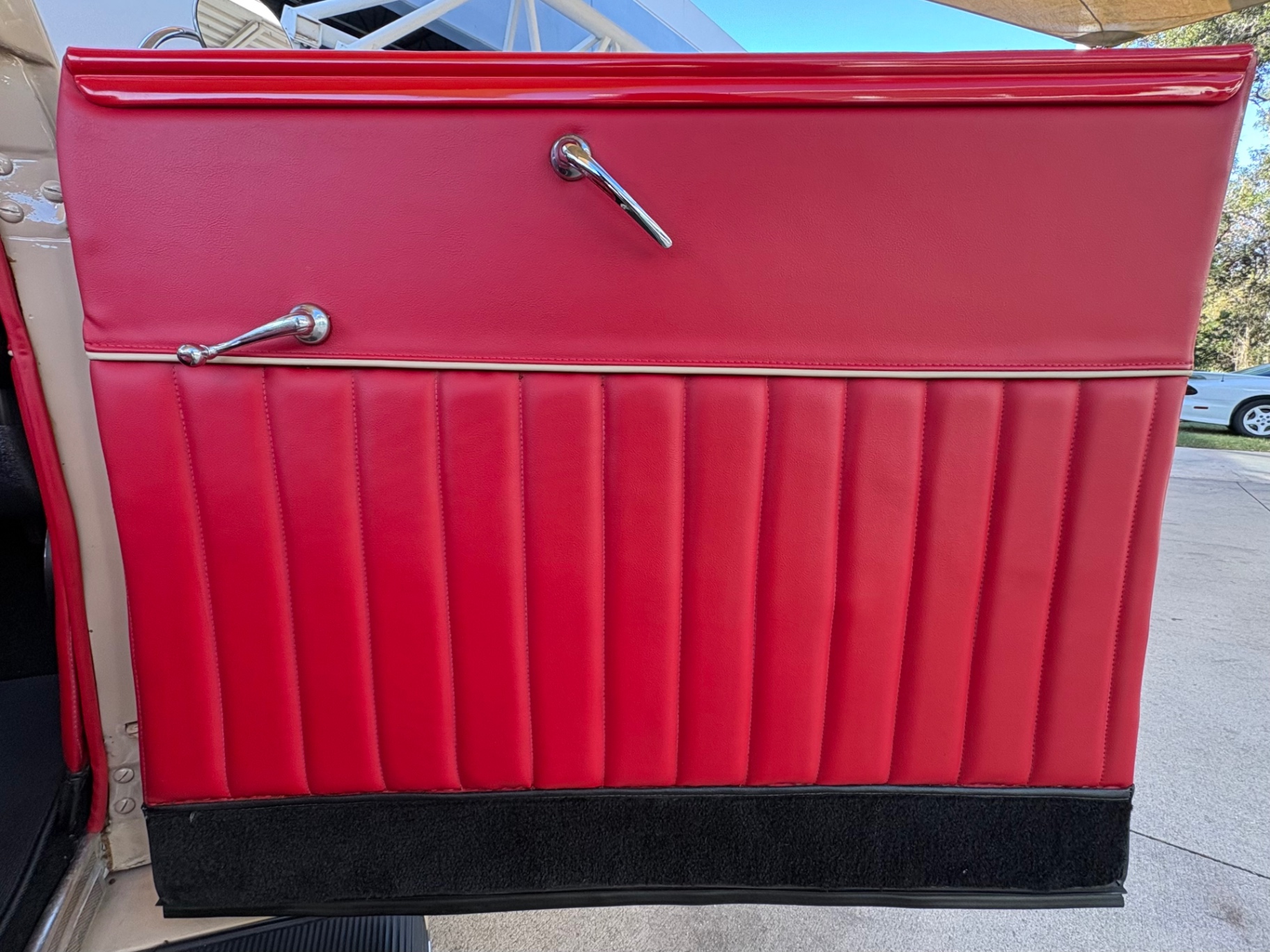
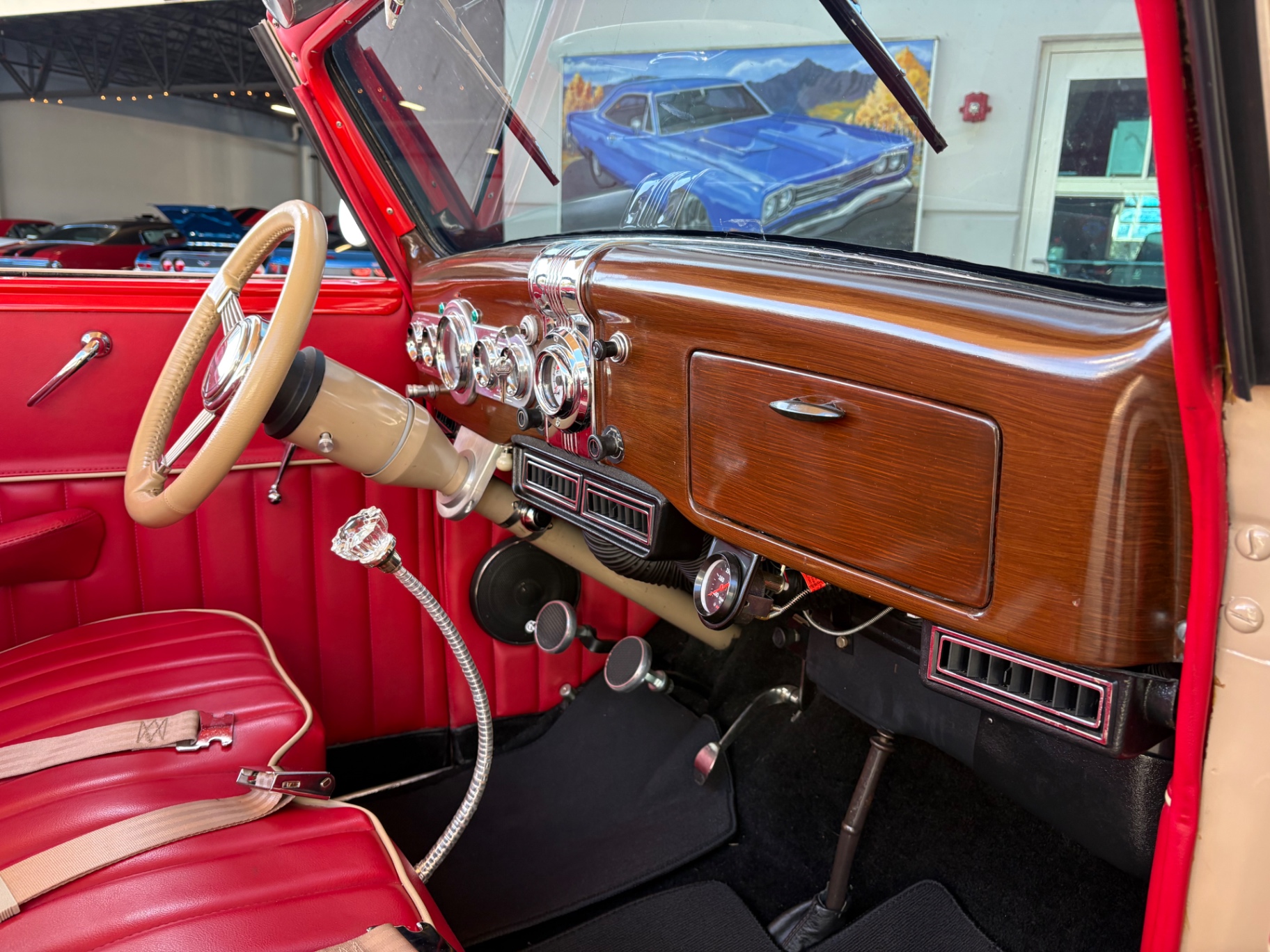
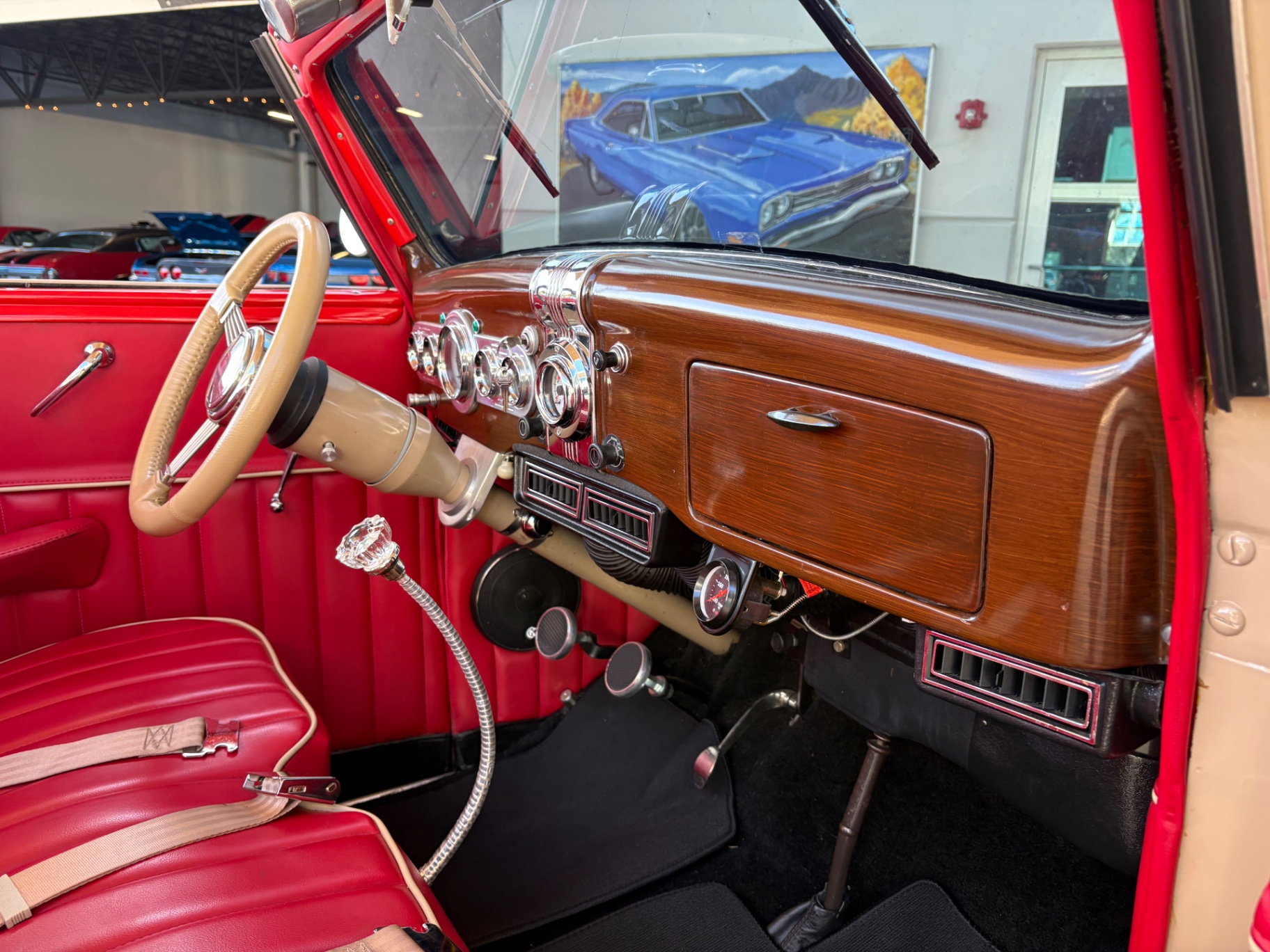
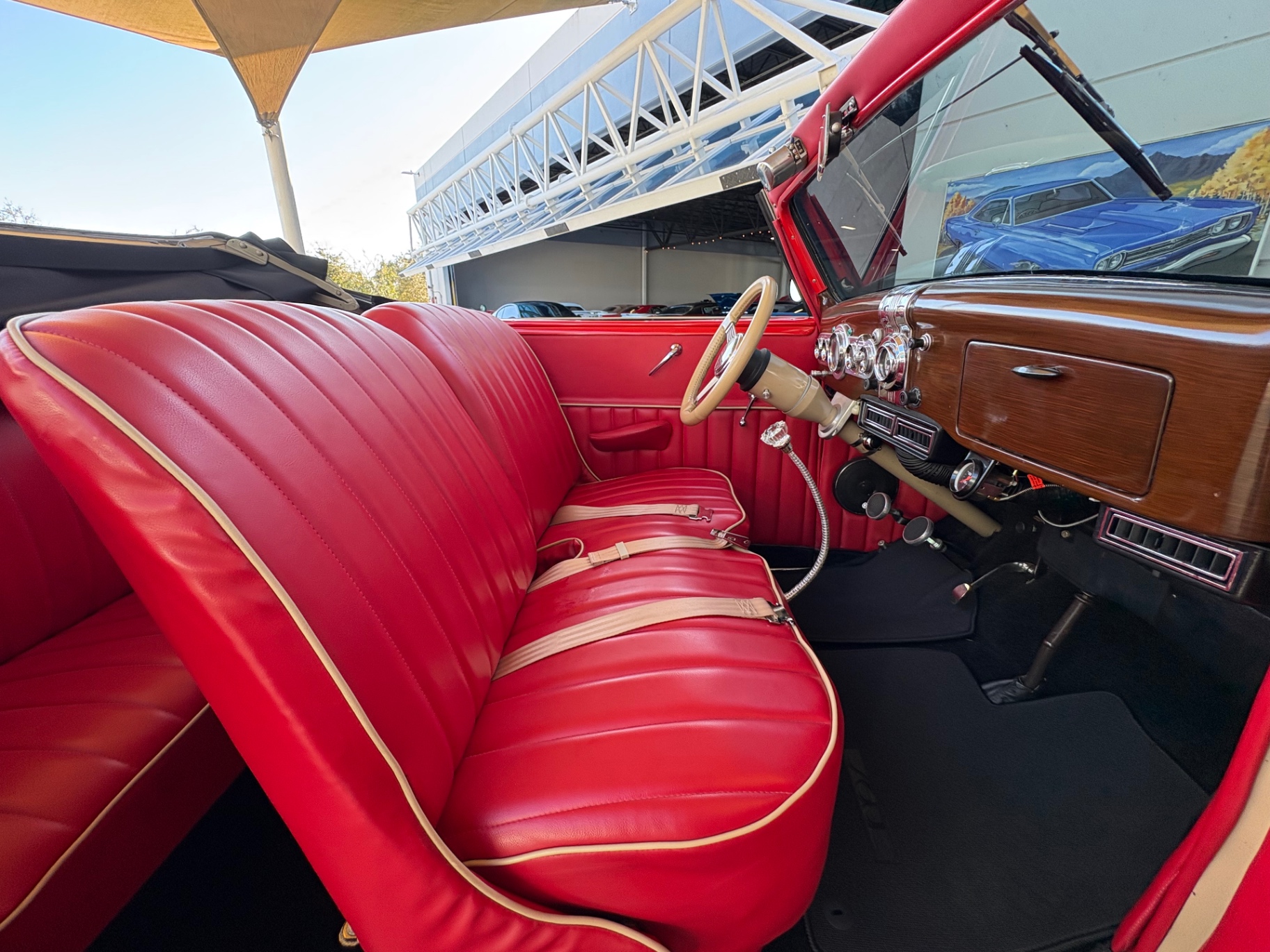
Step inside the 1936 Ford Model 68 DeLuxe Cabriolet and the first thing you notice is the red leather upholstery. It covers the bench seat, door panels, and rear seat in a consistent, tightly stitched pattern with vertical pleating throughout and tan piping along the seams. The color contrast between the red leather and the wood-grain dashboard is intentional and executed cleanly. The door panels are red leather over a full-length panel with chrome window cranks at the top and a chrome interior door pull mounted mid-panel — period-correct in style and consistent in execution front to back.
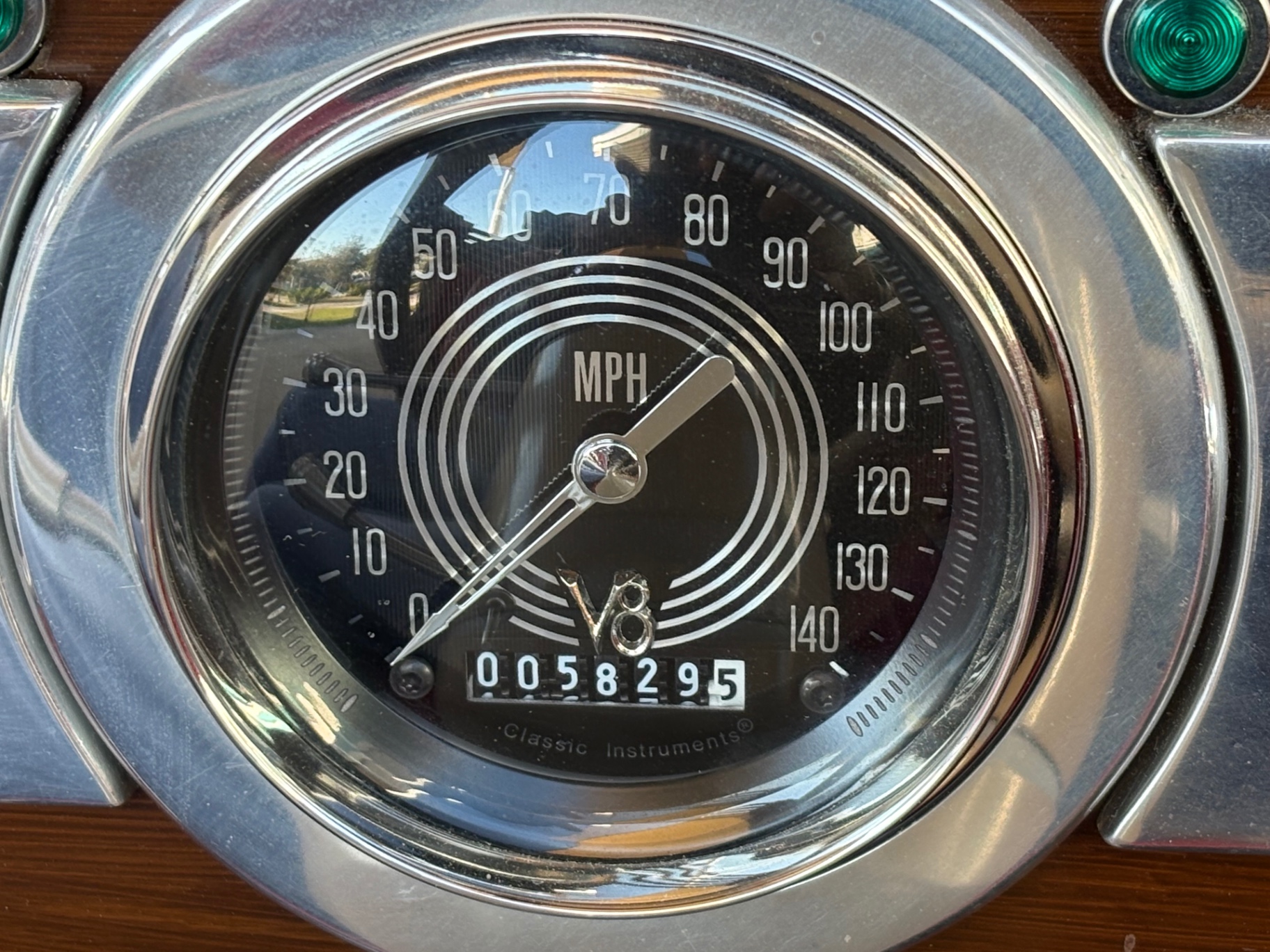
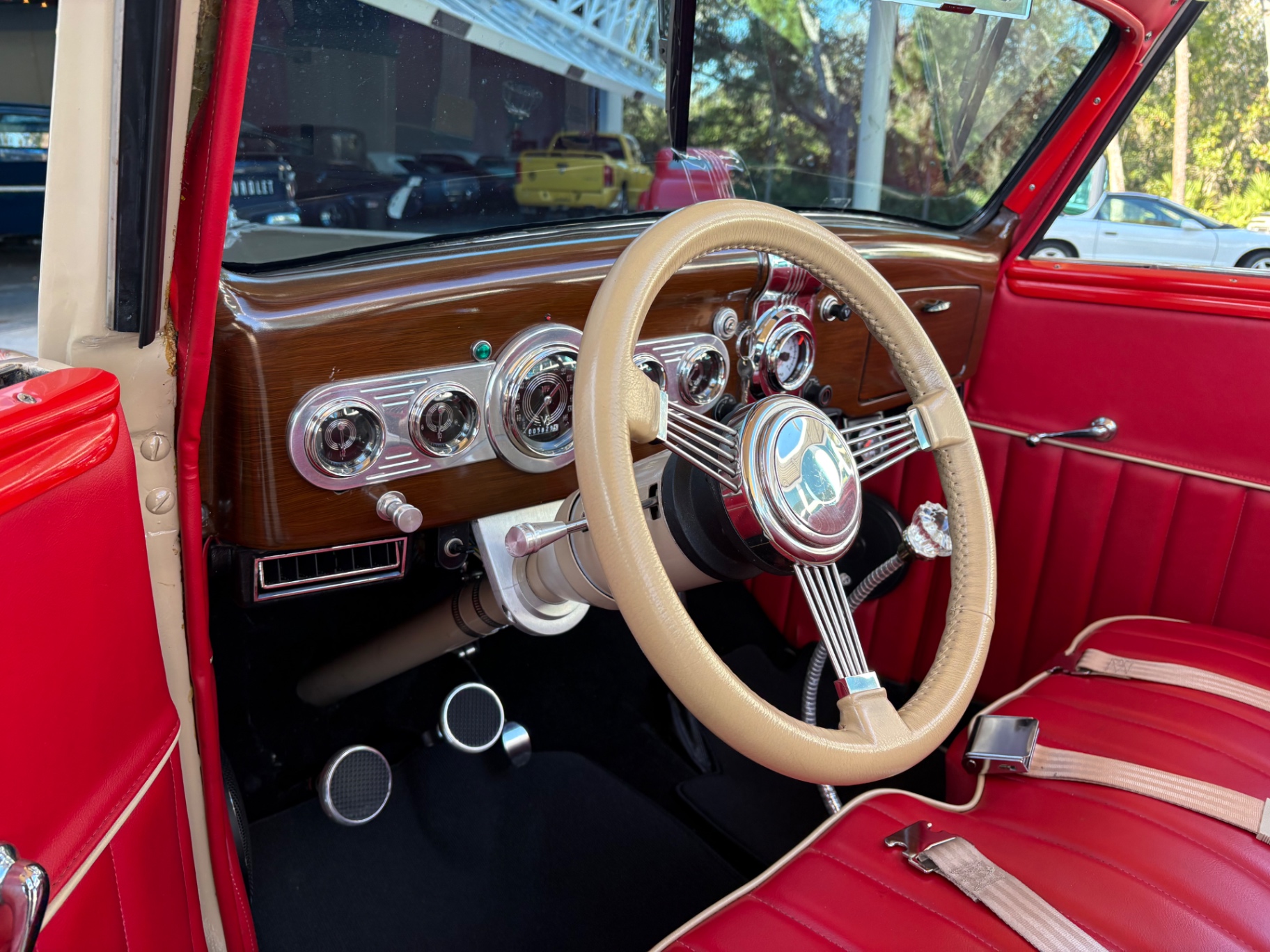
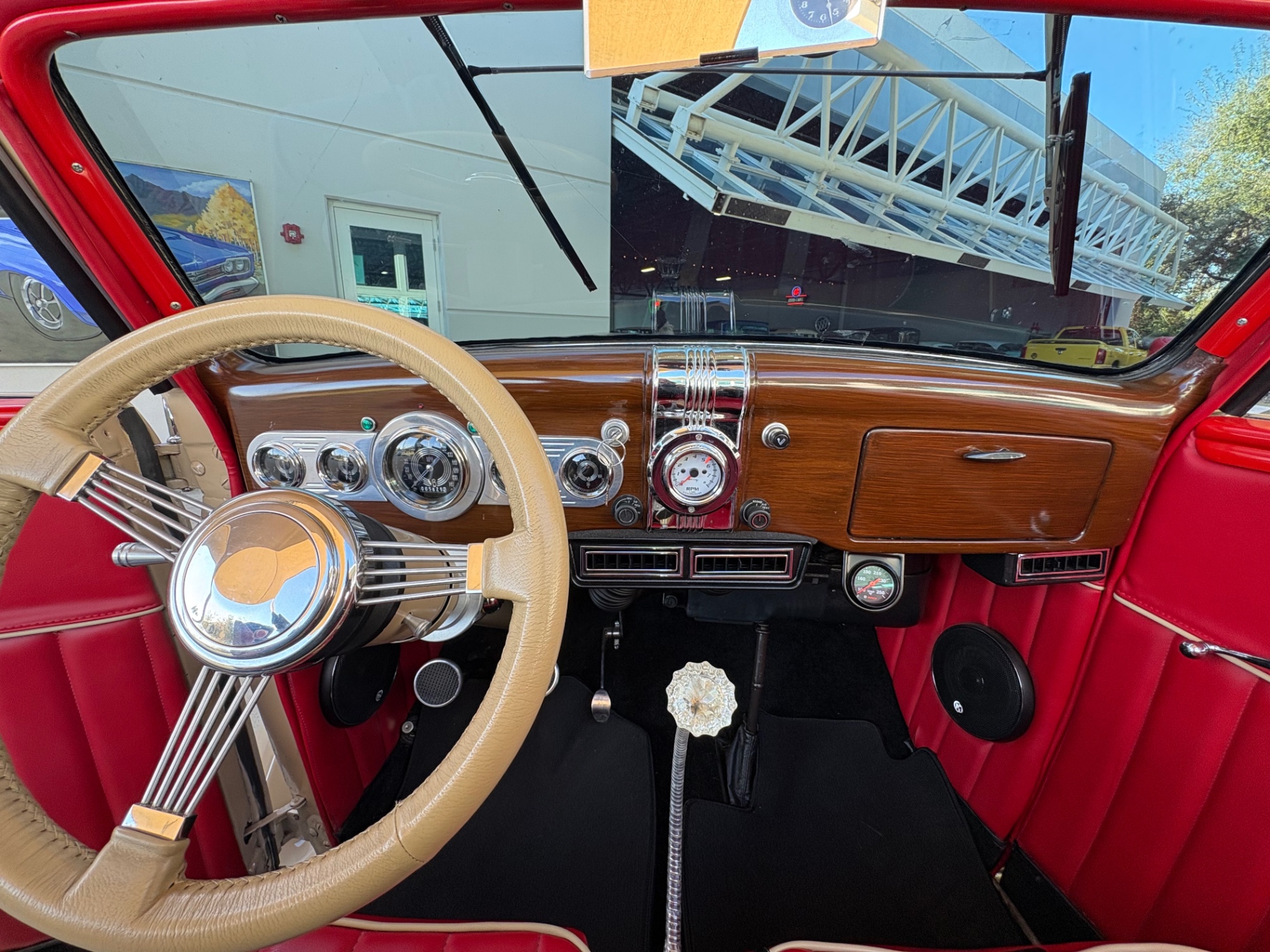
The dashboard is the DeLuxe wood-grain unit, which was a distinguishing feature of the top-trim 1936 Ford. On DeLuxe models, Ford used a genuine wood-grain applique across the full dash face, flanked by chrome bezels around the instruments. This car retains that look while integrating modern gauges behind the original-style bezels. The instrument cluster shows a speedometer at center along with oil pressure, temperature, and additional gauges flanking it. The chrome art deco trim pieces above the gauge cluster are correct for the DeLuxe specification and are in good condition. An under-dash air conditioning unit has been fitted — a practical addition given Florida's climate — with vent outlets on both the driver and passenger sides of the lower dash. The A/C unit is visible but tucked neatly under the dash rather than mounted prominently.
The steering wheel is a tan leather-wrapped three-spoke unit with a chrome center hub. It sits on the tilt-adjustable column, which means drivers of different sizes can actually get comfortable behind it — a feature that is often overlooked in prewar builds. A chrome gear shift with a decorative knob rises from the floor between the driver and passenger. The floor is covered in black carpet. Lap belts are fitted to both front seat positions. The glove box door on the passenger side shows the original-style chrome pull handle against the wood-grain face.
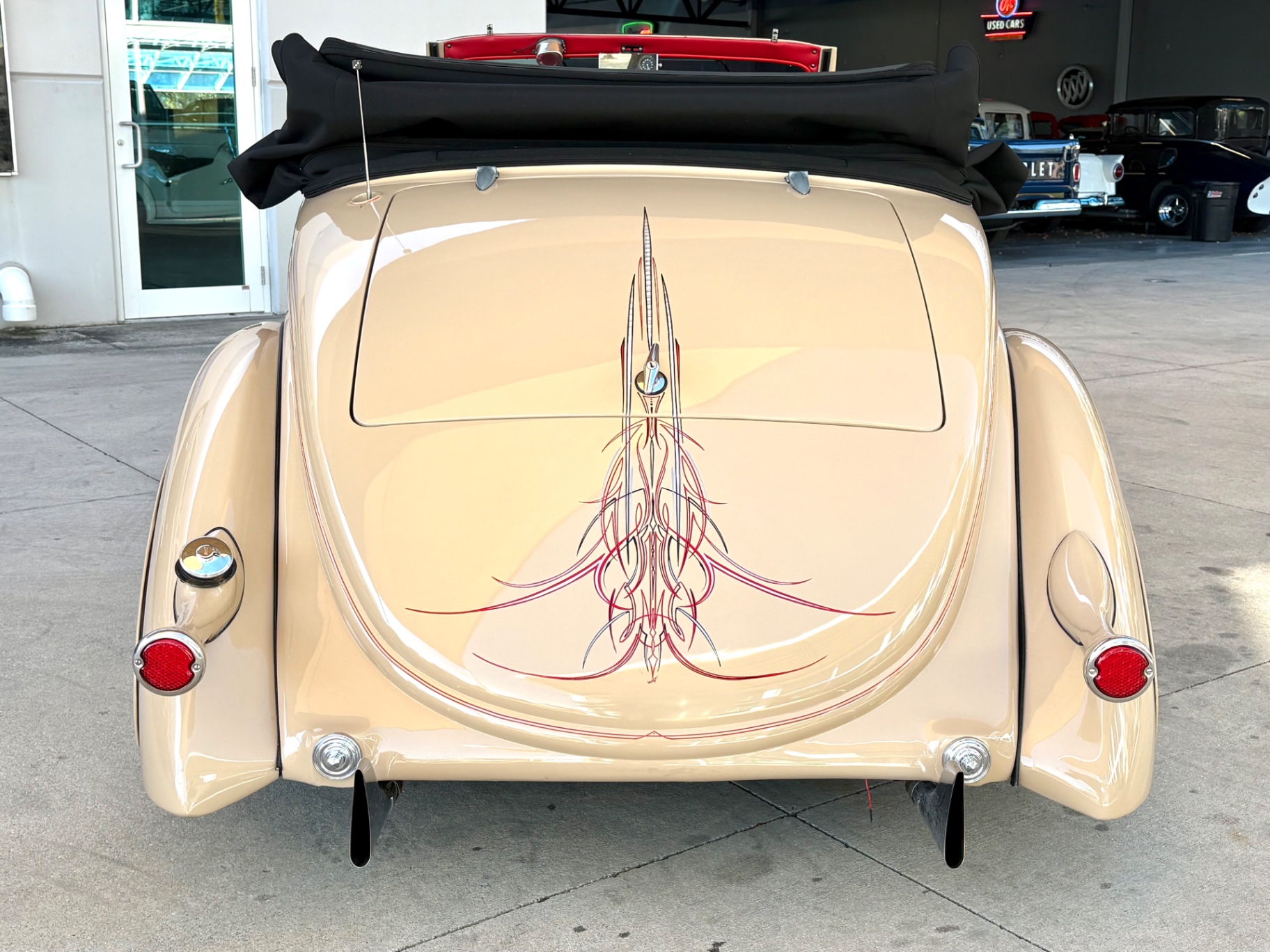
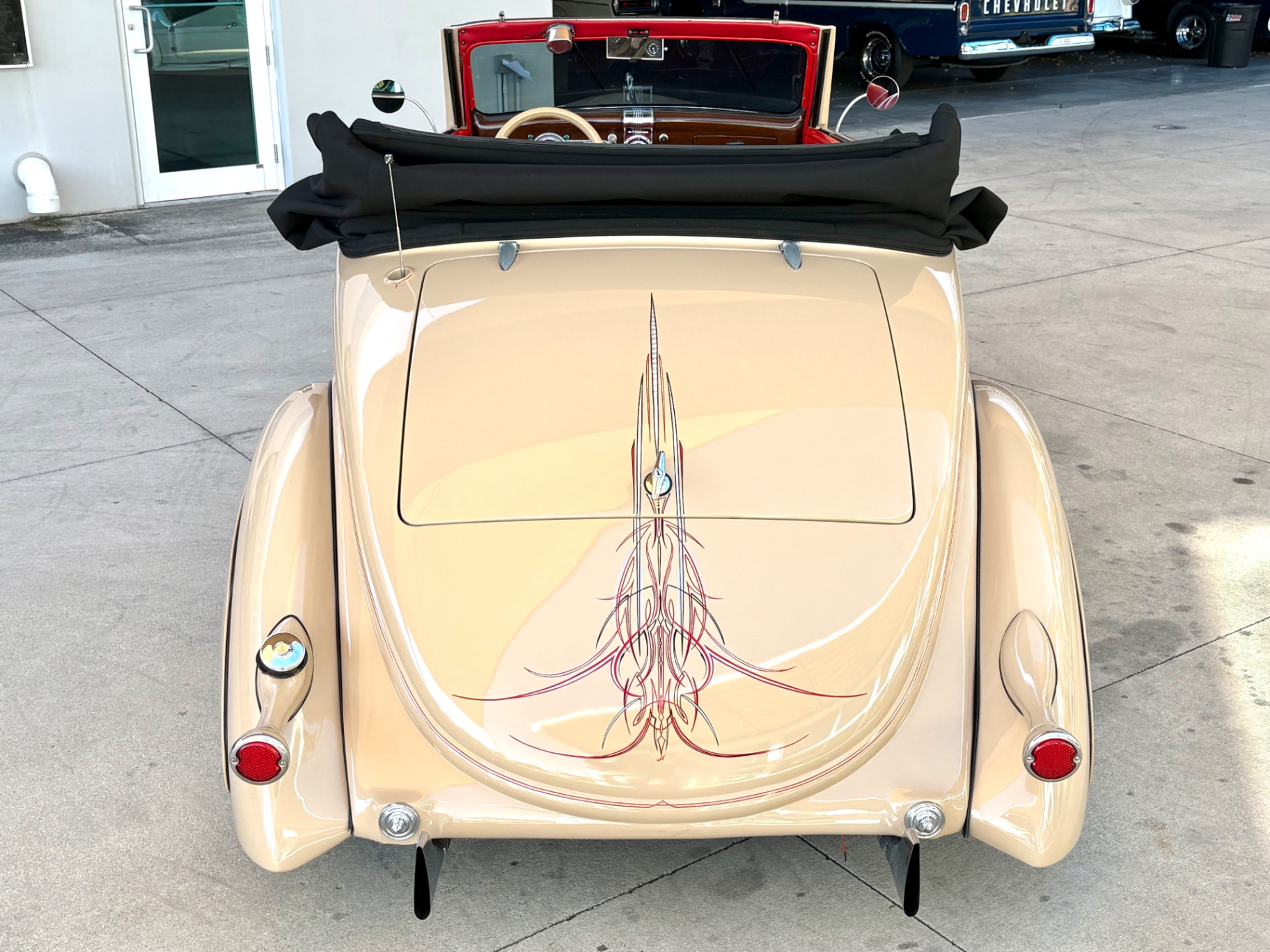
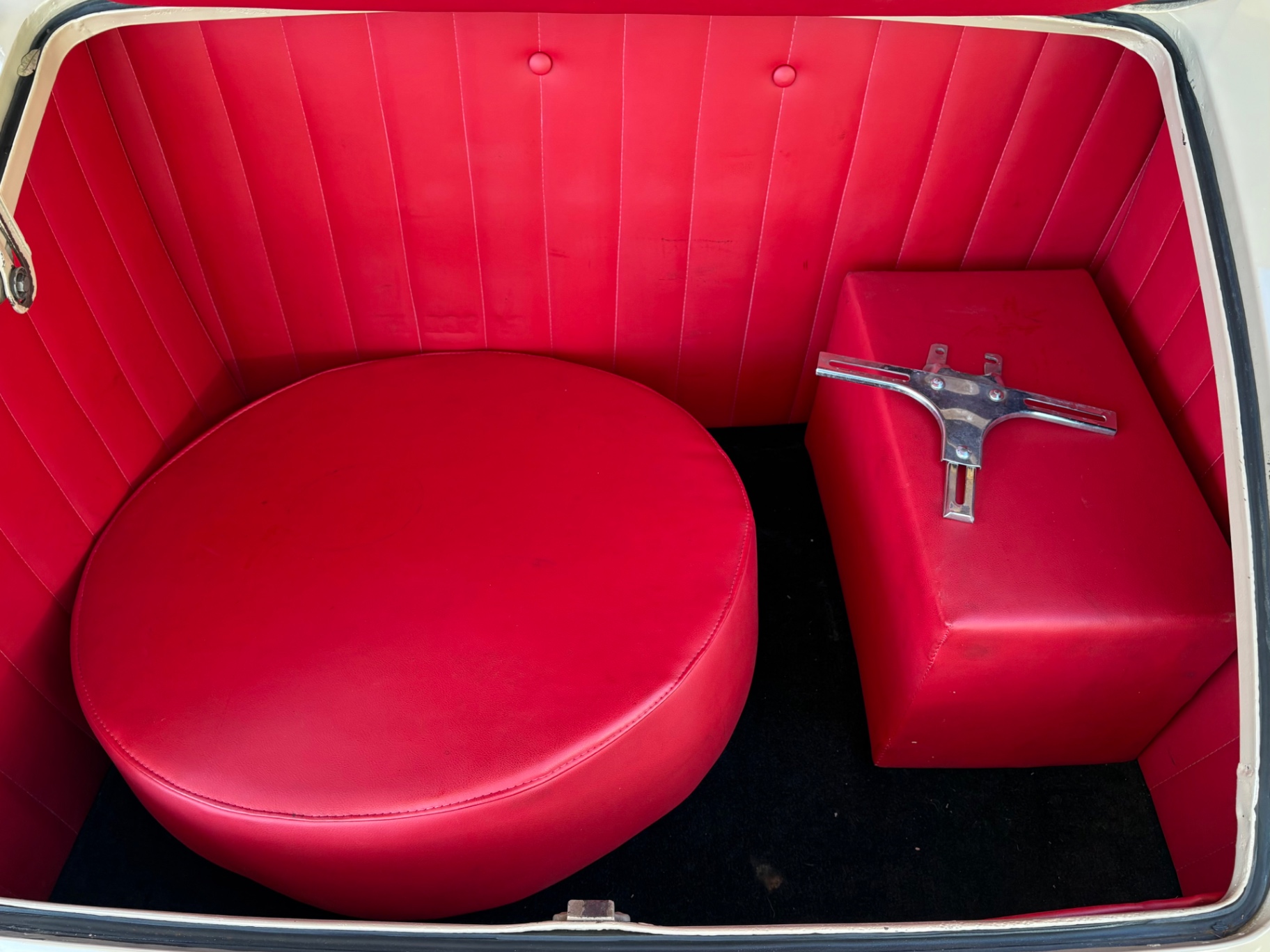
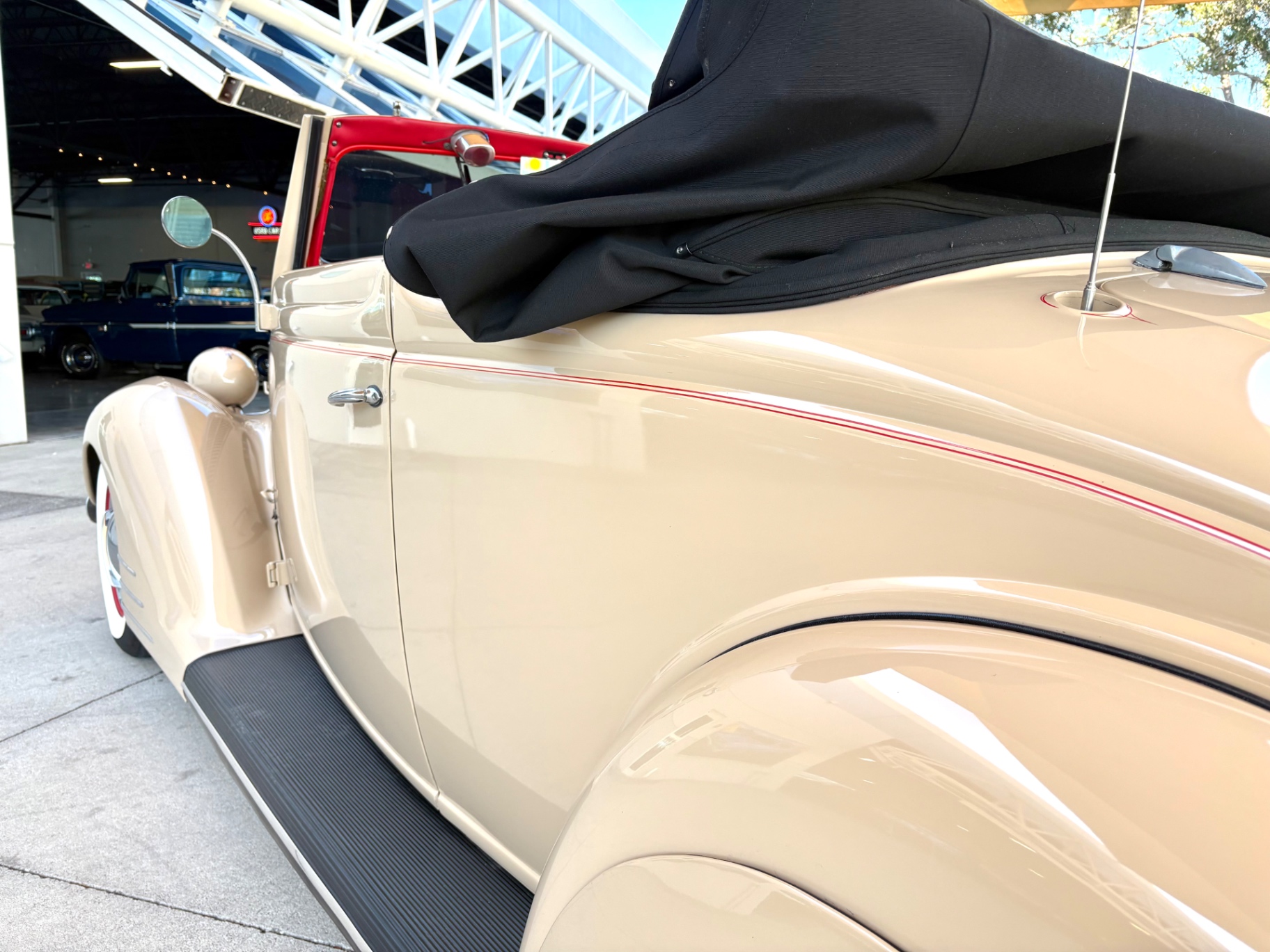
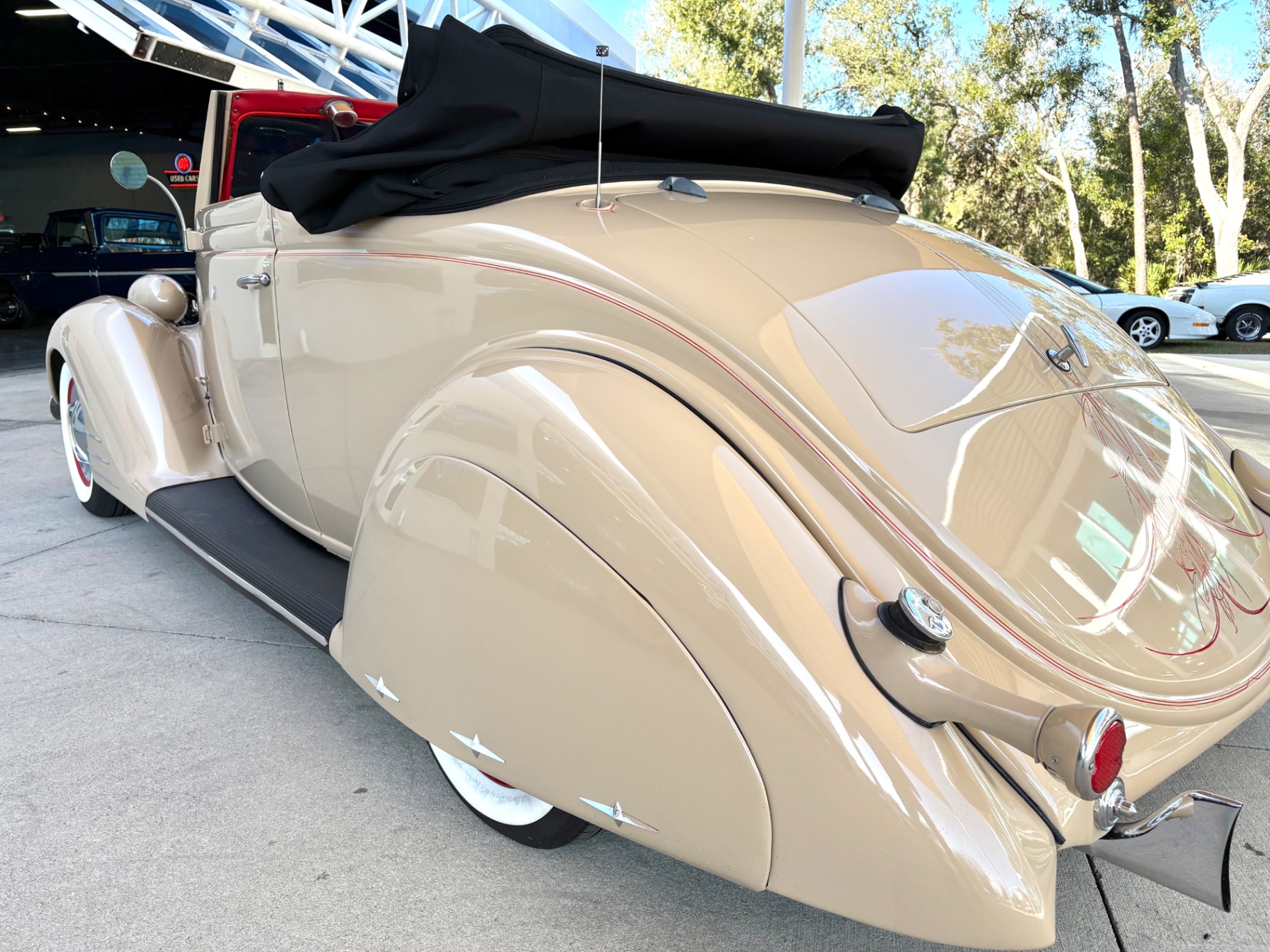
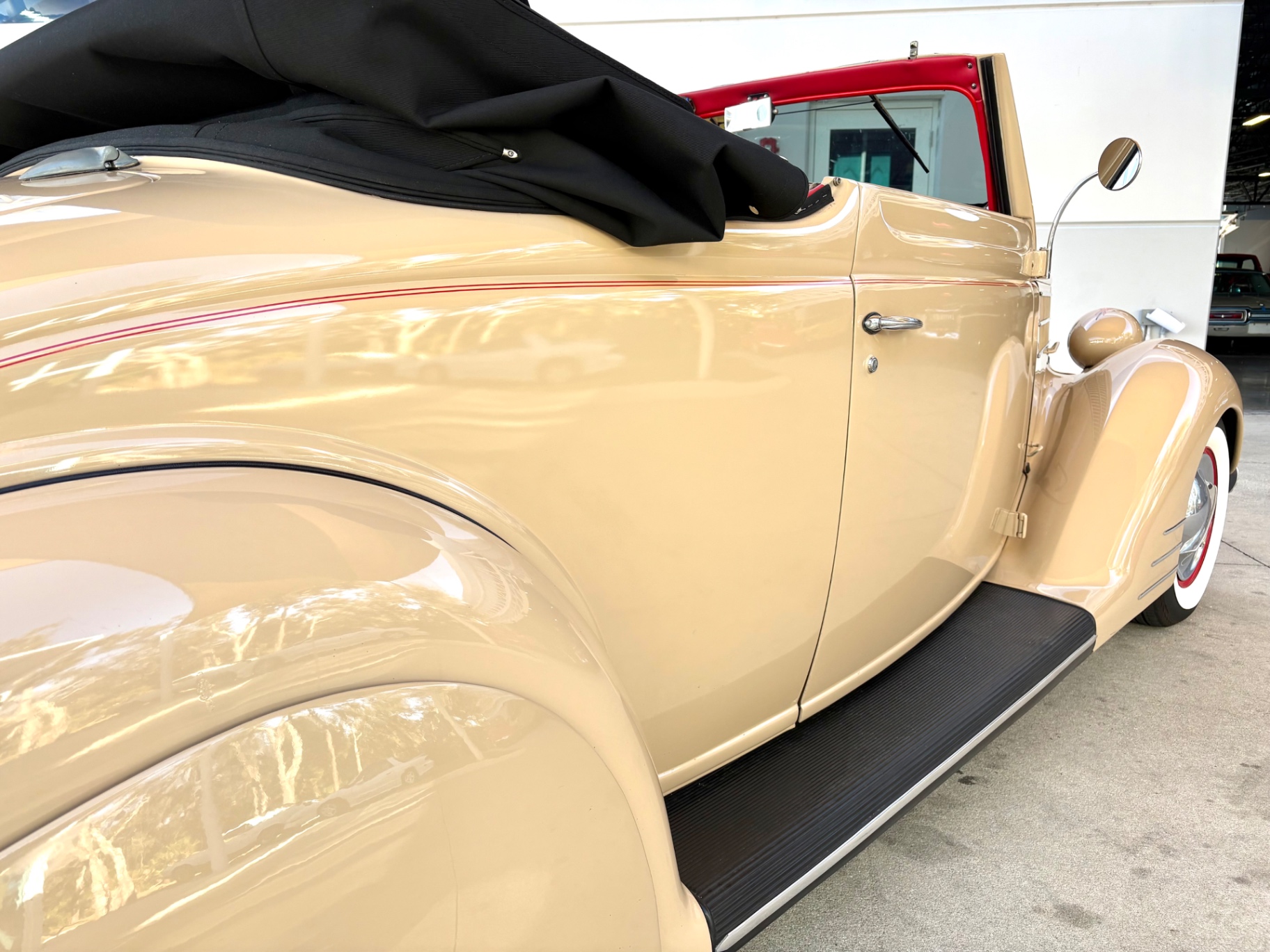
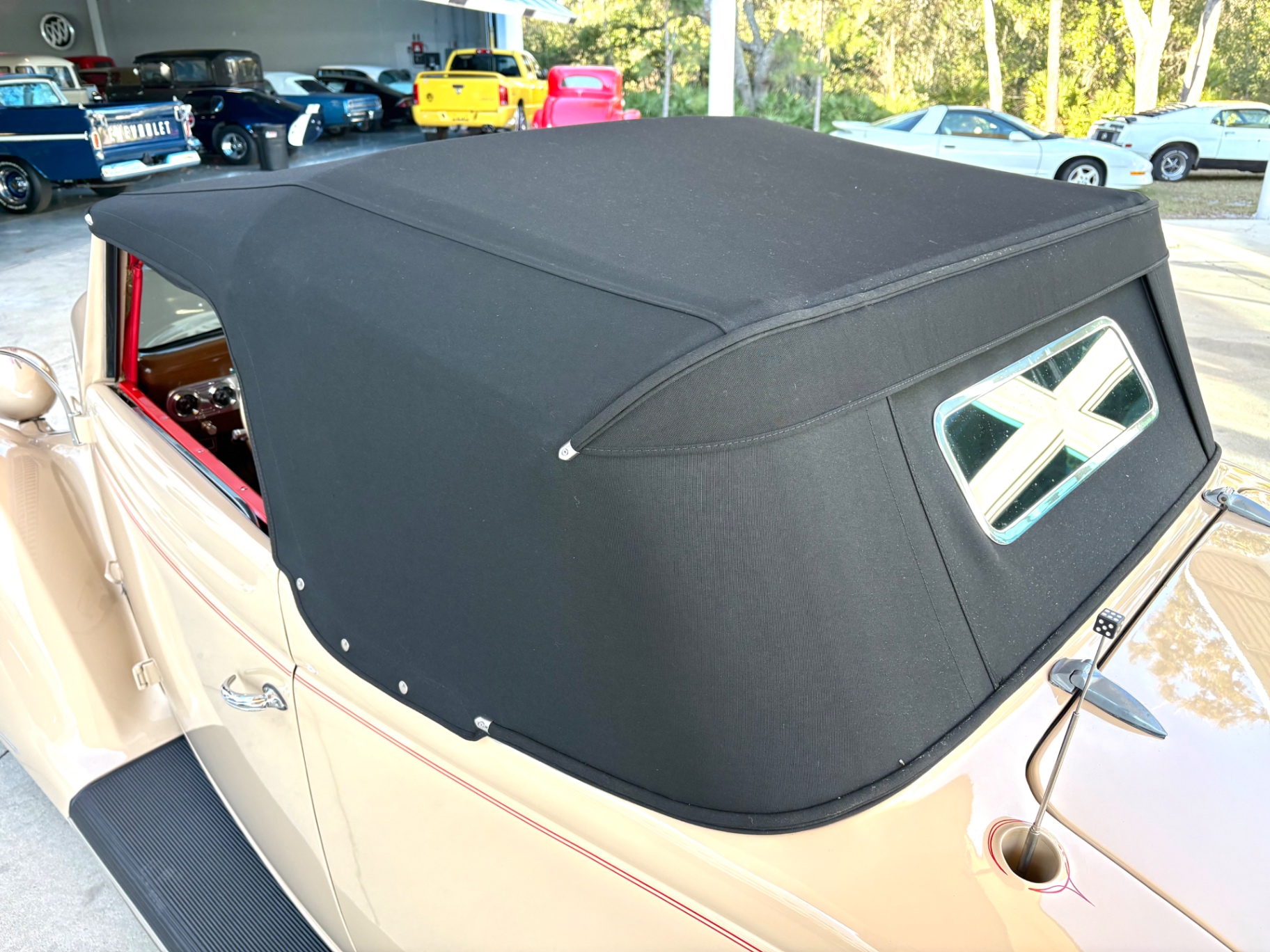
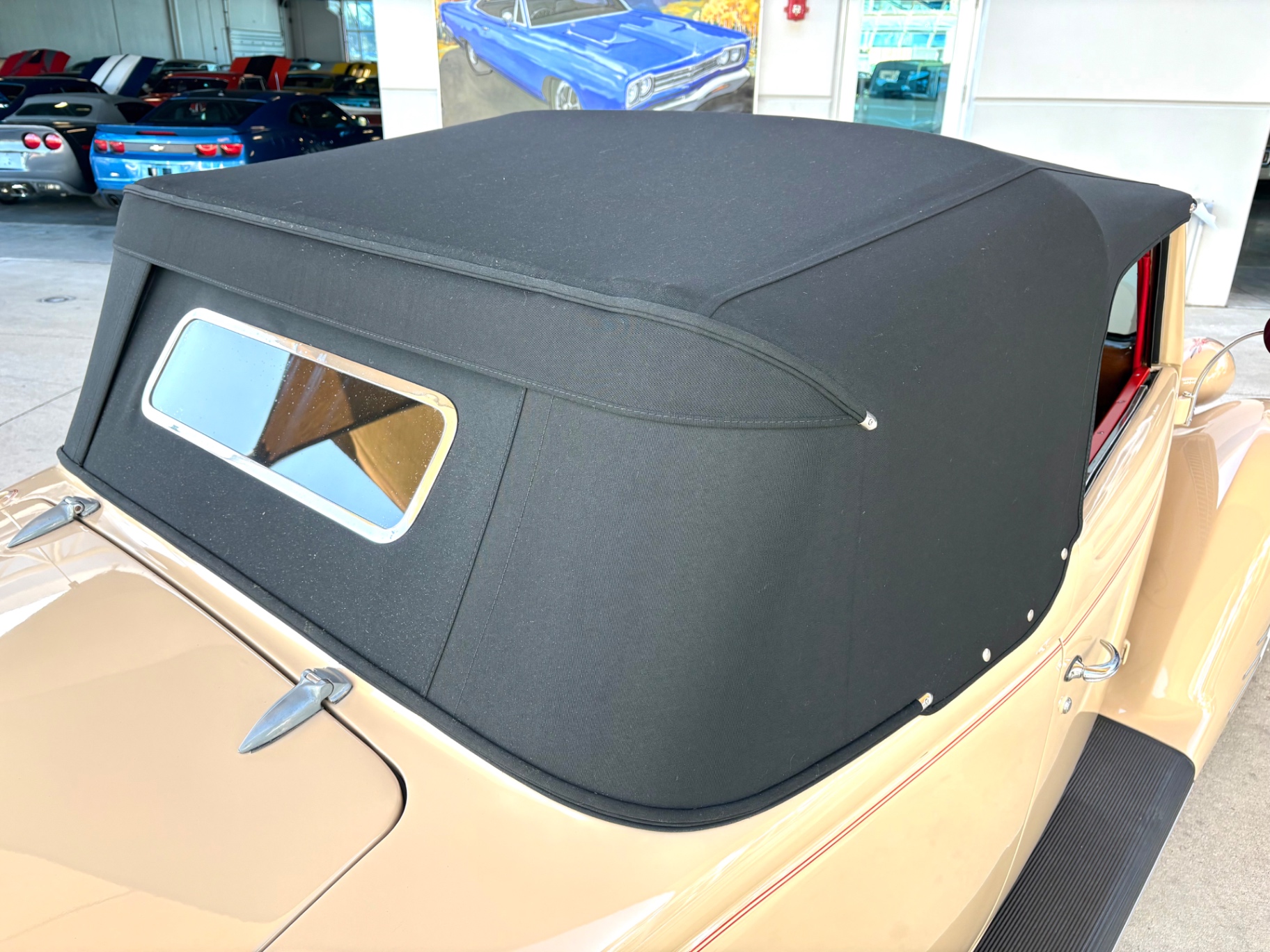
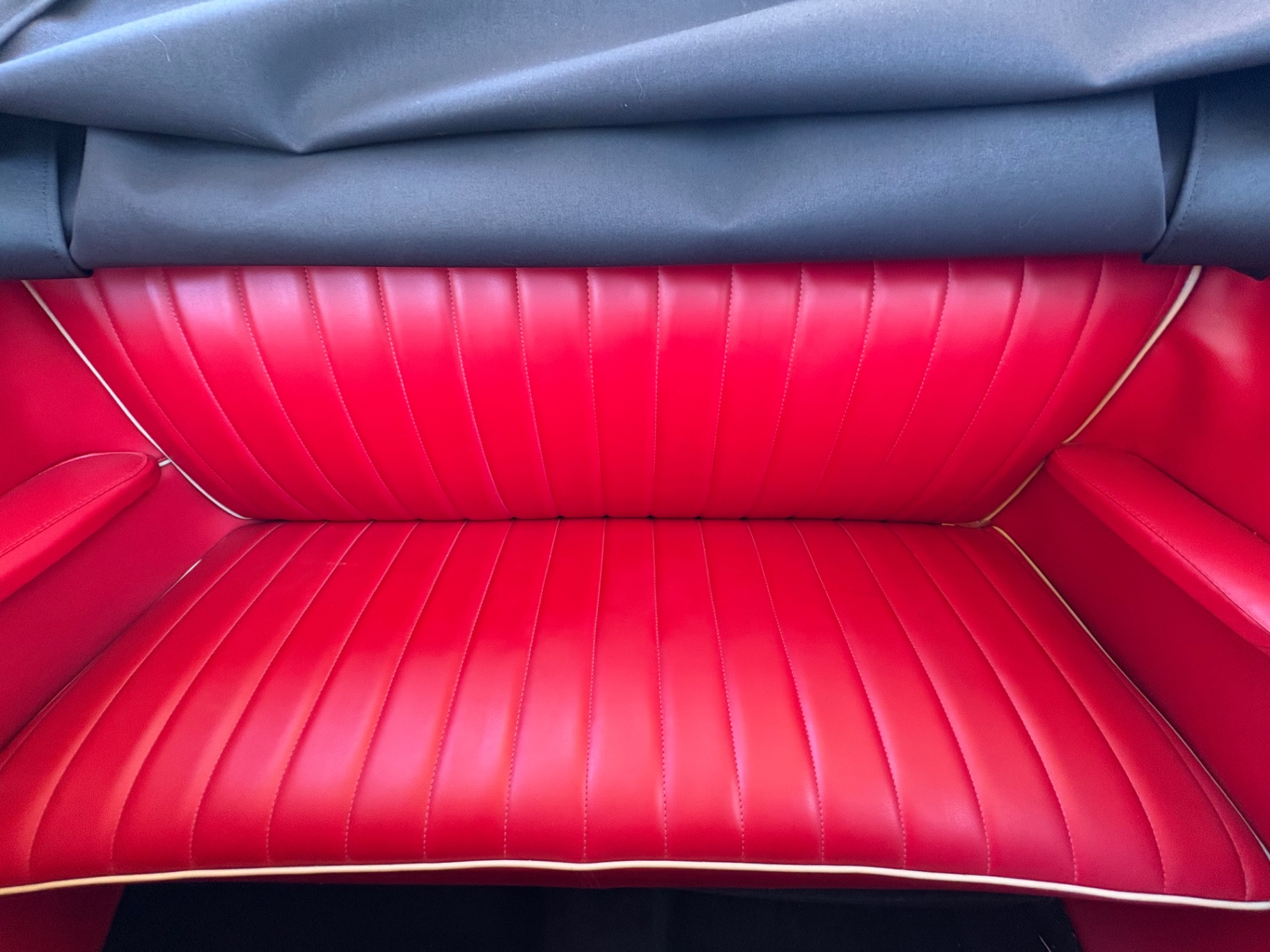
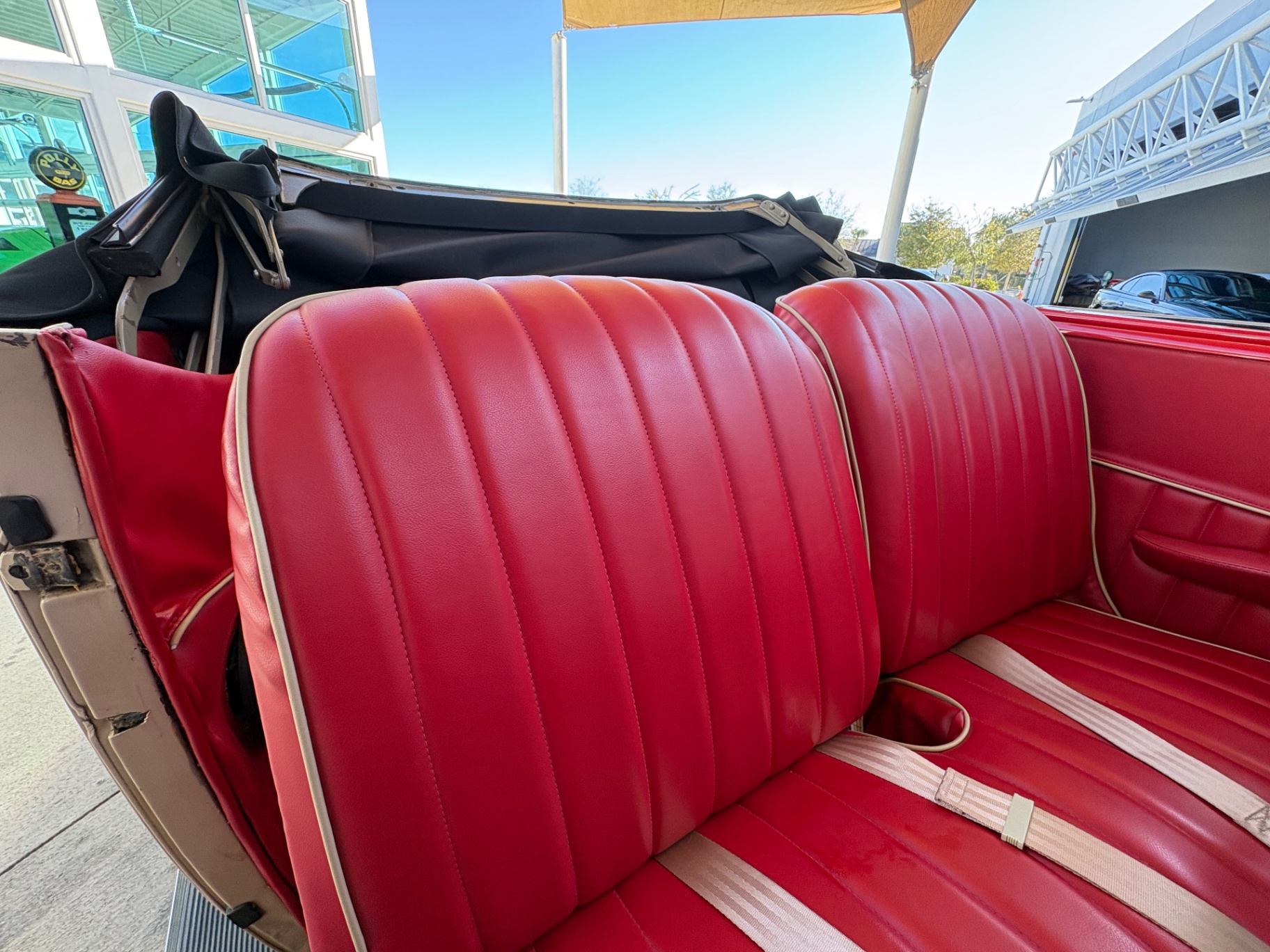
The rumble seat in the tail of the 1936 Ford Model 68 cabriolet is functional. The rear compartment opens to reveal a full-width red leather bench with the same pleated and piped treatment as the front seat. Lap belts are fitted here as well. The black soft top folds down behind the rear seat when not in use, and the zip-out rear window allows the top to be used with or without the rear glass depending on conditions. The top itself is black canvas and is in good condition.
Exterior
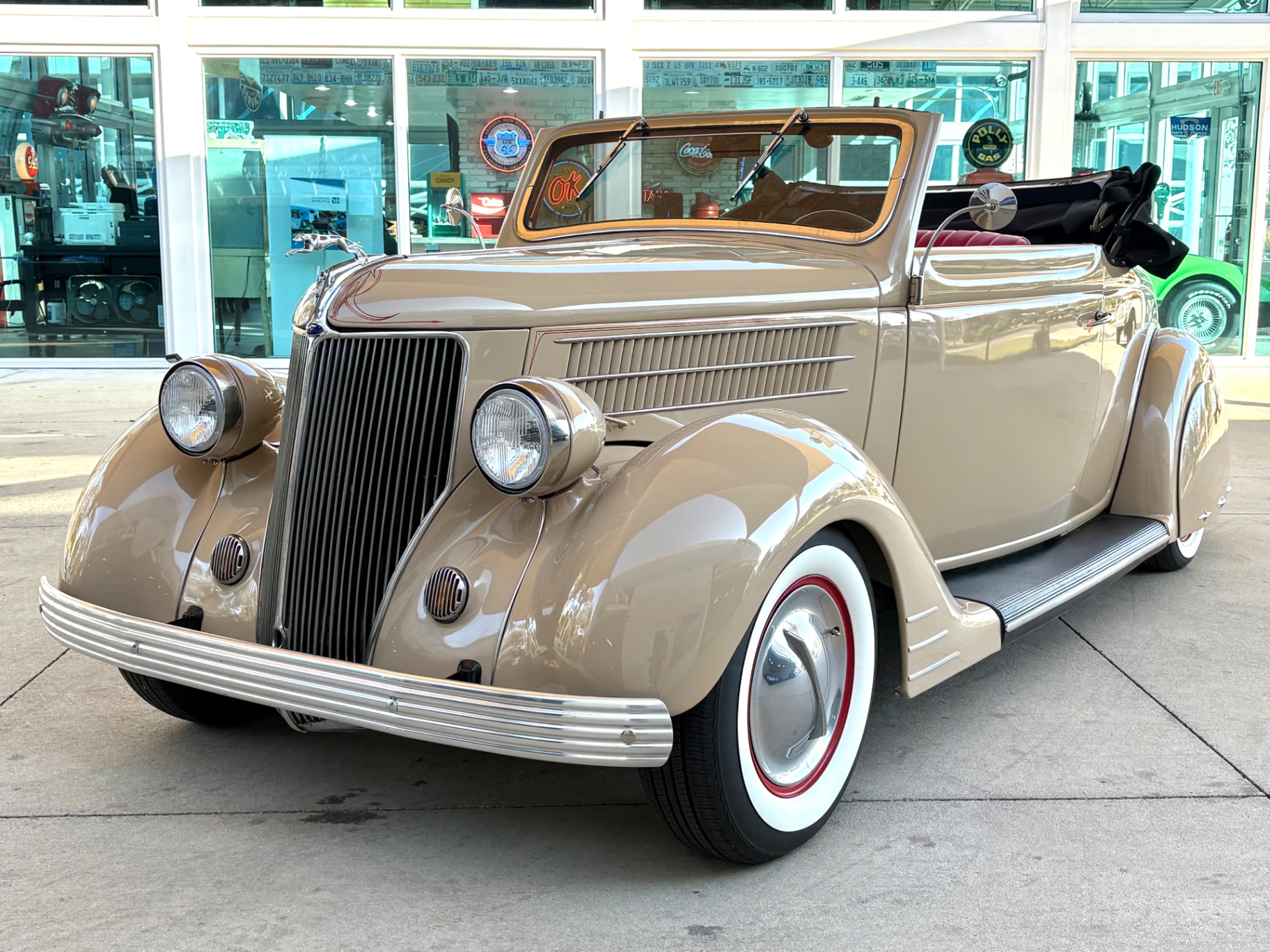
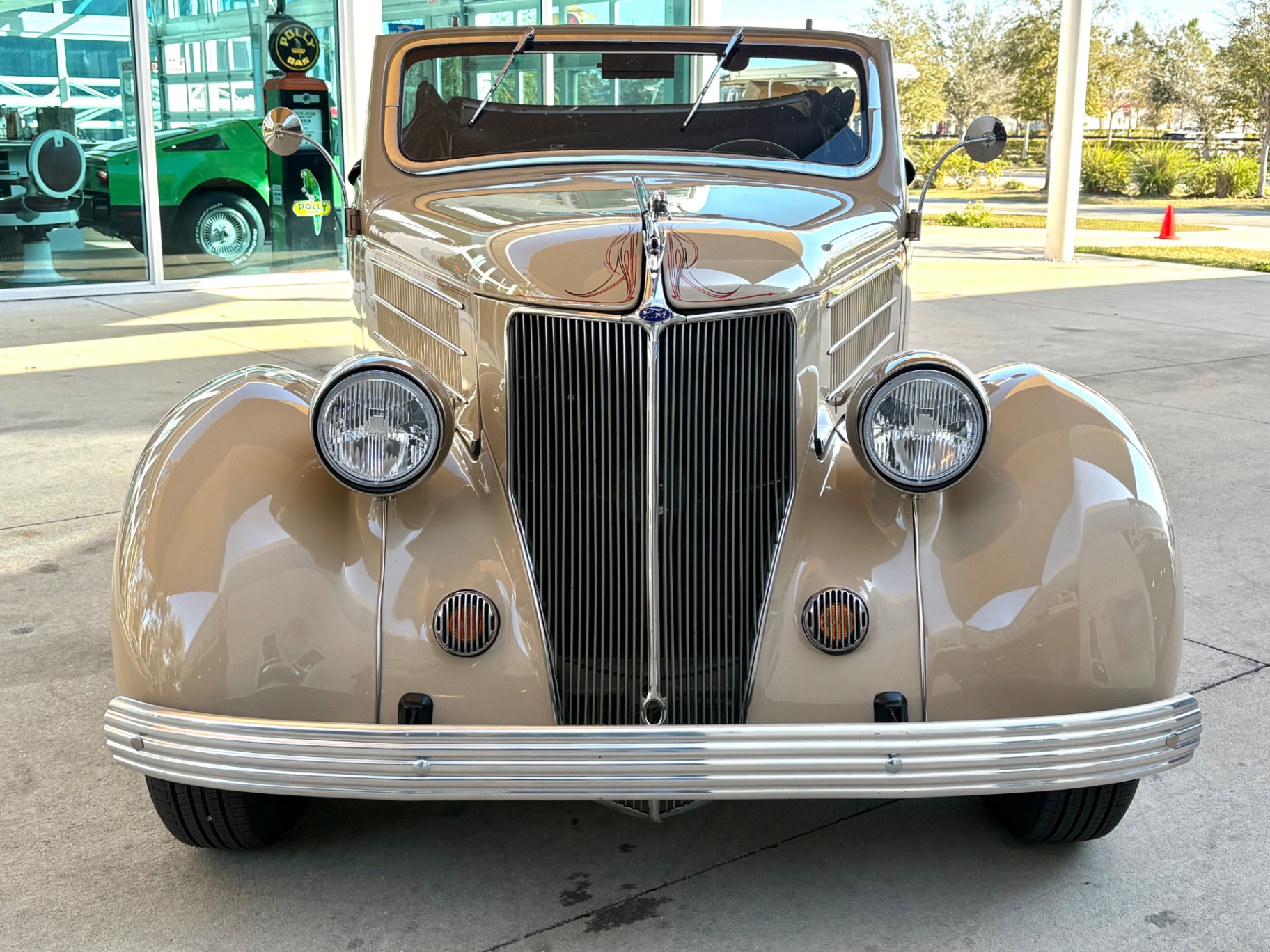
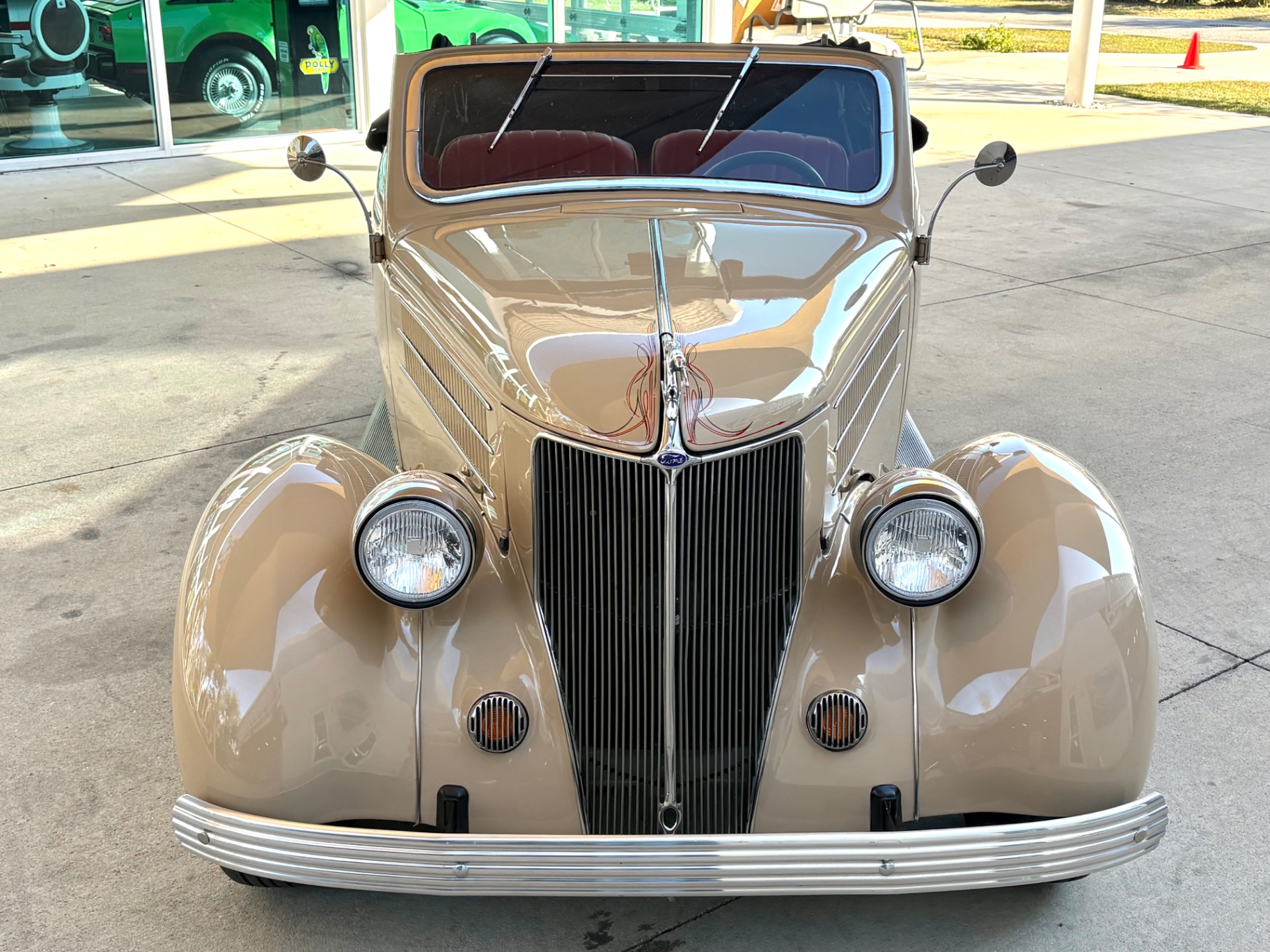
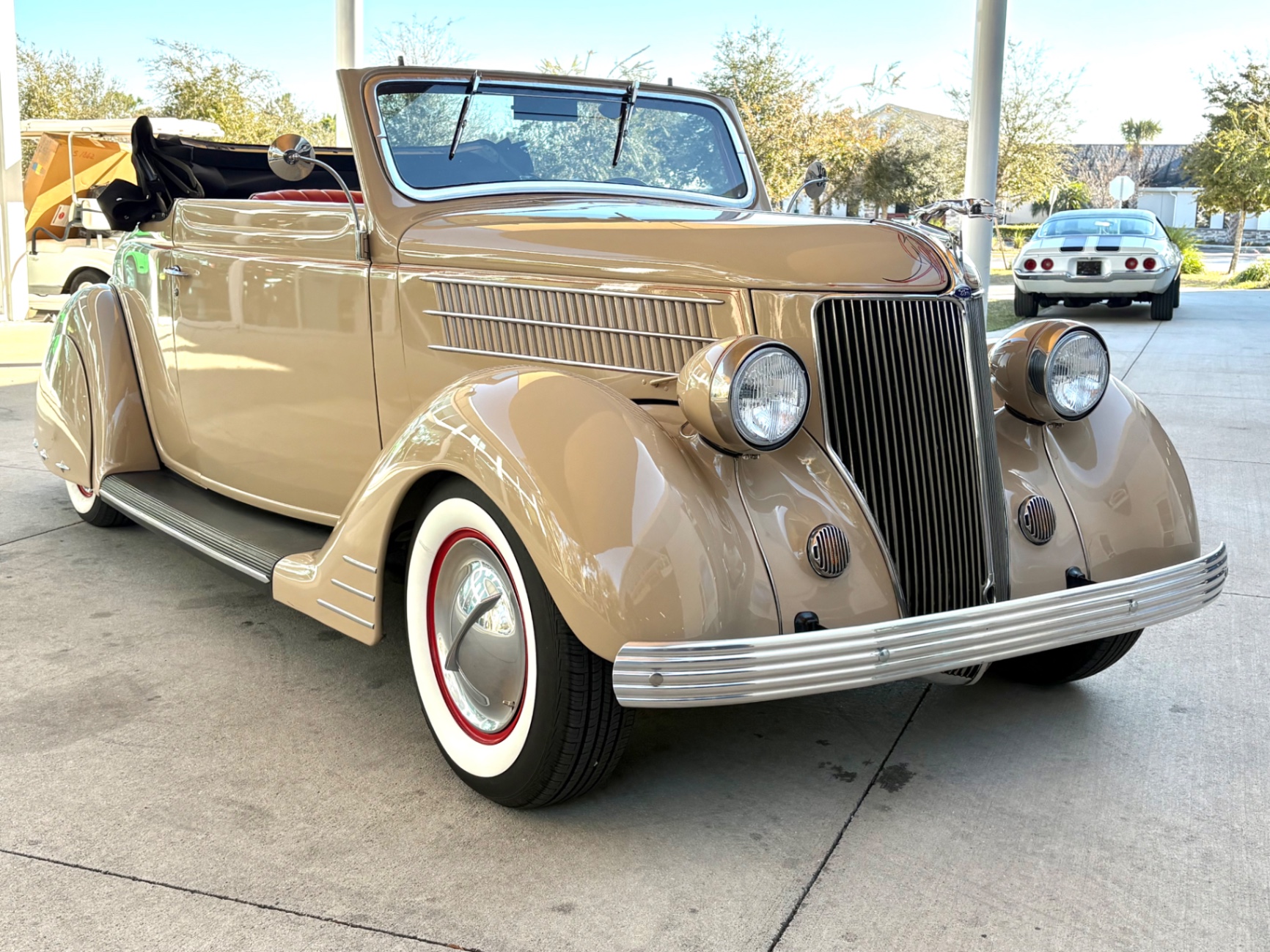
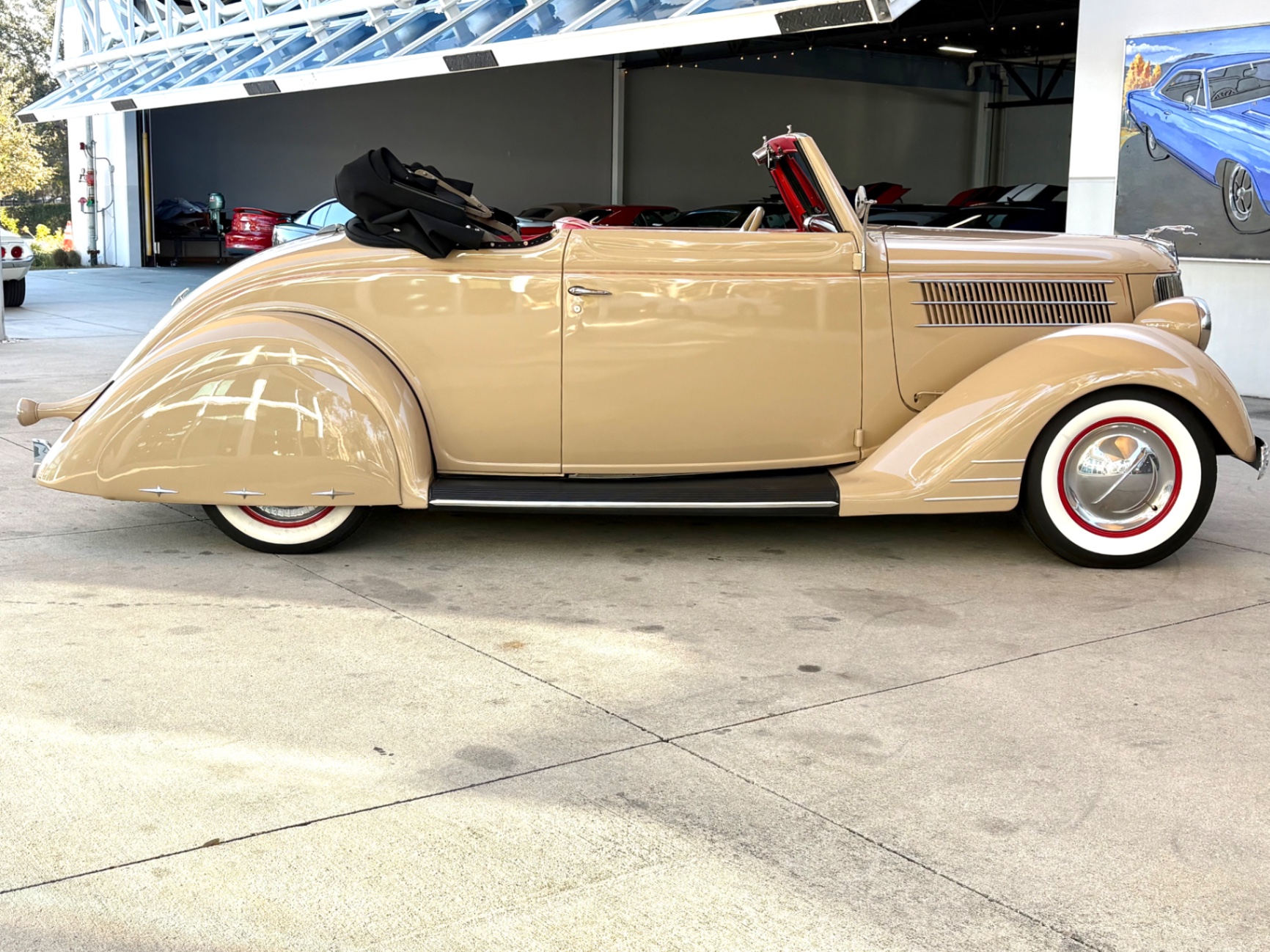
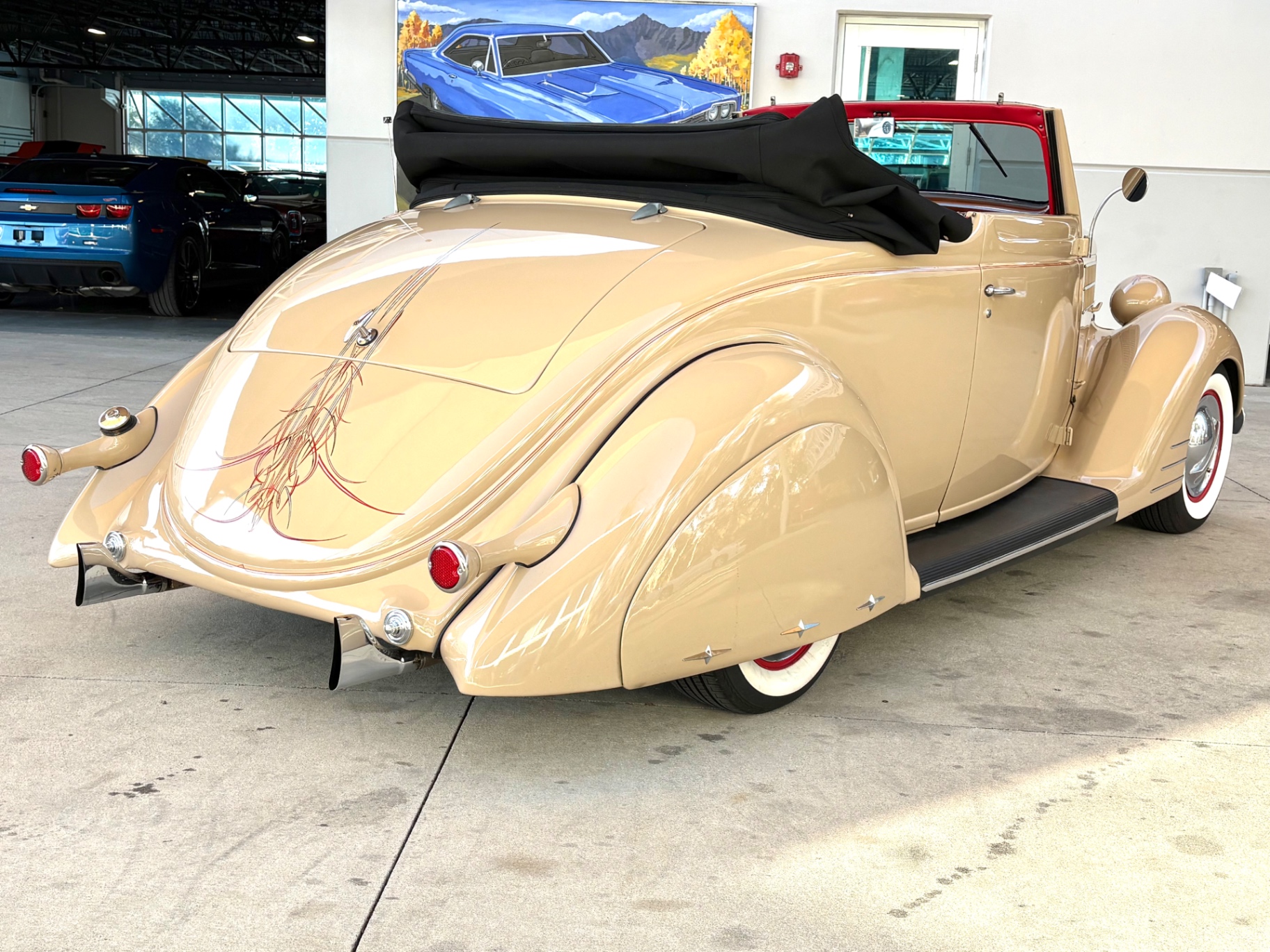
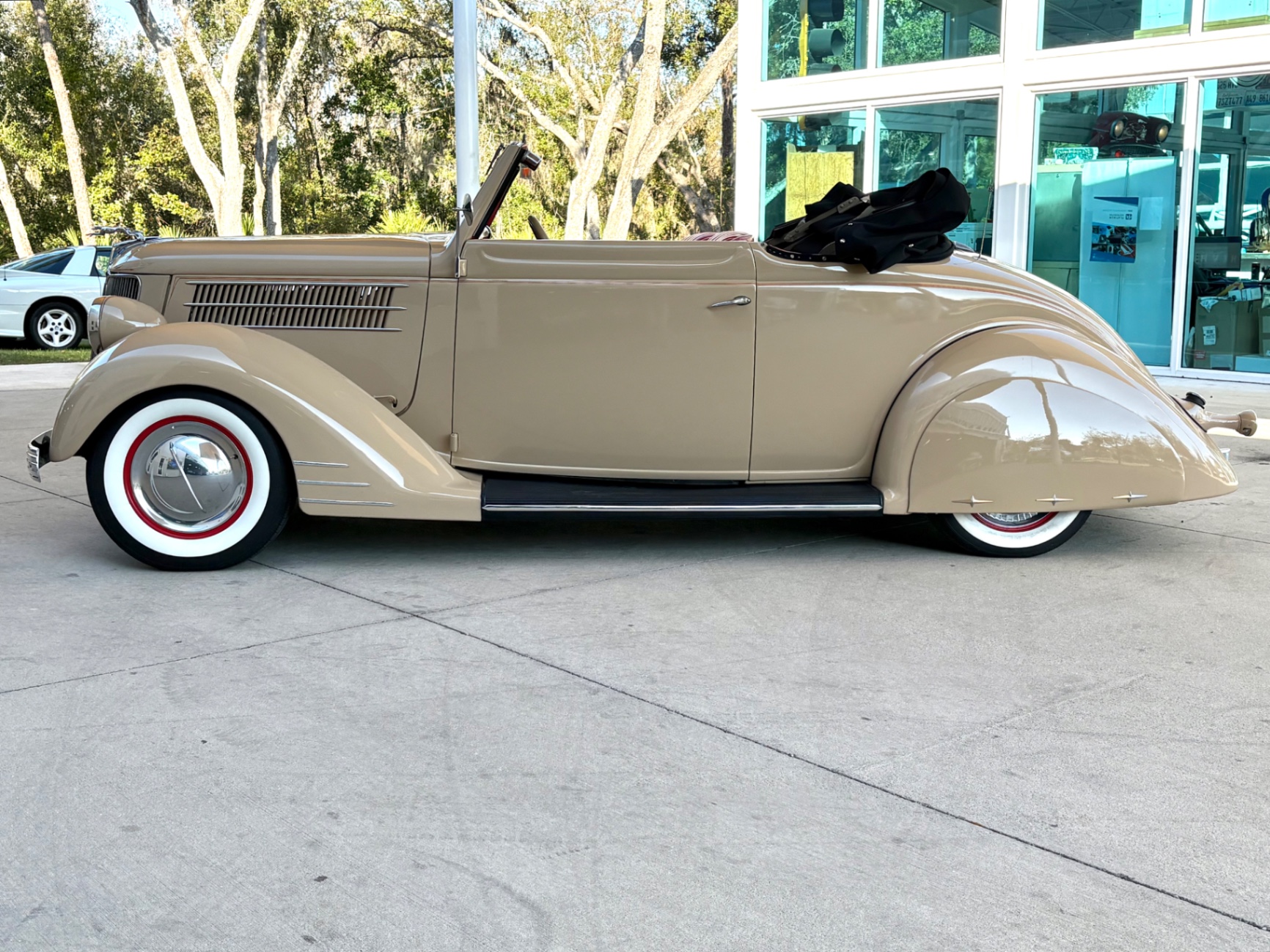
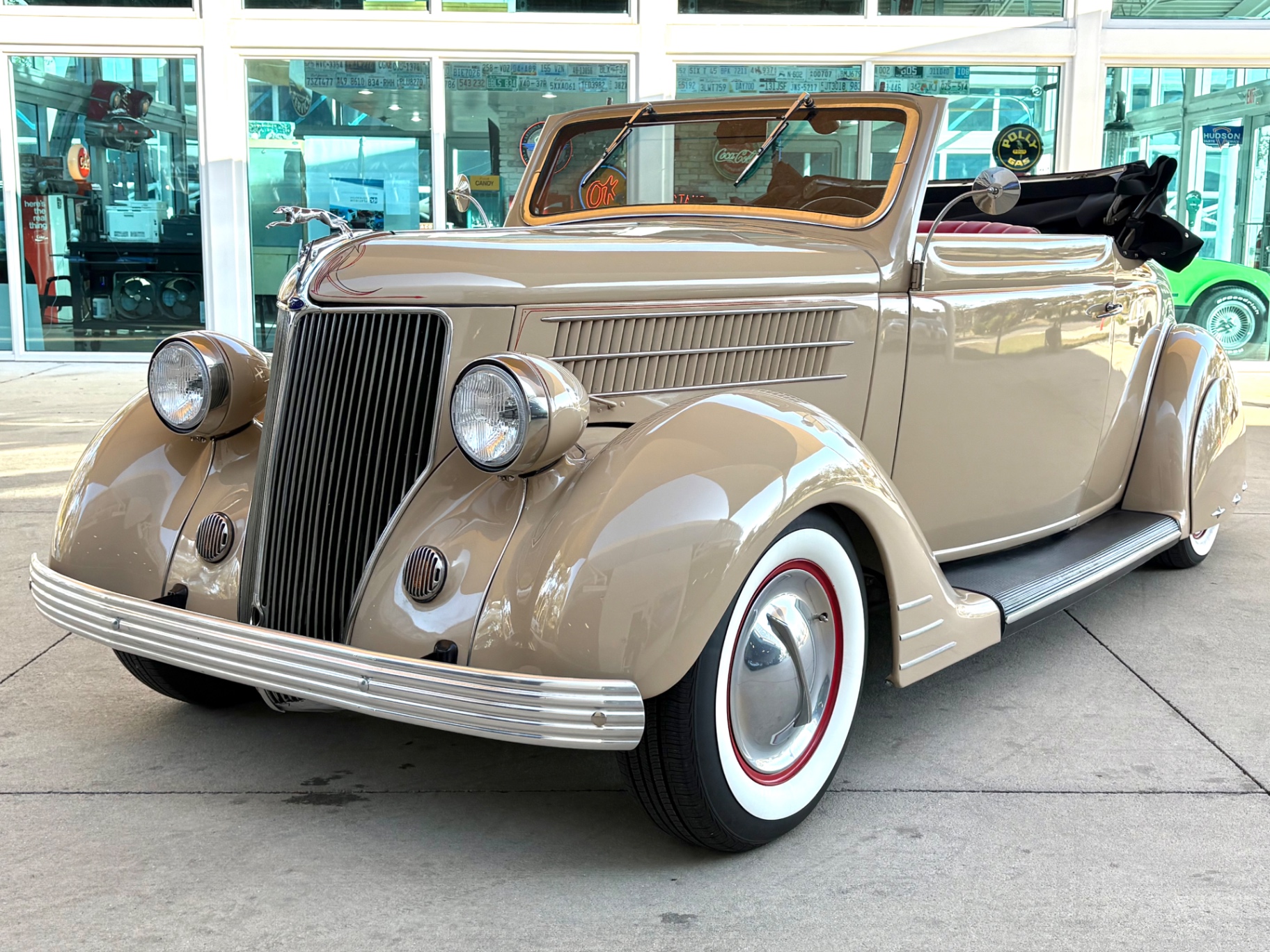
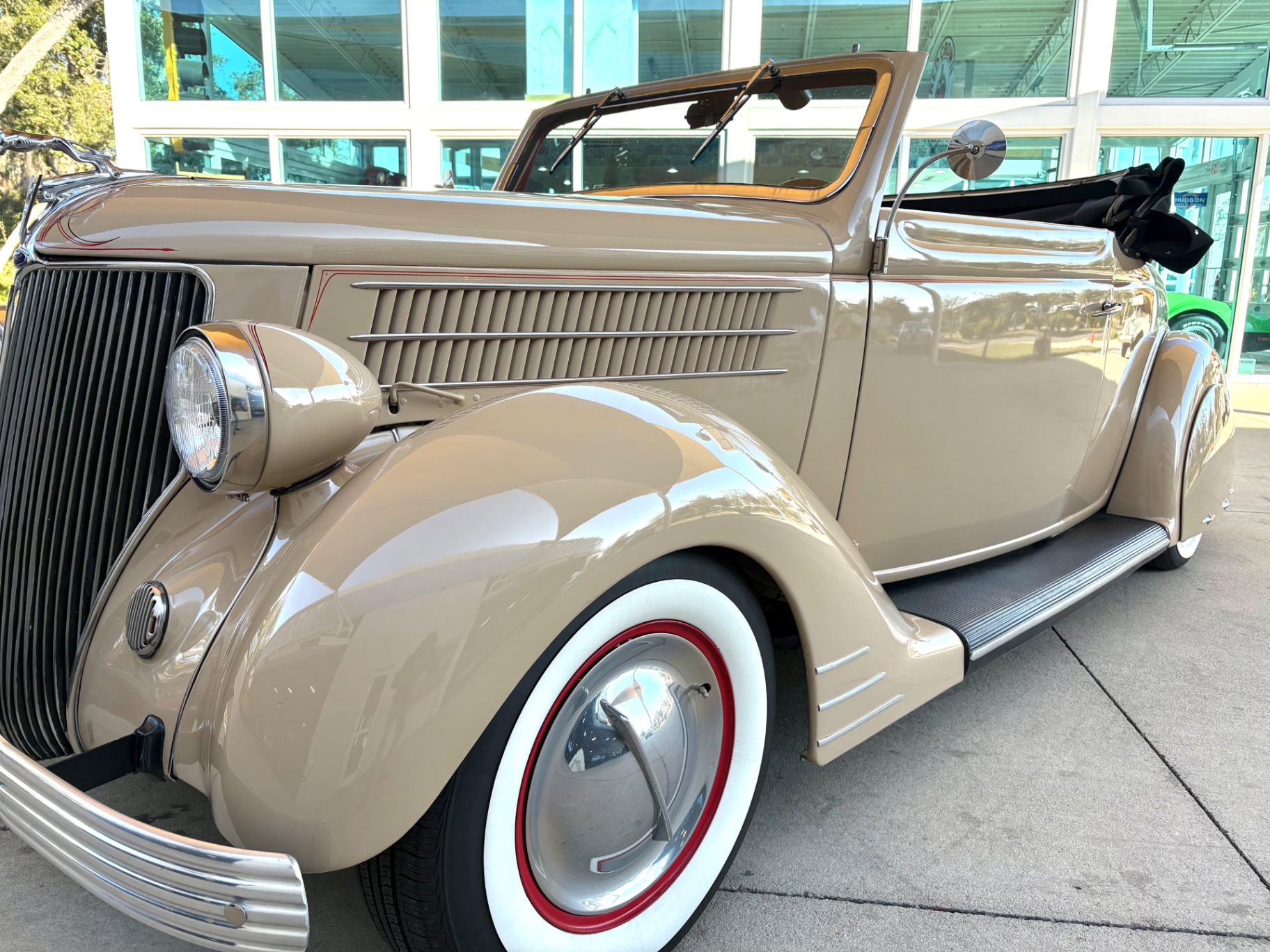
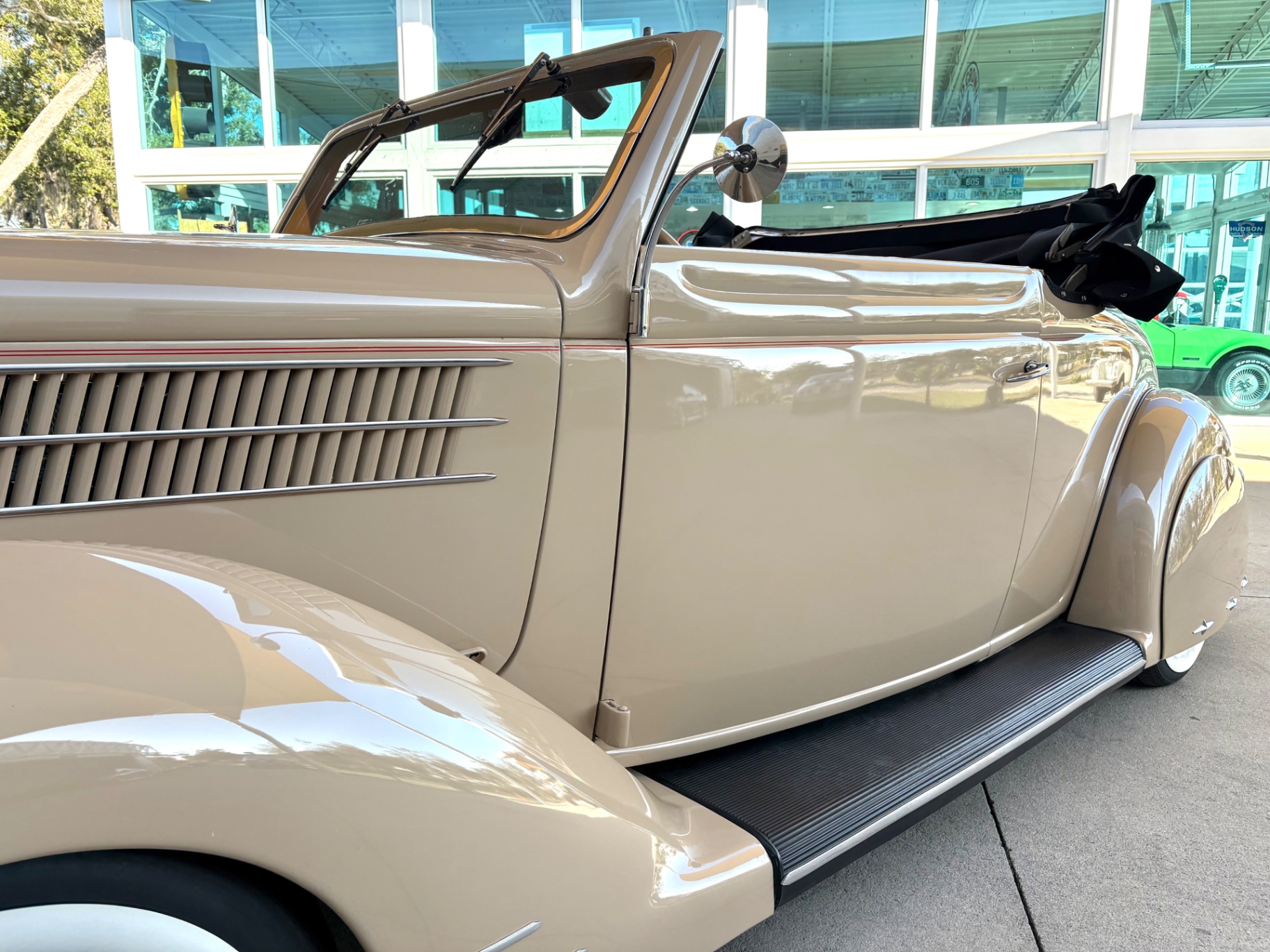
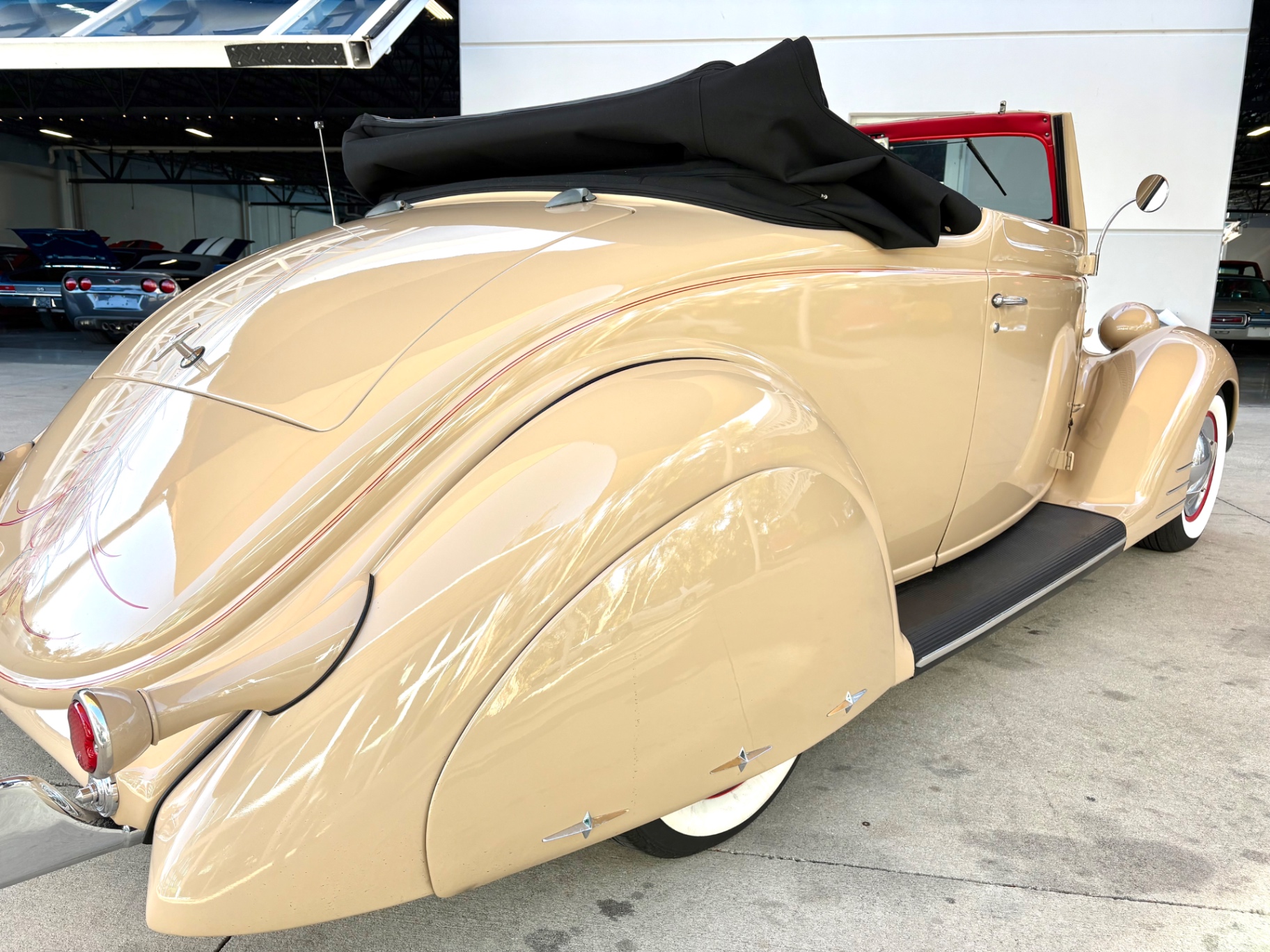
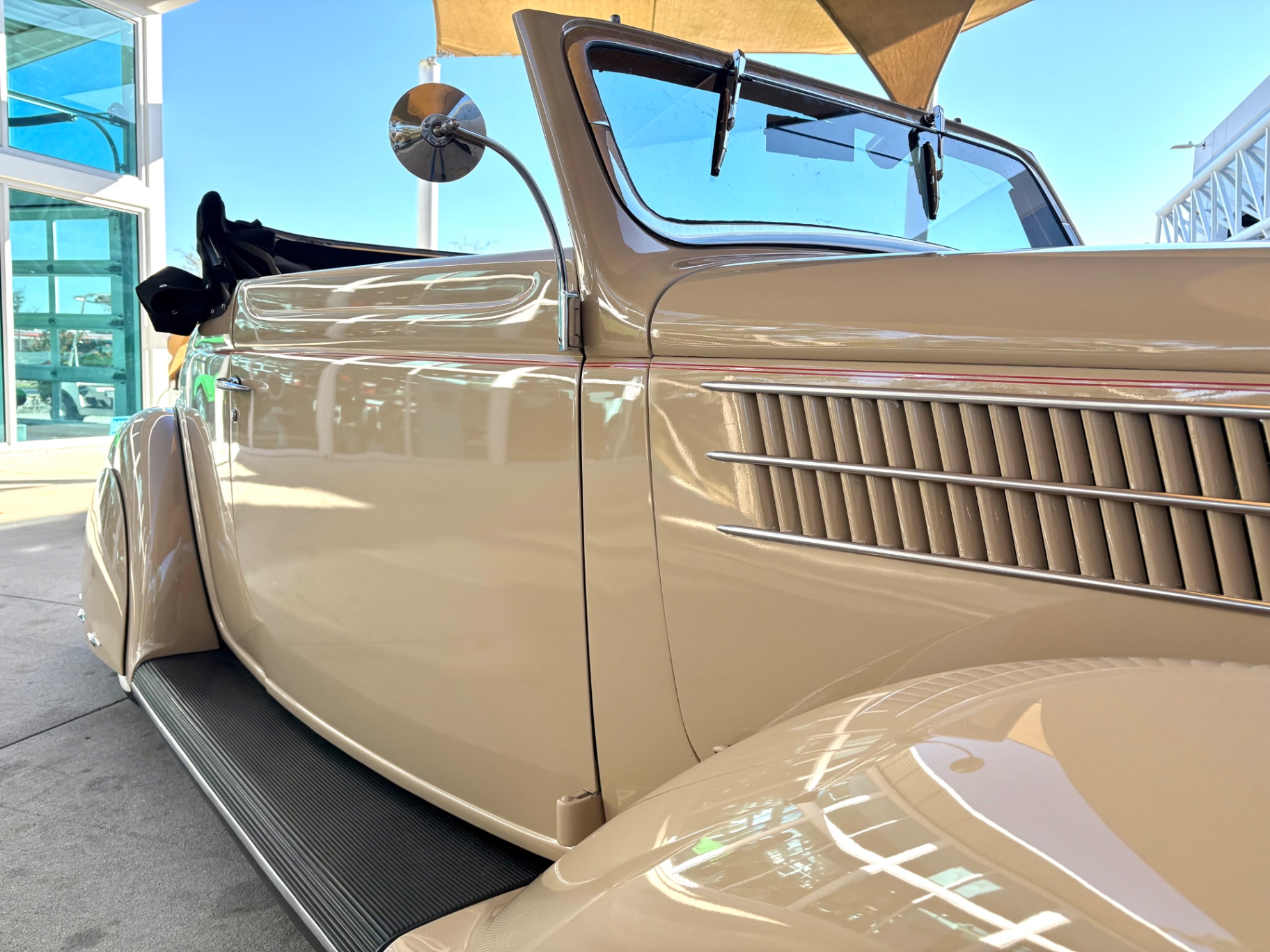
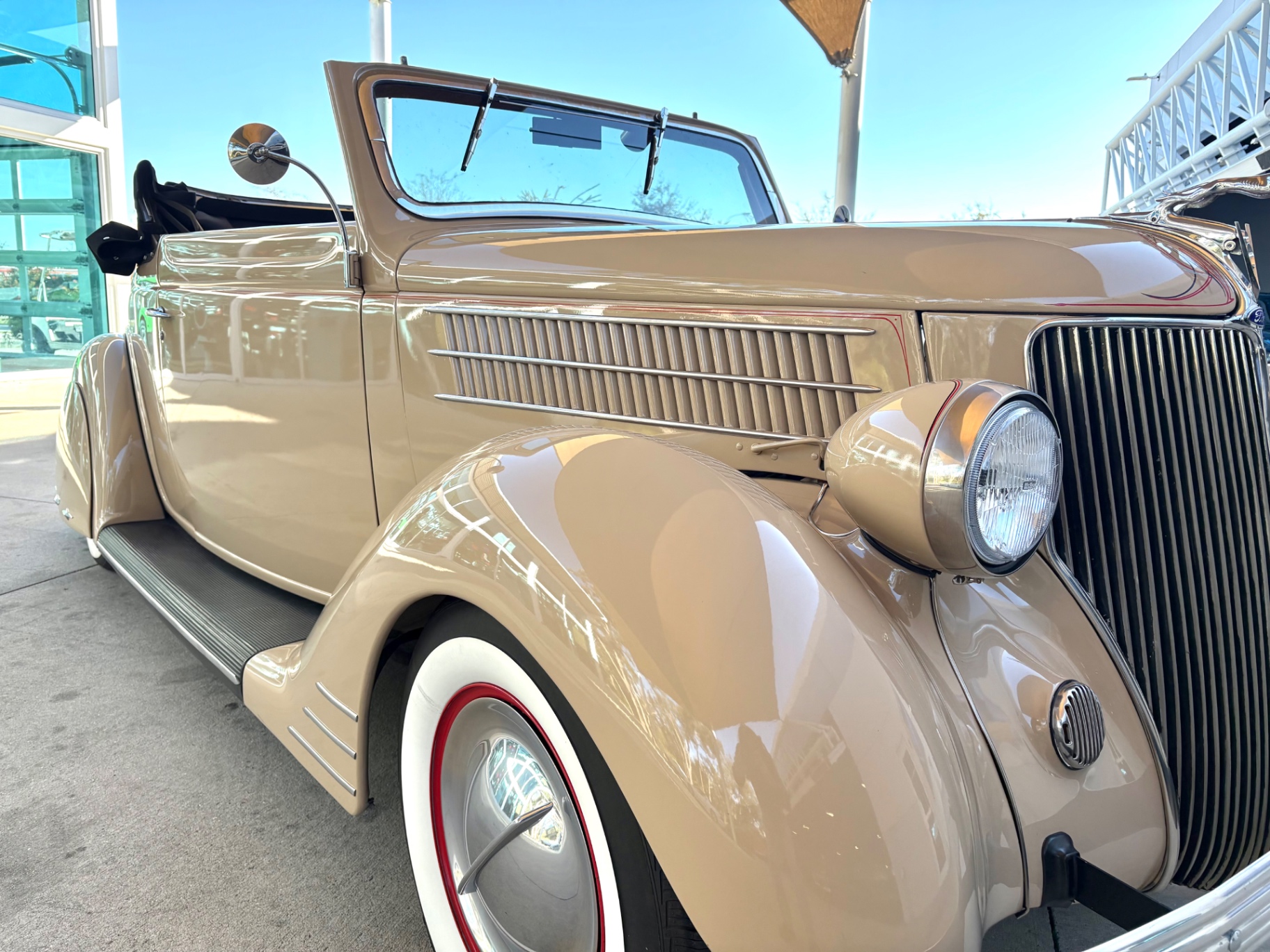
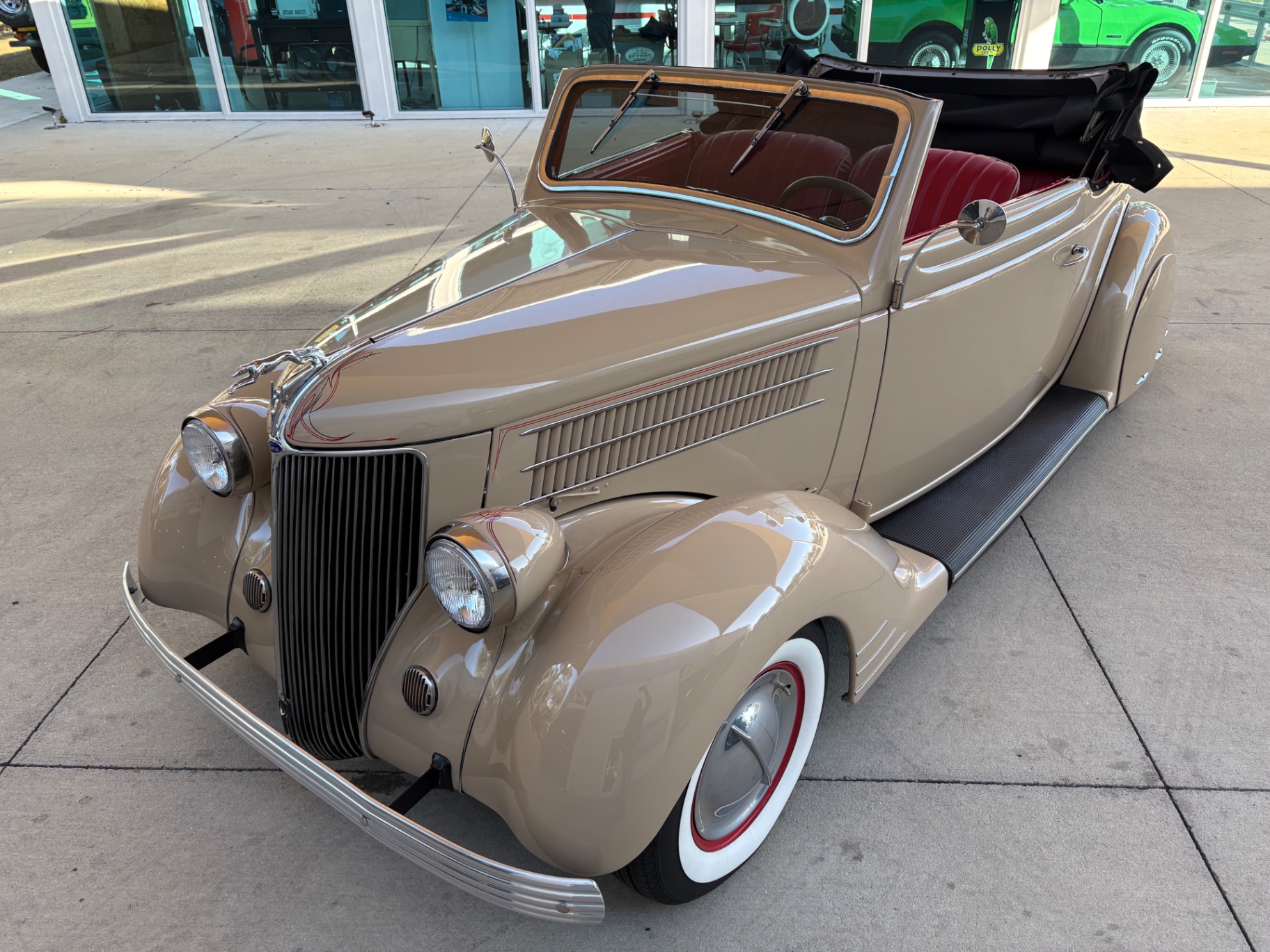
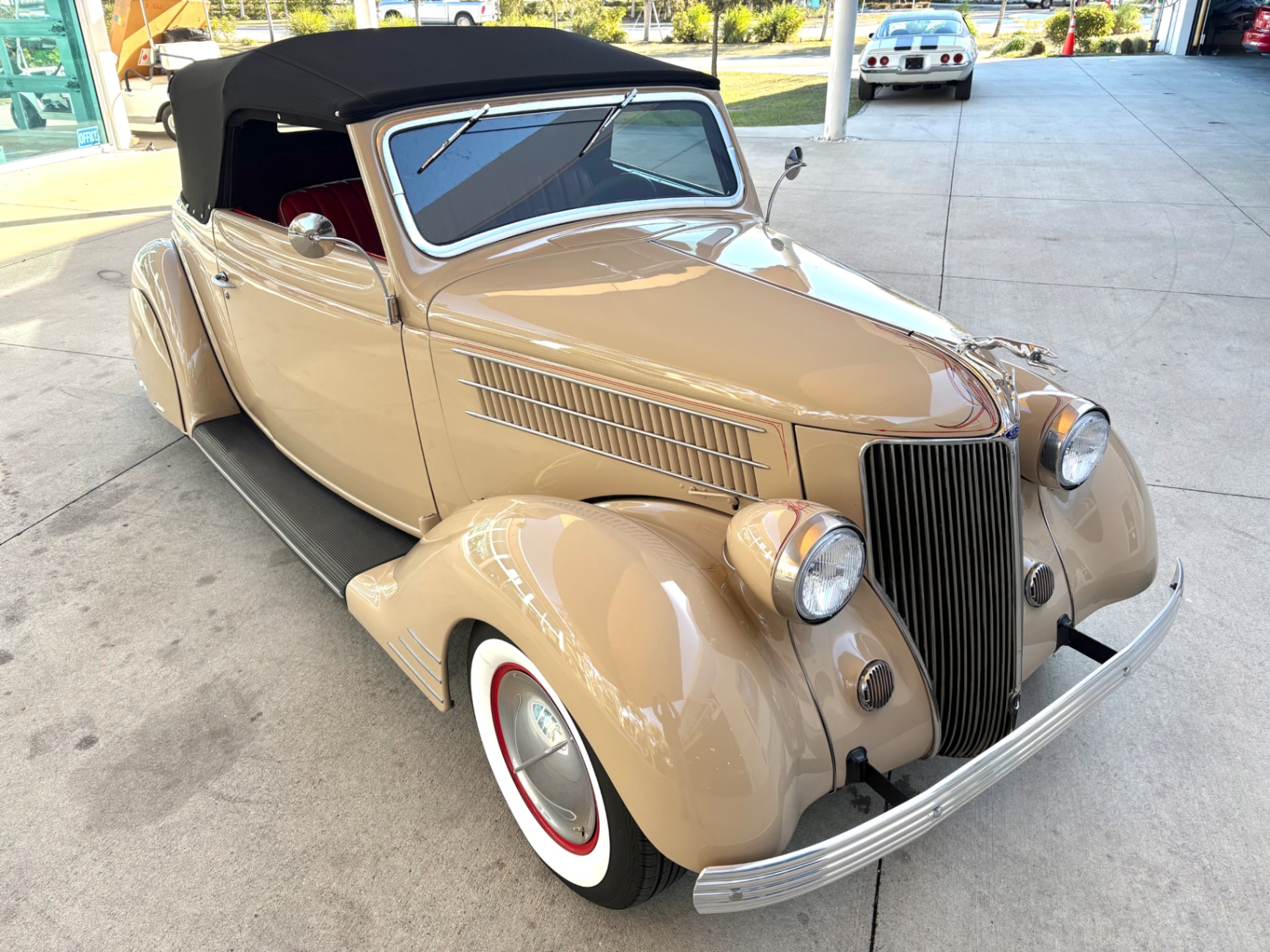
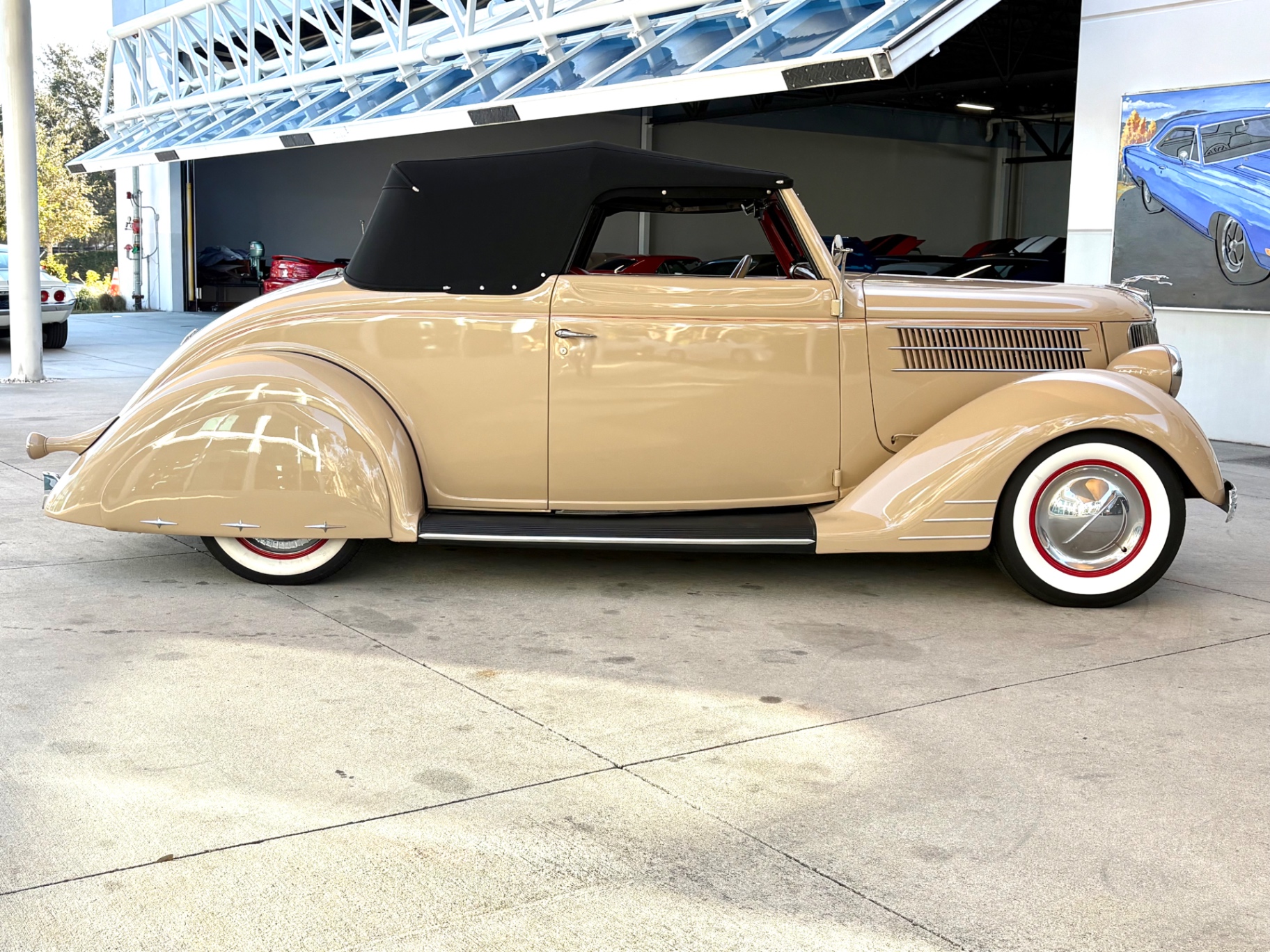
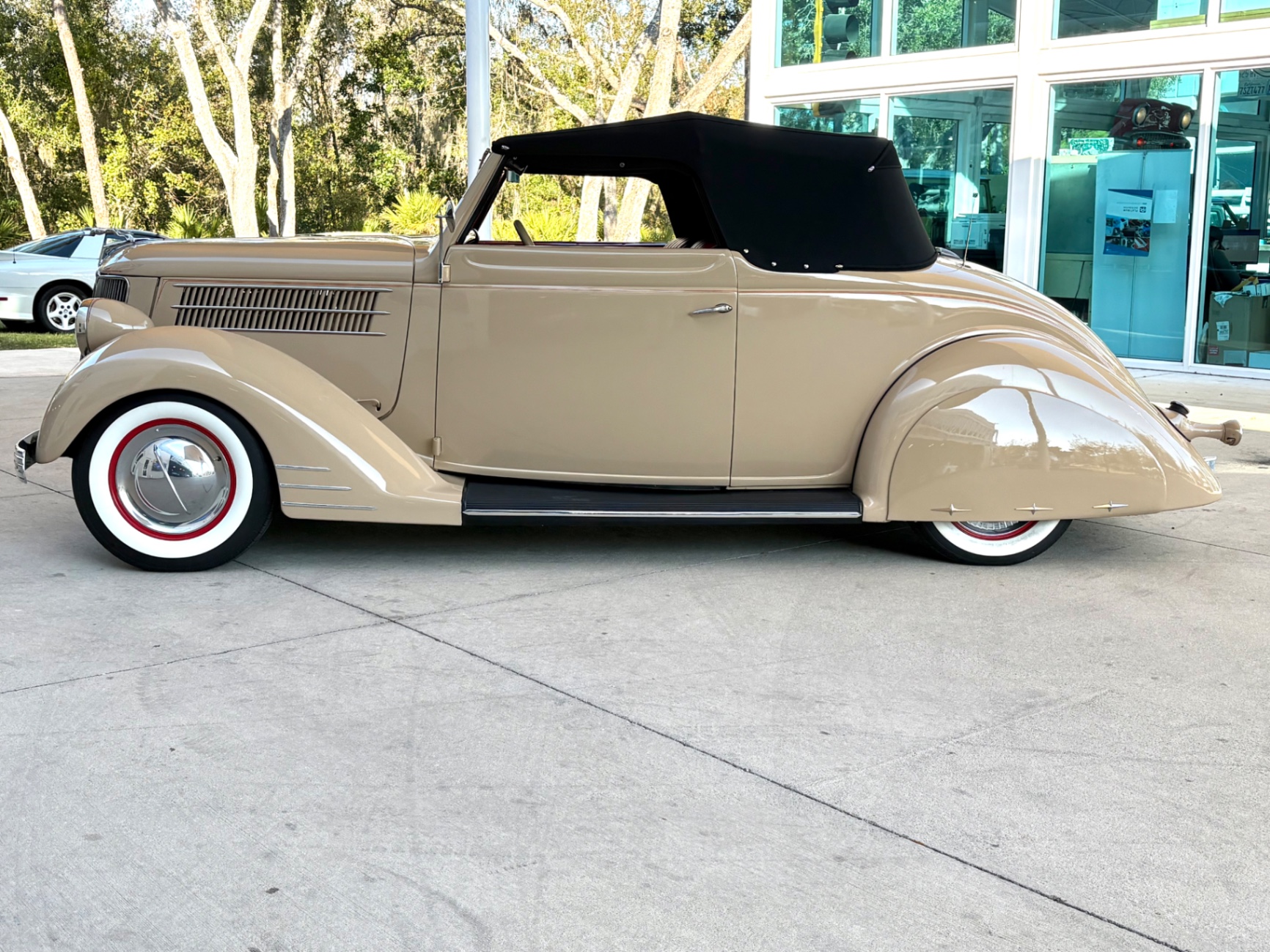
The 1936 Ford Model 68 DeLuxe Cabriolet wears a tan exterior finish that reads as a warm sand color in natural light. The paint quality is consistent across all panels with no visible orange peel or panel mismatches in the photos. The body lines on the 1936 Ford cabriolet are among the cleanest of the prewar era — the long hood, the sweeping front fenders with their integrated teardrop headlamps, the pronounced V-shape grille, and the short rear deck all come together in a proportionally balanced design that holds up even by modern standards.
The chrome-plated vertical bar grille is in excellent shape, with the bars running tight and even from the top bar down to the lower valance. The hidden horns are concealed behind the grille in the factory location — a detail that required a specific grille design for the DeLuxe model. Both teardrop-shaped headlamp housings sit in their correct fender-mounted position and are finished in tan to match the body.
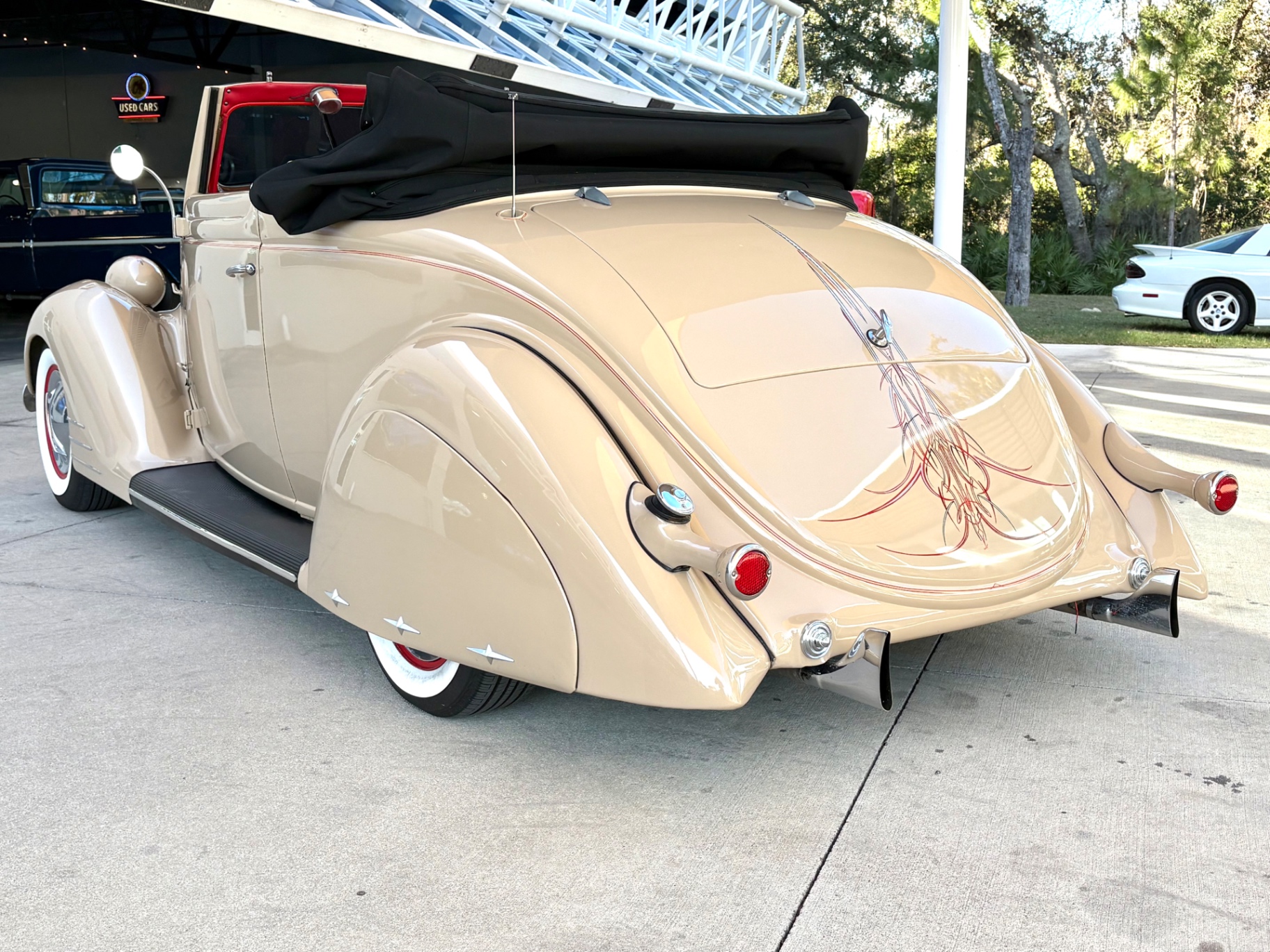
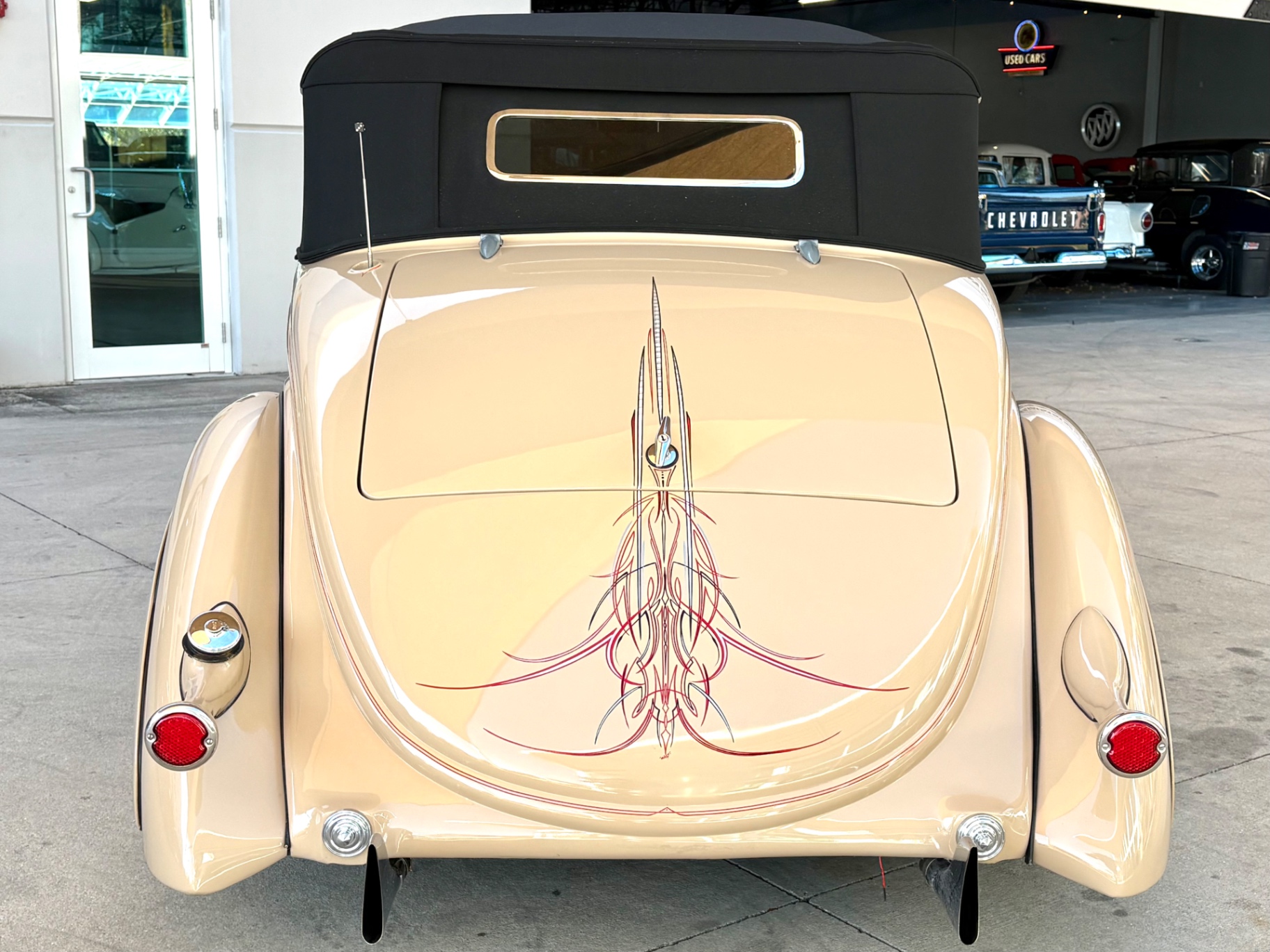
The running boards are trimmed in stainless ribbed step plates, which were a DeLuxe feature and are in good condition front to back. The body appears straight with consistent panel gaps throughout. There is decorative pinstriping visible on the rear deck lid — a fine-line red and blue design on the tan background — which is a common and period-appropriate custom touch on prewar Ford builds.
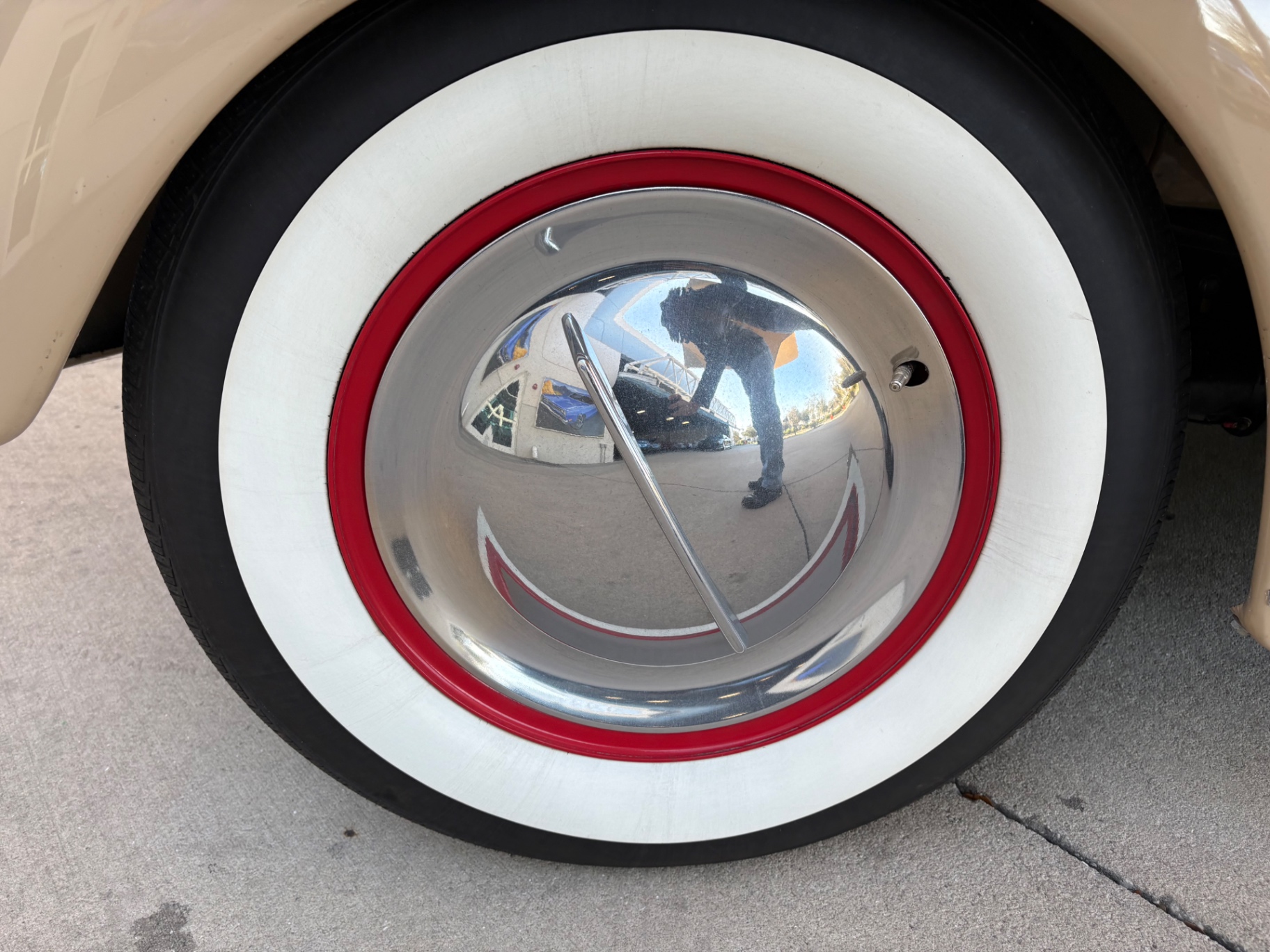
The wheels are 16-inch steel artillery-style units with V8 hubcaps and beauty rings — the correct look for a 1936 Ford DeLuxe. They are painted red to coordinate with the interior, which is visible in the undercarriage photos where the inner rims show the red finish clearly. Wide whitewall tires on modern radial construction complete the look while giving the car a safer and more compliant ride than vintage bias-ply tires.
The undercarriage photos confirm that the chassis has been cleaned and coated in black. There is no visible rust or structural damage. The dual exhaust pipes run from the headers back to a pair of mufflers, then exit at the rear with matching tips visible on either side of the tail.
Conclusion
The 1936 Ford Model 68 DeLuxe Cabriolet is a specific, well-documented body style from a significant year in Ford's prewar design history. The combination of the DeLuxe trim level, cabriolet body, and rumble seat makes this a relatively rare configuration. This car has been updated with the mechanical components needed to drive it regularly and confidently — disc brakes, independent front suspension, rack-and-pinion steering, a proven Ford 302 V8, and a 5-speed manual — while keeping the exterior visuals faithful to the 1936 design. The red leather interior against the wood-grain dash and the tan exterior is a well-chosen combination that photographs well and presents even better in person.
If you are a serious buyer or just want to learn more about this 1936 Ford Model 68 DeLuxe Cabriolet, give Skyway Classics a call at 941-254-6608. We are happy to answer questions, arrange an inspection, or discuss transport options.
Disclaimer
Information found on the website is presented as given to us by the owner of the car, whether on consignment or from the owner we bought it from. Some Photos, materials for videos, descriptions and other information are provided by the consignor/seller and is deemed reliable, but Skyway Classics does not warranty or guarantee this information. Skyway Classics is not responsible for information that may incorrect or a publishing error. The decision to purchase should be based solely on the buyers personal inspection of the vehicle or by a professional inspection service prior to offer or purchase being made.
1936 Ford Model 68 DeLuxe Cabriolet — Rumble Seat, 302 V8, Full Restoration
Why This Car Is Special
The 1936 Ford Model 68 DeLuxe Cabriolet is one of the most visually distinctive body styles Ford produced during the prewar era. Ford designated its 1936 lineup as the Model 68, a reference to the engine series rather than a traditional model name. That year, Ford offered the cabriolet as part of the DeLuxe trim line — a two-door, open-top body style with a folding soft top, a front bench seat for two, and a rumble seat in the tail for additional passengers. The rumble seat configuration made the cabriolet a social car in its day, and it remains one of the most sought-after body styles among prewar Ford collectors.
The 1936 Ford was a significant styling step forward from the 1935 model. Designer Eugene "Bob" Gregorie, working under Edsel Ford, refined the body lines into something more aerodynamic and cohesive. The vertical bar grille, which debuted in 1935, was revised and given a more pronounced V-shape for 1936, and the headlamps were fully integrated into the fenders for the first time. These changes gave the 1936 Ford a much more modern appearance than its predecessors, and the design has aged well enough that it remains a crowd favorite at shows and on the street nearly ninety years later.
The cabriolet body style was produced in relatively small numbers compared to the Tudor and Fordor sedans that made up the bulk of Ford's volume. Surviving, drivable examples — especially those with rumble seats and DeLuxe trim — are genuinely scarce. This particular car has been fully restored and upgraded with a 302ci Ford small-block V8, a 5-speed manual transmission, independent front suspension, rack-and-pinion steering, and four-wheel disc brakes, making it a capable driver that retains the visual character of the original.
Features List
- 302ci Ford small-block V8
- 5-speed manual transmission with floor-mounted shifter
- Independent front suspension with coilover shocks
- Rack-and-pinion steering
- Four-wheel disc brakes
- Tilt steering column
- Air conditioning
- Folding black soft top with zip-out rear window
- Functional rumble seat
- Updated 12-volt electrical system
- Performance dual exhaust system
- Wood-grain dashboard and trim
- Red leather interior with tan piping
- Tan exterior paint, professional quality
- 16-inch steel artillery wheels with V8 hubcaps and beauty rings
- Wide whitewall tires on modern radial construction
- Chrome-plated vertical bar grille with hidden horns
- Teardrop-shaped integrated headlamps
- Detailed and painted undercarriage
- New glass throughout
Mechanical
Under the hood sits a Ford 302ci small-block V8 — a sensible and historically appropriate engine choice for a prewar Ford build. The 302 shares its lineage with the Ford small-block family that traces back to the 1962 221ci unit, and by the time the 302 was fully developed it was one of the most proven small-block V8s in American automotive history. Running with a carburetor, performance exhaust headers, and an electric cooling fan visible in the engine bay photos, this engine is set up to run reliably in warm weather and stop-and-go driving conditions. The Ford Motorsport valve covers are a period-correct hot rod touch that fits the build style well.
The 5-speed manual transmission is paired with a floor-mounted shifter — visible in the interior photos as a chrome-topped unit rising from the tunnel. This gearbox gives the car usable highway gearing that the original three-speed Ford transmission never offered. The combination of the 302 and a 5-speed makes this a legitimate cross-country driver, not just a show car.
Underneath, the suspension has been fully updated. The front end uses an independent front suspension setup with coilover shocks — a significant improvement over the original solid front axle that came on the 1936 Ford. Rack-and-pinion steering replaces the original worm-and-sector unit, delivering much more direct feedback through the wheel. The disc brakes at all four corners are confirmed in the undercarriage photos, where the calipers and rotors are clearly visible on both the front and rear axles. The chassis has been painted black and is in clean, detailed condition throughout. The dual exhaust system runs the full length of the car and exits behind the rear wheels with dual mufflers visible from below.
The electrical system has been converted to a 12-volt architecture, which is standard practice on builds like this. The original 6-volt systems on prewar Fords are not compatible with modern accessories, lighting, or air conditioning, so the upgrade is a practical necessity rather than a shortcut.
Interior
Step inside the 1936 Ford Model 68 DeLuxe Cabriolet and the first thing you notice is the red leather upholstery. It covers the bench seat, door panels, and rear seat in a consistent, tightly stitched pattern with vertical pleating throughout and tan piping along the seams. The color contrast between the red leather and the wood-grain dashboard is intentional and executed cleanly. The door panels are red leather over a full-length panel with chrome window cranks at the top and a chrome interior door pull mounted mid-panel — period-correct in style and consistent in execution front to back.
The dashboard is the DeLuxe wood-grain unit, which was a distinguishing feature of the top-trim 1936 Ford. On DeLuxe models, Ford used a genuine wood-grain applique across the full dash face, flanked by chrome bezels around the instruments. This car retains that look while integrating modern gauges behind the original-style bezels. The instrument cluster shows a speedometer at center along with oil pressure, temperature, and additional gauges flanking it. The chrome art deco trim pieces above the gauge cluster are correct for the DeLuxe specification and are in good condition. An under-dash air conditioning unit has been fitted — a practical addition given Florida's climate — with vent outlets on both the driver and passenger sides of the lower dash. The A/C unit is visible but tucked neatly under the dash rather than mounted prominently.
The steering wheel is a tan leather-wrapped three-spoke unit with a chrome center hub. It sits on the tilt-adjustable column, which means drivers of different sizes can actually get comfortable behind it — a feature that is often overlooked in prewar builds. A chrome gear shift with a decorative knob rises from the floor between the driver and passenger. The floor is covered in black carpet. Lap belts are fitted to both front seat positions. The glove box door on the passenger side shows the original-style chrome pull handle against the wood-grain face.
The rumble seat in the tail of the 1936 Ford Model 68 cabriolet is functional. The rear compartment opens to reveal a full-width red leather bench with the same pleated and piped treatment as the front seat. Lap belts are fitted here as well. The black soft top folds down behind the rear seat when not in use, and the zip-out rear window allows the top to be used with or without the rear glass depending on conditions. The top itself is black canvas and is in good condition.
Exterior
The 1936 Ford Model 68 DeLuxe Cabriolet wears a tan exterior finish that reads as a warm sand color in natural light. The paint quality is consistent across all panels with no visible orange peel or panel mismatches in the photos. The body lines on the 1936 Ford cabriolet are among the cleanest of the prewar era — the long hood, the sweeping front fenders with their integrated teardrop headlamps, the pronounced V-shape grille, and the short rear deck all come together in a proportionally balanced design that holds up even by modern standards.
The chrome-plated vertical bar grille is in excellent shape, with the bars running tight and even from the top bar down to the lower valance. The hidden horns are concealed behind the grille in the factory location — a detail that required a specific grille design for the DeLuxe model. Both teardrop-shaped headlamp housings sit in their correct fender-mounted position and are finished in tan to match the body.
The running boards are trimmed in stainless ribbed step plates, which were a DeLuxe feature and are in good condition front to back. The body appears straight with consistent panel gaps throughout. There is decorative pinstriping visible on the rear deck lid — a fine-line red and blue design on the tan background — which is a common and period-appropriate custom touch on prewar Ford builds.
The wheels are 16-inch steel artillery-style units with V8 hubcaps and beauty rings — the correct look for a 1936 Ford DeLuxe. They are painted red to coordinate with the interior, which is visible in the undercarriage photos where the inner rims show the red finish clearly. Wide whitewall tires on modern radial construction complete the look while giving the car a safer and more compliant ride than vintage bias-ply tires.
The undercarriage photos confirm that the chassis has been cleaned and coated in black. There is no visible rust or structural damage. The dual exhaust pipes run from the headers back to a pair of mufflers, then exit at the rear with matching tips visible on either side of the tail.
Conclusion
The 1936 Ford Model 68 DeLuxe Cabriolet is a specific, well-documented body style from a significant year in Ford's prewar design history. The combination of the DeLuxe trim level, cabriolet body, and rumble seat makes this a relatively rare configuration. This car has been updated with the mechanical components needed to drive it regularly and confidently — disc brakes, independent front suspension, rack-and-pinion steering, a proven Ford 302 V8, and a 5-speed manual — while keeping the exterior visuals faithful to the 1936 design. The red leather interior against the wood-grain dash and the tan exterior is a well-chosen combination that photographs well and presents even better in person.
If you are a serious buyer or just want to learn more about this 1936 Ford Model 68 DeLuxe Cabriolet, give Skyway Classics a call at 941-254-6608. We are happy to answer questions, arrange an inspection, or discuss transport options.
Disclaimer
Information found on the website is presented as given to us by the owner of the car, whether on consignment or from the owner we bought it from. Some Photos, materials for videos, descriptions and other information are provided by the consignor/seller and is deemed reliable, but Skyway Classics does not warranty or guarantee this information. Skyway Classics is not responsible for information that may incorrect or a publishing error. The decision to purchase should be based solely on the buyers personal inspection of the vehicle or by a professional inspection service prior to offer or purchase being made.
1936 Ford
Model 68 Deluxe
Why Choose Skyway Classics?
Explore our curated inventory of classic and collector cars—thoughtfully selected, ready to drive, and supported by experts who make ownership simple.
Expert Curation
Every vehicle is hand-selected by our experts for quality, authenticity, and investment potential.
Fast Transactions
Streamlined buying and selling process with quick financing and immediate delivery options.
Only National Dealer With Classic Service & Repair
We’re the only national dealership that services and repairs the classics we sell—before and after the sale.
Nationwide Network
Access to our extensive network of collectors, restorers, and classic car enthusiasts nationwide.
Concierge Ownership Support
From financing and insurance to paperwork, shipping, and titling—we handle the details so you can enjoy the drive.
Passion-Driven Service
We're classic car enthusiasts first, providing personalized service with genuine passion for the hobby.