
1964 Chevrolet
Corvair Monza
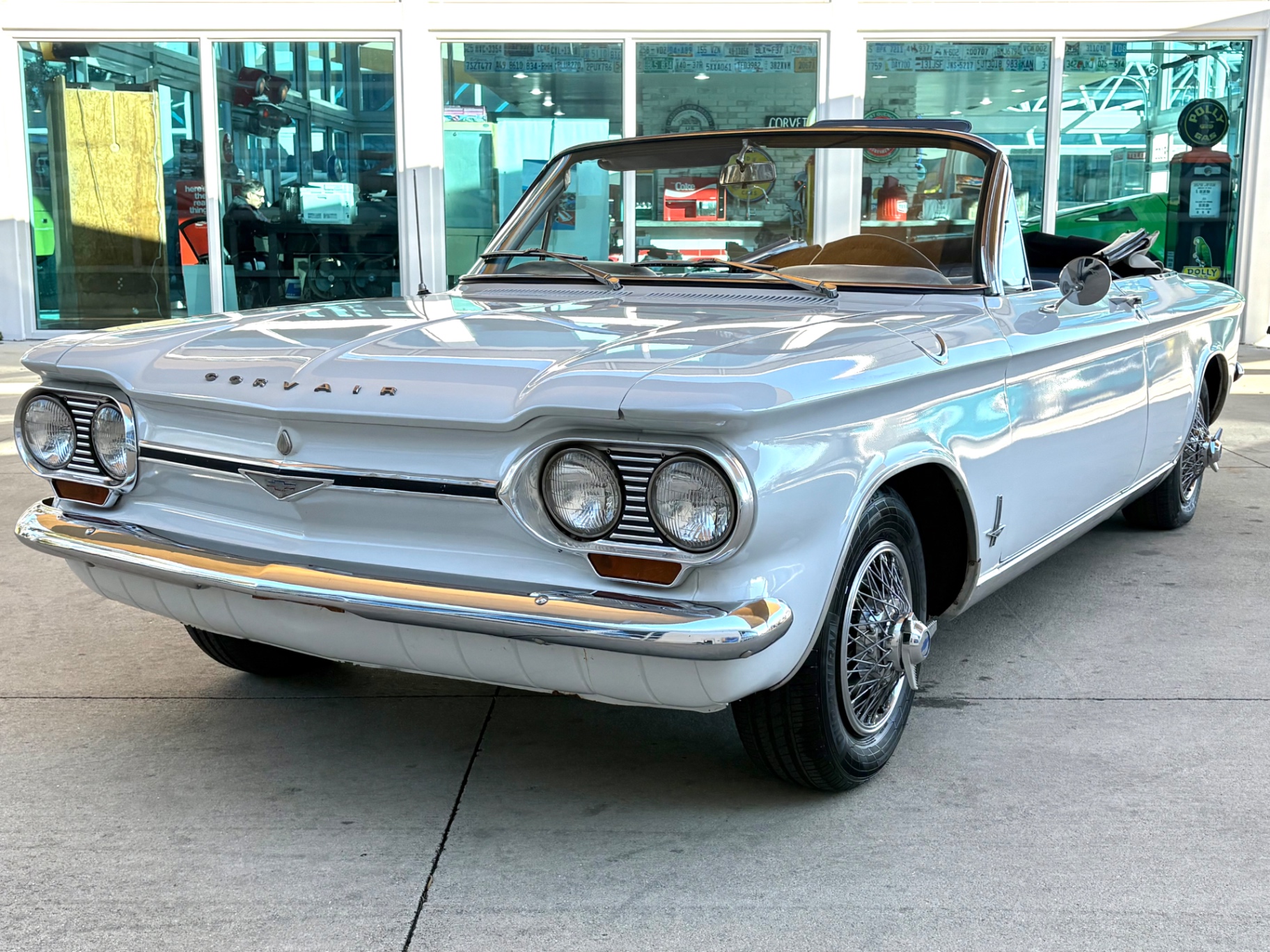
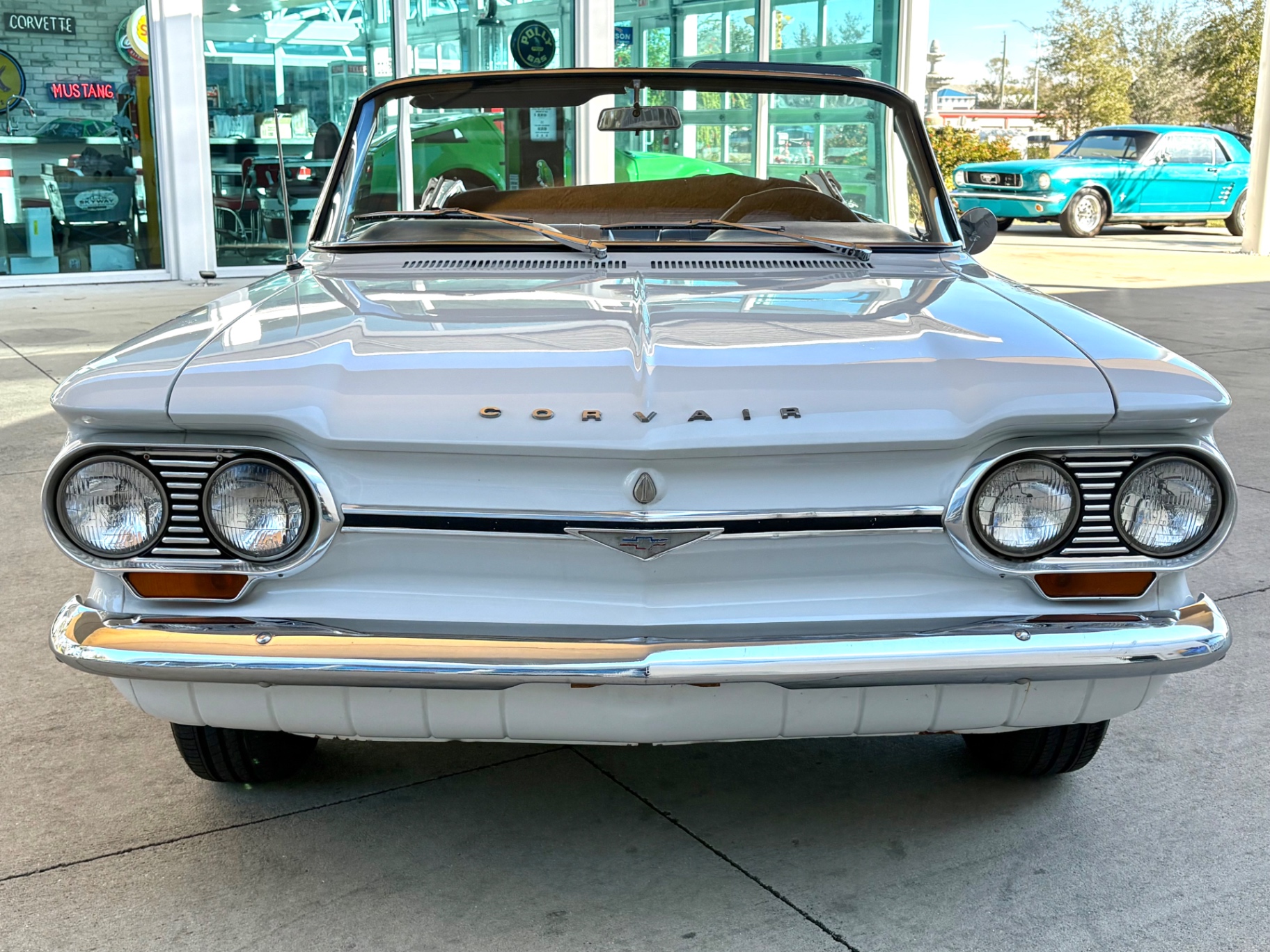
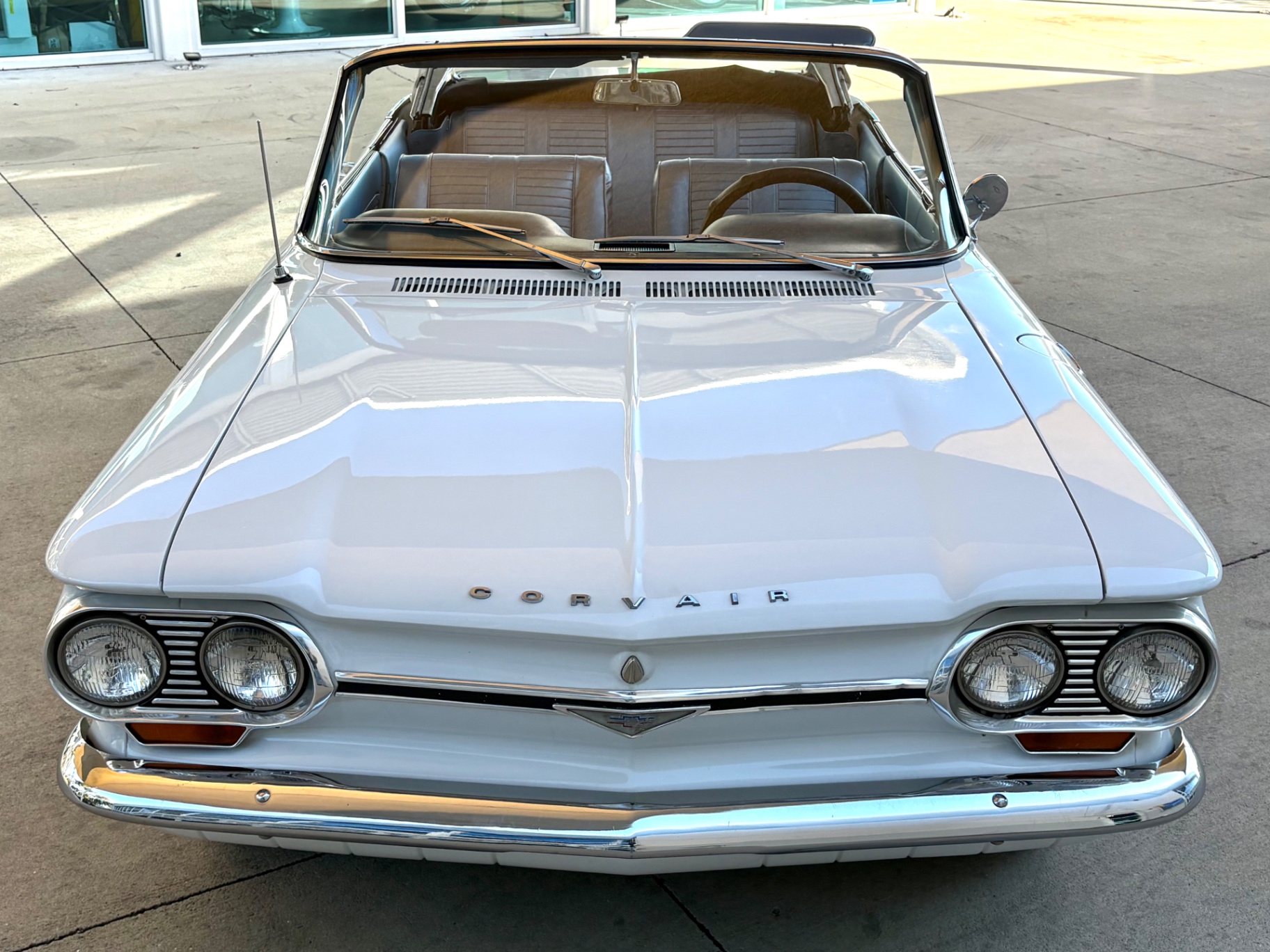
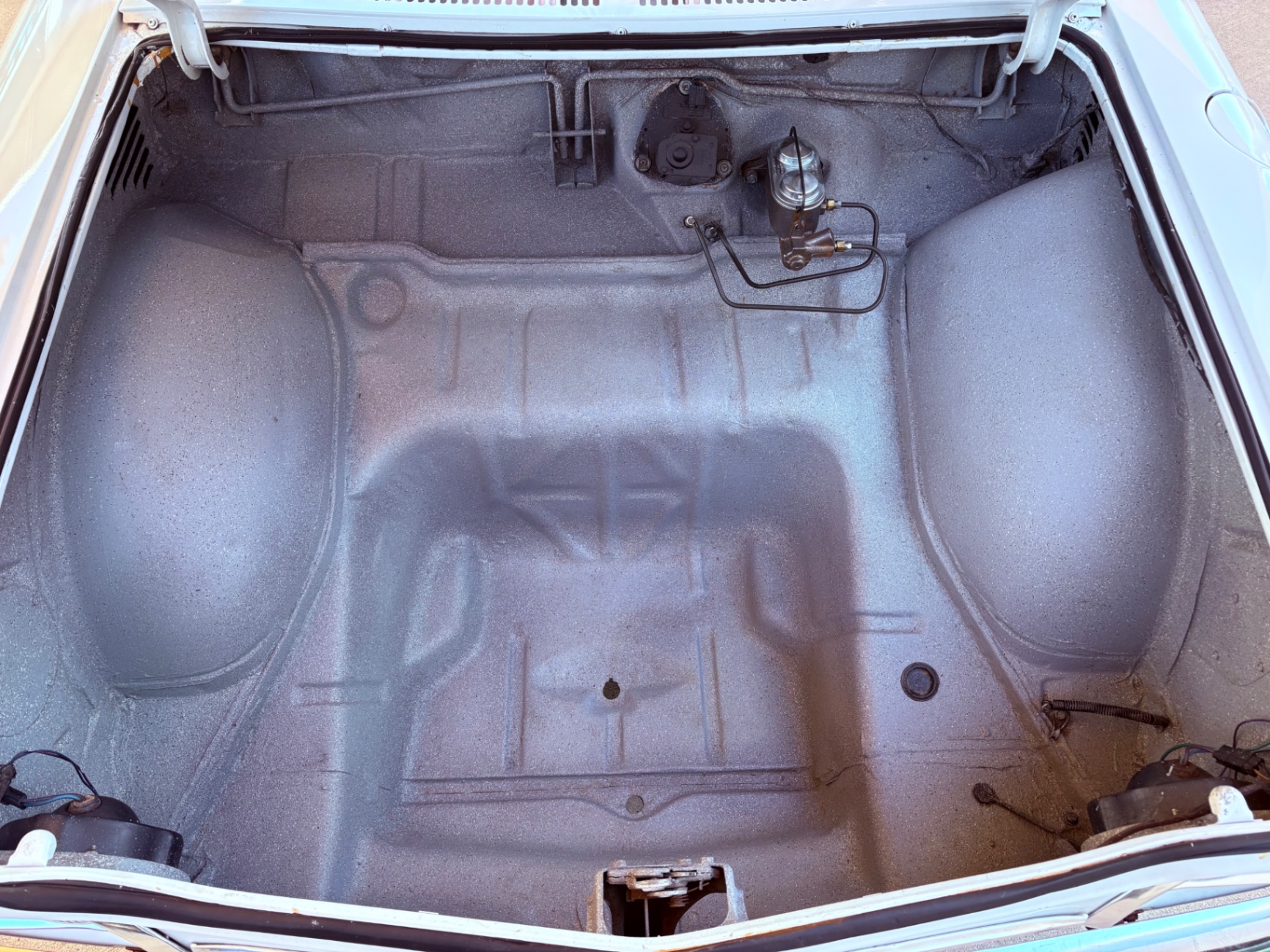
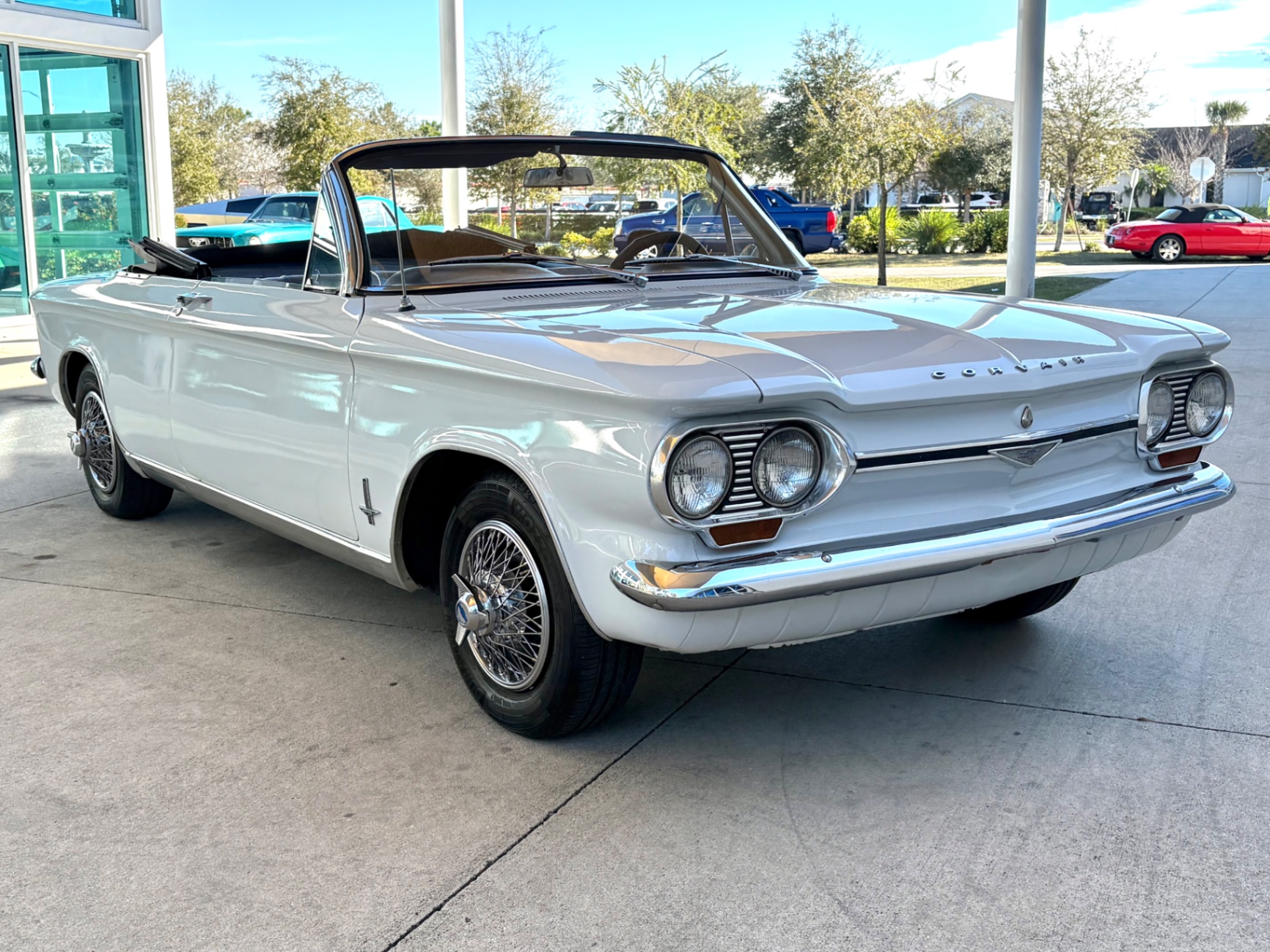
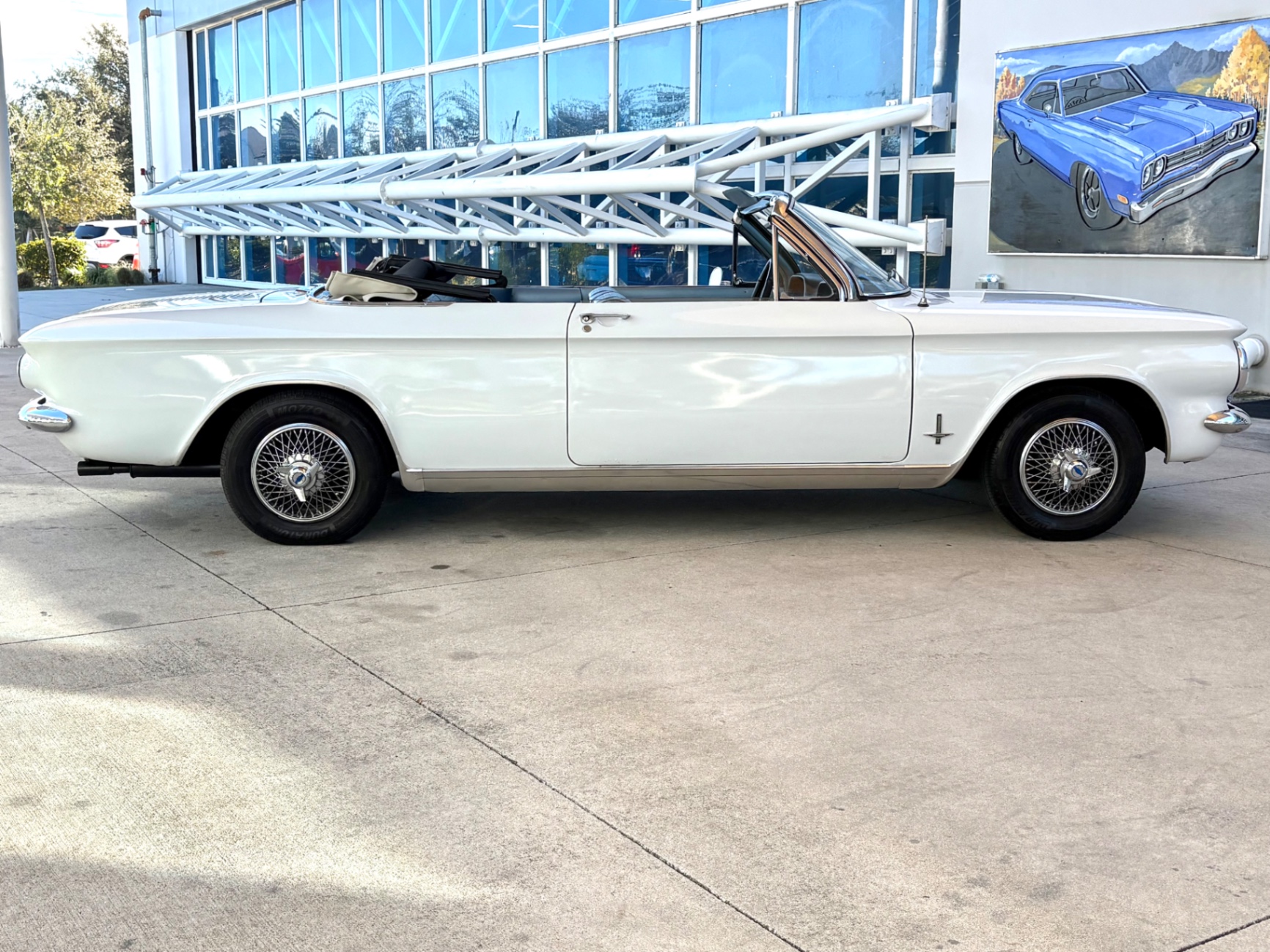
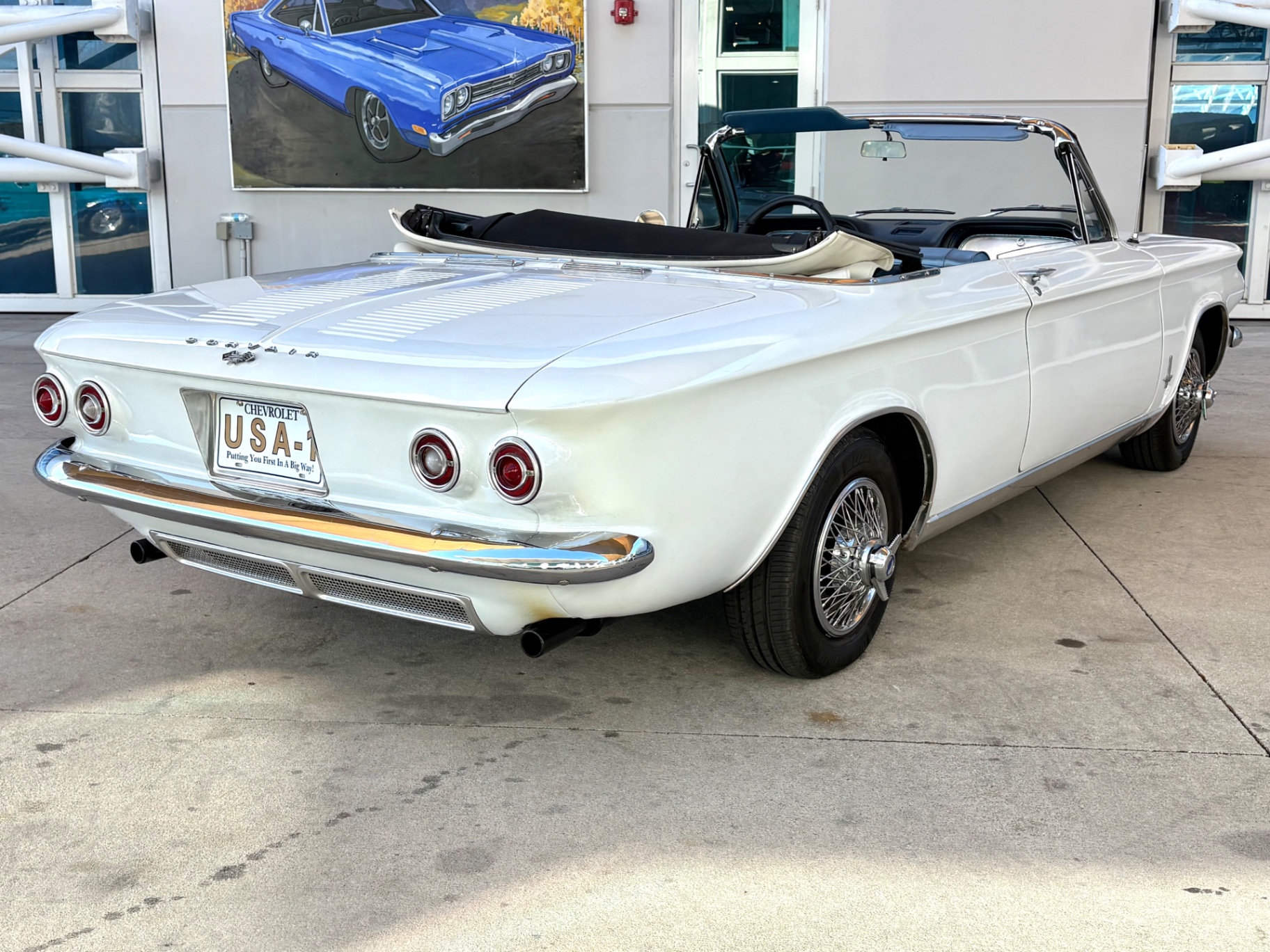
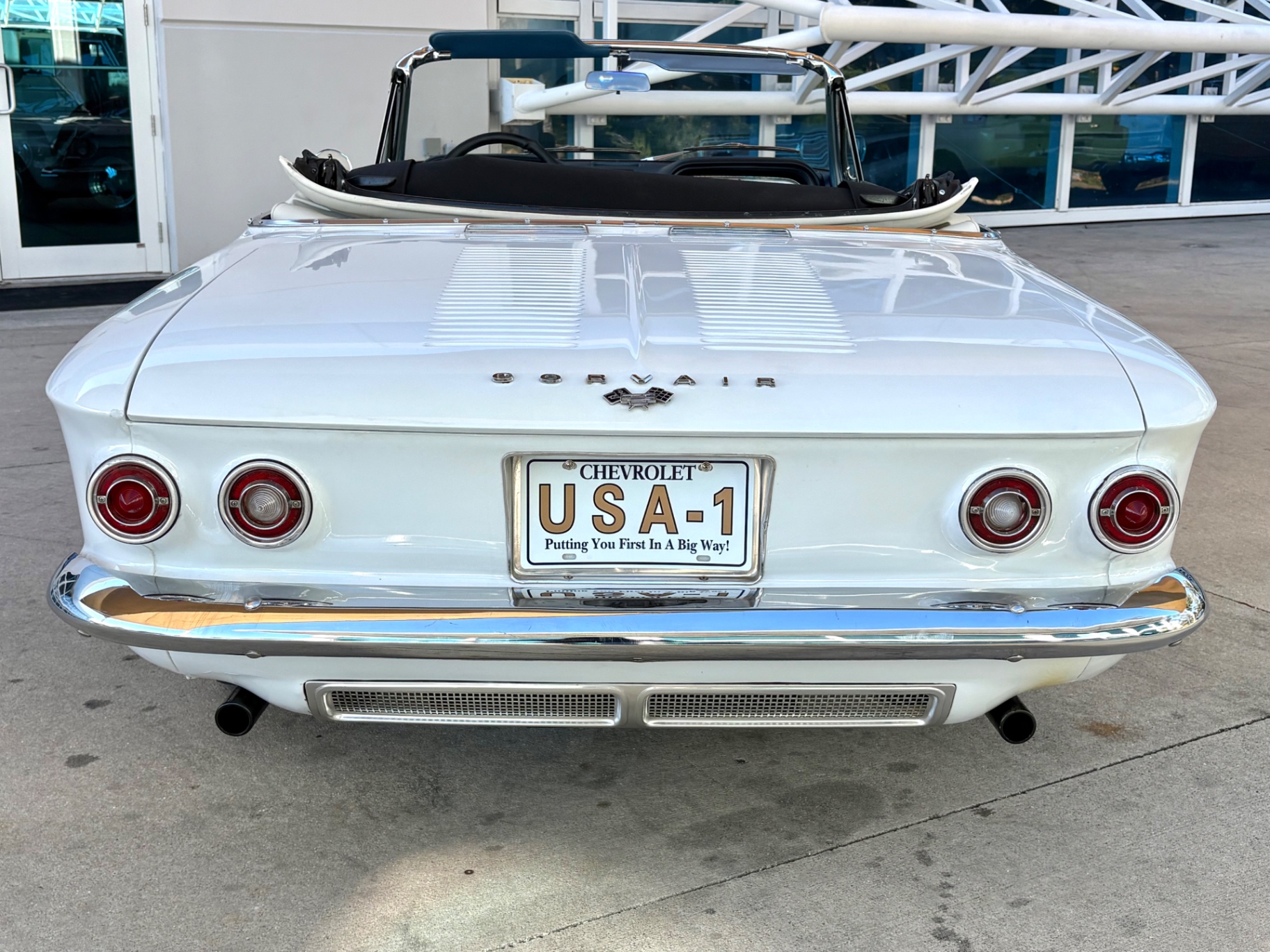
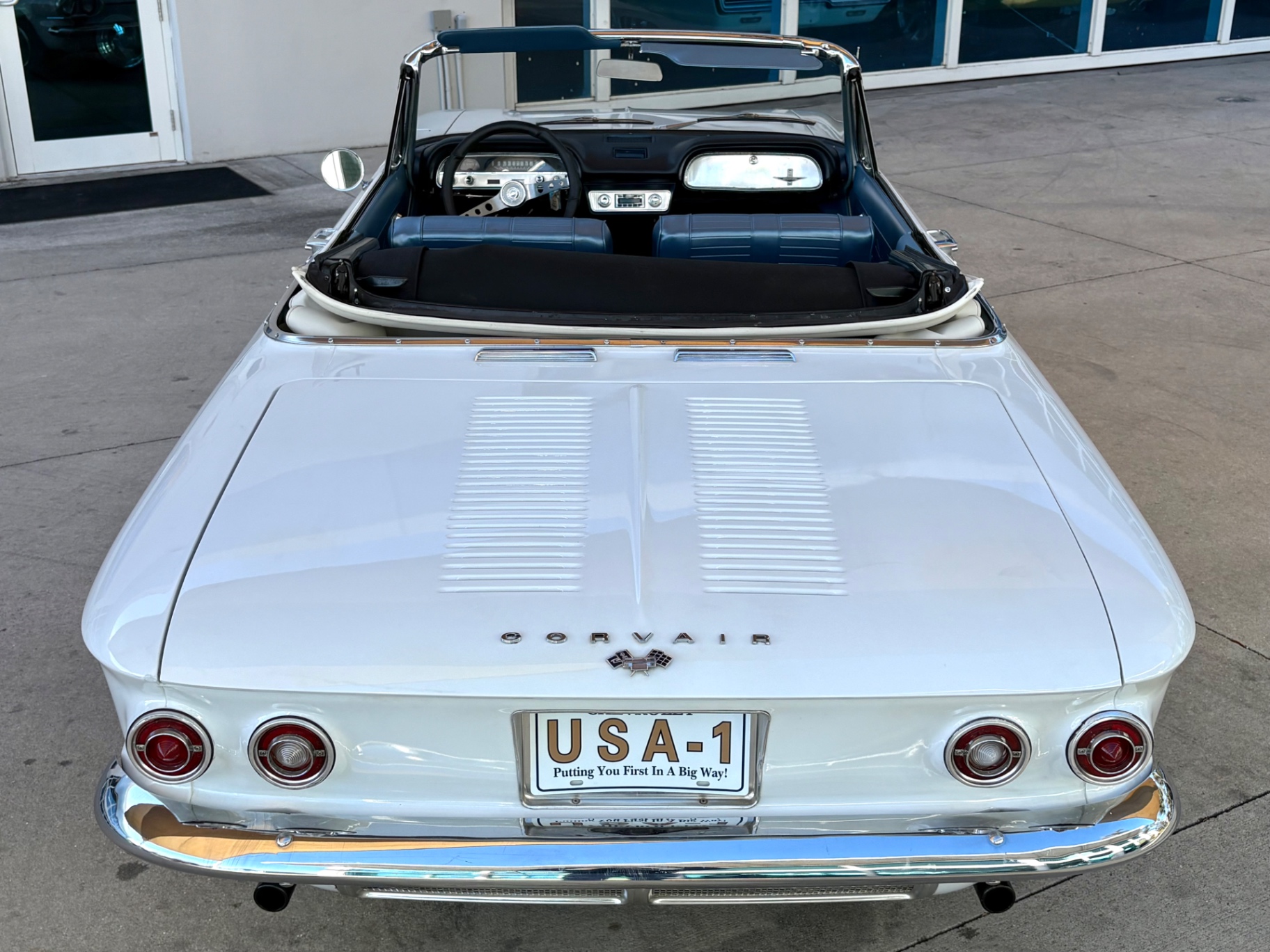
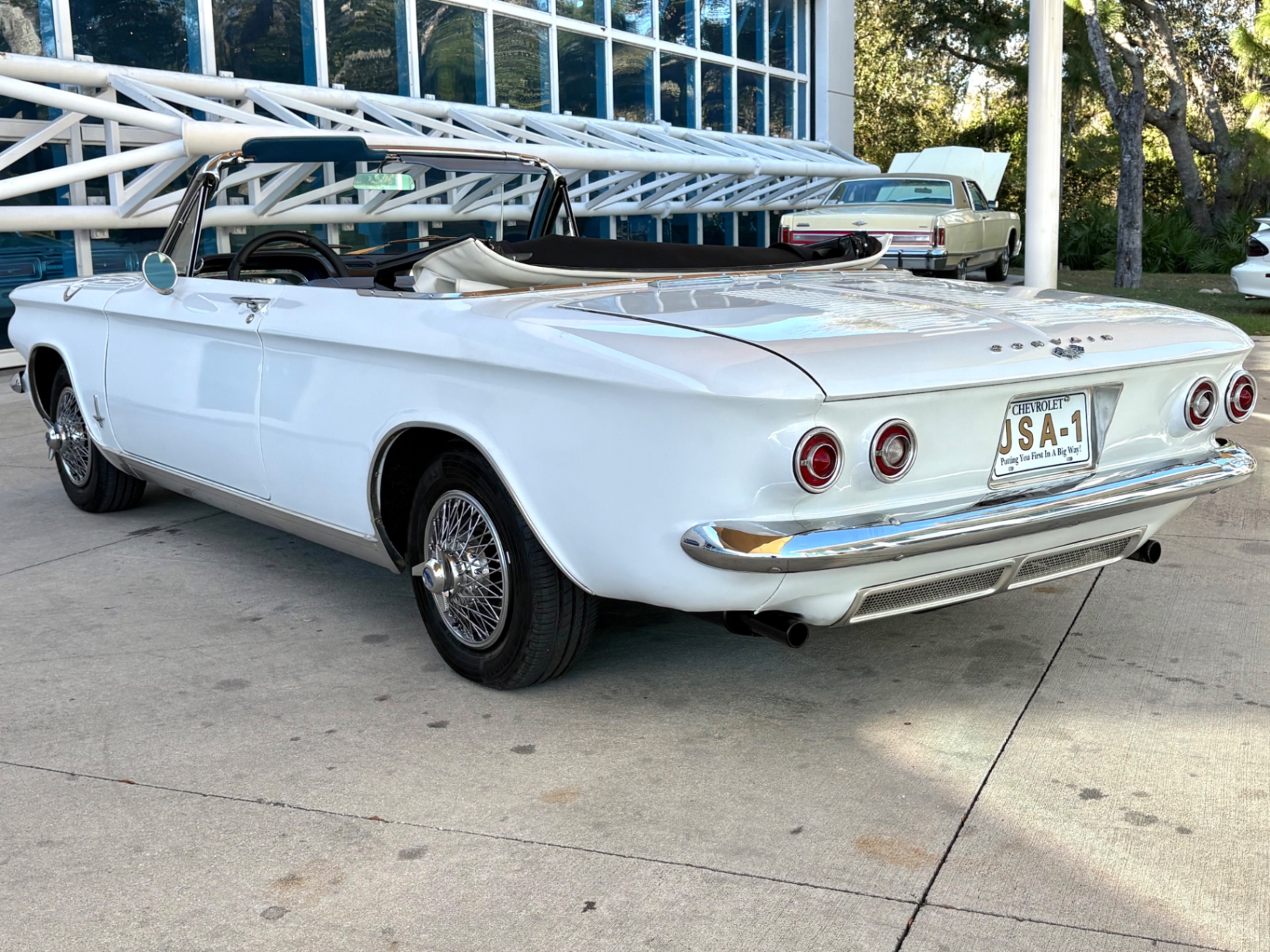
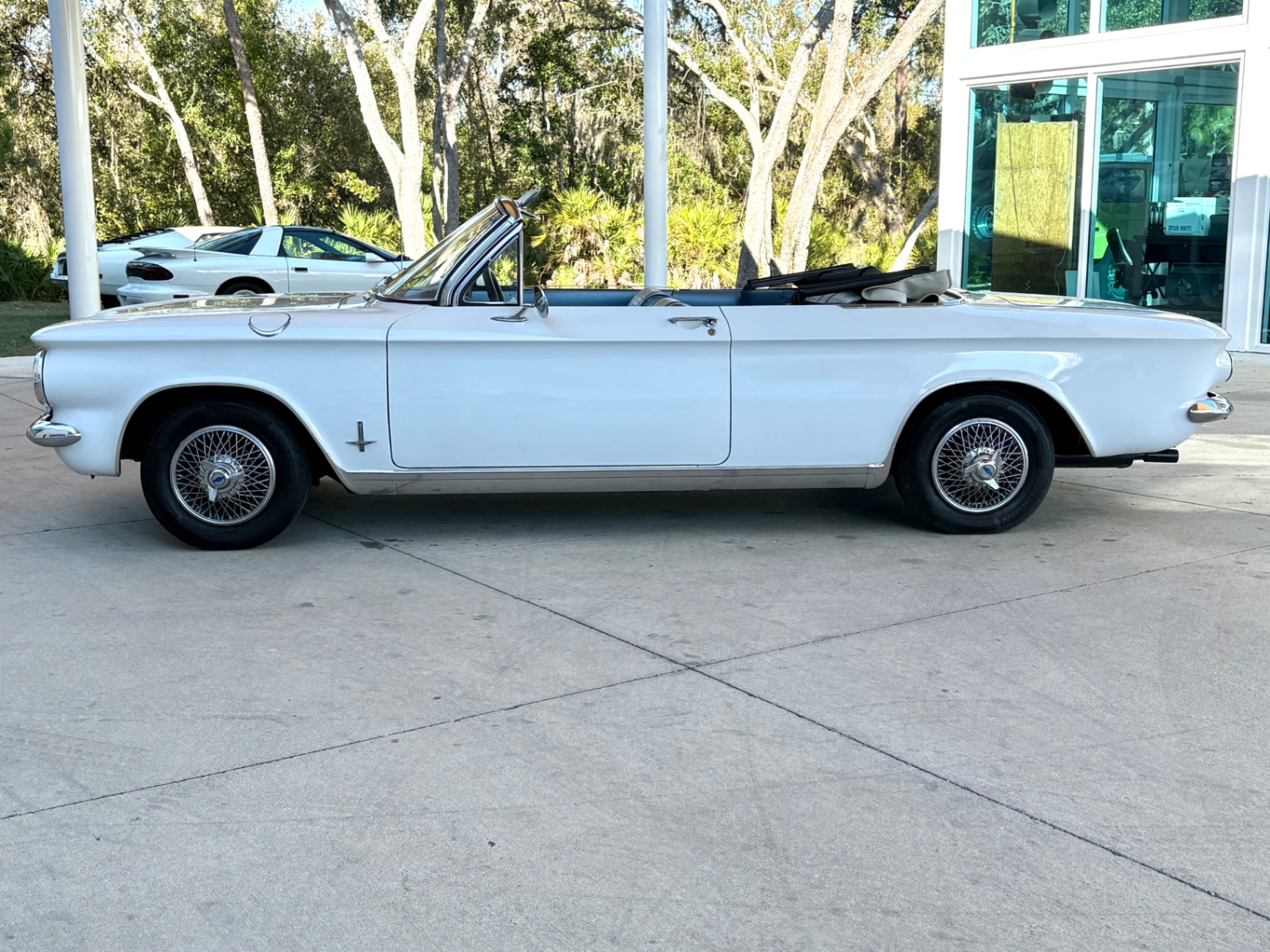
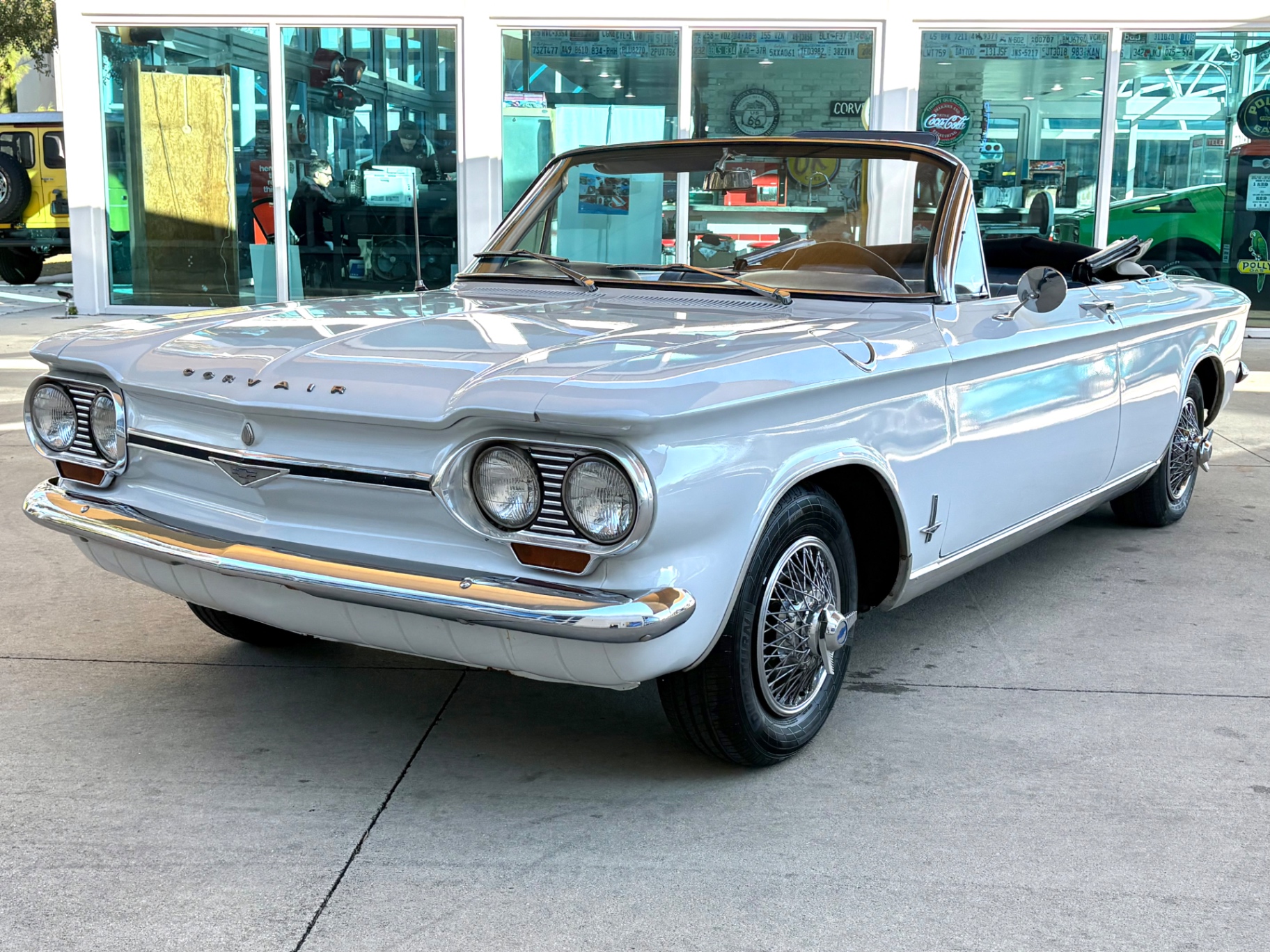
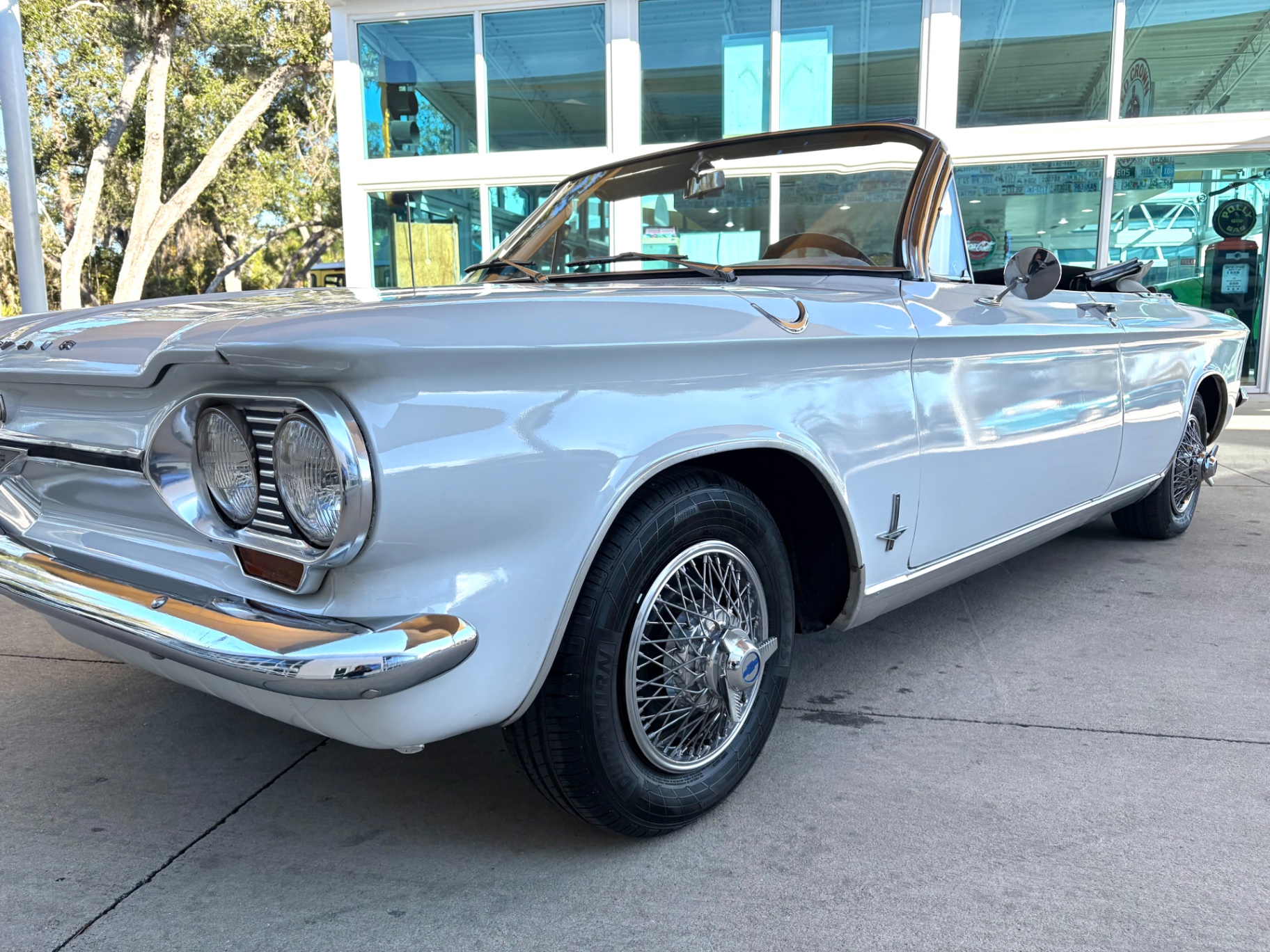
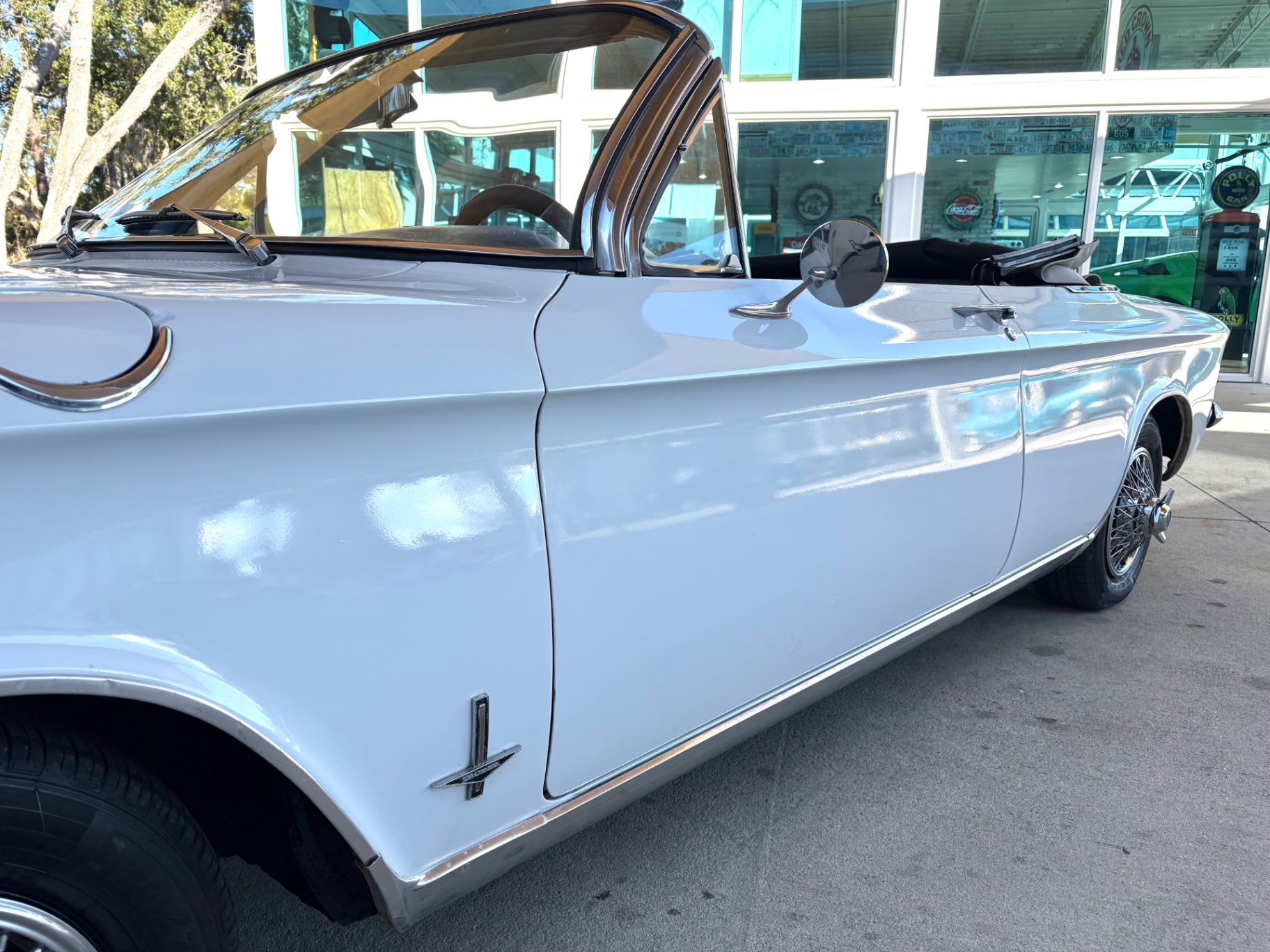
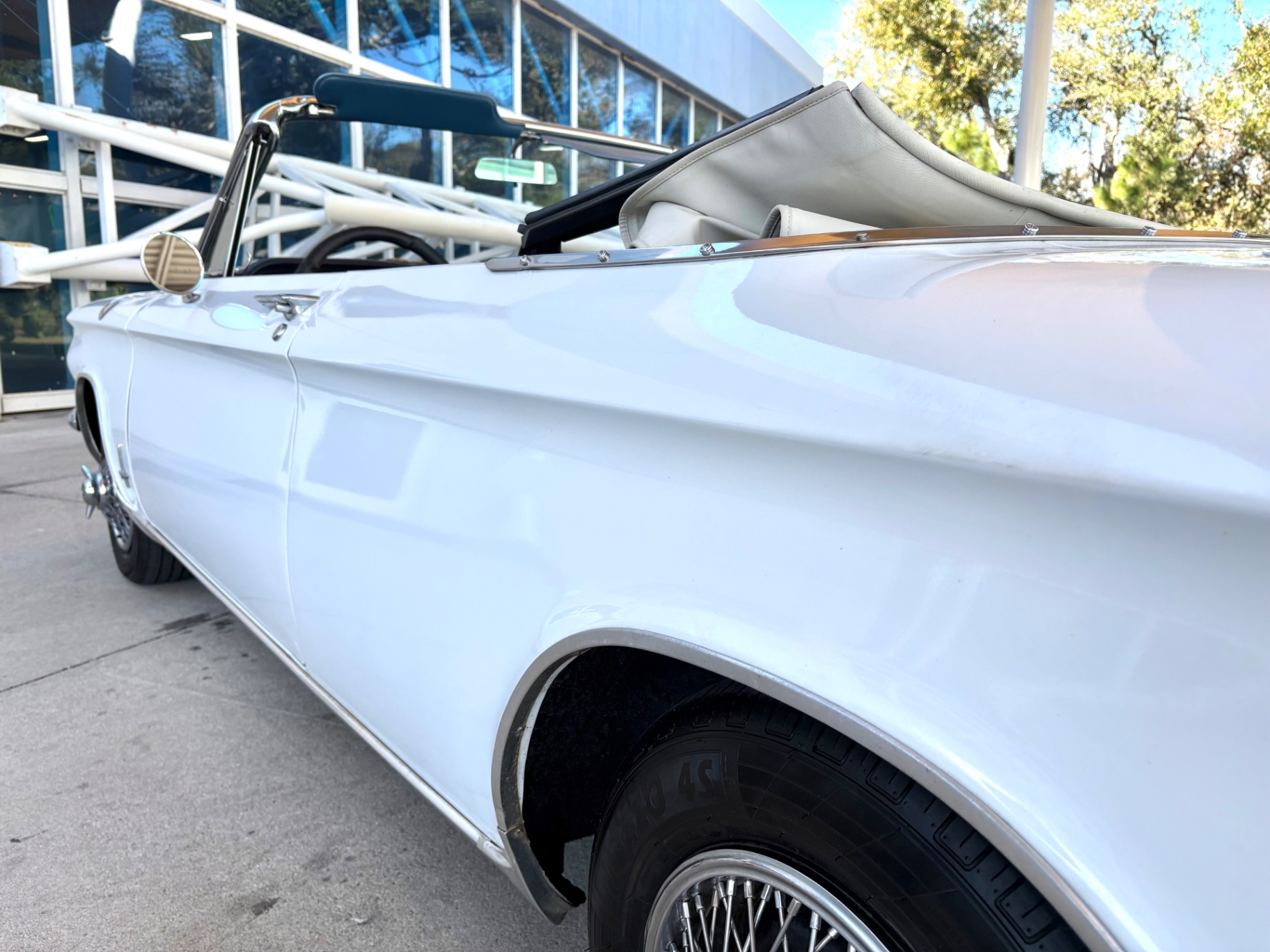
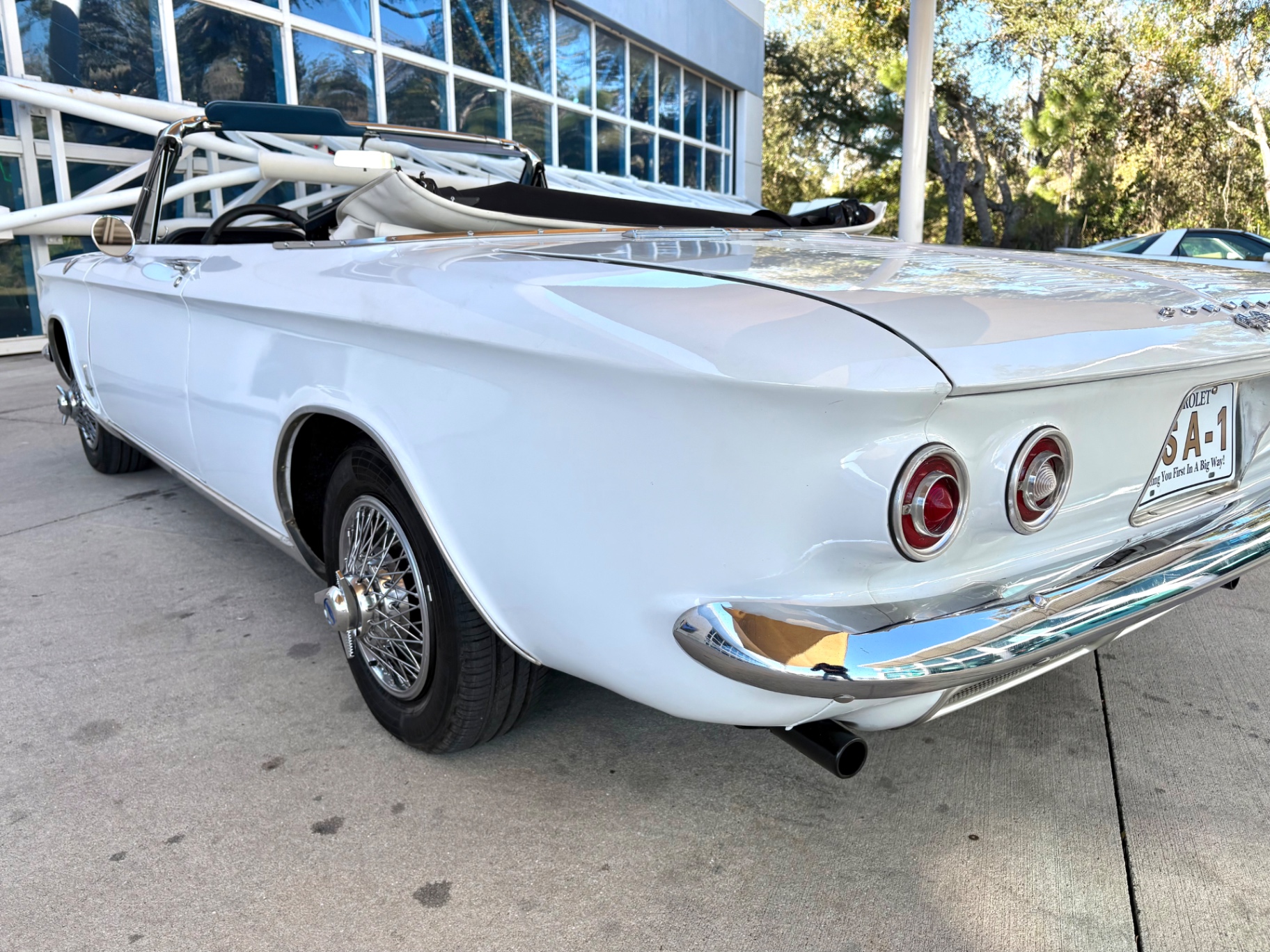
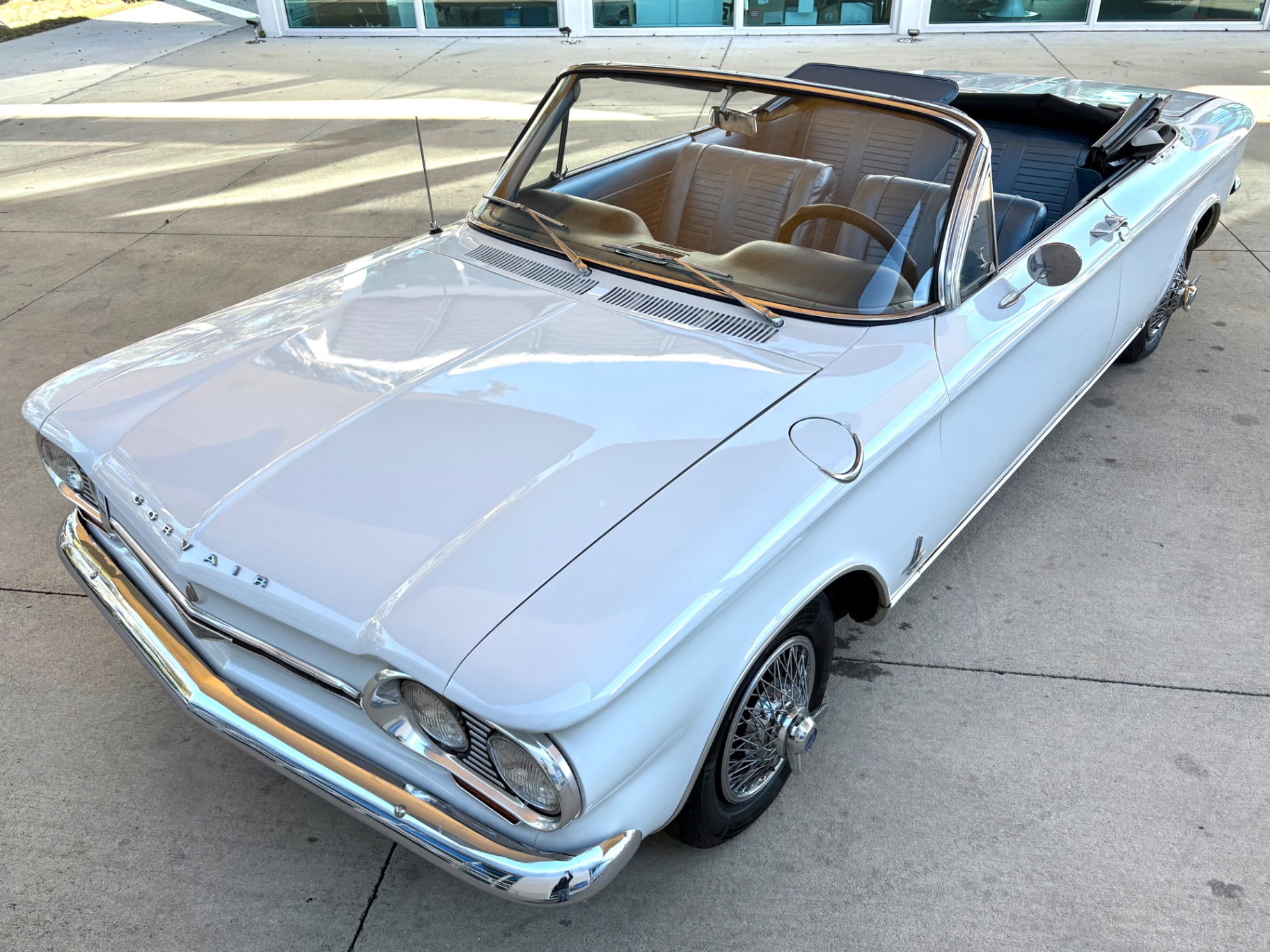
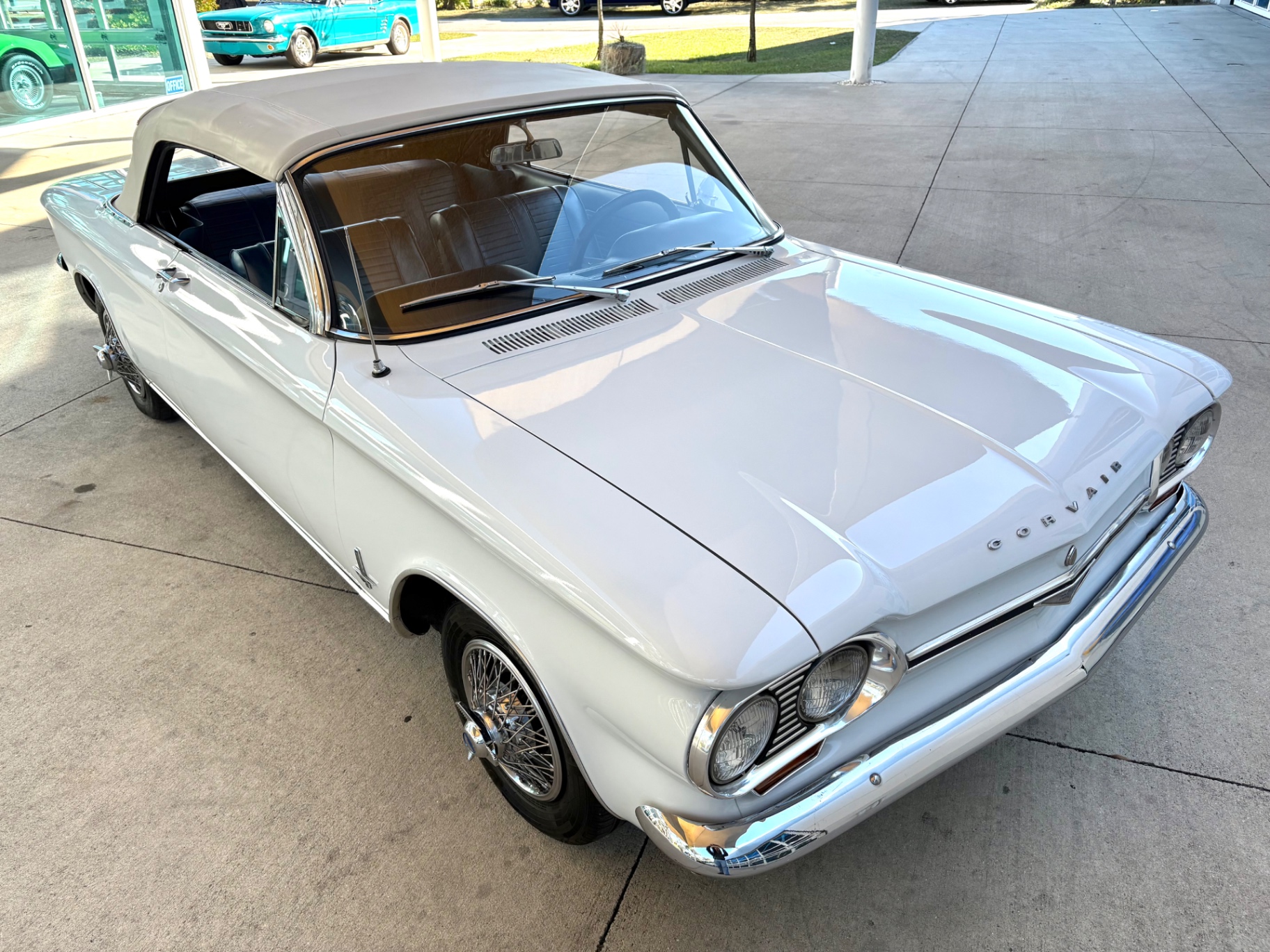
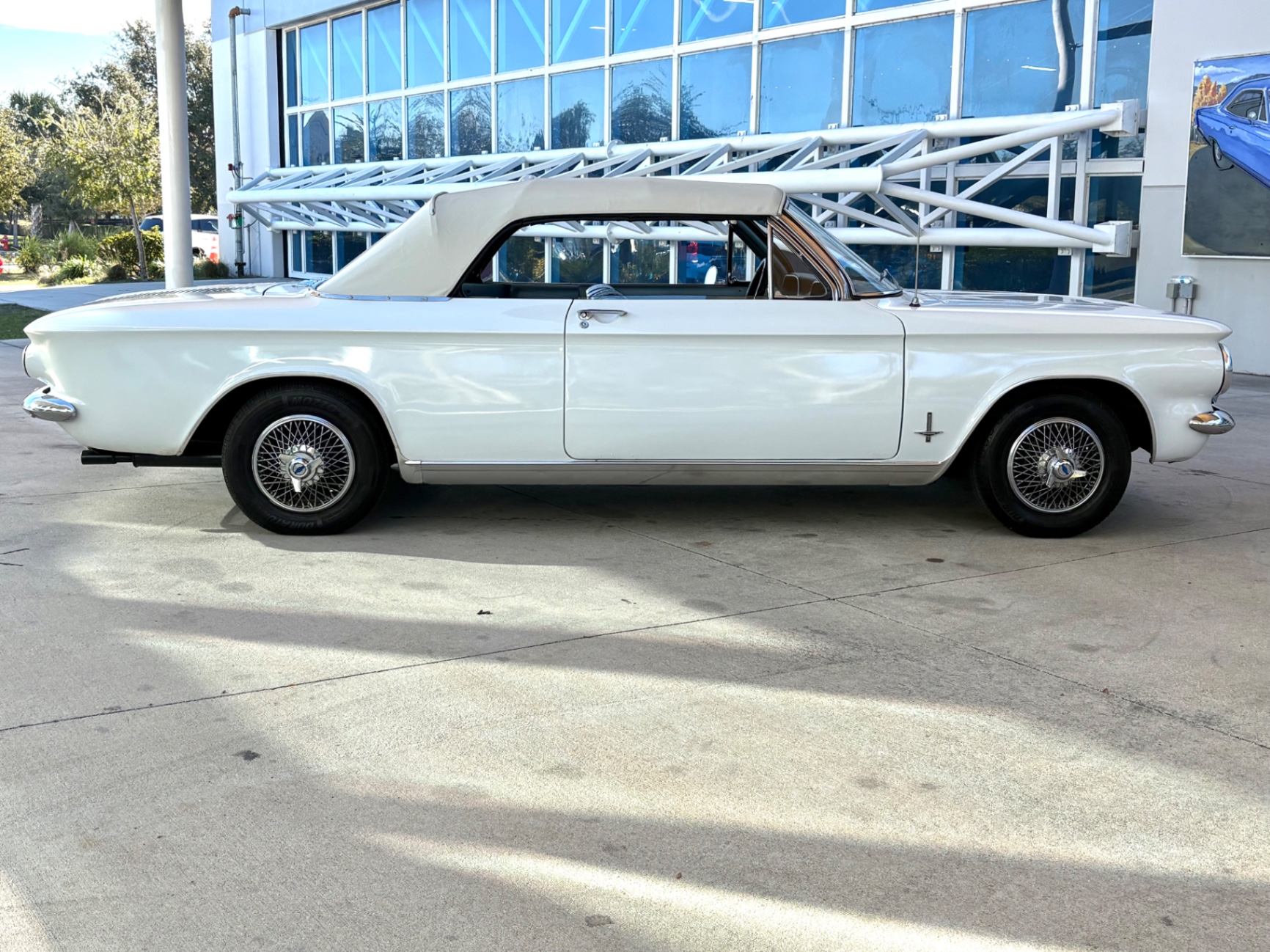
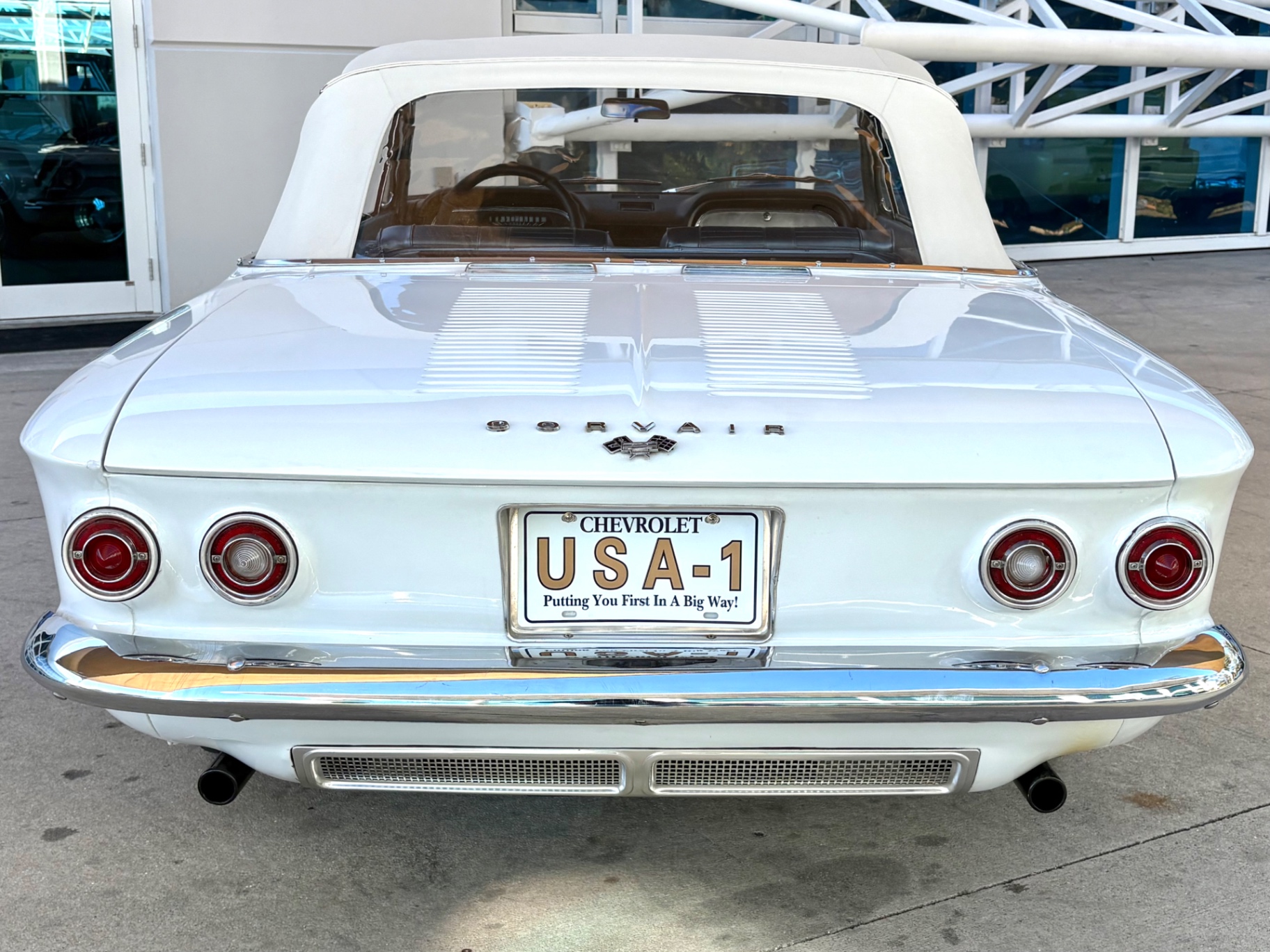
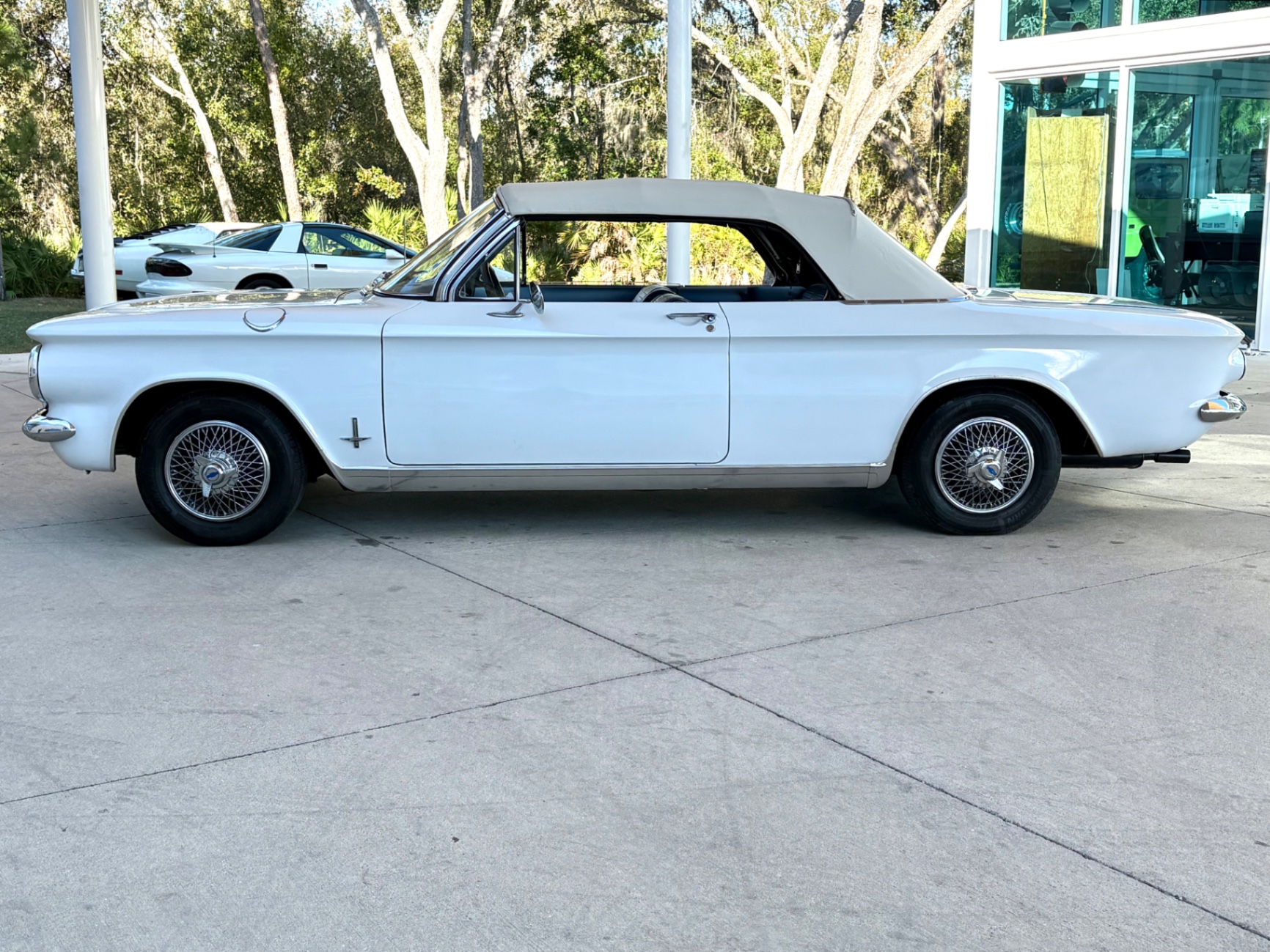
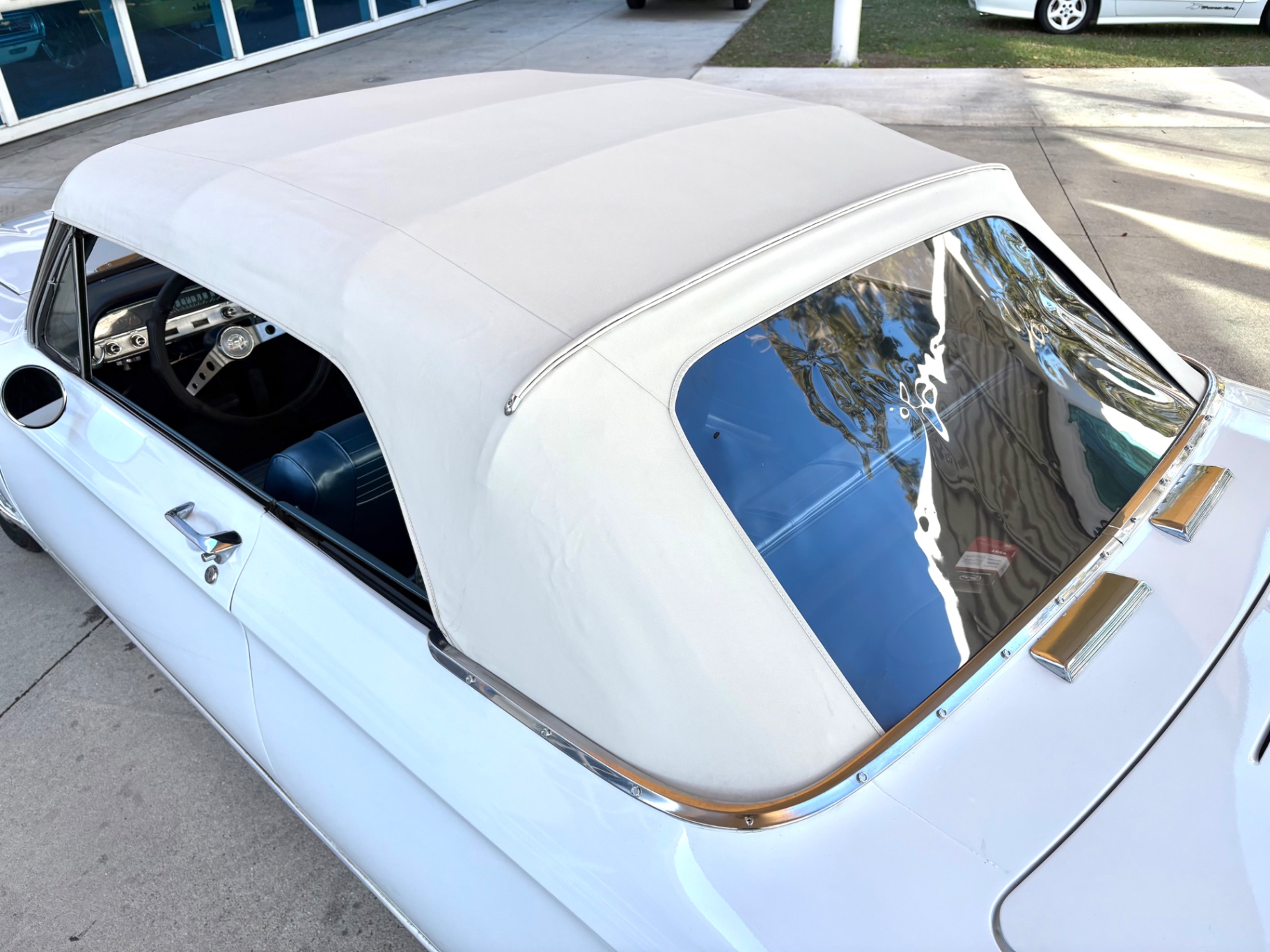
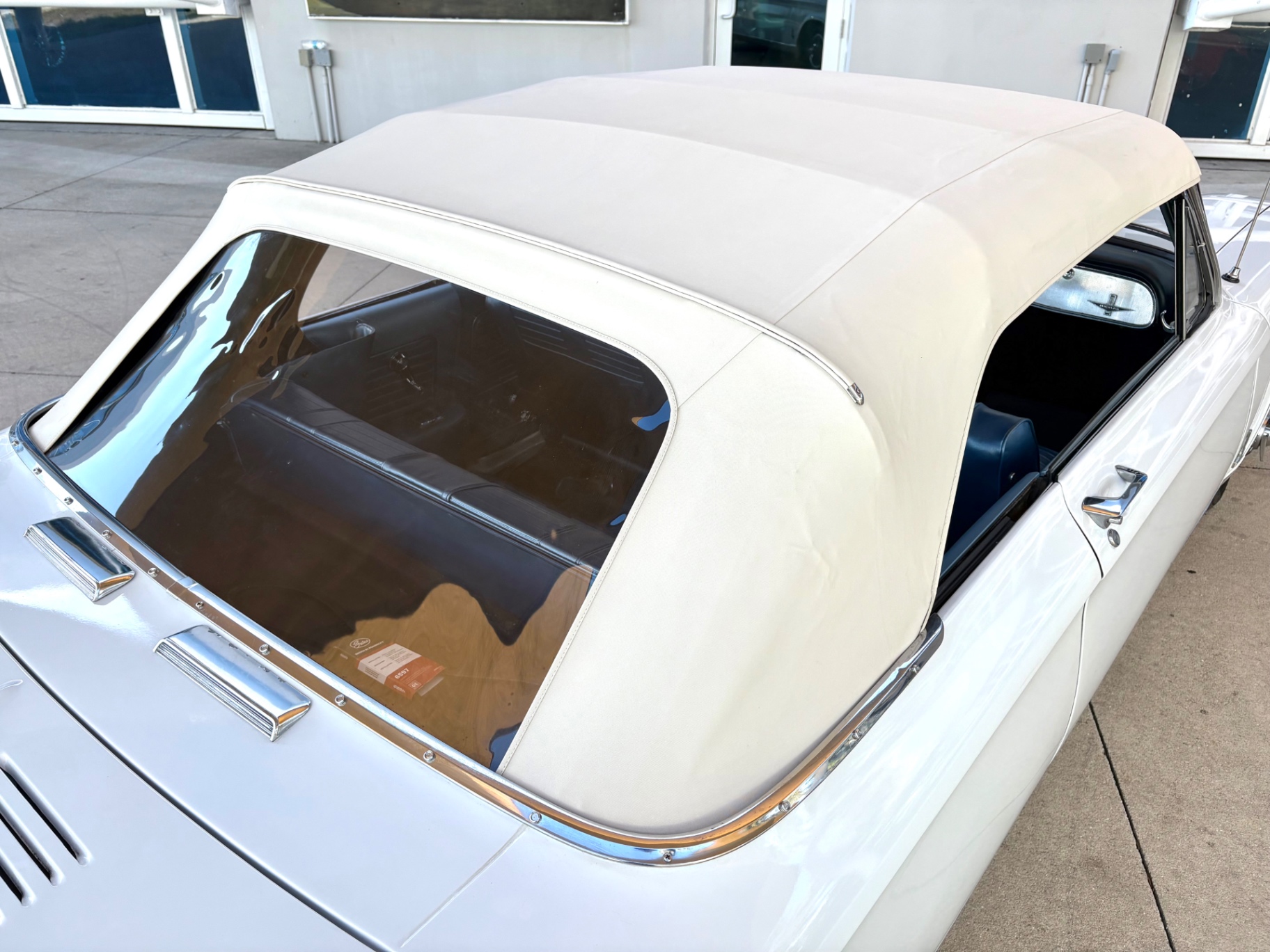
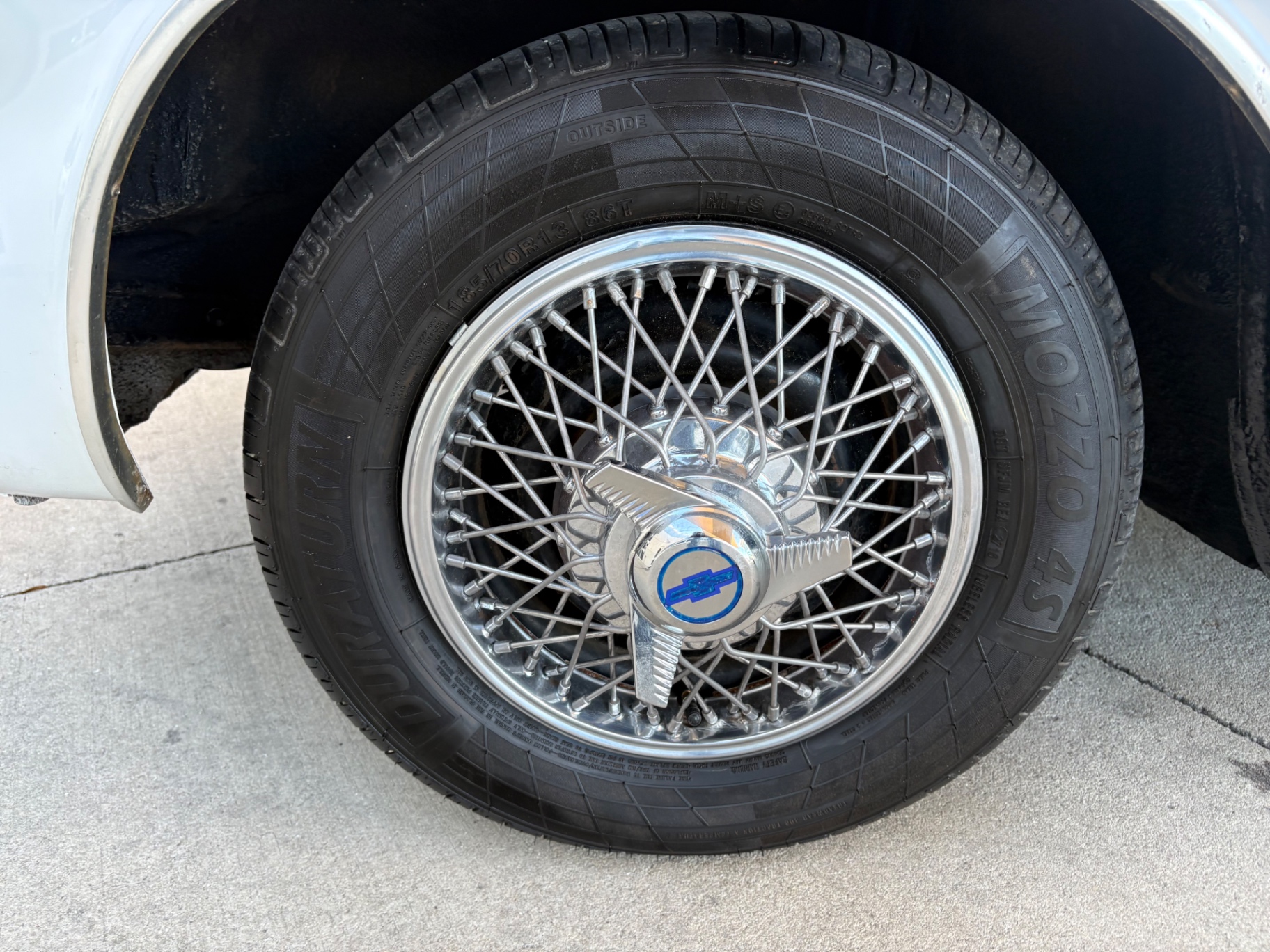
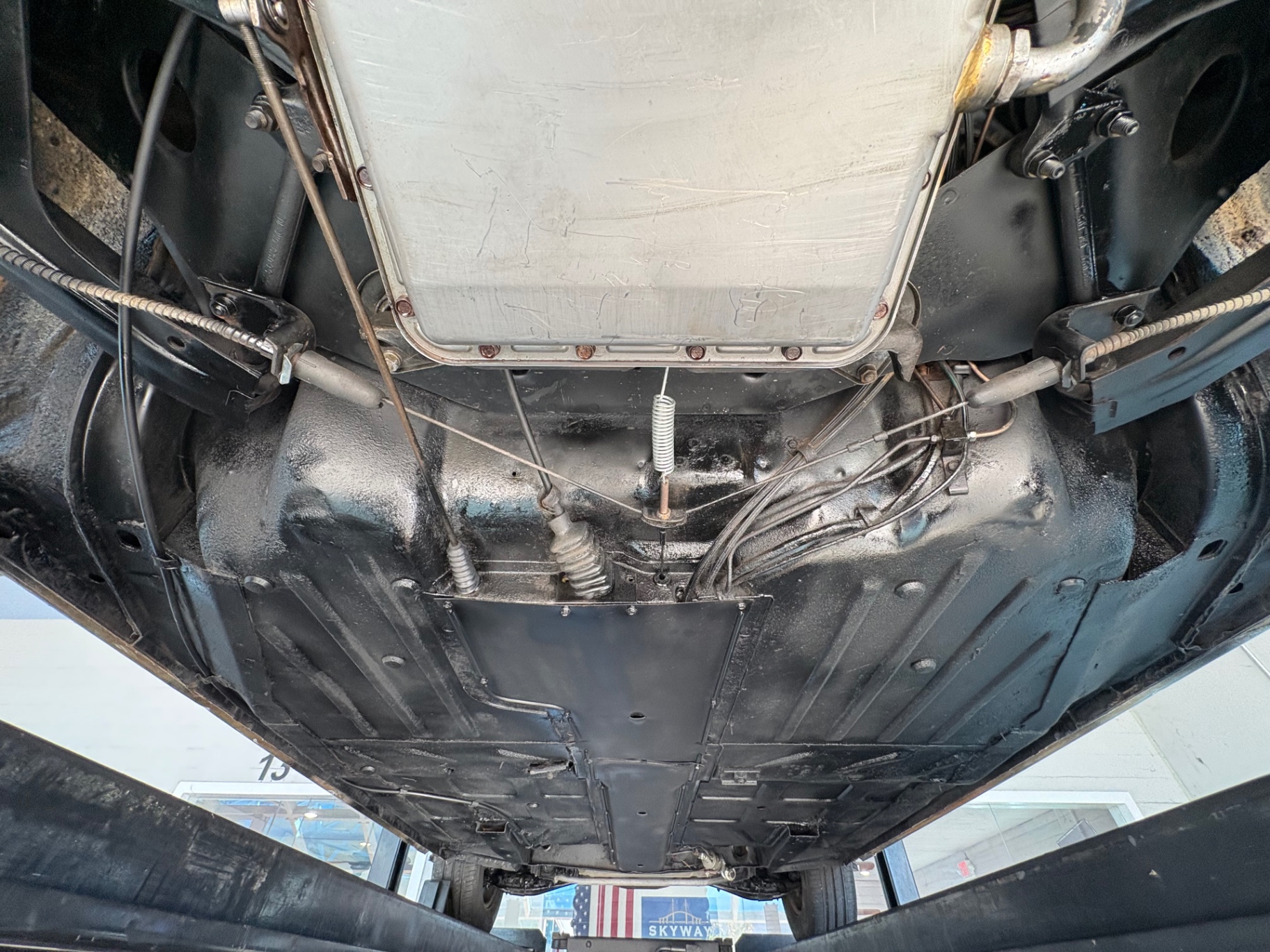
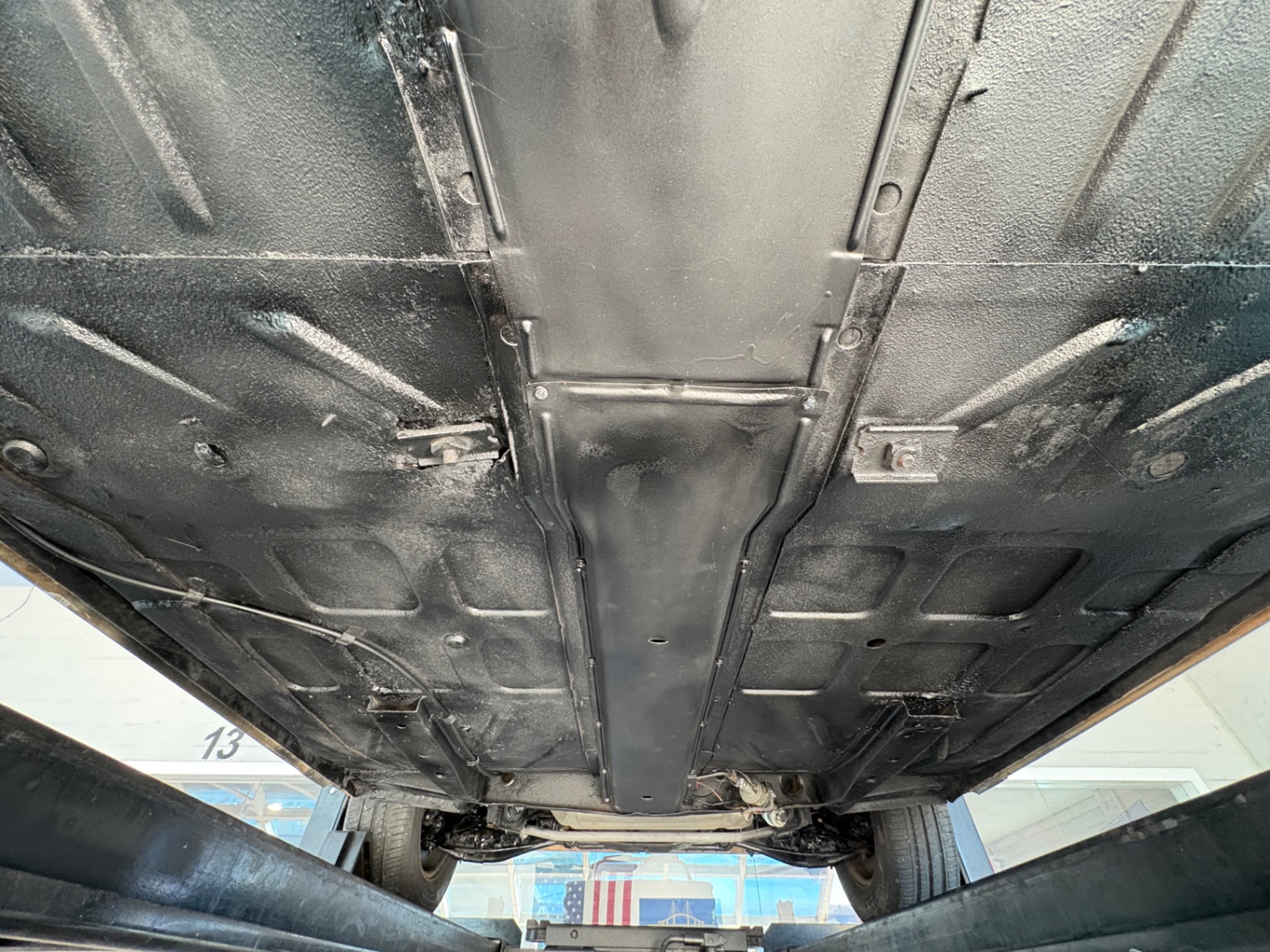
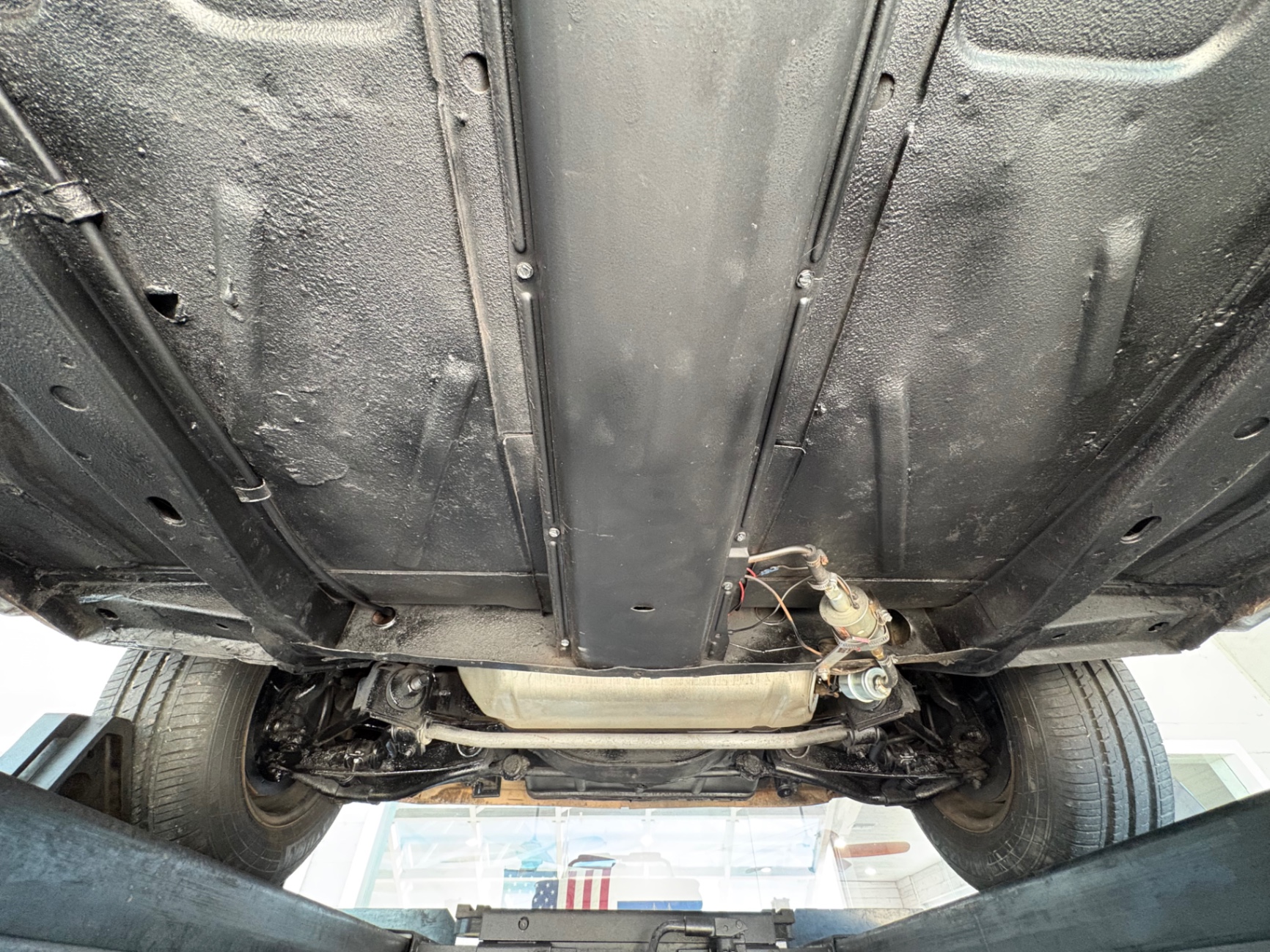
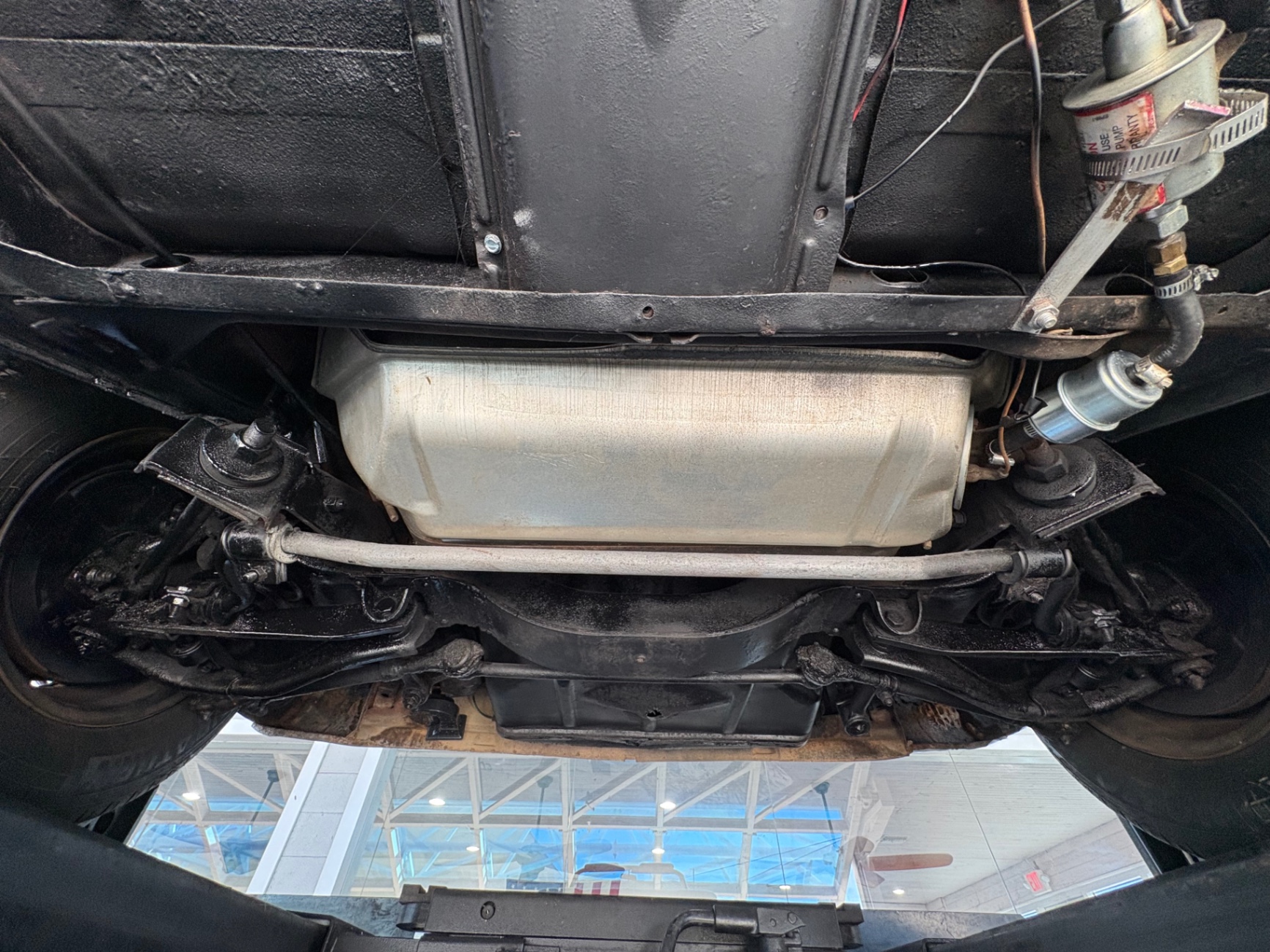
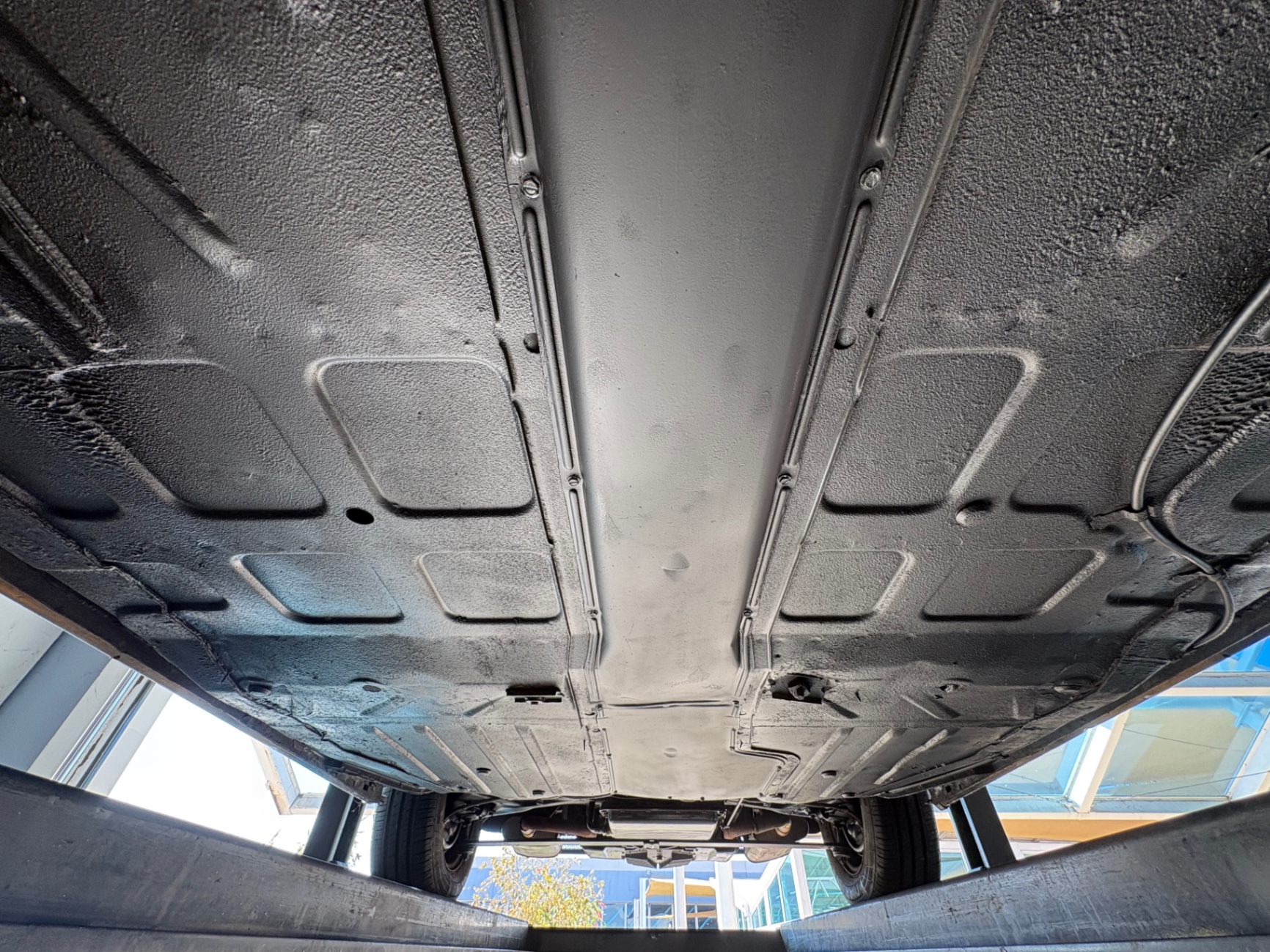
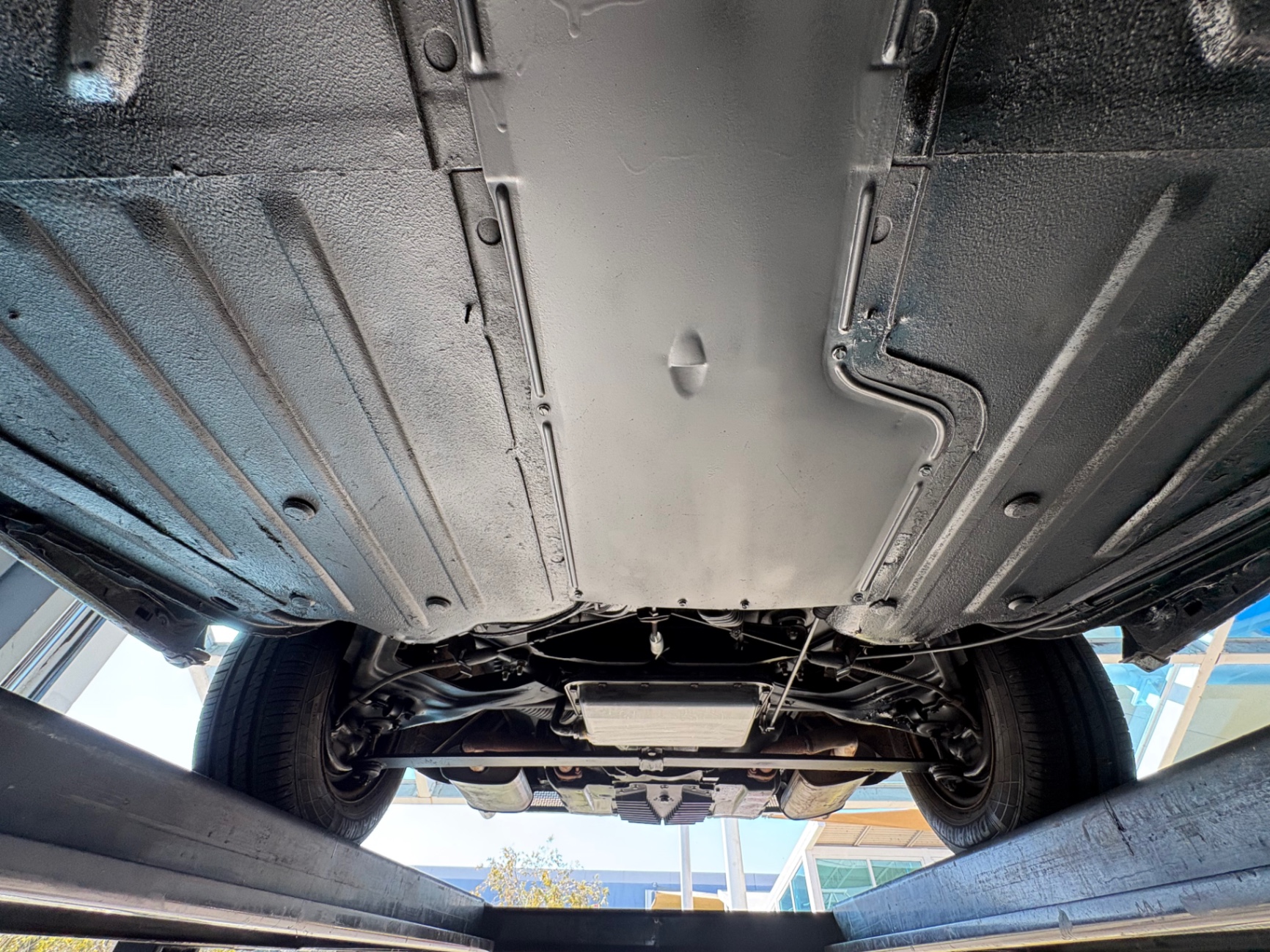
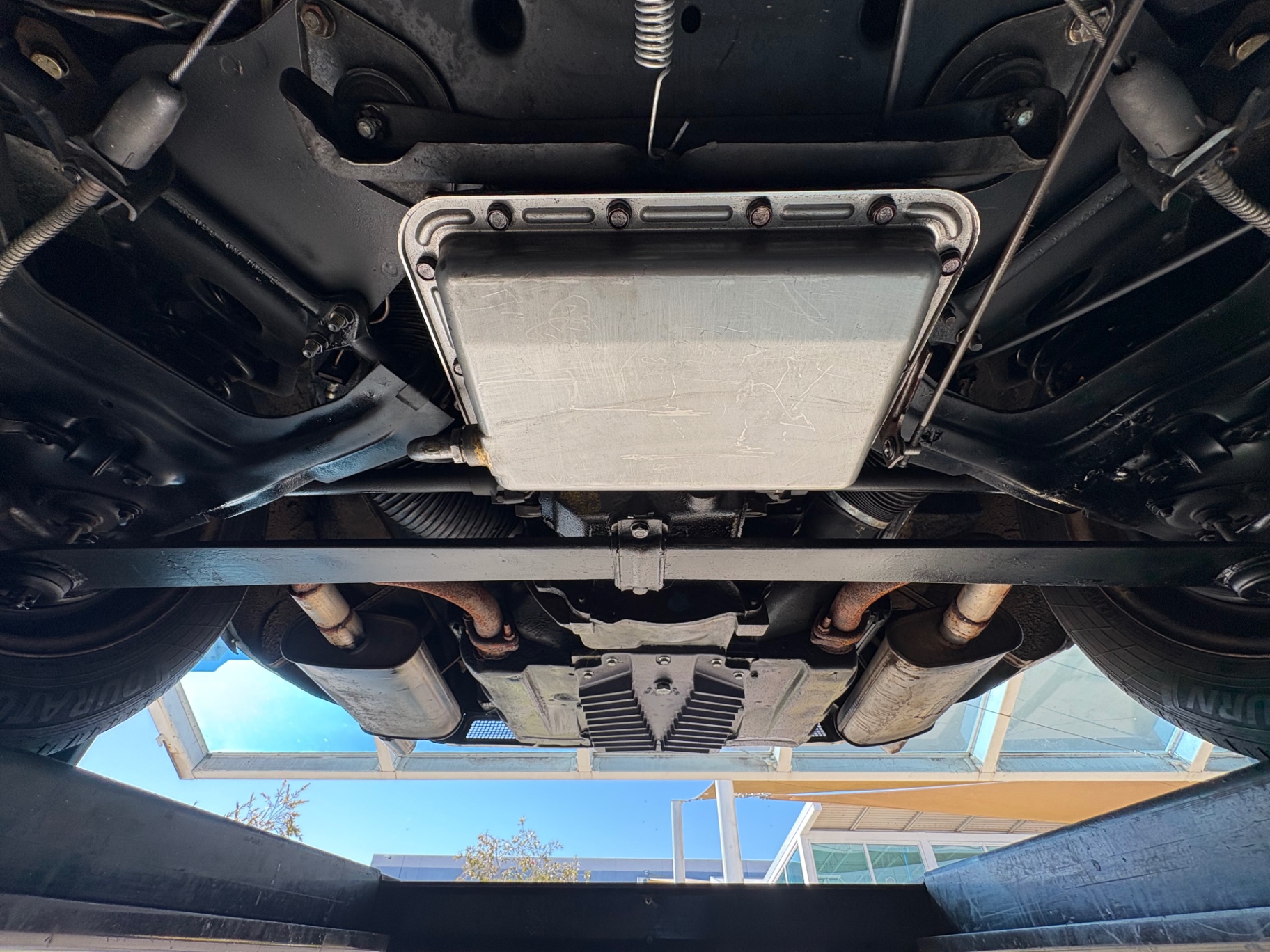
1964 Chevrolet Corvair Monza Convertible — White over Blue with Powerglide
Why This Car Is Special
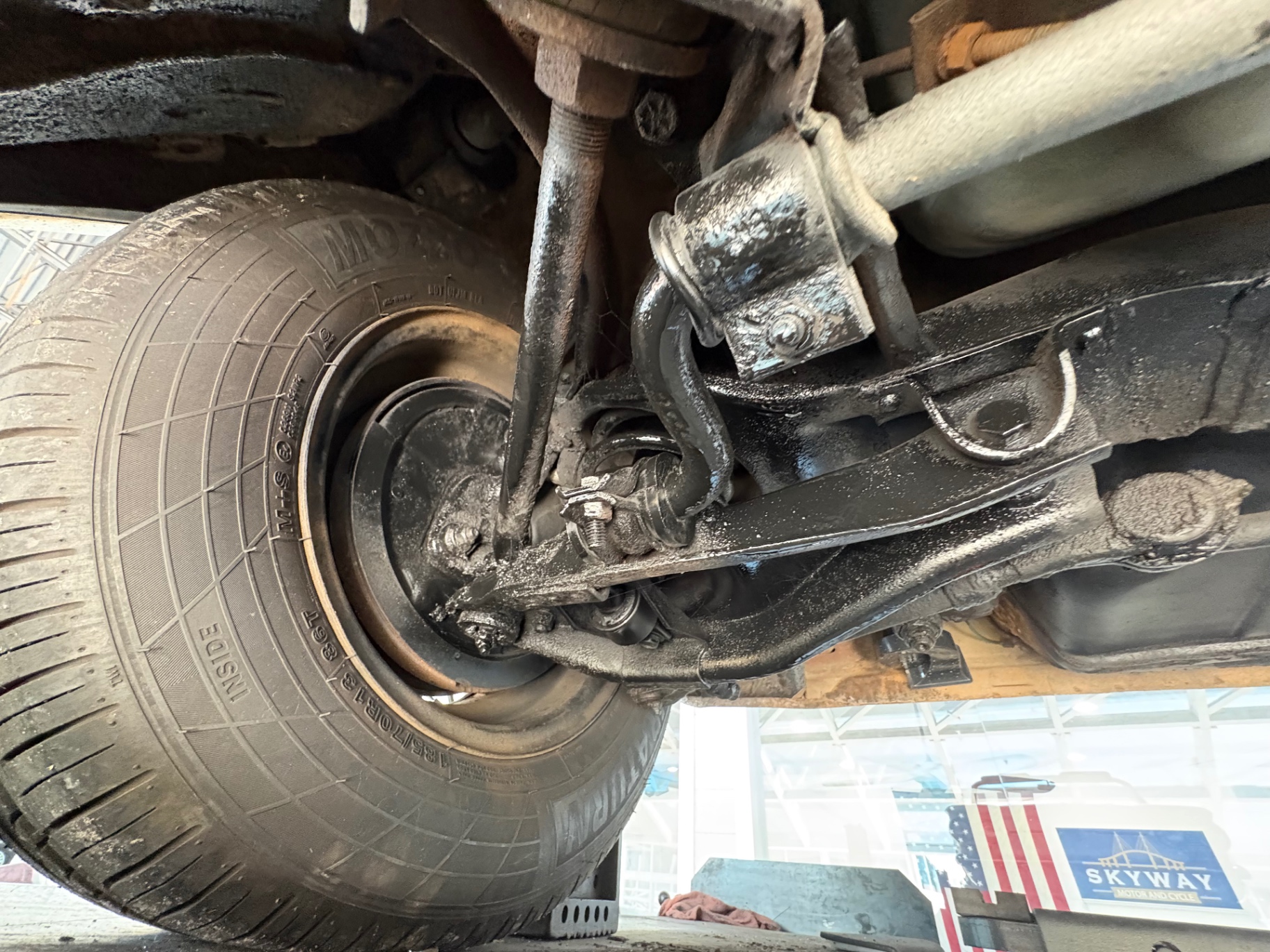
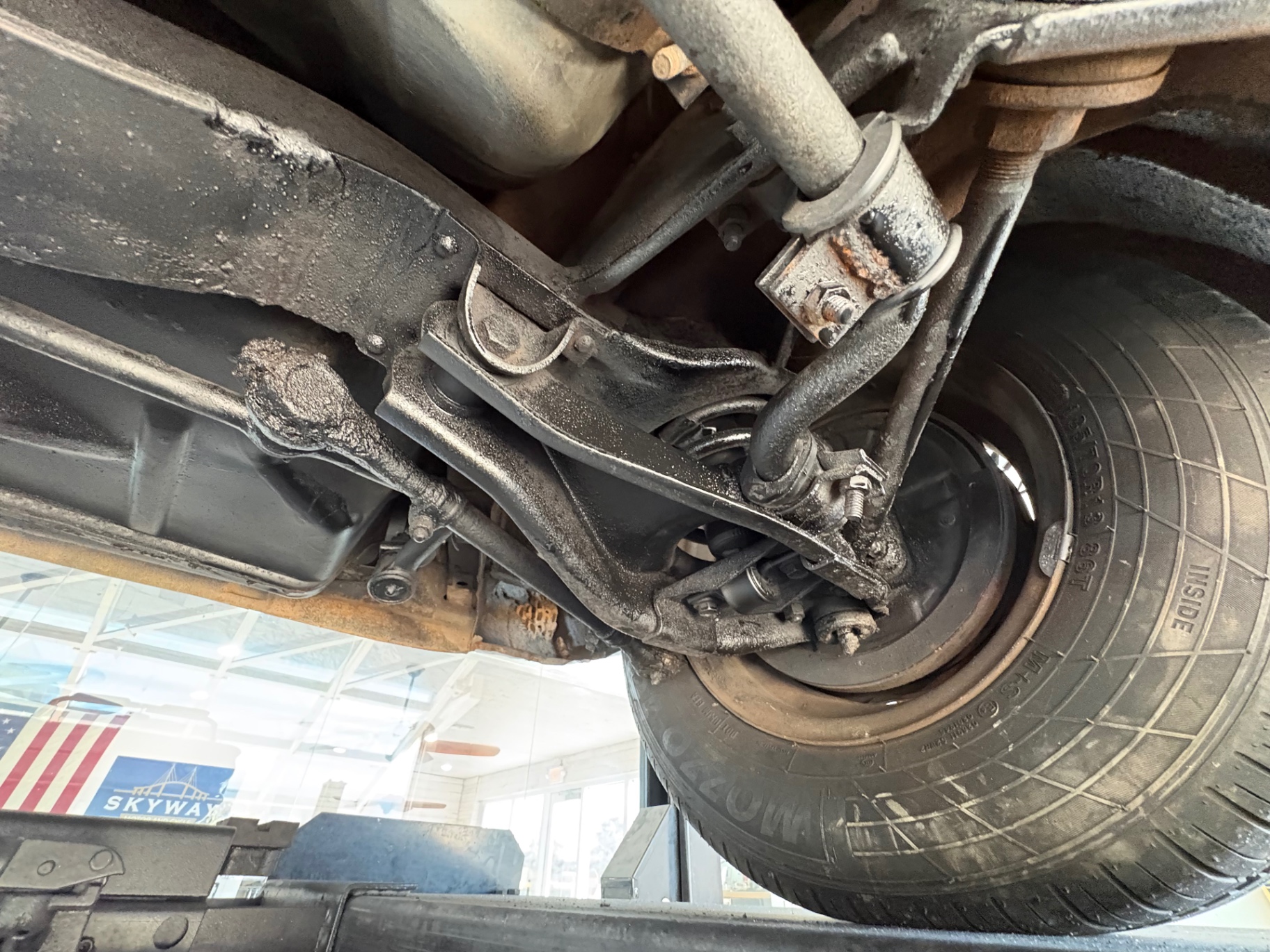
The 1964 Chevrolet Corvair Monza Convertible represents the high point of the first-generation Corvair's development and, in many ways, the most complete version of what Ed Cole and his team at Chevrolet originally set out to build. By 1964, Chevrolet engineers had addressed the handling characteristics that would later make headlines in Ralph Nader's 1965 book. That year's most significant mechanical update was a redesigned rear suspension featuring a transverse leaf spring that replaced the earlier swing-axle setup, giving the 1964 Corvair Monza a more neutral and predictable handling balance before the fully independent rear suspension arrived on the second-generation car in 1965. In other words, if you wanted the cleanest version of the first-generation body with genuinely improved chassis dynamics, 1964 is the year to buy.
The Corvair was unlike anything else Detroit produced. It used a rear-mounted, air-cooled flat-six engine, a rear transaxle, and full four-wheel independent suspension at a time when most American compacts still relied on solid rear axles and conventional front-engine layouts. Chevrolet drew more inspiration from European engineering philosophy than from the rest of its own lineup, and the result was a car that handled, felt, and drove differently from any other American vehicle of the era. The Monza trim package, introduced in 1960, transformed the Corvair from an economy car into something more desirable — bucket seats, console, upgraded interior, and chrome detailing that set it apart from the base 500 series.
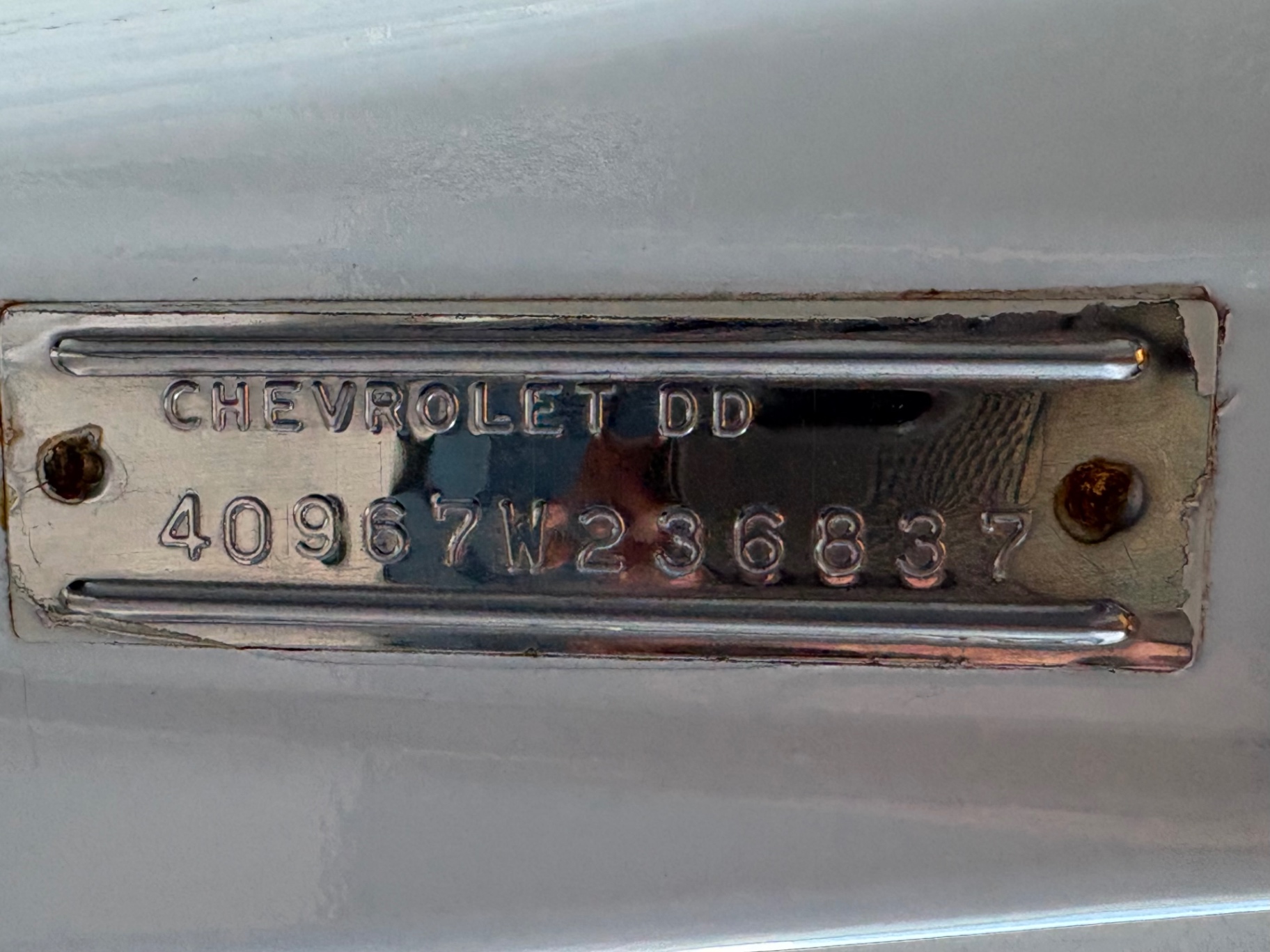
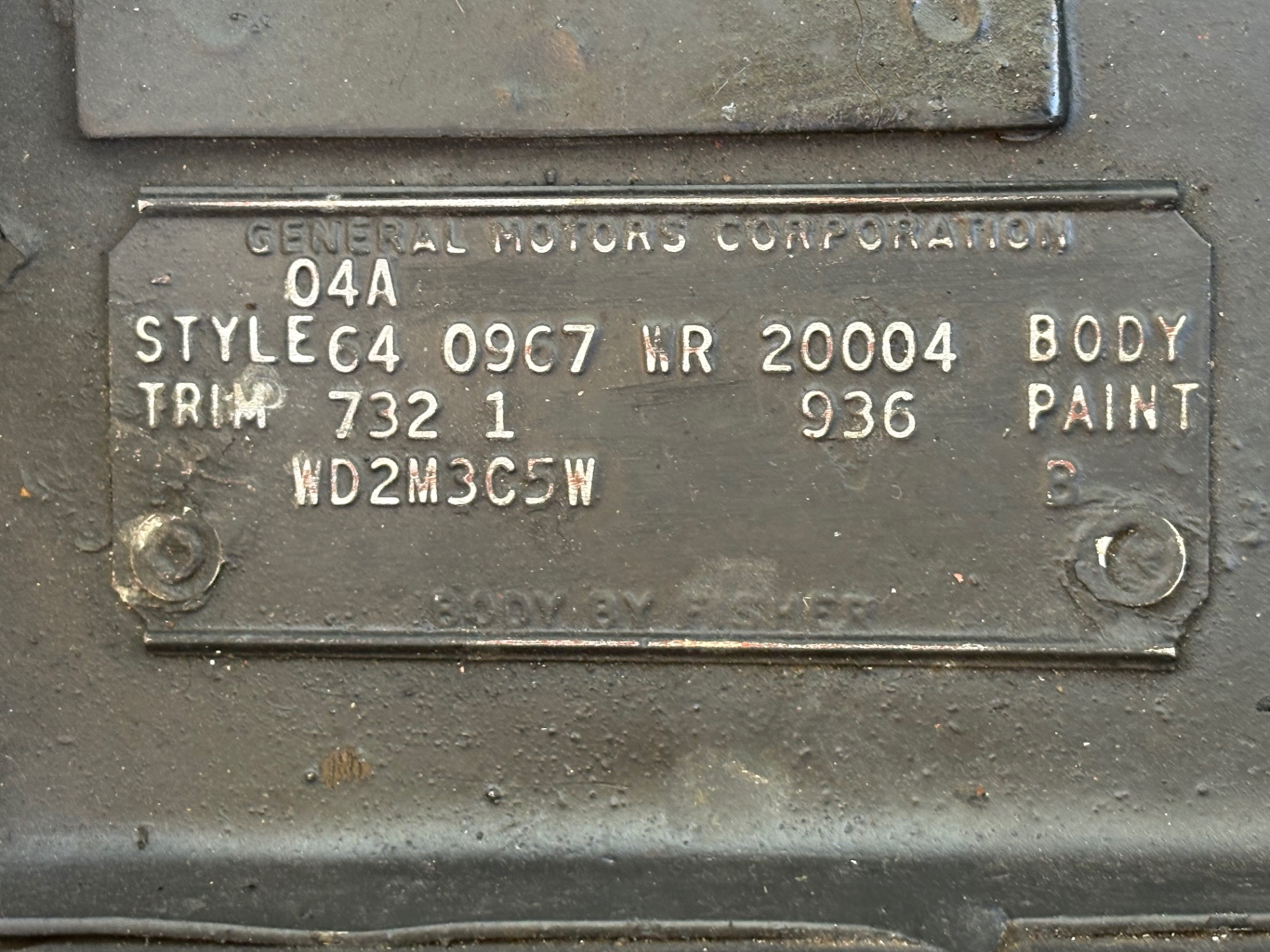
The VIN on this car decodes to confirm it was built at the Willow Run, Michigan assembly plant, which was one of the primary Corvair production facilities during this era. The body style code confirms the open convertible body. This is a genuine Monza Convertible, not an upgraded base car.
Features List
164 cubic inch Turbo-Air air-cooled flat-six engine Dual carburetors Forced-air cooling with centrifugal blower 2-speed Powerglide automatic transaxle Dash-mounted transmission shift lever Rear-engine, rear-wheel-drive layout Quadri-Flex four-wheel independent suspension Transverse rear leaf spring (1964 handling update) Power-operated white vinyl soft top Blue leather interior Brushed aluminum dash inserts Center console (standard on Monza) AM push-button radio Heater and defroster Chrome rocker panel moldings Quad headlights with aluminum bezels 13-inch wheels with Monza-specific wheel covers Chrome front and rear bumpers Self-adjusting Safety Master brakes White exterior
Mechanical
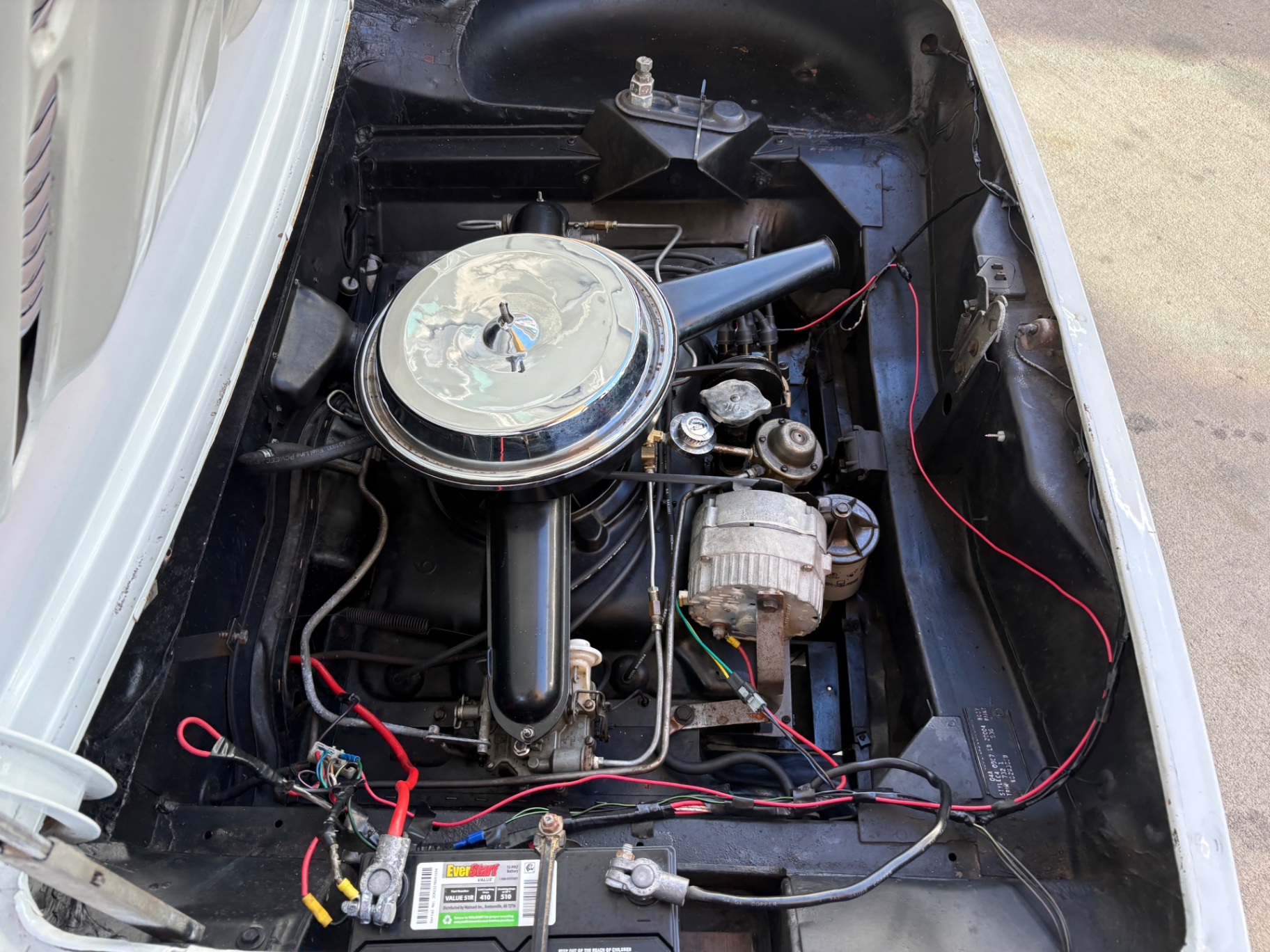
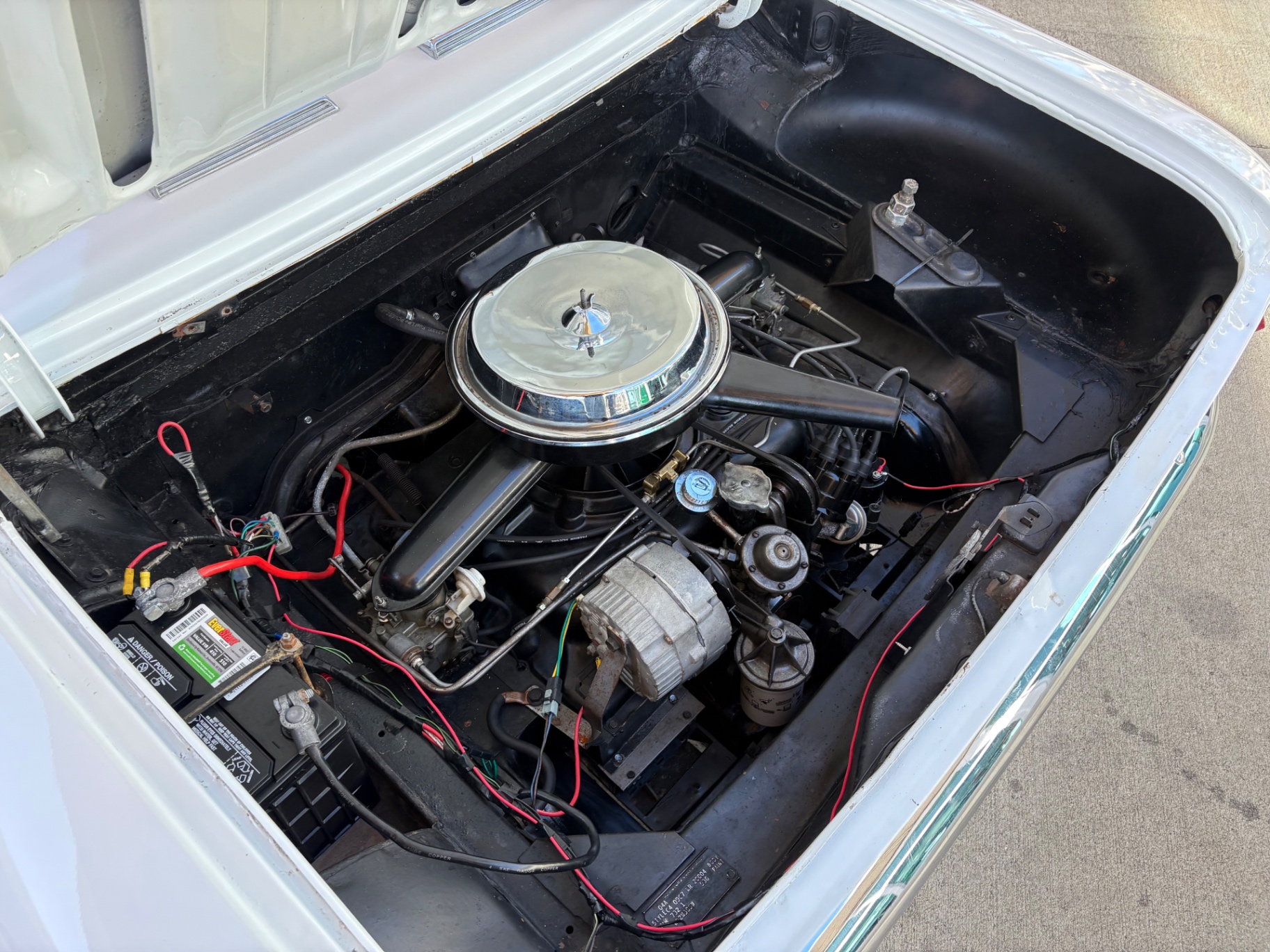
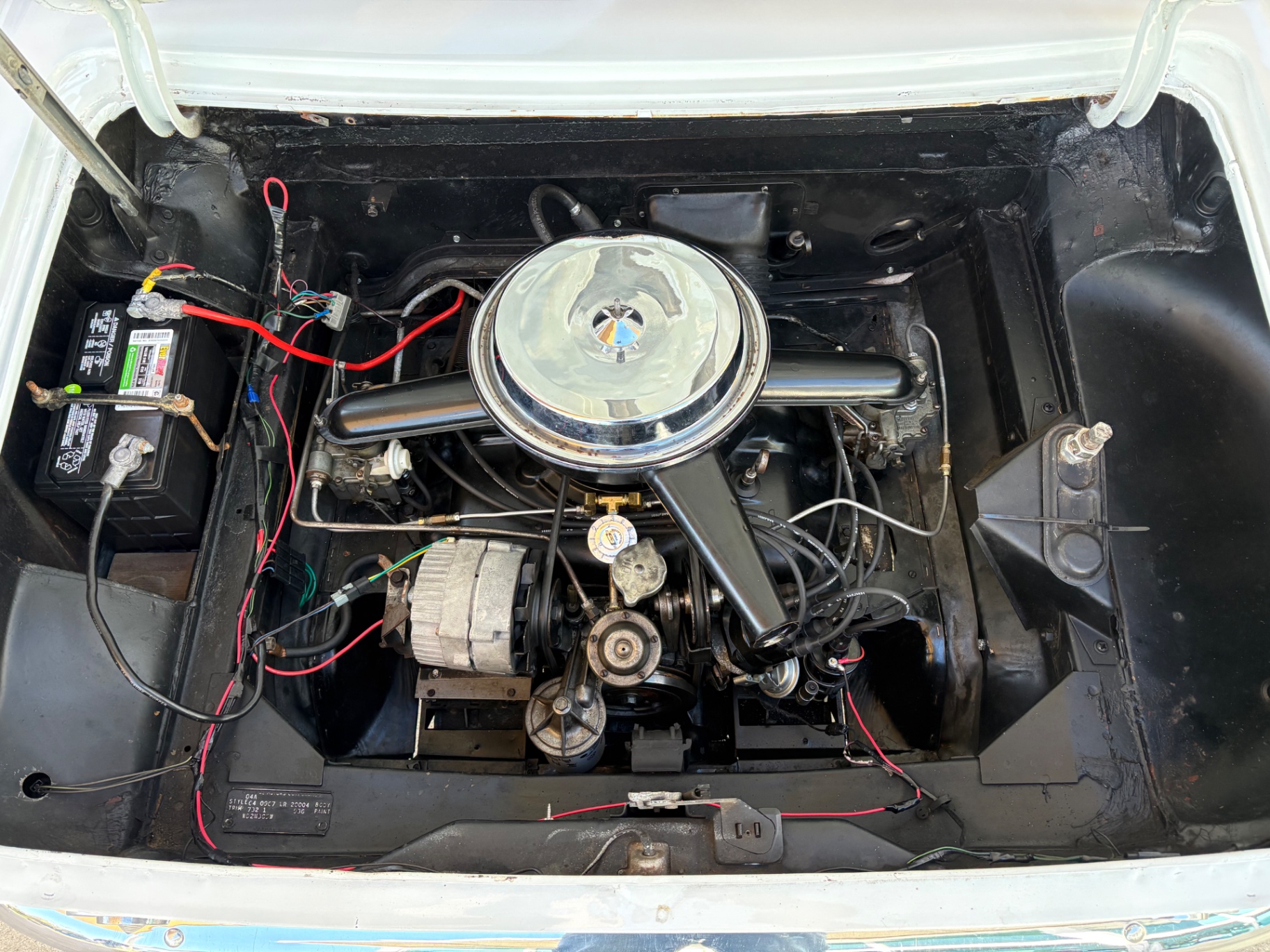
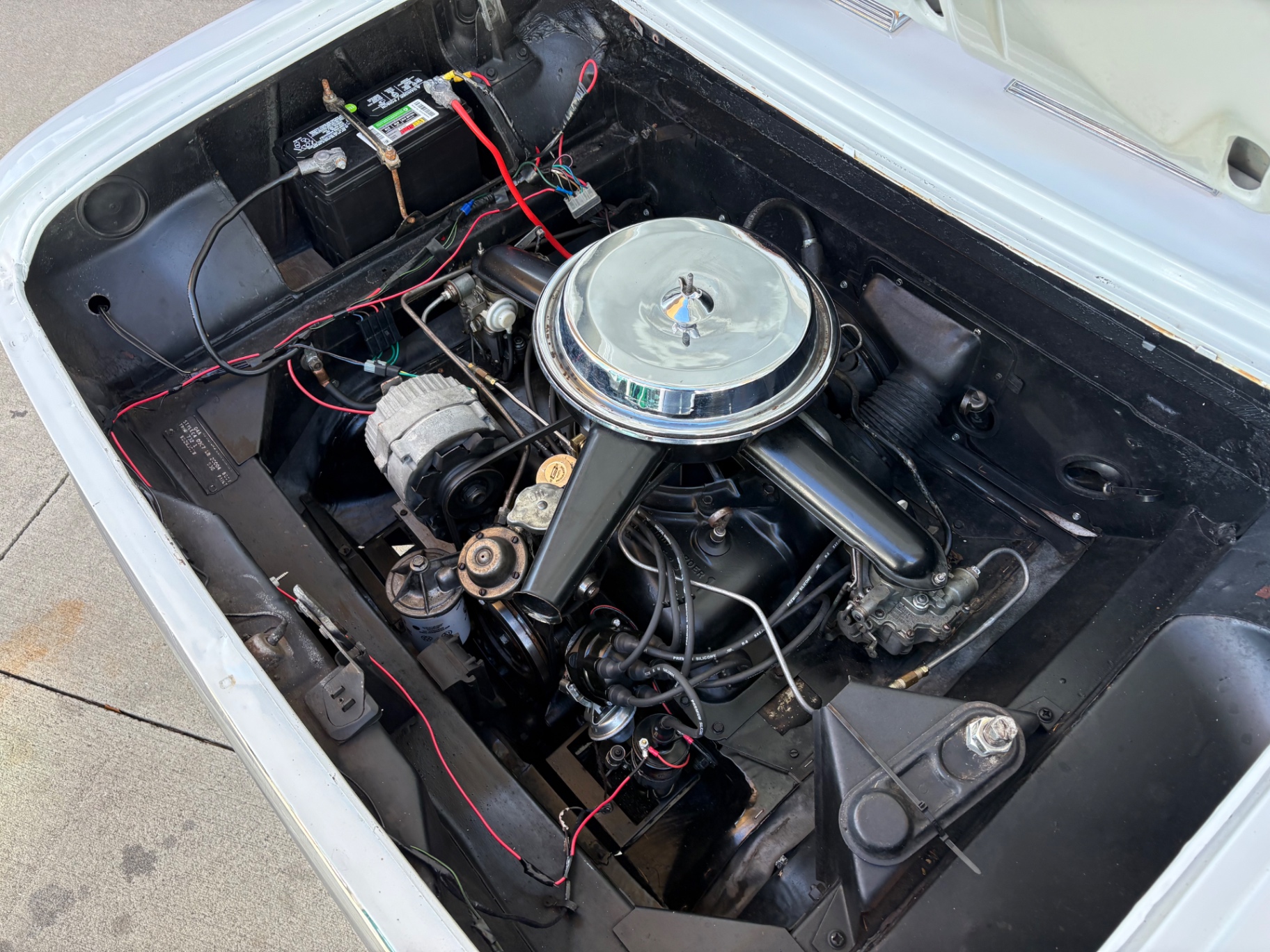
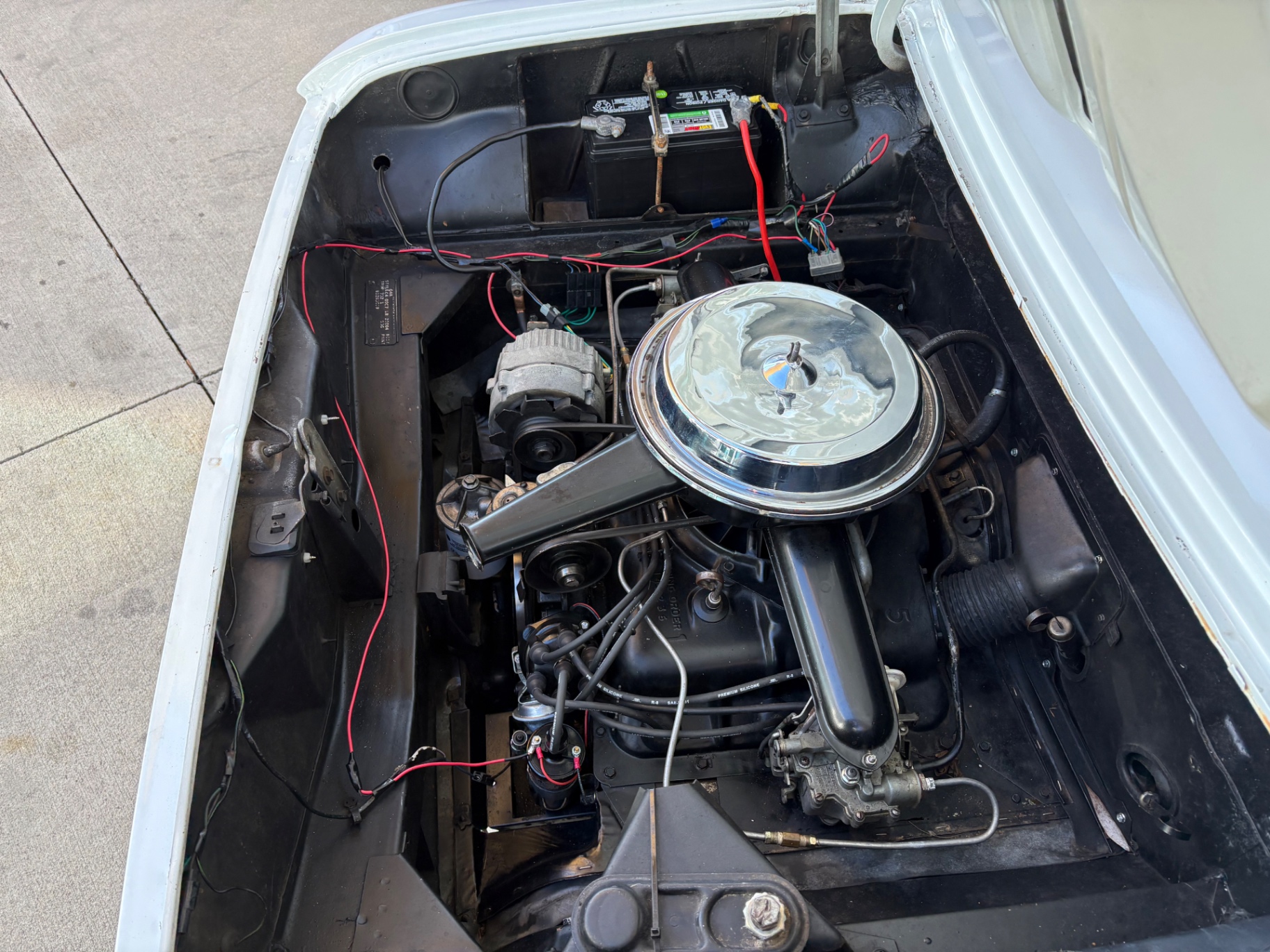
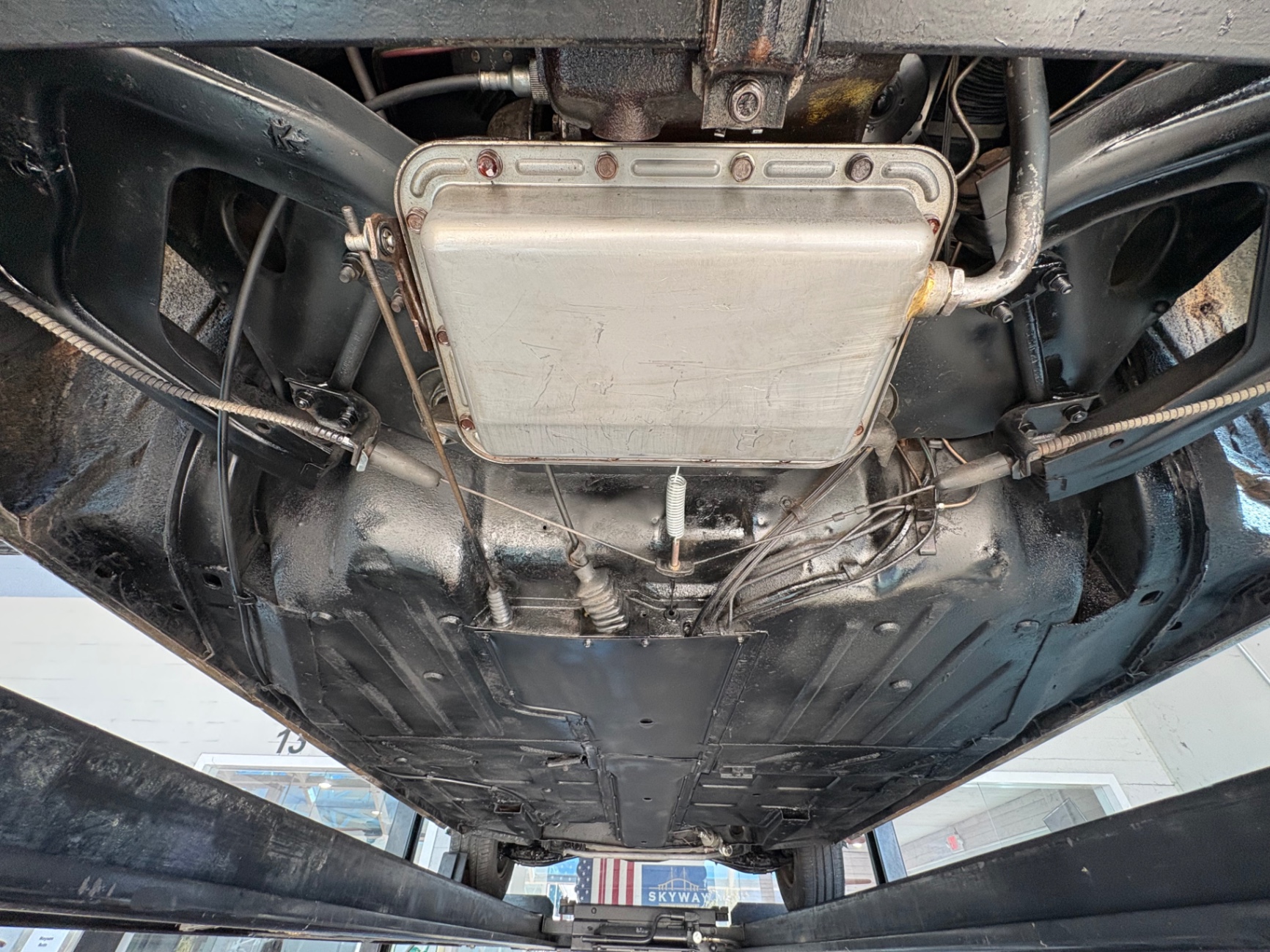
Power comes from the 164 cubic inch Turbo-Air horizontally opposed six-cylinder engine, fed by dual carburetors. This is the base Monza state of tune for 1964, rated at 95 horsepower. The engine is air-cooled, which means there is no radiator, no coolant, and no water pump. Instead, a belt-driven centrifugal blower forces air through the finned cylinders and heads, a system borrowed conceptually from aircraft and Volkswagen practice but executed on a larger scale. The flat-six sits entirely behind the rear axle centerline, a configuration that gives the 1964 Corvair Monza Convertible its distinctive weight distribution and the open front trunk that Corvair owners used for luggage storage.
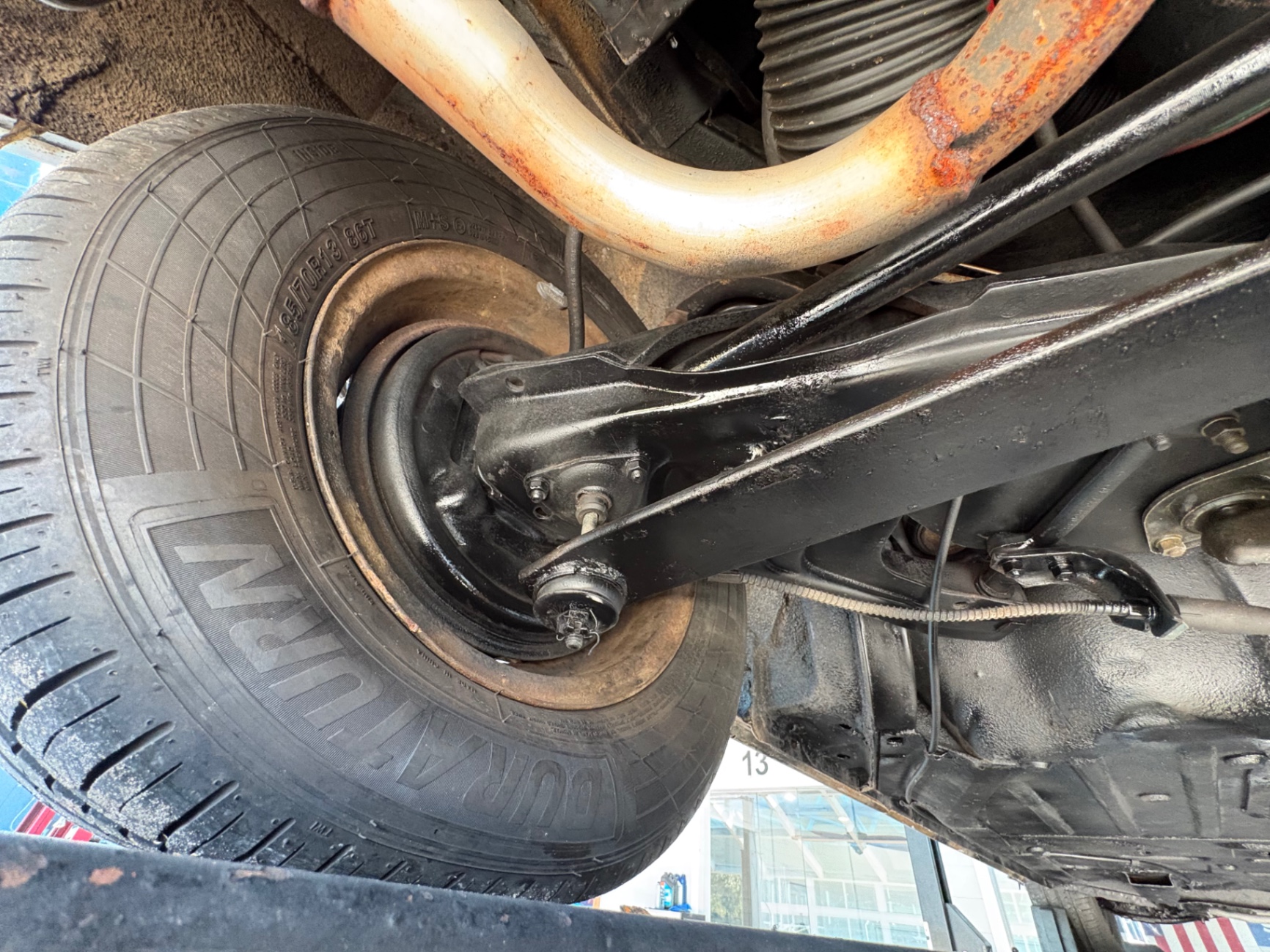
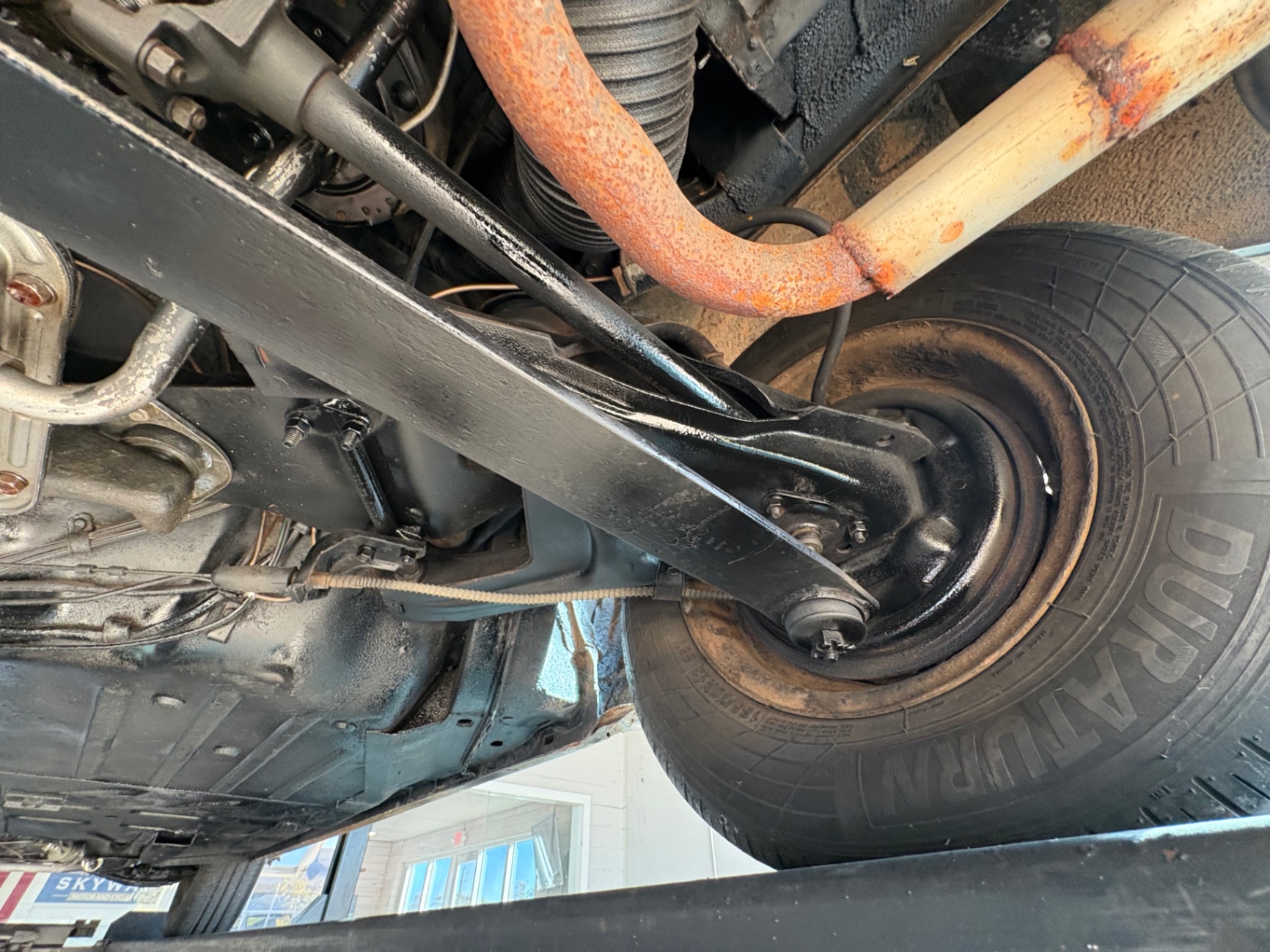
The 2-speed Powerglide automatic transaxle is integrated with the engine at the rear of the car, and the shift lever mounts in the dash rather than on the floor — a layout that was standard practice on early Corvairs. It is an unusual arrangement by today's standards and one of the details that makes this car genuinely interesting to drive and explain. The transverse rear leaf spring introduced for 1964 replaced the earlier three-piece swing axle setup and substantially improved rear camber control under cornering loads. This was a meaningful engineering improvement, not a minor revision. Combined with the Quadri-Flex four-wheel independent suspension, the 1964 Corvair handles with a balance that the 1960 through 1963 cars could not match. The self-adjusting Safety Master brakes were a Corvair-specific system designed to maintain consistent pedal feel without manual adjustment intervals.
Interior
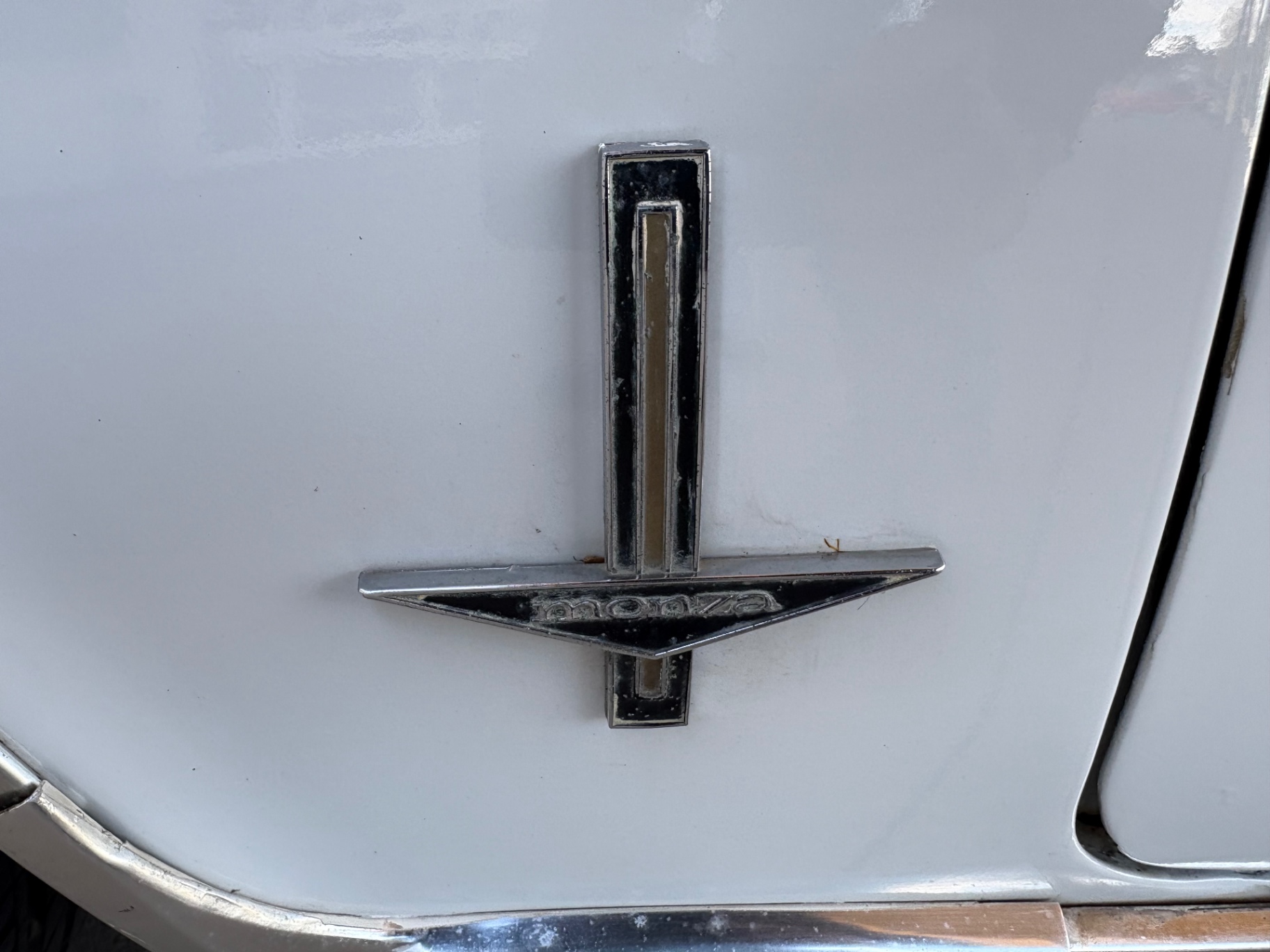
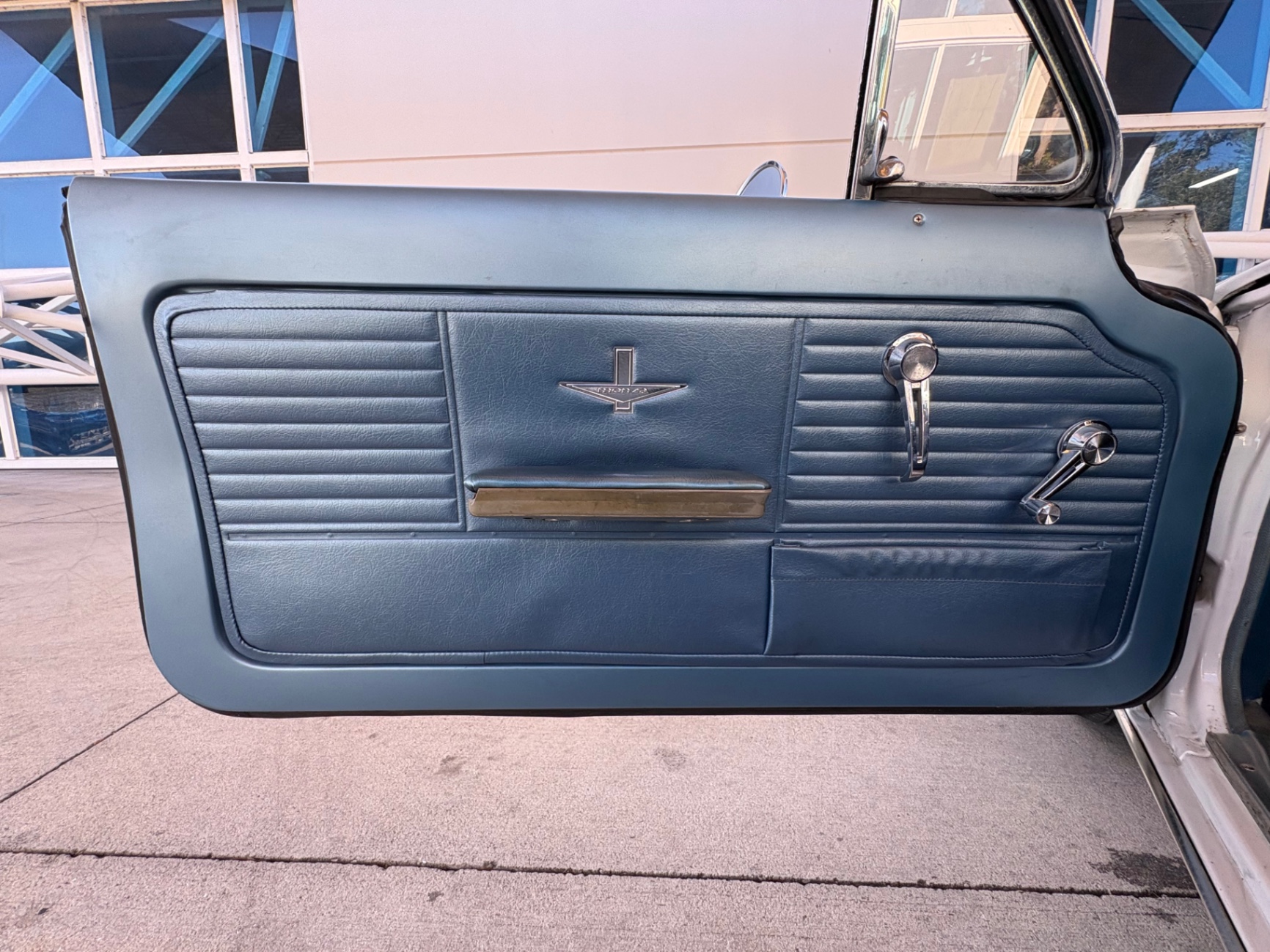
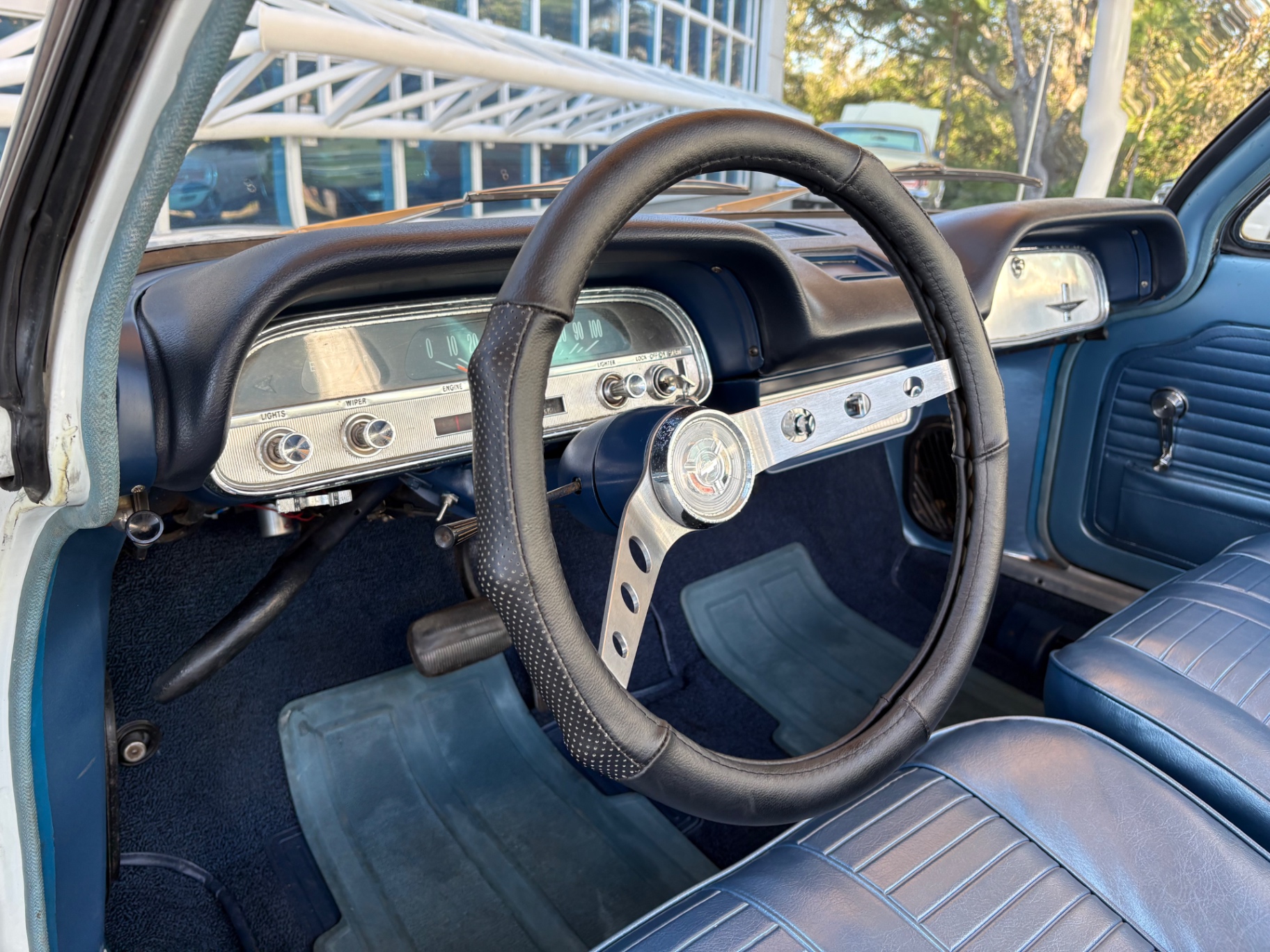
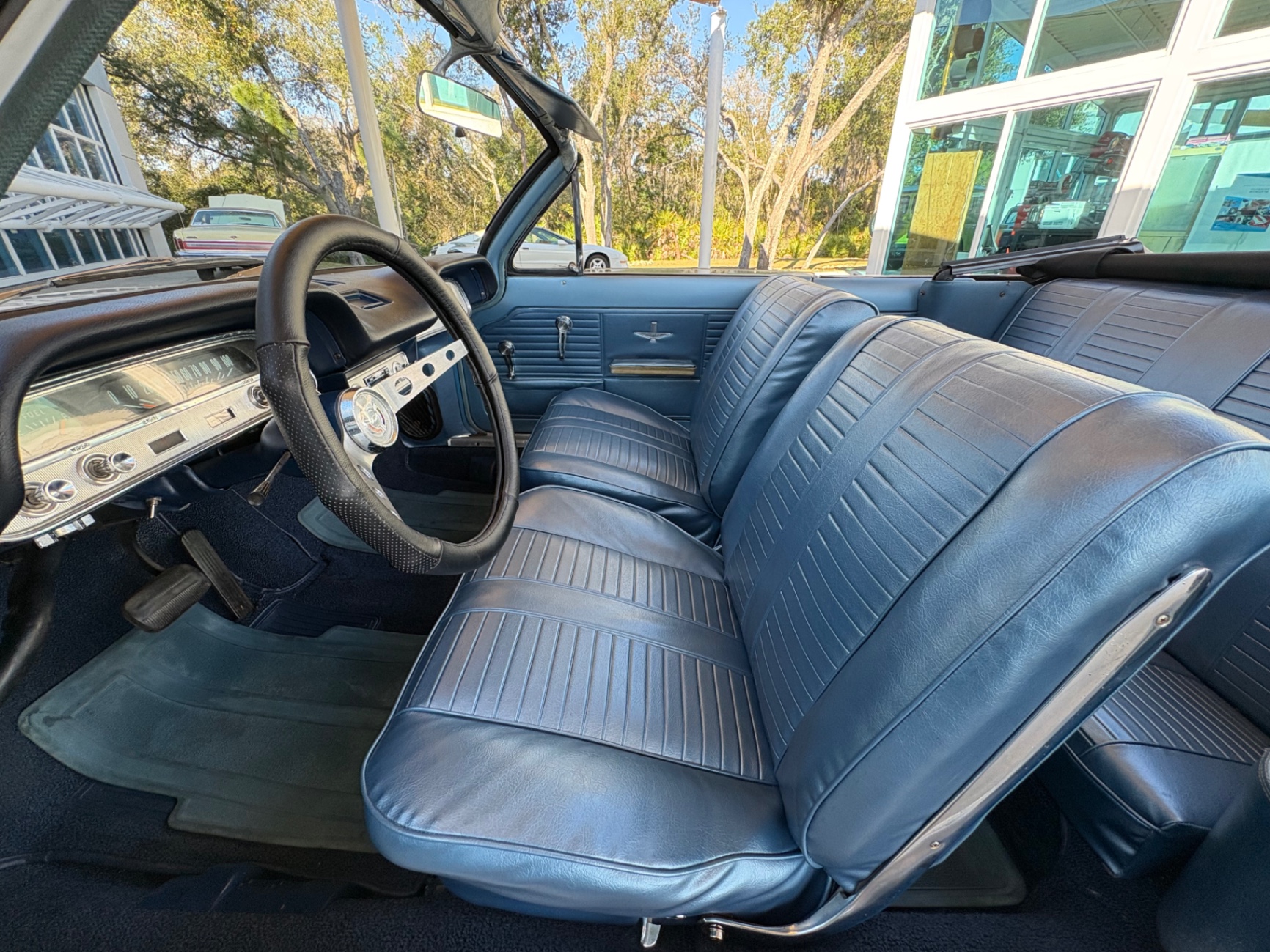
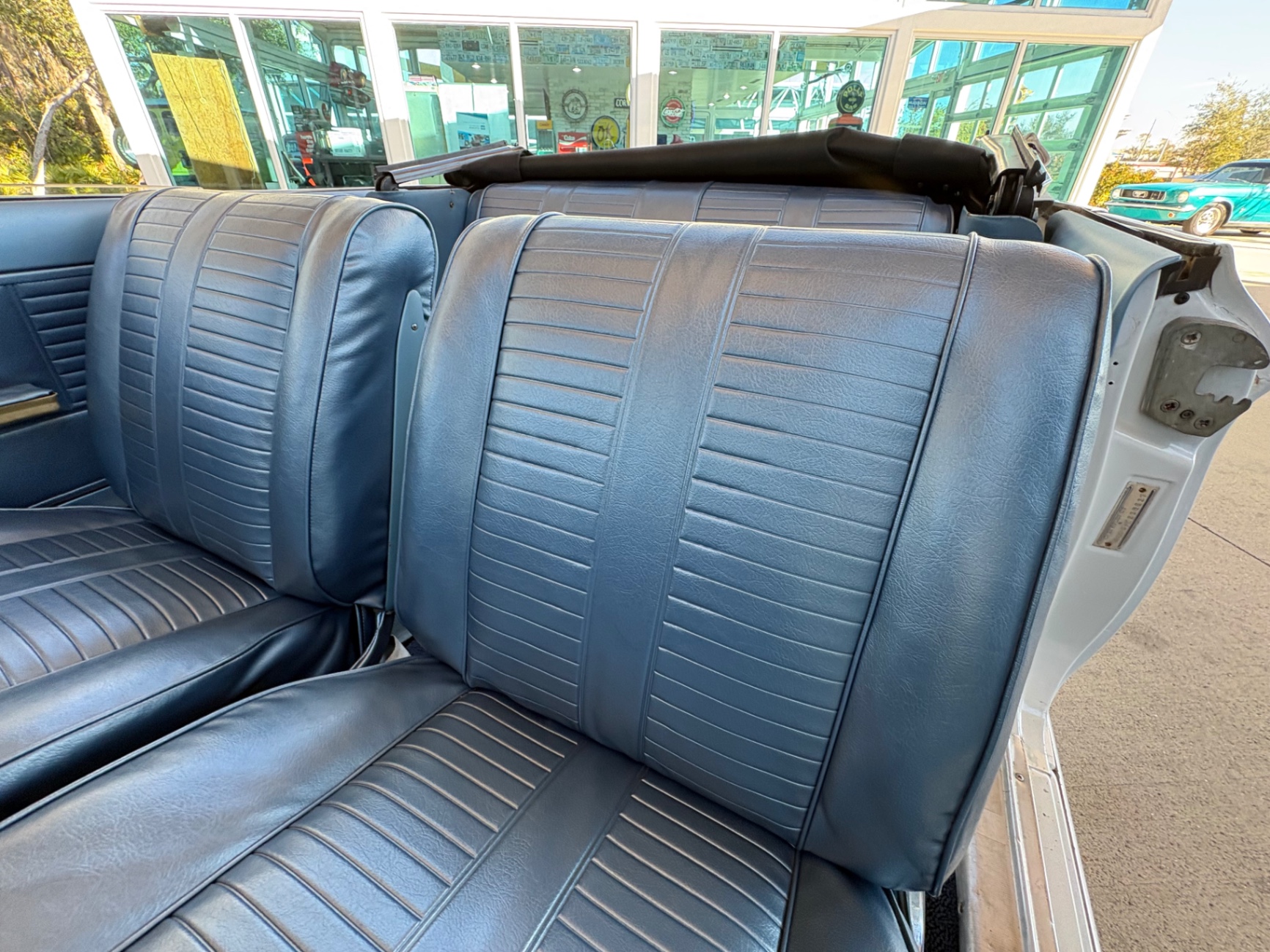
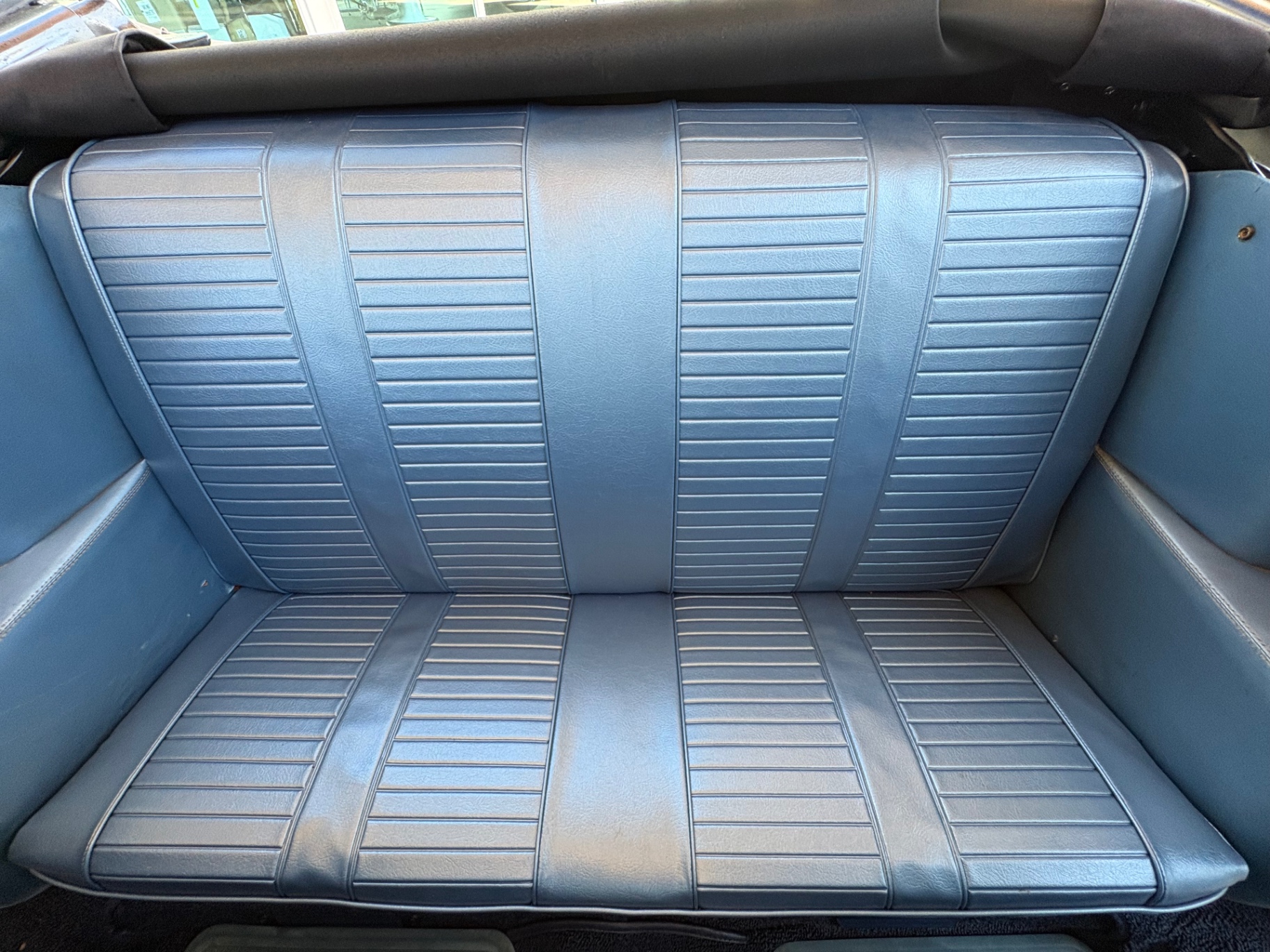
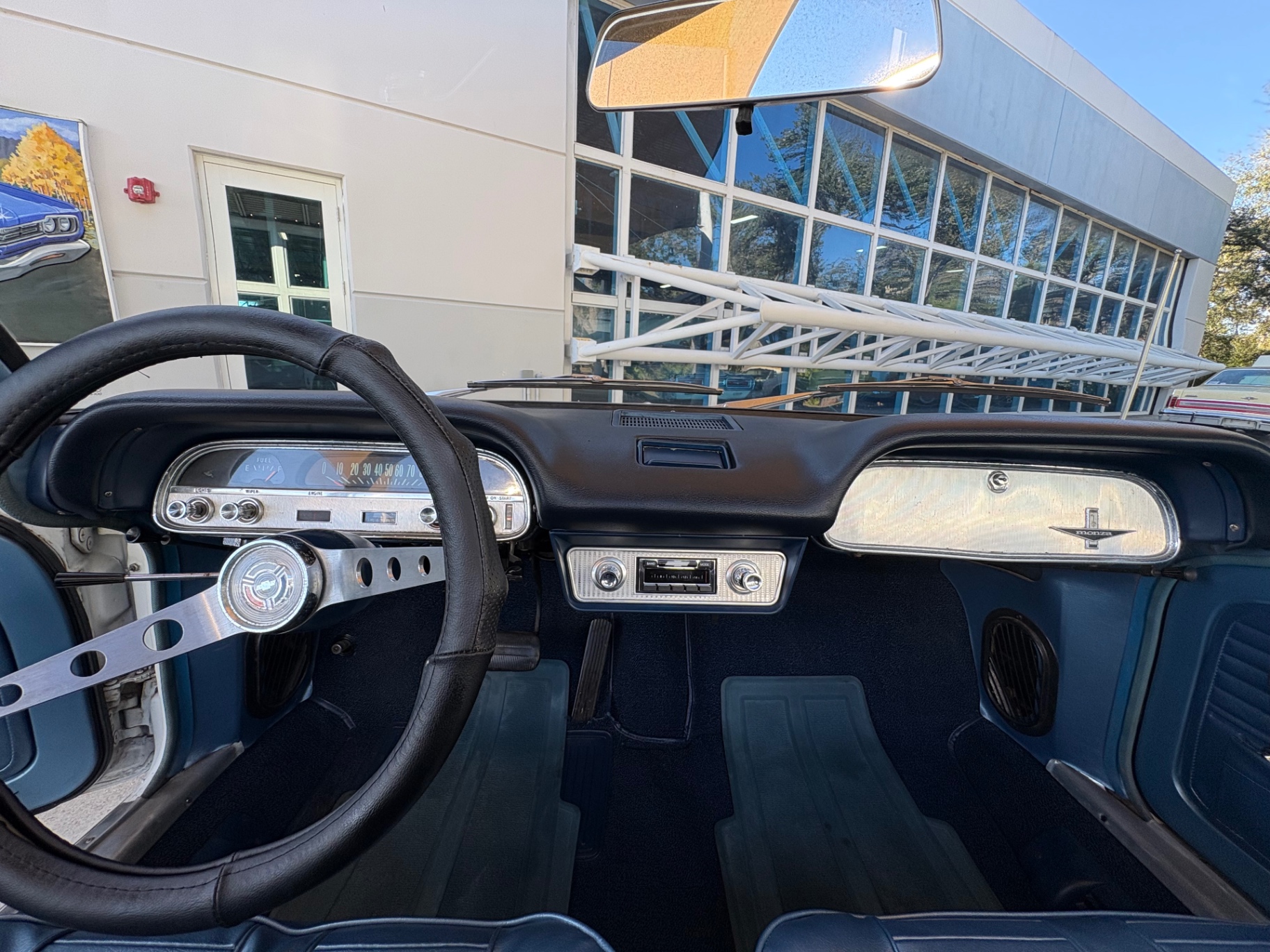
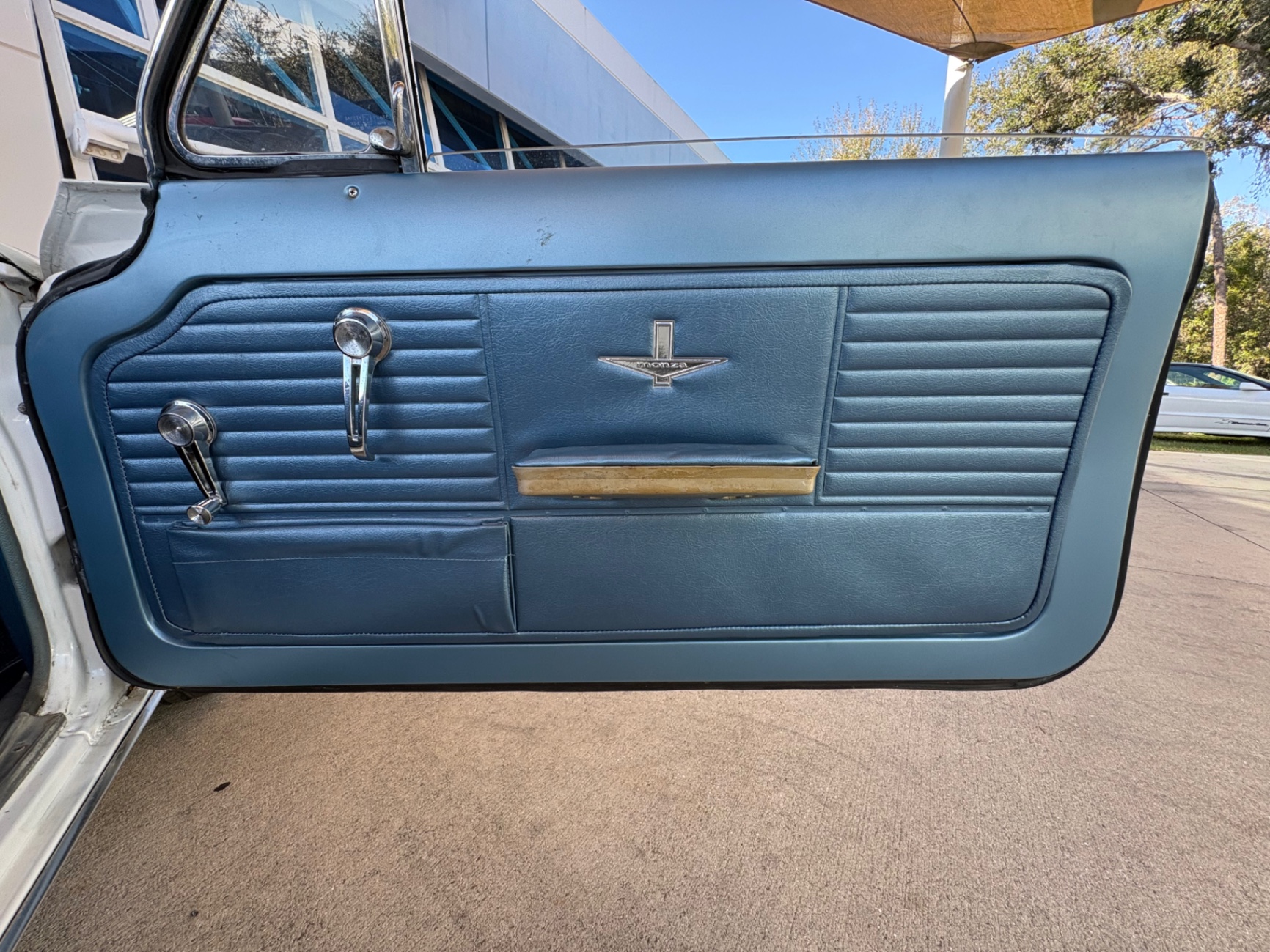
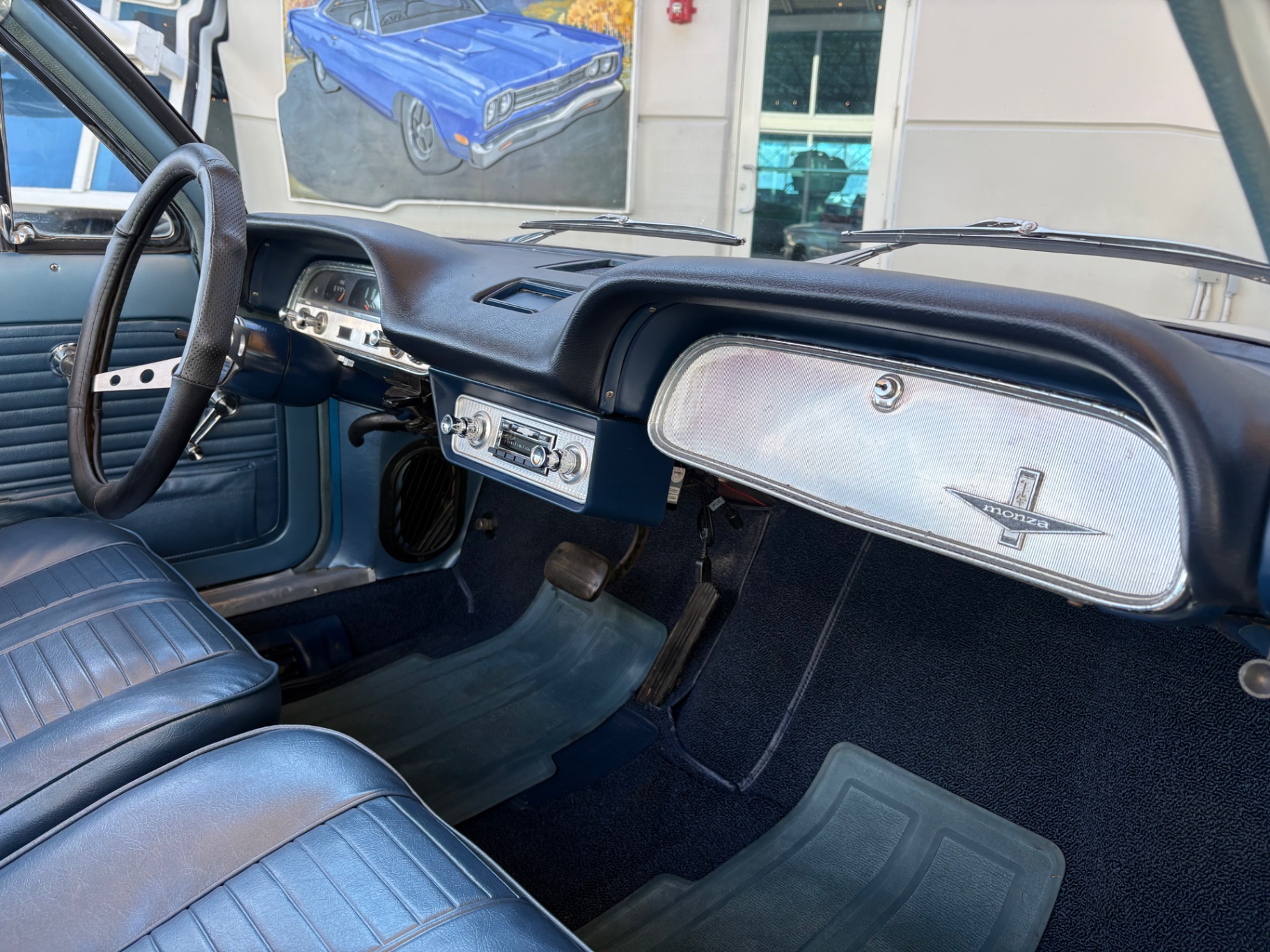
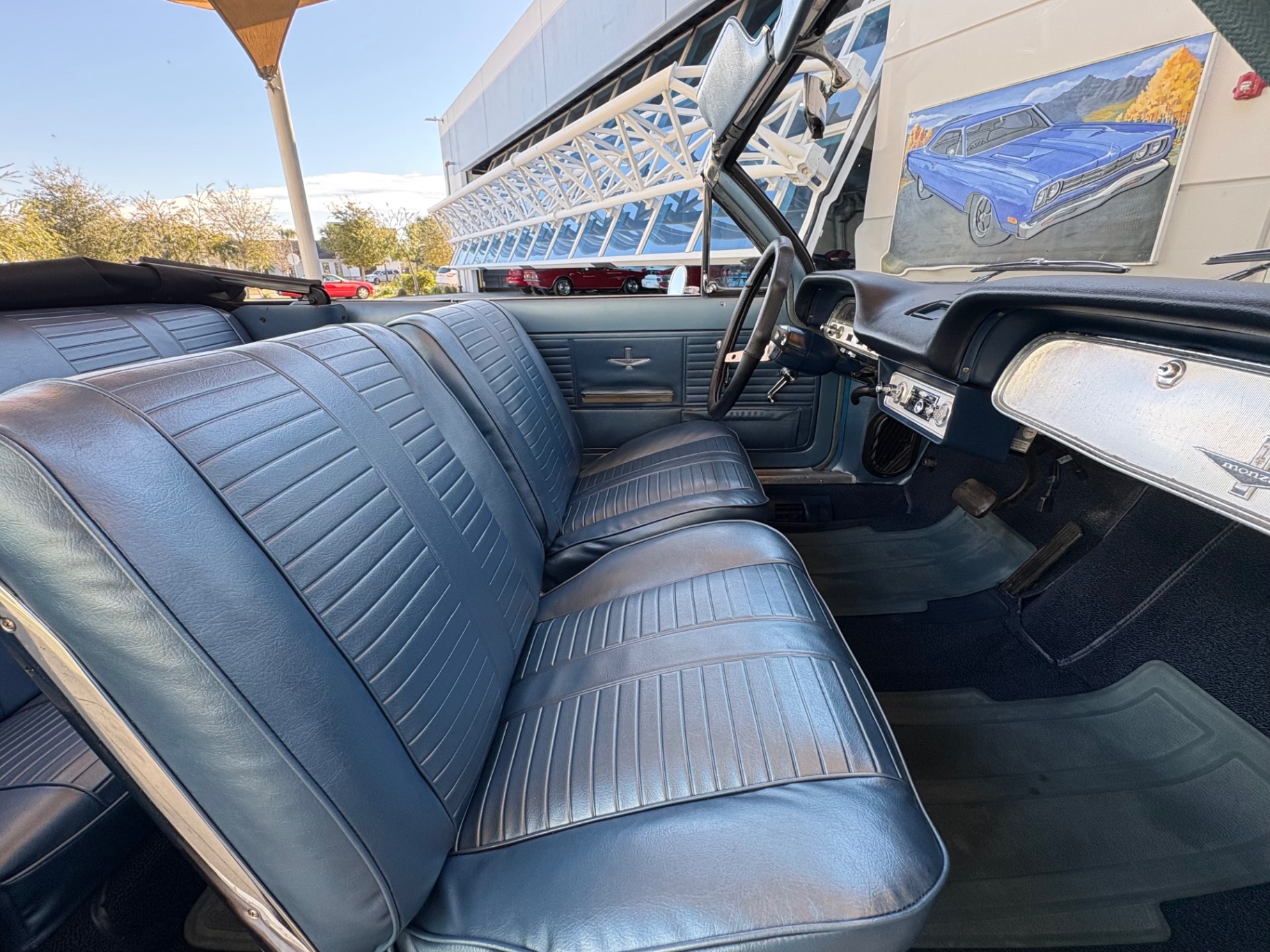
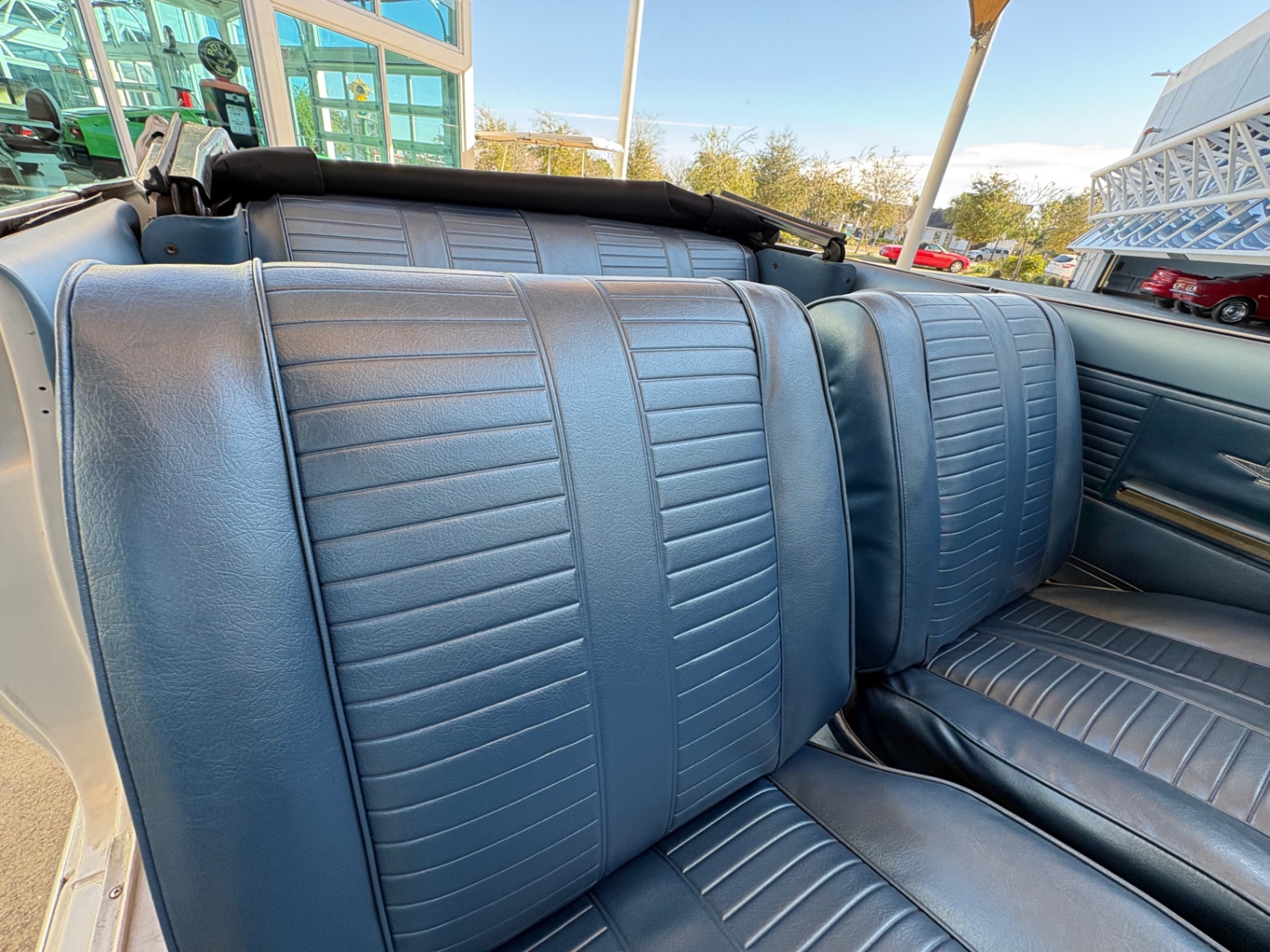
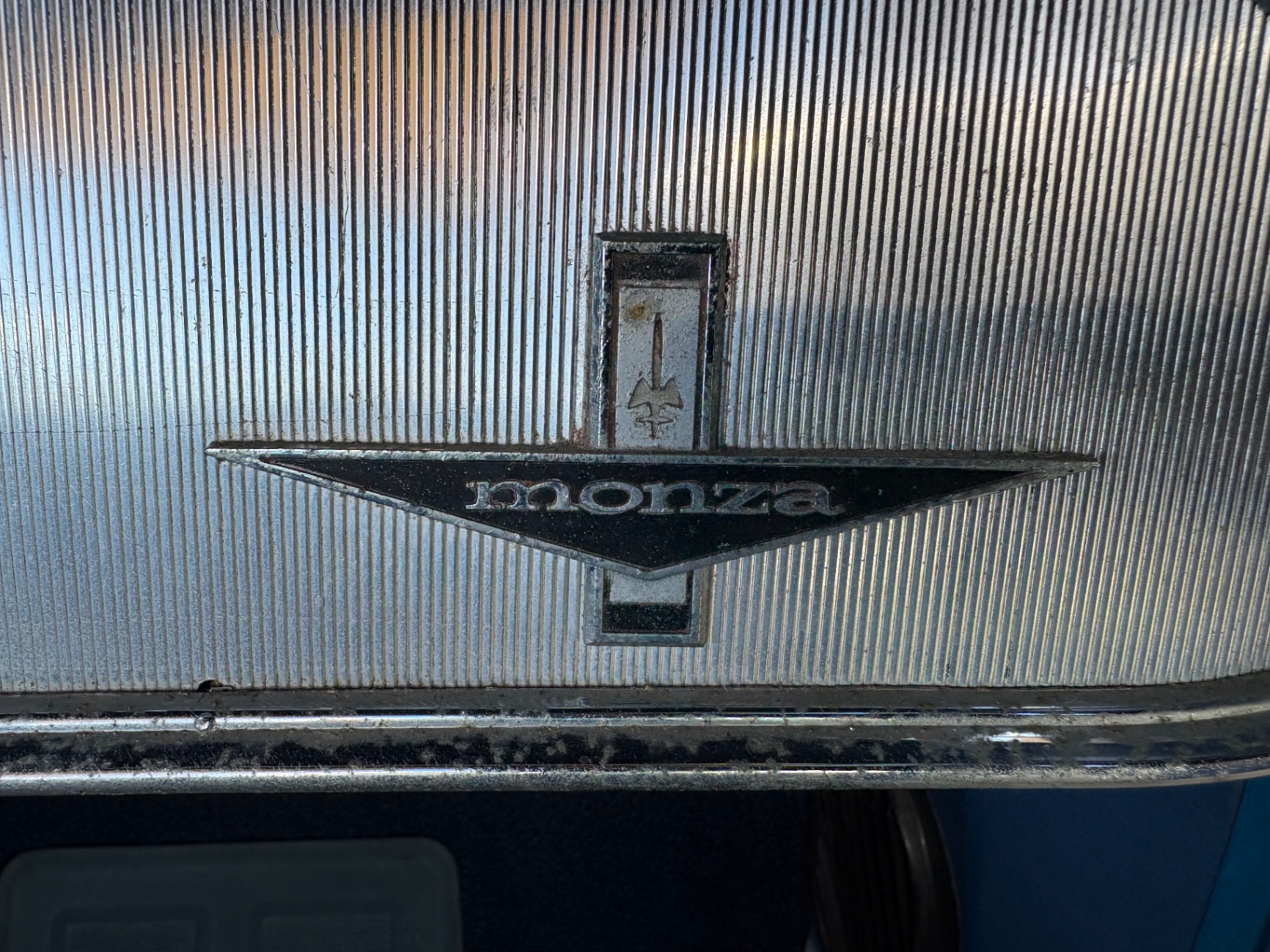
The interior on this 1964 Chevrolet Corvair Monza Convertible is finished in blue leather, which pairs well with the white exterior. The Monza trim level brought bucket seats and a center console as standard equipment, which gave the cabin a more sporting character than the bench-seat base models. Brushed aluminum dash inserts add a finished look to the instrument panel, and the dash-mounted Powerglide shift lever keeps the console area clean. The AM push-button radio is present, as is the heater and defroster system. The door panels carry the Monza badge and show the horizontal ribbing that was characteristic of the first-generation interior design. The convertible top is white vinyl and operates via a power mechanism, which was a genuine convenience feature in 1964. With the top down, the Corvair's low beltline and open greenhouse make it feel more like a sports car than a compact.
Exterior
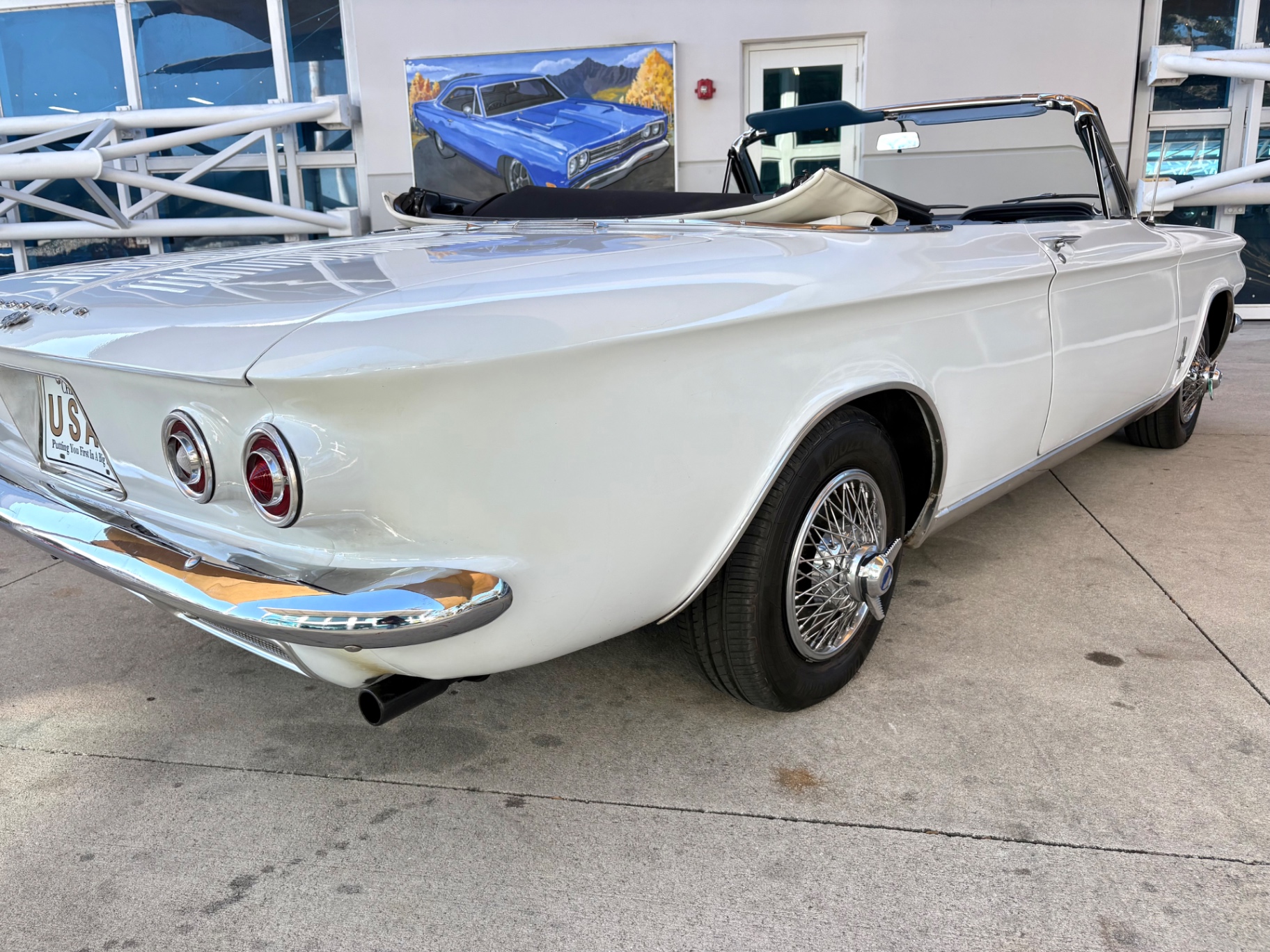
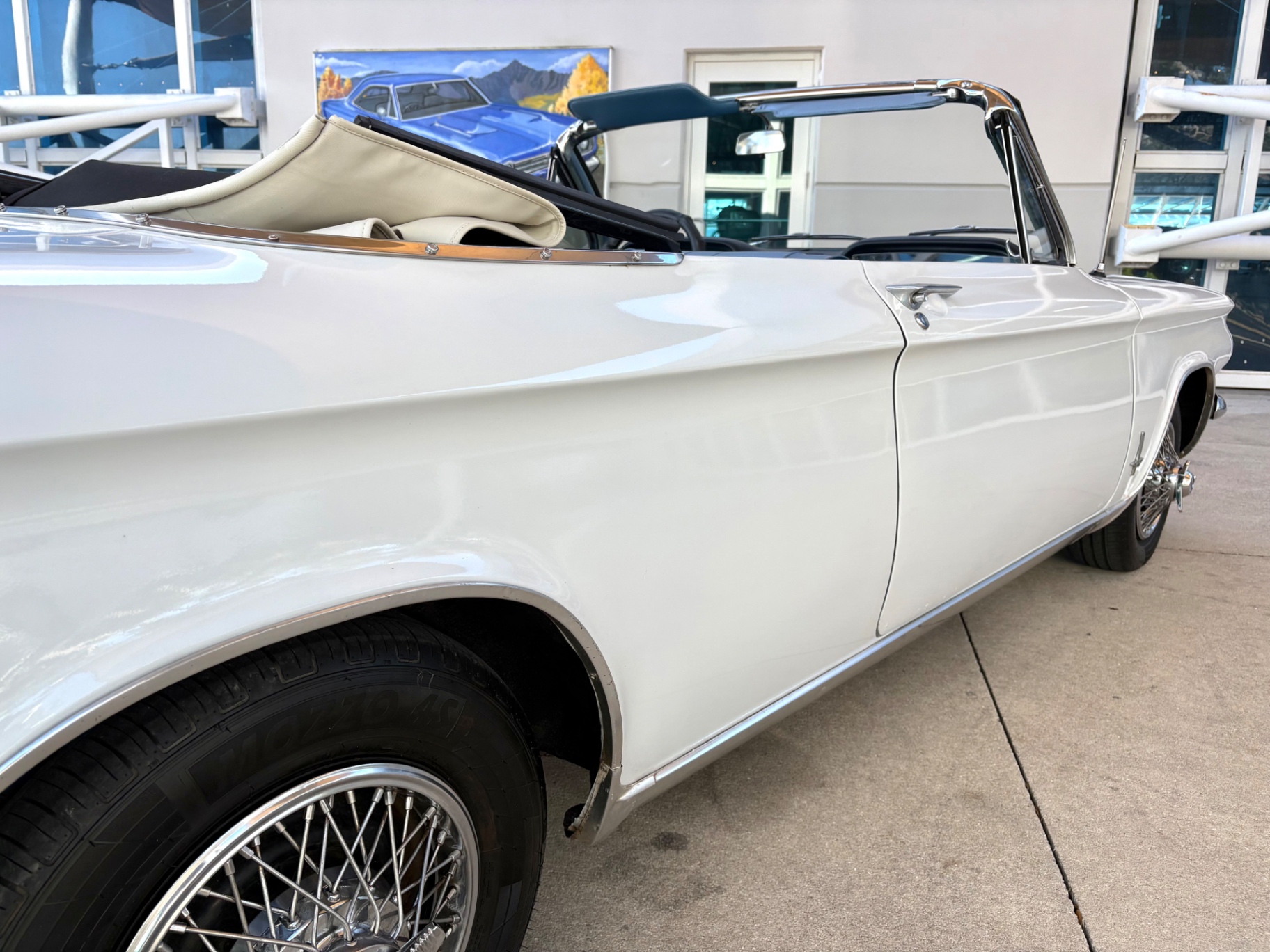
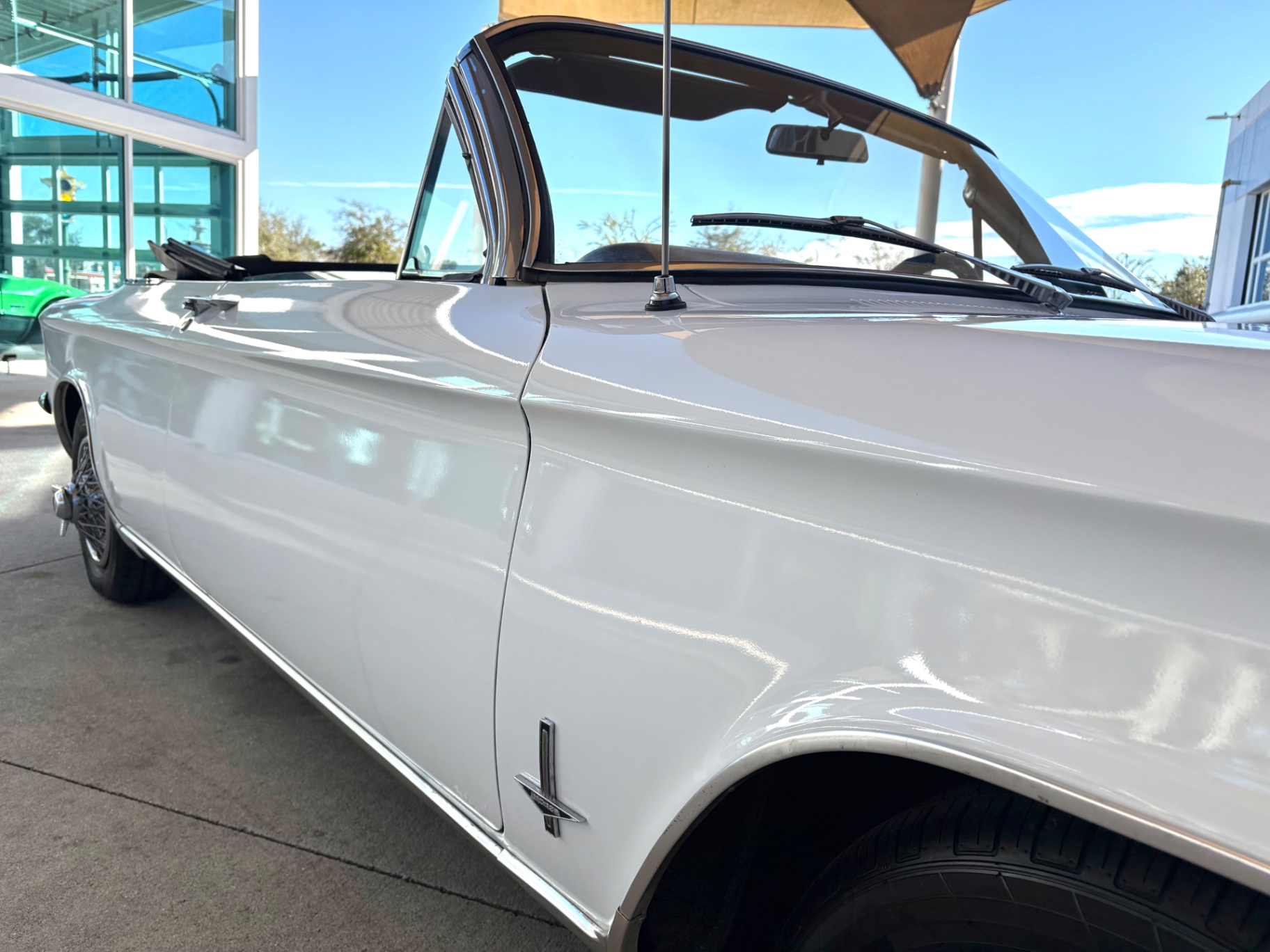
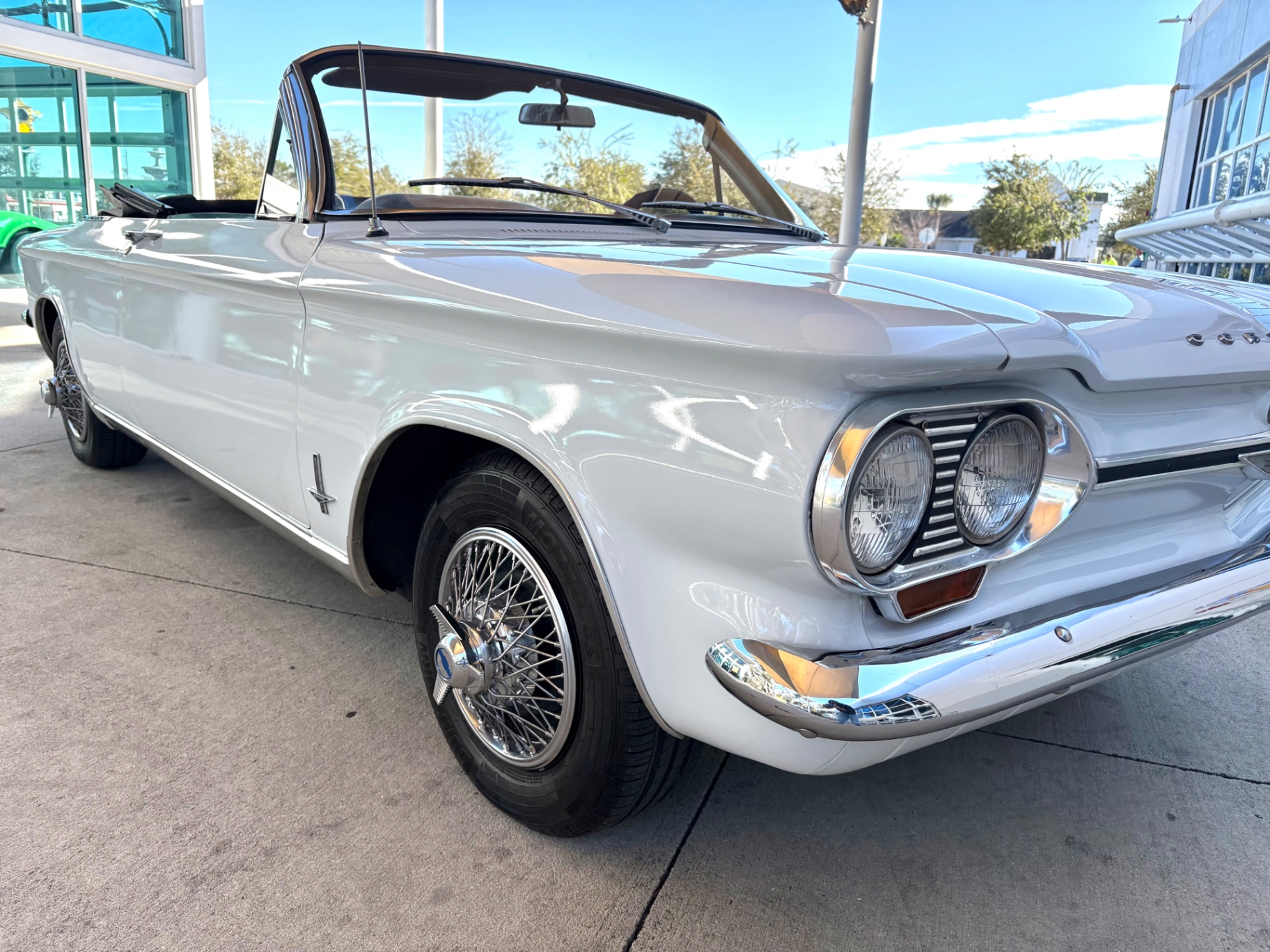
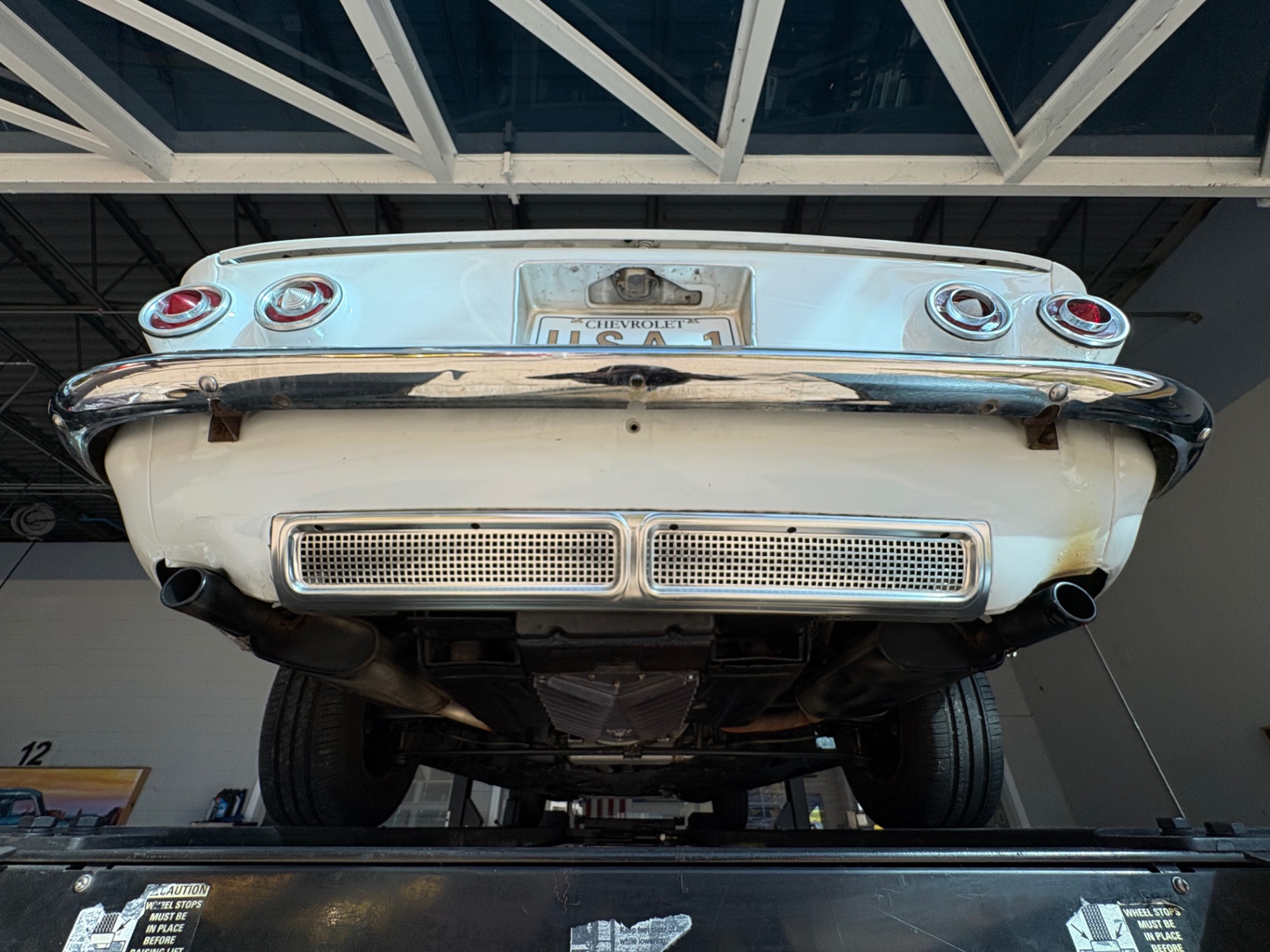
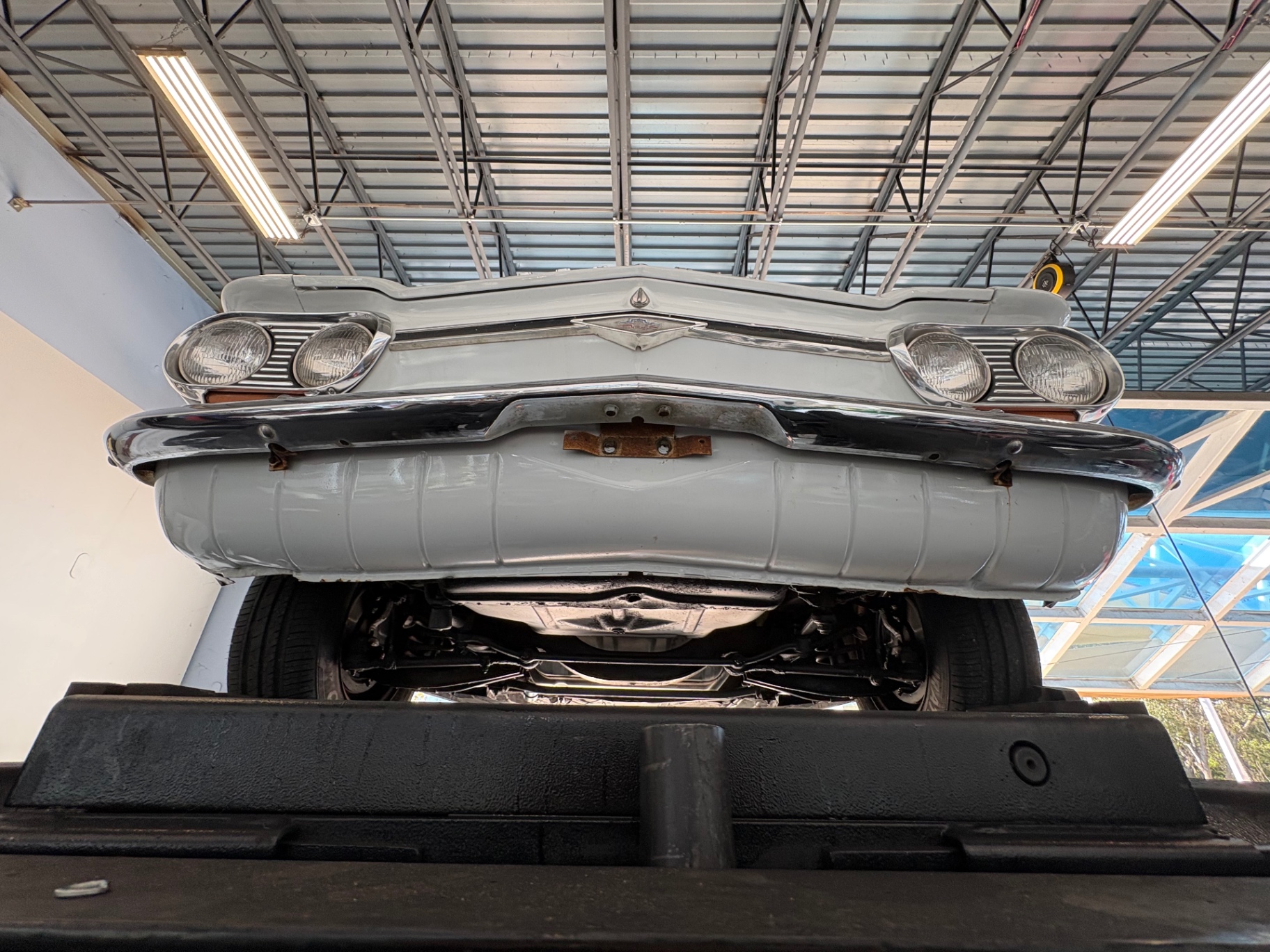
The white exterior suits the 1964 Corvair Monza Convertible's clean, European-influenced lines well. The first-generation body, penned under the direction of GM's styling department, drew comparisons to contemporary Italian designs at the time of its introduction. The quad headlights sit in aluminum bezels that give the front end a more upscale appearance than the single-headlight base models. Chrome rocker panel moldings run the length of the lower body, and chrome front and rear bumpers frame both ends cleanly. The rear of the car is one of the most distinctive views — the engine grilles are visible below the bumper, exhaust tips exit on either side, and the round taillights sit in a body-colored panel. This is the exhaust and cooling outlet end of the car, which always prompts a second look from anyone who knows what they are seeing. The 13-inch wheels wear Monza-specific wheel covers. The white vinyl soft top completes the look when raised and stows cleanly behind the rear seat when lowered.
Conclusion
The 1964 Chevrolet Corvair Monza Convertible occupies a specific and important place in American automotive history. It was the last full year of the first-generation body style, the first year with the improved rear suspension, and one of the final model years before the Corvair's sales momentum was disrupted by outside forces that had little to do with the car's actual engineering. Today, the 1964 Corvair Monza is valued by collectors who understand the difference between the pre- and post-1964 chassis, and by enthusiasts who simply want an air-cooled, rear-engine American convertible that drives unlike anything else from the era. This example, in white over blue leather with the Powerglide automatic and power top, is a complete and usable car that represents the model at its first-generation best.
To learn more or arrange a showing, call Skyway Classics in Sarasota, Florida at 941-254-6608.
Disclaimer Information found on the website is presented as given to us by the owner of the car, whether on consignment or from the owner we bought it from. Some Photos, materials for videos, descriptions and other information are provided by the consignor/seller and is deemed reliable, but Skyway Classics does not warranty or guarantee this information. Skyway Classics is not responsible for information that may incorrect or a publishing error. The decision to purchase should be based solely on the buyers personal inspection of the vehicle or by a professional inspection service prior to offer or purchase being made.
1964 Chevrolet Corvair Monza Convertible — White over Blue with Powerglide
Why This Car Is Special
The 1964 Chevrolet Corvair Monza Convertible represents the high point of the first-generation Corvair's development and, in many ways, the most complete version of what Ed Cole and his team at Chevrolet originally set out to build. By 1964, Chevrolet engineers had addressed the handling characteristics that would later make headlines in Ralph Nader's 1965 book. That year's most significant mechanical update was a redesigned rear suspension featuring a transverse leaf spring that replaced the earlier swing-axle setup, giving the 1964 Corvair Monza a more neutral and predictable handling balance before the fully independent rear suspension arrived on the second-generation car in 1965. In other words, if you wanted the cleanest version of the first-generation body with genuinely improved chassis dynamics, 1964 is the year to buy.
The Corvair was unlike anything else Detroit produced. It used a rear-mounted, air-cooled flat-six engine, a rear transaxle, and full four-wheel independent suspension at a time when most American compacts still relied on solid rear axles and conventional front-engine layouts. Chevrolet drew more inspiration from European engineering philosophy than from the rest of its own lineup, and the result was a car that handled, felt, and drove differently from any other American vehicle of the era. The Monza trim package, introduced in 1960, transformed the Corvair from an economy car into something more desirable — bucket seats, console, upgraded interior, and chrome detailing that set it apart from the base 500 series.
The VIN on this car decodes to confirm it was built at the Willow Run, Michigan assembly plant, which was one of the primary Corvair production facilities during this era. The body style code confirms the open convertible body. This is a genuine Monza Convertible, not an upgraded base car.
Features List
164 cubic inch Turbo-Air air-cooled flat-six engine Dual carburetors Forced-air cooling with centrifugal blower 2-speed Powerglide automatic transaxle Dash-mounted transmission shift lever Rear-engine, rear-wheel-drive layout Quadri-Flex four-wheel independent suspension Transverse rear leaf spring (1964 handling update) Power-operated white vinyl soft top Blue leather interior Brushed aluminum dash inserts Center console (standard on Monza) AM push-button radio Heater and defroster Chrome rocker panel moldings Quad headlights with aluminum bezels 13-inch wheels with Monza-specific wheel covers Chrome front and rear bumpers Self-adjusting Safety Master brakes White exterior
Mechanical
Power comes from the 164 cubic inch Turbo-Air horizontally opposed six-cylinder engine, fed by dual carburetors. This is the base Monza state of tune for 1964, rated at 95 horsepower. The engine is air-cooled, which means there is no radiator, no coolant, and no water pump. Instead, a belt-driven centrifugal blower forces air through the finned cylinders and heads, a system borrowed conceptually from aircraft and Volkswagen practice but executed on a larger scale. The flat-six sits entirely behind the rear axle centerline, a configuration that gives the 1964 Corvair Monza Convertible its distinctive weight distribution and the open front trunk that Corvair owners used for luggage storage.
The 2-speed Powerglide automatic transaxle is integrated with the engine at the rear of the car, and the shift lever mounts in the dash rather than on the floor — a layout that was standard practice on early Corvairs. It is an unusual arrangement by today's standards and one of the details that makes this car genuinely interesting to drive and explain. The transverse rear leaf spring introduced for 1964 replaced the earlier three-piece swing axle setup and substantially improved rear camber control under cornering loads. This was a meaningful engineering improvement, not a minor revision. Combined with the Quadri-Flex four-wheel independent suspension, the 1964 Corvair handles with a balance that the 1960 through 1963 cars could not match. The self-adjusting Safety Master brakes were a Corvair-specific system designed to maintain consistent pedal feel without manual adjustment intervals.
Interior
The interior on this 1964 Chevrolet Corvair Monza Convertible is finished in blue leather, which pairs well with the white exterior. The Monza trim level brought bucket seats and a center console as standard equipment, which gave the cabin a more sporting character than the bench-seat base models. Brushed aluminum dash inserts add a finished look to the instrument panel, and the dash-mounted Powerglide shift lever keeps the console area clean. The AM push-button radio is present, as is the heater and defroster system. The door panels carry the Monza badge and show the horizontal ribbing that was characteristic of the first-generation interior design. The convertible top is white vinyl and operates via a power mechanism, which was a genuine convenience feature in 1964. With the top down, the Corvair's low beltline and open greenhouse make it feel more like a sports car than a compact.
Exterior
The white exterior suits the 1964 Corvair Monza Convertible's clean, European-influenced lines well. The first-generation body, penned under the direction of GM's styling department, drew comparisons to contemporary Italian designs at the time of its introduction. The quad headlights sit in aluminum bezels that give the front end a more upscale appearance than the single-headlight base models. Chrome rocker panel moldings run the length of the lower body, and chrome front and rear bumpers frame both ends cleanly. The rear of the car is one of the most distinctive views — the engine grilles are visible below the bumper, exhaust tips exit on either side, and the round taillights sit in a body-colored panel. This is the exhaust and cooling outlet end of the car, which always prompts a second look from anyone who knows what they are seeing. The 13-inch wheels wear Monza-specific wheel covers. The white vinyl soft top completes the look when raised and stows cleanly behind the rear seat when lowered.
Conclusion
The 1964 Chevrolet Corvair Monza Convertible occupies a specific and important place in American automotive history. It was the last full year of the first-generation body style, the first year with the improved rear suspension, and one of the final model years before the Corvair's sales momentum was disrupted by outside forces that had little to do with the car's actual engineering. Today, the 1964 Corvair Monza is valued by collectors who understand the difference between the pre- and post-1964 chassis, and by enthusiasts who simply want an air-cooled, rear-engine American convertible that drives unlike anything else from the era. This example, in white over blue leather with the Powerglide automatic and power top, is a complete and usable car that represents the model at its first-generation best.
To learn more or arrange a showing, call Skyway Classics in Sarasota, Florida at 941-254-6608.
Disclaimer Information found on the website is presented as given to us by the owner of the car, whether on consignment or from the owner we bought it from. Some Photos, materials for videos, descriptions and other information are provided by the consignor/seller and is deemed reliable, but Skyway Classics does not warranty or guarantee this information. Skyway Classics is not responsible for information that may incorrect or a publishing error. The decision to purchase should be based solely on the buyers personal inspection of the vehicle or by a professional inspection service prior to offer or purchase being made.
1964 Chevrolet
Corvair Monza
Why Choose Skyway Classics?
Explore our curated inventory of classic and collector cars—thoughtfully selected, ready to drive, and supported by experts who make ownership simple.
Expert Curation
Every vehicle is hand-selected by our experts for quality, authenticity, and investment potential.
Fast Transactions
Streamlined buying and selling process with quick financing and immediate delivery options.
Only National Dealer With Classic Service & Repair
We’re the only national dealership that services and repairs the classics we sell—before and after the sale.
Nationwide Network
Access to our extensive network of collectors, restorers, and classic car enthusiasts nationwide.
Concierge Ownership Support
From financing and insurance to paperwork, shipping, and titling—we handle the details so you can enjoy the drive.
Passion-Driven Service
We're classic car enthusiasts first, providing personalized service with genuine passion for the hobby.