
1964 Chevrolet
Corvette Base
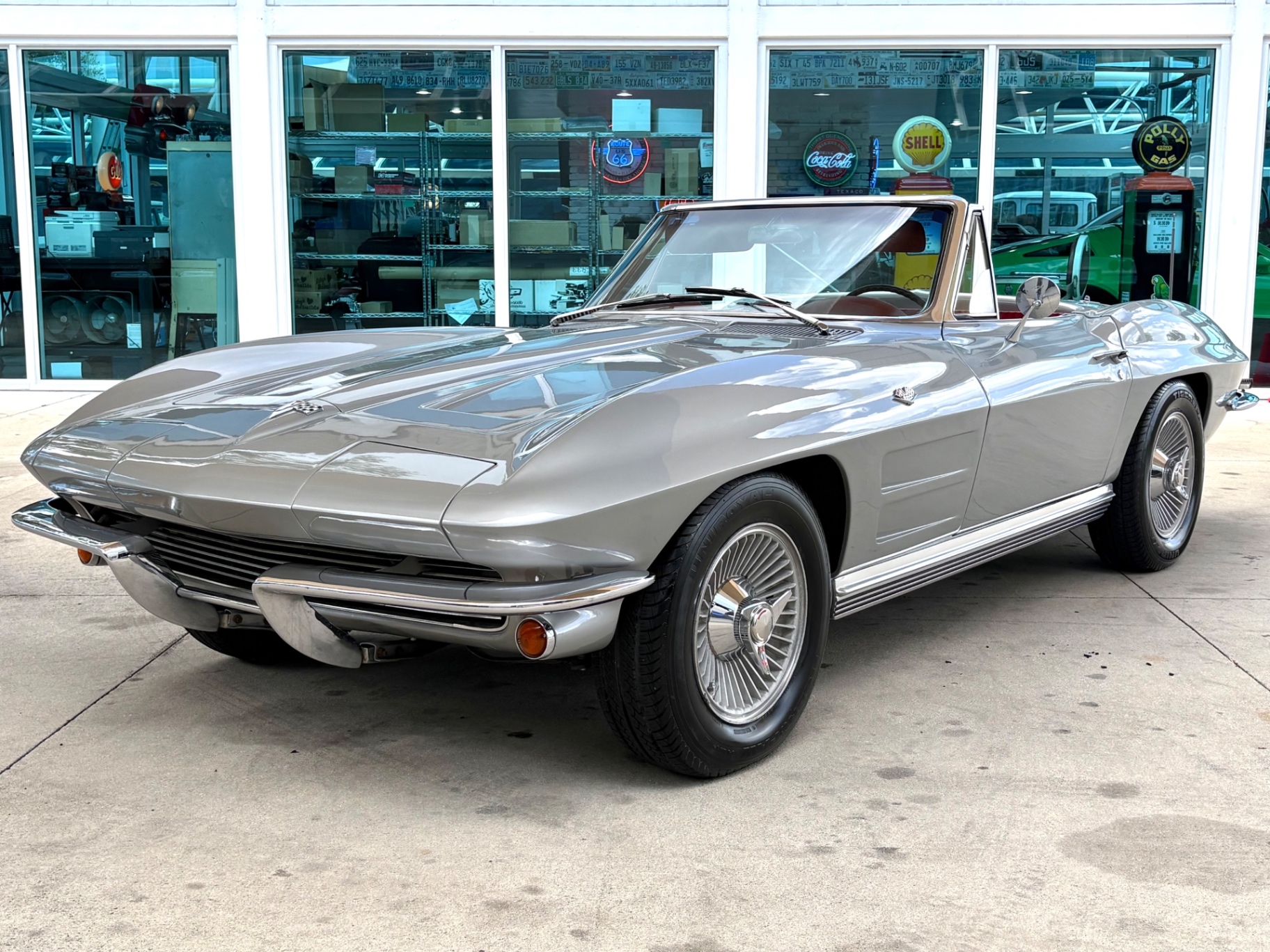
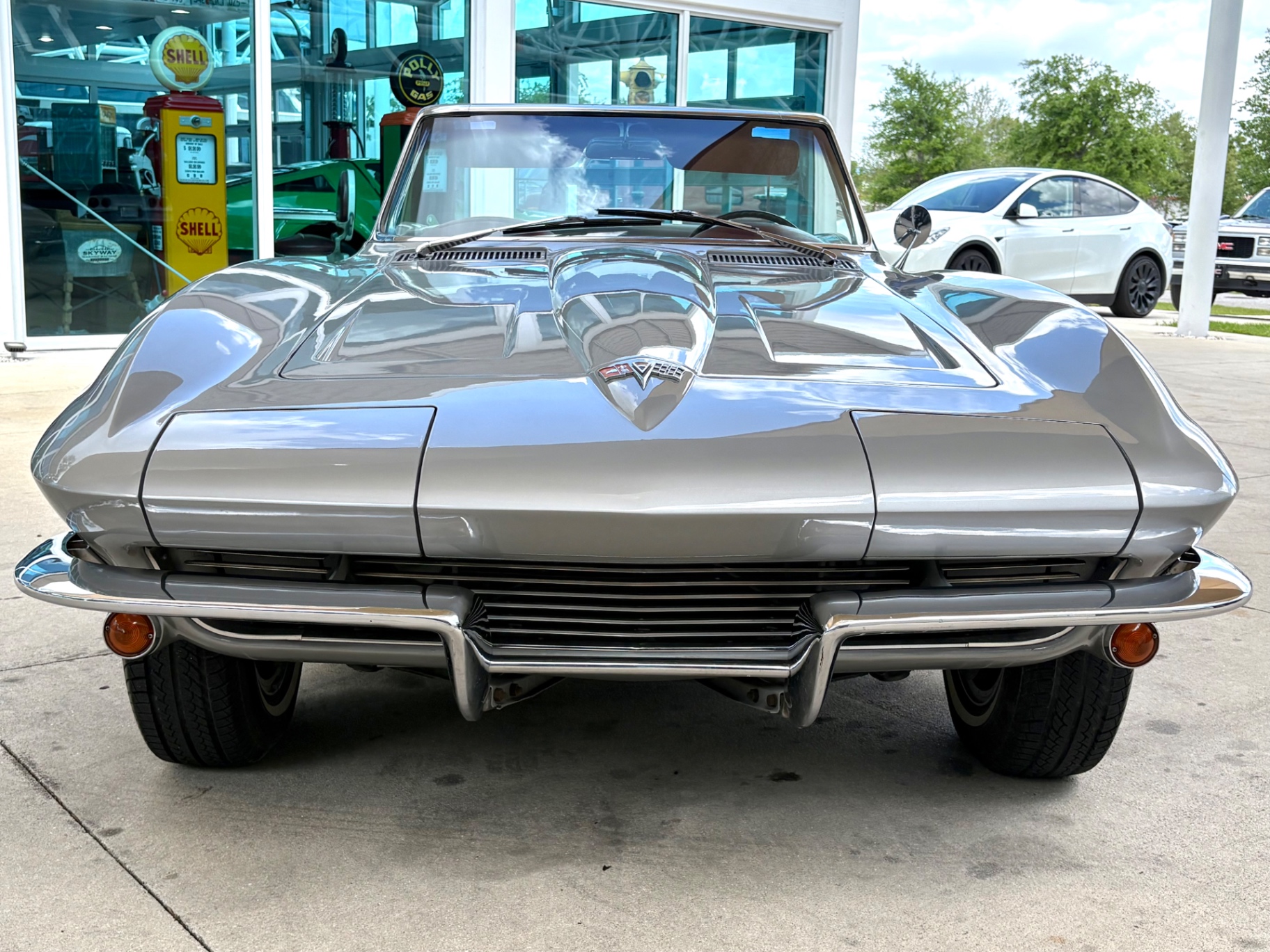
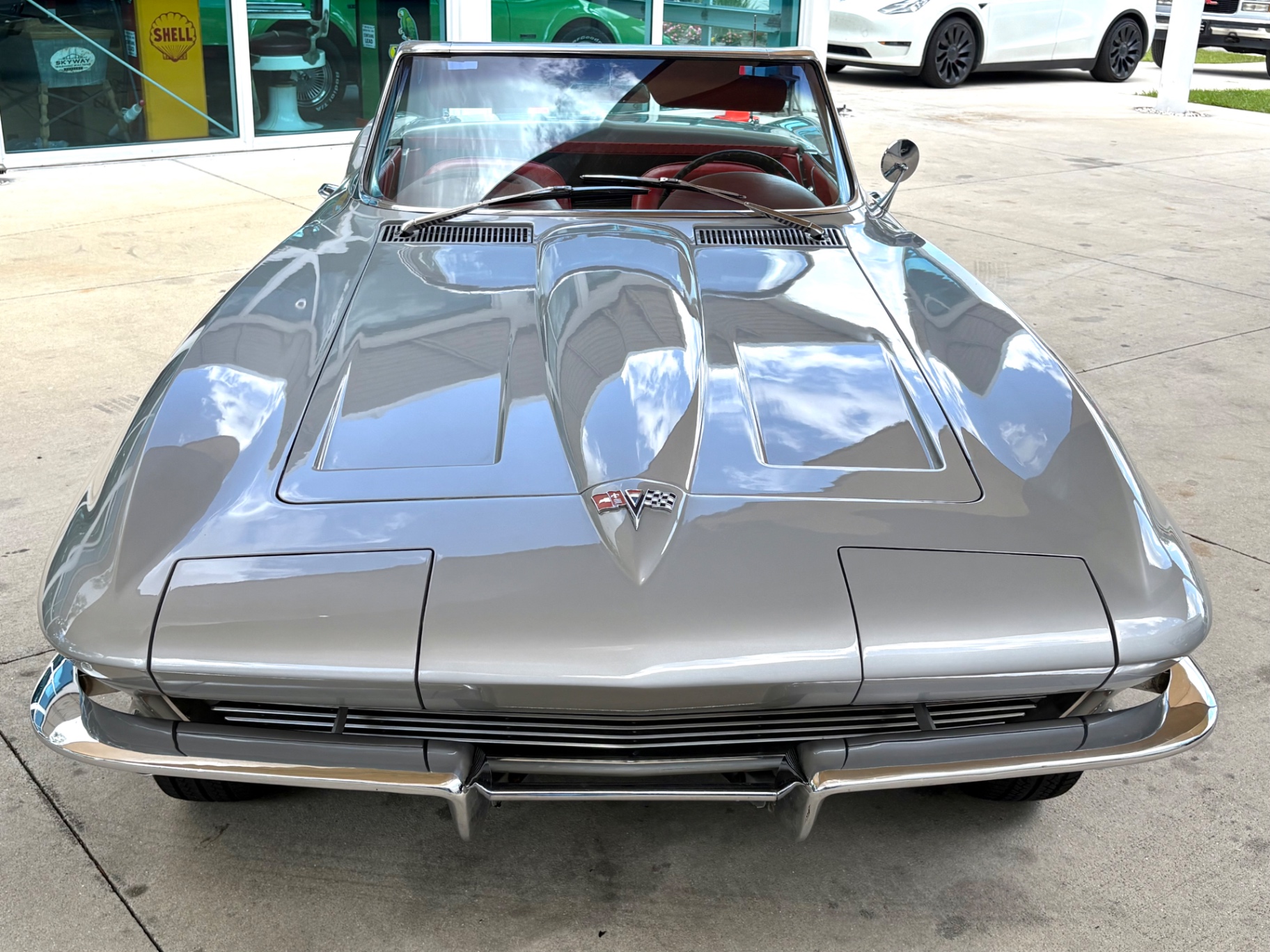
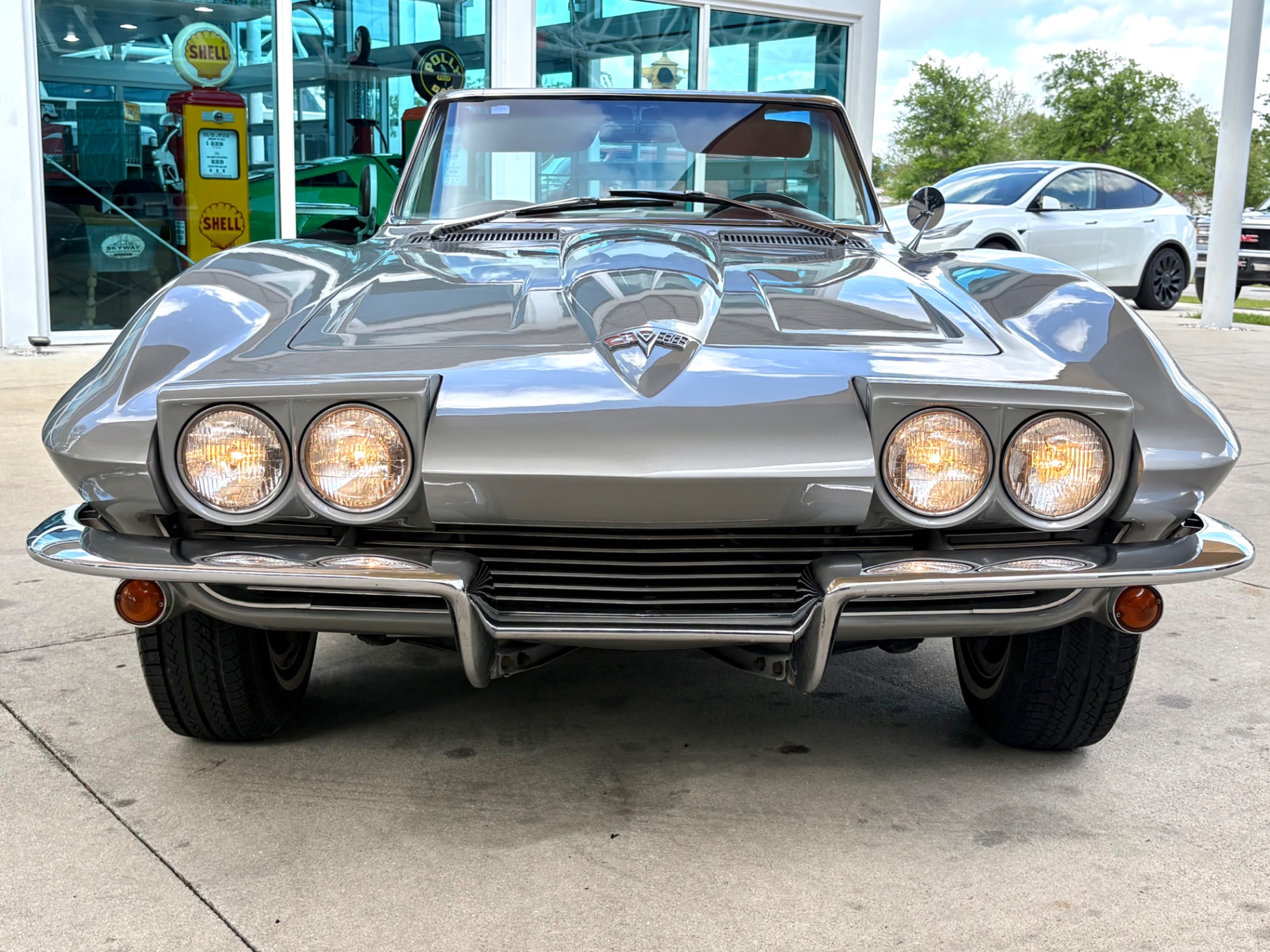
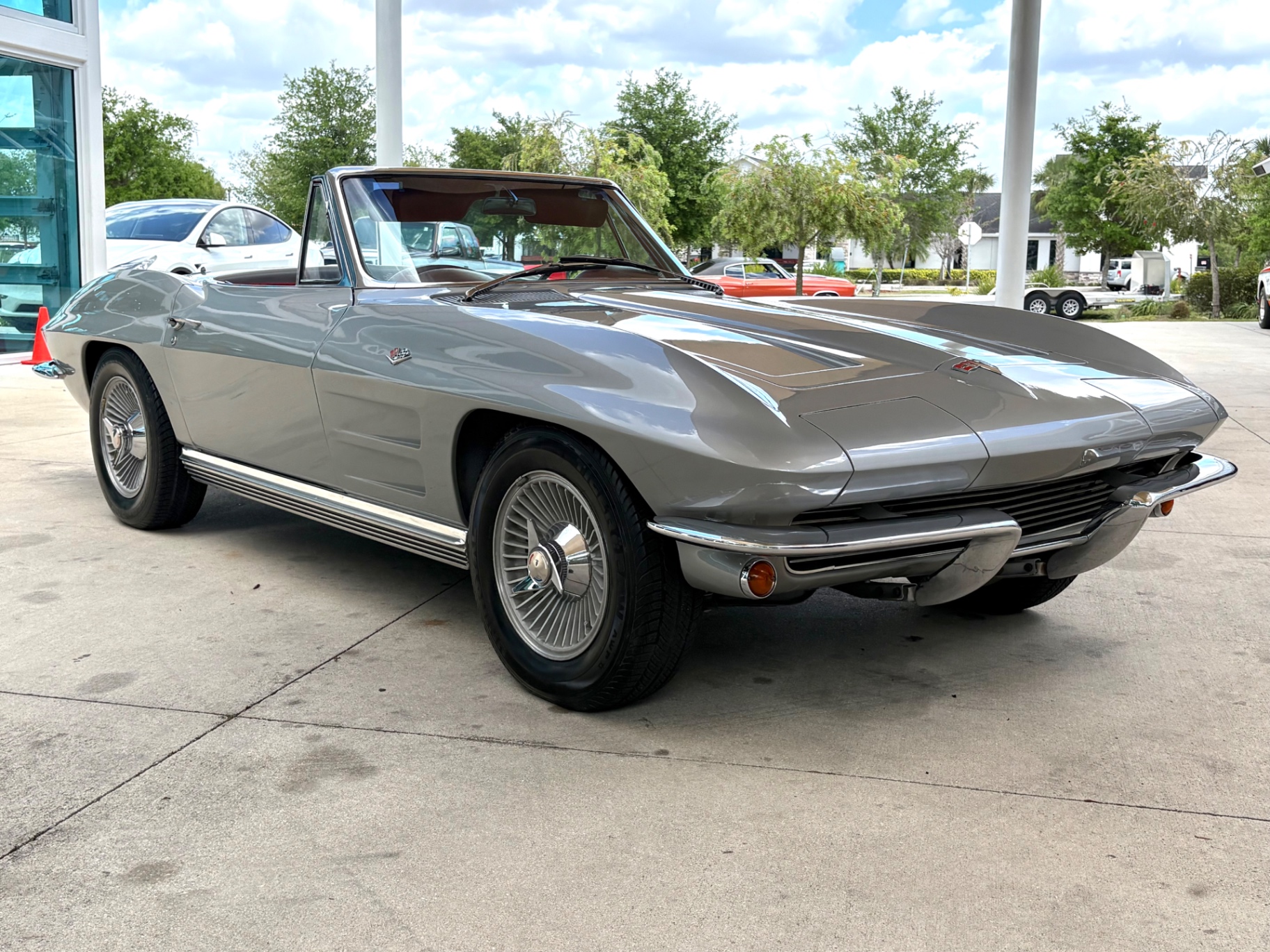
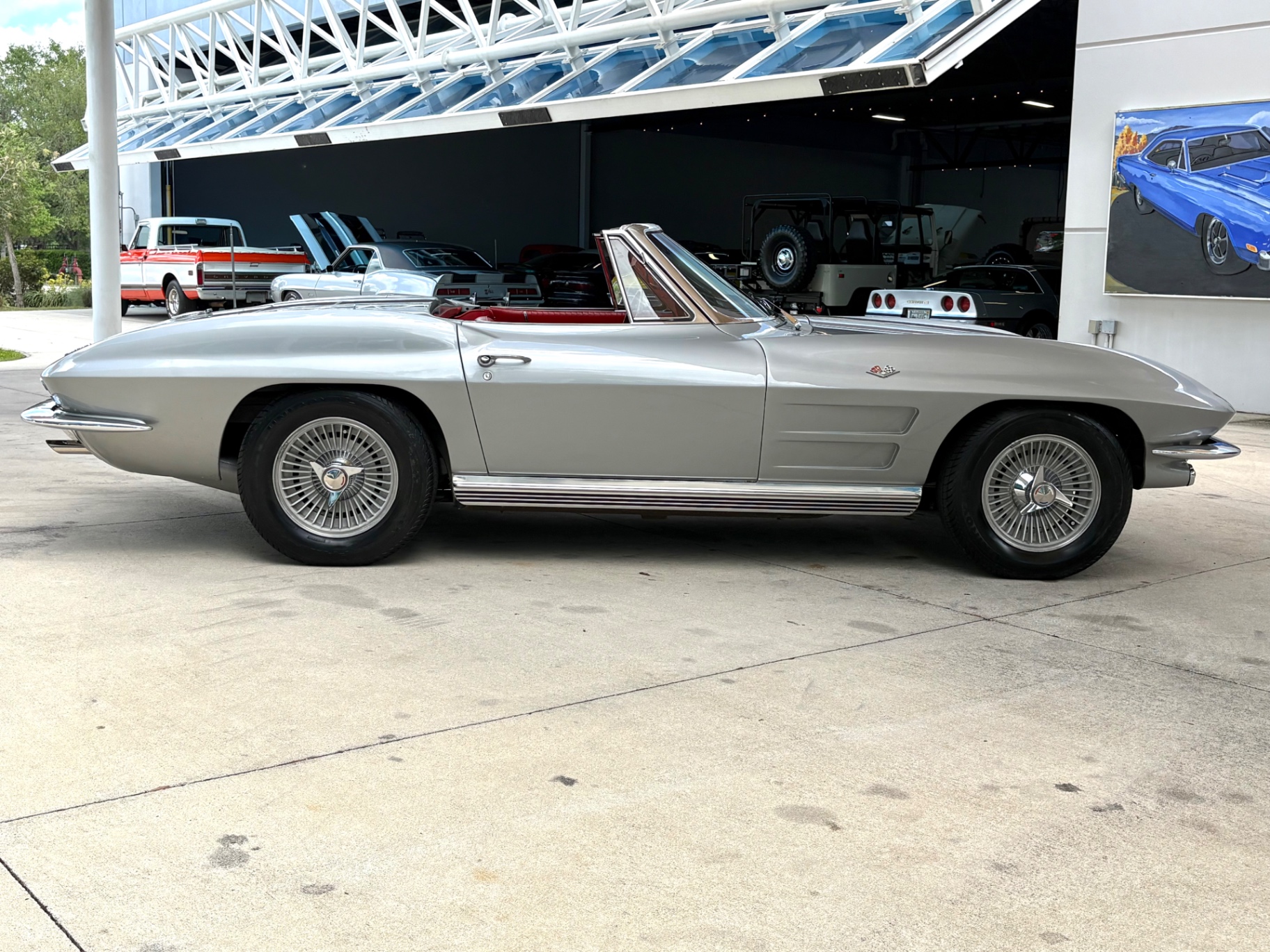
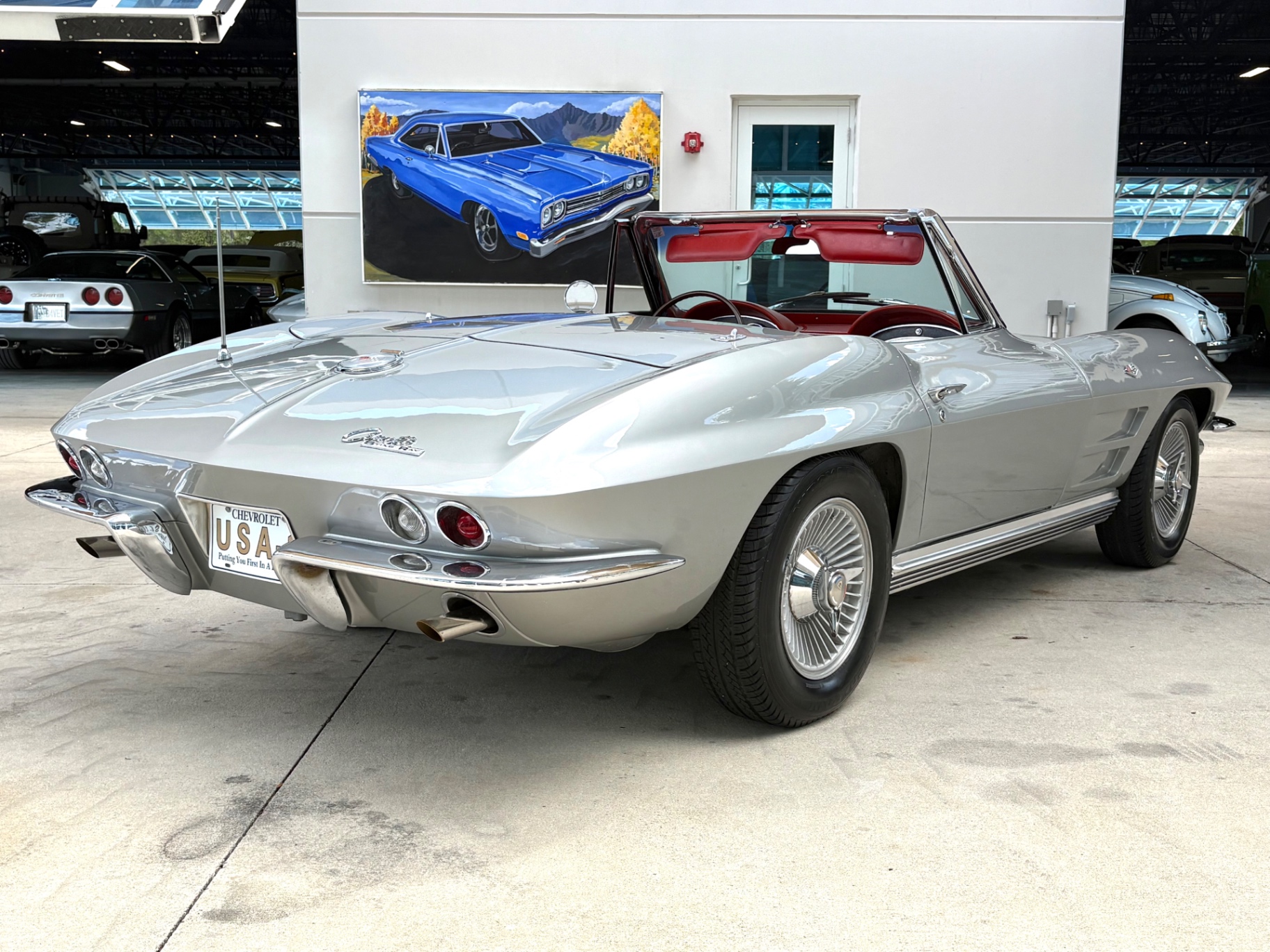
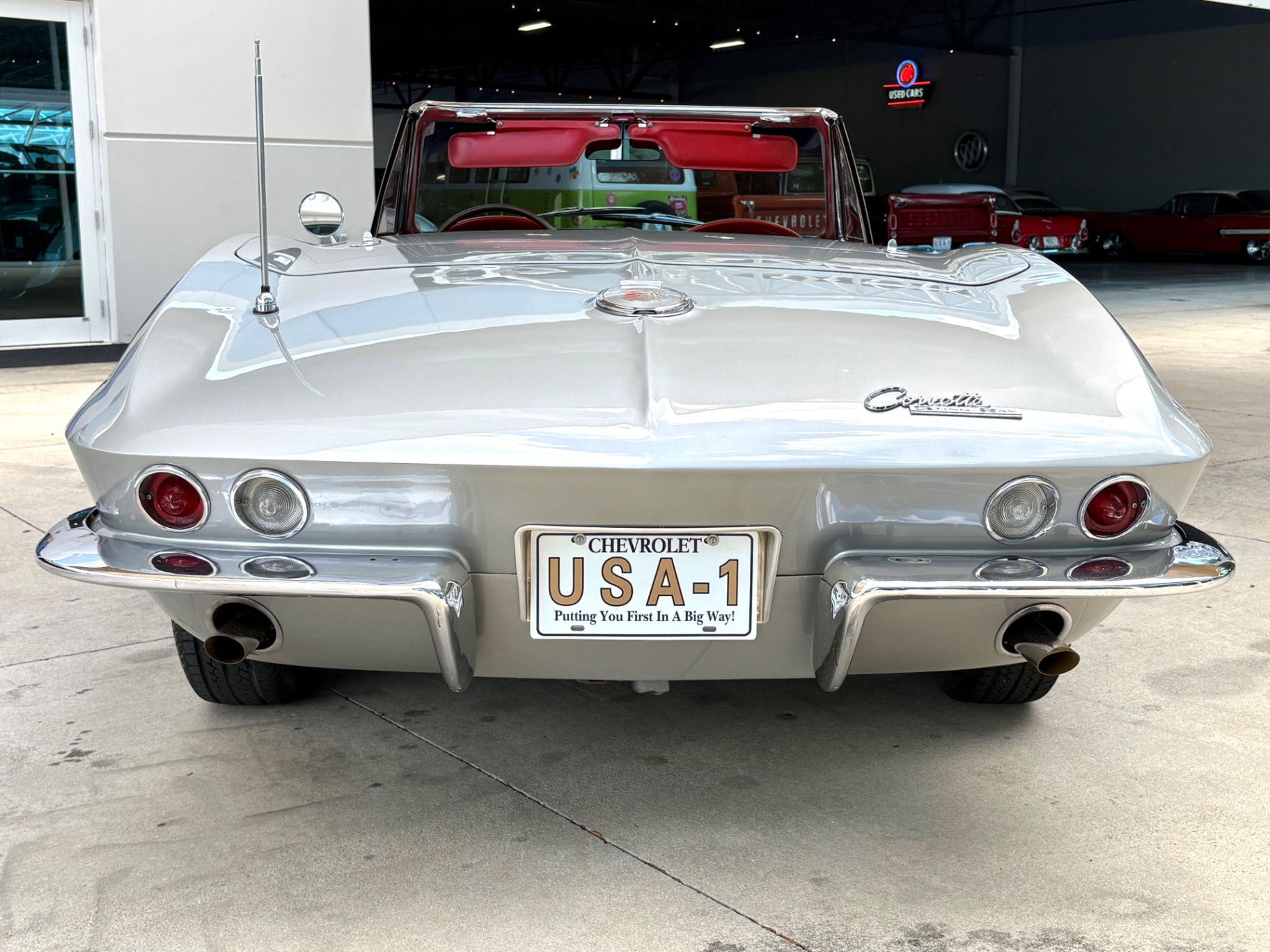
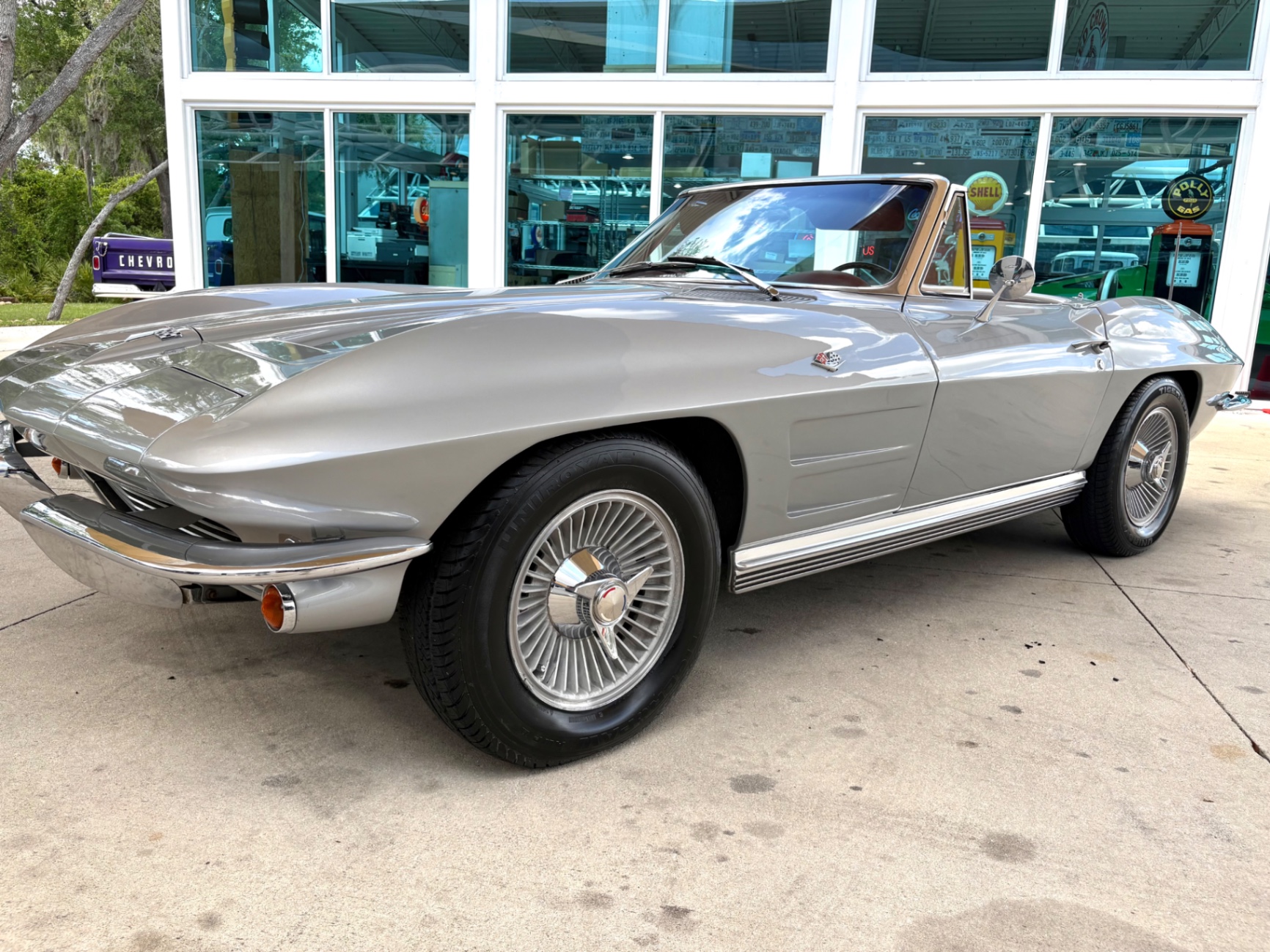
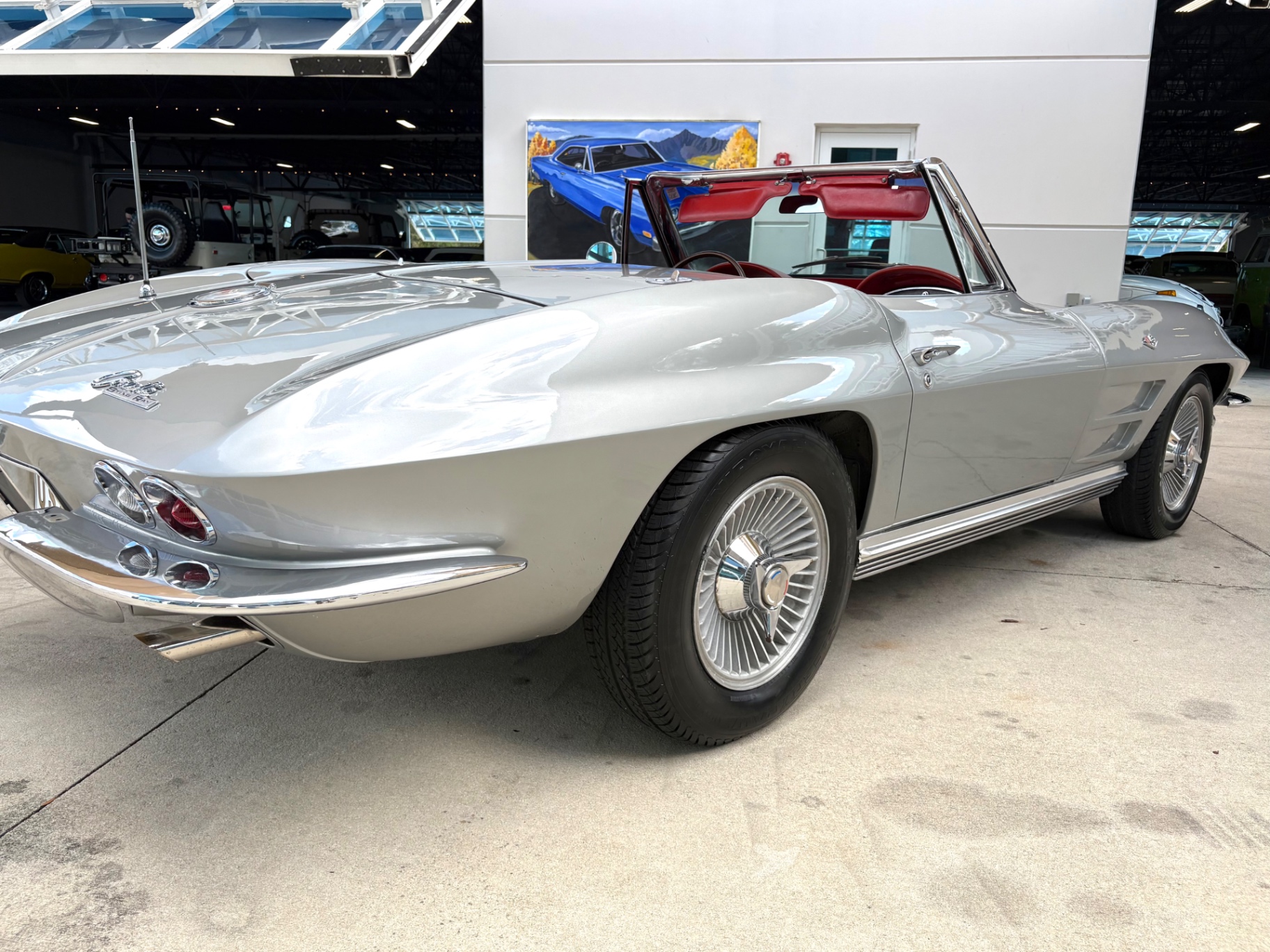
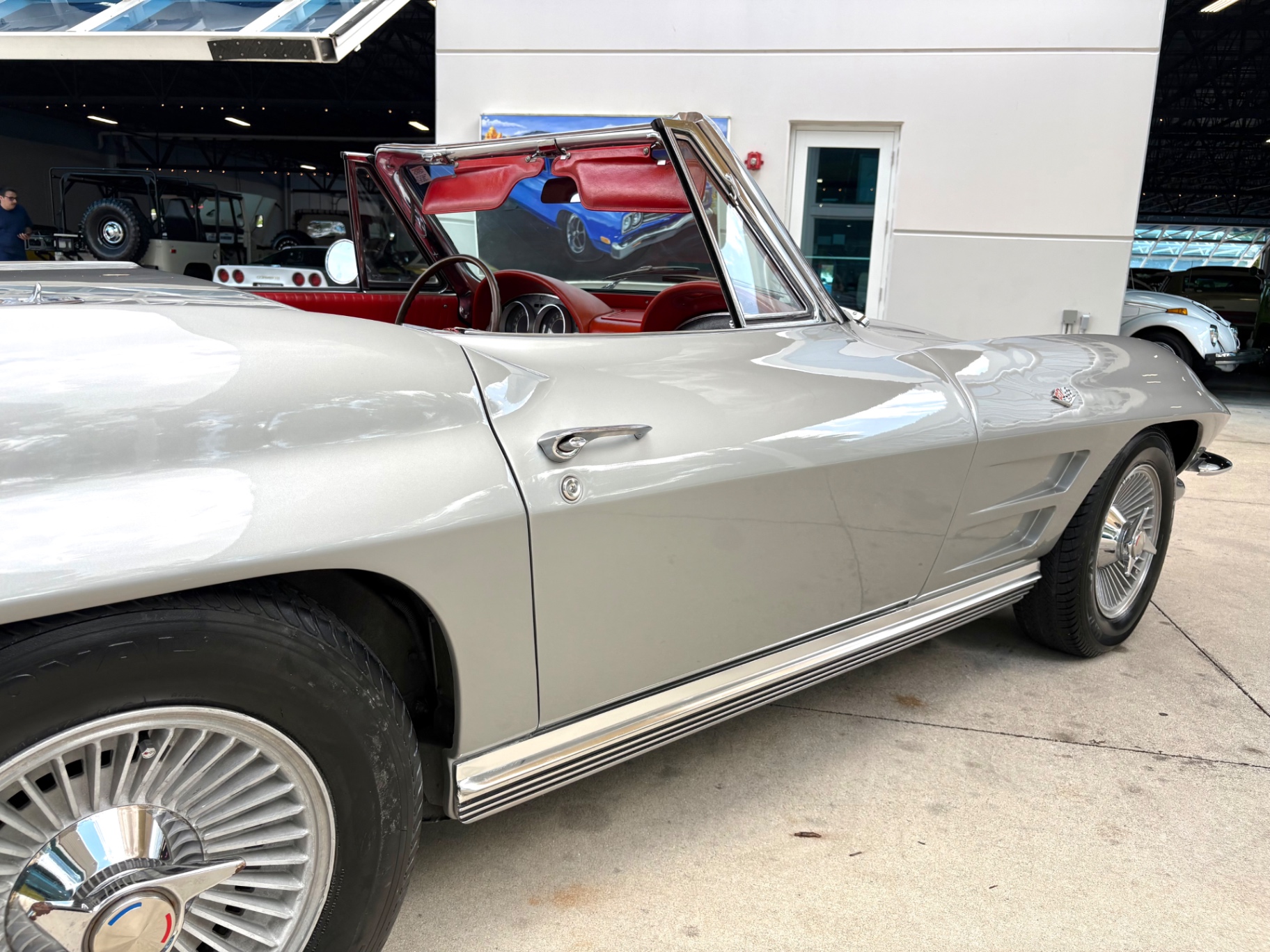
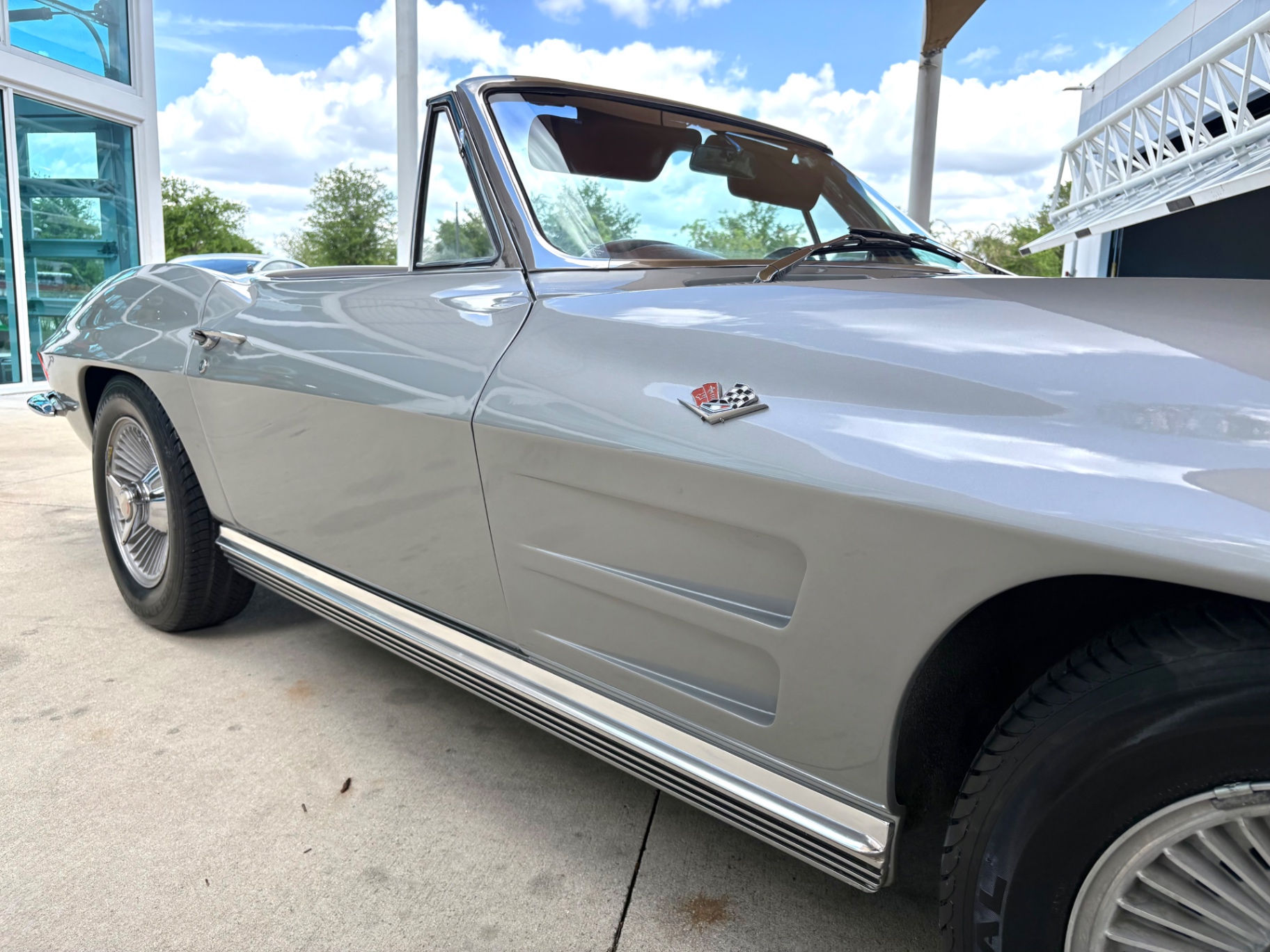
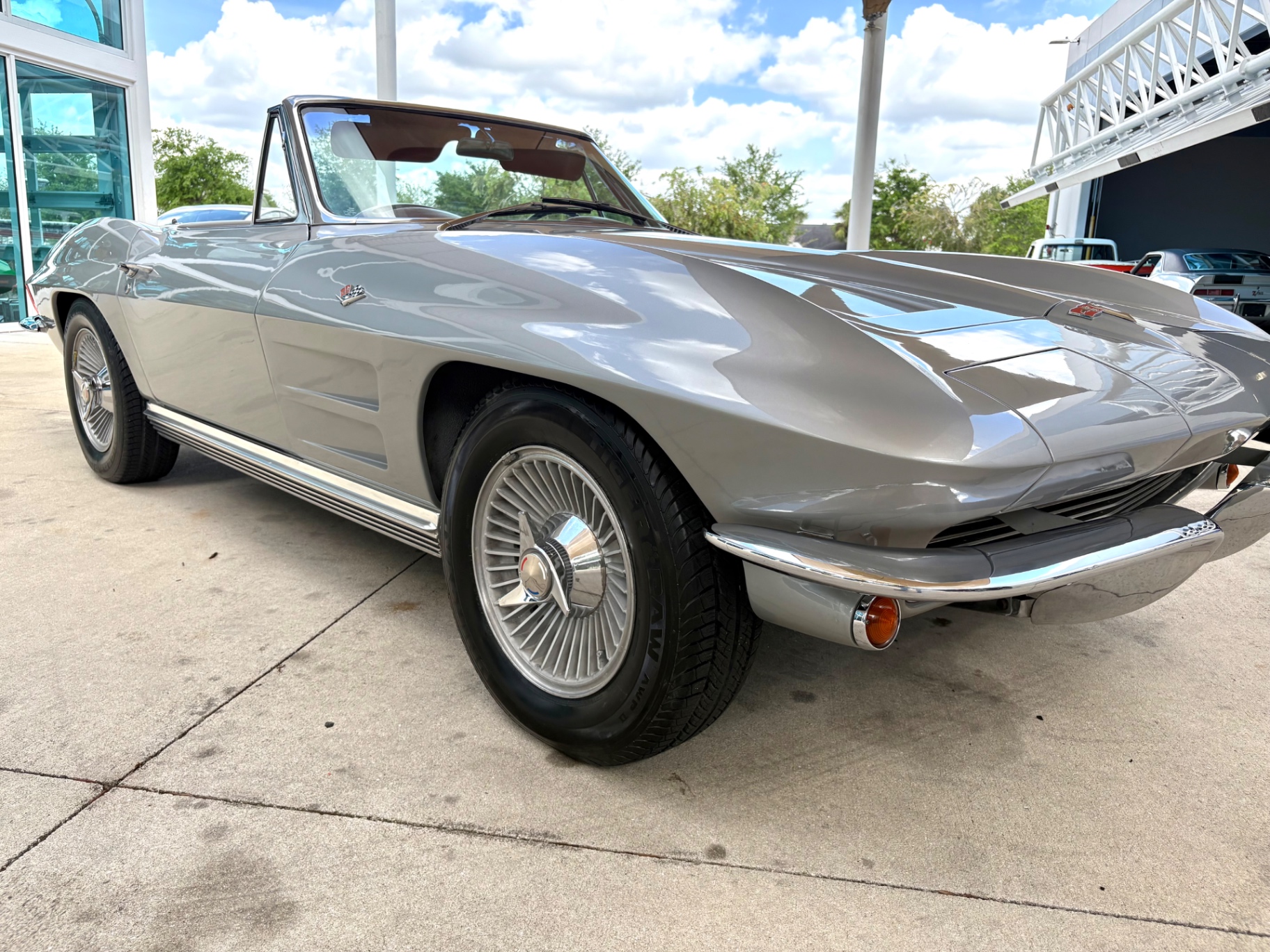
1964 Chevrolet Corvette Sting Ray Convertible — Numbers Matching L75 327/300HP, 4-Speed, Silver over Red
Why This Car Is Special
The 1964 Chevrolet Corvette Sting Ray sits at a specific and well-regarded point in C2 history. It was the second year of the Sting Ray body — the design that Zora Arkus-Duntov and Bill Mitchell had been working toward since the late 1950s — and Chevrolet used that second year to refine what the 1963 had introduced. The divisive split rear window was gone, replaced by a cleaner single-pane design. The fake hood vents were functional now. The dashboard was revised for better ergonomics. In short, 1964 is widely considered the more polished version of what many collectors regard as the best-looking Corvette ever built.
Total 1964 Corvette production came in at 13,925 convertibles. Of those, a meaningful percentage left the factory with base or mid-level 327 engines, but the car presented here carries the L75 — the 327 cubic inch V8 rated at 300 horsepower. That engine sits between the base 250hp unit and the more aggressive fuel-injected and solid-lifter options, making it a strong, street-able combination that rewards daily driving and doesn't demand the level of maintenance that a race-oriented engine requires. Paired with a 4-speed manual transmission, it's the configuration most buyers in 1964 actually wanted.
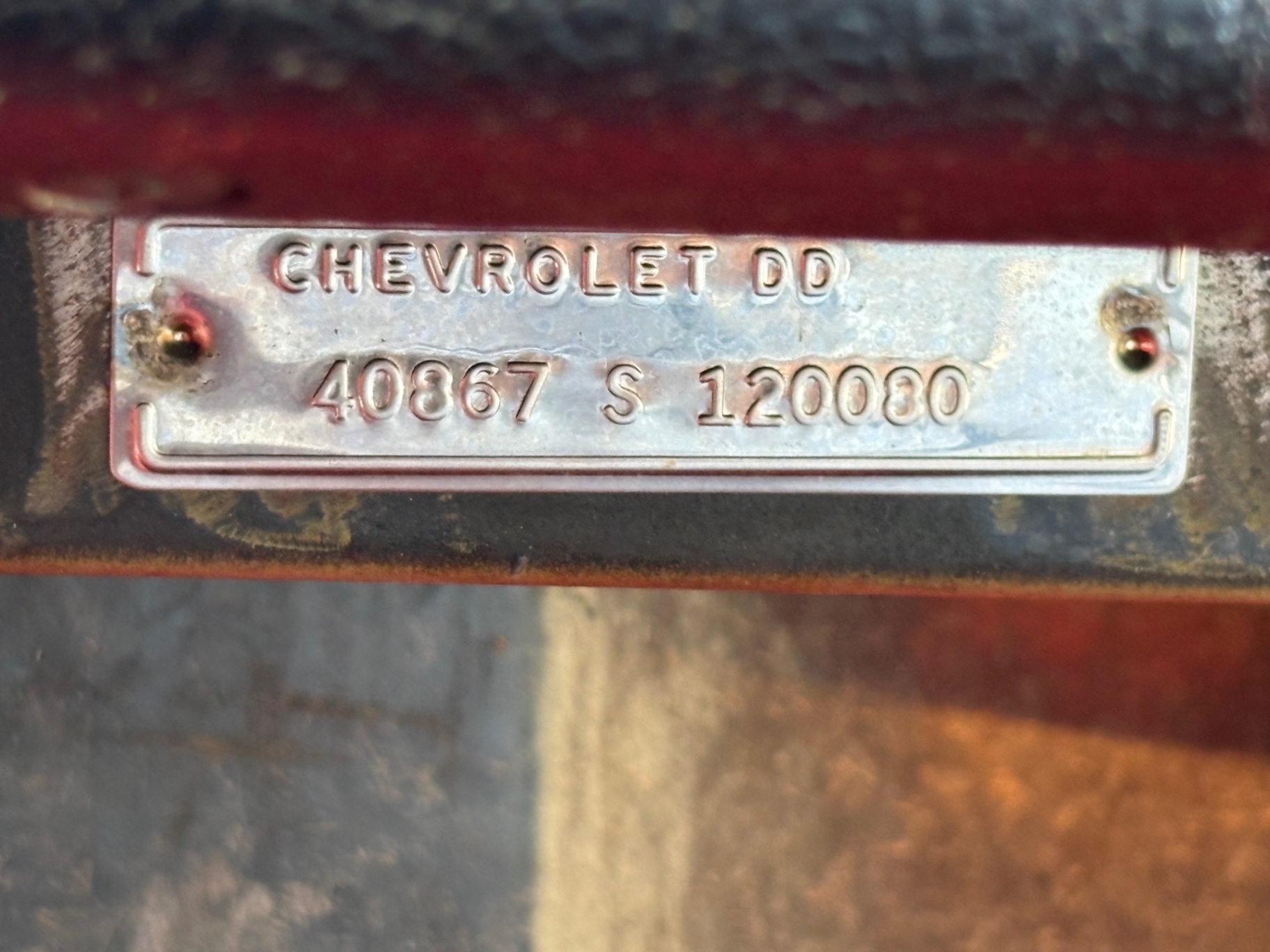
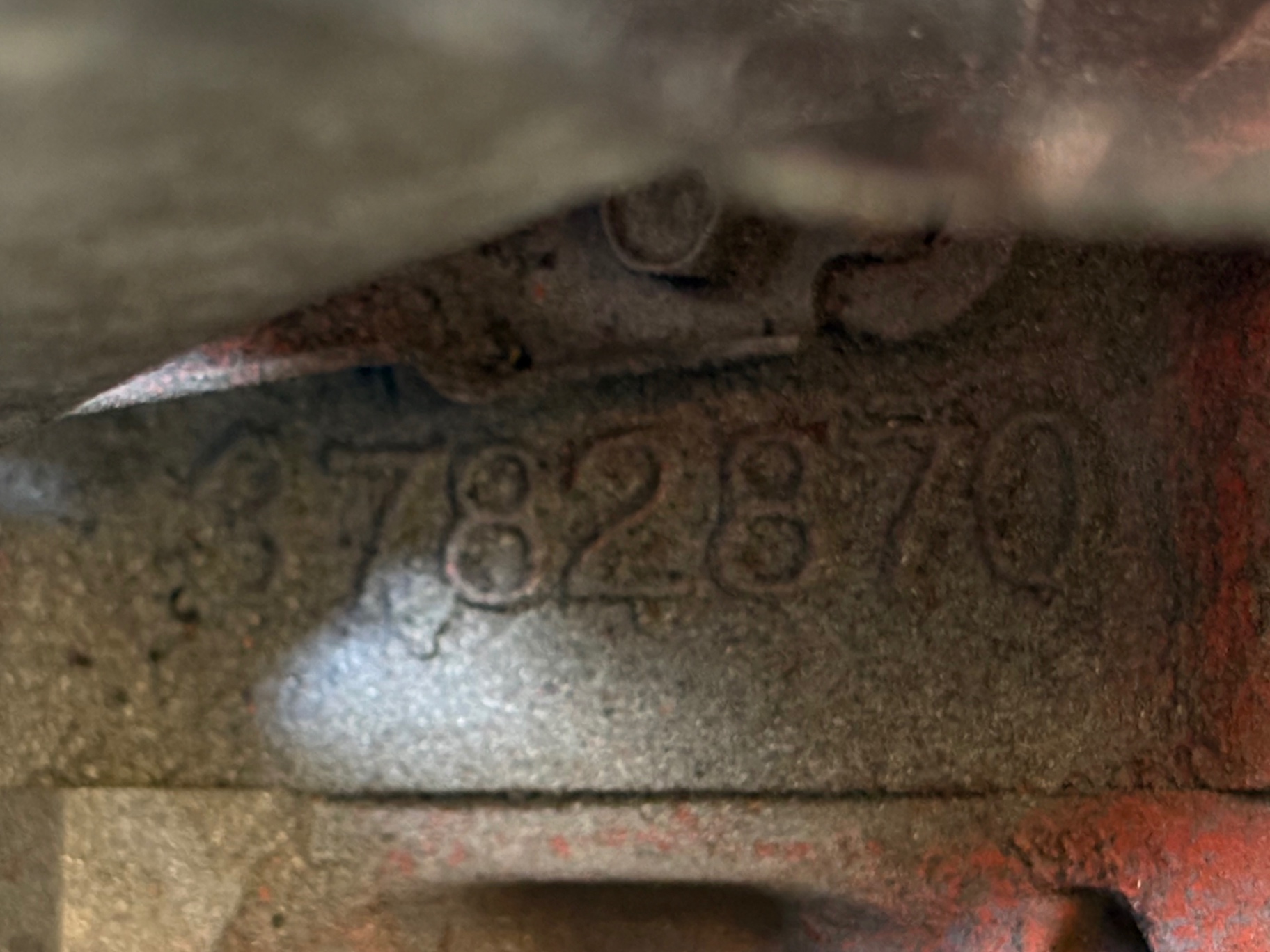
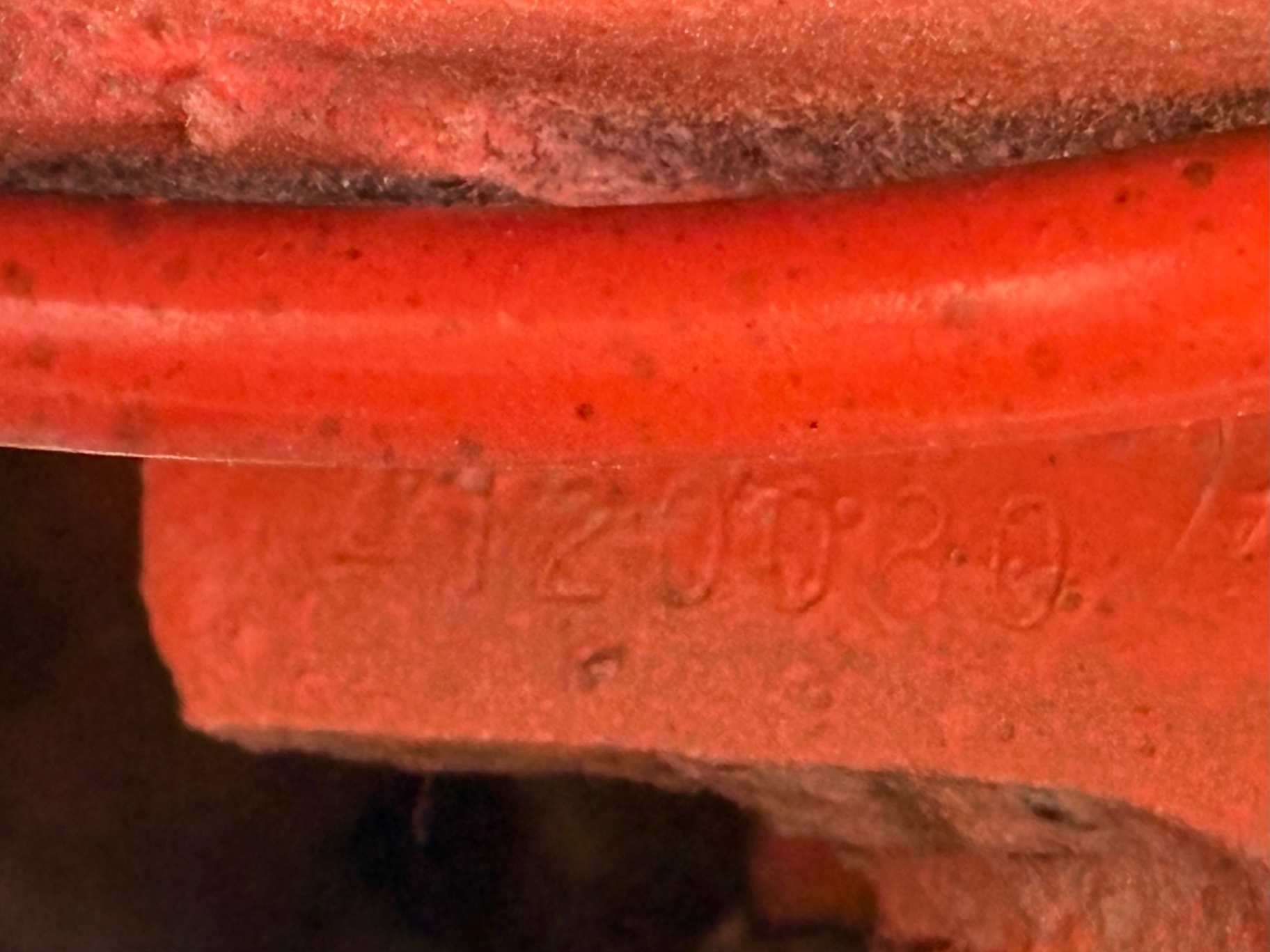
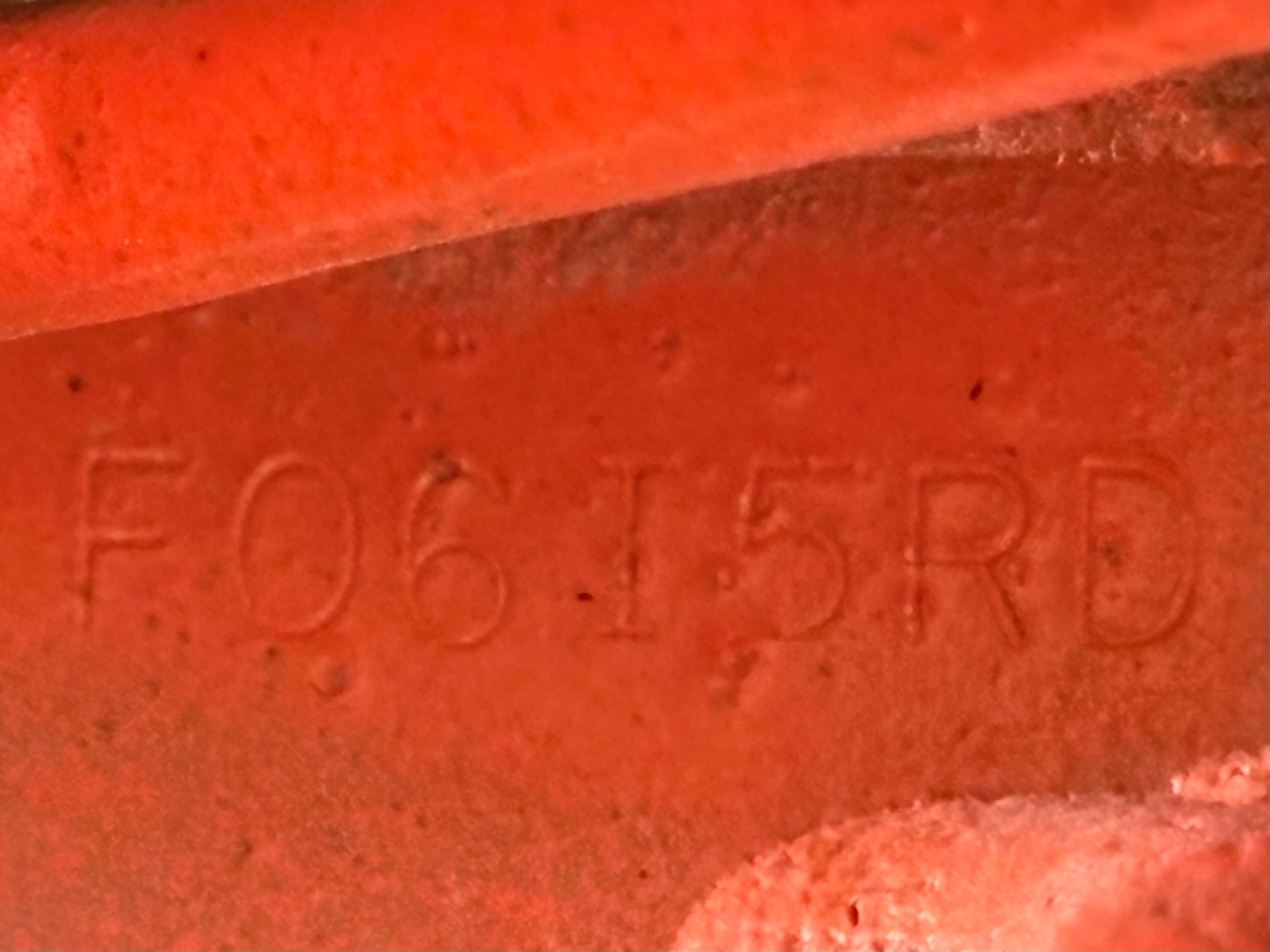
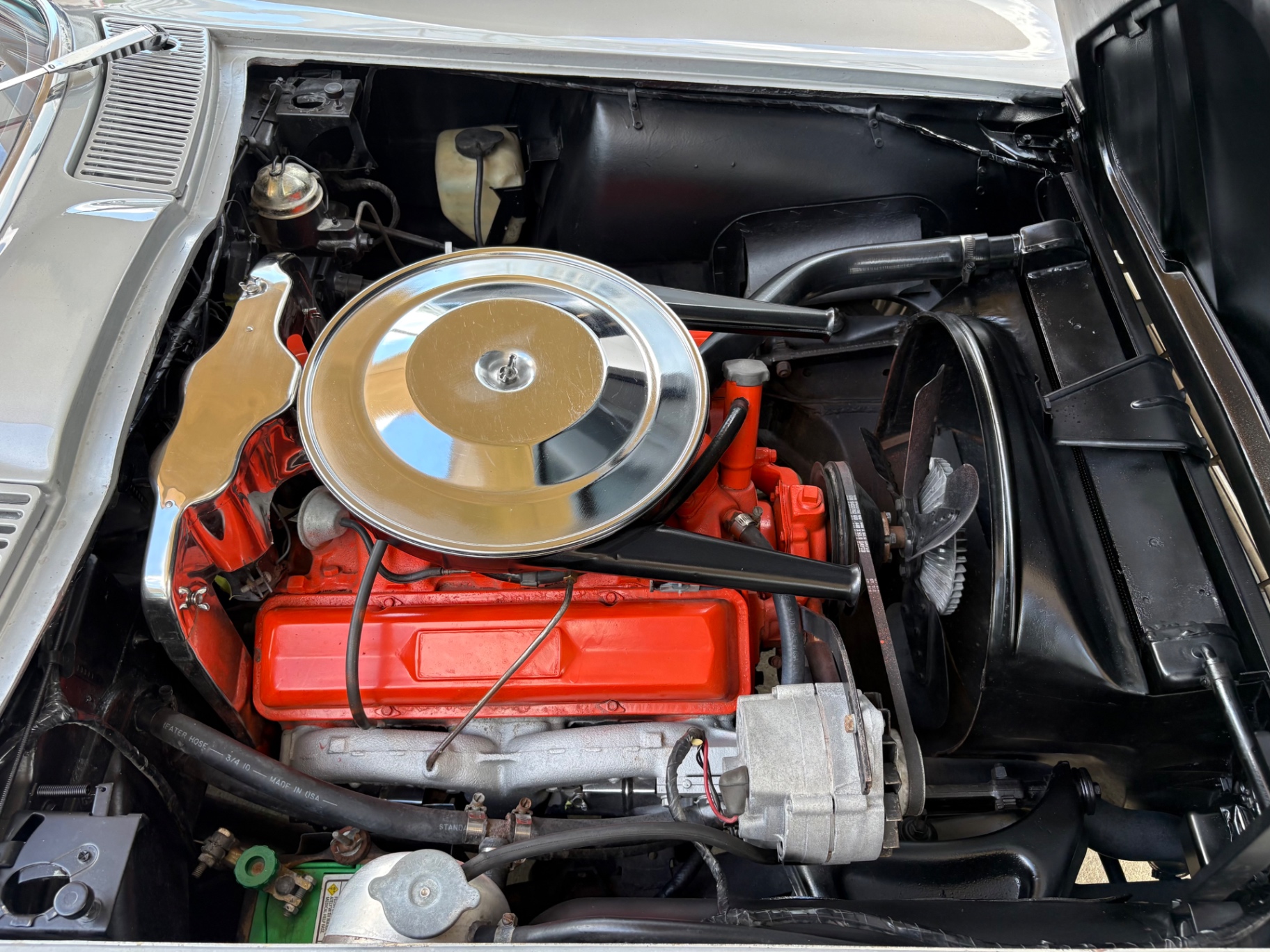
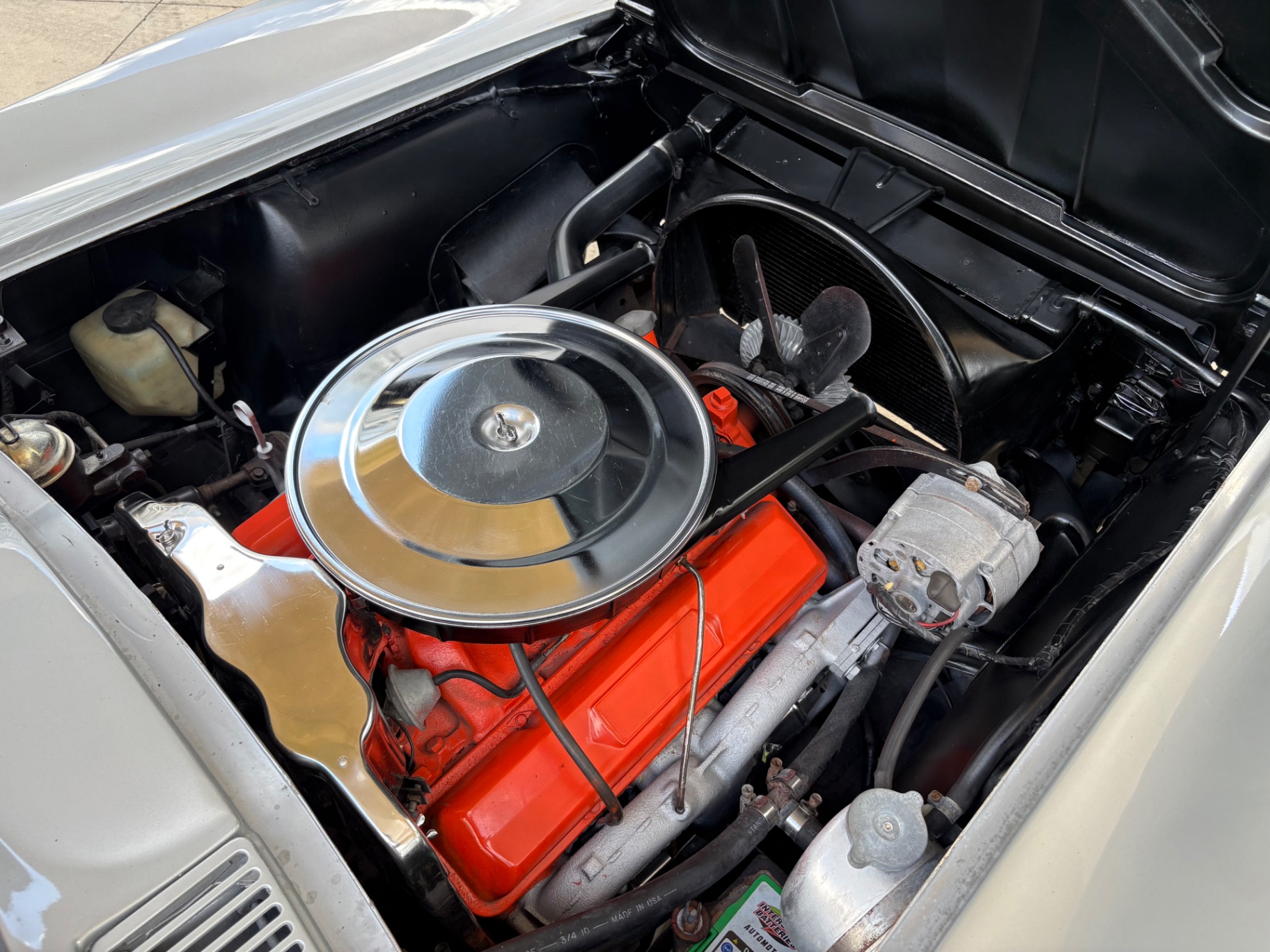
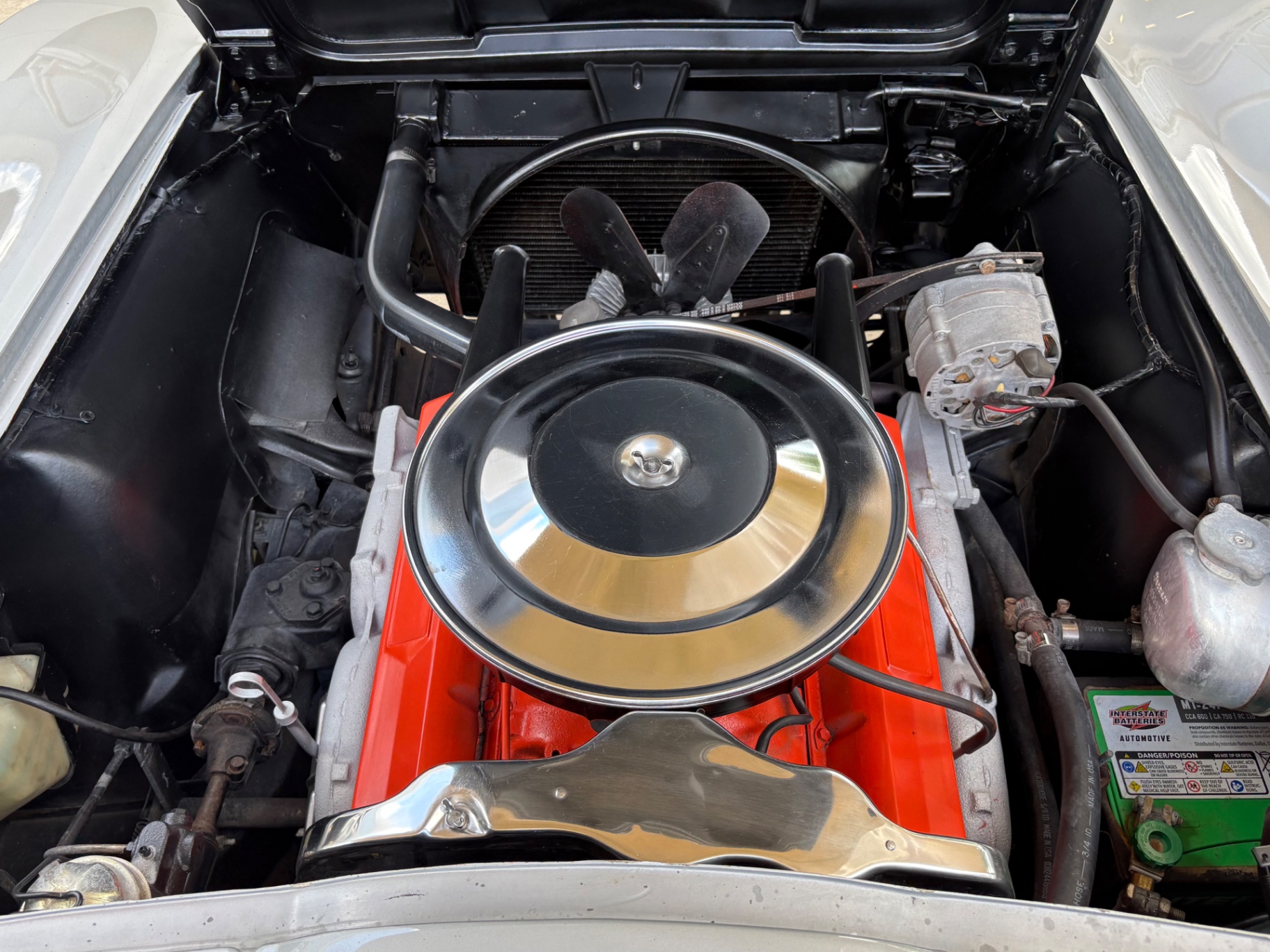
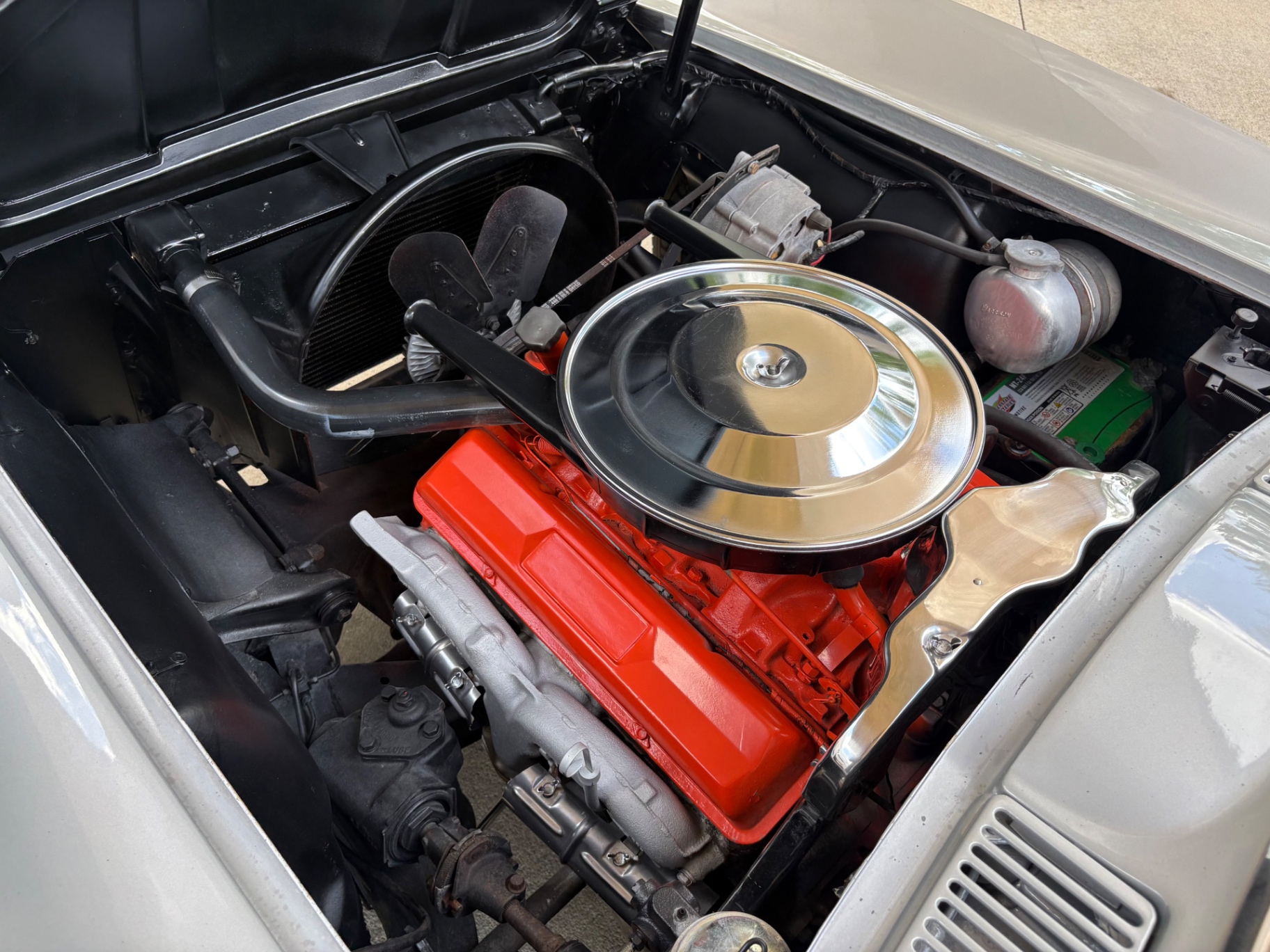
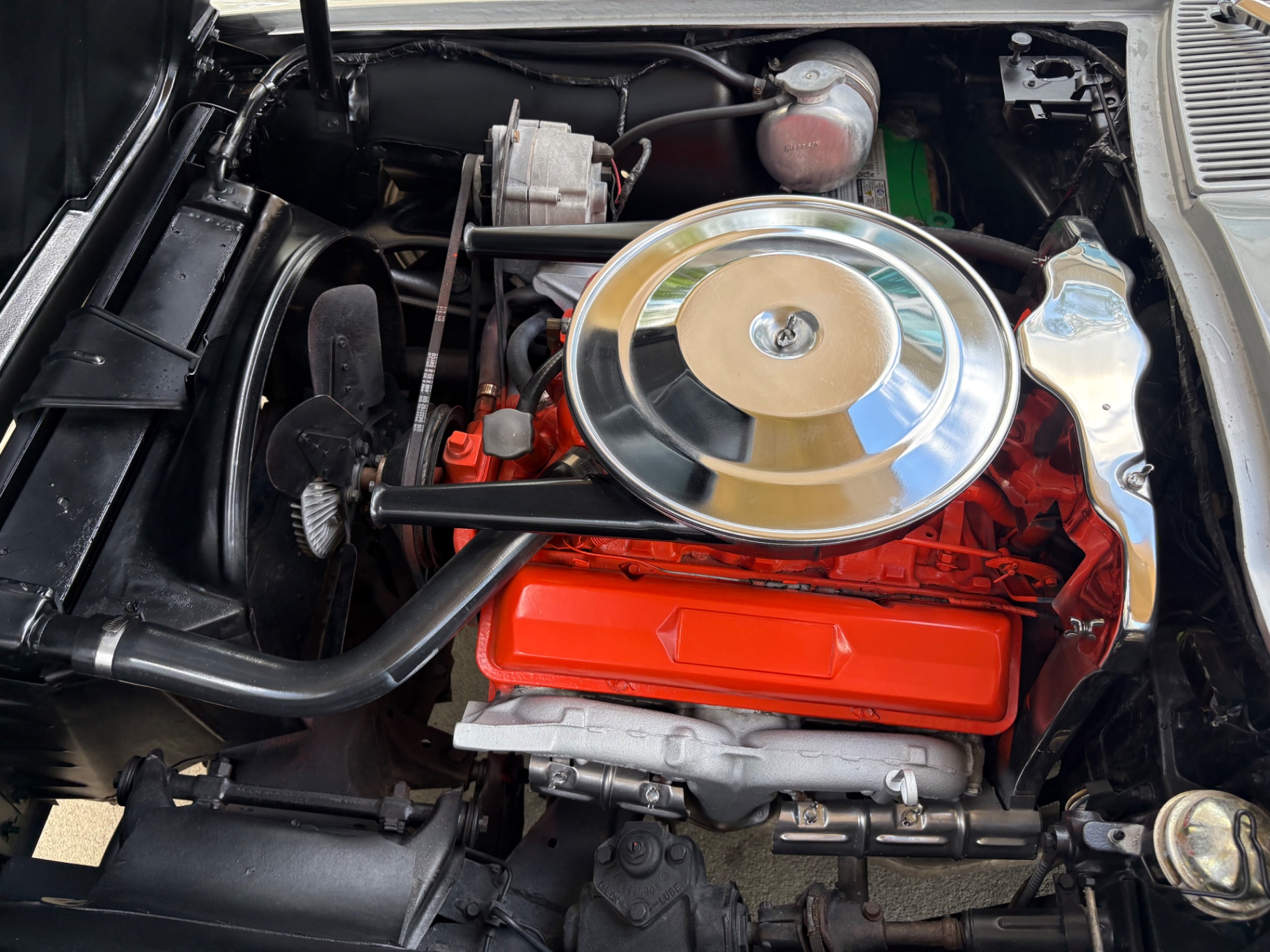
What separates this specific 1964 Corvette Sting Ray from the majority of C2s you'll encounter is the depth of its documentation and the correctness of its drivetrain. The engine numbers match the car. The block is painted the correct Chevrolet engine red. The valve covers are correct red. The alternator is correct. This is not a car that has been assembled from mixed parts — it is documented as a single long-term collection car with a traceable ownership history. That provenance matters enormously when it comes time to insure, show, or resell.
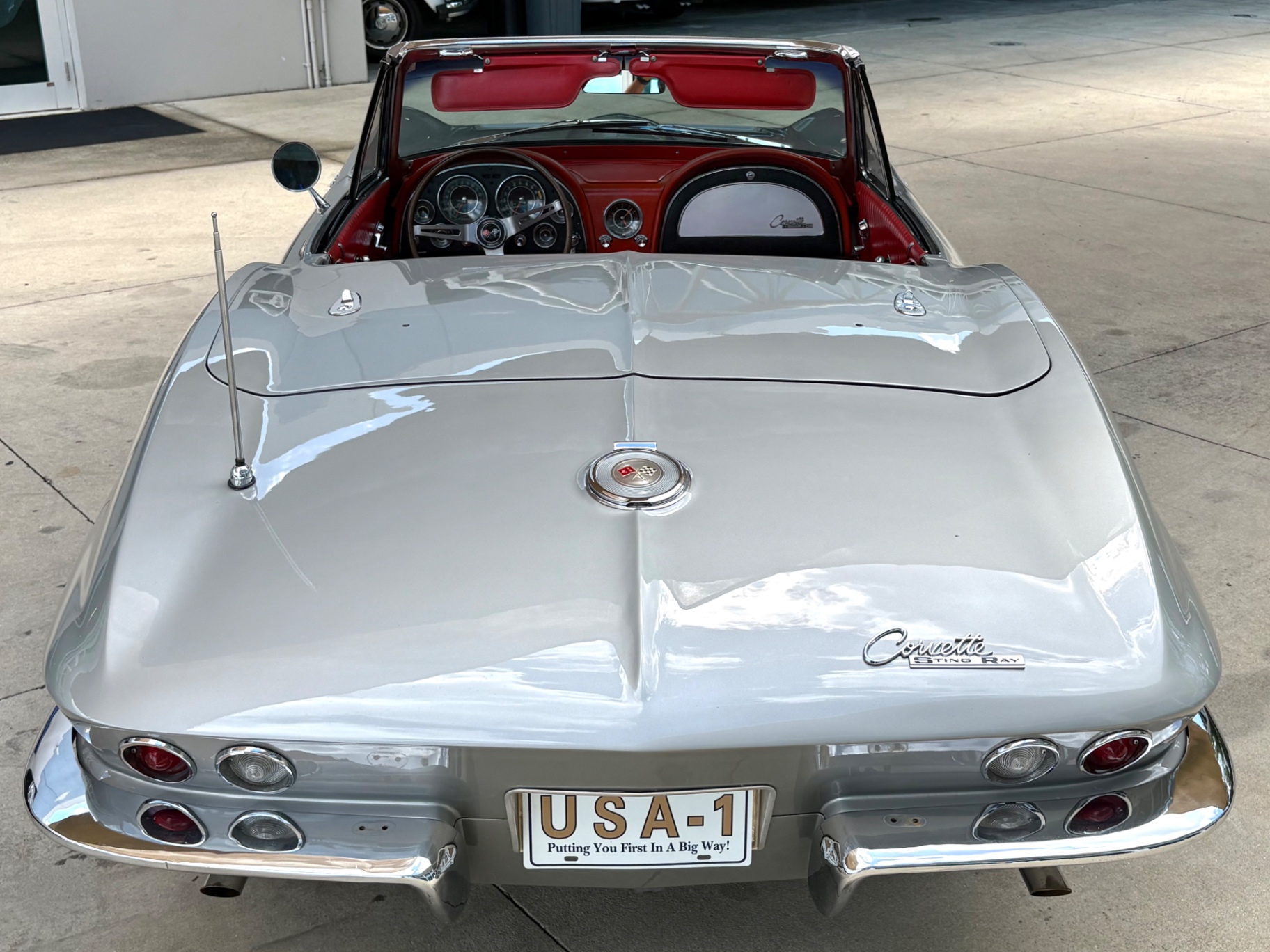
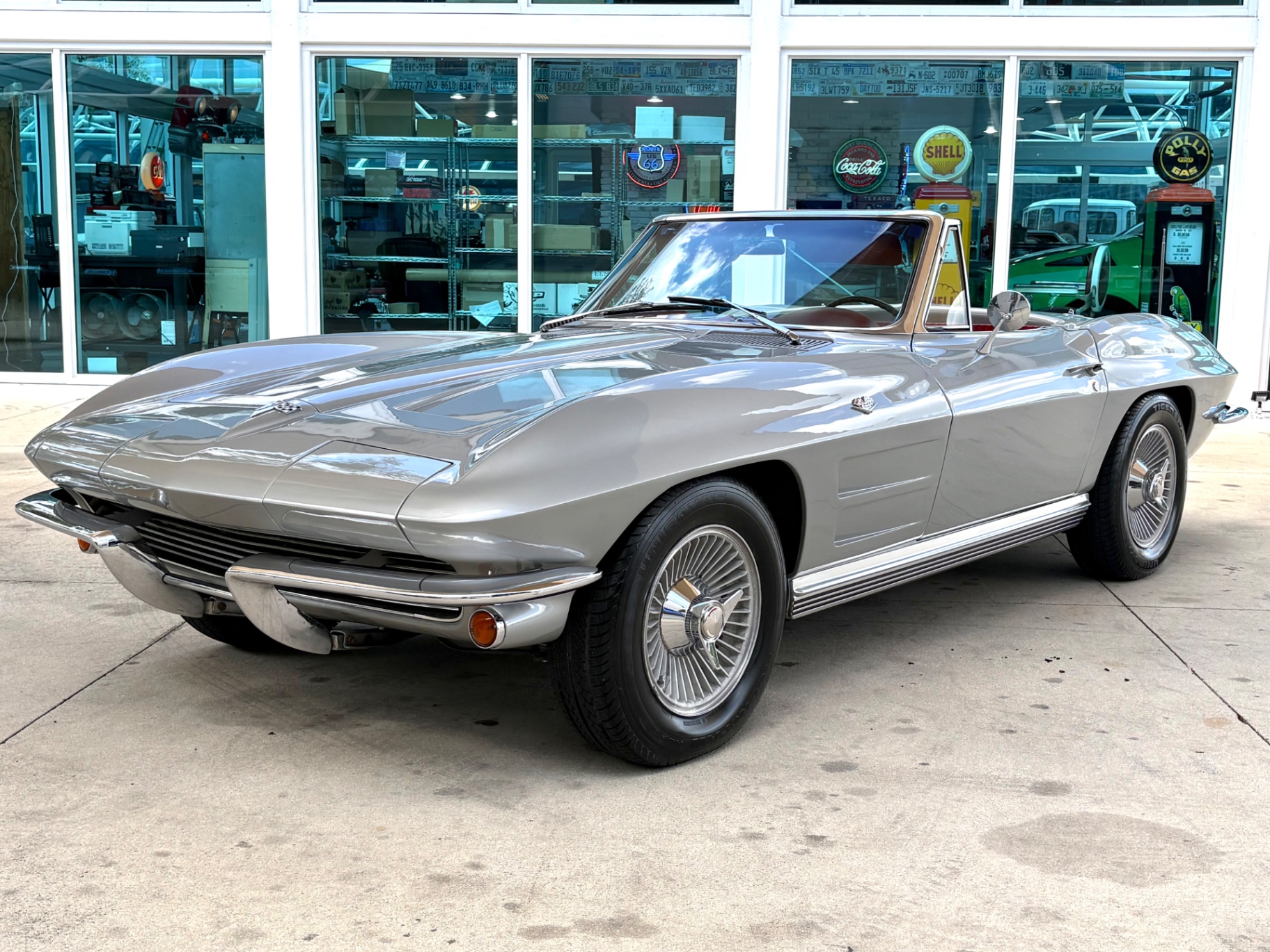
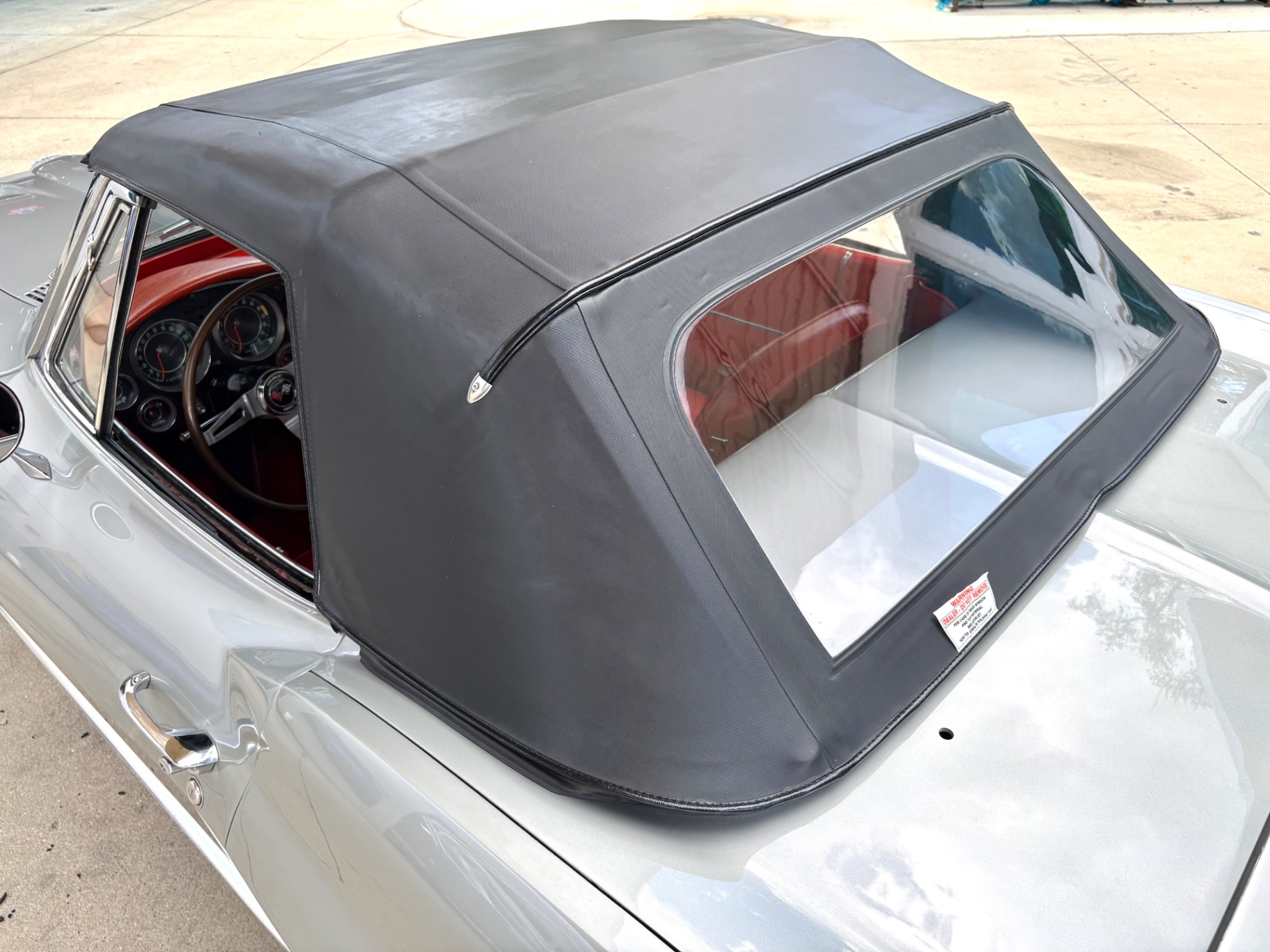
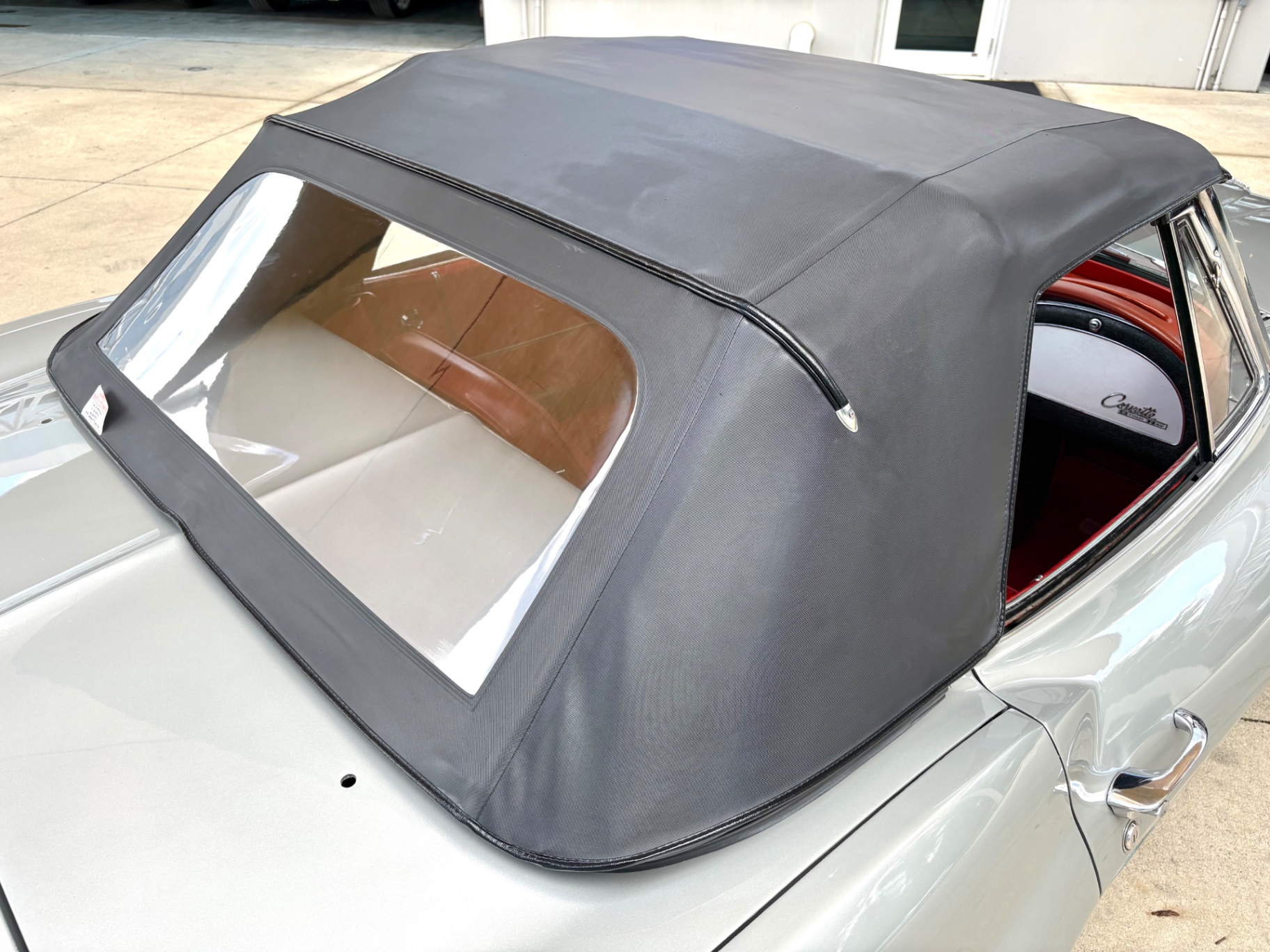
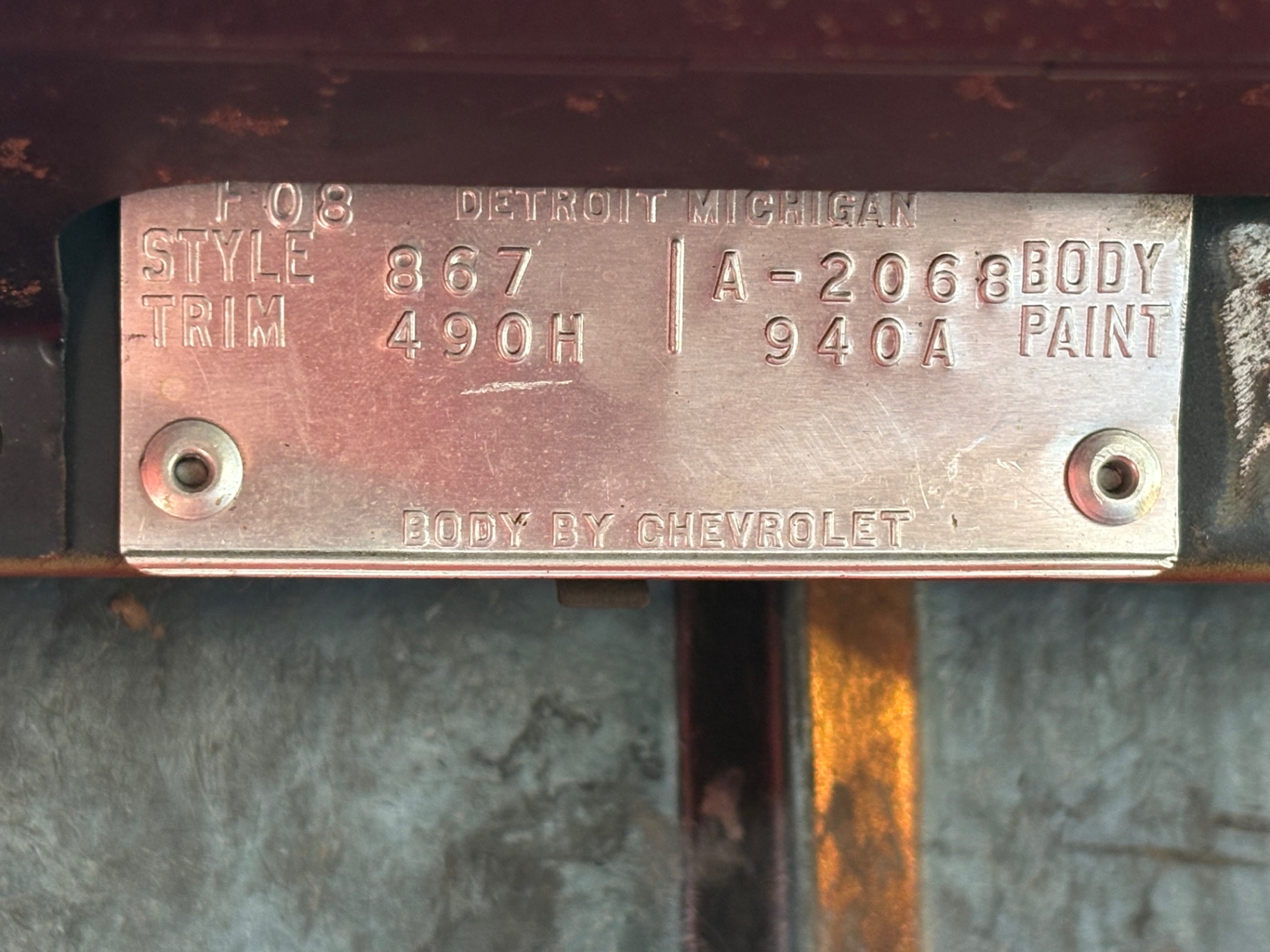
The color combination adds another layer of appeal. Silver over red was a factory-correct and visually distinct pairing in 1964. The white convertible top completes the look cleanly. Add the dealer-installed rear luggage rack — a period-correct accessory that relatively few C2s carry today — and you have a car that stands out even in a room full of well-preserved Corvettes.
Features List
- Numbers matching L75 327ci V8, 300 horsepower
- Correct red-painted block and red valve covers
- 4-speed manual transmission, numbers matching drivetrain
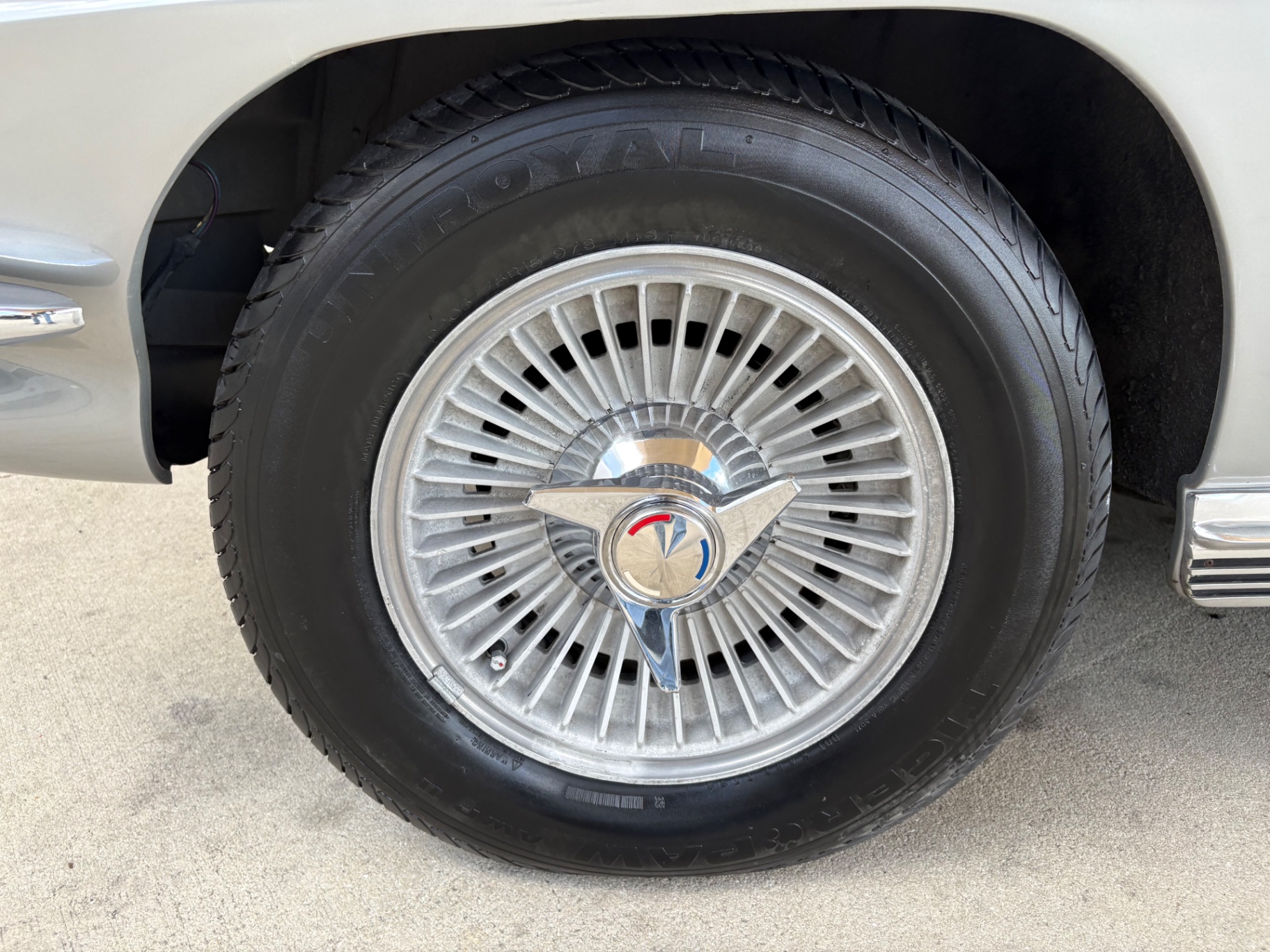
- Knock-off wheels (require lead hammer for removal, as designed)
- White convertible top
- Silver exterior with red vinyl interior
- Dealer-installed rear luggage rack
- Spare tire carrier present
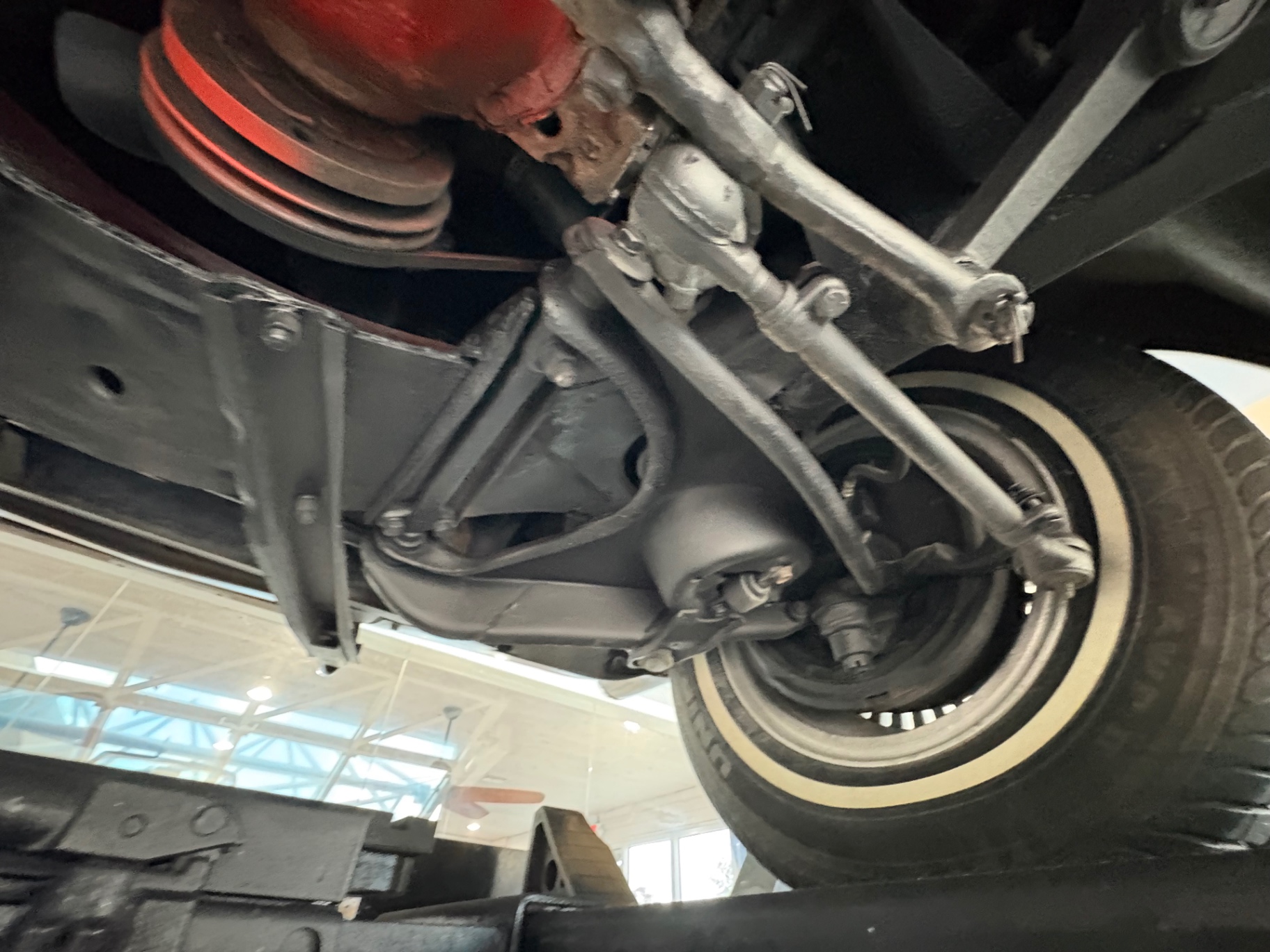
- Front suspension recently rebuilt
- Independent rear suspension (IRS)
- Dual exhaust with correct bumper tip exits
- Painted undercarriage
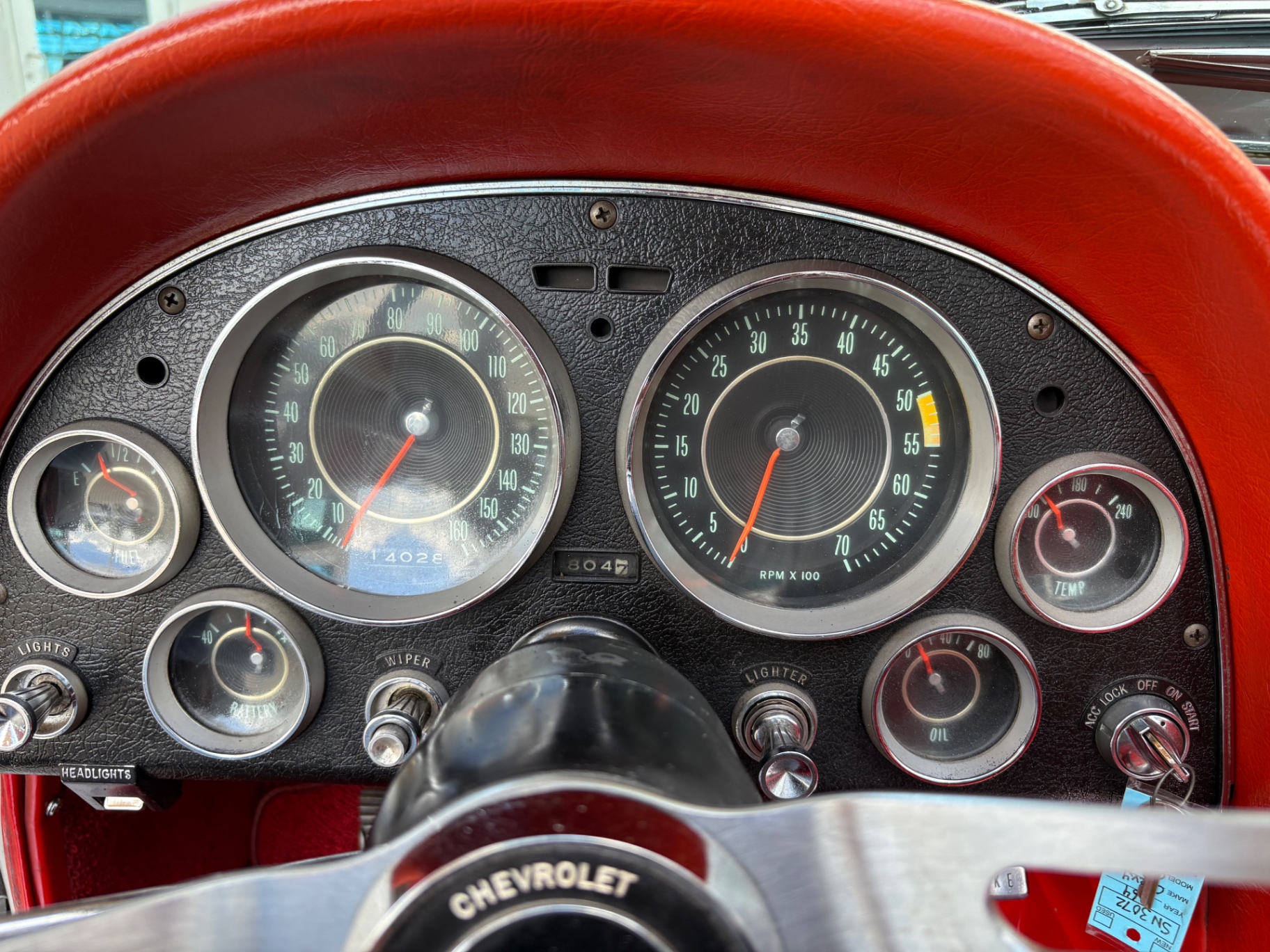
- All gauges functional — speedometer, tachometer, fuel, temperature, oil, amp
- Wood-grain steering wheel with Corvette crossed-flags horn button
- AM radio
- 4-speed shifter with chrome ball
- Center console intact
- Corvette script floor mats
- Correct ribbed red vinyl door panels with chrome window cranks, chrome door handles, and chrome accent bar
- Original seat belts present
- Corvette Sting Ray script badge on passenger dash
- New Interstate battery
- Correct chrome and polished air cleaner
- Documented single long-term collection ownership history
Mechanical
The engine in this 1964 Chevrolet Corvette Sting Ray is the numbers-matching L75 327 cubic inch V8, factory rated at 300 horsepower. The L75 used a hydraulic lifter camshaft and a single four-barrel carburetor, which made it the most usable of the 327 options for street driving — strong enough to be entertaining, manageable enough to be reliable. The block carries its correct red paint, the valve covers are correct red, and the chrome and polished air cleaner is the right unit for the application. The correct alternator is in place, and a new Interstate battery has been installed.
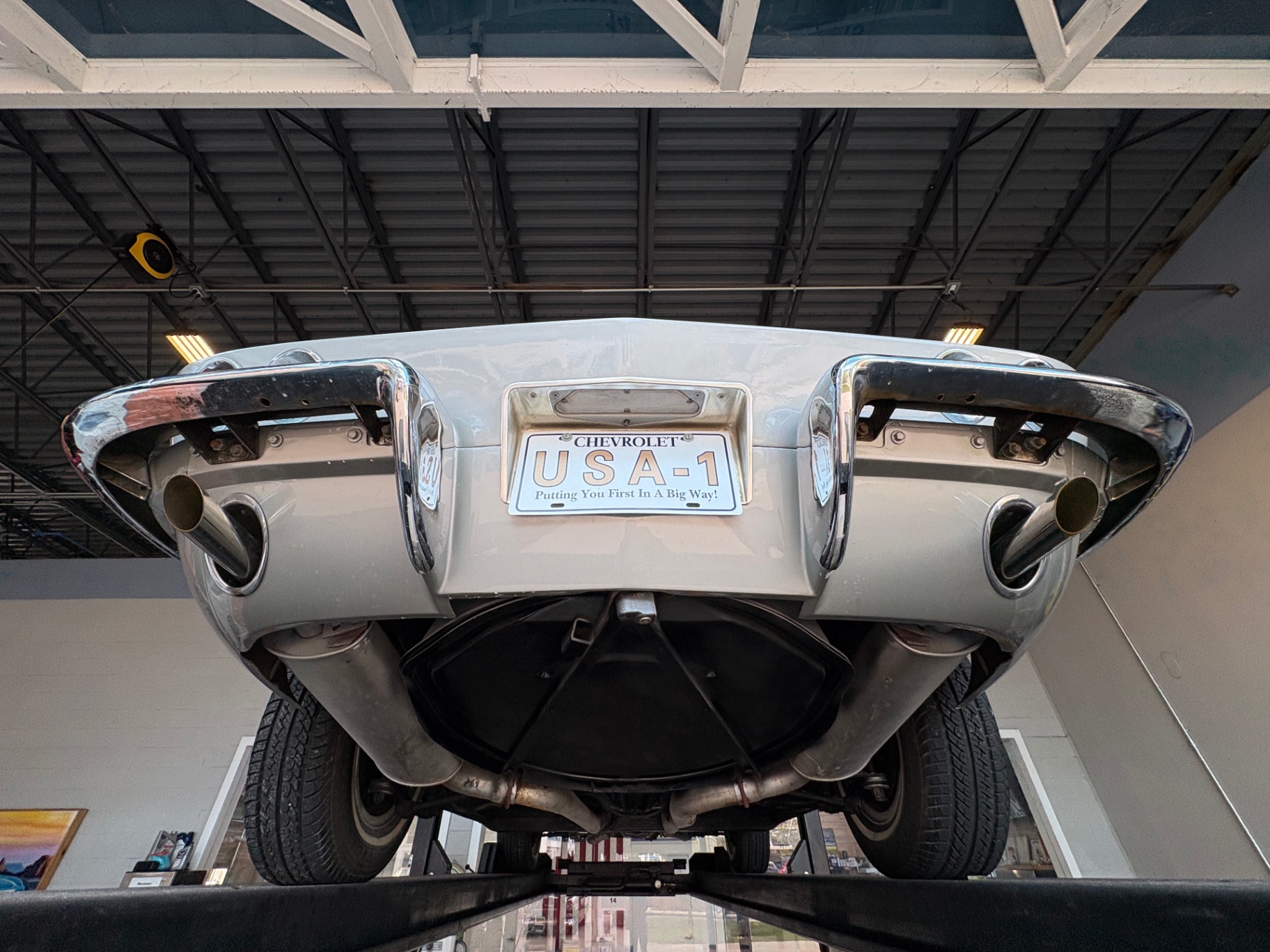
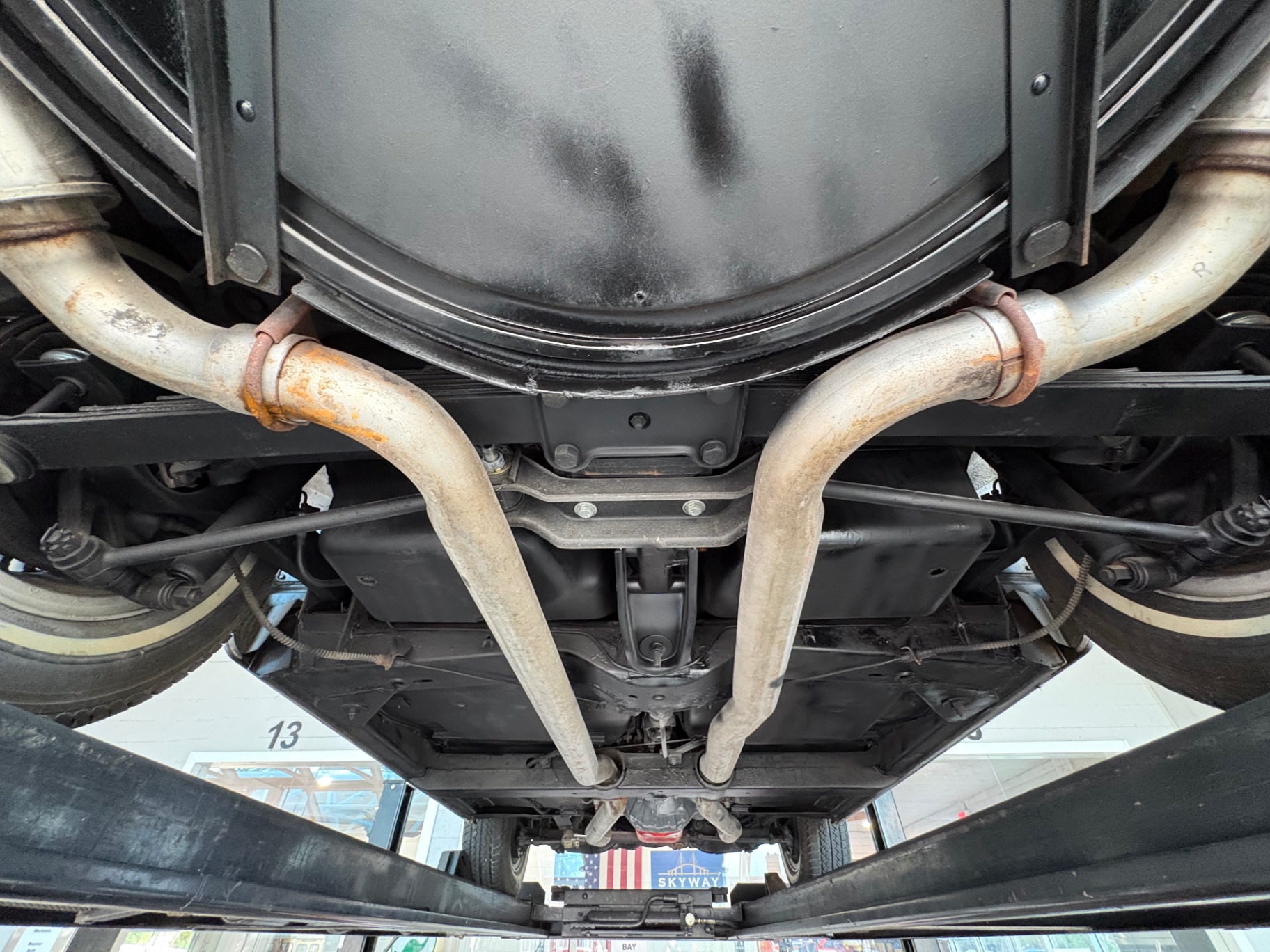
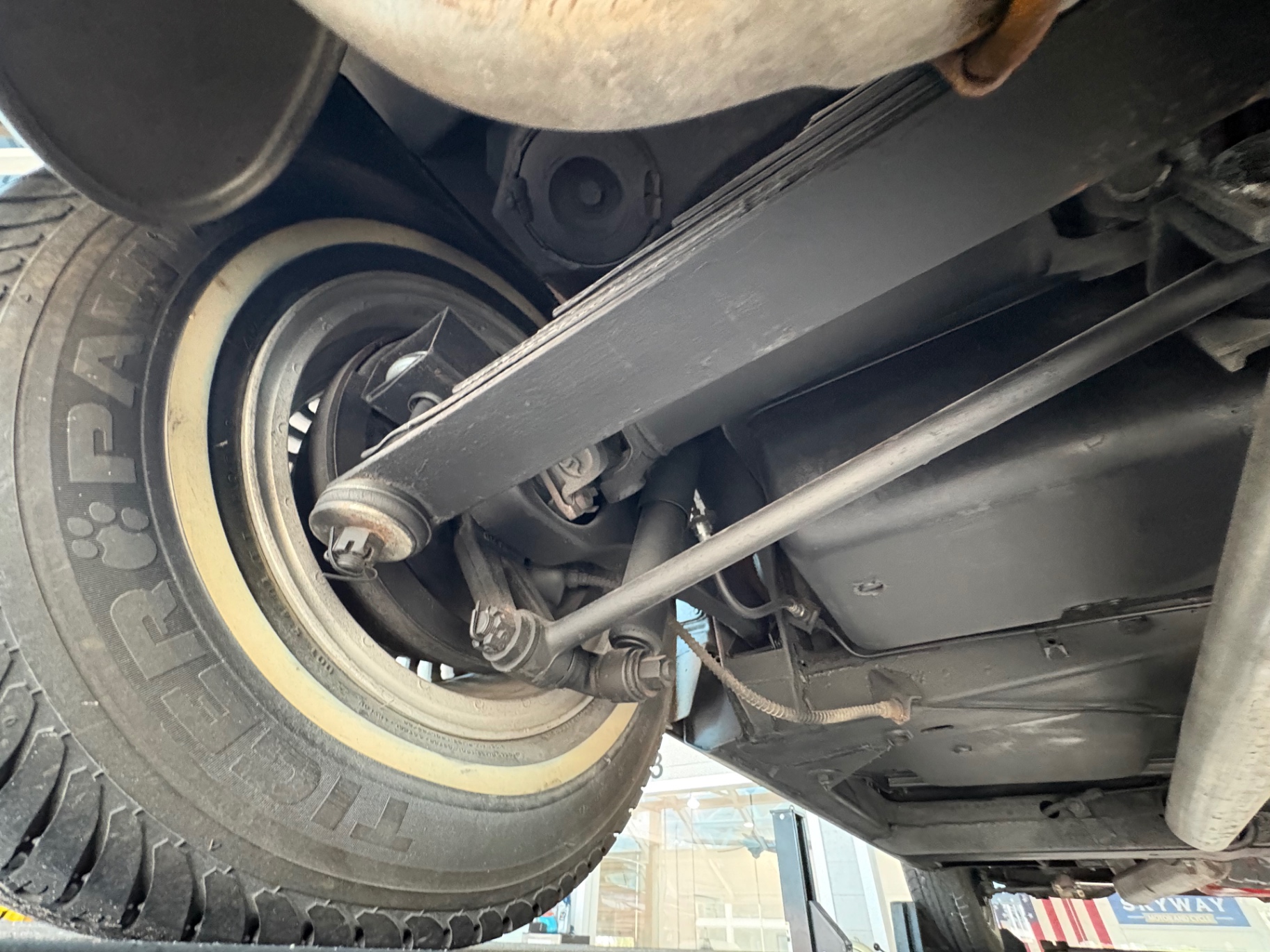
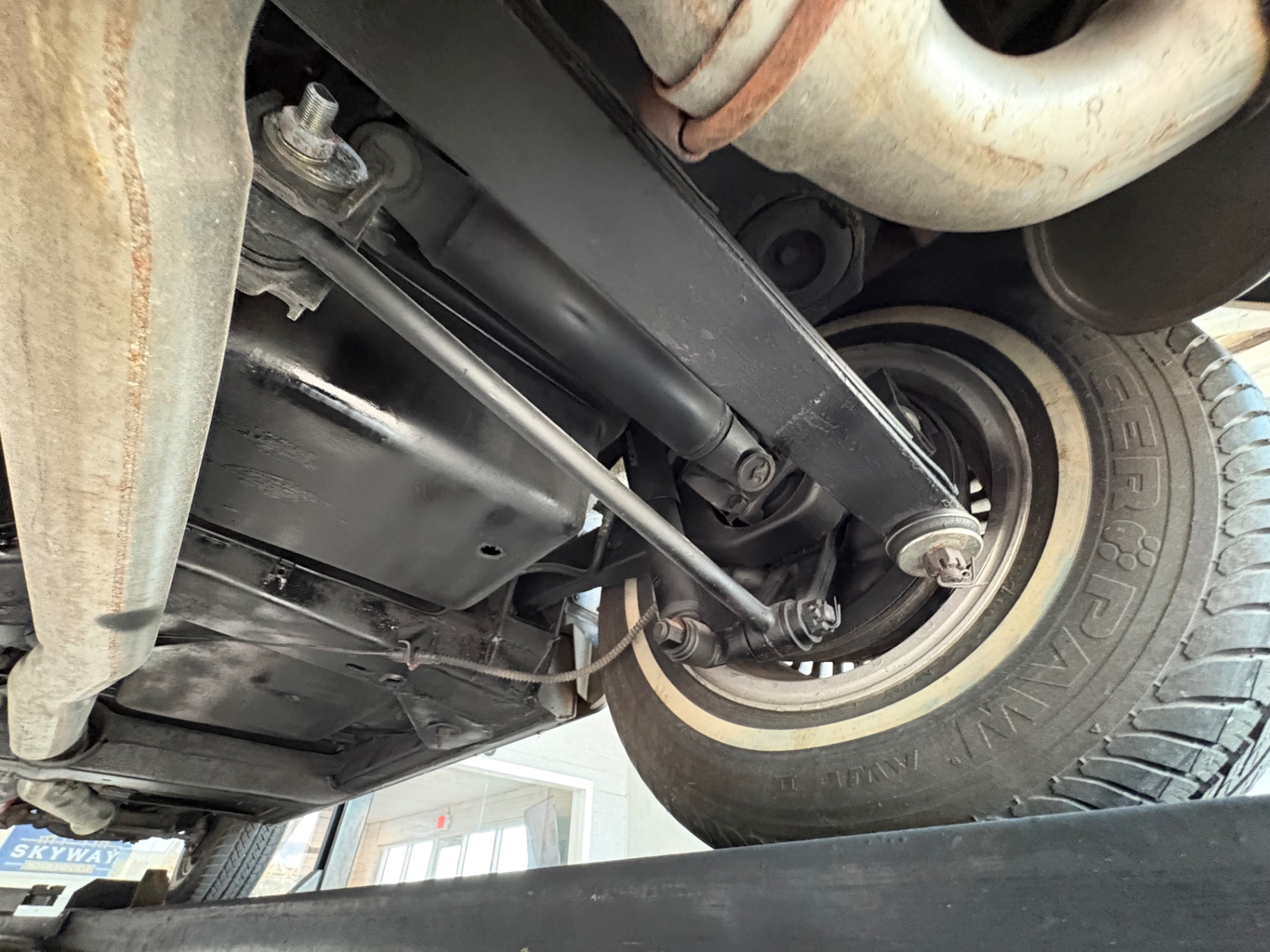
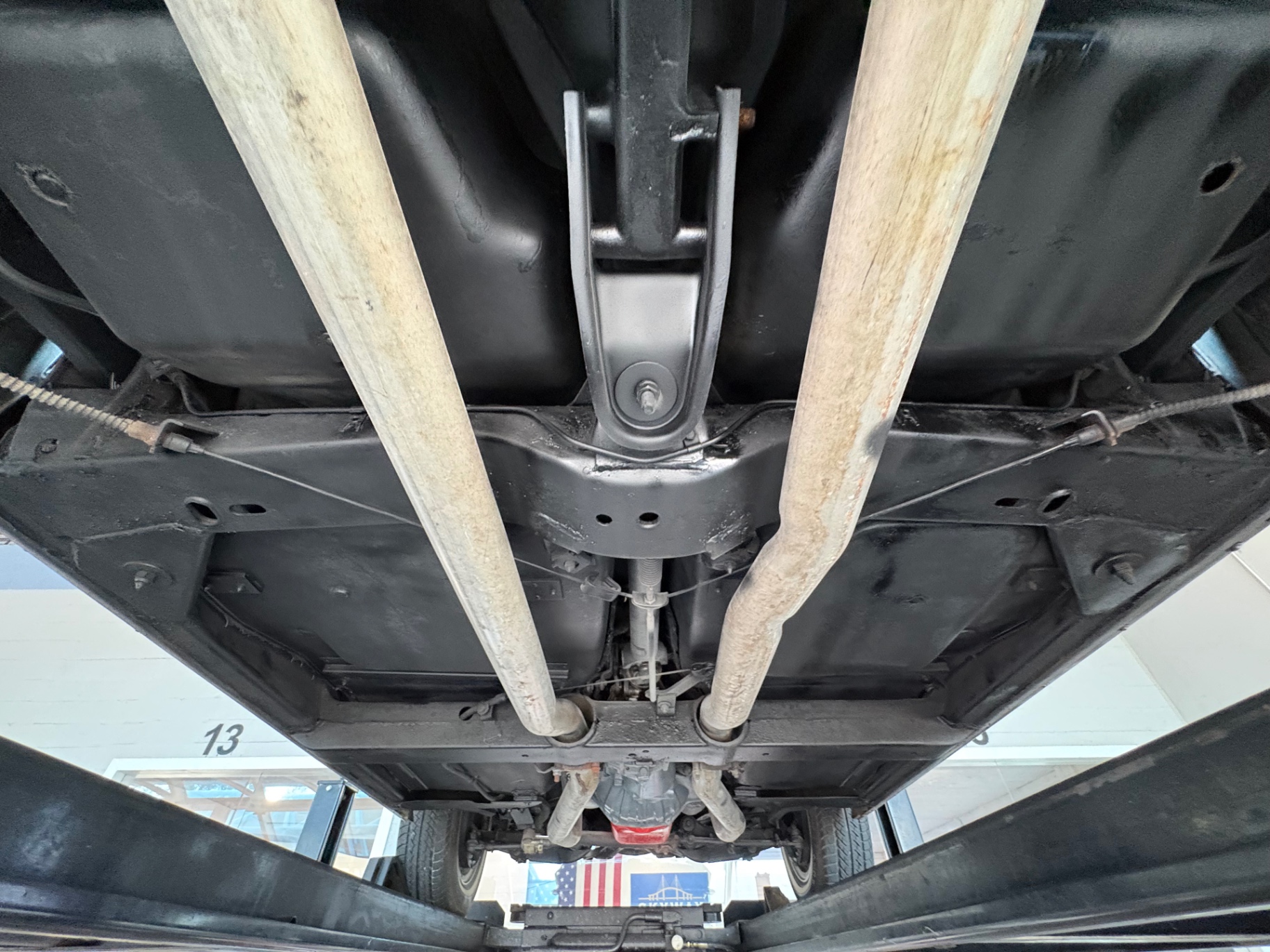
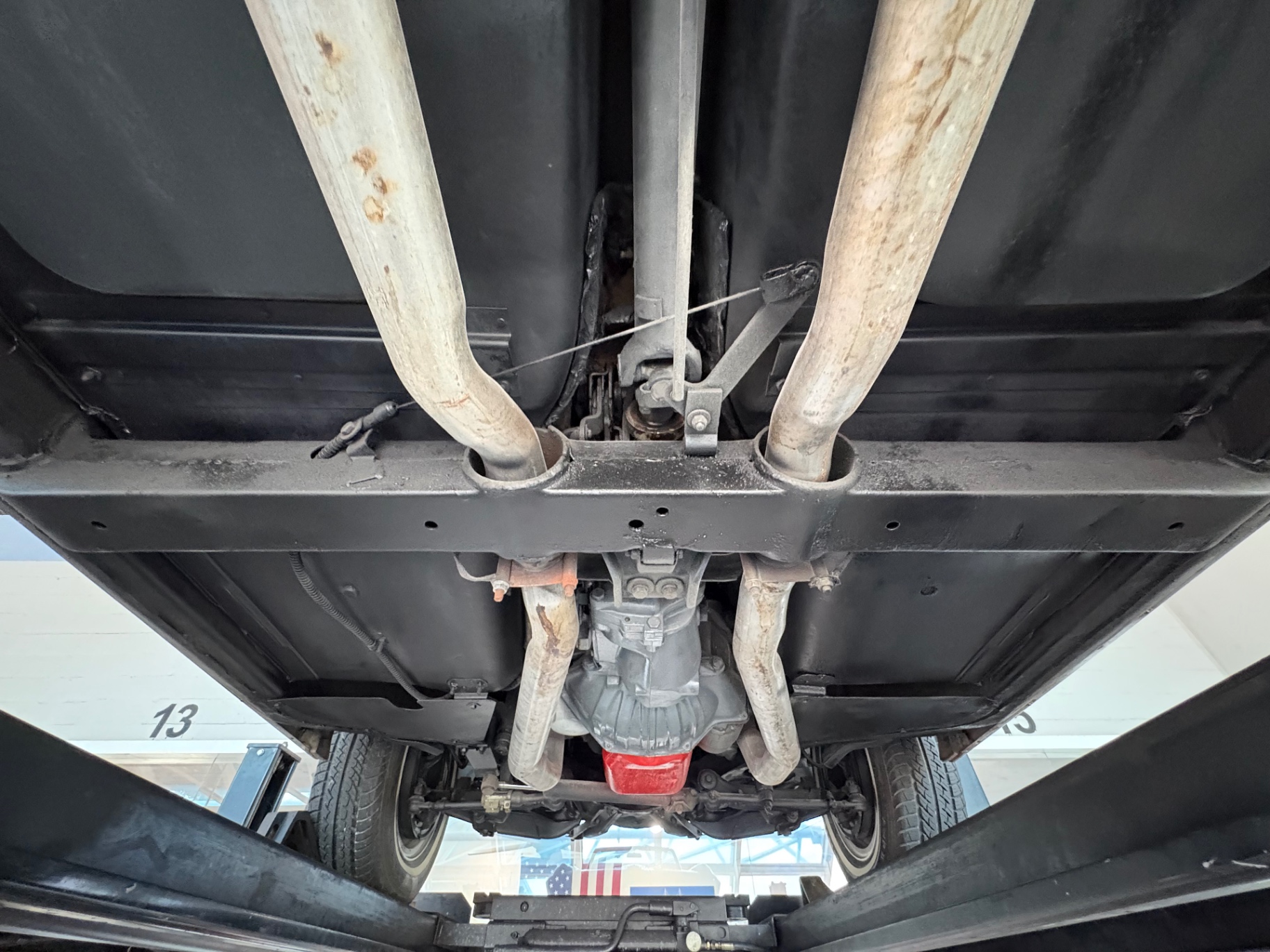
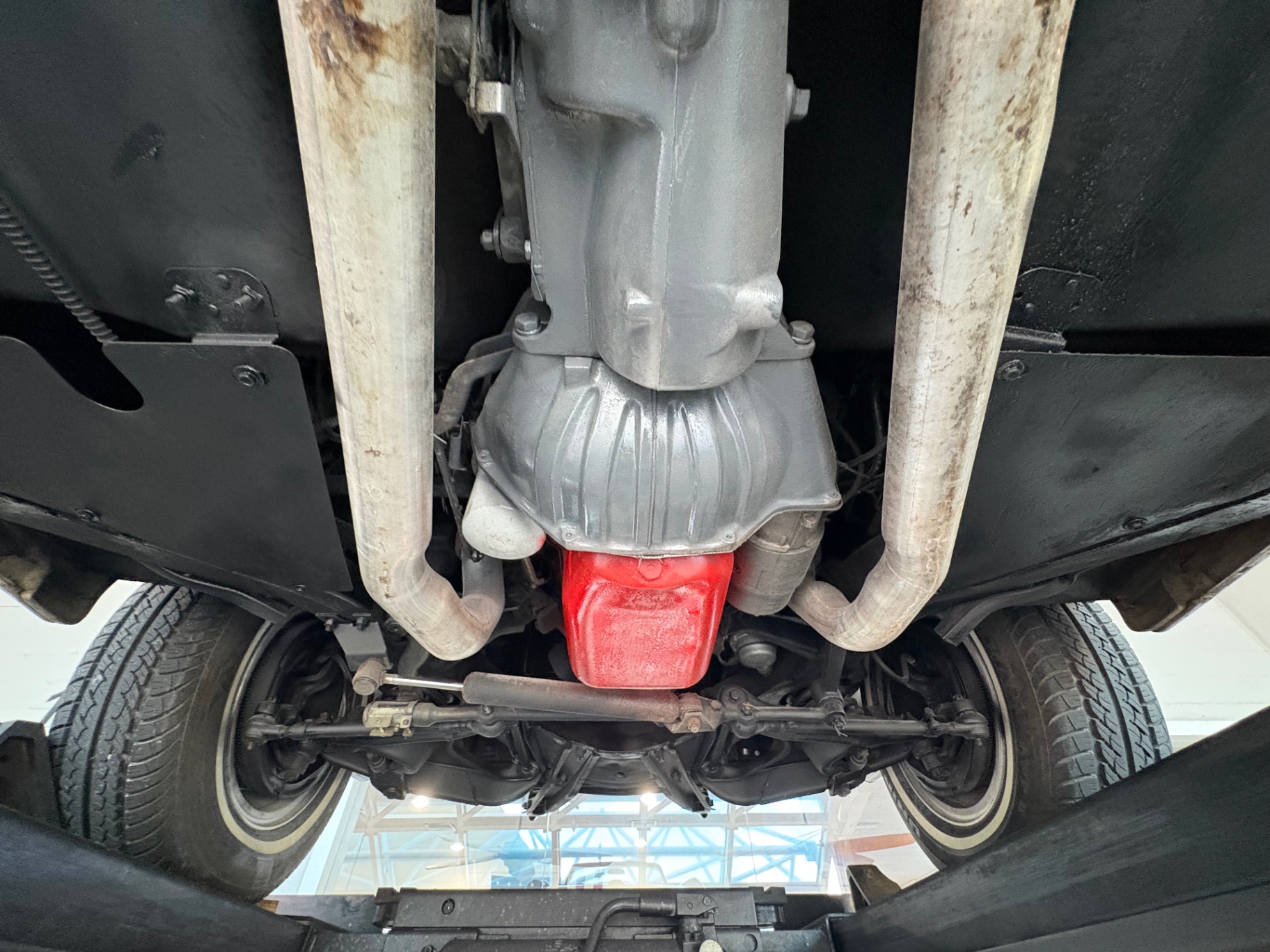
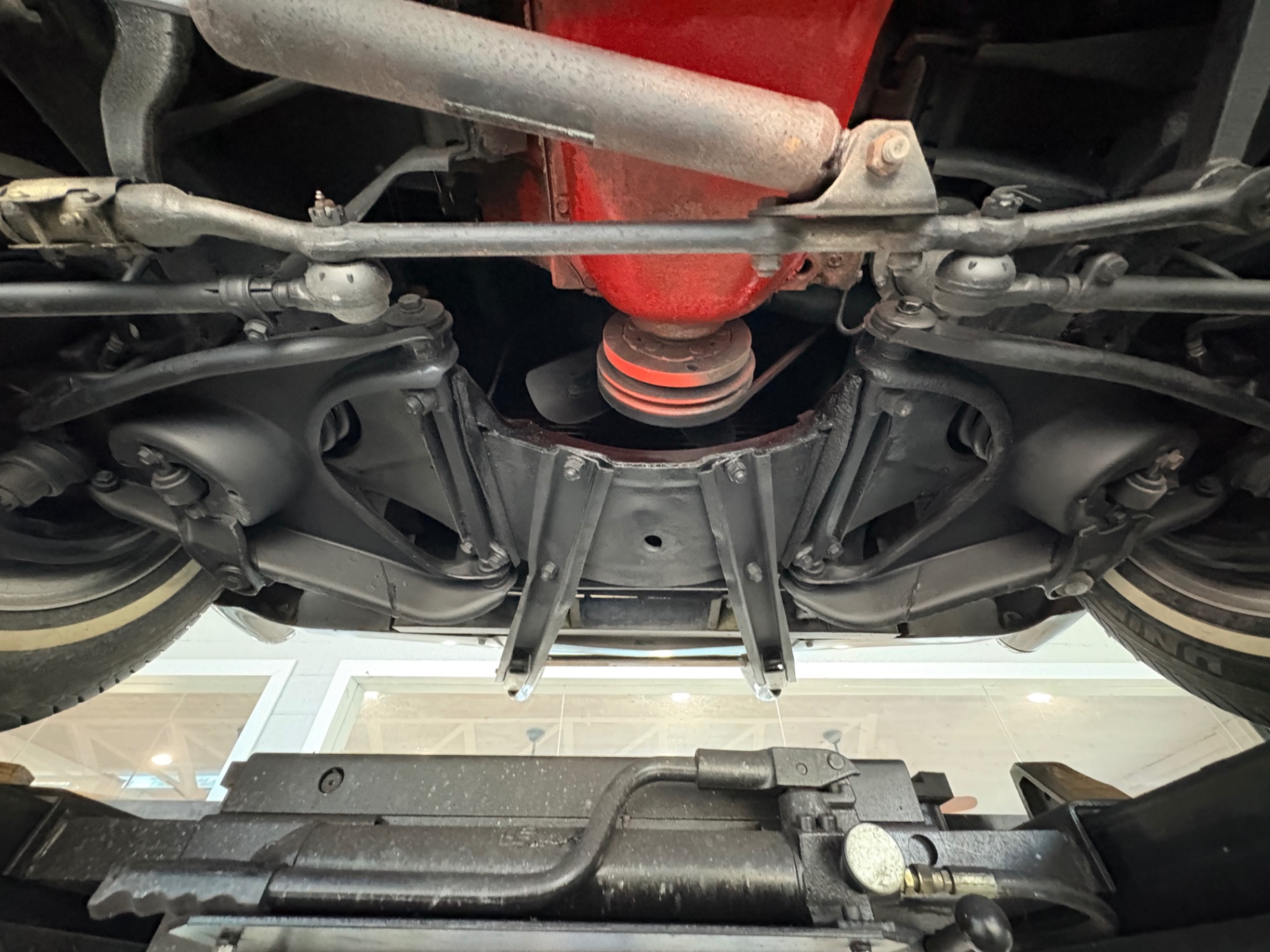
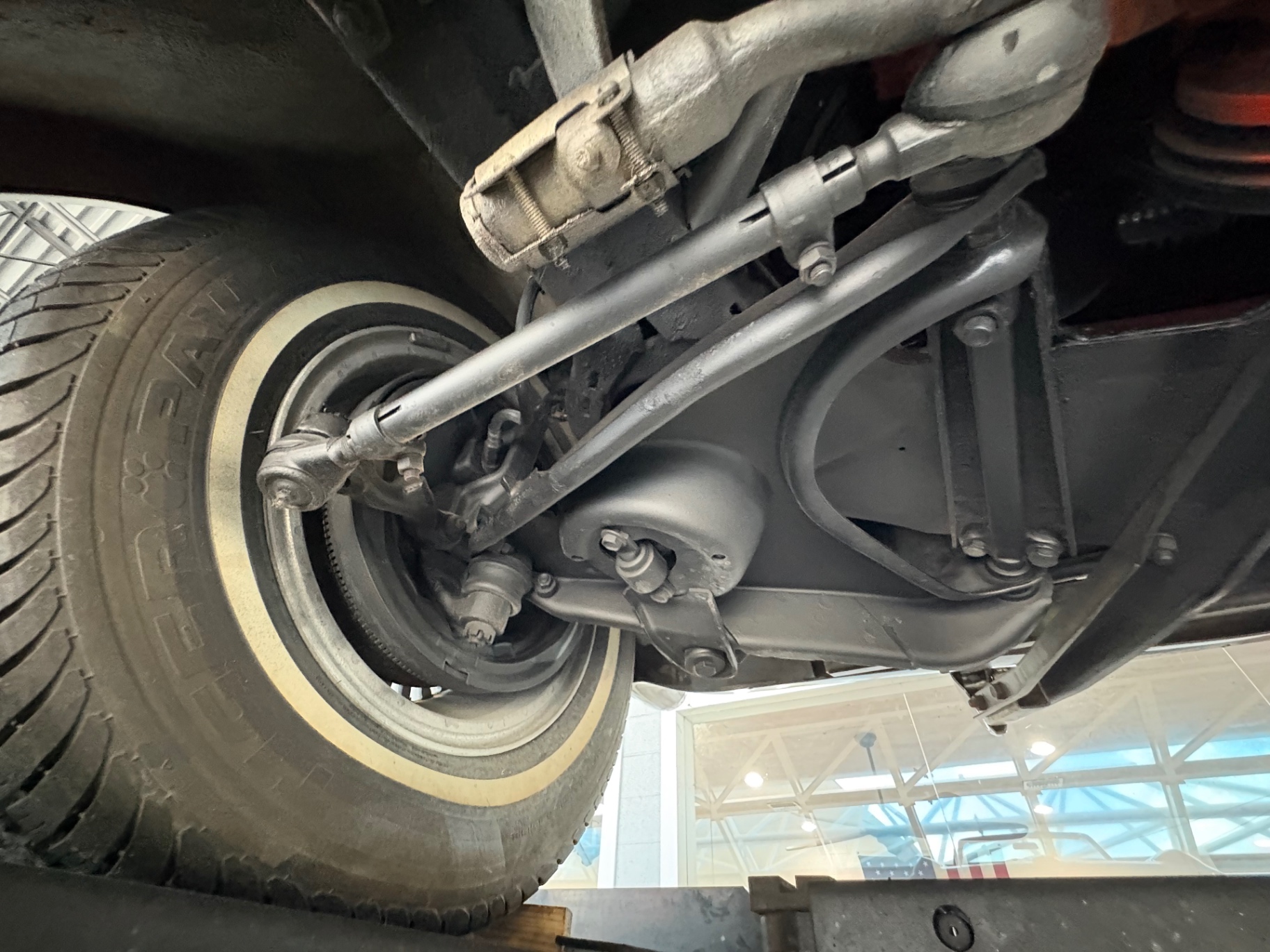
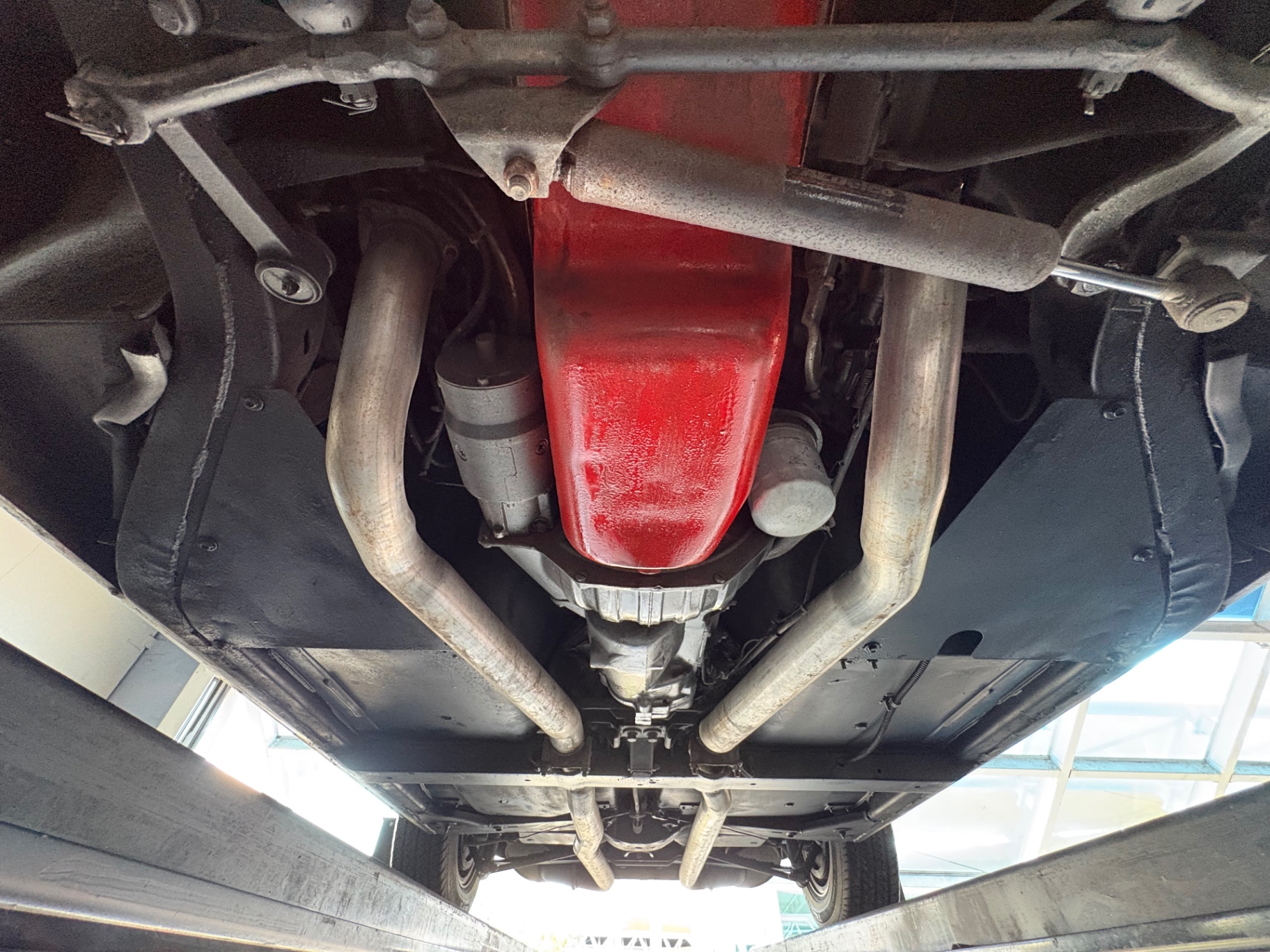
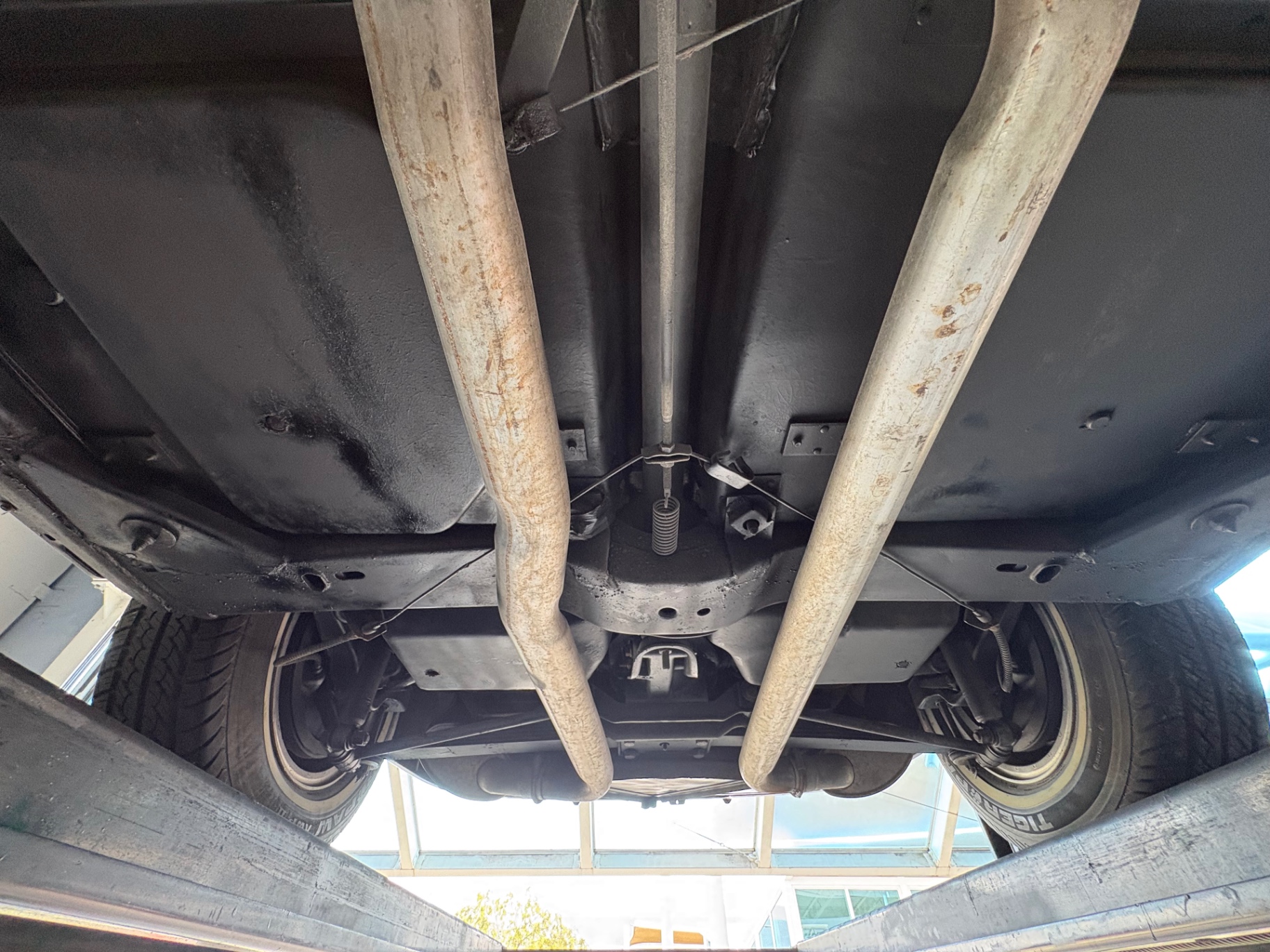
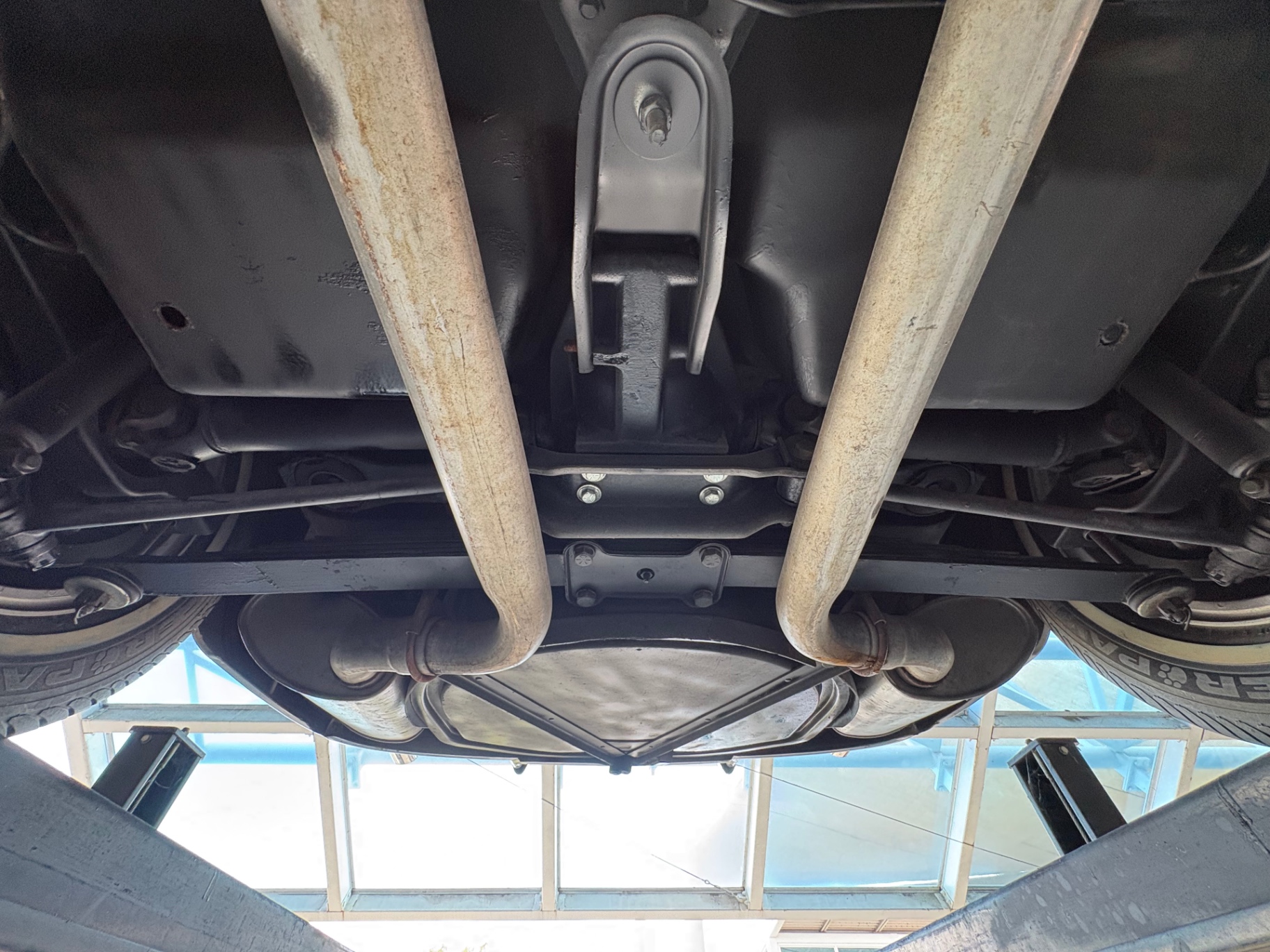
The front end has been recently rebuilt, which addresses one of the most common service items on a C2 that has sat in a collection. The independent rear suspension — a genuine engineering landmark when Chevrolet introduced it on the 1963 Sting Ray — is present and correct. Prior to 1963, the Corvette used a solid rear axle. The IRS system used a fixed differential housing with U-jointed half-shafts, which dramatically improved rear-wheel control under hard cornering. You can see the geometry clearly in the undercarriage photos: the half-shafts, control arms, and differential housing are all visible and correctly presented. The undercarriage itself has been painted.
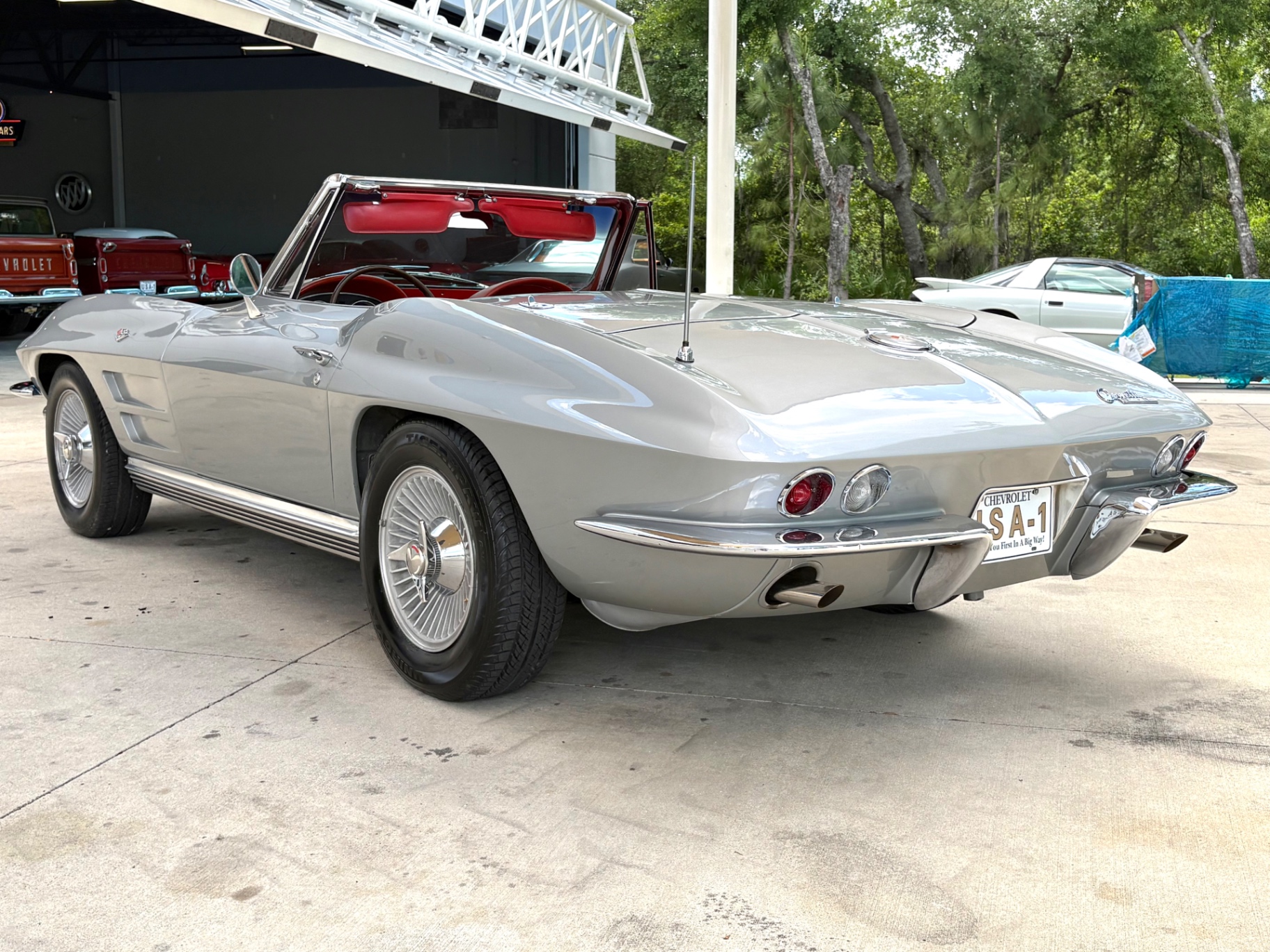
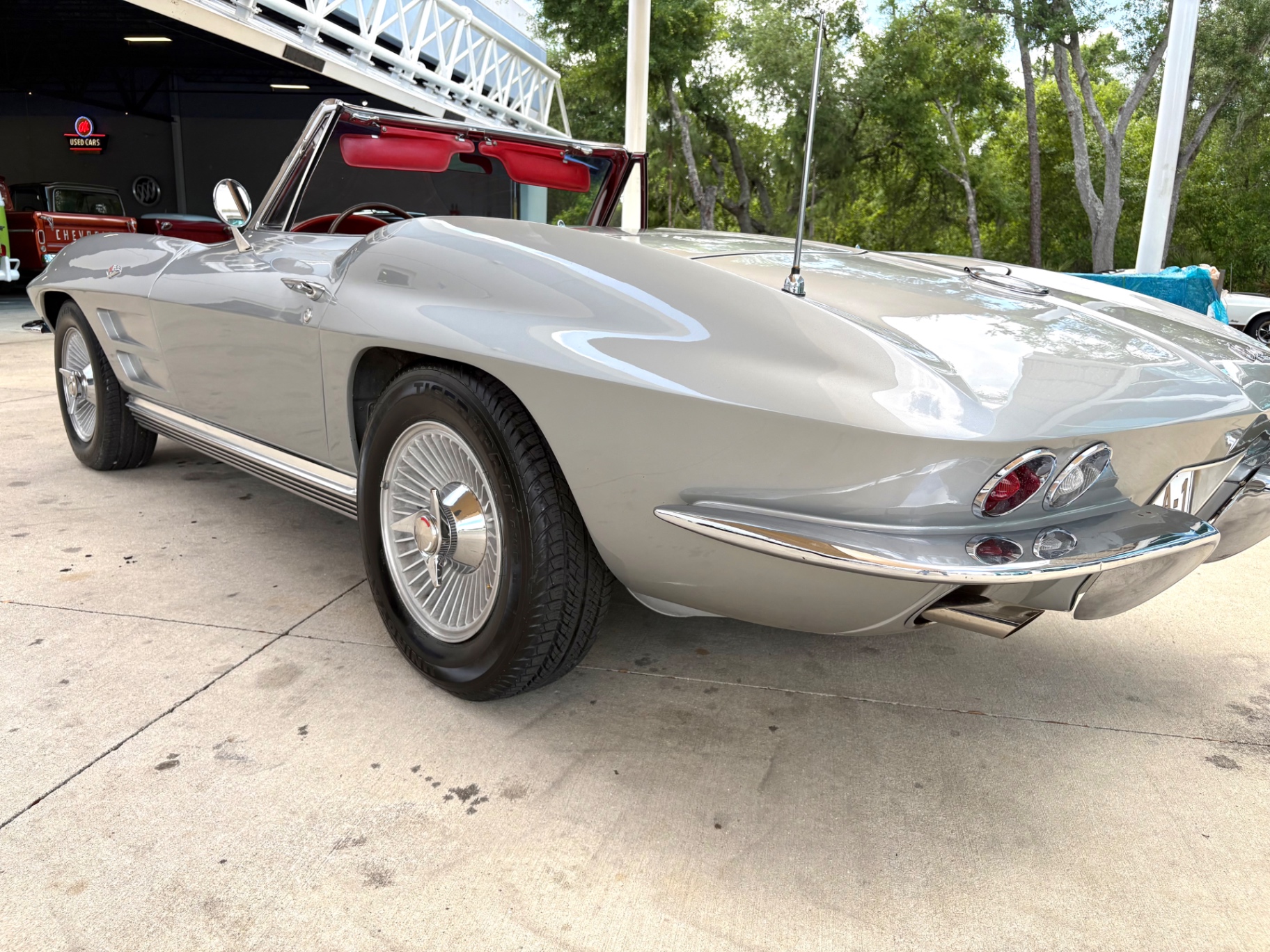
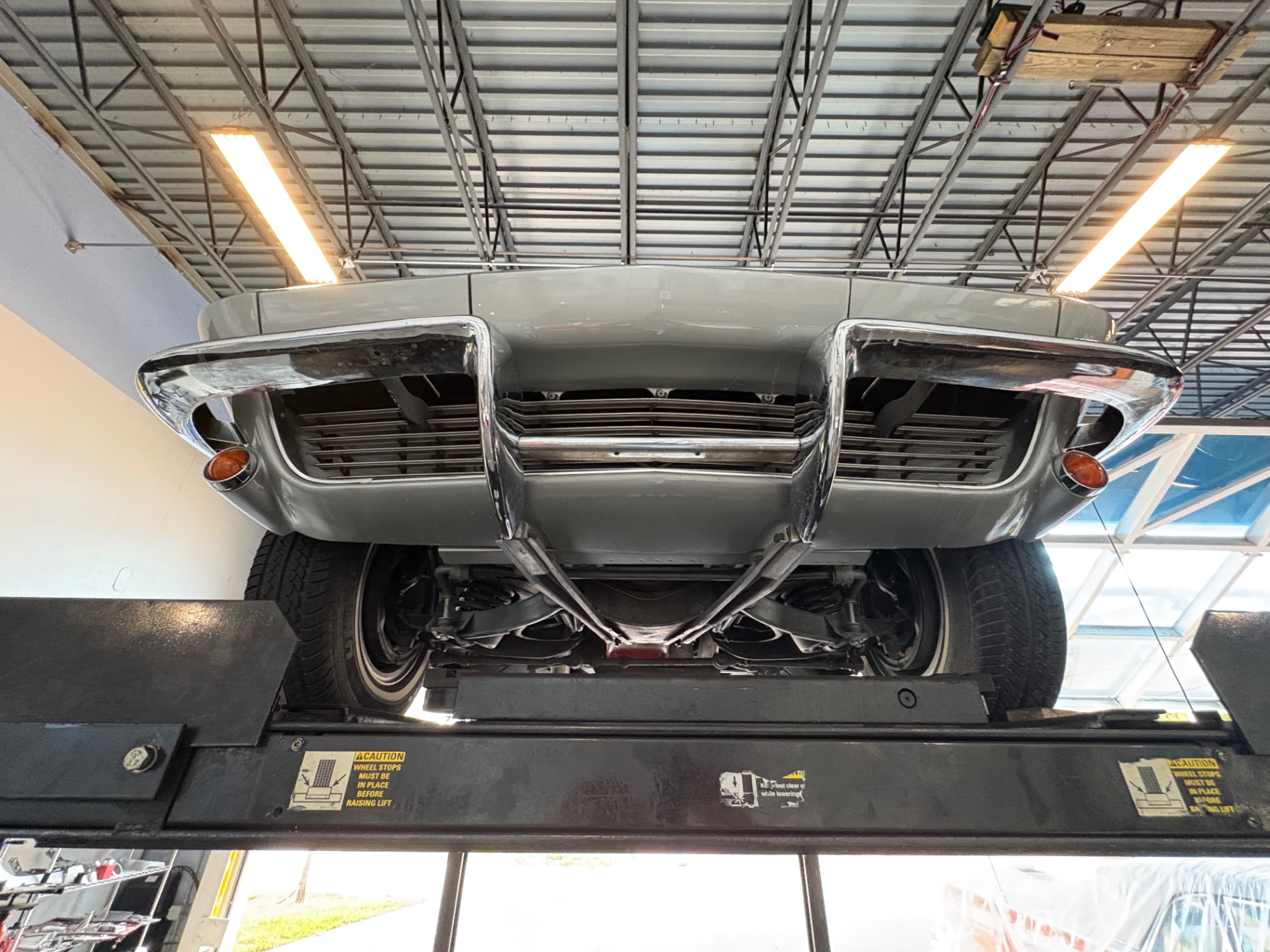
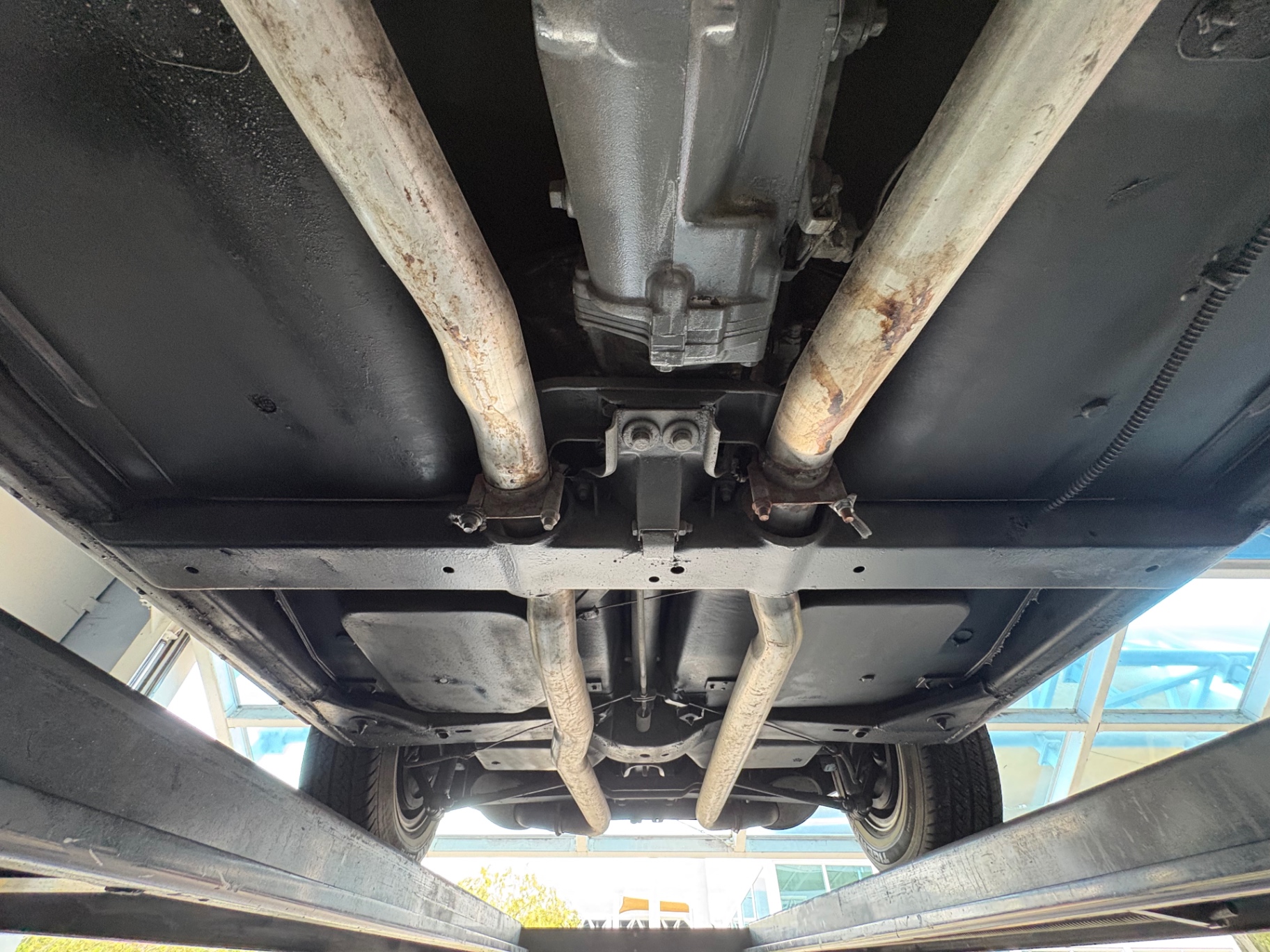
The dual exhaust routes correctly through bumper tip exits at the rear — not side exits, not cutouts, but the proper bumper tips that Chevrolet specified for 1964. The 4-speed manual transmission rounds out a drivetrain that is documented as numbers matching throughout. Headlights operate correctly on their vacuum-actuated pop-up mechanism. The knock-off wheels, as correct for the option, require a lead hammer to remove — that is not a defect, it is how they were designed to work.
Interior
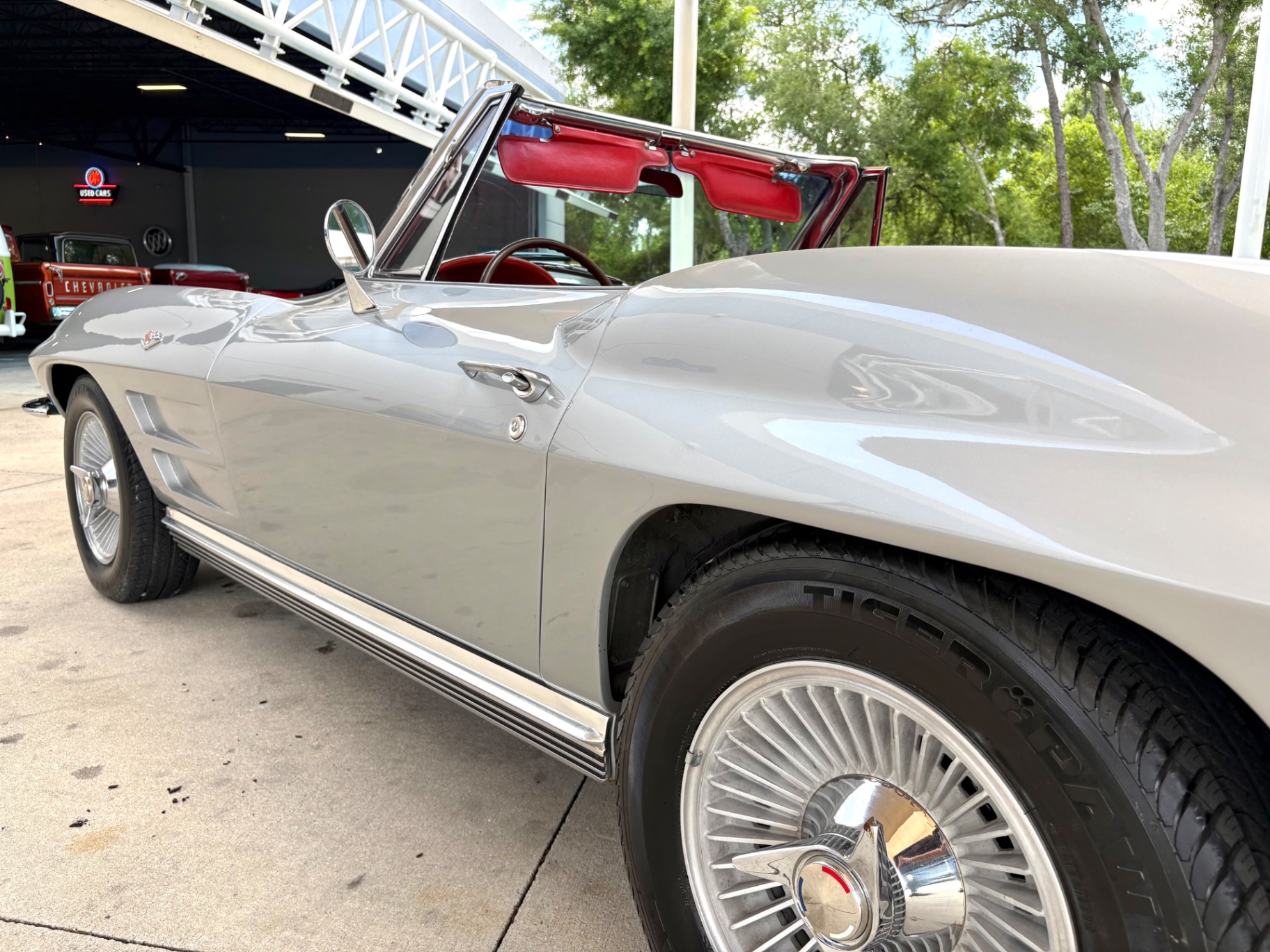
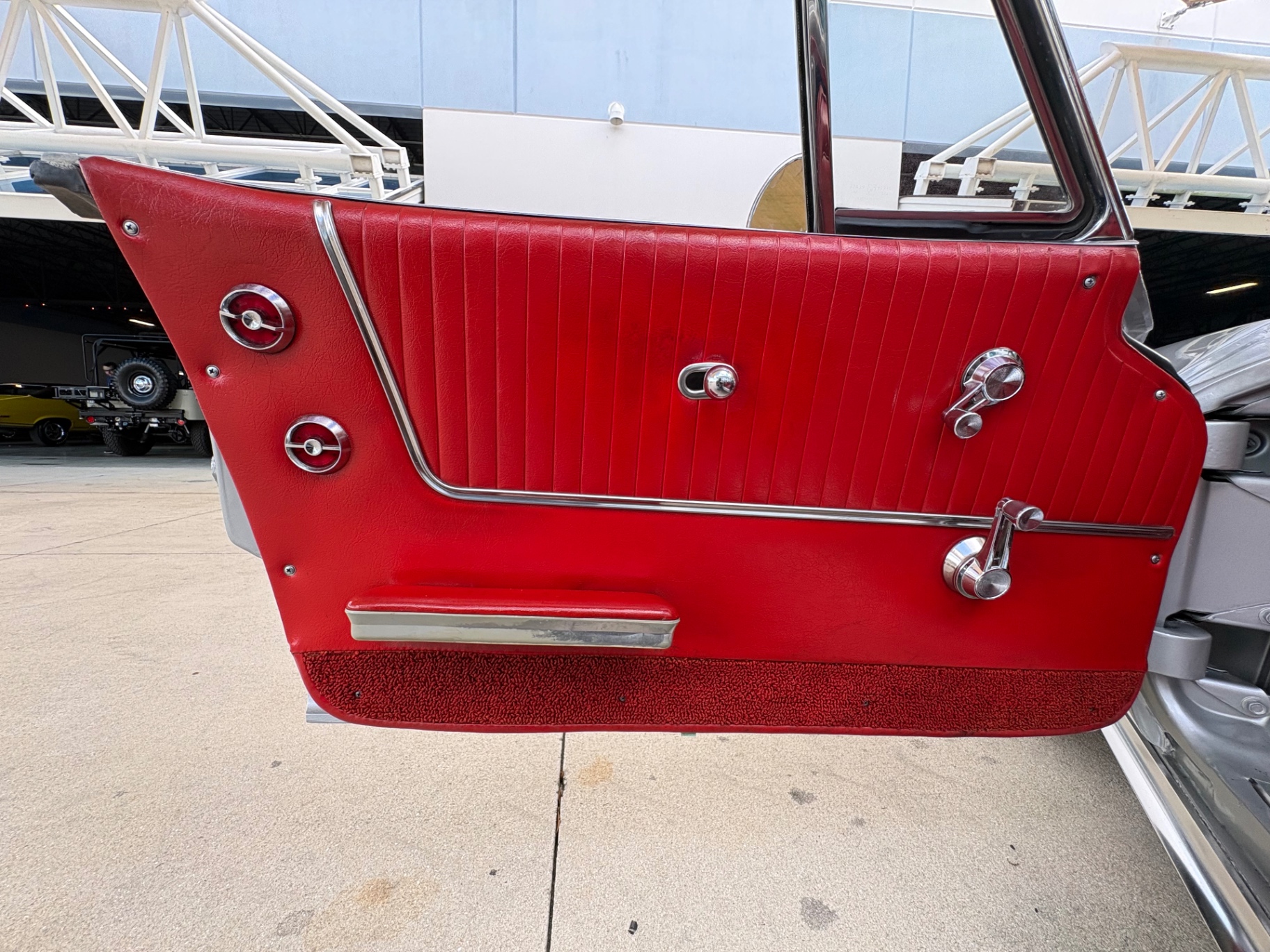
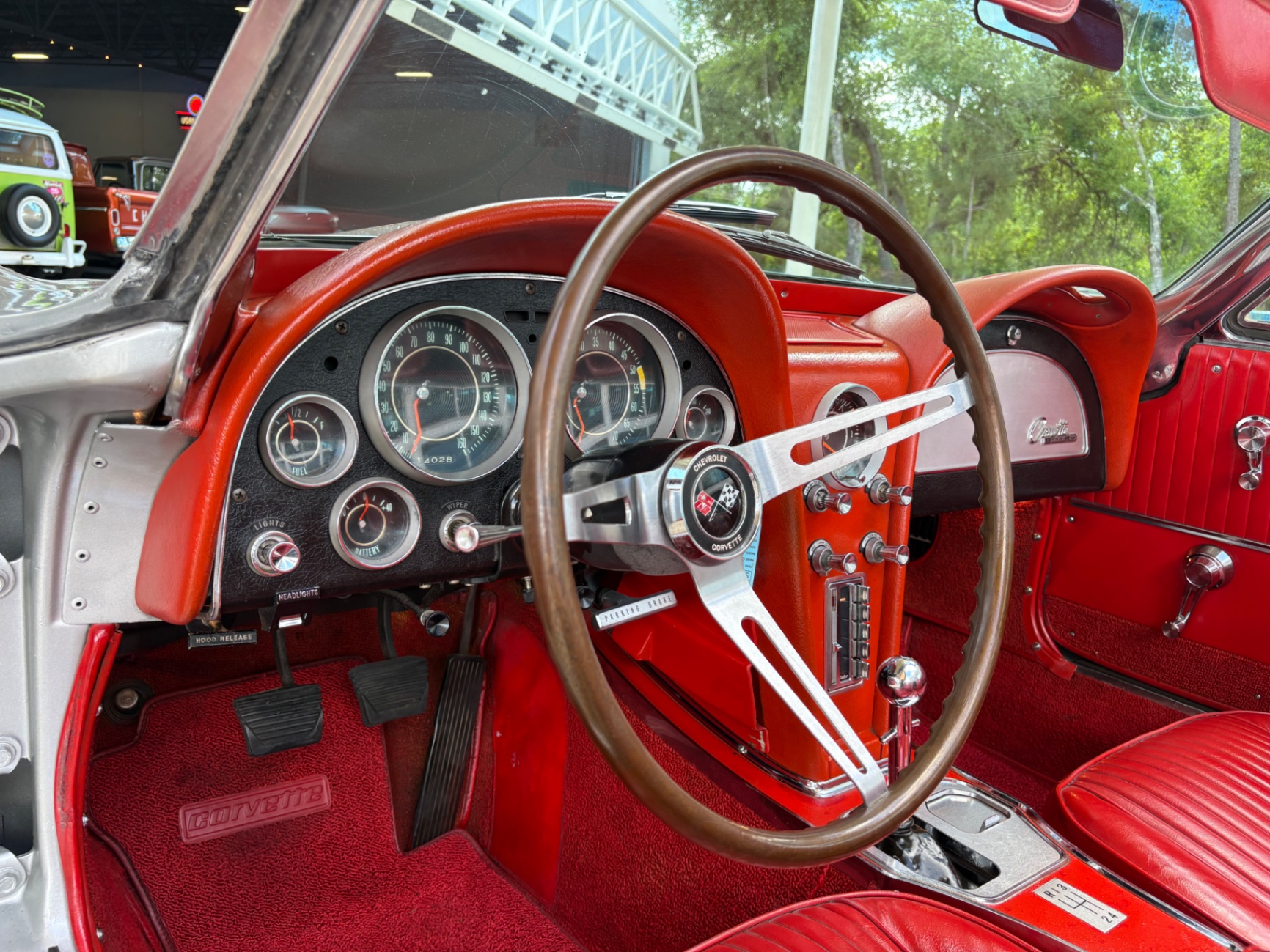
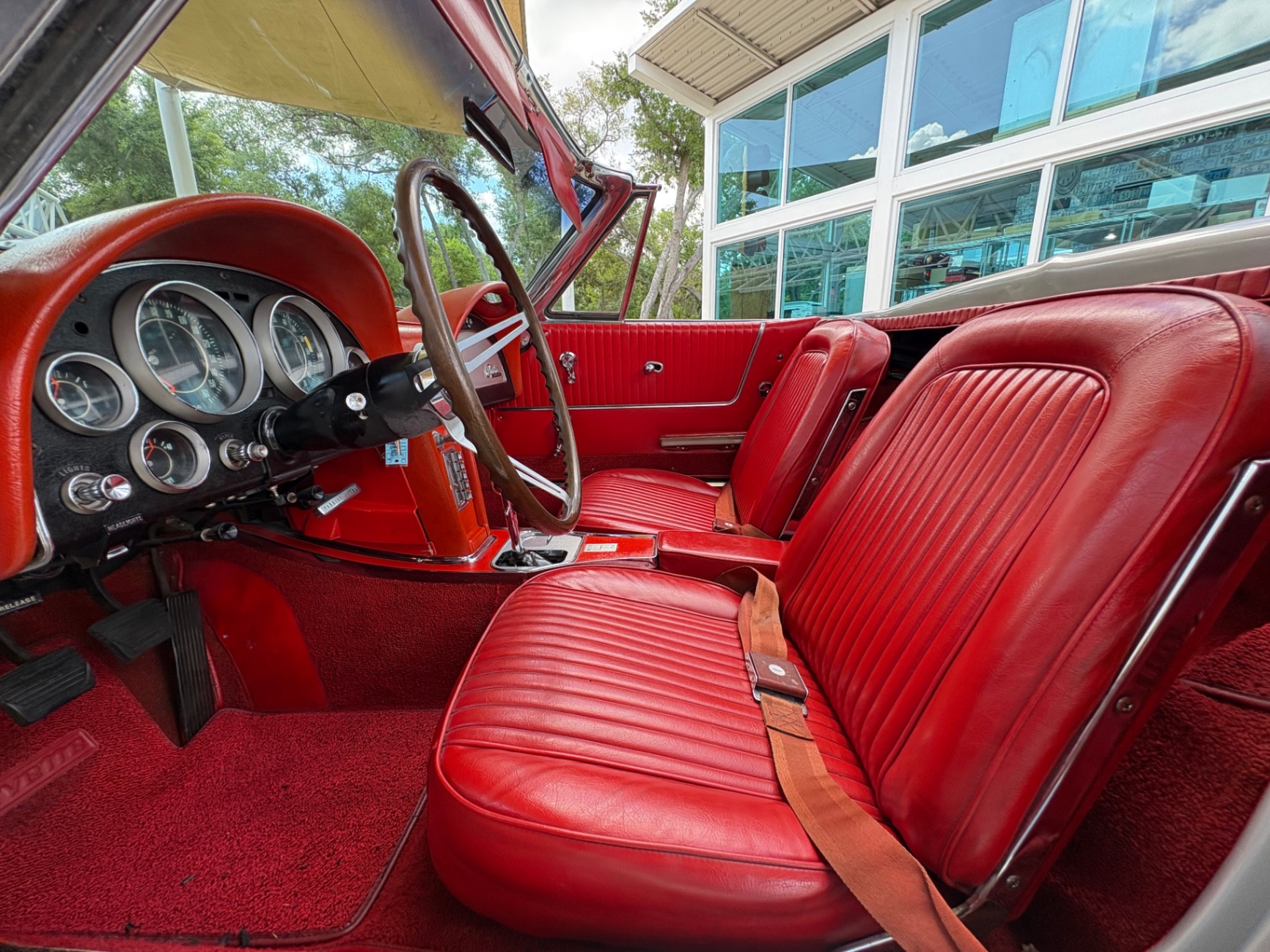
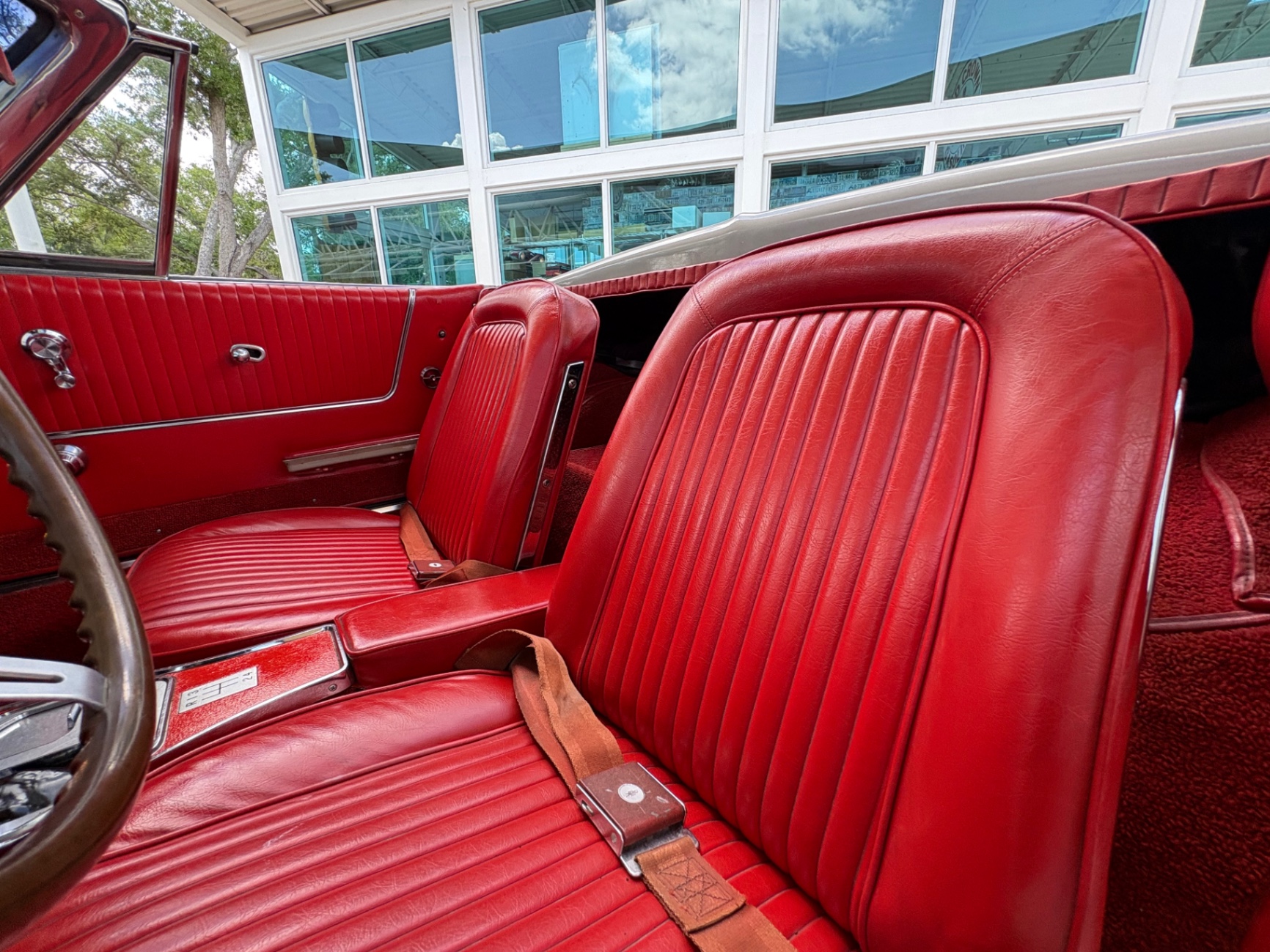
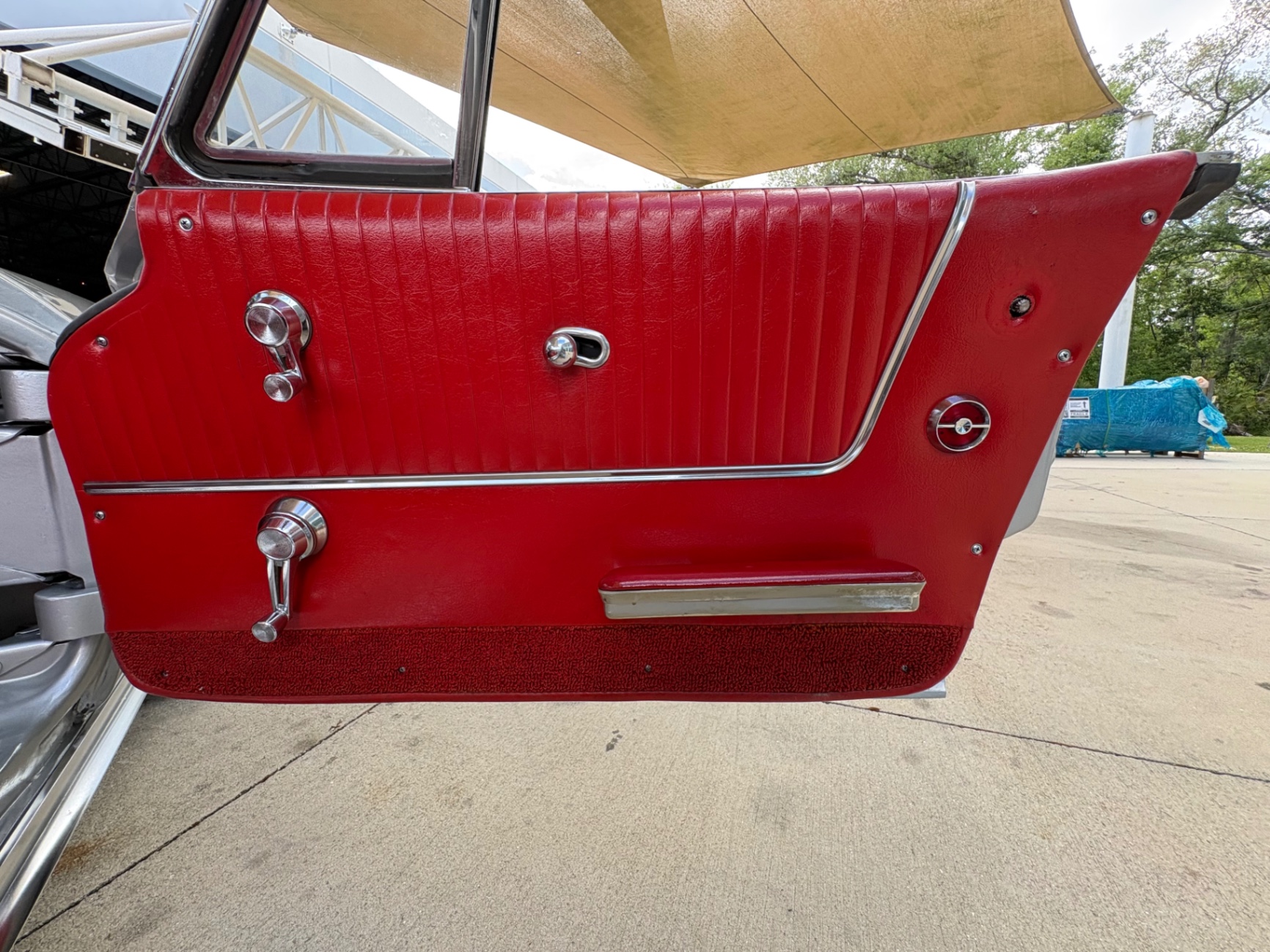
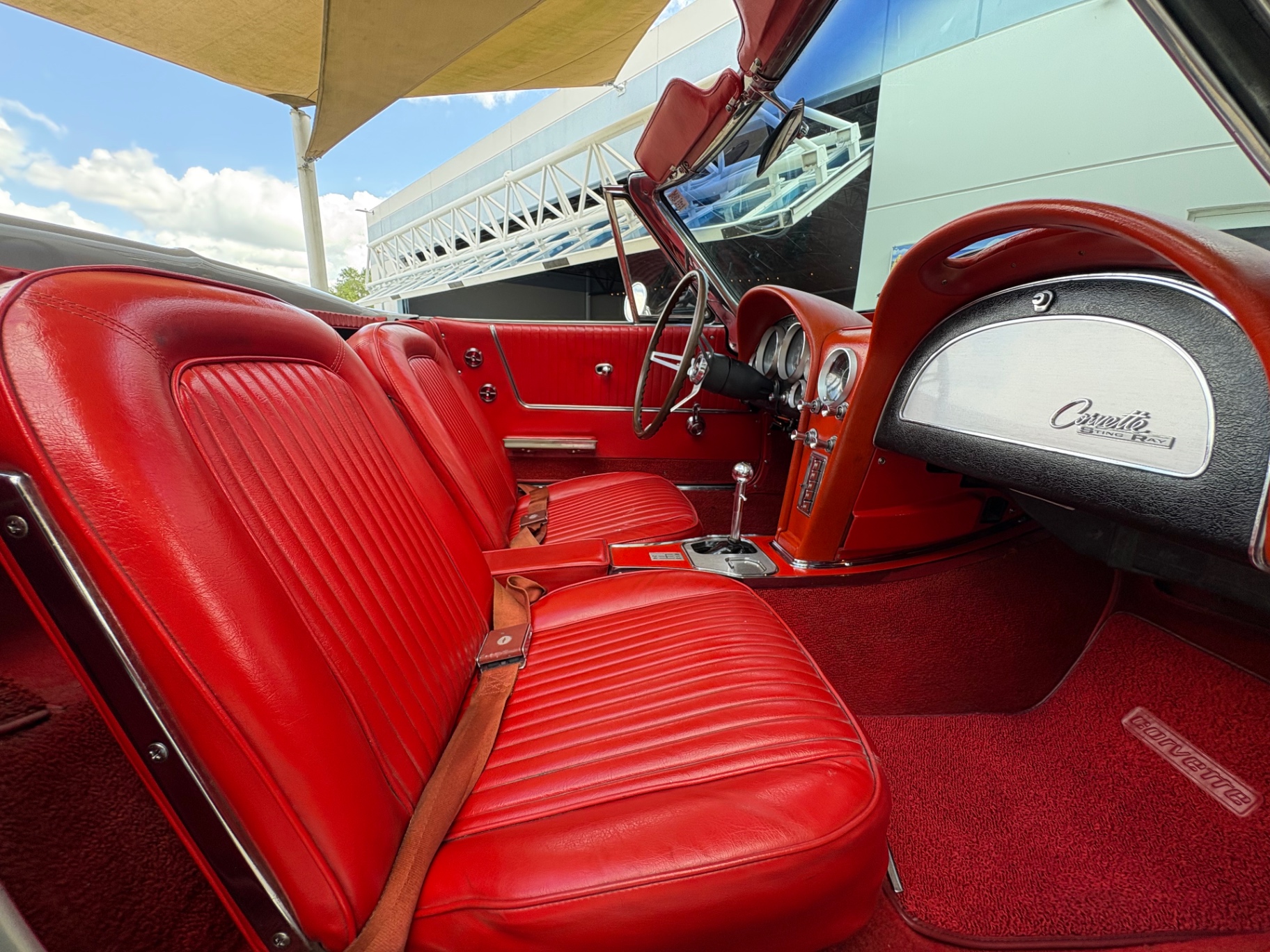
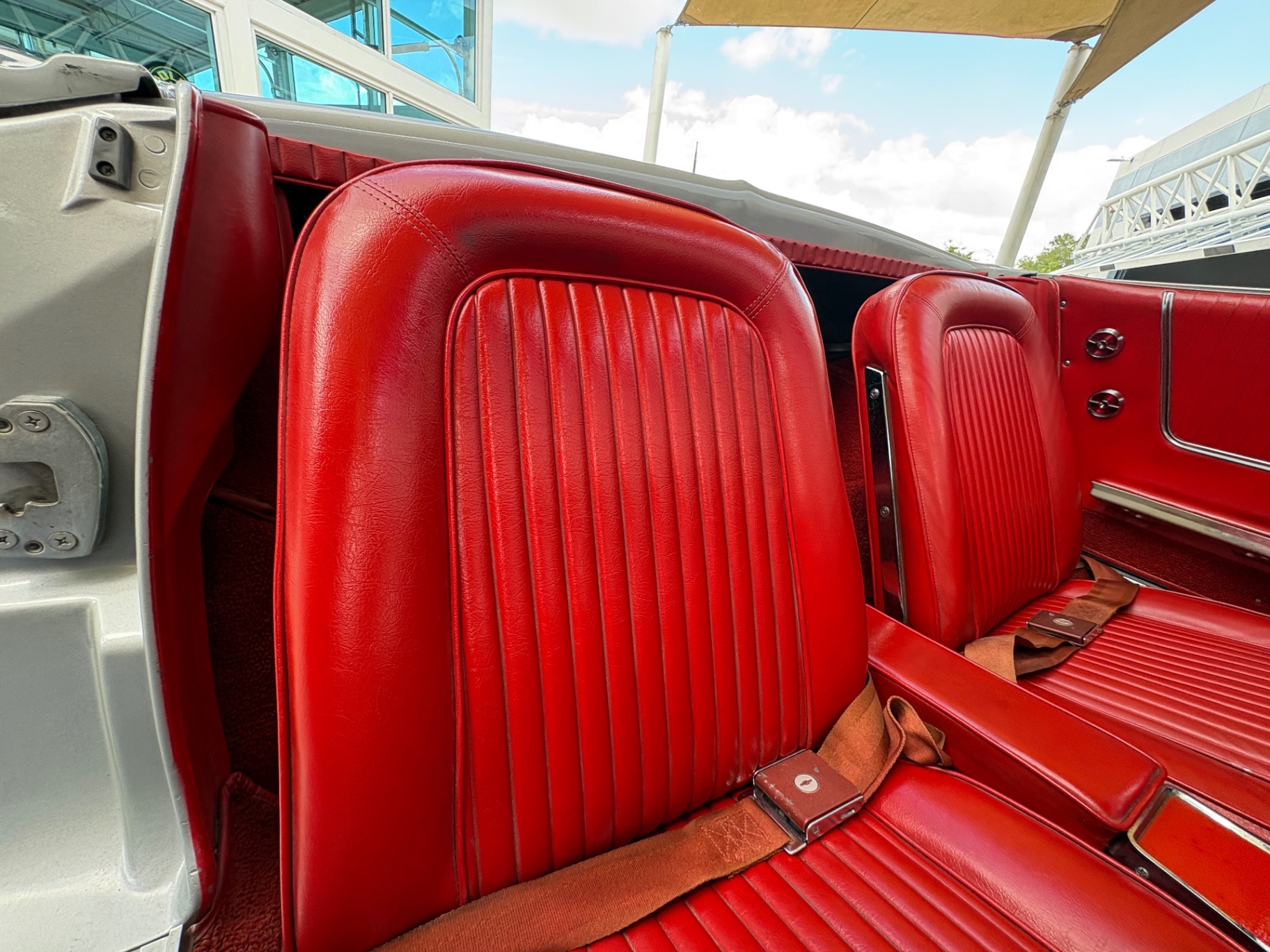
The interior of this 1964 Corvette Sting Ray is finished in red vinyl and presents in excellent condition throughout. The seats show their correct ribbed vinyl construction and hold their shape well. Both door panels are the correct ribbed red vinyl pattern for 1964, fitted with the factory chrome window cranks, chrome door handles, and the chrome accent bar that runs horizontally across each panel. The lower portion of each door panel carries the correct textured carpet insert. Original seat belts are present on both sides.
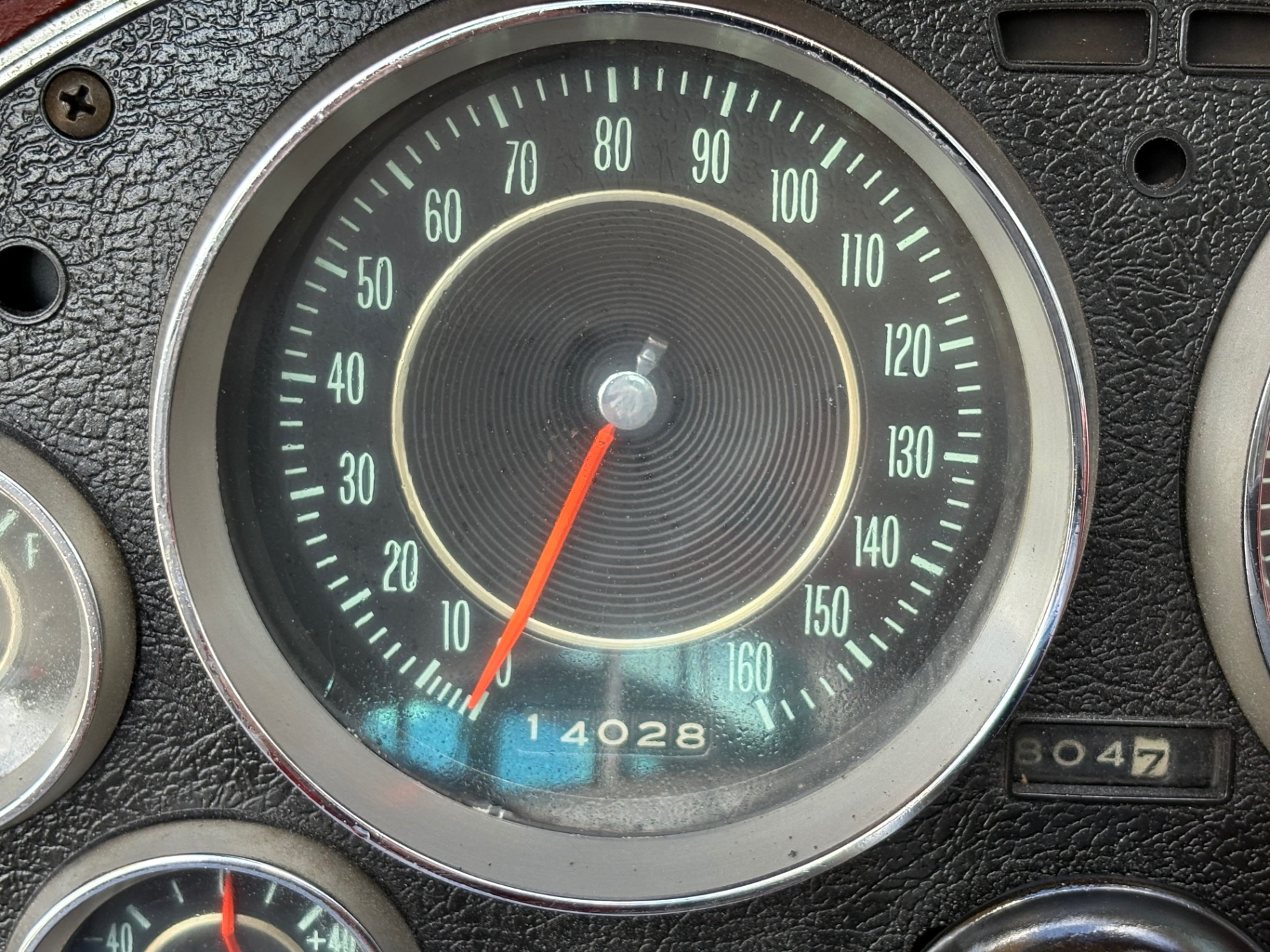
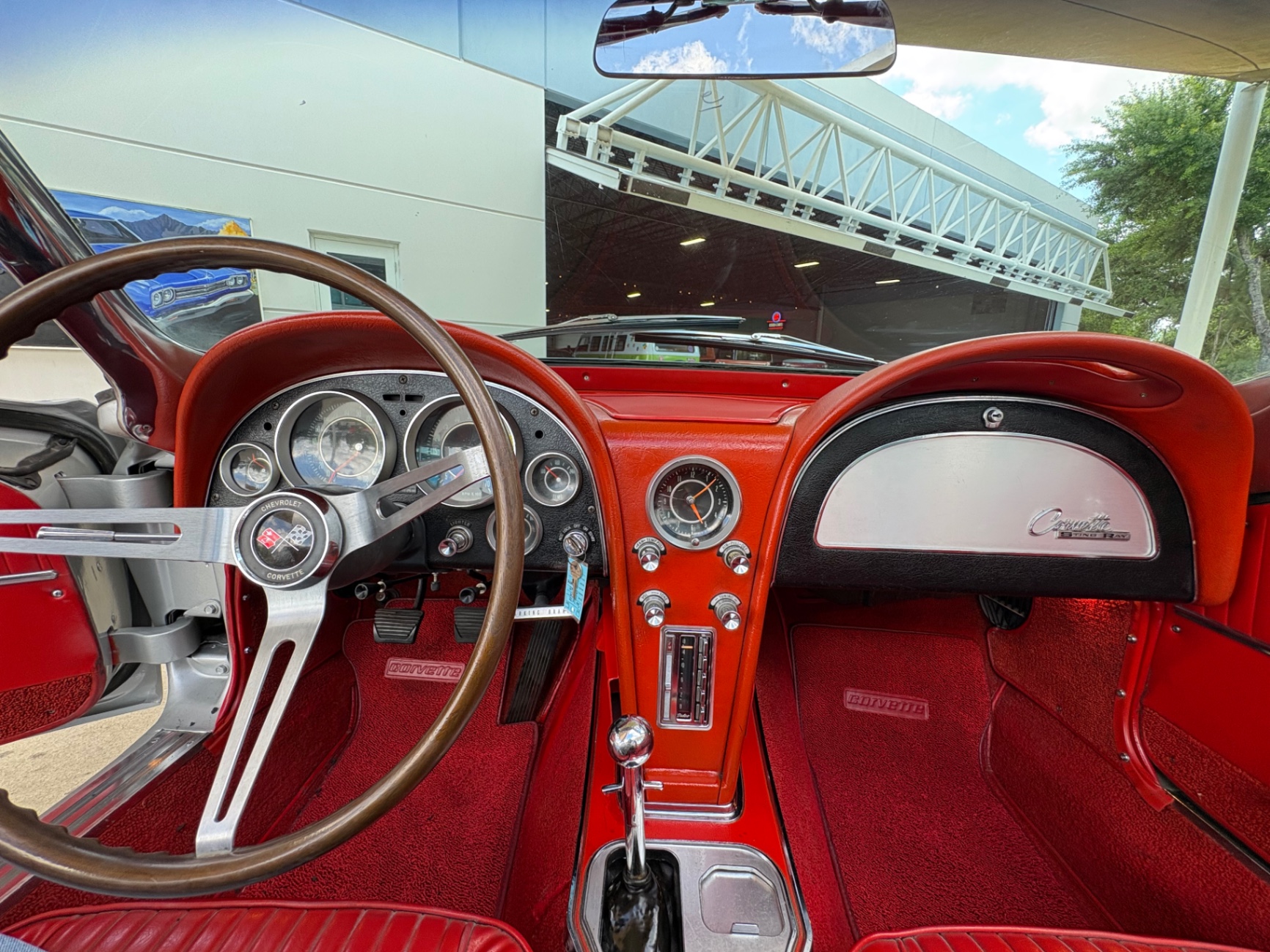
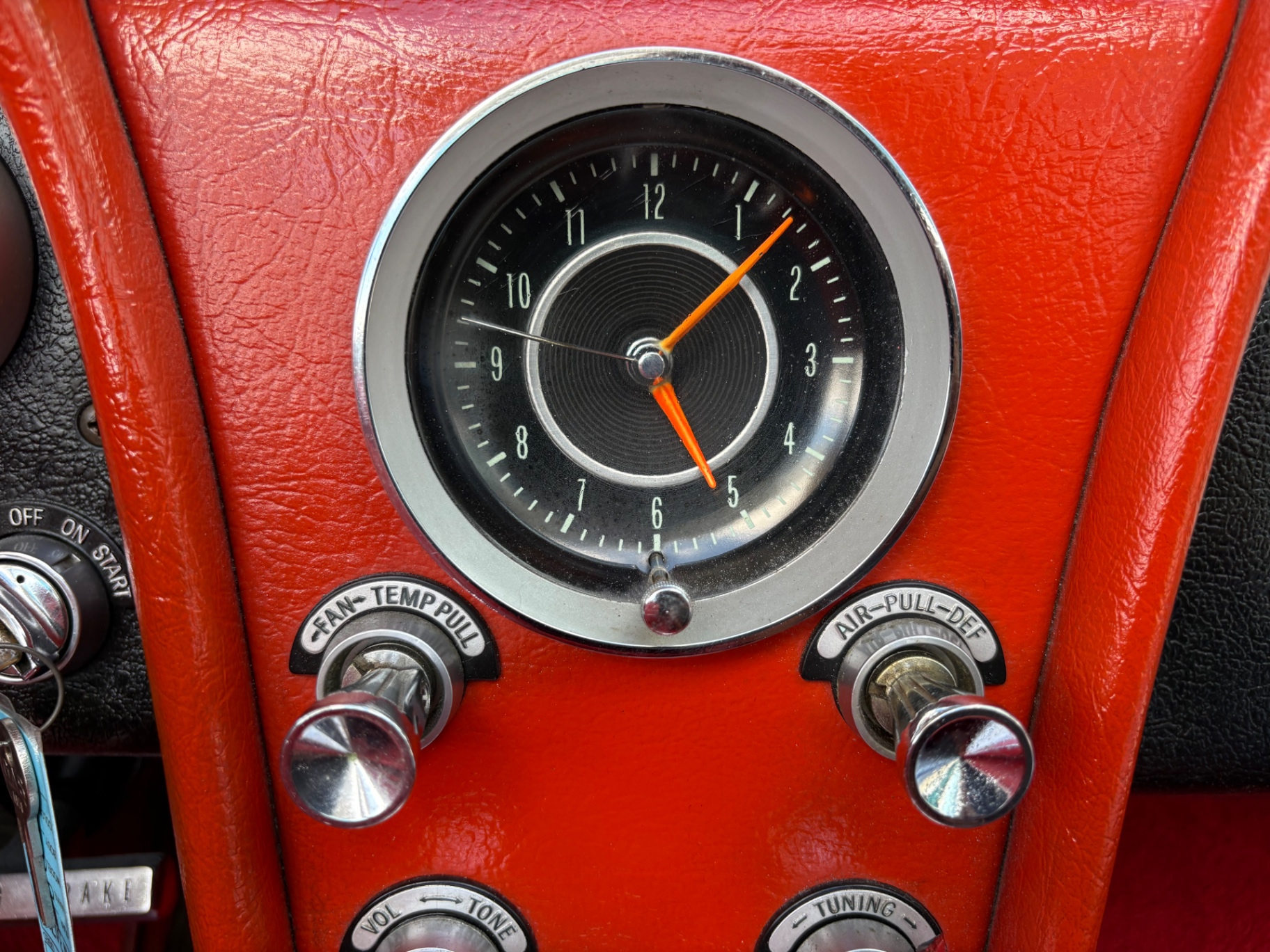
The dashboard is one of the more interesting details on any mid-year Corvette. Chevrolet revised the 1964 dash layout compared to 1963 to improve driver visibility of the gauges, and every instrument in this car is functional. The full cluster includes the large central speedometer reading to 160 mph, the tachometer reading to 7,000 rpm, and the four auxiliary gauges — fuel, temperature, oil pressure, and ammeter — all confirmed working. The clock on the passenger side center console is also visible and running in the photos.
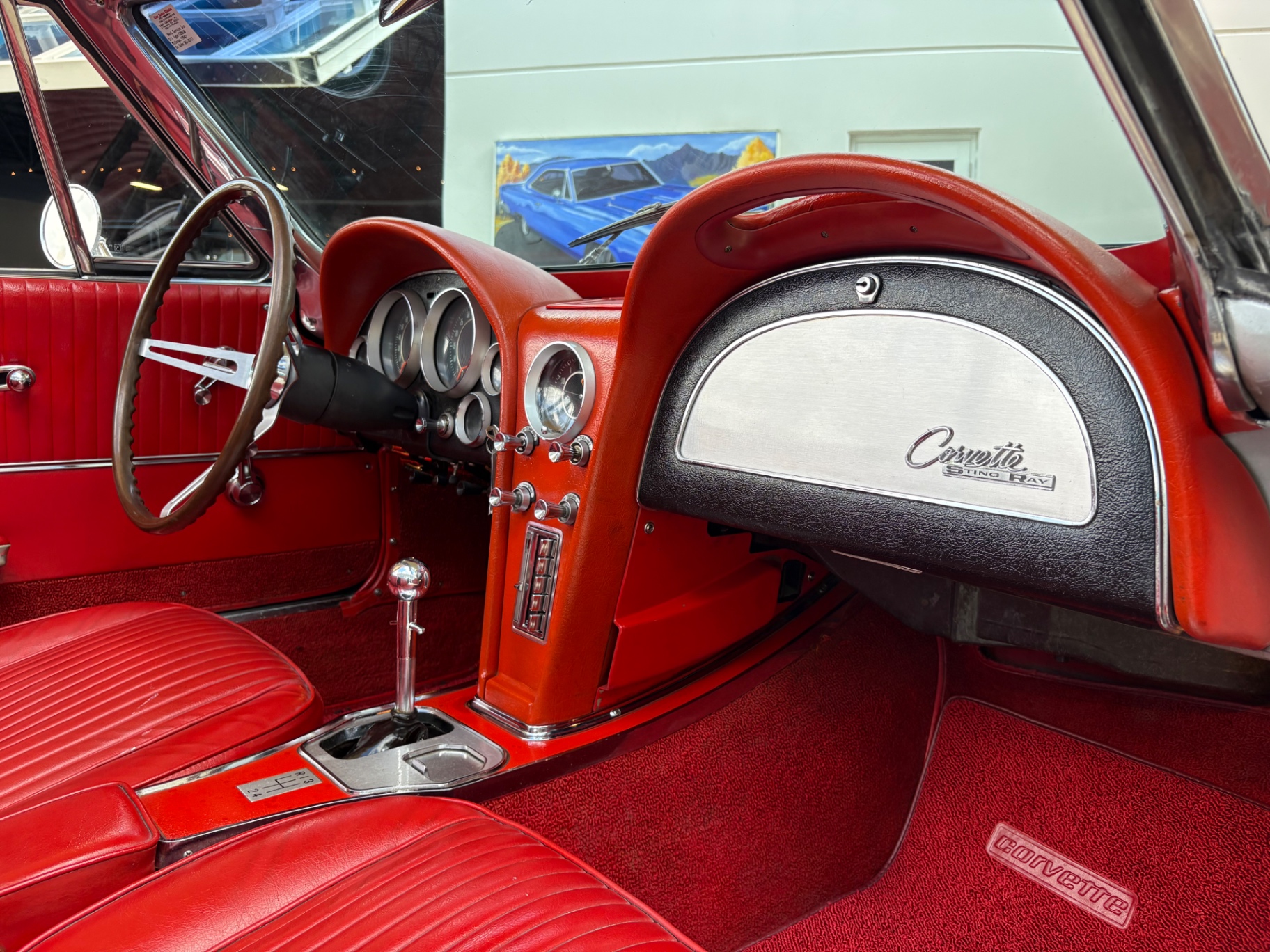
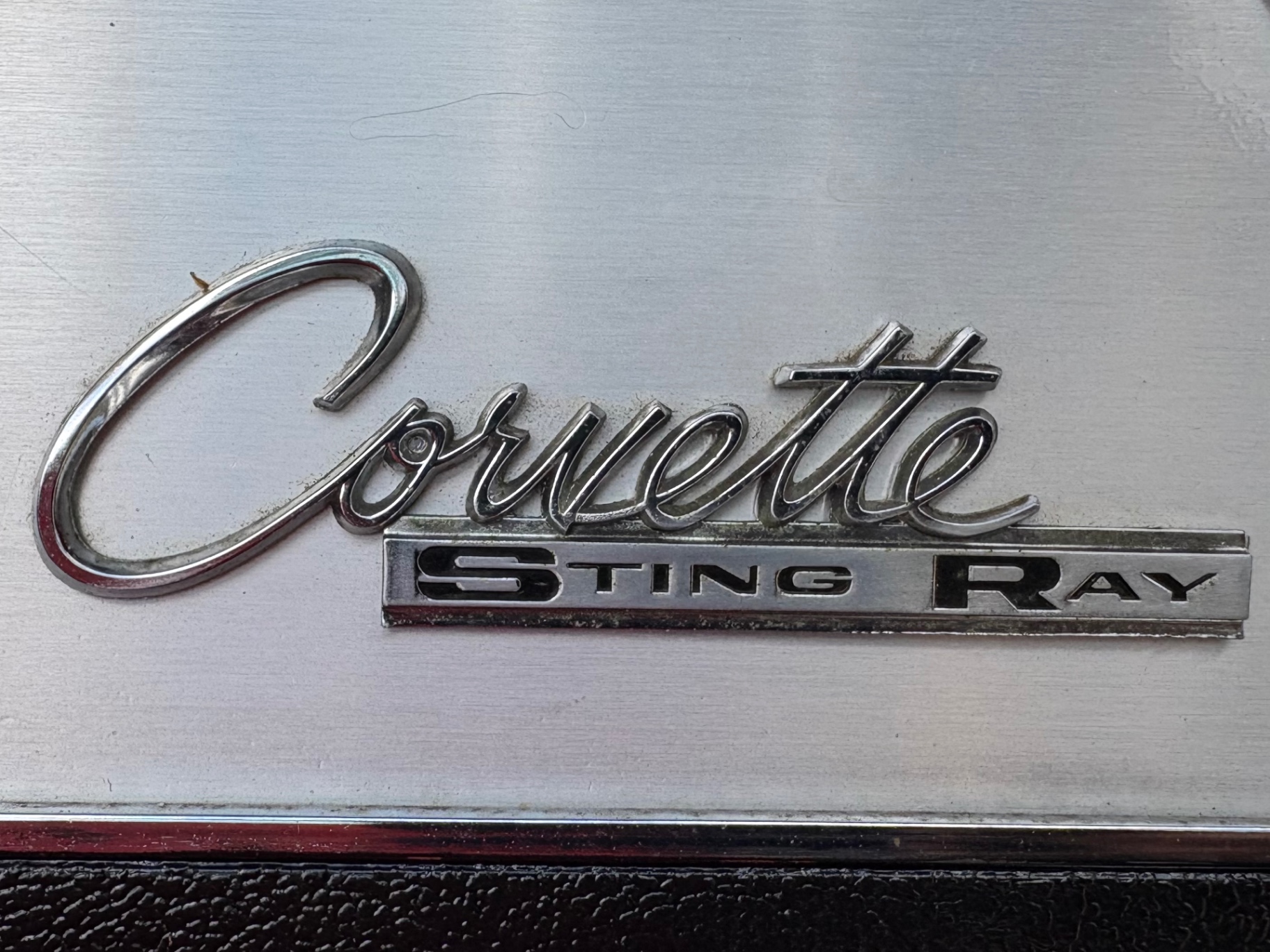
The wood-grain steering wheel with the Corvette crossed-flags horn button is the correct unit for the car. The 4-speed shifter sits in the correct position in the center console with its chrome ball shift knob. The AM radio is fitted in the console below the clock. Corvette script floor mats are in place on both sides. On the passenger side of the dashboard, the Corvette Sting Ray script badge is present — the correct two-piece badge that read "Corvette" in script above and "Sting Ray" in block letters on the bar below. It is a detail that collectors notice immediately and that is often missing or replaced on cars that have had less careful ownership.
The white convertible top is present and shows well. The top mechanism operates correctly.
Exterior
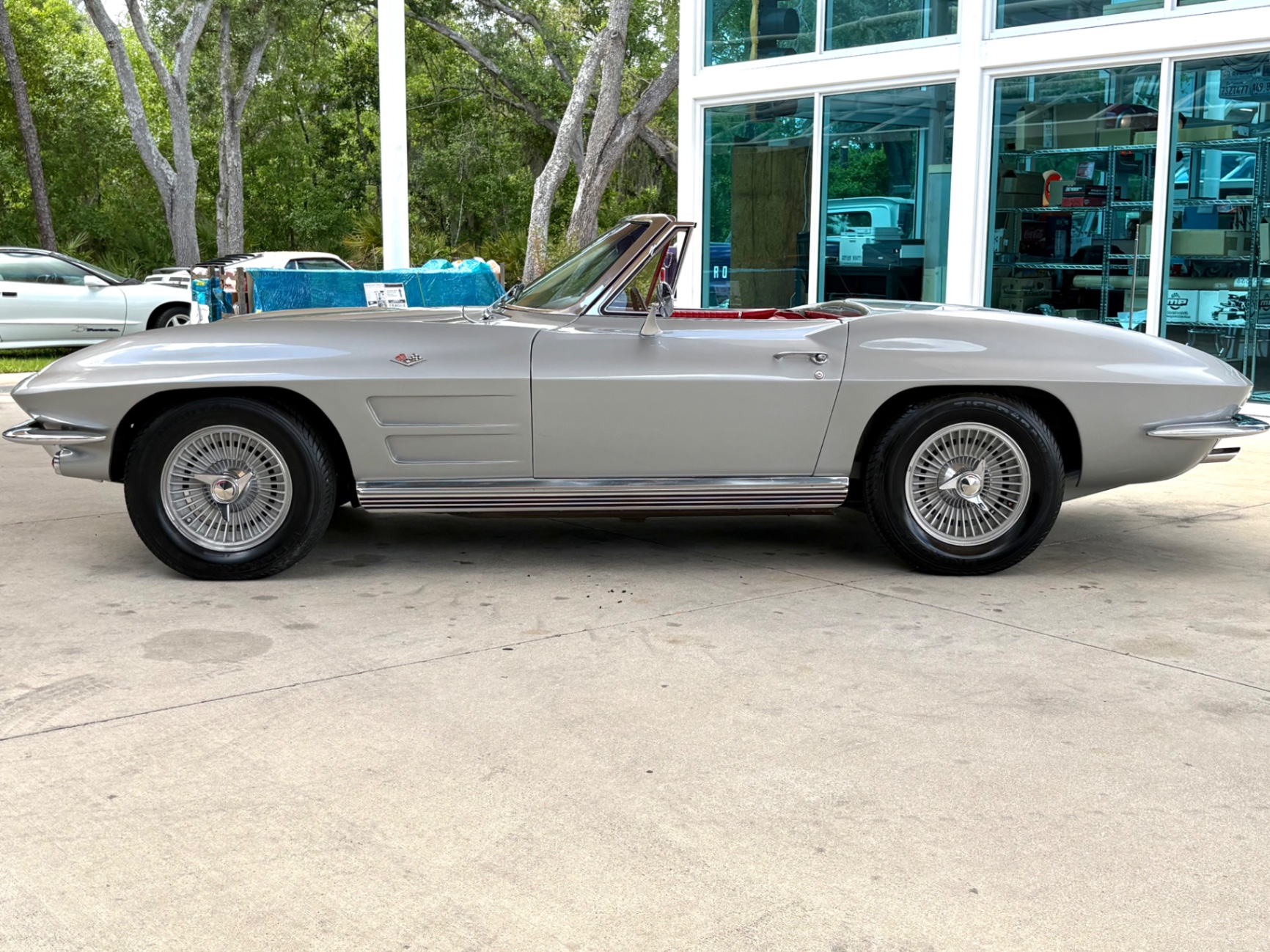
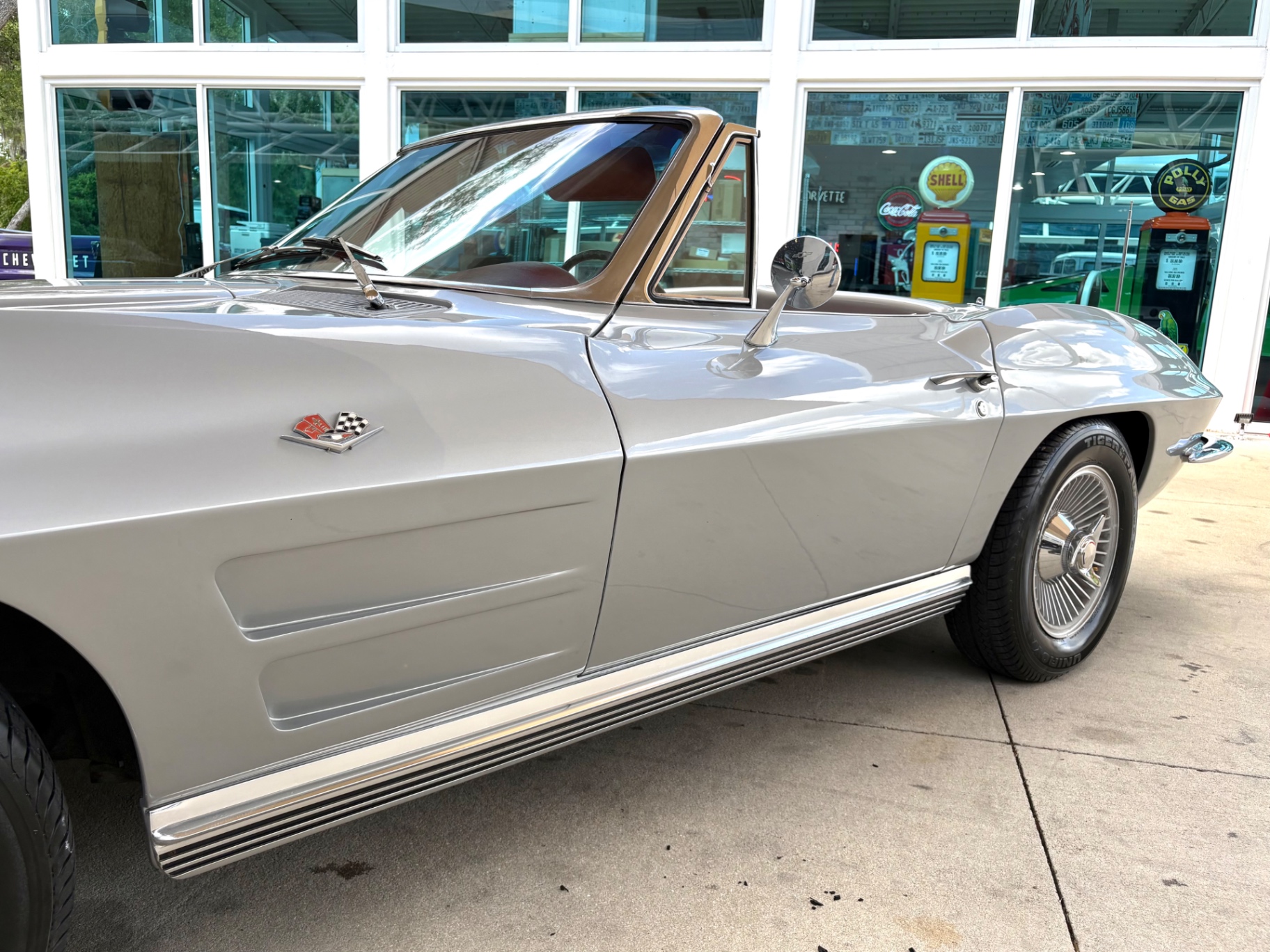
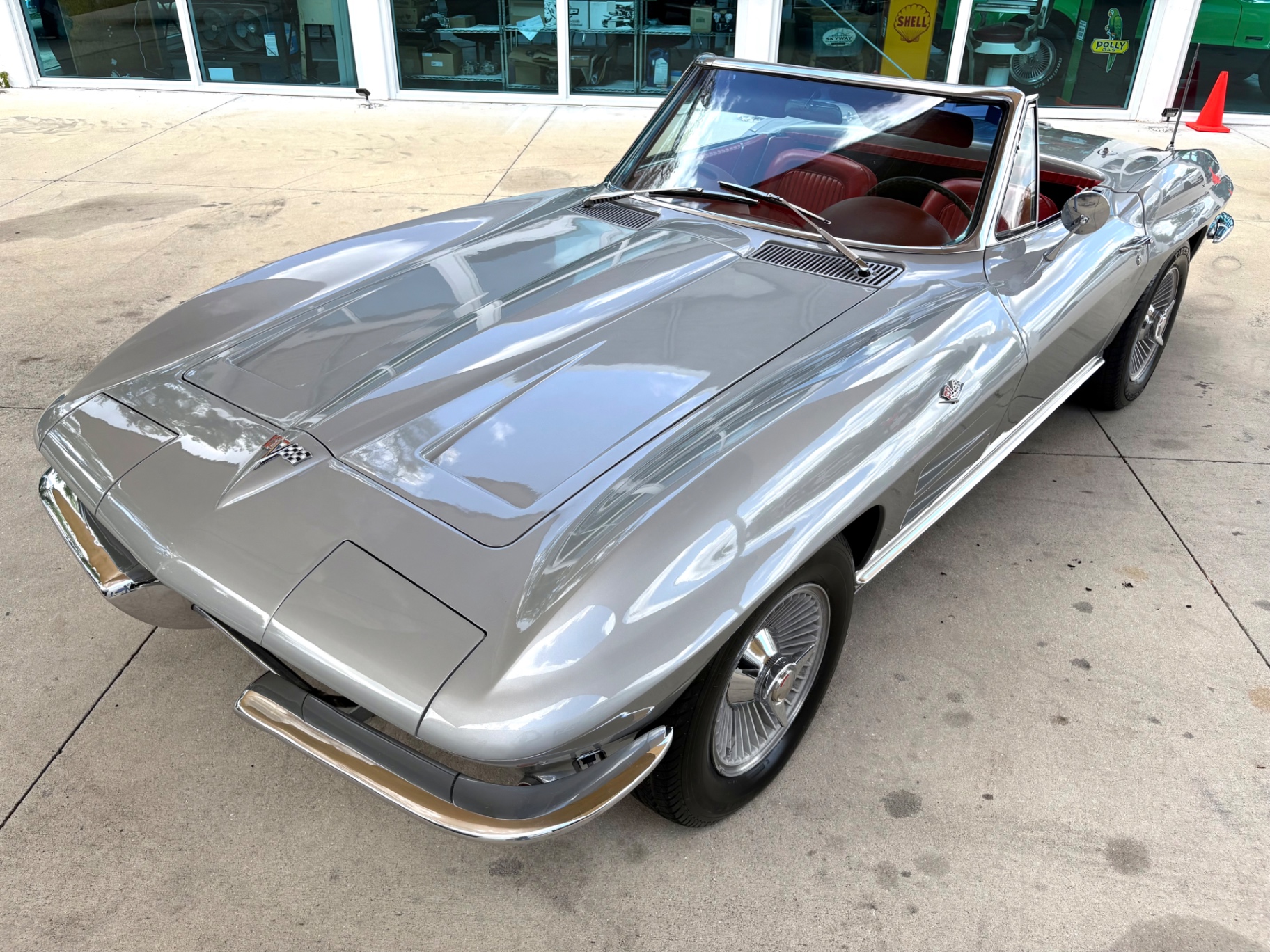
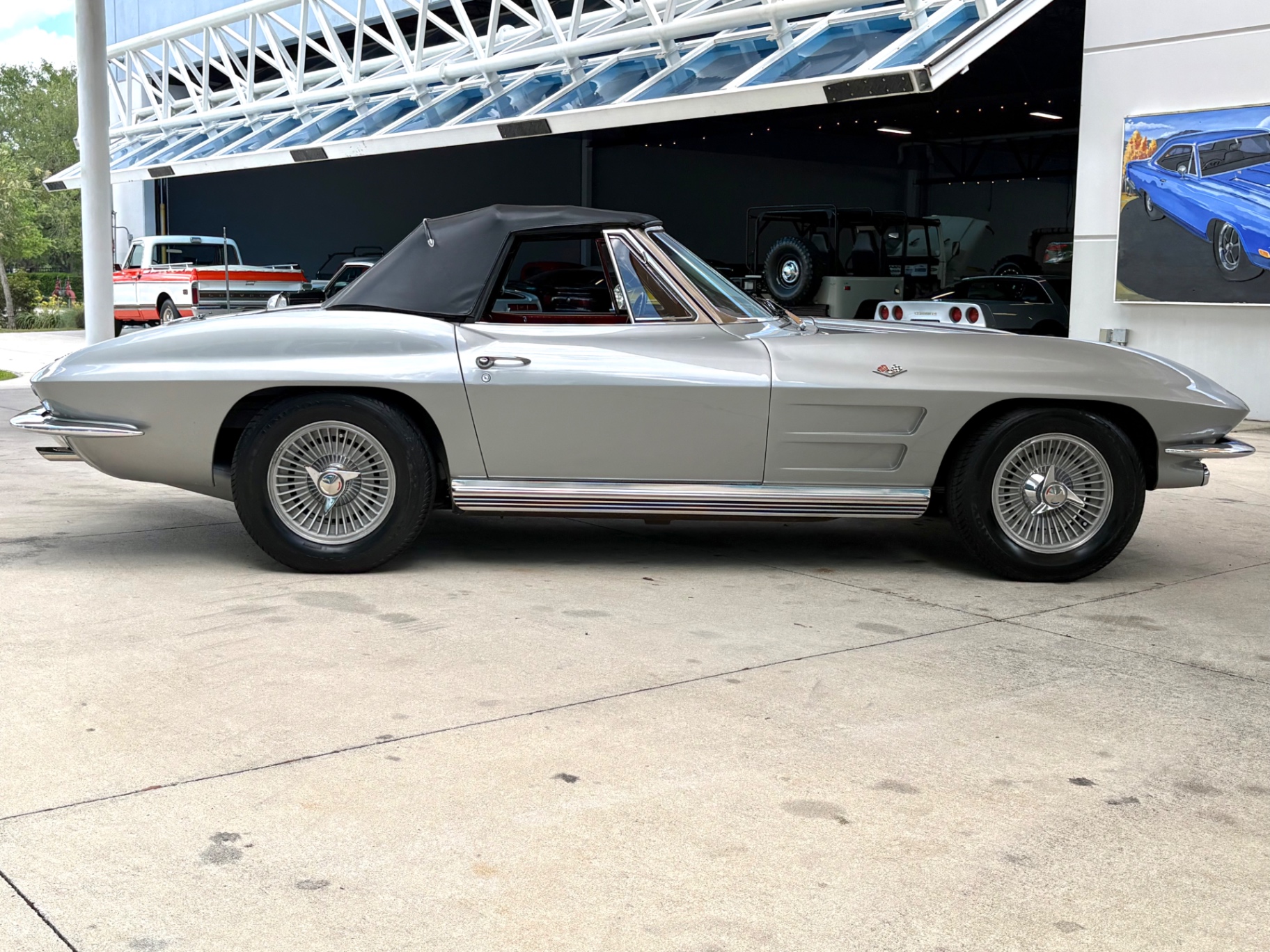
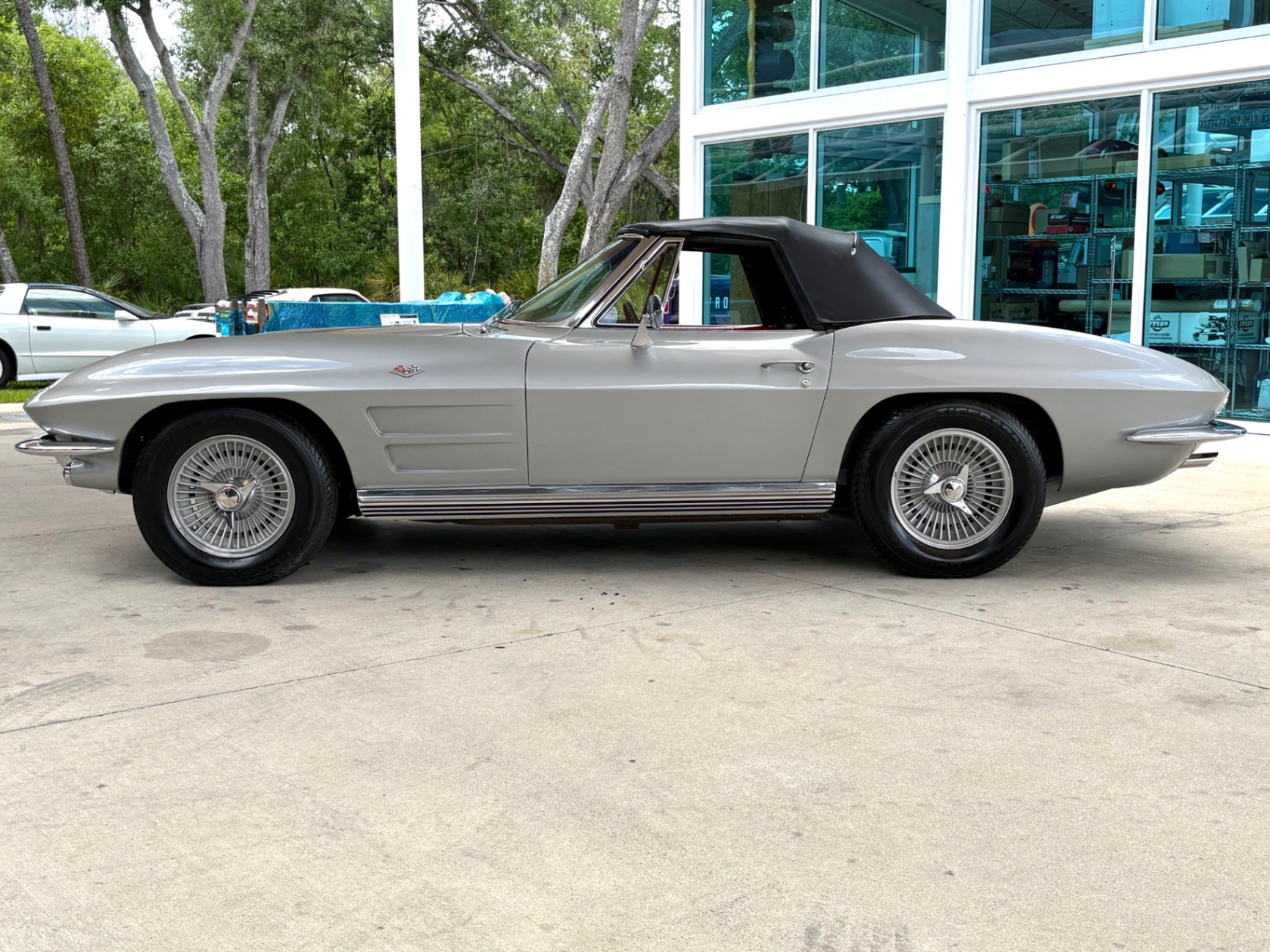
The 1964 Chevrolet Corvette Sting Ray wears its Silver exterior in solid condition. Silver was a factory color option for 1964 and pairs directly with the red interior in a combination that reads as both period-correct and visually distinct. The fiberglass body panels show the clean body lines that defined the C2 generation — the long hood, the tapered tail, the subtle fender flares, and the louvered side vents behind the front wheels. The 1964 model year removed the non-functional vents from the hood and revised the rear deck slightly compared to 1963, which gives the car a cleaner overall profile.
The knock-off wheels are present on all four corners. These wheels were a dealer or factory-installed option on the C2 and are identified by their large center spinner that requires a lead or brass hammer to tighten and remove. They are the correct wheels for this application and contribute significantly to the period appearance of the car.
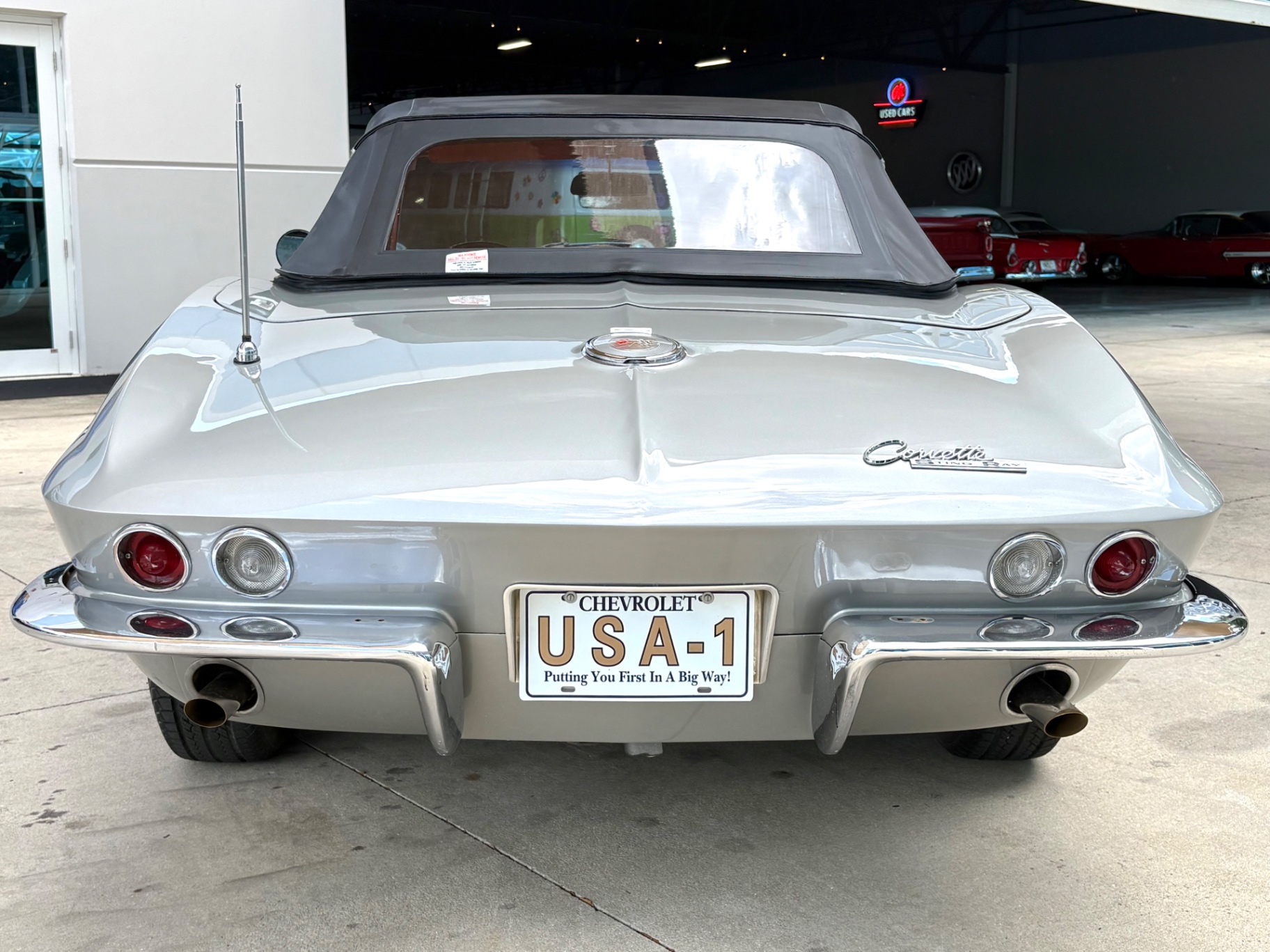
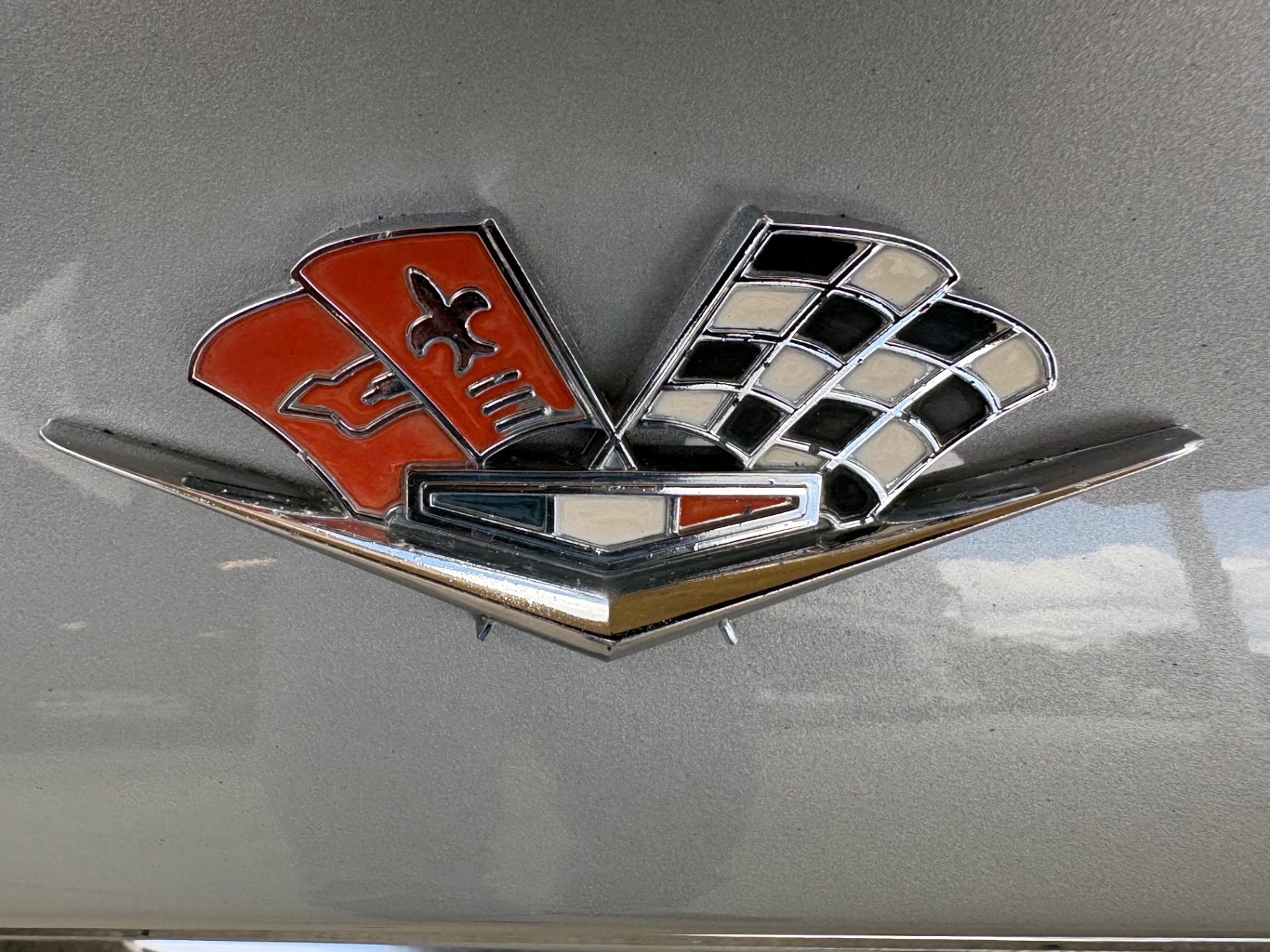
At the rear, the dual exhaust exits through the correct bumper tip positions. The chrome bumpers are present. The rear deck shows the correct Corvette Sting Ray badging. A spare tire carrier is present beneath the car. The dealer-installed rear luggage rack sits atop the rear deck — a period accessory that was available through Chevrolet dealers in the 1960s and that relatively few 1964 Corvette Sting Rays retain today. It is a functional and historically appropriate addition that does not alter any factory component.
The undercarriage has been painted and presents well in photographs taken from the lift. No visible rust or structural concerns are apparent.
Conclusion
This 1964 Chevrolet Corvette Sting Ray convertible checks the boxes that experienced collectors look for and are increasingly difficult to find together in a single car: matching numbers throughout, correct engine presentation, documented single-owner collection history, a functioning and complete interior, and a factory color combination that holds up visually. The L75 327/300 horsepower engine with a 4-speed manual is the most usable and enjoyable drivetrain combination available in a 1964 Corvette for someone who intends to drive the car. The recently rebuilt front suspension and new battery mean it is ready to drive now, not after another round of sorting.
The dealer-installed luggage rack is the kind of accessory detail that shows up in period photographs and period brochures but is rarely still on the car sixty years later. This one has it. That tells you something about how this car was kept.
If you have questions about this 1964 Chevrolet Corvette Sting Ray or would like to arrange an inspection, call Skyway Classics in Sarasota, Florida at 941-254-6608.
Disclaimer
Information found on the website is presented as given to us by the owner of the car, whether on consignment or from the owner we bought it from. Some Photos, materials for videos, descriptions and other information are provided by the consignor/seller and is deemed reliable, but Skyway Classics does not warranty or guarantee this information. Skyway Classics is not responsible for information that may incorrect or a publishing error. The decision to purchase should be based solely on the buyers personal inspection of the vehicle or by a professional inspection service prior to offer or purchase being made.
1964 Chevrolet Corvette Sting Ray Convertible — Numbers Matching L75 327/300HP, 4-Speed, Silver over Red
Why This Car Is Special
The 1964 Chevrolet Corvette Sting Ray sits at a specific and well-regarded point in C2 history. It was the second year of the Sting Ray body — the design that Zora Arkus-Duntov and Bill Mitchell had been working toward since the late 1950s — and Chevrolet used that second year to refine what the 1963 had introduced. The divisive split rear window was gone, replaced by a cleaner single-pane design. The fake hood vents were functional now. The dashboard was revised for better ergonomics. In short, 1964 is widely considered the more polished version of what many collectors regard as the best-looking Corvette ever built.
Total 1964 Corvette production came in at 13,925 convertibles. Of those, a meaningful percentage left the factory with base or mid-level 327 engines, but the car presented here carries the L75 — the 327 cubic inch V8 rated at 300 horsepower. That engine sits between the base 250hp unit and the more aggressive fuel-injected and solid-lifter options, making it a strong, street-able combination that rewards daily driving and doesn't demand the level of maintenance that a race-oriented engine requires. Paired with a 4-speed manual transmission, it's the configuration most buyers in 1964 actually wanted.
What separates this specific 1964 Corvette Sting Ray from the majority of C2s you'll encounter is the depth of its documentation and the correctness of its drivetrain. The engine numbers match the car. The block is painted the correct Chevrolet engine red. The valve covers are correct red. The alternator is correct. This is not a car that has been assembled from mixed parts — it is documented as a single long-term collection car with a traceable ownership history. That provenance matters enormously when it comes time to insure, show, or resell.
The color combination adds another layer of appeal. Silver over red was a factory-correct and visually distinct pairing in 1964. The white convertible top completes the look cleanly. Add the dealer-installed rear luggage rack — a period-correct accessory that relatively few C2s carry today — and you have a car that stands out even in a room full of well-preserved Corvettes.
Features List
- Numbers matching L75 327ci V8, 300 horsepower
- Correct red-painted block and red valve covers
- 4-speed manual transmission, numbers matching drivetrain
- Knock-off wheels (require lead hammer for removal, as designed)
- White convertible top
- Silver exterior with red vinyl interior
- Dealer-installed rear luggage rack
- Spare tire carrier present
- Front suspension recently rebuilt
- Independent rear suspension (IRS)
- Dual exhaust with correct bumper tip exits
- Painted undercarriage
- All gauges functional — speedometer, tachometer, fuel, temperature, oil, amp
- Wood-grain steering wheel with Corvette crossed-flags horn button
- AM radio
- 4-speed shifter with chrome ball
- Center console intact
- Corvette script floor mats
- Correct ribbed red vinyl door panels with chrome window cranks, chrome door handles, and chrome accent bar
- Original seat belts present
- Corvette Sting Ray script badge on passenger dash
- New Interstate battery
- Correct chrome and polished air cleaner
- Documented single long-term collection ownership history
Mechanical
The engine in this 1964 Chevrolet Corvette Sting Ray is the numbers-matching L75 327 cubic inch V8, factory rated at 300 horsepower. The L75 used a hydraulic lifter camshaft and a single four-barrel carburetor, which made it the most usable of the 327 options for street driving — strong enough to be entertaining, manageable enough to be reliable. The block carries its correct red paint, the valve covers are correct red, and the chrome and polished air cleaner is the right unit for the application. The correct alternator is in place, and a new Interstate battery has been installed.
The front end has been recently rebuilt, which addresses one of the most common service items on a C2 that has sat in a collection. The independent rear suspension — a genuine engineering landmark when Chevrolet introduced it on the 1963 Sting Ray — is present and correct. Prior to 1963, the Corvette used a solid rear axle. The IRS system used a fixed differential housing with U-jointed half-shafts, which dramatically improved rear-wheel control under hard cornering. You can see the geometry clearly in the undercarriage photos: the half-shafts, control arms, and differential housing are all visible and correctly presented. The undercarriage itself has been painted.
The dual exhaust routes correctly through bumper tip exits at the rear — not side exits, not cutouts, but the proper bumper tips that Chevrolet specified for 1964. The 4-speed manual transmission rounds out a drivetrain that is documented as numbers matching throughout. Headlights operate correctly on their vacuum-actuated pop-up mechanism. The knock-off wheels, as correct for the option, require a lead hammer to remove — that is not a defect, it is how they were designed to work.
Interior
The interior of this 1964 Corvette Sting Ray is finished in red vinyl and presents in excellent condition throughout. The seats show their correct ribbed vinyl construction and hold their shape well. Both door panels are the correct ribbed red vinyl pattern for 1964, fitted with the factory chrome window cranks, chrome door handles, and the chrome accent bar that runs horizontally across each panel. The lower portion of each door panel carries the correct textured carpet insert. Original seat belts are present on both sides.
The dashboard is one of the more interesting details on any mid-year Corvette. Chevrolet revised the 1964 dash layout compared to 1963 to improve driver visibility of the gauges, and every instrument in this car is functional. The full cluster includes the large central speedometer reading to 160 mph, the tachometer reading to 7,000 rpm, and the four auxiliary gauges — fuel, temperature, oil pressure, and ammeter — all confirmed working. The clock on the passenger side center console is also visible and running in the photos.
The wood-grain steering wheel with the Corvette crossed-flags horn button is the correct unit for the car. The 4-speed shifter sits in the correct position in the center console with its chrome ball shift knob. The AM radio is fitted in the console below the clock. Corvette script floor mats are in place on both sides. On the passenger side of the dashboard, the Corvette Sting Ray script badge is present — the correct two-piece badge that read "Corvette" in script above and "Sting Ray" in block letters on the bar below. It is a detail that collectors notice immediately and that is often missing or replaced on cars that have had less careful ownership.
The white convertible top is present and shows well. The top mechanism operates correctly.
Exterior
The 1964 Chevrolet Corvette Sting Ray wears its Silver exterior in solid condition. Silver was a factory color option for 1964 and pairs directly with the red interior in a combination that reads as both period-correct and visually distinct. The fiberglass body panels show the clean body lines that defined the C2 generation — the long hood, the tapered tail, the subtle fender flares, and the louvered side vents behind the front wheels. The 1964 model year removed the non-functional vents from the hood and revised the rear deck slightly compared to 1963, which gives the car a cleaner overall profile.
The knock-off wheels are present on all four corners. These wheels were a dealer or factory-installed option on the C2 and are identified by their large center spinner that requires a lead or brass hammer to tighten and remove. They are the correct wheels for this application and contribute significantly to the period appearance of the car.
At the rear, the dual exhaust exits through the correct bumper tip positions. The chrome bumpers are present. The rear deck shows the correct Corvette Sting Ray badging. A spare tire carrier is present beneath the car. The dealer-installed rear luggage rack sits atop the rear deck — a period accessory that was available through Chevrolet dealers in the 1960s and that relatively few 1964 Corvette Sting Rays retain today. It is a functional and historically appropriate addition that does not alter any factory component.
The undercarriage has been painted and presents well in photographs taken from the lift. No visible rust or structural concerns are apparent.
Conclusion
This 1964 Chevrolet Corvette Sting Ray convertible checks the boxes that experienced collectors look for and are increasingly difficult to find together in a single car: matching numbers throughout, correct engine presentation, documented single-owner collection history, a functioning and complete interior, and a factory color combination that holds up visually. The L75 327/300 horsepower engine with a 4-speed manual is the most usable and enjoyable drivetrain combination available in a 1964 Corvette for someone who intends to drive the car. The recently rebuilt front suspension and new battery mean it is ready to drive now, not after another round of sorting.
The dealer-installed luggage rack is the kind of accessory detail that shows up in period photographs and period brochures but is rarely still on the car sixty years later. This one has it. That tells you something about how this car was kept.
If you have questions about this 1964 Chevrolet Corvette Sting Ray or would like to arrange an inspection, call Skyway Classics in Sarasota, Florida at 941-254-6608.
Disclaimer
Information found on the website is presented as given to us by the owner of the car, whether on consignment or from the owner we bought it from. Some Photos, materials for videos, descriptions and other information are provided by the consignor/seller and is deemed reliable, but Skyway Classics does not warranty or guarantee this information. Skyway Classics is not responsible for information that may incorrect or a publishing error. The decision to purchase should be based solely on the buyers personal inspection of the vehicle or by a professional inspection service prior to offer or purchase being made.
1964 Chevrolet
Corvette Base
Why Choose Skyway Classics?
Explore our curated inventory of classic and collector cars—thoughtfully selected, ready to drive, and supported by experts who make ownership simple.
Expert Curation
Every vehicle is hand-selected by our experts for quality, authenticity, and investment potential.
Fast Transactions
Streamlined buying and selling process with quick financing and immediate delivery options.
Only National Dealer With Classic Service & Repair
We’re the only national dealership that services and repairs the classics we sell—before and after the sale.
Nationwide Network
Access to our extensive network of collectors, restorers, and classic car enthusiasts nationwide.
Concierge Ownership Support
From financing and insurance to paperwork, shipping, and titling—we handle the details so you can enjoy the drive.
Passion-Driven Service
We're classic car enthusiasts first, providing personalized service with genuine passion for the hobby.