
1940 Mercury
Eight Convertible
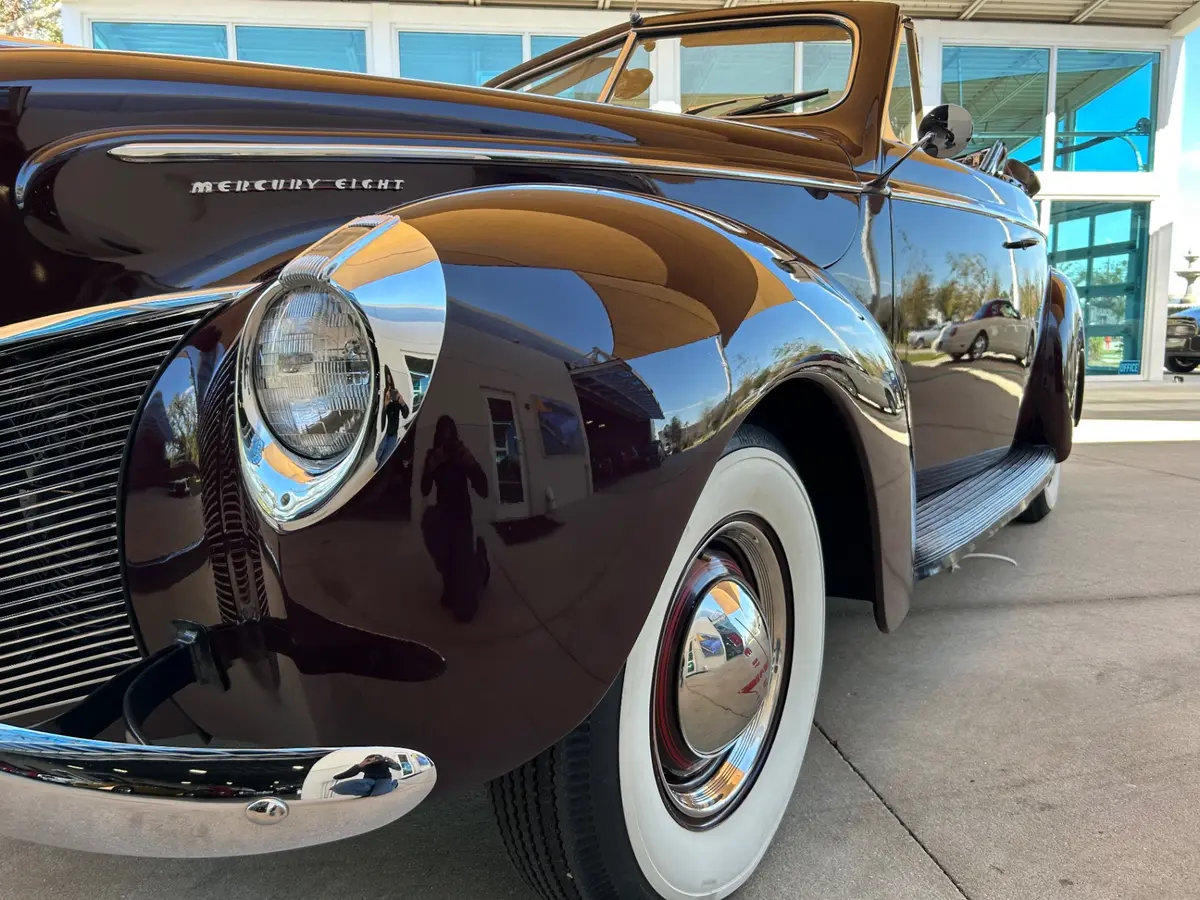
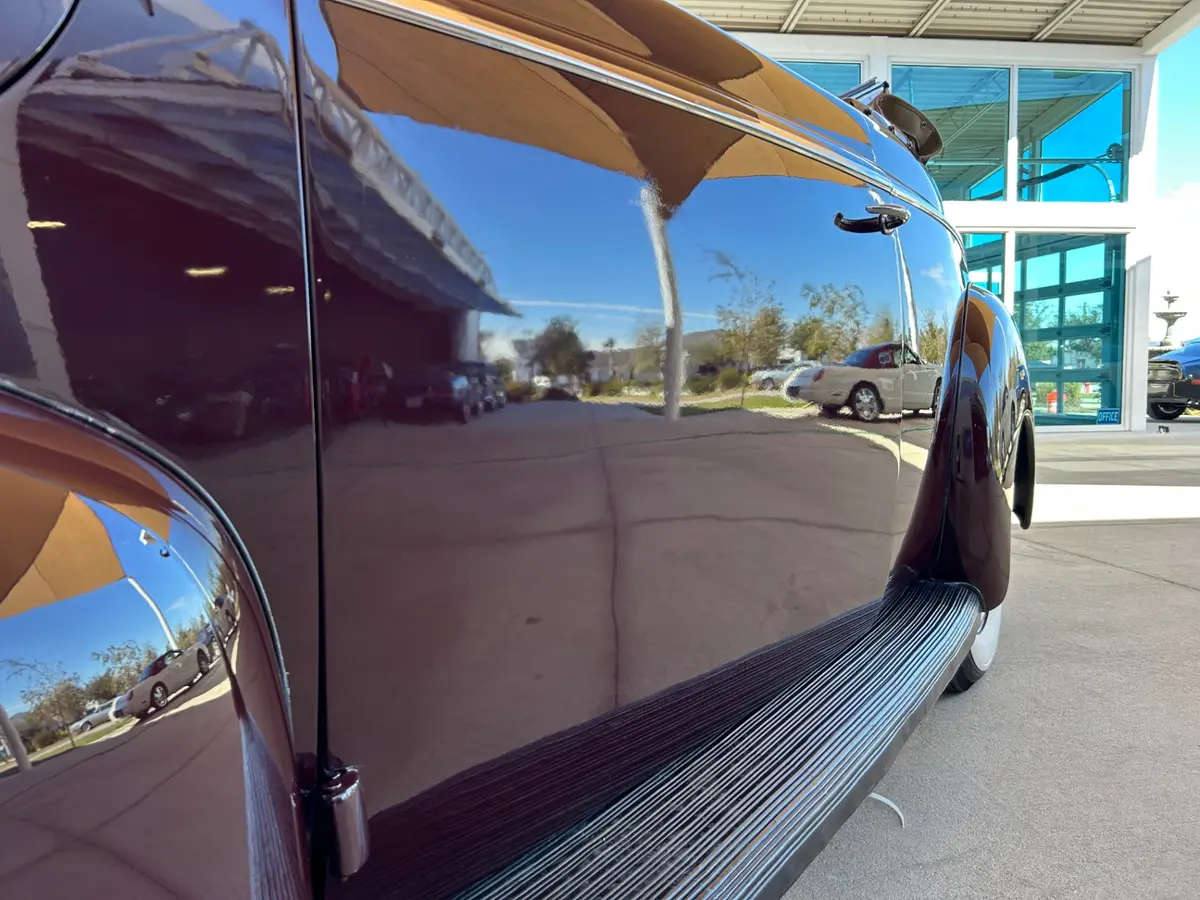
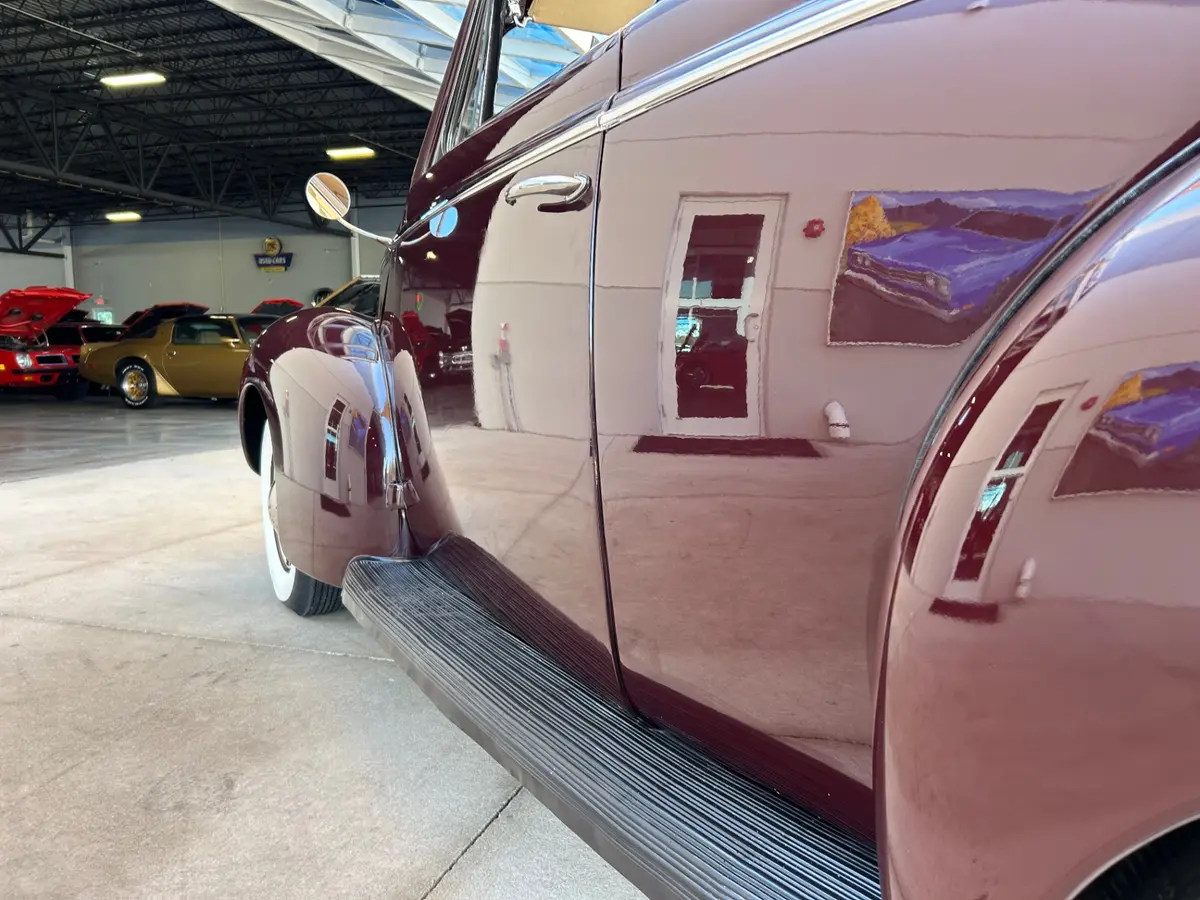
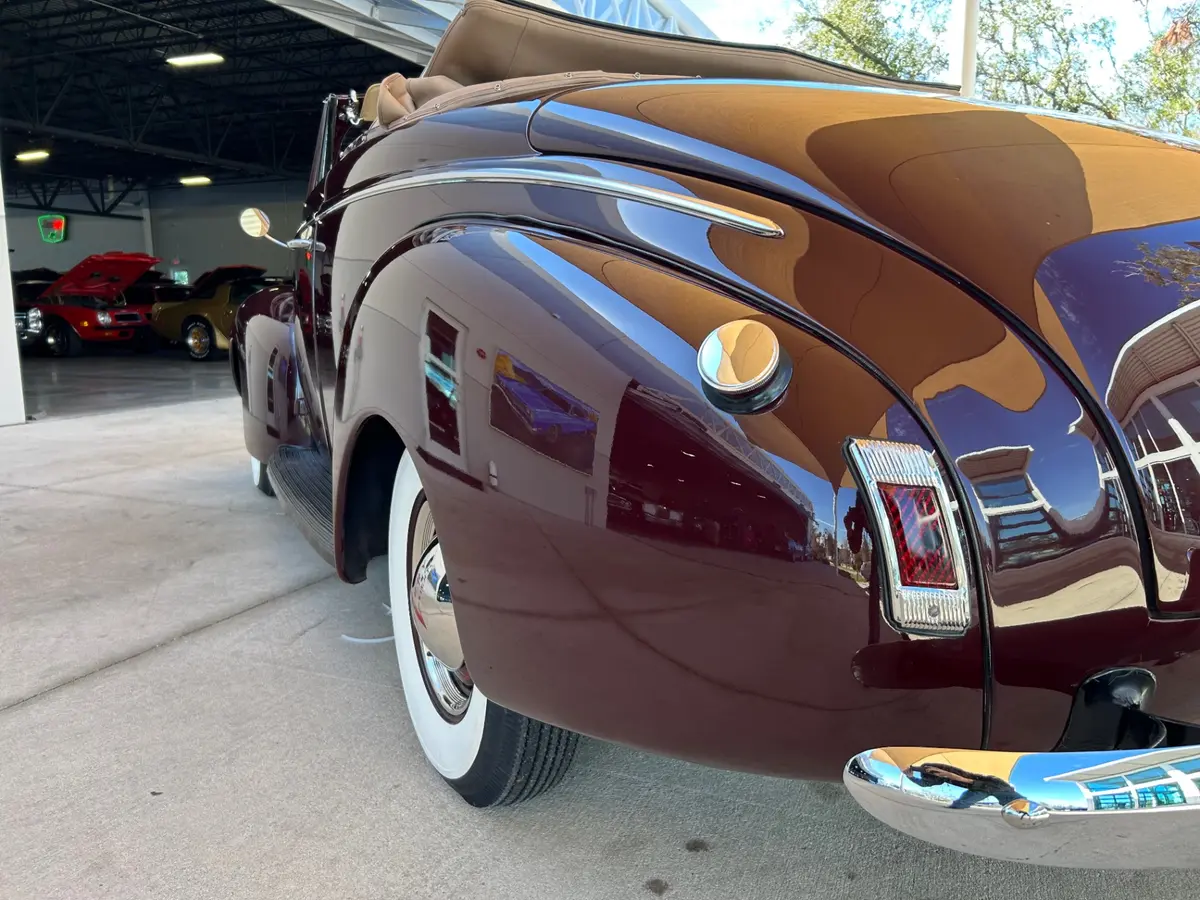
1940 Mercury Eight Convertible — Garnet Maroon, Flathead V8, Restored Throughout
Why This Car Is Special
The 1940 Mercury Eight holds a specific place in American automotive history that is easy to overlook today. Ford Motor Company launched the Mercury brand in 1939 as a deliberate answer to a pricing gap — the Ford was entry-level, the Lincoln was luxury, and there was nothing competitive in between. Mercury filled that space with a longer wheelbase, a larger engine, and noticeably more refined styling than anything wearing a Ford badge at the time. By 1940, Mercury had found its footing, and the second-year cars showed it. The body was restyled with smoother, more streamlined sheetmetal, and the convertible body style represented the top of the Mercury lineup in terms of desirability and cost.
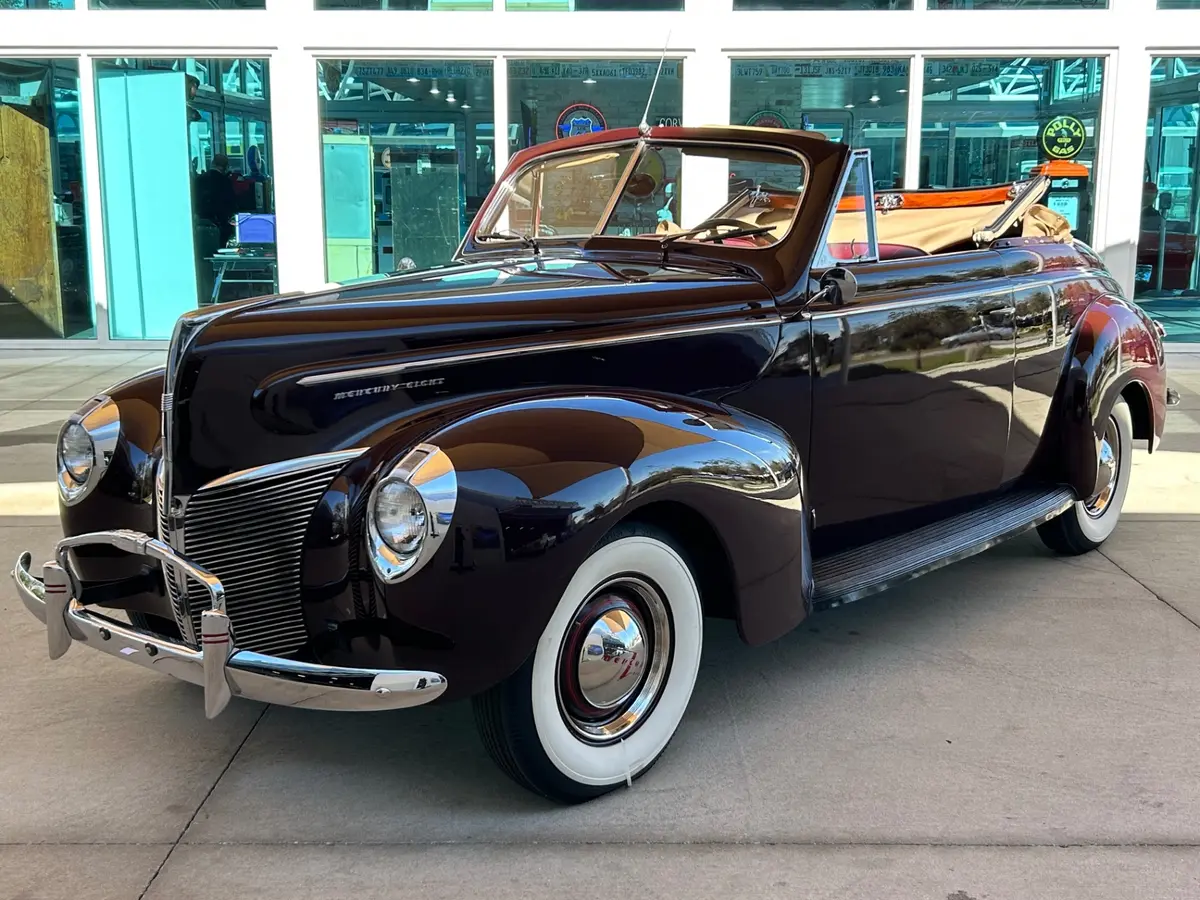
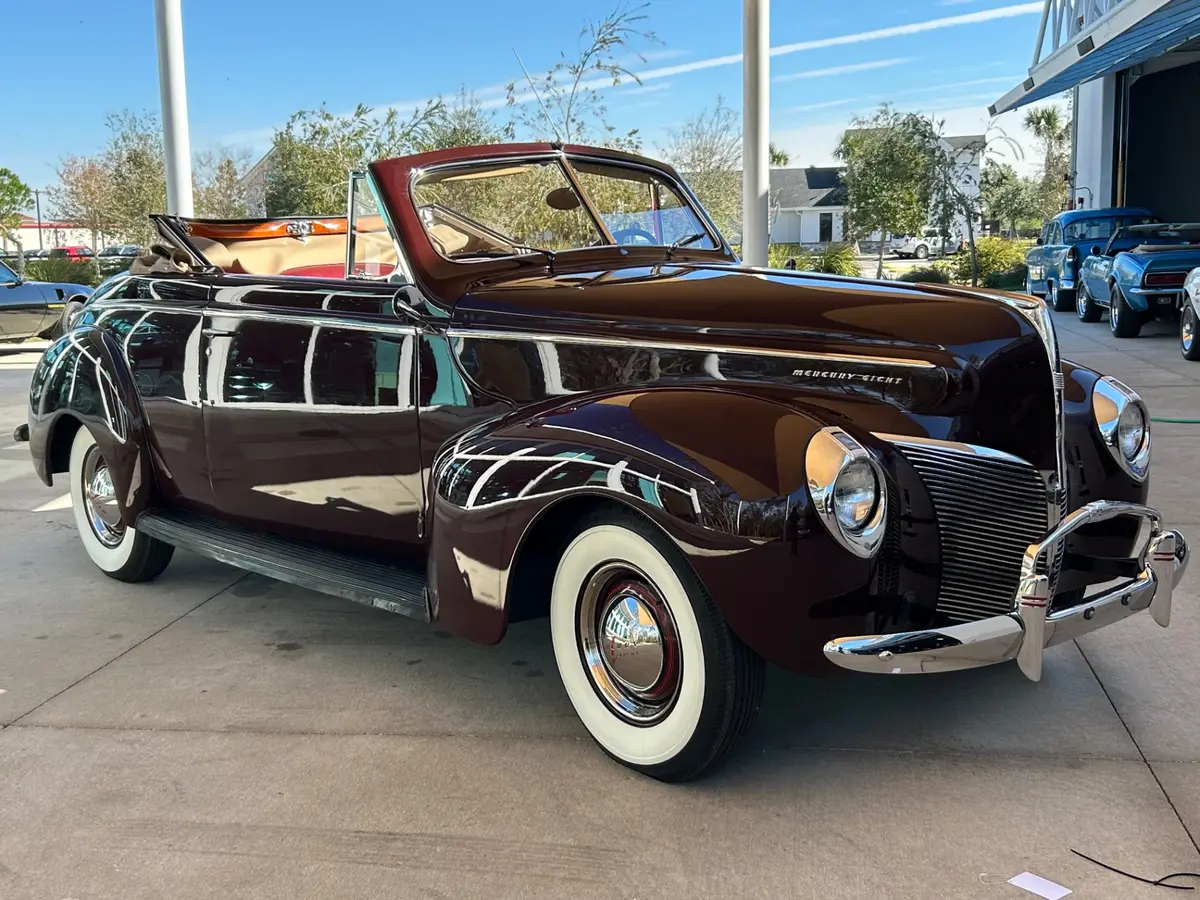
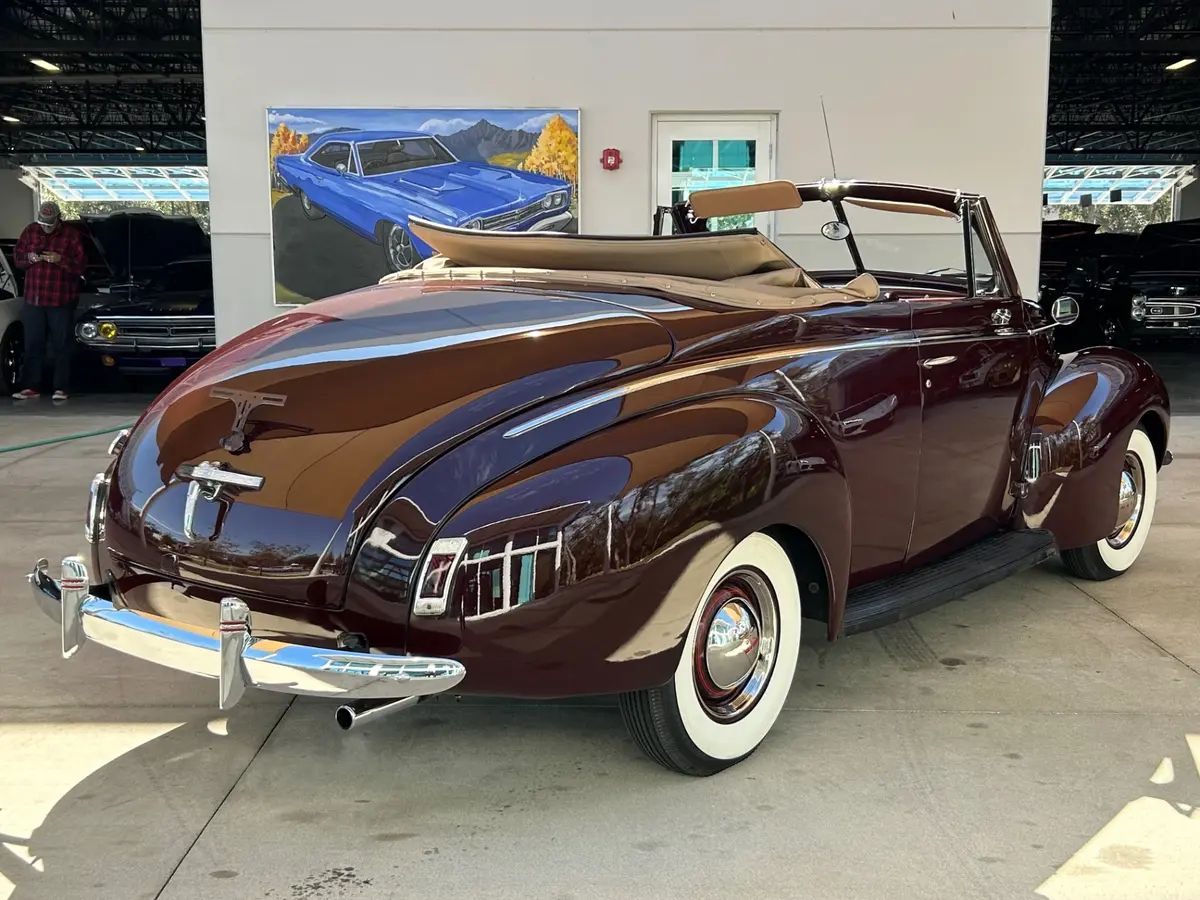
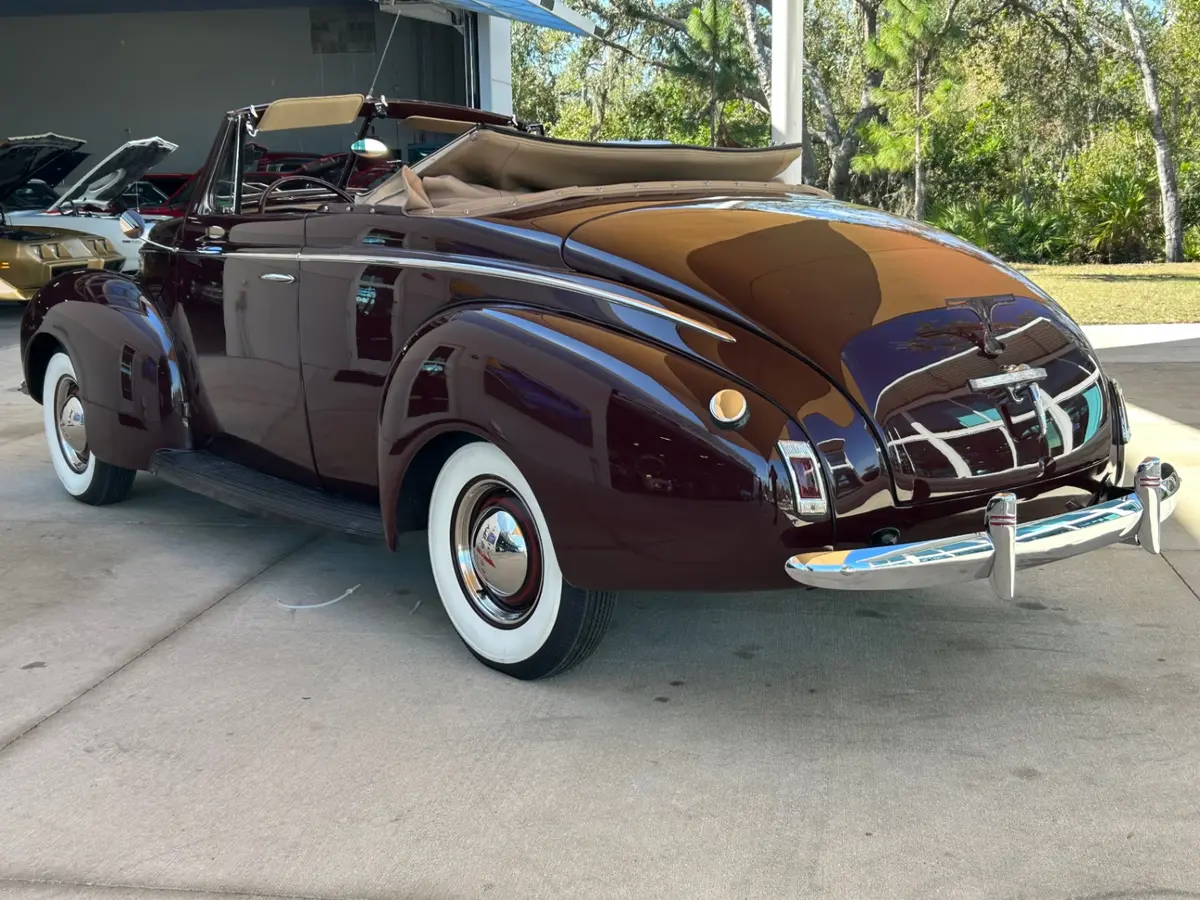
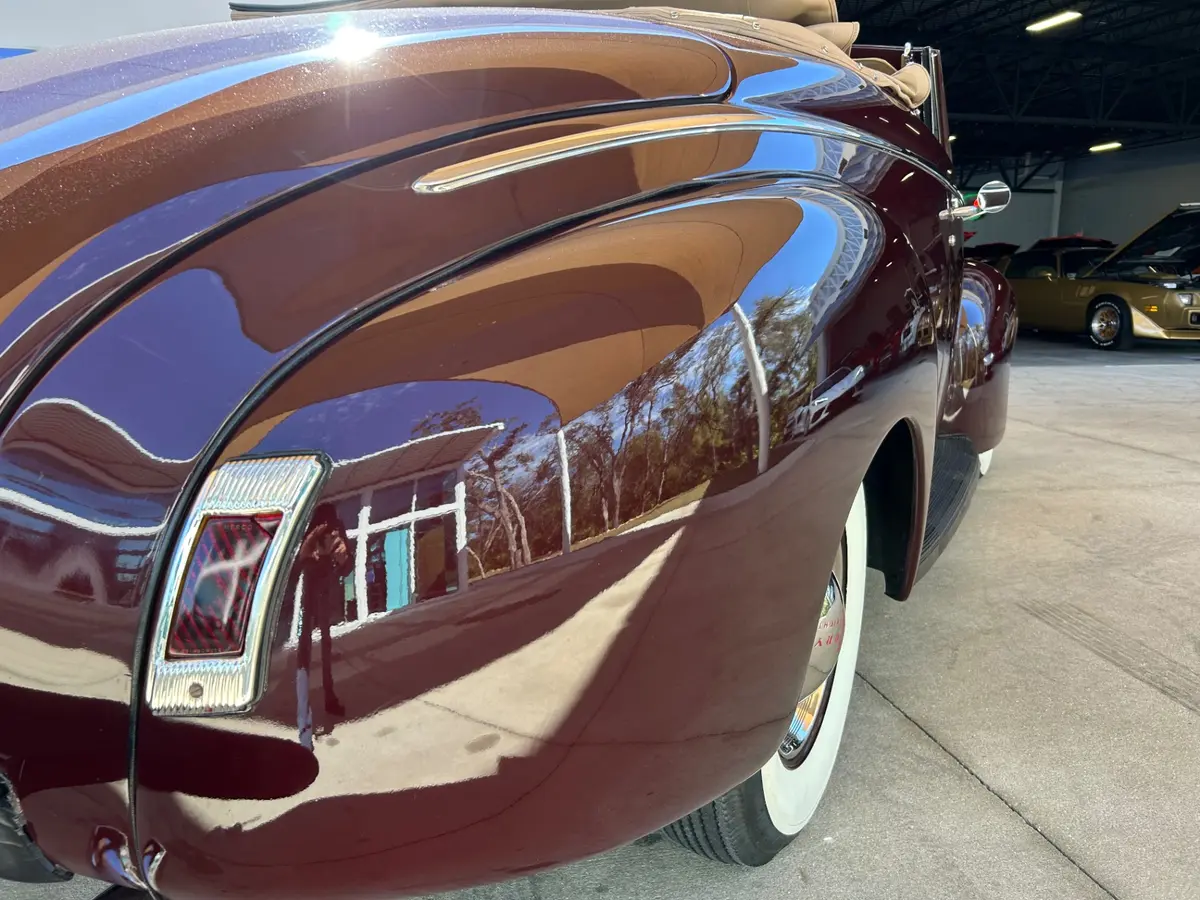
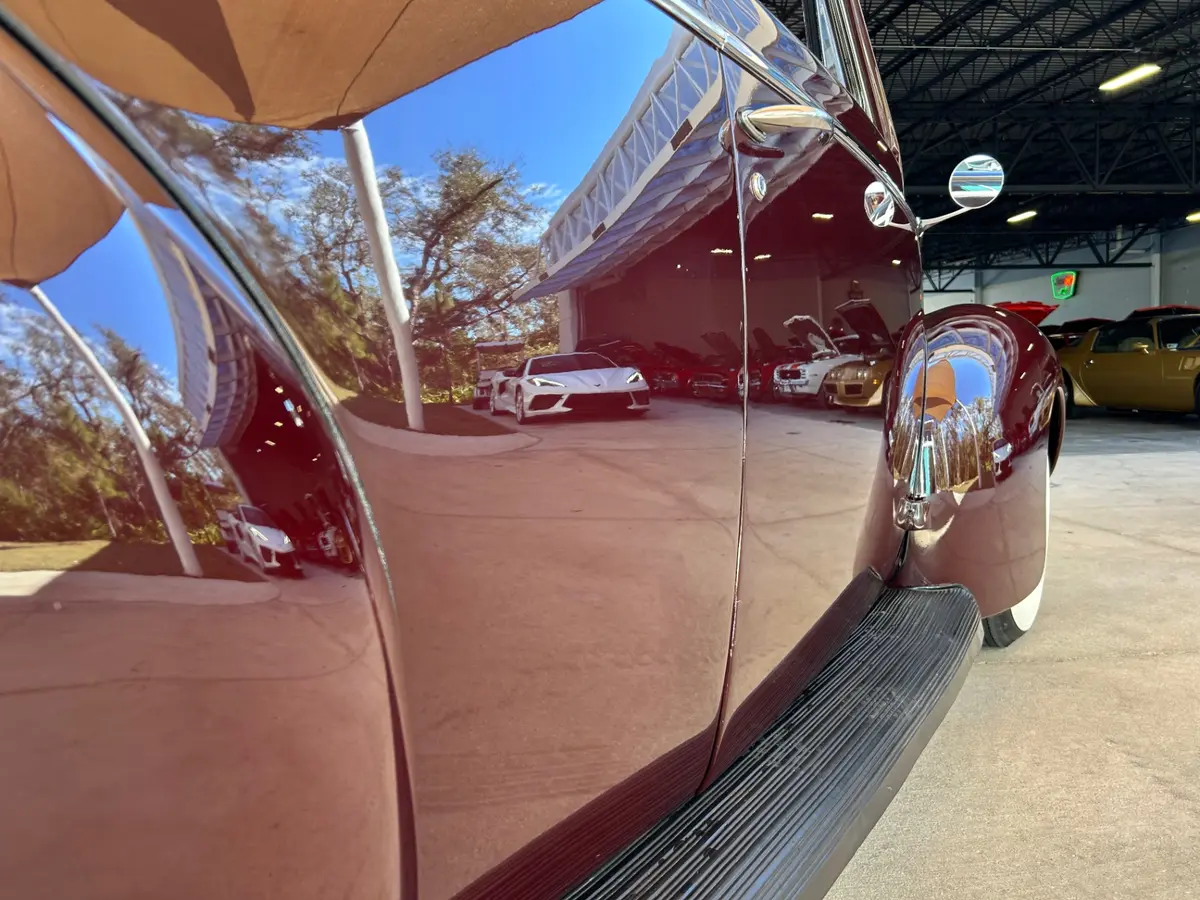
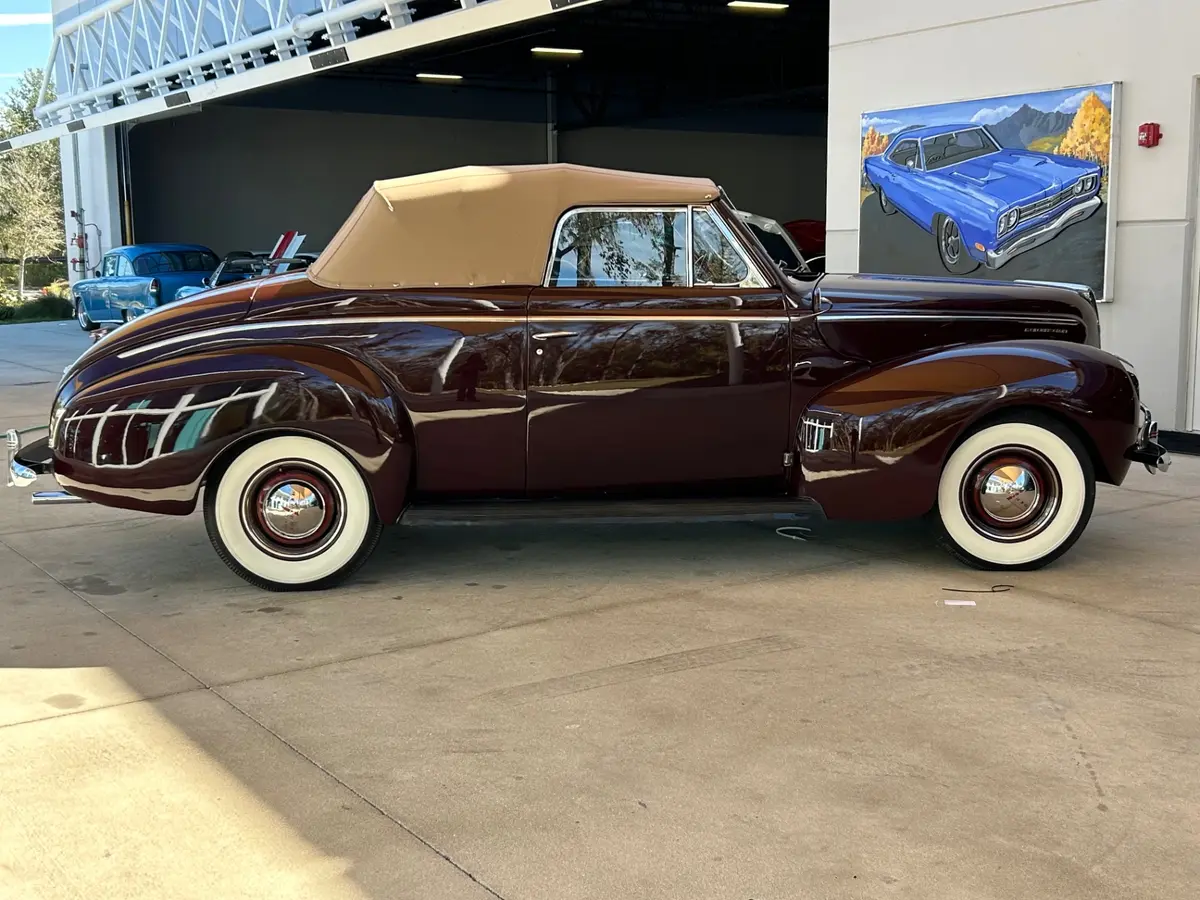
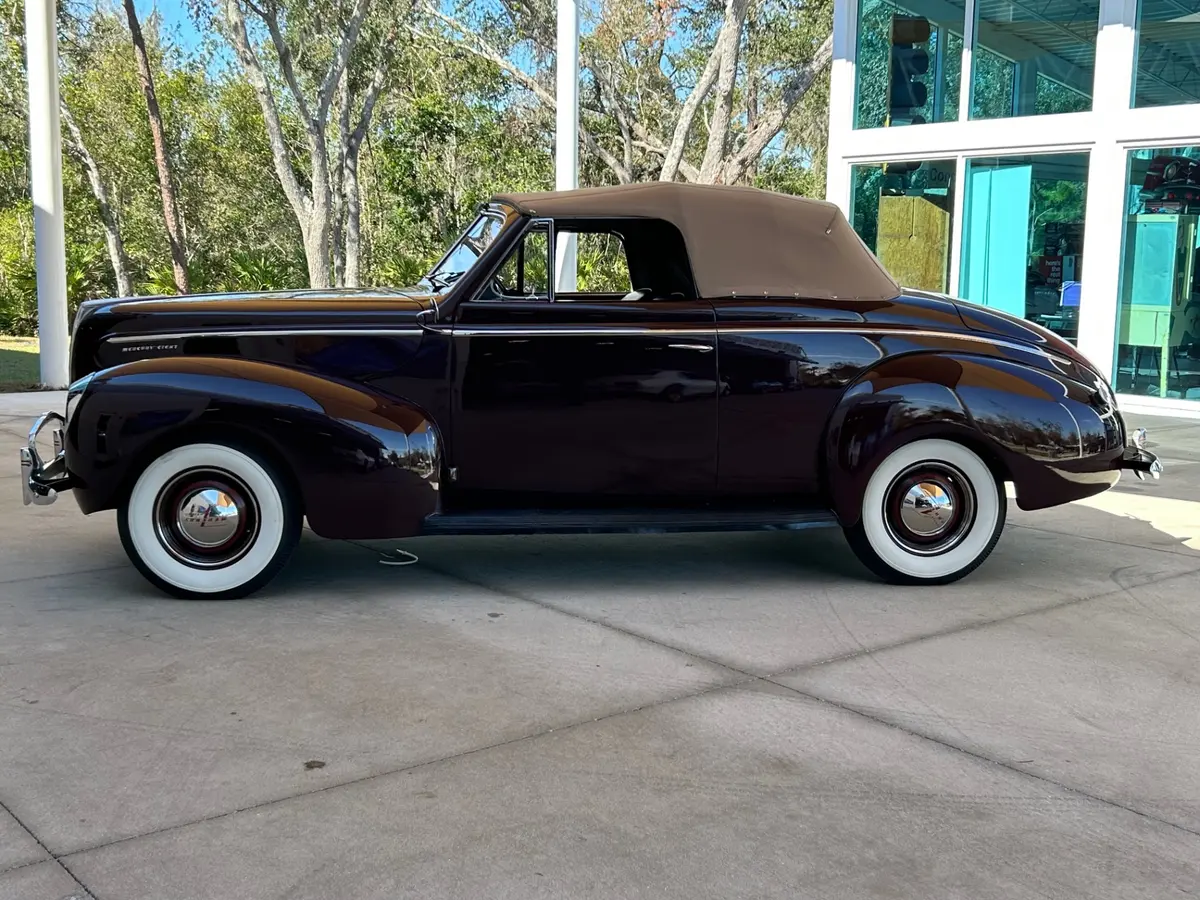
The convertible was never a high-volume body style. Ford Motor Company produced roughly 3,954 Mercury Eight convertibles for the 1940 model year, making them considerably rarer than the two-door and four-door sedans that made up the bulk of production. What you are looking at here is a restored example of that low-production body style, finished in Garnet Maroon with a tan convertible top and a red leather interior — a combination that reads as period-correct and visually coherent from every angle.
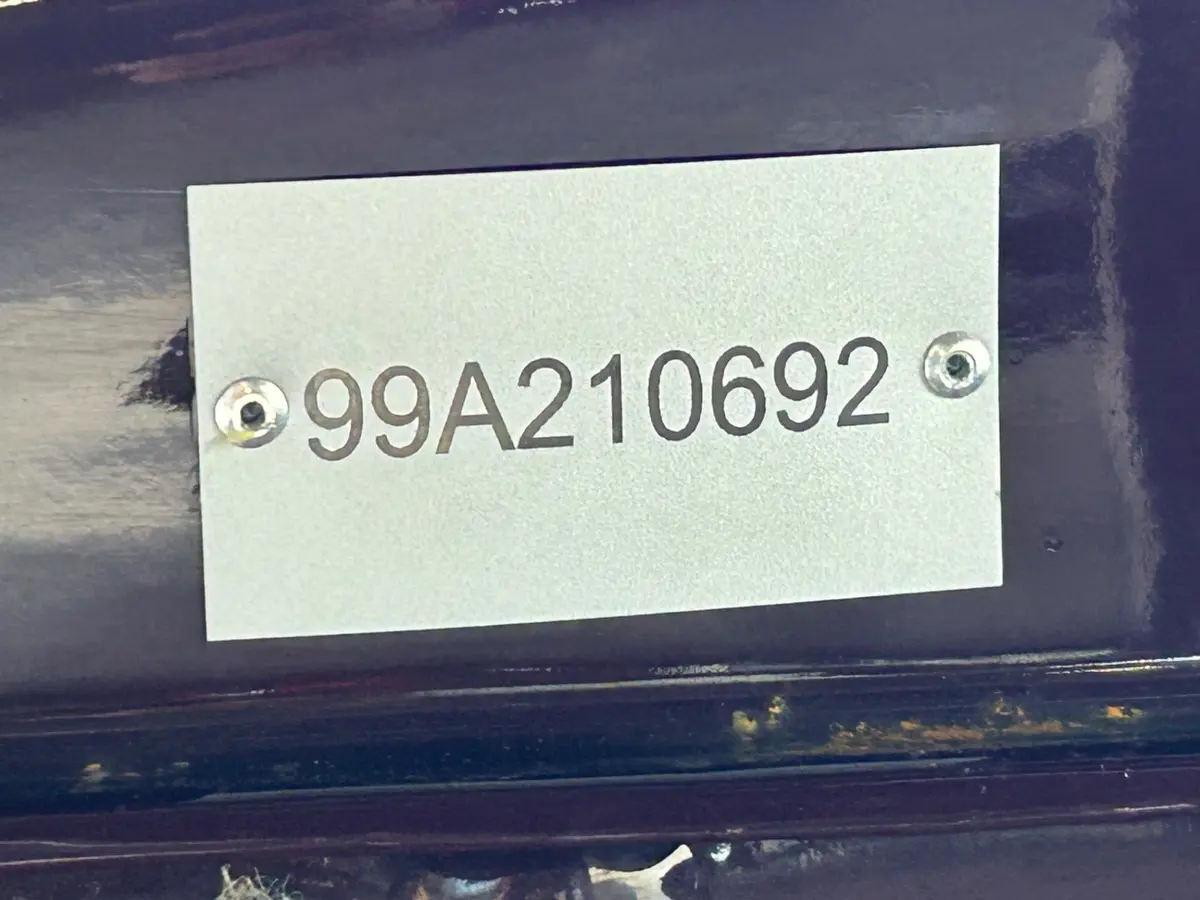
The VIN on this car begins with 99A, which tells us this is a 1940 Mercury (the "9" prefix was used for Mercury in Ford's system for that model year), built in the Dearborn assembly plant — Ford's home plant and the source of many of the most complete early Mercury builds.
The 1940 Mercury Eight was also a car that influenced the custom car culture of the late 1940s and 1950s more than almost any other vehicle of its era. Lead sled builders and kustomizers gravitated toward the '40 Merc specifically because of its proportions — the long hood, the low roofline relative to other cars of its day, and the naturally flowing fenders. James Dean was photographed with one. The marque was embedded in American car culture before most of the people buying hot rods today were born.
This particular car has been restored with care at every level, from the engine bay down to the undercarriage, and presents as a driver-quality example that can be shown or used on the road with equal confidence.
Features List
- 239ci Flathead V8, rated at 95 horsepower
- Blue-painted block and heads
- 3-speed column-shift manual transmission
- 8-volt electrical system conversion
- Tan convertible top
- Red leather interior throughout
- Split-back front bench seat
- Rear bench seat
- Maroon carpeting
- Seat belts front and rear
- Dash clock present
- Heater and defroster
- Original Mercury steering wheel
- Chrome side mirror
- Whitewall tires
- Chrome hubcaps
- Running boards
- Chrome front and rear bumpers
- Four-wheel drum brakes
- Restored undercarriage
- Carpet-lined trunk
- Spare tire included
- Restored engine bay
Mechanical
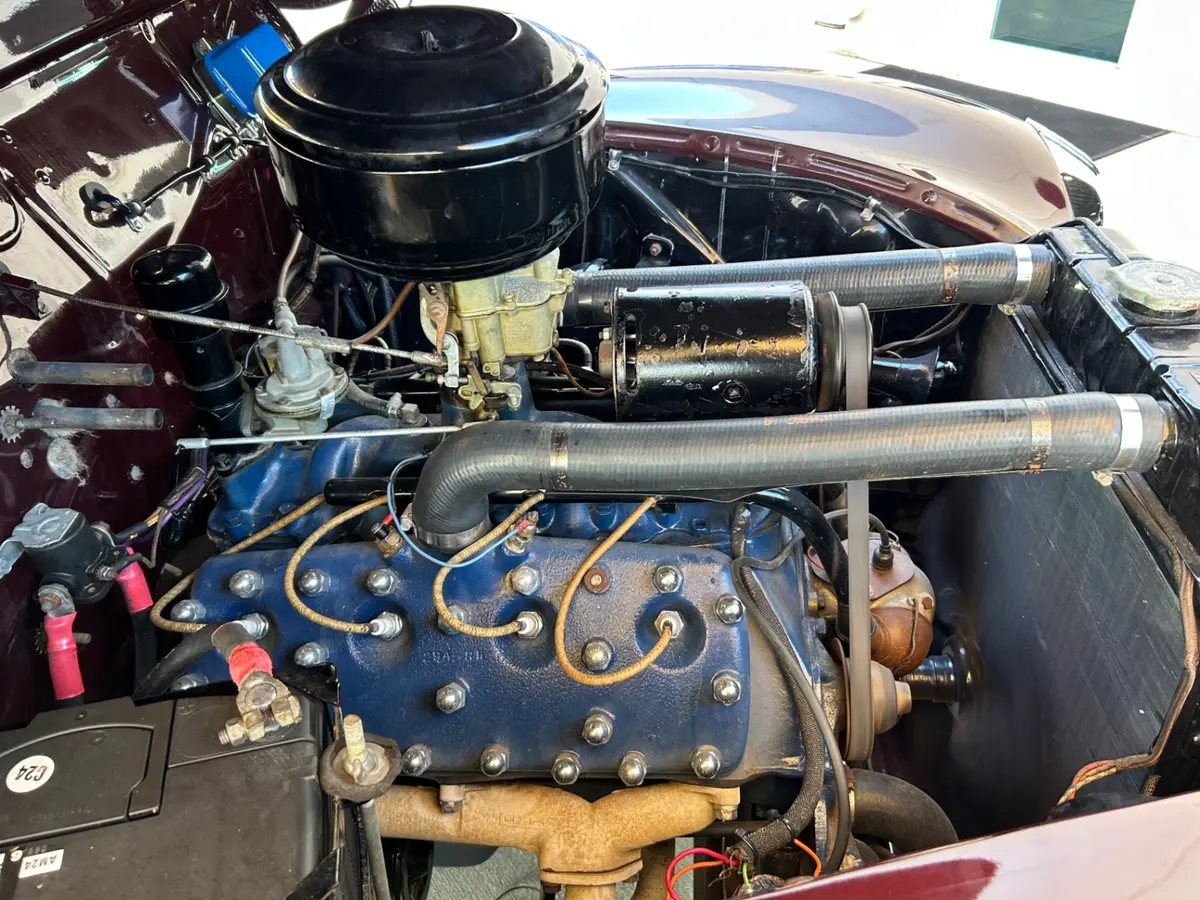
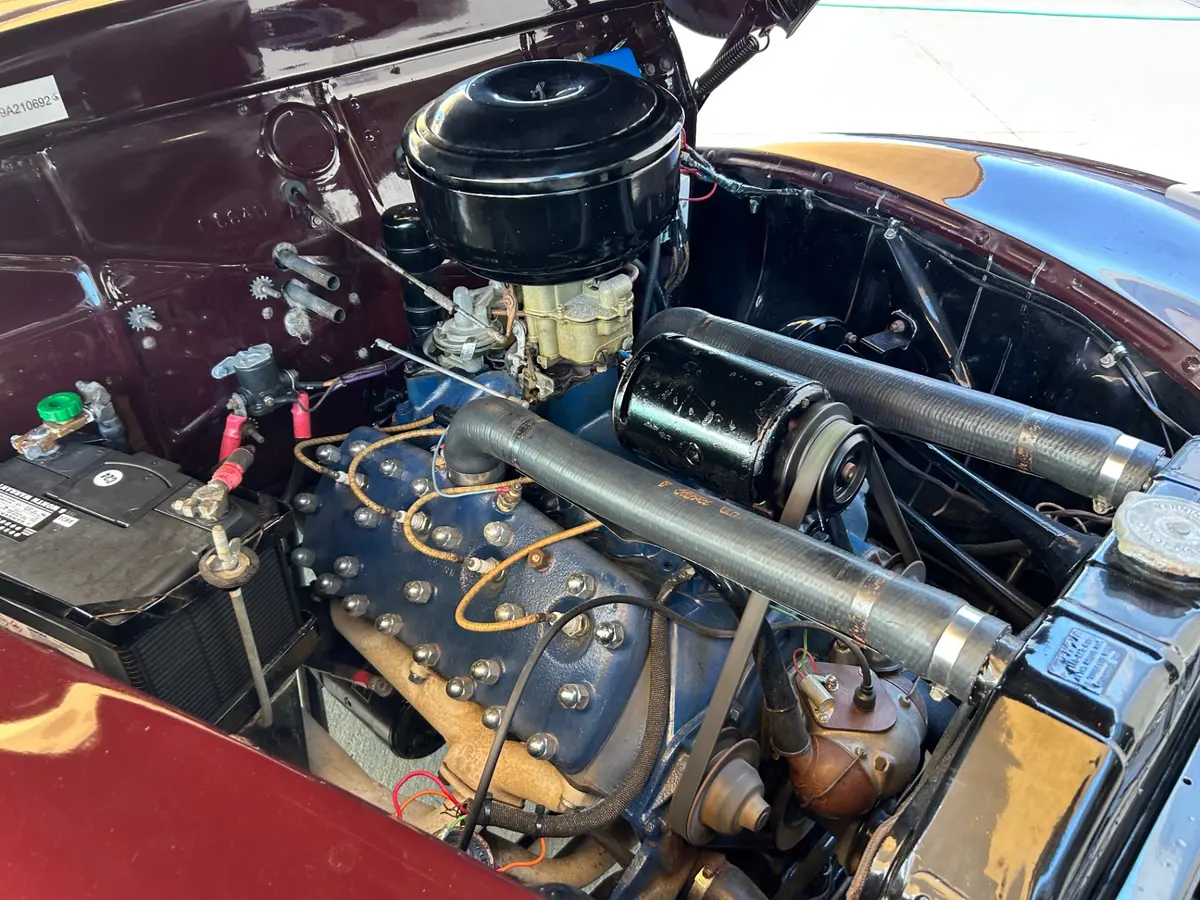
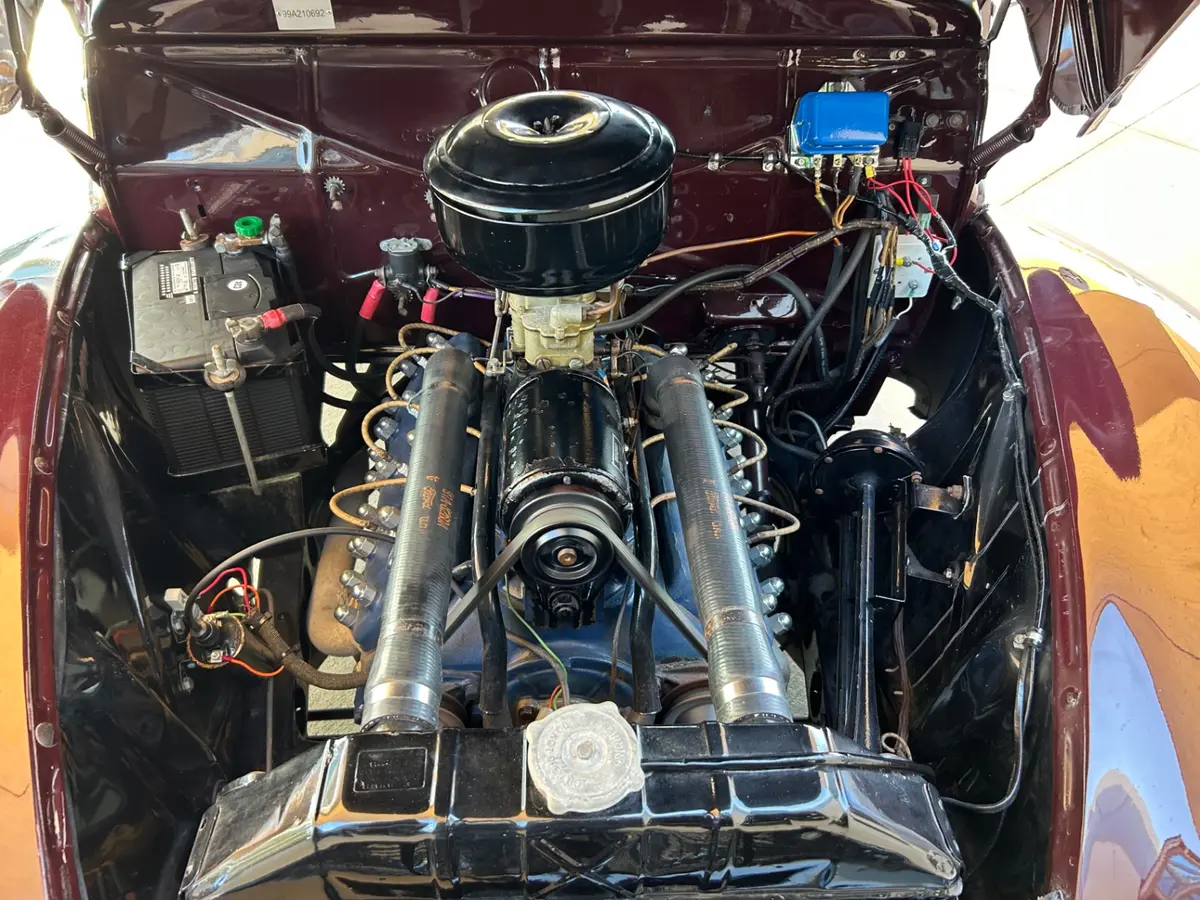
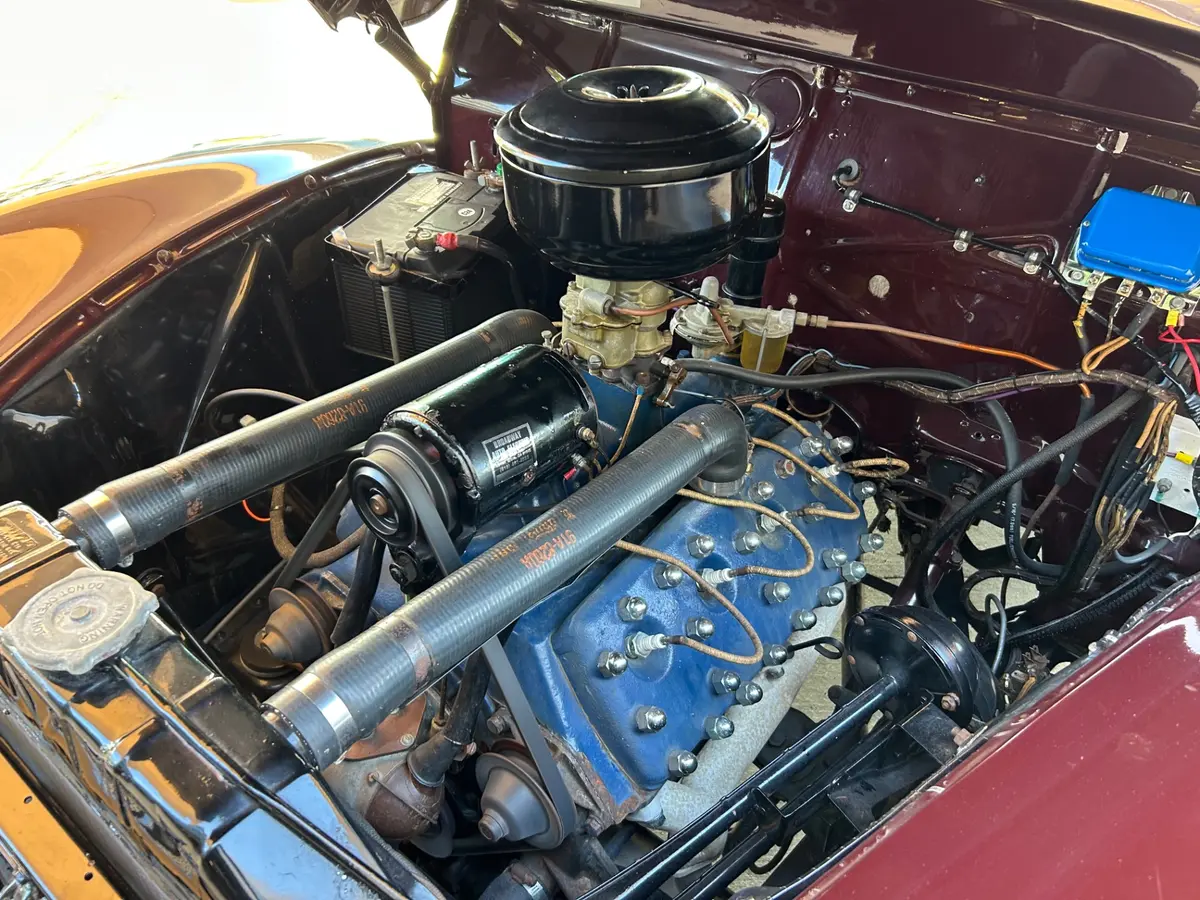
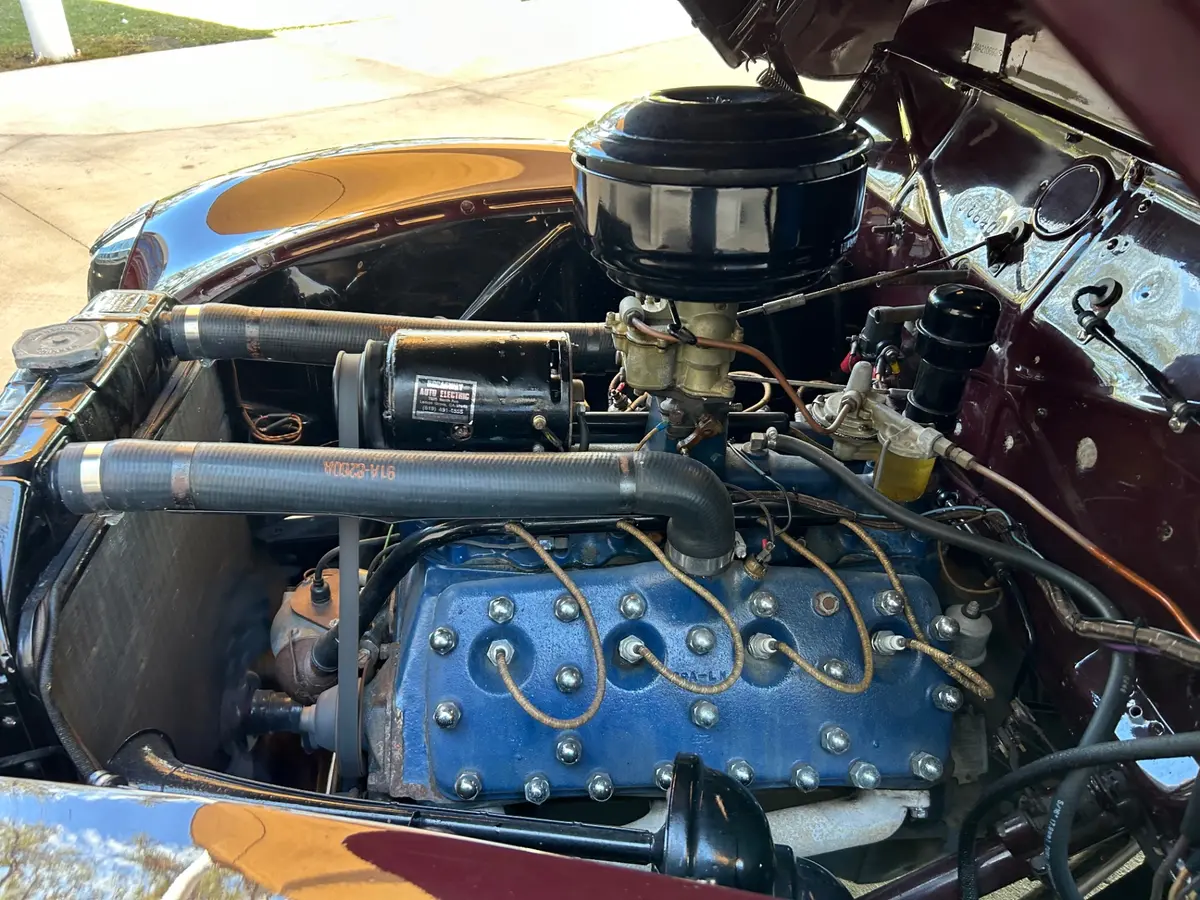
The 239 cubic inch Flathead V8 under the hood is the correct engine for this application. Mercury used a bored-out version of Ford's flathead — displacing 239ci compared to the Ford's 221ci — and rated it at 95 horsepower. That was a meaningful number in 1940. It gave the Mercury a performance edge over the base Ford while keeping the car accessible to buyers who weren't shopping for Lincolns. The flathead V8 architecture, with its valves in the block rather than the heads, was a Ford innovation that dated back to 1932 and was genuinely advanced for its time. By 1940 the design was well-sorted and reliable, and it remained in production — with continuous refinements — through 1953.
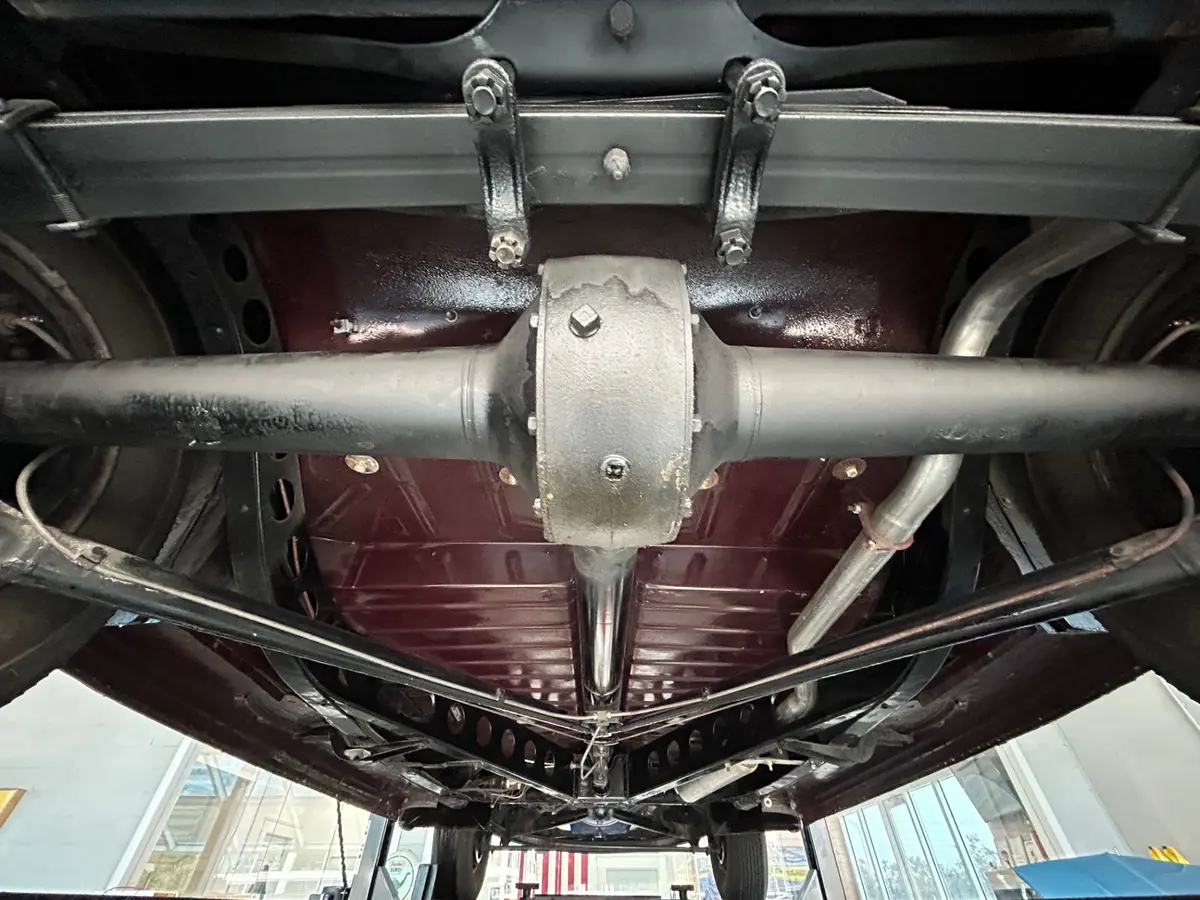
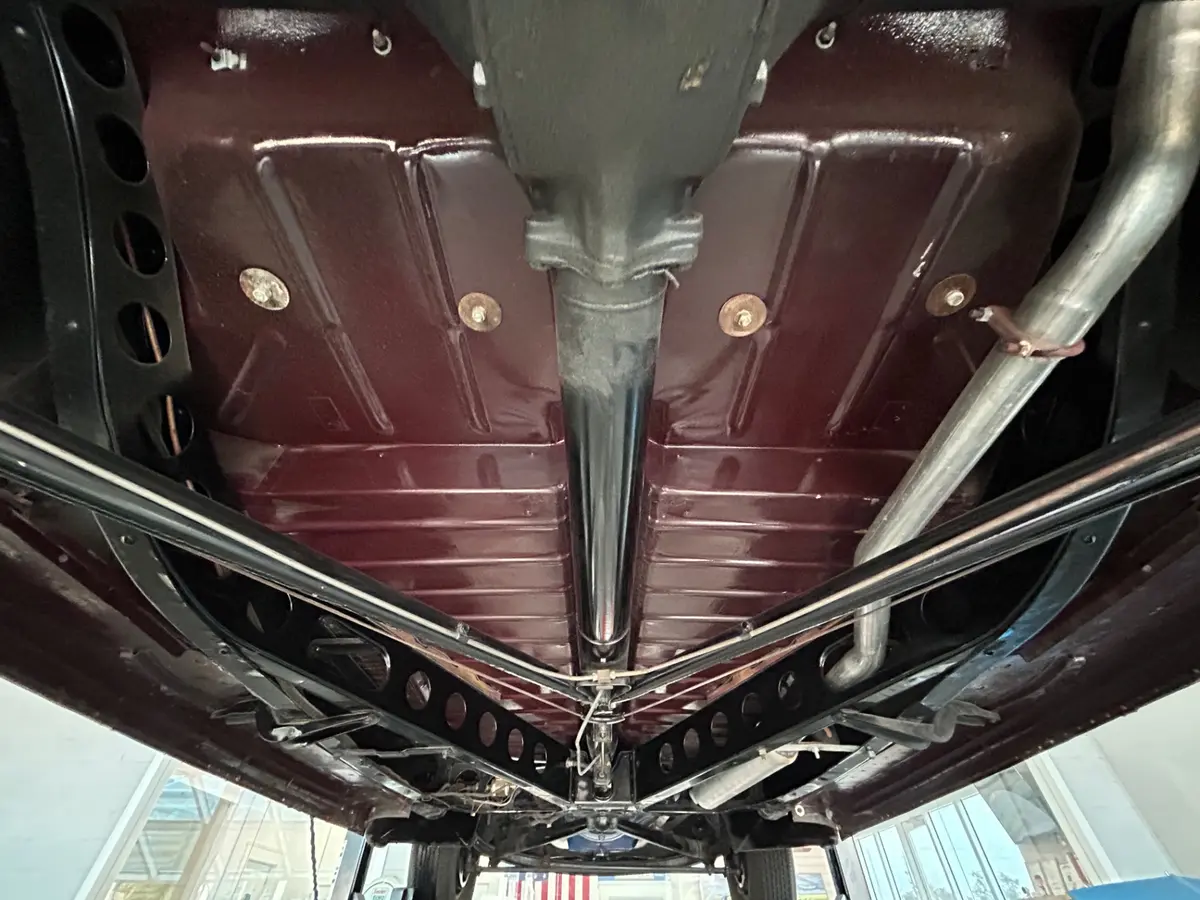
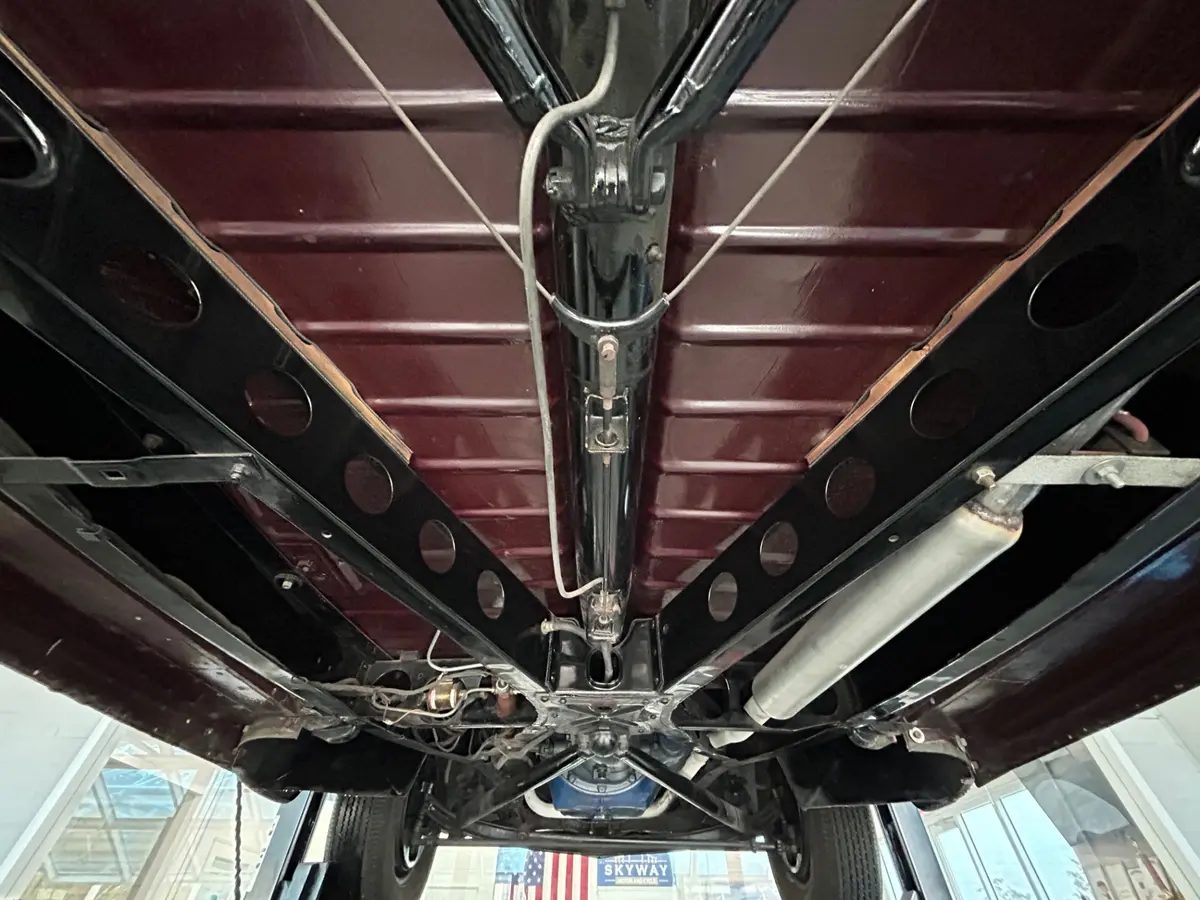
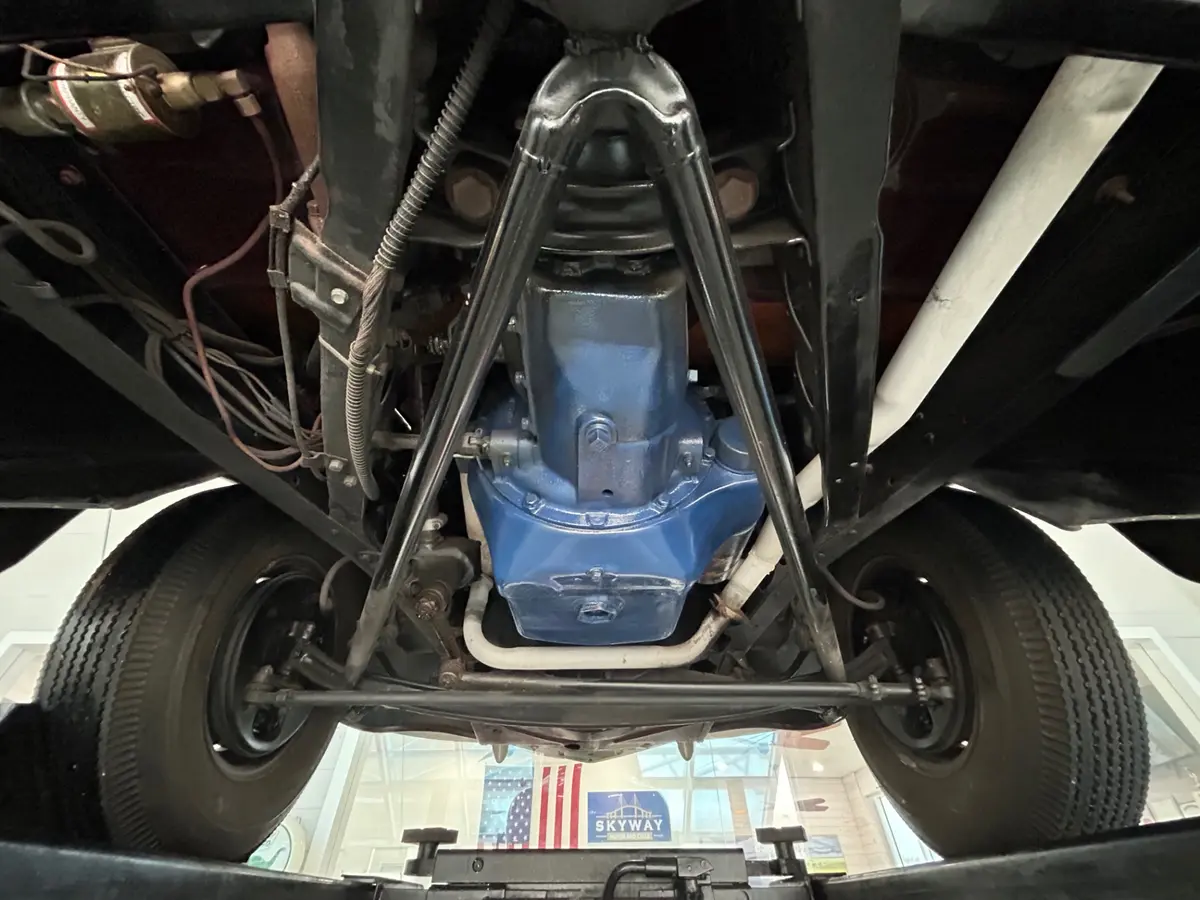
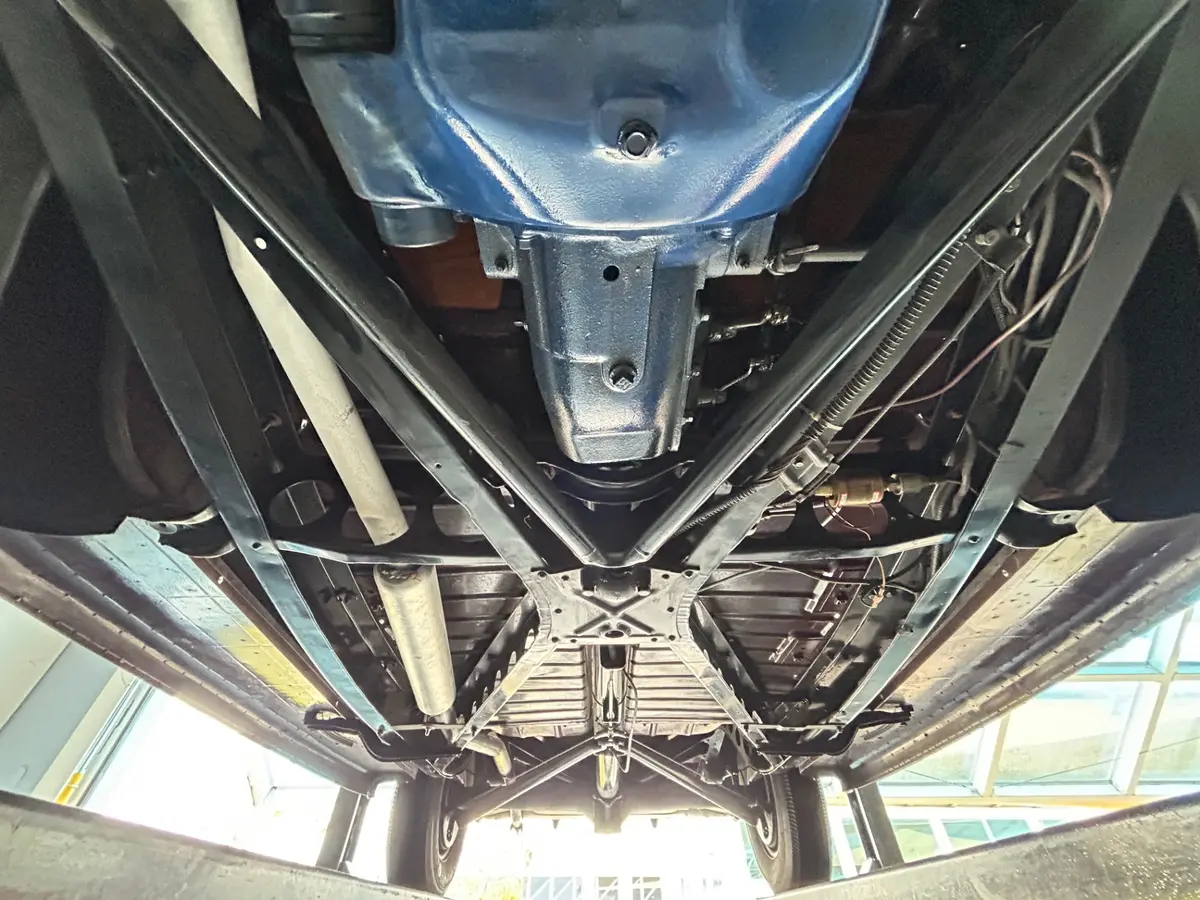
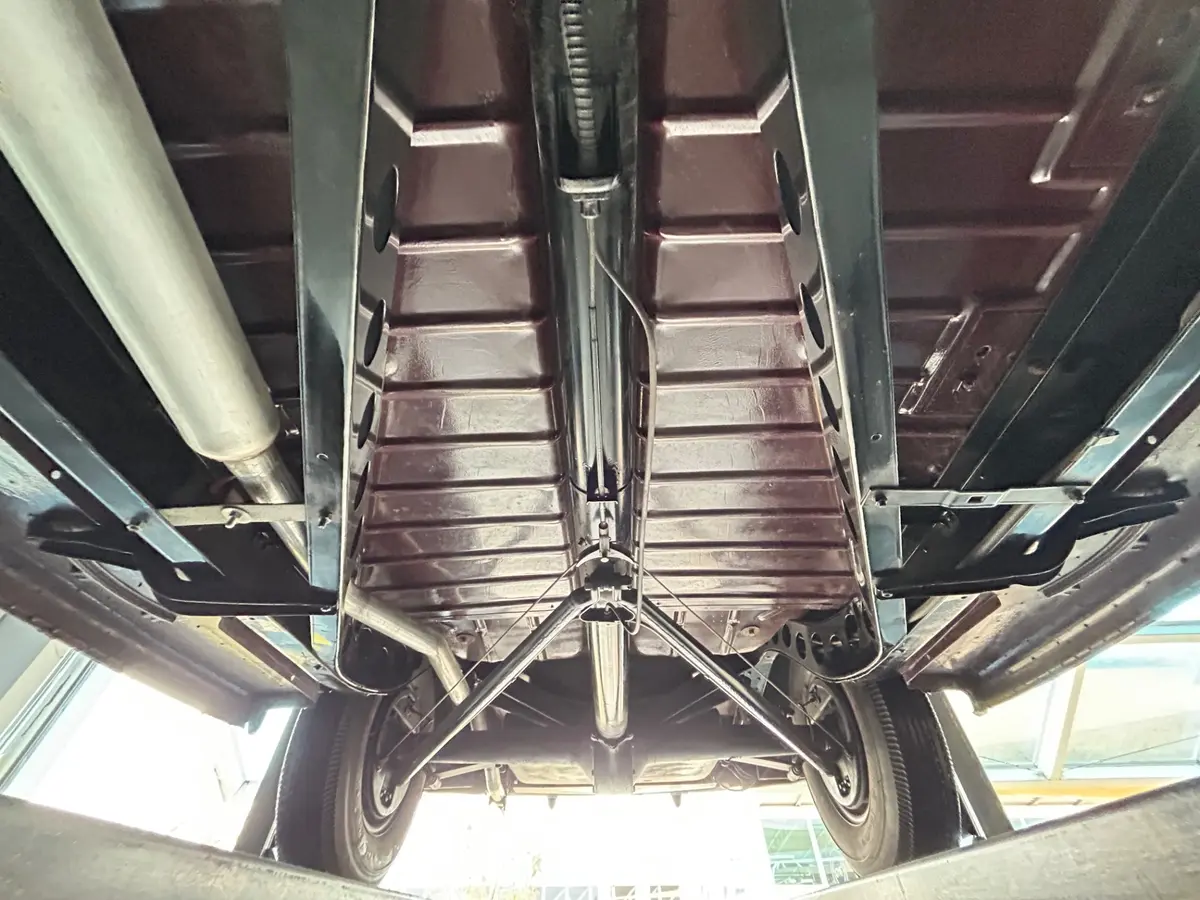
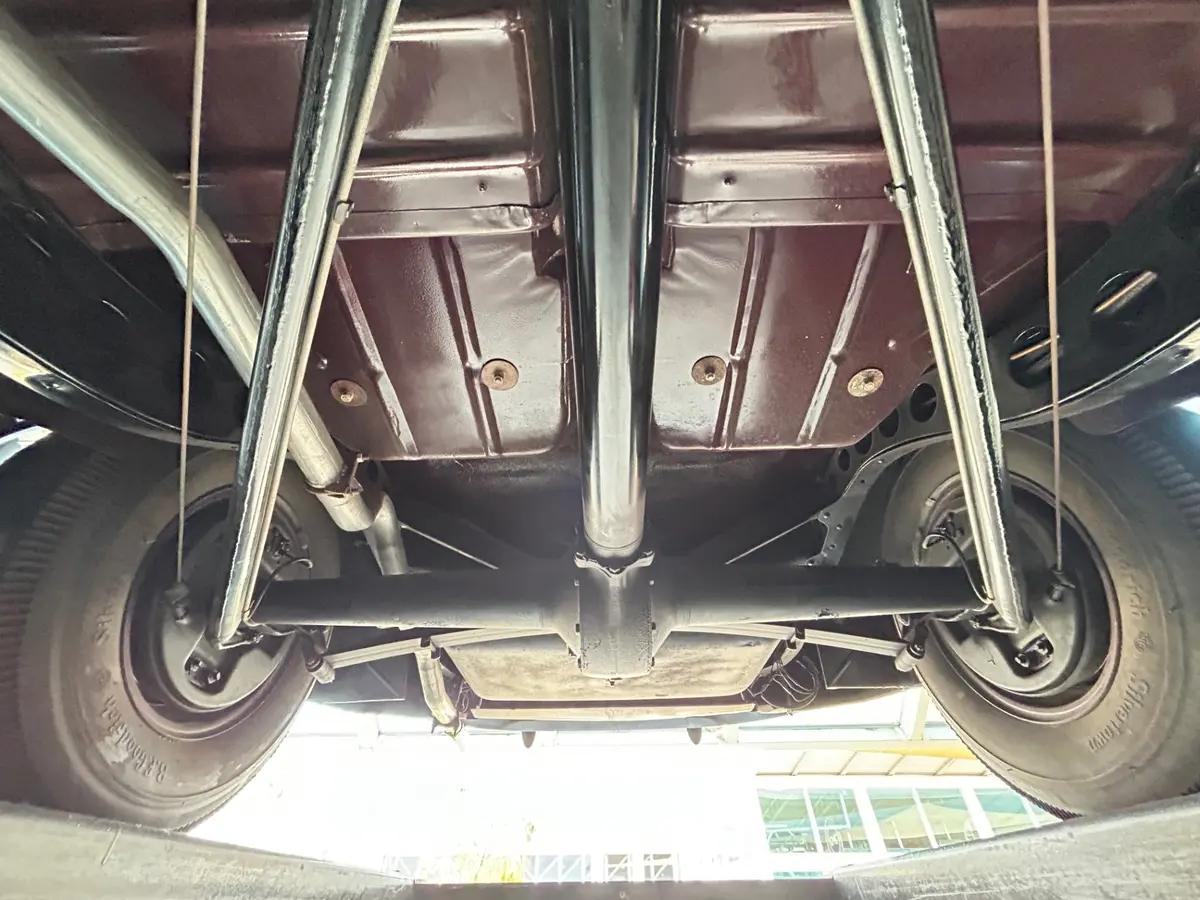
On this car, the block and heads have been painted blue as part of the engine bay restoration. That blue paint scheme is consistent with how these engines were often presented during restoration, and it reads cleanly against the detailed engine bay. The restored bay itself shows organized, visible work — the underside photos confirm a similar level of attention, with the floor pans and frame finished in Garnet Maroon to match the exterior.
The transmission is a 3-speed column-shift manual, which is exactly what came from the factory. Steering column-mounted shifters were a relatively recent development in 1940 — Ford and Mercury adopted the "three on the tree" layout to open up the front bench seat and improve the car's interior space. It gives the car a distinctly period driving experience that floor-shifted cars from the same era simply cannot replicate.
One practical upgrade worth noting is the 8-volt electrical system conversion. The original 6-volt systems on pre-war American cars are functional but can struggle with modern demands — weak cranking in heat, dim lighting, and compatibility issues with some replacement components. Converting to 8 volts addresses most of those concerns while remaining less visually intrusive than a full 12-volt swap. For a driver-quality restoration, it is a sensible choice.
Interior
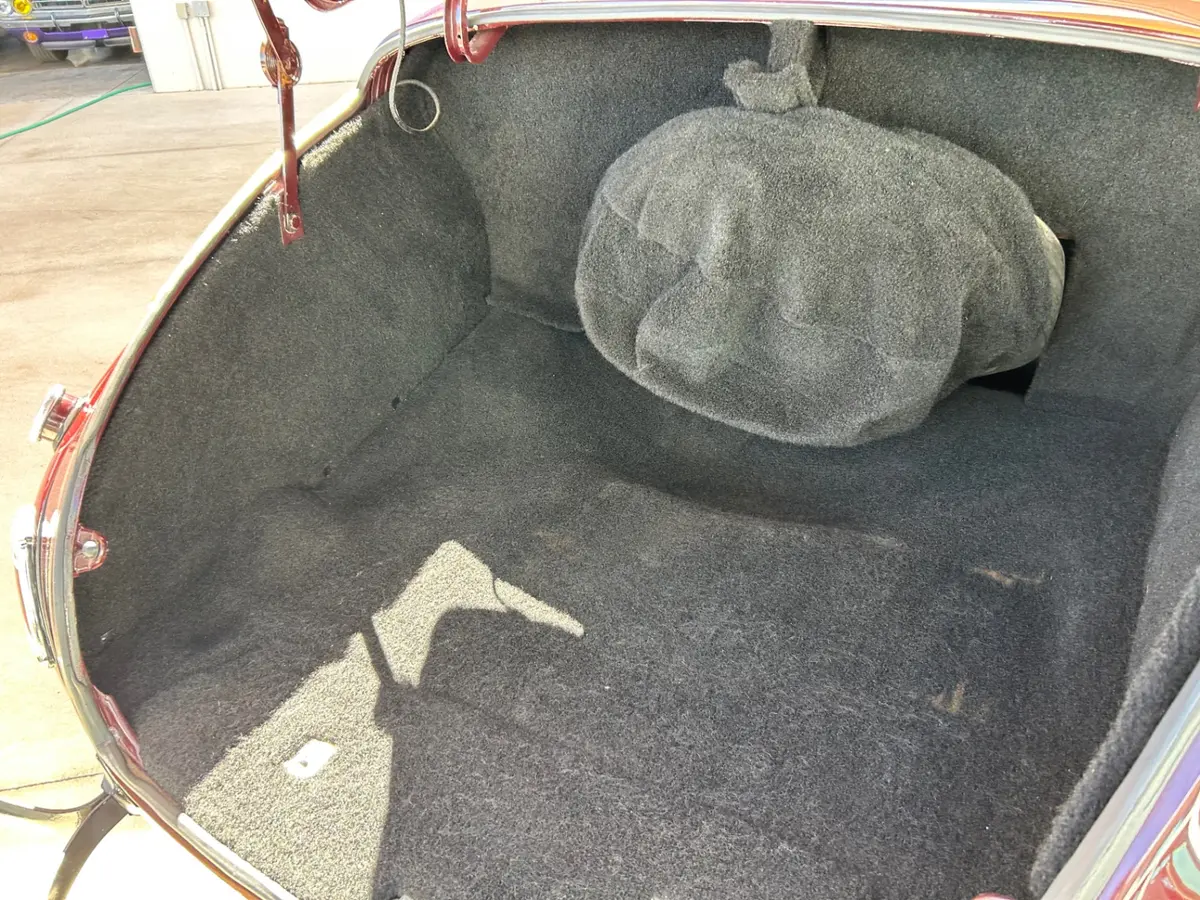
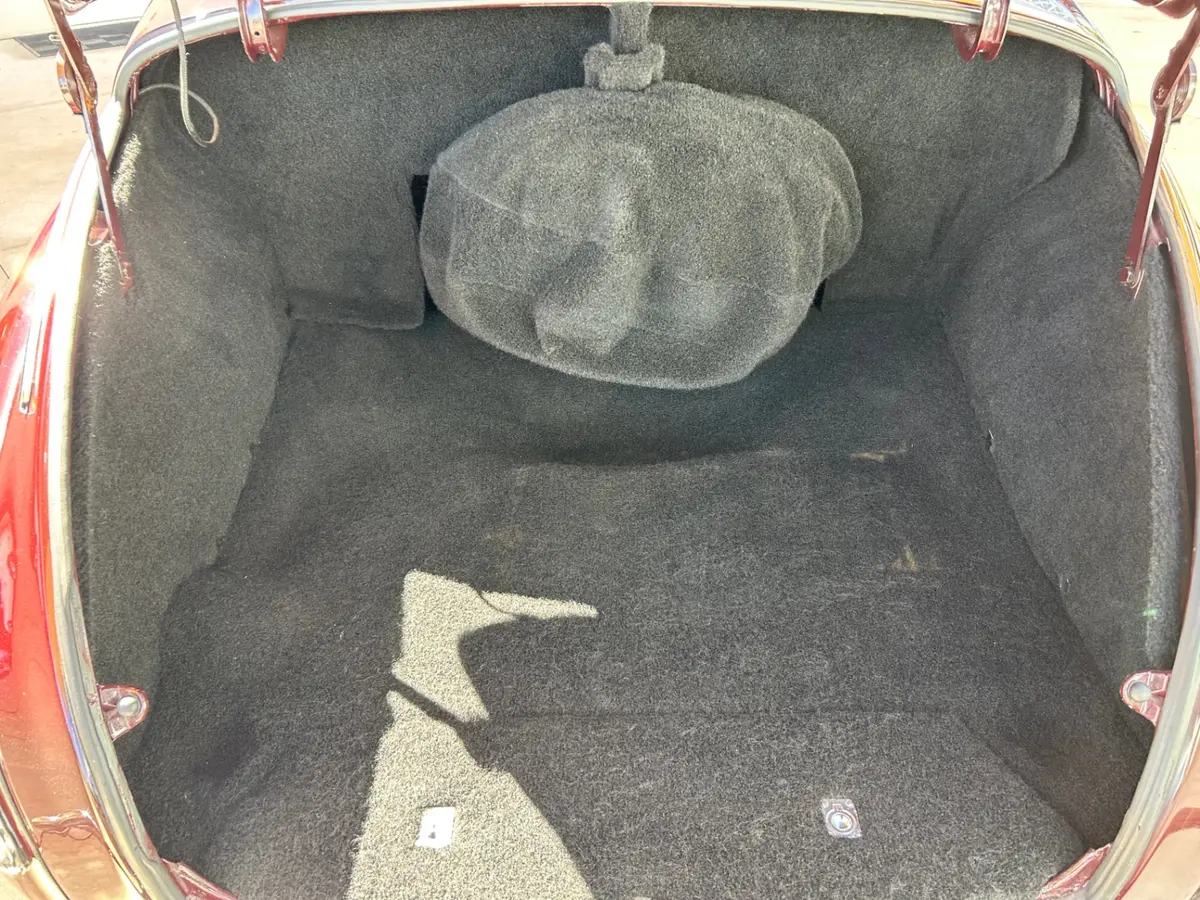
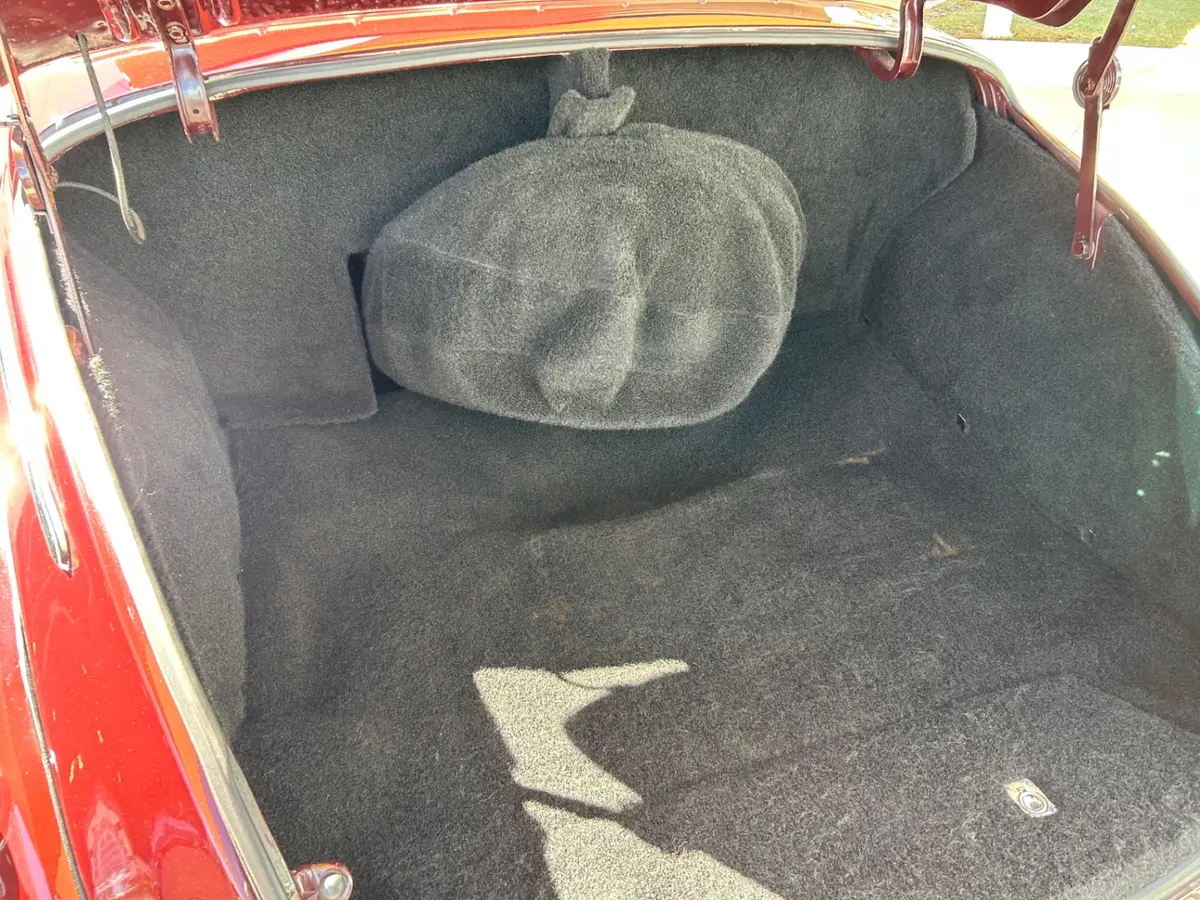
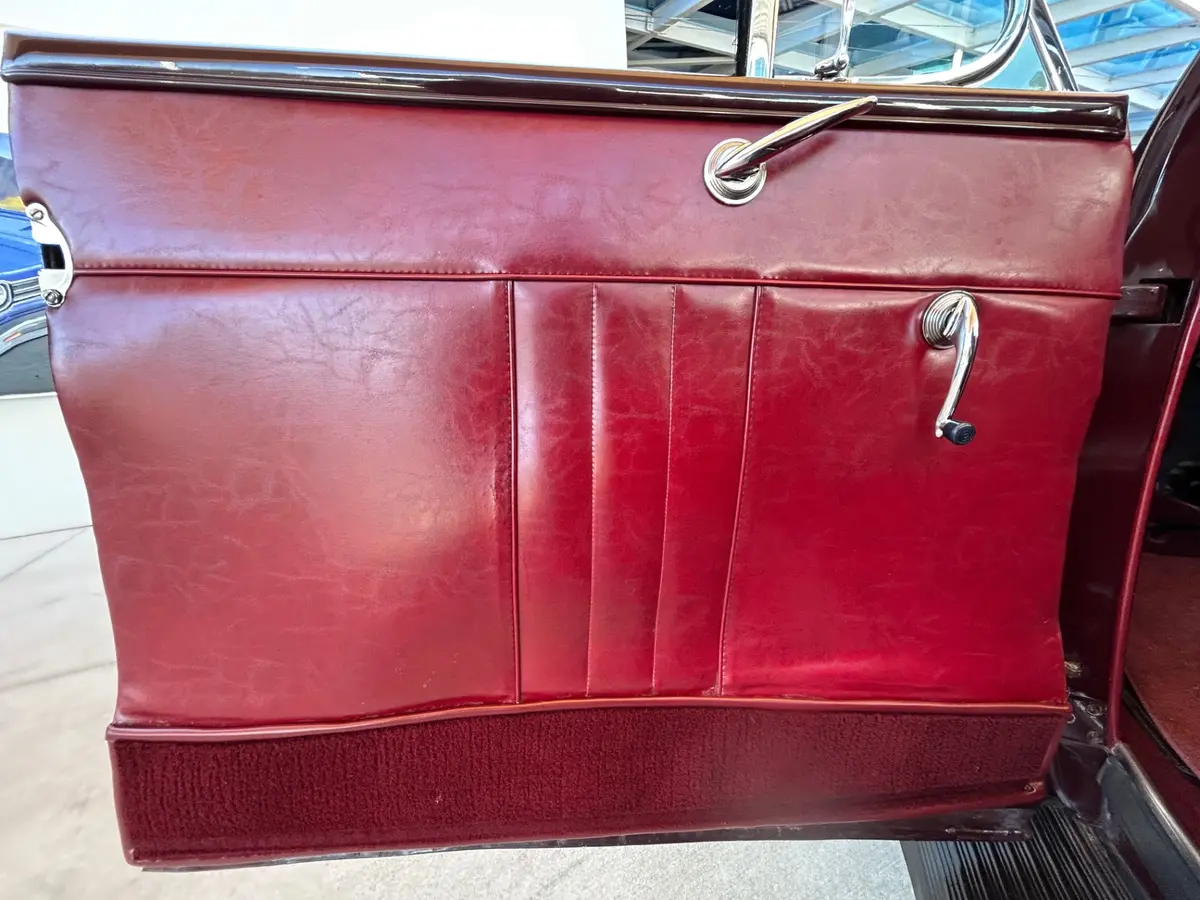
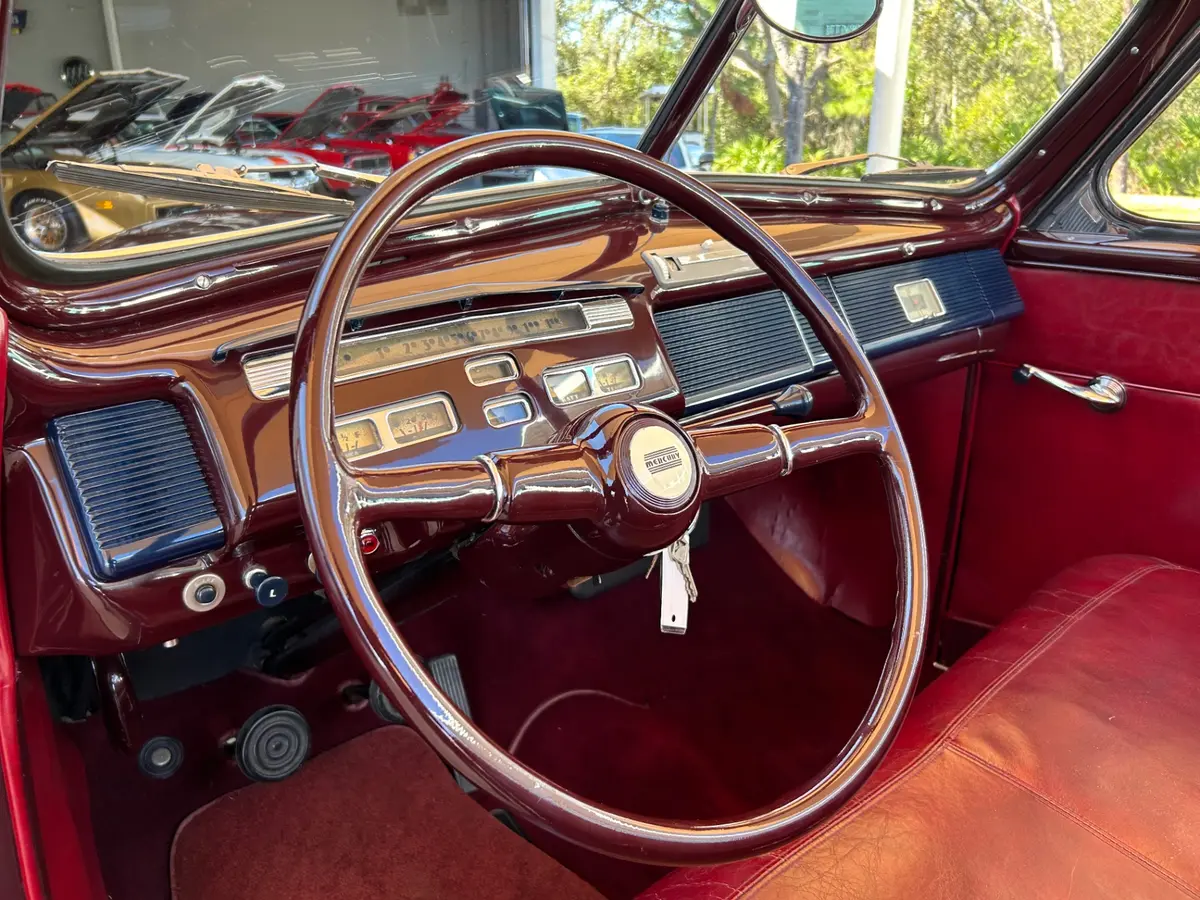
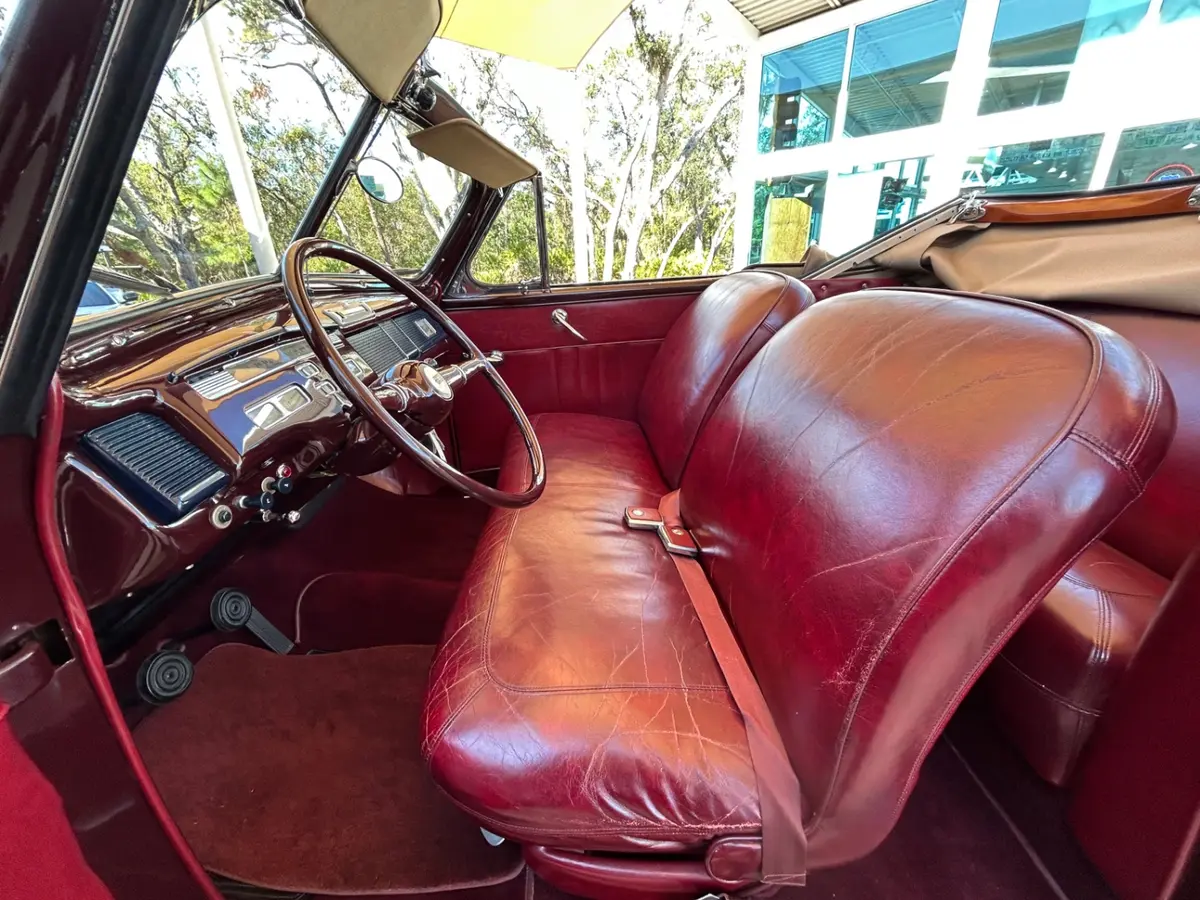
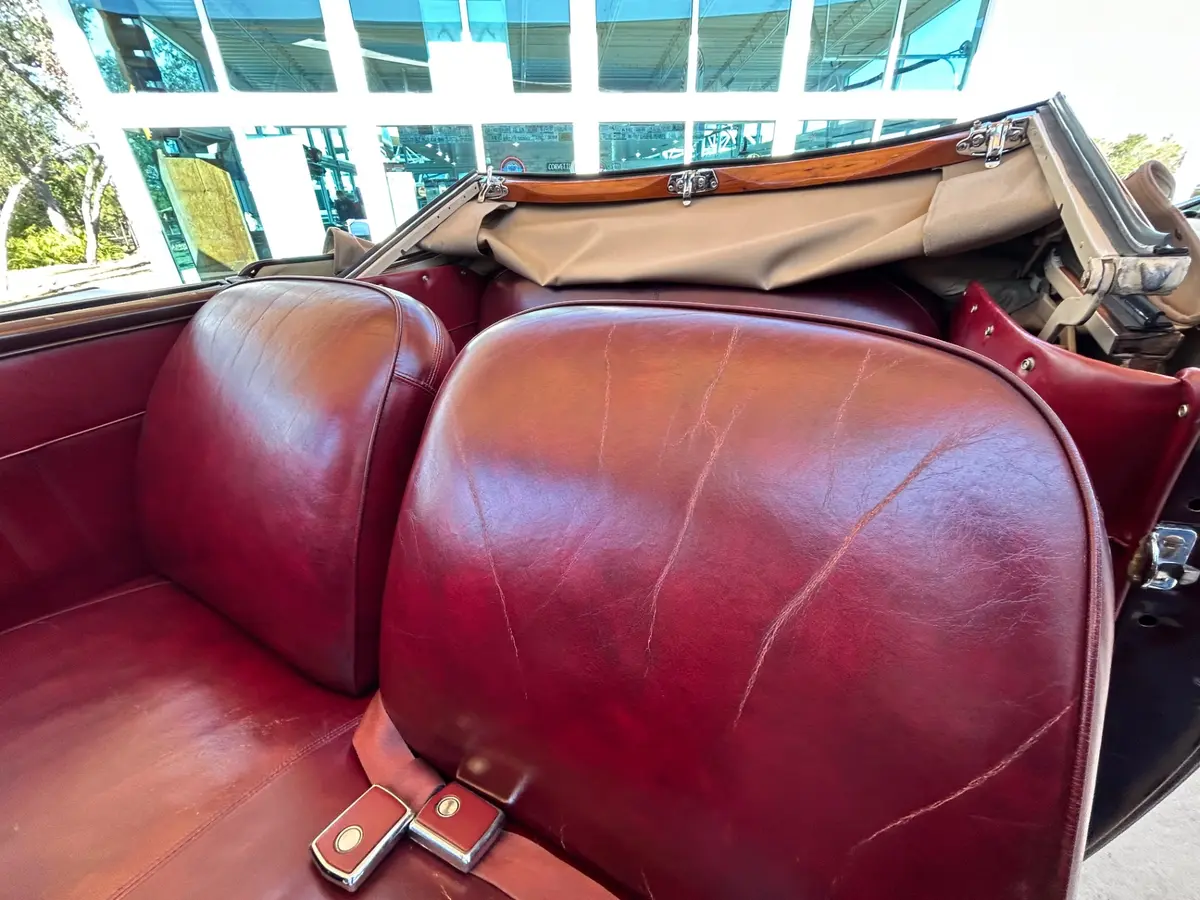
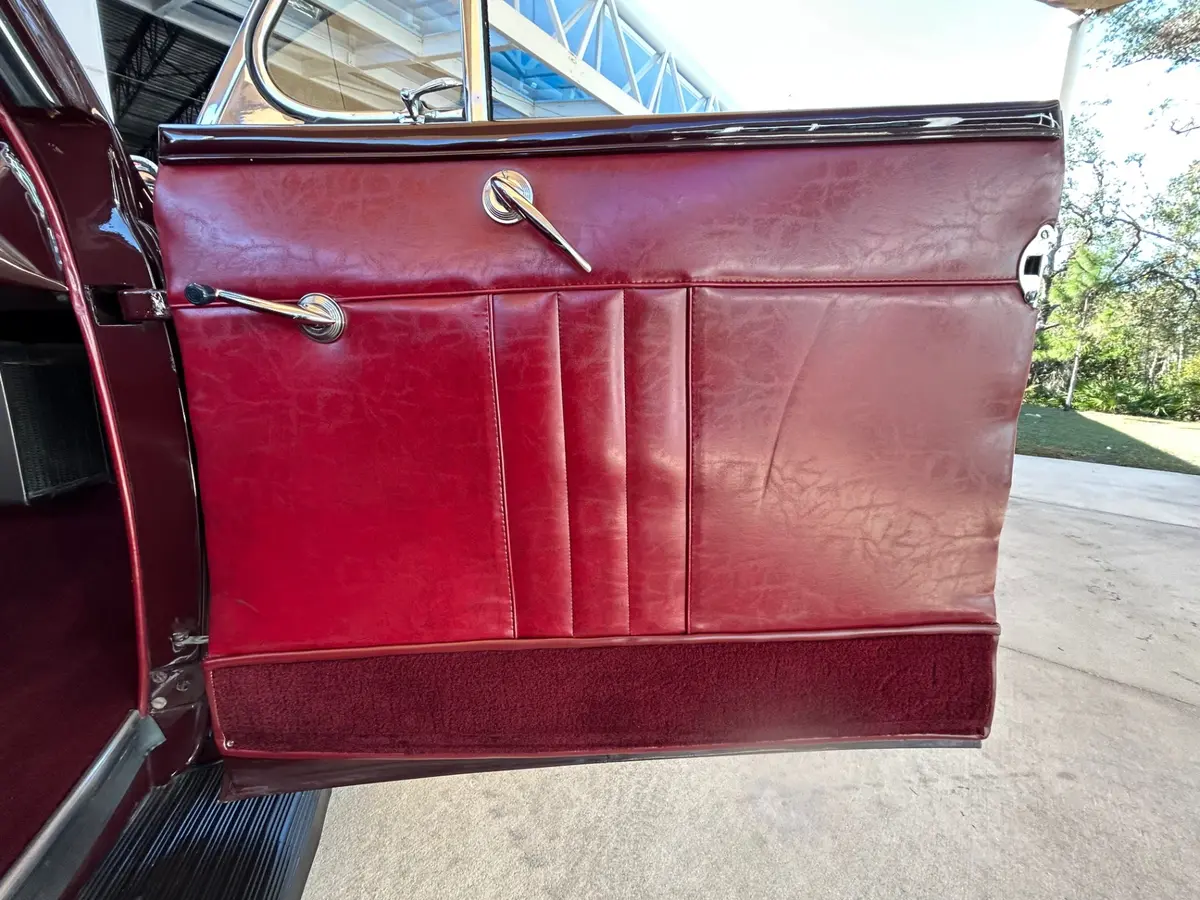
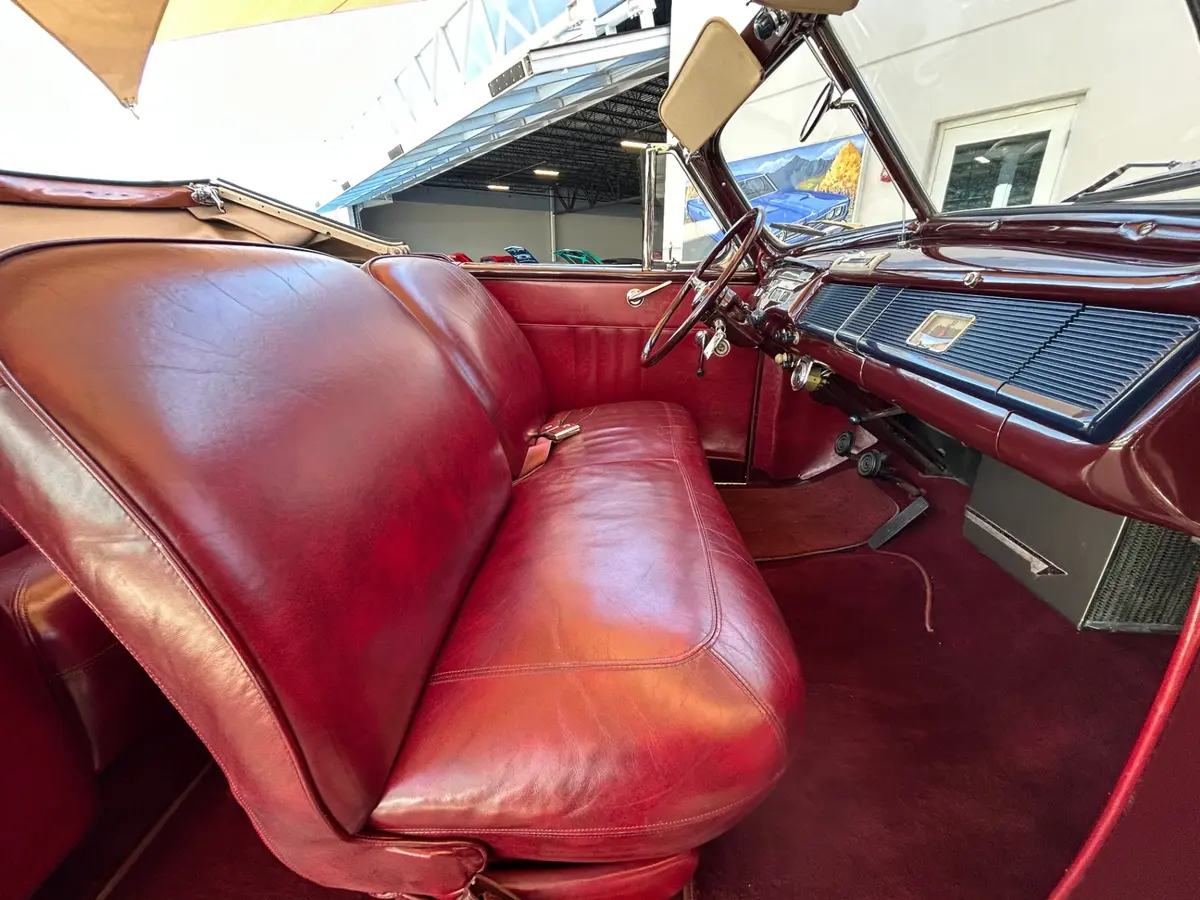
The interior of this 1940 Mercury Eight convertible is done in red leather with maroon carpet, and it holds together well as a cohesive package. The split-back front bench and full rear bench are both upholstered in red leather, and the door panels carry the same material with vertical pleat detail. The maroon carpet runs through the cabin and into the trunk, which has been carpet-lined as part of the restoration — a detail that signals the restorer paid attention to areas that buyers often ignore.
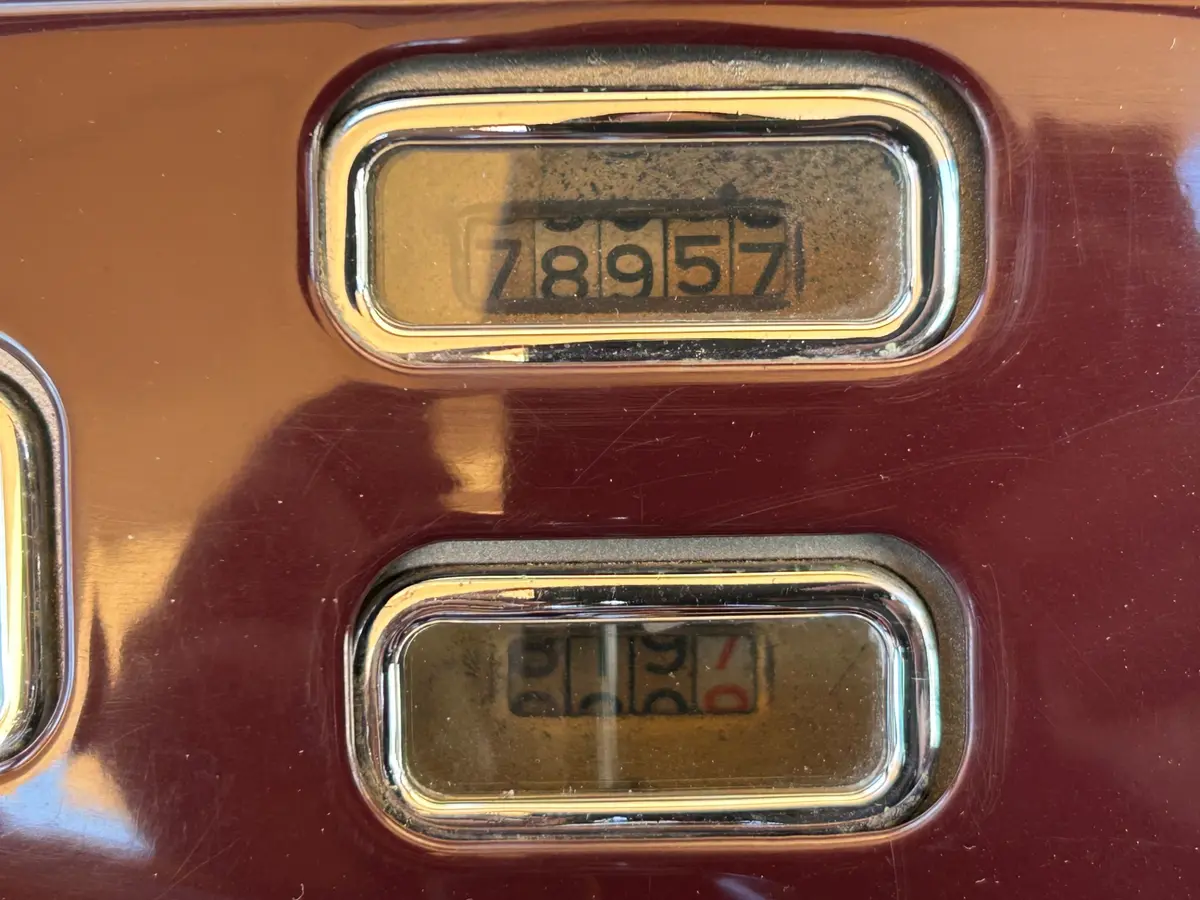
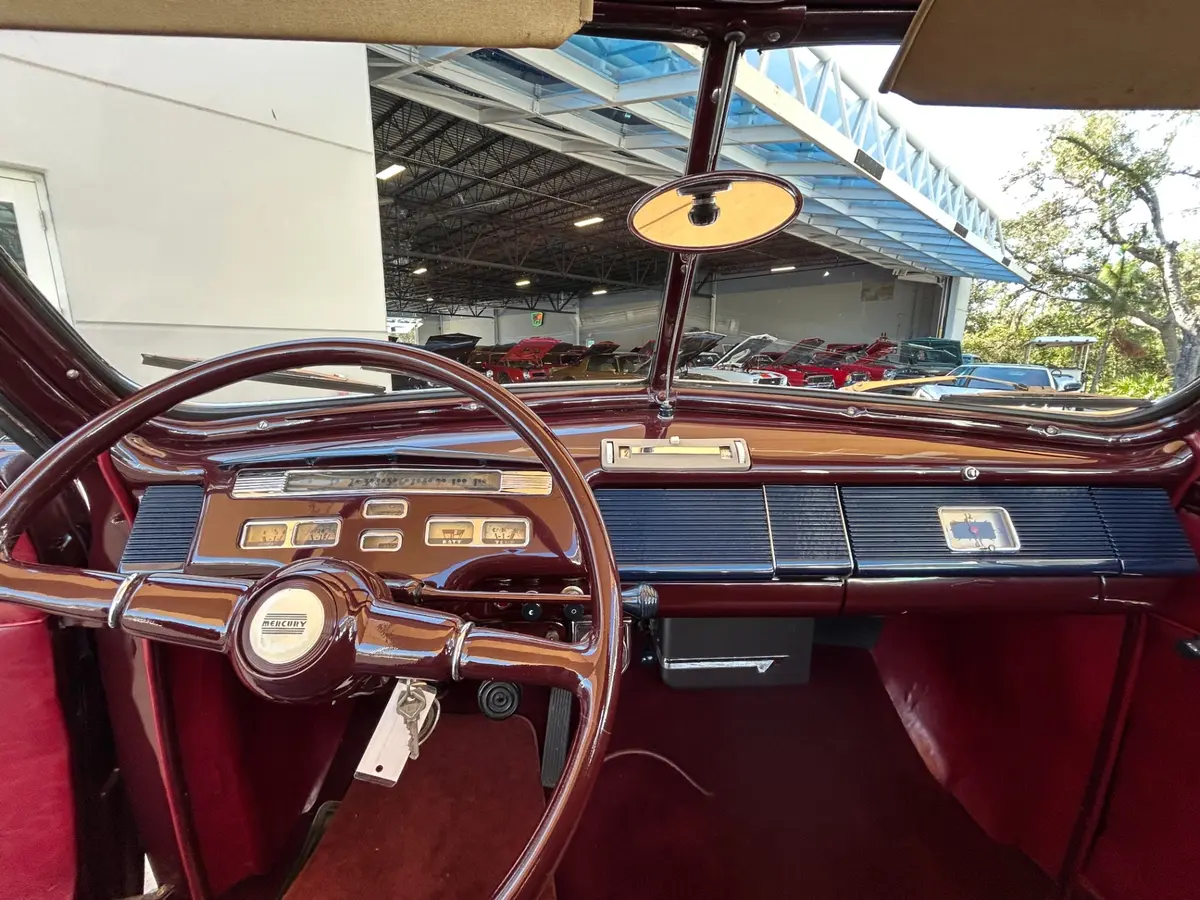
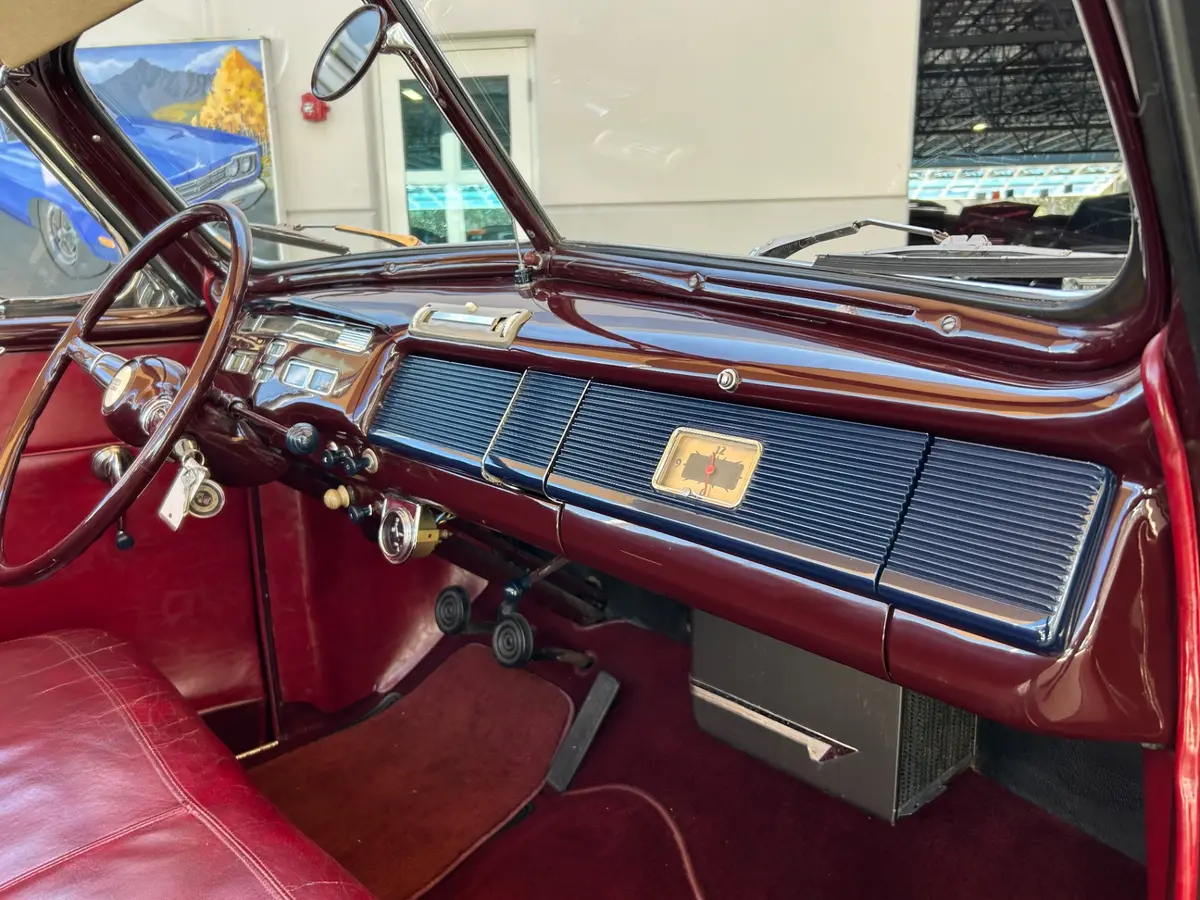
The dashboard is largely intact and correct. The original Mercury steering wheel is present, which matters — these wheels are difficult to find in good condition, and many restored pre-war cars end up with incorrect or reproduction pieces. Having the original here is a genuine point in this car's favor. The dash clock is present and visible in the photographs. The instrument cluster uses the characteristic 1940 Mercury layout with individual gauge pods set into a two-tone panel — a design that looks more expensive than the Ford equivalent of the same year, which was part of Mercury's market positioning.
The heater and defroster are present, which were optional equipment in 1940 and not installed on every car. Their presence adds usability for anyone planning to drive this car in cooler months. Seat belts have been added front and rear — not a factory feature on any 1940 vehicle, but a worthwhile safety addition that does not alter the car's overall appearance.
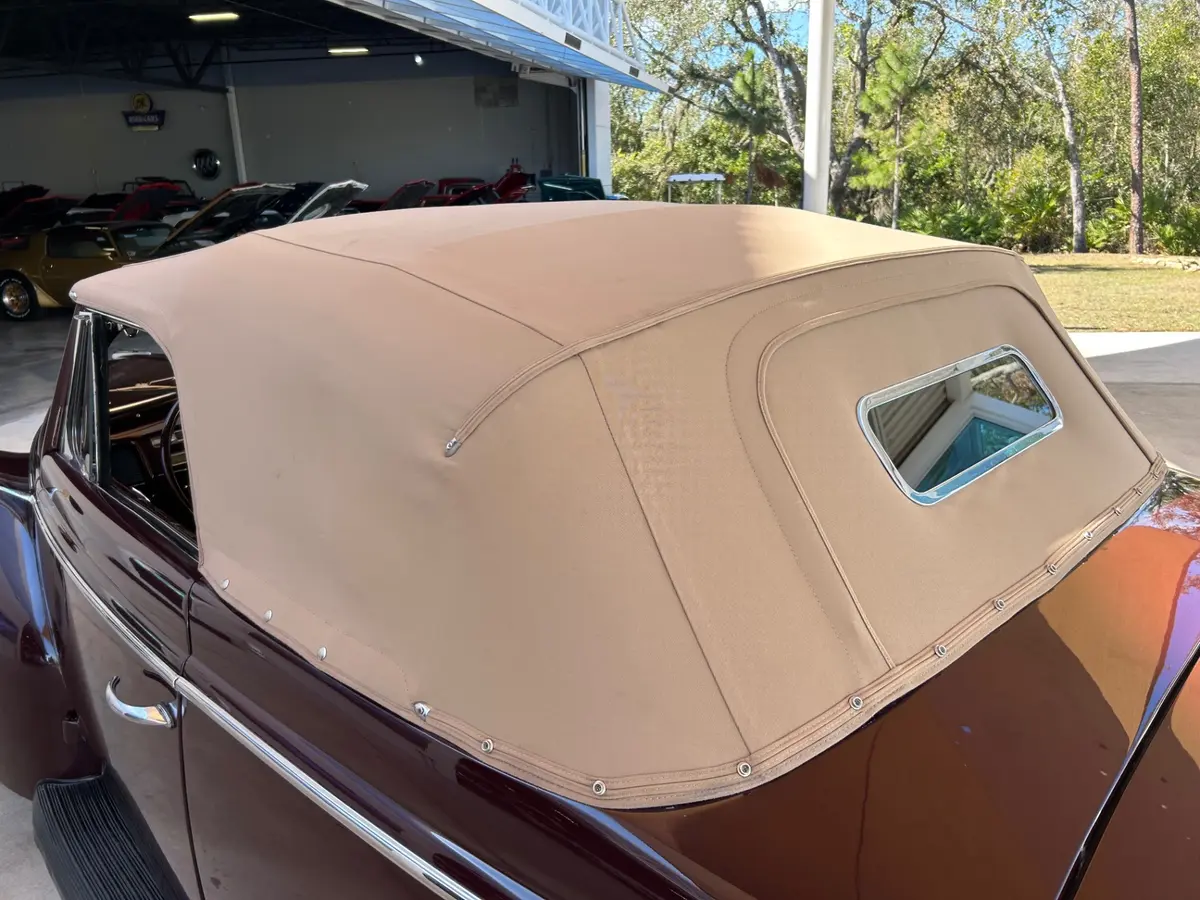
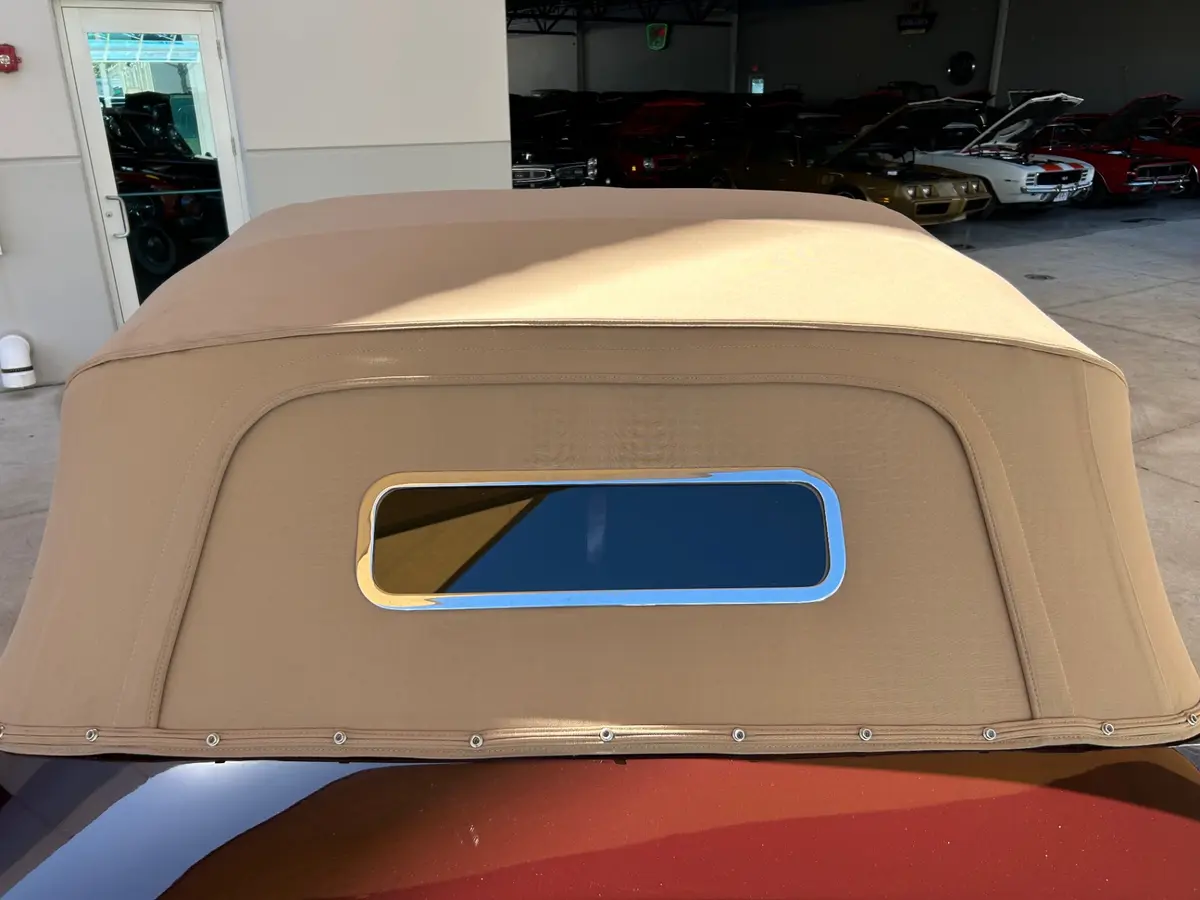
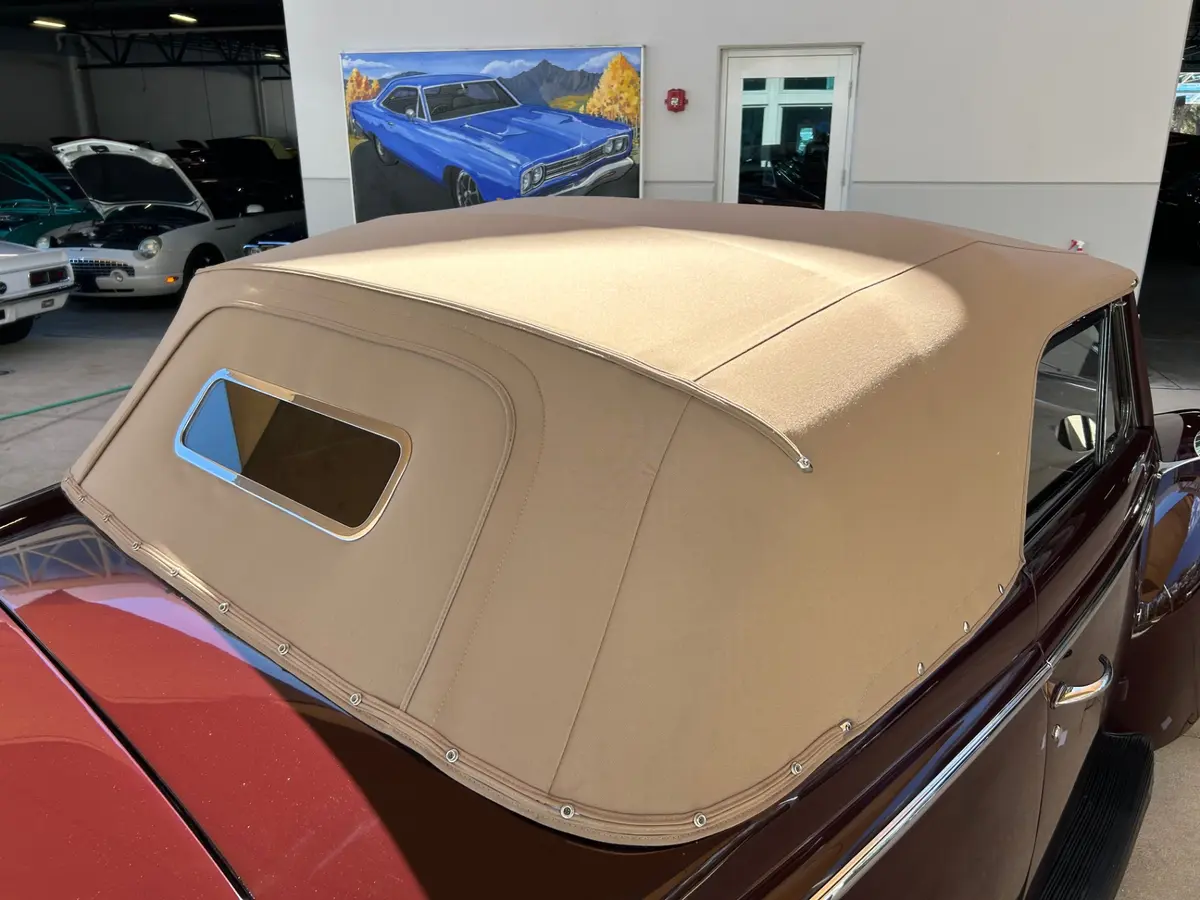
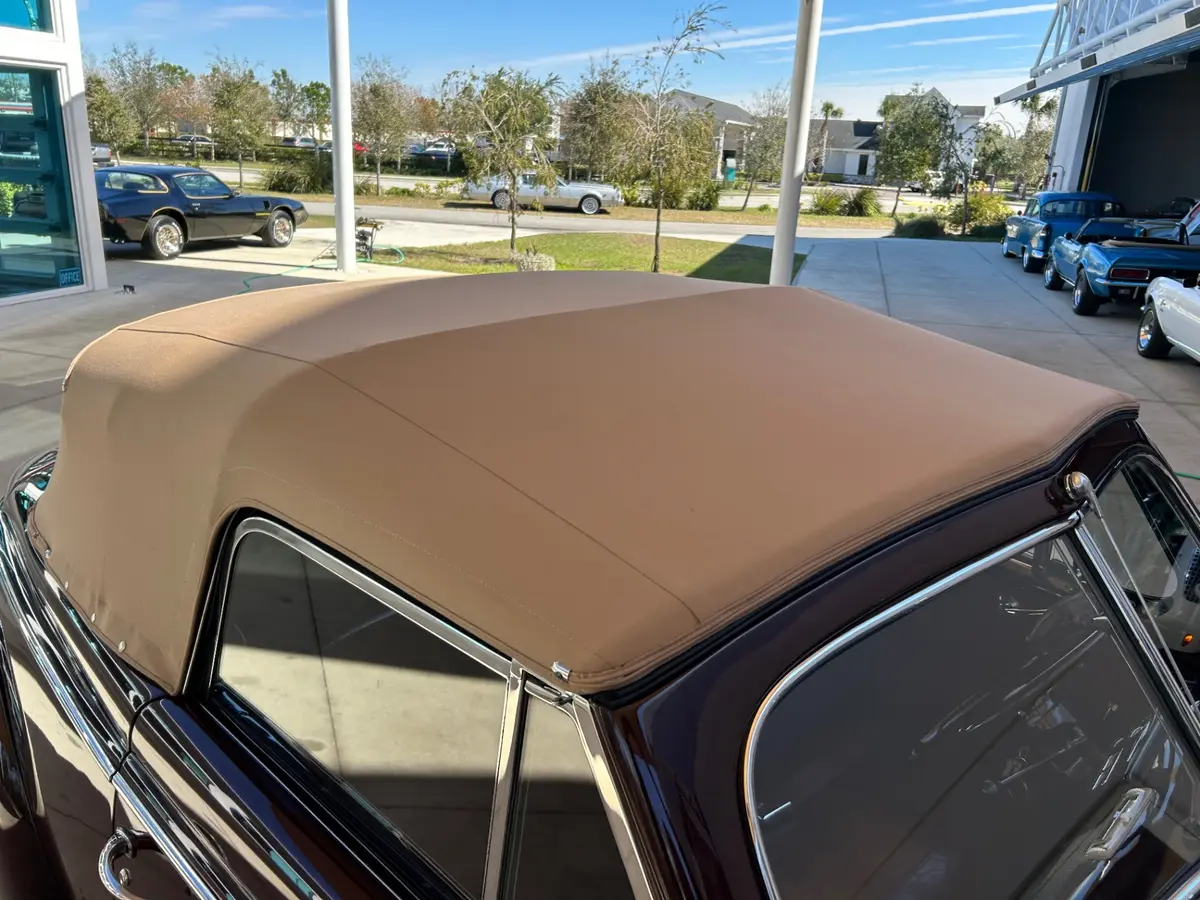
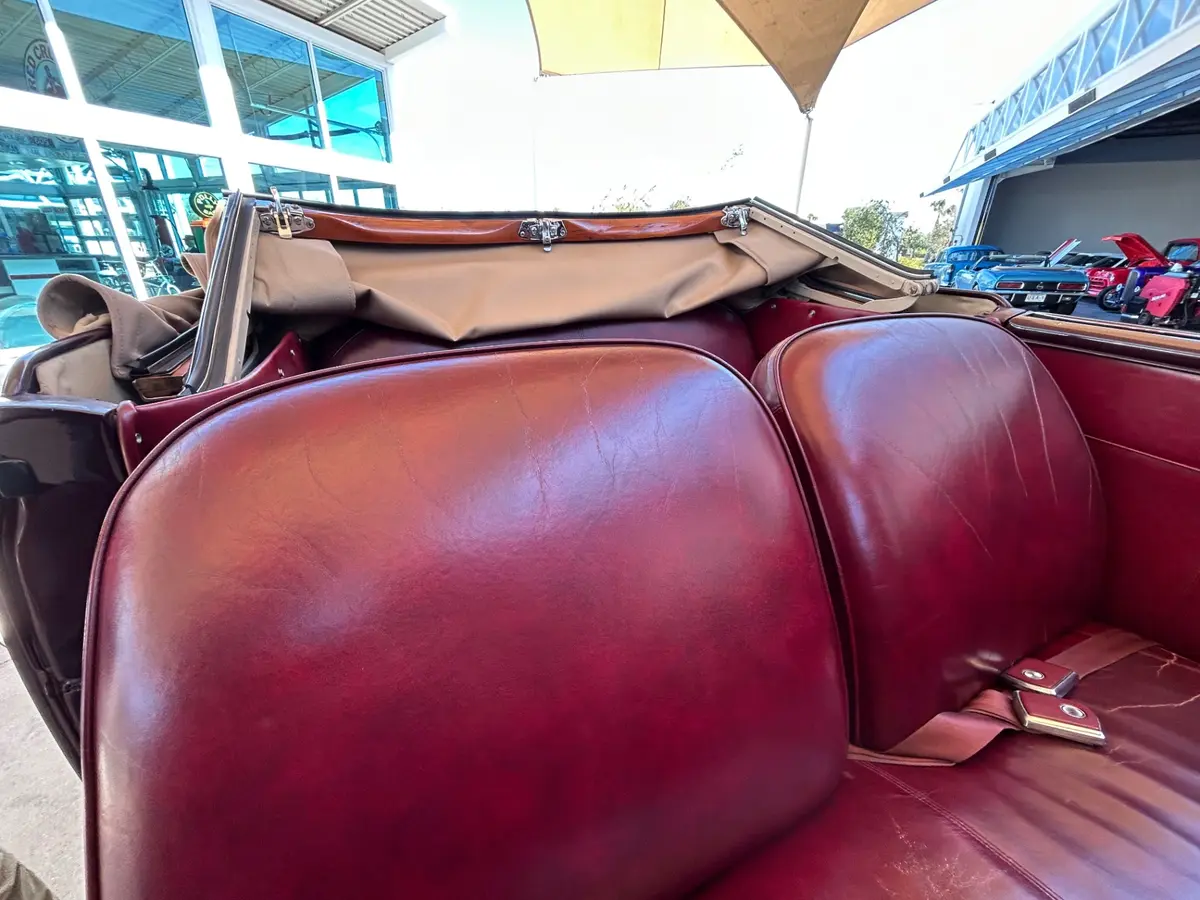
The convertible top is tan canvas. Against the Garnet Maroon exterior and red leather interior, the tan top provides a natural contrast that works well with the car's color palette whether the top is raised or folded down.
Exterior
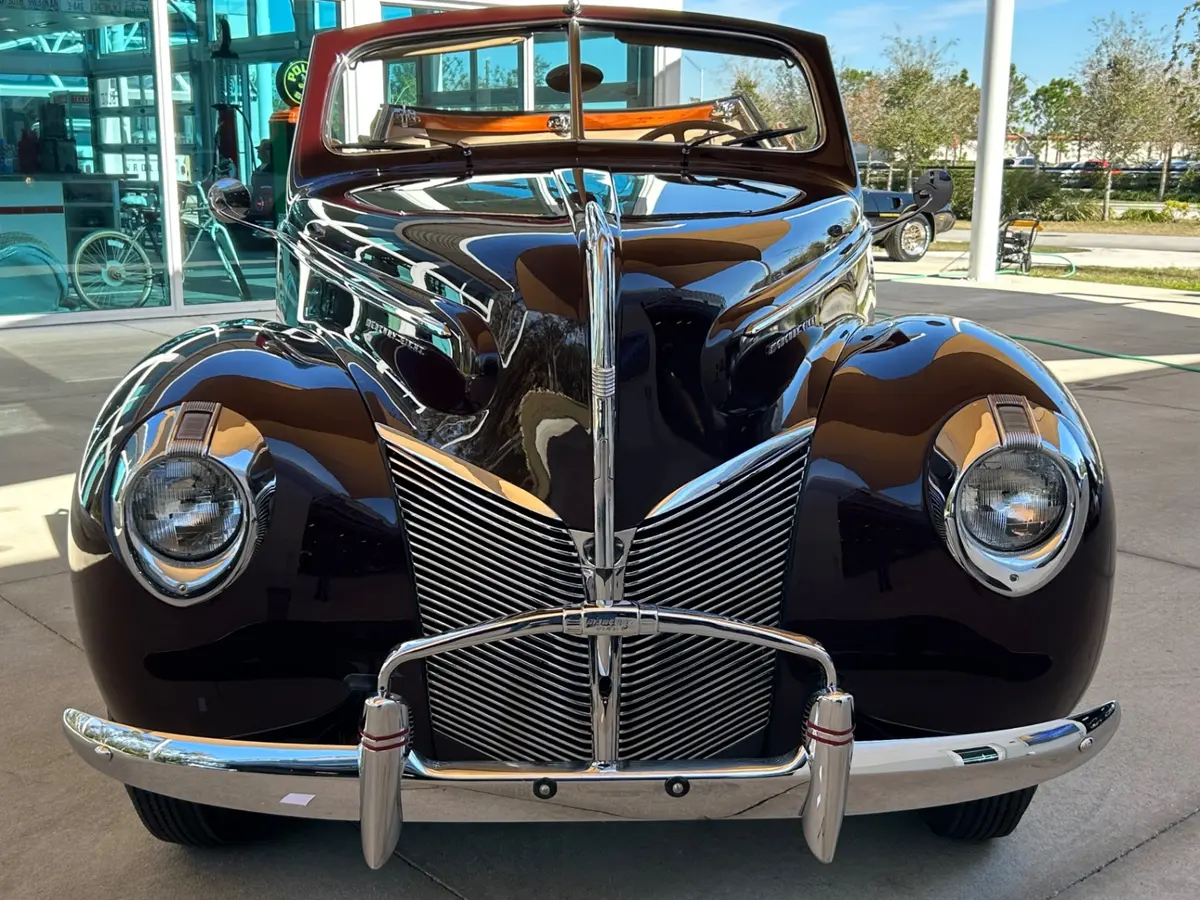
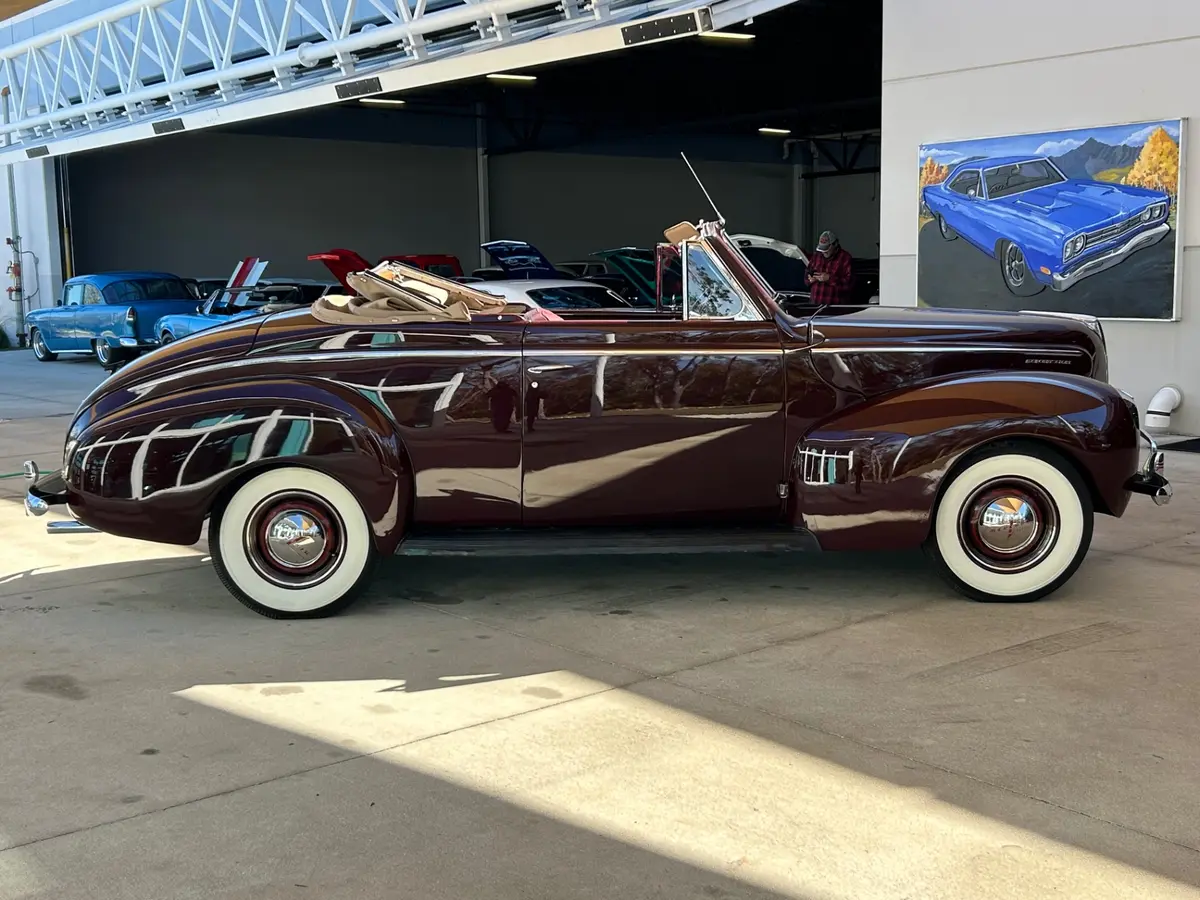
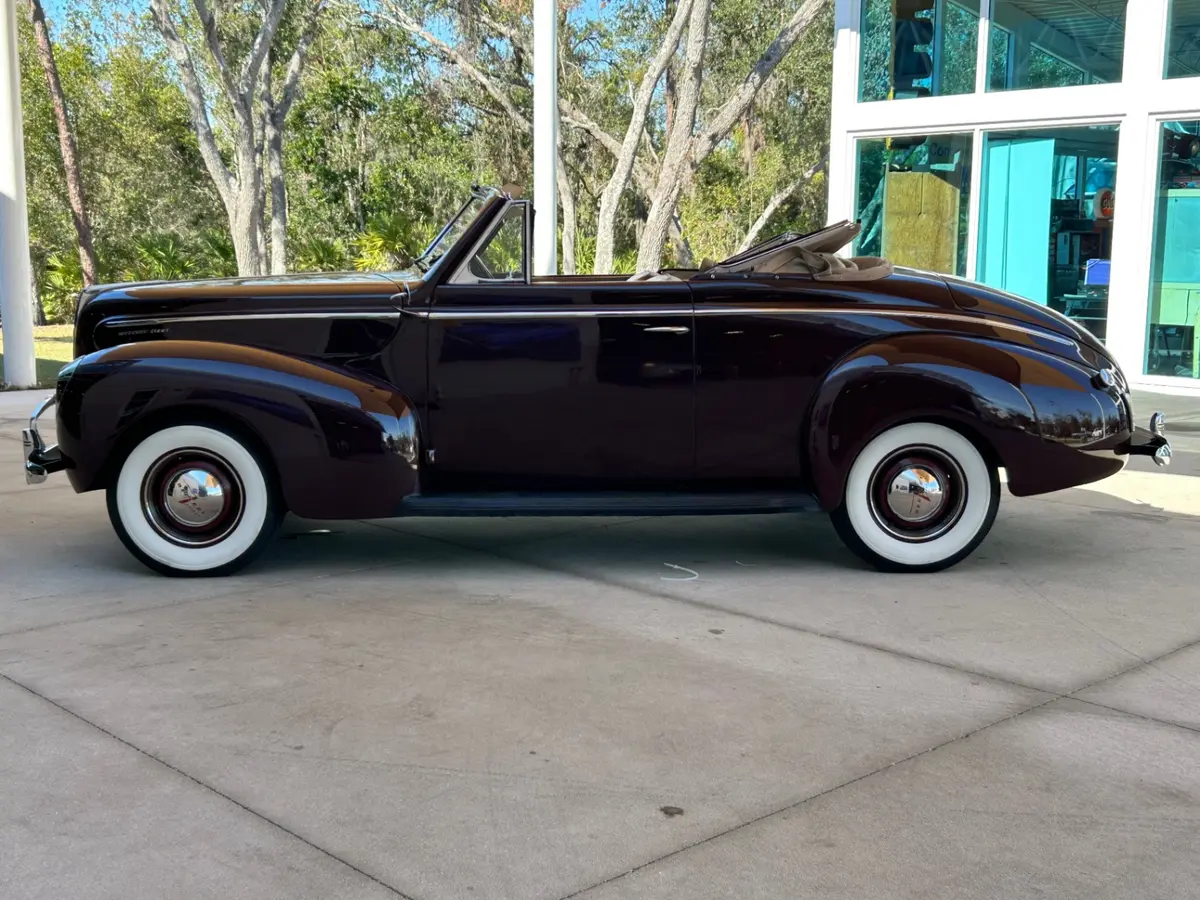
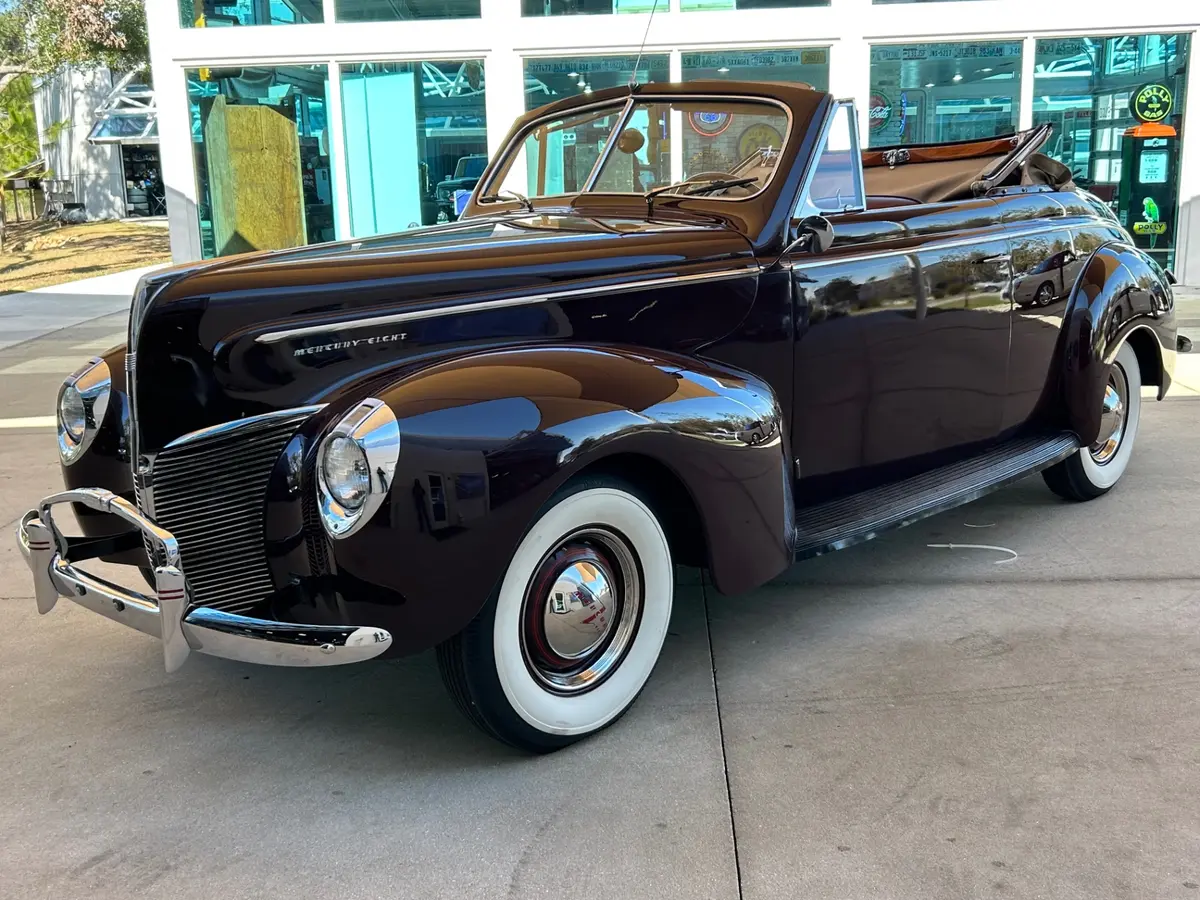
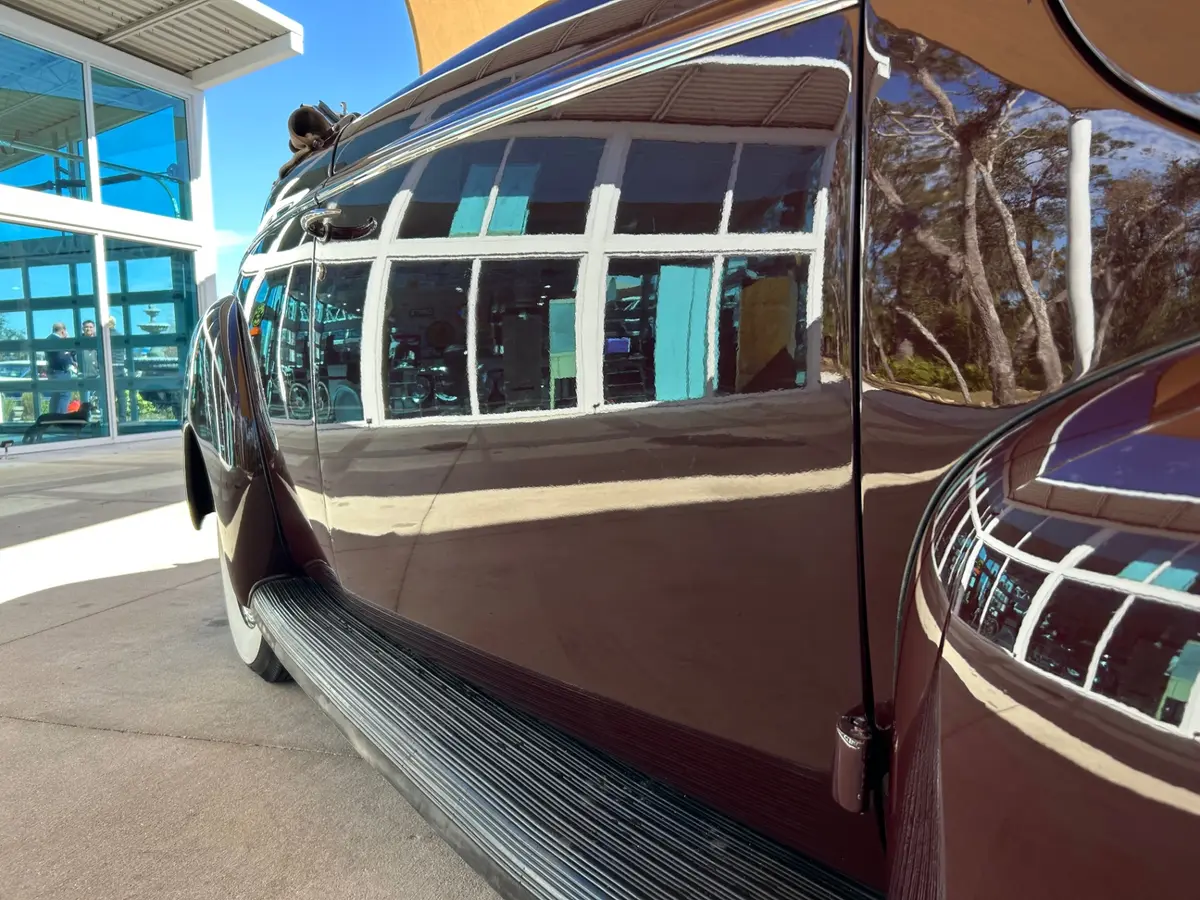
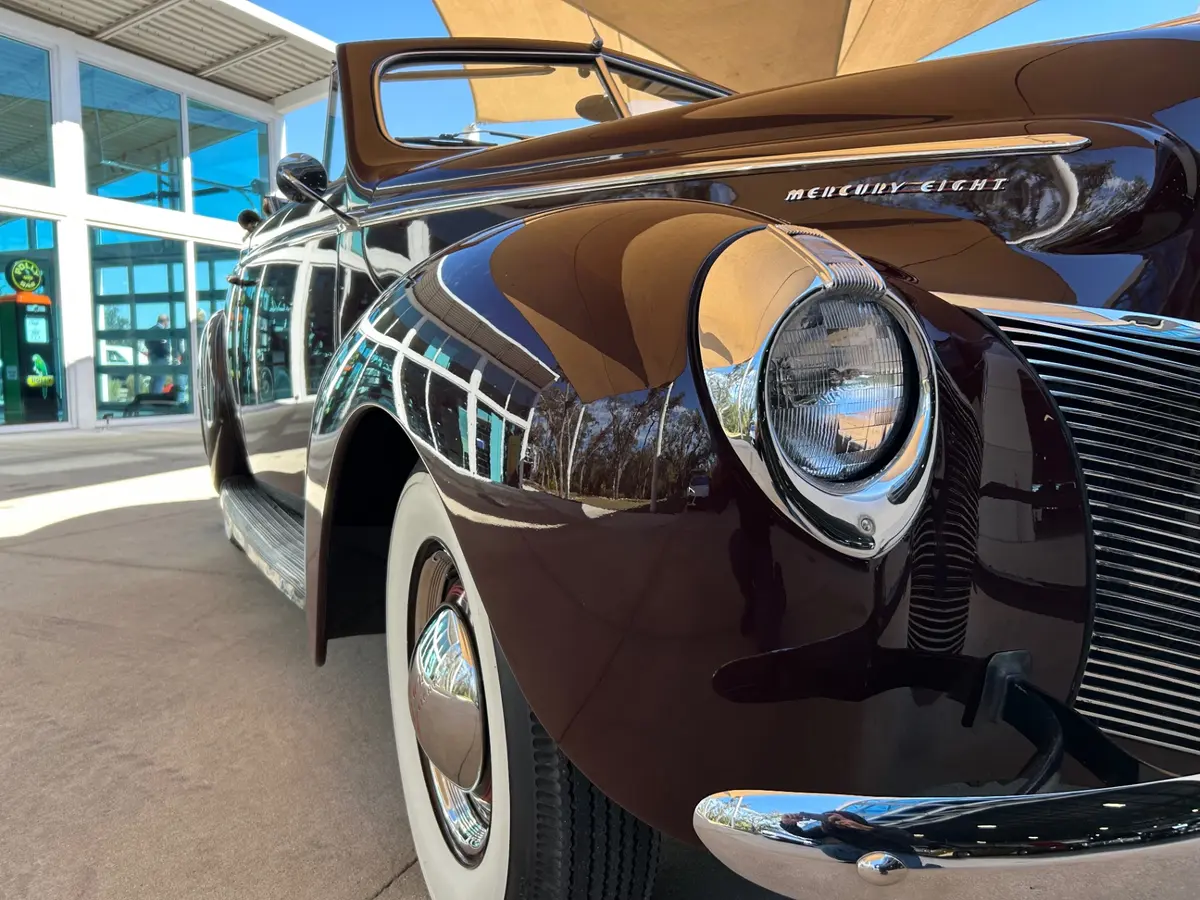
The exterior color is Garnet Maroon, a deep, dark burgundy that reads closer to black in low light and shows its full depth in direct sun. The 1940 Mercury Eight wore its body lines well in this color. The car's design language for 1940 was a significant step forward from the 1939 model — the hood was longer, the fenders more integrated into the body, and the grille more refined. Mercury's chief designer at the time, E.T. Gregorie, was working under Edsel Ford's direction, and the 1940 cars reflect a deliberate attempt to position Mercury as a style leader rather than just a stepping stone between Ford and Lincoln.
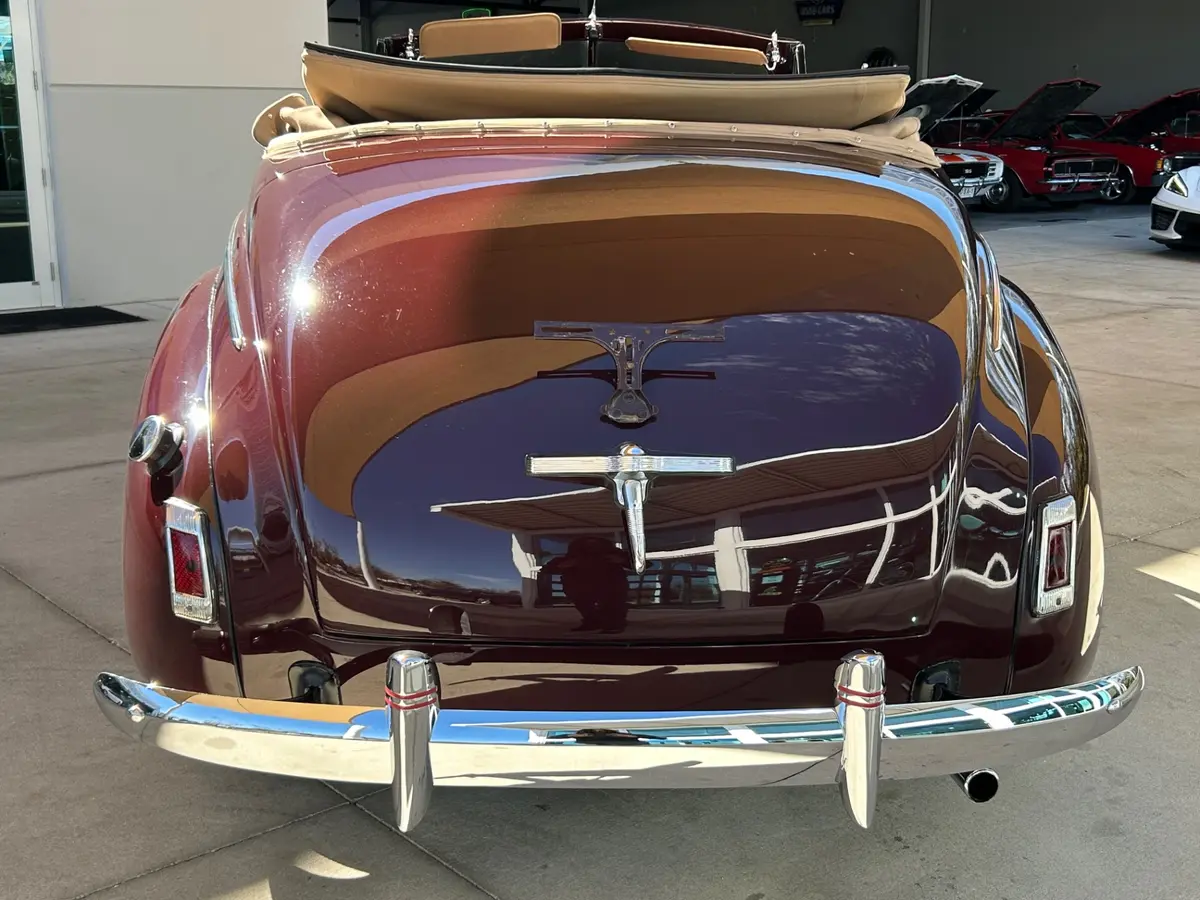
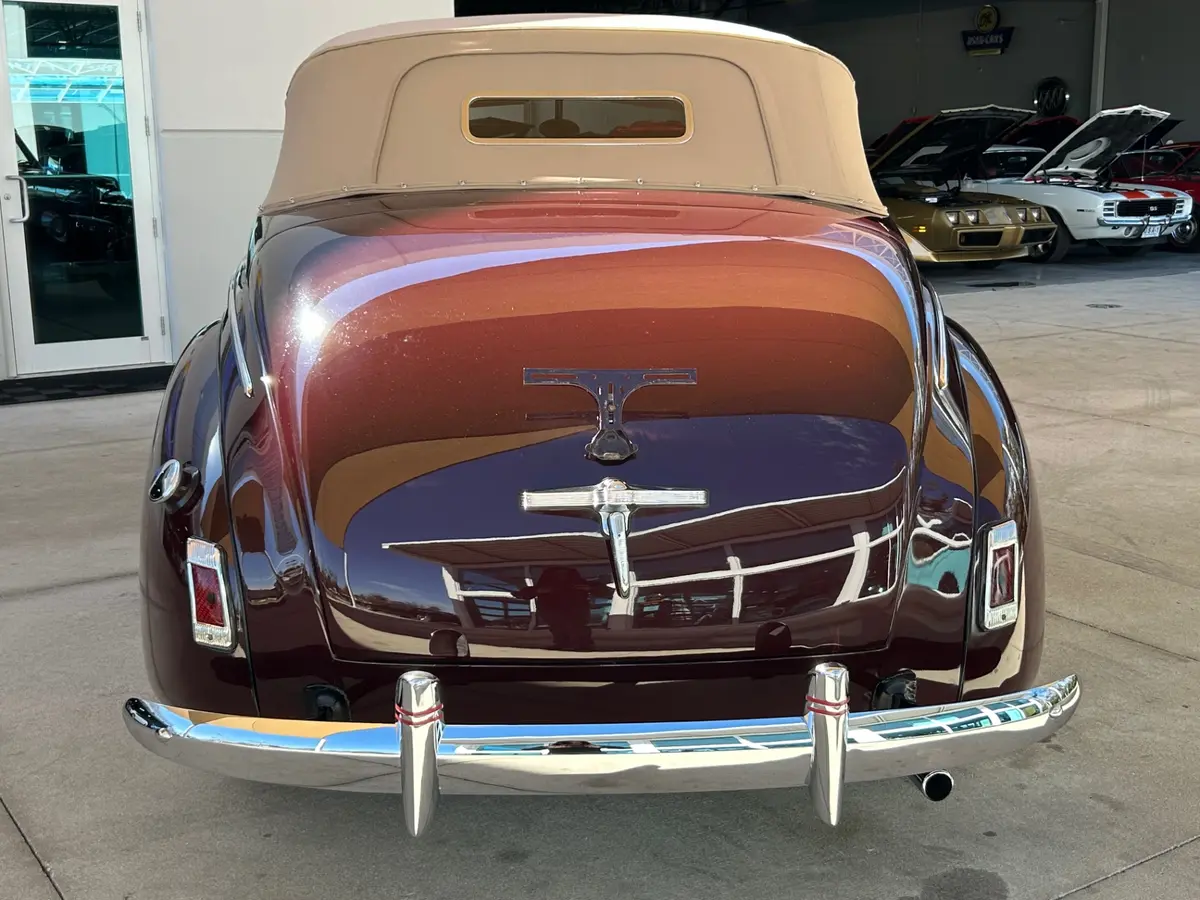
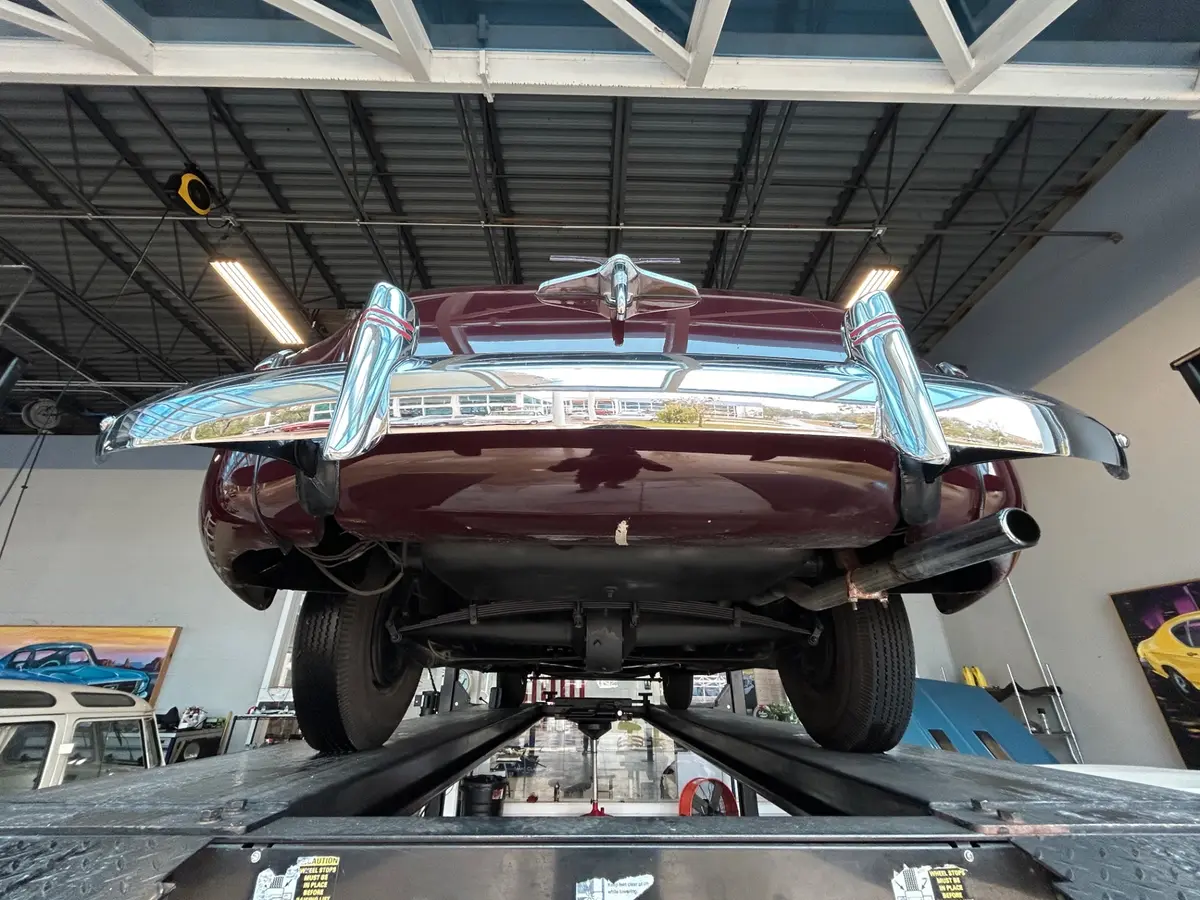
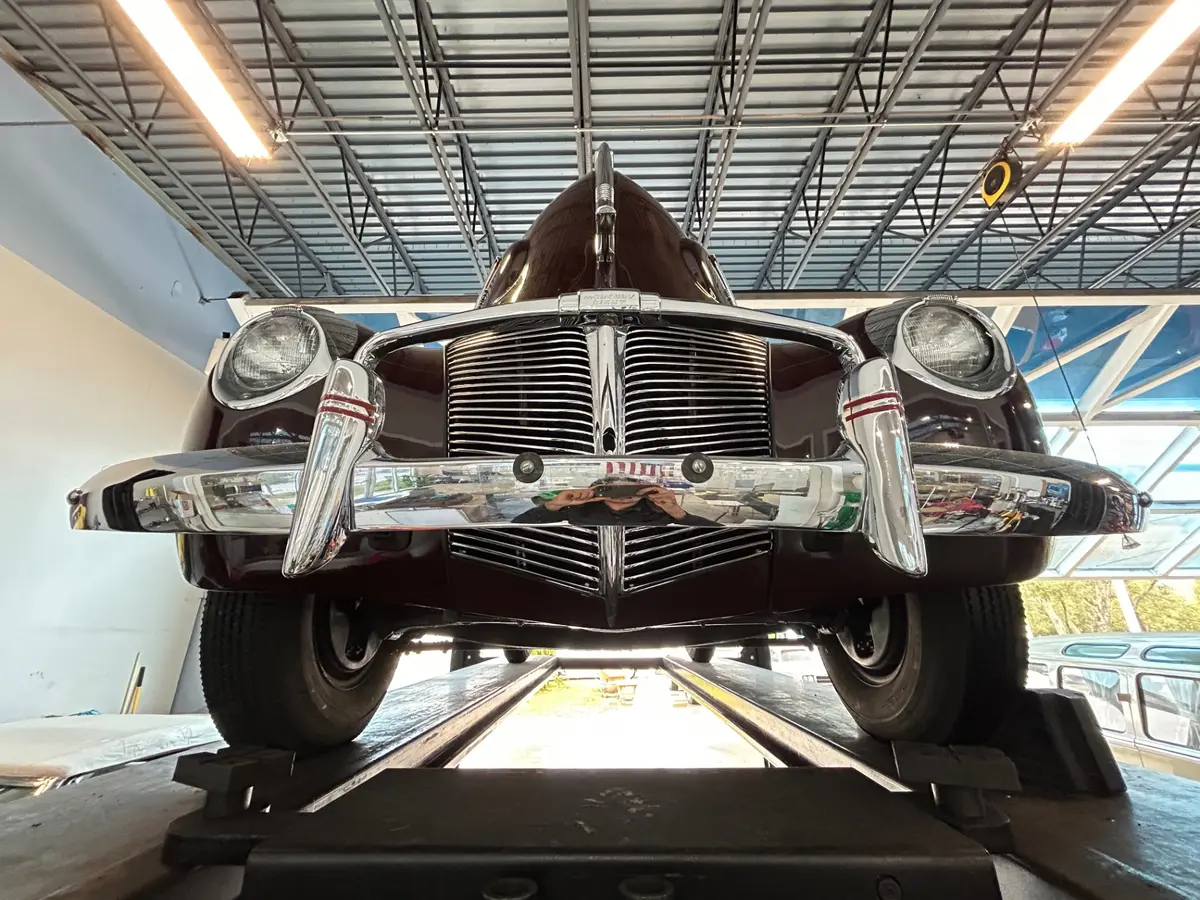
Chrome is present and functional throughout — front and rear bumpers, hubcaps, side mirror, and trim details. The bumpers are the correct horizontal blade style for 1940, and they show well in the photographs. The chrome hubcaps over whitewall tires are the correct period look for this car and complement the Garnet Maroon paint effectively. Running boards are in place and appear intact, which is notable given how often they are damaged or removed on pre-war cars that have been used and stored over the decades.
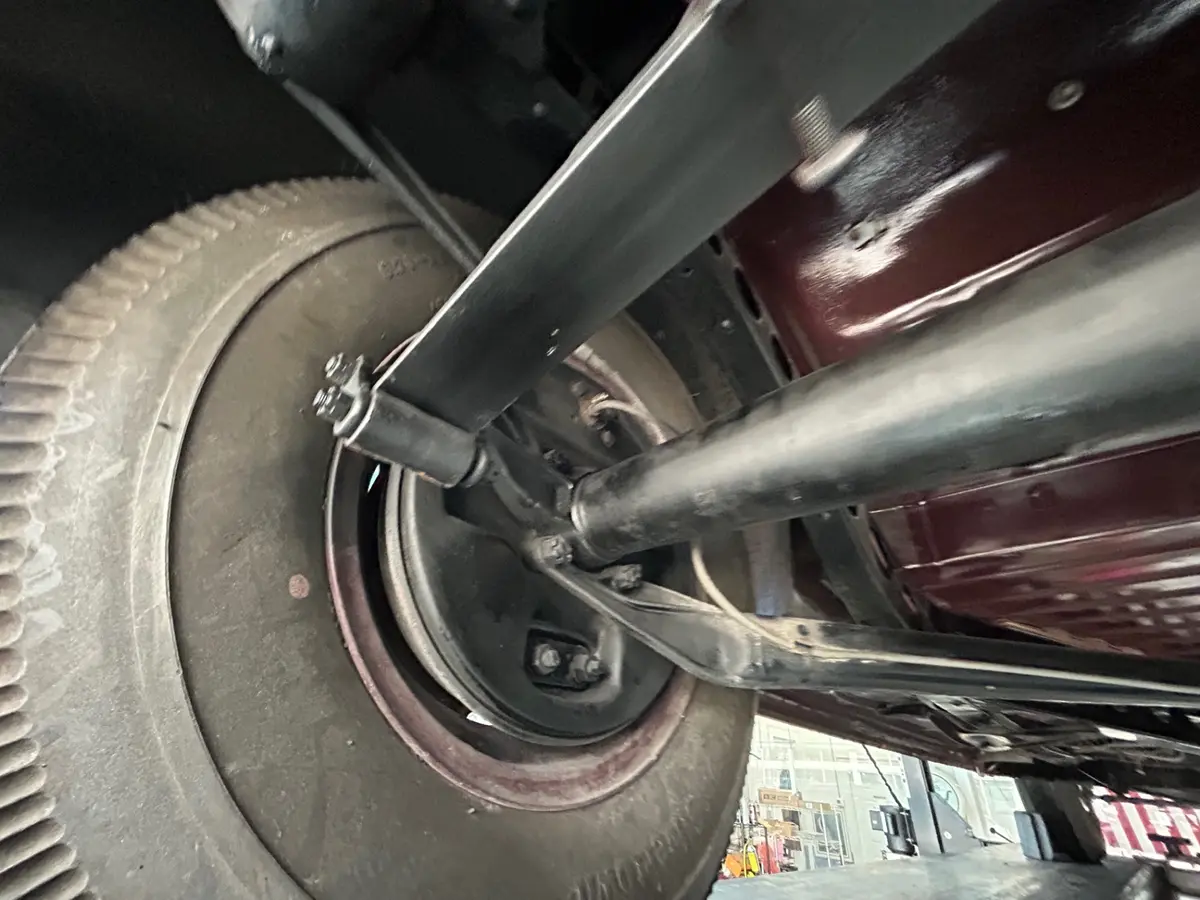
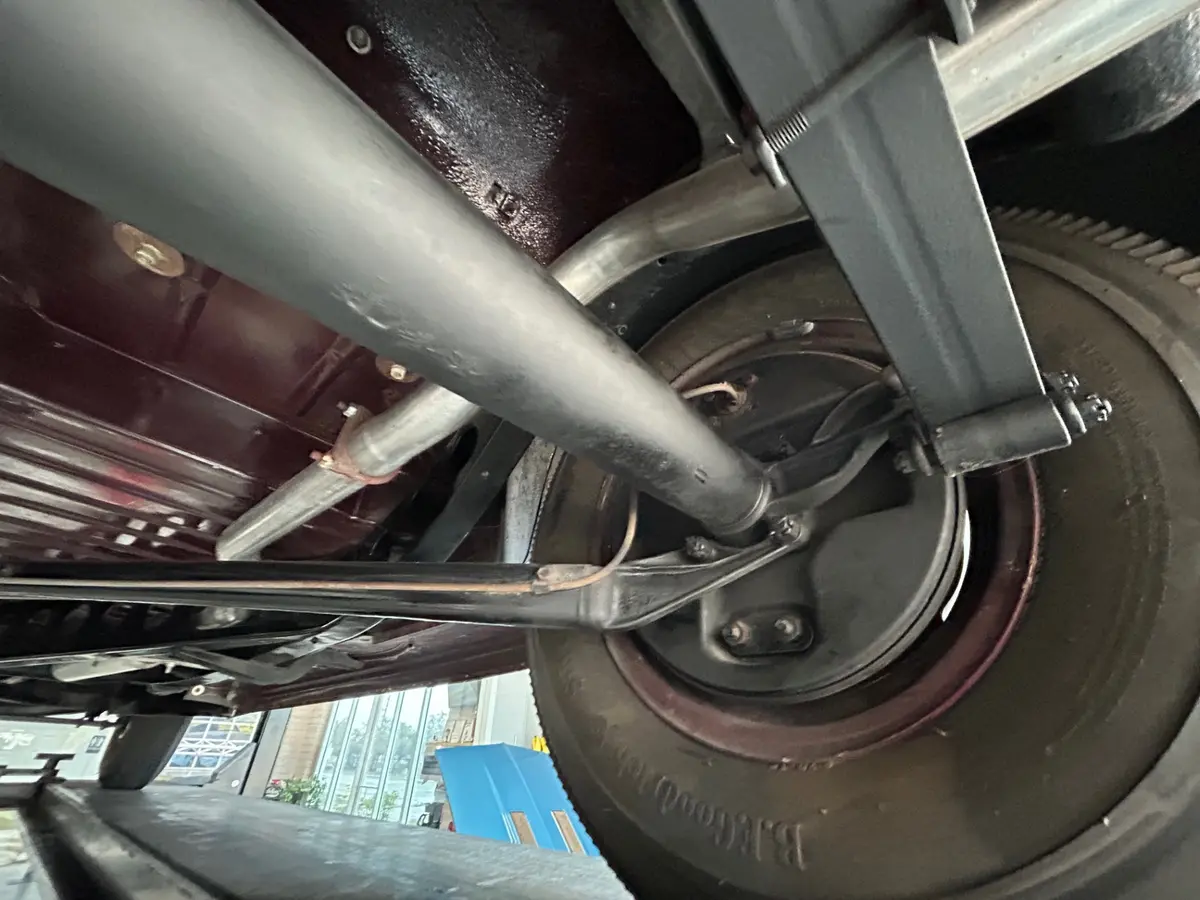
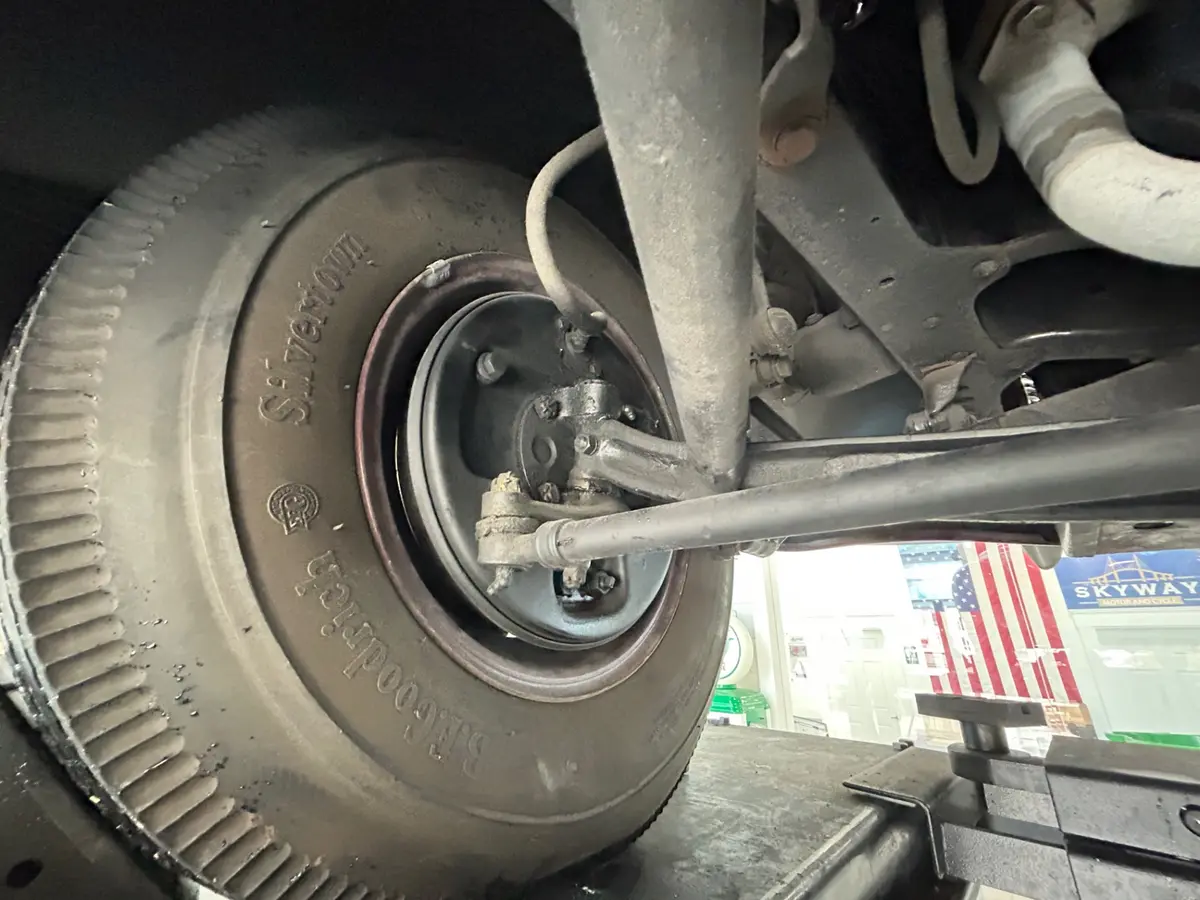
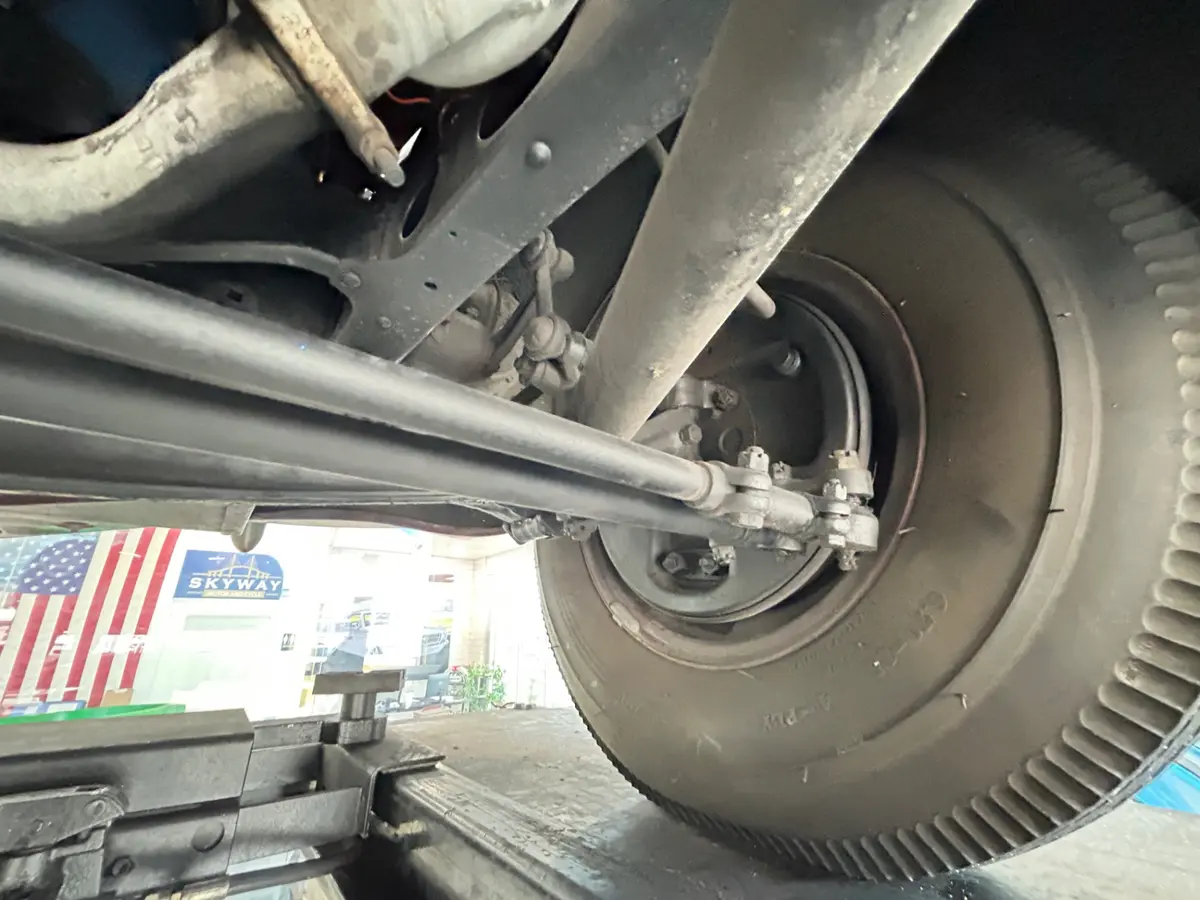
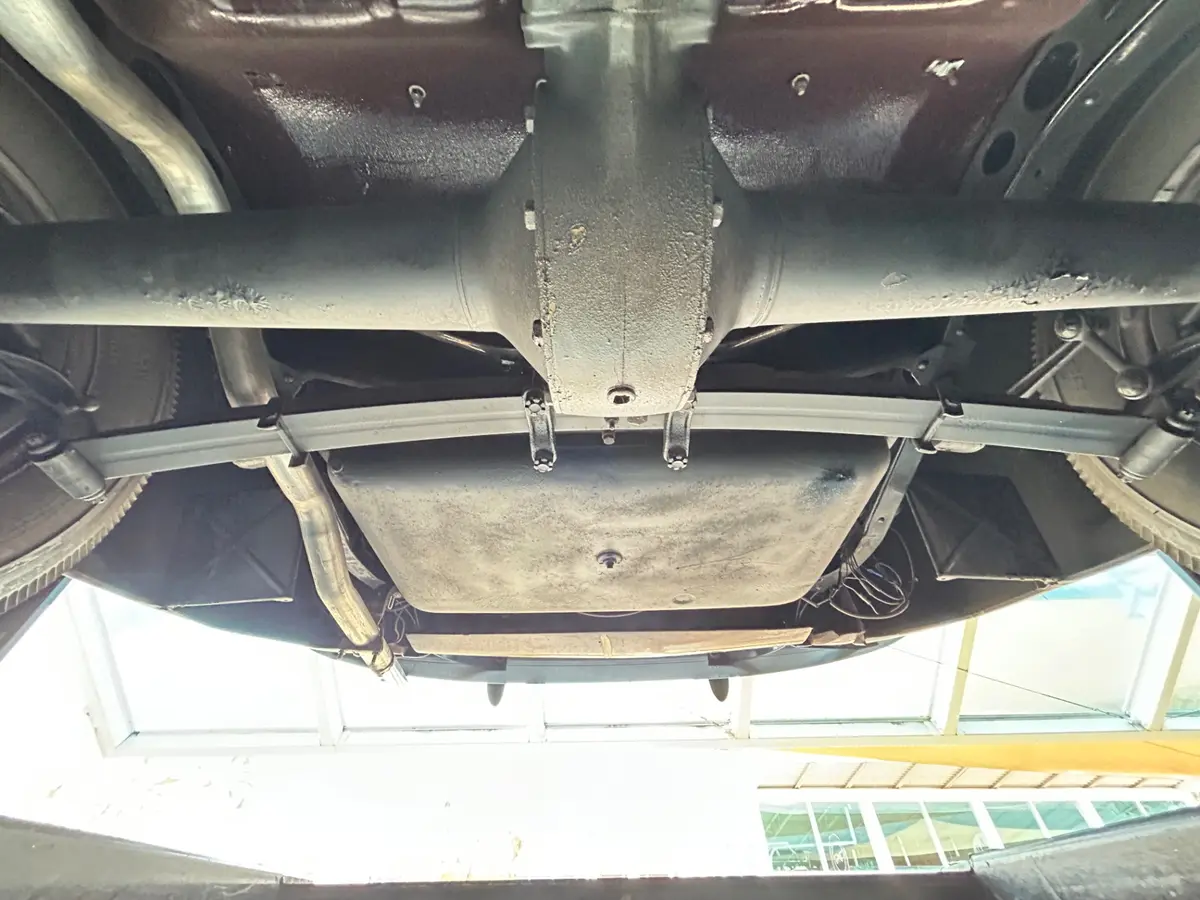
The undercarriage photographs, taken with the car on a lift, show the extent of the restoration work below the beltline. The floor pans, frame rails, and crossmembers are finished in a dark maroon that matches the exterior. The transmission visible from below carries the same blue paint as the block — detail work that carries through consistently. The rear axle housing and suspension components are cleaned and painted. This is not a cursory cleanup; it is a thorough restoration of the underside that holds up to scrutiny on the lift.
Conclusion
The 1940 Mercury Eight convertible is the kind of pre-war car that commands attention from serious collectors and knowledgeable enthusiasts in equal measure. It was a low-production body style when it was new, and attrition over the past eight decades has made well-restored examples genuinely difficult to find. This one presents correctly in Garnet Maroon with a matching red leather interior, carries the right Flathead V8 with the 3-speed column-shift manual, and has been restored at every level — engine bay, interior, undercarriage, and exterior — with enough consistency to suggest a single, focused restoration rather than a patchwork of deferred projects.
For a buyer who wants a pre-war American convertible that is ready to drive, show, and own without a long list of follow-up work, the 1940 Mercury Eight is worth a close look. This one in particular is worth a phone call.
Contact Skyway Classics in Sarasota, Florida at 941-254-6608 to schedule a viewing or ask any questions about this 1940 Mercury Eight.
Disclaimer
Information found on the website is presented as given to us by the owner of the car, whether on consignment or from the owner we bought it from. Some Photos, materials for videos, descriptions and other information are provided by the consignor/seller and is deemed reliable, but Skyway Classics does not warranty or guarantee this information. Skyway Classics is not responsible for information that may incorrect or a publishing error. The decision to purchase should be based solely on the buyers personal inspection of the vehicle or by a professional inspection service prior to offer or purchase being made.
1940 Mercury Eight Convertible — Garnet Maroon, Flathead V8, Restored Throughout
Why This Car Is Special
The 1940 Mercury Eight holds a specific place in American automotive history that is easy to overlook today. Ford Motor Company launched the Mercury brand in 1939 as a deliberate answer to a pricing gap — the Ford was entry-level, the Lincoln was luxury, and there was nothing competitive in between. Mercury filled that space with a longer wheelbase, a larger engine, and noticeably more refined styling than anything wearing a Ford badge at the time. By 1940, Mercury had found its footing, and the second-year cars showed it. The body was restyled with smoother, more streamlined sheetmetal, and the convertible body style represented the top of the Mercury lineup in terms of desirability and cost.
The convertible was never a high-volume body style. Ford Motor Company produced roughly 3,954 Mercury Eight convertibles for the 1940 model year, making them considerably rarer than the two-door and four-door sedans that made up the bulk of production. What you are looking at here is a restored example of that low-production body style, finished in Garnet Maroon with a tan convertible top and a red leather interior — a combination that reads as period-correct and visually coherent from every angle.
The VIN on this car begins with 99A, which tells us this is a 1940 Mercury (the "9" prefix was used for Mercury in Ford's system for that model year), built in the Dearborn assembly plant — Ford's home plant and the source of many of the most complete early Mercury builds.
The 1940 Mercury Eight was also a car that influenced the custom car culture of the late 1940s and 1950s more than almost any other vehicle of its era. Lead sled builders and kustomizers gravitated toward the '40 Merc specifically because of its proportions — the long hood, the low roofline relative to other cars of its day, and the naturally flowing fenders. James Dean was photographed with one. The marque was embedded in American car culture before most of the people buying hot rods today were born.
This particular car has been restored with care at every level, from the engine bay down to the undercarriage, and presents as a driver-quality example that can be shown or used on the road with equal confidence.
Features List
- 239ci Flathead V8, rated at 95 horsepower
- Blue-painted block and heads
- 3-speed column-shift manual transmission
- 8-volt electrical system conversion
- Tan convertible top
- Red leather interior throughout
- Split-back front bench seat
- Rear bench seat
- Maroon carpeting
- Seat belts front and rear
- Dash clock present
- Heater and defroster
- Original Mercury steering wheel
- Chrome side mirror
- Whitewall tires
- Chrome hubcaps
- Running boards
- Chrome front and rear bumpers
- Four-wheel drum brakes
- Restored undercarriage
- Carpet-lined trunk
- Spare tire included
- Restored engine bay
Mechanical
The 239 cubic inch Flathead V8 under the hood is the correct engine for this application. Mercury used a bored-out version of Ford's flathead — displacing 239ci compared to the Ford's 221ci — and rated it at 95 horsepower. That was a meaningful number in 1940. It gave the Mercury a performance edge over the base Ford while keeping the car accessible to buyers who weren't shopping for Lincolns. The flathead V8 architecture, with its valves in the block rather than the heads, was a Ford innovation that dated back to 1932 and was genuinely advanced for its time. By 1940 the design was well-sorted and reliable, and it remained in production — with continuous refinements — through 1953.
On this car, the block and heads have been painted blue as part of the engine bay restoration. That blue paint scheme is consistent with how these engines were often presented during restoration, and it reads cleanly against the detailed engine bay. The restored bay itself shows organized, visible work — the underside photos confirm a similar level of attention, with the floor pans and frame finished in Garnet Maroon to match the exterior.
The transmission is a 3-speed column-shift manual, which is exactly what came from the factory. Steering column-mounted shifters were a relatively recent development in 1940 — Ford and Mercury adopted the "three on the tree" layout to open up the front bench seat and improve the car's interior space. It gives the car a distinctly period driving experience that floor-shifted cars from the same era simply cannot replicate.
One practical upgrade worth noting is the 8-volt electrical system conversion. The original 6-volt systems on pre-war American cars are functional but can struggle with modern demands — weak cranking in heat, dim lighting, and compatibility issues with some replacement components. Converting to 8 volts addresses most of those concerns while remaining less visually intrusive than a full 12-volt swap. For a driver-quality restoration, it is a sensible choice.
Interior
The interior of this 1940 Mercury Eight convertible is done in red leather with maroon carpet, and it holds together well as a cohesive package. The split-back front bench and full rear bench are both upholstered in red leather, and the door panels carry the same material with vertical pleat detail. The maroon carpet runs through the cabin and into the trunk, which has been carpet-lined as part of the restoration — a detail that signals the restorer paid attention to areas that buyers often ignore.
The dashboard is largely intact and correct. The original Mercury steering wheel is present, which matters — these wheels are difficult to find in good condition, and many restored pre-war cars end up with incorrect or reproduction pieces. Having the original here is a genuine point in this car's favor. The dash clock is present and visible in the photographs. The instrument cluster uses the characteristic 1940 Mercury layout with individual gauge pods set into a two-tone panel — a design that looks more expensive than the Ford equivalent of the same year, which was part of Mercury's market positioning.
The heater and defroster are present, which were optional equipment in 1940 and not installed on every car. Their presence adds usability for anyone planning to drive this car in cooler months. Seat belts have been added front and rear — not a factory feature on any 1940 vehicle, but a worthwhile safety addition that does not alter the car's overall appearance.
The convertible top is tan canvas. Against the Garnet Maroon exterior and red leather interior, the tan top provides a natural contrast that works well with the car's color palette whether the top is raised or folded down.
Exterior
The exterior color is Garnet Maroon, a deep, dark burgundy that reads closer to black in low light and shows its full depth in direct sun. The 1940 Mercury Eight wore its body lines well in this color. The car's design language for 1940 was a significant step forward from the 1939 model — the hood was longer, the fenders more integrated into the body, and the grille more refined. Mercury's chief designer at the time, E.T. Gregorie, was working under Edsel Ford's direction, and the 1940 cars reflect a deliberate attempt to position Mercury as a style leader rather than just a stepping stone between Ford and Lincoln.
Chrome is present and functional throughout — front and rear bumpers, hubcaps, side mirror, and trim details. The bumpers are the correct horizontal blade style for 1940, and they show well in the photographs. The chrome hubcaps over whitewall tires are the correct period look for this car and complement the Garnet Maroon paint effectively. Running boards are in place and appear intact, which is notable given how often they are damaged or removed on pre-war cars that have been used and stored over the decades.
The undercarriage photographs, taken with the car on a lift, show the extent of the restoration work below the beltline. The floor pans, frame rails, and crossmembers are finished in a dark maroon that matches the exterior. The transmission visible from below carries the same blue paint as the block — detail work that carries through consistently. The rear axle housing and suspension components are cleaned and painted. This is not a cursory cleanup; it is a thorough restoration of the underside that holds up to scrutiny on the lift.
Conclusion
The 1940 Mercury Eight convertible is the kind of pre-war car that commands attention from serious collectors and knowledgeable enthusiasts in equal measure. It was a low-production body style when it was new, and attrition over the past eight decades has made well-restored examples genuinely difficult to find. This one presents correctly in Garnet Maroon with a matching red leather interior, carries the right Flathead V8 with the 3-speed column-shift manual, and has been restored at every level — engine bay, interior, undercarriage, and exterior — with enough consistency to suggest a single, focused restoration rather than a patchwork of deferred projects.
For a buyer who wants a pre-war American convertible that is ready to drive, show, and own without a long list of follow-up work, the 1940 Mercury Eight is worth a close look. This one in particular is worth a phone call.
Contact Skyway Classics in Sarasota, Florida at 941-254-6608 to schedule a viewing or ask any questions about this 1940 Mercury Eight.
Disclaimer
Information found on the website is presented as given to us by the owner of the car, whether on consignment or from the owner we bought it from. Some Photos, materials for videos, descriptions and other information are provided by the consignor/seller and is deemed reliable, but Skyway Classics does not warranty or guarantee this information. Skyway Classics is not responsible for information that may incorrect or a publishing error. The decision to purchase should be based solely on the buyers personal inspection of the vehicle or by a professional inspection service prior to offer or purchase being made.
1940 Mercury
Eight Convertible
Why Choose Skyway Classics?
Explore our curated inventory of classic and collector cars—thoughtfully selected, ready to drive, and supported by experts who make ownership simple.
Expert Curation
Every vehicle is hand-selected by our experts for quality, authenticity, and investment potential.
Fast Transactions
Streamlined buying and selling process with quick financing and immediate delivery options.
Only National Dealer With Classic Service & Repair
We’re the only national dealership that services and repairs the classics we sell—before and after the sale.
Nationwide Network
Access to our extensive network of collectors, restorers, and classic car enthusiasts nationwide.
Concierge Ownership Support
From financing and insurance to paperwork, shipping, and titling—we handle the details so you can enjoy the drive.
Passion-Driven Service
We're classic car enthusiasts first, providing personalized service with genuine passion for the hobby.