
1969 Chevrolet
Camaro Base
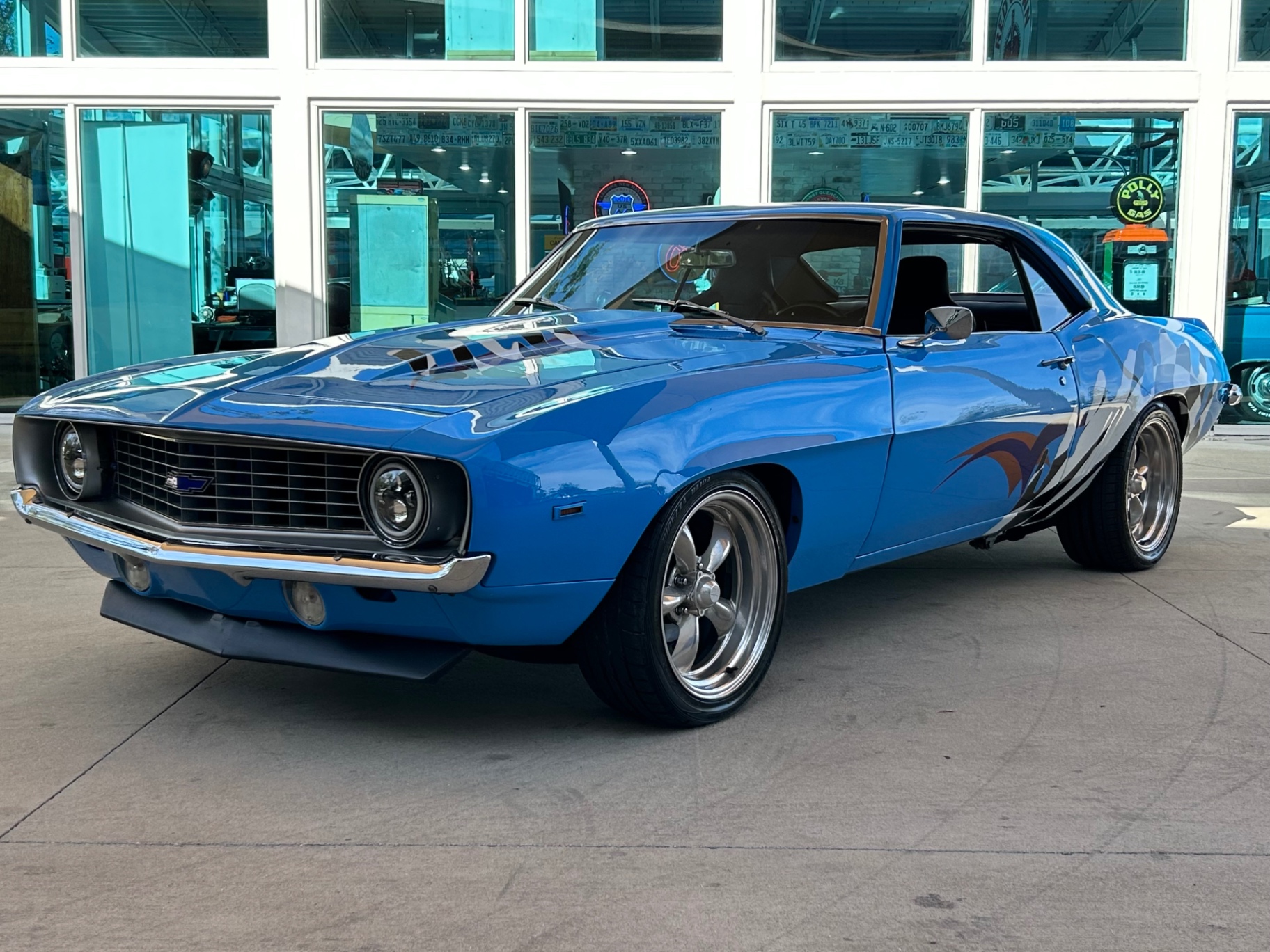

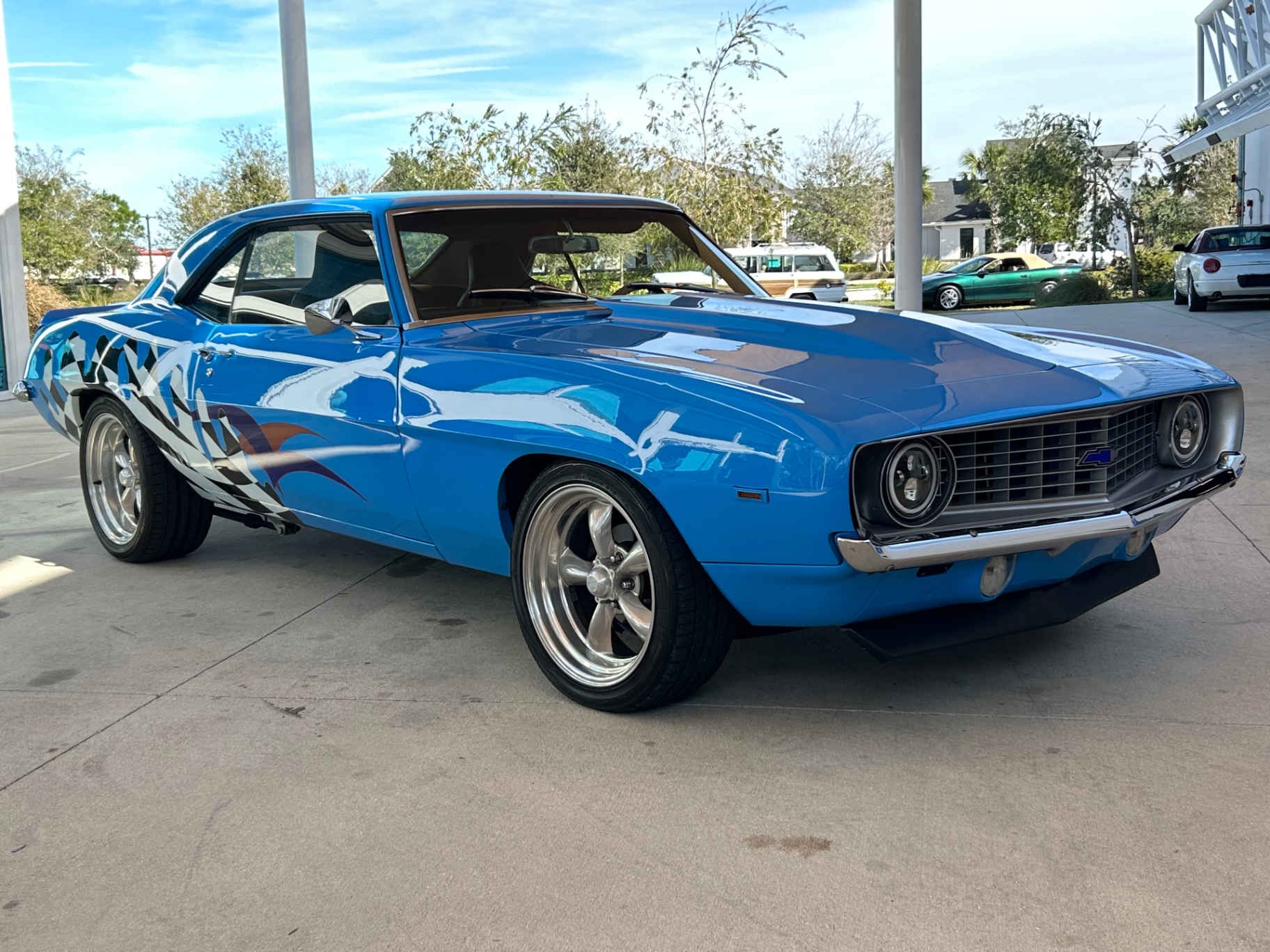
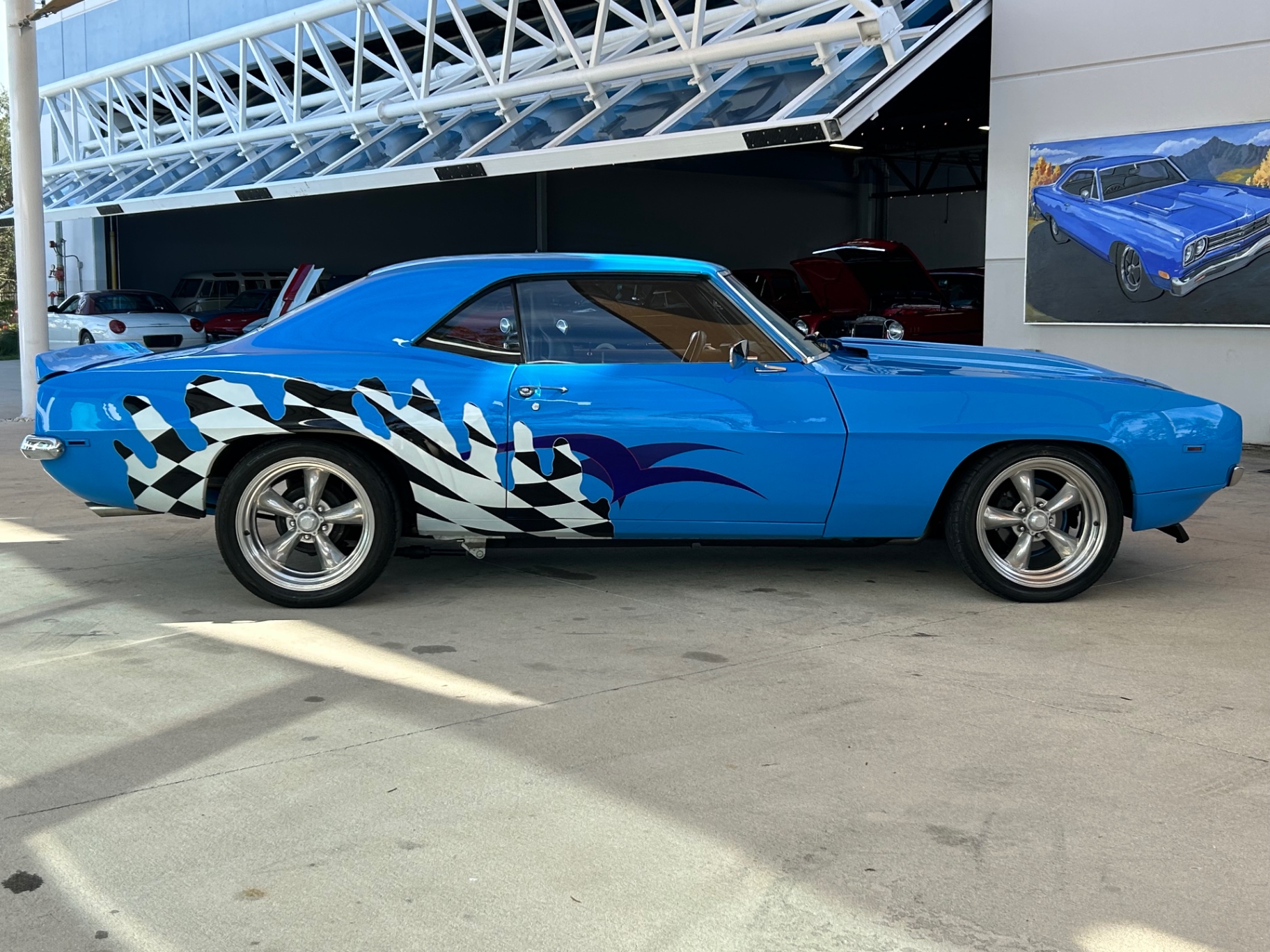
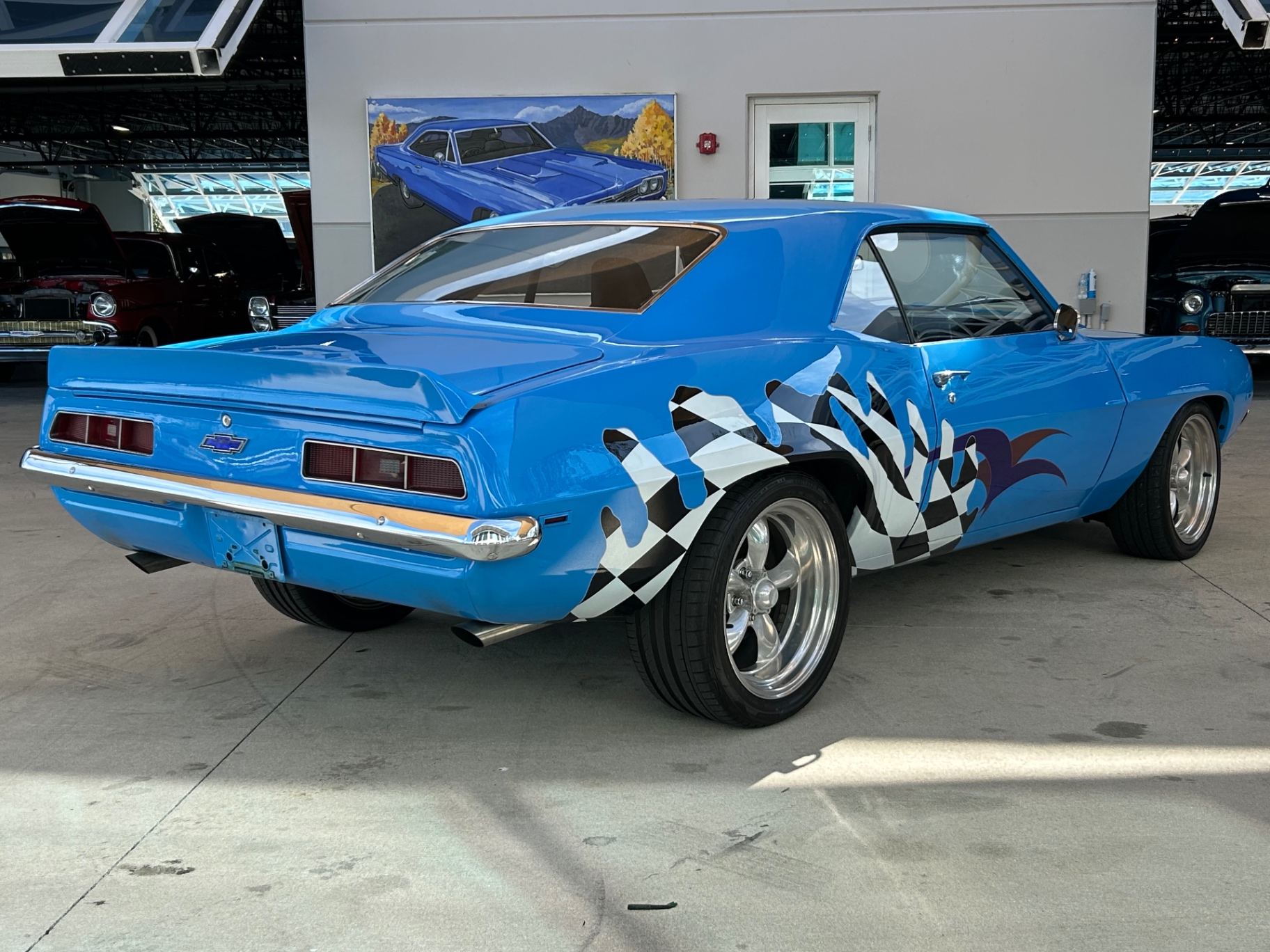

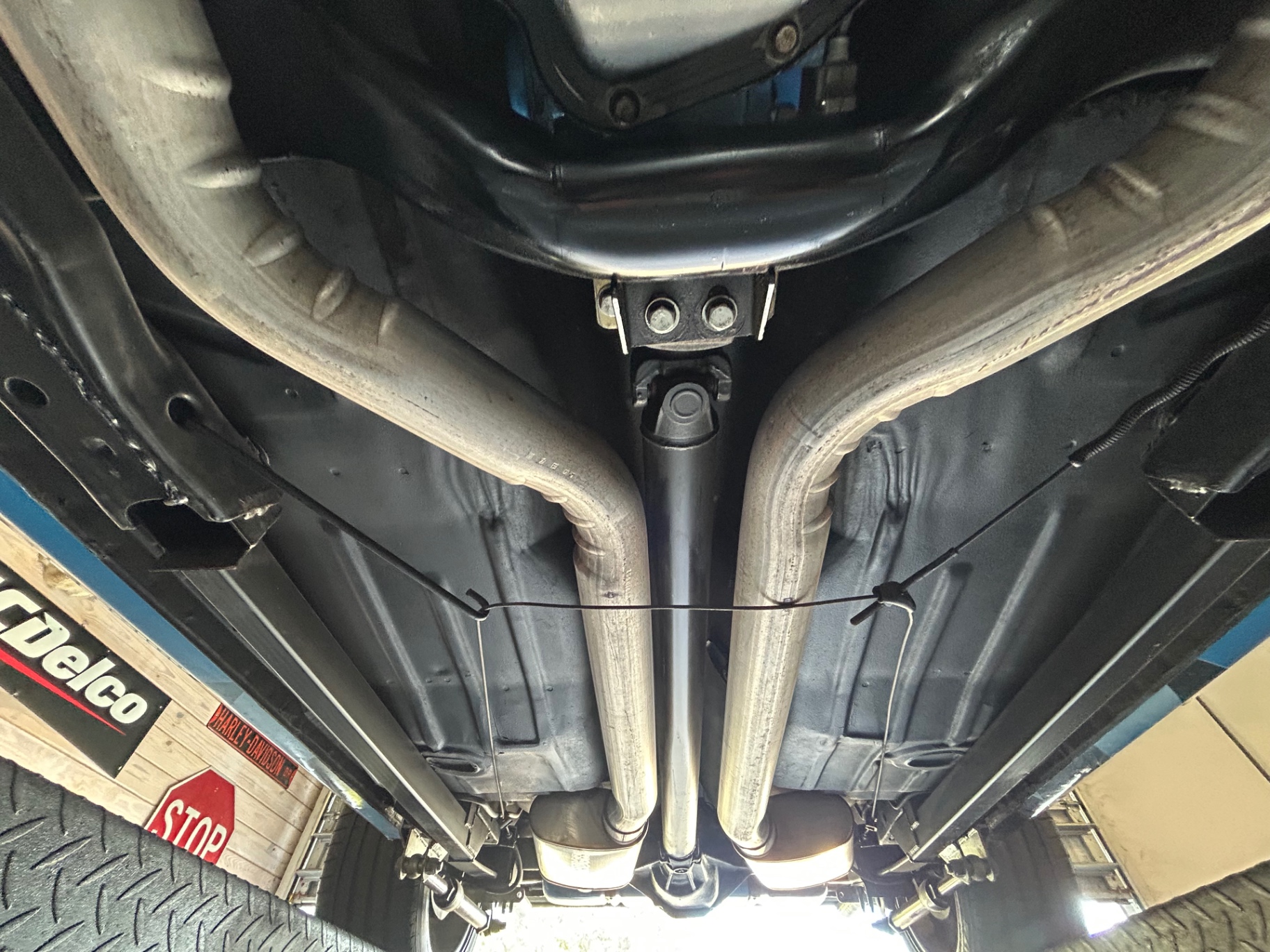
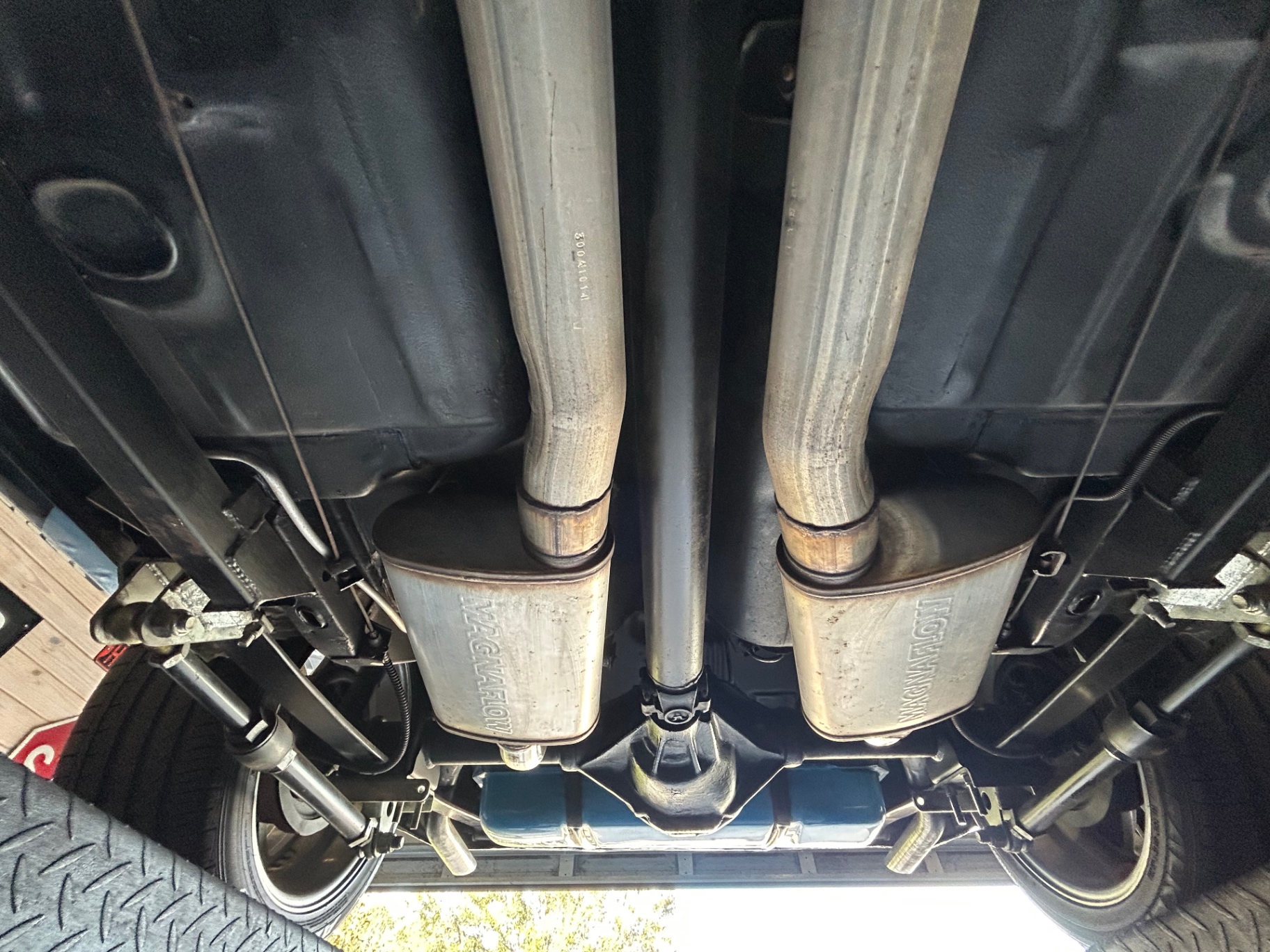
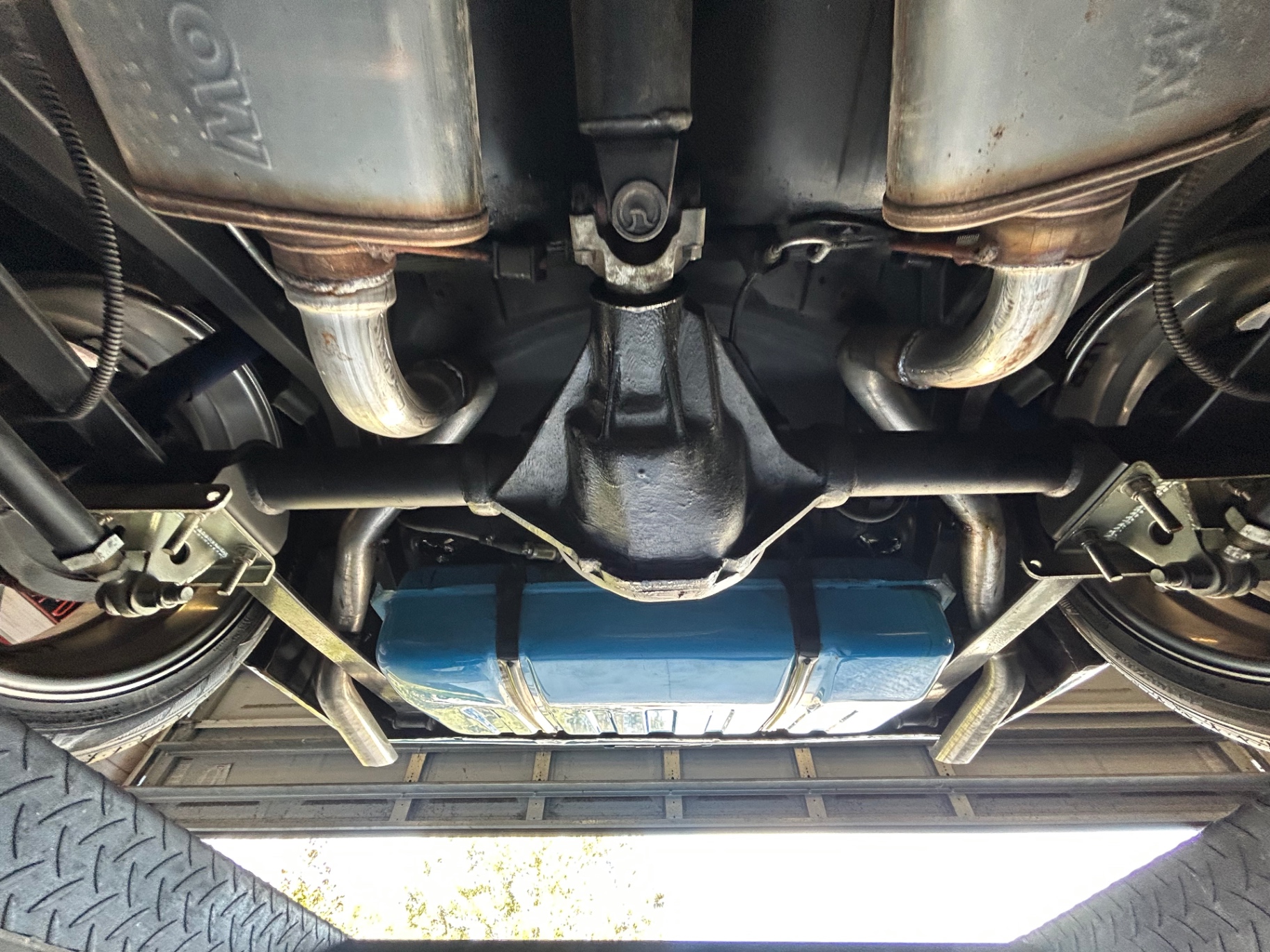
1969 Chevrolet Camaro Pro Street Custom — 383 Stroker, 12-Bolt Rear, Air Conditioning
Why This Car Is Special
The 1969 Chevrolet Camaro is widely considered the high-water mark of the first-generation F-body platform. Chevrolet sold 243,085 Camaros that model year, making it the best-selling year of the first generation, and the styling that designers Bill Mitchell and Henry Haga signed off on has never really gone out of fashion. The longer nose, wider stance, and more aggressive roofline the 1969 received over the 1967–68 cars gave it a presence the earlier cars simply didn't have. It was also the final year of that original body style — GM stretched the tooling one extra year before the second-generation car arrived — which means 1969 was both the peak and the finale of a design era.
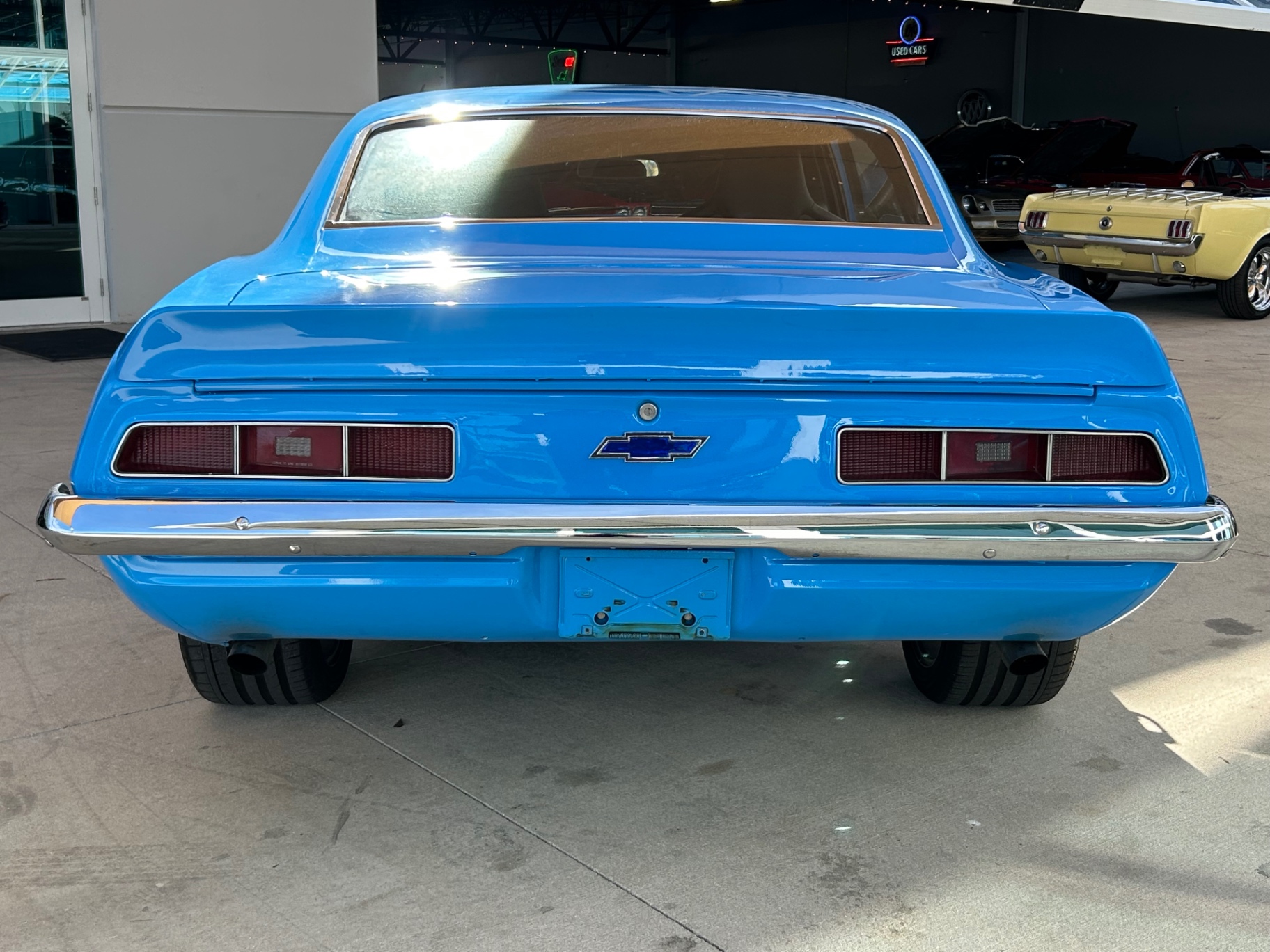
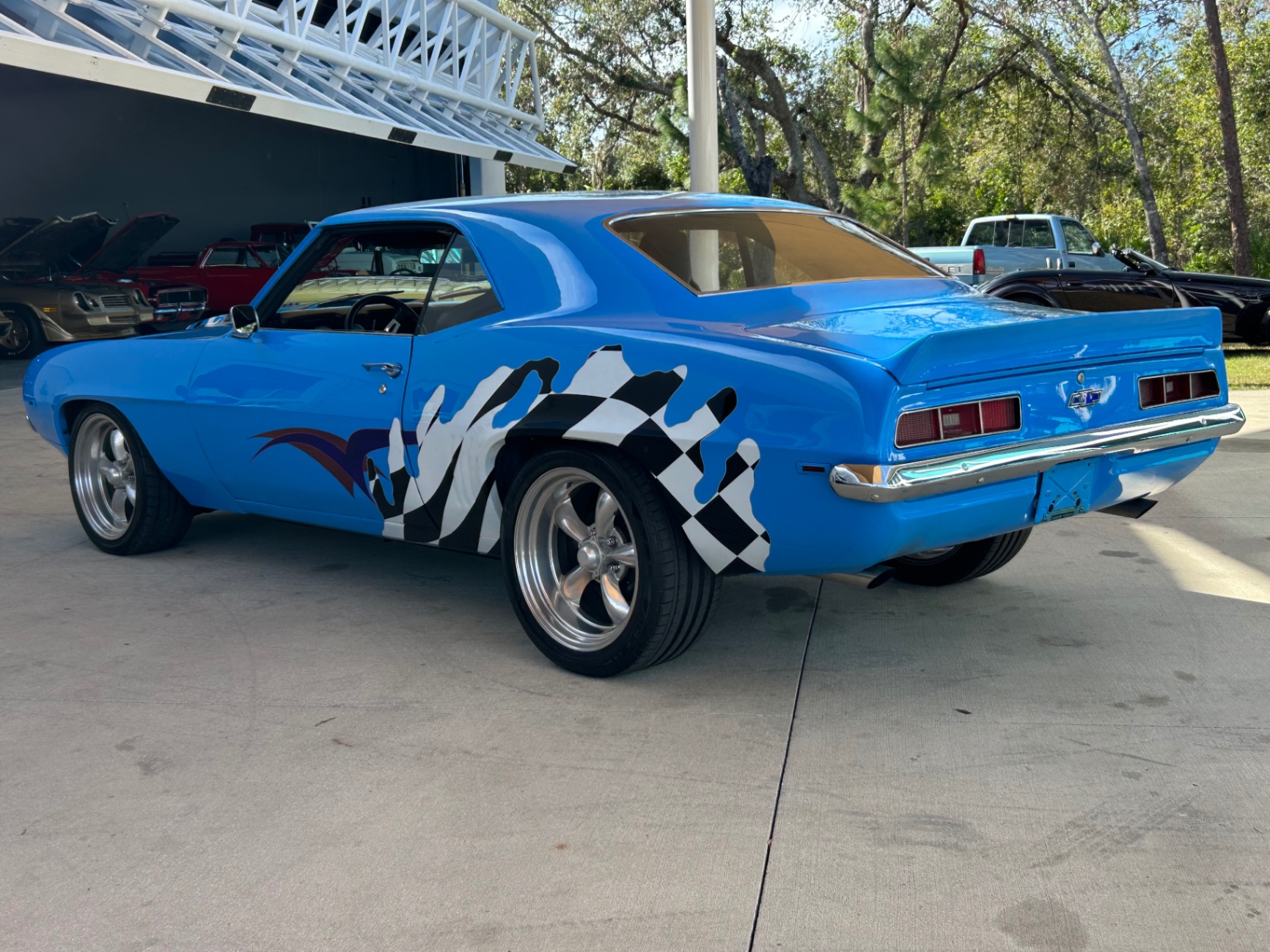
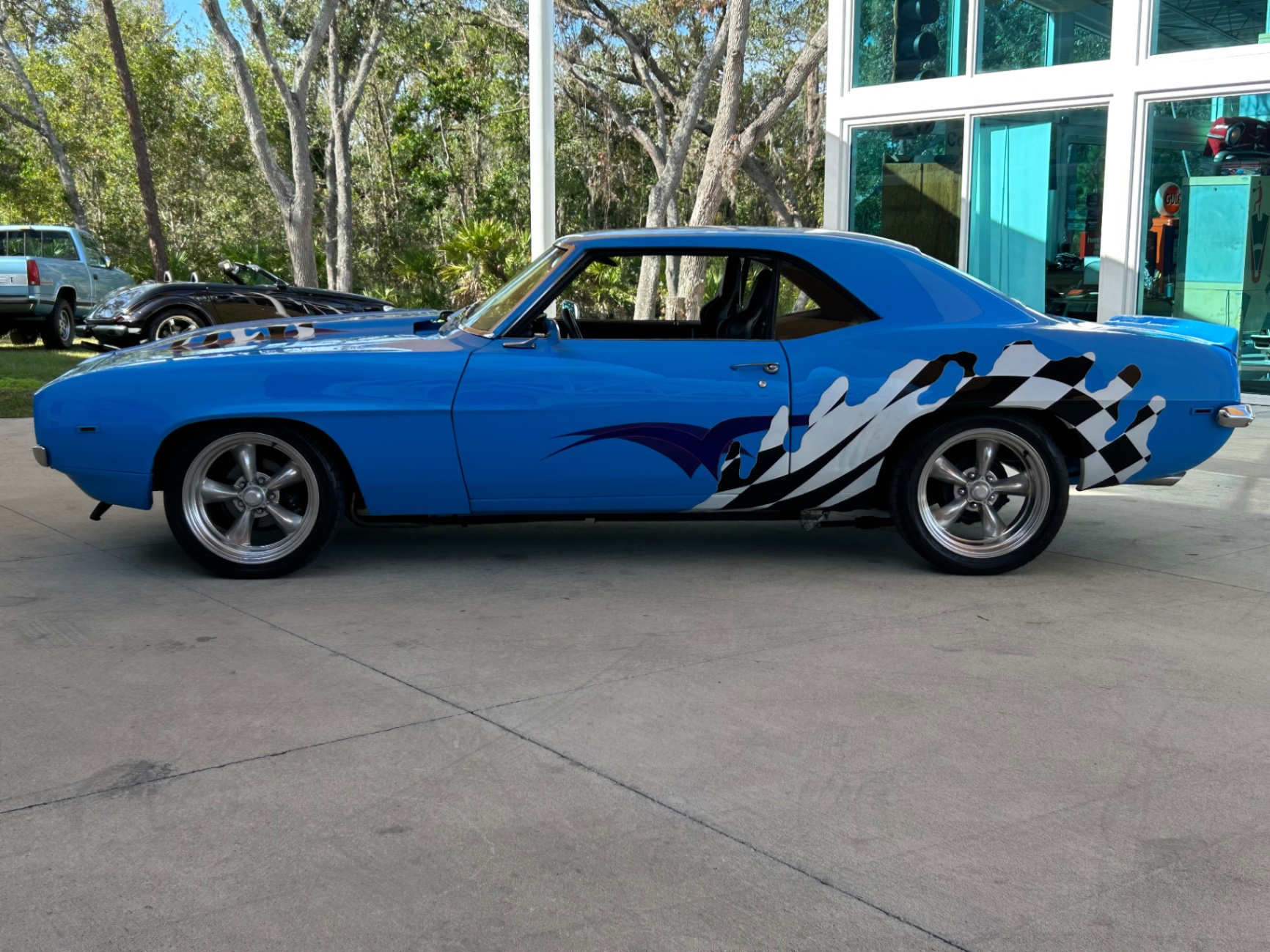
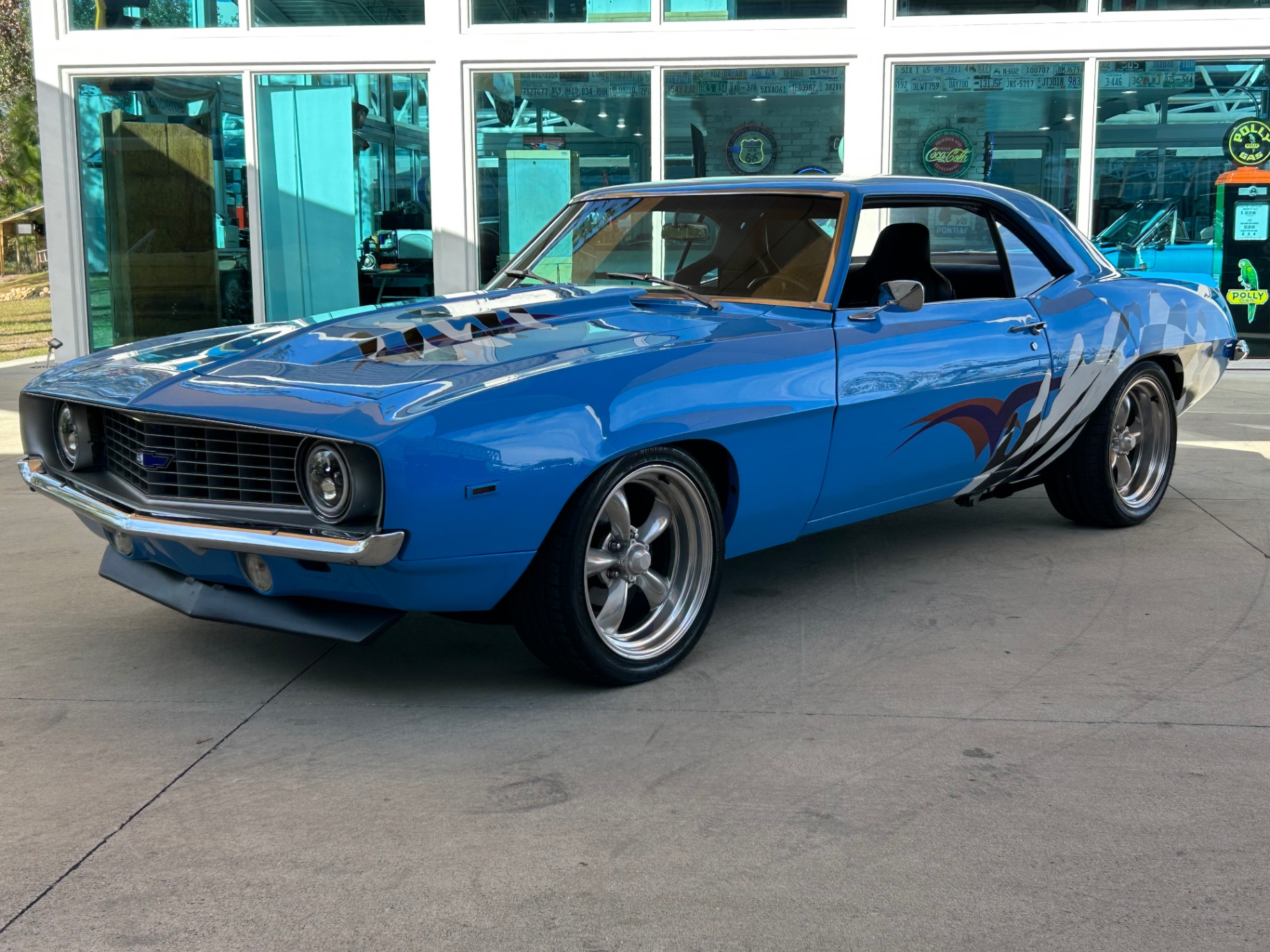
This particular 1969 Chevrolet Camaro is not a preservation car or a numbers-matching restoration. It's a purpose-built pro street custom that was built to be driven hard and look the part doing it. The builder replaced the original drivetrain with a GM 383 cubic inch stroker V8, upgraded the rear axle to a Moser 12-bolt, added power disc brakes, power steering, and air conditioning, and finished the body in a vivid custom blue with checkered graphics. The result is a 1969 Camaro that combines the most desirable body style in the first-generation lineup with a drivetrain that significantly outperforms anything Chevrolet offered at the dealership in 1969.
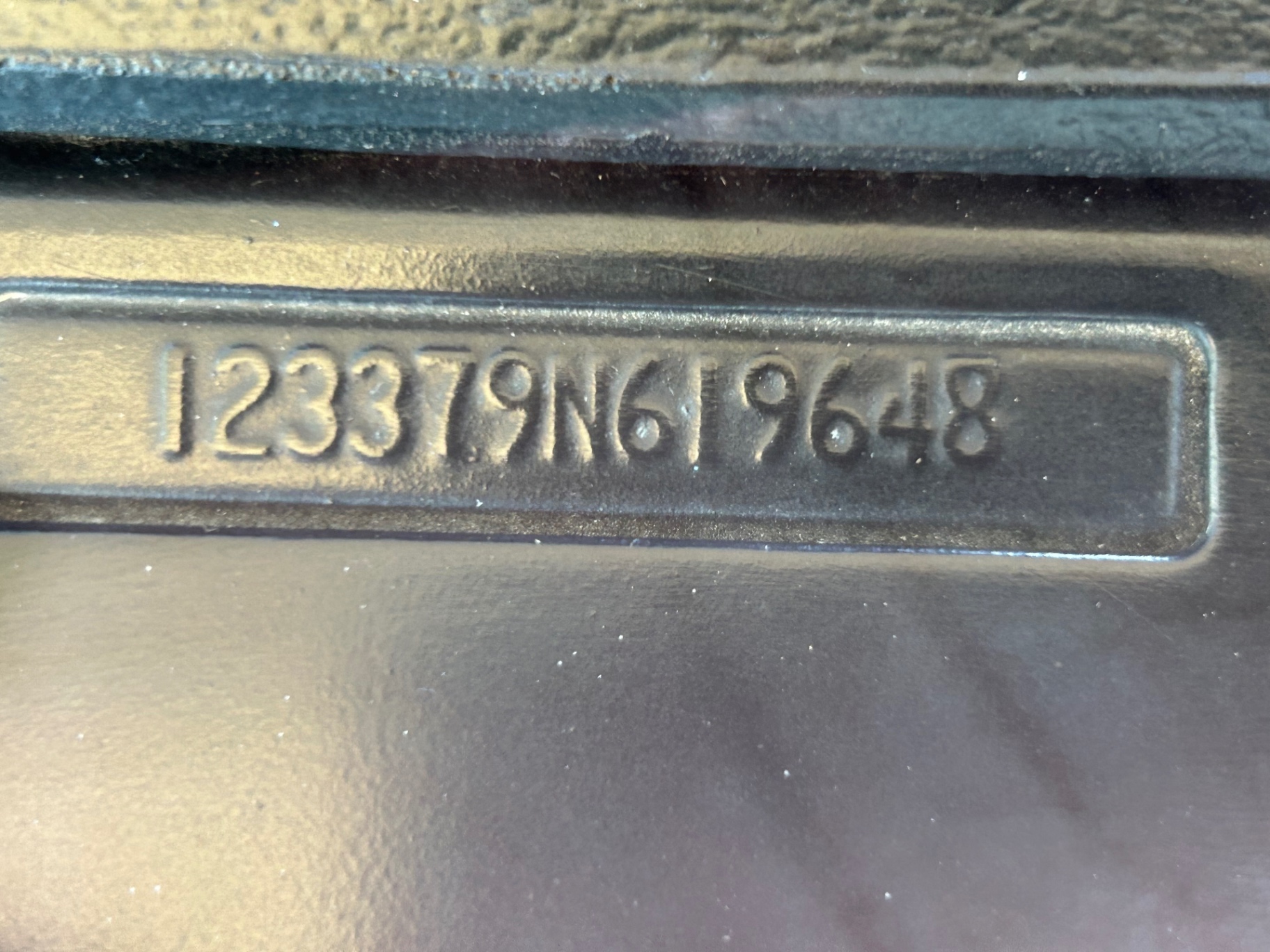
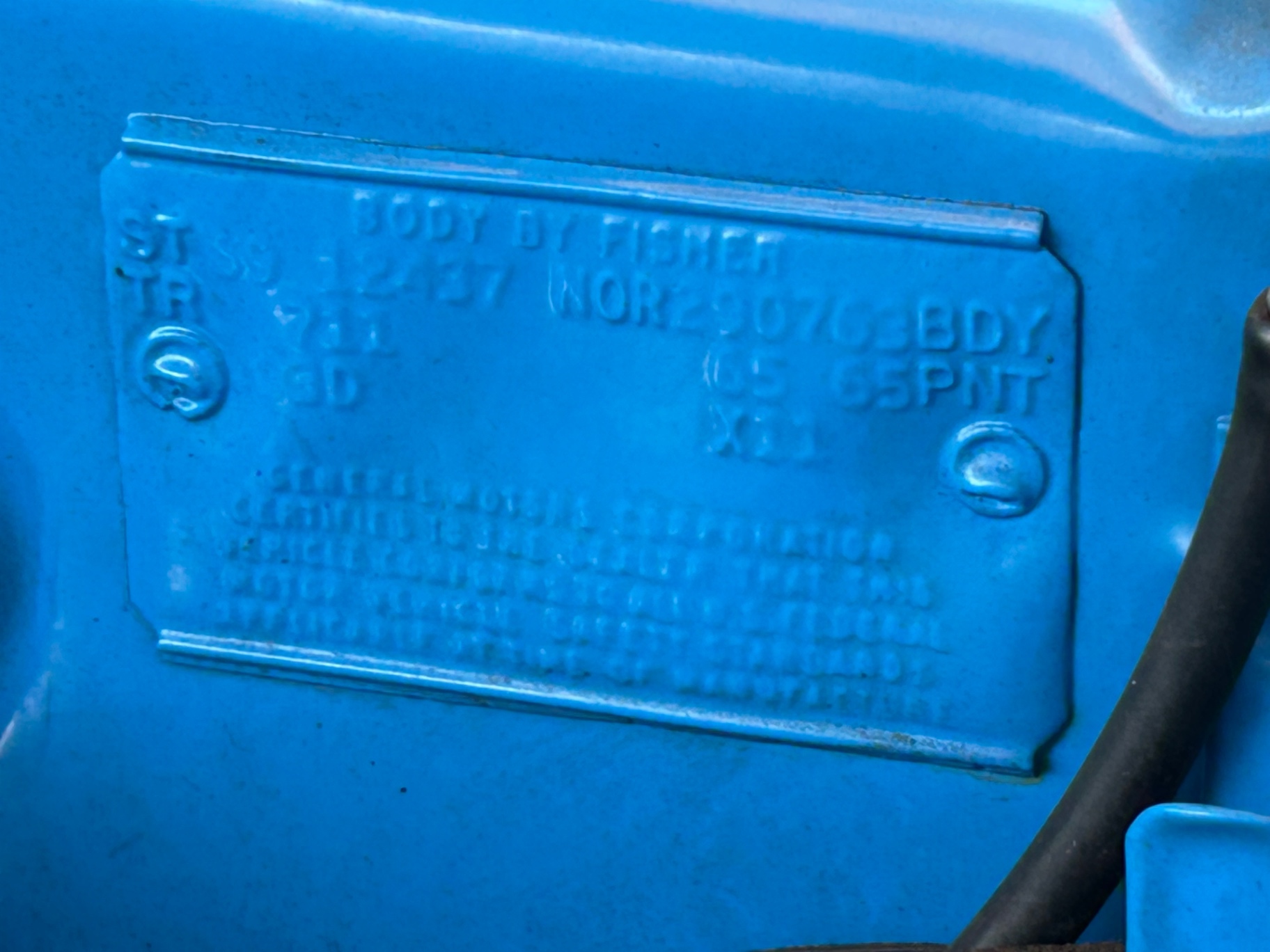
The VIN on this car decodes to a Norwood, Ohio-assembled 1969 Chevrolet Camaro sport coupe, which is consistent with the body's straight, well-fitting panels and the solid underlying structure this build is based on.
Features List
- GM 383 cubic inch stroker V8
- Holley Demon carburetor
- Aluminum intake manifold
- Chrome valve covers
- Open element performance air cleaner
- Aluminum radiator
- Painted and detailed engine compartment
- Automatic transmission
- Moser 12-bolt rear axle
- Power front disc brakes
- Power steering
- Air conditioning
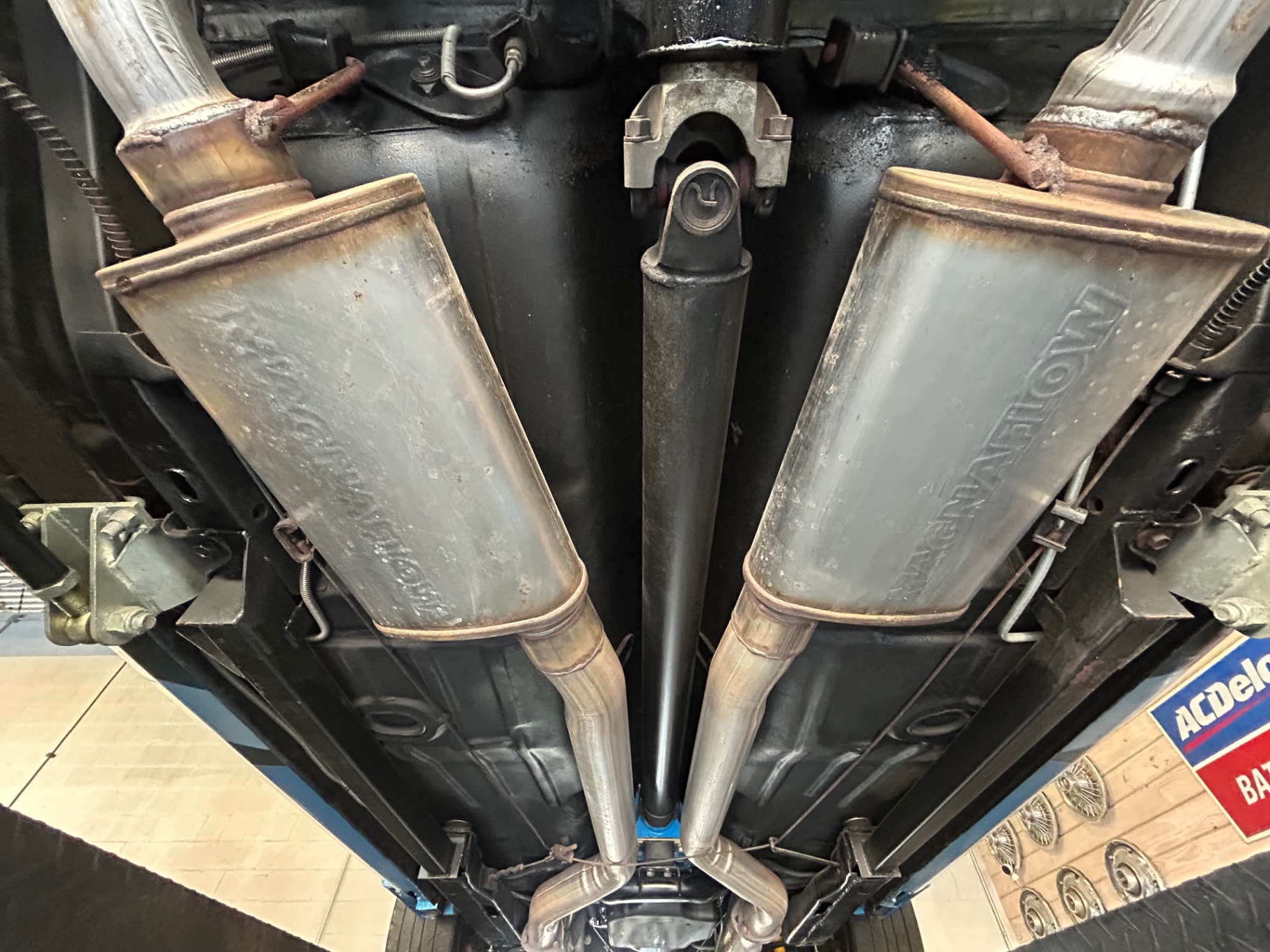
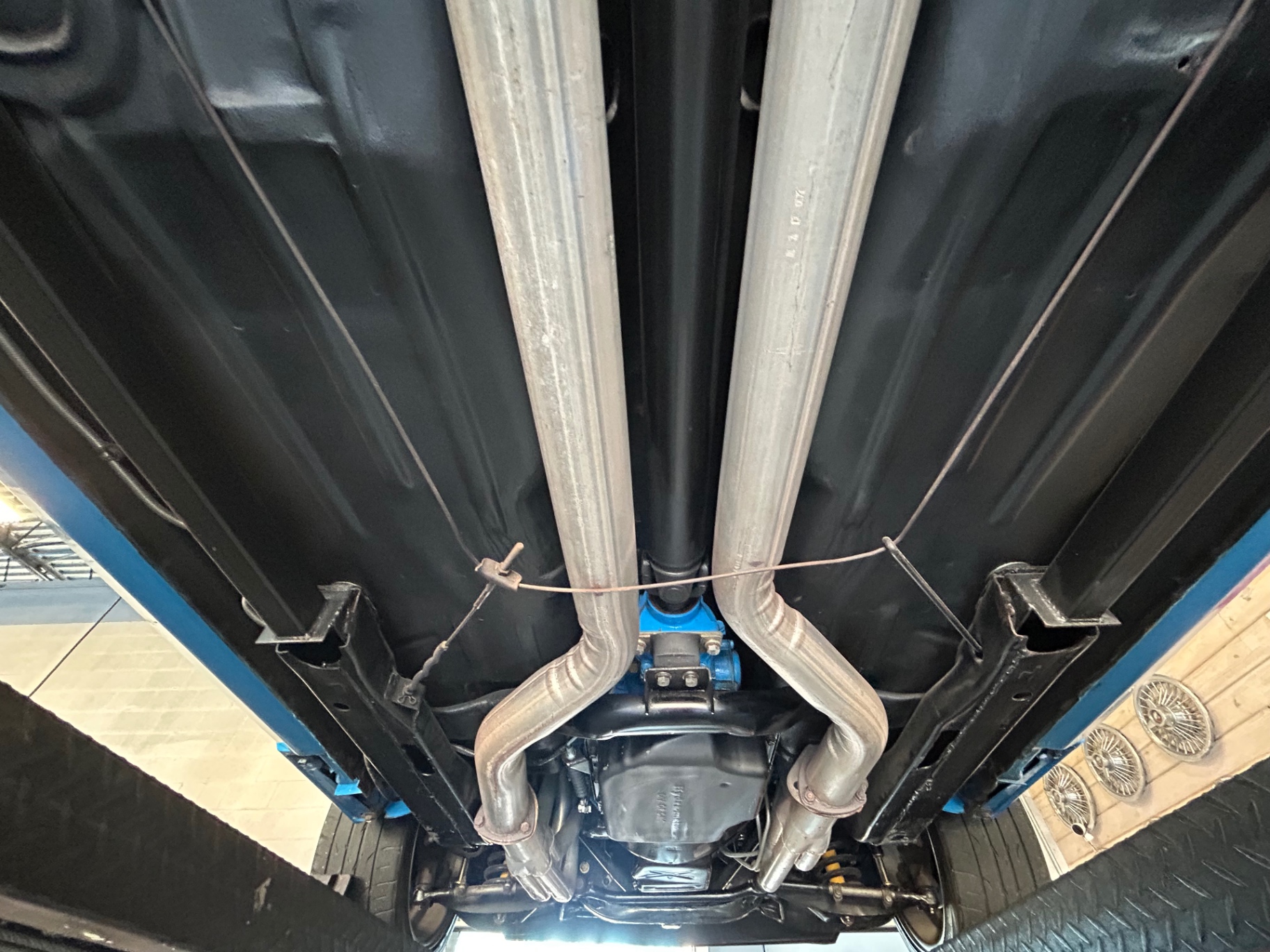
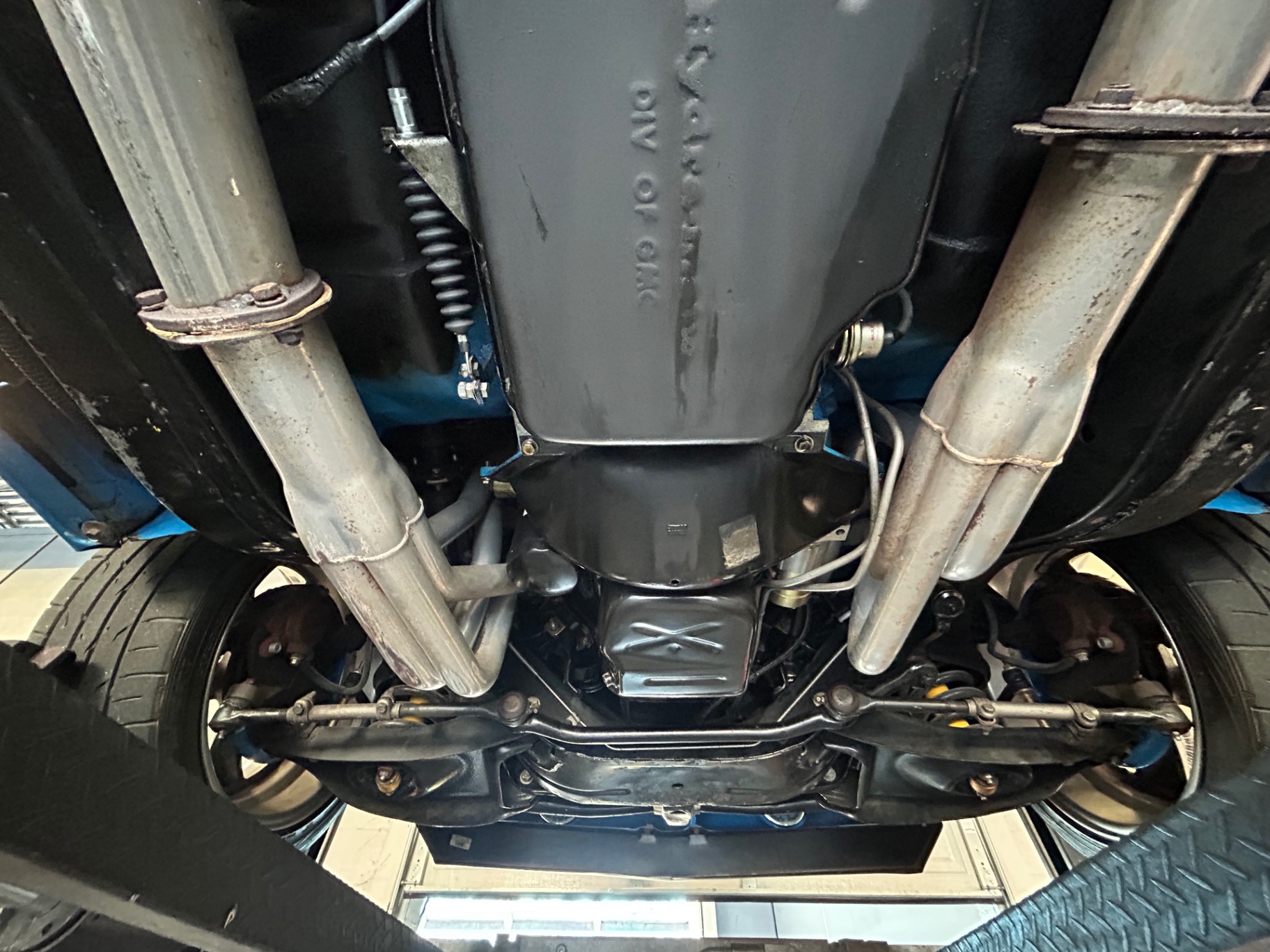
- Dual exhaust system
- Cowl induction hood
- Front and rear spoilers
- Custom bright blue paint with checkered graphics
- Aftermarket 5-spoke chrome wheels
- Black sidewall tires
- High-back black racing seats with headrests
- Matching factory rear seat and door panels
- Black vinyl interior
- Black carpet
- Console with wood grain trim and automatic shifter
- Factory dash with custom white-face performance gauges
- Black Grant GT steering wheel
- Radio
Mechanical
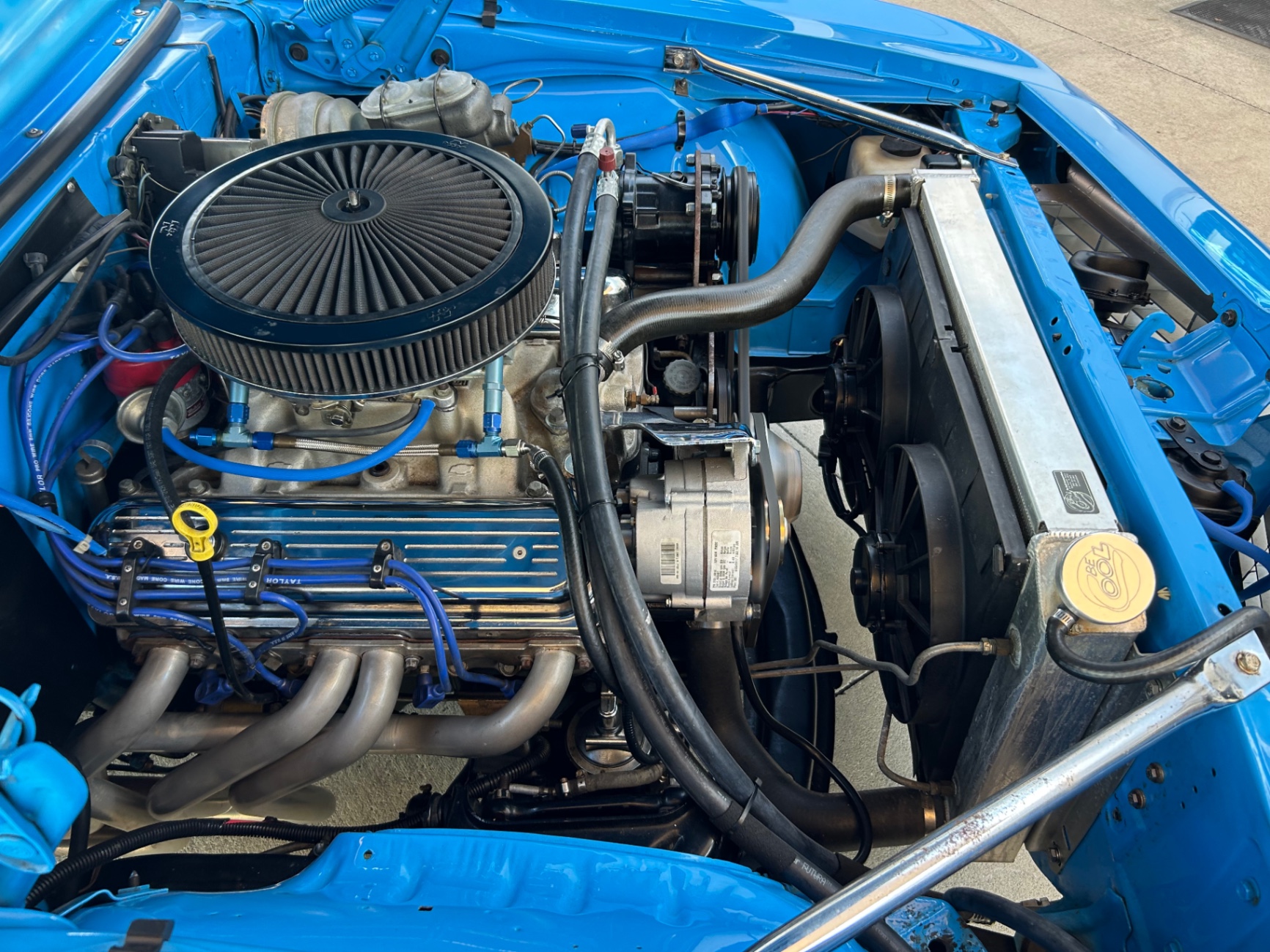
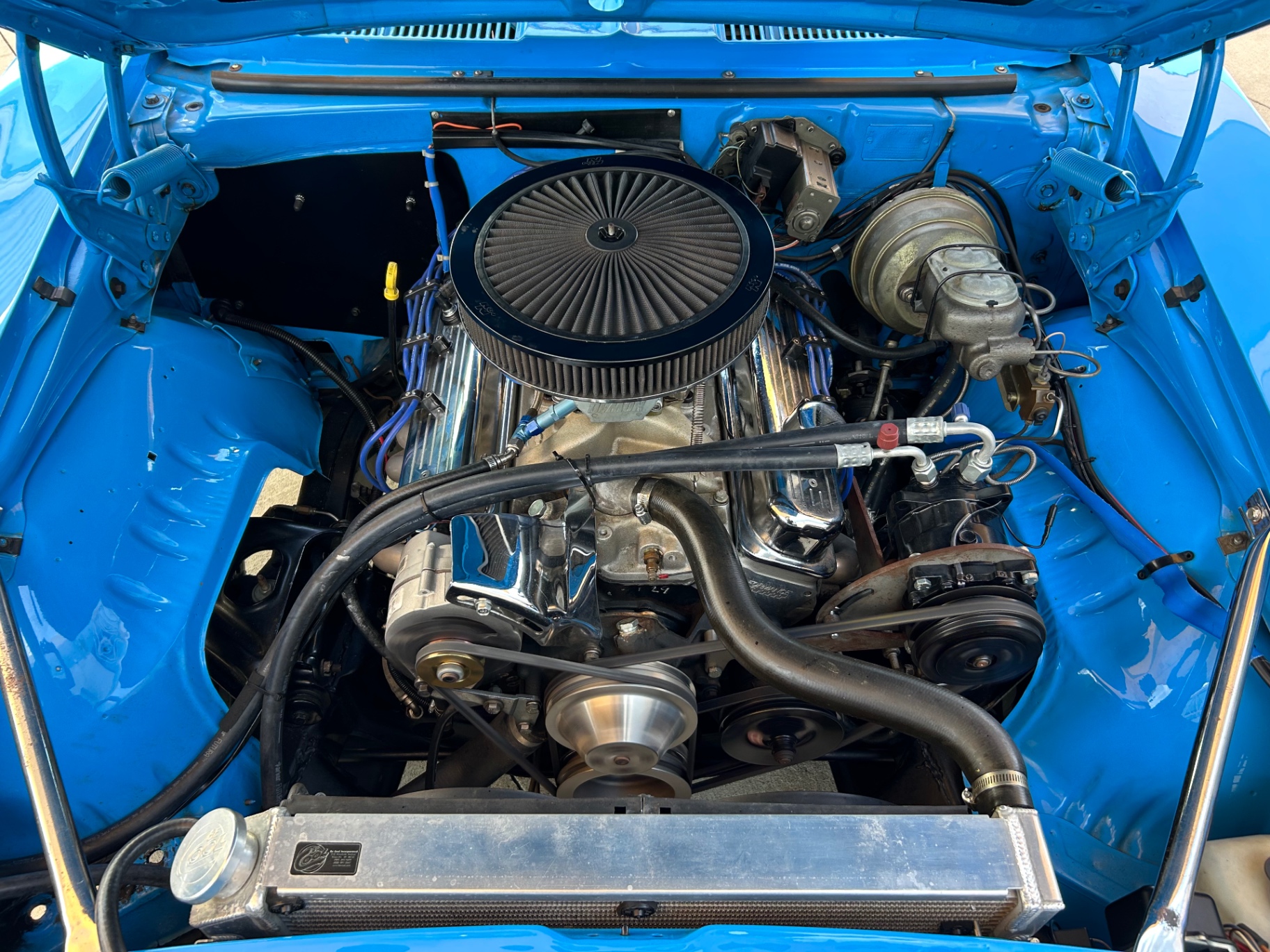
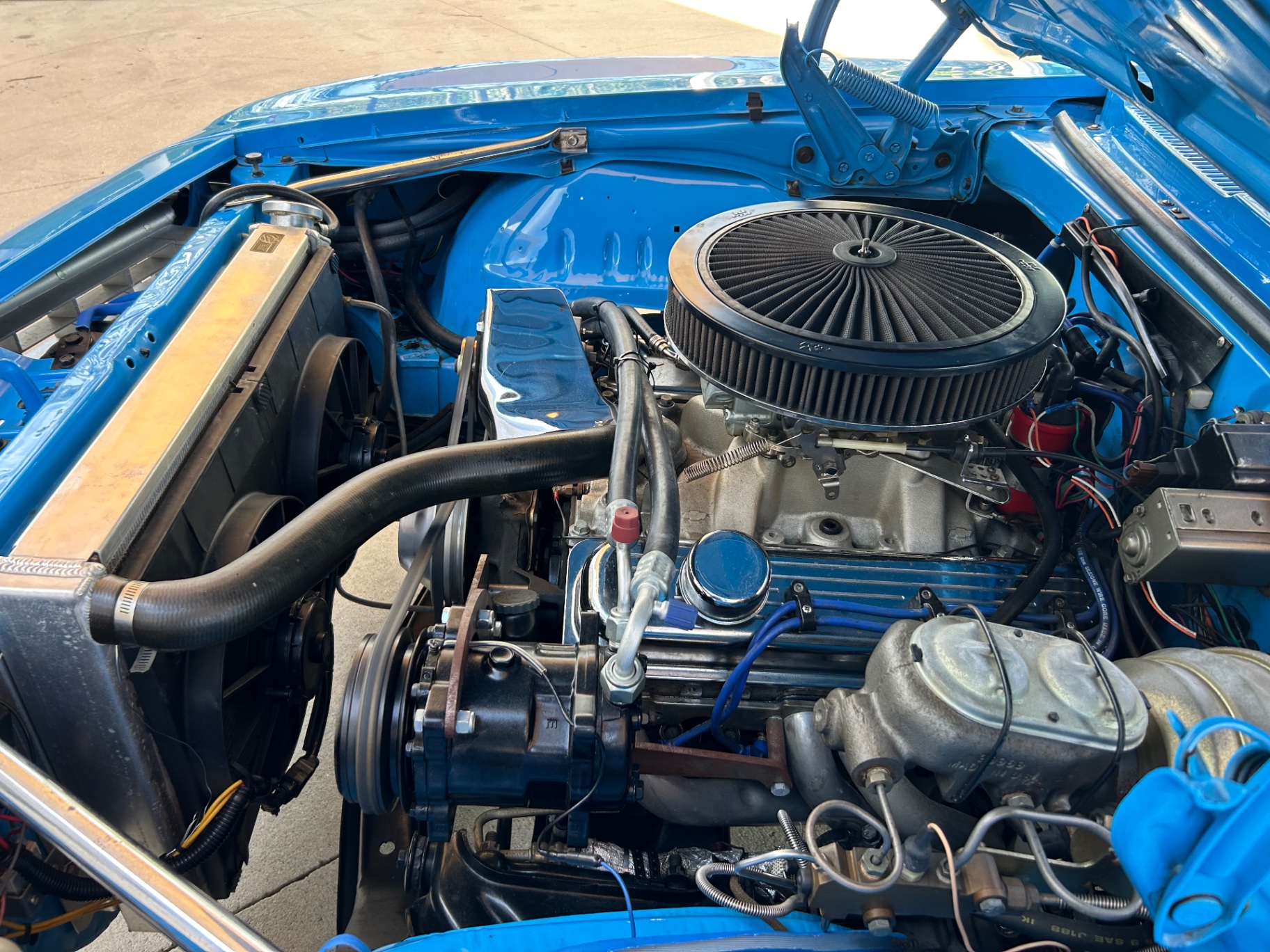
The engine in this 1969 Chevrolet Camaro is a GM 383 stroker, built by combining a small block Chevy block with a longer-stroke crankshaft to displace 383 cubic inches — more than the largest small block Chevrolet ever put in a production Camaro. The 383 stroker is one of the most proven combinations in the custom car world, and for good reason. When properly built, it produces torque across a broad RPM range, which suits street driving far better than a high-revving race engine. This one is topped with a Holley Demon carburetor and an aluminum intake manifold, both of which reduce weight compared to cast iron while improving airflow and throttle response. Chrome valve covers and an open element air cleaner keep the engine bay consistent with the car's pro street presentation, and the entire compartment has been painted and detailed to a show-quality standard.
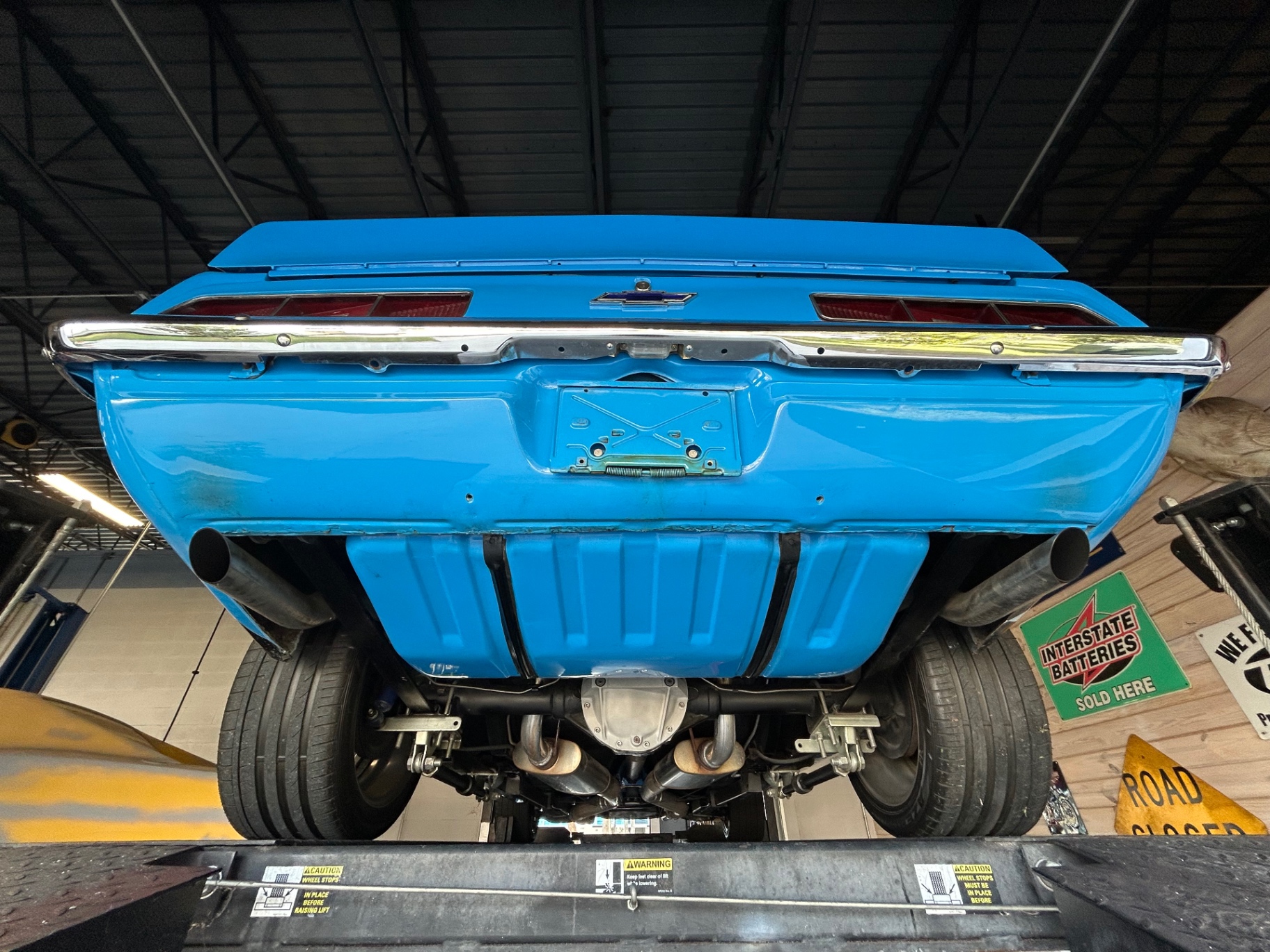
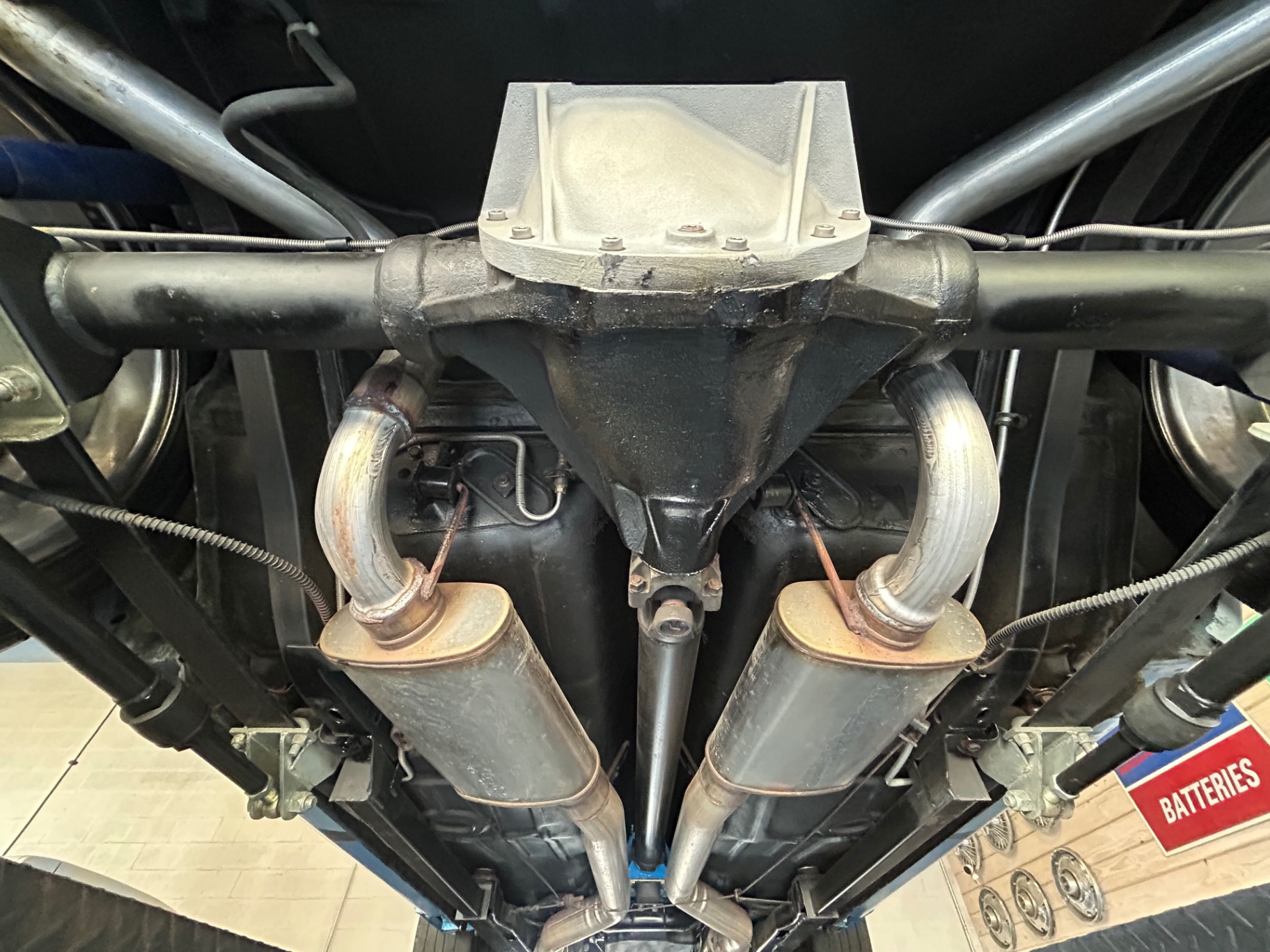
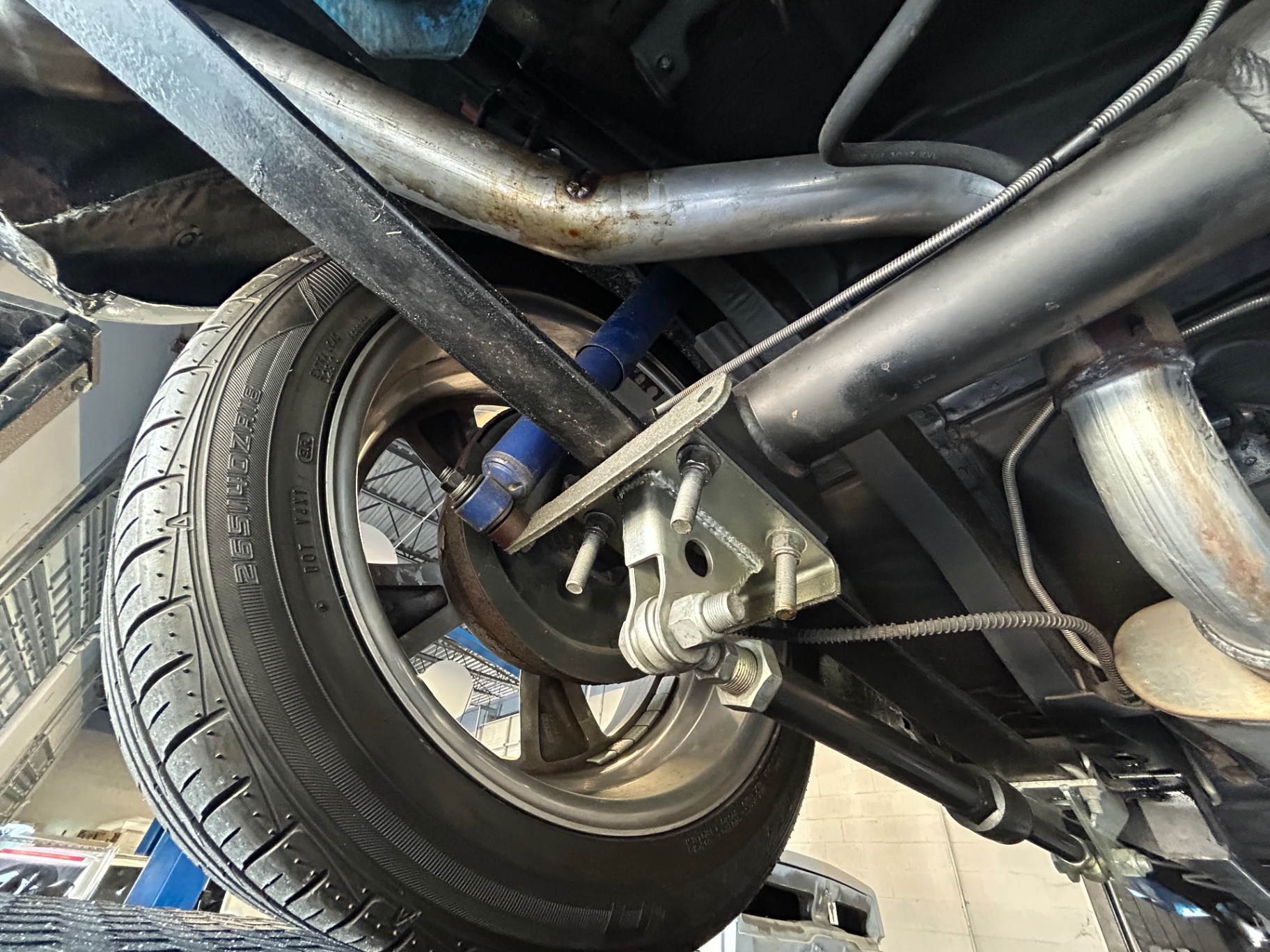
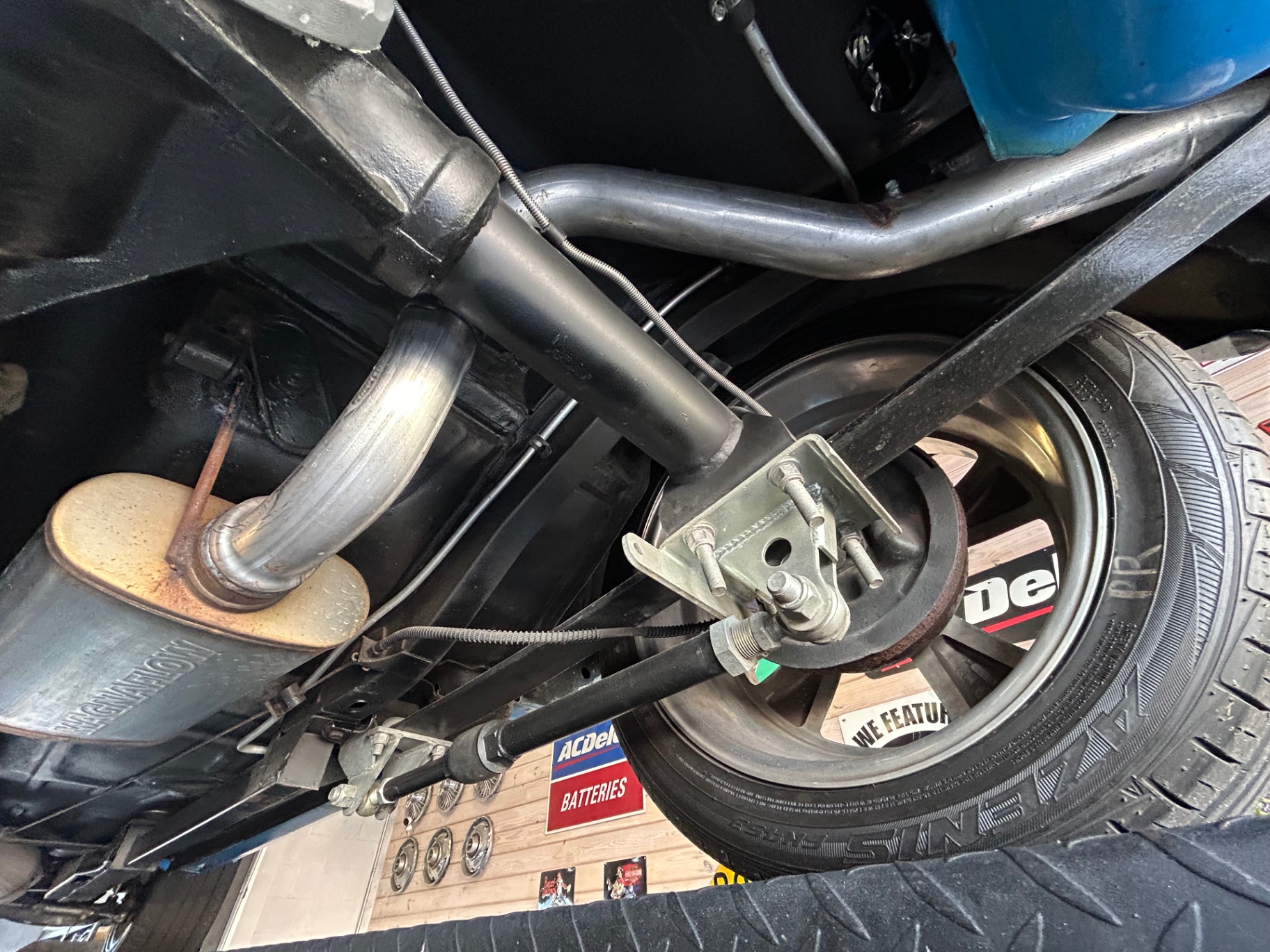
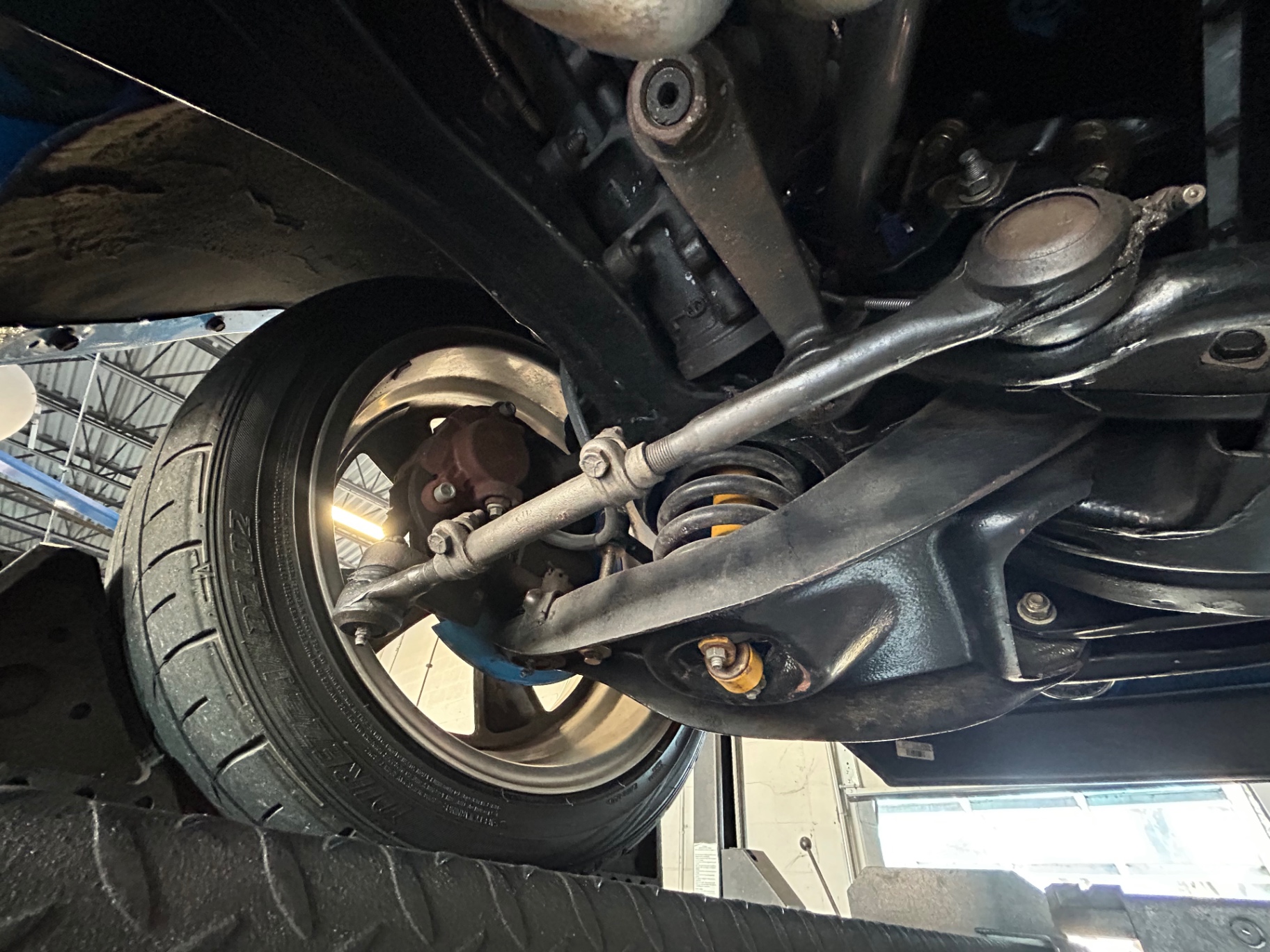
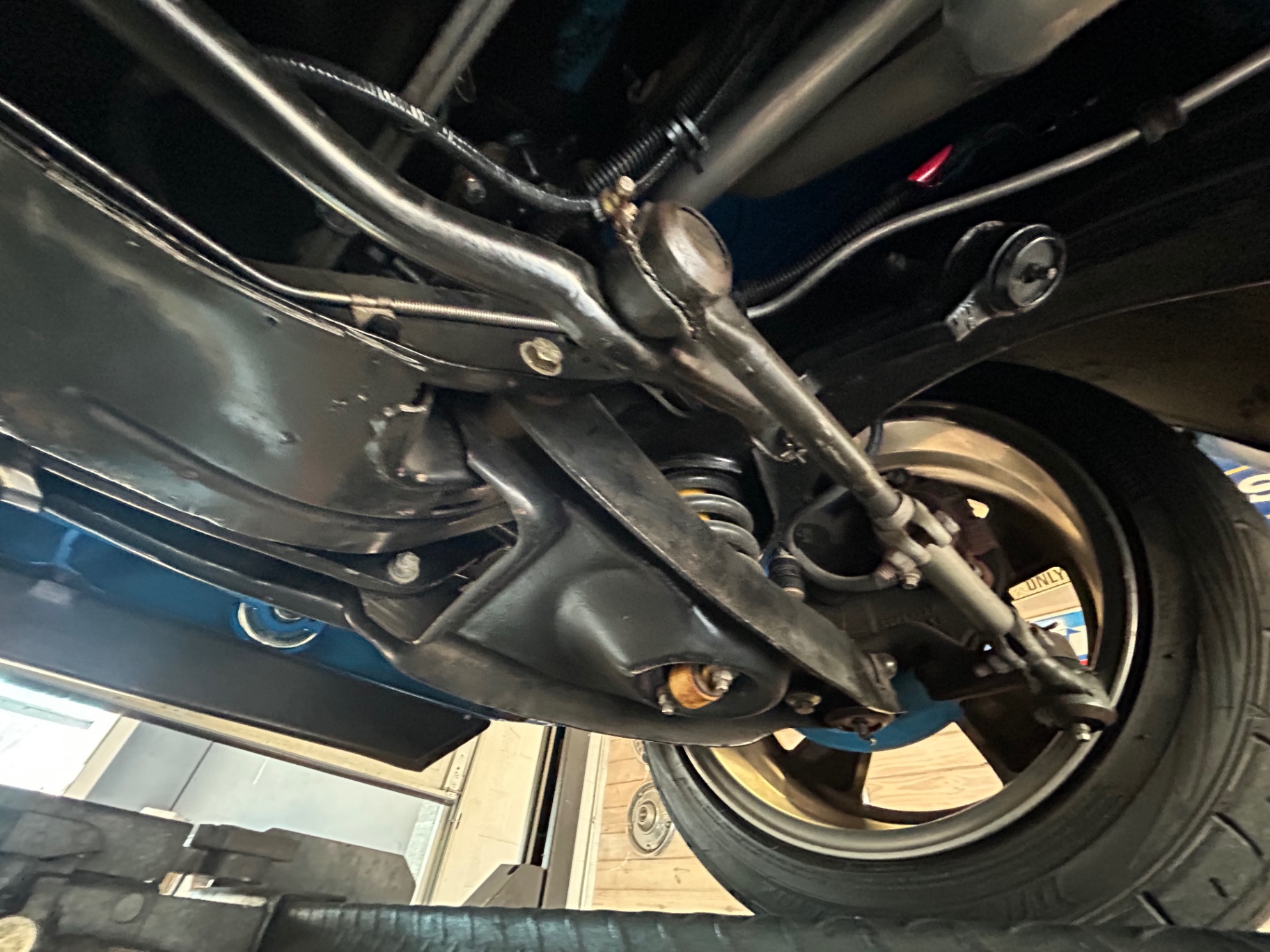
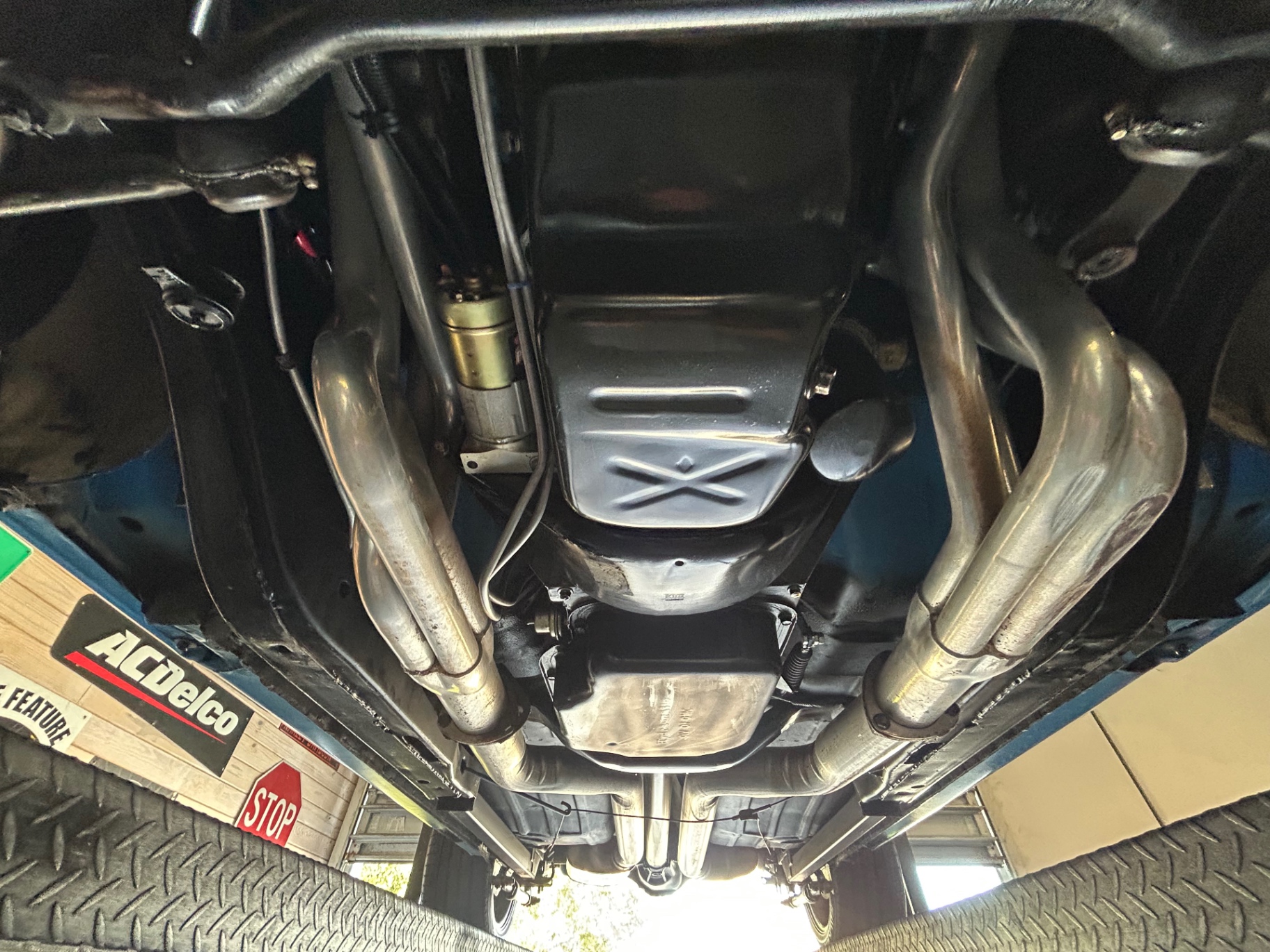
Behind the engine sits an automatic transmission, which pairs well with the torque characteristics of the 383 and makes the car genuinely easy to drive in traffic. The Moser 12-bolt rear axle is a significant upgrade — Moser Engineering is one of the most respected names in aftermarket rear axle assembly, and their 12-bolt units are built to handle substantially more power than a stock Camaro rear would ever see. The factory 12-bolt was already the stronger of the two axle configurations Chevrolet used in first-generation Camaros, so using a Moser-built version of that same housing architecture is the right call for a car with this much torque on tap. Power front disc brakes provide stopping capability appropriate for the engine's output, and power steering keeps the driving experience manageable at parking lot speeds without sacrificing feel on the open road. The aluminum radiator handles cooling duty, and air conditioning means this car is a legitimate all-season driver in the Florida heat rather than a fair-weather show piece.
Interior
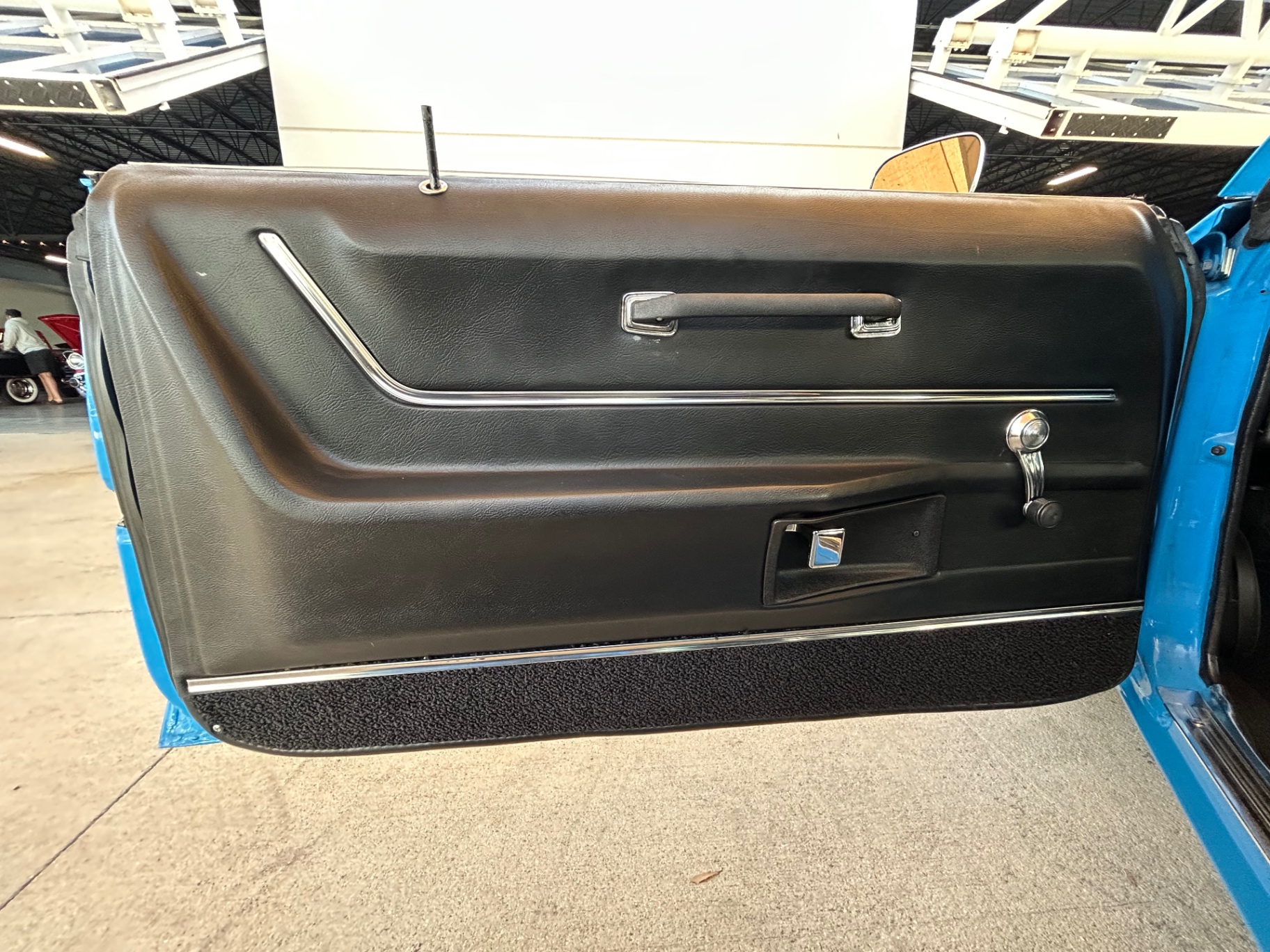
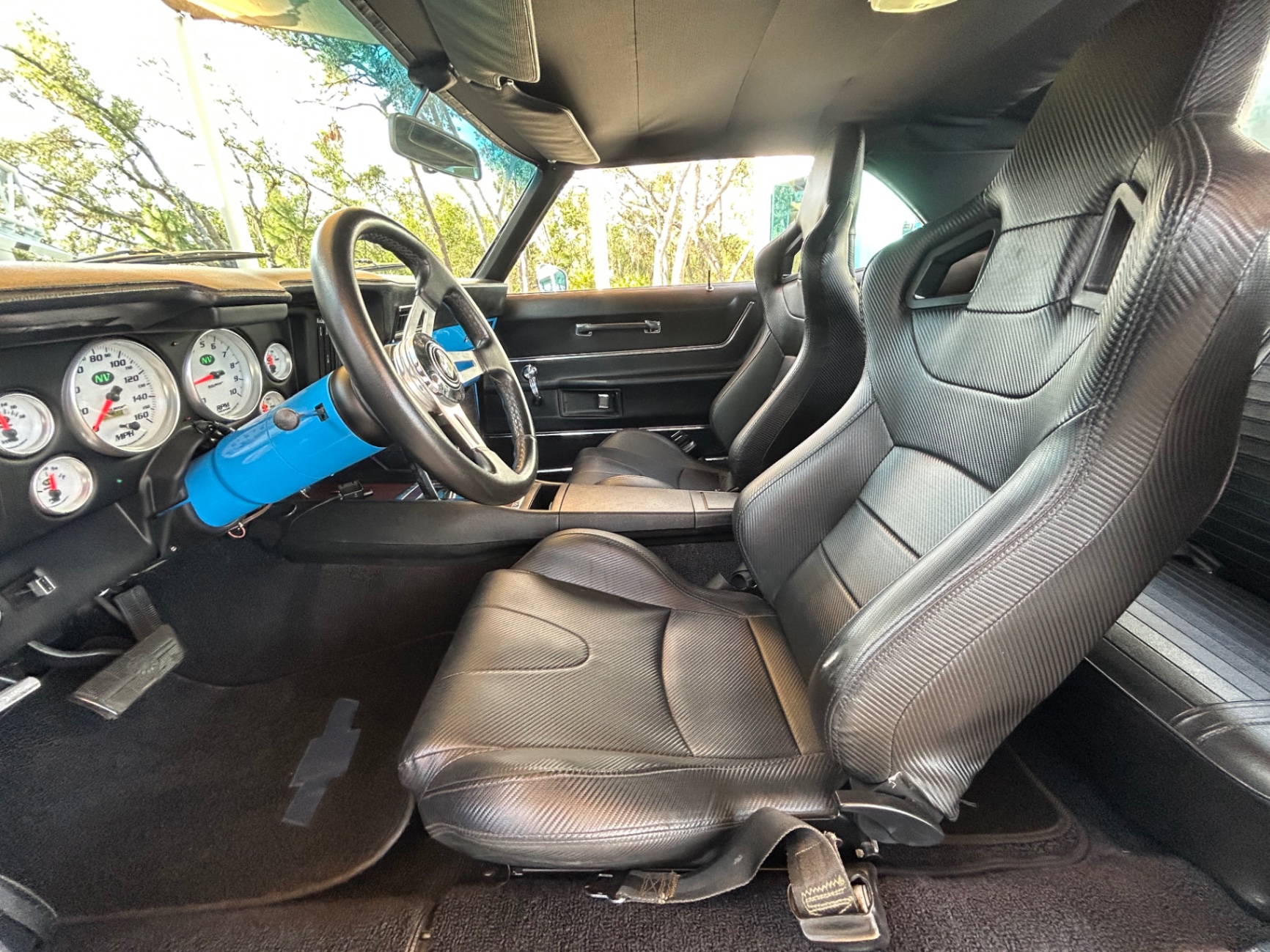
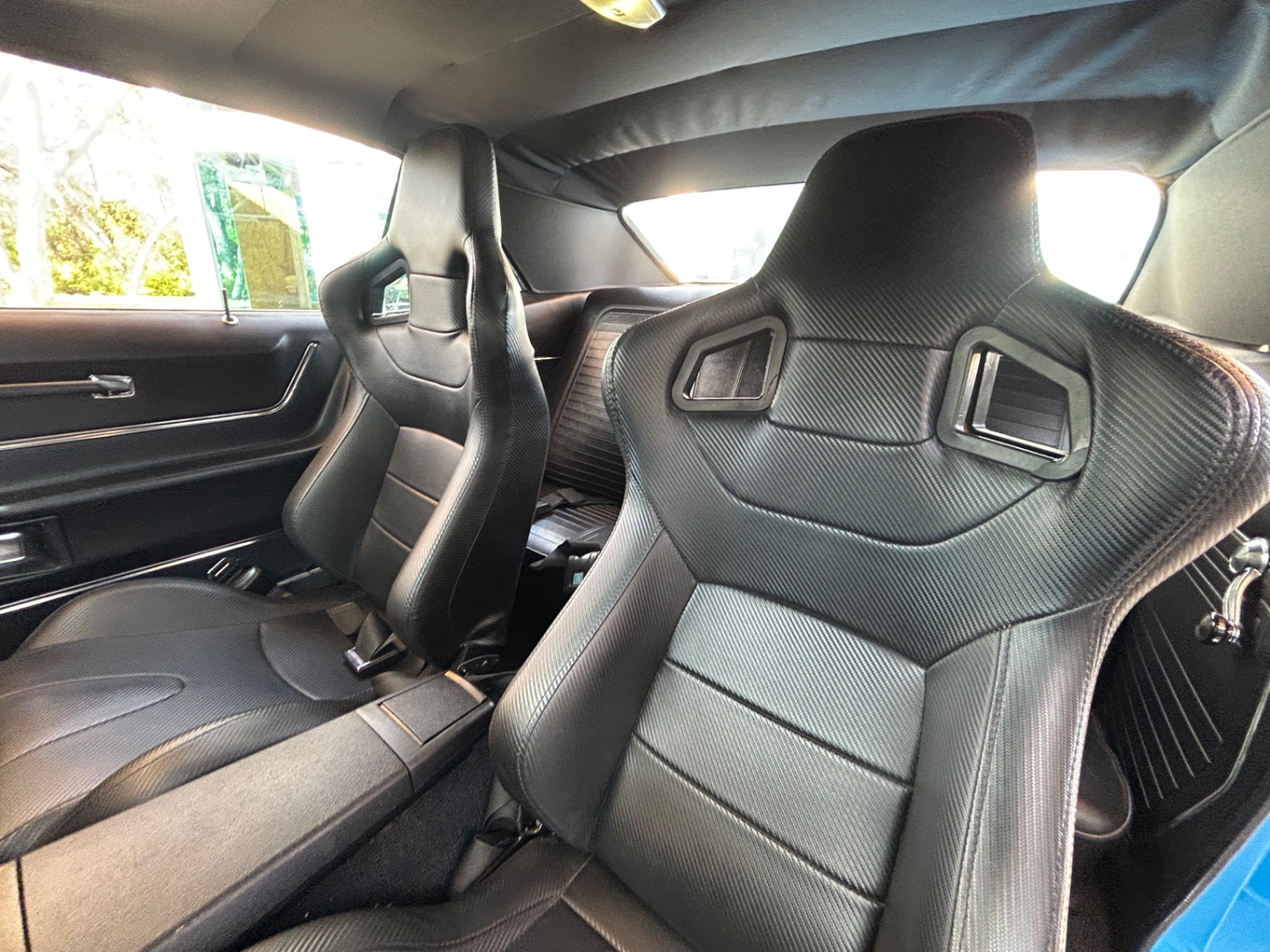
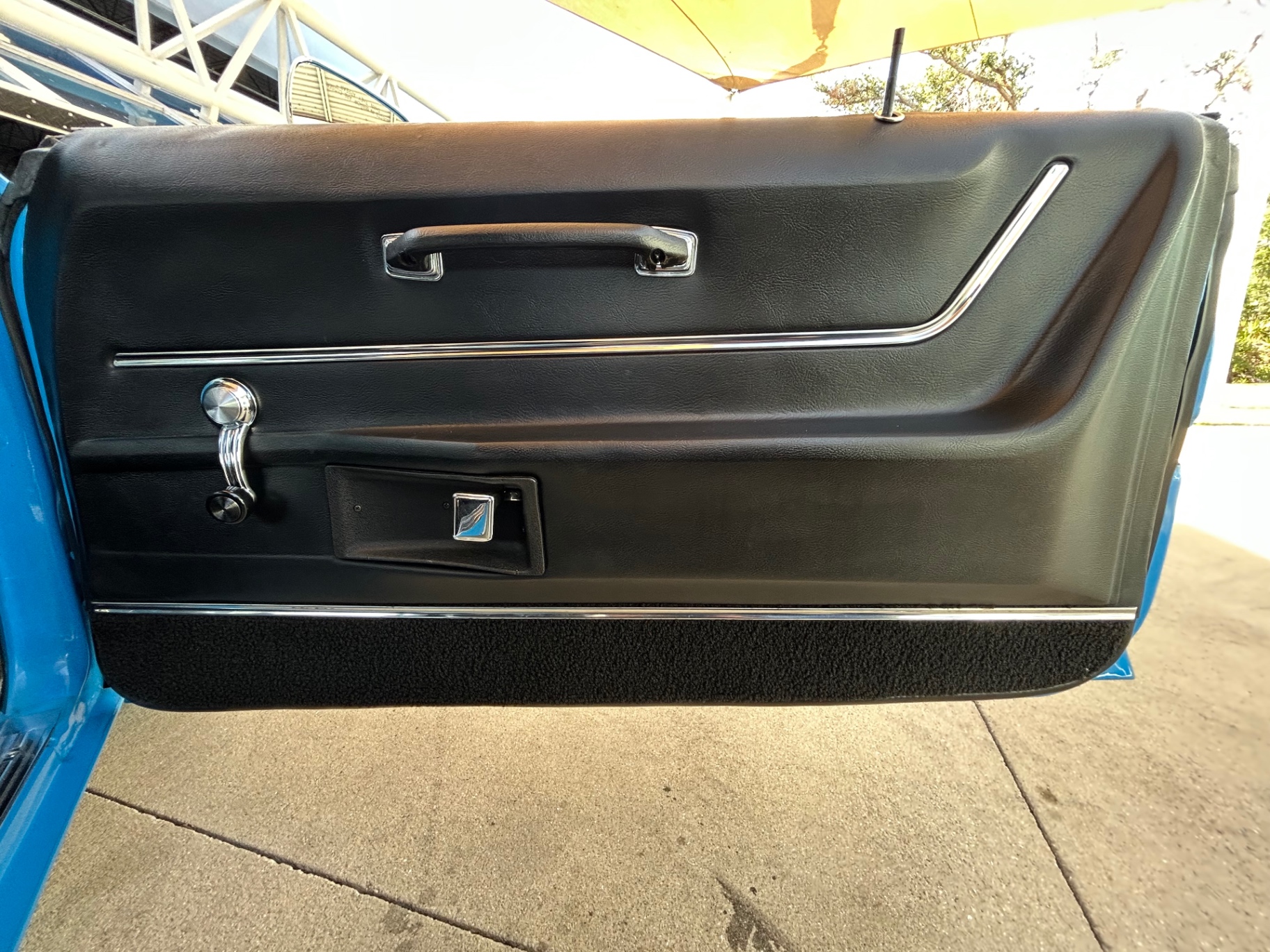
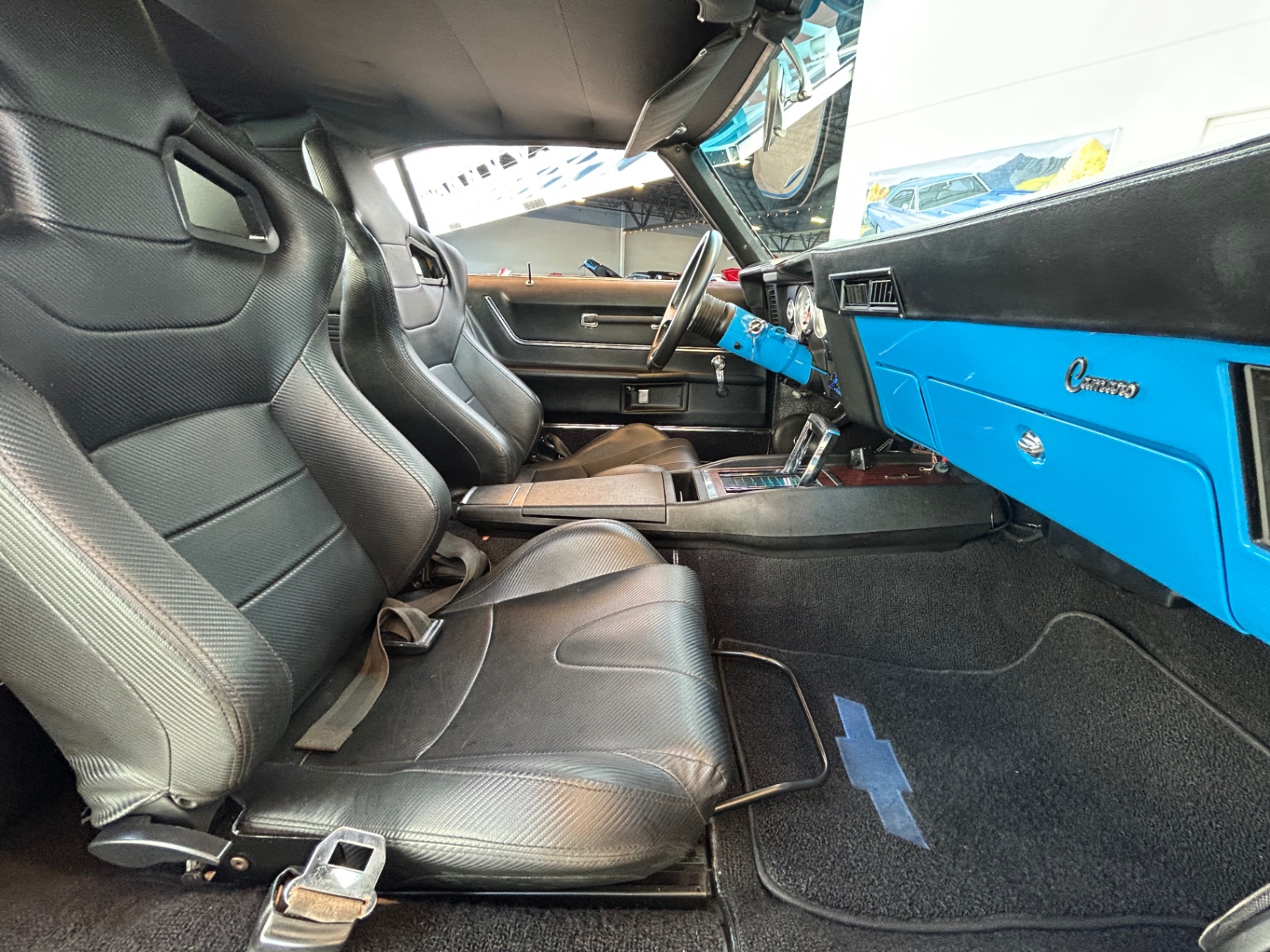
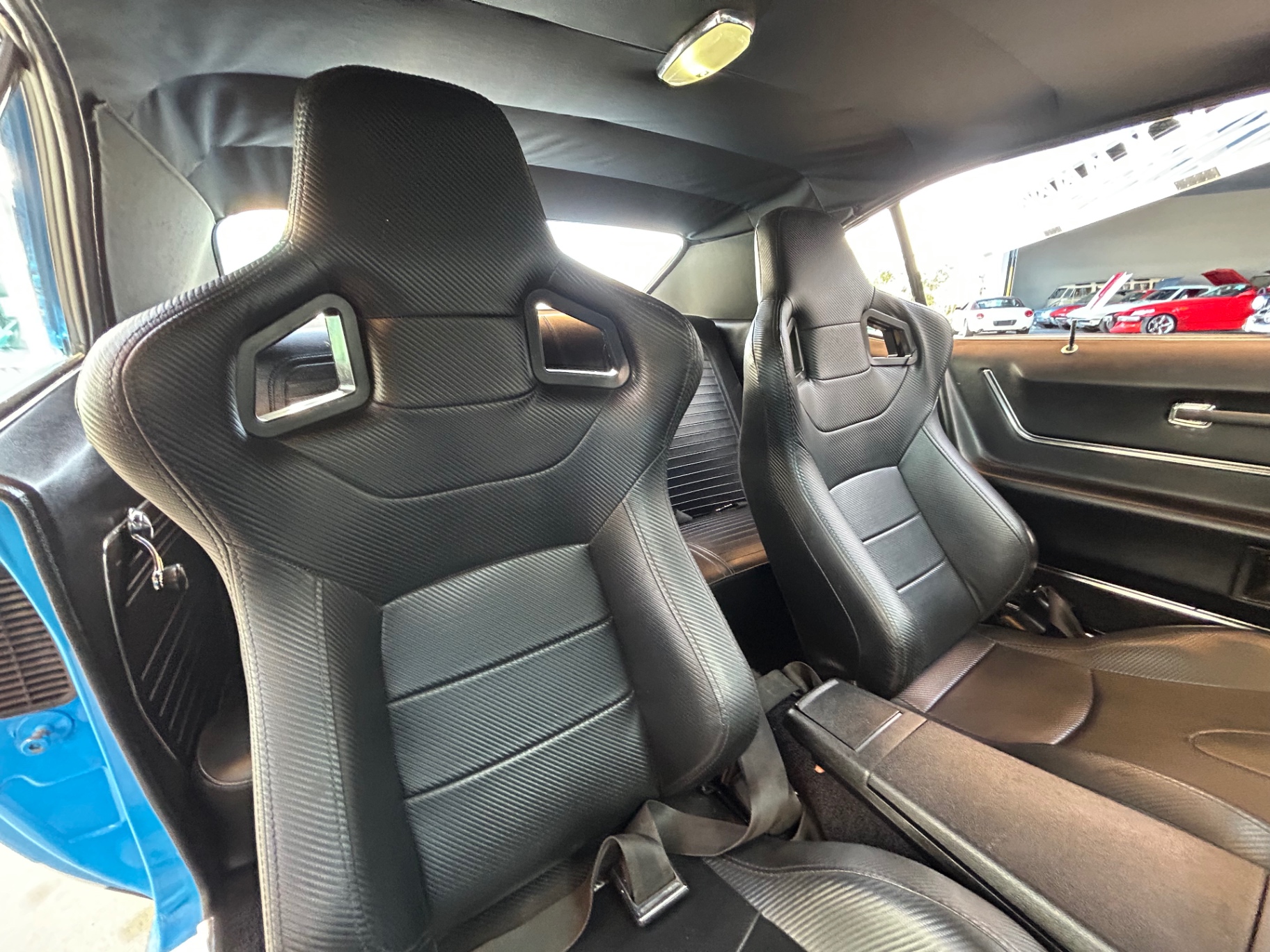
The interior of this 1969 Chevrolet Camaro was built around a black vinyl theme that runs consistently from the seats to the carpet to the door panels. The high-back black racing seats with headrests replace the original buckets with something more supportive under hard driving, while the factory rear seat and door panels remain in place and match the overall color scheme — a detail that matters because mismatched interiors are a common shortcut on customs of this type. The floor is covered in black carpet, and a center console with wood grain trim houses the automatic shifter in the correct location between the buckets.
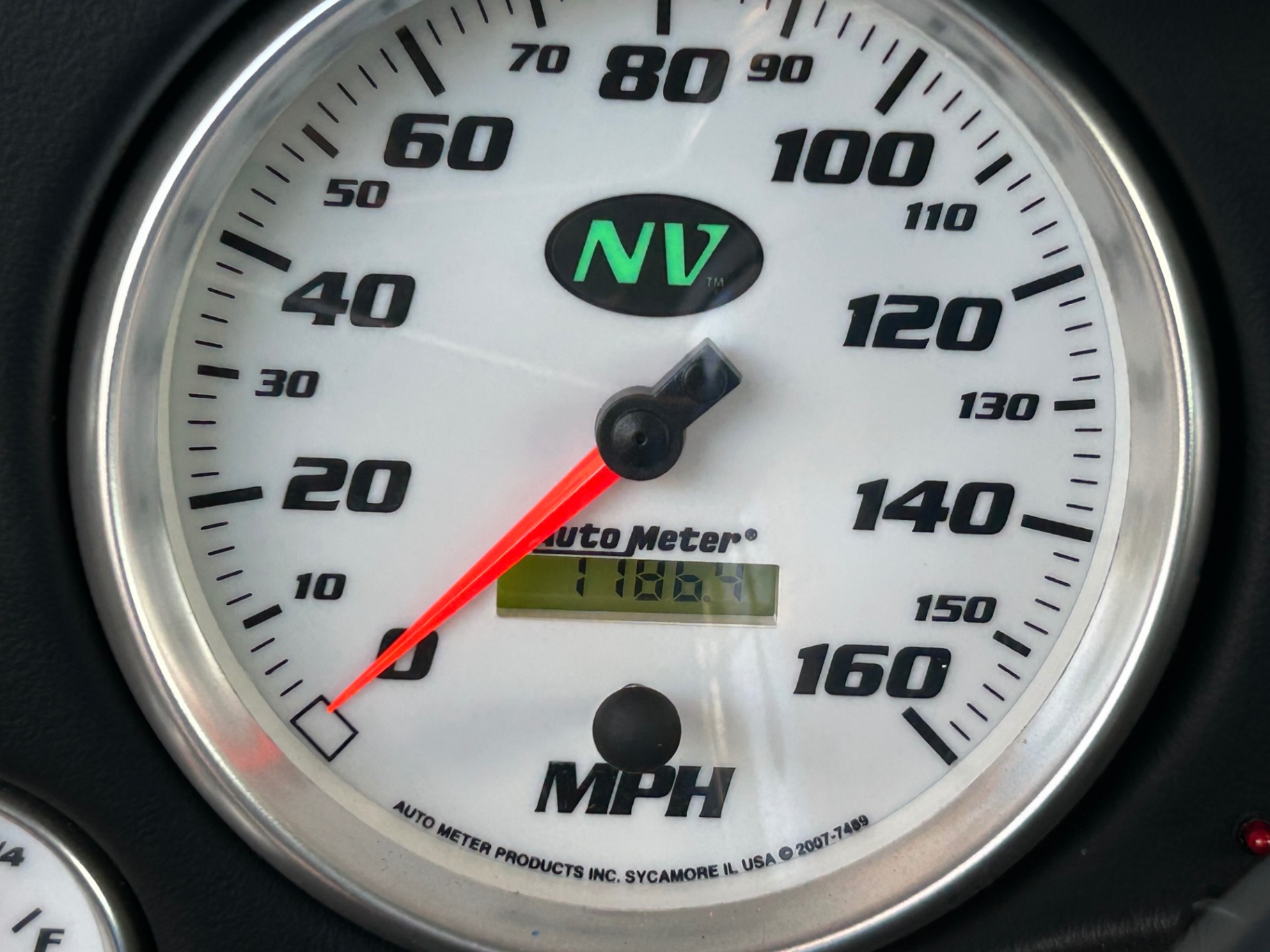
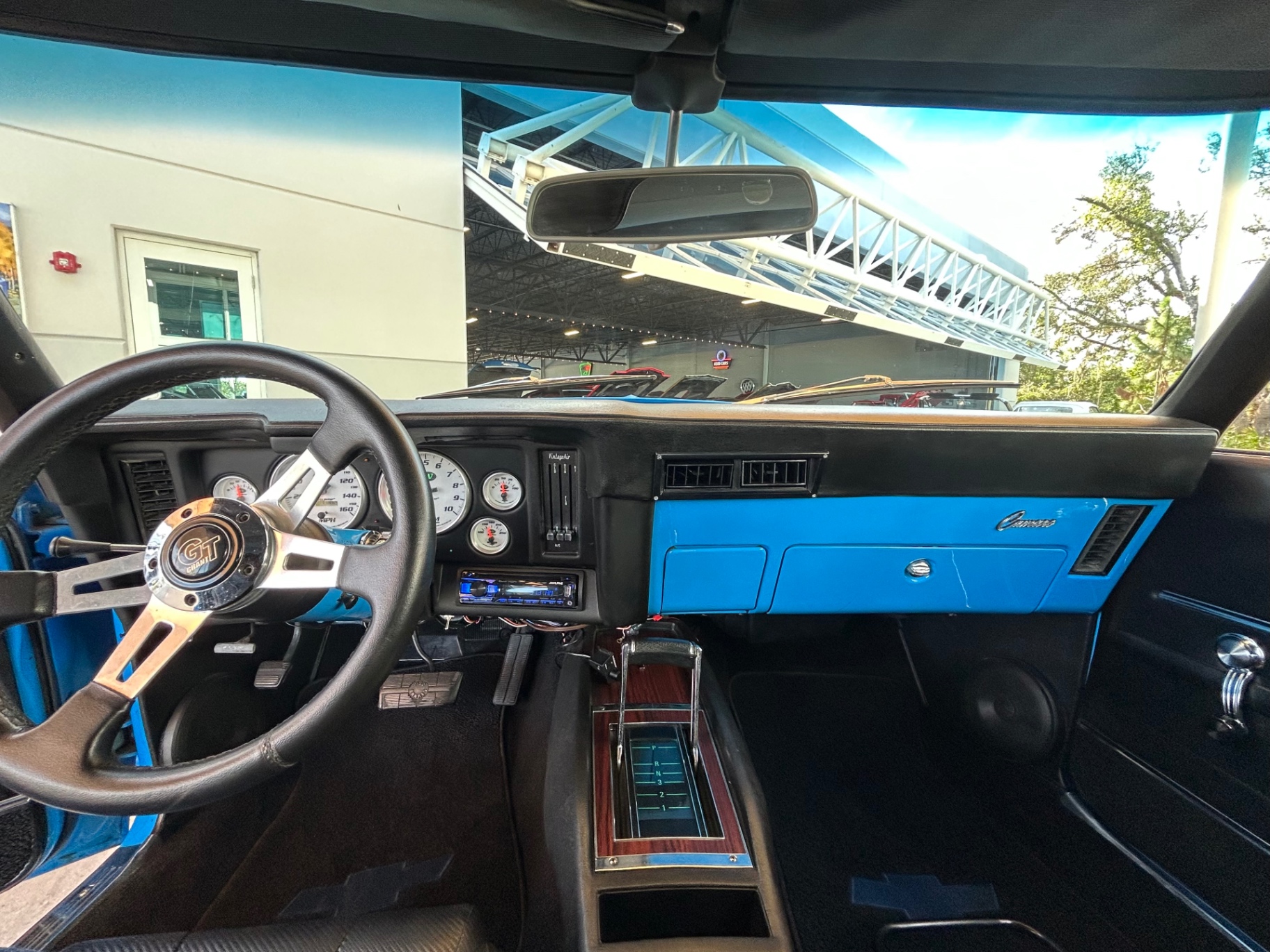
The factory dashboard structure is intact, which preserves the correct 1969 Camaro look, but the gauge faces have been replaced with custom white-face aftermarket performance gauges that are easier to read at a glance than the original factory units. A black Grant GT steering wheel replaces the original, reducing diameter slightly compared to the factory wheel and giving the driver a more direct feel. A radio rounds out the cockpit. The overall effect is an interior that reads as a 1969 Camaro but has been upgraded in the places that affect day-to-day usability and driver engagement.
Exterior
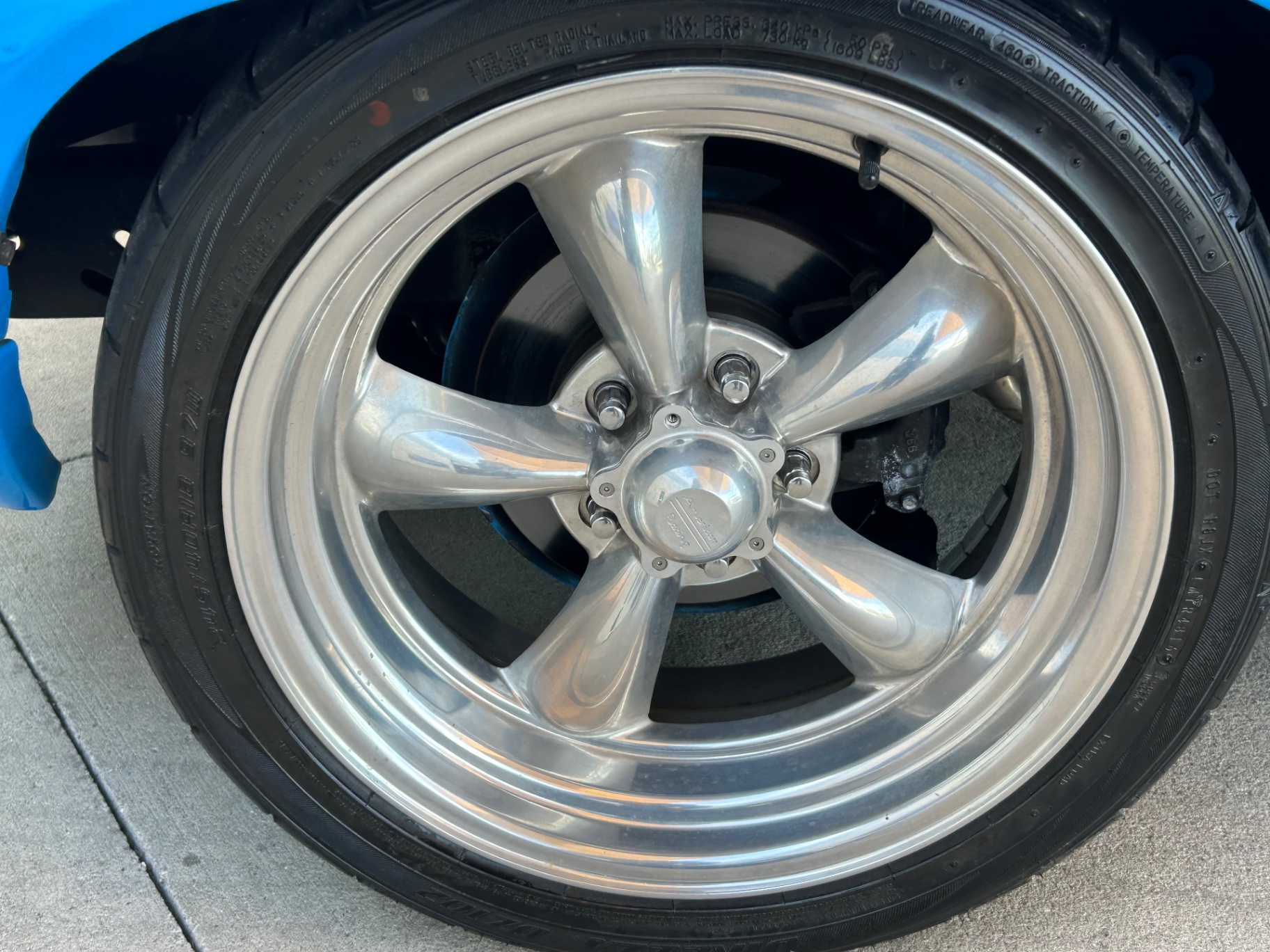
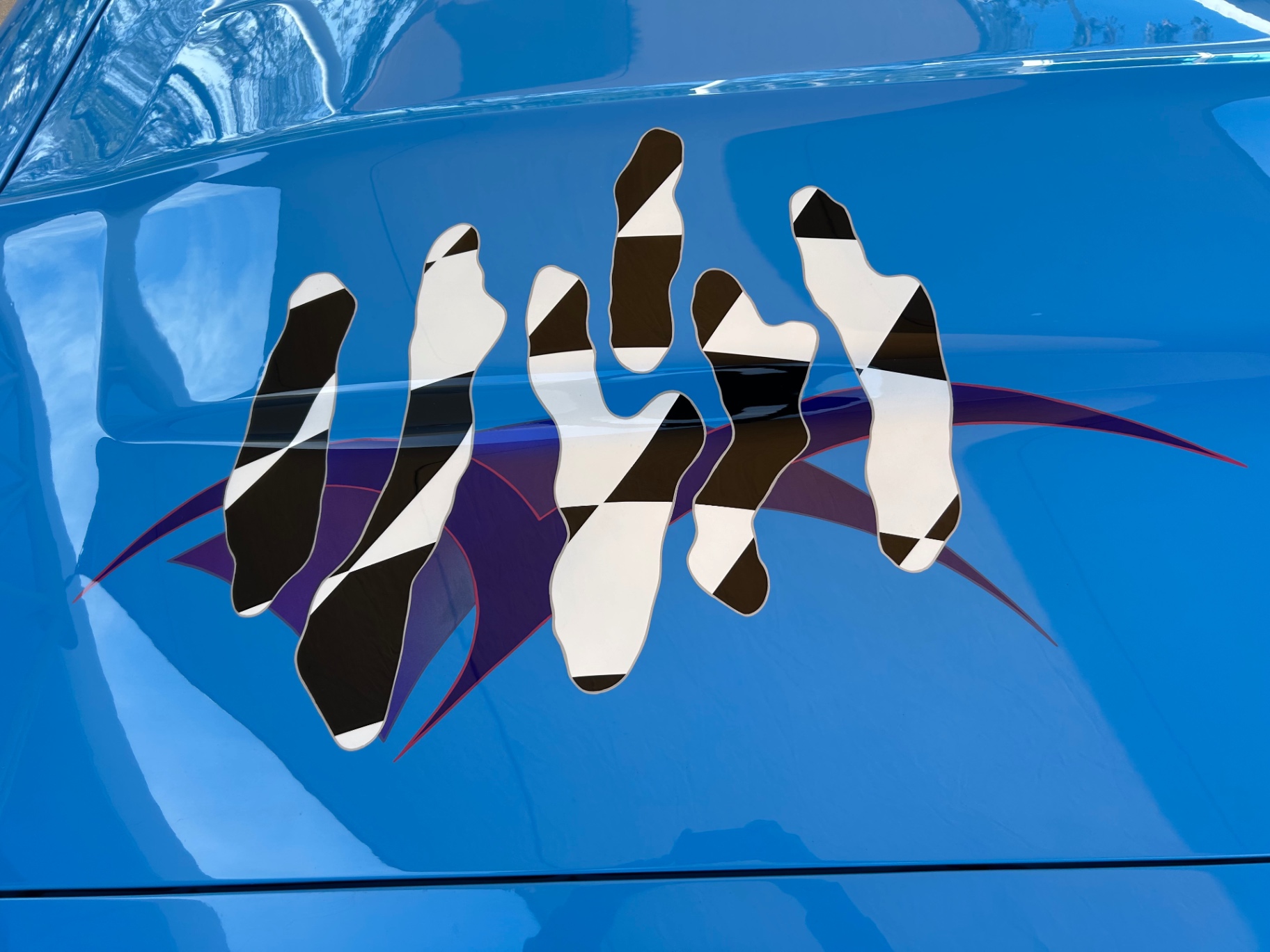
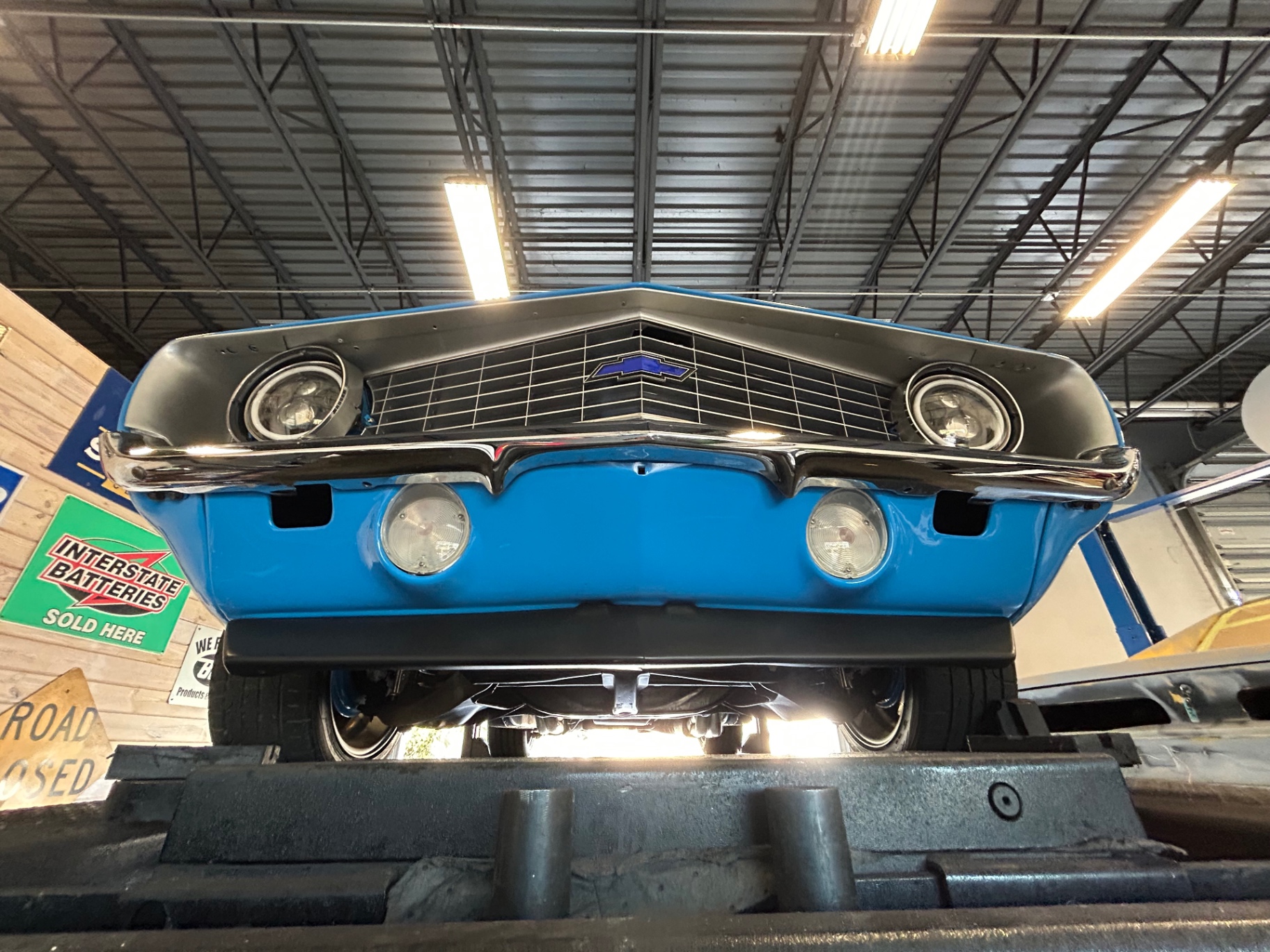
The bodywork on this 1969 Chevrolet Camaro carries a custom bright blue paint job with checkered graphics that run along the lower body. The color is vivid and consistent with the pro street build style — this is not a factory color recreation, it's a custom presentation that suits the car's character. The cowl induction hood is a period-correct performance choice; Chevrolet offered the cowl hood on high-performance 1969 Camaros, and it feeds cooler, denser outside air directly to the carburetor by drawing from the high-pressure area at the base of the windshield. Front and rear spoilers add visual aggression and help establish the car's stance. Aftermarket 5-spoke chrome wheels are fitted at all four corners with black sidewall tires, a combination that keeps the focus on the wheel design without the visual noise of whitewall or raised-letter tires.
Conclusion
The 1969 Chevrolet Camaro is the car this generation of buyers grew up watching at the dragstrip and the drive-in, and this particular example has been built as a serious driver rather than a trailer queen. The combination of a 383 stroker, Moser 12-bolt, power disc brakes, power steering, and air conditioning makes it a complete package — fast, controllable, comfortable enough to drive daily, and finished to a standard that reflects real money and real skill. The body style is the most desirable of the first-generation run, and the pro street build puts this 1969 Camaro in a category that appeals to buyers who want something they can actually use rather than just admire.
To schedule a showing or ask any questions about this 1969 Chevrolet Camaro, call Skyway Classics at 941-254-6608. We are located in Sarasota, Florida and work with buyers nationwide.
Disclaimer
Information found on the website is presented as given to us by the owner of the car, whether on consignment or from the owner we bought it from. Some Photos, materials for videos, descriptions and other information are provided by the consignor/seller and is deemed reliable, but Skyway Classics does not warranty or guarantee this information. Skyway Classics is not responsible for information that may incorrect or a publishing error. The decision to purchase should be based solely on the buyers personal inspection of the vehicle or by a professional inspection service prior to offer or purchase being made.
1969 Chevrolet Camaro Pro Street Custom — 383 Stroker, 12-Bolt Rear, Air Conditioning
Why This Car Is Special
The 1969 Chevrolet Camaro is widely considered the high-water mark of the first-generation F-body platform. Chevrolet sold 243,085 Camaros that model year, making it the best-selling year of the first generation, and the styling that designers Bill Mitchell and Henry Haga signed off on has never really gone out of fashion. The longer nose, wider stance, and more aggressive roofline the 1969 received over the 1967–68 cars gave it a presence the earlier cars simply didn't have. It was also the final year of that original body style — GM stretched the tooling one extra year before the second-generation car arrived — which means 1969 was both the peak and the finale of a design era.
This particular 1969 Chevrolet Camaro is not a preservation car or a numbers-matching restoration. It's a purpose-built pro street custom that was built to be driven hard and look the part doing it. The builder replaced the original drivetrain with a GM 383 cubic inch stroker V8, upgraded the rear axle to a Moser 12-bolt, added power disc brakes, power steering, and air conditioning, and finished the body in a vivid custom blue with checkered graphics. The result is a 1969 Camaro that combines the most desirable body style in the first-generation lineup with a drivetrain that significantly outperforms anything Chevrolet offered at the dealership in 1969.
The VIN on this car decodes to a Norwood, Ohio-assembled 1969 Chevrolet Camaro sport coupe, which is consistent with the body's straight, well-fitting panels and the solid underlying structure this build is based on.
Features List
- GM 383 cubic inch stroker V8
- Holley Demon carburetor
- Aluminum intake manifold
- Chrome valve covers
- Open element performance air cleaner
- Aluminum radiator
- Painted and detailed engine compartment
- Automatic transmission
- Moser 12-bolt rear axle
- Power front disc brakes
- Power steering
- Air conditioning
- Dual exhaust system
- Cowl induction hood
- Front and rear spoilers
- Custom bright blue paint with checkered graphics
- Aftermarket 5-spoke chrome wheels
- Black sidewall tires
- High-back black racing seats with headrests
- Matching factory rear seat and door panels
- Black vinyl interior
- Black carpet
- Console with wood grain trim and automatic shifter
- Factory dash with custom white-face performance gauges
- Black Grant GT steering wheel
- Radio
Mechanical
The engine in this 1969 Chevrolet Camaro is a GM 383 stroker, built by combining a small block Chevy block with a longer-stroke crankshaft to displace 383 cubic inches — more than the largest small block Chevrolet ever put in a production Camaro. The 383 stroker is one of the most proven combinations in the custom car world, and for good reason. When properly built, it produces torque across a broad RPM range, which suits street driving far better than a high-revving race engine. This one is topped with a Holley Demon carburetor and an aluminum intake manifold, both of which reduce weight compared to cast iron while improving airflow and throttle response. Chrome valve covers and an open element air cleaner keep the engine bay consistent with the car's pro street presentation, and the entire compartment has been painted and detailed to a show-quality standard.
Behind the engine sits an automatic transmission, which pairs well with the torque characteristics of the 383 and makes the car genuinely easy to drive in traffic. The Moser 12-bolt rear axle is a significant upgrade — Moser Engineering is one of the most respected names in aftermarket rear axle assembly, and their 12-bolt units are built to handle substantially more power than a stock Camaro rear would ever see. The factory 12-bolt was already the stronger of the two axle configurations Chevrolet used in first-generation Camaros, so using a Moser-built version of that same housing architecture is the right call for a car with this much torque on tap. Power front disc brakes provide stopping capability appropriate for the engine's output, and power steering keeps the driving experience manageable at parking lot speeds without sacrificing feel on the open road. The aluminum radiator handles cooling duty, and air conditioning means this car is a legitimate all-season driver in the Florida heat rather than a fair-weather show piece.
Interior
The interior of this 1969 Chevrolet Camaro was built around a black vinyl theme that runs consistently from the seats to the carpet to the door panels. The high-back black racing seats with headrests replace the original buckets with something more supportive under hard driving, while the factory rear seat and door panels remain in place and match the overall color scheme — a detail that matters because mismatched interiors are a common shortcut on customs of this type. The floor is covered in black carpet, and a center console with wood grain trim houses the automatic shifter in the correct location between the buckets.
The factory dashboard structure is intact, which preserves the correct 1969 Camaro look, but the gauge faces have been replaced with custom white-face aftermarket performance gauges that are easier to read at a glance than the original factory units. A black Grant GT steering wheel replaces the original, reducing diameter slightly compared to the factory wheel and giving the driver a more direct feel. A radio rounds out the cockpit. The overall effect is an interior that reads as a 1969 Camaro but has been upgraded in the places that affect day-to-day usability and driver engagement.
Exterior
The bodywork on this 1969 Chevrolet Camaro carries a custom bright blue paint job with checkered graphics that run along the lower body. The color is vivid and consistent with the pro street build style — this is not a factory color recreation, it's a custom presentation that suits the car's character. The cowl induction hood is a period-correct performance choice; Chevrolet offered the cowl hood on high-performance 1969 Camaros, and it feeds cooler, denser outside air directly to the carburetor by drawing from the high-pressure area at the base of the windshield. Front and rear spoilers add visual aggression and help establish the car's stance. Aftermarket 5-spoke chrome wheels are fitted at all four corners with black sidewall tires, a combination that keeps the focus on the wheel design without the visual noise of whitewall or raised-letter tires.
Conclusion
The 1969 Chevrolet Camaro is the car this generation of buyers grew up watching at the dragstrip and the drive-in, and this particular example has been built as a serious driver rather than a trailer queen. The combination of a 383 stroker, Moser 12-bolt, power disc brakes, power steering, and air conditioning makes it a complete package — fast, controllable, comfortable enough to drive daily, and finished to a standard that reflects real money and real skill. The body style is the most desirable of the first-generation run, and the pro street build puts this 1969 Camaro in a category that appeals to buyers who want something they can actually use rather than just admire.
To schedule a showing or ask any questions about this 1969 Chevrolet Camaro, call Skyway Classics at 941-254-6608. We are located in Sarasota, Florida and work with buyers nationwide.
Disclaimer
Information found on the website is presented as given to us by the owner of the car, whether on consignment or from the owner we bought it from. Some Photos, materials for videos, descriptions and other information are provided by the consignor/seller and is deemed reliable, but Skyway Classics does not warranty or guarantee this information. Skyway Classics is not responsible for information that may incorrect or a publishing error. The decision to purchase should be based solely on the buyers personal inspection of the vehicle or by a professional inspection service prior to offer or purchase being made.
1969 Chevrolet
Camaro Base
Why Choose Skyway Classics?
Explore our curated inventory of classic and collector cars—thoughtfully selected, ready to drive, and supported by experts who make ownership simple.
Expert Curation
Every vehicle is hand-selected by our experts for quality, authenticity, and investment potential.
Fast Transactions
Streamlined buying and selling process with quick financing and immediate delivery options.
Only National Dealer With Classic Service & Repair
We’re the only national dealership that services and repairs the classics we sell—before and after the sale.
Nationwide Network
Access to our extensive network of collectors, restorers, and classic car enthusiasts nationwide.
Concierge Ownership Support
From financing and insurance to paperwork, shipping, and titling—we handle the details so you can enjoy the drive.
Passion-Driven Service
We're classic car enthusiasts first, providing personalized service with genuine passion for the hobby.