
1955 Chevrolet
Bel Air Base
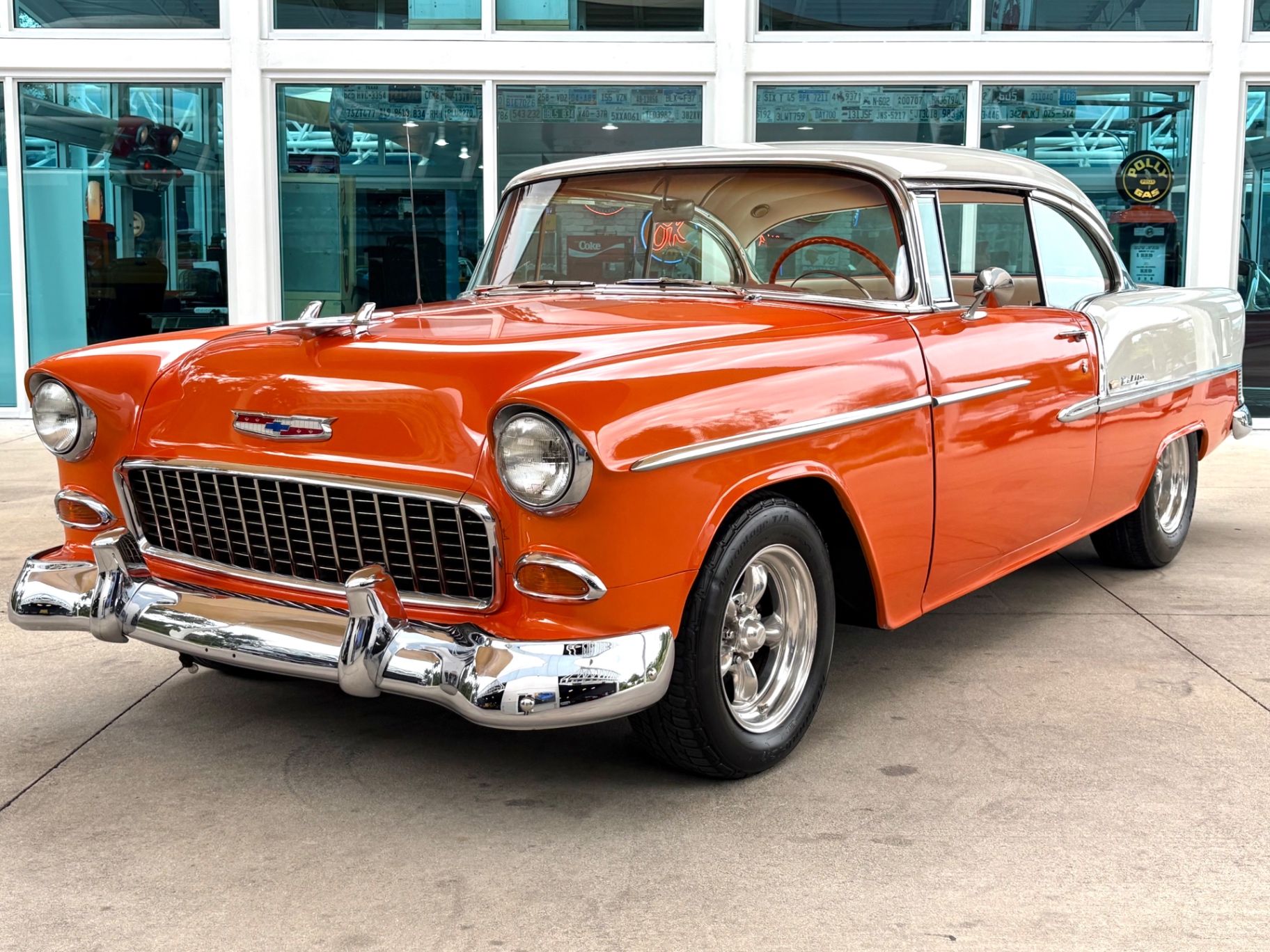
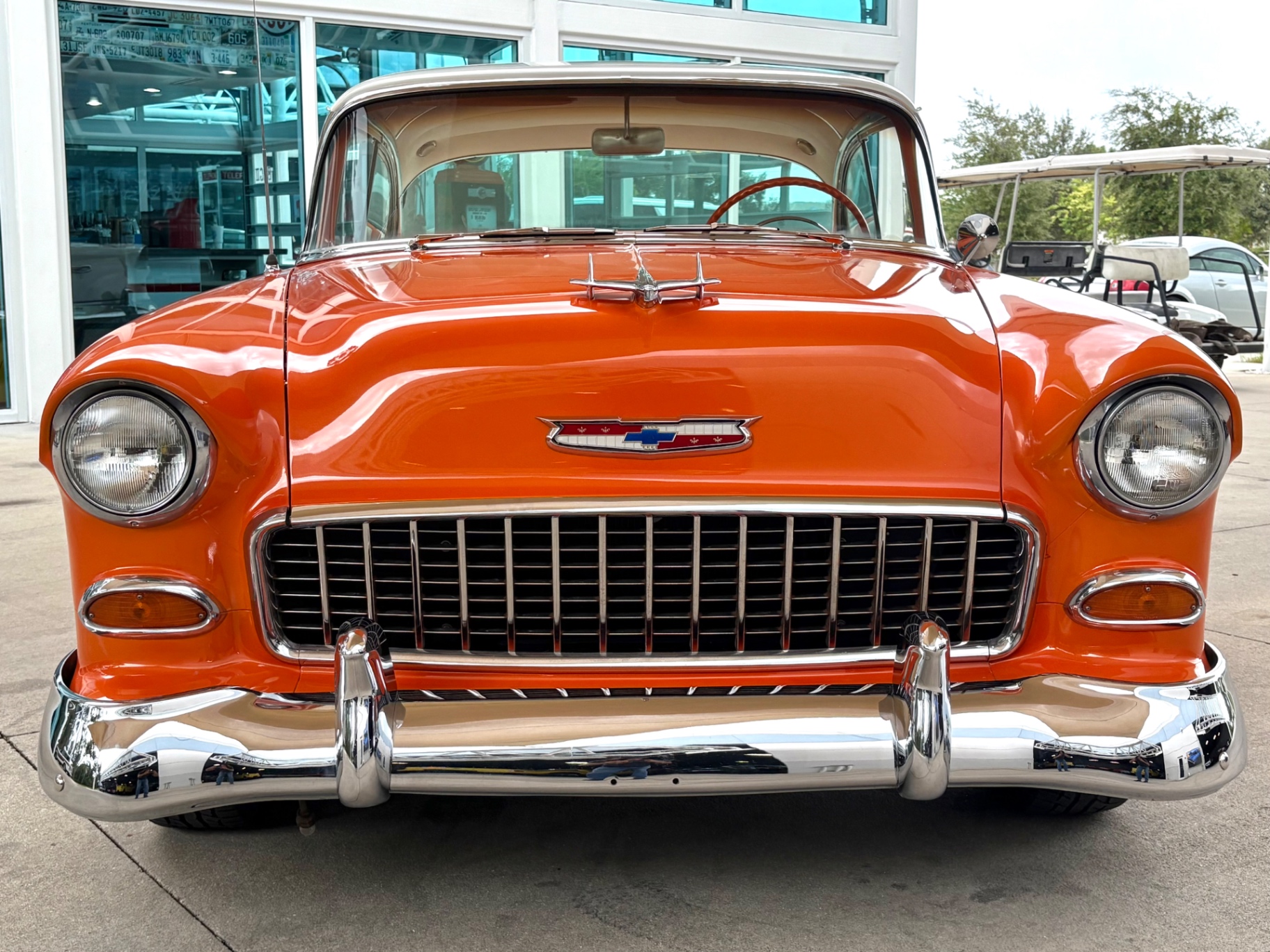
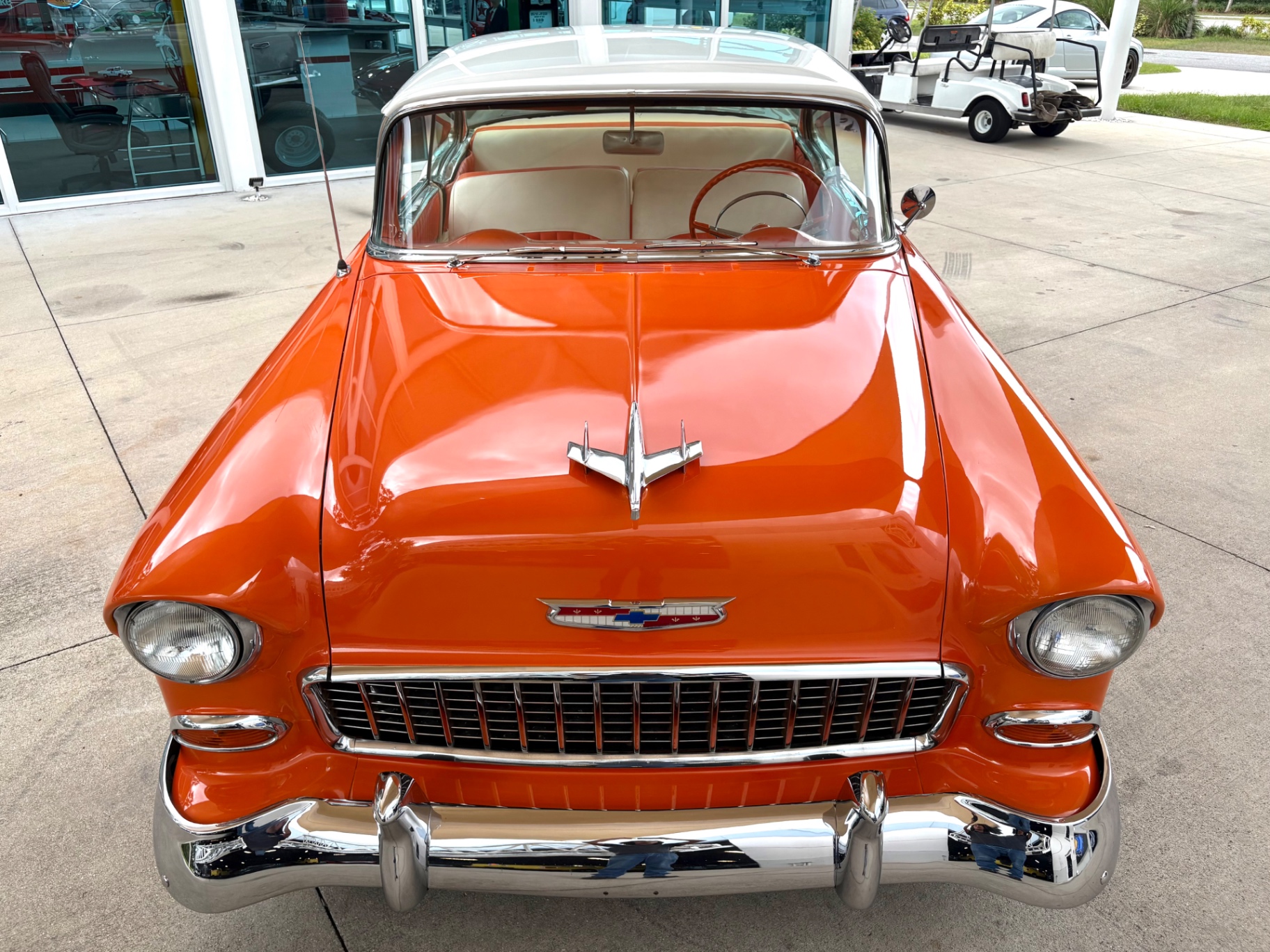
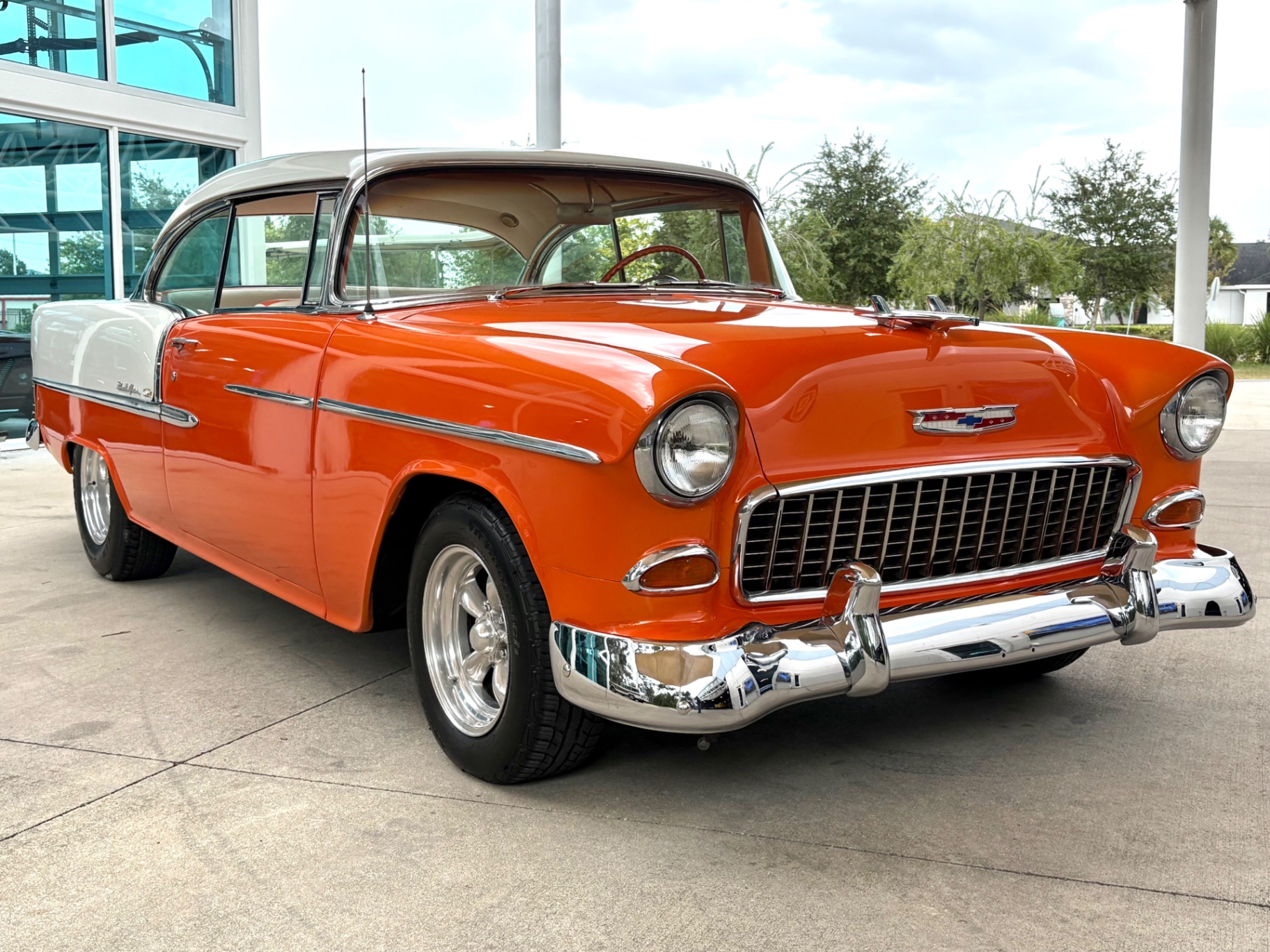
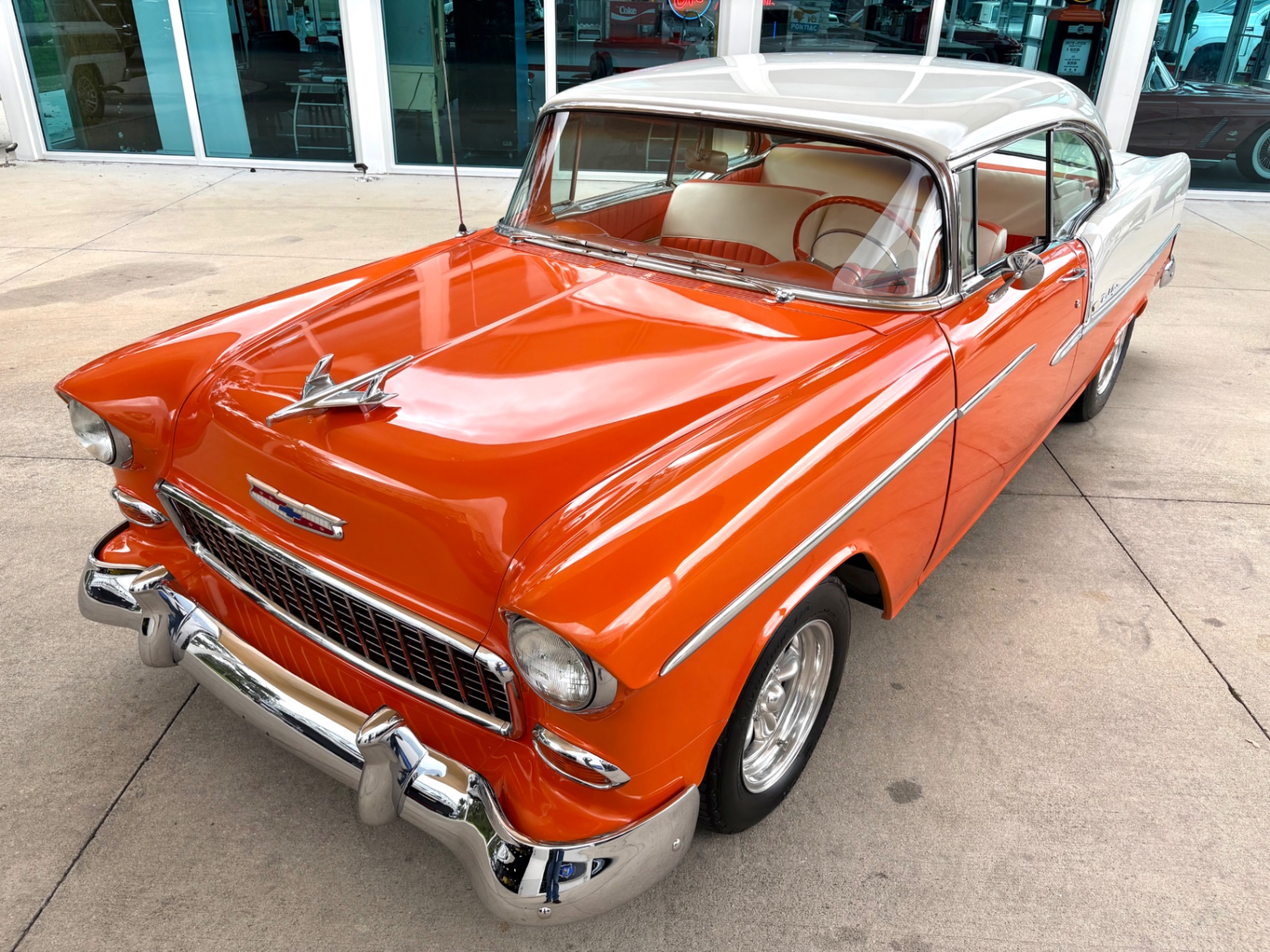
1955 Chevrolet Bel Air — Custom Pro-Touring Build with 350 V8 and Two-Tone Orange & White
Why This Car Is Special
The 1955 Chevrolet Bel Air is one of the most recognized and sought-after American cars ever produced. It was the first year of Chevrolet's all-new "Motoramic" body design — a complete break from the rounded, upright styling of earlier postwar Chevrolets. Designer Clare MacKichan led a team that gave the 1955 Bel Air a lower, wider stance, a wraparound windshield influenced by jet-age design, and a horizontal beltline that looked unlike anything else on the road at the time. Motor Trend named it Car of the Year for 1955, and more than 1.7 million Chevrolets were sold that model year across all trim levels, a number that helped Chevrolet regain the top sales position in the American market.
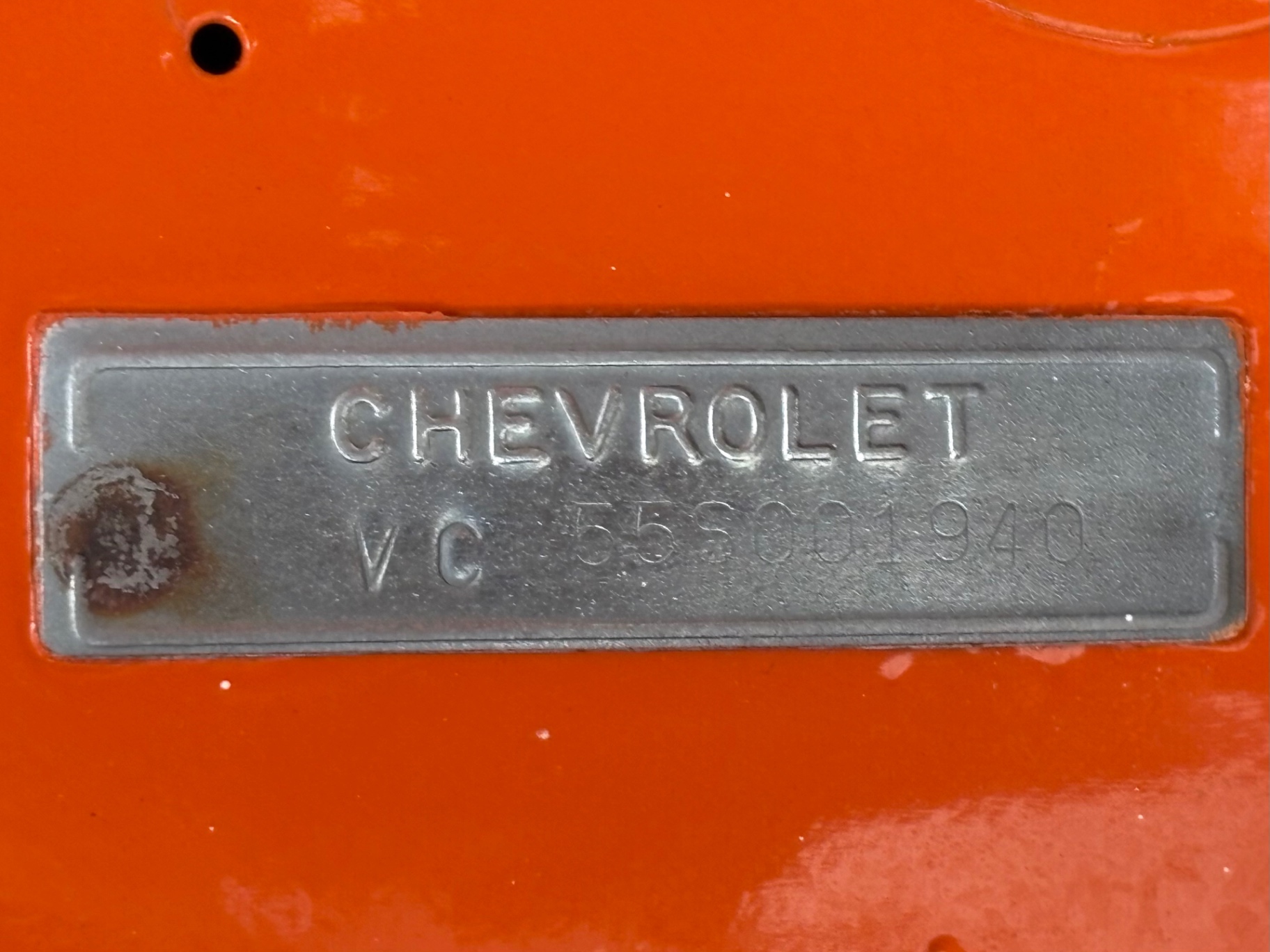
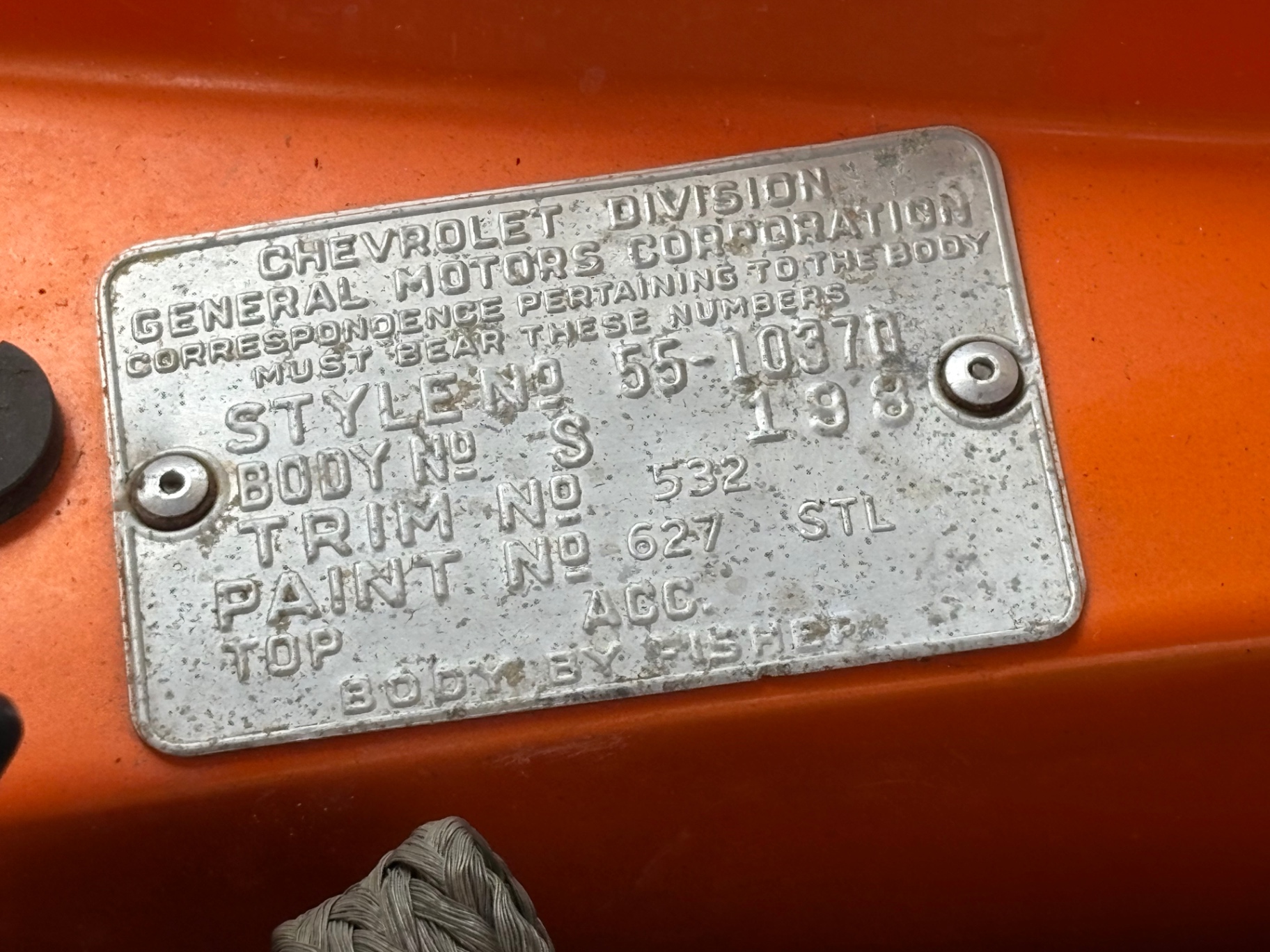
The Bel Air was the top trim level in the 1955 Chevrolet lineup, positioned above the Two-Ten and One-Fifty series. It came with additional chrome, two-tone paint options, and a more richly appointed interior. The two-door sport coupe, which this car is, was the most popular body style in the Bel Air range for 1955. The VIN on this car confirms it is a genuine V8-equipped 1955 Chevrolet sport coupe built at the Flint, Michigan assembly plant — one of five Chevrolet plants producing the model that year.
Perhaps the most historically significant thing about the 1955 Bel Air is what was under the hood. Chevrolet introduced the small-block V8 in 1955 — a 265 cubic inch engine that was lightweight, efficient, and remarkably tuneable. That engine architecture, refined and expanded over the decades into the 350 cubic inch version you'll find in this car, became the foundation of American performance engineering for the next half-century. The 350 small-block is arguably the most widely used and developed V8 in automotive history, and it drops into a 1955 Bel Air like it was always meant to be there — because in many ways, it was.
This particular 1955 Chevrolet Bel Air has been built as a driver-quality pro-touring custom. It isn't a trailered show car, and it isn't a numbers-matching restoration. It's a 70-year-old body wrapped around a modern drivetrain and safety-upgraded chassis, finished in a two-tone orange and white color scheme that carries the spirit of the 1955 Bel Air's original two-tone design language into something more aggressive and personalized. The engine bay, interior, and exterior all speak the same color story, giving the car a cohesive, intentional look from every angle.
Features List
- 350 cubic inch V8, rated at 300 horsepower
- Fresh paint job under warranty
- 4-barrel carburetor with high-flow K&N-style air cleaner
- Chevrolet script finned aluminum valve covers, color-matched to the engine bay
- Chrome alternator
- Oversized aluminum radiator for improved cooling capacity
- Power steering
- CPP power front disc brakes with power brake booster
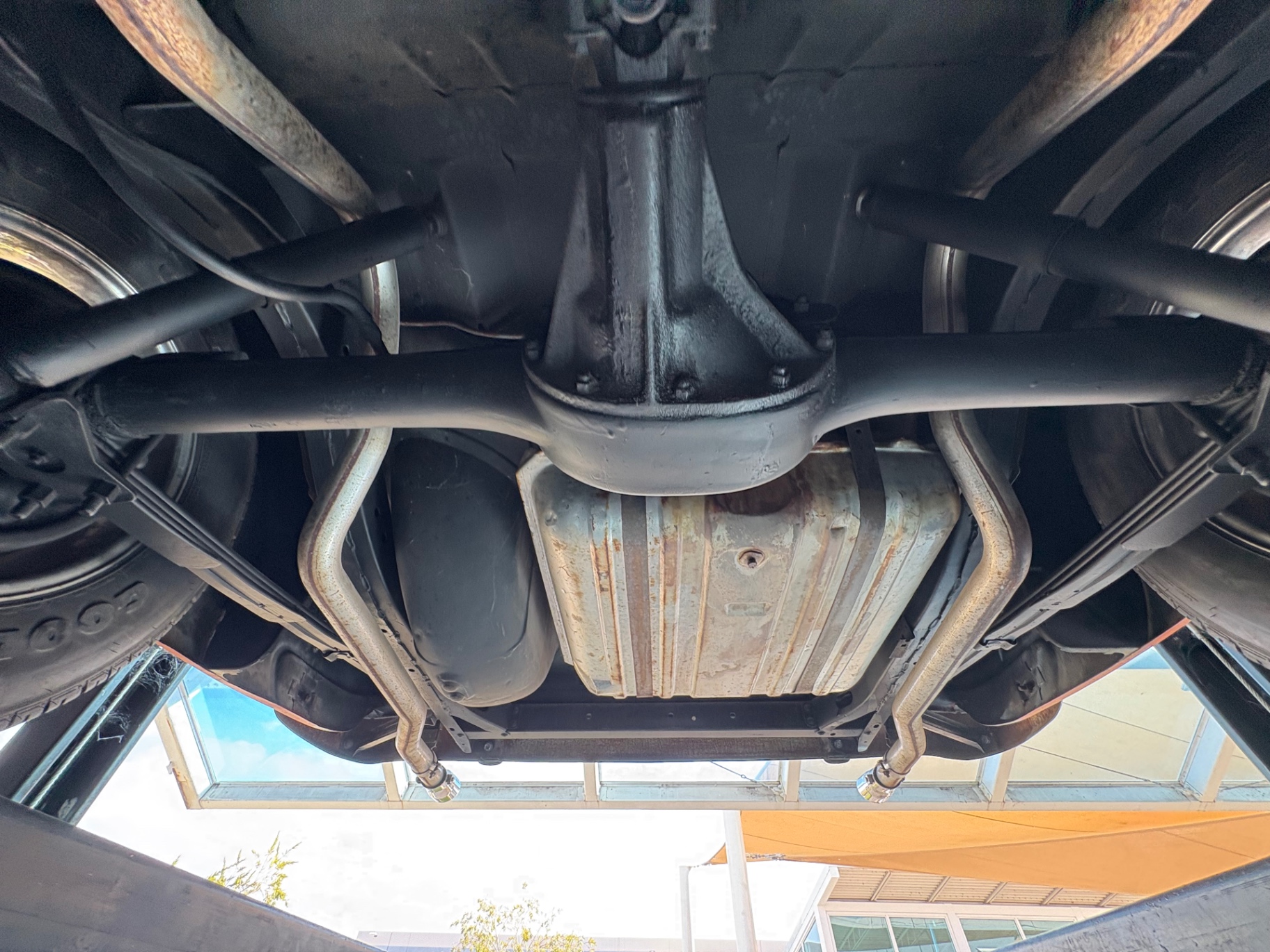
- Camaro rear end
- 3-speed manual transmission, floor-mounted with white ball shift knob
- Dual exhaust with chrome tips exiting through the rear bumper
- Undercoated floor pans
- Stainless/chrome Cragar wheels
- Goodyear Eagle tires (rear), Cooper tires (front)
- Custom two-tone orange and white vinyl interior by M&M Interiors
- Color-matched door panels with chrome trim strips
- Original Bel Air steering wheel
- Dolphin auxiliary gauges integrated into the dash
- Original radio and original clock retained
- Original door speakers
- Custom Auto Sound audio system
- Bel Air script floor mats and Bel Air script badge on dash
- Color-matched carpet, dash, and headliner
- Rear courtesy dome lights
Mechanical
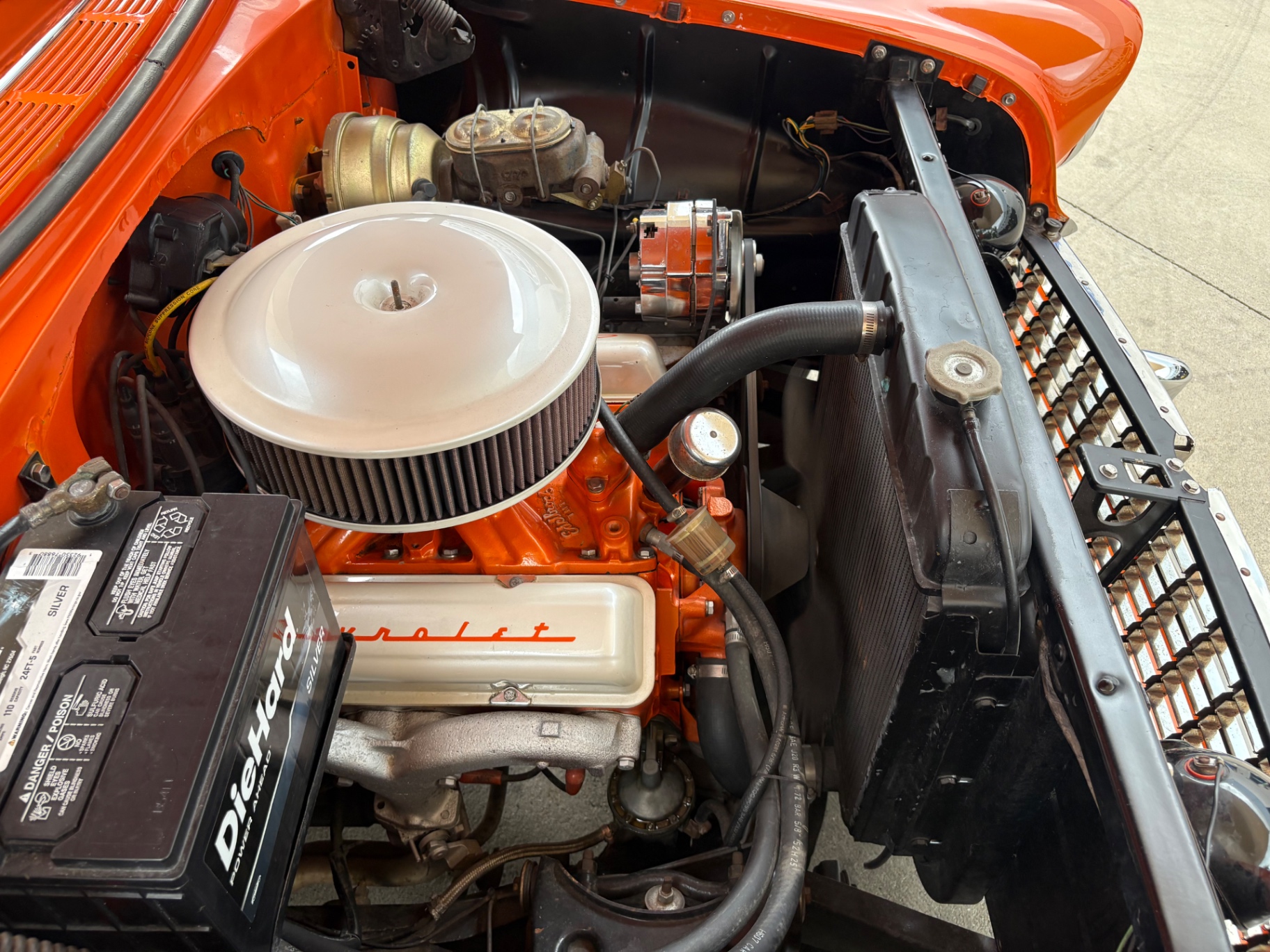
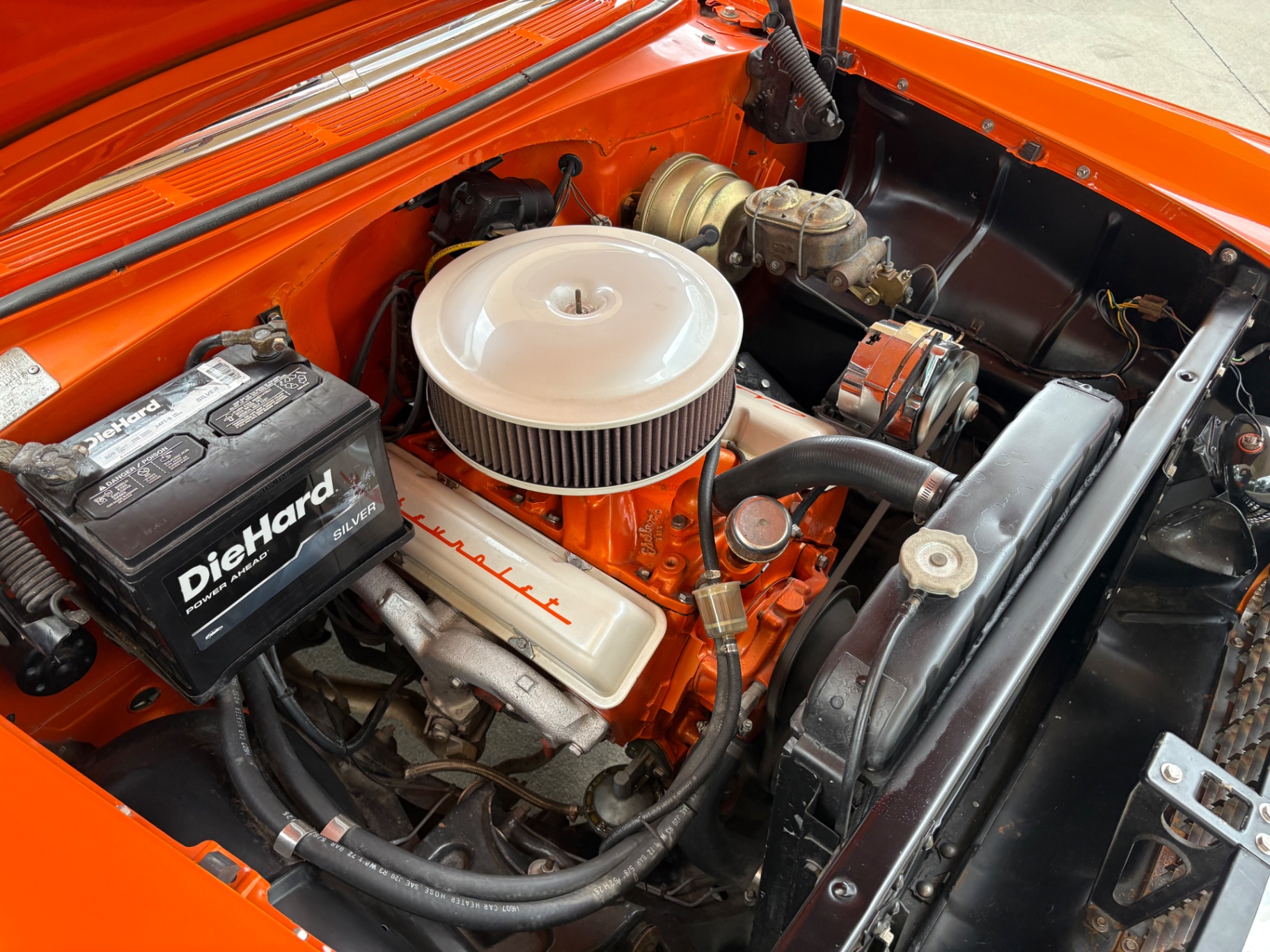
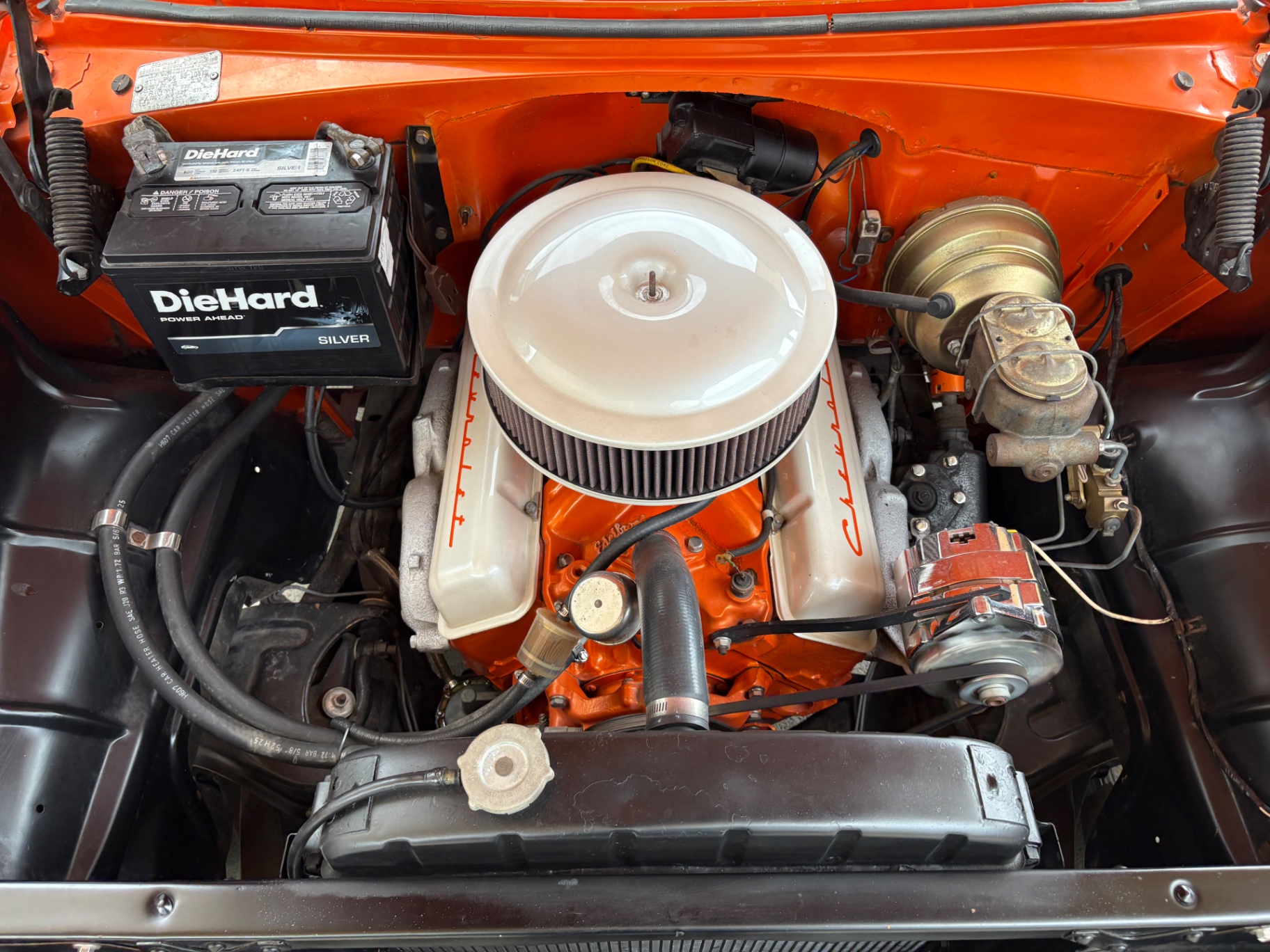
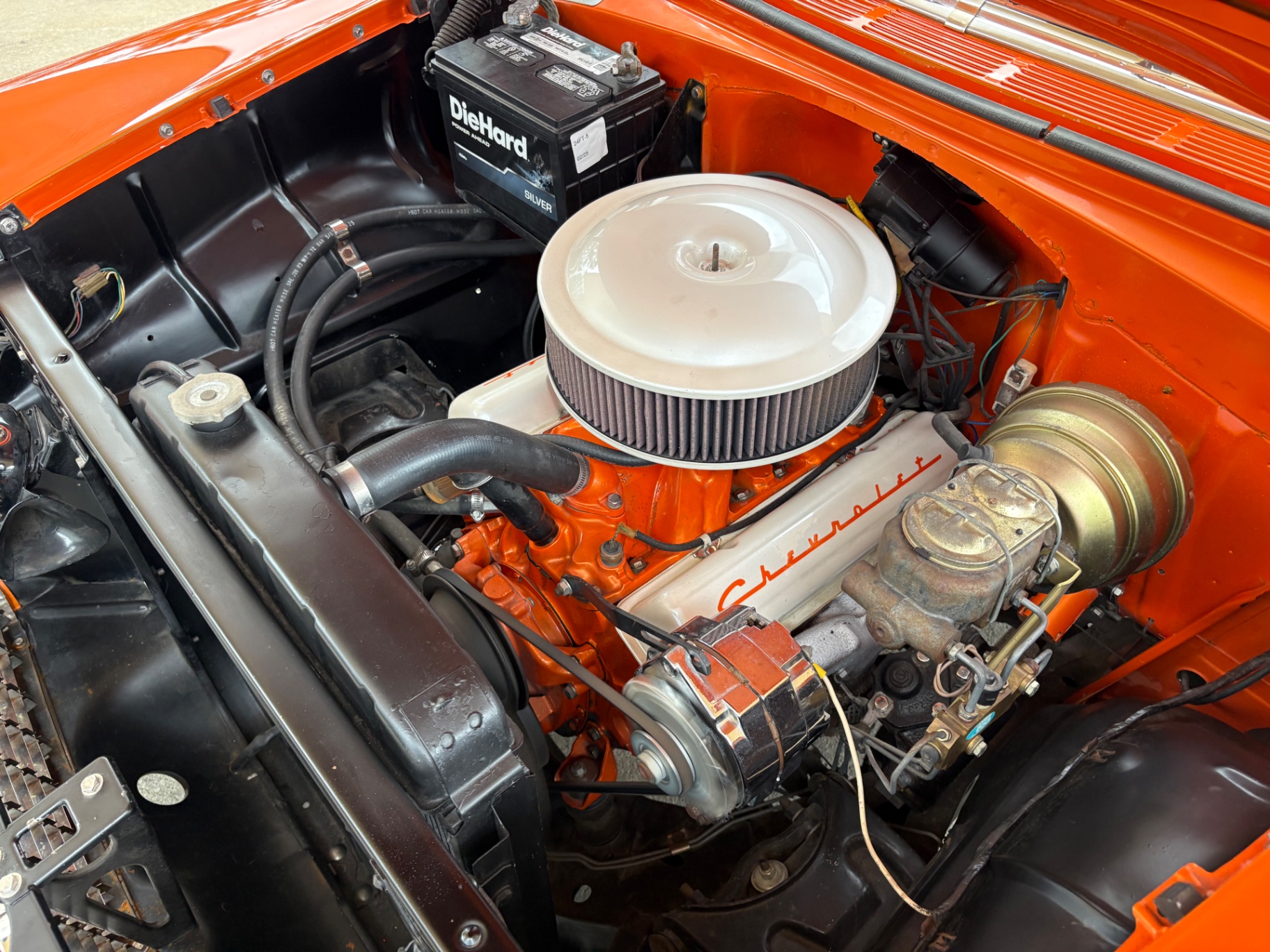
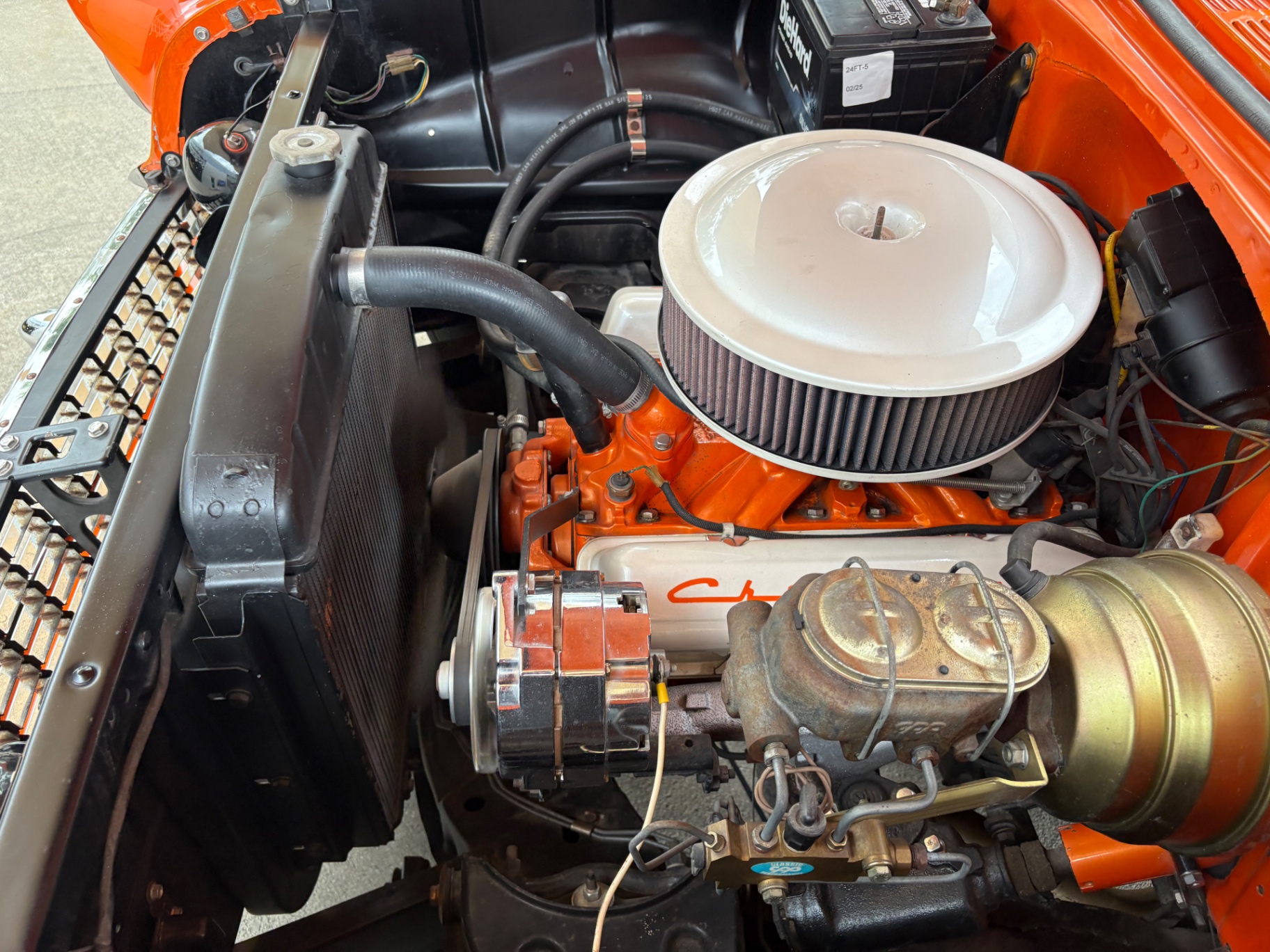
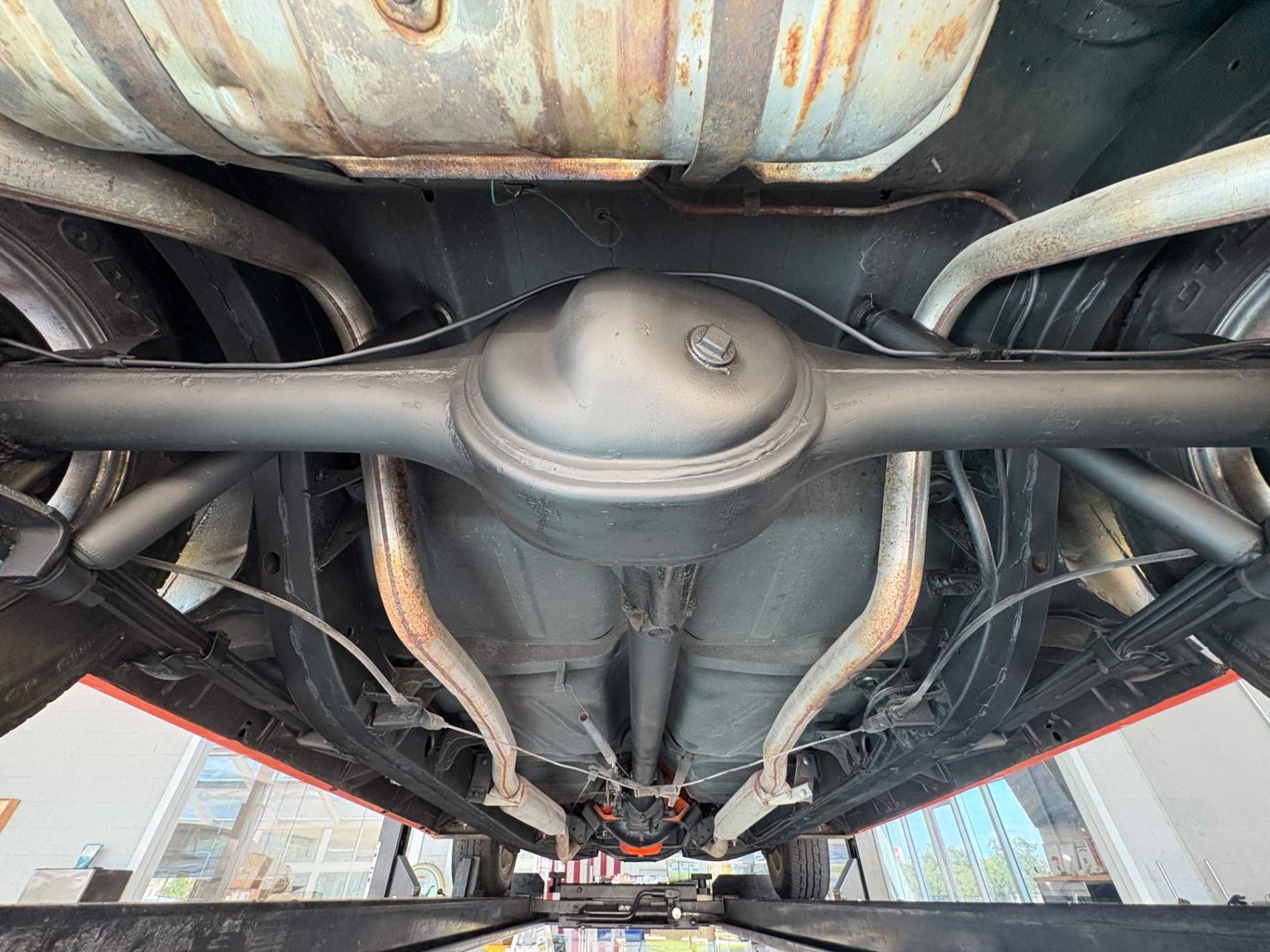
Power comes from a 350 cubic inch small-block Chevrolet V8 producing 300 horsepower, fed by a 4-barrel carburetor and breathed through a high-flow K&N-style air cleaner. The engine is dressed with Chevrolet script finned aluminum valve covers — a period-correct styling nod — and the entire engine bay has been color-matched to the car's orange exterior paint, giving it a finished, intentional appearance rather than a jumbled mix of add-ons.
Cooling is handled by an oversized aluminum radiator, a sensible upgrade for a 300-horsepower engine in a Florida climate, where summer heat and stop-and-go traffic can push an undersized cooling system past its limits. The chrome alternator keeps the electrical system fed, and the car has been converted to a full alternator charging setup, which provides more consistent voltage than the original generator system and handles the demands of the upgraded audio and auxiliary gauges without issue.
The transmission is a 3-speed manual with a floor-mounted shifter — an honest, direct driving setup that puts the driver in full control. The car was originally available with a 3-speed column shift or the optional close-ratio 3-speed, and the floor shift conversion here is a natural extension of the car's sporting character. The rear end is a Camaro unit, a proven swap for 1955-57 Chevrolets that provides a stronger, wider axle housing capable of handling the torque output of the 350.
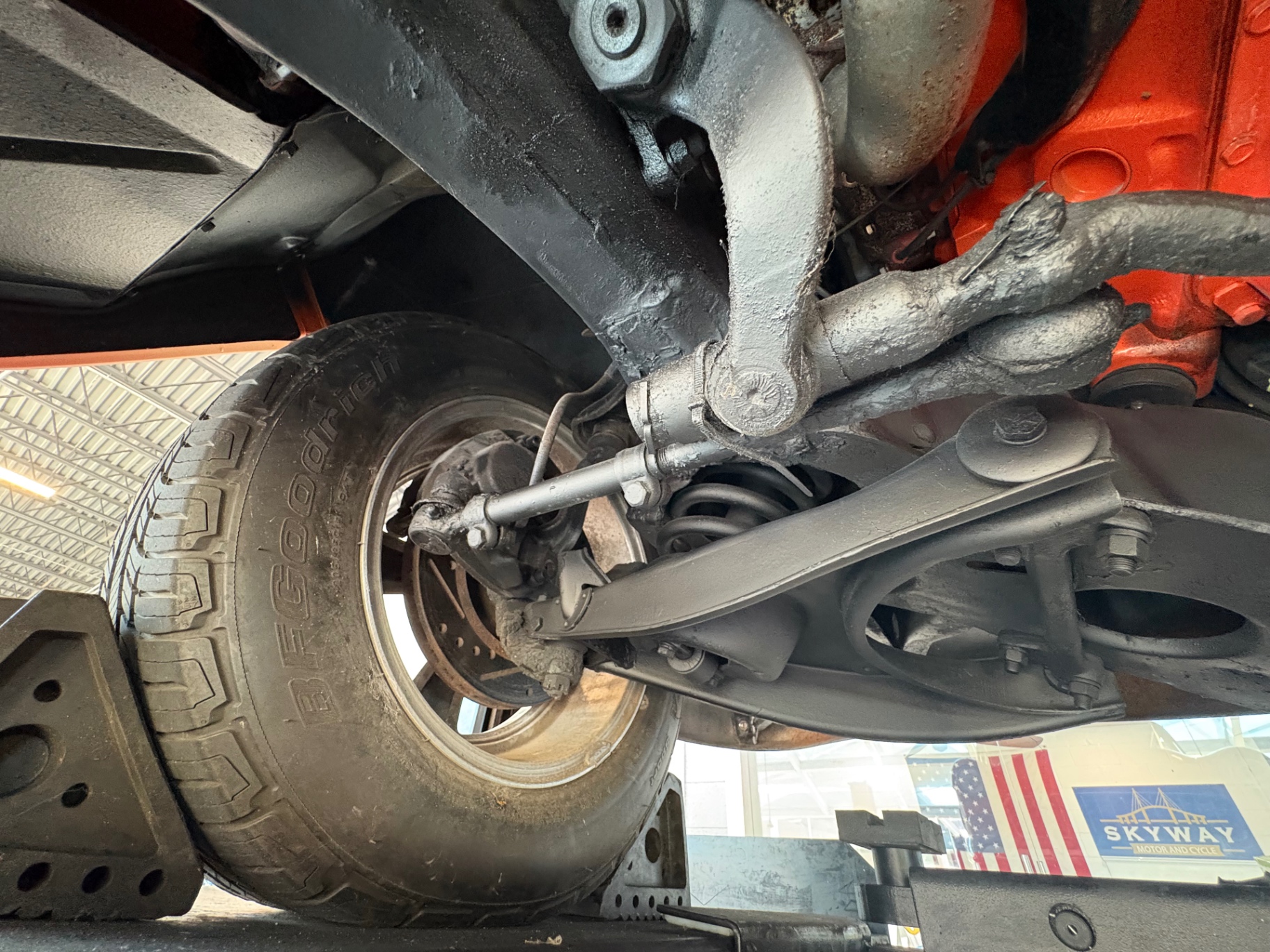
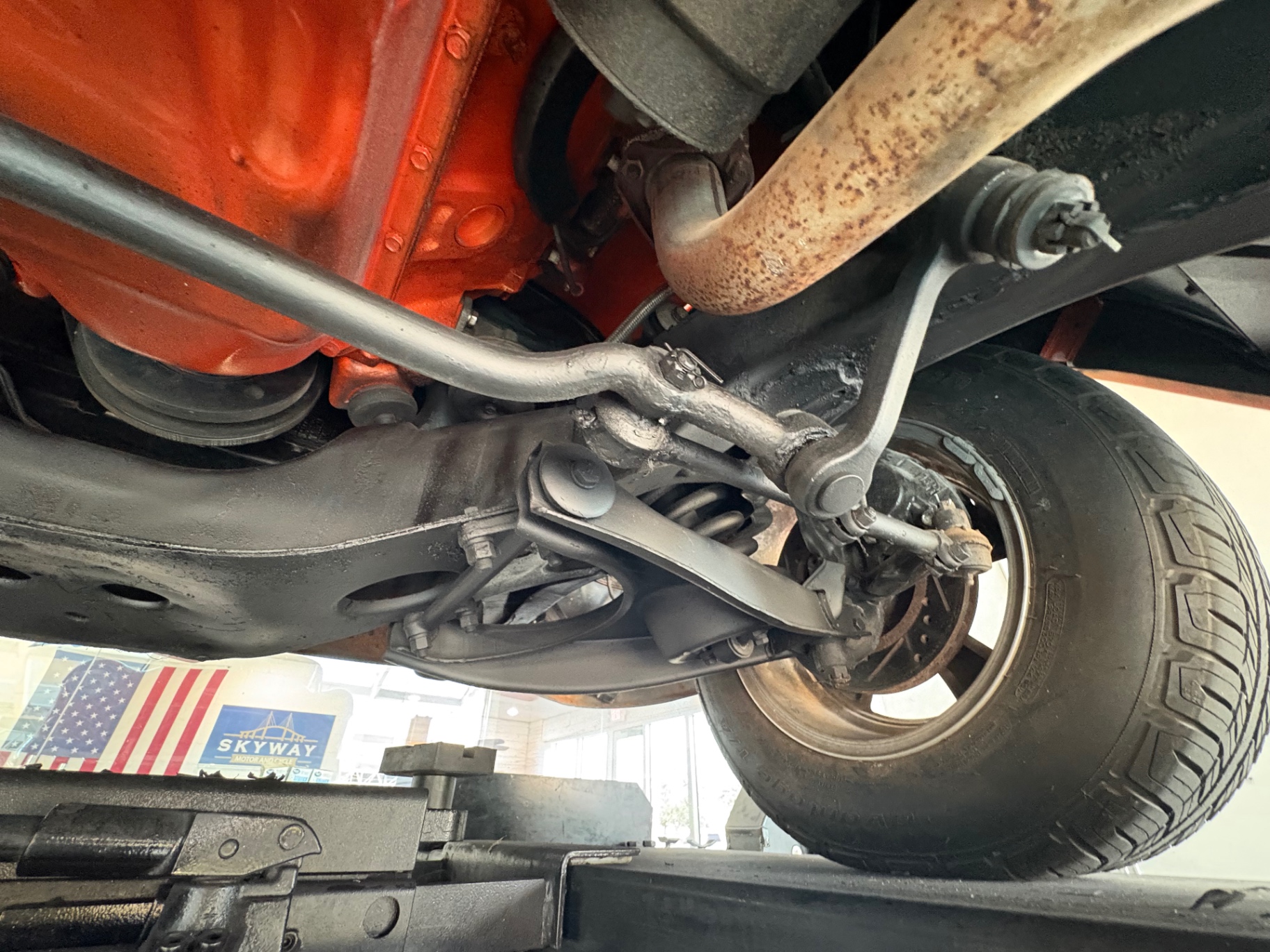
Stopping power comes from CPP power front disc brakes with a vacuum-assisted power brake booster — a meaningful safety upgrade over the original four-wheel drum system. The original 1955 Bel Air used hydraulic drum brakes at all four corners, and while adequate for the power levels of the day, they are not well-matched to a 300-horsepower drivetrain on modern roads. The CPP front disc conversion addresses this directly. Power steering makes the car manageable at low speeds and in parking situations, while still providing enough feedback to enjoy on the open road.
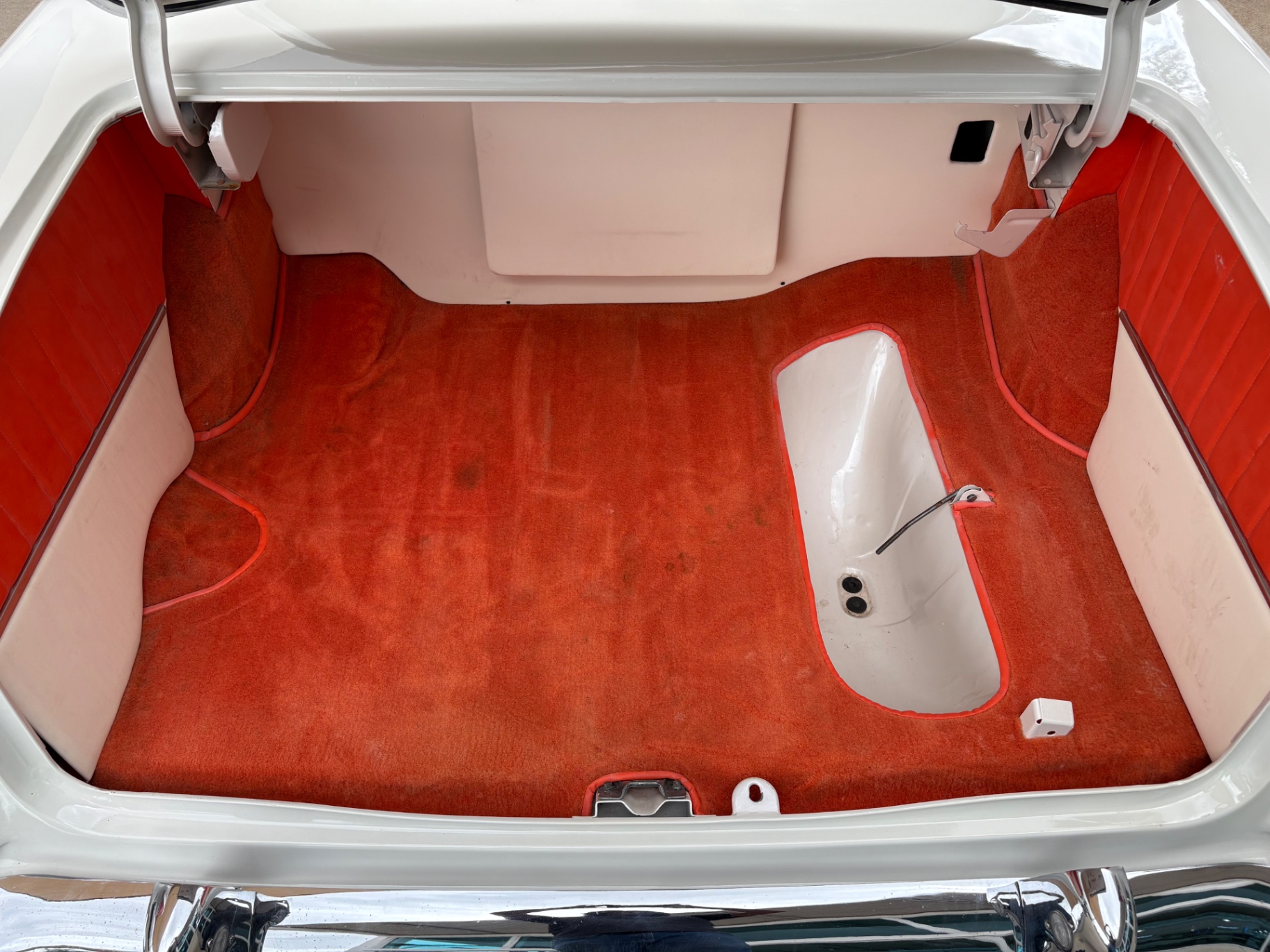
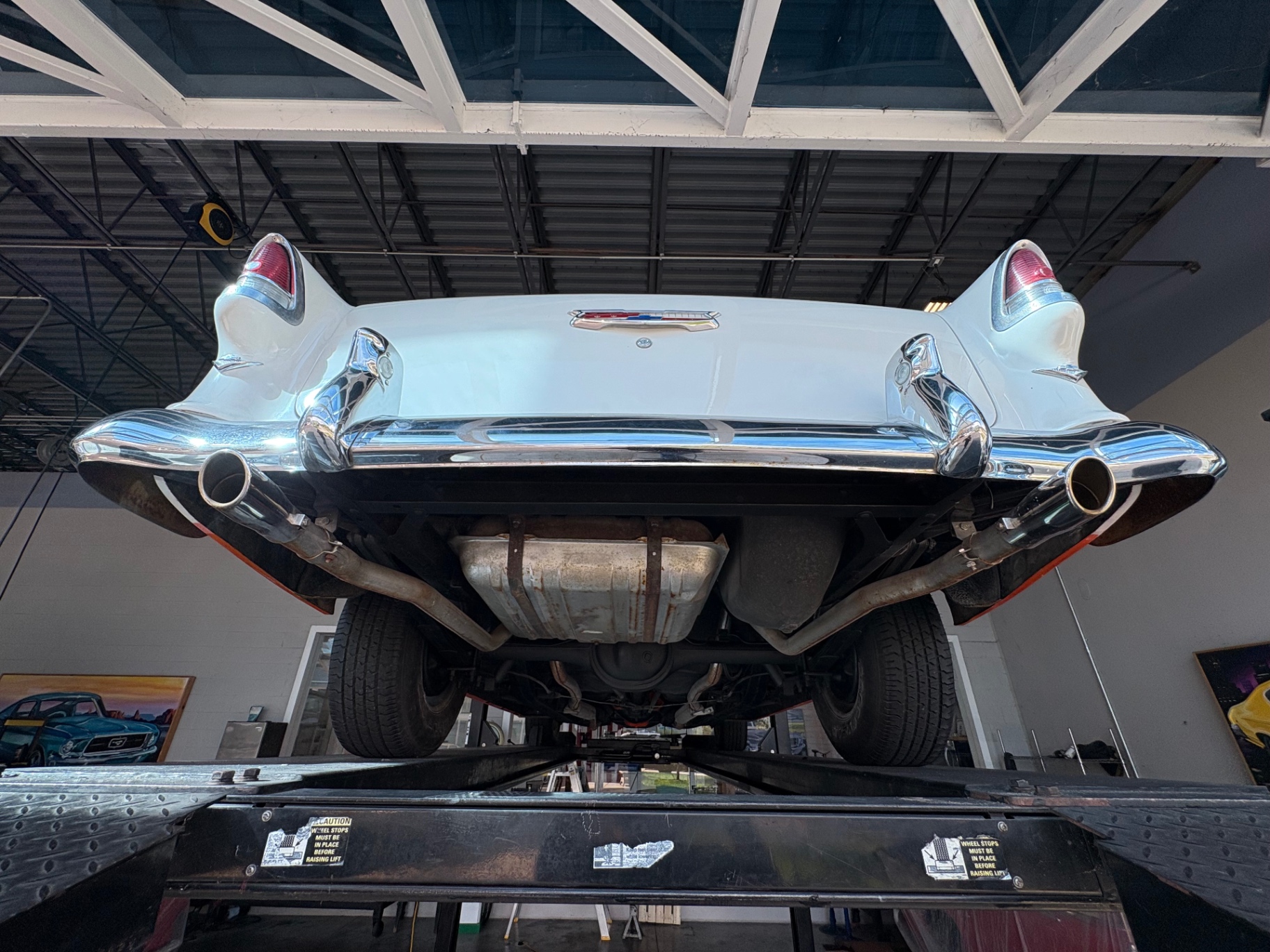
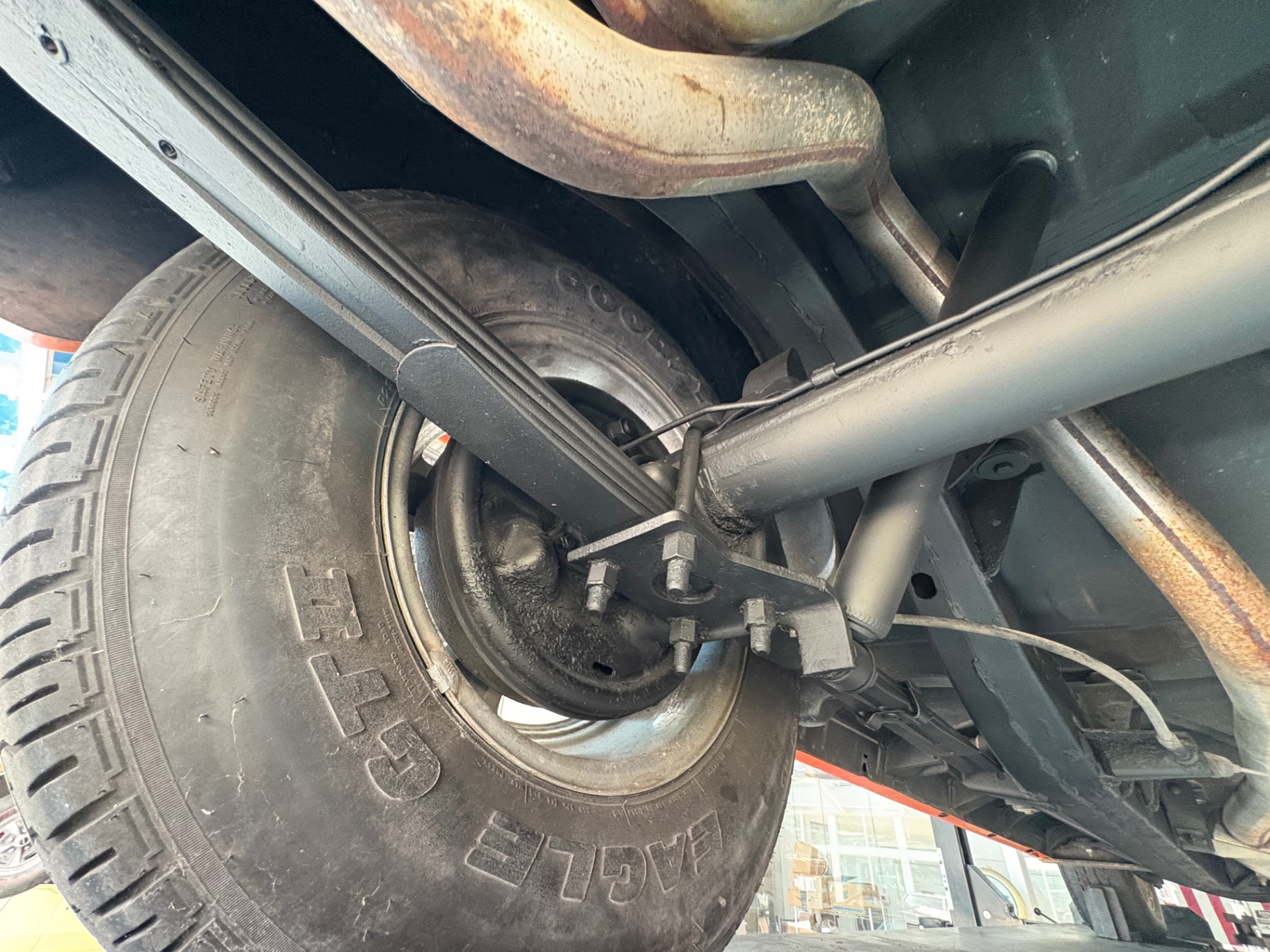
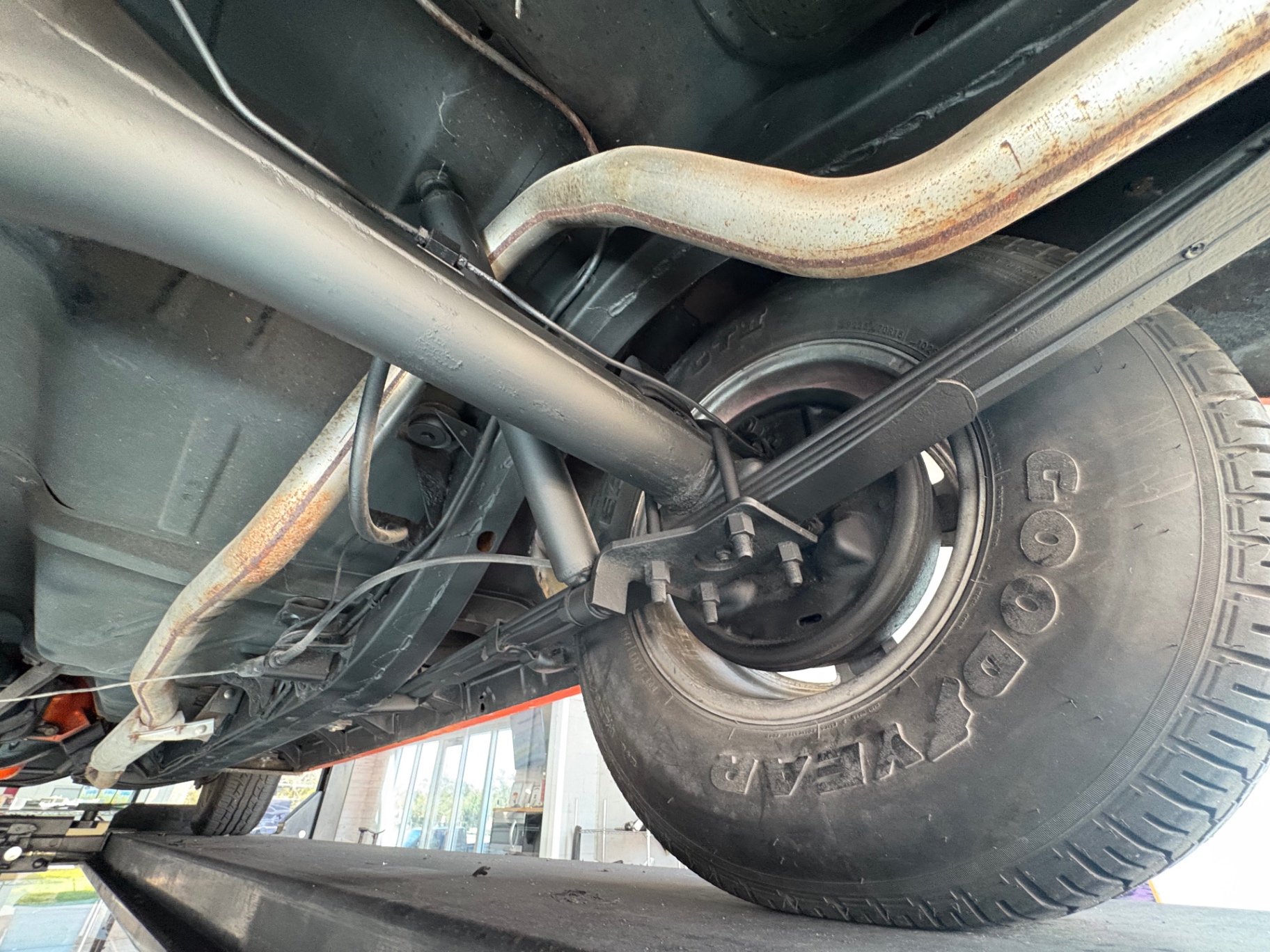
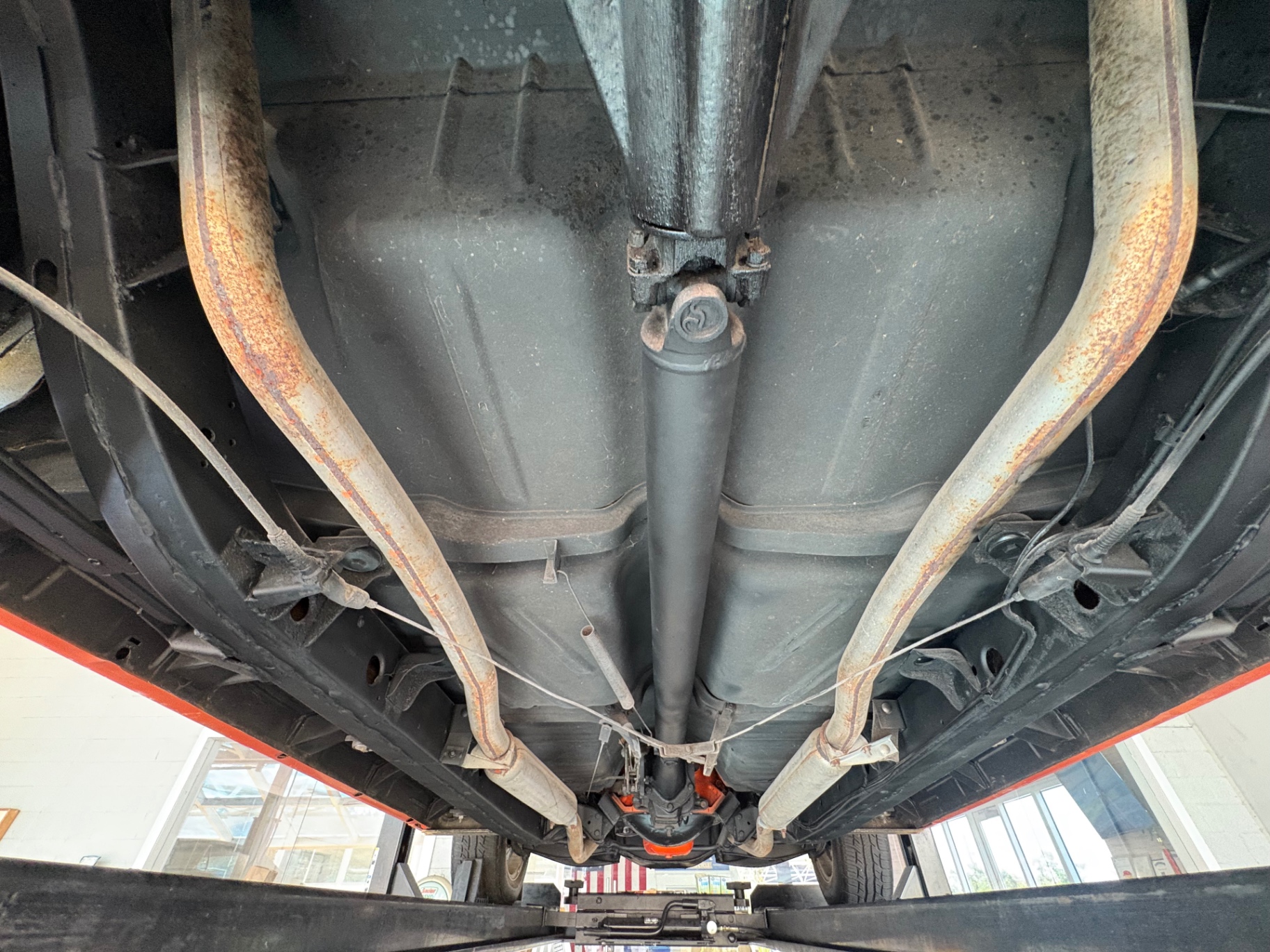
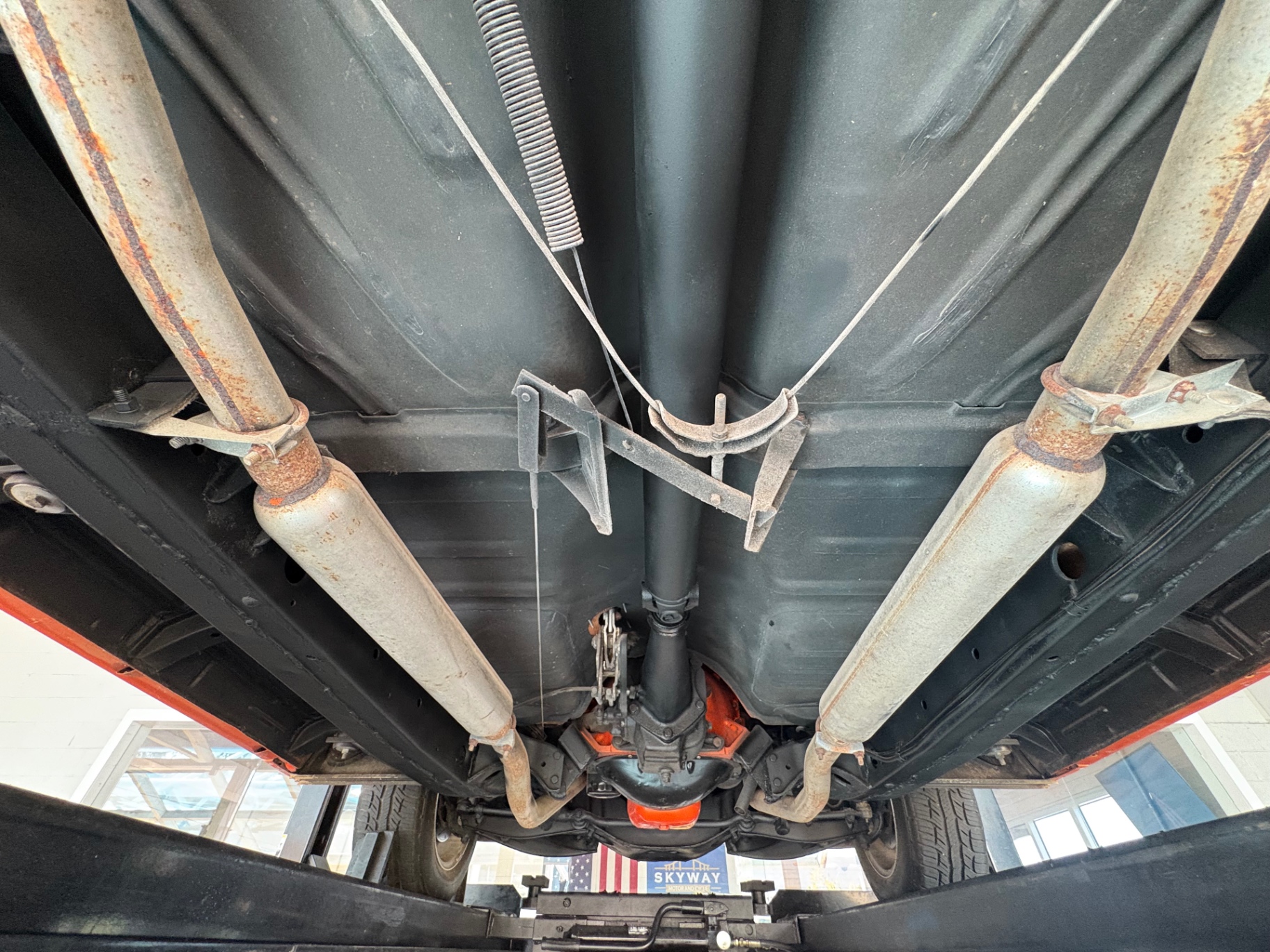
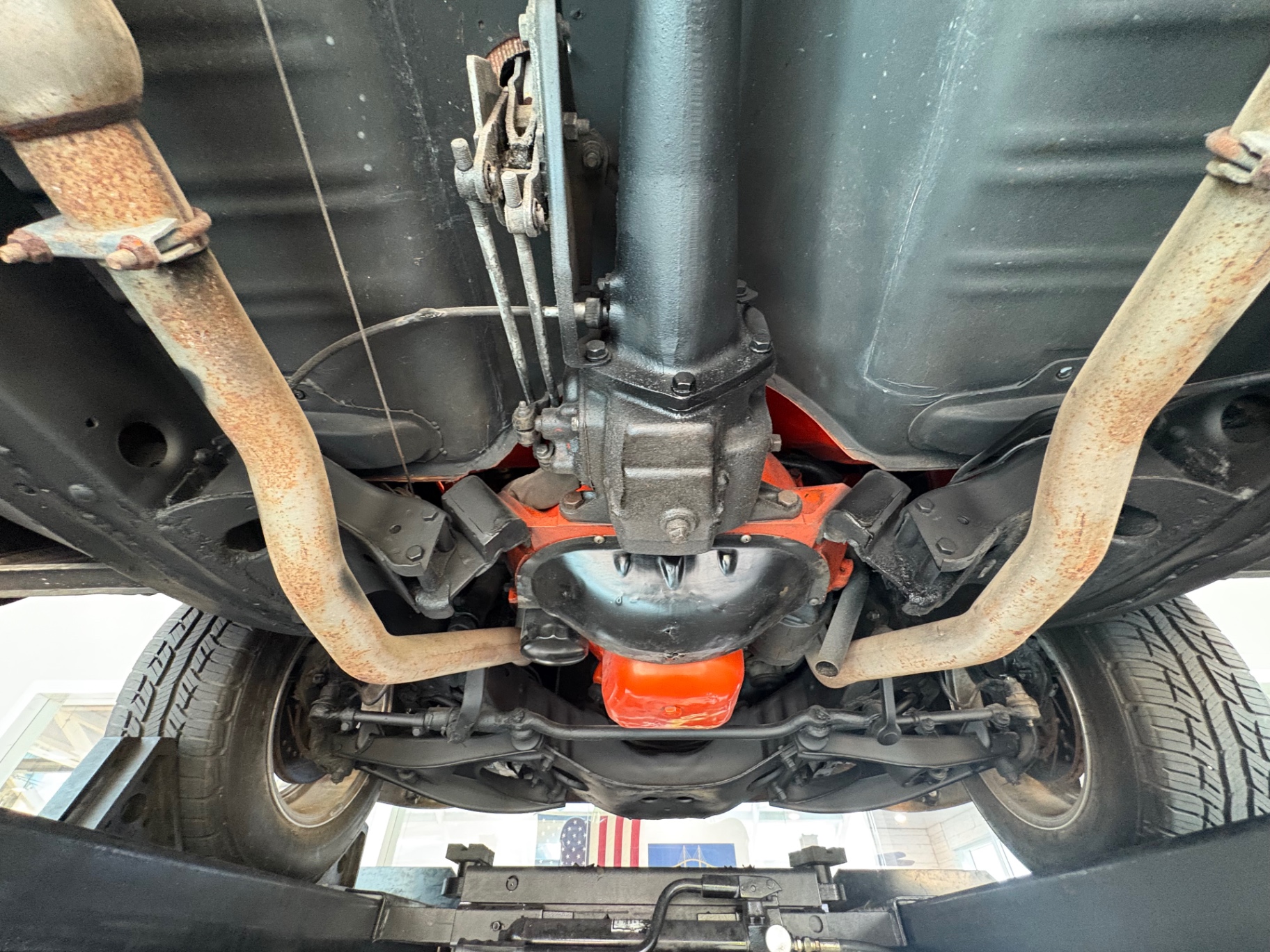
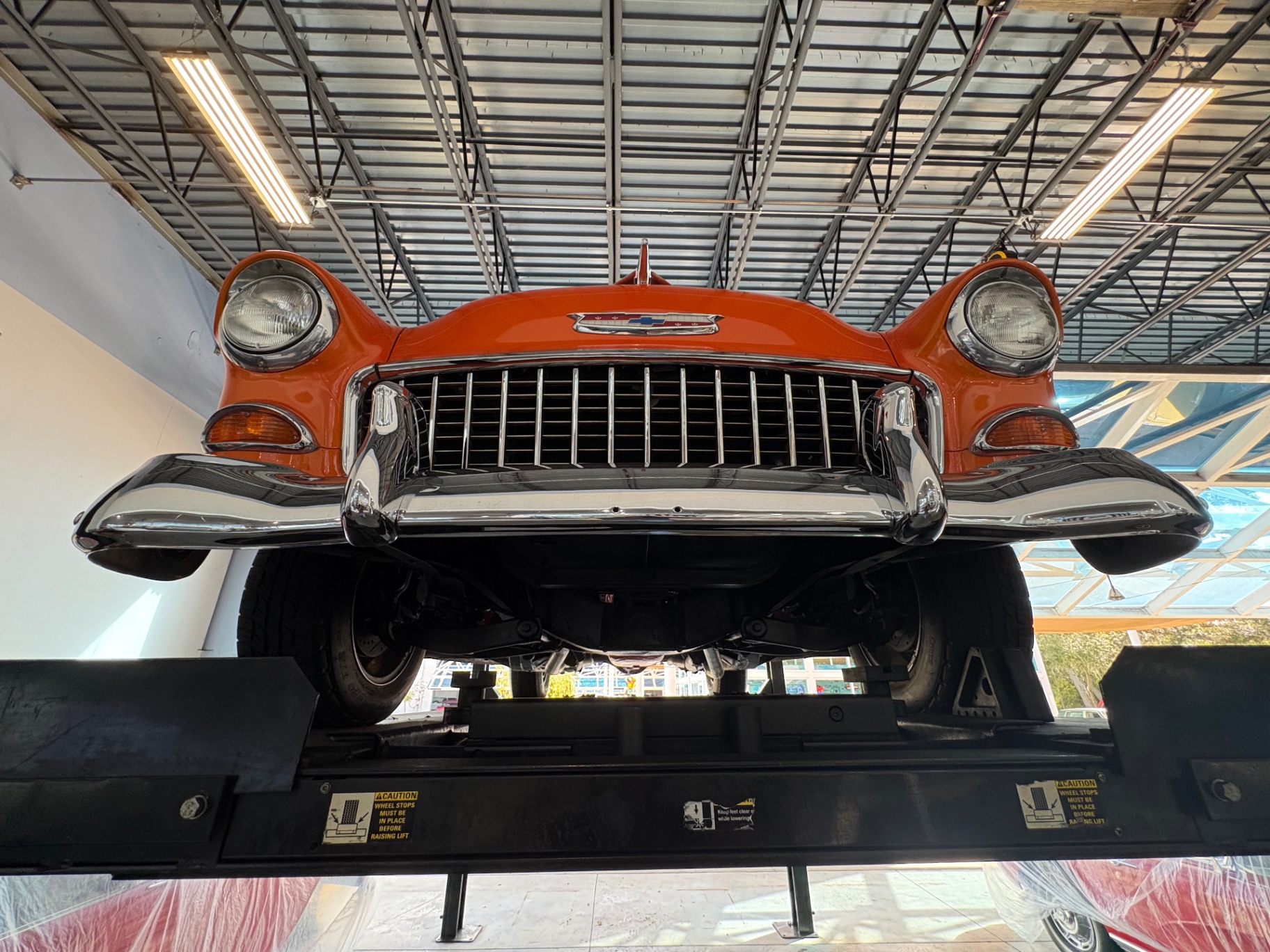
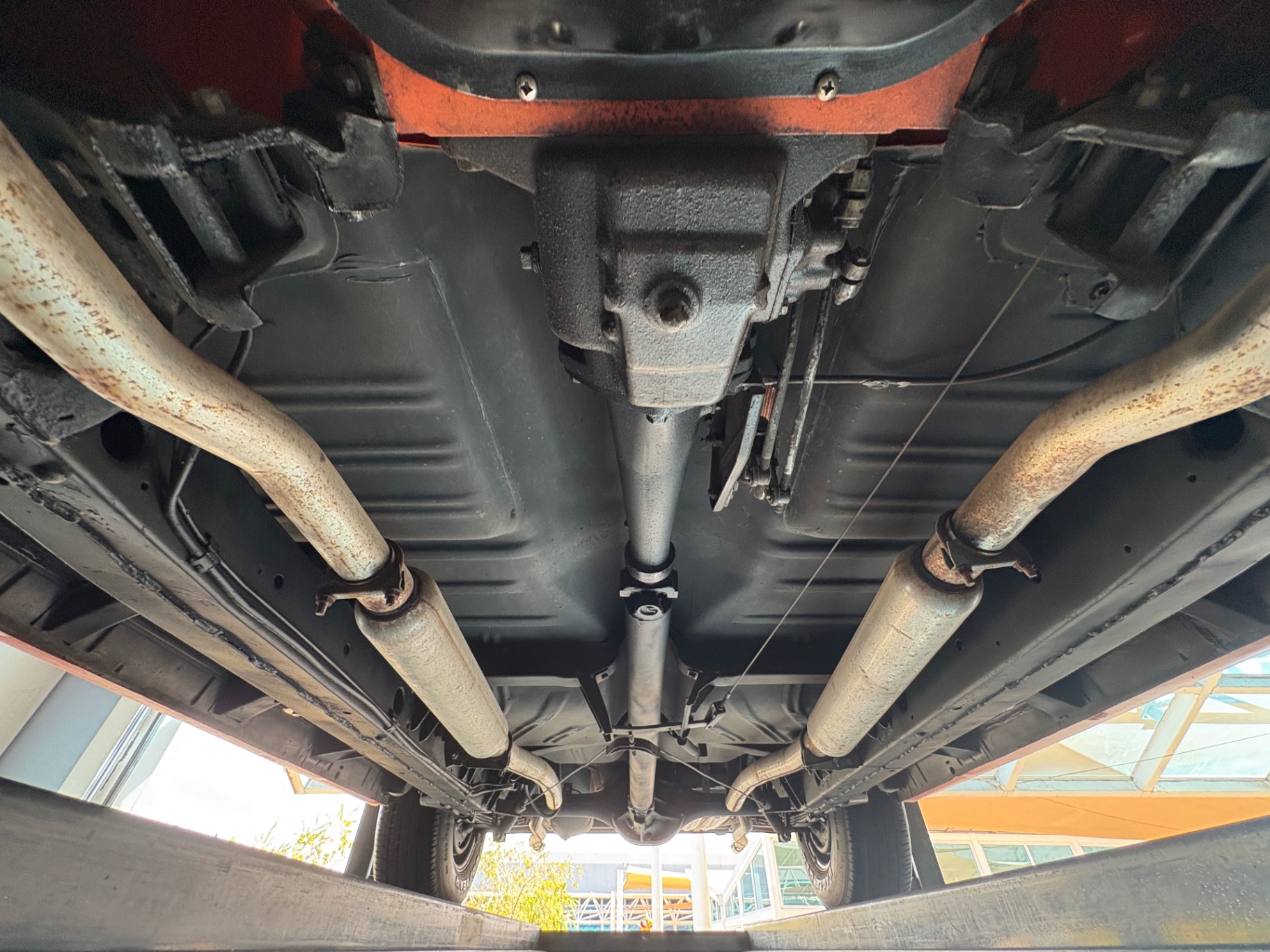
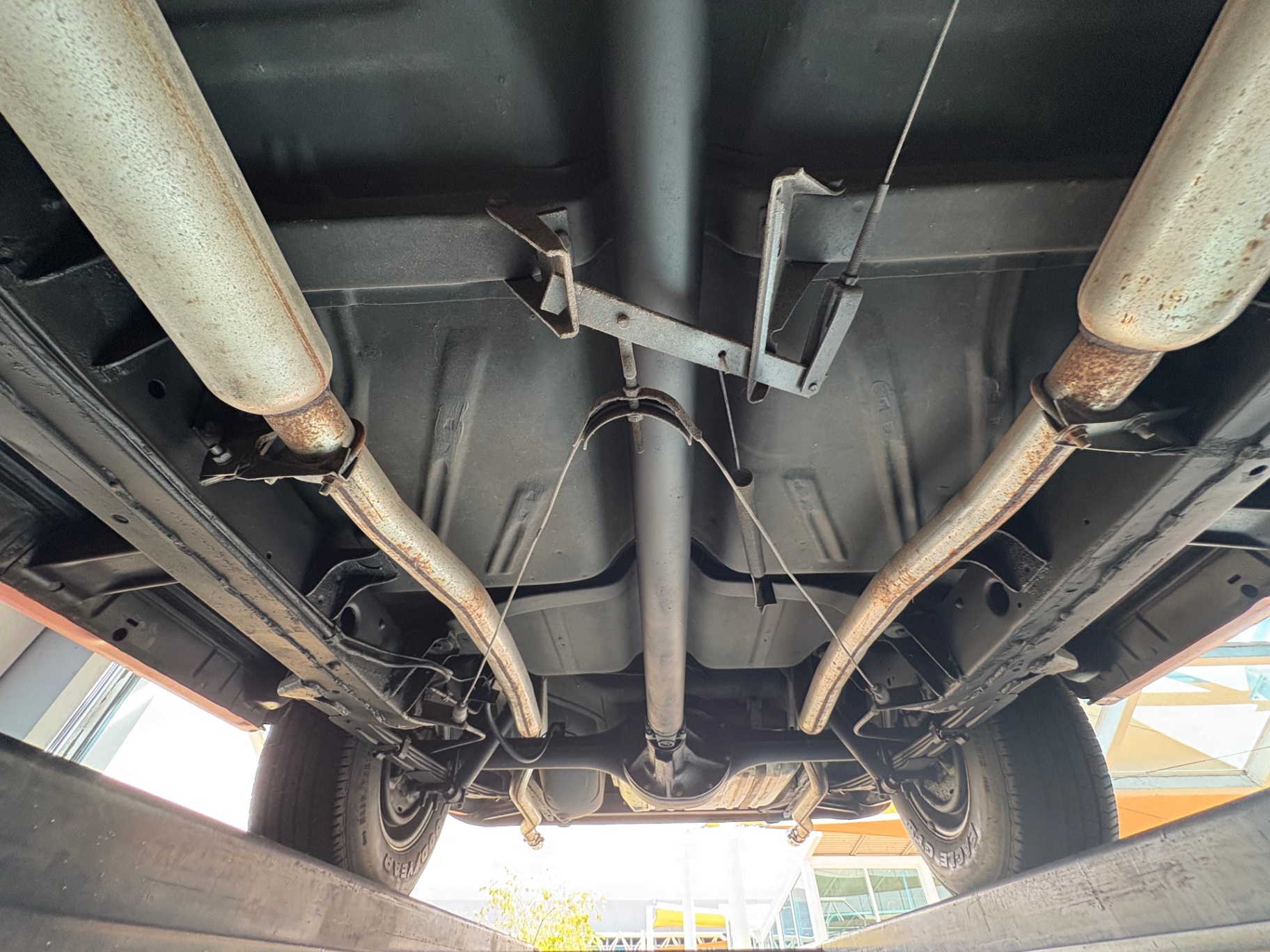
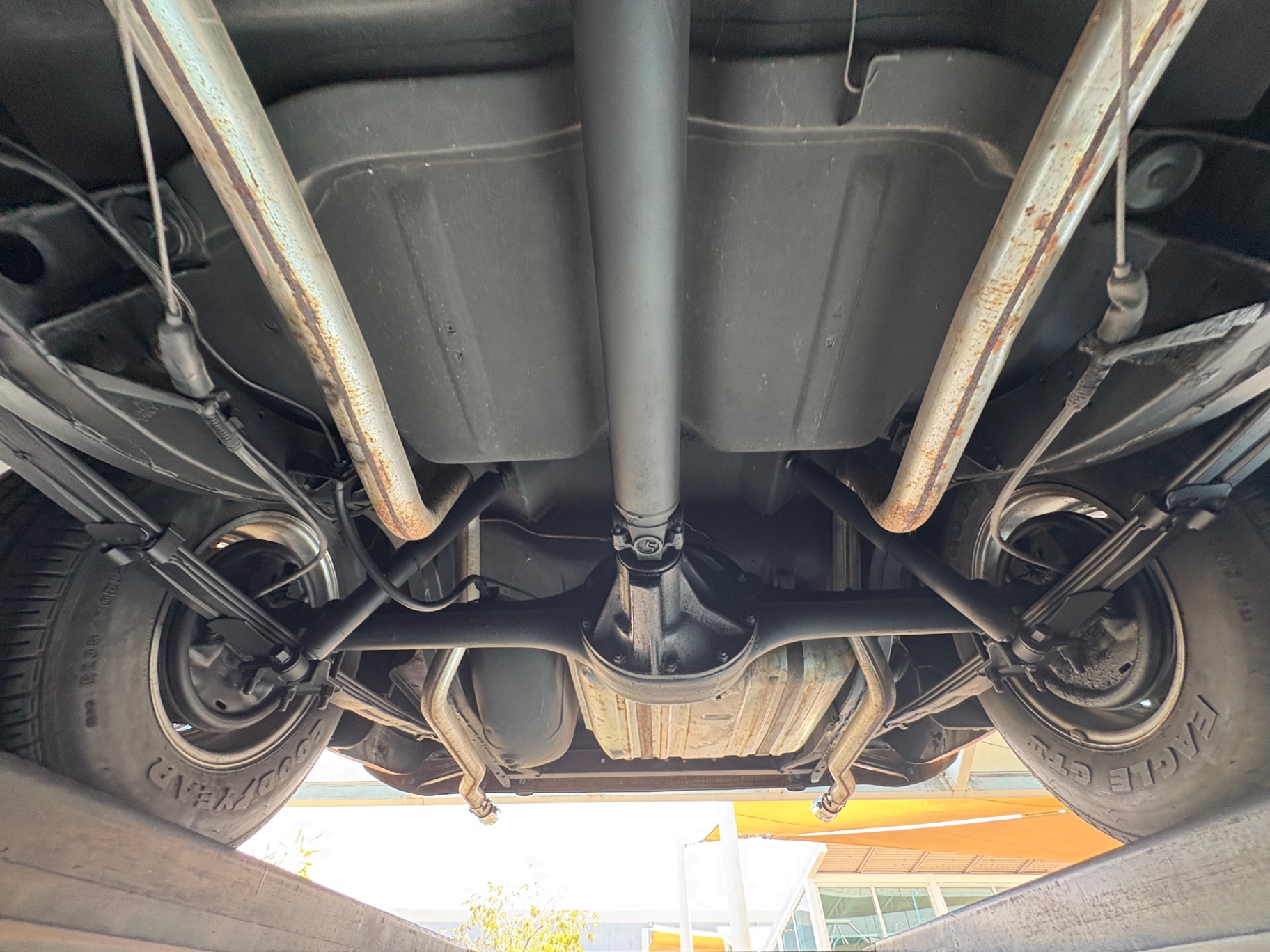
Looking at this car from underneath tells you a great deal about how it was built. The floor pans have been undercoated, the dual exhaust runs cleanly from front to rear, and the Camaro rear axle is visibly painted and detailed. This is not a car that was built to look good on a trailer — it was built to be driven.
Interior
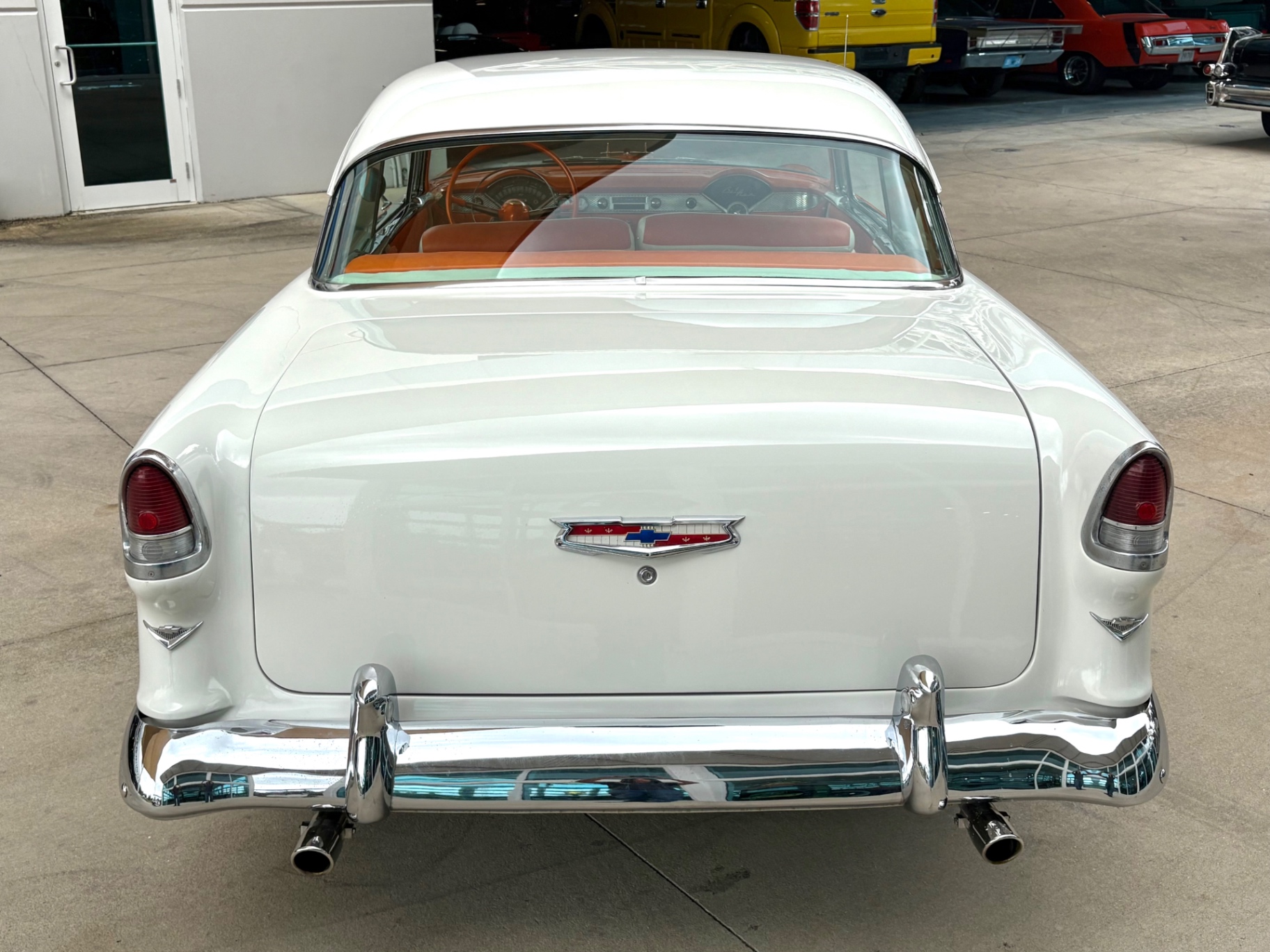
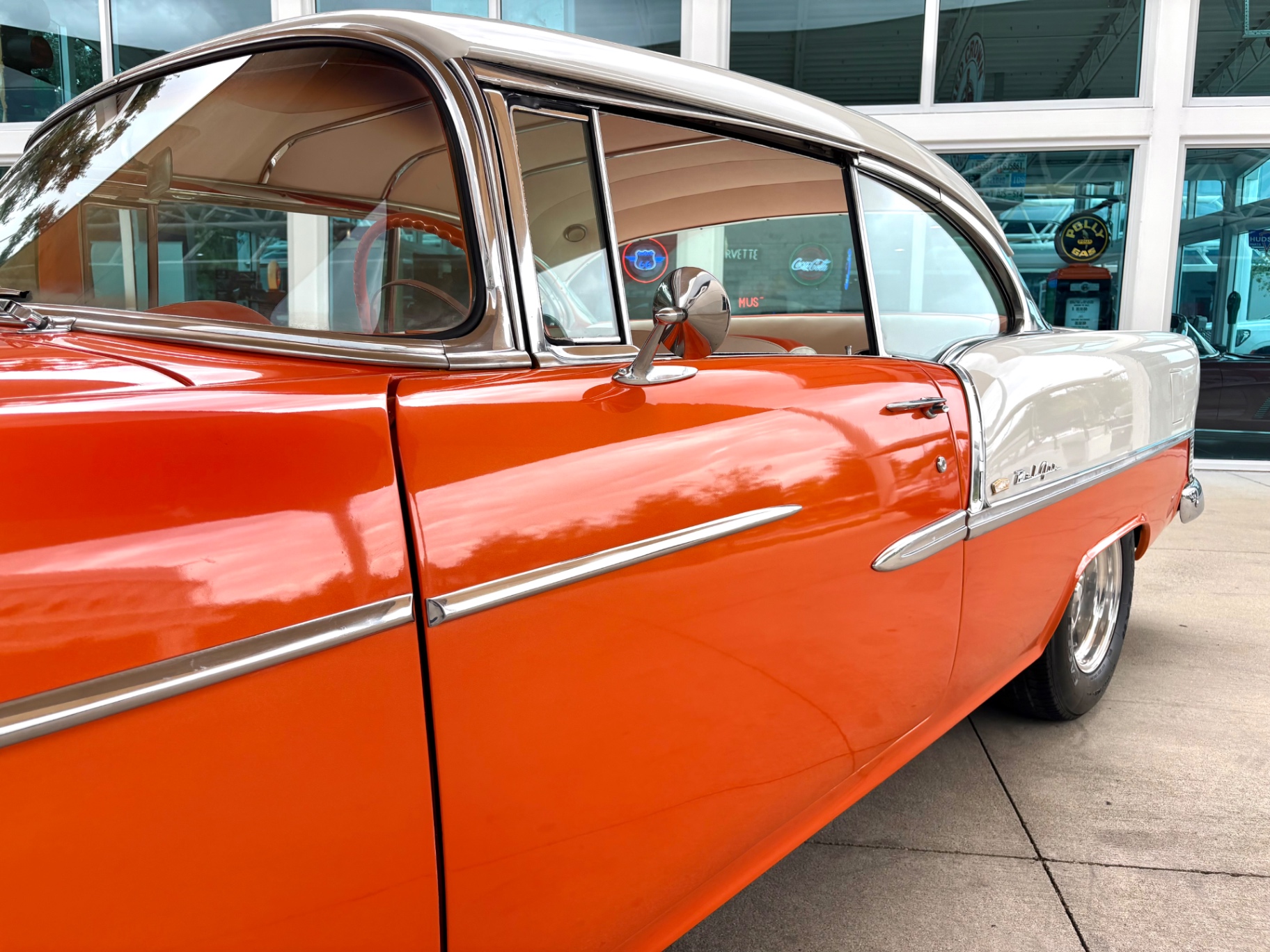
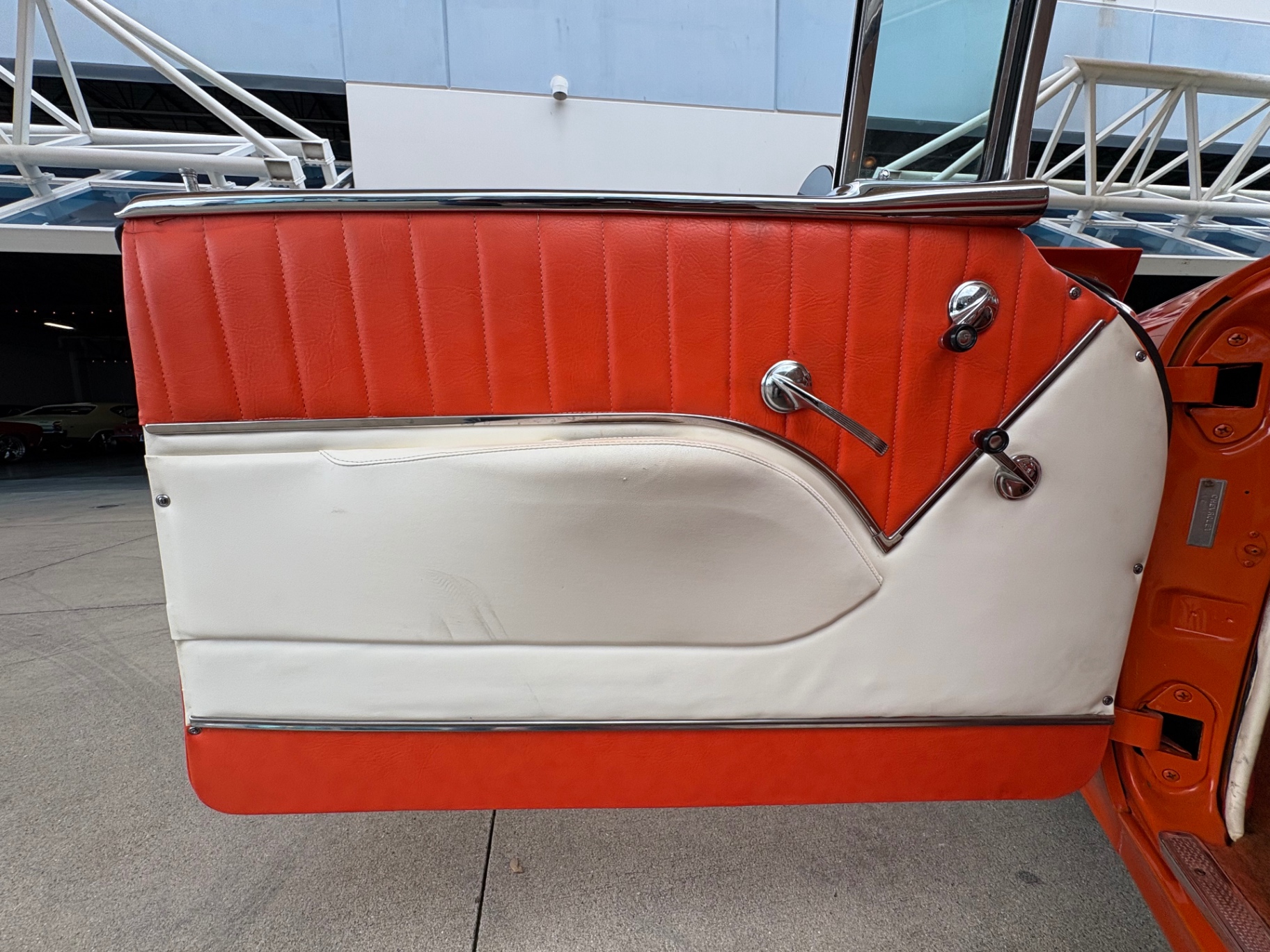
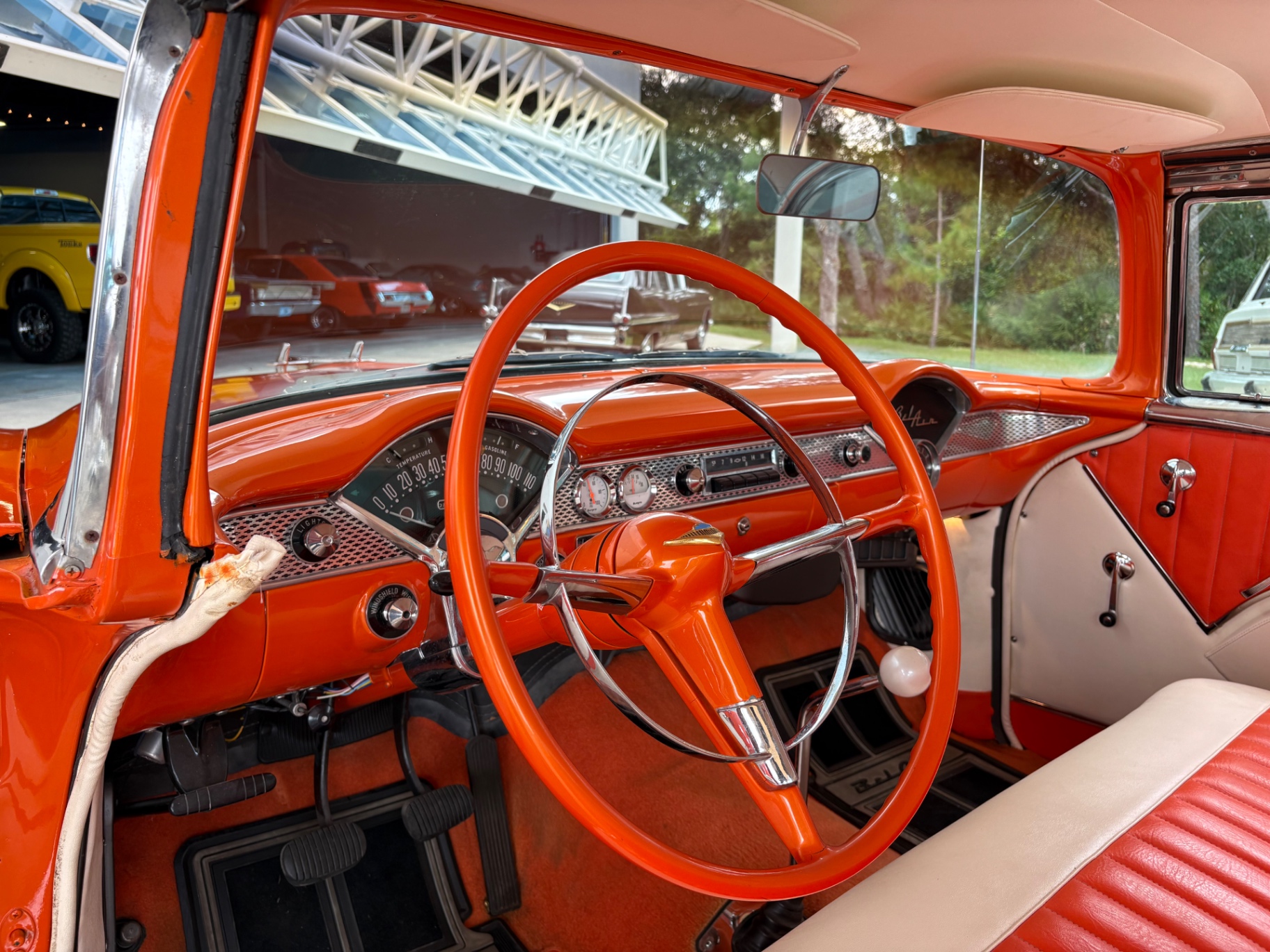
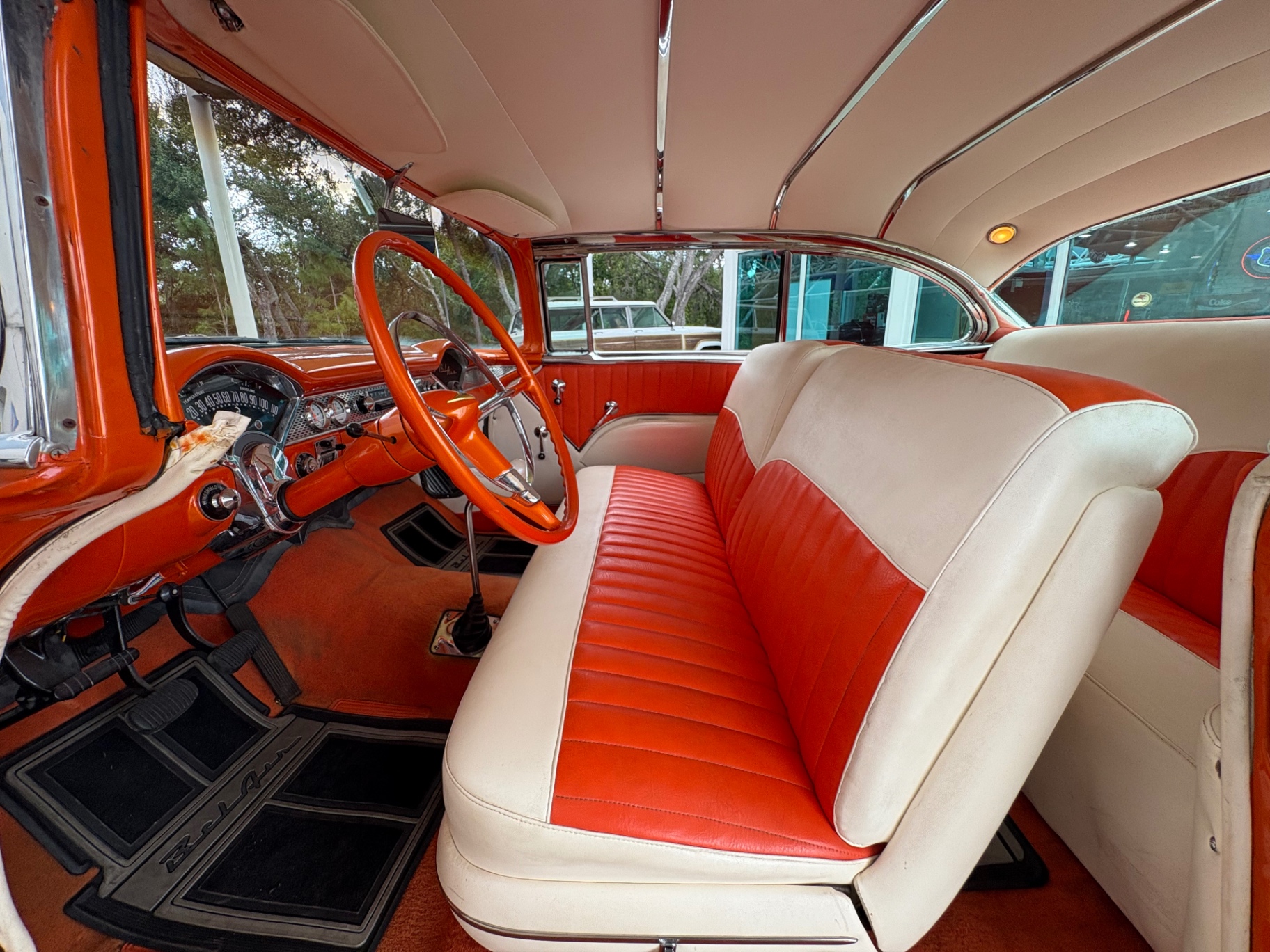
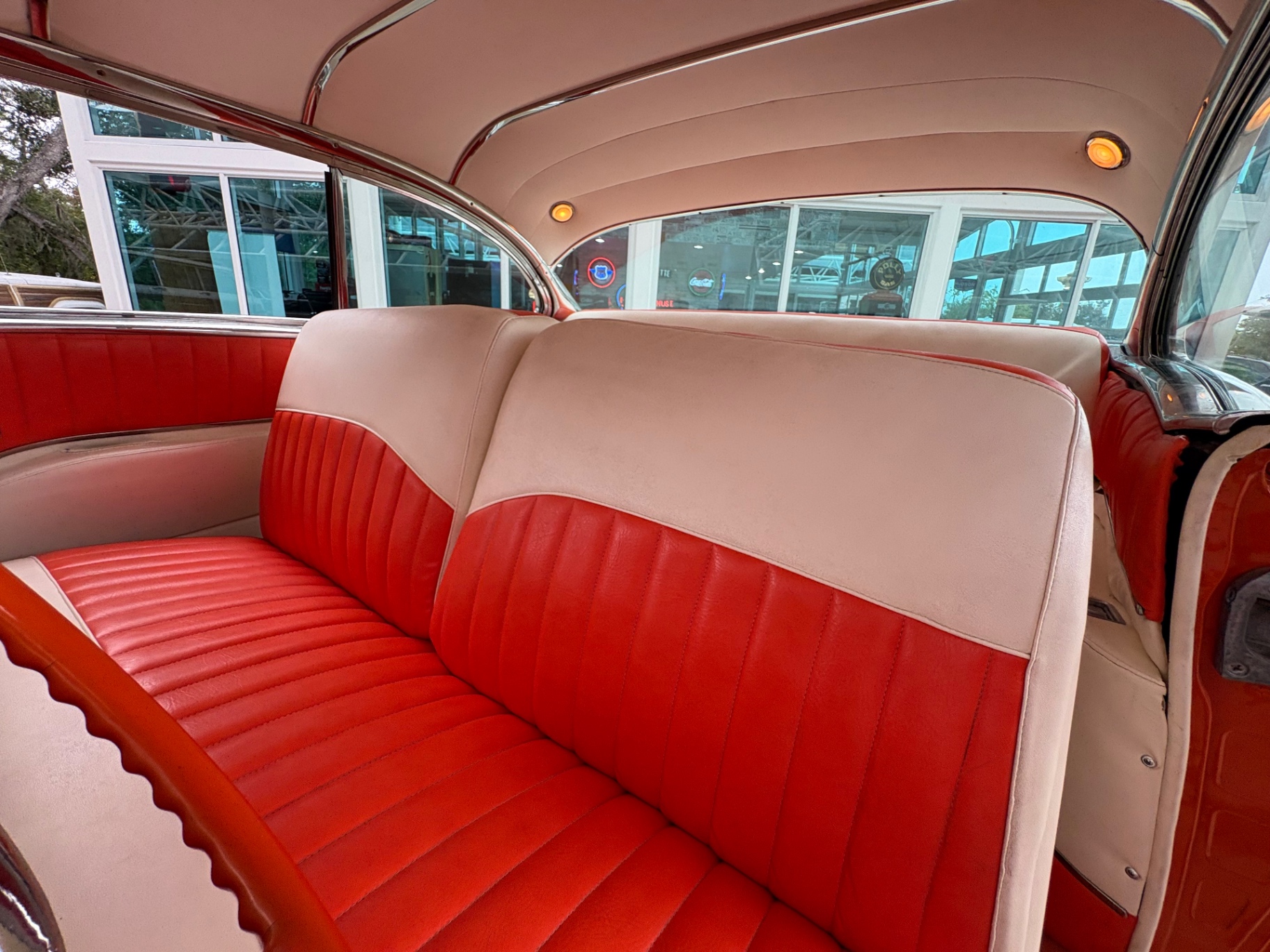
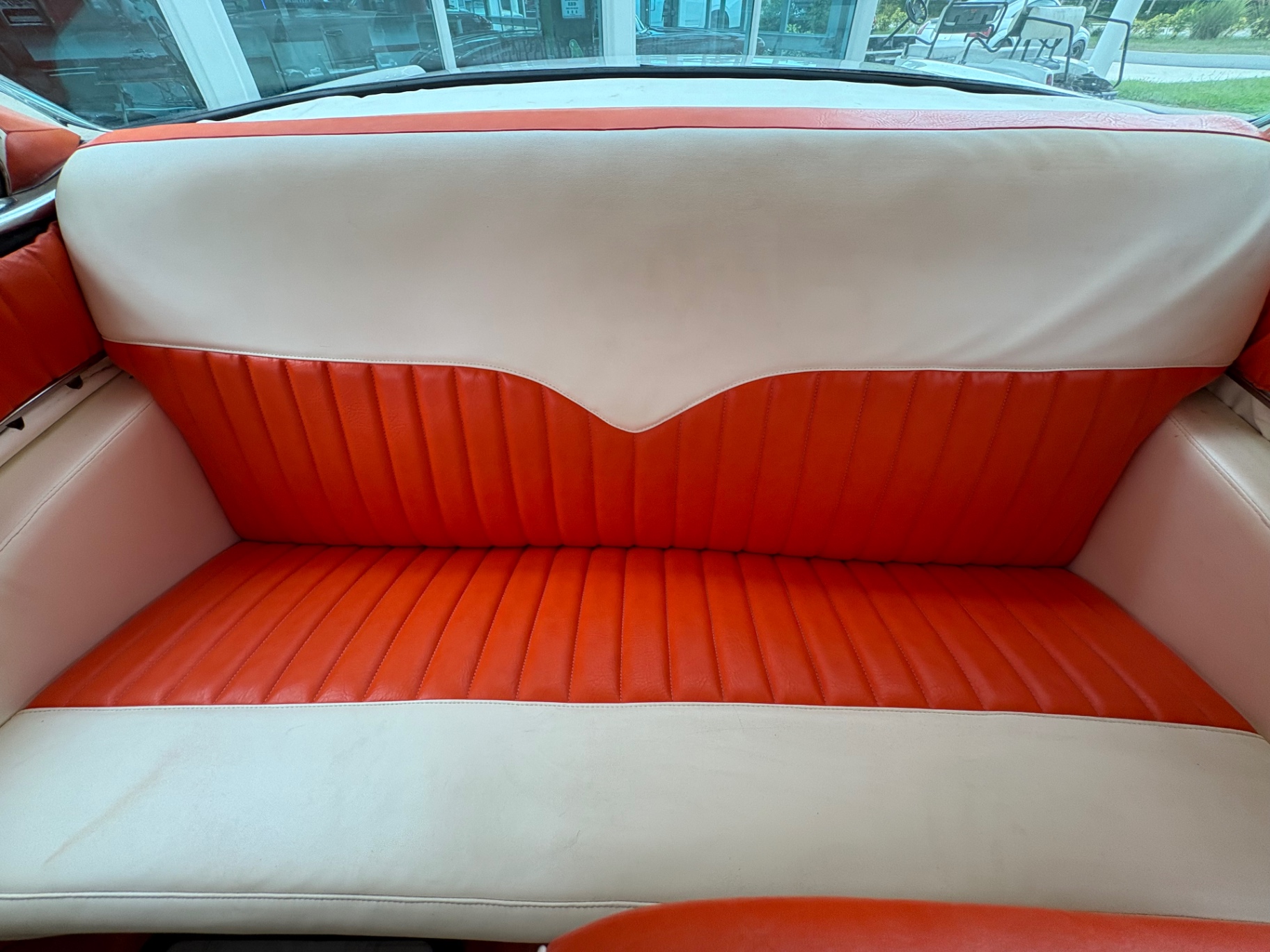
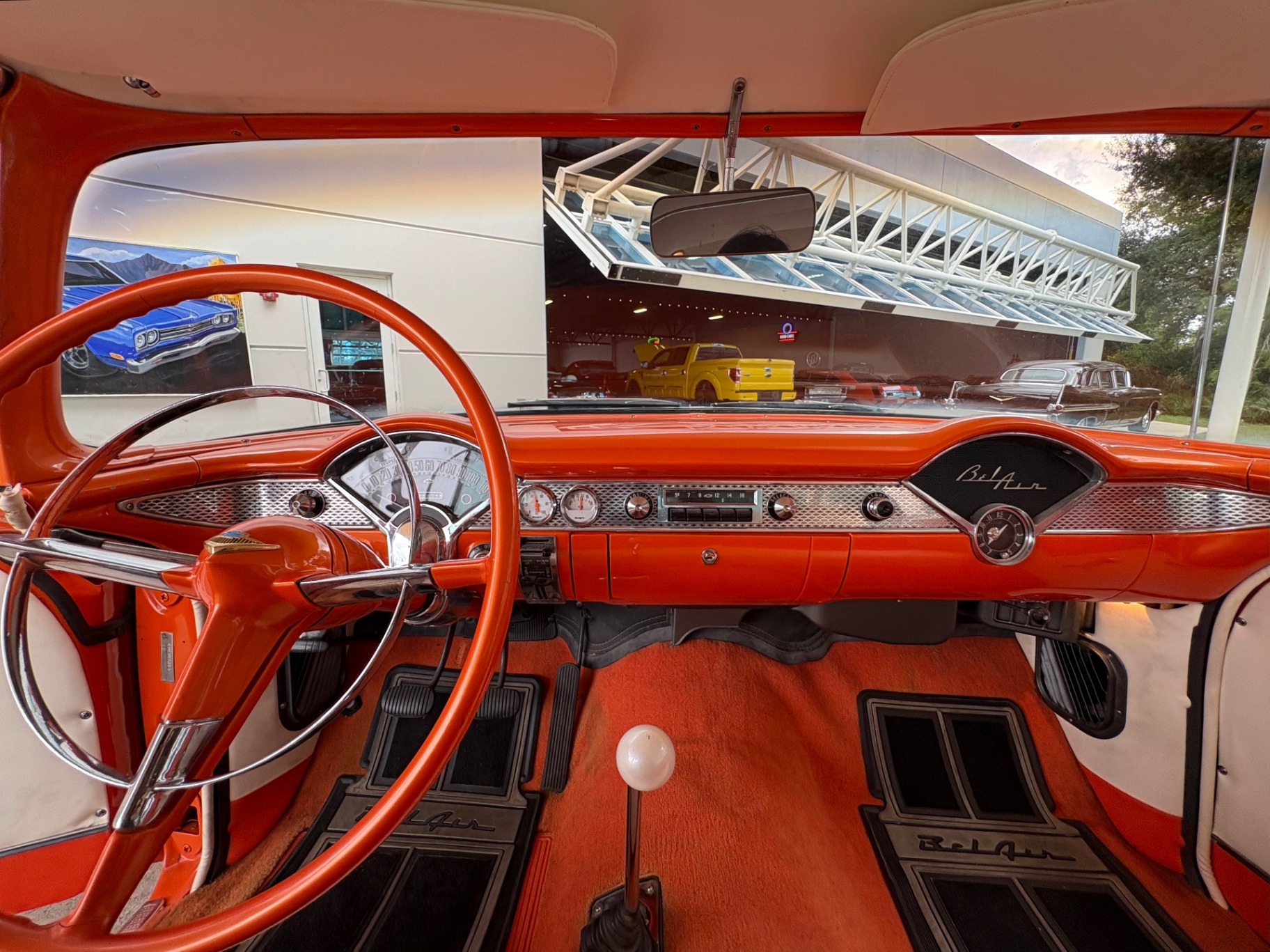
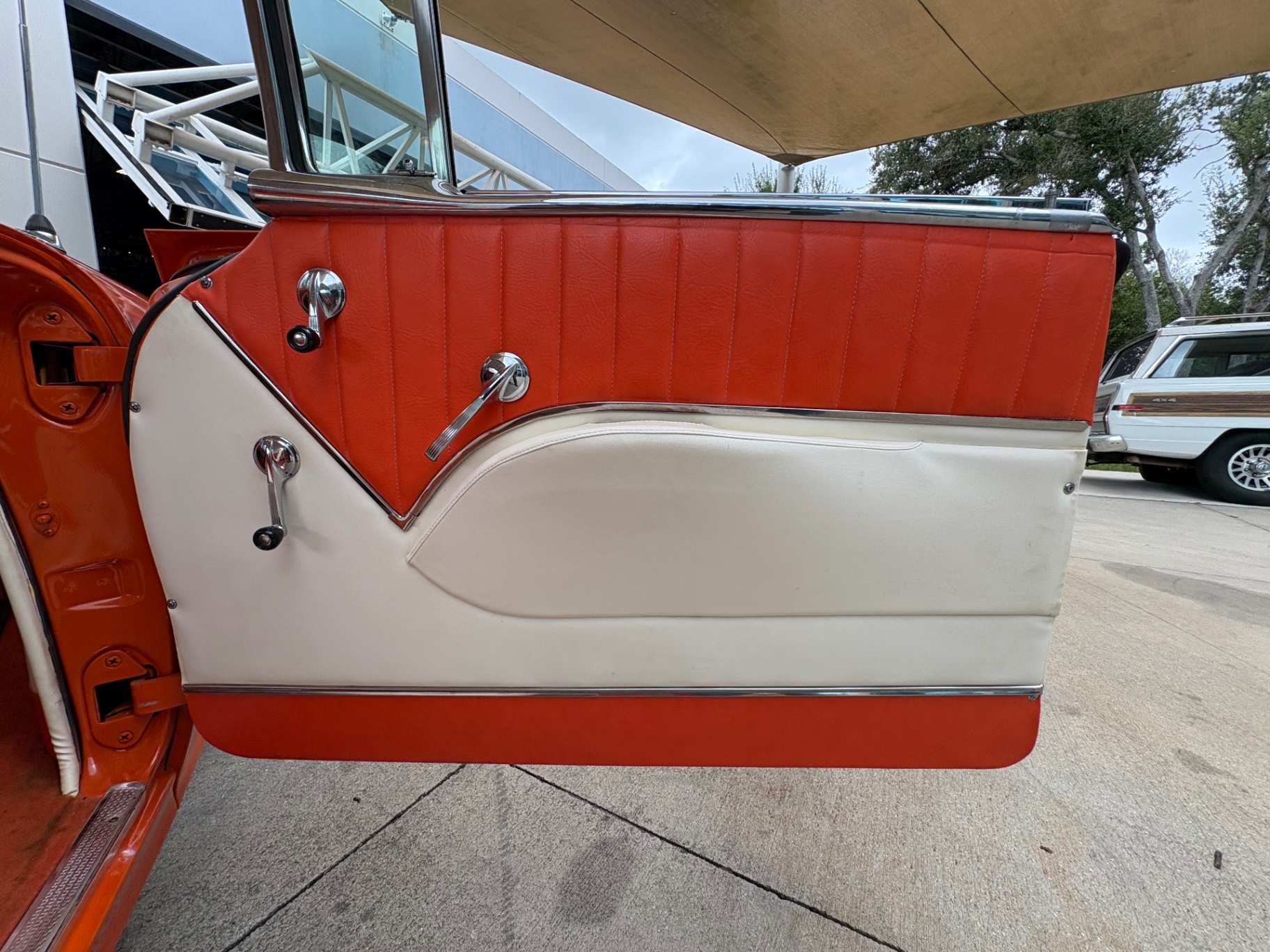
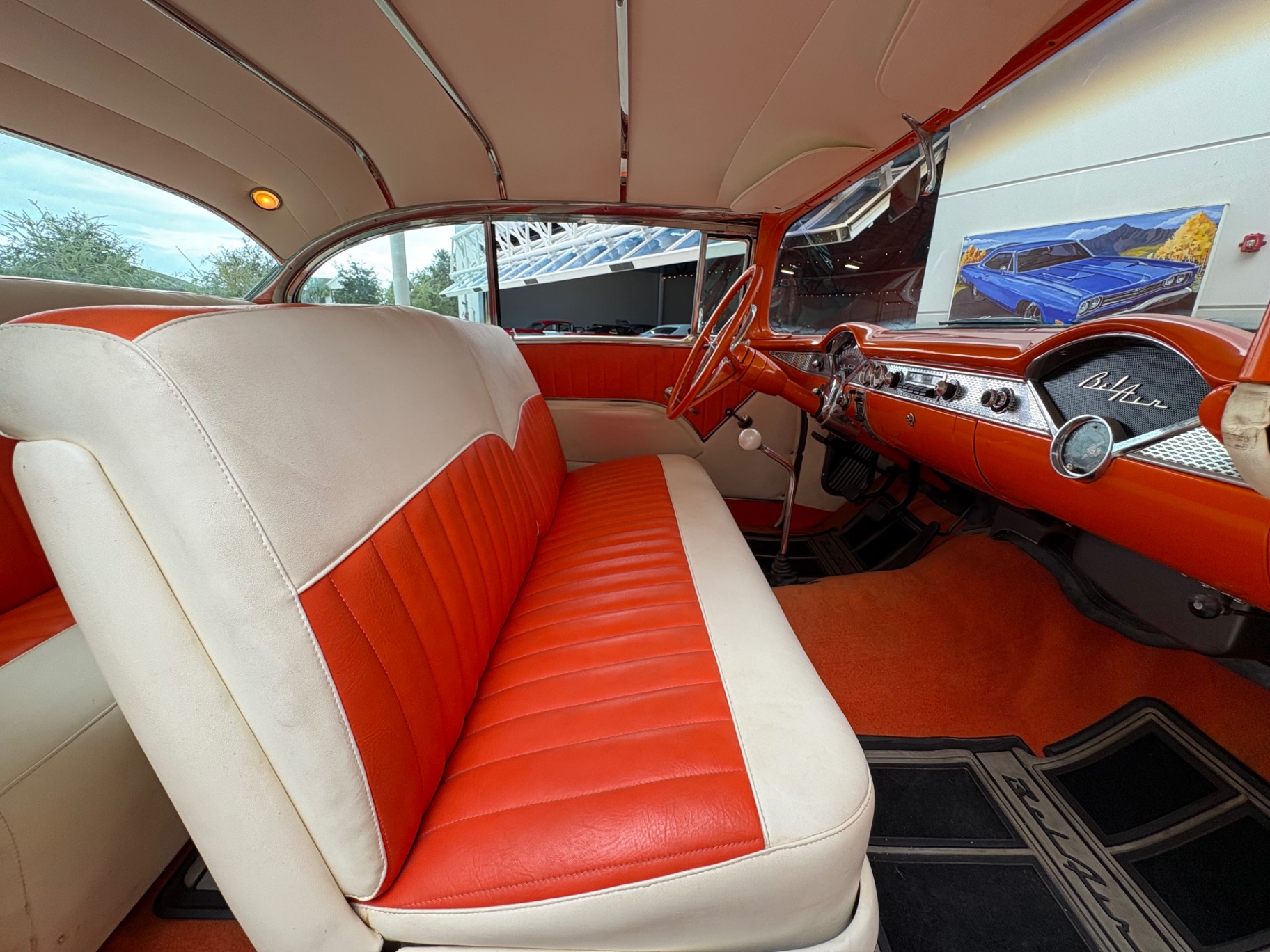
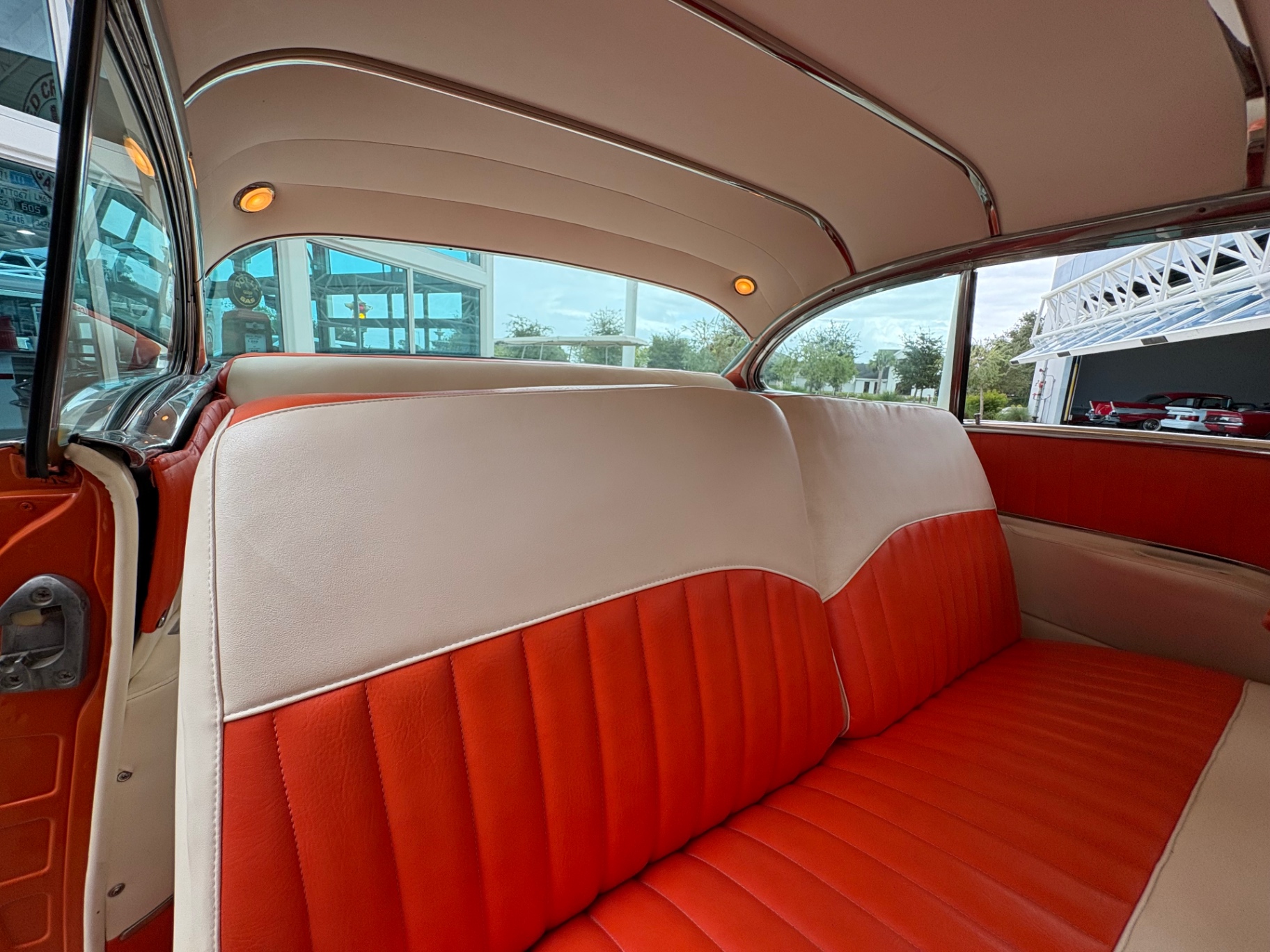
The interior of this 1955 Chevrolet Bel Air was redone by M&M Interiors using a custom two-tone orange and white vinyl scheme that mirrors the exterior color split. Front and rear bench seats are upholstered in orange and white vinyl with vertical stitch pleating — a pattern that complements the car's 1950s design language while using higher-quality materials than the original. The door panels follow the same two-tone split, finished with chrome trim strips along the lower edge. Everything from the seats to the door cards to the carpet to the headliner reads as a single coherent color scheme, which is the mark of a quality custom interior job rather than a piecemeal collection of aftermarket parts.
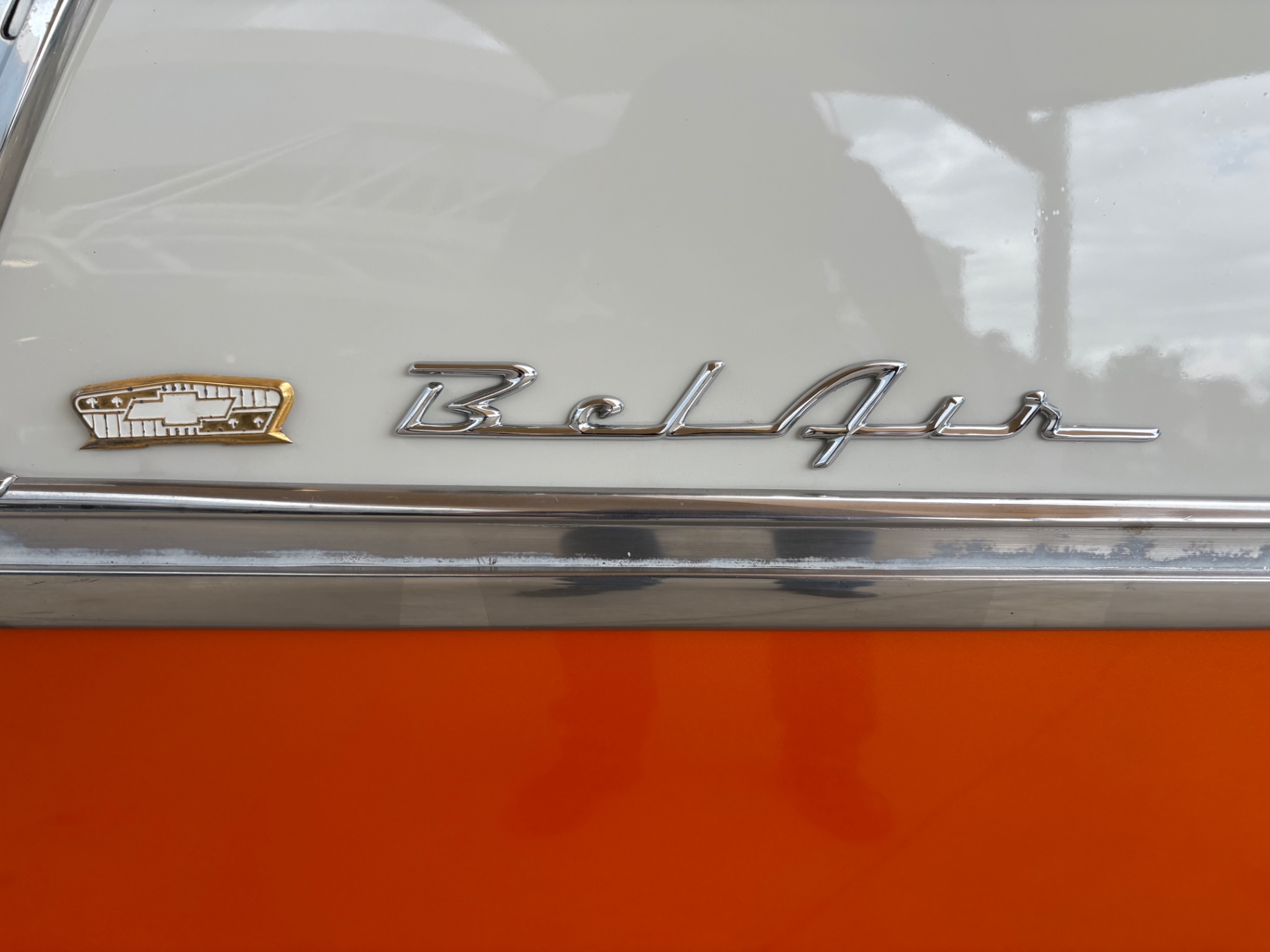
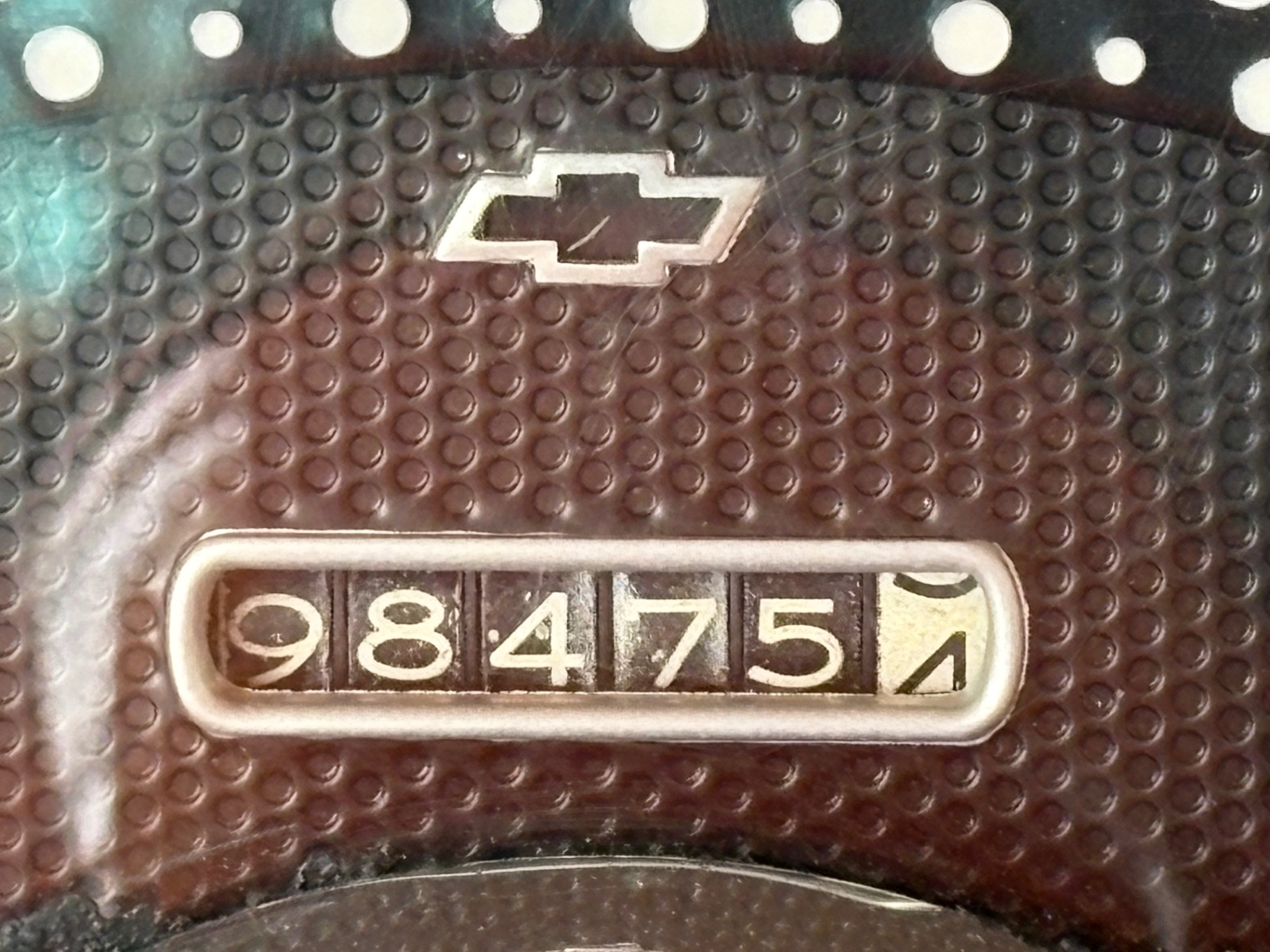
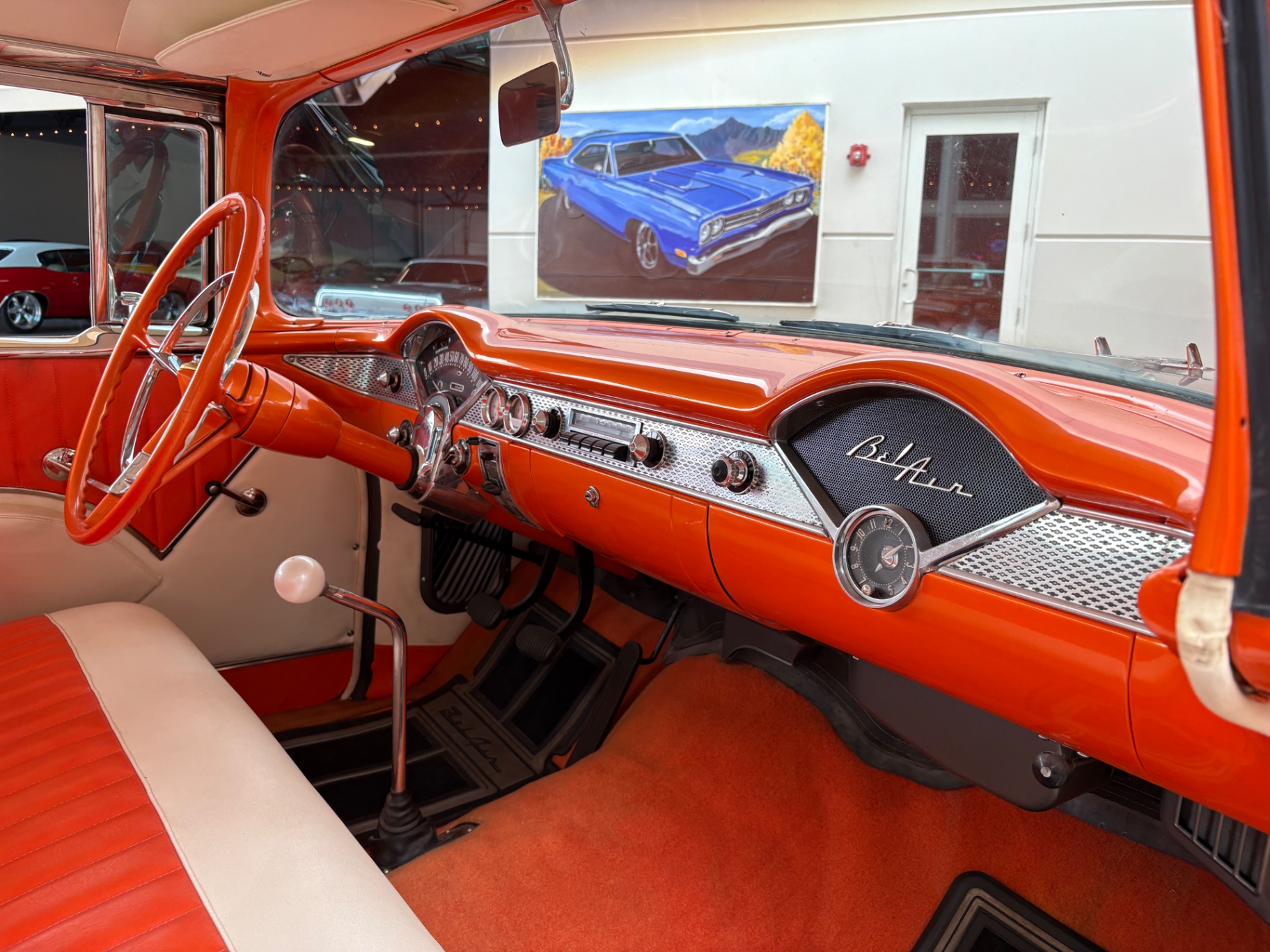
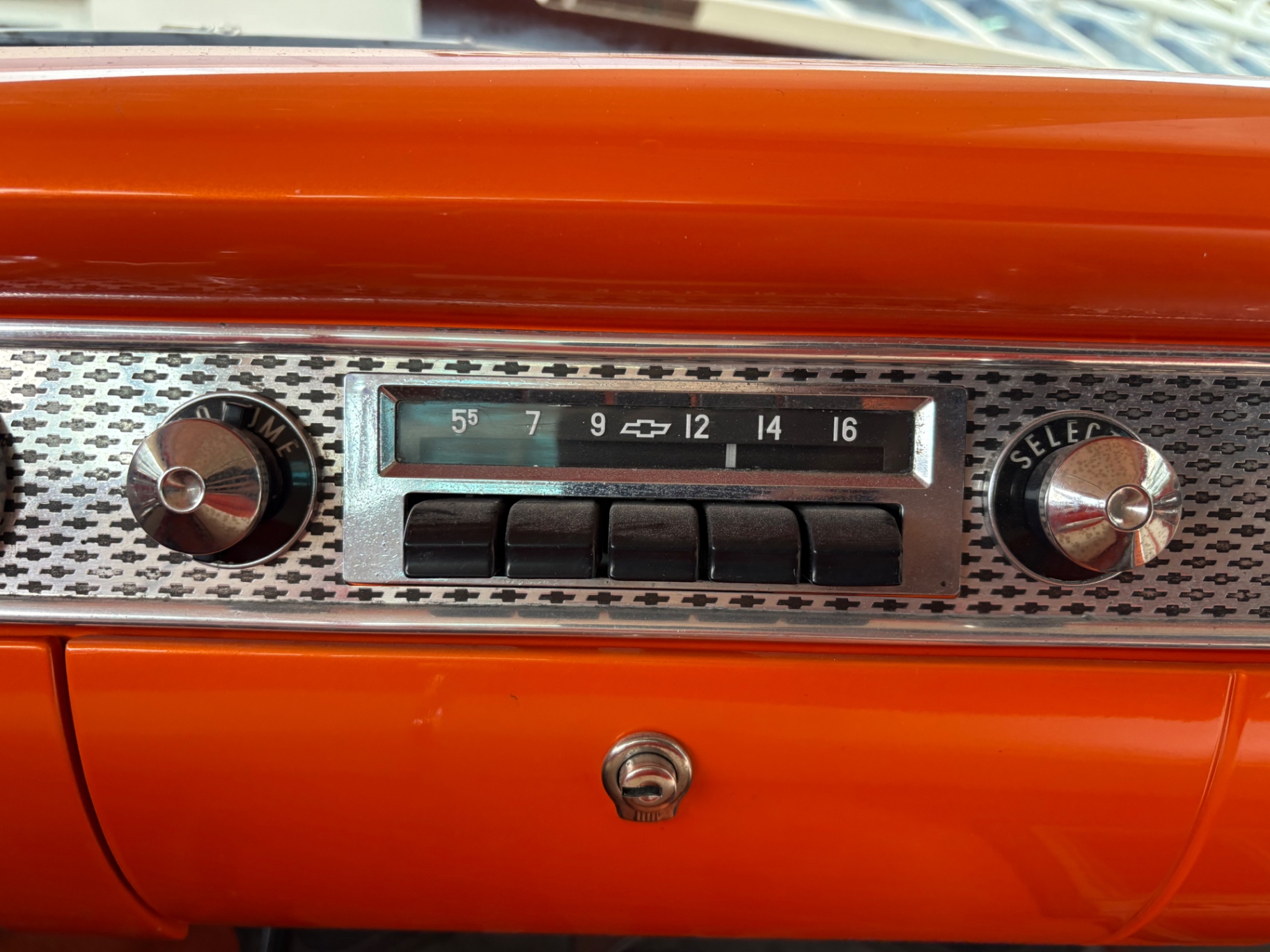
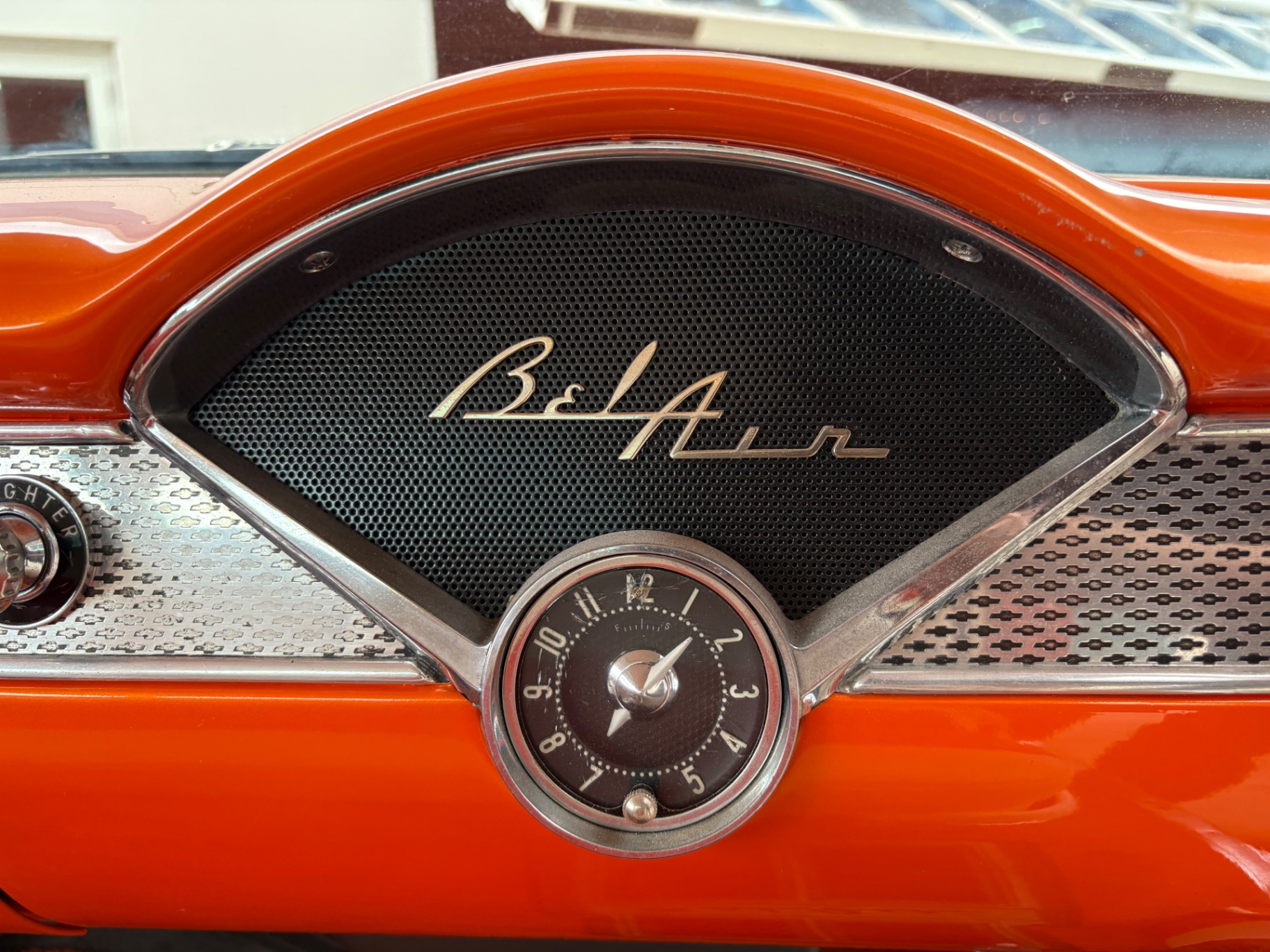
The dash remains faithful to the original 1955 Bel Air layout, which was itself one of the design highlights of the car. Chevrolet gave the 1955 Bel Air a fully symmetrical instrument panel with two large circular binnacles flanking a central speaker grille capped with the Bel Air script badge in chrome — a design that interior designers still reference today for its balance and visual appeal. This car retains the original radio, a correct push-button AM unit with the bowtie emblem on the dial face, and the original clock mounted in the passenger-side speaker grille. Both are present and correct, preserving the factory dashboard aesthetic.
Built into the dash are two Dolphin auxiliary gauges — additional instrumentation for monitoring the engine's vitals beyond what the stock speedometer and fuel gauge provide. These are positioned cleanly without cutting into or damaging the original dash structure in a way that would be hard to reverse. The original Bel Air steering wheel is in place, color-matched to the interior in orange, and the floor-mounted 3-speed shifter rises from the transmission tunnel topped with a white ball shift knob that contrasts cleanly against the orange carpet. Bel Air script floor mats protect the color-matched carpet front and rear. Rear courtesy lights are fitted in the headliner, adding a detail that improves the car's usability at night and adds a finished look to the back seat area.
Exterior
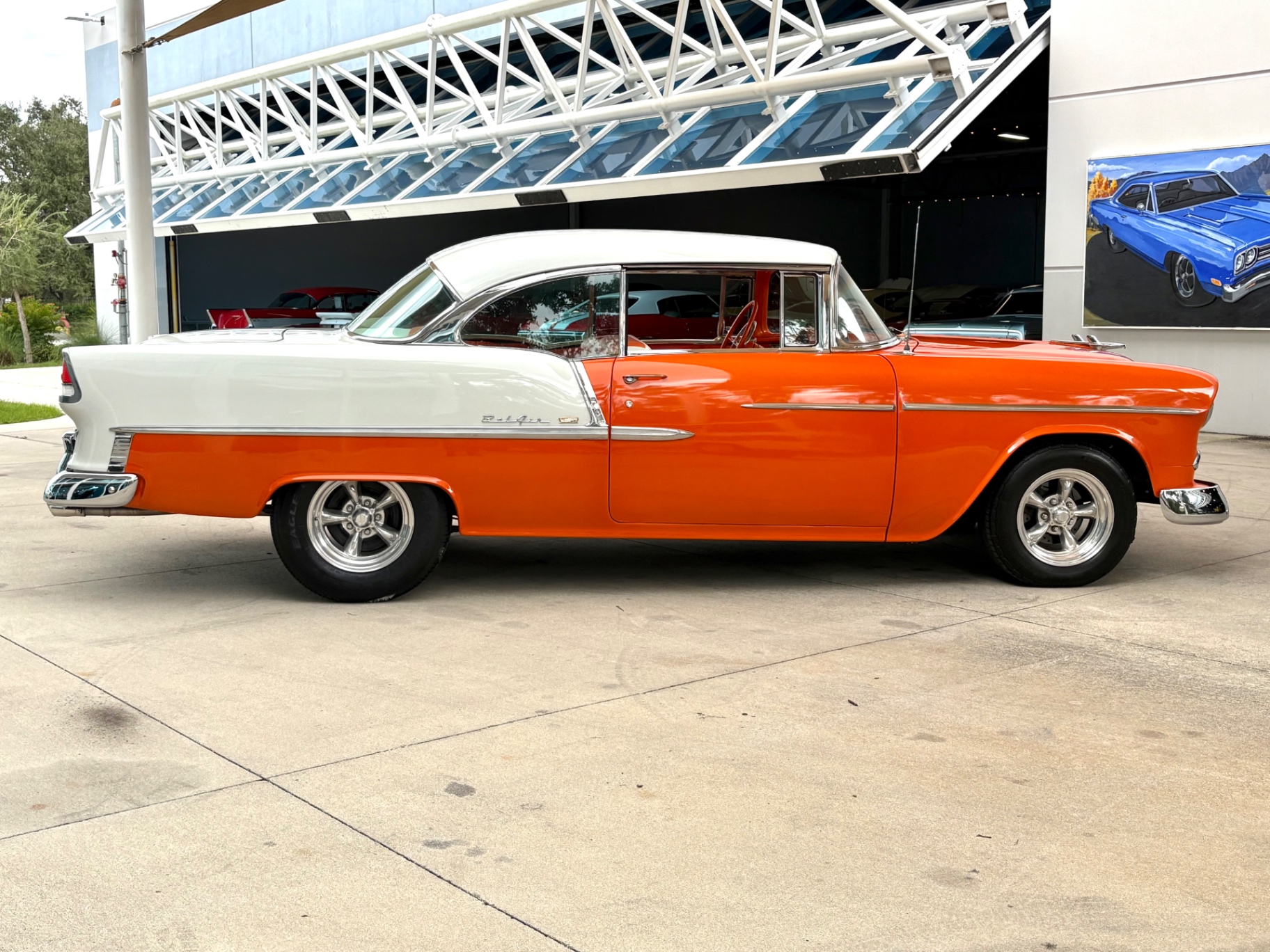
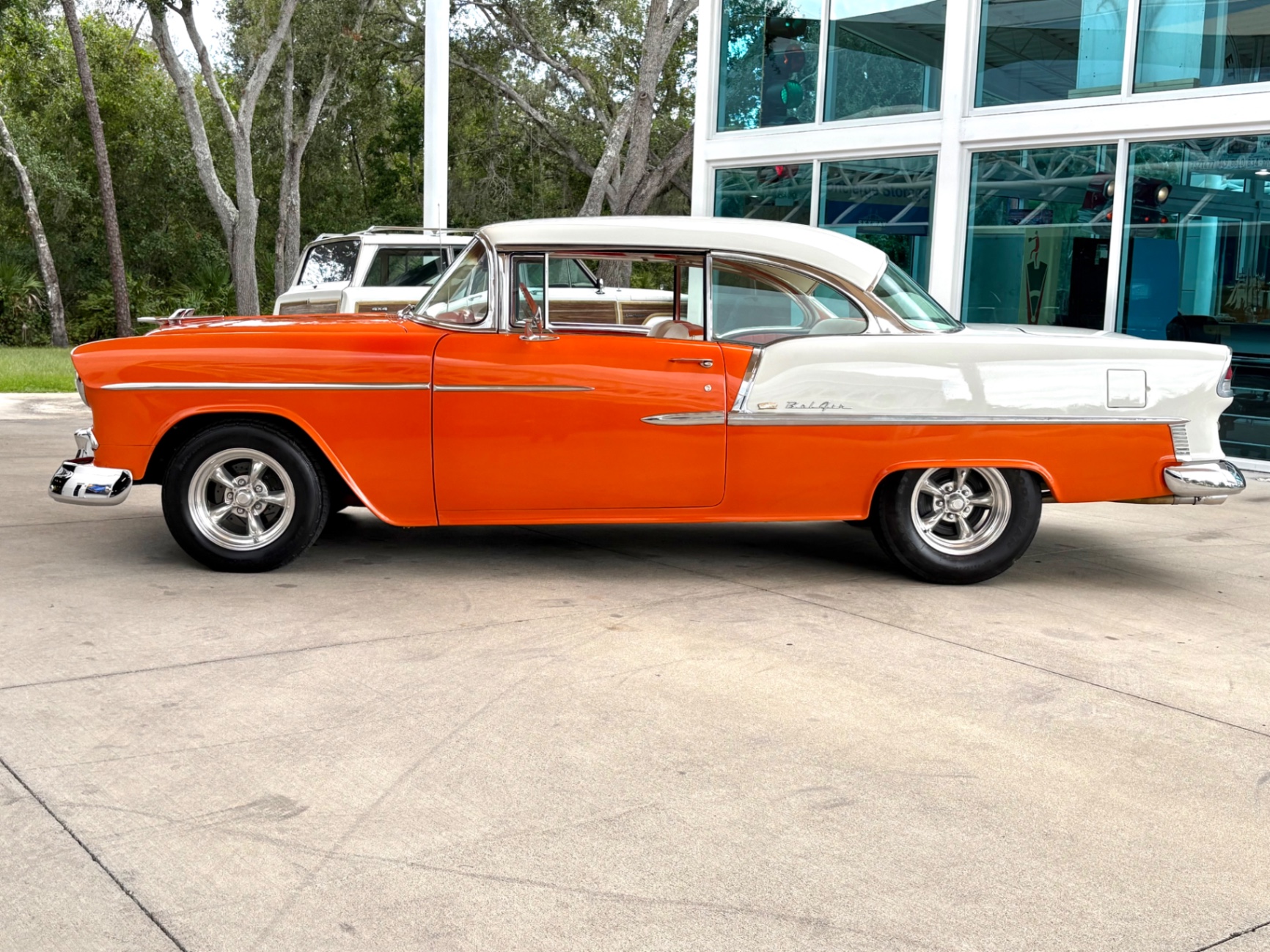
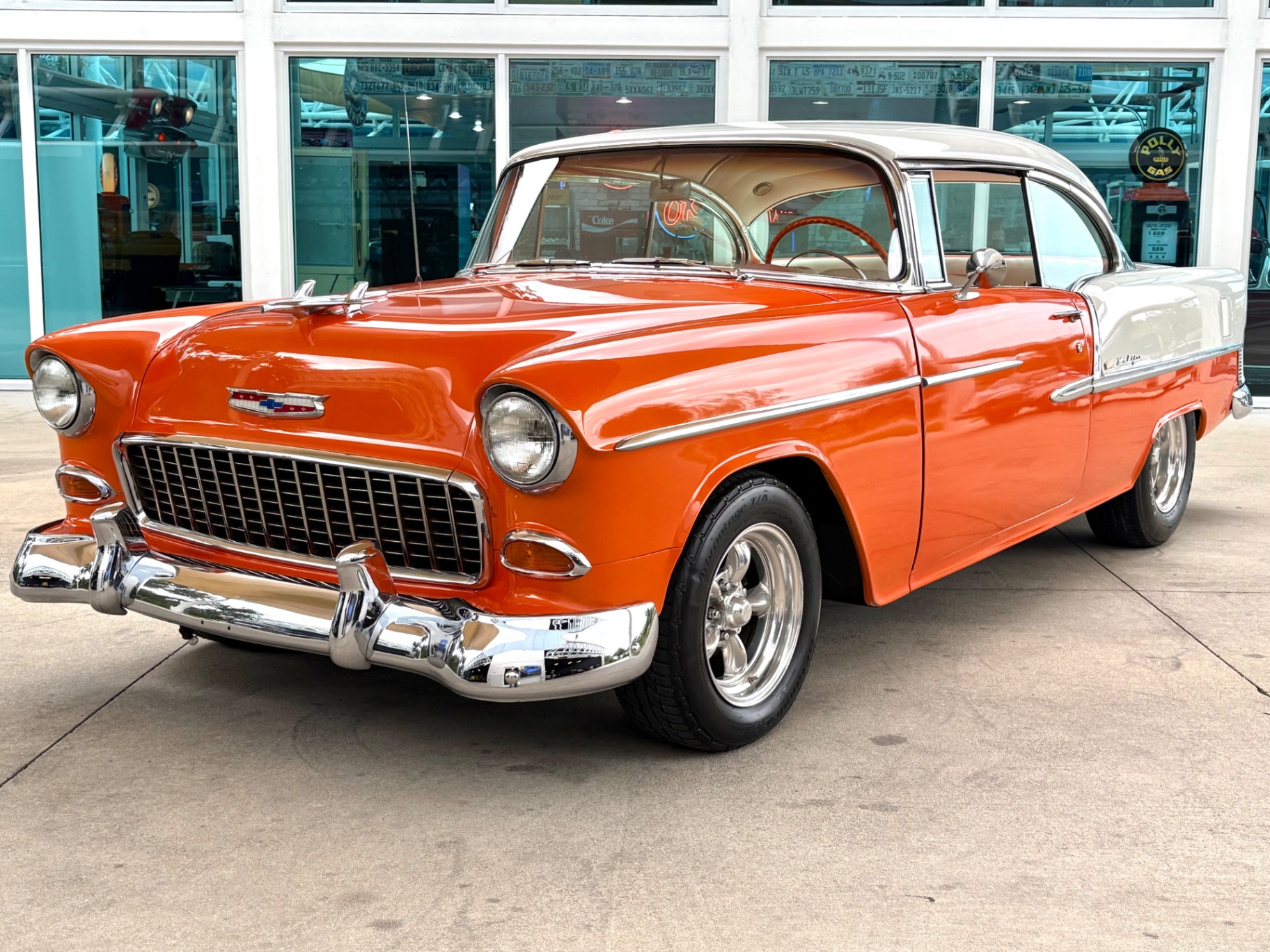
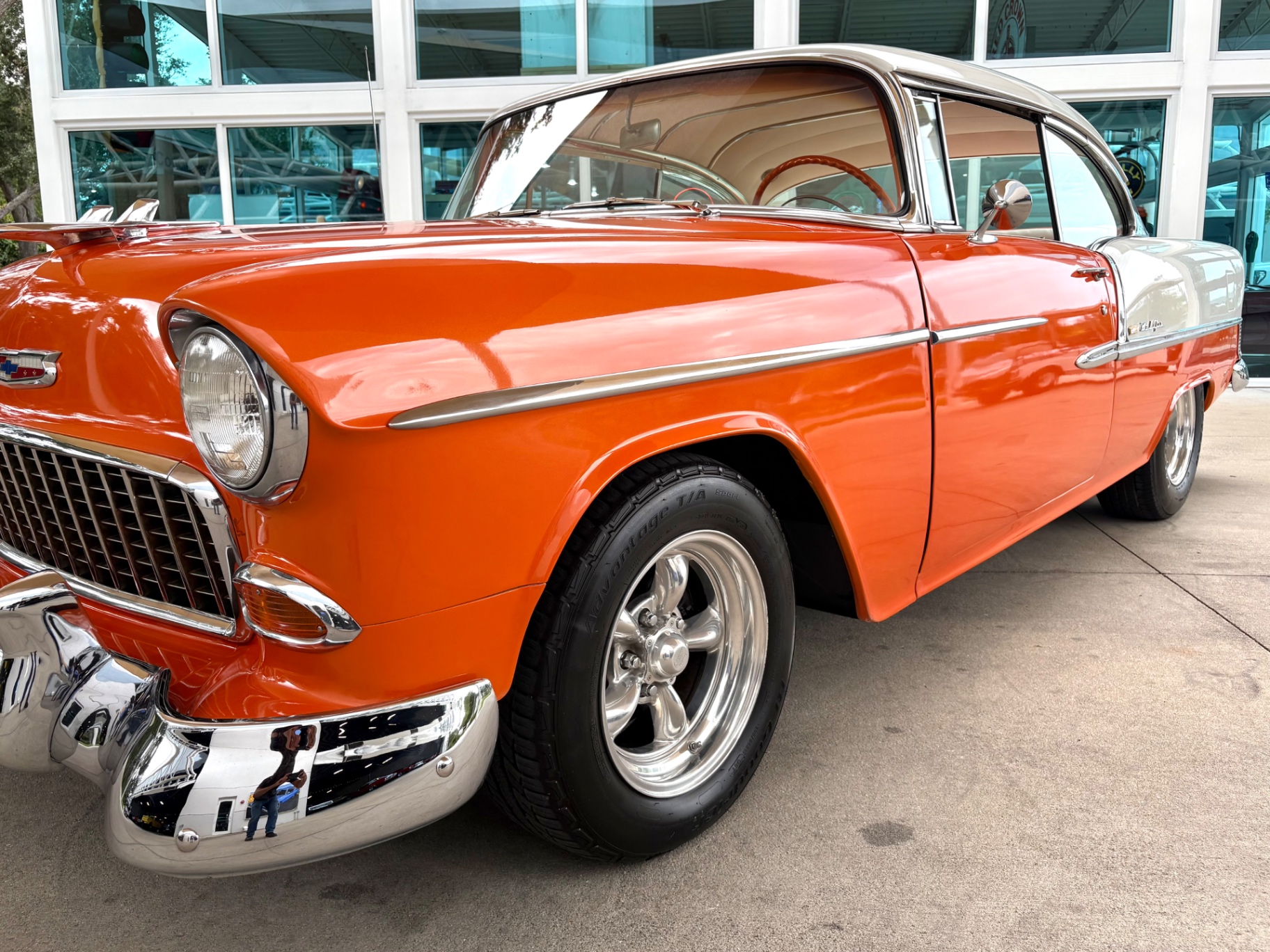
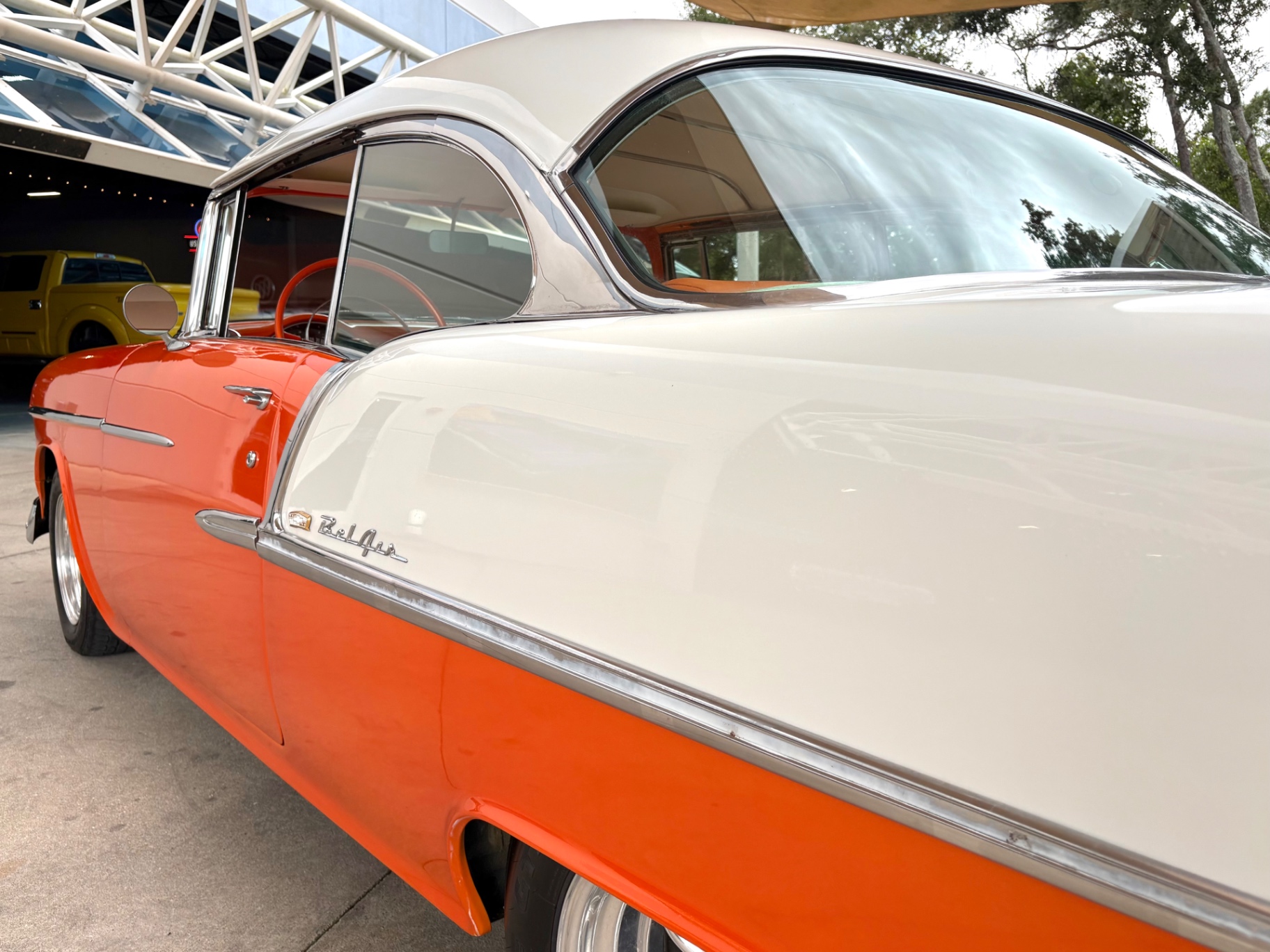
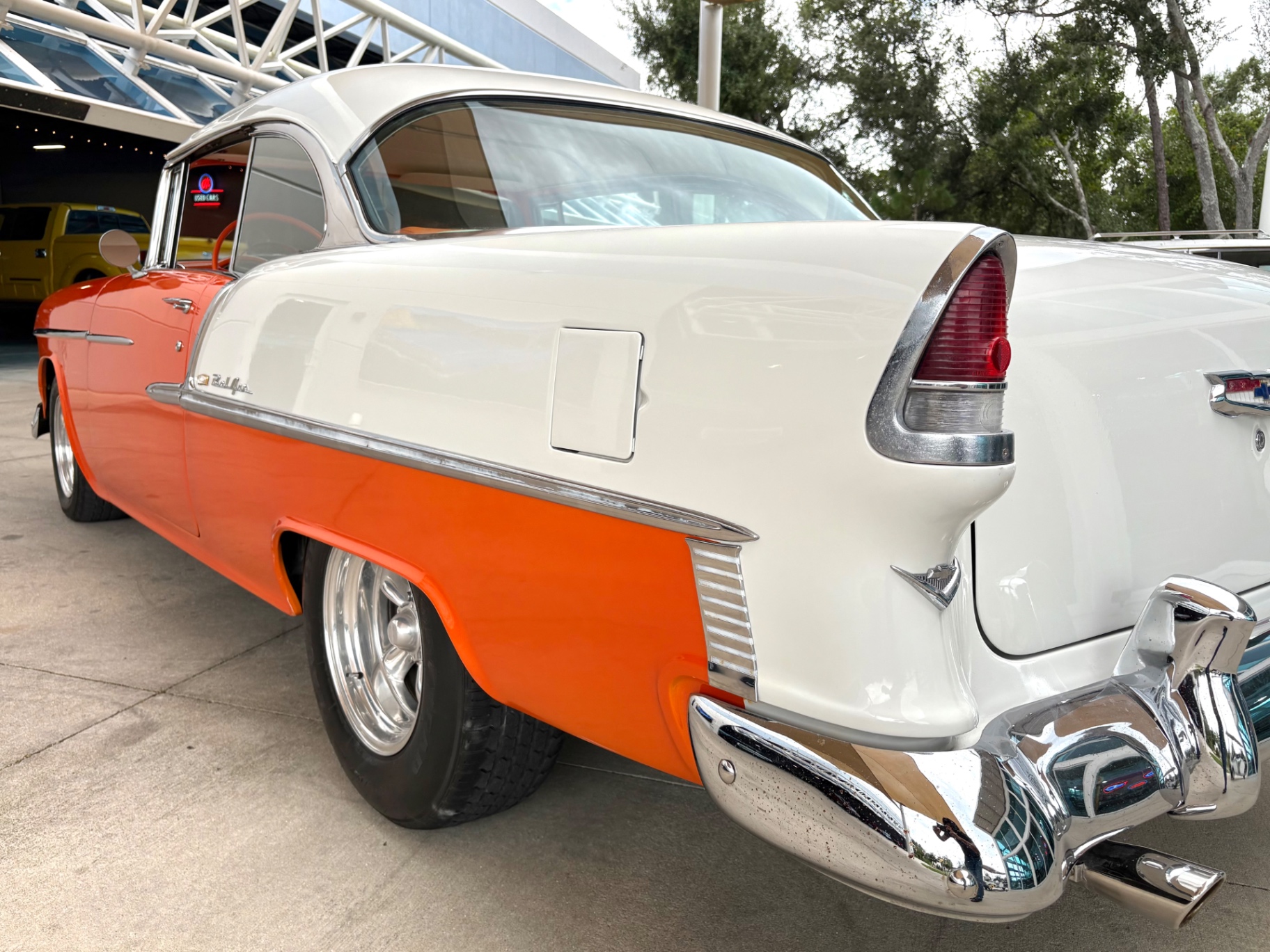
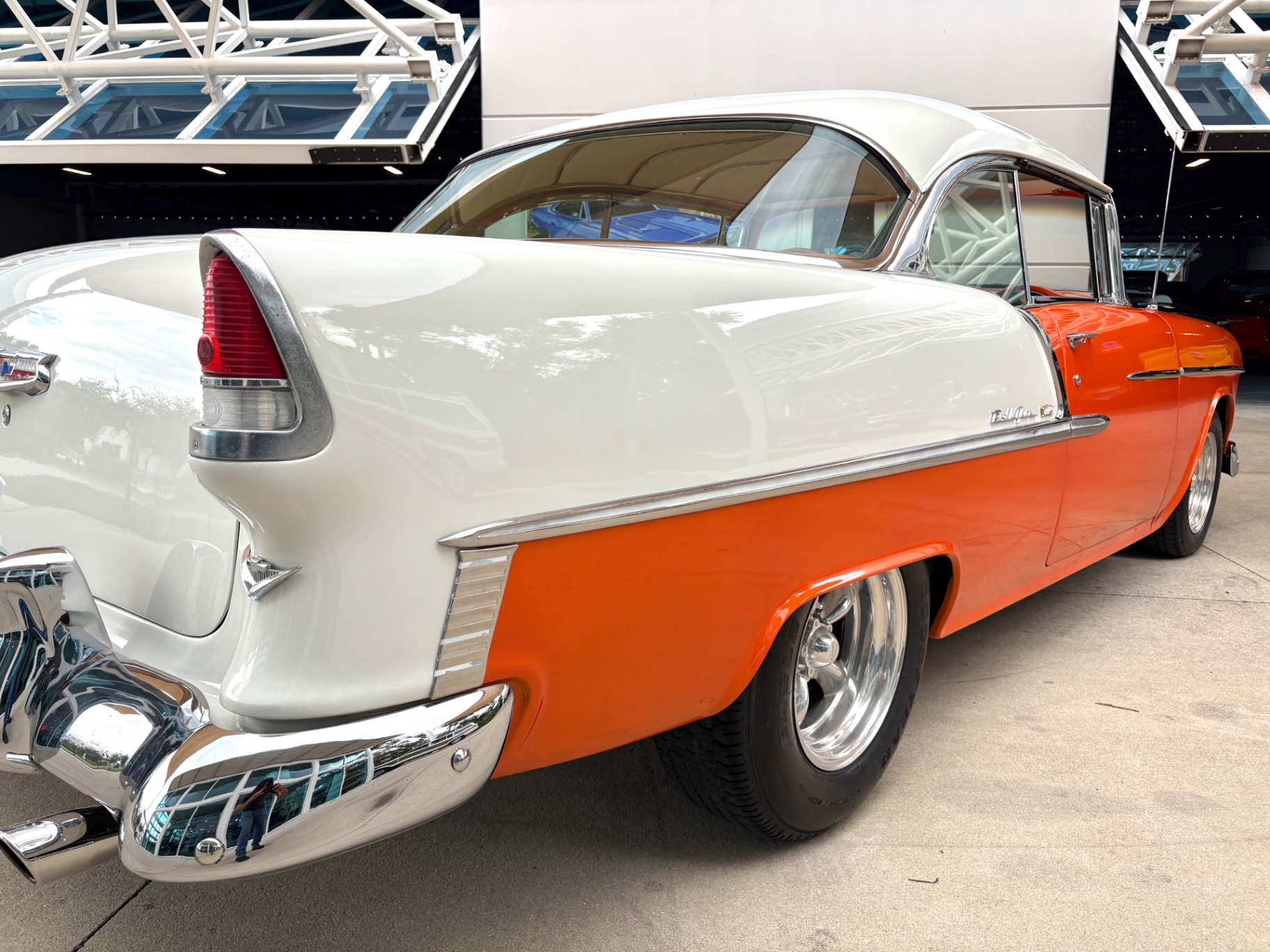
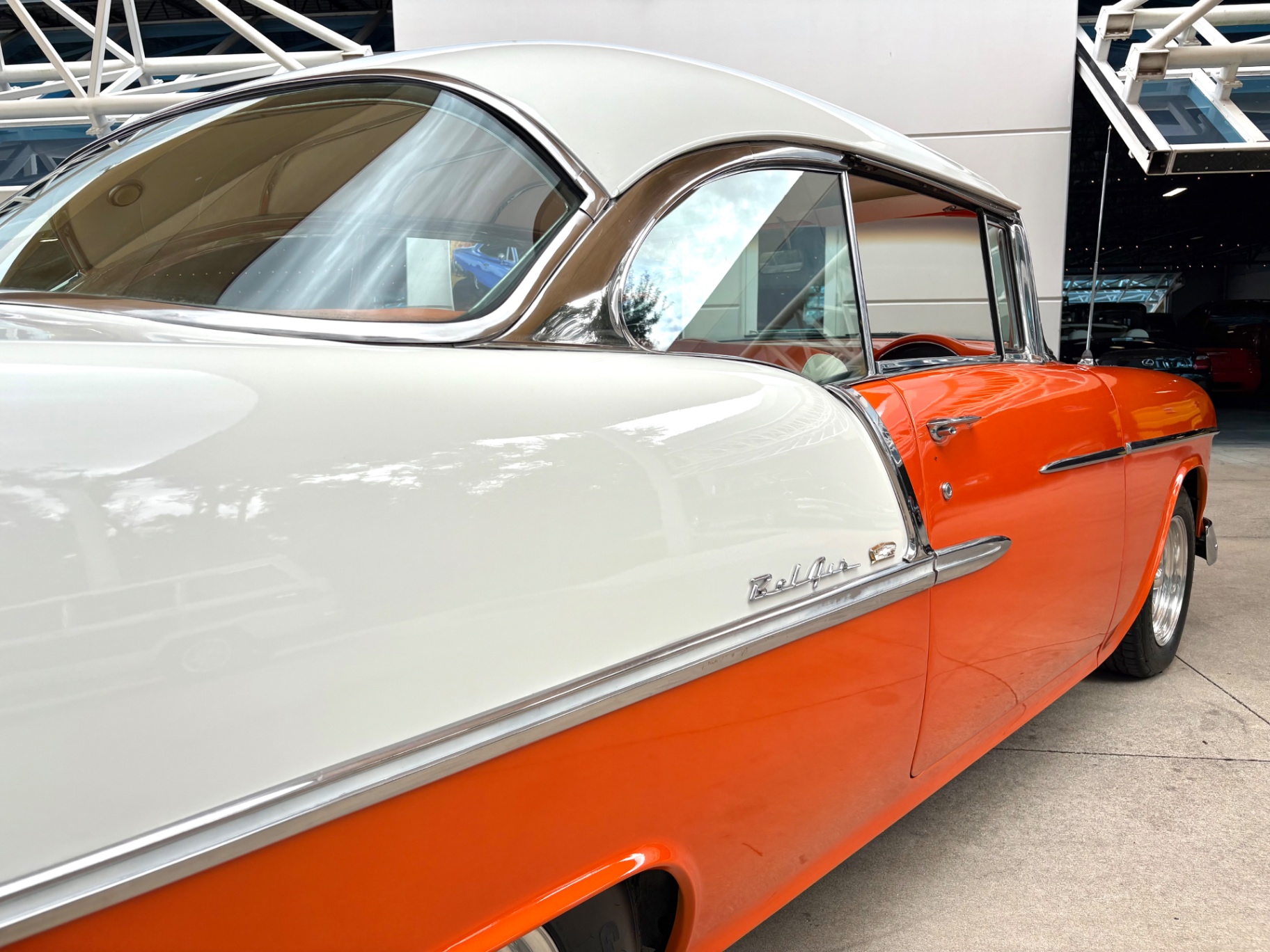
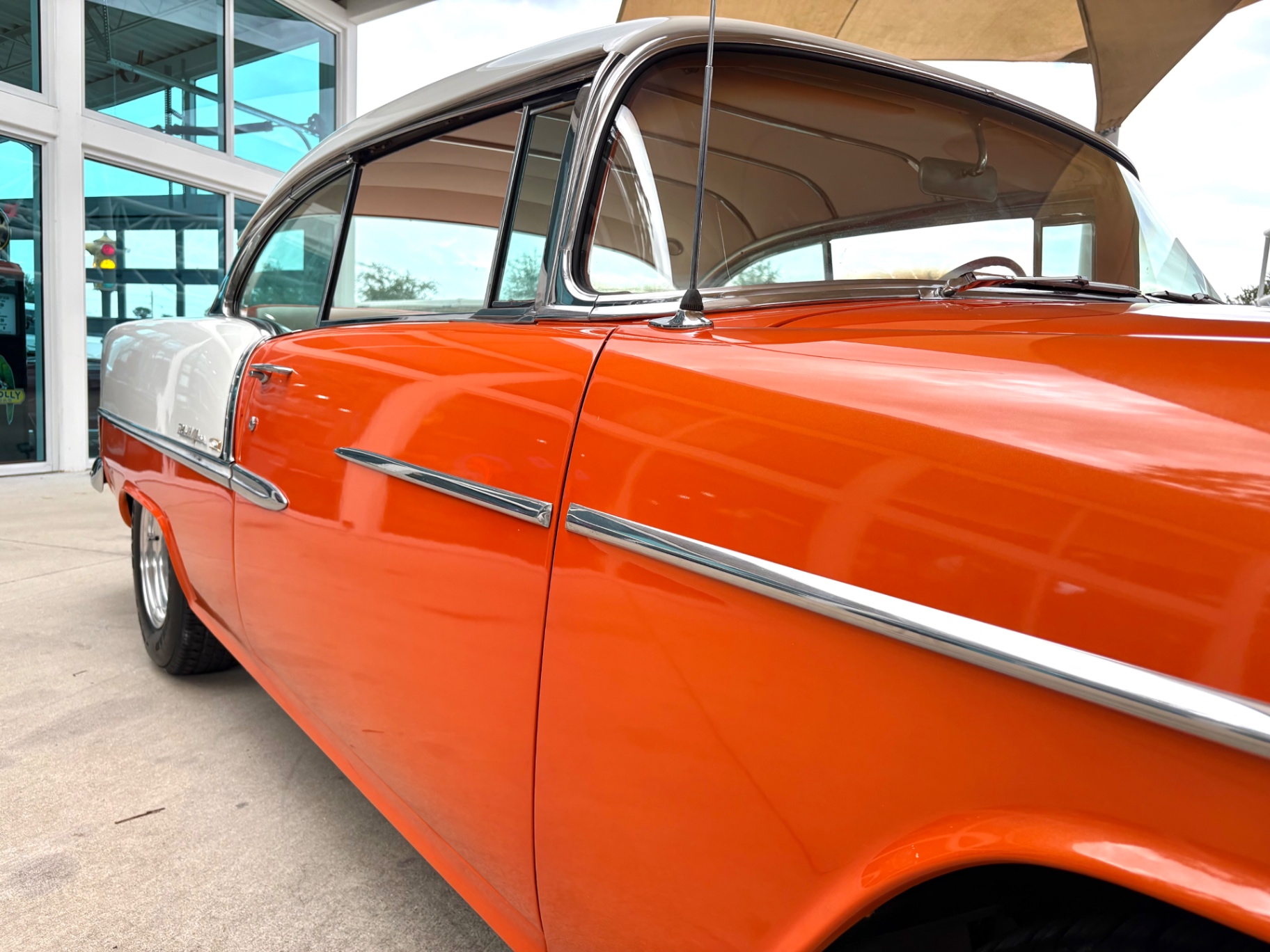
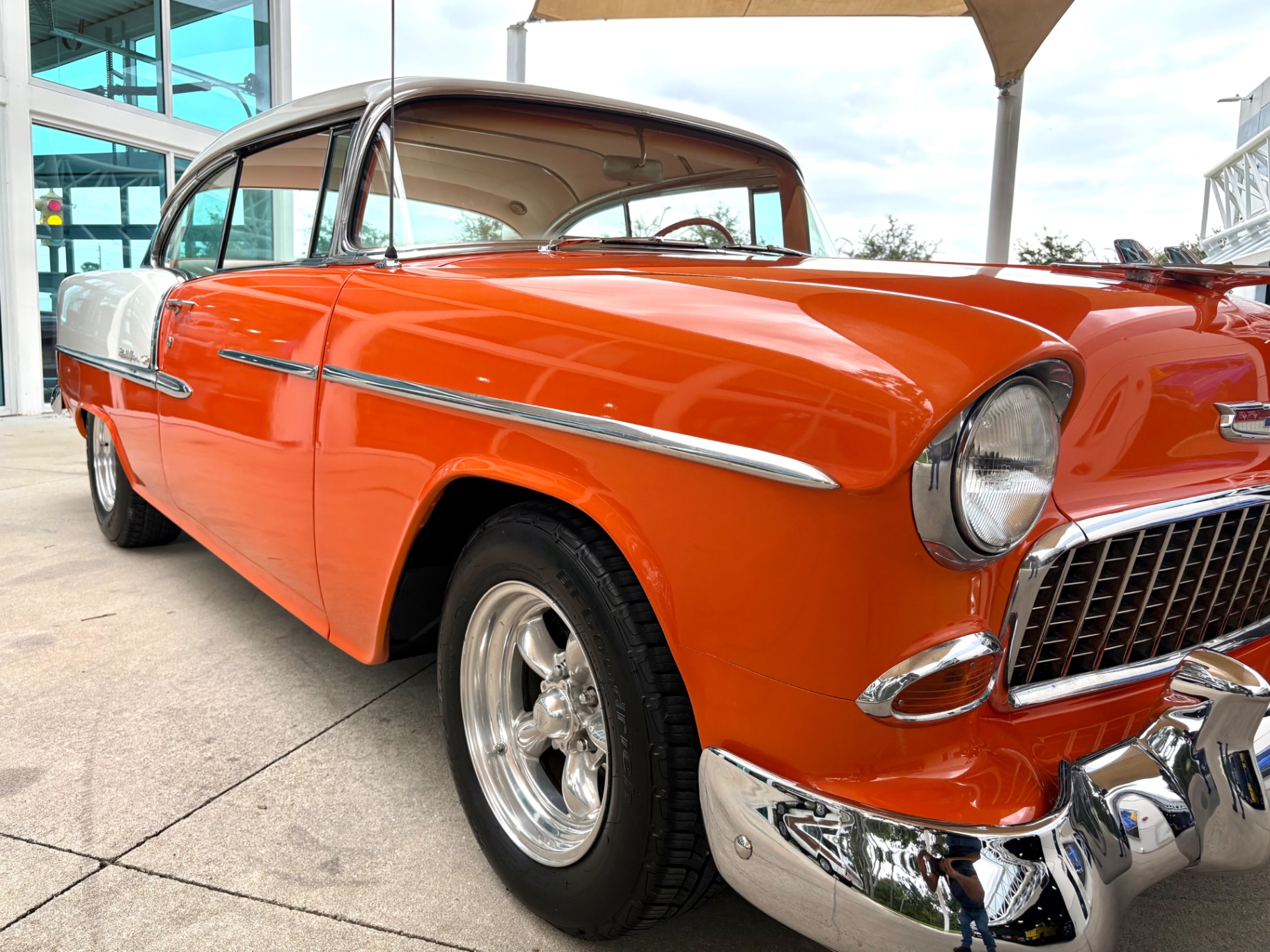
The 1955 Chevrolet Bel Air arrived from the factory with a wide selection of two-tone color options — Chevrolet's design team understood that the new body's beltline and trim separation made it ideal for contrasting colors. This car carries a custom orange and white two-tone that works within that original design framework. The orange occupies the lower body, hood, and front end, while white covers the roof, upper body, and rear deck — a split that follows the natural lines Chevrolet built into the body. Chrome trim along the beltline separates the two colors cleanly.
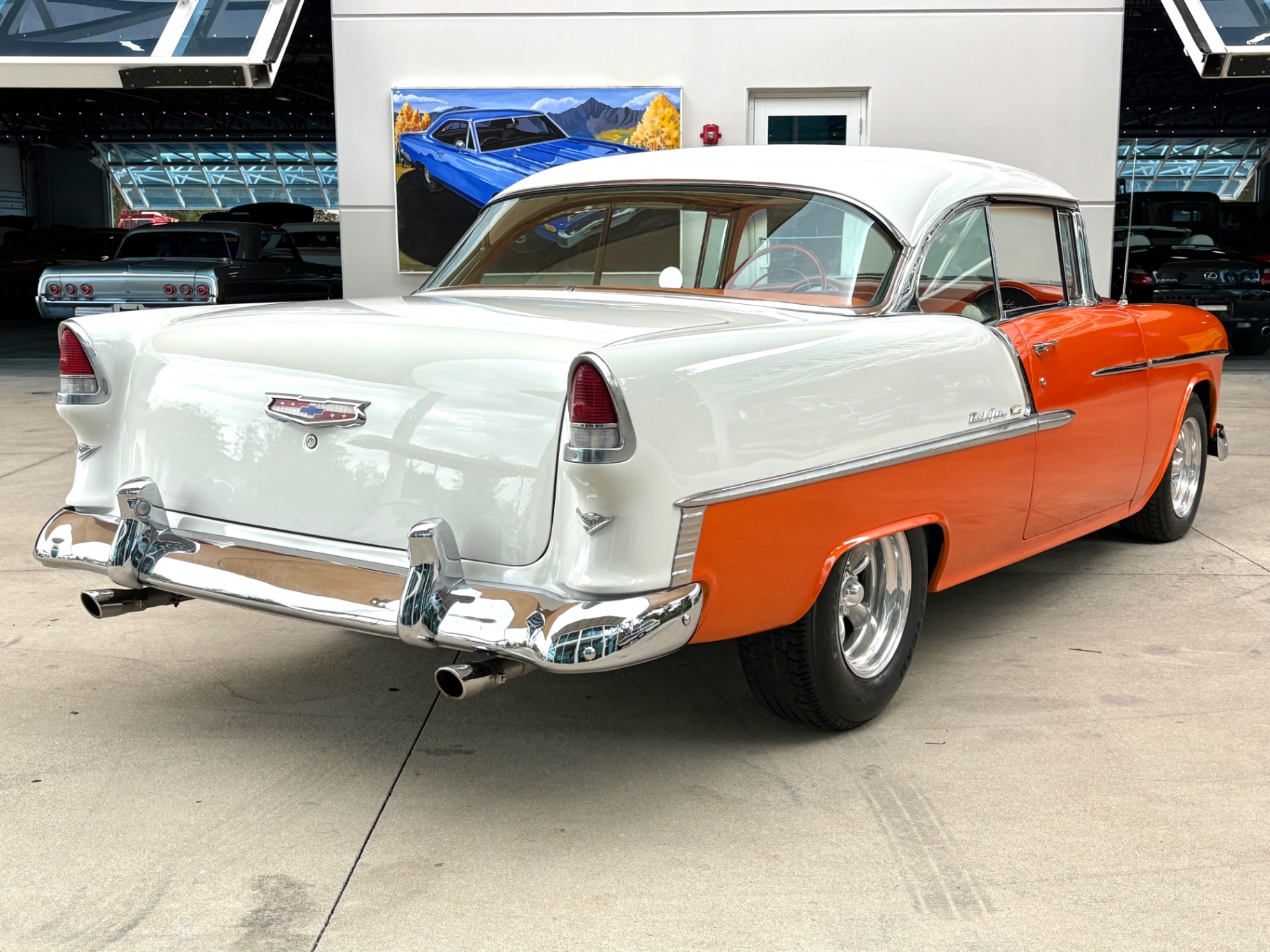
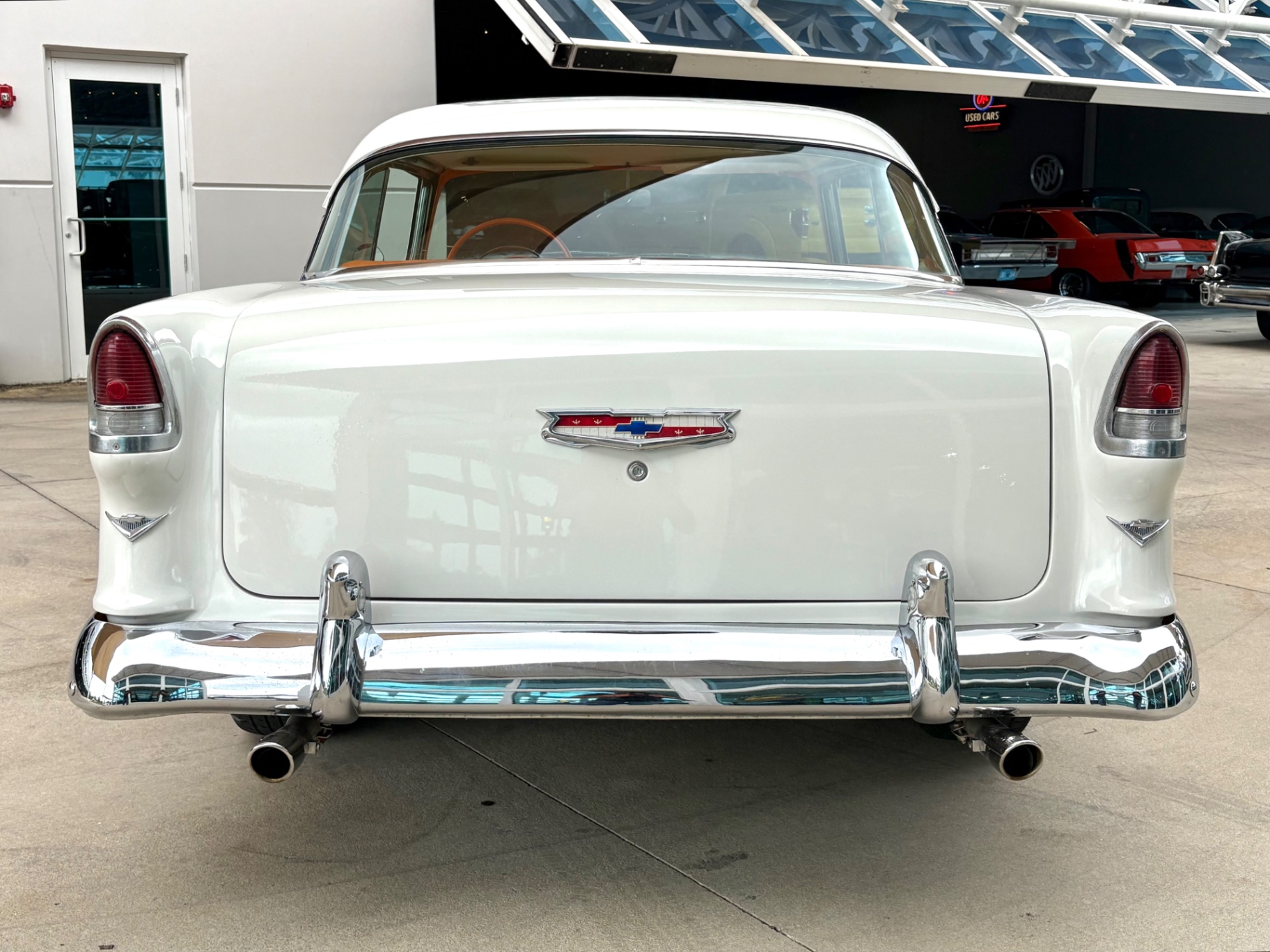
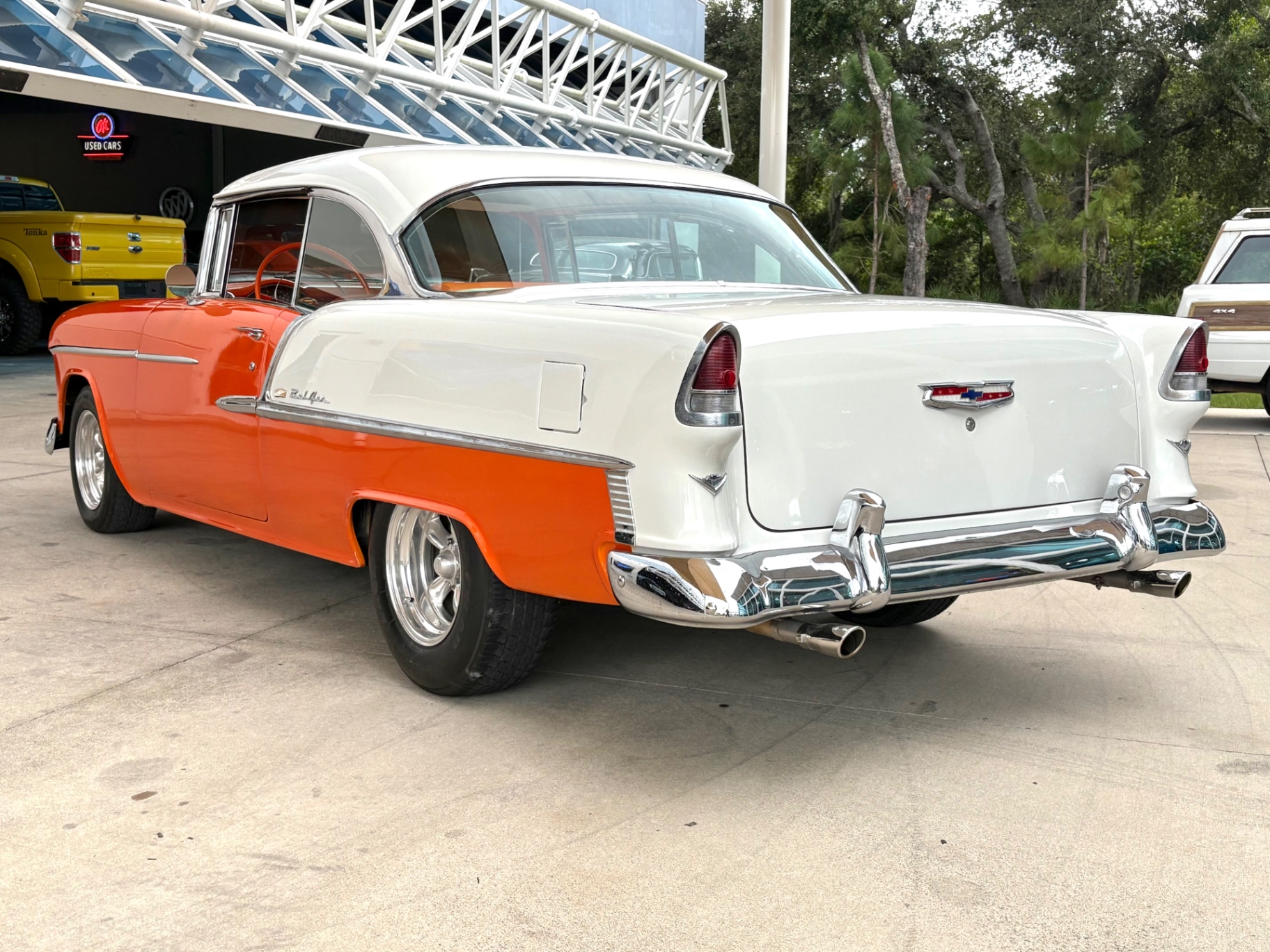
The front end is the classic 1955 face: a wide rectangular grille with vertical chrome bars, flanked by round headlamps and hooded parking lights at each corner. Chrome bumpers front and rear are present and show well. The rear of the car carries the original fin-shaped taillight housings that were one of the signature styling elements of the 1955 Bel Air, and the dual exhaust exits cleanly through the rear bumper with polished chrome tips — a custom touch that adds visual interest without looking overdone.
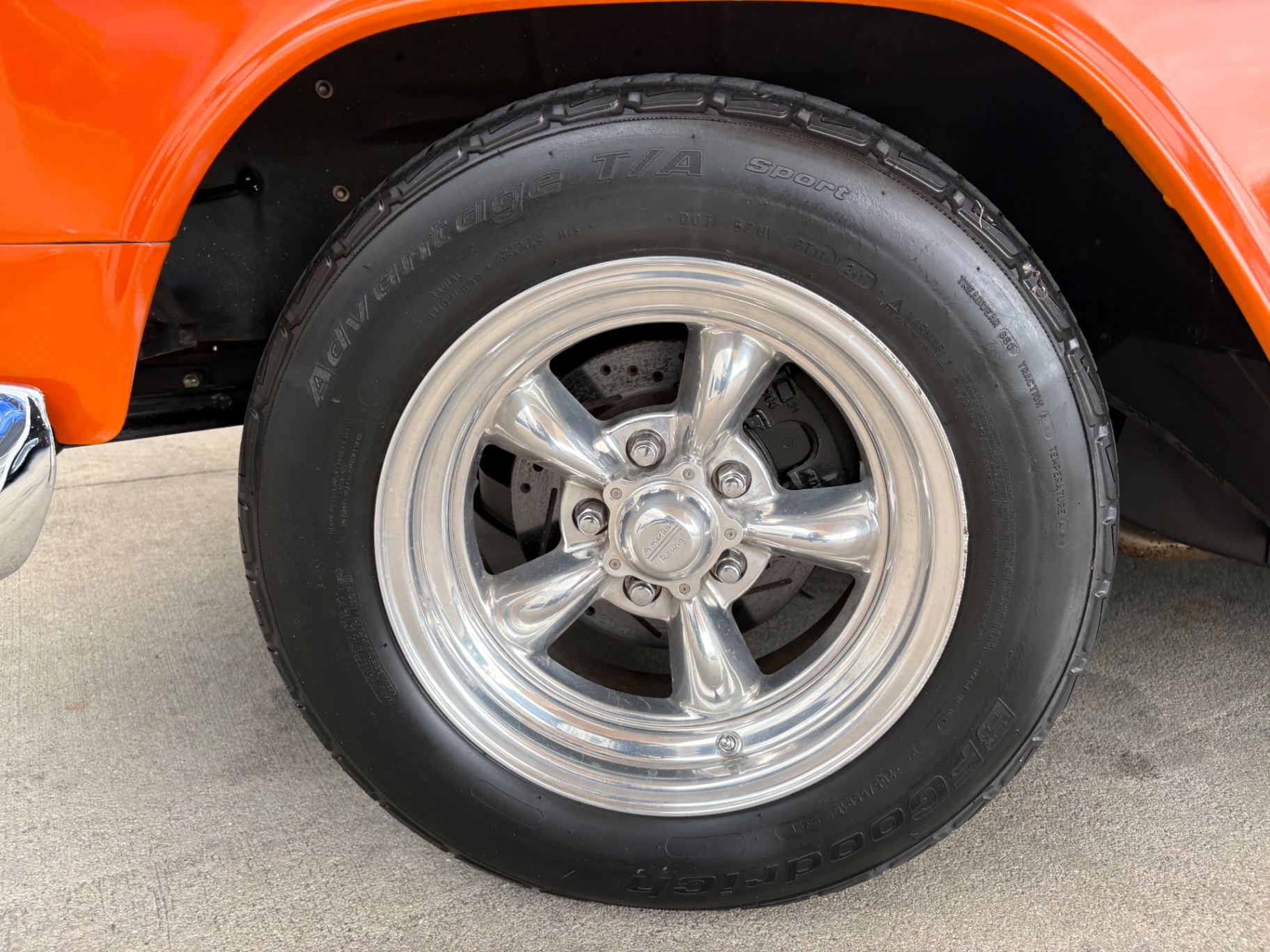
Rolling stock consists of stainless/chrome Cragar wheels, one of the most recognized aftermarket wheel designs in American car culture. Cragar's S/S wheel, introduced in the 1960s, became the default choice for hot rodded American cars of this era and remains visually period-correct on a car like this 1955 Bel Air. Goodyear Eagle tires are fitted at the rear, Cooper tires at the front.
Conclusion
This 1955 Chevrolet Bel Air is a well-executed custom built to be driven, not stored. The combination of a 300-horsepower 350 small-block, a floor-shifted 3-speed manual, CPP front disc brakes, and power steering gives it a modern performance character inside a body that is nearly 70 years old and still looks right by any standard. The interior work by M&M Interiors is thorough and color-consistent, the engine bay is detailed and color-matched, and the original radio, clock, and steering wheel preserve enough of the factory 1955 Bel Air character to keep the car honest about what it is. This is not a trailer queen and it was never intended to be. It's a two-tone orange and white 1955 Chevrolet Bel Air that was built to be taken out and enjoyed.
For more information or to schedule a time to see this 1955 Chevrolet Bel Air in person, call Skyway Classics in Sarasota, Florida at 941-254-6608.
Disclaimer
Information found on the website is presented as given to us by the owner of the car, whether on consignment or from the owner we bought it from. Some Photos, materials for videos, descriptions and other information are provided by the consignor/seller and is deemed reliable, but Skyway Classics does not warranty or guarantee this information. Skyway Classics is not responsible for information that may incorrect or a publishing error. The decision to purchase should be based solely on the buyers personal inspection of the vehicle or by a professional inspection service prior to offer or purchase being made.
1955 Chevrolet Bel Air — Custom Pro-Touring Build with 350 V8 and Two-Tone Orange & White
Why This Car Is Special
The 1955 Chevrolet Bel Air is one of the most recognized and sought-after American cars ever produced. It was the first year of Chevrolet's all-new "Motoramic" body design — a complete break from the rounded, upright styling of earlier postwar Chevrolets. Designer Clare MacKichan led a team that gave the 1955 Bel Air a lower, wider stance, a wraparound windshield influenced by jet-age design, and a horizontal beltline that looked unlike anything else on the road at the time. Motor Trend named it Car of the Year for 1955, and more than 1.7 million Chevrolets were sold that model year across all trim levels, a number that helped Chevrolet regain the top sales position in the American market.
The Bel Air was the top trim level in the 1955 Chevrolet lineup, positioned above the Two-Ten and One-Fifty series. It came with additional chrome, two-tone paint options, and a more richly appointed interior. The two-door sport coupe, which this car is, was the most popular body style in the Bel Air range for 1955. The VIN on this car confirms it is a genuine V8-equipped 1955 Chevrolet sport coupe built at the Flint, Michigan assembly plant — one of five Chevrolet plants producing the model that year.
Perhaps the most historically significant thing about the 1955 Bel Air is what was under the hood. Chevrolet introduced the small-block V8 in 1955 — a 265 cubic inch engine that was lightweight, efficient, and remarkably tuneable. That engine architecture, refined and expanded over the decades into the 350 cubic inch version you'll find in this car, became the foundation of American performance engineering for the next half-century. The 350 small-block is arguably the most widely used and developed V8 in automotive history, and it drops into a 1955 Bel Air like it was always meant to be there — because in many ways, it was.
This particular 1955 Chevrolet Bel Air has been built as a driver-quality pro-touring custom. It isn't a trailered show car, and it isn't a numbers-matching restoration. It's a 70-year-old body wrapped around a modern drivetrain and safety-upgraded chassis, finished in a two-tone orange and white color scheme that carries the spirit of the 1955 Bel Air's original two-tone design language into something more aggressive and personalized. The engine bay, interior, and exterior all speak the same color story, giving the car a cohesive, intentional look from every angle.
Features List
- 350 cubic inch V8, rated at 300 horsepower
- Fresh paint job under warranty
- 4-barrel carburetor with high-flow K&N-style air cleaner
- Chevrolet script finned aluminum valve covers, color-matched to the engine bay
- Chrome alternator
- Oversized aluminum radiator for improved cooling capacity
- Power steering
- CPP power front disc brakes with power brake booster
- Camaro rear end
- 3-speed manual transmission, floor-mounted with white ball shift knob
- Dual exhaust with chrome tips exiting through the rear bumper
- Undercoated floor pans
- Stainless/chrome Cragar wheels
- Goodyear Eagle tires (rear), Cooper tires (front)
- Custom two-tone orange and white vinyl interior by M&M Interiors
- Color-matched door panels with chrome trim strips
- Original Bel Air steering wheel
- Dolphin auxiliary gauges integrated into the dash
- Original radio and original clock retained
- Original door speakers
- Custom Auto Sound audio system
- Bel Air script floor mats and Bel Air script badge on dash
- Color-matched carpet, dash, and headliner
- Rear courtesy dome lights
Mechanical
Power comes from a 350 cubic inch small-block Chevrolet V8 producing 300 horsepower, fed by a 4-barrel carburetor and breathed through a high-flow K&N-style air cleaner. The engine is dressed with Chevrolet script finned aluminum valve covers — a period-correct styling nod — and the entire engine bay has been color-matched to the car's orange exterior paint, giving it a finished, intentional appearance rather than a jumbled mix of add-ons.
Cooling is handled by an oversized aluminum radiator, a sensible upgrade for a 300-horsepower engine in a Florida climate, where summer heat and stop-and-go traffic can push an undersized cooling system past its limits. The chrome alternator keeps the electrical system fed, and the car has been converted to a full alternator charging setup, which provides more consistent voltage than the original generator system and handles the demands of the upgraded audio and auxiliary gauges without issue.
The transmission is a 3-speed manual with a floor-mounted shifter — an honest, direct driving setup that puts the driver in full control. The car was originally available with a 3-speed column shift or the optional close-ratio 3-speed, and the floor shift conversion here is a natural extension of the car's sporting character. The rear end is a Camaro unit, a proven swap for 1955-57 Chevrolets that provides a stronger, wider axle housing capable of handling the torque output of the 350.
Stopping power comes from CPP power front disc brakes with a vacuum-assisted power brake booster — a meaningful safety upgrade over the original four-wheel drum system. The original 1955 Bel Air used hydraulic drum brakes at all four corners, and while adequate for the power levels of the day, they are not well-matched to a 300-horsepower drivetrain on modern roads. The CPP front disc conversion addresses this directly. Power steering makes the car manageable at low speeds and in parking situations, while still providing enough feedback to enjoy on the open road.
Looking at this car from underneath tells you a great deal about how it was built. The floor pans have been undercoated, the dual exhaust runs cleanly from front to rear, and the Camaro rear axle is visibly painted and detailed. This is not a car that was built to look good on a trailer — it was built to be driven.
Interior
The interior of this 1955 Chevrolet Bel Air was redone by M&M Interiors using a custom two-tone orange and white vinyl scheme that mirrors the exterior color split. Front and rear bench seats are upholstered in orange and white vinyl with vertical stitch pleating — a pattern that complements the car's 1950s design language while using higher-quality materials than the original. The door panels follow the same two-tone split, finished with chrome trim strips along the lower edge. Everything from the seats to the door cards to the carpet to the headliner reads as a single coherent color scheme, which is the mark of a quality custom interior job rather than a piecemeal collection of aftermarket parts.
The dash remains faithful to the original 1955 Bel Air layout, which was itself one of the design highlights of the car. Chevrolet gave the 1955 Bel Air a fully symmetrical instrument panel with two large circular binnacles flanking a central speaker grille capped with the Bel Air script badge in chrome — a design that interior designers still reference today for its balance and visual appeal. This car retains the original radio, a correct push-button AM unit with the bowtie emblem on the dial face, and the original clock mounted in the passenger-side speaker grille. Both are present and correct, preserving the factory dashboard aesthetic.
Built into the dash are two Dolphin auxiliary gauges — additional instrumentation for monitoring the engine's vitals beyond what the stock speedometer and fuel gauge provide. These are positioned cleanly without cutting into or damaging the original dash structure in a way that would be hard to reverse. The original Bel Air steering wheel is in place, color-matched to the interior in orange, and the floor-mounted 3-speed shifter rises from the transmission tunnel topped with a white ball shift knob that contrasts cleanly against the orange carpet. Bel Air script floor mats protect the color-matched carpet front and rear. Rear courtesy lights are fitted in the headliner, adding a detail that improves the car's usability at night and adds a finished look to the back seat area.
Exterior
The 1955 Chevrolet Bel Air arrived from the factory with a wide selection of two-tone color options — Chevrolet's design team understood that the new body's beltline and trim separation made it ideal for contrasting colors. This car carries a custom orange and white two-tone that works within that original design framework. The orange occupies the lower body, hood, and front end, while white covers the roof, upper body, and rear deck — a split that follows the natural lines Chevrolet built into the body. Chrome trim along the beltline separates the two colors cleanly.
The front end is the classic 1955 face: a wide rectangular grille with vertical chrome bars, flanked by round headlamps and hooded parking lights at each corner. Chrome bumpers front and rear are present and show well. The rear of the car carries the original fin-shaped taillight housings that were one of the signature styling elements of the 1955 Bel Air, and the dual exhaust exits cleanly through the rear bumper with polished chrome tips — a custom touch that adds visual interest without looking overdone.
Rolling stock consists of stainless/chrome Cragar wheels, one of the most recognized aftermarket wheel designs in American car culture. Cragar's S/S wheel, introduced in the 1960s, became the default choice for hot rodded American cars of this era and remains visually period-correct on a car like this 1955 Bel Air. Goodyear Eagle tires are fitted at the rear, Cooper tires at the front.
Conclusion
This 1955 Chevrolet Bel Air is a well-executed custom built to be driven, not stored. The combination of a 300-horsepower 350 small-block, a floor-shifted 3-speed manual, CPP front disc brakes, and power steering gives it a modern performance character inside a body that is nearly 70 years old and still looks right by any standard. The interior work by M&M Interiors is thorough and color-consistent, the engine bay is detailed and color-matched, and the original radio, clock, and steering wheel preserve enough of the factory 1955 Bel Air character to keep the car honest about what it is. This is not a trailer queen and it was never intended to be. It's a two-tone orange and white 1955 Chevrolet Bel Air that was built to be taken out and enjoyed.
For more information or to schedule a time to see this 1955 Chevrolet Bel Air in person, call Skyway Classics in Sarasota, Florida at 941-254-6608.
Disclaimer
Information found on the website is presented as given to us by the owner of the car, whether on consignment or from the owner we bought it from. Some Photos, materials for videos, descriptions and other information are provided by the consignor/seller and is deemed reliable, but Skyway Classics does not warranty or guarantee this information. Skyway Classics is not responsible for information that may incorrect or a publishing error. The decision to purchase should be based solely on the buyers personal inspection of the vehicle or by a professional inspection service prior to offer or purchase being made.
1955 Chevrolet
Bel Air Base
Why Choose Skyway Classics?
Explore our curated inventory of classic and collector cars—thoughtfully selected, ready to drive, and supported by experts who make ownership simple.
Expert Curation
Every vehicle is hand-selected by our experts for quality, authenticity, and investment potential.
Fast Transactions
Streamlined buying and selling process with quick financing and immediate delivery options.
Only National Dealer With Classic Service & Repair
We’re the only national dealership that services and repairs the classics we sell—before and after the sale.
Nationwide Network
Access to our extensive network of collectors, restorers, and classic car enthusiasts nationwide.
Concierge Ownership Support
From financing and insurance to paperwork, shipping, and titling—we handle the details so you can enjoy the drive.
Passion-Driven Service
We're classic car enthusiasts first, providing personalized service with genuine passion for the hobby.