
1955 Chevrolet
Bel Air Base
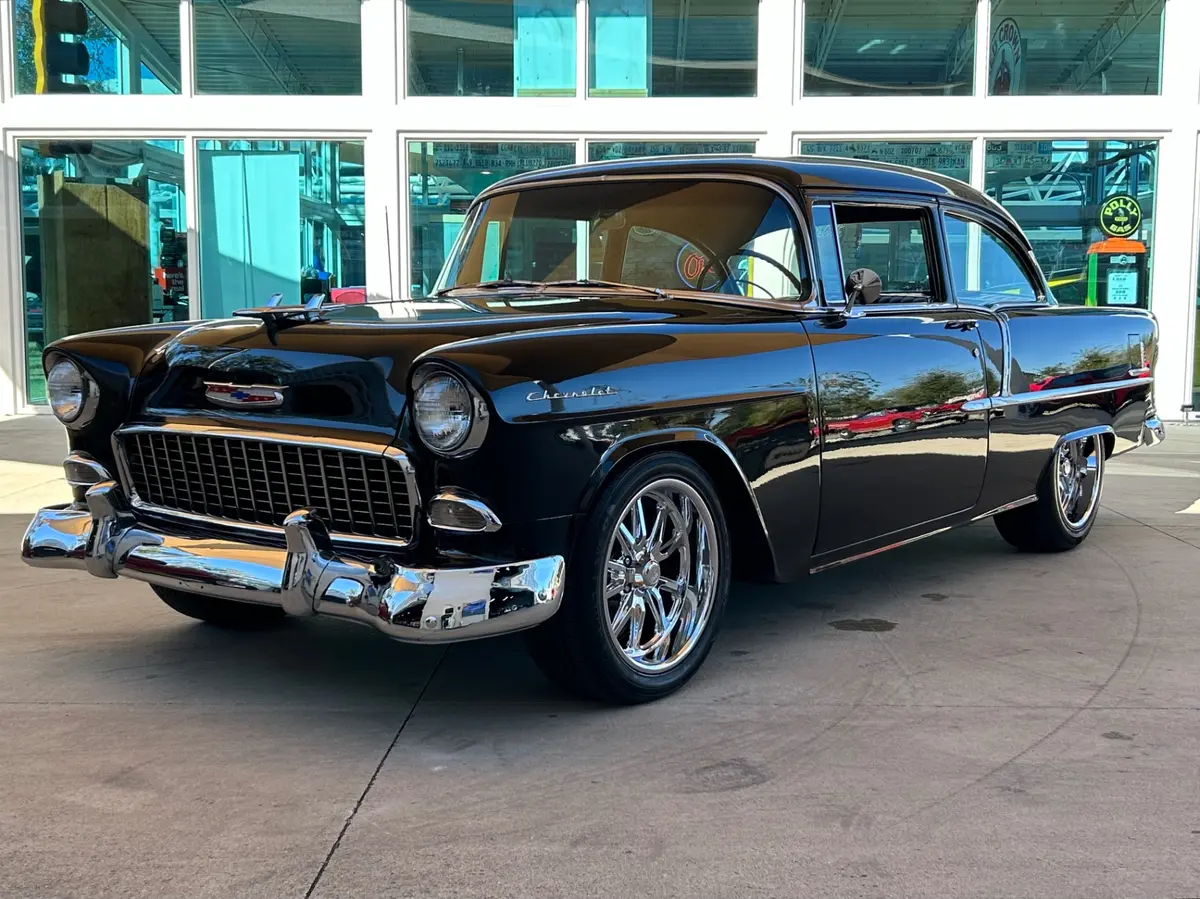
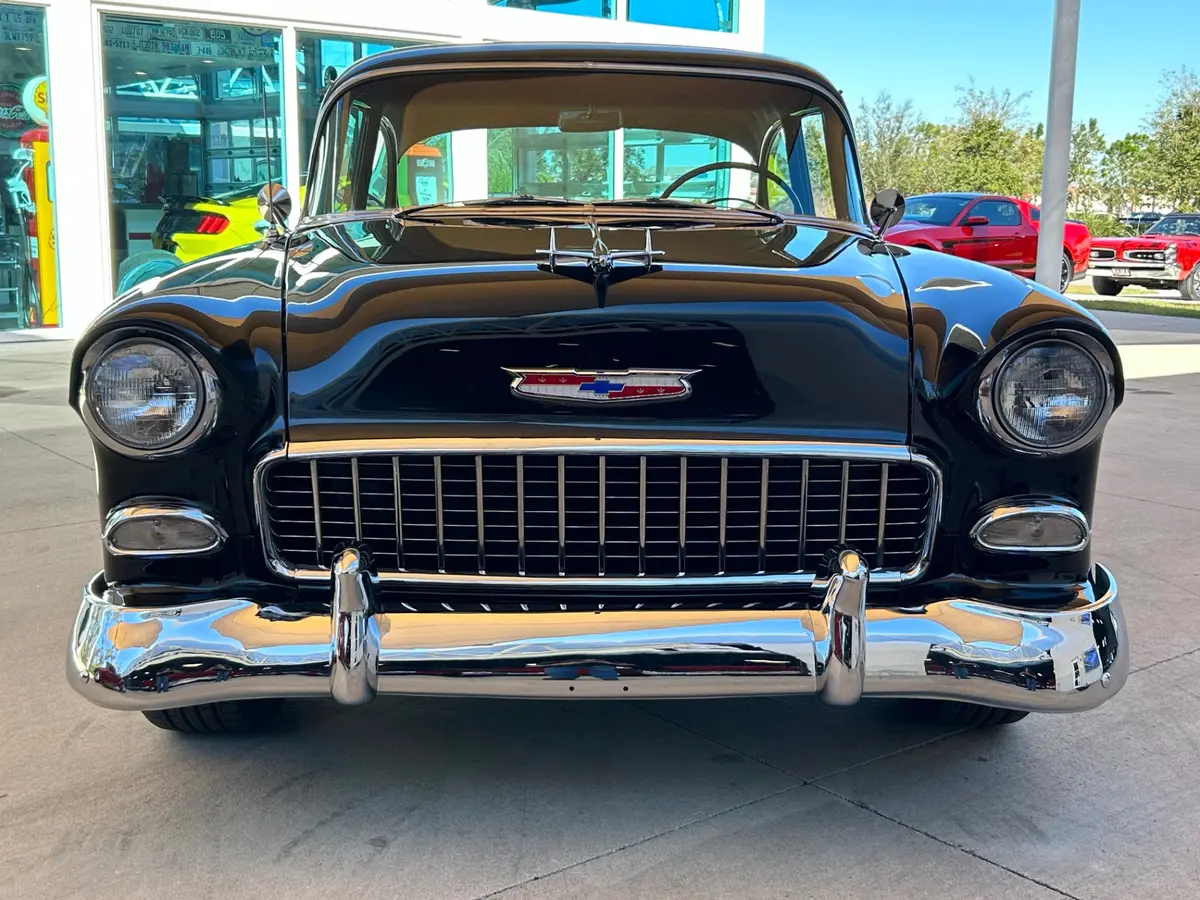
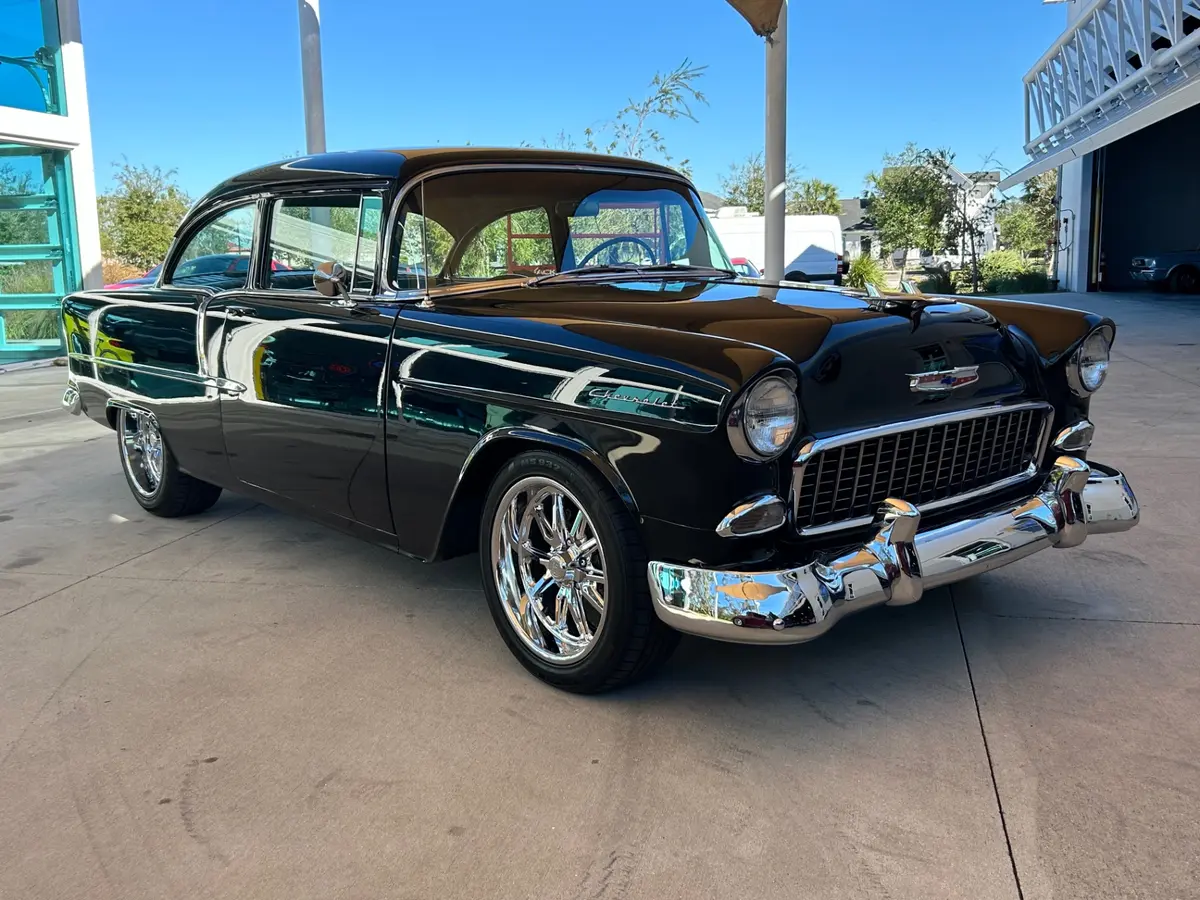
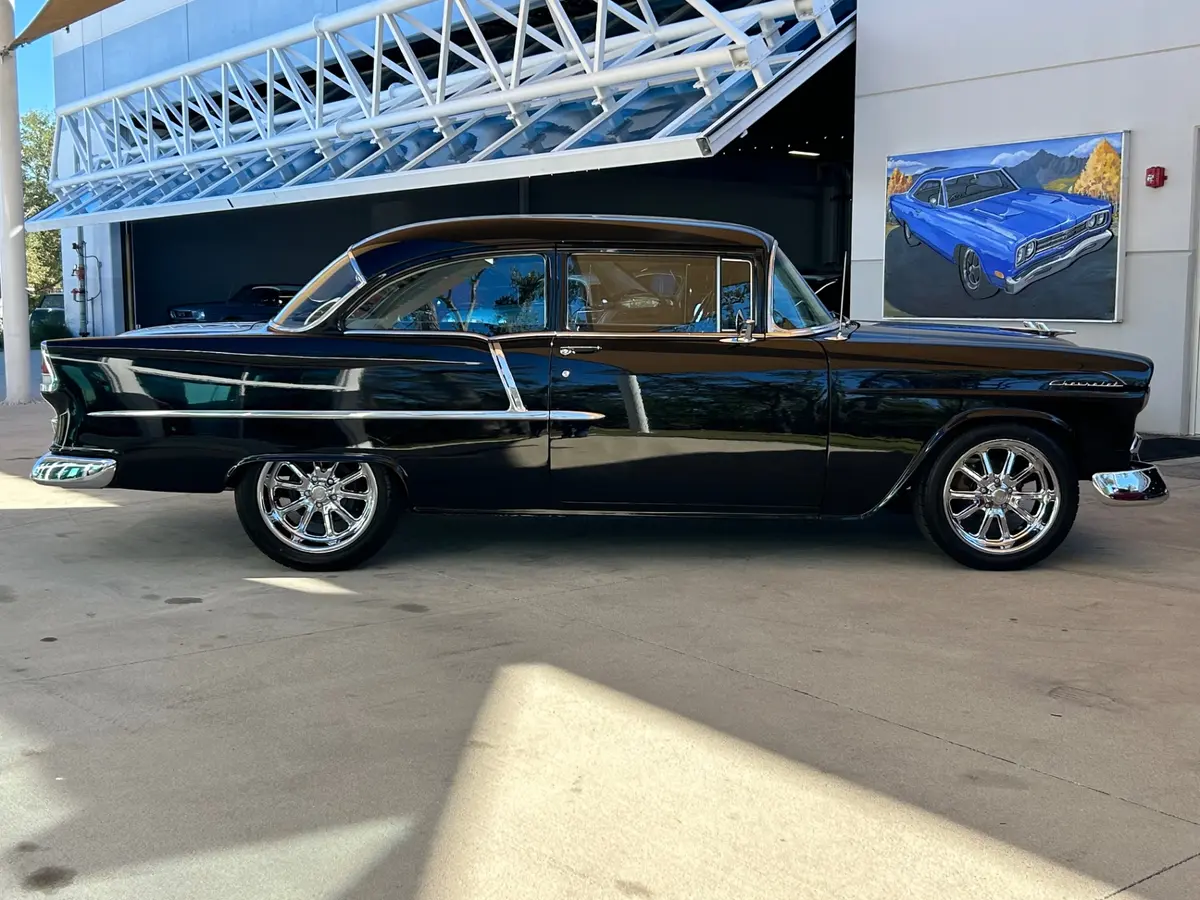
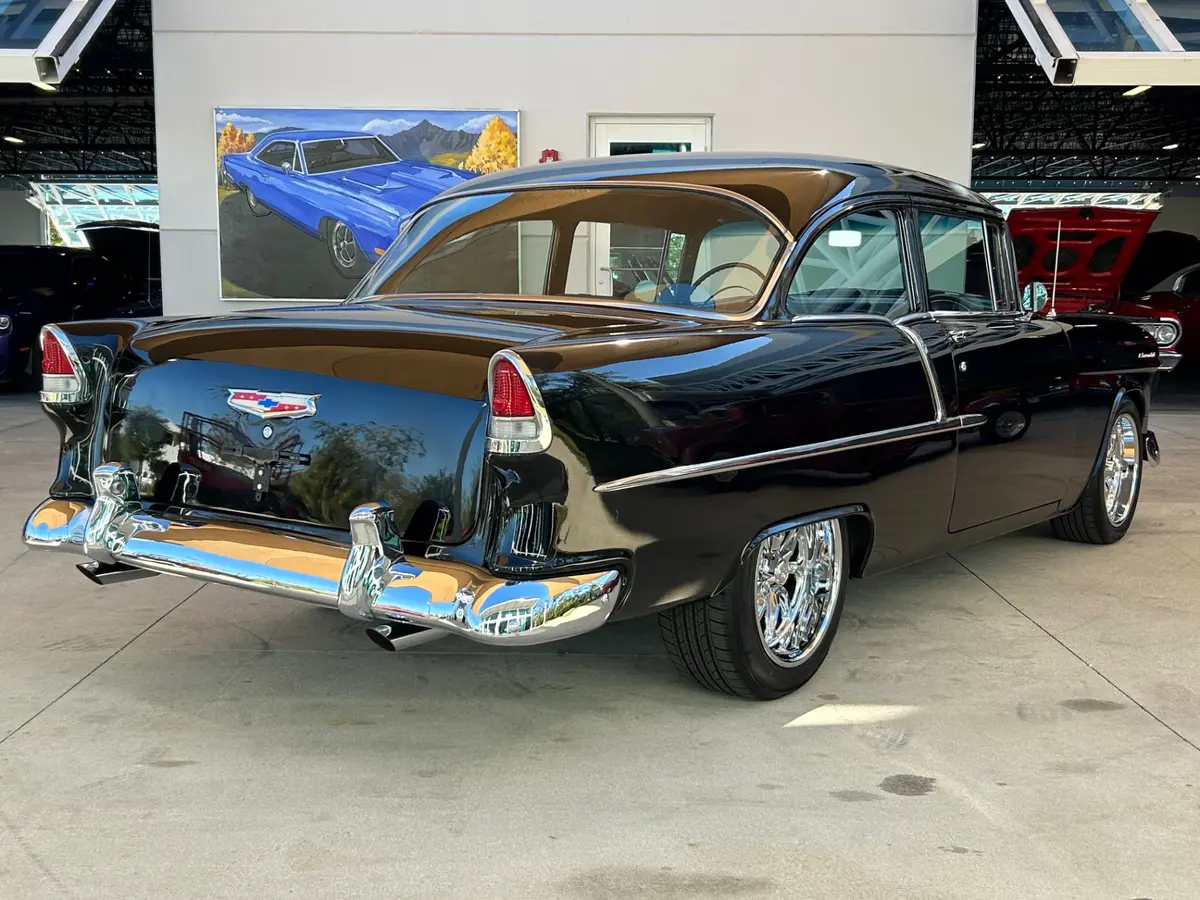
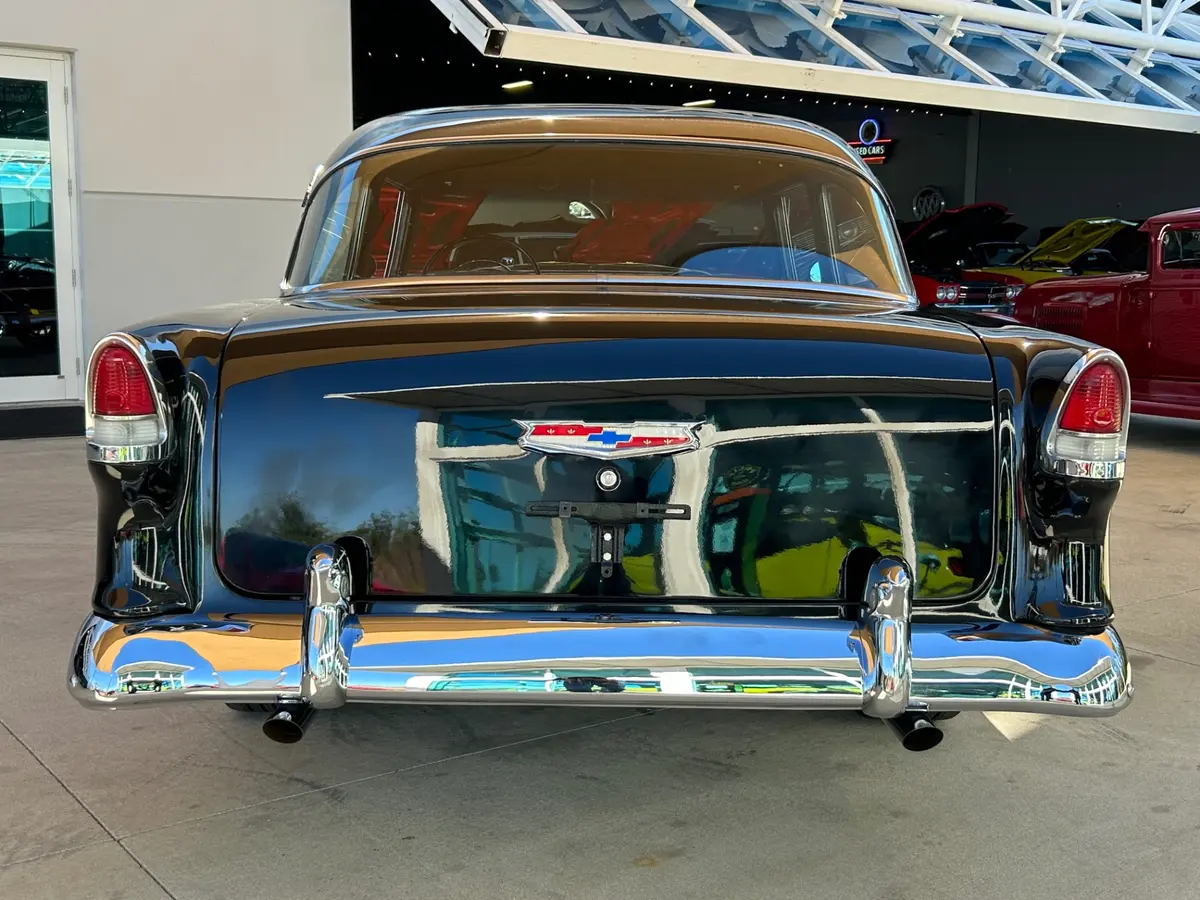
1955 Chevrolet 210 Two-Door Sedan — ZZ-3 350 V8, 4-Speed, Black and Gold Custom Build
Why This Car Is Special
The 1955 Chevrolet 210 sits at the center of what enthusiasts call the Tri-Five era — the 1955, 1956, and 1957 Chevrolets that collectively changed the direction of American automotive design. The '55 was the first year of this generation, and it was a genuine departure from everything Chevrolet had built before it. Designer Carl Renner and his team under Harley Earl gave the car lower, wider proportions, a wrapped windshield, and a Ferrari-inspired egg-crate grille — all of it a sharp break from the upright, boxy look of the 1954 models. The result was a car that looked expensive without carrying a luxury price tag.
The 210 was the middle trim level in 1955, sitting above the base 150 and below the Bel Air. It offered most of the same body options — two-door sedan, four-door sedan, hardtop, and wagon variants among them — but with less chrome trim and simpler interior appointments than the Bel Air. That positioning makes the 210 an interesting platform. It carries the same body, the same iconic Tri-Five sheetmetal, and the same bones as its more famous sibling, but it started life as a more practical, driver-focused car. Builders have long recognized that a well-built 210 makes a compelling custom precisely because the canvas is clean and the factory chrome restraint leaves room to define the car on your own terms.
This particular 1955 Chevrolet 210 two-door sedan has been built as a driver-quality custom, not a trailer queen. The combination of a GM ZZ-3 crate 350 small-block, a 4-speed manual transmission, front disc brakes, and a professional interior by M&M Interiors puts it squarely in the category of cars that are built to be enjoyed regularly. The black and gold two-tone paint scheme, period-correct chrome trim, and Bel Air-sourced interior cues give it a presence that respects the original design language while making its own statement.
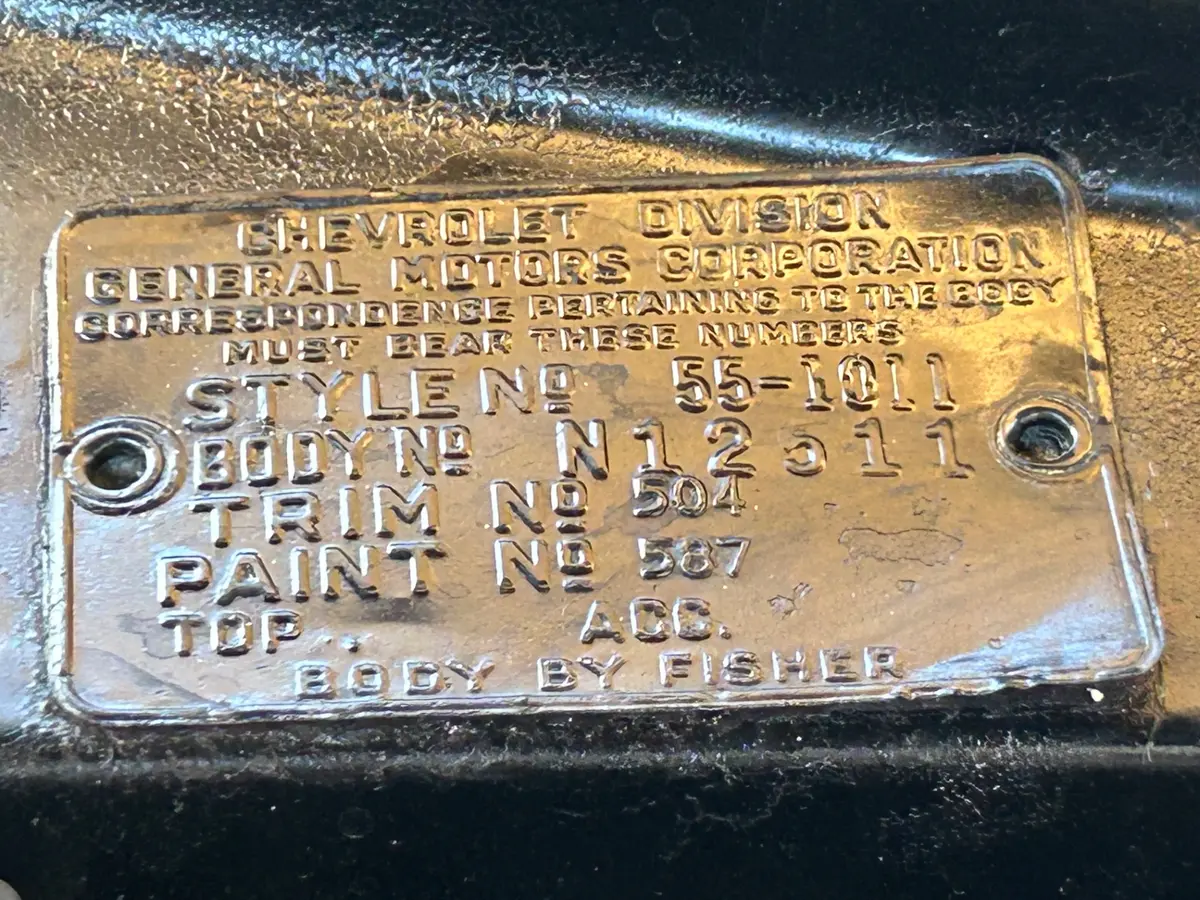
One detail worth noting from the VIN: the build sequence number encoded in this car places it among the Norwood, Ohio production run for 1955 — consistent with a two-door sedan body. Norwood was one of Chevrolet's primary assembly plants during this era and built a significant share of the Tri-Five production across all three model years.
Features List
- GM ZZ-3 crate 350 V8 engine
- Aluminum intake manifold with Edelbrock 4-barrel carburetor
- Chrome low-profile air cleaner
- Black painted valve covers
- Cast iron exhaust headers
- Dual exhaust system
- 4-speed manual transmission with floor-mounted shifter
- Front disc brakes
- Heavy-duty rear end with rear traction bars
- Aftermarket alternator
- Painted and detailed engine compartment
- Custom interior by M&M Interiors
- Black vinyl split-bench front and rear seats
- Custom door panels and black carpet
- Black Bel Air floor mats
- Black headliner
- Dash with aluminum and chrome trim
- Black factory steering wheel
- Custom gauge cluster
- Stereo radio
- Bel Air side dash panel with clock
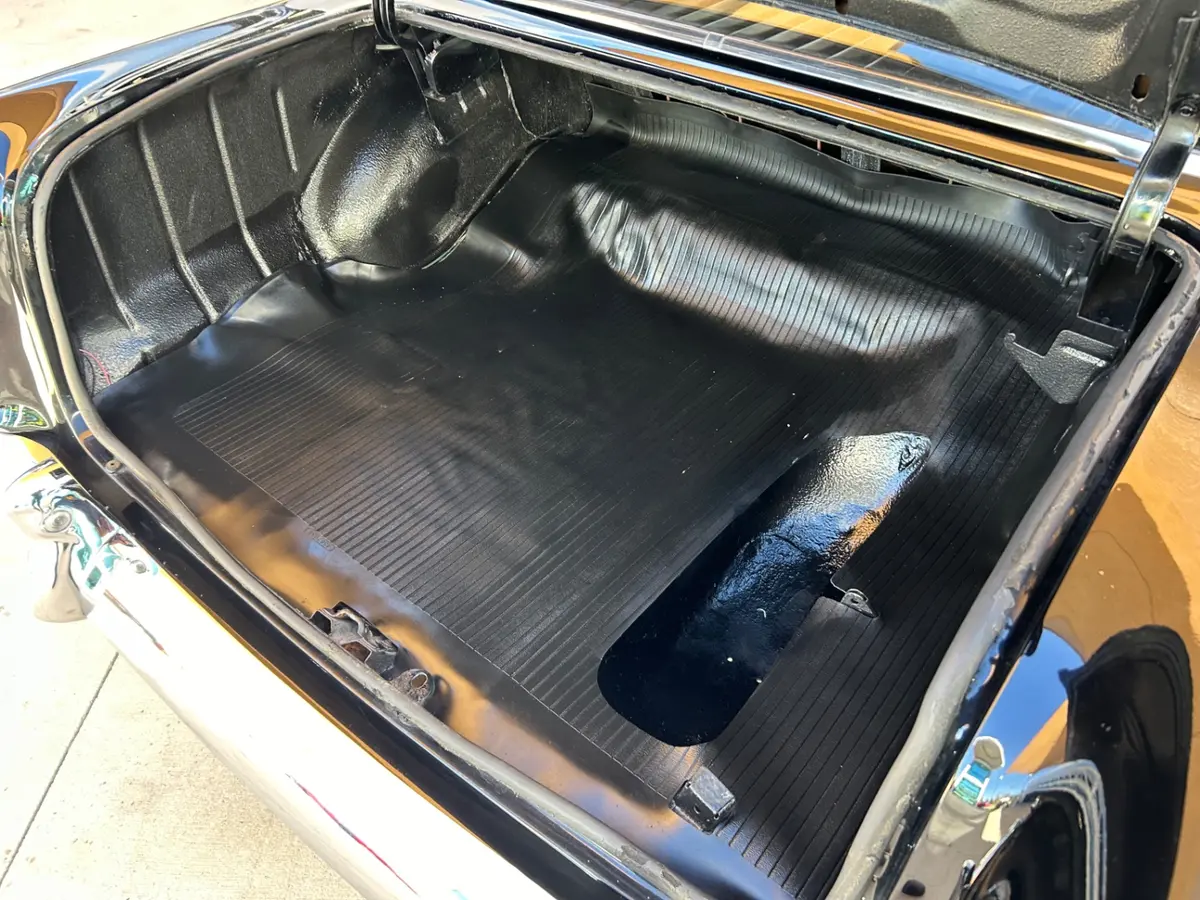
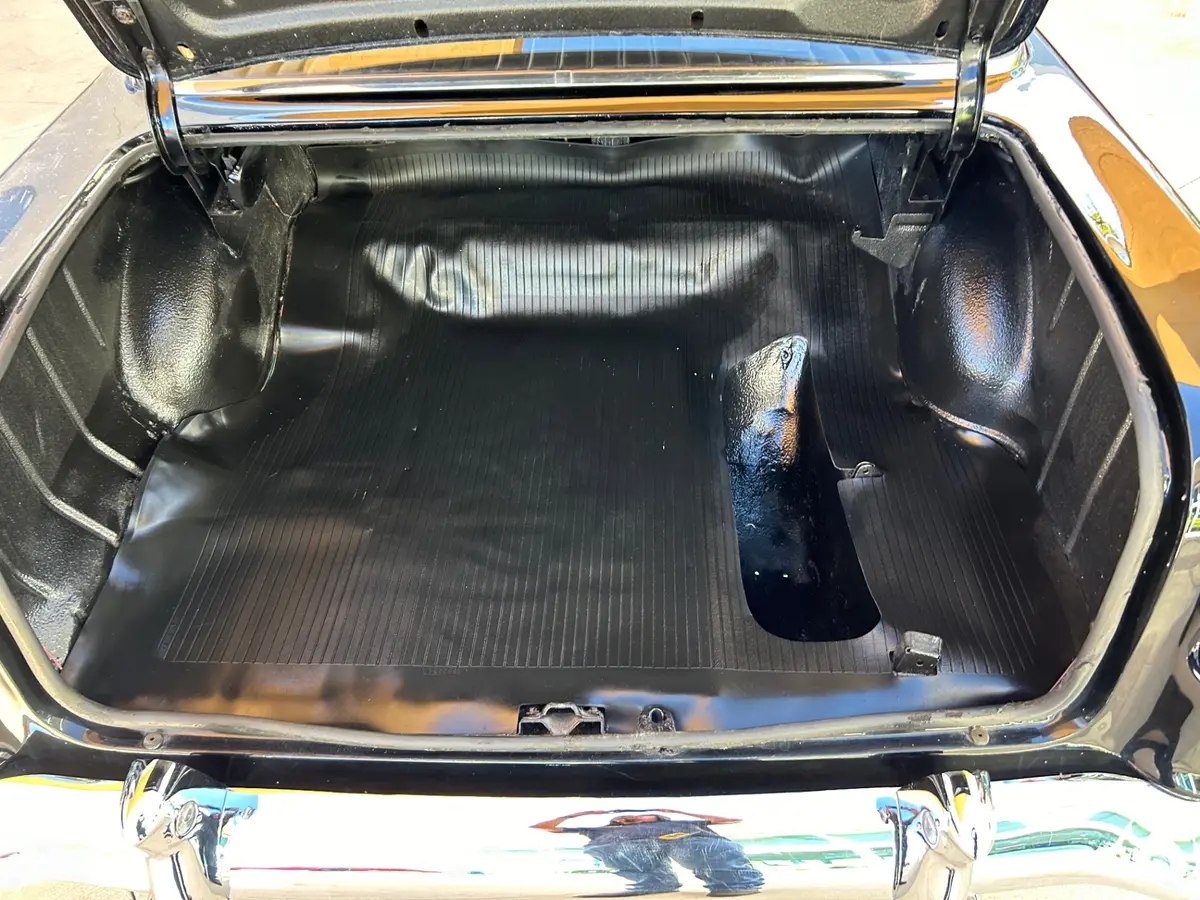
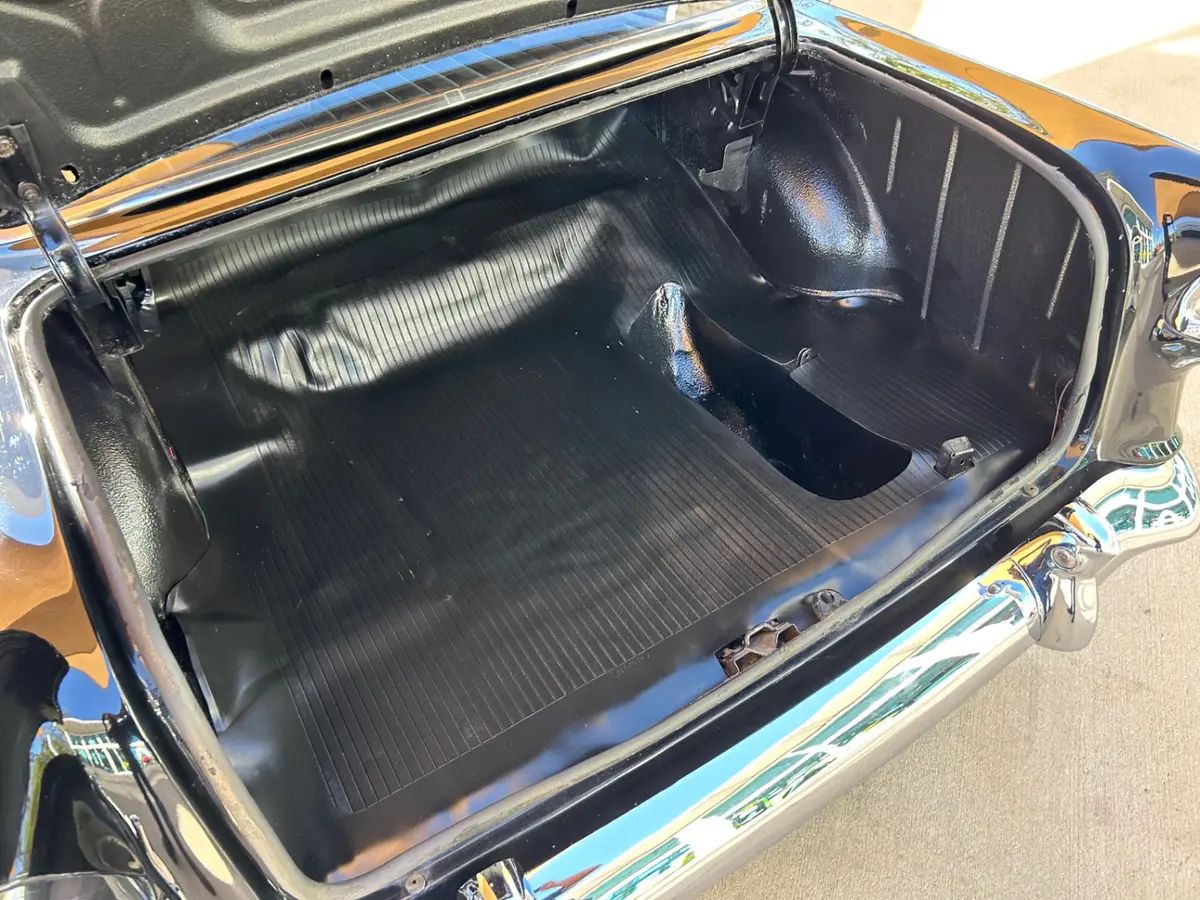
- Restored, painted, and cleaned trunk with rubber mat
- Black and gold two-tone exterior paint
- Chrome front and rear bumpers
- Airplane hood ornament
- Factory side chrome trim
- Bel Air rear deck badge
- Good glass all around
- 18-inch chrome US Mag wheels
- 225/50R18 black sidewall tires
Mechanical
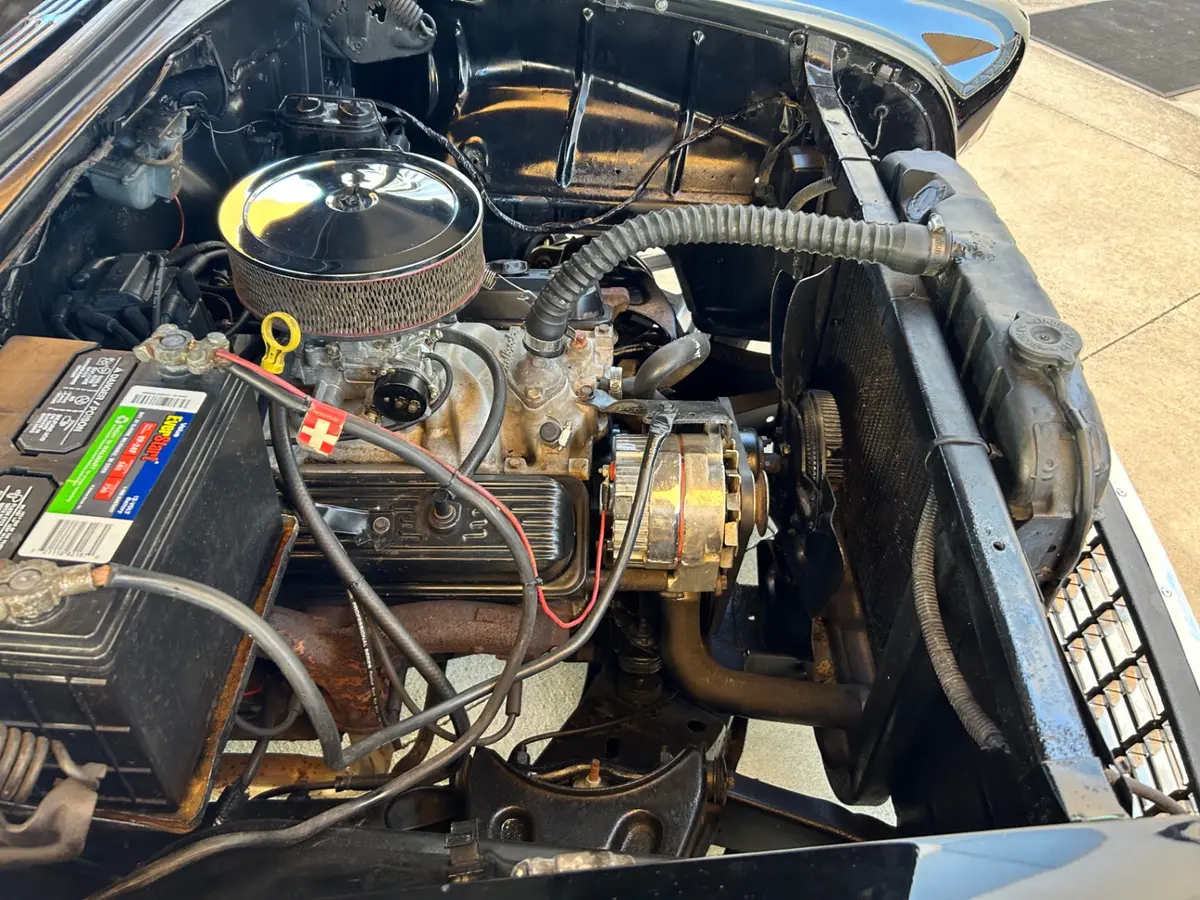
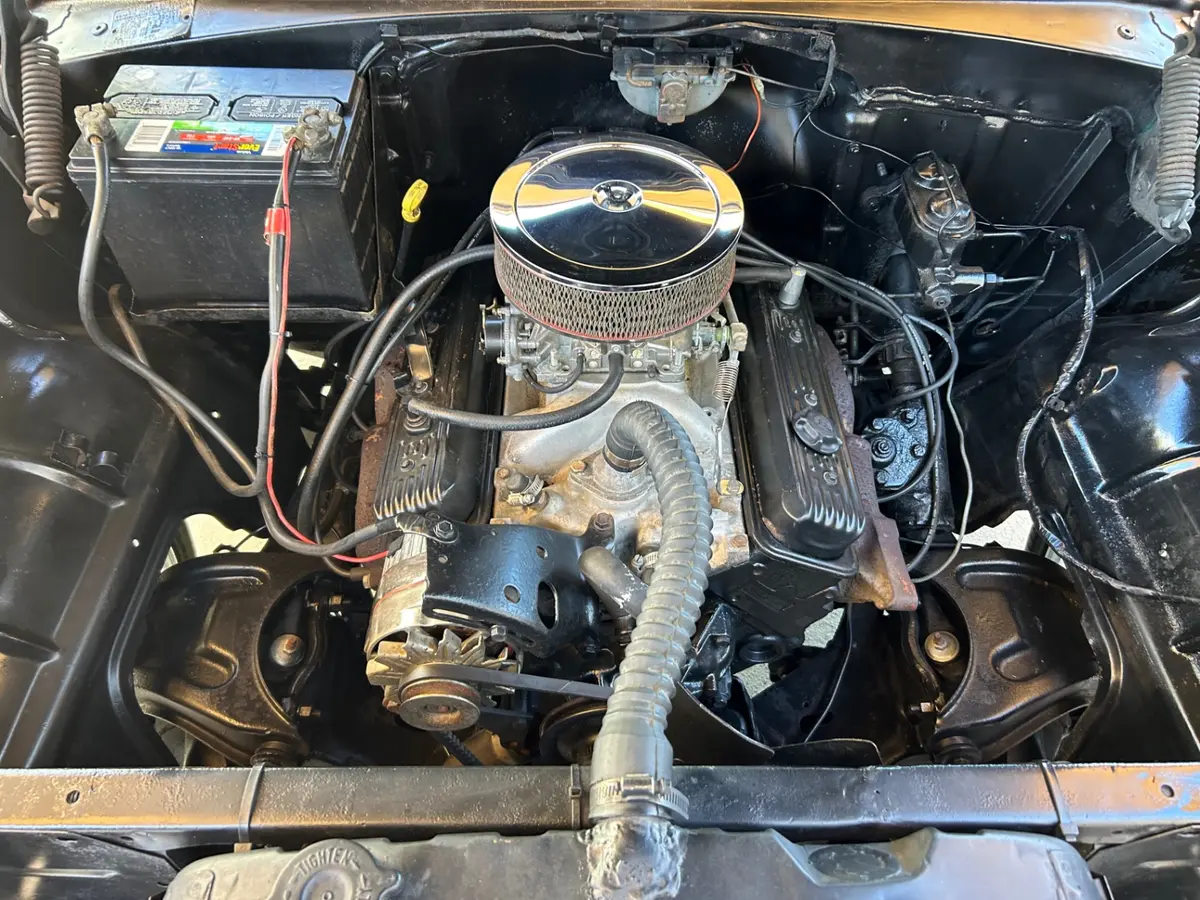
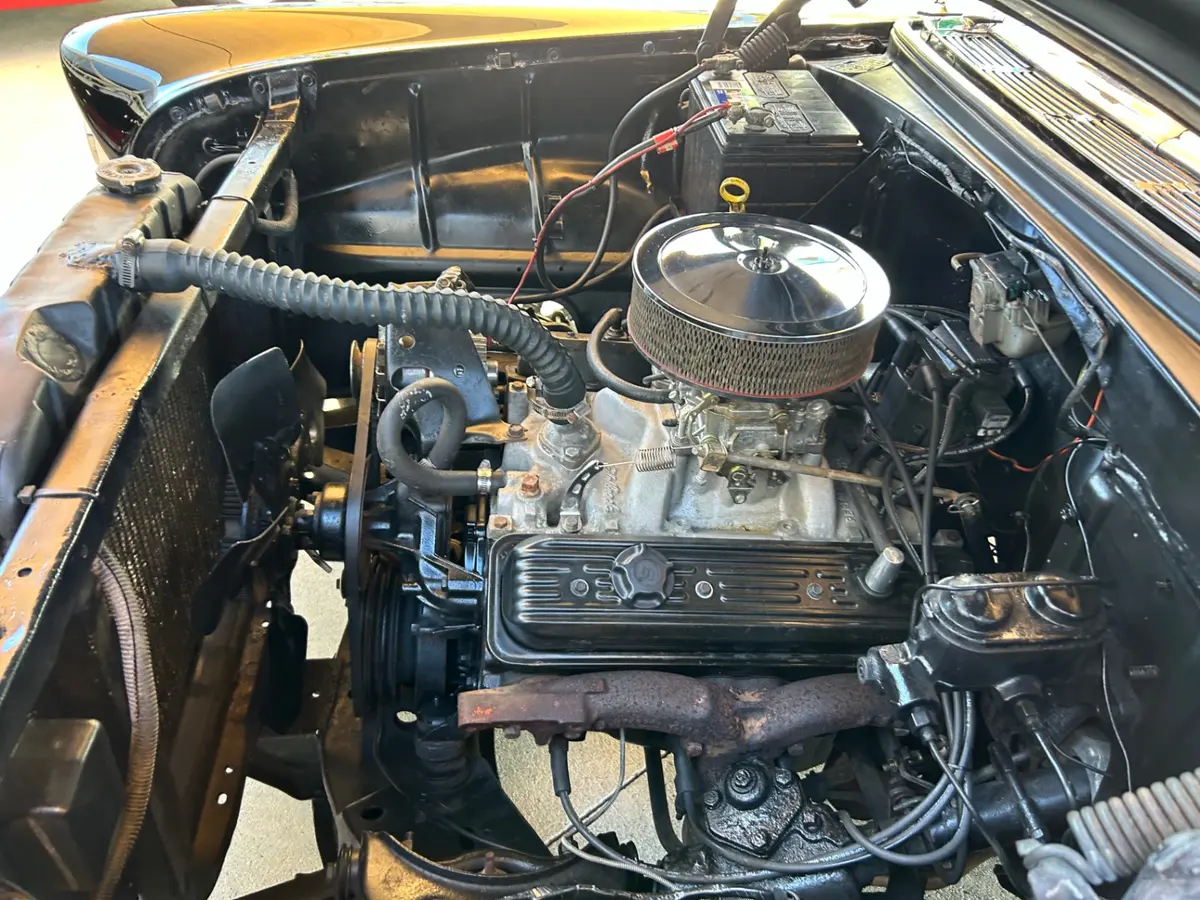
The engine in this 1955 Chevrolet 210 is a GM ZZ-3 crate 350 small-block V8. The ZZ-3 was a factory GM Performance Parts engine package that was produced from approximately 1990 through the late 1990s and remains one of the more respected bolt-in crate engines from that period. It features a cast iron block, a hydraulic roller camshaft, and was rated at 355 horsepower from the factory. It is a known quantity — well-supported, with readily available parts, and a proven fit in first-generation Chevrolet bodies. The aluminum intake manifold and Edelbrock 4-barrel carburetor fitted here are appropriate upgrades that complement the ZZ-3's airflow characteristics. The chrome low-profile air cleaner keeps hood clearance from being an issue, and the black painted valve covers give the engine bay a clean, finished look against the detailed painted compartment.
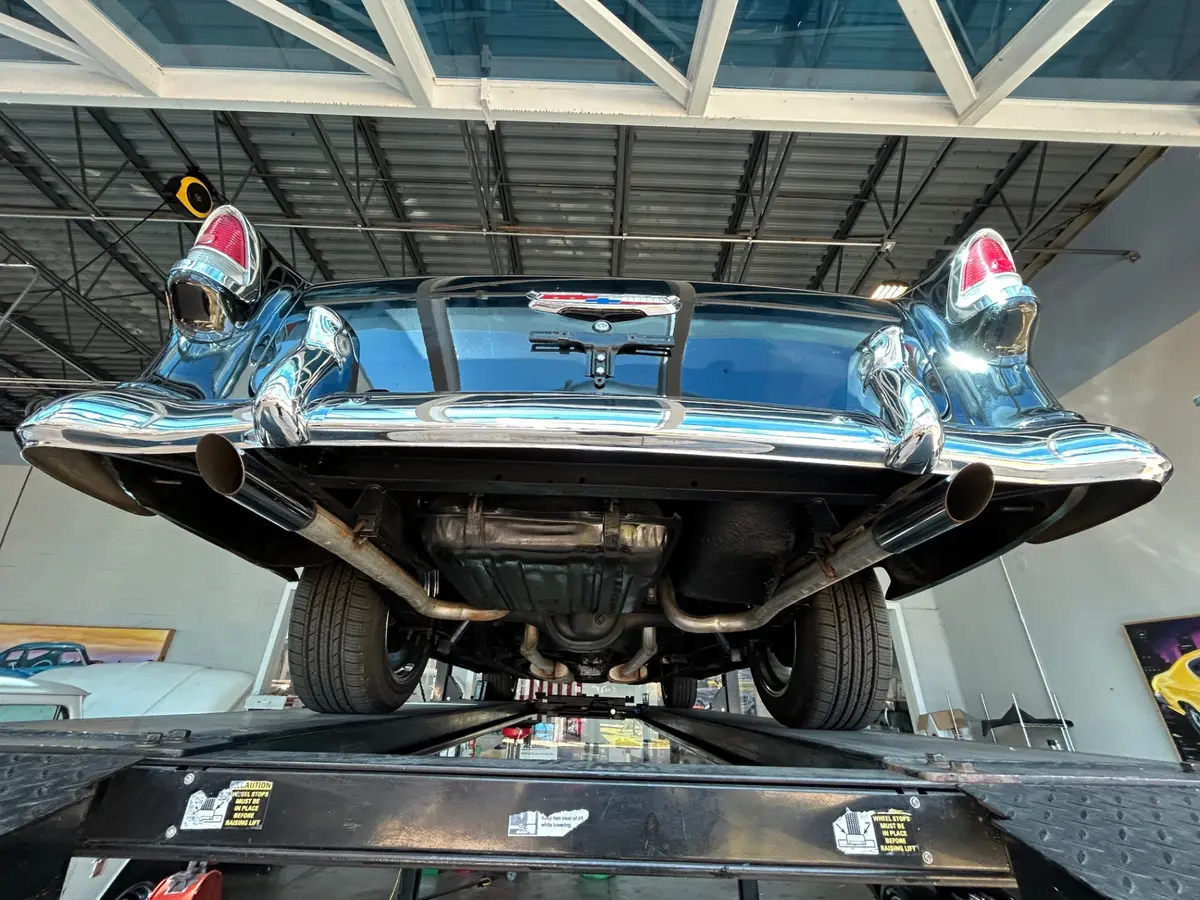
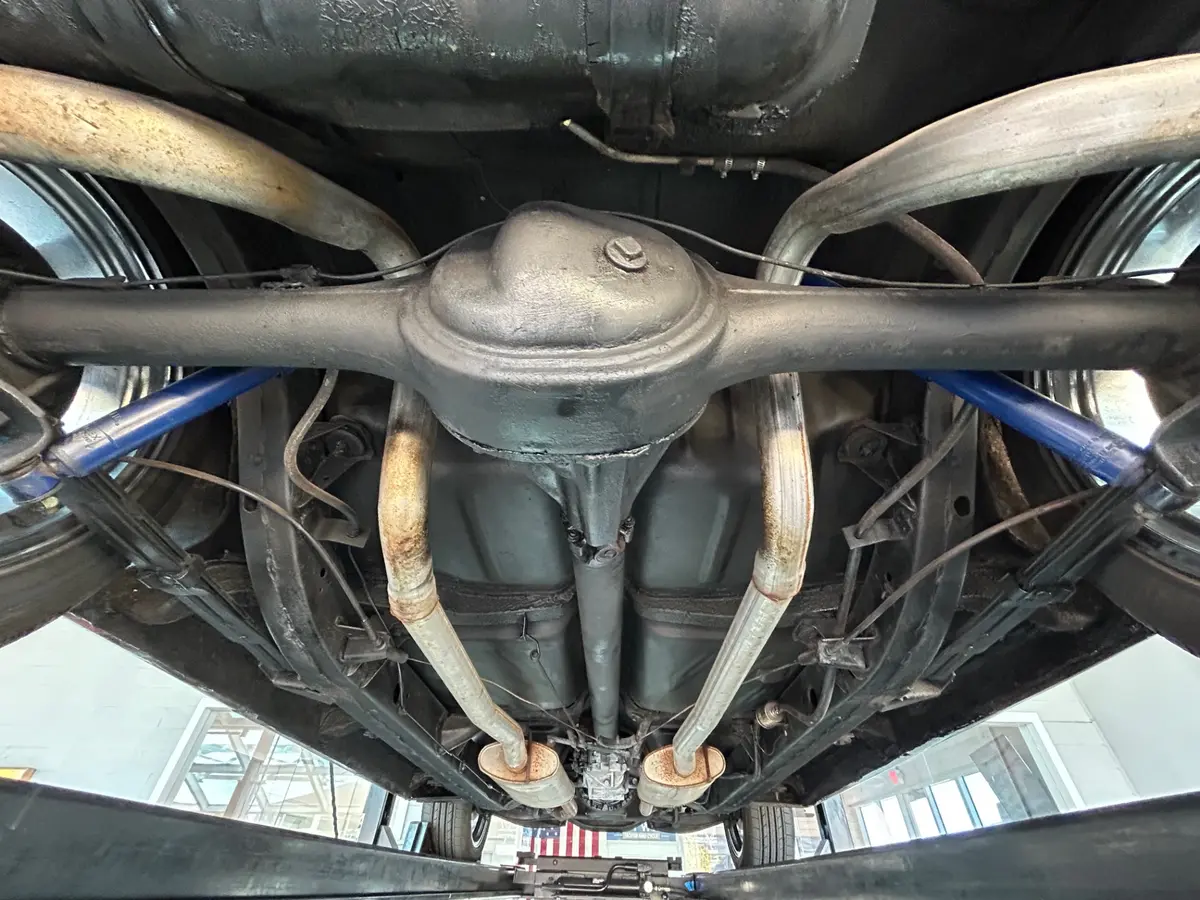
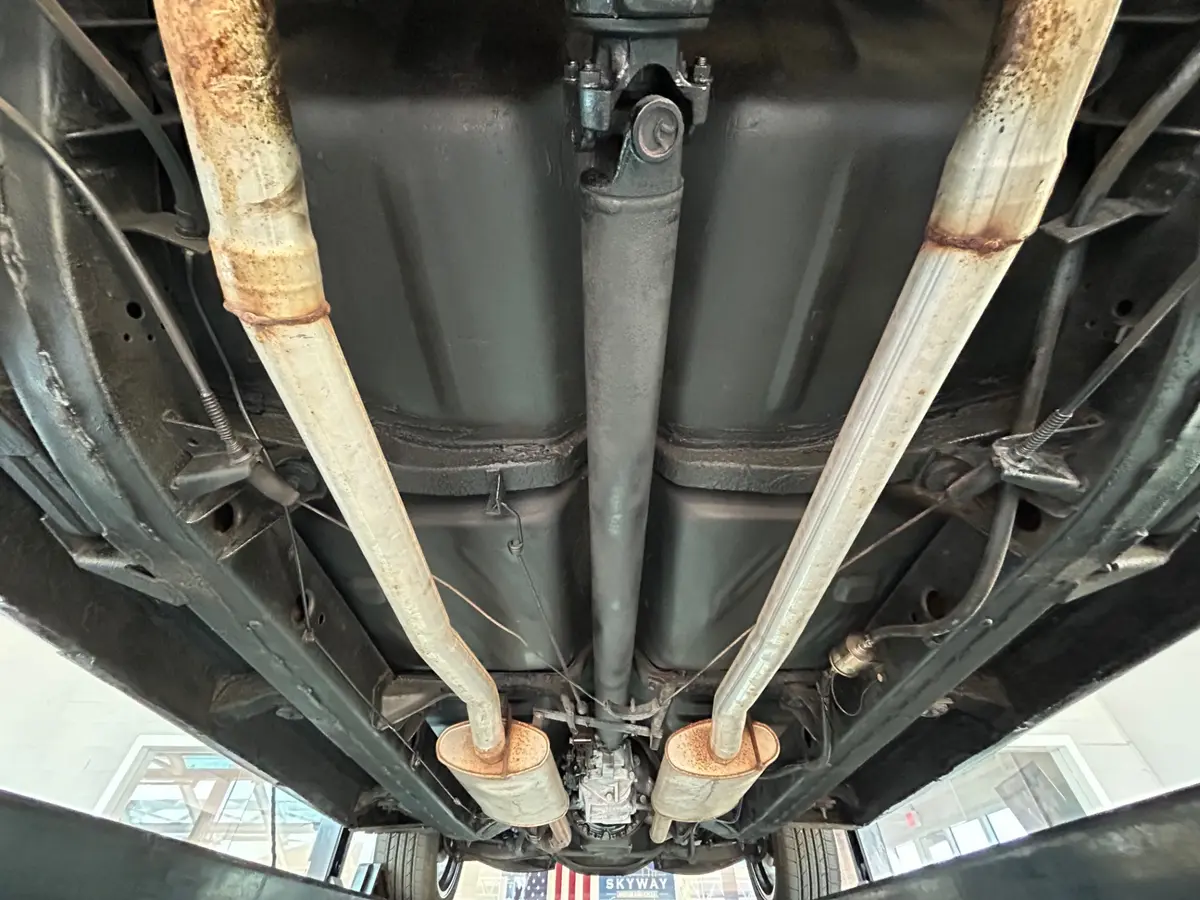
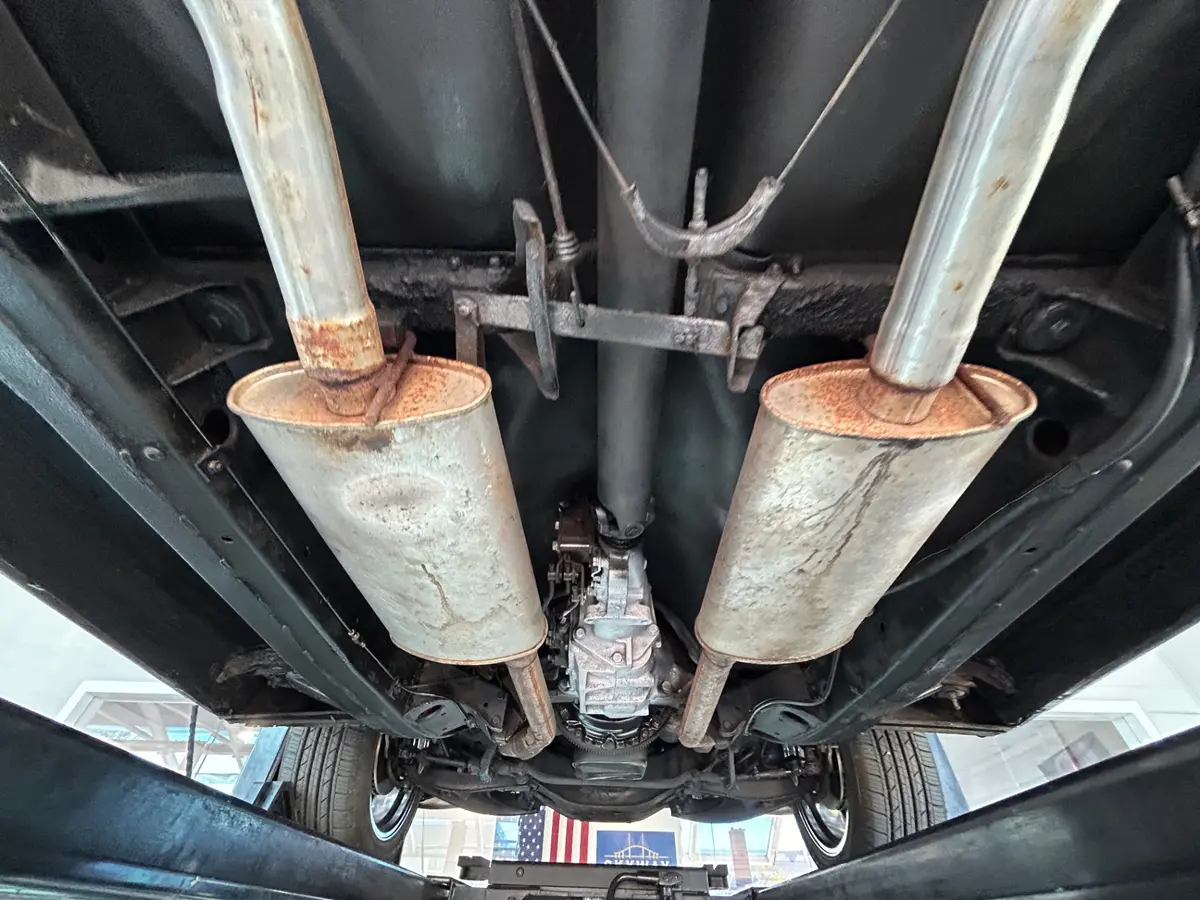
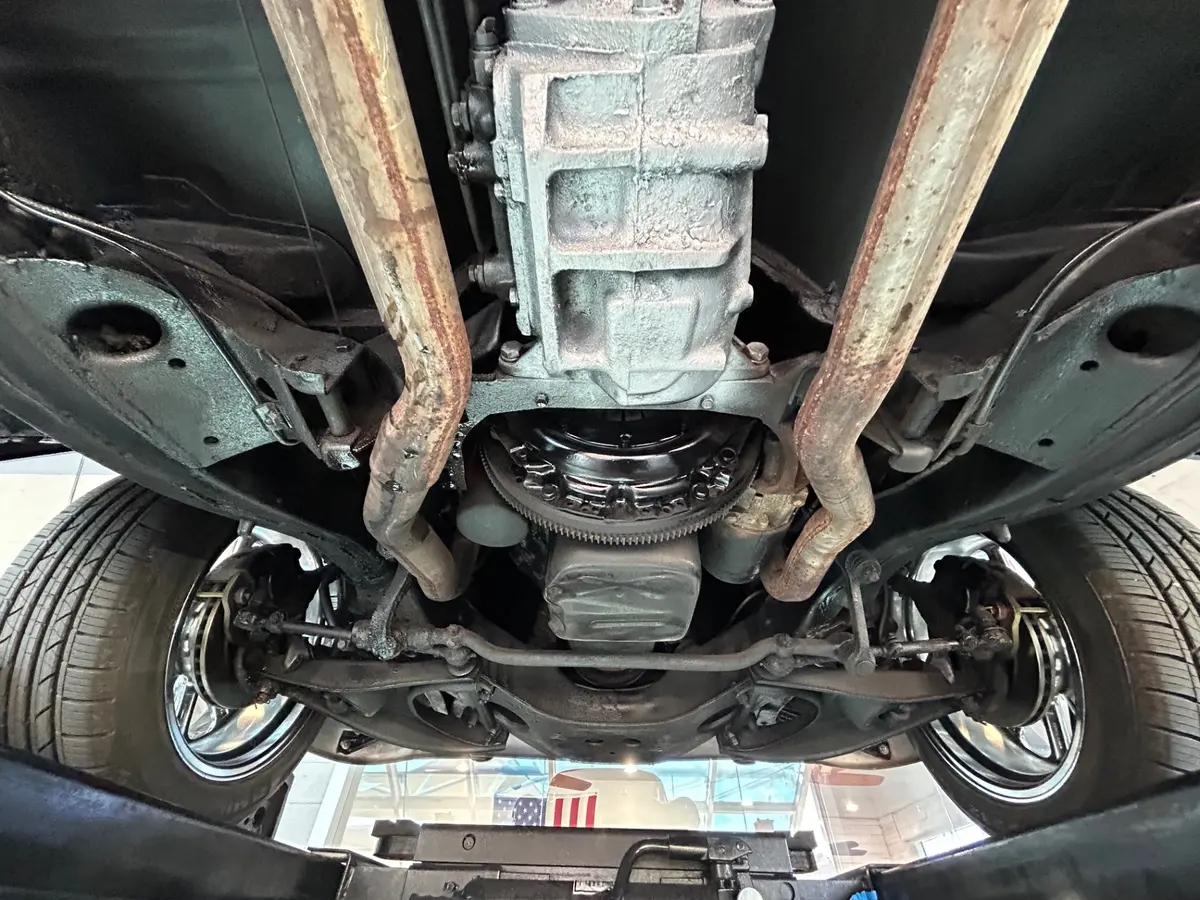
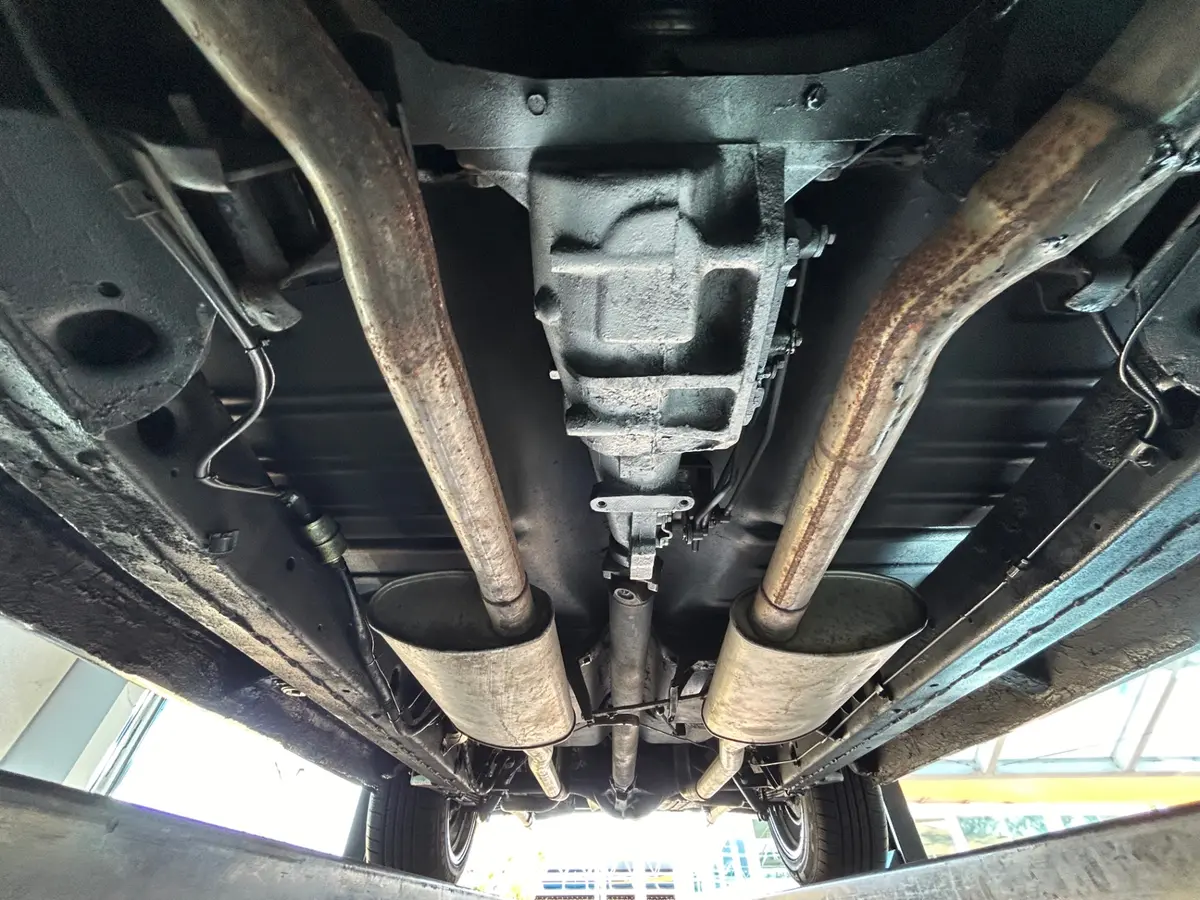
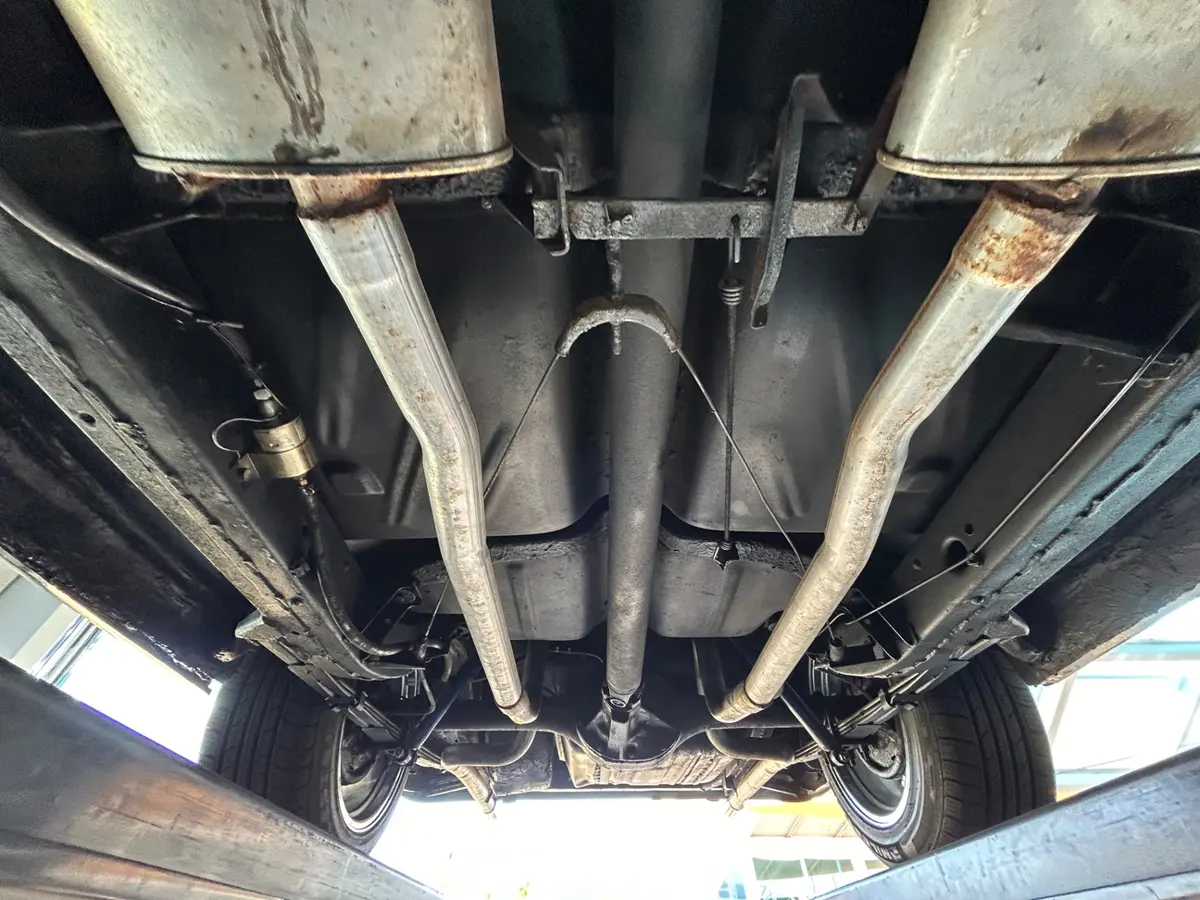
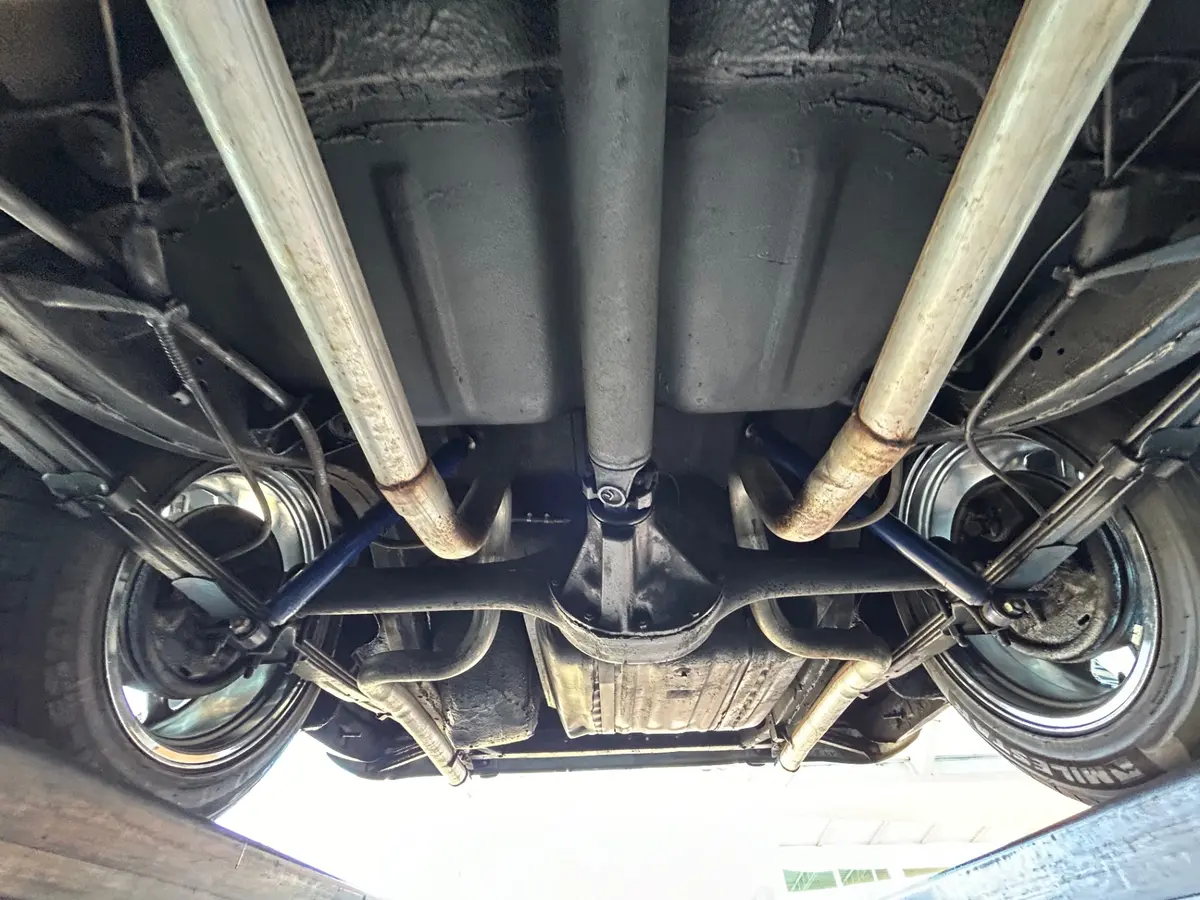
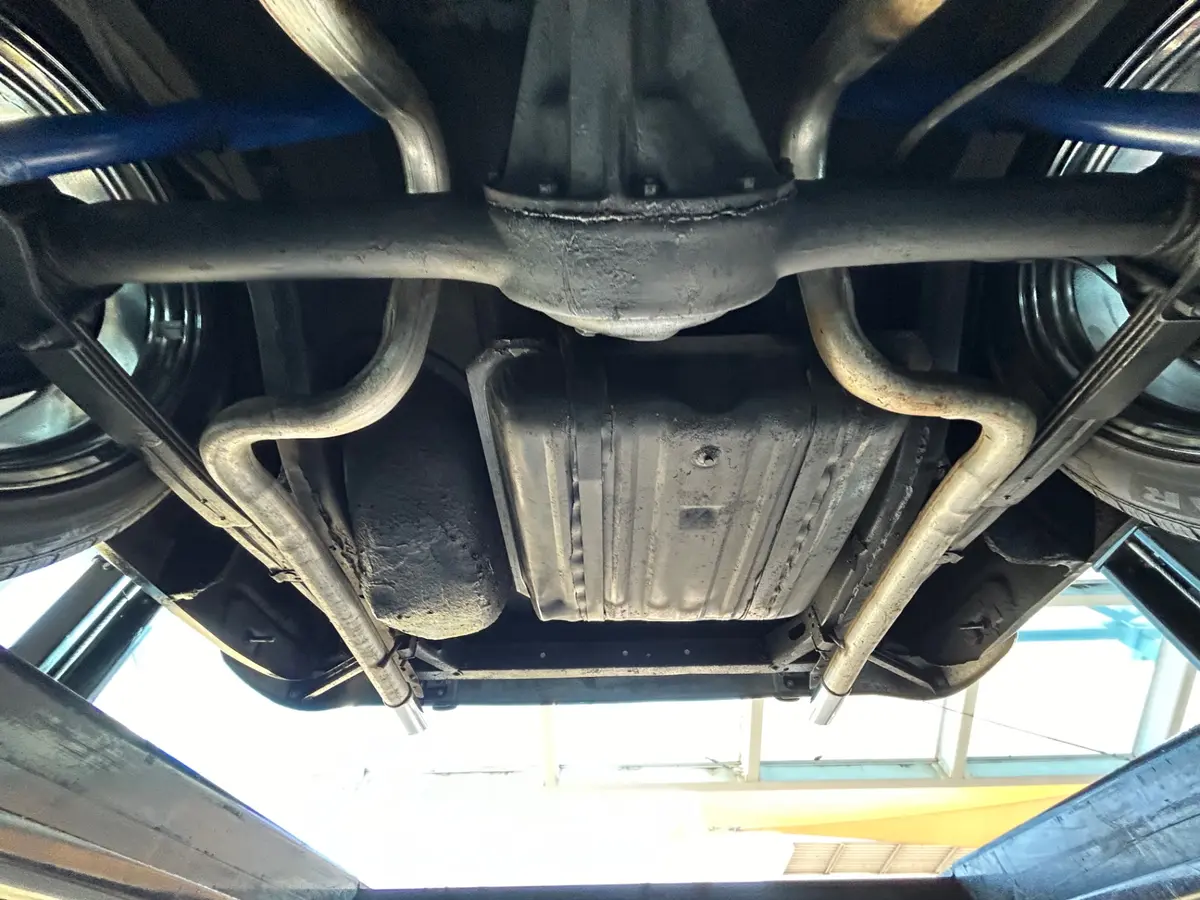
Power goes through a 4-speed manual transmission, shifted via a floor-mounted unit. Pairing a 4-speed with a 350 V8 in a car this size gives you a responsive, connected driving experience that an automatic simply cannot replicate. The cast iron exhaust headers flow into a full dual exhaust system, which exits cleanly at the rear — visible in the undercarriage photos and confirming a proper dual setup rather than a single-to-dual conversion.
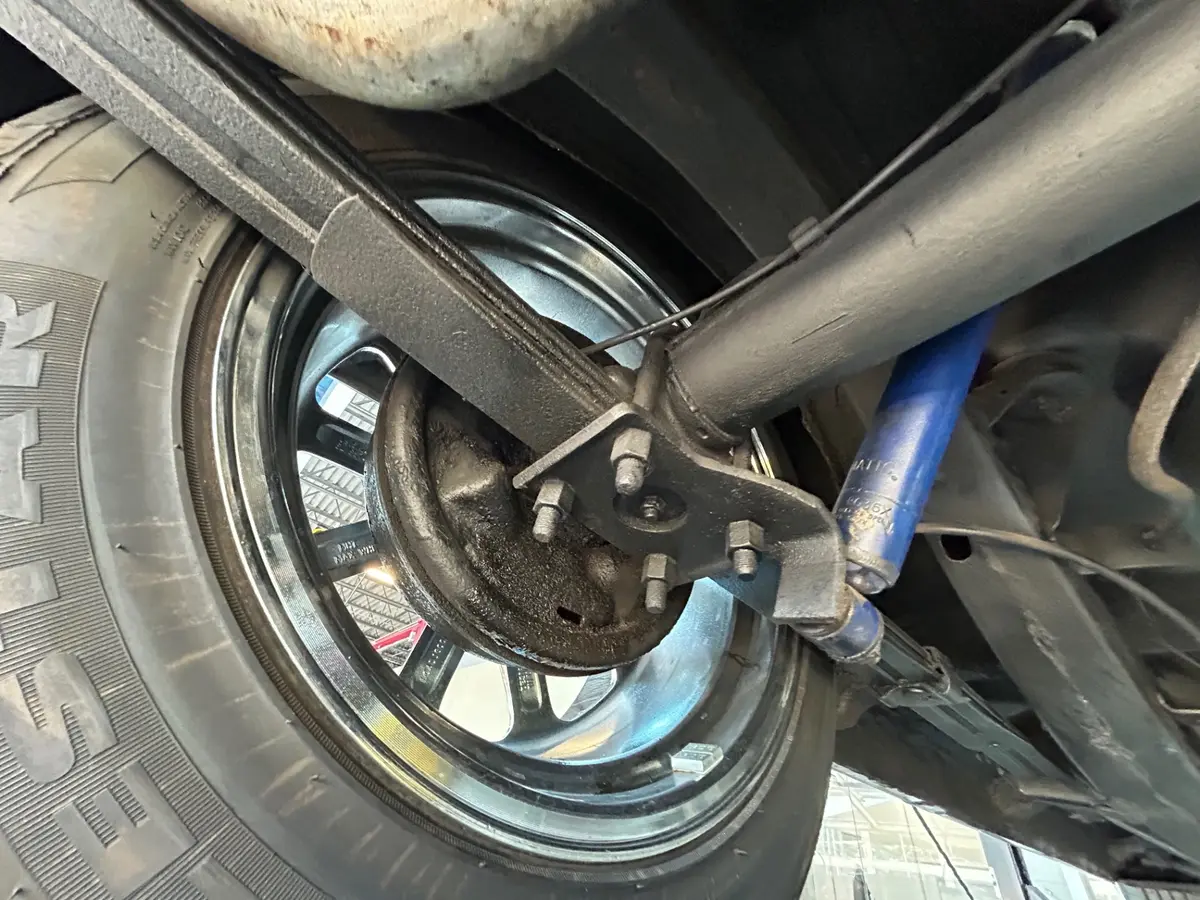
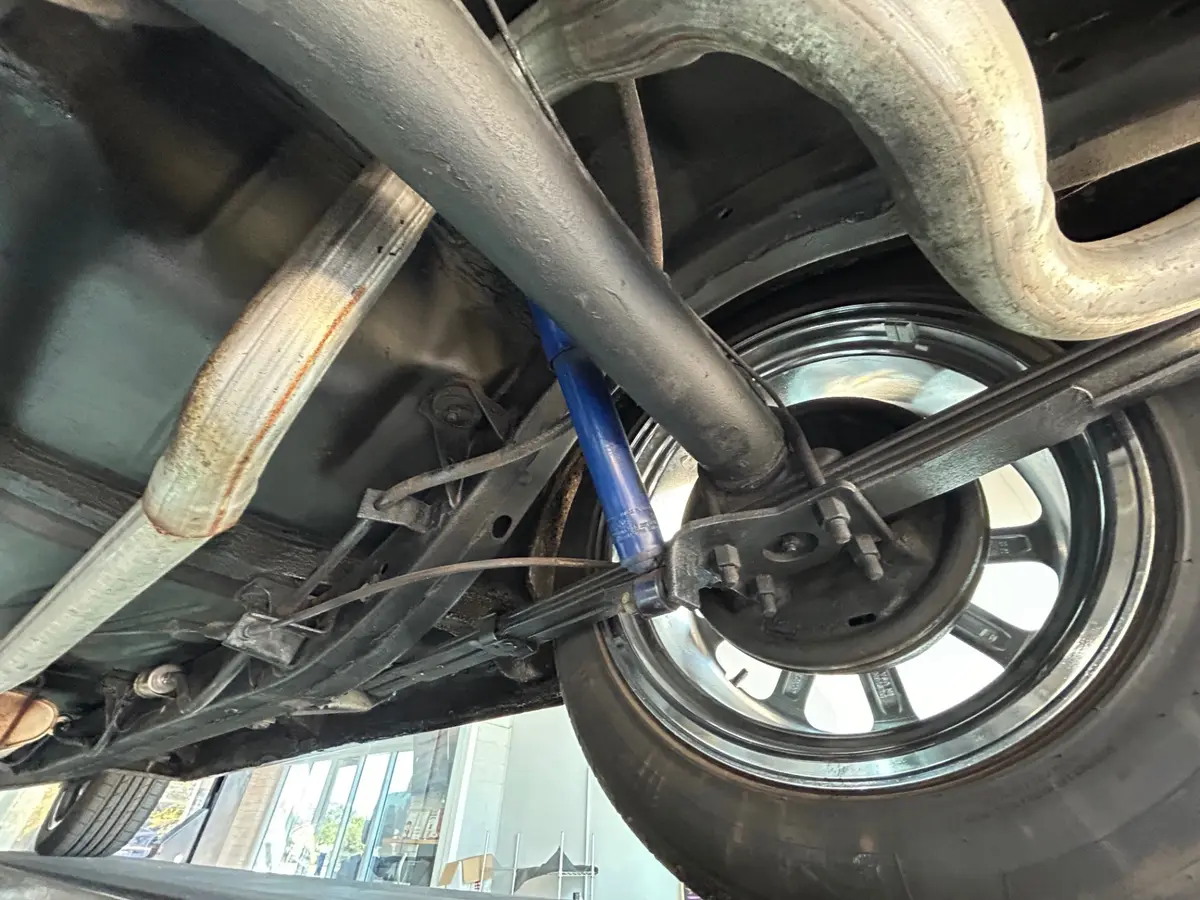
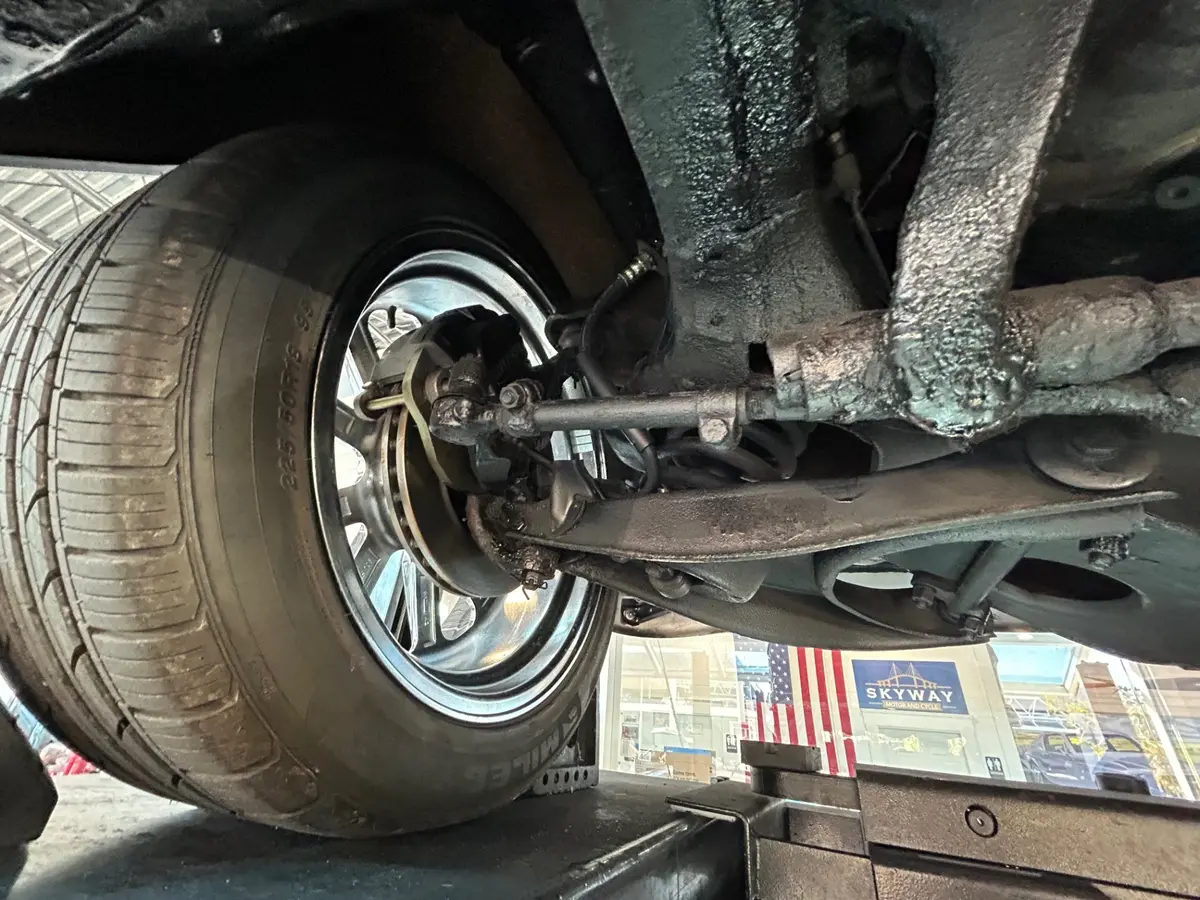
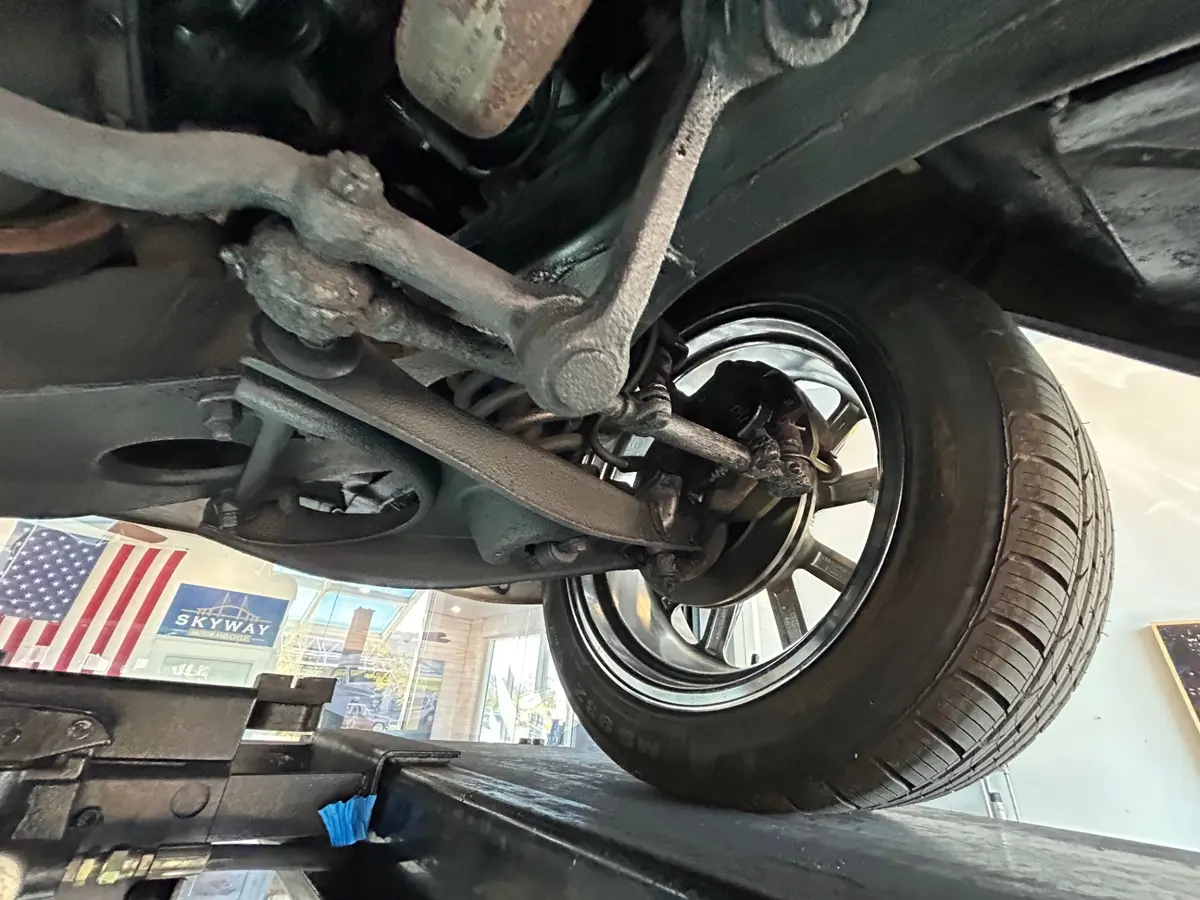
Underneath, the car has been fitted with front disc brakes, which is a practical and important upgrade over the original four-wheel drum setup. Stopping a 350-powered Tri-Five with drum brakes at all four corners is workable but not ideal for regular driving; front discs meaningfully improve brake feel and fade resistance. The rear end is described as heavy-duty, appropriate for the power level, and rear traction bars have been added to control axle wrap under hard acceleration — a common and sensible addition when running a manual transmission and headers in a leaf-spring car. An aftermarket alternator handles the updated electrical demands of the stereo and other modern components.
Interior
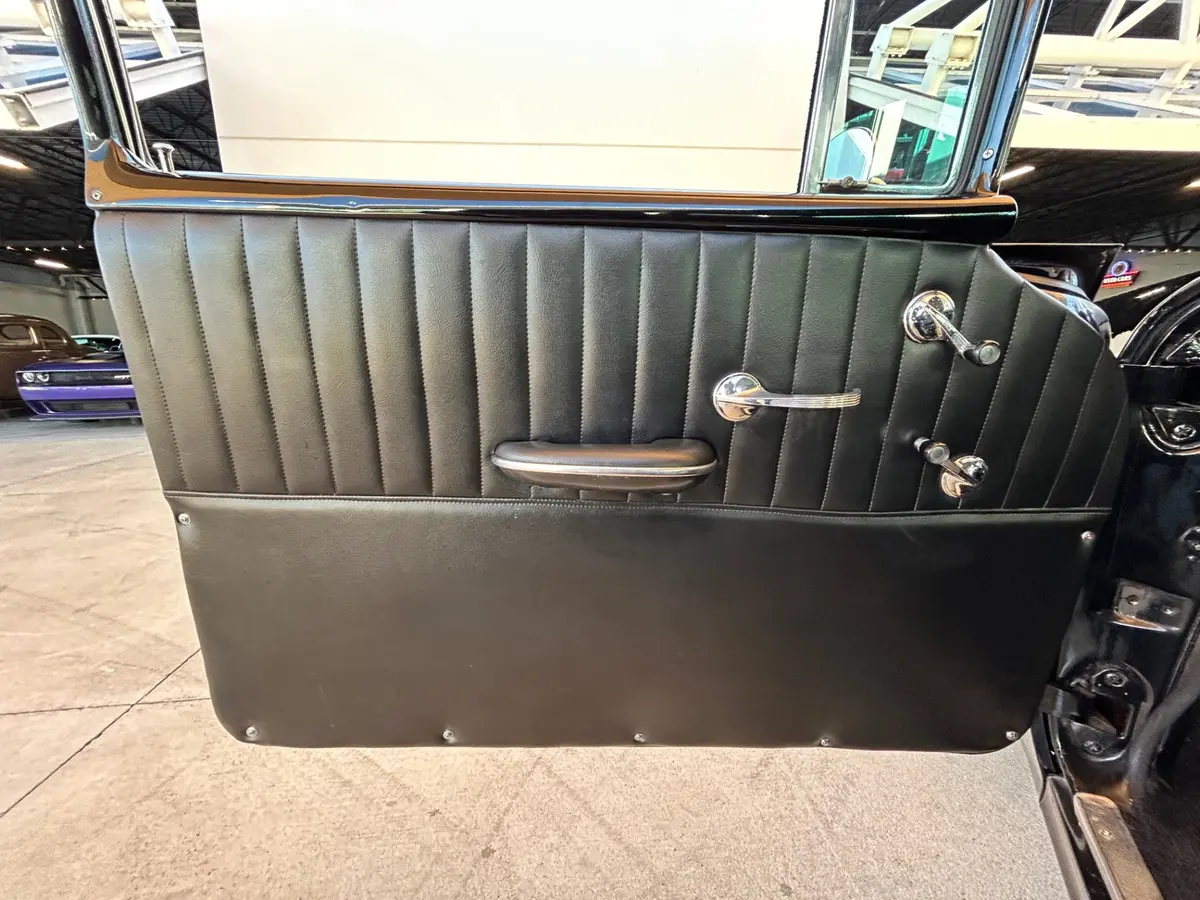
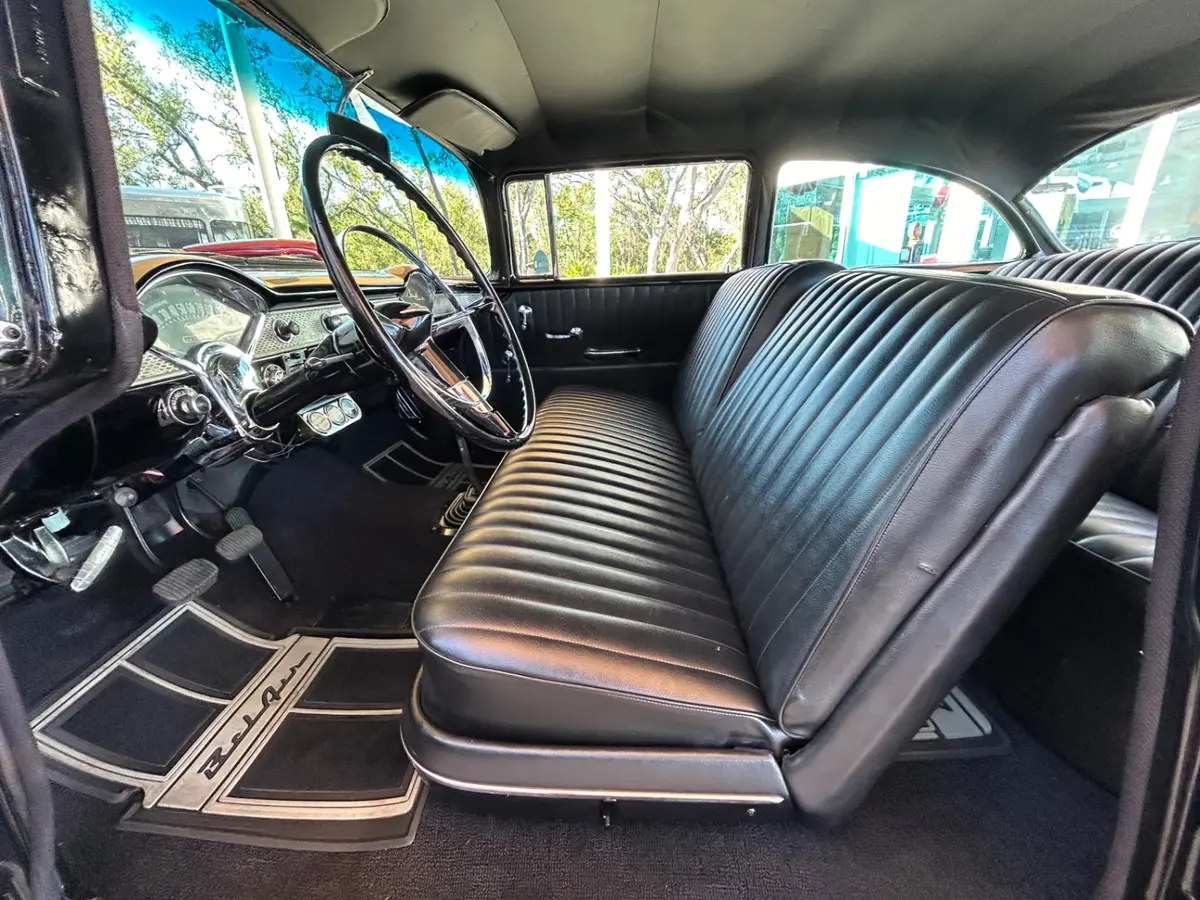
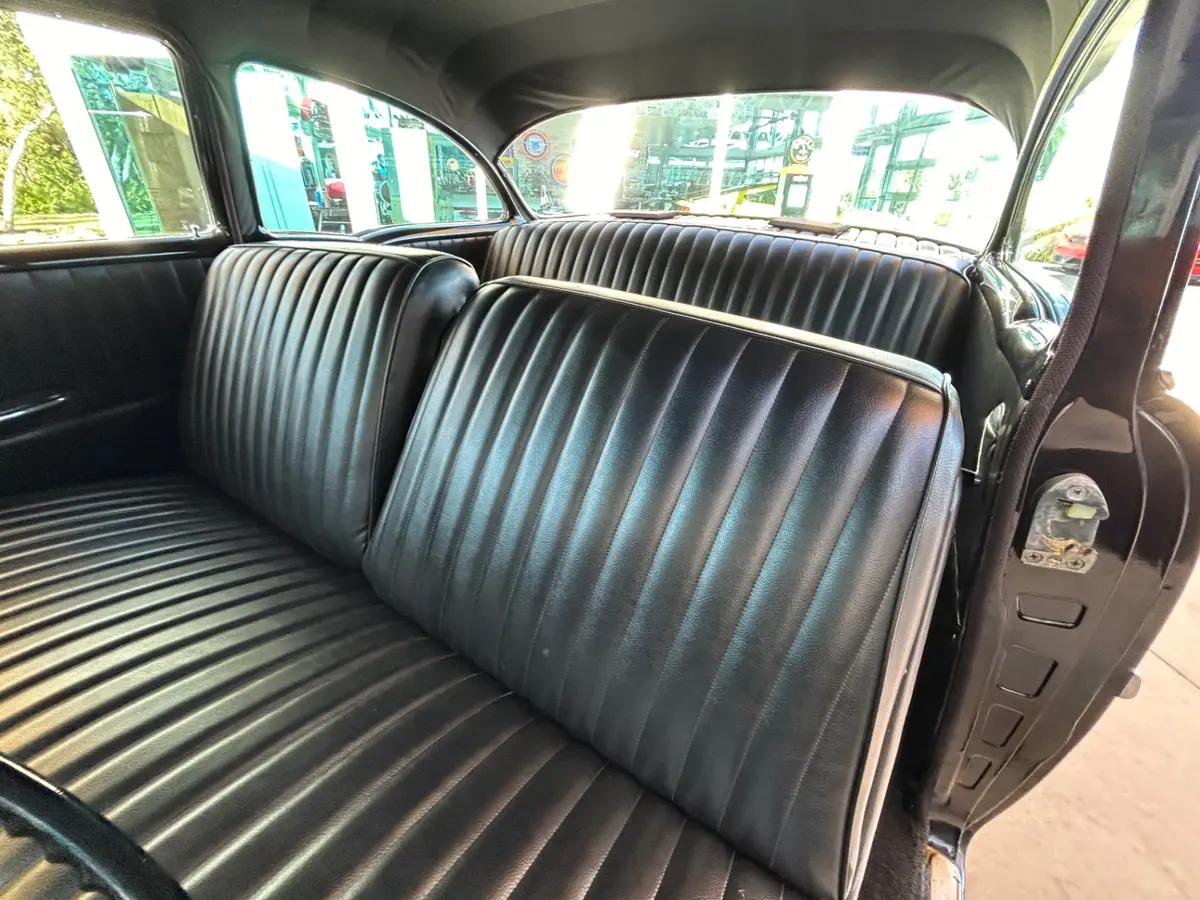
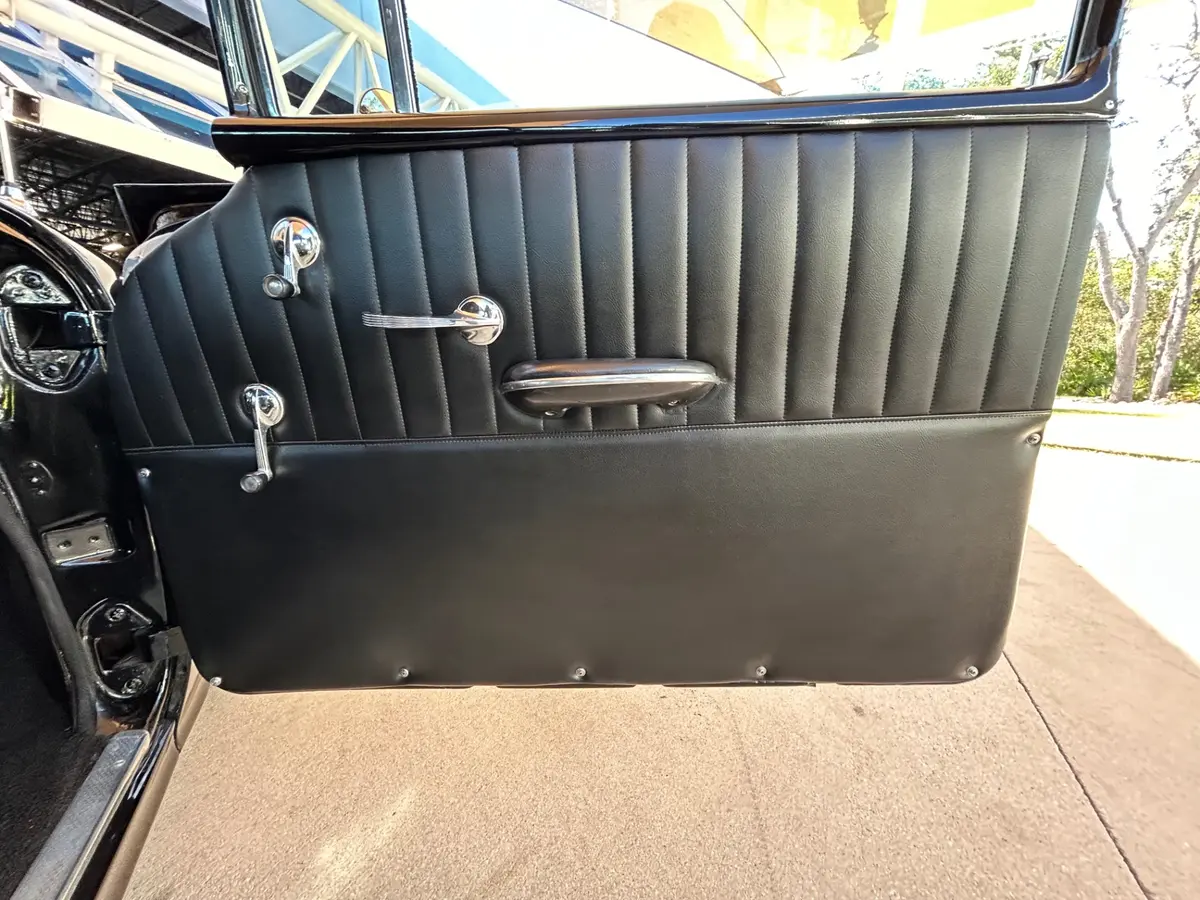
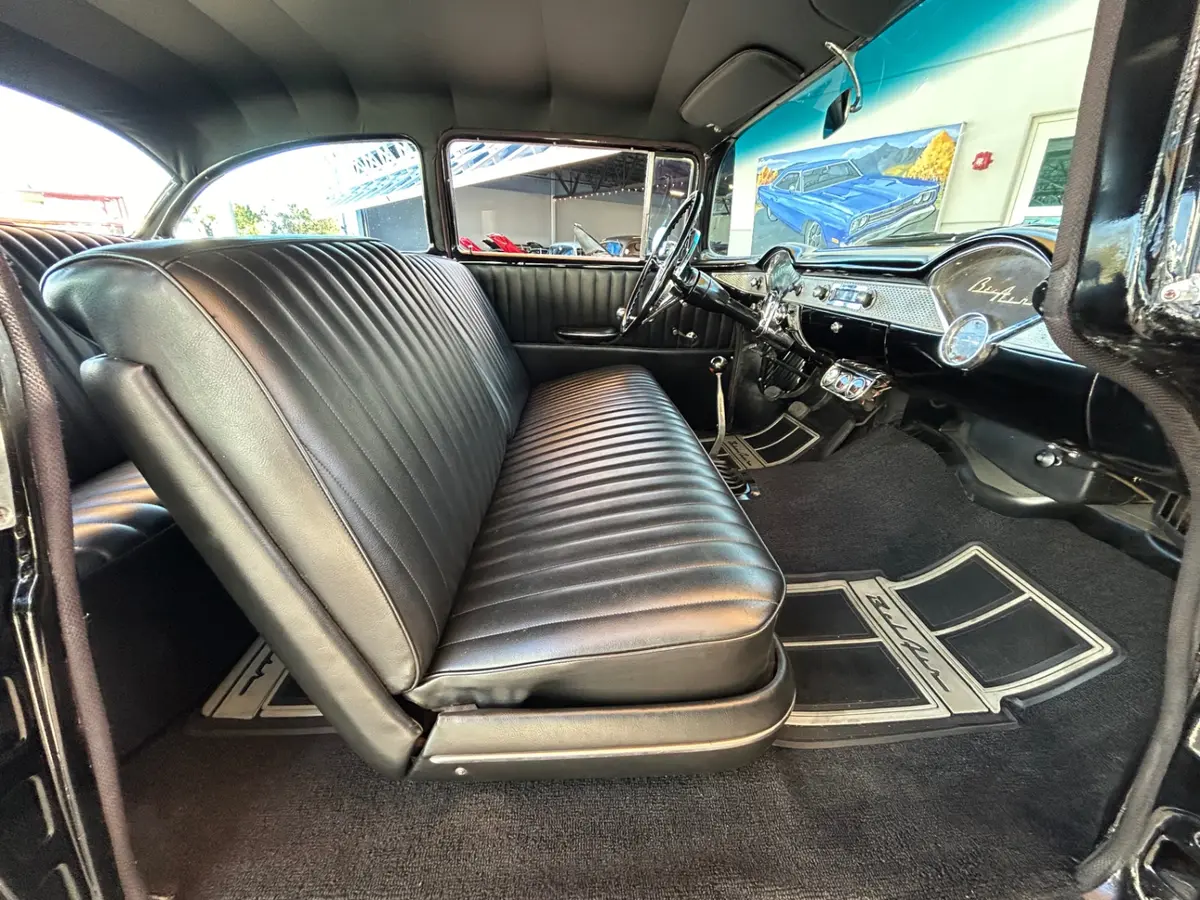
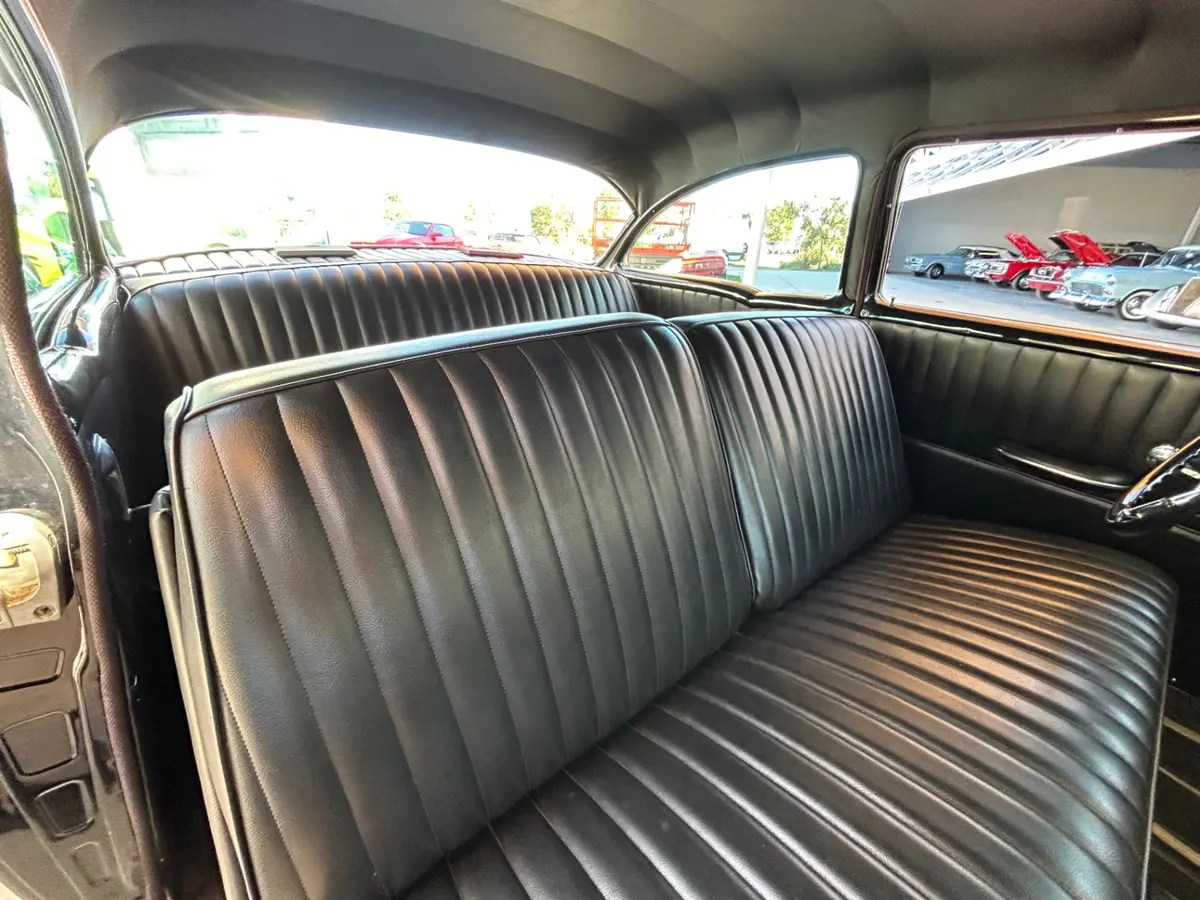
The interior of this 1955 Chevrolet 210 was built by M&M Interiors, a shop designation indicating professional custom upholstery work rather than a kit install. The black vinyl split-bench front seat is matched by a corresponding black vinyl rear bench, and both carry the same vertical-channel stitching pattern visible throughout the photos. The consistency of the stitching from front to rear bench to door panels indicates the work was done as a complete package rather than pieced together over time.
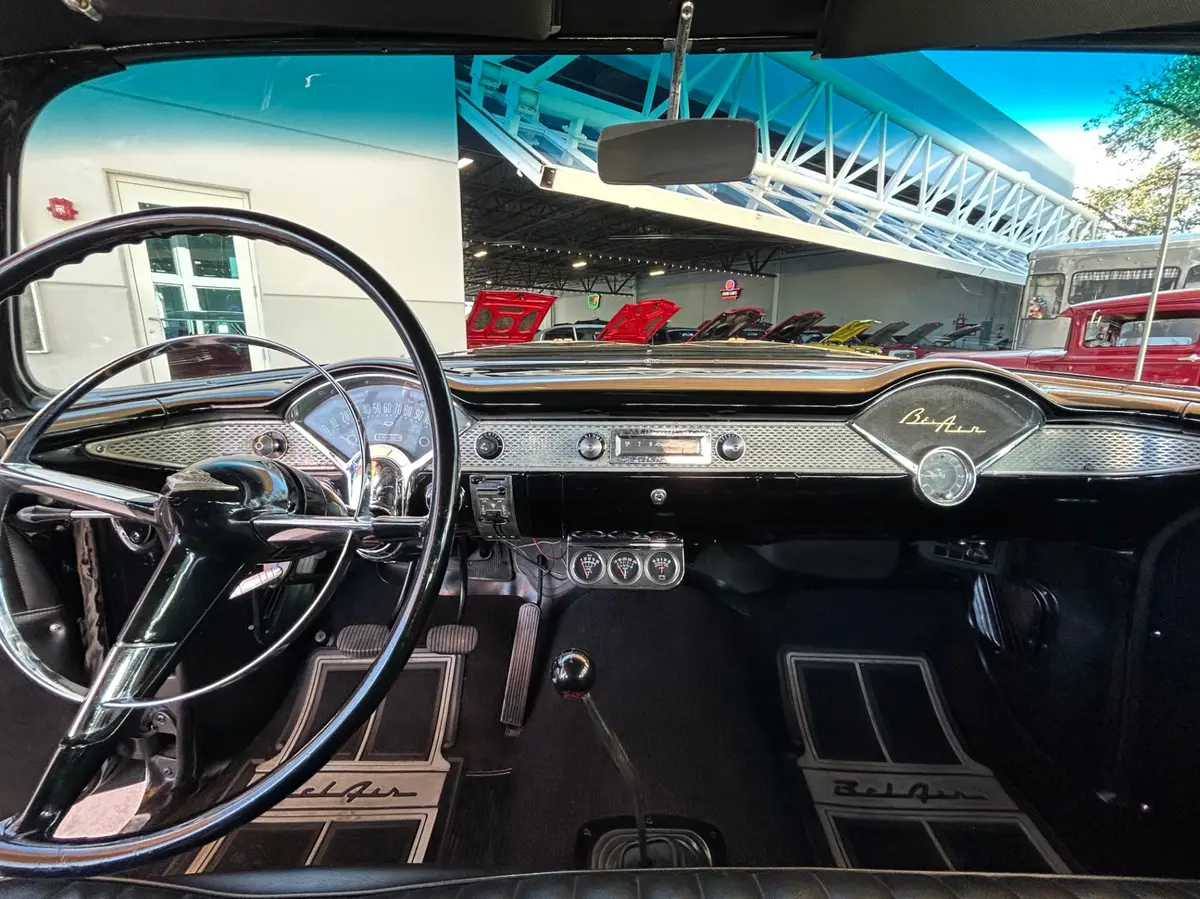
The door panels are custom units in black vinyl that complement the seats without trying to mimic stock 1955 panels exactly. The black carpet is clean throughout, and the black Bel Air floor mats — with their script lettering — add a period-correct detail that works well against the dark carpet. The black headliner completes the all-black interior scheme and shows no visible sagging or staining in the photos.
The dash retains the core 1955 Chevrolet architecture, including the Bel Air side dash panel with its integrated clock on the passenger side — a detail that was specific to the Bel Air trim level and has been incorporated here to upgrade the 210's original dash. The dash face features aluminum and chrome trim that photographs well and holds up to the overall tone of the build. A custom gauge cluster has been installed, providing more useful instrumentation than the stock 1955 setup, which was notably sparse. The original-style black factory steering wheel is present, which keeps the driver's view period-appropriate. The stereo radio is integrated into the dash without obvious modification to the surrounding trim.
The trunk has been restored, painted, and cleaned, with a rubber trunk mat in place. The undercarriage photos confirm the car has been addressed beneath the body as well, with a painted floor pan and clean structural areas visible.
Exterior
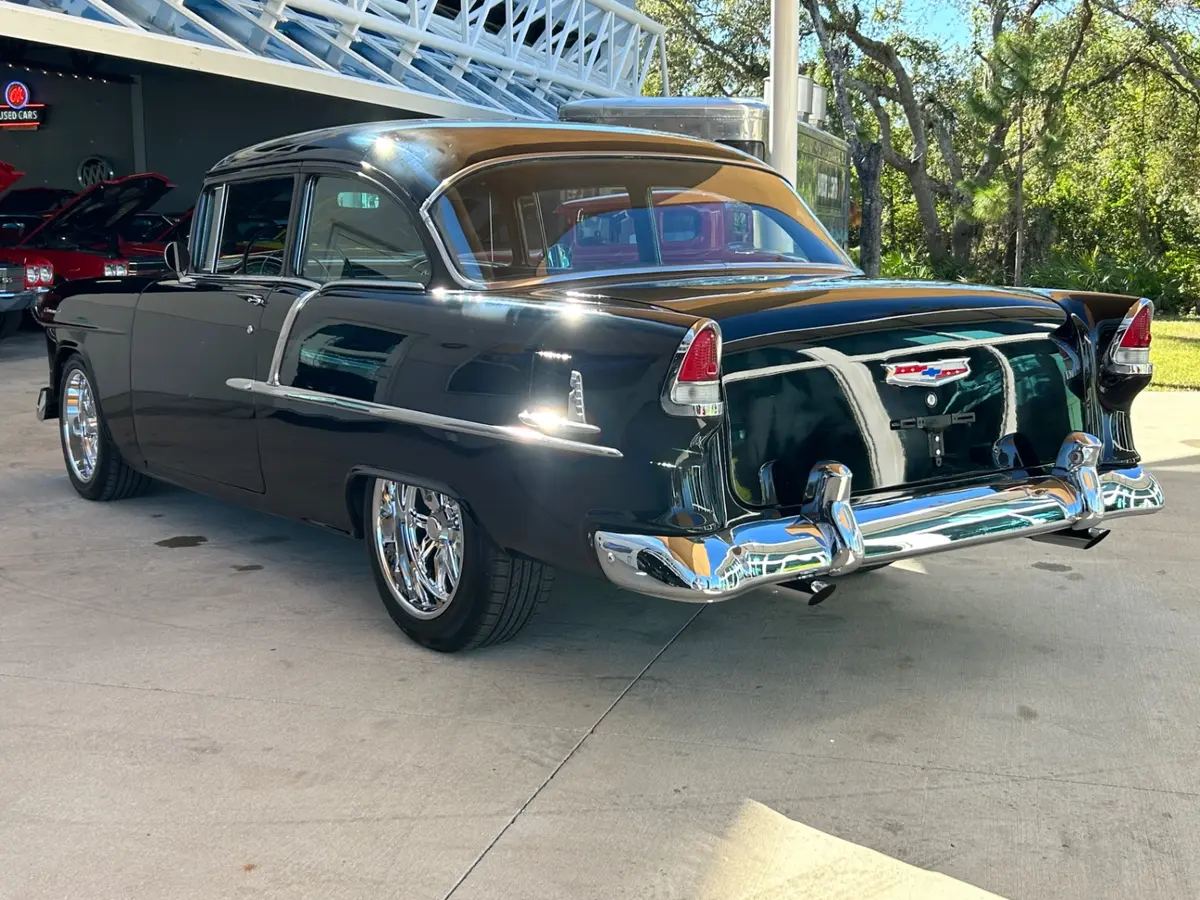
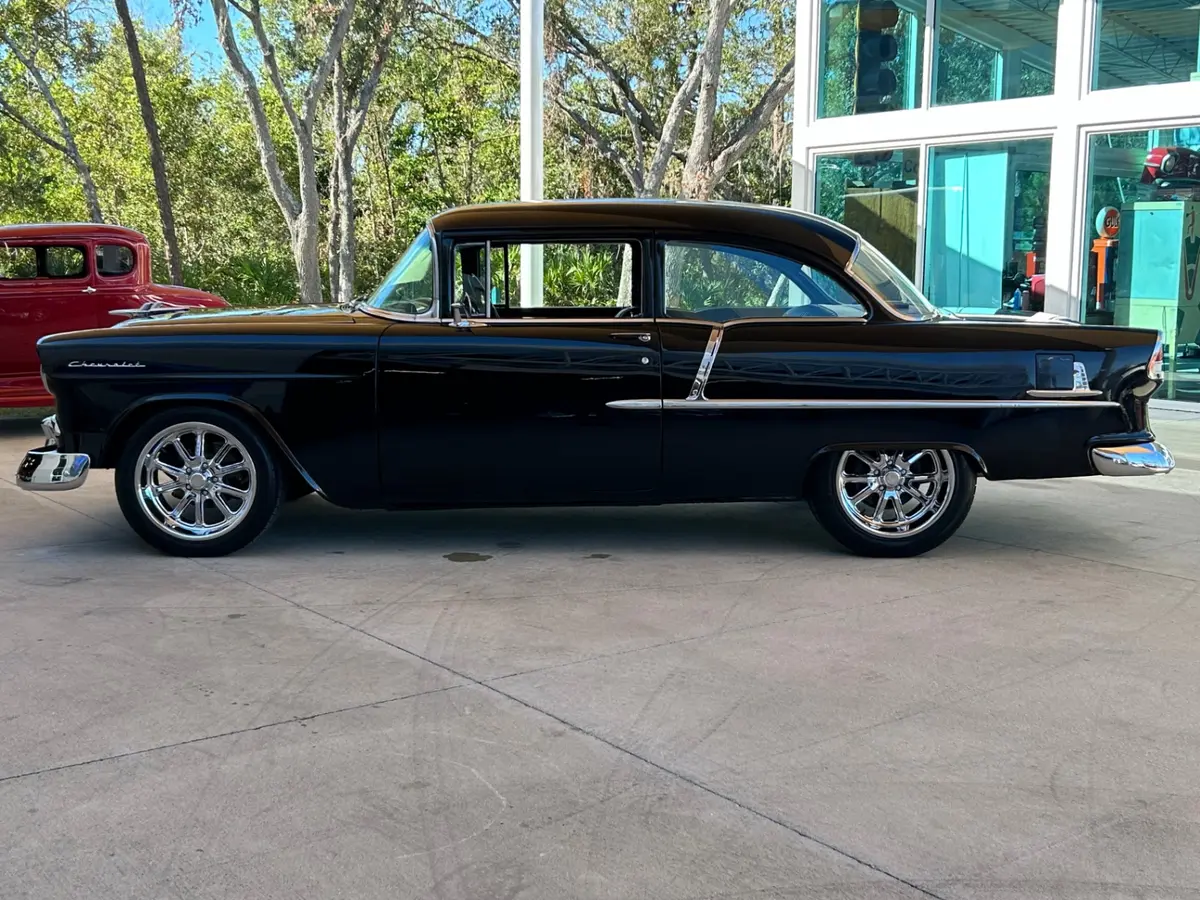
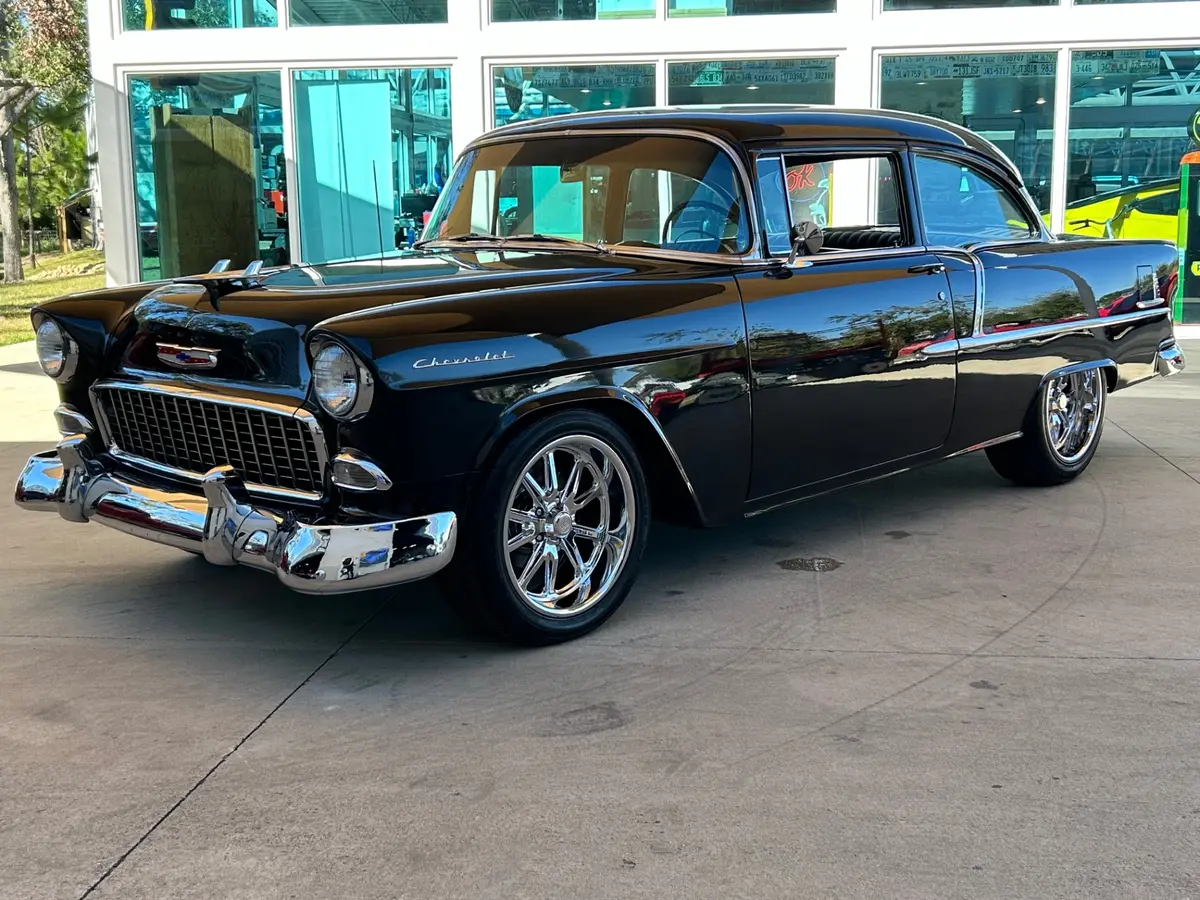
The exterior of this 1955 Chevrolet 210 is finished in a black and gold two-tone combination. The split runs along the body crease in the conventional Tri-Five two-tone format, with the upper body and roof in one tone and the lower body in the complementary shade. The black and gold pairing is a strong choice on this body — it reads as intentional and period-consistent with 1950s custom car culture without being garish. The paint presents well in all lighting conditions shown in the photos, with no visible repairs or stress cracks in the panels.
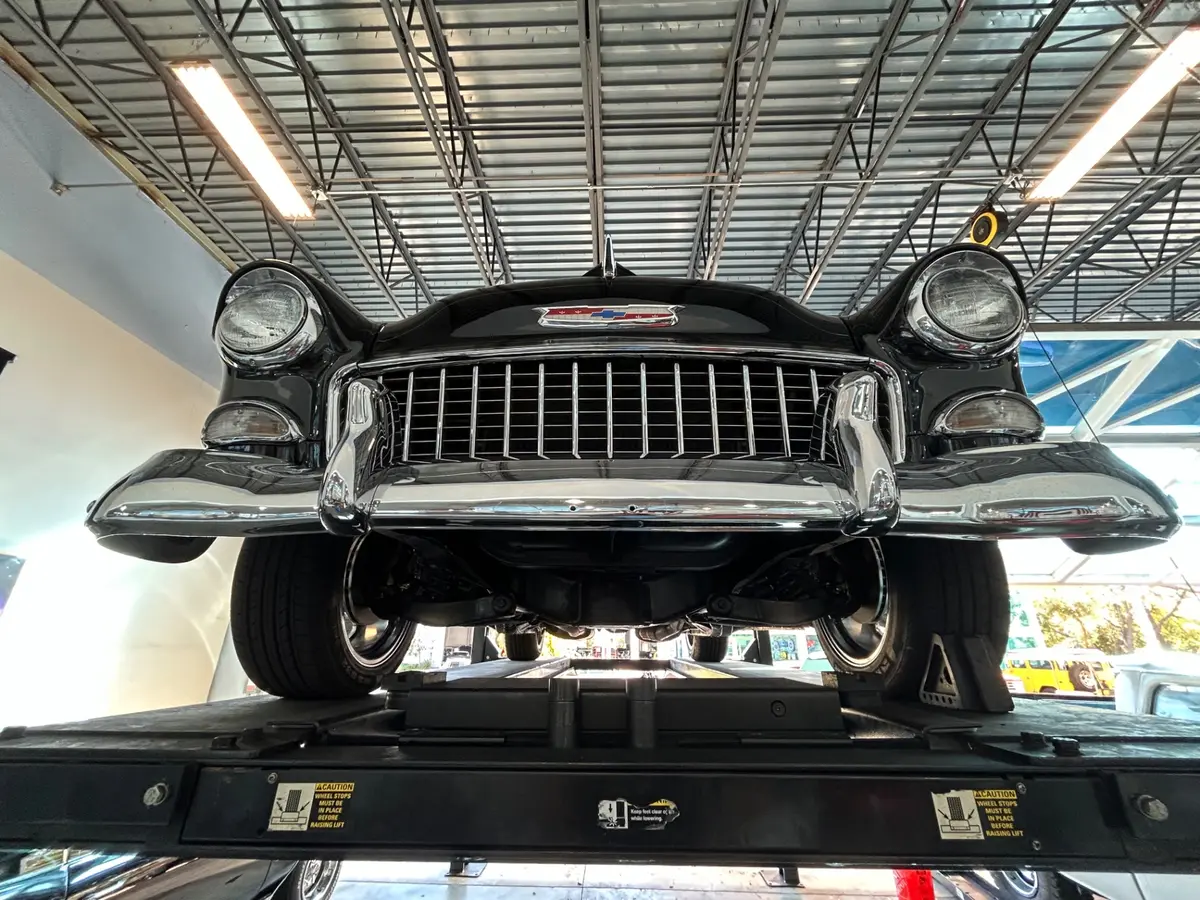
The Tri-Five body itself is the reason cars like this remain in demand nearly seven decades after production. The 1955 body is slightly more restrained than the 1957, with cleaner rear quarters and a less exaggerated tailfin treatment that has aged well. The front end — with its wide horizontal grille, round headlight housings, and prominent hood — still reads as modern in proportion even by current standards. The airplane hood ornament, factory side chrome trim strips, and chrome front and rear bumpers are all present and intact. The Bel Air rear deck badge is a detail that, like the dash panel, represents a deliberate choice to bring Bel Air trim cues into the 210 build.
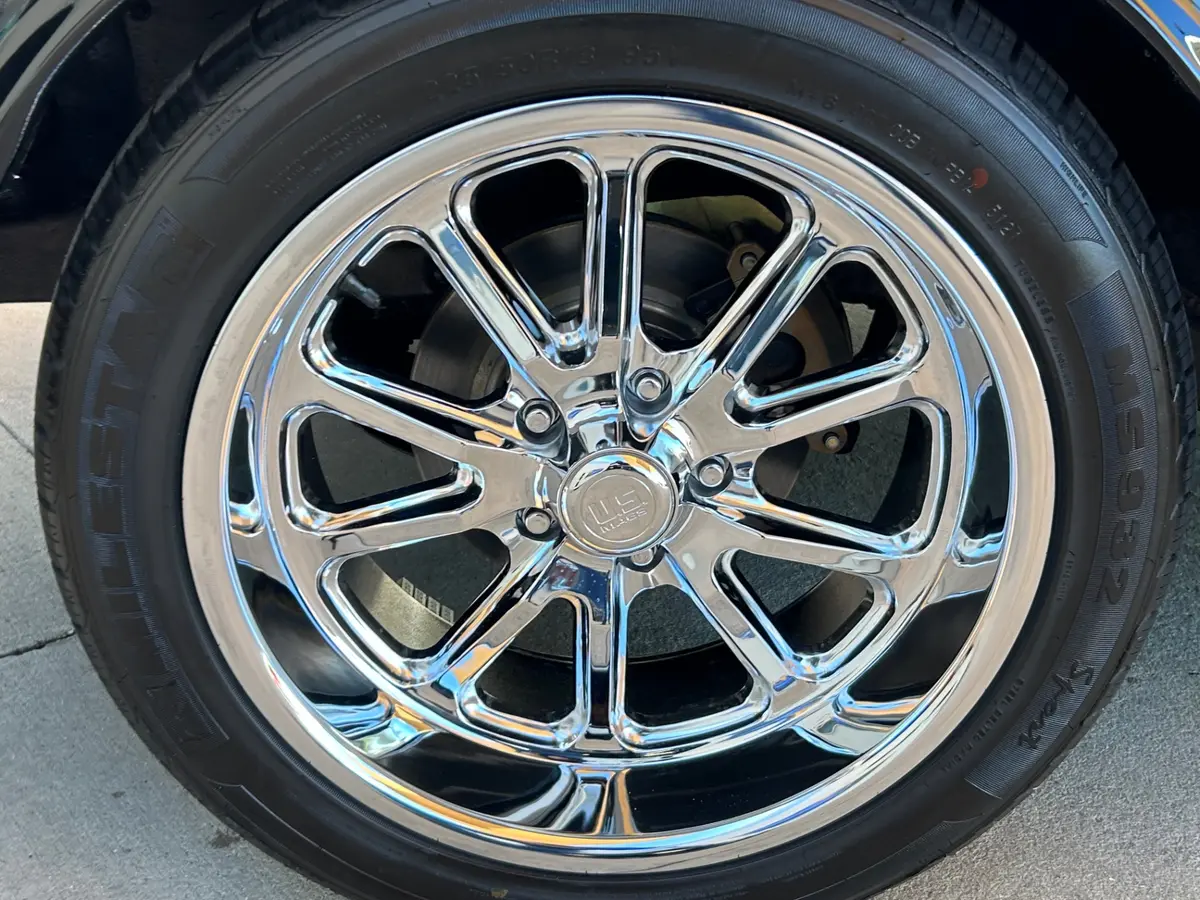
The 18-inch chrome US Mag wheels wearing 225/50R18 black sidewall tires are the most obvious departure from factory spec. US Mag is a brand with deep roots in the custom wheel market, and their multi-spoke chrome designs read as contemporary custom rather than retro-themed. The 18-inch diameter on a 1955 body fills the wheel wells noticeably better than the original 15-inch wheels would, and the black sidewall tire maintains some visual weight in the wheel opening rather than the whitewalls that would be expected on a full restoration. Glass is described as good all around, and the photos support that — no visible chips, crazing, or seal failures in the window areas.
Conclusion
The 1955 Chevrolet 210 two-door sedan is one of the most recognized body styles in American automotive history, and this example has been built with a clear set of priorities: a proven and tractable small-block V8, a manual transmission, modern braking at the front, professional interior work, and a paint scheme that respects what the Tri-Five design was always capable of. It is not a numbers-matching restoration, nor is it trying to be. It is a usable, well-assembled custom built on one of the most desirable platforms of the postwar era.
If you would like more information about this 1955 Chevrolet 210 or would like to arrange a time to see it in person, call Skyway Classics in Sarasota, Florida at 941-254-6608.
Disclaimer
Information found on the website is presented as given to us by the owner of the car, whether on consignment or from the owner we bought it from. Some Photos, materials for videos, descriptions and other information are provided by the consignor/seller and is deemed reliable, but Skyway Classics does not warranty or guarantee this information. Skyway Classics is not responsible for information that may incorrect or a publishing error. The decision to purchase should be based solely on the buyers personal inspection of the vehicle or by a professional inspection service prior to offer or purchase being made.
1955 Chevrolet 210 Two-Door Sedan — ZZ-3 350 V8, 4-Speed, Black and Gold Custom Build
Why This Car Is Special
The 1955 Chevrolet 210 sits at the center of what enthusiasts call the Tri-Five era — the 1955, 1956, and 1957 Chevrolets that collectively changed the direction of American automotive design. The '55 was the first year of this generation, and it was a genuine departure from everything Chevrolet had built before it. Designer Carl Renner and his team under Harley Earl gave the car lower, wider proportions, a wrapped windshield, and a Ferrari-inspired egg-crate grille — all of it a sharp break from the upright, boxy look of the 1954 models. The result was a car that looked expensive without carrying a luxury price tag.
The 210 was the middle trim level in 1955, sitting above the base 150 and below the Bel Air. It offered most of the same body options — two-door sedan, four-door sedan, hardtop, and wagon variants among them — but with less chrome trim and simpler interior appointments than the Bel Air. That positioning makes the 210 an interesting platform. It carries the same body, the same iconic Tri-Five sheetmetal, and the same bones as its more famous sibling, but it started life as a more practical, driver-focused car. Builders have long recognized that a well-built 210 makes a compelling custom precisely because the canvas is clean and the factory chrome restraint leaves room to define the car on your own terms.
This particular 1955 Chevrolet 210 two-door sedan has been built as a driver-quality custom, not a trailer queen. The combination of a GM ZZ-3 crate 350 small-block, a 4-speed manual transmission, front disc brakes, and a professional interior by M&M Interiors puts it squarely in the category of cars that are built to be enjoyed regularly. The black and gold two-tone paint scheme, period-correct chrome trim, and Bel Air-sourced interior cues give it a presence that respects the original design language while making its own statement.
One detail worth noting from the VIN: the build sequence number encoded in this car places it among the Norwood, Ohio production run for 1955 — consistent with a two-door sedan body. Norwood was one of Chevrolet's primary assembly plants during this era and built a significant share of the Tri-Five production across all three model years.
Features List
- GM ZZ-3 crate 350 V8 engine
- Aluminum intake manifold with Edelbrock 4-barrel carburetor
- Chrome low-profile air cleaner
- Black painted valve covers
- Cast iron exhaust headers
- Dual exhaust system
- 4-speed manual transmission with floor-mounted shifter
- Front disc brakes
- Heavy-duty rear end with rear traction bars
- Aftermarket alternator
- Painted and detailed engine compartment
- Custom interior by M&M Interiors
- Black vinyl split-bench front and rear seats
- Custom door panels and black carpet
- Black Bel Air floor mats
- Black headliner
- Dash with aluminum and chrome trim
- Black factory steering wheel
- Custom gauge cluster
- Stereo radio
- Bel Air side dash panel with clock
- Restored, painted, and cleaned trunk with rubber mat
- Black and gold two-tone exterior paint
- Chrome front and rear bumpers
- Airplane hood ornament
- Factory side chrome trim
- Bel Air rear deck badge
- Good glass all around
- 18-inch chrome US Mag wheels
- 225/50R18 black sidewall tires
Mechanical
The engine in this 1955 Chevrolet 210 is a GM ZZ-3 crate 350 small-block V8. The ZZ-3 was a factory GM Performance Parts engine package that was produced from approximately 1990 through the late 1990s and remains one of the more respected bolt-in crate engines from that period. It features a cast iron block, a hydraulic roller camshaft, and was rated at 355 horsepower from the factory. It is a known quantity — well-supported, with readily available parts, and a proven fit in first-generation Chevrolet bodies. The aluminum intake manifold and Edelbrock 4-barrel carburetor fitted here are appropriate upgrades that complement the ZZ-3's airflow characteristics. The chrome low-profile air cleaner keeps hood clearance from being an issue, and the black painted valve covers give the engine bay a clean, finished look against the detailed painted compartment.
Power goes through a 4-speed manual transmission, shifted via a floor-mounted unit. Pairing a 4-speed with a 350 V8 in a car this size gives you a responsive, connected driving experience that an automatic simply cannot replicate. The cast iron exhaust headers flow into a full dual exhaust system, which exits cleanly at the rear — visible in the undercarriage photos and confirming a proper dual setup rather than a single-to-dual conversion.
Underneath, the car has been fitted with front disc brakes, which is a practical and important upgrade over the original four-wheel drum setup. Stopping a 350-powered Tri-Five with drum brakes at all four corners is workable but not ideal for regular driving; front discs meaningfully improve brake feel and fade resistance. The rear end is described as heavy-duty, appropriate for the power level, and rear traction bars have been added to control axle wrap under hard acceleration — a common and sensible addition when running a manual transmission and headers in a leaf-spring car. An aftermarket alternator handles the updated electrical demands of the stereo and other modern components.
Interior
The interior of this 1955 Chevrolet 210 was built by M&M Interiors, a shop designation indicating professional custom upholstery work rather than a kit install. The black vinyl split-bench front seat is matched by a corresponding black vinyl rear bench, and both carry the same vertical-channel stitching pattern visible throughout the photos. The consistency of the stitching from front to rear bench to door panels indicates the work was done as a complete package rather than pieced together over time.
The door panels are custom units in black vinyl that complement the seats without trying to mimic stock 1955 panels exactly. The black carpet is clean throughout, and the black Bel Air floor mats — with their script lettering — add a period-correct detail that works well against the dark carpet. The black headliner completes the all-black interior scheme and shows no visible sagging or staining in the photos.
The dash retains the core 1955 Chevrolet architecture, including the Bel Air side dash panel with its integrated clock on the passenger side — a detail that was specific to the Bel Air trim level and has been incorporated here to upgrade the 210's original dash. The dash face features aluminum and chrome trim that photographs well and holds up to the overall tone of the build. A custom gauge cluster has been installed, providing more useful instrumentation than the stock 1955 setup, which was notably sparse. The original-style black factory steering wheel is present, which keeps the driver's view period-appropriate. The stereo radio is integrated into the dash without obvious modification to the surrounding trim.
The trunk has been restored, painted, and cleaned, with a rubber trunk mat in place. The undercarriage photos confirm the car has been addressed beneath the body as well, with a painted floor pan and clean structural areas visible.
Exterior
The exterior of this 1955 Chevrolet 210 is finished in a black and gold two-tone combination. The split runs along the body crease in the conventional Tri-Five two-tone format, with the upper body and roof in one tone and the lower body in the complementary shade. The black and gold pairing is a strong choice on this body — it reads as intentional and period-consistent with 1950s custom car culture without being garish. The paint presents well in all lighting conditions shown in the photos, with no visible repairs or stress cracks in the panels.
The Tri-Five body itself is the reason cars like this remain in demand nearly seven decades after production. The 1955 body is slightly more restrained than the 1957, with cleaner rear quarters and a less exaggerated tailfin treatment that has aged well. The front end — with its wide horizontal grille, round headlight housings, and prominent hood — still reads as modern in proportion even by current standards. The airplane hood ornament, factory side chrome trim strips, and chrome front and rear bumpers are all present and intact. The Bel Air rear deck badge is a detail that, like the dash panel, represents a deliberate choice to bring Bel Air trim cues into the 210 build.
The 18-inch chrome US Mag wheels wearing 225/50R18 black sidewall tires are the most obvious departure from factory spec. US Mag is a brand with deep roots in the custom wheel market, and their multi-spoke chrome designs read as contemporary custom rather than retro-themed. The 18-inch diameter on a 1955 body fills the wheel wells noticeably better than the original 15-inch wheels would, and the black sidewall tire maintains some visual weight in the wheel opening rather than the whitewalls that would be expected on a full restoration. Glass is described as good all around, and the photos support that — no visible chips, crazing, or seal failures in the window areas.
Conclusion
The 1955 Chevrolet 210 two-door sedan is one of the most recognized body styles in American automotive history, and this example has been built with a clear set of priorities: a proven and tractable small-block V8, a manual transmission, modern braking at the front, professional interior work, and a paint scheme that respects what the Tri-Five design was always capable of. It is not a numbers-matching restoration, nor is it trying to be. It is a usable, well-assembled custom built on one of the most desirable platforms of the postwar era.
If you would like more information about this 1955 Chevrolet 210 or would like to arrange a time to see it in person, call Skyway Classics in Sarasota, Florida at 941-254-6608.
Disclaimer
Information found on the website is presented as given to us by the owner of the car, whether on consignment or from the owner we bought it from. Some Photos, materials for videos, descriptions and other information are provided by the consignor/seller and is deemed reliable, but Skyway Classics does not warranty or guarantee this information. Skyway Classics is not responsible for information that may incorrect or a publishing error. The decision to purchase should be based solely on the buyers personal inspection of the vehicle or by a professional inspection service prior to offer or purchase being made.
1955 Chevrolet
Bel Air Base
Why Choose Skyway Classics?
Explore our curated inventory of classic and collector cars—thoughtfully selected, ready to drive, and supported by experts who make ownership simple.
Expert Curation
Every vehicle is hand-selected by our experts for quality, authenticity, and investment potential.
Fast Transactions
Streamlined buying and selling process with quick financing and immediate delivery options.
Only National Dealer With Classic Service & Repair
We’re the only national dealership that services and repairs the classics we sell—before and after the sale.
Nationwide Network
Access to our extensive network of collectors, restorers, and classic car enthusiasts nationwide.
Concierge Ownership Support
From financing and insurance to paperwork, shipping, and titling—we handle the details so you can enjoy the drive.
Passion-Driven Service
We're classic car enthusiasts first, providing personalized service with genuine passion for the hobby.