
1960 Chevrolet
Bel Air Sport Coupe
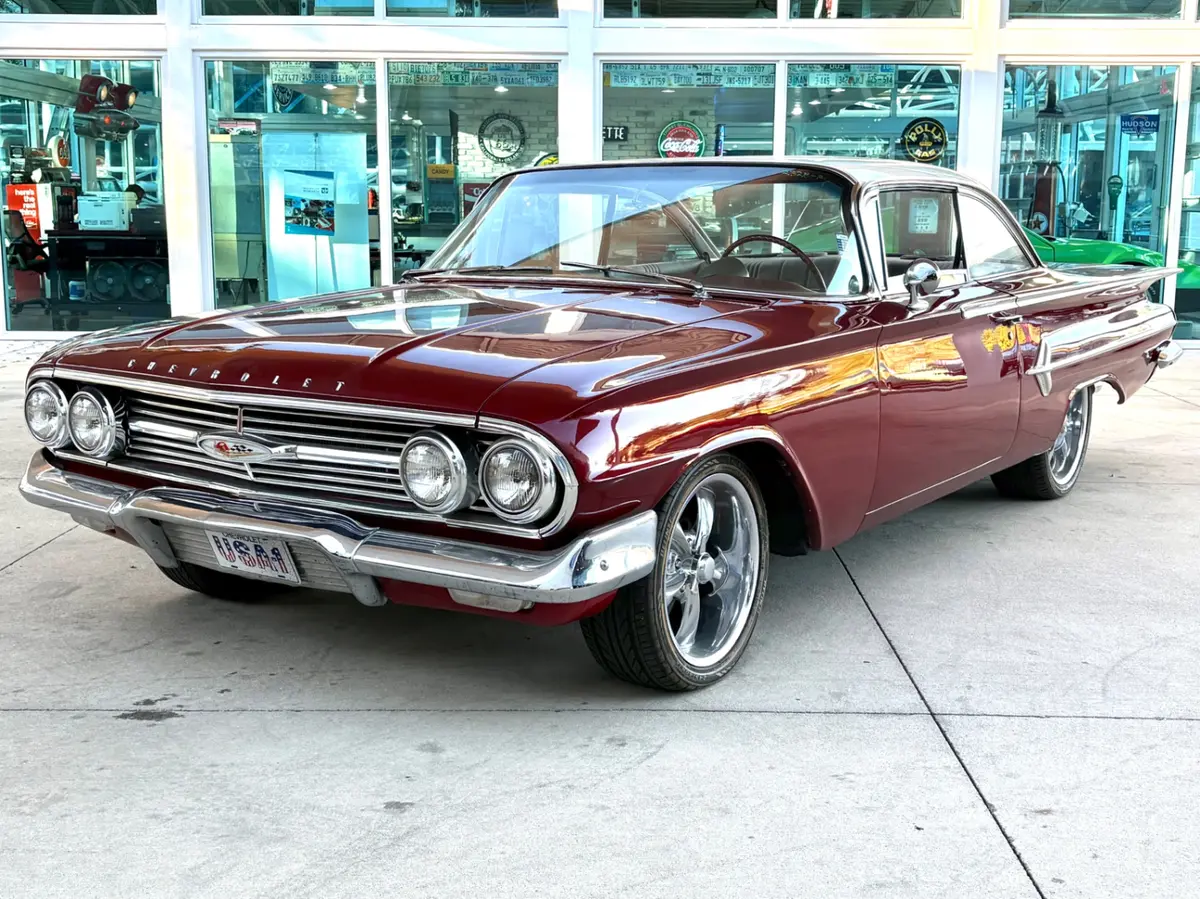
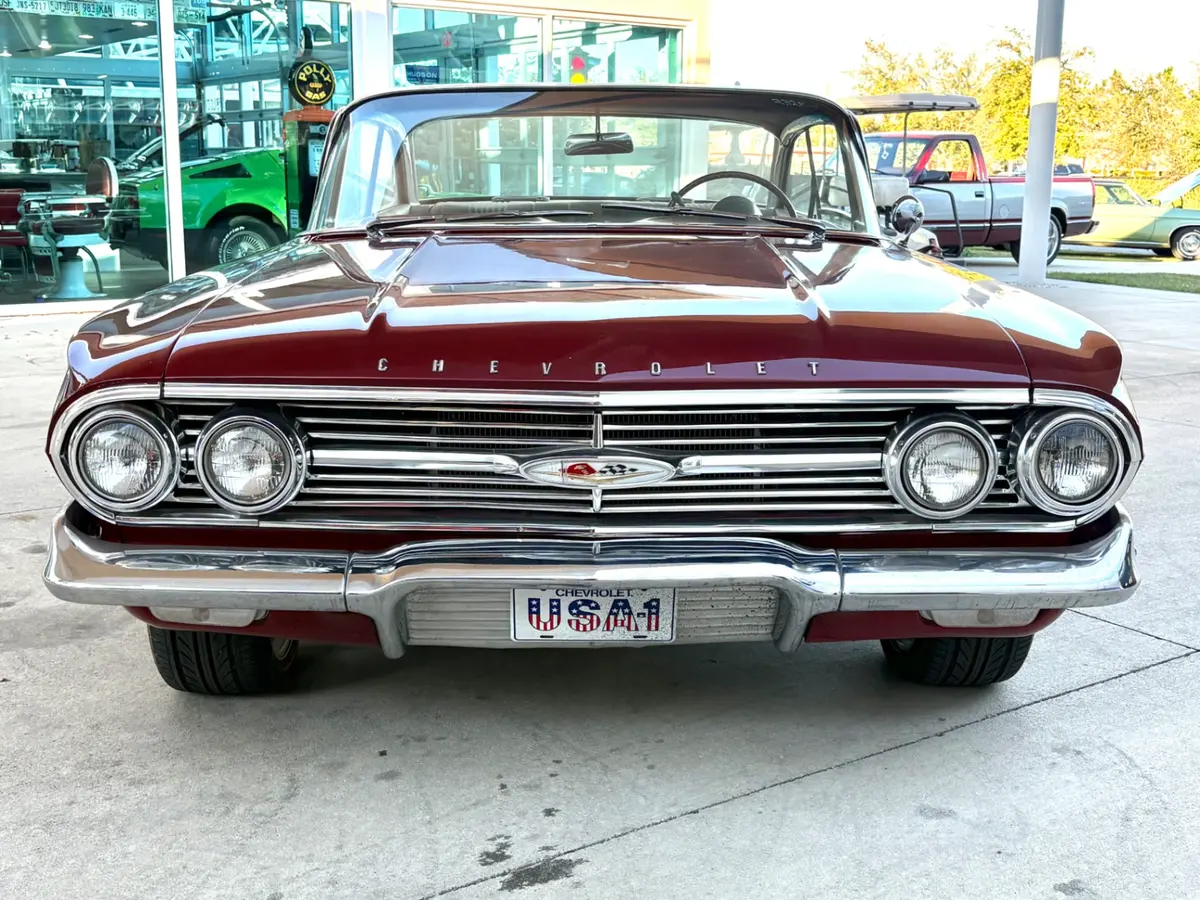
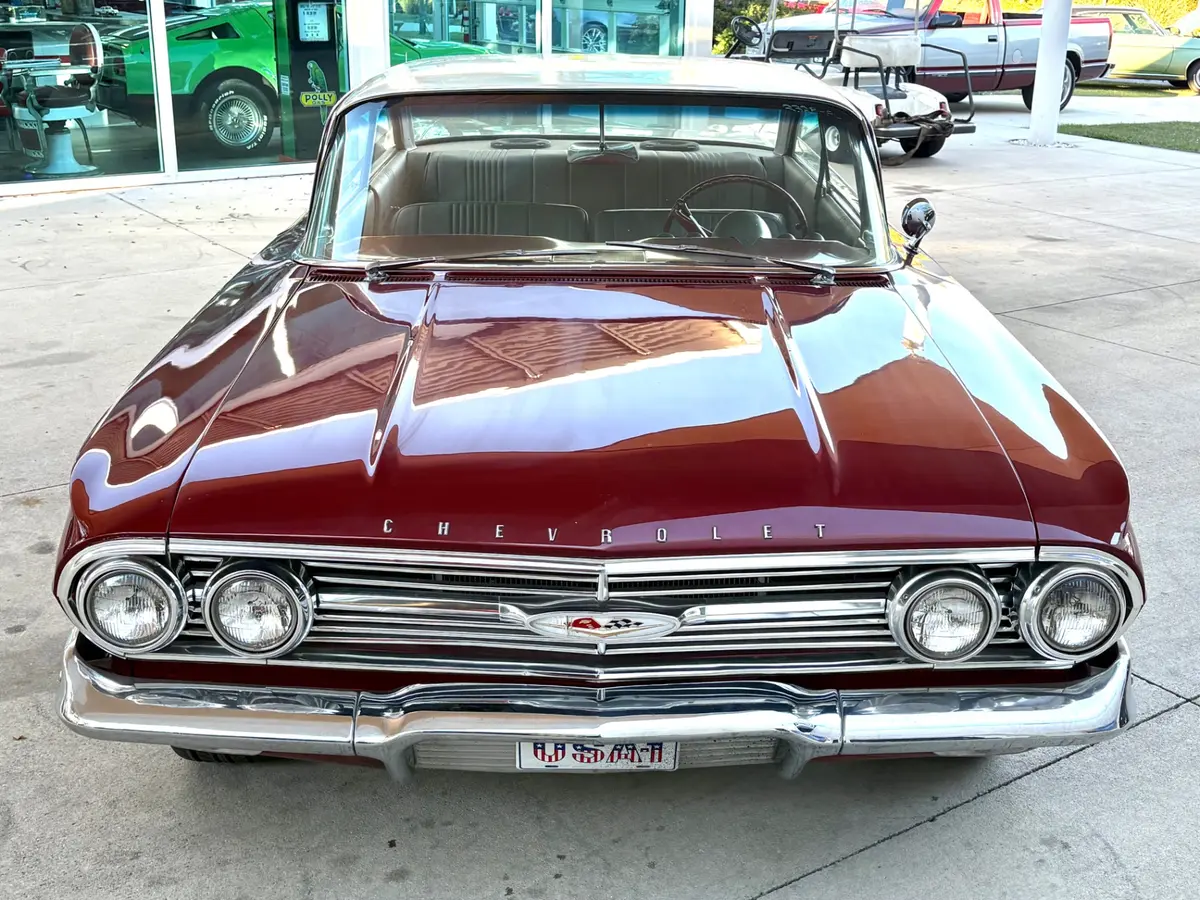
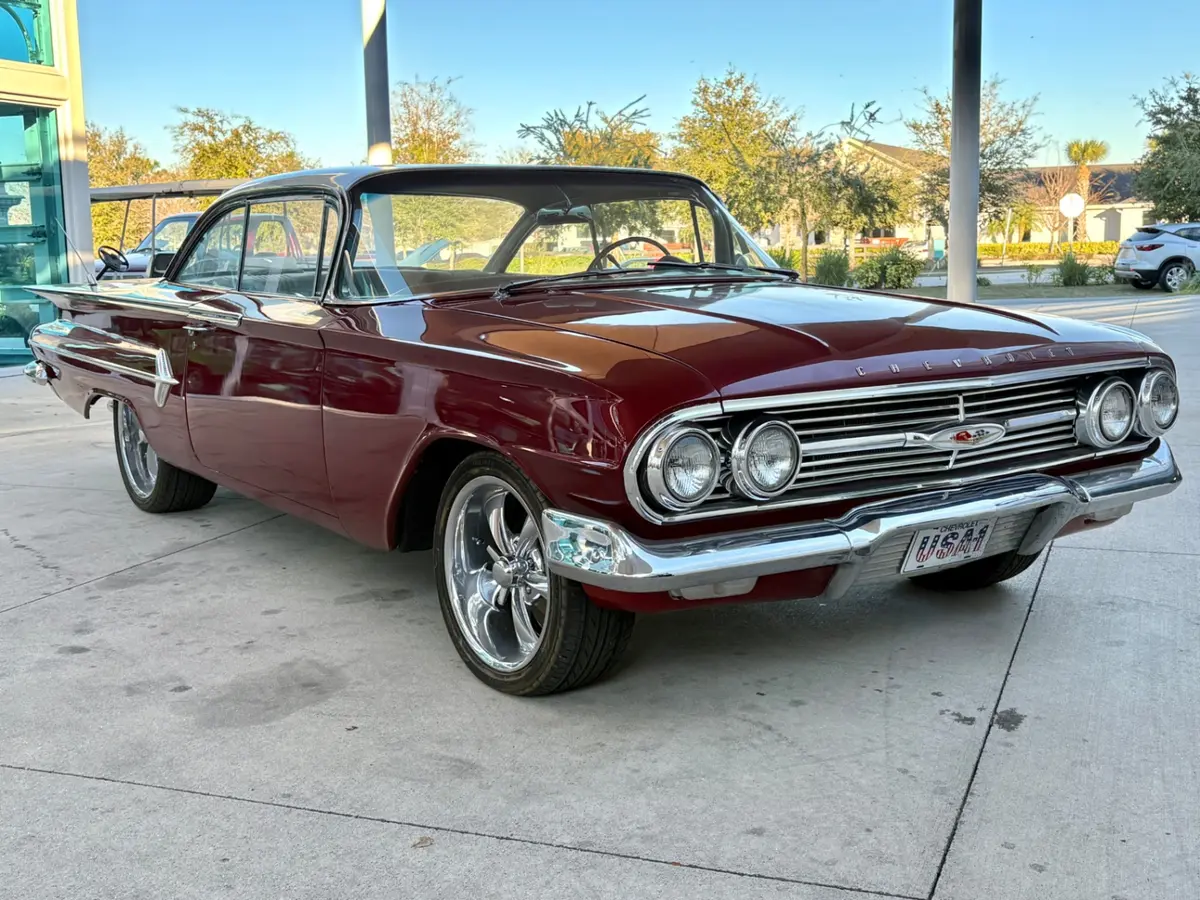
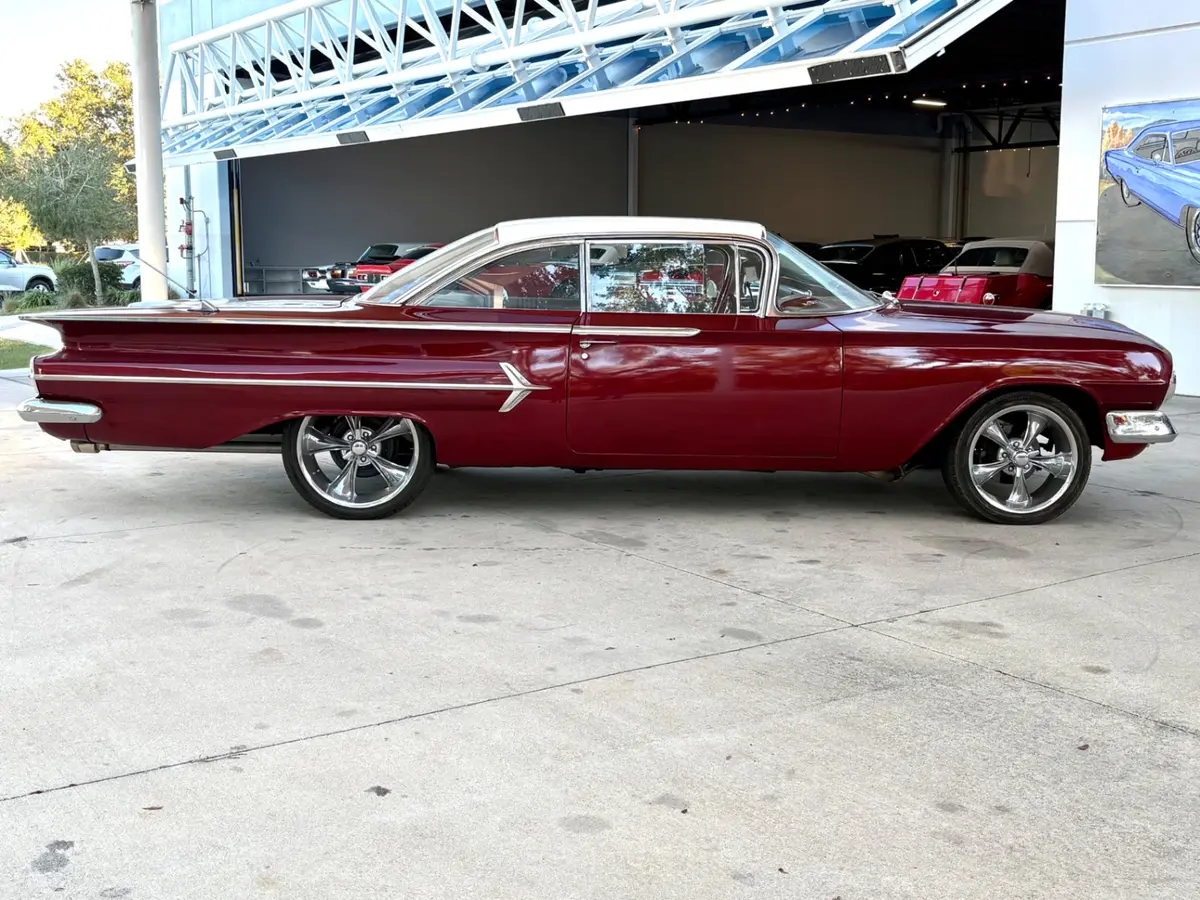
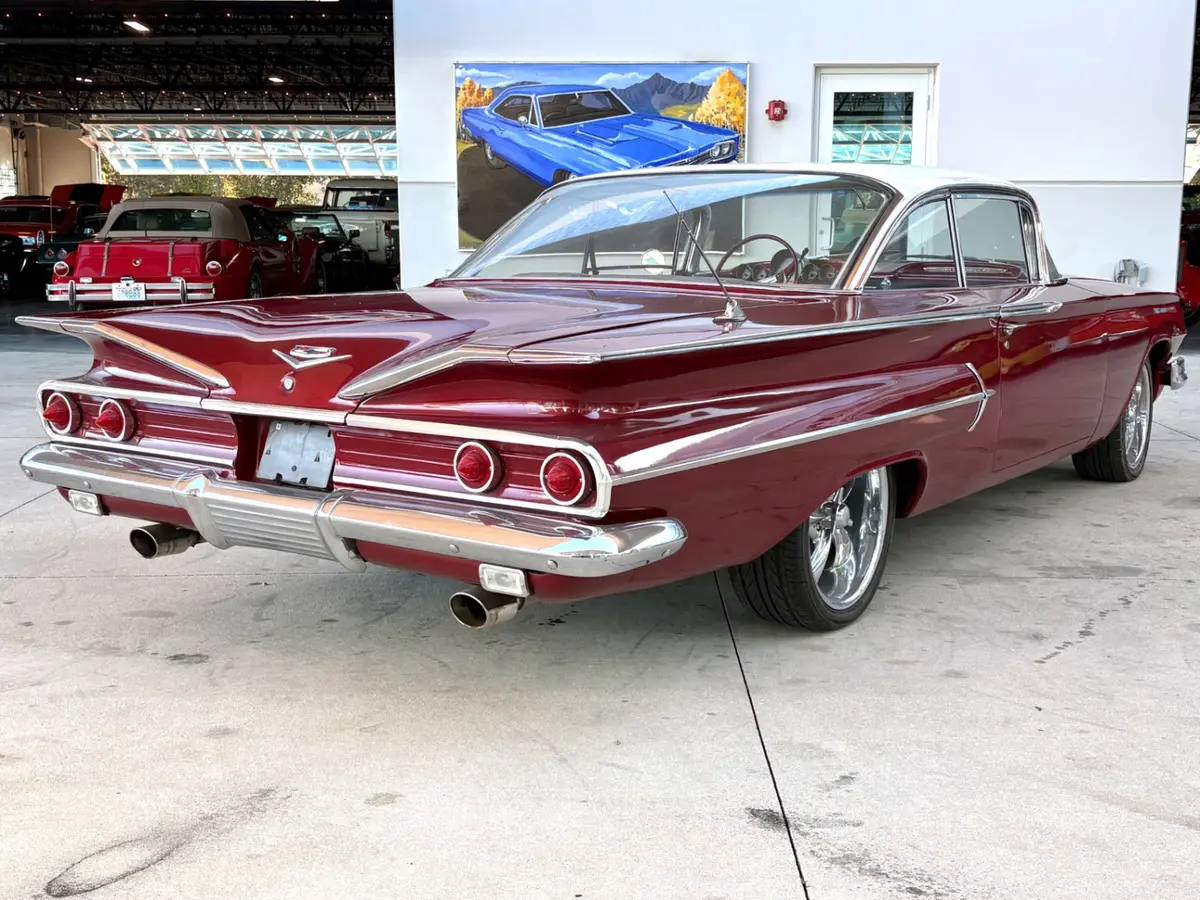
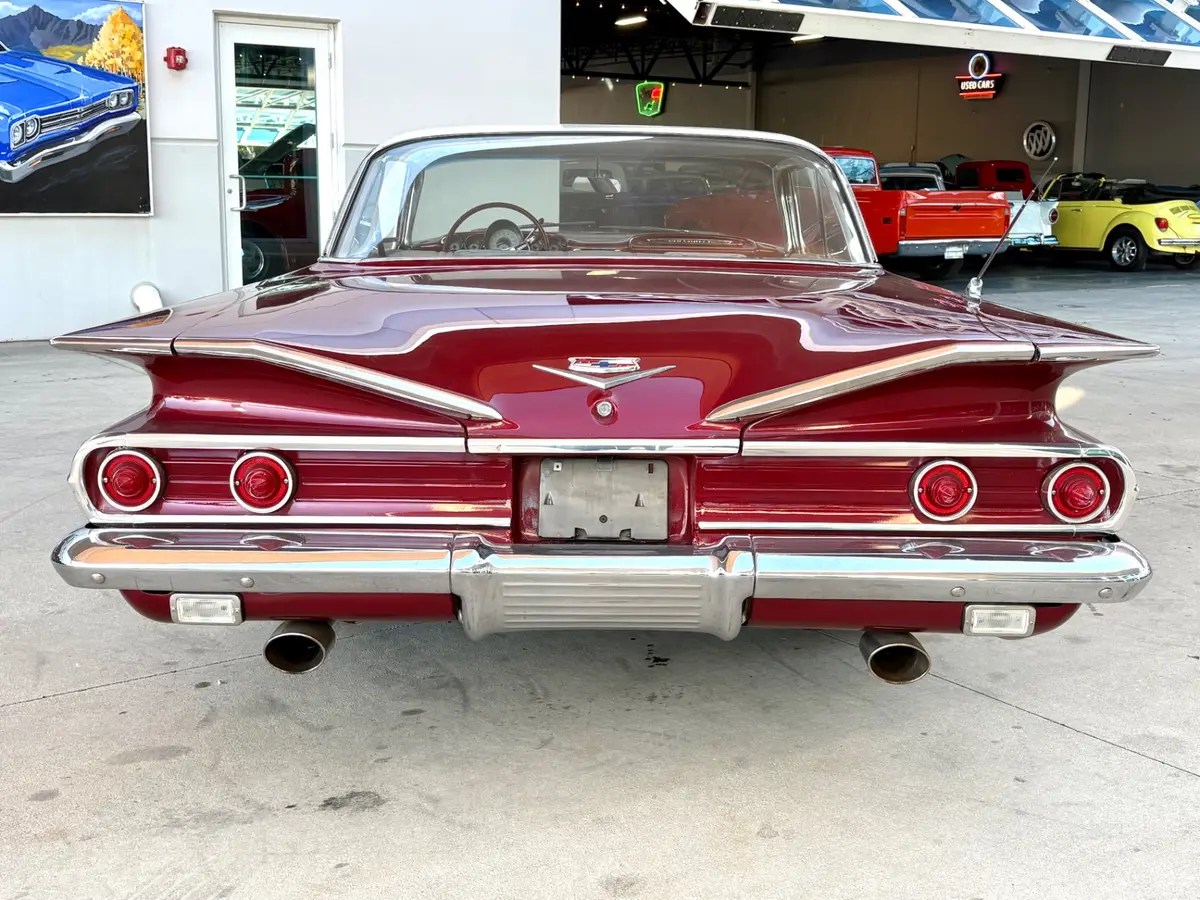
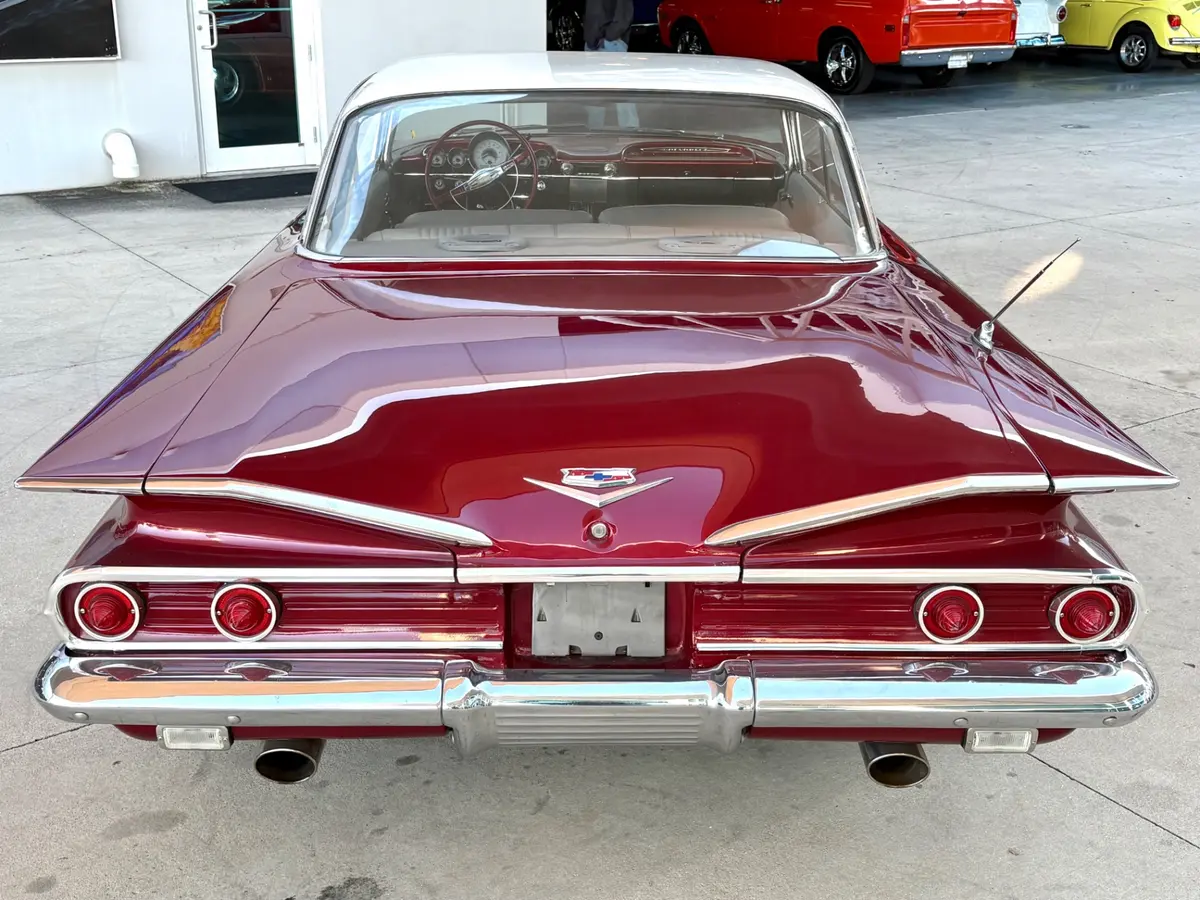
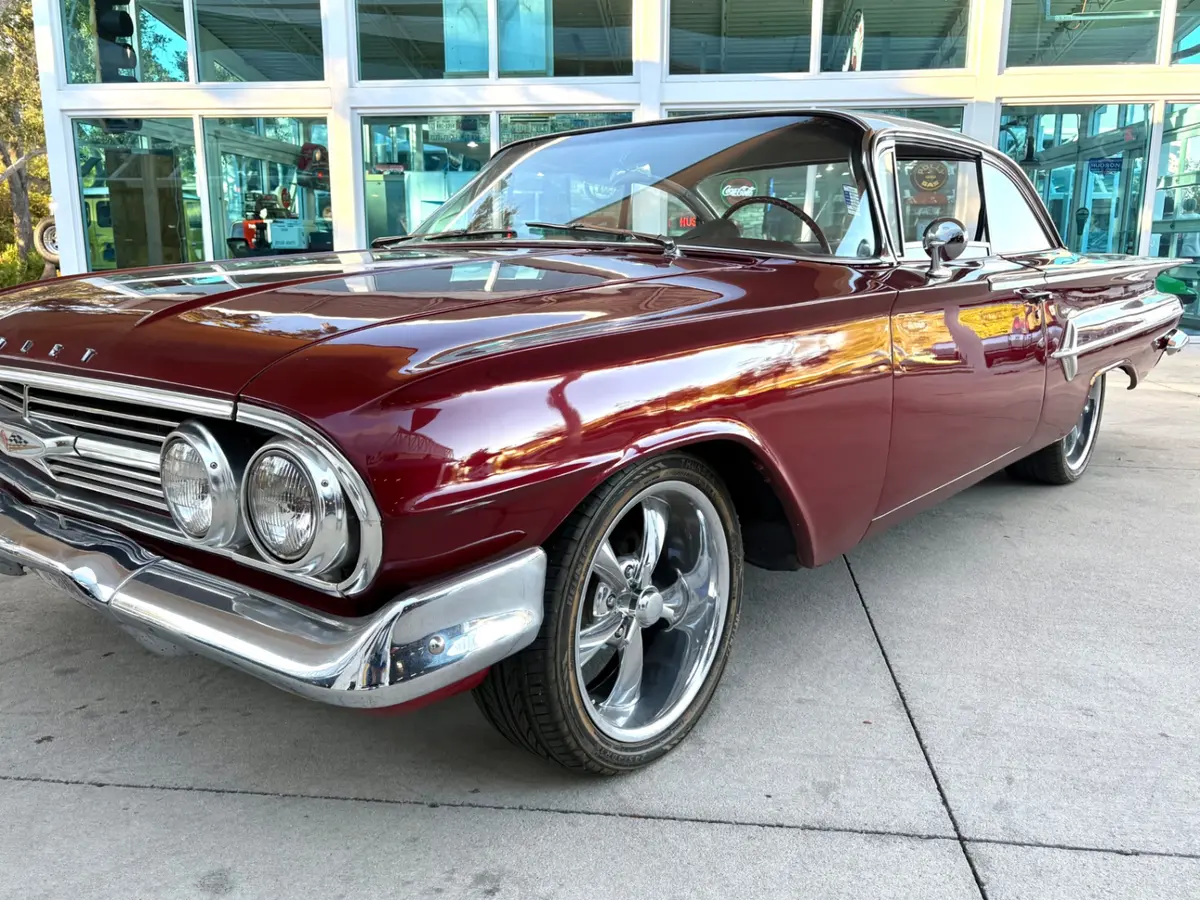
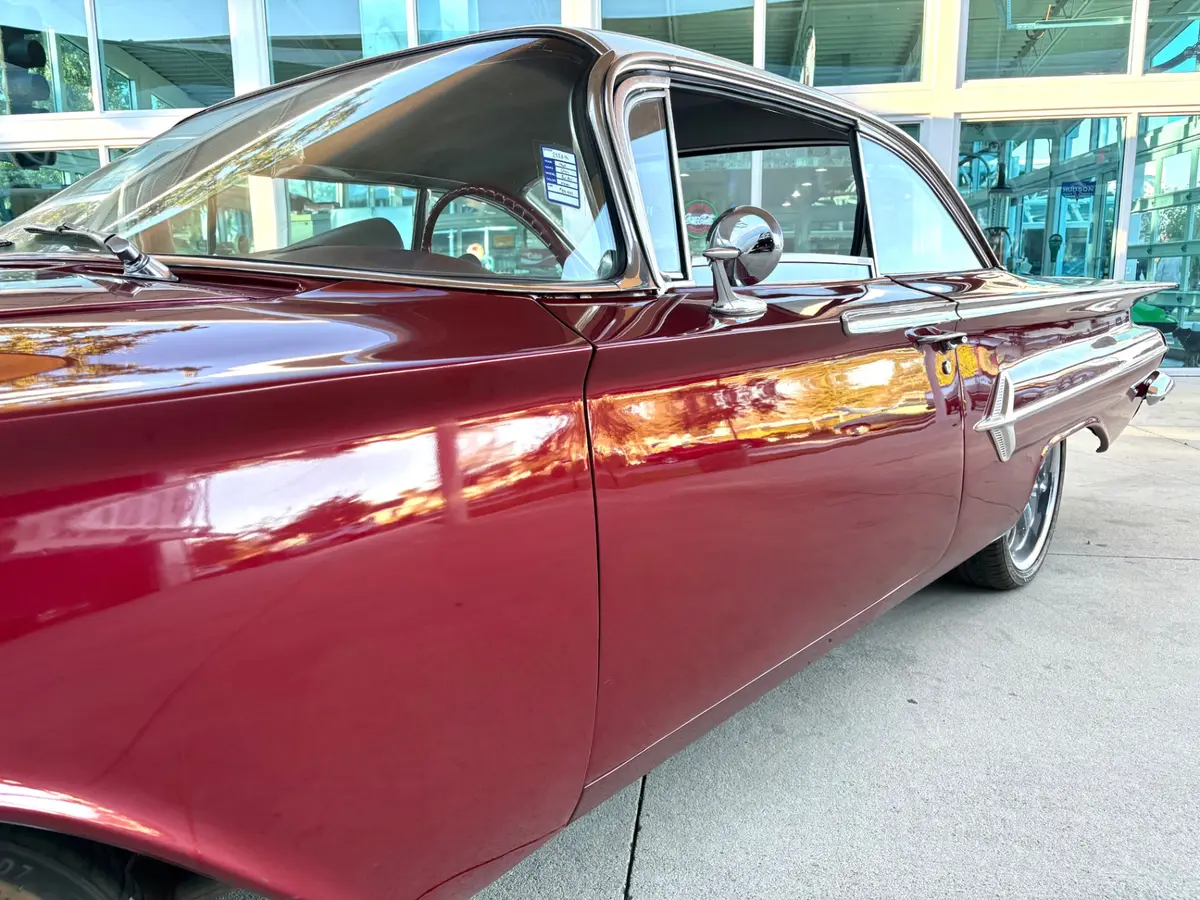
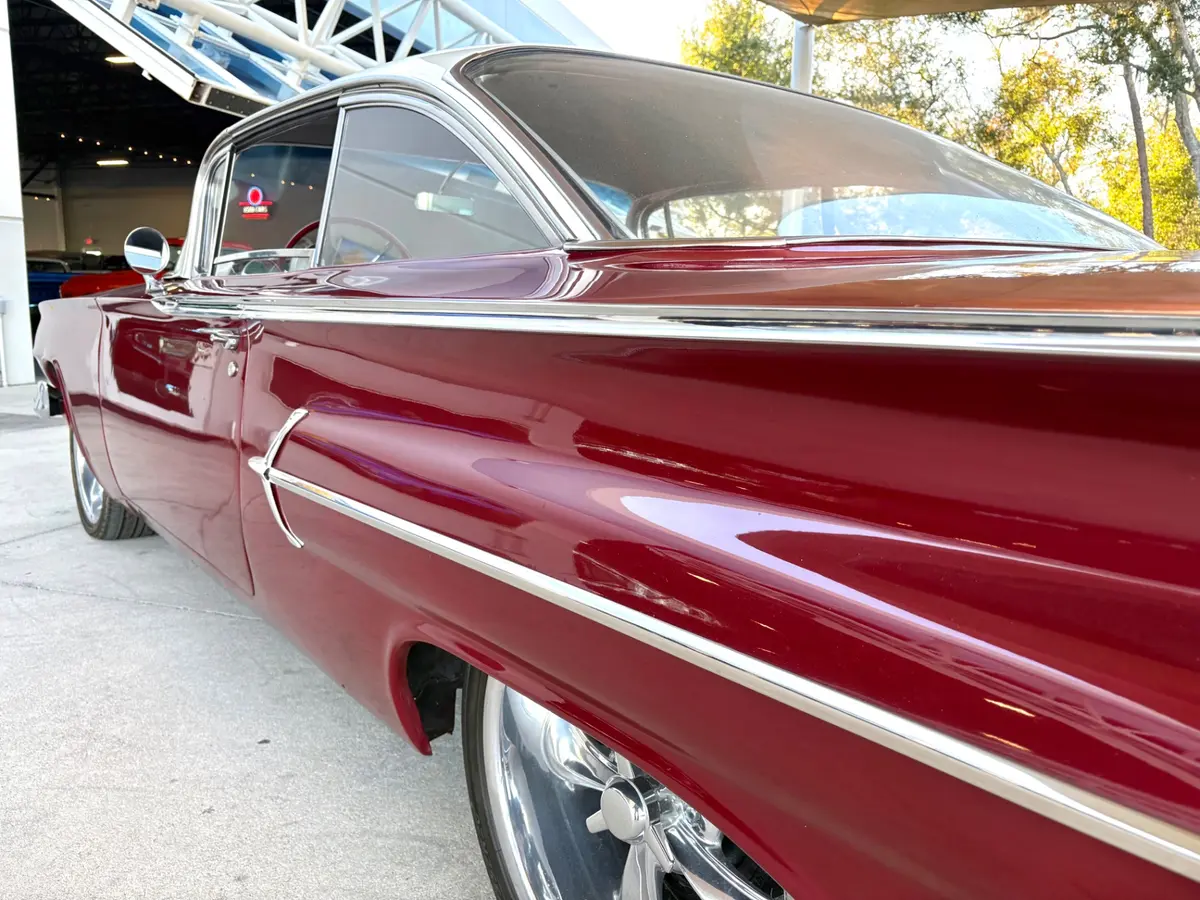
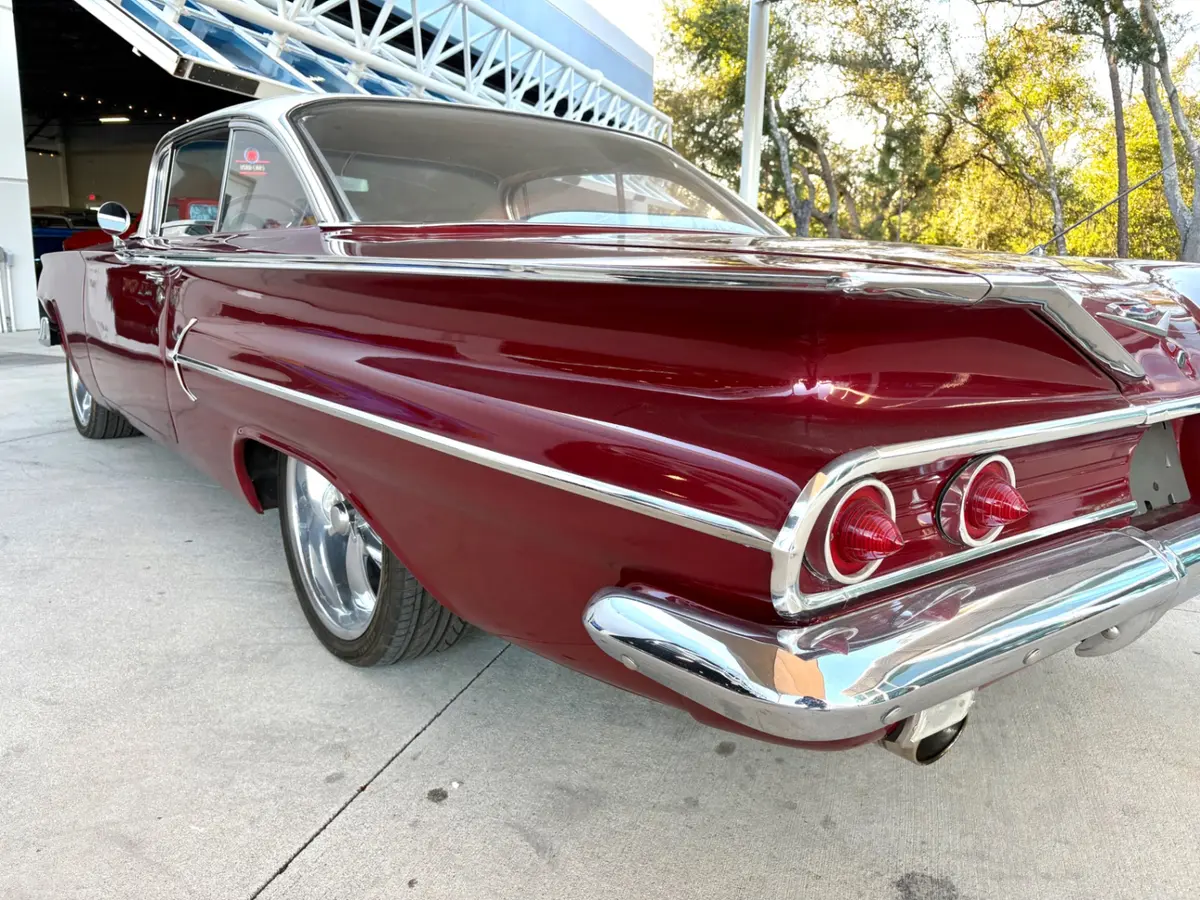
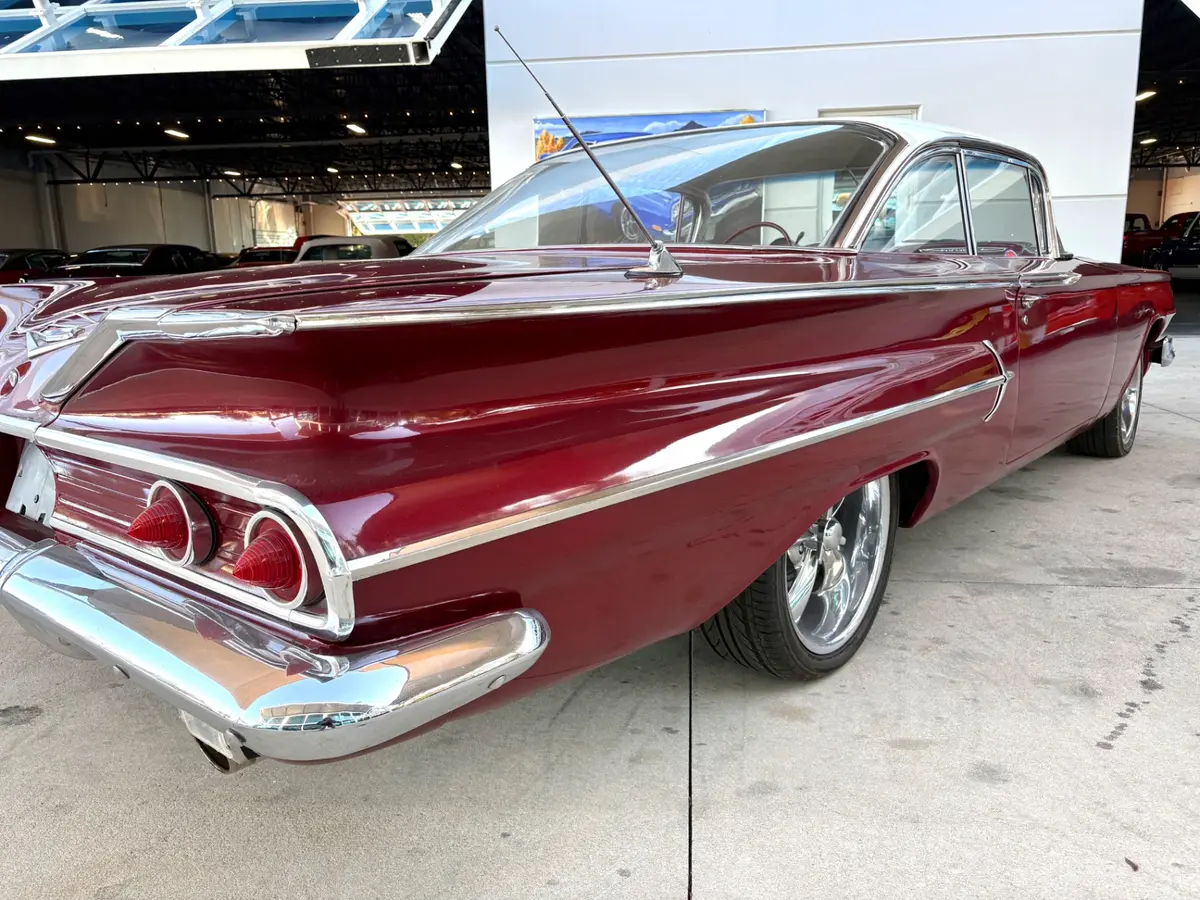
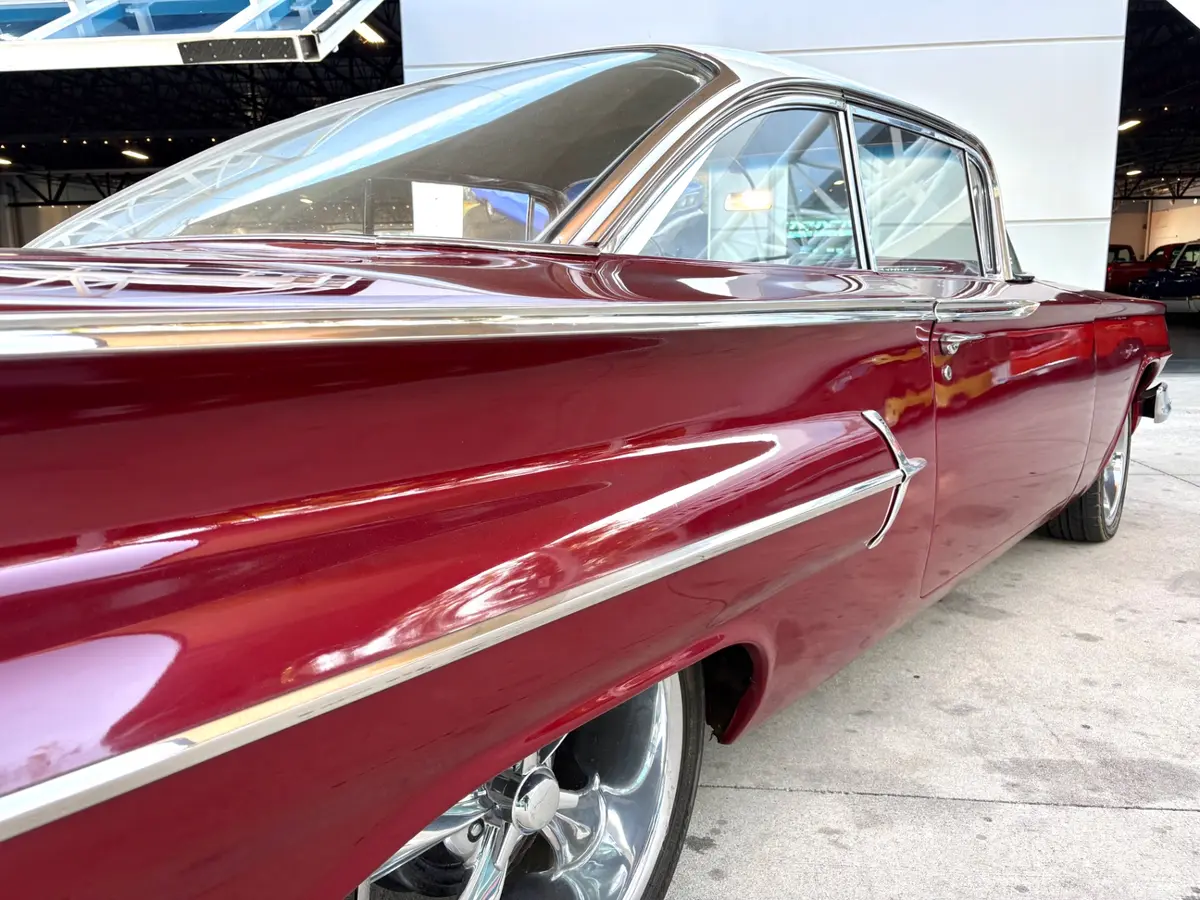
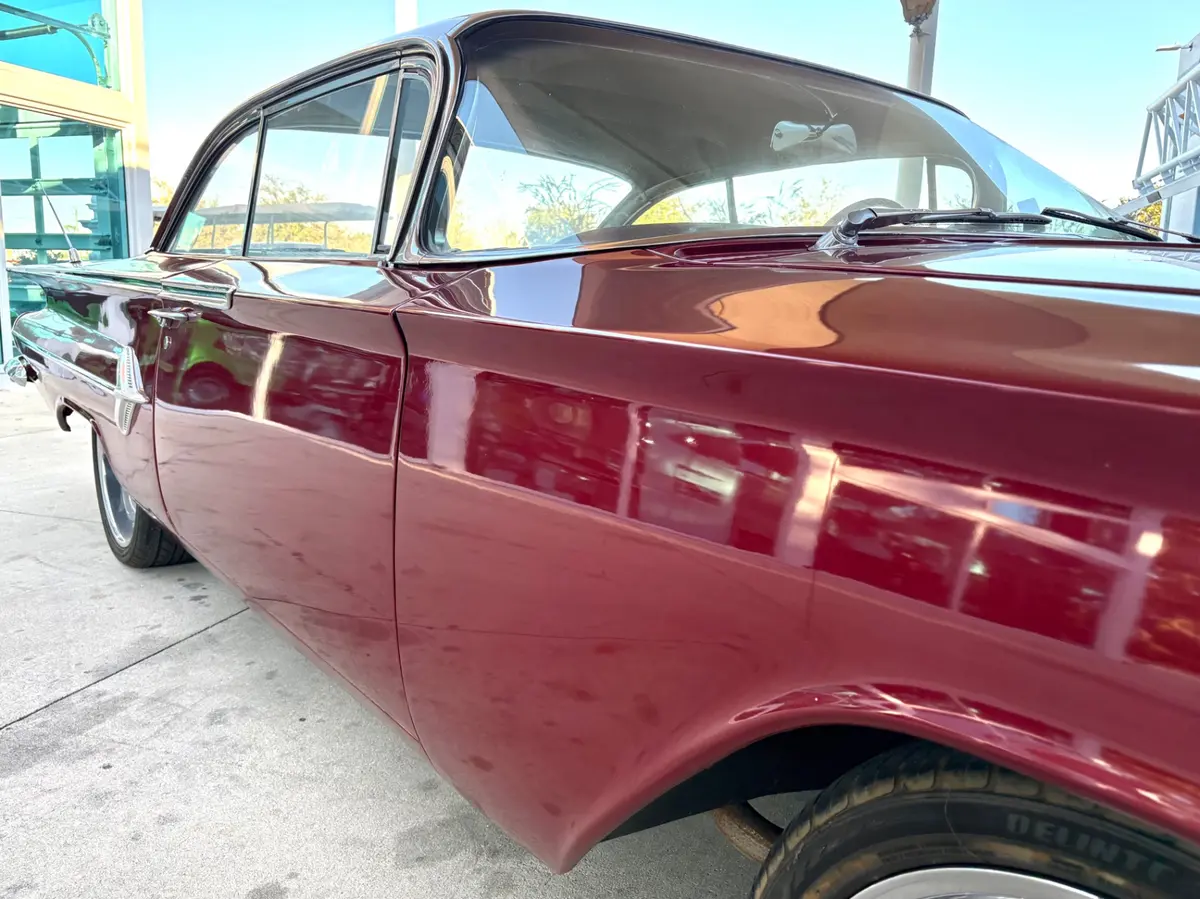
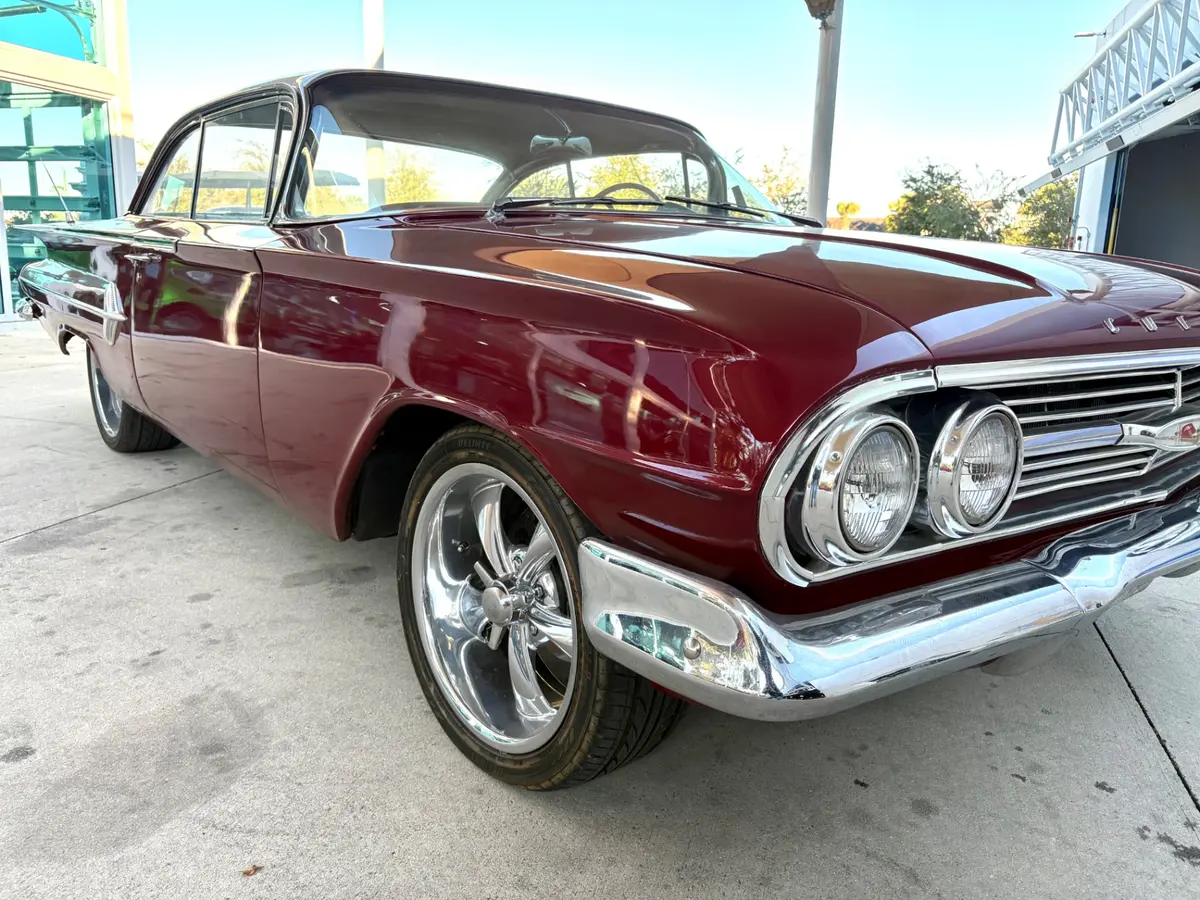

1960 Chevrolet Bel Air Hardtop — Maroon Pro-Touring Build with 350 Crate and 700R4 Overdrive
Why This Car Is Special
The 1960 Chevrolet Bel Air sits at a genuinely interesting crossroads in American automotive history. It was the last year of the dramatic, jet-age full-size Chevrolet design language that had defined the late 1950s — the year before Chevy's designers dialed back the fins and chrome considerably for 1961. That makes the 1960 Bel Air the final expression of that era, and the Sport Coupe hardtop body style is the one collectors have always gravitated toward. With no B-pillar interrupting the roofline and that wraparound rear window pulling light into the cabin from every angle, the 1960 Bel Air hardtop is a genuinely distinctive silhouette that doesn't look like anything built before or since.
This particular 1960 Chevrolet Bel Air has been built as a driver rather than a trailer queen. The powertrain has been upgraded to a GM 350 crate engine backed by a 700R4 overdrive automatic transmission — a combination that puts modern reliability and highway manners into a body that looks exactly like 1960. The maroon exterior pairs naturally with the gray leather interior, and the level of detail in both the engine compartment and the cabin shows that whoever put this car together cared about the finished product, not just the performance numbers.
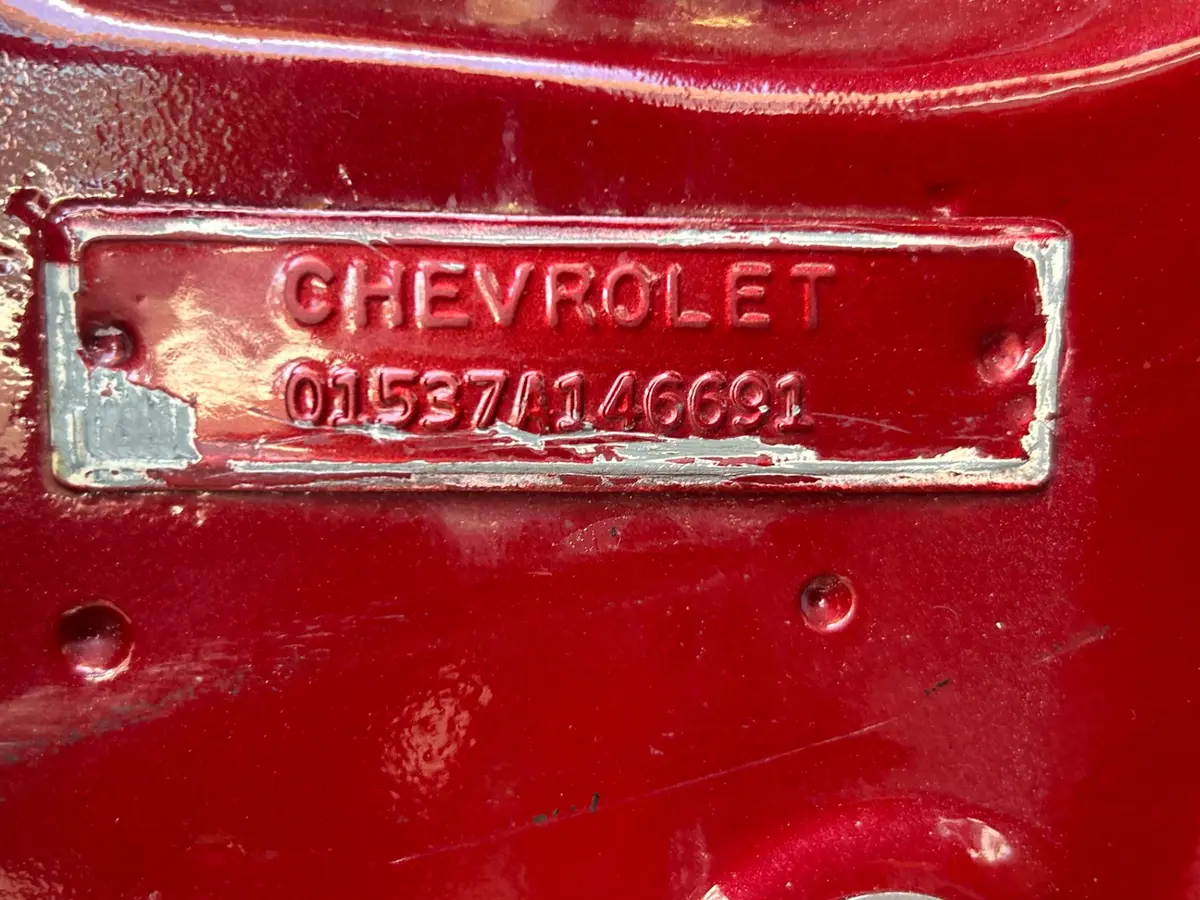
The VIN on this car decodes to a Flint, Michigan assembly plant build, which is consistent with the 1960 model year full-size Chevrolet production records. Flint was one of GM's primary full-size car assembly facilities during this period, and cars built there are well-documented in Chevrolet's production history.
Features List
- GM 350 crate engine
- 700R4 overdrive automatic transmission
- Red painted engine block and heads
- Aluminum intake manifold
- Chrome-topped air cleaner
- Finned aluminum valve covers
- Headers
- Aluminum radiator
- Power steering
- Power brakes
- Painted, clean, and detailed engine compartment
- Gray leather interior throughout
- Full-size split bench front seat
- Matching rear bench seat
- Front and rear seat belts
- Maroon factory steering wheel
- Column-mounted automatic shifter
- Sporty pod-style gauge cluster
- Factory dash and instrumentation retained
- Gray carpeting throughout
- Radio
- Matching door panels and headliner
- Rear deck speakers
- Carpeted trunk
- Maroon exterior paint
- Bubbletop hardtop roofline
- Wraparound rear window
- Wraparound chrome front and rear bumpers
- Chrome body side trim
- Jet-inspired tailfins with chrome trim
- Triple taillights
- Dual exhaust with chrome tips
- Five-spoke chrome Torq-Thrust style wheels
- Low-profile performance tires
Mechanical
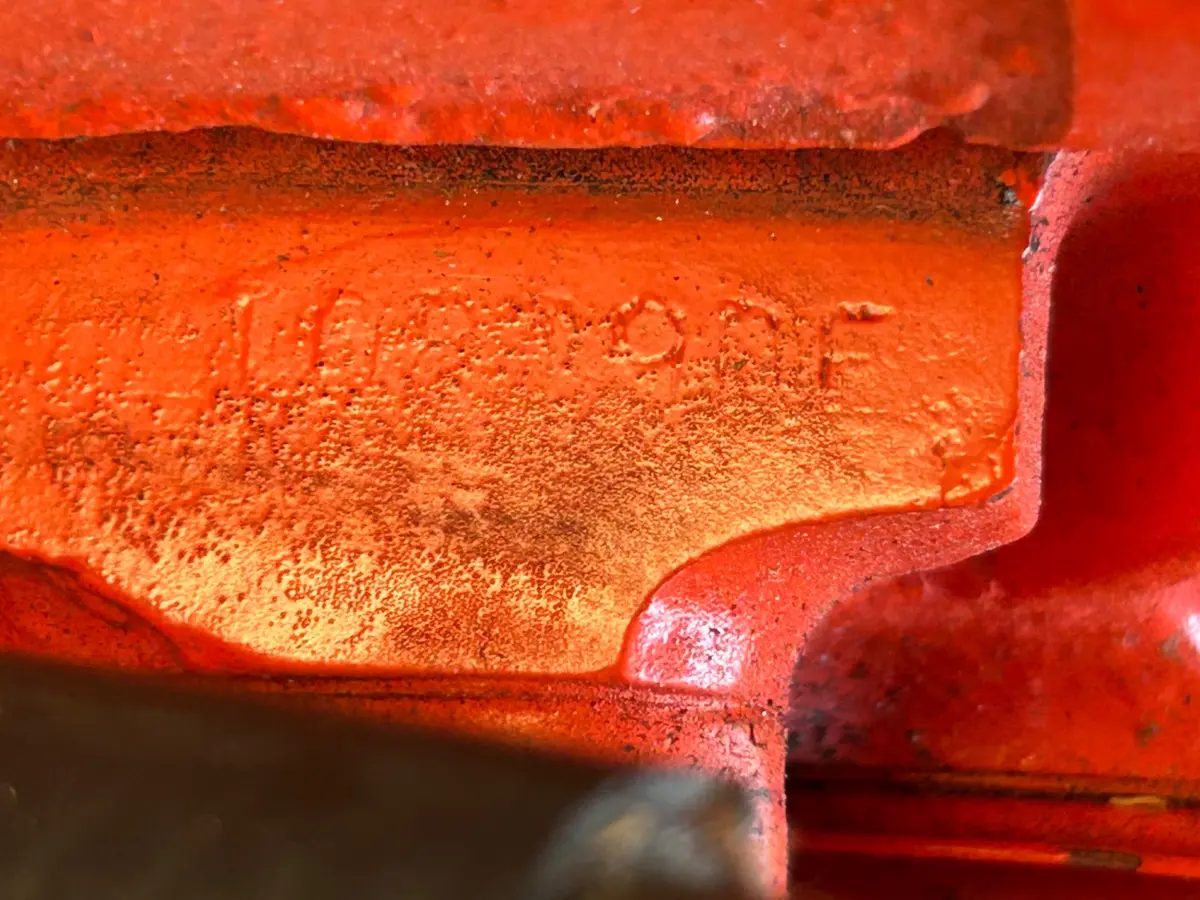
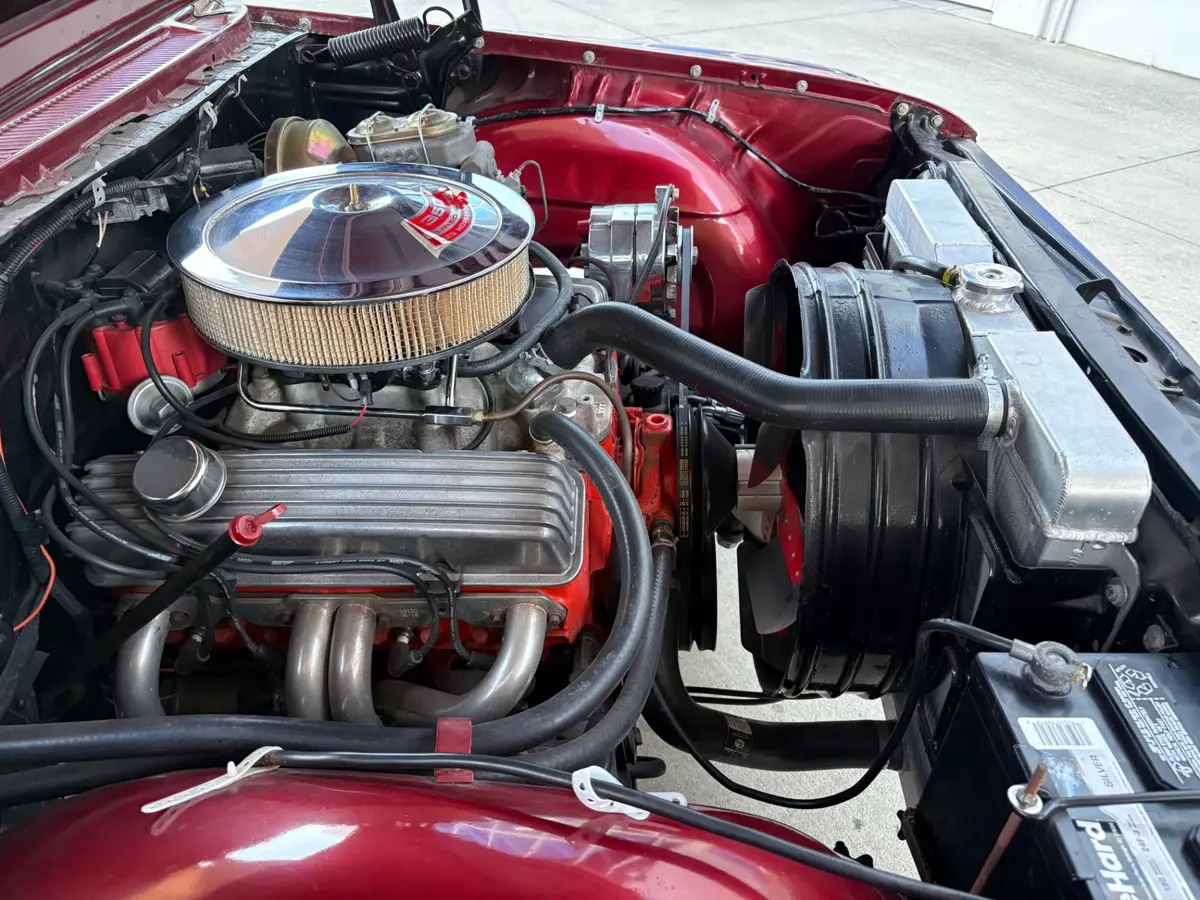
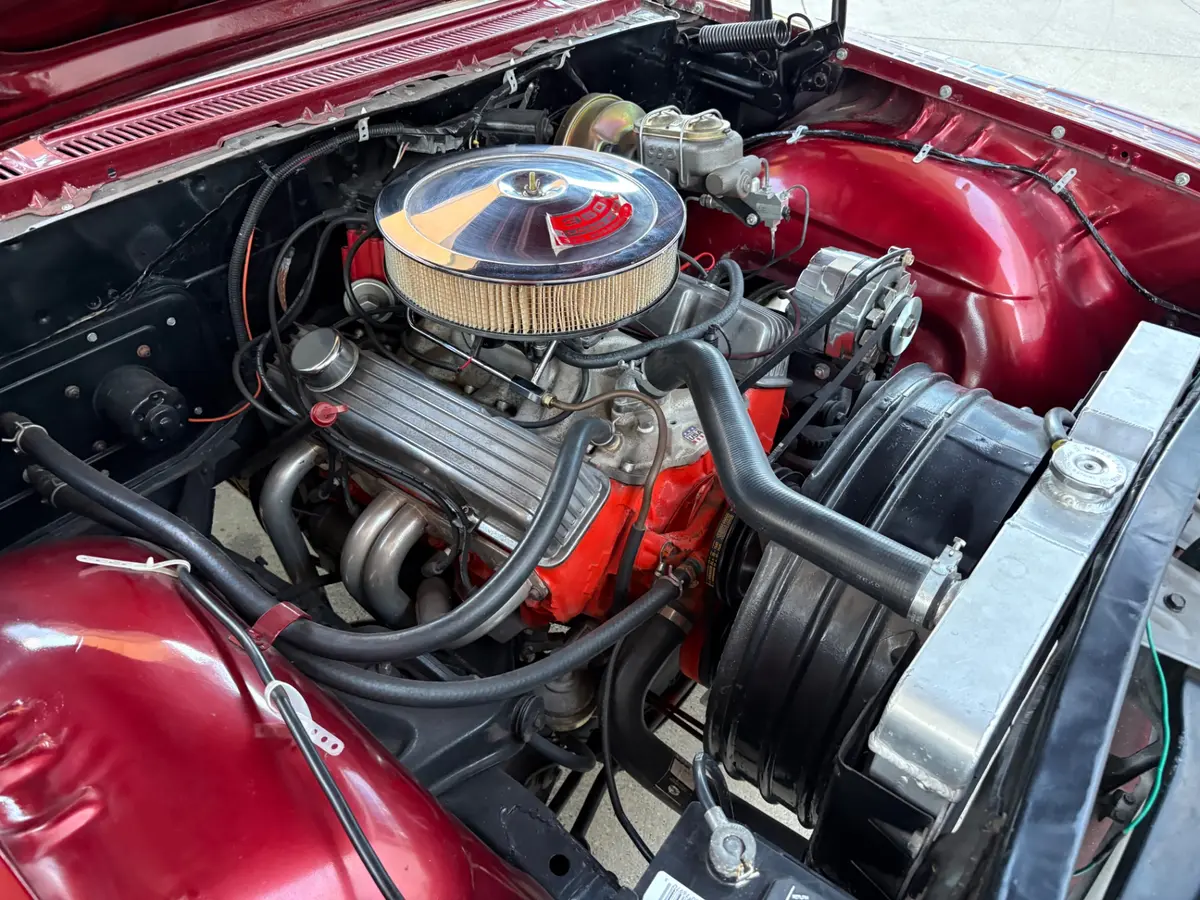
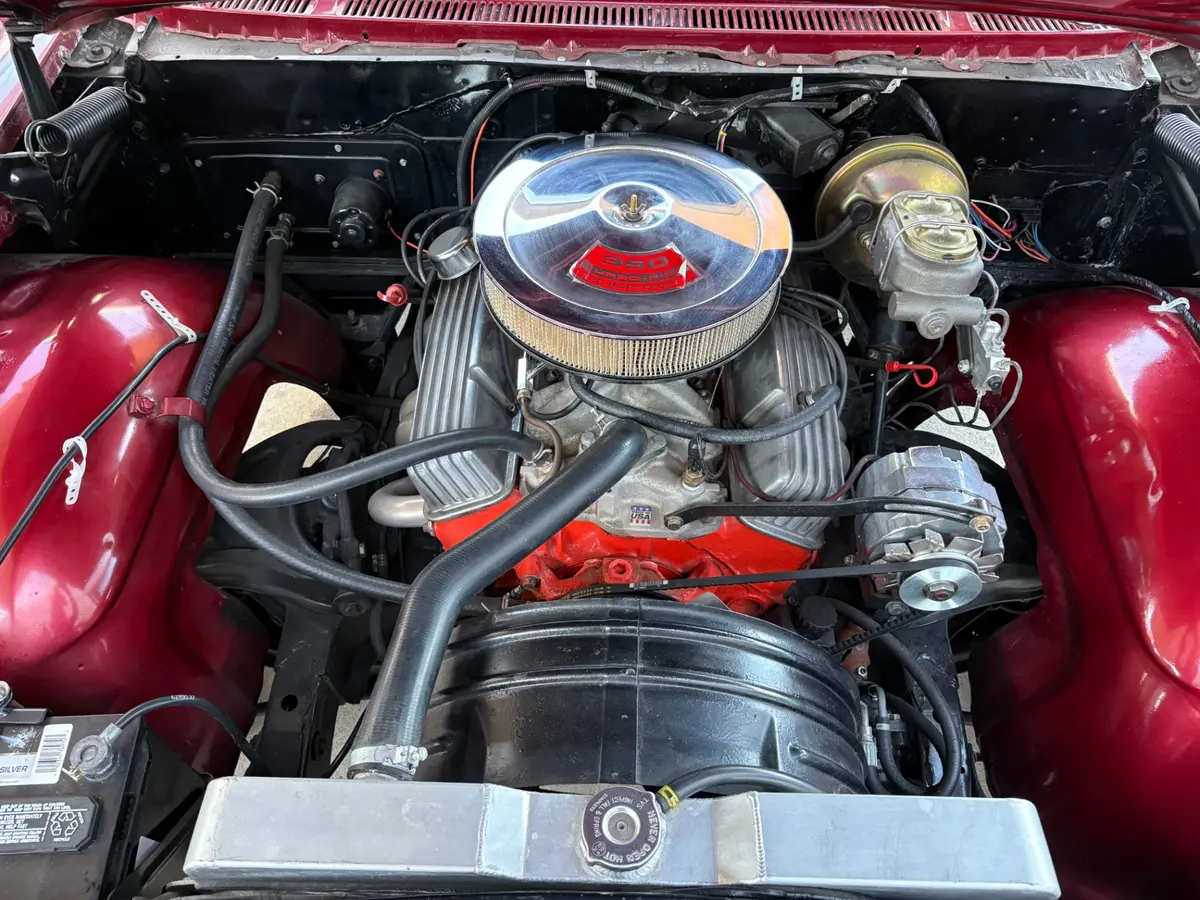
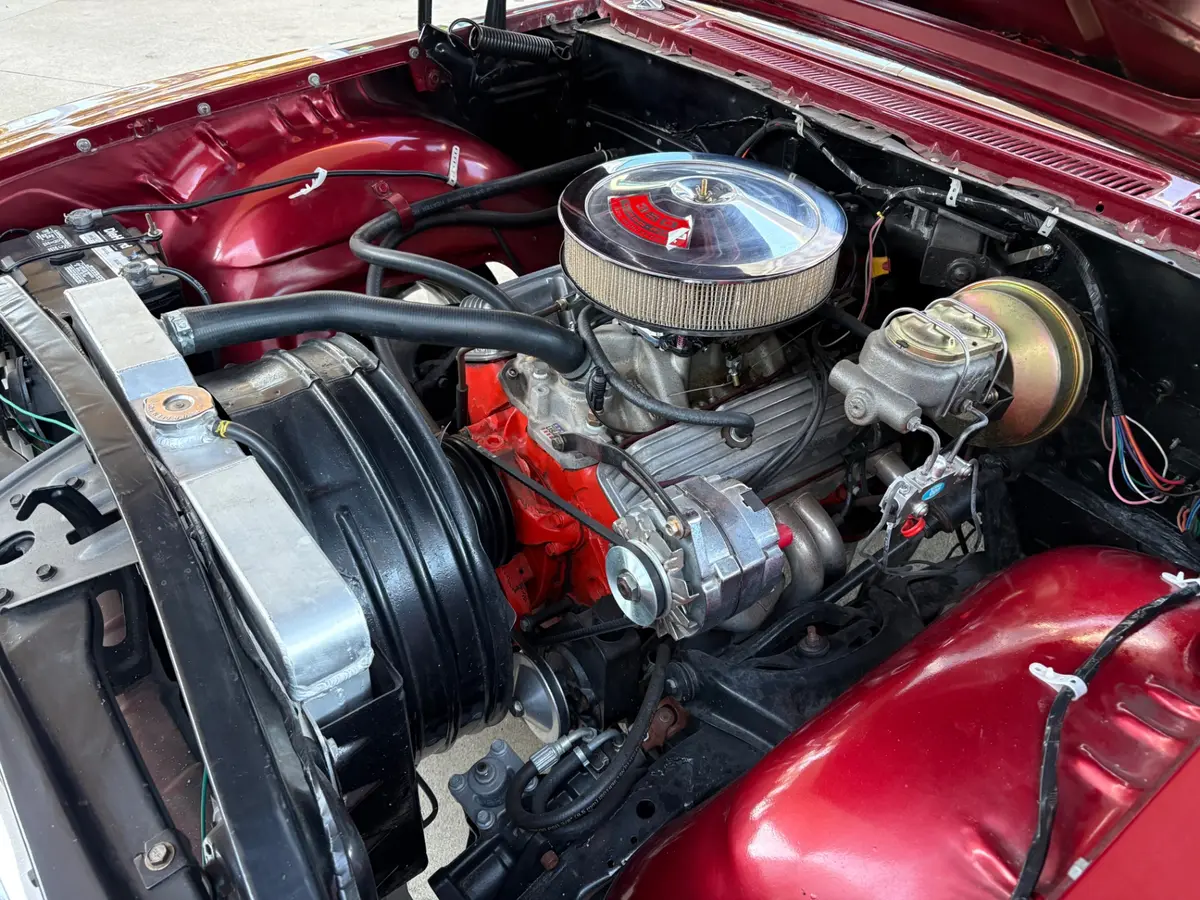
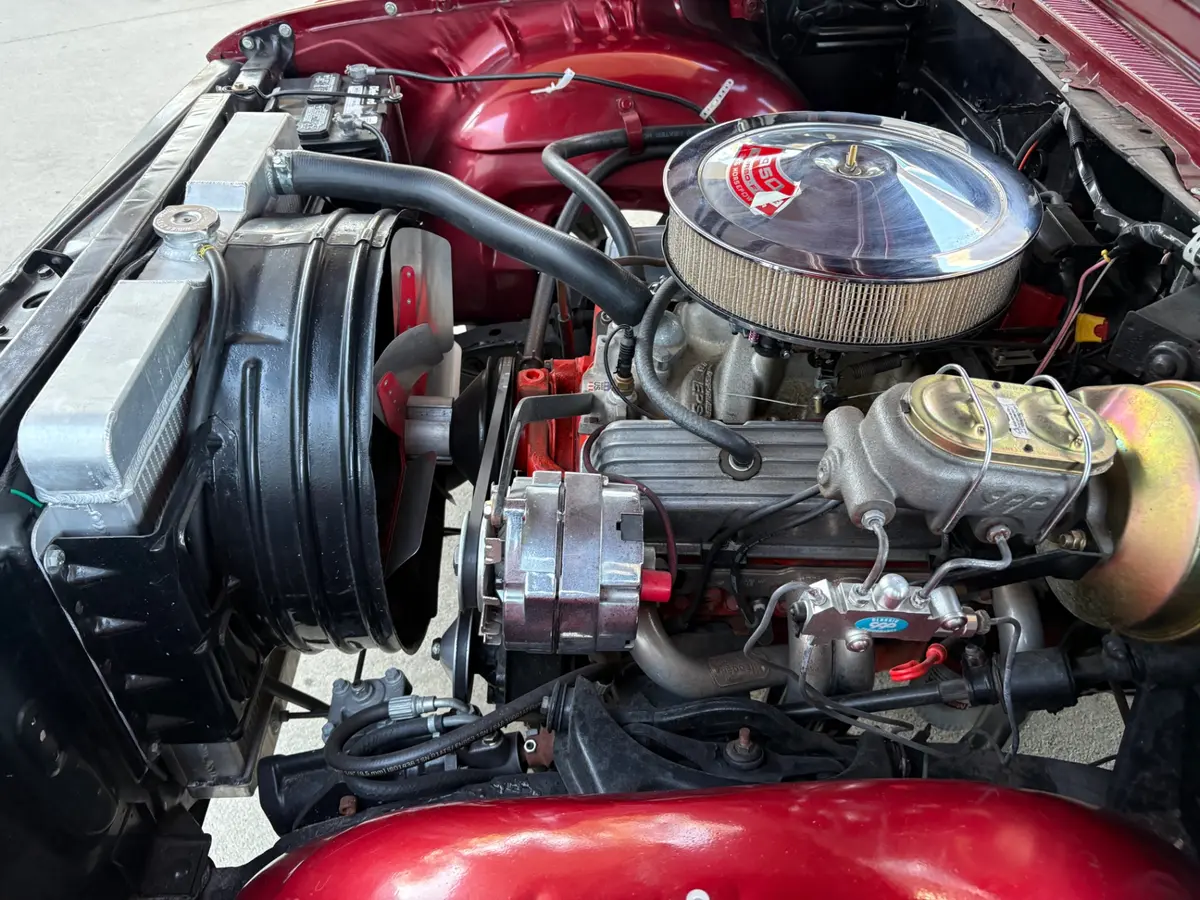
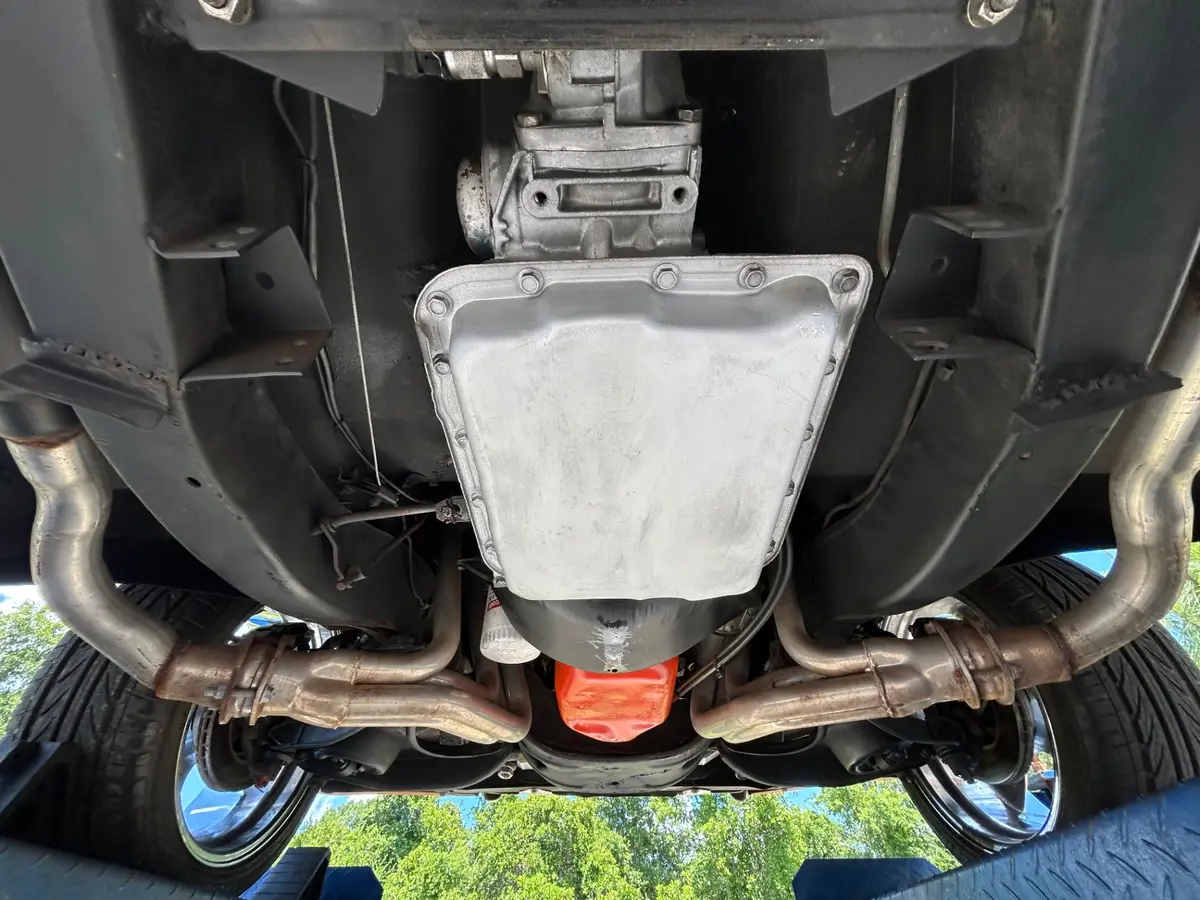
The engine in this 1960 Chevrolet Bel Air is a GM 350 cubic inch crate engine, painted in the traditional Chevrolet engine red on both the block and heads. It is fitted with an aluminum intake manifold, finned aluminum valve covers, headers, and a chrome-topped air cleaner — a combination that improves airflow and heat management compared to factory iron components while keeping the engine bay visually coherent. The aluminum radiator provides better cooling capacity than a period steel unit, which matters when you're running this kind of displacement in Florida heat.
The transmission is a 700R4 overdrive automatic, operated through a column-mounted shifter. The 700R4 was introduced by GM in 1982 and became one of the most popular overdrive transmission swaps for classic car builds for good reason. It provides a true fourth-gear overdrive, which drops engine rpm significantly at highway speed compared to the original three-speed automatics these cars came with from the factory. In practical terms, this means the 1960 Bel Air cruises comfortably on the interstate without the engine working hard, which extends engine life and makes the car genuinely enjoyable on longer drives rather than just at show events.
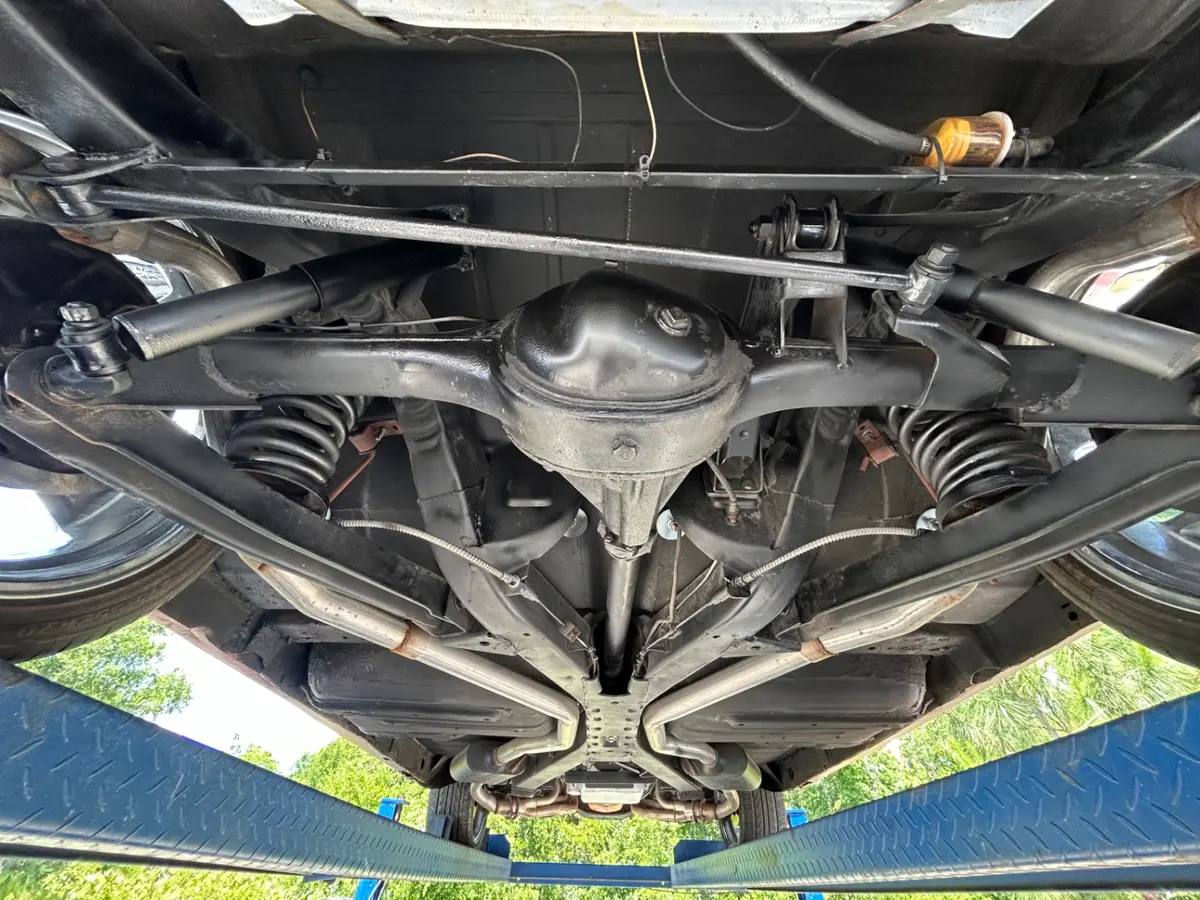
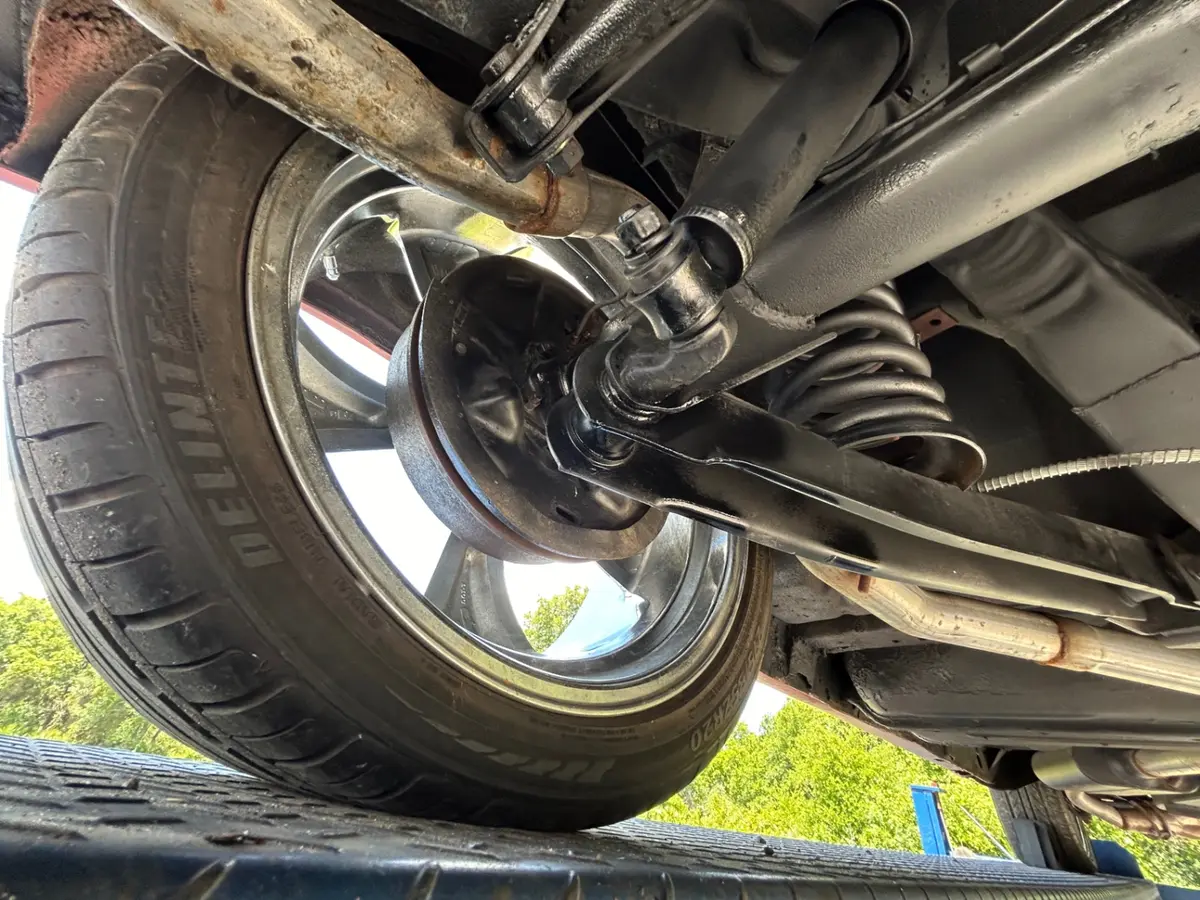
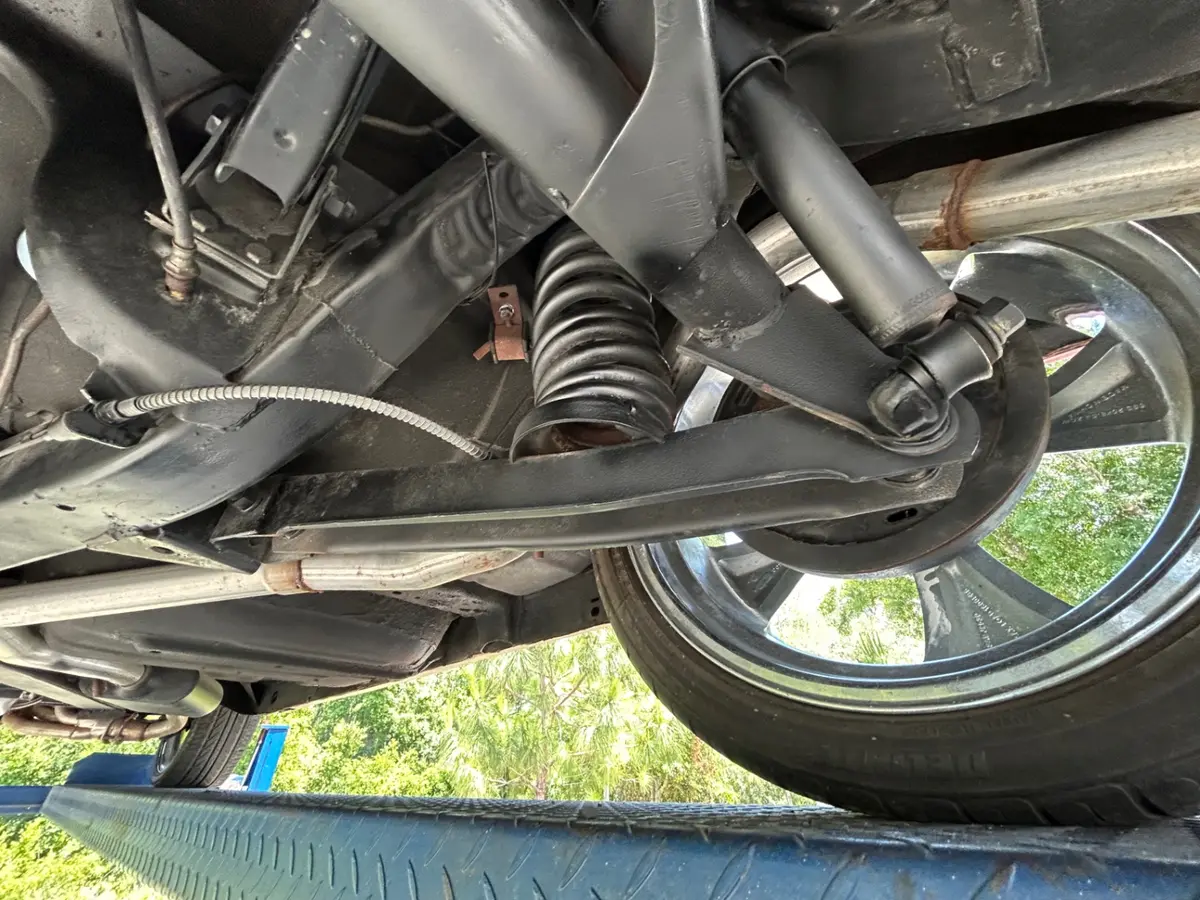
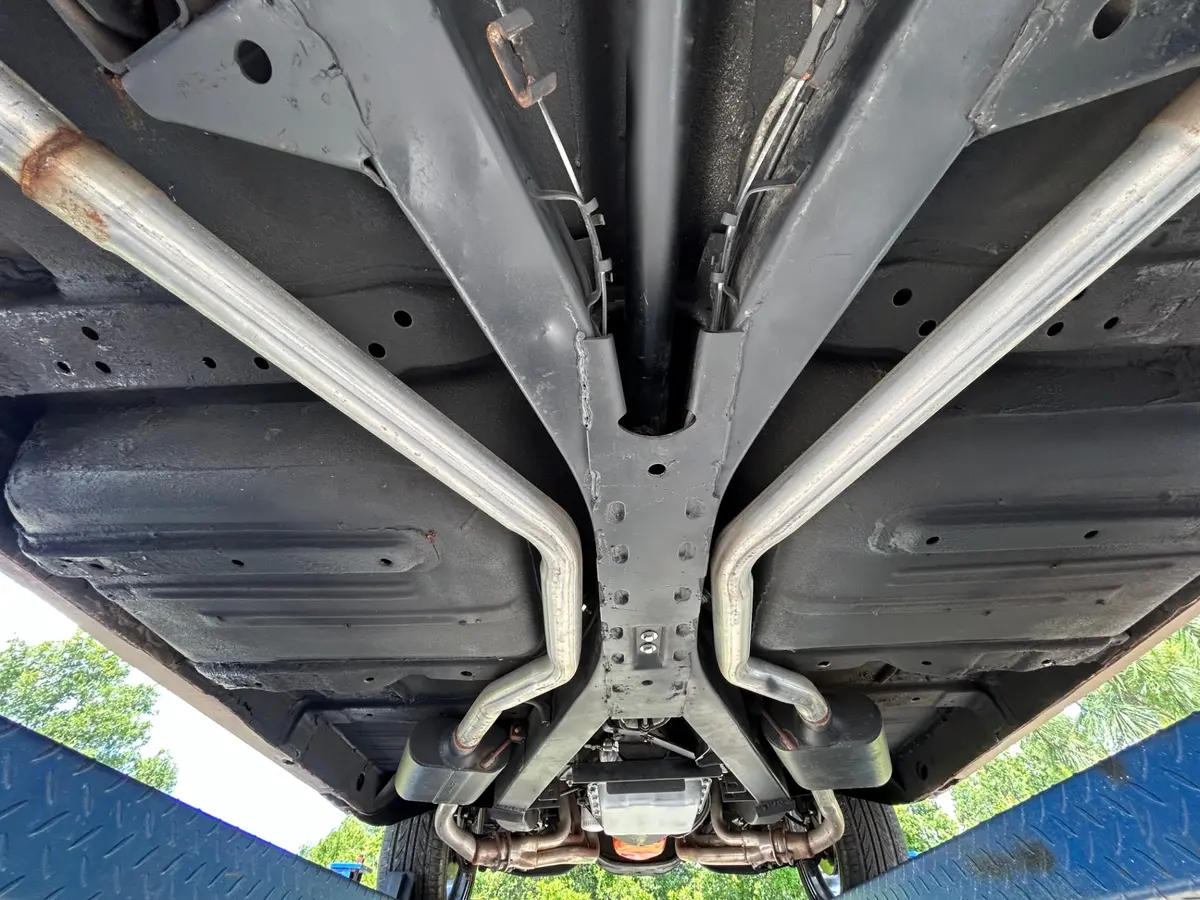
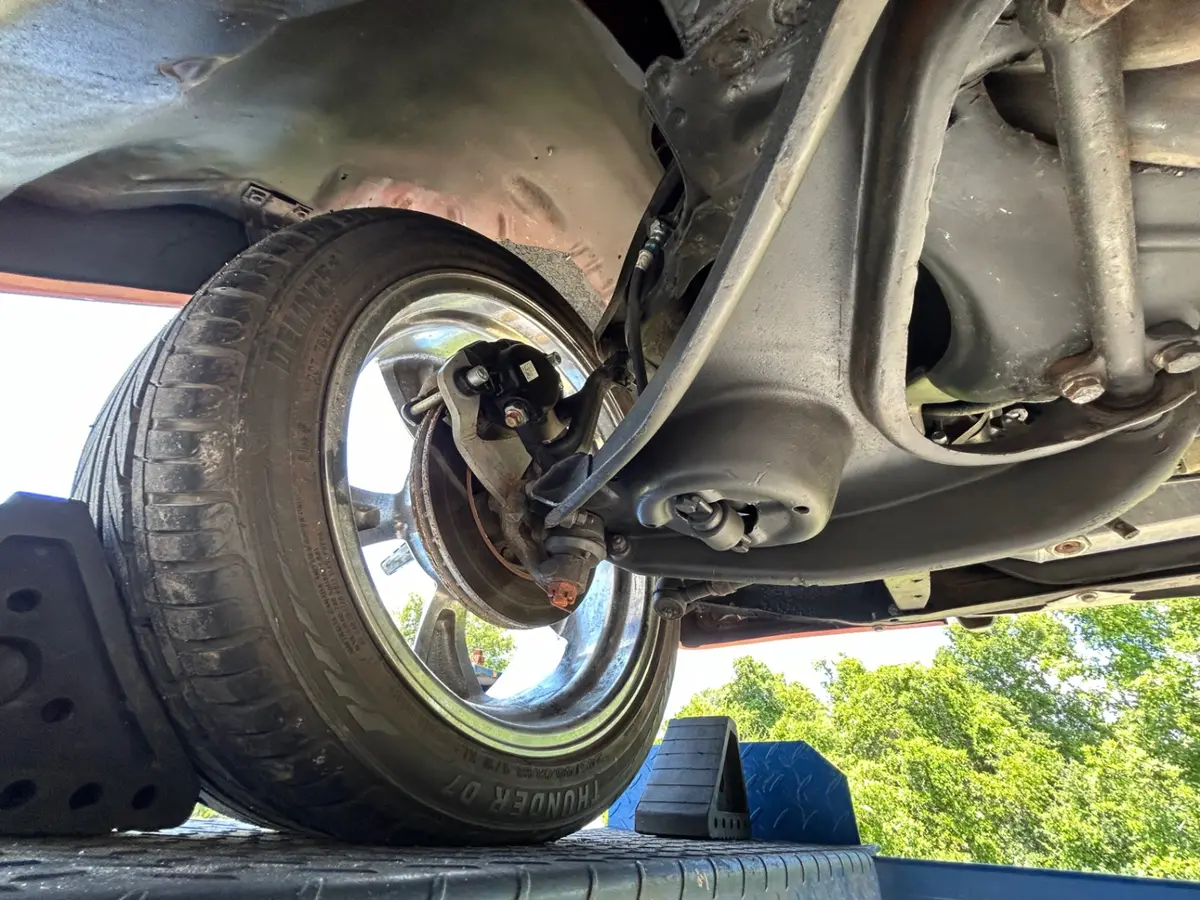
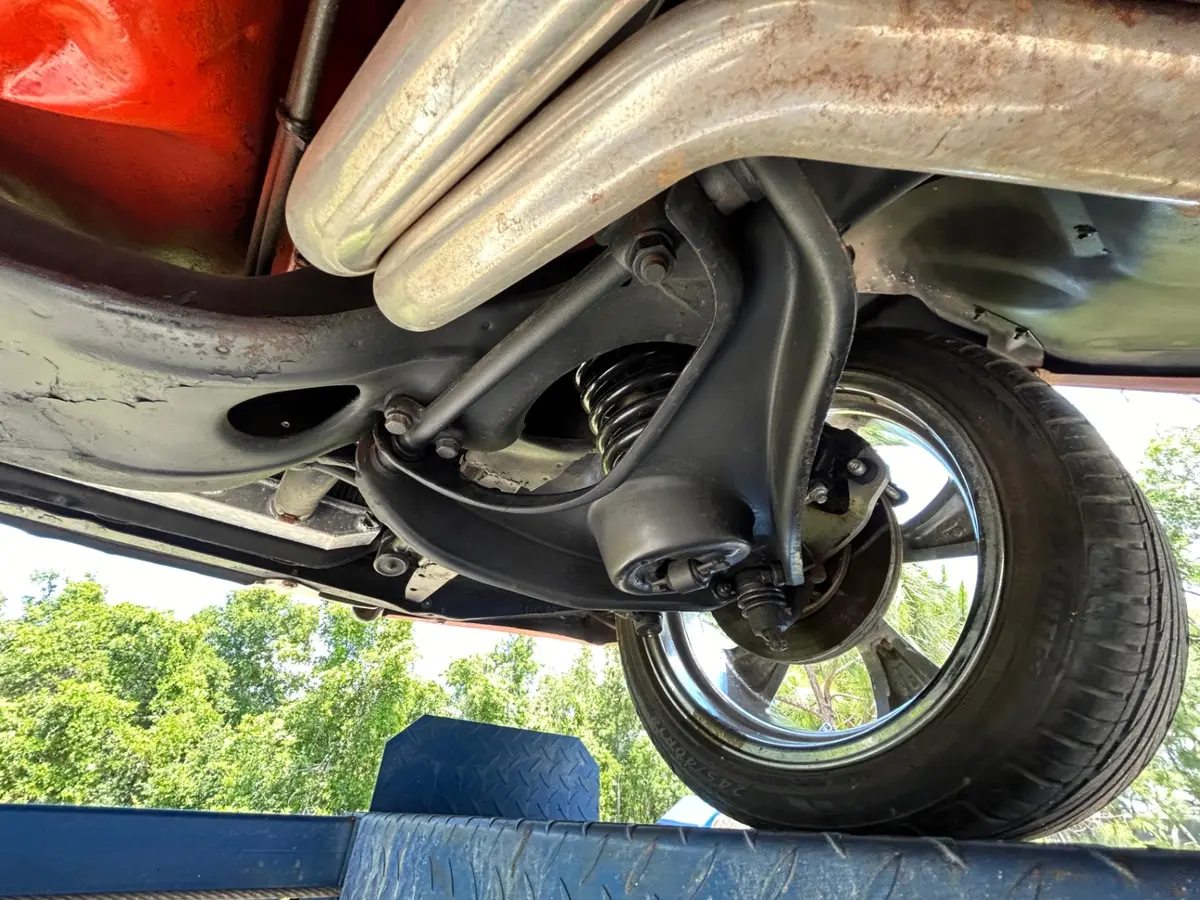
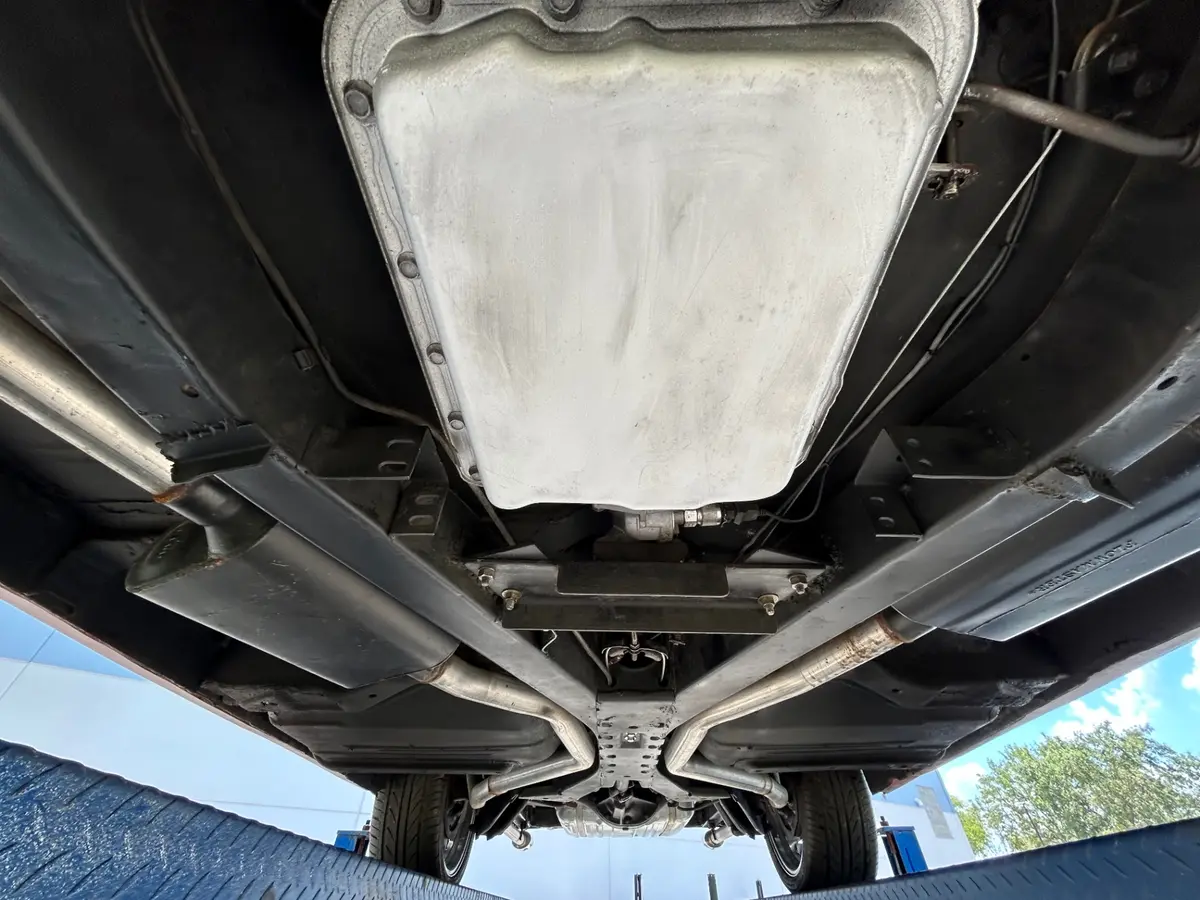
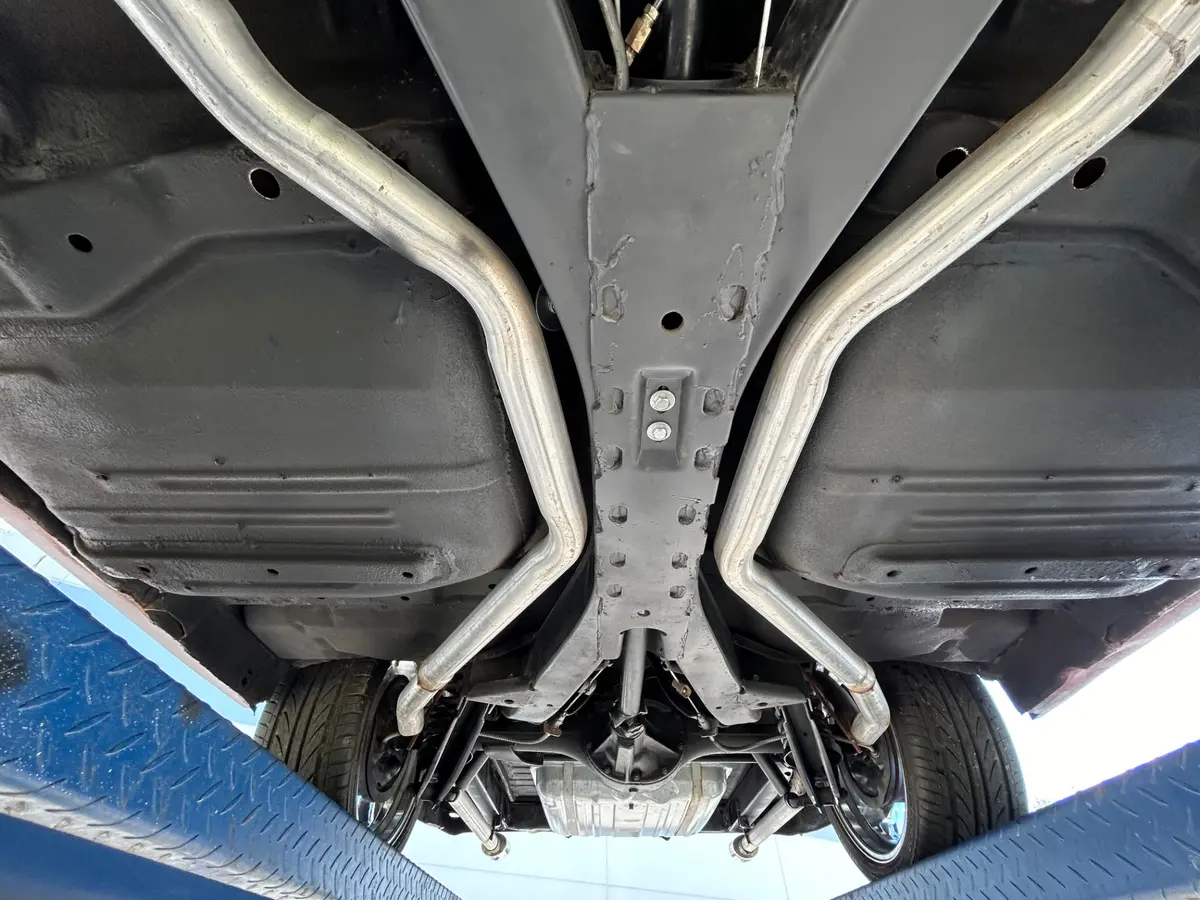
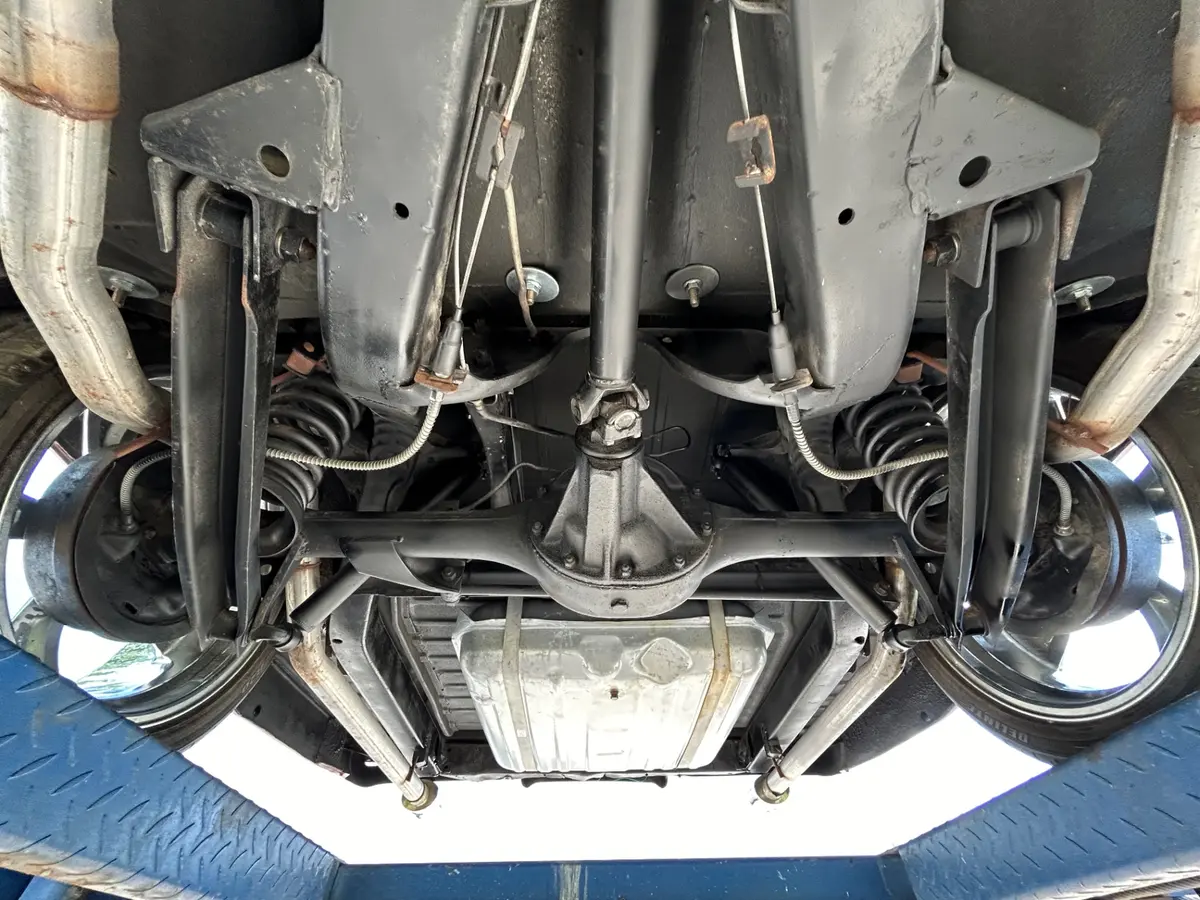
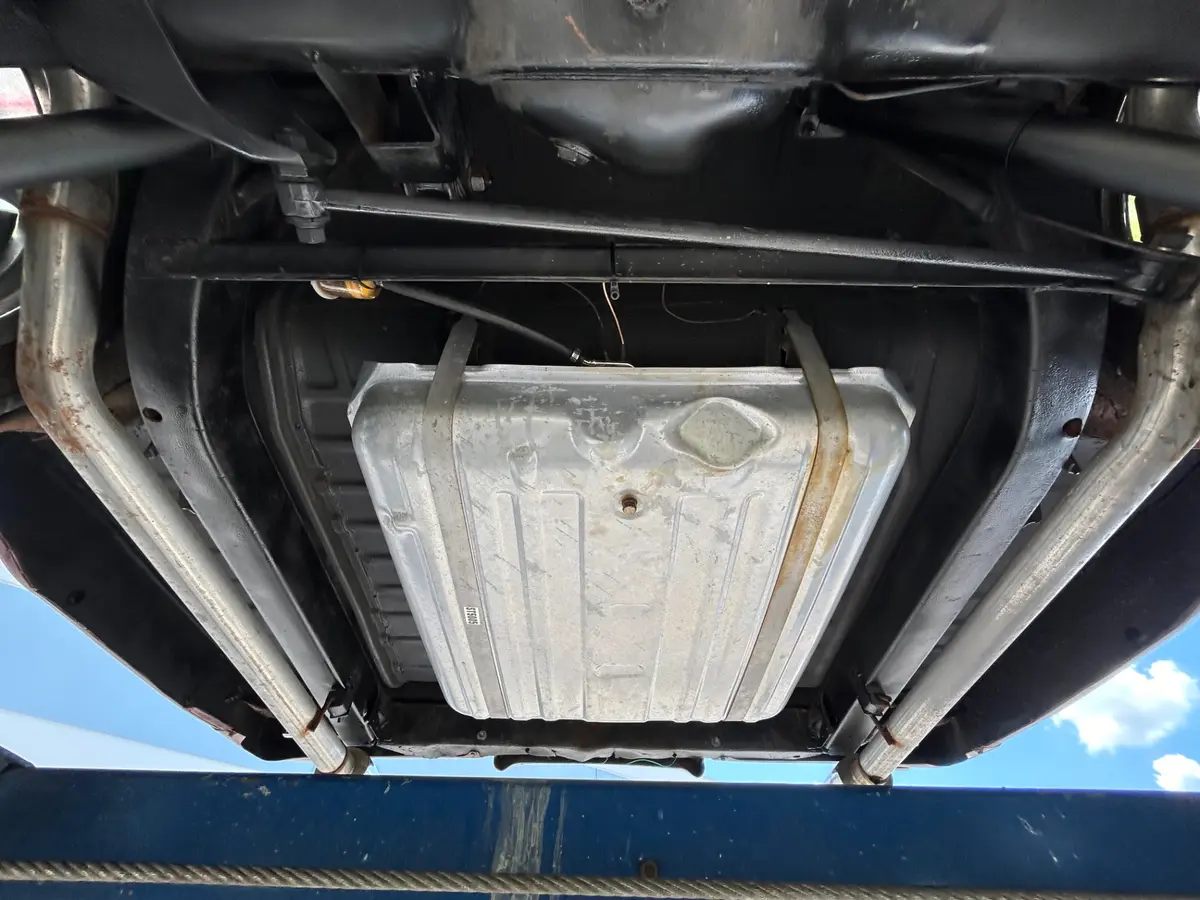
Power steering and power brakes are both present, which were available factory options on the 1960 Bel Air and make a real difference in daily driveability on a car of this size and weight. The engine compartment has been painted, cleaned, and detailed — the underhood photos confirm a tidy build with no sloppy wiring or unfinished work. The undercarriage shots show a painted floor pan and suspension components in solid condition, with the dual exhaust system routed cleanly to chrome tips at the rear.
Interior
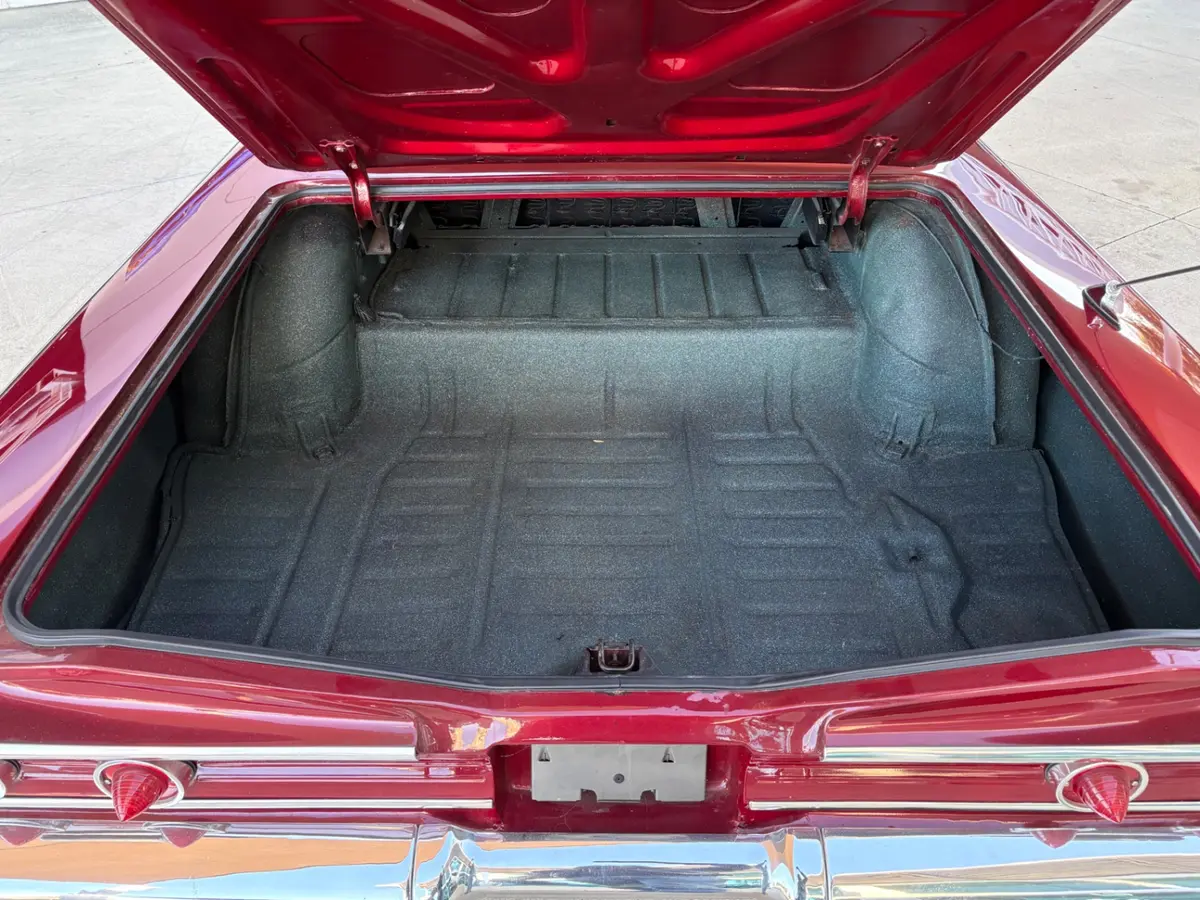
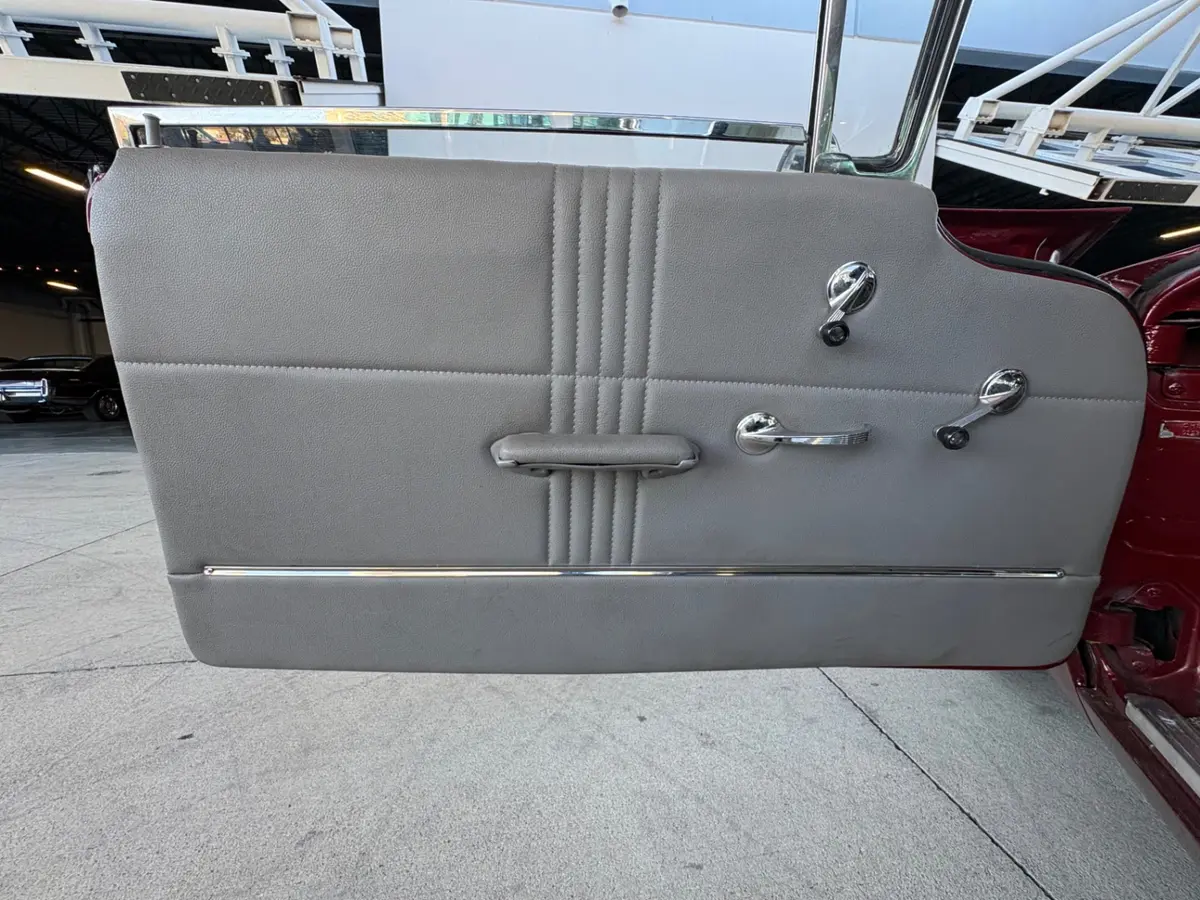
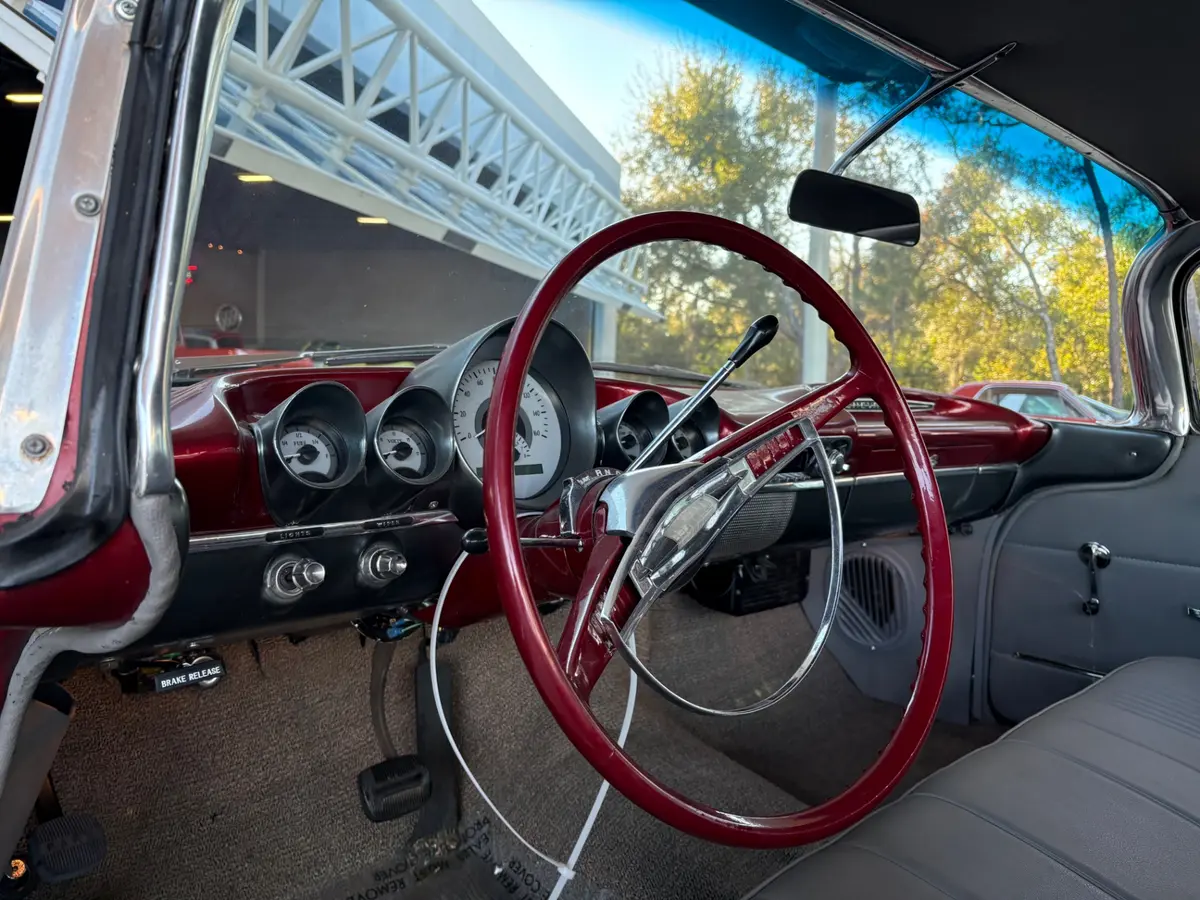
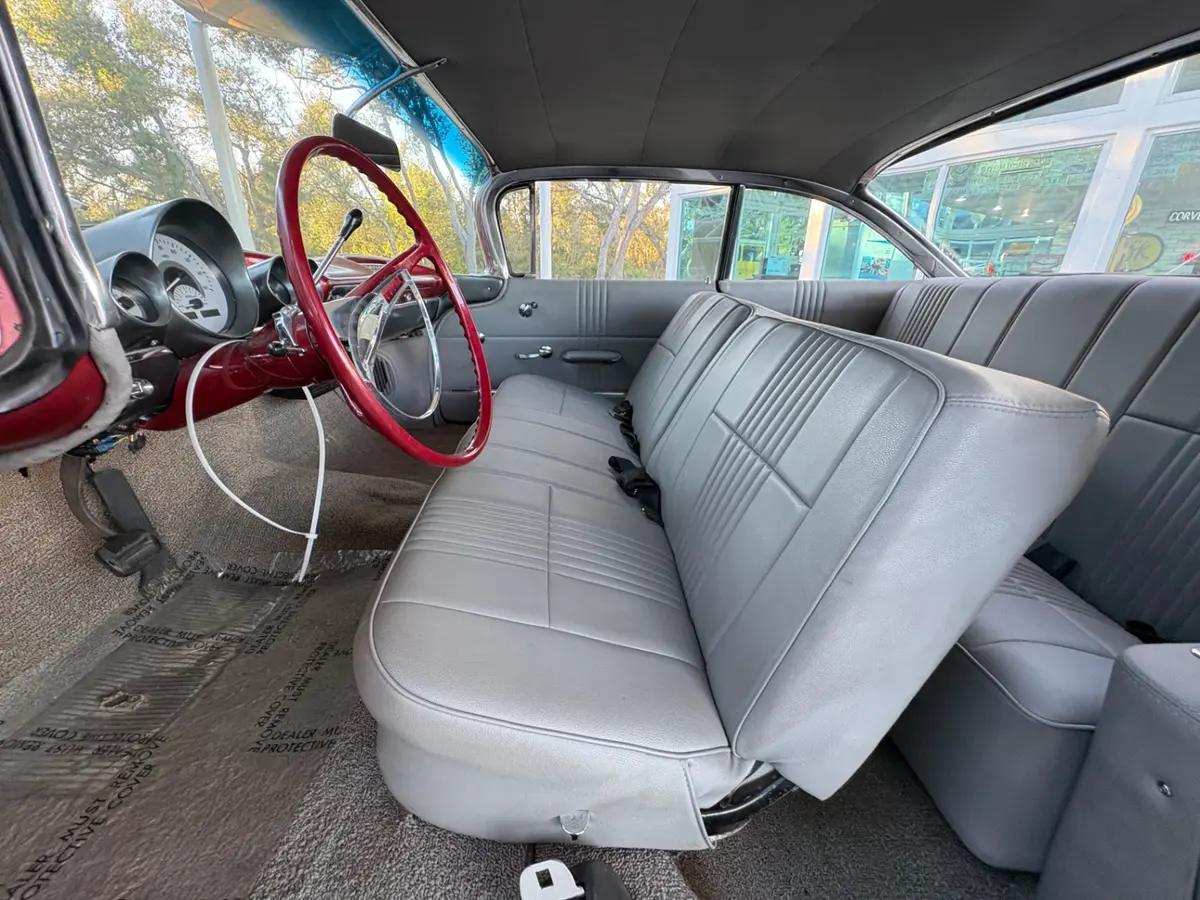
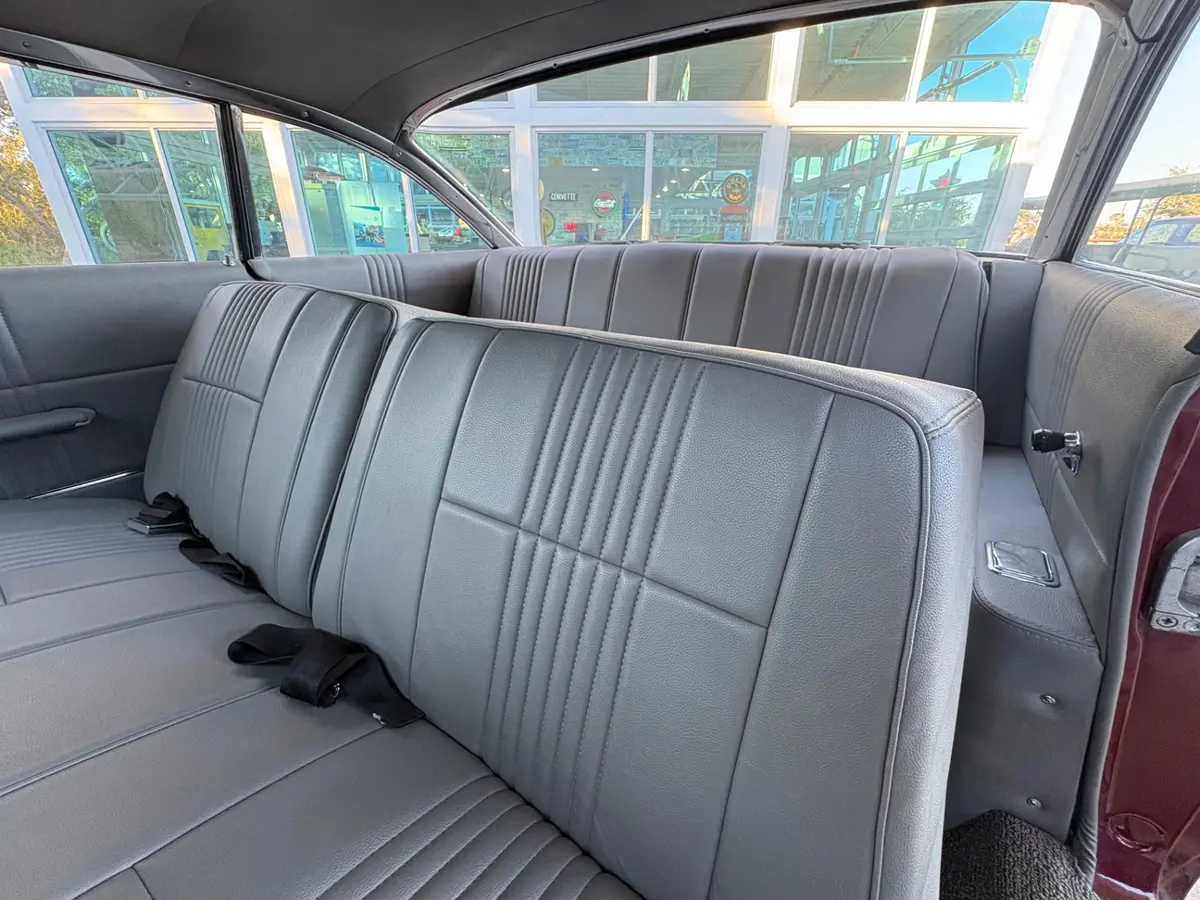
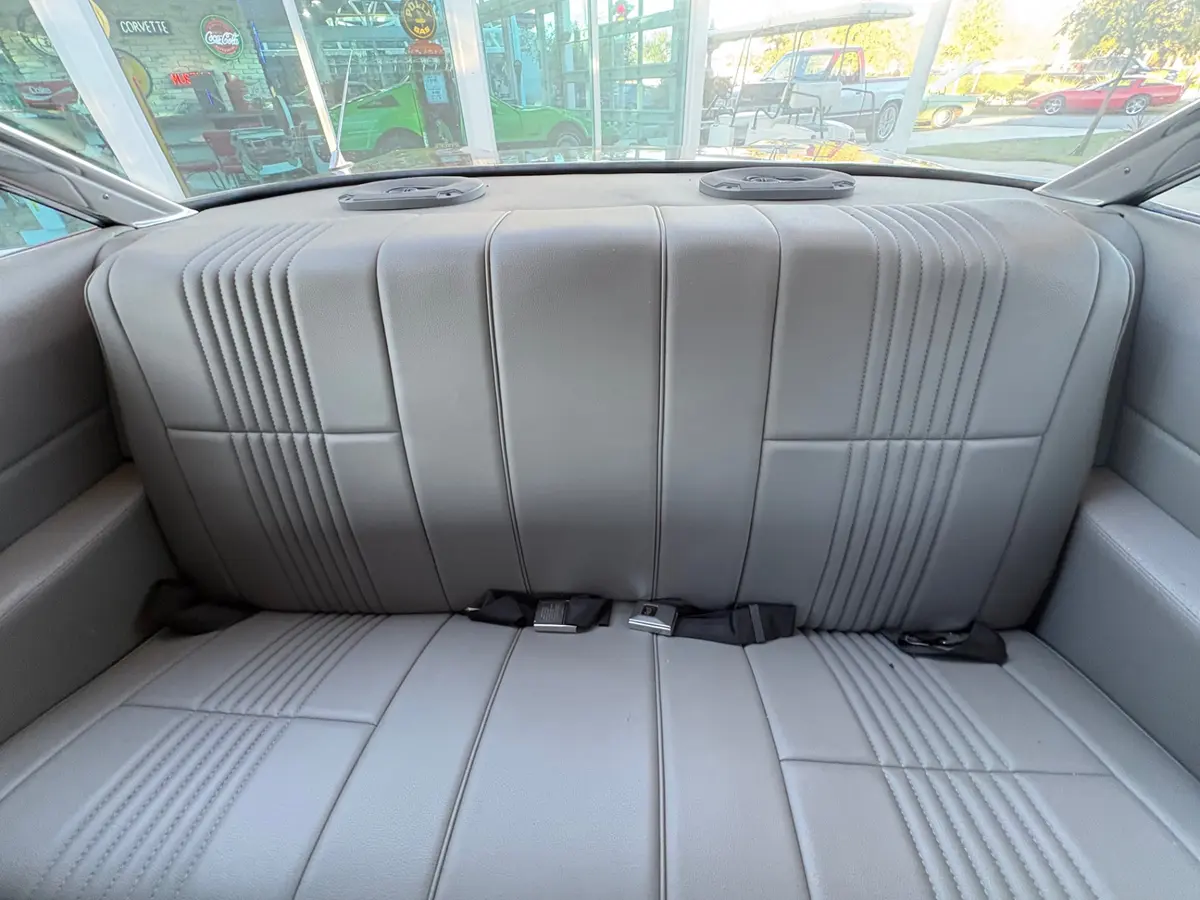
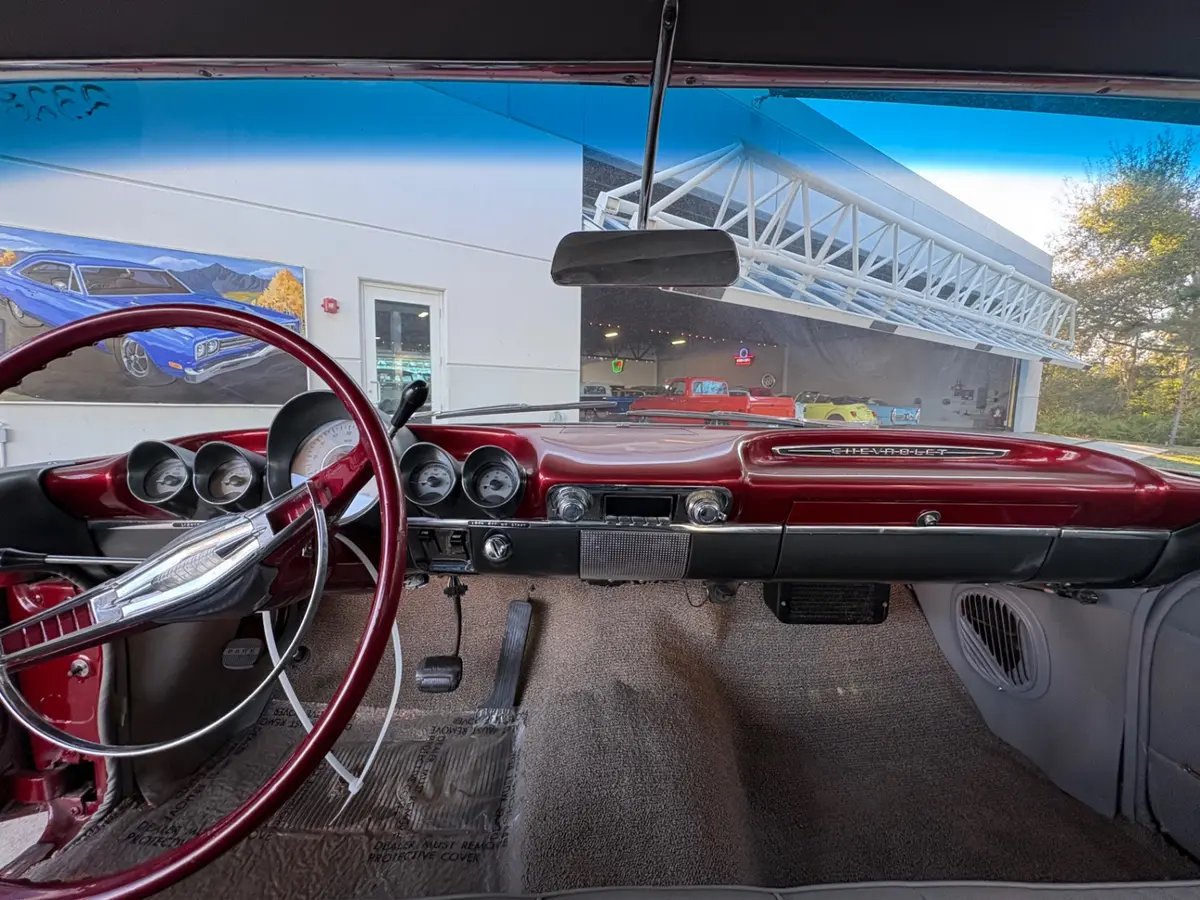
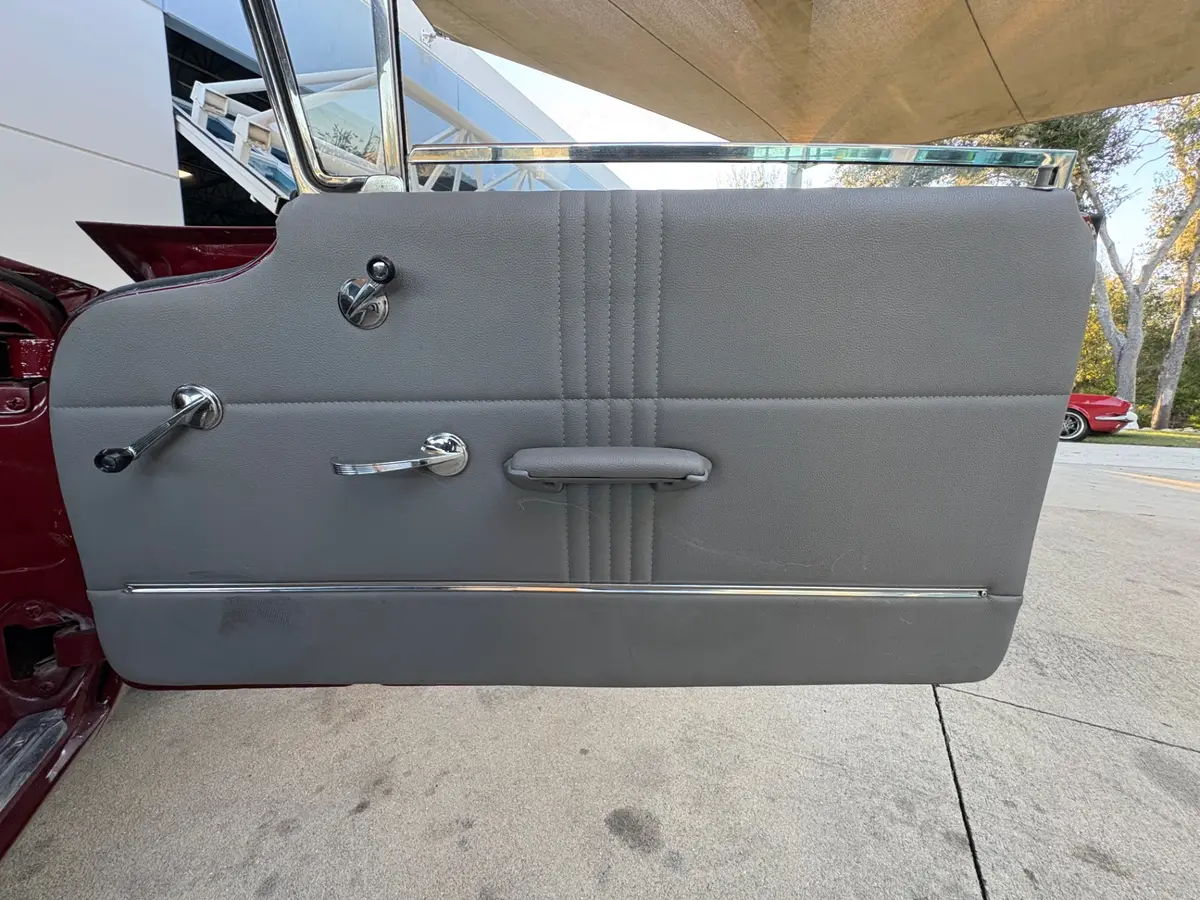
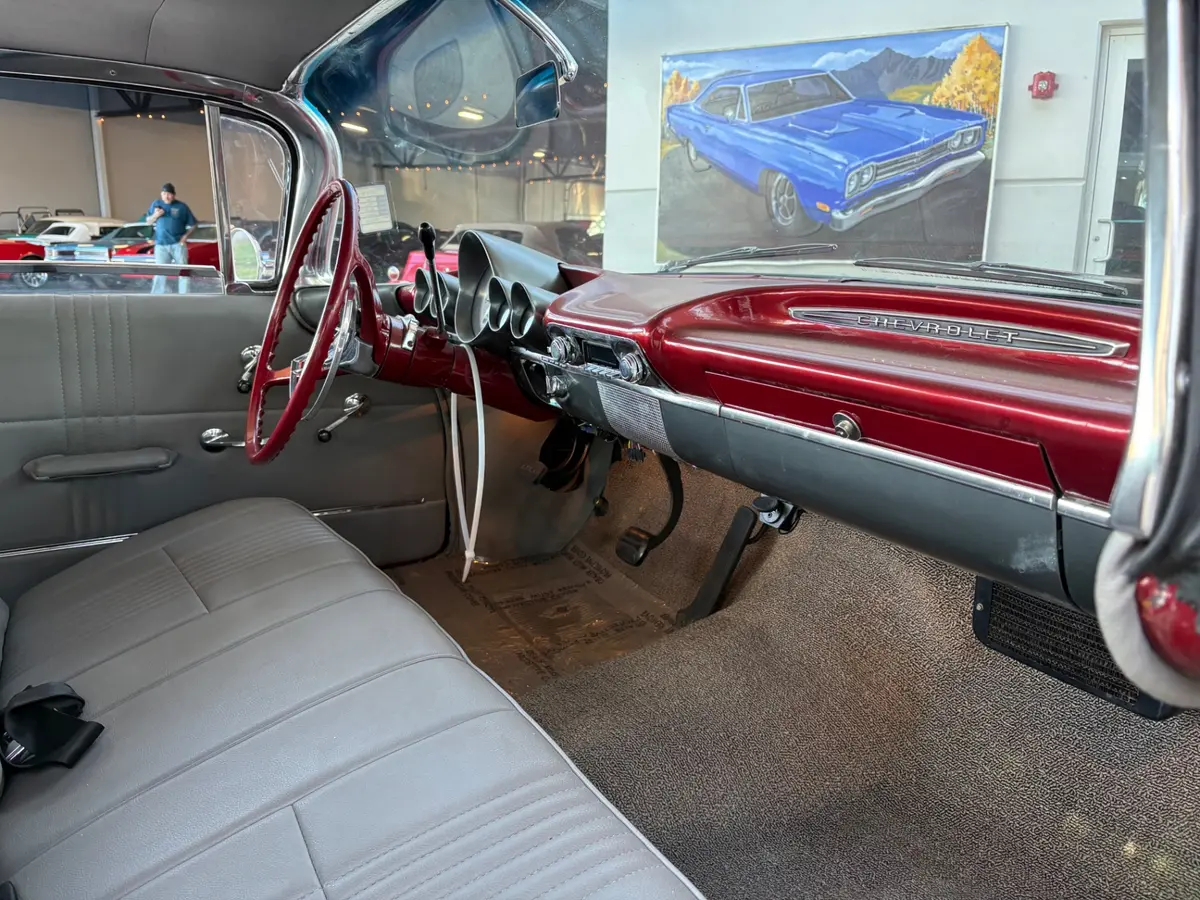
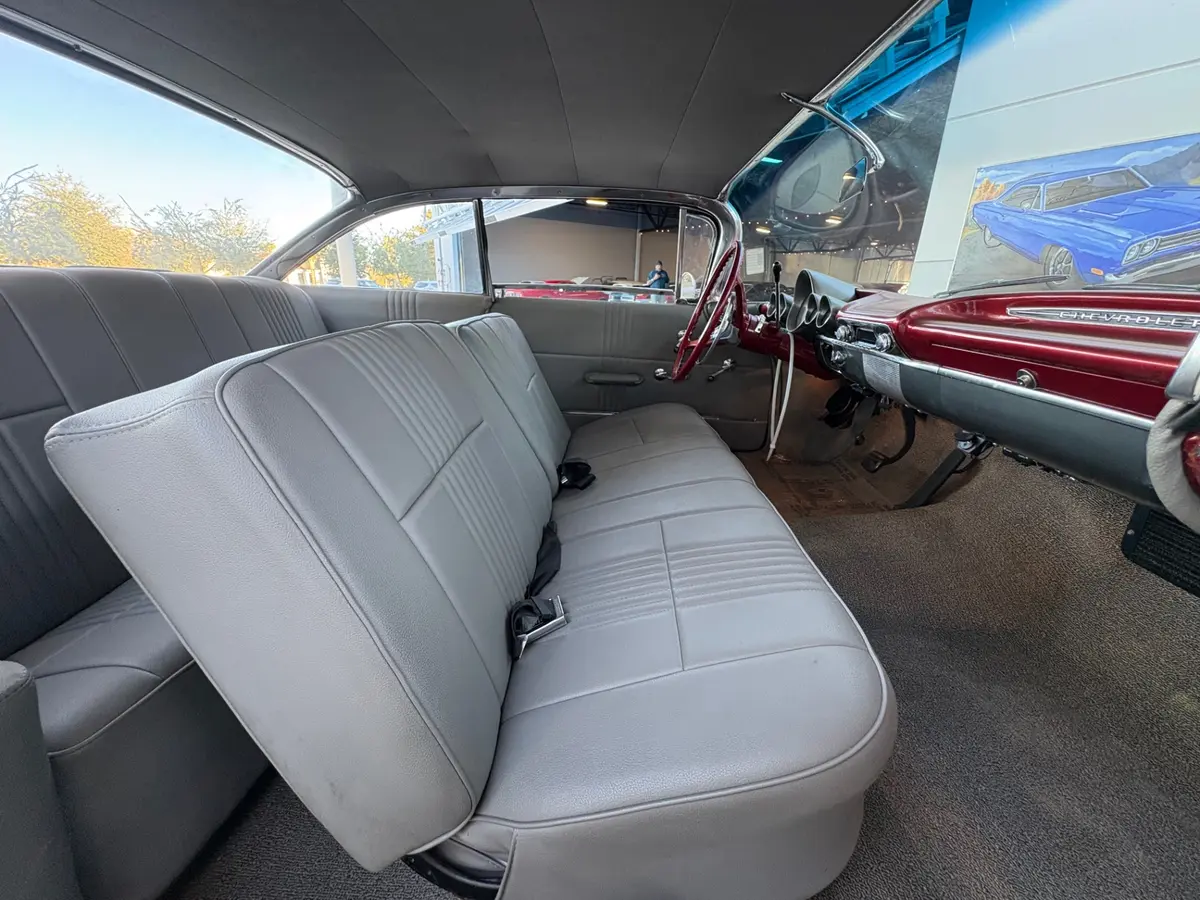
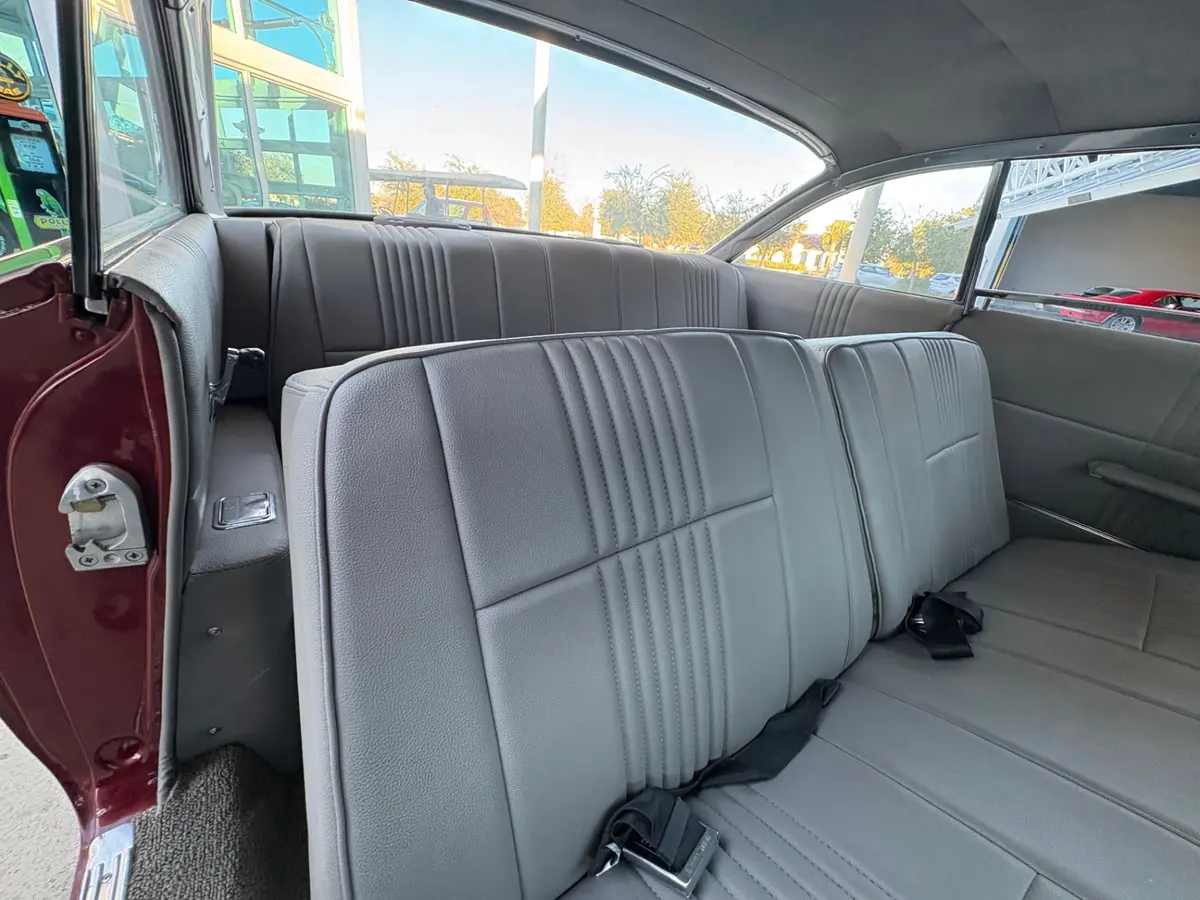
The cabin of this 1960 Chevrolet Bel Air has been redone in gray leather throughout, covering both the full-size split bench front seat and the matching rear bench. The stitch pattern on the seats and door panels is clean and consistent, and the door panels, headliner, and rear deck area all carry the same gray theme. Gray carpeting covers the floor front to back, including the trunk, which has been carpeted as well.
The maroon factory steering wheel is a notable detail. The 1960 full-size Chevrolet offered color-keyed steering wheels as a factory option, and retaining that original maroon wheel against the gray leather interior creates a deliberate two-tone contrast that works well with the maroon exterior. The column-mounted automatic shifter is correct for the body style and keeps the bench seat usable across its full width.
Rather than replacing the factory dash entirely, the builder retained the original 1960 Bel Air dash structure and instrumentation layout while adding a set of pod-style gauges mounted above the steering column. This gives the driver actual readings for the engine parameters the crate motor requires — without destroying the period-correct appearance of the dash itself. A radio is installed in the factory location. Rear deck speakers have been added for sound, and the headliner is in good condition and matches the overall gray interior scheme.
The 1960 Bel Air's interior was a significant selling point when new. Chevrolet positioned the Bel Air as the mid-tier trim level above the Biscayne and below the Impala, which meant it received more interior and exterior chrome than the base model but shared the same body structure as its more expensive sibling. The hardtop body style amplified that by eliminating the door frame, giving occupants an unobstructed view through the side glass and the sweeping wraparound rear window that is one of the most recognizable features of this generation.
Exterior
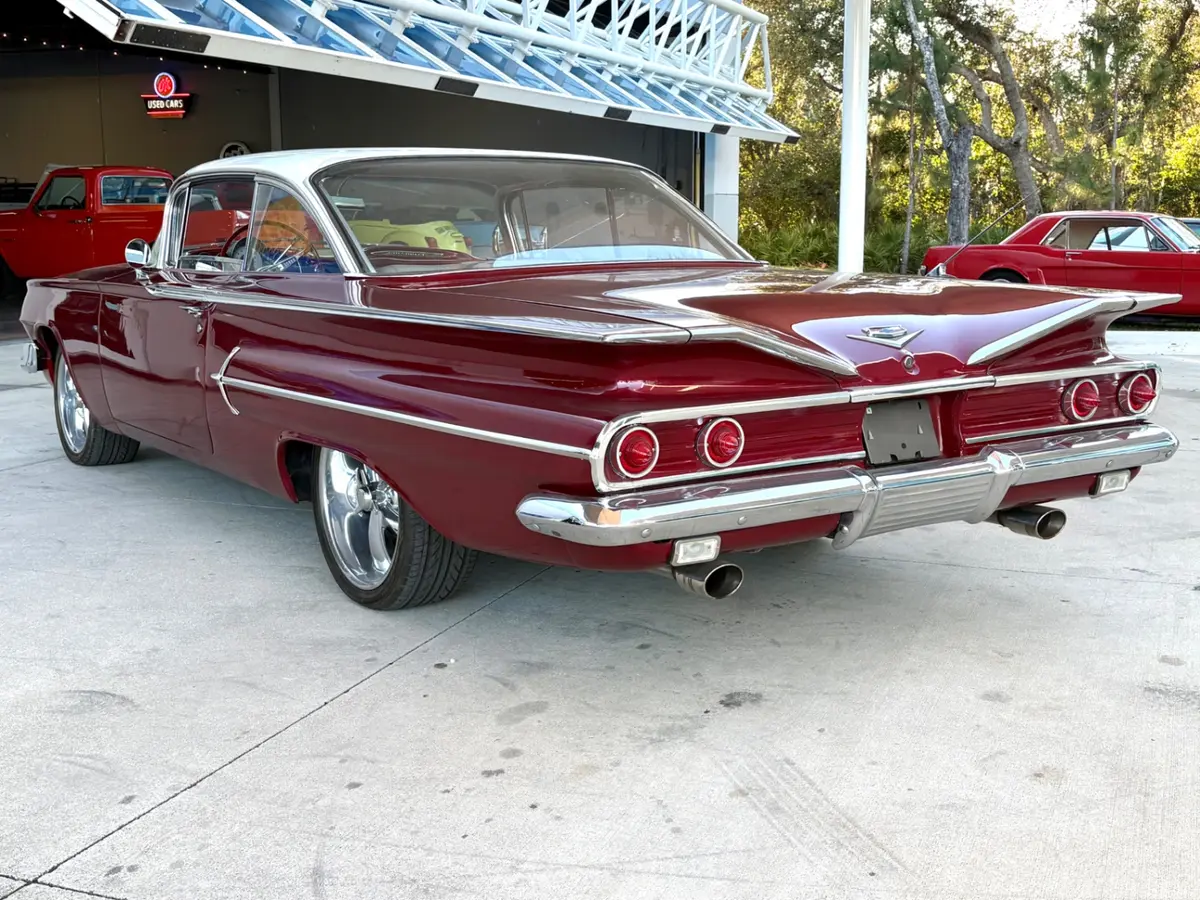
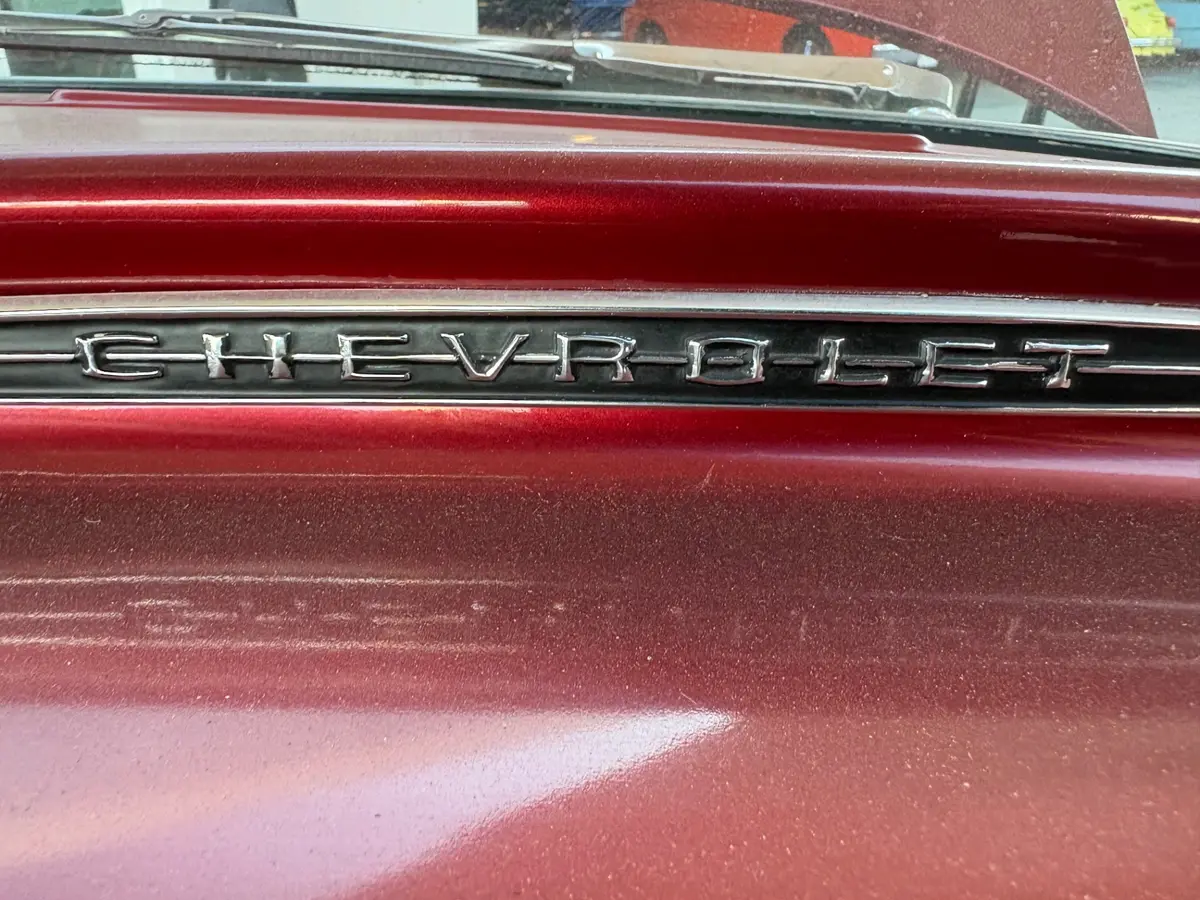
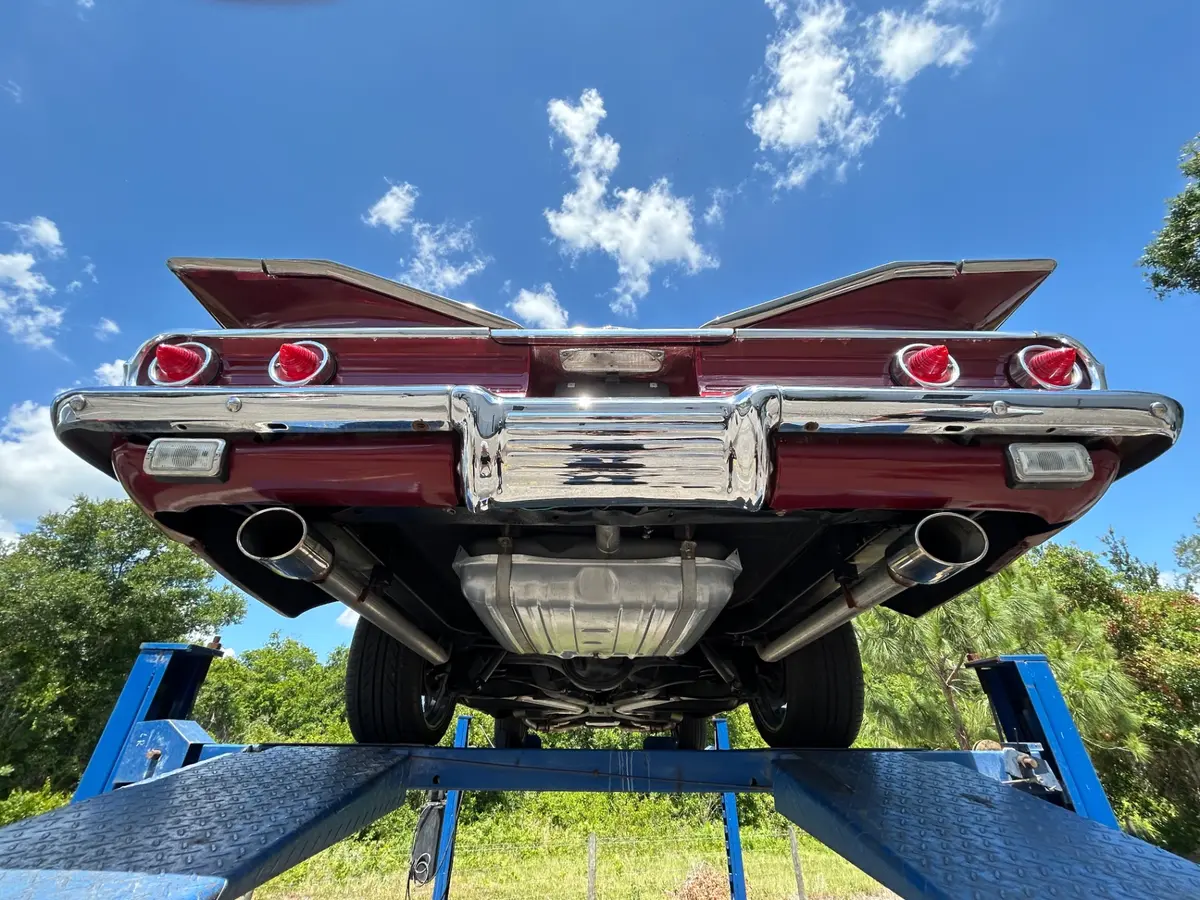
The 1960 Chevrolet Bel Air's body design was the work of GM's styling department under William Mitchell, who had taken over from Harley Earl in 1958. The 1960 full-size Chevrolet represented the second year of a significant redesign that had moved away from the tall tailfins of 1957 and 1958 toward a lower, wider look that was still clearly influenced by aerospace aesthetics. The tailfins on the 1960 model are horizontal rather than vertical — they extend rearward off the body sides in a flat, blade-like form accented with chrome trim and capped by the Bel Air's signature triple taillights. That three-lamp arrangement per side was a Bel Air and Impala distinction in 1960, and it remains one of the most recognizable rear-end designs of the entire decade.
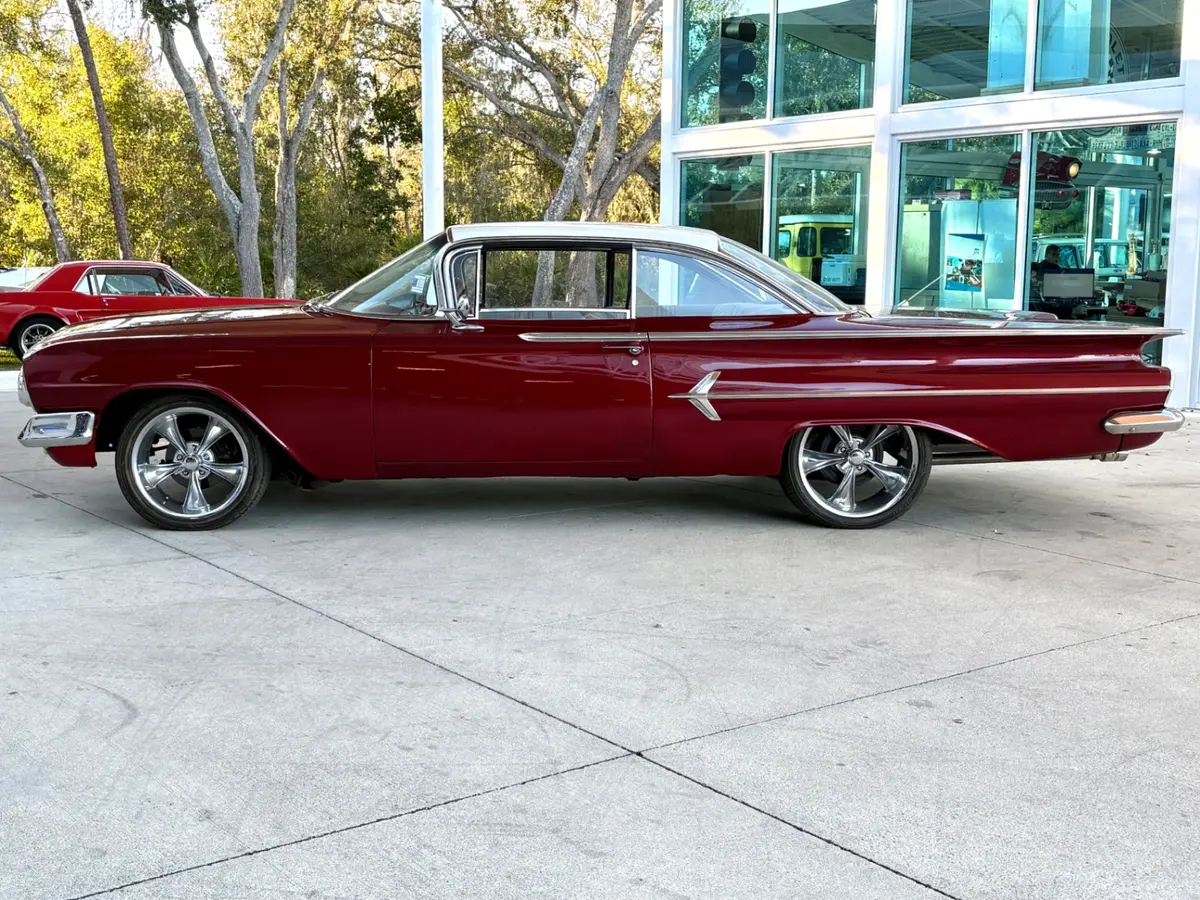
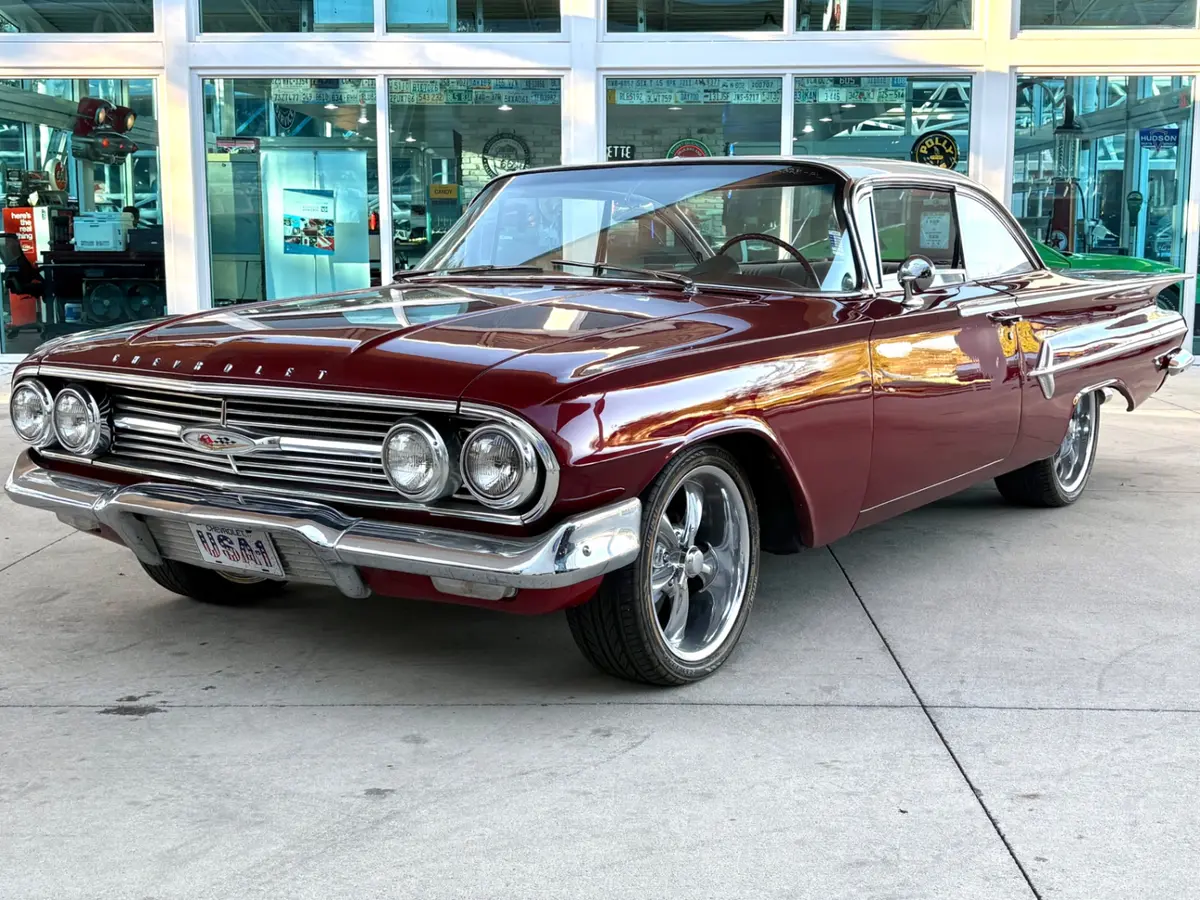
This car's maroon exterior is a strong color choice for this body. The wraparound chrome front bumper and matching rear bumper are present and appear to be in good shape. Chrome body side trim runs along the lower body in the correct Bel Air position. The bubbletop hardtop roofline — named for its low, curved greenhouse that tapers toward the rear — gives the car its sporting profile. The wraparound rear window is a full glass panel that curves around both rear pillars, flooding the back seat with light and giving the hardtop a look that was genuinely futuristic for 1960.
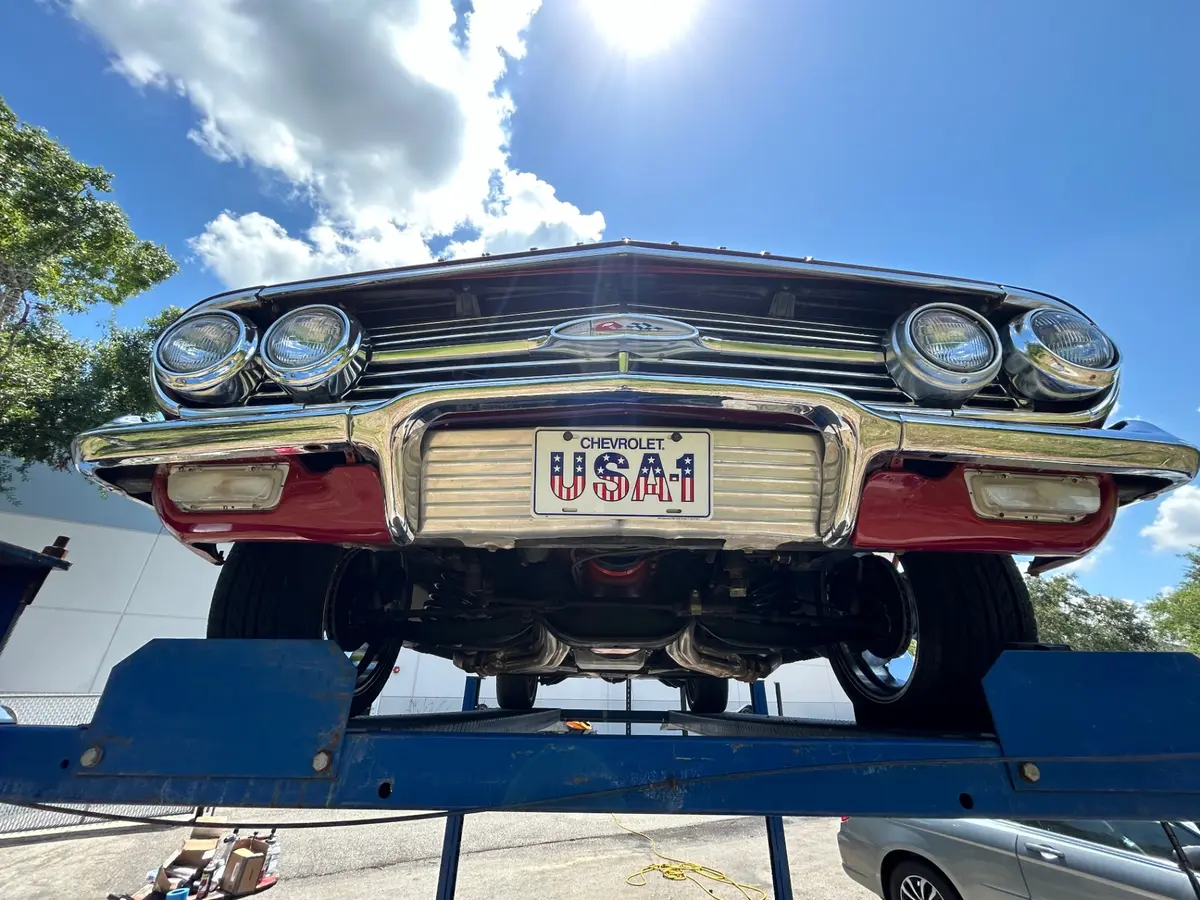
The wheels are five-spoke chrome Torq-Thrust style units wearing low-profile performance tires. The American Racing Torq-Thrust design has been a classic wheel choice for pro-touring builds on cars of this era for decades — the five-spoke design is visually period-appropriate while accommodating the wider tires that come with the upgraded suspension and powertrain. Dual exhaust exits through chrome tips below the rear bumper, visible in the undercarriage photos.
Conclusion
The 1960 Chevrolet Bel Air is the final year of one of the most celebrated design runs in American automotive history, and the Sport Coupe hardtop is the body style that collectors and enthusiasts have consistently valued most within that generation. This particular car pairs that body with a practical, well-executed drivetrain upgrade — GM 350 crate, 700R4 overdrive, power steering, power brakes — and a clean gray leather interior that suits the maroon exterior without trying to do too much. It is a car that was built to be driven, not stored. The engine compartment is detailed, the undercarriage is solid, and the interior is finished to a level that holds up under inspection.
If you have questions about this 1960 Chevrolet Bel Air or would like to arrange an appointment to see it in person, call Skyway Classics in Sarasota, Florida at 941-254-6608. We're happy to answer any questions and walk you through the car in detail.
Disclaimer
Information found on the website is presented as given to us by the owner of the car, whether on consignment or from the owner we bought it from. Some Photos, materials for videos, descriptions and other information are provided by the consignor/seller and is deemed reliable, but Skyway Classics does not warranty or guarantee this information. Skyway Classics is not responsible for information that may incorrect or a publishing error. The decision to purchase should be based solely on the buyers personal inspection of the vehicle or by a professional inspection service prior to offer or purchase being made.
1960 Chevrolet Bel Air Hardtop — Maroon Pro-Touring Build with 350 Crate and 700R4 Overdrive
Why This Car Is Special
The 1960 Chevrolet Bel Air sits at a genuinely interesting crossroads in American automotive history. It was the last year of the dramatic, jet-age full-size Chevrolet design language that had defined the late 1950s — the year before Chevy's designers dialed back the fins and chrome considerably for 1961. That makes the 1960 Bel Air the final expression of that era, and the Sport Coupe hardtop body style is the one collectors have always gravitated toward. With no B-pillar interrupting the roofline and that wraparound rear window pulling light into the cabin from every angle, the 1960 Bel Air hardtop is a genuinely distinctive silhouette that doesn't look like anything built before or since.
This particular 1960 Chevrolet Bel Air has been built as a driver rather than a trailer queen. The powertrain has been upgraded to a GM 350 crate engine backed by a 700R4 overdrive automatic transmission — a combination that puts modern reliability and highway manners into a body that looks exactly like 1960. The maroon exterior pairs naturally with the gray leather interior, and the level of detail in both the engine compartment and the cabin shows that whoever put this car together cared about the finished product, not just the performance numbers.
The VIN on this car decodes to a Flint, Michigan assembly plant build, which is consistent with the 1960 model year full-size Chevrolet production records. Flint was one of GM's primary full-size car assembly facilities during this period, and cars built there are well-documented in Chevrolet's production history.
Features List
- GM 350 crate engine
- 700R4 overdrive automatic transmission
- Red painted engine block and heads
- Aluminum intake manifold
- Chrome-topped air cleaner
- Finned aluminum valve covers
- Headers
- Aluminum radiator
- Power steering
- Power brakes
- Painted, clean, and detailed engine compartment
- Gray leather interior throughout
- Full-size split bench front seat
- Matching rear bench seat
- Front and rear seat belts
- Maroon factory steering wheel
- Column-mounted automatic shifter
- Sporty pod-style gauge cluster
- Factory dash and instrumentation retained
- Gray carpeting throughout
- Radio
- Matching door panels and headliner
- Rear deck speakers
- Carpeted trunk
- Maroon exterior paint
- Bubbletop hardtop roofline
- Wraparound rear window
- Wraparound chrome front and rear bumpers
- Chrome body side trim
- Jet-inspired tailfins with chrome trim
- Triple taillights
- Dual exhaust with chrome tips
- Five-spoke chrome Torq-Thrust style wheels
- Low-profile performance tires
Mechanical
The engine in this 1960 Chevrolet Bel Air is a GM 350 cubic inch crate engine, painted in the traditional Chevrolet engine red on both the block and heads. It is fitted with an aluminum intake manifold, finned aluminum valve covers, headers, and a chrome-topped air cleaner — a combination that improves airflow and heat management compared to factory iron components while keeping the engine bay visually coherent. The aluminum radiator provides better cooling capacity than a period steel unit, which matters when you're running this kind of displacement in Florida heat.
The transmission is a 700R4 overdrive automatic, operated through a column-mounted shifter. The 700R4 was introduced by GM in 1982 and became one of the most popular overdrive transmission swaps for classic car builds for good reason. It provides a true fourth-gear overdrive, which drops engine rpm significantly at highway speed compared to the original three-speed automatics these cars came with from the factory. In practical terms, this means the 1960 Bel Air cruises comfortably on the interstate without the engine working hard, which extends engine life and makes the car genuinely enjoyable on longer drives rather than just at show events.
Power steering and power brakes are both present, which were available factory options on the 1960 Bel Air and make a real difference in daily driveability on a car of this size and weight. The engine compartment has been painted, cleaned, and detailed — the underhood photos confirm a tidy build with no sloppy wiring or unfinished work. The undercarriage shots show a painted floor pan and suspension components in solid condition, with the dual exhaust system routed cleanly to chrome tips at the rear.
Interior
The cabin of this 1960 Chevrolet Bel Air has been redone in gray leather throughout, covering both the full-size split bench front seat and the matching rear bench. The stitch pattern on the seats and door panels is clean and consistent, and the door panels, headliner, and rear deck area all carry the same gray theme. Gray carpeting covers the floor front to back, including the trunk, which has been carpeted as well.
The maroon factory steering wheel is a notable detail. The 1960 full-size Chevrolet offered color-keyed steering wheels as a factory option, and retaining that original maroon wheel against the gray leather interior creates a deliberate two-tone contrast that works well with the maroon exterior. The column-mounted automatic shifter is correct for the body style and keeps the bench seat usable across its full width.
Rather than replacing the factory dash entirely, the builder retained the original 1960 Bel Air dash structure and instrumentation layout while adding a set of pod-style gauges mounted above the steering column. This gives the driver actual readings for the engine parameters the crate motor requires — without destroying the period-correct appearance of the dash itself. A radio is installed in the factory location. Rear deck speakers have been added for sound, and the headliner is in good condition and matches the overall gray interior scheme.
The 1960 Bel Air's interior was a significant selling point when new. Chevrolet positioned the Bel Air as the mid-tier trim level above the Biscayne and below the Impala, which meant it received more interior and exterior chrome than the base model but shared the same body structure as its more expensive sibling. The hardtop body style amplified that by eliminating the door frame, giving occupants an unobstructed view through the side glass and the sweeping wraparound rear window that is one of the most recognizable features of this generation.
Exterior
The 1960 Chevrolet Bel Air's body design was the work of GM's styling department under William Mitchell, who had taken over from Harley Earl in 1958. The 1960 full-size Chevrolet represented the second year of a significant redesign that had moved away from the tall tailfins of 1957 and 1958 toward a lower, wider look that was still clearly influenced by aerospace aesthetics. The tailfins on the 1960 model are horizontal rather than vertical — they extend rearward off the body sides in a flat, blade-like form accented with chrome trim and capped by the Bel Air's signature triple taillights. That three-lamp arrangement per side was a Bel Air and Impala distinction in 1960, and it remains one of the most recognizable rear-end designs of the entire decade.
This car's maroon exterior is a strong color choice for this body. The wraparound chrome front bumper and matching rear bumper are present and appear to be in good shape. Chrome body side trim runs along the lower body in the correct Bel Air position. The bubbletop hardtop roofline — named for its low, curved greenhouse that tapers toward the rear — gives the car its sporting profile. The wraparound rear window is a full glass panel that curves around both rear pillars, flooding the back seat with light and giving the hardtop a look that was genuinely futuristic for 1960.
The wheels are five-spoke chrome Torq-Thrust style units wearing low-profile performance tires. The American Racing Torq-Thrust design has been a classic wheel choice for pro-touring builds on cars of this era for decades — the five-spoke design is visually period-appropriate while accommodating the wider tires that come with the upgraded suspension and powertrain. Dual exhaust exits through chrome tips below the rear bumper, visible in the undercarriage photos.
Conclusion
The 1960 Chevrolet Bel Air is the final year of one of the most celebrated design runs in American automotive history, and the Sport Coupe hardtop is the body style that collectors and enthusiasts have consistently valued most within that generation. This particular car pairs that body with a practical, well-executed drivetrain upgrade — GM 350 crate, 700R4 overdrive, power steering, power brakes — and a clean gray leather interior that suits the maroon exterior without trying to do too much. It is a car that was built to be driven, not stored. The engine compartment is detailed, the undercarriage is solid, and the interior is finished to a level that holds up under inspection.
If you have questions about this 1960 Chevrolet Bel Air or would like to arrange an appointment to see it in person, call Skyway Classics in Sarasota, Florida at 941-254-6608. We're happy to answer any questions and walk you through the car in detail.
Disclaimer
Information found on the website is presented as given to us by the owner of the car, whether on consignment or from the owner we bought it from. Some Photos, materials for videos, descriptions and other information are provided by the consignor/seller and is deemed reliable, but Skyway Classics does not warranty or guarantee this information. Skyway Classics is not responsible for information that may incorrect or a publishing error. The decision to purchase should be based solely on the buyers personal inspection of the vehicle or by a professional inspection service prior to offer or purchase being made.
1960 Chevrolet
Bel Air Sport Coupe
Why Choose Skyway Classics?
Explore our curated inventory of classic and collector cars—thoughtfully selected, ready to drive, and supported by experts who make ownership simple.
Expert Curation
Every vehicle is hand-selected by our experts for quality, authenticity, and investment potential.
Fast Transactions
Streamlined buying and selling process with quick financing and immediate delivery options.
Only National Dealer With Classic Service & Repair
We’re the only national dealership that services and repairs the classics we sell—before and after the sale.
Nationwide Network
Access to our extensive network of collectors, restorers, and classic car enthusiasts nationwide.
Concierge Ownership Support
From financing and insurance to paperwork, shipping, and titling—we handle the details so you can enjoy the drive.
Passion-Driven Service
We're classic car enthusiasts first, providing personalized service with genuine passion for the hobby.